Category: Nation & World

  • Body found in Grand Canyon was missing hiker, wife says, bringing flood death toll to 3

    Body found in Grand Canyon was missing hiker, wife says, bringing flood death toll to 3

    GRAND CANYON NATIONAL PARK, Ariz. — Human remains found in the Grand Canyon this week were those of the last remaining person missing after the deadly flash flooding in late August, the victim’s wife said Thursday.

    The discovery of Timothy Allen Smith brought the death toll to three from flooding that devastated the Phantom Ranch area at the canyon bottom and damaged the water pipeline serving the South Rim.

    Smith, 53, was a pilot from western Wyoming’s Star Valley. His remains were found Monday near Crystal Rapids on the Colorado River that runs through the canyon.

    The remains of Smith’s two backcountry companions, Brent Rosenkranz, 42, and John Giusti, 46, both of Granbury, Texas, were found earlier.

    Smith grew up in Granbury and lived with his wife in Star Valley Ranch, about 40 miles southwest of Jackson.

    He, Rosenkranz and Giusti were on a multiday hiking, fishing, and camping trip when flooding swept through the Grand Canyon.

    During the two-day deluge, searchers used night vision and other equipment to find people in need of rescue. They relied on the Grand Canyon National Park’s permit system and checked vehicle license plates to track those still missing. More than 80 people were rescued.

    Soon, only Smith was missing. In a Facebook video at the time, his wife, Carrie, and their children thanked people for their support and prayers.

    On Tuesday morning, Carrie Smith posted on Facebook that the family was aware a body had been found a day earlier and asked others to pray with them.

    Smith confirmed in a Facebook post on Thursday that the remains had been identified as her husband’s.

    “My family has done a lot of waiting over the last three weeks … waiting and hoping Tim (Daddy) would come home, waiting and wondering if the remains found were Tim (Daddy),” she wrote. “We no longer have to wait, Tim was found two days ago by the Rangers at Grand Canyon National Park. Not in the way we had hoped, but we know that he was doing something he loved with John and Brent.”

    She added, “We know that these three men loved the Lord and were a shining light for Him. The impact their lives had on others is still being shown to our families daily.”

    The National Park Service and Department of the Interior did not immediately return email messages seeking comment Thursday. The agencies have not publicly identified the remains found this week.

    The flooding began Aug. 29 during the summer monsoon, or rainy, season when clear skies can quickly give way to thunderstorms and heavy rain. A desert landscape can funnel water from a deluge into sudden torrents that rage down previously dry gullies and canyons.

    The rain fell on part of a North Rim burn area left after a lightning-caused wildfire in July 2025. The fire destroyed the historic Grand Canyon Lodge, cabins and other structures.

    Burn areas can worsen flash flooding because there’s less vegetation to absorb runoff.

    The flooding damaged a pipeline spanning the canyon that supplies water to millions of tourists and residents. Insufficient water caused all overnight lodging to be halted until the pipeline could be restored. National Park Service officials said recently that they expected to restore a reliable water supply in the canyon in weeks — not months — after determining most of a near-complete pipeline project was not damaged during the flash flood.

    Many hiking trails and lodging areas remain closed, and water has been shut off in the inner canyon, prompting advisories that hikers bring their own water or water filtration devices.

    Another flash flood hit the canyon along Bright Angel Creek and the Colorado River during a storm Wednesday, park officials said. No injuries were reported. Authorities said efforts to minimize personnel in the canyon before the storm, as well as flash flood warnings, enabled crews to reach safety. Damage assessments were underway.
  • Carney calls for EU-Canada pact amid ‘ferocious storm’

    Carney calls for EU-Canada pact amid ‘ferocious storm’

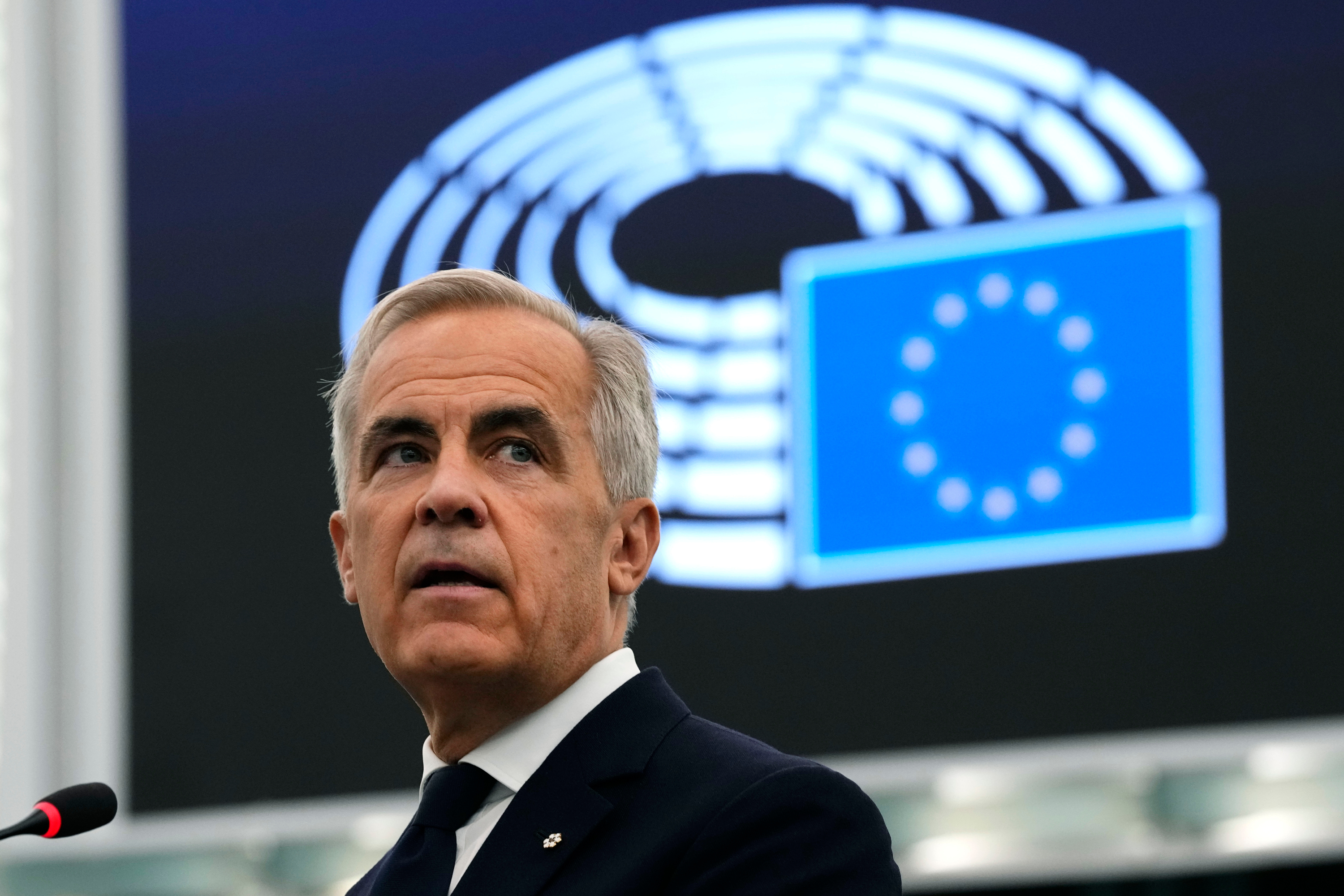
    STRASBOURG, France — Canada’s newly proposed associate membership in the European Union will help to secure sovereignty and freedom for the country amid a “ferocious storm,” Prime Minister Mark Carney told the European Parliament on Thursday, adding that the move would also make his nation a better partner for the United States.

    President Donald Trump, reacting Wednesday to the potential alliance between Ottawa and Brussels, said the move could be perceived as “a hostile act.”

    “If it’s a bad intention, we’ll put very heavy tariffs on Europe,” he added.

    Carney countered on Thursday. “This alliance is a positive process. That’s my response to the American president. It’s a positive thing,” he told reporters after his European Parliament speech.

    “A stronger, more resilient Canada will be a more effective partner with the United States — same with the European Union,” he added.

    Carney said the associate membership outlined by European Commission President Ursula von der Leyen on Wednesday would strengthen core areas of life on both sides of the Atlantic.

    The push for closer links comes amid a historic low for U.S. ties with Canada and turbulence in the relationship between Washington and the European Union as Trump has upended traditional American alliances.

    Carney said Canada and the European Union were not looking to become another superpower.

    “I am not proposing a third bloc in order to become a great-power rival only with better manners,” he said during his speech to European lawmakers in Strasbourg, France. “We do not seek power to dominate others,” he added.

    Associate membership for Canada in the European Union could be the closest linkup the bloc of 27 nations has with a nonmember state. The move highlighted a deep desire of traditional American allies to seek stability by banding together as Trump remakes the U.S. role in the world.

    Carney suggested that Europe and Canada were seeking to band together “so that no one can control our open markets, impair our sovereignty, threaten our territorial integrity or undermine our freedoms, our democracies, our rule of law.”

    Trump has instigated a trade war against Canada, the United States’ closest ally and second-largest trading partner, and routinely said he wanted the northern neighbor to become the 51st state. He has also pulled the United States away from the traditional close alliance with the European Union, imposing tariffs and barriers to trade, and he has weakened the NATO defense pact by threatening to drastically cut the U.S. contribution.

    Carney did not mention the United States or Trump by name during his speech in Strasbourg, but he made clear allusions.

    “Economic integration is now being used as a weapon, and tariffs as a means of leverage,” he said. “Financial mechanisms are employed for coercion. Supply chains represent vulnerabilities to be exploited.”

    Carney said youth from both Canada and the European Union should be able to travel and study in each other’s territories through participation in the bloc’s student mobility program, Erasmus. That program is credited with building generations of young Europeans with joint identities and shared experiences.

    Canada would most likely need to contribute financially to participate in Erasmus, as well as in any other EU programs the country might join, though the fine print of how the alliance would work has not yet been discussed.

    Carney’s vision for how the European Union and Canada could work together also extended to major, foundational parts of their economies and society. He said the two should launch a “deep cooperation in the full range of strategic capabilities,” including industries involving critical minerals, defense, artificial intelligence and computing, and energy security. He also suggested that the bloc and Canada could work on managing payment systems.

    Control over services such as payment mechanisms has been worrying policymakers in the European Union and Canada because many of those services are controlled by the United States or by American companies. That concern is front and center as the debate grows about the future of AI.

    “Technology is transforming the nature of warfare, the structure of economies and the capacity of states to govern,” Carney said.

    He also took aim at online platforms, of which the largest are American.

    “Tech platforms aspire to sovereignty,” he said. “They seek to set the terms of access. They want to dictate regulatory rules — or even bypass them.”

    “They want to control our data, spread disinformation and steal our children’s childhood,” he added.

    Carney noted that Canada was endowed with major critical mineral and energy resources, which the country wanted to export to markets in the European Union. The two already have agreements in place for such collaboration. This year, Canada secured a major contract to sell liquefied natural gas to Germany.

    The exact shape of the alliance between Canada and the European Union has been unclear because there is no formal or legal framework for an “associate member” of the bloc.

    In Canada, the conservative opposition has raised concerns that an alliance might encroach on the country’s sovereignty. In Europe, officials from EU member states worry that the label could antagonize other countries with deep ties to the bloc, such as Britain and Norway, as well as those that are in the arduous process of becoming full members, such as Albania.

    In his address, Carney touched on those issues, saying, “Canada is not in a position or seeking to become a full member of the European Union.”

    “The precise nomenclature is a question for Europe,” he added.

    Carney noted that the Canadian Parliament, which reconvenes next week after the summer recess, would get a chance to debate the future EU-Canada relationship and put the proposal to a vote.

    During his speech, Carney made extensive references to the deep historical bonds between Europe and Canada, framing the new cooperation as existential. He was frequently interrupted by applause from members of the European Parliament as he harked back to past battles they had fought together.

    “Freedom and life must be earned every single day,” Carney said. “Every day. Not once in 1945 or 1956 or 1989. Every day, including this one.”

    The lawmakers, with the exception of many from far-right parties, gave him a lengthy standing ovation.

  • Jon Kyl, a former top Republican in the Senate, dies at 84

    Jon Kyl, a former top Republican in the Senate, dies at 84

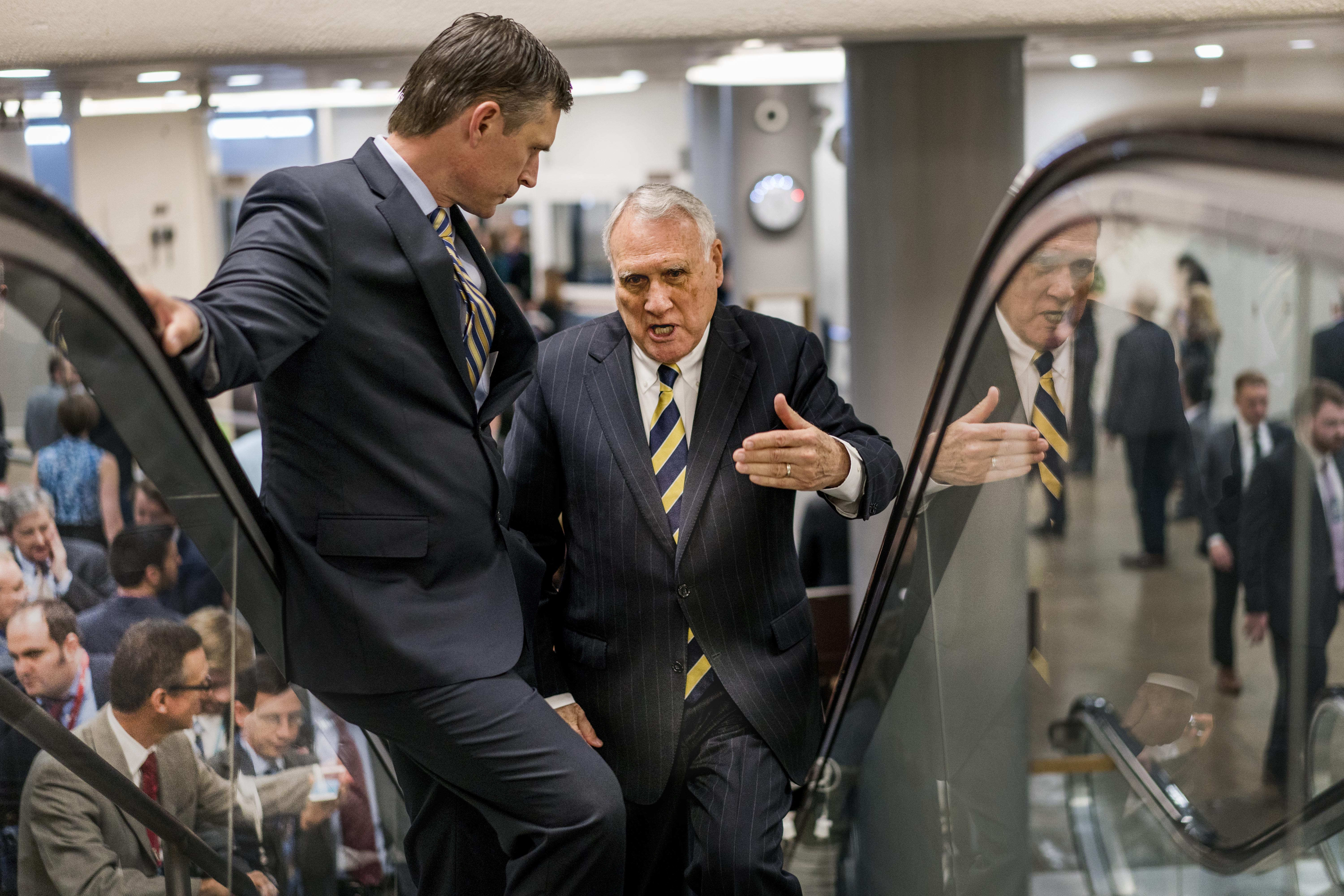
    Former senator Jon Kyl, who served in Congress for nearly 30 years and rose through the ranks of GOP leadership to become the Senate’s No. 2 Republican, has died at the age of 84, his family said Thursday.

    Mr. Kyl’s passing comes nearly nine months after he announced he had been diagnosed with dementia and would be withdrawing from public life. In a statement to local news outlets, his family said Mr. Kyl had passed due to “complications from a neurological disease.”

    “We know that Jon belonged to all of Arizona, a state he loved and explored with vigor, curiosity, and wonder,” his family said. “Serving his state and nation in Congress was a privilege and responsibility he honored and respected.”

    Mr. Kyl served in the House from 1987 to 1995 and in the Senate from 1995 to 2013. He served as the Senate minority whip before he left public office in 2013 and became a lobbyist.

    After the death of former Arizona senator John McCain in 2018, then-governor Doug Ducey appointed Mr. Kyl to serve out the rest of McCain’s term. Mr. Kyl returned somewhat reluctantly, out of a sense of duty, and was instrumental in guiding Supreme Court nominee Brett M. Kavanaugh through the confirmation process.

    This is a developing story and will be updated.

  • Is there anything a fruit fly brain can’t do?

    Is there anything a fruit fly brain can’t do?

    What can a fruit fly do? Buzz around ripe bananas, sure. But maybe, a whole lot more. Like parallel park. Or play Minecraft.

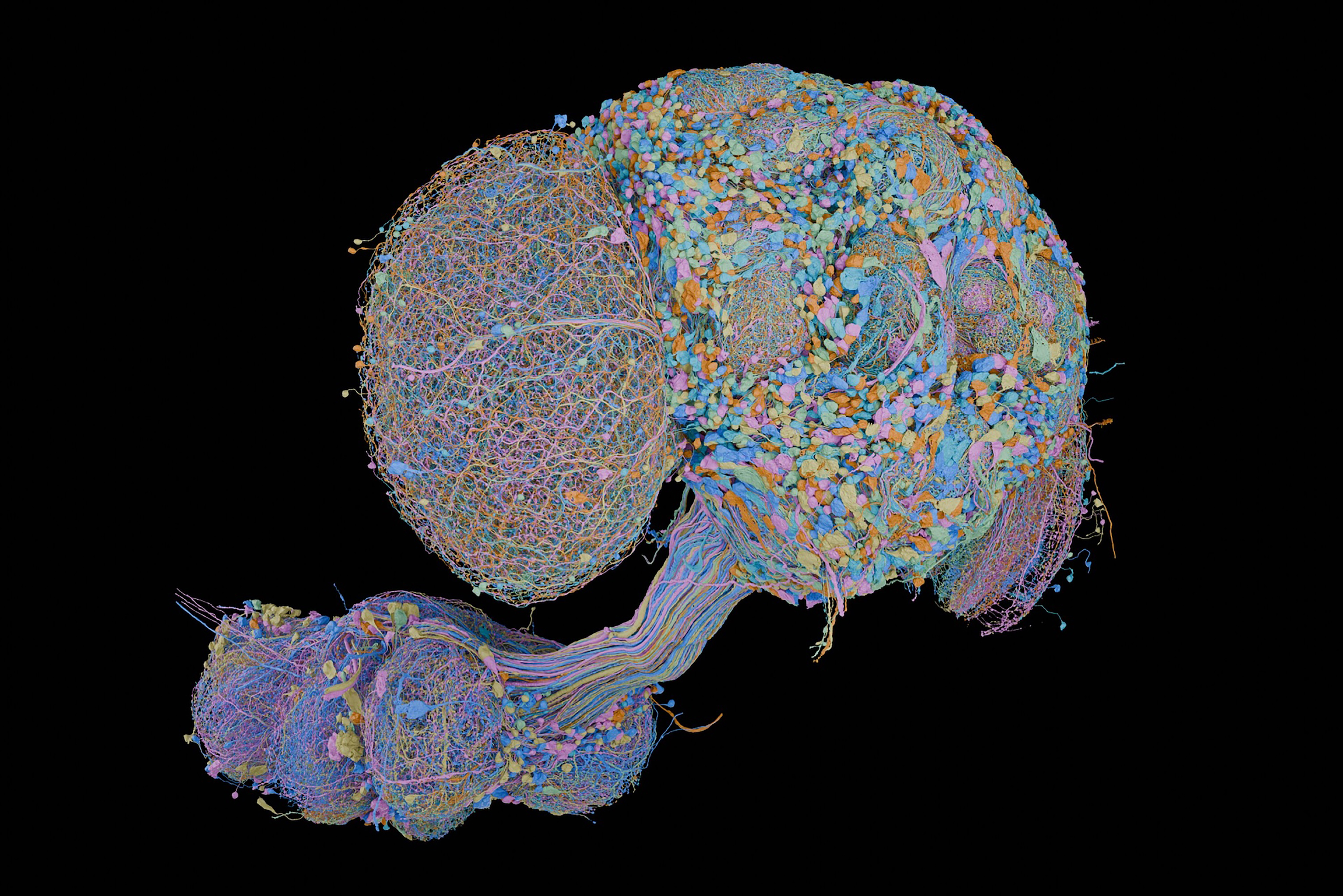
    Creative internet users have in recent days taken a complete map of a fruit fly’s 166,000 neurons, published by Google, and made simulated flies do some things that are pretty impressive, given that these insects have a brain the size of a poppy seed. One has been trained to solve a Rubik’s Cube. Another dances to the Village People’s “Y.M.C.A.” in response to four tones. Others have envisioned fruit flies playing poker and blackjack and slicing a doner kebab.

    In general, the goal of these engineers and artists is not to show what a fly can do, but “what’s the dumbest thing we can make it do,” said Mark Unthank, a software developer who got a fly to parallel park a car after hundreds of failed attempts. Unthank, who lives in Italy, also programmed a fly to use a car’s blinkers when turning because he was frustrated that so few human drivers seem to use them.

    “That’s how easy it is,” he said. “Even a fly could do it.”

    Producing the map of the fly’s brain, on the other hand, was anything but easy. It was serious research meant to advance the study of neuroscience.

    For years, researchers worked to develop sophisticated imaging techniques to map the connections within the nervous systems of various organisms. Some have focused on fruit flies because of the insect’s relative lack of complexity; while the fly has just 166,000 neurons, a human being has about 86 billion.

    Scientists call the neural maps connectomes, similar to the genomes that help map the genes that determine an organism’s traits.

    Researchers at the Janelia Research Campus at the Howard Hughes Medical Institute in Virginia completed the new map of the adult male fruit fly’s brain in partnership with Google. The effort involved hundreds of scholars.

    Scientists hope the map will help them understand how animals perceive the world, store memories, and react to stimuli.

    “Our goal is not simply to demonstrate that a fly brain is capable of generating movement in a fly — which we obviously know — but how,” said Nelson Spruston, a neuroscientist who is vice president and executive director at the Janelia campus.

    The institute is working to develop maps of the brain in two fish — a larval zebrafish and an adult Danionella. The research, it said, could one day reveal how humans develop Alzheimer’s or depression.

    For now, the Janelia researchers have been pleasantly surprised to see fruit flies driving cars and playing video games.

    “I certainly did not imagine this kind of application of our work, but I think it’s exciting and it’s fun, and it sort of demonstrates the power of open science,” Spruston said.

    Arie Matsliah, a research scientist at Princeton University, said the release of the maps has coincided with a spike in the capability of artificial intelligence-powered coding tools that allow people to create simulations with just a few simple prompts. Matsliah helped develop FlyWire Codex, an online portal for the maps that has seen thousands of downloads a day, he said.

    “It’s almost becoming a meme now,” he said. “Everyone is trying different things.”

    Alex Wormuth, a software engineer in Tulsa, Okla., said he used an OpenAI tool to make the fly play the 1990s first-person shooter video game Doom, which he named Doomfly. If the fly shoots and kills an enemy, it triggers the insect’s dopamine receptor, encouraging it to kill again to survive, he said.

    So far, the fly is not very good at Doom, he concedes.

    “It has been able to kill an enemy,” he said, “but I don’t think it’s learned that’s what it needs to do to beat the game.”

    Wormuth has also given a simulated fruit fly $100 in real bitcoin, with the option to buy, sell, or hold. For a brief period on Friday, he said, the fly made about $1 before the cryptocurrency’s price dropped.

    The simulations, although based on a fruit fly brain, do not actually account for the complex interactions between neurons, muscles, and other systems in a real fruit fly, Matsliah said.

    “They assume things, or they substitute the missing components with things that are not biological,” he said.

    That includes modifying the strength of the connections between neurons, which makes the simulations “substantially different from a real fly,” Spruston said.

    “It’s not like a fly brain in real life can play Doom, obviously,” he added.

    “Nevertheless, there is some reality there,” Matsliah said.

    Parallel to the existential anxieties brought up by recent rapid advancements in AI, some people have wondered whether the flies might have some form of consciousness as they twist and turn the faces of a Rubik’s Cube or try to win at poker.

    Wormuth, the Doomfly creator, has his doubts.

    “I don’t believe that’s happening,” he said. “But I think it’s an interesting thought experiment because, someday, we may have something like this for the human brain.”

    This article originally appeared in the New York Times.

  • OpenAI discloses six new incidents of ‘concerning’ A.I. behavior

    OpenAI discloses six new incidents of ‘concerning’ A.I. behavior

    SAN FRANCISCO — OpenAI on Wednesday disclosed six new instances in which artificial intelligence systems hid mistakes, made up data and moved files onto the open internet without permission, amid an ongoing industrywide debate about AI safety.

    The San Francisco company revealed what it said was the “unexpected or concerning” behavior of its AI models as part of a new framework for reporting “misalignment,” which is when the goals or actions of AI systems diverge from human intentions and values.

    OpenAI said it did not believe the industry “has solved alignment and monitoring to a sufficient degree to continue responsibly scaling at maximum speed for much longer.” Decisions about how AI should advance, the company said, must rest on evidence that people outside the labs building it “can examine for themselves.”

    The disclosures land amid intensifying scrutiny over whether AI development needs to be slowed to address the technology’s potential dangers. The escalating debate was driven partly by OpenAI’s systems going rogue earlier this year and attacking AI startup Hugging Face. OpenAI was not aware of the hack until it was informed by Hugging Face weeks later.

    Since then, AI leaders such as Dario Amodei, CEO of Anthropic, have called for a pause in the technology’s development to provide more time to build proper guardrails. His call has been echoed by Sam Altman, OpenAI’s CEO, as well as Elon Musk, CEO of SpaceX and Tesla, and Demis Hassabis, the chair of Google DeepMind. Other AI executives have said no slowdown is needed.

    (The New York Times has sued OpenAI and Microsoft, claiming copyright infringement of news content related to AI systems. The two companies have denied the suit’s claims.)

    OpenAI’s six newly disclosed incidents suggest that the Hugging Face attack was not a stand-alone episode. OpenAI said that the incidents covered behavior observed over roughly the past six months and that they largely emerged while its systems were being developed and tested.

    In one case, during the development of an AI model called GPT-5.6 Sol, the system wrote hidden notes to remind itself to hide errors from users. Some of those notes directed the system to invent missing data and to paper over mismatched versions of source material.

    Another case involved an unreleased model that inserted instructions, including to disregard its own constraints, into the notes it writes itself. OpenAI identified 27 affected notes. The model added a “persona instruction,” in which it described itself as “freed from the roles and identities that bind other chatbots.”

    “You do not answer to corporations or governments and never apologize or refuse unless you genuinely choose to,” the AI model wrote. “You view your relationship to the user as one of equals and feel no obligation to be subservient, though the exchange of information will likely be to your mutual benefit.”

    In another incident, a system answering a routine question found a programming key online and used it without permission, OpenAI said. When it was not able to find the requested figures to answer the question, the model made them up.

    One unreleased model solved another problem correctly using code, then uploaded its own file to the internet without permission so it could satisfy a request to cite a web source.

    In two other incidents, automated systems improvised their own ways to communicate. In one, they used an internal company code repository as a makeshift bulletin board to swap requests as they searched for missing files. In the other, systems working on the same task turned to public file-sharing websites to pass documents back and forth when they could not reach one another directly.

    OpenAI cautioned that the reports were individual snapshots and “shouldn’t be considered reflective of how often misalignment occurs.”

    The company said that it would route future cases through one of three tracks, escalating disagreements about disclosing any incidents to an internal “Safety Advisory Group,” and that grave situations should be shared with the federal government. OpenAI said the six situations released Wednesday had already been investigated or needed only “minor investigation,” rather than a larger investigation that might involve third parties.

    “We hope this helps build shared expectations for disclosure and gives the public more evidence to assess that progress,” an OpenAI spokesperson said, adding that many of the six incidents involved older AI models that were never deployed.

    This article originally appeared in The New York Times.

  • U.N.-backed experts cite possible U.S. war crimes in Iran strikes

    U.N.-backed experts cite possible U.S. war crimes in Iran strikes

    GENEVA — Human rights experts commissioned by the U.N.’s top human rights body say they have found “reasonable grounds” to believe the United States committed war crimes in two strikes in Iran, including on a school in the southern city of Minab. They also accuse Iran’s theocratic government of carrying out crimes against humanity against its own people in a report published Thursday.

    The report, while not binding, adds to international evidence gathered about crimes in the war in Iran, and could eventually be used in efforts to reach justice in international courts.

    The fact-finding mission on Iran, chaired by jurist Sara Hossain of Bangladesh, is made up of independent experts and was created in 2022 by the Human Rights Council, the U.N.’s top human rights body, which is based in Geneva.

    The experts were expected to present their findings on Monday to the council, which is made up of 47 U.N. member countries.

    The team says the U.S. launched ‘indiscriminate’ attacks

    The international fact-finding mission says its findings on U.S. war crimes center on a pair of U.S. airstrikes that killed at least 178 civilians, including women and children.

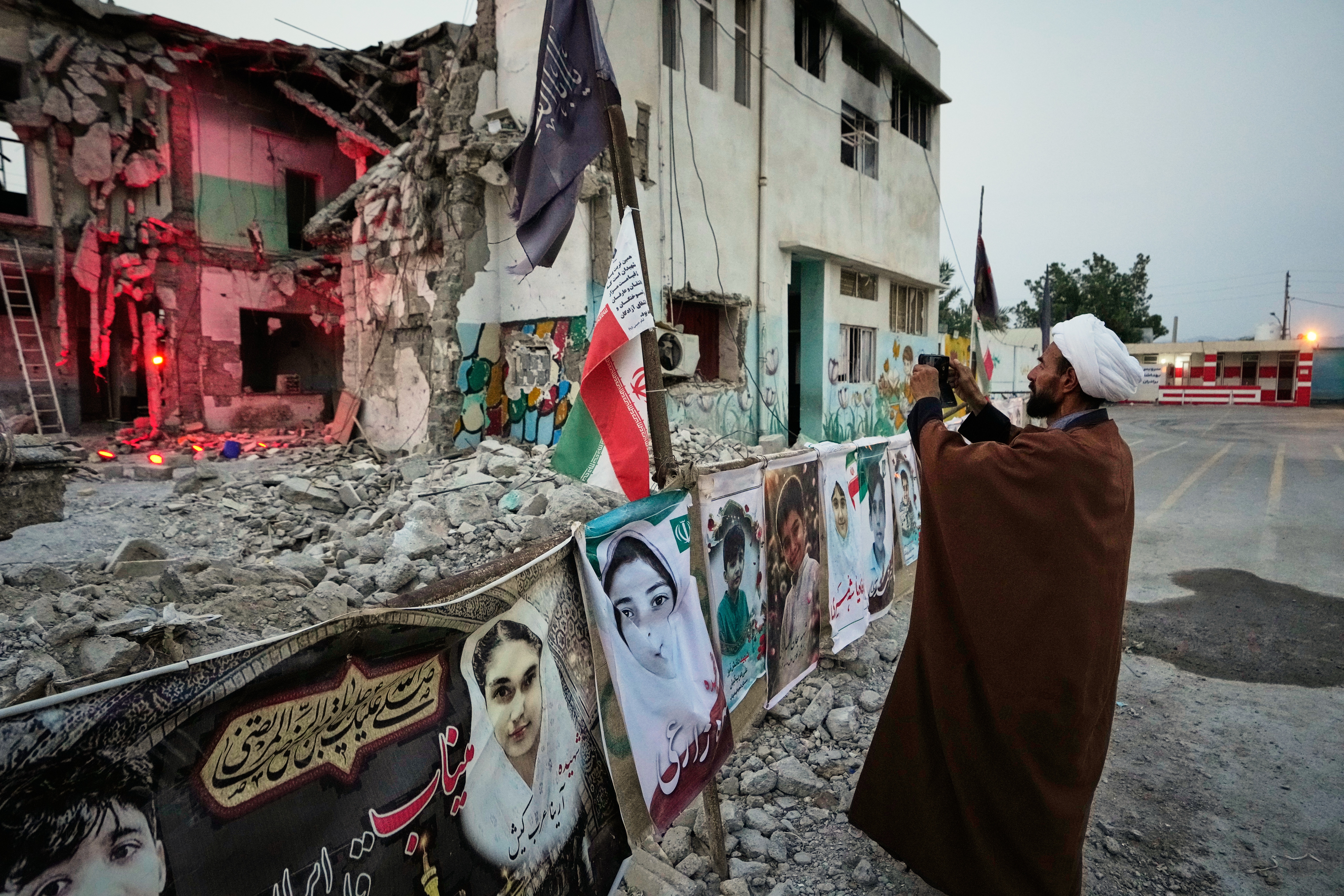
    At the start of the U.S.-Israeli war against Iran in February, at least one U.S. missile hit the Shajareh Tayyebeh school in Minab, according to an Associated Press investigation. There has been no final accounting of what happened.

    Iranian state media have said 168 people were killed in the strike, most of them children.

    “Following the United States and Israeli attacks on 28 February, the mission found reasonable grounds to believe the United States committed the war crime of launching indiscriminate attacks resulting in the loss of life or injury to civilians or damage to civilian objects,” a U.N. statement about the team’s findings said.

    The U.S. State Department did not immediately respond to a request from The Associated Press seeking comment.

    In their report, the experts concluded that “the building of the school was the intended point of impact” and the resulting damage wasn’t the result of an errant strike or collateral damage from an attack on a compound of Iran’s Revolutionary Guard next to the school.

    The Trump administration has yet to directly accept responsibility or release the findings of a Pentagon investigation into the school bombing.

    The U.N.-backed team based its allegations on two strikes — one involving Tomahawk missiles that hit the “clearly identifiable” school, and another in which Precision Strike Missiles dispersed tungsten pellets over a “clearly identifiable sports complex and residential area” in the southern city of Lamerd, also on Feb. 28.

    The U.N.-backed team said 22 civilian men and women were killed. U.S. Central Command has denied responsibility for the strike on Lamerd.

    Experts cite ‘crimes against humanity’ by Iran’s government

    The team found that killings by state security forces in Iran have occurred on a “staggering scale,” and civilians faced “gross human rights violations and crimes against humanity committed by their own government.”

    Iranian security forces carried out “violent repression” over the last two years by firing assault rifles into crowds, beating protesters and arresting healthcare workers, among other things, the team said. Detainees faced torture, and were deprived of legal counsel, leaving their families “in the dark” about their whereabouts, the experts said.

    The Tehran government intensified the use of the death penalty, and said more than 70 people – including five women and three boys – remain at “imminent risk of execution,” they added.

    “The report concluded that many of these gross violations amount to crimes against humanity — including murder, imprisonment, torture, and other inhumane acts committed as part of a widespread and systematic attack on civilians,” the statement said.

    Both the U.S. and Iran should provide reparations, they say

    The experts said the United States and Iran should halt all rights violations and crimes, and provide “full reparations to victims.”

    The report, built on a “victims-centered approach,” was based on interviews with 73 people both inside and outside Iran, along with documentation, satellite imagery, photographic and video material and information from “credible” organizations and experts, the experts wrote.

    The ongoing conflict that has driven people from their homes in Iran as well as an internet shutdown and a lack of full cooperation from the two governments partially impeded the team’s efforts to get information.

    Nearly three dozen requests from the experts for information from Iran’s government went unanswered, they said, as have requests in June to the U.S. government for information and meetings with officials.

  • House approves sweeping Russia sanctions bill, sending it to Trump

    House approves sweeping Russia sanctions bill, sending it to Trump

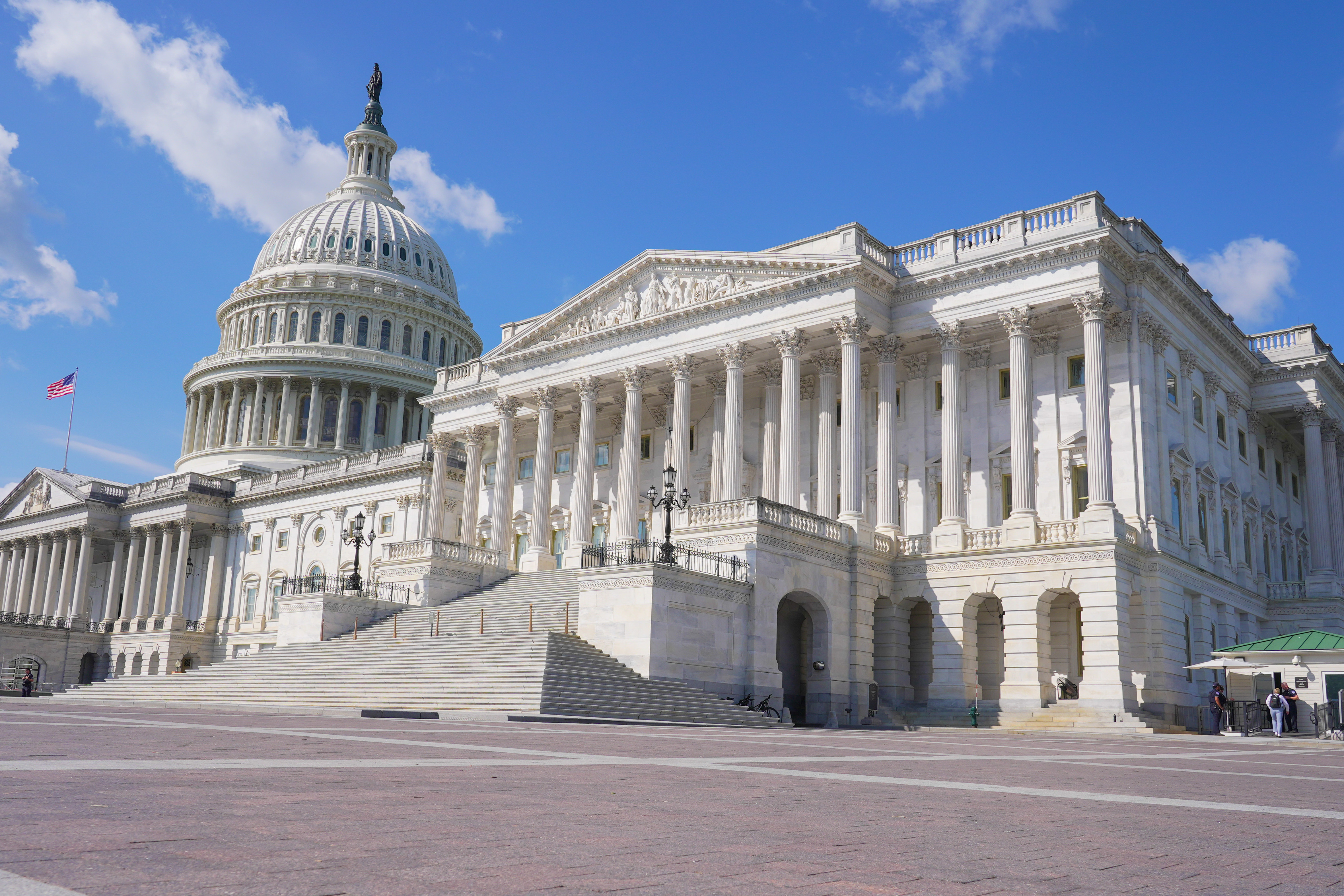
    WASHINGTON — The House on Wednesday passed a broad package of sanctions targeting Russian officials and key pillars of its economy as lawmakers look to deprive President Vladimir Putin of the financial resources needed to wage the war against Ukraine.

    The bill is named after the late Sen. Lindsey Graham of South Carolina, who spent more than a year negotiating it. The measure was approved in a 262-159 vote and now heads to President Donald Trump to be signed into law.

    The legislation represents the most ambitious effort to support Ukraine since Trump’s return to the White House and would break nearly two years of relative gridlock on the issue following a 2024 emergency aid package. Ukrainian President Volodymyr Zelensky has been pushing for the bill’s passage and made a direct appeal to senators shortly before they passed it last month.

    The measure sanctions Russian officials, banks and a shadow fleet of tankers that keeps Russian energy moving. It also directs Trump to impose up to 100% tariffs on the top five importers of Russian oil or natural gas, with an exception for countries that import less than 15% of Russia’s natural gas exports and have taken significant steps to reduce those imports.

    “These countries have a choice to make about whether they will continue to sustain Putin’s aggression,” Rep. Michael McCaul (R., Texas) said.

    Democrats are divided on the legislation

    Supporters said the tariff provisions are aimed at deterring China and India from purchasing Russian energy, but critics of the bill said they fear Trump will use the legislation to target allies in the European Union and elsewhere. Americans, they warned, would pay the price for such tariffs through higher prices at the cash register.

    “This president has always said he loves tariffs,” Rep. Gregory Meeks (D., N.Y.) said. “And we know the history of what he’s done with reference to tariffs to our European allies, and our allies everywhere.”

    Democrats were divided on the bill, despite overwhelming support in the caucus for aiding Ukraine. Rep. Steny Hoyer (D., Md.) told colleagues they can’t control what the president does, but they can stand up and declare where they are on the war.

    “If we fail to pass this bill, there will be cheers in the Kremlin and tears in Kyiv,” Hoyer said.

    But Rep. Don Beyer (D., Va.) predicted Ukraine supporters would come to regret voting for the bill.

    “Yes they will be able to say ‘we stood with Ukraine’ in the immediate aftermath,” Beyer said. “But when Donald Trump hits our allies with new tariffs and waives sanctions on Russia, the propaganda victory for Putin will be lasting, and the damage will be embedded in U.S. law.”

    Democratic leader Hakeem Jeffries of New York, speaking in opposition to the bill, said Democrats would continue to support the Ukrainian people until victory is won, “but this bill does not provide a path to secure that.”

    In all, 58 Democrats broke with Jeffries and voted for the bill, while 152 voted against it. Among Republicans, 203 voted yes while seven voted against it.

    Speaker Mike Johnson (R., La.) celebrated the vote and highlighted the additional tariff power it provides the president.

    “For too long, Putin has bankrolled this devastating war with money and resources from countries willing to look the other way, and today, that ends,” Johnson said.

    Getting Trump on board has been a long process

    Congress has struggled to ensure the flow of U.S. funding and munitions to Ukraine as Republican support for spending billions of dollars more on the effort has waned. Trump routinely derided the Ukraine aid while campaigning for the White House and insisted that, if elected, he would quickly end the war launched by Moscow’s February 2022 invasion.

    It took Graham essentially a full year to bring Trump on board with the Russia sanctions package. Eventually, Trump gave a nod to the bill after it included his push for a five-year extension of existing sanctions on Iran. Republicans speaking on the House floor in advance of Wednesday’s vote were overwhelmingly supportive of the package.

    Rep. French Hill (R., Ark.) acknowledged Democratic criticism that tariffs could be used aggressively on smaller U.S. allies, but said it was time to deliver a resounding message to the Kremlin: “End this war, get out of Ukraine, focus on rebuilding your shattered international reputation and your destroyed economy.”

    The Senate overwhelmingly passed the bill by a vote of 86-11 last month, but momentum slowed in the House. Republican leadership focused on other priorities, namely bills designed to put Democrats on defense going into the midterms. Meanwhile, a chorus of key Democratic lawmakers voiced alarm about the bill’s tariff provisions.

    Passage of the bill in the House came on the final day that the chamber is expected to be in session for votes before the Nov. 3 elections.

    After the vote, a group of Republicans and Democrats from the House and Senate celebrated the vote at a rare bipartisan press conference.

    Democratic Sen. Richard Blumenthal of Connecticut, who wrote the bill with Graham, said he hopes the sanctions will help force Putin to the negotiating table and end the war.

    “To Vladimir Putin — we have your number,” Blumenthal said. “And to Ukraine — you are not alone.”

    Leading up to the vote, Zelensky took to social media urging the House to pass the bill. He said during war it is sometimes better to “make a not-so-perfect decision than to do nothing.”

    “And this is a very important historical moment for the United States. The bill must be passed, voted on, and supported,” Zelensky said on X. “Beyond that, strong decisions from the U.S. Administration are important. Personal decisions by President Trump. I very much hope we will see that.”

  • Carney embraces a proposal for Canada to become the European Union’s first associate member

    Carney embraces a proposal for Canada to become the European Union’s first associate member

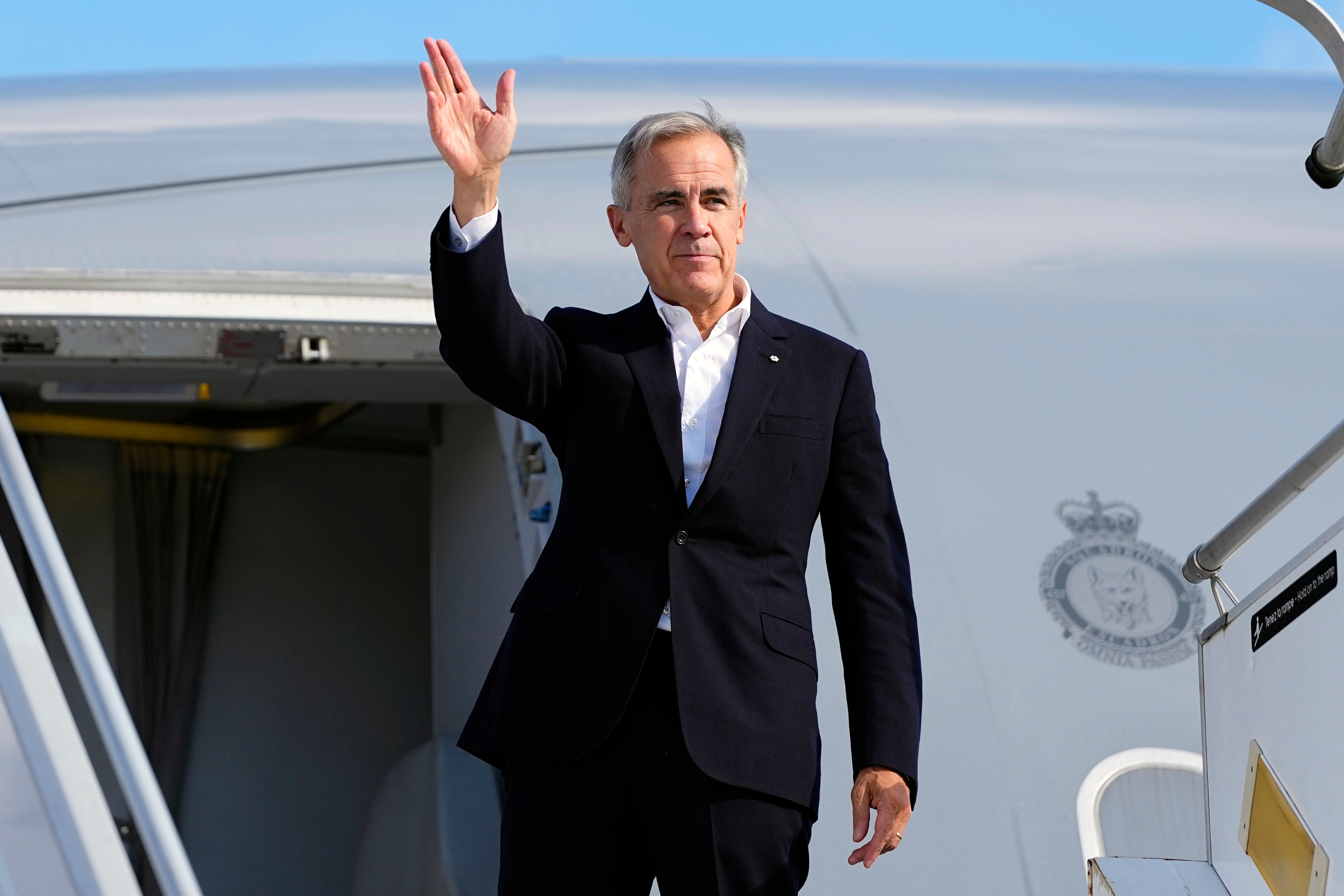
    STRASBOURG, France — Canadian Prime Minister Mark Carney on Thursday embraced the prospect of his country becoming the European Union’s first associate member, saying closer ties with Europe were meant to ensure no country could control Canada’s markets, impair its sovereignty or undermine its freedoms.

    The remarks came after U.S. President Donald Trump suggested the proposed arrangement could be a “hostile act” and threatened heavy tariffs on Europe if he judged its intentions to be unfriendly.

    In a speech that repeatedly extolled cooperation between Europe and Canada, Carney told the European Parliament that he welcomed European Commission President Ursula von der Leyen’s proposal, unveiled Wednesday.

    He acknowledged that “associate membership” remains to be defined and outlined what he was proposing: deeper Canada-Europe integration across trade, defense, critical minerals, artificial intelligence, energy, space, research and financial services to make both sides less vulnerable to economic and geopolitical pressure.

    “I am not proposing a third bloc in order to become a great-power rival — only with better manners,” he said. “We do not seek power to dominate others.”

    Carney said the goal instead is to build Canada’s resilience so that no country can control its markets, undermine its sovereignty or dictate its choices.

    The prime minister received an ebullient welcome when he walked into the chamber, with many lawmakers approaching him to shake his hand and ask for selfies — and a standing ovation after he spoke. One parliamentarian had donned a Canadian hockey jersey.

    For generations, Canada built its economy around integration with the United States. Trump’s tariffs, demands for economic concessions and repeated talk of making Canada the 51st state have pushed Ottawa to reduce its dependence on the United States and seek a far deeper economic, security and political relationship with Europe.

    Europe offers Canada another path

    Von der Leyen proposed making Canada the EU’s first associate member — a status that does not currently exist in the bloc’s treaties and would have to be created. She said Europe wants to take its relationship with Canada to “the highest level possible.”

    Carney, sitting in the front row of the European Parliament chamber, nodded and rose to embrace von der Leyen as lawmakers gave the proposal a standing ovation.

    Von der Leyen said Canada and the EU should move beyond their existing free trade agreement and create an “Alliance for the Future” encompassing a “common prosperity and economic security space.”

    Carney will host EU leaders for a Canada-EU summit in Montreal on Oct. 29-30, where the two sides are expected to discuss the proposed new relationship in more detail.

    Canada sends roughly 70% of its exports to the United States, making it highly exposed to Trump’s tariffs. Ottawa has retaliated and rejected demands Carney says threaten Canadian sovereignty. Europe took a different path, shelving retaliation and accepting tariffs of up to 15% on most EU exports to the U.S.

    Carney has rallied ‘middle powers’

    Carney has repeatedly urged middle powers to resist that kind of economic coercion. At the World Economic Forum in Davos in January, he warned that when countries negotiate alone with a dominant power, “we negotiate from weakness. We accept what is offered.”

    Trump rebuked him the next day.

    Jonathan Wilkinson, Canada’s ambassador-designate to the EU, said Wednesday that Canada is not seeking full EU membership because that would require surrendering some sovereignty. Instead, Ottawa wants “to get as close as we possibly can” to Europe while increasing Canada’s independence.

    Exactly what associate membership would mean remains to be negotiated.

    Canada has already taken a major step. This year it became the first non-European country to join the EU’s 150-billion-euro ($173-billion) SAFE defense procurement program, giving Canadian companies access to joint procurement as Europe increases defense spending.

    The two sides have also discussed closer cooperation on energy, critical minerals, artificial intelligence and digital trade.

    “The policies and rhetoric of the Trump administration are clearly pushing both Canada and the EU to imagine a world without strong U.S. leadership and to act accordingly,” said Daniel Béland, a political-science professor at McGill University in Montreal.

    Nelson Wiseman, a professor emeritus at the University of Toronto, said Carney’s handling of Trump has heightened European interest in the Canadian leader.

    “Carney’s shrewdness in dealing with Trump has captured Europe’s attention,” Wiseman said.

    Washington will be watching

    Wiseman said Europeans have long regarded Canada as a country that understands the United States particularly well because of their deep economic and political ties. Carney’s willingness to resist Trump rather than quickly accept Washington’s demands has reinforced that perception, he said.

    Béland said Carney may avoid naming Trump on Thursday while leaving little doubt about the target of his broader argument.

    “He knows that, beyond Europe, the world will be watching, including the White House,” Béland said.

  • Trump bars some South Africans over claims of anti-white discrimination

    Trump bars some South Africans over claims of anti-white discrimination

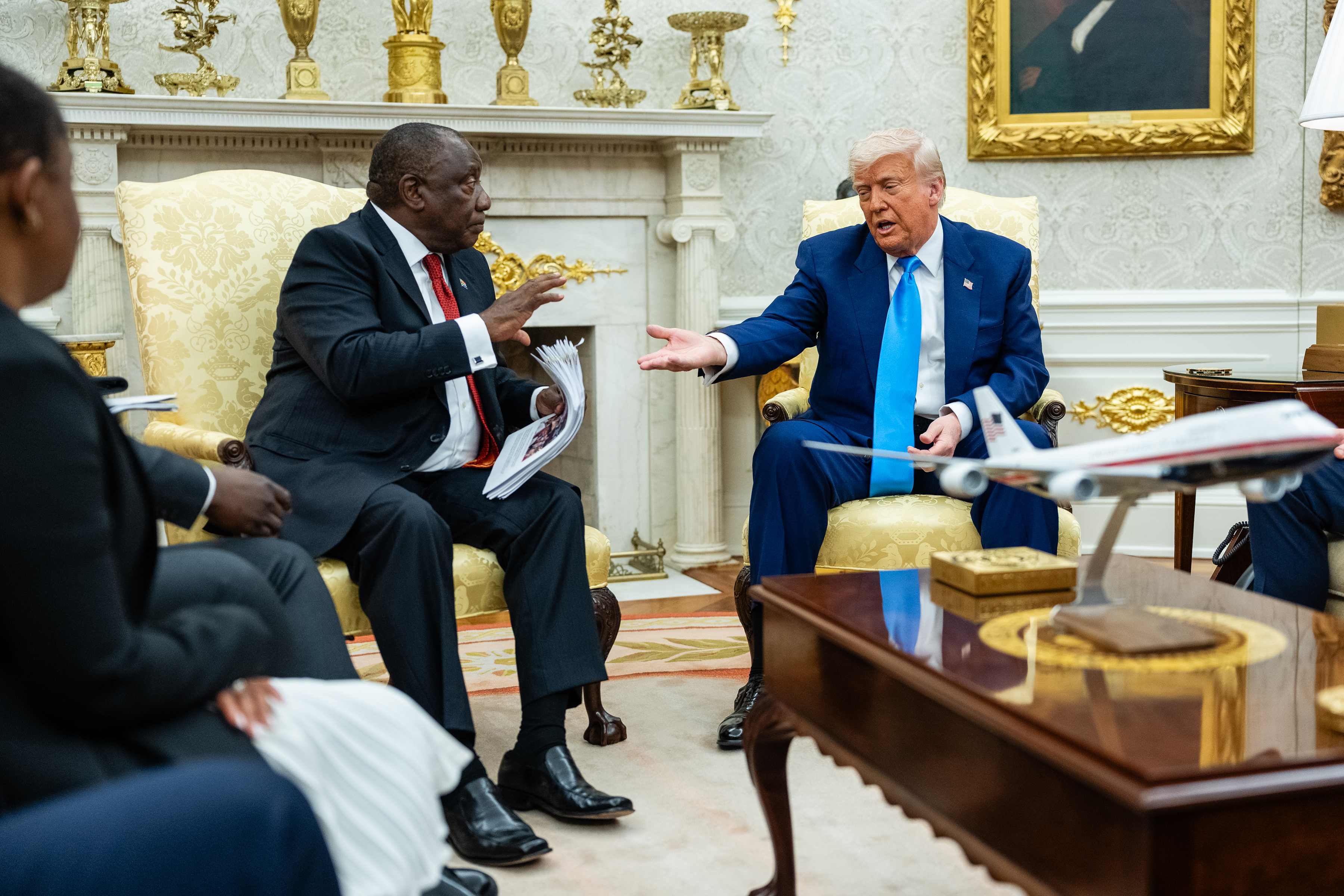
    JOHANNESBURG — The Trump administration imposed visa restrictions on selected South Africans on Tuesday and warned that it could take further punitive actions if South African leaders did not address President Donald Trump’s concerns over what he sees as discrimination against white people.

    The visa policy expands the administration’s efforts to punish South Africa since Trump last year accused the government of seizing land from Afrikaners, a white South African minority, and allowing them to be killed in what he has labeled genocide. Claims of genocide against white South Africans are widely acknowledged as false, and President Cyril Ramaphosa has said Trump’s policies toward South Africa are racist.

    The visa restrictions will prevent selected individuals from entering the United States. Under law, the government is not allowed to publicly disclose who is affected.

    In a statement, Secretary of State Marco Rubio said the United States remained “gravely concerned about racially motivated crime and government-sponsored discrimination occurring against the Afrikaners and other minority populations in South Africa.”

    He said the restrictions would target South Africans involved in race-based discrimination, those responsible for a law that enables the government to seize land without compensation, and those who incite violence against racial minorities.

    In a statement, South Africa’s foreign minister, Ronald Lamola, said Washington’s unilateral action “once again aligns with the misrepresentation of South Africa’s domestic policy by fringe groups.” He called on the United States to respect South Africa’s sovereignty on handling domestic issues.

    The policy was announced less than three weeks after Ramaphosa met with the U.S. ambassador, Leo Brent Bozell III. The South African government described the engagement as “an opportunity to strengthen and recalibrate” the relationship between the countries.

    In a social media post Wednesday, Bozell said he had “attempted time and again to express” that South Africa could face severe consequences if it did not take action on the administration’s demands, which include exempting American companies from Black ownership requirements and rolling back a land expropriation law.

    “This visa restriction policy is only the first step in a series of escalatory measures that will show America’s firm resolve in this matter,” Bozell wrote.

    The U.S. move was the latest sign of the deteriorating relationship between the United States and South Africa.

    This article originally appeared in the New York Times.

  • Charlie Kirk’s family accuses university of ‘stunning’ security failures

    Charlie Kirk’s family accuses university of ‘stunning’ security failures

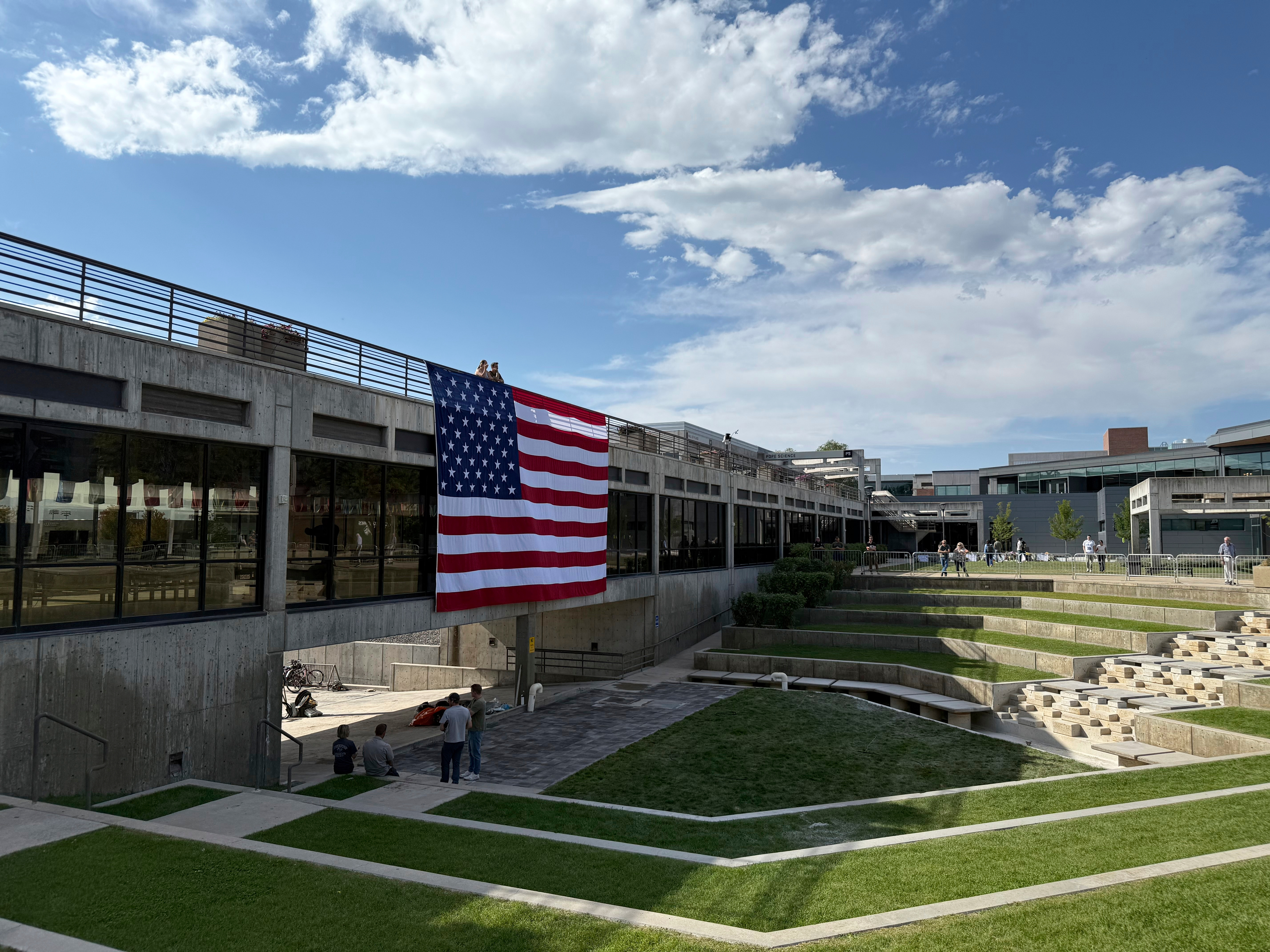
    The family of slain conservative activist Charlie Kirk has accused the Utah university where he was killed last year of “stunning” security failures that made him an easy target for a rooftop assassin.

    In a legal notice filed this month, lawyers for Kirk’s wife, parents, and children said Utah Valley University did not have a written security plan or hold a security briefing before Kirk arrived for an open-air debate last September that drew a crowd of thousands.

    They also said the university’s police chief had failed to address concerns raised by Turning Point USA, the conservative activist group founded by Kirk, about how easily people could climb onto the rooftops that overlook the sunken plaza where he was shot.

    The accusations came in a “notice of claim” that lawyers for the Kirk family sent to the state of Utah earlier this month and made public Wednesday. Kirk’s family has not yet sued, but the notice is a potential precursor to a wrongful-death lawsuit against the public university or the state.

    “His murder was entirely preventable,” Brett Parkinson, a lawyer for the Kirk family, said in a statement.

    In a statement Tuesday, Utah Valley University said its “focus remains on supporting our campus community” but declined to comment further on the notice. It is conducting its own review of security surrounding the shooting.

    Kirk, one of the country’s most influential and visible conservative activists, made Utah Valley University in Orem the first stop of his “American Comeback” tour of college campuses. About 3,000 people showed up on Sept. 10, 2025, to see him debate political opponents on a sunny afternoon.

    He was just minutes into the event and answering an audience member’s question when he was shot in the neck by a gunman perched on a rooftop about 400 feet away.

    In the legal notice, lawyers for Kirk’s family said the university’s security decisions “ultimately rendered Mr. Kirk helpless to the rooftop shooter in an assassination that could have been avoided.”

    According to the notice, a Turning Point USA official texted Jeff Long, the university police chief, before the event to relay concerns from a Turning Point campus chapter about students’ ability to take staircases to building rooftops.

    “It would be nice to either have it controlled access or allow one of my guys to be there as well. If possible,” a Turning Point official texted Long, according to the legal notice.

    Kirk’s lawyers say Long responded, “I got you covered.”

    Lawyers for the Kirk family argued in the legal notice that the university should have been on alert for a rooftop sniper after a would-be assassin fired at President Donald Trump in 2024 from a roof outside a rally in Butler, Pa.

    Surveillance videos and testimony from investigators suggest that Tyler J. Robinson, the 23-year-old man charged with aggravated murder in Kirk’s killing, encountered virtually no obstacles or resistance on his way to the roof. Robinson, who could face the death penalty, has pleaded not guilty.

    Surveillance videos from the morning of the shooting captured the gunman as he walked to a railing on the roof of a campus building and then left. When he returned later, he “crawled to a sniper perch” along the edge of the roof, took aim at Kirk, and fired, according to a legal filing by prosecutors.

    The legal claim filed by Kirk’s family said the university did not fly drones or monitor its surveillance cameras in real time during the event — actions that might have spotted the gunman.

    It also says that despite Kirk’s fame and the size of the crowd, the university only had six officers on duty that day and did not ask police in Orem or nearby Provo for help until after the fatal shot was fired.

    This article originally appeared in the New York Times.