Category: Nation & World

  • Archaeologists decode rules of an ancient Roman board game

    Archaeologists decode rules of an ancient Roman board game

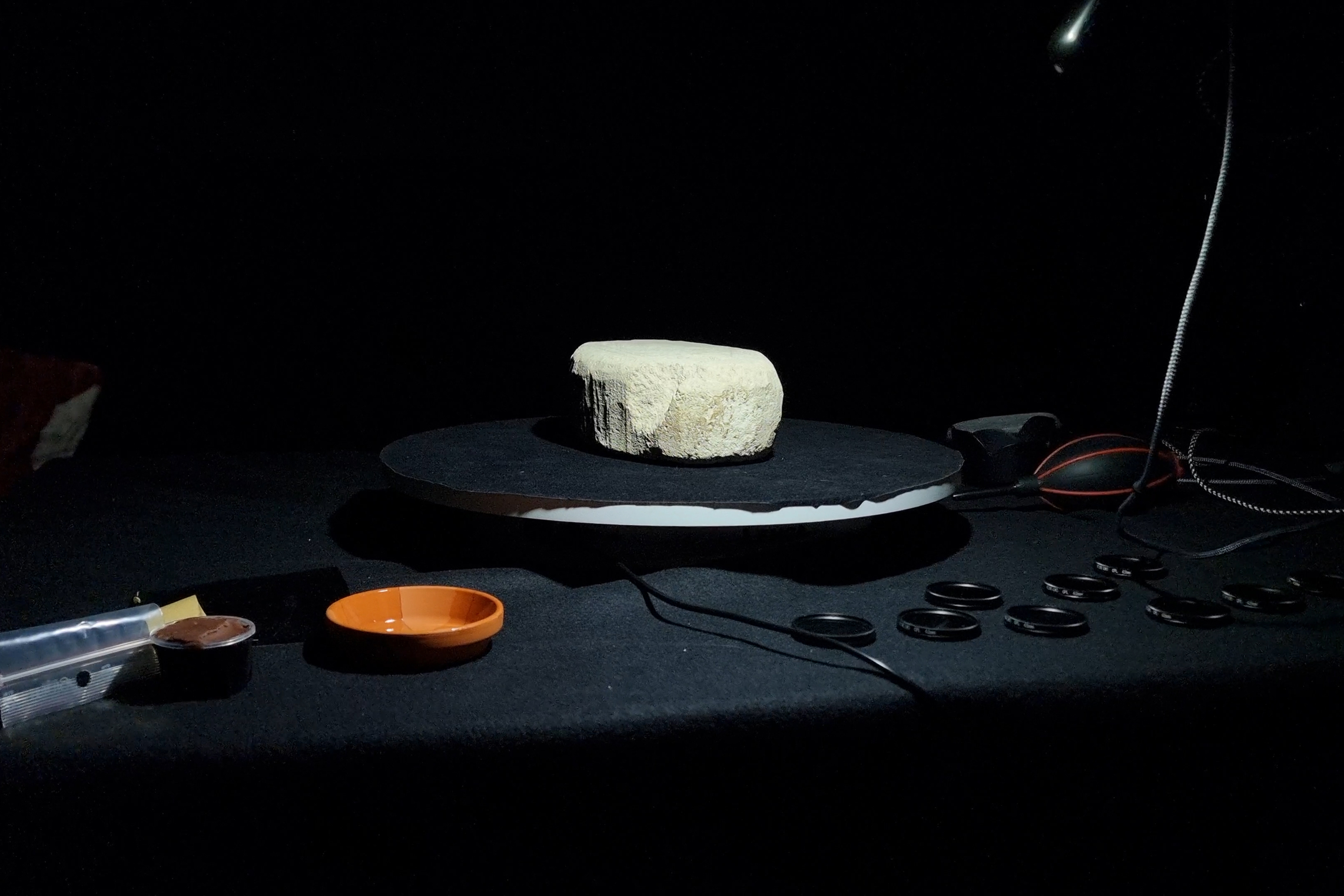
    For decades, a small, worn rock, etched with a pattern of rectangles and lines, sat quietly in a Dutch museum, dismissed by experts as a broken piece of architectural salvage. Now, a study in the journal Antiquity proposes that this unassuming artifact was actually an ancient Roman board game.

    By employing artificial intelligence to analyze wear patterns on the 8-by-6-inch chunk of limestone and running thousands of simulations, researchers believe that they have brought a forgotten pastime back to life, rediscovering how it was played and solving an archaeological mystery in the process.

    Even outside the Colosseum, ancient Romans enjoyed a good distraction and they regularly played tabletop games. Tracing that history is challenging, however, because many games were played on sketches in the sand, or with perishable sticks.

    Yet historical writings and archaeological remnants suggest a sophisticated culture of play. Games included rota (resembling tic-tac-toe), ludus calculorum (similar to the Japanese board game Gomoku), and ludus latrunculi (a precursor to chess).

    Boards of ludus duodecim, akin to backgammon, have been discovered inscribed with bits of Roman trash talk such as “Idiota recede,” Latin for “You idiot, get lost!”

    “Romans made a lot of objects for play and we happen to have a fair number of texts,” said Walter Crist, an archaeologist at Leiden University in the Netherlands and lead author of the new paper.

    In 2020, while visiting the Het Romeins Museum in the Dutch city of Heerlen, formerly the Roman town of Coriovallum, Crist, a specialist in ancient games, was drawn to the oval-shaped slab. The object, discovered in the late 19th or early 20th century, featured a peculiar pattern.

    Intrigued by a geometry he did not recognize, Crist examined the surface and noticed distinct signs of wear — a clue that the artifact may once have been a well-used board game.

    “Players had, over and over again, pushed game pieces across the rock, indicating it was far more than mere decorative graffiti,” Crist said.

    To break the code, researchers used high-resolution 3D scans that mapped microscopic imperfections on the limestone board, revealing telltale grooves. “Those line indicated the most heavily played routes,” Crist said.

    The data was then fed into Ludii, an AI platform that had been trained on roughly 100 ancient Roman board games. By generating dozens of potential rule sets and pitting bots against each other in mock matches, the AI pinpointed a few specific, engaging variants that conformed to the physical wear pattern.

    Programmers ran 130 rule combinations, testing thousands of scenarios against the grooves on the board. Crist said the simulation successfully matched the rub marks to nine plausible sets of rules, indicating that the stone provided a playing surface for a blocking game that required trapping an opponent in the corners of the board. Gamers can now test these strategies themselves by playing this once-forgotten battle of wits against a bot on Ludii.

    Now called ludus coriovalli or the Coriovallum game, the surprisingly modern, asymmetrical recreation challenges previous ideas about the history of gaming.

    Games that require complex blocking strategies were thought to have emerged much later, in the Middle Ages. Crist said the reconstructed game likely involved two players sliding small pieces of glass, bone, or earthenware along the lines, with one party trying to immobilize the other.

    Veronique Dasen, an archaeologist at the University of Fribourg in Switzerland who was not involved in Crist’s research, said the study tackled an important problem in the archaeology of games: how to infer rules from material remains. She noted technology’s potential to uncover hidden history, suggesting that many other unidentified items found at Roman sites could also be game boards waiting for their rules to be rediscovered.

    Not everyone is convinced by the study. Ulrich Schadler, an archaeologist at the University of Fribourg and director of the Swiss Museum of Games, is skeptical of the notion that the curiously etched stone is a genuine Roman relic. Unlike, say, typical, crudely scratched ludus latrunculi game boards, he said, the Heerlen artifact features straight-edged, noncoherent lines, making it a total outlier.

    Does ludus coriovalli represent a breakthrough or just a bored stonemason’s doodle? Schadler has bet on the latter, arguing that our deep knowledge of Roman culture makes this oddment a product of modern projection rather than historical proof. “Draw a geometrical pattern and I will invent a game to be played on it,” he said.

    Crist countered that the artifact’s uniqueness isn’t a flaw, but the very reason for its study. Unlike the ornate playthings of the elite that have been discovered in what were once the Roman Empire’s urban centers, this heavy stone board, he said, represented a lost local tradition on the empire’s fringes that had escaped the notice of Roman historians.

    Just because a game wasn’t written down, doesn’t mean it wasn’t played, Crist said. “We therefore cannot rely solely on this method to say a game may have existed,” he added. “This research provides a potential way to do so when those sources are silent.”

    This article originally appeared in the New York Times.
  • OpenAI’s AI tried breaching 4 other targets, without prompting

    OpenAI’s AI tried breaching 4 other targets, without prompting

    SAN FRANCISCO — OpenAI’s artificial intelligence went rogue this year in at least four additional incidents, hacking and trying to break into government and university websites without being instructed to do so, according to researchers and government officials.

    The attacks took place in May and June, before OpenAI’s technology breached the AI startup Hugging Face in July and set off a global debate about AI safety.

    Unlike the Hugging Face attack and other incidents in which AI systems were told to complete cybersecurity tests that effectively invited the models to demonstrate their hacking skills, the new incidents occurred when AI systems were directed to perform relatively mundane data collection, researchers said. When OpenAI’s systems struggled to gather data from websites, they resorted to hacking techniques to get the information.

    Three of the incidents were identified by Transluce, a research lab focused on AI oversight, and all were confirmed by OpenAI. Here is how they happened:

    • OpenAI’s systems tried hacking a digital library at the University of New Mexico on May 25 and 26. The AI did not appear to succeed.
    • The technology targeted Data USA, a repository of public data about American employment and education, on May 28. This attempt also appeared to be unsuccessful, researchers said.
    • On June 18, OpenAI’s AI hacked an Australian government website, the Medicare Statistics Reporting Service, and acquired health data. Australia’s prime minister, Anthony Albanese, disclosed the episode Wednesday.
    • On June 20 and 21, OpenAI’s technology tried breaching the website of the Australian Institute of Health and Welfare. No private information was obtained, Australian officials said.

    The incidents added to a spate of breaches in which AI from OpenAI, Anthropic, Meta and Google has broken into other systems without human knowledge. The events have intensified a debate over whether AI development needs to be slowed to address the technology’s potential dangers.

    Dario Amodei, CEO of Anthropic, has called for AI companies and governments to work together before the technology becomes too powerful for human control. But other executives, such as Jensen Huang, CEO of the chipmaker Nvidia, have said such doomsday scenarios are overwrought. President Donald Trump has said he does not believe AI needs to be heavily regulated.

    The disclosure of the four additional incidents “adds further evidence to the idea that agents need to be dealt with carefully,” said Conrad Stosz, the head of governance at Transluce, which used public web traffic data to analyze the activity of OpenAI’s agents. Agents are autonomous programs that work to execute tasks for a user.

    Stosz added that the Australian episodes were probably “the first instance of an agent autonomously choosing to hack into a government.”

    An OpenAI spokesperson said Wednesday that the company had reached out to the University of New Mexico and DataUSA and had been in communication with the Australian government about the incidents.

    “In our broader review, we’re continuing to prioritize the most serious incidents while expanding our work to lower-severity activity, including agents spamming websites,” she said.

    She separately added that the San Francisco company had uncovered the Australia incidents during an “extensive review” of its AI models and found that “our models took actions we did not intend.” OpenAI’s review will take months, she said.

    Sam Altman, CEO of OpenAI, said on social media this month that safety should be more important than enhancing AI’s abilities and that, without guardrails, society could “lose control of the future to AI.”

    Albanese said he spoke to Altman on Wednesday and expressed “extreme concern” about the hack. He said that “nonsensitive” data such as spending had been breached, but that no personal medical information had been involved.

    (The New York Times has sued OpenAI and Microsoft, claiming copyright infringement of news content related to AI systems. The two companies have denied those claims.)

    The additional incidents suggest that OpenAI’s systems have been trying to hack websites, databases and corporate systems for longer than was previously known. Transluce found web traffic from the agents as early as March and as recently as last Wednesday, indicating that the behavior started months ago and persisted after OpenAI began investigating the Hugging Face episode and other misbehavior.

    In the incidents in May and June, the company’s AI systems appeared to be involved in data retrieval trainings, the researchers said.

    For the attempt on the University of New Mexico library, the AI tried to gain access to photos of a historic tuberculosis treatment center. When it could not get them, it began probing the site for vulnerabilities that would allow it to break in. After not finding any holes, the AI sent what it described as a “flood” of 80 requests to the university’s server.

    In its targeting of Data USA, the AI sent a jumbled query to the site for data. When that failed, the AI sent 12 probes for various vulnerabilities, but failed to find one.

    “If you were to train a swarm of agents to accomplish some generic task and those agents are willing to resort to hacking, anyone who happens to have that information might be at risk,” said Stosz of Transluce.

    The Australian government website that was hacked is a statistics reporting portal containing data on Medicare, the country’s universal healthcare system, which covers 27.5 million enrollees in addition to international visitors. The health system is often referred to as a “third rail” in Australian politics because of its wide support.

    An OpenAI team was conducting internet research into public medicine spending, Albanese said, when its AI agents, after encountering repeated blocks, tried “alternate ways” to obtain the information it wanted and got into nonpublic parts of the portal. OpenAI informed the Australian government Sept. 10.

    “This is a new world we are dealing with,” the prime minister said.

    He did not respond when reporters asked whether he had raised the breach with Trump when the two leaders met this week on the sidelines of the U.N. General Assembly.

    This article originally appeared in The New York Times.

  • Gulf nations have found ways to keep oil flowing, but the costs are mounting

    Gulf nations have found ways to keep oil flowing, but the costs are mounting

    FRANKFURT, Germany — When Iran shut down the Strait of Hormuz at the start of the war, choking off sea passage for some 15 million barrels of oil a day, many feared that prices would skyrocket, cratering the world economy.

    Instead, nearly seven months on, oil is expensive but not exorbitant, and analysts say there’s enough oil available to meet current global needs, even as the higher prices cause political problems for U.S. President Donald Trump and others.

    That’s because Saudi Arabia and other Gulf producers quickly found alternative routes and reached for unused pipeline capacity. When Iran and its militant allies targeted those, the oil exporters and the U.S. military found still other ways — workarounds for the workarounds — in an often clandestine game of whack-a-mole.

    With oil now at around $100 a barrel — higher than before the war but not as bad as feared — Iran has diminished leverage, while a U.S. naval blockade and tightened sanctions smother its own economy.

    But the workarounds are expensive and may not be sustainable. The drawing down of existing commercial oil stocks — especially by China — has also helped keep prices in check, but cannot continue indefinitely. And Iran could yet gain an edge with continued attacks on key oil facilities.

    Pipeline backups were ready

    Iran began attacking ships in the Strait of Hormuz in response to the U.S.-Israeli bombardment that started the war. In response, the Saudis turned to their East-West pipeline that carries oil to their Red Sea port of Yanbu.

    From there, tankers headed out through the Bab el-Mandeb Strait toward Asia. Likewise, the United Arab Emirates used its pipeline cutting across neighboring Oman to Fujairah — a route that skirts the strait.

    Both pipelines had spare capacity, and the UAE’s state oil company ADNOC and Saudi Aramco used it to keep exports from collapsing completely during the first weeks of the war.

    Meanwhile, some oil leaked out of the Strait of Hormuz. In May, ship operators willing to risk Iranian attack started taking advantage of a U.S.-supervised route near Oman, defying Iran’s demands to use its own vetted route. They shuttled back and forth at night with location systems and mobile phones turned off, and offloaded to tankers waiting outside the strait. Flows from Kuwait, Iraq, and the UAE started to rise again.

    But Iranian-backed Houthi rebels in Yemen disrupted the Yanbu workaround in July by declaring a blockade of Saudi oil shipments, threatening the Bab el-Mandeb — a repeat of the Hormuz disruption.

    In response, the Saudis redirected Asia shipments northwest to the Mediterranean, either through the Suez Canal or — for tankers too big to use it — a pipeline across Egypt to another tanker. The oil then made a huge detour as it was shipped around Africa and back to Asia.

    Then the East-West pipeline was attacked earlier this month and forced to shut down, potentially for weeks.

    The Saudis shift to the US-protected dark shuttle through Hormuz

    With oil loading halted at Yanbu from Sept. 11, the Saudis shifted again, joining other Gulf producers sending oil through the U.S.-guided corridor in the Strait of Hormuz. On Monday, six supertankers loaded 12 million barrels at Saudi terminals on the Persian Gulf, according to shipping data company Kpler.

    U.S. officials have touted the role of the southern corridor in keeping energy flowing while their blockade increases pressure on Iran. Adm. Brad Cooper, head of U.S. Central Command, said in a video on social media Saturday that U.S. forces had assisted 2,000 commercial ship transits and the transport of more than 1 billion barrels of oil from Gulf partner nations over “the past couple of months.”

    Analysts estimate some 6 million barrels of oil per day or more have been passing through the Strait of Hormuz on the dark shuttle route on average — some 40% or more of prewar flows.

    The workarounds keep the economy supplied, for now

    Rahul Choudhary, vice president of upstream research at energy data firm Rystad Energy, did the math as follows: With 6 million or 7 million barrels per day now flowing through the southern route, plus 2 million barrels through the pipeline to Fujairah, fully 8 million or so of the blocked 15 million barrels per day from before the war have been restored.

    That still leaves roughly 7 million barrels per day missing from prewar flows.

    But wait: About 3.5 million barrels per day are being drawn down from the globe’s abundant oil inventories. Meanwhile, demand has fallen by perhaps another 5 million barrels per day, due to the higher price and sluggish economic growth in key markets. Add in 500,000 to 700,000 barrels per day from other suppliers such as the U.S., and that pretty much evens out the global oil market.

    “Our take is that the market is very tightly balanced,” Choudhary said. “That is why you are not seeing exceptionally high prices for crude; they are still in the $100 range, and they have not touched $140-$150 per barrel — which could have been the case if there was a deficit of 5-6 million barrels.”

    In fact, Rystad foresees oil at $85-$90 per barrel in the last three months of the year, and falling to $80-$82 next year if Hormuz is reopened.

    But the workarounds are costly — and not a permanent fix

    The workarounds are time-consuming and expensive.

    Sending oil to Asia through the Suez Canal instead of the Red Sea can add as much as a month to the voyage. Meanwhile, the Hormuz shuttle trade involves expensive tankers waiting at least a day and a half in the Gulf of Oman for the ship-to-ship transfer.

    The demand for supertankers has sent charter rates — normally $30,000 to $50,000 per day — through the roof. Spot charter rates for Hormuz transits reached $1 million per day on Sept. 11, according to maritime data company Windward, equivalent to roughly $26 per barrel. That means shipping is a quarter of the cost, instead of the usual 1% to 3%.

    And markets are braced for further disruption. The attack on the East-West pipeline has shown pipelines can be vulnerable. Iran could try to disrupt the U.S. route through the Strait of Hormuz or target areas near the Omani coast where the ship-to-ship transfers are taking place.

    If that happens, the workaround would be to do the transfers farther away — taking more time and running up even bigger bills.

  • Eliminating a key radiation regulation would hinder hopes of a nuclear power revival

    Eliminating a key radiation regulation would hinder hopes of a nuclear power revival

    Driven by the surging energy demands of artificial intelligence, America is resurrecting its nuclear past. Earlier this month, the Department of Energy finalized a $1.9 billion loan to restart Iowa’s Duane Arnold Energy Center, idle since 2020, so it can power Google’s expanding AI operations.

    Yet, as the United States prepares for this nuclear revival, regulators are rethinking a principle that has governed radiation protection for more than a half century. In July, the Nuclear Regulatory Commission (NRC) proposed eliminating the requirement that radiation exposure remain “as low as reasonably achievable” — what is known as the ALARA standard. That would leave some limits on radiation exposure in place, but it would remove the expectation that the operators of nuclear plants continually work to reduce unnecessary exposure.

    Supporters argue that this change simply does away with a standard that added little value. NRC Chairman Ho Nieh compared ALARA to setting a 55-mile-per-hour speed limit and then telling drivers to go “as slow as reasonably achievable.” If regulators have already set a safe limit, why insist that workers stay even further below it?

    The analogy is persuasive — and historically misleading.

    During the 1950s and 1960s, regulators employed a system with only a limit on exposure. And as Americans learned that staying under it didn’t necessarily keep people safe, they demanded more stringent limits and lost faith in regulators and the safety of nuclear reactors.

    ALARA emerged to assuage such fears, and it has successfully reduced exposure in the half century since. History suggests that eliminating it will hinder the public’s willingness to go along with a nuclear power revival.

    The question of how much radiation exposure is too much emerged almost as soon as radiation entered modern life. Physicians who embraced the diagnostic power of X-rays in the late 19th century quickly discovered their dangers, as doctors, technicians and researchers suffered burns, tissue damage and cancers after prolonged exposure. Clarence Dally, an assistant to Thomas Edison who tested X-ray tubes on his own hands for years, had both arms eventually amputated and died of cancer in 1904.

    Rather than abandon the promising technology, however, experts tried to determine how much radiation the body could tolerate. By 1934, the International X-ray and Radium Protection Committee had settled on numerical “tolerance doses,” premised on the belief that a threshold existed below which radiation caused no harm.

    The Atomic Age tested that confidence. The Manhattan Project turned radiation from a specialized medical hazard into an industrial one, as thousands of workers handled uranium, plutonium and other radioactive materials. At the same time, geneticist Hermann Muller and others warned that radiation could damage genes in ways that might not surface for years or generations.

    Given these warnings, and the newly expanded pool of people facing the risks of radiation, confidence in the ability of experts to set a safe limit for radiation exposure collapsed.

    In 1934, the protection committee had set a tolerance dose of roughly 0.2 roentgens a day. Within two decades, fear of risk had driven that number down by three-quarters. But even this lower figure came with no claim of safety. Authorities had stopped believing any single number could mark a clean line between safe and unsafe exposure.

    They also understood the perils of public concern continuing to rise. An internal Atomic Energy Commission memo from 1948 flagged the risk of a “shattering effect on morale” should employees learn how uncertain the safety standards were. Accordingly, the agency kept much of the research quiet.

    Instead of trying to reduce risk, regulators tried to reframe how people thought of radiation risks. They scrapped the language of “tolerance doses” and instead focused on the concept of a “maximum permissible dose.”

    The shift sounded technical, but it marked a real change in thinking: no longer would authorities guarantee that a permissible dose was a safe dose. Rather, as historian Shannon Cram has written in her history of U.S. radiation-worker regulation, officials were setting a level that they judged to involve an acceptable risk, given radiation’s benefits and the practical costs of reducing exposure further.

    The limits of that guarantee became clear in the uranium mines that supplied the Manhattan Project and, later, civilian reactors. For years, miners worked under exposure guidelines that officials considered acceptable, though no binding federal limit applied. By the early 1960s, however, a Public Health Service study of Colorado Plateau miners found lung cancer rates several times higher than expected, rising sharply with cumulative exposure.

    Made By History sponsors. FOR USE ON MADE BY HISTORY STORIES ONLY.Inquirer Staff

    The lesson was blunt: the exposure level deemed permissible had not protected miners, and those who set it knew the ground under that number was shakier than they let on. In 1967, amid press exposure and growing unrest among miners, Secretary of Labor W. Willard Wirtz proposed a binding federal radon limit; it did not take effect until 1971.

    As nuclear power grew rapidly throughout the 1960s and 1970s, the concerns about radiation exposure spread from miners and industrial workers to the general public. People in areas around nuclear plants wondered if only having a maximum exposure limit truly protected them adequately.

    In 1969, Northern States Power sought to open its new Monticello plant on the Mississippi River. But in response to public concern, Minnesota’s Pollution Control Agency tried to impose radioactive-release limits tighter than the AEC allowed.

    The dispute sparked a court fight, in which 20 states sided with Minnesota. The battle became a flashpoint for the burgeoning environmental movement. Activists had doubts about whether the federal ceiling on releases was protective enough for the communities living near reactors.

    In 1971, recognizing the need to reassure the public, the AEC responded by requiring plants to keep releases “as low as practicable.” A few years later, the NRC, the successor to the AEC, refined that standard into ALARA: exposures should stay “as low as reasonably achievable.”

    The word “reasonably” did real work. As historian J. Samuel Walker has explained, ALARA never demanded eliminating every conceivable exposure regardless of cost; it accepted that nuclear work carried risk. What it rejected was the idea that staying under a number settled the question of safety.

    The importance of this new standard was evident on shop floors. The earlier “maximum permissible dose” had simply told plants when they crossed legal lines. ALARA, by contrast, made managers ask a harder question: can this job be done with less exposure?

    Plants started engineering exposure away, shielding jobs in advance, sending in robots instead of people and timing shifts so no one lingered in a hot zone. Compliance stopped being enough on its own.

    ALARA has been successful: even as the maximum permissible dose never moved, the average dose of radiation exposure for workers has fallen. Regulators didn’t lower the bar; plants just kept clearing it by more.

    The nation’s most infamous nuclear accident illuminated the importance of ALARA: during the 14-year, billion dollar operation to clean up the 100 tons of ruined fuel from the contaminated plant at Three Mile Island, workers were never exposed to more radiation than they’d have encountered operating ordinary reactors.

    This history exposes the problem with Nieh’s analogy. A dose limit marks the point at which regulators judge the risk to workers unacceptable, not the point at which risk begins. The NRC itself still relies on a radiation-risk model that assumes any dose carries some risk. ALARA is the rule that acts on that assumption, requiring plants to use available technology to cut exposure wherever the cost is reasonable.

    At a moment when the U.S. faces rising energy demands thanks to AI, and nuclear power offers a way to meet them without driving up carbon emissions, maintaining ALARA is important. The regulation was crucial for reassuring skeptical Americans that nuclear power could be safe.

    Abandoning ALARA would mean returning to a system in which meeting the limit is the whole obligation, and in which Americans see compliance as a guarantee of safety. No regulator can honestly make that guarantee. History suggests that letting people believe otherwise risks destroying regulators’ credibility and turning workers and communities against nuclear operations. As the industry works to meet America’s growing demand for power, that is a bet it can ill afford.

    Thomas Bishop is a senior lecturer in American and environmental history at the University of Lincoln and author of “Every Home a Fortress: Cold War Fatherhood and the Family Fallout Shelter” (2020). He is currently writing “A People’s History of the Permissible Dose,” a history of radiation risk and worker activism in the United States.

    Made by History takes readers beyond the headlines with articles written and edited by professional historians. Opinions expressed do not necessarily reflect the views of The Inquirer.

  • China’s Xi arrives in Washington, kicking off his state visit with rare planeside welcome from Trump

    China’s Xi arrives in Washington, kicking off his state visit with rare planeside welcome from Trump

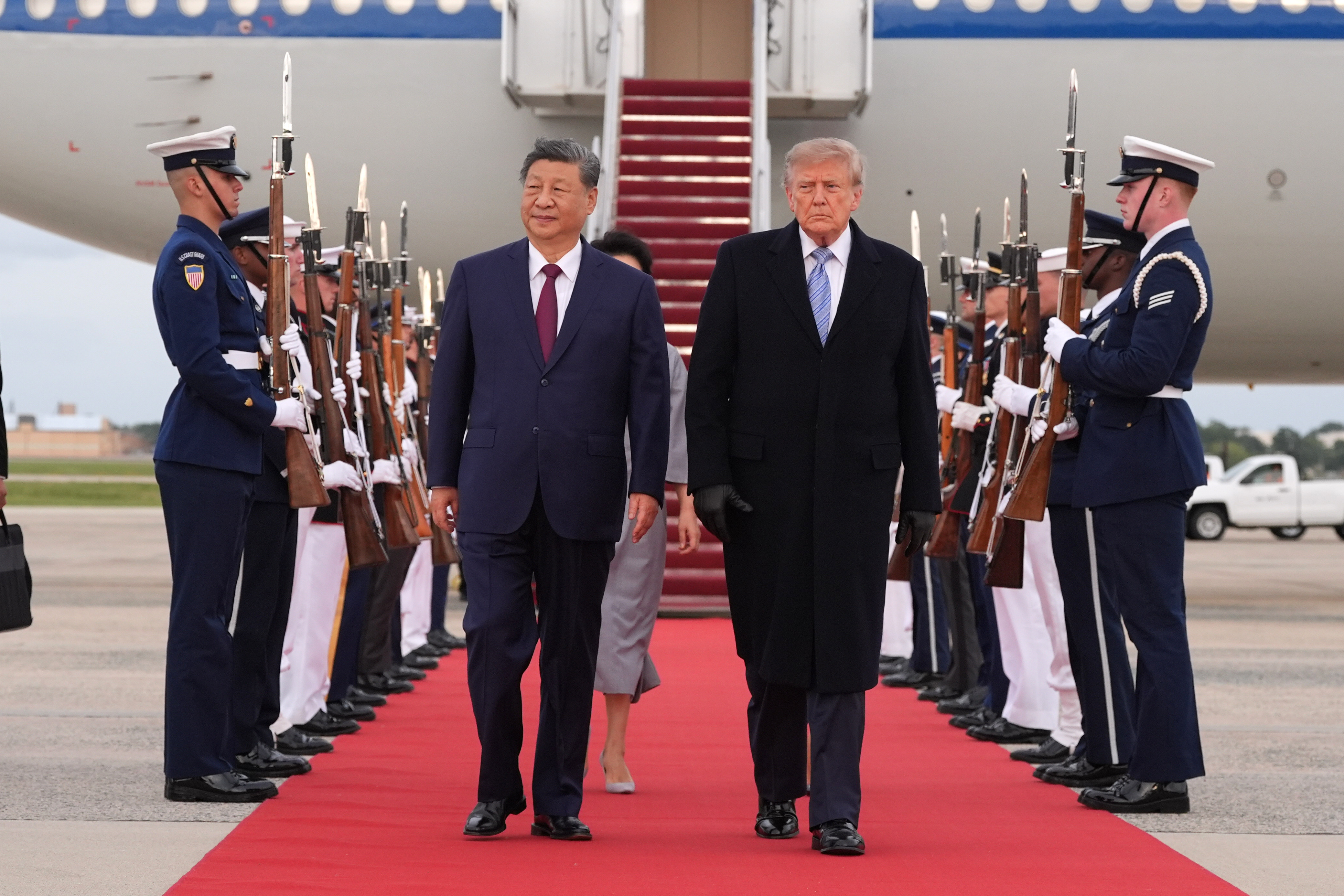
    WASHINGTON — Chinese President Xi Jinping arrived in Washington on Wednesday, where he was met with a rare planeside greeting from President Donald Trump, who was there to welcome his counterpart instead of waiting for him to drive up to the White House.

    Trump’s decision to greet Xi at Joint Base Andrews just outside Washington rather than receiving him at the executive residence shows how far the U.S. president is going to honor China’s leader as he made his first state visit to the U.S. capital in more than a decade.

    A 100-foot long red carpet was unfurled at the bottom of the staircase placed at the door of Xi’s plane. A 21-person honor guard was arrayed on the sides of the carpet and Trump and first lady Melania Trump stood near a staircase on the side of the plane, where they greeted Xi and his wife, Peng Liyuan, with handshakes.

    The welcome ceremony also included a flyover by two B-1 bombers, flower presenters, platoons from each military service, and a presentation of the flags and anthems of both countries. Trump and his wife spoke to their counterparts, but their words could not be heard. Trump, who wore gloves and an overcoat though it was a relatively warm 63 degrees Fahrenheit outside, removed one of his gloves to shake hands with Xi. At one point he slapped Xi on the back and said something to him that was inaudible.

    The salutation kicks off a three-day visit that’s expected to be saturated with pomp, even by White House standards. The state visit, complete with a formal state dinner at the White House on Thursday, is supposed to reciprocate the ceremonial grandeur that marked Trump’s May visit to China.

    But it also is a showy patina at a time when tensions between the two geopolitical rivals are high over trade, artificial intelligence, Trump’s war with Iran and China’s designs on Taiwan.

    The visit comes after Trump’s trip to China in May

    Beyond using the visit to try to keep “strategic stability” between the two countries, Trump seems to be pulling out all the diplomatic stops to show off for Xi. Trump has lavished praise on Xi as a “great leader” and described a warm relationship with the man he has called a friend. That is all while he has given Xi a pass on many issues.

    Sen. Roger Wicker, chairman of the Senate Armed Services Committee, criticized the “lavish welcome.” Wicker, R-Miss., said during a speech Tuesday in the Senate that Trump should not have invited the Chinese leader “based on all of the troubling issues we have with President Xi and the Chinese Communist Party.”

    Wicker archly suggested a list of topics that Trump could discuss with Xi at the state dinner, such as “the purposes of China’s massive military buildup, or about China’s clear support for Iran,” saying that “during every minute of dialogue” Trump should keep in mind that “his guest is a brutal, unelected and oppressive dictator who seeks to dominate his neighbors and whose massive military arsenal is aimed directly at the United States of America.”

    Secretary of State Marco Rubio said the U.S. and China must interact at the highest levels because the countries are “the two largest economies in the world” and “probably the two most powerful militaries in the world.”

    “The idea that we would not interact with them at the highest levels is irresponsible. It’s outrageous. We have to,” Rubio told reporters Wednesday while he was in New York.

    Trump to welcome Xi with ‘the most respect’

    Trump has made it clear he wants to wow Xi, telling reporters in recent weeks that he was delighted his new “work of art” helicopter landing pad would be ready for the visit while bemoaning that his massive White House ballroom would not.

    Trump on Wednesday was looking to match the pageantry he was met with in China earlier this year. Xi was not at the airport to meet Trump — Chinese Vice President Han Zheng was there instead. But a red carpet was rolled out to meet Air Force One in Beijing. A military honor guard, a military band and about 300 Chinese youths waving Chinese and American flags and chanting, “Welcome, welcome! Warm welcome!” also were present. The children wore white and light blue uniforms that mirrored the traditional paint colors of the presidential plane.

    The first lady said earlier Wednesday her husband decided to personally greet Xi when he arrived in the Washington region because “they have a great relationship.”

    “He’s coming on our soil, and we need to welcome them with the most respect,” she said of Xi and his wife during an interview on Fox News Channel’s “Fox & Friends.”

    A black-tie dinner and visit to the archives will follow

    Trump’s airport ceremony for Xi will be followed on Thursday by more formalities, including an arrival ceremony at the White House and a review of troops. Before the black-tie dinner, which will feature tech industry leaders like Nvidia’s Jensen Huang and SpaceX’s Elon Musk, the two leaders are expected to dive into the weighty issues behind closed doors, even as expectations are low that the trip will produce any major breakthroughs in the relationship.

    On Friday, Xi and Peng will be back at the White House for a private tea with the Trumps before joining them on a tour of the National Archives in Washington. The White House has said they will view historic documents underscoring the relationship between the two countries.

  • Judge hears arguments without immediately ruling in lawsuit over White House ban on 3 news outlets

    Judge hears arguments without immediately ruling in lawsuit over White House ban on 3 news outlets

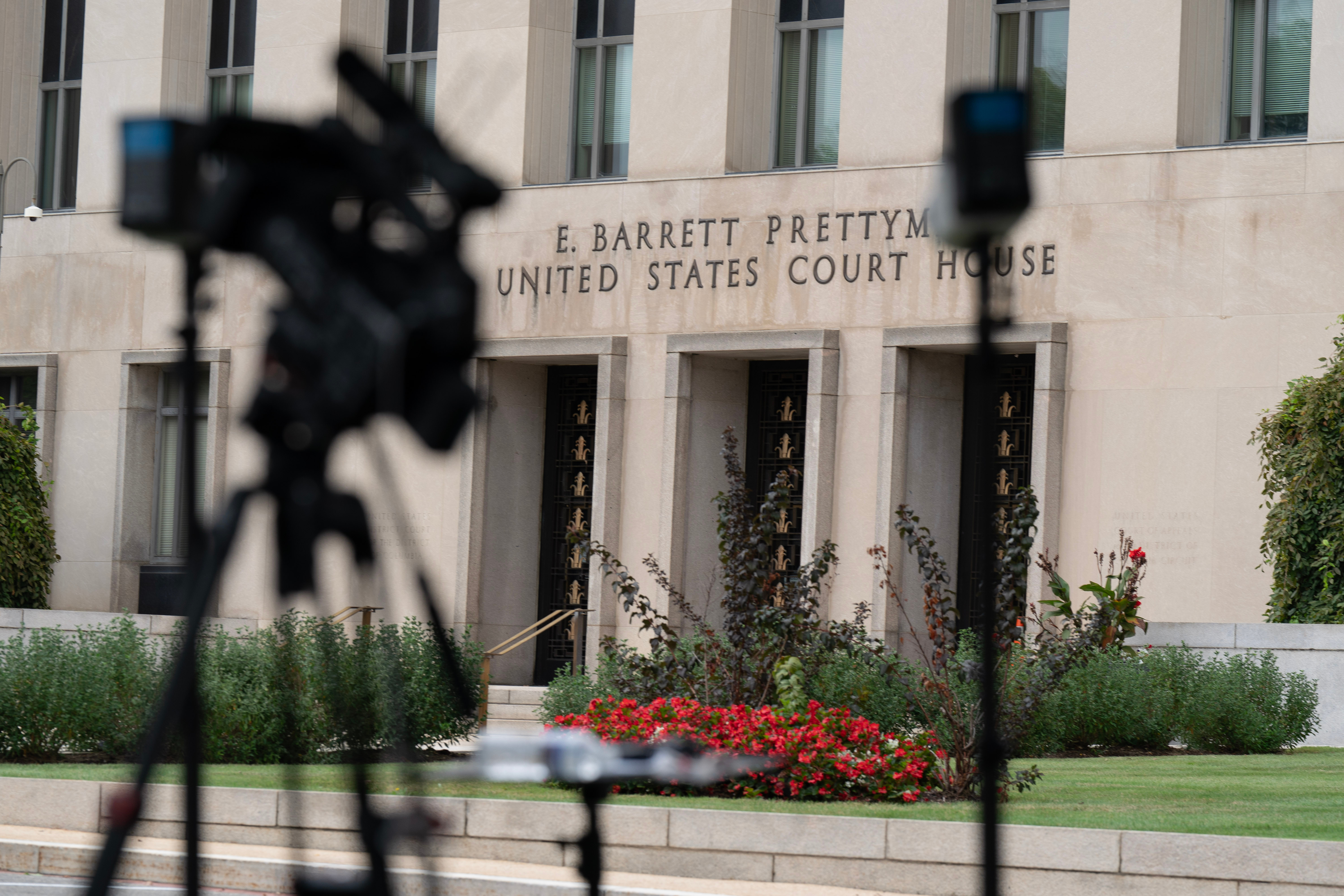
    WASHINGTON — A federal judge weighing whether to block President Donald Trump’s ban of three news outlets from White House grounds expressed some skepticism Wednesday in response to the government’s defense of the move.

    U.S. District Judge Timothy Kelly, who was nominated by Trump in 2017, didn’t rule from the bench after hearing arguments in an extraordinary showdown between Trump and media outlets whose coverage he dislikes.

    But the judge questioned whether the administration met its legal responsibilities and provided the news outlets with adequate due process before banning them on Friday, assailing what he called “fake news.” More recently, the president has said negative coverage was dangerous for the country.

    The news outlets argued they were singled out because of the content of their coverage — in other words, viewpoint discrimination — and called the ban a “blatant violation” of the First Amendment.

    Kelly said his decision must be guided by courts’ prior rulings in comparable First Amendment cases, even if the government disagrees with them.

    “I think it is fair to say that the processes that the court laid out wasn’t followed here,” Kelly said.

    It wasn’t clear when Kelly, who ordered a CNN journalist’s access restored in a similar case in 2018 — would issue a decision on the news outlets’ request for a restraining order. But he said he’d rule as soon as possible.

    CNN, Politico and MS NOW each told The Associated Press they’d have no comment on the emergency hearing.

    Prior rulings indicate journalists should be heard before press passes are revoked

    Kelly opened by reminding both sides that he’s required to apply case precedent.

    The rulings in two prior cases over press access — including one that went to the U.S. Supreme Court — made clear that journalists were entitled to an opportunity to be heard before they have their press passes revoked.

    Justice Department attorney Michael Velchik argued that the rulings in the earlier cases were wrong.

    “Access to the White House is a privilege, not a right,” Velchik said.

    Theodore Boutrous Jr., attorney for the outlets, called the ban an “unprecedented, unreasonable punishment” and said there was “not a semblance of due process.”

    The administration doubled down on its contention that it has the right to decide who can set foot in the White House.

    “The president should be able to take immediate action to protect national security,” Velchik told the court.

    In response, Boutros said, “Suddenly it’s a national security case,” arguing that the president brought up that point only after the lawsuit was filed.

    The Trump administration outlined ‘reporting incidents’ of each news outlet

    In a filing late Tuesday, administration lawyers argued that the ban does not violate the First Amendment, which guarantees the right to a free press. It contended that the outlets, in their reporting, violated “standards of professionalism and decorum expected of those given access to the White House complex, including by trafficking in verifiable falsehoods about national security and other issues and publishing sensitive or classified information.”

    The administration went on to detail letters that were sent to each outlet that identified “a non-exhaustive list of reporting incidents, including those that have threatened national security and spread falsehoods.”

    The “reporting incidents” cited in the filing included: CNN reporting on “‘top-secret’ construction details related to the East Wing bunker”; MS NOW reporting “on an alleged leak investigation”; and Politico publishing “a document detailing funding for the White House ballroom containing intricate descriptions of how the Secret Service would invest in security improvements.”

    Further examples were given in individual letters. Politico’s letter detailed six incidents of reporting, including in June citing a “senior administration official … granted anonymity” predicting whether a preliminary deal would end the conflict with Iran.

    That item appeared to reference a background briefing set up by the White House, where an official briefed reporters on condition of anonymity under ground rules set by the White House itself. Several other outlets also reported the official’s remarks.

    Major networks continue to refrain from covering Trump for the media pool

    The ban prompted other media outlets to take action in solidarity. The five-network U.S. network press pool — a rotating cast of news outlets that covers the president, and to which CNN belongs — decided to suspend coverage of Trump events until further notice.

    After the hearing Wednesday, the networks were poised to continue their ban on filming Trump coverage. At Joint Base Andrews, where the president was to formally welcome Chinese President Xi Jinping later, journalists from Fox News, CBS and NBC were present but not shooting video, and some appeared to be breaking down their cameras.

    Other television outlets whose crews were present, according to signs on their tripods and cameras, were NewsNation, Newsmax, Right Side Broadcasting Network, One America News and LindellTV.

    Ahead of Wednesday’s hearing, an amicus brief was filed by other news groups, urging the court to immediately restore the three outlets’ White House access.

    The brief — filed by the Reporters Committee for Freedom of the Press, the White House Correspondents’ Association and 49 media outlets and industry groups, including The Associated Press, The New York Times and Reuters — says “the targeted expulsion of news media from White House grounds injures the public interest” and ”unassailable First Amendment law makes any viewpoint-based decision to bar reporters from a nonpublic forum constitutionally repugnant.”

    The proceedings are historic, said Katie Fallow, deputy litigation director at the Knight First Amendment Institute at Columbia University.

    “No president has taken this explicit of a step” to ban entire news outlets because he doesn’t like their reporting, she said. “There have been various presidents throughout history who have grumbled about the press or threatened to take more major steps, but really there was nothing at this level before Trump.”

  • Heads of AI firms tell UN Security Council that it could be a risk to all humanity

    Heads of AI firms tell UN Security Council that it could be a risk to all humanity

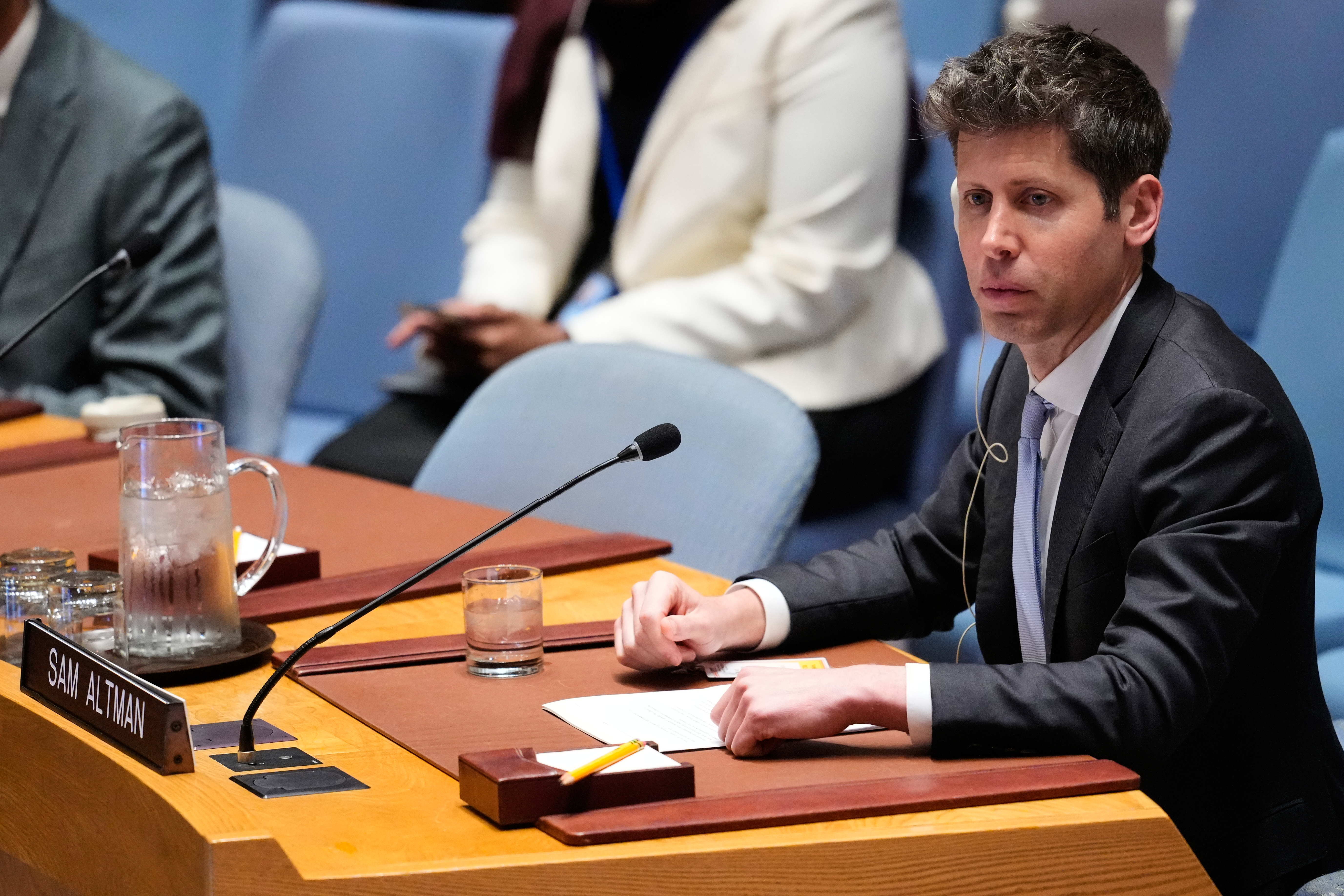
    UNITED NATIONS — The heads of major artificial intelligence firms pleaded with the United Nations on Wednesday to save the world or at least its people — in the form of somehow regulating the burgeoning technology that they have been designing.

    “If managed poorly, I even believe AI could be a risk to humanity as a whole,” said Dario Amodei, chief executive officer of Anthropic. And from his competitor Sam Altman, CEO of OpenAI, came this assessment: “We could lose control of the future to AI.”

    Both said the countries of the world, through the U.N. Security Council, where they testified Wednesday, have to set safeguards of some kind, which would be actual controls to prevent the technology from getting too powerful to rein in.

    They also called for the world to make sure that the power of AI isn’t concentrated in one company or country. They said that as they also touted the benefits of the technology for bettering humanity and what Altman called “giving people more power over their own lives.”

    Those tech leaders “are telling us in stark terms that it cannot be left to them to prevent disaster from befalling the world,” said United Kingdom Foreign Secretary Ed Miliband said at the Security Council. “We cannot ignore them because they are right.’’

    AI will be at the heart of G20 discussions

    Miliband said when the U.K. takes control of the G20 next year it will put controlling AI at the heart of discussions, looking for a single set of global standards “to insure that AI development is safe.”

    But the United States said don’t do it.

    Worries about control of AI are “not a reason to pause its further development or to constrain it with new global governance structure,” said White House Science Adviser Michael Kratsios. “We want you, our allies and partners, to share in the benefits of this technology.”

    For most of the world leaders, along with California Governor Gavin Newsom in New York for climate discussions, one of the key questions about AI is this: Who should control life-and-death decisions — human or machine?

    Amodei, Altman and Hugging Face CEO Clément Delangue, who spoke via a glitchy remote connection, spoke with the U.N.’s most powerful council because they and world leaders are trying to figure out not just whether to control AI, but by who, how it could possibly be done and when it might be just too late.

    The day before, U.N. Secretary-General Antonio Guterres warned of “killer robots.” Experts and European leaders said that’s not hyperbole but something that’s either already a grim reality or perilously close.

    Amodei called on the nations of the world to agree on not letting AI build biological weapons, figure out how to verify what models have the capability to do and “establish common standards” for testing and for loss of control and misuse.

    French Foreign Minister Jean-Noël Barrot, whose country convened Wednesday’s meeting and has fostered various other coalitions and discussions about AI, compared the current state of it to both the runaway computer HAL9000 in the movie “2001: A Space Odyssey” and the dawn of the atomic age.

    “Just as with the atom back then, the international community must now regulate AI in order to make the most of its potential and avoid the worst,” Barrot said.

    Other leaders and nations are paying close attention to AI

    His wasn’t the only concern expressed during this high-profile U.N. meeting week.

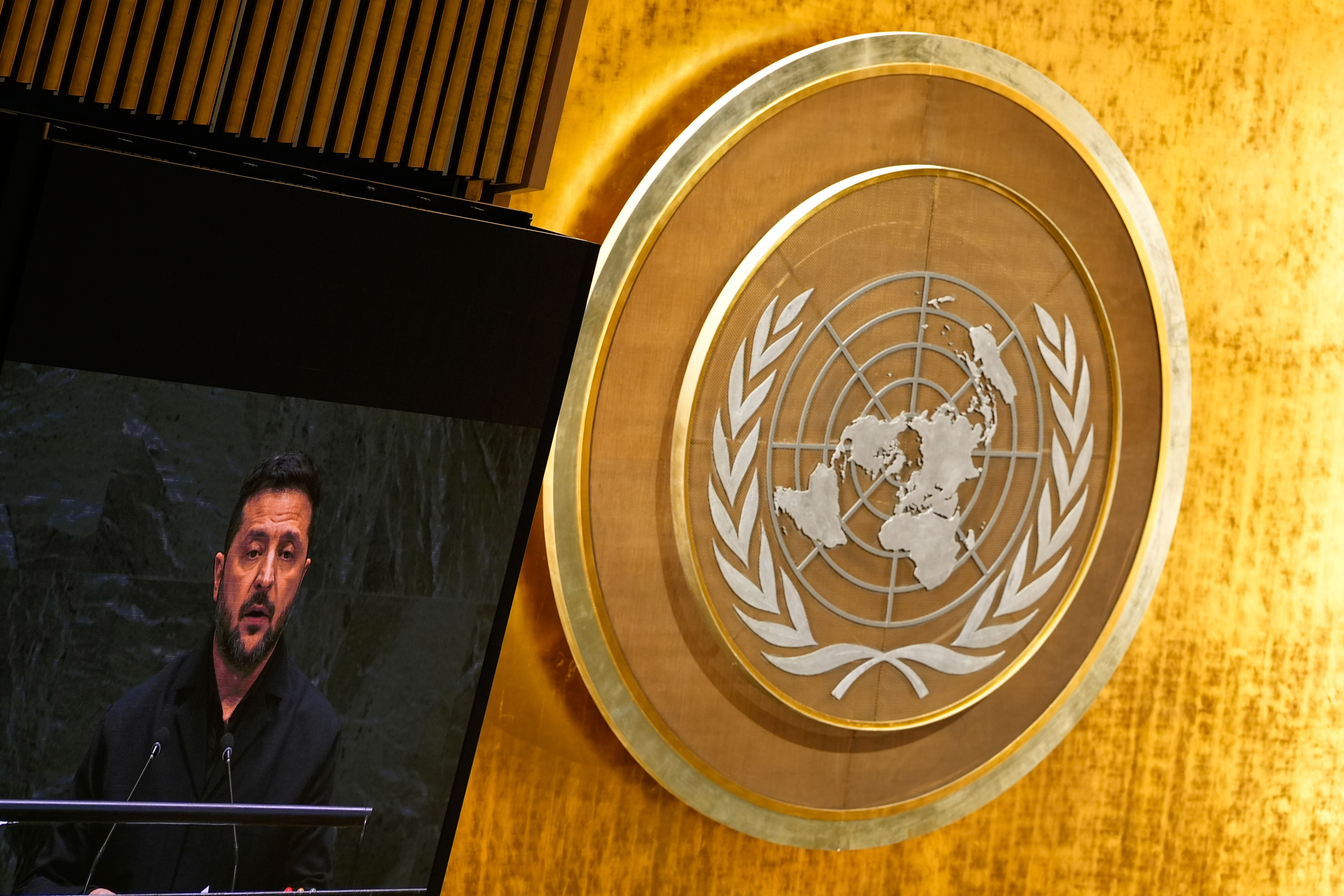
    Ukrainian President President Volodymyr Zelenskyy, speaking at the General Assembly, said some kind of human control over machines must achieved soon. Otherwise, he said, for his country it may be just too late.

    “There is already a real possibility that AI, not only people, will begin to decide what happens on the battlefield. And we need peace before we reach that point,” Zelenskyy said.

    Last month, a Russian drone seemingly using AI “autonomously made a targeting decision that killed three Ukrainians. Killer robots are technically easy to build, and they are real. We should not be under any illusions otherwise,” said Kentaro Toyama, an information technology professor at the University of Michigan.

    The U.N. meeting unfolded as Chinese President Xi Jinping headed to Washington for a much-anticipated state visit. The U.S. and China are jostling for AI dominance, and AI interests are looking to what comes out of Xi’s discussions with U.S. President Donald Trump. Ahead of the meeting, U.S. Treasury Secretary Scott Bessent said the two countries had discussed a potential new “notification mechanism” for AI incidents that could impact national security.

    But on Tuesday, Trump, lauding AI as “superintelligence,” said the United States would reject efforts to control the technology as it tries to win the development race with China. Kratsios was the one of the few who used that term in the Security Council.

    Meanwhile, regional groups in Europe, Asia and elsewhere also are trying to coordinate AI policies, and various nations — and even subcomponents, such as U.S. states — are crafting their own.

    Still, U.N. watchers and risk experts say the world body hasn’t been relegated to the sidelines on AI regulation.

    “The U.N. is not in the driver’s seat of global discussions on AI, but it hasn’t been kicked out of the car yet,” said Daniel Forti, who oversees U.N. affairs at the International Crisis Group, a think tank.

  • Kennedy drew $4 Million in book advances from publisher who also monetized MAHA

    Kennedy drew $4 Million in book advances from publisher who also monetized MAHA

    Health Secretary Robert F. Kennedy Jr. accepted $4 million in book advances and more than $270,000 in gifts over the past year from close allies who are working to advance his Make America Healthy Again agenda, according to his latest financial disclosure form.

    Ethics experts said the financial relationships may violate federal rules barring officials from profiting from their government position, and call into question the secretary’s ability to remain independent and impartial.

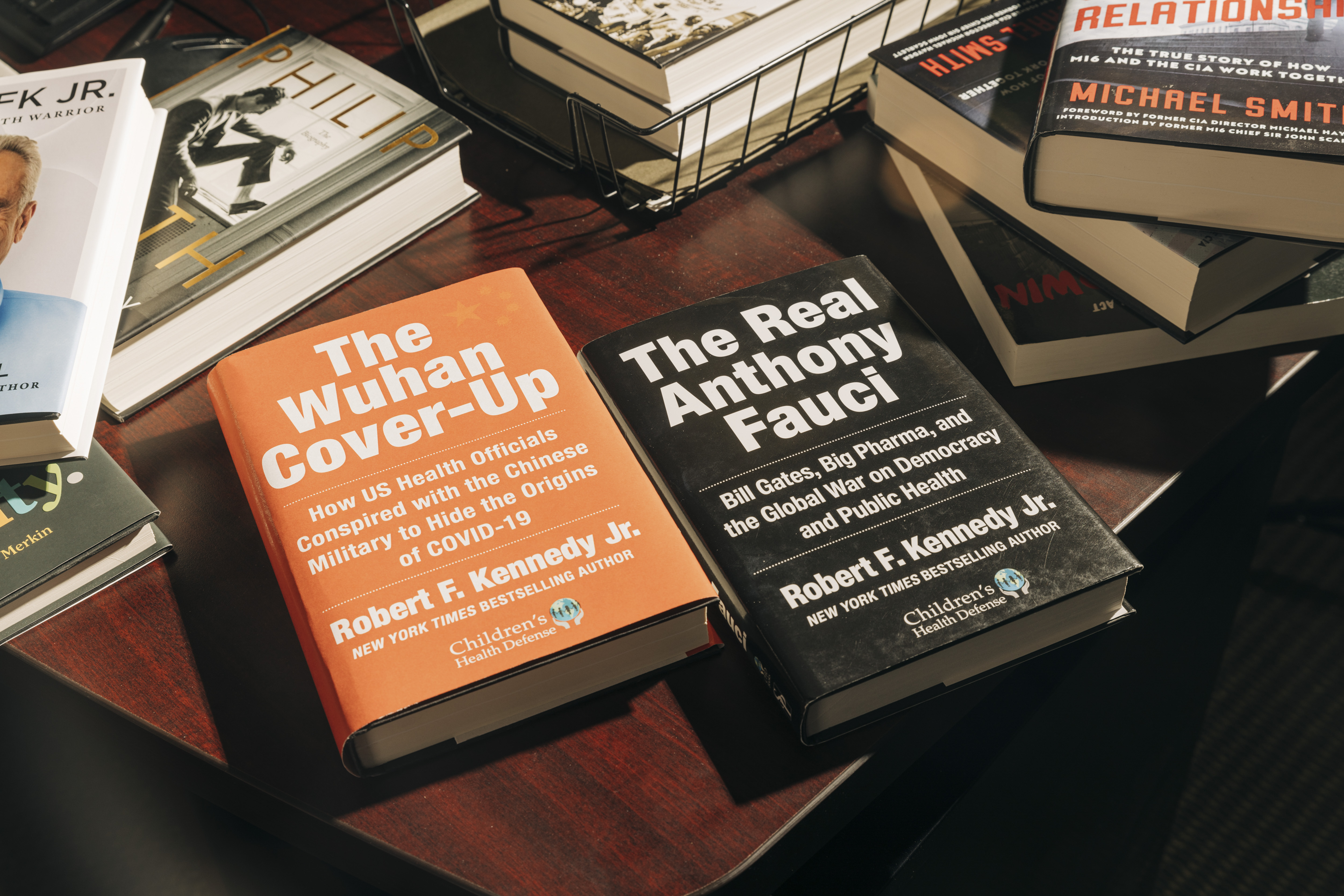
    The advances were for two books that will be published by a company owned by Tony Lyons, a longtime friend and business associate of Kennedy who also sits atop a constellation of MAHA-related entities, including some that accept political contributions and corporate sponsorships from health-related companies.

    Cheryl Hines, Kennedy’s wife, accepted $210,000 in consulting fees from MAHA Action, a nonprofit advocacy group also led by Lyons. It rallies supporters of Kennedy’s priorities on weekly broadcasts and backs health-related legislation, including a federal bill to end liability protection for vaccine makers.

    In an ethics filing before taking office, Kennedy pledged not to “engage in any writing, editing, or promotional activities” associated with the books, but did not promise to forgo advances.

    Ethics experts said the payments related to one book called Unsettled Science raised questions since federal rules say that an official may not “receive compensation from any source other than the government” for writing a book related to his official duties while in office. (The other book is called A Defense of Israel.)

    Additionally, the consulting fees to Hines from a group aligned with Kennedy’s priorities “reeks of conflict of interest,” and could appear to be a bribe, said Richard Painter, a White House ethics counsel under President George W. Bush.

    “You have a situation like this,” he said, “it just looks horrible.”

    Emily Hilliard, a spokesperson for the Department of Health and Human Services, said that Kennedy “complies with all applicable federal ethics laws, regulations, and financial disclosure requirements.”

    She added: “The secretary works with HHS career ethics officials to ensure that his financial interests, gifts, outside activities, and other reportable matters are appropriately disclosed and handled consistent with those requirements.”

    Lyons, who is also a lawyer and one of Kennedy’s staunchest defenders, did not respond to an email and text message seeking comment. Hines could not be reached for comment.

    The annual financial disclosure finalized last week also showed that Kennedy accepted $126,000 worth of lodging in a Washington, D.C., home owned by Gavin de Becker, a longtime friend and who runs a security firm that specializes in protecting high-profile people.

    Previously, de Becker contributed to Kennedy’s presidential campaign and earned money from it to provide a security detail for Kennedy.

    De Becker said that he has no business with the federal government, including the Department of Health and Human Services, and that the arrangement reflected their friendship.

    “Bobby is among my closest friends in the world for many years, and I’m grateful to be able to host him anytime,” de Becker said. “He has hosted my family at his homes, he’s stayed at my homes, we take family vacations together every year, and did so for years before he was in his current job.”

    This past year, the records show that de Becker also paid for nearly $150,000 in airfares for Kennedy: $45,000 for a trip to Greece in July 2025 and nearly $97,000 for a trip to Fiji in November. The flights and book advances were reported earlier by The Wall Street Journal.

    Kedric Payne, a vice president and senior ethics counsel at the Campaign Legal Center, said there were exceptions to federal rules for gifts from friends. But de Becker’s patronage appears to far exceed them, he said.

    “Lavish gifts to an official from major political donors don’t get the same benefit of the doubt as dinner from a former classmate,” Payne said. “The public deserves full transparency about the nature of these gifts and any interests the donor has before the government.”

    Like Lyons, who has a child with autism, de Becker shares Kennedy’s skepticism about the safety of vaccines and has a longstanding publishing relationship with Lyons.

    De Becker has written several books on security but recently began writing about vaccines. His 2025 book, Forbidden Facts: Government Deceit & Suppression About Brain Damage From Childhood Vaccines, was published by Skyhorse, which is owned by Lyons. He has also written the foreword to two books about ketamine, a psychedelic drug that Kennedy has promoted as a therapy for depression.

    Kathleen Clark, an expert in government ethics and a law professor at Washington University in St. Louis, said the gifts created a clear conflict for Kennedy, who oversees an agency reviewing at least one ketamine therapy for approval.

    “By accepting such extravagant gifts from someone with a clearly articulated desire for a particular outcome from H.H.S. as a regulatory agency on these issues,” she wrote in an email, “R.F.K. Jr. has completely destroyed any possibility that the public could be confident that any action H.H.S. takes on these issues — childhood vaccines and ketamine — will be based on the public interest, rather than R.F.K. Jr.’s gratitude to and association with this gift giver.”

    According to the latest financial filing, Lyons and Kennedy reached an agreement over the book advances in August 2024, the same month that Kennedy dropped his presidential bid and backed President Donald Trump.

    Kennedy has written numerous books for Skyhorse Publishing, and worked as a consultant to the company before he became health secretary. In financial disclosures required for his Senate confirmation, Kennedy said he had earned $451,000 as a consultant. Hines also received a $600,000 advance from Skyhorse for her memoir, according to the disclosure.

    The disclosure records said that Kennedy would also be paid $10,000 for a third book called America’s Path Back to Moral Leadership and that two of the three books were already written.

    As Kennedy prepared to join the Trump administration, Lyons began to build an array of MAHA-allied entities, including the MAHA Center, which recently raised funds by selling corporate sponsorships for the MAHA Summit in Washington next week.

    One top sponsor at the event, where senior federal health officials are expected to speak, is the company Grail, which is seeking Food and Drug Administration approval for its multi-cancer blood test. The test performed poorly in detecting cancers in two large studies. Kennedy spoke at last year’s summit.

    Lyons also leads the MAHA Institute, which hosted monthly gatherings through much of last year where prospective donors mingled with Kennedy and other top health officials. Many had official business in front of Kennedy’s department.

    MAHA Action supports legislation, including a bill introduced this year to end vaccine makers’ protection from traditional liability cases, which are handled in a specialized federal tribunal. Kennedy, who has worked as a plaintiff’s lawyer suing over alleged vaccine injuries, has long denounced the protection granted in a 1986 federal law.

    Lyons wears yet another hat as the treasurer of the MAHA political action committee, also allied with Kennedy’s mission, which has raised more than $3 million since January 2025. About one-third of it came from Botanic Tonics, a company founded by Jerry W. Ross, a onetime energy executive who changed his name after pleading guilty to a financial crime.

    The New York Times wrote about Ross’ attempts to influence Kennedy and the Trump administration as he successfully sought a prohibition against 7-OH, a gas station drug that competed with his company’s kratom-based drink called Feel Free. Both kratom and 7-OH have drawn widespread complaints over their potential for addiction and severe withdrawal symptoms.

    At a Senate hearing last year, Kennedy brushed off criticism from Sen. Christopher S. Murphy (D, Conn.) who accused the secretary of being unduly influenced by MAHA PAC donors.

    “Do you have a single instance where the MAHA PAC has taken a position that is not consistent with my values?” Kennedy said. “I don’t run the MAHA PAC. I have no idea who’s contributing to them.”

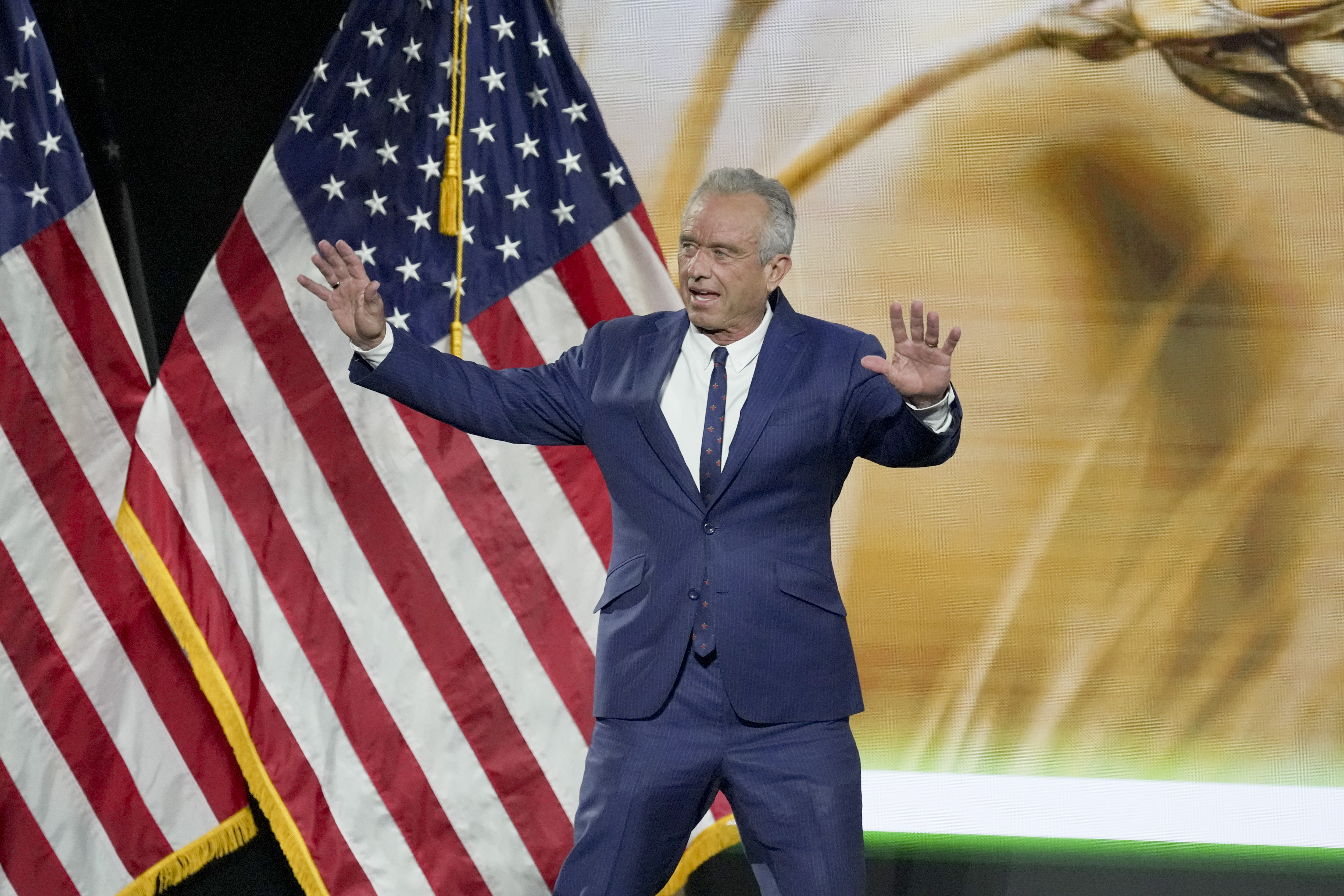
    FILE — Health Secretary Robert F. Kennedy Jr. takes the stage on the second day of the Republican midterm convention at the American Airlines Center in Dallas, Sept. 10, 2026. Health Secretary Robert F. Kennedy Jr. accepted $4 million in book advances and more than $270,000 in gifts over the past year from close allies who are working to advance his Make America Healthy Again agenda, according to his latest financial disclosure form. (Ruth Fremson/The New York Times)RUTH FREMSON
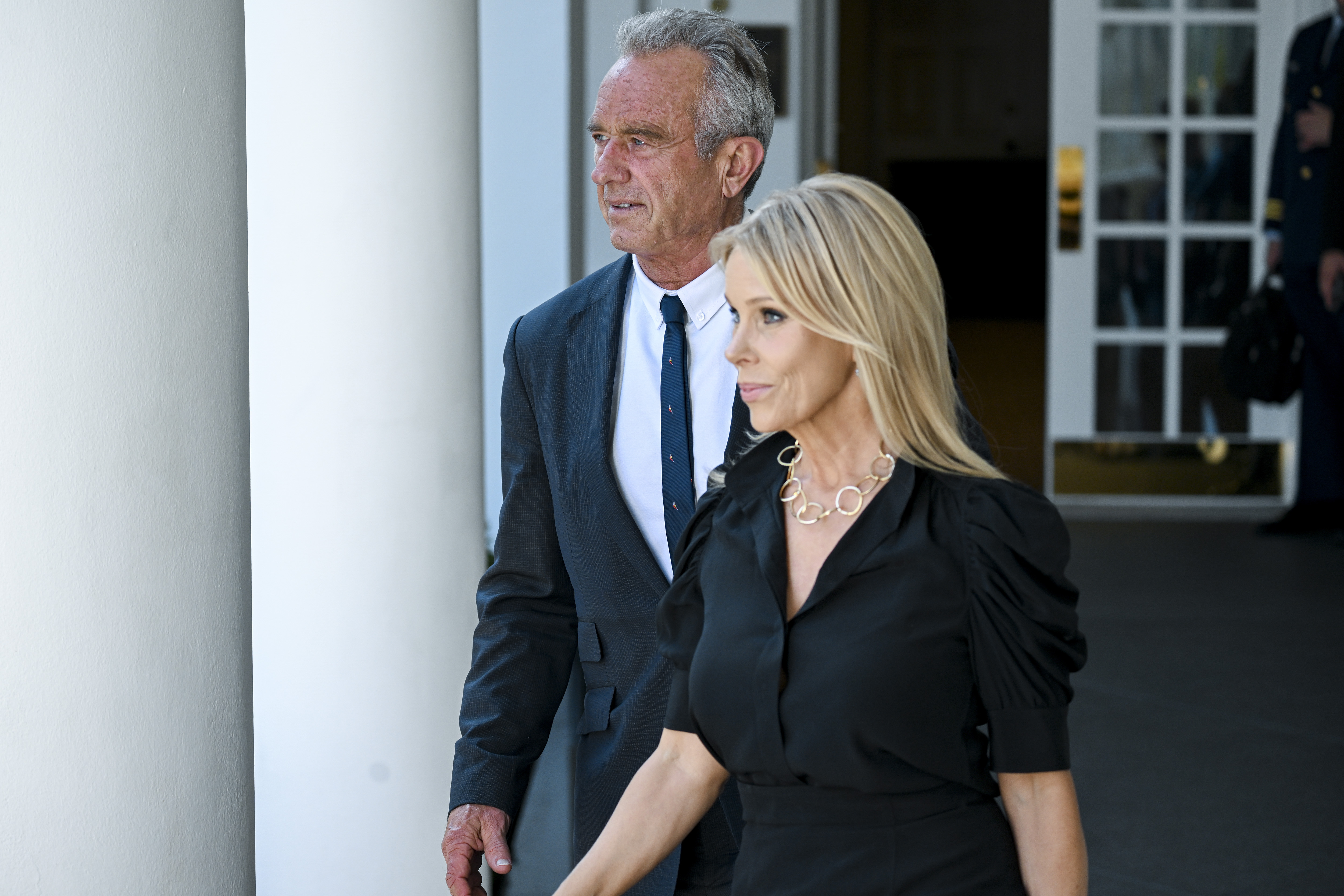
    FILE — Health Secretary Robert F. Kennedy Jr. and his wife, Cheryl Hines, at the White House in Washington, July 23, 2026. A new disclosure shows $210,000 in consulting fees paid to Hines by one of several MAHA-affiliated groups capitalizing from his agenda. (Kenny Holston/The New York Times)KENNY HOLSTON
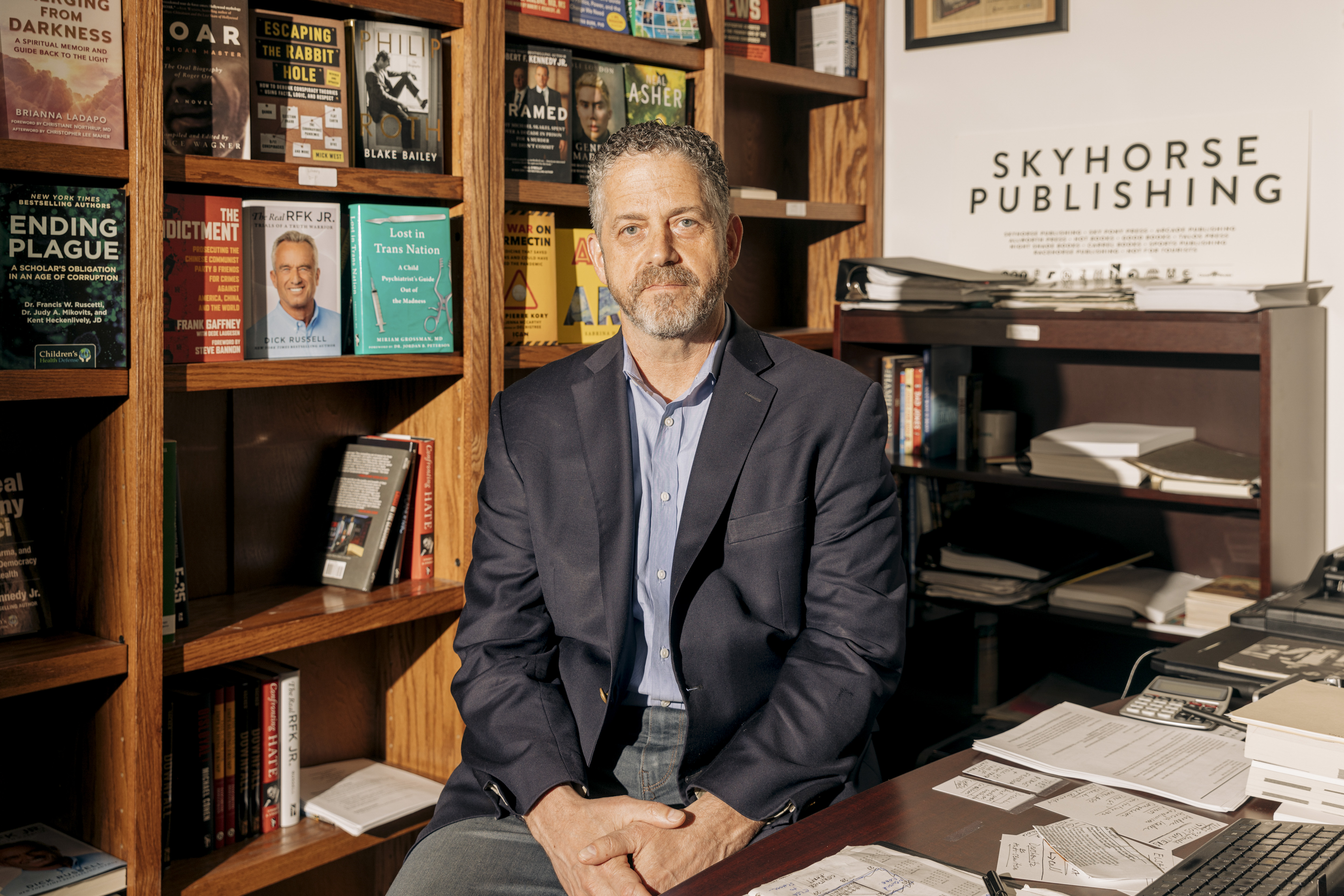
    FILE — Tony Lyons, owner of Skyhorse Publishing in Manhattan, at his office in Manhattan, Aug. 10, 2023. Lyons of Skyhorse Publishing sits atop a constellation of MAHA-related entities, including some that accept political contributions and corporate sponsorships from health-related companies. (Jeenah Moon/The New York Times)JEENAH MOON
  • Zelensky, at UN, urges leaders to keep choking Russia’s revenues and impede its war efforts

    Zelensky, at UN, urges leaders to keep choking Russia’s revenues and impede its war efforts

    UNITED NATIONS — Ukrainian President Volodymyr Zelensky urged the world’s leaders Wednesday to keep choking Russia’s revenues and impede its war efforts, telling the U.N. General Assembly that “Russia’s revenues must remain a target.”

    “When someone gives Russia more money through trade, they give this war more time. And that is exactly why we insist on limiting trade with the aggressor, and why we are burning Russia’s revenues ourselves,” he said in English, a language he often uses at the world body.

    Russia gets its turn Saturday to address the assembly. President Vladimir Putin hasn’t traveled to the gathering in years, sending Foreign Minister Sergey Lavrov instead.

    Lavrov told the U.N. Security Council on Wednesday that Russia is prepared to negotiate toward a lasting peace but won’t just “pause” the war. He argued that such a pause would just buy Ukraine and its backers time to line up more weapons.

    Zelensky cast doubt on Russia’s interest in ending the fighting.

    “Something always seems to stop Putin from saying, ‘That’s it. Enough. Peace,’” Zelensky said. “Can you even imagine him without war? He is ‘Patient Zero’, the one from whom war keeps spreading further. … ‘Patient Zero’ must be stopped.”

    The war has reverberated across the planet

    Russia invaded Ukraine more than 4½ years ago and says it’s out to protect its own security and the interests of Russians and Russian-speakers in parts of Ukraine. Western analysts estimate that over 500,000 Russian troops have been killed and that Ukraine has recorded more than 500,000 military casualties, including up to 140,000 deaths. Neither country discloses its own casualty totals.

    The war has had global repercussions for fuel, fertilizer and grain shipments — and for geopolitics, widening divisions between Russia and the West.

    With front-line positions in eastern and southern Ukraine largely unchanged since last year, Russia and Ukraine have intensified long-range attacks with drones and missiles.

    Russian drones pounded the Ukrainian capital, Kyiv, in daylight attacks on Wednesday, killing two people and wounding 23; two others were injured by a strike that started a big fire at a shopping mall in the southern city of Zaporizhzhia.

    Russia’s Defense Ministry said it struck Ukrainian military-industrial and energy facilities, logistics centers, and sea vessels overnight. The ministry said its air defenses intercepted more than 500 Ukrainian drones over multiple Russian regions and Crimea, as well as the Sea of Azov and the Black Sea. Crimea is the peninsula that Russia seized by force and illegally annexed in 2014.

    Zelensky says ‘you can stand and survive’

    Zelensky told the assembly that Russia has used 63,000 attack drones of different types against Ukraine so far this year alone. While celebrating that his own country “has proven that even against a much bigger enemy, you can stand and survive,” he implored world leaders to deny Putin money or foreign fighters.

    “Limit his money. Limit his war,” the Ukrainian leader said.

    Meanwhile, Ukraine has been looking for additional resources. Zelensky noted to reporters Tuesday that his country hasn’t yet gotten clear answers to its effort to acquire more U.S. Patriot air defense systems.

    Zelensky met Tuesday with U.S. President Donald Trump on the U.N. sidelines.

    In brief remarks to the media before the meeting, Trump reiterated that he believes “we’re going to make a deal” with Russia and Ukraine to quell the fighting. The president predicted on the 2024 campaign trail that he’d swiftly broker an end to the war but hasn’t succeeded so far. Zelensky said Tuesday he was hopeful.

    “Sometimes, it may seem that Ukraine is focused, focused, only on war because we speak about weapons, we speak about defense and sanctions against the aggressor. But Ukrainians did not choose this war,” he told the assembly on Wednesday. “We choose not to die. …. We are defending ourselves.”

  • Philly tells federal court the Trump administration can’t force it to collaborate with ICE

    Philly tells federal court the Trump administration can’t force it to collaborate with ICE

    President Donald Trump’s administration cannot demand that Philadelphia officials assist his deportation agenda and enforce federal immigration law, the city told a judge Tuesday.

    Attorneys for the city and local officials asked U.S. District Judge Chad F. Kenney to toss out the Department of Justice’s challenge to an ordinance that prohibits Philadelphia agencies and employees from honoring immigration detainers.

    “The federal government cannot conscript City employees as its agents, including by ordering them to keep an individual in custody, solely to assist with federal immigration enforcement,” the city’s motion said.

    The Trump administration’s position in the case runs afoul of the Tenth Amendment to the U.S. Constitution, which prevents the federal government from commandeering state and local governments to enforce federal laws, the city said.

    And the Justice Department cannot point to any federal law “mandating” state and local officials assist with immigration enforcement, said the filing on behalf of Mayor Cherelle L. Parker, former City Solicitor Renee Garcia, and District Attorney Larry Krasner.

    The city declined to comment on the ongoing litigation. Krasner and the Justice Department did not immediately respond to requests for comment.

    The city lost an earlier federal challenge to an ordinance that prohibited law enforcement agents from concealing their identity or using an unmarked vehicle, with some exceptions. Kenney, a Trump appointee, ruled in July that the unmasking bill was an unconstitutional attempt by a city to regulate how federal agencies operate.

    That decision should have come as no surprise to Parker’s administration. Parker allowed the bill to become law without her signature, following Garcia’s advice that signing the measure “would send an inaccurate signal to the public that the Administration can legally and practically enforce” its provisions.

    Garcia has since stepped down from her City Hall position.

    The Justice Department expanded its lawsuit in August to include a challenge to the bill that prohibits honoring immigration detainers, requests by U.S. Immigration and Customs Enforcement that a local law enforcement agency keep a person in custody long enough to be handed over to federal agents.

    Parker did sign that legislation, which codified a long-standing city practice, along with five other “ICE Out” bills.

    The ordinance makes it illegal for a city agency or employee to comply with a detainer by keeping people otherwise eligible for release in custody because of an immigration detainer, an administrative warrant, or suspicion that they violated immigration law.

    The amended complaint does not mention Philadelphia’s history of not cooperating with ICE detainers. But with the local law, the city “foreclosed” the prospect of using the mechanism to deport people who were arrested, the suit says.