Category: Nation & World

  • Democrats press RFK Jr. on an ethics agreement change involving law firm fees

    Democrats press RFK Jr. on an ethics agreement change involving law firm fees

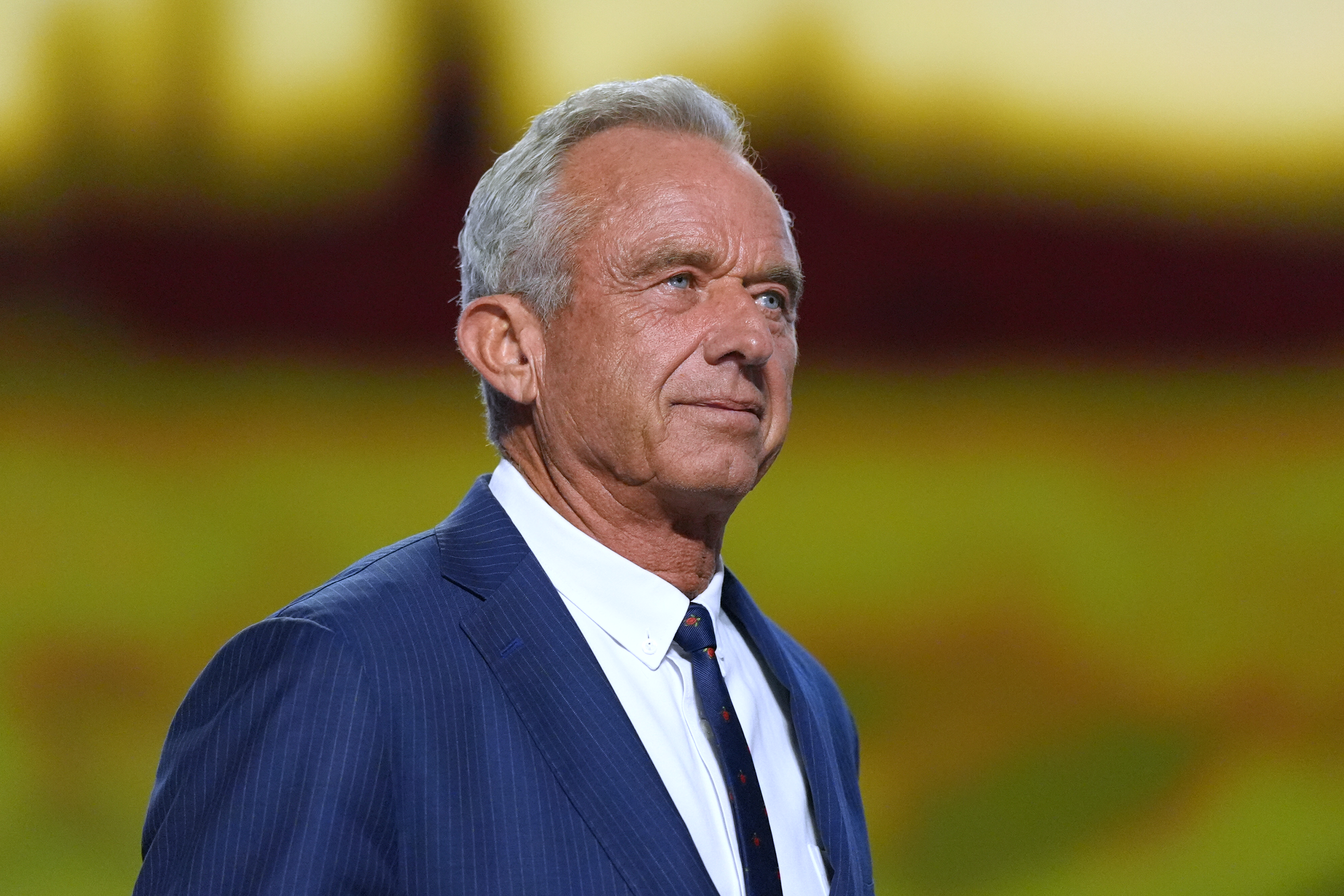
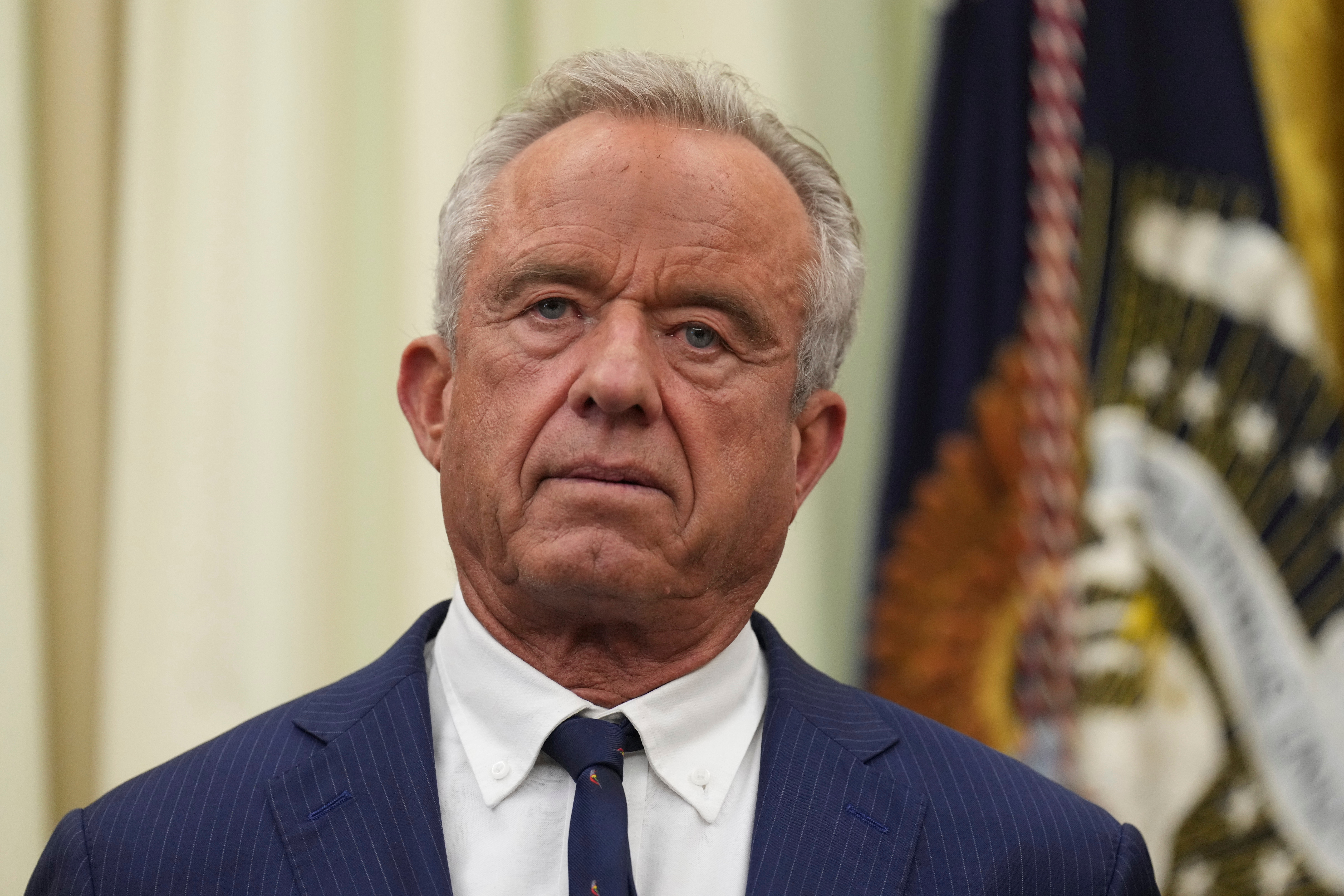
    WASHINGTON — Congressional Democrats are pressing for answers from Health Secretary Robert F. Kennedy Jr. over what they describe as a previously undisclosed change to the ethics agreement he made before being confirmed, which they say calls into question his credibility and the integrity of his decisions.

    Ahead of his confirmation vote last year, Kennedy told lawmakers that he would not collect fees related to litigation he pursued before becoming a government official against the drugmakers of a cervical cancer vaccine, saying he would transfer his financial interests to his adult son.

    The lawmakers say they recently learned, however, that shortly after his confirmation hearings, Kennedy quietly changed his ethics disclosures and transferred his stake to his former employer, the personal injury law firm Wisner Baum, apparently contradicting his sworn commitments to members of Congress.

    In a letter sent to Kennedy on Thursday, Democratic Sens. Elizabeth Warren of Massachusetts, Ron Wyden of Oregon, Richard Blumenthal of Connecticut and Angela Alsobrooks of Maryland said the health secretary has provided no explanation for the change.

    “Your decision to withhold this information from Congress and apparent failure to report this change to agency ethics officials is deeply alarming,” the senators wrote. “These troubling findings call into question the veracity of your public ethics commitments, your transparency with Congress and the public, and potentially, your compliance with federal ethics disclosure laws and regulations.”

    Emily G. Hilliard, an HHS spokesperson, told the Associated Press that HHS had confirmed Kennedy’s compliance with his ethics agreement in May 2025. “Any claim that Secretary Kennedy maintained a financial interest in this litigation after taking office is false,” she said.

    Kennedy’s testimony to lawmakers during his confirmation hearing has come under scrutiny before.

    During the arduous confirmation process in which he needed the support of some skeptical Republican lawmakers to advance, Kennedy pledged to maintain vaccine policies that, once in office, he moved to change. He also said a 2019 trip to Samoa had “nothing to do with vaccines,” an account refuted by documents recently obtained by the AP. The Department of Health and Human Services has denied Kennedy lied over the Samoa trip.

    Kennedy’s initial ethics disclosure, filed in January 2025, allowed him to retain a 10% contingency fee in cases that he had referred to Wisner Baum. After warnings from lawmakers about the conflict of interest, Kennedy agreed to amend his ethics agreement to divest his interest to his son.

    But in an Aug. 25 letter to Warren, HHS revealed Kennedy transferred those fees to Wisner Baum. Kennedy’s son Conor Kennedy is employed at the firm.

    “At the time, Secretary Kennedy intended to assign those interests to a non-dependent adult family member,” said the letter. “After further consideration, Secretary Kennedy irrevocably assigned his outstanding contingency-fee interests in the Gardasil cases directly to Wisner Baum.”

    The senators are now pushing Kennedy for answers on what his agreement with Wisner Baum entails, noting that if it involves any agreement about future payments, it could amount to a conflict of interest.

    “If you made any kind of implicit or explicit agreement for future payment or other future rewards with Wisner Baum in exchange for assigning them this stake, it would mean that you have an ongoing conflict of interest that calls into question your integrity and the motivations for your decisions as HHS Secretary,” the lawmakers’ letter to Kennedy said.

  • CDC vaccine policy recommendations grind to a halt under Health Secretary Kennedy

    CDC vaccine policy recommendations grind to a halt under Health Secretary Kennedy

    NEW YORK — The Food and Drug Administration recently approved a new flu vaccine that tested well in older adults. But the federal agency responsible for telling doctors and the general public how to use it has made no recommendation on it.

    The Centers for Disease Control and Prevention’s inaction on the mFlusiva vaccine marks a break in longstanding practice. It’s also an example of how the agency’s vaccine review-and-recommendation process has been blown up in the past year, grinding decision-making to a halt.

    Efforts by vaccine-wary officials in President Donald Trump’s administration to scale back shot recommendations have been put on hold. Federal guidance on new vaccines has stopped. And public discussion of vaccine policy questions that might cross political divides — including whether there’s solid evidence to justify giving fewer shots to kids — has diminished.

    Health Secretary Robert F. Kennedy Jr.’s crusade to upend vaccine policy and the legal action opposing it have disrupted longstanding systems that deliver crucial health guidance to Americans, affecting whether people are getting the best available protection against vaccine-preventable diseases.

    “We find ourselves at a point where even if credible evidence (for a new vaccine policy) has reached a tipping point, we don’t have an obvious mechanism that can formalize that change,” said Jason Schwartz, a Yale University health policy researcher who studies government health agencies.

    Many in medical field praised a ruling that halted Kennedy’s changes

    For 60 years, the Advisory Committee on Immunization Practices guided the CDC’s vaccine recommendations. The committee met publicly, reviewed vaccine data, and sought input from various health groups. The panel voted on recommendations that went to the CDC director, who almost always adopted them as the government’s guidance, leading public and private insurers to pay for the shots.

    Trump, a Republican, appointed Kennedy to oversee federal health agencies, including the CDC. Kennedy last year dismissed the committee and replaced it with a group that included several anti-vaccine voices. Controversial decisions followed, leading to a lawsuit from the American Academy of Pediatrics and some other medical groups.

    In March, a federal judge said Kennedy likely violated federal procedures, stopped Kennedy’s panel from holding further meetings, and suspended Kennedy’s decision to reduce the number of vaccines recommended for children.

    Many in the medical and public health communities celebrated the decision and took the order as a respite from what they saw as the Trump administration’s assault on vaccines.

    Jason Goldman, president of the American College of Physicians, said he hoped “it will mean a return to a transparent and evidence-driven process that safeguards the health of all communities and the best interests of our patients.”

    In reality, the process stalled and splintered

    With Kennedy’s committee shut down by the court order, doctors’ groups that used to collaborate with the ACIP have gone their own way. Working with a University of Minnesota researcher, they have debated — not publicly — the kind of medical evidence formerly presented at ACIP meetings and issued their own recommendations.

    The trade association for private health insurers decided to heed the medical societies’ choices, and the insurers have continued to pay for shots recommended by those organizations.

    Many of the groups’ recommendations match prior ones made by ACIP and the CDC before Kennedy’s arrival. But they also made their own updates.

    For example, ACIP previously recommended that a new shot be given to women late in pregnancy: a vaccine against respiratory syncytial virus, or RSV, which can be dangerous to newborns. The government panel recommended that the vaccine be given between September and January in most of the U.S., to coincide with the time of year when RSV infections are most common.

    But RSV season sometimes remains active longer. For that reason, the medical groups recently said the shot should be offered to those women through the beginning of March.

    “We all recognized this needs to evolve,” Chris Regal, director of clinical innovation at America’s Health Insurance Plans, the health insurance trade association, said in a recent webinar.

    The official CDC guidance remains unchanged.

    Unanswered vaccine issues are piling up

    The mFlusiva flu shot is another example of the unusual way vaccine policy updates have stalled.

    The shot is the first flu vaccine made with the mRNA technology that was key to ending the COVID-19 pandemic. Kennedy has criticized mRNA vaccines and last year canceled contracts for the development of new ones. The shots also took a tortuous path through the FDA, which finally granted full approval in people ages 50 to 64.

    But the CDC this month quietly posted that it has decided to maintain its flu vaccine endorsements from last year due to “legal uncertainties and inquiries.” That means mFlusiva is not among the listed flu vaccines recommended to the public this fall.

    The medical societies are recommending it as an option, however.

    Another ACIP function was to vote on whether certain vaccines should be covered by Vaccines for Children, a government program that pays for shots for children who have no health insurance.

    The FDA approved updated COVID-19 vaccines, but as the summer dragged on — and fall vaccination campaigns got underway — the government would not say if the VFC program will pay for those shots. It was only this week that officials confirmed orders could be placed through that program.

    HPV vaccine reassessment is derailed

    Another question concerns the HPV vaccine, given to preteens to prevent certain cancers.

    Two HPV shots are recommended, but some recent research has suggested that perhaps one shot could be enough — at least for girls. Indeed, in 2024 the ACIP formed a working group to begin a reassessment of the recommendations.

    That work was derailed when Kennedy fired the entire committee. In January, he decided on his own to order that the number of recommended doses be reduced to one as part of a dramatic contraction of the childhood vaccination schedule. His decision was suspended by the judge’s order.

    Experts are trying to better understand the timing and the duration of protection from just one dose, particularly in boys. The American Academy of Pediatrics is weighing a change to its HPV vaccination recommendations and could reach a conclusion later this year, said the AAP’s James Campbell.

    It’s possible that the medical societies will end up agreeing with Kennedy on just how many HPV shots make sense. But that might not necessarily clear up the current mess, Schwartz said.

    “The credibility of the Trump administration, when it comes to vaccine recommendations, is so compromised in the eyes of the mainstream medical and public health communities,” he said, “that even recommendations that might align with where the public health community was trending are likely to be viewed with skepticism or distrust.”

    Meanwhile, the Trump administration is considering changing the federal government’s categories for vaccine recommendations, although a specific proposal has not been released and a Department of Health and Human Services spokesperson did not respond to questions about what is being contemplated. Public comments were due earlier this week.

    An alliance of 15 Democratic state governors said the proposed changes are likely to increase confusion and administrative complexity.

    “It’s Governors and their residents who bear the brunt of any increased disease outbreaks due to confusion related to hastily made federal changes,” Angela Botticella, managing director of the Governors Public Health Alliance, said in a statement.
  • Iran proposes 7-day plan to end war

    Iran proposes 7-day plan to end war

    UNITED NATIONS — Iran’s foreign minister said Thursday that Tehran had proposed to Washington a seven-day plan to cease hostilities, reopen the Strait of Hormuz and then begin comprehensive talks on his country’s nuclear program.

    Abbas Araghchi, the foreign minister, told reporters at a press briefing at the United Nations General Assembly that the proposal closely mirrored the commitments laid out in a so-called memorandum of understanding that was struck between the United States and Iran in June but quickly unraveled.

    He said Iran was ready to begin putting the plan into effect as soon as Washington agreed to it.

    “We have introduced a plan to the United States through the intermediators that if certain conditions are met, the Strait of Hormuz would be open on the end of the seventh day and talks would restart,” Araghchi said.

    He said “it would be better” if a deal was reached before the U.S. midterm elections.

    A U.S. official familiar with the talks said that the administration was having positive and constructive discussions through mediators, but that the United States was not going to rush into a deal.

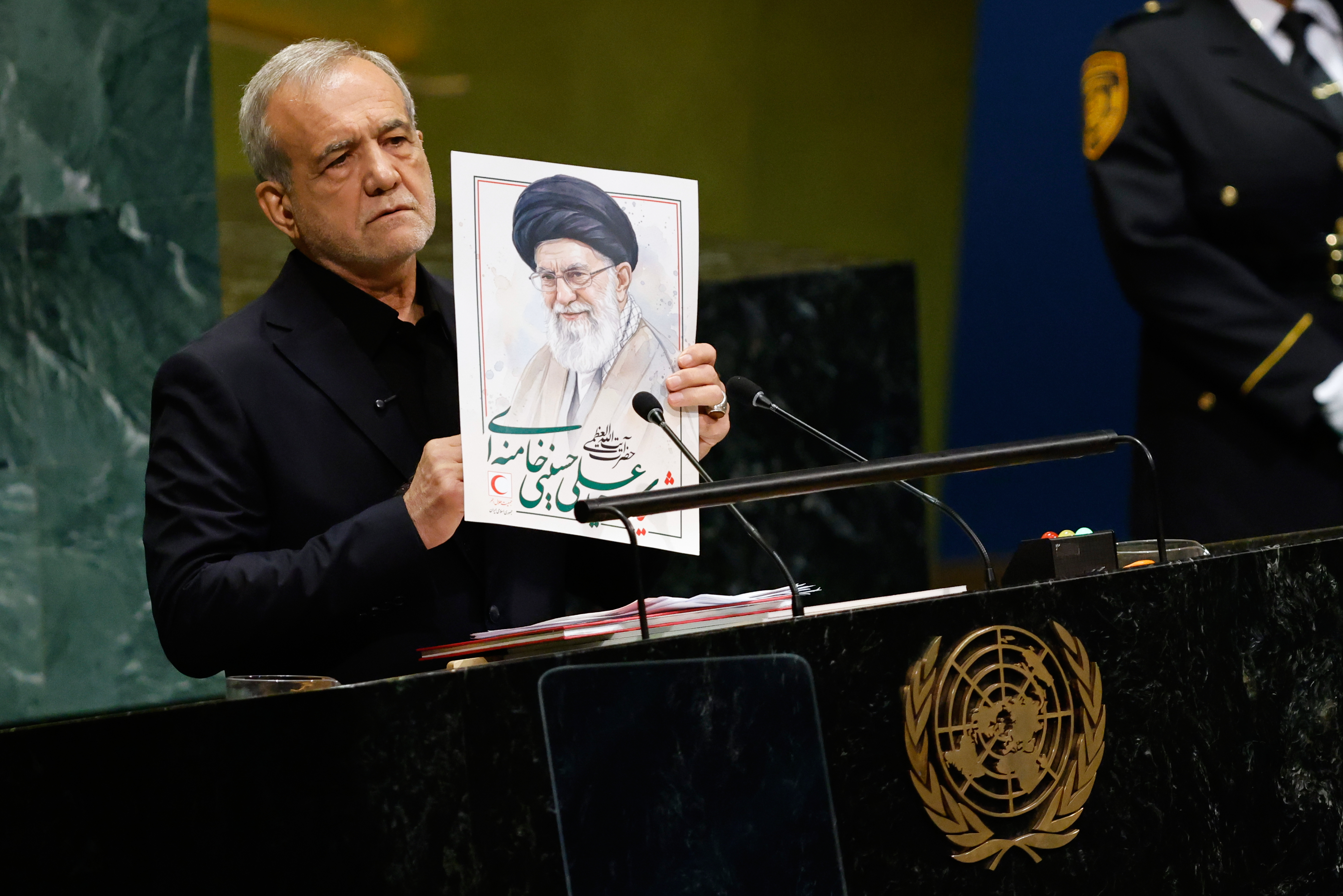
    The Iranian proposal came even as President Donald Trump and Iran’s president, Masoud Pezeshkian, delivered mutually hostile speeches at the United Nations. Trump threatened Iran with “annihilation” if it did not strike a deal, while a defiant Pezeshkian told world leaders his country would not be bullied.

    Though Iran’s proposal contains many of the same conditions of the deal that fell apart, the behind-the-scenes diplomacy suggested that both sides may see much to gain from finding an off-ramp from the war.

    Iranian officials said that while the proposal was effectively the same as the memorandum of understanding made in June, it was designed to move at a much faster pace. In the earlier agreement, a 60-day time frame was set for reaching nuclear negotiations.

    Under the conditions that Iran has set for the agreement, according to Araghchi, during the seven days all hostilities would end, including in Lebanon; the U.S. would release Iran’s frozen assets, estimated at least $12 billion; waive sanctions on Iranian oil; and lift the naval blockade on Iran. Then, on the last day, the Strait of Hormuz would be opened.

    After the seven days, Aragchi said, comprehensive negotiations over Iran’s nuclear program would immediately begin. Trump has said that his top goal is for Iran not to have a nuclear weapon, and that he would either achieve that through a diplomatic deal or with more attacks.

    The United States and Iran have been at war for nearly seven months. It began in late February when the United States and Israel launched airstrikes that killed Iran’s supreme leader, Ayatollah Ali Khamenei, and military chain of command. Trump initially said the war would take only a few weeks

    The war has had widespread global repercussions including on oil, energy and food prices.

    The Iranian proposal came as U.S. negotiators have tried to jump-start diplomacy with Iran on its nuclear program through talks on the sidelines of the U.N. assembly. U.S. Secretary of State Marco Rubio said a three-hour meeting, mediated by Qatar, between U.S. and Iranian officials did not end in a breakthrough.

    Araghchi, who will be in New York until next Monday, met on Tuesday with U.S. envoy Steve Witkoff and Jared Kushner, a son-in-law of Trump’s. It was mediated by Qataris passing messages between the two sides, and Araghchi described it as “productive” and said the messaging continued.

    Ismaeil Baghaei, the spokesperson for Iran’s foreign ministry who is also in New York, said that it was possible that there would be more mediated meetings in the coming days.

    Iran’s economy is under serious strain, and Iranians are suffering from skyrocketing inflation on basic food items, a shortage of medicine and disruptions to commerce.

    Analysts said that Trump would have to weigh the benefits of reaching a deal with Iran before the midterms against keeping a chokehold on its economy in the hope of getting more concessions from Tehran.

    “This is a smart move,” said Ali Vaez, the Iran director of the International Crisis Group. “They know it’s very tempting for President Trump because it ends an unpopular war and brings down energy prices in the run-up the midterms. But it also restores a deal that was largely favorable to the Iranians. A compressed timeline to get to the nuclear issue should be appealing to an impatient president.”

    This article originally appeared in The New York Times.

  • Pope Leo XIV affirms need for media to cover public figures when asked about Trump ban

    Pope Leo XIV affirms need for media to cover public figures when asked about Trump ban

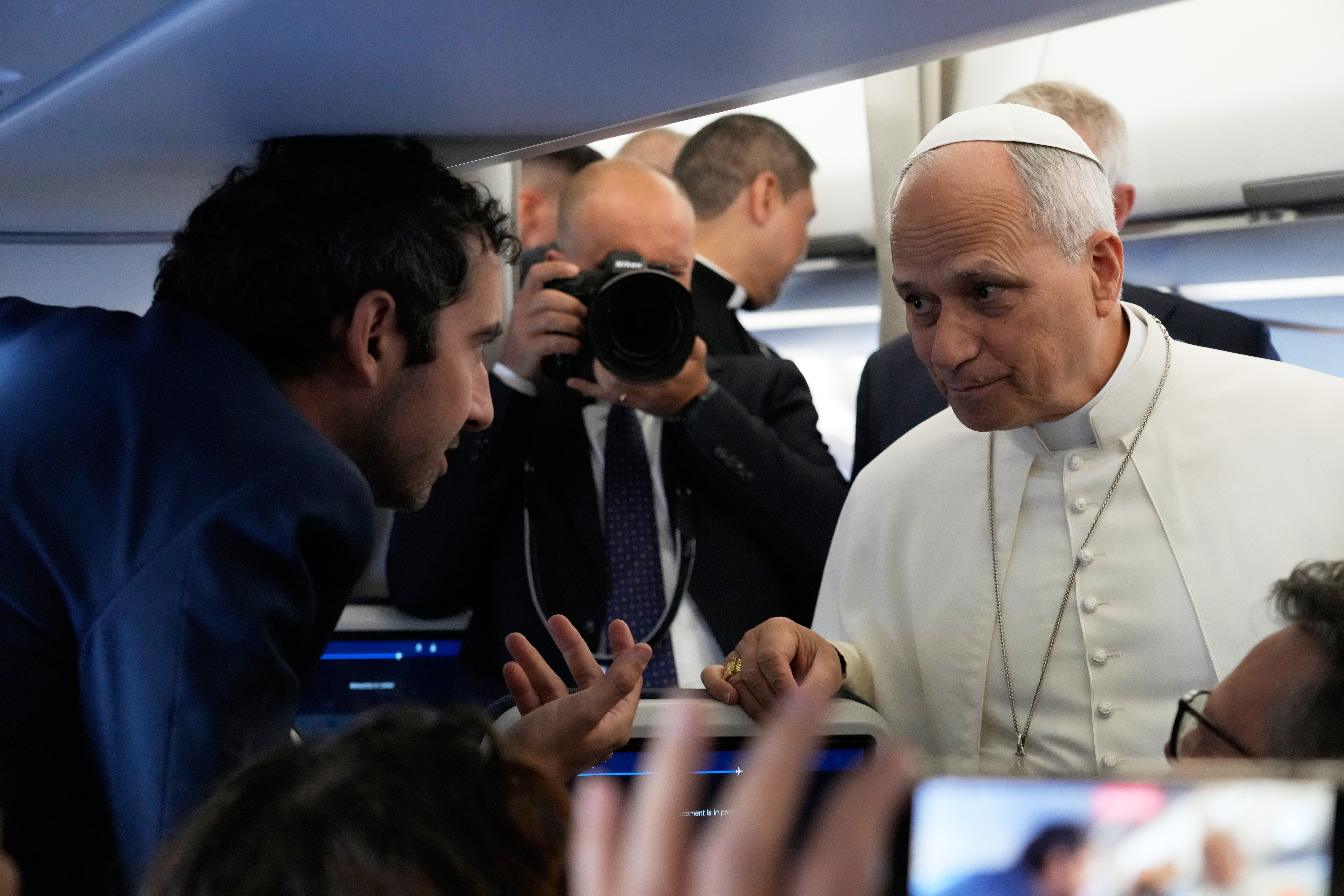
    ABOARD THE PAPAL PLANE — Pope Leo XIV told reporters they were welcome to cover him, as he responded to the Trump administration’s attempt to bar U.S. media from the White House and affirmed the importance of journalists covering public figures.

    Leo spoke to reporters Friday on his way to France for a four-day visit. Asked by a CNN reporter about the Trump administration’s attempt to bar CNN and other reporters, Leo said the media was welcome on his plane.

    “I am very happy that here, you are all welcome,” he said. Good media coverage is important, he said, and equally important “that we have it all the way around, for everyone”

    CNN, MS NOW and Politico were back at the White House on Thursday after a judge handed them a reprieve from President Donald Trump’s ban, but the extraordinary showdown between him and outlets whose coverage he dislikes continued.

    On a high-profile day when Chinese leader Xi Jinping was visiting Washington and attending a state dinner, no major American network was airing live coverage, and both CNN and MS NOW said their journalists were denied access to Xi’s state dinner arrival.

    Leo has long affirmed the need for free and independent press, a point he made in one of his first audiences as pope. Speaking to journalists who covered the 2025 conclave that elected him, the American pope called for the release of imprisoned journalists and affirmed the “precious gift of free speech and the press.”

    That said, since the COVID-19 pandemic, independent media have been prevented from covering photo opportunities inside the pope’s private studio when visiting heads of state visit. Additionally, many of the pope’s private audiences with other groups and individuals are closed to non-Vatican press.

    Leo had opposed Trump on the war

    Leo’s airborne comments about Trump followed his April back-and-forth over the American president’s criticism of his opposition to the Iran war. The American pope’s position won him points with some Europeans opposed to Trump’s policies.

    “He dared, at his level, to oppose the American president,” said retiree Thierry Marien, who lined up hours early to grab a spot on the popemobile route to Notre-Dame cathedral, where Leo was to celebrate vespers later Friday. “Not because he is opposed to the American president but because he’s opposed to countries where we can see there’s a risk of their political systems becoming a bit more dictatorial and there are already enough of those in the world.”

    “I appreciated that he did that. He could quite easily have said to himself, ‘In my situation, I won’t criticize any heads of state,’” he said.

    Leo apologizes to reporters

    Also on the flight Friday, Leo also apologized for missing an opportunity to speak with the press the last time he traveled internationally, when his Iberia charter broke down in Spain’s Canary Islands and he returned home solo on the king’s private jet, skipping his traditional airborne press conference.

    More than 70 reporters and the Vatican delegation waited for several hours at the airport for a replacement plane to arrive. Leo addressed the media’s disappointment when he came to the back of the plane to greet reporters.

    “A special mention I would like to make for those of you who were traveling with me when we returned to Rome from Spain,” he said. “I want to apologize personally for an incident, that I had nothing to do with, but which I know left a number of you unhappy with the fact that we couldn’t have the flight back together back to Rome.”

    In other comments to reporters, Leo said he believed his alma mater Villanova would be the fan favorite when the Augustinian university plays Notre Dame’s basketball team in Rome on Nov. 1.

    “They tell me that the people coming to the match, 90% are Villanova and 10% Notre Dame, so the voice of the people of God will be very strong on the Villanova side,” Leo said.

  • Man who was shot during 2024 Trump campaign rally in Butler, Pa., has died

    Man who was shot during 2024 Trump campaign rally in Butler, Pa., has died

    James Copenhaver, one of three campaign rally attendees shot in 2024 during an assassination attempt on then-candidate Donald Trump, has died in Pittsburgh, his lawyer said Thursday. He was 76.

    Copenhaver was in the bleachers during the event in Butler, Pennsylvania, when a 20-year-old gunman opened fire from a nearby rooftop, grazing Trump’s right ear with one bullet. Copenhaver was struck in the arm and in the abdomen, wounds that left him with lingering injuries and walking with a cane.

    Two other attendees were also shot — David Dutch, who survived, and Corey Comperatore, who shielded his family from gunfire and was killed.

    Copenhaver died Wednesday at Allegheny Health Network’s West Penn Hospital in Pittsburgh, according to a statement from the Allegheny County medical examiner cited in local media accounts.

    Copenhaver’s lawyer, Joseph Feldman, said in a statement issued on behalf of the family that he died surrounded by loved ones. The statement did not specify if his death was directly related to the injuries he suffered at the rally.

    Copenhaver and his wife, Marianne Copenhaver, sued the federal government in June, alleging that the Secret Service and Department of Homeland Security had “utterly failed” to provide appropriate security at the rally. Copenhaver’s injuries required multiple surgeries, including a transection of his colon, and he had lingering kidney and other damage, including a loss of feeling in his leg. The lawsuit described the wounds as “debilitating, grievous, permanent and life altering.”

    The family’s statement Thursday called Copenhaver above all else a devoted husband, father and grandfather who instilled the values of hard work, integrity and the service to others in his children.

    “James’s dedication to this great country was a defining part of his life,” it said. “As a veteran, he proudly served our nation in the armed forces, and his love of country never wavered. James was a true American patriot who believed deeply in the freedoms and ideals upon which this nation was founded, and he embodied the very best traits of our great nation.”

    In a statement posted to social media, Trump on Thursday called Copenhaver “a true American Patriot.”

    “Jim showed tremendous bravery, courageously continuing to FIGHT, FIGHT, FIGHT, and maintaining a positive spirit despite unimaginable hardships,” Trump wrote.

  • What U.S.-Vietnam reconciliation can teach us about Afghanistan

    What U.S.-Vietnam reconciliation can teach us about Afghanistan

    After the Taliban captured Kabul on Aug. 15, 2021, numerous news articles compared Washington’s withdrawal from Afghanistan to similar events in Vietnam on April 30, 1975. Some articles highlighted differences in the conflicts, such as media coverage and troop motivations, while others underlined similarities, including the evacuation of nearly identical numbers of Afghans and Vietnamese in the days leading up to collapse of Kabul and Saigon.

    It’s been five years since America’s withdrawal from Kabul — and the experience of the United States leaving Vietnam still resonates as Afghanistan has become one of the poorest countries in the world.

    In Vietnam, Hanoi’s counterproductive domestic and foreign policy stifled the economy, undermined diplomacy, and caused a mass exodus of millions of Vietnamese from the country. And yet, 20 years later, Vietnam normalized relations with the United States and embraced a global market system that has since made it one of the world’s fastest-growing economies.

    Two main factors explain U.S.-Vietnam reconciliation. The first stemmed from Hanoi’s moderation in foreign policy, which downplayed Cold War rhetoric and acknowledged the need to integrate into the international system. The second stemmed from Washington’s diplomatic strategy toward Vietnam, which maintained consistent conditions for normalizing relations.

    When the United States left in 1975, Vietnamese Communist Party leader General Secretary Le Duan implemented socialist policies, including agricultural collectivization and forced relocation to New Economic Zones. Hanoi also imprisoned hundreds of thousands of South Vietnamese who had cooperated with Americans during the war in order to “re-educate” them in Marxist thought.

    Relations deteriorated with China and Cambodia, two countries that cooperated with Vietnam to resist America’s presence in Indochina. Hanoi invaded Cambodia in December 1978, following Pol Pot’s repeated incursions into Vietnam. China responded by sending 200,000 soldiers into northern Vietnam, leading to a three-week border war. The nation became one of the poorest countries in the world, kept afloat only by subsidies from the Soviet Union. The U.S. embargo did not help.

    The Carter administration attempted to normalize relations with Vietnam without preconditions prior to Hanoi’s occupation of Cambodia. Vietnam refused to do so, demanding the United States pay $3.25 billion in war reparations. After the December 1978 invasion, Jimmy Carter conditioned normalization on Vietnam’s signing of a peace agreement on Cambodia. Ronald Reagan upheld his predecessor’s stipulation, adding that Vietnam must make significant progress on locating and repatriating approximately 2,500 American prisoners of war (POW) and missing in Action (MIA). Hanoi’s leadership cooperated, hoping to secure economic and political concessions from Washington.

    During the Reagan years, numerous other humanitarian issues compelled Washington and Hanoi to sustain a diplomatic dialogue, including the resettlement of refugees, Amerasians, and former Vietnamese political prisoners. Diplomacy on these issues helped foster a favorable atmosphere prior to reconciliation.

    Such negotiations begot economic opportunities as long as Vietnam remained in Cambodia.

    It wasn’t until 1986, after General Secretary Le Duan’s death, that the Communist Party changed course and pursued a market economy. In 1989, Vietnam withdrew from Cambodia and began pursuing new economic policies. Sustained U.S. pressure during negotiations and consistent conditions for establishing economic and diplomatic ties contributed to Vietnam’s moderation.

    Lastly, U.S. businesses wanted Washington to lift the economic embargo to give American companies access to Vietnam’s resources. Hanoi’s leadership eventually moderated its domestic and foreign policy, advancing negotiations and proving to U.S. policymakers that Vietnam could manage bilateral and multilateral relations.

    Made By History sponsors. FOR USE ON MADE BY HISTORY STORIES ONLY.Inquirer Staff

    In April 1991, President George H.W. Bush provided the Vietnamese with a road map to normalization outlining economic and political concessions in exchange for progress on the POW/MIA issue. The road map gave both sides a diplomatic plan to follow. President Bill Clinton continued Bush’s plan, and in 1994, he lifted the economic embargo. The following year, the United States and Vietnam normalized diplomatic relations.

    Certainly, the postwar conditions that fostered U.S.-Vietnamese dialogue are different for Afghanistan. There are no American POW/MIAs listed in Afghanistan. While Washington welcomed nearly 200,000 Afghan refugees since the fall of Kabul, refugee admissions are currently suspended for most nationalities, including Afghans.

    Kabul has not invaded any of its neighbors, but the United States remains committed to its partnership with Pakistan. Washington does not currently have Kabul under an embargo, but fewer countries are interested in investing in Afghanistan than at a similar time for Vietnam. Nor does it help that Hibatullah Akhundzada, leader of Afghanistan, is wanted by the International Criminal Court for imposing severe restrictions on women and girls in the country.

    But diplomatic exchange could be fruitful, politically and economically. The Taliban are increasingly desperate to modernize its economy and end its international isolation. Rather than cutting off diplomacy entirely, the example of U.S.-Vietnam reconciliation suggests that a new phase of U.S.-Afghan relations could benefit both the people of Afghanistan and U.S. interests.

    Zachary Tayler is a doctoral candidate in history at Ohio University, specializing in U.S.-Vietnam postwar relations.

    Made by History takes readers beyond the headlines with articles written and edited by professional historians. Opinions expressed do not necessarily reflect the views of The Inquirer.

  • Energy Department will spend $2 billion to squeeze more electricity from the aging power grid

    Energy Department will spend $2 billion to squeeze more electricity from the aging power grid

    ALLENTOWN — The Energy Department said Thursday that it will spend almost $2 billion to try to squeeze more electricity out of the nation’s aging and stressed power grid, as President Donald Trump’s administration steps up efforts to avoid blackouts amid skyrocketing energy demand spurred by artificial intelligence.

    The money will go toward 31 projects across 26 states that are expected to produce more than 23 gigawatts of additional electricity capacity — enough to power 16 million homes. The projects will use new technologies such as sensors to measure real-time weather conditions to ensure safe transmission or direct power away from congested paths, the department said.

    The upgrades could improve power reliability and lower electricity costs for about 100 million Americans, officials said.

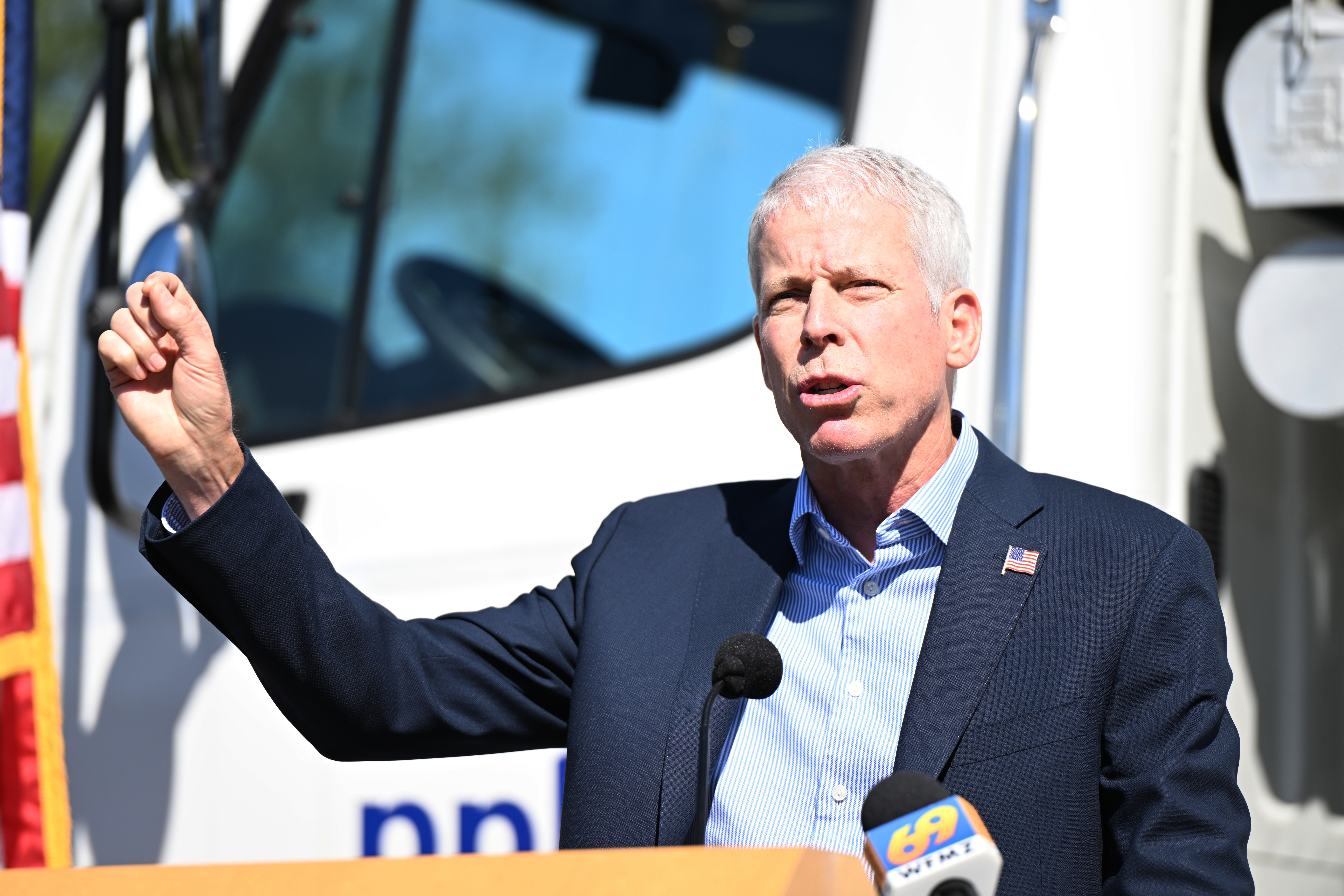
    “This is a quick way to lower electricity prices and increase reliability: using fibers that are already in the transmission lines to analyze what’s the temperature out, what’s the wind out, how can we use this transmission line to distribute more power, but safely and only in the right conditions,” Energy Secretary Chris Wright said in a news conference promoting the grants Thursday at a PPL Corp. facility in Allentown.

    The eastern Pennsylvania electric utility says two data centers in its territory came online this year and six more are under construction, with enough other data centers in the advanced planning stages that its peak electric demand could quintuple by 2032.

    PPL said it is receiving $71.5 million to modernize an existing high-voltage transmission line across roughly 30 miles in northern Pennsylvania.

    The announcement comes amid warnings that AI’s voracious demand for power is threatening to overwhelm U.S. power supplies, as massive new data centers come online faster than new power plants can be built. It also comes as electricity bills rise faster than inflation in many parts of the U.S., blamed in some areas on demand from data centers.

    The snowballing opposition to data centers in communities across the country has thrown a wrench into the plans of the world’s richest companies and transformed the midterm election landscape.

    Trump continues to stick up for data centers, even as politicians from both major political parties criticize them and many communities try to block them.

    In the meantime, Congress and some states are trying to push utilities to use new technology to make grids more efficient, lessening the need to build new power plants.

    Julia Selker, the executive director of the WATT Coalition, a trade association for grid-enhancing technologies, said both the projects and the scale of the investment are significant. Utilities in the U.S. are lagging places like Europe in adopting the technologies, despite federal investment in the past to develop and test them.

    Wright said that work on the projects should begin right away and that he hoped some efficiencies are in place before this winter to tamp down price spikes when extreme weather sends demand skyrocketing.

    He said he didn’t know whether the projects would have gotten done without federal funding. Many, he said, had been under consideration before the grants were offered, but the grant recipients hadn’t “quite pulled the trigger” on them.

    Projects being announced Thursday will involve component enhancements on more than 1,500 miles of transmission lines and technological enhancements across nearly 21,000 miles, the department said.

    Projects were prioritized based on those that can be put into operation quickly, officials said. Money for the grants comes from the bipartisan infrastructure law enacted by Congress under then-President Joe Biden, a Democrat. The government’s $1.9 billion in funding will be matched by $3.35 billion in cost-share funding from the recipients, the Energy Department said.

    Recipients include utilities, cooperatives and four state agencies. The state agencies — in Colorado, Indiana, Ohio, and Oklahoma — were the biggest recipients, collectively drawing at a total of $810 million, with the Colorado and Oklahoma projects promising improvements to the wider regional grid.

    Trump has vowed to “unleash” the nation’s energy sector in his second term, aiming to drive up record-setting domestic oil and gas production, strip away pollution restrictions on power plants and keep expensive coal-fired power plants operating past their retirement dates.

    The administration also has pledged nearly $4 billion to buy back offshore wind leases as Trump seeks to discourage the expansion of wind energy in favor of fossil fuels.

    His administration has pushed to help tech giants build and connect data centers to power plants and high-voltage power lines and convert Cold War-era uranium enrichment plants into data center and power plant complexes.

  • More than 160,000 pounds of meat bearing false USDA inspection labels recalled

    More than 160,000 pounds of meat bearing false USDA inspection labels recalled

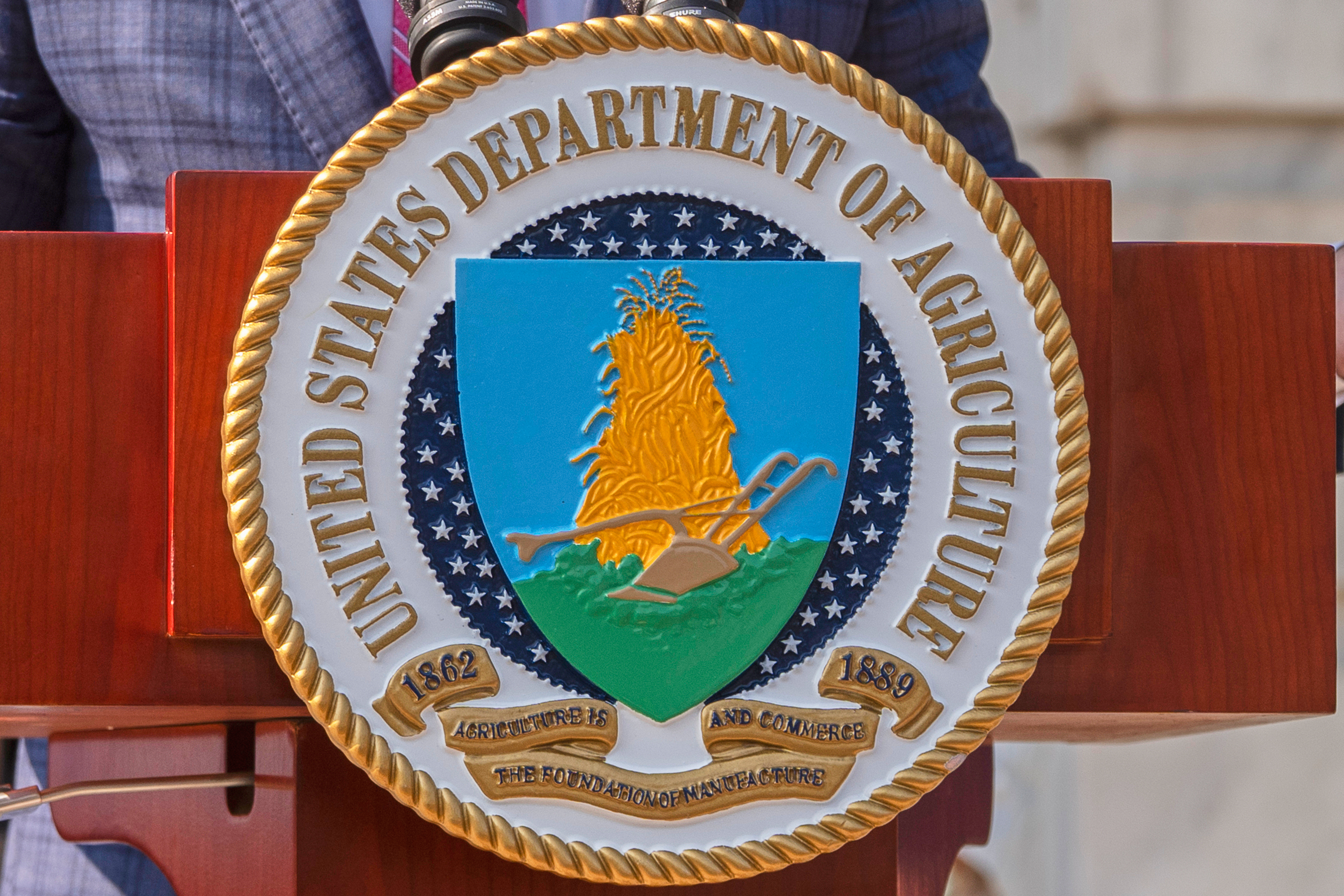
    NEW YORK — More than 83 tons of meat are being recalled across the U.S. because the products were not properly inspected by federal authorities and were shipped out with falsified inspection stickers, the Department of Agriculture said.

    Star Meat Delivery Inc., based in Lucama, N.C., is recalling more than 167,000 pounds of raw pork, beef, and goat nationwide. The USDA said that number could grow as it continues its investigation.

    Food produced without inspection may contain undeclared allergens, harmful bacteria, or other contaminants, the agency said Tuesday in announcing the recall. So far, there have been no confirmed reports of illnesses or injuries from the meats, according to the USDA.

    The meat in question was produced “on various dates” before Sept. 22 and has USDA inspection stickers falsely bearing an establishment number — EST. 1363 — that the agency said “does not have a federal grant of inspection.” However, some packages people purchased may not bear that labeling because retail stores may have applied their own stickers with pricing and safe handling instructions, the agency warned.

    The products were shipped to Georgia distributor A&D Foods to send to retail and restaurant locations nationwide.

    The USDA said the products should be considered misbranded and unsafe to eat and be discarded or returned to the place of purchase.

    The agency said the problem was discovered during the USDA’s Food Safety and Inspection Service’s routine checks. It’s not clear whether anyone has been arrested or criminally charged.

    Star Meat Delivery, in a statement posted on its Facebook page Thursday, pushed back at the notion that the inspection stamps on its products were somehow falsified. It said the establishment number in question was “legitimately reserved” as part of the USDA application process while it seeks approval to process and package meat for the Georgia distributor.

    That approval process is still underway, Star Meat said, although the meat involved was sourced from a USDA-inspected supplier.

    “No other products sold by Star Meat Delivery were mislabeled, and no other products sold by Star Meat Delivery are part of the recall that has been issued,” the company said. “We are cooperating fully with the appropriate authorities to finalize the application and are following the recall procedures that have been put into place.”

    The USDA didn’t immediately respond to Star Meat’s statement.

    Recalls triggered by forged inspection stamps are relatively rare, according to Keith Schneider, a food safety professor at the University of Florida in Gainesville.

    “This is someone taking a shortcut,” he said. “Systems are in place to catch these sorts of things and it appears the system worked as intended. You can’t skip inspections.”

    Last year, some 32,000 pounds of meat, including chorizo, pork chops and ribs, produced by Sabrositos Hondurenos, of New Jersey, were recalled after the USDA determined they had fake inspection stickers.

  • Israel’s Netanyahu, at U.N., calls accusations of genocide in Gaza ‘the biggest lie of the century’

    Israel’s Netanyahu, at U.N., calls accusations of genocide in Gaza ‘the biggest lie of the century’

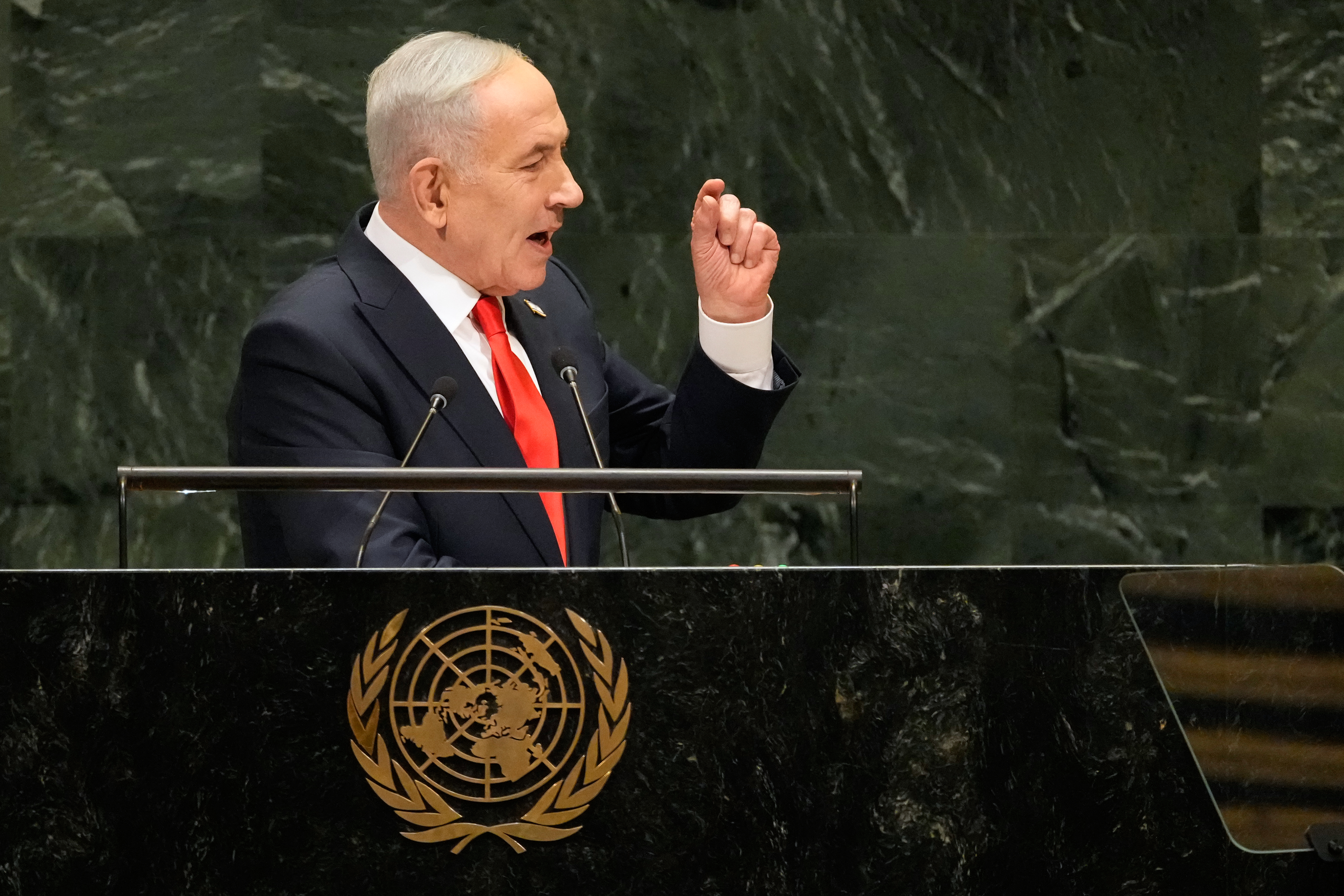
    Allegations of Israeli genocide in Gaza are not only false but “the biggest lie of the century,” Prime Minister Benjamin Netanyahu told world leaders Thursday in a defiant speech that asserted his nation’s right to wage war against Iran — and was not heard by scores of delegates who trooped out before he started speaking.

    Netanyahu, his voice rising in emphasis, said attacking Iran “was one of the easiest decisions I’ve ever had to make” and denounced as “moral cowards” a mass of delegates who walked out of the U.N. General Assembly when he took the podium to speak.

    “In defending itself, Israel is also also defending many of the countries whose delegates just left this hall,” Netanyahu said. “In fact, I want you to know that many of their leaders even thank us privately for taking out Iran’s nukes.”

    When Netanyahu walked to the rostrum, a mix of cheers, boos and mass walkouts erupted. Scores of delegates marched out and a majority of visible seats sat empty afterward. “Order in the hall, please,” General Assembly President Khalilur Rahman said repeatedly.

    “If there are any other moral cowards who have not yet left the hall, please do so now,” Netanyahu said.

    His remarks — which at times sounded like a stump speech as Israel gears up for elections — came after a week filled with speeches by world leaders accusing Israel of genocide and war crimes in Gaza.’’

    Palestinians had called for a mass walkout

    The Palestinian Mission to the U.N. said in a message to many of the 193 U.N. member nations to bring as many staff as possible to the assembly hall and “collectively walk out of the assembly” once the Israeli prime minister is announced.

    “This will send a clear message to Netanyahu and his government that no one is willing to aid, abet, or be complicit in its genocide and war crimes and illegal occupation, which all peace-loving states and peoples demand must come to an end,” the message said.

    Israel rejects allegations that it committed genocide and war crimes and is illegally occupying Palestinian territory. All Israeli settlements are illegal under international law, but the Israeli government insists they are legal.

    Netanyahu, who is prone to using visual aids during his General Assembly speeches, at one point held up a pager while reminding the audience of Sept. 17, 2024, when Israel remotely detonated thousands of pagers that had been distributed to the Iran-backed Hezbollah militant group in Lebanon. The pager attack wounded more than 3,000 people and killed 12, including two children.

    He reminded the assembly of the scale of the Oct. 7, 2023, attack in which Hamas militants killed about 1,200 people. “This is equal to 40,000 innocent Americans slaughtered in less than 24 hours,” he said, or 16 times the death count on the 9/11 attacks that left nearly 3,000 people dead in New York.

    Netanyahu thanked U.S. President Donald Trump for taking decisive action against Iran, and he insisted Israel would prevail: “We will continue to win because we have no other choice.”

    Netanyahu followed the Palestinian president’s remote speech

    Palestinian President Mahmoud Abbas also addressed the U.N. General Assembly earlier Thursday, delivering prerecorded remarks from his office in Ramallah after the United States denied him and other top Palestinian officials visas to attend the gathering for the second year in a row.

    The 90-year-old leader’s popularity at home and relevance abroad have both waned. But in his remarks, Abbas made clear he did not intend to quietly accept being sidelined.

    “We will not leave our homeland. We will not accept displacement. And we will not allow anyone to decide our future on our behalf,” Abbas said.

    Though world leaders have repeatedly invoked the plight of Palestinians in speeches throughout the week, Abbas urged the international community to take more tangible action against Israel.

    “How long will some countries continue to remain silent about Israel, or continue supplying it with weapons that it uses against our people? The world has witnessed the enormous cost in the Gaza Strip and the West Bank,” Abbas said. “What, then, is the international community waiting for before it acts to protect the Palestinian people?”

    Netanyahu is in the city of a mayor who wants him arrested

    In past years, Netanyahu has used his General Assembly speech to both denounce the United Nations as biased and make Israel’s case to world leaders. His address — scheduled for prime time in Israel — is the cornerstone of an abbreviated trip to the United States unfolding under the shadow of New York City Mayor Zohran Mamdani calling him a “war criminal” and pushing for his arrest.

    Mamdani has acknowledged that New York does not have the authority to execute an International Criminal Court warrant but urged federal authorities to do so.

    Israel has grown increasingly isolated throughout the war in Gaza. The war began on Oct. 7, 2023, when Hamas-led militants attacked Israel, killing around 1,200 people and kidnapping 251. At least 73,922 Palestinians have been killed in Israel’s subsequent offensive, according to the Gaza Health Ministry, part of the Hamas-run government whose numbers are generally considered reliable by the international community.

    A ceasefire agreed to by Israel and Hamas last October halted the heaviest of the fighting and led to the release of the remaining hostages yet further steps have since stalled. Israel maintains control of most of Gaza and continues to carry out airstrikes on Palestinians near military-held zones. Hamas not disarmed or relinquished power and there has been no progress toward reconstruction in the mostly destroyed territory.

    Netanyahu has said no Palestinian state will be established while he is Israel’s leader and has argued that the Palestinian Authority is not a partner for peace.

    Netanyahu dismissed incidents of Israeli settler violence against Palestinians in the West Bank as a “handful of young juvenile delinquents” throwing stones, chopping down olive trees and lighting fires.

    “I can’t stand that. I won’t stand for vigilantism,” the prime minister said before accusing foreign leaders and the international press of distorting the scale of violence in the West Bank.

    Netanyahu’s government is dominated by settlers and their allies, including the Cabinet minister who oversees the police. There have been few arrests of settlers involved in attacks on Palestinians.

    Israel captured the West Bank and east Jerusalem in the 1967 war, and the Palestinians want both as part of their future state. The Palestinians and much of the international community view the settlements as illegal and as an obstacle to creating a viable, contiguous Palestinian state.

  • Senate rejects resolution to halt the Iran war as gas prices upend midterms

    Senate rejects resolution to halt the Iran war as gas prices upend midterms

    WASHINGTON — Despite rising political anxiety over the Iran war, senators on Thursday narrowly rejected a war powers resolution seeking to halt President Donald Trump‘s military action, which has been largely blamed for the spike in gas prices and become a flashpoint in the midterm election.

    The Senate tally, 49-50, coming days after Trump’s bombastic address to the United Nations in which he threatened to “annihilate” Iran, was likely the last chance for lawmakers to go on record about the war ahead of November. More Republicans are peeling away from the president as the war drags on and as they campaign for control of Congress. The Senate outcome fell short, with four GOP senators joining most Democrats in favor of the resolution.

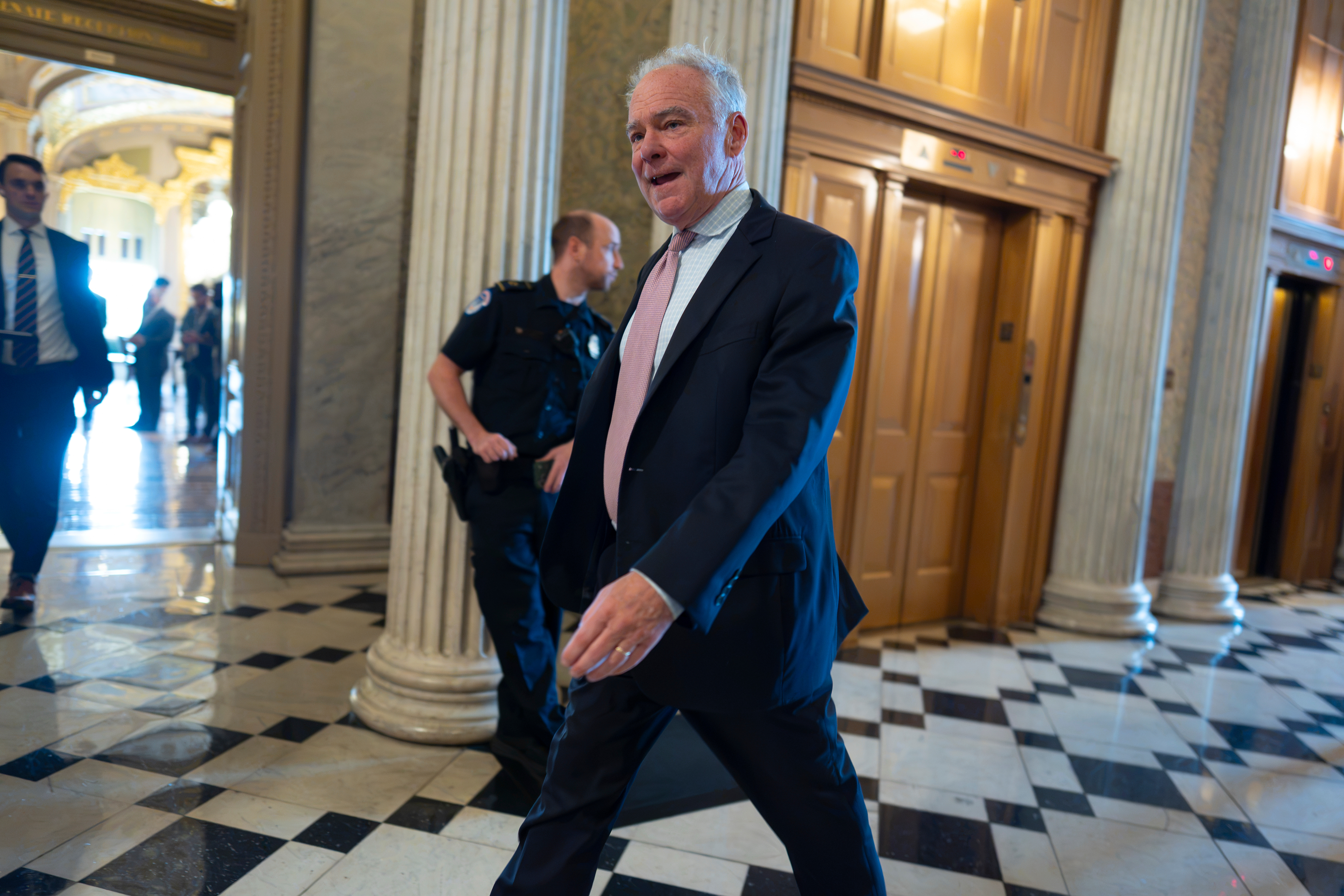
    “They have been carrying water for this ridiculous and illegal war for months and months and months and not listening to their constituents,” said Sen. Tim Kaine (D, Va.), who pushed the war powers resolution forward.

    About half of rural American voters believe the economy is worse off now than when Trump returned to office, according to a new survey from The Associated Press in partnership with KFF. The costs of groceries, gas, and healthcare rank as top pain points for the rural voters.

    “We’ve got to break the cycle,” said Sen. Thom Tillis (R, N.C.), who joined in voting yes.

    Republican Sens. Susan Collins of Maine, Lisa Murkowski of Alaska, and Rand Paul of Kentucky also voted for the resolution to end the war, as they have in many previous tallies. Sen. John Fetterman (D., Pa.) voted against.

    This was the 14th time the Senate has considered a war powers resolution, since Trump launched the conflict on Feb. 28.

    War powers resolutions are largely political statements, without the full force of law, but stand among the sharper tools the House and Senate have to express disapproval of the White House, short of halting funds for Trump’s military actions. As resolutions, they do not go to the president’s desk for his signature.

    As gas prices climb, Republicans start to question the war

    Republicans in control of Congress have shied away from directly confronting Trump over the war, now stretching past the seven-month mark. But their unrest is surfacing as stubbornly high gas prices leave voters in a cash crunch back home.

    Diesel costs, in particular, have almost doubled, topping $6 a gallon, according to AAA.

    Just returning from a swing through Iowa, Kansas, and Nebraska stumping for GOP candidates who are suddenly at risk in their elections, Sen. John Kennedy of Louisiana called on Trump to hold a prime-time address to the nation to explain the Iran war strategy and the end game.

    “People are confused about the war and upset about the cost of living,” he said.

    But he and others were not yet ready to vote against the war.

    “My own view is that the focus right now needs to be on attacking the cost-of-living issues,” said Sen. Josh Hawley (R, Mo.) who opposes the war powers resolution and believes the president is acting within his authority to conduct the military action.

    House Democratic Leader Hakeem Jeffries scoffed at the handful of Republicans now trying to distance themselves from what he called Trump’s failed economy. “Now all of a sudden they’re waking up,” he said.

    Democrats keep pushing war powers votes in Congress

    Earlier this month, the House for a third time approved a war powers resolution, this time with seven Republicans joining the Democrats, including two from battleground Iowa, Rep. Zach Nunn and Rep. Mariannette Miller Meeks, where affordability issues among rural voters are dominating the campaigns.

    Senators, though, have rarely been able to confront Trump by passing a war powers resolution.

    In June, the Senate approved a war powers resolution after four GOP senators joined Democrats, but Republicans abruptly reversed course the next day after Trump berated them during a private lunch over the outcome.

    At the time, Sen. Bill Cassidy of Louisiana, stood up to defend his vote only to end up in a shouting match with Trump. He later switched to oppose the war powers resolution after receiving a personal briefing from the White House.

    Thursday’s vote was on a resolution that had passed the House in July with GOP support. Rep. Pramila Jayapal, D-Wash., who authored the House resolution, said the Senate outcome was “a slap in the face to the millions of American people who want this war to end.”

    Other options to halt the Iran war

    As the war drags on, costing $43.5 billion so far, Congress is also seeking other ways to force Trump to rethink his military strategy in Iran.

    Rep. Thomas Massie, the renegade Republican from Kentucky, pushed forward articles of impeachment against Secretary of Defense Pete Hegseth before the GOP leadership abruptly adjourned the House and sent lawmakers home to campaign for the election, avoiding any potential vote on the matter.

    Lawmakers also have the power of the purse to curtail military spending, something Republicans have been reluctant to do but Democrats are sure to tackle if they win power in the midterm election. The White House’s request for an additional $87.6 billion funding package for the war and other needs has idled in Congress.

    First created in the aftermath of the Vietnam War as a way to hold a president accountable for military actions, the war powers act has long posed a test of the balance of power between the executive and legislative branches of government.

    While the Constitution says only Congress can declare war, the president as commander-in-chief is also able to engage the military. The war powers act seeks to provide clarity by requiring the president, within 60 days of any such action, to seek approval — or risk disapproval — from Congress.