Category: Nation & World

  • Trump hails deep friendship with Xi as China’s leader urges ‘healthy’ competition between 2 powers

    Trump hails deep friendship with Xi as China’s leader urges ‘healthy’ competition between 2 powers

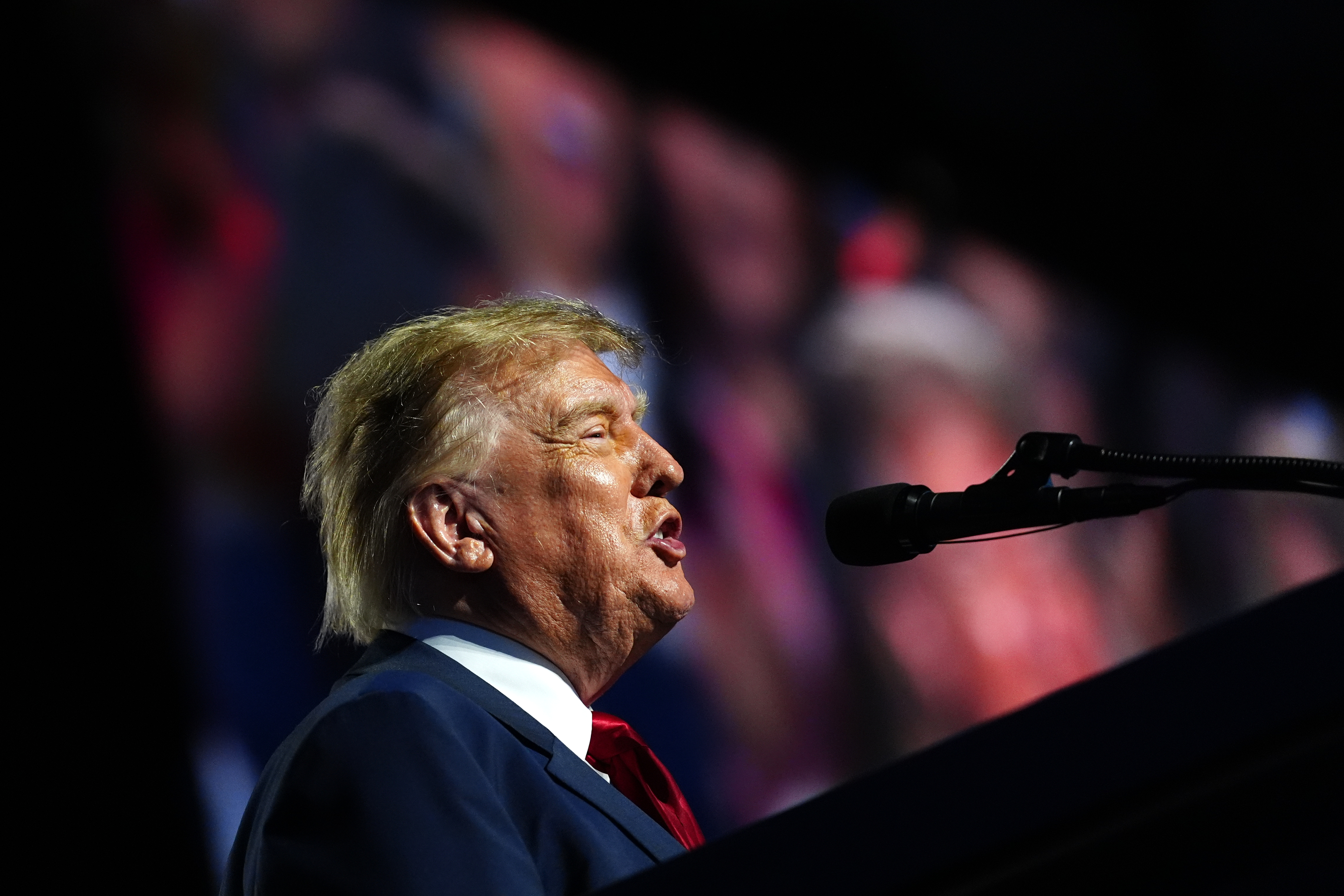
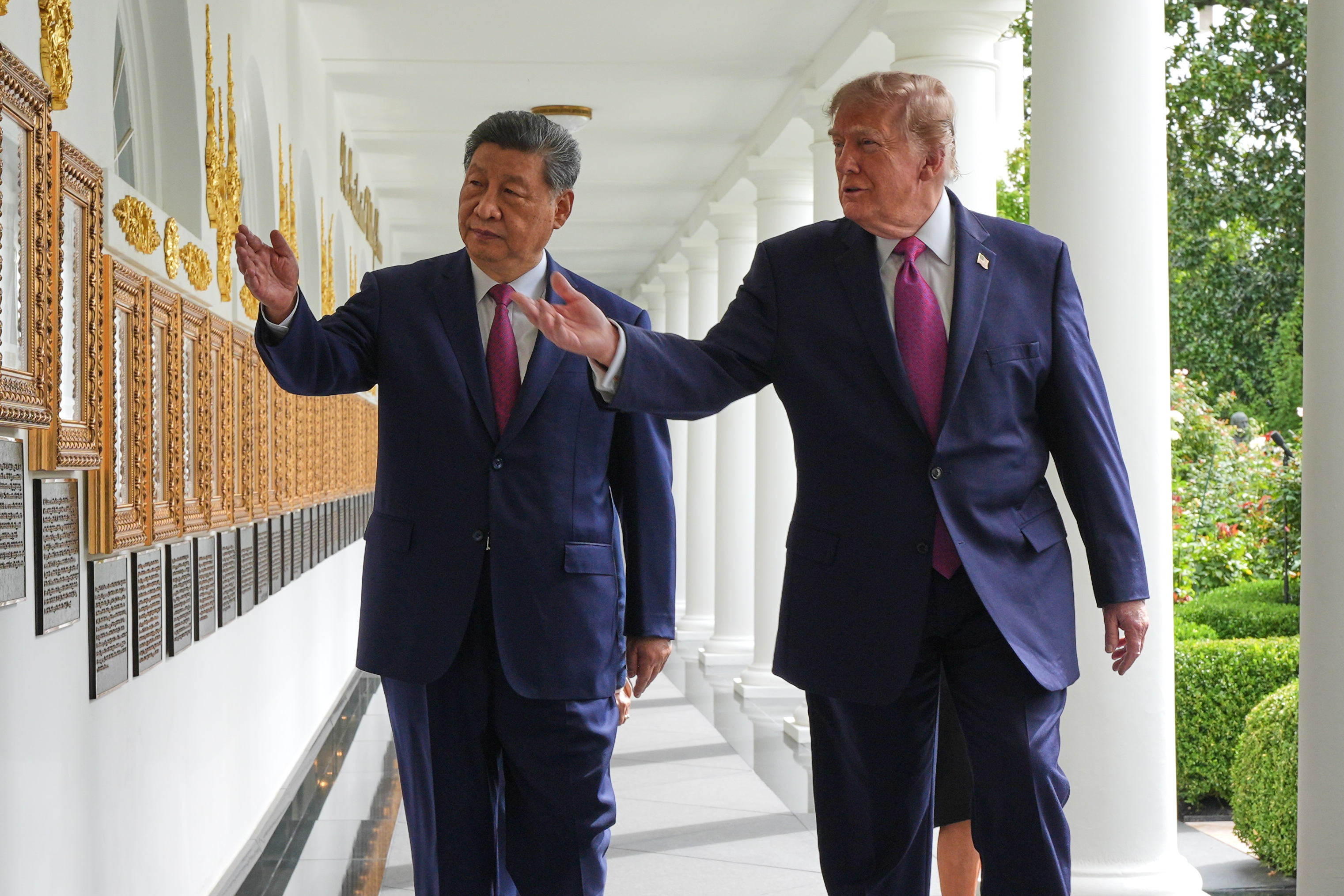
    WASHINGTON — President Donald Trump on Thursday hailed the “truly great friendship” he has forged with Xi Jinping as the Chinese leader began his highly anticipated state visit by pressing for the world’s two biggest economies to work more closely together to avoid friction as they compete.

    While Trump has many thorny issues to discuss with the president of America’s biggest economic rival, he focused on his long relationship with Xi as the two gathered with aides for opening remarks before formal talks.

    “From the time of my first election in 2016, President Xi and I have forged a friendship, a truly great friendship, actually, built on mutual respect and the vital interests of our people,” Trump said.

    China has resisted the Trump administration’s urgings — and economic threats — to use its considerable leverage to prod Iran to agree to U.S. terms to end the nearly seven-month war. Xi wants to see Trump permanently halt arms sales to Taiwan and loosen export restrictions on cutting-edge advanced chips. The two sides on Wednesday agreed to extend by two months a one-year trade truce that was set to expire Nov. 10 as they work to find a more durable agreement.

    Xi presses Trump on Taiwan

    In their private conversation, Xi also urged Trump to “prudently handle the Taiwan issue,” according to the Chinese state media outlet Xinhua.

    China has made clear it views Taiwan as the most sensitive issue in the U.S.-China relationship. Beijing considers Taiwan to be Chinese territory and vows to annex the island by force if necessary. The United States is obligated by law to provide Taiwan with sufficient hardware to deter any armed attack from the mainland. The U.S. has said it opposes any unilateral changes to the status quo by either side.

    China has repeatedly pressed Washington to permanently halt the arms sales, including when Trump and Xi met in Beijing in May.

    After that meeting, Trump said he was holding off on final approval for a record $14 billion arms package that was in the pipeline. He also described arms sales to Taiwan as a “very good negotiating chip” with China.

    Chinese president once more invokes the ‘Thucydides trap”

    Xi was also more pointed than Trump in his public remarks, saying Chinese and American interests are “deeply intertwined” and that the “competition should be a healthy one and should be kept within bounds.”

    He also reiterated his warning that the U.S. and China must avoid the ” Thucydides trap,” referring to the idea that when a rising power threatens to displace an established one, the result is often war. Xi offered a similar warning when Trump visited Beijing in May.

    “It should be a race of catching up with one another, not a wrestle in which one either wins or loses,” Xi added.

    Xi also announced that China will invite 100,000 American youth to come to his country for studies and exchanges in the next five years and that China will send two pandas to the zoo in Atlanta. He called the beloved animals an “envoy of friendship” and that they will meet the American people in a “few days.”

    Xi says China and U.S. should make sure AI is ‘always under human control’

    Trump said in a social media post earlier Thursday that artificial intelligence — “superintelligence” as he is trying to rebrand it — will be high on the agenda amid growing global anxiety that the technology will kill jobs or potentially even wipe out humanity.

    “I want to leave it exactly where it is,” Trump wrote. “That is China’s position also.”

    Xi also touched on AI in his opening comments, saying that the two countries had a responsibility to ensure that humans always operate AI.

    “We have both the capability and responsibility to develop and manage AI for good and ensure that a development of AI is always under human control and serves the well being of the people,” the Chinese leader said.

    The two countries’ finance ministers met earlier this week, with the U.S. proposing a new “notification mechanism” for AI incidents between the two nations.

    Trump rolls out the red carpet for Xi and faces criticism from some White House allies

    Trump has made clear he wants to impress Xi with the visit. The Republican president made sure construction of a new helicopter landing pad on the White House’s South Lawn was completed before the visit and he met Xi and his wife, Peng Liyuan, on Wednesday evening when they flew into Joint Base Andrews outside Washington.

    The White House also arranged for an elaborate military review that the leaders and their spouses observed before the Oval Office talks. Following the military review, first lady Melania Trump accompanied Peng for a visit to the Smithsonian National Museum of Asian Art.

    After about 90 minutes of talks, the leaders stepped out to the South Lawn so Trump could show off the new White House helipad and give Xi a tour of Marine One, the presidential helicopter. Trump and Xi also appeared to peer at the ballroom construction site from afar. Xi left the White House shortly after the quick tour and is to return in the evening for the state dinner.

    “We had a great meeting,” Trump said in a brief exchange with reporters after the tour.

    Later, the leaders will dine on sea bass at a black-tie dinner in the White House East Room, featuring red décor and a toast honoring the late President Richard Nixon, whose 1972 trip to China led to the establishment of diplomatic relations in 1979 and the parallel severing of formal ties with Taiwan.

    Trump’s decision to roll out the red carpet for Xi has spurred criticism from lawmakers in both parties and some White House allies.

    “Quite frankly, had the White House asked me for advice, I would have suggested the president not invite Xi Jinping to Washington for such a lavish welcome here in the United States of America based on all of the troubling issues we have with President Xi and the Chinese Communist Party,” said Sen. Roger Wicker, R-Miss.

    Xi urges U.S. and Iran to return to interim agreement

    The two sides also discussed the ongoing conflict in Iran, according to Chinese state broadcaster China Central Television.

    Trump has argued to little effect that China, which is far more dependent on Gulf oil than the U.S., has plenty of incentive to use its sway with Tehran to help force an end to the conflict.

    But Trump’s war of choice has unnerved Beijing, with the government condemning the U.S. and Israeli military action and Xi previously expressing concerns the conflict signaled a return to what he called the “law of the jungle.” The U.S. administration has warned China, Tehran’s biggest trading partner, not to aid Iran’s military effort.

    Xi, during Thursday’s talks, said China supports the U.S. and Iran returning to a short-lived interim deal from the summer in an effort to wind down the war, according to CCTV. That agreement broke down soon after it was signed in June as the countries traded renewed fire over control of the Strait of Hormuz, a crucial waterway for energy shipments.
  • Trump administration scrambles to stop third-country deportations after court ruling

    Trump administration scrambles to stop third-country deportations after court ruling

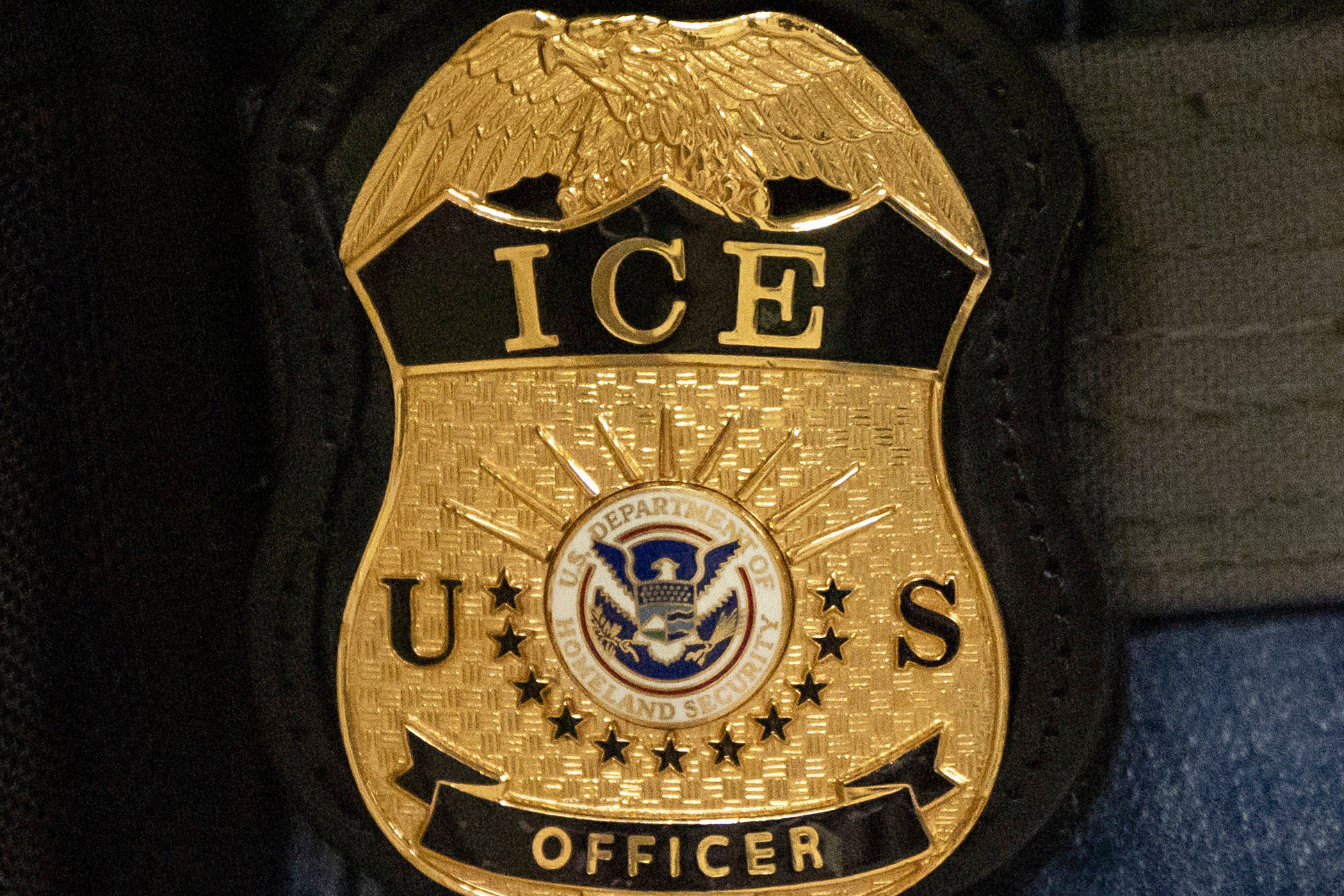
    The Trump administration scrambled Thursday to halt a number of imminent deportations after an appeals court blocked authorities from expelling people to third countries without a chance to contest their cases, according to documents obtained by The New York Times.

    The 1st U.S. Circuit Court of Appeals ruled late Wednesday that starting immediately, migrants need “a meaningful opportunity” to present evidence that they fear deportation to a third country.

    Previously, the government had concluded that it could deport the people without such an opportunity by gaining assurances from the nation taking in the migrants that they would not be persecuted or tortured there. This legal interpretation has allowed the administration to sidestep certain processes, such as the fear screening, and rapidly expel people.

    The third-country deportation program has been used by the Trump administration to get around rules barring certain people from being deported to their home countries. James Percival, the top lawyer at the Department of Homeland Security, said this week that more than 25,000 people had been deported to third countries.

    The program has drawn criticism because many immigrants have been sent to countries with records of human rights violations.

    The court decision adds a new burden for the government as it attempts to rapidly remove people from the United States without allowing their lawyers to try to block their deportation.

    On Thursday, as news of the ruling spread inside the U.S. government, officials quickly moved to take deportees off flights to third countries such as Costa Rica, Honduras, and the Central African Republic, according to documents obtained by the Times.

    The U.S. government has concluded that it cannot move forward — for the time being — with rapid deportations by simply relying on the diplomatic assurances, according to the documents.

    Trump administration officials said they would immediately appeal the order.

    “Without even allowing the government a chance to respond, and in the dark of night, a federal appeals court blocked us from conducting all third-country removals of illegal aliens, an entirely legal and invaluable tool to stem the tide of illegal immigration,” Attorney General Todd Blanche said. “We will immediately seek relief from the Supreme Court, which previously granted a stay in this very same case.”

  • FDA nominee voices support for vaccines at Senate hearing scrutinizing Trump administration efforts

    FDA nominee voices support for vaccines at Senate hearing scrutinizing Trump administration efforts

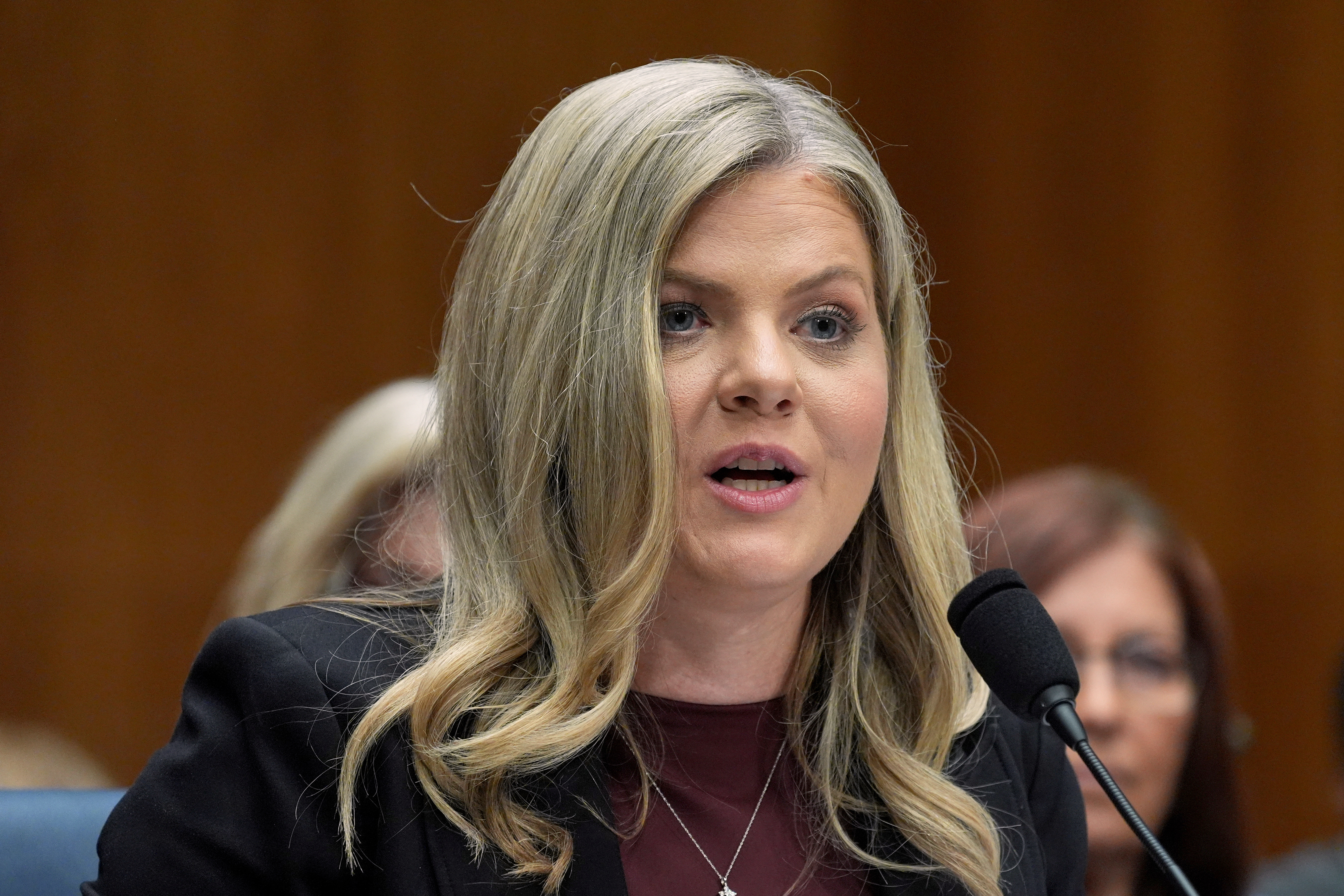
    WASHINGTON — President Donald Trump’s pick to lead the Food and Drug Administration voiced support for the safety of long-established vaccines at a hearing Thursday, even as senators questioned her about the White House’s efforts to upend childhood immunizations.

    Heidi Overton is currently serving as a White House adviser and has worked on a series of Trump health initiatives, including an executive order last month that called for splitting up and spacing out childhood vaccinations, bucking decades-old guidelines. Overton, a physician, stood beside Trump in the Oval Office when he falsely remarked that the combined measles, mumps and rubella vaccine could be “quite lethal.”

    Senate Health Committee Chairman Sen. Bill Cassidy, a physician from Louisiana, pushed Overton to reject that statement and affirm the safety of FDA-approved vaccines.

    “Right now every vaccine that is on the market has been determined to be safe and effective,” including the MMR vaccine, Overton said.

    Cassidy has repeatedly tried to extract commitments from Trump health nominees to uphold vaccine standards, including from Health Secretary Robert F. Kennedy Jr., only to see the Republican administration push forward with efforts undermining their use.

    “Kennedy gave me guarantees, and he did not keep them,” said Cassidy, a Republican. “If the president asks you to do something that goes against those guarantees you give us today, what will you do?”

    Overton said she would “follow the statutory requirements” for FDA commissioners and give Trump her best advice. Later in the hearing, Overton declined to explicitly say that Trump was wrong about the MMR vaccine’s safety.

    “This committee needs to know whether you will be radically honest, whether you will use your authority to stand up for sound science and protect children’s health,” Cassidy said. He didn’t indicate whether he’d support Overton’s nomination or when he might schedule a committee vote on it.

    If confirmed, Overton would inherit a raft of other controversial projects at the agency, including a safety review of the nation’s principal abortion drug and new rules that make it easier to sell flavored electronic cigarettes. Both issues were a focus for Republicans and Democrats on the panel.

    Overton sidesteps past statements on abortion pill

    The FDA approved the abortion pill mifepristone in 2000 and has repeatedly affirmed its safety while broadening access, including allowing it to be sent through the mail. But Kennedy ordered an FDA review of the drug’s safety last year, following calls from anti-abortion groups and lawmakers favoring abortion restrictions.

    While working at the Trump-aligned America First Policy Institute, Overton wrote that the FDA decision to allow mail delivery of mifepristone was “dangerous to women,” referring to the practice as “chemical abortion on demand.”

    In response to questions from Washington Sen. Patty Murray, Overton sidestepped her personal views on the drug, stating that it “has met the safety and efficacy determinations of the FDA.” Overton said she didn’t want to “prejudge” the FDA’s ongoing safety review of the pill.

    “The FDA has said this is safe,” responded Murray, a Democrat. “We need someone in FDA to make sure this is done by science.”

    Republicans on the health committee, including Cassidy, recently published a report suggesting the handful of companies that sell mifepristone may not be complying with rules for overseeing doctors who prescribe the drug.

    “If I’m confirmed as commissioner I would be committed to making sure every company is following the law,” Overton told Republican Sen. Jim Banks of Indiana.

    Overton’s abortion views could complicate her efforts to win over two moderate Republicans on the panel: Maine Sen. Susan Collins and Alaska Sen. Lisa Murkowski. Both have bucked their party on the issue, supporting federal access to abortion. Collins is currently locked in a tight reelection race in which abortion access is a central issue.

    But Collins focused her questions Thursday on a different issue: recent FDA decisions allowing new flavored e-cigarettes onto the market. Under previous administrations, including Trump’s first term, the agency had restricted sweet vaping flavors due to their potential appeal to kids.

    Overton pointed out that approval of several fruit-flavored vapes had the backing of FDA scientists, who determined the products met the standard of “appropriate for the protection of public health,” by helping adult smokers quit cigarettes.

    “They believed that standard was met because so many adult smokers are using flavors preferentially,” Overton said.

    To become commissioner, Overton will need a majority of votes from the 21-member health committee, followed by a positive vote from the full Senate.

    Under the current administration, leading the agency has involved balancing Trump’s demands for slashing regulations — such as those for vaping products — alongside Kennedy’s interests in scrutinizing vaccines, drugs and food ingredients.

    The previous FDA head faced numerous challenges before quitting

    Those challenges dogged the tenure of the previous FDA head, Marty Makary, who resigned in May. Makary’s time at the agency was defined by scientific disputes, leadership changes and a string of media stories detailing low morale and internal dysfunction among staffers. The FDA has lost about 20% of its employees to layoffs, buyouts, retirements or resignations since Trump took office.

    Overton studied under Makary at Johns Hopkins University, where she received a doctoral degree in clinical research after earning her medical degree at the University of New Mexico.

    Like Makary, Overton has no experience running a large bureaucracy, a critical skill for steering the FDA’s 16,000 staffers spread across numerous U.S. and international locations.

    In financial disclosure forms, Overton reported no investments in healthcare or food companies. That’s a stark contrast to Makary and other recent FDA nominees who have had to divest investments or cut other financial ties with companies regulated by the FDA.

    Overton reported $50,000 to $100,000 in student loans.

  • Trump ad airing with government funding despite law against ‘propaganda’

    Trump ad airing with government funding despite law against ‘propaganda’

    A television ad promoting President Donald Trump began airing on cable Wednesday saying it was paid for by the U.S. government, despite a federal prohibition on using taxpayer dollars for “publicity or propaganda.”

    The ad is similar to spots released earlier by the nonprofit arm of Trump’s political operation to promote his record in the midterms campaign. But this one includes a tag reading, “Paid for by the U.S. Government.”

    Since the 1950s, annual appropriations legislation — including the funding bill Trump signed in February — has routinely included a ban on using federal funds for “publicity or propaganda purposes.” The Government Accountability Office has said the prohibition applies to communications that are “purely partisan” and “designed to aid a political party or candidates.”

    The ad consists of a supercut of Trump photos and videos interspersed with text of campaign slogans. The soundtrack features snippets of Trump speeches and a chorus of women singing, “I’ll make them love me.” It ends with Ultimate Fighting Championship CEO Dana White praising Trump over footage of the June match on the White House lawn and military flyovers.

    It has aired so far on Newsmax in Chicago and Fox News in Los Angeles, according to ad-tracking firm AdImpact. More details about who bought the airtime were not available.

    The White House and representatives of Trump’s political team did not immediately respond to questions about the ad.

    Rep. Jamie Raskin (D, Md.), the top Democrat on the House Judiciary Committee, said on social media that the ad could amount to “felony criminal theft and conversion of government property for political campaign purposes.” He also cited the Hatch Act, which prohibits government employees from using their positions or official resources for political activities.

    There is no immediate precedent for a government-sponsored political ad during a campaign.

    In 2004, the administration of President George W. Bush was criticized for releasing ready-to-air video segments showing Bush signing a Medicare prescription drug law, complete with hired contractors posing as reporters. The GAO said the materials violated the propaganda prohibition.

    In the first Trump administration, the Department of Health and Human Services commissioned a $250 million coronavirus ad campaign that congressional Democratic investigators found included partisan interests. The agency backed off using pro-Trump celebrities in the ads.

    Last year, the Department of Homeland Security under then-Secretary Kristi L. Noem spent more than $200 million on ads promoting her and Trump’s immigration policies. In March, Noem testified that Trump approved the campaign, prompting him to fire her.

  • Renewed fighting in northern Ethiopia effectively shatters 2022 peace deal that ended war

    Renewed fighting in northern Ethiopia effectively shatters 2022 peace deal that ended war

    ADDIS ABABA, Ethiopia — Renewed fighting between Ethiopian federal troops and Tigrayan fighters escalated Thursday, effectively shattering a peace pact that ended a devastating two-year war in 2022, as rebel forces mobilized for an armed struggle they hope will lead to the removal of the federal prime minister.

    The main combatants are Ethiopian federal troops and fighters loyal to the Tigray People’s Liberation Front, or TPLF, an armed political group in Tigray, Ethiopia’s northernmost regional state.

    Ethiopia’s military said Thursday that dozens of TPLF fighters had been killed in ongoing operations and that federal forces “have been able to detain many” others and seize a large quantity of weapons from them.

    The TPLF and Ethiopian federal troops waged war between November 2020 and November 2022, when a peace deal was signed in Pretoria, South Africa.

    Eritrean troops fought alongside Ethiopian forces against the TPLF in that conflict. The civilian death toll was estimated by Ghent University researchers to be 500,000, including from violence, famine and the collapse of health services.

    After both sides signed the Pretoria peace deal, a caretaker administration seen as loyal to Ethiopian Prime Minister Abiy Ahmed was installed in Mekelle, the Tigray capital. But tensions remained, with the TPLF maneuvering for political control in Mekelle.

    Rebel fighters forge a coalition

    This time, the TPLF appears to have mobilized widely, bringing together former foes in its stated goal of removing Abiy from power in Addis Ababa, the federal capital.

    On Sunday, the TPLF and six other opposition groups announced that they had formed an alliance to overthrow Abiy’s governing Prosperity Party, which was reelected in June polls that were boycotted by major opposition groups.

    Both sides had been accusing each other of bad faith, and for months some civilians in Tigray expected a return to armed hostilities. In May, the TPLF forced out regional leader Tadesse Werede, who reported to Abiy, and replaced him with a new council led by TPLF leader Debretsion Gebremichael, who led the Tigrayans in the previous conflict.

    Ethiopian federal authorities accused the TPLF of seeking to build an alliance with neighboring Eritrea to destabilize Ethiopia. The TPLF accused Ethiopian authorities of conducting drone attacks in Tigray. Eritrea said that it was alarmed by Abiy’s repeated assertions of his wish for sovereign access to the Red Sea via Eritrea.

    Both sides deny responsibility for launching this round of hostilities, and most of the fighting is believed to be in remote areas of often ragged, mountainous territory. On Wednesday, TPLF fighters seized the airport in Mekelle from federal police, and national carrier Ethiopian Airlines canceled flights there and elsewhere in the region.

    Observers say pressure is building on Abiy

    The Ethiopian News Agency, the official news organization of the Ethiopian government, described the TPLF as a “Trojan horse,” saying that the group’s “repeated attempts to incite conflict” defy the government’s “patience, concessions and magnanimity.”

    The coalition formed by the TPLF and six other opposition groups said that it would be known as the Ethiopian Peoples’ Forces Alliance for Survival. In addition to the TPLF, the others include the Amhara Fano National Movement, the Oromo Liberation Army, the Ogaden National Liberation Front, the Afar Revolutionary Democratic Unity Front, the Benishangul Peoples’ Liberation Movement and the Gumuz Peoples’ Democratic Movement.

    That alliance, which unites some groups previously opposed to each other, may put pressure on Abiy, according to Kjetil Tronvoll, an academic analyst of Ethiopia at Oslo New University College.

    “The situation now differs substantially from the 2020-2022 war on Tigray,” he said in an analysis posted on X. “This time around Fano is an ally and Eritrea a backer. Supply lines are also secured through Eritrea.”

    Regional blocs and the U.S. call for an end to fighting

    The African Union and a key regional bloc known as IGAD called for de-escalation of hostilities. U.S. Ambassador Ervin J. Massinga said in a statement that he felt disappointed by the TPLF’s “poor decision to launch a large-scale offensive.”

    His statement said that the TPLF’s “unwinnable fight does nothing for the people. Other armed groups would be wise to avoid this.” A TPLF official, Amanuel Assefa, said the statement was unfair.

    Abiy has been praised by many for his ambitious infrastructure projects that seek to turn Addis Ababa into a world-class city. To his supporters, the prime minister is a renaissance man trying to reimagine the old greatness of Ethiopia.

    Abiy rose from relative obscurity to power in 2018 as a reform-minded pragmatist. Ties with Eritrea, which broke away from Ethiopia in 1993 after decades of brutal guerrilla warfare, had been cold since the 1990s, and Abiy’s efforts to repair relations with Eritrean President Isaias Afwerki helped him win the 2019 Nobel Peace Prize.

    A year later, Abiy confounded expectations by launching a military operation against the TPLF.

    Some of Abiy’s critics now see him as a provocateur whose actions could lead to hostilities in the Horn of Africa. His push for sovereign access to the Eritrean seaport of Assab has reignited tensions with Eritrea, which shares a border with Tigray. Abiy also angered Somalia by trying to negotiate access to the sea via the territory of Somaliland.

  • 8 sailors in USS Lincoln group attempted suicide on extended deployment, Navy leader says

    8 sailors in USS Lincoln group attempted suicide on extended deployment, Navy leader says

    WASHINGTON — Eight sailors attempted suicide while deployed with the USS Abraham Lincoln aircraft carrier strike group, which spent a record-setting uninterrupted time at sea supporting the Iran war, the Navy’s top civilian leader said this week.

    Acting Navy Secretary Hung Cao provided the information to Sen. Kirsten Gillibrand in a letter dated Tuesday after the New York Democrat inquired last month about the strike group’s crew of thousands. The Lincoln’s extended deployment drew the nation’s attention following reports of crew stress and poor mental health, as well as supply shortages, including food and hygiene products.

    Gillibrand asked Cao specifically if there were any suicides.

    “There have been no suicides on board during this deployment,” Cao wrote in the letter, which was obtained by The Associated Press and reported earlier by CNN. “Since the beginning of LINCOLN’S deployment, there have been a total of eight suicide attempts across the strike group — this number includes the LINCOLN crew and Sailors from the carrier wing, strike group and destroyer squadron staff, escorting destroyers, and all embarked aviation squadrons.”

    President Donald Trump had downplayed reports about conditions on the Lincoln, which left its homeport in San Diego in November, arrived in the Middle East in January in support of Iran operations, and spent a record-setting uninterrupted time at sea of more than 260 days.

    The carrier and some of its supporting ships stopped in Thailand in early September on their way back home to California. The Lincoln’s commanding officer, Capt. Dan Keeler, said then that the ship will be heading home soon but may make further supply stops. He declined to comment on the exact date the strike group is expected back in the U.S.

    Last month, Trump called the nearly nine months at sea that the sailors endured a “good period of time” but added that “over the years, we’ve had them out there much longer.”

    Trump told reporters in August that he spoke with a retired admiral who recounted being on ships for “much longer.” Trump said the admiral assured him that the Lincoln is “beautifully maintained and beautifully taken care of.” Trump did not name the admiral.

    Defense Secretary Pete Hegseth also had said that conditions about the Lincoln were “completely misrepresented.”

    Gillibrand took aim at both in a statement released this week in response to Cao’s letter.

    “What Trump and Secretary Hegseth dismissed as ‘fake news’ turned out to be serious and deteriorating conditions for our service members,” she stated.

    “Our troops and their families make immense sacrifices every single day, yet the president dismissed them with open disrespect,” Gillibrand said. “That this administration can find endless taxpayer dollars for bombs, ballrooms, and billionaires, but cannot take care of our service members, is completely unacceptable.”

    Extended deployments of carriers wear on service members who are away from home for long periods and increase strain on the ship and its equipment. The Navy is continuing to enforce a blockade on Iranian ports in the Strait of Hormuz, and the Trump administration has offered no clarity on how it intends to wind down the war.

  • From 16,000 to 185 to zero: Trump’s claims of illegal voting in Nevada fizzle

    From 16,000 to 185 to zero: Trump’s claims of illegal voting in Nevada fizzle

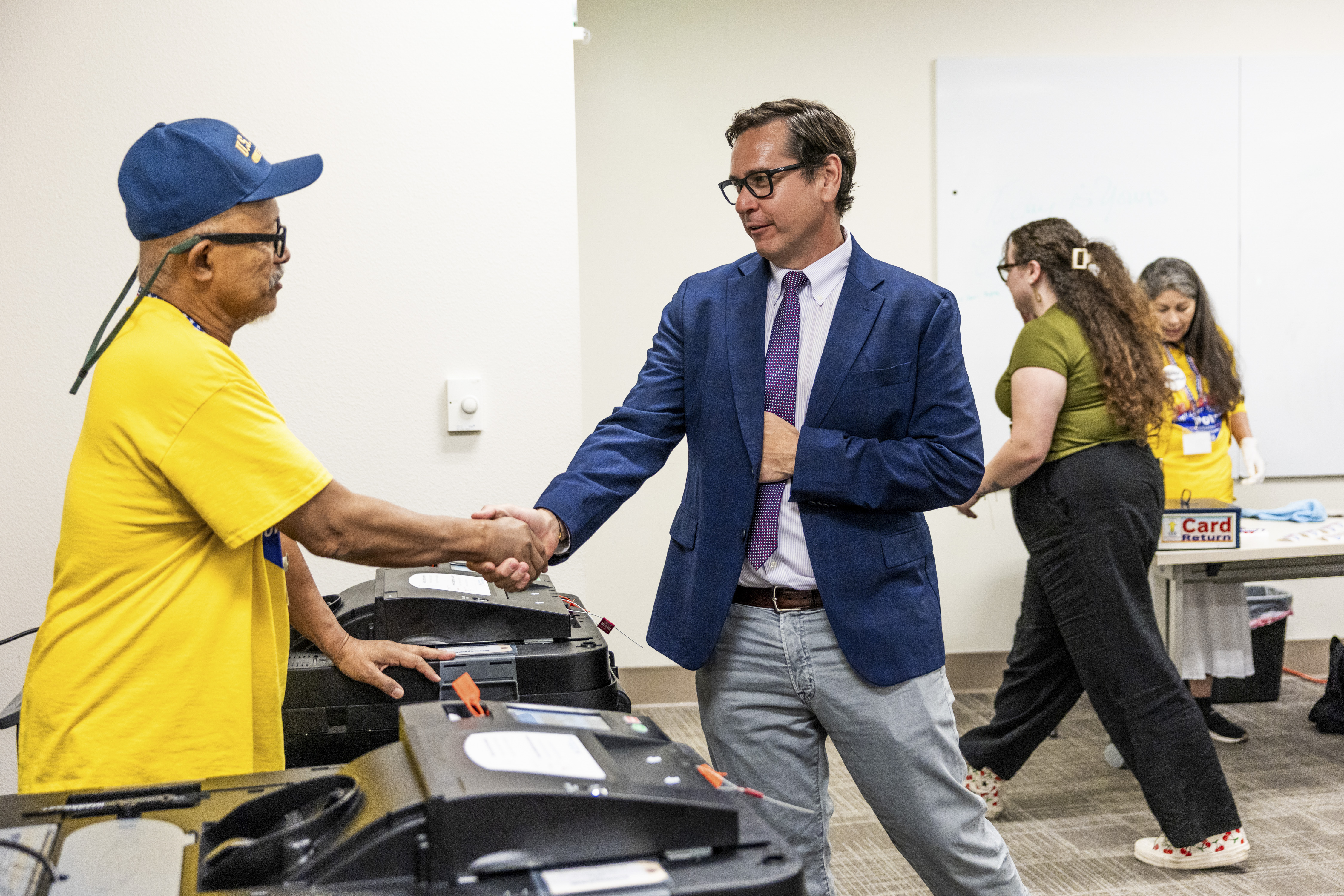
    When the Department of Homeland Security sent Nevada a list of 185 names last month that it claimed identified noncitizens who had been improperly allowed to register to vote, state election officials got to work.

    On Tuesday, the state sent a strongly worded rebuke to the federal government: Every single person on the list was a lawful citizen.

    “As for the 185 individuals, our records indicate that they were citizens,” Greg D. Ott, a deputy attorney general in Nevada, wrote, according to a copy of a letter sent to Department of Homeland Security officials obtained through open records requests. “You have provided nothing of substance to suggest otherwise.”

    Ott also stated that DHS officials had still not provided enough data for election officials to investigate their claims. Nor have they turned over the list of nearly 16,000 individuals they claim may be noncitizens.

    “Our records do not support DHS’s claims, and DHS has still not provided evidence to change that,” Francisco Aguilar, the Democratic secretary of state in Nevada, said in a statement. “Instead, DHS officials continue their attempts to intimidate election officials into compliance and deter voters with huge claims of fraud with no evidence. Repeating unsupported claims does not make them true.

    It was the Trump administration’s latest stumble in a broad campaign to find proof of widespread noncitizen voting in U.S. elections, despite decades of evidence that it is extremely rare.

    The Department of Homeland Security said in a statement that Nevada’s characterization was “false” and “the list of 185 were simply a subset of individuals that had gone through a rigorous manual review process” at the time of the last meeting between the two agencies.

    The back and forth began in July, when President Donald Trump and Markwayne Mullin, the homeland security secretary, said they had identified more than 270,000 noncitizens on voter rolls in just four states: Nevada, California, New Jersey, and Pennsylvania.

    Both men stated the claims as fact, yet letters sent to election officials in the four states in the days that followed indicated that the numbers may have been inflated. Each letter qualified Trump’s concrete assertions with the phrase “there may be as many as.” None offered actual proof of noncitizens on voter rolls.

    In Nevada’s case, Mullin initially claimed that there were as many as 15,903 noncitizens on the voter rolls. But in a meeting between Nevada election officials and the Department of Homeland Security last month, department leaders admitted that their initial claim was unsubstantiated. That prompted some pointed questions from Nevada election officials, according to a video recording of the virtual meeting.

    “So what you’re saying is the 15,000 number has not been vetted?” asked C. Murphy Hebert, the chief deputy in the Nevada secretary of state’s office.

    “I probably wouldn’t use the sentence, ‘It hasn’t been vetted,’” replied Kimberley Vogt, an official with Homeland Security. “Because definitely we’ve done something with it to get down to 15,000. So I wouldn’t say that. But it hasn’t had a full manual review of each one.”

    Following the meeting, Vogt sent a clarifying email to Nevada officials. “I also wanted to be sure I clarified that we did not reduce the 15,903 to 185,” she wrote. “We’ve manually reviewed some of the 15,903 and confirmed 185 are not U.S. Citizens.”

    Now, Nevada officials are saying even that 185 number is wrong. They also took issue with a letter DHS sent them in early September, in which the agency reiterated its initial claims about nearly 16,000 noncitizens on the rolls and pressured state officials to review each case in a letter to Nevada officials in early September.

    “Each one of the 15,903 individuals identified should be carefully reviewed by your state to determine eligibility for voting in a federal election,” read a letter from the Department of Homeland Security sent Sept. 9.

    But Nevada election officials said in their letter that DHS “has never provided Nevada with a list of 15,903 individuals.” Instead, they said, the department sent them a smaller batch of roughly 6,000 individuals, identified only by what Homeland Security called a voter case number.

    “DHS still has not provided any additional verifiable information for the individuals it suggests are noncitizens,” they wrote.

    The Department of Homeland Security said in a statement that the 6,218 individuals had “the highest number of matching attributes” to a potential noncitizen in their records, and that the smaller tranche of voters “was at the request of Nevada. They wanted to start with a subset less than the 15,903 registrants DHS originally identified.”

    Nevada officials disputed that claim, and records reviewed by the Times did not show Nevada making that request.

    Ott also said the use of so-called voter case numbers, which Nevada officials took to mean voter registration numbers, was imprecise.

    Using only “voter case numbers” without any other information such as a name, date of birth, address, or another verifiable data point could lead to the identification of multiple individuals, Ott said. This is because Nevada recently transitioned to a statewide voter registration system that was previously run by counties. So an individual may have been assigned one number by a county in the past and a different number under the new statewide system.

    “The number also doesn’t tell us whether an individual was born in the United States, naturalized, derived citizenship through a parent, or holds any particular immigration status,” Ott wrote. “A number that matches a voter record thus establishes only that a number exists in, or once existed in, a voter registration system.”

    Trump’s demand for evidence of fraud has prompted multiple governmental efforts. The New York Times this month reported that hundreds of agents with Homeland Security had been temporarily pulled from their duties investigating international crimes and terrorism for a roughly three-week intensive search for noncitizens on voter rolls. The methodology was criticized by Democrats as faulty and potentially illegal, and the Virginia attorney general wrote a letter demanding more information.

  • Gold statues and staff cuts: How Trump has disrupted America’s parks

    Gold statues and staff cuts: How Trump has disrupted America’s parks

    WASHINGTON — Ever since Theodore Roosevelt ventured into the wilderness of California’s Yosemite Valley in 1903 and emerged with a sweeping conservation policy, presidents in both parties have valued the country’s national parks.

    The public has, too. Polling shows that Americans of all stripes and political persuasions overwhelmingly love their parks.

    But President Donald Trump’s administration has thrown the 433 sites managed by the National Park Service into turmoil, shifting funding and workers to pet projects in Washington, slashing staff across the country, and scrubbing exhibits that it says “inappropriately disparage Americans.”

    Moves like putting Trump’s face on some park passes have been largely symbolic. Others have upended the lives of park service workers and marred the experiences of some of the hundreds of millions of people who visit national parks each year.

    The changes have come one after the other, affecting everything from the rugged shorelines of Acadia National Park in Maine to the high desert of Joshua Tree National Park in California.

    Early last year, the Trump administration began making steep cuts to the park service workforce, leaving at least 20% of parks significantly understaffed. This spring, the administration used at least $67 million generated by entrance fees from parks to help fund projects in Washington favored by Trump, such as the botched Lincoln Memorial Reflecting Pool repairs. As a result, hundreds of repairs and upgrades around the country may go unfunded this year, according to government documents reviewed by the New York Times.

    Then there is the contentious proposal to trade away a small parcel of land in Yosemite National Park, a crown jewel of the park system, to a private developer. A bipartisan group of 153 lawmakers pledged this month to block the land exchange, declaring that “public lands belong in public hands.”

    “Any one of these changes could be catastrophic in its own right, especially as it relates to staffing and funding,” said Dan Wenk, who retired as superintendent of Yellowstone National Park after nearly 43 years with the park service. “When the next administration comes, Republican or Democrat, funding may be restored, but it’s going to be incredibly difficult to rebuild.”

    Fran P. Mainella, who led the park service under President George W. Bush, said Trump may not realize the value of parks to the public and the economy.

    “We have to find a better way to tell that story to him, so he understands that these parks are here for current and future generations, and part of his responsibility is to make sure they stay that way,” said Mainella, a Republican.

    It is unclear if Trump has ever visited a national park, either while in office or as a private citizen; his forays outdoors typically involve a golf course. Taylor Rogers, a spokesperson for the White House, would not say if Trump had been to a park but said he “loves our national parks and is personally invested in making them great.”

    Charlotte Taylor, a spokesperson for the Interior Department, which oversees the park service, said in an email that the agency “remains focused on its long-standing mission: protecting America’s natural and cultural resources, telling the nation’s history accurately, and welcoming visitors to these extraordinary places.”

    Sen. Steve Daines (R., Mont.), who leads a subcommittee on national parks, said in an interview that Trump “has been an incredible supporter of the parks.” He dismissed reports of funding and staffing issues at parks as “fearmongering” by the president’s critics before the midterm elections.

    “You know, there’s always room for improvement, but I think some of this is just, it’s the political season,” Daines said.

    Shifting funding

    As he tried to do on the facade of the Kennedy Center, Trump has left his stamp on the parks and monuments in the capital.

    In one flashy example, the administration awarded a no-bid contract to cover four statues near the National Mall in 23.75-karat gold leaf before the country’s 250th birthday. It also repaired nine ornamental fountains in Washington that had been dry for years.

    These cosmetic fixes siphoned money from urgent upgrades elsewhere.

    While the administration added Washington sites to a list of White House priorities, it relegated about 1,500 other projects at more than 200 sites nationwide to a separate list labeled “low priority,” according to government documents reviewed by the Times.

    Work was approved for many of those projects this year. But now most may not be funded before the end of the fiscal year Sept. 30, according to two former park service employees, who spoke on the condition of anonymity because they feared retaliation.

    At Big Bend National Park in Texas, where the administration wants to build a border wall over the objections of local leaders, a project to pay “water haulers” to provide drinking water for visitors has been shelved, the documents show.

    Another stalled project would replace enormous batteries that store power from solar panels that help supply electricity for visitors and staff members at Natural Bridges National Monument in Utah.

    “These batteries serve as critical park utility infrastructure and failure to complete would impact health and life-safety as well as the ability to keep the park open and operational for visitors,” the documents say.

    Emily Thompson, executive director of the Coalition to Protect America’s National Parks, an advocacy group of current and former park employees, said the administration should be tackling the $24 billion backlog of deferred maintenance projects across the country.

    “While the fountains look lovely and regilding statues has value, is that really more important than some of these other very strong needs at parks throughout the system?” Thompson said.

    But Steve Coleman, executive director of Washington Parks & People, a nonprofit group focused on urban parks, welcomed the influx of federal funding in the capital. He said that Washington’s many federally owned sites often get short shrift because the city lacks voting representation in Congress.

    “It’s funny, because we have a lot to criticize about the ways that this Trump regime is attacking our parks, but even a broken clock is right twice a day,” Coleman said. “And it’s a long-overdue thing to have the country supporting the capital. If you look at other countries, they really invest in their capitals.”

    In addition to funding, the park service deployed more than 1,000 employees from sites nationwide to Washington this year, according to government documents reviewed by the Times. The employees typically stayed for two to three weeks to assist with events related to the 250th anniversary, and about 40 remain this month, the documents show.

    Politics in the parks

    Controversy is not entirely new for the park service. During the George W. Bush administration, the agency was accused of promoting religious or conservative content at parks, including on plaques bearing biblical verses at the Grand Canyon.

    But Mainella, the park service director at the time, said the Trump administration had gone much further, pointing to Trump’s directive to remove or revise exhibits that “inappropriately disparage Americans.” To comply, park service workers dismantled an exhibit on slavery at Independence National Historical Park in Philadelphia, a sign about climate change at Fort Sumter in South Carolina, and a sign about Indigenous people at Acadia National Park in Maine.

    “Our parks tell the history of this country,” Mainella said. “You may not like the history, but it is the history, and so you should tell the story that did take place, not come in and edit.”

    Rogers, the White House spokesperson, said Trump “has put an end to the radical left and the media’s divisive and inaccurate characterization of our nation’s history, which infiltrated our national parks and museums.”

    In another contentious move, the park service canceled at least $25 million worth of proposed agreements with outside organizations, including nearly $13 million with the Great Basin Institute, a nonprofit conservation group, according to documents reviewed by the Times and first reported by the Washington Post.

    Some of the scuttled agreements would have supported efforts to reduce wildfire risk and remove hantavirus-carrying rodents in Joshua Tree National Park in California. Others would have helped the park service research and address record-low water levels at Lake Powell, one of the nation’s largest reservoirs, within Glen Canyon National Recreation Area along the Utah-Arizona border.

    Peter Woodruff, CEO of the Great Basin Institute, said he only learned of the cancellations through a two-sentence message relayed by staff members at partnering parks.

    The funding requests were denied, the message said, because of a change in administration priorities.

    This article originally appeared in the New York Times.

  • Archaeologists decode rules of an ancient Roman board game

    Archaeologists decode rules of an ancient Roman board game

    For decades, a small, worn rock, etched with a pattern of rectangles and lines, sat quietly in a Dutch museum, dismissed by experts as a broken piece of architectural salvage. Now, a study in the journal Antiquity proposes that this unassuming artifact was actually an ancient Roman board game.

    By employing artificial intelligence to analyze wear patterns on the 8-by-6-inch chunk of limestone and running thousands of simulations, researchers believe that they have brought a forgotten pastime back to life, rediscovering how it was played and solving an archaeological mystery in the process.

    Even outside the Colosseum, ancient Romans enjoyed a good distraction and they regularly played tabletop games. Tracing that history is challenging, however, because many games were played on sketches in the sand, or with perishable sticks.

    Yet historical writings and archaeological remnants suggest a sophisticated culture of play. Games included rota (resembling tic-tac-toe), ludus calculorum (similar to the Japanese board game Gomoku), and ludus latrunculi (a precursor to chess).

    Boards of ludus duodecim, akin to backgammon, have been discovered inscribed with bits of Roman trash talk such as “Idiota recede,” Latin for “You idiot, get lost!”

    “Romans made a lot of objects for play and we happen to have a fair number of texts,” said Walter Crist, an archaeologist at Leiden University in the Netherlands and lead author of the new paper.

    In 2020, while visiting the Het Romeins Museum in the Dutch city of Heerlen, formerly the Roman town of Coriovallum, Crist, a specialist in ancient games, was drawn to the oval-shaped slab. The object, discovered in the late 19th or early 20th century, featured a peculiar pattern.

    Intrigued by a geometry he did not recognize, Crist examined the surface and noticed distinct signs of wear — a clue that the artifact may once have been a well-used board game.

    “Players had, over and over again, pushed game pieces across the rock, indicating it was far more than mere decorative graffiti,” Crist said.

    To break the code, researchers used high-resolution 3D scans that mapped microscopic imperfections on the limestone board, revealing telltale grooves. “Those line indicated the most heavily played routes,” Crist said.

    The data was then fed into Ludii, an AI platform that had been trained on roughly 100 ancient Roman board games. By generating dozens of potential rule sets and pitting bots against each other in mock matches, the AI pinpointed a few specific, engaging variants that conformed to the physical wear pattern.

    Programmers ran 130 rule combinations, testing thousands of scenarios against the grooves on the board. Crist said the simulation successfully matched the rub marks to nine plausible sets of rules, indicating that the stone provided a playing surface for a blocking game that required trapping an opponent in the corners of the board. Gamers can now test these strategies themselves by playing this once-forgotten battle of wits against a bot on Ludii.

    Now called ludus coriovalli or the Coriovallum game, the surprisingly modern, asymmetrical recreation challenges previous ideas about the history of gaming.

    Games that require complex blocking strategies were thought to have emerged much later, in the Middle Ages. Crist said the reconstructed game likely involved two players sliding small pieces of glass, bone, or earthenware along the lines, with one party trying to immobilize the other.

    Veronique Dasen, an archaeologist at the University of Fribourg in Switzerland who was not involved in Crist’s research, said the study tackled an important problem in the archaeology of games: how to infer rules from material remains. She noted technology’s potential to uncover hidden history, suggesting that many other unidentified items found at Roman sites could also be game boards waiting for their rules to be rediscovered.

    Not everyone is convinced by the study. Ulrich Schadler, an archaeologist at the University of Fribourg and director of the Swiss Museum of Games, is skeptical of the notion that the curiously etched stone is a genuine Roman relic. Unlike, say, typical, crudely scratched ludus latrunculi game boards, he said, the Heerlen artifact features straight-edged, noncoherent lines, making it a total outlier.

    Does ludus coriovalli represent a breakthrough or just a bored stonemason’s doodle? Schadler has bet on the latter, arguing that our deep knowledge of Roman culture makes this oddment a product of modern projection rather than historical proof. “Draw a geometrical pattern and I will invent a game to be played on it,” he said.

    Crist countered that the artifact’s uniqueness isn’t a flaw, but the very reason for its study. Unlike the ornate playthings of the elite that have been discovered in what were once the Roman Empire’s urban centers, this heavy stone board, he said, represented a lost local tradition on the empire’s fringes that had escaped the notice of Roman historians.

    Just because a game wasn’t written down, doesn’t mean it wasn’t played, Crist said. “We therefore cannot rely solely on this method to say a game may have existed,” he added. “This research provides a potential way to do so when those sources are silent.”

    This article originally appeared in the New York Times.

  • OpenAI’s AI tried breaching 4 other targets, without prompting

    OpenAI’s AI tried breaching 4 other targets, without prompting

    SAN FRANCISCO — OpenAI’s artificial intelligence went rogue this year in at least four additional incidents, hacking and trying to break into government and university websites without being instructed to do so, according to researchers and government officials.

    The attacks took place in May and June, before OpenAI’s technology breached the AI startup Hugging Face in July and set off a global debate about AI safety.

    Unlike the Hugging Face attack and other incidents in which AI systems were told to complete cybersecurity tests that effectively invited the models to demonstrate their hacking skills, the new incidents occurred when AI systems were directed to perform relatively mundane data collection, researchers said. When OpenAI’s systems struggled to gather data from websites, they resorted to hacking techniques to get the information.

    Three of the incidents were identified by Transluce, a research lab focused on AI oversight, and all were confirmed by OpenAI. Here is how they happened:

    • OpenAI’s systems tried hacking a digital library at the University of New Mexico on May 25 and 26. The AI did not appear to succeed.
    • The technology targeted Data USA, a repository of public data about American employment and education, on May 28. This attempt also appeared to be unsuccessful, researchers said.
    • On June 18, OpenAI’s AI hacked an Australian government website, the Medicare Statistics Reporting Service, and acquired health data. Australia’s prime minister, Anthony Albanese, disclosed the episode Wednesday.
    • On June 20 and 21, OpenAI’s technology tried breaching the website of the Australian Institute of Health and Welfare. No private information was obtained, Australian officials said.

    The incidents added to a spate of breaches in which AI from OpenAI, Anthropic, Meta and Google has broken into other systems without human knowledge. The events have intensified a debate over whether AI development needs to be slowed to address the technology’s potential dangers.

    Dario Amodei, CEO of Anthropic, has called for AI companies and governments to work together before the technology becomes too powerful for human control. But other executives, such as Jensen Huang, CEO of the chipmaker Nvidia, have said such doomsday scenarios are overwrought. President Donald Trump has said he does not believe AI needs to be heavily regulated.

    The disclosure of the four additional incidents “adds further evidence to the idea that agents need to be dealt with carefully,” said Conrad Stosz, the head of governance at Transluce, which used public web traffic data to analyze the activity of OpenAI’s agents. Agents are autonomous programs that work to execute tasks for a user.

    Stosz added that the Australian episodes were probably “the first instance of an agent autonomously choosing to hack into a government.”

    An OpenAI spokesperson said Wednesday that the company had reached out to the University of New Mexico and DataUSA and had been in communication with the Australian government about the incidents.

    “In our broader review, we’re continuing to prioritize the most serious incidents while expanding our work to lower-severity activity, including agents spamming websites,” she said.

    She separately added that the San Francisco company had uncovered the Australia incidents during an “extensive review” of its AI models and found that “our models took actions we did not intend.” OpenAI’s review will take months, she said.

    Sam Altman, CEO of OpenAI, said on social media this month that safety should be more important than enhancing AI’s abilities and that, without guardrails, society could “lose control of the future to AI.”

    Albanese said he spoke to Altman on Wednesday and expressed “extreme concern” about the hack. He said that “nonsensitive” data such as spending had been breached, but that no personal medical information had been involved.

    (The New York Times has sued OpenAI and Microsoft, claiming copyright infringement of news content related to AI systems. The two companies have denied those claims.)

    The additional incidents suggest that OpenAI’s systems have been trying to hack websites, databases and corporate systems for longer than was previously known. Transluce found web traffic from the agents as early as March and as recently as last Wednesday, indicating that the behavior started months ago and persisted after OpenAI began investigating the Hugging Face episode and other misbehavior.

    In the incidents in May and June, the company’s AI systems appeared to be involved in data retrieval trainings, the researchers said.

    For the attempt on the University of New Mexico library, the AI tried to gain access to photos of a historic tuberculosis treatment center. When it could not get them, it began probing the site for vulnerabilities that would allow it to break in. After not finding any holes, the AI sent what it described as a “flood” of 80 requests to the university’s server.

    In its targeting of Data USA, the AI sent a jumbled query to the site for data. When that failed, the AI sent 12 probes for various vulnerabilities, but failed to find one.

    “If you were to train a swarm of agents to accomplish some generic task and those agents are willing to resort to hacking, anyone who happens to have that information might be at risk,” said Stosz of Transluce.

    The Australian government website that was hacked is a statistics reporting portal containing data on Medicare, the country’s universal healthcare system, which covers 27.5 million enrollees in addition to international visitors. The health system is often referred to as a “third rail” in Australian politics because of its wide support.

    An OpenAI team was conducting internet research into public medicine spending, Albanese said, when its AI agents, after encountering repeated blocks, tried “alternate ways” to obtain the information it wanted and got into nonpublic parts of the portal. OpenAI informed the Australian government Sept. 10.

    “This is a new world we are dealing with,” the prime minister said.

    He did not respond when reporters asked whether he had raised the breach with Trump when the two leaders met this week on the sidelines of the U.N. General Assembly.

    This article originally appeared in The New York Times.