Category: Nation & World

  • The former fracking executive selling Trump’s ‘energy dominance’ vision

    The former fracking executive selling Trump’s ‘energy dominance’ vision

    With oil and gasoline prices spiking amid President Donald Trump’s war with Iran, it was an awkward moment for optimism about the world’s energy situation.

    But Energy Secretary Chris Wright brought a sunny message to Houston last week at a gathering of energy ministers from the Group of 20 nations. The Trump administration, he said, was ushering in an era of energy abundance by expanding oil and gas supplies in places like Alaska and Venezuela.

    That pitch was often overshadowed by the effects of the conflict in the Middle East. Between lauding oil and gas deals, Wright fielded questions about a damaged Saudi oil pipeline and sparred on social media with Gov. Gavin Newsom of California, a Democrat, over surging gasoline costs.

    Wright acknowledged some tension, though he insisted it was temporary.

    “Everyone’s frustrated with higher energy prices,” he said of the mood at the meeting. “But I’ve not met one person who’s comfortable with a nuclear-armed Iran. So everyone gets what we’re doing and this is a critically important mission. It creates dislocations in the short term. But the only answer to short-term dislocations is the energy abundance agenda.”

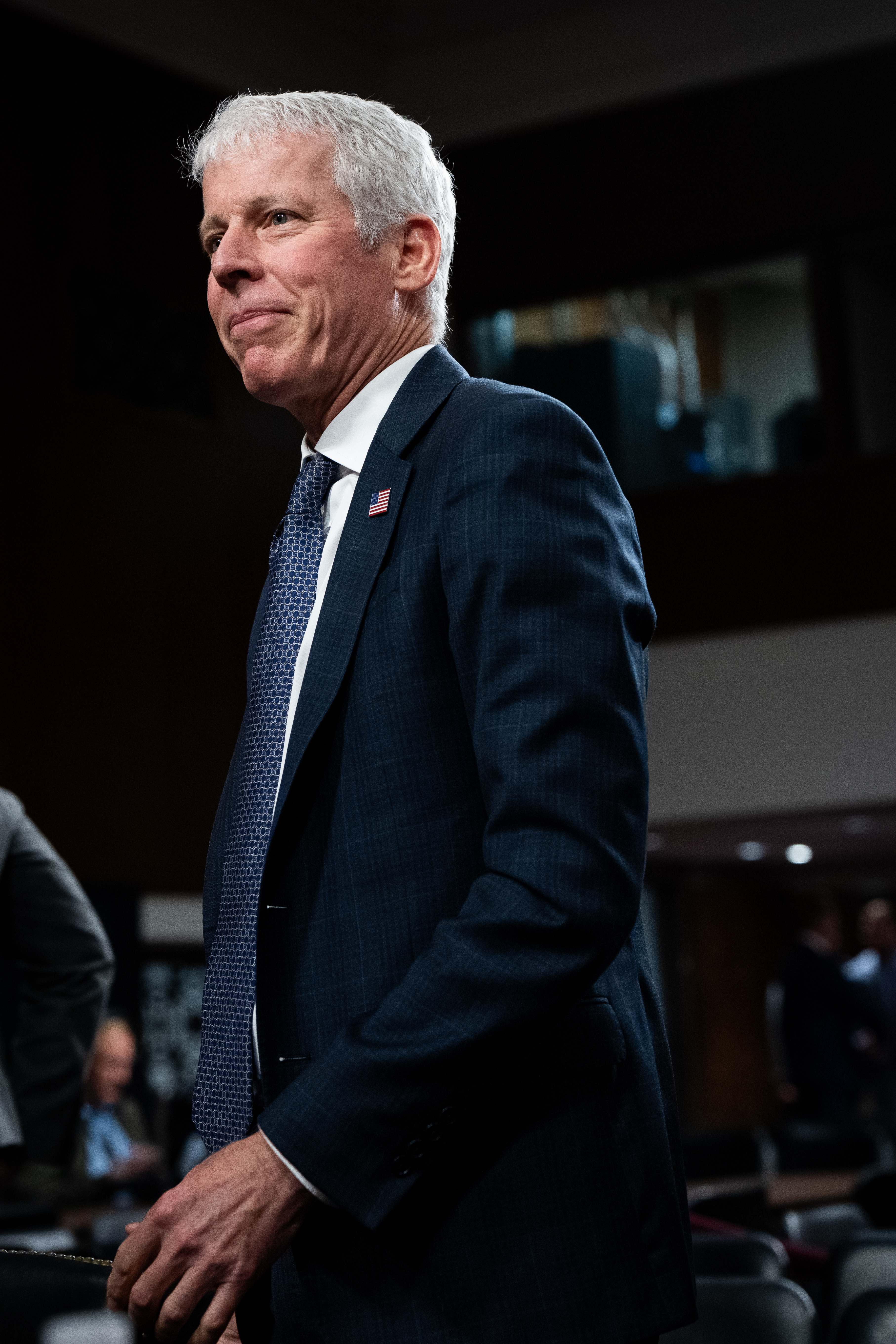
    The situation was familiar for Wright, 61, one of the most forceful defenders of Trump’s vision of “energy dominance.”

    Over the past two years, the administration has dismantled efforts to tackle climate change and ended support for wind and solar power. Instead, officials have sought to expand the use of oil, gas, coal, and nuclear energy — sources they see as more reliable. The aim, they say, is to reduce consumer prices, increase U.S. fuel exports, and provide enough electricity to win the artificial intelligence race against China.

    Wright, a former fracking executive, has been out front in articulating that shift.

    Whereas Trump speaks bluntly about energy — chanting, “Drill, baby, drill”; calling wind turbines ugly; or claiming that global warming is a hoax — Wright gives his arguments an intellectual gloss.

    He cites figures on how solar panels underperform during winter storms. Or he argues that global warming is not as big a problem as energy poverty, which he says can only be alleviated with more oil, gas, and coal, even if that means more planet-heating greenhouse gas emissions.

    Administration allies say that has made Wright invaluable.

    “He has been one of the most consequential picks for energy secretary I’ve seen,” said Thomas J. Pyle, president of the American Energy Alliance, a research group that promotes fossil fuels. “He’s very experienced, brings a lot of substance, and he articulates President Trump’s vision clearly.”

    Critics say Wright’s approach ignores the real risks of climate change and dismisses two of the world’s fastest-growing power sources: wind and solar. They also point to rising energy costs — diesel prices have hit record highs, and electricity rates are still increasing faster than inflation — as evidence that the administration’s policies aren’t working.

    During his Senate confirmation hearing last year, Wright appeared to reassure lawmakers that he supported all energy sources, including renewables. He cited his graduate work on solar power and called climate change a “global challenge that we need to solve.”

    But since taking office, he has been more combative, deriding wind and solar power as a “parasite” on the grid, blasting Democratic-led states for environmental policies that have shut down coal and gas plants, and accusing Europe of being in thrall to a “climate cult” that is limiting economic growth.

    The Energy Department infuriated Democrats in Congress last October by canceling nearly $8 billion in Biden-era clean energy grants located almost entirely in states that didn’t vote for Trump. Asked about the decision at a June congressional hearing, Wright said political considerations had nothing to do with the decisions.

    But in court filings in July, administration officials conceded that the cancellations were targeted in states that were represented by Democrats and had voted for Kamala Harris, the party’s presidential nominee, in the 2024 election.

    Energy Department officials have said that they recommended that grants be canceled in red and blue states alike but that the decisions on which terminations to announce were made by the White House.

    Sen. Martin Heinrich of New Mexico was one of eight Democrats who voted to confirm Wright last year but has since become a vocal critic.

    “Of all the Trump nominees, I am particularly disappointed in his conduct,” Heinrich said. “He obviously had an oil and gas history, but he also had a clean energy history. And he just threw all of that away to be a partisan mouthpiece.”

    In response, Ben Dietderich, an Energy Department spokesperson, said in a statement, “Secretary Wright doesn’t have preferred energy sources. He just believes in being honest about math and energy security. Unfortunately, many in the climate lobby don’t like that. The Department is proud to have ended energy subtraction policies that lead to higher prices, less energy security and human impoverishment.”

    Wright first gained prominence as the founder of Liberty Energy, a Denver-based oil-field services company that was heavily involved in the fracking boom.

    Even among oil and gas executives, Wright stood out as an evangelist for fossil fuels. In 2021, as world leaders and even many oil companies were pledging to slash emissions, Wright published a 180-page report criticizing what he saw as a “myopic focus on climate change.”

    He argued that people in developing countries still lacked enough energy to enjoy a decent standard of living and that renewables couldn’t replace oil, gas and coal to provide that power.

    “At the height of this era when everyone was saying energy policy should just be about climate, Chris Wright was one of the few CEOs that ran oil and gas firms who clearly and vocally spoke out,” said Arjun Murti, a partner at the energy research firm Veriten.

    Wright also had a flair for the dramatic. He once drank fracking fluid on video to show it was safe. In 2021, he rented billboards around Denver to heckle The North Face after the company declined to work with an oil firm.

    He landed appearances on Fox News and won the job of energy secretary on the recommendation of Harold Hamm, a fellow fracking pioneer and major donor to Trump.

    Wright quickly transformed the department. Out were programs to develop novel technologies to fight climate change, like green hydrogen or low-emissions steel. Instead, federal funds went to help utilities finance gas plants, nuclear reactors and transmission lines or upgrade older coal plants, which officials say are essential for meeting rising electricity demand.

    Wright also lifted a Biden-era pause on expanding exports of liquefied natural gas, now the nation’s fastest-growing export, and has pressured Europe to ease rules on methane, a potent greenhouse gas, saying they could hurt U.S. exports.

    “He brought a whole new attitude to the agency,” said Scott Segal, an energy lobbyist at Bracewell. “It’s all about how do we produce enough energy to support AI and economic growth.”

    Some changes have attracted bipartisan support, such as Wright’s promotion of nuclear and geothermal energy, which don’t produce planet-warming emissions. His agency has dangled billions of dollars in loans to kick-start the largest expansion of nuclear power in a generation, while a program to help startups develop small reactors has moved faster than many expected.

    Other moves have been more contentious.

    To rescue the declining coal industry, an obsession of Trump’s, the Energy Department used emergency powers to keep plants running past their scheduled retirement dates, which could cost ratepayers billions. (This month, a federal judge struck down one such order, saying the agency had overstepped its authority.)

    Last year, Wright picked five skeptics of mainstream climate science to write a report arguing that concerns about global warming were overblown. That report prompted furious pushback from hundreds of scientists, who denounced its findings as riddled with errors. A federal judge later ruled that Wright had acted unlawfully by secretly convening the authors.

    Wright, who often criticizes wind and solar for not running at all hours, has cut renewable energy programs and renamed the National Renewable Energy Laboratory as the National Laboratory of the Rockies. While experts agree that the variability of wind and solar poses real challenges, many say it goes too far to call the sources “worthless.” Texas gets roughly one-third of its power from renewables and has kept costs low.

    “It’s borderline petty how anti-renewable this Energy Department is,” said Samantha Gross, a director at the Brookings Institution. “Especially since we’re still building more renewables, particularly solar, than any other form of energy in the U.S. right now.”

    Roughly 2,700 staff members have left the agency, which analysts and former employees said could make it difficult to carry out its mission.

    Wright’s supporters say he has helped steer the country away from what they saw as the Biden administration’s unrealistic plans to rapidly phase out fossil fuels.

    Some say the debate is shifting in his direction. Many states and businesses are backing off ambitious climate targets, and Democrats are less vocal nowadays about climate change. Tech companies are using more natural gas to meet exploding demand for data centers. The International Energy Agency, after some browbeating by Wright, is revising up its projections for how long fossil fuels will stick around.

    “There’s been a real shift in how investors and others now talk about energy,” said Travis Fisher, a director of energy and environmental studies at the libertarian Cato Institute who worked with Wright to organize the agency’s climate report. “Climate has become a lot less salient.”

    The administration’s strategy faces its biggest test yet with the Iran war. While The New York Times reported that Wright was excluded from the decision to launch the war, he has been busy managing the energy fallout. He often appears on television to discuss U.S. military escorts of oil tankers through the Strait of Hormuz. And he is quick to counter that Democratic-led states face high energy costs because of decisions to close refineries or oppose pipelines.

    In the short term, the war and resulting energy shortages have benefited many U.S. suppliers, which are exporting more oil and gas than ever before. But in the long term, some experts and companies worry the chaos could hurt the market for fossil fuels as countries seek to reduce reliance on energy imports.

    Wright, for his part, says fossil fuels are too useful to recede anytime soon.

    “We will never, ever come remotely close to running out of hydrocarbons, which means you need better technology and innovations to eventually eat into their market share,” Wright said at a Cato event in May.

    He said he was excited about recent breakthroughs in areas like fusion. But, he added, “the biggest innovations the rest of my lifetime in energy are almost certainly going to be in oil, gas and coal, because they are what matter.”
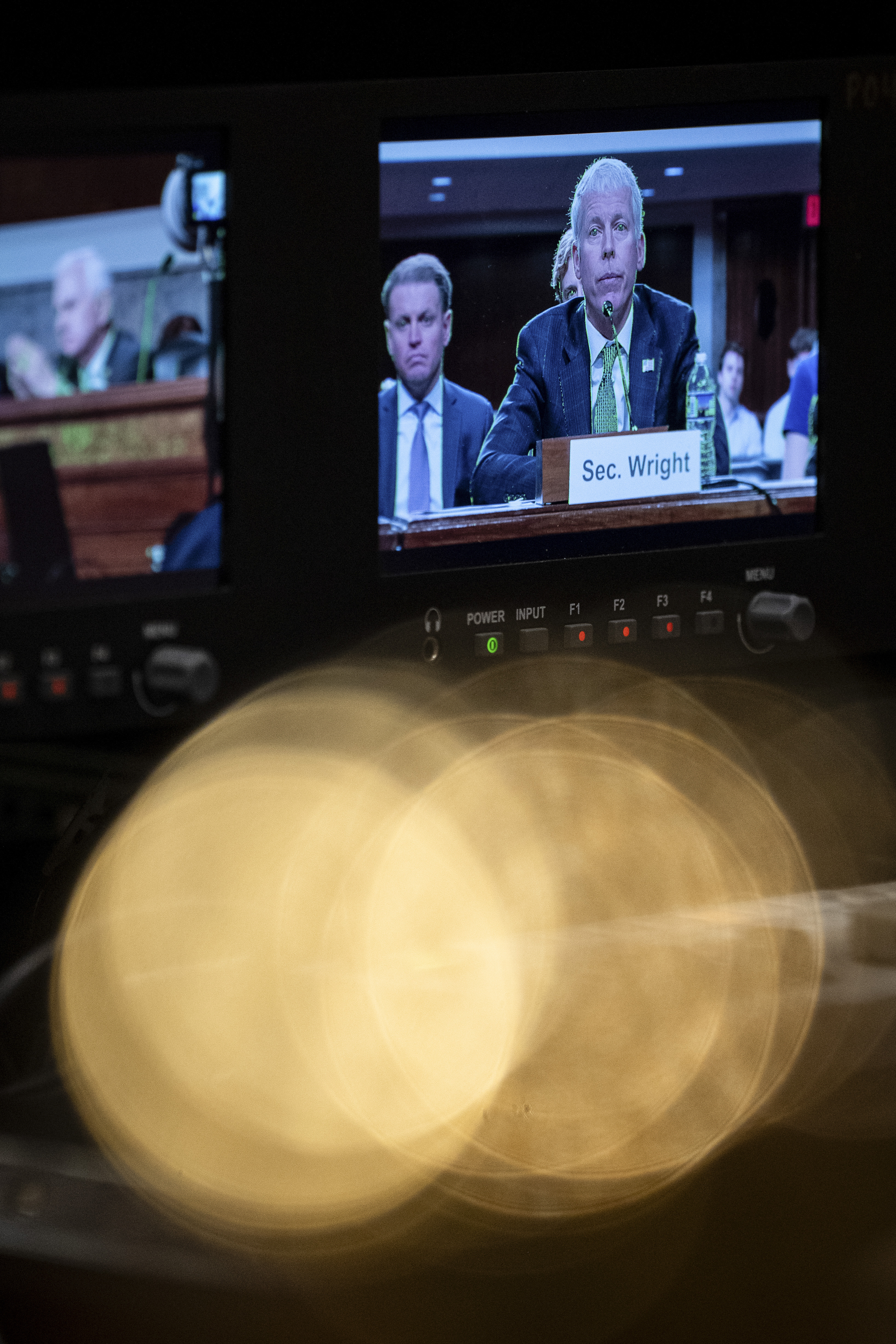

    FILE — A monitor shows Chris Wright, the Trump administration’s Energy secretary, at a hearing on Capitol Hill on May 13, 2026. Wright, a former fracking executive, pitches a future of fossil fuel abundance. It hasn’t always been an easy sell as the war with Iran drags on and oil prices surge. (Haiyun Jiang/The New York Times)HAIYUN JIANG
  • FBI investigates hackers’ claim to have stolen sensitive employee data, compromised jobs website

    FBI investigates hackers’ claim to have stolen sensitive employee data, compromised jobs website

    WASHINGTON — The FBI said Wednesday it was investigating a criminal hacking group’s claims that it had stolen “very sensitive data” belonging to thousands of agents and applicants and that it had compromised the bureau’s jobs website.

    “The FBI is aware of a cyber-criminal enterprise group claiming a compromise of the FBIJobs.gov portal and alleged impact to FBI employee personally identifiable information,” the FBI said in a statement. It said that while the “point of breach” was undetermined, “we are actively and aggressively investigating this matter and working closely with those third-party providers that support FBIJobs.gov to mitigate any and all risk.”

    A message that circulated online from a hacking group known as ShinyHunters claimed responsibility for the hack. The jobs website, the main portal for prospective employees to learn about the FBI and initiate the application process, remained offline as of Wednesday afternoon.

    “We have compromised the FBI. We hold very sensitive data on almost ALL FBI Agents and individuals who filed an application with the FBI for a job,” said the ShinyHunters message, which was directed to FBI Director Kash Patel and Brett Leatherman, the assistant director in charge of the bureau’s cyber division.

    The claims could not immediately be verified. An email to an address associated with ShinyHunters was not immediately returned.

    In its message, ShinyHunters said it would give the bureau one week to correct or remove what it says are false allegations contained in an FBI public advisory from May that described the organization as a “cyber criminal group specializing in large-scale data breaches and extortion.”

    That public service announcement characterized ShinyHunters as “threat actors” who often “use their real or exaggerated claims of access to sensitive or personal information to prompt payment from victims,” commonly harass or threaten victims and “may falsely claim to have sensitive or compromising information, including embarrassing photographs or videos of victims, which frequently do not exist.”

    ShinyHunters said in its message to the FBI that it was “offended” by those characterizations and demanded that the FBI remove those claims. It did not say what would happen if the FBI did not do so within a week.

    “This is not a ransom, coercion, or extortion. Your federal policies do not apply here. This PSA is NOT financially motivated,” the hacking group’s message said.

    The FBI, the nation’s premier federal law enforcement agency, has been a common hacking target.

    In March, the FBI disclosed that it was investigating “suspicious activities” on an internal system that contains sensitive information related to surveillance operations and investigations. Also that month, a pro-Iranian hacking group claimed to have hacked an account of Patel’s and posted online what appear to be years-old photographs of him, along with a work resume and other personal documents dating back more than a decade.

    The FBI described the compromised information as “historical in nature” and said it involved “no government information.”

  • Trump officials may undo nursing home mandates for reporting COVID

    Trump officials may undo nursing home mandates for reporting COVID

    Nursing homes would no longer be required to report each week how many residents were stricken by COVID-19 and other respiratory diseases, under a Trump administration plan to repeal a key public health response to thousands of pandemic deaths.

    A draft summary of the proposed rule obtained by The New York Times outlines how the administration agrees with the industry’s objections to weekly reporting of viral caseloads, calling it burdensome. In its waning days, the Biden administration made COVID reporting rules permanent, adding influenza and respiratory syncytial virus to the list of threats that facilities also must track and record. The policy took effect in January 2025.

    Advocates for nursing home residents reacted with dismay to the proposed rollback. Elderly, frail residents are especially vulnerable to infections, and they live in close quarters, where viruses can spread rapidly.

    “That’s crazy,” said Sam Brooks, director of public policy at the nonprofit National Consumer Voice for Quality Long-Term Care. “We know, if anything, that respiratory disease has a disproportionate and deadly impact on nursing home residents.”

    He said the Centers for Medicare and Medicaid Services, or CMS, which regulates nursing homes, would be blinding itself to an important method for tracking infection control and pinpointing problems.

    The administration has cut back on data updates at other agencies, including the Centers for Disease Control and Prevention, where a study published this year found that databases related to vaccine and respiratory diseases had gone dormant.

    Nursing home industry representatives declined to comment on specifics, because the changes have not been announced. They contend infection reporting consumes too much staff time and is duplicative, because infection data is reported to the federal government and states in other ways.

    CMS, which drafted the plan, declined to discuss the proposal or disclose when it would be made public.

    During the peak years of the pandemic, from early 2020 through early 2022, more than 200,000 nursing home residents and staff members died after being infected by coronavirus, according to KFF, an independent health policy organization, which cited CDC data.

    The high death toll has been attributed in part to a lack of preparedness and weak infection controls. The Government Accountability Office said in 2020 that inspectors had cited 82% of nursing homes for infection control deficiencies from 2013 to 2017, and that half of those were found to be repeat violators.

    In the internal document obtained by the Times, Dr. Mehmet Oz, the director of CMS, recommended to his boss, Health Secretary Robert F. Kennedy Jr., that the agency pursue steps to undo the mandate.

    “The agency does not comment on purported internal or predecisional deliberative materials,” a CMS a spokesperson said in an email. He said the agency evaluated regulations to ensure they “allow providers to focus time and resources on delivering care rather than unnecessary administrative burden.”

    The draft memo from Oz to Kennedy said CMS would reserve the power to reinstate weekly reporting if another public health emergency occurred.

    The plan also would end a requirement that nursing home staffs be educated about COVID vaccines and offered the shots. Groups representing residents called the move unwise, pointing out that front-line caregivers were a key pathway for the coronavirus to enter nursing homes during the height of the pandemic. COVID vaccine rates among staff members in recent years have been below 10%, the CDC has reported.

    The administration plan would continue to mandate that facilities offer the COVID vaccine to residents.

    The nursing home industry has already achieved its biggest goal of President Donald Trump’s second term: After a heavy lobbying blitz, the administration last year scrapped Biden-era minimum staffing rules that were intended to improve resident care.

    Biden officials, in pushing the staff minimums, had cited COVID deaths along with decades of concerns about poor care, including deaths from bedsores, falls and medication errors. But the Trump administration said too many nursing homes, especially in rural areas, could not find enough staff to satisfy the requirements. Many workers who care for the elderly are typically paid less than janitors and retail employees, and the work can be grueling.

    With the proposed change on infection reporting, the administration anticipates favorable reaction from the industry, according to the draft memo.

    Two main nursing home lobbying groups — the American Health Care Association and LeadingAge — reiterated their opposition to weekly respiratory infection reporting, saying that other government programs track COVID infections and that respiratory illnesses are reported to many local health departments.

    “This outdated reporting requirement is only adding hours of unnecessary administrative tasks to caregivers each week” said Holly Harmon, the American Health Care Association’s senior vice president of quality, regulatory and clinical affairs. “It’s time to streamline public health reporting and put patients over paperwork.”

    But industry critics contend that operators are failing to heed the lessons of the pandemic. With low staffing levels and high turnover, infection control efforts are most likely in line with the prepandemic patterns flagged by the GAO, said Toby Edelman, senior policy attorney at the Center for Medicare Advocacy.

    “I don’t think there is any reason to believe they have beefed up what they are supposed to be doing,” Edelman said.

  • In defiant speech, Pezeshkian calls out Trump and says Iran will fight ‘until our last breath’

    In defiant speech, Pezeshkian calls out Trump and says Iran will fight ‘until our last breath’

    UNITED NATIONS — Iran’s president said Wednesday that his people have been “victims of terrorism” by the United States, delivering a rare wartime speech at the U.N. General Assembly a day after President Donald Trump said he may “annihilate” the Islamic Republic if a deal isn’t reached soon to end the nearly seven-month war.

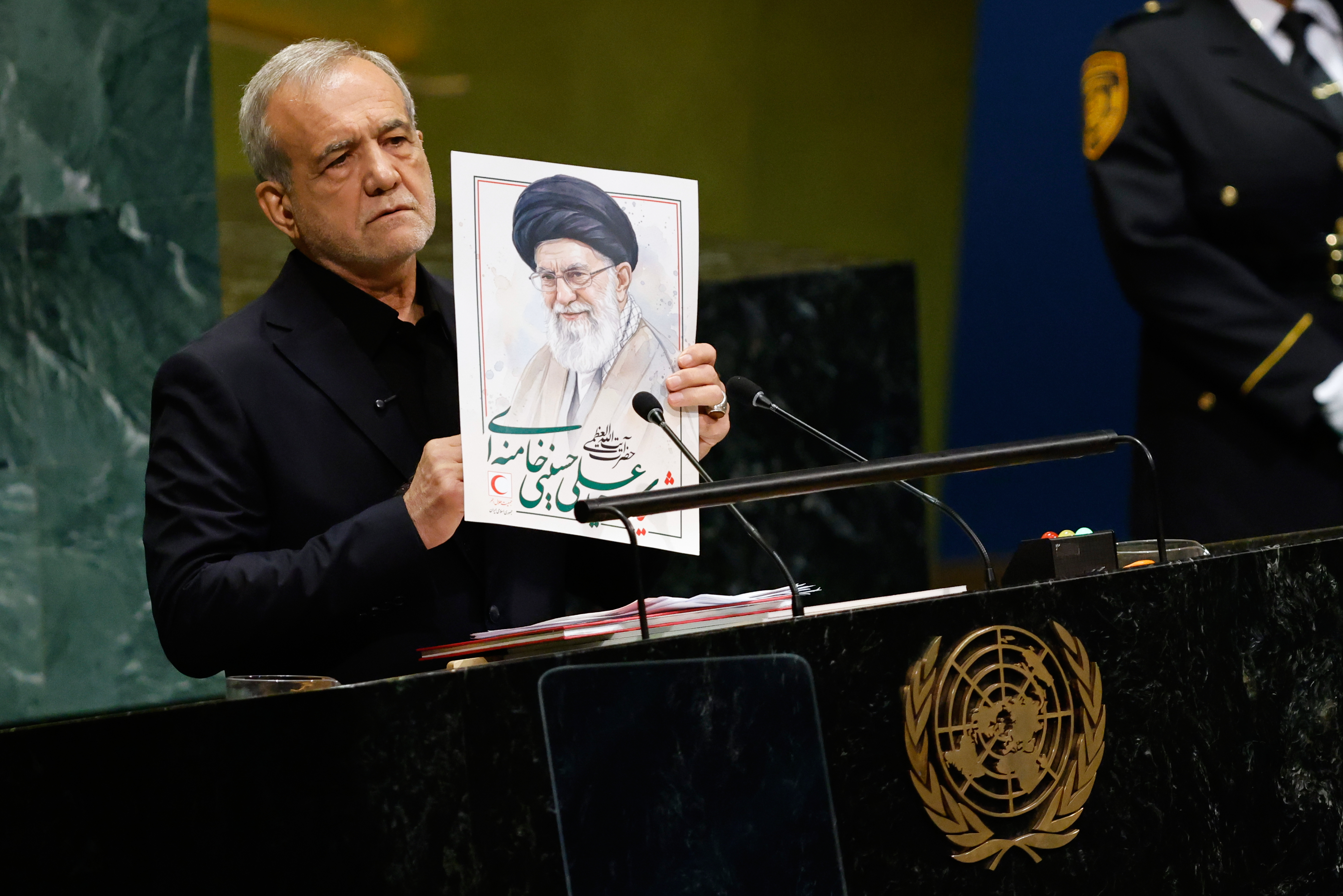
    The defiant speech by President Masoud Pezeshkian marked a striking instance of a foreign leader addressing the world body while their country is at war with the host nation. While defending his country, Pezeshkian held up large photos of the late Supreme Leader Ali Khamenei and the more than 150 Iranian schoolchildren killed in the first days of the war.

    “We have only defended ourselves. We are not terrorists,” Pezeshkian said at the General Assembly. “Our innocent people have been the targets of cowardly attacks and aggressions imposed upon our country. And we defended ourselves with utmost strength. America and Israel attacked us.”

    He added of the United States: “Yes they did hit us, but we did not bend the knee.” Toward the end of his speech, Pezeshkian called out Trump by name.

    “It must be understood by Mr. Trump and those who seek to bully us that we are ready for dialogue and diplomacy and negotiations without accepting the language of force,” he said.

    Shortly after, both U.S. and Israeli officials blasted the speech, saying that it was hypocritical for the Islamic Republic to present itself as the victims of the world.

    U.S. Secretary of State Marco Rubio told reporters: “I don’t know what standing Iran has to lecture anyone on human rights or the international system when they habitually violate it.”

    A busy 24 hours for U.S.-Iran relations

    Arriving in New York under heavy security and scrutiny, Pezeshkian — who, within Iran’s political landscape, is considered a moderate politician — addressed world leaders a day after Trump used the same stage to mull whether to massively escalate a war that has already spiraled out of control.

    “I have a big decision to make,” Trump said in his wide-ranging address Tuesday. “Will a deal be made with Iran that lets them rebuild and create a far greater country than it ever was before, maybe one of the greatest in the Middle East or even the world. Or do I annihilate the Islamic Republic and do it quickly, never giving them a chance to kill and destroy people and countries again?”

    Hours after those stunning threats, Trump told reporters that his chief envoys, Steve Witkoff and Jared Kushner, met for about three hours with the Iranian officials on the sidelines of the annual gathering. But he offered few details about how the discussions transpired or the substance of the exchange.

    “It was a very good meeting,” Trump said. The president later added that the Iranian officials were “not the highest level, but it’s something.” Also on Tuesday, Rubio said Trump is open to meeting with Pezeshkian while he’s in New York.

    But Tehran downplayed Tuesday’s unscheduled exchange, which were the first indirect talks between U.S. and Iranian officials since a June ceasefire unraveled. Esmail Baghaei, an Iranian Foreign Ministry spokesperson, maintained the country’s negotiating position in talks with U.S. officials, demanding that Washington end its blockade of Iranian ports and release frozen Iranian assets.

    Baghaei said the talks — conducted indirectly through Qatari mediators — were “not anything new.”

    Rubio echoed that sentiment Wednesday, saying that “it was a continuation of conversations that have occurred in the past.”

    “If there’s an opportunity to exchange ideas and messages, we will. And that’s what largely yesterday was — it was positive in that regard,” he said. “But ultimately, I don’t want to mischaracterize this as a major breakthrough.”

    More than a year of negotiations have taken place

    Pezeshkian’s address elaborated on where Tehran stands as more than a year of start-stop negotiations between the two longtime adversaries have failed to produce a sustainable solution. His speech came as intermittent attacks continued in the Strait of Hormuz off Iran’s coast, where commercial shipping remained below prewar levels.

    His address last year came months after the 12-day Israel-Iran war that saw the assassination of many of the Islamic Republic’s highest military and political leaders and once again broke down weeks of negotiations with the United States.

    “Ladies and gentlemen, you all bore witness that this past June, my country was subjected to a savage aggression and flagrant contravention of the most elementary principles of international law,” Pezeshkian said at the time.

  • A huge ICE detention center in Pa. could be sold to the federal government, losing local oversight

    A huge ICE detention center in Pa. could be sold to the federal government, losing local oversight

    Big change could be coming to a giant ICE detention center in central Pennsylvania, but not the kind that advocates have demanded at a facility facing federal complaints for medical neglect and assaults against detainees.

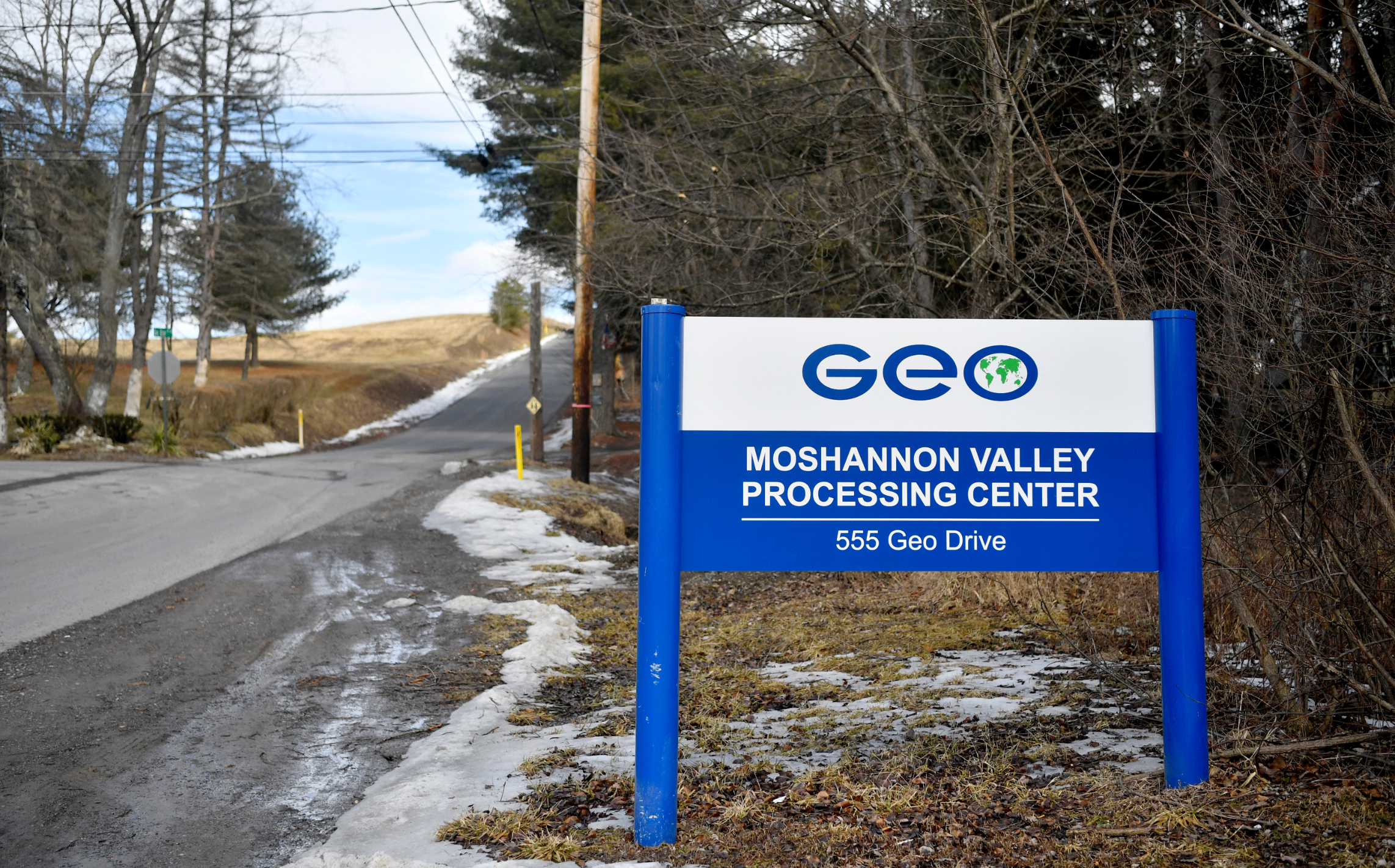
    There are signs the Moshannon Valley Processing Center could end up being sold to the federal government, a move critics fear could insulate the center from some state regulation.

    In the meantime, county officials approved a controversial extension of the current operating contract Tuesday, ensuring the largest detention center in the northeastern United States can run unimpeded for at least the next six months.

    The contract between Clearfield County and Florida-based GEO Group, the for-profit owner of the 1,876-bed facility, was set to expire at the end of September. But Republican Commissioners Tim Winters and John Sobel voted 2-1 against Democratic Commissioner Dave Glass to extend GEO Group and ICE’s contract to operate the Moshannon center.

    The vote came at a contentious meeting at which speakers from the audience mostly voiced opposition, questioning why the county had become entangled in federal immigration policy and doubting the true worth and use of the $100,000 payment.

    “Blood money!” one person shouted after the vote.

    Clearfield’s vote took place as President Donald Trump’s administration quietly mounts a takeover of private detention centers like Moshannon, as it is called, to expand bed capacity to support its mass-deportation goals.

    Some local officials and immigration advocates think Moshannon may be next to be sold. In a statement, the Department of Homeland Security said ICE does not discuss potential facility acquisitions.

    “The long-term solicitation process remains ongoing,” a spokesperson said.

    Federal ownership could insulate the properties from compliance with certain local and state laws, important to the Trump administration when other expansion plans, like turning empty warehouses into detention centers, bogged down amid community and legal opposition.

    Moshannon is a common destination of those arrested for immigration violations in Pennsylvania. An unannounced congressional oversight visit in May found that of the 1,417 adults detained there, roughly 78% lacked serious criminal charges or convictions of violent behavior — a contrast to Trump and his allies’ arguments for increased detention.

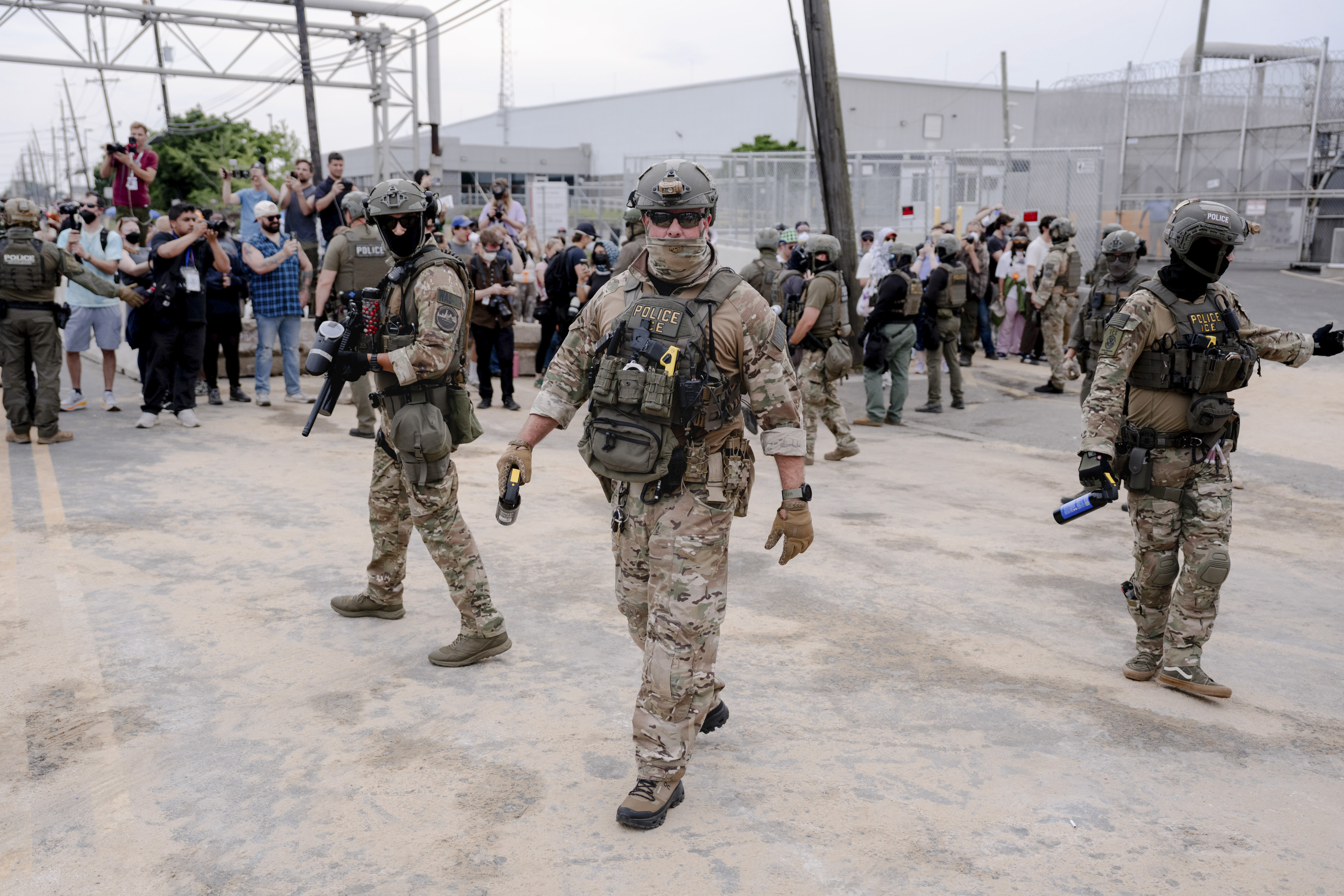
    ICE agents outside the Delaney Hall migrant detention center in Newark, N.J., in June.LEXI PARRA

    Trump’s push for mass detention and deportation

    Congress voted in July 2025 to allocate $45 billion to the Department of Homeland Security for immigration detention, more than a decade’s worth of typical funding. At the time, Trump immigration officials touted the funding as a way to treat deportation “like a business,” with acting ICE director Todd Lyons saying he wants to see the deportation system run “like [Amazon] Prime, but with human beings.”

    DHS, which oversees U.S. Immigration and Customs Enforcement, went on to spend millions on reopening shuttered prisons, allocated $1.2 billion to house thousands in tents on a Texas military base, and attempted to convert nearly a dozen warehouses across the country into mega detention centers to the tune of $1 billion.

    However, in June, ICE made plans to offload seven of those warehouses, totaling $700 million, by giving them to other agencies or selling them outright, according to the New York Times.

    A warehouse purchased by DHS to house an ICE detention center in Surprise. Caitlin O'Hara

    With a near-record 65,000 people in detention, ICE’s latest push has been to buy established private detention centers and build more facilities alongside them, as seen with the summer sale of four private detention centers owned by CoreCivic, the nation’s other large private prison owner, to ICE.

    GEO Group’s founder and executive chairman, George Foley, said in a May earnings call that the private prison company was “engaged in an active process for the sale” of several facilities to ICE. Foley acknowledged Democratic-led states were considering more active oversight in detention centers, saying, “I think the logical solution to much of that is federal ownership of the facilities.”

    CoreCivic and GEO Group reported a combined $1.4 billion in quarterly revenue this spring, not including the closed or potential sales of detention facilities.

    GEO Group did not respond to a request for comment.

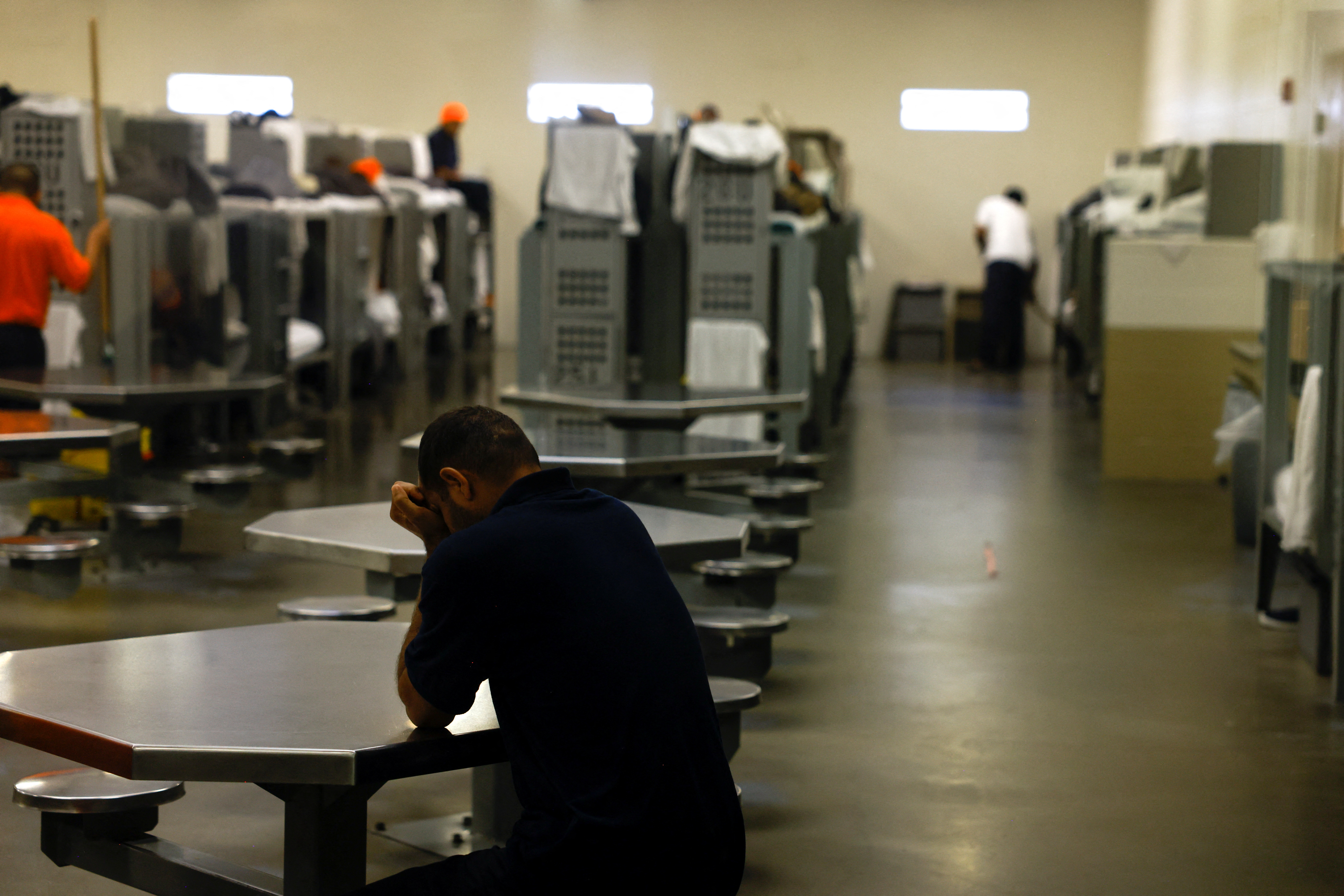
    A detainee sits behind glass in a common area at the Moshannon Valley Processing Center in 2023.REUTERS / Quinn Glabicki

    The potential sale of Moshannon to ICE

    GEO Group has not officially stated its intention to sell Moshannon to ICE. But recent ICE contract bid requests and local dealings with the center’s warden are leading local officials and immigration advocates to suspect a sale.

    Earlier this month, ICE requested 10-year contract bids for “turnkey” detention facilities across the country, including in the Philadelphia area. Moshannon is the only private facility in the region that fits that criteria, said Jasmine Rivera, executive director of the Pennsylvania Immigration Coalition, which had called on county commissioners to deny a contract extension.

    Rivera said the proposal requests include provisions that could lead to the sale of private detention centers to ICE, similar to its dealings with CoreCivic. GEO Group and ICE’s contract extension “is a stopgap measure” so the parties have “the time to finish the land assessment in the sale of Moshannon,” Rivera said.

    In a Sept. 8 Clearfield County commissioners meeting, Glass told the public he directly asked Moshannon warden Leonard Oddo earlier this year whether the Clearfield detention center could be sold to ICE. Oddo said no, according to Glass. In the first week of September, the commissioner e-mailed Oddo the same question, to which Oddo responded, “‘I’ll have to refer you to GEO corporate on that,’” Glass said.

    “I took that as kind of a red flag that there may be some kind of a sale,” Glass said at the meeting.

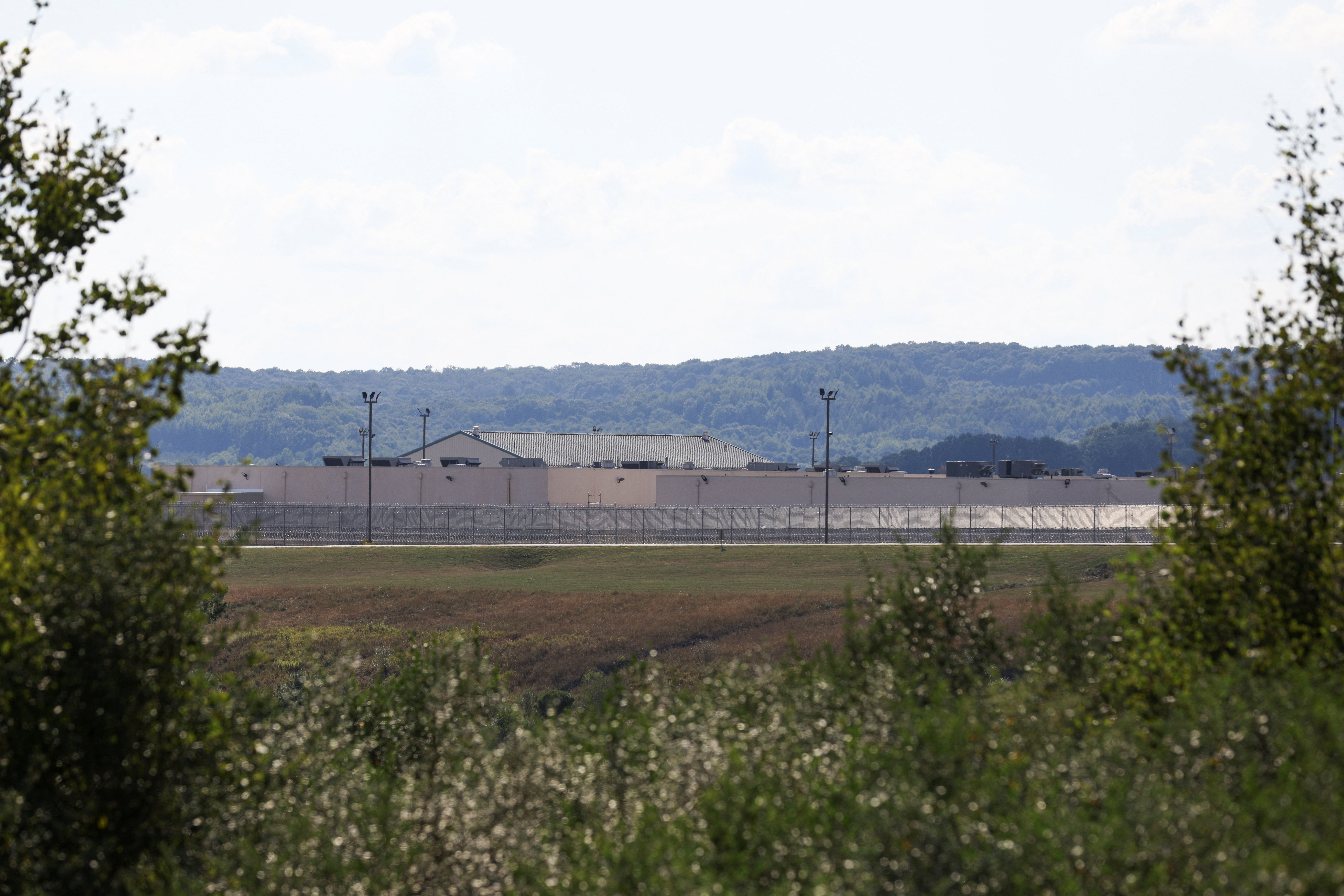
    Moshannon Valley Processing Center, an ICE detention facility operated by the Geo Group, where migrants are housed, in Philipsburg, Pennsylvania, U.S., August 24, 2025. REUTERS/Quinn GlabickiREUTERS

    What it means for Pennsylvania residents

    Having Moshannon fall under federal ownership would mean many of the tax benefits Clearfield County receives for serving as a middleman would cease, Glass said.

    “Whatever you think about the facility, having that facility sold to the federal government and losing the tax base on that would be a huge blow,” he said.

    Clearfield commissioners have no say in approving the sale if GEO Group and ICE agree to terms.

    Due to a now-reversed order that banned federal agencies from contracting with private prisons, GEO Group is contracted through Clearfield County, meaning ICE funding — around $5 million monthly — flows through Clearfield to GEO Group for operating the detention center. Clearfield collects a $200,000 administration fee for its intermediary role.

    The county also receives $688,000 in annual property taxes from the facility, and GEO employs 400 people there. However, Rivera noted ICE still owes more than $230,000 in unpaid medical services provided by regional EMS providers — a debt U.S. Sen. John Fetterman (D., Pa.) has urged ICE to repay.

    Winters, who voted to extend the contract, said that current federal immigration policy was “not working,” but that losing a seat at the table with ICE and GEO would leave Clearfield County worse off.

    Voting “no” on the contract extension would have eliminated “our communication and our ability to investigate claims,” he said. “Our oversight ability is very small, but we still have it.”

    For Rivera, any sale is concerning because ICE could ignore Pennsylvania lawmakers’ attempts to protect public health, environmental and zoning standards, and the safety of those detained, she said.

    Even if the commissioners had denied the contract extension, ICE would have continued operating without a contractual federal agreement, Winters said, as it did with CoreCivic in New Mexico last year after its contract with Torrance County expired.

    The newly extended contract will allow ICE to continue paying GEO Group for operating Moshannon through Clearfield County until mid-March 2027. At that point, GEO Group and ICE could approach the county with a new contract, or, as advocates and some local officials fear, federal ownership could come into play.

  • Economic frustration tests Trump’s standing with rural voters, new AP-KFF poll finds

    Economic frustration tests Trump’s standing with rural voters, new AP-KFF poll finds

    WASHINGTON — About half of rural American voters believe the economy is worse off now than when President Donald Trump returned to office, according to a new survey that points to economic frustration among a key group that has backed Trump and other Republicans in recent elections.

    The Associated Press, in partnership with KFF, polled more than 2,000 rural registered voters and found broadly negative views of the national and local economies, including among many Republicans. The costs of groceries, gas and healthcare rank as top pain points for the rural voters, who were surveyed over two weeks starting in mid-August. And a larger share than among voters overall say they are worried about being able to afford groceries or gas.

    At the same time, about half of rural voters approve of Trump’s job performance, more than among U.S. adults overall in separate AP-NORC polling.

    The findings suggest that many rural voters haven’t turned on Trump but that they also largely don’t think he has delivered the economic renaissance he promised on the campaign trail.

    Ed Westrick, a registered Republican and veteran, rates Trump’s job performance as “mediocre, middle-of-the-road.” Westrick, who lives in rural Texas, isn’t sure he will cast a midterm ballot, a troubling sign for Republicans in a key state in their fight to keep control of Congress.

    Rural Americans skew Republican and historically have been an instrumental group of voters for Trump. The survey reveals that while rural voters seem unlikely to support Democrats on a large scale, Trump and the Republican Party could face challenges with them in November.

    Rural voters are deeply unhappy about the economy

    As the election approaches, only about 4 in 10 rural voters approve of Trump’s performance on the economy. They rate him similarly on his handling of the Iran war, an entanglement that has proved expensive for the U.S. and increased oil and gas prices. And rural voters rank pocketbook concerns and fraud in government programs higher among the things they want to hear about from politicians than other perennial issues, such as gun policy and abortion.

    Westrick, 59, is a technical trainer in the electronics industry and has seen an increase in business in part because he works with defense contractors, but he said he’s concerned about the cost of living.

    “I hear the politicians talk about making groceries more affordable and making healthcare more affordable, but yet none of them are addressing the issues,” Westrick said.

    In the poll, about three-quarters of rural voters rated the cost of living in their communities as “only fair” or “poor” — a 25 percentage point rise from a similar question asked in a KFF-Washington Post survey in 2017. Rural Americans, who have consistently lower wages than those who live in suburban and metro areas, have been hurting economically for decades, according to Tim Slack, a professor of sociology at Louisiana State University and co-author of the book “Rural and Small-Town America.”

    “Many folks are connecting the cost-of-living crisis to many of the Trump administration’s policy choices: the war in Iran, tariffs, trade wars,” he said. “None of those things are going to bring down prices at the pump or the local Walmart.”

    “Trump promised to lower prices on Day 1, and instead the cost of living’s continued to climb. And that’s especially painful in rural America,” Slack said, adding that he expects many working-class Republicans to skip voting in November.

    Rural Republicans do have a brighter economic perspective than rural Democrats or independents, particularly about the U.S. as a whole, according to the survey. About 6 in 10 rural Republican voters say Trump has improved the national economy, compared with only about 2 in 10 independents and fewer than 1 in 10 Democrats.

    But only 45% of rural Republican voters say Trump has made their local economies better off. About 1 in 4 said there are fewer good-paying jobs where they live than five years ago.

    In Michigan, 37-year-old independent voter Brittainy Sosebee said she isn’t sure if she will vote in the state’s midterm election, which includes a tight Senate race seen as crucial to the Democratic Party’s push to win back a majority. Sosebee voted for Trump in 2016 and Democratic candidate Joe Biden in 2020; she didn’t vote in 2024.

    Sosebee, who lives in St. Johns, a small town just north of Lansing, said she used to have extra money to take a vacation or buy a new pair of jeans without worrying. Now, she scrutinizes every expense, cringing at the rising cost of fresh produce when she shops for her three children.

    “We hunt, so we have a lot of venison and things like that, so we don’t have to buy meat from the grocery store, but it’s still crippling,” she said.

    Healthcare policies go unnoticed

    The AP-KFF poll found that rural voters overall don’t perceive much positive impact from the Trump administration’s healthcare policies even as they have been a top priority for Republican leaders, who have promoted efforts to lower drug costs and touted a $50 billion rural health program.

    Only 17% of the voters said the Trump administration’s healthcare policies have had a “positive impact” on their healthcare costs, while 41% said they’ve had “no impact” and another 41% said they’ve had a “negative impact.”

    Sitting on her front porch in Woolwich, Maine, 71-year-old Democrat Kathleen Hanning sipped a chai tea latte in the sun and recalled how she stopped voting for Republican Sen. Susan Collins in 2020.

    Collins and Trump are “intertwined,” Hanning said. “She is not independently voting on what’s best for Maine.”

    Hanning, a retired federal worker, said she hadn’t paid much attention to the health policies in Trump’s signature tax breaks and spending cuts bill passed last year. The law reduces federal Medicaid spending by roughly $900 billion over a decade but also includes billions of dollars for the Rural Health Transformation Program, which it created.

    A year after the law’s passage, more than 8 in 10 rural voters said they’d heard either “a little” or “nothing at all” about the health fund. About 60% said they had heard nothing, according to the survey.

    Rather than transforming, Hanning said, “hospitals up here in Maine are consolidating.” She travels an hour to see a specialist and noted that mothers will now have to drive farther for care because the hospital in nearby Damariscotta announced it would soon close its labor and delivery center.

    Nine in 10 rural voters said it was “extremely” or “very” important for candidates to talk about healthcare costs, with more than half saying it’s “extremely important.” Mirroring the general population, rural voters ranked healthcare costs and gas prices as top economic worries.

    Rural Republican voters still trust the GOP more

    When asked for the political party they trusted to do a better job handling issues such as the cost of healthcare or the cost of living, rural voters tended to side with their own party. The finding signals that Democratic candidates are more likely to benefit from rural Republicans staying home this November than from them voting across party lines in large numbers.

    Republicans are more ambivalent about their party’s ability to handle key healthcare issues, compared with Democrats. About 8 in 10 Democratic voters say they trust the Democrats to address healthcare costs, while closer to 6 in 10 Republican voters say the same of the Republicans.

    In Manassas, Georgia, a tiny town about an hour’s drive inland from Savannah, Republican voter Wanda Rogers feels the Trump administration is doing the best it can to clean up what she sees as an economic mess that Democrats left behind when they lost power.

    “I kind of think people think like I do, that he knows what needs to be done,” she said. “It’s just taking them a while to get it there.”

    Still, the 66-year-old said, “gas prices, they’re eating me alive right now.” She said she has stopped traveling to the beach because it has become too expensive.

    Pamela Shaw, an independent voter who lives in a rural area near Asheville, North Carolina, said she sees the impact of rising costs in her community.

    “When hamburger is over $7 a pound and steak is $15 or more a pound, a lot of people are not able to buy some of the things that they are used to buying,” the 59-year-old said in an interview.

    Trump’s rural standing has slipped

    Trump remains relatively popular among rural voters in the AP-KFF poll, with 48% approval — substantially higher than in a July AP-NORC poll of U.S. adults overall, in which only a third approved of his performance. But he’s also down slightly, from 56% approval, among rural voters, based on a similar question asked in the earlier KFF-Washington Post survey.

    This year’s competitive elections feature key Senate races in states including Ohio, Michigan and Maine, all of which have large rural populations. In close races, Democrats may have a chance to “show up and give a message that rural people might find appealing,” said Nicholas Jacobs, a political scientist at Colby College and co-author of the book “The Rural Voter.”

    “But it’s nothing more and it’s nothing less than that — an opportunity,” Jacobs said. “And time and time again, Democrats have shown a certain proclivity for not seizing that opportunity.”

    Many rural voters don’t think the major parties or the president respect people like them. About half, 48%, of rural voters say the GOP respects people like them “a lot” or “some,” while 45% of rural voters say this about Trump and 37% say this about the Democratic Party.

    On a recent Thursday, registered Republican Nate Lawrence answered his phone after paying $57 to fill up his Chevy Equinox in New Concord, Ohio, a village of fewer than 3,000 people about an hour’s drive east of Columbus.

    Lawrence, a middle-school English teacher, said the candidates should be talking about spending power: “I need to be able to go to the store and feed my family on what I make as a teacher,” Lawrence said. “I should be able to pay for a house on a teacher’s salary.”

    Lawrence has voted for Trump in the past but didn’t in 2024. For Ohio’s Senate race, Lawrence said he is torn and not sure whether to pick Democrat Sherrod Brown or Republican Jon Husted.

    Still, even if the politicians say they will lower prices, Lawrence said, he won’t believe them.

    “Trump said that, and it didn’t happen,” he said.

  • Why nationalist leaders turn to territorial disputes to manage political tensions at home

    Why nationalist leaders turn to territorial disputes to manage political tensions at home

    In July, Argentina defeated England 2-1 in the 2026 World Cup semifinal. Argentine players celebrated the victory on the field, unraveling a banner that read, “Las Malvinas son argentinas” [The Malvinas are Argentine].

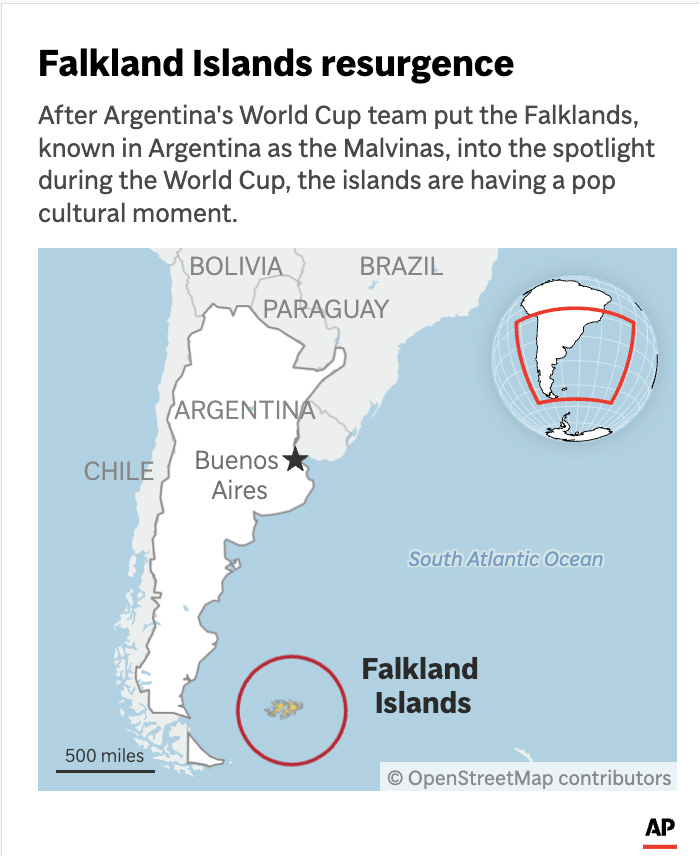
    The slogan invoked Argentina’s longstanding claim to the South Atlantic islands, over which the country had gone to war with the United Kingdom in 1982. The UK refers to this territory as the Falkland Islands, but Argentina disputes this name in favor of Malvinas.

    The gesture drew criticism from the UK, and Argentina’s President Javier Milei demanded that his countrymen not mix football with politics. “We shouldn’t fall for cheap, populist, nationalist, and rancid slogans,” he announced on Radio Mitre.

    Just months later, Milei made the slogan his own.

    “The Malvinas are Argentine, by history and rights,” he declared in a televised address on Sept. 3. He announced plans to sanction foreign companies involved in oil exploration around the islands and proposed measures to strengthen Argentina’s ability to defend its national sovereignty.

    The president’s reversal on the Malvinas is striking but falls into a broader political pattern. Facing political tension at home, nationalist leaders often turn to territorial disputes to project strength and rally patriotic support. Vladimir Putin’s invasion of Ukraine, Donald Trump’s aspirations to Greenland, and Xi Jinping’s claims over Taiwan all fit this playbook. In Argentina, presidents have long turned to the islands as a source of national unity, particularly when confronted with domestic problems.

    The Malvinas took on new political urgency in the 1960s, when the United Nations recognized the sovereignty dispute within its broader decolonization framework.

    Argentine President Javier Milei speaks during a ceremony commemorating the 43rd anniversary of the conflict between Argentina and Great Britain over the Falkland Islands, known as the Malvinas Islands, at a war memorial in Buenos Aires, Argentina, April 2, 2025.Natacha Pisarenko

    The UN’s call for peaceful negotiations between the UK and Argentina coincided with the military’s growing influence in Argentine politics. Throughout much of the 20th century, the armed forces repeatedly overthrew democratic governments. This cycle culminated in progressively longer and more violent dictatorships. After Juan Perón’s death in 1974, escalating violence between rival Peronist factions paved the way for a 1976 coup, amid a wave of U.S.-backed military regimes across Latin America.

    The 1976 dictatorship promised to restore order and economic stability but failed to deliver. Over the next six years, the junta’s economic policies led to deindustrialization, rising unemployment, and deepening poverty. Inflation remained in the triple digits every year except 1980, and Argentina’s foreign debt surged from $8 billion to $45 billion. Alongside these austerity measures, the junta’s political repression resulted in thousands of deaths and disappearances.

    By 1982, the military’s hold on power had weakened as the economy plunged into a deep recession. Strikes and protests became more frequent as Argentines denounced soaring inflation and massive human rights abuses. On March 30, the General Confederation of Labor called a general strike — the first since 1975 — and thousands gathered in Buenos Aires to demand “peace, bread, and work.” Federal police responded by arresting more than 2,000 protesters.

    To bolster popular support for an increasingly fragile regime, military dictator Leopoldo Galtieri invoked the Malvinas. On April 2, the junta invaded the islands, which Britain had controlled since 1833. The regime framed the invasion as a “recovery” of Argentine territory and urged citizens to rally behind the national cause. The generals hoped to redirect public anger toward a longstanding territorial claim and to unite Argentines behind the dictatorship.

    The Argentinian cruiser General Belgrano sinks amid orange life rafts holding survivors in the South Atlantic Ocean, May 1, 1982, after being torpedoed by the British Royal Navy.Uncredited

    For a time, the strategy worked. Argentines gathered in Plaza de Mayo to celebrate the invasion, transforming the space where police had violently suppressed protesters only days earlier into a scene of patriotic celebration.

    However, the junta had badly miscalculated, and Britain retook the islands in June. The swift defeat exposed the Argentine generals’ inability to coordinate planning and action and left more than 600 dead and over 1,600 wounded. The Malvinas War weakened the regime and ultimately accelerated its collapse. Within months, the military announced democratic elections for 1983.

    The Malvinas defeat discredited the junta but did not diminish Argentines’ patriotic fervor for the islands. Instead, the return to democracy created space for Argentine governments to distinguish the legitimacy of the sovereignty claim from the illegitimate junta that had pursued the invasion.

    In 2012, President Cristina Fernández de Kirchner turned to the Malvinas amid soaring inflation, rising capital flight and a growing energy deficit. After she won reelection with 54% of the vote in 2011, her second term marked a shift toward more explicitly nationalist politics. In April 2012, Fernández de Kirchner expropriated a controlling stake in the Spanish-owned oil company, YPF. She directly linked this move to the renewed claim to the Malvinas and posters declaring, “The Malvinas and YPF are Argentine” littered the streets.

    A map showing the locations of Argentina and the Falkland Islands, known in Argentina as the Malvinas.Peter Hamlin

    Speaking on the 30th anniversary of the Malvinas War, Fernández de Kirchner explicitly rejected the junta’s 1982 actions while venerating the veterans’ sacrifices. The junta had been wrong to attempt “to perpetuate itself in power,” she argued. Yet she framed Argentina’s sovereignty claim over the islands as part of her own administration’s efforts in support of memory, truth, and justice for the dictatorship’s crimes. Those efforts included reopening trials against those responsible for torture, disappearances, and other human rights abuses committed during the dictatorship.

    Adopting the language of the human rights movement, Fernández de Kirchner identified British control of the islands as an enduring colonial injustice. This discourse allowed her to claim the Malvinas as a national and patriotic cause while disavowing the dictatorship that had waged the war. The Malvinas thus offered a powerful symbol to connect territorial sovereignty, economic independence and a democratic reckoning with the past.

    In September 2026, President Milei has drawn similar connections between sovereignty and resource extraction as Argentina clashes with Britain over the planned Sea Lion oil project.

    The project, operated by British company Rockhopper and Israel’s Navitas Petroleum, could begin producing oil as early as 2028, turning the longstanding territorial dispute into a more immediate struggle over access to valuable natural resources. As Fernández de Kirchner did with YPF, Milei has framed control over natural resources as inseparable from national sovereignty.

    Made By History sponsors. FOR USE ON MADE BY HISTORY STORIES ONLY.Inquirer Staff

    Milei’s shifting approach to the Malvinas accompanies his bid for reelection in 2027. Since his election in 2023, inflation has fallen dramatically, but his administration’s economic record remains deeply contested. Unemployment has grown and real wages have weakened, driving discontent with the government’s austerity measures. The president’s approval ratings have fallen to 38% in recent months.

    As domestic tensions rise, the Malvinas once again offers a patriotic cause capable of rallying support across political divides. Various governments have pursued radically different strategies to recover the Malvinas, yet each found in the territorial dispute a powerful language of national sovereignty and anti-colonialism.

    When Argentina’s players held up a banner after defeating England, they were not pushing a foreign-policy agenda. They were drawing on a decades-old expression of national identity that has come to encompass Argentine sovereignty, resistance to colonialism, and perhaps most importantly the memory of los pibes de Malvinas, the young men sent to war in 1982.

    The Malvinas remain politically useful not because Argentines have forgotten the war or its devastating consequences, but because those memories have become part of what the islands represent. The players’ banner resonated for the same reasons: the fight for the Malvinas has become part of what it means to be Argentine.

    Gabrielle Esparza is a historian of Latin America, specializing in transitional justice and democratization in Argentina.

    Made by History takes readers beyond the headlines with articles written and edited by professional historians. Opinions expressed do not necessarily reflect the views of The Inquirer.

  • SEPTA got 24 commuter trains from Montreal, but it could be months before you can ride one

    SEPTA got 24 commuter trains from Montreal, but it could be months before you can ride one

    It’s not easy to move 24 passenger train cars from Montreal to Philadelphia, especially amid trade tensions with Canada.

    The surplus Bombardier Comet cars SEPTA bought from Montreal’s Exo transit system for $8.58 million arrived Sunday, pulled by Canadian National and CSX locomotives.

    They’re headed to the transit authority’s Frazer Shops and Yard in Malvern for some modifications before joining the Regional Rail fleet in two to three months.

    No tariffs were added to the purchase price, SEPTA spokesperson Andrew Busch said. The agency had estimated that it might have to pay up to $3.5 million extra in U.S. duties, but it was determined the cars did not fall under a complex web of new trade rules.

    It took months of research and discussion.

    “We sent someone to Montreal, and they crawled under the cars taking pictures of plates with serial numbers on the steel components that showed they were made in the USA,” Busch said.

    The pictures convinced U.S. Customs and Border Protection that the used rail cars were not subject to duties, he said.

    “We essentially repatriated those items by bringing them over,” Busch said.

    SEPTA also worked with the offices of Pennsylvania’s U.S. senators. Exo and Canadian transportation officials helped dig up contracts from when the cars were made to verify the origin of the steel.

    The Trump administration imposed a 25% tariff in March 2025 on imported Canadian goods not covered by a trade treaty between the two countries, one negotiated by the president. That surcharge was also extended to steel, aluminum, and automobiles.

    This month, Trump imposed 50% tariffs on $20 billion in Canadian goods, including hockey sticks, agricultural items, and building materials.

    Canadian Prime Minister Mark Carney retaliated with 50% tariffs on a number of imported U.S. products.

    The Exo cars from Montreal are intended as reinforcements after the fallout from five fires on SEPTA’s 50-year-old Silverliner IV Regional Rail cars last year, which disrupted service on the commuter lines for months.

    They will be mixed in with the rest of the Regional Rail cars, along with 10 coaches leased last year from Maryland’s commuter transit agency.

    Federal authorities last October ordered SEPTA to inspect all 223 Silverliner IV cars for safety problems and to fix them.

    Passengers dealt with canceled trips, delays, and skipped stops as the Silverliner IVs were fixed. Many trains were shorter than usual.

    Unlike Silverliner IVs and the newer V series, which both carry passengers and power the train, the Montreal cars must be pulled or pushed by locomotives.

    SEPTA has 15 electric locomotives, which it bought in 2019, and it operates 45 Regional Rail passenger cars that need to be pulled.

  • Trump praises new British PM Andy Burnham but slams UK deal on Indian Ocean islands

    Trump praises new British PM Andy Burnham but slams UK deal on Indian Ocean islands

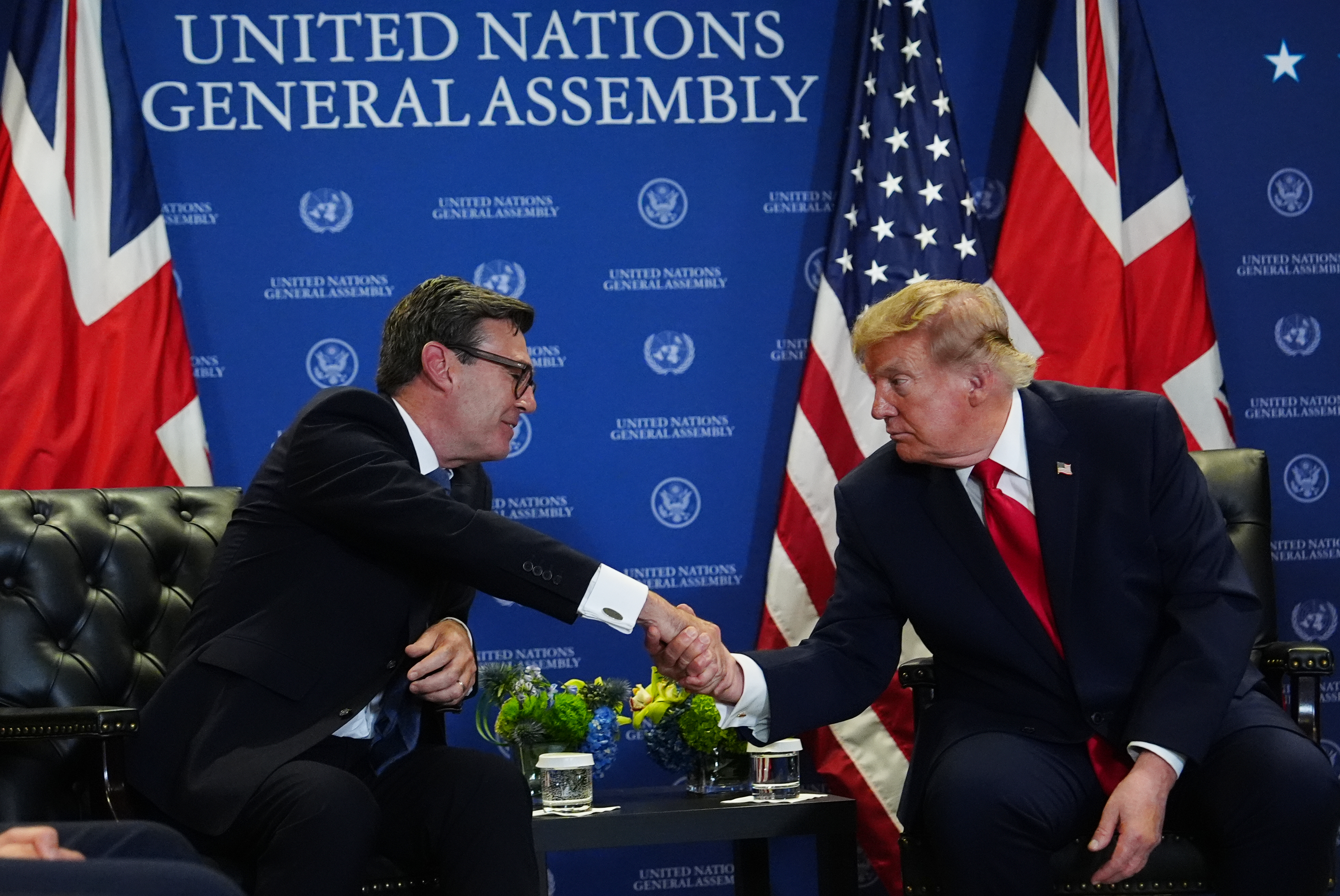
    UNITED NATIONS — Freshly in office, Prime Minister Andy Burnham got off to a strong start with U.S. President Donald Trump at their first meeting on Tuesday, with the president brushing aside differences over the Middle East and calling the British leader “a natural business person.”

    The two men met for more than the scheduled 30 minutes on the sidelines of the U.N. General Assembly, which Burnham was due to address later in the day.

    It was a baptism of fire for the neophyte leader, who has gone from mayor of the northwest England city of Manchester to leader of a G7 country in a matter of weeks.

    But despite U.K. nerves about how it would go, as they sat in front of U.K. and U.S. flags, Trump declared that trans-Atlantic relations were “more up than they were with your last prime minister.”

    “Based on our relationship with the prime minister, Andy, I think we’re doing very well,” he said.

    U.K. officials know that the president can be fickle. Trump initially warmed to Burnham’s predecessor, Keir Starmer, before falling out over the U.K.’s unwillingness to join the U.S.-Israeli war on Iran. But there was relief that Burnham emerged largely unscathed from his first meeting with a president who once dismissed him as “the mayor of a town.”

    “We don’t hold it against you,” Burnham said.

    Burnham nodded at U.S.-U.K. differences, noting that Trump had been “good enough to listen to us” on issues including trade and the Falkland Islands. Trump has recently mused about the future of the British-controlled South Atlantic archipelago, which is also claimed by Argentina, which calls it the Malvinas. The two nations fought a brief 1982 war over the islands.

    But on one potential flashpoint, the U.K.’s decision to ban trade with Israeli settlements in the West Bank, Trump professed ignorance.

    Chagos Islands remain a point of contention

    Trump’s harshest words were reserved for Britain’s plan to hand sovereignty of the Chagos Islands in the Indian Ocean to Mauritius. The U.K. says the deal will preserve the future of a strategic U.S. military base on one of the islands, Diego Garcia. But ratification of an agreement stalled after the Trump administration withdrew its support. U.K. officials acknowledge the deal is now in limbo.

    Trump called it “a terrible deal” over a “very important piece of real estate, militarily and strategically.”

    “I think the prime minister is going to be looking at it,” he said.

    Before the meeting, Burnham said he would raise with Trump ways to end the on-off war between the U.S. and Iran, which has choked off oil tankers moving through the Strait of Hormuz and sent global fuel prices soaring. Houthi attacks on Saudi energy infrastructure are making the problem worse while rendering Burnham’s pledge to ease cost of living pressure for British voters even harder.

    As he flew to New York for the annual gathering of world leaders, Burnham announced he had authorized limited military support for Saudi Arabia to repel attacks from Iran-backed Houthi rebels in Yemen. A Royal Air Force plane will refuel Saudi jets engaged in “defensive” action to shoot down Houthi missiles, he said.

    Burnham also said he would urge Trump to step up U.S. support for Ukraine by providing air-defense missiles to Ukraine ahead of another winter of Russian attacks.

    Burnham to focus on AI in his U.N. speech

    In his speech later Tuesday, Burnham was set to try to send a message that Britain can play a key role in solving the world’s biggest challenges, from conflict in the Middle East to the dizzying evolution of artificial intelligence. And he will attempt to turn the page on a decade of Brexit-driven discord with the U.K.’s European neighbors.

    Burnham said he would focus on artificial intelligence, arguing it’s possible to be “clear-eyed” about both the benefits and risks of the technology. He will argue the U.K. is well placed to be an “honest broker” in seeking global agreement to guide its development, because London has good relations with both the U.S. and Europe and “a strong dialogue” with China.

    In another potential point of tension with Trump, Burnham called for a global alliance to guide the development of AI.

    Burnham told a meeting of business leaders on the sidelines of the UN General Assembly that he wants to see “a single set of global principles and standards” that can unlock AI’s potential while mitigating its risks.

    Trump told the U.N. on Tuesday that the U.S “totally rejects any attempt to construct a globalist scheme” to regulate AI.

  • Netanyahu, before U.N. appearance, targets Mamdani in video

    Netanyahu, before U.N. appearance, targets Mamdani in video

    NEW YORK — Prime Minister Benjamin Netanyahu of Israel released a video broadside against New York City Mayor Zohran Mamdani, one of his most high-profile critics in the United States, hours before CNN aired a new interview in which the mayor again called the prime minister a war criminal.

    Mamdani has called on the federal government to arrest Netanyahu, who is expected to arrive in New York this week to address the U.N. General Assembly. In the video posted Tuesday, the prime minister falsely accused the mayor of supporting Hamas and inciting riots against Jewish New Yorkers.

    Addressing the mayor directly, the prime minister said he was coming to the U.N. “to tell the truth about our heroic soldiers” and “to tell the truth about you.”

    Mamdani, New York’s first Muslim mayor and an outspoken supporter of Palestinian rights, has condemned Hamas as a terrorist organization and described the attack it led against Israel on Oct. 7, 2023, as “a horrific war crime.”

    And while New York has seen an increase in antisemitic hate crimes since the Oct. 7 attacks and Israel’s subsequent bombardment of the Gaza Strip, as well as widespread pro-Palestinian demonstrations, there have been no riots targeting Jewish New Yorkers in the city since Mamdani was elected mayor in November or during his time serving in the state Assembly.

    Netanyahu is the subject of an arrest warrant from the International Criminal Court, which has accused him of war crimes in Gaza; he vigorously denies the charges. After Mamdani’s previous comments calling Netanyahu a war criminal outraged many pro-Israel Jewish leaders, the mayor’s office convened a meeting at which prominent rabbis urged the mayor to tone down his rhetoric on Israel and its leaders.

    Asked about Netanyahu’s remarks at an unrelated news conference Tuesday morning, Mamdani said, “We all know that what the prime minister has said in that video is not true.”

    On Monday night, CNN released clips from a wide-ranging interview with Mamdani, which also touched on his working relationship with President Donald Trump and his desire to see the Democratic Party focus on policies to lift up the working class. The full interview aired Tuesday afternoon.

    In one part of the interview with CNN’s Christiane Amanpour, Mamdani was asked directly about his opinion of Netanyahu, and he said he owed it to New Yorkers to share his honest views.

    “When it comes to Benjamin Netanyahu,” the mayor said, “I have described him as I believe him to be: a war criminal and an architect of a horrific genocide of the Palestinian people.”

    Mamdani has described Israel’s conduct of the war in Gaza as genocide, a claim that has upset many pro-Israel Jewish leaders. A United Nations commission and international and Israeli human rights groups have also said that Israel’s actions amounted to genocide.

    During the campaign, Mamdani pledged to have the Police Department execute the International Criminal Court warrant against Netanyahu if he were to come to New York. He repeated his desire to do so in an interview with the New York Times in July. But days later, the mayor released a video saying the city’s Law Department had told him the city did not have the authority to arrest the prime minister, and challenged the federal government to do so.

    Netanyahu, who is in the midst of a pivotal electoral campaign in Israel, has frequently condemned the mayor, calling him a danger to Jewish New Yorkers. On the second day of Mamdani’s term, the Israeli government accused him of antisemitism, citing his decision to cancel two executive orders signed by his predecessor, which had barred city agencies from boycotting Israel and defined some criticism of Israel as antisemitic.

    While Mamdani’s stance on Israel has caused deep unease among many Jews in New York, which has the largest Jewish population outside Israel, many others have supported the mayor, especially his fellow progressives. On Monday, Mamdani attended a meal marking the end of the Yom Kippur fast at the home of Ruth Messinger, a political ally who has served as Manhattan borough president and as the president and CEO of the American Jewish World Service.

    This article originally appeared in the New York Times.