Category: Nation & World

  • Supreme Court restores conviction in 1979 murder of Etan Patz

    Supreme Court restores conviction in 1979 murder of Etan Patz

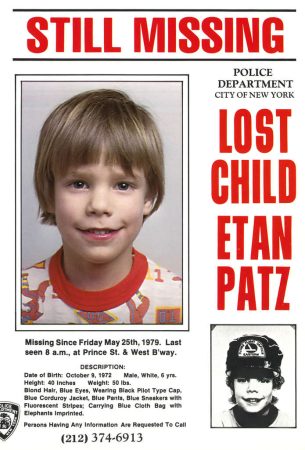
    NEW YORK — The Supreme Court on Monday reversed a lower court decision that had reopened the case of the man convicted in the killing of Etan Patz, a 6-year-old boy whose 1979 abduction in Manhattan reshaped American childhoods.

    The court’s unsigned opinion restores the conviction of the man, Pedro Hernandez, who the 2nd U.S. Circuit Court of Appeals had said last year was entitled to a new trial.

    The three liberal justices — Sonia Sotomayor, Elena Kagan and Ketanji Brown Jackson — noted their objection to the majority’s order.

    Hernandez was found guilty in 2017 of kidnapping and murdering Etan, but an appeals court overturned that judgment in July. Months later, the Manhattan district attorney’s office, which prosecuted Hernandez, asked the nation’s highest court to review the decision.

    On Monday, a defense lawyer for Hernandez, Harvey Fishbein, said the Supreme Court’s order meant his client would not get a new trial and that his team was “terribly disappointed.”

    “We firmly believe that an innocent man is in jail for a crime that he did not commit,” Fishbein said.

    In a statement, Manhattan District Attorney Alvin Bragg said the case had “changed a generation of New Yorkers.”

    “This office has remained steadfast in its pursuit of justice for Etan and the Patz family and will continue to stand by this important conviction,” he said.

    The Supreme Court’s action sends the matter back to the lower courts and is the latest development in a case that stumped investigators for decades. Hernandez, a handyman who lived in New Jersey, was arrested in 2012 and first put on trial in 2015. But after 18 days of deliberations, the trial ended in a hung jury. The case went back to trial and, in 2017, a Manhattan jury convicted Hernandez after nine days of deliberations.

    The reversal of Hernandez’s conviction last year reopened a case that had appeared finally settled. From the first days Etan went missing, when he was walking the two blocks from his home in the SoHo neighborhood to a school bus stop, the case generated intense public interest. Etan’s abrupt disappearance — and the killing of 6-year-old Adam Walsh two years later — ushered in an era of heightened caution among American parents.

    In its 10-page opinion Monday, the Supreme Court said the 2nd Circuit got it wrong and exceeded its authority.

    The lower court opinion “appears to reflect serious doubt about the reliability of Hernandez’s confessions,” the majority said, but the relevant statute does not permit federal courts to “disturb a state-court conviction based on such an evaluation of the evidence.”

    The liberal justices did not explain their disagreement. The ruling was issued as part of the court’s routine orders and without the justices holding oral arguments.

    For decades, investigators in Manhattan struggled to figure out what happened to Etan. His body was never found, and in 2001, he was declared legally dead.

    The critical break in the case came in 2012, when one of Hernandez’s relatives contacted investigators. New York police officers traveled to Hernandez’s home in Camden, N.J. After about seven hours of questioning, police said, Hernandez confessed — first before being read his rights, and twice more after.

    Hernandez was 18 at the time of Etan’s disappearance and worked at a bodega where investigators believed Etan had been killed.

    There was no scientific evidence linking Hernandez to the crime, and his confessions to investigators were quickly called into question.

    Hernandez’s lawyers argued that the statements were invented to placate the police. They asked the court to suppress them, saying they were a result of Hernandez’s low IQ and the product of psychotic delusions. The judge nonetheless said that they could be used as evidence.

    During jury deliberations at the second trial in 2017, the jury asked the judge whether they should disregard one of Hernandez’s later confessions if they found that his first one was not voluntary. The judge gave a one-word answer: No.

    A federal appeals court found that the judge should have explained a Supreme Court precedent about such serial confessions and ordered that Hernandez be released from his 25-years-to-life sentence or get a new trial.

    Prosecutors in Manhattan, led by Bragg, argued to the Supreme Court that Hernandez’s conviction should not have been overturned because it was not based on an “error in the decades-long investigation, in the admission of Hernandez’s confessions or in the evidence presented at trial.” The appeals court had said that the judge overseeing the trial, Maxwell Wiley, had violated federal law and therefore invalidated a jury’s verdict.

    In their response, Hernandez’s lawyers said that the judge’s instruction to the jury had touched on the central issue in the case.

    “Far from exhibiting the kind of clear error for which summary reversal is typically reserved,” his lawyers wrote, “the 2nd Circuit’s decision is correct.”

    This article originally appeared in the New York Times.

  • Why Trump has been attacking the Supreme Court, with 3 key rulings ahead

    Why Trump has been attacking the Supreme Court, with 3 key rulings ahead

    When Supreme Court Justice Neil M. Gorsuch hosted a gathering of his former clerks last year, a prominent attorney and Donald Trump ally who had played a key role in Gorsuch’s rise was notably absent.

    Gorsuch had nicknamed his friend Mike Davis “the general” for helping him secure his first federal judgeship, leading a campaign to get Gorsuch confirmed to the Supreme Court, and then serving as one of his inaugural clerks.

    But the relationship soured last year as the Supreme Court began to rule on some of Trump’s policies, according to two people with direct knowledge of the matter, speaking on the condition of anonymity to discuss a sensitive issue.

    One recounted how Gorsuch became upset when Davis lashed out at Justice Amy Coney Barrett, calling her a “rattled law professor” for siding with the court’s liberals in a pair of rulings against Trump. The other said Davis was angered by Gorsuch’s vote to block Trump’s use of a wartime authority to deport Venezuelans.

    The people differed on whether Gorsuch had asked Davis not to come to his clerks’ gathering or he chose not to. Either way, the rift highlighted the growing conflict between Trump, his MAGA allies, and the justices, which has burst more fully into public view in recent months.

    That turbulence makes for a tense backdrop in the waning days of the Supreme Court’s 2025-26 term, as the justices prepare to rule on three signature Trump initiatives: limiting birthright citizenship, firing the heads of independent agencies, and reshaping the Federal Reserve.

    Many legal experts believe that the justices have signaled they will rule against Trump on two out of the three, blocking his bid to deny citizenship to those who were born to parents here illegally or lacking permanent residency, as well as his effort to remove a governor of the Fed board.

    “It seems like almost 100 years since you’ve had a clash approaching this level between the president and the court,” said Jeffrey L. Fisher, a law professor at Stanford University. “You’d have to go back to the New Deal to have any kind of an analogue.”

    During the 1930s, President Franklin D. Roosevelt tried to pack the court by expanding it from nine justices to 15 after the court struck down key parts of the New Deal. The plan ultimately failed, but not before the court began upholding some policies that Roosevelt championed, possibly in response to his threats to add justices.

    Davis, who declined to comment on his relationship with Gorsuch, said in an interview that if the court rules against Trump on birthright citizenship, as he expects, it would be an inflection point. Birthright citizenship is the principle that nearly everyone born on U.S. soil is a citizen.

    “When the Supreme Court gives Chinese birth tourists birthright citizenship, it’s going to destroy its legitimacy with a broad swath of the American public,” Davis said, referring to people who ostensibly travel to the United States to have American children. “They are following politics and vanity projects instead of the law.”

    Defenders of birthright citizenship note that the 14th Amendment says that “all persons born or naturalized in the United States, and subject to the jurisdiction thereof, are citizens of the United States and of the state wherein they reside.”

    In another major case on Trump policies, the court will decide whether the president can remove without cause the heads of roughly two dozen independent agencies, such as the Federal Trade Commission and the Federal Communications Commission, that Congress set up to be insulated from political influence.

    In addition, the justices will rule on whether Trump can fire Federal Reserve governor Lisa Cook while a lawsuit over her removal plays out in the courts. A ruling for Trump would give the president far greater control over the powerful central bank.

    These rulings, and other major decisions, are likely to come in the next week or so as the justices sprint toward the end of the term in late June or early July.

    The disaffection with the Supreme Court among Trump’s allies is notable because the president reshaped the court in his first term with three staunchly conservative appointees, who have delivered major victories for conservatives on abortion, affirmative action, religious rights, and more.

    This term, the justices have handed the administration a string of wins on the emergency docket, allowing Trump policies on limiting immigration, freezing foreign aid, and dismantling the Education Department to move forward for now.

    Trump appointed Gorsuch, who did not respond to a request for comment, along with Brett M. Kavanaugh and Barrett.

    The wins have not satisfied Trump, who has attacked the court — including his own nominees — in increasingly caustic and personal terms that legal scholars say have little historical precedent; Trump has called the justices “bad,” “stupid,” “weak,” and other epithets.

    Davis suggested that such comments could have an effect on the justices. “Sometimes feeling the heat helps people see the light,” he said.

    White House spokesperson Abigail Jackson said in a statement that “this administration values the judicial branch.”

    “The American people have always valued President Trump’s ability to freely speak his mind and share his thoughts directly with them,” Jackson said. “It’s one of the many reasons why the President was resoundingly reelected. He will unapologetically share his opinions about the Court’s rulings, as is his right.”

    Richard Lazarus, a Harvard University law professor, said the heart of the conflict is Trump’s view that the conservative justices owe him fealty, rather than acting as an independent branch of government.

    “There’s no question that Trump, starting with the tariff case, has taken aim at the court and made quite clear his expectation that justices who were nominated by Republican presidents should vote for his positions,” Lazarus said.

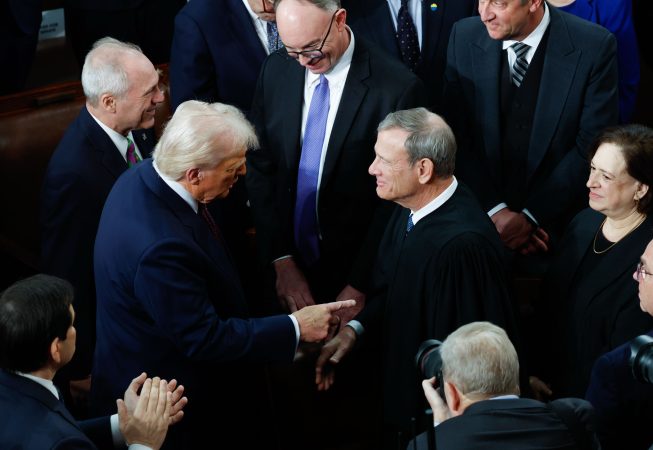
    In a 6-3 decision in February, the justices ruled that Trump did not have the authority under a 1977 law to impose sweeping tariffs on most of the nation’s trading partners. Of the court’s conservatives, Gorsuch, Barrett, and Chief Justice John G. Roberts Jr. joined the liberals in the majority.

    After that ruling, Trump excoriated some of the justices at a news conference in ways he had previously reserved for lower-court judges. The president said he was “ashamed” of the justices who ruled against him, later singling out Barrett and Gorsuch.

    “I think it’s an embarrassment to their families, you want to know the truth,” he said.

    In April, Trump kept the heat on by becoming the first sitting president to attend arguments at the court. Many saw his appearance at the birthright citizenship case as an attempt to pressure the justices to back the administration.

    Later that month, Trump accused the liberal justices of embracing “warped and perverse policies, ideas, and cases” and said the conservatives “give the Democrats win after win.” He added that “certain ‘Republican’ Justices have just gone weak, stupid, and bad.” The justices do not see themselves as representing particular parties but as expressing judicial philosophies.

    Trump’s attacks have continued. In a nearly 550-word Truth Social post in May, Trump lamented Barrett and Gorsuch’s lack of “loyalty” for ruling against him on tariffs.

    “Well, maybe Neil, and Amy, just had a really bad day, but our Country can only handle so many decisions of that magnitude before it breaks down, and cracks!!!” Trump wrote.

    Amid the acrimony, the justices and Trump have also exchanged olive branches. Trump invited the court’s conservatives to a state dinner for Britain’s King Charles.

    They’ve also had other interactions. Roberts hosted a clerk reunion that Vice President JD Vance and second lady Usha Vance attended.

    The justices have offered only muted responses to Trump’s broadsides.

    Asked whether he owed loyalty to the president during a CBS News interview in May, Gorsuch said his “loyalty is to the Constitution.” In March, Roberts said attacks against judges and justices are “dangerous” and have ”got to stop,” but did not mention Trump.

    Behind that reserve, Trump’s attacks have sparked debate among the justices, according to a person familiar with their thinking, who spoke on the condition of anonymity to describe private conversations. Some want to ignore the attacks, while others favor a more forceful public response, the person said.

    Roman Martinez, who heads the Supreme Court practice at Latham & Watkins and argues frequently before the court, said responding to Trump could prove a slippery slope.

    “The net result of being drawn into a back-and-forth with politicians is it is going to lower the stature of the court and the institution and make it look more political and politicized,” Martinez said. “I don’t think that’s in the court’s best interest.”

    Fisher said it appears Trump is trying to demand loyalty from the justices the way he has with lawmakers and administration appointees, but he lacks an effective cudgel. Supreme Court justices have lifetime appointments, so Trump cannot threaten them with primary challenges or fire them.

    “He’s casting about, looking for some way to make the court feel like he’s watching them and is putting pressure on them, but I don’t think it has much of an effect,” Fisher said.

    Hanging over the strained relationship is the question of whether the president will openly defy one of the court’s rulings at some point, a scenario that many legal experts say could plunge the nation into a constitutional crisis.

    Most legal experts say the administration appears to be complying with high court orders so far. They note that Trump went along with a ruling blocking the deployment of National Guard troops to Chicago, among others.

    But dozens of lower-court judges have found that Trump officials are flouting their decisions, particularly when it comes to immigration cases. And some experts see signs of slippage even when it comes to the Supreme Court; Lazarus said the administration’s response to the tariff case, for example, “strikes me as pretty close to non-compliance.”

    The Supreme Court struck down Trump’s tariffs as illegal, and a specialized trade court has ordered the administration to refund $166 billion in import levies paid by businesses. Despite the rulings, Trump officials have gone back to court arguing they should not have to refund the full amount.

    Trump also said in an interview that he would “remember” companies that do not seek a refund, a comment some saw as a warning to those that do. A judge has complained about the pace of the administration’s refunds. The administration has said it is difficult to process so many payments.

    Whatever the outcome in the remaining cases this term, Fisher said he sees no letup in the tension between Trump and the court.

    “Almost all substantive policymaking is coming out of the White House instead of Congress, so it stands to reason there is going to be continued friction between the courts and the president,” Fisher said. “All the more so when you have a president that describes himself as willing to push boundaries.”
  • Quarantine comes to an end for the last of the hantavirus ship passengers in Nebraska

    OMAHA, Nebraska — The last eight American passengers who endured 42 days in a specialized hospital quarantine unit after exposure to an unusual hantavirus outbreak on a cruise ship that killed three people have left the Nebraska facility.

    U.S. Department of Health and Human Services officials on Monday confirmed the end of the quarantine.

    “Through close collaboration among federal, state, and local partners, HHS helped protect the American people, contain potential risks, and bring this response effort to a successful conclusion,” HHS spokesperson Emily Hilliard said in an email.

    More than 120 people were evacuated from the MV Hondius in Spain’s Canary Islands early last month — including the 18 Americans who wound up in the National Quarantine Unit in Omaha — though most were from other countries.

    In addition to those people evacuated by health officials in full protective suits, at least 30 other passengers had left the ship earlier before the outbreak was documented. That included seven Americans, who were allowed to monitor for any symptoms at home. When the ship eventually docked in the Netherlands, 25 crew members and two medical personnel were on board and had to quarantine.

    The World Health Organization didn’t immediately respond Monday to questions about the status of all the other people who had to quarantine around the globe. A total of 13 cases of the virus, including the three who died, were identified among people who were on the ship.

    Most Americans returned home but some were forced to quarantine

    One of the American passengers, Angela Perryman, had been held against her will and against the recommendation of a government medical expert. She said in an interview Monday passengers were told that the quarantine monitoring period ended Sunday at 2 p.m. She left on a flight that evening. Others were flying out Monday, she said.

    “We were locked in our rooms until 1:55. And at 2 o’clock, ‘OK, well, everybody walk out and go home,’” Perryman said, speaking from her Florida home.

    Some stayed the night elsewhere in Omaha, but Perryman pushed for a flight home that evening. The government paid for the flights, she said.

    Seven of the last remaining patients stayed there voluntarily, but Perryman was forced to stay as the result of a controversial quarantine order that was deemed unnecessary even by some health officials.

    Perryman and seven others spent six weeks at the National Quarantine Unit at the University of Nebraska Medical Center. That monitoring period was set because symptoms of hantavirus have taken as long as 42 days to appear in previous outbreaks. None were reported to have developed the illness.

    Ten others who were at the facility were allowed to leave earlier under an agreement that they would be closely monitored in their home states.

    Outbreak developed on a small cruise ship

    The passengers were on a Dutch cruise ship, the MV Hondius, traveling in the South Atlantic that became the setting of a hantavirus outbreak that killed three people, including a Dutch couple who health officials believe were the first exposed to the virus while visiting South America.

    Hantaviruses usually spread when people inhale contaminated residue of rodent droppings, but the hantavirus that caused the outbreak, called the Andes virus, may be able to spread between people in rare cases, health officials say.

    Some 25 Americans were on the ship, including about seven who disembarked in April and 18 who remained on board. Sixteen were evacuated to the Nebraska quarantine unit in Omaha on May 11, and two other Americans joined them a few days later.

    Passengers staying in Omaha enjoyed Nebraska hospitality

    During the passengers’ stay, local Omaha restaurants and food trucks delivered special meals for them to enjoy almost daily. And the nurses sometimes made Starbucks runs to deliver some of the passengers’ favorite drinks.

    The rooms they stayed in are like hotel rooms equipped with a desk, television, internet connection, and exercise equipment to help the passengers pass the time.

    One of the passengers, Jake Rosmarin, on Monday morning posted an “I’m finally coming home” video that showed him leaving his room at the quarantine center, hauling two suitcases and a backpack and turning out the lights as he walked out the door. Later Monday, he posted a video of the Omaha skyline shot out the window of his plane as he headed home to his fiance in Boston and his family.

    Rosmarin, who is a travel blogger, posted a tearful video Sunday thanking the staff of the quarantine unit, the Omaha community, and his family and friends who helped him get through quarantine.

    “I want to thank the Omaha, Nebraska, community for welcoming us with open arms and showing us complete kindness and generosity. And a big thanks to all of you who have helped me get through this because I really don’t know if it would have been as easy without the support from strangers,” he said while wearing a Nebraska Huskers sweatshirt that someone sent him.

    Florida wouldn’t agree to monitor passenger round the clock

    Perryman had a darker take. She was forced to stay after Florida officials refused a federal demand that the state provide round-the-clock surveillance on her if she were returned home. This happened even as they had started making travel arrangements for the passengers weeks ago, she said.

    “Nobody actually expected anybody to get sick at that point,” she said. “Everybody was well aware that we were all going home on commercial flights.”

    She called the six-week quarantine “a political stunt.”

  • Confirmed Ebola cases in Congo outbreak top 1,000 with 254 deaths, authorities say

    BUNIA, Congo — Confirmed cases in the Ebola outbreak in eastern Congo have reached 1,003, including 254 deaths, officials said, as tracing those who had been in contact with patients remains a major challenge.

    A total of 100 people have recovered in the outbreak concentrated in the Ituri province since it was declared on May 15, Congo’s Ministry of Health said Sunday. At least 365 patients are in hospitals or in isolation, it said.

    The Ebola outbreak caused by the rare Bundibugyo virus, which has no vaccines or treatment, was the worst ever in its first month. Officials admit there could be far more cases they still don’t know about and that the peak of the outbreak is still ahead.

    Contact tracing remains a key issue for local authorities, who have only achieved a 55% coverage rate, the ministry said.

    “If you want to control an outbreak, especially Ebola outbreak, you must know the index case. We don’t have confidence on when this outbreak started,” the Africa Centers for Disease Control and Prevention Director-General Jean Kaseya told the Associated Press last week.

    Officials also are yet to identify the patient zero and trace more than 35,000 people who have come in contact with infected individuals as of last week, authorities said.

    That’s partly because eastern Congo is also battling ongoing violence from rebels. In Ituri, attacks by the Islamic State group-backed Allied Democratic Force have cut off access to many villages and forced people to flee their homes, including those sheltering in overcrowded camps and others constantly on the move.

    More than a month into the outbreak, officials believe the disease continues to outpace response efforts and no one knows its true scale.

    Displaced persons at risk

    At the Kigonze displacement camp in Bunia, the capital of Ituri province, camp officials said Friday that 10 people had died last week in unusual circumstances, raising the fear of a possible outbreak in the camp of over 20,000 displaced people.

    There had been no Ebola case confirmed at the site, camp officials said, but added that the death rate was unprecedented and called for investigation.

    The U.N. refugee agency has said at least 2 million people forcibly displaced from their homes, including over 320,000 refugees, live in areas at risk of Ebola in Congo.

    In a statement on Friday, the agency said it was “deeply concerned by the accelerating spread” of the virus and “the growing risks it poses to displaced communities across the region.”

    “If a disease or epidemic were to spread among the thousands of people living at this (Kigonze) site, it would be a real catastrophe given our already very precarious living conditions,” said Charité Banza, a civil society leader in Ituri.

  • Top Justice Department officials can remain part of prosecution of press gala attack, judge rules

    WASHINGTON — A federal judge on Monday denied a request to disqualify top Justice Department officials from supervising the prosecution of the man charged with trying to kill President Donald Trump at the White House Correspondents’ Association dinner.

    Cole Tomas Allen had argued that involvement in his prosecution by Acting Attorney General Todd Blanche and District of Columbia U.S. Attorney Jeanine Pirro created a potential conflict of interest because they were among many administration officials present at the April dinner. Allen’s attorney also had raised concerns about the close friendship between Trump and Pirro, a former Fox News commentator.

    U.S. District Judge Trevor McFadden wrote in his ruling that neither their attendance at the dinner nor Pirro’s personal relationship with the president merited their disqualification. McFadden noted that Allen is not charged with attempting to harm Blanche and Pirro, and there is no evidence to suggest he even knew they would attend the dinner.

    “They are unlikely to be trial witnesses, nor do they meet the legal definition of victims,” wrote McFadden, who was nominated to the bench by Trump.

    Allen has been accused of trying to breach a security checkpoint armed with guns and knives. He has pleaded not guilty to various charges, including assaulting a federal official with a deadly weapon and attempted assassination of the president. He faces a maximum sentence of life in prison if convicted of the attempted assassination charge alone.

    Allen also is accused of firing a shotgun at a Secret Service agent during the attack, which disrupted and ultimately prompted an early end to one of the highest-profile annual events in the nation’s capital. The Secret Service officer who was shot once in a bullet-resistant vest fired his own weapon five times without hitting anyone. Allen, of Torrance, Calif., was injured but was not shot.

  • U.S. oil blockade means children in Cuba are missing school

    U.S. oil blockade means children in Cuba are missing school

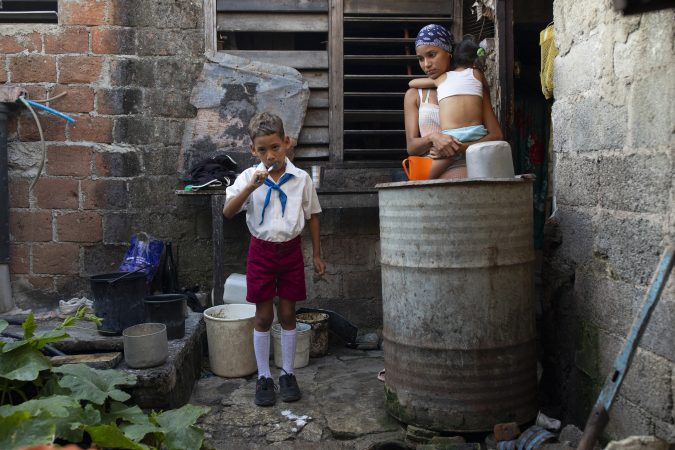
    HAVANA — Axisa and Aron Alfonso, 6- and 7-year-old siblings in western Cuba, are luckier than most of their classmates: Their father takes them on their 1-mile commute to school on horseback.

    The children and teachers who live farther away rely on a spluttering, yellow Soviet-era school bus that no longer shows up. Teachers often do not make it to class, so the Alfonso family and their horse, Chocolate, turn around and go home.

    A U.S. oil blockade has set off an increasingly agonizing energy crisis that has brought transportation largely to a standstill. Fewer cars and buses are on the streets, and, as a result, fewer students and teachers are in school.

    “My children rarely go to school. They go, but the teachers don’t come,” said Sergio Alfonso Vásquez, 33, a farmer and the father of Axisa and Arona. “I’m afraid because they aren’t learning anything.”

    To save energy, the Cuban government in February cut school to half-days and resorted to COVID-era remote learning for college students.

    Then Cuba decided to end the school year two weeks early and scrapped college entrance exams for high school seniors after acknowledging that sleepless nights without electricity and a lack of school meals were exhausting students and teachers alike.

    The Cuban government’s measures are the latest blows to the country’s once vaunted public education system, which had long been a signature triumph of the country’s socialist revolution.

    Schools were already reeling from Hurricane Melissa last fall, which damaged hundreds of buildings; a mass departure of teachers in recent years; and shortages of textbooks, uniforms, and even pencils and paper.

    The extreme gasoline shortage finally brought the strained system to a stop.

    The Trump administration’s pressure campaign, including an executive order that prohibited countries from delivering oil to Cuba, is aimed at forcing Cuba’s government into making political and economic changes.

    But experts say the damage to the educational system is a striking example of the negative consequences of U.S. measures on regular Cubans and that, in the case of schools, amounts to a serious long-term threat.

    “Education in Cuba is at risk due to the current energy crisis,” Anne Lemaistre, the regional director of UNESCO, the United Nations education organization, said on Instagram. “It jeopardizes the future of an entire generation.”

    All 240 of Cuba’s boarding schools had to close this semester, Lemaistre, who is based in Havana, told the New York Times.

    The Cuban government did not respond to requests for comment, but government officials have publicly discussed the schools crisis.

    “After a night without electricity, getting a kid to school, figuring out how to engage him, and the class itself, is a challenge,” Naima Ariatne Trujillo Barreto, Cuba’s minister of education, said in February on state television. “And for the teachers, who also suffer just as much, without electricity or with the problem of whether or not they have water at home, concentrating on giving classes has been quite a challenge.”

    Even before the Trump administration started imposing stricter measures against the Cuban government, the country had already been in a steep economic decline for several years.

    The Cuban government said the school system was facing a shortage of roughly 26,000 teachers, many of whom had quit for better-paying jobs in the private sector.

    In Camagüey, a city in eastern Cuba, nearly 1,000 teachers had left the country for good in recent years, state-run media reported.

    After the COVID-19 pandemic, the country experienced a record-breaking exodus. More than 1 million people, including thousands of teachers who earned an average of $11 a month, left the country.

    President Donald Trump cut off international fuel deliveries in January and introduced a new package of aggressive economic measures aimed at starving the Cuban government of cash.

    The Trump administration argues that the United States is not to blame for Cuba’s energy crunch, but instead faults Cuban officials for not investing enough in infrastructure while diverting “energy resources to line their own pockets.”

    The State Department, in a statement, questioned why the Cuban regime claims it has no fuel for schools, while Interior Ministry officials who quash protests have enough gas to carry out their operations.

    Remote learning for college students, one of the austerity measures adopted by the Cuban government, has proved all but impossible. Blackouts stretch over 20 hours a day, and most students and teachers cannot pay for enough data on their phones to support remote classes.

    Instead, professors have sent lessons using WhatsApp voice notes.

    Leonard Gómez León, a third-year law student at the University of Havana, described the semester as “hellish.”

    “The power outages have been constant, the lack of internet connection, and so on, and it’s truly terrifying to see how badly we students are doing,” he said. “I feel like this is almost a lost semester.”

    Gómez, 21, is the vice president of the University Student Federation of Cuba, a state-run organization that has traditionally toed the government line. But he helped organize a protest in March outside the university, demanding the semester be canceled until in-person classes could resume.

    The vice minister of education, Modesto Ricardo Gómez, told the protesting students that the Trump administration was “massacring an entire society.”

    The collapse of education is a stark contrast to the gains that the country made after Fidel Castro toppled a U.S.-aligned dictator and seized power in 1959.

    He made education a priority at a time when the illiteracy rate was higher than 20% and mobilized 250,000 students and teachers to teach adults to read, particularly in the countryside.

    Illiteracy was all but eradicated. The island’s universal, free university system steadily expanded over the decades, churning out doctors and engineers.

    But the government, which has a near monopoly on such professions, has for decades paid minuscule salaries, undercutting economic incentives to study or teach. And the quality of Cuba’s education has deteriorated since the fall of the Soviet Union, the country’s main benefactor, which led to budget shortfalls.

    Katrin Hansing, an anthropologist at the City University of New York’s Baruch College who has written extensively about Cuba, said the education system is now “a shell of its former self.”

    University education in particular, she said, is largely on pause.

    “What is happening online is very poor in quality,” she said. “There’s only one, or two, or less, hours of electricity a day, and people in that time are trying to do everything to survive, from washing to cooking.”

    Alejandro Paradero Almenarios, 20, had enrolled at the University of Guantánamo, hoping to become a biology teacher, but dropped out in January, five months into his freshman year. He decided the effort was not worth it given the paltry wages he would earn teaching high school, the equivalent of $7 a month.

    “I was studying and studying for nothing,” he said.

    He now works full time making charcoal, which people now rely on to prepare meals because cooking gas is unavailable.

    Raúl Cabrera Oliva, 18, was in his last year at a vocational high school in Artemisa, west of Havana, that specialized in veterinary medicine.

    With few transportation options for most students, the school closed.

    “No transportation, no school,” Cabrera said.

    The government’s push to reduce school hours to half a day caused another set of problems. By the time parents and children, many of whom hitchhiked, arrived at school, there was no time for parents to go home and then return in time for dismissal.

    Mothers killed time waiting outside.

    Yaymaris Rodríguez López said she would leave her house in a village in western Cuba every morning at 7 a.m. with her two sons, ages 12 and 4, and stood on the side of the road, hoping someone would drive by offering a ride to her children’s school.

    Sometimes, 10 a.m. came and went, and they would still be waiting.

    “What am I going to do? I have to take them to school,” Rodríguez said. “They can’t grow up to be dumb.”

    This article originally appeared in the New York Times.

  • Rubio will visit Gulf allies amid scrutiny of his position on Iran deal

    ABU DHABI — Secretary of State Marco Rubio will head to the Middle East this week for meetings with Arab Gulf allies, a high-stakes diplomatic assignment for a prominent Iran hawk who largely kept a low profile as the Trump administration pursued its fragile ceasefire deal with Tehran.

    Rubio will travel to the United Arab Emirates, Kuwait, and Bahrain from Tuesday to Thursday. All three countries faced heavy targeting from Iranian strikes after U.S. and Israeli forces began the Iran war in late February, and they suffered some of the most acute economic fallout from Tehran’s move to block traffic through the Strait of Hormuz, a vital shipping lane for export-dependent countries in the region.

    In addition to his bilateral meetings during the three stops, Rubio will meet in Bahrain with the Gulf Cooperation Council (GCC), a regional body for the Arab Gulf nations.

    The secretary’s trip follows Vice President JD Vance’s meeting with Iranian officials in Switzerland on Sunday, beginning a 60-day effort to build upon the ceasefire announced in a controversial memorandum of understanding signed by President Donald Trump last week. The meeting was delayed by several days after Israeli attacks on Lebanon prompted Iran to say it would reimpose its closure of the Strait of Hormuz.

    The outcome of U.S. talks with Iran would have significant impact across the Middle East. As part of the Trump administration’s proposed compromise with Tehran, the Iranian regime would give up its highly enriched uranium, which could be used to make a nuclear weapon, in exchange for a number of economic benefits, including the lifting of sanctions, access to frozen assets, and a $300 billion fund for reconstruction.

    That Vance, and not Rubio, has been the face of the deal has been widely noted in Washington.

    “I think Marco just sees a bad deal when he knows one,” said Sen. Chris Coons, (D., Del.), speaking at a roundtable with journalists hosted by Bloomberg News last week. Coons asserted that Rubio, his former colleague on the Senate Foreign Relations Committee, was not discussing the subject publicly to avoid being associated with a deal that the senator called a “near-total capitulation” to Tehran.

    The State Department dismissed this sentiment as ill-informed speculation. “Secretary Rubio and the entire administration is 100% in lockstep behind President Trump,” said Tommy Pigott, a spokesperson.

    Any public defense of the negotiations with Iran from Rubio could carry weight, as he was a fierce critic of the 2015 nuclear agreement with Iran, the Joint Comprehensive Plan of Action, that was secured by the Obama administration. In one speech before that agreement was struck, Rubio said that “a bad deal [with Iran] almost guarantees war, because Israel is not going to abide by any deal that they believe puts them and their existence in danger.”

    “I think many will be waiting with bated breath to see how one of the most internationalist and hawkish members of this administration will be making sense of this document,” said Behnam Ben Taleblu, an expert at the Foundation for Defense of Democracies, a D.C. think tank that has argued for more aggressive action against Tehran.

    Brett Bruen, who served on the White House National Security Council during the Obama administration, said Vance’s position as the public face of the deal was notable and may be because “the vice president so badly wanted to push peace, having been so ideologically at odds with the war.”

    “But it’s also because Rubio knows a dumb diplomatic deal from a distance and this one with Iran has ‘disastrous’ emblazoned all over,” Bruen added.

    Officials close to both Rubio and Vance have downplayed the significance of Vance’s role as the public face of the agreement, arguing that much of it was timing. The vice president, these people noted, had a book coming out and was already doing a press tour, whereas Rubio was traveling with Trump to the Group of Seven meetings in France, where naturally his boss took center stage.

    “From what I can tell, he’s supportive of the deal,” said one person familiar with Rubio’s thinking, who spoke on the condition of anonymity because they were not authorized to speak to the media. This person added that the secretary, who also serves as White House national security adviser, was also “clear-eyed about the fact that we are talking about the Iranians here.”

    Vance’s ownership of the issue has political implications, given that he and Rubio are widely expected to become political rivals in the race to succeed Trump as president.

    Jon Hoffman, a policy analyst at the libertarian Cato Institute think tank, said Rubio and Vance represented “the divide between the traditional neoconservative worldview and the growing constituency weary of foreign entanglements,” particularly in the Middle East.

    All three nations that Rubio is visiting were impacted by Iranian military retaliation after it was attacked. Bahrain, the smallest country in the region, saw major damage near the U.S. Navy’s 5th Fleet based in Manama, while the UAE was reported to have seen more attempted strikes than the five other Gulf Cooperation Council nations combined.

    Experts said that while all three appeared to welcome the ceasefire, across Arab Gulf nations there were major concerns about the memorandum of understanding’s lack of provisions addressing nonnuclear threats like Iran’s ballistic missiles and the prospect of large sums of money going to Tehran with few strings attached.

    Rubio will need to “reassure them that this is not some harbinger of a U.S. decision to leave the region or to abandon their security,” said William V. Roebuck, executive vice president of the Arab Gulf States Institute in Washington and a former U.S. ambassador to Bahrain. “In fact, it’s an opportunity to enhance it.”

  • U.S. temporarily lifts sanctions on Iranian oil

    U.S. temporarily lifts sanctions on Iranian oil

    The Treasury Department on Monday issued a 60-day license allowing the production, delivery, and sale of Iranian oil as part of the preliminary U.S.-Iran deal signed last week.

    Iran stands to reap significant financial rewards from the reprieve, which represents a sharp reversal of U.S. policy. Most importantly, it clears a path for the country to export its oil at market rates after many years of being forced to sell at a discount to find buyers willing to take the risk of running afoul of U.S. economic restrictions.

    But the Trump administration has signaled that it’s ready to provide Iran with financial rewards for opening the Strait of Hormuz and ending the war, which has destabilized the global economy.

    Treasury Secretary Scott Bessent said on social media that the sanctions exemption was the result of “ongoing productive” talks with Iran that are taking place in Switzerland.

    “Iran has committed to free and open transit in the Strait of Hormuz and to permit International Atomic Energy Agency (IAEA) inspectors into their country,” Bessent wrote in a post on social platform X.

    The Trump administration provided Iran with temporary sanctions relief earlier this year as it tried to curb oil prices by allowing more crude supplies to flow to global markets. The U.S. then ramped up sanctions and created a military blockade preventing the sale of Iranian oil as part of an effort to cripple its economy.

    The new license, which expires Aug. 21, gives Iran greater access to U.S. currency by allowing the country to conduct oil transactions using U.S. dollars. It also allows U.S. importers to buy Iranian crude oil, petrochemical products, and petroleum products.

    Iran produced less than 5% of the world’s oil before the war, with the vast majority of its exports going to China. But it was forced to sharply curtail production in recent months because of a U.S. blockade. Time will tell how quickly the country will be able to restart those wells, which can be a tricky process. Iran will also have to repair energy infrastructure damaged in the war.

    The Trump administration has faced criticism for striking an initial agreement with Iran that critics say is overly accommodating and more generous than the 2015 Joint Comprehensive Plan of Action that the Obama administration and other world powers reached with Iran to curb its nuclear program.

    “It’s also important to note that sanctions relief was not provided immediately when the JCPOA was enacted, it happened at ‘Implementation Day’ — six months after the IAEA verified the nuclear commitments were fulfilled,” said Daniel Tannebaum, a senior fellow at the Atlantic Council who previously served as the Office of Foreign Assets Control compliance coordinator for the Federal Reserve Bank of New York.

    This article originally appeared in the New York Times.

  • Federal judge halts Trump administration effort to subpoena Walz in immigration enforcement probe

    A federal judge has blocked an attempt by the Trump administration to subpoena Minnesota Gov. Tim Walz and other state officials, calling it an effort to “harass and retaliate against them.”

    In a ruling unsealed Monday, U.S. District Judge Patrick Schlitz found the “dominant purpose” of the subpoenas was to “coerce Minnesota officials into assisting the federal government with enforcing civil immigration law and to harass and retaliate against them for failing to do so.”

    The subpoenas seeking records were served in January as part of an investigation into whether Walz and other officials obstructed or impeded law enforcement during a sweeping immigration operation in the Minneapolis-St. Paul area. They were sent to the offices of Walz, Attorney General Keith Ellison, Minneapolis Mayor Jacob Frey, St. Paul Mayor Kaohly Her, and officials in Ramsey and Hennepin counties.

    The ruling is the latest rebuke by the federal judiciary of Justice Department efforts to aggressively implement the Trump administration agenda in courts and target the president’s political adversaries through subpoenas and similar demands.

    The judge ruled that there appeared to be “extremely weak to nonexistent” connections between the information sought in the subpoenas and any possible criminal violation. The subpoenas seek materials “that largely if not entirely relate to constitutionally protected conduct,” the judge wrote, noting that Minnesota has the legal right not to devote its resources to enforcing federal immigration law.

    The Justice Department “is not conducting a criminal investigation,” the judge wrote, “but is instead using the grand jury process for other (unlawful) purposes.”

    The evidence that the subpoenas were issued for unlawful reasons is overwhelming, the judge said, arguing that the Justice Department “has struggled — without success — to identify a single plausible investigatory justification” for them.

    The Justice Department didn’t immediately respond to an email seeking comment.

    Walz, in a statement, called the ruling “a victory for the rule of law and our democracy.”

    “The U.S. Justice Department is pursuing criminal investigations into the President’s political opponents,” said Walz, the 2024 Democratic nominee for vice president. “This case was just one example of that, but we are seeing daily reminders of this administration’s lawlessness — in Minnesota and around the country. We all must continue to seek justice and uphold the rule of law.”

    Ellison said “it should disturb every American that Donald Trump is weaponizing the criminal justice system against people he disagrees with.”

    The subpoenas were “a politically motivated retaliation against our city for lawfully standing up to ICE and fighting for our residents,” Her said in a statement, referring to U.S. Immigration and Customs Enforcement.

    Frey said the investigation was “never about justice, law, and order, but the absence of it.”

    “Subpoenaing political opponents because they spoke on behalf of their constituents violates the core tenets of our democracy and human decency,” he said.

    Frey also observed that criticizing government action is not a crime.

    “One of the defining strengths of our democracy is the ability to challenge those in power without fear of retribution. Elected officials have both the right and the responsibility to speak honestly about how government decisions affect the people they serve,” he said.

    Over the last year, judges have dismissed indictments against two prominent Trump foes, former FBI Director James Comey and New York Attorney General Letitia James, and grand juries have repeatedly refused to return indictments sought by the Justice Department.

    The moves reflect mounting public concerns that the Justice Department, an institution meant to make investigative and prosecution decisions independent of the White House, is being politicized under the current Trump administration.

    Vice President JD Vance has separately called on the Justice Department to investigate Walz and Ellison over allegations they failed to stop widespread social services fraud, though the department has not said whether it will open an investigation. Walz and Ellison have described those allegations as politically motivated and defended their efforts to combat fraud in Minnesota.

  • For heirs of Custer and Sitting Bull, a 150-year-old battle is personal

    For heirs of Custer and Sitting Bull, a 150-year-old battle is personal

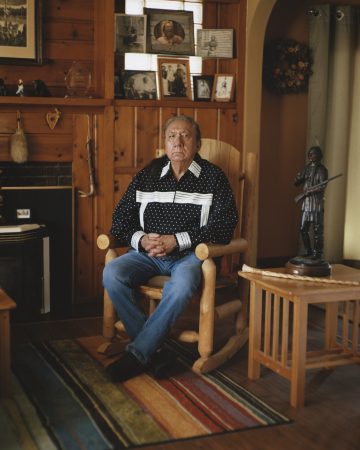
    CROW AGENCY, Mont. — As a child in South Dakota, Ernie LaPointe was told: Don’t tell anyone who your great-grandfather was.

    If his neighbors or friends knew he was descended from Sitting Bull, the storied Hunkpapa Lakota leader, he would never have a normal childhood, his mother told him.

    “‘There will be a time and place when you get the permission to do it,’” LaPointe, now 77, recalled his mother saying.

    LaPointe kept mum until the early 1990s, when, he said, an aunt told him it was time to “come out from the shadows.”

    Now he protects the legacy of Sitting Bull, who helped lead the resistance to the U.S. government’s seizure of the Great Plains and became perhaps even more famous in death than in life.

    Almost 150 years ago, Sitting Bull’s followers defeated Lt. Col. George Armstrong Custer and the 7th Cavalry Regiment of the U.S. Army in the Battle of the Little Bighorn, one of the most closely studied and hotly debated military clashes in American history. Sitting Bull is said to have had a vision that presaged a great victory, which came weeks later for warriors led by Crazy Horse.

    More than a thousand miles south, in Arizona, Chip Custer’s lineage was not something he could have hidden, even if he wanted to.

    He was born George Armstrong Custer IV, the great-great-grand-nephew of the famous lieutenant colonel. After his father (George Armstrong Custer III) died suddenly in 1991, Chip inherited the job of minding the legacy of a man who is among the most lionized, and vilified, figures in American history.

    Chip Custer, 70, has long been familiar with the criticism — of Custer’s devastating offensive against the Cheyenne, of his military tactics, of his ego. He hopes people will try to view his relative in his full complexity, in light of his successes and in the context of his time.

    “If someone wrote a thousand stories about me,” he added, “what would I end up looking like after all the time under the microscope?”

    Last week, crowds converged where the Little Bighorn River snakes through grassy hills in southeastern Montana and where Custer and all of his men died during an attack on a Native American encampment on June 25, 1876. There were reenactments, ceremonies, and talk of a new visitor center scheduled to be completed in the coming months.

    To the Lakota, Northern Cheyenne, and other tribes, the battlefield remains hallowed ground, a place of great triumph over a government that suppressed their way of life.

    To historians, it remains an inexhaustible source for debate. Had one cavalry major been drinking? Was Custer undone by recklessness or flawed intelligence?

    Chip Custer and Ernie LaPointe are students of the battle and fluent in its intricacies, but their interest is not simply in military history. It is based in a mission to preserve their family legacies.

    “The blood of my great-grandfather is in me,” LaPointe said. “He cared for the people; he cared for everything. He even cared for the people who tried to kill him.”

    Custer’s kin

    Chip Custer first visited the battlefield in 1976, for the 100th anniversary of the battle, as a 21-year-old hippie with no expressed interest in family history. He drove up from college to surprise his father, a retired Army officer who had fought in three wars.

    As they sat through a quiet ceremony near what is known as Last Stand Hill, the American Indian Movement leader Russell Means spoke out to celebrate the cavalry’s defeat.

    “My father, of course, was incensed over the way that whole event went,” Custer said. “So that was my introduction.”

    The national park was known as Custer Battlefield National Monument then, though Native American activists had begun to draw attention to the site’s narrow focus on the more than 260 U.S. deaths, part of a wider discussion of broken treaties and American expansionism.

    White marble headstones peeked out of the grass across the haunting prairie to mark where soldiers had fallen. The same was not true for the 60 to 100 Native Americans who the National Park Service has estimated died that day.

    “You’d see that powerful landscape out there and it was just the 7th Cavalry headstones,” said John Doerner, who was an historian at the battlefield for more than 20 years.

    Perspectives were evolving. Chip Custer said his father recognized that depictions of their relative — long embraced by many as a gallant, fearless commander carrying out Washington’s will to push Native Americans toward reservations — had grown more complicated.

    In 1970, the movie Little Big Man portrayed Custer as a vain commander who foolishly led his soldiers to slaughter. Chip Custer remembers watching it on an Arizona army base and that his red-faced father stormed out. His father was similarly upset in 1991 at a proposal to drop the family name from the site. He died of a heart attack just months before Congress rechristened it the Little Bighorn Battlefield National Monument.

    In the decades since, Chip has served as an occasional spokesperson for the Custer legacy, even as he ran a landscape design business and raised two daughters with his wife. Chip is descended from one of the famed soldier’s brothers, Nevin, whose health problems prevented him from joining the military. Two of George Armstrong Custer’s brothers died with him on the battlefield.

    Chip has written about Custer’s rowdy days at West Point and his celebrated successes as a Civil War “boy general,” which included commanding the Michigan Cavalry Brigade in the Battle of Gettysburg. He has spoken to groups of Custer buffs.

    In 2021, he opposed calls to remove a Custer statue in Monroe, Mich., the lieutenant colonel’s hometown. In a letter to the City Council, Chip argued that Custer, in his writings, had recognized why Native Americans resisted the confinement of reservations and that he had unfairly become the “poster boy for all wrongs committed against the American Indians during our roughly 250 years as a nation.”

    The council ultimately left the monument as is.

    When it comes to that final battle, Chip Custer believes his relative unquestionably shoulders some blame for the outcome, though some point fingers at subordinates.

    “I think he would, as any commander, accept full responsibility for how that all played out,” he said. “But I regret that we only remember him by the last day of his life.”

    Sitting with history

    For LaPointe, an Army veteran born on the Pine Ridge Indian Reservation in South Dakota, the challenge has been defending, not his relative’s legacy, but his own.

    After LaPointe publicly embraced his lineage, he began representing the family at events like the 1992 dedication of a bronze bust of his great-grandfather to the National Hall of Fame for Famous American Indians, in Oklahoma. But in the face of competing claims, his connection was still closely scrutinized by the Smithsonian in the mid-2000s as it worked to repatriate some of Sitting Bull’s belongings. Once satisfied, the museum gave LaPointe a braid of Sitting Bull’s hair and a pair of wool leggings obtained by a doctor who had custody of the Lakota leader’s body after his death.

    Sitting Bull was fatally shot in 1890 on the Standing Rock Indian Reservation during a botched arrest by Native American police officers following orders from U.S. officials. In the years after the Battle of the Little Bighorn, the U.S. government had responded to the loss by escalating its efforts to force Native Americans onto reservations.

    LaPointe’s ancestry was later scientifically confirmed by a Danish researcher, who did a DNA test on a small clipping of his great-grandfather’s hair. When the results were published, news of LaPointe’s lineage ricocheted across domestic and international media. It escalated the outreach he had long received from people who claim to be his long-lost kin.

    “They call, they email, they come to the house,” said Sonja LaPointe, his wife of more than 30 years. “One guy from Wisconsin brought his Winchester to the house because he wanted to take a picture with Ernie.”

    LaPointe was involved in the creation of an Indian memorial at the Little Bighorn battlefield, and in 2003 he attended the dedication of a sculpture by Colleen Cutschall, an Oglala-Sicangu Lakota artist. The bronze outline of warriors on horseback is level with the horizon, with the sky and grassy hills shining through the tableau.

    With permission from park rangers, LaPointe had a pipe ceremony at the memorial that night and said he noticed something special in the air. “You could hear the horse hooves all around us,” he said.

    LaPointe was also asked to share the oral histories he had heard as a child with Doerner, who worked to add red granite markers where Native American warriors fell.

    LaPointe and Custer have each been to multiple events at the battlefield, but neither planned to attend the anniversary this week. Sonja LaPointe said her husband and Custer briefly crossed paths at a battlefield event years ago, but the men do not remember meeting.

    Around 2007, LaPointe did speak with Chip’s uncle, Brice Custer, who called him after LaPointe gave a talk in George Armstrong Custer’s hometown.

    Brice, who named one of his sons Garry Owen after the 7th Cavalry marching song, told LaPointe he had not felt well enough to make the trip but wanted to express how much respect he had for Sitting Bull.

    “I said I appreciated his call,” LaPointe recalled, “and I don’t hold any animosities toward nobody.”

    “‘It happened many years ago,’ I said. ‘I think we have to heal from that.’ He agreed.”

    This article originally appeared in The New York Times.