Category: Nation & World

  • ICE arrests surge at Philly airport, including those of a babysitter and a senior citizen

    ICE arrests surge at Philly airport, including those of a babysitter and a senior citizen

    Immigration advocates say at least 10 people have been arrested by ICE at Philadelphia International Airport since July 12, including a 68-year-old grandmother and the young babysitter of three children.

    That comes amid a nationwide push by the Trump administration to increase arrests at American airports, spurring immigration attorneys to warn noncitizens with limited documentation that travel has become risky, including for those with valid work permits or pending applications for relief.

    “People might not think Philly is being targeted, but we are,” said Vivian Chang, executive director of Asian Americans United, an advocacy group. “They’re trying to threaten people, trying to intimidate them — you can’t work freely, you can’t travel freely, you can’t fly.”

    She said the arrests in Philadelphia include three people originally from Indonesia and others from India, Ukraine, China, Chile, and Argentina. Another person, a religious leader, was briefly taken into custody and released, she said.

    Chang described the arrests in Philadelphia as especially troubling because the airport is owned and operated by the city.

    She questioned why that property would not be subject to Philadelphia’s recent “ICE Out” legislation, which bars U.S. Immigration and Customs Enforcement from conducting operations on city-owned lands and bans access to city-owned spaces, absent a judicial warrant.
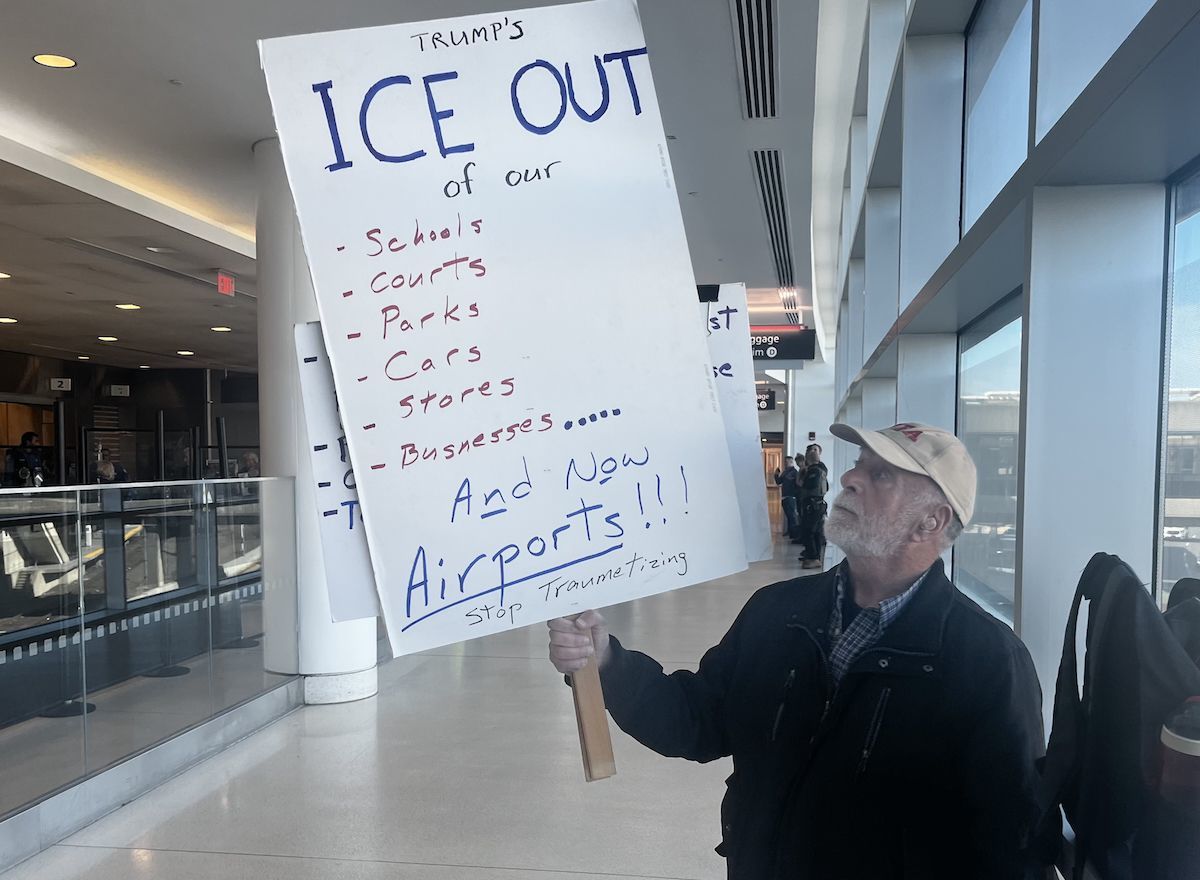
    Steve Papelian, 73, drove more than an hour from Nazareth, Pa. to the Philadelphia International Airport to protest the deployment of ICE agents to international airports across the U.S. on March 24. The former school teacher believes that ICE should target criminal activity, not “moms and pops with kids,” he said.Henry Savage / Staff

    Sam Scavuzzo, chief of staff for the city law department, said in a statement that “federal law enforcement access to particular areas of the airport is governed by federal law.”

    A spokesperson for the Department of Homeland Security said airport arrests are occurring because the Trump administration “reversed the horrendous Biden-era policy that allowed aliens in our country illegally to jet around our country.”

    “Under President Trump, DHS will no longer tolerate this. This administration is working diligently to ensure that aliens in our country illegally can no longer fly unless it is out of our country to self-deport.”

    The department said “being in detention is a choice,” and the federal government is offering people who are here without permission a $2,600 payment and a free flight home.

    Self-deportation can preserve the right to later come back to the U.S., absent the penalties that accompany a government deportation.

    DHS said people who do not leave voluntarily “will be arrested and deported without a chance to return.”

    On July 11, what started out as a fun soccer trip for a South Philadelphia babysitter ended with her being arrested and ultimately moved across the country to an ICE detention center in New Mexico.

    Steven Melchiorre, 35, a health worker, said that at 7 a.m. that day he dropped off his girlfriend, Iliana Lick, 30, to fly to Kansas City. Originally from Buenos Aires, she planned to see the Argentina national team play in the World Cup.

    On July 11, what started out as a fun soccer trip for a Philadelphia babysitter ended with her being arrested and ultimately moved across the country to an ICE detention center in New Mexico. Iliana Lick legally entered the U.S. in 2023, though her visa later expired. She cares for the children of two South Philadelphia families.Courtesy of Steven Melchiorre

    She texted Melchiorre from inside the airport to say the line was short, then did not answer his reply.

    After a while, he said, Lick phoned, crying, to say she had been arrested by ICE. She was moved from Philadelphia to the Cambria County prison, which holds prisoners for the agency in south-central Pennsylvania, and in the following days was transferred to ICE facilities in Louisiana, Texas, and New Mexico.

    Late Friday afternoon, an immigration judge in New Mexico set bond for Lick at $10,000, according to her boyfriend. He immediately began working to post that bond and bring her home. It was not clear how quickly Lick might be released.

    DHS said Lick was arrested during a targeted operation, having overstayed her visa.

    The department noted that work authorization or a pending application for immigration relief, both of which Lick has, do not confer legal status to be in the United States.

    ICE began to deploy agents at U.S. airports in March, and the move was announced as a way to assist at checkpoint lines during a partial government shutdown.

    The deployment quickly proved controversial, as travelers and labor unions objected, saying the agents were intimidating and lacked aviation training.
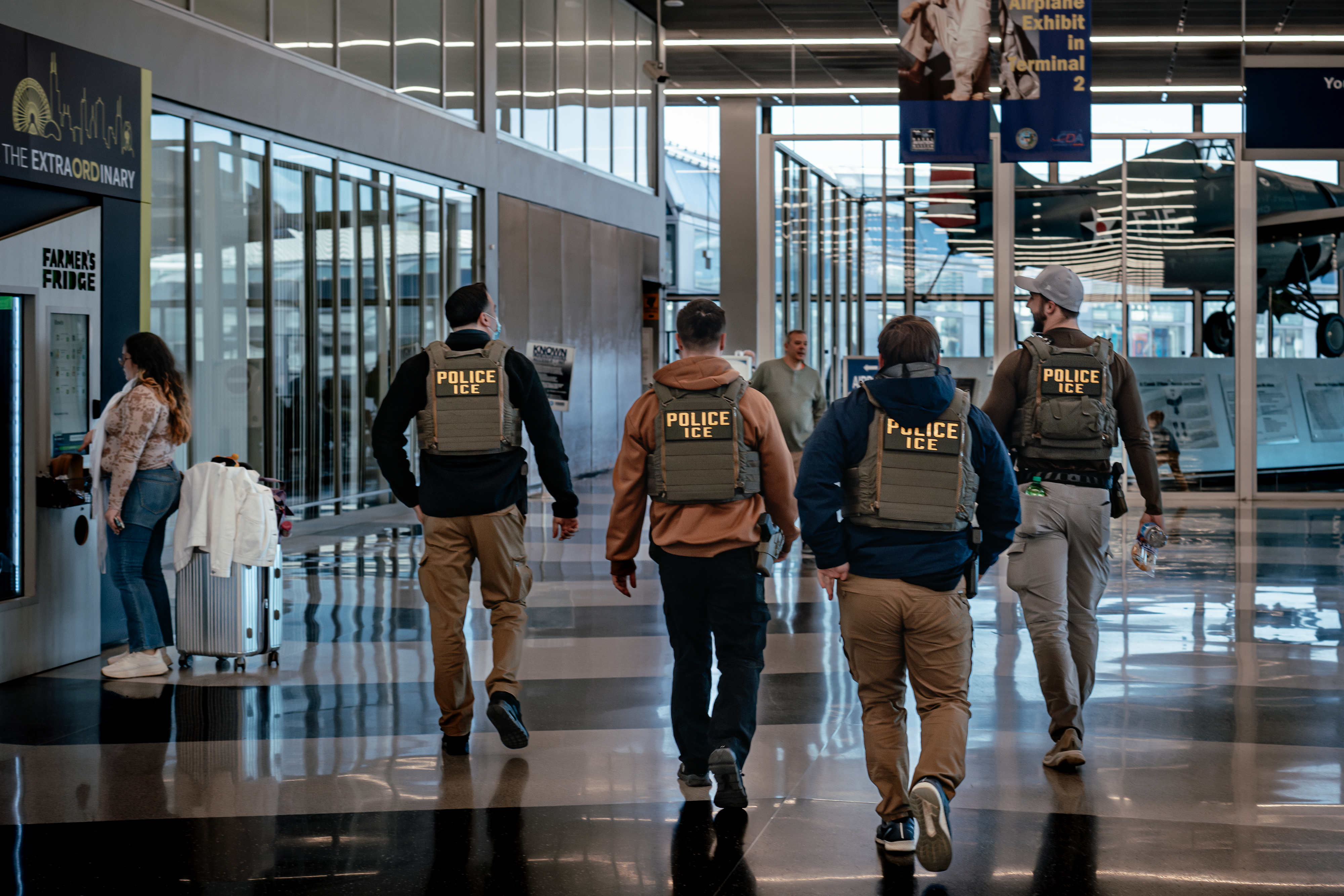
    A group of federal immigration officers walk through O’Hare International Airport in Chicago on March 23, 2026. From large cities like Chicago and Las Vegas to small suburbs outside Milwaukee and San Antonio, immigrants have been picked up and detained at courthouses, ICE check-ins and traffic stops, with daily arrests doubling in the last week of June and continuing to climb.JAMIE KELTER DAVIS

    Airports rank among the most sensitive public spaces in the country, traversed by millions of people, including U.S. citizens, noncitizens, and mixed-status families, California immigration lawyer Andrew Neitor wrote for the American Immigration Lawyers Association, a legal group.

    The introduction of ICE agents, he said, blurs critical lines between airport security and immigration enforcement, around what authority is being exercised and by whom, and over the legal protections due to people who may be arrested.

    “ICE was not intended to be omnipresent in daily civic life,” Neitor said. “Yet its footprint has expanded from courthouses to neighborhoods, workplaces, and even parking lots, shifting from targeted enforcement to visible, normalized presence.”

    Last year, the Transportation Security Administration and ICE signed a memorandum of agreement that outlined how ICE would share information with TSA to identify people in whom ICE was interested, according to the memo, obtained through the Freedom of Information Act by the watchdog group American Oversight. The agreement said sharing the data would enhance national security, transportation safety, and immigration management.

    On Tuesday, U.S. Rep. Rashida Tlaib of Michigan introduced a bill, the No TSA Data for ICE Act, that would bar the agencies from coordinating to conduct what her office called “a dramatic violation of privacy rights.”

    The bill would ban TSA from sharing passenger names, birth dates, and other data that enable ICE to target immigrants who are in the process of changing status, including those awaiting visa extensions or who recently married U.S. citizens.

    “TSA is readily offering up our immigrant residents to suffer at the hands of ICE agents so they can fulfill their daily arrest quota,” Tlaib said in a statement. “Immigrants should be able to safely fly in this country without the fear of arrest or deportation.”

    Today ICE is making record numbers of arrests across the country, not only at airports but also at places that were once considered off-limits, including routine immigration check-ins.
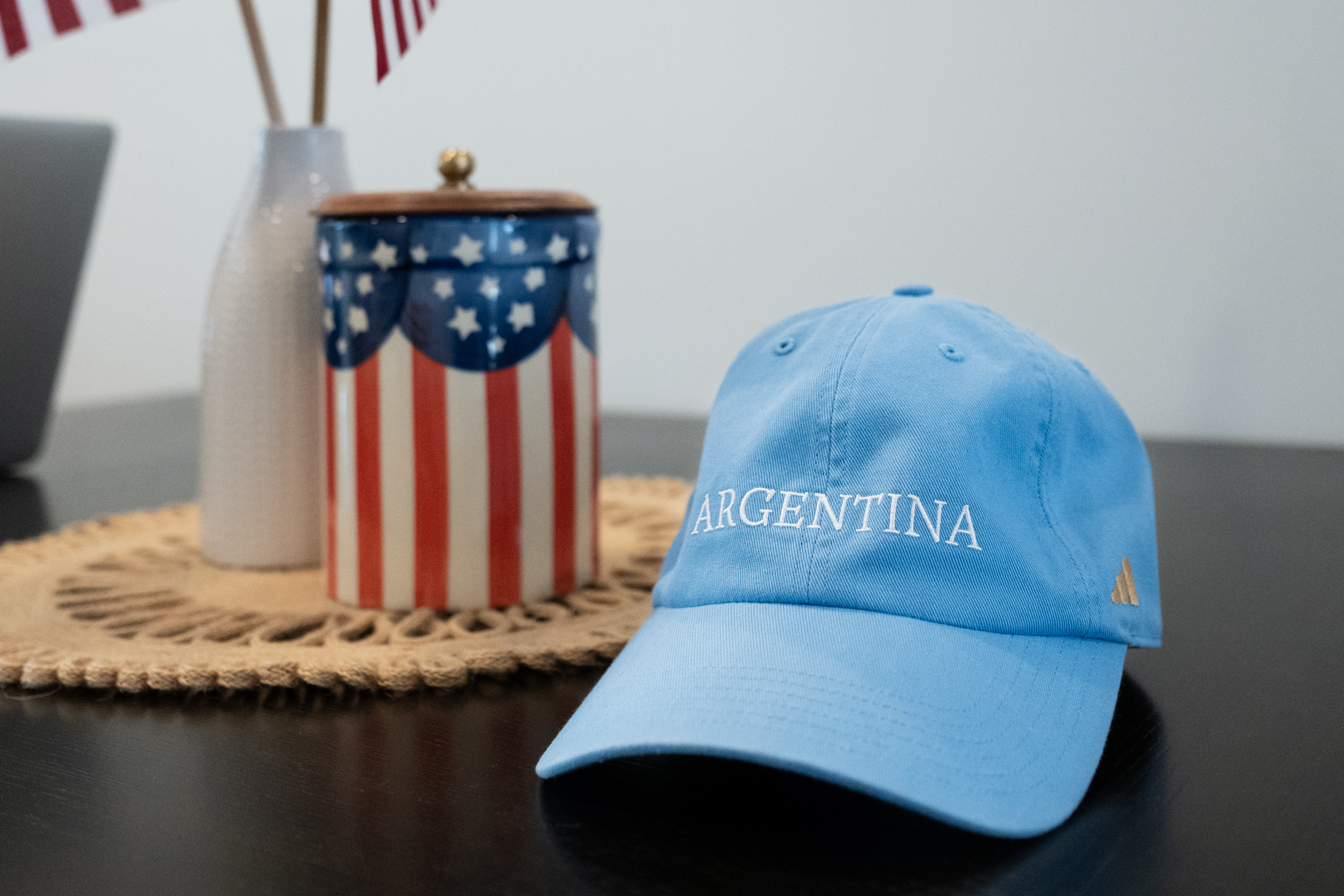
    A hat belonging to Iliana Lick sits on a table in the home she shares with her partner, Steven Melchiorre, in the Point Breeze neighborhood of Philadelphia on Tuesday, Aug. 4. Lick has remained in ICE custody since her detention at Philadelphia International Airport on July 11, 2026.Erin Blewett / For The Inquirer

    In June in Philadelphia, a 36-year-old survivor of slavery who had fled Mauritania, a mostly desert land in West Africa, filed suit in federal court over the issue. He accused ICE of having unlawfully rescinded a policy that generally allowed immigrants to pursue their cases without fear of arrest.

    Nationally, the rate of ICE arrests topped 1,300 a day in June, and grew again to a record 1,474 a day during the first 11 days of July, Syracuse University professor and immigration-data analyst Austin Kocher reported.

    Some of those being arrested at airports had legally entered the United States, then stayed after their visas expired. That includes some, like Lick, who were seeking to legally change their immigration status while in the U.S.

    Lick, now of Point Breeze, legally entered the country in 2023. She held and extended a visa, and holds work authorization and a REAL ID driver’s license, her boyfriend said. She was trying to adjust her status before her visa expired and continued to do so afterward, Melchiorre said.

    Lick works taking care of three children for two South Philadelphia families.

    Britni Zahodnick and her husband, Zane Schultz, have employed Lick as a babysitter for their two young children, ages 4 and 1, for more than a year. They described her as soft-spoken, kind, attentive, funny, thoughtful, and a good listener.

    “She was very quickly thought of as family,” Schultz said.

    Trust does not come easily for any parent preparing to place their children in another’s hands, but Lick won theirs, the couple said.

    “All the things you would look for in a caretaker for your kids,” Zahodnick said.

    Illiana Lick with partner Steven Melchiorre in New York City. On July 11, what started out as a fun soccer trip for a Philadelphia babysitter ended with her being arrested and ultimately moved across the country to an ICE detention center in New Mexico. Iliana Lick legally entered the U.S. in 2023, though her visa later expired. She cares for the children of two South Philadelphia families.Courtesy of Steven Melchiorre

    Melchiorre acknowledged that ICE had legal authority to detain Lick. He said people should follow immigration laws — but the couple thought Lick was doing so. They did not know domestic flights were in question, having flown in the past without incident.

    Melchiorre has started a support group on Facebook and a GoFundMe page that has so far raised nearly $17,000. All funds will be used for Lick’s immigration case.

    Melchiorre said he was surprised and frustrated by her arrest, “because Iliana has not committed any crime, hasn’t missed any fees, hasn’t missed any court dates. She wasn’t trying to dodge immigration. Being detained, it’s similar to how criminals are treated.”
  • ICE will release body camera video only when seen in the agency’s ‘best interests,’ policy says

    ICE will release body camera video only when seen in the agency’s ‘best interests,’ policy says

    Immigration and Customs Enforcement is moving to equip officers with body cameras in the next two months but the agency’s policy gives it broad control over what footage will be made public by specifying any releases must be in its “best interests.”

    After years of delays, ICE said its field officers nationwide will have body-worn cameras by the end of September. The rollout comes after recent fatal shootings by officers enforcing President Donald Trump’s immigration crackdown have intensified pressure for accountability that the cameras could provide.

    But the agency’s body-worn camera policy could mean taxpayers who are pitching in tens of millions of dollars to pay for the cameras may be kept in the dark about some high-profile confrontations, at least in their immediate aftermath.

    The policy says ICE will promptly release video of shootings and other encounters in which its agents cause death or serious injury only after determining “it is in the best interests of the agency” to do so. That gives its director discretion to release recordings that reflect well on the agency’s image while working to keep others secret, experts on body camera policies said.

    Such selective releases are routine in some law enforcement agencies but usually not so clearly contemplated in policy, according to professor Christopher Schneider of Brandon University in Canada, a co-author of the new book Police Body-Worn Cameras: Media and the New Discourse of Police Reform.

    “In some ways, ICE is saying the quiet part out loud,” he said. “Body-worn cameras are being used as contemporary image-work tools to present the police to the public in the most favorable way possible.”

    Body camera policy allows withholding some video

    The policy requires officers to activate cameras during routine enforcement activities, including while making arrests, executing search warrants and responding to emergencies.

    After shootings or other serious confrontations, a committee that includes top ICE officials and lawyers will review footage and recommend whether to release it promptly, according to the body camera policy issued in February 2025.

    If the answer is yes, the recording could be released within 72 hours. But if the ICE director finds that “specific and compelling circumstances” justify withholding the video, they have the authority to block or indefinitely delay the release, the policy says.

    The policy does not elaborate on such circumstances, and ICE did not respond to a question from the Associated Press about how it would make such decisions.

    Practices vary widely in the U.S. In Chicago, a police watchdog agency routinely releases body camera video of shootings and other serious use-of-force incidents within 60 days. In Philadelphia, the police department very rarely uses its discretion to release video of specific incidents and has no policy for when to do so.

    Even when footage is released, ICE’s policy will require the redaction of all officers’ identifying features such as their faces, names, and badge numbers to preserve their privacy.

    Schneider, who has studied body cameras since their use began spreading a decade ago, said he does not expect ICE to release footage of fatal shootings like those last month in Houston and Maine.

    He noted ICE’s sister agency, Customs and Border Protection, has not released footage of the January shooting of Alex Pretti in Minneapolis even though it was captured on agents’ cameras. CBP Commissioner Rodney Scott told lawmakers in February that the video and other materials were under investigation and would be made public “when it’s appropriate.”

    ICE says all officers will have cameras by end of September

    ICE spent $30.9 million in July to purchase body camera equipment from Axon, the Arizona-based company that also manufactures Tasers, federal spending records show.

    The spending began one day after the fatal shooting of a 25-year-old motorist in Maine by an ICE officer with a history of violent behavior. Days earlier, another ICE officer shot and killed a homebuilder in Houston who was driving to work.

    Neither shooting was recorded with body cameras. That news angered members of Congress, who had given ICE $20 million to purchase body cameras in a bill passed to end a partial government shutdown on April 30.

    ICE said body cameras have been sent to more than half its field officers and the rest will receive them by the end of September. That timeline pushes back estimates from earlier public statements. Maine Republican Sen. Susan Collins, who backed funding for cameras, said last month that the agency informed her they would be deployed by the end of August. ICE had said earlier that they would be issued by mid-September.

    ICE officers working in the Houston area, where the agency sent more than 800 cameras, are among those who have started training, according to U.S. Rep. Henry Cuellar, a Texas Democrat and member of the House Appropriations Committee.

    At least one member of every arrest team will be required to have a camera, the agency said.

    “I think the American people need to see what that officer sees and hears,” White House border czar Tom Homan said July 19 on CBS News’ Face the Nation. “And if you look at the data, body cameras actually exonerate agents more than they, you know, provide evidence of wrongdoing.”

    Schneider said he expects ICE to release recordings that promote the agency’s mass deportation program by portraying officers as brave and immigrants as dangerous criminals.

    “Much of what law enforcement does is convince the public that we need them and feel safe and they do all this good stuff for us,” he said. “The more bad stuff the public sees, the more angry the public gets. And this causes problems for the police brand.”

    ICE has taken years to adopt body cameras

    ICE began testing body cameras in 2021 during President Joe Biden’s administration and distributed 1,400 devices three years later, saying use would expand as funding became available.

    After returning to office in 2025, President Donald Trump rescinded a Biden order that required federal law enforcement agencies to use body cameras.

    ICE did not buy body cameras even after it received a historic $75 billion infusion in Trump’s signature policy bill in 2025 and began hiring thousands of new officers. The two July purchases from Axon were made through an existing government contract that began in 2023, records show.

    “This is not hard to deploy, but they’ve slow-rolled it,” said Jason Houser, who was ICE chief of staff under Biden and helped implement the agency’s pilot program.

    Houser said the Trump administration should have equipped officers with body cameras when it expanded mass arrests and traffic stops. Doing so only after several shootings and pressure from Congress “is clearly a political response” that will not make officers or the public safer, he said.

    “This doesn’t fix the problem of putting officers in a place where they’re not trained or equipped to carry out the style of operations that the administration is asking them to do,” he said.

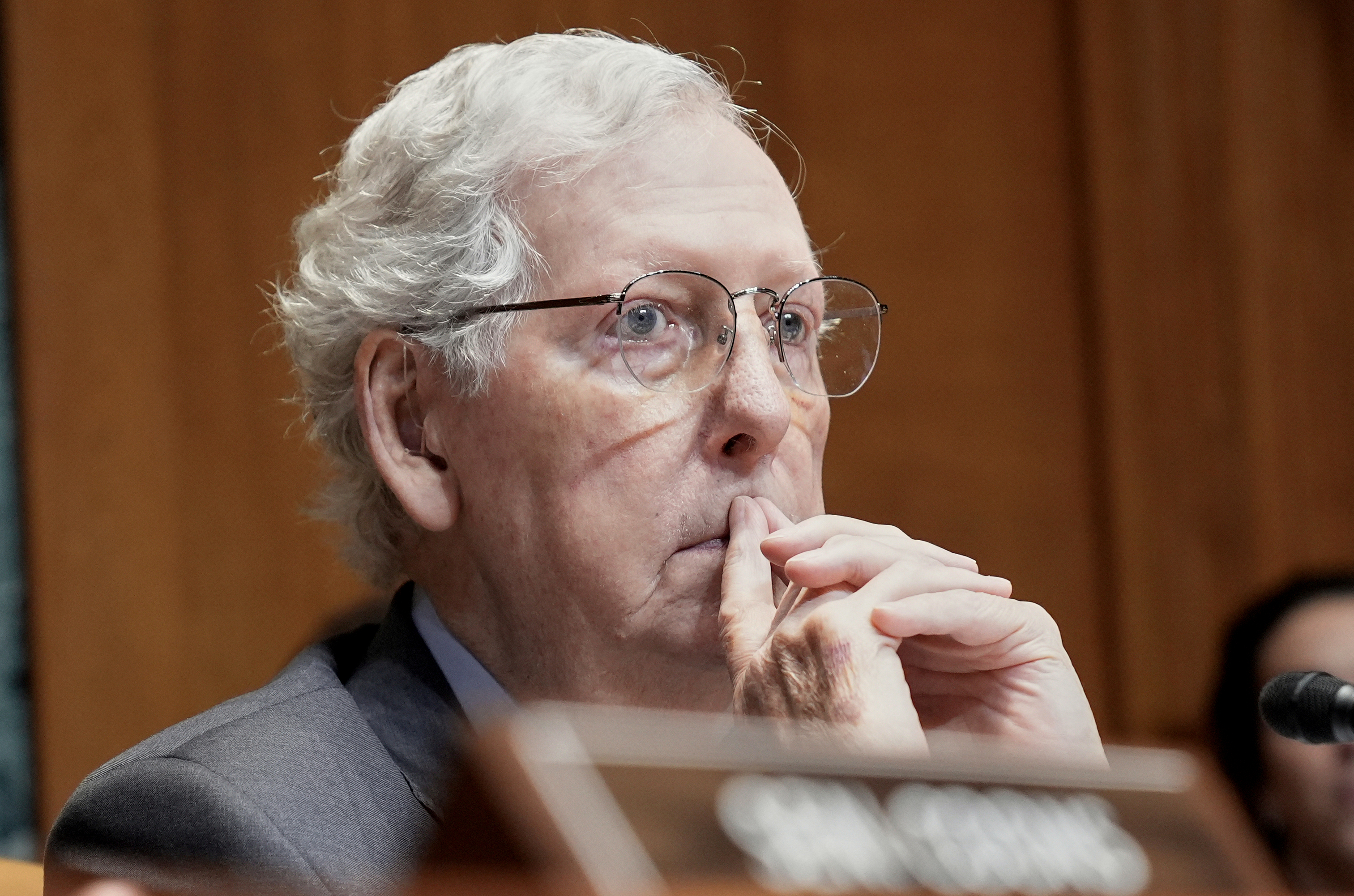
  • McConnell says he’s leaving rehabilitation center to continue recovery at home

    McConnell says he’s leaving rehabilitation center to continue recovery at home

    WASHINGTON — Republican Sen. Mitch McConnell of Kentucky says he’s been discharged from a rehabilitation center and will continue his recovery from home.

    The former Senate leader was first admitted to the hospital on June 14. He disclosed weeks later that his hospitalization was the result of a fall and said he was undergoing physical therapy.

    McConnell, 84, gave no specific date for his return to the Capitol, but senators are expected to soon leave Washington for the traditional August recess. Votes are unlikely for the next five weeks once they adjourn.

    “On the advice of my doctors, I’ll maintain an intensive regimen of physical therapy from home during the state work period, and I’ll continue to engage with my staff and colleagues on important Senate business,” McConnell said in a statement released by his office.

    McConnell had polio in his early childhood and has long acknowledged some difficulty walking and climbing stairs as an adult. The Office of the Attending Physician has said McConnell was undergoing a strenuous course of physical therapy and rehabilitation since he left the hospital, which includes multiple sessions a day designed to rebuild strength and reduce the risk of future falls.

    The senator is determined to finish out his seventh term, which concludes in January.

    McConnell’s absence is being felt in the Senate as Republicans were unable to advance a farm bill out of committee Thursday. The committee’s chairman, Sen. John Boozman of Arkansas, said he spoke with McConnell this week about the bill.

    “I know how much he would have wanted to be here to advocate for Kentucky’s farmers and rural communities,” Boozman said in kicking off the committee’s meeting Thursday.

    But there has also been criticism that McConnell has not been transparent enough about his health. The state’s Democratic governor, Andy Beshear, recently called on the senator to either prove that he is fit to continue serving after his lengthy hospital stay or resign from office.

  • Trump signs 2 immigration actions to limit birthright citizenship

    Trump signs 2 immigration actions to limit birthright citizenship

    WASHINGTON — President Donald Trump said Thursday that he is once more trying to limit the number of people who are born in the country who can become American citizens, in a sign that even after his first attempt at limiting birthright citizenship was rejected by the Supreme Court, he’s ready to try again.

    The president said he was signing two executive actions on immigration.

    He said one will limit the number of people eligible for U.S. citizenship after being born in the United States.

    A second order seeks to curb what Trump called “birth tourism” by increasing restrictions on visitors to the U.S. who want to obtain visas to give birth while in the country.

    Additional details weren’t provided, but Trump said he thought his latest actions would be constitutional.

    In June, the Supreme Court rejected Trump’s previous efforts to declare that children born to people in the U.S. illegally or temporarily aren’t American citizens, and upheld a broad conception of birthright citizenship.

    On Trump’s first day in office of his second term, he signed an executive order aimed at ending birthright citizenship, which allows anyone born in the United States to automatically become an American citizen.

    Trump’s administration was immediately sued by opponents who said the executive order went against the 14th Amendment, adopted after the Civil War, which makes anyone born in the country a citizen, with very limited exceptions.

    The executive order was blocked by several lower courts and never took effect.

    In June, the Supreme Court struck down Trump’s order by a 6-3 vote. But the vote was too close for many immigration advocates and legal observers who felt the legal question of birthright citizenship was a long-settled issue.

  • Ukraine strikes more oil facilities deep inside Russia, Zelensky says

    Ukraine strikes more oil facilities deep inside Russia, Zelensky says

    KYIV, Ukraine — Ukraine hit more oil facilities deep inside Russia in overnight attacks, President Volodymyr Zelensky said Thursday, as Kyiv kept up its campaign to undermine Moscow’s wartime economy and embarrass the Kremlin.

    The repeated strikes have caused fuel shortages and rattled Russians. Ukrainians, meanwhile, are enduring regular barrages that Kyiv’s depleted air defenses are struggling to counter amid Moscow’s 4-year-old full-scale invasion.

    The Kyiv region observed an official day of mourning Thursday after a Russian missile and drone blitz killed 17 people the previous day, prompting an increasingly urgent scramble by Ukraine and its allies to find new air defense supplies.

    In the first six months of this year, 1,396 civilians were killed and 7,978 injured in Ukraine, the United Nations office in Kyiv said Wednesday. That was a 37% increase from the same period last year and a 114% jump over 2024, it said, attributing the rise to more long-range aerial attacks by Russia.

    Zelensky said he met with senior officials on how to accelerate the development of Ukraine’s own ballistic weaponry, similar to its swift wartime innovation in drone technology.

    “Developing one’s own ballistic capabilities and creating a new anti-ballistic system is a task that only a tiny minority of countries worldwide have managed to accomplish,” he said in a social media post. “Ukraine has this capability.”

    Zelensky said he expects the program to produce results this year and next after it overcomes “key challenges,” including procuring critical components, technological cooperation with partner countries, and choosing where to build the armaments.

    Ukraine says it hit Russian refineries and vessels at sea

    Ukrainian forces hit a refinery in Russia’s Bashkortostan region, more than 800 miles from the front line, as well as a refinery in the Yaroslavl region, almost 400 miles from the border, Zelensky said on social media.

    Yaroslavl Gov. Mikhail Yevrayev confirmed an attack on a refinery, saying in a Telegram post that drone debris hit the facility’s oil reservoirs, sparking a fire. Three private houses also caught fire, and several residential buildings were damaged, he added.

    Ukrainian forces hit two Russian military patrol boats in the Black Sea, Zelensky said, along with vessels belonging to Moscow’s so-called shadow fleet, which Russia uses to evade Western restrictions on its oil exports. He did not give any details.

    The Russian Defense Ministry said its air defenses overnight shot down 605 Ukrainian drones over its territory.

    Ukraine seeks more interceptor missiles to bolster air defenses

    Drone and glide bomb attacks across Ukraine overnight killed at least three civilians and wounded 22 others, authorities said Thursday, as countries helping Kyiv resist the invasion scrambled to find more vital air defenses for its fight.

    Moscow’s forces have in recent weeks pummeled Ukraine with ballistic missiles that Kyiv officials say only the U.S.-made Patriot air defense system can stop. But the Iran war has drained stocks of Patriot interceptor missiles, leaving Ukraine at the mercy of Russian bombardments that seek to exploit the weakened air defenses.

    “We are working as hard as possible with all partners who can assist with the supply of interceptor missiles to protect against such insane Russian strikes targeting life, people, and civilian facilities,” Zelensky said on social media late Wednesday.

    He said he had spoken to NATO chief Mark Rutte and Finnish President Alexander Stubb about urgently procuring interceptors from stockpiles. Zelensky said he and Rutte “coordinated our efforts regarding countries that have the necessary missiles and the capacity to help.”

    Rutte said on X that he was discussing with allies “how we can continue to get Ukraine the air defenses they urgently need.”

    Russian glide bombs wound 12 in Sumy region

    Russia appears determined to exhaust Ukraine through sheer weight of numbers in terms of soldiers, armor and weapons. Russian President Vladimir Putin believes time is on his side, that Western support will fade and that Ukraine’s resistance will eventually collapse under pressure, Western analysts and officials say.

    Ukraine’s air force said Russia fired four missiles and 101 long-range strike drones overnight, with air defenses shooting down or jamming 66 drones.

    Three people were killed in Balakliia in the Kharkiv region of northeastern Ukraine, said Vitalii Karabanov, head of the city’s military administration.

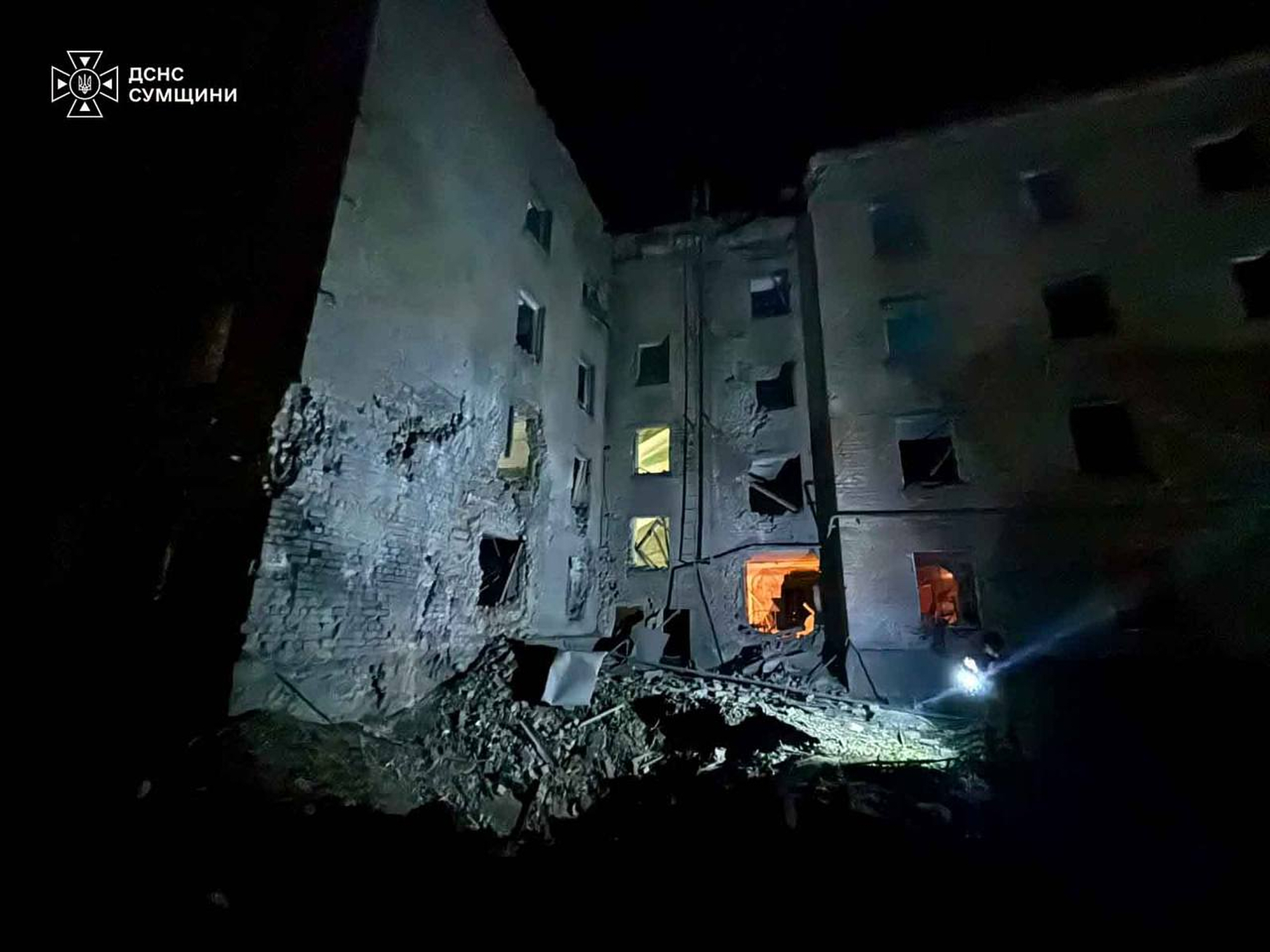
    In the neighboring Sumy region, Russian glide bombs wounded 12 people, the National Police said. Apartment buildings and infrastructure were damaged, with hundreds of windows shattered, said regional military administration chief Oleh Hryhorov.

    In the Kherson region of southern Ukraine, a Russian drone struck a bus carrying farmworkers, injuring six people, regional authorities said.

    A Russian drone also struck a residential area in the southeastern city of Zaporizhzhia, injuring four, said regional administration head Ivan Fedorov.

    UN chief condemns escalating attacks

    U.N. Secretary-General Antonio Guterres condemned both sides for their attacks, his spokesman said.

    “These latest series of attacks follow an alarming pattern of escalating strikes against populated areas, reportedly resulting in a record-level increase in numbers of civilian casualties and widespread destruction of residential and civilian infrastructure in Ukraine, as well as increasingly in the Russian Federation,” said Farhan Haq, Guterres’ deputy spokesman.

    The U.N. chief also called for freedom of navigation in the Black and Azov seas, expressing concern at the risks to shipping, the spokesman said.

  • U.S. suspends avocado inspections in Mexican state of Michoacan due to threat

    U.S. suspends avocado inspections in Mexican state of Michoacan due to threat

    MEXICO CITY — The United States announced Wednesday that it had suspended all government operations in the Mexican state of Michoacan because of a “threat to U.S. interests,” including a halt to the inspections of avocados required for their export.

    While the U.S. Embassy did not specify the nature of the threat in its security alert, Michoacan Gov. Alfredo Ramírez Bedolla said on social media that the temporary halt to inspections was intended to safeguard workers following recent arrests linked to extortion. The inspections are necessary for avocados to be shipped to the United States and their suspension could disrupt exports.

    The western state of Michoacan is the leading exporter of avocados to the U.S. and has a high level of organized crime activity with at least four cartels — designated as terrorist organizations by the Trump administration — operating in the region. Besides trafficking drugs, cartels also make money through extortion, including of the avocado industry.

    Michoacan State Security Secretary Antonio Cruz told The Associated Press that one of the arrests mentioned by the governor was of “El Poncho,” the alias of Alfonso Fernández Magallón, leader of a local cartel operating in the avocado-growing region around Los Reyes.

    U.S. Ambassador to Mexico Ronald Johnson welcomed the arrest, which came over the weekend. The U.S. government had offered a $5 million reward for Fernández Magallón’s arrest.

    Cruz said his department was unaware of any direct incidents involving the avocado inspectors. Nevertheless, 300 security personnel were deployed to the Los Reyes area as a preventive measure.

    The governor said the priority was to “ensure the security conditions necessary for these operations to resume normally,” as has happened in the past.

    Mexico supplies approximately 80% of U.S. avocado imports — a product known in the region as “green gold.” Its cultivation generates around 200,000 jobs in Michoacán alone.

    In 2025, Mexico sold $3.65 billion worth of avocados to the United States, and in the first four months of this year, those exports rose by 35% compared to the same period in the previous year.

    The U.S. Department of Agriculture sends inspectors in Mexico to monitor plantations and packing houses to ensure that exported produce is free of pests. Threats and violence against the inspectors have caused the U.S. to suspend inspections in the past.

  • How extreme heat is changing Americans’ lives, according to a new AP-NORC poll

    How extreme heat is changing Americans’ lives, according to a new AP-NORC poll

    Elisa Bracamonte has lived in Arizona her whole life, so she’s used to adjusting her schedule and outdoor activities around high temperatures, especially during the summer months.

    But the 74-year-old retired nurse from Tucson said she feels the heat has been impacting more of her day-to-day: summer plans with family members across the region, meetups with friends, road trips and her daily morning walk routine.

    “I’ve noticed at least a 10 degree difference in the weather,” Bracamonte said. “Every summer, it seems to be getting hotter and hotter.”

    Like Bracamonte, Americans are increasingly feeling a personal impact from extreme heat, according to a new poll from The Associated Press-NORC Center for Public Affairs Research.

    According to the survey, U.S. adults are more likely to say extreme heat has had either a “major impact” or “minor impact” on their travel or vacation plans, electricity bills, their sleep, their family’s outdoor activities and more parts of their day-to-day life than in July 2024.

    Much of that shift was among people who live in the West or Midwest.

    Democrats are also more likely than Republicans to say that extreme heat has had a “major” impact on each item asked about.

    Warming has endangered the globe especially in recent years; scientists calculated that Earth’s average temperature in 2025 hovered among one of the three hottest on record, along with 2024 and 2023. The U.S. has sweltered under dangerous heat domes over the past few years, and unusually high temperatures even early in the year.

    The recent scorching weather has played a role in thousands of heat-related deaths — killing more people every year than all other weather-related events. It impacts wildfire risk, strains public infrastructure, devastates agriculture and wreaks havoc on gatherings such as sporting events.

    Now, the poll shows how extreme heat is reshaping Americans’ daily lives.

    “I have to get up at 5 in the morning to walk before 6, because by 7 it’s already in the 80s … I lose a couple hours of sleep because I’m having to wake up earlier,” added Bracamonte, who said she identifies as a very liberal Democrat. “You can’t stay outside without being sick unless you’re guzzling water the whole time — it’s just so, so hot.”

    Electricity bills going up

    About 8 in 10 Americans say their electricity bills have seen a “major” or “minor” impact from extreme heat over the last year, compared with 69% in July 2024, according to the survey.

    Just under half of Americans living in the Midwest, 44%, say extreme heat has had a “major” impact on their electricity bills, up from 29% two years ago.

    Rising household electricity prices have turned into an increasingly prominent political issue over the past few years. Extreme weather is just one factor that affects electricity bills, but it means that people are using more energy for air conditioning — or in the colder months, heat.

    “I feel like my utility costs probably doubled in the last three or four years,” said Daemien Williams, a 50-year-old bridge inspector living in Cahokia Heights, Illinois, who identifies as a Democrat. “I do look at my bills pretty in detail and see that the kilowatts and the usage is actually up, not just the price that they’re charging for it.”

    Travel and vacation plans impacted, along with family outdoor activities

    Extreme heat is affecting Americans’ lives in other ways, the survey found.

    Around 4 in 10 Americans say extreme heat has had either a major impact or a minor impact on their travel or vacation plans, up from about one-quarter in 2024.

    “It has affected my entire family because we usually get together a lot during the summer,” Bracamonte said. ”We have family in Texas and we have family in upper Arizona. And we’ve seen that there’s been a lot more fires, a lot of more flooding, all that. So that kind of inhibits our plans to travel.”

    Extreme heat waves increase wildfire risk, and a warmer world supercharges storms that could ultimately send more rainfall.

    Around 7 in 10 Americans say extreme heat has had either a major impact or a minor impact on their family’s outdoor activities, compared with about 6 in 10 in 2024.

    Sean Conway, a 41-year-old direct marketer in North Shore, Massachusetts, said his kids’ soccer practice might either be postponed or canceled due to extreme temperatures, for example.

    But to Conway, who considers himself a moderate independent, leaning Republican, this is minor. “Sometimes, you’ve got to just be out in the bad weather.”

    It’s not surprising many Americans say they are feeling the impacts, said Jennifer Francis, a climate scientist at the Woodwell Climate Research Center who was not involved with the polling.

    “Brutal, life-threatening heat waves have become more frequent, more intense, and more persistent in many parts of the globe, including our Western and Midwestern states,” Francis said. ”Extreme heat compounded with long dry spells have affected our health directly, along with indirect effects on our wallets.”

    Climate change belief remains largely stable

    Even as more Americans say they feel a personal impact from extreme heat, that does not mean an increasing number believe in climate change.

    About two-thirds, 66%, of Americans believe climate change is happening, a slight decline from 73% in September 2025. About 17% say they are not sure if climate change is happening, and about 15% say it is not happening.

    Williams, the Illinois resident, attributes his belief in climate change in part to extreme shifts in weather including very high and very cold temperatures.

    “My biggest indicator of the change in the climate is just the flooding is a lot more often,” Williams said, noting that he believes in both natural and human causes.

    John Hazel, a 33-year-old in Waco, Texas, says he’s noticed changes from when he was younger.

    “When I was a kid, that seemed like a very rare thing when it did hit 100, everybody was like, whoa. And now it’s just every day,” said Hazel, a crime scene investigator. “Seasons felt a little more balanced. Now it feels like summer’s a bit lingering, it starts earlier and lasts longer.”

    Hazel, who identifies as a conservative Republican and believes in climate change, said he plans around the heat.

    “As soon as you walk outside, you’re already sweating even if you’re not doing much of anything. I’ve definitely noticed you’re having to take breaks from being outside, you have to bathe, shower more often,” Hazel said. “It’s definitely a bigger consideration.”

    ___

    The poll of 1,165 adults was conducted July 23-27, 2026, using a sample drawn from NORC’s probability-based AmeriSpeak Panel, which is designed to be representative of the U.S. population. The margin of sampling error for adults overall is plus or minus 3.7 percentage points.

    ___

    Alexa St. John is an Associated Press climate reporter. Follow her on X: @alexa_stjohn. Reach her at ast.john@ap.org.

    ___

    Read more of AP’s climate coverage.

    ___

    The Associated Press’ climate and environmental coverage receives financial support from multiple private foundations. AP is solely responsible for all content. Find AP’s standards for working with philanthropies, a list of supporters and funded coverage areas at AP.org.

  • Federal judge lets Utah enforce its anti-gambling laws on the prediction market Kalshi

    Federal judge lets Utah enforce its anti-gambling laws on the prediction market Kalshi

    SALT LAKE CITY — Utah can enforce its strict anti-gambling laws on prediction markets such as Kalshi and Polymarket, a federal judge ruled in a win for states seeking to rein in the popular betting platforms.

    Utah has been on the front lines of a battle between states and the federal government over who regulates the markets and whether they should be considered finance or gambling. The legal landscape is fragmented, with state and federal courts blocking restrictions in several states and allowing them in others.

    Kalshi sued Utah in February, asking a federal judge to prevent the state from enforcing its gambling restrictions on the platform. The lawsuit came as Utah was on the verge of enacting legislation intended to undercut prediction markets from doing business in the state.

    State law now bans proposition betting in sports — wagers on certain events happening in a game, rather than the game’s outcome — which is a significant source of revenue for the leading prediction markets.

    U.S. District Judge Robert Shelby rejected Kalshi’s request to block the Utah restrictions Tuesday, saying the federal law that Kalshi cited in its argument does not prevent the state from enforcing its laws.

    For now, Utah residents can still place bets on the platforms. The state’s attorney general, Derek Brown, said he will enforce state laws on Kalshi, but he was still exploring options.

    “Gambling is gambling, no matter what any company calls it,” Brown said.

    Kalshi said in a statement that it disagrees with the ruling and plans to appeal.

    The company maintains that prediction markets fall exclusively under federal jurisdiction and are not governed by a patchwork of state gambling laws. The Commodity Futures Trading Commission, the federal agency responsible for regulating financial markets, agrees and has defended prediction markets in court.

    Courts in Maryland, Nevada, Ohio, New York, and Wisconsin have ruled against Kalshi in similar lawsuits, while judges in New Jersey, Tennessee, Arizona and Minnesota have sided with the company. Other states have been allowed to restrict certain aspects of Kalshi’s operations without banning them entirely.

    The Trump Administration has been supportive of prediction markets, which allow anyone with a smartphone to wager on just about anything. The president’s eldest son is an adviser for both Kalshi and Polymarket, and an investor in the latter through his venture capital firm. Trump’s social media platform, Truth Social, is also launching its own cryptocurrency-based prediction market called Truth Predict.

    Utah leaders such as Gov. Spencer Cox have treated their fight to keep out anything they deem gambling as a moral crusade. The culture is rooted in the locally headquartered Church of Jesus Christ of Latter-day Saints, known widely as the Mormon church, which views gambling as a vice that leads to selfishness and addiction.

    Prediction markets are “causing tremendous harm to countless American families,” Cox said in celebrating the ruling.

  • Climate change created conditions for Canada fires, scientists say, as Trump blames mismanagement

    Climate change created conditions for Canada fires, scientists say, as Trump blames mismanagement

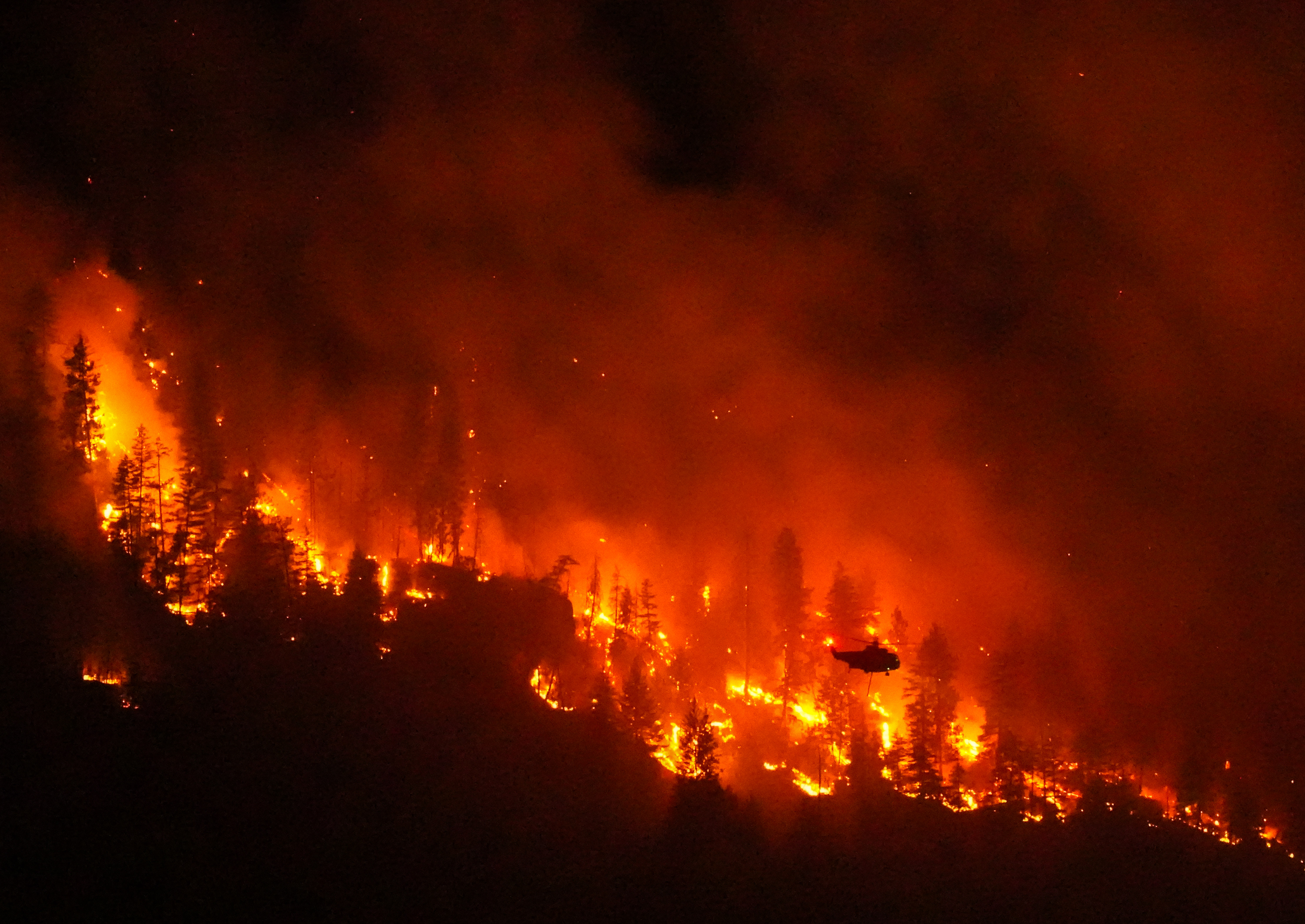
    Human-caused climate change doubled the likelihood of the tinderbox weather conditions that sparked Canada’s massive summer wildfires and in turn angered U.S. President Donald Trump, according to a study released Thursday.

    And fire and climate scientists said Trump, who has talked about punishing Canada for poor fire management and sending days of choking smoke across the border, should look more in the mirror than up north when it comes to blame. They point to the United States’ huge historical emissions of heat-trapping gases from the burning of coal, oil and gas.

    The fire weather conditions in the Northwest Territories and northwestern Ontario, while unusual but not that rare, were still made twice as likely by global warming, said Thursday’s study by World Weather Attribution, a group of international scientists who examine extreme weather conditions to see if there are climate change fingerprints. It’s about the same as the team found for summer fires in France, but not nearly as clear a climate fingerprint as they calculated in Spanish fires, which the scientists said were 20 times more likely because of climate change.

    The study, which was done so quickly it has not been peer reviewed yet, looked at the weather conditions that are connected to large wildfires and the Canadian index for those conditions, which are heat, lack of rain, humidity and wind. The researchers found the doubling of frequency when — using scientifically accepted techniques to search for climate fingerprints — they compared current conditions to a world without the 2.5 degrees of warming that’s occurred since the industrial age and burning of fossil fuels started. The weeklong weather conditions that led to the fires in Ontario are now the type that can happen every six years or so, the report said.

    “In a pre-industrial climate this would have been much less likely to occur, maybe once in a lifespan. So climate change has made those events more likely,” said study co-author Jonathan Boucher, a fire scientist at Canada’s Forest Service.

    Hotter, drier conditions connected to burning

    Outside climate and fire scientists said the flash study made sense and reflects a world where hotter and drier conditions are making fires burn more often and more intensely.

    “Mother Nature’s been burning. Now she’s on amphetamines and she burns more and more,” said Thompson Rivers University fire scientist Mike Flannigan, a Canadian expert who wasn’t part of the study.

    Hazardous smoke spread across both the United States and Canada, choking large cities such as New York.

    By burning more and more fossil fuels, “we’re putting nails in our coffins,” Flannigan said.

    In the larger and remote Northwest Territories fires, where more than 5,000 square miles burned, it’s clear the spark was from lightning but it was the climate conditions that took that initial ignition and made the fire burn intensely and spread too fast to control, said Boucher and report lead author Theodore Keeping, a climate scientist at Imperial College in London.

    While people start about half of Canada’s wildfires — accidentally or on purpose — fires sparked by lightning are responsible for more than 90% of the land area burned in Canada, Flannigan said.

    “What we’re facing here is more of a climate related problem than a forest management problem,” Boucher said.

    That’s not how Trump sees it.

    Trump blames mismanagement, but scientists point to carbon

    “A lot of damage has been done. They’re not managing their forests properly,” Trump said July 21. “And the wind has a tendency to blow right over New York City, right over, you saw Detroit, they had to close the whole place. Michigan was really affected. They had to close businesses for four days. It’s very serious what they’re doing, and they don’t seem to be able to do anything about it. If they managed their forests, they wouldn’t have the fires.”

    When asked Sunday about punishing Canada, Trump on Air Force One told reporters he has decided on a punishment, adding “you’ll find out about it soon.”

    Canadian climate and fire scientists said Trump doesn’t understand the root causes.

    “Smoke does not carry a passport, but carbon pollution does have a history. That history shows that the United States contributed more than any other country,” said University of Victoria climate scientist Andrew Weaver. “President Trump is pointing at the smoke while ignoring America’s fingerprints on the climate conditions behind it.”

    Study co-author Friederike Otto, an Imperial College London climate scientist, said, “if you care about anyone but the super rich, you have to stop burning fossil fuels because the impacts are here and they’re now and have huge consequences.”

    Canada has warmed 65% more than the United States in recent decades. In the past 30 years, the amount of land annually burned by Canadian wildfires has gone up by about 50% while the amount in the United States has more than doubled.

    A big problem that Trump doesn’t appear to understand is that much of Canada’s forests are remote, northerly and full of spruce and pine that burns hard and fast, all making it difficult to get a handle on, Boucher and Flannigan said.

    “In Canada, when things are extreme, you have about a 30-minute window to put that fire out,” Flannigan said. “If you don’t get there in 30 minutes, you’re out of luck. And many of the fires that start in Canada are northern remote areas that are more than 30 minutes away from an airport. So even with perfect detection systems, we would get there too late and these fires are going to burn.’’

    ___

    The Associated Press’ climate and environmental coverage receives financial support from multiple private foundations. AP is solely responsible for all content. Find AP’s standards for working with philanthropies, a list of supporters and funded coverage areas at AP.org.

  • Testing is underway on vaccines to intercept brewing colon cancer before it takes root

    Testing is underway on vaccines to intercept brewing colon cancer before it takes root

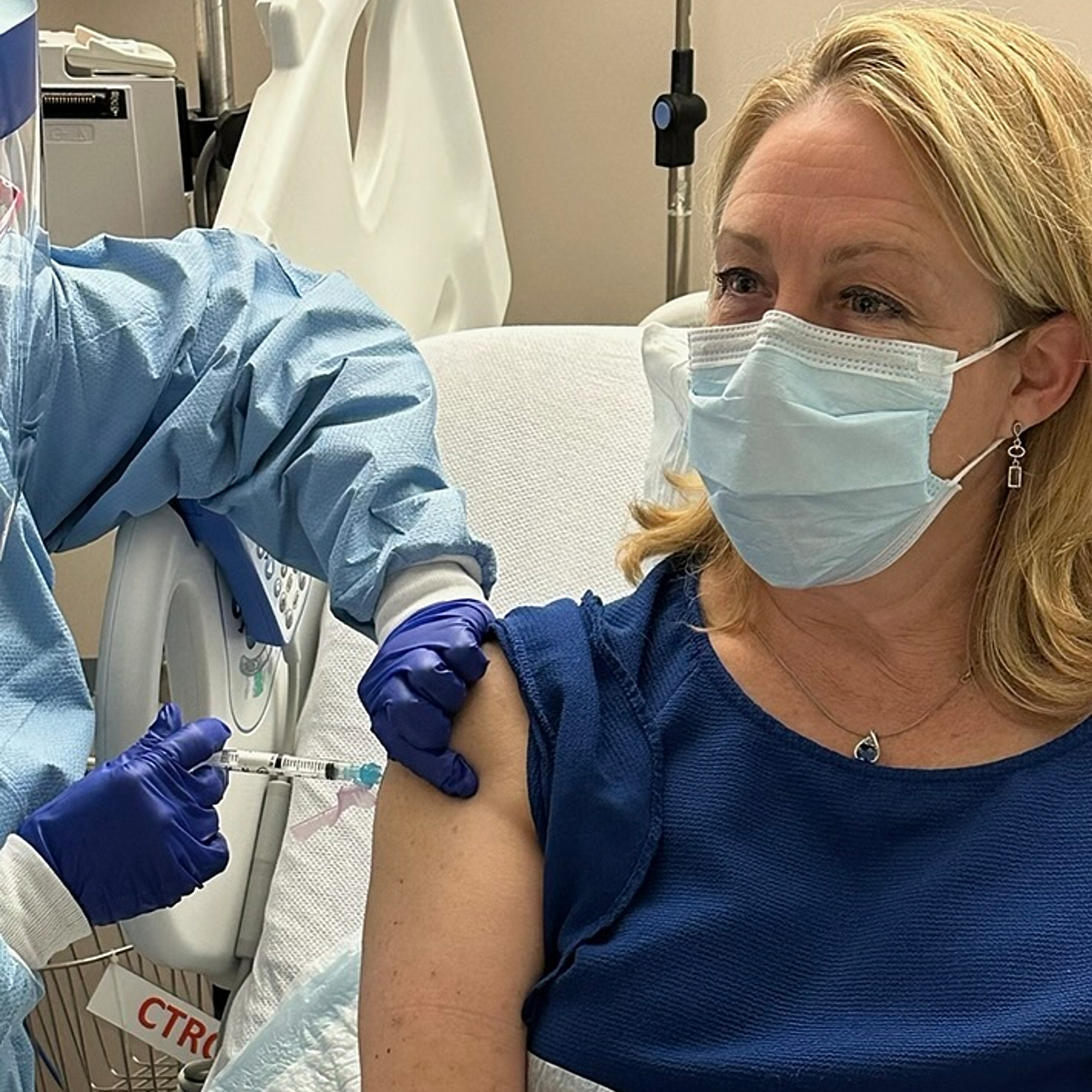
    Dr. Stacy Norton was only 7 years old when her mother died of colon cancer, one of several family members struck by aggressive tumors at unusually young ages. Decades later, Norton rolled up her sleeve to help test if a new kind of vaccine might protect her and her own children from cancer.

    The Houston doctor is among an estimated 1 million Americans who have Lynch syndrome, a faulty gene passed from a parent that puts them at extremely high risk of colorectal cancer and more vulnerable to certain other cancers, too. They’re often urged to get yearly colonoscopies — far more often than usual — that can spot and remove precancerous growths called polyps.

    Now scientists are creating vaccines that aim to go further, teaching the immune system to intercept this type of brewing colon cancer before it turns into a full-fledged tumor. At least three potential Lynch syndrome vaccines are in development, including two in early clinical trials in the U.S. and a third beginning in Britain.

    The shot that Norton helped test appears promising enough that its lead researcher, Dr. Eduardo Vilar-Sanchez of the MD Anderson Cancer Center, expects a larger study to begin early next year.

    “It gives me hope,” said Norton, 59, of Houston Methodist Willowbrook Hospital. She had already survived a different Lynch-caused cancer and has two children in their 20s who inherited her mutation. If a vaccine pans out, “perhaps they won’t have to have a colonoscopy every single year for the rest of their lives.”

    Lynch syndrome is caused by an inherited genetic mutation

    Everyone has what are called mismatch-repair genes, which are essentially spellcheckers to help fix DNA mistakes that can occur when our cells multiply. With Lynch syndrome, one of those genes can’t do its job properly, making it harder for the body to stop a buildup of abnormalities that can lead to tumors, often before age 50.

    Colorectal cancer is the most common consequence. The average person has a 5% risk of developing it during their lifetime. A Lynch carrier’s risk can reach as high as 80% depending on which faulty gene they inherit, Vilar-Sanchez said.

    Another big risk is endometrial, or uterine, cancer. Lynch carriers also are more likely to get other cancers including pancreatic, stomach, ovarian and certain skin cancers — and a kind of brain tumor that killed Norton’s sister at age 25.

    Norton knew some of her mother’s relatives had also experienced colon cancer, but she was in her 40s before a gene test confirmed she has Lynch syndrome. She switched from every-so-often to yearly colonoscopies. As an obstetrician/gynecologist familiar with other Lynch risks, Norton also decided to have a precautionary hysterectomy. Surgeons discovered early-stage cancer in her removed uterus.

    Possible vaccines to stop gene-caused cancer

    Today there are two cancer-preventing vaccines, the HPV and hepatitis B shots that block infection from those tumor-causing viruses. But developing vaccines to prevent gene-caused cancer is more challenging than alerting the body to foreign intruders like a virus.

    Lynch-fueled growths “tend to accumulate hundreds of mutations that are going to generate proteins that are novel, not made by our normal cells,” Vilar-Sanchez said. “You can train the immune system to recognize those proteins.”

    In a first-step study, Norton and 44 other Lynch carriers tested a vaccine made by Swiss biotech Nouscom that teaches the immune system to spot 209 of those abnormalities in Lynch-caused precancers. That revved up tumor-eliminating T cells and a year later, colonoscopies showed fewer precancerous growths and no advanced polyps, the MD Anderson team reported in Nature Medicine.

    “Can we even further stimulate the immune system” to keep up with Lynch syndrome-spurred tumor formation, asked Dr. John Marshall, a Georgetown University oncologist and adviser to the Colorectal Cancer Alliance who wasn’t involved with the study. “This early paper suggests that yeah, maybe we can.”

    For the first time since 2014, Norton’s own colonoscopies one and two years after vaccination were polyp-free. She’s also part of a subset of study participants given a booster shot a year later; more data on that is expected this fall.

    Oxford University researchers are beginning initial testing of a similar approach to attack Lynch-spurred precancers, a vaccine made by Massachusetts-based Moderna using the mRNA technology behind its COVID-19 shot.

    And scientists are awaiting results from a slightly larger study comparing California-based ImmunityBio’s Tri-Ad5 vaccine, which flags some different cancer markers, to a placebo.

    Is Lynch syndrome tied to the rise in young adult colon cancer?

    About 158,000 people are diagnosed with colorectal cancer in the U.S. each year, most of them over 50. Cases in younger adults are increasing, though it isn’t clear why.

    Lynch syndrome affects about 1 in 279 people. While most don’t know it, more may be learning they have the inherited disorder, Vilar-Sanchez said, as genetic testing is increasingly discussed with people with Lynch-related cancer in the family or who get certain tumors at young ages. That in turn can show if close relatives might also be at risk.

    For the average person, U.S. guidelines call for routine colorectal cancer screening — with a colonoscopy or other kinds of tests — to begin at age 45. But at any age, get a checkup for symptoms such as blood in stool or rectal bleeding; changes in bowel habits such as diarrhea, constipation or narrowing of stool that lasts more than a few days; unintended weight loss; and cramps or abdominal pain.