Category: Nation & World

  • Health officials urge caution for Gulf Coast beachgoers during surge of deadly bacterial infections

    Health officials urge caution for Gulf Coast beachgoers during surge of deadly bacterial infections

    BATON ROUGE, La. — Health officials in Louisiana are urging beachgoers to take precautions during a summertime surge in infections from a flesh-eating bacteria found in coastal waters.

    Louisiana has confirmed nine cases of Vibrio vulnificus infections this year, the state’s health department said last week in a news release. All were hospitalized, and five died. During the same period over the previous decade, Louisiana reported an average of seven cases and one death.

    “Seek medical care immediately if a wound exposed to brackish or salt water becomes red, swollen, painful, warm, or discolored,” officials said in the release. ”Tell the healthcare provider about the water exposure.”

    Gulf is an ideal environment

    Vibrio bacteria thrive in seawater and in the brackish mix of fresh and saltwater found in estuaries and lagoons. Most infections are reported from May to October, and most happen in states along the Gulf Coast. Doctors say the Gulf is an ideal environment with the right amounts of salt and heat to let this organism proliferate.

    The mostly deadly type is Vibrio vulnificus, according to the Centers for Disease Control and Prevention. As many as one in five of those infections are fatal, a much higher rate than other types of Vibrio bacteria.

    Florida, which tends to have more infections than other states, has reported 14 Vibrio vulnificus cases and two deaths so far this year, compared with 33 cases and five deaths for all of last year. Records show more cases in years when Florida is hit by tropical storms and hurricanes.

    Bacteria enters through breaks in the skin

    Some people become infected by eating raw or undercooked shellfish — particularly oysters. But a large percentage fall ill when the person is in ocean or brackish water and the bacteria enter the body through small breaks in the skin.

    Doctors say severe cases are seen more often in elderly patients, people with weakened immune systems, and those with liver disease, diabetes, and certain chronic illnesses.

    Scientists say climate change is helping the germs proliferate and spread northward. A 2023 study found that the northernmost case has been shifting by about 30 miles each year, and that cases overall have been rising.

    Beachgoers can protect themselves

    Vibrio vulnificus can enter the body through unhealed cuts and scrapes, recent piercings and tattoos, and recent surgical incisions. People should immediately wash cuts and scrapes thoroughly with soap and clean running water after coming in contact with coastal waters or raw seafood, the CDC said. They should see a doctor if they start to develop symptoms such as fever, chills, and hot red areas on the skin that start to turn dark and blister.

    Oysters are a particular risk, and there is no way to tell if an oyster is contaminated just by looking at it. People should wash hands with soap and water after handing raw shellfish and wear protective gloves if they have a weakened immune system and are at a higher risk of infection.

    Health officials also offer cooking instructions for clams, mussels, and other shellfish. They recommend throwing away any with open shells before boiling or steaming.

  • Nagasaki marks 81st atomic bomb anniversary as mayor says nuclear deterrence only increases risk

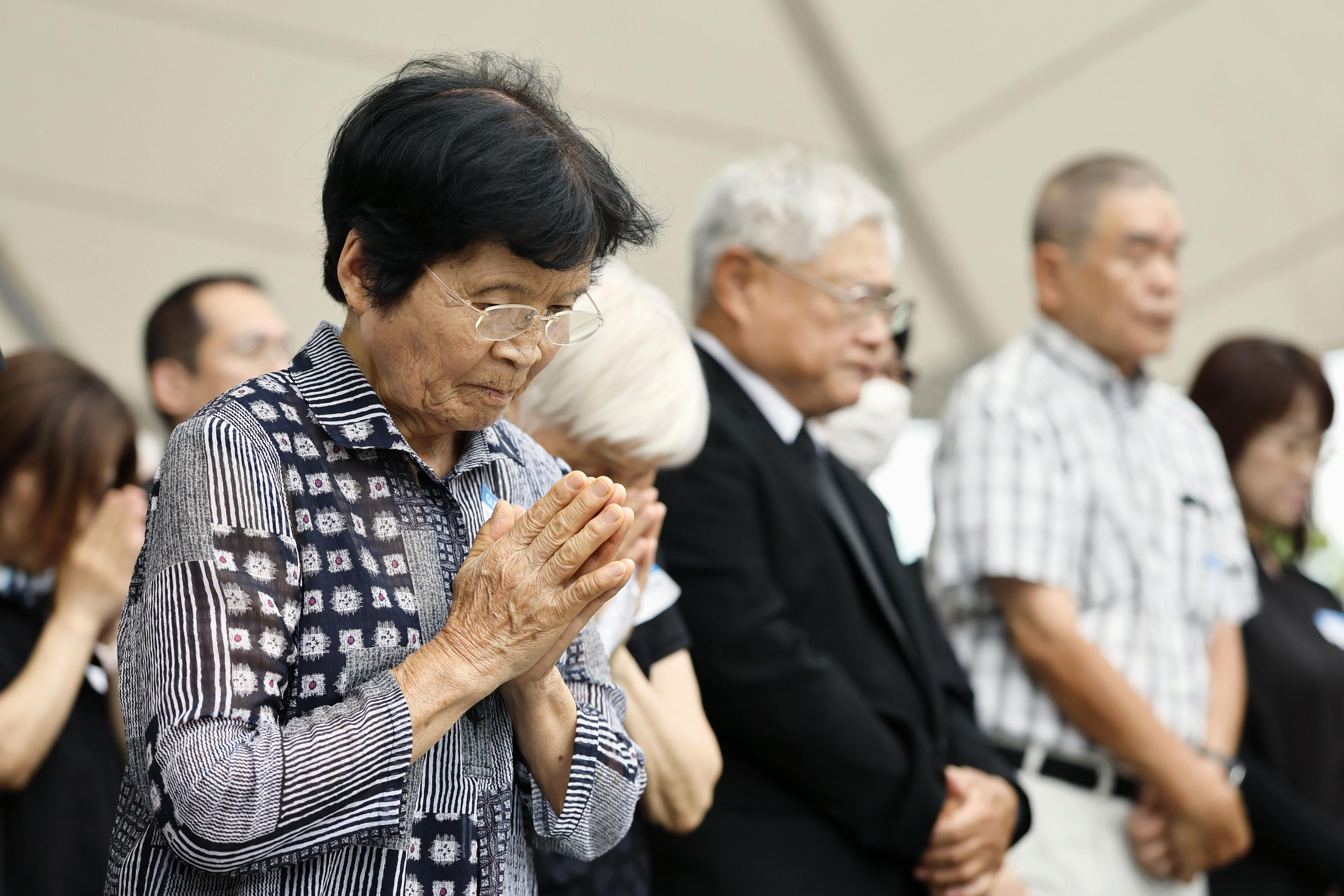
    Nagasaki marks 81st atomic bomb anniversary as mayor says nuclear deterrence only increases risk

    TOKYO — Nagasaki marked on Sunday the 81st anniversary of the U.S. atomic bombing of the southwestern city, as the mayor called nuclear weapons “absolute evil,” denounced growing support for nuclear deterrence, and called on the Japanese government to adhere to its three postwar non-nuclear principles.

    The anniversary coincided with Japanese Prime Minister Sanae Takaichi ‘s government revising the country’s defense policy to further bolster the military’s offensive capability. Speculation has risen about whether Takaichi, who supports nuclear dissuasion, may allow nuclear weapons to be brought into the country, going against the third non-nuclear principle.

    Mayor Shiro Suzuki said that while some countries argue the possession of nuclear weapons helps deter potential attackers, the atomic bombings of Hiroshima and Nagasaki had demonstrated that humans can cross the line.

    “The theory of nuclear deterrence is extremely dangerous and fragile. Nuclear weapons are not a ‘necessary evil’ but an ‘absolute evil,’ and can never coexist with humanity,” Suzuki said. “To all leaders of the nuclear states and nations relying on nuclear deterrence, you must face the reality that the more you rely on nuclear deterrence, the more you increase the risk of a nuclear war.”

    The United States launched the Nagasaki attack on Aug. 9, 1945, killing 70,000 by the end of that year, three days after the bombing of Hiroshima that killed 140,000. Japan surrendered on Aug. 15, 1945, ending World War II and the nearly half-century of aggression across Asia.

    Representatives from more than 90 countries attended the ceremony at the Peace Park on Sunday and observed a moment of silence at 11:02 a.m., the time when a B-29 dropped a plutonium bomb, known as “Fat Man.”

    Suzuki singled out the Japanese government, demanding it uphold Japan’s war-renouncing Constitution, attend the Treaty on the Prohibition of Nuclear Weapons review conference later this year, and stick to the three non-nuclear principles.

    Takaichi supports the first two principles of not possessing and developing nuclear weapons.

    The prime minister, who attended Sunday’s ceremony, reiterated her policy of taking “a realistic and pragmatic approach” toward achieving a world without nuclear weapons. As she did in Hiroshima, Takaichi remained ambiguous about the three non-nuclear principles and only reiterated that Japan currently maintains the policy.

    Takaichi, in her speech at the ceremony, did not mention the Treaty on the Prohibition of Nuclear Weapons, which Tokyo has refused to sign because Japan is under the protection of the U.S. nuclear umbrella.

    She later told reporters that Japan’s policy is to work within the Nuclear Nonproliferation Treaty, and that her government will decide what to do with the treaty based on what’s most effective to ensure the country’s national security and push forward nuclear disarmament.

    Survivors have expressed frustration and criticized the Japanese government’s support for nuclear deterrence for being insincere. Growing concern about Takaichi’s possible easing of the non-nuclear principles has prompted protests by the survivors, or hibakusha, in Hiroshima and Nagasaki.

    The number of survivors has fallen to 91,105, about a quarter of the original number, with their average age exceeding 86. Survivors worry about fading memories, as the youngest of the survivors were too young to clearly recall the attack.

  • Netanyahu rejects Trump-backed Gaza plan for Hamas disarmament, Israeli withdrawal

    Netanyahu rejects Trump-backed Gaza plan for Hamas disarmament, Israeli withdrawal

    TEL AVIV — Israeli Prime Minister Benjamin Netanyahu rejected a U.S.-backed plan Sunday for Hamas to lay down its weapons in Gaza in exchange for Israeli withdrawal from the territory — a proposal President Donald Trump recently touted as a breakthrough toward ending the conflict there.

    Netanyahu, at the start of a government meeting, said that “Israel does not accept the 15-point document” and that an Israeli withdrawal will be carried out only after “genuine disarmament, not fictitious disarmament.” His demands included that the Palestinian militant group give up all weapons: “Heavy weaponry, lighter weaponry, all weaponry,” he said.

    Israel is “talking with the Americans about this issue,” Netanyahu said. “They have ideas, some of which are acceptable to us and some of which are unacceptable, and we know how to stand firm against these things.”

    Hamas said in a statement Sunday that it reaffirms its commitment to the 15-point plan that it agreed on with the Board of Peace, calling on parties to help ensure its implementation. However, the militant group and Israel disagree as to which should come first: Israeli withdrawal or Hamas disarmament.

    “The existence of Israel and the security of all Israeli citizens are not up for negotiation. We stand firm on these interests,” Netanyahu said in his remarks Sunday. “Unlike all those who lecture us, we do what needs to be done for Israel’s security, and we can and know how to stand our ground, even against our best friends when necessary.”

    The Board of Peace, the State Department, and the White House did not immediately respond to requests for comment.

    Netanyahu’s stance on the Hamas deal was another setback for Trump’s efforts to address Middle East conflicts.

    With Trump’s unpopular war on Iran now in its sixth month, comments from Iranian officials Saturday cast further doubt on an end to hostilities that have driven up global oil prices and dragged down the president’s approval ratings.

    Iranian officials on Saturday laid out a list of demands they are seeking from the United States in exchange for reopening the Strait of Hormuz, including withdrawing U.S. forces from the region, paying war damages, and lifting sanctions.

    Former defense secretary Mark Esper told ABC News’s This Week that Iran’s aggressive demands showed that they have been “emboldened” and feeling “confident about their position in the world.”

    However, in an interview with Axios on Sunday, Trump suggested that pressure on Iran was building because of the toll that U.S. strikes and a naval blockade have taken on its economy.

    Trump said the U.S. is “only semi-negotiating” with Tehran and “low-keying it.”

    “We are just watching Iran with its huge inflation and the fact they have no money,” Trump told Axios’ Barak Ravid, “It will work out. It always works out. It’s like a chess game.”

    The Hamas plan was unveiled on July 30 by Trump’s Board of Peace. It gave Hamas and Israel two weeks to agree on a timetable and process for implementing the disarmament of Hamas and the withdrawal of Israeli forces from Gaza.

    There was almost immediate disagreement on the order in which each should happen. Hamas said Israel must end its military campaign in Gaza as a first step; Israel’s position has been the complete disarmament of Hamas and removal of weapons from Gaza as a prerequisite. That disarmament would see Hamas surrender its weapons, which would be held by the National Committee for the Administration of Gaza, run by Palestinian technocrats.

    Trump, in announcing the plan late last month, said on Truth Social that the Board of Peace — a group that was set up in the aftermath of the 2025 deal to release the remaining hostages that Hamas seized during the Oct. 7, 2023, attack on Israel — “reached a HISTORIC agreement for the COMPLETE DISARMAMENT of Hamas and all other armed groups in Gaza.”

    He called it “a monumental step toward lasting PEACE and SECURITY.”

    Israeli Finance Minister Bezalel Smotrich said in a video on X, “There is no Hamas in Gaza, that is the goal of the war, and we are committed to it.” He added that “the IDF cannot withdraw a single millimeter from the Gaza Strip … prior to the disarmament of Hamas.”

    The 15-point plan also “shall create appropriate conditions for a credible pathway towards achieving Palestinian self-determination and statehood,” the framework states.

    But Netanyahu on Sunday reiterated: “As long as I am prime minister, a Palestinian state will not be established.”

  • Pentagon presses defense firms to build weapons as Iran war depletes stocks

    Pentagon presses defense firms to build weapons as Iran war depletes stocks

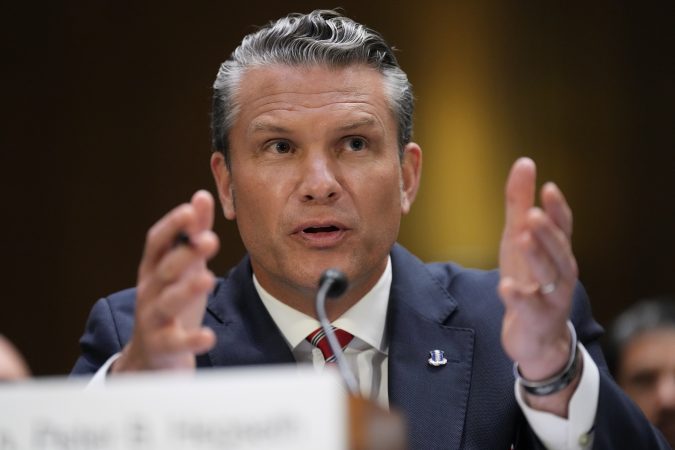
    The Pentagon is asking the U.S. defense industry to rapidly escalate the production and delivery of weapons, including munitions that are in extreme shortage due to the war with Iran, according to a Defense Department memo obtained by the Washington Post.

    Deputy Defense Secretary Steve Feinberg wrote to industry leaders on Wednesday, saying they had no more than 21 days to submit plans to “drive significantly faster, more aggressive delivery schedules and/or increased production for critical capabilities,” according to the memo, which is previously unreported.

    “Yearslong development cycles are not acceptable,” Feinberg wrote. “We must dramatically accelerate our program schedules and expand our production capacity now.”

    The directive comes as the weapons shortage has been a source of tension between President Donald Trump and the Defense Department, two people familiar with the issue recently told the Washington Post. It is also the latest in a series of actions the Pentagon and the White House have taken to address an issue that may largely remain unsolved until a gridlocked Congress releases additional defense spending, according to industry experts.

    Trump on Thursday said that the United States has “massive amounts” of munitions, posting on Truth Social that “large amounts are being manufactured and shipped to the U.S. as needed.”

    Feinberg’s note comes after efforts by the White House to enlist the defense industry to unlock military funds.

    In late July, legacy defense contractors and Silicon Valley weapons startups were summoned to the White House to meet with Trump’s chief of staff, Susie Wiles, Defense Secretary Pete Hegseth, Office of Management and Budget Director Russell Vought and White House Legislative Affairs Director James Braid, according to three people familiar with the event, who spoke on the condition of anonymity to discuss sensitive matters.

    In the meeting — which included firms such as Lockheed Martin, Northrop Grumman, Boeing, autonomous weapons firm Anduril, and data analytics company Palantir — company executives were asked to directly lobby lawmakers to increase defense spending through congressional reconciliation, the people said. Fox News earlier reported this meeting.

    The Pentagon has in recent months announced several “framework agreements” with the largest U.S. defense contractors and emerging startups to increase its supply of both low-cost munitions and sophisticated air defense weapons, like the Terminal High Altitude Area Defense (THAAD) and Patriot missile interceptors.

    These framework arrangements are legal, nonbinding contracts between the U.S. government and private sector partners that signal the Defense Department’s intent to purchase weapons but rely on congressional funding to become final, industry experts said.

    “They are agreements to agree, and so they’re not contracts,” said Tom Karako, director of the Missile Defense Project at the think-tank Center for Strategic and International Studies. “Almost nothing has been contracted, and that’s the problem.”

    “Working directly with industry leaders to accelerate production is not new. It has been the clear intent of the President and this Secretary from the start,” Pentagon chief spokesperson Sean Parnell said in a statement.

    He added that the Feinberg memo “is real” and “will inform the fiscal year 2028 budget submitted to Congress for funding, and it is entirely consistent with our ongoing push to rebuild the defense industrial base.”

    An empty arsenal

    In the first month of the Iran war alone, the U.S. fired off more than 850 Tomahawk cruise missiles and more than 1,000 Patriot and THAAD interceptors, the Post previously reported. The U.S. also used more than 1,300 of the Army’s tactical ballistic missiles in the initial weeks of fighting.

    As of last week, the global inventory of Patriot missiles has fallen from 2,200 before the war to fewer than 827, and THAAD missiles from 452 to fewer than 278, according to an analysis by CSIS.

    The depleted U.S. stockpile of munitions and defense systems has increased the risk to U.S. service members and forced the White House to back away from escalating attacks, the Post previously reported.

    The Pentagon has made efforts over the past few months to increase its weapons supply. On Aug. 3, the Defense Department announced a framework agreement with Northrop Grumman and Lockheed Martin to increase production of the Patriot Advanced Capability-3 (PAC-3) and THAAD missiles. Last week, the Pentagon awarded Lockheed Martin a contract worth up to $58.6 billion to triple production of PAC-3s by 2030.

    In May, the Pentagon announced several framework agreements with defense tech companies, including Anduril, Castelion, CoAspire, Leidos, and Zone 5, to “aggressively expand” the U.S. military’s strike capabilities and purchase their low-cost missiles. The department in late June also hosted leaders from various Silicon Valley startups, indicating they will be crucial in resupplying the U.S. with weapons.

    Speaking in November at the National War College in Washington, Hegseth outlined his vision to overhaul the Pentagon’s acquisition process in partnership with U.S. industry to ensure it can operate on a wartime footing.

    “American industry and its innovative spirit are begging to be unleashed to solve our most complex and dangerous warfighting problems,” he said. “We need to get out of our own way, out of your way, and enter into real partnership with you rather than overprescribe and decelerate your natural progress.”

    ‘The dilemma’

    The Pentagon has brought in former Silicon Valley business leaders such as former Uber executive Emil Michael to serve as the Defense Department’s under secretary for research and engineering, and to overhaul the defense innovation and procurement process.

    But moving forward with the Pentagon’s framework agreements to purchase weaponry, crucial to Defense Department strategy to expedite acquisition, depend on congressional passage of a $1.15 trillion defense spending bill, which remains deadlocked as Democrats object to massive spending increases.

    “That’s the dilemma, that’s the danger,” Karako said. “This really, really critical thing is in jeopardy because of congressional inability to appropriate.”

    In the memo, Feinberg said the Defense Department is “fundamentally shifting how [it] develops, produces, and fields military capabilities to meet current and future challenges.”

    Feinberg deemed several weapons programs critical and “under consideration for acceleration or increased procurement” during the 2028 fiscal year budget review. It included the Next Generation Interceptor missile defense program, the National Advanced Surface-to-air Missile System, a mobile air defense radar system, an advanced pilot training system, and a space-based system for missile tracking.

    The Feinberg memo tasked “industry leaders” to plan for “accelerated delivery” that would “provide the fastest production schedule to deliver projected orders and increase capacity.”

    It also asked defense firms to “propose specific capital investments and facility expansions … to support the Department’s commitment to higher volume, sustained orders,” Feinberg added.

    “Address how we will collaborate as partners and demonstrate your willingness to put skin in the game,” he wrote.

    Karako said some defense contractors are spending their own money to fund production costs while Congress is in gridlock and framework agreements await approval. But he said that comes with a risk for industry.

    “It’s a little bit of a gamble because they’re sticking their neck out,” he said. “They’re publicly traded companies, and you’re not supposed to really stick your neck out on a promise.”

  • Trump goes unmentioned but not ignored as Clinton, Bush, and Obama step up as essayists on presidents

    Trump goes unmentioned but not ignored as Clinton, Bush, and Obama step up as essayists on presidents

    WASHINGTON — When George W. Bush wrote an essay this year about another president named George, he avoided mentioning the one named Donald.

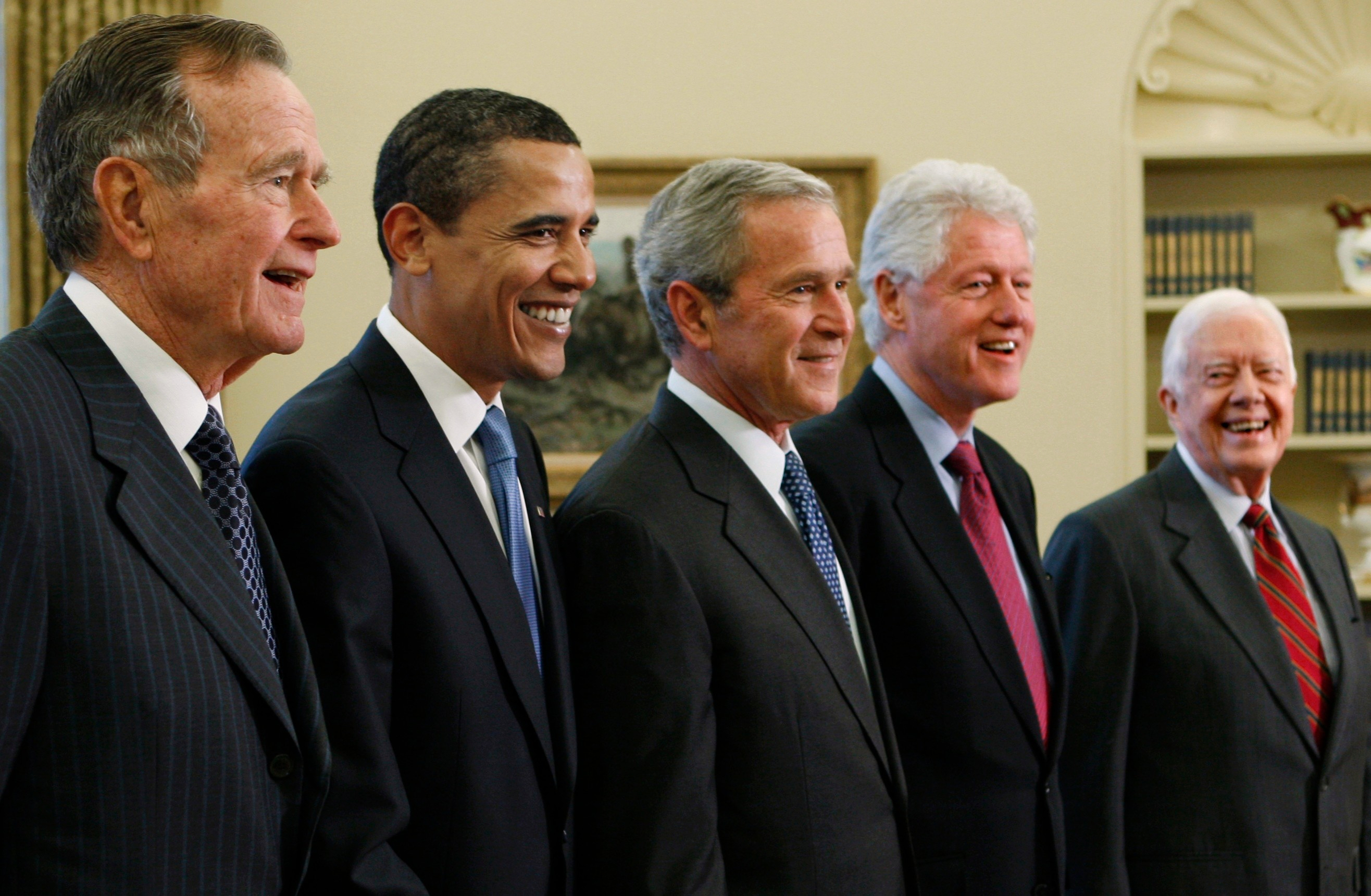
    So did Barack Obama and Bill Clinton. The three ex-presidents joined a roster of historians and authors in contributing to the In Pursuit project, a 250th-anniversary series that had each writer produce an essay about a president or first lady.

    Though the project was explicitly designed to transcend today’s politics, some of its essays nevertheless reflect anxieties that are flaring in the era of President Donald Trump over the use of power, the health of the democracy, and the integrity of the presidency.

    The project is being curated by Colleen Shogan, the U.S. archivist who was fired without explanation by Trump last year. She instructed contributors not to be partisan or ideological. “Everybody took those instructions and that guidance very seriously,” she told the Associated Press. The goal was for all Americans to “feel welcome to be able to read these lessons and essays and learn something from them.”

    The mission, Shogan said, “is to surface the lessons from the past 250 years of American history, so that we can learn from those lessons, from both our successes and our failures, so we can plan for the present and the future. It’s what has been described as debriefing the American story.”

    The essays cover 43 presidents — all but Democrat Joe Biden and Republican Trump — and 30 first ladies. They are being published online at inpursuit.org and on Substack chronologically and weekly into December.

    Trump and Biden were judged too fresh to be appraised by history, a call that may have also set aside passions of the moment.

    Without naming Trump, Bush’s essay is difficult to read without thinking of Trump’s reluctance to cede power after his 2020 election defeat and his musings about a third term in defiance of the Constitution’s two-term limit.

    Bush hails the heroism of humility

    Bush’s essay celebrates George Washington, the original “No Kings” guy. Bush, a Republican, hails a man whose legacy only grew larger because he modeled the limits of the presidency for centuries to come.

    “Our first president could have remained all-powerful,” Bush writes, “but twice he chose not to. In so doing, he set a standard for all presidents to live up to.” First, Washington resigned as commander in chief of the Continental Army, then set the precedent of serving only two presidential terms before that limit was enshrined in the Constitution.

    Bush went on: “George Washington’s humility in giving up power willingly remains among the most consequential decisions and important examples in American politics.” Bush’s essay, released Presidents Day as the first in the series on Substack, drove heavy engagement.

    Retired Gen. Stanley McChrystal, who led U.S. and international forces in the Afghanistan War, sized up a fellow general, Ulysses S. Grant, in another essay that drew much attention for its parallels with today.

    History offers lessons on ‘law over loyalty’

    McChrystal presents the Union general and post-Civil War president as a leader who displayed “an absolute commitment to principles larger than personal ambition” and who, before his presidency, resisted pressure on military leaders to “align with political factions and be loyal to a person rather than the Constitution.”

    The emphasis on personal loyalty resonates in a time when Trump has repeatedly demanded fealty from officials in his administration.

    The “temptation to bend institutions toward personal power is not unique to Grant’s era,” McChrystal writes. “Our future still depends on whether our leaders choose law over loyalty.”

    This month, in the latest In Pursuit installment, Democrat Bill Clinton writes about Theodore Roosevelt, focusing on that president’s drive to expand the universe of “we the people” at the expense of powerful corporate interests, while also emphasizing Roosevelt’s exclusionary views on Black and Indigenous people.

    The essays frequently address presidents’ failures alongside their accomplishments, a contrast with Trump’s calls for federal cultural institutions to stick to patriotic interpretations of American history.

    Presidents, the chief justice, and first ladies contribute

    Among the In Pursuit contributors are Chief Justice John Roberts (writing about William Howard Taft, the only president who also served on the Supreme Court); Hillary Clinton (Eleanor Roosevelt); Michelle Obama (Jacqueline Kennedy); GOP operative Karl Rove (William McKinley); documentarian Ken Burns (Franklin D. Roosevelt); and historian Michael Beschloss (Lyndon Johnson). Democrat Barack Obama presents Abraham Lincoln.

    The project is being staged by More Perfect, a nonpartisan alliance of dozens of presidential centers along with academics and organizations dedicated to advancing democracy. It is where Shogan now practices her archivist craft that Trump shut down by firing her in February 2025.

    She still has not been told why. Nor has Congress apparently been notified of the reason. The law requires Congress to be told but does not specify a deadline. The National Archives is the central repository of federal documents both precious and routine, and its leader has discretion over which records to preserve and display, and how.

    “That is a position that used to be a nonpartisan position, much like the Librarian of Congress, the secretary of the Smithsonian,” she said. “And I took that very seriously and acted the entire time when I was archivist in a nonpartisan way.”

    The White House did not respond when asked why Trump fired the archivist and whether the administration will tell Congress the reason.

    Trump has long begrudged the archives for notifying the Department of Justice of his alleged mishandling of classified documents after he left office following his first term, though Shogan was not working for the agency then.

    Shogan sees hunger for history without a slant

    Shogan said she has been overwhelmed with the public response to the series so far and figures that speaks to a hunger for history shorn of partisanship. The essays have received more than 1 million cumulative views on Substack and her podcast of the same name registered 160,000 audio downloads and nearly 64,000 YouTube views at last count. A documentary about the series is scheduled to air on PBS in October.

    In the essays, readers learn something new not just about the giants, but about presidents such as Millard Fillmore — “a historic punchline — best remembered, ironically, for being so forgotten,” in the words of his essayist, former New York congressman Steve Israel.

    Then there was Franklin Pierce, presented by his essayist as a pro-slavery president and “permanent victim” of Washington’s alcohol-soaked culture.

    Yale history professor David W. Blight recounts how Pierce won the presidency for the Democrats in 1852 despite vicious trolling by the Whigs. Fielding Mexican War veteran Gen. Winfield Scott in that election, they labeled Pierce, who also served in the war, the “hero of many a well-fought bottle.”

  • Lake Mead hits historic low water level as Colorado River struggles

    Lake Mead hits historic low water level as Colorado River struggles

    BOULDER CITY, Nev. — Lake Mead, the largest reservoir in the United States, has plummeted to its lowest water level since it was filled some 90 years ago, another sign of the crisis plaguing the Colorado River system.

    Water levels at Lake Mead hit 1,040.4 feet above sea level on Friday, according to federal data. That’s just below the elevation of 1,040.58 feet recorded on July 28, 2022, at the reservoir that straddles the Arizona-Nevada border outside Las Vegas.

    The record follows a winter that produced the worst snowpack on record in the Colorado River Basin. Melting snow feeds the river, which is relied upon by farmers, industries, wildlife, hydropower producers, and more than 40 million people across seven U.S. states, tribal nations, and Mexico.

    It comes a week after federal officials announced a short-term proposal to stave off a crisis in the beleaguered waterway. Federal officials stepped in after states that rely on the river — California, Colorado, Arizona, Nevada, New Mexico, Wyoming, and Utah — failed to reach an agreement on how to share the dwindling resource long term. Under the proposal, California, Nevada, and Arizona would share water cuts.

    Years of overuse combined with drought and rising temperatures have been depleting Lake Mead and Lake Powell, the country’s second-largest reservoir. Together, the two bodies of Colorado River water are the lowest they’ve been in nearly seven decades.

    To protect the strained system’s ability to produce hydropower, federal officials said Thursday that they will not release cool Lake Powell water from Glen Canyon Dam in northern Arizona to protect a threatened native fish whose habitat is between the reservoirs.

    Severe drought in 2022 on Lake Mead, which is held back by the Hoover Dam, exposed human remains and forced water officials in Las Vegas to pump water from deeper within the reservoir to continue to supply water to millions of people.

  • Ukraine honors its ‘collector of souls’ killed while recovering the war dead

    Ukraine honors its ‘collector of souls’ killed while recovering the war dead

    KYIV, Ukraine — Ukraine paid tribute on Saturday to Oleksiy Yukov, a volunteer who spent more than two decades recovering the bodies of civilians and soldiers — many of them Russian — killed by war. He was 40.

    An Orthodox Christian service was held at the Cathedral of Saint Volodymyr, in central Kyiv, where thousands of people gathered to pay their respects following his death in a landmine explosion during a recovery mission on Aug. 5. Mourners also gathered at Kyiv’s main Maidan Square before the service.

    Yukov founded the Platsdarm (“bridgehead”) organization because he believed all the dead require a proper burial. He became known as a “collector of souls.”

    Yukov, from the war-torn Donbas region, was a martial arts instructor. He began recovering the dead as a teenager after encountering the remains of Soviet and Russian soldiers from World War II.

    Platsdarm’s volunteers go into fields and forests, among ruins and across territory, where the ground is often mined.

    Yukov’s widow, Evhenyia Kaluhyna, promised to continue his work, sobbing as she spoke at the funeral, wearing an embroidered white dress and standing over her husband’s open casket.

    “The work was difficult and terrifying,” she said. “But I promise you we will continue it because the (dead) deserve it, and you deserve it for everything you did.”

    Yukov had suffered leg injuries and lost an eye in a mine blast in 2022. Still recovering from those injuries, he returned to the front line.

    In a social media post last month, Yukov described the landscape in which he worked.

    “Remote mines, shelling, drones — everything is against you. But you go and do everything to ensure that every soul returns home,” he said.

    He also addressed those who believed Russian bodies should simply be left behind: “When they say: ‘Let them rot,’ I do not agree. This is how we fight for every soul.”

    Yukov spoke of his work in religious terms, saying a body was a soul waiting to go home.

    “This is action,” he wrote. “Action every day in the fields, in the forest belts, among the ruins, where your life can end at any moment.”

  • Hunter Biden opens up about his pardon and Joe Biden’s cancer

    Hunter Biden opens up about his pardon and Joe Biden’s cancer

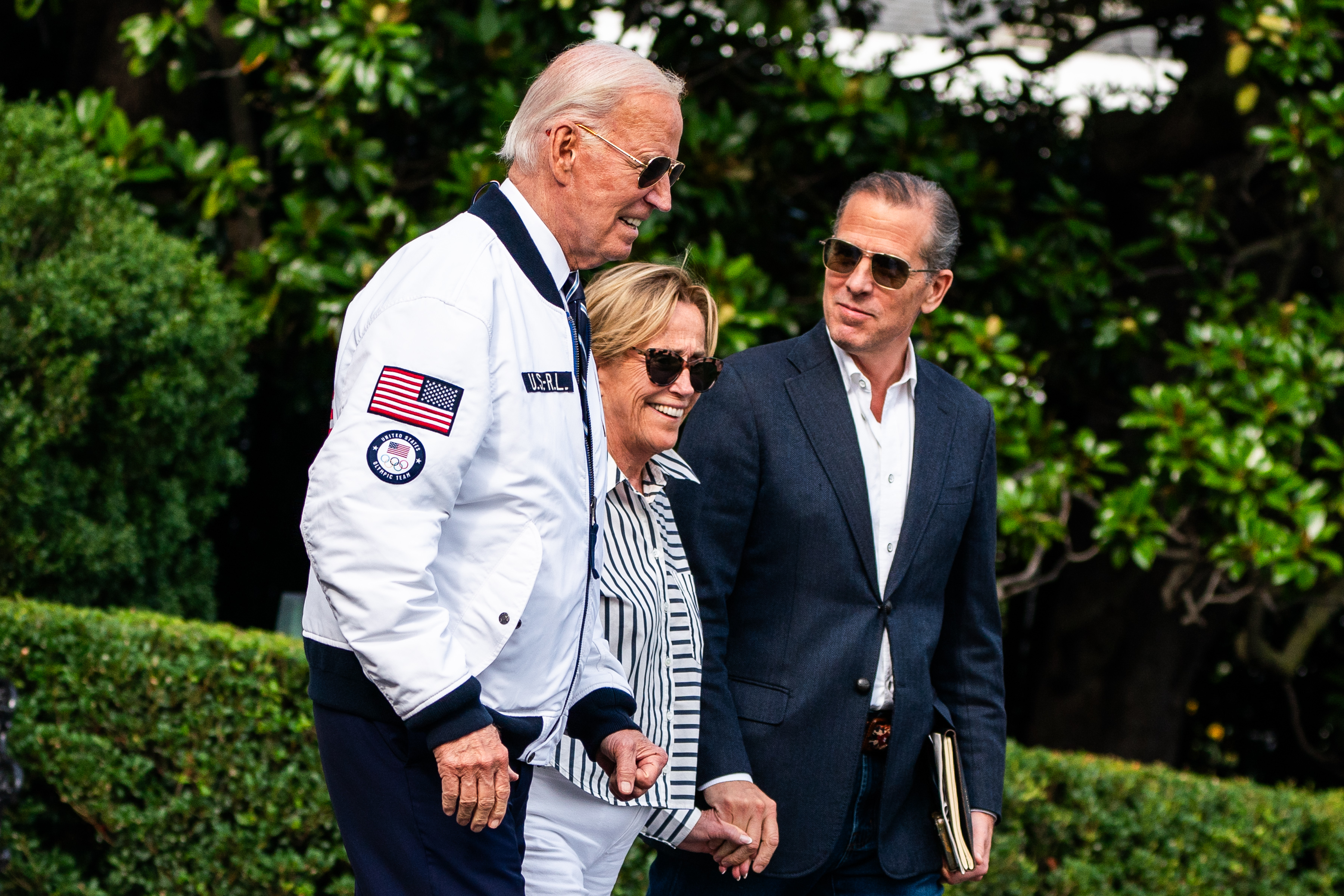
    Hunter Biden, son of former President Joe Biden, opened up about his father’s prostate cancer, saying he has been in a lot of pain as the disease has spread.

    In a wide-ranging interview Friday with BBC Newsnight, Biden said that it has been “really sad to watch” his father suffer. The cancer has spread and “metastasized into his bones and further,” he said.

    He said that despite that, Joe Biden has continued to speak out in public about issues that he cares about.

    “He so believes in this country,” Hunter Biden said. “And as long as he is alive, I promise you, he is going to continue to fight.”

    He also discussed his feelings about receiving a presidential pardon from his father, saying that it was not good for the country.

    BBC correspondent Paddy O’Connell pressed Biden on whether he thought his father went “too far as a dad” in issuing a pardon to his son. In December 2024, as one of his final acts as president, Joe Biden issued a full and unconditional pardon for his son despite having previously promised not to intervene in Hunter Biden’s legal problems.

    Hunter Biden said it was “not fair” and that he is “the most privileged person in the world” as it related to getting that kind of treatment from a father and president.

    “Was it good for our constitution? Was it good for the American people? Was it good for my dad’s legacy?” he asked. “No. On all counts.”

    However, Biden said they did not discuss the pardon before it happened. He is “eternally grateful for it because I think Donald Trump has proven to be exactly who my dad thought he was going to be, as it relates to revenge and retribution.”

    Critics had a good reason to lambaste the move, Hunter Biden said. But then he asked: “What would you have thought of my dad if he did not do it for me?”

    After steering clear of the spotlight during much of his father’s presidency, Hunter Biden has in recent months taken on a higher public profile, including engaging on social media with critics and supporters alike and granting media interviews, including one with right-wing podcaster Candace Owens.

    In the BBC interview, O’Connell also asked the former president’s son if his yearslong descent into drugs, alcohol, and legal issues “precipitated more decline” for Joe Biden’s health.

    “This is a very difficult thing to talk to you about,” O’Connell said. “But do you think you made life worse and the health worse for Joe Biden?”

    After a pause, Biden responded: “Of course I did.”

    The former president refused to shut the door on him or let him go, his son said, but the stress took a toll.

    “My dad never let me off the hook,” he said. “But what my dad did was always make it clear that, when I was ready to come back, the door was open.”

    In response to questions about his father’s controversial decision to seek a second term, Biden said that he wielded no influence over Joe Biden, nor did anyone. He was, however, just as shocked as everyone at the former president’s state during the June 2024 debate with Trump, during which Joe Biden struggled to finish sentences.

    “I could tell as soon as my father came out that something was wrong,” Hunter Biden said. “I have never seen him with kind of the hundred-yard stare that he had.”

    In May 2025, Joe Biden’s office revealed that he had been diagnosed with Stage 4 prostate cancer that had metastasized to his bones.

  • Iran makes new strait demands, the UAE says a ship was targeted

    Iran makes new strait demands, the UAE says a ship was targeted

    Iran issued dramatic new demands for the Strait of Hormuz to reopen as the United Arab Emirates said one of its ships was targeted by an Iranian missile. Yemen’s military attacked the country’s Iranian-backed Houthi rebels. And Turkey’s Kurdish peace bill won approval in parliament.

    Here’s a look at developments across the Middle East on Saturday.

    Iran says strait won’t open until the U.S. ‘corrects’ behavior

    Iran’s politburo-like body known as the Supreme National Security Council said the Strait of Hormuz will not open until the United States “corrects its behavior,” issuing new demands that could shake up talks on a deal to manage the waterway and traffic on it.

    Iran’s state broadcaster published the statement by the council’s secretary, Mohammad Bagher Zolghadr, who is also a commander in the powerful Revolutionary Guard.

    The U.S. must never threaten Iran again, the statement said, and must permanently end the war with Iran and its armed allies in the region. The U.S. must lift the naval blockade of Iranian ports and withdraw its military from the area. It also must “completely compensate” Iran for war damage, lift sanctions, and “unconditionally” release frozen assets.

    There was no immediate comment from the U.S., which has wanted an acceptable deal first on the strait before ending the blockade. According to the interim deal signed in June, a schedule to end sanctions and plan on compensation would be part of the final deal, and negotiations would address frozen assets.

    The end of a 60-day period to negotiate a final deal will end in just over a week but could be extended.

    Iran has said it was close to reaching a separate deal with Oman to manage the strait, which runs between the two countries. Iranian Foreign Minister Abbas Araghchi earlier Saturday said they were close to reaching an agreement on navigation, “specifically the determination of a transit route.” But the waterway’s reopening is contingent on other conditions, he said in remarks shared on social media.

    Oman, a mediator Gulf Arab country which has said relatively little on the talks, said in a statement Saturday that the discussions were ongoing “in a positive and constructive atmosphere,” and condemned attacks on ships on the strait.

    The strait, crucial to global supplies of oil and natural gas, had been considered an international waterway before the war.

    Iran attacks vessel in Strait of Hormuz, UAE says

    A vessel owned by Abu Dhabi’s state-owned ADNOC oil and gas company was attacked while transiting the Strait of Hormuz, Emirati authorities said earlier Saturday. The Foreign Ministry said Iran fired the missile as part of attacks on commercial shipping.

    ADNOC in a statement said there were no casualties following the attack early Saturday. The company said over a dozen of its vessels have been attacked by missiles and drones while transiting the strait since the United States and Israel launched the war on Iran in February. One crew member has been killed and 20 others wounded, it said.

    ADNOC didn’t elaborate on the attack’s location or any damage.

    Later, the United Kingdom Maritime Trade Operations Center said a vessel east of the town of Khasab, Oman, had been struck by a projectile that caused a fire that was put out, with the vessel and crew safe. It was not clear whether this was the ADNOC incident.

    Yemen’s military attacks Iran-backed Houthis

    The attacks were in response to the Houthis’ recent strikes in central and eastern Yemen. Col. Majed al-Nazili, spokesperson for Yemen’s military, said the attacks targeted the rebels’ “sites and capabilities” on multiple front lines, without elaborating.

    The escalation between the Houthis and Yemen’s internationally recognized government and its backer, a Saudi-supported coalition, threatens to reignite Yemen’s civil war following a 2022 truce.

    Turkey’s Kurdish peace bill wins approval in parliament

    A Turkish draft law aimed at advancing a peace effort with the country’s Kurdish insurgents passed its first hurdle in parliament on Saturday. A committee approved the measure. It is expected to be approved in the general assembly next week.

    Last year, the Kurdistan Workers’ Party, or PKK, declared its decision to disarm and disband as part of the peace initiative aimed at ending the decades-long conflict with the Turkish state.

    The draft legislation defines the procedures for the group’s disarmament and rehabilitation of some PKK members. The measures would come into effect once Turkey’s National Security Council confirms that the group has disbanded and surrendered all weapons.

    The conflict has killed tens of thousands of people since it began in the 1980s. Turkey and its Western allies consider the group a terrorist organization.

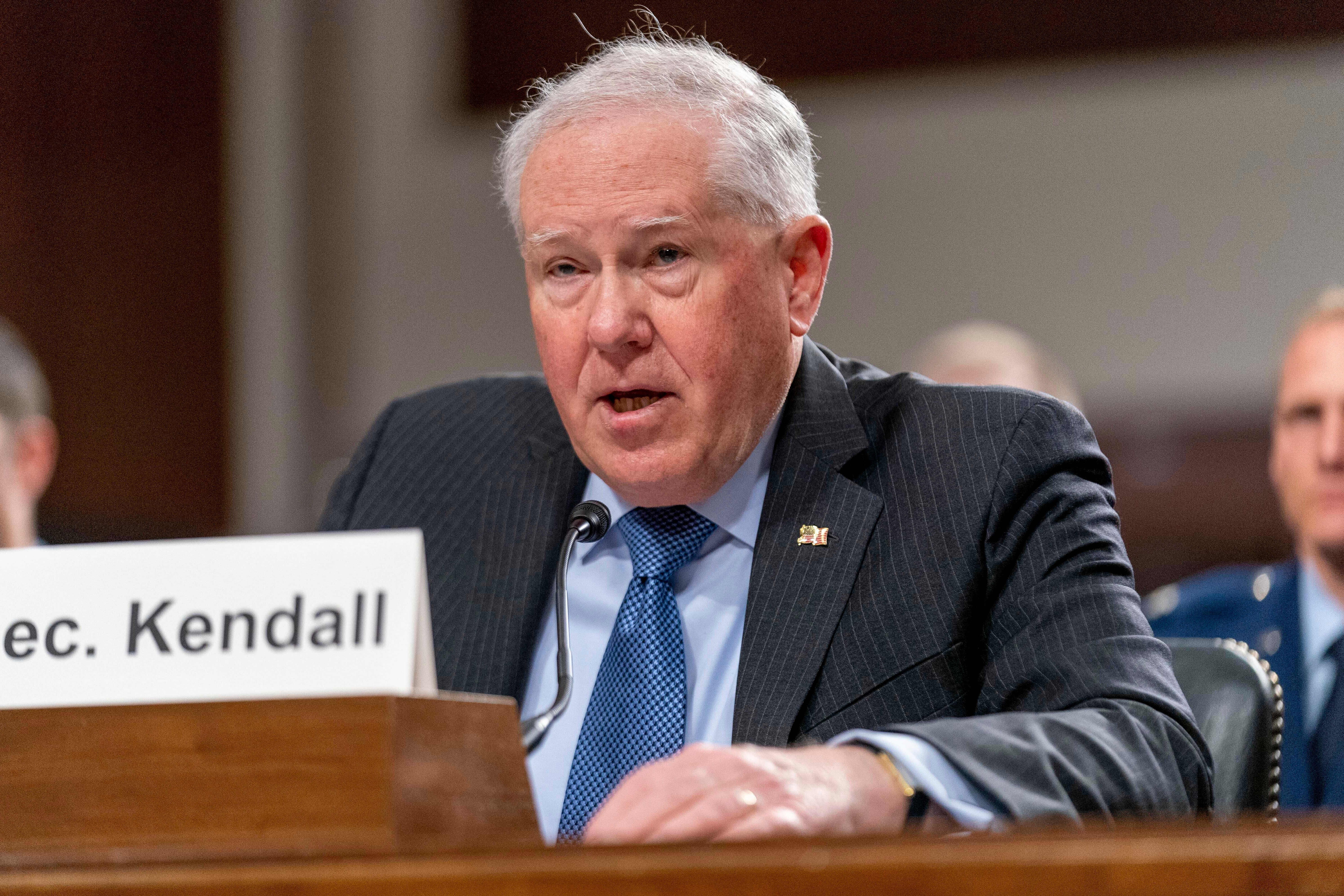
  • Pentagon strips security clearance from former Air Force secretary

    Pentagon strips security clearance from former Air Force secretary

    The Trump administration has revoked the security clearance of Frank Kendall, who served as Air Force secretary under President Joe Biden, accusing him of disclosing classified information about Air Force One to the media.

    Kendall has recently been quoted in the New York Times and the Wall Street Journal, in stories scrutinizing the security features of the Boeing 747 gifted by Qatar, the plane President Donald Trump is using as his official presidential aircraft.

    Kendall told the Times that he was “surprised to see this plane used outside the U.S.,” given how speedily it was modified after the Qatari royal family gave it to the United States. To the Journal, Kendall expressed skepticism that the plane had been “maxed out” with security features, as Trump has said it would be.

    In an X post Friday night, Pentagon spokesperson Sean Parnell said Kendall was being stripped of access to classified information and his ability to hold any sensitive position following “unauthorized disclosure of classified information regarding Air Force One’s capabilities.”

    “Safeguarding classified information is a non-negotiable duty. Those who violate that trust forfeit the privilege of access and any role requiring it,” Parnell wrote.

    Kendall could not immediately be reached for comment Saturday. The former Air Force chief, who also served in the Defense Department during the Obama administration, told the Journal he was “mystified” by the revocation of his security clearance.

    “I’ve been extremely careful to not say anything that could be classified, and as far as I know I have not said anything classified,” Kendall said, adding that so far he had not been told what classified information he had supposedly revealed.

    The luxury airplane gifted by Qatar has raised ethical, legal, and security concerns since Trump announced the unusual arrangement last year. Fresh questions about the new Air Force One’s security arose last month after Trump switched jets at the last minute for part of his travel back from the NATO summit in Turkey.

    Trump denied that security concerns were behind the switch of planes for the first leg of his trip — but also suggested that Iran could have tried to attack his plane, saying he was “number one on their list” of people to assassinate.

    The White House said last month that Trump would tentatively return to flying on an older Air Force One while the Qatari-gifted jet received unspecified “additional upgrades and enhancements” that would take about a month to complete.