Category: Nation & World

  • Philly DA Larry Krasner taunts House Republicans in Washington after getting a subpoena

    Philly DA Larry Krasner taunts House Republicans in Washington after getting a subpoena

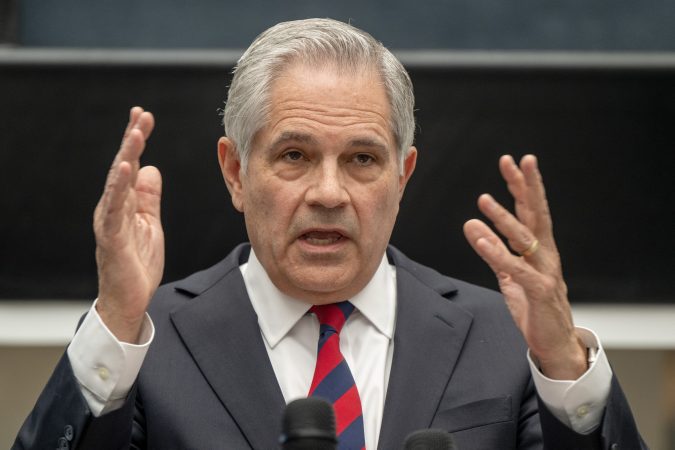
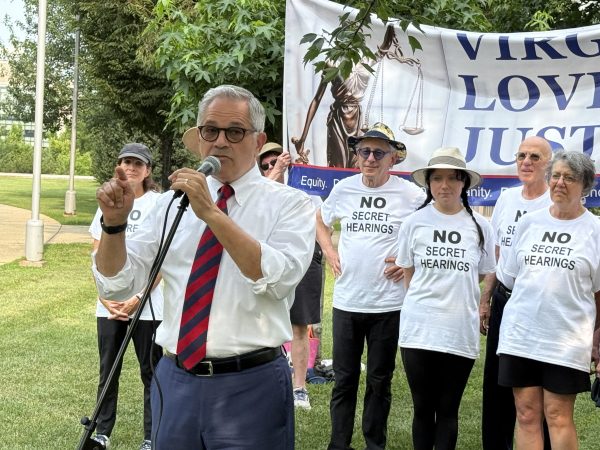
    WASHINGTON — Philadelphia District Attorney Larry Krasner, thumbing his nose at national Republicans on the morning after they subpoenaed him, rallied protesters on Capitol Hill on Thursday as one of his counterparts in Virginia, who had also been compelled by a subpoena from the U.S. House Judiciary Committee, prepared to testify behind closed doors.

    Taunting both Rep. Jim Jordan (R., Ohio), the committee chair, and President Donald Trump outside the building where the committee meets, Krasner railed against Republicans generally and the ongoing legal maneuvers he said are intended to ensure progressive prosecutors like him “roll over and play dead.”

    “Jim Jordan, can you hear me?” he asked as he stood before a crowd of mostly Virginians outside the Rayburn House Office Building. “Why don’t you come out here? We miss you. We haven’t seen you, and apparently, you don’t like us when we’re with you in public.”

    The monthslong war of words escalated on Wednesday, when Jordan ordered Krasner’s office to produce documents about its handling of immigration issues. The Republican-led committee requested the documents in May as it accused the district attorney — as well as Philadelphia Police Commissioner Kevin Bethel and Sheriff Rochelle Bilal — of protecting criminal immigrants through sanctuary policies.

    Republicans have similarly targeted multiple jurisdictions, including Arlington County and the city of Falls Church, in Virginia’s Washington suburbs.

    The committee subpoenaed the area’s top prosecutor, Parisa Dehghani-Tafti, in March for documents related to protests outside the home of deputy White House chief of staff Stephen Miller. After a back-and-forth in which Dehghani-Tafti requested a public hearing, the committee wrote in a July 1 letter that it was compelling her to appear to answer questions about “politicized interference in a doxxing investigation and your preferential treatment of illegal immigrants accused of criminal conduct in your district.”

    “I’m here because I respect the law, and I’m here because I upheld the rule of law,” Dehghani-Tafti said Thursday as she walked by the gathering of about 75 people, some of whom wore shirts and held signs reading “No Secret Hearings.”

    Krasner said the committee was afraid to conduct the questioning in a public setting because Dehghani-Tafti, whom he described as a top-notch prosecutor and communicator, would “wreck them.”

    “And they are not just trying to do it to her,” Krasner said. “They’re trying to do it to a whole bunch of us — pretty much anybody who they see as standing in their way.”

    Krasner did not otherwise address his own subpoena while speaking in Washington.

    Asked for comment, a spokesperson for the committee said Thursday: “We look forward to Mr. Krasner’s compliance with the subpoena.”

    In an interview after his speech, Krasner said it was important for him and other local prosecutors, some of whom were in attendance Thursday, to join together to show that “none of us are backing down.” He said that he has the same legal representation as Dehghani-Tafti to deal with the situation, and that if he was compelled to testify he would answer the committee’s answers truthfully.

    “I’d be shocked if these cowards wanted a public hearing,” Krasner said. “Not because I’m so important, but because the questions are so stupid, and the truth harms them so much.”

    In a private setting, he said, the committee can control any transcripts or videos and decide when and how to make them public. He compared the situation to “Putin’s Russia,” mocked Jordan for not completing law school, and repeatedly called Trump the “criminal-in-chief.”

    Krasner also alleged that part of the reason he and others are being targeted is because of their ability to prosecute state-level crimes, for which Trump does not have the power to pardon. That includes potential crimes related to Jeffrey Epstein, the convicted sex offender and former Trump associate who died in 2019.

    “Make no mistake, Epstein class, we are coming for you,” Krasner said in shouting distance from federal lawmakers. “We’re coming for you now, or we’re coming for you later.”

    Epstein’s private islands were in the U.S. Virgin Islands and his mainland home was in Florida, outside Krasner’s jurisdiction in Philadelphia.

    Late Thursday afternoon in Philadelphia, Krasner said he was in the process of complying with the subpoena.

    “It encompasses an infinite number of documents, many of which they’re not entitled to have, but there’s little doubt they’re entitled to have some of them, and what the law requires is what we’re going to do,” he said. “It is very likely that sooner or later we’re going to turn over some documents.”

    He derided Jordan as “the criminal-in-chief’s little helper” and accused the House committee of being on a “silly mission” to try to show fault with how honest prosecutors are handling immigration issues in their jurisdictions.

    “If they want to mess with Philly, they’re going to come through me,” Krasner said. “My job is to protect Philadelphians. I’m going to do that. We’re not going to have ICE agents or federal agents murdering people on the streets of Philadelphia with no consequence.”

    This month ICE agents fatally shot two men in six days during traffic stops in Texas and Maine.

    The House committee gave Krasner a July 29 deadline to provide the documents it requested. In a letter Wednesday, Jordan said Krasner’s “refusal to cooperate” included “bizarre and baseless demands and conditions.”

    “The Committee has no obligation to entertain your unreasonable demand because as federal courts have explained, it is exclusively the prerogative of the Committee to determine how and in what manner it conducts its oversight,” Jordan wrote.

    Staff writer Jeff Gammage contributed to this article.
  • In Iran, Trump risks another American ‘forever war’

    In Iran, Trump risks another American ‘forever war’

    BERLIN — No one starts a war expecting it to last forever.

    Yet, since Vietnam, American presidents have repeatedly gotten into conflicts that seem like they could last forever, at least until the next president — or the one after that — decides that the expense and political pain are not worth it, declares victory and goes home.

    On Iran, President Donald Trump may have fallen into the same trap.

    He campaigned for office vowing to end wars, not start them, and to never get involved in a forever war, let alone one in the Middle East. And yet he risks doing so in Iran, his critics say.

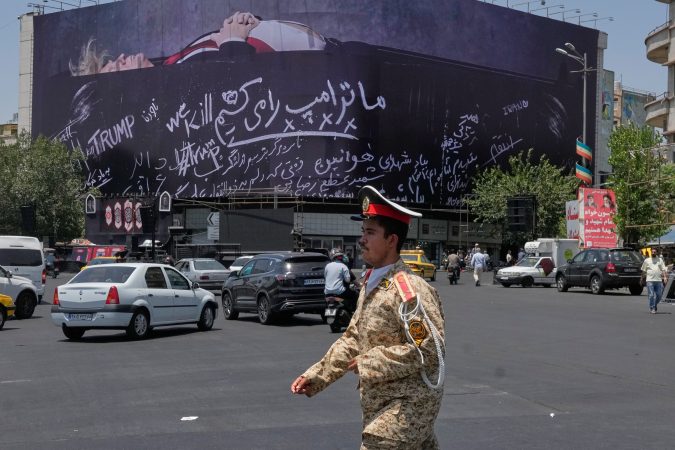
    The war that Israel and the United States began with such force has alternated between moments of negotiation and military strikes. They have failed to reach Trump’s stated goals of regime change or ending Iran’s nuclear program, while the war has created a new, seemingly intractable problem, bottling up the Strait of Hormuz.

    With diplomacy at a dead end, at least for now, a frustrated Trump finds himself back at war, the ceasefire broken, the strait blocked. The memorandum of understanding he said “achieves everything we set out to accomplish” — despite wildly divergent interpretations of it — is in tatters after less than a month.

    “Both sides looked to the memorandum of understanding as the continuation of the war by other means, not as a bridge to peace,” said Ali Vaez, Iran project director for the International Crisis Group.

    Without a long-term strategy to produce a sustainable settlement, he said, there’s a risk of creating “the circumstances for a forever war.”

    The idea of the “forever wars” began with 9/11 and the “global war on terror,” pulling the United States into long military engagements, with troops on the ground, in both Afghanistan and Iraq. Those conflicts, which began by toppling hostile regimes before turning into counterinsurgency campaigns, ended either inconclusively or in defeat after considerable expenditure and loss of life.

    Powerful leaders with powerful militaries are prone to fall into “the short-war fallacy,” said Lawrence D. Freedman, emeritus professor of war studies at King’s College, London, who last year wrote an article, “The Age of Forever Wars.” “They think they can win quickly and not suffer adverse consequences,” he said.

    Like Trump in Iran and Russian President Vladimir Putin in Ukraine, “they fail to appreciate the limits of military power and so set objectives that can be achieved, if at all, only through prolonged struggle,” Freedman said.

    And even the most sophisticated military forces are not enough, if there’s no strategy to turn battlefield superiority into lasting political and diplomatic success. Trump faces the added challenge of trying to win using only air and sea power, without politically unpalatable use of ground troops on Iranian soil.

    The Persian Gulf war of 1991 was quick and succeeded in its aims, because President George H.W. Bush had a limited political objective — drive Saddam Hussein out of Kuwait. That was a lesson lost on his son, President George W. Bush, in the second war against Iraq, which ended up enhancing Iran’s power in the region. In Afghanistan, after the younger Bush drove out the Taliban, he and his successors tried vainly to remake the society, but when Washington tired of the effort, the Taliban returned.

    There is an argument, sometimes made by Trump himself, that he went to war in Iran to finally end what he considered a 47-year war between the United States and Iran, which began with the fall of the Shah of Iran in 1979 and the taking of more than 60 American hostages.

    The U.S.-Iran “forever war,” argued Vali Nasr, a professor at the Johns Hopkins School of Advanced International Studies, is just another round of a conflict that has sometimes blown hot and sometimes resulted in agreement, like the 2015 nuclear deal Trump tore up in 2018.

    Aaron David Miller, a senior fellow at the Carnegie Endowment for International Peace, said Trump, urged by Israel, has also inserted himself in a parallel “forever war” — the one between Israel and Iran, which is being played out with Iran’s proxies in Lebanon, the Palestinian territories, and Yemen.

    Trump still has the ability to sell this unpopular war to his base as a victory of some kind and go home. But to the surprise of many, he seems to be doubling down, albeit with no clear path to a diplomatic settlement. And his commitment to keep the Strait of Hormuz open, while Iran insists on maintaining control, could mean a very long U.S. military engagement, even with the help of allies.

    Still, the Iran war is different, especially compared to Afghanistan and the second war against Iraq. In both of those wars, thousands of U.S. troops were on the ground for long periods and ended up fighting militias and terrorists opposed to new governments propped up by the United States — not fighting a state like Iran.

    And unlike the case in Vietnam, Iraq, or Afghanistan, Iran can inflict economic pain on the United States by blocking access to the Strait of Hormuz, which gives the government in Tehran more effective leverage and is a prime reason it will refuse to give up control.

    There will be no return to the situation before the war, said Suzanne Maloney, director of foreign policy at the Brookings Institution. As in Iraq, American assumptions and misperceptions changed the balance of power in the region, she said, and now the days of the Strait of Hormuz fully free for transit are probably over.

    There can be “a new normal,” she said, “but with a much higher American force posture in the region” given Iran’s ability to hit ships whenever it pleases.

    Because Washington’s stakes in this war are simply smaller than those for Iran, said Nasr, who worked on the Afghan war, “the pace begins to slow, while the other side is willing to keep the same level of intensity.” As the United States began to withdraw from Afghanistan, as from Vietnam, “the balance began to shift.”

    But a negotiated end to the war in Iran still feels far away. Both sides have proved they can’t even stick to a minimal framework agreement that defers all the substantive issues to the future, Vaez said. If they can’t even do that, he added, “that could remove the last barrier between episodic confrontation and a forever war.”

    This article originally appeared in The New York Times.

  • House Judiciary Committee issues subpoena to Philly DA Larry Krasner, demands immigration records

    House Judiciary Committee issues subpoena to Philly DA Larry Krasner, demands immigration records

    The House Judiciary Committee subpoenaed Philadelphia District Attorney Larry Krasner on Wednesday, ordering him to turn over documents related to his office’s handling of immigration matters and criticizing what it called the prosecutor’s “pro-illegal-alien policies.”

    The Republican-led Congressional committee said in a letter that it sent the subpoena after Krasner, a Democrat, promised but failed to provide materials that were requested in May.

    The committee, in a letter signed by Rep. Jim Jordan (R., Ohio), its chair, accused Krasner of declining to prosecute or under-prosecuting foreign nationals so that they could avoid consequences connected to their immigration status. The committee said it was asserting its authority to try to end sanctuary-city policies in cities including Philadelphia.

    In response, Krasner called the subpoena “yet another step in authoritarian efforts to do dirt in the dark” and to put pressure on state prosecutors.

    “We have always complied with the law and will continue to do that,” Krasner said Wednesday. “That makes us different from [President Donald] Trump, who spends all day, every day, violating the law of the U.S. Constitution ― and morality.“

    Krasner and the House committee have sparred since May, when the panel accused top city law enforcement officials of shielding criminal immigrants through sanctuary policies and demanded that they quickly turn over a trove of related records and correspondence.

    That represented an escalation by Trump-allied Republicans in their criticism of Philadelphia government on rules concerning undocumented residents, particularly around limiting city cooperation with U.S. Immigration and Customs Enforcement.

    In April, City Council approved high-profile “ICE Out” legislation aimed at restricting immigration enforcement in Philadelphia, putting the city at the forefront of local resistance to Trump’s deportation campaign. The Trump administration challenged part of that package of bills, and this month a federal judge ruled that the city could not prevent ICE agents from concealing their identities.

    In May, in letters to Krasner, Police Commissioner Kevin Bethel, and Sheriff Rochelle Bilal, the Judiciary Committee accused each of hindering federal immigration enforcement. Each letter sought up to six years of immigration communications between their agencies and immigration officials and, in the sheriff’s case, with activist groups including No ICE Philly, Juntos, Asian Americans United, and others.

    The Trump administration has clashed with cities and states that embrace sanctuary policies, contending they are hurting Americans and threatening to cut their federal funding. Philadelphia has long been among the targets.

    Krasner had responded by telling the committee, which said it was conducting oversight of state and local jurisdictions that it believes endanger Americans by not assisting immigration agents, that such policing powers belong to the city.

    “The legal errors are unsurprising,” Krasner wrote to Jordan and to Rep. Tom McClintock (R., Calif.), chair of the subcommittee on immigration, noting that neither had passed the bar. “The factual errors are also unsurprising, given your histories of adhering to wholly repudiated, counterfactual and unscientific election denialism, climate change denialism, and the like.”

    Krasner wrote that he needed time to address each of the committee’s allegations and requests, and was working to hire a lawyer who would be in touch soon.

    In July, Krasner wrote the committee and encouraged it to “question me in public so all Americans are able to see who is telling the truth.”

    The committee’s “fear of such a public airing only makes clearer your lack of real purpose and your complicity in peddling lies,” such as, he said, that local and state prosecutors “rather than President Trump’s ill-conceived deportation actions are responsible for criminals going free.”

    Immigrants are far less likely to commit and be arrested for crimes than U.S. citizens, Krasner noted. But the small number of immigrants who commit serious crimes are being deported by ICE before they can stand trial and be sentenced, given “a ‘get out of jail free’ card and a plane ride to another country, a country where they will never face American justice.”

    The committee told Krasner on Wednesday that time to provide the requested records had run out. Its subpoena directs him to turn over the materials by July 29.

    “Although you may disagree about the need to reform federal law to end sanctuary policies … you cannot seriously contend that the committee lacks the authority to do so,” the committee wrote, adding that Congress may amend statutes “to ensure that prosecutors cannot circumvent immigration law and allow aliens to escape accountability for their crimes.”

  • House vote exposes Democrats’ widening divide over Israel

    House vote exposes Democrats’ widening divide over Israel

    A striking number of House Democrats — 103 — voted Wednesday to cut off military aid to Israel for the next fiscal year, in a sign of the growing disconnect between the Democratic leadership’s long-standing support for the Jewish state and the party’s left wing.

    The vote was on a largely symbolic amendment introduced by Rep. Thomas Massie (R., Ky.) to an appropriations package for the State Department and other national security agencies.

    Despite the considerable Democratic support, the amendment failed in the House. House Minority Leader Hakeem Jeffries (D., N.Y.) voted against it. Massie was the only Republican to vote for the amendment. Ten Democrats voted present.

    Still, the large support for the amendment comes amid a sharp shift among Democratic voters on Israel. A number of Democrats who have voiced support for Israel voted for the amendment, including former House Speaker Nancy Pelosi (D., Calif.) and Katherine Clark (D., Mass.), the minority whip.

    In a statement, Clark — the No. 2 House Democrat — said, “the status quo is not tenable.”

    She added: “We should not provide a blank check for military aid to any country that does not comply with U.S. law, interests, and values. The Netanyahu government has failed to meet that standard.”

    Public support for Israel has plummeted over the country’s military campaigns in Gaza and Lebanon, particularly among Democrats. Nearly three-quarters of Democrats want to reduce or end military support for Israel, according to a Washington Post-Ipsos poll conducted July 8-13. Forty percent of Democrats want to eliminate military support to Israel entirely, including 58% of “very liberal” Democrats.

    Views have shifted dramatically in recent years. Shortly after the Oct. 7, 2023, Hamas attacks on Israel, 28% of Democratic registered voters felt the U.S. was too supportive of Israel, according to polling by Quinnipiac University. That rose to 41% by early 2024 and to 66% last month, including clear majorities of older and younger Democrats.

    Rahm Emanuel, a potential Democratic presidential candidate and former top adviser to Presidents Bill Clinton and Barack Obama, recently traveled to Tel Aviv to warn Israelis that Prime Minister Benjamin Netanyahu had led the country toward dangerous diplomatic isolation.

    Emanuel said U.S. support for Israel was “plummeting around the world” and argued that the United States should end “the American taxpayer’s subsidy of Israel’s defense budget.”

    Jeffries has resisted calls from the base to end all aid to Israel’s government, balancing the priorities of his Democratic members who have stood by the U.S.-Israel relationship. He wrote in a Monday letter to his fellow Democrats that he would be voting against the measure, saying it is too broad.

    But Jeffries said “given the strongly held views throughout the Caucus,” he would let members vote their conscience on the measure.

    A progressive campaign push

    Progressive candidates have cast the divide as evidence that the Democratic establishment is misaligned with its own voters — not only on the war in Gaza, but also on money in politics and the use of U.S. tax dollars abroad.

    “The Democratic Party has been out of step with its own base on Gaza and Palestinian human rights for years. People in this country can’t afford rent, groceries, or a doctor’s visit — and instead of fighting for them, our politicians are sending billions to fund a genocide,” said Darializa Avila Chevalier, a democratic socialist candidate who won a competitive New York primary last month.

    The strategy has had several notable successes.

    In New York, three vocal leftist critics of Israel including Avila Chevalier handily won their primaries, including one in which support for Israel became a central distinction with the moderate incumbent. Candidates making similar arguments also won primaries in Pennsylvania, New Jersey, and Colorado.

    The trend continues in competitive primary races this summer, including in Michigan’s highly watched Senate race where criticism of Israel forms a pillar to progressive candidate Abdul El-Sayed’s message.

    In a statement for this story, Jeffries said the party “must recommit to a two-state solution that prioritizes a safe and secure Israel as a Jewish and Democratic state living side by side in peace and prosperity with a Palestinian state that provides dignity, respect, and self-determination for the Palestinian people.”

    He continued, “It is also imperative that we support the complete reconstruction of Gaza, aggressively surge humanitarian aid to Palestinian civilians and strongly oppose the reprehensible conduct of the far-right Netanyahu government in the West Bank.”

    He added in his letter to fellow Democrats that Israel has reached a point where it should be able to pay for its own defense and that the U.S. should reassess future aid agreements with the country.

    The call for a reset was a significant move for the leader given his past firm support for the U.S.-Israel alliance, said Jeremy Ben-Ami, president and CEO of the liberal pro-Israel group J Street.

    But several progressives have still demanded a stronger stance on the issue than Jeffries’s attempts to balance the positions of the caucus.

    “The Democratic voting base and the American voting base have shifted here,” said Brad Lander, who won a competitive New York primary against Rep. Dan Goldman, a longtime supporter of Israel. “I do believe that the Democratic Party leadership is going to have to catch up.” Lander, like Goldman, is Jewish and supports a two-state solution but differed from Goldman in labeling Israel’s actions in Gaza a genocide.

    The American Israel Public Affairs Committee, the preeminent pro-Israel lobbying group, has become a particular target on the left, held up as an example of what progressives call the corrupting influence of money in politics. Progressive candidates regularly criticize moderate candidates who benefit from spending by AIPAC-affiliated groups, asserting the group’s campaign funding pushes candidates away from the party base’s stance on Israel. AIPAC’s political network supports pro-Israel Democrats and Republicans, including all of the top members of House Democratic leadership.

    El-Sayed has accused his opponent, Rep. Haley Stevens, of failing to adequately condemn the actions of the Israeli government because of what he says is the influence of the pro-Israel lobby. A super PAC affiliated with AIPAC has poured more than $20 million into boosting Stevens.

    “Her entire campaign is bankrolled by outside organizations who know that they’re going to buy a reliable vote to send our tax dollars elsewhere instead of solving actual problems here in Michigan,” El-Sayed said.

    On Wednesday, Stevens voted against the House amendment.

    Stevens is a longtime supporter of Israel, though she has also criticized the government’s handling of the war in Gaza and said Israel’s actions have made Jews around the world less safe. During a debate this month, she said she was the only candidate who truly advocated for the creation of a Palestinian state alongside Israel.

    Stevens’ campaign responded that El-Sayed was “peddling in conspiracy theories” by asserting she was working at the behest of AIPAC.

    “Haley has always believed this race is about the future of Michigan, and that’s why her focus is and has been on promoting policies that will reduce costs, grow the economy and create a strong 21st century manufacturing industry that will carry Michigan forward,” her campaign said in a statement.

    Patrick Dorton, a spokesperson for AIPAC’s super PAC, said the group has the right to partake in the primary process like any other interest group and noted that super PACs have also been spending heavily to back candidates opposed to the U.S.-Israel relationship.

    “The anti-Israel fringe left uses the dark money argument when it suits them and funds super PACs when it’s to their advantage,” Dorton said. “These are red herring arguments to drive pro-Israel Democrats out of the party and out of the primary process.”

    Deryn Sousa, a spokesperson for AIPAC, said that the organization’s membership crosses party lines and the group supports candidates based on their alignment with its support for the U.S.-Israel relationship. Hundreds of AIPAC-backed candidates have won their primaries this year, Sousa noted.

    Democrats for Israel

    Israel still has its ardent defenders among congressional Democrats, several of whom argue that the growing number of vocal Israel critics fails to grasp the reality on the ground.

    “War is terrible, and it’s very hard to be successful in an urban war and successful in the public relations war,” said Rep. Brad Sherman (D., Calif.), a longtime supporter of Israel and co-chair of the Israel Allies Caucus.

    Sherman said he and most other Democrats have been able to criticize the government of Israel without going after the U.S.-Israel relationship, one of the strongest partnerships in the Middle East. He warned that some of the criticism has amounted to demonization and antisemitism.

    And even among the progressive candidates criticizing the party’s stance toward Israel, there is disagreement on the future of the relationship with Jerusalem. While Lander identifies himself as a Zionist, El-Sayed said liberal democracy was incompatible with the idea of a Jewish state.

    The next House Democratic Caucus is likely to include an unusually large number of members openly critical of Israel. Still, foundational disagreements over Israel are nothing new to the caucus.

    Sherman recalled a pushback on similar criticisms against Israel in the 1980s, when the country invaded Lebanon, though he noted the resistance to Israel is greater now among Democrats than then. He was a founding leader at the time of Democrats for Israel, a grassroots group dedicated to rooting out anti-Israel sentiment in the party.

    Avila Chevalier said she would work with anyone “serious about lowering the cost of living working-class people” regardless of their stances on Israel.

    Rep. Bradley Schneider (D., Ill.), a moderate who is largely supportive of the U.S.-Israel relationship, noted Israel critics already serve in the Democratic Caucus and that he is still able to work with them on other issues, including healthcare, housing and education.

    “Democrats are a big tent,” Schneider said. “We welcome diverse opinions.”

  • Blanche confronts skeptical questioning of fund, tax deal for Trump at Senate confirmation hearing

    Blanche confronts skeptical questioning of fund, tax deal for Trump at Senate confirmation hearing

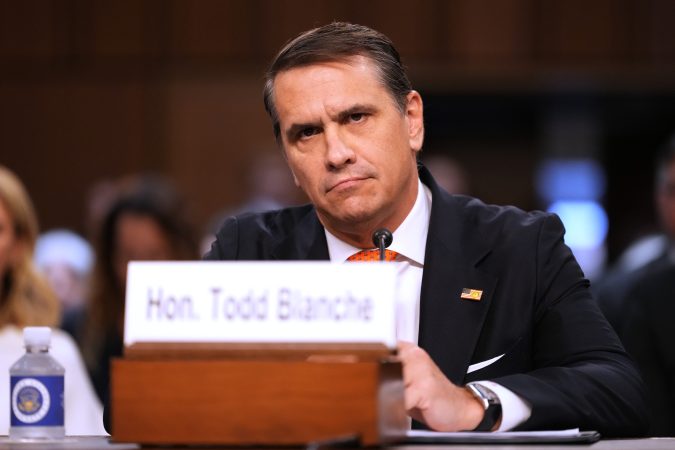
    WASHINGTON — Acting Attorney General Todd Blanche confronted skeptical questioning at a Senate confirmation hearing Wednesday about the creation of a fund to compensate President Donald Trump’s allies and a tax immunity deal for the president as he aimed to lock down the Republican support needed to advance his nomination.

    Blanche insisted that the $1.776 billion “Anti-Weaponization Fund,” which was scrapped after fierce bipartisan backlash, was “not moving forward.” But lawmakers, including Republican Sen. John Cornyn, conveyed concerns that the Trump administration has yet to commit in writing that the fund is dead and could therefore conceivably be resurrected.

    “Just to be clear, the president of the United States, who’s a plaintiff in this lawsuit, has not agreed in writing to delete the ‘Anti-Weaponization Fund’ and there’s no guarantee that he won’t raise it in the future?” Cornyn asked. Blanche replied that Trump has no power over the fund, which was to have been administered by the Justice Department but never launched.

    Cornyn’s questions were closely watched since Blanche requires the backing of all Republicans on the Judiciary Committee and the Texas senator has not committed his support.

    The hearing arrived at a tumultuous time for the Justice Department, with mass firings and resignations hollowing out the workforce and Democrats and other critics raising alarms that Blanche is still functioning as the president’s personal lawyer. He has led the department on an interim basis since April, functioning as the public face of the maligned and later-withdrawn fund and accelerating investigations into perceived Trump adversaries.

    Even as he said the fund had been shelved, he made clear that immunity from tax audits afforded to Trump this year remained in place.

    Those actions, plus the flawed release of files from the Jeffrey Epstein sex-trafficking investigation, received fresh scrutiny Wednesday.

    “You’re in charge of a Department of Justice I don’t recognize, prosecuting the president’s political enemies, firing rank and file prosecutors and FBI agents,” Democratic Sen. Chris Coons of Delaware told Blanche. “These are some actions that in your previous confirmation hearing before us, you said you would not take.”

    Blanche, for his part, insisted he has presided over a course correction following Justice Department investigations into Trump during the Biden administration.

    “In recent years, we watched the Justice Department turned against many of you and a former president, and it damaged the public’s faith in justice,” Blanche argued. “We are fixing that.”

    Blanche will need the support of each Republican on the panel

    Key to Blanche’s confirmation are Cornyn of Texas, who in May lost his primary, and Sen. Thom Tillis, a North Carolina Republican who has opted not to seek reelection. Entering the final stretches of their Senate career, both are seen as more likely than before to split from Trump and both have been outspoken critics of the fund the Trump administration created to compensate people who feel unjustly persecuted by the criminal justice system.

    After questioning Blanche about the fund, Cornyn told CNN he continues “to have some concerns” and is not “going to make any decisions at this point.” Tillis, meanwhile, indicated during questioning that he is likely to support Blanche, even as he said he wanted “to stick a fork in this turkey of a 1776 fund.”

    The death of South Carolina Republican Sen. Lindsey Graham, who was a member of the committee, level 11 Republicans and 10 Democrats on the panel. A no-vote by even a single Republican on the committee could scuttle his nomination.

    Blanche insists the fund is dead. Lawmakers aren’t so sure

    The fund emerged from a settlement of Trump’s $10 billion lawsuit against the Internal Revenue Service over his leaked tax returns. Blanche had initially defended the initiative only to later reveal that it was being scrapped following fierce bipartisan backlash.

    The judge who presided over the case said in a scathing ruling Monday that Trump and his lawyers had manipulated the court system through the lawsuit and subsequent settlement and said she was troubled Blanche had signed the settlement given his prior representation of Trump and was concerned he had given misleading testimony. Blanche said Wednesday that he disagreed “with the judge’s insinuations about me.”

    Blanche also defended a separate element of the settlement that afforded Trump and members of his family protection from tax audits and that, he has said, remains on track despite outrage over it even from Republicans. Blanche said the deal covers any existing audits but does not protect the president from examination of future tax filings.

    “Nobody is above the law,” Blanche said. Such a settlement “doesn’t make any of those individuals above the law.”

    Epstein files are also under scrutiny

    Blanche was also pressed on the department’s staggered release of the Epstein files, a process beset by problems, including redaction errors that left exposed nude photos showing the faces of potential victims.

    During a podcast interview with Joe Rogan released Wednesday, Vice President JD Vance said the administration “absolutely” mishandled the communications surrounding the files, including when then-Attorney General Pam Bondi distributed binders of Epstein documents at the White House to far-right influencers that contained already-public material.

    Blanche acknowledged that “mistakes were made” in the release process but nonetheless defended the work.

    “I want to make sure that the American people know that this administration, when it comes to Jeffrey Epstein, has been more transparent than any administration,” he said. The Justice Department only released additional files after Trump bowed to bipartisan pressure to sign a law forcing the department to do so.

    A former federal prosecutor and key member of Trump’s defense team as the Republican battled four indictments, Blanche arrived at the Justice Department last year as deputy attorney general. At one point, under friendly questioning from Republican Sen. John Kennedy about whether he and Trump are friends, Blanche responded: “I’m his lawyer,” before quickly correcting himself to say he “was his lawyer.”

    He ascended to the top job in April after Trump ousted Bondi, who had frustrated the White House by struggling to bring successful cases against Trump’s political opponents. Blanche has tried to satisfy Trump in that regard, including with an indictment of ex-FBI Director James Comey, another Trump adversary, on charges of threatening the 47th president by posting a social media photograph of seashells in the numerical arrangement of “86 47.”

    Comey has said the numbers were not a call to violence.

    Blanche was also asked about Jan. 6 violence

    Tillis, who has said he would not support for attorney general anyone who equivocates on the events of Jan. 6, 2021, when pro-Trump rioters stormed the U.S. Capitol, denounced the Biden administration Justice Department for what he said were excessive prosecutions and punishments.

    Democrats, meanwhile, pressed Blanche on the violence and Trump’s sweeping clemency action benefiting more than 1,500 people, including those convicted of violently attacking police.

    Democratic Sen. Sheldon Whitehouse criticized Blanche for comments at a political conference this year where he appeared to characterize the Jan. 6 pardons as an administration accomplishment. Blanche replied that he has “never said that any sort of violence against law enforcement is appropriate.”

    “He has the absolute right to pardon anybody for any reason he sees fit,” Blanche said of the president. “I am not celebrating that. It is a fact.”

  • U.S. reimposes blockade and steps up strikes as Iran threatens to halt Mideast energy exports

    U.S. reimposes blockade and steps up strikes as Iran threatens to halt Mideast energy exports

    DUBAI, United Arab Emirates — The U.S. reimposed a naval blockade on Iran and intensified its airstrike campaign Wednesday in retaliation for Tehran’s attacks on ships trying to pass through the Strait of Hormuz. The American strikes hit an Iranian army barracks, killed at least seven troops and wounded hundreds of people across the country, Iranian officials said.

    Days of back-and-forth strikes by the U.S. and Iran across the Middle East — and renewed threats to the waterway crucial to global energy supplies — have shredded the interim deal to end the conflict and the region could tip back into all-out war.

    The U.S. first imposed a blockade in April and then lifted it last month after signing the interim deal that paused the fighting and set a 60-day period for negotiations over issues such as Iran’s nuclear program. Those talks have stalled as fighting over the Strait of Hormuz has intensified.

    When the U.S. and Israel launched the war on Iran on Feb. 28, Tehran effectively closed the waterway to shipping traffic — a move that sent the price of oil, fertilizer, and many other goods soaring far beyond the region and gave Iran major leverage in negotiations. Those rising prices pose a particular challenge to President Donald Trump and his Republican Party, which hopes to retain control of Congress in elections in November. But Washington has struggled to successfully reopen the waterway.

    Iran’s parliament speaker and lead negotiator, Mohammad Bagher Qalibaf, said Iran was prepared for a fuller military confrontation if the U.S. does not live up to the terms of the interim deal, and Iran’s paramilitary Revolutionary Guard threatened to halt all energy exports from the Middle East over the blockade.

    “The export of oil and gas from the region will be either for everyone or for no one,” the Guard said.

    Soon after the U.S. launched its third wave of strikes in 24 hours, Trump said Iran was ready to strike a peace deal, but he did not elaborate.

    “They don’t like what we’re doing, and they do want to settle. We’ll find out whether or not we settle with them, or we just finish it off,” he said Wednesday at a defense summit at the U.S. Army War College in Pennsylvania.

    Trump insisted that the U.S. is “doing really well with Iran” and added that the Islamic Republic “is not happy right now.”

    Both the U.S. and Iran launch attacks as the blockade is reimposed

    The U.S. carried out a wave of strikes, hitting dozens of targets overnight, the military’s Central Command said Wednesday, and then resumed striking Iran during daylight — an unusual move that further signaled the increasing tempo of the attacks. Another wave of strikes began late Wednesday.

    About 24 hours after the blockade went into effect, the U.S. military opened fire and disabled a merchant vessel Wednesday.

    U.S. Central Command said that they spotted Curacao-flagged oil tanker Belma sailing toward Kharg Island and, after the ship “ignored multiple warnings,” a U.S. aircraft disabled the vessel after firing hellfire missiles into the ship’s smokestack.

    In addition to the now-disabled Belma, the U.S. military said it has also had to speak with two other commercial vessels but they complied with their instructions to turn away.

    Among the U.S. military’s targets was Greater Tunb Island, which is viewed as a strategic point in the Strait of Hormuz. Central Command said the attack targeted Iranian defense and missile sites.

    Iran took control of three islands — Abu Musa, Greater Tunb and Lesser Tunb — from what would become the United Arab Emirates in 1971. The UAE has sought to reclaim them.

    Some analysts have suggested that if the U.S. seized the islands, they could allow it to control the strait.

    The U.S. military said its bombing campaign hit targets along Iran’s southern coast in Bandar Abbas, Khormuj, Ahvaz, Qeshm, Bushehr, and Kuh-e Stak — a list that includes several coastal towns and another island near the strait.

    Another strike targeted a barracks for Iran’s 388th Mechanized Infantry Brigade, which operates tanks and armored vehicles, in Sistan and Baluchestan province, Iranian state television reported. The report said the Americans fired at least 13 missiles in the attack and that the seven dead included conscripts and career soldiers. A number of troops were wounded.

    More than 35 people have been killed and more than 300 wounded by U.S. airstrikes in recent days, said Hossein Kermanpour, a spokesperson for the Iranian Health Ministry. At least 72 people are hospitalized, he added.

    Kermanpour did not break down the figures between civilians and combatants.

    The announcement marked the first overall toll given by Iranian authorities for this round of fighting. The number of wounded was far larger than for any other recent violence between Iran and the U.S. The army said it would make “a decisive response,” according to state TV.

    U.S. Navy Adm. Brad Cooper, who leads Central Command, said in a statement that Iran had launched dozens of missiles and drones at neighboring Gulf Arab countries.

    Missile-alert warnings sounded Wednesday in Bahrain and Kuwait as they faced incoming Iranian fire — a daily occurrence in recent days. In a post on X late in the day, Bahrain’s Interior Ministry urged people to “head to the nearest safe place.”

    Jordan said it shot down three incoming Iranian missiles. Iran claimed attacks on the three nations, all of which host U.S. forces.

    In a statement published online, Qalibaf said the United States had not lived up to the terms of the interim peace deal, which he said included “Iranian arrangements” over the Strait of Hormuz.

    “Now that we have entered the implementation phase, the United States, having exhausted its legal and diplomatic options, is trying to undermine those Iranian arrangements through force,” he wrote.

    Qalibaf’s comments appeared aimed at critics within Iran who oppose negotiations with the U.S. He argued that negotiations should not be equated with compromise or surrender, but as part of a broader strategy of resistance.

    The Strait of Hormuz remains at the heart of the fighting

    The latest round of fighting is focused on the Strait of Hormuz, through which a fifth of the world’s oil and natural gas trade passes during peacetime. How to reopen the strait has bedeviled the U.S. since Iran choked it off in the early days of the war.

    During the interim deal, some ships began moving through the passage using a route near Oman overseen by the U.S. military that is outside Tehran’s control.

    In recent days, Iran attacked ships using that route — and back-and-forth attacks ensued. The U.S. has threatened to reopen the strait by force — but experts say that would require a much bigger armada if not tens of thousands of ground troops. Imposing the blockade is another way to put pressure on Iran.

    But in the meantime, oil prices are rising. The price for Brent crude oil, the international standard, traded above $85 a barrel on Wednesday — more than 15% higher than the price before the war, but still well below the nearly $120 reached at the height of the conflict.

    Analysts with the International Monetary Fund warned Wednesday that while a surplus of oil had kept prices low, “much of that room has now been used up.”

    “Unless inventories are replenished, the world will start from a weaker position when the next shock comes,” Azim Sadikov and Jean-Marc Natal wrote in a blog post.

  • Former Bucks County man who voted twice for President Donald Trump in 2020 sentenced to six months of house arrest

    Former Bucks County man who voted twice for President Donald Trump in 2020 sentenced to six months of house arrest

    A former Bucks County man who voted twice for President Donald Trump in the 2020 election was sentenced Wednesday to six months of house arrest and three years of probation.

    Matthew Laiss was found guilty by a jury earlier this year of casting two ballots in the 2020 election: first by mail in Pennsylvania, where he had once lived in Ottsville, and then again in person in Florida, where he was living at the time.

    Laiss, 32, said in court Wednesday that his actions were “stupid” and a mistake. And his lawyer said that Laiss never meant for both votes to actually count — that he had wrongfully assumed election officials would identify he had voted twice and only count one of his ballots.

    “In hindsight, it wasn’t good judgment,” Laiss said.

    Prosecutors, however, said they did not believe that, in part because they said Laiss misled FBI agents about his actions when he was confronted years later. And Assistant U.S. Attorney Mark Dubnoff said Laiss had shown a “striking” lack of remorse for what he did, repeatedly saying it was the result of his age or mental health at the time, as opposed to realizing he had committed a crime.

    “Mr. Laiss has not accepted ownership of what he did,” Dubnoff said.

    U.S. District Judge Joseph F. Leeson Jr. said Laiss’ crimes were serious and had affected “all citizens of this country.”

    But he declined to send Laiss to prison, noting that Laiss had already lost his job as an insurance salesman as a result of the case, and that he would have the felony conviction on his record for the rest of his life.

    The U.S. Attorney’s Office charged Laiss last year with crimes including voter fraud and voting more than once in a federal election.

    Prosecutors said records showed that Laiss had filled out and returned a mail-in Pennsylvania ballot in October 2020. And less than a week later, they said, he went to a polling place in Florida and voted again.

    Laiss later said in court documents that he voted twice for Trump. And as his case progressed toward trial, he sought to claim that his actions were covered by pardons Trump extended to people who tried to help him overturn the results of the 2020 election, which Joe Biden won.

    Leeson denied Laiss’ motion, and in March, Laiss, now a resident of Bethlehem, was found guilty by a federal jury in Allentown.

    Prosecutors announced Laiss’ case alongside the indictment of a Philadelphia woman, Miya Pack, who was separately charged with voting twice in the 2020 election. She pleaded guilty last month and is awaiting sentencing.

    Still, attorneys said cases involving people casting multiple ballots were relatively rare in eastern Pennsylvania. Laiss’ lawyer said the only other comparable case in the region that unfolded in recent years was that of Philip C. Pulley, a Philadelphia landlord who voted in the city, Montgomery County, and Florida in 2020 and 2022. He was also sentenced to probation.

    Trump has nonetheless made frequently questionable or false statements about the prevalence of voter fraud, particularly in instances where his opponents or Democrats have won. Election officials and experts generally agree that voter fraud has not historically occurred at widespread rates or in ways that could lead to incorrect outcomes.

  • President’s House advocates vow to keep fighting despite the new exhibit — and a vandalism citation

    President’s House advocates vow to keep fighting despite the new exhibit — and a vandalism citation

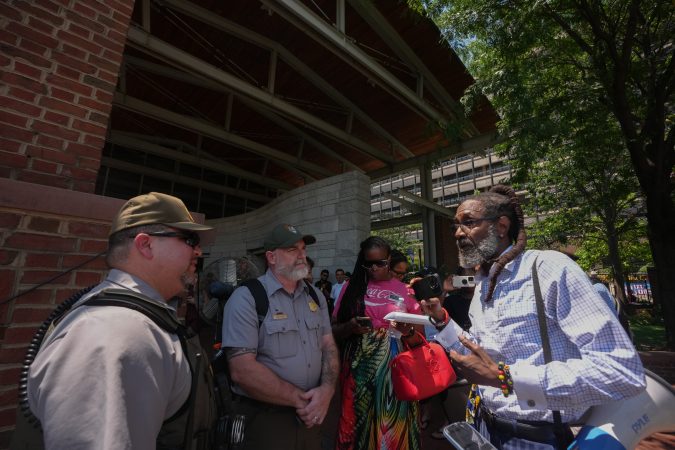
    Sandra Shachar has been posting news articles on the walls of the President’s House Site almost every day since January.

    She was outraged that President Donald Trump’s administration had dismantled the exhibit telling the story of the nine people George Washington enslaved in his executive mansion at Sixth and Market Streets, and sharing information with visitors was her way to push back.

    When she arrived at Independence Mall on Wednesday morning, new panels were on the historic site’s walls. The National Park Service had installed a new exhibit before dawn.

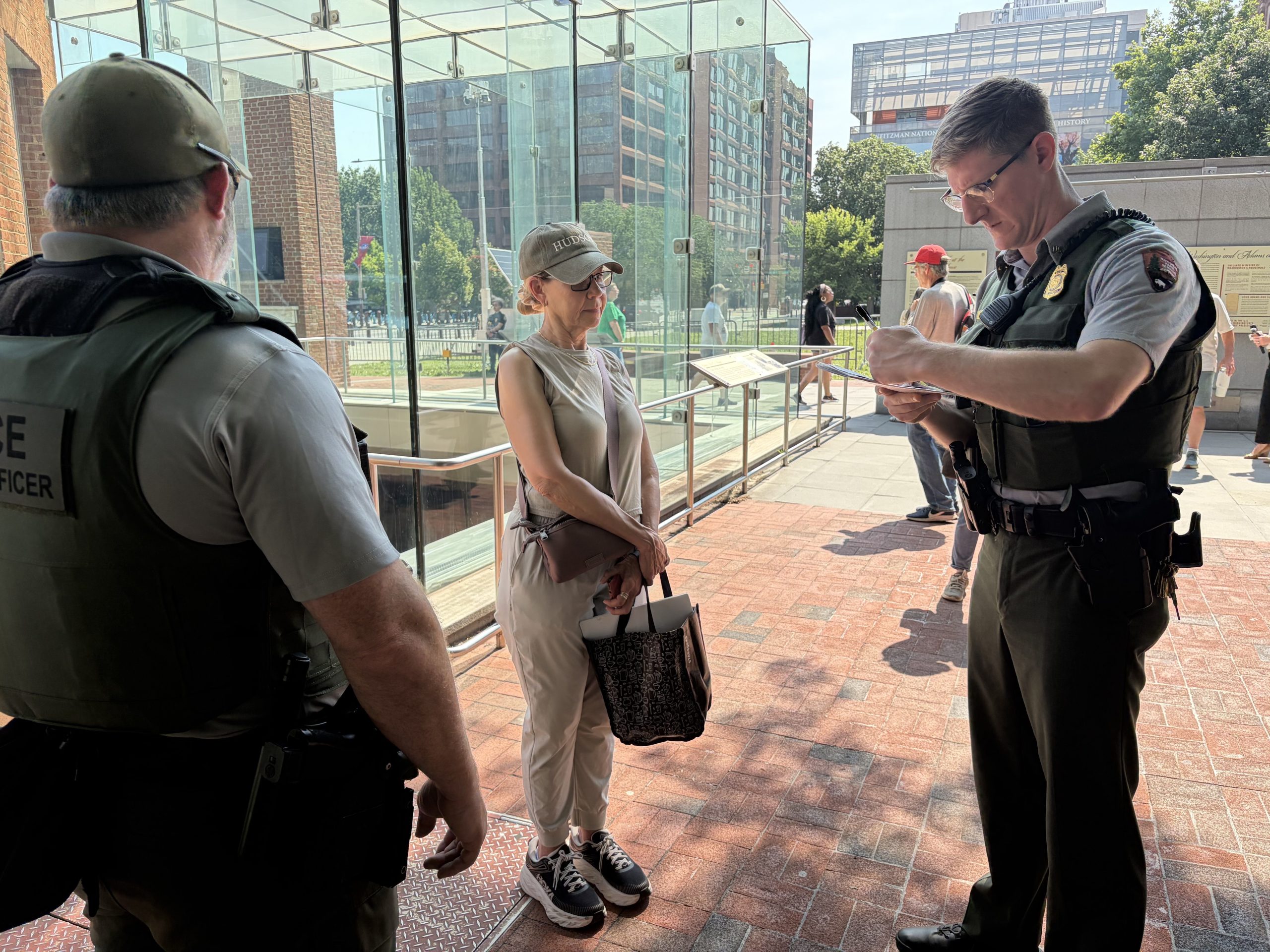
    But Shachar, 72, continued with her routine. This time, two park rangers stopped her.

    “When I went to tape my sign up, they came and said, ‘You can’t do that. Please stop,’” the psychologist from Center City said.

    Sandra Shachar, 72, cited for vandalism at the President’s House site on July 15, 2026 for attempting to post news articles on the walls.Abraham Gutman

    The rangers issued Shachar a citation for vandalism, which carried a $305 fine, and warned her that next time she could be arrested.

    The news came as a gut punch.

    “It was something I could do,” Shachar said. “And now for doing something, I’m issued a citation that says I have created vandalism on federal property.”

    The vandalism citation marks an escalation in the National Park Service’s response to protest at the President’s House, and comes as activists promise to keep the fight over the site’s history alive.

    The National Park Service installed the new exhibit early Wednesday, hours after the city hosted MLB All-Star Game events near the site.

    Michael Coard, leader of Avenging the Ancestors Coalition, a group that has fought to develop and protect the President’s House exhibit, spoke at the site shortly after noon and vowed resistance.

    “I don’t care whether you’re a Republican or Democrat, liberal or conservative … this is some scary [expletive],” Coard said. “Despite being very afraid, we got to keep fighting.”

    Fascist leaders throughout history have attempted to rewrite the past as part of their campaign to control the future, the attorney said. And that is the level of threat the Trump administration’s changes to the President’s House represent, Coard said.

    The new panels have been criticized for minimizing the brutality of slavery, whitewashing George Washington’s culpability, and shifting the focus away from the nine people who were kept in bondage at the nation’s first executive mansion.

    It is outrageous that visitors will see panels that, for example, discuss Washington’s “discomfort” with slavery and suggest the lives of those enslaved in Philadelphia were not too bad, Coard said.

    “The fact that the federal government would ignore the hell of slavery for the victim but highlight the president’s ‘discomfort,’” Coard said. “What kind of nonsense is that?”

    Avenging the Ancestors Coalition’s goal continues to be the full restoration of the site with the original panels that had been developed through partnership with the city and input from the community. The group is exploring new legal strategies, Coard said.

    The city is also not done fighting, Mayor Cherelle L. Parker said in a statement.

    Her administration plans to ask the U.S. Court of Appeals for the Third Circuit for a new hearing, giving city attorneys a chance to argue their case again.

    A three-judge panel held that the city has no rights over the site and dismissed all but one count in Philadelphia’s underlying lawsuit.

    Security cameras that have been placed at the President’s House site, where new panels have been installed, in Philadelphia, July 15, 2026. Historians and advocates have criticized the new panels for minimizing Washington’s role as an enslaver.Jessica Griffin / Staff Photographer

    The case raises “serious legal issues” that go beyond the President’s House, Parker said.

    “I will continue fighting on behalf of everyone who supports the core belief: All of our history must be told,” the mayor’s statement said.

    It will be up to the Third Circuit to decide whether to grant a second hearing to an issue that three judges had agreed on unanimously.

    The efforts to educate visitors about the President’s House continue as well.

    Old City Remembers, a grassroots effort, will continue to register volunteers to read aloud the text of the removed signs. And the Black Journey: African-American Walking Tour of Philadelphia will continue to offer tours that tell the story of those enslaved at the site.

    Brian Wells, 65, has been putting up protest posters on the President’s House walls since the day after the January removal. On Tuesday, Wells said, national park police stopped him from taping papers and threatened him with arrest.

    He thought the heightened security was because of an MLB All-Star event held Tuesday on Independence Mall, but now that the panels have been replaced, he isn’t so sure.

    “I will continue with Old City Remembers folks to volunteer to read aloud the text from the former panels,” Wells said Wednesday. “Other actions? I don’t know at this point.”

  • Hegseth announces policy to test troops for low testosterone

    Hegseth announces policy to test troops for low testosterone

    WASHINGTON — Defense Secretary Pete Hegseth announced Wednesday that he is rolling out a new screening program for “testosterone deficiency” among troops, calling it necessary to allow them to operate at their “absolute best.”

    The screenings will be conducted annually as part of service members’ required medical screenings for those 30 and older, he said. Troops under 30 can volunteer to be tested. In a video on social media, Hegseth said receiving testosterone replacement therapy would be voluntary.

    In the video, Hegseth simply refers to troops, though it appears he is talking about only testing men in uniform for hormone irregularities.

    The move comes as other Trump administration officials have begun to advocate for men to have easier access to testosterone replacement therapies, but the messaging from Hegseth and others blends known science on the hormone with broader, and less substantiated, claims.

    When asked about what conditions Hegseth was looking to address with the new policy, the Pentagon referred to Hegseth’s remarks in the video that mentioned keeping troops “strong, resilient, and capable” and that the rigors of the modern battlefield demand “maximum psychological and mental readiness.”

    Over the past several years, special operations troops — and specifically Navy SEALs — have come under scrutiny for their use of testosterone and similar substances to enhance performance.

    The death of a SEAL recruit during training in 2022 led to a discovery of substances in his possession, including testosterone, and revealed far more rampant drug use among the elite program than was previously acknowledged.

    A year after the recruit’s death, the Navy said it would begin a drug-testing program to screen for “any hormonal substance, chemically or pharmacologically related to testosterone, that promotes muscle growth.”

    Hegseth said his new initiative is “not about artificial enhancement.”

    The Pentagon did not respond to questions about what research or academic studies underpinned the move. It also didn’t say if female troops would be able to be evaluated for estrogen-based therapy as they entered perimenopause.

    Testosterone levels in men decline naturally with age and have long been linked to issues like erectile dysfunction, low libido, mood changes, and weight gain. But experts have debated for years how to diagnose those problems and whether they should be treated by replacing the hormone.

    Hegseth’s announcement comes as Health Secretary Robert F. Kennedy Jr. and other Trump administration officials are moving to make it easier for doctors to prescribe testosterone. Last month, the Food and Drug Administration proposed easing prescribing limits on testosterone gels, pills, patches, and injections.

    The current FDA label specifies that the medications are only for men with hypogonadism, a medical condition that causes drastically low testosterone.

    But many influencers and proponents of Kennedy’s “Make America Healthy Again” movement tout testosterone as a way to look younger, build muscle, and stay mentally sharp — although those uses aren’t accepted by most medical experts.

    Still, recent studies have bolstered the case for testosterone’s benefits, for certain conditions, while allaying worries about its safety — particularly concerns about heart safety.

    Last year, the FDA removed a boxed warning about possible risks of heart attack and stroke from the drugs.

    Separately, a series of studies by the National Institutes of Health in older men found that taking testosterone improved erectile dysfunction, libido, and other sexual measures and had a small effect on mood. But there was little or no improvement in other measures like fatigue, memory or overall well-being.

    Other studies have shown potential improvements in muscle-building, strength and bone density.

    However, current medical guidelines generally recommend against blanket testing of testosterone levels. Typically, doctors are advised to discuss testosterone therapy with men who have troubling symptoms and documented low levels of the hormone on two separate blood tests.

    Testing for testosterone is challenging because levels of the hormone fluctuate throughout the day. Accurate testosterone readings are typically measured in the morning after fasting.

    Rep. Chrissy Houlahan, a Pennsylvania Democrat and Air Force veteran, said the “announcement proves that Secretary Hegseth takes direction from the far corners of the manosphere.”

    The congresswoman on the House Armed Services Committee said she hoped testosterone testing “will be available for both men and women and that servicewomen will be afforded access to the same resources to enable them too to be the most elite warriors” on Earth.

    Hegseth has previously said that he does not believe women should hold combat roles and that those positions should be based on the “highest male standard.” He has blocked some military promotions for women or fired female leaders since becoming Pentagon leader.

    He has made other changes related to the medical treatment of troops.

    In April, he announced the repeal of the military’s long-standing flu vaccine mandate, citing “medical autonomy” and religious freedom. In June, a flu outbreak at the U.S. Air Force’s boot camp sickened at least nearly 300 people.

  • ICE should keep making traffic stops despite recent shootings, Trump says

    ICE should keep making traffic stops despite recent shootings, Trump says

    WASHINGTON — President Donald Trump wants Immigration and Customs Enforcement officers to keep pulling over vehicles, signaling his opposition Wednesday to plans announced just a day earlier to suspend most traffic stops following another string of fatal shootings.

    It’s not clear whether ICE will quickly reverse course and resume most stops, which have been a key tool in Trump’s immigration crackdown.

    Ending those stops, Trump wrote, would be “playing right into the criminal’s hands.”

    “We CANNOT give up one of ICE’s most important and effective Crime Fighting tools, THE TRAFFIC STOP!” Trump wrote Wednesday on his social media site.

    Hours after Trump made his views known, Homeland Security Secretary Markwayne Mullin issued his own statement saying people illegally in the country would be “arrested and deported wherever they are.” But Mullin didn’t directly say whether ICE officers will be allowed to carry out traffic stops.

    ICE’s enforcement tactics are coming under renewed criticism after three people died during encounters with federal officers within a week. In Florida, a 28-year-old man was killed Tuesday after he was hit by a tractor-trailer while running from immigration and other federal officers, authorities said.

    Before that, two motorists were shot and killed by ICE officers — one in Texas last week and another in Maine on Monday.

    After the Maine killing, Trump administration officials told ICE officers to suspend most vehicle stops, people familiar with the decision said Tuesday.

    Since the immigration crackdown began, federal officers confronting drivers have opened fire several times, saying the drivers’ vehicles had posed a danger. Policing experts have long said that shooting into moving cars presents a danger of its own and should almost always be avoided.

    There have been at least 10 deaths involving encounters with immigration agents since Trump launched his deportation campaign. At least four of them involved people in vehicles, a trend so troubling that Republican U.S. Sen. Susan Collins of Maine urged Department of Homeland Security leaders “to cease all non-urgent vehicle stops.”

    Two shootings in a week, she said Wednesday, “raise very serious questions” and warrant a halt in that approach for the time being.

    ICE has been under pressure to beef up arrest and deportation numbers. It says people being sought are increasingly staying in their homes, and it often blames immigration advocates who advise immigrants to stay in homes unless ICE produces a warrant signed by an independent judge.

    ICE officers say that means they’re forced to find other ways to make arrests.

    DHS says the man killed in Maine came to the U.S. illegally

    More protests are planned after hundreds gathered Tuesday to remember Johan Sebastián Durán Guerrero, the 25-year-old Colombian national who was shot in his car Monday.

    Karolina Rojas, his partner and the mother of their young daughter, shared a photo on Instagram of the three hugging and smiling.

    “I love you, my darling, my life. I love you. I have no words for this pain. You were my everything. Please watch over me. Help me find the strength to carry on. Stay with me always. Don’t leave me alone. I’m begging you, my love,” she wrote.

    Durán Guerrero illegally entered the U.S. on Sept. 1, 2023, through the southern border, DHS said Wednesday. Advocacy groups said that when he was killed, he was authorized to work in the U.S.

    Sen. Angus King (Ind., Maine) said the Homeland Security secretary told him on Monday that ICE officers were in Biddeford to serve an arrest warrant but that it wasn’t for the person who was shot.

    When ICE tried to stop a vehicle driven by someone who came from a home under surveillance, the “vehicle attempted to flee the scene and, fearing for public safety, an officer discharged his weapon,” the department said.

    It its statement Wednesday, DHS said Guerrero was released into the U.S. after crossing the border.

    The department didn’t answer questions about the agent who shot him.

    Photos showed bullet holes in Durán Guerrero’s car windshield, but the officers involved didn’t have body cameras, leaving many questions.

    Maine shooting puts a spotlight on ICE

    Outgoing Colombian President Gustavo Petro called the shooting of Durán Guerrero a targeted killing “at the hands of the U.S. government.”

    In Wednesday’s social media post, Trump told ICE to be “judicious, fair and smart, and go back and do your very important job.”

    Border czar Tom Homan told reporters that the investigation needs to play out and that officers will be held accountable if they are found to have acted inappropriately or illegally.

    Maine’s Democratic governor, Janet Mills, said ICE should be scrapped as a federal agency if it can’t be fixed.

    Mills, who has criticized ICE before, said Wednesday that the agency needs changes “before more families are robbed of a loved one.”