Category: Nation & World

  • Beijing rejects Trump’s claim of meddling, but avoids a fight

    Beijing rejects Trump’s claim of meddling, but avoids a fight

    China on Friday rejected President Donald Trump’s claim that it had meddled in U.S. elections as baseless. But its response was relatively restrained, a sign that Beijing did not want to let the accusation derail a thaw in relations that both sides have spent months trying to preserve.

    Trump had said in a speech that China had carried out “the largest compromise of election data in history” starting with the 2020 cycle, one of several claims he made that was either overstated or untethered from reality.

    In Beijing, a Foreign Ministry spokesperson, Lin Jian, said China had “no interest in interfering in the U.S. elections and has never done so,” adding that the claims “are aimed at vilifying China.” It leveled a vague accusation back at Washington for “wantonly” interfering in other countries.

    The response was firm but made no demands for retractions or threats of punishment. On China’s social media, commentators who are usually stridently nationalist were mostly quiet.

    China experts said this showed that Beijing saw Trump’s speech as an attempt at playing to American voters before midterm elections, rather than a broadside directed at China.

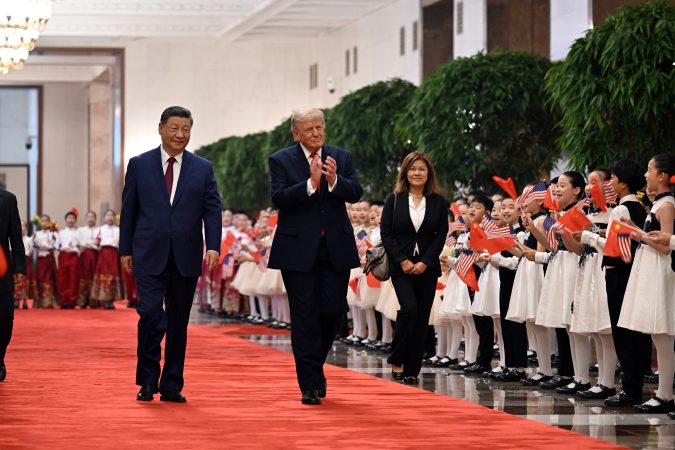
    It also underscored a desire on Beijing’s part to maintain a truce that was struck in May during a summit between Trump and China’s top leader, Xi Jinping.

    Trump’s rhetoric on China during his address was “definitely harsh,” said Sun Yun, a scholar of China at the Stimson Center, a research group in Washington. But Trump had built up so much goodwill in China in recent months, she added, “there is some resilience in the relationship.”

    Playing the China card

    From Beijing’s perspective, Trump was taking aim at China for domestic political reasons, experts said. Officials in China understand that the Republicans are under pressure as midterm elections approach.

    Chinese state media commentaries have argued that Trump has lost some of the support of his political base following his military intervention in Venezuela and the war in Iran. They have noted that he has failed to keep factory jobs at home, while consumers “bear higher fuel costs and inflation.”

    Viewed through this lens, Trump’s speech was an attempt at mobilizing voters by fanning the idea of foreign intervention, said Wu Xinbo, an American studies scholar at Fudan University in Shanghai.

    “Trump played this card mainly for domestic politics; it was not aimed at China-U.S. relations,” Wu said, adding that this was something Chinese officials would likely not respond to if it was a one-off.

    Documents released by the White House that Trump said bolstered his claims suggest there is evidence of a pro-China influence effort and that Beijing was skeptical of Trump. But that was a minority perspective inside the intelligence agencies, and the intelligence officers who held that view said they had only low or medium confidence in their assessments.

    China wants to preserve the stability

    The U.S.-China relationship steadied in October after Beijing agreed to suspend its limits on exports of rare earth metals, and Washington halved tariffs on China related to fentanyl. “We’re not going to hurt China,” Trump said at the time.

    After Trump met with Xi in Beijing, China said both sides had agreed that U.S. tariffs would not rise further. They agreed on a relationship based on “constructive strategic stability,” a vague term meant to signal that both sides would limit hostilities.

    During his trip, Trump invited Xi to the White House on Sept. 24, a meeting that officials are now working toward. Beijing expects the upcoming visit to help improve trade ties.

    Any disruption to the fragile detente will hinge on whether Trump decides to take additional action on his claims of election meddling.

    If Trump were to take fresh actions against China, like putting new tariffs on Chinese goods, Wu said, “China would certainly retaliate.”

    Chinese economy needs the U.S.

    China may also be tempering its response because it wants to make nice with the United States on trade disputes as its own economy stumbles and as its companies face pushback from foreign governments.

    This week, China reported that its economy grew at the slowest pace in three years. It is also facing increased scrutiny in other parts of the world as its exports surge, raising alarm among politicians in Europe and Southeast Asia. Chinese shipments overseas climbed 27% over the month of June, and its trade surplus with the world climbed to more than $125 billion, its second largest on record.

    At home, Chinese families are feeling poorer, consuming less, and seeing fewer job prospects. That means that China needs markets overseas to keep its factories churning, grow its economy, and create new jobs, said Ja Ian Chong, an associate professor of political science at the National University of Singapore.

    “Having more access to the U.S. market could also take some of the pressure off China’s economic relationships with a bunch of other countries from Europe to Africa and Asia,” he said.

    This article originally appeared in the New York Times.
  • Lettuce at Taco Bell in 5 states confirmed as a source of diarrhea-causing parasite

    Lettuce at Taco Bell in 5 states confirmed as a source of diarrhea-causing parasite

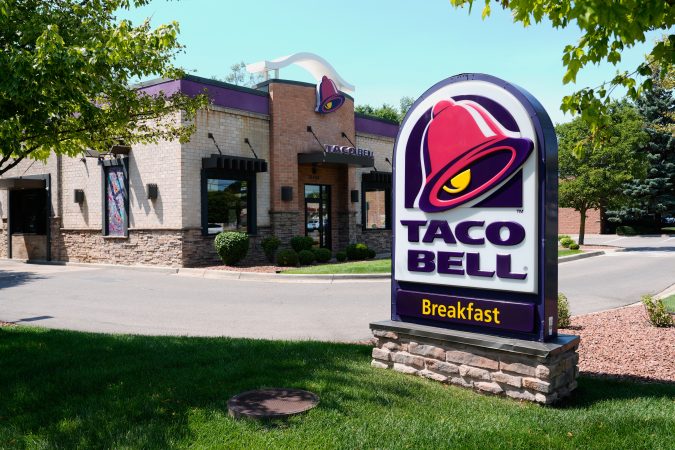
    ATLANTA — Federal health officials have identified lettuce from Mexico served at Taco Bell locations across five U.S. states as a source of a widespread outbreak of diarrhea-causing parasite cyclospora.

    The Centers for Disease Control and Prevention late Thursday warned consumers not to eat shredded iceberg lettuce from Taco Bell restaurants in Indiana, Kentucky, Michigan, Ohio, and West Virginia. A record number of cyclospora cases have been reported in more than 30 states, and experts have said not every recent U.S. illness might be caused by a single source.

    A Food and Drug Administration investigation so far has identified a single supplier of the lettuce. The federal warnings to consumers did not identify the company, but Taylor Fresh Foods, of Salinas, Calif., said FDA testing indicated it was “a specific independent farm” affiliated with the company.

    The FDA was working with the supplier “to determine if potentially contaminated shredded iceberg lettuce remains on the market,” including in other states, the CDC said. “Taco Bell has committed to stop using any lettuce from the supplier identified by FDA’s traceback investigation.”

    Taylor Farms has been tied to foodborne outbreaks in the past. The company said in a statement Friday afternoon that it was voluntarily removing all iceberg lettuce sourced from central Mexico from the U.S. market.

    “As a family owned and operated company, we are deeply concerned for those who became ill, their families, and the many Americans whose trust in the safety of their fresh produce has been shaken,” the statement said.

    Taco Bell says it will use a different supplier

    CDC, FDA, and public health officials in several states have been investigating a multistate outbreak of cyclospora infections.

    The illness is not usually life threatening and is typically treated with antibiotics.

    On Thursday, ahead of the federal government’s confirmation, Taco Bell issued a statement saying that it had taken “immediate action to voluntarily remove potentially impacted lettuce from a supplier in select states. The affected ingredient from our supplier is being indefinitely removed from our supply chain nationwide and will be replaced within 24 hours in select states.”

    It’s possible other businesses could be linked to outbreak

    In a statement, federal health officials stressed that other “brands, restaurants, retailers, or distribution channels” could be tied to the outbreak as the investigation continues.

    Michigan investigators are trying to figure out if the lettuce went to other restaurants or stores because many of the ill people said they didn’t eat at Taco Bell, state health officials said Friday.

    There is no evidence the outbreak “is related to poor food handling or preparation at any single restaurant or fast-food chain,” Michigan health officials said in a statement.

    For that reason, they continue to recommend that consumers purchase whole heads of lettuce instead of pre-washed, bagged lettuce or premixed salad kits. Taylor Fresh Foods said in its statement that no Taylor Farms-branded salad kits contain iceberg lettuce.

    Some past outbreaks linked to the company involved products sold under different brand names.

    North Carolina health officials on Friday reported their count has now surpassed 300 cases, but said the recent illnesses there are not considered to be linked to the outbreak in and around Michigan. They said the most commonly reported foods include parsley, cilantro, and lettuce, but it’s not clear if those ingredients were the source of the infections, they said.

    Cyclospora cases have been rising for years

    Cyclospora is a microscopic, spherical parasite that commonly causes watery diarrhea “with frequent and sometimes explosive bowel movements,” according to the CDC. Outbreaks tend to occur most often in the late spring and summer.

    The heat-loving parasite infects the bowels and spreads through feces. In the past, people have been infected by consuming fruits or vegetables that were exposed to feces-contaminated irrigation water.

    The illness, called cyclosporiasis, is less common than foodborne illnesses caused by other germs, including salmonella and E. coli. Many cases are never linked to a specific food or other source and, for years, few U.S. cyclospora outbreaks were reported. But the number started rising about a decade ago, with a particularly notable spike in 2018 and 2019.

    Previously, 2019 saw the most reported U.S. cyclosporiasis cases, with about 4,700. The current surge has far surpassed that. Michigan — the apparent epicenter of the current outbreak — is reporting more than 5,000 cases, and more than 2,000 additional probable and suspected cases have been reported in other states.

    No deaths have been reported. But Michigan officials say more than 100 people in that state have been hospitalized, and health officials say dozens more have been hospitalized in other states.

    Experts attribute the increasing trend in cases to climate change and better detection. They also say it’s likely that cyclospora cases historically were underreported, for several reasons.

    Some common tests used to check for food poisoning have not been geared to detect cyclospora. Technicians aren’t able to grow the parasite in labs, making it hard to draw evidence from contaminated produce. And it can be hard to figure out what food sick people had in common because sometimes it’s a single ingredient that might be common in multiple recipes — like basil or cilantro.

    Taco Bell, Taylor Farms have been tied to past outbreaks

    The FDA’s traceback investigation identified a single supplier of iceberg lettuce from Mexico used by the Taco Bell locations where people who got sick ate, federal officials said.

    The Mexican food chain is among the restaurants linked to foodborne illness outbreaks in the past.

    Taylor Farms also was tied to a 2013 cyclosporiasis outbreak linked to salad mix and a 2024 E. coli outbreak tied to onions served at McDonald’s.

  • Trump’s envoy faces protests in Venice on latest stop of super yacht diplomacy tour

    Trump’s envoy faces protests in Venice on latest stop of super yacht diplomacy tour

    VENICE, Italy — The billionaire U.S. ambassador to Italy faced protests when he arrived in Venice on Friday aboard his luxury yacht as part of a coastal diplomacy tour marking the 250th anniversary of American independence.

    Activists described hospitality mogul Tilman Fertitta’s arrival as an unwelcome display of American wealth and influence for many Italians at a time when they see the Trump administration as upending the post-World War II international order.

    The so-called Coastal Diplomacy 250 tour of 13 Italian coastal regions on a super yacht is intended to celebrate “our shared history, our economic partnership, and the cultural bonds that make the U.S.-Italy relationship so special,” Fertitta said in a social media post.

    In Venice, many of the same groups that protested the wedding last year of Jeff Bezos to Lauren Sanchez are mobilizing against Fertitta’s arrival aboard the 384-foot luxury yacht, Boardwalk, which features two helipads, a pair of swimming pools, and a fully equipped spa and gym.

    On July 4, protest organizers unfurled a banner reading “Venezia non si USA,” which is a play on words combining the Italian phrase “Venice is not to be used” with the acronym USA. The banner was as long as Fertitta’s yacht to illustrate what the protesters called “the dimensions of his arrogance.”

    “It’s arrogant to think he can do what he wants in a city that is ever more sold to the single culture of tourism,’’ organizer Stella Morion told the Associated Press. She said protesters are also opposed to President Donald Trump’s international politics, including U.S. strikes on Iran, which she said have prompted a spike in energy prices.

    “It is the umpteenth slap in the face of a city and all of the people in Venice who struggle to reach the end of the month due to an increase in prices caused by Trump’s war,” she said.

    Fertitta has declined a request for an interview to discuss the tour and the planned protest.

    The billionaire owner of Fertitta Entertainment was sworn in as ambassador to Italy in 2025. He made his fortune in the hospitality industry, including restaurants, hotels, and casinos. He also owns the NBA’s Houston Rockets. His official biography puts his net worth at $11.3 billion, while Forbes ranks him among the 100 wealthiest Americans.

    Details of who Fertitta will meet while in Venice have not been released, but he was expected to attend the famed Redentore festival on Saturday, which commemorates the end of the plague in 1576 culminating with celebratory fireworks over St. Mark’s Basin.

    He has already stopped over in the Sicilian port town of Cefalu, where his family’s roots trace back to 1566, and met with the governor in Palermo. He has also stopped at the Calabrian port of Le Castella and sailed along the coast of Puglia and up the Adriatic coastline to Venice.

    Fertitta’s tenure includes navigating a cooling in the once warm relationship between Italian Premier Giorgia Meloni and Trump, who has made a series of social media attacks against her. Meloni, who was once seen as a close political ally in Europe with similar views on such issues as immigration, did not attend 250th celebrations at the U.S. Embassy.

  • What’s changed at the President’s House with the Trump administration’s new exhibit

    What’s changed at the President’s House with the Trump administration’s new exhibit

    The National Park Service removed early Wednesday the few panels that remained from the slavery exhibit at the President’s House, and replaced them with new panels.

    The original displays were deemed to “inappropriately disparage Americans past or living” following President Donald Trump’s 2025 executive order on “restoring truth and sanity to American history.”

    The newly installed panels include 11 whose renderings were published on the National Park Service’s website and first reported by The Inquirer in April, as well as smaller panels that weren’t previously made public. Among those are additional references to the nine people George Washington enslaved in his Philadelphia home.

    Historians previously criticized the panels for minimizing the brutality of slavery and whitewashing Washington’s culpability in the institution.

    And according to advocates, the additions don’t change much.

    Telling a blatant lie, such as claiming slavery didn’t exist, would be too easily exposed, said Michael Coard, a founding member of Avenging Our Ancestors, a group that advocated for the development of the site.

    “The best lie is one that has a little bit of truth,” Coard said.

    The new panels make light of slavery, the attorney said, and focus on Washington’s “discomfort” instead of the experience of the nine people the United States‘ first president enslaved in Philadelphia.

    Others criticized the panels for drifting away from the site’s original purpose.

    When the site open in 2010, the city and National Park Service said the President’s House exhibit “pays tribute” and “honors lives of enslaved Africans in presidential household.”

    The Department of Interior said Wednesday the new panels “acknowledge the evils of slavery, including its injustices and hypocrisies, and, by telling the stories of the nine slaves that Washington kept in the President’s House, remind us of their essential humanity.”

    The Inquirer photographed the original panels before their removal and the new panels that were installed this week. Here are the differences in the exhibit.

    What’s gone

    The original exhibit included five screens across the site that played reenactments depicting the daily lives of those enslaved at Washington’s Philadelphia home.

    “The site had to tell the stories that are not often told and share the perspectives of the people who up to now have been nameless and voiceless,” said Rosalyn McPherson, the site’s project director, in the 2010 news release.

    Those screens were turned off.

    Also gone are the artistic panels, which included a portrait of Ona Judge, who escaped from slavery at the house, and another about Washington’s signing of the Fugitive Slave Act.

    Workers remove the display of panel for Ona Judge at the President’s House in Independence National Historical Park in January.Tom Gralish / Staff Photographer

    What’s replaced

    The removed panels included information about the suffering of enslaved people.

    A panel titled “The Dirty Business of Slavery” included information about the slave trade, the constitutional compromise to appease slaveholders, the growth of the enslaved population during the presidencies of Washington and John Adams (who also lived at the President’s House), and a timeline of slavery from 1619 and through emancipation.

    Another panel, titled “Life Under Slavery,” discussed the brutality of the notorious institution, resistance efforts, and slavery in Philadelphia.

    It told the story of Absalom Jones and Richard Allen, men who were born into slavery and managed to buy their own freedom.

    “Enslaved people of African descent in the North, deprived of fundamental freedom, endured profoundly difficult lives,” the panel read. ”Controlled by others, their families were always threatened by forced separation, and their work, often exhausting, was nearly always unpaid.”

    Those panels were replaced with ones that include broad descriptions of slavery that do little to unpack the experience of those subjected to it, and focus on the triumph of emancipation.

    The new “Fighting for Freedom” panel discusses the Underground Railroad, quotes Frederick Douglass, Abraham Lincoln’s rise to the presidency, and the Emancipation Proclamation.

    Another panel about “The Constitution and Slavery” begins by stating: “The words ‘slave’ and ‘slavery’ are not in the U.S. Constitution as ratified, nor the word ‘property’ in connection with language alluding to slavery.”

    It discusses “compromises with pro-slavery delegates,” and ends with a section titled “fulfilling the promise” that quotes the Rev. Dr. Martin Luther King Jr.’s “I Have a Dream” speech.

    A panel about “Slavery in the British Colonies” pays homage to Benjamin Franklin and Black abolitionists, and shows the declining numbers of enslaved people in Philadelphia between 1767 and 1847.

    And in a trio of displays called “History Lost & Found,” the Trump administration focuses on how the 2007 archaeological dig of the site worked and discovery of primary sources documents it presents as non-controversial: Washington’s letters and a map of the property.

    Unlike the original panels about the archaeological dig, the new ones have no mention of slavery, the nine people Washington enslaved, or the National Park Service’s initial apprehension about helping to develop the memorial.

    But starkest difference comes in the treatment of slavery at the President’s House itself.

    An original panel included a timeline of the site’s history from the time Indigenous people lived in the area and through the 2002 discovery of slavery at Washington’s household.

    It continued to discuss the collaboration between the city, federal government, and community groups to develop the site.

    The panel’s section on slavery at the house focused on George and Martha Washington ownership of enslaved people, the president’s secret efforts to evade Pennsylvania’s Gradual Abolition Act, and the escapes of Ona Judge and Hercules.

    In contrast, the new panel titled “The Executive Mansion” follows a mention of slavery at the house with a statement that Washington’s views evolved and that he freed his slaves in his will.

    Another new panel that addresses “Presidents Washington and Adams on Slavery” head on says Washington was “caught between his private doubts about slavery and his public responsibilities as president” and privately “often expressed discomfort with the institution.”

    “Slaves living in the President’s House experienced a greater modicum of autonomy than elsewhere in the South such as to explore the city and sometimes even attend the theater, with Washington buying the tickets,” the panel reads.

    On the same wall, a new smaller panels lists the nine people Washington enslaved alongside short bios. The panel tells visitors that Washington “knew and trusted his enslaved house staff,” and repeats that he used to “buy them tickets to the circus and the theater.”

    The wall also includes a smaller panels that briefly tells escape stories of Judge and Hercules, and references Washington’s attempt to recapture them.

    What’s new

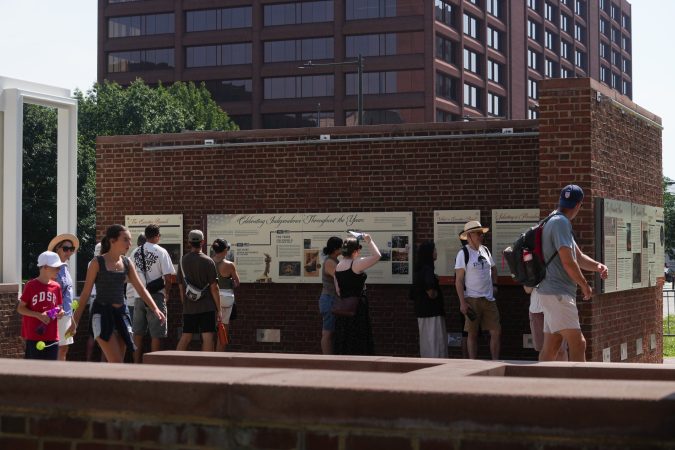
    Multiple panels throughout the exhibit share facts about U.S. history, but bear no connection to the site or slavery. These include “Celebrating Independence” and “Throughout the Years,” which denote the nation’s 100, 150, and 200 year celebrations.

    And a series of panels provide a civic lesson about the history, powers, and role of the commander in chief. Another panel discusses “the need for an executive branch.”

    New panels detail the biographies of George and Martha Washington, John and Abigail Adams, and Benedict Arnold. The biography of William Howe, a British commander who occupied Philadelphia during the Revolutionary War and lived at the President’s House, is also attached to the wall.

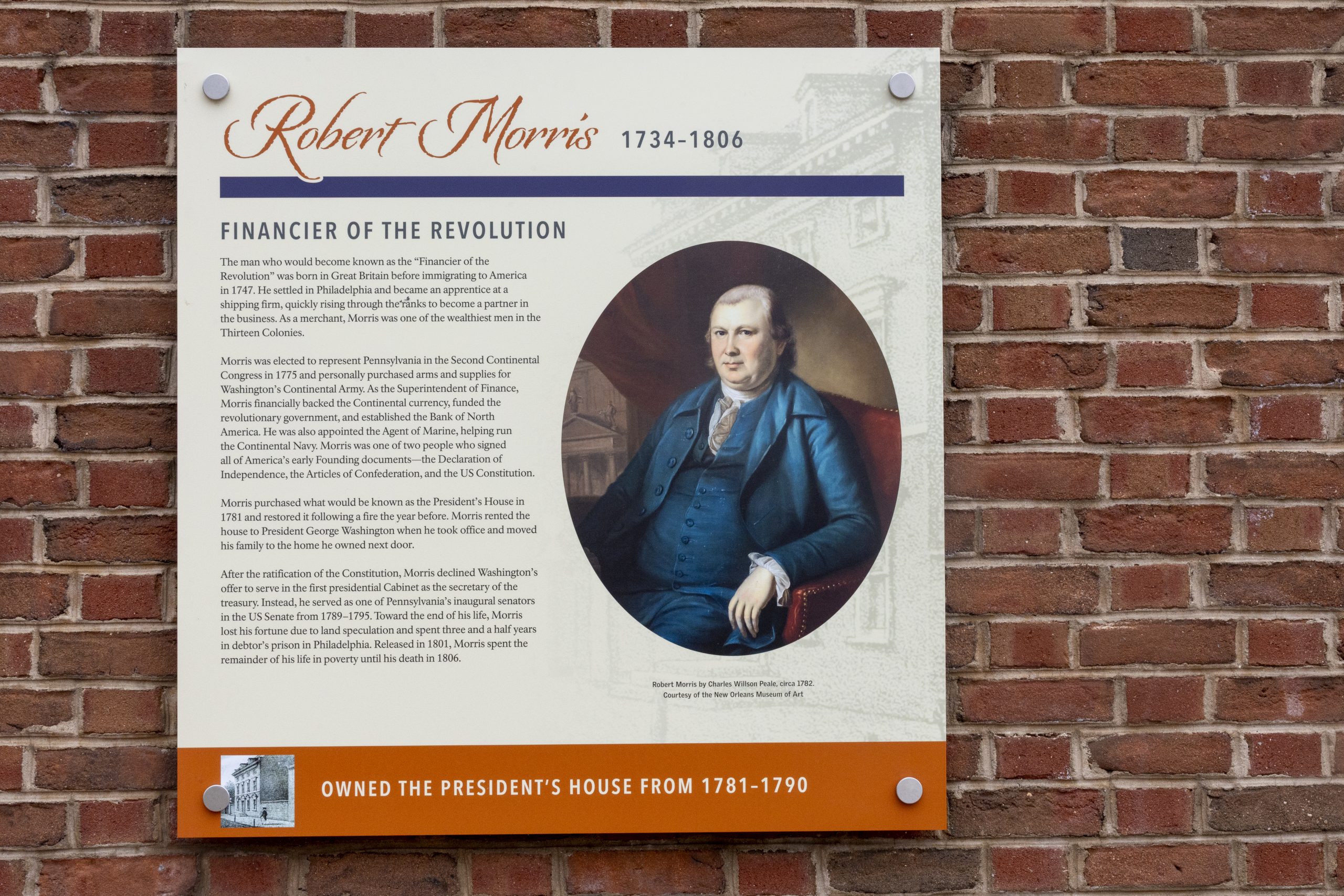
    Finally, the new exhibit pays homage to Robert Morris, known as the “financier of the American revolution” and offered Washington the house as the executive mansion with a panel dedicated to his biography.

    Morris’ ownership of a company that traded slaves is never mentioned.

    A detailed image of one of the new panels installed by the National Park Service at the President’s House this week.Aidan T. Gallo / Staff Photographer
  • A meteorite that crashed into a New Jersey home contained ‘alien world chemistry,’ a new study says

    A meteorite that crashed into a New Jersey home contained ‘alien world chemistry,’ a new study says

    New findings about an alien asteroid are out, and it’s all thanks to a New Jersey couple after an uninvited hazard crashed into their home two years ago.

    In July 2024, a meteorite shot through the sky. Observers across the Northeast said they witnessed a fireball at the time.

    Before reaching Earth, the asteroid had a mass of 115 pounds, according to calculations based on the fireball’s brightness, speed, and sonic boom. Most of the mass — which blazed through the atmosphere at 32,000 mph — was annihilated. The news went quiet.

    NASA said at the time that the rock likely hadn’t survived. No one reported anything making it to the ground.

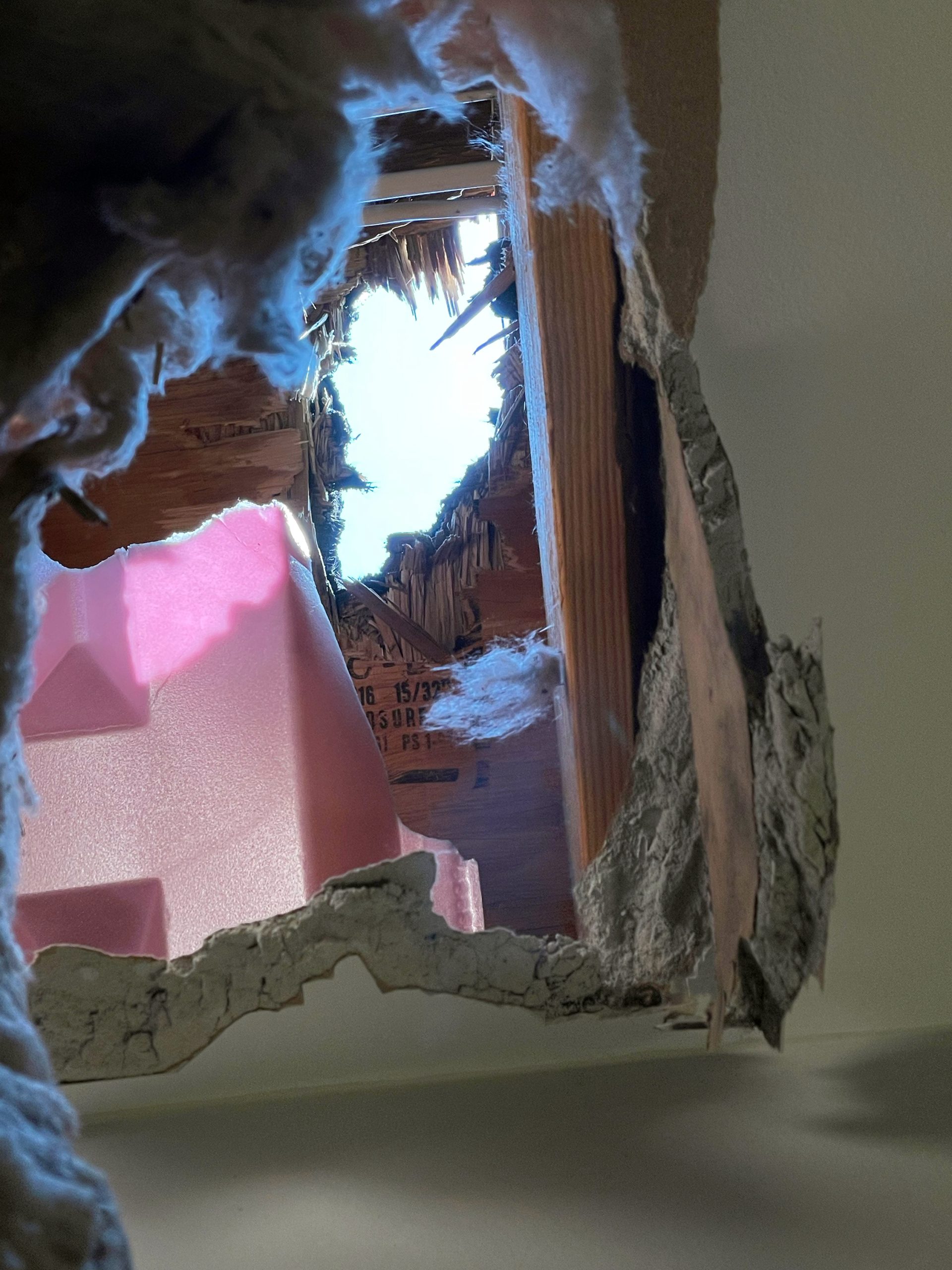
    But in a quiet Hillsborough, N.J., residence, a couple’s home started violently shaking at around 11:15 a.m. The male homeowner — who requested anonymity citing privacy concerns — told the New York Times the crash caused a hole in the ceiling above his bed.

    A handout photo shows damage to the ceiling, attic, and roof of a home in Hillsborough, N.J., that was struck by a meteorite on July 16, 2024. A New Jersey couple helped scientists uncover the makeup of an unusual asteroid after it fell into their bedroom.VIA THE NEW YORK TIMES

    “Good thing I didn’t sleep in,” he told the Times. The meteorite fragment also had an odor: rotten, sulfurous, with fine black soot and dark rocks.

    The Somerset County couple spent weeks gathering what would amount to about three pounds of extraterrestrial material, using disposable gloves, aluminum foil, and glass jars on the advice of scientists who would later study the findings in detail.

    They painstakingly extracted every fleck of meteor dust they could find, using tape to peel microscopic bits off walls, and buying a new vacuum cleaner to exclusively suck up cosmic particles from the carpet, they told the Times.

    “We were extremely meticulous,” one of the homeowners said. “The only thing we were missing were the hazmat suits.”

    And they told no one about the meteorite except immediate family and the scientists — until now.

    “Thanks to the homeowner’s quick reaction, these are the most pristine [meteorites] we know of,” said Peter Jenniskens of the SETI Institute (a nonprofit institute that studies extraterrestrial intelligence) and NASA’s Ames Research Center.

    Two years later, the secret is out.

    A journal published Wednesday by ScienceAdvances details the homeowners’ findings and the contents of the meteorite.

    As it turns out, the fragments showed scientists that the meteorite was made of a rare and primitive material. The study also revealed that before the fragments broke off, the meteorite had been covered in brine. Meteor experts say that’s a new observation and suggests the meteorite’s parent asteroid had liquid water that evaporated.

    Researchers said high concentrations of salt in brines could “create molecules crucial to life on Earth.” The meteorite also held a mix of soluble organic compounds, including amino acids, and compounds found in blood and used in photosynthesis in living organisms.

    Does that mean we absolutely have proof of aliens now? Not so fast.

    But experts say it does help scientists understand what building blocks of life may have been delivered to the early Earth.

    Now that the study of the meteorite is wrapped, the American Museum of Natural History in New York City will receive some of the fragments.

    “We are thrilled that nature delivered such a precious asteroid sample on our doorstep,” museum curator Denton Ebel told CBS.

    As for the meteorite’s name? It wasn’t New Jersey-born, but it sure was New Jersey-bred. The meteorite was named Hillsborough, for the roof it crashed through and the couple who helped preserve it.

  • Europe’s early heat wave led to a spike in deaths, may have killed over 10,000

    Europe’s early heat wave led to a spike in deaths, may have killed over 10,000

    Heat that hit Europe exceptionally early and hard this year appears to have led to a spike in deaths, with well over 10,000 more people dying at the height of the heat wave than would normally have been expected, according to figures that are still emerging across the continent.

    Measures of what researchers call “excess mortality” — the difference between the normally expected number of deaths and the actual number — spiked in late June, when parts of Europe experienced record temperatures. Experts caution that it takes a while for a full picture to emerge, and that many heat-related deaths will never formally be recorded as such. For example, a heart attack, which can be triggered by extreme heat exposure, especially in people who are older or have underlying health issues, may be listed on a death certificate simply as a heart attack.

    It’s an alarming start to the summer. Several heat waves have killed thousands of people in the past few years in Europe. Still, 2003 stands as the deadliest year in Europe for heat, with about 70,000 deaths. The frequency and intensity of heat waves are supercharged by climate change, which comes from the burning of fuels like coal, oil and gas.

    An exceptionally deadly week in early summer 2026

    The EuroMOMO mortality monitoring hub, which receives data from two dozen countries, gave an estimate of 14,260 for excess mortality from all causes in the week ending June 28, more than 12,000 of those deaths being among people age 65 and older. That’s out of a total 84,583 deaths that week. Figures in the preceding and following weeks were far lower.

    Lasse Vestergaard of Denmark’s Statens Serum Institut, which coordinates EuroMOMO, said that “we attribute this to the heat wave affecting quite a lot of countries in Europe, and we do that because there is no other obvious explanation that could explain such a high excess mortality happening at the moment.”

    Such a high excess in a single week is “highly unusual,” he added. EuroMOMO doesn’t give absolute numbers for individual countries, but found the highest rates of excess in France, Belgium and Germany.

    Nations that bore the brunt of the heat have issued their own estimates — which don’t always follow the same methodology or timelines. Here is a snapshot of heat-related deaths being reported by various countries.

    Germany

    Germany’s disease control center, the Robert Koch Institute, directly attributed 6,830 deaths to heat this year through early July, 6,470 of them among people 65 and older. Temperatures in Germany late last month hit their highest levels since records began, peaking with a measurement of 41.7 degrees Celsius (107.06 Fahrenheit) on June 28, according to the German Weather Service.

    United Kingdom

    Britain’s Met Office, the national weather agency, said that 2,700 people are believed to have died from heat-related causes during heat waves in England and Wales in May and June. Of those deaths, it says that about 550 occurred in late May and about 2,200 in late June. This year brought national heat records for May of 35.1 Celsius (95.18 Fahrenheit) and for June of more than 37 Celsius (98.6 Fahrenheit).

    France

    France’s public health authority said there were at least 2,000 more deaths in the week of June 22-28 than the previous week, when temperatures were already climbing. France recorded its hottest-ever days on June 24 and 25, when the Meteo France weather service said the national thermal indicator — an average of daily temperatures measured at 30 weather stations — hit 30 Celsius (86 Fahrenheit). More than 40% of France saw peak temperatures of above 40 Celsius (104 Fahrenheit).

    Spain

    An estimated 937 deaths in Spain in June were attributed to excess heat, according to the Carlos III Health Institute, an official Spanish monitoring agency. Last month was Spain’s second-hottest June on record, with temperatures 3.2 Celsius (5.8 Fahrenheit) above the monthly normal average, according to the AEMET weather agency. A five-day heat wave saw temperatures regularly surpass 40 Celsius (104 Fahrenheit), AEMET said.

    Belgium

    There were 1,747 deaths above what would usually be expected during the heat wave that ran from June 18 to July 1, according to Sciensano, Belgium’s public health institute. It said that “a certain excess mortality is expected during heat waves, as during waves of cold weather and flu epidemics. Nevertheless, the heatwave of June 2026 is distinguished by its exceptional breadth.”

    At the peak of the heat wave, there was a measurement of 35.5 Celsius (95.9 Fahrenheit) on June 26, the IRM weather institute said.

    Netherlands

    An initial estimate of excess death figures from the June heat wave found that the Netherlands had 480 more deaths than expected, according to the public health service. Increased mortality was particularly notable in eastern and southern areas, where the temperatures were the highest.

    The country saw its highest temperature ever for June, with the Dutch weather service registering 36.8 degrees Celsius (98.24 Fahrenheit). That’s more than a degree Celsius (1.8F) higher than the previous record, set in 1947.

  • Andy Burnham is declared leader of Britain’s Labour Party, will become prime minister on Monday

    Andy Burnham is declared leader of Britain’s Labour Party, will become prime minister on Monday

    LONDON — Andy Burnham was officially declared leader of Britain’s governing Labour Party on Friday, promising to bring hope to the British people and purpose to the floundering government as he cleared his final hurdle to take office as prime minister next week.

    The former mayor of Greater Manchester was the only contender in the center-left party’s leadership contest to replace departing Prime Minister Keir Starmer, who was forced out by a rebellion within his party. Friday’s announcement was a foregone conclusion after Burnham secured nominations from 379 of the 403 Labour lawmakers in the House of Commons.

    Burnham pledged to serve “people and places who have been waiting too long for politics to let them hope again.”

    “We’re going to give them hope back,” he told an audience of lawmakers, party activists, and trade union leaders in his first speech as leader. “I am ready.”

    “I have a plan,” he added, in a bid to reassure a party that has seen its popularity nosedive since winning a landslide election victory two years ago. He pledged to end Labour’s factional disputes, saying, “We won’t beat Britain’s new right if we are consumed by infighting and pulling in different directions.”

    Prime minister in waiting is about to take office

    Burnham has been prime minister-in-waiting for weeks, since winning a special election for a seat in Parliament a month ago, but he has revealed little detail about his policy priorities. He will arrive in Number 10 Downing Street largely unknown to voters outside Manchester.

    He sketched out some priorities in Friday’s speech, promising to deliver “hope in every heart” and “good growth in every post code,” in part by transferring power from central government in London to local leaders in cities and regions.

    “We will take power back from Westminster and Whitehall and give it to the place you live,” he told the audience. “More power over life’s essentials so you can make them work better.”

    Starmer announced last month that he would resign after two years in office marred by missteps and judgment errors that eroded his standing with his party and the public.

    Labour regularly trails behind anti-immigration party Reform UK in opinion polls, and the governing party had catastrophic results in local elections in May, triggering pressure on Starmer to step down that he couldn’t resist.

    Burnham deemed a better communicator than Starmer

    Burnham brings a more relaxed style of leadership than the rather stern Starmer, and is regarded as one of the Labour Party’s best communicators. But he faces many of the same problems as his predecessor, including a sluggish economy, a cost-of-living squeeze fueled by wars in Ukraine and the Middle East, and overstretched public services.

    And his promises of a new, less divisive politics are not too different to what Starmer pledged when he took office in 2024.

    “I will work to build a new politics. The country is crying out for it,” Burnham said. “How can politicians point fingers when living standards are falling and politics as a whole isn’t working for them? It infuriates them and makes them switch off.”

    He said he would have the “courage to fix the big things that politics has neglected,” such as tackling the patchy access to social care for those who need it because of age, illness, or disability. It’s a pressing issue in a country with an aging population, and one that has foxed previous Labour and Conservative governments.

    Burnham says he’ll reverse 40 years of bad decisions

    He highlighted plans to focus on economic renewal, more public control of key sectors, and creating new modern industrial jobs, arguing that Britain took “a series of wrong turns in the 1980s” when “political power was centralized and economic power privatized.”

    That’s the decade when Conservative Prime Minister Margaret Thatcher oversaw policies of privatization, deindustrialization, and political centralization that transformed the U.K. economy.

    “Slowly, at times imperceptibly, over four decades, political and economic power drained away out of our communities in every region and nation of the U.K.,” Burnham said, calling Britain’s change of prime ministers — for the sixth time in a decade — “the most significant change moment in our politics for 40 years.”

    Starmer will remain prime minister until Monday, when he formally tenders his resignation to King Charles III. The king will then ask Burnham to form a government.

    Britain’s parliamentary democracy allows governing parties to change leaders, and thus prime ministers, without the need for a general election. The next national election doesn’t have to be held until 2029.

    New prime ministers have come with increasing frequency in recent years. Burnham will be the U.K.’s seventh leader since 2016.

    He faces strong and sometimes conflicting pressures.

    Unions welcomed his focus on living standards but said the test would be whether he can deliver. Business group the Confederation of British Industry praised his emphasis on economic growth, but also aid that “the challenge is execution.”

  • US strikes bridges and collapses a tower at a key port as its Iran campaign expands

    US strikes bridges and collapses a tower at a key port as its Iran campaign expands

    DUBAI, United Arab Emirates — The United States expanded its airstrike campaign against Iran early Friday by hitting more bridges, energy sites and collapsing a tower at a key Iranian port, part of U.S. President Donald Trump’s threats to start striking infrastructure to pressure Tehran to ease its chokehold on the Strait of Hormuz.

    Iran launched new missile attacks against U.S.-allied nations in the Middle East, including Qatar, a key mediator in the war. It also damaged a power and water desalination plant in Kuwait — something crucial in the small, desert nation.

    The interim ceasefire agreed to last month has collapsed, and the region has endured days of back-and-forth attacks by the U.S. and Iran as they battle for control of the strait. Iranian officials say U.S. strikes have killed dozens of people and wounded hundreds of others, with new casualties reported in Friday’s strikes.

    When the U.S. and Israel launched the war on Iran on Feb. 28, Tehran effectively closed the strait to shipping traffic, a move that sent the price of oil soaring and gave Iran major leverage in negotiations.

    Speaking in a primetime address to the American public, Trump insisted the war was going well.

    “We are likewise winning big in Iran, and you will see the fruits of that labor very, very shortly,” Trump said.

    Bridges and ‘electrical infrastructure’ hit in Iran

    The U.S. airstrikes hit bridges overnight into Friday in Iran’s southern Hormozgan province, killing at least seven people, Iranian state television reported. The attacks hit Bandar Khamir, a city on Iran’s coast on the Strait of Hormuz.

    The highway and railway bridge strikes appeared aimed at cutting off Bandar Abbas, Iran’s main port, from roads leading into the Islamic Republic’s central region onward to Tehran, the capital.

    While other routes still are open, the U.S. strikes could expand further, potentially disrupting both the movement of military materiel and goods needed for Iran’s 90 million people.

    Iran also acknowledged “attacks on power infrastructure” during the U.S. airstrike campaign for the first time Friday when its Energy Ministry issued a call for people to use less power in southern provinces.

    It said those areas “are currently experiencing extreme heat and attacks on power infrastructure.” The ministry did not elaborate on whether it was power plants, transmission lines or other equipment that had been attacked.

    Such strikes on power infrastructure had been suspected for days. Tehran city councilman Mehdi Chamran told journalists asking about electrical problems on Tuesday, “Just look at how many power facilities they hit … and you wouldn’t be asking that question.”

    Tower at key port collapses in US strike

    The U.S. military’s Central Command said it hit dozens of targets in its latest airstrikes, which concluded at dawn Friday, the sixth night in a row of American attacks.

    The strikes also collapsed a tower at Iran’s Chabahar port on the Gulf of Oman, a key trade route for landlocked, neighboring Afghanistan, the state-run IRNA news agency reported.

    Chabahar port, which Iran had been running with support from India, has been a repeated target of American airstrikes. Iranian state media acknowledged a third round of strikes on the facility without immediately acknowledging the tower’s collapse.

    Iran described the tower as overseeing commercial traffic into the port. However, Iran’s paramilitary Revolutionary Guard also operates at ports across the country.

    As of 6 a.m. Friday, the U.S. strikes had killed at least 38 people and wounded more than 400 in Iran, Health Ministry spokesperson Hossein Kermanpour said.

    Iran retaliates by targeting Qatar, a mediator in the war

    On Friday, Qatar twice warned the public to take shelter as a barrage of Iranian missiles targeted the nation. People heard explosions overhead as air defenses fired to intercept the missiles. Qatar’s Interior Ministry said falling debris wounded a child.

    Qatar, along with Pakistan, is a key mediator in trying to reach an end to the Iran war. But talks have broken down over Iran’s chokehold on the Strait of Hormuz.

    Iran also targeted Bahrain and Kuwait early Friday. In Kuwait, authorities said Iran attacked a power and water desalination plant, causing widespread damage to the station. About 90% of drinking water comes from desalination — and any disruption can threaten life.

    Kuwait said it extinguished the blaze and was working to assess the damage and get the station working again.

    Jordan’s military said it intercepted three incoming missiles Friday morning launched by Iran.

    Explosions also could be heard Friday morning in Irbil and Sulaymaniyah in northern Iraq’s semiautonomous Kurdish region as air defenses targeted incoming fire. The attack apparently targeted the Iranian Kurdish dissident group Komala, killing at least nine people and wounding others, said an official who spoke on condition of anonymity for security reasons.

    Iran did not immediately claim the attack but has targeted Komala in the past.

    Also on Friday, a tanker came under attack traveling through the Strait of Hormuz taking the route closest to Oman, the British military said.

    The report from the United Kingdom Maritime Trade Operations center said the ship sustained minor damage without any of its crew being injured.

    Iran has been attacking tankers traveling on the route near Oman but did not immediately acknowledge any attack.

    Strikes come as Iran and US vie for Strait of Hormuz

    Trump has returned in recent days to his threats to target Iranian power stations and bridges to try to compel Iran to loosen its hold on the strait, through which about a fifth of all oil and natural gas traded once passed in peacetime. The U.S. also reimposed a naval blockade on Iranian ports to halt its shipments of crude oil.

    Week-to-week cargo shipments through the strait dropped by almost a quarter at the beginning of the month, according to maritime data firm Lloyd’s List Intelligence. And that was before the recent surge in violence.

    Given the risks, some oil shippers are transiting the strait with their location devices turned off, but many are just staying put, Lloyd’s said Thursday. A growing amount of the region’s energy is being shipped through pipelines, but not nearly enough to offset the decline in shipping through the strait.

  • History shows how negotiations with Iran can achieve American goals

    The memorandum of understanding (MOU) between the United States and Iran is far from peace. It hasn’t even ended the fighting.

    But that is not the right way to judge the MOU.

    The real question is whether it eventually creates a political process that can do what force and pressure have repeatedly failed to do: give both sides a way to step back from escalation without appearing to surrender. For the United States, that means restraining Iran’s nuclear capabilities and behavior in the region. For Iran, it means something just as important: preserving sovereignty and political dignity, while moving from confrontation to negotiation.

    History provides a pathway for both sides to achieve what they want. At key moments in the past, Iran has engaged in constructive diplomacy because it could present negotiation not as a capitulation to outside powers, but as a means of defending national rights, territorial integrity and political independence.

    In other words, Iran will negotiate for sovereignty, not surrender. And this insight from the past should guide the current negotiations.

    After World War II, Soviet troops remained in northern Iran and supported separatist movements there. Tehran resisted the fragmentation of its territory and brought the issue before the newly created United Nations.

    For Iran, this was not a passive appeal for outside rescue. It was an effort by a weaker state to use international diplomacy to resist the pressure of a much stronger power. Tehran’s strategy mattered because it allowed Iran to defend its sovereignty through political means rather than by accepting fragmentation or relying on force alone.

    The crisis ended with Soviet withdrawal and became one of the earliest tests of the postwar international system.

    The outcome did not erase the imbalance between Iran and the great powers, but it showed that diplomacy didn’t mean accepting humiliation. Instead, it could offer Iran a forum in which its territorial integrity and political independence could be asserted and protected. That, in turn, allowed Tehran to frame compromise and de-escalation as the defense of its sovereignty.

    Forty years later, the newly declared Islamic Republic again used diplomacy to counter a threat — this time to end a war.

    Iran and Iraq had been at war for most of the 1980s. The conflict was devastating. Iran suffered enormous human and economic losses, and the fighting was increasingly difficult to sustain.

    In 1988, Iranian leaders accepted a ceasefire under the auspices of the United Nations.

    That decision was painful. It did not reflect trust in Iraq, the United States or the broader international system. Nor did it mean that Iran had suddenly abandoned the revolutionary language through which it had justified years of sacrifice. Instead, it reflected a sober recognition that endless war no longer served Iran’s survival, sovereignty or national welfare.

    Iranian leaders weren’t eager for compromise. But it became possible, because they could sell the ceasefire as a way to preserve the state rather than to surrender it. It allowed Tehran to move from war to diplomacy while still claiming to have defended the nation.

    This pattern of diplomacy continued after the Sept. 11, 2001 terrorist attacks. Despite decades of hostility, the United States and Iran found overlapping interests in Afghanistan. Both opposed the Taliban, and Iranian diplomats played a constructive role following the Taliban’s initial defeat. Iran wanted a stable Afghanistan that would not again become a Taliban sanctuary on its eastern border; the United States wanted help building a post-Taliban order without getting bogged down immediately in another regional confrontation.

    Made By History sponsors. FOR USE ON MADE BY HISTORY STORIES ONLY.Inquirer Staff

    The episode demonstrated something important: Iran could work with the United States — a bitter adversary — when it could pursue its concrete interests, and when the U.S. was not demanding that the Iranian regime humiliate itself.

    Cooperation over Afghanistan did not require Iran to surrender sovereignty or accept an American-dominated regional order. It allowed Tehran to advance a security interest while being treated, however briefly, as a political actor whose interests mattered. For the United States, it showed that limited engagement with Iran could serve American goals without requiring trust or friendship.

    This cooperation did not produce a new era of U.S.-Iranian friendship. Rather, it soon collapsed under the weight of mistrust, ideological hostility and American domestic politics.

    Fourteen years later, the 2015 nuclear agreement offered a more formal version of the same lesson. It did not end disagreements between Washington and Tehran over sanctions and Iran’s role in the Middle East. But it showed that verification, sequencing and reciprocal concessions could reduce one of the world’s most dangerous nuclear confrontations.

    The agreement was possible because it gave both sides something they could defend politically. Iran could say it had preserved its right to a civilian nuclear program and won sanctions relief. The United States and its partners could argue they had imposed limits, inspections and verification mechanisms on Iran’s nuclear activities. Each side could present the deal as a hard bargain that protected national interests.

    As in 2001, the agreement eventually collapsed. That exposed how diplomacy with Iran will always be vulnerable because mistrust runs deep, domestic opponents on both sides can always repackage compromise as surrender and powerful regional actors continue pressing for conflict.

    Despite these vulnerabilities, those working on the current MOU should recognize that diplomacy has been the only thing that has worked in the past — so long as Iranian leaders can sell negotiations as defending national rights and sovereignty, and outside powers like the U.S. can show that they have made Americans and their allies safer.

    While history does not guarantee success, it does suggest that it’s possible to forge an outcome in which the conflict between the U.S. and Iran can be managed politically — if each side recognizes the other side’s political constraints.

    Zach Battat is a historian of the modern Middle East whose work examines diplomacy, empire and external power politics in the region.

    Made by History takes readers beyond the headlines with articles written and edited by professional historians. Opinions expressed do not necessarily reflect the views of The Inquirer.

  • Philly-area Haitians brace for possible deportations as protected immigration status nears its end

    Philly-area Haitians brace for possible deportations as protected immigration status nears its end

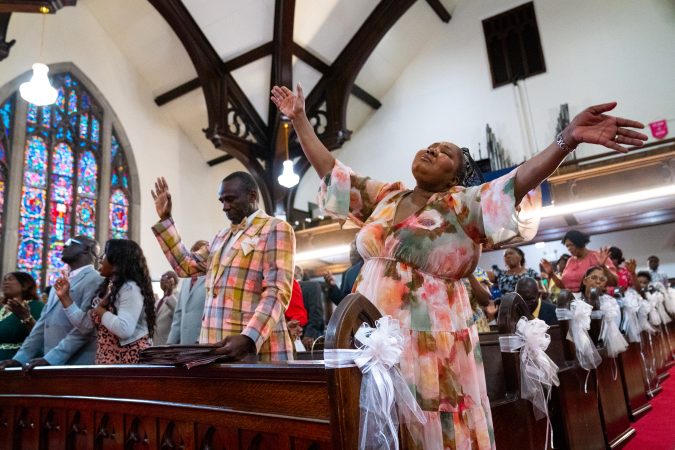
    After taking the pulpit at the First Haitian Church of God of Prophecy on Sunday, the Rev. Frantz Ulysse immediately spoke to the calamity that confronts families in his congregation:

    The end of the special immigration status that for years has allowed thousands of Haitians to live and work in Philadelphia and across the United States with their homeland in chaos ― ruinous natural disasters, governmental collapse, and gang violence that has displaced more than a million people.

    “We, as Haitians, we are in trouble,” Ulysse told worshipers at the Olney church. “We need to pray, because our God is a faithful God, and I believe he’s going to do something for us. … Our homeland, Haiti, it is not a safe place to go back to right now.”

    Prayers have been buttressed by petitions and by pleas to Congress to help before it’s too late.

    President Donald Trump is poised to return roughly 350,000 Haitians to a country that the U.S. government says is too dangerous for Americans, after the Supreme Court ruled last month that he could end temporary protected status for immigrants from Haiti and Syria.

    TPS is a humanitarian status that the U.S. can grant to foreign nationals whose nations are embroiled in war, environmental disasters, epidemics, or other extraordinary circumstances. It provides work authorization and protection from removal, but no path to permanent residency or citizenship.

    Among Philadelphia’s 11,000-strong Haitian community, disbelief over the court decision has turned to misery and fear, advocates say.

    The U.S. State Department has told Americans to stay out of Haiti, issuing its highest “Do Not Travel” advisory and warning those who insist on going to prepare a last will and testament.

    Many Haitians ask: How can Haiti be safe for my family if it’s not safe for others? Some face the prospect of separation from spouses and children who are U.S. citizens. Some will not step outside their homes to go to work, church, or school, afraid that federal agents could be watching, advocates said.

    “A lot of people are suffering now,” said Clifford Solomon, a church usher who is the father of four American children and whose wife is about to deliver a fifth. “A lot of my family is here [under TPS], my friends, my neighbors, all of them.”

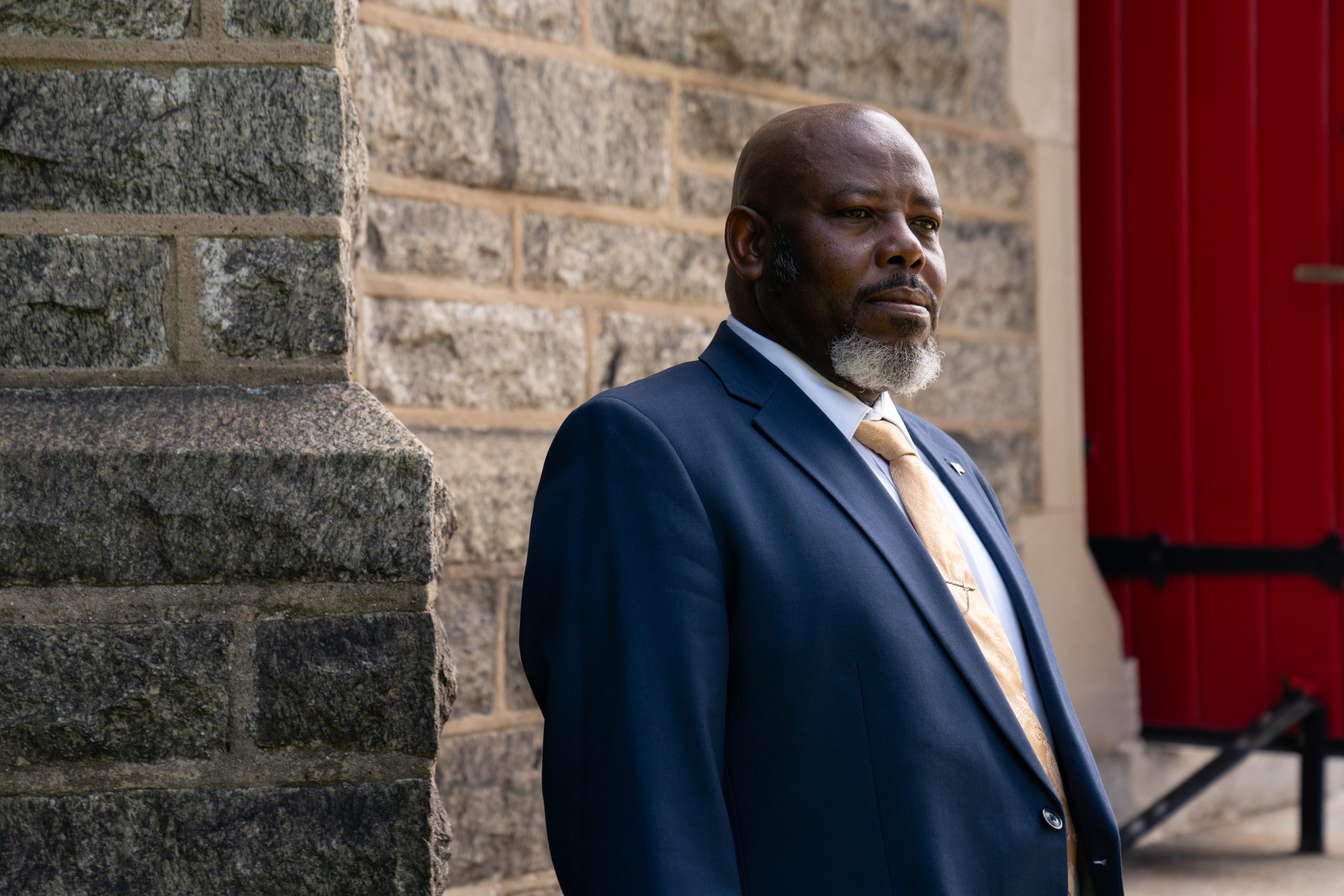
    Clifford Solomon, a church usher at the First Haitian Church of God of Prophecy, poses for a portrait before service in Philadelphia on July 12.Sarah Silbiger / For The Inquirer

    The Trump administration insists that “temporary” means temporary. The president tried and failed to end TPS for Haiti, the poorest nation in the Western Hemisphere ― two-thirds of residents live in poverty ― during his first term.

    While running for president in 2024, he falsely accused Haitian immigrants in Springfield, Ohio, of eating cats and dogs, and blamed those in tiny Charleroi, Pa., set on the Monongahela River about 20 miles south of Pittsburgh, of causing “massive crime.”

    The court decision did not immediately terminate TPS for people from Haiti and Syria, but started the process for implementing an order that typically takes 32 days. Once TPS ends, holders revert to their previous immigration status, meaning those Haitians who were undocumented or have no other protection will be subject to arrest and deportation.

    Meanwhile, U.S. Citizenship and Immigration Services says work authorizations for Haitians will expire on July 24.

    “We are seeing the impact on the community in Pennsylvania, in Philadelphia, and across the country,” said Guerline Jozef, founder of the California-based Haitian Bridge Alliance, a national nonprofit. “The fear of deportation, the fear of family separation, the fear of losing everything.”

    The alliance has helped commence a series of pro-TPS rallies led by labor unions, faith leaders, and immigrant rights groups in cities from San Diego to Boston, proclaiming that “families who have built their lives, careers, and communities in the United States deserve stability, dignity, and protection — not fear and uncertainty.”

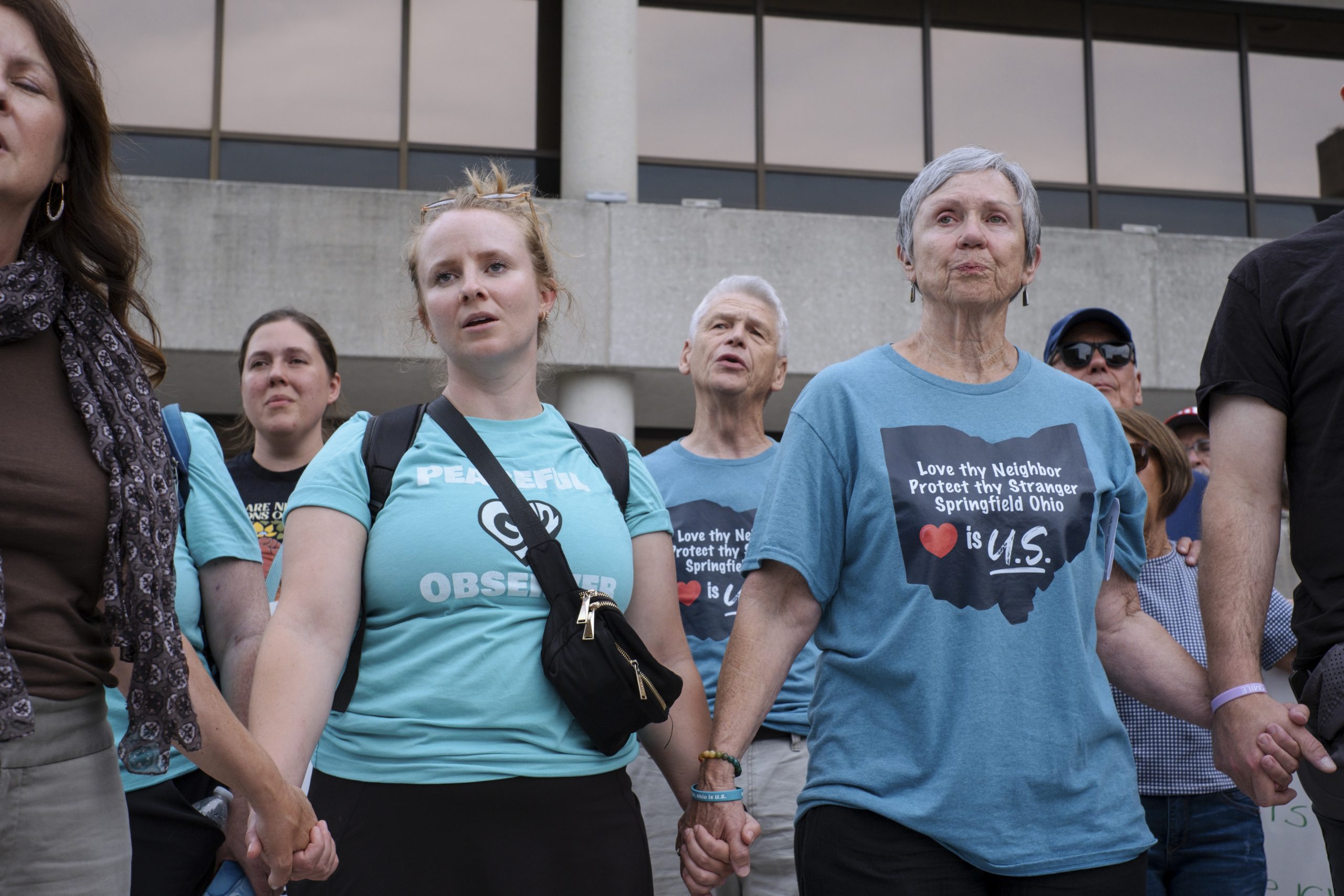
    Supporters of the Haitian community rally at City Hall in Springfield, Ohio, June 25. In Springfield, some residents see the end of an economic boom after the end of a humanitarian program for immigrants. Others see still darker possibilities. AMY POWELL

    Yet uncertainty rules, and many Haitians with TPS are investigating options even as they hope for relief from Congress.

    Esaie Pierre, founder of Men Anpil, a Philadelphia-based nonprofit that helps Haitian migrants, said he is assisting people who want to apply for asylum in the United States. Others who come to him are considering where else in the world they might be able to live.

    One young man is thinking about Chile, Pierre said.

    “They are not wanted here, but have established some kind of life here,” Pierre said. “We’ve assimilated. I’ve assimilated.”

    The events that led to this moment began in January 2010, when Haiti suffered a massive earthquake ― the 7.0-magnitude seism followed by a 6.1-magnitude aftershock ― that, as the National Immigration Forum put it, fundamentally altered the nation’s trajectory.

    Estimates of the death toll ranged from 100,000 to 300,000 people, while about 1.5 million were forced into unsanitary, overcrowded camps. The damage crippled the government.

    Three days after the initial quake, the Obama administration announced that undocumented Haitian immigrants in the U.S. would be granted TPS.

    Thousands more would be welcomed over time under humanitarian programs, and become eligible for TPS, as Haiti grew mired in crisis ― a deadly cholera epidemic the same year, Hurricane Sandy in 2012 and Hurricane Matthew in 2016, and a 7.2-magnitude earthquake in 2021 that killed more than 1,000.

    That year the assassination of President Jovenel Moïse ― elected four years earlier amid allegations of fraud and corruption ― saw the collapse of basic government functions and the rise of armed gangs.

    “You send them back, it’s like you’re signing a death sentence for them,” said Esther Emmanuel, a church soloist who has family members here under TPS. “We’re asking God to do a miracle and to hear the cries of his people, and to also soften the hearts of Congress.”

    Esther Emmanuel, a church soloist who has family members in the United States under temporary protected status at the First Haitian Church of God of Prophecy in Philadelphia on July 12.Sarah Silbiger / For The Inquirer

    Today the United Nations estimates that 90% of Port-au-Prince, the capital and largest city, is under the control of criminal groups, the violence having left thousands dead and displaced more than 1.4 million people.

    The State Department warns of robberies, carjackings, and sexual assaults. It advises U.S. citizens who go to Haiti to establish plans in case they are kidnapped ― including a “proof of life” protocol, so family members can ask specific questions to kidnappers as a way to determine if their loved one is still alive.

    “The only general hospital in Port-au-Prince has been closed for over two years,” Jozef said. “There’s no infrastructure in Haiti for people to be received. … We find ourselves as a community without a home, without a home to go to, without a home to stay in.”

    Talie Cerin, who lives in Philadelphia’s Cobbs Creek neighborhood, was visiting Haiti at the time of the 2010 earthquake. She watched her childhood home crumble.

    She has lived here under TPS, graduating from Immaculata University, then earning a master’s degree in education from Eastern University, and now working as the founder and lead editor of Woy Magazine, an internet publication about Haitian experiences.

    “The toughest part about being a TPS recipient is the ambiguity,” Cerin said. “The confusion keeps you from making long-term plans. It traps you in a prison of conjecture, whispers of ICE raids, and stories of people in detention centers.”

    Her sister, Lunise Cerin, was born in Philadelphia but lived in Haiti from age 5 to 16 before returning here to attend high school and college. The worry of losing her sister, and possibly their home, has been disorienting, Lunise Cerin said, generating “an enormous cloud of grief.”

    Her family has lived in Philadelphia since the 1980s, she said, and for them the end of TPS would mean the end of an established, multigenerational life.

    “Are we going to be gone?” she wondered.

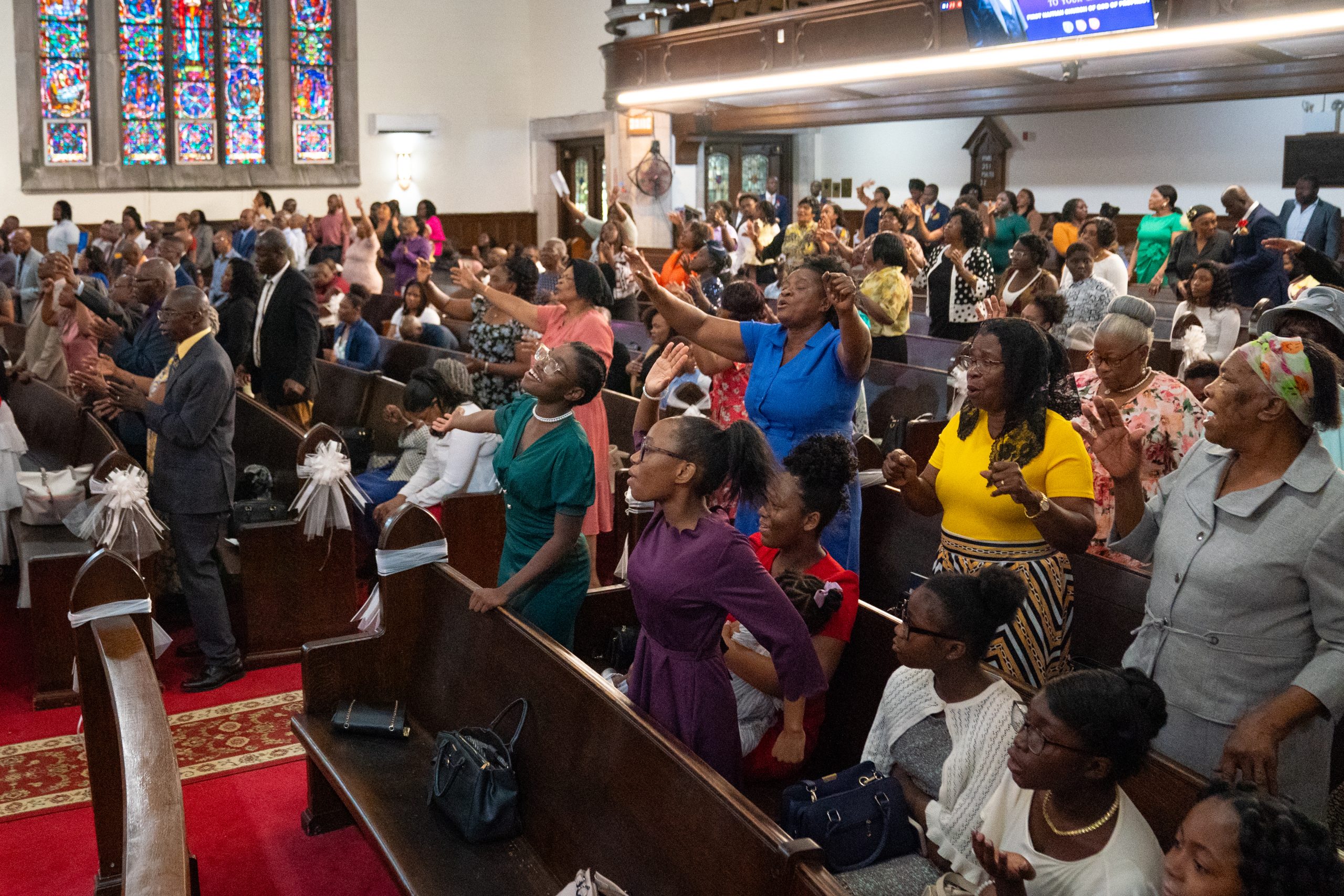
    Congregants sing during service at the First Haitian Church of God of Prophecy in Philadelphia on July 12.Sarah Silbiger / For The Inquirer

    Many at the First Haitian Church of God of Prophecy ask the same.

    The pastor’s office has been deluged with phone calls. Some people tell Ulysse that they might as well die, that returning to Haiti is impossible, but trying to stay here without TPS means they cannot work to pay rent or to buy food for their children.

    “They don’t know what to do,” Ulysse said. “I let them know God is the same yesterday, today, and forever, to trust the Lord. … Me, my heart is telling me something good is going to happen.”