Category: Nation & World

  • Red wolf litters bring hope of ‘incredible comeback’ for endangered animal

    Red wolf litters bring hope of ‘incredible comeback’ for endangered animal

    Nearly two dozen red wolf pups were born in the wild this spring in eastern North Carolina, giving a remarkable boost to one of the most endangered species on the planet.

    “It’s inspiring to see these underdogs making another incredible comeback,” said Will Harlan, southeast director for the Center for Biological Diversity, in an statement about the births.

    The 23 pups born in the wild this year marked the most since 2013. While not all the pups ultimately survived, their arrival briefly doubled the number of red wolves living on the landscape.

    There are only 22 known adult or adolescent red wolves living on or near the Alligator River and Pocosin Lakes national wildlife refuges, according to the U.S. Fish and Wildlife Service, which oversees the decades-long effort to restore a native animal that once roamed widely throughout the southeastern United States.

    The number of wild adult red wolves had dipped perilously into the single digits in the not-so-distant past, but the modest population growth of recent years remains far below the number needed for red wolves to sustain themselves over time.

    That makes this year’s births a joyous and encouraging moment for those invested in resurrecting a species that has long stood on the brink of extinction.

    “This is such a huge improvement over the disastrous years of 2019 to 2021, when no pups were born in the wild at all for four years straight — a trend that was rapidly becoming a death knell for a species that typically only lives for three to six years in the wild,” said Ron Sutherland, chief scientist for the Wildlands Network, who has long worked on red wolf issues.

    Federal officials said four litters of red wolf pups were born to breeding pairs in the wild earlier this spring. Some died early on — survival of red wolf pups in the wild is typically around 50% — but a significant number remain.

    “With the mortalities of some of the young pups detected during our monitoring, we know there are a minimum of 12 pups remaining in the wild and possibly up to 16,” the agency wrote in a recent update.

    “The other four pups do not have transmitters, but we confirmed their presence on the landscape as recently as late May. We will continue to monitor the pups using radio telemetry and remote sensing cameras,” the statement added.

    The push to save red wolves in the wild has experienced dramatic ups and downs over the past four decades on North Carolina’s Albemarle Peninsula, with its massive swamp forests, farmland, and marshes.

    Red wolves had been hunted to near-extinction in the 1970s and were reintroduced to eastern North Carolina in 1987. By 2011, more than 120 roamed the wild. But that growth did not last, and their numbers eventually plummeted.

    Among the most significant threats facing red wolves over time were unnatural deaths at the hands of humans. Vehicle strikes along Highway 64, a popular route to the Outer Banks, and other roads have become the largest cause of mortality for red wolves. Others have died of gunshots.

    The fate of the species also has risen and fallen alongside shifting priorities of the federal government, conflict with nearby landowners, scientific disputes, and legal challenges.

    Changes in federal policy and personnel, as well as legal challenges from conservation and environmental groups, have led to a recommitment to the recovery program.

    While officials have outlined plans to strategically release some of the nearly 300 captive-bred wolves into the wild over time, the ongoing birth — and survival — of new pups in the wild is an essential element to reestablish the species across its native region.

    “We’ve still got a long way to go,” Joe Madison, the red wolf recovery program manager in North Carolina for the U.S. Fish and Wildlife Service, told the Washington Post one morning in 2024 as he drove through the Alligator River refuge. “I don’t think anybody thinks it’s going to be easy or short.”

    He spoke at the time about how the work of restoring endangered red wolves is slow and tumultuous, but very much worth it.

    “They are a missing piece of the ecosystem out here,” he said. “And without that, things are out of whack.”

    Sutherland said that while this spring’s surge of births is promising, one key will be to make sure the world’s most endangered wolves, young and adult, have the best chance to survive and thrive on the landscape.

    A key piece of that is unfolding now, as state and federal officials have committed tens of millions of dollars toward building wildlife crossings over the next several years in an effort to reduce traffic-related deaths near the refuges where red wolves roam. Environmental groups have helped to raise millions more.

    “Wolves can grow their population quickly when they are protected from mortality,” Sutherland said, “and when there are enough unrelated animals out there to form pairs, and we could see some remarkable growth over the next few years.”
  • Ontario wildfires rage on, forcing rescues and evacuations

    Ontario wildfires rage on, forcing rescues and evacuations

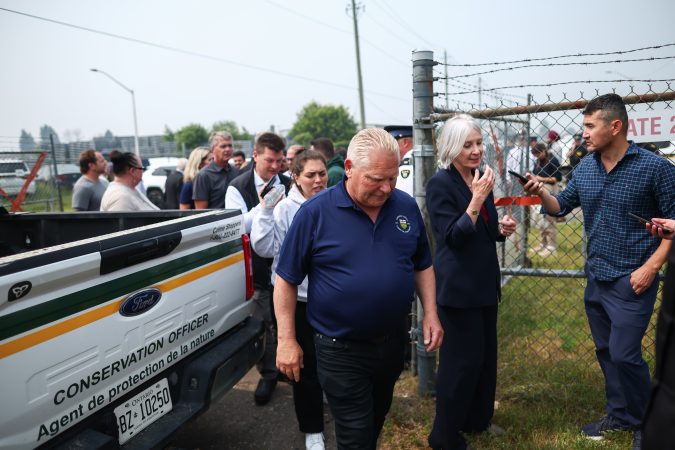
    THUNDER BAY, Ontario — Out-of-control wildfires in Ontario continued to force evacuations and affect major cities in Canada and the United States on Saturday as the province’s leader made his first visit near the devastated area.

    Speaking from a parking lot in Thunder Bay on Saturday, Premier Doug Ford said that 191 wildfires — seven more than Friday — were burning northwest of the city and that 73 were raging out of control.

    Ten communities have been evacuated, and 300 people have been rescued from campsites in 40 operations, Ford added. Roughly 1.7 million acres have burned in Ontario, data from the Canadian Interagency Forest Fire Center shows.

    In a short address, Ford said it was critical that people in the area did not return to their campsites or homes, especially because water bombers did not drop fire suppression loads when they saw people in the bush from overhead. He said there were 155 fire crews at work and 80 water bombers and helicopters flying, with 40 additional aircraft ready to deploy.

    Ford has faced harsh criticism by his political opponents for budgeting 150 million Canadian dollars ($107 million) for the current wildfire season after spending CA$271 million, last year.

    “It’s not time to politicize these emergencies,” Ford said. “It’s absolutely disgusting in my opinion that they want to politicize and play games when people’s lives are on the line,” he added, vowing there would be “no limit to spending.”

    Under Canada’s division of powers, most forest lands are owned and managed by provinces, which collect royalties for commercial tree cutting and, with some exceptions like national parks, are also responsible for firefighting.

    On a late flight to Thunder Bay from Toronto on Friday night, the pilot was forced to make three approaches on landing because of unsafe conditions from the thick smoke, earning loud applause from the passengers when the twin turboprop touched down at Thunder Bay Airport. At least one plane could not land in the smoke and was forced to return to Toronto.

    On the ground, smoke hung heavy over the road and diffused the light of street lamps, casting an eerie glow that was replaced at dawn Saturday by the piercing orange light from the sun breaking through the hazy sky.

    Mount McKay, a landmark in Thunder Bay visible from most places in the city, was mostly lost in the smoke, only a faint outline visible.

    While Thunder Bay remains safe from flames — the closest fires are burning roughly 90 miles to the northwest — heavy smoke has seriously affected air quality.

    There was rain in the region Friday, and on Saturday temperatures remained fairly cool at 70 degrees Fahrenheit. Local air quality alerts warned of a high health risk caused by toxic particles in the smoke that drifted on light wind and smelled like a campfire.

    Provincial officials said they had delivered 3,000 N95 masks to an evacuation support center to be distributed to residents.

    Thunder Bay is quickly becoming overcrowded with people fleeing their homes. Some evacuees have been sent to Toronto and other locations. Indigenous communities have been among the worst affected by the fires.

    All week, smoke from the Ontario wildfires has darkened skies from Toronto to Detroit, New York, and beyond. Air quality for millions of people across the United States and Canada has plummeted to unhealthy, even hazardous levels.

    New York, Toronto, and Washington, D.C., had the worst air quality in the world Saturday morning, and the plume of smoke floating far above Earth’s surface since Wednesday had not drifted clear.

    On Friday, President Donald Trump threatened to charge Canada tariffs to pay for harms caused by the wildfire smoke, joining a handful of Republican lawmakers who have criticized the Canadian government over what they called poor forest management.

    Canadian Prime Minister Mark Carney did not immediately address the accusations Friday, but he suggested this past week that the United States should do more to combat climate change.

    Ford on Saturday called the U.S. lawmakers’ comments “unacceptable” and said they should focus more on helping a neighboring country — Canada has often contributed firefighting resources to the United States — than assigning blame.

    “I find it a shame the administration in the U.S. and congresspeople writing these letters and blaming us and so on and so forth,” he said. “They have a very short, short memory.”

    This article originally appeared in the New York Times.

  • Taylor Farms expands iceberg lettuce recall to 27 states, including Pa. and N.J.

    Taylor Farms expands iceberg lettuce recall to 27 states, including Pa. and N.J.

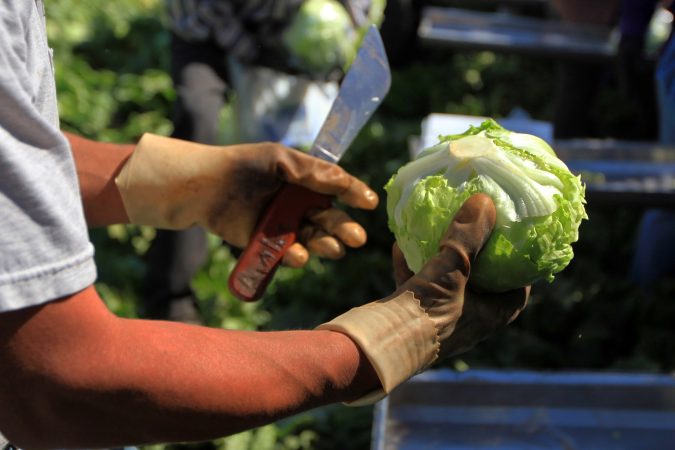
    Taylor Farms announced late Friday that it was recalling iceberg lettuce that had been shipped to retailers in 27 states, including Pennsylvania and New Jersey, because it was potentially contaminated with cyclospora, a parasite that can cause severe illness, including vomiting, cramping, and explosive diarrhea.

    Although an investigation by the Centers for Disease Control and Prevention tied the parasite to lettuce that Taylor Farms shipped to Taco Bell in five states, the company’s recall notice suggests far broader distribution of potentially contaminated greens. The announcement listed eight brand codes but did not say what they stood for. The company did not immediately respond to questions about them on Saturday morning.

    The recalled products were shipped starting June 29 through as recently as Thursday and have expiration dates through Aug. 3. The company said on social media that no Taylor Farms-branded salad kits were involved but did not provide a list of the restaurants or grocers that may have sold its iceberg lettuce, which was mixed with romaine in some products.

    “At this time, Taylor Fresh Foods has not publicly provided distribution information or a list of customers who received the product that was voluntarily removed from the market,” the Food and Drug Administration said in its recall notice.

    FDA regulations do not require the company to do so, a source of frustration for food safety leaders.

    “Food safety advocates have urged FDA over the years to make this a requirement,” said Sandra Eskin, executive director of Stop Foodborne Illness. “Without this essential information, a recall is not going to be effective.”

    She added: “The whole point is to quickly identify the product and make sure no one else eats it.”

    States listed as part of the recall include Florida, Illinois, Texas, Pennsylvania, New Jersey, North Carolina, Missouri, and others. The recall notice does not list California or New York, but it is unclear if Taylor Farms supplied lettuce to companies in states affected by the recall that then distributed it widely.

    Sysco, the nation’s largest food distributor, said in an emailed statement Friday evening that it was withdrawing all iceberg lettuce products from Mexico in its supply chain at the request of Taylor Farms.

    “We will continue to actively monitor the situation and work with regulators as needed,” the company said, adding that it stopped selling and distributing those Taylor Farms products on Thursday.

    US Foods, another large food distributor, said it had also notified affected customers about the recall on Friday, a spokesperson said in an email.

    So far, at least 1,645 people have fallen ill and 141 have been hospitalized, most of them after consuming the lettuce sent to Taco Bell, which said it has removed all of the lettuce from its restaurants. The CDC made that determination through scientific detective work, starting with case reports about people who fell ill and tracking back to a common food source. The case count is likely to rise as the CDC factors in the scope of the recall.

    The United States is on track to have more cyclospora cases in 2026 than in any previous year. The agency said it is investigating more than 5,100 additional illnesses that may have been caused by the parasite, which is transmitted through food or water contaminated with feces.

    On Thursday, Taylor Farms executives met with the White House and the FDA to try to distance the company from the outbreak and air concerns about the official investigations into the outbreak.

    On Friday, the company said the information the FDA presented led it to remove its iceberg lettuce from the market. The company said its Mexican processing plant, Taylor Farms de Mexico in Guanajuato, was voluntarily removing all iceberg lettuce grown in central Mexico.

    The FDA is planning to inspect the Guanajuato facility in coming days to determine how the cyclospora parasite got on the lettuce and track it through the supply chain.

    This article originally appeared in the New York Times.

  • Chinese human rights lawyer seeking asylum is arrested by ICE in Pennsylvania

    Chinese human rights lawyer seeking asylum is arrested by ICE in Pennsylvania

    For years, Shaoping Wu was part of an increasingly endangered group of human rights lawyers in China.

    His work culminated in 2019, when he attended a meeting with other prominent lawyers and activists. Within days, the Chinese government began to detain the participants. Wu quickly fled to the United States, where in 2020 he applied for asylum.

    On Wednesday, Wu was detained by Immigration and Customs Enforcement in Pennsylvania, where he had been living with his family and working as a contract delivery driver for Amazon.

    Supporters and relatives now fear that Wu could be deported to China, where he would likely face persecution from the Chinese Communist Party. Under Chinese President Xi Jinping, the government has gone to great lengths to snuff out political expression, including by arresting human rights lawyers and activists. Two of the participants in the 2019 meeting are still serving lengthy prison sentences.

    Wu’s wife, Caoliu Li, said that her husband had been subject to questioning and harassment by China’s security apparatus over the years but had remained dedicated to the cause of championing rights for ordinary Chinese.

    “All along, he has been very focused on the things that are unfair in China and how to change them,” Li said in an interview Thursday from Lancaster, Pa., where the couple lives with their 17-year-old daughter.

    John Visher, Wu’s lawyer, said that Wu had been delivering packages near Mount Holly Springs, Pa., when a police officer pulled him over as part of a traffic stop.

    Visher said that Wu had entered the United States on a tourist visa in 2019 and that he had told the police officer about his pending asylum application and employment authorization document. Because Wu lacks legal status, police notified immigration officials, who detained him and brought him to the Moshannon Valley Processing Center in Pennsylvania, where he is now being held.

    Wu is scheduled to appear in immigration court on July 27, Visher said.

    The Department of Homeland Security said in an unsigned statement that Wu had overstayed his expired visa by six years and that he would receive due process. It noted that the department was offering $2,600 and a free flight to self-deport.

    Wu’s case shows how even opponents of the United States’ biggest geopolitical rival are not guaranteed favorable treatment if their legal status is in question. And it is the latest test of how far the Trump administration is willing to go in its campaign to carry out mass deportations and curb the presence of asylum seekers.

    This year, another Chinese dissident, Heng Guan, won his asylum case after he was detained by U.S. immigration officials who had tried to send him to Uganda. The department did not appeal the decision, and Guan was released.

    Other cases involving Chinese nationals remain unresolved. Several Uyghurs, members of a predominantly Muslim ethnic group that has been systematically oppressed by the Chinese government, remain in ICE detention. They face deportation to third countries, according to Rushan Abbas, executive director of Campaign for Uyghurs, a Washington-based nonprofit.

    The immigration actions have happened even as Trump has personally pushed for the release of two prisoners held by the Chinese government.

    In May, during a summit with Xi in Beijing, Trump raised the case of Jin Mingri, a pastor who was detained in October as part of a major crackdown on Christians in China. This month, Jin was released and allowed to leave for the United States. The other prisoner, Jimmy Lai, a Hong Kong pro-democracy media tycoon, remains in Chinese custody.

    In 2015, Wu was working as a commercial attorney in Shanghai when China, under the tightening grip of Xi, initiated its largest crackdown on human rights lawyers in decades. Many lawyers and activists who were arrested faced lengthy sentences. Some who remained went underground or stepped away from the work.

    It was against that background that Wu joined the movement of rights defenders.

    He began to take on more politically sensitive cases. His clients included Zhang Kun, an anti-corruption activist; Zhu Chengzhi, a human rights defender; and practitioners of Falun Gong, a spiritual movement banned in China.

    “He defended some defendants that most lawyers would avoid,” said Fengsuo Zhou, executive director of Human Rights in China, a group based in New York.

    At the 2019 meeting, which Wu attended with prominent human rights defenders like Xu Zhiyong and Ding Jiaxi, participants discussed China’s besieged human rights movement and democratic change.

    Even after he came to the United States, Wu continued his work for human rights and civil society in China. This month, Zhou noted, Wu had spoken at an online gathering commemorating the government’s sweeping 2015 crackdown on lawyers.

    “To the outside world, human rights lawyers might seem like a group of idealistic and tragic heroes,” Wu told the audience. “However, for us, this is not a romantic or performative act, but rather our unavoidable mission and responsibility.”

    This article originally appeared in the New York Times.

  • Federal appeals court rules that New Jersey’s assault weapons ban is unconstitutional

    Federal appeals court rules that New Jersey’s assault weapons ban is unconstitutional

    A federal appeals court ruled Friday that New Jersey’s bans on assault firearms and magazines that can hold more than 10 rounds are unconstitutional.

    This is the first time a federal appeals court has struck down a state ban on such weapons, and it comes as the U.S. Supreme Court is set to consider whether bans on semiautomatic rifles violate the Second Amendment. Just last week, a different federal appeals court upheld Illinois’ ban on semiautomatic weapons.

    Friday’s appeals court ruling in the New Jersey case goes further than a July 2024 ruling from a federal judge, who said that the state’s ban on AR-15s specifically was unconstitutional but upheld the provision barring larger magazines. The 3rd U.S. Circuit Court of Appeals said Friday in its opinion that the state’s ban on all semiautomatic rifles it deems to be “assault firearms” and restriction on “large capacity ammunition magazines” were unconstitutional.

    New Jersey Attorney General Jennifer Davenport, a Democrat whose office defended the law, said in a statement that the decision is “as unfortunate as it is legally incorrect.”

    “Every other federal circuit court to consider the issue has come out the other way,” Davenport said. “Assault weapons and large capacity magazines play a dangerous role in the modern epidemic of mass shootings, and New Jersey acted reasonably and lawfully in restricting them. We are considering our options.”

    John Commerford, executive director of the National Rifle Association Institute for Legislative Action, called the ruling a “historic victory for the NRA, the Second Amendment, and law-abiding Americans.”

    In addition to New Jersey, 10 states, as well as the District of Columbia, have laws that generally ban the manufacture, sale, and transfer of assault weapons, according to the Giffords Law Center to Prevent Gun Violence. The District of Columbia, New Jersey, and 11 other states cap magazine capacity at 10 rounds generally or for certain types of firearms.

    Adam Winkler, a law professor at the University of California, Los Angeles, said that Friday’s ruling was surprising because federal courts of appeals have upheld assault weapons bans in the past. On the other hand, he added, the decision “may be foretelling the Supreme Court’s coming opinion on assault weapons bans.”

    “What this Third Circuit opinion shows is that there are very few gun laws that are safe from being struck down right now,” Winkler said.

  • U.S. cancels automatic protections for imperiled animals as critics warn of extinctions

    U.S. cancels automatic protections for imperiled animals as critics warn of extinctions

    BILLINGS, Mont. — The U.S. Interior Department on Friday canceled a rule meant to protect plants and animals that are determined to be threatened with extinction, the latest step by President Donald Trump’s administration to dismantle key provisions of the landmark Endangered Species Act at the behest of industry.

    Instead of receiving automatic protections, imperiled species will need individualized protection plans once they are added to the threatened species list. That’s a potentially lengthy process in which companies could seek exemptions for oil and gas drilling, mining, and other development where those species live.

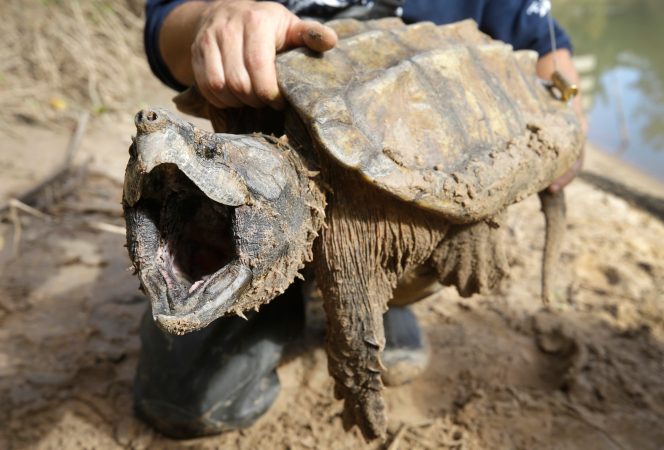
    Opponents said it would make it harder to save wildlife that’s awaiting federal protections and in danger of disappearing, such as monarch butterflies and alligator snapping turtles.

    Interior Secretary Doug Burgum said in a statement that the Endangered Species Act had been used for too long “to stop almost any new project in America, driving up costs for families, weakening our competitiveness, and undermining our national security.”

    “Success should be measured by species recovery and delisting, not by adding more species to the list,” Burgum added.

    A second change finalized Friday requires officials to analyze economic impacts when deciding whether habitat is critical to a species’ survival. Critics say it gives corporations an opportunity to put their thumb on the scale so that officials will allow development in those areas.

    “If you’re exempting certain industries that cause habitat destruction, in many instances you’ll be exempting the main threat to those species,” said Noah Greenwald with the environmental group Center for Biological Diversity.

    Officials made similar changes during Trump’s first term but they were reversed under former Democratic President Joe Biden.

    The rules that gave what some consider “blanket protections” to threatened species were first adopted for wildlife in 1975 and for plants in 1977.

    There have been no species added to the endangered or threatened lists in Trump’s second term. By comparison, more than 20 species were added in Trump’s first term, and about 60 during Biden’s presidency.

    About 30 species are currently proposed to be listed as threatened. Besides monarchs and alligator snapping turtles, they include California spotted owls and various snakes, fish, clams, and insects.

    Changes to government policies for endangered plants and wildlife have come faster and extended further in Trump’s second term than in his first.

    The administration in March exempted oil and gas drilling in the Gulf of Mexico from the Endangered Species Act after Defense Secretary Pete Hegseth said environmentalists’ lawsuits threatened to hobble domestic energy supplies as the U.S. wages war against Iran.

    Last week, Interior officials sharply narrowed the definition of what constitutes “harm” to a species. The change would allow development on critical wildlife habitat so long as the animals themselves are not immediately killed or injured.

    This week officials sharply reduced the amount of critical habitat in the U.S. Rocky Mountains designated for Canada lynx, forest dwelling wildcats that are threatened by climate change and other pressures.

    Also this week, Burgum said in a visit to Montana that the U.S. Fish and Wildlife Service would turn over more management authority for grizzly bears to states where the bruins live. That’s been a longstanding priority for the Republican governors of Wyoming, Idaho, and Montana.

    The Endangered Species Act is credited with bringing back iconic animals including the bald eagle and American alligator from the brink of extinction.

    Burgum noted Friday that 97% of the species that have been given protections still have them. That’s a frustration for Republican lawmakers who say species should be taken off the endangered and threatened lists more quickly once they’ve recovered.

  • Paying for early access to Trump’s Truth Social could raise big money — and major ethical issues

    Paying for early access to Trump’s Truth Social could raise big money — and major ethical issues

    NEW YORK — America’s first billionaire president may soon be profiting from a new line of business tied to his office: charging access for a first peek at certain posts on his Truth Social platform.

    Donald Trump’s struggling media company plans to sell Wall Street traders the chance to see posts from “highest-ranking” accounts — including possibly his own — milliseconds before others.

    That could mean big money for them, and Trump.

    Trump’s posts are often important enough to rattle financial markets, sending prices soaring and plunging within seconds. Until this moment, presidential policy announcements were considered a sort of public property that should be free and available to all at the same time.

    The president has the most followers on Truth Social — 12.9 million — so presumably will be included in the mix of high-ranking accounts.

    Truth Social’s public parent, Trump Media & Technology, did not respond to emailed questions, including whether Trump’s posts will be excluded from the offering, but the planned service is attracting plenty of attention — and not just from traders.

    “It’s odious, selling access to highest bidders on Wall Street,” said Dylan Hedler-Gaudette, an expert on federal ethic rules at watchdog Project on Government Oversight. “Everything he says has market implications.”

    How the new business hopes to make money

    Called Truth PSI, the service announced in a short news release Thursday would allow Wall Street trading firms and institutions to see certain posts earlier than other users so they could profit off subsequent moves in stocks, bonds, and interest rates.

    The Trump Media release did not give any sense of the size of the new business but quotes CEO Kevin McGurn as saying he expects it to become a “meaningful” source of revenue as part of a strategy to ”monetize proprietary assets.” The company added that it expects to launch the service next month.

    The customers that Truth Social is targeting are high frequency traders who jump ahead of others in reacting to news to buy and sell bonds and other financial instruments. And a few thousands of a second often spells the difference between profits and losses.

    Trump posts are big news, and big moneymakers

    When Trump announced his sweeping tariffs on April 2 last year, it was major political and financial news — and many found out first on Truth Social.

    “It’s Liberation Day in America,” Trump posted hours before a formal Rose Garden announcement, sending stocks plunging nearly 5% over the next few hours. Safe haven investments like gold and Treasury bonds soared.

    A few days later, Trump reversed course by suspending the tariffs for 90 days with an announcement again on Truth Social, writing, “THIS IS A GREAT TIME TO BUY!!!”

    Stocks soared 9.5% that day, adding $4 trillion to investor wealth as measured by the S&P 500 index.

    “It’s yet more brazen corruption,” said Kathleen Clark of Washington University School of Law and an expert in government ethics rules. “Trump can line his pockets by selling access.”

    His Iran war posts are must reading for oil traders

    Trump has announced major decisions and musings about other topics, including staff changes, immigration crackdowns, and matters of war and peace in Ukraine and Iran.

    “THE CEASEFIRE IS NOW IN EFFECT. PLEASE DO NOT VIOLATE IT!” he posted on June 24 last year about a short-lived Iran deal, sending oil prices plunging instantly.

    No other social media platform has such access to the president, and presumably banks and traders will have to pay up for it.

    Trump Media did not state in its release how much it plans to charge but said it has already signed up customers.

    The law doesn’t bar Trump from doing this

    The service is similar to others at rival social media firms but with a key difference: It’s the president posting. But there appears to be nothing to stop Trump from doing this, at least legally.

    Conflict of interest laws would bar U.S. government officials from owning a company that profits off their office by selling access to their decisions through public posts, says Washington University’s Clark. But the president and vice president, she notes, are excluded from the provision.

    Despite that, all presidents since the law was passed decades ago have acted as if it applied — selling individual stocks, dumping business holdings, or putting their financial assets in a blind trust so they wouldn’t know what was being bought and sold on their behalf while they wielded power — but Trump has refused.

    No response from the White House, or his businesses

    The White House referred questions, including those about the president profiting off its office, to the company that owns Truth Social. Several messages sent to that company, Trump Media & Technology, have not been returned. And Trump’s own family company, the Trump Organization, declined to comment.

    Trump himself has repeatedly denied that there any conflicts between his obligation to act in the public interest and the opportunity to make money off the presidency.

    The White House has previously said Trump only does what is good for the country and is not involved in his family business.

    Trump Media needs the help

    The new service is the latest in a series of moves to try to revive the fortunes of Trump Media, whose stock has plunged more than 70% since the president took office last year

    The company has been diversifying into various businesses — crypto, financial services, and nuclear fusion — but all to no avail.

    It recently replaced its longtime CEO, former U.S. Rep. Devin Nunes, with McGurn — but the stock kept sinking anyway.

    The stock rose 0.6% on the news Thursday, and up by half that amount the next day at $9.66. Before Trump took office last year, it closed at $40.

  • Man charged with hate crimes after confrontation with ‘Today’ show’s Melvin at NBC studio

    Man charged with hate crimes after confrontation with ‘Today’ show’s Melvin at NBC studio

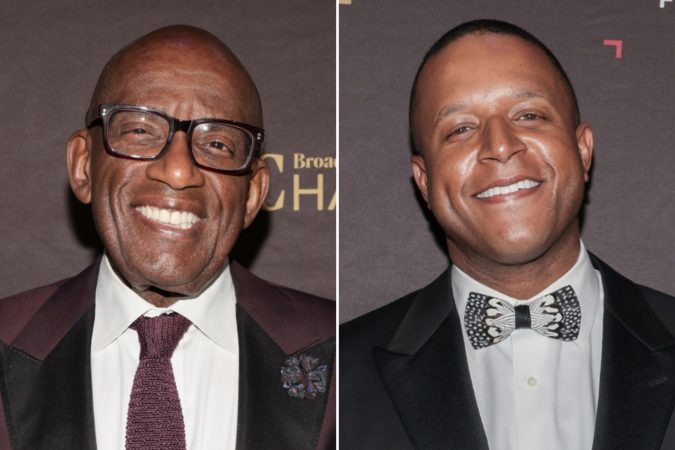
    NEW YORK — A 40-year-old New York man faces hate crime charges following a confrontation with Today show host Craig Melvin at NBC’s studio in Manhattan.

    The man was arrested Thursday morning inside 30 Rockefeller Center in Midtown by an officer responding to reports of a disorderly individual inside the building, police said Friday.

    NBC News says in a statement that an individual approached Melvin after entering an unauthorized area in a vestibule near Studio 1A. Melvin notified security, who held the man until police arrived, according to NBC.

    No altercation occurred and no injuries were reported. NBC did not say how the man gained access to the area.

    “We are reviewing the incident and our security protocols and remain committed to providing a safe and secure environment for everyone who works at and visits our studios,” the network said in a statement.

    The man has been charged with burglary, menacing, and criminal trespass as hate crimes, as well as harassment. It was not clear Friday if has appeared in court or if he has an attorney.

    Police did not say what led to the hate crime enhancements on the charges. Police records show a court date has been scheduled for Wednesday.

    Melvin, who is Black, discussed the incident on-air Friday morning.

    “Unfortunately, an intruder made his way into an unauthorized area here at Studio 1A,” Melvin said. “Thankfully, he was apprehended quickly. He was placed under arrest. We are just very happy that everyone is safe.”

    Melvin also posted about the incident on Instagram.

    “Hey everyone. I’ve heard from so many of you over the last few hours,” he wrote on Thursday. “I’m doing just fine. Thanks for reaching out.”

    Longtime Today show meteorologist Al Roker also took to social media to thank everyone reaching out to check on Melvin.

    “We are both okay,” Roker posted on Instagram. “It’s moments like these that serve to pull us together. You all, like Craig, said ‘You come after one of us, you come after all of us.’”

    Melvin and Roker are among a relatively small group of prominent Black journalists and anchors with regular, highly visible roles on national broadcast network news programs.

    Melvin joined NBC and MSNBC in 2011, according to the Today show’s website. He replaced Hoda Kotb in 2025 as co-host of the 7 a.m. to 9 a.m. hours of Today. He had been hosting the show’s third hour while serving as the news anchor during the first two hours.

    Roker also is a feature anchor on Today and co-host of the show’s third hour. He joined the show in 1996. Roker also co-hosted the Wake Up with Al morning show on the Weather Channel from 2009 to 2015.

  • In primetime, Trump criticizes networks for not carrying his speech

    In primetime, Trump criticizes networks for not carrying his speech

    Not every television network carried President Donald Trump’s primetime speech from the White House, and it did not escape the president’s notice.

    In a meta moment on Thursday night, Trump used his address to call out ABC and NBC for not airing his live remarks, claiming the networks declined to do so “because they know how corrupt our system is and they don’t want to reveal it.” He also repeated his frequent demand that the networks’ government-issued broadcast licenses be revoked.

    “They and others in the media are part of a plot,” the president said, offering no evidence for his claims.

    In fact, ABC and NBC did carry Trump’s speech live on their streaming platforms. After the president concluded, both networks broke into regularly scheduled entertainment programming to air special reports that analyzed his outlandish claims about the safety of American voting systems.

    Federal regulators are currently reviewing the station licenses owned by ABC, a move that the network has denounced as an “unconstitutional retaliation” for its programming.

    Presidents must request airtime from television channels when they wish to speak in primetime, and in the past, network executives have been loath to accommodate speeches that they view as distinctly political in nature, especially during election years. Former Presidents Barack Obama and Joe Biden both had some requests denied.

    On Thursday, TV networks took varying approaches to covering Trump’s remarks. Fox News and the Fox broadcast network ran the speech in its entirety; MS NOW and CBS aired some portions live, but then cut away for analysis and fact-checking from their correspondents. CNN aired clips and reporter commentary instead of the full remarks.

    Fox News, which paid $787 million to settle a defamation suit stemming from false claims about election interference that appeared on its airwaves in 2020, took a careful approach on Thursday.

    After Trump concluded his remarks, Bret Baier, the channel’s chief political anchor, summarized the president’s claims about the security of electronic voting machines. But he added, in a formal tone, that Fox News “has not seen that evidence directly yet, and is not in a position to evaluate the accuracy of the president’s statements at this time.” (Aishah Hasnie, a White House correspondent for Fox News, later repeated that caveat almost verbatim.)

    Even Sean Hannity, a Trump ally, was careful not to endorse the allegations, despite saying the president’s claims were “pretty remarkable.”

    “I’m sure anybody that cares about truth will want to do a deep dive into all of this,” Hannity told viewers.

    Network executives had been reluctant in the run-up to Trump’s speech to say whether they would air it live. The president had been expected to delve into partisan or incendiary comments about voter fraud, creating a conundrum for producers who would need to decide whether to fact-check the president’s remarks in real time, or wait until he was finished to provide context.

    This article originally appeared in the New York Times.

  • Israeli strike on funeral kills 7 and wounds 22 in Gaza, local hospital says

    Israeli strike on funeral kills 7 and wounds 22 in Gaza, local hospital says

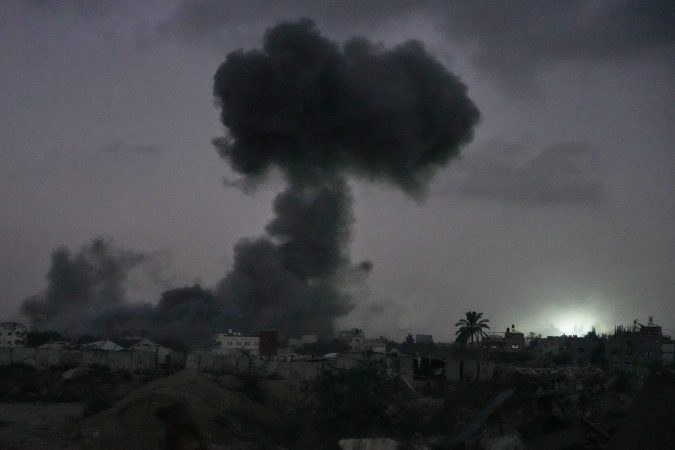
    DEIR AL-BALAH, Gaza Strip — An Israeli strike on a funeral in the Gaza Strip on Friday killed at least seven people and wounded another 22, according to a local hospital.

    There was no immediate comment from the Israeli military.

    The Awda Hospital in the Nuseirat refugee camp confirmed the number of casualties, saying people were struck at the funeral for a Palestinian killed in a strike earlier on Friday.

    Israel and the Hamas militant group agreed to a ceasefire deal in October aimed at halting a two-year-long war.

    The heaviest fighting has subsided but at least 1,123 people have been killed in Gaza since the ceasefire took effect, according to the territory’s Health Ministry.

    The ministry, which has been part of the Hamas-led government, maintains detailed casualty records that are seen as generally reliable by U.N. agencies and independent experts. It does not give a breakdown of civilians and militants but says women and children make up most of the dead.

    Militants have carried out shooting attacks on troops, and Israel says its strikes are in response to that and other violations. Five Israeli soldiers have been killed since the ceasefire.

    The war began after the Hamas-led attack on southern Israel on Oct. 7, 2023, killed around 1,200 people and saw 251 taken hostage. Israel’s retaliatory offensive in Gaza has killed more than 73,264 Palestinians, including those killed since the ceasefire, Gaza’s Health Ministry said.