Category: Nation & World

  • FDA retracts test result but still links Taylor Farms lettuce to cyclosporiasis

    FDA retracts test result but still links Taylor Farms lettuce to cyclosporiasis

    The Food and Drug Administration said Sunday that a laboratory finding showing cyclospora contamination in a sample of shredded iceberg lettuce supplied by Taylor Farms de Mexico was a false positive.

    But the agency did not back away from its conclusion that the company remains linked to a multistate outbreak of cyclosporiasis through its traceback investigation.

    “It does not mean they are walking it back,” Susan Mayne, a former head of the FDA’s center on food safety that oversees outbreak investigations, said in a text message Monday. “Absence of evidence (of a positive test result) is never evidence of absence.”

    Numerous outbreaks are solved on the basis of basic disease detective work, talking to people who have fallen ill, tracing back what they ate, and finding connections among others who were infected. Laboratory tests are one part of a wider investigative analysis.

    The FDA said laboratory experts reanalyzed the sample and determined that the initial result “does not represent true amplification and should be considered a false positive.” The agency said there are currently no confirmed positive product samples for cyclospora.

    Cyclospora is detected by running chemical reactions that double the amount of DNA in a sample until there is a noticeable signal, said Don Schaffner, a food scientist at Rutgers. Detecting a parasite after just a few tests points to a strong presence, but that conclusion weakens as more and more tests are run — one potential source of false positives, he said.

    “If you have a sample that, let’s say, has no cyclospora DNA, but you run enough reactions,” he said, “you’ll eventually amplify noise — stuff that’s not real — and it’ll turn into something that’s real.”

    The updated laboratory finding — that the FDA did not find the parasite in a particular lettuce sample — does not change the rest of the agency’s investigation. The sample that the FDA tested was not part of the original recall; the evidence around the recall is based on epidemiological and traceback determination linking the outbreak to Taylor Farms-supplied iceberg lettuce.

    The top line of the notice on the FDA website continues to say: “Do not eat recalled iceberg lettuce from Taylor Farms de Mexico.” It says the FDA’s investigation is ongoing.

    In a statement late Sunday, Taylor Farms spokesperson Mindi Mayhew said the company had “completed a voluntary recall of iceberg from central Mexico.” She said the recalled product was limited to iceberg lettuce grown and processed in central Mexico.

    All other Taylor Farms products, including all Taylor Farms-brand products available for purchase, are not involved in the recall, she said. “We are committed to working with public health authorities as the ongoing outbreak investigation continues.”

    Taylor Farms announced Friday that it was initiating a recall hours after it said it was voluntarily removing iceberg lettuce sourced from central Mexico from the U.S. market.

    Unlike a voluntary product hold or removal, a recall requires a company to actively notify customers and work to recover affected products from commerce, making it a broader and more costly response.

    Late Friday, Taylor Farms de Mexico published a detailed 27-state recall list covering all iceberg lettuce sourced from central Mexico and distributed from June 29 through July 16. The products — many of them bulk food service packages — had “best if used by dates” extending to Aug. 3.

  • Andy Burnham becomes the U.K.’s seventh prime minister in a decade after Starmer resigns

    Andy Burnham becomes the U.K.’s seventh prime minister in a decade after Starmer resigns

    LONDON — Prime Minister Andy Burnham acknowledged his precarious perch Monday as the seventh British leader in just over a decade as he set out an ambitious but vague vision to create a new political and economic establishment.

    Burnham used his inaugural speech as prime minister to renew his theme of decentralizing power as he promised to end street sleeping by homeless people. He said he would deliver a “circuit breaker” for a system he says has taken wrong turns since the 1980s when many public services were privatized.

    “We will change politics to make it more collaborative, more about problem-solving than point-scoring,” he said. “We will take power out of here and carry it into every postcode in the land so that they can do more and in doing more, build a new economy where we put life’s essentials back under stronger public control to make them affordable to you again.”

    After weeks as leader-in-waiting, Burnham officially became prime minister during a meeting with King Charles III at Buckingham Palace, where the monarch asked him to form a government.

    He succeeded Keir Starmer, who stepped down just two years after winning a landslide election victory, on a day when Britain’s political turbulence gave way, at least temporarily, to smooth choreography.

    Buckingham Palace has released a photo of the king and Burnham shaking hands. The ceremony known as “kissing hands” marks the transfer of power, but didn’t actually involve any hand kissing.

    Burnham said he was “acutely conscious” of the revolving door he was walking through at 10 Downing Street.

    “This a moment for reflection and new resolution,” he said. “It requires my generation of politicians to raise our game and rise to the new challenge. Britain needs to show the world that we can regain our stability once again, and that is our challenge to make politics work, to make it work better.”

    Burnham became the seventh U.K. prime minister since 2016 in a now well-rehearsed handover after replacing Starmer as leader of the center-left governing Labour Party on Friday. Starmer announced last month he would resign after missteps and judgment errors that eroded his standing with his party and the public.

    Just over an hour earlier, Starmer made a short farewell speech in the same place outside the prime minister’s residence, saying, “My work is done.”

    The outgoing leader said Britain is now “stronger and fairer than it was two years ago,” when he took office.

    “I go with good grace, I go with a smile, and I go proud of everything that we have achieved,” Starmer said before heading to Buckingham Palace to offer his resignation to the king. It was an offer “His Majesty was graciously pleased to accept,” the palace said in a statement.

    Changing leaders in midterm

    Britain’s parliamentary democracy allows governing parties to change leaders, and thus prime ministers, without the need for a general election. The next national poll doesn’t have to be held until 2029, though Burnham can call one sooner if he wants.

    Burnham was the only candidate in a contest to become the party’s new leader, securing nominations from 379 of the 403 Labour lawmakers in the House of Commons.

    Burnham will confront many of the same struggles as his predecessor: a sluggish economy, a cost-of-living crisis, overstretched public services, concerns about migration, and foreign affairs that include wars in Ukraine and the Middle East.

    The new leader pledges a new style of politics

    The former mayor of Greater Manchester previously pledged to make politics “less toxic,” improve living standards across the country, and “bring back the hope we have all been missing.”

    Critics and supporters alike will be clamoring for details of how Burnham plans to fulfill his pledges when he announces parts of a 10-year plan today.

    “Fundamentally, it only will work if you can generate significant economic growth, because it’s the lack of growth that’s really holding the country back,” said Joshi Herrmann, who has followed Burnham’s career as founder of Manchester news site the Mill.

    Attention will quickly turn to who Burnham will appoint to his Cabinet. He’s expected to make changes to Starmer’s top team, especially to the biggest jobs of Treasury chief, foreign secretary, and home secretary.

    Burnham has praised Starmer’s achievements, saying he would “build on the foundation laid” by his predecessor.

    Starmer became Labour leader in 2020 after one of the party’s worst election defeats, and led it to a landslide victory four years later. But he was soon defeated by the challenges of governing.

    At his final Prime Minister’s Questions session in Parliament on Wednesday, Starmer defended his government’s record on the international stage — especially its support for Ukraine — and its domestic policy achievements. He mentioned stronger protections for working people, a reduction in child poverty, a law designed to stop official cover-ups after tragedies, and higher defense spending.

    “In 6½ years, I took our party from a historic defeat in 2019, changed it so it was fit to face the country, and won a landslide general election victory in 2024,” Starmer said in his final remarks before leaving Downing St, hand-in-hand with his wife, Victoria.

    “Since then, it has been the privilege of my life to serve you and this great country as prime minister. I am confident that Britain is now stronger and fairer than it was two years ago.”

  • Ebola death toll in Congo rises to at least 930, including dozens of health workers

    Ebola death toll in Congo rises to at least 930, including dozens of health workers

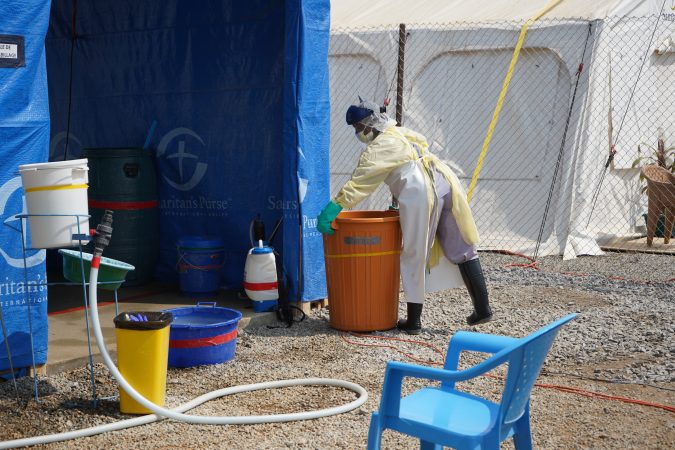
    BUNIA, Congo — The death toll in Congo’s Ebola outbreak has risen to at least 930, the country’s Ministry of Health said on Monday, with 37 new deaths reported in a 24-hour span Friday into Saturday, one of the highest totals.

    The deaths were recorded out of the 2,344 cases confirmed as of Saturday, the health ministry said.

    The Ebola outbreak that was declared in eastern Congo on May 15 is the fastest-growing Ebola outbreak on record. The Bundibugyo virus responsible for the outbreak is less common than others that cause Ebola disease, and there is no approved vaccine or treatment.

    Ebola is highly contagious and can be transmitted to people from wild animals. It spreads in the human population through contact with bodily fluids such as vomit, blood, or semen, and with contaminated surfaces and materials such as bedding and clothing. The disease is rare but severe and often fatal.

    The surge in deaths comes as safety fears have restricted the response in the worst-affected province of Ituri. A total of five provinces have been affected, all in the eastern region where rebel violence is rampant.

    At least 12 attacks — mostly fueled by skepticism and rumors — have been recorded against health facilities and teams since the outbreak was declared in mid-May, authorities said Saturday. Many health workers meanwhile have walked off their jobs as they protest lack of payment.

    At least 36 health workers infected with the virus have died.

    The World Health Organization last week expressed concerns that 80% of new Ebola cases were emerging from unknown chains of transmission, a sign the outbreak is spreading faster than health officials can track despite an expanding response.

    In the more than two months since the outbreak started, it recorded an average increase of about 272 cases and 111 deaths per week, according to data from Congo’s Health Ministry. The data also show that the weekly increases accelerated over time, particularly in July, when both reported cases and deaths rose more rapidly than in the earlier weeks.

    The ministry’s latest update said that 724 patients are currently in isolation and in hospitals, and that it is intensifying response efforts in affected health zones.

    “Patient care and support capacities are consolidating, with 22 new recoveries recorded in 24 hours,” the ministry said.

  • Pentagon withheld dozens of U.S. military injuries in Iran war

    Pentagon withheld dozens of U.S. military injuries in Iran war

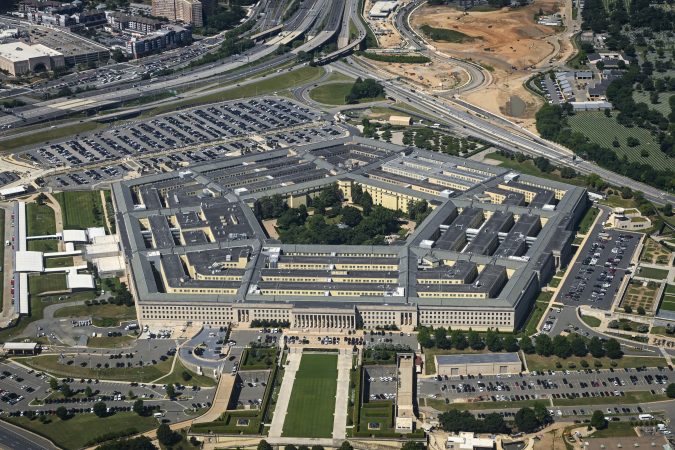
    In the week leading up to the Iranian attack Friday that killed two U.S. soldiers and left one service member missing in Jordan, Iran carried out three other strikes against U.S. forces in the country.

    Those attacks injured dozens of U.S. service members and damaged several helicopters, according to several U.S. officials, who spoke on the condition of anonymity to discuss operational matters.

    But the Pentagon did not disclose the earlier strikes, nor the casualties and damage they inflicted.

    The episode is the latest example during the Iran conflict of the tension between what the Pentagon says is the need for operational security and the government’s obligation to inform the public about the conduct of the war.

    In statements after airstrikes against Iranian military sites last week, U.S. Central Command said it was retaliating for Iran’s attacks against commercial ships transiting the Strait of Hormuz, never mentioning Iran’s strikes on bases in the region, including in Jordan.

    Central Command is not required to release information about injured service members, especially when they quickly return to duty, a U.S. military official said.

    Moreover, another U.S. military official added, why would the Pentagon divulge information that could help Iran zero in on its deadly ballistic missiles and drone attacks in Jordan and other bases in the Middle East where thousands of U.S. troops are stationed?

    Central Command has also stopped announcing how many sites in Iran it hits each day for the same reason, U.S. officials say.

    In the days since the collapse of a fragile truce, the Pentagon has provided little information about the U.S. military strategy after nearly five months of war. The last major Pentagon briefing on the war was in early May.

    In the past several months, the Trump administration has failed to disclose how the Iran war has drained U.S. supplies of critical, costly weapons, and how Iran retained and rebuilt substantial missile capabilities.

    The subject of American casualties in the war is similarly sensitive. The deaths of two Army soldiers in Jordan on Friday and another service member in northern Iraq bring to 17 the total number of U.S. military personnel killed since the United States and Israel launched attacks on Iran on Feb. 28.

    The Pentagon’s casualty reporting protocols call for publicly identifying deceased service members only after 24 hours have passed since next of kin were notified. The names of troops wounded in action are not typically released.

    In a statement on Saturday, Central Command said four U.S. service members wounded in Friday’s attack were taken to Jordanian hospitals and had been discharged. More U.S. troops received minor injuries and had returned to duty, the statement said, but it did not specify how many.

    And the statement did not mention service members injured in the three previous attacks in Jordan last week.

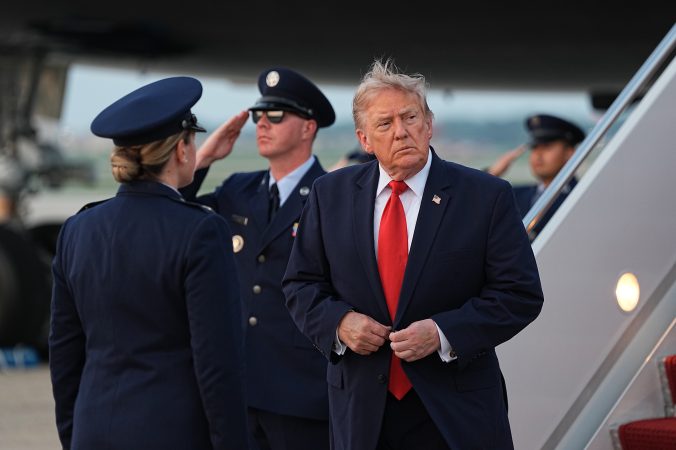
    In a brief phone call with NewsNation, President Donald Trump said the troops died “in service of our country” and reiterated the war’s primary goal of “never allowing Iran to have a nuclear weapon.”

    Defense Secretary Pete Hegseth said on social media on Saturday that the loss of the two U.S. soldiers would stiffen American resolve.

    More than 400 U.S. service members have been injured in the Iran conflict, according to Central Command. The Pentagon had periodically reported the total number of service members injured and returned to duty since early in the war, but it has stopped updating the overall figure in recent weeks.

    In previous administrations, the Pentagon usually delayed providing any details on injured service members until family notifications were completed. During the Biden administration, the Pentagon typically reported the number of service members injured in attacks by Iran-backed militias on U.S. bases in Syria and Iraq.

    More than 1,700 Iranian civilians have died in the war, according to estimates.

    This article originally appeared in the New York Times.

  • Tehran and Washington face a ‘wake up moment’ over the war

    Tehran and Washington face a ‘wake up moment’ over the war

    After more than a week of strikes that unraveled an ill-fated ceasefire, the conflict between the United States and Iran stands on a knife’s edge. Now is the time, analysts say, to find a way to draw down an exponentially destructive confrontation — or risk provoking a war that cascades beyond what they may be able to contain.

    And though the dangers of escalation are growing, analysts say, neither side can really afford it, either economically or politically at home.

    Over the past few days, Iran and the U.S. have dealt blows that quickly went beyond battering military targets and have gradually raised the stakes of their renewed war.

    Both sides have struck water and desalination plants that risk depriving tens of thousands of power and water supplies during the deadly Gulf summer heat. Traffic through the vital Strait of Hormuz is once again blocked both by officials in Tehran, the Iranian capital, and those in Washington, while the U.S. has reinstated a blockade of Iranian ports.

    U.S. strikes have heavily bombarded roads and infrastructure in southern Iran, killing and trapping civilians, while raising anxieties it is preparing the ground for a potential invasion in the area.

    Iran’s strikes on U.S. forces in Jordan have now killed two U.S. soldiers and wounded dozens, bringing the human cost of war much closer to home for Americans while puncturing the Trump administration’s projection of complete military dominance.

    “This is the wake-up moment for both sides,” said Ellie Geranmayeh, an Iran expert at the European Council on Foreign Relations. “They either take the diplomatic off ramp now or risk allowing the war to spiral beyond managed escalation.”

    As both sides’ targets expand, so does the war’s potential geographic reach.

    The growing tit-for-tat of infrastructure strikes in Iran and Arab Gulf countries could quickly devastate civilian populations in the region. Iran has already warned that if it is hit badly enough, it will gun for Gulf installations critical to international energy supplies.

    U.S.-allied Saudi Arabia struck an airport held by Iran-aligned Houthi rebels in Sanaa, Yemen, last week. That has increased the likelihood, Geranmayeh said, of Tehran calling on its Yemeni allies to block the crucial Red Sea shipping lane, Bab al-Mandab. Such a move would quickly compound risks to the global economy.

    The costs of accelerating the conflict are high for both sides.

    Both the Trump administration and Iran’s new hard-line leadership face all of the same economic and political risks that compelled their warring governments only a month earlier to sign a vaguely worded “memorandum of understanding,” which aimed to negotiate an end to the conflict.

    As then, the havoc the war has wreaked on the global economy since the initial U.S.-Israeli attack on Iran last February has yet to abate. Expanding the unpopular war further risks damaging President Donald Trump’s Republican allies in the upcoming midterm elections.

    Iran’s economy was so dire before the war that it sparked nationwide protests that were suppressed in a deadly crackdown. Now, battered by wide-scale destruction, it faces a dangerous economic reckoning that is worsened by the U.S. blockade on its ships.

    The very factors that make escalation so dangerous for Washington and Tehran may also be what is pushing them to riskier attacks, as they seek to increase the pressure on each other.

    “The conflict has now become a contest against time and a war of endurance,” wrote Hamidreza Azizi, an Iranian security expert at the German Institute for International and Security Affairs, on social media. “The decisive question will be whether Iran’s deteriorating economic and infrastructural conditions outpace the rise in energy prices driven by instability in the Strait of Hormuz, or vice versa.”

    Discontent over the human and economic cost of war is starting to be more palpable in Iran. On Saturday, 268 prominent Iranians, including academics, politicians, athletes, clerics and trade unionists, signed a “No to war” petition — a risky move at a time when the government, backed by a fiercely pro-war hard-line base, has continued to crack down fiercely on dissent.

    “The government will have a very difficult time convincing people that they should continue fighting this war at the cost of Iran’s destruction,” said Omid Memarian, an Iran analyst at DAWN, a Washington-based Middle East research institute. “So time is ticking for them, too.”

    That sense of time slipping away is likely what encouraged Iran to launch the attacks on ships that began the latest spiral, said Farzan Sabet, an Iran analyst at the Geneva Graduate Institute in Switzerland, not with the aim of expanding the war, but to take advantage of strategic gains while they have them.

    “They saw their leverage in terms of being able to control the strait quickly decline,” he said, as the United States encouraged ships to navigate the waterway beyond Iranian oversight during the ceasefire.

    These attacks should be seen as Iranian efforts to “keep themselves relevant at the likely negotiating table” more than to signal that they aim to win militarily, Memarian said. And they could easily backfire.

    The strikes on U.S. targets in Jordan, for example, have not only caused heavy casualties and damage to helicopters and equipment. They have very publicly underlined that Tehran retains the ability to strike back and sometimes outmaneuver a far more powerful U.S. military.

    The possibility that such attacks trigger public anger in the United States, or simply enrage the mercurial Trump, Memarian said, has now “clearly put Trump in a position where he is more likely to escalate militarily.”

    At the same time, with the economic and political stakes so high, Trump has few palatable options for escalation.

    Between now and early to mid-August, Sabet said, the Trump administration is likely to try to weaken Iran’s leaders militarily, or to destroy Iran’s ability to control traffic in the Strait of Hormuz through asymmetric attacks. Yet, he said, there was little sign the United States could succeed in doing that.

    “I am skeptical of any one-off U.S. escalation being able to dramatically change Iran’s calculus,” he said. “It would have to be something truly earth-shattering,” he said.

    One approach that could achieve that effect would be a U.S. ground invasion, most likely on a southern island near the strait. Many Iranians have viewed the intense U.S. strikes on the country’s south as a potential precursor to such a campaign.

    Geranmayeh said the risks that previously made the Trump administration leery of that option — from the potential for heavy casualties to the possibility of prolonged occupation — are even bigger now. U.S. troops would face new disadvantages like intense summer heat, and Iranian forces that by now have spent months preparing for such an offensive.

    If Trump was considering such a campaign, it would likely come after the midterm elections, Sabet argued, when the political risk for him is lower.

    The coming days remain precarious nonetheless. With Iran eager to project its military power, every strike risks a miscalculation that could deepen the war instead of hastening negotiations, said Memarian of DAWN, the Washington-based research institute.

    “I think it’s going to get much worse before it gets better,” he said.

    This article originally appeared in The New York Times.

  • US gas prices hit an average of $4 a gallon again as the US and Iran launch attacks

    US gas prices hit an average of $4 a gallon again as the US and Iran launch attacks

    NEW YORK — U.S. gas prices jumped to an average of $4 a gallon again Monday as the U.S. and Iran launched more attacks.

    According to motor club federation AAA, the national average for a gallon of regular gasoline is now back to $4. The average price a year ago was $3.14 a gallon.

    The price is a national average, meaning drivers in some states have been paying well over $4 a gallon for a while now, while others pay less. Prices vary between states due to factors ranging from nearby supply to differing tax rates.

    People around the world are also dealing with high gas prices as a result of the war.

    Gas prices first went over $4 a gallon on average at the end of March. They dipped below that in mid-June and continued to fall as crude oil prices eased when the U.S. and Iran reached an interim deal. Even then, President Donald Trump expressed frustration that gas prices weren’t falling as quickly as oil prices.

    Affordability is likely to be a key issue for voters in the U.S. midterm elections, and higher gas and oil prices can help push up prices for groceries and other goods.

    Oil prices have climbed again in recent days as the U.S. and Iran move closer to resuming an all-out war.

    Brent crude, the international standard, rose 3.2% to $90.95 per barrel Monday and benchmark U.S. crude climbed 2.8% to $84.04 per barrel.

  • U.S. military identifies 2 soldiers killed in Iranian attack on Jordan

    U.S. military identifies 2 soldiers killed in Iranian attack on Jordan

    WASHINGTON — Two U.S. Army soldiers killed in Jordan while defending against Iranian ballistic missile and drone attacks were identified on Monday — the first U.S. troop deaths from direct Iranian fire since the opening days of the war.

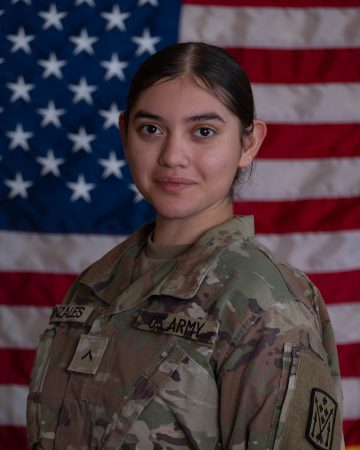
    The Defense Department said in a statement that James Feehan, 25, of Ewa Beach, Hawaii, and Isabella Gonzales, 19, of Carrollton, Texas, were killed in Jordan in Friday’s attacks.

    Feehan, a first lieutenant, will be posthumously promoted to the rank of captain and awarded the Bronze Star, Purple Heart, and Combat Action Badge medals. The Army did not provide details about his commendations. He was assigned out of Fort Bragg, North Carolina, to the 32nd Army Air Missile Defense Command.

    Gonzales was a private with the 10th Army Air Missile Defense Command in Ansbach, Germany. She graduated last year from Hebron High School in Carrollton, near Dallas, school officials said.

    “She gave her life in that service, and our district is heartbroken by her loss,” the Lewisville Independent School District said in a statement. “Her decision to serve after graduation speaks volumes of her character.”

    The military said Gonzales died on Friday and Feehan died the following day. It did not provide details.

    A third service member was reported missing in the attacks that killed Feehan and Gonzales. U.S. Central Command said Sunday that “unidentified remains” have been found and were being examined.

    Military says 17 U.S. service members have been killed in the war with Iran

    The deaths reflect the complicated reality that American soldiers don’t need to be on the ground in Iran for there to be lethal risks in a conflict that involves drones, missiles, and airplanes. American forces are arrayed across the Middle East, making other nations targets of Iran and its allies as the fighting has escalated after a breakdown in peace talks.

    U.S. President Donald Trump has said the war is necessary to stop Iran from developing nuclear weapons. Trump, a Republican, now faces political pressure to bring the war to a close and avoid the kind of prolonged Middle East conflict he had campaigned against.

    Drones and missiles claiming lives on both sides

    An American service member was also killed in northern Iraq on Saturday during a “controlled detonation” of unexploded ordnance from a downed Iranian drone, U.S. Central Command said Sunday. A second service member was wounded and was receiving medical treatment for a minor injury.

    The military said it was withholding additional information until 24 hours after families had been notified.

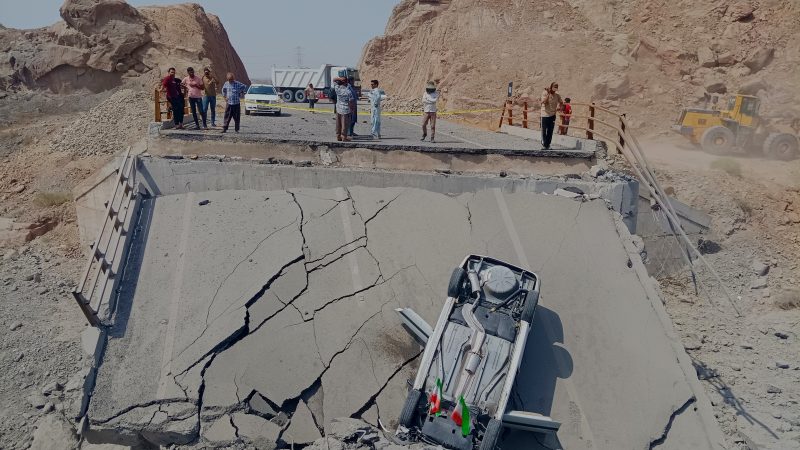
    Iranian authorities said U.S. strikes in just the past three weeks have killed at least 50 people and wounded more than 500 others, including eight killed in a strike on a bridge Friday.

    Both sides have targeted civilian infrastructure relied on by millions of people. Workers on ships, as well as foreign workers and others in Gulf nations, Israel, and Lebanon have also died in the conflict.

    First U.S. military fatalities came soon after the war started

    Shortly after the U.S. and Israel began the war on Feb. 28, an Iranian drone strike at a civilian port in Kuwait killed six American soldiers. The soldiers were part of a supply and logistics unit based in Iowa who were working at a shipping container-style building that had no defenses.

    A seventh soldier died more than a week after being wounded during a March 1 attack by Iran on the Prince Sultan Air Base in Saudi Arabia.

    Later in March, six service members were killed when a KC-135 refueling aircraft supporting U.S. military operations against Iran crashed in Iraq. The aircraft was in “friendly” airspace when an unspecified incident involving another aircraft took place, according to U.S. Central Command.

    Last week, the U.S. military said a Navy pilot died in a helicopter crash in the Arabian Sea. The Navy initially described the July 1 crash as an emergency landing and said there was “no indication the emergency was caused by hostile action.” The remaining three sailors aboard the helicopter were rescued.

  • JD and Usha Vance welcome a baby boy, the first child born to a sitting VP in more than 150 years

    JD and Usha Vance welcome a baby boy, the first child born to a sitting VP in more than 150 years

    WASHINGTON — Vice President JD Vance and his wife, second lady Usha Vance, on Sunday announced the birth of their fourth child, the first born to a sitting vice president in more than 150 years.

    Born Sunday, Alec Neel Vance joins older siblings Ewan, 9; Vivek, 6; and Mirabel, 4.

    Vance announced the birth on social media with a statement signed by him and his wife.

    “We are excited to announce that our baby boy, Alec Neel Vance, was born this morning. Usha and the baby are happy and healthy, and our kids are overjoyed to meet their little brother,” the statement said.

    They thanked doctors and staff at the Walter Reed National Military Medical Center and with the White House medical team.

    The Republican vice president’s growing family is in keeping with his passionate advocacy for Americans to have more children. He has also suggested that the 2025 killing of conservative activist Charlie Kirk, who was his friend, factored into the decision to have another child.

    Vance, a former U.S. Marine, repeatedly expressed alarm about declining birth rates in America as he launched his political career in 2021 with a bid for a U.S. Senate seat from Ohio. As vice president, he said in Washington at the 2025 March for Life anti-abortion rally, “I want more babies in the United States of America.”

    The vice president, who’s 41, has been accompanied on overseas trips by Usha Vance, 40, and their children, with the kids often pajama-clad as they board Air Force Two for the overnight flights.

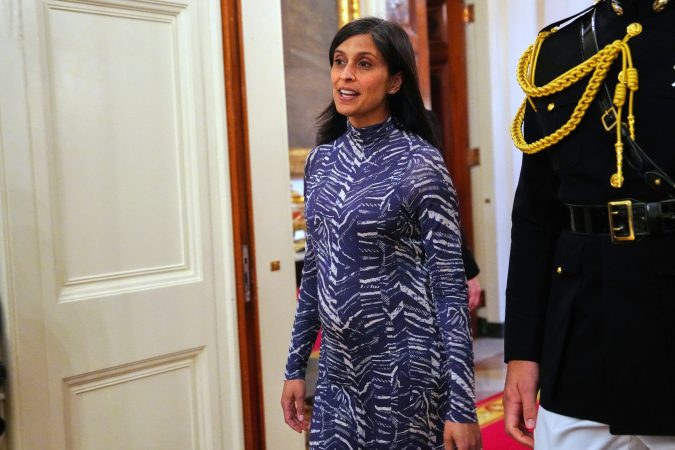
    Usha Vance, the daughter of immigrants from India, had already been the subject of some public fascination because of her husband. Her pregnancy, which was announced in January, amplified that spotlight since it is rare for occupants of the United States’ highest public offices to add to their families while serving.

    The last time a sitting vice president became a new father was in the 1800s.

    Schuyler Colfax and his second wife, Ellen Wade, had a son, Schuyler Colfax III, in 1870 when Colfax was serving as vice president, according to the White House Historical Association. Decades before that, John C. Calhoun and his wife, Floride Bonneau, had a son, William, in 1829 when Calhoun was vice president, the association said.

    The newest addition to Vance’s family was part of a recent mini baby boom among top members of President Donald Trump’s administration. White House deputy chief of staff Stephen Miller’s wife, Katie Miller, recently gave birth to the couple’s fourth child, and White House press secretary Karoline Leavitt had her second child with her husband, Nicholas Riccio, in May.

    Usha Vance recently came under scrutiny after the New York Times’ fashion critic called attention to the stomach-hugging, coral maternity dress she wore for a Father’s Day episode of Storytime with the Second Lady, a video podcast she launched during the pregnancy.

    The Times wrote that the attention that Vance, Miller, and Leavitt had put on their pregnancies offered “an image of idealized womanhood that gives literal shape to the pronatalist movement,” which encourages couples to have as many children as possible to counter declining birth rates.

    The second lady responded on social media, writing, “Now that we know the political significance of my $8.75 coral maternity dress from Old Navy, can’t wait to hear what the New York Times has to say about my elastic-waistband pants and compression socks! In the meantime, enjoy my pregnancy fashion (or lack thereof) and a good story with your kids on Storytime with the Second Lady.” She later shared the receipt for the dress, and her husband applauded her frugality.

    “She bought a $50 dress for $8.75. America: meet your next director of the federal budget!” the vice president wrote on social media.

    JD Vance has said it was Kirk’s widow, Erika Kirk, telling them that she wished she’d had more than two children with her husband before he was assassinated last September in Utah that led him and the second lady to decide to grow their family. Usha Vance, a former attorney who once clerked for Supreme Court Chief Justice John Roberts, concurred — in part.

    “It was very powerful, what (Erika) said about her own family, and certainly very moving to both of us. I think I had already started to open my mind to the possibility,” Usha Vance said during a joint interview with her husband for CBS Sunday Morning that aired in June. “I wouldn’t say that this was, for me in any way, the decisive factor. But it came in the middle of a conversation that we were already having.”

  • Nigerian children pay the price for the Iran war as malnutrition and poverty surge

    Nigerian children pay the price for the Iran war as malnutrition and poverty surge

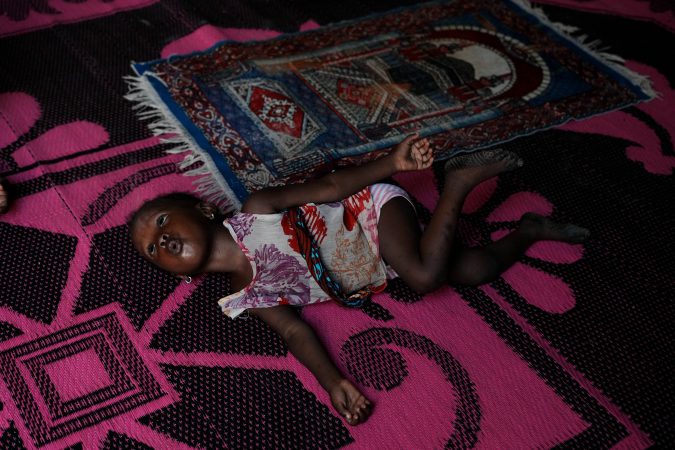
    SOKOTO, Nigeria — Maryam Aminu was hardly surprised when the last of her six children was diagnosed with malnutrition in April for a second time. She was barely feeding the 18-month-old regularly, let alone with nutritious foods.

    Although the family in northwest Nigeria has struggled with economic hardship, their situation deteriorated after February, when her husband, Shehu Aminu, lost his job as a taxi driver due to a spike in the retail price of petrol caused by the war in Iran.

    “When she was diagnosed the second time, even though I suspected it, I was sad and angry because I knew why,” Aminu said in the living area of their unvarnished two-bedroom house in the quiet town of Kware, Sokoto, as ash from the coal stove billowed into the room. “Times are tough, and the food is not consistent.”

    Children relapsing into malnutrition has become an increasingly common occurrence in the state and across northern Nigeria, according to local health and aid workers, who cite knock-on effects from the Iran war.

    Northern Nigeria, one of the world’s poorest regions, is already under pressure from an insurgency crisis. Now, the conflict in the Middle East has worsened food security for millions of people living in poverty, especially children.

    At the same time, Nigerian President Bola Tinubu’s vast economic reforms sparked high inflation after fuel subsidies were removed three years ago and the currency was devalued. A World Bank technical report this week stated that 139 million Nigerians are now poor or vulnerable to poverty.

    If the war in the Middle East continues, up to 23.4 million additional children could fall into monetary poverty — meaning a lack of income or consumption — by the end of the year, the United Nations children’s agency UNICEF said in a report this week. It warned that at least 80% would be in Africa and Asia.

    “Children are paying the price for the escalating conflict in the Middle East, including children far beyond the region,” said UNICEF Executive Director Catherine Russell. “The longer this continues, the worse the consequences will be.”

    Dangers ahead for children

    Amid the Iran war, the closure of the Strait of Hormuz — through which a fifth of the world’s oil and gas passed before the war — sent a ripple effect across the world. A worldwide fuel shock drove up the prices of everything from gas and groceries to fertilizer and airline tickets.

    In Nigeria, fuel pump prices jumped from 800 naira ($0.58) per liter in February to 1,400 naira ($1.02) in April, with a corresponding effect on the prices of food and necessities.

    U.S. President Donald Trump has been trying to force Iran to fully reopen the route for months, turning to everything from airstrikes and naval blockades to negotiations and threats.

    In Sokoto, where the soaring prices have brought more hardship for families, health workers told the Associated Press that they’ve been seeing more children returned to health facilities this year after falling back into malnutrition.

    At a hospital in Sokoto, records shared with AP show nearly 40 children previously treated for malnutrition since February are currently under treatment again, in addition to those not documented.

    “I am worried and sometimes angry about the increasing numbers we are seeing,” said health worker Halimah Muhammad.

    Beyond current realities, soaring prices and economic hardship mean that children in poor households are more likely to be stunted in the long term, UNICEF’s Russell said in an interview with the AP as she was visiting Sokoto this week.

    “Their development will be compromised. They are less likely to stay in school because their parents are under so much financial stress. So the long-term implications for children are absolutely terrible,” said Russell.

    The war has also affected fertilizer supplies and prices, threatening the planting season and worsening the fate of farming communities in northern Nigeria who have struggled to access their farmlands amid a deadly conflict with armed groups.

    “I wake up every morning unhappy, seeing I can no longer provide for my family,” said Shehu, Maryam’s husband. “Then, 2,000 naira could buy you a nutritious meal for the whole family. Now, you need 5,000 naira to buy what 2,000 naira would buy.”

    Most of their meals are pap, a kind of corn pudding, and rice. “There is no way to feed the children,” he said.

    ‘I wish she were excited and full of life’

    People in northwest Nigeria are caught between regular attacks by bandit groups who specialize in kidnapping for ransom and Islamist militants who have been expanding their territory. The Iran war, analysts say, compounds the impact.

    “This distant war offers no relief for the north’s vulnerable,” Ikemesit Effiong, a partner at SBM Intelligence, a Lagos-based geopolitical risk advisory, said.

    Larai Malami, a 35-year-old mother of 10, gave birth to her last child in December, but the infant has already been diagnosed with malnutrition twice.

    Her family has been struggling after her husband lost his job as a motorcycle rider and crossed the border into neighboring Niger to look for work.

    Malami worries about the fuel price because it keeps the price of food high and her husband away. “I worry that the child might never be fully well,” she said.

    That is a sentiment shared by Aminu, too. “I wish she were excited and full of life,” she said.

  • U.S. announces another troop death as Israel warns Tehran’s attacks are coming close

    U.S. announces another troop death as Israel warns Tehran’s attacks are coming close

    DUBAI, United Arab Emirates — The United States announced another death of a service member as it launched more airstrikes at Iran on Sunday in response to the killing of U.S. troops, and Iran fired missiles toward Jordan that risked widening the conflict into neighboring Israel.

    Step by step, the U.S. and Iran have returned closer to all-out war as last month’s interim deal meant to permanently end the fighting has crumbled and shipping traffic in the Strait of Hormuz has largely stalled. Both sides have targeted civilian infrastructure relied on by millions of people.

    The U.S. military said the service member was killed in Iraq on Saturday during the “controlled detonation” of a downed Iranian drone.

    Earlier, the military said its strikes targeted Iran’s paramilitary Revolutionary Guard to retaliate for Friday’s killing of troops in Jordan. One service member was missing after that attack, and the military’s new statement said “unidentified remains” were found Sunday and were being examined. Since the war began, 17 U.S. service members have been killed.

    The renewed exchanges of fire, now in their second week, have seen the U.S. target bridges, water desalination plants, and electrical facilities in Iran. Tehran has hit U.S.-allied countries throughout the Middle East.

    Kuwait, Jordan, and Bahrain again activated air defenses for incoming Iranian drones and missiles. Israel warned that missiles launched toward neighboring Jordan could cause fire to spill over into Israeli territory for the first time in weeks.

    Iran says a nuclear site under construction was hit

    The U.S. military’s Central Command said it hit “Iranian military coastal surveillance and air defense facilities, maritime capabilities, and missile and drone storage sites.” It said the attack was designed to degrade Iran’s ability to control the strait and “swiftly punish Islamic Revolutionary Guard Corps forces,” a power base in Iran’s theocracy that controls its ballistic missile arsenal.

    Footage released by the U.S. military appeared to show strikes carried out by fighter jets and by Tomahawk cruise missiles launched from the sea. One target site appeared to be in a valley of a mountainous region. The Guard often has missile bases and other military equipment tucked into mountain ranges.

    Iran’s atomic energy agency said U.S. strikes targeted the construction site of a planned nuclear power plant in the southwest, state television reported.

    Satellite images from Planet Labs PBC of the Darkhovin nuclear plant site showed earth clearing but little construction as of July 9. Iran did not previously announce it as being targeted.

    The International Atomic Energy Agency said the site, in the “very early stages of construction,” contained no nuclear material when the U.N. watchdog last visited.

    Jordan and nearly every Gulf Arab state have been targeted

    Jordan’s military said it shot down several Iranian missiles. The country hosts major U.S. bases and relies on U.S. air-defense systems. The missiles did not cause casualties or damage, according to Jordan’s military.

    Jordan later summoned Iran’s chargé d’affaires to protest, state-run television reported.

    Israel’s military said Iranian missiles launched toward the Jordanian port city of Aqaba just across the border could spill over, warning Israelis to expect the first air-raid sirens in weeks.

    Eilat, the Israeli city that neighbors Aqaba, cited security officials as saying two interceptors were launched from its outskirts to prevent the fall of debris.

    During the latest fighting, Iran has focused attacks on U.S.-allied Arab states rather than Israel, which launched the war with the U.S. on Feb. 28. “We are prepared to immediately resume combat,” the Israeli military chief of staff, Lt. Gen. Eyal Zamir, said.

    Kuwait said one of its power and water desalination plants was attacked for the second time in two days, causing fires. Its Ministry of Electricity, Water, and Renewable Energy said the power grid remains stable. In Kuwait, about 90% of drinking water comes from desalination.

    The secretary-general of the six-nation Gulf Cooperation Council, Jasem Mohamed al-Budaiwi, has accused Iran of war crimes for strikes on infrastructure and civilian facilities.

    International humanitarian law generally protects civilian infrastructure such as bridges and power plants from attack, but such sites can lose protections if used for military purposes. In such cases, attacks must be proportionate and minimize civilian harm.

    Strait of Hormuz remains key to the conflict

    U.S. President Donald Trump has threatened to target Iran’s power stations and bridges to try to compel Tehran to loosen its hold on the Strait of Hormuz, which saw one-fifth of global oil supplies transit before the war. Recent attacks suggest the U.S. military is carrying out that plan.

    The U.S. in the past week reimposed a naval blockade on Iranian ports to halt its shipments of crude oil. The military on Saturday said it had redirected six ships and disabled one since then.

    A maritime organization overseen by the U.S. Navy said Sunday that the threat to mariners is severe after previous Iranian attacks, “with deliberate hostile action considered highly likely.” It said traffic remained low, with eight transits on Saturday and three on Friday. The daily average before the war was almost 140.

    Iranian Supreme Leader Mojtaba Khamenei, in a statement Saturday, warned of “unforgettable lessons” if the U.S. keeps attacking the Islamic Republic. An Iranian negotiator said Tehran was suspending its commitments to the interim deal and accused the U.S. of violating it.

    The halfway point has passed in the 60 days the deal set out to negotiate the permanent end of the war and other issues, including Iran’s nuclear program.

    Iranian authorities on Sunday said at least 50 people have been killed and 517 wounded in the latest U.S. strikes. Iran has provided no overall information on its materiel losses.

    Far from the region, the war’s effects on the prices of fuel and other goods have hit some of the world’s most vulnerable areas hard.