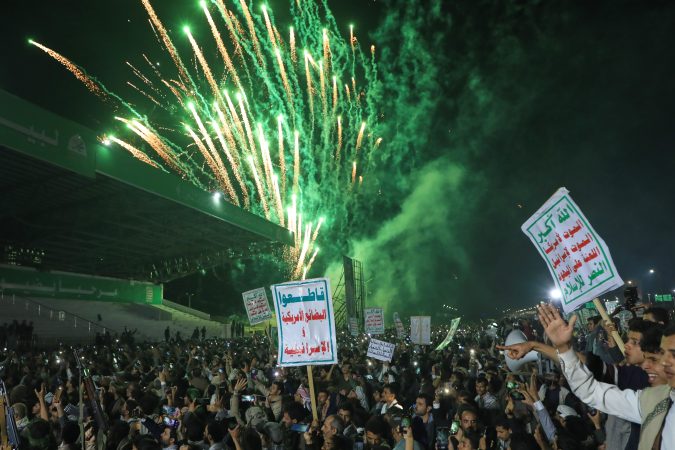
ISLAMABAD — An Iranian official began meetings Tuesday with mediators in Pakistan as diplomats sought to salvage the collapsed interim deal between Iran and the United States, even as both countries continued to launch attacks for a 10th day of renewed fighting.
The visit by Iran’s Interior Minister Eskandar Momeni comes as Pakistan has intensified diplomatic efforts in recent days to resuscitate the deal. However, it remains unclear just what new arrangement could be reached to end the fighting.
Iran attacked a tanker in the Strait of Hormuz early Tuesday, forcing its crew to abandon the ship, while the United States conducted yet another round of airstrikes targeting the Islamic Republic.
The 10 consecutive nights of U.S. airstrikes haven’t compelled Tehran to loosen its grip on the strait, through which about a fifth of all crude oil and natural gas traded once passed in peacetime.
The interim deal signed last month that was meant to end the fighting has crumbled. Shipping through the Strait of Hormuz has largely stalled. And as fighting intensifies, both sides have targeted civilian infrastructure relied on by millions of people.
“Iran and groups supportive of Iran may target other U.S. interests overseas or at locations associated with the United States and Americans throughout the world,” the U.S. State Department said in a new warning to Americans.
The escalation has pushed oil prices higher in recent weeks. Benchmark Brent crude traded Tuesday at nearly $90 a barrel and regular gasoline in the U.S. climbed to an average of $4 a gallon, keeping pressure on Americans’ wallets ahead of midterm elections this fall.
President Donald Trump took to social media on Monday to warn that “Every time Iran kills an American Soldier they will pay for that killing many times over!”
Iranian official begins meetings in Pakistan
Momeni met Pakistan’s army chief Field Marshal Asim Munir, according to two officials who spoke on condition of anonymity to discuss the closed-door negotiations. Momeni later met Prime Minister Shehbaz Sharif.
Pakistan’s political leadership and Munir, who serves as both the chief of army staff and defense forces, have played a key role in brokering last month’s interim agreement between the United States and Iran. Islamabad has been working to persuade both sides to return to the negotiating table to resolve outstanding issues under the June memorandum of understanding.
Authorities did not immediately release details of the meeting, which came as Tehran continued its attacks on Gulf Arab allies of the U.S.
On Sunday, U.S. Secretary of State Marco Rubio told reporters that the U.S. is still open to negotiating with Iran but that “it has to be real.” It remains unclear whether Tehran will offer anything that Trump would consider “real.”
US strikes come as ships attacked
The U.S. military’s Central Command said Tuesday it targeted “Iranian military command centers, maritime capabilities, missile and drone launch sites and air defense systems.” It released more footage of bombings that targeted sites in Iran.
“American forces remain postured and prepared to hold Iran accountable for unwarranted aggression toward civilian mariners seeking to freely and openly transit the strait,” the command said.
Iranian state media reported that explosions were heard in Fars, Hormozgan, Ilam, Kerman and Sistan and Baluchistan provinces.
However, traffic through the strait has slowed to a crawl during the latest violence. Lloyd’s List Intelligence said only three ships transited the strait on Sunday.
The British military’s United Kingdom Maritime Trade Operations center said a tanker came under attack early Tuesday in the strait off Oman, forcing the crew to abandon the vessel.
Iran’s paramilitary Revolutionary Guard claimed the attack, as well as two other attacks on ships Monday in the waterway.
The route around Oman has been the one the U.S. military has encouraged ships to travel to avoid Iran’s control. The UKMTO separately reported Tuesday that another previously unknown attack on a ship took place early the previous day.
Iran strikes US allies around the region
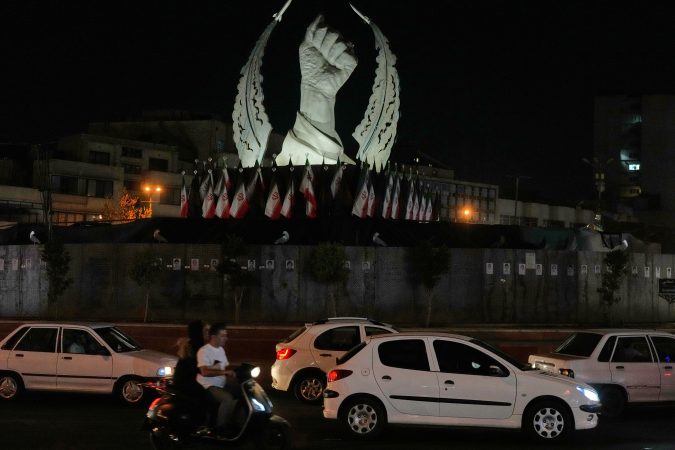
Tehran also hit U.S.-allied countries throughout the Middle East. Jordan military’s said Tuesday that Iran targeted it with five drones and three missiles, all of which were shot down. Bahrain sounded its missile alert sirens Tuesday afternoon as another Iranian barrage targeted the island kingdom, which is home to the U.S. Navy’s 5th Fleet.
In Kuwait, its Electricity, Water and Renewable Energy Ministry said that Tehran had struck desalination and power plants for a fourth straight day on Monday night. Authorities said the attacks sparked fires and caused damage.
Some 90% of Kuwait’s drinking water comes from desalination, making the attacks a matter of life and death for the tiny nation.
U.S. strikes have been hitting electrical equipment in Iran as well, and Iranian officials also have said Americans targeted water facilities.
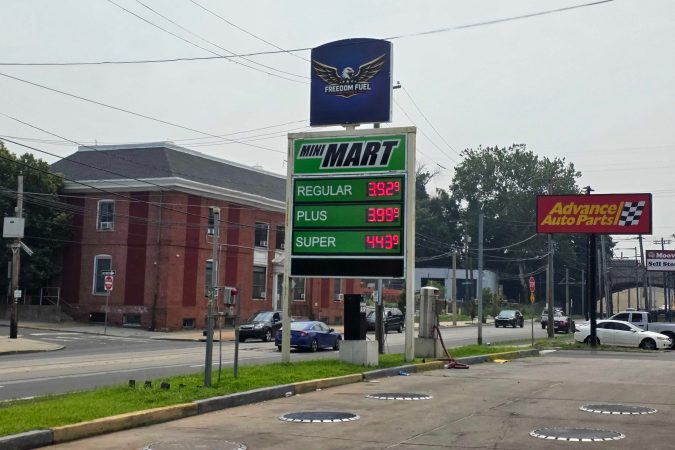
Even the Freedom Fuel Network promoted by President Donald Trump isn’t immune to rising gas prices.
Yet, the Philadelphia-area network of gas stations is expanding anyway, according to the company’s website.
The enterprise, currently made up of 25 stations spread across the region, garnered national attention earlier this month when it began selling regular gas for $3.47 a gallon — a nod to Trump, and 40 to 50 cents cheaper than other stations.
Gas station owners suddenly undercut, political observers, and government watchdogs wondered how long the promotion would continue.
It turns out, not long.
The Inquirer visited seven Freedom Fuel locations over several days, and while all were still selling gas cheaper than nearby competitors, the deep discounts from earlier were gone.
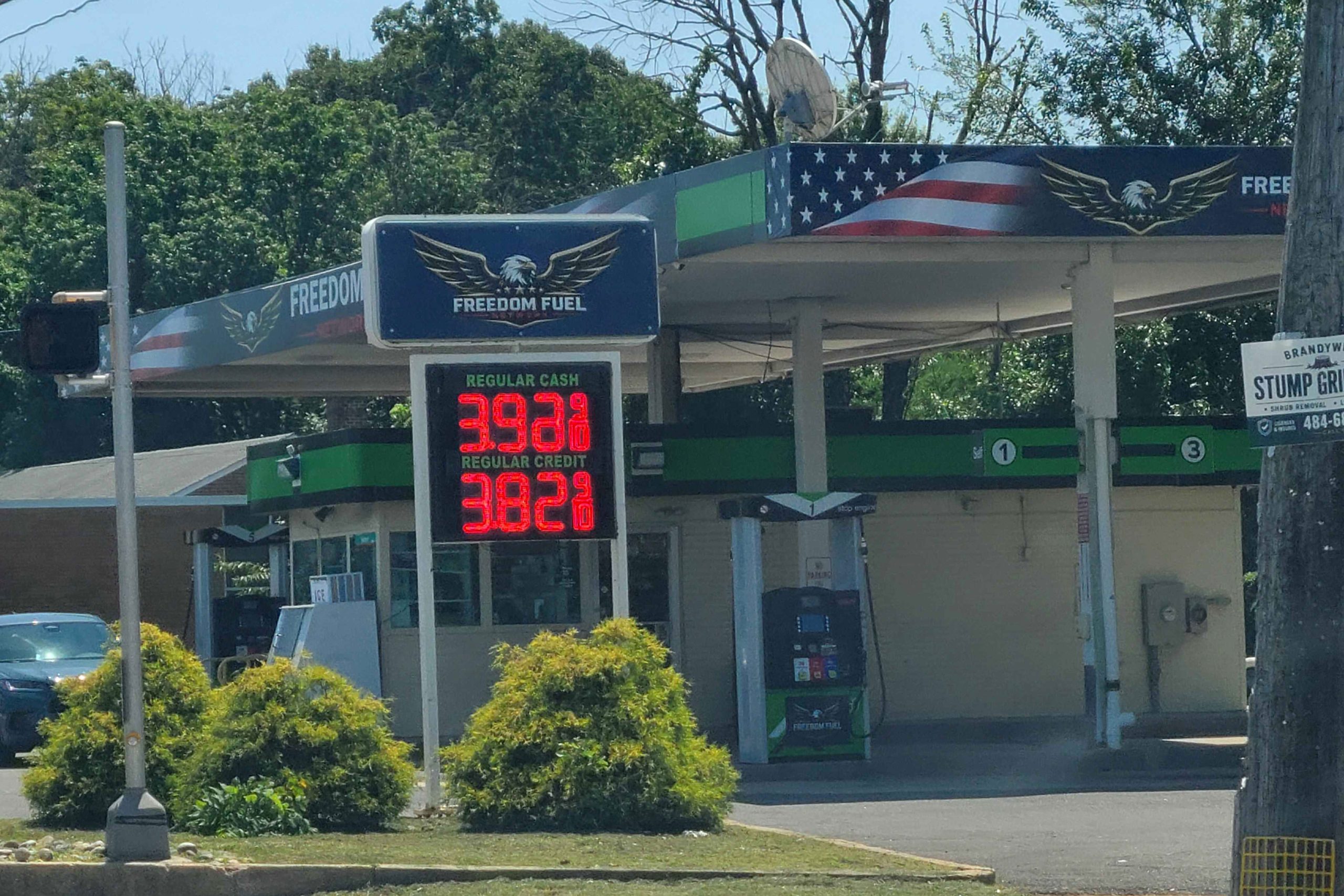
Gas prices are up everywhere, including the Freedom Fuel Network station on Edgemont Avenue in Brookhaven, Delaware County.Rob Tornoe /
Three Philadelphia gas stations and two Delaware County locations were among those within the network selling gas at $3.92 a gallon Monday. Near Philadelphia’s Freedom Fuel stations, competitors were charging $3.89 to $4.09 for a gallon of gas. The same was true in South Jersey, where Freedom Fuel stations in Marlton and West Berlin were selling gas around 10 cents a gallon less than their nearbycompetitors.
(function(){function e(){window.addEventListener(`message`,function(e){if(e.data[`datawrapper-height`]!==void 0){var t=document.querySelectorAll(`iframe`);for(var n in e.data[`datawrapper-height`])for(var r=0,i;i=t[r];r++)if(i.contentWindow===e.source){var a=e.data[`datawrapper-height`][n]+`px`;i.style.height=a}}})}e()})();
Selling gasoline is a low-margin business, with owners making just “a few pennies” of profit per gallon sold, according to Eliezer Fich, a finance professor at Drexel University’s LeBow College of Business.
“They can sustain those losses for a little while, but it becomes unsustainable if you can’t offset that with a convenience store or a car wash,” said Fich.
Several Freedom Fuel stations visited by Inquirer reporters were small, appeared somewhat rundown, and offered a limited selection of products beyond gas. One location had an inoperable convenience store.
Fich doesn’t know the specifics of Freedom Fuel. He said independent stations banding together can offer purchasing power with refineries, which can be one route to securing lower fuel costs. But those savings wouldn’t come close to supporting the deep discounts the stations were offering.
Despite the White House’s involvement in promoting Freedom Fuel, a spokesperson said the company received no government subsidies and did not obtain fuel at a lower cost. The below-market prices would exist “for as long as the company chooses,” the spokesperson said.
If that’s the case, the business itself was already absorbing dramatic losses before the United States resumed attacks on Iran, leading to a jump in gas prices over the past week.
The average cost of a gallon of fuel in Philadelphia was $4.17 a gallon Monday, up from $3.95 a gallon last week, according to AAA. Nationally, the average cost of a gallon of gas also jumped back to $4 a gallon, up from $3.14 a gallon compared to last year.
While questions remain, Freedom Fuel plans to expand
Little is known about who is taking on the likely losses expected from the promotion.
Former Evesham Township mayor, Baltimore Ravens assistant coach, and self-proclaimed “proud Trump supporter” Randy Brown, along with former commodities trader Yoni Gontownik, both signed the certificate of formation, first obtained by The Newsground, an investigative news outlet. Neither could be reached for comment.
Cherry Hill developer Shamikh Kazmi and his brother Syed Kazmi are linked to at least six locations. The brothers, who have been embroiled in at least two lawsuits related to previous gas station ventures, also could not be reached for comment.
One of Shamikh Kazmi’s businesses was sued as a result of a lengthy trademark dispute with BP America Inc. and BP Products North America Inc. in 2021. That case ended with four deputies with the U.S. Marshals Service seized remaining brand signs in June 2022, according to court documents.
Also in 2021, the brothers were accused by Petroleum Marketing Group Inc, a fuel distribution company, of stealing thousands of gallons of gas from the company. Petroleum Marketing Group sued the brothers, who were ordered by a federal judge in February to pay $600,000.
Still, the people behind Freedom Fuel are looking at expansion.
“Since launch, drivers have flooded us with one request: bring Freedom Fuel Network to my area,” read the website Monday. “We heard you. Due to overwhelming demand for additional locations, we’re expanding to serve more communities with lower prices at the pump.”
The website did not give a timeline for when those additional stations could come online and did not respond to a request for comment.
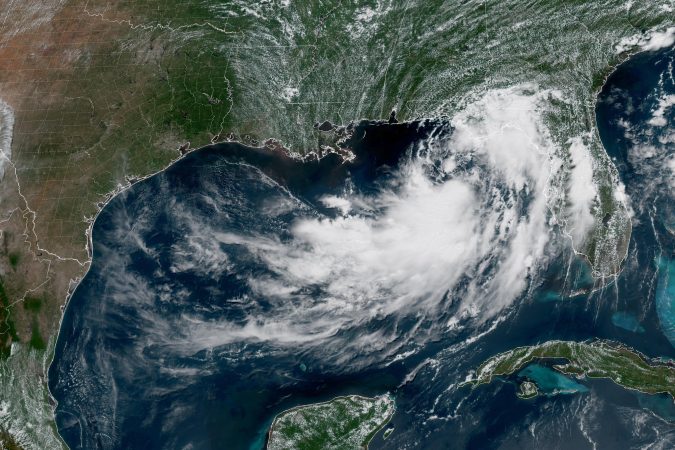
NEW ORLEANS — Tropical Storm Bertha formed Monday evening in the Gulf of Mexico off the Florida Panhandle and could bring heavy rain and storm surge flooding to U.S. coastal areas, forecasters said.
The center of Bertha was located about 110 miles south of Panama City, Fla. Maximum sustained winds were around 40 mph, according to an evening advisory from the Miami-based National Hurricane Center.
The slow-moving storm has been drifting erratically but is expected to stay near or along the northern Gulf Coast early this week, bringing heavy rainfall to areas of northern Florida, Alabama, Mississippi, and Louisiana as it pushes westward toward Texas. Forecasters said some additional strengthening is expected in the coming hours.
A storm surge watch has been issued, extending from the mouth of the Mississippi River to the Alabama-Florida border on the Gulf Coast.
A tropical storm watch also is in effect from the Ochlockonee River in Florida westward to southeastern Louisiana at the Jefferson and Plaquemines parish line.
The National Weather Service office in New Orleans said storm conditions may set in from the Florida Panhandle westward into Louisiana by Tuesday. It warned of wind gusts of 40 mph and noted a possible “life threatening” storm surge watch for the Alabama, Mississippi, and southeastern Louisiana coasts.
Storm surges of up to 4 feet could occur in portions of the Louisiana and Mississippi coastlines, the hurricane center said, warning there also could be an isolated tornado or two possible over the Florida Big Bend region this week.
Areas of flash flooding will also be possible through Friday along the coast, from western Florida to middle Texas, the weather service said. It added that rainfall could reach 3 to 5 inches along the Louisiana coastline with higher amounts expected in some areas, notably south of Lake Pontchartrain.
Meanwhile, in the eastern Pacific Ocean, Tropical Storm Fausto strengthened Monday and was nearing hurricane status far out to sea from Mexico.
Fausto had top sustained winds of 70 mph on Monday and was located about 745 miles southwest of the southern tip of Mexico’s Baja California Peninsula. The hurricane center said it was moving northwest at 10 mph while posing no threat to land.
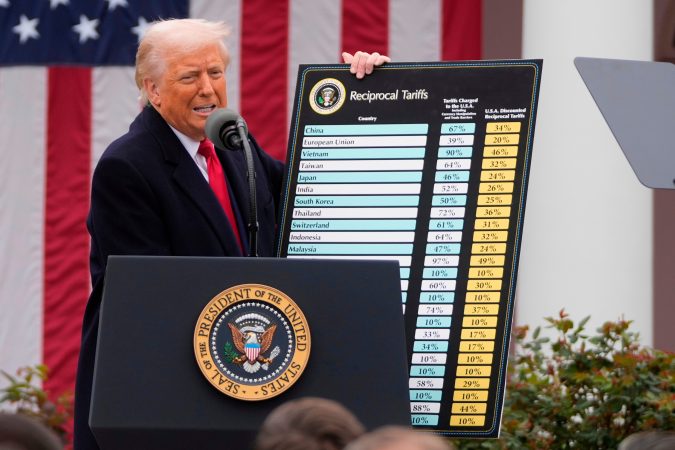
WASHINGTON — President Donald Trump on Monday imposed 50% tariffs on most Canadian goods, declaring that Canada has unfairly discriminated against American autos, alcohol and dairy products.
The move could unleash a new wave of economic chaos, with risks of higher inflation and further fraying of relations between two nations that had been closely woven together before Trump’s return to the White House. The administration official previewing the action said that Canada was one of the only nations other than China that retaliated against Trump’s previous tariffs and must be held accountable.
The official insisted on anonymity on a call with reporters to preview the president’s actions and said that Trump signed three proclamations to launch the tariffs under Section 338 of the 1930 Trade Act. Several Democratic lawmakers last year proposed repealing the section because they said Trump could use it to destabilize the economy.
The new 50% tariffs would exclude energy products, potash, fish, and critical minerals, but they would include goods that had previously been protected from import taxes by the United States-Mexico-Canada Agreement, or USMCA. That 2020 trade pact was not renewed by the U.S., triggering a new set of negotiations that could run until 2036.
The White House said in a fact sheet that the tariffs would go into effect in 30 days, meaning there is time for negotiations as Trump has not always followed through on his announced tax hikes on imports.
Still, the tariffs could escalate into a wider trade war as Canada seeks to defend its economy.
The Canadian federal government did not immediately comment on the tariff, but Ontario Premier Doug Ford saw a possible showdown ahead.
“If these tariffs proceed, Canada should respond tariff for tariff, dollar for dollar,” Ford posted on social media.
Candace Laing, CEO of the Canadian Chamber of Commerce, said the Trump administration’s moves were “regrettable” but the two countries need to use the 30-day window before the tariffs start “to make meaningful progress in advancing formal talks.”
Chris Swonger, CEO of the Distilled Spirits Council of the United States, also called for a deal: “We encourage policymakers on both sides of the border to pursue a negotiated solution that restores market access for U.S. spirits and avoids further harm to the U.S. hospitality sector.”
But the use of a Great Depression-era law to impose the tariffs broadens some of the risks, as those tariffs could be applied to other U.S. trading partners, not just Canada, and inject “massive uncertainty” into the global economy, said Scott Lincicome, vice president of general economics at the Cato Institute, a libertarian think tank.
“We crossed the Rubicon,” Lincicome said. “The invocation of 338 is the nuclear option for Trump tariffs.”
Tariffs are also a political challenge for Trump
The new tariffs carry serious political and economic risks for Trump ahead of the November midterm elections for control of Congress. His “Liberation Day” tariffs last year in April provoked a financial market meltdown over concerns about inflation and a recession, prompting him to walk back the rates for a period of negotiation.
The Supreme Court ruled this February that Trump had lacked the legal authority to impose the tariffs by declaring an economic emergency, causing the administration to find alternative ways to raise import taxes based on a series of legal authorities.
Tariffs are taxes on imports, which companies can then pass along to consumers in the form of higher prices. The president maintains that the costs created by tariffs will cause manufacturing to relocate to the U.S., though there is little evidence of that in the economic data.
“These new taxes will raise prices on American families and likely lead to retaliation against the very industries Trump purportedly wants to protect,” said Rep. Suzan DelBene (D., Wash.), who is chair of the Democratic Congressional Campaign Committee.
The latest import taxes could worsen Trump’s weak ratings on the economy. He promised voters when running for the presidency that he would bring prices down, but the annual inflation rate has risen since he became president because the tariffs and the war in Iran are pushing up oil prices.
Trump has repeatedly targeted Canada on trade issues
The Trump administration official said the president had also requested that his aides look into additional tariffs on Canada because its wildfires hurt air quality in the U.S. He had publicly threatened to do so in social media posts.
At the World Cup final on Sunday, Trump watched the game with Canadian Prime Minister Mark Carney, who has openly challenged the U.S. president and has sought to expand Canada’s trade relations with other nations. The Trump administration official said their time together at the game was not a working visit to discuss trade and tariffs.
Trump claims in the proclamations that Canada discriminates against American autos, alcohol, and cheese relative to other nations, but his argument rests in large part on retaliatory actions taken by Canada after the U.S. president imposed tariffs on Canada under the pretext that it should do more to stop fentanyl smuggling.
Trump noted in his autos proclamation that Canada maintained, starting in April 2025, a 25% tariff on the imports of U.S. motor vehicles that did not qualify for preferential treatment under the USMCA.
The White House said that, regarding alcohol, all but two Canadian provinces and territories halted the purchase and retailing of American alcoholic beverages beginning last year, which was also a response to Trump’s tariffs and taunts of making Canada the 51st state.
But Trump has long objected to Canada’s treatment of U.S. cheese, saying in his proclamation that Canada discriminates against the U.S. compared to Europe on dairy products.
Trump has had a frosty relationship with Carney, a former central banker, who pledged to stand up for Canada during his election campaign last year.
At the World Economic Forum in Davos, Switzerland, in January, Carney called out Trump — without naming him — by saying that the “most powerful” countries are using the economy to coerce less powerful nations.
Trump responded at the time by saying: “Canada lives because of the United States.”
WASHINGTON — President Donald Trump’s administration sought phone records of several New York Times journalists and even those of some of their relatives, according to a motion unsealed Monday — an unusually aggressive attempt to unmask the confidential sources of reporters who wrote about Trump’s Qatari-gifted Air Force One jet.
The efforts by the Republican president’s administration to compel the identity of sources in the form of additional subpoenas come at a time when the executive branch’s relationship with the press is increasingly contentious. The efforts, described in a letter-motion filed by the Times over the weekend, were more expansive than previously known, the newspaper noted. They also covered a time frame that exceeded the news articles in question.
“Two of the subpoenas seek records beginning on January 1, 2026, long before the events that are purportedly the basis for the Department’s investigation,” lawyers for the Times wrote in the letter. “That time frame strongly suggests that the Department is using this investigation not to focus on any purported concerns arising from the July 8 and 9 articles, but instead to forage for information about the Journalists’ source relationships more broadly.”
Government has said reporters aren’t the target
The phone records subpoenas come on top of grand jury subpoenas that were served July 10 on three journalists, seeking testimony about the identify of their sources. The Times has separately challenged those grand jury subpoenas, and a judge is scheduled to hear arguments on Thursday.
Lawyers for the newspaper noted that some of the phone records subpoenas were issued on the same day as the grand jury ones, an additional one was issued the following day, and another was issued on July 16 — after the Times had already moved to quash the grand jury subpoenas.
The Times said the phone records subpoenas should be spiked, arguing that each instance demonstrated “bad faith” by the government. The lawyers argued that the Justice Department ignored its own guidelines by not giving the journalists advance notice that records were being sought and had issued subpoenas “without first conducting any serious investigation.”
The newspaper’s lawyers said the additional subpoenas call “into question the accuracy” of testimony given last week by Jay Clayton, the U.S. attorney in Manhattan, where the grand jury subpoenas were issued. At his confirmation hearing to be the Trump administration’s director of national intelligence, Clayton said that “we followed the protocols” and that the government took “the least intrusive possible” steps.
The Justice Department has justified the grand jury subpoenas by saying that “reporters are not the targets, those leaking classified information are.” Asked about the phone records subpoenas, the department said Monday: “Any subpoena issued by the Department of Justice is done so in full compliance with federal law and internal Department policy.”
The additional subpoenas included a request for phone records of one reporter’s mother and two of the journalists’ spouses. The motion noted that the mother in question is a mental health professional with confidential client relationships and that one of the two spouses is the general counsel of a law firm.
“The disclosure of additional subpoenas for confidential newsgathering information of the Journalists is deeply concerning, revealing yet another instance of the alarming pattern of conduct detailed in the Motion to Quash,” the news organization’s lawyers wrote.
“These actions demonstrate abuse of the grand jury process, continued bad faith attacks on the Journalists, violations of the Department’s own internal regulations, and disregard for the law in this Circuit intended to protect critical First Amendment interests,” the motion stated.
It’s part of an ongoing legal challenge
The Times revealed the government’s actions as part of an ongoing legal challenge to quash subpoenas that the Justice Department served on three journalists who reported on security concerns involving the jet.
The original subpoenas, delivered to reporters at their homes, marked a dramatic escalation of the Trump administration’s crackdown on media leaks that free press advocates swiftly condemned as a government effort to intimidate news organizations. It followed an FBI search earlier this year of a Washington Post reporter’s home and the seizure of her electronic devices.
The new jet in question, a present from Qatar that Trump’s administration spent $400 million to retrofit and upgrade, recently entered service. But Trump used an older model Air Force One jet to leave a NATO summit in Turkey earlier this month.
The Times, citing anonymous sources, reported that the switch had come at the urging of the Secret Service and that the newer plane lacked some of the advanced security features of the older Air Force One aircraft, including antimissile capabilities. On social media, Trump denied security concerns.
He said Monday the Qatar jet would be taken out of service for about a month to be “maxed out” with unspecified additions.
Trump’s administration has clashed with the press, from newspapers to TV networks to the Voice of America, on multiple fronts since he returned to office last year. The methods include lawsuits, administrative actions, and public threats.
The First Amendment of the U.S. Constitution guarantees the press’ ability to operate free of governmental restrictions.
How the United States’ first “White House” became a flash point in the 21st century
Judge Cynthia M. Rufe pauses under in the entrance to the reconstructed "ghost" structure with partial walls and windows officially titled, “Freedom and Slavery in the Making of a New Nation” as she visits the open-air President’s House installation in Independence National Historical Park on Feb. 2.Tom Gralish / Staff Photographer
The United States’ first “White House” was lost to history more than once. But after it was rediscovered by an amateur historian in 2002, there was an effort to ensure that this time the site would be remembered.
In the years since, the President’s House has been a source of controversy at every stage of its development. The site at the doorstep of the Liberty Bell serves as a painful reminder to the flaws of the nation’s Founding Fathers, and George Washington’s own culpability in slavery.
story continues after advertisement
President Donald Trump’s administration in January abruptly dismantled the exhibit memorializing the nine people Washington kept in bondage at his Philadelphia home, deeming its displays to “inappropriately disparage Americans living or past.”
A monthslong court battle ensued leading to the partial restoration of the site, pause of the work, and the involvement of multiple courts — all taking place leading up to the nation’s Semiquincentennial, and culminating in the installation of a new exhibit under the cast of darkness less than two weeks after the 250th celebration.
Robert Morris, a financier whose company participated in the slave trade, offered the site to Washington as the nation’s first executive mansion. The first president moved to the house in 1790 and resided there until the end of his time in office in 1797.
After Washington, John Adams lived at the house until Washington, D.C., became the nation’s capital in 1800.
1804 to 1951
The site demolished, twice
The house was used for commercial purposes, including a hotel, until it was largely demolished in 1832.
The President’s House location in Independence National Historical Park.
The entire block on Sixth and Market Streets was razed in 1951 to create Independence Mall, demolishing portions of the walls that remained intact and burying the foundation of the President’s House underground. The location of the house was forgotten to history.
2002
Discovering the site, protest immediately starts
Independent historian Ed Lawler uncovered the true location of the residence — adjacent to the new Liberty Bell Center. Other historians and The Inquirer’s reporting at the time highlighted the history of slavery at the site. Protests, led by the Avenging the Ancestors Coalition, immediately began encouraging the National Park Service, under then-President George W. Bush, to memorialize the nine people Washington enslaved at his Philadelphia home. The government was, at first, strongly hesitant to do so.
story continues after advertisement
2007 to 2010
Excavation and construction
Guests and dignitaries gather in Independence National Historical Park at the President’s House Site before the start of a ceremonial ground-breaking on March 21, 2007.Tom Gralish / Staff Photographer
On Dec. 15, 2010, the President’s House officially opened. Former Philadelphia Mayor Michael Nutter, under whom the project was finished, highlighted the importance of the site and its role in highlighting the contradictory experiences of liberty and slavery during the founding of the United States. After the ceremony, the site became Independence National Historical Park’s responsibility.
Municipal Judge Charles Hayden, Michael Coard, Independence National Historic Park Superintendent Cynthia MacLeod, and Mayor Michael Nutter at the dedication of the President's House.Clem Murray / Staff Photographer
2015
Philadelphia hands the site to Park Service
The President’s House was in a state of disrepair, marked by intermittently blank and soundless video screens, leaking glass, and fogged up windows. The city, which owned the exhibit, transferred the site to the hands of the National Park Service, as Philadelphia and the federal government agreed during the site’s development.
.
March 2025
Trump signs executive order
Trump signed the “restoring truth and sanity to American politics” executive order that instructed the Department of Interior to flag displays in national parks and historical sites that “inappropriately disparage Americans past or living” ahead of the country’s 250th celebration.
July 2025
Park Service flags President’s House
More than a dozen exhibits throughout Independence National Historical Park — all referencing slavery — were flagged for a Trump administration content review. The President’s House had the most exhibits flagged, though some panels were thought to be spared from the content review. Local stakeholders began ramping up advocacy efforts aimed at protecting the President’s House.
September 2025
Plans for changes
Reports emerged that the Trump administration intended to alter the President’s House. The Department of Interior said at the time that “Interpretive materials that focus solely on challenging aspects of U.S. history, without acknowledging broader context or national progress, may unintentionally provide an incomplete understanding rather than enrich it.”
Jan. 22, 2026
NPS dismantles exhibit; Philadelphia sues
After months of scrutinization and anxiety over the fate of the President’s House, the Trump administration dismantled the entire exhibit. Workers took wrenches and crowbars to the site and loaded the removed panels into the back of a white pickup truck, leaving behind swaths of faded brick.
Workers remove displays from the President’s House Site in Independence National Historical Park.Tom Gralish / Staff Photographer
Shortly after the removal, the City of Philadelphia filed a lawsuit against the Interior Department, the National Park Service, and its leaders. Advocacy efforts continued and Independence Park employees were given talking points on how to address visitors’ questions about the President’s House.
Jan. 31, 2026
Trump and Philly clash in court
Attorneys for Mayor Cherelle L. Parker’s administration argued in federal court in Philadelphia that the removal of the exhibit was unlawful. The city found a receptive audience in U.S. District Judge Cynthia M. Rufe, who called the Justice Department’s argument that the federal government can unilaterally change history “dangerous” and “horrifying to listen to.”
Feb. 16, 2026
Injunction
Rufe ordered the Trump administration to immediately restore the exhibit. In a blistering opinion, published on Presidents Day, which celebrates George Washington’s birthday, the George W**.** Bush-appointed judge compared the actions of the Trump administration to the Ministry of Truth from George Orwell’s novel warning of authoritarianism, 1984.
“Each person who visits the President’s House and does not learn of the realities of founding-era slavery receives a false account of this country’s history.”
U.S. District Judge Cynthia M. Rufe
Feb. 20, 2026
Restoration starts, and quickly stops
Rufe, who ordered the restoration of the site “forthwith,” gave the federal government a hard deadline to restore the site after no work to reinstall the exhibit had taken place. National Park Service staff returned some panels to the walls, but as the deadline neared the federal government appealed and won an administrative stay that paused the restoration. The site’s wall remained half bare for months.
Workers reinstall the displays at the President’s House in Independence National Historical Park.Tom Gralish / Staff Photographer
April 2026
Proposed new exhibit
The National Park Service published 11 digital renderings of new panels proposed at the President’s House. The new exhibit would provide a broad timeline of U.S. history that included slavery, but would be less focused on George Washington’s role and frame the Founding Father’s enslavement of nine individuals at his Philadelphia home during the first presidency in a more sympathetic light. Only two of the 11 newly proposed panels at the time referenced those enslaved at the site, drawing criticism from historians.
Panel for Ona Judge at the President’s House in Independence National Historical Park.Tom Gralish / Staff Photographer
Born into slavery in Mount Vernon, Washington’s Virginia estate, Judge was kept in bondage as Martha Washington’s personal assistant and seamstress. She escaped from the President’s House on May 21, 1796, and made her way to New Hampshire with the help of Philadelphia’s free Black community. Despite Washington’s growing support of emancipation in private communications throughout his life, the first commander-in-chief made multiple attempts to recapture Judge. She was never caught and outlived her enslavers.
June 2, 2026
Trump and Philly clash in court, again
A three-judge panel of the U.S. Court of Appeals for the Third Circuit heard arguments on the Justice Department’s appeal. The judges pushed the city’s attorney to point to language in the cooperative agreement that said Philadelphia maintained rights over the site after the transfer of ownership to the federal government. But the city came short and was left pointing to statements by National Park Service officials that emphasized the collaborative effort to develop the site.
The Justice Department attorney representing the Trump administration told the judges that if the city wanted to maintain control over the exhibit, it “should have bargained for that.”
The half-bare walls of the President's House.Tom Gralish / Staff Photographer
June 18, 2026
Third Circuit sides with Trump
The Third Circuit delivered a blow to the city, ruling that Philadelphia had no rights over the site or its displays. The unanimous decision, signed by judges appointed by George W. Bush, Barack Obama, and Donald Trump, also dismissed all but one claim from the city’s initial lawsuit. The judges further found the Trump administration’s proposed panels “acknowledge the evil of slavery, including its injustices and hypocrisies, and, by telling the story of the nine slaves that Washington kept in the President’s House, remind us of their essential humanity.” The site was in limbo as the order out of Boston conflicted with the Third Circuit ruling.
“The duty to ‘maintain’ is better understood as a general management obligation that accompanies ownership, not a promise that the exhibits will forever remain in place regardless of the owner’s wishes.”
U.S. Park Police Officer Patrick O’Hanlon reads the new panels alongside visitors at the site of the President’s House in Philadelphia.Aidan T. Gallo / Staff Photographer
DUBAI, United Arab Emirates — The United States military said late Monday it was carrying out its 10th consecutive night of strikes on Iran in a push to reopen the Strait of Hormuz. The renewed bombings came following the death of another American service member, and after Iran launched attacks on American allies Kuwait, Jordan, and Bahrain, home of the U.S. Navy’s 5th Fleet.
U.S. Central Command said on social media that the latest strikes “are designed to further degrade Iranian military capabilities used to attack commercial shipping” in the strait.
Even as the U.S. and Iran inch closer to all-out war again, glimmers of hope appeared on the diplomatic front, as Iran’s interior minister traveled to Pakistan, a key mediator in the conflict, for talks.
The interim deal signed last month that was meant to end the fighting has crumbled. Shipping through the Strait of Hormuz — a vital supply route for world energy supplies — has largely stalled. And as fighting intensifies, both sides have targeted civilian infrastructure relied on by millions of people.
A new potential threat to world energy markets emerged Monday after Iran-backed rebels in Yemen said they planned to prevent Saudi Arabia from shipping in the Red Sea, an alternate route for oil exports during the war.
The escalation has pushed oil prices higher in recent weeks. Benchmark Brent crude traded Monday above $88 a barrel and regular gasoline in the U.S. climbed to an average of $4 a gallon, keeping pressure on Americans’ wallets ahead of midterm elections this fall.
The U.S. military identified two soldiers who were killed in Jordan in attacks that left a third person missing. Separately, the military confirmed another death in Iraq on Saturday during the “controlled detonation” of a downed Iranian drone. President Donald Trump took to social media on Monday to warn that “Every time Iran kills an American Soldier they will pay for that killing many times over!”
Trump was planning to attend a ceremony on Tuesday evening at Dover Air Force Base, where at least one service member’s remains were due to arrive.
Ninth night of Iran strikes by U.S. targets infrastructure
The U.S. military’s Central Command said its ninth straight night of airstrikes targeted “Iranian military command centers, air defense and coastal surveillance sites, maritime capabilities, missile and drone launch sites, and communications networks.” Last week, the U.S. struck bridges and a tower at an Iranian port.
Iran’s state-run IRNA news agency reported that the American strikes killed at least one person around Tabriz, a northwestern city about 325 miles from the capital, Tehran. Tabriz is believed to host underground missile bases run by Iran’s paramilitary Revolutionary Guard.
U.S. strikes likely also hit Bandar Imam Khomeini in Khuzestan province, Sirik and Jask in Hormozgan province, and Konarak and Chahbahar in Sistan and Baluchistan province, IRNA reported.
The British military’s United Kingdom Maritime Trade Operations center said Monday evening that a second ship had been attacked a day earlier in the Strait of Hormuz, this one off the coast of the United Arab Emirates.
The other vessel caught fire in the Strait of Hormuz after being hit by a projectile near the coastline of Oman. The crew abandoned the vessel, which was adrift and still ablaze hours later, the UKMTO said.
The route around Oman has been the one the U.S. military has encouraged ships to travel to avoid Iran’s control. The Guard later claimed it was targeting tankers in the strait.
Tehran also hit U.S.-allied countries throughout the Middle East.
Kuwait said its air defenses fired at an incoming barrage, and Jordan’s armed forces said Monday evening they had shot down three Iranian missiles, adding that there had been no material damage or casualties. There was no immediate word from Iran.
Bahrain’s Foreign Ministry condemned Iranian drone strikes targeting the country’s air traffic systems, saying they endanger travel for civilians.
Strait of Hormuz remains key to the conflict
A new pressure point could emerge for world energy markets as Yemen’s Houthi rebels announced on Monday a maritime embargo against Saudi Arabia. The Houthis, who are backed by Iran, said they would block shipping between the Red Sea and the Gulf of Aden in response to an attack on Sanaa International Airport last week that they blamed on Saudi Arabia.
With the Strait of Hormuz blocked up, Saudi Arabia has been relying on a pipeline to the Red Sea to get millions of barrels of oil out to market. The Houthis earlier demonstrated their ability to disrupt shipping there when they targeted ships for months over the Israel-Hamas war in Gaza, with over 100 vessels attacked.
There was no immediate response from Saudi Arabia.
Trump has threatened to target Iran’s power stations and bridges to try to compel Tehran to loosen its hold on the Strait of Hormuz, through which one-fifth of world oil supplies were shipped before the war. Recent attacks suggest the U.S. military is carrying out that plan.
The U.S. in the past week reimposed a naval blockade on Iranian ports to halt its shipments of crude oil. The military says it has redirected seven ships and disabled one since then.
A glimmer of hope for diplomacy
Pakistan has intensified diplomatic efforts in recent days to resuscitate the interim ceasefire reached last month that called for resolving remaining issues tied to the war within 60 days. The truce unraveled after both sides resumed attacks on each other’s military installations and other infrastructure.
Iranian Interior Minister Eskandar Momeni arrived in Islamabad on Monday for two days of talks with Prime Minister Shehbaz Sharif and others. Momeni’s counterpart, Pakistani Interior Minister Mohsin Naqvi, expressed optimism.
“God willing, We will have good news,” Naqvi said.
On Sunday, U.S. Secretary of State Marco Rubio told reporters that the U.S. is still open to negotiating with Iran but that “it has to be real.”
“If the door opens to diplomacy — if the guys that want to do something productive for Iran win and take control of that system, or take control of the negotiations — that’ll be a very positive development,” Rubio said. “That’s not where we are tonight, unfortunately.”
Iranian authorities on Sunday said at least 50 people have been killed and 517 wounded in the latest rounds of U.S. strikes. Since the war began on Feb. 28, 17 U.S. service members have been killed.
WASHINGTON — Dozens of Democratic U.S. senators and the Independent senator from Maine pushed for more details Monday from Immigration and Customs Enforcement about the agency’s vetting practices for new agents and how officers conduct vehicle pursuits, even as they demanded that body cameras be swiftly rolled out to all officers.
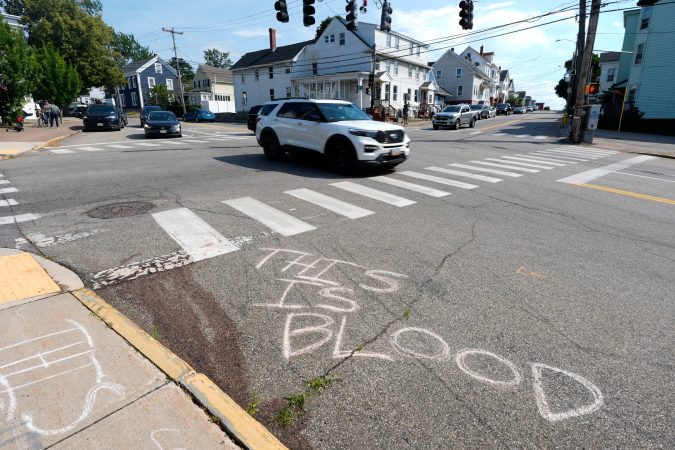
The demands came in a letter spearheaded by Maine’s Independent Sen. Angus King, signed by 38 Democratic senators, and sent to the Department of Homeland Security, which oversees ICE. The demands follow two deadly shootings in which ICE officers shot and killed immigrants in Houston and Maine.
The Associated Press reported last week that the ICE officer in Maine who opened fire and killed a man from Colombia had a history of violent behavior toward family members that was detailed in family court records.
The officer’s first ex-wife, Ashley Brouillette, told AP he was physically violent with her, including once throwing boiling water at her while she was holding their child.
His second ex-wife, Lucinda Brouillette, sent a statement over the weekend alleging “a persistent pattern of abuse, intimidation, manipulation, fear, and control.”
“Throughout our marriage and in the years that followed, I have feared for a long time that his anger, aggression, and escalating behavior would eventually result in severe, life threatening violence, and I often believed I would be the one on the receiving end of it,” she wrote.
Hundreds of pages of family court documents describe their turbulent marriage, and the years after. Lucinda Brouillette told the court he had stalked and harassed her and physically and verbally abused his daughter, according to multiple requests for temporary protection orders. Brouillette tackled his teenage daughter and smashed spaghetti in her hair, and during another outburst, he dragged his daughter around the house as she cried, she said.
“Dave needs counseling or something for his PTSD & depression,” she wrote in an application for a temporary protective order on behalf of his teenage daughter, which a judge granted in 2021.
In court filings, David Brouillette said that his second ex-wife had slandered him.
Multiple family members told the AP the government should have never given him a gun, badge, and the authority to patrol city streets as the Trump administration ramps up its mass deportation agenda.
The senators’ letter on Monday listed new measures to increase accountability at the agency, including transparency about whether ICE considers records from family court of domestic violence or abuse when vetting new recruits.
“We remain supportive of removing dangerous convicted criminals from our communities, but this goal can and must be achieved without endangering these very communities in the process. By no stretch could either of the victims in Texas and Maine be characterized as ‘the worst of the worst,’ making these tragic deaths even more egregious,” the senators wrote. “The American people deserve clarity and accountability.”
They said ICE should immediately start wearing uniforms or vests that clearly identify them as “ICE” instead of the more generic “POLICE” or “POLICE ICE.” Civil rights groups and advocates have often criticized ICE for not wearing uniforms or clear identification on their ballistics vests identifying them as deportation officers.
Senators also demanded to know what changes were being made to how officers conduct traffic stops and vehicle pursuits.
The shootings in Maine and Houston both involved ICE officers shooting at people who were in vehicles at the time. In the wake of the Maine shooting, Homeland Security temporarily stopped officers from conducting vehicle stops except in specific situations. But just a day later, after fierce criticism from some MAGA supporters, President Donald Trump said on social media that traffic stops should continue.
Homeland Security said last week that it was adding new training in crowd-control measures, high-risk vehicle stops, live-fire exercises, and medical training, in response to what they called coordinated attacks against their officers and ICE facilities.
Life after college did not go as Ashley Dreahn planned.
After starting out as a teacher, she went back to school — and took out more loans — in hopes of landing a higher-paying job in the chemical processing industry. It never materialized, and then came Hurricane Harvey, a job loss, and a car breakdown. By 2022, she was so broke she filed for bankruptcy.
She found work at a Texas prison and was rebuilding her life, saving up for weight-loss surgery, when this spring she heard from a credit-monitoring service. The student loans she thought had been discharged in bankruptcy had ballooned to $94,298 with interest, and she had to start making payments. She was in default.
“I absolutely broke down,” said Dreahn, 40.
Across the country, the number of borrowers with defaulted student loans jumped by more than 4.2 million from April 2025 to March 2026, according to an Associated Press analysis. The surge includes many who went off track in 2024, when loan payments started coming due again after a pandemic-era freeze.
Hundreds of thousands more are months behind on payments, and another surge in defaults could be on the way. Millions of borrowers are facing higher monthly payments as the government dismantles its most affordable income-driven repayment option, the SAVE plan, one of several changes the Education Department says are intended to simplify a fragmented system.
Borrowers enter default after missing payments for nine months, and the consequences can upend lives. Default hurts credit ratings and can lead to the debt being sent to collections.
“I am seeing despair and outrage and despondency and just a very wide mix of pretty extreme emotions, the likes of which I have not seen before,” said Alan Collinge, the founder of Student Loan Justice and the author of The Student Loan Scam.
The federal government can garnish wages and Social Security payments from borrowers in default, but the Trump administration in January walked back plans to begin collections on their loans. A Moody’s Analytics report this spring said garnishments are likely to begin within the next year, warning of “an additional headwind in an increasingly fragile economy.”
Taking out student loans was all too easy
Dreahn enrolled at Texas Woman’s University in 2004 as the first in her family to go to college. She cobbled together jobs, babysitting and working at a call center and an automotive shop. But she still needed to borrow heavily.
“There was one point where they were like, ‘If you don’t come up with the money, we’re dropping you from your classes,’” said Dreahn, who earned a degree in history with an emphasis on education and social studies. “And it was, ‘OK, what do I need to sign?’”
She said no one explained what taking out loans truly meant.
“You just kind of trust these advisers and trust these financial aid people that this is what you’re supposed to do,” Dreahn said.
While teaching, she took out more student loans to earn a pair of associate degrees from a public community college in Texas. She received a job offer at a chemical refinery, but it was rescinded because she was over the weight limit for the company’s safety equipment.
She filed for bankruptcy in 2022 in hopes that it would “erase everything.” She checked her online credit report afterward. For each student loan, the report read: “Nice! You’ve paid off 100% of this loan.” The message is sometimes shared with borrowers when student loans are consolidated or transferred to new companies — even when the person still owes money.
Student loans are rarely discharged in bankruptcy. Borrowers must prove the loans pose an “undue hardship.” The process is cumbersome, and few qualify, advocates say.
But Dreahn didn’t know any of that.
“I was so relieved, like, ‘OK, now I can start life over,’” she said. “‘I can save some money.’”
She started working last year as a supervisor at a prison in Huntsville, about 70 miles north of Houston, and was living in an RV park to save money when she received the default notice.
“I just feel like, where is that light at the end of the tunnel now that I thought I had?” Dreahn said.
The wave of defaults started after pandemic
As a pandemic relief measure, the federal government allowed borrowers to suspend student loan payments until 2023, and President Joe Biden’s administration then provided a one-year grace period. That ended in fall 2024, allowing loans to enter into default after nine months of missed payments.
A surge in defaults followed, and today around 9.5 million borrowers — over 1 in 5 — are in default, including those whose loans were well past due before the pandemic, according to the AP analysis. The previous record for borrowers in default had been 8 million in December 2019.
There are also 870,000 borrowers with loans between 181 and 270 days late, on the edge of default, according to federal data.
Meanwhile, 33% of borrowers at for-profit schools nationally were at least 90 days late on payments, more than twice the rate of borrowers at public schools, additional federal data shows.
Most private colleges that offer traditional degrees are nonprofit. For-profit colleges generally offer career-focused degrees and credentials and often serve students of color. Career Education Colleges and Universities, an association of private trade schools, has created a task force to reach out to students about the importance of loan repayment, said Jason Altmire, the group’s president and CEO.
“We take it seriously,” he said.
Borrowers struggle to make sense of changes
Some borrowers are so overwhelmed by their debt and changes to the federal student loan system that they’ve stopped paying.
Barbara Howaniec, a 63-year-old psychiatric nurse-practitioner from Auburn, Maine, already has defaulted. She borrowed around $62,000 for her master’s degree from New York University, graduating in 2001. But after two decades of payments, she still owes around $67,000 with interest. She had put her loans in deferment for short stints while her children were young, unaware that interest would continue to accumulate.
Howaniec had hoped to have her loan forgiven after 25 years under an income-based repayment plan. But then came a letter saying the repayment schedule had changed and she owed 355 more payments. By the time she finished paying, she would be 91.
She made call after call, but she said the advice varied by whoever picked up the phone. Last year, as she paid for her own children’s college, she quit paying her own loans.
“I had already paid what I had borrowed. I’m like, no, I’m not going to pay anymore,” Howaniec said. As a self-employed person, she said she doesn’t have to worry about the government garnishing her wages.
Shannon Khan, a 46-year-old mental health worker from Webster, Texas, hasn’t paid her student loan for two months as she investigates her options.
She did not have to pay anything while enrolled in SAVE, but she was moved last fall to another income-driven repayment plan, with a required monthly payment of $847. She thought she was close to having her remaining balance forgiven, but she recently learned her payment will jump to $1,683 a month — an amount her loan servicer said she will need to pay for nearly a decade.
She has spent hours on the phone trying to get answers.
“It’s just a bunch of chaos and confusion,” Khan said.
Some hunt pathways out of default
Dreahn had never been entirely clear how much she was borrowing when she was a student. As an adult, the process remained opaque. She had multiple loans transferred to different loan servicers. And then her loans were deferred when she went back to school.
“It’s a huge, huge mess,” Dreahn said. “It’s almost like it just gets sold off and you’re just lost in the system somewhere until you figure out that, ‘Oh, they want $700 this month. What?’”
Now in default, she hopes she might one day qualify for Public Service Loan Forgiveness. It requires borrowers to make 10 years of payments while working at a nonprofit or for the government.
“I’m trying to figure out: One, how I’m going to make it work. And two, what do I give up?” Dreahn said. ”How do I manage buying groceries as well as making sure the bills are covered and this payment never gets missed?”
Lately, she thinks back on the chemical processing plant job she almost got.
“That was a six-figure career that I lost due to my weight,” she said, her voice breaking. “The money that I’m trying to save now that was going to be for surgery is going to be paid to student loans instead.”
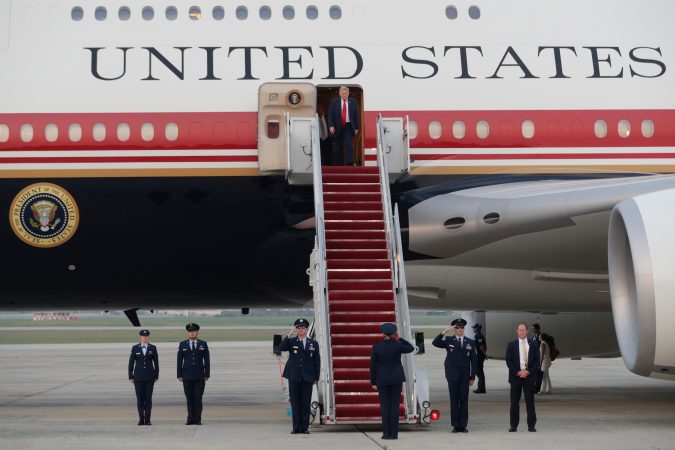
President Donald Trump said Sunday that the new Qatari-gifted Air Force One will be sent to be “maxed out,” amid questions about the jet’s security technology. Trump will stop flying on the jet and return to an older plane while those upgrades take place over about one month, the White House said Monday.
“It has a lot of capability, but as I understand it, in about a month or so, they’re going to send it to have it be maxed out,” he said speaking in front of the aircraft at Joint Base Andrews in Maryland. It is unclear what exact upgrades Trump was referring to.
“The new Air Force One is perfectly safe for the President’s travels, but will receive additional upgrades and enhancements in the fall which will take approximately one month to complete,” Karoline Leavitt said in a statement on Monday.
“During that time, the President will fly on the old Air Force One,” she said.
The new plane is a Boeing 747-800 worth $400 million and was donated by Qatar in an unusual deal between the U.S. and Qatari governments, which raised ethical, legal, and national security concerns at the time it was donated and accepted by the Pentagon last summer. The Air Force said in May that the aircraft — now with a dark blue, red, and gold paint scheme — had undergone modification and flight testing.
After the accelerated modification process, Trump began flying on the new jet this month.
The Air Force previously told the Washington Post that it “coordinated closely with appropriate government entities to ensure all functional mission requirements were strictly met for transporting the President.”
The FBI opened an investigation of the New York Times, issuing subpoenas to several reporters, after the outlet published reporting citing sources who said the aircraft lacked some of the defensive countermeasures previous planes had, including advanced antimissile capabilities. The Times reported that a senior FBI official contacted Times journalists before the article was published to caution against doing so, citing national security concerns. The official also asked for the journalists’ sources, which they refused to provide.
Trump arrived at the NATO summit in Turkey earlier this month on the gifted jet but, in a surprise switch, did not use that plane when he left.
Trump denied then that security concerns prompted the change but suggested that Iran could have tried to attack the plane. Reporters flying with the president were asked to close their window blinds as they departed Ankara.
“They asked you to close your windows; they probably feel that way [about possible threats]. They didn’t ask me to close mine, but if they did, I would’ve done it,” Trump said.
The Qatari jet is meant to serve as a bridge between the older, roughly 35-year-old Air Force One planes and two new Boeing 747s that the company is retrofitting for $3.9 billion. Features will include antimissile defense systems, electronic anti-hacking protection, and advanced communications systems to use with the Pentagon.
Nearly a decade of delays have meant that the new planes may not be ready by the time Trump’s second term ends. And costs have increased to an estimated $5.6 billion, an overrun for which Boeing is on the hook, according to the Government Accountability Office.
The inside of the gifted jet has largely been kept the same as the design meant for the Qatari royal family, with cream-and-tan leather seating on the decks, photos showed. The Qatari plane is expected to be gifted to Trump’s presidential library at the end of his term.