Category: Nation & World

  • Israel is building a miles-long earthen barrier inside Gaza, entrenching its division

    Israel is building a miles-long earthen barrier inside Gaza, entrenching its division

    CAIRO — The Israeli military is quietly but quickly building a giant earthen barrier separating the over 50% of the Gaza Strip it controls from the rest of the territory, according to satellite imagery, further entrenching the division of the tiny Palestinian enclave.

    More than 14 miles have been constructed in recent months, running through Palestinian communities demolished by the military. That is equivalent to more than half the length of the coastal strip, which is some 25 miles long and 7 miles wide, and home to over 2 million Palestinians.

    When presented with the satellite images, Israel’s military confirmed to the Associated Press it has built a physical barrier in the area of the so-called yellow line, the boundary to which Israeli troops withdrew under the October ceasefire deal with Hamas. The line was envisioned in the U.S.-backed agreement as a temporary division of the territory pending a fuller Israeli withdrawal.

    But as the truce stagnates, it appears Israel is digging in, heightening Palestinian fears that the line is morphing into a border. Neither U.S. Central Command, which is tasked with monitoring the ceasefire, nor the Board of Peace, the body led by U.S. President Donald Trump meant to eventually oversee Gaza, would comment on the barrier.

    Along with the barrier, the military told AP it has developed a “security zone” around the line, equipped with intelligence and technological assets. It declined to give details on the route of the barrier when asked how far it would be extended. It said the barrier aimed to prevent infiltration and protect Israeli troops and Israeli communities near Gaza.

    Construction of the barrier is proceeding rapidly

    Since the ceasefire deal took hold, Palestinians in Gaza have feared Israel would not return the area of Gaza it controls. But few appear to be aware of the berms now being built around them — because of the danger of even approaching that area.

    A portion of the berm network in southern Gaza was extended by more than 1.2 miles in two weeks this month, according to the satellite images provided by Planet Labs PBC.

    The berm was about 0.3 miles long on July 1. By July 15, it was about 1.5 miles, splicing the Israel-controlled ruins of the city of Rafah from Muwasi, site of some of the largest Palestinian tent camps.

    If construction continues in its current direction, it will join up with the longest stretch of the barrier, which runs nearly unbroken for around 10 miles from the southern city of Khan Younis to near Gaza City, in the north.

    Construction began on that stretch in February, and it appears work to extend it further south is continuing, according to the satellite images. More than 0.6 miles was added between June 21 and July 7, running close to an Israeli military base built on the ruins of the town of Bani Suheila, near Khan Younis.

    In the far north of Gaza, several unconnected stretches of berms run just outside the largely leveled town of Beit Lahia.

    The height of the berms in each place remains unclear. In some places, the barriers appear to run outside the yellow line.

    Israel has mostly destroyed and depopulated the half of Gaza it controls

    Gaza’s population has been crowded into the coastal area west of the yellow line, most living in squalid tent camps and dependent on aid.

    On the other side of the line, satellite imagery shows that Israeli forces have leveled the vast majority of buildings using bulldozers and explosives, virtually erasing several towns and Rafah, once home to more than a quarter million people.

    They have carved new road networks and erected new bases on the ruins of Palestinian towns. Agricultural land has also been destroyed. The Israeli military says it is demolishing infrastructure used by Hamas.

    The yellow line was never precisely defined, whether in the ceasefire deal or by Israeli or U.S. officials, and it has been inconsistently marked on the ground. The military told AP it is working to clearly mark the route of the yellow line to “reduce friction and prevent harm to uninvolved individuals.”

    Israeli forces have killed Palestinians who came close to the line or crossed it. The Israeli military says it fires on those believed to be militants threatening its troops. But those killed have included children and other civilians seemingly unaware of the line. Some soldiers have said they don’t always know who they are firing on and have orders to kill anyone crossing the boundary.

    Israeli strikes have killed hundreds of Palestinians since ceasefire

    Israeli forces have killed more than 1,100 Palestinians since the ceasefire began, most in airstrikes and drone strikes around Gaza. Militant attacks have killed five Israeli soldiers in the same period.

    Early on Tuesday, an Israeli strike in Gaza City killed Firas al-Masri, his wife, and their four children, ages 6 to 13, according to Shifa Hospital. Israel’s military only said that they conducted a strike on Hamas militants in the area at that time.

    Firas’ brother, Ahmad al-Masri, lives nearby and said he heard the children’s voices at the moment of the blast.

    “They were calling out to me, ‘Uncle! Uncle!’” he said. “But the fire was raging, and we couldn’t do anything.”

    Under the ceasefire deal, Israel is eventually supposed to withdraw its troops further to the very edges of Gaza, to be replaced by an international security force. But implementation of the deal has been stalled for months.

    A former U.N. diplomat now in charge of coordinating the ceasefire has blamed Hamas’ failure to disarm. Sporadic talks to reach a formula for decommissioning its weapons appear to have made little progress, and Hamas accuses Israel in turn of violating the ceasefire.

    The war began after Hamas-led militants attacked Israeli communities on Oct. 7, 2023, killing around 1,200 people, mostly civilians, and taking 251 others hostage. Israel responded with a punishing military offensive that has killed more than 73,000 people, according to the Gaza Health Ministry.

    The ministry, which was part of the recently dissolved Hamas-run government, maintains detailed records viewed as generally reliable by U.N. agencies and international organizations. It does not distinguish between civilians and militants but says women and children make up around half of all fatalities.
  • Appeals court rejects Biden’s bid to block release of recordings of ghostwriter interviews

    Appeals court rejects Biden’s bid to block release of recordings of ghostwriter interviews

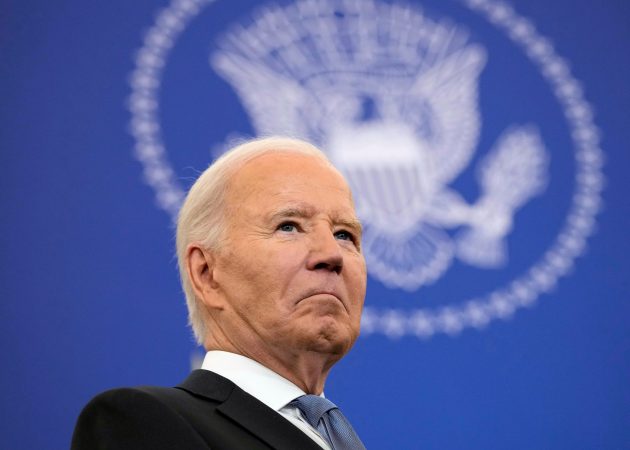
    WASHINGTON — A federal appeals court has rejected a request by former President Joe Biden to block the release of audio recordings and transcripts of his interviews with a memoir ghostwriter before he was elected president.

    A divided three-judge panel from the U.S. Court of Appeals for the District of Columbia Circuit suspended its decision until Aug. 3 to allow more time for Biden to consider another appeal.

    The panel’s 2-1 ruling late Monday found there is a “substantial” public interest in disclosing the material that Biden wants to keep under wraps. Redactions to the recordings would help protect Biden’s privacy, the majority noted.

    “We conclude that any remaining incursion on personal privacy from disclosure of the now-redacted materials likely does not outweigh the public interest in disclosure,” the ruling says.

    Judge Florence Pan, who was nominated by Biden, a Democrat, wrote a dissenting opinion in which she said Biden has shown a “substantial privacy interest” in keeping the material hidden.

    “The conversations at issue took place in Biden’s home, and the recordings of them were obtained by the government in the course of a criminal investigation that did not lead to an indictment,” she wrote.

    The appeal also was heard by D.C. Circuit Chief Judge Sri Srinivasan and Judge Gregory Katsas. Srinivasan was nominated by President Barack Obama, a Democrat who chose Biden as his vice president. Katsas was nominated by President Donald Trump, a Republican who as president lost to Biden in 2020 but was elected again to the White House in 2024.

    Mark Zwonitzer, who worked with Biden on two memoirs, 2007’s Promises to Keep and 2017’s Promise Me, Dad, interviewed him at his home in 2016 and 2017. Biden’s lawyers say the conversations were candid, personal, and intended to remain private.

    Biden spokesperson T.J. Ducklo said the former president disagrees with the ruling but “respects the courts and the vital role an independent judiciary plays in a healthy democracy.”

    “President Biden’s conversations for a book a decade ago that discussed his late son are private, and were provided to the Department of Justice on the express condition they stay that way,” Ducklo said in a statement. “Reversing course and making them public is just the latest example of this administration weaponizing the (Justice Department) for political retribution.”

    The recordings were obtained by special counsel Robert Hur, who investigated Biden’s handling of classified documents from his time as a senator from Delaware and as Obama’s vice president. Republicans in Congress demanded the material after Hur declined to file charges against the then-president.

    Biden sued and sought an injunction to prevent the Justice Department under Trump from releasing the recordings to Congress and the conservative Heritage Foundation. The department previously argued that the recordings were exempt from disclosure under public records law.

    Biden appealed after U.S. District Judge Dabney Friedrich, who was nominated by Trump, ruled in June that the public interest in the material outweighed whatever privacy rights Biden had.

    Pan noted that the majority is effectively ruling in favor of immediately disclosing the material by denying Biden’s request for an injunction pending appeal.

    “That, of course, will moot this case,” she wrote.

  • U.S. actions harm global efforts to prevent and treat HIV in dozens of countries, new report says

    U.S. actions harm global efforts to prevent and treat HIV in dozens of countries, new report says

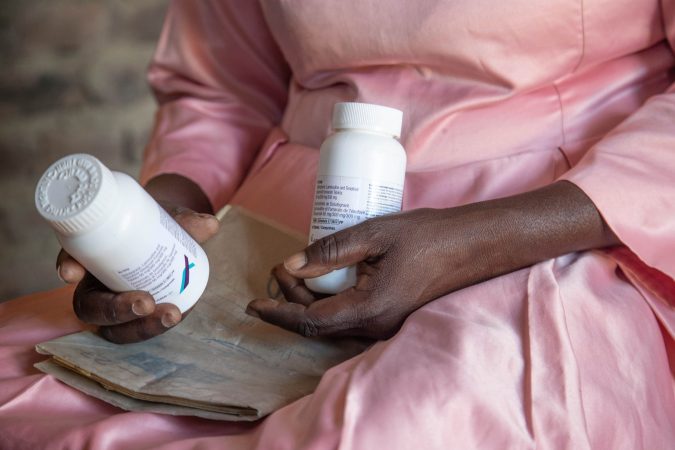
    The Trump administration’s disruptions to a global AIDS relief program have forced organizations to close clinics, lay off staff, and cut services, seriously impeding efforts to prevent and treat the disease in dozens of countries, a new report released Tuesday shows.

    The President’s Emergency Plan for AIDS Relief, known as PEPFAR, is credited with saving at least 26 million lives since its inception in 2003. But last year, it was impaired by the dismantling of the U.S. Agency for International Development and cuts to thousands of global health grants.

    “The disruptions were very widespread,” with services for young women, orphans, and children impacted, said Elise Lankiewicz, policy associate for the nonprofit amfAR, the Foundation for AIDS Research, which released the report.

    Researchers contacted groups that got PEPFAR funding to deliver HIV services last year. Nearly a quarter — 166 groups from 46 countries — responded to an electronic survey conducted between last November and April, providing information on their funding, staff, and services.

    The survey didn’t reach all PEPFAR groups and certain types of organizations — like those that were most severely disrupted or still receiving U.S. funding — may have been less likely to respond. That could result in an underestimate or an overestimate of disruptions, depending on which organizations were missed. Nevertheless, the findings are a window into the struggles that some groups faced last year.

    Some key findings were:

    — Most organizations had at least one award terminated or payment delayed last year. Terminations led to the closure of more than 1,700 clinics, drop-in centers, and other service delivery sites, and to the loss of more than 16,000 full-time staff members.

    — Even though the U.S. government directed services providing HIV treatment, testing, and prevention of mother-to-child transmission to continue, a majority of partners still reported a disruption to those services.

    — Cuts were concentrated on services for populations most impacted by HIV. Most organizations previously serving groups such as sex workers, men who have sex with men, transgender people, and people who inject drugs reported permanently ending a service for these groups. Even among organizations that didn’t lose funding, some reported stopping a service for one of these key populations to comply with U.S. policy.

    — HIV prevention has been sharply reduced, with many organizations stopping condom programs or services offering what’s called PrEP, preventive medicines to guard against sexually transmitted HIV. From fiscal years 2024 to 2025, prevention spending fell 51%, according to PEPFAR expenditure data.

    — Locally-based partners were much more likely than international organizations to have an award terminated and to close service delivery sites. Funding disruptions also destabilized interconnected HIV service systems.

    “Taken together, these results describe widespread degradation of the infrastructure built to deliver HIV services worldwide, with the deepest damage falling on the populations and partners most essential to controlling the epidemic,” the report says.

    The survey doesn’t provide data at the country level, but amfAR officials point out that the majority of responses came from African countries.

    When asked about the report, a State Department spokesperson said in an email that the Trump administration has “strengthened PEPFAR through clear, strategic direction.”

    “As a result, the number of children testing positive and on treatment for HIV has continued to decline,” the spokesperson said.

    In April, the U.S. State Department released PEPFAR data for one quarter in 2025: July through September. Officials said PEPFAR-supported programs provided standard HIV treatment for 20.6 million people in more than 50 countries, which they said is stable from the same reporting period in 2024. They also said PEPFAR started 103,000 pregnant and breastfeeding women on PrEP, up from 43,000 the previous year.

    The data from that quarter “demonstrates the resilience and strength of the program,” the spokesperson said.

    But researchers from amfAR and the International AIDS Society combined that quarter’s data with another data release that included all four quarters and found substantial disruptions across PEPFAR services.

    Other research, published in the journal Nature Health in June, specifically examined treatment globally using PEPFAR data. It found that nearly 2 million fewer people living with HIV were receiving PEPFAR-supported antiretroviral treatment in fiscal year 2025 as compared with the previous fiscal year — about a 10% decline.

    “That does raise really important questions about program stability,” said Ramona Godbole, an author of that study who wasn’t involved in the latest report.

    AmfAR’s report made numerous recommendations to help restore care. It said the U.S. government and PEPFAR leaders should reinstate support for all HIV services, not just treatment. It also called on other national governments to spend more on HIV services and contract with nongovernmental organizations, including those led by people in key vulnerable populations.

    But Jennifer Sherwood, amfAR’s director of research and public policy, said even if money is put back into the system, it will take time to get the services up and running and regain the trust of communities.

    “And unfortunately, with HIV and infectious disease, each day is deadly,” she said. “Each day that we don’t have those systems in place, you see new infections.”

  • Trump officials seek to weaken public, state input on federal projects

    Trump officials seek to weaken public, state input on federal projects

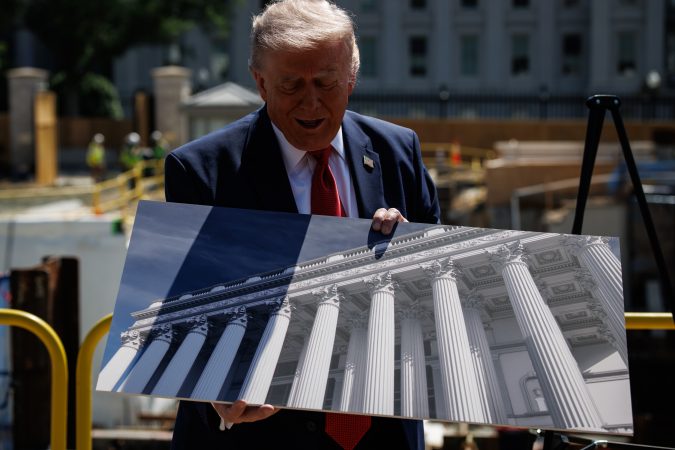
    The Trump administration is seeking to loosen federal rules intended to protect historic sites, alarming outside groups who say the changes would allow government agencies and developers to pursue major projects — such as President Donald Trump’s planned triumphal arch — without soliciting public input.

    The Advisory Council on Historic Preservation, a low-profile federal agency that oversees preservation reviews and advises the president and Congress, on Friday proposed significant revisions to a federally required process that governs changes to landmarks such as the National Mall, sites that are significant to Indigenous tribes, and other properties eligible for listing on the National Register of Historic Places. The process currently applies to any construction projects that are on federal land or receive federal funding, as well as private projects that require any type of federal approval.

    Under the current rules, federal agencies must undertake a multistep Section 106 review assessing the potential effects of construction projects and soliciting public input, among other requirements. The revised rules would let federal agencies build their own projects or grant approval for construction by private developers without public input, according to a proposed rule and an accompanying document obtained by the Washington Post.

    Trump officials have previously said the 60-year-old rules can hamper development projects and needed renovations and had called for the regulations to be overhauled. But the timing of the administration’s announcement and the breadth of the proposed changes caught many historic preservation groups off guard.

    “What is going to happen regularly is communities are not going to know that major projects are happening in their backyard until the bulldozers show up,” said Marion F. Werkheiser, a founding attorney at Cultural Heritage Partners, who has reviewed the proposed changes. Werkheiser’s firm is involved in litigation against the Trump administration over plans to alter the Eisenhower Executive Office Building and the Kennedy Center.

    Sara Bronin, who led the ACHP under the Biden administration, called the proposed rules a “sloppy, ill-conceived draft” and predicted they would be challenged in court.

    Travis Voyles, a Trump appointee who serves as the council’s vice chairman, asked council members to vote on the proposed changes to Section 106 by this coming Friday, according to an email obtained by the Post. If council members support the new regulations, they could advance to the White House for the next step in the formal rulemaking process, Voyles wrote.

    ACHP did not immediately respond to questions about the planned changes and whether the White House had directed them. The White House declined to comment. The Atlantic previously reported the proposed changes.

    Experts said the rules govern changes to 1.4 million properties across the country, ranging from several thousand national landmarks to local historic districts and sites in many communities.

    Several Trump administration projects, such as the president’s planned triumphal arch near Arlington National Cemetery, have been bound up in the ACHP’s historic-preservation reviews. Outside groups have said that the rules are essential to protecting key sites and public spaces and warned that the planned changes would undercut decades of precedent.

    “This is not only a massive assault on laws that have benefited that nation for some 60 years, it almost completely eliminates the role of the public,” Charles A. Birnbaum, the CEO of the Cultural Landscape Foundation, an education and advocacy organization, said in a statement. “The proposal actually eliminates language that says: ‘The views of the public are essential to informed Federal decision making in the section 106 process.’ How un-American is that?”

    The proposal narrows what is considered a “historic property” that can be protected, tightens the scope on what is considered an “undertaking” affecting that property under the law, and makes the process of consulting states and the public optional. What qualifies as a historic property is now limited to places that are “geographically compact” and have been improved by humans at some point.

    “For the avoidance of doubt, noncompact, unimproved natural features such as mountains, valleys, bodies of water, or landscapes, including ethnographic landscapes, do not qualify as property,” according to the proposal.

    Outside groups said they had little chance of stopping this week’s vote. Twenty of the 24 seats on the ACHP are either directly appointed by the president or are reserved for the heads of federal agencies, such as the Interior Department, which are controlled by Trump.

    The Trump administration has separately remade other federal panels, such as the Commission of Fine Arts and the National Capital Planning Commission. Those panels have swiftly advanced some of Trump’s pet projects, such as his planned White House ballroom.

    Several Trump officials at an ACHP meeting last month shared their frustration about the existing Section 106 rules and said they supported reforms.

    Michael Boren, an Agriculture Department official who oversees the Forest Service, said that some efforts to replace unsafe, decades-old infrastructure at ski areas that are on national land had been stymied by the regulations.

    “When they’re over 50 years old, they’re historic structures and when we’re trying to replace them, we sometimes are delayed for years just by the historic piece,” Boren said.

    Werkheiser said the change would exclude landscapes that tribes hold sacred that would have been previously considered under the existing rules, potentially opening them up to development and destruction by industry. That could also remove the law’s protections against projects such as one that would build power lines near Thomas Jefferson’s Monticello estate and spoil the view from the historic site, she said.

    Bronin said that provision would allow the Trump administration to expedite some controversial projects, such as a planned copper mine in Arizona located on a sacred Apache site known as Oak Flat. Democrats and historic preservationists have said that the planned mine will destroy the site.

    “In the urban context, taken to the extreme, this phrase may be used to limit protected properties to just a building or a handful of buildings — making larger historic districts, like the French Quarter in New Orleans or historic Savannah vulnerable to needless destruction,” Bronin wrote in a message.

    The proposal would also give federal agencies a new way to approve projects without reaching agreement with states, tribes, or other parties involved in the review process. Historically, those decisions were memorialized through a “memorandum of agreement” negotiated with state or tribal authorities and other interested parties.

    The new rules would create an alternative called a “memorandum of decision,” allowing an agency to move forward on its own, without consultation with the states or the public. States and tribes would no longer be able to try to block a project or invoke a dispute-resolution process if they object. Agencies would still have to consult affected tribes but would not have to incorporate their feedback.

    Several experts also noted that the current Section 106 rules have required the Trump administration to take public feedback on some of Trump’s projects. Under the new regulations, the federal government could unilaterally decide that public input is not in the general interest, exclude the public from the process, and issue its decision unilaterally.

    “The agency is going to decide if it’s in the public interest to inform the public about what they’re getting ready to do in that public’s local community. And that just seems so Orwellian to me,” Werkheiser said.

  • President Donald Trump denied Johnny Doc’s request to be let out of prison early

    President Donald Trump denied Johnny Doc’s request to be let out of prison early

    Convicted former Philadelphia labor leader John J. Dougherty has taken a variety of steps to try to cut his six-year prison term short, including by taking the witness stand this spring to tell a federal judge about the unique health challenges faced by his wife.

    But one other avenue he pursued last year — an appeal to the White House for mercy — apparently hit a dead end.

    President Donald Trump earlier this month denied Dougherty’s request for a commutation, according to the Office of the Pardon Attorney’s website, meaning Trump — at least for now — will not use his broad powers of clemency to clear the way for Dougherty’s early release.

    Dougherty — who, nicknamed Johnny Doc, was once a singular power broker in the city’s Democratic Party — was one of about 5,600 people whose commutation applications were denied on July 10, according to the pardon attorney’s site. A commutation keeps a defendant’s conviction intact but ends or reduces their sentence.

    Trump, a Republican, also denied about 300 applications for a pardon, a broader form of relief that is added to the record of the case and reverses any restrictions stemming from a conviction, such as limitations on voting or seeking public office. The New York Times first reported on the wave of denials this week.

    Presidents have broad authority to issue pardons and commutations in federal cases, and Trump has shown a willingness to grant them to political allies during his second term in office.

    One of his first actions after being sworn in again last year was to issue pardons to nearly every person charged with participating in the riot at the U.S. Capitol on Jan. 6, 2021. Trump has also bestowed clemency on political figures convicted of corruption and those he maintains were “persecuted” by the Justice Department under former President Joe Biden.

    Biden also used his clemency powers in unique ways, granting nearly 1,500 commutations during his final weeks in office, commuting dozens of death sentences, and, controversially, granting a wave of preemptive pardons to family members and allies.

    Dougherty’s attorney, George Bochetto, said Tuesday that he was not involved in the effort to petition for a commutation and did not know about it. It was not immediately clear if Dougherty submitted an application himself or if he had another associate help with its preparation.

    The pardon attorney’s website made basic information about Dougherty’s application available through its case search system, showing Dougherty’s name and his Bureau of Prisons register number and saying his application was filed last year.

    Bochetto has been overseeing a different relief effort: Dougherty’s attempt to have a judge grant him compassionate release.

    In court documents and in testimony before U.S. District Judge Jeffrey L. Schmehl, Dougherty has been saying for months that his wife, Cecilia — who has long suffered from a debilitating brain injury — has seen her condition worsen while he has been imprisoned. Dougherty has asked to serve the rest of his sentence on house arrest in order to oversee her care, saying if he is not allowed to do so, his wife will likely die.

    Schmehl denied that request earlier this year, but has been reconsidering after Bochetto appealed.

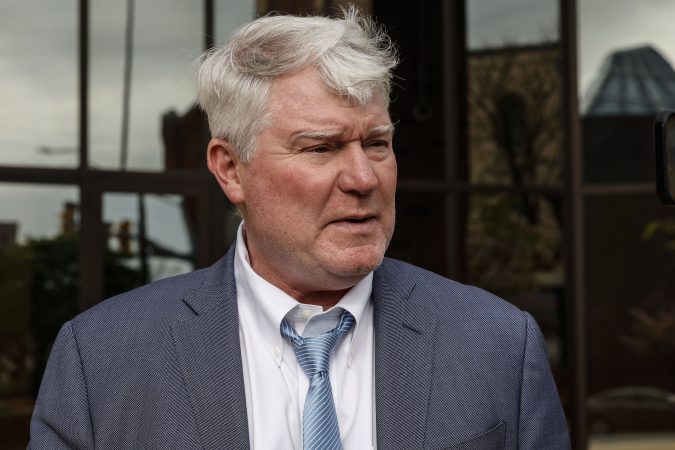
    Dougherty, 66, was sentenced in 2024 to six years in prison after being convicted in separate trials — the first after a jury found that he had spent years bribing former Philadelphia City Councilmember Bobby Henon, the second over nearly $600,000 he and others embezzled from his union, Local 98 of the International Brotherhood of Electrical Workers.

  • U.S. soldier killed in Iraq was a 30-year-old father from North Carolina

    U.S. soldier killed in Iraq was a 30-year-old father from North Carolina

    A U.S. soldier killed in Iraq during a controlled detonation of an Iranian drone was a 30-year-old father from North Carolina who had served for nearly a decade, according to a military statement Tuesday and his family.

    Sgt. Michael Emmanuel Swinton, of Fayetteville, will receive a Bronze Star, Purple Heart, and Combat Action Badge, and will be promoted posthumously to staff sergeant. The Army said it was investigating the circumstances of his death Sunday at an air base in Irbil.

    He leaves behind a 6-year-old son and a 4-year-old daughter, his mother said.

    “I will never recover from this, you should be home,” his wife, Mia Gonzalez-Swinton, posted Monday on Facebook. “We had so many plans for when you got back, I’m sick to my stomach.” She said she was notified Sunday that he had been killed.

    Two U.S. Army soldiers were also killed in Jordan last week while defending against Iranian ballistic missile and drone attacks. They were the first U.S. troop deaths from direct Iranian fire since the opening days of the war.

    Swinton’s mother, Christel Swinton Andujar, told WRAL-TV on Tuesday that her son’s family was “the center of his world.”

    “Every decision he made and every sacrifice he endured was with them in his heart,” she told the television station from her home near Fort Bragg.

    Swinton enlisted in the Army in 2017 and was assigned to the 55th Air Defense Artillery Regiment, 108th Air Defense Artillery Brigade, out of Fort Bragg, N.C.

    “Sgt. Swinton was an experienced noncommissioned officer who took great pride in his work and the people around him,” said Brig. Gen. John L. Dawber, commanding general of the Army Air and Missile Defense Command. “He answered the call to duty with courage, honor, and selfless dedication.”

    Renewed fighting between the U.S. and Iran is now in its 10th day, with both sides launching barrages of strikes. Iran has attacked U.S. allies in the region, and American soldiers are stationed across the Middle East.

    The Defense Department identified the soldiers killed in Jordan as 1st Lt. Tyler James Feehan, 25, of Ewa Beach, Hawaii, and Pvt. Isabella Gonzales, 19, of Carrollton, Texas. They were also with Army Air and Missile Defense Command units.

    A third service member was reported missing after the attack. U.S. Central Command, which oversees the Middle East, said “unidentified remains” have been found and were being examined.

    Iranian authorities say U.S. strikes in just the past three weeks have killed at least 50 people and wounded more than 500 others.

    Both sides have targeted civilian infrastructure relied on by millions of people. Workers on ships, as well as foreign workers and others in Gulf nations, Israel and Lebanon have also died in the conflict.

    The U.S. State Department said in a new warning to Americans that “Iran and groups supportive of Iran may target other U.S. interests overseas or at locations associated with the United States and Americans throughout the world.”

    U.S. President Donald Trump has said the war is necessary to stop Iran from developing nuclear weapons. Trump, a Republican, now faces political pressure to bring the war to a close and avoid the kind of prolonged Middle East conflict he had campaigned against. The escalation has pushed oil prices higher in recent weeks.

  • Trump continues overhaul of White House grounds with new Rose Garden statues

    Trump continues overhaul of White House grounds with new Rose Garden statues

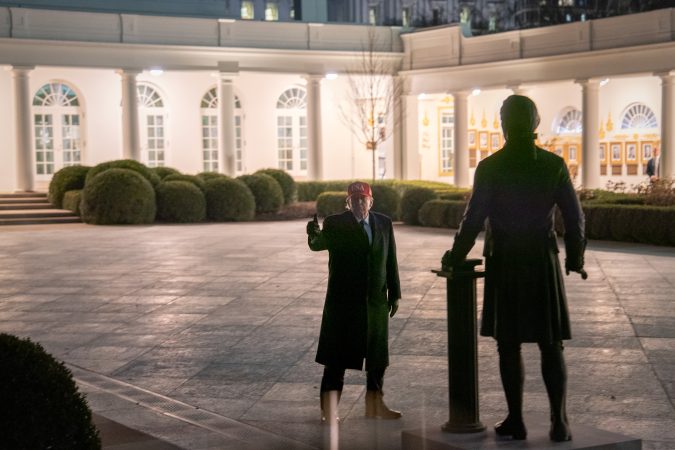
    President Donald Trump installed a statue of Thomas Jefferson in the Rose Garden in mid-July, according to two people who spoke on the condition of anonymity to describe the yet-to-be-announced move — continuing Trump’s effort to remake the White House and Washington.

    The bronze, life-size statue depicts the nation’s third president seated with a draft of the Declaration of Independence. It was sculpted by George Lundeen, who told the Washington Post that he received a congratulatory call from Trump this month.

    “I just wanted to thank you. The sculpture looks really beautiful,” Trump told Lundeen, in audio that Lundeen shared with the Post.

    The piece brings to five the number of sculptures Trump has installed in the Rose Garden, joining George Washington, Benjamin Franklin, and Alexander Hamilton, as well as a sculpture called Freedom’s Charge, which honors Revolutionary War soldiers. The Franklin, Hamilton, and Freedom’s Charge sculptures are on loan from Harlan Crow, a conservative art collector and political donor who had installed them on his Old Parkland corporate campus in Dallas, a spokesperson for Crow confirmed. The White House has not previously disclosed where the statues originated, saying only that they were on loan from “generous private American patriots.”

    The White House declined to comment on Crow’s loan of the statues. A spokesperson wrote in a statement that the president is pushing “to beautify and honor our Nation’s Capital during America’s historic 250 anniversary celebrations.”

    Trump on July 19 posted a flurry of messages related to his Washington renovation projects to Truth Social, including photos of cleaned-up statues outside of the White House and Union Station. He has spent years calling for more statues that recognize prominent Americans, particularly the nation’s Founding Fathers, past U.S. presidents, and other figures that Trump says deserve special recognition.

    “The President enjoys showcasing American Excellence and those Americans who exemplify excellence,” Rodney Mims Cook Jr., a designer and Trump appointee who chairs the Commission of Fine Arts, wrote in a text message.

    “I think he’s spot-on after the billions in Patrimony we destroyed after George Floyd died,” he added, referring to damage done to monuments during protests that followed Floyd’s killing in 2020. Trump responded by issuing executive orders calling for existing statues to be protected, the damaged statues to be restored, and new ones to be constructed. He also required that federally commissioned statues of historic figures be lifelike or realistic — and specifically barred abstract or modernist representations.

    “These statues are silent teachers in solid form of stone and metal,” Trump wrote in one of his 2020 orders. “They preserve the memory of our American story and stir in us a spirit of responsibility for the chapters yet unwritten.”

    Some art critics argue that Trump’s emphasis on memorializing specific people, rather than commissioning abstract works that evoke broader themes and feelings, is a lost opportunity.

    “All told, the statues dating to his second term are of negligible artistic value,” Maxwell Anderson, the former president of the Association of Art Museum Directors, wrote in an email. Anderson also drew comparisons between Trump’s preferences and what he said were similar practices by dictators who led North Korea and the Soviet Union.

    “President Trump’s embrace of an official classicizing style in art and architecture finds its closest equivalent in authoritarian regimes,” Anderson wrote.

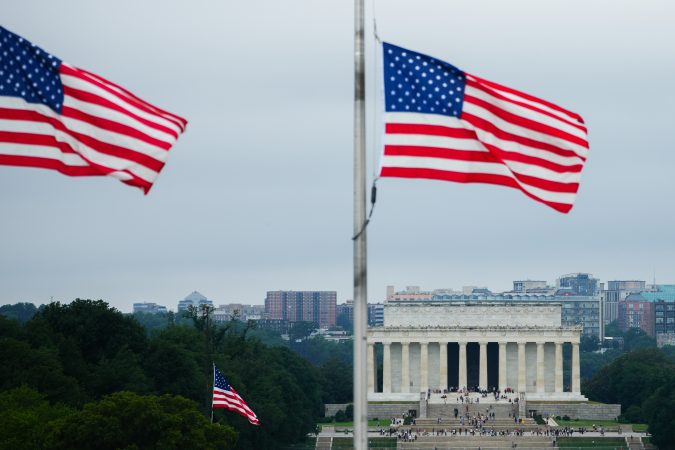
    The sculptures have given Trump an unusually direct way to reshape the White House grounds and the broader capital city — albeit with moves that can be more easily reversed than his construction projects, such as his White House ballroom addition. Trump has planned an expansive sculpture garden in West Potomac Park, where he hopes to feature 250 “American heroes,” ranging from athletes such as Muhammad Ali and Kobe Bryant to Canadian TV host Alex Trebek. The president is also overseeing the cleaning and renovation of existing statues in parks across Washington, and he has celebrated the regilding of several statues near the Lincoln Memorial.

    He has also sought to restore some controversial statues to even greater prominence.

    Trump has overseen a new statuary exhibition in downtown Washington featuring a statue of Caesar Rodney, a signer of the Declaration of Independence, that was removed from public view in Delaware during protests in 2020 after criticism of Rodney’s role as an enslaver.

    Trump in March also installed the recreation of a Christopher Columbus statue that was torn down in Baltimore in 2020 on the White House grounds.

    The president has long said he was troubled by efforts to tear down and remove statues honoring Rodney, Columbus, and other historical figures, repeatedly broaching the topic in public remarks during his first term.

    “I like the idea of building new statues to people, to great people, people that have done something. And I think that’s OK,” Trump said in June 2020. “But you don’t want to take away our heritage, and our history and the beauty.”

    Two people who spoke on the condition of anonymity to discuss private conversations said Trump — who has faced his own share of protests — has in the past privately said he identified with figures such as Columbus, who was hailed for centuries as a great explorer before his role in colonization and enslavement made him controversial.

    Several satiric statues have appeared around Washington mocking Trump before being swiftly removed.

    Lundeen, who sculpted the Jefferson statue and whose work is displayed in museums, on campuses, and in capitals throughout the country, has also sculpted Trump himself. Last year, he met the president when installing a 7-foot bronze behemoth at his golf club in West Palm Beach. In the sculpture, Trump holds a MAGA hat in one hand. His other is raised in a fist, inspired by his “fight, fight, fight” stance following the assassination attempt in Butler, Pa.

    In the run-up to the country’s 250th anniversary, Lundeen said his friend Steven Barber, a filmmaker, facilitated communication with the administration in the hopes of getting one of his Jefferson statues to the White House.

    Lundeen, who has worked with his brother Mark to sculpt prominent statues, such as three Apollo 11 crew members for the Kennedy Space Center to celebrate the 50th anniversary of the first human moon landing, said he was delighted to receive the thank-you voicemail from Trump, which the president left on July 4.

    “When you’re a farm boy from the middle of Nebraska, it’s kind of neat to get a call from the president,” said Lundeen, 77. “You get a call like that, and you don’t know if it is one of your buddies playing a trick on you. If it’s a hoax, it’s a really good one.”

    The White House did not immediately respond to questions about Trump’s call to Lundeen. The New York Post first reported plans to install the Jefferson statue in the Rose Garden.

    The arrival of Lundeen’s Jefferson statue follows Trump’s decision to take a George Washington statue that was displayed at the Washington Monument and place it in the Rose Garden last year. The Hamilton and Franklin statues subsequently arrived in the Rose Garden in March, on loan from Crow.

    “Unbelievable statues,” Trump told reporters that month as he walked through the Rose Garden. He has also shown off the Rose Garden statues to foreign dignitaries and U.S. lawmakers.

    Freedom’s Charge — a sculpture by Chas Fagan, whom Trump appointed to the Commission of Fine Arts during his first term, and is on loan from Crow — also now sits in the Rose Garden. The sculpture features two life-size figures of American soldiers who fought during the Revolutionary War.

    Crow, a billionaire real estate mogul who has donated to a wide array of Republican politicians and been linked to conservative figures such as Supreme Court Justice Clarence Thomas, had previously distanced himself from Trump. In a lengthy piece in the Atlantic in 2023, Crow said he had self-diagnosed with “Trump Derangement Syndrome,” and he supported Trump’s rival Nikki Haley in the 2024 presidential campaign.

    Crow’s collection of outdoor sculptures in Dallas — which included a portion he once dubbed “The Garden of Evil” — drew national attention in 2023 for Crow’s selection of deposed dictators and other tyrants.

  • Trump says he will impose 50 percent tariffs on Canadian goods in 30 days

    Trump says he will impose 50 percent tariffs on Canadian goods in 30 days

    President Donald Trump announced Monday that he will impose 50 percent tariffs on most Canadian goods effective in 30 days unless Canada drops what the administration called “discriminatory” trade barriers against U.S. products.

    The move comes one day after Trump threatened to impose tariffs in retaliation for wildfires in Ontario that sent thick smoke pouring into the United States late last week. After watching Sunday’s World Cup final alongside Canadian Prime Minister Mark Carney, Trump told reporters that the subject had come up.

    “Our air has been poisoned. Have a good relationship with Mark Carney, but you know we got to stop the fires up there. If we can help them, we’ll help them. But maybe they should pay us some damages or something, or we should do some tariffs,” the president said Sunday.

    On Monday, however, a senior administration official said the president’s latest tariff action was unrelated to his irritation over the wildfires. Instead, the official said, the president was acting in response to Canada’s retaliation for emergency tariffs Trump imposed in April 2025, when U.S. alcohol was removed from Canadian store shelves. The administration has also complained about Canadian limits on auto imports and dairy products.

    Monday’s action relies on a never-before-used provision of a 1930 trade law, which provides for tariffs of up to 50 percent against countries that discriminate against U.S. goods. The 30-day delay provides time for the two nations to resolve the dispute before tariffs take effect.

    If the tariffs do take effect, they will apply to most Canadian goods, including those that qualify for duty-free treatment under the United States-Mexico-Canada Agreement that Trump negotiated during his first term. Energy, potash fertilizer, critical minerals, fish and products covered by existing national security tariffs will be exempt, said the administration official, who briefed reporters under ground rules that did not allow them to be identified.

    That would probably hit consumers with higher prices ahead of the Nov. 3 midterm elections, exacerbating the administration’s political challenges with affordability, said Ed Gresser, vice president of the Progressive Policy Institute in D.C. and a former U.S. trade official.

    “If you as a family or you as a business were hoping for some relief this fall, you’re not going to get it. Things are going to get more expensive,” Gresser said.

    But it’s not clear that will ever happen. “The fact that it’s delayed 30 days makes me think it’s a negotiating tactic,” said Ryan Majerus, a partner at King & Spalding, who served in the U.S. Trade Representative’s Office during the first Trump administration. “It seems like leverage.”

    The administration has been negotiating revisions in USMCA, which the president hailed upon signing in 2020 as the “fairest, most balanced, and beneficial trade agreement we have ever signed.” Talks with Mexico have been proceeding apace, but negotiations with Canada have yet to begin.

    Jamieson Greer, the president’s chief trade negotiator, has made no secret of the administration’s irritation with the Canadian government. The impact of the Canadian wildfires has only aggravated the situation.

    Though the administration denied any link between Monday’s tariff announcement and the fires, the president has asked for potential measures that he can take in retaliation, the administration official said.

    Greer is scheduled to visit Mexico City starting Wednesday to continue talks with Mexico.

    Riley Beggin contributed to this report.

  • Lebanon’s president will meet with Trump in Washington to push for Israeli troop withdrawal

    Lebanon’s president will meet with Trump in Washington to push for Israeli troop withdrawal

    BEIRUT — Lebanon’s president will meet with U.S. President Donald Trump on Tuesday to wrap up a four-day visit to Washington, in a bid to bring about long-term calm in the war-torn country after months of war between Israel and the Iran-backed Hezbollah militant group.

    Joseph Aoun’s landmark meeting with Trump comes as Lebanon and Israel continue to hold rare direct talks mediated by Washington. Lebanon hopes they will result in Israeli troops withdrawing from large swaths of southern Lebanon that they currently occupy, and for the Lebanese military to receive support to assert full control in areas where Hezbollah militants had held sway.

    Lebanon and Israel announced a “framework agreement” on June 26, setting a plan for Israeli forces to withdraw from southern Lebanon as well as the disarmament of Hezbollah, which for decades had a strong presence in the area. It also lays out steps toward an eventual peace agreement between both countries, which have never held formal diplomatic ties and have been nominally in a state of war for nearly 80 years after Israel’s establishment.

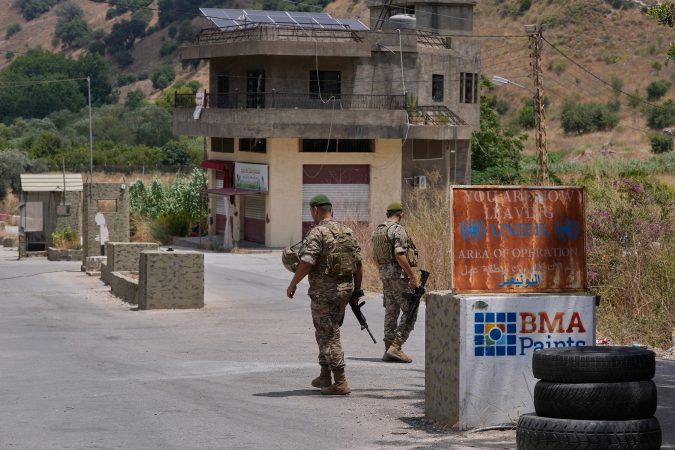
    The U.S. State Department announced Monday that operations in three villages deemed part of a “pilot zone” had begun, without giving details on what that entailed. Two of the three villages, Froun and Srifa, are not under Israeli military control and the Lebanese army is present there, while Israeli forces are in part of Zawtar al-Gharbieh.

    The Lebanese army in a statement said it was preparing for Israel to withdraw from Zawtar al-Gharbieh and that it had begun deploying troops to the area Tuesday. The Israeli military said it “will adjust its force posture in one of the pilot areas in order to enable the Lebanese Armed Forces to carry out their mission,” without specifying the location.

    An Israeli military official, speaking on condition of anonymity in accordance with military guidelines said Tuesday that the withdrawal had not yet begun.

    Village mayor waiting for safety to be confirmed

    Abed Ezzeldine, Mayor of Zawtar al-Gharbieh said that they are waiting for the Lebanese military to tell him whether its safe for residents to check on their homes after they fully deploy and patrol the area. He is concerned about the safety of his village given that the Israeli military is still present in another village next door, while Israeli strikes continue nearby.

    “The villages are intertwined, so we don’t feel safe because the Israelis are present there, they’re on our borders and are not very far from us,” Ezzeldine told The Associated Press, who said Zawtar al-Gharbieh is uninhabitable.

    “Once the army gives us permission to enter Zawtar al-Gharbieh, we as civilians will go in, but only to check it out and see how things are and then we will leave,” he said. “We can’t stay because the infrastructure is completely damaged and houses have been leveled. They (the Israelis) have bulldozed the roads.”

    Rubio says US will continue to support framework agreement

    Aoun met with Secretary of State Marco Rubio on Sunday, who said Washington will continue to endorse the Lebanese agreement and support the agreement’s full implementation. Rubio described the meeting as “very positive” and warned that Lebanon will “never be fully at peace” as long as the Hezbollah issue is not resolved.

    “How do you replace Hezbollah? You defeat and replace them with a government that is strong enough to be the sole force of arms in the country,” Rubio said after the meeting. Skeptics in Lebanon fear that a military confrontation with Hezbollah could lead to a civil war, as government officials have also urged for investment into the country’s battered infrastructure to empower the weakened state, which Rubio echoed.

    “This is not just about military stuff,” he added. ”This is about how can we attract more U.S. and international investment into Lebanon.”

    The Lebanese military last week increased its presence in some of the areas expected to be included in the pilot zone, including the three villages, with troops patrolling and setting up checkpoints. Though recent talks in Rome have signaled that the agreement’s implementation will begin soon, Israeli troops have not withdrawn from the areas under control.

    Israeli officials, meanwhile, have said they plan to keep forces long term in a “security zone” in southern Lebanon.

    Hezbollah has dismissed the direct talks brokered by the United States and instead backed Washington’s talks with their key ally and patron Iran to end their war, which also includes ending the war in Lebanon as a condition to bring back calm.

    Lebanon’s government came to power on a reformist platform in early 2025, vowing to disarm all non-state groups including Hezbollah. It blames Hezbollah for dragging the country into another war with Israel in March when the militant group fired several rockets toward northern Israel after the U.S. and Israel attacked Iran.

    Beirut’s leadership, however, has condemned Israel’s subsequent ground invasion and massive aerial campaign in the country, which killed over 4,000 people and displaced 1.2 million others. While grappling with stark political opposition from Hezbollah and allies within the deeply divided country, Lebanon’s leadership insists that Israeli withdrawal and international financial support for Lebanon’s cash-strapped army is crucial for a sustainable security solution.

  • The Pentagon, sinking billions into Iran, is quickly running short on cash

    The Pentagon, sinking billions into Iran, is quickly running short on cash

    The Pentagon faces an urgent budget shortfall caused largely by the war in Iran, with some critical lines of funding set to run out within weeks even as President Donald Trump escalates the conflict with Tehran, according to lawmakers and current and former U.S. officials.

    The funding crunch is already leading the Pentagon to limit training and maintenance that help maintain military readiness, according to four current and former officials, speaking on the condition of anonymity to candidly describe the budget constraints.

    And the collapsed ceasefire with Iran could further strain the military’s budget: After four U.S. service members died during more than a week of intensified fighting, officials in Washington signaled they were preparing for a wider conflict.

    The White House has asked Congress for an immediate infusion of $67 billion to help cover the costs of the war, but lawmakers are gridlocked over how to proceed. The House plans to leave Washington on Thursday for a month-long recess, leaving any deal on military funding weeks away at the earliest.

    “Everybody needs to look at this situation and get rid of the complacency that they have,” Rep. Pat Harrigan (North Carolina), a Republican member of the House Armed Services Committee, said in an interview.

    The Pentagon did not respond to a request for comment.

    On Tuesday, Defense Secretary Pete Hegseth and Joint Chiefs Chairman Gen. Dan Caine are scheduled to make their case for the money before the Senate Appropriations Committee — the first public hearing centered on the package. They last appeared on Capitol Hill in May, before a tenuous ceasefire broke down.

    White House budget director Russell Vought is also set to address Republican lawmakers Tuesday morning. Unless Congress acts, multiple current and former officials said the military will quickly be forced to make even more painful trade-offs.

    Trump launched the airstrike campaign in late February, repeatedly saying it would end within weeks. The conflict has instead lasted for months as Iran has closed the Strait of Hormuz — a vital waterway for the oil and fertilizer trade — and caused turmoil in the global economy.

    Vought told lawmakers last month that the war had so far cost about $30 billion, but some independent analysts say the price tag is likely much higher. The White House estimate does not include the cost of rebuilding U.S. bases in the Middle East damaged by Iranian strikes.

    The conflict has put unexpected stress on the Navy and Air Force, which have deployed aircraft and warships to the Middle East. Parts of the 2026 budget covering ongoing military operations for both services are on track to run out by the end of this month, according to two congressional aides, speaking on the condition of anonymity to candidly describe a sensitive budget situation.

    To bridge the gap until the 2027 fiscal year begins on Oct. 1, the Pentagon is already moving money around. Military exercises and trainings that help keep units prepared for combat are being limited or canceled, the four current and former officials said. The budget for equipment and facility and maintenance is also being drained to cover the shortfalls, the officials said.

    In recent weeks, the Pentagon has asked Congress for permission to reallocate $4.3 billion from trainings and weapons purchases to address more urgent priorities, according to a document reviewed by The Washington Post. Congress has yet to act on that request.

    A Trump administration official said the White House budget office was working to move some funding to the Pentagon’s operations and maintenance accounts. Doing so would come at the cost of other key programs, the person said, without offering further specifics. NBC News previously reported on some of the military’s budget constraints.

    Meanwhile, House Republicans are crafting a package using a complicated tool known as reconciliation to try to speed some money through Congress. The House is expected to vote this week on a framework that would authorize $73 billion in fresh defense spending, slightly more than the White House request.

    But that strategy faces significant hurdles in the Senate, where Majority Leader John Thune (R-South Dakota) has cast doubt on its prospects.

    Democrats have mostly said they oppose any new funding for the Iran conflict as part of a legislative blockade of major defense bills while the administration pursues a war that has drawn bipartisan objections. Even lawmakers open to additional funding — including some Republicans — have expressed frustration at the Pentagon’s delays in communicating with Congress.

    When Hegseth testified before the House panel on defense spending in April, committee leaders urged him to provide information on the war’s costs as soon as possible. The Pentagon later missed the panel’s deadline and has since failed to share requested details for weeks, including the number of precision weapons the military has in its inventories after burning through thousands of munitions in Iran, according to lawmakers and congressional aides.

    “We need to know what we’re purchasing and why we’re purchasing it,” Rep. Betty McCollum of Minnesota, the top Democrat on the panel, said in an interview.

    Hegseth has at times dismissed concerns about munitions shortages, telling CBS in an interview last month that U.S. stockpiles were “great, and they’re only getting stronger.”

    In private, Pentagon officials have expressed far greater anxiety, according to current and former officials, arguing that the military desperately needs more money to restock munitions needed to deter U.S. adversaries like Russia and China.

    After receiving a private briefing from top Pentagon officials, McCollum said replenishing these weapons was clearly a top administration priority and that Pentagon officials other than Hegseth were “very concerned” that lawmakers were not receiving the information they needed to make decisions on additional funding.

    This year’s defense budget is about $1 trillion including $150 billion in one-time funding Congress approved last year for a range of military priorities, from advanced weapons systems to energizing the U.S. defense industry. The Trump administration has requested $1.5 trillion for 2027, a massive increase that has sparked a fierce debate on Capitol Hill.

    Some lawmakers in both parties have shown discomfort with the total, due to concerns about adding to the $39 trillion national debt and financing an unpopular war. A recent Washington Post-Ipsos poll found that only 28 percent of Americans say the war has been worth fighting, compared with 68 percent who say it was not — on par with the worst assessments of the war in Afghanistan.

    Work on spending bills has been stalled in the Senate because of a stand-off among appropriators. Democrats have refused to support any fiscal year 2027 funding until a deal is reached on overall spending levels, as they oppose the hike in defense spending put forward by Republicans.

    Unexpected absences on the Senate Appropriations Committee have further complicated Republican efforts to begin some work on spending measures. Sen. Mitch McConnell (R-Kentucky), who chairs the panel on defense spending, has missed votes for a month while recovering from an injury. And Sen. Lindsey Graham (R-South Carolina), another member of the panel, died suddenly last week from what a medical examiner preliminarily ruled an aortic dissection.

    Harrigan, the North Carolina Republican, mostly faulted Democrats for the broader budget impasse but acknowledged that his party also deserves some blame.

    “There’s no question,” Harrigan said, “that every portion of those responsible for bringing the defense budget across the finish line — to include the Pentagon — are complicit.”