Category: Nation & World

  • Trump now says the Kennedy Center could be deadly. Months ago, it was ‘great.’

    Trump now says the Kennedy Center could be deadly. Months ago, it was ‘great.’

    President Donald Trump stood on the red carpet at the John F. Kennedy Center for the Performing Arts in December and declared his mission to fix the building, to “make it beautiful,” all but accomplished.

    “It was falling apart, and now it’s pretty much back,” Trump told reporters as he stood beside FIFA President Gianni Infantino ahead of the World Cup draw. “We’ve done a really great renovation job on it,” he added, predicting that remaining work would be complete within three or four months.

    By Trump’s telling, it was the culmination of a transformation he had set in motion shortly after returning to office when, vowing to end “woke” programming, he purged the Kennedy Center’s board of trustees and became its new chairperson.

    But less than two months after Trump’s victory declaration — after his name was added to the building, artists balked at performing there and income dropped further — his assessment of the center’s condition soured.

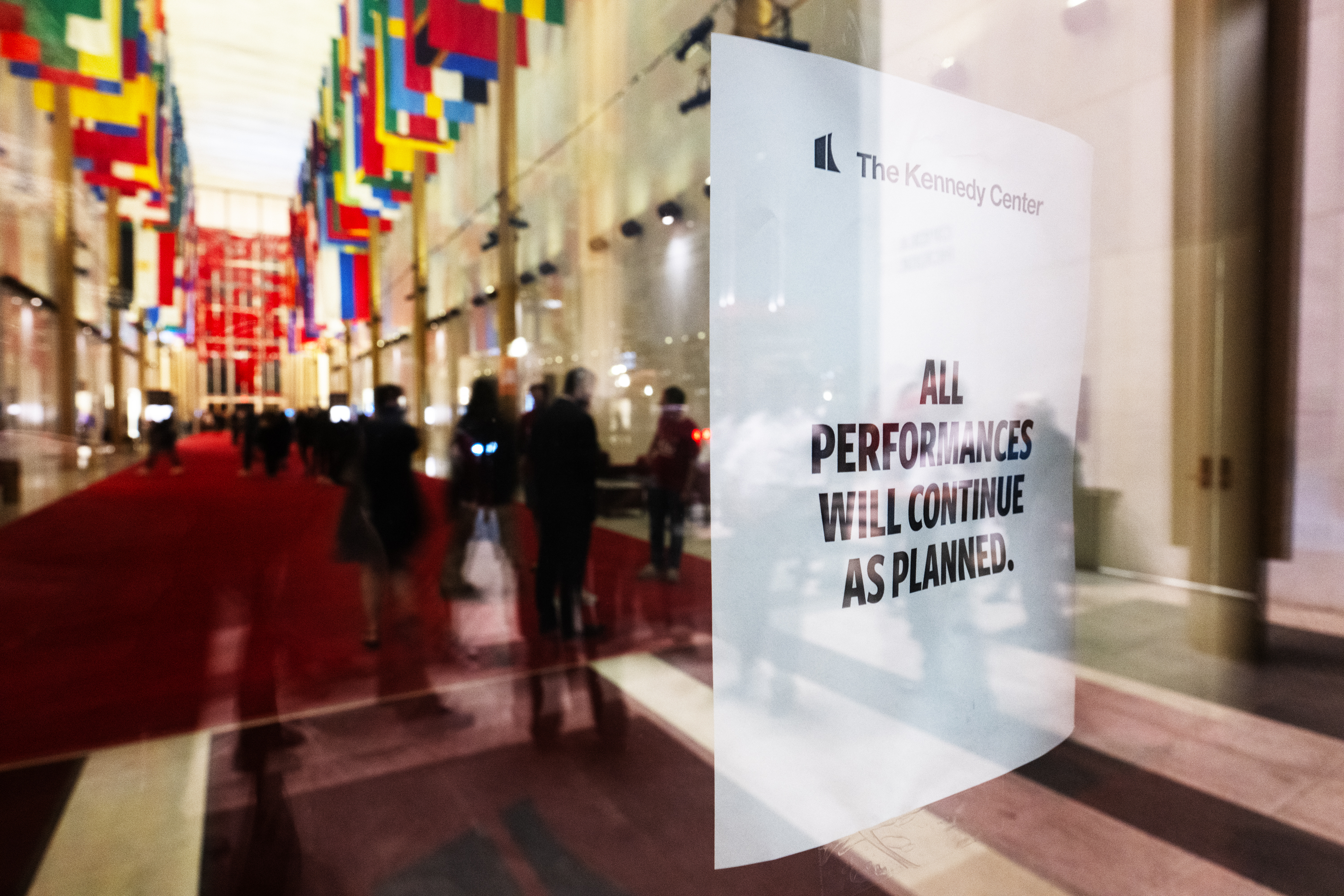
    In late January he hosted a starry red carpet premiere for the documentary Melania but days later announced that the center was so “tired, broken, and dilapidated” that its main building would need to close for two years. The building was “sort of dangerous,” he added that week, though it was deemed safe enough for Trump and the first lady to catch a performance of Chicago about two months later. By the end of April, executive director Matt Floca was testifying about dangerous roofing conditions and electrical equipment that he said posed a risk of fire or, in the worst case, explosion.

    Over the following months, the descriptions grew more dire. Trump said people entering the building were in “serious danger.” The center’s lawyers called it “structurally unsound” and “fundamentally unsafe.” This month, after a section of ceiling plaster fell in the Grand Foyer, Trump described the building as being in a “virtual state of collapse” and said the incident could have “killed” people.

    Yet many of the underlying physical problems cited by management were documented years before Trump took control — when Kennedy Center officials and their engineering consultants were planning to repair the aging building while continuing to stage performances.

    A dozen current and former Kennedy Center staff members interviewed by the Washington Post described a building that needed substantial repairs and routine maintenance but said they had not experienced conditions that led them to believe the building as a whole was unsafe. Some described elevators and escalators that frequently broke down, mice, and aging equipment. But the current and former employees, all of whom spoke on the condition of anonymity because they fear retribution, also recalled repairs being made around performances, often overnight, and said employees were regularly briefed on plans for larger projects.

    Some of those projects stalled out under the new leadership, former staffers said. Before Trump’s takeover, Floca had been hired to oversee improvements including a renovation of the building’s Eisenhower offices. Employees working there were told they would temporarily relocate to office space at the Watergate during construction, according to three former staff members.

    An executive had given the employees potted plants in anticipation of the move because, unlike their Kennedy Center offices, the temporary space had windows. But the renovation was paused after new leadership took control, and the move never happened, the employees said.

    “We all named our plants,” one former staffer said, “and then they slowly died on our desks.”

    On Thursday, a lawyer for whistleblowers told lawmakers about another project they say was cut short under Floca: The center planned $9 million roofing repairs, as part of the $257 million approved for renovations by Congress last year. But Floca canceled a contract that would have moved the project forward, according to the disclosure, which was reported Friday by the New York Times. Other money set aside for waterproofing was instead diverted to painting the center’s columns, the whistleblowers said.

    A Post review of engineering assessments, building plans, congressional budget requests, and court records found that many of the conditions now cited by management — including water intrusion, deteriorating steel and concrete, aging mechanical equipment, and failing plumbing — were identified before Trump’s takeover and incorporated into plans to keep the center open during construction.

    It was as the center’s financial and programming problems mounted, an employee at the Kennedy Center familiar with the renovation planning said, that discussions increasingly turned toward a complete shutdown. The employee said they came to believe an argument seized on by some staff, patrons, and Trump’s critics.

    “The whole reason to close the building is not because it needs to close for renovations,” the employee said. “The whole reason to close it is because we’re not going to be able to secure the artists or the audiences needed to make the economics work.”

    Kennedy Center leaders have since made new reviews that they say show immediate dangers to the public. An engineering assessment this month found widespread corrosion in the building’s heavy soffit panels, which form the underside of the exterior overhang, Floca said Wednesday in a sworn declaration. Separately, after severe storms Sept. 4, plaster fell 60 feet from the Grand Foyer ceiling into a public area below. The center did not rush to fix the damage. A consultant reported seeing the resultant “debris field” more than a week and a half later.

    In a statement, a Kennedy Center spokesperson did not comment on halted repairs but avoided blaming past leaders and said “it is completely understandable that staff felt comfortable” in the building because of their past experience and because they had not seen the most recent assessments or the danger firsthand. “Employees’ firsthand experience matters,” the spokesperson added, “and their work maintaining the building and supporting performances deserves recognition.”

    “The Center believes leadership teams, past and present, share a fundamental commitment to the Kennedy Center’s success and the continuation of its programming,” the spokesperson said. “There may be differences on priorities, timing, or the best way to deliver necessary improvements, but those differences should not be mistaken for differences in a commitment to the institution.”

    The dispute has made the state of the building a high-profile concern — escalated, in a recent fight to restore his name to the building, by Trump’s threats that it could be torn down. On Thursday, House Democrats asked the Government Accountability Office to start its own review of the center’s financial and physical health.

    The Kennedy Center, which opened in 1971, has never been an easy building to maintain.

    Within a few years, its flat roof was plagued with leaks. A parade of thunderstorms in July 1977 sent water through the roof, weakening plaster that fell from the Grand Foyer’s 60-foot-high ceiling. The center, the Post reported at the time, “went on with the show,” moving the Champagne bar and rerouting opera and theater patrons into adjoining halls.

    Officials at the time set up plywood walkways for visitors inside, then closed the roof terrace, restaurants, and, for about five weeks the following summer, the Concert Hall while crews undertook extensive waterproofing and other repairs. Contemporary Post coverage described water seeping into storage rooms, dressing rooms, and the Concert Hall and corroding or damaging parts of the building.

    Leaks remained a persistent problem for decades. The center kept renovating its spaces and systems while continuing to operate, periodically closing individual venues or sections of the building.

    The cycle became a routine headache for center leaders and lawmakers. In 1994, Congress sought to address more than 20 years of “severe deterioration,” passing a law that required the center to develop and annually update a comprehensive building plan that lays out future repairs and renovations.

    The center last comprehensively updated that plan in 2022, identifying extensive needs across the sprawling complex: structural repairs, waterproofing, fire-safety and evacuation improvements, replacement of aging chillers, upgrades to water and electrical systems, elevator repairs, and improvements to technical stage systems.

    But the plan called for work to be done in phases, scheduled around an operating performing arts center, accepting the higher costs and complexity involved.

    “Projects have been scheduled in such a way as to keep the facility operating to the maximum extent,” the plan said.

    A former senior Kennedy Center official who was directly familiar with the center’s capital planning said the current plans reflected how the center had long approached its physical needs.

    “Every single thing that I have seen,” aside from some of the new decorative changes, was included in the center’s comprehensive building planning, the former official said. The plans laid out not only what needed to be repaired but also when the work could occur and how it could be scheduled around performances.

    “The building remained open at all times,” according to the official.

    That didn’t mean every part of the building was always available.

    In November 2024, the official recalled, a small fire triggered the sprinkler system above the Opera House, sending large amounts of water into the theater below. The center relocated that night’s performance while workers dealt with the flooding. Such incidents, she said, were part of operating an aging and complicated building.

    Other longtime workers described a similar reality.

    David Berkowitz, a stagehand who has worked regularly at the center since 2002, said much of the equipment management wants to replace genuinely needs work. Freight elevators have repeatedly broken down, he said, and an enormous motorized lighting bridge in the Opera House is as old as the building and needs to be replaced.

    The dispute is not whether the Kennedy Center needs repairs, but whether its condition had deteriorated enough to require abandoning plans to repair it in stages while it remained open.

    That question became more pressing after Trump took over.

    In August 2025, Trump declared the center a “great gem” that needed “a little fix up and a little work.” In an October post he said the center would stay “fully open during construction, renovation, and beautification.”

    By Dec. 5, after inspecting work at the center, Trump said it was “pretty much back.”

    Then, 58 days later, Trump announced the center would close for two years.

    Trump said he had conducted a yearlong review with contractors, musical experts, arts institutions, and other advisers and concluded that closing the building would produce a faster, higher-quality renovation. In announcing the decision, Trump emphasized speed, construction quality, and the disruption of working around audiences and performances rather than saying the building was unsafe to occupy.

    Asked about the shift, White House spokesperson Liz Huston said in a statement, “For years, Democrats let the Kennedy Center rot, allowing water damage and crumbling infrastructure to turn a national treasure into a building in decay. As President Trump said, without his intervention, The Kennedy Center will inevitably continue to decline.”

    But in court-ordered disclosures, Floca identified four reports he relied on in recommending the shutdown: the center’s 2021 and 2022 building plans, a 2022 soffit report, and a 2024 leak investigation — all prepared before Trump’s second administration.

    Put together, the records left the judge skeptical. Floca said he had concluded by the fall of 2025 that closing the center was necessary, but U.S. District Judge Christopher Cooper noted that the possibility of a shutdown did not come up at board meetings that September or December.

    “No evidence in the record substantiates that timing,” he wrote of Floca’s account. And the evidence for an involved yearlong review of the kind Trump described “is nil,” Cooper wrote.

    Cooper also noted that the center’s former president, Richard Grenell, had been promoting the center as a major venue for America’s 250th anniversary — “quite a concerning idea if the Center is as dangerous as the Defendants now represent.”

    Craig Williams, an architect with decades of experience renovating performing-arts facilities who reviewed those reports for Rep. Joyce Beatty (D., Ohio), an ex officio Kennedy Center trustee challenging the closure in court, reached a different conclusion from Floca: A complete closure was not required for the deferred maintenance described in the reports, he said in a sworn declaration.

    When Cooper blocked the planned July shutdown, the center remained open but had already stopped booking new performances while the board reconsidered whether to close all or part of the building. Meanwhile, the lost bookings were helping propel a drop in ticket sales and fundraising: By late May, management projected about $124 million in revenue against a $220 million budget, leaving a roughly $23 million deficit despite substantial spending cuts.

    Floca has said a full closure is necessary because performing the extensive work around audiences would be unsafe and impractical. And by August, Delta Consulting Group had concluded that a two-year closure would be safer, faster, and substantially less expensive than rolling closures.

    The center spokesperson on Friday pointed to the recent engineering reports and said “the building exists to support the mission. Success should be measured by whether the Center can sustain excellent programming in a safe, reliable, and financially sustainable environment.”

    On Sept. 3, management received preliminary findings from engineering firm Walter P Moore’s inspection of the soffit system, according to a sworn declaration Floca filed Wednesday in federal court.

    Walter P Moore estimated that about one-third of the 278 panels — each of which weighs about 2,500 pounds and hangs roughly 60 feet above the plaza outside — were severely corroded and required immediate replacement, while nearly all the rest had some degree of corrosion. The firm said continued wear could mean the panels fall and endanger people below.

    Floca has pointed mainly to the soffits as his reason for closing the building. The second reason came Sept. 4, the day after the firm’s report, when plaster fell from the Grand Foyer ceiling after severe storms passed through the area. No one was injured.

    Center officials have described the incident in increasingly stark terms, as Trump and allies spread footage of the collapse on social media.

    Floca in a court filing Wednesday said the fallen material weighed about 150 pounds, and that more testing was needed. He also noted “ceiling irregularities” elsewhere in the Grand Foyer, reports of falling objects in the Hall of States, and continued leaks in the Hall of Nations.

    Floca has extended the emergency closure through Sept. 30 while engineers continue their work and said he will reassess it weekly. Portions of the building could reopen if engineers determine it’s safe, he said. The latest findings “should not be generalized into a claim that every interior space is structurally unsafe,” the center spokesperson said.

    Although leaders say this closure is not a full shutdown, layoffs have begun.

    That longer-term plan remains tied up in federal court. The judge has not blocked repairs, but a full closure can’t happen without his permission.

    Earlier this month, Cooper ruled in an increasingly intertwined dispute, blocking the board of trustees’ latest attempt to put Trump’s name back on the front of the building.

    Trump reacted by explicitly tying the fate of the building to getting his name displayed on the front of it. Hours after Cooper’s ruling, Trump said renovations won’t proceed until his administration gets appropriate recognition for rescuing the institution.

    “Frankly, if we don’t do that, it’s going to close,” he said later. “It’ll end up being ripped down.”

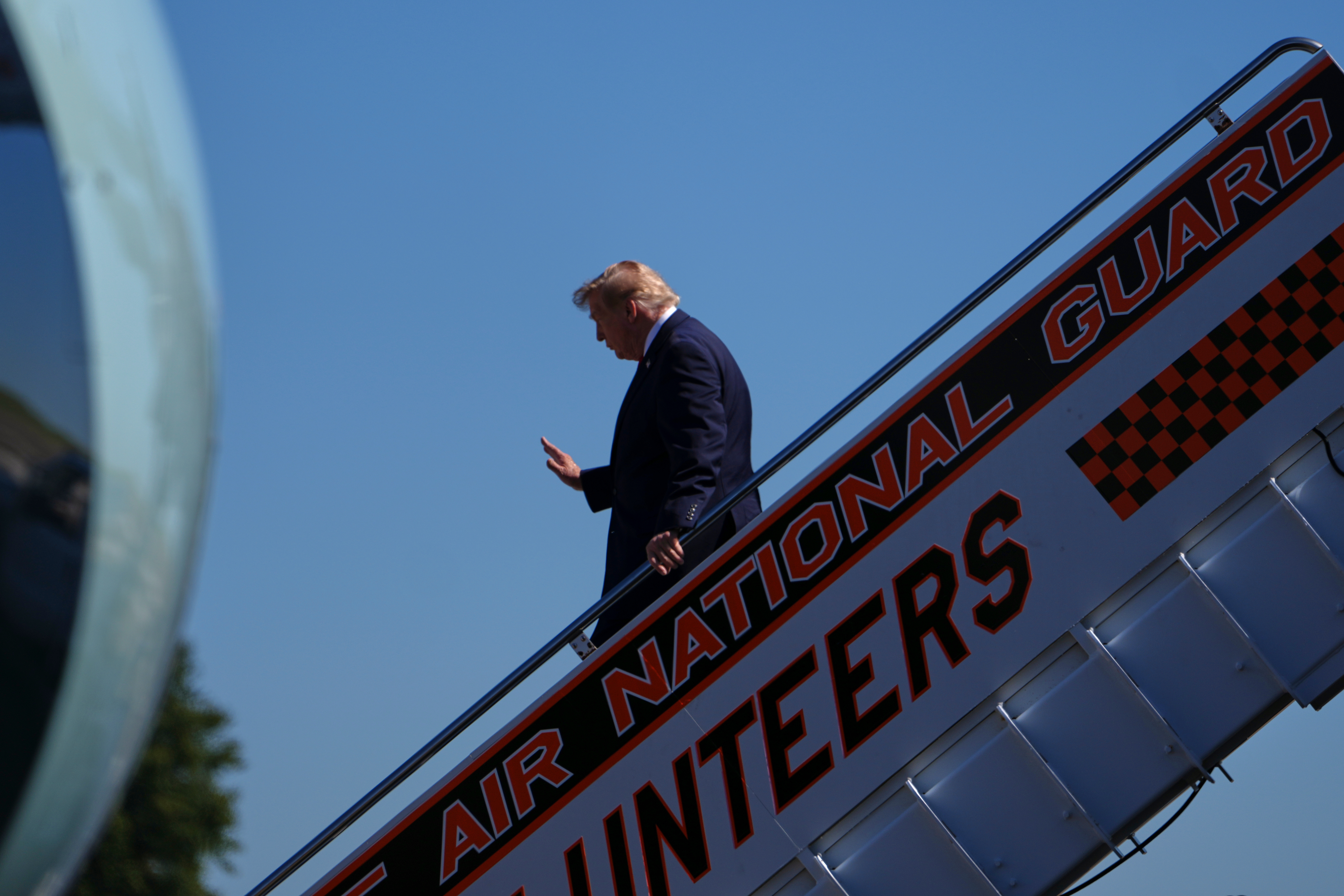
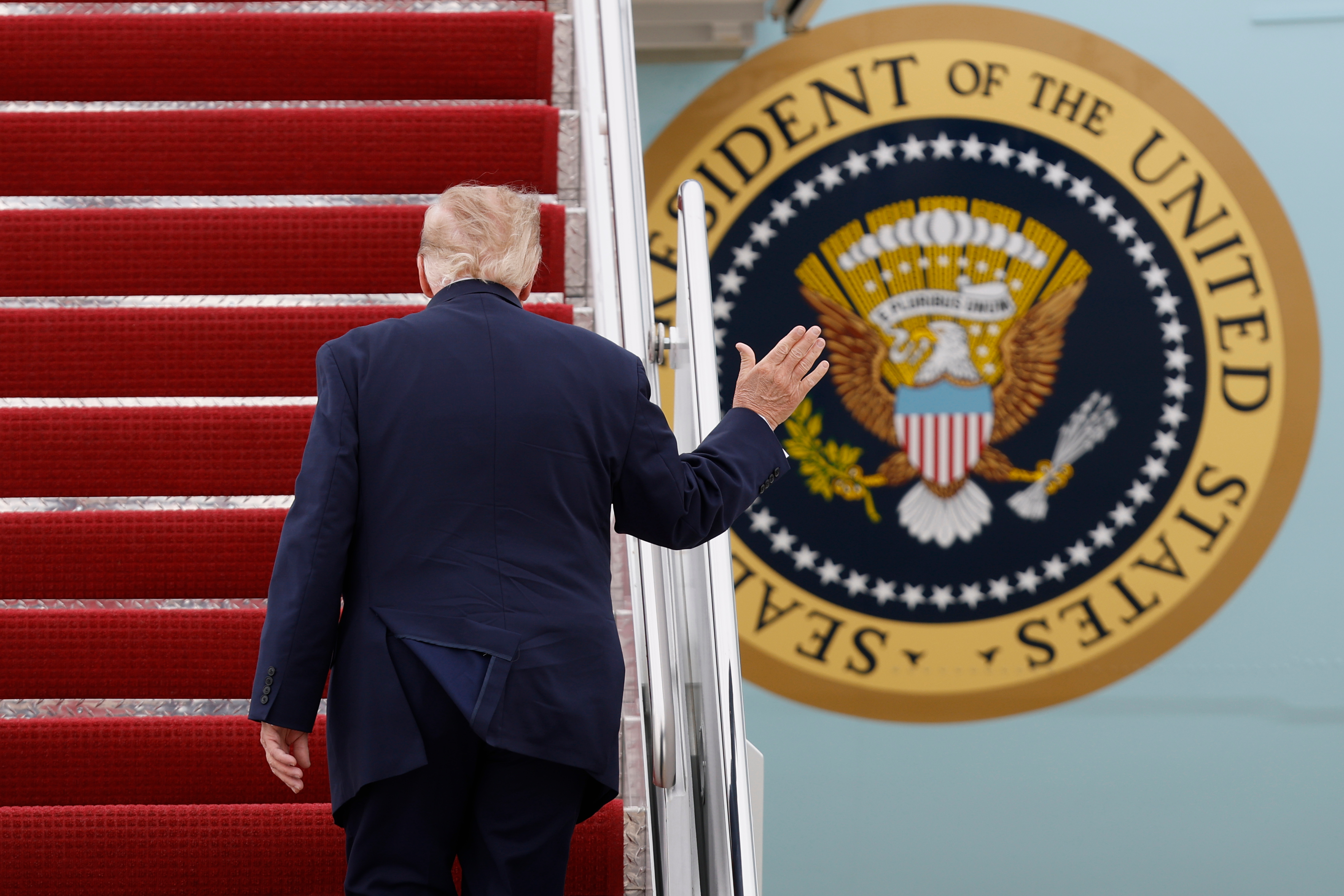
    Hours later, he was photographed aboard Air Force One studying a large printout whose partially visible headline appeared to read “Kennedy Center DEMOLIS[HED].”


  • 2 giant pandas arrive in Atlanta under a US-China government agreement

    2 giant pandas arrive in Atlanta under a US-China government agreement

    BANGKOK — Two giant pandas arrived in Atlanta on Sunday morning as part of an agreement between the Chinese and American governments.

    Ping Ping and Fu Shuang departed Chengdu in southwestern China early Sunday aboard a dedicated “FedEx Panda Express” Boeing 777 aircraft, officials said. A new agreement between Zoo Atlanta and the China Wildlife Conservation Association makes Atlanta one of three zoos in the U.S. to house giant pandas.

    “This is a thrilling day for Zoo Atlanta and a historic moment for the City of Atlanta, the state of Georgia, and beyond,” Zoo Atlanta President and CEO Raymond B. King said in a statement. “We are elated to welcome Ping Ping and Fu Shuang and could not be more excited about sharing that joy with our Members, guests, city, and community in the coming weeks.”

    Zoo visitors will have to wait awhile to see Ping Ping and Fu Shuang, officials said. The bears will be quarantined for about a month in a biosecure area of the wildlife park’s new giant panda complex. Park officials haven’t confirmed a specific opening date.

    The pandas’ arrival was announced Thursday by Chinese President Xi Jinping during a three-day summit with U.S. President Donald Trump. The loan of the pandas was one of the few concrete outcomes to come out of the state visit, which saw expressions of goodwill between the leaders, but no fixes to any of the long-standing differences between the two countries.

    Atlanta said farewell to its last pandas in 2024, leaving the zoo without the bears. The new agreement was announced back in April, but without any dates.

    Ping Ping and Fu Shuang will be on loan to Zoo Atlanta for 10 years as part of the agreement. Both pandas were born in 2020 and were kept at the Chengdu Research Base of Giant Panda Breeding. Ping Ping, the male, has dark black circles around his eyes, while Fu Shuang, the female, has a forehead that protrudes a bit, according to the Xinhua News Agency.

    China has long used the pandas as part of its diplomacy globally, deploying the bears in loan programs as expressions of goodwill and letting loan agreements lapse when tensions arise.

    Xi had said the loan program was an example of “friendship between the Chinese and Americans.”

  • 5 men arrested near U.K. air base used by U.S. in Iran war on suspicion of preparing a terrorist act

    5 men arrested near U.K. air base used by U.S. in Iran war on suspicion of preparing a terrorist act

    LONDON — U.K. police said that five men arrested in the early hours of Sunday near an air base used by the United States during its war against Iran are being held on suspicion of preparing a terrorist act that appeared to involve three trucks.

    London’s Metropolitan Police, which takes the lead on potential terrorist activities, said police received a call at 12:45 a.m. related to the three suspicious vehicles that appeared to be traveling toward RAF Fairford, a U.K.-owned base that is operated by the U.S. under an agreement dating back to the Cold War.

    Base is home to U.S. bombers striking Iran

    The arrests come at a time of heightened tensions around the threat from hostile states to the U.K., with Russia and Iran among those that have used proxies to commit crimes on their behalf on British soil. In March, officials said the number of national security cases involving activity by hostile states including Iran increased 50% in the six months to December 2025.

    Fairford has been used by American bombers for strictly limited strikes against Iranian missile sites under an agreement with former British Prime Minister Keir Starmer, who voiced opposition to the war after it was launched by the U.S. and Israel on Feb. 28.

    Authorities are investigating a link between the Fairford arrests and Iran as one possibility. Iran has previously indicated that a base used to attack its territory is a legitimate target.

    U.S. President Donald Trump praised those who were involved in making the arrests.

    “It was an amazing job. We had them under investigation. They were looking to do big damage to our fort. And working with the British worked out great,” he told reporters in Chicago on Sunday. “We had them under view for a long time and we got them.”

    Police feared an explosion

    The five men were initially arrested on suspicion of committing offenses under the Explosives Act in the Whelford area, which backs onto RAF Fairford, which hosts the headquarters of the U.S. Air Force’s 501st Combat Support Wing and the 420th Air Base Squadron.

    Aerial footage from Sky News appeared to show a bomb disposal robot roaming between three white trucks. The rear doors of two of the vans were open and large black items could be seen scattered around. The robot appeared to be working toward getting access to the third truck.

    Police gave no details as to the nationality of those arrested. Suspects arrested under the Terrorism Act 2000 can be detained for up to 14 days without charge, compared to the 24-hour limit for standard arrests, without an extension application.

    “We are in the early stages of an investigation, and five men remain in custody,” said Vicki Evans, the Met’s counterterrorism policing senior national coordinator.

    Evans said a 400-yard cordon was put in place around the three vehicles that raised suspicion while the army conducted examinations. As a precaution, around 85 households were evacuated while the examinations took place. Some were taken to a nearby recreation center.

    The U.S. embassy in London warned Americans to be cautious and mindful of their personal security.

    British Prime Minister Andy Burnham said he knew the incident would be “deeply concerning” for many. In a post on social media, Burnham thanked police and the armed forces for their response and said he was grateful to the residents who have been evacuated from their homes “while precautionary checks are carried out.”

    He urged people “not to speculate while the authorities establish the full facts.”

    The defense secretaries of the U.S. and the U.K., Pete Hegseth and Wes Streeting, have also spoken about the incident.

    British security officials say proxies linked to Iran have been behind a string of arson and sabotage attempts in the U.K. and other countries, many of them targeting the Jewish community. They have previously warned that Tehran could expand its targets in the U.K. if conflicts in the Middle East continue.

    Local residents evacuated

    Gloucestershire police said the situation appeared to be “contained” and urged residents to follow official advice while the investigation continues.

    Julian Tudsbery, who has lived in Whelford for 30 years, said another resident had reported seeing three “suspicious vans” in the village early on Sunday.

    “There were several police, three police cars in the drive, and they said you need to evacuate, there’s been a major incident, said he couldn’t elaborate,” he said.

  • A Philly woman won a NASA contest to design a food system for astronauts on Mars

    A Philly woman won a NASA contest to design a food system for astronauts on Mars

    A 25-year-old Philadelphia woman won the $300,000 first prize in a NASA competition to design food systems to improve how astronauts eat in space, and eventually how they will eat on Mars, the space agency announced Thursday.

    Chinyere “Chichi” Ukeje, a native of Bowie, Md., now living with her husband in Northeast Philadelphia, submitted a proposal called Adaptive Nourishment Infrastructure, or ANI, which is named after the Nigerian Earth goddess of harvest and fertility.

    Ukeje said in a phone interview Friday night that her family has roots in Nigeria and with the Igbo people, a major ethnic group in that country.

    With the Deep Space Food Challenge: Mars to Table competition, NASA asked participants to “explore innovative solutions for integrated space food systems that would provide safe, nutritious meals to astronauts living and working in space,” the agency said.

    NASA launched Mars to Table in January 2026 as a follow-up to the Deep Space Food Challenge, which NASA ran from 2014 to 2021 in collaboration with the Canadian Space Agency.

    The updated competition included entries from teams in 28 U.S. states and from a total of 33 countries. The total prize pool was $650,000 for five winning teams.

    Jennifer Edmunson, program manager for Centennial Challenges at NASA’s Marshall Space Flight Center in Huntsville, Ala., said in a statement: “The future of human space exploration will rely on innovative food systems, and it is amazing how much ingenuity this challenge has helped us identify from participants near and far.”

    The challenge was created to find ways to feed astronauts without having to send prepackaged foods, which would not be possible because of the sheer bulk for the many months a Mars mission would take.

    The core of the challenge was to create a working system for a 15-person astronaut crew for 500 Martian sols, which is the equivalent of around 513 Earth days.

    “The problem of feeding astronauts on Mars is more than just growing crops,” said Ukeje, who is studying for a master’s degree in computer science at Johns Hopkins University.

    After spending most of her childhood in Maryland, Ukeje went to Nigeria during high school. She then returned to the U.S. to earn her bachelor’s degree in computer science at the University of Maryland, Baltimore County, before moving to Philadelphia.

    NASA described Ukeje’s “ANI” as “a modular food ecosystem combining controlled-environment agriculture, fermentation and fungi cultivation, and closed-loop nutrient recycling through bioreactors with limited Earth-provisioned foods to produce 50% of the food away from Earth.”

    Ukeje’s complex winning entry included having astronauts heating food with portable electric lunch boxes. The astronauts would take cubes of nutritious food and prepare them into recognizable meals, and then they could have “taco night” or “Italian pasta night.”

    “You want them to feel at home when they are millions of miles from home,” she said.

    She was surprised she won first place, but not surprised that she did well.

    “I completely poured myself into this project,” she said.

    There are no restrictions on what she can spend her prize money on, but Ukeje said she expects some of it will go into further food technology research.

    Correction: A previous version of this article incorrectly spelled Chinyere Ukeje’s first name in a sub-headline and photo caption.

  • CNN says it was left off Air Force One for Trump’s Saturday trip to a college football game

    CNN says it was left off Air Force One for Trump’s Saturday trip to a college football game

    The White House left CNN off Air Force One for President Donald Trump’s trip Saturday to a college football game in Tennessee, marking the latest media restriction from the administration in an ongoing dispute with First Amendment implications.

    CNN, a member of the U.S. network video pool that rotates duties shooting and sharing video coverage of the president, reported it had been scheduled to fly aboard the president’s plane Saturday for a visit to a midday game between the University of Tennessee in Knoxville and the University of Texas. But White House guidance issued Friday night instead included Real America’s Voice, a conservative outlet.

    The White House guidance was issued after journalists from CNN, along with MS NOW and Politico, which Trump banned last week from the White House grounds, returned to the executive complex with TV cameras in hand after a judge handed the organizations a reprieve.

    U.S. District Judge Timothy Kelly temporarily struck down the president’s ban in an overnight ruling early Thursday, but his decision dealt with “hard passes” to the White House grounds and didn’t directly address pool duties.

    The judge’s temporary order also said nothing directly about Air Force One.

    The spot meant for CNN on the flight has long been saved for a member of the U.S. network video pool; Real America’s Voice is not a part of that group. The White House did not respond to emails from the Associated Press requesting comment about the decision.

    CNN declined to comment.

    A written pool report Saturday morning confirmed there was “no TV pool” for the travel, though Real America’s Voice celebrated its inclusion in the trip and said it would make feeds available to other news outlets.

    “CNN is not here; we have taken over that responsibility. We are so excited to be here,” correspondent Taylor Mitchell said in a video that the outlet posted on social media.

    On Saturday morning, the president addressed the broader debate in a post on social media, writing: “FAKE NEWS SHOULD NOT BE ALLOWED IN THE WHITE HOUSE!!! IT HAS GONE ON FAR TOO LONG, AT A TREMENDOUS COST TO OUR COUNTRY.”

    Fans at the game caught a low-altitude flyover as Air Force One came into town while the teams were warming up. The president’s motorcade arrived just as the national anthem was being sung, and the president was later shown on a jumbotron and greeted with cheers, according to a text pool report.

    Media organizations believe the court decision covers the ‘pool’

    Theodore Boutrous Jr., an attorney for CNN, MS NOW, and Politico, did not respond to phone calls or emails Friday evening or Saturday morning. Earlier Friday, on The Lead with Jake Tapper, Boutrous said the plaintiffs believe the recent court ruling also covers the issue of pool access.

    For a while Friday, the U.S. network video pool for the White House was back in operation for the first time since Trump banned the three news outlets in an extraordinary showdown over media access.

    At noon on CNN, viewers could see Trump and Chinese President Xi Jinping touring the National Archives, along with Melania Trump and Peng Liyuan, Xi’s wife. The banner along the bottom of the screen read: “Trump and China’s Xi Visit National Archives.” It was a routine report from a state visit — except that CNN had not aired live video of Trump in several days.

    “As of now, all systems are go,” said a person familiar with the pool, speaking on condition of anonymity because of the fluidity of the situation.

    Pool participants showed solidarity this week

    The TV pool consists of five major U.S. broadcast outlets. When the White House banned CNN from the White House grounds, along with MS NOW and Politico, the other four pool providers declined to participate in a show of solidarity.

    CNN did not comment directly Friday, referring instead to its editorial coverage. It did the same Saturday. But Brian Stelter, the network’s media analyst, posted on X Friday that CNN had a pool assignment at the National Archives event and that the White House had approved the network’s credentials.

    The outlet on Saturday covered its exclusion from Air Force One, writing that the move “represents the Trump administration’s latest salvo against CNN and the broader White House press corps.”

    Throughout his second term, Trump has increasingly targeted media outlets whose coverage irritates him, taking administrative or legal action against several. Early last year, he banished AP reporters from White House events because the organization wasn’t abiding by his executive order changing the name of the Gulf of Mexico to the “Gulf of America.” The AP’s guidance says to acknowledge the new name when relevant.

    The case is on appeal after a federal district judge ruled in AP’s favor.

    The press pool was created decades ago by the White House Correspondents’ Association, a group of journalists who cover the president, to make sure a rotating roster always travels with the president. The pool distributes in-person reports and imagery to the broader press corps and is designed to hold the nation’s chief executive accountable on behalf of the American public.

    The association did not respond to emails requesting comment.

  • How the U.S. and Russia weakened a global effort to regulate killer AI

    How the U.S. and Russia weakened a global effort to regulate killer AI

    UNITED NATIONS — Early this month, hundreds of diplomats huddled in a cavernous U.N. conference room in Switzerland, working toward a muscular treaty to regulate the use of lethal autonomous weapons — the first agreement governing the use of killer artificial intelligence arms. On the last day of negotiations, the talks turned aggressive.

    Over the next roughly 15 hours, U.S. and Russian diplomats hammered away at the document, removing a range of provisions designed to safeguard the use of artificial intelligence in weapons, according to three people familiar with the negotiations, who spoke on the condition of anonymity to discuss sensitive closed-door proceedings, and documents reviewed by the Washington Post.

    They stripped language requiring the systems to operate in a “predictable” and “reliable” manner, the people said, and removed a clause mandating that ethical considerations be taken into account when using AI weaponry. The U.S. and Russian teams also removed a provision requiring that humans review military targets developed by AI before a strike, they added.

    In a closed-door session, with U.N. cameras turned off and civil society observers removed, Washington and Moscow deployed their army of about 10 lawyers each — nearly twice the diplomatic presence of other delegations — to make changes that moved so quickly that the smaller delegations were left dizzied, the three people said.

    “It was death by a thousand paper cuts,” said one of the people.

    The U.S. State Department, the Russian Foreign Ministry, and the United Nations did not return requests for comment.

    The erosion of the agreement, the details of which are previously unreported, shows how the United States and Russia have worked to weaken global rules to regulate lethal AI weaponry, as the Pentagon moves to rapidly infuse the burgeoning technology into its battlefield strategy.

    The talks are happening amid a fierce public debate over the existential risks of advanced AI, as tech executives urge world leaders to collaborate to impose limits on the technology. The U.N. has for years tried to regulate AI weaponry with limited progress, and the latest directive is the furthest the effort has advanced.

    Washington’s attempts to neutralize global rules on AI weaponry also provide insight into how it may approach regulating the U.S. military’s use of the technology. U.S. officials are currently revising the military’s own lethal autonomous weapons directive, released in 2023.

    Verity Coyle, the deputy director for arms in the crisis, conflict, and arms division at Human Rights Watch, said weak rules governing lethal AI weaponry could have significant consequences.

    “It could mean machines can make life‑and‑death decisions without human control,” she said. “The practical impact is stark: more civilian harm, less accountability, and a faster slide into riskier, automated warfare.”

    Across the world, the use of artificial intelligence in war has moved from scenarios that are largely theoretical to actual battlefield use. The U.S. military used Anthropic’s chatbot to identify nearly 1,000 targets to strike in the first 24 hours of the war with Iran, according to the Post. Israel has heavily relied on AI for its military operations in Gaza, the Post reported.

    Over the past few months, AI companies have disclosed that their bots have autonomously hacked the servers of other organizations — including U.S. government websites — and that nefarious actors in places such as Yemen and Iran have used chatbots to try to make weapons or target the U.S. military, sparking fears that the technology could become uncontrollable.

    This month, an Anthropic researcher quit the company and warned the public that AI could end the human race, setting off a furious debate in Washington over how to regulate it before it poses an existential threat to humanity.

    Amid this flurry of consternation, tech executives and global leaders have urgently called for AI regulation. At a meeting of the U.N. Security Council this week, OpenAI chief executive Sam Altman and Anthropic leader Dario Amodei called for nations to collaborate to create a model of global AI governance.

    Regulation “must be shaped through democratic processes, by governments accountable to the people they serve,” Altman said. “At the international level, that means cooperation.”

    But domestic attempts to regulate have reached a roadblock, with the Trump administration arguing that any rules on AI will stymie innovation.

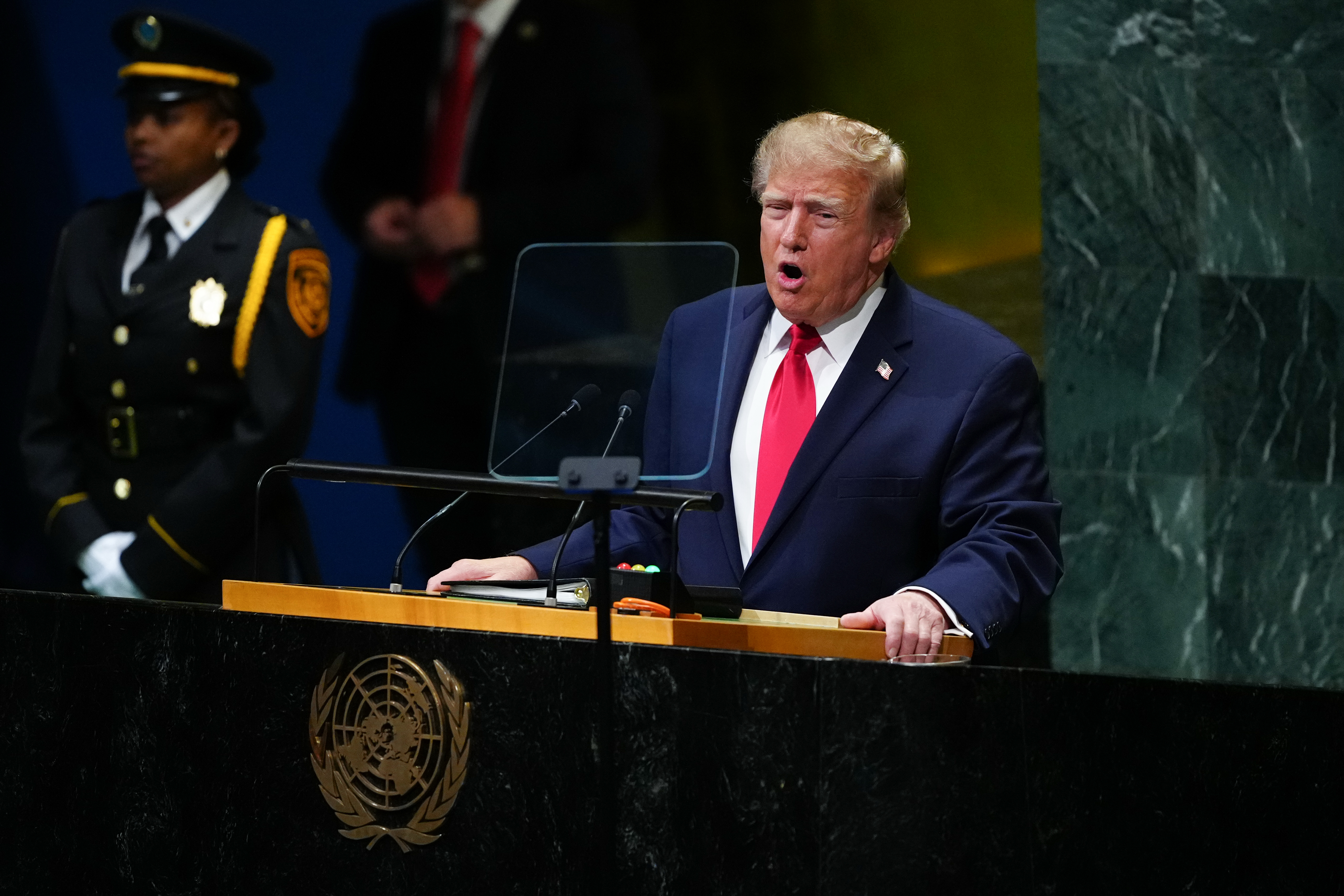
    “The United States also totally rejects any attempt to construct a globalist scheme to control for the artificial intelligence being spoken of so much now — hereinafter officially called ‘super intelligence,’” President Donald Trump said at the United Nations on Tuesday.

    The lethal autonomous weapons negotiations in the U.N. are currently nonbinding, though the talks could open the door to a landmark treaty that is legally binding if member nations agree. It presents the most advanced global effort to regulate how AI weapons are used in the battlefield.

    But at the talks in Geneva in early September, it was apparent that the U.S. and Russia were going to be a major roadblock to progress, the three people said.

    The U.S. team is led by State Department diplomats, Pentagon officials, and legal experts, Coyle of Human Rights Watch said. “It’s a well‑resourced team, and they come prepared to defend U.S. military autonomy,” she said.

    Nicole van Rooijen, the executive director of the global nongovernmental coalition Stop Killer Robots, said Washington and Moscow aren’t in favor of legally binding rules on autonomous weapons and have outsize influence on how negotiations will end.

    The autonomous weapons talks require dozens of nations to reach consensus on what rules will be enacted, she added. The U.S. and Russia do not champion multilateralism — which requires countries to work together to reach agreements — and can use “political capital to exert pressure on other states,” she said.

    “They have the power to block any significant progress that is made by the vast majority of states who do want to move forward on a binding treaty,” she added.

    In November, nations will come together in Geneva to discuss whether talks can turn into an official mandate or potentially a legally binding treaty.

    In the U.S., a parallel discussion is happening as the Pentagon works to rewrite its own directive on the use of autonomous weapons. In June, Trump issued a national security memorandum requiring that the directive be updated within 90 days. As of late September, the U.S. government has not released a new version.

    Established in 2023 during the Biden administration, the directive contained several clauses that echo those eliminated from the U.N. document, including requiring that human judgment be deployed to check autonomous and semiautonomous weapons systems. It also mandated that those who operate AI weapons systems abide by the laws of war and applicable treaties.

    Richard Lennane, the disarmament adviser for the legal team for the International Committee for the Red Cross, said global treaties can be impactful in controlling the use of harmful weapons, citing the effect that directives on chemical and biological weapons, antipersonnel land mines, and cluster munitions have had on limiting use.

    “It’s not about punishment, it’s about setting norms and influencing behavior,” Lennane said. “We believe that a treaty regulating autonomous weapons could be similarly effective.”

    Coyle, however, noted that the U.S. and Russia have the diplomatic muscle, legal teams, and political incentives to keep any global rules on autonomous weapons weak, and she said the actions to water down regulation on AI arms follow a well-trodden playbook.

    “When the U.S. wants to preserve military or technological advantage, it pushes voluntary guidelines instead of binding rules,” Cole said. “We’ve seen the same playbook in cyber, space, and other arms‑control debates. Autonomous weapons are no exception.”

  • Trump rejects Iranian proposal for ceasefire and opening of strait

    Trump rejects Iranian proposal for ceasefire and opening of strait

    WASHINGTON — President Donald Trump said Saturday that he turned down Iran’s latest ceasefire proposal, which would have reopened the Strait of Hormuz and restarted talks on the country’s nuclear program.

    “They made a proposal, but I rejected it,” Trump told reporters as he left the White House on Saturday morning.

    Trump demurred when asked if he expected to restart military strikes after the November midterm elections, saying Iran wanted “to make a deal where they open the strait immediately because they’re losing so badly.”

    Trump’s rebuff was the latest turn in what has been a cycle of bombings, peace proposals, grandiose threats, and conflicting messages throughout the nearly seven-month U.S.-Israeli war against Iran. Trump’s rejection of Iran’s offer came after his aides held a three-hour meeting with Iranian officials at the United Nations General Assembly this week in New York.

    In his speech at the United Nations, Trump issued an ultimatum to Iran, saying its leaders could strike a deal with the United States or risk annihilation.

    “Will a deal be made with Iran that lets them rebuild and create a far greater country than it ever was before — maybe one of the greatest in the Middle East or even the world?” Trump asked in speech Tuesday. “Or do I annihilate the Islamic Republic and do it quickly, never giving them a chance to kill and destroy people and countries again?”

    Trump also suggested that Iran was dragging the war out to the midterm elections in the hopes of politically damaging Trump and Republicans. The closure of the Strait of Hormuz, a key shipping route for oil and gas, has surged energy prices across the globe.

    Iran’s foreign minister, Abbas Araghchi, told reporters Thursday that the seven-point proposal Trump rejected closely mirrored the commitments laid out in a so-called memorandum of understanding that was struck between the United States and Iran in June but that quickly unraveled.

    Araghchi added “it would be better” if a deal were reached before the U.S. midterm elections.

    He said that the proposed agreement would end fighting for seven days, including in Lebanon, and require the United States to release Iranian frozen assets estimated to be at least $12 billion, waive sanctions on Iranian oil, and lift the naval blockade on Iran. Then, on the last day, the Strait of Hormuz would be opened.

    After the seven days, negotiations over Iran’s nuclear program would restart.

    Trump said Saturday that he was still open to negotiating with Iran.

    “They want to make a deal, and I think that’s fine, I like making a deal too,” Trump said. “But that deal would not be acceptable.”

    This article originally appeared in The New York Times.

  • Tasia Fortune’s hanging was ‘staged’ after her death in a drug dispute, Mississippi police say

    Tasia Fortune’s hanging was ‘staged’ after her death in a drug dispute, Mississippi police say

    JACKSON, Miss. — Tasia Fortune was apparently killed in a drug dispute before her body was hung in a tree in a “staged” lynching behind an abandoned home in the Mississippi capital this summer, a detective testified Friday.

    Fortune was killed in a disagreement about drugs, and she fought hard with her attackers before she was killed, Jackson police Detective Samuel Dukes told the court. Citing the medical examiner’s opinion, he also said the hanging was “staged.”

    Fortune was Black, and the Aug. 3 discovery of her hanging body stoked fear and drew widespread attention because the scene recalled actual lynchings in the Southern state, which has a long and troubled history of racial violence.

    Authorities haven’t disclosed the exact cause of Fortune’s death or said why they think her body was hanged afterward, but they ruled it a homicide and arrested two men, both of them also Black, on murder charges. They also issued an arrest warrant for an unnamed third person.

    Outside court, Fortune’s mother, Christy Spivey, told reporters that she had been aware that her daughter died before her body was hanged.

    “What bothered me was they said Tasia fought for her life. I know she did. I know my daughter,” Spivey said.

    The hearing was meant to determine whether there is sufficient evidence to send the case against the first man arrested, Jarques Ratliff, to a grand jury for a possible indictment. It will resume Sept. 30.

    Ratliff, 51, was arrested in mid-September and has pleaded not guilty. He remains jailed without bond. Police arrested a second defendant, 25-year-old Earnest Lloyd Jr., this week.

    During Friday’s hearing, Ratliff blurted out in court that he and Fortune were friends.

    “It sounded sincere. Tasia had a lot of friends,” Spivey said later. ”I hope if he is innocent that he can prove he’s innocent. We don’t want any innocent people going to jail.”

    Ratliff’s stepdaughter, Lashuna Jones, was among her father’s supporters at court.

    “He didn’t do it, and I’m behind him,” she said.

    Spivey has said her daughter, who had four children, struggled with homelessness in recent years, and that she wasn’t sure where Fortune was living at the time of her death. She said Fortune had talked about starting a cleaning business and was trying to get her life in order.

  • For Trump and Xi, a warm farewell and unfinished business

    For Trump and Xi, a warm farewell and unfinished business

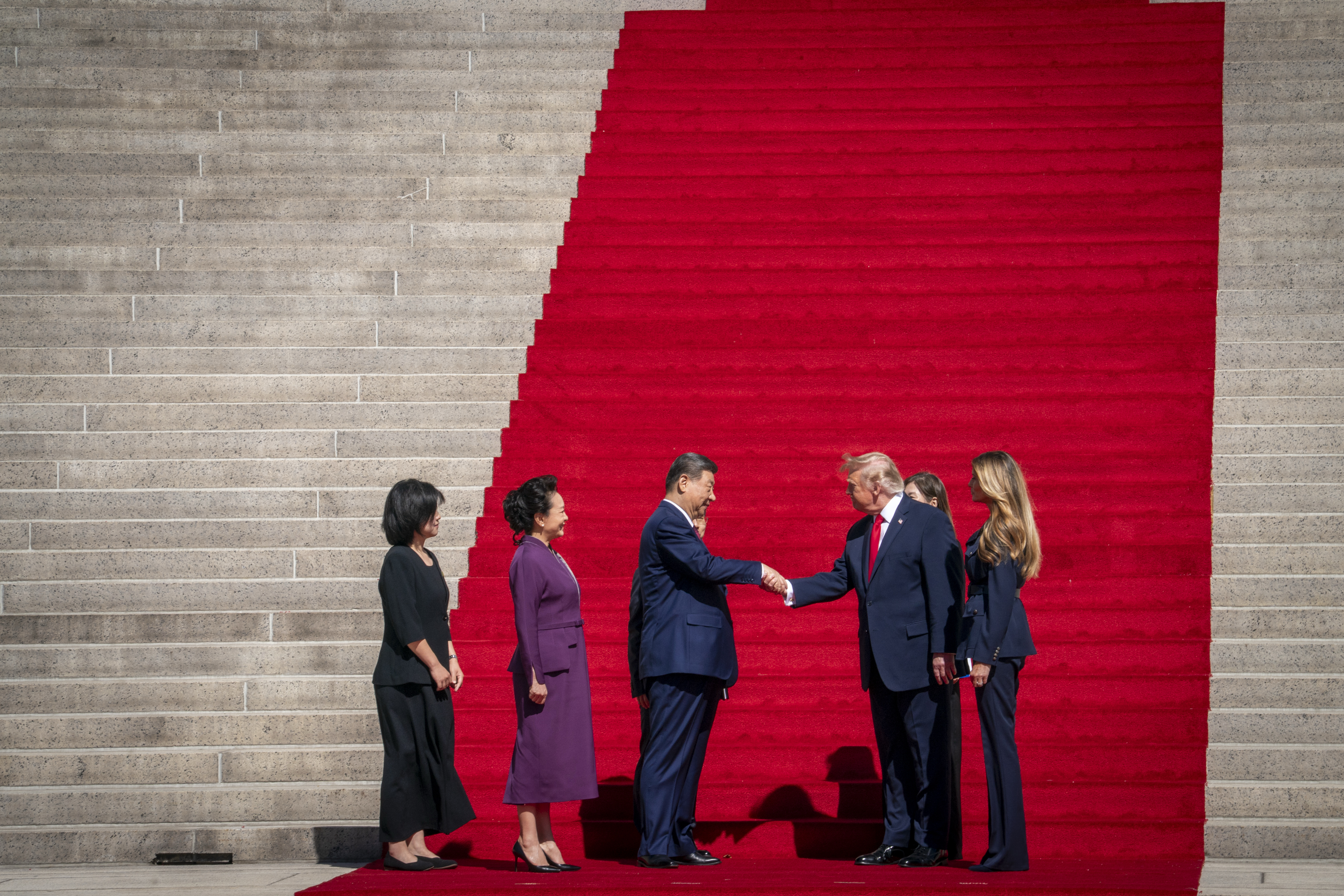
    President Donald Trump showed off the Constitution, the Bill of Rights, and the Declaration of Independence to Chinese President Xi Jinping on Friday, as the two leaders wrapped up a state visit to Washington with friendly gestures but few apparent breakthroughs other than a promise to see each other twice more this year.

    “We’ve made great strides, very positive for both countries,” Trump said over tea Friday before setting out for the National Archives, embracing what he said was a warm personal relationship with Xi.

    He later said that “everything” had been discussed, including the war in Iran, and that the outcome of the summit would be “great for the farmers.”

    Xi focused more on the relationship between the two countries than on his personal chemistry with Trump, continuing a difference that was evident on the meeting’s first day.

    “The president and I are like two people that are charting the course for the great ship of China-U. S. relations,” Xi said. He said that Trump and he had agreed to build a relationship of “strategic stability on the basis of respect, fairness, and reciprocity. So, from this, one can see that the prospects for this relationship will get brighter.”

    He praised his host in terms that were sure to appeal to the U.S. leader, who gained fame early in his career by running hotels and whose family remains invested in the resort business.

    “Everything is done to the highest order of perfection, and there is thought in every little detail, and it’s greatly appreciated,” Xi said.

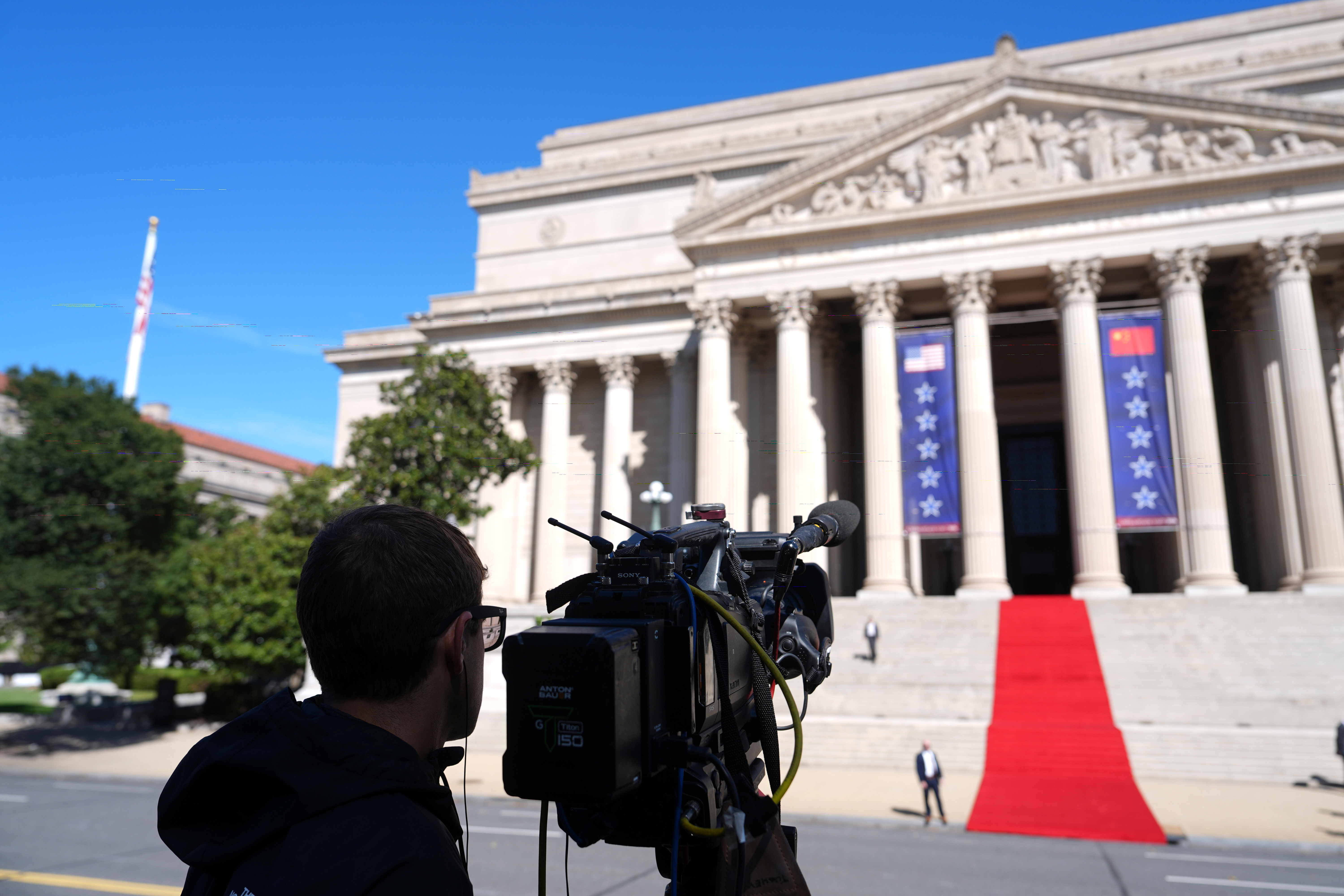
    After tea, the leaders and their wives toured the National Archives to see the foundational documents of the United States to commemorate America’s 250th birthday year.

    Under a different president, the gesture — parading the authoritarian leader of a communist country in front of the key artifacts that guarantee U.S. democracy — might have been seen as aggressive. Trump, however, offered a genial tour to his guest, and if he commented about democracy, it wasn’t audible to the cameras, which were back in operation after a court order ended Trump’s effort to ban three news organizations from covering him.

    “We’re just comparing. Ours goes 250 years. Which is great, and we’re proud of it. But theirs goes 6,000 years. So there’s a little difference between 6,000 and 250. But we’re very proud of our 250,” Trump said.

    Xi and other Chinese leaders often have focused on their country’s thousands of years of history as a way of emphasizing that they can outlast pressure from Washington — although modern China’s communist government dates to 1949.

    Trump, who Thursday praised Xi’s knowledge of stone and particularly granite, declared his admiration for the rotunda of the National Archives building, which was completed in 1935.

    “This is a great building. Great building,” Trump said. “This is when they built it properly.”

    Trump fought with the news media during the course of the summit after his effort to bar CNN, MS NOW, and Politico from the White House. On Thursday, the White House video pool, which television networks share, remained out of commission as the networks awaited assurances that CNN would be allowed access. That drew complaints from Trump that the press was missing “made for television” moments of the summit.

    By Friday, however, the TV pool was back, and in the end Trump said that he was happy with how the trip had played in the media.

    “We appreciate the fair coverage. It’s been very fair. We appreciate it,” he said.

    The two leaders confirmed plans to meet again in November in China and in December in Miami, making for four face-to-face encounters over the course of 2026.

    The rapid pace of meetings may ease the pressure off any one summit to produce a breakthrough, even as both sides continue to discuss Taiwan, whether to regulate artificial intelligence, and the complex and thorny economic relationship between the two superpowers.

  • White House network TV pool resumes operations after a dayslong ban of news outlets from grounds

    White House network TV pool resumes operations after a dayslong ban of news outlets from grounds

    The U.S. network video pool for the White House was back in operation Friday, for the first time since President Donald Trump banned three news outlets in an extraordinary showdown over media access.

    At noon on CNN, viewers could see Trump and President Xi Jinping touring the National Archives, along with Melania Trump and Peng Liyuan, Xi’s wife. The banner along the bottom of the screen read: “Trump and China’s Xi Visit National Archives.” It was a routine report from a state visit — but for the fact that CNN had not aired live video of Trump in several days.

    “As of now, all systems are go,” said a person familiar with the pool, speaking on condition of anonymity because of the fluidity of the situation.

    The pool consists of five major U.S. broadcast outlets that take turns shooting and sharing video. When the White House banned CNN — which belongs to the pool — from White House grounds, along with MS NOW and Politico, the other four pool providers declined to participate in a show of solidarity.

    A judge temporarily struck down the ban in an overnight ruling early Thursday, but his ruling didn’t directly address the pool. The networks continued to refrain from covering Trump as part of the pool, even as reporters from all three outlets were allowed back in the White House.

    CNN was not commenting directly on Friday, referring instead to its editorial coverage. But Brian Stelter, the network’s media analyst, posted on X that CNN had a pool assignment at the National Archives event and that the White House had approved the network’s credentials.