Category: History

  • The Savannah Bananas are building on one of baseball’s oldest traditions, barnstorming

    The Savannah Bananas are building on one of baseball’s oldest traditions, barnstorming

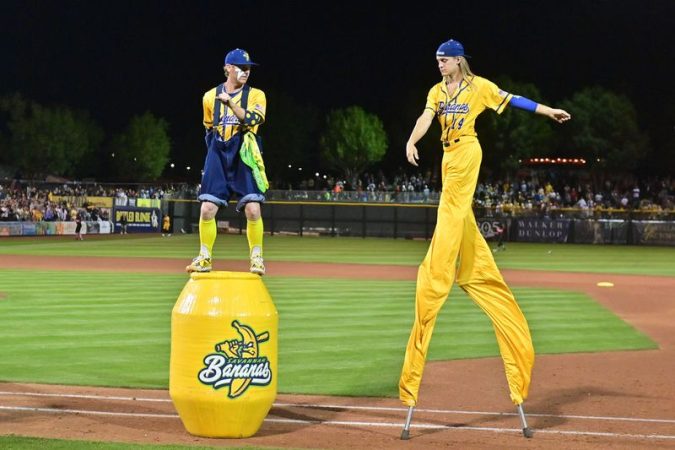
    One of the more striking sports stories of the last few years has been the dramatic rise in popularity of the Savannah Bananas. Founded as a collegiate summer league team in 2016, the Bananas began playing exhibition games in 2018, when they debuted their signature “Banana Ball,” a fast-paced, acrobatic, comedic, participatory style of baseball. Since 2023 they have dedicated themselves entirely to traveling exhibition games against other “Banana Ball” teams, and their popularity has continued to grow. On May 2, as part of the ongoing Banana Ball World Tour, they played before their largest audience yet, a crowd of 102,000 at Kyle Field in College Station, Texas.

    The Bananas and Banana Ball represent a compelling innovation in baseball and American sports—but at the same time, they’re building on one of the sport’s oldest and most enduring traditions: barnstorming, alternatives to professional and major leagues that have long brought community and inclusivity to baseball and America.

    Most histories of baseball focus on its professional leagues: the U.S. Major Leagues and sometimes other prominent professional organizations such as the Negro Leagues and Japan’s Nippon Professional Baseball. But starting in the mid-19th century, there was an equally popular alternative version of baseball that existed outside of those more established sites. Known as barnstorming, probably because many of its games took place in rural communities that might well have featured farm structures, the reference that also connected these baseball teams to other traveling performers who also used the term. This version of baseball saw touring collections of players—sometimes part of an established team, but just as often cobbled together from across multiple teams—visit communities and stage exhibition games. These games were played against local teams and players, fellow barnstorming teams, or as part of other unique entertainments.

    In the first half of the 20th century barnstorming came to be especially associated with the Negro Leagues and represented a way both for those Black athletes to showcase their talents in front of more diverse and widespread audiences. It also allowed them to play against—and, even at times, alongside—white athletes during a time in which the Major Leagues excluded Black players. Building on the legacy of late 19th century, Black barnstorming teams like Bud Fowler’s All-American Black Tourists, legendary 20th-century players like the great Satchel Paige organized teams that toured constantly and brought baseball to every corner of the nation. It also inspired one of the great sports movies, 1976’s The Bingo Long Traveling All-Stars & Motor Kings, with Billy Dee Williams’s Bingo a clear Satchel Paige type.

    In the 1920s and 30s another American community that was excluded from the era’s professional leagues formed their own prominent barnstorming teams and leagues. Japanese baseball dated back to both Hawaii and Japan in the late 19th century, and the first Japanese American semi-pro clubs formed on the mainland United States in the early 1900s. But it was with the rise of barnstorming teams in the late 1920s that these Japanese American players gained truly national and international fame.

    In 1935, the Japanese World Series prominently featured the Japanese American barnstorming team, the Los Angeles Nippons, in a best-of-three series against Japan’s famous Tokyo Giants. Although the Tokyo squad took two of the three games, at the end of their barnstorming tour of the U.S. a team spokesperson noted that “the Los Angeles Nippons were the best of the Japanese Nines.”

    These early 20th century barnstorming teams and games also captured the attention of the sport’s biggest stars. In October 1927, just after winning the World Series and at the height of their success and fame with the New York Yankees, Babe Ruth and his teammate Lou Gehrig took part in a highly competitive barnstorming game in Fresno against Japanese American semi-pro stars, including the powerful slugger Johnny Nakagawa who was known as the “Nisei Babe Ruth.” With each captaining a different team, and as the only white players in the game, Ruth and Gehrig played both against and alongside the Japanese American players, a reflection of how much barnstorming could break down the period’s policies and practices of segregation.

    The single most famous barnstorming baseball team, the House of David, broke down such barriers consistently and purposefully. Formed in the late 1910s by members of the Michigan religious commune of the same name, the House of David—famous for its long hair and equally impressive beards—gained a reputation for baseball prowess over the next four decades before it dissolved in 1955. It featured former Major Leaguers like Grover Cleveland Alexander, other famous athletes like Mildred “Babe” Didrickson and Satchel Paige, and rising stars like Jackie Mitchell, the teenage pitching phenom who was the first woman to play for a minor league team.

    The House of David also partnered with Negro League teams and players: traveling together, playing exhibition games against each other, and challenging segregation policies inside and outside the stadium along the way. Before the House of David would take on the local team, they demanded a chance to play the Negro League team with whom they had arrived (a request smartly made after the audience was already in the stadium to watch the featured exhibition game). They then ate in the same restaurant and stayed at the same hotel with them as well, pushing the boundaries of racial segregation.
    Made By History sponsors. FOR USE ON MADE BY HISTORY STORIES ONLY.Inquirer Staff

    The House of David ended its barnstorming tours in 1955 for the same reasons the practice largely faded out during that decade: the racial integration of the Major Leagues. Beginning with Jackie Robinson in 1947, integration meant that more of the best players had the chance to join the Majors; and the growing popularity of television allowed audiences around the country to see those players and games. Some Japanese American semi-pro teams did continue to barnstorm, as Japanese Americans didn’t join Major League teams until the late 1960s, a continued legacy of the earlier segregation policies. But by the late 20th century the practice was generally found only in historical depictions like Bingo Long.

    Recently, the Savannah Bananas announced the reforming of a historic Negro Leagues team, the Indianapolis Clowns, against whom they’ll play barnstorming exhibition games. In that way, as in so many others, this 21st-century team builds on the legacies of barnstorming baseball, on the important role of athletes of color in making it more inclusive, and of the communal and inclusive sides of the sport and nation it represents.

    Ben Railton is Professor of English and American Studies at Fitchburg State University, and the author of six books, two podcast seasons, and numerous columns on the worst and best of American history and identity.

    Made by History takes readers beyond the headlines with articles written and edited by professional historians. Opinions expressed do not necessarily reflect the views of The Inquirer.
  • The 1966 day in the other Philadelphia that showcased the greatness of Martin Luther King Jr.

    The 1966 day in the other Philadelphia that showcased the greatness of Martin Luther King Jr.

    “This is the day he will die,” thought Roy Reed, a reporter for the New York Times.

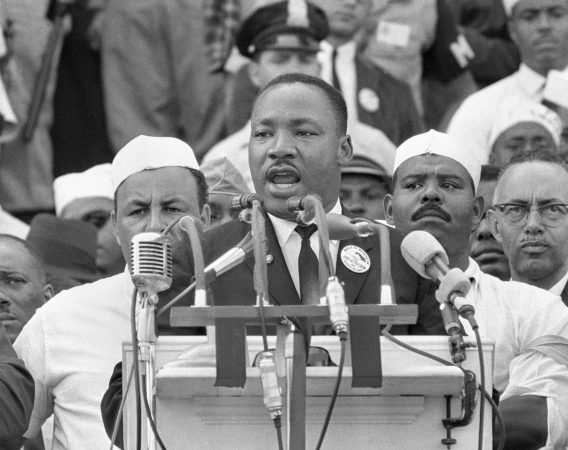
    On June 21, 1966, Reed was standing behind Martin Luther King Jr., who was surrounded by about 300 hostile white people in Philadelphia, Miss. King had led a delegation from the Meredith March Against Fear to commemorate the second anniversary of the killings of the civil rights activists James Chaney, Andrew Goodman and Mickey Schwerner.

    King was trying to navigate a rocky path full of obstacles: the threats of southern racists, a frayed alliance with President Lyndon B. Johnson and dissent within the civil rights movement.

    His response showcased his greatest gifts — and his actions on June 21 painted a nuanced picture of what made King so influential. Much of our historical memory of the civil rights leader deifies him, a marker of the nation’s racial progress. It also, however, dramatically oversimplifies the man and the movement he helped lead. It cloaks the divisions within the civil rights movement, along with King’s struggle to harness different factions and tactics toward his goals.

    The enshrinement of King also prevents Americans from seeing just how he married the ideals of American democracy with the righteous struggles of Black Americans. It eludes how he exhibited both spiritual power and political acumen. Looking at King’s actions during the Meredith March, by contrast, spotlights three of his most important roles in the civil rights movement: as an icon of moral courage, as a lodestone for Black activism and as an architect of sustainable ideals for a social justice movement.

    All of these qualities were on display on the extraordinary day of June 21, 1966.

    The Meredith March began on June 5 with one man, James Meredith, who had planned to walk from Memphis to Jackson, encouraging voter registration. On the second day, he got shot, and though he survived, the major civil rights organizations transformed his quest into a mass march.

    By the time King gathered with the activists in Mississippi two weeks later, the big story was Black Power. On June 16, Stokely Carmichael introduced the new slogan as a message of self-determination. It implicitly criticized King’s bedrock values of nonviolence and racial integration.

    On the morning of June 21, King met the marchers at a Black church — and he looked scared, with good reason. Philadelphia, in west-central Mississippi, was off the main route of the march. Instead of protection from the state police, the marchers were under the jurisdiction of Cecil Price, the deputy sheriff at the center of the federal conspiracy trial the three civil rights activists’ killing.

    During their procession to Philadelphia’s town square, the marchers were jeered, spat upon and sprayed with hoses. The air was thick with danger.

    Surrounded by his flock and his foes, King steeled himself. “I am not afraid of any man,” he proclaimed. “We are going to work together for freedom. We are here to save America.”

    Despite the hostile crowd, King didn’t duck the heinous violence that the march was commemorating. He remembered the movement’s martyrs. “I believe in my heart that the murderers are somewhere around me,” he intoned.

    “They’re right behind you!” shouted a white boy. The mob hooted. Price smirked.

    As the activists left, the mob tossed eggs, rocks and bottles. Scuffles broke out. The marchers reached the Black district just before some white toughs arrived, brandishing knives, wrenches and ax handles.

    Made By History sponsors. FOR USE ON MADE BY HISTORY STORIES ONLY.Inquirer Staff

    Confronted by murderous hatred, he was a model of resolve and principle. His fortitude reassured his fellow marchers and it projected the movement’s integrity to the broader public.

    After his speech in Philadelphia, King boarded a tiny, twin-engine plane for Sunflower County, in the Mississippi Delta, to speak at a voter registration rally.

    “It was like a messiah walking through the community,” recalled local organizer Charles McLaurin. Alongside the legendary Fannie Lou Hamer, McLaurin had led a 10-mile march from the town of Sunflower to the county courthouse in Indianola.

    There, King revealed his magnetic power. Wherever he went, Black folks followed. Because he was in Indianola, over 300 people attended the rally. As was the case throughout King’s life, his reputation attracted a big turnout and his charisma compelled political participation. More than any other figure, he drew people into the southern civil rights movement.

    King’s day was not yet done. He got back on the plane, headed for Yazoo City, on the southern edge of the Delta, where the Meredith Marchers had stopped for the night.

    King arrived for a nighttime rally in a public park. Radical activists gave speeches promising bloody retaliation if white people attacked them again. They won roars from the large crowd. Black Power, with its vows for self-defense and independence, struck emotional chords that exposed the widening fault lines in the movement.

    Yet, even as the crowd cheered the rhetoric of Black militants, it reserved its greatest adoration for King. To reach the podium, he waded through the masses. Old ladies jostled each other to touch him, while weathered farmers pressed their palms into his.

    And as this tumultuous, grueling day turned into a sweaty, bug-filled night, King painted a vision for the movement. He understood the need for Black political power. He acknowledged that Mississippi was afflicted by oppression. But segregation and violence were plagues on everyone, Black and white. To survive, to thrive, Black people needed a “coalition of conscience.”

    “Now,” he said, “I’m ready to die myself.” In his classic style, he weaved together the rhythms of the pulpit with the ideals of American democracy.

    “When I die I’m going to die for something, and at that moment, I guess, it will be necessary, but I’m trying to say something to you, my friends, that I hope we will all gain tonight, and that is that we have a power.” He recalled the movement’s great triumphs and celebrated their destiny to redeem the nation. In the process, he touched people’s souls.

    By insisting on his ideals, and by summoning his greatest oratorical powers, King maintained his slippery grasp on the march’s message. In its final days, the Meredith March encountered more violence, including a tear gas attack in the town of Canton. Yet amid the cries of Black Power, the marchers maintained the discipline of nonviolence. They arrived in the capital city of Jackson for the largest civil rights demonstration in the history of Mississippi, signaling the resonance of mass protest in the lives of Black Americans

    On the Meredith March, King illustrated why his birthday is a federal holiday, a memorial in the National Mall’s Tidal Basin celebrates his legacy and nearly 1,000 streets bear his name. He was neither a saint nor the movement’s single leader. But he exhibited the qualities of leadership, in the service of forging a genuine democracy.

    King demonstrated profound courage, setting a meaningful example. He pulled followers into his orbit, articulating principles that resonated with people. And he insisted that a crusade for justice demanded the best of its advocates, investing their cause with the deepest meaning.

    Throughout his glorious and tragic journey with the civil rights movement, King shared these blessings. Sometimes he did it all on one single day.

    Aram Goudsouzian is the Bizot Professor of History at the University of Memphis. His books include the award-winning Down to the Crossroads: Civil Rights, Black Power, and the Meredith March Against Fear.

    Made by History takes readers beyond the headlines with articles written and edited by professional historians. Opinions expressed do not necessarily reflect the views of The Inquirer.
  • Delaney Hall’s current crisis builds on decades of N.J. immigration detention

    On May 22, detainees inside Delaney Hall in Newark, the largest immigrant detention center in the Northeast, operated by the private corporation GEO Group, announced a labor and hunger strike in response to months of abuse, unattended complaints over detention conditions, and unmet medical, legal, and personal needs. Detainees detailed these conditions in a series of public letters, as family and community members protested and advocated for freeing their loved ones.

    Their protests were met with violence. Some detainees were pepper sprayed, brutalized, and transferred, while masked ICE agents assaulted protesters outside of Delaney. New Jersey state police later arrived on horseback, tear gassing the crowds and sending community members to the hospital.

    Complaints had been ongoing since Delaney Hall was reopened as a detention facility in May 2025, but the origin of these abuses actually began four decades earlier ago in 1993, in Elizabeth, a small city less than 10 miles away, with the opening of New Jersey’s first privately run detention facility, the Elizabeth Detention Center (EDC).

    The history of EDC helps us understand that the battles over Delaney Hall are the outgrowth of detention privatization, its intersection with mass incarceration, and bipartisan political support for detention that has rarely faltered. It also demonstrates the consistency with which detained people have resisted their detention. Far from the southern border, New Jersey has long been a central node in the detention and deportation machine—and in the fight to end it.

    New Jersey was home to the Ellis Island Immigration Station, which opened in 1892. Before the Immigration Act of 1924, Ellis Island served mostly as a gateway and immigrant processing center, but from the 1930s and until its closure in 1954, it operated as a dedicated detention facility, leading a Supreme Court Justice to refer to it as an “island prison.”

    Detention became more central to U.S. immigration policy in the 1980s and 1990s. In 1980, for example, the United States detained thousands of Cuban refugees who came during the Mariel boatlift. Private corporations, which governments had begun to turn to for running their prisons, expanded into new markets of immigrant detention. Today, more than 90% of detention centers are run by for-profit corporations.

    The presumed “need” for expanding detention bed spaces surfaced after the first bombing of the World Trade Center in February 1993. The Immigration and Naturalization Service (INS), the predecessor to today’s immigration agencies, issued a request for proposals for a detention center, ideally located near the three major airports in the New York City area. Because the WTC plotters were foreign-born, politicians used national security as an excuse for wide-ranging changes to the immigration system.

    Esmor Correctional Services, a for-profit company which operated halfway houses and welfare hotels, submitted the winning bid to turn a warehouse in Elizabeth into a NYC-area detention center housing up to 300 detainees. Almost immediately after its opening in 1994, people detained there began complaining of inhumane treatment and conditions.

    By 1995, the awful conditions and frequent abuse became public knowledge when detainees organized a hunger strike described in numerous articles in the Bergen Record by journalist Elizabeth Llorente. As Hawa Jama, a Somalian asylum seeker and the lead plaintiff in a lawsuit against Esmor, described in a deposition, “I complained personally to every INS person, every Esmor official… I come to this country to save my life, to ask [for] asylum. And they put me in jail, hell. I can describe hell… Esmor was hell.”

    On June 18, 1995, the detainees staged a riot inside the facility. The media attention spurred by the hunger strike and the uprising caused INS to terminate its contract with Esmor. In its place, INS contracted Corrections Corporation of America (rebranded as CoreCivic in 2016), which has run it ever since.

    Detention space increased in 1996 when President Bill Clinton signed two laws affecting immigrants in the United States. The Illegal Immigration Reform and Immigrant Responsibility Act (IIRIRA) and Antiterrorism and Effective Death Penalty Act (AEDPA) delegalized lawful permanent residents who had committed certain crimes, widened what counted as an “aggravated felony,” and made more immigrants deportable and detainable, mandatorily, and indefinitely. This merged with the increasingly harsh penalties for drug crimes, which affected immigrants. The 1996 laws also targeted asylum-seekers as subject to potential removal, creating an artificial need for more detention space, and revoked the discretion of immigration authorities to release certain noncitizens from detention.

    In the 1990s and early 2000s, EDC was just one piece in the larger infrastructure of detention in New Jersey. Bergen, Essex and Hudson counties had also begun to hold immigration detainees in their jails against payment from the federal government. Delaney Hall, which first opened in 2000 as a halfway house for people with substance abuse issues convicted of low-level offenses, also began to hold immigrants for profit. As Essex County Executive Joseph D. Vincenzo said to the Star Ledger in 2008, “This is a home run for us. We have to find a way to bring in new revenue, and this is the way to do it.”

    ICE detention in New Jersey peaked in 2009, then declined until 2015, and increased again after President Donald Trump issued a January 2017 executive order that greatly expanded who would be detainable under the law. In New Jersey alone, ICE arrests more than doubled in 2017 as a direct consequence of the administration’s decision to prioritize the detention of migrants and asylum seekers with no criminal convictions. Because 2017 bail reform had reduced the number of people held in New Jersey’s jails awaiting trial, ICE detention became an even more attractive source of revenue for local county jails.

    Activists and advocates working across the New York/New Jersey border had been fighting against immigration detention since the 1990s. Coalition members organized protests, advocated with communities, and pressured public officials to end ICE detention in New Jersey. Fearing that detention would become a death sentence during the early months of Covid-19, detained people in every facility in the state went on a hunger strike, bringing renewed attention to the campaign of ending detention.

    Made By History sponsors. FOR USE ON MADE BY HISTORY STORIES ONLY.Inquirer Staff

    In 2021, the political tide turned as county and state democrats came out publicly against ICE detention. Within the course of a year, the county jails depopulated their ICE detainees and Governor Phil Murphy signed a law (AB 5207) that banned the creation or renewal of detention contracts with ICE.

    ICE detention was nearly eradicated in New Jersey. The EDC was the only facility still in operation. Under the new anti-detention law, when its contract came up for renewal, it, too, would close. Instead, CoreCivic sued New Jersey in a U.S. District Court, claiming the state law was unconstitutional. GEO Group soon filed suit as well. CoreCivic and GEO Group were joined by the Department of Justice under President Joe Biden, who saw New Jersey as essential to immigration enforcement.

    The District Court’s 2023 decision striking down New Jersey’s anti-detention law was appealed by the New Jersey Attorney General’s office before the U.S. Court of Appeals for the Third Circuit. The federal appeals court upheld the 2023 ruling and thereby created the possibility for Delaney Hall to reopen on May 1, 2025, and to become the largest immigrant detention facility in the Northeast today.

    The lawsuit shows a key tension that continues to play out. While immigration is managed by the federal government, the detention system that EDC and Delaney Hall are a part of, has been forged by bipartisan support at the county and state levels and motivated by economic interests. The overlapping “war on crime” and “war on drugs” caused mass incarceration and immigration detention to become intertwined. Trump has built on this foundation, not created an entirely new system.

    Understanding the current situation at Delaney Hall requires this historical context. More than 30 years ago, the EDC proved to federal and state leaders that privatized immigration detention could “work” in New Jersey, as long as the mistreatment and abuse of detained people could be kept out of the spotlight. But history also shows us that when detained community members resist through complaints, lawsuits, hunger strikes and, even, an uprising, their voices and experiences reveal the system’s underbelly and inspire systemic change. We hope that history will teach future generations that such efforts are worthwhile.

    Ulla Berg is a migration scholar at Rutgers University and co-editor of the book, Elizabeth Detention Center: A Social History of Immigration Detention in New Jersey and the United States (Rutgers University Press, 2026).

    Mary Rizzo is a historian at Rutgers University-Newark, and the co-author of a chapter in Elizabeth Detention Center.

    Made by History takes readers beyond the headlines with articles written and edited by professional historians. Opinions expressed do not necessarily reflect the views of The Inquirer.
  • Rocky was the Bicentennial hero Americans needed in 1976

    Rocky was the Bicentennial hero Americans needed in 1976

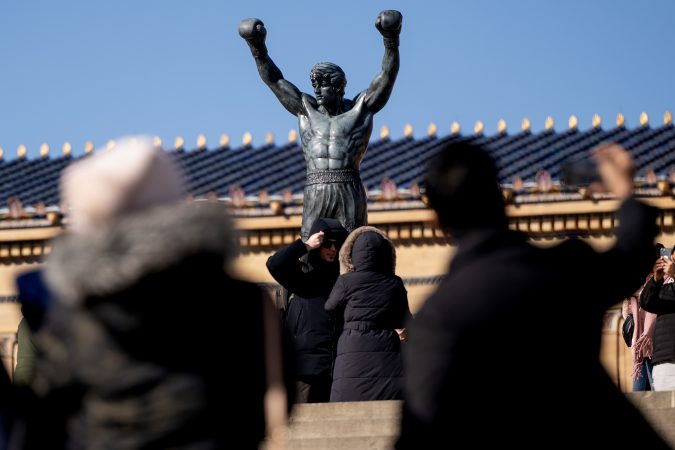
    Rocky is not only a Philadelphia film, but a Bicentennial film. Writer and actor Sylvester Stallone invokes Bicentennial themes through characters like Apollo Creed, a heavyweight champion eager to represent the American Dream in a showcase match. He chooses down-on-his luck Rocky Balboa, the “Italian Stallion,” as his opponent to highlight the United States as a nation of underdogs only in need of a chance. As reviewer Arthur Knight wrote at the time, “For the course of its two hours we learn that…America is still a place where a man can haul himself up by his own bootstraps provided he believes in himself and has the will to do so.”

    The underdog theme in Rocky resonated with American audiences in 1976 as they were thinking about the 200th anniversary of the United States, which had been born as a long shot fighting for independence from the mighty British Empire. The Revolutionary War was won by American underdogs setting the course for a new nation dedicated to liberty. But the fight for liberty became an ongoing struggle for many Americans over the centuries.

    Rocky was among the many messengers of that theme during the Bicentennial. Few if any characters in the film expect Rocky to win the exhibition fight, but he works hard and refuses to give up, going the distance against the best in the world, and losing on a technicality. He also inspires a nation. Rocky became a sleeper hit that helped awaken Americans from their self-doubts during the dark times of the 1970s.

    The Bicentennial celebration in 1976 was mired in debates over how to mark the milestone. Today, plans for celebrating the 250th anniversary of American independence in July 2026 are also fraught with controversy as two separate organizations, the official America250 group authorized by Congress and the President Trump-themed Freedom 250, compete for control of national events and the national narrative. But as the ordeal of the Bicentennial reveals, battles over how to commemorate America’s birthday are nothing new.

    Though the United States had 200 years of history to celebrate, the Bicentennial in 1976 was shrouded by the recent past. The Vietnam War, protests, political violence, scandals, and economic uncertainty compelled reassessments of the nation’s identity and its founding ideals. In the aftermath of the civil rights revolution, more Americans than ever in the 1970s sought to contribute to the story—making a simple, patriotic interpretation of US exceptionalism difficult to promote.

    At first, the official American Revolution Bicentennial Administration (ARBA), funded by the federal government, tried to present a triumphalist version of the nation’s past, focused upon democracy and liberty as mainstays of American identity. The Commission immediately met with resistance. Some critics questioned the need to spend money on the extravagance of U.S. pride.

    Others denounced the commercialism of a Bicentennial sold to consumers through commemorative trinkets as well as the inherent racism of a whitewashed US history that marginalized the experiences of Black Americans. Corporate power was a prime target of protests. The Boston Oil Party of 1973, for instance, dumped oil barrels, not tea, into the harbor and hung an effigy of President Richard Nixon.

    Instead of a centralized, unified series of events organized at the top, the Bicentennial became a grassroots effort by multiple groups and communities mining the American past to bolster their political viewpoints. The People’s Bicentennial Commission, a New Left rival to the official committee, emphasized the revolutionary tradition that had secured independence and established the republic. Jeremy Rifkin, director of the group, wrote “Red, White, and Blue Left,” an essay that encouraged activists to embrace American radicalism rather than follow Lenin, Mao, or Castro. “For the American left to develop a strategy that can win popular support for programs that answer present grievances,” he argued, “it must first gain a clear understanding of the role which the American heritage plays in the formation of American people’s political attitudes and behavior.”

    Though leftists faced an entrenched capitalist system, Rifkin enlisted the rebels of the 1770s as models for a “second American revolution” for economic equality in the 1970s, drawing upon their dark horse determination to overcome power. Like Rocky, Rifkin projected an underdog endurance that he believed defined American greatness.

    Race and class issues were prominent during the Bicentennial, as Black Americans spoke about the unfinished revolution of 1776 and the uncritical patriotism of 1976 that treated them as collateral damage. Comedian Richard Pryor’s caustic Bicentennial-themed act won best comedy album Grammy of the year and Gil Scott-Heron’s spoken-word poem “The Bicentennial Blues” framed America as “home of the blues.” The blues, the lyrics explained, had been “born on the slave man’s auction block” and “grew up a slave.” For over 200 years, Scott-Heron reminded, the blues expressed the pain of second-class citizens “ripped off” and “violated by commercial corporations.” The poem dismissed the Bicentennial as another “blues year” marked by “halfway justice, halfway liberty, halfway equality, it’s a half-ass year.”

    Protest parades for July 4, 1976, took place in Philadelphia and D.C. as a coalition of Black Americans, Native Americans, Puerto Ricans, and various dissenters made their voices heard.

    Made By History sponsors. FOR USE ON MADE BY HISTORY STORIES ONLY.Inquirer Staff

    Despite waves of disillusionment, the Bicentennial provided an ocean of opportunity for Americans to recover from the Vietnam War and reassess patriotism. Millions focused on the bright side of U.S. history, celebrating American virtues. Red, white, and blue floodlights illuminated the top of the Empire State Building, starting a tradition of using colored lighting patterns to mark special occasions. Little Liberty Bells and coins were popular items, while Queen Elizabeth II sent the city of Philadelphia the “Bicentennial Bell,” a full-size replica of the Liberty Bell from the same London foundry that created the original. Speechwriters for President Gerald Ford encouraged him to put the meaning of America in terms of an ongoing “experiment” that still represented the world’s best hope for freedom. “Rebirth” and “renewal” were stated themes of administrators trying to lift the gloom and shift the mood of the nation.

    Ford declared that Americans needed to uphold liberty and democracy, not only for U.S. citizens but all humanity. For a nation chastened by recent war, Ford’s words were balanced between humility and hope, the same notes that Rocky hit.

    In 2026, like in 1976, the American people continue to debate the meaning of America and whether the country’s founding values are still viable or ever were. Celebrating the anniversary of U.S. independence, therefore, is always as much about hope for the future and the mood of the present as it is about pride in our past. Like Rocky and his underdog spirit, Americans keep fighting the good fight for the liberties that have remained insecure since 1776.

    Vaneesa Cook is a PhD historian and the author of Empire & Liberty: The Tied Histories of Two American Landmarks (Beacon Press, 2026), from which this essay is adapted.

    Made by History takes readers beyond the headlines with articles written and edited by professional historians. Opinions expressed do not necessarily reflect the views of The Inquirer.
  • Future Hall of Fame MLB owner planted ivy at Penn on this week in Philly history

    Future Hall of Fame MLB owner planted ivy at Penn on this week in Philly history

    It’s not just the Chicago Cubs who have a history with ivy.

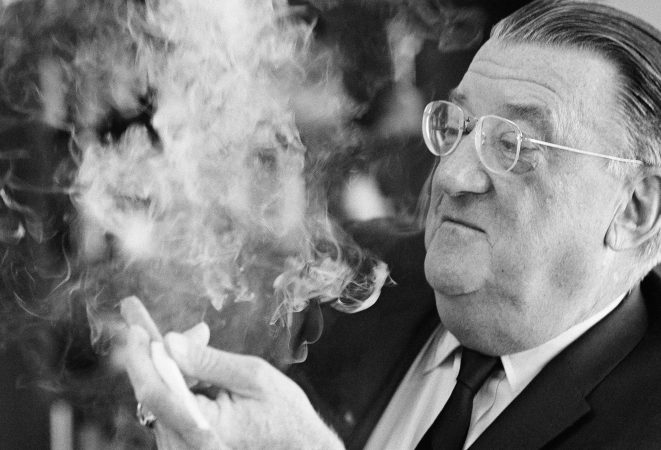
    On June 15, 1926, as the senior class president, future Los Angeles Dodgers executive Walter O’Malley delivered the salutatory address to his classmates during the University of Pennsylvania’s 170th commencement.

    And as part of the tradition, he planted a sprig of ivy representing the 1,700 members of the Class of 1926.

    He was a native New Yorker (forgive him), but at Penn, he was a distinguished undergraduate, leading his class in several significant ways.

    He was his junior and senior class president. And at the Weightman Hall ceremony he was awarded the “Spoon Man” honor, which is voted on by the senior class. The award, a wooden spoon, is a bigger deal than it sounds. It reflects the winner’s leadership and popularity.

    After Penn, he earned a law degree from Columbia. He became associated with the Dodgers when they were still in Brooklyn in 1932. He took over as team president and majority owner in 1950, and he made the controversial decision to move the team to Los Angeles in the mid-1950s. He ran the club until 1979.

    He served as a Penn alumni trustee and board member from 1966 until his death in 1979.

    O’Malley would go on to become the first Penn alumnus to be inducted into the National Baseball Hall of Fame. And he never even played a game.

    He was inducted posthumously into the Hall of Fame in 2008. He is one of only 16 owners among the 354 inductees.

    “Walter O’Malley was as great an executive talent as I have seen,” MLB Commissioner Bowie Kuhn said in 1979. “While baseball was his medium, his skills would have flourished in any walk of life.”

  • The Philadelphia-born Chinese American who tested the limits of birthright citizenship

    The Philadelphia-born Chinese American who tested the limits of birthright citizenship

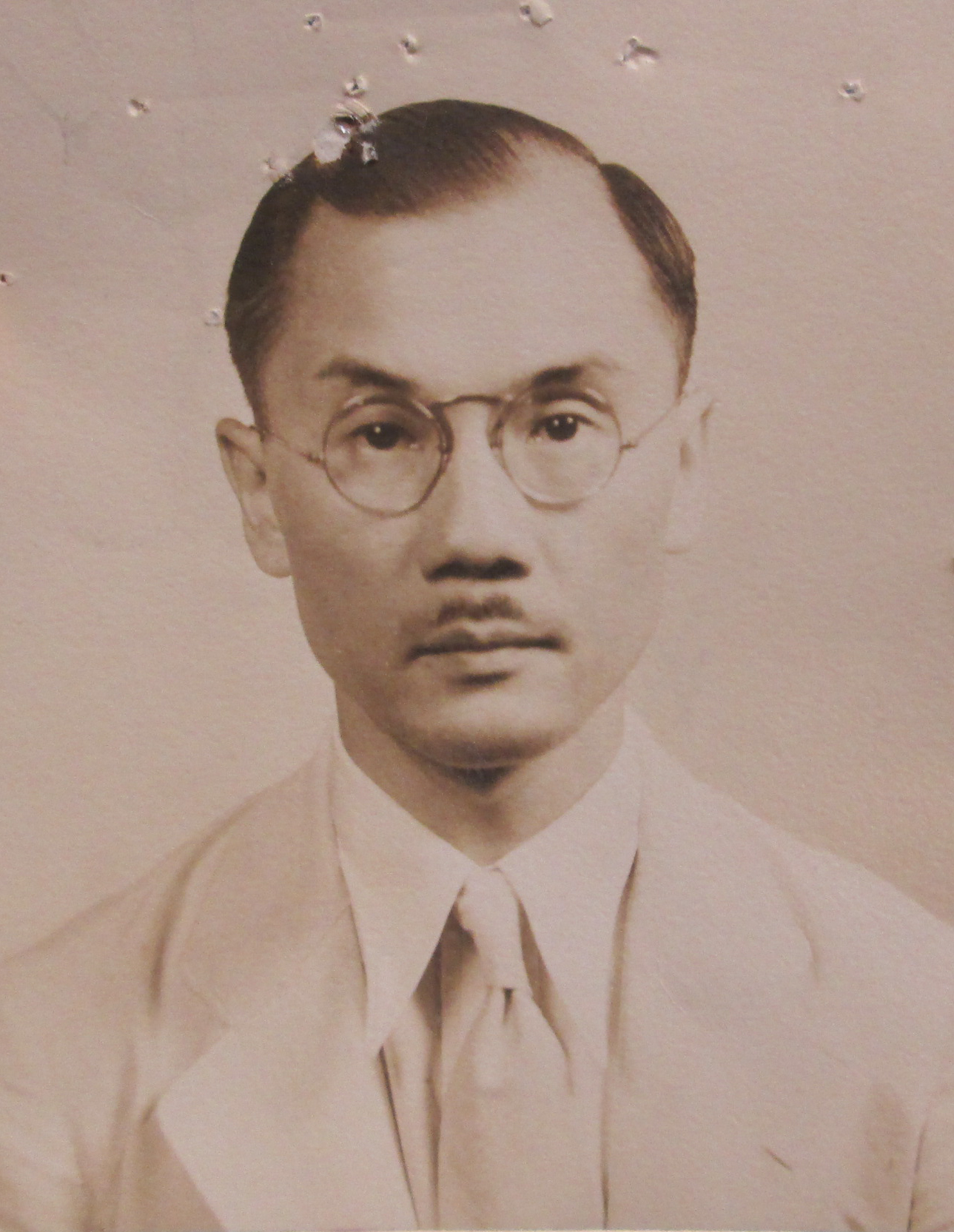
    In 1950, Ernest Moy was trying desperately to return to the United States after spending the previous 20 years working in China. Since he had reentered the U.S. twice before, immigration officials already possessed thick files of evidence attesting to his U.S. citizenship, including his birth certificate from Philadelphia. This unquestionably established his status because of the Fourteenth Amendment’s birthright citizenship clause and an 1898 U.S. Supreme Court decision that had affirmed this: if you are born in the United States, you are a citizen.

    But more than 50 years of settled law meant less to the Immigration Service than the fact that Moy was Chinese American. Because of his race, officials considered him both undesirable and unassimilable. When he finally did get permission to reenter the United States, it was only as a temporary immigrant who required further investigation. Moy bristled at such treatment but had learned to expect no better.

    In 2026, as the Supreme Court considers Trump v. Barbara, many Americans have learned for the first time about the Supreme Court ruling that should have guaranteed Moy’s reentry: U.S. v. Wong Kim Ark. The aftermath of that case — and the story of Ernest Moy — show how the constitutional guarantee of birthright citizenship has on its own never been sufficient to protect the rights of many Americans. When those in power define citizenship as whiteness, they enable and encourage immigration officials to do the same.

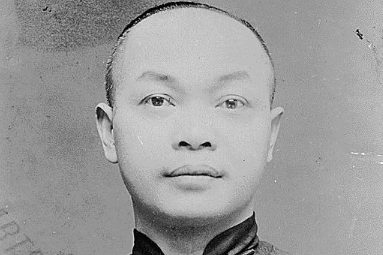
    The landmark case began in 1895, when immigration officials barred Wong Kim Ark, a native of San Francisco, from reentering the United States after a trip to China. Authorities argued that because Wong’s parents were Chinese immigrants — a group barred from naturalizing because of their race — the birthright citizenship clause of the Fourteenth Amendment did not apply to their son. What did cover him, officials claimed, was the Chinese Exclusion Act. This 1882 law prohibited the entry of Chinese laborers, and because Wong was a cook, he fit into that category. As the government succinctly put it, “although he is native born, he is not entitled to come into the United States because he is a laborer and of the Mongolian race.” Wong responded by taking his case all the way to the Supreme Court, which in 1898 clearly and unambiguously affirmed his U.S. citizenship.

    Wong Kim Ark, the son of Chinese parents in San Francisco, was determined by the Supreme Court to be a citizen by virtue of being born in the United StatesNational Archives

    Yet in the years that followed, the Immigration Service found plenty of ways to thwart the spirit of the ruling, all while claiming to recognize birthright citizenship as settled law. Wong Kim Ark, now back home in El Paso, discovered this firsthand in 1901. Three years after the Supreme Court decided his case, authorities in Texas briefly detained him, charging him with violating the Chinese Exclusion Act for living and working in America, the land of his birth.

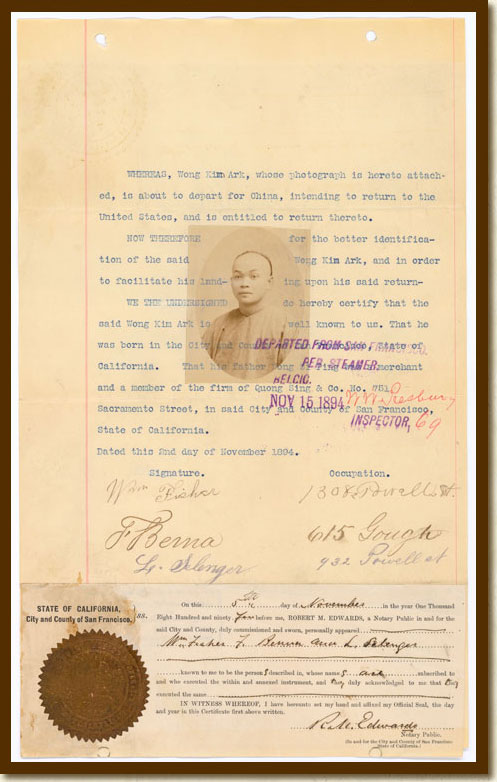
    Hoping to head off reentry problems, other Chinese American citizens planning to travel abroad learned to gather substantial evidence of their birth in the United States and ask white acquaintances to vouch for them at local courts or Immigration Service offices. Those with enough money hired attorneys to help navigate the haphazard process more effectively, though one such lawyer warned his client that even the most thoroughly documented travelers often faced “considerable trouble” reentering. In such cases, attorneys needed to sue for writs of habeas corpus, just as Wong Kim Ark had done in 1895.

    Wong Kim Ark, whose Supreme Court case determined that he was a citizen by virtue of being born in the United StatesNational Archives

    In 1909, U.S. officials rolled out a new procedure for Chinese American citizens, unsurprisingly modeled on the way the government vetted China-born temporary residents. The entire process reflected authorities’ continued hostility toward the very idea of Chinese American citizenship as a legitimate concept — and their eagerness to deny or at least constrain it in any way possible. Even the official name of the Immigration Service’s new form broadcast this attitude: “Application of Alleged American-Born Chinese for Preinvestigation of Status.”

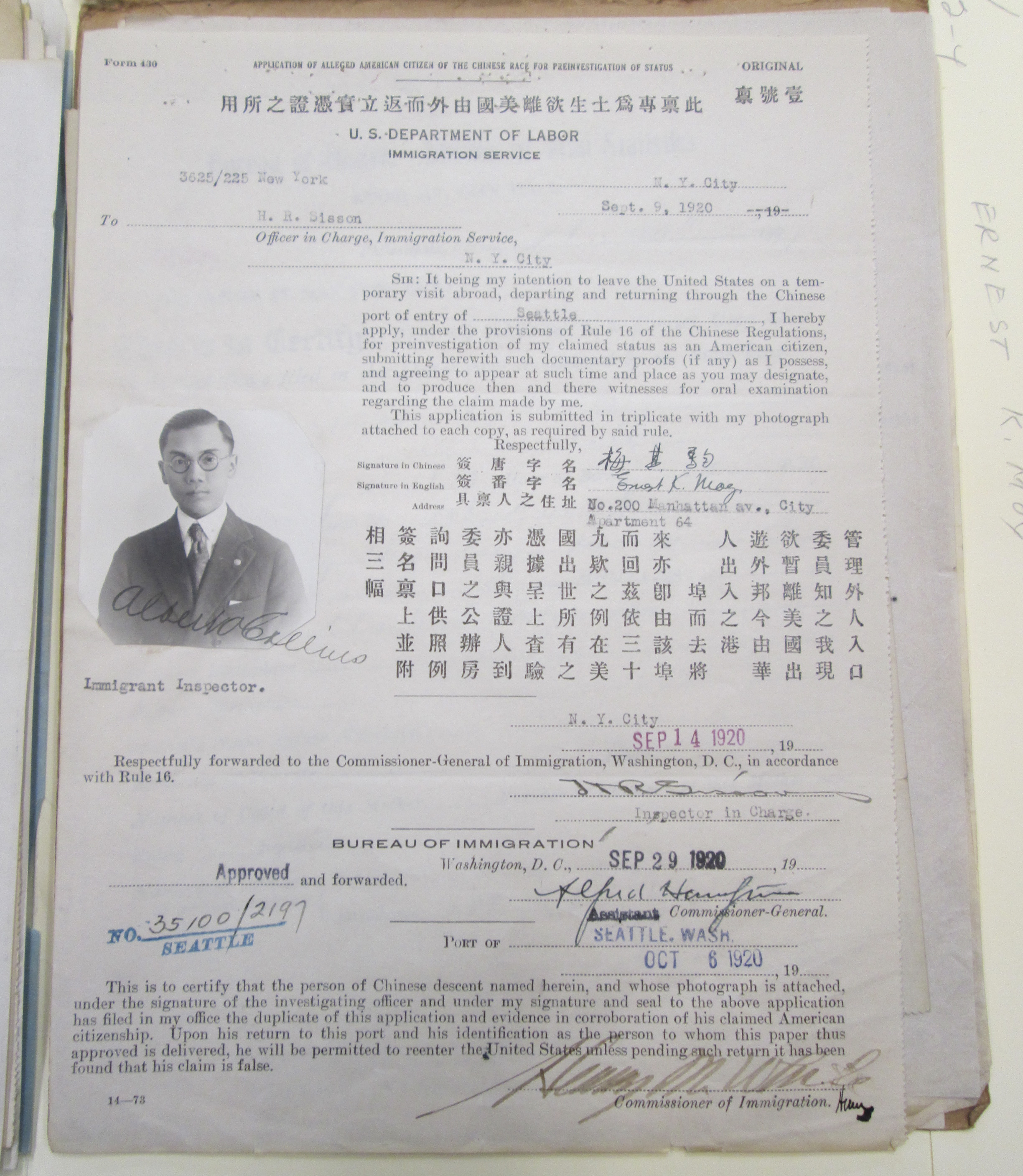
    Resentful of the word “alleged,” most Chinese American citizens chose to refer to the application by its official number: Form 430. No matter how they felt, those planning to travel abroad had little choice but to fill out the form and submit it together with copious additional documentation, including birth certificates, school records, photographs, selective service certificates, and the citizenship identity cards that only Chinese American citizens had to carry. By the 1920s, when passports became common for all U.S. citizens traveling abroad, Chinese Americans included those, too. But while a passport could guarantee reentry for other American citizen travelers, officials considered it inadequate evidence of citizenship for Chinese Americans who did not also carry an endorsed Form 430.

    OLD IMAGE — DO NOT USE — Made By History sponsors. FOR USE ON MADE BY HISTORY STORIES ONLY.Inquirer Staff

    In addition to gathering documents, Chinese American citizens also had to testify at the closest Immigration Service office, answering detailed questions about their lives and families to establish their birth in the United States. Many brought in friends, relatives, and community members to undergo similarly detailed interrogations on their behalf. Immigration Service agents tended to view the testimony of white acquaintances, including family doctors, teachers, and local Christian leaders, as particularly valuable.

    Even after the Immigration Service “conceded” (in its words) an applicant’s birthright citizenship and endorsed the person’s Form 430, obstacles remained. For instance, returning travelers, including those with U.S. passports, had to sit for further interrogation when reentering the United States. And the Immigration Service required Chinese American citizens to undergo a new preinvestigation each time they left the U.S., even for brief trips to Canada or Mexico. In other words, officials “conceded” citizenship only temporarily, so U.S.-born Chinese Americans became “alleged” citizens before every new departure. No other group of U.S. citizen travelers endured such treatment in the pre-World War II years. While Congress finally repealed Chinese exclusion in 1943, official attitudes barely changed over the next decade, as Ernest Moy’s experience shows.

    Ernest Moy first underwent pre-investigation in 1920, when he received this endorsed Form 430.National Archives at Seattle

    By the 1910s, large numbers of Chinese Americans started to undergo preinvestigation, but not for the kinds of short trips Wong Kim Ark had taken. Many began to relocate to China, a struggling young republic that offered Western-educated people career opportunities unconstrained by American racial discrimination. Eventually, close to half the Chinese Americans born in the United States, including Ernest Moy, moved to China. Before departing, almost all these U.S. citizens underwent preinvestigation — Moy did so three times — to ensure that they could retain the right to return to the country of their birth, the United States.

    Eventually, Wong Kim Ark returned to China, too. The citizenship rights that officials “conceded” to him came with restrictions that didn’t apply to other Americans, and at 61, he was both lonely and fed up. For years, Wong had supported his family from afar because Chinese exclusion laws prevented him from bringing his China-born wife to the United States. In 1931, he retired and joined her in the village where she had raised their sons. But unwilling to relinquish the rights for which he had fought 35 years earlier, Wong submitted to preinvestigation one last time before making that final trip.

    The institutionalized harassment of Chinese Americans is just one example of the way the U.S. government for decades equated citizenship with whiteness — and nonwhiteness with alien status. President Donald Trump’s attempt to end birthright citizenship is rooted in this same idea, and the Supreme Court must and should reject the president’s deeply unconstitutional executive order. But as the lives of Wong Kim Ark, Ernest Moy, and so many of their peers show, such a ruling, though essential, will be incomplete without a larger challenge to the pernicious idea that whiteness and Americanness are the same.

    A professor of history at Baruch College and the CUNY Graduate Center, Charlotte Brooks has written several books about Asian American history, including the newly published The Moys of New York and Shanghai: One Family’s Extraordinary Journey Through War and Revolution.

    Made by History takes readers beyond the headlines with articles written and edited by professional historians. Opinions expressed do not necessarily reflect the views of Inquirer editors.

  • Former 6abc reporter Annie McCormick’s new book details South Jersey socialites’ 1929 deaths

    Former 6abc reporter Annie McCormick’s new book details South Jersey socialites’ 1929 deaths

    In the summer of 1929, Moorestown was rocked by the tragic shooting deaths of two young socialites in what officially was ruled a murder-suicide. The saga resulted in a scandal rife with money, alleged corruption, and death, and it captured sensational headlines for years.

    Nearly a century later, though, the case has been all but forgotten. In fact, former 6abc reporter and Moorestown native Annie McCormick had never heard of it — until a 2021 New York Daily News article. Now, with the release of McCormick’s Restless Ghosts: Murder, Suicide, and the Case that Wouldn’t Stay Buried by Camino Books, the specters of Ruth Wilson and Horace “Reds” Roberts Jr. may yet stir again.

    “It’s crazy I never heard of it, growing up in Moorestown and doing what I do,” said McCormick, who left 6abc in December after 13 years at the station. “I started looking into it and got hooked. I thought, ‘How many legs does this case have?’”

    Many, it would turn out. And they range from bootlegging and political corruption to the unspoken truths of high society in South Jersey and the desperation of Depression-era America. Even Ellis Parker, the famed Burlington County detective once known as “America’s Sherlock Holmes,” plays a role.

    The deaths of Ruth Wilson and Horace Roberts Jr.

    At its core, McCormick’s Restless Ghosts has its roots in a case that dates back to June 1929. Early one morning that month, Wilson and Roberts — wealthy, twenty-something socialites from two of South Jersey’s most prominent families who until recently had been engaged to be married — were found dead in Wilson’s bedroom in her family’s Moorestown home.

    Wilson’s father, John Wilson, a prominent attorney and real estate developer, found the pair, nude and apparently suffering from gunshot wounds to their heads. Both died a short time later, with an investigation led by Parker later finding that the fatal shots came from a .22-caliber handgun discovered at the scene.

    Ruth Wilson, investigators found, had been shot in the head twice. Roberts, meanwhile, had at least three gunshot wounds to his head — and officials quickly ruled that the situation was a murder-suicide that occurred in the wake of Wilson calling off the engagement. According to official reports, Roberts shot Wilson in the head before firing multiple shots into his own while distraught over the state of their relationship.

    No autopsies were initially conducted. In the days and weeks that followed, rumors and speculations about the pair’s deaths cropped up in news coverage, with some reports insinuating that the situation was a double murder — one that involved Wilson’s father, though no such claims were ever substantiated.

    https://www.newspapers.com/article/the-philadelphia-inquirer/199199692/

    Article from Jun 3, 1929 The Philadelphia Inquirer (Philadelphia, Pennsylvania) <!— –>

    A coroner’s inquest

    While McCormick runs down the tragic history of the deaths in Restless Ghosts, she is careful to not take a particular side on what may have happened back then. Instead, the circumstances are thoughtfully, meticulously recounted from multiple perspectives, leaving the readers to decide. Still, some inconsistencies and details, McCormick said, give her pause.

    “It doesn’t make sense that someone could fire into their head multiple times,” McCormick said. “But at the same time, who else was there?”

    In 1929, officials and members of the public had similar questions — so much so that a coroner’s inquest was launched that resulted in the exhumation of Wilson‘s and Roberts’ bodies weeks after their deaths. But even after the extensive questioning of investigators, relatives, and friends and the coroner’s discovery that Roberts had four bullet wounds to his head, the original conclusion was upheld.

    And so, it seemed Wilson‘s and Roberts’ ghosts were left to rest for eternity, victims of a tragic murder-suicide over unrequited love. At least, until the death of Bradway Brown, a similarly high-profile socialite who died from gunshot wounds he suffered at his home in nearby Cinnaminson in 1933.

    https://www.newspapers.com/article/the-philadelphia-inquirer/199199753/

    Article from Jan 17, 1933 The Philadelphia Inquirer (Philadelphia, Pennsylvania) <!— –>

    The death of Bradway Brown

    Brown, a childhood friend of the victims and a former suitor of Wilson’s, was found dead in his home with multiple gunshots. Parker also headed up the investigation in this case, and initially told the press it was a suicide — a tactic McCormick reports was a method to throw the media off and prevent Brown’s actual killer from becoming too alarmed.

    Brown’s death stoked the fires of conspiracy, with rumors abounding that he had confessed to acquaintances that he had known who Wilson’s and Roberts’ true killer was. The rumor mill even said Brown had likely been behind anonymous phone calls to Wilson’s father accusing him of being the perpetrator.

    Again, though, none of these allegations were officially substantiated. And despite Brown’s death resulting in another investigation into Wilson and Roberts’ deaths, this time a grand jury probe, the original conclusion was again upheld: Roberts killed Wilson, and then himself.

    As the investigation into Brown’s death wore on, Parker gradually backed away from his suicide theory. Ultimately, three men were arrested — a group of gangsters Parker called the “After Dinner Burglars.” The trio, reports from the time indicated, had targeted Brown’s Cinnaminson home for a robbery, but were surprised by his arrival. One man who was found to have pulled the trigger was sentenced to life in prison, and had no known connection to the Wilson and Roberts deaths.

    Parker, meanwhile, ultimately died of a brain tumor in federal prison after having been convicted of masterminding the abduction of an attorney in order to coerce a confession in the 1932 kidnapping and murder of Charles Augustus Lindbergh Jr., otherwise known as the Lindbergh baby.

    https://www.newspapers.com/article/the-philadelphia-inquirer/199199831/

    Article from Apr 15, 1934 The Philadelphia Inquirer (Philadelphia, Pennsylvania) <!— –>

    No one left to ask

    In 2026, meanwhile, McCormick’s Restless Ghosts has the benefit of hindsight, and faithfully recreates the case largely from archival newspaper accounts. McCormick remains surprised that she had never learned of the case until starting work on the book, noting that the families involved had a lasting impact on Moorestown. The homes where the murders occurred, she said, remain in pristine condition.

    “These were all places I know and have driven by a million times,” she said.

    Still, while she didn’t necessarily set out to solve the case once and for all, its mystery remains intriguing for the author. After all, with the crime so far in the rearview mirror of history, virtually all of the people directly impacted are long gone. As a journalist, McCormick is particularly perturbed by that aspect of the project.

    “The most frustrating part is that I can’t ask anyone,” she said. “I have questions, and I don’t have anyone I can follow up with. I wonder if this was a present-day case if there would be more finality.”

  • Trump may hope for a redo of the 1876 World’s Fair—but even that expo revealed a nation in crisis

    Trump may hope for a redo of the 1876 World’s Fair—but even that expo revealed a nation in crisis

    From the end of June to early July, the Trump administration will host what it is calling “The Great American State Fair,” a weeks-long event to help mark the nation’s 250th birthday. The White House is promoting the fair as “a master-planned celebration” in and around the nation’s capital. They note that it will feature “pavilions, designed in the beaux-arts style [sic]” that will “highlight national pillars,” such as “Arts & Culture,” “Land & Expansion,” “The Arts & Innovation,” “Technology & Progress,” and “Horsepower” to “ignite a spirit of adventure and innovation to help our nation succeed for the next 250 years.”

    These grand pronouncements call to mind a classical world’s fair exhibition, even if the administration hasn’t put in the work to pull it off. By contrast, the first major world’s fair held in the United States 150 years ago, the 1876 Philadelphia Centennial Exposition, was ten years in the making, spanned six months, attracted more than 10 million visitors, and featured the work of over 30,000 exhibitors, including Alexander Graham Bell and Thomas Edison. Today, the White House is fighting poor publicity, scrambling to find respectable entertainers to perform, and floating a plan to cancel its fair altogether.

    Yet, we can find echoes of the Philly Expo in today’s slapdash 250th celebration. History reveals that America in 1876 was, as it is now, in turmoil, gripped by a growing economic crisis and mounting unemployment, politically torn apart, debating the impact of new technology, and reeling from the cost of war. In the familiar context of extreme uncertainty, the glorious Exposition also drew sharp criticism and, more poignantly, highlighted the nation’s fragility.

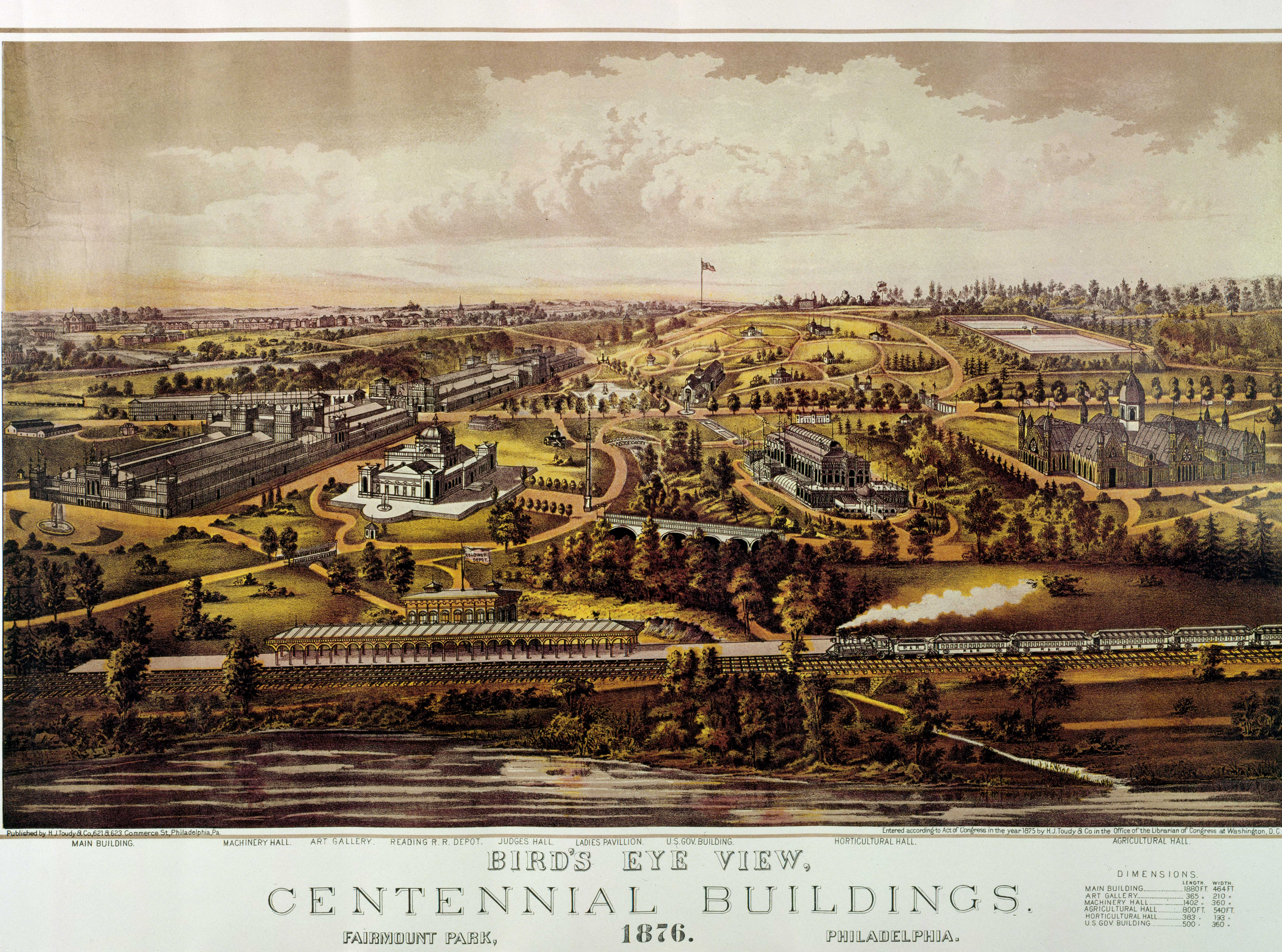
    In 1876, from May to November, Philadelphia was the site of the biggest public event in the nation’s history up to that point – the International Exhibition of Arts, Manufactures, and Products of the Soil and Mine, or more simply, the Centennial Exposition. This was a world’s fair, a unique event in which the host nation spent lavishly to build elaborate fairgrounds, exhibition halls, courtyards, and gardens to grab the global spotlight and celebrate progress. In the 19th century, amid the industrial revolution, a world’s fair commonly featured thousands of displays promising a peek into the future. Visitors could glimpse the cutting edge in science and technology, advances in the arts, new discoveries in medicine, innovations in transportation, and the latest consumer products.

    The stakes were terribly high for the United States as it planned to host its own world’s fair in 1876, the first held in the U.S. since the Civil War. Although the war had been devastating, and the work of reconstructing the South still threatened the lives of freed Black people and the American two-party political system, the preserved republic was pursuing new projects, including building a continent-crossing railroad and rapidly expanding the industrial economy. Both fueled the growth of cities and a new diversified workforce thanks to emancipation, immigration, and the rise of the middle class. In the midst of big changes, the world’s fair in Philadelphia was an opportunity for America to present itself to the nation and the world as a stable and culturally advanced industrial giant with a bright future.

    Covering 450 acres of Philadelphia’s vast and bucolic Fairmount Park—celebrated at the time as one of the world’s most beautiful public parks in one of its greatest cities—the exposition grounds included dozens of grand buildings surrounded by riverbanks and tree groves. The event site was also linked to eight streetcar lines that connected the fairgrounds to the Pennsylvania and Reading Railroads.

    For six months, visitors from all over the country and abroad poured in to see tens of thousands of exhibits, many of them astonishing firsts: incandescent light bulbs, the typewriter, a dishwasher, Alexander Graham Bell’s first prototype for the telephone, and a new fireproofing material called “asbestos.”

    In addition, farmers put several agricultural wonders on display including new types of citrus trees that could thrive in the American West, and bananas, considered an expensive delicacy and priced at $2 each (about $60 today). At the center of the Machinery Hall exposition building was one of the fair’s main attractions: a hulking, 1400 horsepower steam engine, 45 feet tall, and weighing 650 tons. This Corliss engine was the biggest of its kind and, in size and power, signaled America’s industrial might. For 50 cents ($15 today), visitors could climb to the top of a towering hand and torch structure called “Liberty Enlightening the World”—a portion of what would eventually become the Statue of Liberty.

    The Philadelphia Centennial seemed to say that, yes, the United States may have been, in a global context, a young country. But that fact only reinforced all that it had accomplished in one short century.

    The timing for such a vainglorious celebration wasn’t optimal. The year of the Exposition came at the height of the so-called “Terrible Seventies,” an era of disastrous economic news that began with the financial panic of 1873 and continued through the decade with bank closures, business failures, railroad bankruptcies, mass layoffs, and inept government leadership. Indeed, the crisis forced fair planners to resort to penny pinching in the final stages of construction, leaving some exhibition buildings unfinished after opening day.

    The era of the Philadelphia World’s Fair was also a time when a handful of capitalists accumulated extreme wealth and tightened their grip over the nation’s resources while workers began to lose control over their own conditions of labor. In growing cities like Philadelphia, where industrial wage workers, including Black laborers and new immigrants, were concentrated, poverty spread quickly. Outside of urban centers, small farmers lost ground to commercial agriculture and worried about sustaining their rural way of life and simply making ends meet. At a time when the average laborer made around $1.25 a day and people in the skilled trades made little more, the 50 cent fair entry fee was an extravagance reserved for only those with expendable time and income.

    Made By History sponsors. FOR USE ON MADE BY HISTORY STORIES ONLY.Inquirer Staff

    Some fairgoers left ambivalent about the future and puzzled by how disconnected the consumer-focused displays seemed to be from current economic realities. One visitor from Connecticut complained to the Hartford Christian Secretary that the fair seemed to be little more than “a scramble for the Almighty dollar” at a time when terrific economic fear “pervades the country.” Another wrote with dismay to Ohio’s Worthington Advance that the grandiose festivities focused on consumer abundance proceeded, even as a “great army of men and women out of employment is on the increase.”

    The Terrible Seventies revealed a tough truth: America had survived war, embraced modernity, and proved more than capable of industrial might. But it remained fragile. The awe and grandeur of Philadelphia’s sprawling Centennial Exposition paradoxically reminded the nation of the challenges – both predictable and unpredictable – that lay ahead. It turned out, great progress and great problems would be inseparable.

    Trump’s Freedom 250 events aren’t likely to be successful as a showcase of national advancement. Still, as with the 1876 Philly Expo, some Americans will find meaning and pride in the fact that this year’s Great American State Fair will take place on the National Mall near the White House, where Trump has asserted his power. Its location and its brazen host will be enough to elevate Make America Great Again spirits, even at a time when they’ve been shaken by rising costs, an unpopular war with Iran, and declining global power.

    For many other Americans and for the world watching, this fair will not be a glorious reminder of the nation’s birth. Instead, in the midst of economic crisis, political animosity and corruption, and fears that American principles won’t survive, the commemoration of the nation’s founding will likely reinforce uncertainty ahead— just as was the case a century and a half ago.

    Felicia Angeja Viator is an associate professor of history at San Francisco State University, a pop culture writer, and editor for Made By History.

    Made by History takes readers beyond the headlines with articles written and edited by professional historians. Opinions expressed do not necessarily reflect the views of The Inquirer.
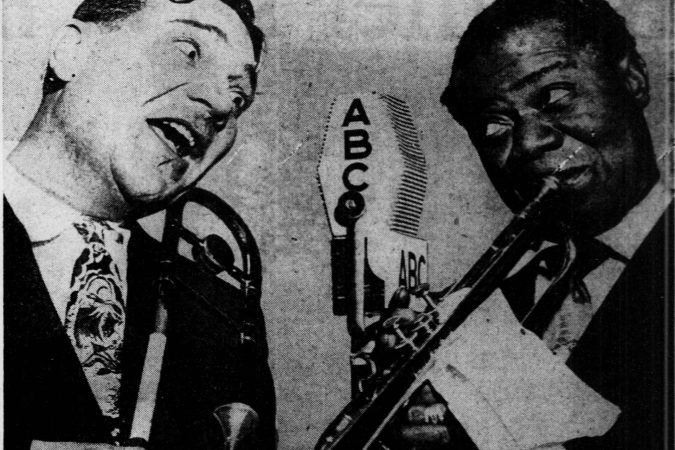
  • A city music festival drew 80,000 with Louis Armstrong on this week in Philly history

    A city music festival drew 80,000 with Louis Armstrong on this week in Philly history

    Before Jay-Z at the Roots Picnic or Bad Bunny at Made in America, there was Louis Armstrong at the Philadelphia Music Festival.

    Before there was the American Idol competition, there was Philly’s “Voices of Tomorrow.”

    Shortly after Germany surrendered, but a few months before Japan followed suit, Philadelphia put on its first true citywide music festival.

    In 1945, the city held its inaugural festival, creating an event leaders claimed was for the kids and a distraction from war, and a celebration of Philly’s robust music scene. It also made use of a large stadium during the slower summer months post-World War II.

    By 1949, the city was on its fifth event, and the festival had proved to be an opportunity to raise money and spirits.

    ‘Symposium of the arts’

    On Friday night, June 10, 1949, the city’s festival held its fifth iteration.

    The Inquirer, which sponsored the event, called it a “symposium of the arts.”

    “On a magnificent June night with a great golden moon peeping over the rim of Municipal Stadium, an exited and delighted throng of 80,000 people, largest crowd ever to attend a cultural event in this city, roared their applause last night for the star-studded fifth annual Philadelphia Music Festival,” The Inquirer reported the following day.

    The paper said the total eclipsed the previous year’s attendance of 72,000, with acts like jazz legend Armstrong, violinist Jeanne Mitchell, and pianist and vocal improvisationalist Alec Templeton.

    These performances included local acts from area high schools, bugle corps, and marching bands.

    ‘Voices of Tomorrow’

    In its annual “Voices of Tomorrow” contest, four young singers rose above a field of more than 2,000 competitors, singing in opera and “other fields” hinting at what was coming in the following decade. Competitors would sing in front of the crowd, which would choose the four winners by applause.

    And the nearly four-hour event closed with the playing of “The Star-Spangled Banner.”

    Municipal Stadium, which was opened in 1926 for the Sesquicentennial, would be named after John F. Kennedy in the 1960s, and would close in 1992.

    The city’s 11th annual music festival in 1955 was its last until the 1960s brought the Philadelphia Folk Festival, Beatlemania, and a cultural revolution.

  • Could the FIFA World Cup reduce U.S.-South African tensions?

    Could the FIFA World Cup reduce U.S.-South African tensions?

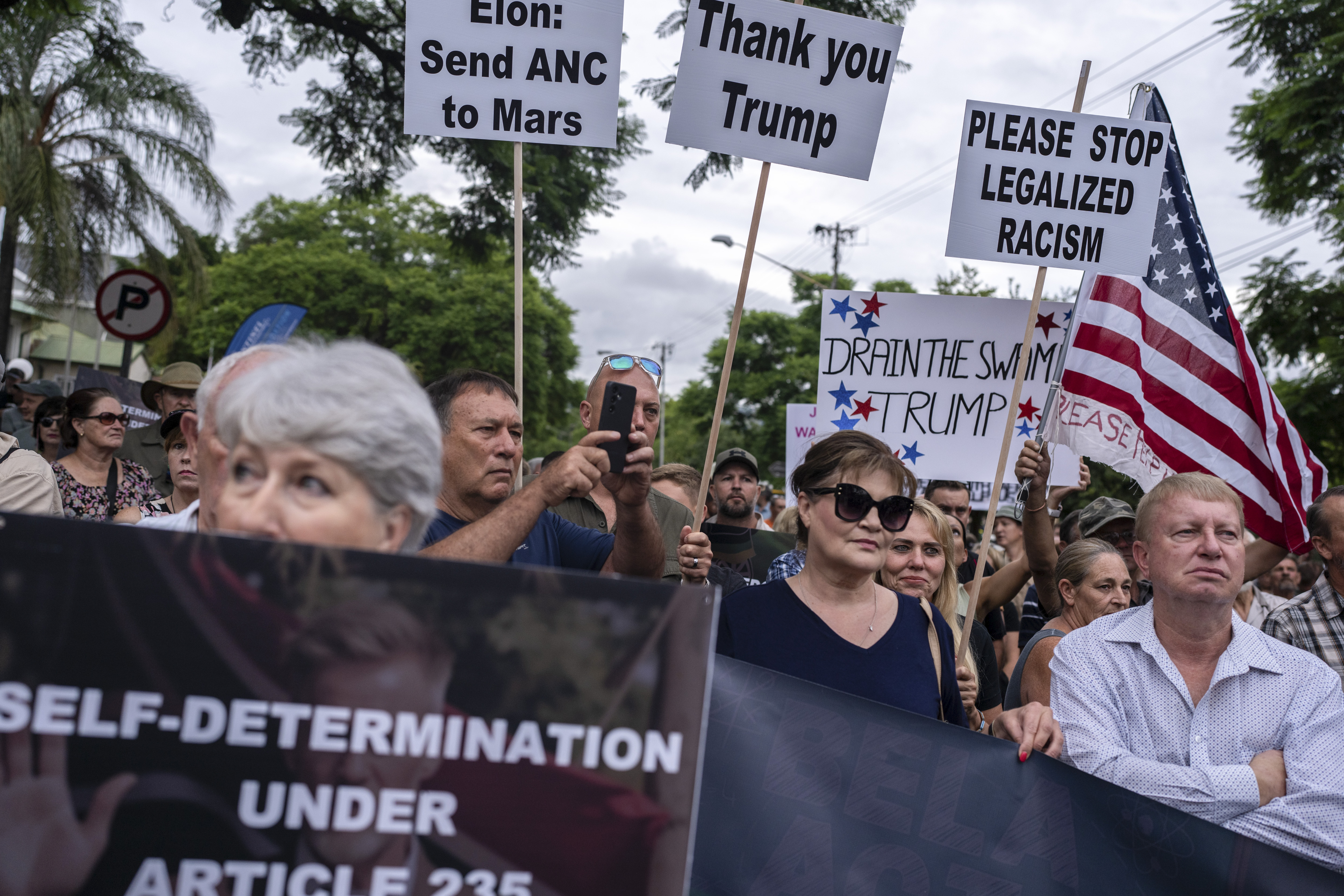
    The Trump administration has adopted a confrontational approach toward long-time ally South Africa. Washington has spent the past year spreading falsehoods about “white genocide,” cutting crucial HIV funding and blocking South Africa from the G20 while threatening its trade relationships. The United States has also made a point of resettling white Afrikaners as refugees, while excluding nearly all other refugees around the world.

    With the FIFA World Cup approaching, some may hope for a new chapter of “sports diplomacy” to relieve tensions between the countries. When South Africa’s national football team takes the field this summer, it marks Bafana Bafana’s first World Cup appearance in 16 years. But U.S. visa policies initially threatened South Africa’s ability to travel. At nearly every turn, the Trump administration is sending a clear message: it is hostile to a Black-led South Africa and sympathetic to its white minority. The domestic politics of race and white supremacy, long an undertone of U.S.-South African ties, animate the current bilateral relationship.

    The Trump administration’s embrace of white South Africans and the tensions with the African National Congress (ANC), the liberation movement-turned-political party that currently governs South Africa as part of a coalition, are not without historical precedent. Throughout the Cold War, Washington maintained close ties with apartheid South Africa’s white minority regime. Race was always part of the equation, but it was camouflaged in the language of anticommunism and strategic interest. Today, with the Cold War long over, racial politics are more exposed.

    From the early years of the Cold War, anti-Communism and race were entangled features of the U.S.-South African relationship. For Washington, South Africa’s white minority government was a reliable ally: rich in strategically important natural resources, home to a crucial shipping route and a bulwark against the Soviet Union in southern Africa.

    This relationship continued despite the formal consolidation of apartheid in 1948. The Afrikaner-led National Party systematically implemented apartheid, a draconian patchwork of racial segregation policies that stripped Black South Africans of their land and citizenship while blunting Black mobility. Despite this odious lack of democracy, Washington actively encouraged friendly relations with the white-minority-ruled South Africa. Cold War objectives overpowered moral arguments against apartheid.

    But the Cold War also shaped racial politics in unexpected ways. Just as Washington tolerated apartheid abroad, it was contending with its own system of racial segregation under Jim Crow. The Cold War created a powerful incentive for the United States to manage its image on race at home and abroad. The Soviet Union eagerly broadcast U.S. racial violence to newly decolonizing nations across Africa and Asia, undermining U.S. claims to lead the free world. This exposed Washington’s liability and motivated federal policymakers, becoming a key driver of civil rights victories and landmark decisions, such as school desegregation.

    These dynamics had the potential to threaten U.S. support for South Africa. After all, how could the self-proclaimed leader of the free world maintain its alliance with a government built on white supremacy? The answer, for most of the Cold War, was to turn a blind eye. And in the early Cold War years, domestic pressure campaigns to halt support for apartheid South Africa faced charges of communist subversion, severely blunting their impact and reach. While the Cold War opened the door to domestic civil rights gains, its politics in the early years also stymied avenues of resistance that could force Washington’s hand.

    Yet cracks eventually began to show. The rising tide of decolonization further exposed the hypocrisy of U.S. support for South Africa. In 1960 alone, 17 African nations gained independence from European colonial rule. Another turning point was the 1960 Sharpeville massacre, in which South African police killed 69 Black protesters, shocking international opinion and placing the evils of the apartheid state on full display. In turn, African leaders frequently criticized apartheid at the United Nations, placing Washington on the defensive. South Africa faced mounting international isolation, and Washington had to decide between its Cold War alliance with white-led South Africa on the one hand and its credibility with the decolonizing world on the other.

    The Nixon and Ford administrations resolved that tension by drawing Washington ever closer to South Africa’s white minority in the 1970s. Even as demands mounted from groups like the Congressional Black Caucus and the blossoming anti-apartheid movement for mandatory economic sanctions and a formal severing of U.S. ties to the regime, Washington remained steadfast. They concluded that gradual, constructive change, which they claimed to desire, could only come from white South Africans themselves not from U.S. pressure. It was an argument that conveniently absolved Washington of any responsibility to pressure Pretoria—and revealed U.S. policymakers’ views that Black South Africans were not credible leaders of their own liberation. Washington’s continued support became more exposed when, in 1974, South Africa was expelled from the United Nations General Assembly.

    Following the June 1976 Soweto massacre, where South African police killed over a hundred protesting students, international opinion grew more outraged, adding urgency to calls for sanctions. Winds of change arrived, albeit briefly, when the Carter administration initially took an aggressive approach to apartheid, aligning U.S. foreign policy with an interest in promoting human rights abroad. That agenda changed in the 1980s. President Reagan rejected calls for economic sanctions, instead endorsing “constructive engagement,” the argument that crippling the South African economy would hurt rather than liberate Black South Africans. Critics such as Desmond Tutu rejected this logic, arguing that Black South Africans had repeatedly called for sanctions. The U.S. Congress was also unconvinced. On October 2, 1986, a bipartisan majority overrode Reagan’s veto of the Comprehensive Anti-Apartheid Act, imposing economic sanctions and severing Washington’s formal ties to the regime.

    Made By History sponsors. FOR USE ON MADE BY HISTORY STORIES ONLY.Inquirer Staff

    Following decades of pressure, South Africa held its first multiracial elections in April 1994, bringing the ANC and Nelson Mandela to power. Washington warmly welcomed a democratic South Africa, which it now saw as a model for a peaceful transition to majority rule. In a post-Cold War world, the strategic rationale for supporting white South Africa largely disappeared; the U.S. no longer needed its defense against Soviet expansion.

    But the Trump administration’s hostile stance today is a signal that the Cold War relationship with South Africa was never purely animated by military necessity; a willingness to accept white minority rule undergirded the U.S.-South African relationship and was consistently reflected in policy. Now, those racial politics have become far more visible. The “white genocide” myth, Afrikaner refugee exception and hostility toward South African diplomats are driven by racial politics and a consistent willingness to privilege the concerns of South Africa’s white minority, unmediated by Cold War necessity.

    Whether or not the U.S.-South African relationship can be improved remains to be seen. Sport, which often reaches audiences that diplomacy cannot, also serves as a potential arena for reconciliation. The history of democratic South Africa suggests that sport has, more than once, progressed more rapidly than politics. The 1995 Rugby World Cup was perhaps the most celebrated example, when Mandela used the tournament to signal reconciliation, a moment immortalized in the Clint Eastwood film Invictus.

    South Africa’s first participation in the World Cup since it hosted in 2010, on American soil no less, symbolizes that potential. And yet, until Washington reckons with the racial politics driving its relationship with South Africa, both past and present, the World Cup is more likely to highlight the divide than to heal it.

    Mattie Webb, PhD, is an assistant professor of history at the Virginia Military Institute (VMI) and a Nonresident Fellow with the Institute for Global Affairs at Eurasia Group.

    Made by History takes readers beyond the headlines with articles written and edited by professional historians. Opinions expressed do not necessarily reflect the views of The Inquirer.