Faces from the past were dragged into the present.
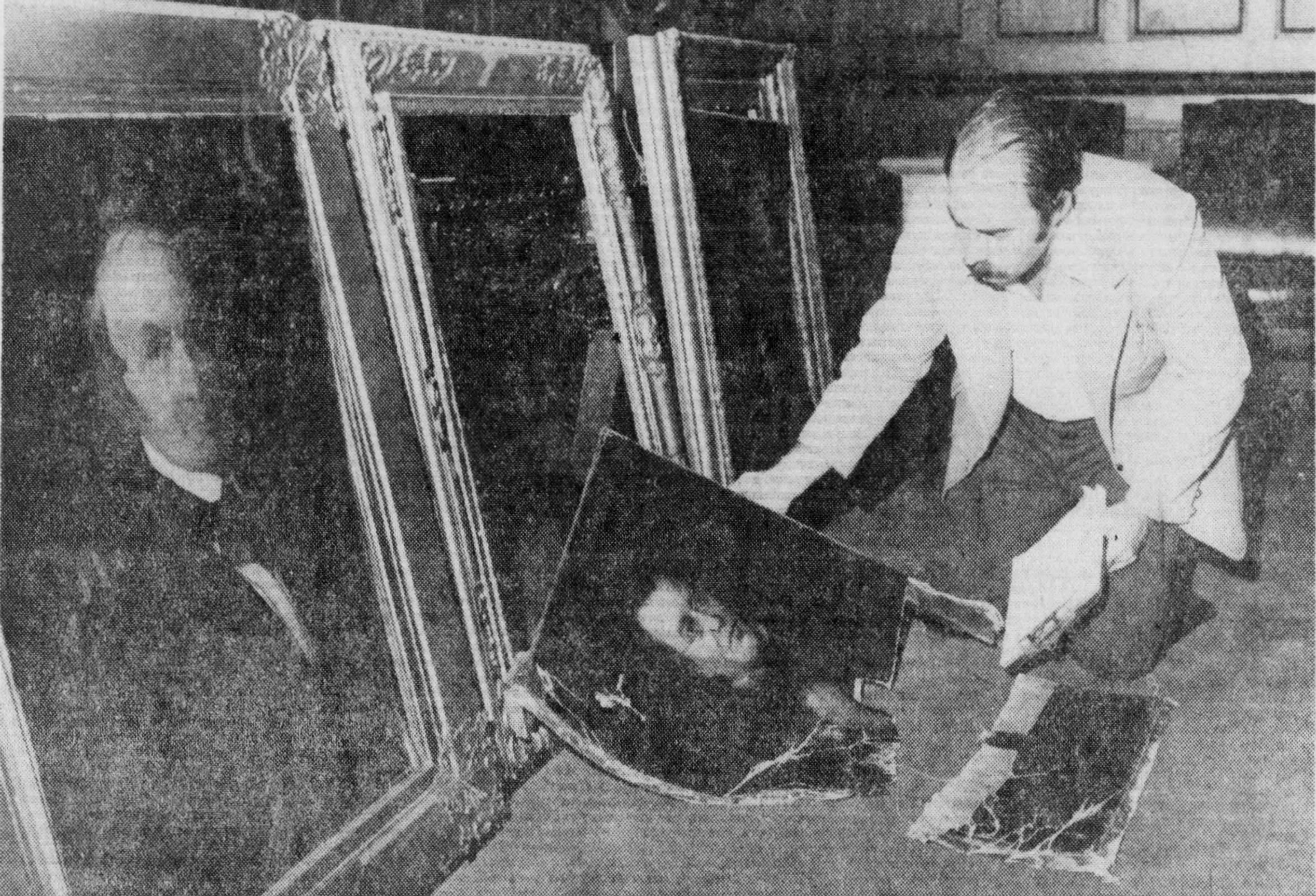
Oil portraits in City Hall of three former Philadelphia mayors were defaced on Sept. 27, 1978.
Around 4:30 p.m., a former city employee smashed the portraits that were hanging in a gallery on a lobby wall outside the second-floor Mayor’s Reception Room. The gallery features stately portraits of the city’sdozens of former mayors.
A 21-year-old recently fired city carpenter, Russell Byrd from Ogontz, pulled four framed, two-foot-by-three-foot portraits off the wall and smashed three against nearby railings and stairs. He left a fourth portrait — of John Barker, mayor from 1808 to 1812 — unharmed.
A cop on duty watched Byrd suspiciously pacing the stairway and went to investigate. He found the portraits in the second-floor stairwell, and followed Byrd into a men’s room and placed him under arrest.
Byrd was charged with theft, burglary, receiving stolen goods, and criminal mischief. He pleaded guilty to the mischief count in June 1979 and was sentenced to two years of probation, court records show.
The damaged paintings were of Isaac Roach, who served in the 1830s; Robert Conrad, who led the city in the 1850s; and William Smith, who helmed the big desk in the 1880s.
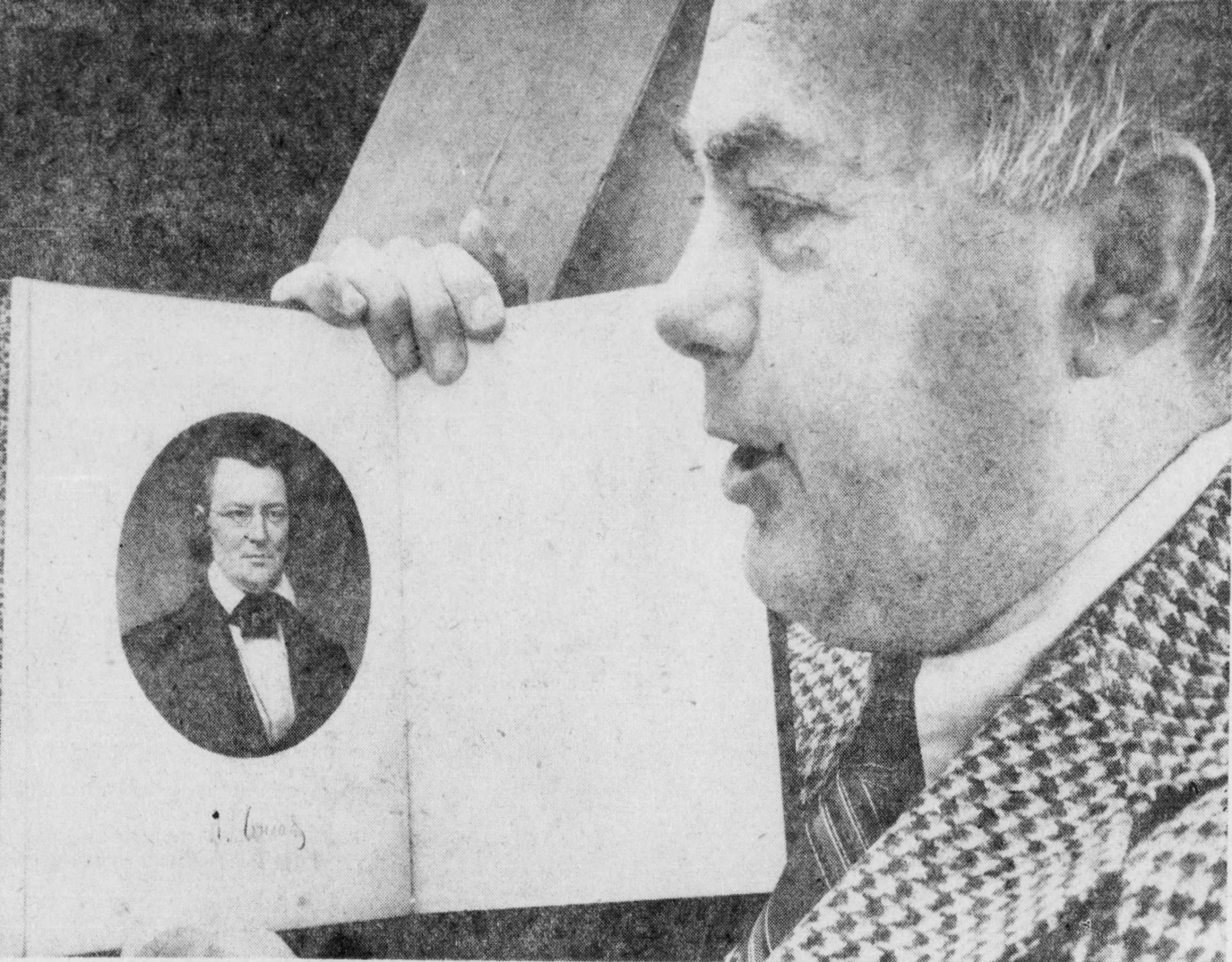
A descendant of Conrad, his great-great-grandson Wendell W. Oberholtzer, read about the destruction the next morning in the newspaper.
After the City Hall portrait-defacing in 1978, Wendell W. Oberholtzer holds a book with an engraving of his ancestor, Mayor Robert T. Conrad.Robert L. Mooney / Staff Photographer
Oberholtzer called City Hall and offered to help.
He said he would lend the city a personally owned portrait of his famous relative, or he could supply photos, for an artist or engraver to useto create a replacement portrait.
But the donations were not necessary. Robert Silver, commissioner of public property, said conservators from the Philadelphia Museum of Art sized up the situation and decided the portraits were not beyond repair.
Silver told The Inquirer that he could have the portraits restored to “practically their pre-smash condition” within a few months.
And the honored could once again return to their rightful places in history.
Crime and punishment in colonial America was a brutal business. Incarcerated people were barely fed, were often beaten, and fell ill from unsanitary conditions.
Inspired by the benevolent Quaker tradition, Benjamin Rush and Benjamin Franklin decided, in the late 17th century, to institute a new system through which people in prison could atone by reflecting and reading the Bible.
The catch was they had to be “penitent” all alone, without any human contact. With the birth of solitary confinement, came Eastern State Penitentiary.
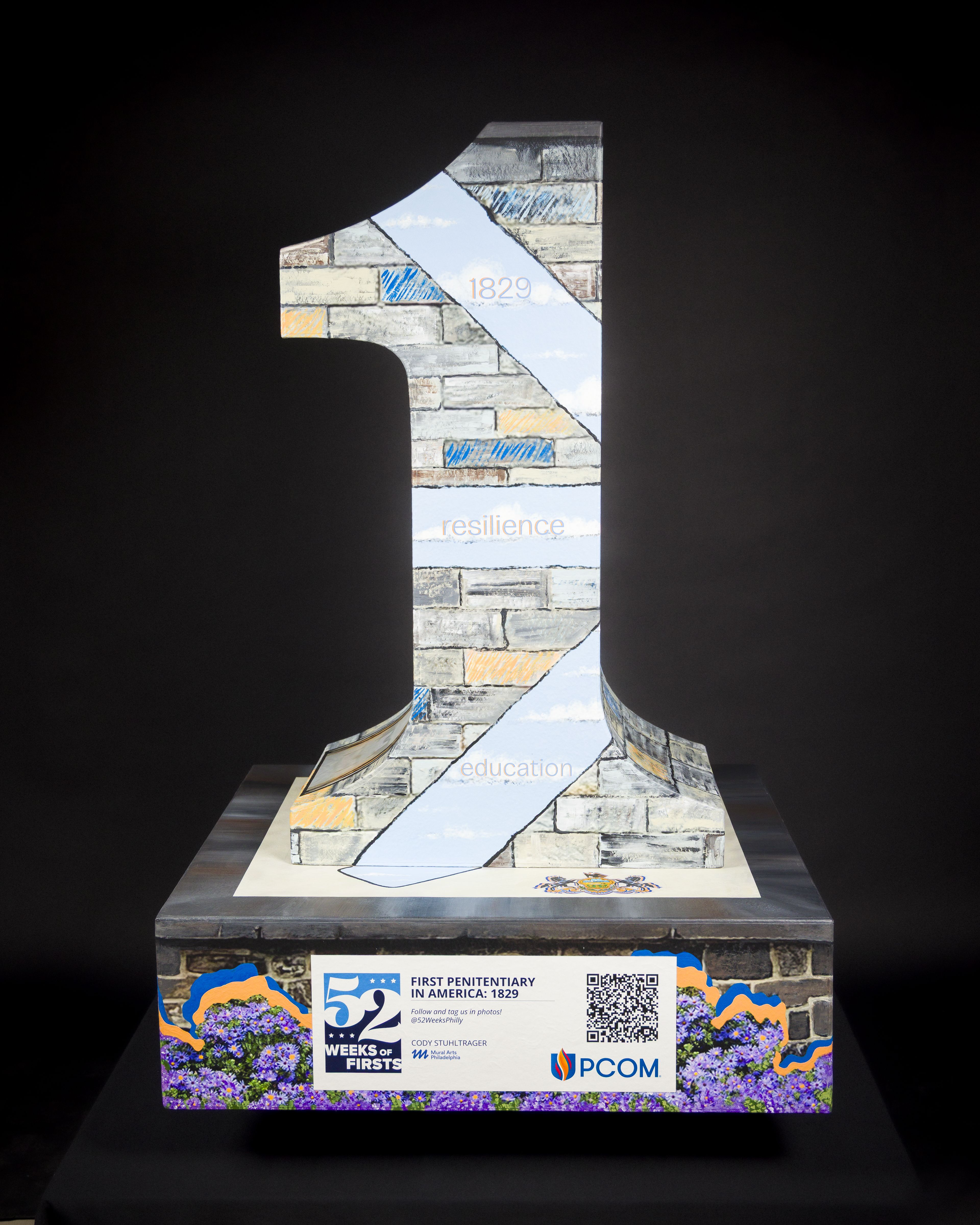
Artist Cody Stuhltrager captures the distinctive aesthetic of Eastern State Penitentiary and its enduring presence in Fairmount in this No. 1Cody Stuhltrager courtesy of Colibrí Workshop
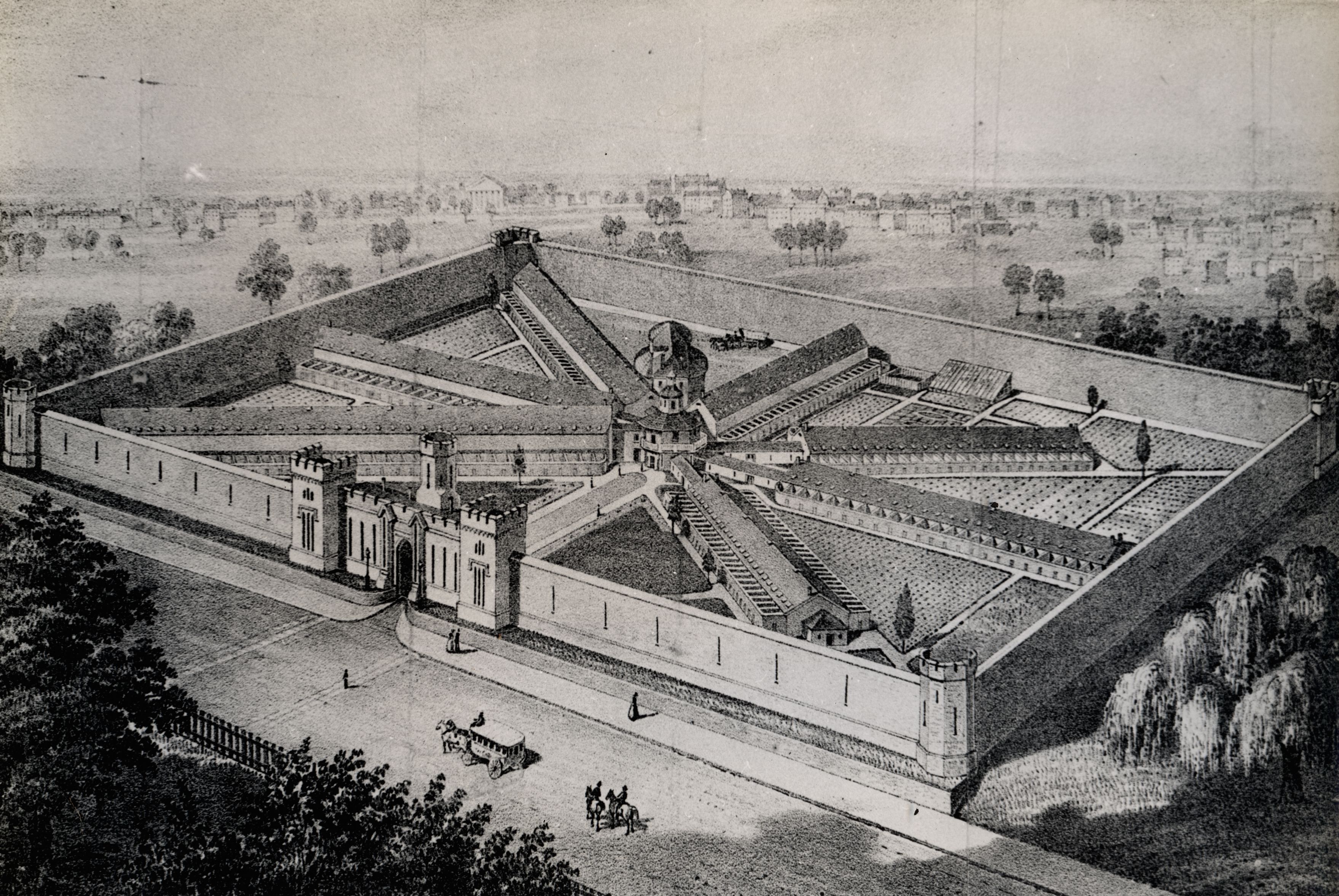
Construction started in 1821 and in 1829, the 11-acre institution opened on what was once a cherry orchard situated at the intersection of Fairmount Avenue, Corinthian Avenue, Brown Street, and 22nd Street. Nestled behind a 650-foot stone wall were 250 rooms.
The intention was that every man, woman, and child would have their own cell and would neither see nor talk to another human being.
“Eastern State is considered the first penitentiary in America because it is the first institution that uses solitary confinement for the entire length of the inmate’s incarceration,” explained Kerry Sautner, president and CEO of Eastern State Penitentiary Historic Site, Inc.
America’s first penitentiary — the country’s first true correctional facility — will be remembered Saturday from 11 a.m. to 1 p.m. at Eastern State Penitentiary.
The observance is part of the Philadelphia Historic District’s 52 Weeks of Firsts Celebrations. The weekly day parties, or firstivals are part of a yearlong citywide celebration of America’s 250th birthday.
Eastern State Penitentiary’s legacy of torturous solitary confinement makes this a somber celebration.
The institution’s first prisoner was 18-year-old Delaware County burglar Charles Williams. Within a few years after his arrival, Eastern State became a model for prisons and penitentiaries throughout the country, Sautner said. Still, its controversial methods of rehabilitation were considered cruel.
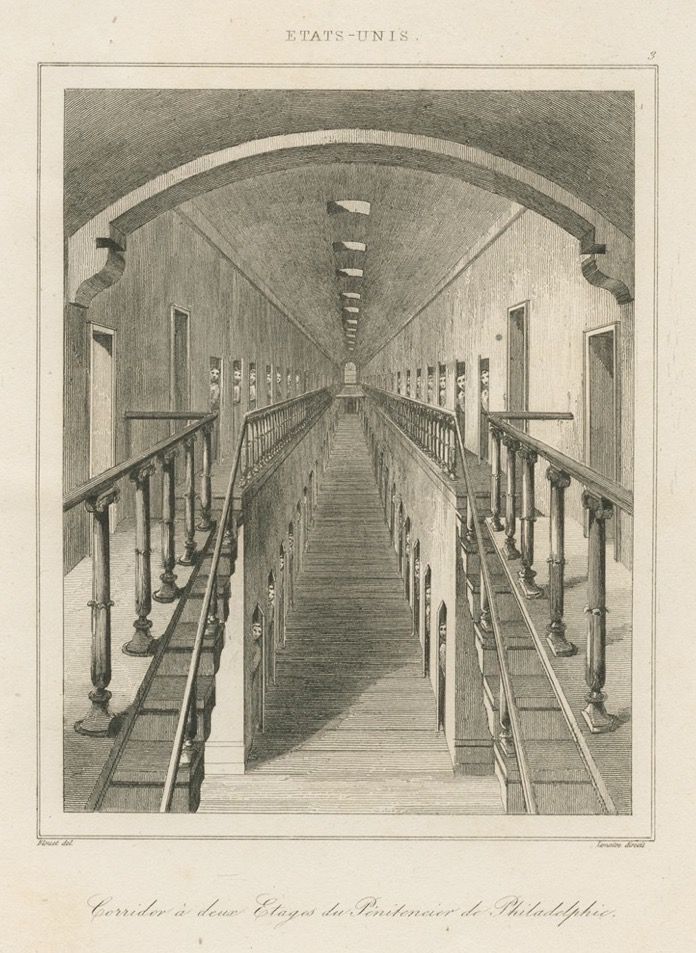
Eastern State Penitentiary cellblock in 1837.Eastern State Penitentiary
During his first visit to America, author Charles Dickens, who toured the penitentiary, wrote, “I believe that very few men are capable of estimating the immense amount of torture and agony which this dreadful punishment, prolonged for years, inflicts upon its sufferers.”
“People quickly learned that solitary confinement was a cruel form of punishment,” Sautner said. “But they didn’t to let it go easily.”
Despite the formation of the Pennsylvania Prison Society — responsible for part of the state constitution that stressed on the rights of incarcerated people — solitary confinement lasted through the late 19th century. It remained a part of the prison’s culture until it was completely removed from the books in 1913.
During the early 20th century, each cell housed two people.
“We have evidence of a proclamation banning solitary,” Sautner said. “And we found evidence of small Christian gatherings celebrations [within Eastern State] of Jewish holy days in September.”
(Although the penitentiary was founded in the Quaker tradition, there is evidence that prisoners worshipped in Christian, Jewish, and Muslim faiths within its walls by the 19th century.)
In 1965, it was designated a national historic site by the federal government. By the early 1970s, Eastern State Penitentiary was immensely overcrowded with more than 2,000 prisoners. It closed in 1971 and its population was moved to Graterford.
Throughout the 1980s, the building remained mostly abandoned except for a few sporadic instances like when it served as the set for the filming of Tina Turner’s 1985 single “One of the Living” from the Mad Max soundtrack.
In the late 1980s, the city began looking at ways to restabilize what many considered an eyesore in the center of Fairmount, a neighborhood that was in the midst of being revitalized. Planners considered turning the space into condos, a shopping center, and even a youth hostel.
Eastern State Penitentiary hosts Halloween Nights, a festival-like attraction with characters dressed as scary clowns, zombies, vampires and other ghouls — but not prisoners or prison guardsEastern State Penitentiary
In 1988, at the urging of a task force of concerned architects, preservationists, and historians, Philadelphia Mayor Wilson Goode halted the process of selling the site. And in 1994, it opened as a nonprofit historic site offering group tours under the leadership of Sally Elk.
1997 marked the first “Terror Behind the Walls” the annual haunted house attraction. In 2021 it was rebranded as “Halloween Nights,” a less spooky, more gentrified version with a beer garden.
This week’s Firstival is Saturday, Oct. 3, from 11 a.m.-1 p.m., at Eastern State Penitentiary at 2027 Fairmount Ave
The pope who came in peace arrived in a Philadelphia seemingly under occupation.
For the roughly 1 million people who descended upon Philly to try to catch a glimpse of Pope Francis over his two-day visit in September 2015,there was an unprecedented level of security. Center City was put under 24-7 military supervision by armed personnel in vehicles stationed at busy intersections.
Security had not been as strict in 1979. When Pope John Paul II stepped off “Shepherd One” to kick off his not-quite 24-hour visit, he was met by a genuflecting Mayor Frank Rizzo before passing and waving to a mass of Catholics lined up on Broad Street.
Francis’ six-day tour covered three cities — including New York and Washington — as part of the first-ever World Meeting of Families, touted as the largest global gathering of Catholic families held on U.S. soil.
On his first night in town, in an address at Independence Hall, Francis emphasized the right to religious freedom, touched on immigration and the plight of refugees, and called for “peace, tolerance, and respect for the dignity and rights of others,” without specifically addressing same-sex marriage or abortion rights.
Despite the increased security, on night two, Francis rode in his popemobile up and down the Benjamin Franklin Parkway, to City Hall and back, before moving on to the night’s primary venue.
In an address on the Parkway, Francis preached to a throng of believers about the importance of family and again pleaded for more tolerance, faith, and love.
“Love is something we learn,” he said. “Love is something we live.”
Much like John Paul II’s visit, supporters filled Logan Square, streaming in from the Philadelphia Museum of Art, City Hall, and beyond. But despite being a sizable crowd, it was not as large as first anticipated because of the security restrictions.
To get in and out that night, visitors faced the aptly named papal box, which encased Center City ina safety cocoon. Vehicle travel was a nonstarter, with streets cut off by cement dividers, and pedestrians could enter the cocoon only after walking through serious-looking metal detectors.
Despite the restrictions, an overwhelming sense of joy permeated the city, as more than a million people united in celebration of a 78-year-old man and his relentless pursuit of a better world.
“It feels like a big embrace,” Katherine Brennan of Rhode Island told The Inquirer. “We feel like everybody here is family. This is a microcosm of what the world could be if we all embraced each other the way he does.”
As Heather Whitestone’s dream veered toward reality, her hearing aid wasn’t working and she had lost sight of Regis Philbin’s lips.
The 21-year-old Miss Alabama couldn’t hear the talk show host, or read his lips, when he announced the winner of the Miss America pageant on Sept. 17, 1994.
Rebecca Blouin — Miss Mississippi — turned to her fellow Southerner and shared the news, which broke a barrier at what many consider the United States’ most-celebrated beauty contest.
For the first time in the event’s history, which dates back to 1921 at the Jersey Shore, a deaf woman would wear Atlantic City’s most prestigious award: a rhinestone tiara.
Years of therapy taught her how to speak, and she utilized hearing aids, but Whitestone navigated her way through life primarily by reading lips.
Former Miss America Kimberly Aiken, left, crowns Miss America 1995 Heather Whitestone, of Alabama, after Whitestone won the 74th annual pageant in the Atlantic City Convention Hall in September 1994.Charles Fox
In media interviews during the pageant,she didn’t use an interpreter.
“It’s a physical challenge, not a handicap,” she told The Inquirer in an interview prior to her win. “I really believe the most handicapped people are those who have a bad attitude.”
Feeling the love
Leading up to the main event, attendees showered the Birmingham, Ala., woman with standing ovations as she made it through the pageant’s three nights of preliminary competition.
That affection carried over into the finals, when the ballet dancer dazzled judges Philbin and Kathie Lee Gifford with her talent and chutzpah.
As Christian singer Sandy Patti performed the song “Via Dolorosa,” Whitestone glided along on her tippy toes — counting beats in her head to help keep pace.
“She is an extraordinary human being,” Gifford told The Inquirer.
Crowning achievement
Whitestone was not the first deaf contestant, but she remains the only deaf woman to have won.
A reporter would later ask Whitestone about the potential challenges she faced fulfilling such a public-facing role.
“I think I’m doing just fine,” she said with a wry smile. “I mean, look at us now.”
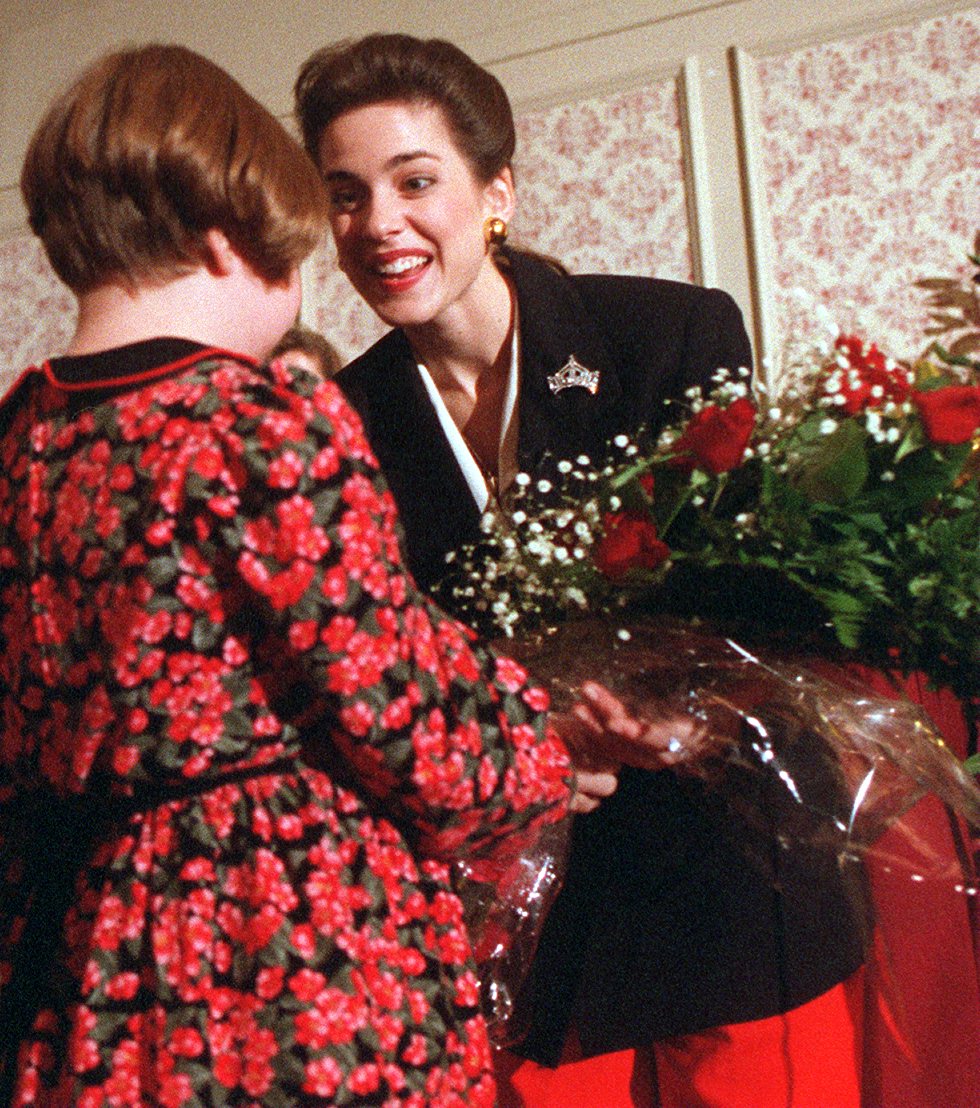
Miss America Heather Whitestone receives flowers from Christina Simeone, age 9, from Wallingford Elementary School in January 1995.G. Loie Grossmann / Staff Photographer
When Whitestone, as the newly crowned Miss America for the forthcoming 1995,took her victory walk down the runway, she raised her hand to the thousands in Convention Hall, signing “I love you.”
Whitestone couldn’t hear their response — the hearing aid in her left ear was overwhelmed by the thunderous ovation and transmitted only static — but she didn’t need to.
Data is at the top of everyone’s mind this year: how it’s collected, where it’s stored, who can access it and how it’s used.
The Electronic Frontier Foundation, a data rights NGO, warns in a new report that law enforcement agencies have been partnering with tech companies to collect large swaths of data on private citizens without warrants under the guise of “fighting crime” or “reducing lawlessness.” Police have been using facial recognition software, audio recording devices, automatic license-plate readers and other “dragnet” technologies to aggregate huge databases on the habits of everyday Americans.
Watchdog organizations like the ACLU have sounded the alarm that these databases have already been weaponized against the public by organizations such as U.S. Immigration and Customs Enforcement and the U.S. Department of Homeland Security.
One might be tempted to conclude that this is unprecedented, an outgrowth of the panopticism of the Information Age. But debates about privacy, free speech and data governance have been ongoing for centuries. These debates were especially fraught in the colonial context, where individual rights, national security and public interest were often in conflict.
The British first established police forces in India in the late 1800s, after nearly two centuries of bloody succession conflicts. In 1857, a great rebellion almost dislodged the British from the subcontinent entirely. Initially disgruntled Indian East India Company soldiers led the rebellion against their white commanding officers in a mutiny. However, the conflict quickly spread across the subcontinent, uniting competing segments of Indian society against the British establishment. Though this rebellion didn’t succeed, it left a lasting political and psychological impact. British accounts describe a sense of helpless horror, a feeling for the first time that their place in the world was no longer secure.
The British establishment in India believed that the rebellion occurred due to a failure of British intelligence. They had erred by trusting their Indian allies and intermediaries too freely and missed obvious rumblings of disorder. The crown took direct control of India from the East India Company and began to build a new system of governance from scratch.
The British Raj established its first official police departments in India in 1859, modeled on the Royal Irish Constabulary. The police understood that their job was to maintain order rather than to serve the public. Most departments’ first project was to assemble official statistics and compile them into annual reports. This data, aggregated and synthesized, became the lifeblood of the Empire.
Nowhere was this development more apparent than in the use of crime statistics. In the 1860s police forces in Northern India reported a supposed explosion in crime, perpetrated by wandering gangs, “criminal tribes” who were criminals by birth. Unlike the “ordinary” criminals of Europe who fell into crime by chance, the criminals of India were born into their “professions.”
Officials felt that by bringing quantitative data to policing — counting and tracking crimes, where they occurred, and who committed them — allowed them to more fairly and effectively allocate resources. In truth, though, police and other officials used data to reinforce existing biases, arguing that the numbers showed that race, caste and other “biological traits” could be used to predict criminality. Hyper-policing of certain populations produced even more data “proving” that these populations committed more crimes. This decontextualized data gave the government the veneer of objectivity, while serving as the basis for many harmful and discriminatory policies.
In 1871, the legislative assemblies of three provinces passed the Criminal Tribes Act into law. The Act defined a “criminal tribe” as a “wandering gang, community, or group of persons addicted to the commission of non-bailable offences,” a definition that targeted groups already socially disadvantaged by the caste system.
In truth, “criminal tribes” as described by British administrators probably never existed. Instead, nomadic and semi-nomadic merchants or artisans, groups of religious mendicants, highway men (usually unemployed former soldiers), pastoralists and any other group who did not fit were all folded into the “criminal tribe” label. Unlike settled agriculturists within the dominant caste order, these groups were difficult to control due to their mobility and lack of social or economic capital. Under the law, they were criminalized and subject to extremely intrusive regimes of surveillance. The police tracked the most minute details of the lives of targeted groups: their fingerprints, their bodily measurements, their habits and their preferences.
The impact of the state’s surveillance campaigns was that these communities lived in a state of hypervisibility. Communities complained that they were unable to live, work or travel without being disproportionately targeted by police. The increase in police interactions eventually led to a corresponding increase in arrests—which, in turn, was used to justify further surveillance and policing.
One police officer recounted in the early 1900s that he recommended a whole nomadic community be criminalized under the Act and forcibly settled. The reason? They were reportedly adorned in silver finery while living in weatherworn tents with sparse and shabby furnishings. The only reasonable explanation, he claimed, was that the jewelry was stolen loot.
Data gave the government the visibility and the leverage required to recruit collaborators. Police relied upon wealthy and landed (“trustworthy”) communities to identify “criminal tribes,” and recruited officers from their ranks. In return, the police offered elites protections against peasant uprisings or labor disputes. Data ownership was thus not just a privilege but a favor, doled out by the state to its allies in exchange for “good behavior.”
Data collection and policing transformed everyday life. Community and family spaces—town squares, local government offices, playgrounds, parks, schools, shops, even streets—went from being “private” spaces, governed by the people who inhabited them, to “public” spaces subject to the control and surveillance of the state. Regular community events like food festivals, religious processions and public gatherings often felt distinctly different in the presence of police. People knew they were being watched.
Disputes at street processions and festivities frequently became highly publicized court cases, written about in the newspapers and read aloud in coffee shops and tea stalls. In turn, groups began to use processions to garner such publicity and “make a point” in the first decades of the 20th century: “cow protection” parades by Hindu extremists to intimidate religious minorities, festivals commemorating anti-British war heroes like the Maratha King Shivaji, even protest marches by Muslims against the dissolution of the Ottoman Empire after WWI. Divisive political processions came to replace weddings, funerals and naming ceremonies that had been common in the 19th century.
At a time when it was considered both scientifically sound and fashionable among the Western-educated class to believe that Indians were too loud and disorderly to govern themselves, public gatherings became performances to authority rather than community events. As debates raged about whether India was ready for independence in the 1920s and 1930s, communities policed themselves and each other, critiquing rituals and expressions that were too loud, too emotional, too rowdy.
Where there were multiple communities in conflict over public spaces, police involvement caused small disagreements to escalate. In March 1925, a small fight during a religious procession in Delhi sparked communal riots across Northern India that lasted periodically until late September, causing dozens of casualties and at least six deaths.
Made By History sponsors. FOR USE ON MADE BY HISTORY STORIES ONLY.Inquirer Staff
Class, caste and religious divisions hardened throughout the 1930s and 1940s, leading to the segregation of formerly integrated spaces. In these ways, the British used information to divide and rule communities, to target the vulnerable, and to suppress dissent. These efforts prolonged the British presence in India for decades, until its hasty exit in 1947 after overseeing a violent and bloody partition of the subcontinent. The ghost of the Empire continues to haunt the region today.
One critical lesson the Indian public learned during this era was that the collection of information is never neutral. Power shapes how information is collected, stored and interpreted, and information can be used and abused to protect those in power.
Today every app, website and device contains a back door to collect and sell our information. Companies and officials tell us that these capabilities are benign, used to improve our lives and make us safer—and we believe them at our own peril.
Niveditha (Nive) Senthilvel is a 2026-27 Fulbright-Nehru scholar and PhD Candidate in South Asian History at Boston University.
Made by History takes readers beyond the headlines with articles written and edited by professional historians. Opinions expressed do not necessarily reflect the views of The Inquirer.
Rachel Blau DuPlessis, 84, of Philadelphia, experimental poet and essayist, literary scholar and critic, Temple University professor of English and creative writing emerita, mentor, artist, and world traveler, died Wednesday, Sept. 2, of respiratory failure at Penn Presbyterian Medical Center.
Professor DuPlessis was an eclectic experimental poet who grew up in New York, lived in Swarthmore and Philadelphia for more than 50 years, and taught a variety of writing and women’s studies classes at Temple from 1974 to her retirement in 2011. She wrote hundreds of poems — she called many of them “drafts” — about feminism, modernism, connectivity, imagery, and consciousness.
She was an expert on cultural poetics and told The Inquirer in 2002 that her poems generally reflect her “awe at the universe, grief at the barbarity of modernism, and sense of how it was to be in the world.” She enjoyed poetic wordplay, reviewers said, and tinkered freely with conventional syntax, sound, tone, and form.
“Reading her is an adventure,” reviewer Robert Long said in The Inquirer in 1997, “and poets this adventurous must be cherished.”
Her poems were published in more than 30 books and in several languages, and also appeared in The Inquirer, other newspapers, magazines, journals, and anthologies. In tributes, fellow poets praised her “unique combination of erudition and exuberance” and her “generosity, brilliance, expansive thinking, and attention to so many possibilities of writing and art.”
“From what I can tell, DuPlessis doesn’t write poems so much as build them,” reviewer Andrew Ervin said in The Inquirer in 2005. “The manner in which she does that is what makes the Temple professor one of the most exciting and inventive writers of our time.”
She told the Oxonian Review in 2015 that “being a poet is not only writing poems. It is an address to the whole apparatus of and the traditions of poetic practice.”
A book publisher said: “She brought such intelligence, generosity, and curiosity to everything she did.” Penn professor Al Filreis told Professor DuPlessis’husband, Robert: “It’s hard to imagine the Philly poetry world without Rachel in it.”
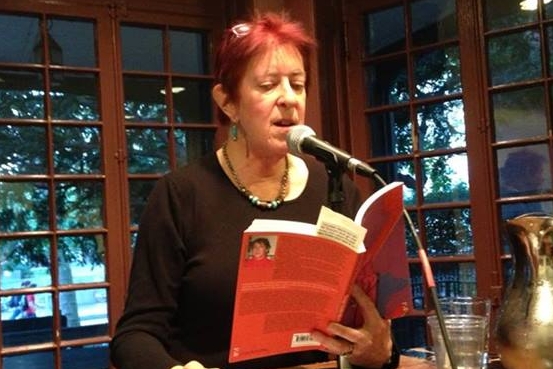
Professor DuPlessis read her poems to people around the world. Courtesy of the family
At Temple, Professor DuPlessis helped establish women’s studies classes and the school’s graduate program in creative writing. She mentored students and other professors, and the English department’s DuPlessis Lecture in Poetry and Poetics is named in her honor.
“She loved being a mentor to people, to encourage them,” her husband said. “She loved being a poet and an academic. She prepared incredibly for her classes and was connected and attentive to her students.”
Earlier, she taught briefly at what is now the College of New Jersey and Rutgers and Columbia Universities. She spent several of her research and study leaves from Temple working with students and colleagues at universities in the Netherlands, France, Belgium, and elsewhere.
She was named a resident poet and distinguished visitor in Italy and New Zealand. She and her husband, a professor emeritus at Swarthmore College, visited every continent except Antarctica, and she spoke French and Italian as well as English.
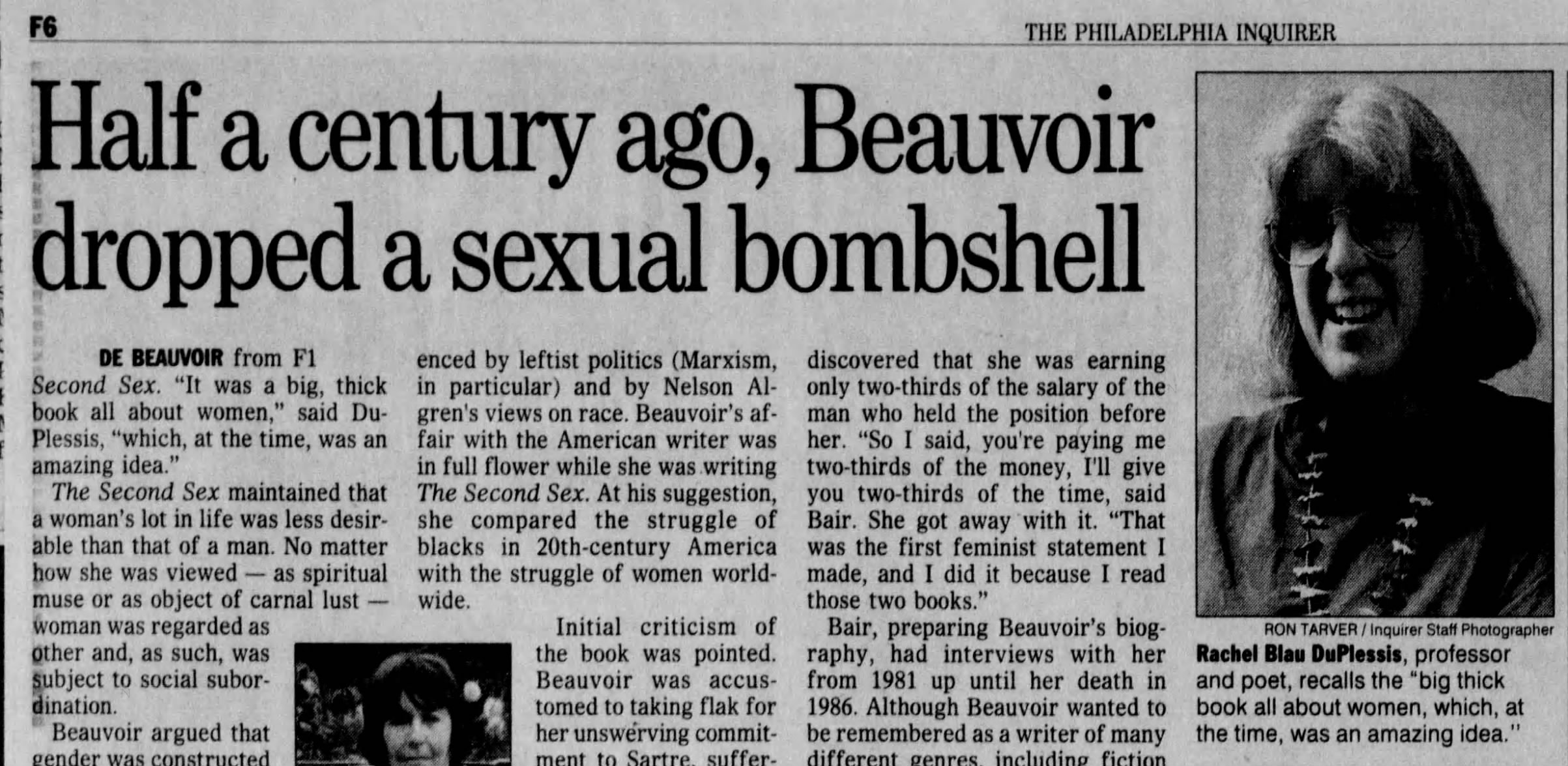
This article featured Professor DuPlessis and appeared in The Inquirer in 1999.Newspapers.com
She earned fellowships from the Pew Center, the Pennsylvania Council on the Arts, the National Humanities Center in North Carolina, and other groups. “She was constantly creating things,” her husband said. “She never stopped.”
Professor DuPlessis also wrote and edited books and articles about writing and poetry, and she reviewed books for The Inquirer and other publications. She read her poems in public, was interviewed often, and earned achievement awards from Temple, the University of California in San Diego, the old Fund for Poetry, and other admirers.
She created a comprehensive website, rachelblauduplessis.com, and made collage art that she augmented with poems. Thomas Devaney, a Philadelphia writer, called her “an important figure of American experimental poetry.”
She told the Oxonian Review: “Poetry is an ethical practice as well as an aesthetic one. Just even thinking about what this means and how it is instantiated is a useful task.”
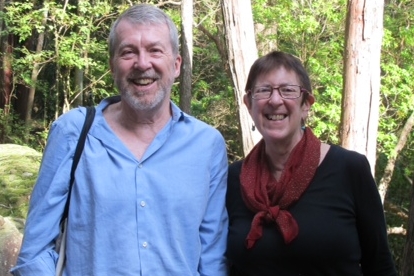
Professor DuPlessis enjoyed time with her husband, Robert, and daughter, Kore.Courtesy of the family
Rachel Maia Blau was born Dec. 14, 1941, in Brooklyn. She grew up in Queens and the Bronx, and earned a bachelor’s degree in English at Barnard College in New York in 1963 and a master’s degree and doctorate in English and comparative literature at Columbia in 1970.
Her father was a professor, her mother a librarian. She met fellow Fulbright scholar Robert DuPlessis on a boat to France in 1966, and they married in 1968 and had a daughter, Kore.
Professor DuPlessis enjoyed yoga, museums, art history, and long walks with her husband. They went to see and hear the orchestra, the opera, the ballet, and the theater.
She doted on her daughter and grandchildren. “She always read me stories and sang me songs at night before bed,” her daughter said. “I would hold on to her leg because I didn’t want her to leave.”
Professor DuPlessis started writing poems when she was 12, she said in an interview. “She was determined, hardworking, witty, and a lot of fun,” her husband said. “She was definitely intense.”
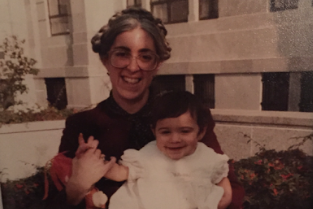
Professor DuPlessis said she started writing poems when she was 12.Courtesy of the family
In addition to her husband and daughter, Professor DuPlessis is survived by two grandchildren and other relatives. A sister died earlier.
A memorial service is to be held from 1:30 to 3:30 p.m. Saturday, Oct. 17, at Temple University’s Charles Library, 1900 N. 13th St., First Floor, Philadelphia, Pa. 19122.
Donations in her name may be made to Planned Parenthood, Online Services, Box 96771, Washington, D.C. 20090; Philabundance, 3616 S. Galloway St., Philadelphia, Pa. 19148; and the American Civil Liberties Union, 125 Broad St., 18th Floor, New York, N.Y. 10004.
Recently, the Strait of Hormuz has become a flashpoint in the escalating conflict between the United States and Iran, with the Trump administration alternating between military strikes and threats of further attacks amid negotiations.
This waterway is one of the world’s most important shipping corridors. It connects Persian Gulf energy producers to global markets and carries a substantial share of the world’s energy trade. This applies further pressure on the need to keep it “open,” even as that story is far more complicated than it appears.
The strait is more than a physical waterway. It is also an institutional and commercial corridor sustained by trust, pricing, financing, commodity markets, and insurance premiums. In a modern economy, a waterway like the Strait of Hormuz allows merchant ships to function as part of the circulatory system of global commerce. But passage requires more than the physical opening of the waterway. It also depends on whether insurers, lenders, shipowners, crews, and governments are willing to price, bear, and distribute the risks associated with the passage.
The Trump administration is focusing primarily on one end of the problem: suppressing Iran’s ability to alter the threat landscape in the strait. Crucially, it has paid far less attention to the other end of the equation: owning, transferring, or guaranteeing the residual risk that American military forces cannot eliminate. The history of the Suez Canal crisis shows the consequences of a similar conceptual mistake. It demonstrates how military control of a strategic waterway can prove insufficient when broader risks remain unresolved.
In 1956, Egyptian President Gamal Abdel Nasser nationalized the Suez Canal after the United States and Britain withdrew their financial support for the construction of Aswan High Dam. Nasser announced that, in the absence of external financing, canal revenues would be used to fund the project. Suez was vital for European trade and Middle Eastern oil supplies, so Britain and France saw these actions as a direct challenge to their strategic influence in the region. And so, in coordination with Israel, they took military action against Egypt to seize control of the Canal Zone. Their calculation was that if Nasser were removed and the canal returned to British and French control, then their broader geopolitical problem would be resolved.
Militarily, this plan worked. Their forces advanced rapidly. Israel swept across the Sinai while British and French troops established air superiority and took Port Said at the northern mouth of the canal.
Despite this success, the broader strategic goal remained beyond their reach. Britain’s military might masked a far weaker financial position. The sterling was still a major international currency, but defending its value depended on Britain’s dwindling gold and dollar reserves. American opposition to the invasion, mounting pressure on sterling, disruptions to oil supplies, and Britain’s dependence on external financial support ultimately made the operation unsustainable. As the dollar and oil reserves declined, London increasingly needed the very international financial cooperation, especially from the United States, that the invasion had put at risk.
The crisis left both European powers, particularly Britain, politically humiliated. They had been willing to assume the military risks of invading Egypt, but they overlooked the financial, diplomatic, and alliance risks that also had to be absorbed to sustain the operation and turn their military success into durable strategic control of the canal.
Three decades later a comparable problem surfaced in the region, but this time, the United States responded differently. In 1987, during the “Tanker War” phase of the Iran-Iraq War, Kuwait’s oil exports were increasingly threatened by repeated Iranian attacks on its tankers. With limited options, the Kuwaiti government sought protection from both the United States and the Soviet Union because neither Kuwait nor any private commercial actor could adequately absorb or manage the risk alone.
By July of that same year, Ronald Reagan took action, but he did not rely on warships alone. Instead, he approved Operation Earnest Will, under which eleven Kuwaiti tankers were reflagged as American vessels and escorted through the Persian Gulf. This action did not eliminate Iranian mines, missiles, or the possibility of further attacks. In fact, during the first convoy, one of the reflagged tankers struck a mine. Although no one died and the tanker completed its voyage, the incident made clear that the danger remained real.
Certainly, reflagging the vessels changed the legal and political meaning of these voyages. Sailing under American colors placed U.S. sovereignty and military credibility behind the Kuwaiti vessels. The United States did not absorb every commercial loss, but it assumed enough of the political and strategic residual risk to make continued passage more credible. Operation Earnest Will did not eliminate risk. It instead gave the residual risk a more capable owner.
Made By History sponsors. FOR USE ON MADE BY HISTORY STORIES ONLY.Inquirer Staff
This does not mean that the military dimension is insignificant. But military measures are not the only instruments available. Washington can also strengthen the ability of governments, private firms, and financial markets to absorb the risk that remains through tools like sovereign war-risk insurance or reinsurance, multinational risk pools, and lender guarantees. These mechanisms can help distribute, transfer, and absorb the residual risk that remains, even when real danger persists.
The region has changed significantly since Operation Earnest Will. Through the 1990s and early 2000s, the United States established an enduring presence in the Persian Gulf while Iran increasingly relied on asymmetric capabilities to offset its conventional military disadvantage. The result is a different strategic environment with the same underlying problem. Even with a superior military presence, Iran’s asymmetric capabilities continue to inject uncertainty into the region in ways that American military power alone cannot eliminate.
As it has done before, the United States can use military power to make Iran less capable of creating risk. But it must also make insurers, lenders, shipowners, and governments more capable of carrying the risk that will inevitably remain. Force can make passage possible, but a durable strategy for keeping Hormuz commercially open will require both.
Oscar Blanco is a historian who teaches history and cybersecurity risk management at Miami Dade College and Florida International University. He holds a Ph.D. in history and researches U.S. foreign policy and United States relations with Latin America.
Made by History takes readers beyond the headlines with articles written and edited by professional historians. Opinions expressed do not necessarily reflect the views of The Inquirer.
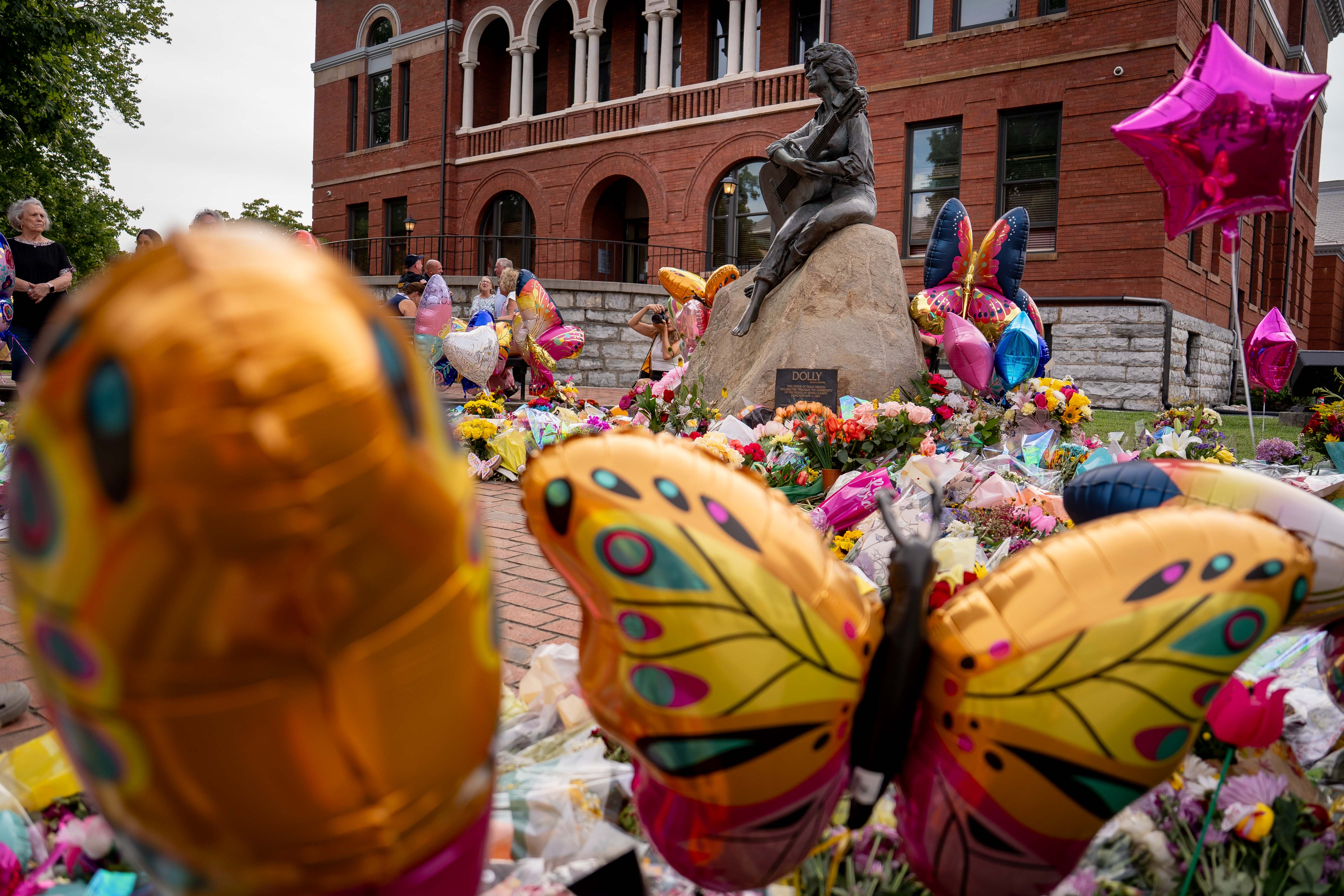
Americans of all stripes are mourning the loss of singer and philanthropist Dolly Parton, who died on Aug. 26 at the age of 80.
The outpouring of grief and mourning has exposed the complex and often contradictory identities Parton inhabited.
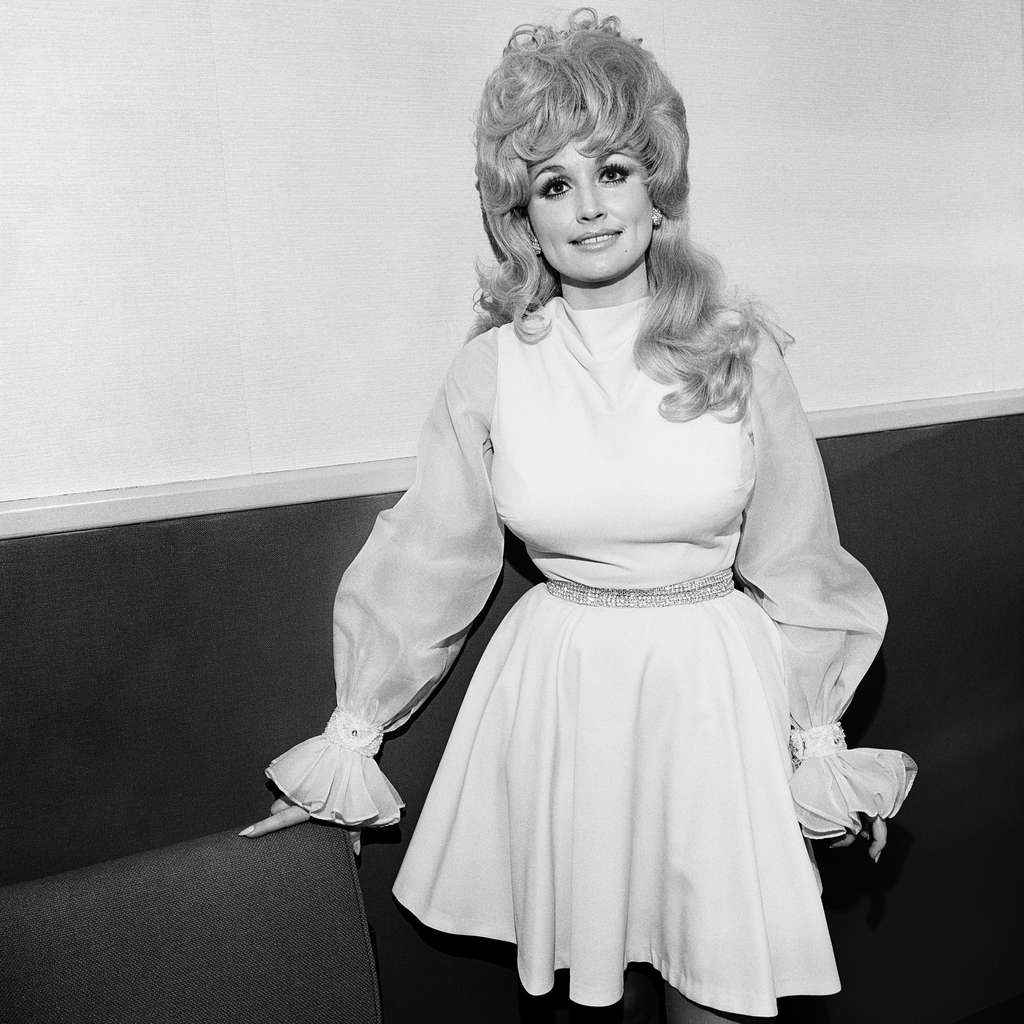
She was self-proclaimed poor “trash” from rural Appalachia — and proud of it. She regularly wore loud makeup and big hair, and had even bigger breasts, but she made sure she was taken seriously as a businessperson by the music establishment and Hollywood. She was a multimillionaire who connected with the working class.
Musically, Parton was a symbol of traditional country music, even as she crossed over into pop music in the 1980s. And she was a queer icon, yet, in her honor, the loudly anti-queer Trump administration ordered that flags be flown at half-mast.
Her complexities and contradictions reflected Parton’s enormous contributions to American history and culture, which crossed all sorts of ideological lines and made her genuinely beloved.
Dolly Parton’s aesthetic and style allowed her to celebrate a background that traditionally had been scorned. Women who were visibly sexual were branded trashy or sluts, and terms like “poor white trash” and hillbilly denoted racial and class hierarchies.
Parton, however, dismissed these historical connotations from her first days in the spotlight. She admitted that her style was “gaudy,” or “tacky,” and confessed that as a little girl she idolized a woman her mother called “trash.” She responded with, “Well mama, I want to look like trash.” She also embraced the “trash” label to talk about her hyperfeminine body presentation, which included ostentatious costumes, long nails and big hair.
As Parton’s star grew in the 1970s, and she refused to adopt markers of high-class femininity, she forced a rethinking of how society characterized women who had long been maligned for their sexuality and poverty.
For instance, in 1971, she released one of her biggest hits, “Coat of Many Colors,” which talked about her poor upbringing and a colorful coat that her mother made for her out of discarded rags. Her classmates ridiculed her, but rather than feeling ashamed, she felt pride in her “new” coat. This story demonstrated the hardscrabble, can-do spirit of the working class and illustrated the love Parton held for her family and her people.
The song’s reception also highlighted Parton’s unique knack for reaching multiple audiences. While its cultural dynamics shined through initially, years later, the song gained a new dimension when it became an anthem for LGBTQ Americans because of its message of pride in one’s self and the colorful similarities the coat shared with the LGBTQ pride flag.
“Coat of Many Colors” reflected how, throughout Parton’s career, her work subtly advocated for the marginalized. Nothing epitomized this better than “9 to 5,” one of her most famous songs and acting roles. In 1980, Parton released the iconic song as the theme for the movie of the same name.
The movie spoke to women, who were entering corporate America at an unprecedented rate. Yet, the Supreme Court had not yet declared sex discrimination illegal, and they encountered an environment full of glass ceilings, discriminatory language, sexual harassment and societal expectations to succeed even while maintaining a traditionally gendered home life. The song and the film took a clear stance: women belonged in offices and deserved to be treated with respect, regardless of their hair color or bust size.
In particular, Parton’s character Doralee spoke directly to the constraints clerical and administrative workers faced. Increasingly, as America deindustrialized, women constituted a growing percentage of the working class, and working class jobs became feminized. Invigorated by second wave feminism, working class women had been pushing for improved workplace conditions, including better wages and expanded opportunities for female administrative workers to move into management positions.
Made By History sponsors. FOR USE ON MADE BY HISTORY STORIES ONLY.Inquirer Staff
Parton’s title track directly addressed the frustrations driving these demands, lamenting, “They just use your mind and they never give you credit … for service and devotion you would think that I would deserve a fair promotion / Want to move ahead, but the boss won’t seem to let me / I swear sometimes that man is out to get me.”
The song was classic Parton, both celebrating workers’ daily grinds and speaking clearly about class exploitation.
The film itself presented these experiences of gender and class discrimination as part of a slapstick comedy. Yet, for mainstream audiences across the country, this softer, comedic approach to feminism and activism, made the very real plight of Judy (Jane Fonda), Violet (Lily Tomlin) and Doralee (Parton) relatable.
Two years later, in 1982, Parton once again used an acting role to speak up for women who were denigrated as disposable items when she starred in the movie adaptation of The Best Little Whorehouse in Texas. Parton’s character Miss Mona was a brothel owner who was fighting against moral crusaders attempting to close her down.
Denouncing the hypocrisy of men who privately availed themselves of women’s sexual services and then publicly shamed them as immoral, Parton’s character firmly established sex workers as people worthy of respect and dignity. Situated against the backdrop of a rising Moral Majority movement that fought to overturn reproductive rights, ban pornography and reverse anti-discrimination laws protecting people based on sexual orientation, Parton again used comedy to bring humor to a very real issue and, in doing so, made visible a group of people usually shunned by society.
Her devotion to calling for acceptance of people excluded from mainstream society continued throughout Parton’s career. In 1991, she released the song “Family,” which referenced LGBTQ people for the first time and exhorted people not to turn their backs on family members who were different. “Some are preachers / some are gay / some are addicts, drunks and strays / But not a one is turned away when it’s family.”
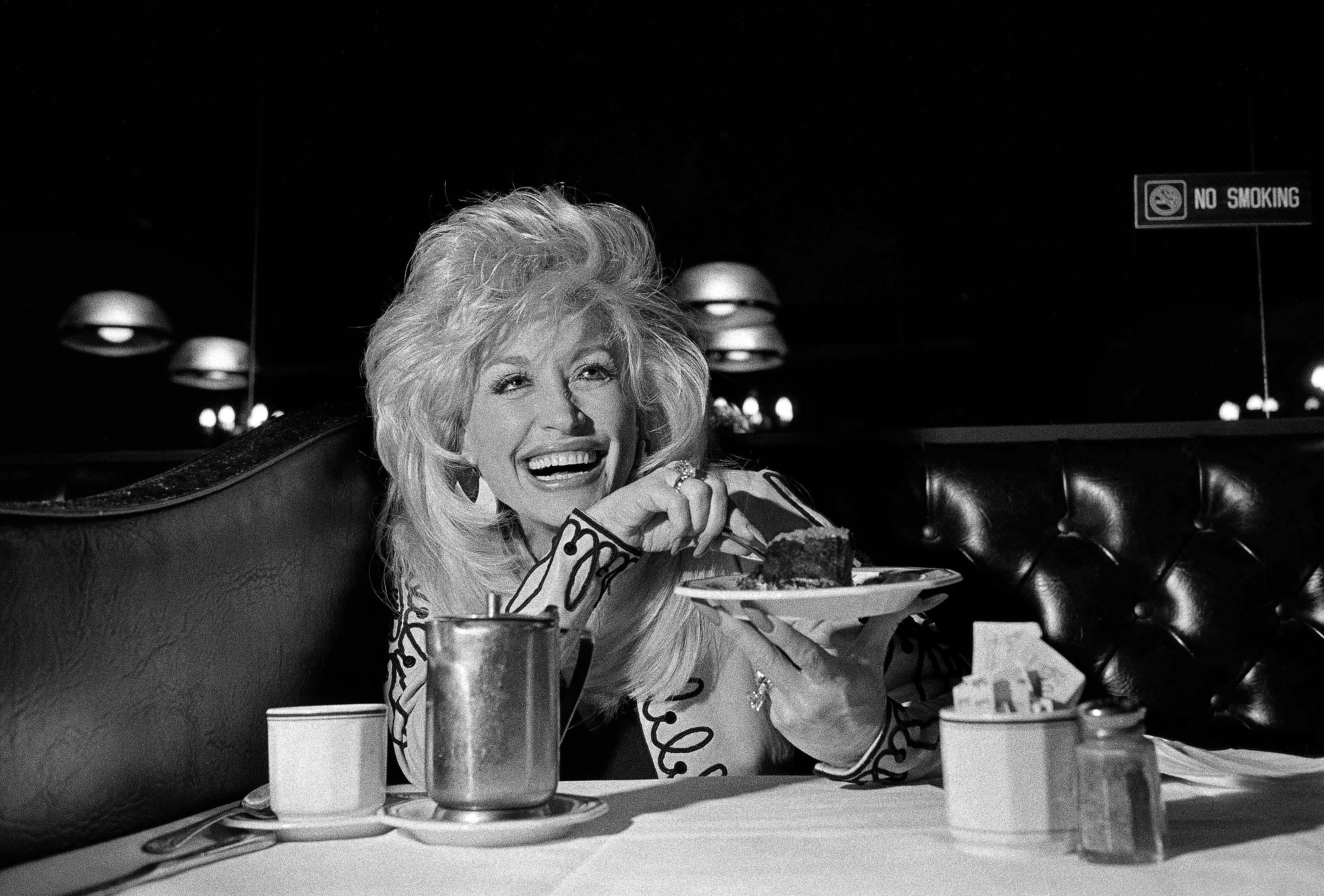
Dolly Parton savoring a chocolate mousse cake in New York in 1992. EDWARD KEATING
This was a powerful message at the height of the AIDS epidemic when gay men and intravenous drug users were among the most at-risk groups — both of contracting the virus, and of being shunned because of it.
At a moment when society was ostracizing and legislating against LGBTQ people, Parton instead called for acceptance. She stood by her message in “The Family” over the following decades. In a 2009 interview, she endorsed same-sex marriage, and in 2016 she opposed bathroom bans that limited transgender people’s access to public toilets.
Because of these stances, the LGBTQ community embraced Parton right back. Her songs and image have become mainstays used by drag performers, and in 2012 Parton related that she once lost a Dolly Parton look-alike contest to a drag queen. The ties between Parton and the queer community became so interconnected that, upon her death, CNN inadvertently aired an image of a drag performer during a tribute to the late singer.
Parton famously said, “Honey, there is no such thing as the real Dolly Parton.” She created a life of contradictions, and while her hair and makeup may have been fake, the power Parton held was very real.
She had a unique ability to transcend boundaries, allowing her to speak for people across classes, gender identities and sexualities. Her calls to support the downtrodden and shunned are her lasting legacy. Her ability to engage in such advocacy while continuing to be beloved across the political divide offers a lesson for all Americans.
Elyssa Ford is associate professor of history at Washington State University. Rebecca Scofield is professor of history at the University of Idaho.
Made by History takes readers beyond the headlines with articles written and edited by professional historians. Opinions expressed do not necessarily reflect the views of The Inquirer.
Until the 1750s, America was a community of loosely organized colonies where residents were content — if not happy — to be a part of the powerful British Empire.
But, after the colonists joined Britain to help the Crown win the French and Indian War, they started to wonder if it was worth it to remain the King’s subjects.
For one, King George III issued the Royal Proclamation of 1763 forbidding Americans west of the Appalachian Mountains, angering the land-hungry colonists.
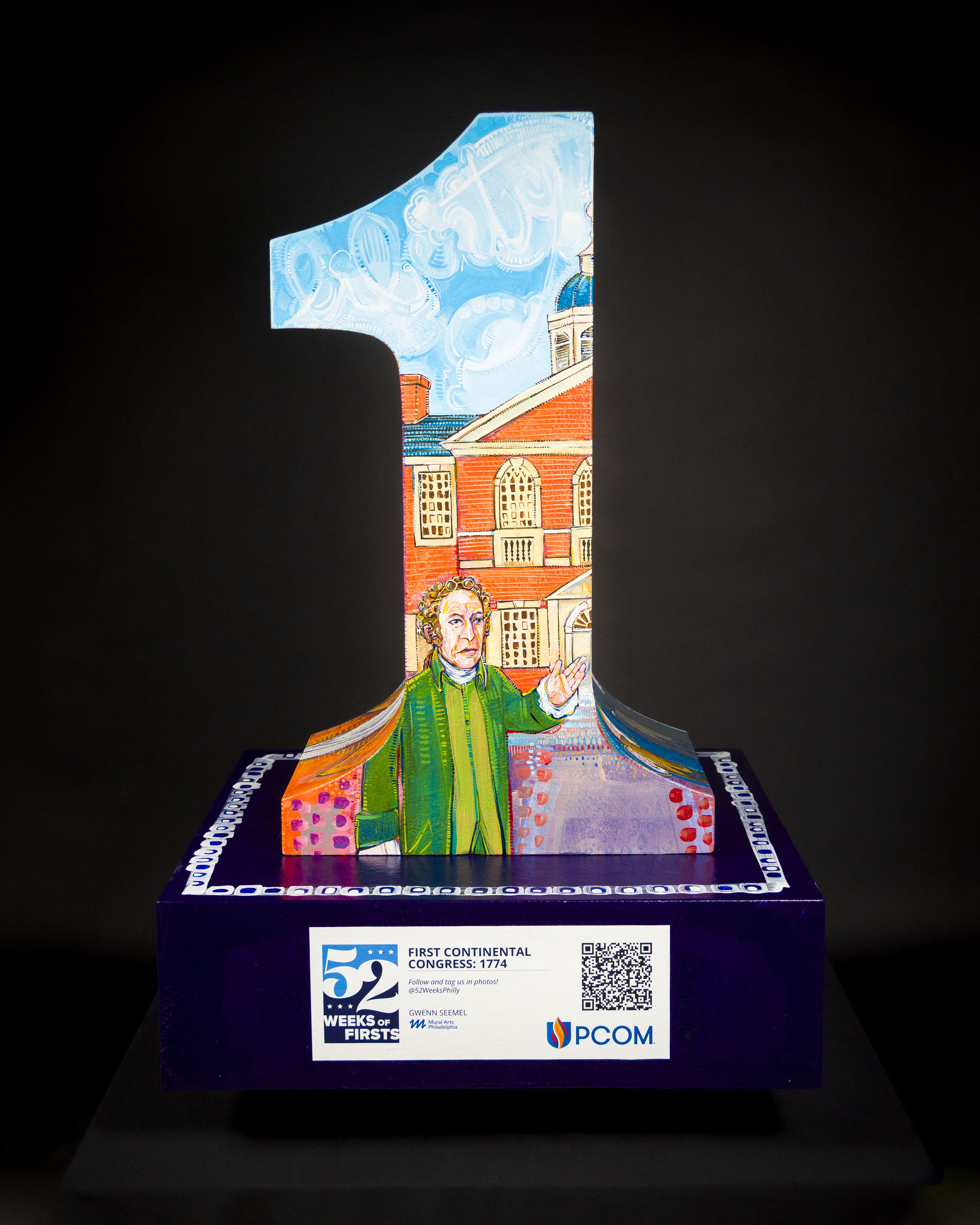
Gwenn Seemel depicts Patrick Henry in front of Carpenters Hall for the No. 1 in honor of the First Continental Congress.Gwenn Seemel courtesy of Colibrí Workshop
Then came the beginnings of taxation without representation. In 1765, England enacted the Stamp Act, levying a tax on every piece of paper, pamphlet, or card bought and sold in America. Eventually, the colonists rebelled and Britain repealed the act five months after it started.
However, the seeds of rebellion were planted.
Uncomfortable with angry subjects, Britain stationed troops in New England. Those rising tensions led to the Boston Massacre in 1770. In 1773, King George III taxed tea imported to the colonies from London. (He was insistent on collecting the colonists’ money by any means necessary.)
When tea arrived from London in Boston Harbor in December of 1773, colonists dumped it into the Atlantic Ocean. In retaliation to the infamous Boston Tea Party, the Crown levied a series of Intolerable Acts.
“In the eyes of the colonists, the Intolerable Acts were severe,” explained Michael Norris, the executive director of Carpenters Hall.
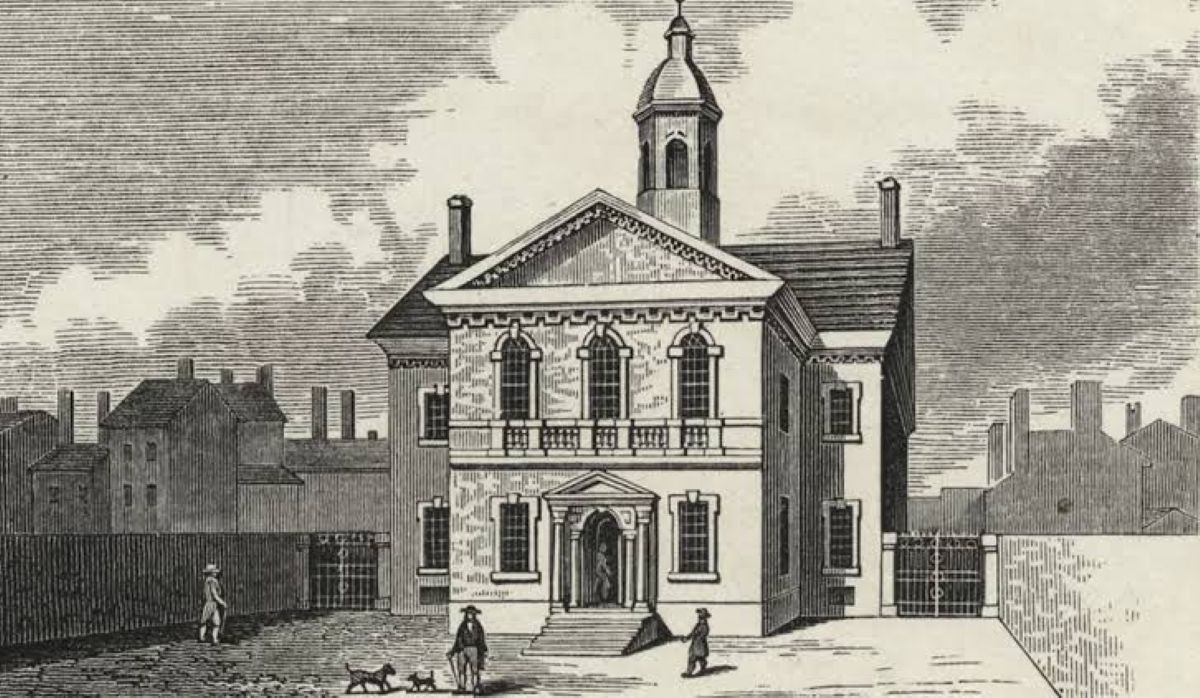
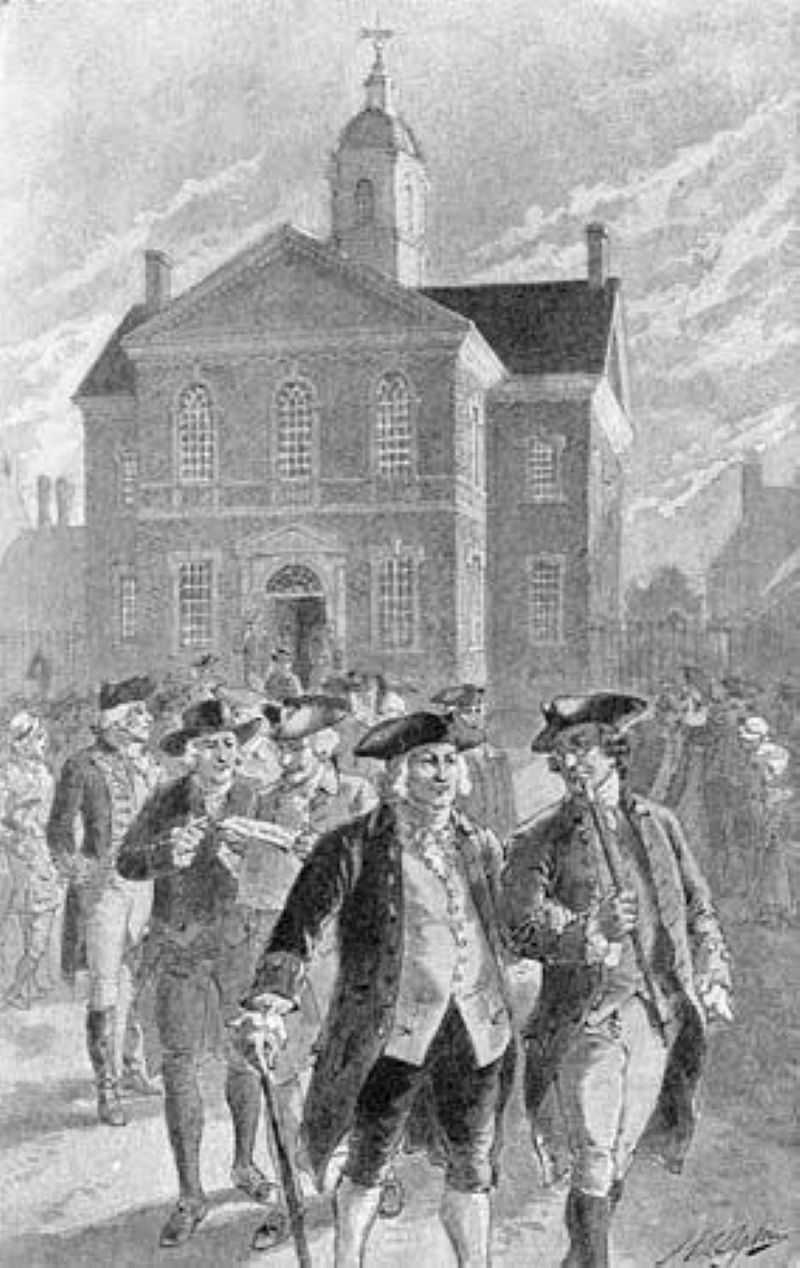
An etching of what Carpenters Hall looked like in the 1700s.Courtesy of Carpenters Hall
The acts, Norris explained, disbanded the Massachusetts legislature, putting Britain in charge of the state’s government. Britain closed the Port of Boston and stationed British troops in Massachusetts, requiring residents to feed, clothe, and house them.
The colonists thought, “if Britain could do this in Massachusetts, what would that mean to the rest of the colonies?”
On Sept. 5, 1774, 56 delegates from 12 colonies — Georgia didn’t come — convened at the then-new Carpenters Hall for the First Continental Congress. Their goal: to work out a deal between the colonies and their Mother Country so life in the New World could continue, albeit a bit smoother.
That first meeting of the Continental Congress will be remembered Saturday at Carpenters Hall from 11 a.m. to 1 p.m. during the Philadelphia Historic District’s weekly “Firstival” celebration. Each Saturday this year, the district is throwing a day party honoring events that happened in Philadelphia that changed the world.
For eight weeks, through Oct. 25, delegates hashed out a plan for independence and to heal their disagreement with the Crown.
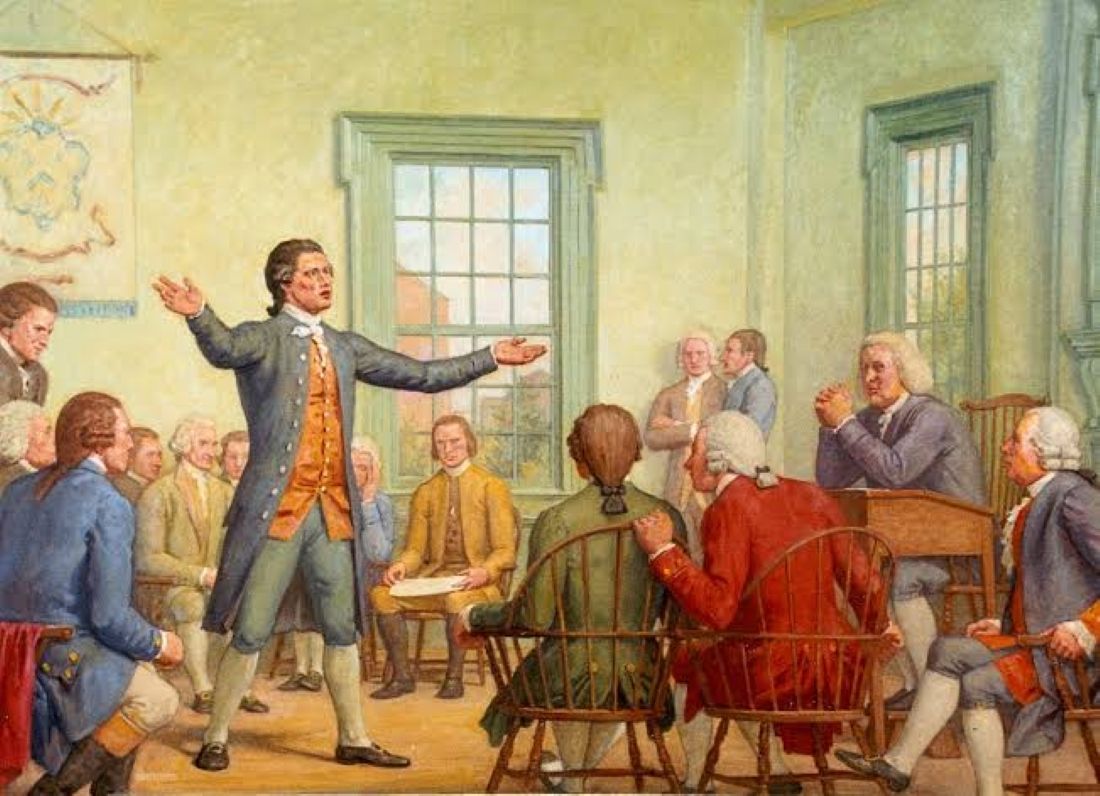
An etching of colonists and delegates gathering in front of Carpenters Hall.Courtesy of Carpenters Hall
They drafted a Declaration of Rights & Grievances in which they demanded England send its troops home and stated they wouldn’t stand for taxation without representation. (Historians refer to this declaration as a prelude to the Declaration of Independence.) Delegates also adopted the Articles of Association, in which they voted to stop all trade with England until the Intolerable Acts were repealed.
“They were trying to use their economic muscle to get England to the table,” Norris said.
The First Continental Congress created a unity among the colonies that hadn’t existed before, Norris said. “Up until then, they thought of themselves as British subjects, more connected to the Mother Country than their neighbors. The Congress changed this dynamic.”
This sentiment is best illustrated in Patrick Henry’s famous quote, during the opening sessions of that first Congress: “The distinctions between Virginians, Pennsylvanians, New Yorkers, and New Englanders are no more,” Henry said. “I m not a Virginian, but an American.”
It is why the late historian David McCullough referred to Carpenters Hall as the “acorn of American democracy.” It is where, Norris said, “the seed of independence was built that ultimately grew into the United States of America.”
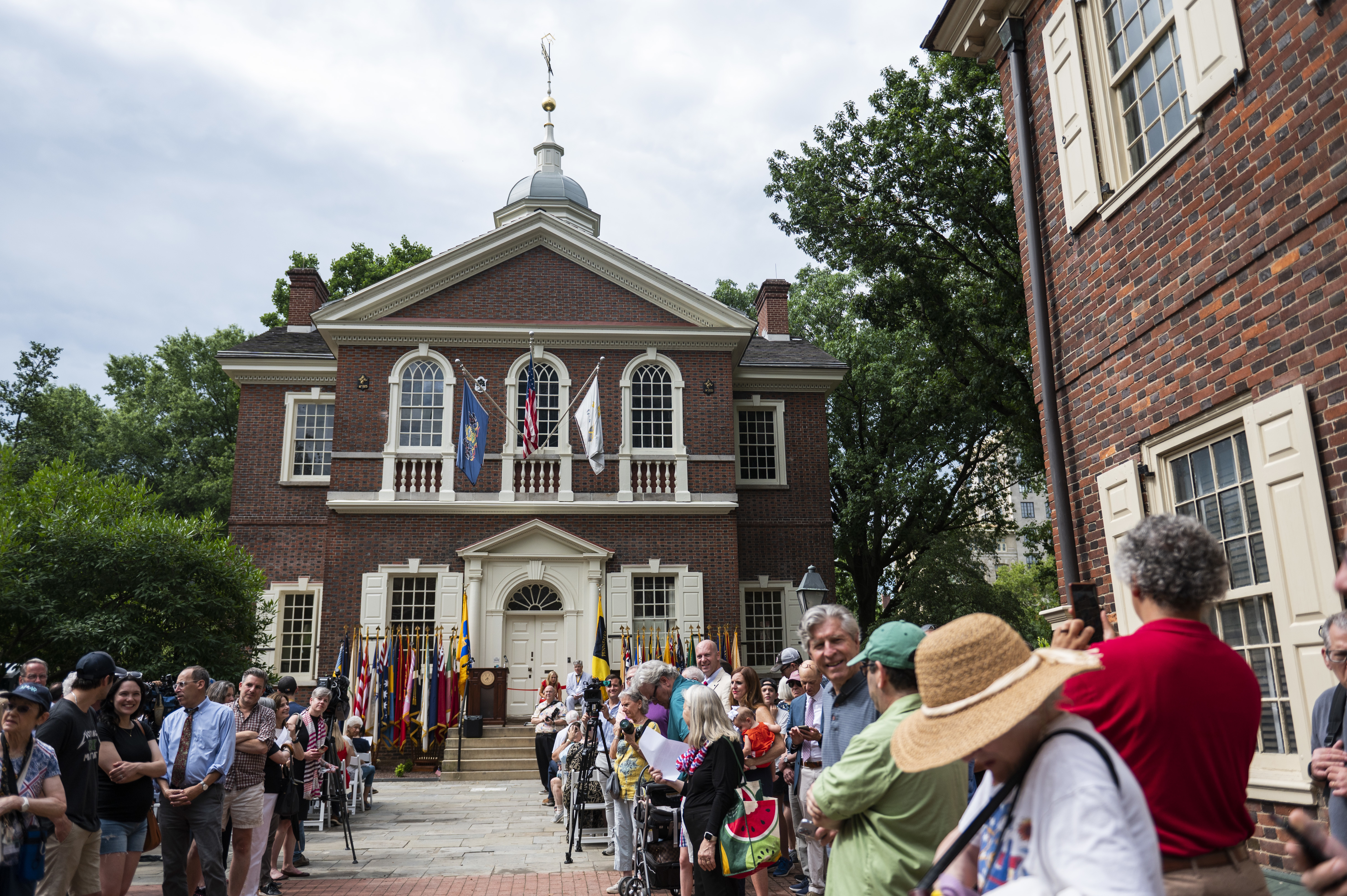
A reopening ceremony at Carpenters Hall on Monday, July 3, 2023. The building opened to the public for the first time since April 2022.Allie Ippolito / Staff Photographer
Delegates planned to reconvene in May of 1775 to address England’s response to their demands. But in April, the first shots of the Revolutionary War were fired and the Continental Army — victorious in the Battles of Lexington and Concord — were in a full-fledged war.
Making nice with England was completely off the table.
This week’s Firstival is Saturday, Sept. 12, from 11 a.m.-1 p.m., at Carpenters Hall, 320 Chestnut St., Philadelphia, Pa.
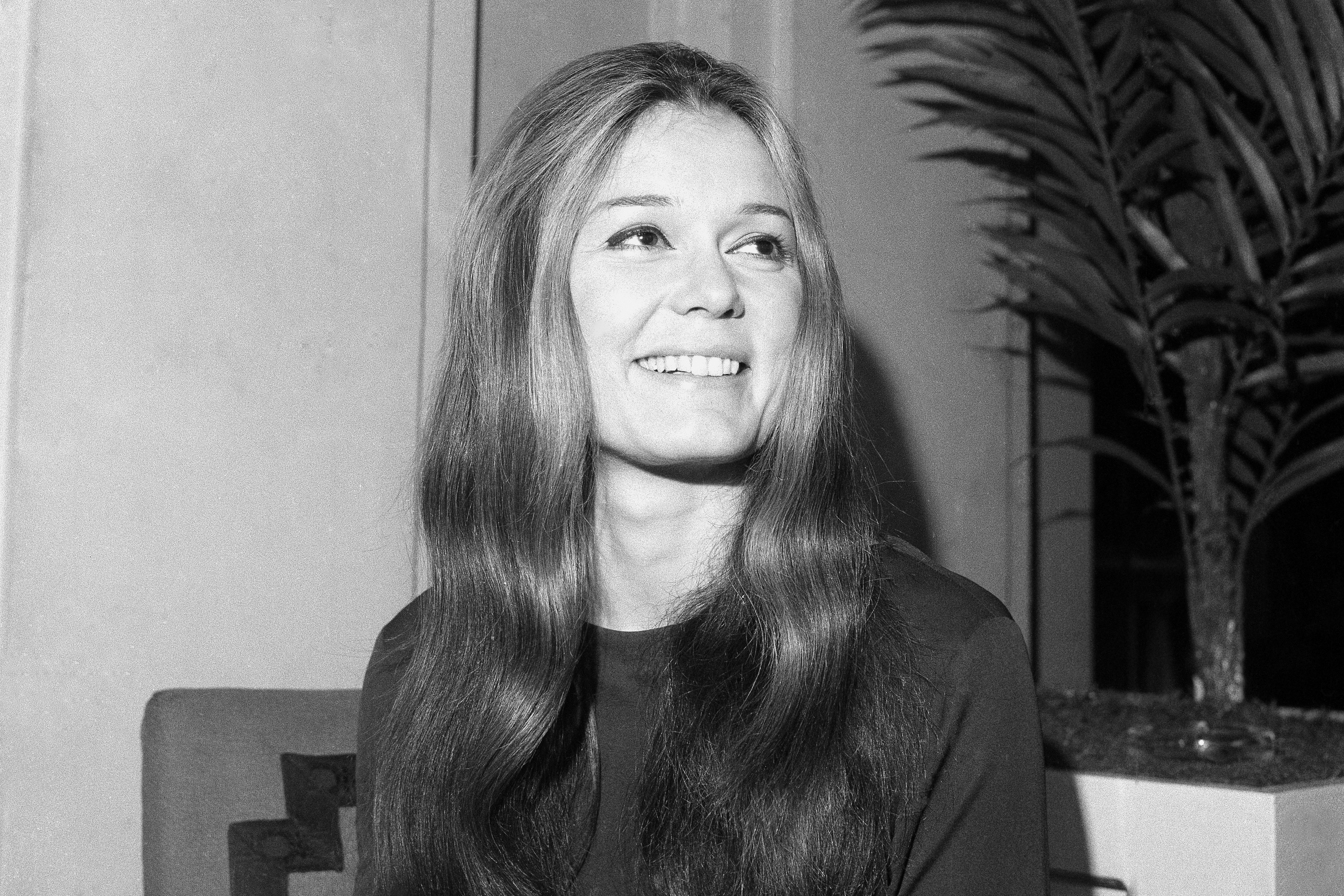
Gloria Steinem spent 18 months in India in 1957 and 1958 that set the trajectory for the rest of her life. She credited those pivotal months with teaching her to listen, to organize from the ground up, and to understand “radical” as going to the root of a problem rather than to its extreme. In 2007, she told two Indian interviewers, “If you want people to listen, you have to listen to them. I believe I learned that in India.”
Her connection to India began long before she got there. Her mother and paternal grandmother were Theosophists, or followers of a spiritual movement that borrowed from Hindu and Buddhist thought and treated India as the home of ancient wisdom. While a student at Smith College in the 1950s, Steinem studied with Vera Micheles Dean, a foreign policy scholar who wrote about India and was publicly accused of communist sympathies in 1954. During her junior year in Geneva in 1954-1955, she wrote a research paper on why the Communist Party of India had never become the country’s dominant party.
Then she got engaged, and she did not want to be. “Marriage meant the end of life to me,” she said years later. The Chester Bowles Asian Fellowship in India in 1956, the year she graduated from Smith, saved her from the marriage.
Smith students had spent years raising money to send graduating seniors to India as unofficial goodwill ambassadors to a country that had declared itself nonaligned in the Cold War. Chester Bowles, the former U.S. ambassador to India, gave a lecture and waived his fee; the money it raised went into two $1,000 scholarships the students named after him, each less than half what they estimated a fellow would need to live on. They sent two students anyway. Steinem was one.
She landed in Bombay in February 1957 expecting one country and finding another. A tall, turbaned man stooped into the plane and turned toward her. “I rose, sure that he was going to begin a speech of ‘Welcome to India, mystic heart of Asia, land of ancient cultures.’ He namasthed politely before me” — greeted her with palms pressed together — “took out a shiny red insecticide bomb, and said, ‘Stand still while I spray you.’” India, she wrote in her fellowship reports, “shatters Western romantic illusions with little ceremony.”
She was initially tasked with explaining American culture and excellence to Indian students. However, at Miranda House, a women’s college at Delhi University, her classmates ended up asking her to explain American politics instead. In one class, she reported, “we were asked the difference between the U.S. interference in Guatemala and the Soviet action in Hungary” — the CIA-backed coup of 1954 and the Soviet crushing of the Hungarian uprising in 1956. It “nearly shocked us into silence,” she wrote.
After the semester, when she could have gone home like most of the students around her, she chose to stay. She went first to the Himalayan foothills, to a study camp run by followers of M. N. Roy, an Indian former communist who had broken with Moscow. That is where she absorbed the idea that “radical” means going to the root of a problem, not to its extreme.
In the fall of 1957 she traveled south, to the ashram of Vinoba Bhave, a disciple of Gandhi who walked from village to village asking landowners to give land to the landless — and she found it nearly empty. Caste riots had broken out in Ramnad, a rural district in what was then Madras State, after the murder of a Dalit leader. The government had sealed the district and barred reporters. Teams from the ashram had walked around the roadblocks anyway.
She joined a team because it was short a woman. For a week they walked between villages. At night people came out and sat around a kerosene lamp in circles of six or twenty or fifty and told what had happened to them — burnings, murders, rapes. The teams listened. Steinem later called it “the ancient and modern magic of groups in which anyone may speak in turn, everyone must listen, and consensus is more important than time.”
She had no word for it at the time, but a decade later American feminists called it consciousness-raising, as they sat together and discussed their experiences in their everyday lives as women — soon coming to the conclusion that the challenges they faced were largely attributable to systemic inequalities.
Made By History sponsors. FOR USE ON MADE BY HISTORY STORIES ONLY.Inquirer Staff
Fifteen years after Ramnad, the first issue of Ms., the feminist magazine Steinem famously founded, had an eight-armed goddess on the cover holding a typewriter, a steering wheel, a frying pan. Steinem said the image “had come out of my Indian past.” The masthead listed everyone alphabetically. The editors met in a room she called “comfortable and shoe-less,” and set their own salaries around a table in a Chinese restaurant, with the highest capped at three times the lowest.
She showed up in India with every assumption a white American in the 1950s could have, then spent sixty years being corrected and saying so out loud. When she went back to India in the late 1970s, she met Kamaladevi Chattopadhyay, who had led Gandhi’s national women’s organization, and told her: “Well, of course, my dears. We taught him everything he knew.” Steinem repeated that story and others from her time in India for decades.
Here was a young woman whose assumptions were challenged, and who still wrote down her honest reflections. Steinem kept doing that her whole life — approaching new ideas, learning from her mistakes, adapting. For fifty years she acknowledged the global influences that shaped her, especially at home, in a country that mostly ignored them.
Rashida Shafiq is a historian of American foreign relations and women’s history. Her book manuscript, “The Method and the Machinery: Gloria Steinem, India, and the Cold War Making of American Feminism,” is in the works.
Made by History takes readers beyond the headlines with articles written and edited by professional historians. Opinions expressed do not necessarily reflect the views of The Inquirer.