Category: History

  • ‘The Secret Lives of Mormon Wives’ shines a light on the complex history of Mormon women

    ‘The Secret Lives of Mormon Wives’ shines a light on the complex history of Mormon women

    To the surprise of many, Hulu’s The Secret Lives of Mormon Wives (SLOMW) has met raging success, with Season 5 being filmed for release this fall. ABC cast SLOMW star Taylor Frankie Paul as the most recent lead of The Bachelorette, and two castmembers of Mormon Wives in its recent, widely viewed season of Dancing with the Stars. SLOMW’s Whitney Leavitt also headlined a record-breaking run in a Broadway production of Chicago.

    To a degree not seen since Mitt Romney’s presidential bid, or the smash hit musical The Book of Mormon, it seems like Mormons are having a moment. But notably, this moment belongs to Mormon women.

    Most Americans know very little about Mormon women, and what is known is often based on sensational stories about narrowly circumscribed gender roles and stereotypes about polygamy. The women of Secret Lives of Mormon Wives challenge these assumptions, projecting an image of influence, ambition, and agency that sits uneasily alongside popular assumptions about Mormon womanhood. As SLOMW reflects, there have been times in Mormon history when women have exercised substantial power and influence, often drawing on core doctrines that emphasize equality. Yet, Mormon women have also seen their opportunities revoked or diminished in tandem with political and cultural moments in the U.S. at large.

    Members of the faith credit Joseph Smith, Jr. as the prophet who formally established the Church of Jesus Christ of Latter-day Saints—commonly known as the Mormon Church—in 1830. At this time, the rights of women in the U.S. were broadly restricted. In most cases, women could not vote or run for political office, and married women were legally barred from owning property or keeping their own wages.

    Early Mormon history suggests possible openings for women’s power in the church and in doctrine. For one, the LDS Church recognized a feminine divine, taught about by Joseph Smith in the 1830s and 1840s. Some scholars have suggested that in the 1840s when Smith developed temple liturgies in LDS temples, he incorporated “elements that suggest he viewed women as holders of a form of priesthood.” This vision of ordained women was not realized, yet they held spiritual roles: women prophesied, performed blessings, and participated in their own rituals of “washing and anointing” before giving birth.

    In 1842, Smith’s first wife Emma Smith and others established the Relief Society, a women-only organization to “seek out and relieve the distressed.” It provided a platform for women to serve in church leadership capacities, fundraise and manage their own budgets, and publicly speak about religion. The confidence and community organizing skills Mormon women gained through the Relief Society set the stage for their entry into national political life.

    At the turn of the 20th century, Mormon women carried that same organizational energy into the women’s suffrage movement. White women in Utah were the first in the nation to vote in 1870, 50 years before the passage of the 19th Amendment. Initially, women’s suffrage in Utah was directly tied to the common practice of plural marriage—Mormon women believed they could use their vote to support polygamy and show that they were not “oppressed, helpless, and enslaved” as anti-polygamists claimed. Relief Society leaders developed education programs about the political process and civic engagement and sent Utah delegates to represent them at national suffrage conventions.

    The Relief Society that had been first established in the early 19th century became a key source of Mormon women’s activism, especially around voting rights, operating independently and managing its own funds. Emmeline B. Wells, one of Utah’s national suffrage delegates, served as Relief Society president and simultaneously edited the Relief Society magazine the Woman’s Exponent. Writing in a Relief Society handbook, Wells argued that “woman must be instrumental in bringing about the restoration of the equality which existed when the world was created.”

    However, Wells’ release from service as Relief Society president in 1921, “marked the beginnings of decades of declining institutional power for Mormon women,” as scholars of Mormon feminism have argued. Facing suspicion from other Christians, LDS church leaders emphasized alignment with conservative American values at mid-century, defining women primarily as mothers and homemakers rather than as independent spiritual practitioners as they had been in the early years of the church.

    Revised Church policies reflected this shift. Women’s blessings that began in Joseph Smith’s time ended in 1946. In 1954, motherhood was redefined as the counterpart to men’s priesthood, validating women’s exclusion from the priesthood. By 1967, women were no longer allowed to pray in weekly congregational Sacrament Meetings. And in 1970, the Relief Society lost financial independence to the male-run Church under the Priesthood Correlation program.

    Efforts to constrain women in narrowly defined roles grew in tandem with postwar national trends. Following World War II, cultural pressures mounted for working women to return to domestic life, with marriage, motherhood, and homemaking recast as women’s primary obligations—a retrenchment that would spur new feminist movements in the 1960s and 1970s.

    By the early 1970s, when Congress moved to pass the Equal Rights Amendment—which would have upheld equality regardless of sex—the Mormon Church funded an effort to ensure its defeat. It organized speakers and published oppositions to it in official LDS communications. Many women supported the Church’s anti-ERA stance, concerned that the amendment might expand abortion access and LGTBQ rights—policies that in their view went against LDS principles.

    Alternatively, some Mormon women believed the church’s progressive doctrine regarding women and their own advocacy for women’s educational and political advancements were closely aligned with the aims of the ERA. Sonia Johnson, a fifth generation Mormon and feminist activist, formed the “Mormons for ERA” group. They protested the church‘s anti-ERA position, notably chaining themselves to the gates of the Seattle Temple Open House in 1980, while urging Americans to bar missionaries from their homes until the church changed course.

    Johnson testified to a Senate subcommittee regarding Mormon theology and the ERA. But she was officially excommunicated from the church in 1979 for “spreading false doctrine and working against both the teachings of the Church of Jesus Christ of Latter-day Saints and its leaders.”
    Made By History sponsors. FOR USE ON MADE BY HISTORY STORIES ONLY.Inquirer Staff

    The church and its membership continue to battle between changing with the times and hewing to traditionalism, with advancements and setbacks on both fronts.

    For example, the priesthood and temple ban on members with African ancestry was lifted in 1978, the BYU’s Women Research Institute began organizing a women’s conference in 1984, temple marriage ceremony language changed for women from “obeying their husbands” to “hearkening their husbands” in 1990, and Chieko Okazaki became the first woman of color appointed to the General Relief Society Presidency also in 1990.

    Yet, the church also deepened its commitment to rigid gender hierarchy. In 1995, President Gordon B. Hinckley declared that God’s commandment to “multiply and replenish the earth remains in force,” sex should explicitly be between a lawfully wedded man and woman, children are entitled to be born “within the bonds of matrimony,” and that God divinely wants fathers to “preside over” their families and mothers are “primarily responsible” for nurturing their children. Hinckley’s declaration provided religious justification to keep women out of formal employment, focusing instead on maternal, homemaking, child-rearing responsibilities.

    In a surprising move, the Church lowered the missionary age for women from 21 to 19 in 2012, more than doubling the number of women serving missions. While service remains optional for women, the policy change gave young women more access to similar spiritual training and church leadership opportunities predominantly accessed by men while serving a full-time mission before fulfilling their duties as wives and mothers. That a single policy change could so dramatically reshape women’s participation reveals just how much institutional gatekeeping, rather than women’s desire or capacity, had long determined the boundaries of their religious lives.

    Although discredited by Church officials,The Secret Lives of Mormon Wives may be expressing a form of power and independence that Mormon doctrine claims to support—but which the institution struggles to grant in practice. Mormon women are not flat, oppressed, one-dimensional characters. SLOMW highlights this dichotomy for global audiences—with messaging coming directly from the women themselves rather than from the patriarchal and tightly controlled organization.

    Mallory Hutchings-Tryon is an educator and historian at the University of Washington whose work sits at the intersection of gender equality, education policy, and religious autonomy.

    Made by History takes readers beyond the headlines with articles written and edited by professional historians. Opinions expressed do not necessarily reflect the views of The Inquirer.
  • Birthright citizenship is constitutional. But some Americans have always had to prove themselves worthy.

    Birthright citizenship is constitutional. But some Americans have always had to prove themselves worthy.

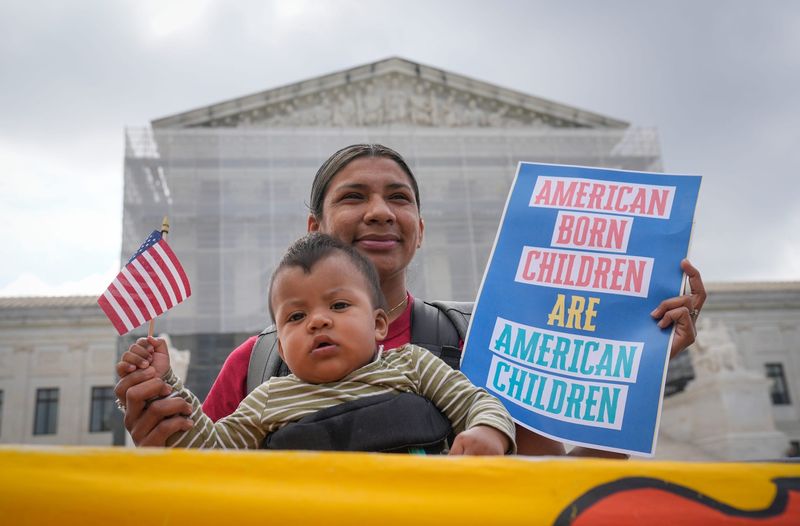
    As the Supreme Court considers President Donald Trump’s effort to narrow birthright citizenship, the administration has cast the issue as a defense of the value of U.S. citizenship rather than simply a change in immigration policy. In court, Solicitor General D. John Sauer argued that automatic citizenship “demeans the priceless and profound gift of American citizenship,” and Trump later called the current system “STUPID” on Truth Social.

    But the current fight is about much more than constitutional wording. It is the latest chapter in a long history of deciding that some people born in the United States still must prove they deserve to belong.

    That is not a new problem in American history. Birthright citizenship has long been one of the clearest places where the United States has worked out the boundaries of national belonging. On paper, the 14th Amendment seemed to settle the question after the Civil War. Anyone born in the United States and subject to its jurisdiction was a citizen. But almost immediately, that promise ran into a familiar problem: many Americans were willing to defend universal principles only until those principles extended to people they considered outsiders.

    That tension came into full view in United States v. Wong Kim Ark in 1898. Wong was born in San Francisco to Chinese immigrant parents. When he returned to the United States after a trip abroad, officials detained him and argued that his birth on American soil did not make him a citizen after all. The logic was plain enough. His parents were Chinese, Chinese immigrants were racially excluded from naturalization, and anti-Chinese officials insisted that the children of such immigrants could not truly belong either. The Supreme Court rejected that argument. It affirmed that birth in the United States, not the race or legal status of one’s parents, established citizenship. But the case mattered precisely because it revealed how badly exclusionists wanted a different outcome. They wanted citizenship to depend on lineage, not principle.

    Wong Kim Ark clarified the constitutional rule, but it did not end the effort to define the nation more narrowly. That effort moved simply moved elsewhere. Lawmakers could not easily strip citizenship from people born here, but they could still shape the nation by trying to restrict who could enter in the first place.

    The Johnson-Reed Act of 1924 did exactly that. It used national-origins quotas to privilege immigrants from northern and western Europe while sharply restricting others and effectively excluding most Asians on explicitly racial grounds. The law did not abolish birthright citizenship but rather worked around it. It sought to preserve a preferred vision of the nation by controlling the people who might one day reproduce it. Immigration control became a way to manage the future population of the nation.

    That narrowing of belonging did not stop at the border. During the Great Depression, Mexican repatriation campaigns pushed hundreds of thousands of people of Mexican descent out of the United States, including many U.S. citizens. As historian Adam Goodman argues, the long history of expulsion in the United States has always been about power: the power to determine who may remain, who can be removed, and who gets cast as outside the nation in the first place.

    That history is worth dwelling on because it makes something painfully clear. Even formal citizenship has not always guaranteed a person’s recognition as fully American. In moments of panic and xenophobia—such as when the U.S. forcibly removed and incarcerated Japanese-American citizens during World War II—race and presumed foreignness could override legal status.

    The United States also developed a more selective politics of inclusion. During the Cold War, the country welcomed many refugees, but it did so unevenly and strategically. As historians like Carl Bon Tempo have shown, this process was shaped by foreign policy goals, domestic political pressures, public attitudes toward newcomers, and changing ideas of American identity. For example, refugees fleeing communist regimes like Hungary and Cuba were often easier to recognize as worthy because their stories served a larger ideological purpose for the United States. Their flight to the U.S. helped tell a flattering story about the United States as a refuge of freedom standing against communism. On the other hand, asylum claims of those fleeing right-wing regimes such as El Salvador and Haiti, were denied en masse. The United States distinguished between the refugees it wanted and the refugees it preferred not to see.

    That is the longer history behind the present fight. American policy has repeatedly distinguished between the people imagined as rightful members of the nation and those treated as suspect, alien, or disposable. Sometimes exclusion worked through immigration restriction. Sometimes it worked through expulsion. Sometimes it worked through selective refuge. But the basic logic remained recognizable across time. Belonging was never simply given. It was sorted, ranked, and politically constructed.

    And that is still the case. In my current work as a fellow at the Public Religion Research Institute (PRRI), I study how immigration debates continue to function as debates over nationhood and belonging.

    On one level, Americans still describe the nation in civic terms. In PRRI’s 2025 American Values Survey, 93% said that believing in individual freedoms is important to being truly American, 91% said believing in the Constitution, and 89% said accepting people of diverse racial and religious backgrounds. Those are the kinds of answers Americans like to give about themselves. They describe a nation rooted in principle, rights, and pluralism.

    But the same survey points to another vision of the country, one that is narrower and more exclusionary. Seventy-five percent of Americans polled said speaking English is important to being truly American. Fifty-four percent said being born in America. And 57% said believing in God, with 43% explicitly saying being a Christian. Those numbers matter because they show that civic ideas of membership still coexist with older assumptions about inherited religious and cultural belonging. The nation may be described in universal terms, but many Americans still imagine it in more bounded ways.

    OLD IMAGE — DO NOT USE — Made By History sponsors. FOR USE ON MADE BY HISTORY STORIES ONLY.Inquirer Staff

    That same tension appears in immigration attitudes more broadly. PRRI found strong support for a pathway to citizenship for undocumented immigrants who meet certain requirements. But it also found that 37% of Americans support detaining undocumented immigrants in internment camps until they can be deported, and 32% favor deporting undocumented immigrants to foreign prisons without allowing them to challenge their deportation in court. Those are not just policy preferences. They reveal how easily legal exclusion and coercive state power remain available when migrants are cast as outside the circle of national concern.

    That is why the present debate over birthright citizenship matters so much. The Supreme Court case may seem technical or narrowly constitutional. The irony is that the legal principle itself is not especially ambiguous. Wong Kim Ark settled the matter more than a century ago.

    What remains unsettled is the political desire to narrow the boundaries of belonging. Again and again, Americans have used citizenship and immigration law to distinguish between those whose presence affirms the nation and those whose presence is treated as a problem. The country remains divided over a deeper question. Is the United States really a civic nation, or will it reserve full belonging for those who fit more narrow criteria of who Americans are supposed to be.

    E. Kyle Romero is an assistant professor of history at the University of North Florida where he writes and teaches on the history of U.S. foreign policy, immigration, and humanitarianism; he has previously served as a postdoctoral fellow at the Dickey Center for International Understanding at Dartmouth College, and is currently a fellow at the Public Religion Research Institute in Washington, D.C.

    Made by History takes readers beyond the headlines with articles written and edited by professional historians. Opinions expressed do not necessarily reflect the views of Inquirer editors.

  • This week in Philly history: Girard College quietly admits first Black students

    This week in Philly history: Girard College quietly admits first Black students

    By the afternoon of Sept. 11, 1968, the hostility had faded.

    Neither the Rev. Dr. Martin Luther King Jr. nor Cecil B. Moore was making rousing speeches outside Girard College’s wrought-iron front gates.

    No human barricade of police officers blocked the entrance, and no civil rights groups marched through North Philadelphia.

    After a brutal fight to desegregate the private boarding school, which started with an intense seven-month demonstration and then spent years tied up in the court system, the color barrier was pierced without protest.

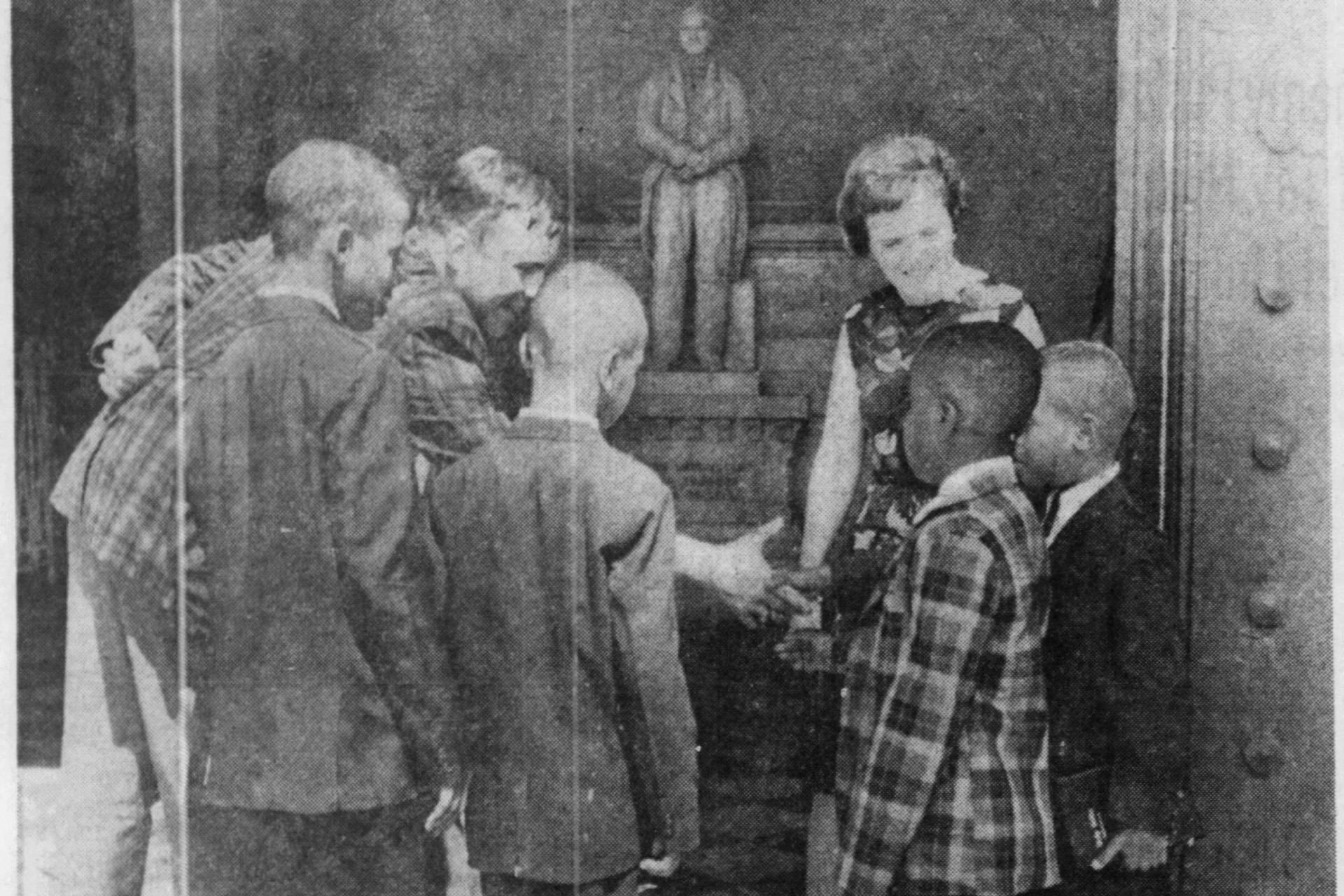
    Four little boys, dressed in suits and ties and carrying their favorite board games, walked to the front door of marble-faced Founder’s Hall at 21st Street and College Avenue, and reported for their first day of second grade.

    Mothers and grandmothers and siblings accompanied each child, and a gaggle of photographers and reporters attempting to capture the otherwise-calm moment circled each family.

    “Nice place,” 11-year-old William Lenzy Dade told The Inquirer, “I didn’t expect it.”

    The school was the brainchild of French merchant Stephen Girard, a childless entrepreneur who amassed an immense wealth in Philadelphia in the aftermath of the American Revolution. Upon his death in 1831, he set aside a then-fortune of $2 million to start a boarding school for “poor, white, male orphans.” The school opened in 1848, and offered a premium education at no cost to select students whose families had a single guardian.

    By the 1960s, the campus’ imposing stone walls became a metaphorical obstacle to the enclosed white-columned buildings. Moore, then the Philadelphia NAACP president, led the charge and a lawsuit to force Girard to desegregate. In 1965, the animosity escalated into sometimes-violent confrontations with police. But demonstrators continued undaunted, singing and chanting and marching so those four boys could be the first Black students admitted to the private school.

    Owen Gowans III was 7 when he walked through those gates in his bright, green-and-brown plaid jacket, the last of the four to arrive.

    “Are you nervous?” a reporter asked.

    He just shook his head.

    In 2015, as part of an anniversary celebration of the school’s integration, Gowans found the words.

    “I’m just humbled by what transpired,” he told The Inquirer. “I’m appreciative to the people who put up with beatings and bad words so people like me could go to school here.”