Category: History

  • The Black women whose voices lifted hearts at the March on Washington

    The Black women whose voices lifted hearts at the March on Washington

    After hours of wandering and waiting in the late August heat of the nation’s capital, the hundreds of thousands gathered for the 1963 March on Washington were welcomed with a program announcement by the march’s architect, labor leader A. Philip Randolph. In his signature baritone, he announced, “Permit me to present to you to sing the national anthem, Miss Camilla Williams.”

    More than a few marchers may have shared a puzzled glance. The march leaflets offered that none other than the diva Marian Anderson would open the day’s program of 18 speakers and songs. The march’s planners and crowds alike would have remembered Anderson’s historic 1939 Easter Day concert. At that time, Anderson had been barred, like all African American performers, from taking the stage at Constitution Hall — the Daughters of the American Revolution venue. With support from first lady Eleanor Roosevelt and Interior Secretary Harold Ickes, however, Anderson sang instead at the Lincoln Memorial before an interracial crowd.
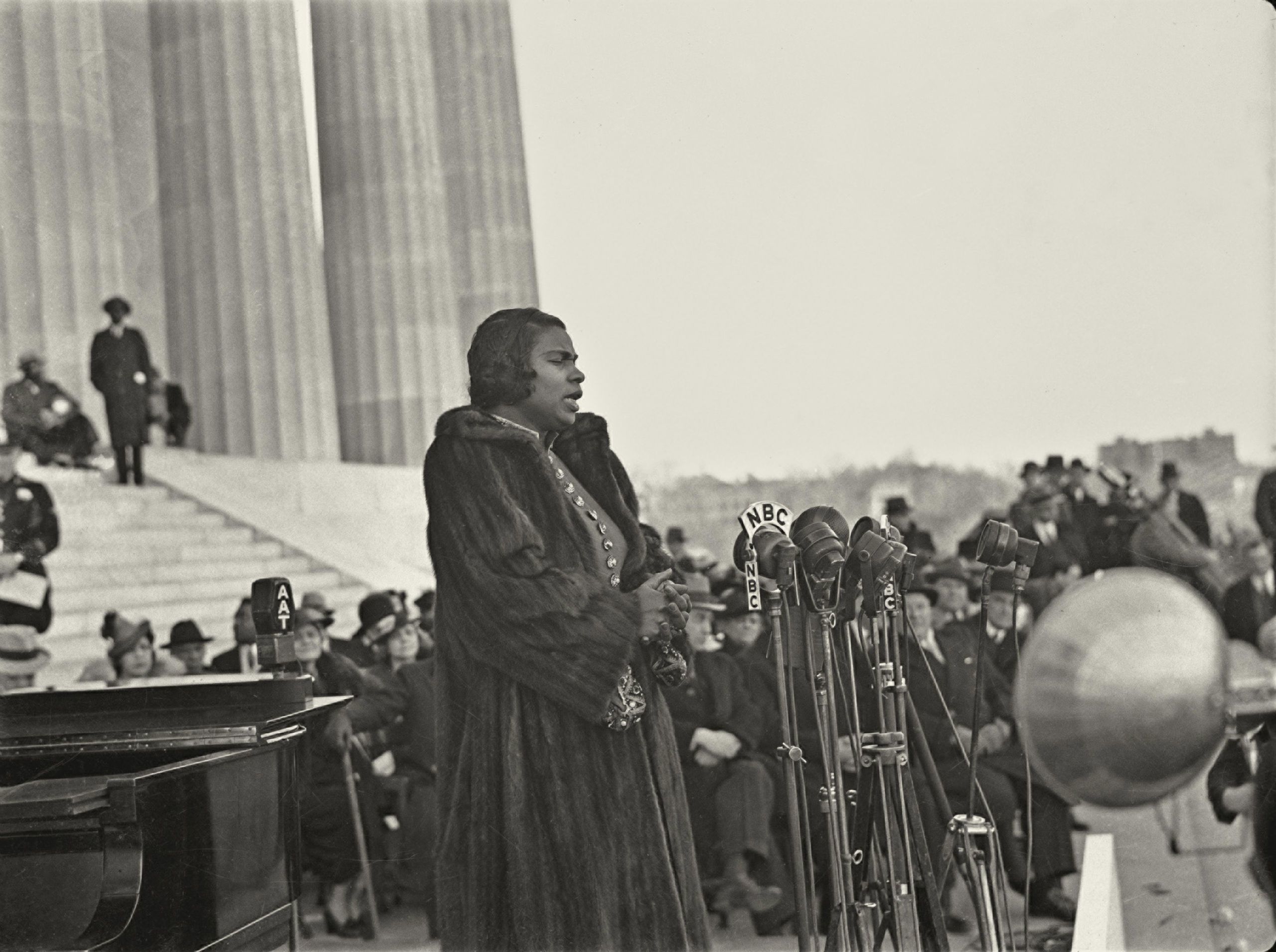
    Marian Anderson singing at the Lincoln Memorial on Easter Sunday, 1939.World History Archive / Alamy Stock Photo

    The moment elevated the Philadelphia native beyond her status as a pioneer in opera and made her a symbol of a nascent civil rights struggle. In the estimation of the march planners in August 1963, there was none other than Anderson who could set the right tone for a day fueled by idealism, as well as calls to action.

    But that Wednesday afternoon, the contralto was stuck in the monstrous traffic surrounding the National Mall, and Randolph, likely in consultation with his lieutenant, Bayard Rustin, called forward Camilla Williams, Anderson’s protégé.

    By 1963, Williams had also fought hard to establish herself in the racist and exclusionary world of opera. Born in Danville, Va., in 1919, she landed in Philadelphia after her local community raised funds to help her continue her music education up north. When she arrived in the city, she paid the bills by selling concessions at a movie theater, while she trained with some of Anderson’s former teachers. Williams, an early recipient of a Marian Anderson Scholarship, eventually debuted at the New York City Opera in Madame Butterfly and later lent her voice to a recording of George Gershwin’s Porgy and Bess.

    A seasoned performer, she opened the program for the 1963 March on Washington. The substitute rose to the occasion, and the crowd responded with the first of several rounds of rapturous applause and shouts that roiled across the rows of NAACP chapter members dressed in their church outfits, young rebels in denim, and clergy in full vestments. Eventually, traffic cleared, and Anderson arrived, as well, making her way to the multi-microphoned platform to sing “He’s Got the Whole World in His Hands” to an adoring audience.

    Anderson and Williams were two of only four women whose voices were heard by the marchers that day. Most accounts of the March on Washington focus on Martin Luther King Jr.’s “I Have a Dream” speech, and to a lesser degree, John Lewis’ controversial and fiery address about the slow pace of social change in America. Sixty-three years later, the voices and vision of several key women of the march have yet to be fully recognized and appreciated.

    The march was born from the struggles of Black labor organizers who understood the importance of taking up the problems of racial caste and class together, not separately. Randolph and Rustin, with political theorists, leftist activists, and labor organizers, had conceptualized the March on Washington during World War II to pressure the federal government to desegregate the military and provide fair employment opportunities for Black workers. At every turn, Randolph consulted and relied on female comrades who shared his leftist political inclinations, including legal scholar Pauli Murray, pacifist Pauline Myers, labor organizer Maida Springer, longtime National Council of Negro Women leader Dorothy Height, as well as Anna Arnold Hedgeman, the only woman on the march’s New York-based planning committee.

    By the time of planning for the 1963 march, men dominated — men led all the supporting organizations, and the programming committee resolved to schedule speakers based on those groups. Despite their decades-long commitment to the March on Washington Movement, the women of the march were never able to pierce the ranks of executive leadership, nor serve as spokespeople for the larger civil rights struggle. As the movement gained steam into the 1950s and 1960s, male religious leaders — like King — and institutional heads calcified an image of who was leading.

    Made By History sponsorsInquirer Staff

    With weeks to go before the assembly, however, organizer Hedgeman argued for a last-minute addition to the schedule. She sought to honor Black women who had struggled in the many fights to desegregate schools, eradicate Jim Crow laws, and secure voting rights. In an appeal to her colleagues, Hedgeman argued, “In light of the role of Negro women in the struggle for freedom and especially in light of the extra burden they have carried … it is incredible that no woman should appear as a speaker.” Her chastening confrontation was met with no resistance, but the depth of her frustrations was never fully recognized. A hastily planned tribute would have to do.

    In the end, her recommended “Tribute to Negro Women Freedom Fighters” barely scratched the surface, offering just a nod to the depth and breadth of leadership and passion so many Black women offered the freedom movement.

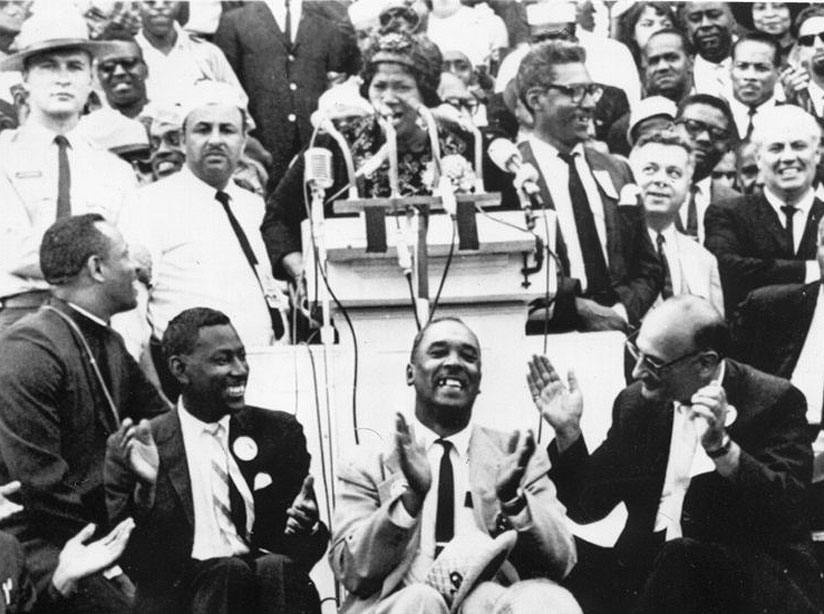
    The crowd heard directly from Daisy Bates, coordinator of the school desegregation battle in Little Rock, Ark., in 1957, and from gospel great Mahalia Jackson, a personal friend to King. Their words and lyrics soared. Bates pledged that Black women would “sit-in … kneel-in, and … lie-in, if necessary, until every Negro in America can vote.”
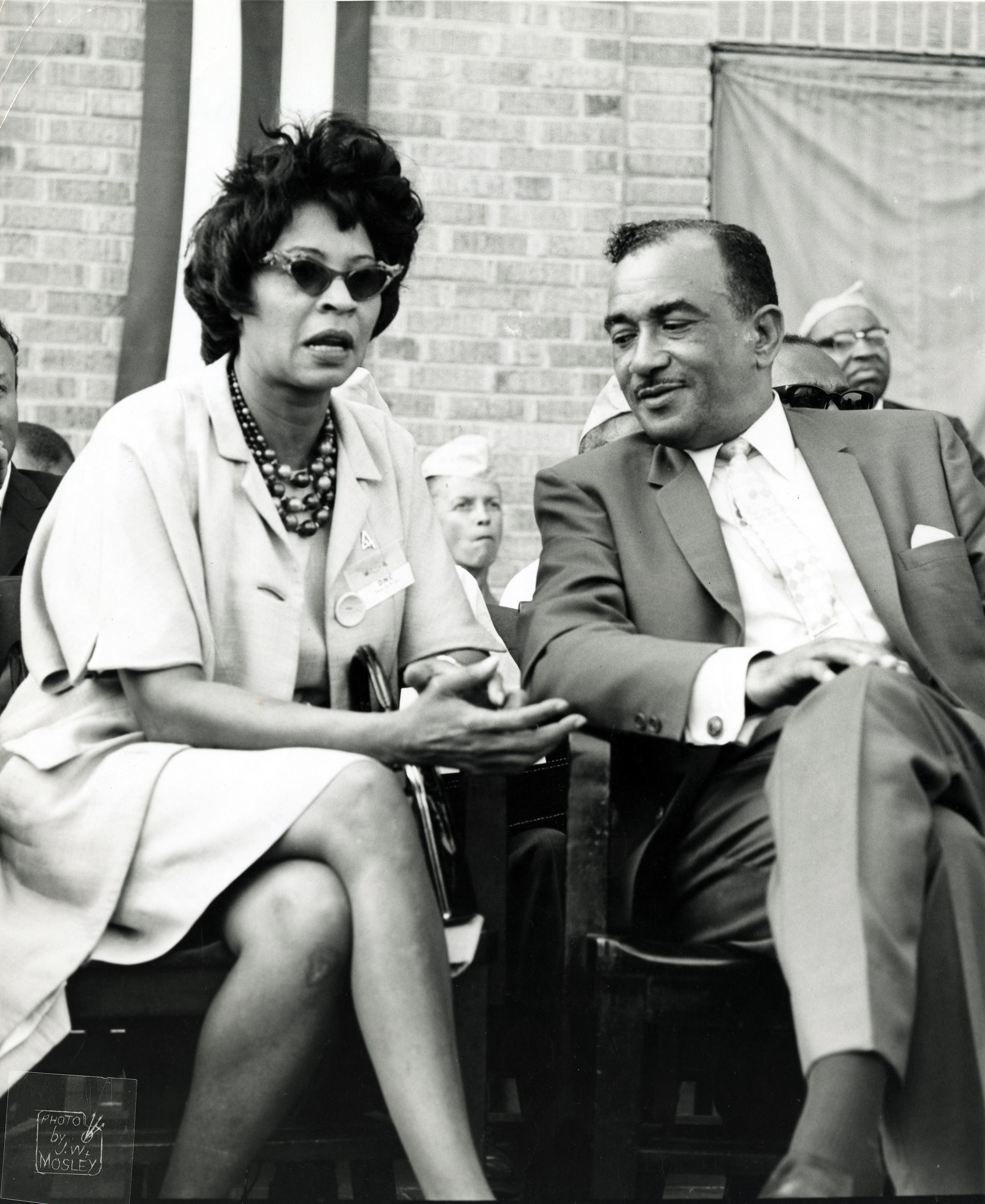
    Cecil B. Moore and Daisy Bates at the 1964 Democratic National Convention in Atlantic City.Photo Credit: John Mosley Collection, Courtesy Charles L. Blockson Afro American Collection, Temple University Libraries, Philadelphia, Pa.

    Jackson was prompted to deliver an encore, and as she sang the gospel hit “How I Got Over,” the dignitaries behind her closed their eyes and swayed to the beat.

    I’m gonna thank him for heart felt religion

    I’m gonna thank him for a vision

    I’m gonna sing hallelujah

    Oh, shout all my trouble over

    But three female singers, one speaker, and one “tribute” didn’t begin to convey the contributions of Black women to the movement. In truth, Black women often struggled against the choke hold of racism and sexism they faced in local and national organizations, and their relative absence on the stage of the march spoke to a deeper silencing.

    Each year, the anniversary of the March on Washington is marked by remembrances that venerate Dr. King even as they fail to recognize the depth of his message. The speeches that day touched on a range of issues: a still-prescient critique of automation, exposure of police brutality, advocacy for work training to reduce unemployment, as well as a higher federal minimum wage.

    But there was more to it than that: It was an inspiring day, but also, for Black women involved in the struggle, a disappointing day. Remembering the march, as a movement and as an event, we can remedy the silences by learning about the women who, through their music and their intellect and their leadership, allow us to keep dreaming.

    Marcia Chatelain is a Presidential Penn Compact Professor of Africana Studies at the University of Pennsylvania. She is the author of the forthcoming book “How Bright the Path Grows: The Untold Story of the Women Who Made the March on Washington” (Pantheon Books, 2026).

    Made By History takes readers beyond the headlines with articles written and edited by professional historians. Opinions expressed do not necessarily reflect the views of The Inquirer.
  • Phillies and Cubs set a record that still stands in a ‘weird’ game on this week in Philly history

    Phillies and Cubs set a record that still stands in a ‘weird’ game on this week in Philly history

    The Inquirer’s headline called it a “weird” game.

    The Chicago Tribune called it a “comedy of runs, hits and errors.”

    More than 100 years later, record-keepers call it baseball history.

    The game

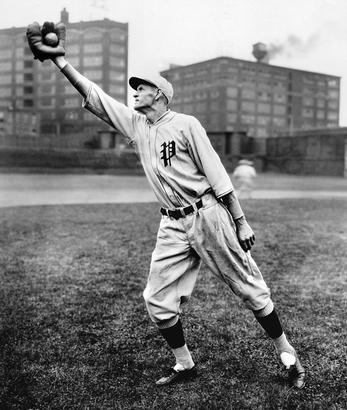
    On Aug. 25, 1922, a windy-day matchup between the visiting Philadelphia Phillies and the Chicago Cubs accounted for 49 runs, the most ever recorded in a Major League Baseball game.

    That record remains unbroken.

    “Cubs and Phillies hooked up in what was advertised as a baseball game,” The Inquirer noted, “but which turned out early to be a comic opera to the tune of base hits.”

    The two teams met at Cubs Park, which would not adopt the name of Philadelphia native William Wrigley Jr. until 1926.

    More than 7,000 fans turned out for the Friday matinee, which started well enough: The Cubs jumped to a one-run lead, but a series of Cubby errors put the Phils up by three in the second inning.

    But the Phillies would not lead again for the rest of the game.

    The Cubs scored 10 runs in the second inning, and 14 in the fourth.

    The Phillies put up six runs between the third and fifth innings, eight runs in the eighth inning, and six more in the ninth, but could not fully catch up.

    And when the last out was recorded, the Phils left the bases loaded.

    The record

    When the basepath dust had settled, the two teams accounted for 51 hits, and 49 runs, “which established a new world’s mark for modern baseball,” The Inquirer noted.

    The teams also set records for most runs in one inning (14), number of at-bats by one player in one inning (3), number of hits by a team in one inning (11), and the season record for number of runs scored by one team over nine innings, besting the previous record of 19.

    But the Phillies were on the wrong side of history.

    They lost, 26-23.

    The Philadelphia baseball club got some measure of revenge more than 50 years later, beating the Cubs in a 10-inning slugfest at Wrigley Field, 23-22, on May 17, 1979. Their combined 45 runs counts as the second-most runs ever scored in a game.

    Close enough.

  • What’s so surprising about a Christian Democrat?

    What’s so surprising about a Christian Democrat?

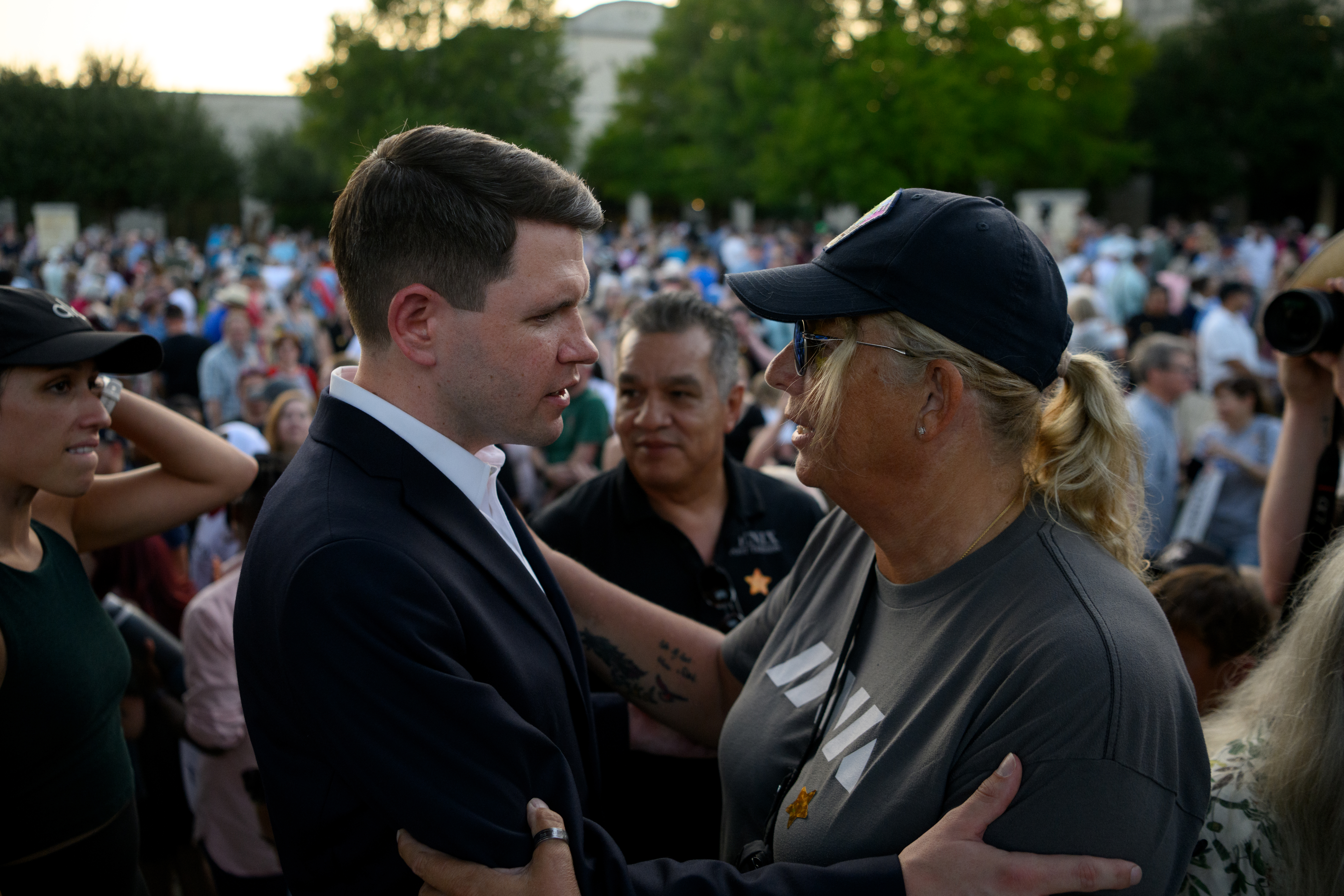
    In early July, before the 250th anniversary of the nation’s founding, Texas Democrat James Talarico preached on the proper place of religion in politics. In his sermon, he argued for the importance of the separation of church and state while emphasizing that religion could still inform a person’s approach to and involvement in politics. He stressed how Christianity should shape the tone of one’s politics. Drawing on Jesus’ Parable of the Good Samaritan, Talarico claimed that loving one’s neighbor includes respecting people of different faiths.

    This message raised the ire of Talarico’s opponent, Ken Paxton, and many evangelicals have questioned the legitimacy of his faith. But he’s also earned the applause of a few Christian conservatives such as David French, who approvingly contrasted Talarico with MAGA Christian politicians.

    Talarico is not alone. There are currently a dozen ordained Christian ministers running for various public offices as Democrats, including Lutheran Pastor Sarah Trone Garriott (Iowa’s Third Congressional District), and United Methodist Pastor Adam Hamilton (Kansas-U.S. Senate).

    Many of these politicians, including Talarico, Trone Garriott, and Hamilton, have emphasized their religious faith not only as a part of their overall message, but they have situated their Christianity at the core of their identity. While there’s nothing “new” about Democratic politicians whose religious identity is central to their politics — this was common a century ago with progressives such as William Jennings Bryan and Barbara Jordan during the Civil Rights era (and still is quite common among African American politicians) — today’s candidates do represent a departure from the trend of the past four decades of Democratic Party politics.

    It hasn’t always been this way. Prior to the 1980s, candidates conversant in religion were common and unremarkable. At the time, evangelical and “mainline” Protestants were not aligned with political parties in the way they are today. As social scientist Ryan Burge has pointed out, in the 1970s most white evangelicals were Democrats and evangelicals helped elect “born again” Jimmy Carter in 1976 — the so-called “Year of the Evangelical.”

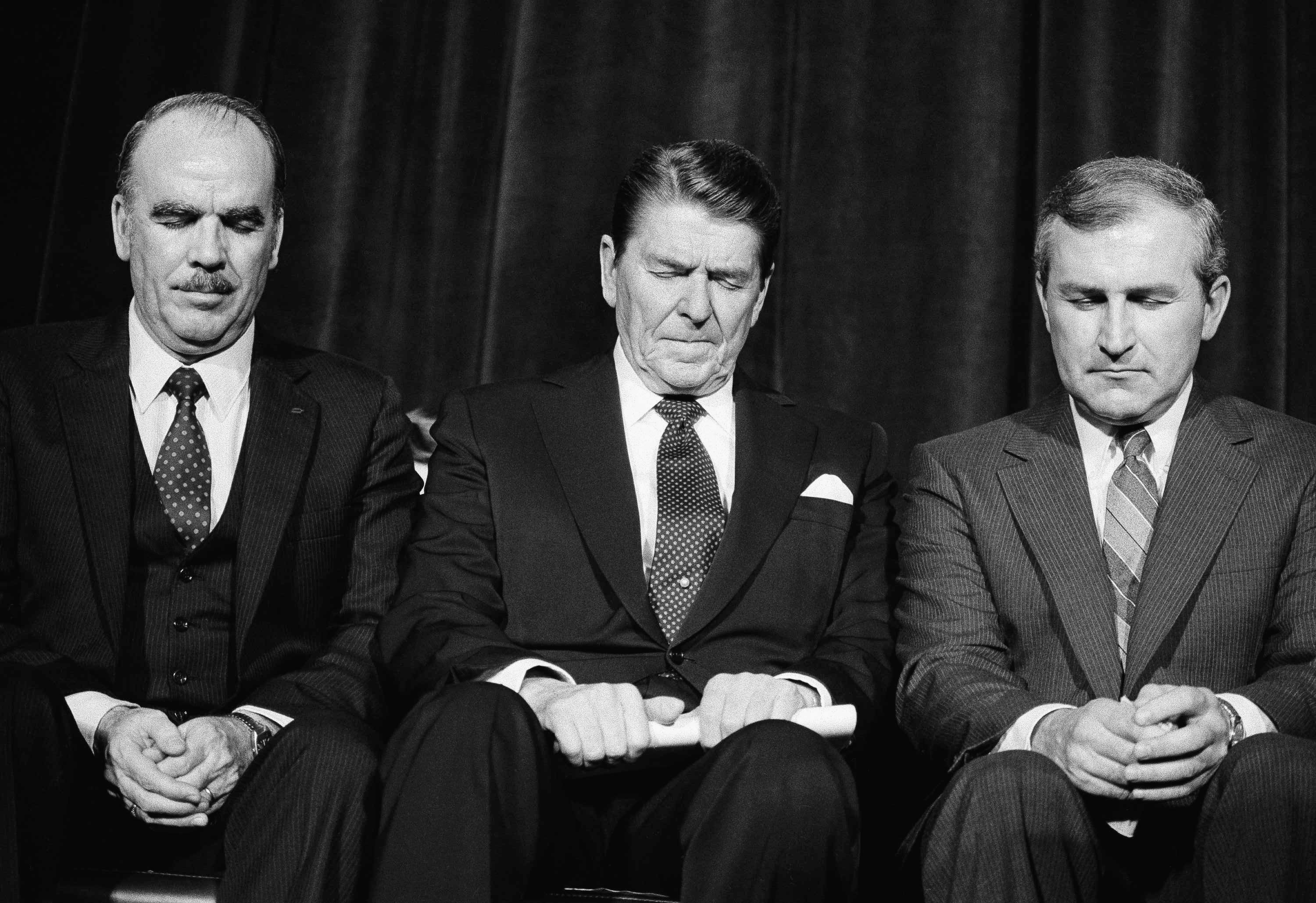
    President Ronald Reagan prays with National Association of Evangelicals President Arthur Gay, left, following his address to the organization’s convention asking for help in winning approval of a constitutional amendment permitting prayer in school in Columbus, Ohio, March 7, 1984.Barry Thumma

    But evangelicals’ rejection of Carter for reelection in 1980 signified an important shift for both parties. Explanations for white evangelicals’ turn away from Christian politicians like Carter and toward Ronald Reagan and the Republican Party — newly perceived as a reliably religious unit — usually point to several events in the 1970s.

    By 1972, the number of delegates at the Democratic National Convention identifying as agnostics, atheists, or people who almost never attended church had grown to 24% (compared to 5% of Americans who listed “no religion” on the General Social Survey.) These delegates helped to add progressive positions on women and gay rights into the party platform at a time when they were to the left of mainstream America’s sensibilities.

    Then in 1978, the IRS targeted mostly white private elementary and secondary schools, sometimes known as “segregation academies,” many of them religious, that had formed in response to desegregation, threatening their tax-exempt status unless they could demonstrate non-discrimination toward Black students. Additionally, by this time, the Supreme Court’s 1973 decision in Roe v. Wade began to galvanize evangelical activists in a space that had been historically dominated by Catholic priests and laypeople.

    Both of these issues came together in the 1980 election, the latter thanks in part to the attention Francis Schaeffer drew to the issue in his writings and speeches across America and the organizing of Jerry Falwell Sr.’s Moral Majority. Because of the growing number of Democrats who self-identified as atheist, agnostic, or non-church attending, white Democrats tended to cede the religious political ground to the new Religious Right, even though plenty of Democrats were religious. Over the next decade, this helped create a binary between a “religious traditionalist” Republican Party and a “secularist progressive” Democratic Party.

    The Rev. Jerry Falwell speaks at his Thomas Road Baptist Church in Lynchburg, Va., in a 1999 photo.

    Demographic trends over the next 40 years reinforced this shift. In 1975, 30% of Americans were part of the Protestant “mainline” (e.g. United Methodist, Evangelical Lutheran, Presbyterian USA, Episcopal Church, American Baptist, Disciples of Christ, and United Church of Christ). Today the mainline only accounts for between 9% and 13% of Americans. Theories for this decline abound, including loss of identity, aging congregations, poor retention of children as they grow into adulthood, controversies over sexuality, ordination of women and LGBTQ clergy, and same-sex marriage, which led to conservatives joining more evangelical churches.

    Over this same period, the number of Americans identifying as “unaffiliated” (the so-called “nones”) rose from 5% to nearly 30%.

    Factors driving this growth include people being more willing in a secularizing environment to admit they aren’t religious, young people who choose not to identify with any religion, and the general population becoming less religious over time. Democrats have enjoyed a decided advantage among the voting “nones” going all the way back to the 1984 election.

    For Black Americans, there has also been a more modest decline in affiliation with historically Black churches (e.g. National Baptist, Church of God in Christ, and AME Zion). Yet these churches have maintained a continued source of relevance for Black Protestants, playing a vital role in Black life as a source of social support, political organizing, community engagement, aid to the needy, and defense against racism and ethnic solidarity. Today, 53% of African Americans are still associated with historically Black Protestant churches, which probably accounts for the persistence over the past 40 years of progressive Black politicians with ministerial credentials.

    Meanwhile, evangelicals shifted from a slight majority favoring the Democratic Party before the 1980s toward a reliable core of the Republican Party, at a moment when their numbers were increasing. By the end of the 20th century, evangelicals grew to represent nearly 30% of all Americans, in part by having larger families, retaining their children in the church at higher rates, and maintaining cultural and theological distinctiveness.

    Collectively though, these trends meant the Democratic Party became less beholden to a religious demographic within its own constituency, and consequently, religiously-oriented politicians seemed less relevant to the Democratic Party.

    Made By History sponsors. FOR USE ON MADE BY HISTORY STORIES ONLY.Inquirer Staff

    The exception was the African American wing of the party, where Christianity remained central to most voters’ identities. Here, a political figure like U.S. Sen. Raphael Warnock (senior pastor of Ebenezer Baptist in Atlanta, a historically Black mainline church that Dr. Martin Luther King Sr. and Jr. pastored) is not exceptional. The Black church’s historic emphasis on social issues and inequality allowed for adherents’ continued support of Democratic candidates who were white and less religious, even as it did lead to some tension over progressive social goals, such as same-sex marriage.

    In fact, it was the emergence of a Black politician in 2004, then-Senate candidate Barack Obama, who helped call attention to the dearth of religiously-conversant Democratic politicians, arguing that his party needed to reengage religiously-affiliated voters. From 2004 to 2008, the Democratic Party emphasized outreach to religious voters in a concerted way. But after the 2008 election, and Obama’s win, this focus for the Democrats declined so much so that, by 2016, Michael Wear and others involved in rallying Democratic religious voters for Obama had become frustrated at the lack of dedicated outreach.

    So, does the emergence of Democratic politicians such as Talarico, Trone Garriott, and Hamilton signal a new shift on the order of what happened in the 1970s?

    It may be too early to tell.

    It may be, as Wheaton College Professor Esau McCaulley has argued, that the emergence of these politicians is linked to the backlash growing among Protestants tired of MAGA evangelicals defining what Christianity means in America today. Or, perhaps, these candidates are simply the culmination of a growing recognition within the Democratic Party of its need to reengage Christian voters.

    Regardless, it’s not an accident that the new crop of ordained Democratic candidates are located in regions of relative mainline Protestantism vibrancy in the Midwest and South.

    With the exception of Presbyterian Pastor Matt Schultz of Alaska, all 12 of the ordained candidates are running in Midwest or Southern states. Perhaps, politicians such as Talarico will succeed in reshaping how Christianity functions in the political space and reclaim a lost politics of religion within the Democratic Party. Time will tell if they are part of a new vanguard, or only a brief aberration.

    Joseph P. Slaughter is an associate professor of history and religion at Wesleyan University. His first book, “Faith in Markets: Christian Capitalism in the Early American Republic,” demonstrates how religious identities in the United States’ early decades influenced economic decision-making and the formation of the American capitalist system.

    Made by History takes readers beyond the headlines with articles written and edited by professional historians. Opinions expressed do not necessarily reflect the views of The Inquirer.
  • Eight firefighters were killed battling a massive refinery blaze on this week in Philly history

    Eight firefighters were killed battling a massive refinery blaze on this week in Philly history

    The match was struck without a hiss.

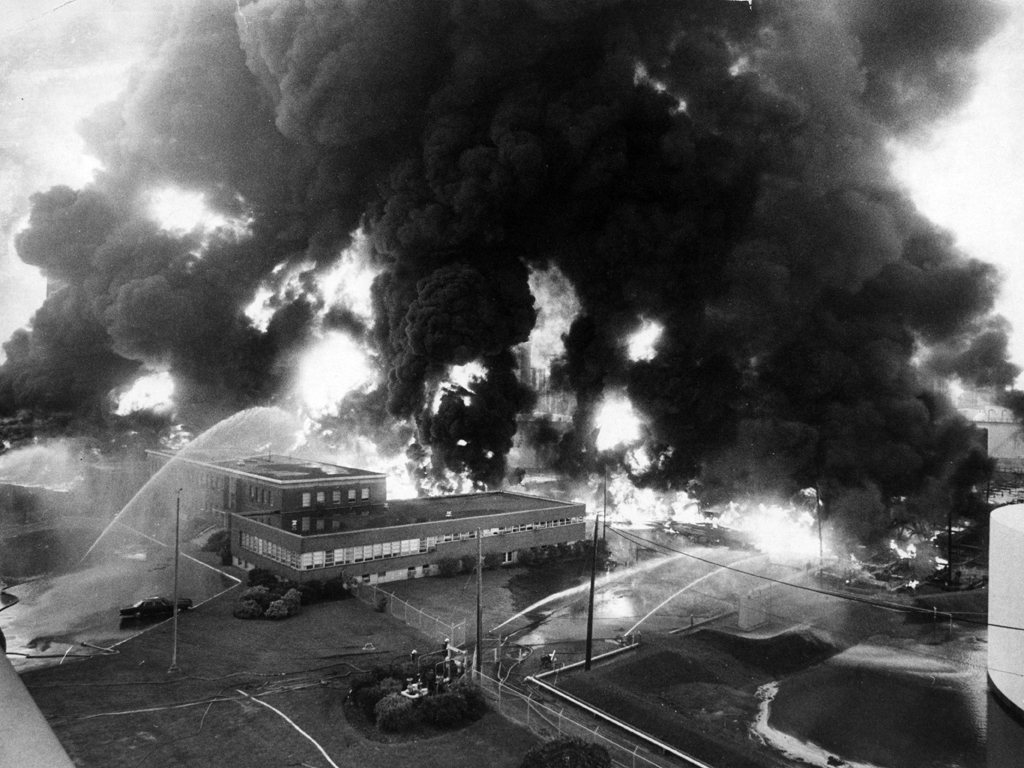
    In the early hours of a summer Sunday morning, vapors snuck out of an overfilled oil storage tank and snaked through the hulking Gulf Oil Refinery smeared along the Schuylkill in Southwest Philly.

    What happened next was so destructive, and so deadly, it was assigned a chilling and haunting label: “Refinery Holocaust.”

    Nightmare fuel

    Around 6 a.m. on Aug. 17, 1975, the vapors found an ignition source in a nearby boiler house.

    The overfilled storage tank, which at the time was being filled from a Venezuelan tanker, contained more than 70,000 barrels when the fire started.

    The explosion at the sprawling refinery Gulf called Girard Point drew a massive response from local fire departments.

    Teams coated the oil-slicked flames with firefighting foam, and the six-alarm blaze was declared under control just before 9 a.m.

    Eight hours later, a second explosion rocked the refinery, spreading to more storage tanks and sending racing flames through waist-deep pools of water mixed with oil and chemicals and engulfing a group of firefighters standing in those pools.

    The second explosion elevated the inferno to 11 alarms.

    Ruin and ashes

    Under thick clouds of charcoal-gray smoke a day later, three Gulf employees steered a rowboat over the toxic pools to shut off a valve that was spewing liquid naphtha. The highly flammable chemical used in the refining process was fueling the last fire, and the last dangerous threat.

    On Aug. 26, nine days after the escaped vapor silently swept through the refinery and ignited a blaze that wreaked $10 million (or more than $60 million today) in damage, the last of the flames were finally and fully extinguished.

    The Daily News noted that the occasion was celebrated by those in attendance with cigars and watermelon.

    Investigators ultimately concluded that inattentive employees had let the tanks overfill, and the buildup of flammable vapors ultimately led to the explosions. The city cited and fined the corporation for code violations.

    Many large storage tanks, the refinery’s office building, and an assortment of pipelines and processing units were wiped out.

    Six firefighters died at the scene, two others succumbed later to severe burns, and more than 30 were injured — two critically — in what is considered one of the deadliest days in the department’s history.

    “The tanks, the line — maybe you can replace them,” Bill Zahner, then a Gulf fire safety man, told the Daily News in 1975, “but the bodies you just can’t replace.”

  • A 19th century Philadelphia lamp maker took the world’s first selfie and turned the city into a hub of portrait photography

    A 19th century Philadelphia lamp maker took the world’s first selfie and turned the city into a hub of portrait photography

    French inventor Louis Jacques Daguerre introduced the daguerreotype — the world’s first photograph — in Paris in August 1839. By September, he produced a pamphlet introducing the technique to the world.

    When the how-to-take-a-photo leaflets arrived in Philadelphia in late September, the city’s cultured men, scientists, and budding artists gave photography a shot.

    But unlike today’s pointing and clicking, it wasn’t easy.

    “All they got were the pamphlets,” explained Rachel Wetzel, senior photo conservator at the Library of Congress. “Nobody had a camera, plates, chemicals, or darkroom apparatus.”

    The newly minted photographers needed paper-thin sheets of silver-plated copper, iodine, and mercury. The ratio of the chemicals needed to be exact, and the amount of sunlight needed for exposure to capture images varied wildly.

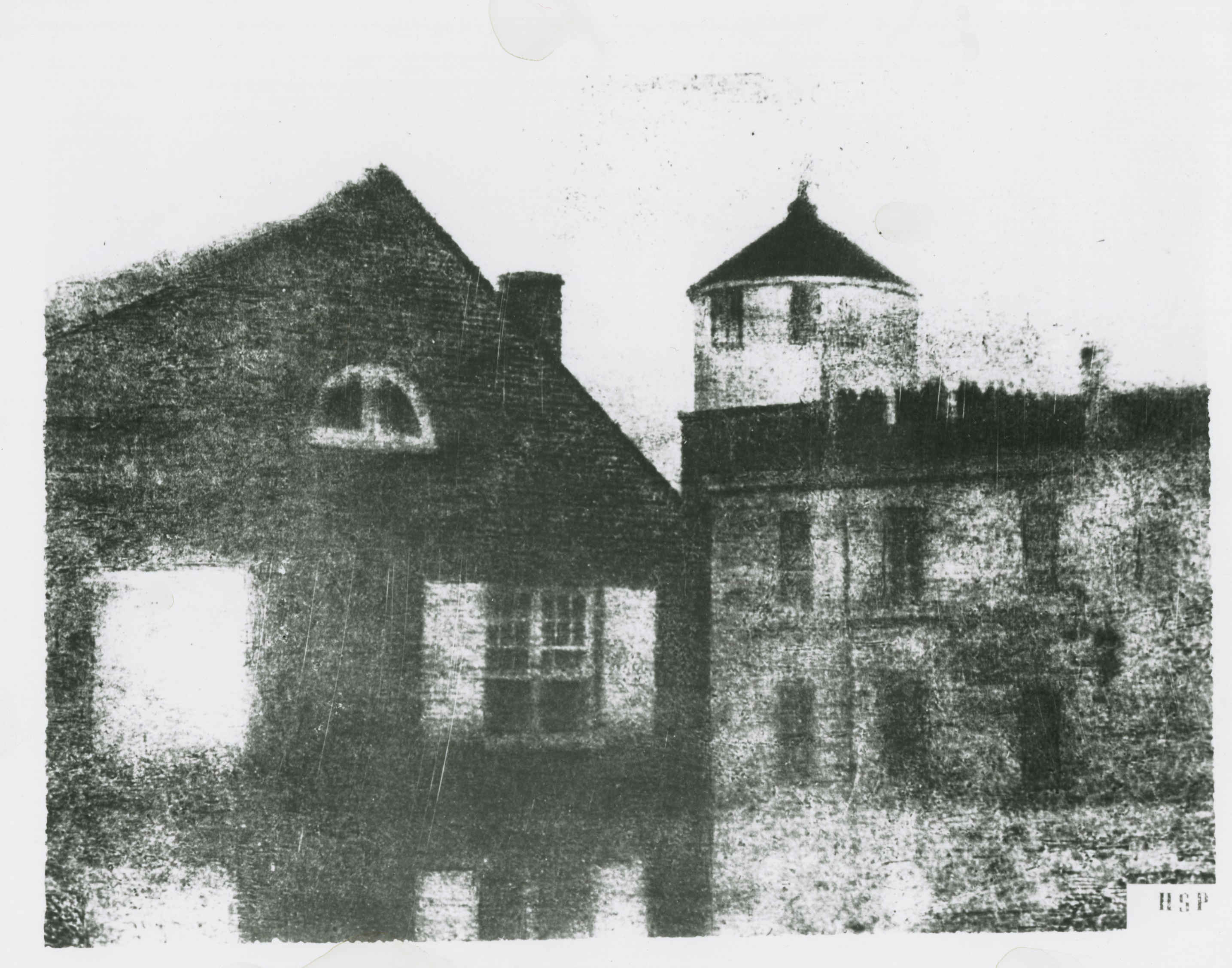
    “Central High School, Philadelphia,” is a facsimile of daguerreotype attributed to Joseph Saxton made in 1839.The Historical Society of Pennsylvania

    On Sept. 25, 1839, U.S. Mint employee Joseph Saxton, whose office was located on the northwest corner of Chestnut and Juniper Street across from Central High School, photographed the city’s first high school from one of his workplace’s top-floor windows.

    That photo is the oldest existing photograph taken in America.

    Saxton soon took up photography as a hobby but had a hard time getting his hands on the thin, silver-plated copper sheets needed to make daguerreotypes. He asked his friend, lamp maker and metal-plating expert Robert Cornelius, for help.

    Cornelius, who had a connection with Scovill Manufacturing, then among the most prominent metalworking manufacturing firms in the United States, happily obliged.

    And as it turned out, Cornelius was curious about photography, too.

    A few weeks later, in late October or early November, Cornelius found himself standing behind his family-owned lamp-making shop at what is today Seventh and Chestnut Streets, experimenting with a camera he fashioned from a small metal box.

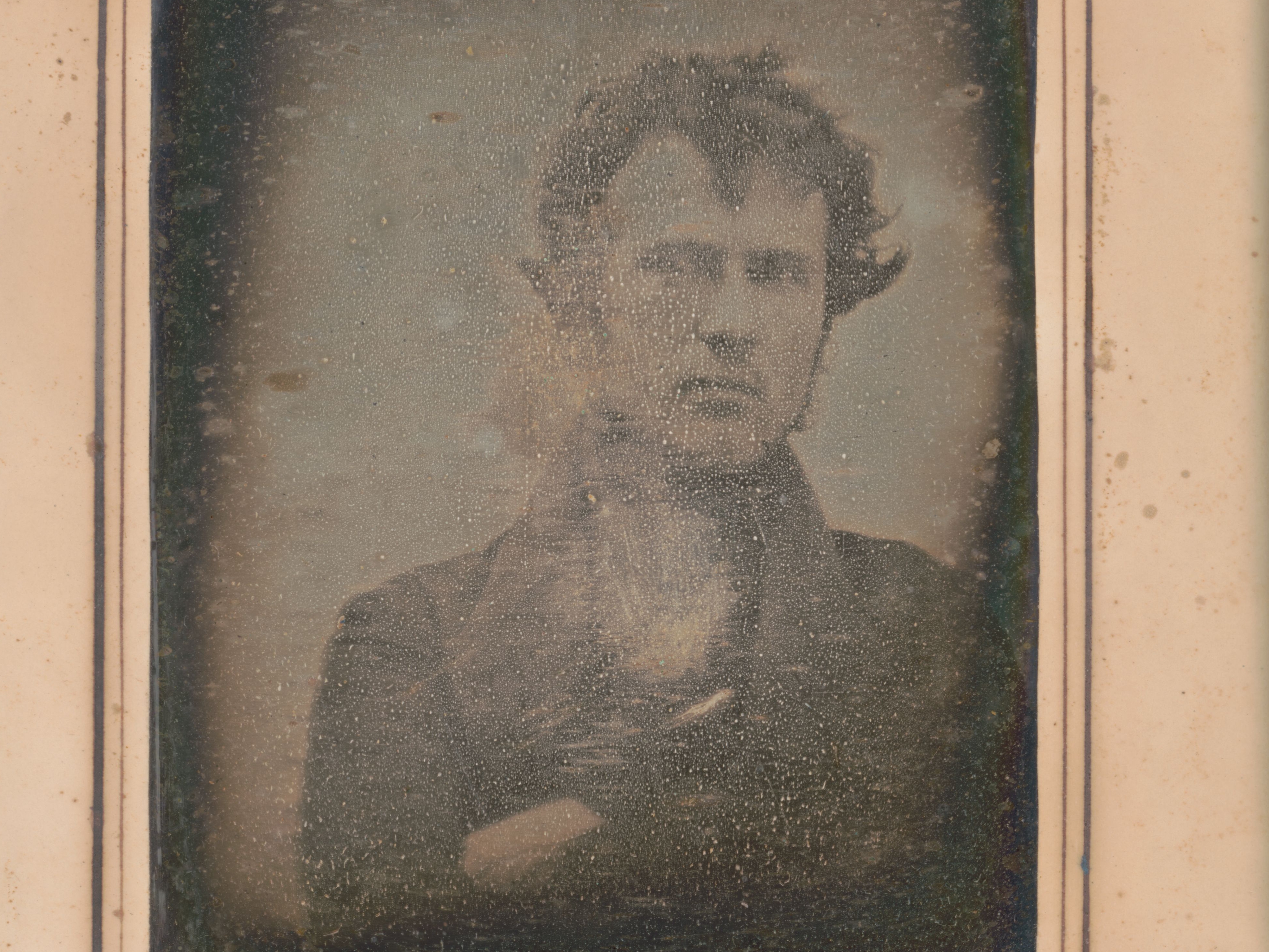
    Instead of pointing his lens at a lantern, a cobblestoned street, or a traveling horse and buggy, Cornelius turned his camera on himself.

    He opened his lens cover and stood still long enough in the sunlight for the exposure to capture his image on a metal plate.

    The selfie was born.

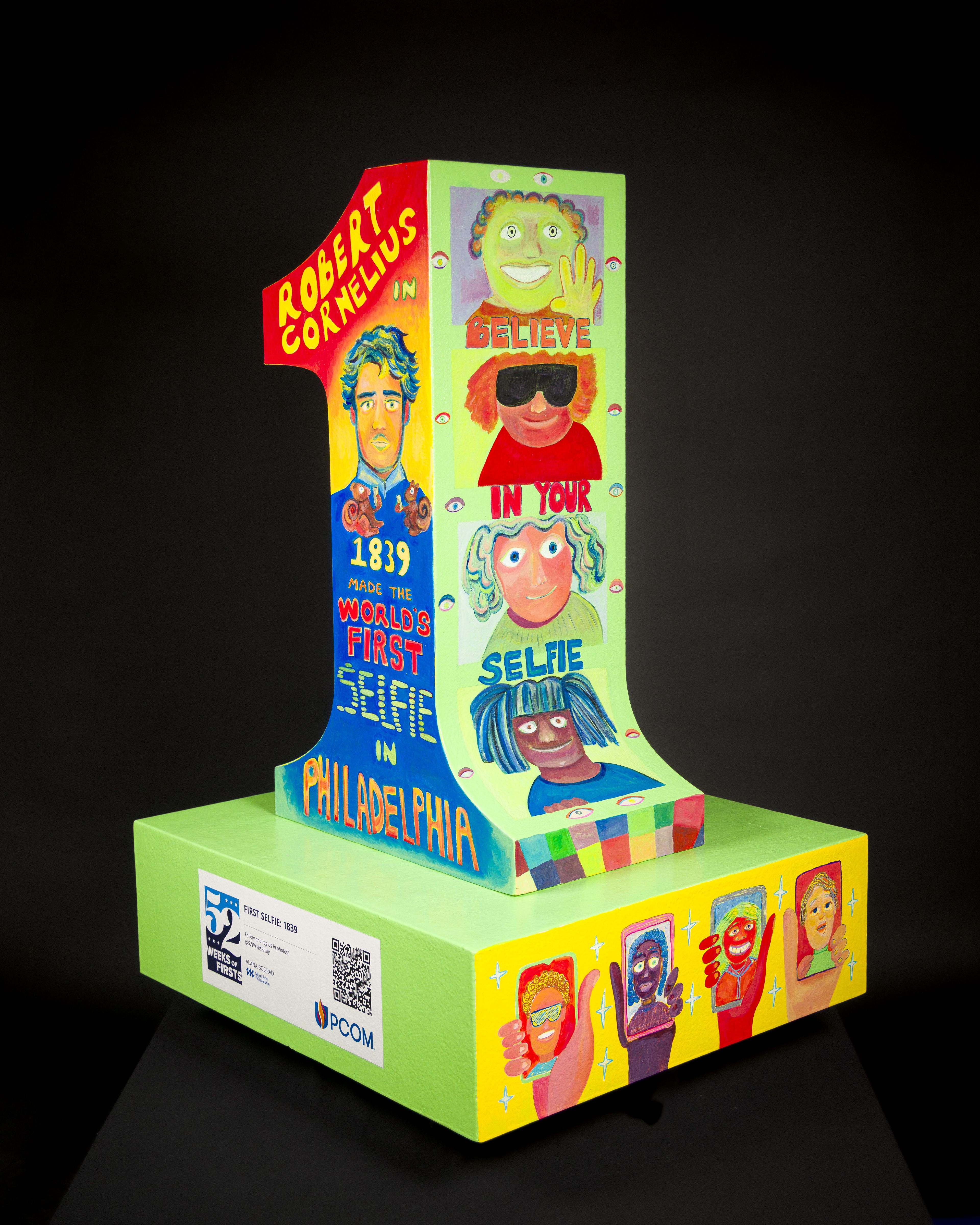
    Alana Bograd’s design highlights the fact that the surprising fact the oldest extant photographic portrait photographic portrait was a self-portrait that today we call a selfie. It was taken in Philadelphia by Robert Cornelius in 1839.Alana Bograd for Colibri Workshop

    That first selfie is housed in the Library of Congress.

    And that magnificent moment — predating social media by almost two centuries — will be feted this Saturday at Franklin Square from 11 a.m. to 1 p.m. The selfie celebration is the Philadelphia Historic District’s 34th firstival, a weekly day party in honor of America’s 250th birthday, giving love to events and happenings with very Philly roots.

    When Daguerre came up with his picture-taking method, he did not have portraits in mind, Wetzel said.

    Historians aren’t sure why Cornelius decided to make a picture of himself, but in an 1892 American Journal of Photography article, he talked about what it was like standing alone on the streets of Philadelphia waiting for the image to happen, Wetzel said.

    “When he stood in front of the camera, he wasn’t sure if he was centered or not,” Wetzel said. “That’s why he’s weighted to the right of the plate.”

    The wonder surrounding taking the first selfie seemingly inspired Cornelius.

    In May of 1840, Cornelius opened the world’s second portrait studio at Eighth and Lodge Alley (now Ranstead Street), not far from his family’s lamp-making shop.

    Business partners Alexander S. Wolcott and John Johnson opened the world’s first portrait studio in New York a few months earlier, but only Cornelius’ 1840 portraits endured, explained Wetzel, who is also a leading historian in Cornelius’ work.

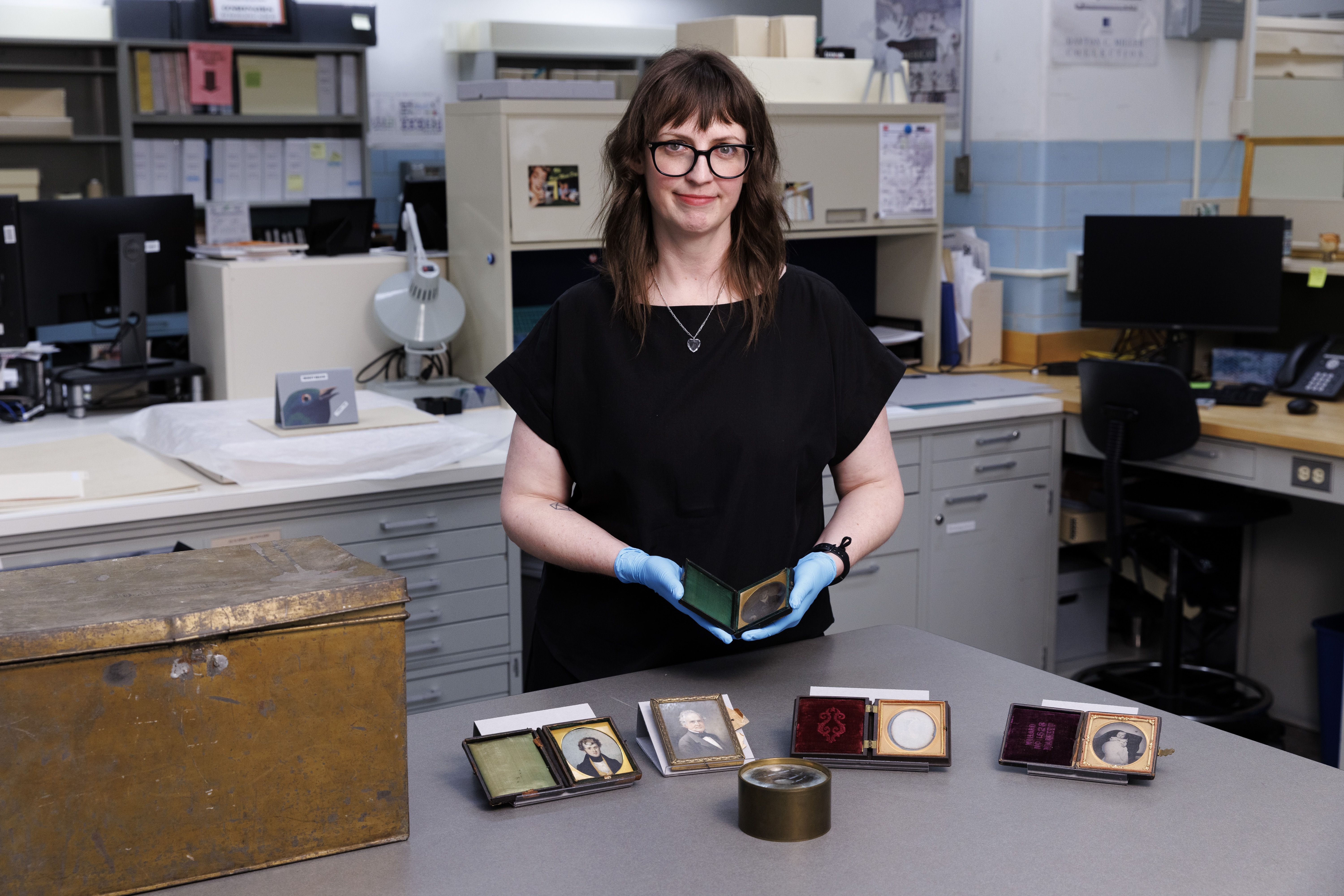
    Robert Cornelius historian Rachel Wetzel surrounded by Cornelius’ daguerreotypes at the Library of Congress. Shawn Miller

    She began studying Cornelius’ work in earnest in 2015 while working in Philadelphia at the Conservation Center for Art & Historic Artifacts. Wetzel has studied upward of 70 of Cornelius’ portraits, thanks to plates that have survived more than 100 years.

    Cornelius took portraits of prominent citizens — many of whom were Quakers — in their Sunday best because at $5 a piece, the equivalent of a week’s salary in those days, they were the only ones who could afford it.

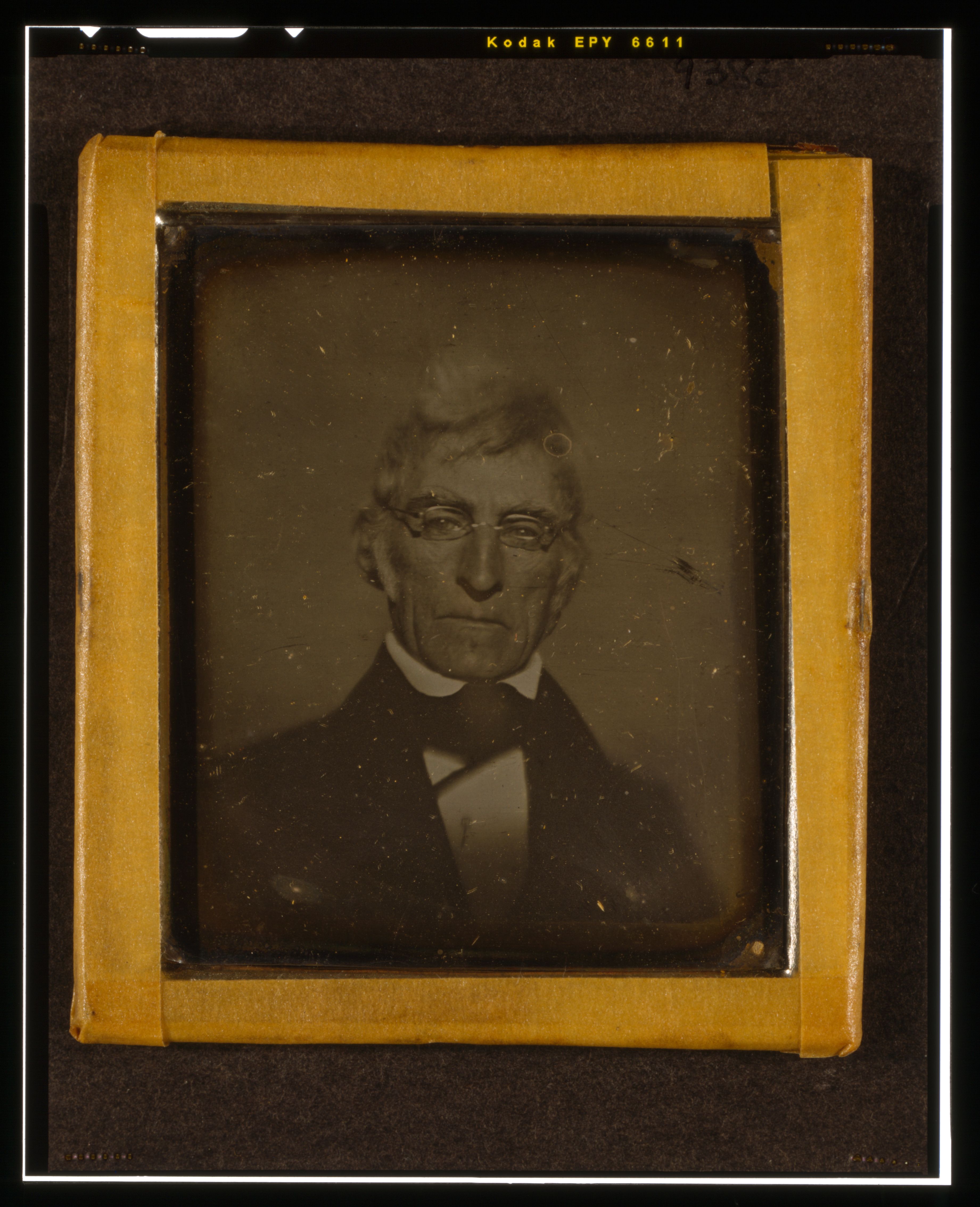
    The first portrait he took in his studio was of a man named John McCallister Jr., a wealthy optometrist who, coincidentally, supplied Cornelius with his camera’s lenses.

    In 1840, Robert Cornelius opened the first photographic portrait studio in Philadelphia at 8th on Lodge Alley (now Ranstead Street John McCallister Jr. He was the first one to sit in his portrait studio.Robert Cornelius housed at the Library of Congress

    Cornelius moved his portrait studio to its second location on Market Street before closing the business in 1843, and returning to his family’s lamp business full time.

    “While he’s operating the studio, he never quit working for his family,” Wetzel said. “He’s working the camera, but he had apprentices who polished the plates and did the behind-the-scenes darkroom work.”

    As the mid-19th century approached, the Cornelius family’s lamp business began to boom. Street lamps became commonplace. Philadelphians began putting gas lamps in their homes. Cornelius formed a partnership with Isaac Baker and formed Cornelius & Baker, becoming a premier manufacturer of high-end metalwork, lamps, chandeliers, and gas lighting fixtures.

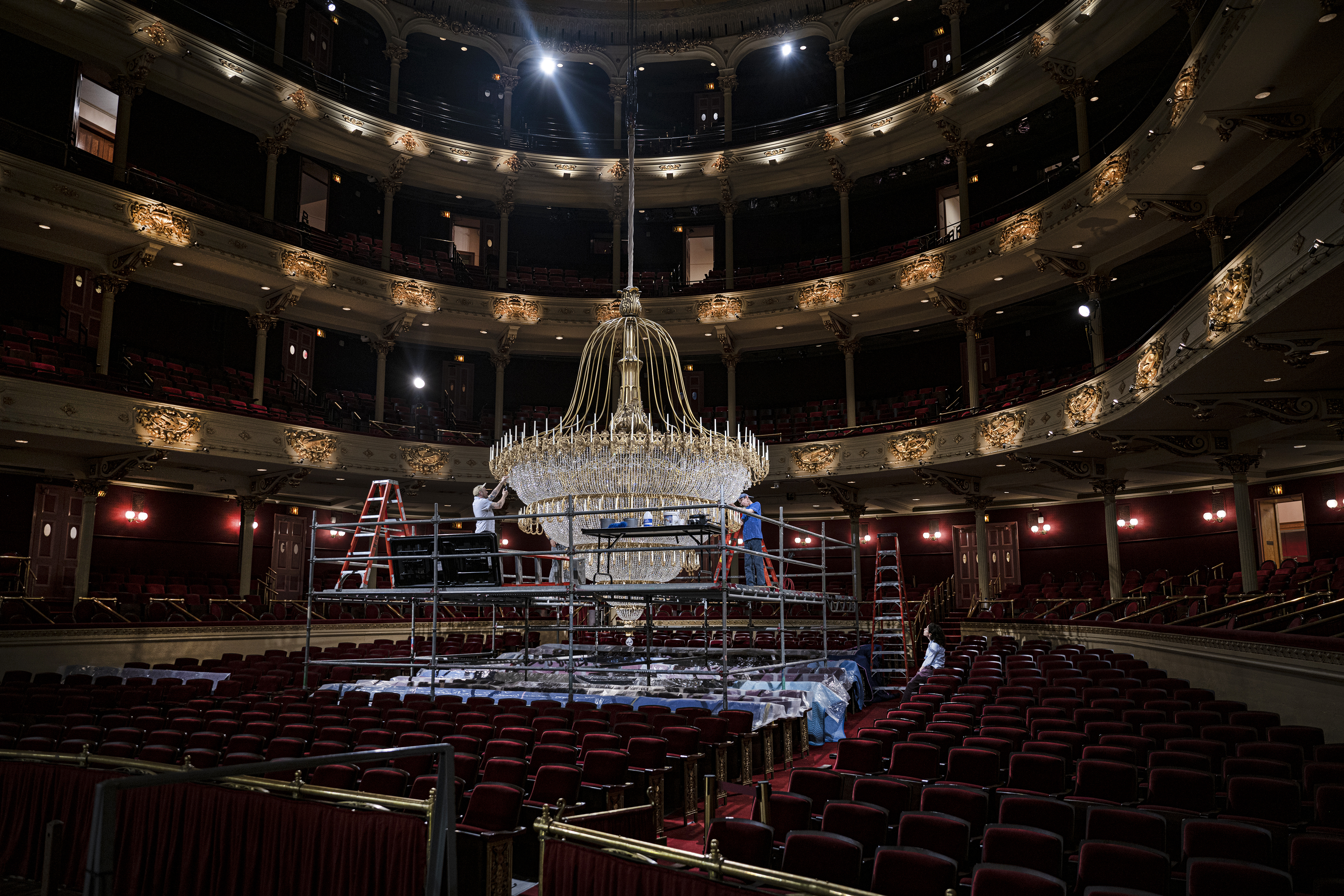
    Paul Miers lowers the chandelier at the Academy of Music in Philadelphia to clean it and replace light bulbs on Wednesday, May 29, 2024. The large crystal chandelier, measures 16 ft in diameter, and weighs 5,000 Lb.Jose F. Moreno / Staff Photographer

    “Their hand railings, banisters, statues, and chandeliers became world-renowned,” Wetzel said. “Many of their pieces are still found throughout Washington, D.C., and the U.S. Capitol today.”

    The Academy of Music’s massive crystal chandelier in the center of its auditorium was built by Cornelius & Baker for the opera house’s historic 1857 opening. (Yes, the guy who took the world’s first selfie also built the Academy of Music’s chandelier. Let that sink in.)

    Cornelius’ portrait studio may have been short-lived, but his impact on photography is lasting. Wetzel suggests his apprentices went on to open daguerreotype portrait studios across the city, and by 1849, there were at least 100 in Philadelphia. By the end of the 19th century, the costs had come down considerably, and portraits could be purchased for as little as 25 cents.

    “Philadelphians loved portraiture,” Wetzel said.

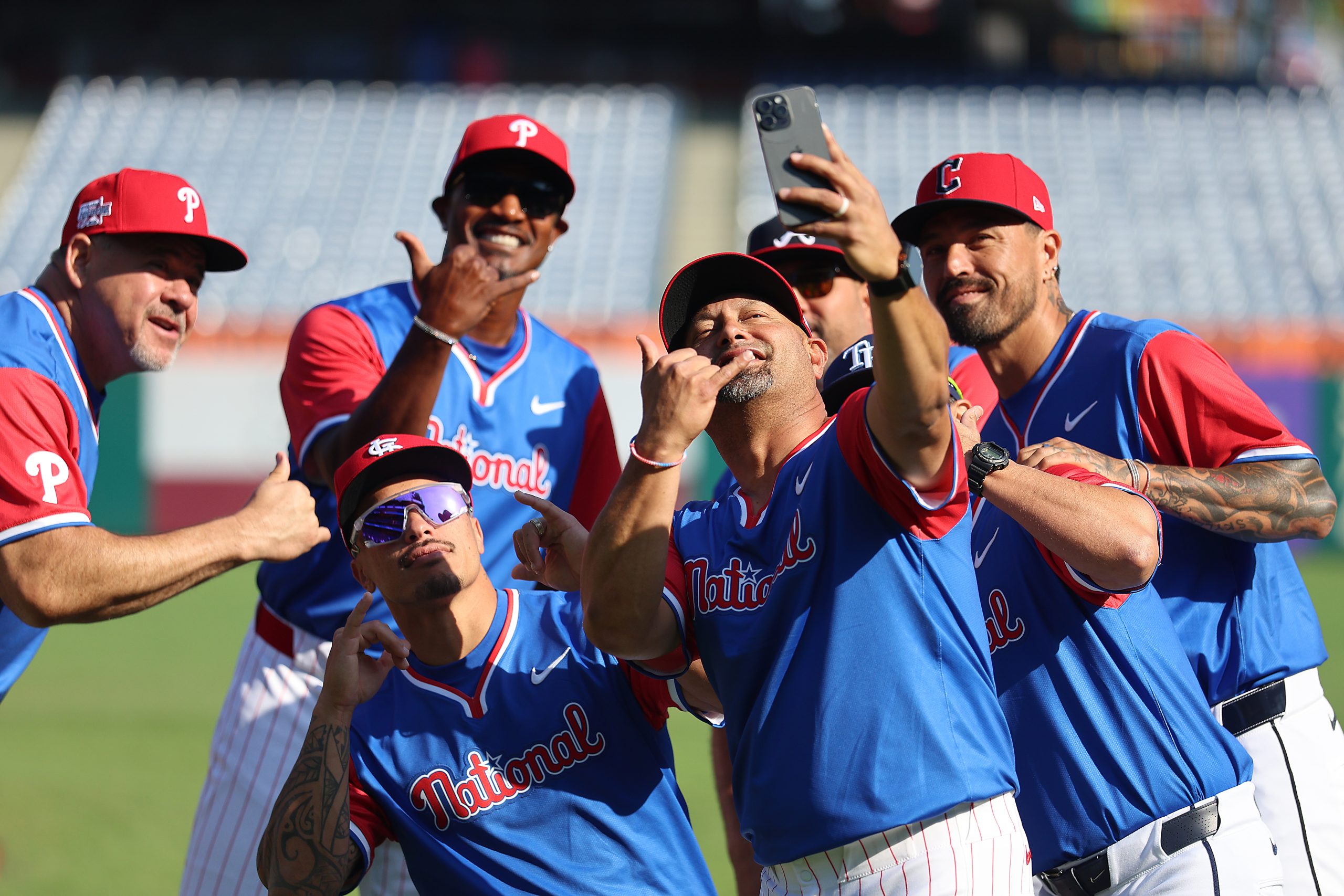
    National League Futures manager Shane Victorino (center) takes a selfie with members of his team before the 2026 All-Star Futures game in Philadelphia on Sunday, July 12, 2026.

    By the mid to late 1850s, daguerreotypes were replaced with the collodion process. But photographs — whether developed in a darkroom or a drugstore, taken on Polaroids, or shot on smartphones — endure.

    And the selfie rules.

    This week’s Firstival is Saturday, Aug. 22, from 11 a.m.-1 p.m., at Franklin Square, 200 N. 6th St. Firstival celebrants will meet under a tent, and the party will be held rain or shine.

    Each week, The Inquirer is highlighting a “first” from the Philadelphia Historic District’s 52 Weeks of Firsts. A “52 Weeks of Firsts” podcast, produced by All That’s Good Productions, drops every Tuesday.

  • Nolan’s women in The Odyssey may be truer to history than Homer

    Nolan’s women in The Odyssey may be truer to history than Homer

    Christopher Nolan’s new film The Odyssey has generated tremendous debate over, among other things, the casting of non-white actors, including Lupita Nyong’o, who portrays Helen. The argument that these choices don’t honor the original epic has been leveled at the portrayal of the women in the film more generally as well. As one scholar has written, Nolan’s Odyssean women “lack the sexual and intellectual complexity of Homer’s poem. Their desires, agency and choices are either not as vibrant or lost.”

    It is true that in Homer’s Iliad and Odyssey women are relatively empowered. They are not often under the thumb of men, not threatened, endangered or cowed. And yet Nolan’s creative choices about women, while differing from the ancient texts, do come closer to capturing the actual historical truth of women’s lives in the ancient Greek world.

    Homer’s epics offer a variety of fascinating and often powerful female characters throughout: from Helen to Andromache, along with the goddesses who strut through Olympus and down to Troy and Ithaca, female characters often seem nearly as empowered as their husbands, lovers, and brothers. There is only the occasional hint at a power imbalance, such as when Zeus threatens to hurl Hera from heaven, or in cases where a woman has been enslaved, such as for Briseis, Achilles’ “prize” in the Iliad.

    One reason for this variety and complexity of female characters might be that, in the archaic period (c. 800 – 500 BCE) of ancient Greece, women were not viewed as particularly threatening. Within the aristocratic system, where powerful families ruled the roost, women had a significant and socially acceptable role to play, unlike in the more male-centered world of the classical Greek polis, in which the bonds of male citizenship were considered crucially important, and familial or female interference was understood as a risk to these bonds. Homer’s epics belong to the archaic period where women were not so systematically feared as they came to be later, and thus there was space for more interesting and complex characterizations.

    Yet Nolan takes a different approach than Homer, presenting his female characters as facing greater danger and with less agency. Most notably, he depicts the face of Helen (Nyong’o) as having been half mutilated. It is her husband Menelaus who exposes the terrible scarring to half her face, thrusting it toward Odysseus’ son Telemachus with an angry and mocking gesture that suggests he was the perpetrator of the violence that left her so disfigured.

    Second, he shows the witch Circe (Samantha Morton) as terrified of rape and violence, particularly at the hands of soldiers, a nod surely to Madeline Miller’s trenchant take on the character in her novel Circe. Third, he portrays Penelope (Anne Hathaway) as under pressure to remarry by a collective of unseen elders who are absent from Homer’s Odyssey. Finally, even Athena (Zendaya), who appears at Odysseus’ side through most of the film, is revealed to have been a young priestess of Athena—perhaps a shade or a representation of the hero’s guilt—who was the victim of savage slaughter in the sacking of Troy.

    In Homer’s Odyssey, by contrast, Helen appears in Sparta to be in fine form and unscathed by the war or its domestic aftermath; Circe is formidable, cunning, and in control, and not apparently afraid of any man; Penelope is not under the thumb of any Ithacan elders, though she does face a great deal of pressure from the suitors; and Athena is in no danger of butchery.

    So how are Nolan’s choices justified? He may have decided to follow the historical record in this regard, rather than be true to the literary text. Though the realities faced by ancient Greek women garner precious little space in the early written record, we can glean from Greek tragedy that some of the harsher realities portrayed in Nolan’s Odyssey would have rung true.

    From Aeschylus’ Agamemnon, first produced in 458 BCE, we have a description—practically a vision—by Clytemnestra of Troy’s downfall as savage and violent. We find, too, a portrait of Athena’s priestess Cassandra as victimized and destroyed by the god Apollo, only then to be enslaved (for sex, it is insinuated) by her master Agamemnon.

    Euripides’ play, Trojan Women, produced in 415 BCE, digs even deeper into the painful realities of women when their homeland has been destroyed. Here we have Cassandra driven mad by the rape she suffered at the hands of a Greek “hero.” We watch the baby of the widow Andromache ripped from her arms to be thrown from the Trojan ramparts. We learn that the old queen Hecuba will endure a life of servitude to none other but the wily Odysseus. In Euripides’ play Hecuba, she evades this fate by casting herself into the sea—but only after having two of her own children brutally murdered by her former allies and enemies.

    There are countless other examples to be found in Greek literature of women victimized at the hands of men and their brutal whims: Antigone is thrown into a tomb by her uncle so that she will die of starvation, a fate she too evades by suicide; Danae is cast into a trunk by her own father with her infant to die at sea, though she is eventually saved; Coronis, a woman in a lyric poem by Pindar, is burned alive for daring to sleep with a mortal man after she has been bedded by Apollo.

    Made By History sponsors. FOR USE ON MADE BY HISTORY STORIES ONLY.Inquirer Staff

    Although there is a certain degree of ghoulish spectacle in these tales, nothing from our historical record of the period suggests they are unrepresentative of women’s actual reality in ancient times. First, there is the extreme and unremarkable likelihood of widespread domestic violence, referred to jokingly in Old Comedy and in images from vases. Moreover, it was known and accepted practice that when a city-state was defeated in war—a widespread fact of life—its male population was eliminated, while its female population was systematically raped and enslaved, a reality that comes up frequently in the histories of both Herodotus and Thucydides. Indeed, the enslaving of a young woman, explicitly for the purpose of rape, is the inciting incident of both Homer’s Iliad and Herodotus’ Histories.

    And such forms of repression and violence have persisted long since ancient times. Rape and brutality against women have been common forms of violence for as long as there have been wars. Incidents of femicide within families (often accompanied by infanticide) also persist.

    It is truly fascinating to experience Homer’s strong and dazzling women; everyone should pick up a translation and do so. But in removing the agency from female characters that Homer gave them, Nolan reveals at greater depth their vulnerability and humanity in a way that is much closer to the historical truth of how women actually lived in the ancient Greek world.

    Sarah Nooter is the Edward Olson Professor of Classics and Theater and Performance Studies at the University of Chicago. She is the author, most recently, of Greek Poetry in the Age of Ephemerality.

    Made by History takes readers beyond the headlines with articles written and edited by professional historians. Opinions expressed do not necessarily reflect the views of The Inquirer.
  • A sculpture by a ‘Monuments Man’ is dedicated at 30th Street Station on this week in Philly history

    A sculpture by a ‘Monuments Man’ is dedicated at 30th Street Station on this week in Philly history

    Not all Philadelphians who answered President Franklin D. Roosevelt’s call to action were soldiers and civilians.

    Even the artists went to war.

    Like renown sculptor — and local legend — Walker Kirtland Hancock, these educated Americans charged into the bomb-pocked battlefields of World War II to also confront unprecedented evil.

    Their task? Saving priceless pieces of art.

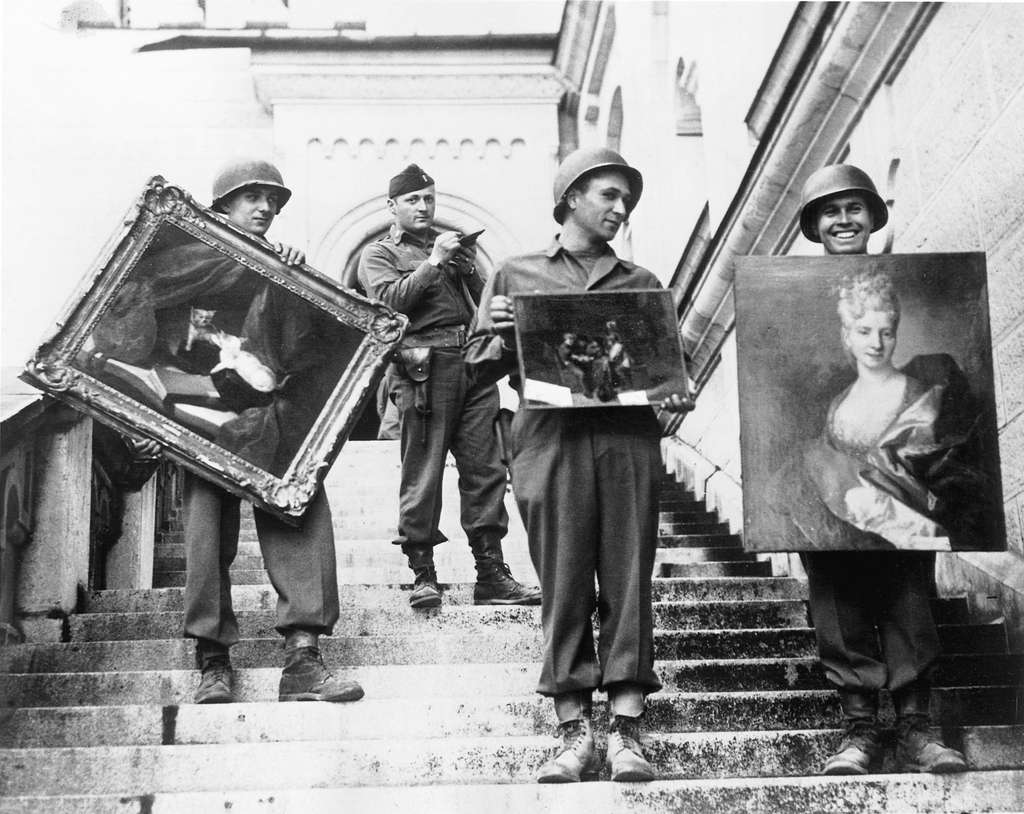
    Hancock was part of the “Monuments Men,” an outfit of about 345 men and women who were sent overseas to try to pry Europe’s cultural treasures from the grip of the Gestapo.

    “I was really prepared,” Hancock told the Daily News in 1991. “I knew where I was going and what I was looking for.”

    A group of “Monuments Men” retrieving stolen art in Germany in 1945. National Archives

    Hancock, who would become one of the United States’ most distinguished sculptors, attended the Pennsylvania Academy of the Fine Arts and taught there from 1929 to 1967.

    He enlisted in the Army in his mid-40s and was trained as a medic, but later transferred to the Army’s Monuments, Fine Arts, and Archives outfit.

    The unit’s monumental task: reclaim art the Germans had stolen and then hidden throughout the countryside in caves, on trains, in castles, and in hospitals.

    But it was in a salt mine in Bernterode, Germany where Hancock struck gold.

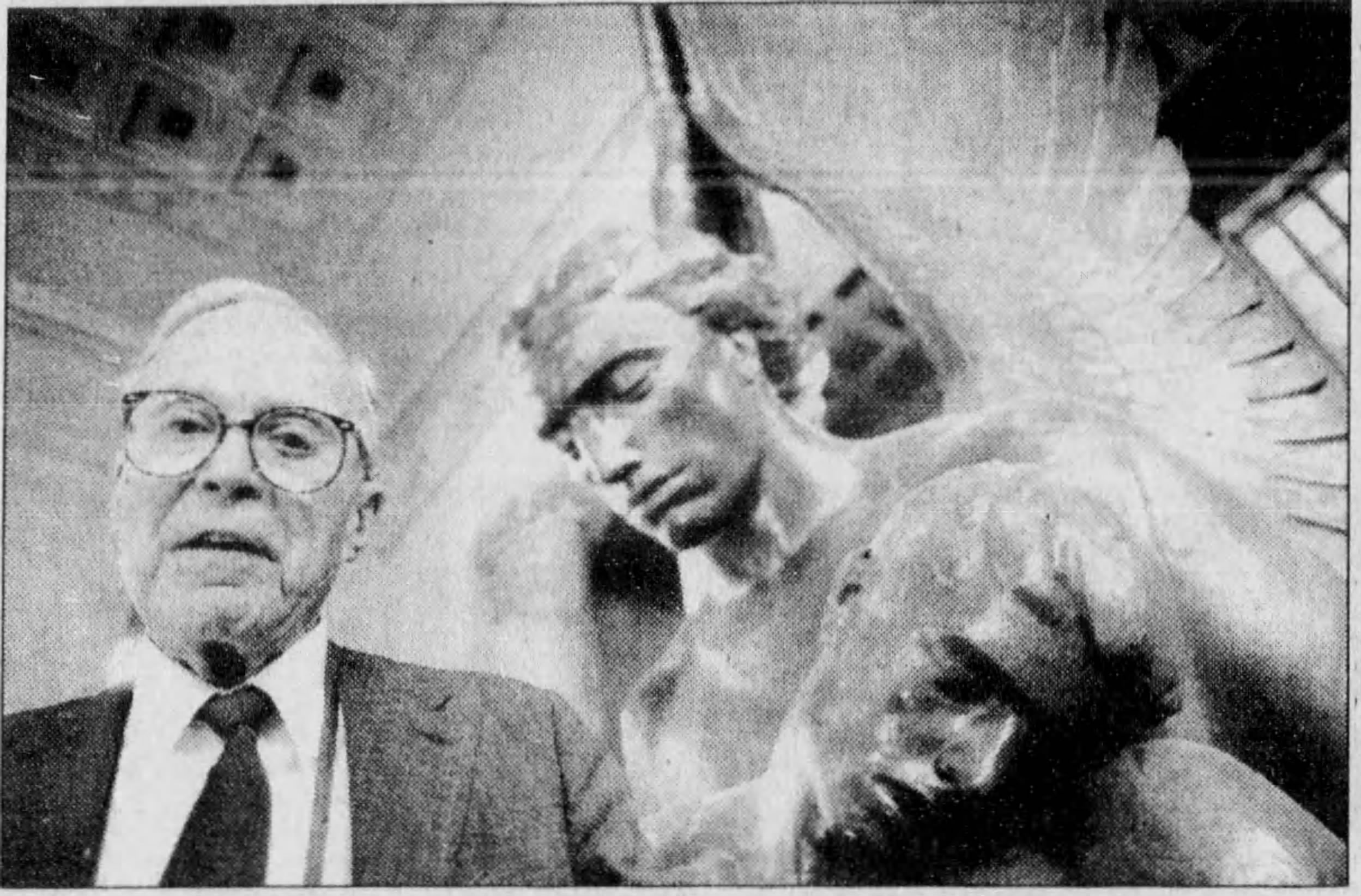
    Walker K. Hancock, considered the dean of American figurative sculpture, taught at the Pennsylvania Academy of Fine Arts.Inquirer Archives

    The first painting he rescued was a work by Jean-Antoine Watteau, Embarkation for Cythera, what he described as “one of the greatest paintings” the artist ever completed.

    “The surprise was so enormous to see a very famous old friend like that standing on the ground without any frame on it,” he told the Daily News.

    The mine was also filled with other treasures: the great seal of Prussia; an emperor’s scepter; the art collection of Frederick the Great, which was considered to be the best collection of French paintings in the world; and palatial libraries.

    The group’s efforts to reclaim precious pieces of human achievement were documented in a 2009 best-selling book. In 2014, their tale was given the “based on a true story” treatment and made into a star-studded motion picture dubbed The Monuments Men, featuring names like George Clooney, Matt Damon, Bill Murray, and John Goodman.

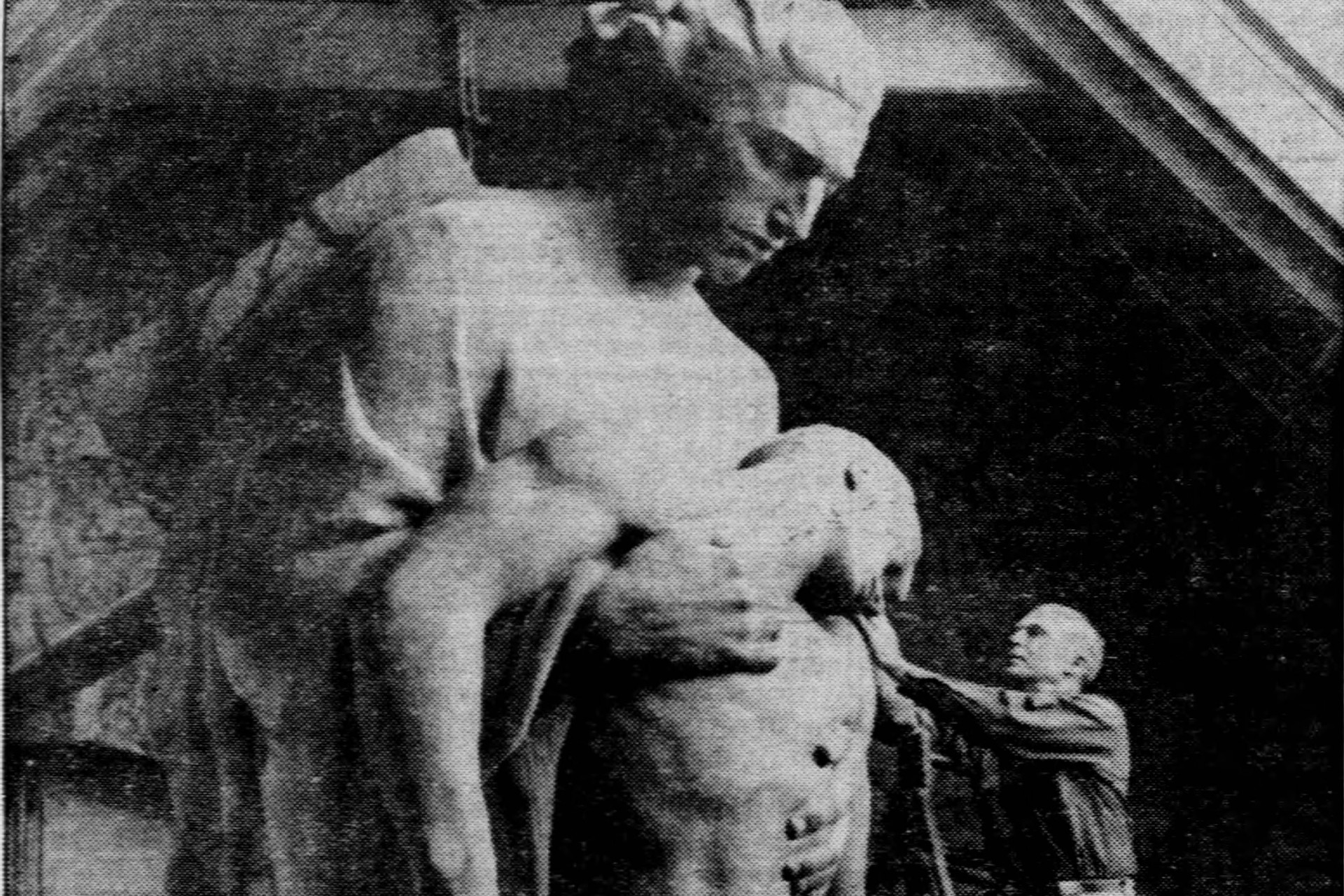
    Today, Hancock’s public works can be found all over the country, and locally, his most notable work sits at the east end of 30th Street Station.

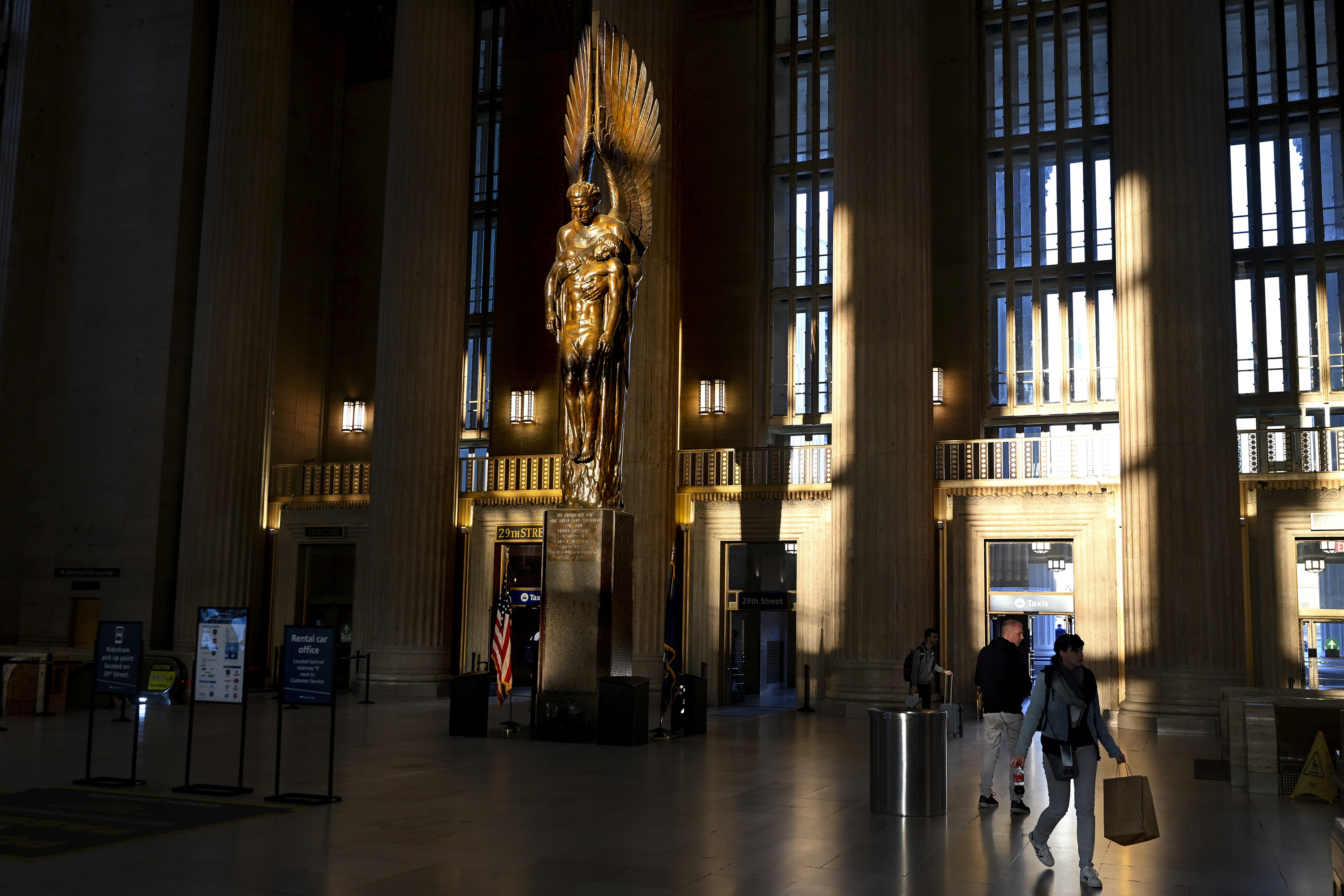
    The Pennsylvania Railroad War Memorial (1950, installed 1952) by Walker Kirtland Hancock (1901 – 1998) in the lobby of 30th Street Station.Tom Gralish / Staff Photographer

    The 39-foot-tall, 10½-ton Statue to War Dead depicts an angel holding a dying soldier. It commemorates in bronze the 1,307 employees of the Pennsylvania Railroad who died during World War II. Gen. Omar N. Bradley was on hand to help dedicate the artwork on Aug. 10, 1952.

    Hancock died in 1998 at age 97 but his sculpture remains the station’s monumental centerpiece.

  • Philadelphia, home of the first U.S. Mint, is where the country’s first and last pennies were made

    Philadelphia, home of the first U.S. Mint, is where the country’s first and last pennies were made

    On the advice of United States Treasurer Alexander Hamilton, Congress passed a law establishing America’s first federally funded bank on Feb. 8, 1791.

    The bank — located inside Philadelphia’s Carpenters Hall — would serve as the primary fiscal agent for the federal government and one of its many jobs was to issue paper money that was printed by private banknote companies and local print shops.

    Coins, though, weren’t in the mix yet.

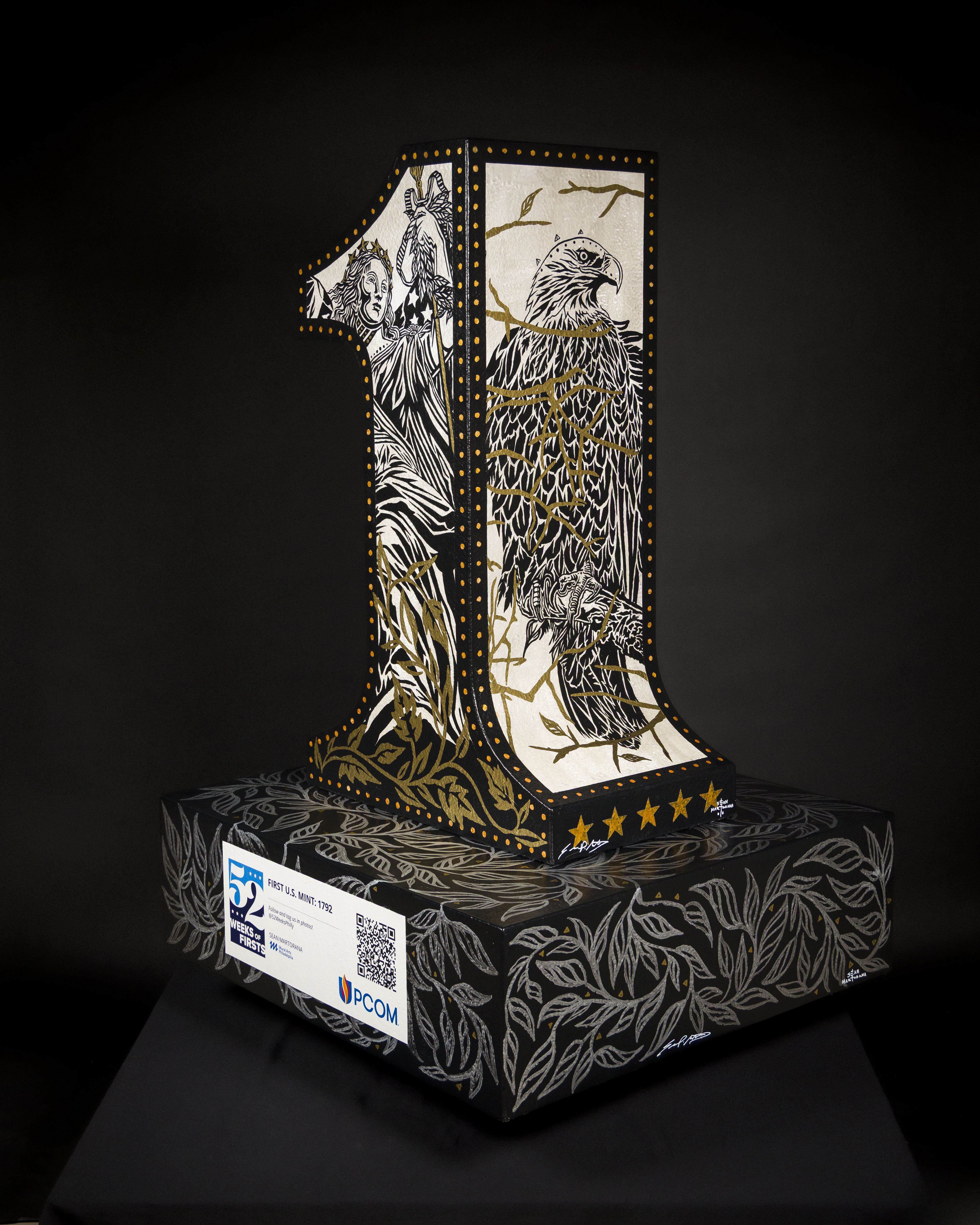
    Sean Martorana’s No. 1 reflects themes of craftsmanship, trust and unity of the U.S. Mint.Sean Martorana and the Colibri Workshop

    On April 2, 1792, Congress established the United States Mint in Philadelphia with the adoption of the Coinage Act. The act set the dollar as the standard and set denominations — pennies, dimes, nickels, quarters — and their weights, compositions, and regulations.

    The new law also required a symbol and inscription of the word “liberty” on each of the coins.

    The first U.S. Mint will be celebrated Saturday at the United States Mint in Old City, from 11 a.m. to 1 p.m. as part of the Philadelphia Historic District’s 33rd “Firstival.” Firstivals are weekly day parties held in honor of America’s 250th birthday.

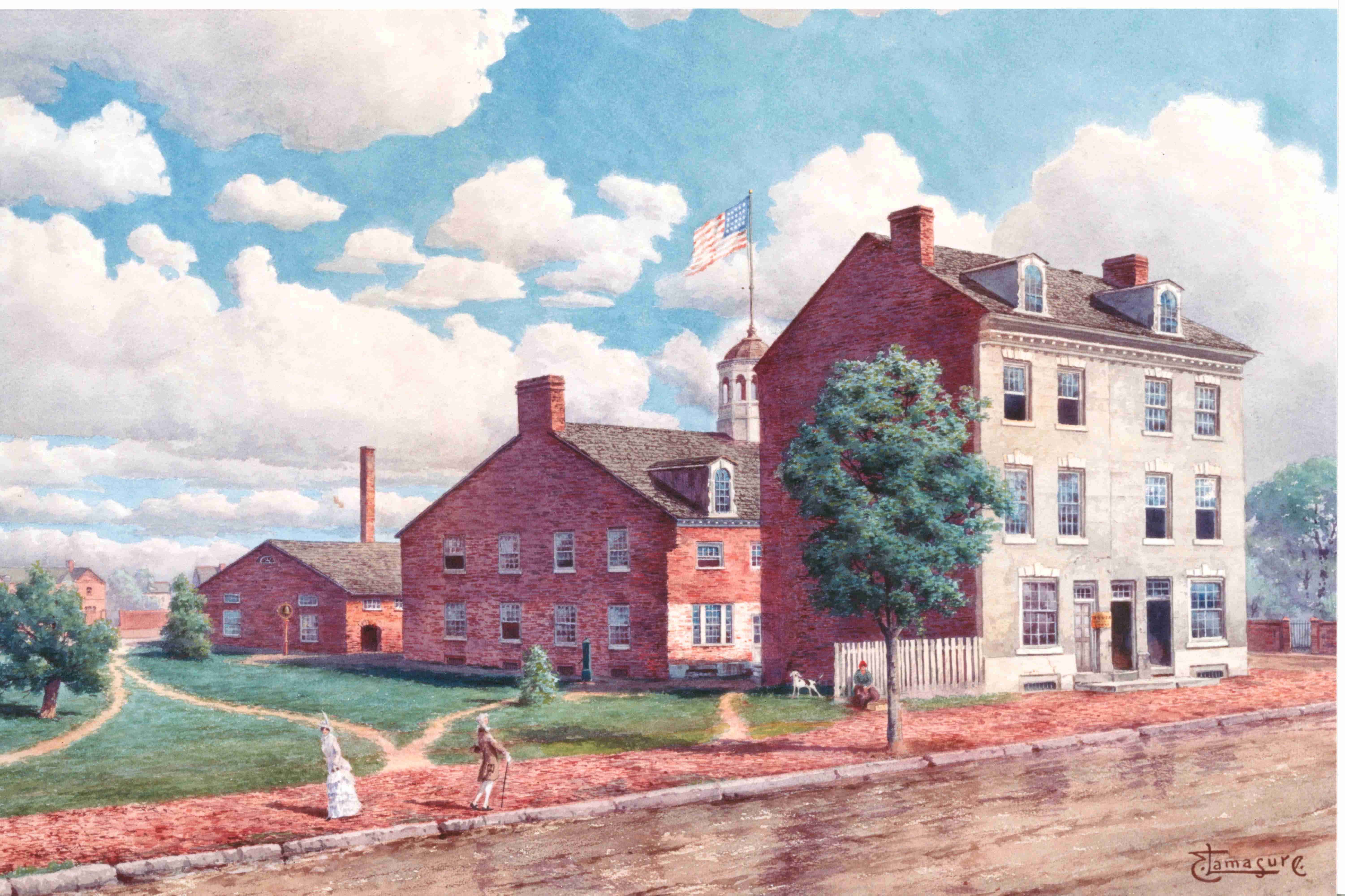
    The first U.S. Mint — fondly remembered as Ye Olde Mint — was located on the east side of Seventh Street, just south of Arch, on land purchased by David Rittenhouse.

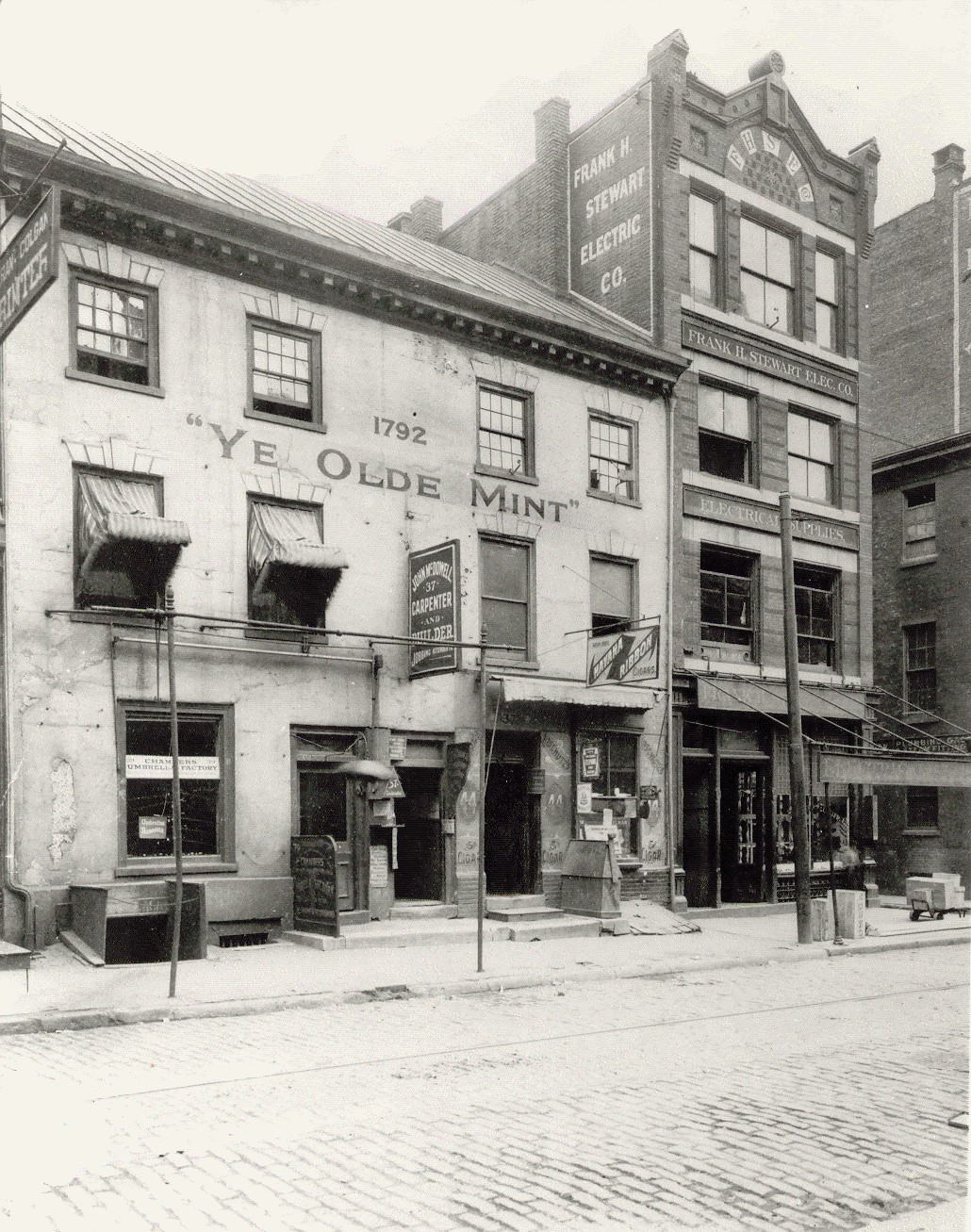
    Ye Olde Mint — the original Mint building — pictured in 1911. It was located on Seventh Street, south of Arch, on land purchased by David Rittenhouse, the first director of the U.S. Mint. The Mint was housed there until 1833.The U.S. Mint

    Rittenhouse, the well-heeled great-grandson of America’s first paper mill owner, William Rittenhouse, was an 18th-century astrologer and clockmaker who would serve as the first director of the U.S. Mint. Rittenhouse Square is named after him.

    The first coins made after the Coinage Act were half dimes and fashioned off-site, according to Tim Grant, exhibits and public affairs manager at the U.S. Mint. “Made of silver, these half dimes were supposedly struck using silver donated by Martha Washington,” Grant wrote in an email.

    The first coins fashioned at the actual mint building were 11,178 copper cents, or pennies, and were delivered in March of 1793. (The U.S. Mint stopped making pennies in November, ending its 232-year production run.)

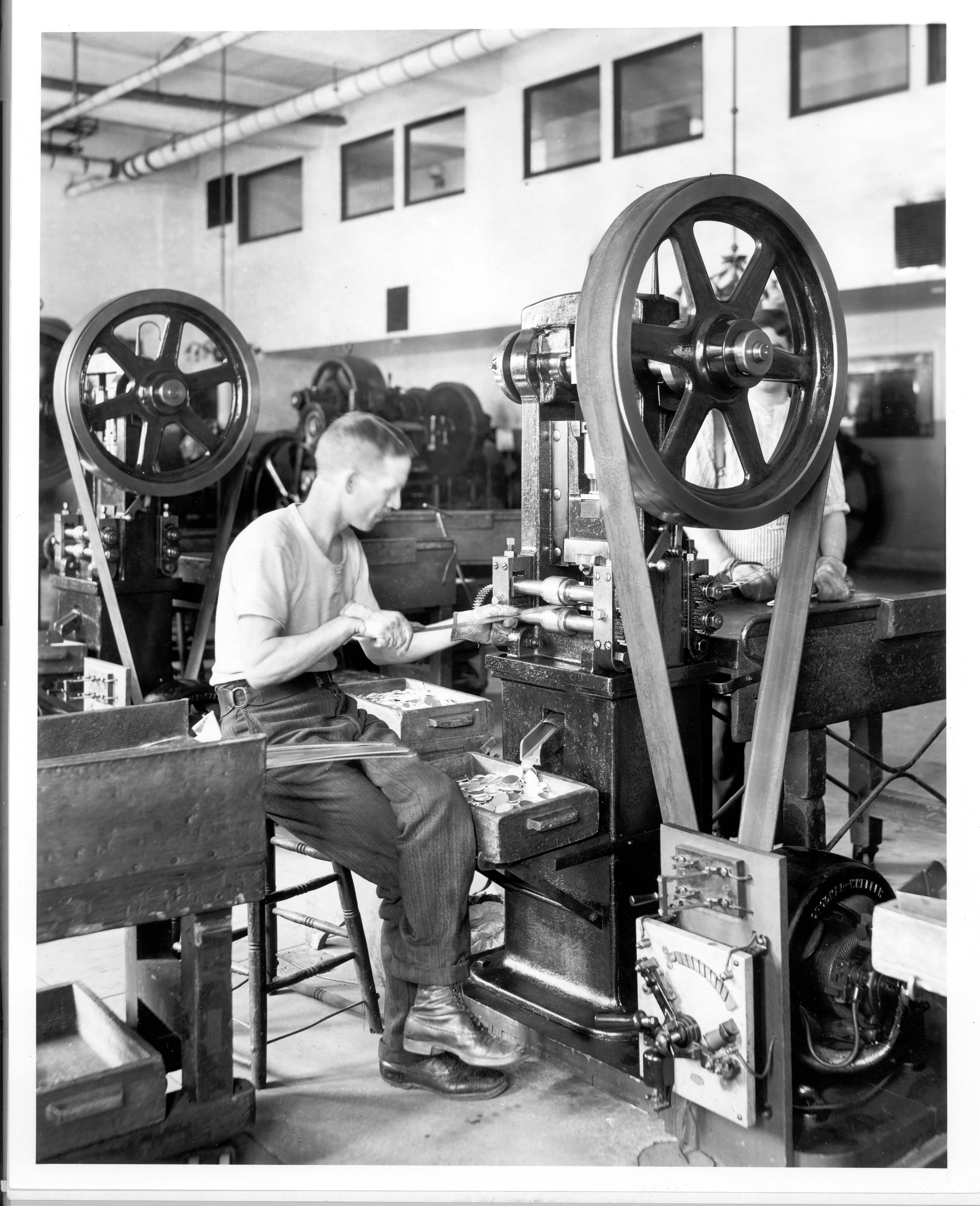
    A worker at the cutting press at the U.S. Mint’s third location, which took up the entire block of Spring Garden Street between 16th and 17th Streets in 1901.U.S. Mint

    During America’s early days in the late 18th century, work conditions at the U.S. Mint were grueling, Grant wrote. Employees worked 11 hours a day, six days a week, and earned $1 a day. It took workers three years to produce the nation’s first 1 million coins.

    “Today we can produce one million coins in less than a half an hour,” Grant wrote.

    As the nation grew, so did its demand for coins.

    By the late 1820s, the U.S. Mint had outgrown its original buildings, and in May of 1828, Congress voted to keep the Mint in Philadelphia and erect a second building. The cornerstone of this new, larger U.S. Mint was laid on July 4, 1829, on the northwest corner of Juniper and Chestnut Streets. It opened in 1833. That building served as the U.S. Mint’s home for 68 years.

    In 1901, the U.S. Mint moved to its third location, taking up the entire block of Spring Garden Street between 16th and 17th Streets. The building, with a lobby containing seven Tiffany mosaics, was its home through the mid-1960s. The Community College of Philadelphia occupies the site today.

    Mike Spinosa, a pit driver at the U.S. Mint, transfers one-cent blanks before they are struck into pennies in Philadelphia in 2007. MUST CREDIT: Demetrius Freeman/The Washington PostStephen Hilger

    The Mint returned to Old City in 1969, moving into its current building on five acres on Fifth Street between Arch and Race Streets. It has over 600,000 square feet of manufacturing space.

    There are three other active U.S. Mints in America: the Denver Mint, the West Point Mint, and the San Francisco Mint. The San Francisco Mint is not open to the public and specializes in commemorative coins.

    “The mission of the United States Mint has remained the same for over two centuries,” Grant wrote. “To serve the American people by safely and efficiently manufacturing, distributing, and circulating precious metal, collectible coins, and national metals.”

    This week’s Firstival is Saturday, Aug. 15, from 11 a.m.-1 p.m. at the United States Mint, 151 N. Independence Mall East.

    Each week, The Inquirer is highlighting a “first” from the Philadelphia Historic District’s 52 Weeks of Firsts. A “52 Weeks of Firsts” podcast, produced by All That’s Good Productions, drops every Tuesday.

  • Janet Klein, celebrated longtime historic preservationist and philanthropist, has died at 96

    Janet Klein, celebrated longtime historic preservationist and philanthropist, has died at 96

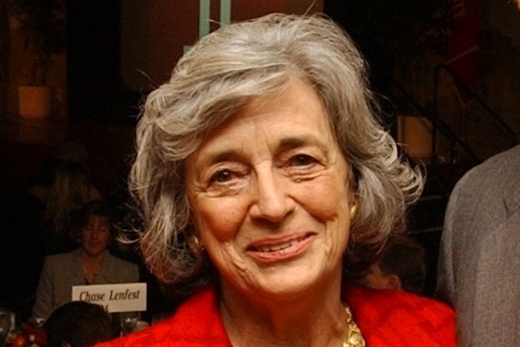
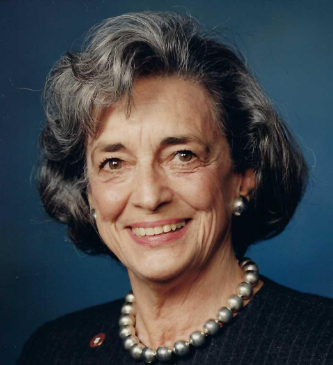
    Janet Klein, 96, of Rydal, Montgomery County, former member of the Philadelphia Historical Commission, historic program director for the Fairmount Park Commission, regional project coordinator for the National Trust for Historic Preservation, chair of the Pennsylvania Historical and Museum Commission, volunteer, and philanthropist, died Tuesday, Aug. 4, of age-associated decline at her home.

    Born in Philadelphia, Mrs. Klein earned degrees at Philadelphia High School for Girls and the University of Pennsylvania. She and her husband, Lewis, traveled the world after they married in 1952, and she told The Inquirer in 1973 that she became interested in local historic preservation after returning from abroad in 1964.

    “I felt something was lacking here,” she said. “There was no pride nor a thorough knowledge of what we really have in Philadelphia to share with visitors.”

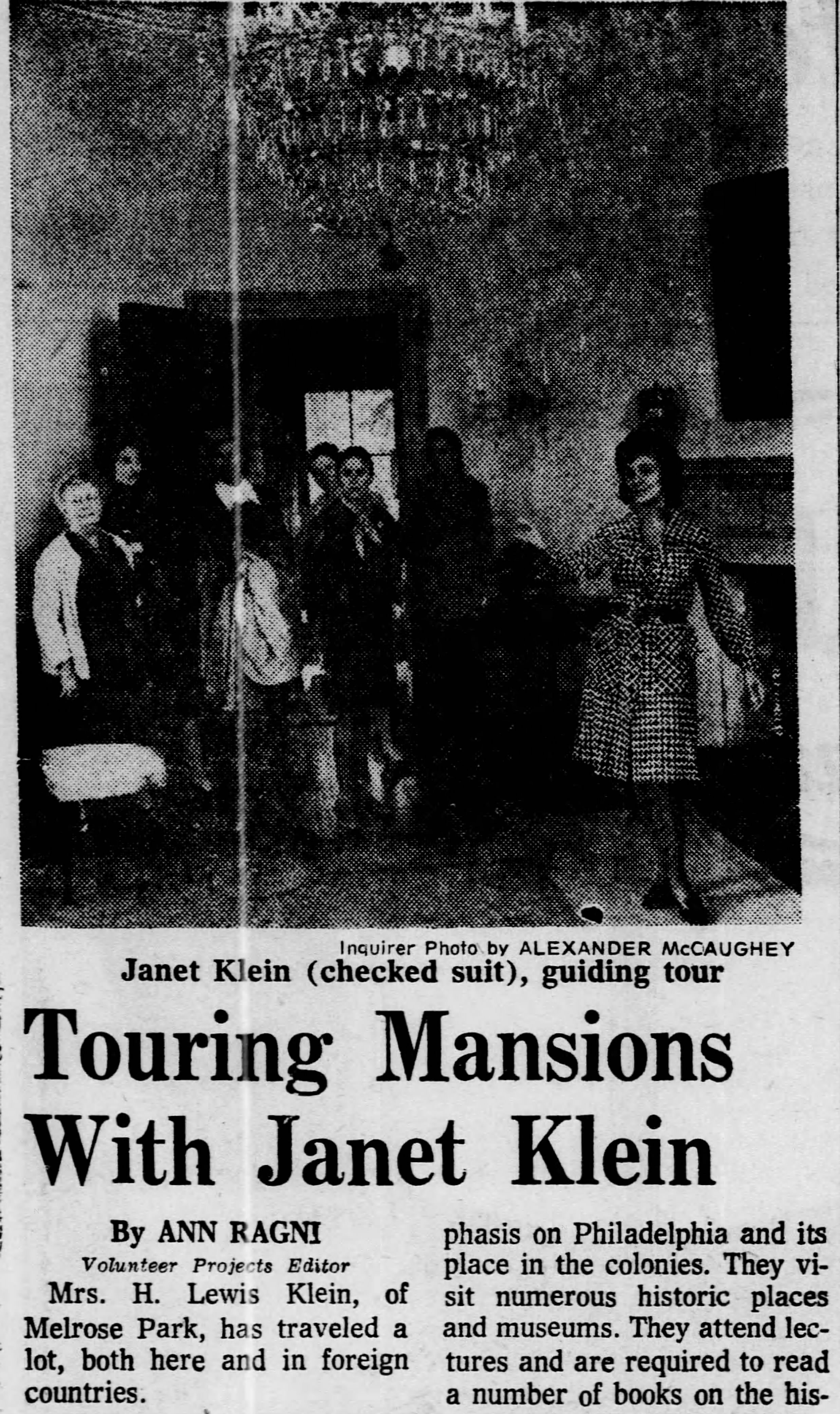
    So she joined the Philadelphia Museum of Art’s tour guide program, rose to chair of guides for the Fairmount Park house tours, and conducted hundreds of tours for thousands of visitors to the eight historic houses in the park. “The guides,” she said in 1973, “can’t help but sense that somehow they have passed on to the visitors the continuing life of historic Philadelphia.”

    Eventually, Mrs. Klein became historic program director for the Fairmount Park Commission, was appointed to the Philadelphia Historical Commission by then-Mayor Wilson Goode in the 1980s, and served as chair of the Pennsylvania Historical and Museum Commission from 1997 to 2003. Friends called her “formidable” and compared her to the Energizer Bunny.

    Keen to spark public interest in historic sites, Mrs. Klein forged partnerships between site officials and schools, community groups, businesses, and the media. In 1997, she oversaw filmmakers as they shot scenes for the movie Beloved at the Landis Valley Museum in Manheim Township.

    She appeared often in The Inquirer and said in 1989: “We often find that people who live just around the corner from a house museum don’t know it existed.”

    At Fairmount Park, she redefined the commission’s operating procedures and enlisted students as volunteers at its public mansions. At the city historical commission, she led walking tours of Old City and helped determine the historic designation of the old Lit Bros. building, the Boyd Theatre, the Dilworth house, and other significant structures.

    This story and photo of Mrs. Klein (right) was published in The Inquirer in 1973.Newspapers.com

    With the state historical and museum commission, she erected historical markers across the state, helped designate the Art Museum as a Commonwealth Treasure in 2002, and directed the commission’s public relations, tourist promotions, and preservation efforts.

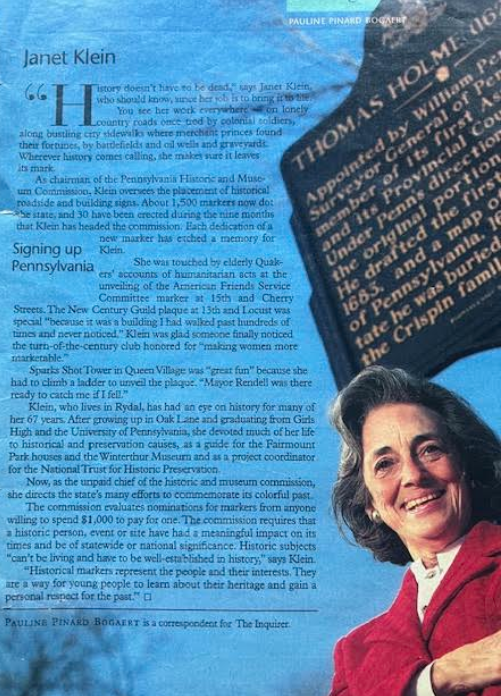
    “History doesn’t have to be dead,” she said in 1998. “Historical markers represent the people and their interests. They are a way for young people to learn about their heritage and gain a personal respect for the past.”

    She also led the Comprehensive Historic Assistance Program for the National Trust for Historic Preservation in the 1980s, helped create the Liberty Trail near Independence Hall, and directed the restoration of the first historic home in the Lukens National Historic District of Coatesville.

    She served on the board of visitors at Temple University’s Ambler campus and Klein College of Media and Communications, on the collections committee at the Union League, and as a guide at the Winterthur Museum in Delaware. She was active with the Pennsylvania Department of Conservation and Natural Resources, the Museum Council of Philadelphia, and other groups.

    This story and photo of Mrs. Klein appeared in The Inquirer in 1998.Temple University

    She was honored for her service by the Women’s Center of Montgomery County in 1999 and by the Preservation Alliance for Greater Philadelphia in 2001, and was named a Distinguished Daughter of Pennsylvania in 2000. In 2018, she earned an award for service and philanthropy from Coatesville’s National Iron and Steel Heritage Museum.

    As philanthropists, Mrs. Klein and her husband supported what became, named after them, the Klein College at Temple, the National Association of Television Program Executives, the Police Athletic League, the American Heart Association, and other organizations dedicated to education, healthcare, youth development, and social service. They created the Janet and Lew Klein Making A Difference Award for the Pennsylvania Association of Broadcasters and donated his professional papers to Temple.

    “She was an inspirational community leader,” said David Boardman, dean of Temple’s Klein College, “who inspired others through her generosity, her brilliance, and her warmth.”

    Janet Surman was born March 3, 1930. She grew up in Oak Lane and earned a bachelor’s degree at Penn.

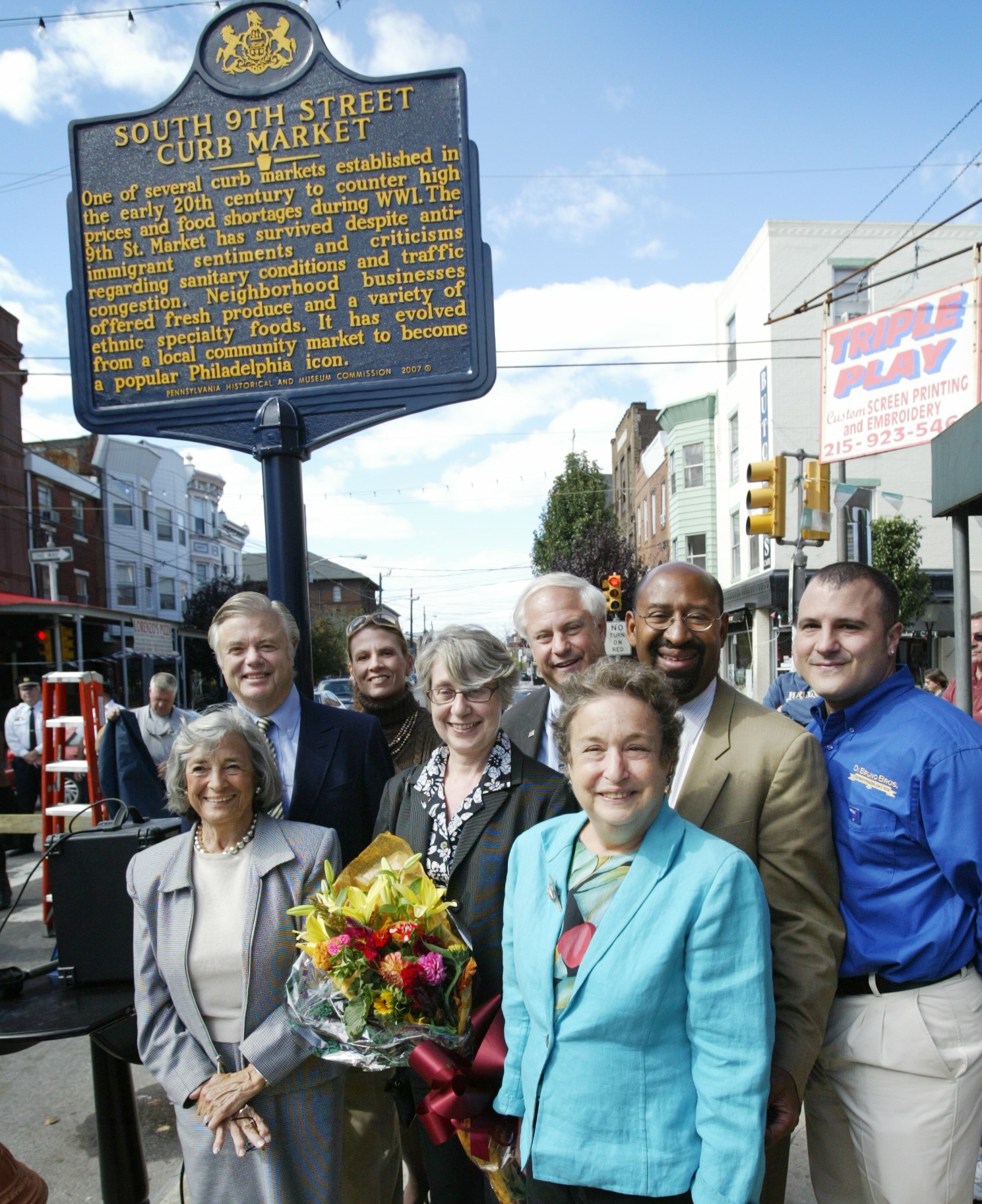
    Mrs. Klein (left) appeared with others in 2007 to celebrate a historical marker at the corner of 9th and Christian Streets.Alejandro A. Alvarez / Staff Photographer

    She met Lewis Klein in college, and they married in 1952. They had a son, Stephen, and a daughter, Ellen, and lived in Melrose Park and Rydal. Her husband, a pioneering TV broadcaster and cofounder of Gateway Communications, died in 2019.

    Mrs. Klein and her husband traveled the world for decades and attended dozens of galas and fundraising events. She enjoyed gardening, was an avid reader, and liked to play Scrabble.

    In 1993, Inquirer columnist Clark DeLeon called her “a wonderful, funny, vivacious lady.” Temple’s Boardman said: “She was truly one of the best human beings I’ve ever had the privilege to know.”

    In addition to her children, Mrs. Klein is survived by a granddaughter, two great-grandchildren, and other relatives.

    A celebration of her life is to be held later.

    Donations in her name may be made to the Abington Police Athletic League, 1166 Old York Rd., Abington, Pa. 19001.

    Mrs. Klein grew up in Oak Lane and earned a bachelor’s degree at Penn. Courtesy of the family
  • FDR sent federal troops to break a racially tense transit strike on this week in Philly history

    FDR sent federal troops to break a racially tense transit strike on this week in Philly history

    So many young Americans who signed up for World War II in 1944 thought they were headed across the Atlantic to help pull European towns away from Adolf Hitler’s grip.

    But many GIs, fresh out of basic training at New Jersey’s Fort Dix, instead ended up sleeping in two-man tents in Fairmount Park.

    On Aug. 5, 1944, President Franklin D. Roosevelt dispatched about 5,000 U.S. Army troops to Philadelphia to intervene in an ugly transit strike.

    When covering a trash strike in July 1978, the Daily News spoke with military members who were sent to the city during the tumultuous six days of the 1944 transit strike.

    “I had to work on Diamond Street,” James Denning of Maywood, N.J., recalled to the Daily News. “That was worse than Germany.”

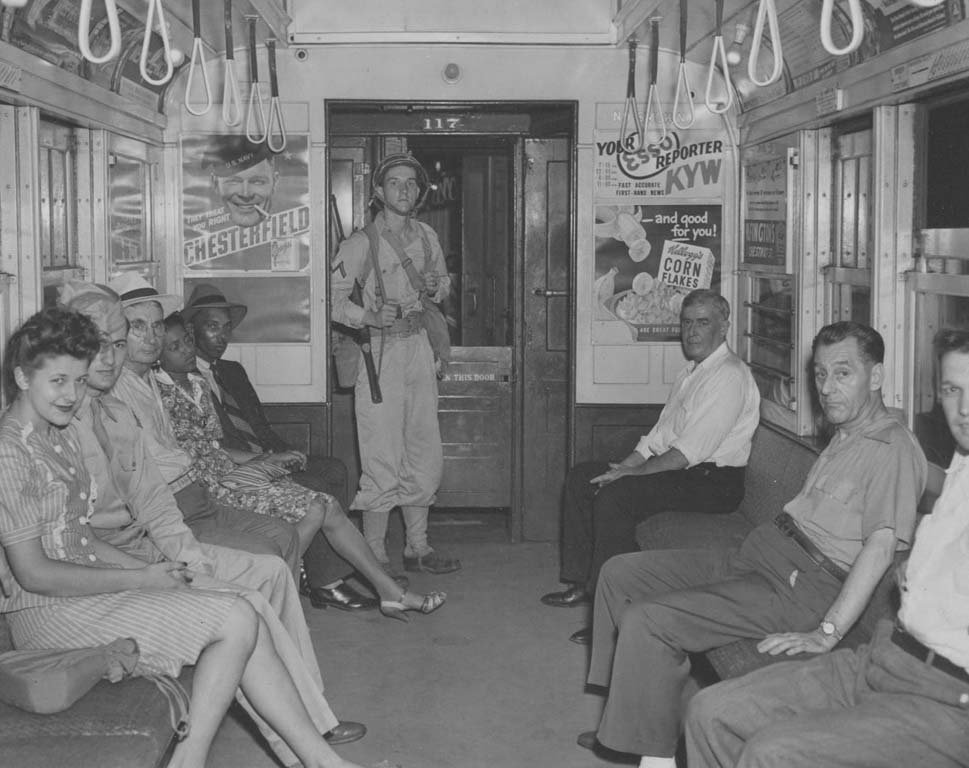
    Photo shows one of the subway car with passengers with a Armed soldier during the 1944 Philadelphia Transit strikes.Culross (Phila. Inquirer)

    It marked one of the first major federal interventions amid the fight for civil rights.

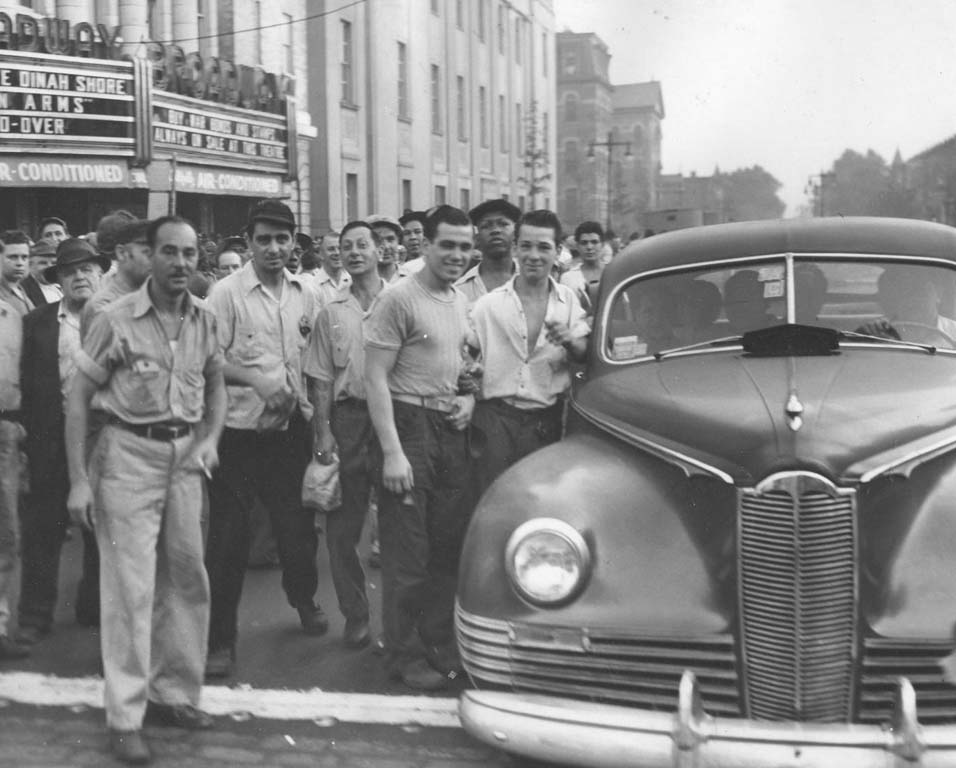
    On Aug. 1, white transit workers with the Philadelphia Transit Co. had gone on strike over the hiring of Black trolley operators.

    Black workers were now being given operator jobs, graduating to higher pay and better conditions than in their previous jobs in mechanics and labor.

    The Black drivers threatened to leave their posts unless they were guaranteed protection from racially motivated attacks. And the strike itself threatened to slow down the Philadelphia war machine feeding the need for ships, tanks, and uniforms.

    The Army took over the transit agency three days into the strike, and on Aug. 5, Roosevelt ordered the troops to break the strike.

    The intervention helped lead to the end of the strike after six days, but federal troops remained in the city, riding streetcars 24 hours a day, keeping them moving, and protecting Black transit workers on the rails and on the roads.

    Troops withdrew from the city on Aug. 17, and by early September, Black trolley drivers took their rightful places behind the wheel.