Category: History

  • Blood, flags, and fear: 25 years later, looking back on how Philadelphians reacted to 9/11

    Blood, flags, and fear: 25 years later, looking back on how Philadelphians reacted to 9/11

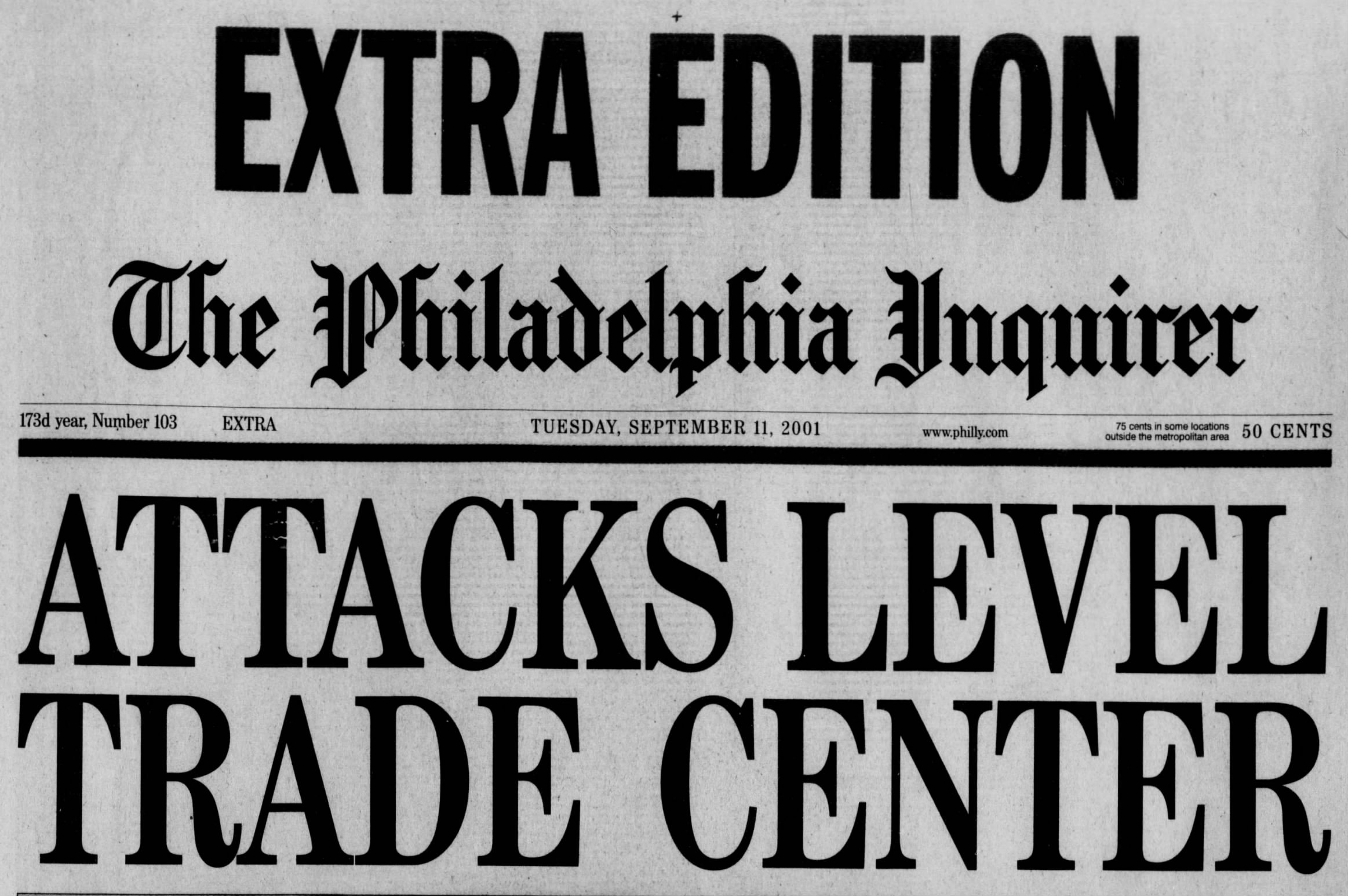
    As the sun set on Philadelphia on Sept. 11, 2001, the city, like the nation, was in shock. Its citizens raged and wept, confronted with unprecedented acts of violence in New York City; Washington, D.C.; and Shanksville, Pa.

    It wouldn’t be known for quite some time, but the attacks that rocked the East Coast that day took about 3,000 lives. Among them were dozens of people with local connections, including several crew members on the doomed flights.

    But in the immediate aftermath of the 9/11 attacks, Philadelphia was focused on survival, and worried that the birthplace of the nation could be the next target. We evacuated, took refuge in religion, worried for the future, gave our blood and time to help, and focused our anger and confusion on our neighbors.

    Now, 25 years later, the impacts of 9/11 continue to reverberate. And though society continued on, in the first few days after the tragedy, it seemed as if it could not.

    Here is how The Inquirer and Daily News covered it:

    https://www.newspapers.com/article/the-philadelphia-inquirer/205152877/

    Article from Sep 12, 2001 The Philadelphia Inquirer (Philadelphia, Pennsylvania) <!— –>

    Panic in Center City

    In the wake of the attacks, panic set in on Philadelphia. Fears the city could be the next target spread quickly, prompting the closure of city government offices, federal buildings, businesses, schools, and historic landmarks by noon.

    “We are taking every reasonable precaution to ensure the safety of our citizens,” Mayor John F. Street said at a late morning news conference.

    Thousands of people began a frantic commute home, gridlocking Center City’s streets and sidewalks. An estimated 50,000 SEPTA Regional Rail passengers were likewise stuck, with several lines suspended. Like all airports nationwide, Philadelphia International Airport was shut down.

    By midafternoon, Center City was essentially a ghost town. Subway lines were all but deserted. Streets were eerily still and empty of cars. Philadelphia’s high-rises largely sat devoid of workers. And as the day wore on, the trauma continued to set in.

    “I feel more shocked today,” said Southampton resident Paul Brown, 81, who survived the attacks on Pearl Harbor 60 years before. “I’m despondent, bewildered, and confused.”

    https://www.newspapers.com/article/philadelphia-daily-news/205152937/

    Article from Sep 12, 2001 Philadelphia Daily News (Philadelphia, Pennsylvania) <!— –>

    Blood and flags

    Almost immediately, horror and sadness turned to anger. Though the enemy was not yet clear or confirmed, there were loud calls for retribution — including from the Daily News.

    In its Sept. 12 issue, under a cover that read “Blood for Blood,” in an editorial headlined “Now, It’s Our Turn,” the People Paper wrote: “Revenge. Hold on to that thought. Go to bed thinking it. Wake up chanting it. Because nothing less than revenge is called for today.”

    Others were more charitable, donating blood to help victims who may have survived. Thousands of people, in fact, streamed into blood donation centers to such a degree that the facilities were overwhelmed. Officials asked that anyone thinking of donating to wait to ease the crush.

    “I feel pretty helpless, and I just wanted to do something,” said Andy Hartlove, 45, of Exton. “Giving blood seemed to be the only thing I could do.”

    Then, there were the flags. So many people bought them to show their support that stores — specialty shops to big box stores alike — sold out completely, and manufacturers began running overtime shifts to make more.

    “Nothing’s going to make anybody feel all that better, but it makes everyone united,” said Jim Whitehead, 22, who worked at National Flag & Banner.

    https://www.newspapers.com/article/philadelphia-daily-news/205153079/

    Article from Sep 17, 2001 Philadelphia Daily News (Philadelphia, Pennsylvania) <!— –>

    A turn to God

    Faced with such monumental violence, many Philadelphians turned to the only being who they felt could provide answers: God.

    Though schools, businesses, and government buildings shut down, many sanctuaries and religious institutions remained open. The city even organized an interfaith prayer service held at Dilworth Plaza on Sept. 13, which thousands attended.

    Many religious leaders reported swellings of their congregations not seen since the bombing of Pearl Harbor. Religion, it seemed, was poised to regain a more prominent place in American lives.

    “People realize when all is said and done that faith in God is the only thing that somebody else cannot take away from them,” said Msgr. John T. Conway, Archdiocese of Philadelphia vicar.

    Many religious leaders took the opportunity to encourage reconciliation instead of revenge. Imam Shamsud-Din Ali, formerly of the Philadelphia Masjid, even encouraged worshipers to pray for the attacks’ perpetrators, noting that in order to perpetrate such a violent act, they must have been badly injured and were in need of God’s mercy.

    The Jewish holiday of Rosh Hashanah arrived as the first religious holiday after the attacks. Paul Bender, the leader of Congregation Ner Tamid in Cherry Hill, sounded a shofar — a ram’s horn blown to sound the start of the Jewish New Year — at a ceremony, likening it to the sounds of wailing of those who lost loved ones. The “sudden, nightmarish anarchy” of the tragedy, he prayed, would soon give way to peace among all people.

    “May that day come soon,” Bender said.

    https://www.newspapers.com/article/the-philadelphia-inquirer/205153160/

    Article from Sep 14, 2001 The Philadelphia Inquirer (Philadelphia, Pennsylvania) <!— –>

    Faith and race targeted

    Philadelphia’s Muslim and Arab American communities were on high alert, and immediately condemned the violence. Federal, state, and local leaders urged the public to not blame those groups, but violence and threats against them were prominent.

    A week after 9/11, officials said, at least 20 bias crimes were reported against Jews and Arabs in New Jersey, and an “untold” number in Pennsylvania. Many people who weren’t Arab or Muslim were also targeted, their attackers believing them to be somehow associated with the tragedy.

    “Apparently, all you need to be right now is brown,” said Emily Hornaday, spokesperson for the New Jersey Division of Criminal Justice.

    Among the most prominent crimes in the area was an incident in which two off-duty Philadelphia police officers pulled a gun on a Lower Merion Township 7-Eleven store clerk at about 3 a.m. the night after the attacks. The clerk, who was from Pakistan, was unharmed, and one of the officers was charged with reckless endangerment and other offenses.

    Taxicab drivers were pulled from their cars and threatened. Islamic religious centers boarded up their windows. A Palestinian flag was pulled down from the wall of Lincoln High School in Northeast Philadelphia, resulting in two arrests. A SEPTA bus passenger threatened a Moroccan man, and begged police to let him “kill the Pakistani.”

    “Are we going after the perpetrators,” asked Amin Elarbi, president of the Al-Aqsa Islamic Society, “or are we targeting an entire faith and race?”

    https://www.newspapers.com/article/philadelphia-daily-news/205153372/

    Article from Sep 17, 2001 Philadelphia Daily News (Philadelphia, Pennsylvania) <!— –>

    Vanishing normalcy

    Even in the early days of the aftermath, it was clear life was about to change. By midweek, city schools reopened, the local government began operating again, and, though curtailed and under new rules, flights began coming and going from PHL. Normalcy, however, was nowhere to be found.

    Large public activities for the weekend after the attacks, such as a Mexican Independence Day festival at Penn’s Landing and a festival celebrating Philly’s connections with Italy known as the Splendor of Florence, were canceled.

    Experts, meanwhile, predicted a swift, lasting change to daily life in the U.S. As Philadelphia Police Commissioner John Timoney put it, we needed to “reexamine how we go about our business.”

    Among those changes, said Geoffrey Herrara, a Temple professor of political science who specialized in post-Cold War security, were an ever-greater electronic surveillance apparatus that would surely be stepped up. Cameras, he said, would be linked with biometrics, and tracking of our movements was to be expected in the future. Some of our privacy, he said, “may disappear.”

    City leaders, however, focused on strategies to get tourists and workers back in town, and back in the high-rises they had quickly come to fear. Occupancy rates at area hotels fell to an abysmal 60%, and the sense that big-city life would be on the decline was palpable. Ultimately, though, we had to keep going, they said.

    “I think we need to communicate to the hearts and minds of Philadelphians that we need to get on with life,” said George Burrell, the mayor’s secretary of external affairs. “The things that attracted you here are still here.”
  • Echoes of the Lindsay Clancy case in a 1989 Northeast Philly infant murder

    Echoes of the Lindsay Clancy case in a 1989 Northeast Philly infant murder

    Samuel C. Stretton, the high-profile Chester County lawyer, said he’s been hearing from women about Lindsay Clancy, the Massachusetts mother facing murder charges for killing her three young children.

    “You know, Sam, she’s innocent,” he recalled one woman telling him at a supermarket.

    Stretton knows the Clancy case has struck a nerve. He knows because he defended a woman in a similar case 37 years ago.

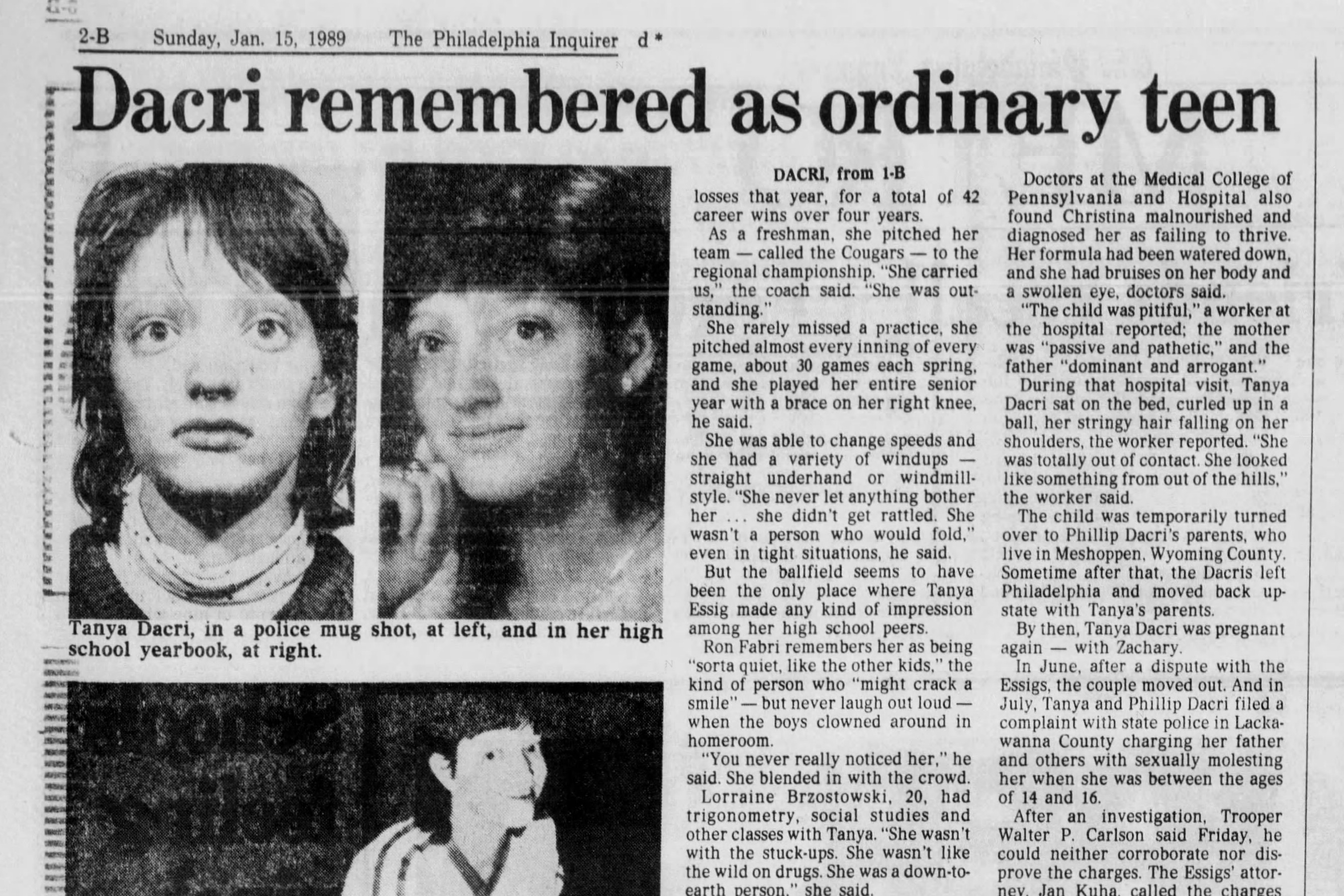
    He represented Tanya Dacri, a Northeast Philadelphia woman who pleaded guilty in 1989 to drowning her infant son Zacharry and dismembering his body.

    She was sentenced to life in prison.

    “I don’t think there’s any question now, in hindsight, that she suffered from [the] postpartum diagnosis. Problem was, it wasn’t understood back then, like it is now,” Stretton said in a phone interview Tuesday night.

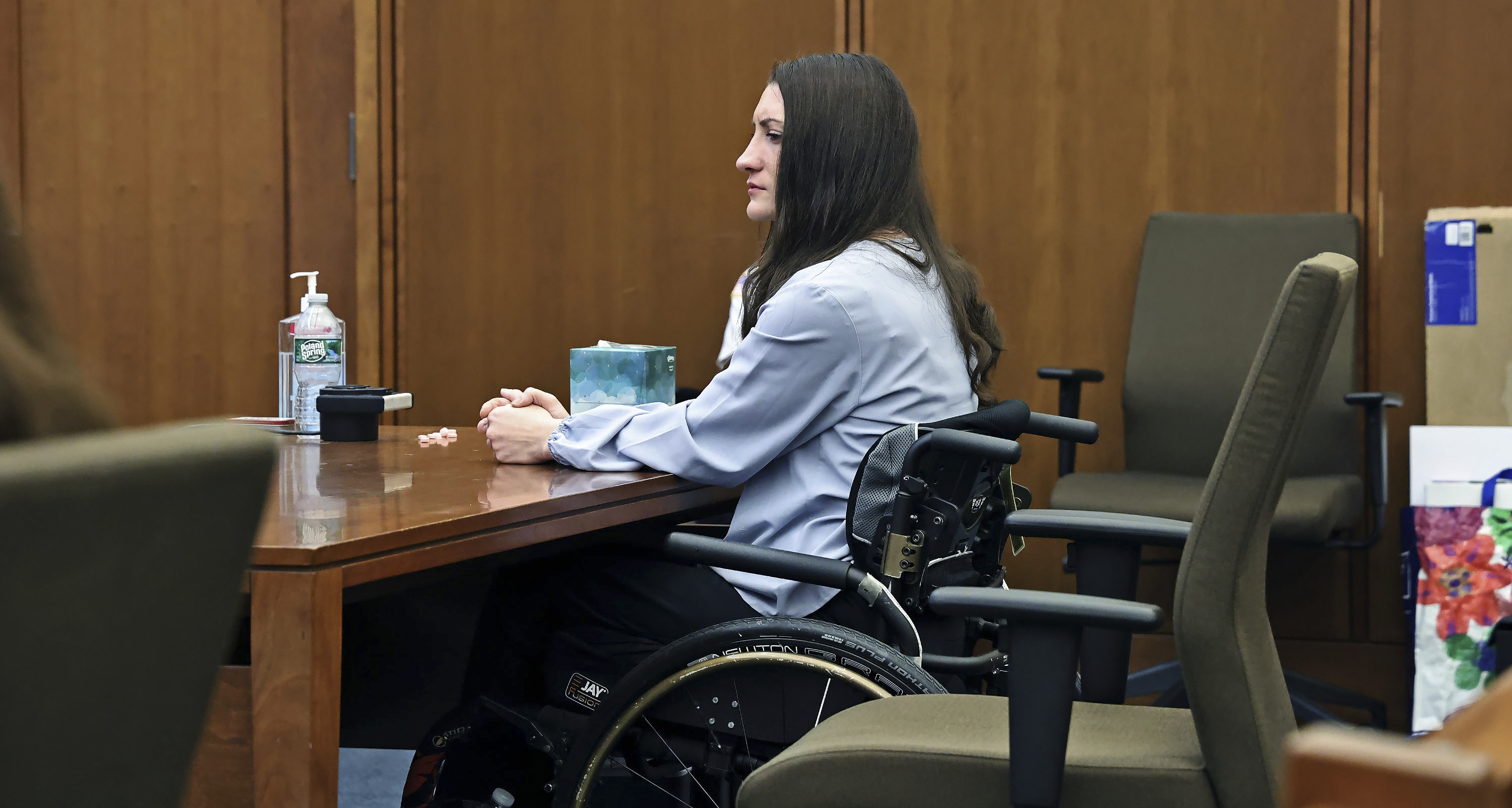
    Lindsay Clancy sits at the defense table as Kevin Reddington asks the jury to find her not guilty during her murder trial at Plymouth Superior Court in Plymouth, Mass., on Aug. 27. Greg Derr

    The jury in the Clancy case began deliberating last week. Unable to reach a verdict, Judge William Sullivan declared a mistrial Friday afternoon. A status hearing to decide where the case goes from here was scheduled for Sept. 29.

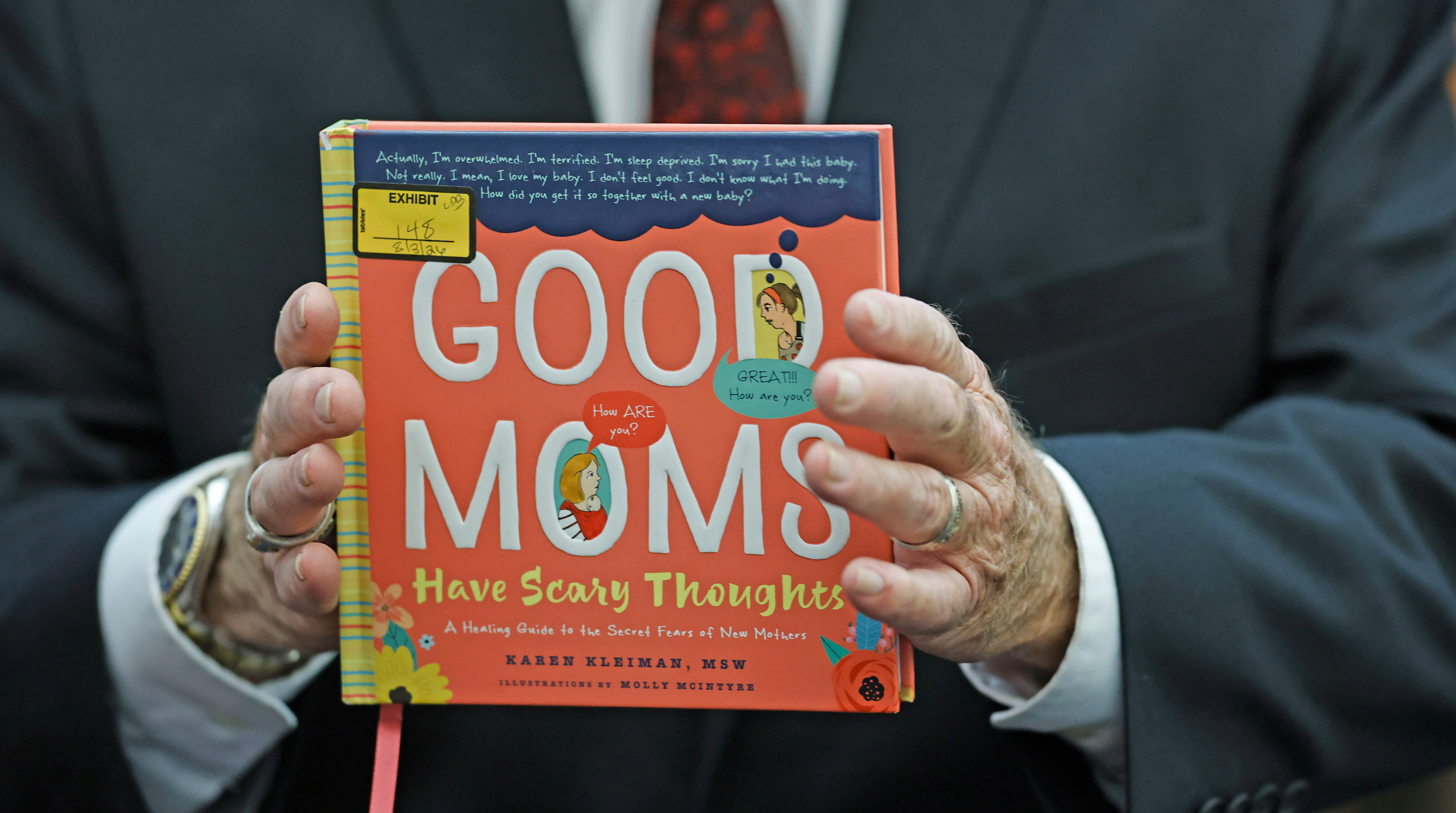
    Clancy, a former labor and delivery nurse, admits she strangled her children, but her legal defense is that postpartum psychosis led to her actions. Clancy, 36, has pleaded not guilty by reason of lack of criminal responsibility. Prosecutors say she knew what she was doing.

    In Pennsylvania, Dacri, now 58, is serving her sentence at the State Correctional Institution at Muncy, the state prison for women.

    Stretton believes “it’s the right time” for Dacri to seek a pardon or commutation. That would require a unanimous decision from the state Board of Pardons, and then the approval of the governor.

    “She and I have been talking about it for about 10 years, but I told her to wait a little longer. I thought that would enhance her chances, and now I think it’s the right time,” Stretton said.

    The last time Stretton communicated with Dacri was by letter several years ago. Stretton said he would move forward with a clemency application “if she still wants to do it.”

    Dacri has been behind bars since she was arrested in 1989.

    In 1989, Tanya Dacri pleaded guilty to drowning her 2-month-old son Zacharry in a Northeast Philadelphia apartment and dismembering his body.Philadelphia Inquirer

    “She’s done well in prison. She’s adjusted. She’s attended all the programs. She’s sorry. She’s regretful,” Stretton said.

    Dacri “has been adequately punished, and therefore we’re asking them to allow a sentence to be commuted or a pardon be granted, so she can get out and have some of her life left,” Stretton said.

    “Postpartum psychosis” as a legal defense was unusual but not unknown before Dacri’s case, according to a paper published in the spring 1991 Dickinson Law Review.

    Wide-ranging sentences

    While Dacri was sentenced to life in prison, mothers with similar Pennsylvania cases were given wildly different sentences.

    For example, the paper’s author, Amy L. Nelson, cited the case of Sharon Weisensale, who was found guilty but mentally ill in Bucks County of third-degree murder for the 1984 drowning death of her 2-month-old daughter.

    “She was given a five-year suspended prison sentence and was required to undergo psychiatric treatment,” Nelson wrote.

    In another case, Sharon Comitz, of Osceola Mills, Pa., pleaded guilty but mentally ill to third-degree drowning in the 1985 death of her month-old son, Nelson wrote.

    According to testimony, Comitz was treated for severe postpartum depression at the time of the murder, Nelson said. Comitz received a prison sentence of eight to 20 years.

    In another Pennsylvania case, Chanda Smith was convicted of third-degree murder in the drowning death of her three-week-old daughter, Nelson said. Smith was sentence to five to 10 years in prison.

    “Experts testified that Smith, like Weisensale and Comitz, murdered her child while suffering from severe postpartum psychosis,” Nelson wrote.

    A false story falls apart

    On the morning of Jan. 12, 1989, the Dacri story hit the front page of The Inquirer under the headline, “Police: Mother drowned baby.”

    Tanya Dacri, who was 20 years old at the time, initially told police that Zacharry had been taken by purse-snatching Black men — a detail that drew accusations of racism from some media commentators.

    However, investigators were immediately suspicious. Dacri’s fake story quickly fell apart that same day and she told police she killed her son because he was always crying, The Inquirer reported.

    She told police she dismembered his body and put the pieces in weighted plastic bags. She and her husband, Phillip Dacri, then disposed of the bags in the Neshaminy Creek in Bucks County and a creek in Carbon County.

    Phillip Dacri pleaded guilty to helping his wife dispose of the remains and served 10 months in prison.

    In court, During court proceedings, a psychologist for the defense and a psychiatrist for the prosecution agreed Dacri had a mental disorder that might have deteriorated to psychosis on the day she killed her infant son, The Inquirer reported.

    But they disagreed on whether Dacri specifically intended to kill her Zacharry.

    “I am convinced beyond a reasonable doubt that, when you placed your son in that bathtub and when you turned on the water and put the plug in the tub, that it was your intention to kill him,” Common Pleas Court Judge Michael Stiles told Dacri during her sentencing.

  • Will the real William Howard Taft please stand up?

    Will the real William Howard Taft please stand up?

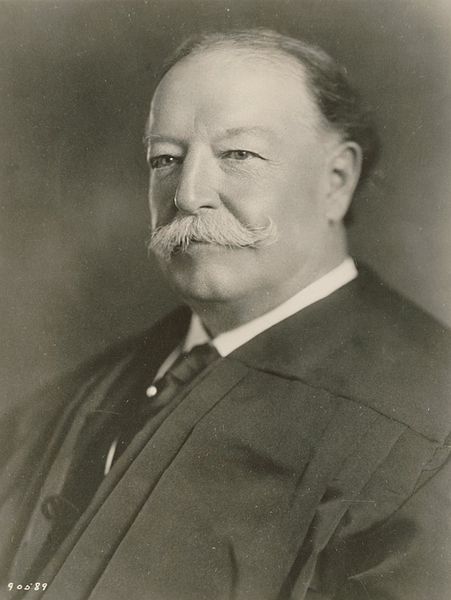
    Chief Justice John Roberts and his conservative majority like to cosplay as historians when they write court opinions that determine what rights we get to have and exercise. In August, though, Roberts tried the real thing. He took to the In Pursuit project’s Substack to write a brief history of a man he admires: former president and chief justice, William Howard Taft.

    Roberts’ version of Taft is a sober, steady president (1909-1913) to be hailed for his refusal to unduly use executive power. And for Roberts, Chief Justice Taft (1921-1930) is “one of [the nation’s] great Chief Justices” because he started modernizing the Supreme Court by growing the institution’s status and constitutional authority — a project Roberts continues to make his own.

    But Roberts’ history of Taft is irresponsibly shoddy; he cherry-picks facts, ignores narratives that don’t fit with his rosy portrait of Taft’s presidency, and he completely omits Taft’s damning record on race relations and civil rights.

    In truth, Taft was a white supremacist. He admitted as much on the campaign trail in 1906, when he told Republican voters in North Carolina that Black people were “a class of persons so ignorant” and likened them to the “mental stature” of children.

    Taft’s racism was partly opportunistic. In 1908 he was running as the Republican standard-bearer against Democrat William Jennings Bryan to succeed President Theodore Roosevelt. Since Reconstruction, the southern states had voted exclusively for Democrats. But Taft believed he could find a way to “break” the “Solid South” by luring away racist white voters to vote Republican. His preferred tactic was a racist dog-whistle.

    And so, while Taft once lamented the arsenal of racist laws that disenfranchised Black Americans throughout the country, he didn’t think Jim Crow discrimination was a very big deal. After all, it was merely “the ignorant colored voter,” he believed, who was being kept away from the polls — downplaying the violence that upheld disenfranchisement. Perhaps things might change, he added, if Black men got smarter and worked harder. For Taft, Black Americans needed to earn the vote and prove to white society that they could be entrusted with that privilege.

    Taft’s electoral strategy never panned out. Even though he handily won the 1908 election, the “Solid South” stuck with Democrats. Nonetheless, as president, Taft continued to side with white supremacy.

    In 1911, the Ninth Cavalry Regiment of Black troops — the famed “Buffalo Soldiers” — were stationed in San Antonio, where they encountered Jim Crow streetcar laws that mandated segregated seating. The troops refused to obey, destroying the segregation signs and standing up to streetcar conductors who demanded compliance. Democratic congressman and future Vice President John Nance Garner lobbied Taft to punish the U.S. soldiers, and the Taft eagerly complied, dispatching the Buffalo Soldiers to the desert to monitor the U.S.-Mexican border.

    President Taft also did nothing to confront the lynching epidemic that claimed roughly 250 Black lives during his presidency. In his first Annual Message to Congress — the forerunner to today’s State of the Union address — Taft explained that he sympathized with those who might choose to become part of the lynch mob. Yes, he conceded, lynchings involved “lawless violence and cruelty.” But Taft excused this, arguing that white people conjured the lynch mob because they were sick and tired of waiting for the ponderous court system to deal with Black people that supposedly broke the law. Faced with this “injustice,” the white lynch mob’s actions were justified, according to Taft.

    Taft’s forgiving attitude toward the lynch mob wasn’t just theoretical. On April 20, 1911, a white lynch mob in Livermore, Kentucky murdered a Black pool hall manager named Will Potter inside the local opera house. For the supposed crime of kicking white ruffians out of the pool hall, Potter “was dragged before the footlights and his body riddled with bullets from the guns of an audience of half a hundred determined avengers,” according to the New York Times. Rumor had it that witnesses were charged admission. Those who wanted to be part of the firing squad had to pay extra. When the shooting stopped, “the lights were then extinguished, the curtain lowered, and the mob then filed out.”

    The NAACP’s executive committee dispatched a plea to leading government officials, including Taft, demanding action. An NAACP committee even visited Taft to request that he condemn lynching. According to an NAACP internal document dated June 11, 1911, “The President assured the Committee that he could do nothing, that it was a matter to be left to the individual states.”

    Taft’s refusal to use executive authority to confront lynching is shocking. However, it is this type of inaction that Chief Justice Roberts believes made Taft a model chief executive. Roberts’ favorable interpretation of the Taft presidency highlights his restraint. “Steady competence, self-restraint, and respect for the other branches were the hallmarks of the Taft Administration,” writes Roberts.

    Taft’s contemporaries were less impressed with his presidency.

    Taft was one of the few incumbent presidents to lose reelection, somehow coming in third in what should have been a two-way race in the 1912 contest. He’d promised to lower tariffs but ended up raising them, and Taft’s unwavering support for an ultra-conservative Supreme Court all but doomed progressive reforms in areas like labor rights. So dire was Taft’s record that his former mentor, Teddy Roosevelt, came out of retirement to challenge him for the Republican nomination. In the general election, Democrat Woodrow Wilson trounced Roosevelt — running as the Progressive Party candidate — as well as Taft and Socialist Eugene Debs.

    Roberts reserves his greatest appreciation for Taft’s contributions as chief justice between 1921 and 1930, which grew the “prestige” and “authority” of the Supreme Court. Namely, Taft pushed passage of the Judiciary Act of 1925, “which gave the Supreme Court control over its own docket,” and oversaw construction of the court’s august building on Capitol Hill.

    But what about the Taft Court’s actual decisions? Here Roberts has little to say, but recent scholarship by law professors Nikolas Bowie and Daphna Renan shows that, at best, Taft and most of his colleagues had a studied disinterest in civil rights. At worst, Taft used his opinion in the 1926 case Myers v. United States to stamp the Supreme Court’s imprimatur on the white supremacist version of the history of Reconstruction.

    The case concerned a Reconstruction-era law that prevented President Andrew Johnson from firing federal officers committed to implementing the Reconstruction Acts after the Civil War. For Taft, Reconstruction wasn’t an attempt to use the law to right the wrongs of slavery and legislate equality, but an attempt “to reverse” the Constitution.

    Of all his contributions on the bench, this was the decision of which Chief Justice Taft was most proud. Taft’s prized decision was of a piece with an emerging white supremacist revisionist history of the Civil War and Reconstruction seen, for example, in D.W. Griffith’s film Birth of a Nation (1915) and in the explicitly pro-slavery, pro-Confederacy approach to writing American history pioneered by William Dunning and his students, whose work was used to bolster Jim Crow.

    Made By History sponsors. FOR USE ON MADE BY HISTORY STORIES ONLY.Inquirer Staff

    So the question, then, is: why did Roberts write this fluffy, mythological history of Taft? Is it because Roberts’ selective historical method ignored Taft’s abysmal record on civil rights and lynching? Or perhaps Roberts has never heard of Taft’s Myers decision.

    A less generous answer might be that while Roberts chose to airbrush Taft’s race relations and civil rights story out of his history, the current chief justice knows more than he’s letting on. After all, in cases like Callais v. Louisiana (2026), Brnovich v. Democratic National Committee (2021), and Shelby County v. Holder (2013), Roberts led the charge to destroy the single most significant civil rights legislation ever enacted: the Voting Rights Act.

    If Taft’s legacy was to retrench the freedoms won during the Civil War and Reconstruction, Roberts’ legacy may one day be recognized as an assault on the victories of the Civil Rights Movement.

    It doesn’t take much digging in the history of race relations and civil rights to see that Taft’s executive restraint and court stewardship that Roberts so admires served the agenda of perpetuating Jim Crow white supremacy. This is bad history. But perhaps Roberts’ methodological sins of omission tell us exactly why the sitting chief justice sees so much to admire in his predecessor.

    Gautham Rao is Associate Professor of History at American University, and author of “White Power: Policing American Slavery.”

    Made by History takes readers beyond the headlines with articles written and edited by professional historians. Opinions expressed do not necessarily reflect the views of The Inquirer.

  • The Beatles sneaked into Convention Hall in a fish truck on this week in Philly history

    The Beatles sneaked into Convention Hall in a fish truck on this week in Philly history

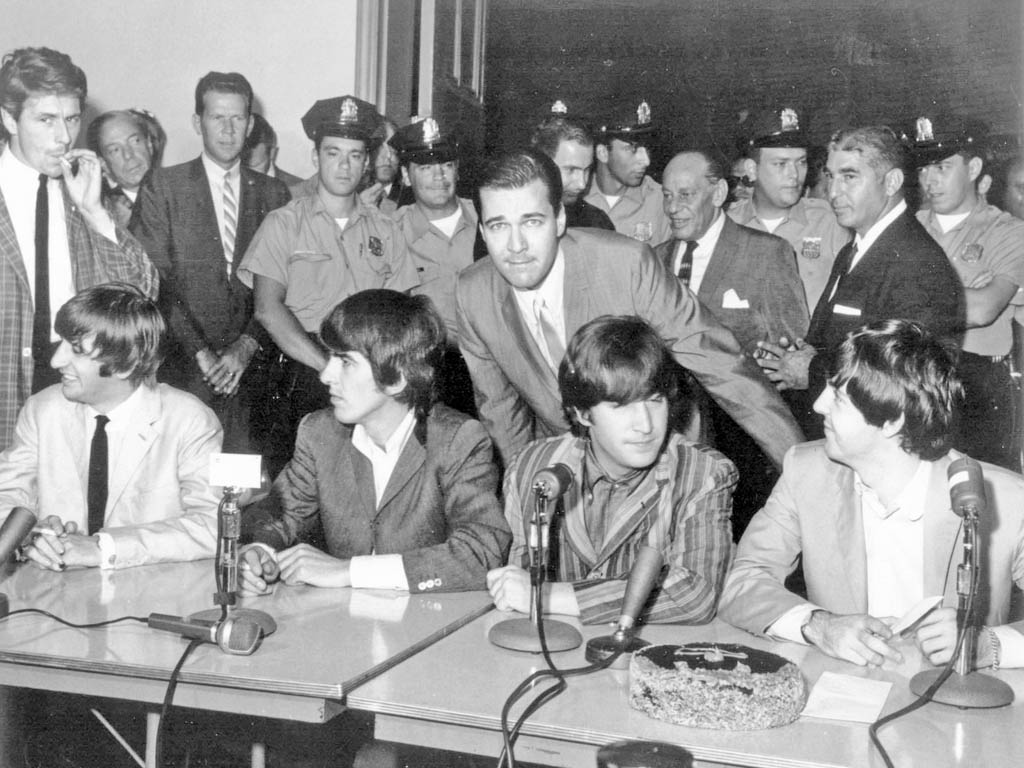
    Four of the most influential musicians the world has ever seen had a concert to play in West Philadelphia on Sept. 2, 1964. But they needed an inconspicuous way to get in.

    DJ Hy Lit recalled to the Daily News’ Phil Jasner in 1980 that kids were everywhere.

    Philly’s finest knew exactly what to do to get the Beatles into Convention Hall.

    “They came in a Hackney’s fish truck,” Lit said.

    Here comes the sun

    The Beatles were playing in Philly nearly eight months after their February appearance on The Ed Sullivan Show, which introduced the Fab Four to the U.S. audience.

    By September 1964, the band’s first U.S. tour and Beatlemania were in full swing.

    Lit was promoting the band’s Philly appearance at Convention Hall, at 34th Street and Civic Center Boulevard, on behalf of popular radio station WIBG-AM.

    He paid the band’s agent $25,000 to get the band to play Philly, which was still reeling from the Columbia Avenue riots at the end of August 1964.

    More than 12,000 fans paid $2.50 to $5.50 to take part in the festivities, which also featured opening performances from Clarence “Frogman” Henry and Jackie DeShannon.

    Which songs the Beatles played that night are almost irrelevant, as the songs were accompanied by a chorus of teenagers shrieking.

    A hard day’s night

    Frank Rizzo hadn’t yet risen to the rank of police commissioner.

    In 1964, he was second-in-command to Commissioner Howard Leary. But he ranked high enough to meet the band that had galvanized his city, and to help smuggle them into Philly and Convention Hall.

    Lit told Jasner that it was Rizzo who came up with a plan to fake out the crazed fans.

    Rizzo arranged for a couple of buses and a police escort to divert attention, while sneaking the band into what we now call University City in a very non-posh accommodation.

    “I was in their dressing room,” Rizzo told the Courier-Post in 1989. “There was marijuana smoke everywhere. I shoulda run ‘em all in.”

  • Joan E. Lynaugh, nursing trailblazer, historian, and professor emerita at Penn Nursing, has died at 90

    Joan E. Lynaugh, nursing trailblazer, historian, and professor emerita at Penn Nursing, has died at 90

    Joan E. Lynaugh, 90, of Gwynedd, Montgomery County, pioneering primary care nurse practitioner, award-winning professor emerita of nursing at the University of Pennsylvania, historian, mentor, author, birdwatcher, and “living legend,” died Friday, July 10, of age-associated decline at Foulkeways at Gwynedd retirement community.

    Reared on a dairy farm in the Finger Lakes region of upstate New York, Dr. Lynaugh became a pioneering international expert on primary care nursing and nurse practitioner policies, education, and history. For decades, from the early 1960s through her retirement in the late 1990s, she treated patients, taught students, researched history, and joined colleagues in defining and expanding the role of nurses in modern healthcare.

    During her career, the benefits of home care, the importance of critical care, and the need for nursing history education were hot topics in healthcare. “As a historian,” she told The Inquirer in 1997, “I take great interest in this shift from the intense emphasis on hospitals to the more balanced emphasis on other kinds of care.”

    Dr. Lynaugh joined Penn’s School of Nursing in 1980. She took charge of the school’s new primary care nursing unit and went on to be director of the Robert Wood Johnson Foundation primary care nurse practitioner program and associate director of the foundation’s teaching nursing home project.

    Dr. Lynaugh (front center) and her family celebrate her 2005 award as a “living legend.”Courtesy of the family

    She was also the nursing school’s associate dean and director of graduate studies from 1993 to 1996, and chair of the nursing, history, and healthcare department from 1994 to 2000. In a tribute, colleagues at Penn Nursing said: “Dr. Lynaugh was a visionary leader, a prolific scholar, and a dedicated mentor whose extraordinary career left an indelible mark on Penn Nursing and the global nursing profession.”

    In 2000, she told writer Suzanne Gordon: “We know we can’t get into the hospital without a doctor. That’s no surprise. We are, however, surprised to discover that we can’t get out of the hospital without a nurse.”

    She was a founding director of Penn’s Barbara Bates Center for the Study of the History of Nursing in the mid-1980s, and her research focused on the origins of community hospitals and critical care units. In 2005, she was named a “living legend” by the American Academy of Nursing and earned a lifetime achievement award from the National Organization of Nurse Practitioner Faculties.

    Penn Nursing created the Joan Lynaugh Award for a graduating midwifery student for excellence in clinical practice, and the Bates Center features the Joan Lynaugh Founders Fund to support educational and archival activities, and the Joan Lynaugh Digitization Project Fund to preserve data and material from the Joan E. Lynaugh papers.

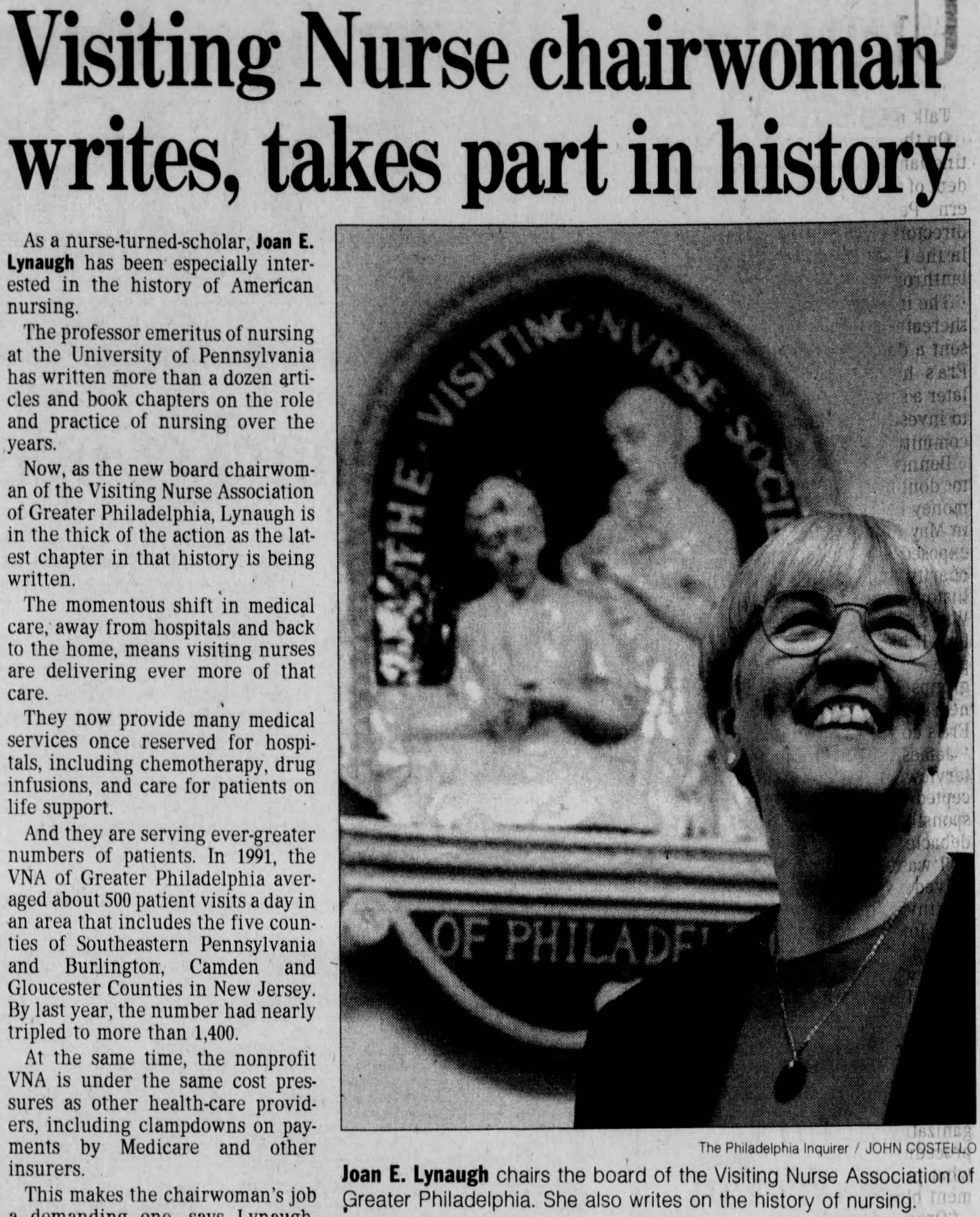
    This story and photo of Dr. Lynaugh appeared in The Inquirer in 1997.Newspapers.com

    In 2018, the center named its archives the Joan E. Lynaugh Archives and Special Collections. Before Penn, Dr. Lynaugh practiced and taught nursing at the University of Rochester and the old Providence Hospital in Washington, D.C.

    She was a fellow at the American Academy of Nursing, board chair of the Visiting Nurse Association of Greater Philadelphia, and active with the College of Physicians of Philadelphia, the American Association of Critical Care Nurses, and other groups. She cowrote Critical Care Nursing: A History with Penn colleague Julie Fairman in 1998, and coedited the award-winning textbook Enduring Issues in American Nursing in 2000.

    Colleagues at the American Association for the History of Nursing said in a tribute: “Joan’s intellectual curiosity, generosity as a mentor, commitment to excellence, and passion for nursing history left an indelible mark on the nursing profession worldwide.”

    A friend on Facebook called her “one of the smartest, kindest scholars I ever had the honor and pleasure to be mentored by.”

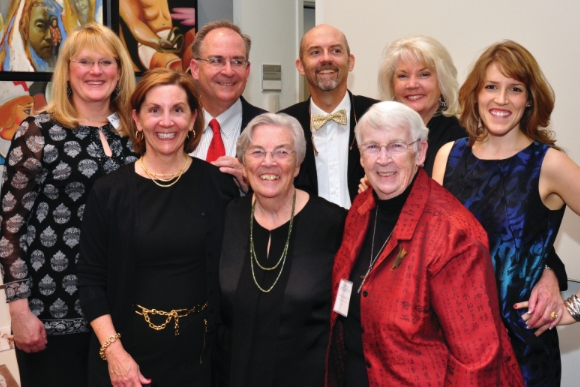
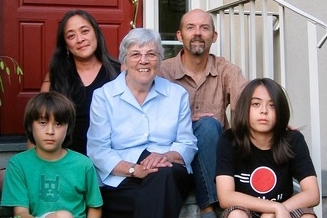
    Dr. Lynaugh (center) enjoyed time with her family.Courtesy of the family

    Joan Estelle Lynaugh was born Aug. 30, 1935, in Canandaigua, N.Y., about 28 miles southeast of Rochester. She studied nursing at St. Mary’s Hospital School of Nursing in Rochester and earned bachelor’s and master’s degrees in nursing at the University of Rochester, and a doctorate in history at the University of Kansas in 1982.

    Her whole life, she enjoyed traveling, bird-watching, camping, and hiking. She was an engaging host and liked to read mysteries and newspapers.

    She was a longtime colleague and personal partner of fellow medical professional Barbara Bates, and they lived in Bryn Mawr for years. Bates died in 2002, and Dr. Lynaugh moved to Gwynedd a few years later.

    “Joan will always be remembered for her generous spirit, wonderful sense of humor, persistent intellectual curiosity, and a sincere commitment to making the world a better place,” her family said in a tribute.

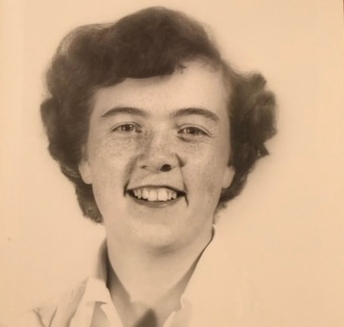
    Dr. Lynaugh grew up in the Finger Lakes region of upstate New York.Courtesy of the family

    Her niece Mary Clare Hamlin said: “She was understated, humble, practical, and scientifically minded. She always wanted to help others.”

    In addition to her niece, Dr. Lynaugh is survived by other relatives. Two brothers and a sister died earlier.

    A celebration of her life is to be held at 1 p.m. Friday, Oct. 23, at Penn’s Claire M. Fagin Hall, Room 316, Third Floor front, 418 Curie Blvd., Philadelphia, Pa. 19104.

    Donations in her name may be made to the Joan Lynaugh Founders Fund at Penn’s Barbara Bates Center for the Study of the History of Nursing, Office of Institutional Advancement, Claire M. Fagin Hall, 418 Curie Blvd., Suite 445, Philadelphia, Pa. 19104.

    Dr. Lynaugh “was understated, humble, practical, and scientifically minded,” her niece said. Courtesy of the family
  • The Black women whose voices lifted hearts at the March on Washington

    The Black women whose voices lifted hearts at the March on Washington

    After hours of wandering and waiting in the late August heat of the nation’s capital, the hundreds of thousands gathered for the 1963 March on Washington were welcomed with a program announcement by the march’s architect, labor leader A. Philip Randolph. In his signature baritone, he announced, “Permit me to present to you to sing the national anthem, Miss Camilla Williams.”

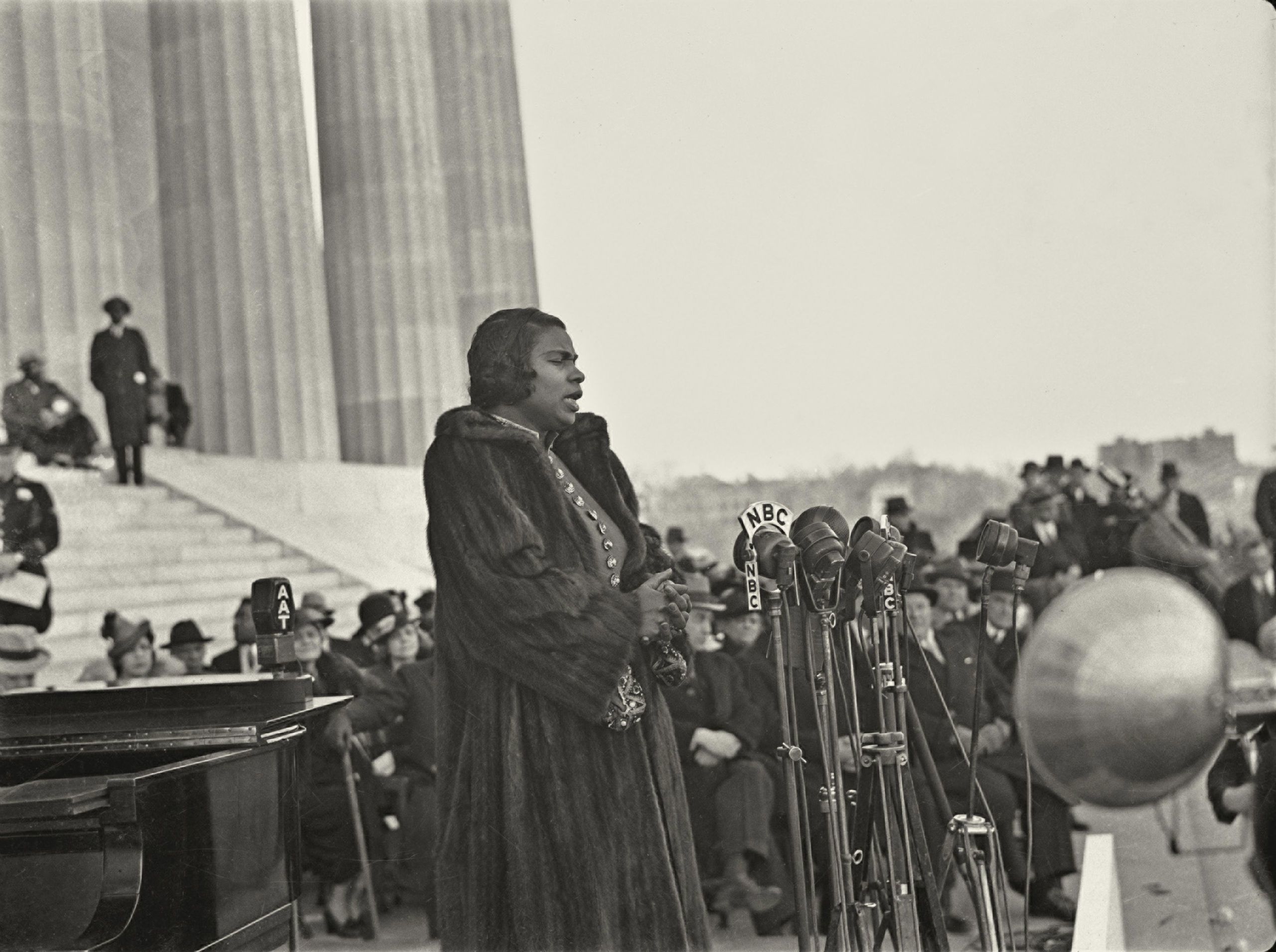
    More than a few marchers may have shared a puzzled glance. The march leaflets offered that none other than the diva Marian Anderson would open the day’s program of 18 speakers and songs. The march’s planners and crowds alike would have remembered Anderson’s historic 1939 Easter Day concert. At that time, Anderson had been barred, like all African American performers, from taking the stage at Constitution Hall — the Daughters of the American Revolution venue. With support from first lady Eleanor Roosevelt and Interior Secretary Harold Ickes, however, Anderson sang instead at the Lincoln Memorial before an interracial crowd.

    Marian Anderson singing at the Lincoln Memorial on Easter Sunday, 1939.World History Archive / Alamy Stock Photo

    The moment elevated the Philadelphia native beyond her status as a pioneer in opera and made her a symbol of a nascent civil rights struggle. In the estimation of the march planners in August 1963, there was none other than Anderson who could set the right tone for a day fueled by idealism, as well as calls to action.

    But that Wednesday afternoon, the contralto was stuck in the monstrous traffic surrounding the National Mall, and Randolph, likely in consultation with his lieutenant, Bayard Rustin, called forward Camilla Williams, Anderson’s protégé.

    By 1963, Williams had also fought hard to establish herself in the racist and exclusionary world of opera. Born in Danville, Va., in 1919, she landed in Philadelphia after her local community raised funds to help her continue her music education up north. When she arrived in the city, she paid the bills by selling concessions at a movie theater, while she trained with some of Anderson’s former teachers. Williams, an early recipient of a Marian Anderson Scholarship, eventually debuted at the New York City Opera in Madame Butterfly and later lent her voice to a recording of George Gershwin’s Porgy and Bess.

    A seasoned performer, she opened the program for the 1963 March on Washington. The substitute rose to the occasion, and the crowd responded with the first of several rounds of rapturous applause and shouts that roiled across the rows of NAACP chapter members dressed in their church outfits, young rebels in denim, and clergy in full vestments. Eventually, traffic cleared, and Anderson arrived, as well, making her way to the multi-microphoned platform to sing “He’s Got the Whole World in His Hands” to an adoring audience.

    Anderson and Williams were two of only four women whose voices were heard by the marchers that day. Most accounts of the March on Washington focus on Martin Luther King Jr.’s “I Have a Dream” speech, and to a lesser degree, John Lewis’ controversial and fiery address about the slow pace of social change in America. Sixty-three years later, the voices and vision of several key women of the march have yet to be fully recognized and appreciated.

    The march was born from the struggles of Black labor organizers who understood the importance of taking up the problems of racial caste and class together, not separately. Randolph and Rustin, with political theorists, leftist activists, and labor organizers, had conceptualized the March on Washington during World War II to pressure the federal government to desegregate the military and provide fair employment opportunities for Black workers. At every turn, Randolph consulted and relied on female comrades who shared his leftist political inclinations, including legal scholar Pauli Murray, pacifist Pauline Myers, labor organizer Maida Springer, longtime National Council of Negro Women leader Dorothy Height, as well as Anna Arnold Hedgeman, the only woman on the march’s New York-based planning committee.

    By the time of planning for the 1963 march, men dominated — men led all the supporting organizations, and the programming committee resolved to schedule speakers based on those groups. Despite their decades-long commitment to the March on Washington Movement, the women of the march were never able to pierce the ranks of executive leadership, nor serve as spokespeople for the larger civil rights struggle. As the movement gained steam into the 1950s and 1960s, male religious leaders — like King — and institutional heads calcified an image of who was leading.

    Made By History sponsorsInquirer Staff

    With weeks to go before the assembly, however, organizer Hedgeman argued for a last-minute addition to the schedule. She sought to honor Black women who had struggled in the many fights to desegregate schools, eradicate Jim Crow laws, and secure voting rights. In an appeal to her colleagues, Hedgeman argued, “In light of the role of Negro women in the struggle for freedom and especially in light of the extra burden they have carried … it is incredible that no woman should appear as a speaker.” Her chastening confrontation was met with no resistance, but the depth of her frustrations was never fully recognized. A hastily planned tribute would have to do.

    In the end, her recommended “Tribute to Negro Women Freedom Fighters” barely scratched the surface, offering just a nod to the depth and breadth of leadership and passion so many Black women offered the freedom movement.

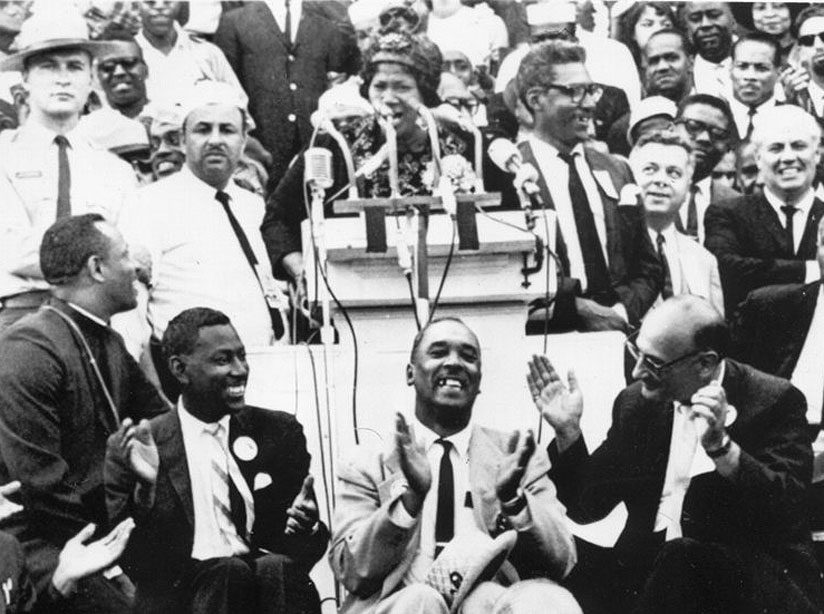
    The crowd heard directly from Daisy Bates, coordinator of the school desegregation battle in Little Rock, Ark., in 1957, and from gospel great Mahalia Jackson, a personal friend to King. Their words and lyrics soared. Bates pledged that Black women would “sit-in … kneel-in, and … lie-in, if necessary, until every Negro in America can vote.”

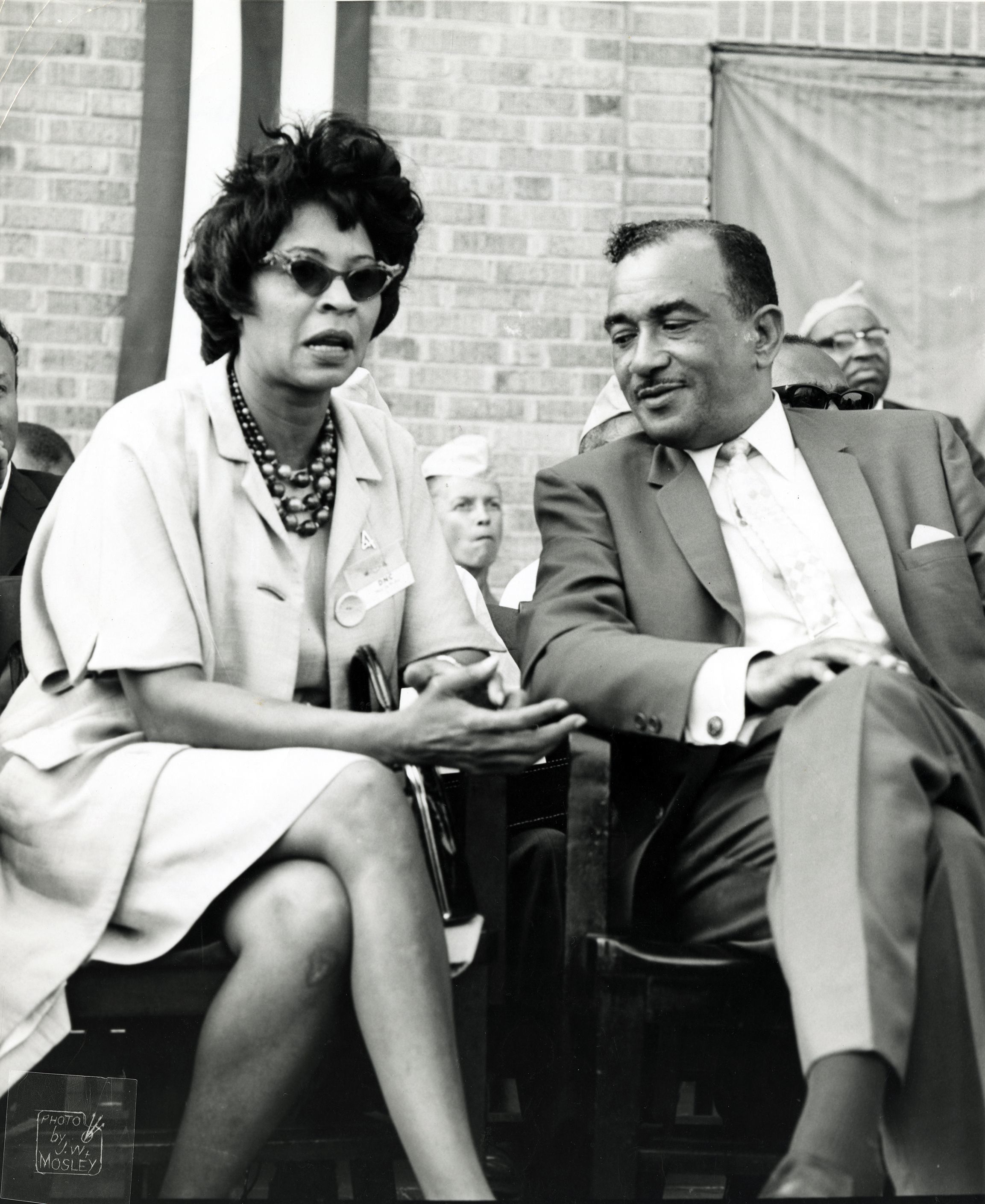
    Cecil B. Moore and Daisy Bates at the 1964 Democratic National Convention in Atlantic City.Photo Credit: John Mosley Collection, Courtesy Charles L. Blockson Afro American Collection, Temple University Libraries, Philadelphia, Pa.

    Jackson was prompted to deliver an encore, and as she sang the gospel hit “How I Got Over,” the dignitaries behind her closed their eyes and swayed to the beat.

    I’m gonna thank him for heart felt religion

    I’m gonna thank him for a vision

    I’m gonna sing hallelujah

    Oh, shout all my trouble over

    But three female singers, one speaker, and one “tribute” didn’t begin to convey the contributions of Black women to the movement. In truth, Black women often struggled against the choke hold of racism and sexism they faced in local and national organizations, and their relative absence on the stage of the march spoke to a deeper silencing.

    Each year, the anniversary of the March on Washington is marked by remembrances that venerate Dr. King even as they fail to recognize the depth of his message. The speeches that day touched on a range of issues: a still-prescient critique of automation, exposure of police brutality, advocacy for work training to reduce unemployment, as well as a higher federal minimum wage.

    But there was more to it than that: It was an inspiring day, but also, for Black women involved in the struggle, a disappointing day. Remembering the march, as a movement and as an event, we can remedy the silences by learning about the women who, through their music and their intellect and their leadership, allow us to keep dreaming.

    Marcia Chatelain is a Presidential Penn Compact Professor of Africana Studies at the University of Pennsylvania. She is the author of the forthcoming book “How Bright the Path Grows: The Untold Story of the Women Who Made the March on Washington” (Pantheon Books, 2026).

    Made By History takes readers beyond the headlines with articles written and edited by professional historians. Opinions expressed do not necessarily reflect the views of The Inquirer.

  • Phillies and Cubs set a record that still stands in a ‘weird’ game on this week in Philly history

    Phillies and Cubs set a record that still stands in a ‘weird’ game on this week in Philly history

    The Inquirer’s headline called it a “weird” game.

    The Chicago Tribune called it a “comedy of runs, hits and errors.”

    More than 100 years later, record-keepers call it baseball history.

    The game

    On Aug. 25, 1922, a windy-day matchup between the visiting Philadelphia Phillies and the Chicago Cubs accounted for 49 runs, the most ever recorded in a Major League Baseball game.

    That record remains unbroken.

    “Cubs and Phillies hooked up in what was advertised as a baseball game,” The Inquirer noted, “but which turned out early to be a comic opera to the tune of base hits.”

    The two teams met at Cubs Park, which would not adopt the name of Philadelphia native William Wrigley Jr. until 1926.

    More than 7,000 fans turned out for the Friday matinee, which started well enough: The Cubs jumped to a one-run lead, but a series of Cubby errors put the Phils up by three in the second inning.

    But the Phillies would not lead again for the rest of the game.

    The Cubs scored 10 runs in the second inning, and 14 in the fourth.

    The Phillies put up six runs between the third and fifth innings, eight runs in the eighth inning, and six more in the ninth, but could not fully catch up.

    And when the last out was recorded, the Phils left the bases loaded.

    The record

    When the basepath dust had settled, the two teams accounted for 51 hits, and 49 runs, “which established a new world’s mark for modern baseball,” The Inquirer noted.

    The teams also set records for most runs in one inning (14), number of at-bats by one player in one inning (3), number of hits by a team in one inning (11), and the season record for number of runs scored by one team over nine innings, besting the previous record of 19.

    But the Phillies were on the wrong side of history.

    They lost, 26-23.

    The Philadelphia baseball club got some measure of revenge more than 50 years later, beating the Cubs in a 10-inning slugfest at Wrigley Field, 23-22, on May 17, 1979. Their combined 45 runs counts as the second-most runs ever scored in a game.

    Close enough.

  • What’s so surprising about a Christian Democrat?

    What’s so surprising about a Christian Democrat?

    In early July, before the 250th anniversary of the nation’s founding, Texas Democrat James Talarico preached on the proper place of religion in politics. In his sermon, he argued for the importance of the separation of church and state while emphasizing that religion could still inform a person’s approach to and involvement in politics. He stressed how Christianity should shape the tone of one’s politics. Drawing on Jesus’ Parable of the Good Samaritan, Talarico claimed that loving one’s neighbor includes respecting people of different faiths.

    This message raised the ire of Talarico’s opponent, Ken Paxton, and many evangelicals have questioned the legitimacy of his faith. But he’s also earned the applause of a few Christian conservatives such as David French, who approvingly contrasted Talarico with MAGA Christian politicians.

    Talarico is not alone. There are currently a dozen ordained Christian ministers running for various public offices as Democrats, including Lutheran Pastor Sarah Trone Garriott (Iowa’s Third Congressional District), and United Methodist Pastor Adam Hamilton (Kansas-U.S. Senate).

    Many of these politicians, including Talarico, Trone Garriott, and Hamilton, have emphasized their religious faith not only as a part of their overall message, but they have situated their Christianity at the core of their identity. While there’s nothing “new” about Democratic politicians whose religious identity is central to their politics — this was common a century ago with progressives such as William Jennings Bryan and Barbara Jordan during the Civil Rights era (and still is quite common among African American politicians) — today’s candidates do represent a departure from the trend of the past four decades of Democratic Party politics.

    It hasn’t always been this way. Prior to the 1980s, candidates conversant in religion were common and unremarkable. At the time, evangelical and “mainline” Protestants were not aligned with political parties in the way they are today. As social scientist Ryan Burge has pointed out, in the 1970s most white evangelicals were Democrats and evangelicals helped elect “born again” Jimmy Carter in 1976 — the so-called “Year of the Evangelical.”

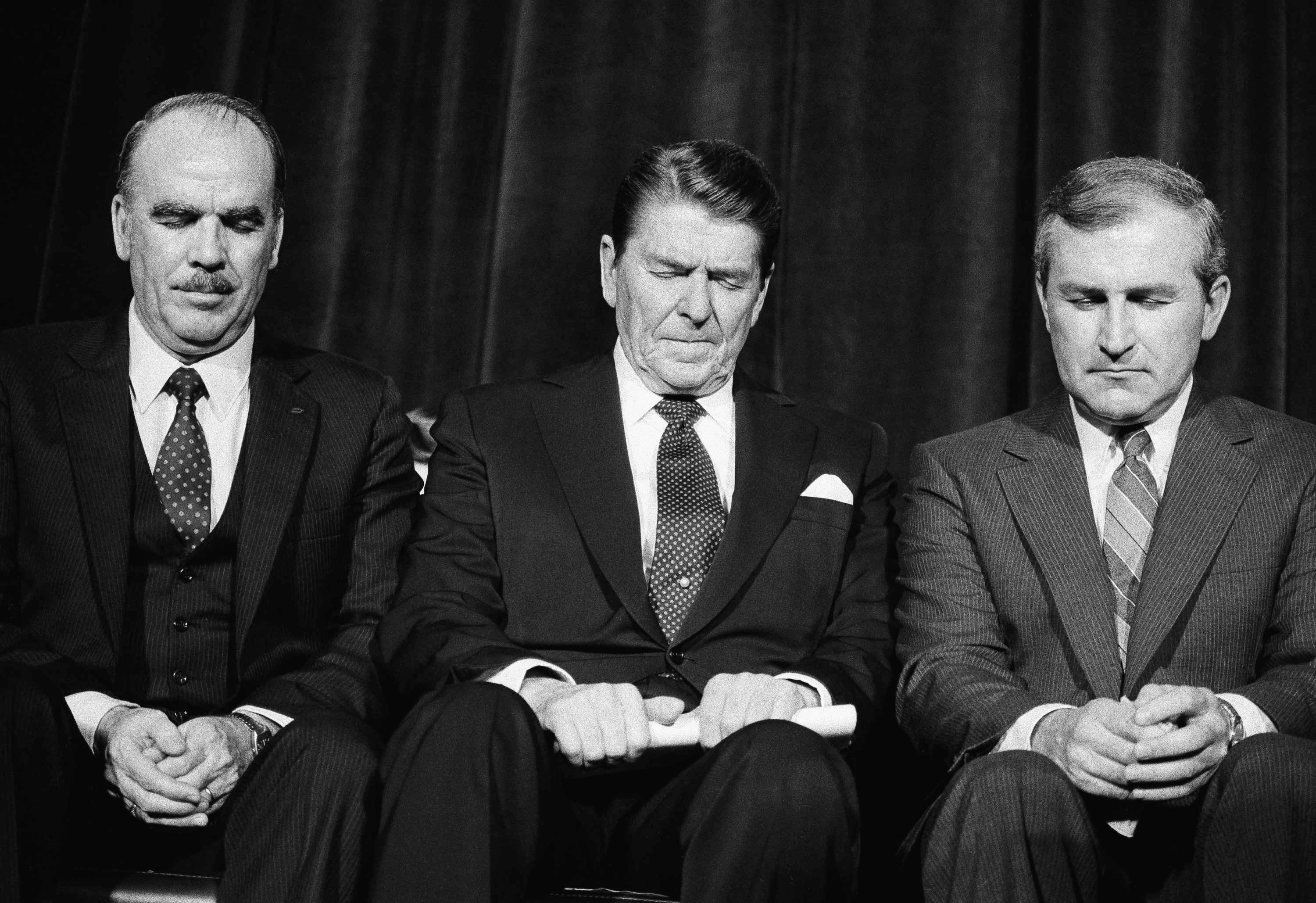
    President Ronald Reagan prays with National Association of Evangelicals President Arthur Gay, left, following his address to the organization’s convention asking for help in winning approval of a constitutional amendment permitting prayer in school in Columbus, Ohio, March 7, 1984.Barry Thumma

    But evangelicals’ rejection of Carter for reelection in 1980 signified an important shift for both parties. Explanations for white evangelicals’ turn away from Christian politicians like Carter and toward Ronald Reagan and the Republican Party — newly perceived as a reliably religious unit — usually point to several events in the 1970s.

    By 1972, the number of delegates at the Democratic National Convention identifying as agnostics, atheists, or people who almost never attended church had grown to 24% (compared to 5% of Americans who listed “no religion” on the General Social Survey.) These delegates helped to add progressive positions on women and gay rights into the party platform at a time when they were to the left of mainstream America’s sensibilities.

    Then in 1978, the IRS targeted mostly white private elementary and secondary schools, sometimes known as “segregation academies,” many of them religious, that had formed in response to desegregation, threatening their tax-exempt status unless they could demonstrate non-discrimination toward Black students. Additionally, by this time, the Supreme Court’s 1973 decision in Roe v. Wade began to galvanize evangelical activists in a space that had been historically dominated by Catholic priests and laypeople.

    Both of these issues came together in the 1980 election, the latter thanks in part to the attention Francis Schaeffer drew to the issue in his writings and speeches across America and the organizing of Jerry Falwell Sr.’s Moral Majority. Because of the growing number of Democrats who self-identified as atheist, agnostic, or non-church attending, white Democrats tended to cede the religious political ground to the new Religious Right, even though plenty of Democrats were religious. Over the next decade, this helped create a binary between a “religious traditionalist” Republican Party and a “secularist progressive” Democratic Party.

    The Rev. Jerry Falwell speaks at his Thomas Road Baptist Church in Lynchburg, Va., in a 1999 photo.

    Demographic trends over the next 40 years reinforced this shift. In 1975, 30% of Americans were part of the Protestant “mainline” (e.g. United Methodist, Evangelical Lutheran, Presbyterian USA, Episcopal Church, American Baptist, Disciples of Christ, and United Church of Christ). Today the mainline only accounts for between 9% and 13% of Americans. Theories for this decline abound, including loss of identity, aging congregations, poor retention of children as they grow into adulthood, controversies over sexuality, ordination of women and LGBTQ clergy, and same-sex marriage, which led to conservatives joining more evangelical churches.

    Over this same period, the number of Americans identifying as “unaffiliated” (the so-called “nones”) rose from 5% to nearly 30%.

    Factors driving this growth include people being more willing in a secularizing environment to admit they aren’t religious, young people who choose not to identify with any religion, and the general population becoming less religious over time. Democrats have enjoyed a decided advantage among the voting “nones” going all the way back to the 1984 election.

    For Black Americans, there has also been a more modest decline in affiliation with historically Black churches (e.g. National Baptist, Church of God in Christ, and AME Zion). Yet these churches have maintained a continued source of relevance for Black Protestants, playing a vital role in Black life as a source of social support, political organizing, community engagement, aid to the needy, and defense against racism and ethnic solidarity. Today, 53% of African Americans are still associated with historically Black Protestant churches, which probably accounts for the persistence over the past 40 years of progressive Black politicians with ministerial credentials.

    Meanwhile, evangelicals shifted from a slight majority favoring the Democratic Party before the 1980s toward a reliable core of the Republican Party, at a moment when their numbers were increasing. By the end of the 20th century, evangelicals grew to represent nearly 30% of all Americans, in part by having larger families, retaining their children in the church at higher rates, and maintaining cultural and theological distinctiveness.

    Collectively though, these trends meant the Democratic Party became less beholden to a religious demographic within its own constituency, and consequently, religiously-oriented politicians seemed less relevant to the Democratic Party.

    Made By History sponsors. FOR USE ON MADE BY HISTORY STORIES ONLY.Inquirer Staff

    The exception was the African American wing of the party, where Christianity remained central to most voters’ identities. Here, a political figure like U.S. Sen. Raphael Warnock (senior pastor of Ebenezer Baptist in Atlanta, a historically Black mainline church that Dr. Martin Luther King Sr. and Jr. pastored) is not exceptional. The Black church’s historic emphasis on social issues and inequality allowed for adherents’ continued support of Democratic candidates who were white and less religious, even as it did lead to some tension over progressive social goals, such as same-sex marriage.

    In fact, it was the emergence of a Black politician in 2004, then-Senate candidate Barack Obama, who helped call attention to the dearth of religiously-conversant Democratic politicians, arguing that his party needed to reengage religiously-affiliated voters. From 2004 to 2008, the Democratic Party emphasized outreach to religious voters in a concerted way. But after the 2008 election, and Obama’s win, this focus for the Democrats declined so much so that, by 2016, Michael Wear and others involved in rallying Democratic religious voters for Obama had become frustrated at the lack of dedicated outreach.

    So, does the emergence of Democratic politicians such as Talarico, Trone Garriott, and Hamilton signal a new shift on the order of what happened in the 1970s?

    It may be too early to tell.

    It may be, as Wheaton College Professor Esau McCaulley has argued, that the emergence of these politicians is linked to the backlash growing among Protestants tired of MAGA evangelicals defining what Christianity means in America today. Or, perhaps, these candidates are simply the culmination of a growing recognition within the Democratic Party of its need to reengage Christian voters.

    Regardless, it’s not an accident that the new crop of ordained Democratic candidates are located in regions of relative mainline Protestantism vibrancy in the Midwest and South.

    With the exception of Presbyterian Pastor Matt Schultz of Alaska, all 12 of the ordained candidates are running in Midwest or Southern states. Perhaps, politicians such as Talarico will succeed in reshaping how Christianity functions in the political space and reclaim a lost politics of religion within the Democratic Party. Time will tell if they are part of a new vanguard, or only a brief aberration.

    Joseph P. Slaughter is an associate professor of history and religion at Wesleyan University. His first book, “Faith in Markets: Christian Capitalism in the Early American Republic,” demonstrates how religious identities in the United States’ early decades influenced economic decision-making and the formation of the American capitalist system.

    Made by History takes readers beyond the headlines with articles written and edited by professional historians. Opinions expressed do not necessarily reflect the views of The Inquirer.

  • Eight firefighters were killed battling a massive refinery blaze on this week in Philly history

    Eight firefighters were killed battling a massive refinery blaze on this week in Philly history

    The match was struck without a hiss.

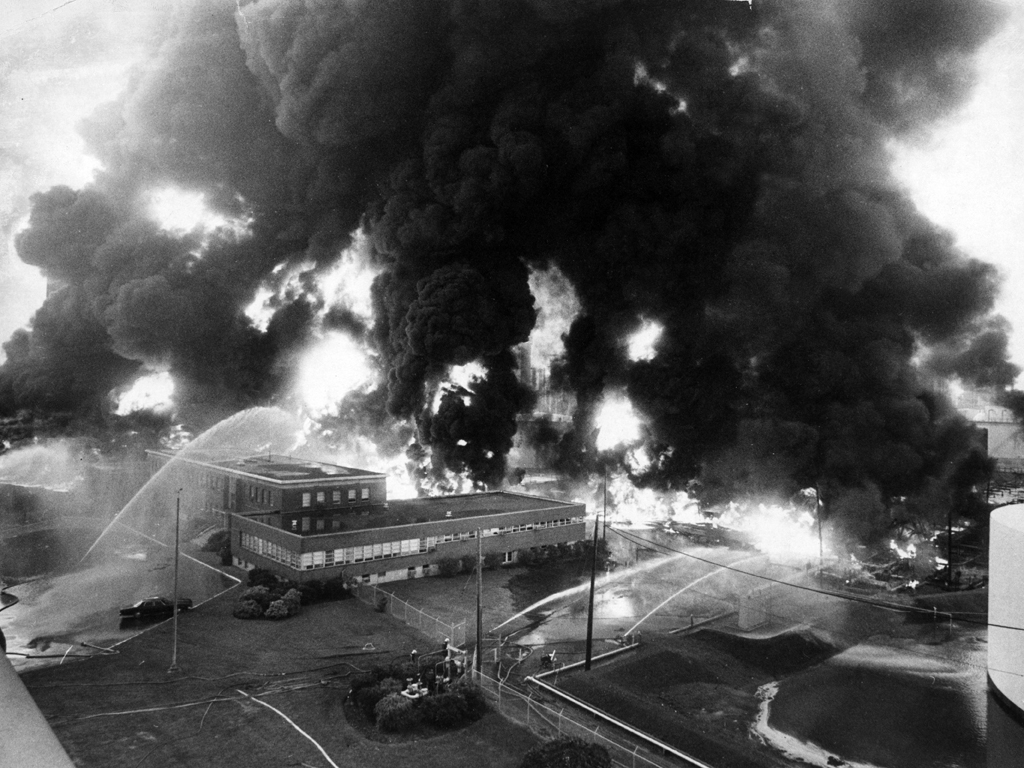
    In the early hours of a summer Sunday morning, vapors snuck out of an overfilled oil storage tank and snaked through the hulking Gulf Oil Refinery smeared along the Schuylkill in Southwest Philly.

    What happened next was so destructive, and so deadly, it was assigned a chilling and haunting label: “Refinery Holocaust.”

    Nightmare fuel

    Around 6 a.m. on Aug. 17, 1975, the vapors found an ignition source in a nearby boiler house.

    The overfilled storage tank, which at the time was being filled from a Venezuelan tanker, contained more than 70,000 barrels when the fire started.

    The explosion at the sprawling refinery Gulf called Girard Point drew a massive response from local fire departments.

    Teams coated the oil-slicked flames with firefighting foam, and the six-alarm blaze was declared under control just before 9 a.m.

    Eight hours later, a second explosion rocked the refinery, spreading to more storage tanks and sending racing flames through waist-deep pools of water mixed with oil and chemicals and engulfing a group of firefighters standing in those pools.

    The second explosion elevated the inferno to 11 alarms.

    Ruin and ashes

    Under thick clouds of charcoal-gray smoke a day later, three Gulf employees steered a rowboat over the toxic pools to shut off a valve that was spewing liquid naphtha. The highly flammable chemical used in the refining process was fueling the last fire, and the last dangerous threat.

    On Aug. 26, nine days after the escaped vapor silently swept through the refinery and ignited a blaze that wreaked $10 million (or more than $60 million today) in damage, the last of the flames were finally and fully extinguished.

    The Daily News noted that the occasion was celebrated by those in attendance with cigars and watermelon.

    Investigators ultimately concluded that inattentive employees had let the tanks overfill, and the buildup of flammable vapors ultimately led to the explosions. The city cited and fined the corporation for code violations.

    Many large storage tanks, the refinery’s office building, and an assortment of pipelines and processing units were wiped out.

    Six firefighters died at the scene, two others succumbed later to severe burns, and more than 30 were injured — two critically — in what is considered one of the deadliest days in the department’s history.

    “The tanks, the line — maybe you can replace them,” Bill Zahner, then a Gulf fire safety man, told the Daily News in 1975, “but the bodies you just can’t replace.”

  • A 19th century Philadelphia lamp maker took the world’s first selfie and turned the city into a hub of portrait photography

    A 19th century Philadelphia lamp maker took the world’s first selfie and turned the city into a hub of portrait photography

    French inventor Louis Jacques Daguerre introduced the daguerreotype — the world’s first photograph — in Paris in August 1839. By September, he produced a pamphlet introducing the technique to the world.

    When the how-to-take-a-photo leaflets arrived in Philadelphia in late September, the city’s cultured men, scientists, and budding artists gave photography a shot.

    But unlike today’s pointing and clicking, it wasn’t easy.

    “All they got were the pamphlets,” explained Rachel Wetzel, senior photo conservator at the Library of Congress. “Nobody had a camera, plates, chemicals, or darkroom apparatus.”

    The newly minted photographers needed paper-thin sheets of silver-plated copper, iodine, and mercury. The ratio of the chemicals needed to be exact, and the amount of sunlight needed for exposure to capture images varied wildly.

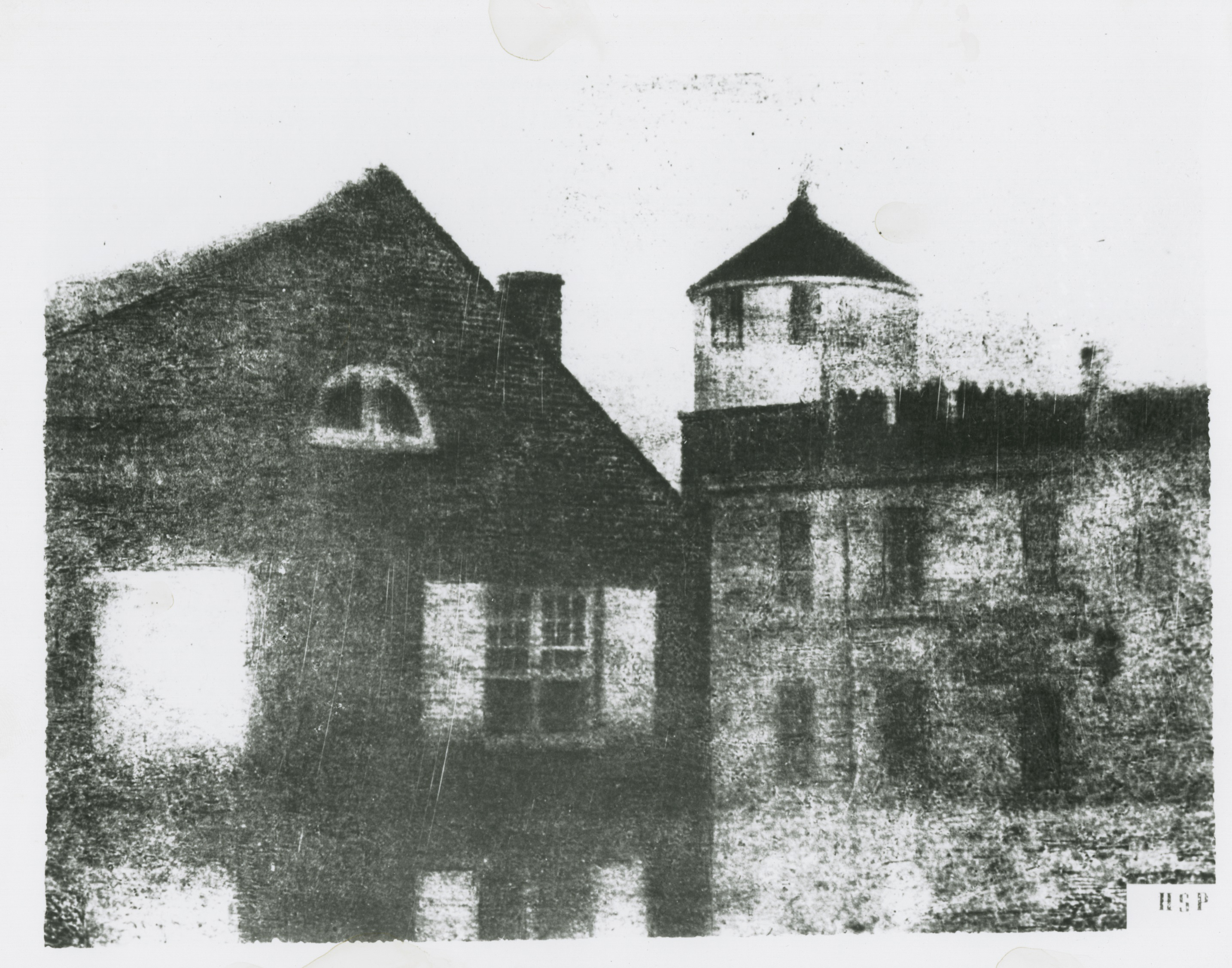
    “Central High School, Philadelphia,” is a facsimile of daguerreotype attributed to Joseph Saxton made in 1839.The Historical Society of Pennsylvania

    On Sept. 25, 1839, U.S. Mint employee Joseph Saxton, whose office was located on the northwest corner of Chestnut and Juniper Street across from Central High School, photographed the city’s first high school from one of his workplace’s top-floor windows.

    That photo is the oldest existing photograph taken in America.

    Saxton soon took up photography as a hobby but had a hard time getting his hands on the thin, silver-plated copper sheets needed to make daguerreotypes. He asked his friend, lamp maker and metal-plating expert Robert Cornelius, for help.

    Cornelius, who had a connection with Scovill Manufacturing, then among the most prominent metalworking manufacturing firms in the United States, happily obliged.

    And as it turned out, Cornelius was curious about photography, too.

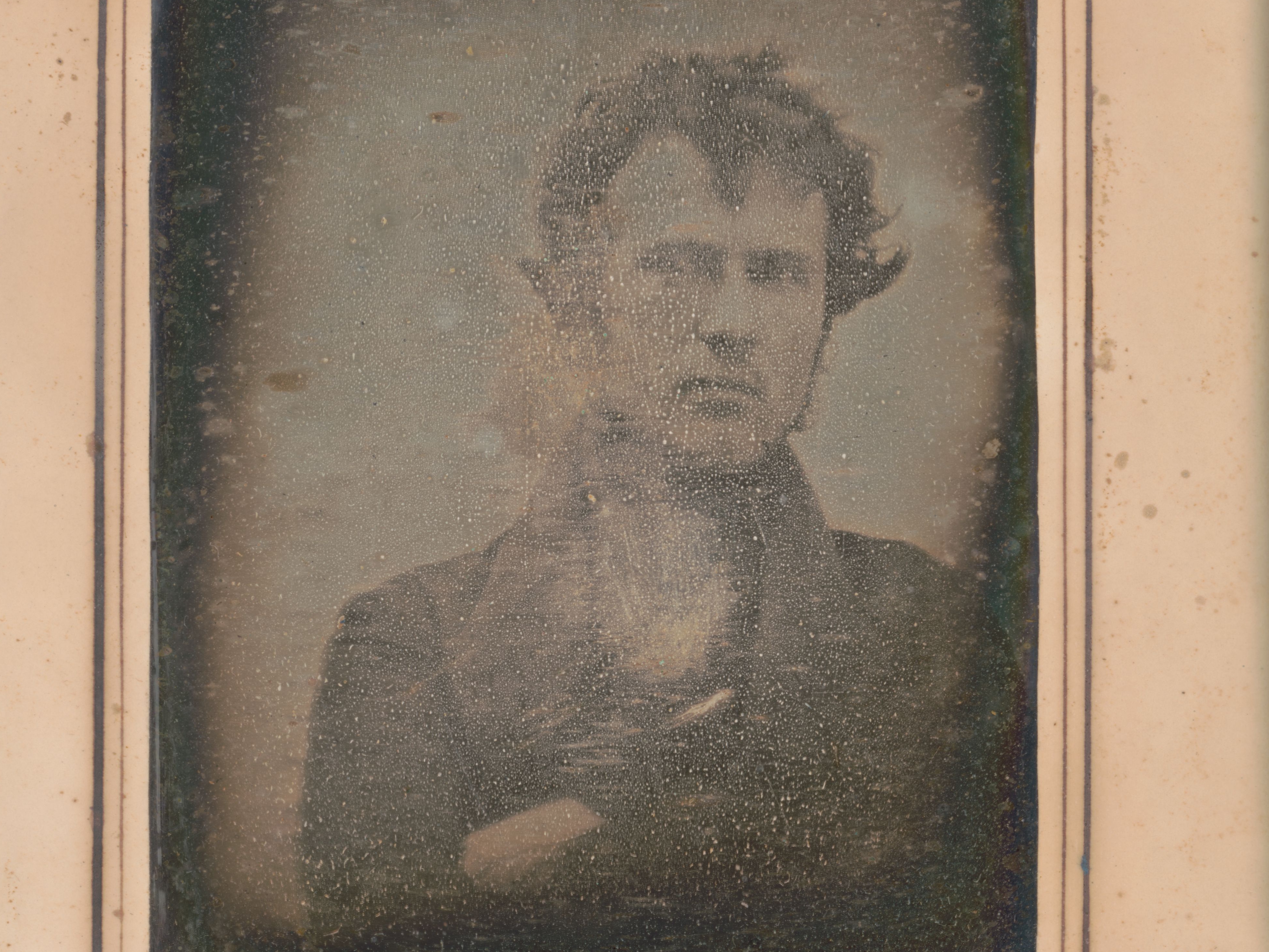
    A few weeks later, in late October or early November, Cornelius found himself standing behind his family-owned lamp-making shop at what is today Seventh and Chestnut Streets, experimenting with a camera he fashioned from a small metal box.

    Instead of pointing his lens at a lantern, a cobblestoned street, or a traveling horse and buggy, Cornelius turned his camera on himself.

    He opened his lens cover and stood still long enough in the sunlight for the exposure to capture his image on a metal plate.

    The selfie was born.

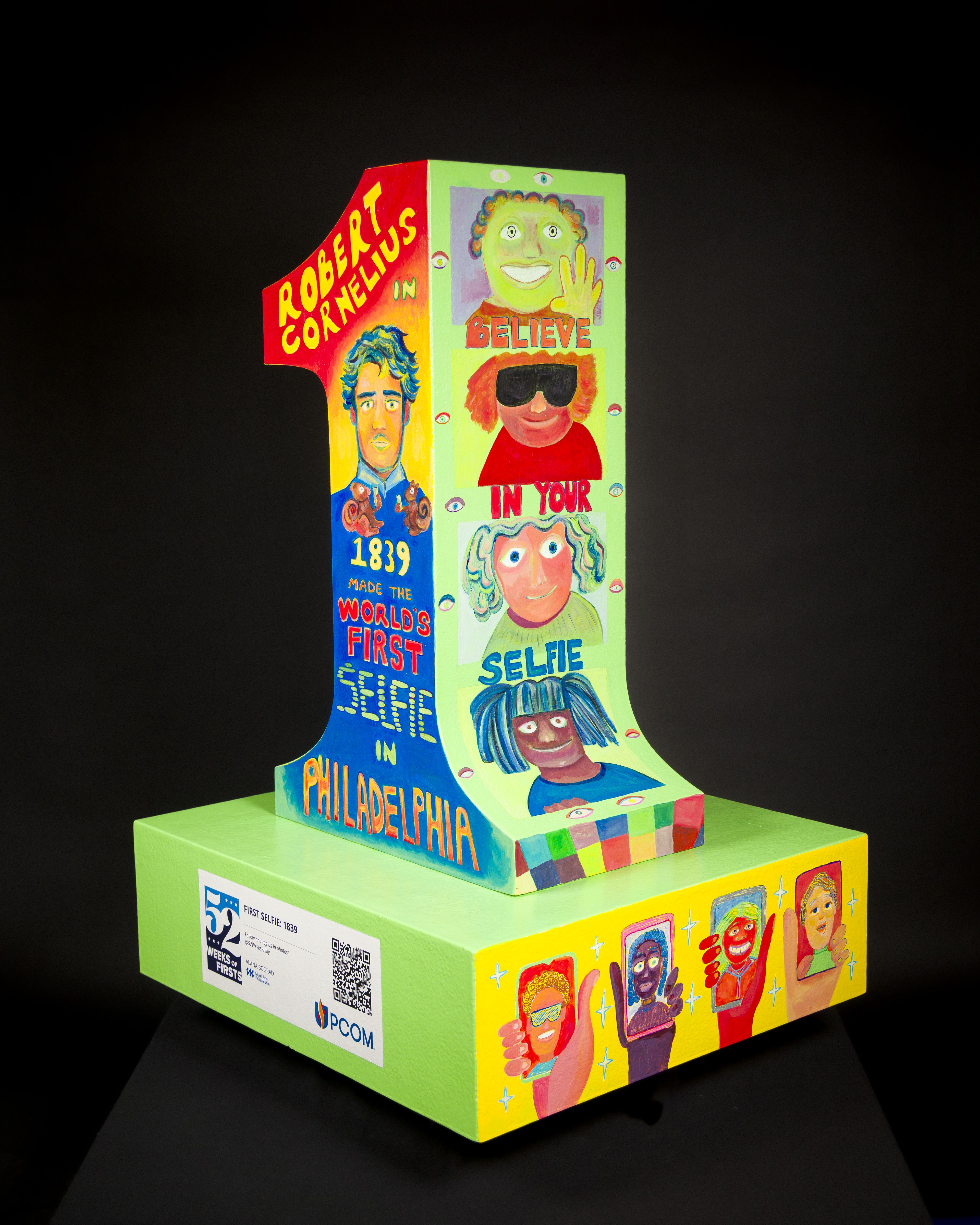
    Alana Bograd’s design highlights the fact that the surprising fact the oldest extant photographic portrait photographic portrait was a self-portrait that today we call a selfie. It was taken in Philadelphia by Robert Cornelius in 1839.Alana Bograd for Colibri Workshop

    That first selfie is housed in the Library of Congress.

    And that magnificent moment — predating social media by almost two centuries — will be feted this Saturday at Franklin Square from 11 a.m. to 1 p.m. The selfie celebration is the Philadelphia Historic District’s 34th firstival, a weekly day party in honor of America’s 250th birthday, giving love to events and happenings with very Philly roots.

    When Daguerre came up with his picture-taking method, he did not have portraits in mind, Wetzel said.

    Historians aren’t sure why Cornelius decided to make a picture of himself, but in an 1892 American Journal of Photography article, he talked about what it was like standing alone on the streets of Philadelphia waiting for the image to happen, Wetzel said.

    “When he stood in front of the camera, he wasn’t sure if he was centered or not,” Wetzel said. “That’s why he’s weighted to the right of the plate.”

    The wonder surrounding taking the first selfie seemingly inspired Cornelius.

    In May of 1840, Cornelius opened the world’s second portrait studio at Eighth and Lodge Alley (now Ranstead Street), not far from his family’s lamp-making shop.

    Business partners Alexander S. Wolcott and John Johnson opened the world’s first portrait studio in New York a few months earlier, but only Cornelius’ 1840 portraits endured, explained Wetzel, who is also a leading historian in Cornelius’ work.

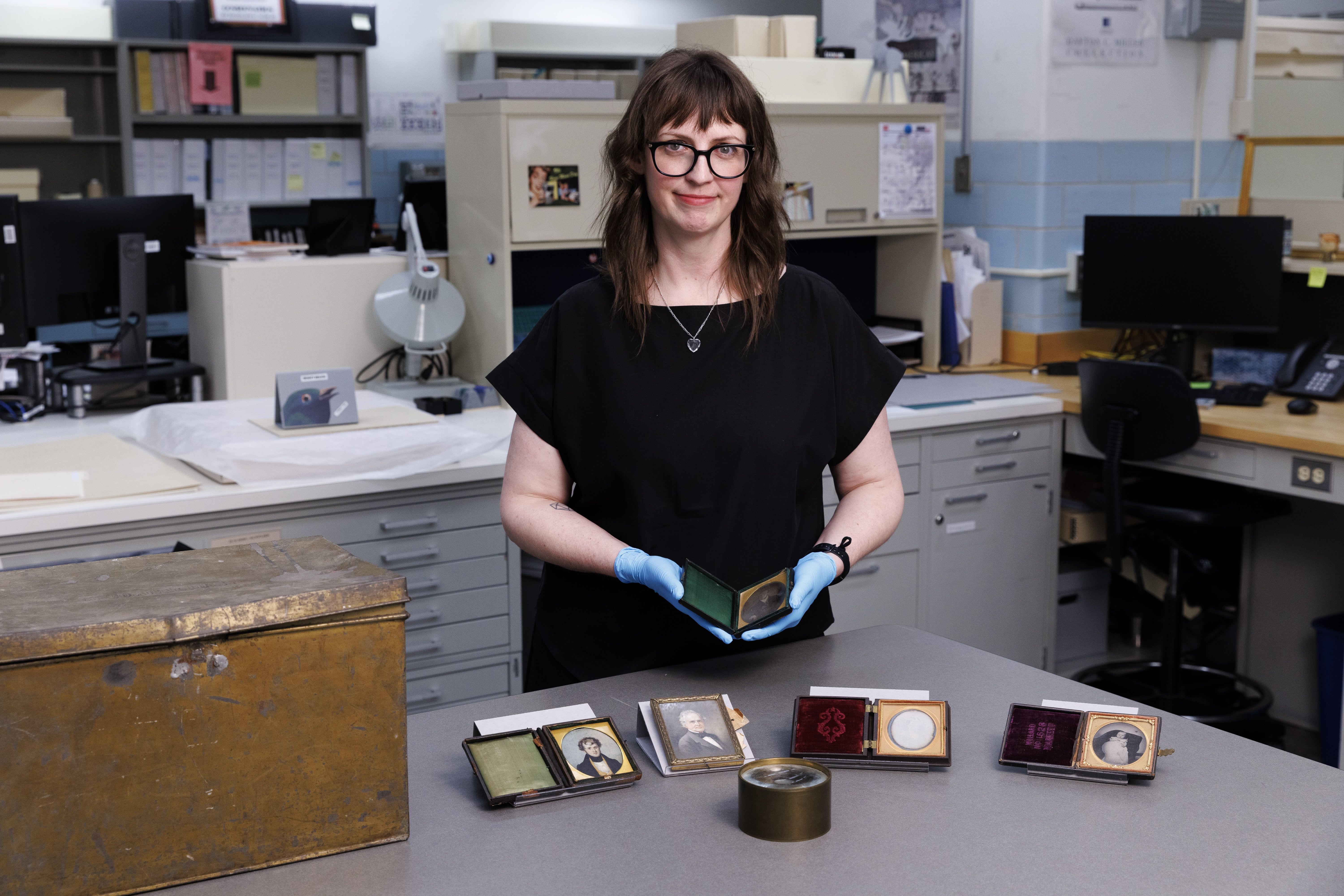
    Robert Cornelius historian Rachel Wetzel surrounded by Cornelius’ daguerreotypes at the Library of Congress. Shawn Miller

    She began studying Cornelius’ work in earnest in 2015 while working in Philadelphia at the Conservation Center for Art & Historic Artifacts. Wetzel has studied upward of 70 of Cornelius’ portraits, thanks to plates that have survived more than 100 years.

    Cornelius took portraits of prominent citizens — many of whom were Quakers — in their Sunday best because at $5 a piece, the equivalent of a week’s salary in those days, they were the only ones who could afford it.

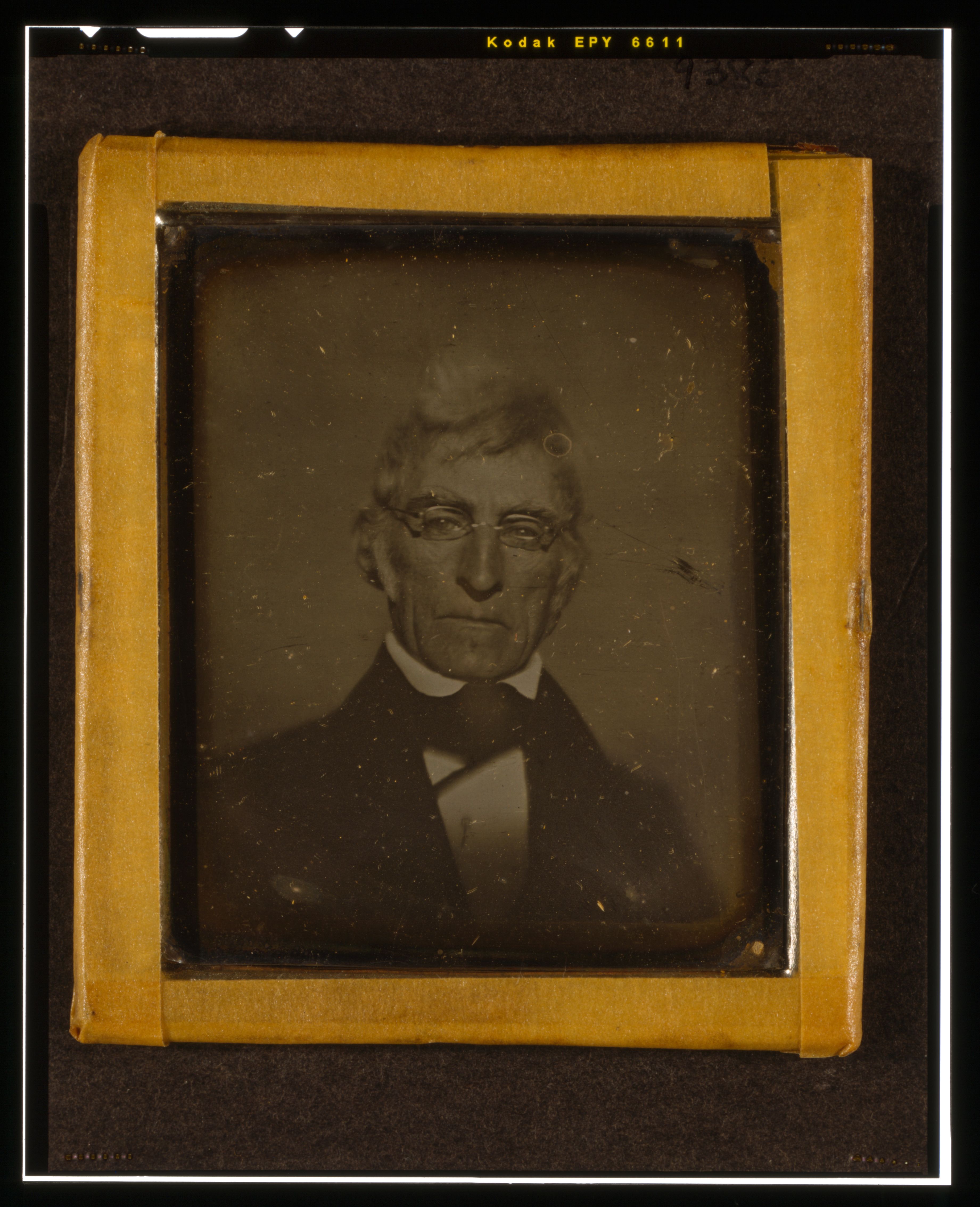
    The first portrait he took in his studio was of a man named John McCallister Jr., a wealthy optometrist who, coincidentally, supplied Cornelius with his camera’s lenses.

    In 1840, Robert Cornelius opened the first photographic portrait studio in Philadelphia at 8th on Lodge Alley (now Ranstead Street John McCallister Jr. He was the first one to sit in his portrait studio.Robert Cornelius housed at the Library of Congress

    Cornelius moved his portrait studio to its second location on Market Street before closing the business in 1843, and returning to his family’s lamp business full time.

    “While he’s operating the studio, he never quit working for his family,” Wetzel said. “He’s working the camera, but he had apprentices who polished the plates and did the behind-the-scenes darkroom work.”

    As the mid-19th century approached, the Cornelius family’s lamp business began to boom. Street lamps became commonplace. Philadelphians began putting gas lamps in their homes. Cornelius formed a partnership with Isaac Baker and formed Cornelius & Baker, becoming a premier manufacturer of high-end metalwork, lamps, chandeliers, and gas lighting fixtures.

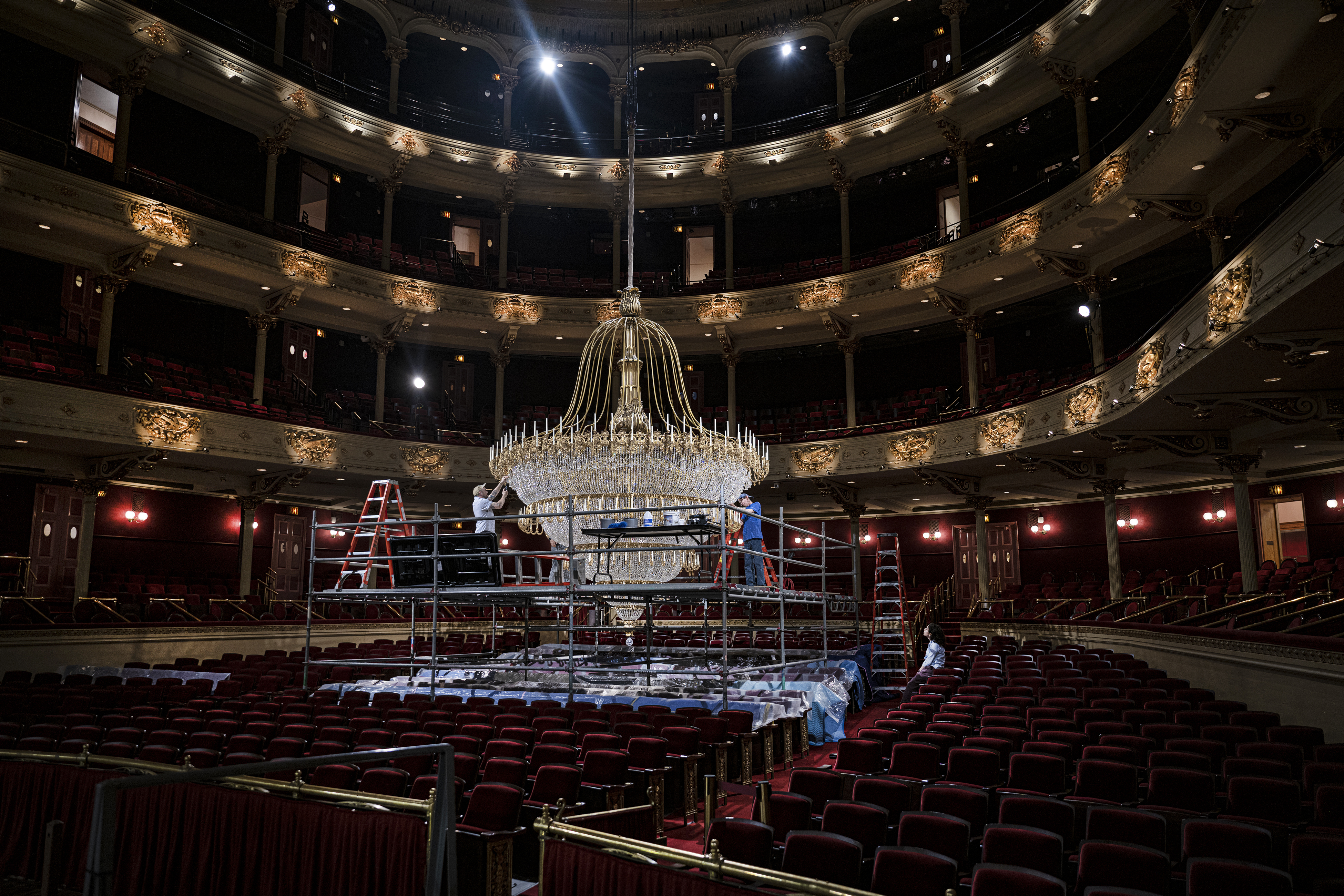
    Paul Miers lowers the chandelier at the Academy of Music in Philadelphia to clean it and replace light bulbs on Wednesday, May 29, 2024. The large crystal chandelier, measures 16 ft in diameter, and weighs 5,000 Lb.Jose F. Moreno / Staff Photographer

    “Their hand railings, banisters, statues, and chandeliers became world-renowned,” Wetzel said. “Many of their pieces are still found throughout Washington, D.C., and the U.S. Capitol today.”

    The Academy of Music’s massive crystal chandelier in the center of its auditorium was built by Cornelius & Baker for the opera house’s historic 1857 opening. (Yes, the guy who took the world’s first selfie also built the Academy of Music’s chandelier. Let that sink in.)

    Cornelius’ portrait studio may have been short-lived, but his impact on photography is lasting. Wetzel suggests his apprentices went on to open daguerreotype portrait studios across the city, and by 1849, there were at least 100 in Philadelphia. By the end of the 19th century, the costs had come down considerably, and portraits could be purchased for as little as 25 cents.

    “Philadelphians loved portraiture,” Wetzel said.

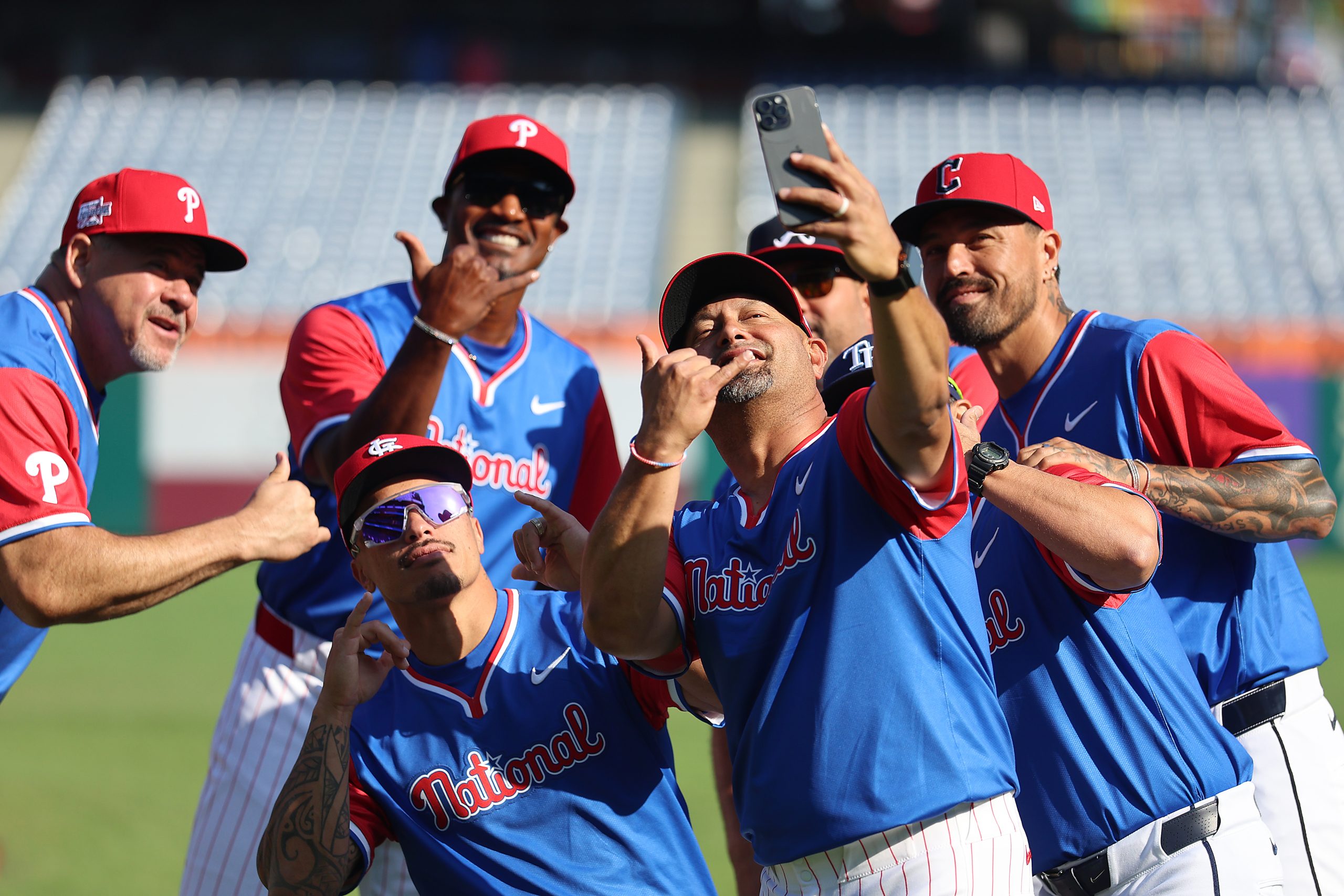
    National League Futures manager Shane Victorino (center) takes a selfie with members of his team before the 2026 All-Star Futures game in Philadelphia on Sunday, July 12, 2026.David Maialetti / Staff Photographer

    By the mid to late 1850s, daguerreotypes were replaced with the collodion process. But photographs — whether developed in a darkroom or a drugstore, taken on Polaroids, or shot on smartphones — endure.

    And the selfie rules.

    This week’s Firstival is Saturday, Aug. 22, from 11 a.m.-1 p.m., at Franklin Square, 200 N. 6th St. Firstival celebrants will meet under a tent, and the party will be held rain or shine.

    Each week, The Inquirer is highlighting a “first” from the Philadelphia Historic District’s 52 Weeks of Firsts. A “52 Weeks of Firsts” podcast, produced by All That’s Good Productions, drops every Tuesday.