Category: Health

  • CHOP ER behavioral health screening identifies teens in need of support

    CHOP ER behavioral health screening identifies teens in need of support

    This story contains references to suicide. If you or someone you know is thinking of suicide, call or text 988.

    Whether they’re seeking treatment for a sprained ankle, stomach pain, or a panic attack, teenagers who come to the Children’s Hospital of Philadelphia emergency department are handed a 10-minute health survey with questions about depression and self harm.

    About one in three reports symptoms of depression or suicidal thoughts that may otherwise have gone unnoticed.

    Asking all patients aged 12 to 19 about mental health challenges has improved CHOP’s early detection of needs, especially among teens and adolescents being treated for physical ailments.

    “There’s this tension of we don’t want to ask a 12-year-old these questions, these are grown-up questions,” said Polina Krass, a pediatric emergency medicine attending physician at CHOP, who helped develop the survey. “But then we miss the mark and are getting kids the help they need only when they’re already in crisis.”

    CHOP’s screening initiative, launched in 2011, targets a problem hospitals across the region and country are facing: Mental health issues account for about one out of every eight emergency department visits, according to the Centers for Disease Control and Prevention. Yet hospitals are often ill-prepared to respond to these patients’ complex needs, which can put patient and staff safety at risk.

    Safety experts say that one of the most meaningful solutions is for hospitals to treat suicide risk and mental health issues as a core patient safety issue that all staff are trained to recognize, akin to postpartum hemorrhage, heart attack, or stroke.

    “This isn’t just a behavioral health issue — this is a system-wide patient safety priority,” said Shannon Kooker, vice president of clinical excellence and patient safety at ECRI, a patient safety organization in Fort Washington.

    Suicide risk in emergency departments

    Patients at risk of suicide often turn to emergency departments for care, according to a new ECRI report.

    ECRI analyzed patient safety incident reports from hospitals, outpatient clinics, and behavioral health programs between 2021 and 2025, looking specifically at suicide deaths and attempts, and instances in which patients expressed having thoughts of killing themselves.

    Nearly three-quarters of the 406 incidents ECRI analyzed occurred in emergency departments. That’s partly because hospitals have established protocols for reporting incidents, whereas urgent care and ambulatory centers may be less likely to self-report, Kooker said.

    People experiencing a mental health crisis may also be more likely to seek care at hospitals, which typically have specialized behavioral health workers on staff, she said.

    Deaths were rare, accounting for just 2.7% of cases analyzed by ECRI. Much more common were cases in which a patient tried to kill themselves or expressed a desire to — a sign that providers have an opportunity to intervene before harm occurs, if they can identify risks quickly, ECRI analysts found.

    A system-wide approach to mental health safety

    Improving safety for patients at risk of self harm should be a hospital-wide effort, Kooker said.

    That can mean changing the emergency room environment, such as installing breakaway doors that open upon impact to reduce the risk of patients harming themselves and using paper scrubs that can’t be knotted into ropes.

    More importantly, hospitals should make suicide prevention part of their safety culture, emphasized at the highest leadership levels, she said.

    She urged hospitals to standardize policies for responding to mental health emergencies.

    That starts with training all staff to recognize warning signs, such as being extremely agitated or anxious, acting erratically or withdrawn, or expressing feelings of being a nuisance or burden to others.

    Not every patient needs to be screened for suicide risk, but staff should quickly call for help when they recognize troubling behaviors, Kooker said.

    “It shouldn’t be a question mark to the staff — it should be standardized and tested,” she said.

    CHOP targets youth mental health

    At CHOP, about 10% of emergency department visits involve patients whose primary concern is a mental health issue.

    Krass worries about the many more teens and adolescents whose mental health needs may go unnoticed in emergency departments because no one thought to ask.

    The optional behavioral health screening survey — now taken by some 600 patients a month at CHOP’s Philadelphia and King of Prussia emergency departments — is designed to better identify those individuals, said Krass, a research scholar at CHOP’s Center for Violence Prevention.

    When a patient’s survey answers indicate anxiety, depression, or other mental health concerns, doctors connect them with a behavioral health specialist or social worker for follow-up care.

    Patients can complete the 37-question survey on their phone or on a tablet provided by the hospital. Krass and her colleagues have found that youth are more likely to share details about their mental health through this quasi-private format than if doctors ask questions directly.

    One of the survey’s final questions is whether it’s a good idea for CHOP to probe so deeply into their young patients’ mental health.

    Almost all answer yes.

    Editor’s note: This story has been updated to correct the year CHOP began its behavioral health screening initiative.

  • Aramark forged a partnership with Penn Medicine for more affordable employee health benefits

    Aramark and the University of Pennsylvania Health System launched a partnership this year to offer the food service giant’s Philadelphia-area employees healthcare in a test of a new model for reducing costs.

    Aramark employees who choose the benefit option, called the Penn Medicine Premier Plan, face no deductibles and lower copays when they and their dependents use Penn doctors and facilities.

    The move by Aramark into what is called direct contracting comes as employers are contending with years of surging healthcare costs. It’s an example of experimentation designed to slow spending growth in spending and perhaps improve quality, experts said.

    “We certainly would like to save money on the model, but its primary focus is to make benefits more affordable” by getting lower prices than it would get by going through an insurer, said James Startare, Aramark’s vice president for benefits.

    The model is called direct contracting because Aramark negotiated prices and other terms of the contract directly with Penn, instead of relying on an insurer to negotiate prices.

    It’s Penn’s first such contract and the first large-scale direct contract in the Philadelphia region. Aramark talked with other systems in the area, but Penn emerged as the partner willing to enter into the experimental contract. Penn described the deal as a multiyear contract ultimately expected to roll over from year to year.

    Aramark didn’t provide details on savings, but its goal was to negotiate prices that are lower than those it would pay though a benefits administrator, such as Aetna.

    By eliminating deductibles that function as a barrier to care, the plan is expected to encourage primary care visits. This could reduce long-term costs by catching patients’ health problems early.

    For health systems like Penn, such contracts offer a chance to increase market share, streamline payments, and hone their ability to manage the health of a population.

    The Penn Medicine Premier Plan features no deductibles and lower copays when Aramark employees and their dependents use Penn doctors and facilities. Harold Brubaker / Staff

    Aramark’s move into direct contracting

    Penn is Aramark’s third major direct contracting partner.

    Employers, even those like Aramark that are self-insured, typically rely on an insurer’s negotiated prices.

    With the new direct contract, an Aetna administrative unit still processes the claims for Aramark, and patients who go outside Penn for care use the Aetna network.

    Aramark launched its first such contract in 2024 in Dallas and expanded to Chicago last year, each time getting a strong employee enrollment, though it took two years in Chicago, Startare said.

    In the Philadelphia region, 35% of eligible employees (those who work 30-plus hours a week on average) have chosen the Penn plan, which took effect Jan. 1, Startare said. That amounts to 800 employees.

    Coincidentally, the health contract started at the same time as Aramark’s contract to manage food and other services at Penn Medicine facilities, but the two deals were not linked.

    Employees who were moving to Aramark with the food services contract were worried about losing their Penn benefits, said Megan Lieberman, a patient services manager at Chester County Hospital who was among those who became an Aramark employee.

    But the Penn Premier Plan was very similar to what they were used to. “It was definitely a huge relief to know that we got to hang on to those benefits,” Lieberman said.

    A separate contract covers pediatric services at Children’s Hospital of Philadelphia for Aramark employees and their families.

    Next year, Aramark plans to take direct contracting into central New Jersey, but did not name the system it’s using there.

    What’s in it for Penn

    The Aramark contract is an opportunity to focus on “chronic disease management, preventive care, cancer screenings, things like that” for a specific group of 1,400 patients who are motivated to stay within the Penn system, said Mark Angelo, Penn’s chief medical officer for population health.

    A key goal is to reduce the deductibles, copays, and prior authorizations that can slow access to preventive care. The model is designed to take care of people before they end up in high-cost places like the emergency department or hospital, Angelo said.

    Keeping more patients within Penn is expected to result in savings because of better care coordination and fewer repeated tests, Angelo said. Penn Premier plan members can seek care outside of Penn, but it will cost them more out-of-pocket.

    As it is, the typical Penn patient also uses other health systems for some services, said Roy Schwartz, Penn’s vice president for payer strategy.

    “Sometimes it’s the right choice, sometimes it can fragment their care,” Schwartz said. “There should be savings just simply coming from having integrated, coordinated care at a place like Penn.”

    Penn does not yet have much of its own data on Aramark employees, but indications from Aramark are that the plan’s members were using more Penn services in the first six months, Schwartz said. “It was not just patients who were using Penn anyway for pretty much everything.”

    Penn and Aramark officials plan to meet regularly to review results and consider modifications. “We’re hoping this works out well for everybody because we’d love to do some more of these,” Schwartz said.

    Momentum behind direct contracting

    Employers nationally have long contracted directly with doctors and health systems for specific procedures, like joint replacements, cancer care, and heart surgery. For years, they’ve also paid directly for primary care through on-site clinics.

    Aramark’s move to an all-encompassing healthcare plan with a single provider fits into a newer trend gaining momentum nationally. Investors have created platforms like Cost Plus Wellness, Mishe Health, Nomi, and Transcarent to help health systems implement direct contracts.

    Northwell Health, a major health system in New York and Connecticut, started a for-profit subsidiary called Northwell Direct and now has more than 70 contracts that cover more than 300,000 people.

    Northwell Direct’s biggest contract covers 100,000 building service workers in the New York area and their dependents. It took effect this year and is expected to save 20% in the first year.

    Big savings to start are not guaranteed.

    “They may not go into it with a lower cost, but they’re going to go into it with better access, better quality for their employees, and what they’re finding is eventually those lower costs will come,” said Jenny Goins, chief of staff at the National Alliance of Healthcare Purchaser Coalitions.

    The Washington nonprofit is putting together a direct contracting advisory council to help more employers to do what Aramark is doing, Goins said.

    The model is not expected to replace traditional coverage anytime soon in the Philadelphia region.

    “It is not for everyone, and it does take effort and coordination on the part of the employer,” said Tom Belmont, CEO of the Greater Philadelphia Business Coalition on Health. “Also, some health systems are ready for the discussion, while others are not.”

  • Jefferson Health reported a $181.5 million operating loss in fiscal 2026

    Jefferson Health reported a $181.5 million operating loss in fiscal 2026

    Thomas Jefferson University and Jefferson Health posted an operating loss of $181.5 million in the year that ended June 30, an improvement over last year’s $208 million loss. In both years, the loss was concentrated in Jefferson’s insurance business.

    The fiscal 2026 results, reported to bondholders Friday, included $112 million in costs for layoffs and other moves designed to put the Philadelphia region’s largest health system on firmer financial ground.

    Jefferson highlighted in its preliminary report to investors that results improved each quarter of fiscal 2026 — from an operating loss of $103.8 million in the first quarter to a $71.1 million operating profit in the fourth quarter.

    “We’ve made significant progress strengthening Jefferson’s financial performance, yet those gains are increasingly threatened by the actions of commercial insurers in Pennsylvania,” Jefferson’s chief financial officer, Michael Harrington, said in an email.

    Jefferson sued Independence Blue Cross last month over policy changes that the health system says amount to back-door price cuts.

    “Despite already paying some of the lowest reimbursement rates in the nation, certain payers are now attempting to unilaterally rewrite or reinterpret existing contract terms to further reduce payments and improve their own margins at the expense of providers and the patients they serve,” he said.

    Separately, Jefferson sued Aetna in April over a policy that reduces payments for hospital stays for Medicare Advantage patients that Aetna decides aren’t sick enough to qualify for full payment.

    Insurers are under pressure from employers to slow healthcare expense growth. Independence said in response to the lawsuit that it acts in the best interest of its customers. Aetna said its policies comply with federal laws and regulations.

    Here are more details on Jefferson’s results:

    Revenue: Jefferson’s revenue reached $17.7 billion, up from $15.8 billion the year before. Fiscal 2025 included just 11 months of Lehigh Valley Health Network results. Jefferson completed that acquisition on Aug. 1, 2024, expanding its reach into Northeastern Pennsylvania and giving the nonprofit more than 30 hospitals.

    Jefferson Health Plans: Jefferson’s insurance arm had a $130.3 million loss in fiscal 2026, an improvement over a $169.9 million loss the year before. The insurance arm had 415,172 members on June 30, up from 366,780 the year before. The plan is diversifying away from Medicaid as it increases enrollment in Medicare Advantage and the Affordable Care Act markets. The percentage of membership in Medicaid fell to 75% this year from 87% last year.

    Notable: The fourth quarter of fiscal 2026 was Jefferson’s first profitable quarter in at least four years, according to Inquirer calculations that exclude investment income. Unlike other local health systems, Jefferson follows accounting rules for higher education, allowing it to include a portion of investment income in revenue.

  • A Main Line psychiatrist who had sex with a patient poses no threat to other patients, judge rules

    A Main Line psychiatrist who had sex with a patient poses no threat to other patients, judge rules

    A Main Line psychiatrist who lost her medical license after a state investigation found she had a yearslong sexual relationship with a young patient while prescribing him highly addictive psychotropic drugs may continue practicing while she appeals the revocation, a state judge ruled.

    In ruling in favor of Amy Mazza MacIntyre on Thursday, the judge agreed that she posed no threat to patients, who would likely suffer if their care was disrupted or if they had to find a new provider amid what Commonwealth Court Judge Stella Tsai acknowledged as a “shortage” of specialized child and adolescent psychiatrists in the Philadelphia region.

    Tsai also found that MacIntyre would be “irreparably harmed” if forced to close her Bryn Mawr practice because hundreds of current patients likely wouldn’t return, even if she later won her appeal to keep her license.

    MacIntyre’s “actions leading to the instant revocation, although spread over several years, were focused on a single individual,” Tsai wrote in her opinion. “In that time, she has treated thousands of patients without reported incident, and there is a purported shortage of psychiatrists with [MacIntyre’s] subspecialty.”

    MacIntyre, who specializes in treating young patients with complex psychiatric diagnoses, began seeing a then-17-year-old cancer survivor in 2004 when he was a senior at Lower Merion High School. She first had sex with him in 2011, when he was 24, and prescribed him powerful psychiatric drugs through mid-2017, according to an investigation by the Pennsylvania State Board of Medicine. The board found that the drugs, including Xanax and Adderall, were given to him without proper medical evaluations.

    The board revoked her medical license in May, finding she had engaged in sexual misconduct and inappropriate prescribing in violation of state medical licensing laws. She then appealed the decision to Commonwealth Court, where the case is pending. Last month, she asked Judge Tsai to temporarily lift the revocation so she can continue seeing patients while she fights the board’s disciplinary action.

    “We are extremely pleased by the judge’s decision and believe it to be appropriate,” MacIntyre’s lawyer, Gary Samms, wrote in a text message to an Inquirer reporter Friday. Samms declined to comment further, citing the appeal. He has advised MacIntyre not to talk to The Inquirer. MacIntyre, 52, did not respond to an email sent Thursday.

    Matt Heckel, a spokesperson for the Department of State, which oversees state licensing boards, said the judge merely granted MacIntyre’s request to continue seeing patients but did not address the larger question of whether her license should be revoked. The state is fighting her appeal, arguing that “no sanction short of a revocation would adequately protect the public.”

    The patient at the center of the case, Justin Kopicki, who is now 39 and in law school in Oregon, said the judge’s ruling was “extremely problematic,” opening up a “really dangerous can of worms.”

    “It says to other psychiatrists and practitioners that it is OK to violate the laws of their license and to take advantage of their patients,” Kopicki said in an interview on Thursday evening. “The court is basically saying that the public interest is not at risk here. Quite frankly, it’s an egregious position to take.”

    Kopicki, who gave The Inquirer permission to use his name, said it’s “a very large slap in the face against what I went through.”

    “It was not an isolated incident,” he said. “It was something that went on for six, seven years continuously.”

    Mixing sex and medications

    Kopicki was diagnosed with leukemia at age 4. He received chemotherapy treatments at Children’s Hospital of Philadelphia until age 7, when the cancer went into remission.

    In high school, he grew depressed and anxious. He isolated himself from peers. His mother worried his mental health problems stemmed from his childhood battle with cancer. She contacted CHOP, which referred him to MacIntyre, then 31.

    During his first appointment in 2004, MacIntyre diagnosed Kopicki with anxiety and agoraphobia. She suspected he also suffered from obsessive-compulsive disorder. She put him on medication.

    According to the board’s investigation, MacIntyre “became focused on [Kopicki’s] sexual activity” during treatment sessions in 2010. During a session in early 2011, she told him she “wanted to climb on top of him” and did so, kissing him, the board’s revocation order says.

    Soon after, they had sex for the first time at Kopicki’s father’s house. Although MacIntyre stopped charging him for sessions, she formally treated him through June 2013, writing patient notes in his medical record. From 2013 to 2017, she continued having sex with him while prescribing a revolving mix of up to 12 medications to him, without proper evaluations, according to the board’s order.

    The board’s investigation — based partly on emails, texts, and voicemail messages that MacIntyre sent Kopicki — revealed that she gave him a $5,000 saxophone and a Cartier watch, hired him to work in her office, proposed marriage to him, told him she miscarried his baby, sent him naked selfies, and took him on trips, including to Turks and Caicos and Walt Disney World.

    The board also found that MacIntyre prescribed medications to Kopicki’s mother and father, although they were not her patients.

    In an interview with The Inquirer last month, Kopicki said MacIntyre had “groomed” and manipulated him while prescribing “really large quantities” of stimulants and benzodiazepines, including “Xanax and Klonopin mixed together.” She would withhold his medication refills if he refused to go away with her or tried to end the relationship, he said.

    Kopicki cut off all contact with her in 2017, shortly after MacIntyre showed up at his father’s house, yelling and demanding to speak with Kopicki. His father called 911, the board found.

    Kopicki first complained to the state medical board in 2017. He also filed a medical malpractice lawsuit against her in Montgomery County Court. His lawyers did not want him to cooperate with state investigators while the case was pending, and the state dismissed his complaint.

    MacIntyre settled the case with Kopicki in 2020 for an undisclosed amount, and he again complained to the board in 2021. The board launched an investigation, interviewing Kopicki and reviewing “thousands of text messages” between the two.

    ‘One of the worst’ cases

    During the disciplinary proceedings, MacIntyre admitted to sexual misconduct, immoral and unprofessional conduct involving a patient, failure to maintain complete medical records, and fraudulent, reckless, or negligent practice. She had disputed claims that she engaged in improper prescribing, but the board found her culpable.

    In her appeal, MacIntyre is seeking a lighter discipline, such as probation. While not excusing her behavior, MacIntyre provided explanations to the board. She testified at a state hearing last year that she had been afraid of Kopicki and that he forced her to have sex. She said she tried to get a protection-from-abuse order against him, but didn’t qualify for one because they weren’t married or living together.

    The board rejected her arguments, citing a lack of evidence, finding her testimony not credible, and pointing to her “shifting explanations.”

    MacIntyre also cited “personal stressors” in her life at the time of the misconduct, including the birth of a child and her mother’s dementia.

    Samms argued that she has learned from her mistakes: She underwent an extensive evaluation with a psychologist who found her fit to practice, and she also went to therapy to address her behavior with Kopicki. Additionally, MacIntyre has limited her interactions with patients to mostly medication management, and has not violated any regulations for the last decade, Samms said.

    Samms told Judge Tsai during oral arguments last month that MacIntyre has treated about 15,000 patients without any incident since at least 2017, when contact with Kopicki ended.

    “While she acknowledged wrongdoing, it was an isolated patient due to isolated circumstances,” Samms said during the July 30 hearing. “There’s never been any other issues regarding her licensing or her practice.”

    Dana Archer, the lawyer representing the State Board of Medicine, argued that the reason so much time had lapsed between her misconduct and the board’s sanction is because “she did everything that she could to hide it.”

    “Just because you’re successful in hiding your inappropriate conduct doesn’t mean you should be rewarded and receive a lesser sanction because you were successful in keeping it a secret,” Archer told Tsai.

    Archer said MacIntyre took advantage of a vulnerable patient, who was “basically a child” when she began treating him. Her conduct was one of the board’s “worst” cases, she said.

    “It was one of the worst things that a psychiatrist can do to a patient,” Archer said.

  • 3 minutes of this activity may cut the risk of 13 cancers, study finds

    3 minutes of this activity may cut the risk of 13 cancers, study finds

    To reduce your risks for at least 13 types of cancer, jog up and down the nearest steps for three minutes or stand up from your desk or couch for 30.

    Either strategy might help drop your risks of certain cancers by as much as 7%, according to a new study of how the ways we move — and don’t move — during the day affect our chances of malignancies.

    The study, published in July in BMC Medicine, is one of the first to examine in detail how replacing sitting time with almost any kind of activity alters cancer risk.

    Relying on extensive activity data from nearly 60,000 men and women, it used statistical models to determine which movements, from standing to strolling to rushing around the block, seem most strongly associated with fewer cancer cases, including breast, colorectal, and lung cancers.

    “The reassuring finding is that every movement contributed,” said John J. Mitchell, a senior research fellow at University College London’s Institute of Sport, Exercise & Health, and the study’s lead author.

    But they didn’t contribute equally.

    “Some choices,” Mitchell said, “proved more beneficial than others.”

    Is standing up good for us?

    On average, American adults sit for nearly 10 hours a day, studies show. Being so sedentary is not good for us. Substantial evidence links uninterrupted sitting with heightened risks for heart disease, Type 2 diabetes, obesity and other conditions.

    Sitting also makes us more vulnerable to many cancers, studies show.

    Ideally, we should reduce the amount of time we spend seated every day and be more physically active instead.

    But how? Does standing up count? Do we need to move around? Is it enough to meander slowly down the hallway? Or should we raise our heart rates and break a sweat?

    Those questions matter because many of us are tied to our desks and schedules. In that case, what are the most realistic and efficient options for sitting less?

    The link between activity and cancer risk

    Past studies of sitting and health generally focused on one change, such as standing more often, and not multiple types of movement and how they might affect sitting’s health risks in comparison to one another.

    They didn’t tell us, in other words, if standing up for a few minutes would undo the effects of sitting as potently as climbing stairs.

    So, for the new study, the scientists drew records for 59,218 adult men and women who’d joined the large-scale UK Biobank health study and worn a sophisticated activity tracker for a week.

    Using machine learning algorithms, the researchers parsed everyone’s activity data and determined how much time they spent sitting (generally around 10 hours) or in other activities on most days, including standing up; light movement, such as leisurely walks; moderate activity, meaning brisker walks; or vigorous activities, which would get people breathing hard, such as running to catch a bus.

    They also checked medical records for eight years or so after people joined the Biobank, to see whether they’d developed any of 13 cancers that have been associated with inactivity.

    The best ways to break up sitting

    With those mountains of data, the researchers then created complex, statistical models of what theoretically would happen if people replaced some of their normal sitting time with movement.

    First, they looked at standing. Compared to nonstop sitting, standing up for any period of time reduced the cancer risks associated with sitting.

    But standing was about half as potent as moving. In general, moving in any way, even short, gentle strolls, for about 15 minutes dropped cancer risks to the same extent as half an hour of standing.

    The gains were even more striking when the researchers focused on different intensities of movement. Again, standing was better than sitting and light activity was better than standing.

    But vigorous movement — such as hurrying up and down the stairs or rushing to the subway station — was, by far, the most effective. Three minutes of daily vigorous activity dropped cancer risks to the same extent as 90 minutes of light-intensity movement.

    Pick the routine that works for you

    “I think these results show there can be different routes” to the same goal, said Emmanuel Stamatakis, a professor of physical activity and health at Monash University in Australia, and senior author of the new study.

    If we can’t find 90 minutes to wander around the block or from cubicle to cubicle, we could instead head for the nearest stairwell and jog up and down for a few minutes.

    “This is a really interesting paper,” said Lora Giangregorio, an exercise scientist at the University of Waterloo in Canada. She studies physical activity and health but wasn’t involved with the new study. “It is really encouraging that adding movement or standing is associated with reduced risk of cancer. But what stuck out for me was the finding that ‘only three minutes of additional vigorous physical activity in place of any other intensity was associated with lower cancer risk.’”

    Many of us can probably find a way to fit those three strenuous minutes into our day.

    ‘Any movement counts’

    The study was observational and shows links between more activity and lower cancer risk but doesn’t prove the additional movement directly caused that effect.

    It also doesn’t explain how moving instead of sitting changes the likelihood of cancer, though muscles release a slew of biochemicals when they contract, Stamatakis said. Some of them likely jump-start physiological processes that dampen the development or progression of cancer.

    The study doesn’t say, either, whether we should lump our movement time into a single session or spread those three minutes of speedy or 90 minutes of laid-back activity throughout the day.

    More study is needed, Stamatakis and Mitchell agree.

    But, for now, the takeaway is to rise from your chair whenever you can, Stamatakis said, even if it’s just to stand.

    “Any movement,” he said, “counts.”

  • What does a black hole sound like? A Villanova scientist’s answer was turned into music.

    What does a black hole sound like? A Villanova scientist’s answer was turned into music.

    Villanova astrophysicist Becka Phillipson wondered what a black hole might sound like.

    She found an answer by translating X-ray data from a black hole system into musical notes.

    The first time she listened to the audio, the cacophony reminded her of someone pressing every key on an organ at once.

    After roughly 30 seconds of this “chaos,” she heard a “coherent, beautiful major chord” ring out.

    Her research formed the backdrop for a 13-minute musical composition performed on Saturday at the Chestnut Hill Skyspace, a venue and art installation. The black hole-inspired piece was one of three in an immersive concert, called “This Silent Music,” centered on collective listening.

    The concert intended to create a space where people could sit with and work through discomfort, especially at a time when many feel overwhelmed and disconnected, said cocreator Liz Lang.

    “I personally feel like I want to scream every time I open the news,” she said.

    Liz Lang minutes before performing during a rehearsal of “At the End of It All,” a 13-minute musical composition that incorporates sounds created by sonifying black holes.Jose F. Moreno / Staff Photographer

    Massachusetts-based composer LJ White used black holes as a metaphor for this theme. He paired Phillipson’s sounds with singing, a marimba, and suspended cymbals.

    To him, the chaos of the cosmic phenomenon reflected how marginalized groups can feel powerless and frustrated in society.

    The title of his piece, “At the End of it All,” comes from the poem of the same name by Nicole M. Young-Martin, which is “about not being able to predict or control anything, but trying to be your best person regardless,” White said.

    Sonifying a black hole

    Coming from a family of professional musicians and singers, Phillipson felt like the odd one out in choosing a career in science.

    She gravitated to researching black holes — areas of space where gravity is so strong, even light cannot escape.

    She thought sonifying black holes could make for an interesting outreach activity for students, while also helping scientists uncover novel information about black holes.

    When scientists sonify a black hole, they are not literally recording sound. Most of space is empty and “deathly silent,” Phillipson said.

    Instead, they are interpreting the interactions around the black hole.

    Using telescopes pointed at the night sky, scientists can collect information in the form of images. Those visual cues, such as brightness, can then be translated into sound. For example, Phillipson decided that, if something brightened, that would translate to a higher-pitched sound.

    The environment around a black hole gets brighter and dimmer over time as material interacts with it — akin to a campfire brightening after being fed a log.

    “I’m a translator between the light and the sound,” she said.

    Scientist Becka Phillipson lis photographed before a music rehearsal named “At the End of It All,” a 13-minute musical composition that incorporates sounds created by sonifying black holes, at the Presbyterian Church of Chestnut Hill in Philadelphia on Friday, Aug. 7, 2026. The piece also includes narration about black holes by Phillipson.Jose F. Moreno / Staff Photographer

    A metaphor

    White produced and mixed Phillipson’s black hole sounds — piecing them together into a collage that served as the background of his 13-minute composition.

    The audio had a “sort of circular sound” and “a lot of swooping,” he said, emulating the spin of a black hole. There was a sense of “things moving around you in a somewhat chaotic way,” he added.

    In this, he saw a metaphor for the experiences of marginalized groups who may feel frustrated and helpless.

    The piece featured parts where the singers scream with wild, unbridled vocals, as if reacting to catastrophe. Other sounds are associated with mourning.

    “Things are happening that they can’t predict or control,” he said. “I want [the piece] to be cathartic in some way.”

    It’s also meant to inspire.

    Beneath the chaos of a black hole lies untapped energy that can suck objects inside if one gets close enough, White said.

    A black hole behaves like an “infinitely deep funnel,” Phillipson said in narration included in the performance. Throw an object in, and it won’t come back out.

    Black holes are also invisible — only detected by their interactions with other things.

    “It’s not an energy source that is well understood or can be taken control of,” White said.

    The same concept of invisibility could extend to groups of people who aren’t in power right now, White said. For example, he identifies with the transgender community, which he says frequently gets talked about in relation to mainstream society, but often remains misunderstood.

    He hopes the piece helps people appreciate the power they have.

    “There’s all this latent energy that we have that we could harness,” White said. “We’re not helpless.”

    Producer and Soprano Katy Avery rehearses “At the End of It All” at the Presbyterian Church of Chestnut Hill in Philadelphia. The actual concert took place in the Chestnut Hill Skyspace.Jose F. Moreno / Staff Photographer

    Lang hopes to expand beyond last weekend’s sold-out concert to perform in other Skyspace locations around the world. Light artist James Turrell has designed 100 Skyspaces globally, all featuring a room with an aperture in the roof, facing the sky.

    Cocreator Katy Avery was moved by the audience’s reactions at the Philadelphia concert. People found themselves growling along and wanting to vocalize with the performers, embodying the kind of communal atmosphere she had hoped for.

    The person sitting next to Phillipson told her he felt like he had to hold his breath the whole time. It was a “feeling like you have a strong emotion and you don’t know what to do with it,” Phillipson said.

    She compared her own emotional experience to riding Space Mountain at Disneyland. At first it’s dark around the roller coaster, with eerie, ethereal, sci-fi sounds — much like the soundscape created with her black hole sounds. Unable to see the tracks, the rider feels as if they are going into darkness.

    At some point in the piece, the singers came in with somber voices suggesting grief and mourning, with screams reminiscent of metal music.

    Those tumultuous sounds gave way to an ending note of hope and power.

    The two pieces that followed in the concert were more calming and contemplative.

    The black hole composition “was like the precursor to meditation,” she said. “First you have to cry before you can calm down.”

  • Pa. says vaccine guidelines won’t change over Trump’s executive order

    Pa. says vaccine guidelines won’t change over Trump’s executive order

    Pennsylvania will not change its immunization guidelines in response to President Donald Trump’s executive order this week calling for states to reduce the number of recommended childhood vaccinations and separate a combination shot protecting against measles, mumps, and rubella (MMR).

    Gov. Josh Shapiro, a Democrat, said his administration will “continue to give Pennsylvanians clear public health guidance based on science and facts.”

    “President Donald Trump and [Health and Human Services Secretary Robert F. Kennedy, Jr.] are screwing around with the childhood vaccine schedule — ignoring decades of science, sowing chaos and confusion, and spreading dangerous misinformation that put kids and families at risk,” Shapiro said.

    States set vaccination mandates for schoolchildren, not the federal government.

    The order signed by Trump on Monday asks states to “consider updating” laws to require fewer vaccinations for all schoolchildren.

    The order also recommends that children receive all vaccinations at separate appointments, which experts say can delay children’s protection against serious diseases.

    And it gives Kennedy, a longtime anti-vaccine activist, 90 days to present Trump with a plan for a number of vaccine policy changes. Changes could include splitting the MMR vaccine into separate shots for each disease. There are currently no individual vaccines for measles, mumps, or rubella licensed in the United States.

    “Splitting up combination immunizations, like the MMR vaccine, creates unnecessary hurdles for parents, needlessly extends the window of risk for our youngest residents, and doesn’t follow the results of the many studies that went into developing the previous vaccine schedules,” Pennsylvania Secretary of Health Debra Bogen said in a statement.

    Trump’s earlier attempt to reduce the number of recommended vaccinations was blocked in federal court.

    White House spokesperson Kush Desai did not comment directly on Pennsylvania officials’ decision to keep its original vaccine recommendations.

    He said in a statement that Trump has pledged to reduce the vaccines recommended for all children, and the “administration is committed to delivering with Gold Standard Science and every lever of executive authority.”

    “The countless parents whose questions and concerns about America’s vaccine schedule have been ignored if not mocked finally have a true champion in President Trump,” he said.

    Vaccine politics under Trump

    The new executive order is not binding, experts say, and states are free to ignore it.

    Several states, including Pennsylvania, have already balked at Trump’s repeated attempts to upend longstanding childhood vaccination schedules.

    In February, Pennsylvania and 14 other states sued to block changes to the childhood vaccination schedule.

    And last year, when the Trump administration did not approve COVID-19 vaccinations for certain groups, Pennsylvania changed state policy to allow pharmacists to dispense vaccines based on recommendations from a number of professional medical organizations, including the American Academy of Pediatrics and the American Academy of Family Physicians.

    Previously, pharmacists were asked to dispense vaccinations based solely on recommendations from a Centers for Disease Control and Prevention committee. Kennedy fired the entire committee and replaced them with hand-picked appointees last year, some of whom included vaccination skeptics. That action is also the subject of a court battle.

    “The way to handle this is to ignore it,” said Paul Offit, the director of the Vaccine Education Center at the Children’s Hospital of Philadelphia and a prominent Kennedy critic.

    “It’s not science based, it doesn’t make vaccines safer or more effective,” he said. “All it does is put children in harm’s way.”

    He noted that despite longstanding concerns by anti-vaccination activists that children receive too many vaccinations, breaking up combination vaccinations like MMR would result in children getting more shots. “Kids would need six shots instead of two,” he said.

    Logistics uncertain

    Changing the kinds of vaccines available in the United States would take years, said Ana Santos Rutschman, a professor specializing in health law at Villanova University.

    Trump could ask the Food and Drug Administration to approve separate measles, mumps, and rubella vaccinations, which would require extensive clinical trials and a long approval process, she said. And vaccine manufacturers may not attempt to develop new shots if Republicans lose control of the White House in 2028, she added.

    “Right now, it’s unlikely anyone will reshift their operations,” she said. “It’s feasible — it’s just expensive, and the payoff is very small.”

    The FDA could revoke licensing for the current combination MMR vaccines, but that would likely invite court challenges, Santos Rutschman added.

    In the short term, she’s concerned that Trump’s repeated attempts to change longstanding vaccine policy will only confuse parents and providers who have relied on consistent recommendations from the federal government.

    “Suddenly, you have our top regulators saying there’s a reason to hop to a different set of products. This is inherently confusing,” she said.

  • Cyclospora spreads through human waste – so how did it get on food?

    Cyclospora spreads through human waste – so how did it get on food?

    The nationwide cyclospora outbreak is very likely a result of sewage contamination in the food supply, according to scientific researchers and public health officials.

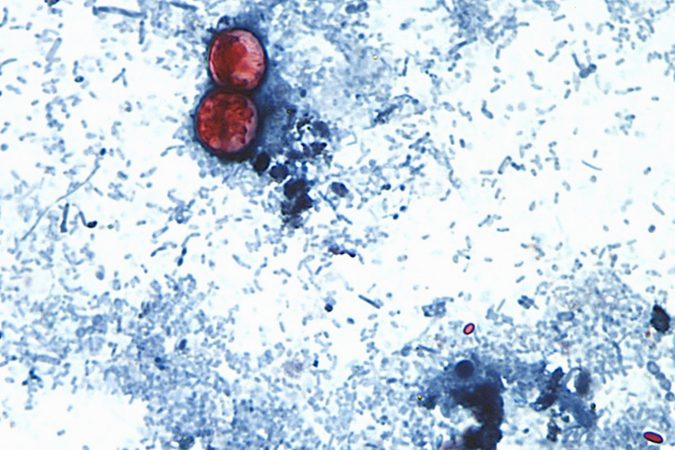
    The parasite’s spread can become a self-perpetuating cycle. Cyclospora is found only in humans, where it replicates in the intestinal tract, causing severe diarrhea. The organism reproduces by releasing oocysts, which are excreted in those human feces. In the U.S., feces usually end up in sewage systems.

    In many states, sewage water is treated — though not always in ways that remove or kill the oocysts — and then released into waterways and can be used to irrigate crops. The oocysts mature in the environment with warm temperatures in about a week. Then a human comes along and eats the irrigated food or drinks the water and gets sick, releasing more oocysts into sewage systems.

    I am a public health water microbiologist who collects sewage water and tests it for evidence of harmful pathogens, such as cyclospora. The first time I studied cyclospora was in the first outbreak ever documented in the U.S., a small, 45-case outbreak in Florida in 1995.

    The cause was initially suspected to be strawberries grown in California, but later it was determined it was more likely due to imported contaminated raspberries from Guatemala. That country’s raspberries were also associated with much larger outbreaks in 1996 and 1997. At the time, little was known about this single-celled protozoan pathogen.

    More than 30 years later, the largest outbreak ever recorded in the U.S. has sickened more than 22,000 people, and contributed to the deaths of two in Michigan, where I live and work. Using treated sewage to irrigate crops is common in many places, especially where groundwater and surface water are in short supply.

    What’s in wastewater

    There are two reasons researchers like me collect sewage and monitor what’s in it.

    The first is to evaluate levels of disease in a community. Measuring viruses such as SARS-CoV-2 in untreated sewage helped paint a picture of the spread of COVID-19 and the emergence of variants as the pandemic continued.

    The second reason is to determine whether and how sewage treatment removes, inactivates, or kills pathogens.

    It is not easy to measure cyclospora oocysts in sewage, contaminated water, or food. Even modern laboratory methods have trouble reliably detecting low levels of oocysts, which can still cause disease.

    Cyclospora oocysts have been found in sewage around the world. A range of studies across the world shows that they can be detected in up to 25% of sewage samples — but not all studies report how high or low the concentrations of the oocysts were. So it can be hard to say exactly how widespread it is.

    A person who is infected with cyclospora excretes somewhere between 100 and 10,000 oocysts per gram of feces for as long as 60 days. Based on what is known about other fecal pathogen excretions from patients, related to the concentrations of those pathogens in sewage, I estimate that there could be anywhere from 1 to 100 oocysts per liter in sewage.

    Our laboratory at Michigan State University is developing a method to more accurately detect this parasite even at lower levels in sewage. This type of wastewater surveillance may help determine when an outbreak is beginning to subside and where larger numbers of people are still affected. In addition, this information could allow sewage treatment plant managers to regularly monitor their discharges.

    What happens during sewage treatment?

    There isn’t clear data on how well standard sewage treatment processes reduce the numbers of cyclospora oocysts. But there is information on two other similar protozoa that also cause significant diarrhea in humans: Cryptosporidium produces an oocyst about half the size of cyclospora, and giardia produces a cyst that is similar in size to cyclospora.

    From 2001 to 2003, my laboratory studied the occurrence of those protozoa at six sewage treatment plants — one each in Arizona and California and four in Florida. All had been approved by their respective state regulators for nonpotable reuse, including irrigation of landscapes and, in some cases, crops.

    In that study, we found these protozoa in all the untreated sewage we tested, indicating there is some portion of the population that is infected and excreting their cysts or oocysts.

    The five treatment plants whose processes included disinfection with chlorine were able to get rid of a high percentage — but not all — of the protozoa in their discharged wastewater. Some cysts and oocysts remained intact, with the potential to cause disease, even in water that had gone through the entire treatment process, as it is known that wastewater chlorination does not kill these protozoa.

    From that data, it seems reasonable to assume that at least some small proportion of cyclospora oocysts also survive sewage treatment processes and are released back into the environment, where they can survive for months.

    What about reuse?

    Across the U.S., 200 billion gallons of treated sewage wastewater are used for irrigation of agricultural lands each year.

    Some of that wastewater undergoes additional filtration and disinfection for reuse before being spread directly on landscapes or crops. The volumes, however, are not readily known. And other treated sewage, which undergoes only standard secondary treatment, is discharged into rivers, streams, and reservoirs that could provide irrigation water.

    But few states regulate efforts to remove or monitor protozoa such as cyclospora in treated sewage. Filtration can remove protozoa but must be designed and operated correctly. Chlorination is not effective, but ultraviolet light does inactivate cryptosporidium and eimeria, a chicken protozoan highly related to and used as a surrogate in studies testing methods of killing cyclospora by the food safety industry.

    What is needed for better risk assessment and management?

    As floods and droughts occur routinely across the U.S. and around the world, sewage may overflow into bodies of water or be used directly on crops. That increases the risk that diseases, including protozoa such as cyclospora, which are transmitted through ingestion of fecal matter, may spread through food and water supplies.

    And because cyclospora oocysts mature in outdoor heat, it is possible that increasing temperatures, such as heat domes, could speed up their maturation, exposing more people to the infectious form of the parasite.

    Modern technology and techniques are capable of monitoring water quality, detecting harmful pathogens and eliminating them. Expanding monitoring of wastewater for protozoan diseases and other dangers can help prevent outbreaks and slow the spread of disease from sewage-contaminated water in the future.

    Joan Rose is a professor of water research and director of the Water Alliance at Michigan State University.

    Reprinted from The Conversation.

  • Philadelphia has seen nearly two dozen cyclosporiasis cases this year

    Philadelphia has seen nearly two dozen cyclosporiasis cases this year

    Federal officials this week assured Americans they can safely eat fresh produce, saying they’ve issued new safety guidelines for producers and pulled all lettuce associated with an outbreak of cyclosporiasis from the market.

    The intestinal parasite Cyclospora cayetanensis, which causes “explosive” diarrhea, had contaminated lettuce sold in 15 states, including Pennsylvania.

    Philadelphia health officials said Monday that the city has confirmed 22 cases of the gastrointestinal illness in 2026. Reported cases have been higher elsewhere in the state.

    Statewide, officials had recorded 214 confirmed cyclosporiasis cases as of Tuesday and an additional six probable cases. Pennsylvania confirmed 40 cases of cyclosporiasis in 2025 and 87 in 2024, officials said.

    Federal health officials have confirmed more than 13,000 cases across 47 states this spring and summer.

    The CDC has linked more than 6,000 cases of cyclosporiasis, 278 hospitalizations, and two deaths to iceberg lettuce sold by Taylor Farms. (Taylor Farms had also recalled jalapenos separately linked to a salmonella outbreak in 26 states. The jalapenos were not sold in Pennsylvania.)

    Pennsylvania has reported far fewer cyclosporiasis cases than states like Michigan and Ohio, where thousands have been sickened. Still, because confirmed cases have increased in Pennsylvania in recent weeks, it’s too soon to predict case counts for the year, said Akhil Vaidya, a distinguished professor in the Department of Microbiology and Immunology at Drexel University College of Medicine.

    “Generally, it is between May and August that you see Cyclospora. We don’t know how it will go for the rest of the year,” he said. “I hope we dodged a bullet.”

    Cyclospora was only discovered by scientists in the mid-1990s, and more research on the parasite remains needed, Vaidya said. Most research is conducted outside the U.S., where cyclosporiasis is more common, and the parasite cannot be grown in a lab, which often makes it difficult to track the source of foodborne outbreaks, he said.

    State and federal health officials must carefully monitor when and where illnesses emerge to understand why so many cases have been reported this year, Vaidya said.

    State health officials urged Pennsylvanians to take these steps to protect themselves from cyclosporiasis: washing their hands with soap and water before and after handling raw fruits and vegetables; rinsing produce under hot water, scrubbing firm produce like melons with a clean brush; cutting away damaged parts of produce; and refrigerating cut, peeled, or cooked fruits and vegetables as soon as possible.

    Cyclospora is not necessarily killed by rinsing alone, so the FDA advises cooking produce to 158 degrees to remove the parasite.

  • Prescription drug prices record sharpest drop in more than 60 years

    Prescription drug prices record sharpest drop in more than 60 years

    Prescription drug prices recorded the biggest year-over-year drop in more than 60 years in July, a startling reduction experts chalked up to an array of factors, including more generics and discount GLP-1 weight-loss drugs.

    While overall costs for medical services continued to rise, prices for medicinal drugs fell 2.7% over the 12 months ending in July, the largest annual drop on record, according to Bureau of Labor Statistics data released Wednesday. Prescription drugs, part of the medicinal drug category, fell by 3.1%, the steepest annual decline since March 1963.

    The White House took credit for the good news, saying President Donald Trump’s efforts to slash drug prices were working. Some experts said a Biden-era policy that requires Medicare to negotiate prices for some popular prescription drugs is more likely to be driving down costs.

    The drop in prescription drug prices is one of the few bright spots in the U.S. Consumer Price Index, which provides a snapshot of inflation. “Just what the doctor ordered!” Renaissance Macro, an investment research company, posted to X on Wednesday.

    Inflation has been running high for more than five years, sparked by the economic disruptions of the coronavirus pandemic and Washington’s response to it. More recently, prices have been rising because of energy pressures fueled by the war with Iran.

    Prescription drug prices, on the other hand, have slid sharply over the past six months, Renaissance Macro said, at a seasonally adjusted annual rate of 6.6% — “the sharpest six month drop on record.”

    While the results are stark, teasing out the cause is complicated, independent experts said.

    President Donald Trump has long pledged to bring down prescription drug prices, and the White House made the case Wednesday that the president’s pricing agreements with drug companies and a new initiative, the direct-to-consumer site TrumpRx, are responsible for the lower prices.

    “No president in modern history has been able to drastically reduce prescription drug prices across the board except for President Trump,” White House spokesperson Kush Desai said in an email. “This is a direct result of the President’s willingness to push the envelope with bold policies that actually put Americans and America First.”

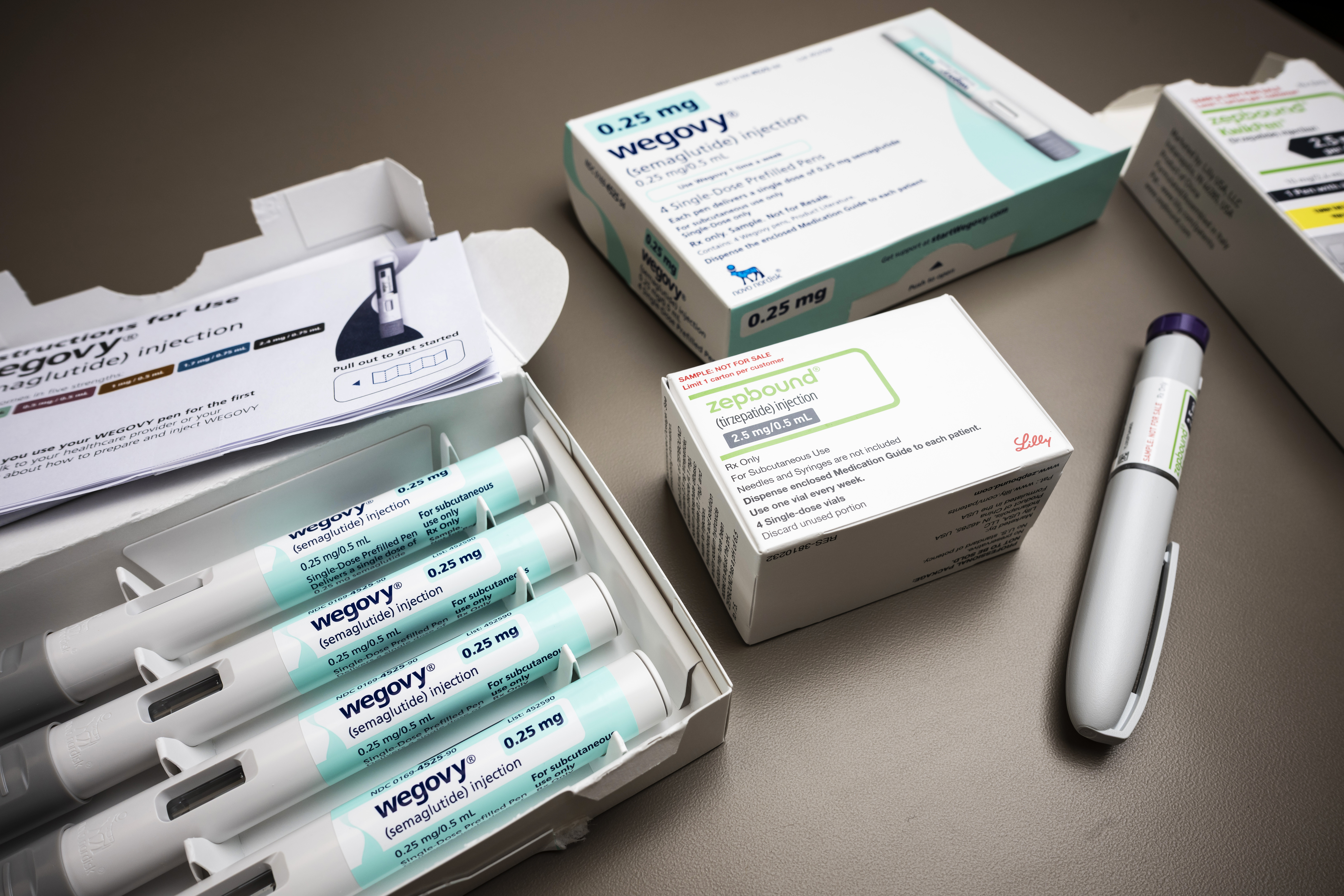
    White House officials pointed particularly to the costs of GLP-1 weight-loss drugs, which Trump calls the “fat drug.” TrumpRx, which launched earlier this year, offers GLP-1 drugs for as low as $150 for a starting dose. And under a Medicare pilot program that the administration launched in July, drugmakers Novo Nordisk and Eli Lilly agreed to charge the government just $245 a month for their products, Wegovy, Zepbound, and Foundayo.

    Monthly prices charged to insurance companies previously had topped $1,000. Trump and the drug companies began negotiating last year and announced the rough outlines of the deals in November.

    “In a matter of months, we got up and running these discounts in a way that they were meaningful for American patients,” said a White House official, speaking on the condition of anonymity because administration staff are not authorized to speak publicly.

    But bigger trends in the GLP-1 marketplace were already driving down prices independent of Trump’s negotiations, according to experts on drug pricing. Spotty insurance coverage for Wegovy and Zepbound for weight loss has produced enormous demand for lower consumer prices. And cheaper compounded drugs have posed genuine competition for the brand-name companies, adding even greater downward pressure.

    Richard Frank, a senior fellow at the Brookings Institution and a professor emeritus of health economics at Harvard University, said he doubts Trump’s initiatives are behind the drop in drug prices.

    “If I was a betting guy on what mattered most, it would be probably stuff around the Inflation Reduction Act,” Frank said, adding that Trump’s efforts “wouldn’t be where I’d place my money.”

    The Inflation Reduction Act was a signature accomplishment of former President Joe Biden, a sprawling measure enacted in 2022 that aimed to lower prescription drug prices by requiring Medicare, the federal health program for the elderly, to begin negotiating the prices it pays drugmakers for an array of popular and costly prescription drugs.

    The first price reductions took effect at the beginning of this year. Using 2023 prices as a benchmark, the Centers for Medicare and Medicaid Services has estimated taxpayer savings of $6 billion from that first round.

    The Trump White House argues that the Inflation Reduction Act gets too much credit for lowering prices, in part because it took four years to take effect.

    Stacie Dusetzina, a health policy professor at Vanderbilt University, said the Inflation Reduction Act is a more plausible contributor to the decline in prices than Trump’s initiatives.

    While only 10 drugs have had their prices negotiated so far, they are commonly used ones “and their prices would likely be reflected in the prescription drug index,” she said via email. TrumpRx, on the other hand, covers “a limited number of branded drugs,” Dusetzina said, and “aside from GLP1s, they may not be high enough volume to be included.”

    Dusetzina said another Trump policy — most-favored-nation pricing, which ties U.S. prices to lower ones paid abroad — could not explain the drop in prices either, “as the models that are supposed to use this form of pricing haven’t even launched.”

    The Bureau of Labor Statistics category for prescription drugs does not track what drug companies charge. It tracks how much a pharmacy actually receives when it fills a prescription. That means it includes a customer’s payment at the counter plus whatever is paid by their private insurance or by Medicare Part D, the program that pays for drugs picked up from a pharmacy.

    A drop in this index does not necessarily mean drugmakers have cut their prices. It can also reflect insurers and Medicare striking better deals or people switching to cheaper drugs.

    Which brings up another, less glamorous source of lower prices: generics. When a brand-name drug loses patent protection, BLS waits about six months, swaps the brand in its sample for the cheaper generic and records the difference as a reduction in price.

    A wave of blockbuster drugs lost exclusivity over the past year, and Dusetzina said that could be pushing the index down — “especially if the drugs were commonly filled.”