After 20 years of cooking other people’s food around the region, Carolyn Nguyen is finally telling her own story.
Carolyn’s Modern Vietnamese opens Wednesday at 2015 Walnut St. with a menu that draws from Nguyen’s personal history: the Vietnamese and Louisiana foods Nguyen grew up eating, the French techniques she learned in culinary school and restaurant kitchens, and the freewheeling combinations that defined her food trucks and Revolution Taco, the fast-casual restaurant she co-owned in the space for a decade.
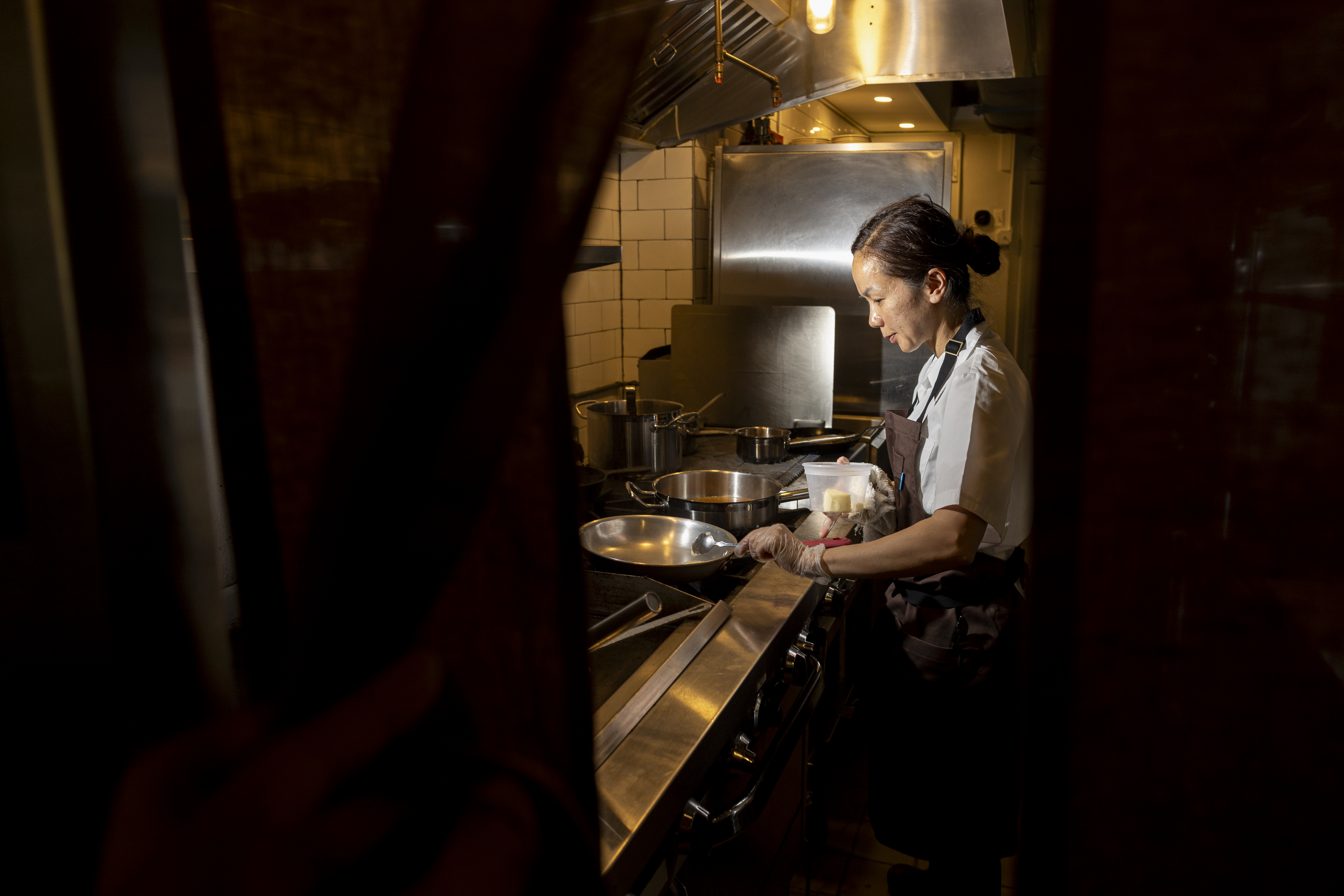
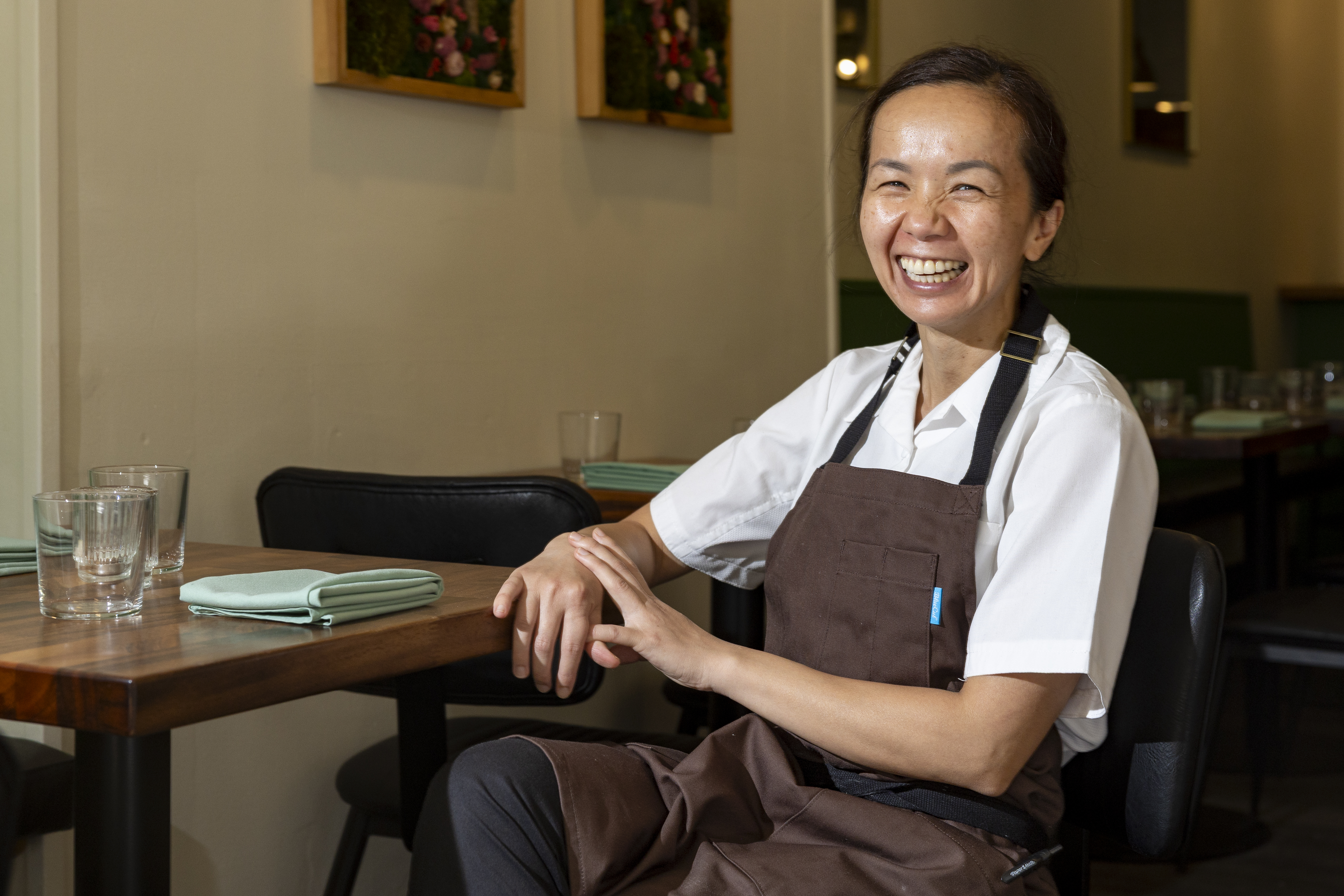
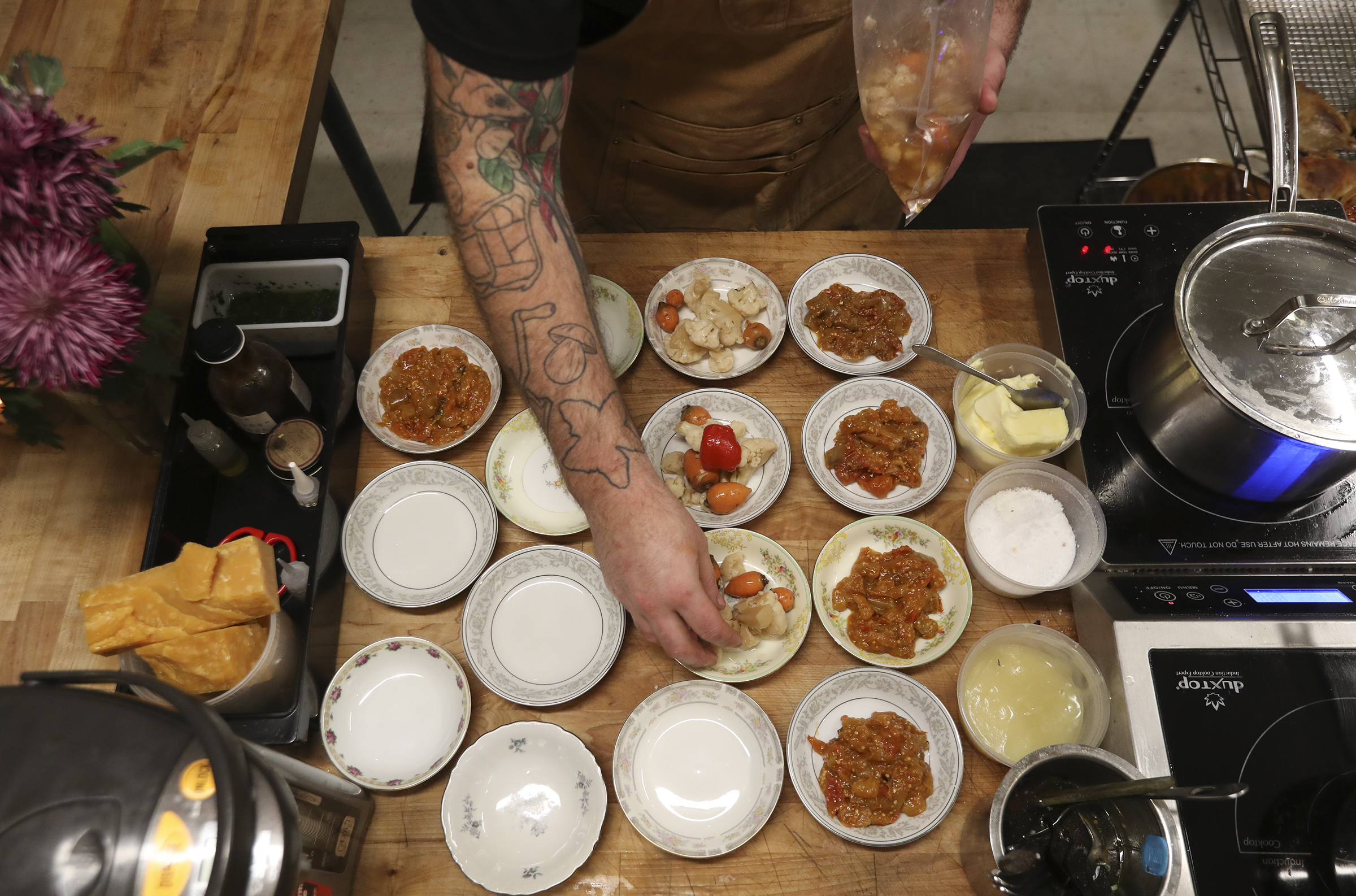
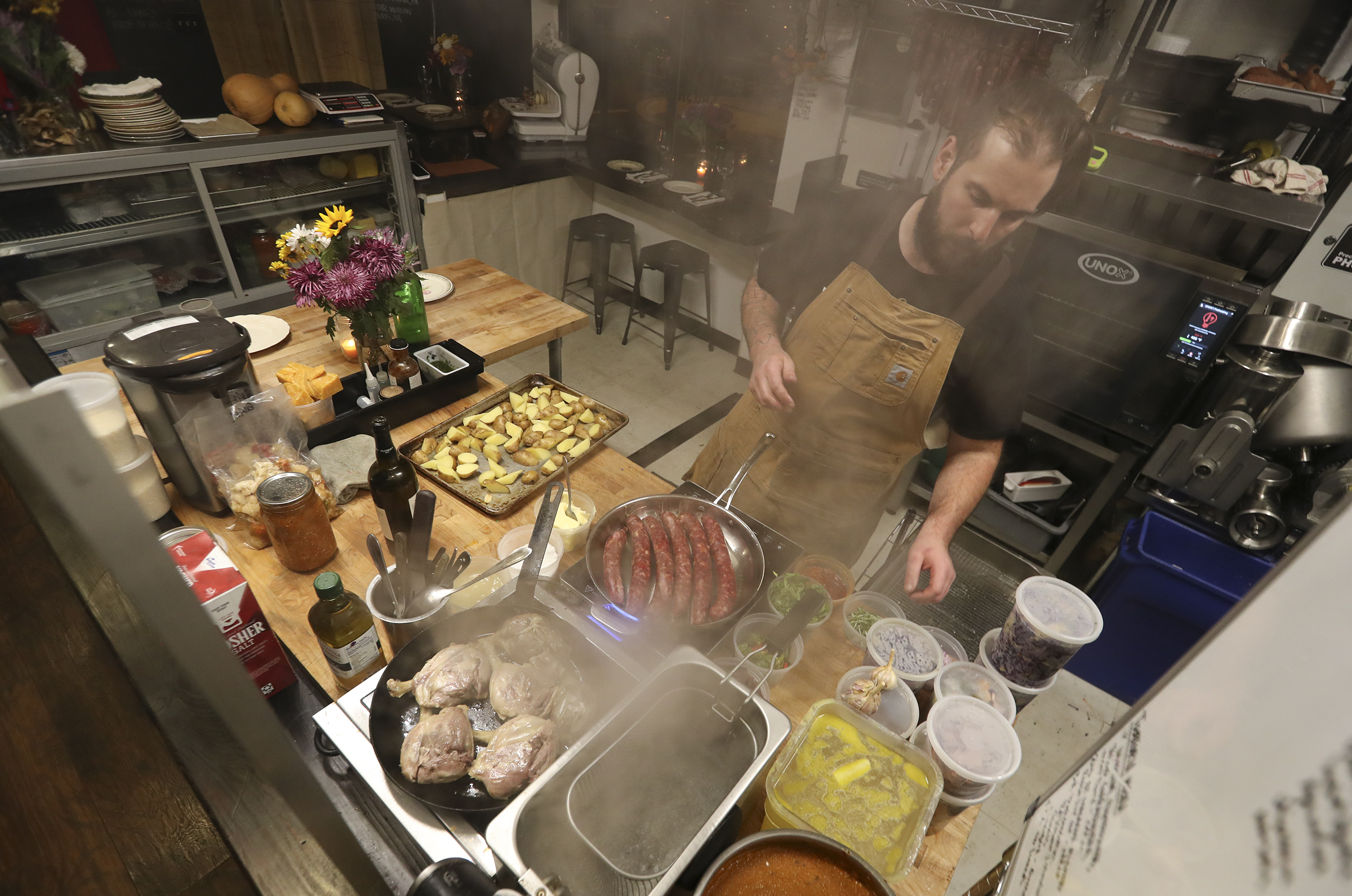
Chef Carolyn Nguyen adds butter to a pan while cooking curry duck potato gnocchi.Aidan T. Gallo / Staff Photographer
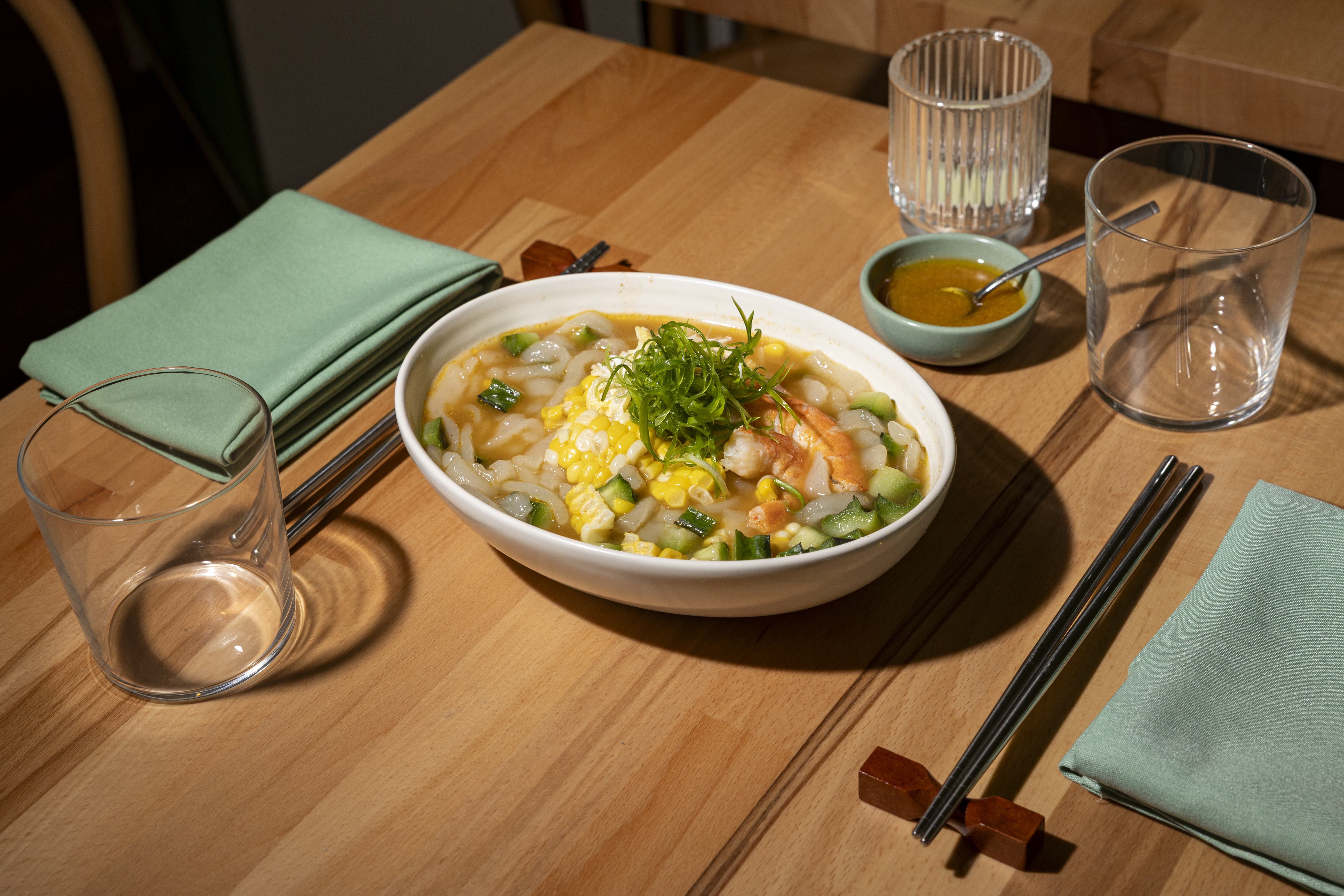
Bánh canh, a thick Vietnamese noodle soup, is presented as a seafood boil with poached shrimp, mussels, fried potatoes, and scallions. Thịt kho tàu, a Vietnamese braised pork dish, becomes slow-cooked grits topped with pork belly, a soft egg, and pickled vegetables. Hoi An chicken comes with ginger dirty rice, braised collards, and herb remoulade.
Other large plates include lemongrass smoked beef short rib with fish sauce-caramel jus, warm potato salad, and cabbage slaw; corn and crab congee with crispy shallots, and herbs; and a salt-and-pepper cornmeal-crusted whole fish with ginger sauce.
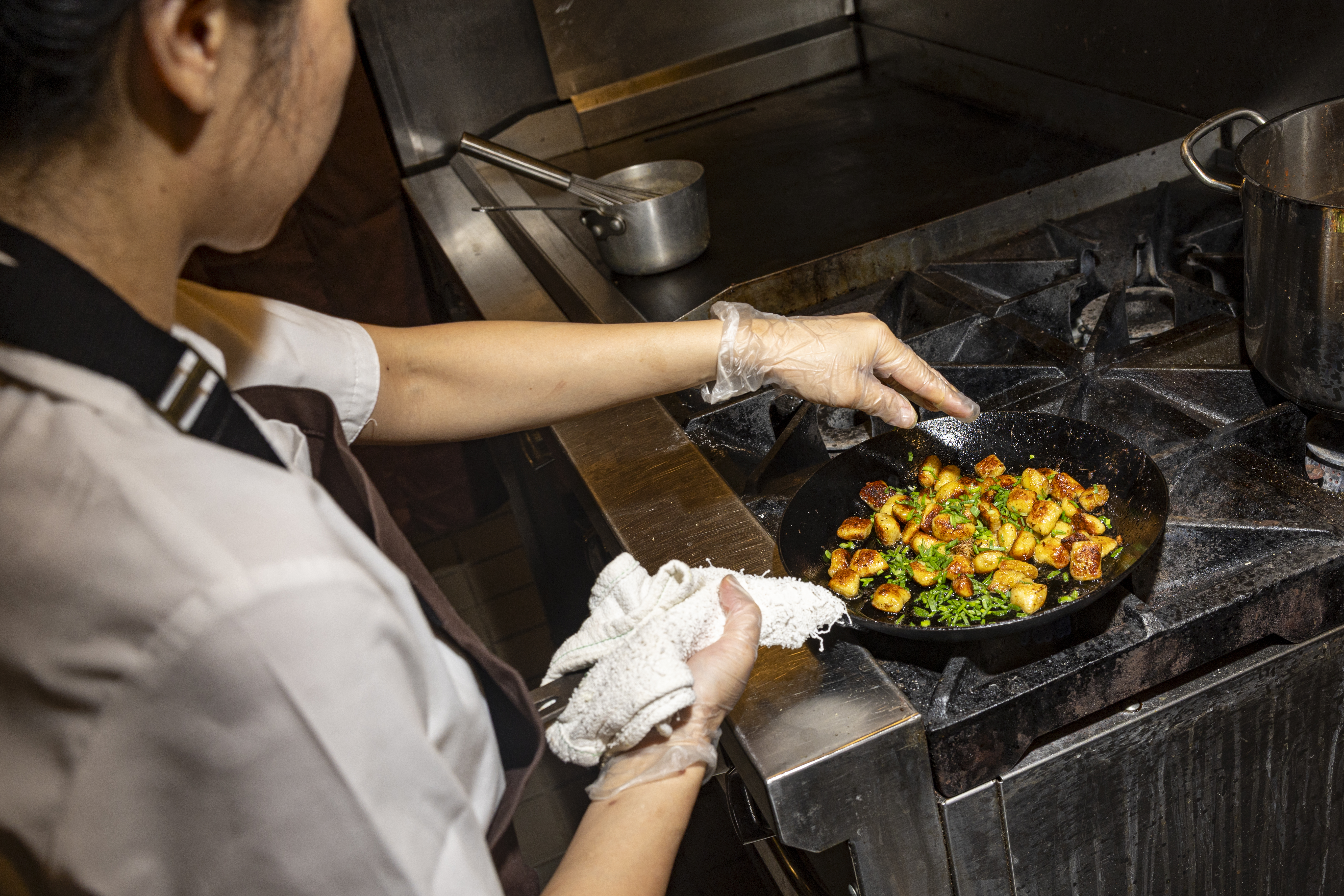
Carolyn Nguyen sprinkles Chinese chives onto her potato gnocchi.Aidan T. Gallo / Staff Photographer
Curry duck potato gnocchi with Thai basil pesto carries a memory from Nguyen’s time at Old City’s Fork, where she worked for chef Terence Feury. At midday, she said, they would stop and make gnocchi together.
The small plates ($12 to $22) include tofu hummus, mushroom and leek dumplings, polenta-daikon fries, dry aged beef in betal leaves, chicken liver mousse, and tasso-crab spring rolls.
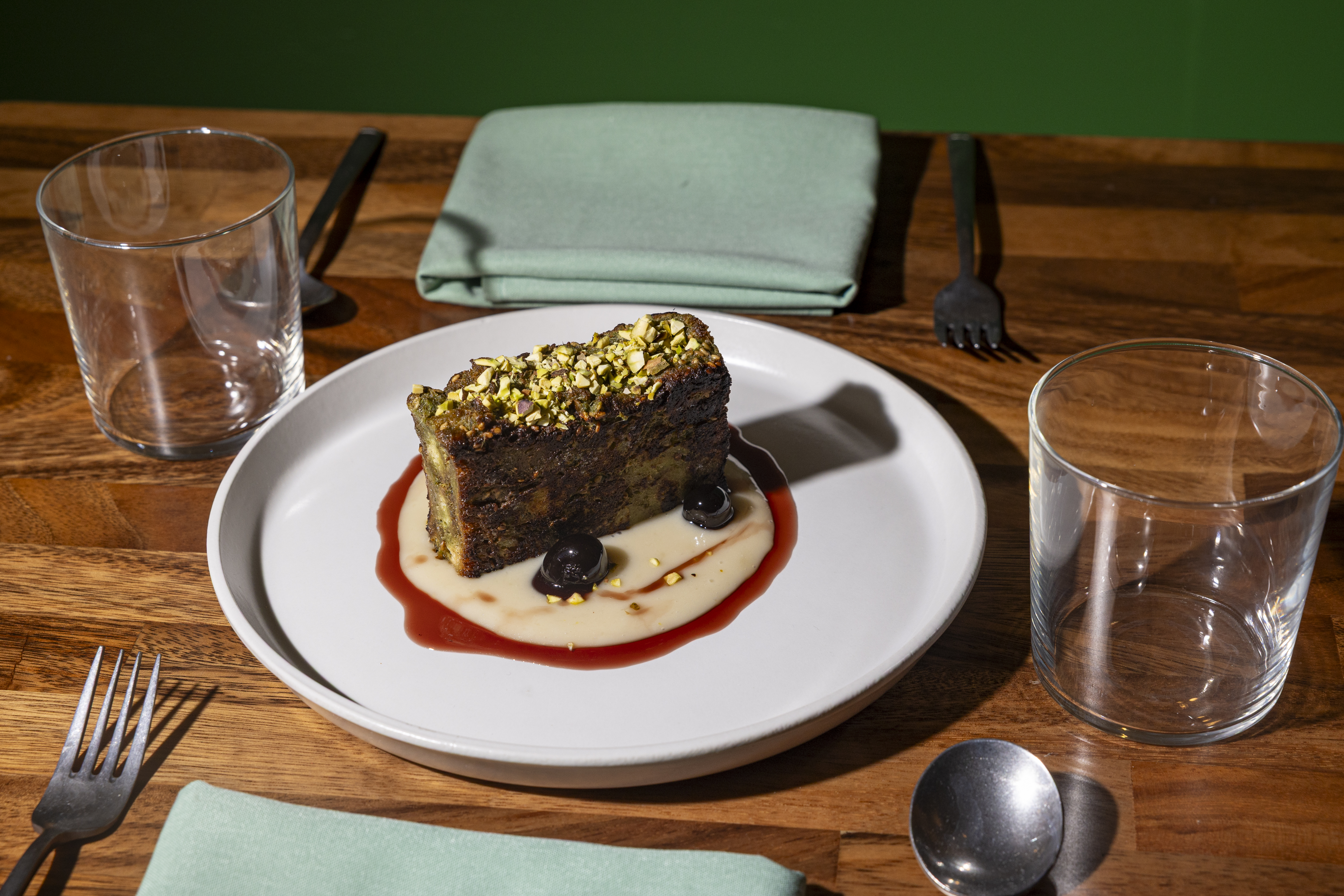
Pandan bread pudding dessert at Carolyn’s Modern Vietnamese.Aidan T. Gallo / Staff Photographer
Large plates are priced from $24 to $46, plus a market-price whole fish. Desserts include coconut rice pudding with bananas Foster sauce and pandan bread pudding with coconut sauce.
“It’s both coming home to the food that I grew up with and then the food that I’ve cooked and learned how to cook,” she said. “It’s food that I love.”
Nguyen was born and raised in Amelia, in Louisiana’s St. Mary Parish. Her parents, Paul and Mai Nguyen, were born in Vietnam but met in the United States. Her father arrived in the late 1960s and later helped Vietnamese refugees settling around New Orleans. He met Nguyen’s mother while driving her to appointments. The family moved to South Carolina when Carolyn was 16.
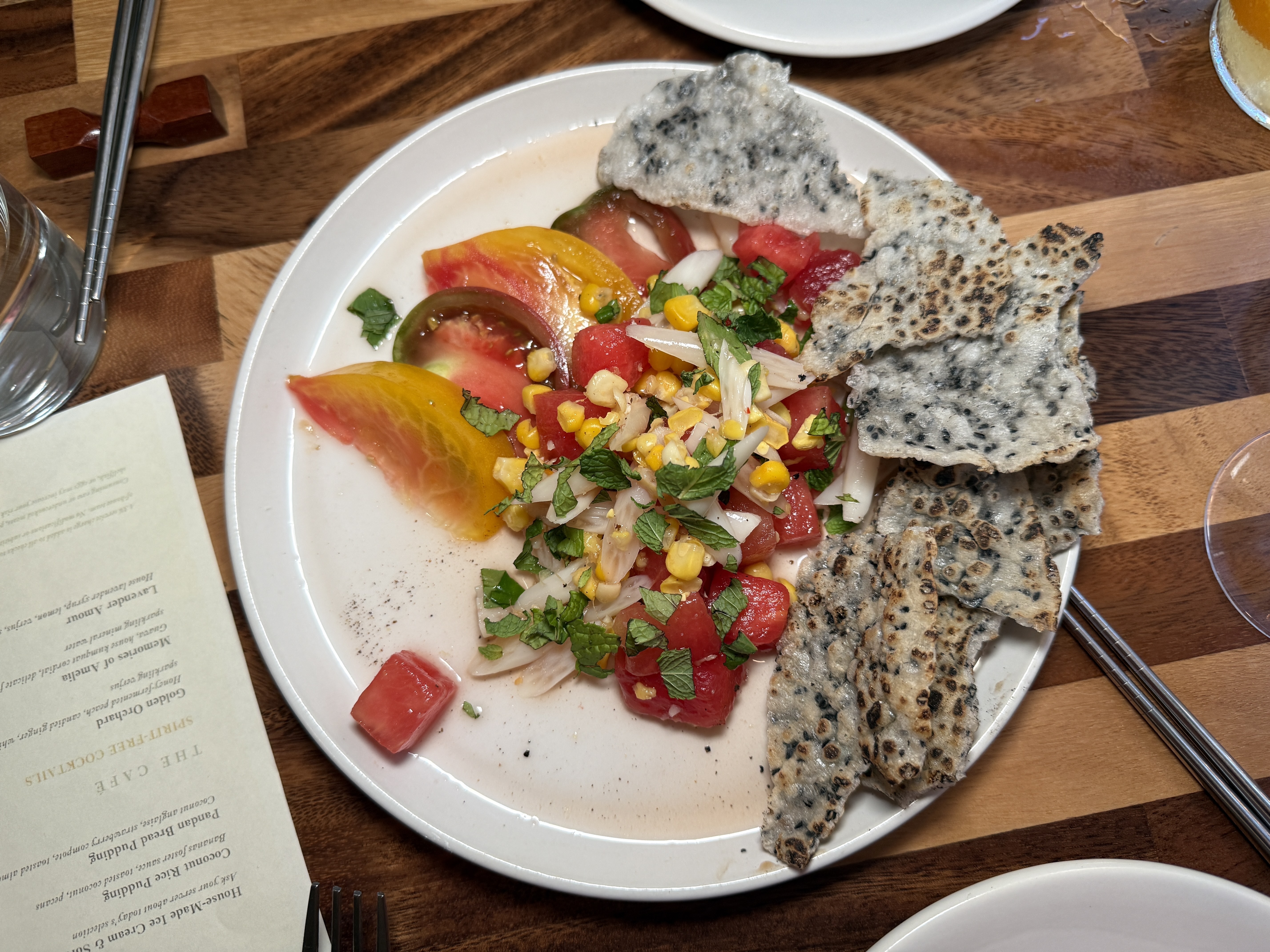
Lotus root salad with watermelon, corn, heirloom tomatoes, and Thai basil as served at a preview for Carolyn’s Modern Vietnamese.Kiki Aranita / Staff
“I always knew I wanted to pursue cooking,” she said. “Unfortunately, in South Carolina, there wasn’t really any fine-dining environment.” When her sister moved to Philadelphia to go to dental school around 2005, Nguyen moved north with her and enrolled in the culinary school at the Art Institute of Philadelphia. The goal was working in New York, “but I fell in love with Philadelphia because of the food environment,” she said.
Her first restaurant job was as a cook at Susanna Foo on Walnut Street. Besides Fork, she later worked at such restaurants as Nectar in Berwyn (also with Feury), Maia in Villanova, and Russet in Center City. At Peachtree & Ward catering, she met her initial business partner, Michael Sultan.
Chef Carolyn Nguyen in her dining room at Carolyn’s Modern Vietnamese.Aidan T. Gallo / Staff Photographer
In 2012, Nguyen and Sultan entered the food-truck business with Street Food Philly. Taco Mondo followed, and in January 2016, Nguyen, Sultan, and Alan Krawitz opened Revolution Taco, whose taco fillings included pork belly, duck, beef tongue, Korean fried chicken, smoked mushrooms, and curried cauliflower.
The other partners moved on, but Nguyen still owns the Revolution location at the Comcast Center’s concourse. Eight months ago, she closed the Walnut Street location but kept the lease, figuring that converting its counter-service format into a full-service experience would be “easy-peasy – maybe a month.”
Instead, the concept and design evolved as Nguyen worked through permitting and paperwork, much of which she handled herself. Carolyn’s has 28 seats at tables and along a banquette, plus five at a counter.
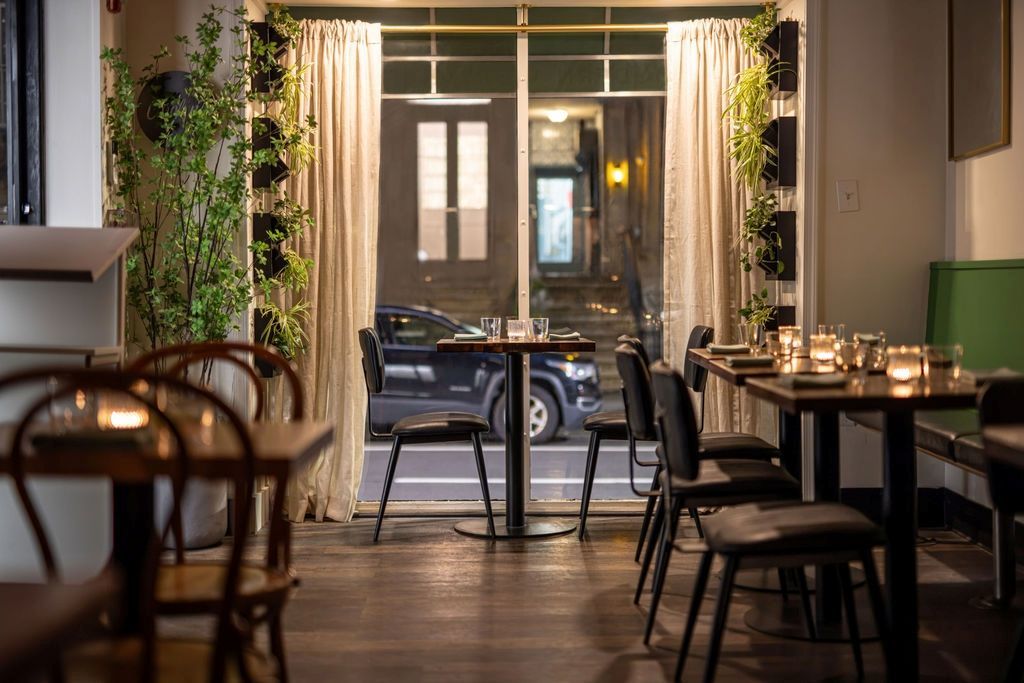
The dining room is spare and contemporary, with cream-colored walls, butcher-block-style tables, black upholstered chairs, and a deep-green banquette. An arched brass-framed mirror and two narrow pieces of preserved-moss botanical art soften the black track lighting.
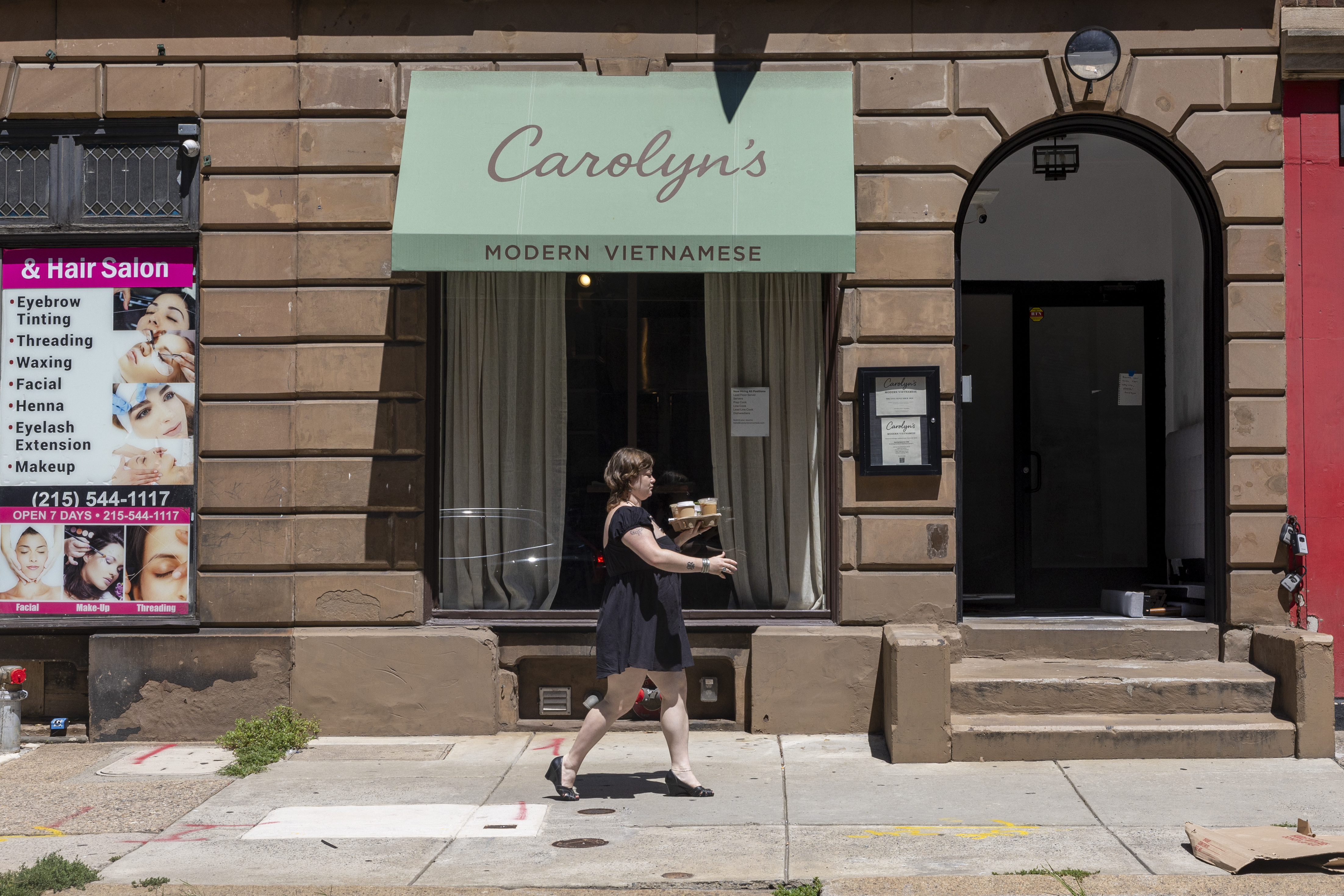
Carolyn’s Modern Vietnamese, 2015 Walnut St., replaces Revolution Taco.Gab Bonghi
Pale-green cloth napkins, metal chopsticks, and wooden rests carry the palette to the tables. The Louisiana connection extends to the soundtrack, with ragtime- and blues-inflected New Orleans jazz by early figures such as King Oliver and Buddy Bolden.
Nguyen wanted the room to feel relaxed and unhurried. Green “represents growth and new beginnings for me,” she said.
The bar will emphasize locally produced wines and spirits. Two cocktails are inspired by Nguyen’s parents: a tropical Mama Mai Tai for her mother and the Ông Xuyên (Mr. Xuyen) for her father, an avid gardener who grows dozens of plant varieties and keeps chickens at the family home.
Her father once returned from a shrimping trip with fish bones and used them to make fish sauce in a barrel. Nguyen plans to put a small amount of house-made fish sauce in his namesake cocktail for a savory undertone.
Carolyn’s Modern Vietnamese, 2015 Walnut St.Aidan T. Gallo / Staff Photographer
Carolyn’s will start with dinner Wednesday to Saturday. Nguyen eventually hopes to add Tuesday dinner and a more casual lunch or brunch, potentially with more traditional Vietnamese dishes.
One of Philly’s most prominent fine-dining restaurants received a state grant to createan even higher-end establishment. The project promises to create 100 jobs and help cement Philly’s place as a culinary hot spot. It drew criticism over the use of tax dollars.
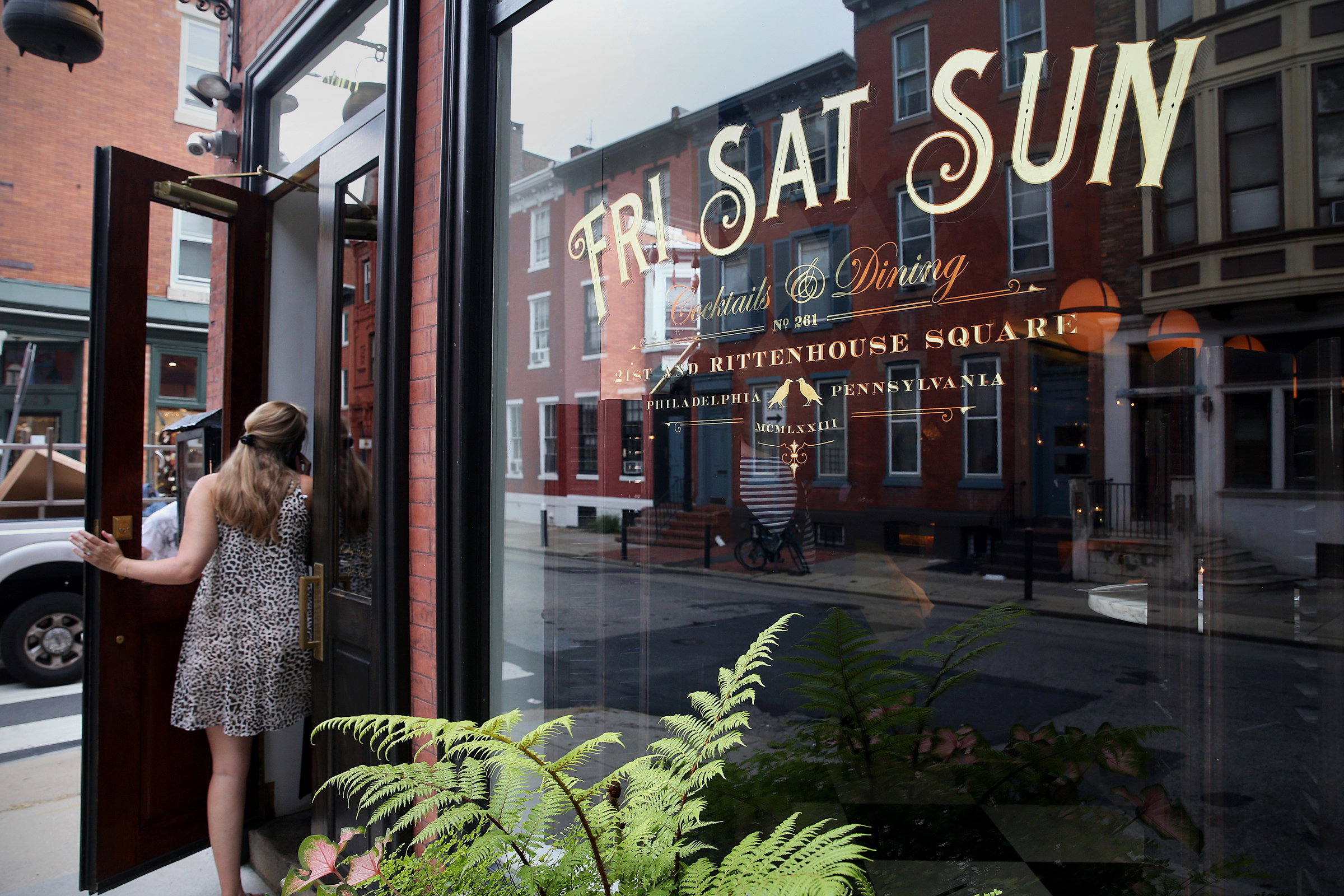
The Weekend Restaurant Group, which owns the acclaimed Rittenhouse Square restaurant Friday Saturday Sunday, was awarded $1.5 million from the state’s Redevelopment Assistance Capital Program in July to help finance the expansion of the Michelin-starred restaurant. The grant will cover only a fraction of the project’s multimillion-dollar budget.
The endeavor will be the “first minority-owned restaurant of its kind” in the United States, wrote Friday Saturday Sunday chef-owner Chad Williams, who is Black, in the restaurant group’s application.
The undertaking involves connecting Friday Saturday Sunday with a neighboring rowhouse that will eventually be transformed into a three-story dining destination withan 18-seat chef’s counter, private dining rooms, and a post-dinner sweets lounge.
Williams runs Friday Saturday Sunday with his wife, Hanna. Together, they announced plans to grow their award-winning restaurant at 261 S. 21st St. last summer, after entering an agreement to buy the adjoiningproperty at 2048 Rittenhouse Square. Neighbors enthusiastically endorsed their ambitious plan, whichcame five months before the restaurant earned a Michelin star.
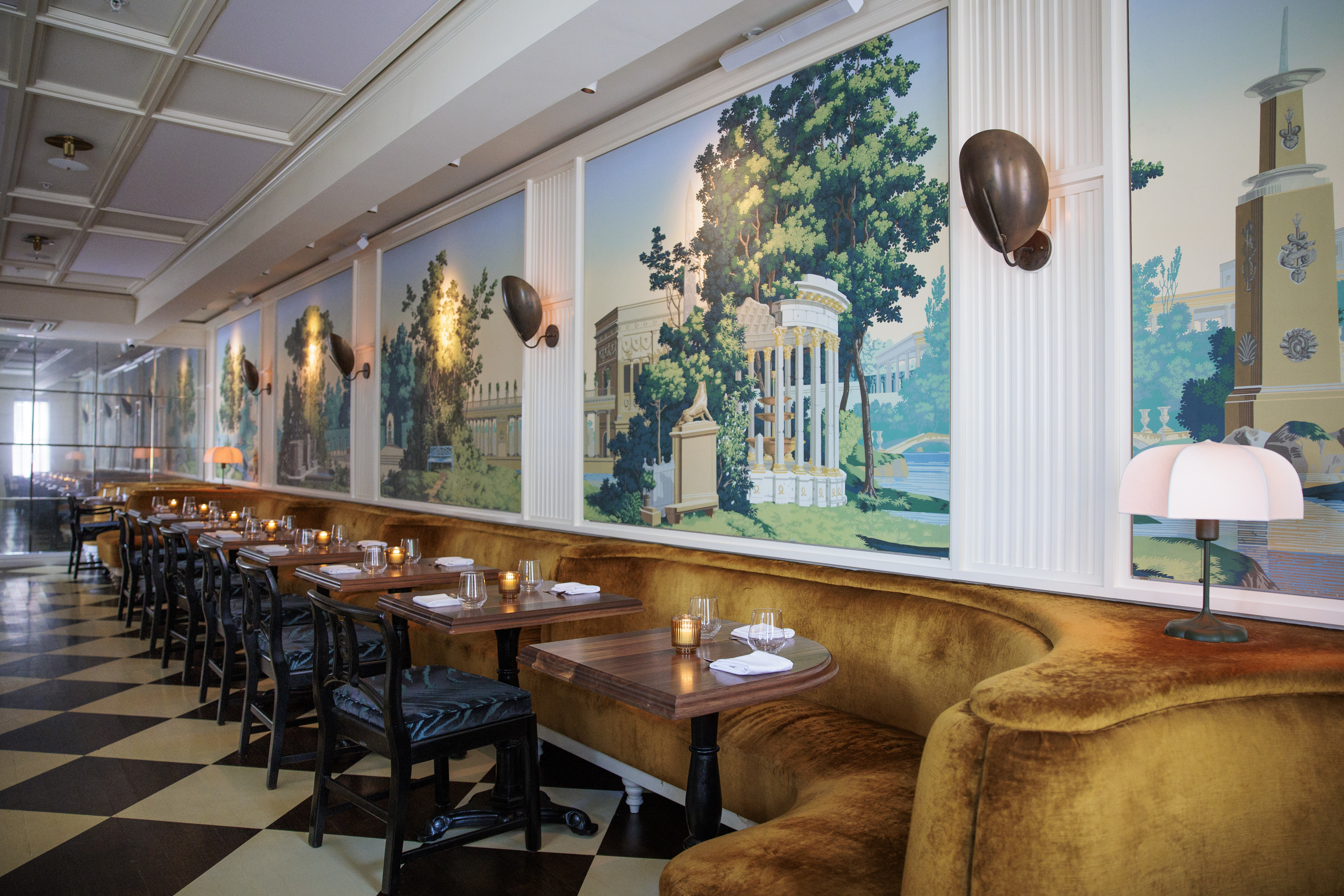
The interior of Friday Saturday Sunday’s upstairs dining room, which offers a $205-per-person tasting menu.Monica Herndon / Staff Photographer
In the state grant application,Williamswrote “the project will generate significant cultural impact [by] retaining and creating high-quality jobs, attracting visitors from the region and beyond, and raising Philadelphia’s profile.” Renovatingthe storied Philadelphia restaurant “demonstrates a long-term to commitment to the city, with the scale and ambition to be a generational anchor in its neighborhood.”
Yet when news of the grant spread on social media last month, it was met with critics who were angry that taxpayer dollars were funding a fine-dining restaurant.
“Luxe restaurant getting a grant to become more luxe? … WTF?” one person wrote under an Instagram post about the grant with over 100 comments, many of which were critical.
“Give it to the schools” instead, wrote another.
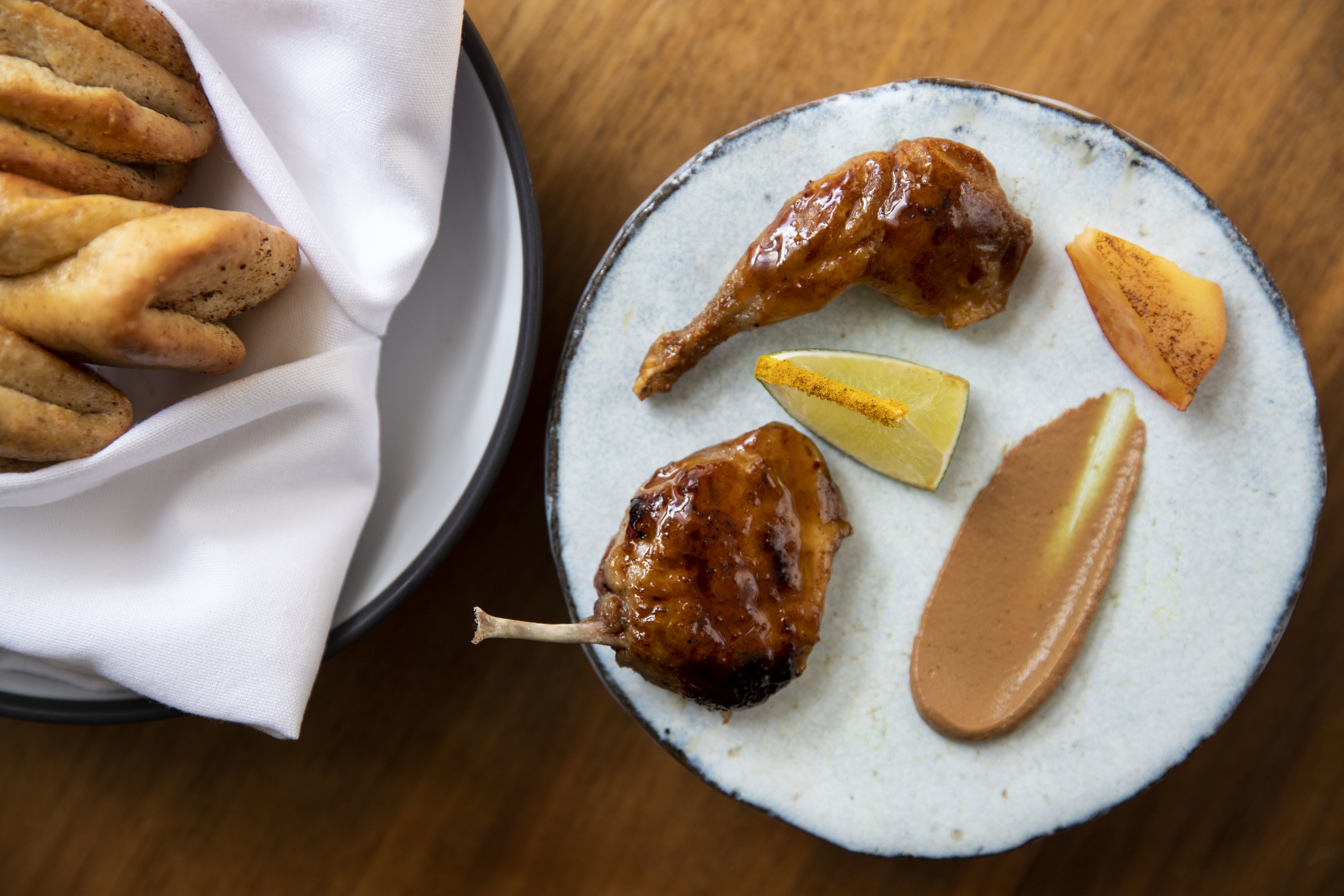
The grilled quail with coco bread at Friday Saturday Sunday, photographed in 2022.MONICA HERNDON / Staff Photographer
Williams says the grant money — which is from a fund for construction projects that would benefit the state culturally and economically — is a win for the city, not just Friday Saturday Sunday.
“I was born here. I left, learned all that I could, and came back. What we want to do is push the culture forward and, with that, hopefully [bring] economic benefits for everyone in the city,” Williams said.
“There’s going to be tax revenue and jobs that come back in a very real way.”
A much-debated grant program
Better known as RACP, theRedevelopment Assistance Capital Program defrays the cost of construction-ready projects across Pennsylvania that stand to generate substantial economic growth. The fund has stirred controversy in the past.
The program was launched in 1986 tosupport construction and real estate projects that intend to create jobs, boost tax revenue, orhave significant cultural and civic impact. Eligible projects must cost at least $1 million and secure at least half of their funding from other sources.
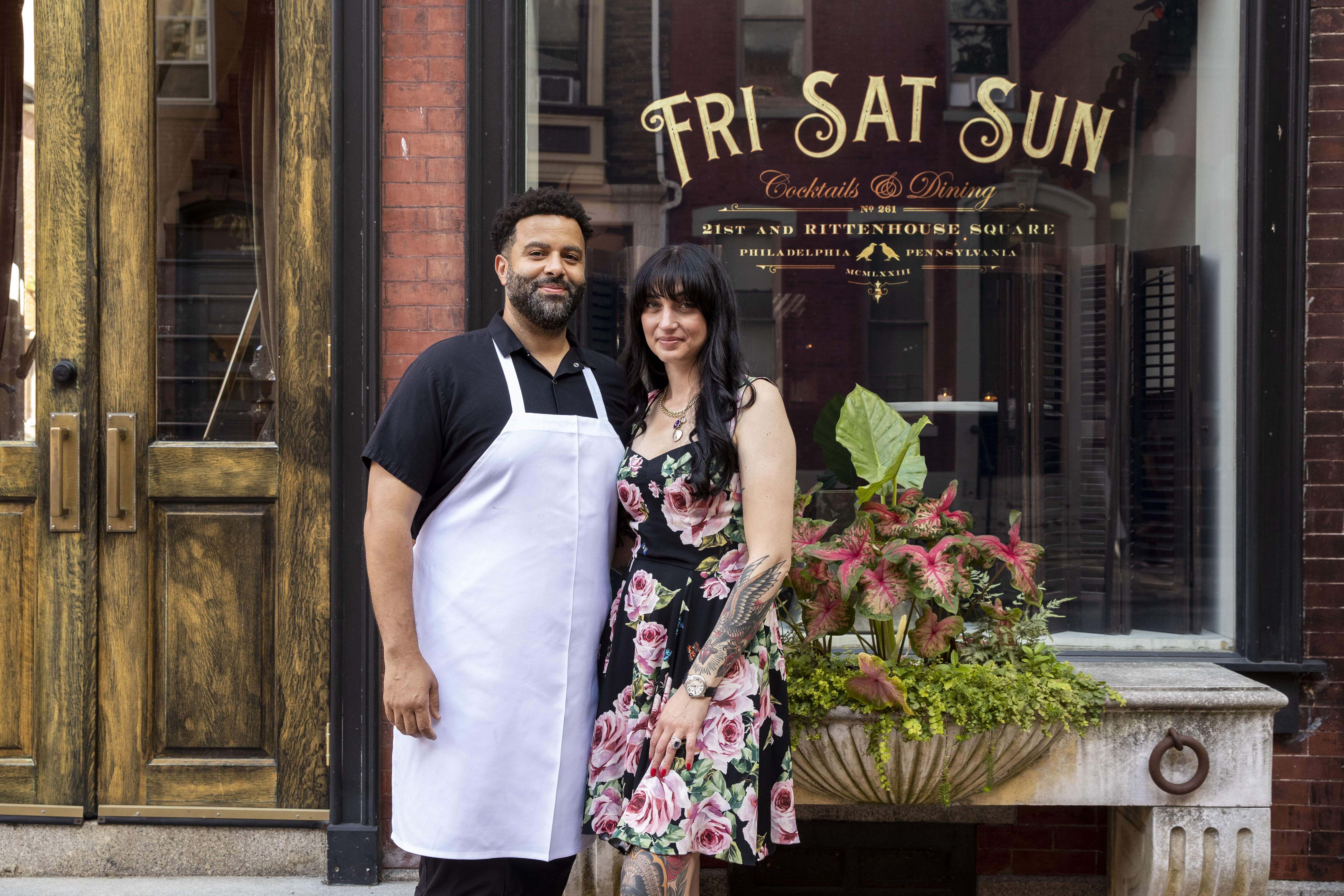
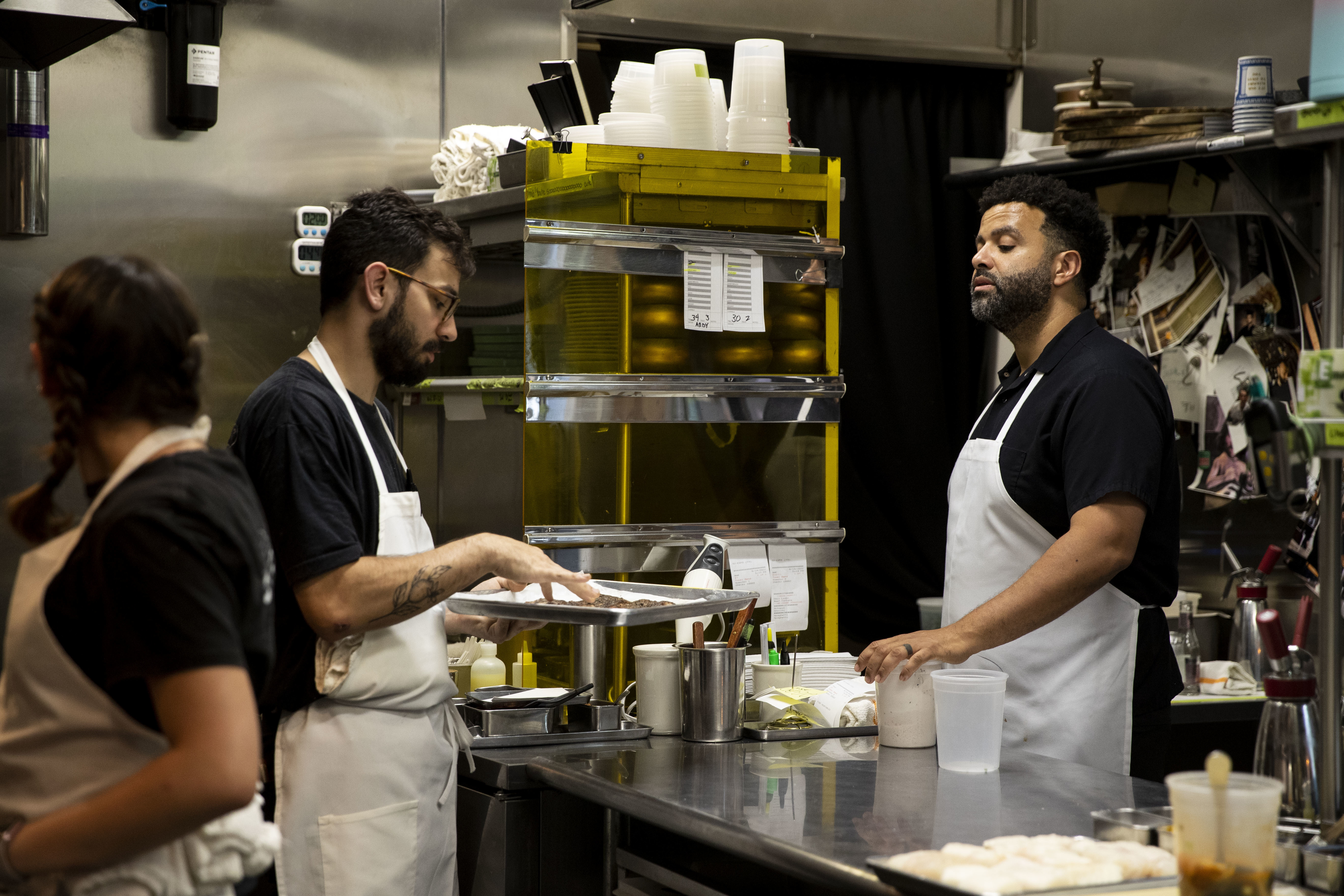
Chef Chad Williams and Hanna Williams at their restaurant Friday Saturday Sunday.Monica Herndon / Staff Photographer
Because grants are decided at the governor’s discretion, the program has previously been criticized for a lack of transparency and glad-handing.
RACP was overhauled in 2012 after an audit found that the Gov. Tom Corbett administration did not adequately disclose or document why projects were awarded grants. Similar accusations cropped up again in 2020, when critics alleged Gov. Tom Wolf and state legislators were misusing the program for political favors.
This July, Gov. Josh Shapiro’s administration allocated $445 million in RACP grants to 356 projects across the state. Recipients range from private real estate developments and public parks to affordable housing and renovations of schools, hospitals, and community centers. The program was particularly competitive in Philadelphia: 170 projects applied. More than half were rejected.
(function(){function e(){window.addEventListener(`message`,function(e){if(e.data[`datawrapper-height`]!==void 0){var t=document.querySelectorAll(`iframe`);for(var n in e.data[`datawrapper-height`])for(var r=0,i;i=t[r];r++)if(i.contentWindow===e.source){var a=e.data[`datawrapper-height`][n]+`px`;i.style.height=a}}})}e()})();
Friday Saturday Sunday’s expansion is projected to cost $7.5 million overall, according to the grant application. Once complete, Williams told The Inquirer, it will add 100 front- and back-of-house jobs to the Weekend Restaurant Group’s payroll. (The group currently has 40 employees, according to the application.)
Not all RACP hopefuls are awarded the full amount of funding they applied for. Friday Saturday Sunday’s expansionwas one of 12 Philly projects awarded the full amount requested.
(function(){function e(){window.addEventListener(`message`,function(e){if(e.data[`datawrapper-height`]!==void 0){var t=document.querySelectorAll(`iframe`);for(var n in e.data[`datawrapper-height`])for(var r=0,i;i=t[r];r++)if(i.contentWindow===e.source){var a=e.data[`datawrapper-height`][n]+`px`;i.style.height=a}}})}e()})();
A spokesperson for the Shapiro administration told The Inquirer over email that the Weekend Restaurant Group’s proposal “is fully consistent with the purpose and authorized uses of the RACP program and represents an appropriate use of RACP funds.”
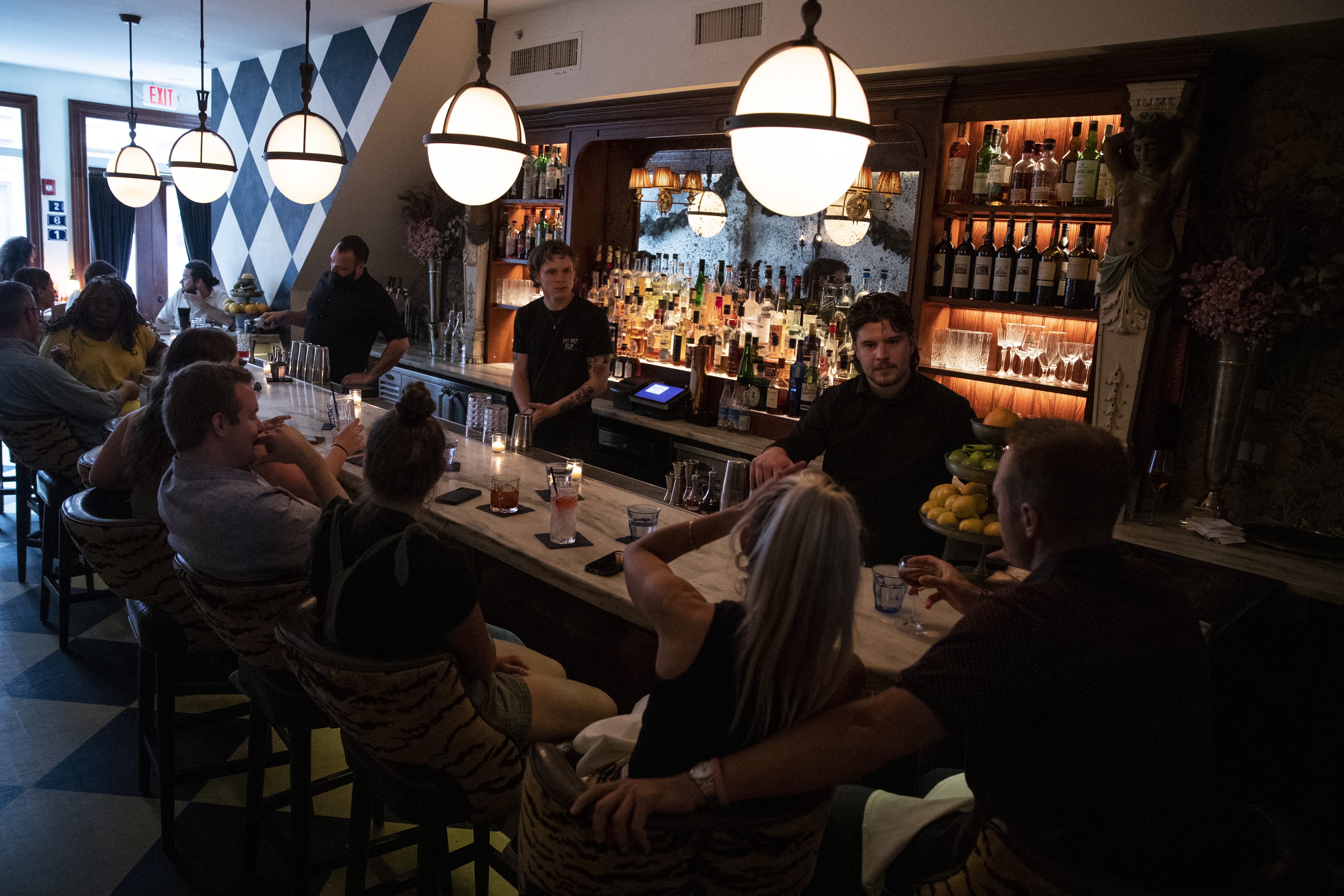
The downstairs Lovers Bar at Friday Saturday Sunday is a two-time James Beard Award nominee.Monica Herndon / Staff Photographer
Receiving the RACP grant was a relief, said Williams, who said he is funding more than half of the $7.5 million project with loans.
Taking on the financial liability is “not a rosy story necessarily,” Williams said, “but it’s a risk we’re willing to take.”
Williams envisionsthe3,500-square-foot rowhouse at 2048 Rittenhouse Square as a chance to create an old-school fine-dining experience inspired by the likes of Le Bec-Fin and Vetri Cucina. Guests will start with welcome drinks on the ground floor before moving upstairs for an intimate meal at a chef’s counter helmed by Williams. Diners will finish the meal on the third floor in a designated dessert space, Williams said.
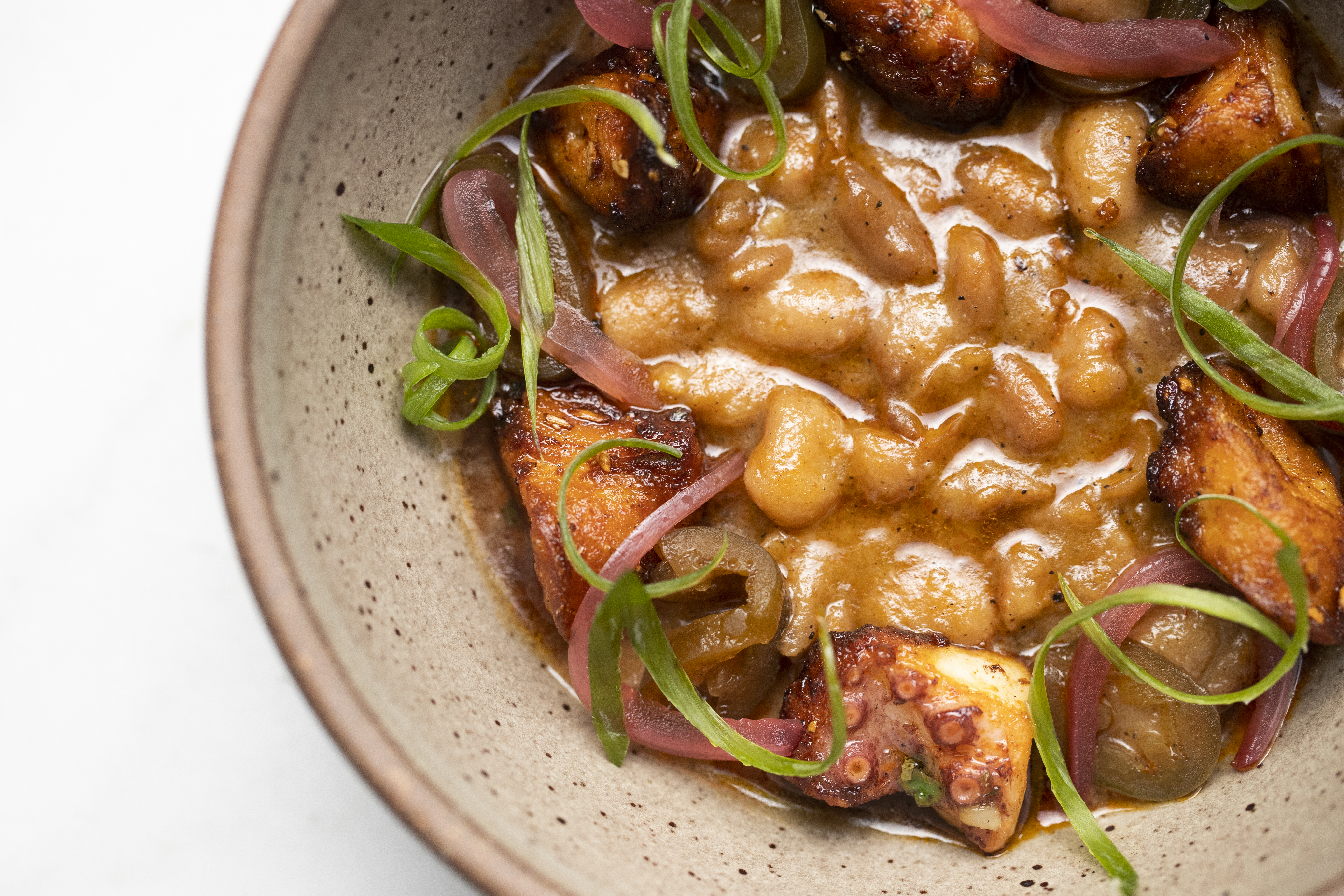
The octopus and beans from the bar menu at Friday Saturday Sunday, photographed in 2023.Monica Herndon / Staff Photographer
The concept will extend the Friday Saturday Sunday brand and render the original tasting menu into a “less formal” affair that is more in line with “what neighbors and regulars want,” Williams said. The connected properties will also enable Friday Saturday Sunday to serve large parties and potentially open seven days a week. The expanded hours will allow for more staff, Williams said
Williams said the project could break ground in October. He’s optimistic about a September 2027 opening.
He framed Friday Saturday Sunday’s expansion as a moonshot. “To be frank, for a Black chef to have this opportunity and do it is a big deal,” Williams said.
“Having a chance to practice our craft at this level is extremely rare.”
‘We need all the help we can get’
Williams decided to apply for RACP funds after exhausting more traditional financing routes.
“Without state support, the project would face a significant financing gap,” he wrote in the application, “as private funds alone cannot absorb both the acquisition and essential structural work.”
Despite his restaurant’s extremely successful track record, the chef found the process similar to the original financing of Friday Saturday Sunday — which required the Williamses to sell their home and submit paperwork to“14 different banks” before finding one that would take a chance on them.
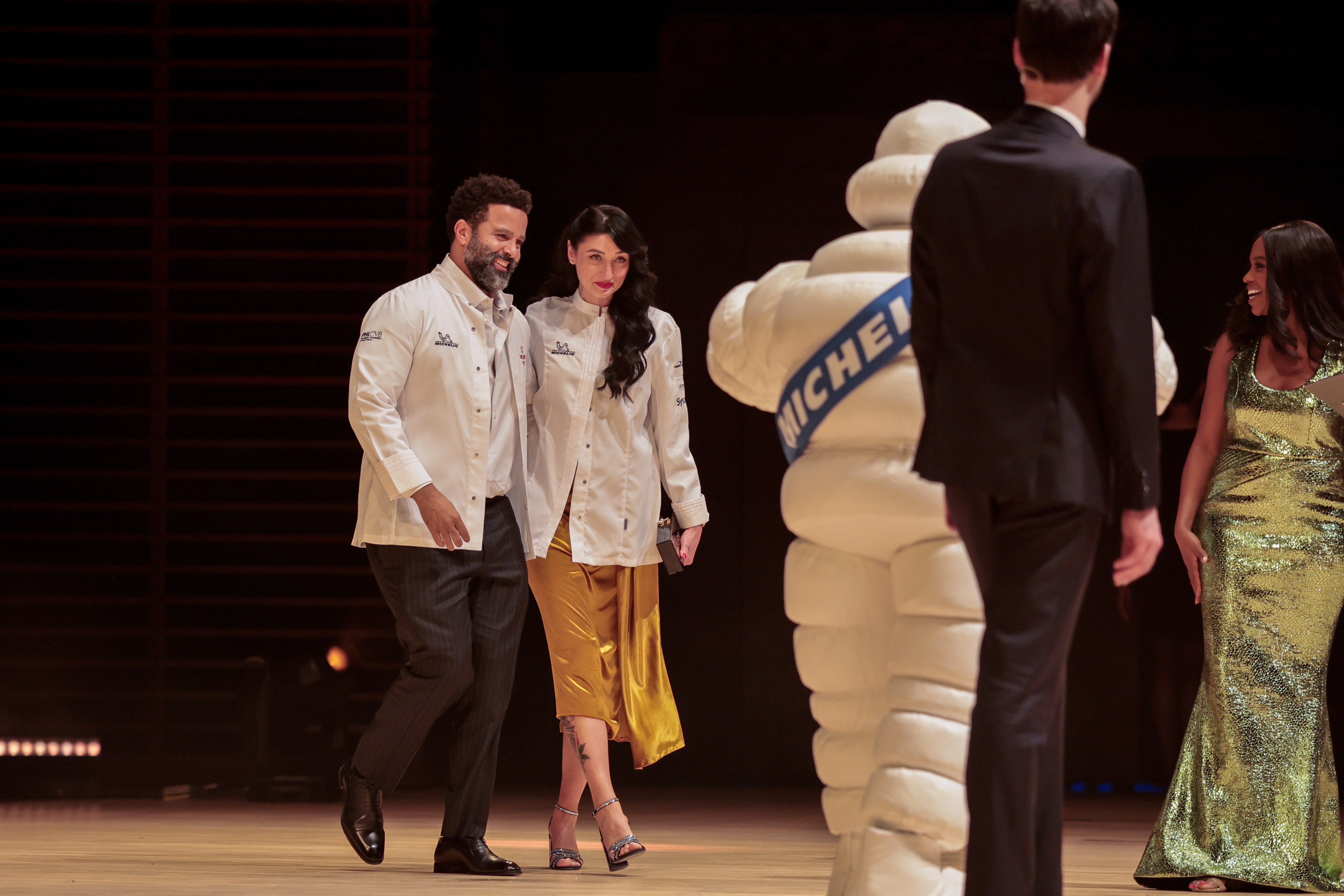
Friday Saturday Sunday, run by chef Chad Williams and his wife, Hanna, earns a Michelin star at the Kimmel Center on Nov. 18, 2025.Elizabeth Robertson / Staff Photographer
It’s a struggle many Black entrepreneurs know well: Several studies have found that Black-owned businesses are discouraged to apply, denied, and offered inferior loans at higher rates than white counterparts, even when appearing more creditworthy.
“We’ve put in our work here, had some success and won some things, but it did not make [financing] any easier,” said Williams. He was attracted to RACP because it was described to him as a “colorblind grant” by other BIPOC entrepreneurs who encouraged him to apply.
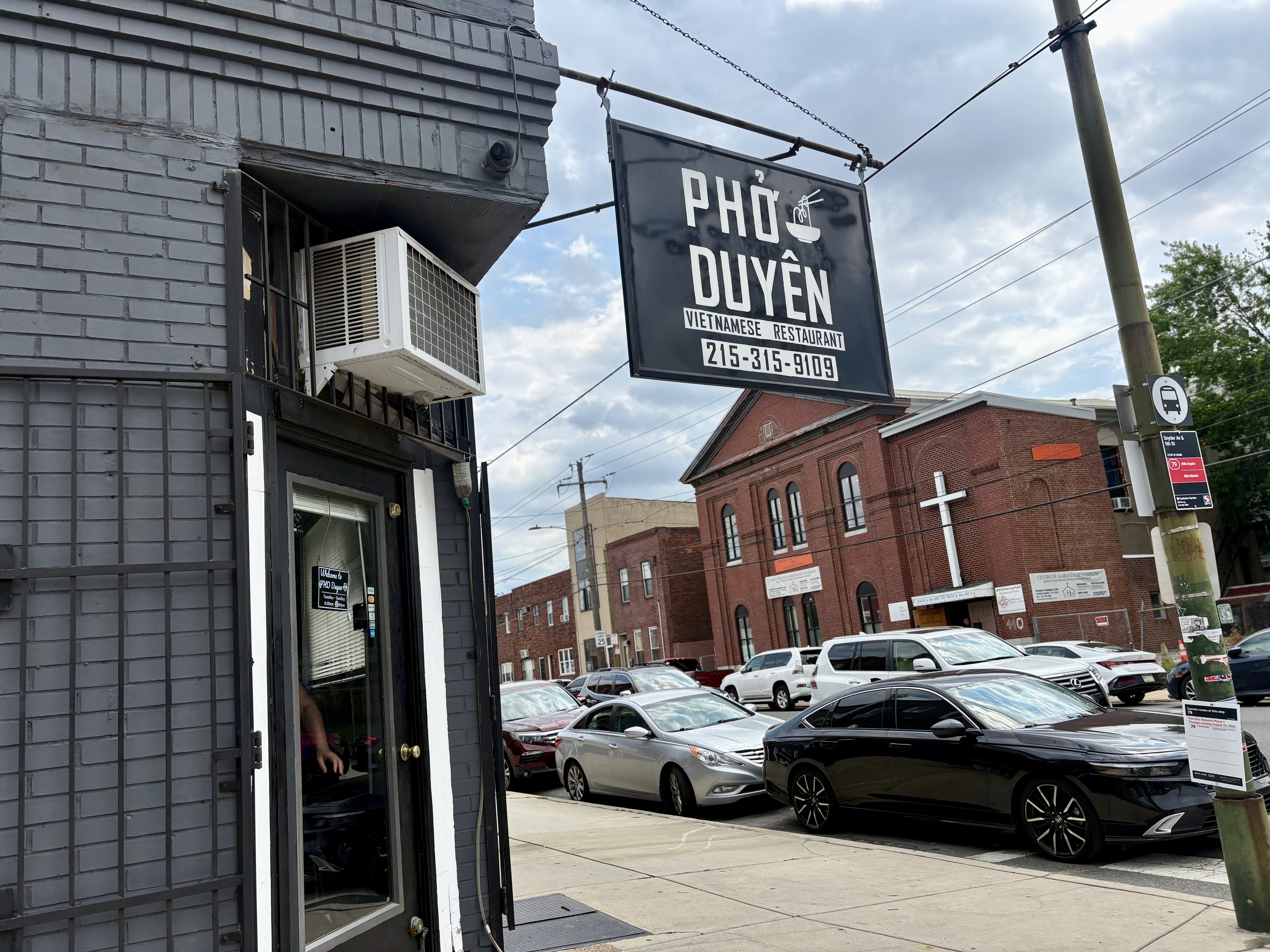
Given the name, it’s no surprise that the soups are fantastic at Phở Duyên, a tiny four-year-old corner restaurant with an open kitchen at Fifth and Snyder in South Philly. Chef Duyên Le’s beef rendition of Vietnam’s famous phở comes with an impressive bouquet of herbs on a side plate (not just the usual Thai basil, but also perilla, rau ram, culantro, and mint). Its crystal-clear dark broth, swirling with star anise and other spices, is dappled with droplets of molten fat for extra flavor.
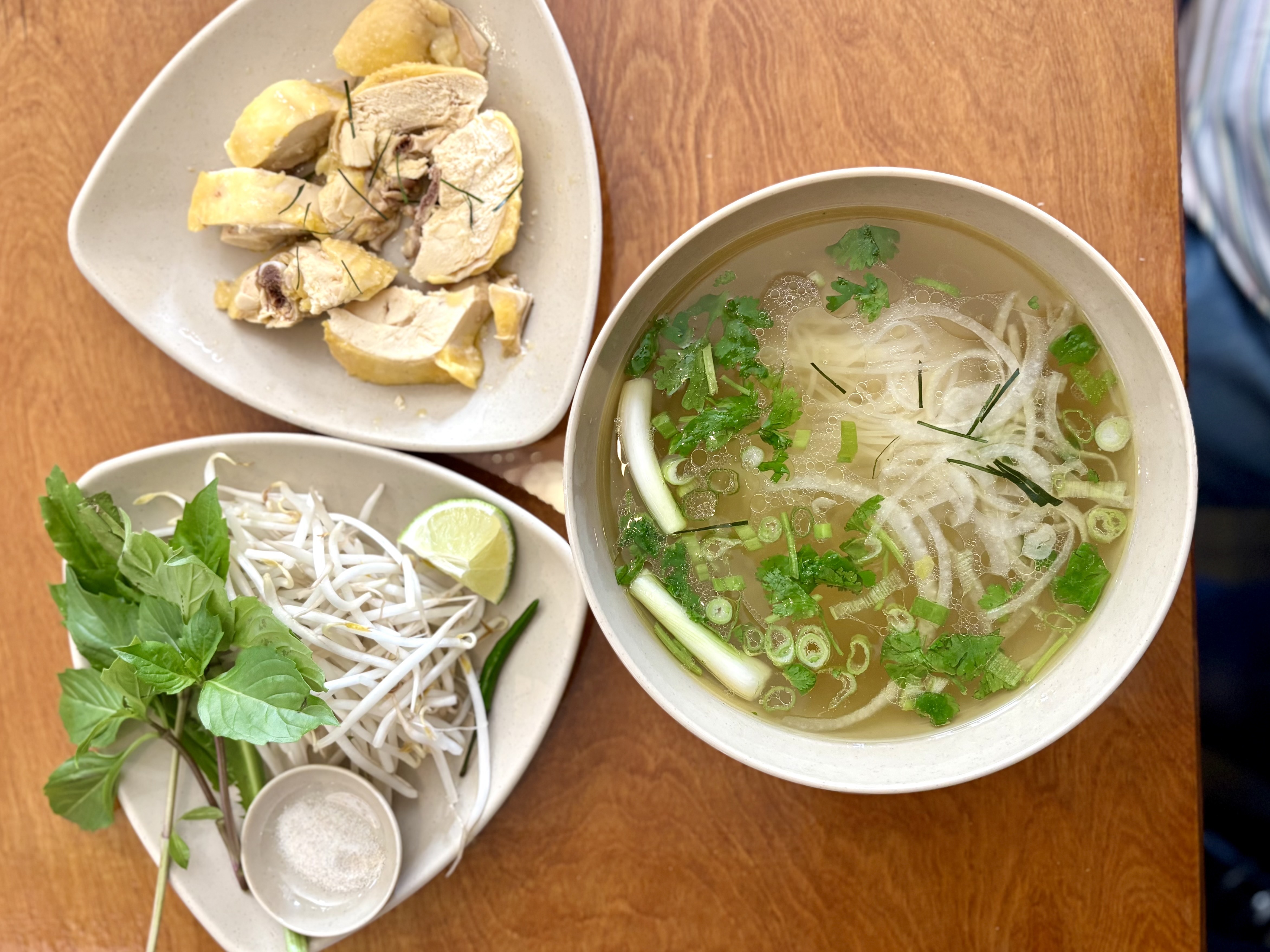
The chicken version, phở gà, is served with a side plate of the tender, poached bone-in chunks of the fresh-killed bird. The soulful and fragrant broth is the best I’ve tasted in South Philly since Phở Gà Thanh Thanh left its Washington Avenue location to consolidate at its larger home in Olney.
Pho gà at Pho Duyên.Craig LaBan / Staff
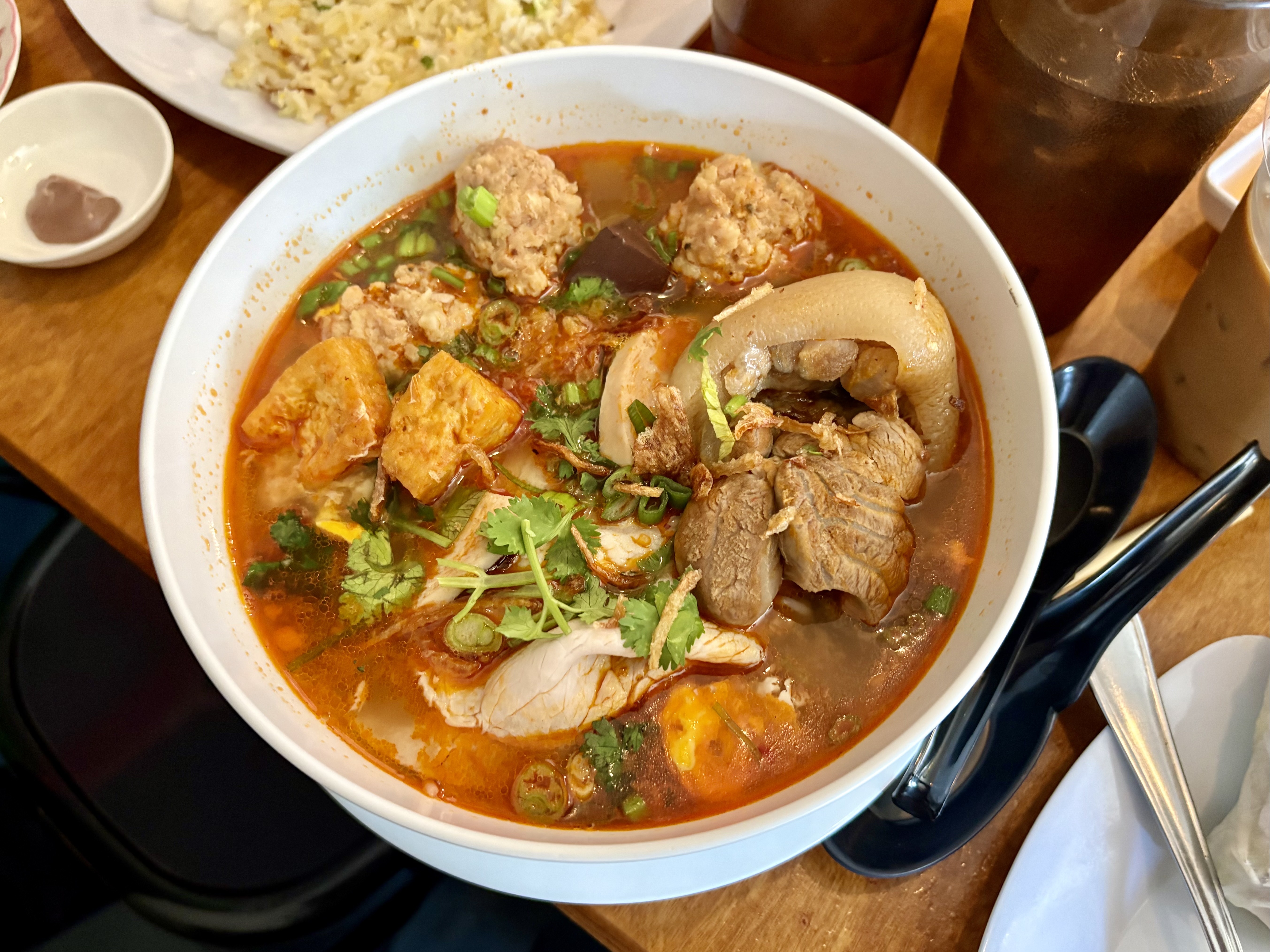
Phở Duyên’s spicy crab noodle soup, bún riêu, is also incredible, with plump seafood meatballs bobbing alongside cubes of pork blood, fried tofu, and sundry meats that — with an extra helping of purple shrimp paste to ratchet up the umami funk level — is one of the most intense soup experiences in town.
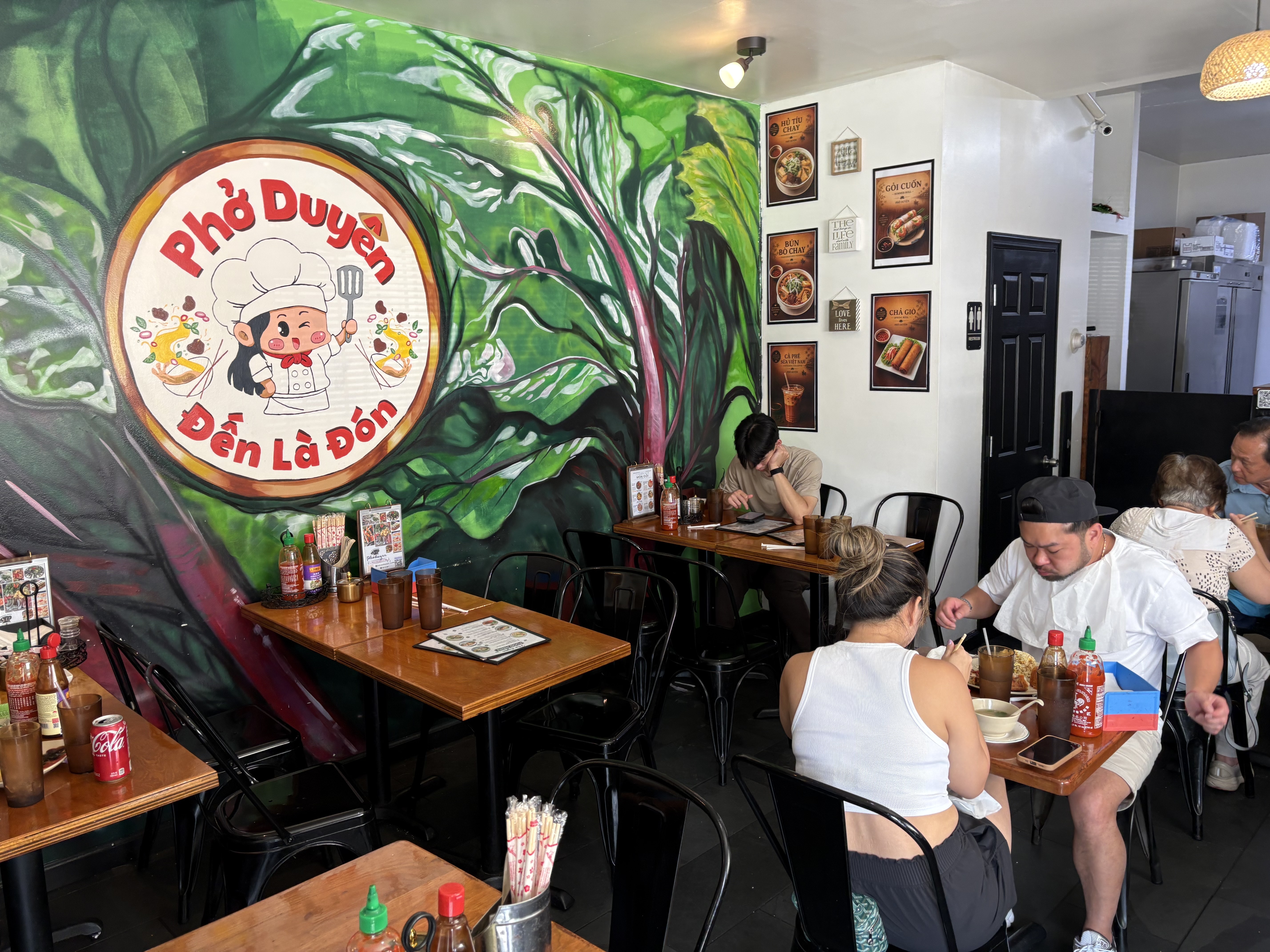
The colorful interior of Phở Duyên in South Philadelphia.Craig LaBan / StaffThe crab noodle soup at Phở Duyên, bún riêu, is filled with seafood meatballs, assorted meats, and a broth that shimmers with spice.Craig LaBan / Staff
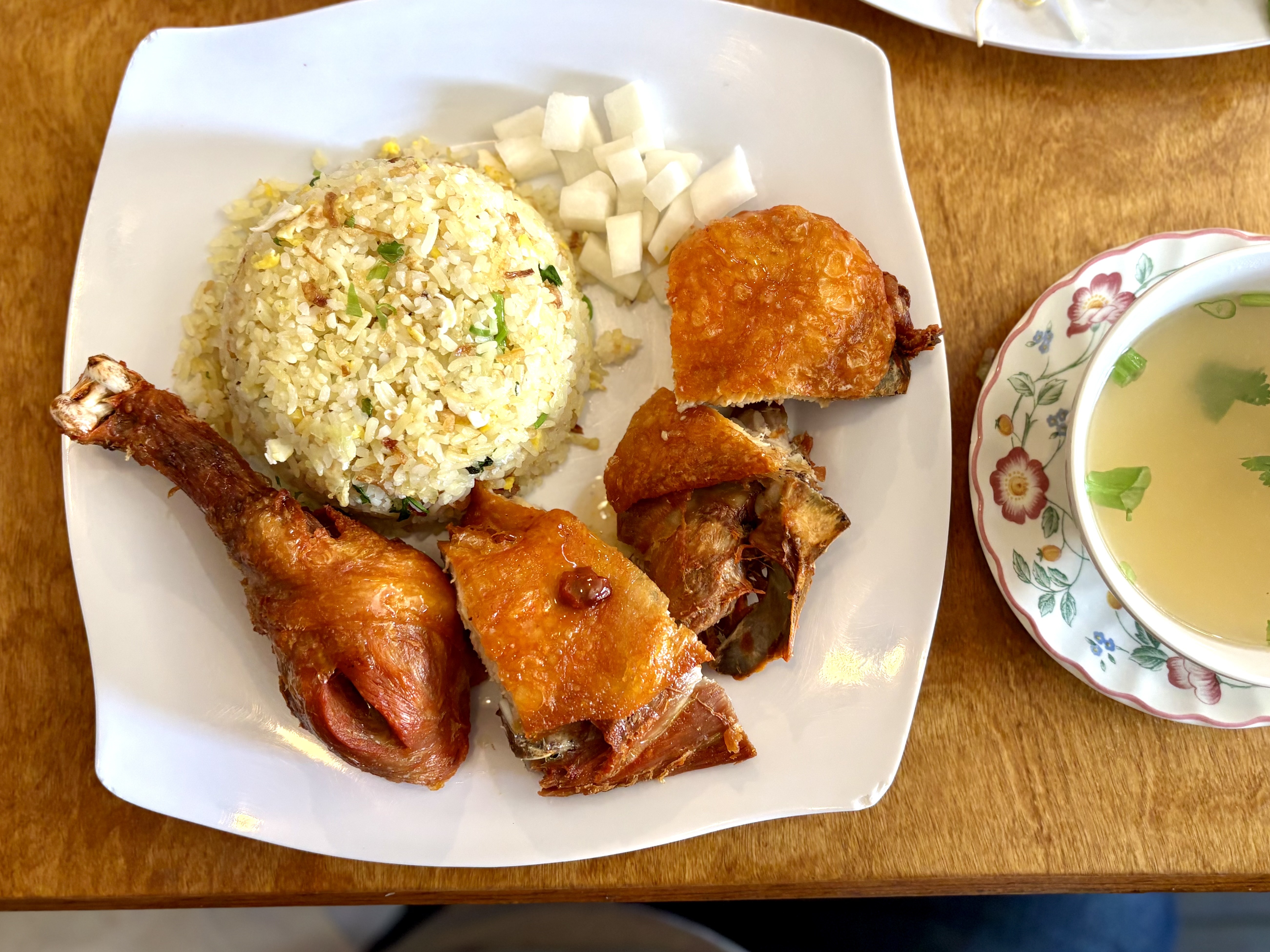
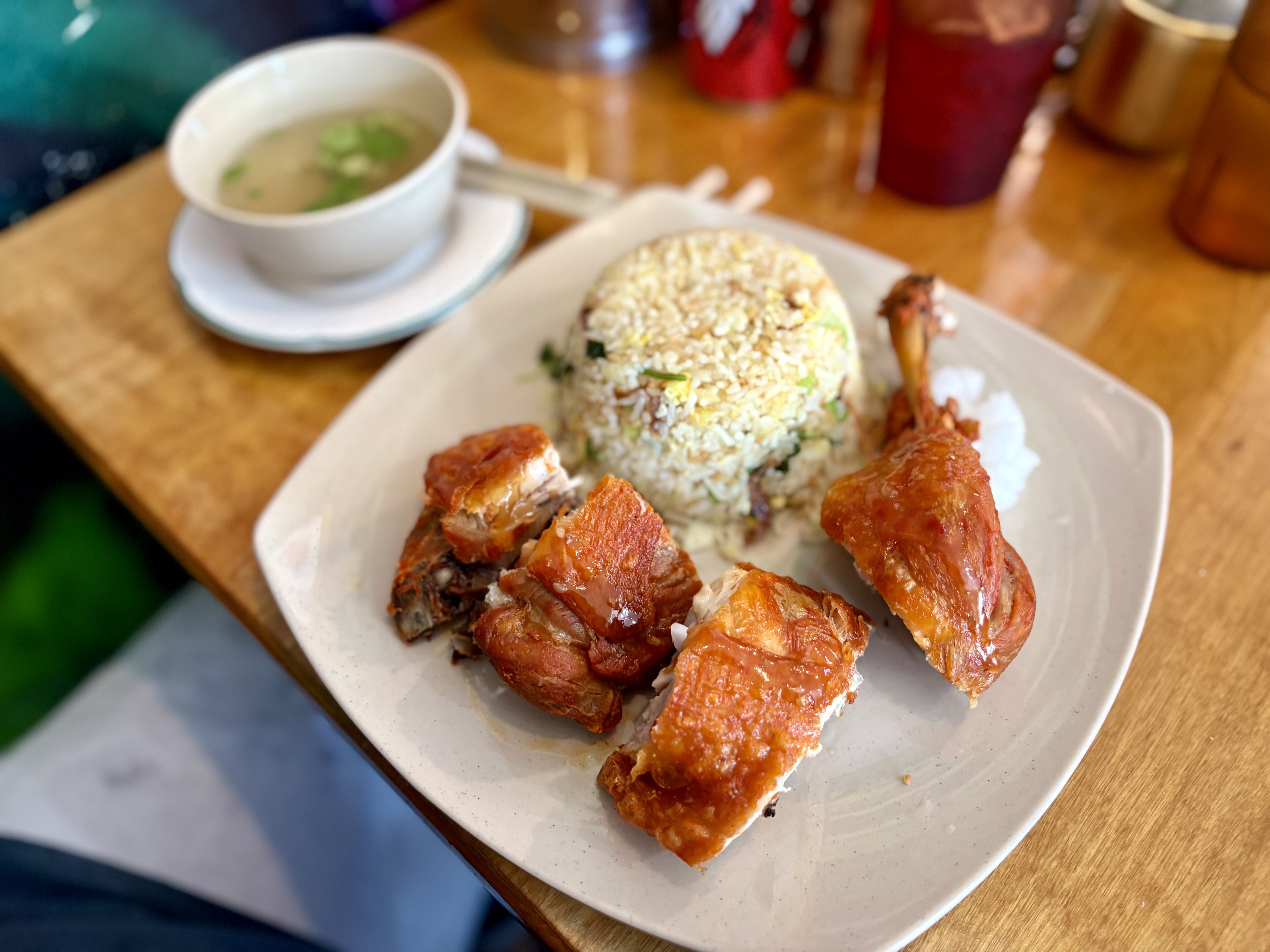
And yet, these soups are not even the best thing that I ate at Phở Duyên, which just reopened after the family returned from an extended vacation in Vietnam. That would be the Vietnamese fried chicken platter, cơm gà xối mỡ. This meaty chicken thigh and drumstick is first simmered to juicy tenderness, then painted with a secret sauce to give it a rosy hue (the details of which chef Le declined to divulge). It crisps into a shattering crunch of parchment-thin skin you can hear across the table when someone takes a bite. An additional glaze of sweet-sour-salty sauce drizzled over top lends an extra swerve to the taste buds. It’s so, so good. But it’s really the platter as a whole — an irresistible mound of turmeric-tinted fried rice laced with crunchy fried shallots, a simple cup of restorative broth on the side, and tangy cubes of pickled daikon to refresh your palate between bites — that makes this meal my No. 1 food deal for $15 in Philadelphia right now.
Vietnamese fried chicken, Cơm Gà Xối Mỡ, is served at Pho Duyen in South Philadelphia with fried rice, pickled Daikon cubes, and a cup of broth.Craig LaBan / Staff
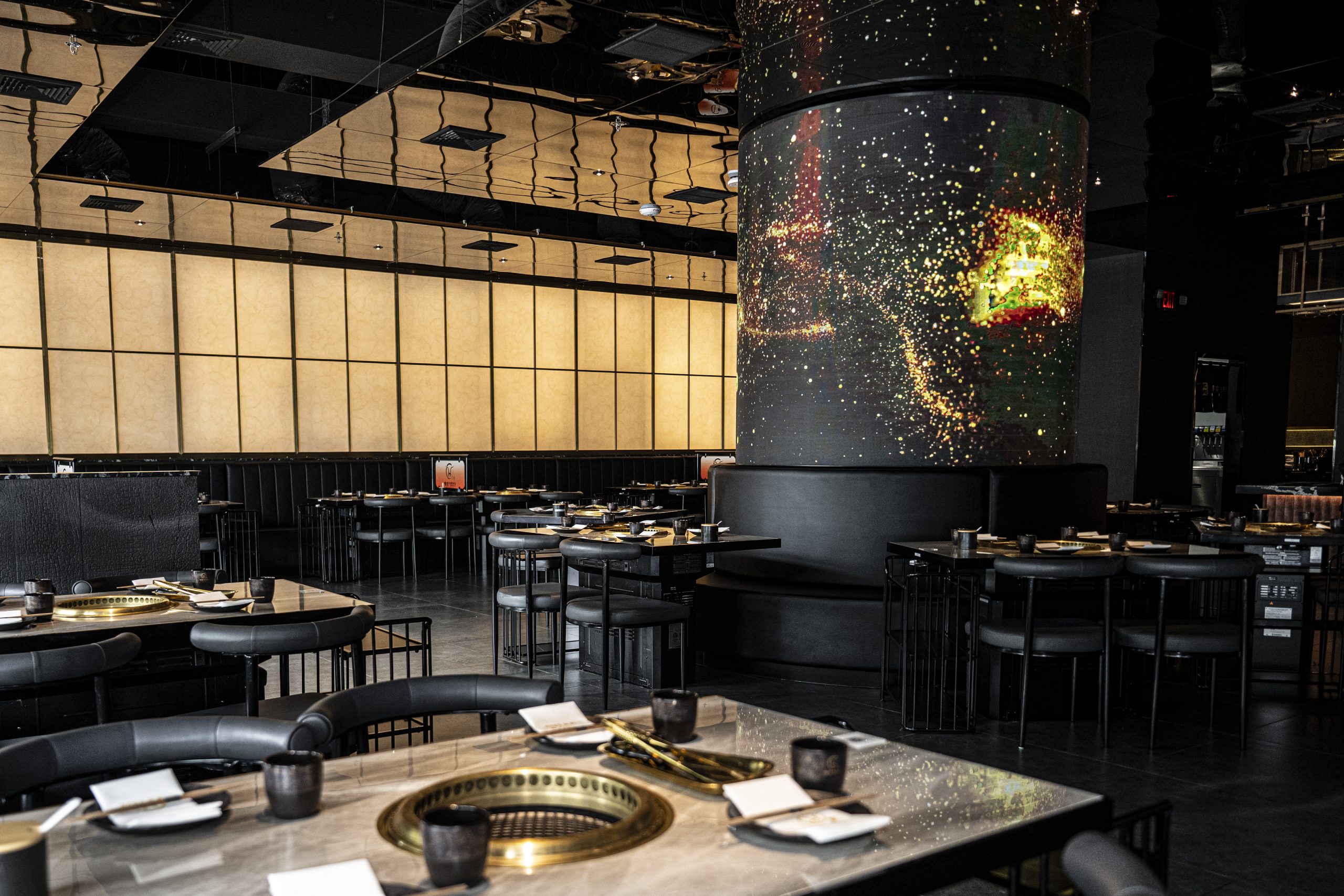
In our quest to keep you up to date on the restaurant scene, here are 12 spots that opened in the last few months. One example is Ogyu (shown above), which took over Ardmore’s former Iron Hill Brewing. It’s a grill-it-yourself Japanese steakhouse from the owner of the nearby Osushi.
You have to be in shape to lug around 100-pound salmon and tuna. Kiki Aranita found a group of sushi chefs who routinely lift weights. As they say in the maki game: no pain, no grain.
A couple didn’t want their local drinking spot to shut down for good. Sarah Nicell writes that they found a solution: They bought it.
The lines are long, and the branding is adorable. Kiki Aranita visits Kyo Matcha in Chinatown.
Pinot grigio is wildly popular for a good reason, and wine writer Marnie Old explains where the best ones come from.
Poe is expanding
Sandwichmeister N.A. Poe will expand the hours of his kitchen operation at Poison Heart next week while preparing to open a new Poe’s Sandwich Joint location by the end of the year.
Starting Tuesday, Poe’s will operate seven days a week out of Poison Heart, 931 Spring Garden St., where he’s run the cocktail bar’s kitchen since last September. Daytime service will be pickup, takeout, and delivery only; Poison Heart itself will not open for daytime bar or dine-in service.
Poe, the nom de plume of Richard Tamaccio Jr., is not disclosing the new joint’s location or opening date. “We look forward to the freedom to do things our way without interference or apologies,” he said.
The move follows Poe’s split with Human Robot Brewing Co., where he had operated since 2019. His last day at Human Robot’s Kensington location is Thursday. Cantina La Martina will take over Human Robot’s kitchens at both Kensington and Brewerytown. Poe also parted company with the Monto, a new Old City bar.
At Poison Heart, Poe’s will operate from 11 a.m. to 9 p.m. Sunday through Tuesday and 11 a.m. to 6 p.m. Wednesday through Saturday. Poison Heart’s regular Wednesday-through-Saturday evening service will continue, with Poe’s classics and specials added to the menu.
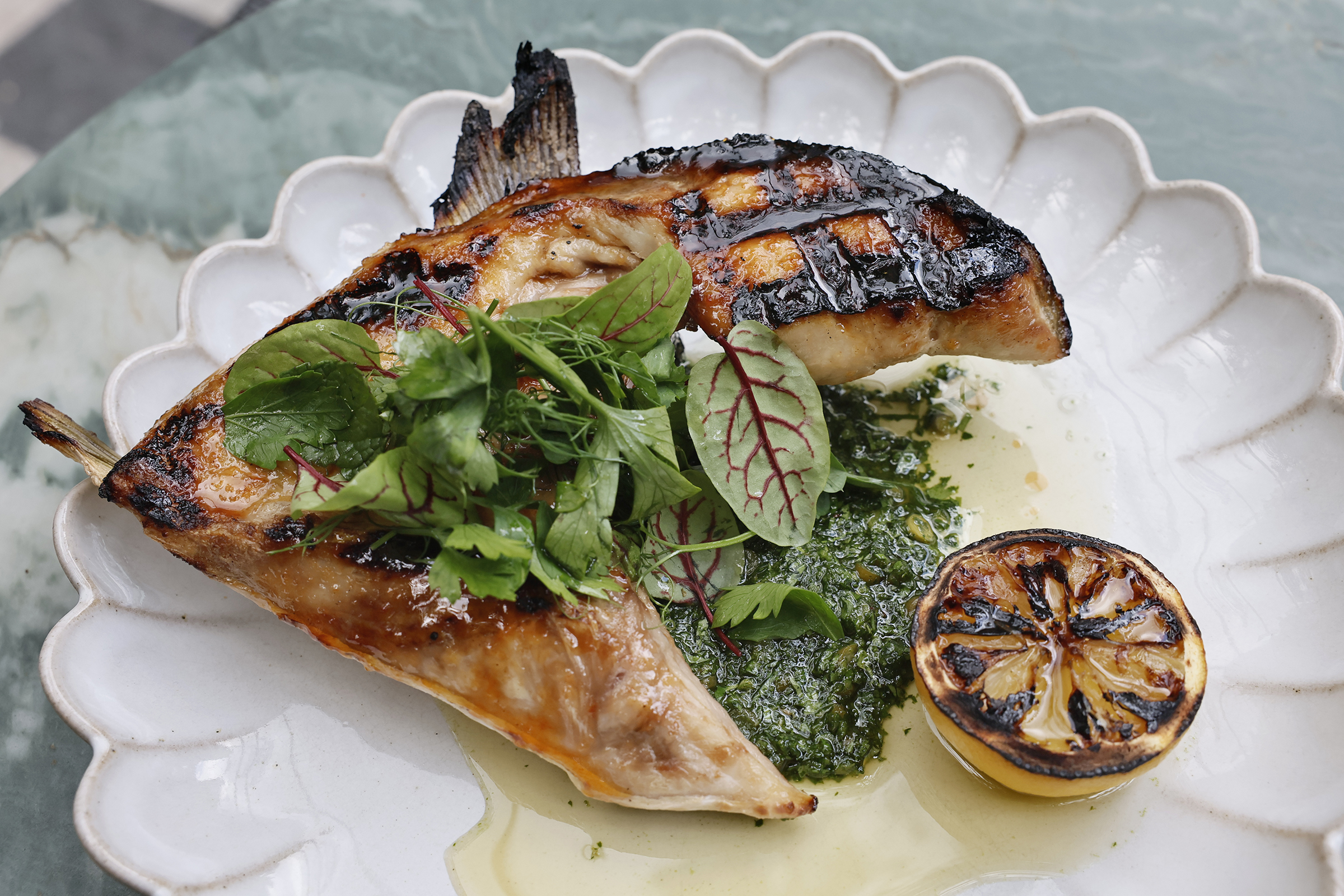
Two tasty bright spots of a staycation for Emily Bloch and her boyfriend included hamachi collar and poolside swordfish skewers. In other words: There’s great fish to be had in Fishtown.
Scoops
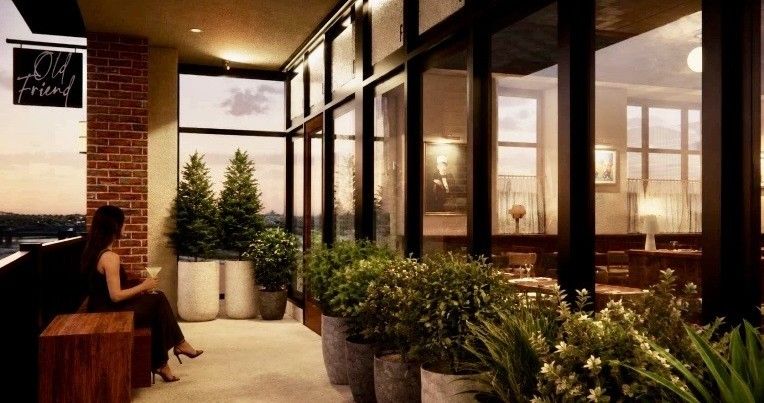
Old Friend, an upscale restaurant with a wood-fired grill and a chef with a Center City pedigree, is coming to the Main Line later this year.
Corte, on its way to the former East Market home of Mulherin’s Pizza, will have an Italian backbone, focusing on handmade pasta and cooking from the wood-fired oven. If that sounds like University City’s Corio, that’s because the same crew is behind it.
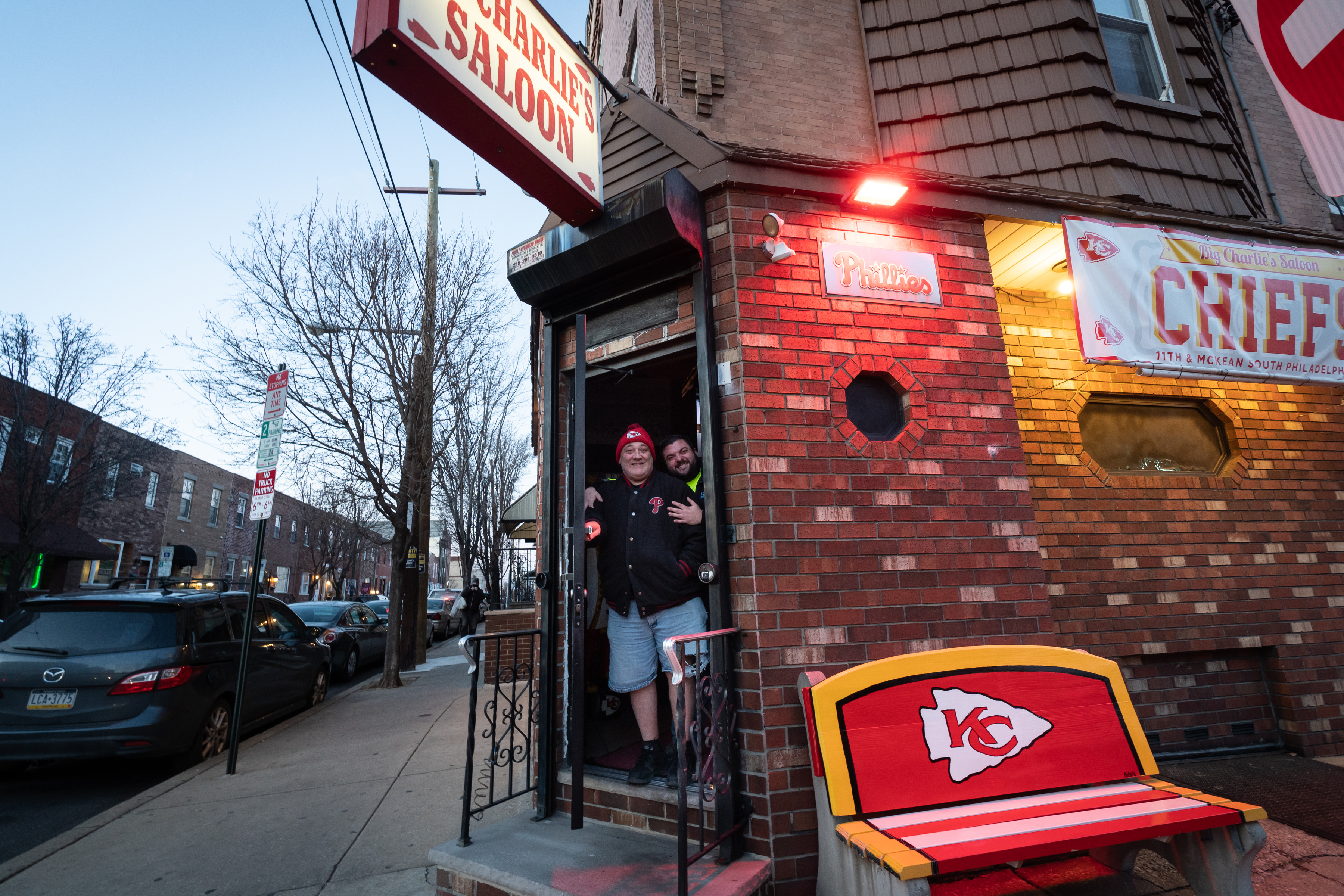
Big Charlie’s Saloon, the nationally known Kansas City Chiefs-theme bar in South Philadelphia that closed with the owner’s death last December, is under agreement of sale. The buyers’ plans don’t include NFL memorabilia.
Restaurant report
We’re in a New York state of mind:
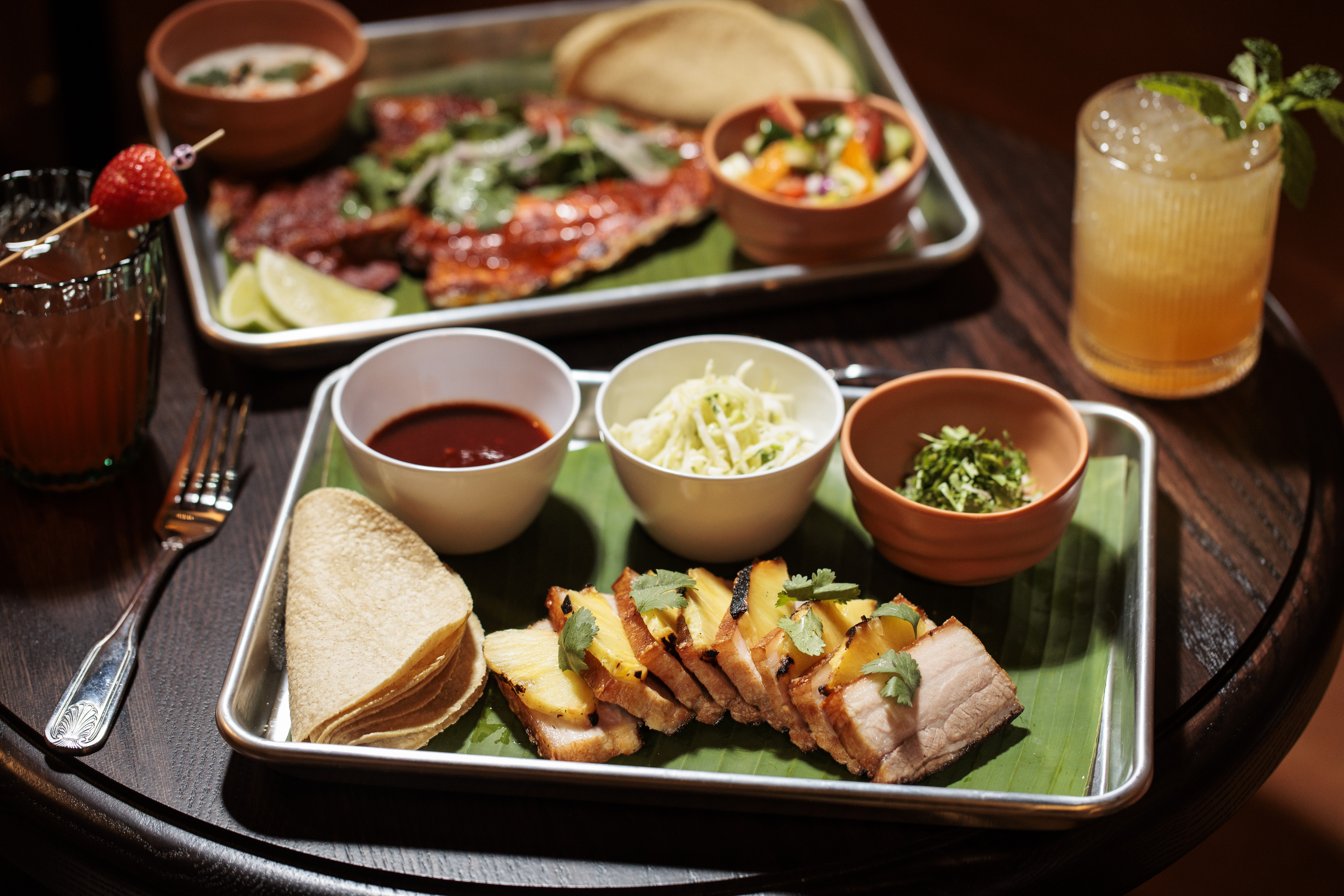
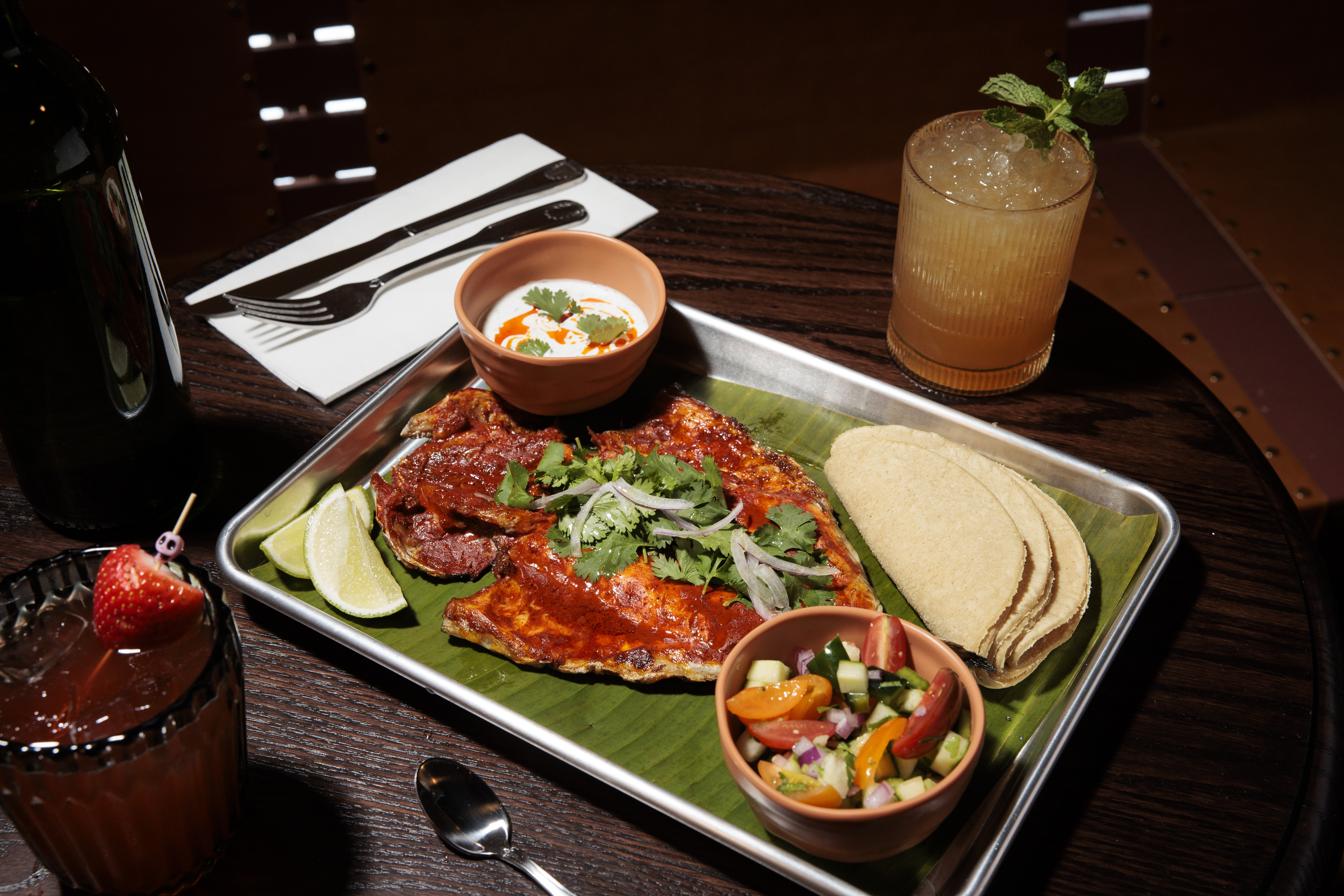
Dorade asado and pork belly al pastor (shown above) are two dishes offered at the new Mixteca, the Kensington offshoot of a Manhattan agave-focused coctelería from two James Beard Award-winning bartenders. Beatrice Forman heads to the former Martha for a look around.
Smash burgers and fries are the hook at 7th Street Burger, a fast-growing Manhattan-based burger chain that just opened the first of four Philadelphia-area locations in Fishtown. Kiki Aranita takes a bite.
Briefly noted
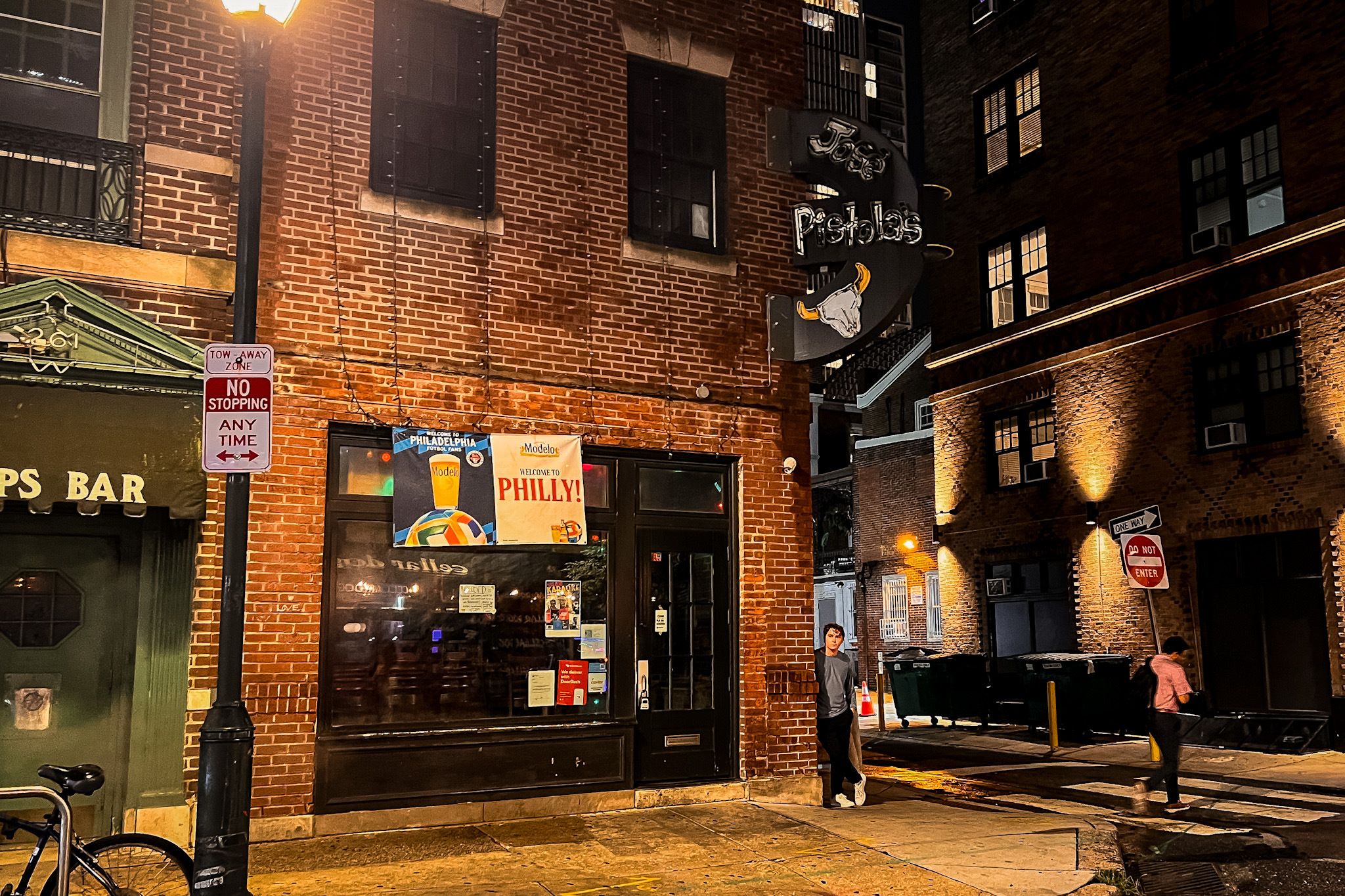
Jose Pistola’s 19-year run in Center City has ended. Its related bars in Fishtown and South Philadelphia are unaffected.
Mount Masala Himalayan Cuisine (300 White Horse Rd., Voorhees) will host a Nepal disaster-relief fundraiser on Thursday, Sept. 10 from 5 p.m. to closing under the auspices of South Jersey Food Scene. It’s a $25 buffet of Nepali-Himalayan dishes for dine-in or takeout, with all sales donated to the Nepalese government for flood relief.
🥂 New Jersey has permanently allowed the sale and delivery of to-go alcoholic beverages in towns that permit it.
Ask Mike anything
Did Philip Korshak ever open his store, Korshak Picnic Provisions? — Joan M.
Back in February, Phil Korshak, the poet-baker who left town in 2023 after closing his cult-favorite Korshak Bagels, thought he’d open his quirky corner store at 13th and Reed Streets by May. However, “you have no idea how many contractors, electricians, and plumbers go to Europe and Japan in the summertime,” he told me in June. This week, Korshak said the store — now called Korshak Parkside Provisions — is in the health department inspections queue and he’s expecting equipment deliveries. “Let’s call it October,” he told me.
📮 Have a question about food in Philly? Email your questions to me at mklein@inquirer.com for a chance to be featured in my newsletter.
By submitting your written, visual, and/or audio contributions, you agree to The Inquirer’s Terms of Use, including the grant of rights in Section 10.
If you spent the summer out of town (or off the grid), you may have missed a busy few months on the restaurant scene. Philadelphia-area newcomers include a Milan-inspired aperitivo bar in Rittenhouse, Japanese barbecue on the Main Line, and two corner bars in Point Breeze.
Here are 12 noteworthy restaurants that opened in the last few months.
Academy Grill (424 S. Bethlehem Pike, Fort Washington): This white-tablecloth restaurant in the former Cantina Feliz near Germantown Academy serves house-made pastas, seafood, steaks, and contemporary American dishes in a polished, decidedly grown-up setting.
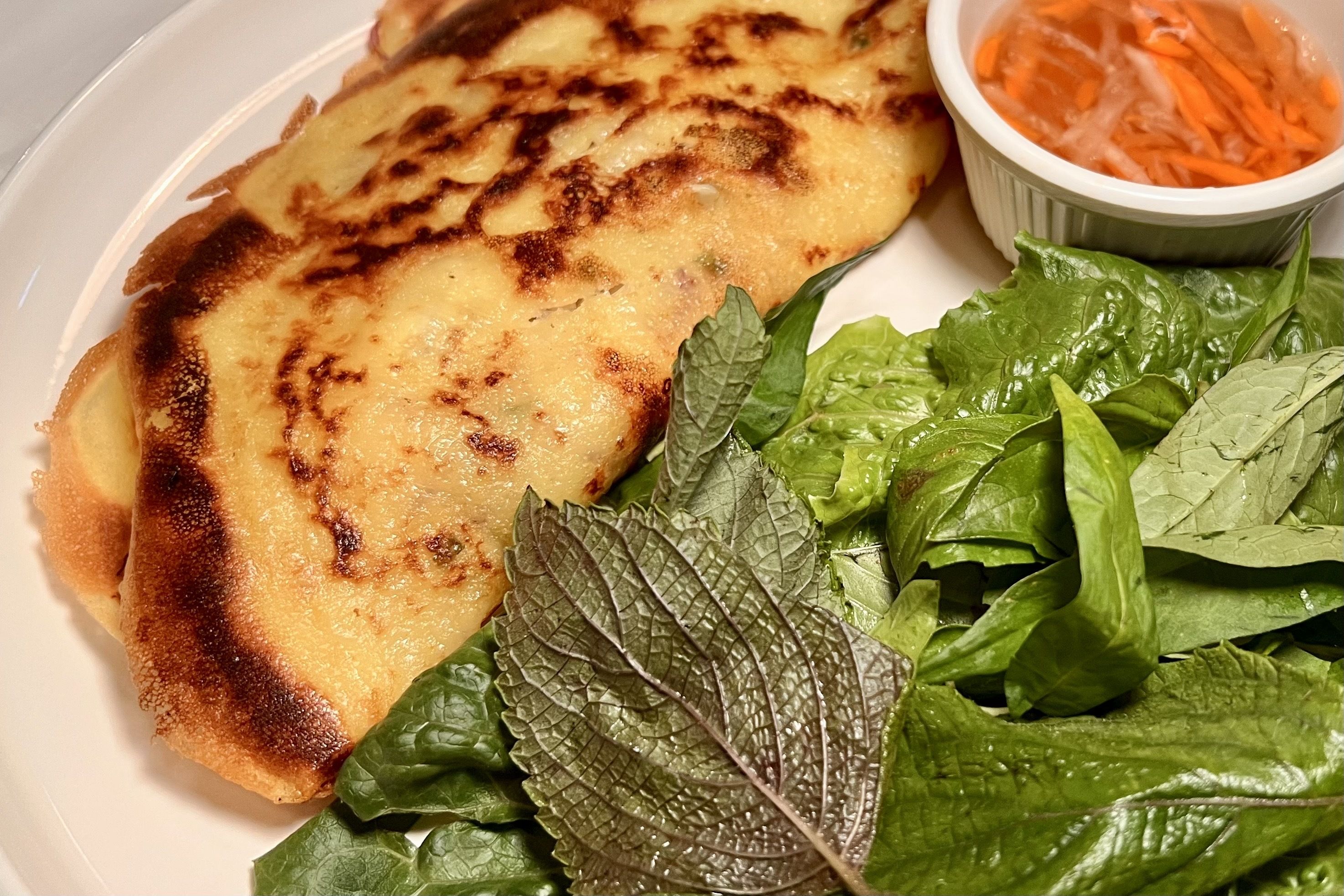
Bánh xèo at Anh Em, 1252 S. 21st St.Michael Klein / Staff
Anh Em (1252 S. 21st St.): Pho, bánh xèo, and 24 local beers meet at Anh Em, a Vietnamese bar-restaurant at 21st and Titan Streets in Point Breeze from Victor Nguyen and Anna Huynh. Nguyen draws on dishes the husband-and-wife team grew up eating, while the 20-seat bar gives the neighborhood spot an unusually deep commitment to locally brewed beer.
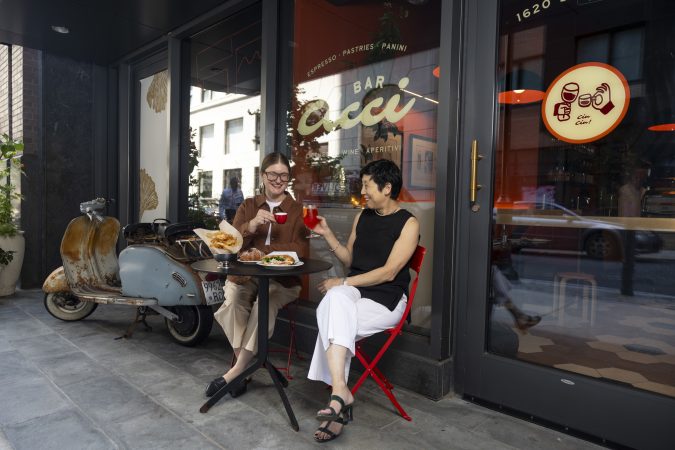
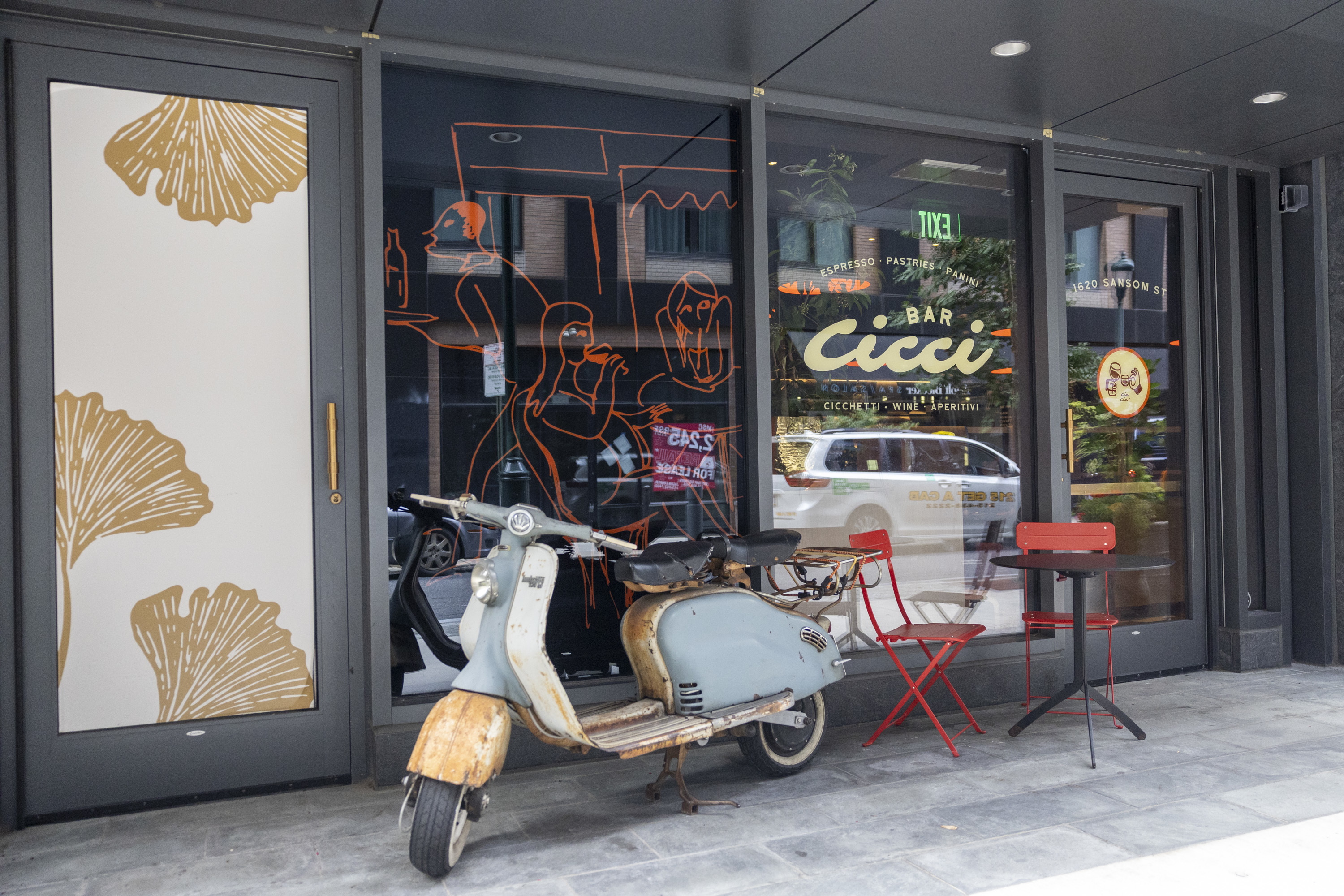
Bar Cicci (1620 Sansom St.): Ellen Yin’s 30-seat, Milan-inspired spot starts with espresso and Italian pastries, moves into sandwiches at lunch, then shifts to spritzes, wine, cicchetti, and small plates at night. The Rittenhouse newcomer is High Street Hospitality’s take on northern Italy’s all-day aperitivo culture.
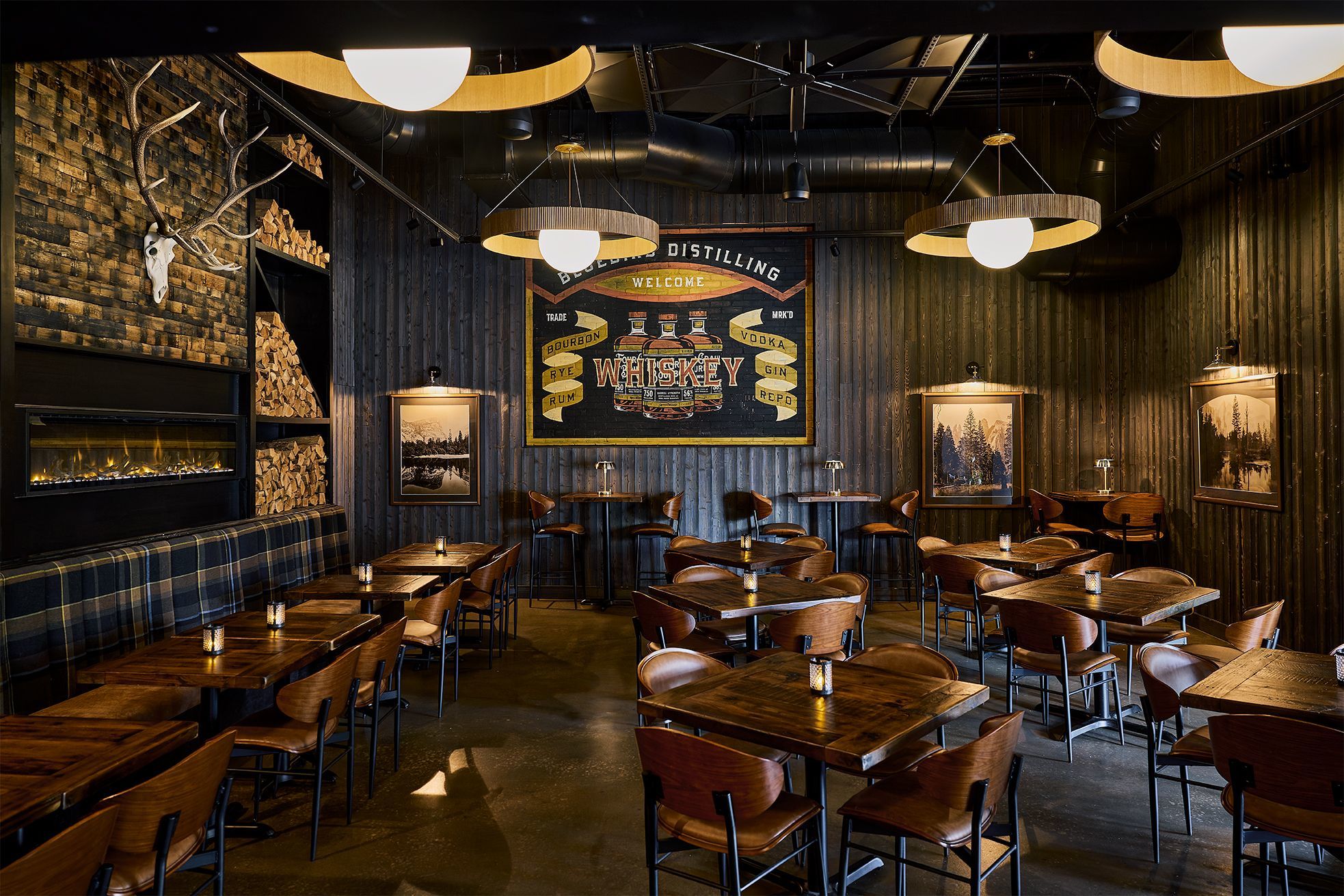
Bluebird Distilling in Phoenixville.Photos courtesy of Ed Newton
Bluebird Distilling & Dough House (100 Bridge St., Phoenixville): A $2.2 million investment turned Bluebird’s Bridge Street distillery into a full-fledged restaurant. Executive chef Devon Migeot, whose resumé includes Zahav and Laser Wolf, centers the expanded food program on naturally fermented neo-Neapolitan pizzas, house-baked breads, shareable plates, and, naturally, Bluebird cocktails.
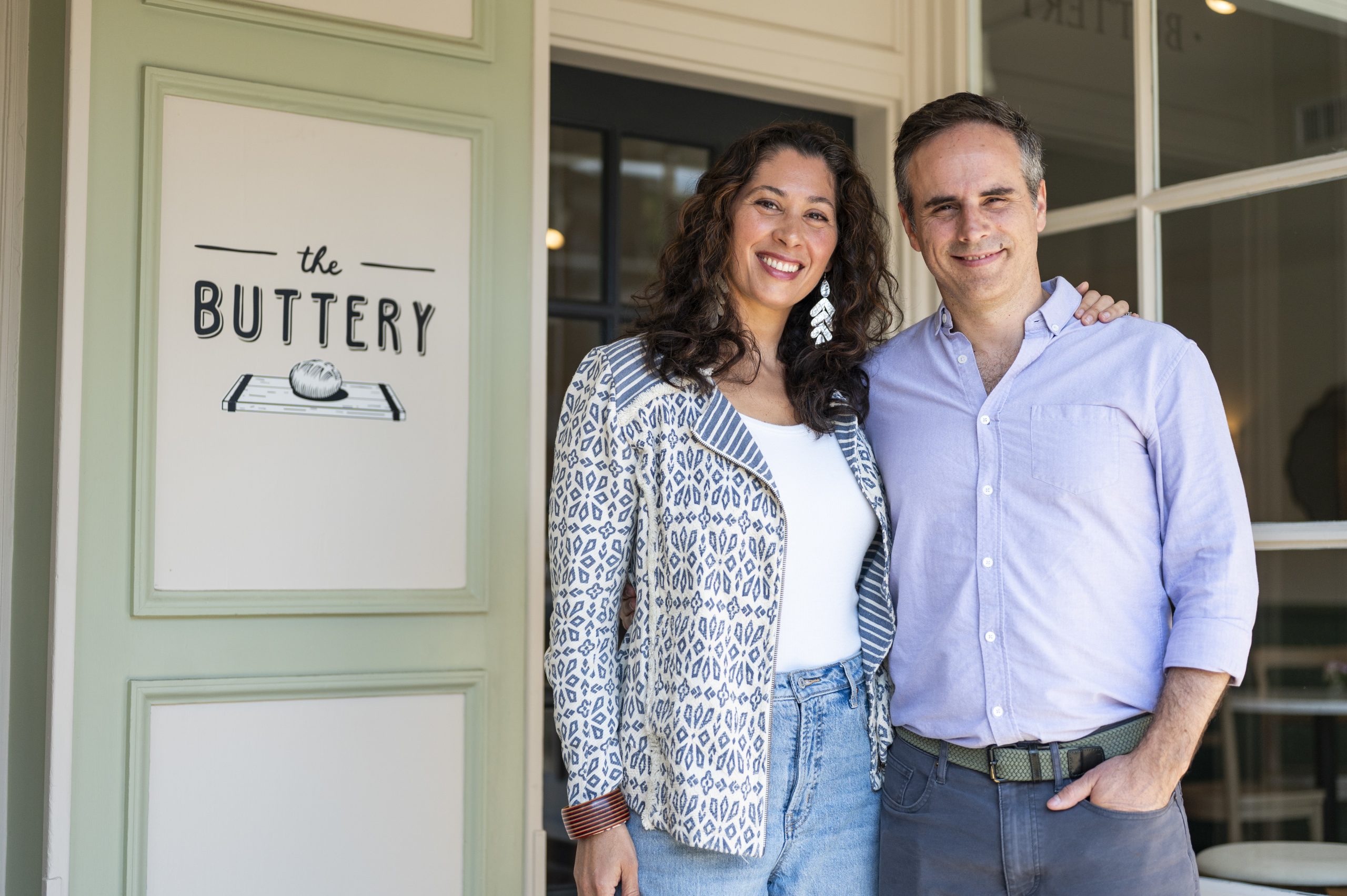
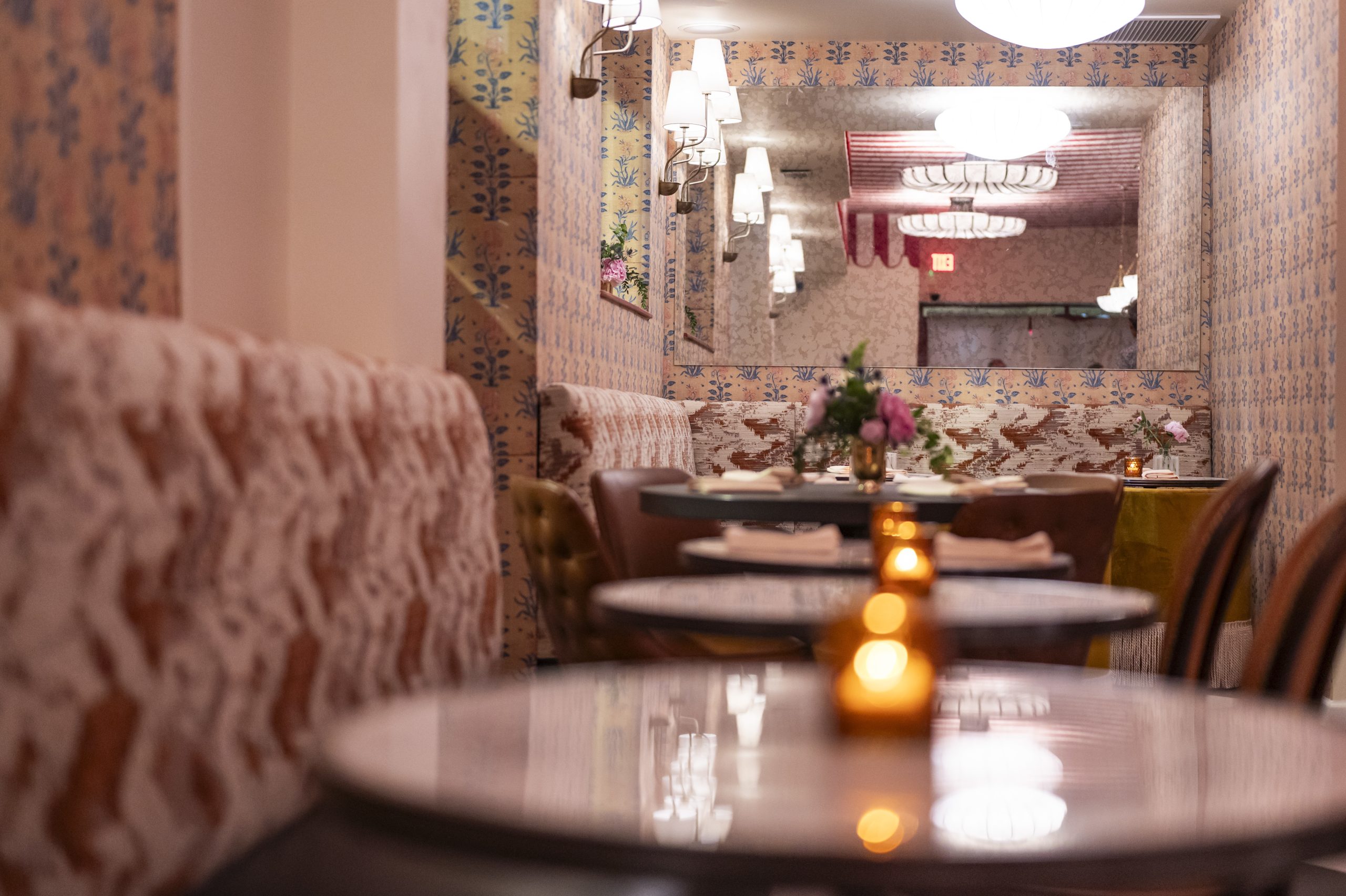
Silenia and John Rhoads, owners of the Buttery in Bryn Mawr.Allie Ippolito / For The Inquirer
The Buttery (836 W. Lancaster Ave., Bryn Mawr): John and Silenia Rhoads’ third location is an 82-seat bakery-cafe on Lancaster Avenue, where the Malvern-incepted operation’s sourdough breads and house-made pastries share the menu with breakfast dishes, sandwiches, and seasonal fare from its all-day scratch kitchen.
Known Associates at 10th and Spruce Streets.Allie Ippolito / For The Inquirer
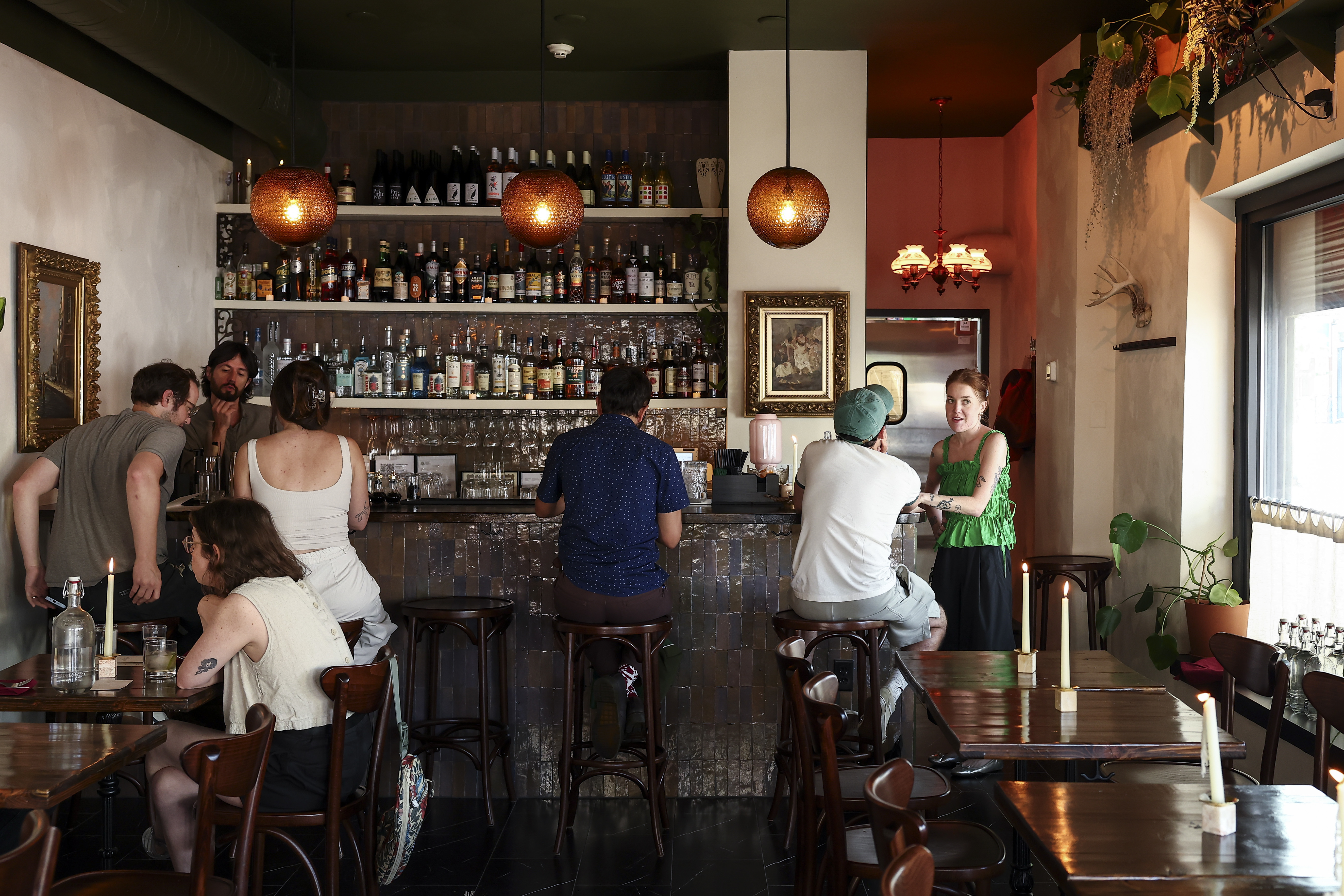
Known Associates ( 941 Spruce St.): Chef Christopher Kearse’s Washington Square West cocktail bar does not treat the food as an afterthought. The former Varga Bar at 10th and Spruce is a 40-seat room where cocktails accompany a concise, European-influenced menu of a dozen savory dishes.
Lillian’s at 19th and Mifflin Streets.Monica Herndon / Staff Photographer
Lillian’s (1900 S. 19th St.): Even the chef isn’t permanent at Sam Ahern’s parlorlike cocktail bar/bistro at 19th and Mifflin Streets, whose kitchen rotates among guest chefs. The residency model gives each cook a temporary restaurant within the restaurant — and gives this Point Breeze newcomer an ever-changing menu.
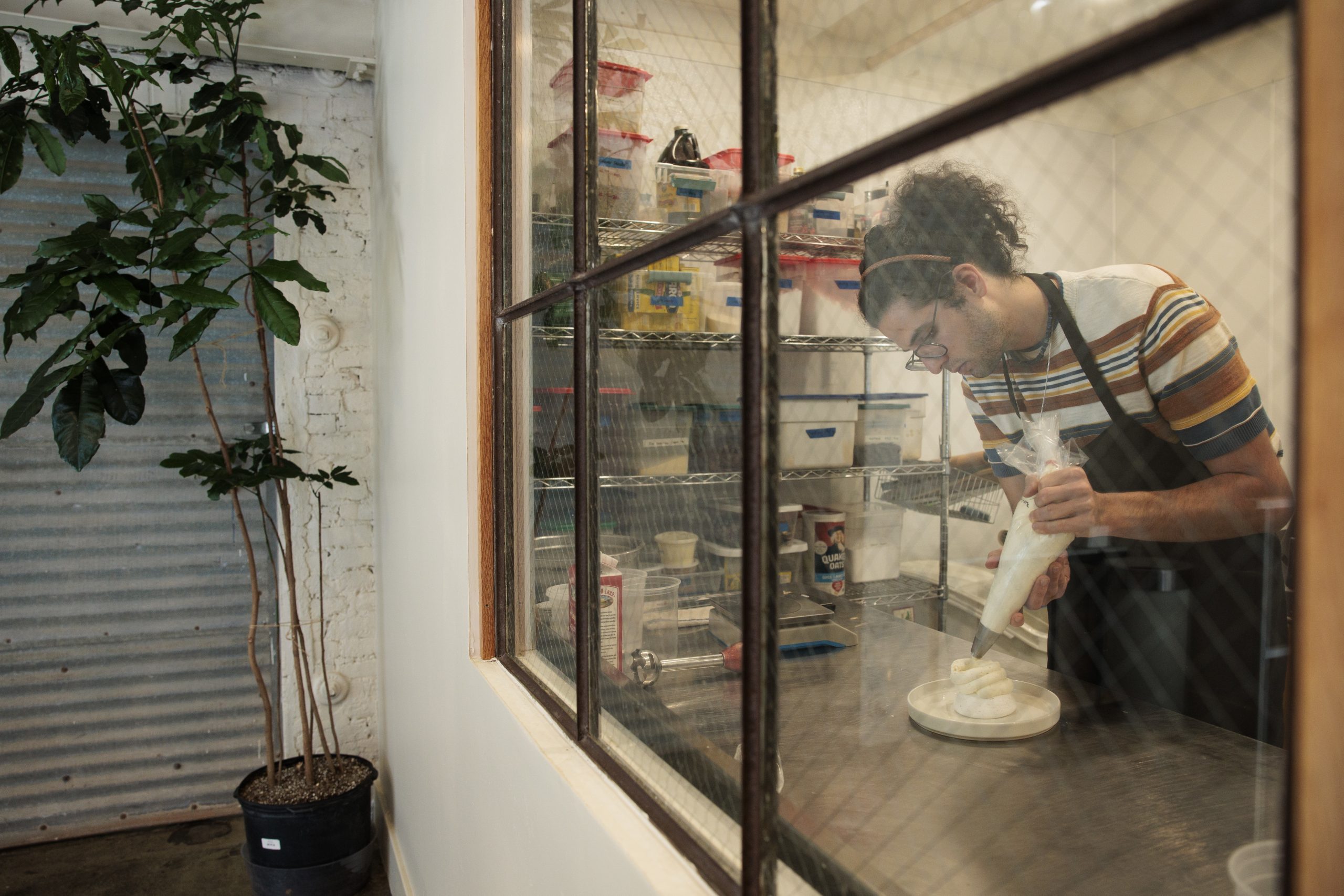
Saif Manna works on a pavlova at Manna Bakery.Monica Herndon / Staff Photographer
Manna Bakery (110 W. Berks St.): Five years and countless farmers market appearances later, Saif Manna’s Temple dorm room project has moved into the former Essen Bakery in Kensington. Manna draws on his Palestinian heritage for Levantine pastries and savory dishes in a comfy cafe setting.
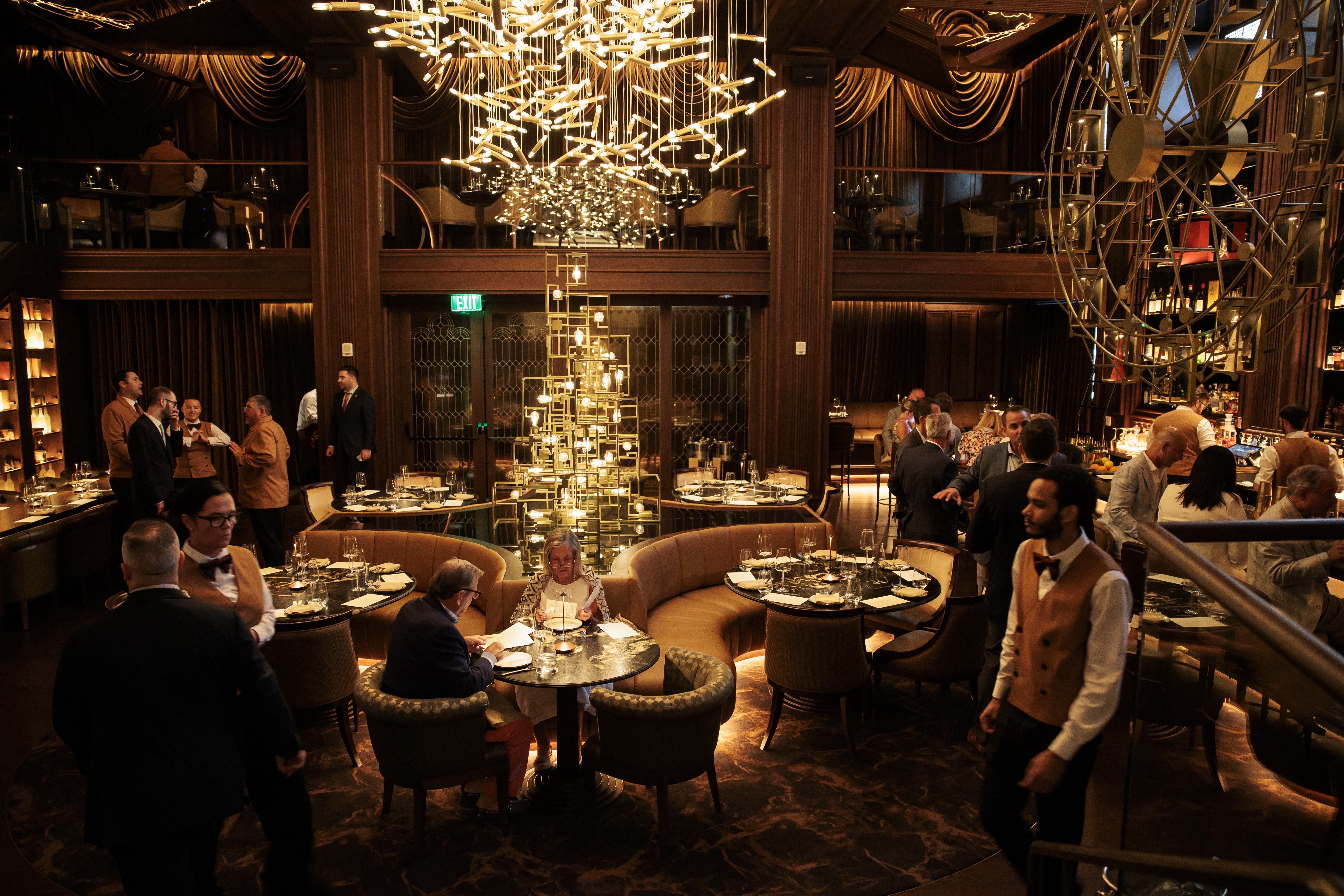
Mr. Edison in the Bellevue Hotel.Monica Herndon / Staff Photographer
Mr. Edison (1400 Walnut St.): There’s a Ferris wheel carrying liquor behind the bar at Mr. Edison, which gives some idea of the production. Veteran restaurateur Jeffrey Chodorow’s Philadelphia debut is a theatrical Bellevue supper club where chef Matt Levin’s cooking shares a two-story room with live music, dramatic lighting, and plenty of visual spectacle.
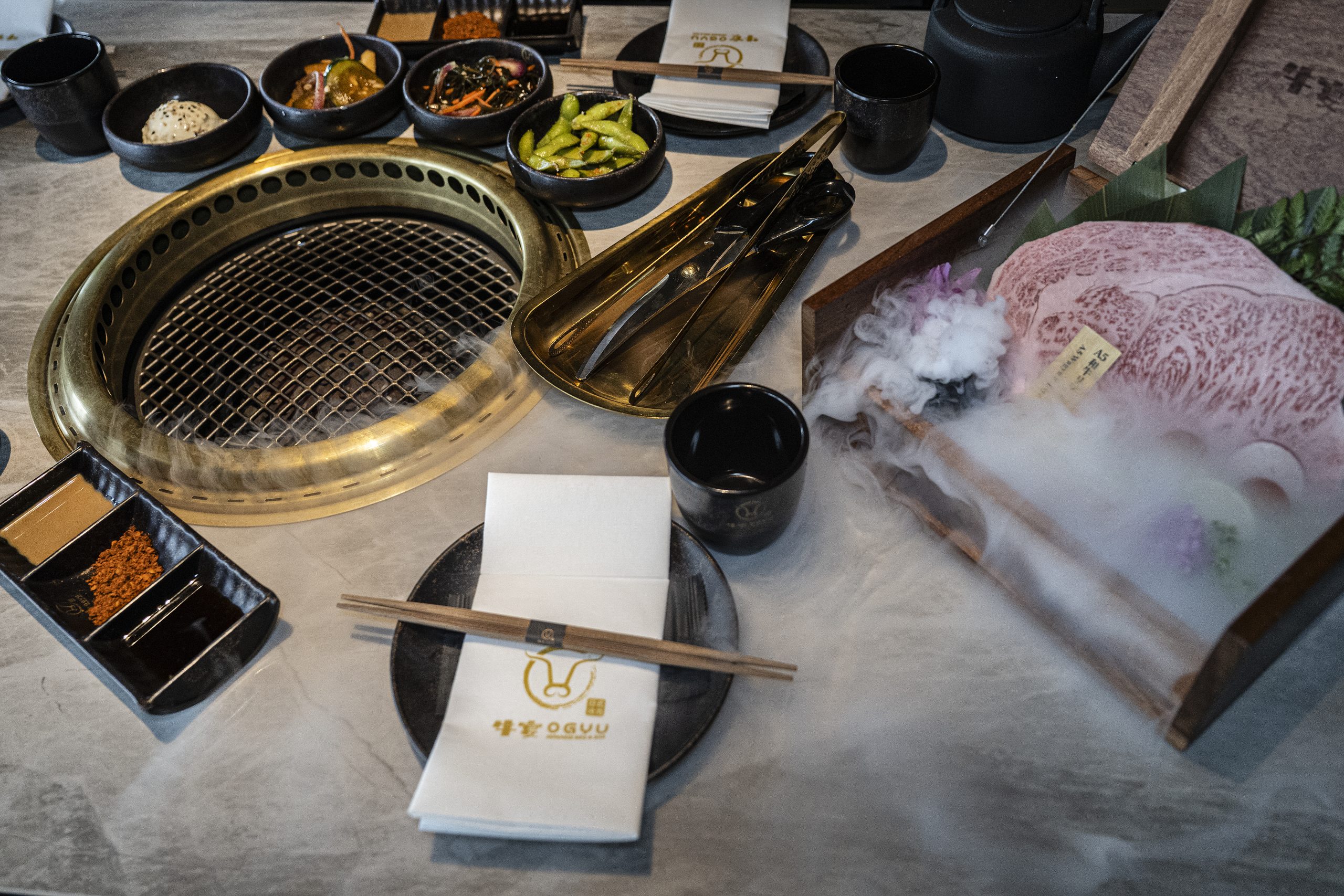
Ogyu Japanese BBQ in Ardmore.Jose F. Moreno / Staff Photographer
Ogyu Japanese BBQ (60 Greenfield Ave., Ardmore): Sam Li turned Ardmore’s former Iron Hill Brewery into a sprawling yakiniku restaurant built around the grill at each table. Diners cook wagyu and other meats themselves — or enlist a server — choosing among fixed-price packages and à la carte options in a dramatically remodeled space with private dining rooms and a full bar.
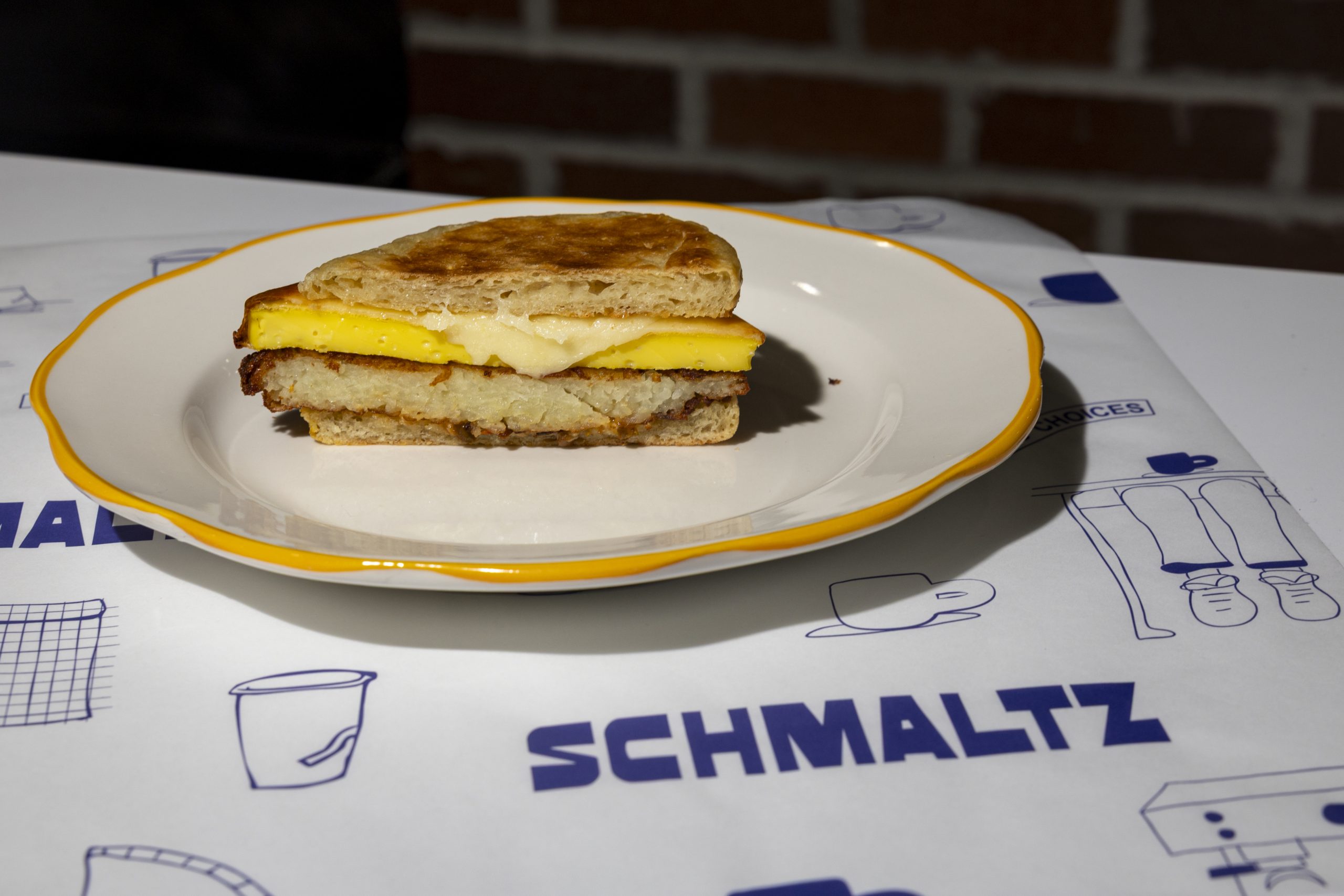
The latke, egg, and cheese sandwich at Schmaltz.Aidan T. Gallo / Staff Photographer
Schmaltz (1300 S. 18th St.): This Jewish-inspired breakfast-and-lunch cafe serves latkes, cheese blintzes, egg sandwiches — and no bagels. Jeremy Asch and Abby Armstrong opened the Point Breeze corner spot with chef Sam Chertock, whose deliberately compact menu includes latke, egg, and cheese sandwiches on house-baked English muffins.
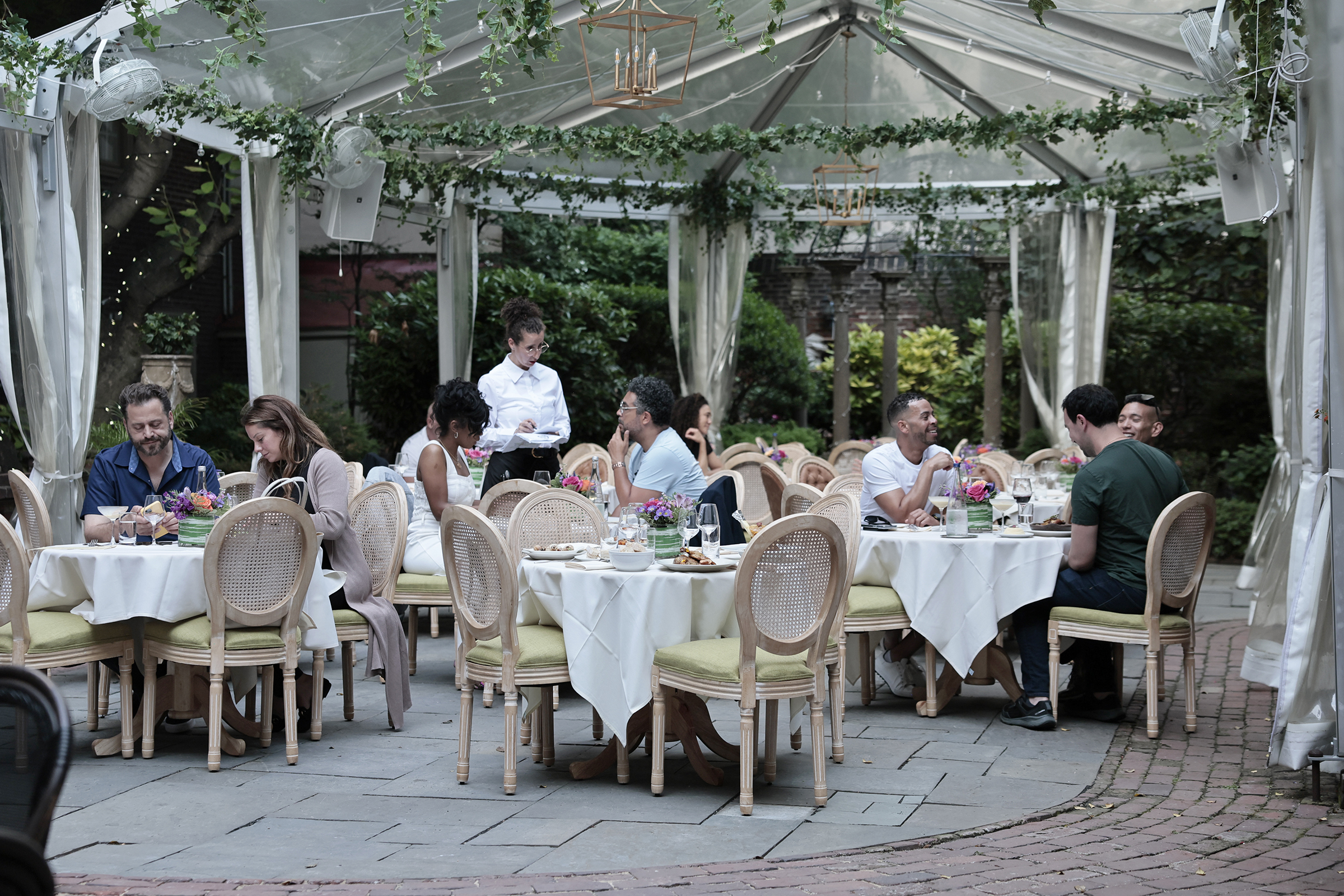
Outdoor dining at Soufiane at the Morris.Elizabeth Robertson / Staff Photographer
Soufiane at the Morris (225 S. Eighth St.): The 1787 Morris House provides a peaceful backdrop for Soufiane Boutliliss’ French-Moroccan cooking, served in a secluded stone courtyard shaded by magnolias and dogwoods in Washington Square West. This is the second restaurant from the Moroccan-raised Boutliliss and husband Christophe Mathon of Sofi Corner Cafe.
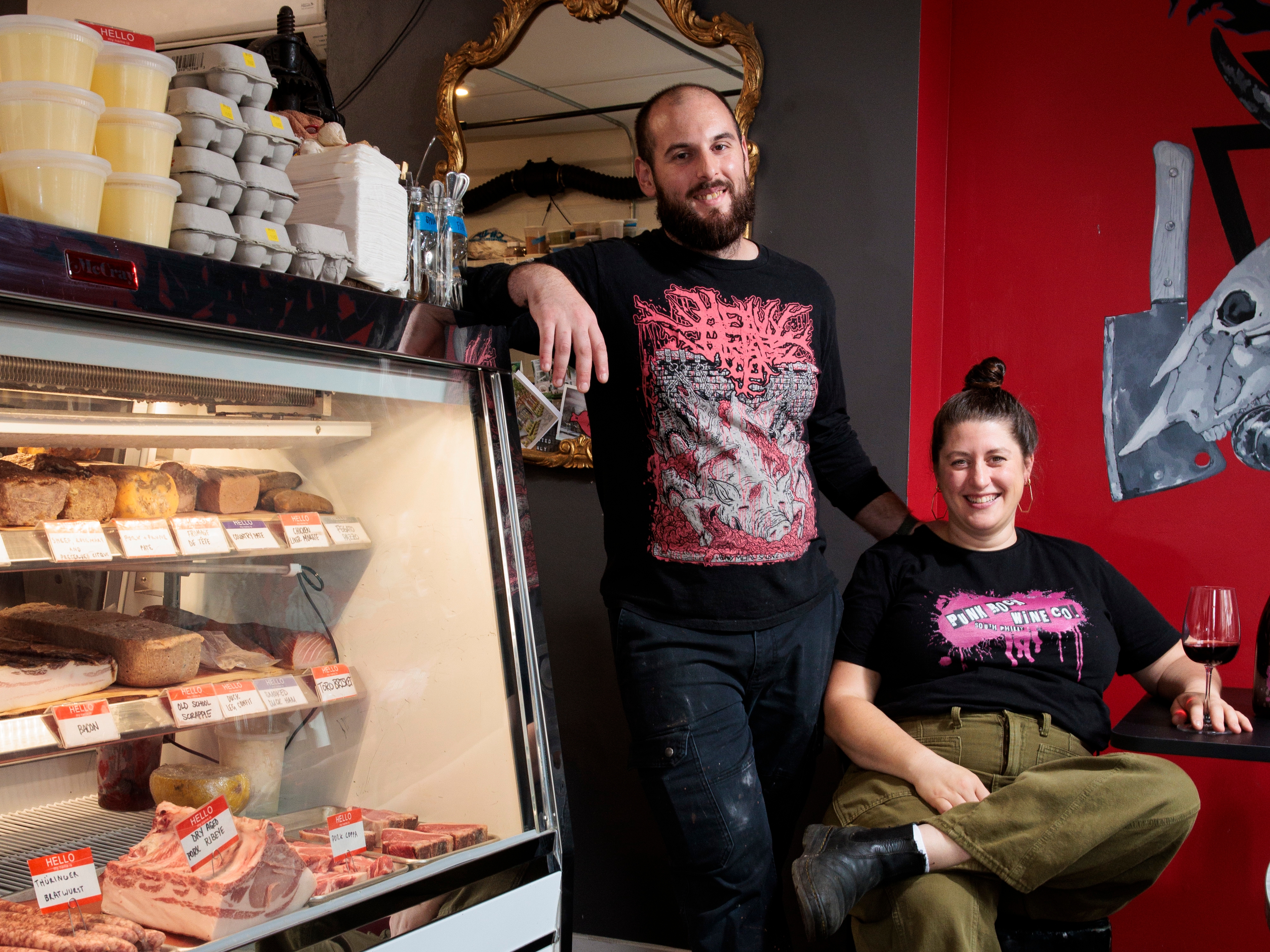
South Philly butcher shop Heavy Metal Sausage Co. indefinitely paused its after-hours Italian dinners last weekfollowing a failed health inspection that ordered the shop to removeall indoor seating. Co-owners Patrick Alfiero andMelissa Pellegrino say the resulting loss of revenuecould close the business.
An inspector with Philadelphia’s Department of Public Health ordered the shop to remove itseightseats and cease all food prep in the basement on Aug. 21. The inspection found Heavy Metal’s setup did not align with the restaurant’s plan review, a document detailing operating procedures that all restaurants must submit to the health department in order to receive a food license.
Among the three-hour inspection’s other findings: flies, mouse dropping, and unauthorized kitchen equipment, plus evidence that Heavy Metal was canning foods and dry-aging meat without an FDA-mandated food safety plan.
The most consequential violation on the report, however, is that “the food facility does not have a handwash sink conveniently located in the customer dining area” because “access to the toilet room is located through the kitchen.”
The location of Heavy Metal’s bathroom renders the space unsuitable for indoor dining, according to the health department. The recent determination — which came four years into Heavy Metal’s run as a hybrid butcher-restaurant — could cost Heavy Metal thousands of dollars in renovations and lost revenue, Pellegrino said.
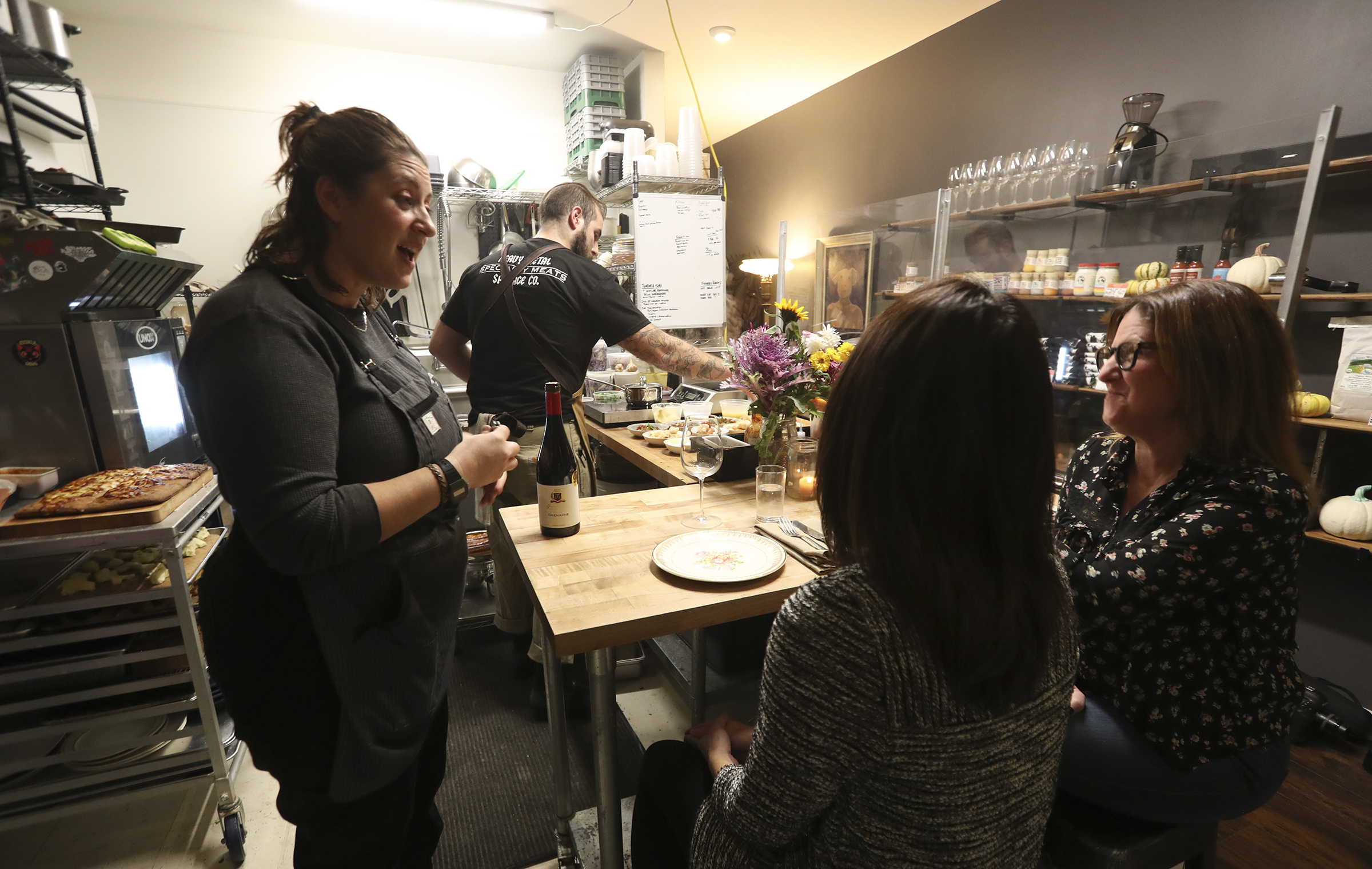
Alfiero and Pellegrino opened Heavy Metal Sausage Co. at 1527 W. Porter St.in 2022. By day, it’s a deli where Alfiero uses local ingredients and artisanal cured meats to create hearty, inventive sandwiches. By night Thursday through Sunday, the 500-square-foot space transforms into an intimate trattoria. Tables are pressed against deli cases and seats are tucked into empty corners, lending a vaguely illicit, punk-rock aura to what’s otherwise a traditional prix fixe meal.
The$98 dinners are also a moneymaker, accounting for well over half of Heavy Metal’s revenue, Pellegrino said. Without them, the duo have already had to lay off a cook and a server.
“When the [health inspector] asked if we could stop dinner, I told him we might not be here in six weeks to be reinspected,” Alfiero said. “I was just like, ‘How are we going to survive this?’”
Heavy Metal Sausage Co. chef/co-owner Patrick Alfiero prepares the antipasto course during the trattoria dinner on Nov. 17, 2022.Yong Kim / Staff Photographer
Same setup, new violation
Pellegrino and Alfiero told The Inquirer that they were blindsided by the findings in August’s health inspection. Heavy Metal has never hidden how it operates.
The couple started offering the after-hours dinners just six months after opening as a way to offset the costs of running a niche butcher shop, which has never been profitable.
A copy of the business’ plan review, reviewed by The Inquirer last week, shows that some form of indoor seating has been always accounted for. It also showsthat the deli’s bathroom is accessible to customers via a hallway that runs parallel to the kitchen.
The issue is brand-new despite Heavy Metal’s layout remaining static for months, according to a review of city records. The business has had an active food preparation and serving license since 2022. Heavy Metal has also passed all previous health inspections, including one in April 2026, whose report makes no mention of unauthorized seating, kitchen equipment, or food prep. It also doesn’t touch on sink or bathroom access.
Heavy Metal Sausage Co. chef/co-owner Patrick Alfiero preps food before a trattoria dinner on Nov. 17, 2022.Yong Kim / Staff Photographer
Health inspections are considered “snapshots in time” that may not necessarily be indicative of day-to-day operations, department spokesperson Jason Brooks said over email. During Heavy Metal Sausage’s prior inspections, inspectors only noted a basement storage space, “indicating that no food prep activities were taking place there — at that time,” Brooks wrote.
“In April, our inspector did not observe any seating for indoor dining. Inspectors are investigating what they can physically observe and document during the inspection,” he wrote. “During this most recent inspection, our inspector observed, in real time, food preparation in an unapproved space and unapproved indoor dining. For this, the food business was cited for violations of its approved plan.”
Pellegrino disputes the idea that Heavy Metal’s seating is a new development. “We were inspected four months ago, and we have done absolutely nothing different in those four months,” Pellegrino said. “Not a single thing has changed.”
The deli’s inspection comes amid other notablehealth department shutdowns.
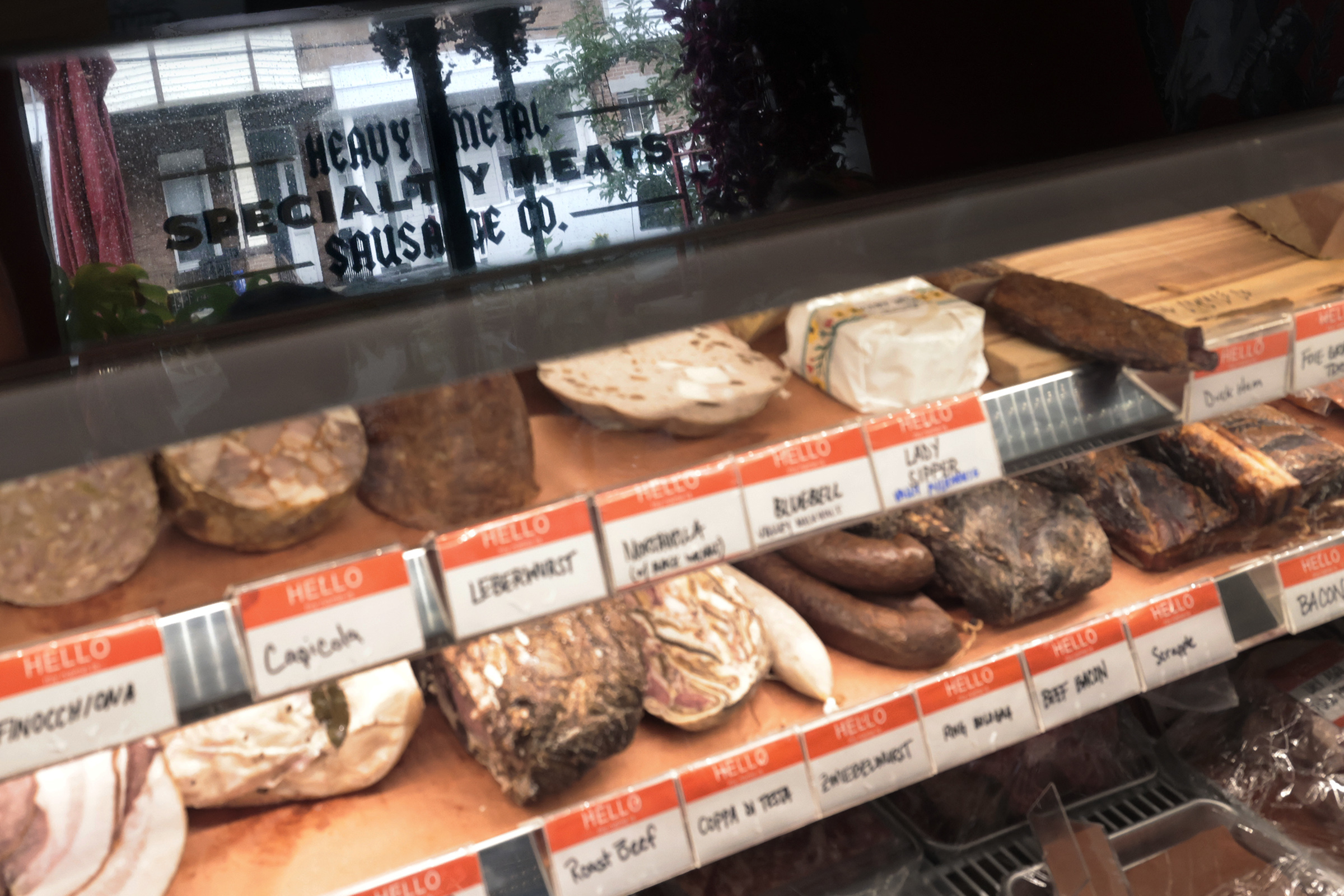
The front window is reflected in the top of the meat case inside of the Heavy Metal Sausage Co., 1527 W. Porter St. in Philadelphia, on Aug. 9, 2024.Elizabeth Robertson / Staff Photographer
Last week, Victory Brewing Co.’s three-level taproom on the Benjamin Franklin Parkway was ordered to temporarily cease operations after an inspector documented 26 health code violations that included live roaches, mice, and flies. And in mid-August, the health department failed Stargazy over “two unapproved countertop deep fryers without adequate mechanical ventilation,” a violation that has forced the East Passyunk Avenue restaurant to stop serving fish and chips.
How can Heavy Metal fix this?
Since Heavy Metal’s violations didn’t pose an imminent health hazard, the restaurant is allowed to remain open without indoor dining, Brooks confirmed.
The butcher and deli counters are still open during normal daytime hours (11 a.m. to 4 p.m. Thursday through Saturday, 11 a.m. to 3 p.m. Sunday) for takeout only. Pellegrino and Afiero said they’ve addressed most of the violations by creating the required food safety plans and limiting the basement to storage only.
The only hitch: What to do about the sink?
Heavy Metal Sausage Co. co-owner Melissa Pellegrino (left) greets diners Jeannette Armstrong (center) and Liz Rissover as chef/owner Patrick Alfiero prepares meals in the kitchen during the trattoria dinner on Nov. 17, 2022.Yong Kim / Staff Photographer
Heavy Metal must submit a new plan of review to the health department for approval. If the plan is approved and the restaurant passes reinspection, Brooks said, they will be allowed to restart indoor dining.
But to do so, Pellegrino said the health department recommended Heavy Metal install a customers-only sink at the front of the restaurant, a change that would require a separate, weeks-long permitting process and a contractor. When Pellegrino asked the health department if she could add curtains or room dividers to more clearly separate the bathroom hallway from the kitchen — which she considers a more cost-effective solution — she said they didn’t respond.
“All of these things take time and money,” Pellegrino said, “and we will have to make a calculus of what’s worth doing.”
After eight years, several production spaces, and many tons of cucumbers, Fishtown Pickle Project is putting down permanent roots.
But it’s still not in Fishtown.
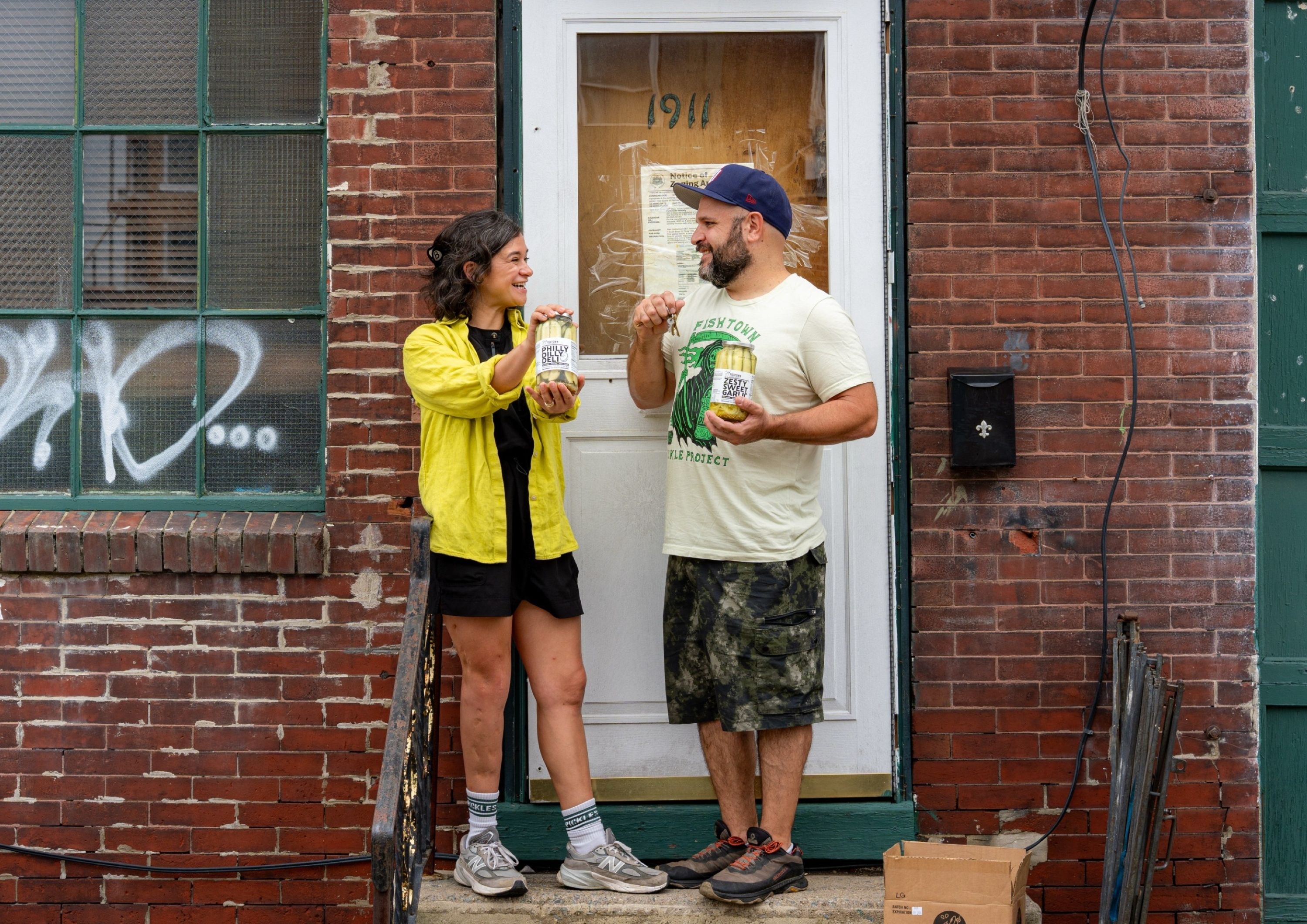
Last month, Niki Toscani and Mike Sicinski, the husband-and-wife team behind the pickle company, bought a 6,200-square-foot building at 1911-13 N. Second St., just north of Berks Street near Norris Square in Kensington. There, they plan to triple production and, for the first time, invite customers into their briny world.
The move from Globe Dye Works in Frankford will allow them to combine production with a storefront.
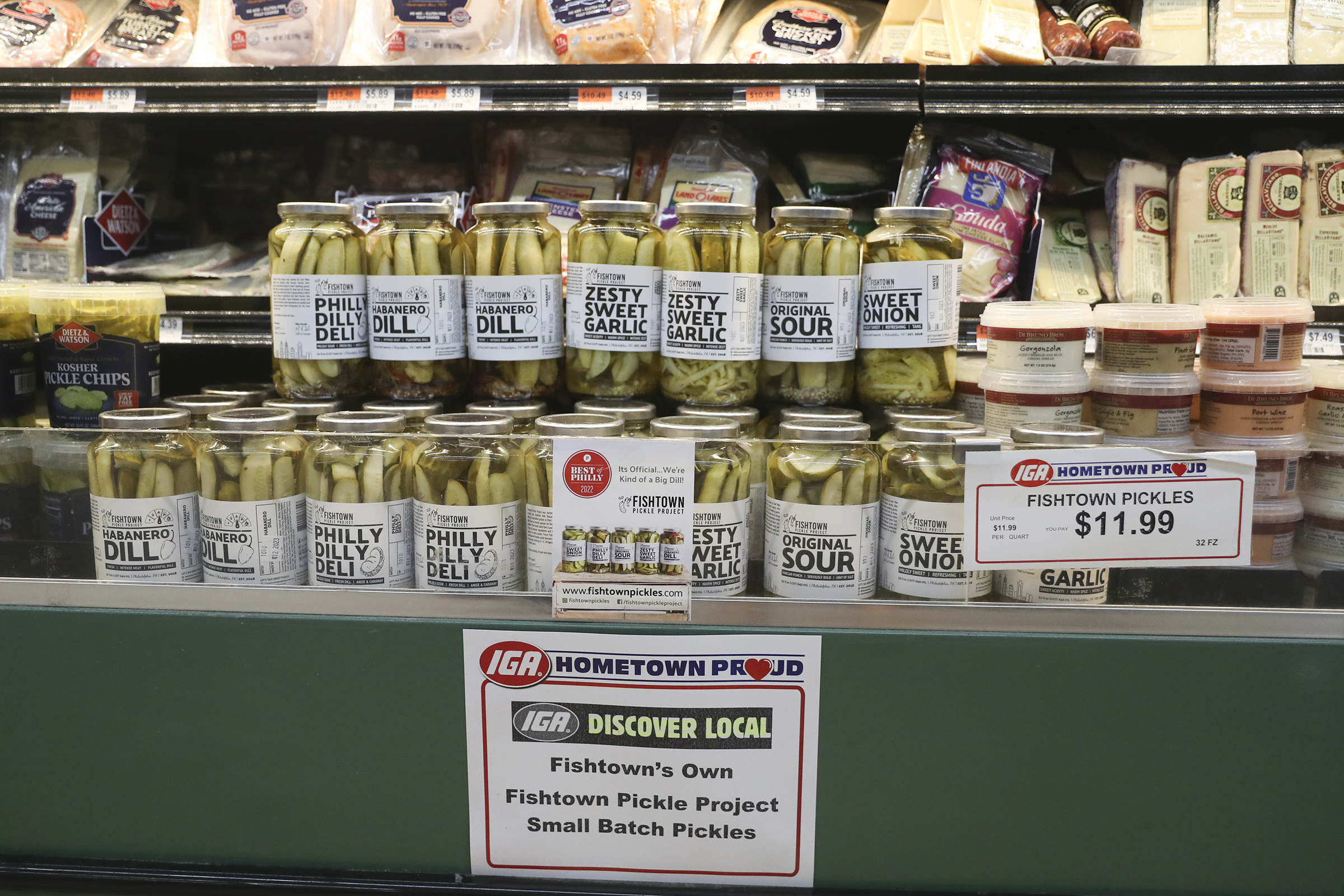
The Richmond Shops IGA grocery store at Fishtown Crossing was an early customer of Fishtown Pickle Project.Heather Khalifa / Staff Photographer
The centerpiece will be a 500-square-foot pickle tasting room, where customers can sample varieties, buy pickles by the pound or jar, shop for pickle-themed merchandise, and eventually take classes and production tours. They are aiming for a summer 2027 opening.
A pickle tasting room? Think brewery, only with cucumbers. Toscani said customers will be able to sample the goods while watching production. She calls the concept a “brinery.”
Most of the building will be devoted to manufacturing, storage, offices, and events. Fishtown Pickle Project now processes about 3,500 pounds of cucumbers a week, a figure Toscani expects to triple by the end of 2028.
The couple said they remained at Globe Dye Works because of its affordable rent and highway access, but eventually ran out of room. Their search for a larger property with manufacturing and retail space, plus a driveway and loading area, led them to Norris Square. Finding that combination in Fishtown was difficult, Toscani said, “especially for a bootstrapped small business.”
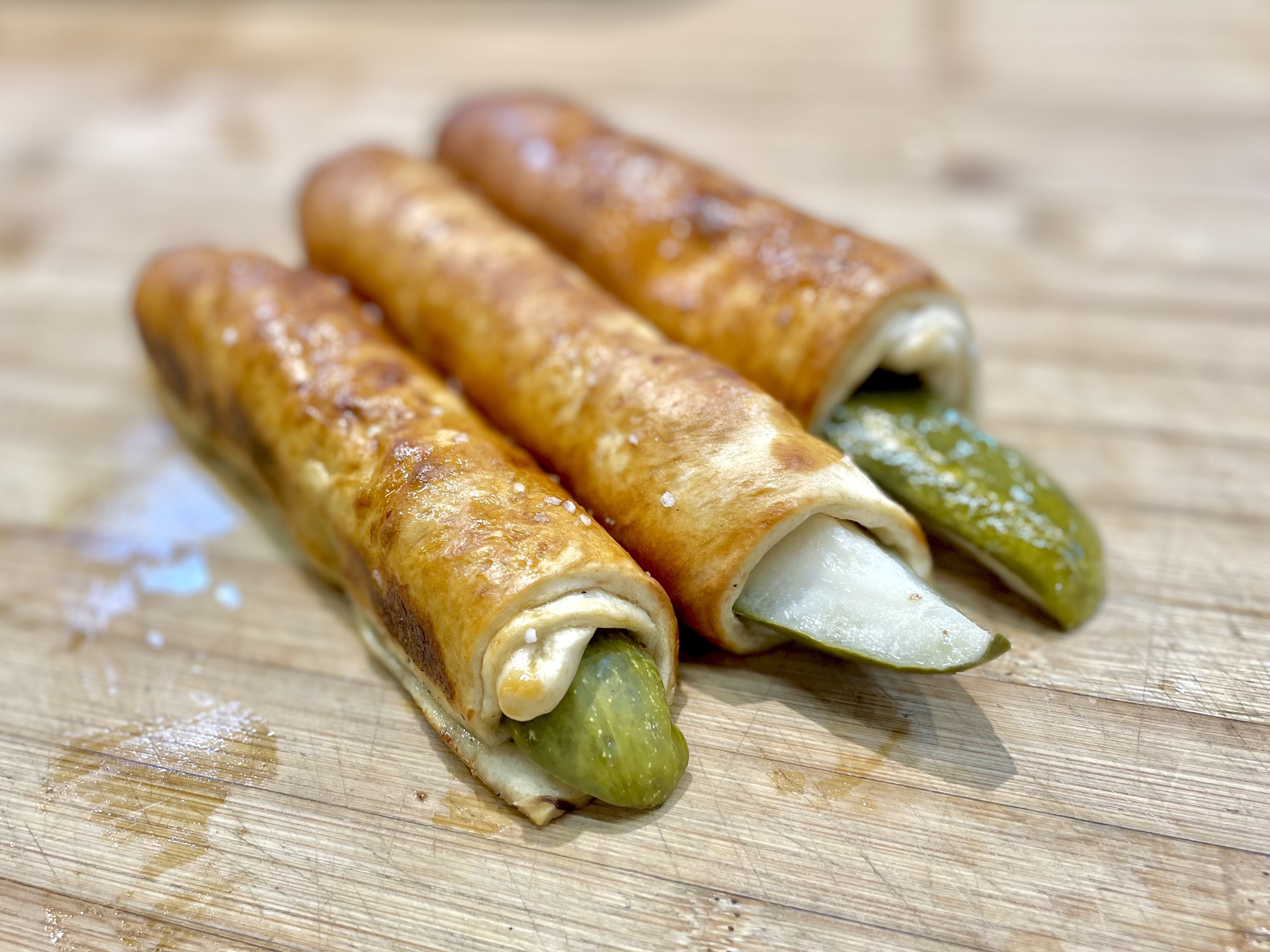
A 2025 collaboration between Fishtown Pickle Project and Miller’s Twist in Reading Terminal Market resulted in Philly Dilly spears wrapped in a soft, sweet pretzel dough.Craig LaBan / Staff
The Second Street property should also make deliveries easier. “When we’re getting trailers delivered with glass jars, it helps to have a garage and a street for them to deliver at without tons of traffic,” Sicinski said.
Wholesale growth is driving much of the expansion. Toscani said revenue from buckets of pickles sold to restaurants, delis, and retailers increased 200% from 2024 to 2025. Some customers use them to stock pickle bars.
The company sells through about 30 ShopRite stores, 11 Wegmans locations, and the Kimberton Whole Foods and McCaffrey’s Market chains. Toscani and Sicinski make their products and handle distribution themselves.
“It allows us to grow responsibly without taking on more business than we can handle,” Toscani said.
The company has the equivalent of about six full-time employees, which Toscani expects to double to about 12 by the end of 2028.
As for the Fishtown in the name, that goes back to the company’s beginnings in 2018. Toscani and Sicinski lived in the neighborhood, and some of their first customers were Fishtown retailers, including Bottle Bar East (now closed), IGA, and Riverwards.
The pickles themselves have always been made elsewhere. Sicinski, a chef who was then a food-service director for a New Jersey school district, first made them in his work kitchen. The couple — Toscani is a dietitian — also made pickles as wedding favors, helping turn the hobby into a business. Production later moved to Bridesburg Commissary (now Culinary Collective) and then to Globe Dye Works, where the company eventually moved into a larger space within the complex.
The passion project became a livelihood after Sicinski was furloughed at the start of the pandemic. The lineup now includes the flagship Philly Dilly Deli, Sweet Onion, and Habanero varieties, and limited releases such as Bloody Mary and Ginger Lemonade pickle chips.
The Norris Square project is their largest investment yet. They paid $550,000 for the building Aug. 6 and said they expect to spend about $700,000 on construction and outfitting. A $1.6 million Small Business Administration loan is helping finance the project, and they are seeking about $250,000 in grants for equipment and hiring. Toscani puts the overall investment at close to $2 million.
The couple have no outside equity investors.
Toscani sees no contradiction in taking the Fishtown name with them to Norris Square.
“We still consider the neighboring neighborhoods our neighbors,” she said. “Despite the fact that we’re not in Fishtown proper, we feel like the opportunity to have roots in Norris Square actually fits our mission quite a bit.”
Big Charlie’s Saloon, the South Philadelphia corner bar known nationally for its unlikely devotion to the Kansas City Chiefs, is getting a new playbook.
DiTomo and Jacobsen say they plan to turn it into Sweets, a neighborhood bar. DiTomo said that he would remain at Meetinghouse and that his business partners there have no stake whatsoever in Sweets.
Sweets will have no Chiefs memorabilia — or sports theme of any kind, for that matter. DiTomo said they’re thinking low-key. “I’m not a big concept guy,” he said. “I’m going to stay true to what that neighborhood deserves out of a neighborhood bar, and that’s about it.” The partners started an Instagram account to float photos that inspire them.
DiTomo said he and Jacobsen are working through due diligence for the purchase of the building, which had been listed at $1.1 million and includes apartments upstairs. A liquor license transfer is also pending.
They are aiming for a winter opening, though that timing is tentative. “If we could capture the holiday season, that would be beyond fantastic,” DiTomo said. “But we’re both realists. We’ll see how it goes.”
Its allegiance dated to Super Bowl IV in January 1970, when Staico’s father, Charlie, bet on Kansas City to beat the Minnesota Vikings and promised his young son a bicycle if the Chiefs won. They did, Paul got the bike, and a lifelong allegiance began.
After taking over the bar following his father’s death in 1983, Staico bought a satellite dish in 1986 so he and friends could watch Chiefs games that rarely appeared on Philadelphia television. Over the decades, the bar became known as “Arrowhead East,” its wood-paneled rooms covered with signed helmets, pennants, bobbleheads, street signs, and other Chiefs memorabilia.
But Big Charlie’s was also a neighborhood bar, and that is the aspect of the property that DiTomo intends to preserve — rather than its sports identity. He and Jacobsen both live in South Philadelphia.
“I’ve always admired neighborhood bars,” he said. “I grew up in neighborhood bars, so I want it to be true to form — just the classics, done well.”
That philosophy will extend to the drinks. DiTomo said the bar will pour Meetinghouse beer, along with a straightforward selection of beer, wine, and cocktails built around classics.
Sweet’s food will be simple, he said, because of the tiny kitchen.
DiTomo, a Culinary Institute of America graduate who rose to prominence a decade ago in the Marc Vetri organization at Amis, was a chef consultant on M. Night Shyamalan’s series Servant on Apple TV+ when Meetinghouse opened in 2023.
DiTomo and Jacobsen have been friends for about five years. DiTomo said Jacobsen had long been interested in doing a project together, but nothing had clicked until the Big Charlie’s building became available. “This building spoke to him, so he jumped on it,” DiTomo said.
Stickball, Jacobsen’s shop, specializes in vintage clothing, art, and objects. GQ included it on its 2024 list of 30 notable vintage menswear stores in the United States.
DiTomo said the Sweets name came from a running list he has kept over the years. He associates the word with several of his uncles, who used it as a term of affection. “I always liked the feeling of it,” he said. “It sounds nice, and it’s timeless. It feels good for the neighborhood, too.”
You can order 10 different margaritas, a tequila-spiked rendition of a Clover Club, and whole barbecued dorade for the table at East Kensington’s newest bar.
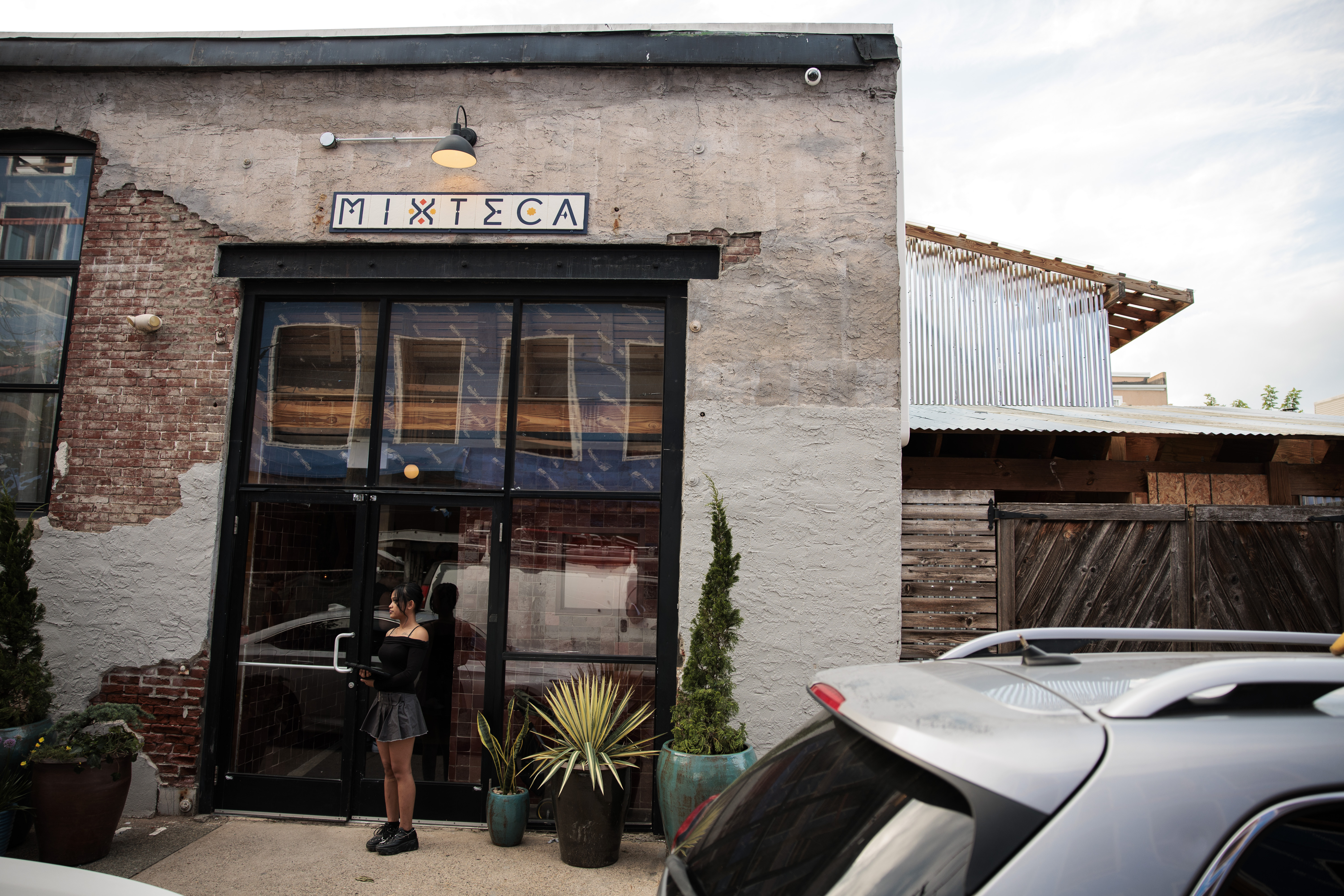
Mixteca — an agave-focused coctelería from two James Beard Award-winning bartenders — opened at 2113 E. York St. in late August, breathing new life into the space formerly occupied by the acclaimed neighborhood barMartha.
Mixteca — named after the artisan-rich region of central Mexico — is as much a tribute to Lopez’s heritage as it is an outgrowth of Lopez and Bell’s relationship. Bell worked his way up at PDT from Lopez’s barback to lead bartender and eventually owner, after buying the speakeasy and its brand from co-founder Brian Shebairo.
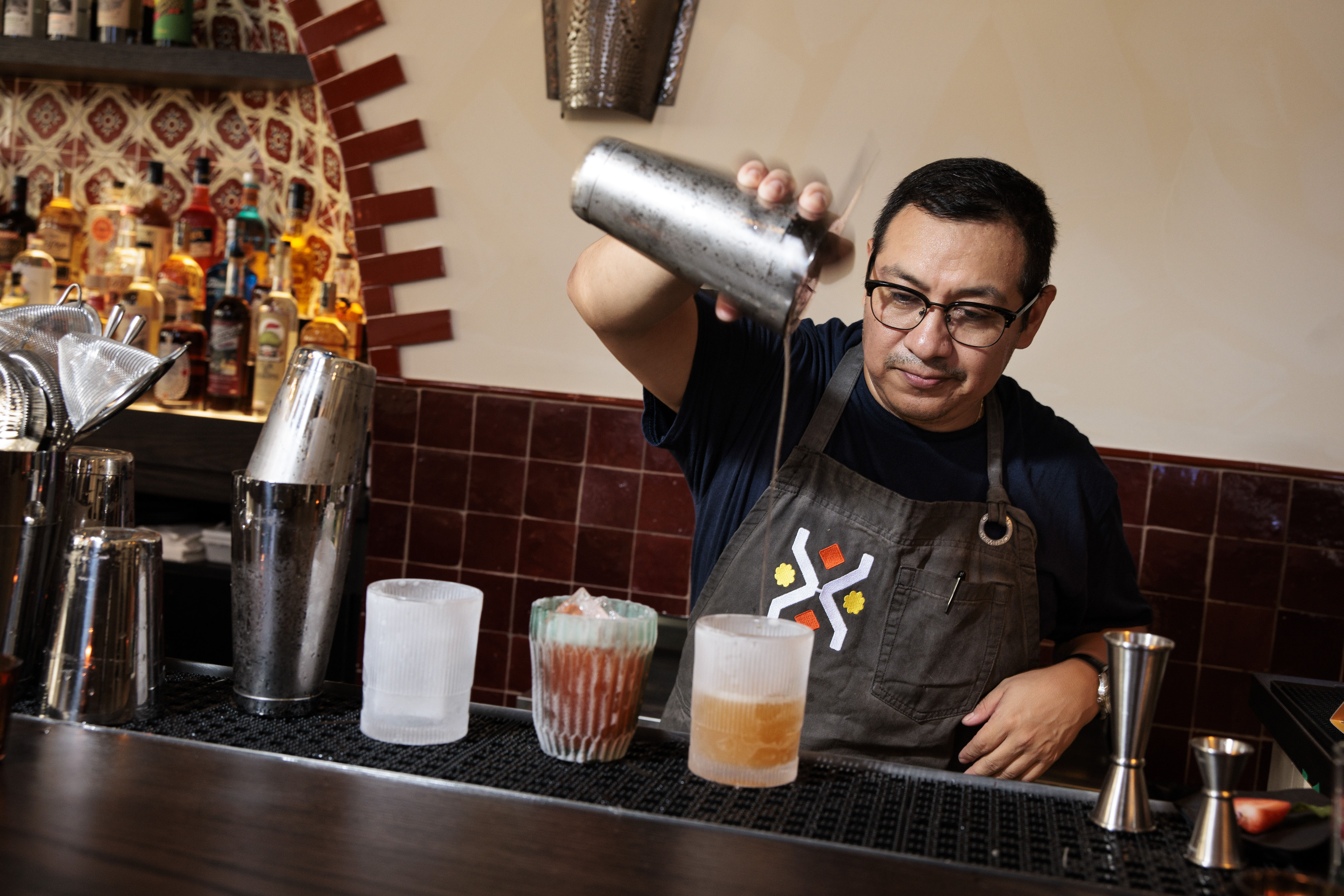
Victor Lopez pours cocktails at Mixteca in East Kensington.Monica Herndon / Staff Photographer
Lopez “is one of the best cocktail makers I’d ever worked with,” Bell said. “We’d play these games with him back in the day at PDT where we’d make him a drink, and he’d correctly guess the components.”
In New York, Mixteca is a bar first, with an extensive drink list of inventive takes on classic cocktails prepared with Latin American flavors, like a tomatillo gin and tonic or a Negroni infused with palo santo, a wood used for spiritual cleansing across Latin America. In lieu of a full food menu, Lopez and Bell partnered with Los Angeles-based Tacos 1986 to serve a handful of tacos and quesadillas.
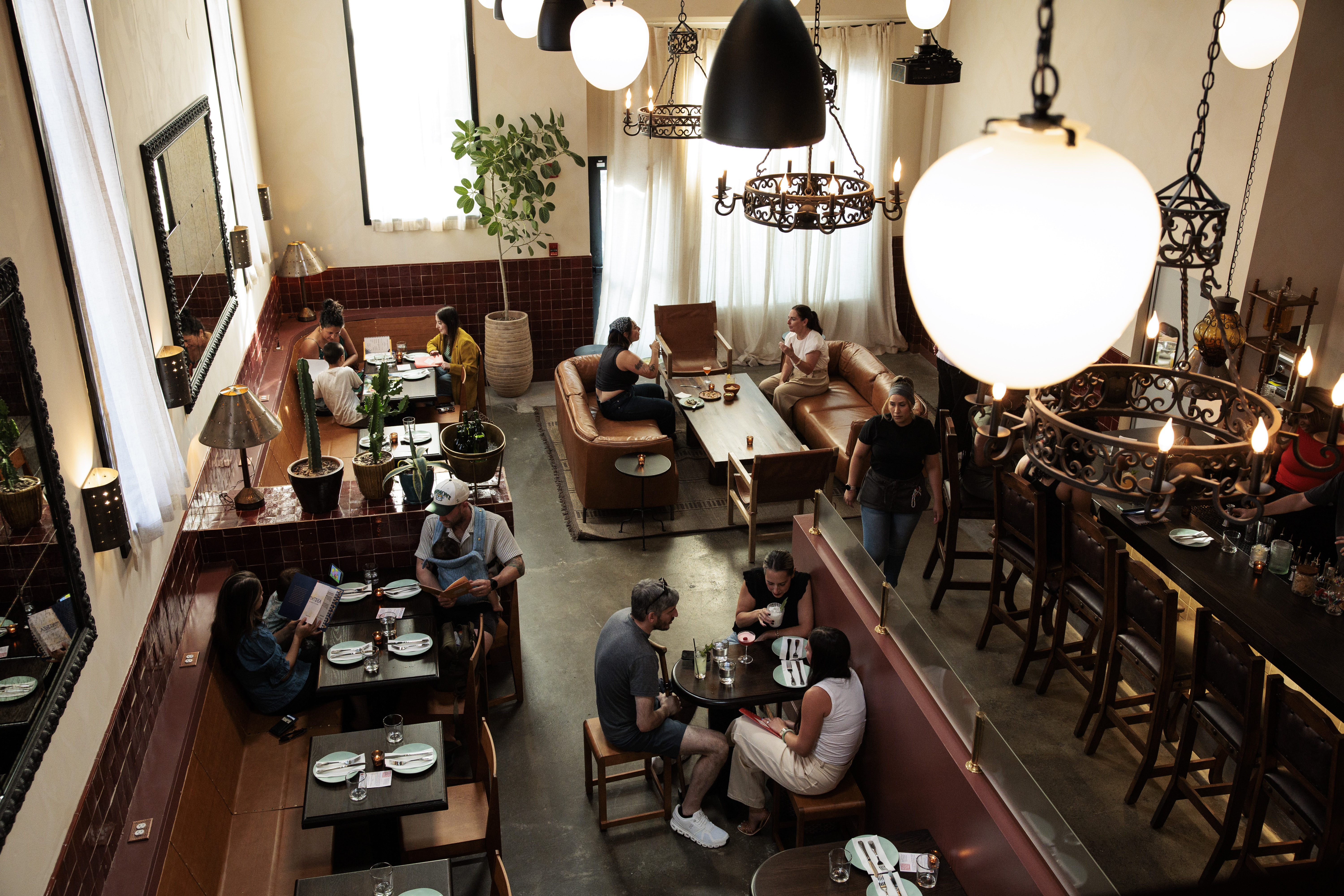
The dining room at Mixteca on a friends and family night Aug. 26.Monica Herndon / Staff Photographer
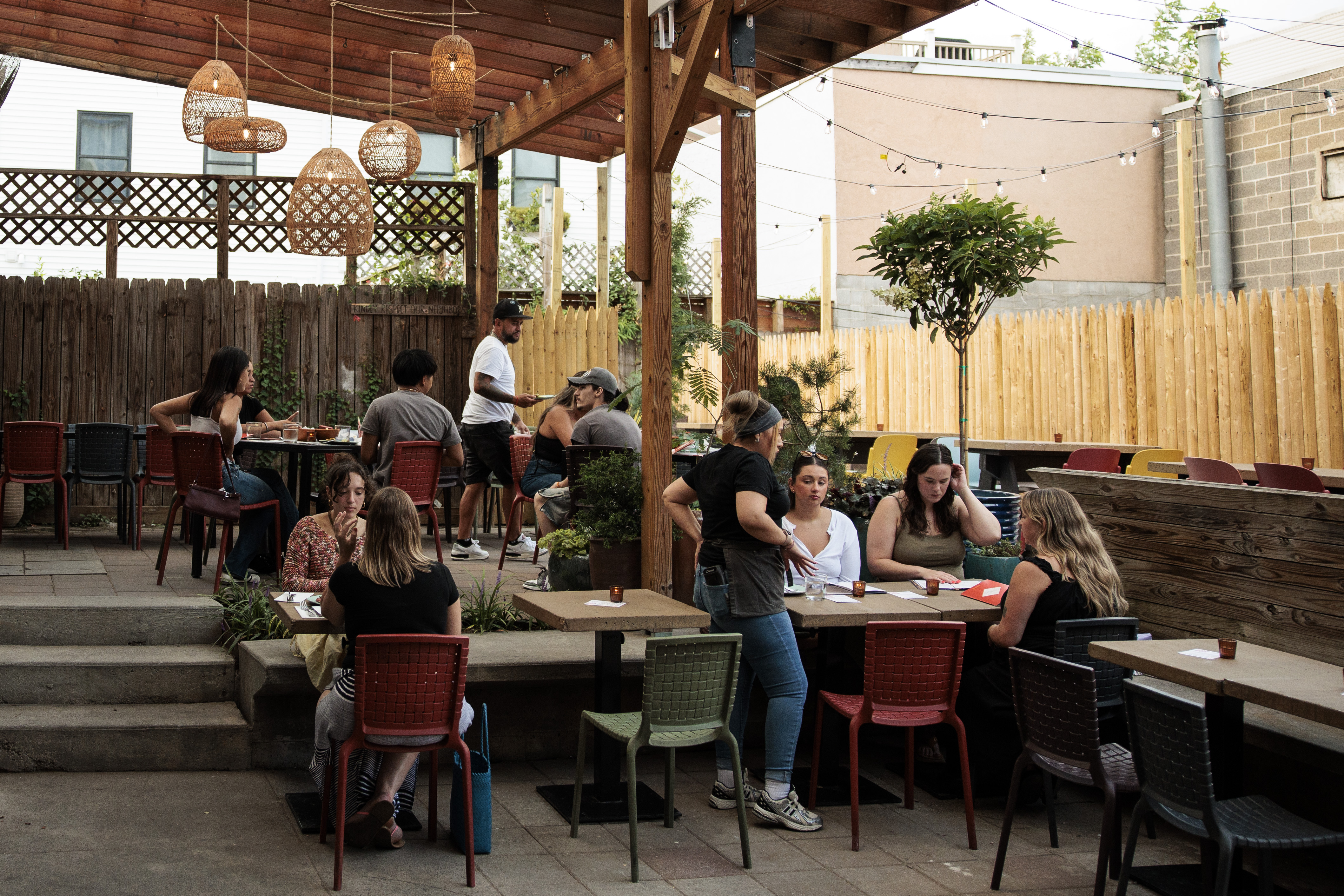
Mixteca in Philly, meanwhile, is equal parts bar and restaurant, with a full-fledged food menu of Poblano-inspired share plates and nearly double the number of cocktails. The space seats 100 people across its airy, bench-lined main dining room, dimly lit mezzanine, and large patio outfitted with string lights and rainbow-colored chairs. The restaurant has an eye-catching centerpiece: a large arch over the center bar made of intricate ceramic Talavera tiles imported from Puebla. They almost create a halo over the shelves upon shelves of alcohol.
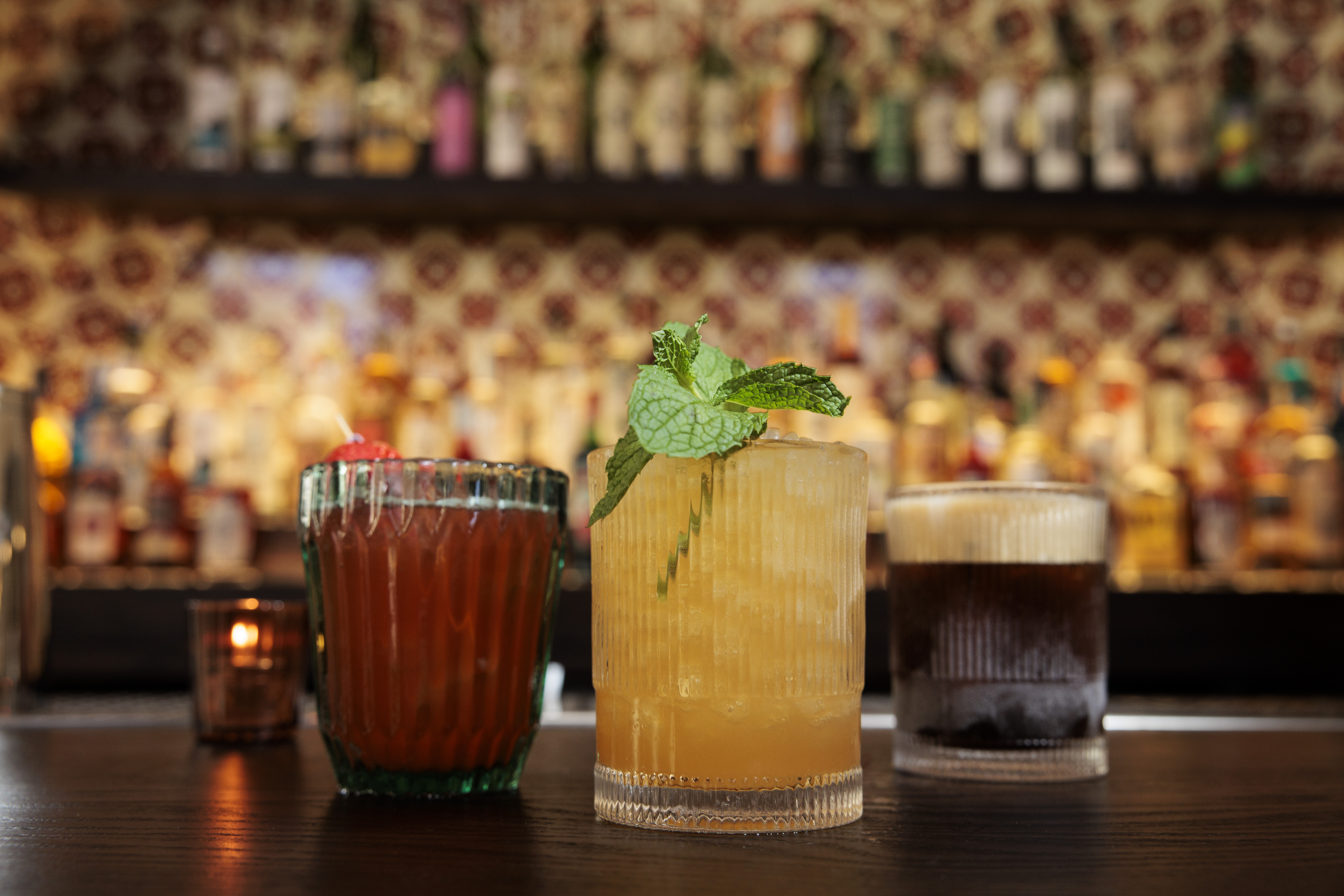
The strawberry margarita, Fish House Punch, and carajillo cocktails at Mixteca.Monica Herndon / Staff Photographer
“The high ceilings, the exterior, the energy of the neighborhood … it was perfect,” Bell said. “There’s a chaos to New York that can be exhausting, and I don’t see that in Philly.”
Lopez needed even less convincing: “I told Jeff, ‘I’ll probably move to Philly because I love it.’”
Classic cocktails with an agave twist
Mixteca’s Philly menu uses the New York location’s as a starting point for an array of drinks that draw deep on mezcal and tequila.
The restaurant has the same house margaritas on the menu — classic, made with Cointreau; and spicy, made with wasabi, cucumber, and hot honey — plus seven new flavored options, such as guava and blackberry, made with fruit juice.
The aorade asado at Mixteca. The Philly location is equal parts bar and restaurant, with a full-fledged food menu of Poblano-inspired share plates.Monica Herndon / Staff Photographer
The Philly location’s 18 signature cocktails include classics like rye whiskey Manhattans and espresso martinis as well as agave-centric counterparts, like the aptly named Puebla York (made with reposado tequila, mezcal, Cynar amaro, and cassis) and a cold brew carajillo, the popular Mexican cocktail made with tequila and vanilla-forward Licor 43.
Lopez also created versions of two timeless local cocktails: a mellower, peach-infused Fish House Punch that swaps brandy for reposado and Oaxacan rum, and a foamy raspberry Clover Club that uses white tequila instead of gin. Both go down easy.
The patio at Mixteca on a friends and family night Aug. 26.Monica Herndon / Staff Photographer
Though no executive chef heads up Mixteca’s kitchen in Philadelphia, the food menu got the stamp of approval from Lopez, who said the flavors were “the closest” to what he grew up eating as a kid in Mexico. Highlights include a bright hamachi and yellowtail ceviche; steak, mushroom, and chicken tacos served on made-to-order corn tortillas; and a whole dorade asado designed for sharing. Served with warm tortillas, white salsa, and a crisp tomato-cucumber salad, the fish sits at the center of a table like a prized catch of the day.
“We’re showing up to a party that’s already happening. We’re not the hosts,” said Bell. “We want to ingratiate ourselves.”
The exterior of Mixteca, in the former Martha space in East Kensington. Monica Herndon / Staff Photographer
Mixteca, 2113 E. York St., 215-714-3148, cocteleriamixteca.com. Hours: 4 p.m. to midnight Monday through Wednesday; 4 p.m. to 2 a.m. Thursday to Friday; noon to 2 a.m. Saturday; noon to 10 p.m. Sunday.
A distinctive stretch of 15th Street in Center City has lost both of its longtime bars within a year.
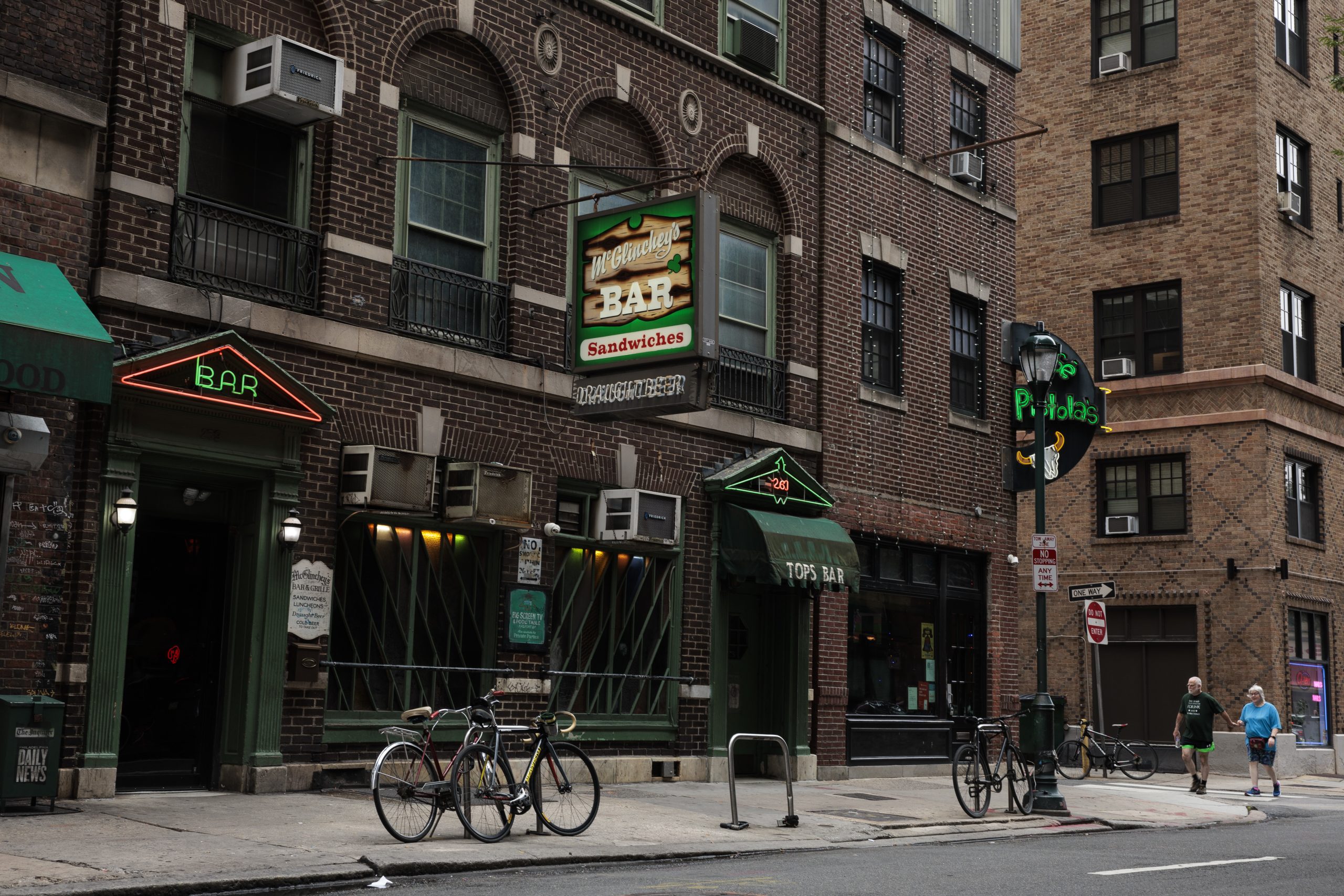
Jose Pistola’s, the Mexican-inspired craft beer bar at 263 S. 15th St., has closed after 19 years, following last August’s closing of its next-door neighbor, McGlinchey’s.
The closing of Jose Pistola’s came abruptly Tuesday amid a number of factors, including the Philadelphia Gas Works’ cutoff of its gas service. Although co-owner Joe Gunn said the business had made payments and was trying to resolve the issue, he said PGW would not restore service for three more days. . “That was the straw that broke the camel’s back,” Gunn said.
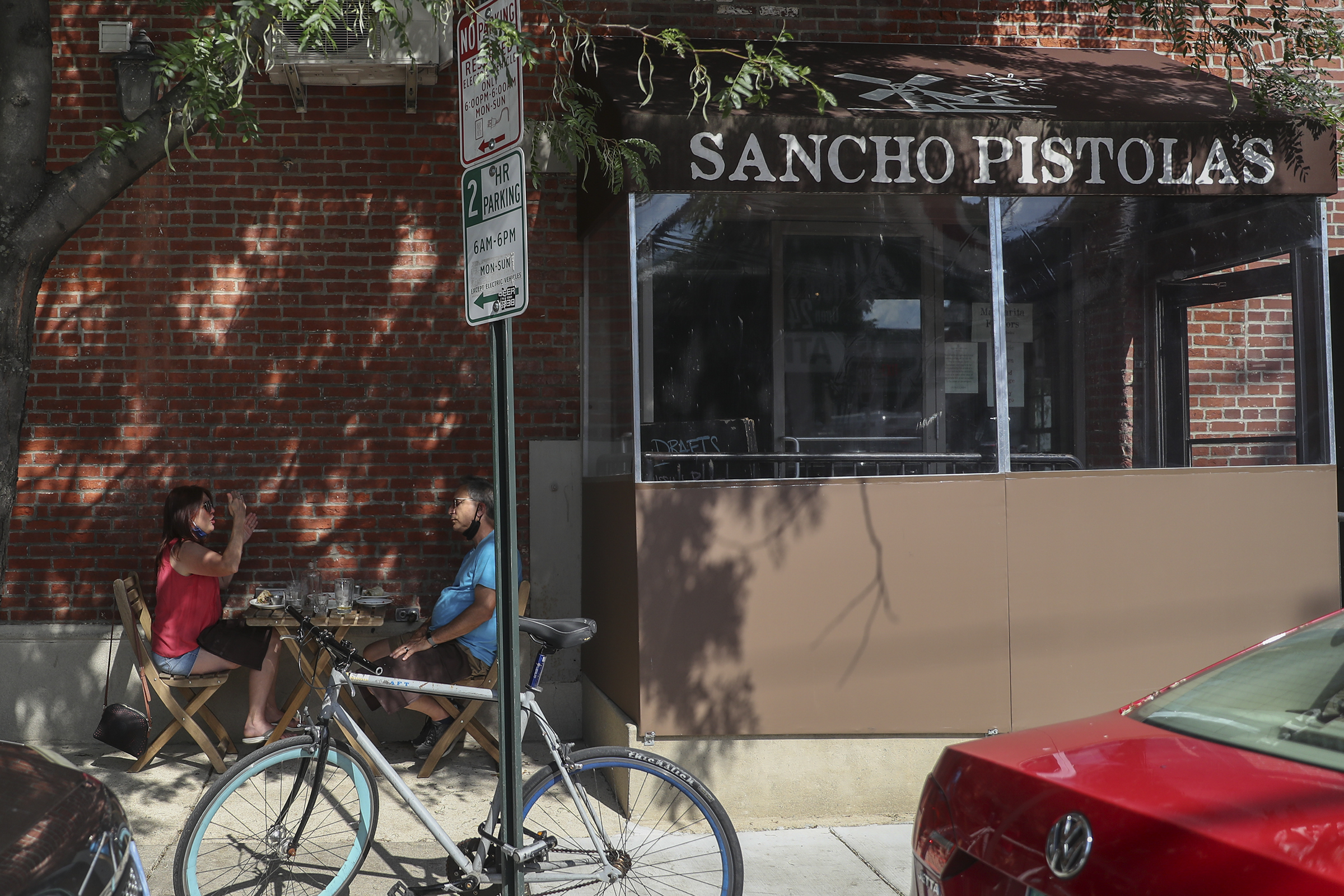
Sancho Pistola’s in Fishtown, which opened in 2014, is not affected by the Center City closing.Heather Khalifa / Staff Photographer
The closing does not affect Sancho Pistola’s on Girard Avenue in Fishtown, which opened in 2014, or Pistola’s Del Sur on East Passyunk Avenue in South Philadelphia, which opened in 2017. They are doing well, Gunn said. “They’re in no danger of going anywhere.”
In 2009, court records show, the City of Philadelphia, which owns PGW, obtained a judgment of nearly $48,000 against Jose Pistola’s. According to a 2025 court docket entry, the judgment was never satisfied. A PGW spokesperson on Friday declined to comment, saying it does not share information about individual accounts.
Gunn, saying that he did not want to blame PGW, said the interruption forced a decision that he and business partner Casey Parker had already been contemplating.
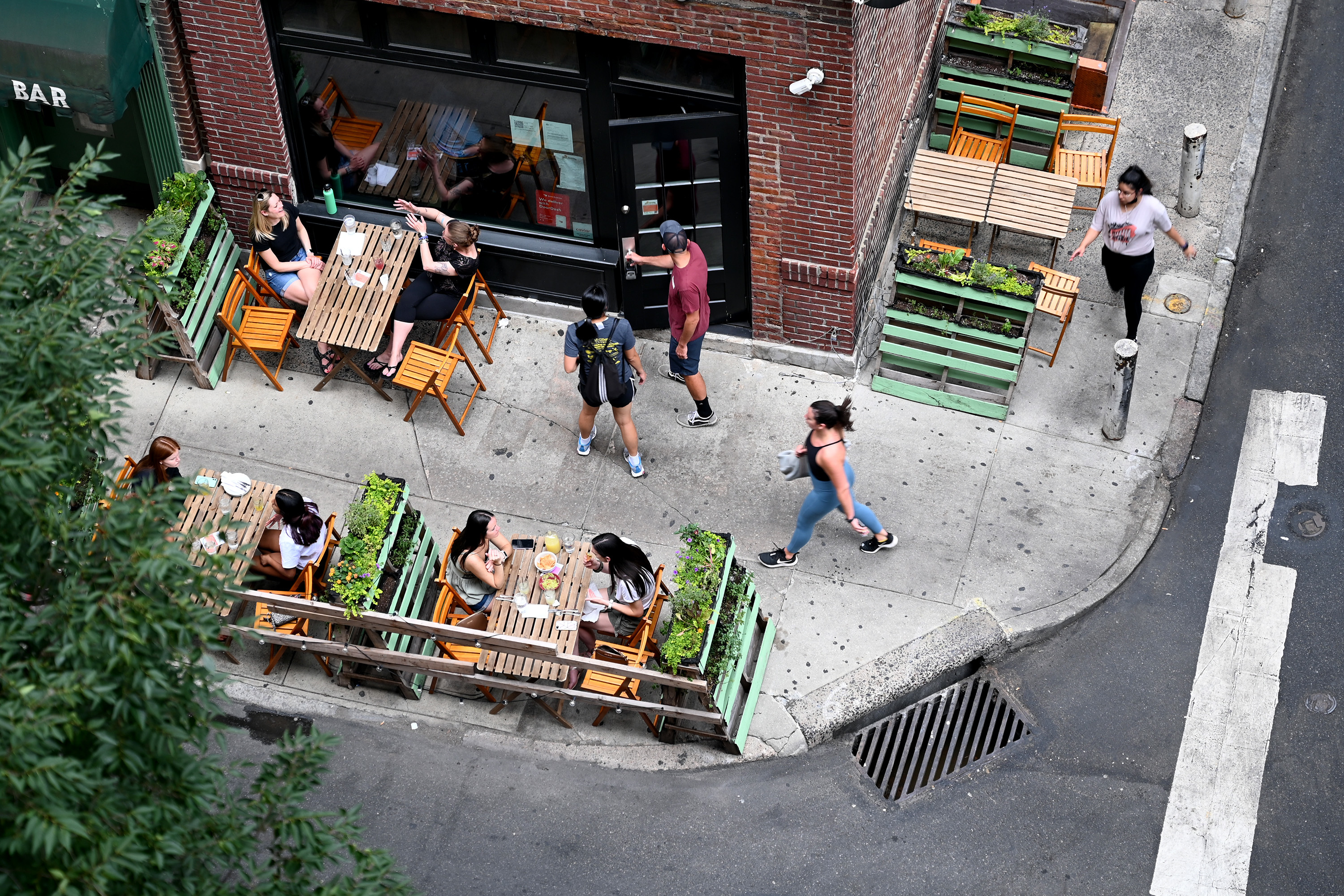
A view of Jose Pistola’s pandemic-era outdoor seating at 15th and Manning Streets in 2021. Tom Gralish / Staff Photographer
Gunn said they had about a year remaining on their lease and had been discussing a five-year renewal with their landlord. But with both Gunn and Parker now 51 and their children getting older, he said another long commitment seemed increasingly daunting. “It takes a lot of energy to play that game,” Gunn said.
The numbers were difficult, too. As other bar and restaurant owners have lamented, higher food and operating costs had squeezed the business, while the late-night trade that once helped sustain bars like Pistola’s has diminished.
“Frankly, [the bar] just never fully recovered from COVID,” Gunn said. “Coming out of COVID, the world was a different place — the price of goods, the cost of everything, and people don’t go out as much late. These younger generations are too smart to drink their life away.”
“It’s always been tight, but everything changed,” Gunn said. “And then people just don’t drink as much.”
About 25 people worked at Jose Pistola’s. Gunn said they had little warning because the owners themselves had not decided to close until the last minute. He said he and Parker are trying to place employees at their other restaurants or with friends in the industry.
“We’ll absorb what we can, obviously, in the other two places,” Gunn said. “We have a lot of friends in the business, so we’re aggressively trying to help them.”
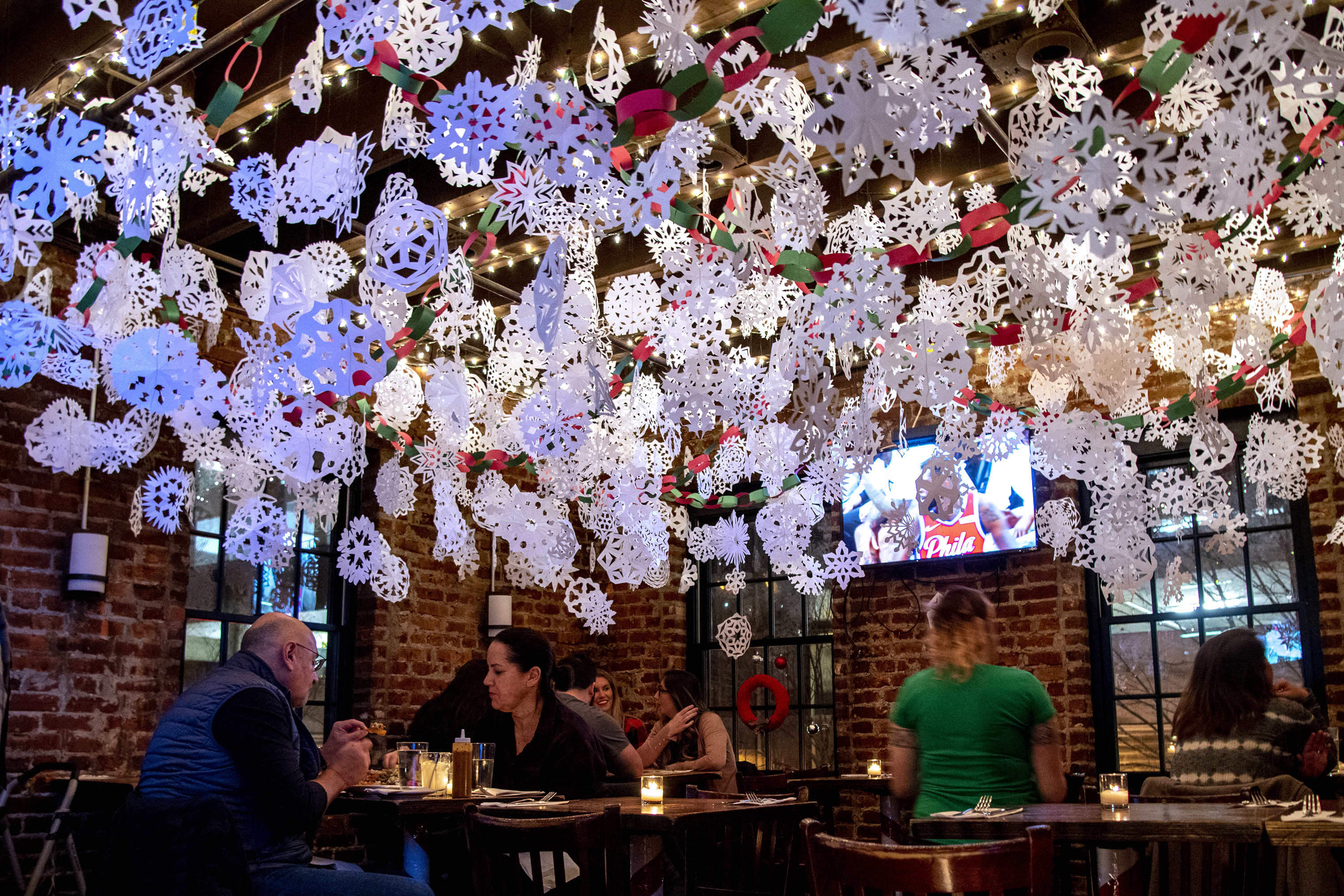
Jose Pistola’s bar, as decorated in 2019 for its annual Jose Pistola’s Christmas Smackdown Bar Crawl.Tom Gralish / Staff Photographer
Jose Pistola’s — its name a loosely licensed Spanish rendering of Gunn’s first and last names — opened Aug. 29, 2007, taking over the longtime Copa, Too! space. Gunn and Parker were both veterans of Fergie’s Pub; Gunn had worked there for about seven years before leaving to open Pistola’s, while Parker had moved on by then.
The bar quickly established itself through its combination of craft beer, Mexican-inspired food, and an irreverent neighborhood-bar atmosphere. It became particularly associated with Philadelphia’s burgeoning craft beer movement and the early years of Philly Beer Week.
Its food grew more ambitious after Puebla-born chef Adán Trinidad joined the operation and eventually became a partner. Trinidad, whose resumé included El Vez and Alma de Cuba, brought to the menu such dishes as tortilla soup, goat sopes, carnitas-filled steamed buns, and Brussels sprout tacos that caught the attention of Inquirer critic Craig LaBan.
The partners later expanded the Pistola’s name to Fishtown and East Passyunk. Trinidad died after a fall in October 2021 at age 39.
Adán Trinidad was chef-partner until his death in an accidental fall in 2021.Rachel Delsurdo / Courtesy of Jose Pistola's
For most of Jose Pistola’s run, its next-door neighbor offered a study in contrasts.
McGlinchey’s — now on the market — was a cash-only dive bar known for low prices, dim lighting, smoke in the air, and an eclectic clientele. It endured by barely changing, while Jose Pistola’s brought craft beer and more ambitious food to an equally unpretentious neighborhood-bar sensibility.
The two businesses were nevertheless close.
“We had a great relationship with them,” Gunn said. “We loved them because of how funny they were. They were just kind of cranky, and they put up with us.”
McGlinchey’s, as seen in August 2025, was next door to Jose Pistola’s.Monica Herndon / Staff Photographer
Gunn said the McGlinchey’s closure was part of a broader change he has watched on this stretch of 15th Street between Locust and Spruce Streets.
“The whole corridor used to be more vibrant,” he said. “I think COVID wiped out a lot of those places. It changed everything for us.” The block is also home to Cellar Dog and Garage Rittenhouse.
As recently as Thursday, Gunn said, he and Parker were “still fighting to figure out a way to [save] it. But it just, I think, ran out of steam.”