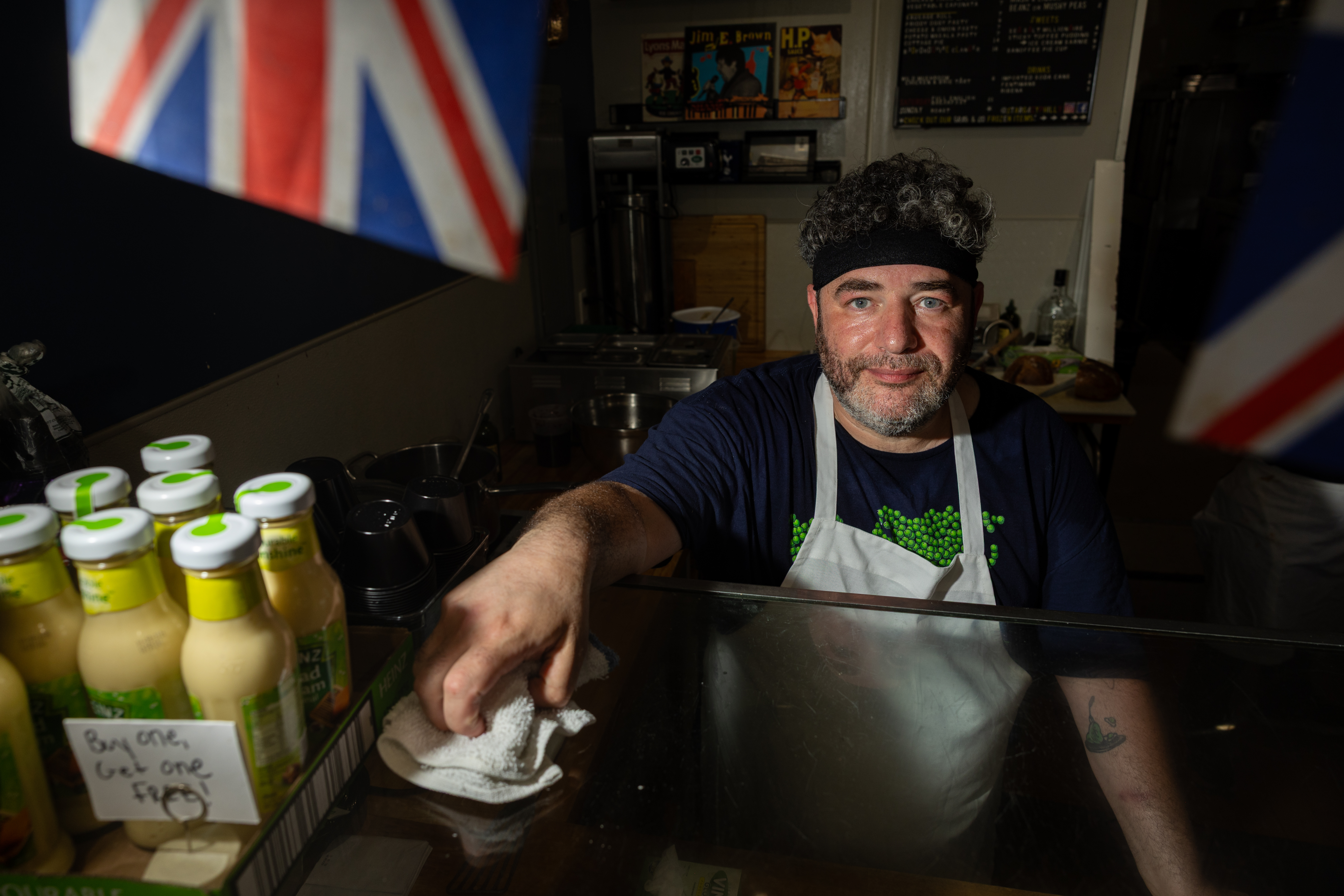
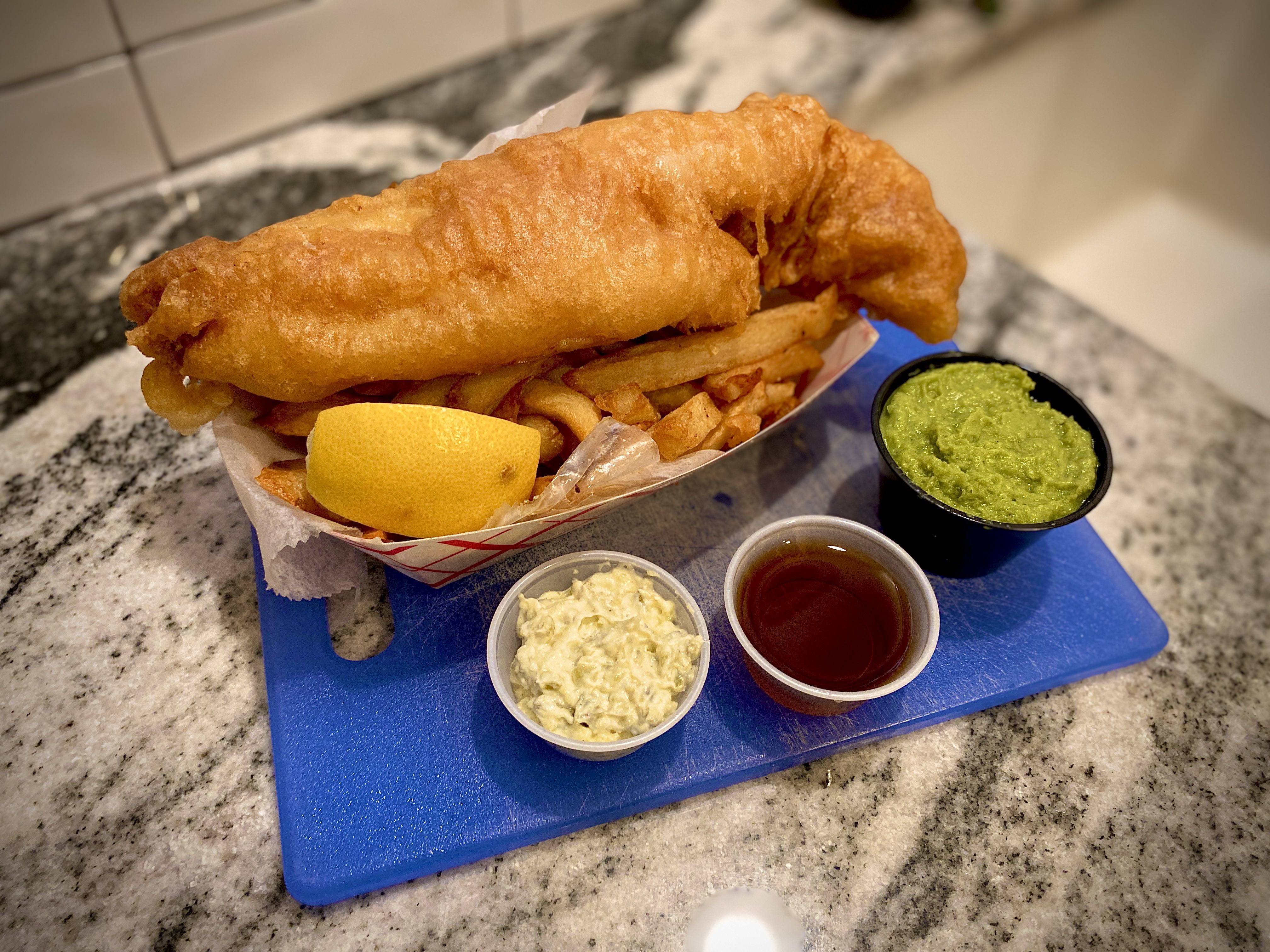
For the last eight years, Fridays at Stargazy on East Passyunk Avenue meant fish and chips, a weekly tribute to chef-owner Sam Jacobson’s East London roots.
That ended last month, when a city health inspection forced the English pie and mash shop to discontinue the special.
Stargazy had been cited twice in 2024 for operating its electric double countertop fryer without proper mechanical ventilation. But on Aug. 14, the Philadelphia Department of Public Health went further, citing the fryers as “unapproved” equipment and requiring Jacobson to submit plans for review before they could be used again. Translation: He’d need to install ventilation for his fryer if he wanted to continue slinging fish and chips.
The Friday fish and chips from Stargazy in 2021.Jenn Ladd / Staff
For restaurant owners, the consequences of an inspection can extend beyond whatever corrective action the city requires. Reports of closures, cease-operations orders, or serious violations — especially at popular restaurants — spread on social media, where the conversation often turns to claims that enforcement is unfair or not uniformly applied.
The health department disputes that contention, saying that there is no crackdown.
It’s in the process of rolling out a new Food Safety Inspection Guide, but while the format of the guide has been streamlined, the department said the underlying rules have not changed.
Inspections as a snapshot
Last month at Heavy Metal Sausage Co. in South Philadelphia, a health inspector ordered owners Patrick Alfiero and Melissa Pellegrino to remove the shop’s eight indoor seats and stop preparing food in the basement. Inspectors determined that neither activity was consistent with the establishment’s plan review, approved in 2022.
Heavy Metal had passed previous inspections, including one four months earlier, and its owners told The Inquirer the operation had not changed between the two visits.
Heavy Metal Sausage Co. owners Patrick Alfiero and Melissa Pellegrino preparing for a dinner in 2022.Yong Kim / Staff Photographer
Health officials interviewed this month said the differing outcomes illustrate a basic principle of the inspection system: Each inspection reflects only a snapshot of what an inspector observes.
During the April inspection, the department said, the inspector did not observe indoor dining or food preparation in the basement. On Aug. 21, both were taking place and could be cited.
More broadly, officials said, the absence of a citation during an earlier inspection should not be interpreted as approval of a practice.
Stargazy had been previously cited
At Stargazy, the record is different. The fryer had been cited before.
Jacobson was in England when the sanitarian — as the inspectors are known — arrived at Stargazy on the afternoon of Friday, Aug. 14. It was the same sanitarian who had cited the fryer during two inspections in 2024.
Owner Sam Jacobson cooking at Stargazy on Sept. 18, 2026. Aidan T. Gallo / Staff Photographer
“I did look back at sales reports for the day of the April 5, 2024, inspection and we had a good fish day — so the fryer was definitely on and in plain sight,” Jacobson said.
Jacobson acknowledges that the inspector told him in 2024 that the fryers were “not approved.” That point is noted on the reports. But Jacobson said he did not understand that to mean he had to stop using them.
The Health Department gave a different account to The Inquirer this month. Officials said Jacobson was verbally instructed in 2024 not to use the fryers because they lacked mechanical ventilation.
When the sanitarian found the same fryer still in use at its next inspection more than two years later, the department said, Jacobson was told to install mechanical ventilation, which would require a plan review — a lengthy process. This time, Jacobson removed the fryer in response. (Historically, the health department does not levy fines, preferring that businesses correct violations.)
Jacobson said Stargazy had never undergone a plan review when he opened in 2015 after taking over an existing bakery. He said a city employee advised him at the time to treat the opening as a change of ownership, and the restaurant passed its preopening inspection.
“We never did any alterations or construction before opening,” Jacobson said. “I simply took over the lease of an existing bakery, gave it a lick of paint and some other cosmetic touches, and opened up.”
Besides the fryer, he said the restaurant’s only substantive changes were moving the counter in 2019 to create more room in the dining room and installing a customer hand sink during the pandemic at the city’s direction.
Sanitarians have not received new instructions to interpret the code differently, the department said. The department said it has committed significant resources to uniformity training, intended to ensure that every inspector reviews the same conditions in the same way in all food businesses.
Supervisors and managers also review inspection reports, and sanitarians are not supposed to exercise individual discretion in deciding whether a condition violates the food code.
The new Food Safety Inspection Guide supports the department’s position that the underlying food-safety requirements are not new.
Deputy Health Commissioner Dawn Kiesewetter said the guide has been under development for six or seven months with the Mayor’s Office of Policy Planning and Delivery, the Commerce Department, and business and community groups. It grew out of Mayor Cherelle L. Parker’s PHL Open for Business initiative, launched in April 2024 to simplify city permitting, licensing, and other requirements for businesses.
Food businesses were an early focus. When Open for Business was announced, city officials said food businesses averaged nearly 24 government approval steps to open and operate. The administration subsequently developed multilingual food-safety materials and other guidance for operators.
The city aims to inspect every food establishment once a year but does not always meet that target, the department acknowledged. About 60 Health Department employees are authorized to inspect Philadelphia’s 10,427 food establishments, according to the department. Reinspections follow violations, while complaint inspections and investigations of possible foodborne illness take place as needed.
Staffing and complaint volume have remained relatively steady in recent years, officials said, while the number of food businesses remains below its pre-pandemic level.
When a repeat problem is ‘new’
Stargazy’s fryer was cited as a “new violation” in 2026, two years after its first citation. The department’s terminology on inspection reports can sometimes label a recurring violation as new. Health officials said that designation is automatically applied when more than a year has passed since the earlier violation.
Jacobson said it would not make financial sense for him to install the ventilation needed to resume frying. A permanent hood would require construction, he said, while a freestanding ventless system could cost more than $20,000.
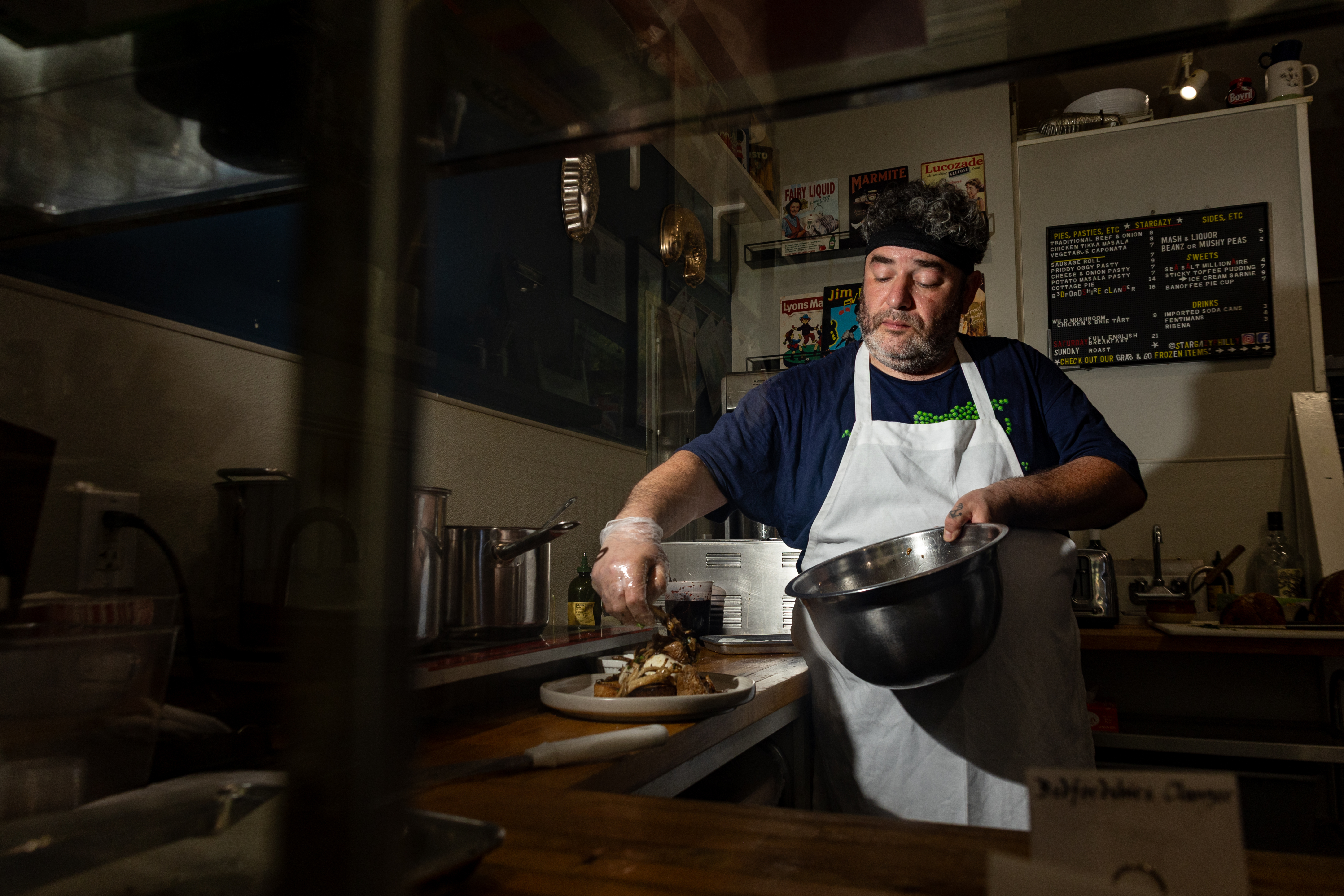
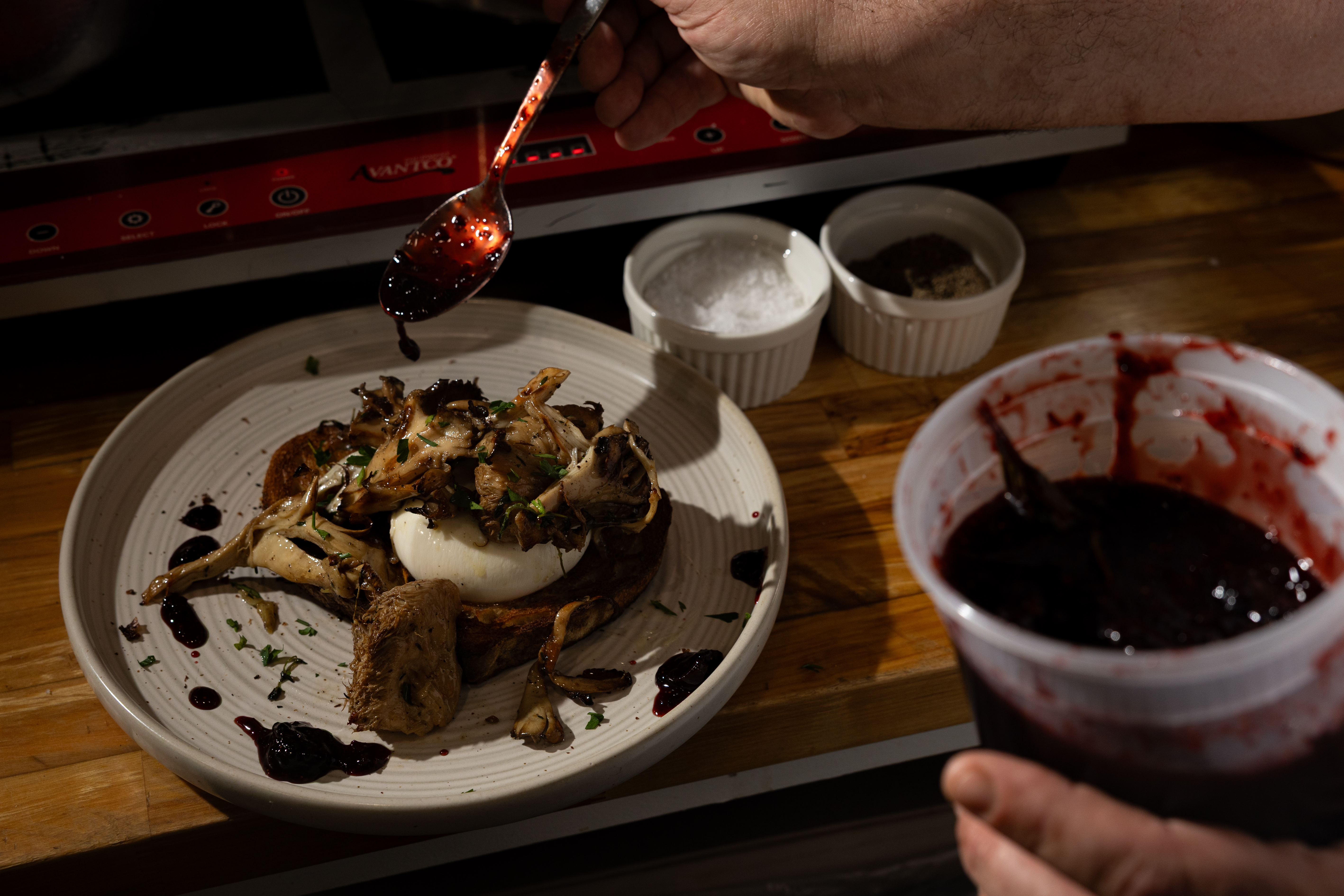
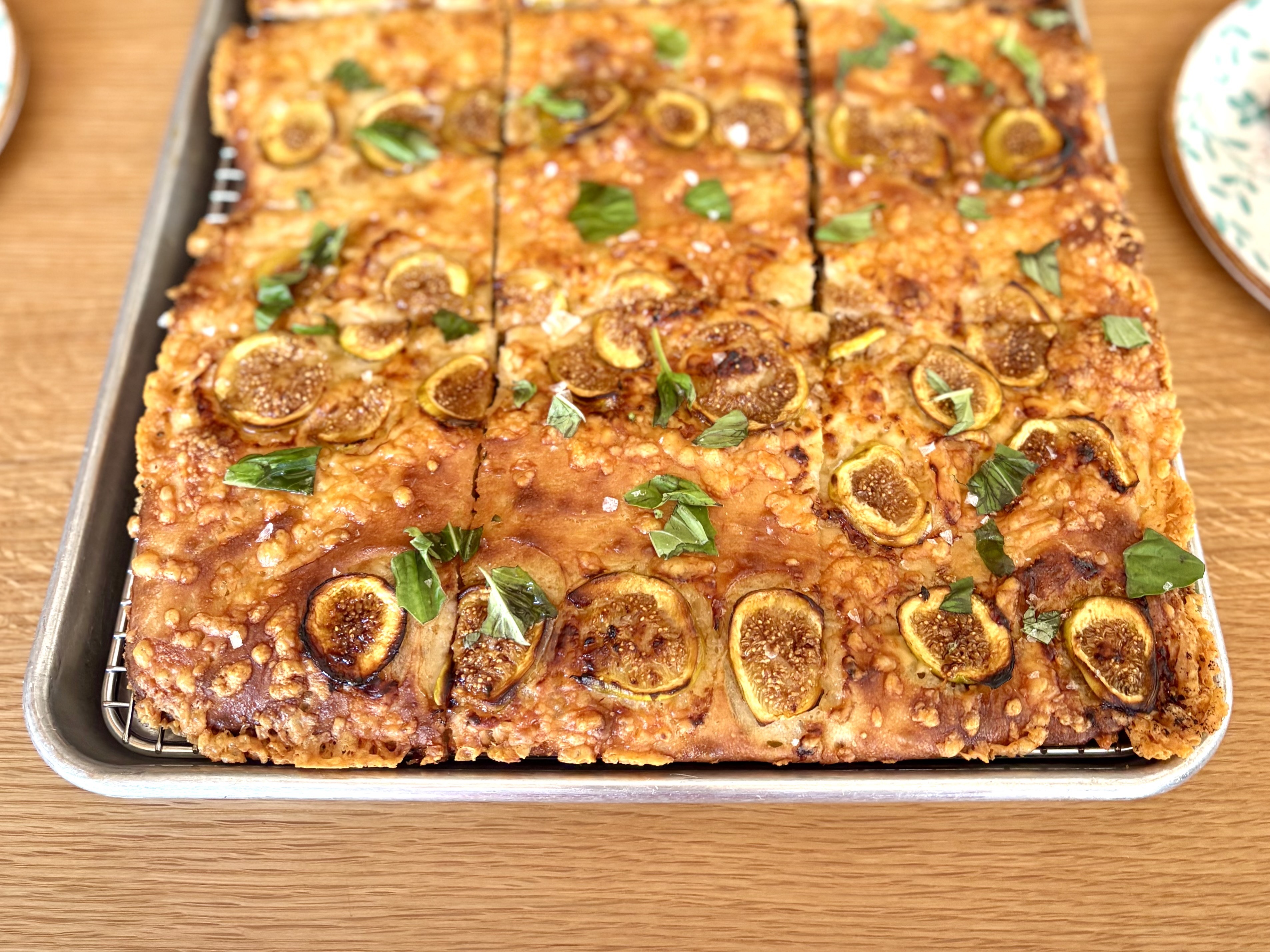
Stargazy owner Sam Jacobson adding blackberry and fig sauce to his wild mushroom burrata toast, a substitution for his fish fry.Aidan T. Gallo / Staff Photographer
Since removing the fryer, he is considering longer hours and fish-and-chips pop-ups elsewhere to replace some of the lost sales. On Fridays, he has been offering specials that do not require a fryer, including wild mushroom burrata toast.
The city says one purpose of the new guide is to reduce the likelihood of surprises during an inspection.
“The more they understand what they need to do, the more likely they’ll pass,” the Health Department said in a statement. “Our number one goal is to ensure that food businesses can stay open safely.”
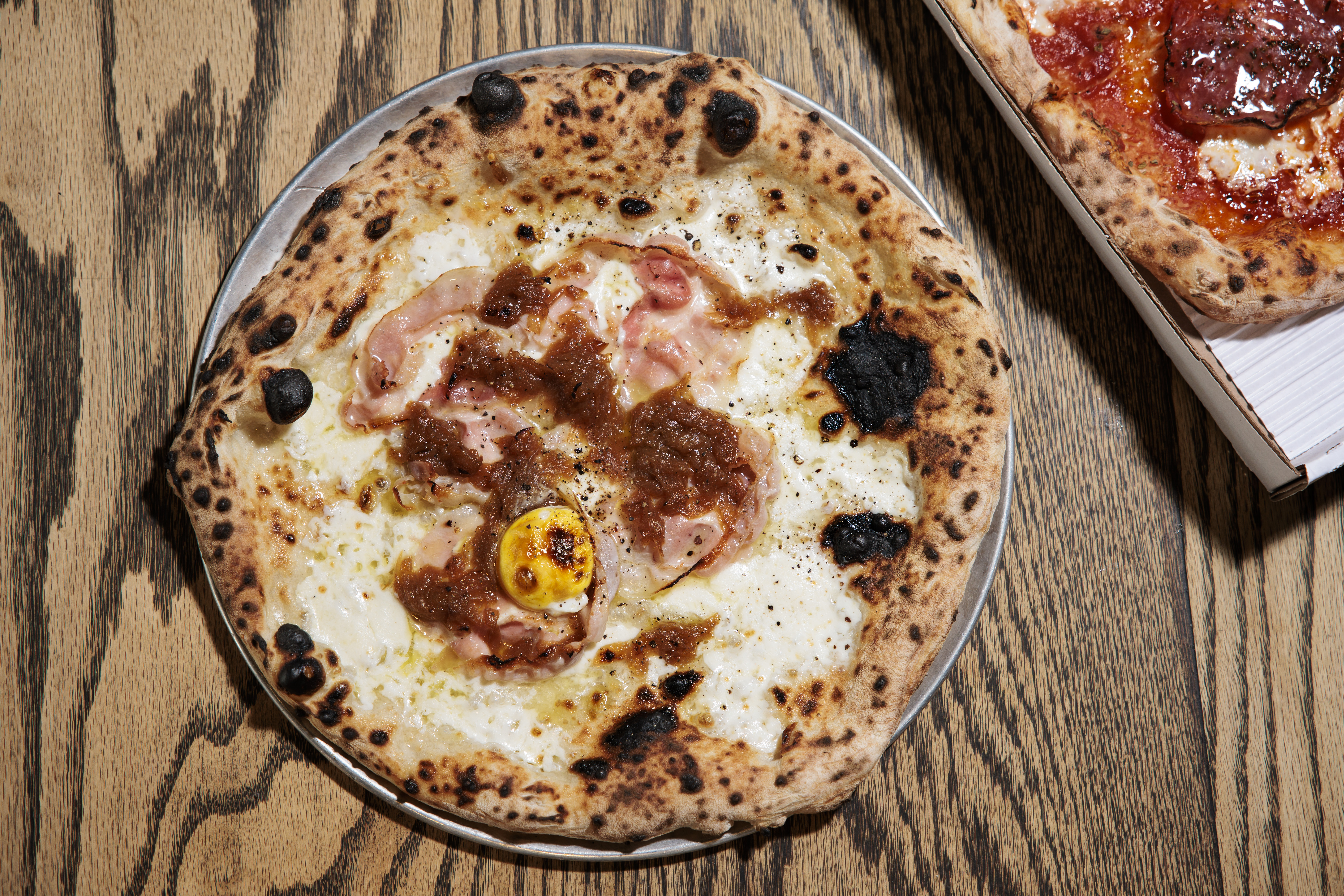
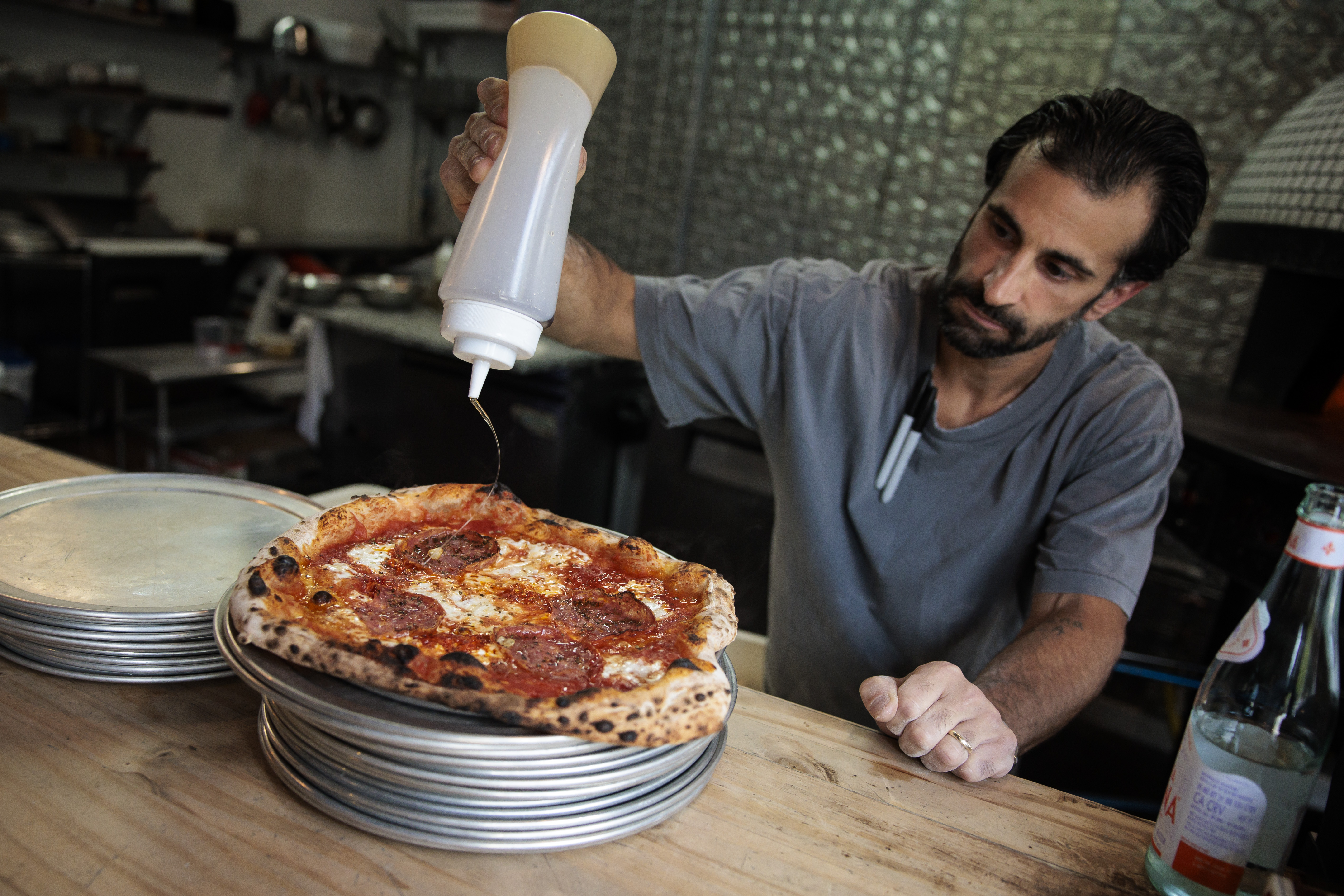
“The suburbs are a really tough place to get attention,” pizzaiolo Roberto Carollo was telling Jenn Ladd at his shop, Spuntino, in Doylestown’s Main Street Marketplace. Jenn says his puffy, leopard-spotted Neapolitan pies are worth your time, wherever you may be.
Which got me to thinking about our recent pizza recommendations:
🍕 In Crust We Trust celebrates celebrates Black culture in Fishtown.
🍕 Waltz’s 800-degree wood-fired oven turns out tastiness in deep South Philly, per Craig LaBan.
🍕 Barclay Pies in Cherry Hill sets a new standard for gluten-free pizza in the Philly, Craig also writes.
🍕 Dave Portnoy of the influential One Bite Pizza Reviews visited at least five area pizza shops and seemed to like them all.
🍕 And there are more are on the way, including the Buttery in Northern Liberties, Alessandro’s Enoteca in Bryn Mawr, the Garden by Pieri Winery in Conshohocken, Martini & Roz in Wayne, and Pizzeria Cusumano in Collingswood. They’re among five dozen new restaurants due to open this fall.
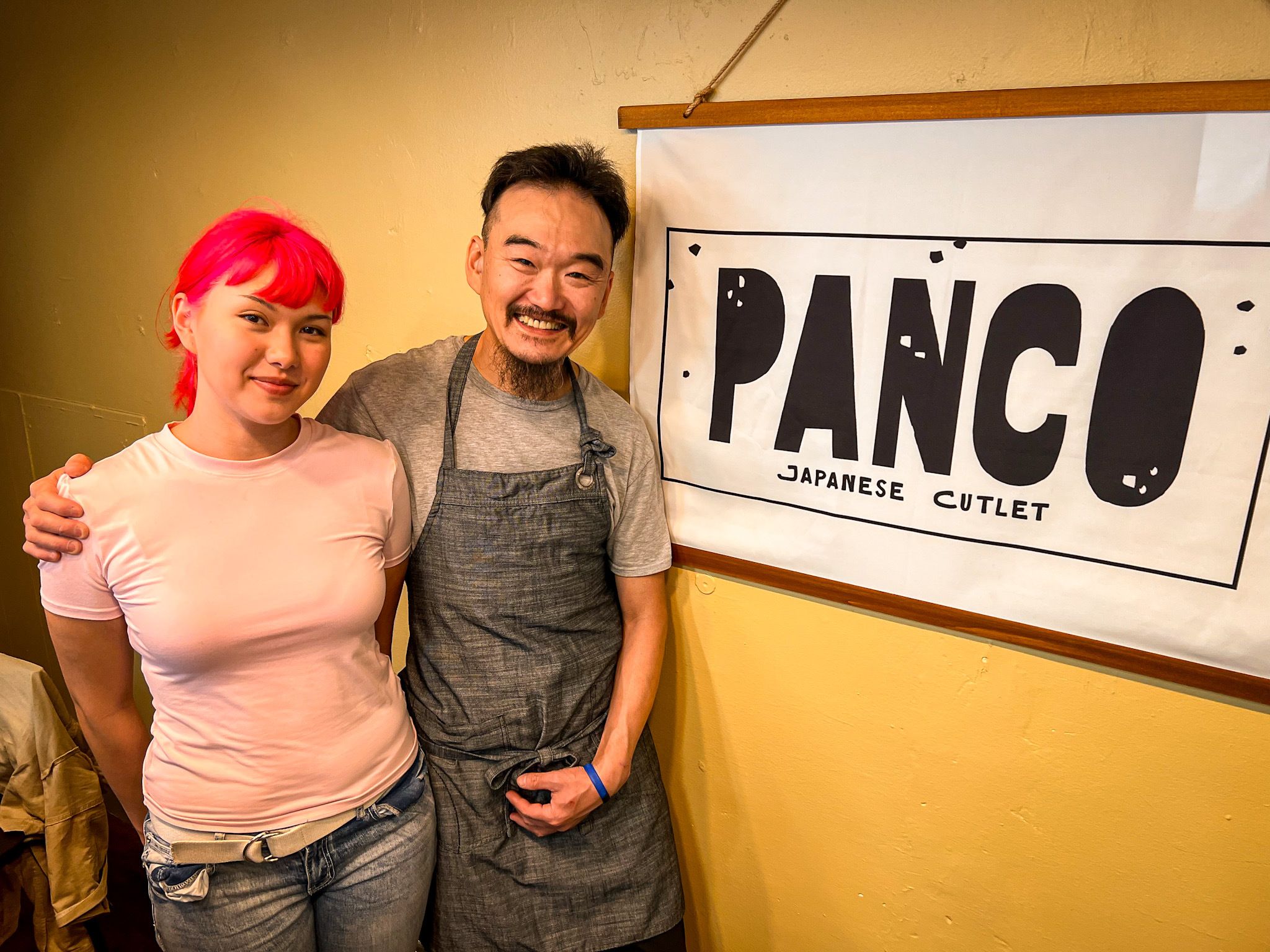
Chef Ryo Igarashi, who’s cooked everywhere around here over the last 25 years, is behind Panco, a Japanese comfort-food takeout spot in West Passyunk. Cutlets are his calling card.
Cecilia, a sprawling, stylish restaurant from the team behind the Blue Bell Inn, is just days old in Bridgeport. It’s designed for locals as well as the greater Norristown/King of Prussia corridor.
When Sue’s Produce Market in Rittenhouse shared word that it was struggling, the community jumped in to support. While I visited to report this story last week, a neighbor walked in and handed a $100 bill to owner “Tina” Shin. The GoFundMe is closing in on its $40,000 goal.
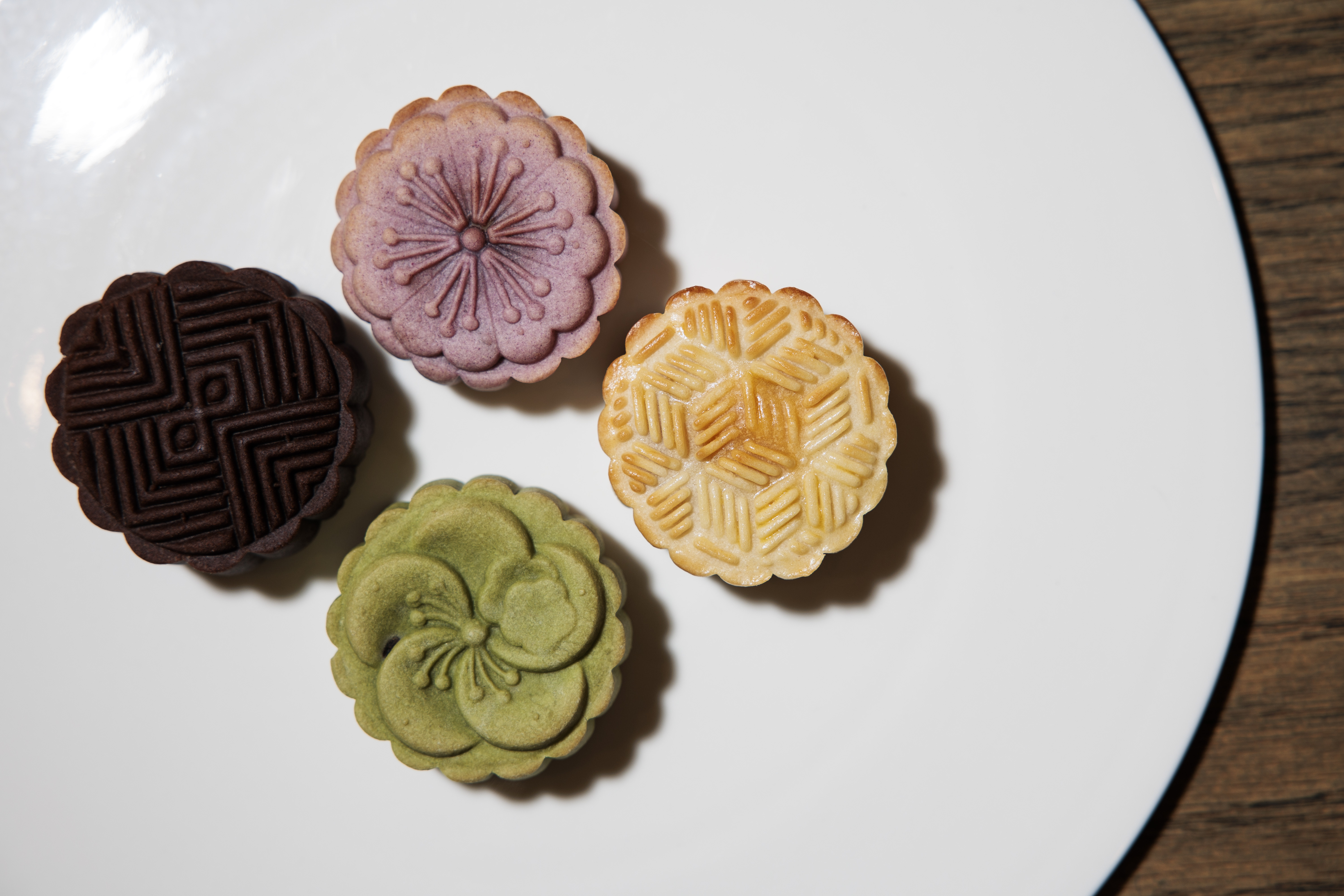
Mooncakes, but make them 2026: Kiki Aranita stopped at A La Mousse, where Anna Chen is giving the Mid-Autumn Festival staple a playful spin with Dubai chocolate, Hong Kong milk tea, purple sweet potato, and other decidedly nontraditional flavors.
Scoops
Scarlet on Pine will be a Euro-style cafe and wine bar coming to Washington Square West next spring. Beth DeBruyn recently bought the building at 1108 Pine St., which last housed an art gallery across from Louis I. Kahn Park. With about 50 seats, she plans to serve coffee, viennoiserie, and lunch during the day, then transition to wine-bar service at night. There’s also a brick rear patio. DeBruyn’s husband, Chris, who works in construction and has about 20 years of hospitality experience, is also involved. DeBruyn, 60, who has a public-finance background, was a stay-at-home mother who started her food career as an empty-nester. She trained at the Institute of Culinary Education in New York, did stints at Irwin’s, Dirt Candy, Rosemary, and High Street, and previously ran a cottage-baking business called Cakezilla. “When I left Rosemary, it happened to coincide with a time in my life when I could do something like this,” she said. “My dad passed away and left me some money, my kids were grown, and I had both the time and the resources to try to do something on my own.”
Esposito’s Porchetta in South Philadelphia is going hog wild: an expansion to their shop at 10th and Mountain Streets, yielding a walk-in sandwich shop next door in early 2027. Jules Esposito Jr., 38, said he’ll move porcine production into the adjoining former apartment building and convert the current shop to retail, where he’ll sell porchetta — the slow-roasted, Abruzzese-style boneless pork found at block parties — as well as roast beef sandwiches, meats by the pound, and a small selection of homemade and imported specialties. The business traces its roots to Esposito’s grandfather, Elia, himself a second-generation meat man who arrived from Italy in the early 1950s. In 1985, Esposito’s father, Jules Sr., bought the former bakery that became the shop. (The Espositos are cousins of A. Esposito Meats in the Italian Market.) “Everybody has always asked us to make sandwiches,” Esposito said, “and here we are.”
Restaurant report
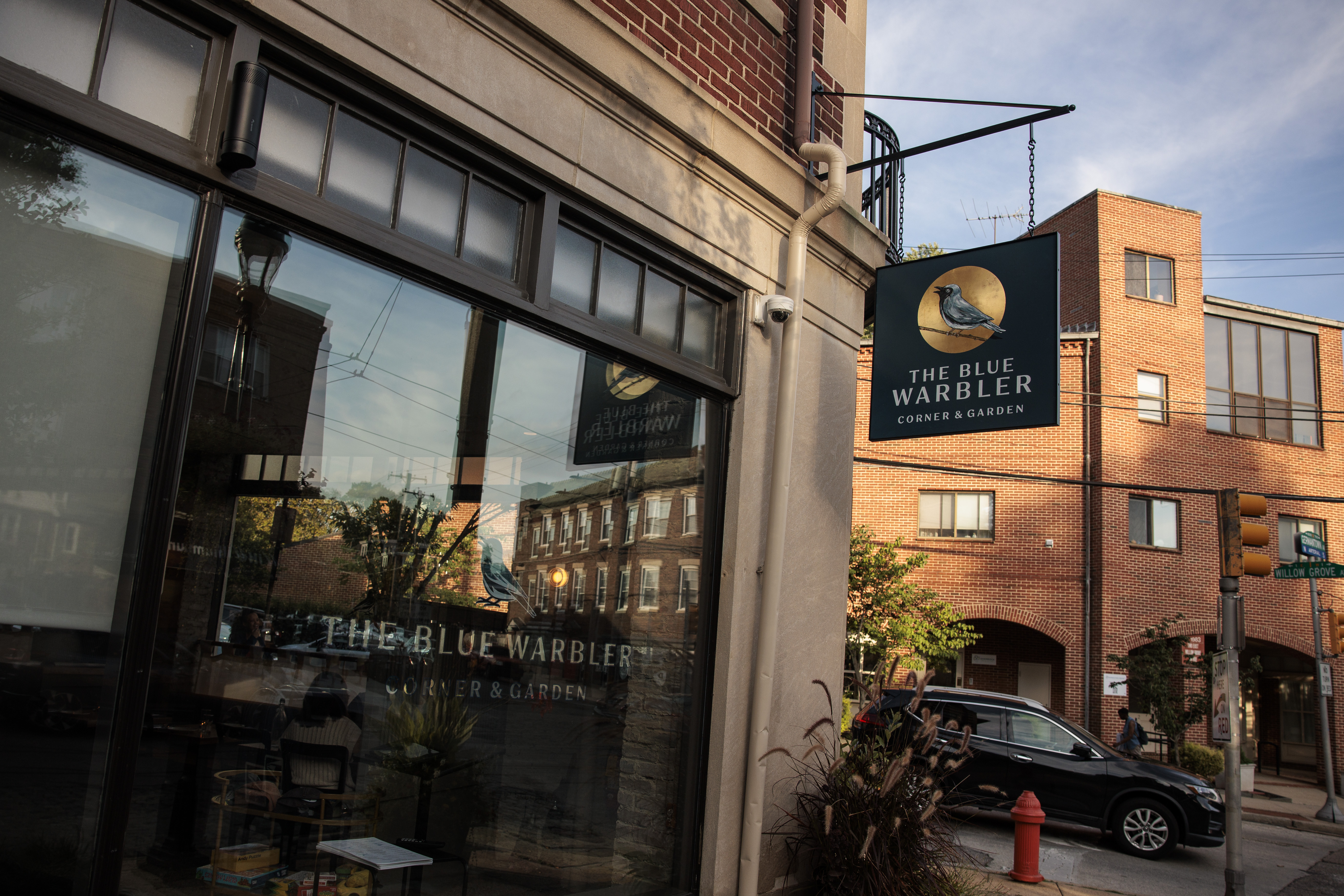
Craig LaBan has long felt that Chestnut Hill’s dining scene was underperforming. Then he visited the bustling Blue Warbler, where the globe-hopping, meat-free menu may be just what the neighborhood needs.
Focaccia Affair, co-owned by a scion of the Santucci square-pizza family, is turning out sandwiches at Barstool Sansom, the Center City sports bar, as well as Fishtown’s Cannonball, where you can eat while gawking at classic cars.
P.J. Whelihan’s has opened in Pike Creek Shopping Center in Wilmington; it’s the Westmont, N.J.-based group’s first restaurant in Delaware and its 27th overall.
Briefly noted
Shay’s Steaks’ 2½-year run at 16th and Race Streets will end today with a food-and-beverage giveaway from 5-7 p.m. Scott DiClaudio, the judge whose wife is listed as the owner, said the shop expects to relocate nearby. Its departure settles an eviction case with its landlord at Franklin Tower Residences.
Fishtown Seafood x Hi-Lo Taco: Fishtown Seafood and Hi-Lo Taco will mark National Lobster Day with a lobster roll pop-up from 4-7 p.m. Friday at Hi-Lo Taco, 1109 Walnut St. Fishtown Seafood lobster rolls can be preordered in advance, with a limited number also available to walk-ins during the pop-up. The menu also includes Hi-Lo’s Tostilocos ceviche and mango margarita gelati.
Sixers legend Julius Erving will sign prepurchased bottles of American Harvest organic vodka at 2 p.m. Saturday at the Fine Wine & Good Spirits store in Ardmore Plaza. Bottles will go on sale when the store opens at 9 a.m., purchase is limited to two bottles per customer, and the PLCB says Dr. J will not sign any additional items.
Queen & Rook Fantasy Faire Block Party: Queen & Rook Game Cafe’s free Fantasy Faire takes over South Street between Front and Second Streets from noon to 8 p.m. Saturday. More than 40 fantasy and craft vendors will join sword-fighting and fire performances, quests, tarot readings, and other activities. Food and drink will include soft-pretzel swords and potion shots.
Lovat Square, the Chestnut Hill wine shop, will mark Sunday’s Chestnut Hill Fall for the Arts Festival from 11 a.m. to 6 p.m. with a lamb roast from Erdenheim Farms. Sandwiches will be served on Downtime Bakery rolls; a vegetarian option will pair roasted squash with house ricotta, pomegranate, pine nuts, and radicchio on Downtime focaccia. Other locals will be involved, including Human Robot pouring its Hallertau pilsner and Tmavy Czech-style dark lager, whileLocal Operator will handle fancy wines by the glass.
❓Pop quiz
Amaryllis Rivera Nassar of Amy’s Pastelillos has won a partnership, valued at $250,000, with a Philadelphia sports team. Which?
I know that the Rittenhouse Hotel is getting a steakhouse next year. Where does that leave RJ Smith and his supper club? — Howard S.
Just as your question reached my inbox, I got word that Smith’s Ocho Supper Club residency is sticking around indefinitely at the Rittenhouse Hotel. The 22-year-old Drexel grad is offering his six-course, $160 Afro-Caribbean tasting menus at 5 and 8 p.m. on select Sundays in the Lacroix dining room. Sample dishes: Trinidad doubles, oxtail festivals, madai with hibiscus aguachile, mole negro, scallops, and lamb saddle. Ocho is also expanding beyond the tasting menu to include à la carte dishes downstairs at Bar 210, including escovitch mussels, crab tostadas, braised oxtails, jerk-spiced New York strip, and curry lamb, with several dishes also available through hotel room service. Atlas Restaurant Group, which owns Center City’s Loch Bar, is moving ahead with its planned 2027 opening of Ruxton steakhouse in the Rittenhouse’s former Scarpetta restaurant space.
📮 Have a question about food in Philly? Email your questions to me at mklein@inquirer.com for a chance to be featured in my newsletter.
By submitting your written, visual, and/or audio contributions, you agree to The Inquirer’s Terms of Use, including the grant of rights in Section 10.
After 25 years in restaurant kitchens around Philadelphia, Ryo Igarashi was burned out. He left the business, started driving for Uber, and kept thinking about a different kind of restaurant: a tiny place he could largely run himself.
“In Japan, a one-man operation is a real thing,” he said. “You’ll have ramen shops and little places where one person basically runs everything.”
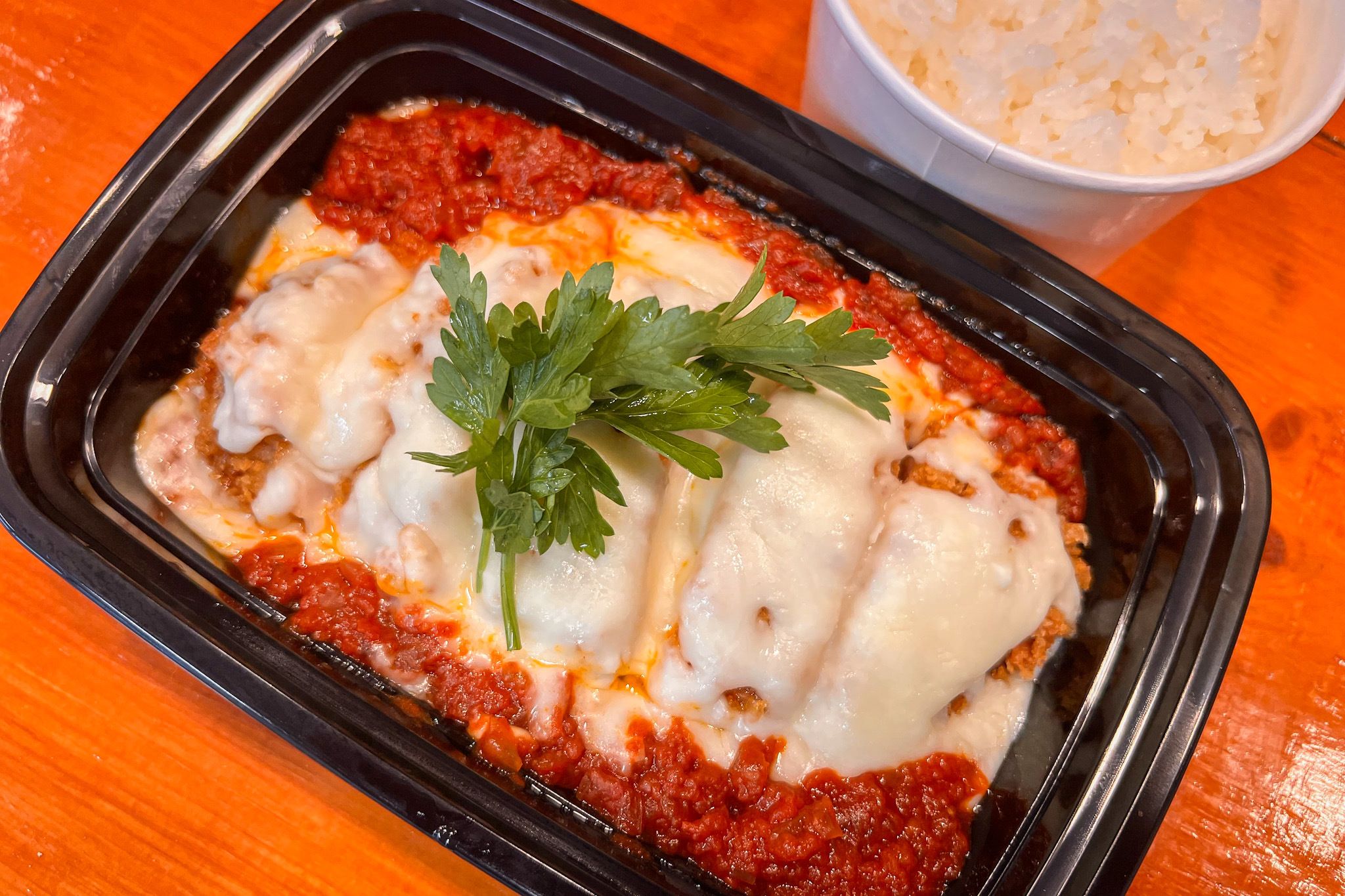
Katsu parmesan at Panco, 2300 S. Croskey St., on Sept. 20, 2026.Michael Klein / StaffKatsu curry at Panco, 2300 S. Croskey St., on Sept. 20, 2026.Michael Klein / StaffCrab cream croquettes at Panco, 2300 S. Croskey St., on Sept. 20, 2026.Michael Klein / StaffOctopus sunomono at Panco, 2300 S. Croskey St., on Sept. 20, 2026.Michael Klein / StaffChef Ryo Igarashi with his daughter, Maya, at Panco, 2300 S. Croskey St., on Sept. 20, 2026.Michael Klein / StaffBeverages at Panco, 2300 S. Croskey St., on Sept. 20, 2026.Michael Klein / Staff
That idea became Panco, the Japanese comfort-food takeout spot Igarashi soft-opened last weekend in West Passyunk. The kitchen is tiny, and the operation is deliberately lean, with his daughter, Maya, a high school senior, working the counter.
Igarashi wants to see what catches on from his yoshoku-style menu before expanding. “I don’t want to become that person who just keeps adding more and more because we can sell more,” he said. “I really want to test the market.”
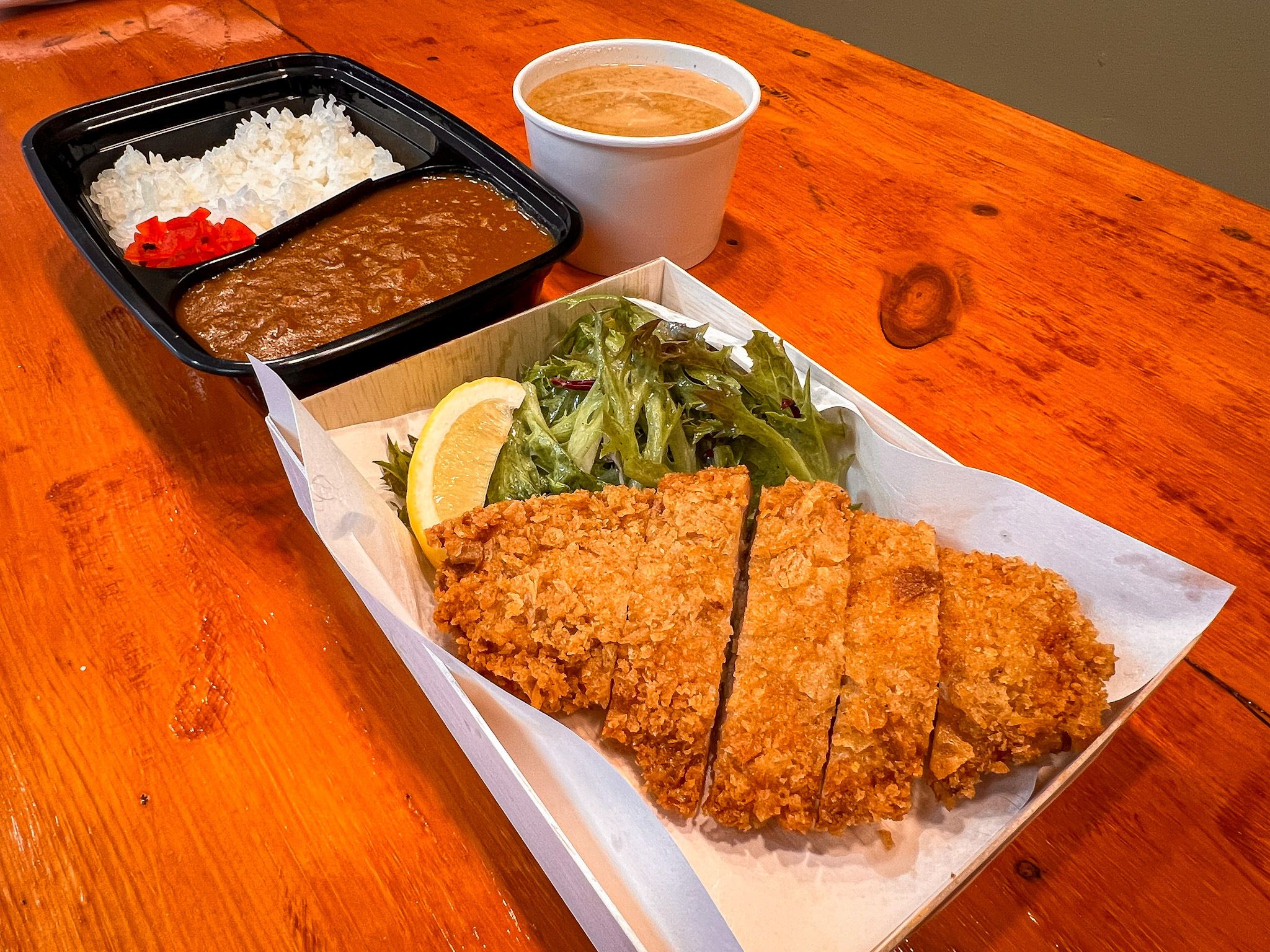
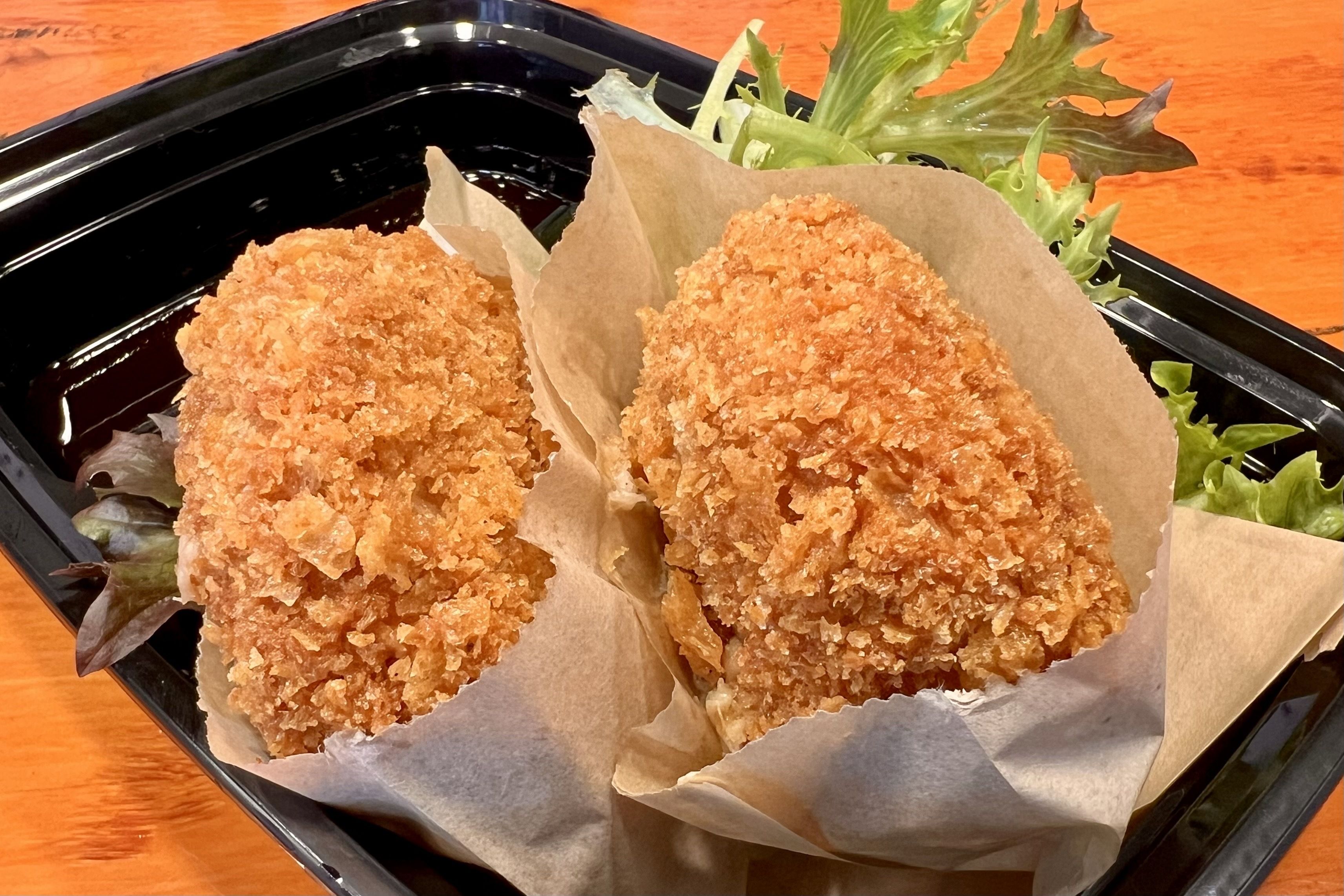
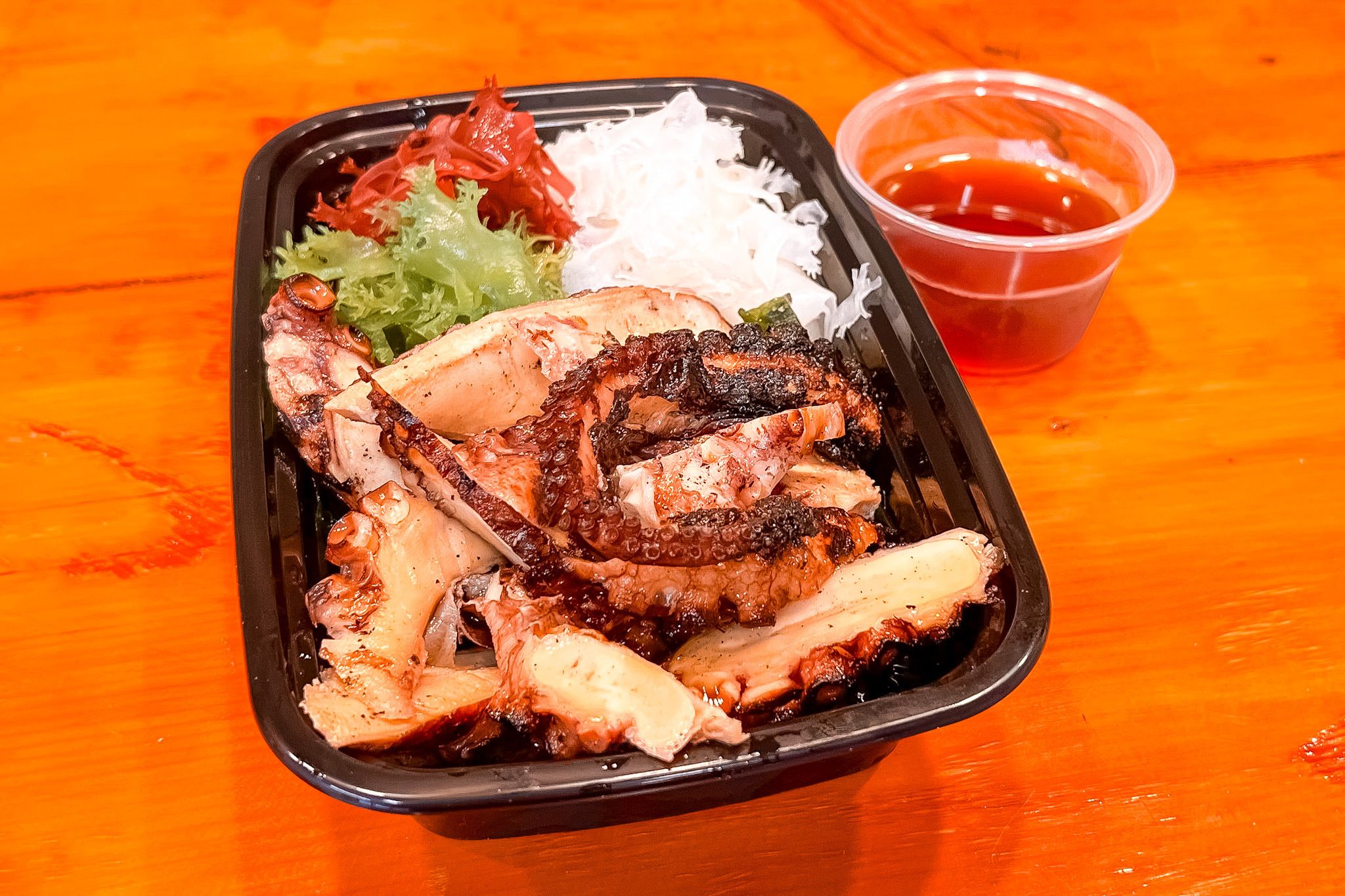
There’s cold octopus sunomono marinated in sanbaizu, fried jumbo shrimp, and crab cream croquettes with demi-glace to start. Then there’s katsu, Japan’s adaptation of the cutlet: At Panco, chicken, pork loin, or soy-marinated eggplant and tofu are breaded in house-made panko. Igarashi serves them plain, or as katsu curry, with vegetable miso, rice, and pickles; katsu-don, over eggs and rice; or katsu Parmesan, essentially a Japanese take on chicken parm. (This is South Philly, after all.) Mains top out at $22, while appetizers run about $10.
Katsu curry at Panco, 2300 S. Croskey St.Michael Klein / Staff
Dessert is flan with caramel, candied sourdough crumb, and Chantilly — essentially purin, Japanese pudding.
Panco had been in Igarashi’s head since the pandemic, but his restaurant career goes back to 2001. The Tokyo-born Igarashi moved from Seattle to Philadelphia and enrolled at Community College of Philadelphia. He knocked on the door at Hikaru in Queen Village looking for work, starting as a dishwasher before moving up in the kitchen.
His resumé eventually included Raw, Fuji Mountain, Distrito, Amada, Morimoto, and Laurel. At Distrito and Amada, he learned high-volume cooking; at Morimoto and Laurel, he moved further into technique and fine dining. His last major job was as executive sous chef at the thousand-seat Liberty Point on Penn’s Landing.
Panco is intentionally the opposite: small menu, small kitchen, small staff. Igarashi said he wants to bring the same deliberateness to a restaurant category that often gets the short shrift.
“In Japan, takeout food is a really well-established market,” he said. “I’m trying to bring some of that idea here.”
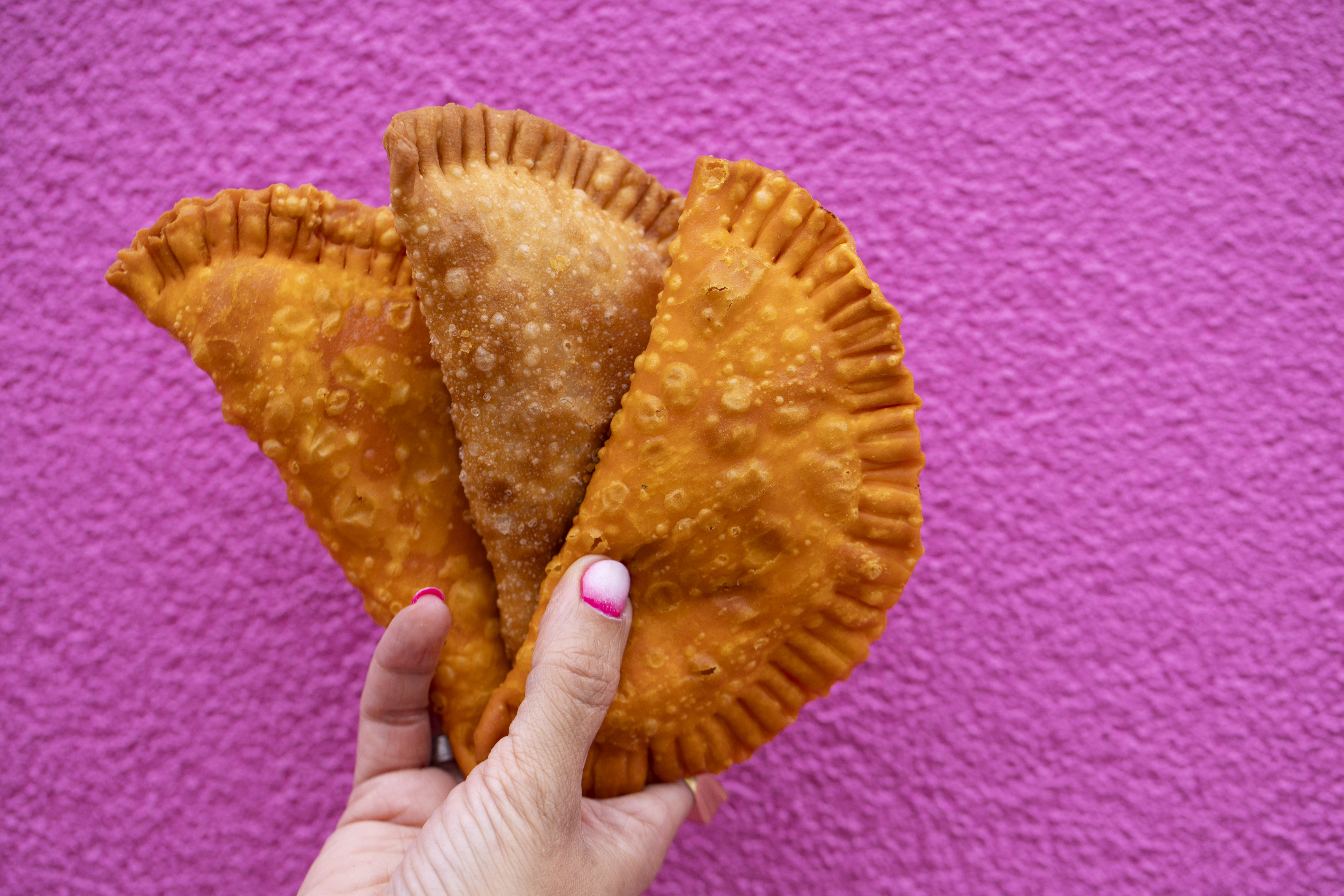
Every week, Amaryllis “Amy” Rivera-Nassar hand-shapes and deep-fries around 2,000 pastelillos at her Fishtown takeout joint, Amy’s Pastelillos.
Rivera-Nassar opened the bright pink storefront at 2001 Memphis St. in 2024 after spending years as the neighborhood’s “pastelillo lady,” selling the Puerto Rican turnovers — filled with classic chicken stew, guava BBQ pork, and truffled mushrooms, among others — via pop-ups. But 2026 is the year things really started to click.
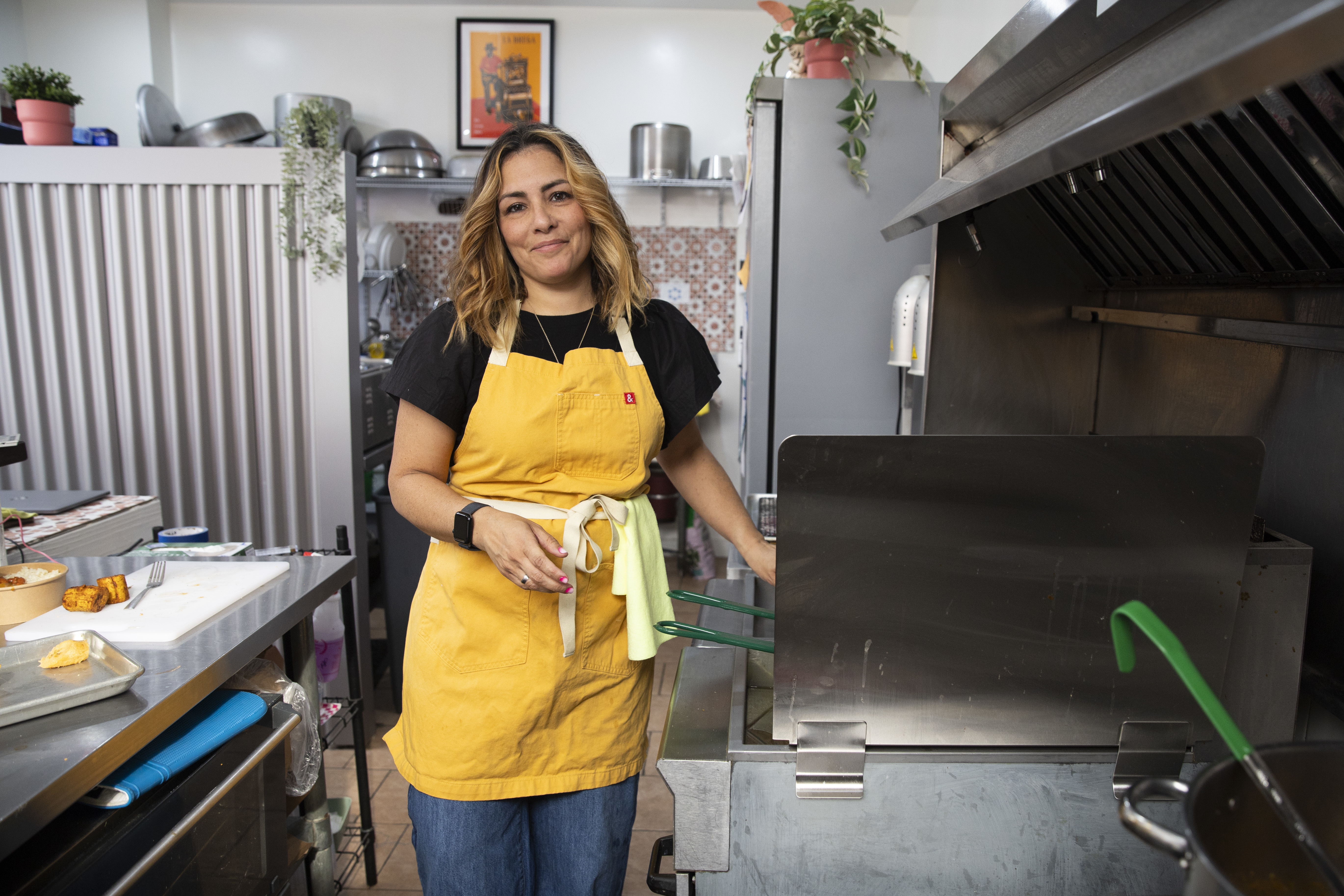
The only hitch: Rivera-Nassar says she’s running out of room to keep up. Her kitchen barely has enough space for two burners, two fries, a pair of fridges, and an oven.
“It’s like a little tiny shoebox. We do so much with so little,” Rivera-Nassar said.
Luckily, Rivera-Nassar now has a big team in her corner: This week, the Philadelphia 76ers and Bank of America announced that Amy’s Pastelillos won the Enrich Program competition, making the takeout shop an official Sixers partner for the upcoming NBA season.
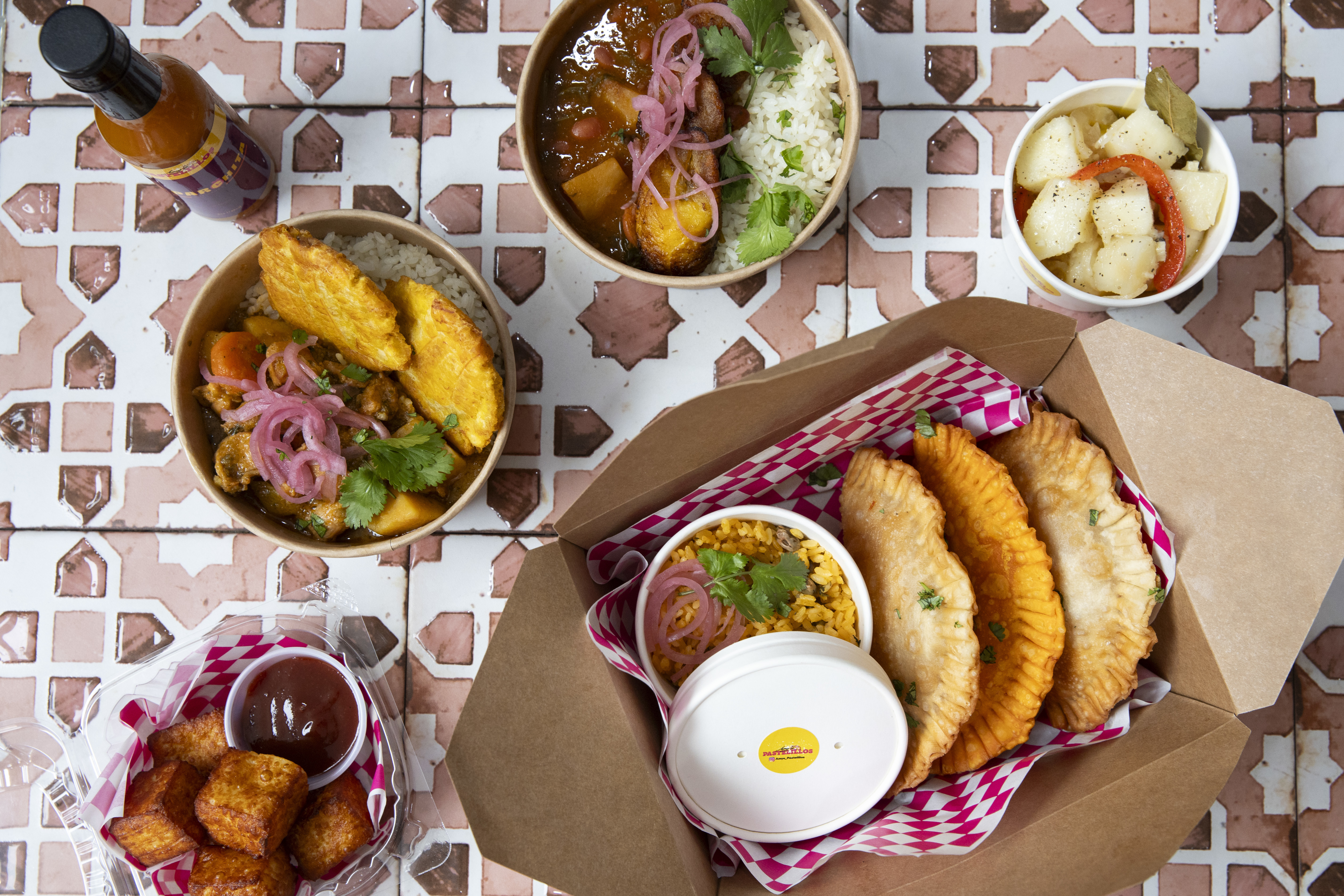
A spread of dishes including pastelillos at Amy’s Pastelillos, now an official partner of the Philadelphia 76ers for the 2026-27 NBA season.Monica Herndon / Staff Photographer
The prize package is valued at approximately $250,000, and includes a year of marketing support, business consulting, and strategic networking from both Bank of America and the Sixers. As an official partner, Amy’s Pastelillos brand will be promoted to 76ers fans through a mix of TV, social media, and radio ads, plus appearances.
The opportunity, Rivera-Nassar said, couldn’t have come at a better time.
“I had been spending all year trying to secure support and funding for my business, and had been getting constant ‘nos,’” she said. “I just can’t believe that we won.”
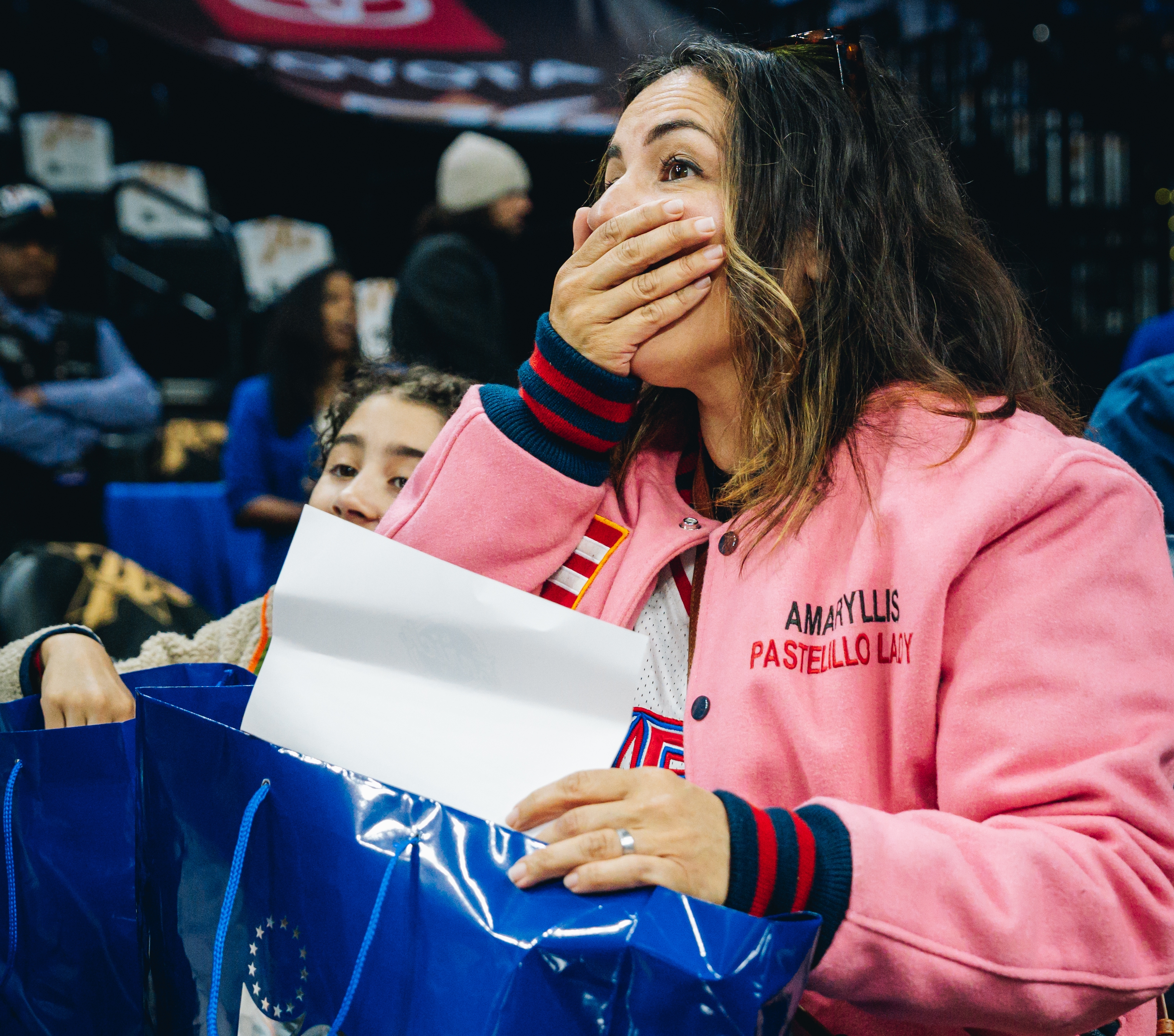
Amaryllis “Amy” Rivera-Nassar, owner of Amy’s Pastelillos, found out her business was an Enrich Program winner during Game 4 of the Sixers playoff series against the Boston Celtics at the Xfinity Mobile Arena.Courtesy Philadelphia 76ers
Bank of America and the Sixers started the Enrich Program during the 2020-21 basketball season as a way to uplift small, local, and underrepresented business owners in and around Philly. Previous winners include East Falls coffee shop Thunder Mug Cafe and the late Charisse McGill’s Lokal Artisan Foods, the brand behind the popular French toast bites stands previously located at Spruce Street Harbor Park and the Christmas Village.
The program is competitive: 175 businesses applied earlier this spring, a Sixers spokesperson said via email. After submitting an application detailing their growth plans, selected business owners must pitch Bank of America and Sixers executives. Enrich’s two other finalists, the Northern Liberties gift shop Laser Philly and the popular Kensington gelato shop Cloud Cups, also received $10,000 cash prizes.
“Amy’s story stood out to us,” the Sixers spokesperson said. “Her vision extends beyond the restaurant itself — she is passionate about creating a space where Philadelphians can experience and connect with Puerto Rican culture and community. That combination of entrepreneurial growth [and] cultural purpose … made Amy’s journey one we were excited to support.”
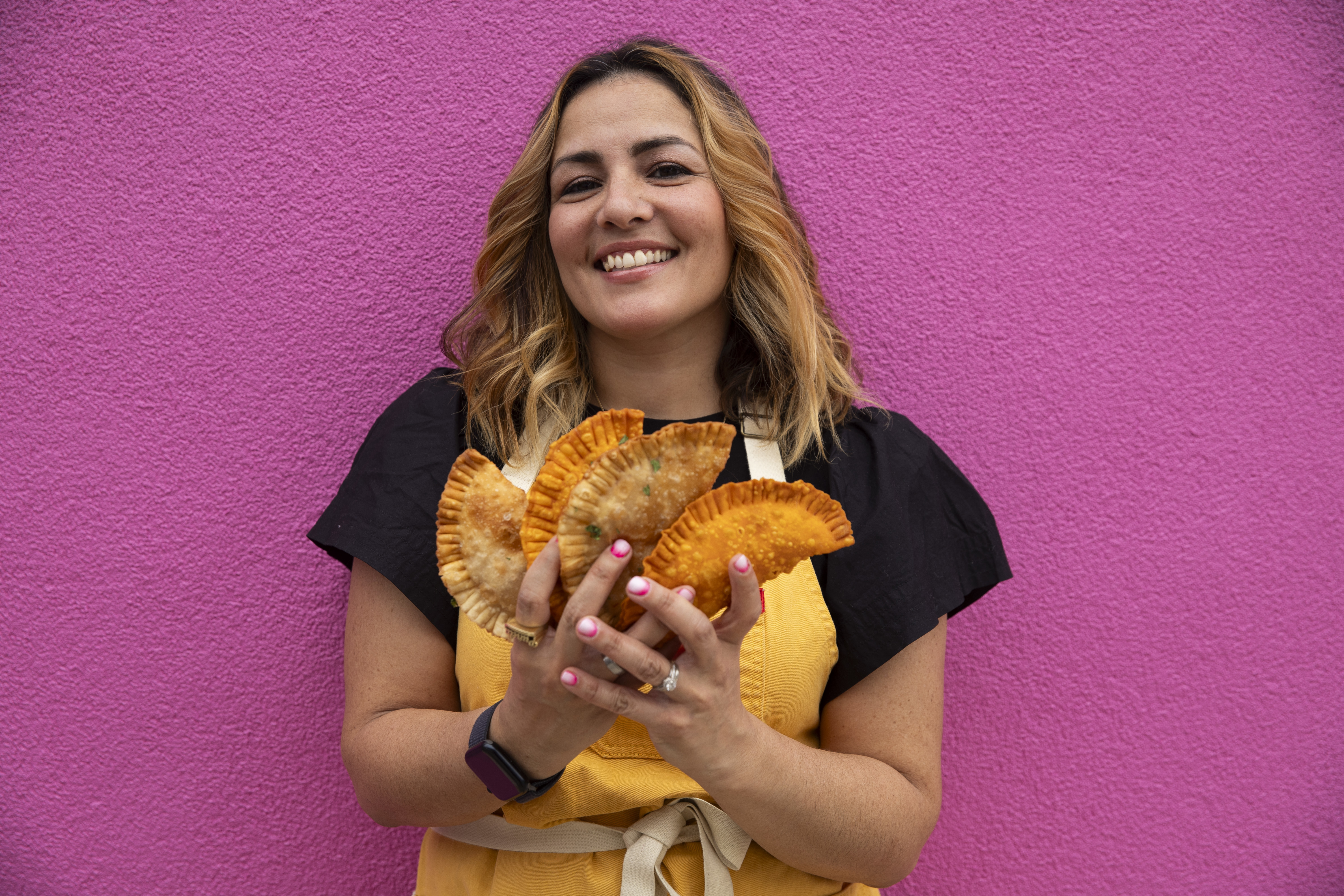
Amaryllis “Amy” Rivera-Nassar holds three pastelillos from the menu outside her restaurant, Amy’s Pastelillos. She estimates the storefront sells just under 2,000 Puerto Rican turnovers per week.Monica Herndon / Staff Photographer
“We did 700 pastelillos in two hours for just Super Bowl parties alone,” she said. “But the aftermath was super-exciting. A lot of people were like, ‘Oooh, Puerto Rican food’ and really wanted to explore the culture.”
Rivera-Nassar believes the support from Bank of America and the added visibility from the Sixers can help Amy’s expand to a larger off-site prep kitchen —even if she can’t bear to leave her bright pink storefront.
“I’m attached. It’s my baby,” she said,at the same time acknowledging that, space-wise,“we’ve hit our ceiling.”
Amaryllis “Amy” Rivera-Nassar works in the kitchen at Amy’s Pastelillos. Now an Enrich Program winner, Rivera-Nassar is hoping to expand to a larger, off-site prep facility.Monica Herndon / Staff Photographer
Rivera-Nassar is most excited to see her business’ name in lights inside the Xfinity Mobile Arena. She learned about winning the Enrich prize while sitting courtside with her 10-year-old daughter at Game 4 of the Sixers playoff series against the Boston Celtics.
“I was already overwhelmed by the fact that Tyrese Maxey and [V.J.] Edgecomb were right in front of us. And then the Sixers reps came out and congratulated me,” Rivera-Nassar said. “I was floored.”
Tiny Bridgeport, tucked off Route 202 between King of Prussia and Norristown, has long had its food landmarks. Since 1955, it’s been the home of Suzy-Jo Donuts and Franzone’s Pizzeria.
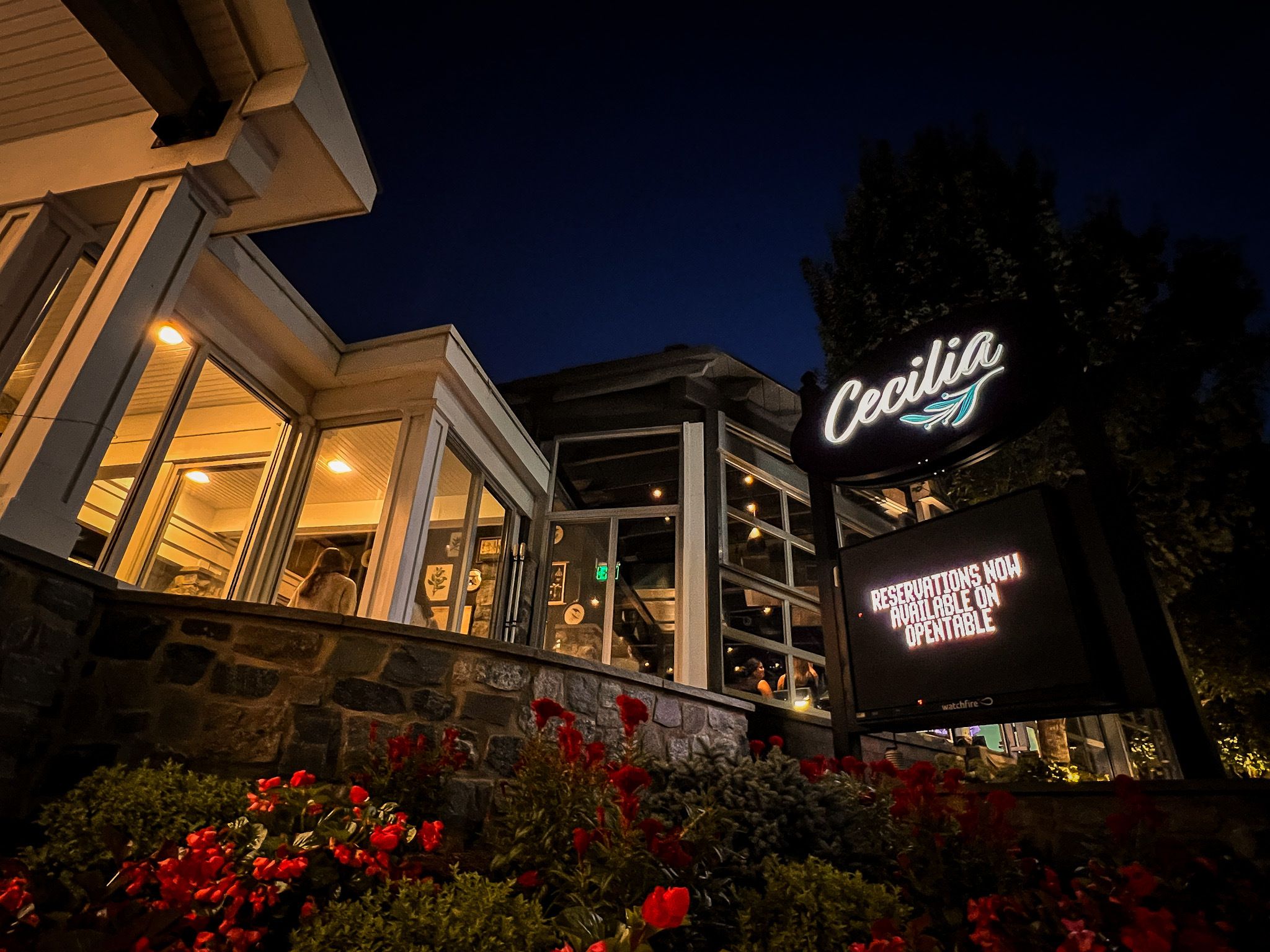
Now comes the polished Cecilia, which opened Monday in the former Taphouse 23, following an extensive renovation by Scott Dougherty and Bruce Goodman, whose holdings include Copper Crow in Horsham and the Blue Bell Inn in Blue Bell (featured in The Inquirer’s 2024 edition of The 76).
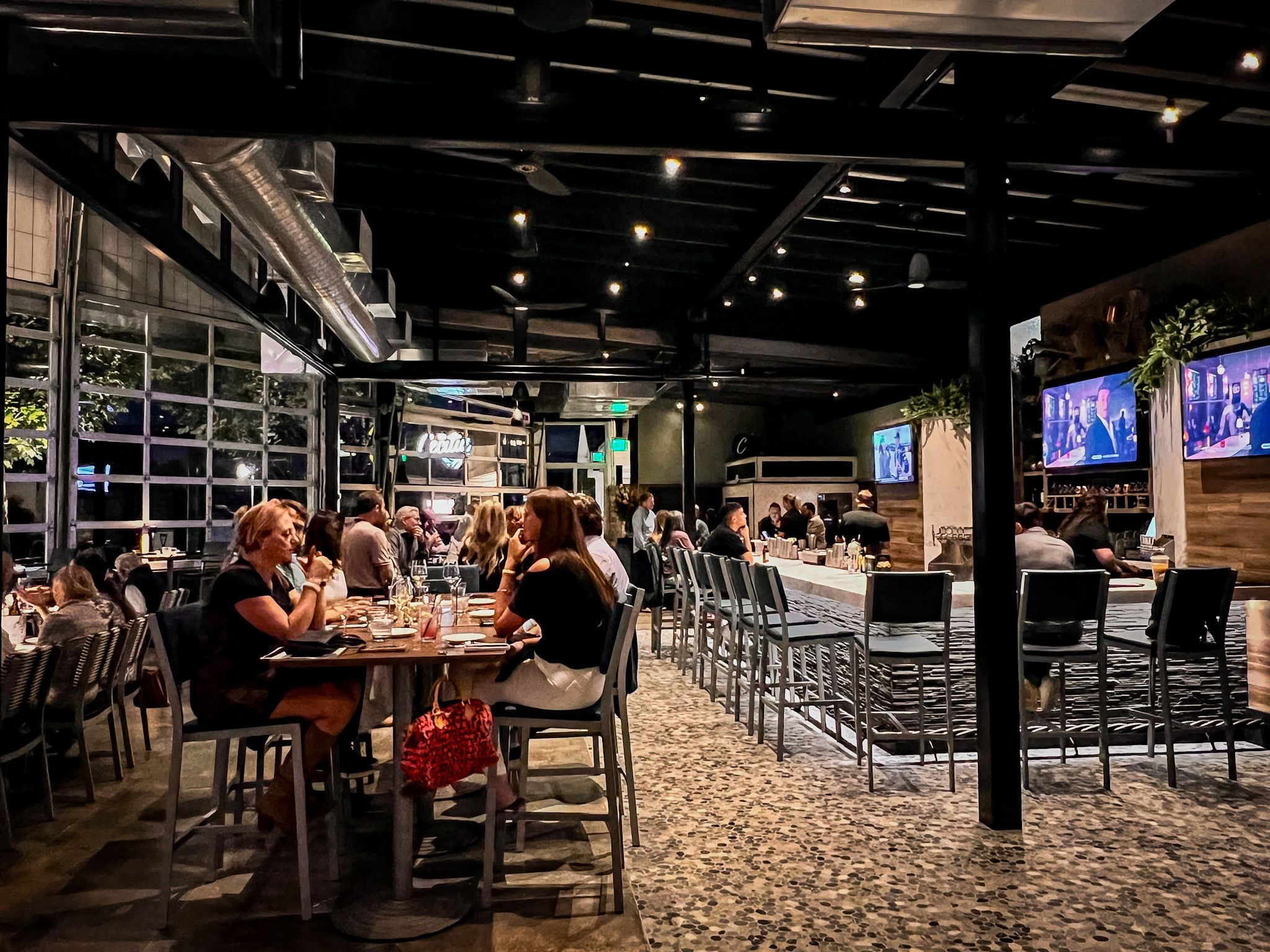
Lounge at Cecilia, 266 E. Fourth St., Bridgeport.Michael Klein / Staff
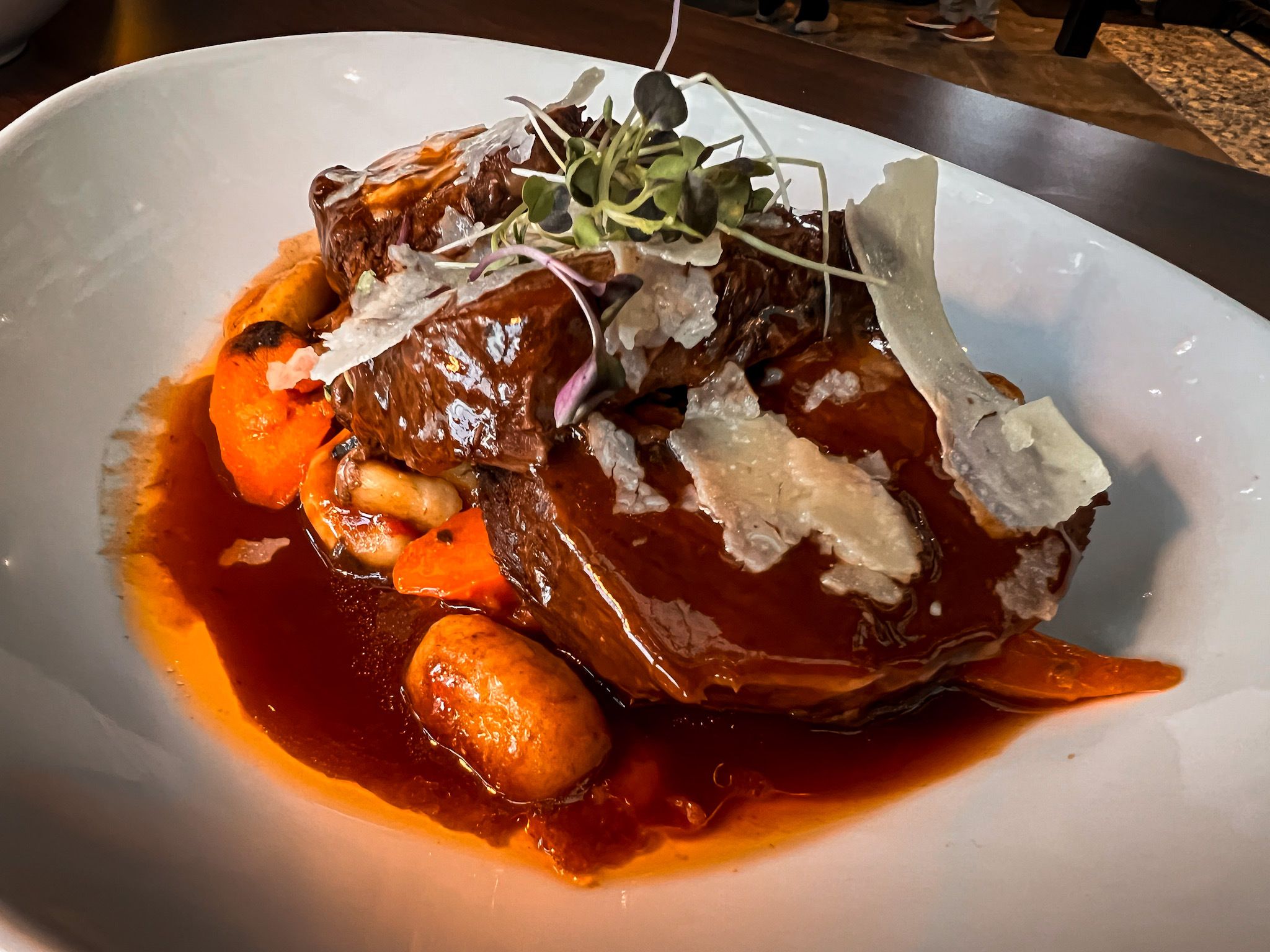
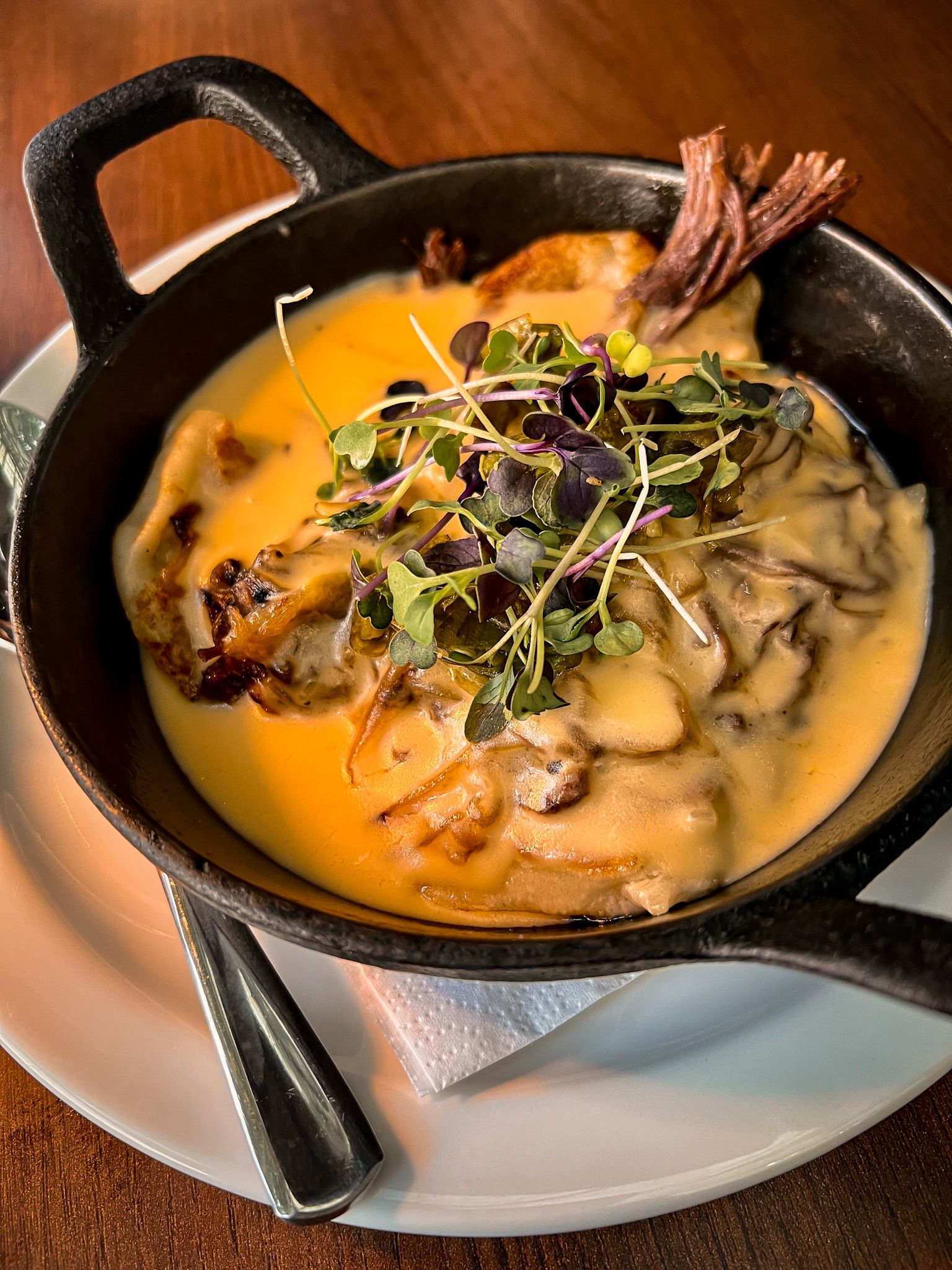
Chef Peter Sherba, the Blue Bell Inn veteran who oversees the group’s kitchens, created Cecilia’s contemporary American menu. Early favorites during weekend previews included a wagyu French dip sandwich; a tuna tataki appetizer, whose seared rare ahi slices are topped with avocado, ponzu, Fresno chilies, and compressed pineapple; pierogies from Ambler’s Pierogie Kitchen napped in braised short rib, Cooper Sharp sauce, caramelized onions, and roasted long hots; and two hearty, autumnal entrees: a beef bourguignon-style short rib called “Meat and Potato” (the potato here is gnocchi), as well as a 12-ounce apple cider-glazed pork chop over Yukon Gold mashed potatoes. There’s brick-oven pizza, too. Prices range from the high teens for appetizers to just over $30 for mains.
The roughly 300-seat restaurant represents a substantial makeover of Taphouse 23, which closed last year. Judi Goodman, who designs the restaurant group’s interiors, shrank the main bar by about 40%, making room for banquettes and lower dining tables. The partners also installed new lighting, wall coverings, furniture, artwork, TVs, and sound equipment.
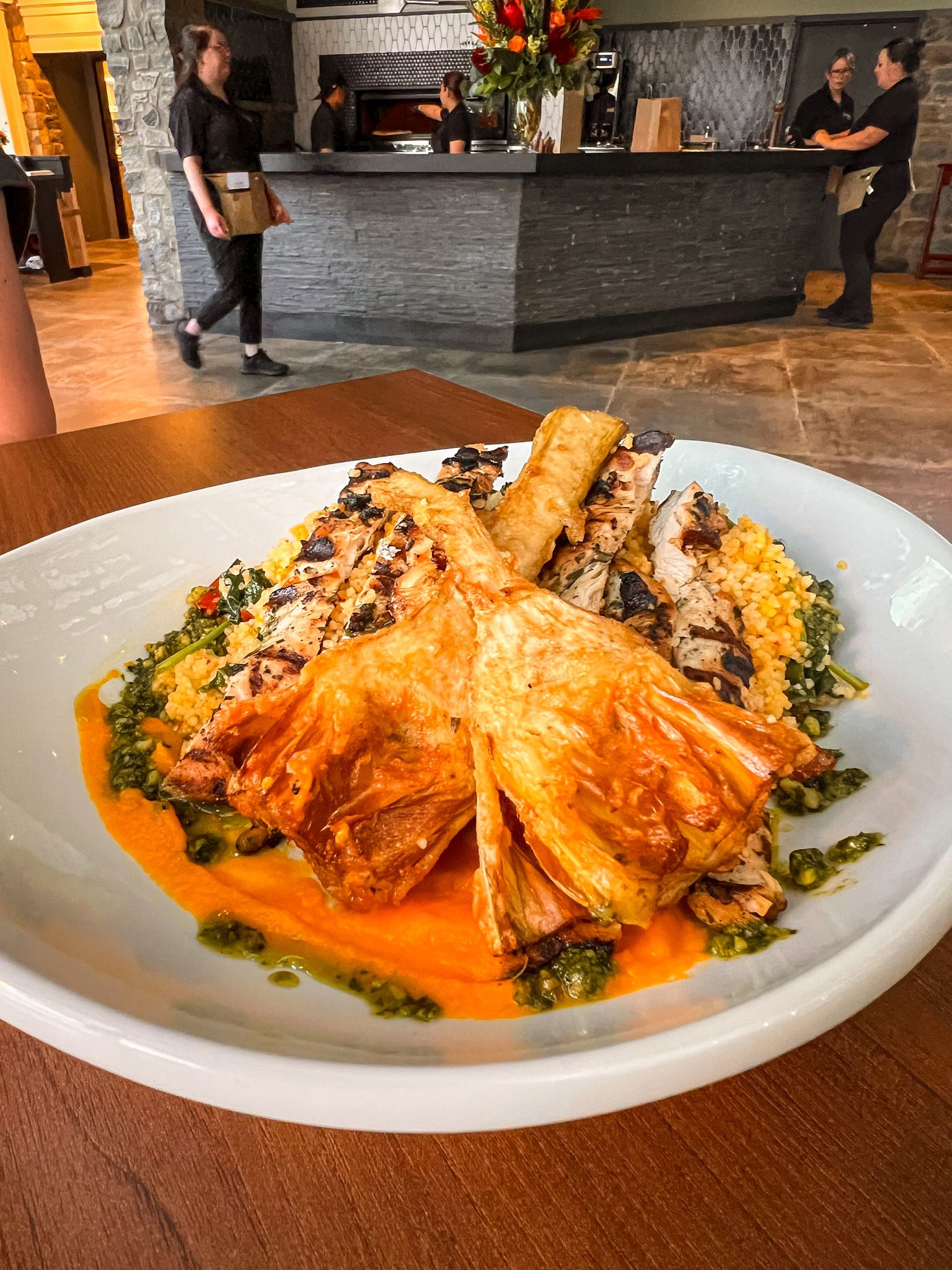
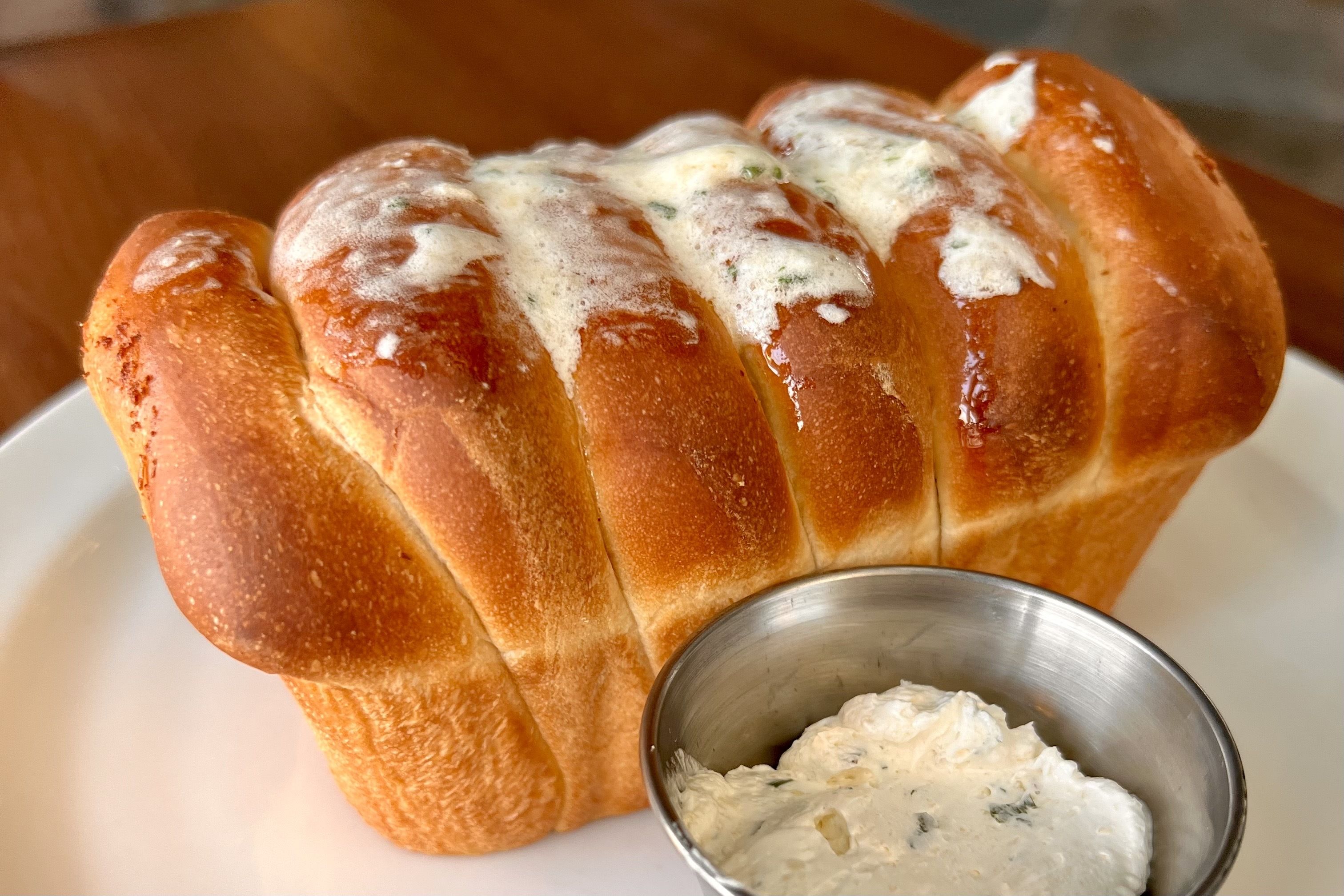
Cecilia, 266 E. Fourth St., Bridgeport, on Sept. 16, 2026.Michael Klein / StaffLounge at Cecilia, 266 E. Fourth St., Bridgeport, on Sept. 16, 2026.Michael Klein / StaffCouscous at Cecilia, 266 E. Fourth St., Bridgeport, on Sept. 16, 2026.Michael Klein / StaffGarlic and herb bread loaf with warm goat cheese pesto spread at Cecilia, 266 E. Fourth St., Bridgeport, on Sept. 16, 2026.Michael Klein / StaffPierogies with braised short rib and Cooper Sharp sauce at Cecilia, 266 E. Fourth St., Bridgeport, on Sept. 16, 2026.Michael Klein / Staff
An adjoining space has been transformed into what the owners call the Greenhouse, with garage doors that can open in warmer weather. The parking lots and landscaping also were redone.
Taphouse 23 opened in 2014 under Bridgeport businessman Gary Johnson — Judi Goodman’s brother — replacing a joint called the Point. After Johnson died in 2021, his family decided to ease out of the restaurant business, Dougherty said. Cecilia is named in tribute to the Johnson children’s mother.
Dougherty said Cecilia will aim to reach beyond Bridgeport to build its customer base, drawing from Blue Bell, King of Prussia, and Conshohocken — all 10 to 20 minutes away.
Cecilia, 266 E. Fourth St., Bridgeport. Hours: 11:30 a.m. to 9 p.m. Sunday to Thursday, 11:30 a.m. to 10 p.m. Friday and Saturday.
“There never really was a Fishtown, government-wise. It was a localism,” explains Kenneth Milano, a Kensington-born historian and cofounder of the Kensington History Project. Perhaps this is why it’s hard to know exactly where Fishtown’s boundaries are.
“No one [in the old days] would ever call above York Street ‘Fishtown.’ That would have been sacrilege,” Milano said. “With the new folks, they don’t know. The [real estate agent] told them.”
story continues after advertisement
Decades of gentrification in the River Wards have blurred the lines as developers tagged their properties with the coveted Fishtown brand, even as they ventured into what were generally defined as sections of Kensington. (And which Kensington? East Kensington? Olde Kensington? South Kensington? How about Norris Square? And Olde Richmond? And Port Richmond?)
The argument is about more than what to call a few blocks: A neighborhood name can shape a place’s identity, its perceived desirability, and even how it is marketed and valued.
Click anywhere on the map to start drawing your Fishtown boundary
Milano said parish boundaries originally helped reinforce neighborhood identity. Milano, 67, has lived on York Street since age 5 and described the conventional Fishtown as a triangle bounded by Norris, Frankford, and the Delaware River.
The Inquirer’s map of neighborhoods agrees with Milano — although it’s worth mentioning that this map, used internally to help our reporting stay consistent, was created in the 1980s. The Milano-Inquirer definition is definitely conservative when compared to more recent attempts to set boundaries.
By contrast, Zillow’s Fishtown is nearly twice the size. The real estate website includes not only Front Street to the west, but also goes as far north as Lehigh Avenue.
Zillow maintains its own set of neighborhood boundaries “by reviewing sources such as city maps, the Census Bureau, and neighborhood associations,” Zillow spokesperson Briahna Healy said.
There’s some overlap between Zillow’s boundaries and the 19125 zip code. While residents might feel a strong attachment to the last five digits of their address, zip codes exist solely to help route mail. This makes it hard to use 19125’s scraggly borders to define Fishtown — especially when sections that reach that far north are Kensington by any definition.
Somewhere in the middle is the Fishtown Neighbors Association border — sticking with Front Street to the west but extending only as far as York Street to the north. These boundaries “go back about 20 years when FNA was a community organization that needed boundaries to help dictate what projects to work on,” said John Scott, current president of the FNA.
Their boundaries are a single piece in a jigsaw puzzle with surrounding neighboring associations. It explains why some streets are included and others aren’t. For example, the area between Front Street and Frankford Avenue is included because “if we didn’t include them, they would probably be stateless,” Scott said.
This also means that a lot of boundaries are largely codified because the FNA can’t expand without encroaching on neighboring associations — unless, that is, new streets are built, like those in the Northbank development on the Delaware. Now the FNA is about to adjust its boundaries for the first time in a quarter-century to encompass streets south of Schirra Lane.
If we look at all of these definitions at the same time, there is a clear overlap that we can safely call Fishtown.
However, much of the fringe is up for debate. Does Fishtown stop at Front or Frankford, for example? Is York the border, or is it Norris, or even Lehigh?
It’s time for some good, old-fashioned, boots-on-the-ground reporting.
A defining feature of Fishtown are the whimsical fish signs on house facades. Our theory: Surely a painted fish wouldn’t make sense in Kensington. We hit the streets and logged every house that had a fish sign.
Largely, the signs are contained to the FNA-defined borders. But we found a large pocket of signs east of York Street and even a few signs north of Frankford — although they are outnumbered by milk bottle signs to honor Kensington’s old Harbisons Dairy plant.
Fish signs are only one way to delineate Fishtown boundaries. We also looked at restaurants and what neighborhood they describe themselves as belonging to: Fishtown, Kensington, or unsure.
Fishtown has been known for its dining scene since Johnny Brenda’s established the beachhead in 2003. As development marched on, restaurateurs and dining guides followed the cue of developers and real estate agents: We’re in Fishtown.
Today, that’s not entirely the case, as even upscale restaurants are comfortable calling themselves Kensington, though they could claim Fishtown. At Fiore, chefs Ed Crochet and Justine MacNeil use East Kensington for their Italian restaurant north of the York Street roundabout. Directly across is Emilia, chef Greg Vernick’s popular new Italian spot, which doesn’t state its neighborhood in its marketing materials. Resy, its reservation booking platform, calls it Fishtown-East Kensington.
Seemingly everyone says Middle Child Clubhouse is in “Fishtown.” But by dint of its location on the west side of Front Street, it’s arguably in South/Olde Kensington. Yuhiro, a sushi restaurant on Susquehanna Avenue just west of Frankford, markets itself as Fishtown but it could be considered in Kensington.
Then there are the restaurants where it’s even more unclear because they list multiple neighborhoods, or none at all. For example, Picnic, on Martha Street, uses East Kensington in its Instagram bio but has used Fishtown in public relations campaigns. Where is Meetinghouse, a noted bar at Memphis and Cumberland Streets? Chef/co-owner Drew DiTomo thought for a moment: “Its parish is St. Anne’s and I quite like that.”
Finally, we decided to ask people in the gray areas a simple question: “Where are we?”
We found Matt Murphy and Kaitlin Dirkx at Hagert and Tulip Streets — south of Lehigh, north of York, still in 19125. “It’s kind of a curious pocket of the River Wards,” said Murphy, who emphatically called the area “Olde Richmond.” But, as Dirkx added, “they let me into the Fishtown Neighbors Facebook group. My address must have fallen in line.”
Mark Opdyke, who lives on a side street just west of Frankford Avenue near Norris, insisted that his side of Blair Street is in Fishtown. He pointed across the street toward the Blair Garden townhouses, built in 2018 and sold as “Fishtown,” chuckled, and called that side “Kensington.”
At Frankford and Dauphin, Nick Campione’s family has owned AC Auto Repairs for 70 years. Its facade boasts a mural proclaiming, “Welcome to the Neighborhood” with an inscription explicitly describing it as “Fishtown and East Kensington.” Campione won’t take sides: “This is the best of both worlds here.”
Finally, we caught up with Stephanie Goodman and Justin Frye on the west side of Frankford Avenue near Dauphin, in front of the Groove Hound, a doggie day care. Goodman called that stretch Fishtown, adding that it’s two blocks from the house she bought in 2018 across from Philadelphia Brewing Co., which proudly says it belongs to East Kensington. Though Goodman said the real estate agent advertised her block as Fishtown, Frye believes it’s in East Kensington. “Ten different people and 10 different answers,” he said.
So it’s now time for you to decide. Let us know where you think the boundaries of Fishtown are by drawing on the map.
Thanks for drawing your boundaries. Please reach out to interactives@inquirer.com and let us know why you believe these are the boundaries of Fishtown.
This is where the average reader submission currently lays.
Staff Contributors
Design, Development, and Reporting: Sam Morris
Reporting: Michael Klein
Sign Auditors: Sam Morris and Jasen Lo
Illustration: James Olstein
Editing: Charmaine Runes
Copy Editing: Brian Leighton
story continues after advertisement
Subscribe to The Philadelphia Inquirer
Our reporting is directly supported by reader subscriptions. If you want more journalism like this story, please subscribe today
// used for lite color theming and debug buttons only
$colors: (
“purple”: $color-purple,
“pink”: $color-pink,
“red”: $color-red,
“orange”: $color-orange,
“yellow”: $color-yellow,
“green”: $color-green,
“teal”: $color-teal,
“light-gray”: $color-light-gray,
“light-blue”: $color-light-blue,
“blue”: $color-blue,
“black”: $color-black,
“white”: $color-white
);
`;var Wn=tr();var Y=(i=null)=>{let u=Kt.split(`
`),r={};return u.forEach(e=>{let o=e.trim().match(/^$color-([w-]+):s*([^;]+);/);if(o){let s=o[1],n=o[2];r[s]=n}}),i&&r[i]?r[i]:r};var rr=(i,u=null,r=null)=>{r||(r=document.querySelector(“head”));let e=document.createElement(“script”);e.type=”text/javascript”,e.src=i,u&&(e.onload=u),r.appendChild(e)},Ve=()=>(window.PMNdataLayer?.[0]!==void 0&&window.PMNdataLayer[0])?.analytics?.user?.state===”Subscribed”,je=()=>{let u=(window.PMNdataLayer?.[0]!==void 0&&window.PMNdataLayer[0])?.analytics?.user?.state;return window.location.host.includes(“zzz-systest”)||window.location.host.includes(“pmn.arcpublishing.com”)||window.location.host.includes(“stage.fusion.inquirer.com”)||typeof u>”u”},or=()=>{let u=(window.PMNdataLayer?.[0]!==void 0&&window.PMNdataLayer[0])?.analytics?.user?.hasAdsFreeReading;return!!(u&&u==1)},Ae=()=>window.location.host.includes(“localhost”);var To=i=>{(i&&i.querySelector(“.js-loading”))?.setAttribute(“data-state”,”ready”)},Bo=i=>{(i&&i.querySelector(“.js-loading”))?.setAttribute(“data-state”,”loading”)},bo=(i,u)=>{(i&&i.querySelector(“.js-loading”))?.setAttribute(“data-state”,”error”),u&&targetModalErrorEl&&(targetModalErrorEl.textContent=u)},We={stop:i=>To(i),start:i=>Bo(i),error:(i,u)=>bo(i,u)};var ce=document.querySelector(“.js-map-tooltip”),Eo=()=>{ce.classList.remove(“is-hidden”)},Io=()=>{ce.classList.add(“is-hidden”)},ko=(i,u)=>{i&&u&&matchMedia(“(pointer:fine)”).matches?(ce.style.top=i+”px”,ce.style.left=u+”px”):(ce.style.top=””,ce.style.left=””)},Do=(i,u)=>{i==”pre”?ce.textContent=”Click to place the first point”:i==”mid”&&(u{window.addEventListener(“resize”,()=>{ct&&setTimeout(()=>{lr()},300)})},Vo=()=>{rr(“https://interactives.inquirer.com/storage/dependencies/maplibre/5.3.0/maplibre-gl.js”,()=>{let i=new zt;Le=window.maplibregl,Le.addProtocol(“pmtiles”,i.tile);let u=”https://interactives.inquirer.com/melish/1.3″,r=`${u}/north-america.pmtiles`,e=new Oe(r);i.add(e),e.getHeader().then(async()=>{let s=await(await fetch(`${u}/styles/neutral.json`)).json();R=new Le.Map({container:”map”,zoom:13,center:[-75.165222,39.952583],maxBounds:[[-128.362885,24.389629],[-58.886719,52.918839]],attributionControl:!1,interactive:!1,style:{…s,layers:[],sources:{openmaptiles:{type:”vector”,url:`pmtiles://${r}`}}}}),lr(),R.on(“load”,async()=>{for(let f of nr.features)Ko(f.properties.origin,f.geometry);Xo(),st(“people”,sr),st(“signs”,ar),st(“restaurants”,ir),Yo();let y=await(await fetch(“https://interactives.inquirer.com/lyon/2026-fishtown/average.json”)).json();Qo(“readers”,y);let a=R.getCanvas();We.stop(a.closest(“.js-map”)),ct=!0,pt&&ur(pt)}),document.querySelector(“.js-map”).addEventListener(“mousemove”,n=>{jo(n)}),document.querySelector(“.js-map”).addEventListener(“mouseout”,()=>{Wo()}),document.querySelector(“.js-map”).addEventListener(“click”,n=>{Go(n)})})})},lr=()=>{R.fitBounds([-75.14613425987851,39.95952387517457,-75.10908333009395,39.98791745377673],{duration:0})},jo=i=>{if(ve&&ie&&(ue.show(),ue.position(i.clientY,i.clientX),ie==”mid”)){let u=lt(i);xe.features[0].geometry.coordinates[1]=[u.lng,u.lat],R.getSource(“drawing-ghost”).setData(xe),R.setPaintProperty(“drawing-ghost”,”line-opacity”,.5)}},Wo=()=>{ue.hide()},No=()=>{let u=document.querySelector(“.js-map”).getBoundingClientRect().top;u{if(ve){if(ie==”pre”){let u=lt(i);Z.features[0].geometry.coordinates.push([u.lng,u.lat]),xe.features[0].geometry.coordinates[0]=[u.lng,u.lat],document.querySelector(“.js-map-start”).classList.remove(“is-hidden”),pr.setLngLat(u),document.querySelector(“.js-tool-buttons-reset”).disabled=!1,ie=”mid”}else if(ie==”mid”){let u=lt(i);Z.features[0].geometry.coordinates.push([u.lng,u.lat]),xe.features[0].geometry.coordinates[0]=[u.lng,u.lat]}i.target.classList.contains(“js-map-start”)&&Zo(),R.getSource(“drawing-user”).setData(Z),ue.update(ie,Z.features[0].geometry.coordinates.length),ue.show()}},Zo=()=>{ve=!1,ie=”end”;let i=Z.features[0].geometry.coordinates.length,u=Z.features[0].geometry.coordinates[0];Z.features[0].geometry.coordinates[i-1]=u,Z.features[0].geometry.type=”Polygon”,Z.features[0].geometry.coordinates=[Z.features[0].geometry.coordinates],R.getSource(“drawing-user”).setData(Z),R.setPaintProperty(“drawing-user-fill”,”fill-opacity”,.4),R.setPaintProperty(“drawing-ghost”,”line-opacity”,0),document.querySelector(“.js-map-start”).classList.add(“is-hidden”),document.querySelector(“.js-tool-buttons-submit”).disabled=!1},qo=()=>{ve=!0,ie=”pre”,ue.update(ie,0),Z.features[0].geometry.type=”LineString”,Z.features[0].geometry.coordinates=[],R.getSource(“drawing-user”).setData(Z),document.querySelector(“.js-tool-buttons-submit”).disabled=!0,R.setPaintProperty(“drawing-ghost”,”line-opacity”,0),R.setPaintProperty(“drawing-user-fill”,”fill-opacity”,0),document.querySelector(“.js-map-start”).classList.add(“is-hidden”)},lt=i=>{let u=document.querySelector(“.js-map”).getBoundingClientRect(),r=i.clientX-u.left,e=i.clientY-u.top;return R.unproject([r,e])},Jo=()=>{Jt.vote({coordinates:JSON.stringify(Z.features[0].geometry.coordinates[0])})},Ko=(i,u)=>{R.addSource(`boundary-${i}`,{type:”geojson”,data:u}),R.addLayer({id:`boundary-${i}-fill`,source:`boundary-${i}`,type:”fill”,paint:{“fill-color”:Y(“illo-red”),”fill-opacity”:0}}),R.addLayer({id:`boundary-${i}-line`,source:`boundary-${i}`,type:”line”,paint:{“line-color”:Y(“illo-red”),”line-width”:4,”line-opacity”:0}})},Qo=(i,u)=>{R.addSource(`drawing-${i}`,{type:”geojson”,data:u}),R.addLayer({id:`drawing-${i}-fill`,source:`drawing-${i}`,type:”fill”,paint:{“fill-color”:Y(“illo-yellow”),”fill-opacity”:0}}),R.addLayer({id:`drawing-${i}-line`,source:`drawing-${i}`,type:”line”,paint:{“line-color”:Y(“illo-yellow”),”line-width”:4,”line-opacity”:0}})},st=(i,u)=>{let r;window.innerWidth{let i=[{id:”tavern”,coordinates:[-75.13430336980068,39.9690688861316]},{id:”milk”,coordinates:[-75.13290465156766,39.98256059702009]},{id:”pier”,coordinates:[-75.11347715844,39.9714839528569]},{id:”wawa”,coordinates:[-75.11890594948434,39.977239248055895]},{id:”sulimays”,coordinates:[-75.12598489221865,39.971605275979115]},{id:”traffic”,coordinates:[-75.12754751235474,39.98145267435357]}];for(let u of i){let r=document.querySelector(`.js-map-icon[data-id=”${u.id}”]`);new Le.Marker({element:r}).setLngLat(u.coordinates).addTo(R)}},Xo=()=>{R.addSource(“roads”,{type:”geojson”,data:Ne}),R.addLayer({id:”roads”,source:”roads”,type:”symbol”,layout:{“symbol-placement”:”line-center”,”symbol-spacing”:100,”text-field”:”{name}”,”text-font”:[“grot10-regular”],”text-max-angle”:90,”text-pitch-alignment”:”viewport”,”text-rotation-alignment”:”map”,”text-size”:9,”text-transform”:”uppercase”},paint:{“text-color”:”#666″,”text-halo-color”:”#fff”,”text-halo-width”:2}}),cr()},_o=i=>{let u=Object.keys(R.getStyle().sources).filter(r=>r.includes(“boundary-“));for(let r of u){let e=r.includes(i)||i==”all”;R.setPaintProperty(`${r}-line`,”line-opacity”,e?1:0),R.setPaintProperty(`${r}-fill`,”fill-opacity”,e?.2:0)}},en=i=>{let u=Object.keys(R.getStyle().sources).filter(r=>r.includes(“drawing-“)&&!r.includes(“ghost”));for(let r of u){let e=r.includes(i);R.setPaintProperty(`${r}-line`,”line-opacity”,e?1:0),R.setPaintProperty(`${r}-fill`,”fill-opacity”,e?.2:0)}},tn=i=>{let u=Object.keys(R.getStyle().sources).filter(r=>r.includes(“points-“));for(let r of u){let e=r.includes(i);R.setPaintProperty(`${r}`,”circle-opacity”,e?1:0)}},rn=i=>{let u=document.querySelector(“.js-map”);i?u.classList.remove(“is-hiding-icons”):u.classList.add(“is-hiding-icons”)},cr=i=>{let u=JSON.parse(JSON.stringify(Ne.features));u=u.filter(r=>r.properties.defaultVisibility==”visible”),i&&(i=i.split(“,”).map(r=>r.trim()),i=Ne.features.filter(r=>i.includes(r.properties.name)),u=[…u,…i]),R.getSource(“roads”).setData({type:”FeatureCollection”,features:u})},ur=i=>{ct?(i={points:i?.points||null,boundary:i?.boundary||null,drawing:i?.drawing||null,icons:i?.icons||!1,roads:i?.roads||null},_o(i.boundary),en(i.drawing),tn(i.points),rn(i.icons),cr(i.roads)):pt=i},fe={init:()=>{Ho(),Vo()},update:i=>{ur(i)},startDrawing:()=>{ve=!0,ie=”pre”,No()},stopDrawing:()=>{ve=!1},resetDrawing:()=>{qo()},submitDrawing:()=>{Jo()}};var on=()=>{document.querySelector(“.js-tool-buttons-start”).addEventListener(“click”,()=>{pn()}),document.querySelectorAll(“.js-tool-buttons-skip”).forEach(i=>{i.addEventListener(“click”,()=>{fr(),sn(),yr()})}),document.querySelector(“.js-steps-step .js-tool-buttons”).addEventListener(“click”,()=>{nn()}),document.querySelector(“.js-tool-buttons-reset”).addEventListener(“click”,()=>{fe.resetDrawing()}),document.querySelector(“.js-tool-buttons-submit”).addEventListener(“click”,()=>{fe.submitDrawing(),fr(),an(),yr()})},nn=()=>{document.querySelector(“.js-steps-step .js-tool-buttons”).classList.add(“is-hidden”),document.querySelectorAll(“.js-steps-step .js-button”).forEach(i=>{i.disabled=!0})},fr=()=>{document.querySelectorAll(“.js-steps-step.is-hidden”).forEach(i=>{i.classList.remove(“is-hidden”)})},an=()=>{let i=document.querySelector(“.js-tool-buttons-start”).closest(“.js-steps-step”).querySelector(“.inno-p”);i.innerHTML=”This is where you think Fishtown’s borders are.”},sn=()=>{let i=document.querySelector(“.js-steps-step .js-tool-buttons”).closest(“.js-steps-step”),u=parseInt(i.dataset.step),r=document.querySelector(`.js-steps-step[data-step=”${u+1}”]`);r&&r.scrollIntoView({block:”center”})},pn=()=>{document.querySelector(“body”).classList.add(“is-tool-mode”),fe.startDrawing()},yr=()=>{document.querySelector(“body”).classList.remove(“is-tool-mode”),fe.stopDrawing()},mr={init:()=>{on()}};var ln=()=>{or()&&document.querySelectorAll(“.js-adbox”).forEach(u=>{u.classList.add(“is-hidden”)})},dr={init:()=>{ln()}};var me,gr,cn=()=>{me=document.getElementById(“js-inno-toast”)},un=i=>{if(!me)return;me.innerHTML=i,me.classList.add(“is-active”);let u=()=>{me.addEventListener(“transitionend”,fn,{once:!0}),me.classList.remove(“is-active”)};clearTimeout(gr),gr=setTimeout(u,5e3)},fn=()=>{me.innerHTML=””},de={init:()=>{cn()},showToast:un};var Ge,hr=!1,yn=async()=>new Promise(i=>{setTimeout(()=>{console.log(“simulating createShareLink for localhost”),i(“https://inquirer.com/interactives”),mn()},100)}),mn=()=>{let i=document.querySelector(“.js-gift-toast-receiver”);!i||!(i instanceof HTMLElement)||setTimeout(()=>{let u=i?.querySelector(“span”);u&&(u.innerHTML=”Gift link copied to clipboard“)},20)},dn=()=>{let i=window.services?.createShareLink;i&&(Ge=i),Ae()&&(Ge=yn),Ge&&hn()},gn=async i=>{let u=”text/plain”,r=async()=>{try{return await Ge(window.location.pathname)}catch{i.dataset.state=”error”,de.showToast(“Hmm, we couldn’t generate a gift link…”)}},e=new ClipboardItem({[u]:r()});await navigator.clipboard.write([e]).catch(o=>{console.log(o),de.showToast(“Couldn’t copy to clipboard, try again?”),i.dataset.state=”error”}),de.showToast(“Gift link copied to clipboard!”),i.dataset.state=”complete”},hn=()=>{document.querySelectorAll(“.js-gift”).forEach(u=>{(Ve()||Ae()||je())&&u.classList.add(“is-available”)}),document.querySelectorAll(“.js-gift-button”).forEach(u=>{u instanceof HTMLButtonElement&&u.addEventListener(“click”,()=>{u.classList.contains(“disabled”)||(u.dataset.state=”loading”,hr=!0,gn(u),setTimeout(()=>{u.dataset.state=”ready”},2e3))})});let i=document.querySelector(“.js-gift-toast-receiver”);!i||!(i instanceof HTMLElement)||vn(i)},vn=i=>{new MutationObserver(r=>{for(let e of r){let o=[…e.addedNodes].at(0);if(!(o instanceof HTMLElement))return;hr&&de.showToast(o.outerHTML)}}).observe(i,{subtree:!0,childList:!0})},vr={init:()=>{dn()}};var Te,xn=()=>{document.querySelectorAll(“.js-hover”).forEach(i=>{i.addEventListener(“click”,()=>{xr(i)}),i.addEventListener(“mouseenter”,()=>{xr(i)}),i.addEventListener(“mouseout”,()=>{Pr(i)})}),window.addEventListener(“scroll”,()=>{Te!==null&&Pn()})},Pn=()=>{(Te>window.scrollY+100||Te{Pr(i)})},xr=i=>{i.classList.add(“is-visible”),Te=window.scrollY},Pr=i=>{i.classList.remove(“is-visible”),Te=null},wr={init:()=>{xn()}};var Fr=1,ut=class{constructor(u){this.el=u,this.contentPosition=”default”,this.possibleSteps=new Array,this.currentStep=null,this.currentStepEl=null,this.offset=window.innerWidth>960?window.innerHeight*.6:window.innerHeight*.9,this.instanceOfSteps=Fr,Fr++,this.setPossibleSteps(),this.updateContent(),this.bindings()}setPossibleSteps(){this.el.querySelectorAll(“.js-steps-step”).forEach(u=>{u.dataset.step&&this.possibleSteps.push(u.dataset.step)})}bindings(){window.addEventListener(“scroll”,()=>{this.updateContent()}),window.addEventListener(“resize”,()=>{this.updateContent()})}updateContent(){this.updateCurrentStep()}updateCurrentStep(){let u;if(this.el.querySelectorAll(“.js-steps-step”).forEach((e,o)=>{e.getBoundingClientRect().top{let n=”is-“+o,y=”is-“+s;this.possibleSteps.indexOf(o){document.querySelectorAll(“.js-steps”).forEach(i=>{new ut(i)})}};var wn=(i,u,r)=>{document.querySelectorAll(“.js-subscribe”).forEach(e=>{e.classList.toggle(“is-unsubscribed”,!i),e.classList.toggle(“is-preview”,u),e.classList.toggle(“is-dev”,r)})},Cr={init:()=>{wn(Ve(),je(),Ae())}};var Fn=()=>{},Mr={init:()=>{Fn()}};var Ar={init:()=>{Mt.init?.(),mr.init?.(),dr.init?.(),vr.init?.(),wr.init?.(),We.init?.(),fe.init?.(),Sr.init?.(),Cr.init?.(),Mr.init?.(),de.init?.()}};var Sn=()=>{},Lr={init:()=>{Sn()}};var Cn=document.querySelector(“.js-inno”),Tr=()=>{Ar.init(),Lr.init()};Cn?Tr():new MutationObserver((u,r)=>{if(document.querySelector(“.js-inno”)){r.disconnect(),Tr();return}}).observe(document,{attributes:!0,childList:!0,subtree:!0});})();
/*! Bundled license information:
matter-js/build/matter.js:
(*!
* matter-js 0.20.0 by @liabru
* http://brm.io/matter-js/
* License MIT
*
* The MIT License (MIT)
*
* Copyright (c) Liam Brummitt and contributors.
*
* Permission is hereby granted, free of charge, to any person obtaining a copy
* of this software and associated documentation files (the “Software”), to deal
* in the Software without restriction, including without limitation the rights
* to use, copy, modify, merge, publish, distribute, sublicense, and/or sell
* copies of the Software, and to permit persons to whom the Software is
* furnished to do so, subject to the following conditions:
*
* The above copyright notice and this permission notice shall be included in
* all copies or substantial portions of the Software.
*
* THE SOFTWARE IS PROVIDED “AS IS”, WITHOUT WARRANTY OF ANY KIND, EXPRESS OR
* IMPLIED, INCLUDING BUT NOT LIMITED TO THE WARRANTIES OF MERCHANTABILITY,
* FITNESS FOR A PARTICULAR PURPOSE AND NONINFRINGEMENT. IN NO EVENT SHALL THE
* AUTHORS OR COPYRIGHT HOLDERS BE LIABLE FOR ANY CLAIM, DAMAGES OR OTHER
* LIABILITY, WHETHER IN AN ACTION OF CONTRACT, TORT OR OTHERWISE, ARISING FROM,
* OUT OF OR IN CONNECTION WITH THE SOFTWARE OR THE USE OR OTHER DEALINGS IN
* THE SOFTWARE.
*)
*/
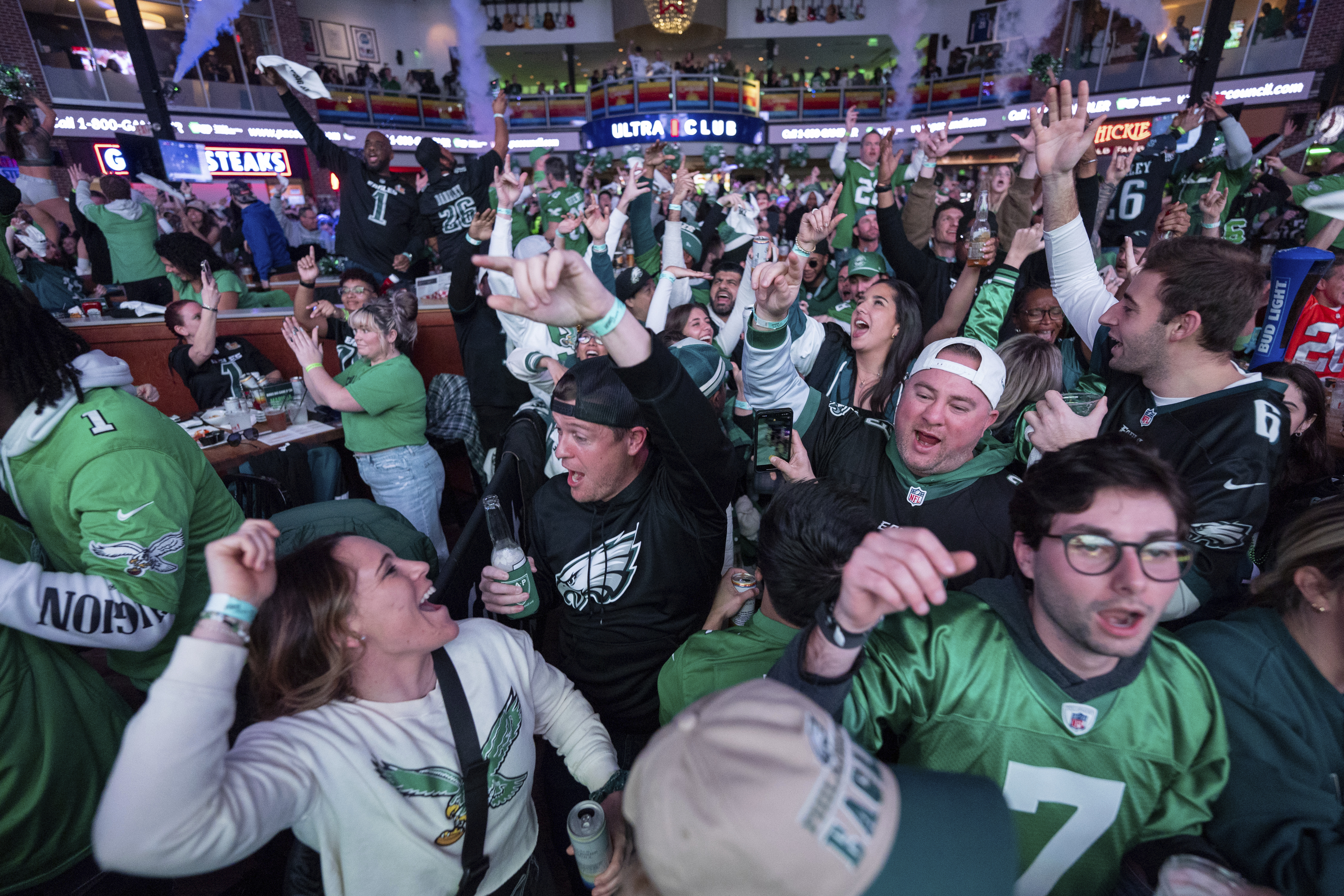
Football and the Eagles are back, and every week fans will be packed into tailgates, living rooms, and watering holes to watch the Birds’ potential path back to the Super Bowl.
Philly has hundreds of spots to catch a game, from breweries with wall-size projectors to restaurants streaming the broadcast over the bar. Here are some of the top picks — big venues, sports bars, breweries, and restaurants — to help you plan your game day.
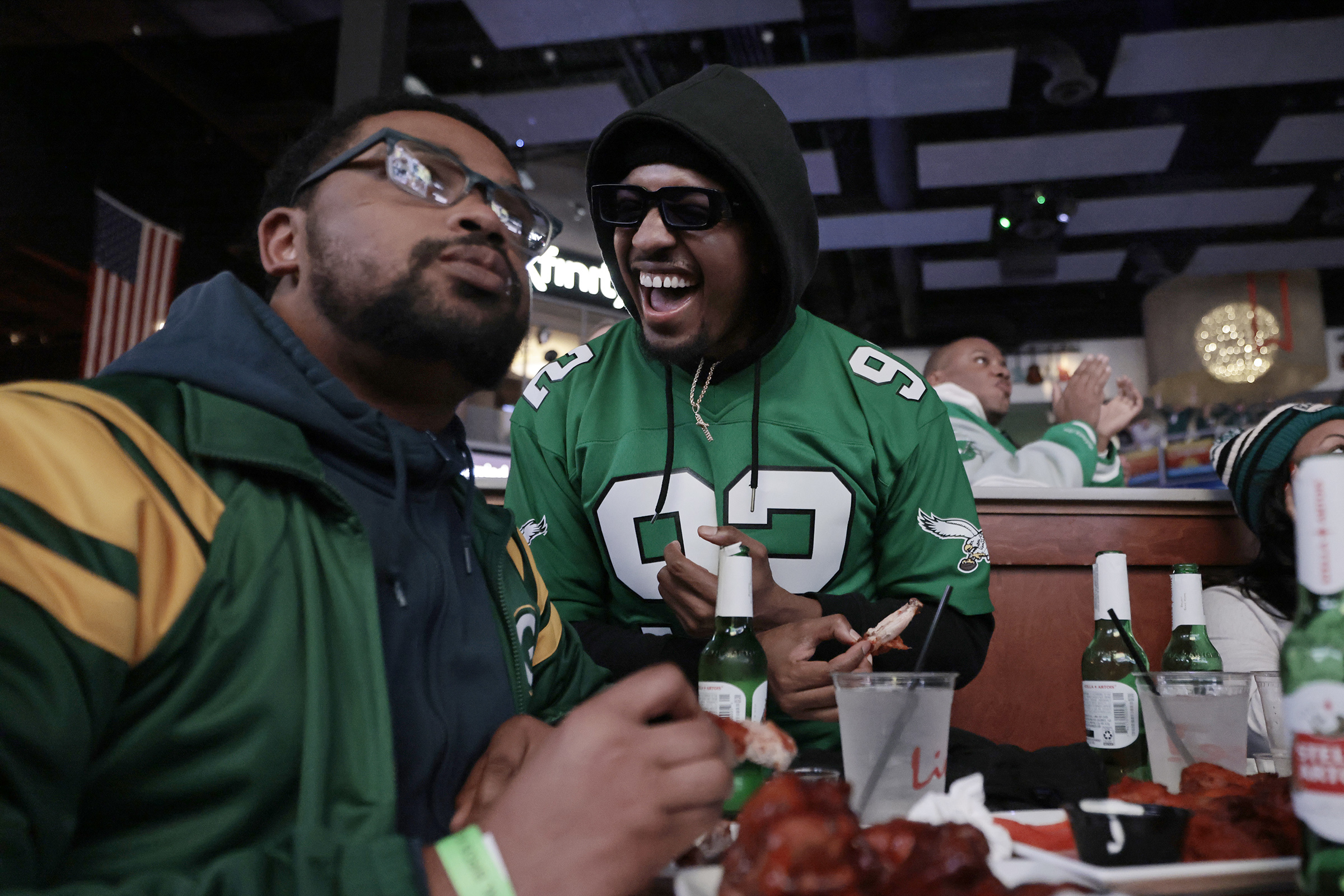
Eagles fan Justin Ghee (right) gets in the face of his friend Packers fan Ronald Roberts when the Eagles sacked the Packers quarterback in the first half of the Eagles vs. Packers NFL playoff game. The friends were viewing the game at XFINITY Live! Philadelphia on Sunday, January 12, 2025. Both men are formerly from Philly, attended Howard University and now live in Washington, D.C.Elizabeth Robertson / Staff Photographer
Big venues, bigger screens
Live! Casino
Right next to the South Philadelphia sports complex is the fairly new Live! Casino and Hotel, with at least two venues located within the casino to watch the games. Take your pick between the 52-foot screen at Sports & Social, or Luk Fu, the casino’s pan-Asian restaurant with game-day specials.
So close to the Linc that you can hear the stadium roar from the patio, Stateside Live! (formerly Xfinity Live!) has a 58-foot screen and dozens of TVs in its bars.
Watch the Eagles play on a massive HD video wall at BetRivers Sportsbook inside Rivers Casino in Fishtown. Game-day beer specials and giveaways will be available, plus each game brings a chance for fans to win tickets to a forthcoming Eagles game.
Craft Hall is a massive beer hall, with family- and pet-friendly fixtures, equipped with two projector screens and several TVs lining the walls playing every Eagles game. Enjoy $5 draft beers and $15 beer pitchers with under-$20 food specials, including wings and pizza.
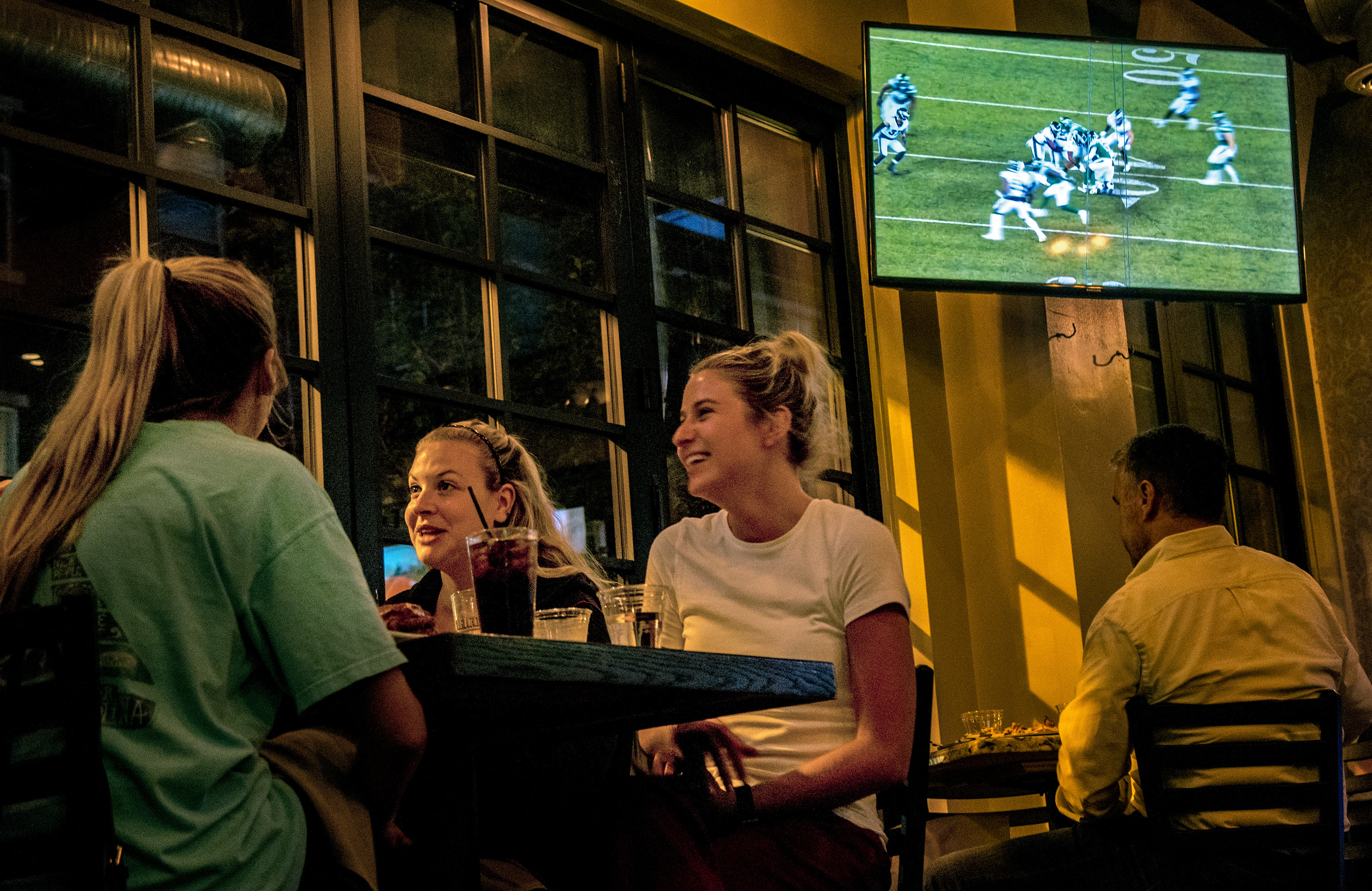
Classmates from the Philadelphia area attending East Carolina University in North Carolina meet at Founding Fathers on South Street to watch the Eagles. Tom Gralish / Staff Photographer
Sports bars and breweries
Cavanaugh’s Headhouse & Rittenhouse
Cavanaugh’s sports bars are some of the best venues to be at on game day, with locations in Rittenhouse and Headhouse Square off South Street. The Rittenhouse location will offer Bud Light in $5 cans and in $22 bottle buckets. Headhouse will have $4 draft Michelob Ultras and $20 buckets of Bud Light.
South Street’s premier sports bar with TV-lined walls, an extensive bar-food menu, and a draft beer list that offers popular craft beers and local talent.
Philadelphia’s oldest craft brewery invites you to their Washington Avenue brewery and bar every game day to watch on their wall-size projectors alongside food and drink specials.
📍2118 Washington Ave., Philadelphia, Pa. 19146, 📞 215-337-3103, 🌐 dockstreetbeer.com
Evil Genius Beer Co.
This Fishtown taproom will treat you to Evil Genius’ celebrated classics and latest craft brews while watching the game on a 16-foot screen. Game-day specials include $42 beer towers and $45 Stateside buckets.
📍1727 N. Front St., Philadelphia, Pa. 19122, 📞 215-425-6820, 🌐 evilgeniusbeer.com
Lucy’s Bar
This Rittenhouse sports bar has a 16-foot screen and game-day deals, including a $40 appetizer platter stacked with wings, cheese curds, onion rings, and pretzels. Drinks include a $6 citywide (dubbed the “buddy system”) and $10 to $12 cocktails.
Philadelphia’s largest brewery is delivering specials every game day at its Spring Garden Street taproom, including $6 Trash Talks, an IPA made especially for the Eagles season.
A block away from the Girard Avenue BSL station is an Asian-fusion sports bar with a curated craft beer list, several TVs playing the Eagles on game day, and a slew of specials: $1 Jell-O shots, $20 beer pitchers, $10 wings, and more.
Manayunk’s Bayou Bar & Grill has been playing every Eagles game for decades. Enjoy its festive atmosphere, and a weekly Eagles merchandise giveaway all season long.
A Center City open-air beer garden with every Eagles game projected onto a big screen along the wall, accompanied by domestic beers on tap, cocktails, and classic pub grub.
Chinatown’s premier sports bar, Bar-Ly carries a whopping 60 beers on tap with TVs and large screens lining the walls. It gets busy on game day, so call ahead to reserve a table.
Every Eagles game day at the Rook in Manayunk, fans can watch the game while taking advantage of the $12 domestic beer pitchers and a $12 “Philly Special” pulled pork sandwich, with broccoli rabe, roasted long hots, and provolone.
Jaffa Bar will be playing every Eagles game on the bar’s TVs and offering a bevy of game-day specials: $12 black lime pepper wings with herbed labneh; $2 raw bar items (oysters, New Jersey top neck clams, and shrimp cocktail), and $6 french fries with tehina ketchup. Plus, $9 specialty cocktails.
📍1625 N. Howard St., Philadelphia, Pa. 19122, 📞 267-857-9944, 🌐 jaffabarphilly.com
Positano Coast
Aldo Lamberti’s Positano Coast in Old City will offer a rotating menu of specials, with games playing across the bar’s TVs.
Patchwork, nestled inside Rittenhouse’s Hyatt Centric, will play the Eagles games all season long, offering $10 citywide, $11 Super Lyte (Blue Chill), and $13 seasoned crinkle-cut fries.
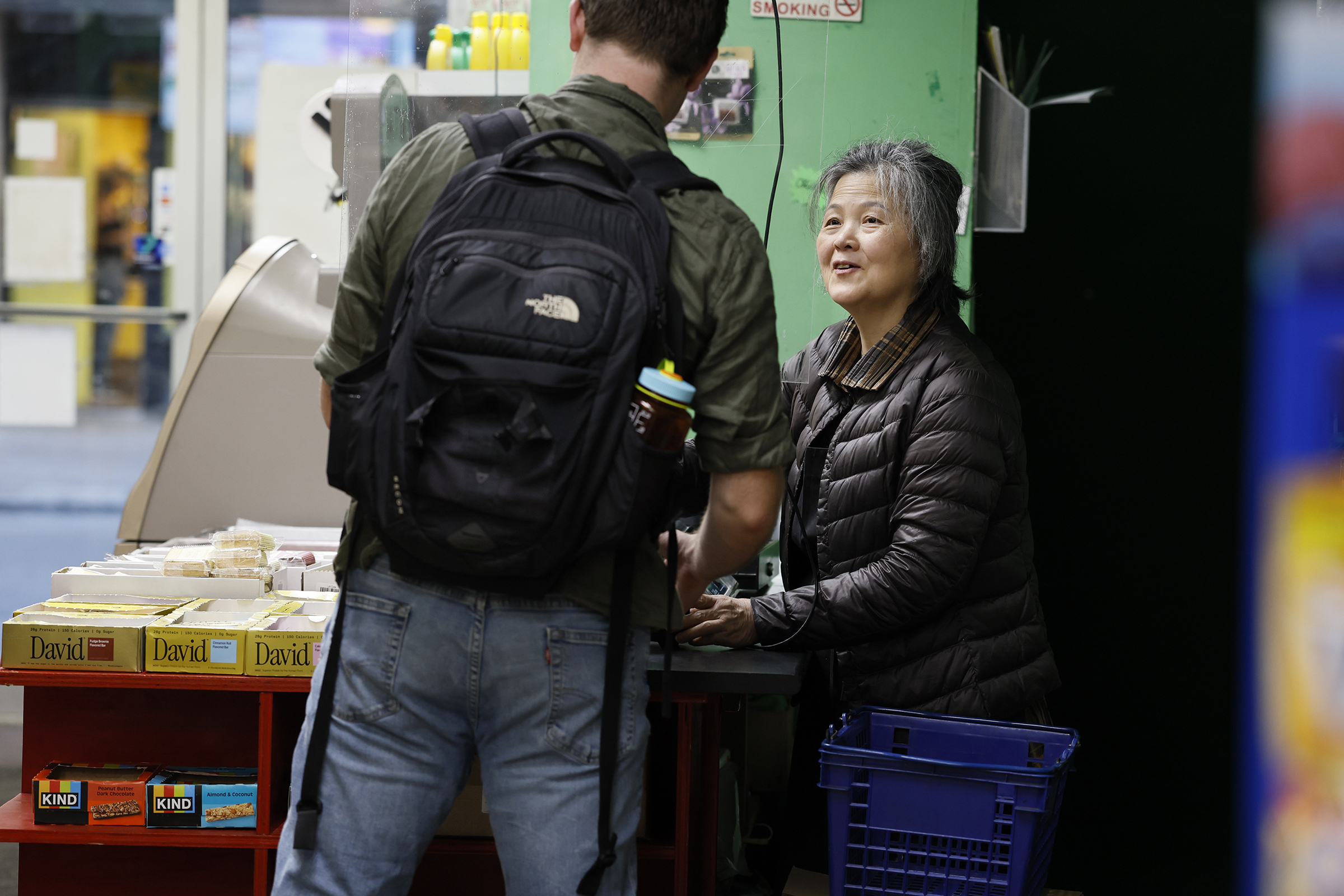
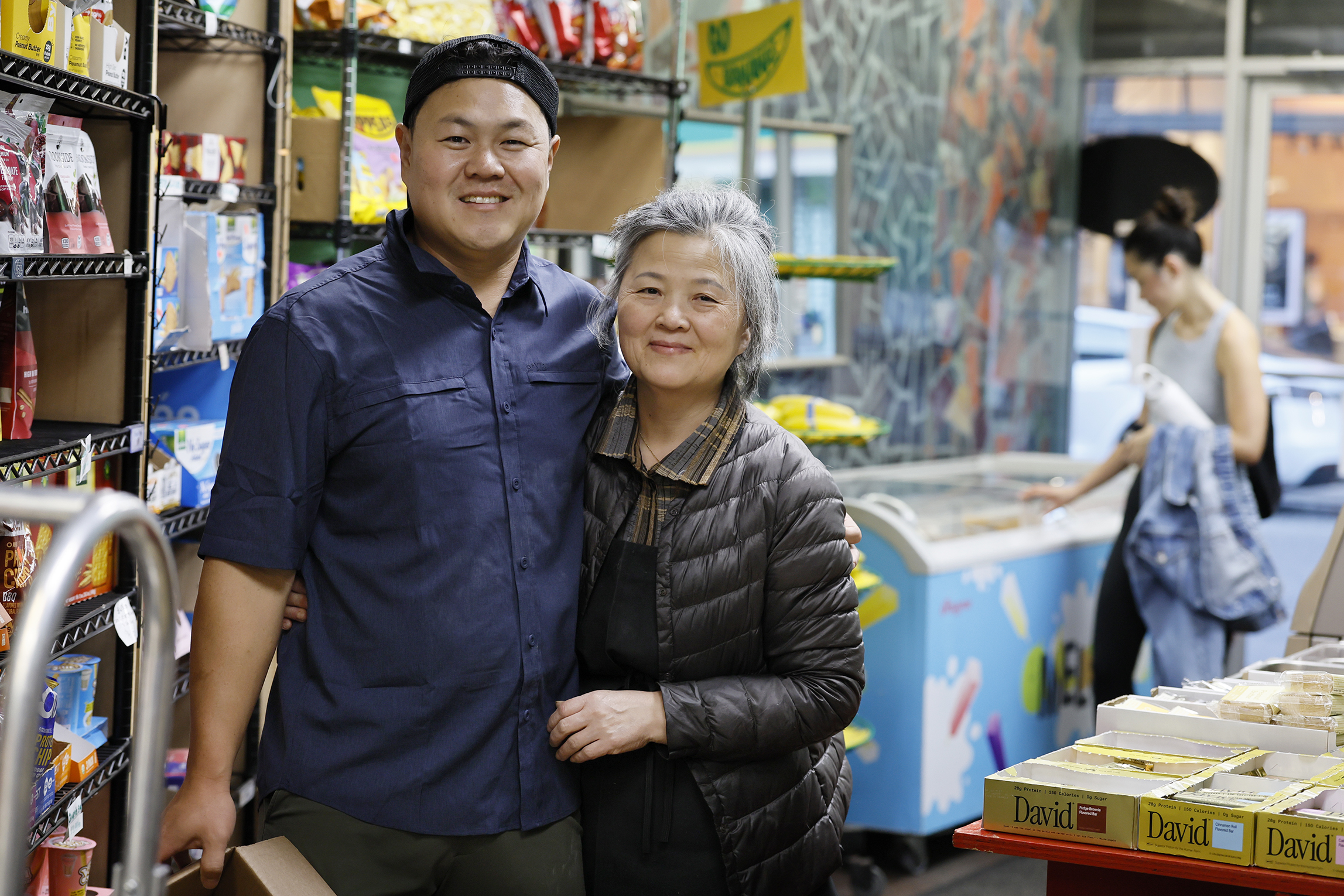
Mi Ja “Tina” Shin smiled at the man approaching the register at Sue’s Produce, her small food market on 18th Street, two blocks from Rittenhouse Square. They locked eyes. Silently, he pressed a $100 bill into her hand. Shin stared at it and gave him a hug.
And so it has been going lately at Sue’s, one of the few small grocery stores in a retail district dominated by restaurants, boutiques, and big-name brands.
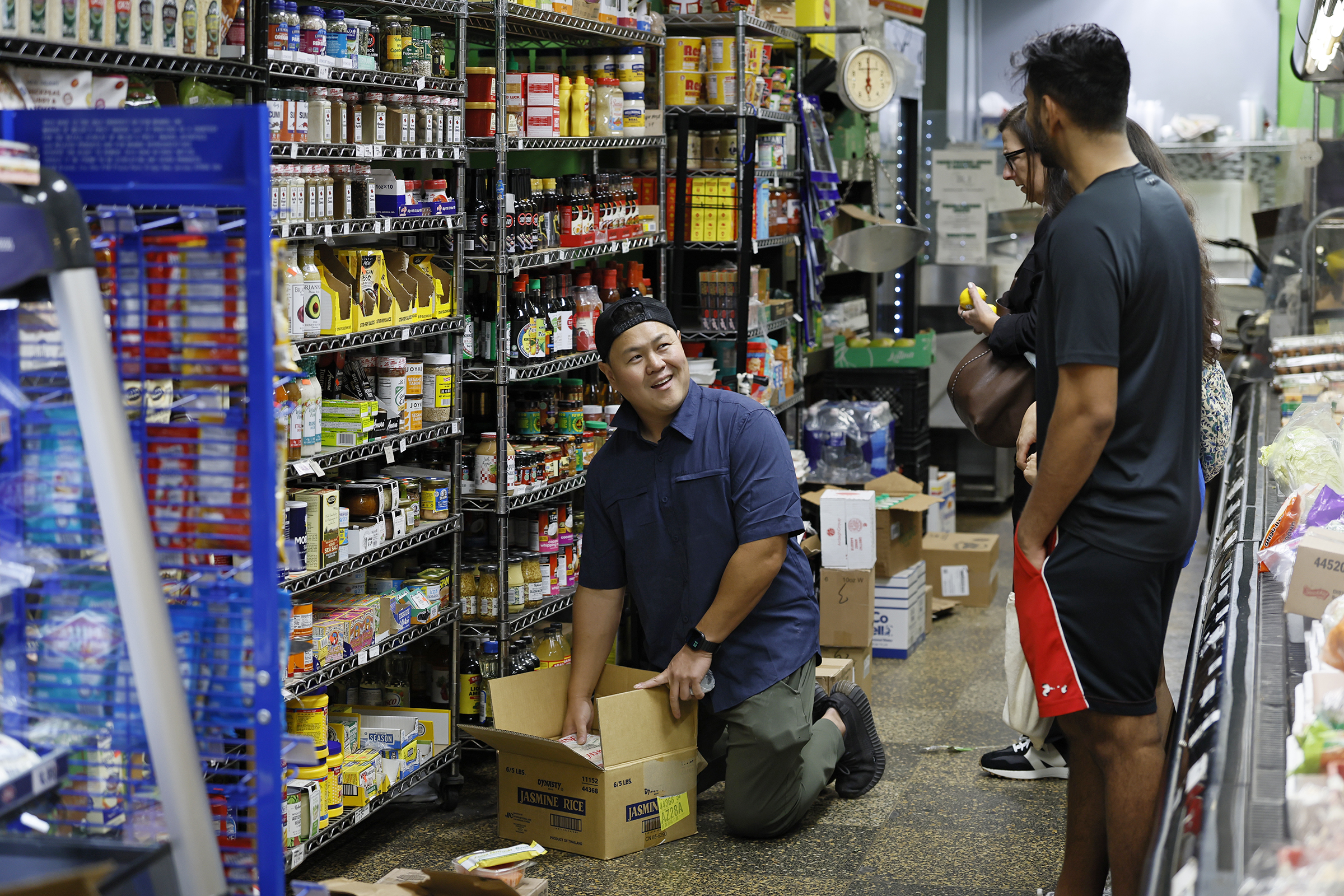
While Di Bruno Bros. across the street offers scores of cheeses and elaborate charcuterie, Sue’s takes a more workaday approach to retail: Packaged Dietz & Watson cold cuts and everyday cheeses, plus dozens of varieties of produce, snacks, drinks, and pantry staples are jammed into the narrow storefront. Shin’s homemade Korean food at the counter is the house specialty.
James Shin talks with customers while stocking shelves at Sue’s Produce Market.Elizabeth Robertson / Staff Photographer
But Sue’s is behind on its rent, and neighbors have been stepping up since Shin’s son James launched a GoFundMe campaign last week.
By early Friday, the fundraiser had exceeded $27,000 and was closing in on its current goal, $30,000.
James Shin said his last understanding was that his mother owed about $38,000 in back rent, which is why the fundraiser was initially set at $40,000. Diaa Sawan, whose family owns the building at 114-116 S. 18th St., said Thursday that the current arrears are about $32,000.
Sue’s has been struggling for some time, according to both Shin and Sawan.
Mi Ja “Tina” Shin chats with a customer at Sue’s Produce Market.Elizabeth Robertson / Staff Photographer
Sawan said the store has typically been three or four months behind, and has at times made partial payments. “We’ve been so patient,” he said. “My family and I are actually trying to give them a chance, and hopefully she can make it.”
Asked whether eviction proceedings were possible, Sawan said it was. “After a couple of years, I have no choice,” he said. “We have a mortgage. We have to pay the bank.” He said well-funded national tenants could pay thousands more in rent.
James Shin, who has been speaking publicly for his mother because she is not comfortable speaking in English, described the relationship with the Sawans as longstanding and accommodating. “They’ve always tried to help my mom out,” he said.
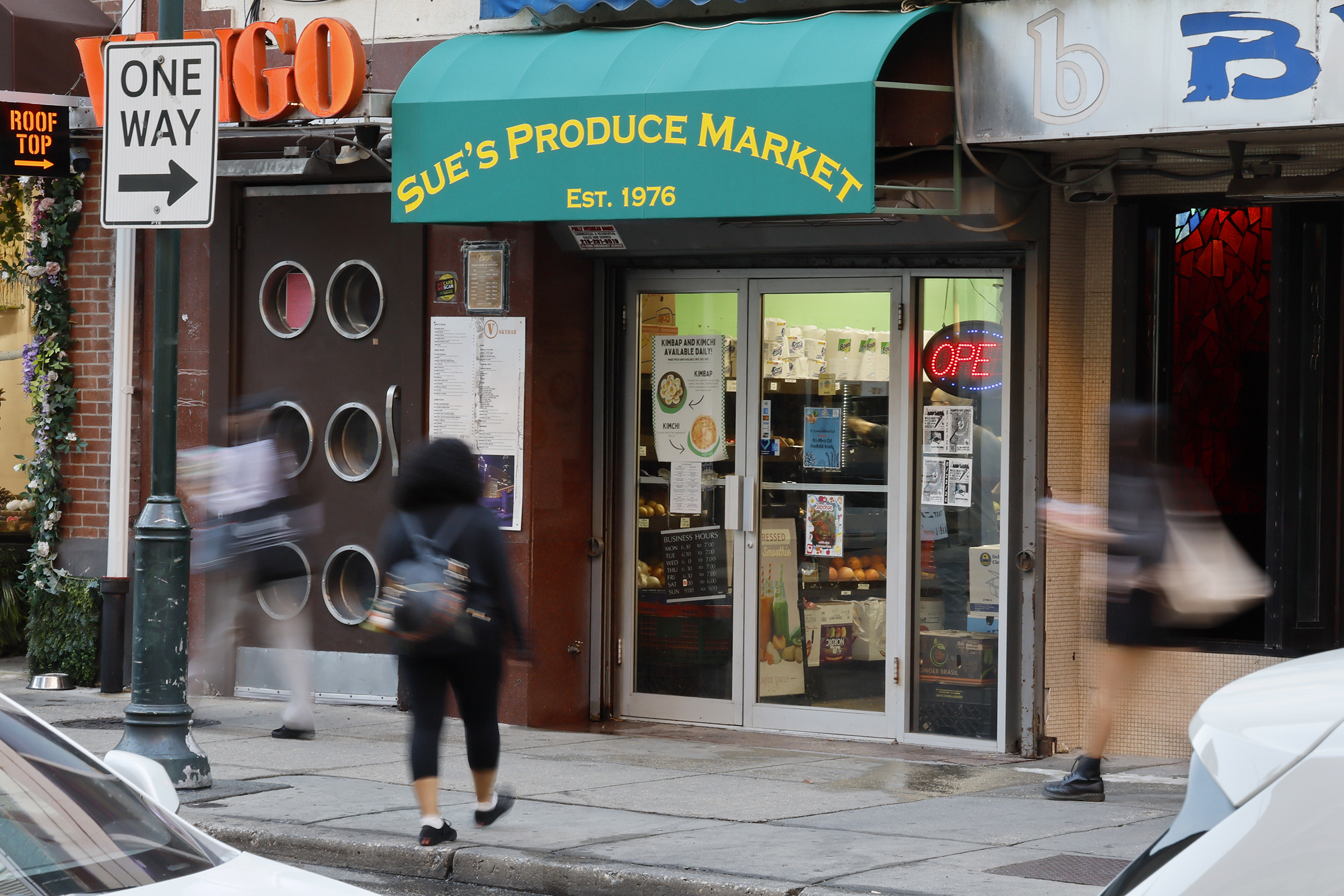
Sue’s Produce Market, 114 S. 18th St.Elizabeth Robertson / Staff Photographer
A neighborhood rallies
So are the customers. The man who handed her $100 Thursday morning was Ron Schlesinger, a neighbor.
“I don’t like GoFundMe because they take a fee,” Schlesinger said. “I’ll give her more money if she needs it. My whole family has been coming here for 50 years.”
That history predates the current store. Tina Shin’s aunt Sue operated a produce business nearby before the family opened the 18th Street storefront in the early 2000s next to Byblos, the Mediterranean restaurant owned by the Sawan family. Vango, the Sawans’ club, is above both establishments.
Support is also coming from Amanda Shulman, chef-owner of nearby Michelin-starredHer Place Supper Club, who announced this week that she would host a Korean-inspired benefit dinner Oct. 16, with snacks provided by Shin and proceeds donated to Sue’s.
The dinner will have two family-style seatings, at 6 and 8:30 p.m., with 48 seats total at $275 per person, beverages included. Reservations will go online at 6 p.m. Sunday. The goal is to raise $10,000.
Sue’s is “such an integral part of our little Rittenhouse neighborhood,” Shulman said. “Someone from our team visits Sue’s at least two times and sometimes up to four times a day for this or that or a pick-me-up snack or gorgeous herbs when we’re shorted.”
‘Having a hard time’
James Shin, 37, who runs another market at Society Hill Towers, said the family’s problems built gradually. “My mom has a lot of business expenses, plus the slowdown of the economy and her trying to keep up,” he said. “Eventually, she fell behind on rent. I knew my mom was having a hard time. Business was slow.”
Part of the problem, he said, is that Sue’s was built around a shopping habit that has faded.
“We’ve always been a produce market, so people know us for produce,” Shin said. “But nowadays, no one really grocery-shops or buys produce as much as they used to.”
Tina Shin, 63, has had decades of experience in the food trade. Her son said she came to the United States from South Korea in the late 1980s after marrying his father, Dong Shin. In the early 1990s, the couple took over a fruit cart from a relative at 18th and Walnut Streets, outside of what was then Urban Outfitters and is now Anthropologie.
James remembers tagging along with his mother when he was young because the family had no babysitter. On rainy days, he said, he would crouch beneath the shelter of the building while she cut fruit inside the cart.
The family later operated a series of stores in North Philadelphia that failed through fire or economic downturns. In 2012, they took over Sue’s from relatives. “At the time, business was still pretty good, but it was shifting,” Shin said.
Rent then was about $5,000 a month, he said. Today it is $12,000, according to Sawan.
A survival strategy
As produce sales declined and costs rose, Tina Shin began leaning more heavily on prepared Korean food.
After the pandemic, she started with kimchi, then kimbap. At first, James Shin said, she made only five or 10 rolls a day and would be disappointed if one or two remained unsold. Then demand grew.
“She was selling 10, and next thing you know, she’s selling 20, 30, 40 a day,” he said.
She expanded into banchan and other dishes, studying recipes and techniques online and adapting them.
The cooking also extended an already-grueling workday. James Shin said his mother often wakes at 2 a.m. to prepare food, works at the store from 7 a.m. to 7 p.m., then goes home, preps again, sleeps a few hours, and starts over.
But are the fundraisers just putting a bandage on a systemic problem? James Shin said he hopes that the attention will help in the long term.
People who are not donating online, he said, have been coming into the Rittenhouse store to buy Korean dishes, smoothies, and groceries.
“I feel like this is a good opportunity for us to catch back up and try to start — not fresh, exactly — but restart and get everything back together,” he said.
For his mother, he said, the strongest encouragement remains the simplest kind.
“What keeps my mom going is the customer who comes back and says, ‘Your food is the best. Your Korean food is really good,’” Shin said. “I feel like that’s the drive that’s been keeping her going.”
The Philadelphia restaurant industry has recently seen a few high-profile closures, including Hiroki, La Calaca Feliz, and the Lodge by Two Robbers. The restaurant business is notoriously difficult, and in the city it is no different.
Unlike other consumer retail businesses, such as fitness and apparel, the restaurant scene is unique in its volatility. “It's the cost of goods, it's the cost of labor, and it's the kind of standard profit margins, which are, in these types of economic environments, continually getting squeezed,” Jacob Cooper, partner at the retail brokerage MSC, said of the differences.
story continues after advertisement
“Even in the best circumstances, it’s still a pretty challenging, low-margin business, with a lot of volatility in the prices of food, rising cost of labor, fixtures, uniforms,” said Jonathan Deutsch, the director of Drexel University’s Food Lab.
According to the Center City District, 85% of Center City businesses open in 2019 are still open today. For restaurants alone, that number drops to 56%.
An Inquirer analysis of Philadelphia’s business licenses since 2006 shows that the median lifespan of businesses with a food preparing and serving license in the city is just seven and a half years. This is likely an overestimate for restaurants, as these licenses are also required for delis, schools, and medical facilities.
Philly is a food city with thousands of restaurants, but that turnover can lead to favorites disappearing, locations remaining empty, and neighborhoods ever changing. To see what that churn looks like, let’s go back over seven and a half years.
Loading…
2018 Google Street View / 2026 Garland Fordice
2026
2026
2026
2026
There were a little more than 8,000 active food preparing and serving licenses in Philadelphia in 2018. This number is slightly inflated because of changes made to the licensing process that year, causing some existing businesses to be issued a new license.
story continues after advertisement
Throughout 2018, around 1,000 new licenses were issued in Philadelphia, including for restaurants like El Merkury, Irwin’s, and Louie Louie – all three are still open.
Here’s how one block in West Philadelphia represents the trend.
story continues after advertisement
On this block, part of the University of Pennsylvania campus, restaurants have come and gone over the last eight years. “Sansom Row” was added to the National Register of Historic Places in 1977, so while the buildings haven’t dramatically changed, the businesses within have.
Starting down the block in 2018, you would find Baby Blues BBQ, a West Coast barbecue spot opened by former Philadelphians in 2010. It closed in 2020, in anticipation of a move up the block.
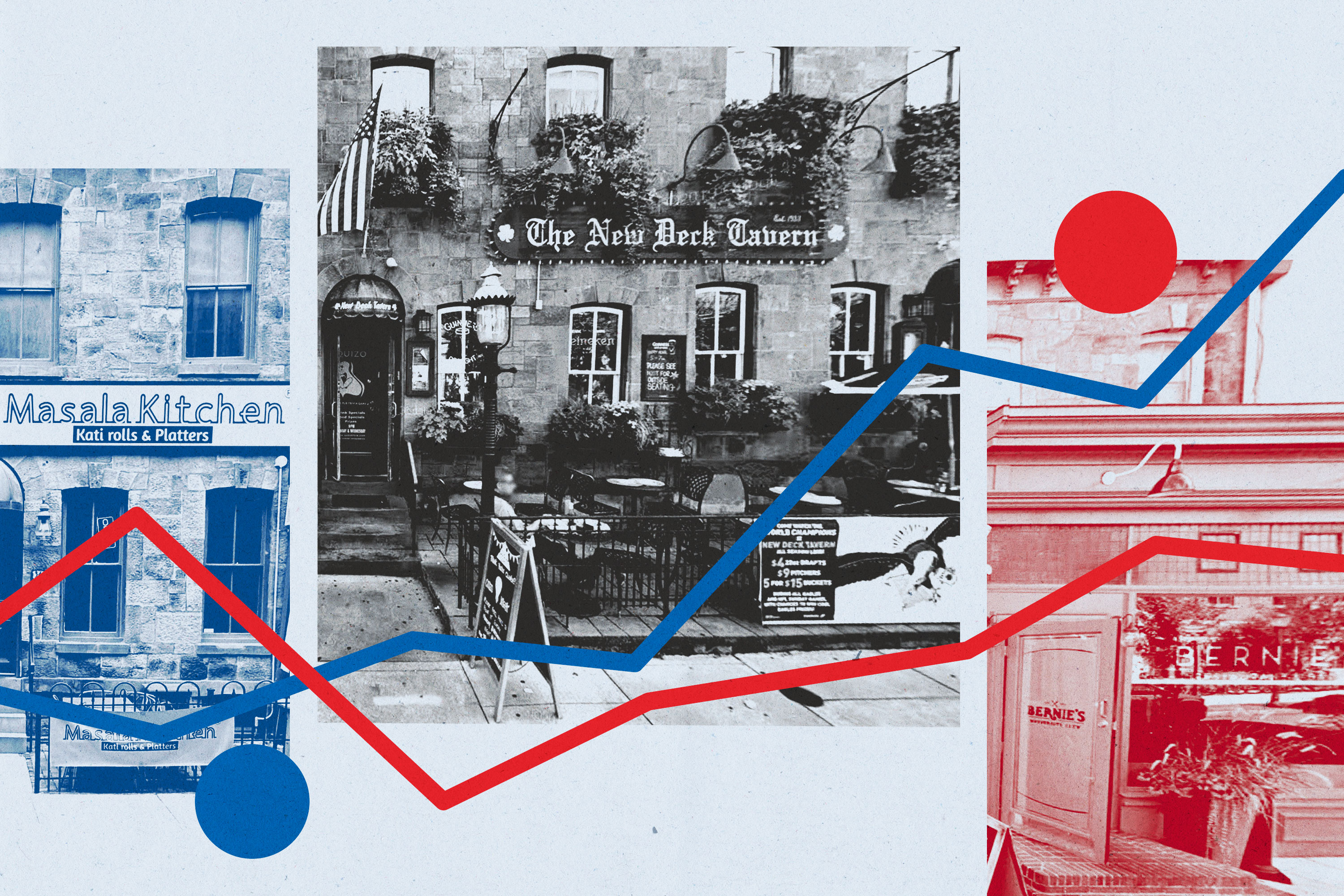
The space remained empty until Masala Kitchen opened in 2025.
Next door is Avril 50, a shop that sells coffee, tea, chocolates, international publications, and more. It opened in 1984 and is still serving in 2026.
New Deck Tavern, one of the larger restaurants on the block, just celebrated its 40th anniversary.
Mary Funchion, the owner of New Deck Tavern, said its long-term success is about consistency. “Here, people like to come back and it’s the same as when they went to college, the same as when they met their husband. … We’ll change the menu, we’re changing it up right now, but it’s pretty much the same, a lot of the same staff.”
The second restaurant that has lasted on the block is White Dog Cafe, which opened in 1983. On its website, it says it’s “the first restaurant in Philadelphia to utilize environmentally sustainable, organic, and locally sourced foods from farms within a 50-mile radius.”
In 2018, Federal Donuts occupied the building at 3428 Sansom St. This spot was the third location for Federal Donuts that opened during an expansion in 2014.
This Federal Donuts location closed in 2024, before the more recent announcement of other Federal Donuts closures, in which the restaurant group cited a slowdown in the fast-casual lunch business. Puyero Venezuelan Flavor on Campus opened later in 2024 and remains there today.
Then, we have Bernie’s Restaurant & Bar, originally a Montgomery County pub that was expanding to new locations, which opened in 2018.
Bernie’s, which also had a location in Manayunk, closed in February 2020 after two years. Baby Blues BBQ from down the block briefly moved into the space until closing in 2022.
As of August 2026, the restaurant space was not occupied by a tenant.
This block shows how quickly things can change, but also how restaurants can survive for decades.
COVID-19 also added additional pain to the restaurant industry, causing an increase in closures and a decrease in openings.
New food licenses are outpacing closures in Philadelphia.
The number of closures and openings is based on initial start dates and end dates of restaurant business licenses.
05001,00020182019202020212022202320242025
It has also changed the behavior patterns of customers, specifically the lunch crowd. “We had double the amount of staff every day during the week than we do now because the lunches aren’t the same,” Funchion said.
“It’s a low-margin business. We no longer have a great lunchtime dining culture because I don’t feel like folks have fully returned to office,” Deutsch said.
story continues after advertisement
Starting in 2022, new permits started to return to pre-COVID numbers, and there is optimism in the continued recovery of businesses.
According to the Center City District State of the City 2026 report, Philadelphia is the third-largest residential downtown in the country and retail occupancy reached 84%.
“I think you can point in Philadelphia to this kind of always, consistently percolating entrepreneurial spirit in the food world, like this is a food town, and there are always people here that want to be creative, take risk, open, and do something different,” Cooper said.
We used Philadelphia Department of Licenses and Inspections business license data to identify restaurants. We specifically looked at “Food Preparing and Serving” and “Food Preparing and Serving (30+ SEATS)” licenses. To determine the median license duration, we looked at licenses that started after 2005 through 2025, because the department transitioned to a new system in 2004, which affected initial start dates of licenses before the transition.
In 2018, L&I made a change to certain license structures that resulted in new licenses to differentiate between restaurants with a 50- and a 30-seat capacity, which could have affected some of the initial license dates. “The purpose of this restructuring was to assist in our ability to see which establishments would be eligible for a liquor license. This was accompanied by significant joint enforcement between L&I and the health department,” said Kandyce Stukes, communications manager at L&I.
To account for license changes for the same locations, we combined licenses that were listed for the same business name at the same location.
According to L&I, less than 5 percent of data are incomplete, so when we encountered incomplete entries we omitted them.
Staff Contributors
Design and development: Garland Fordice
Editing: Sam Morris and Julie Busby
Copy Editing: Addam Schwartz
Subscribe to The Philadelphia Inquirer
Our reporting is directly supported by reader subscriptions. If you want more journalism like this story, please subscribe today
The little bird of an idea to open a restaurant circled the blue skies of Fred Mogul’s imagination for many years while he was preoccupied with other passions. The first few decades of his career were spent in journalism, working in print and at wire services from Nebraska to Jerusalem, then in public radioas a news reporter, first at WHYY, followed by 18 years at WNYC in New York.
But that little bird persisted, which is how this cheerfully quirky all-day cafe and restaurant in Chestnut Hill — the Blue Warbler — eventually came to be. Having been steeped so long in the perpetual turbulence of the media industry, Mogul was not deterred bythe famously daunting risks of building a restaurant.
“I wanted to do something else for social good and contribute to the world in having a communal gathering place while feeding people,” he said, conjuring a destination that combined the best attributes of a bakery-cafe, a diner, and a local tavern. “But I also want it to be a little surprising, playful, and unpredictable.”
To open such an intriguing place in Chestnut Hill, especially,would absolutely be a good deed. That neighborhood’s chronically underperforming dining scene, despite its abundance of well-to-do residents and quaint retail district lining Germantown Avenue, is such an enduring enigma that the last time I wrote something really nice about a restaurant there was nearly a decade ago when I reviewed Mica, which sadly did not survive the pandemic.
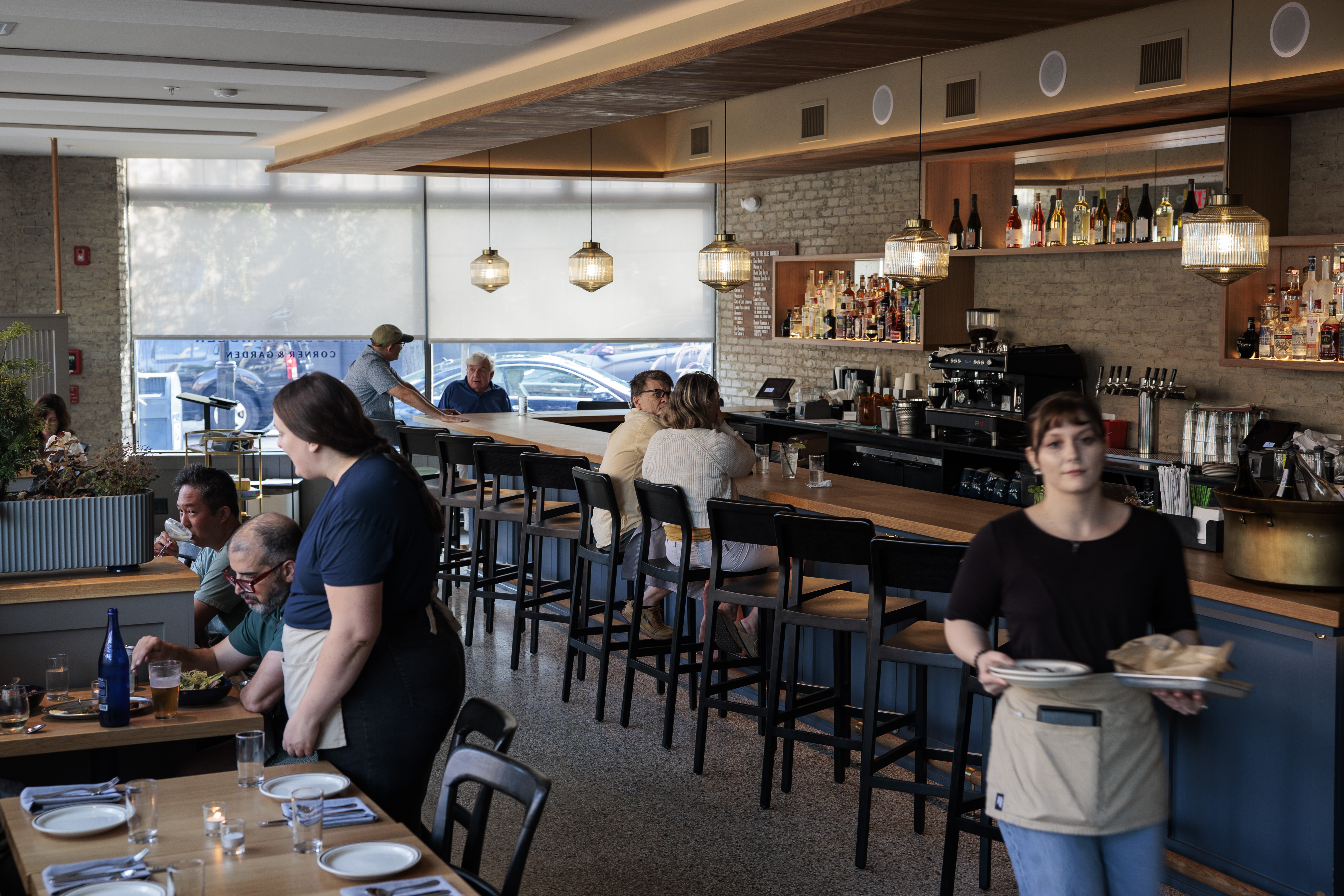
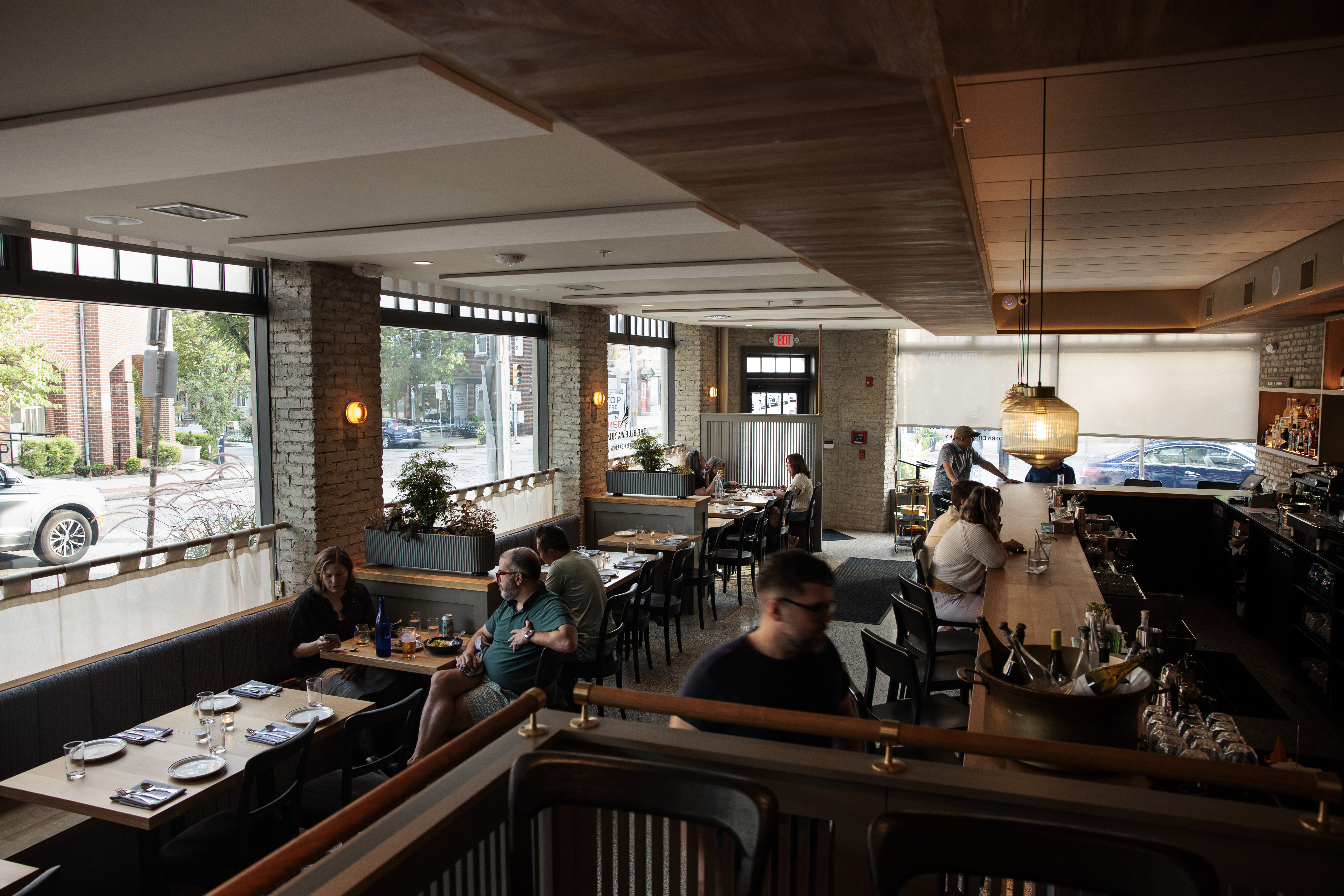
The dining room at the Blue Warbler on Thursday, Sept. 3, 2026 in the Chestnut Hill section of Philadelphia.Monica Herndon / Staff PhotographerThe dining room at the Blue Warbler on Thursday, Sept. 3, 2026 in the Chestnut Hill section of Philadelphia.Monica Herndon / Staff Photographer
But here was Mogul’s vision of the Warbler come to life with such vibrant warmth on a Saturday night, and it was as if this bustling three-month-old newcomer had been ensconced at the corner of Germantown and East Willow Grove Avenues for years.
The slate-blue bar trimmed with white oak was lined with customers sipping Cardamaro spritzes, blushing pink Clover Clubs, and sage gose beer from Germantown’s Attic Brewing Co. Meanwhile, eager diners waited patiently near the front door for their turn in the 71-seat dining room, where comfortable banquettes along the window and a cluster of tables on a raised rear platform create a sense of intimacy within the open space.
As a world-beat soundtrack pulsed with tunes from Brazil, Nigeria, and Afghanistan, the Warbler’s eclectic dinner menu — ranging curiously from Middle Eastern meze to smoked arctic char spread, mushroom kebabs, a tuna melt sandwich, and a faux-meatloaf platter — ultimately landed on the table less chaotically than it reads.
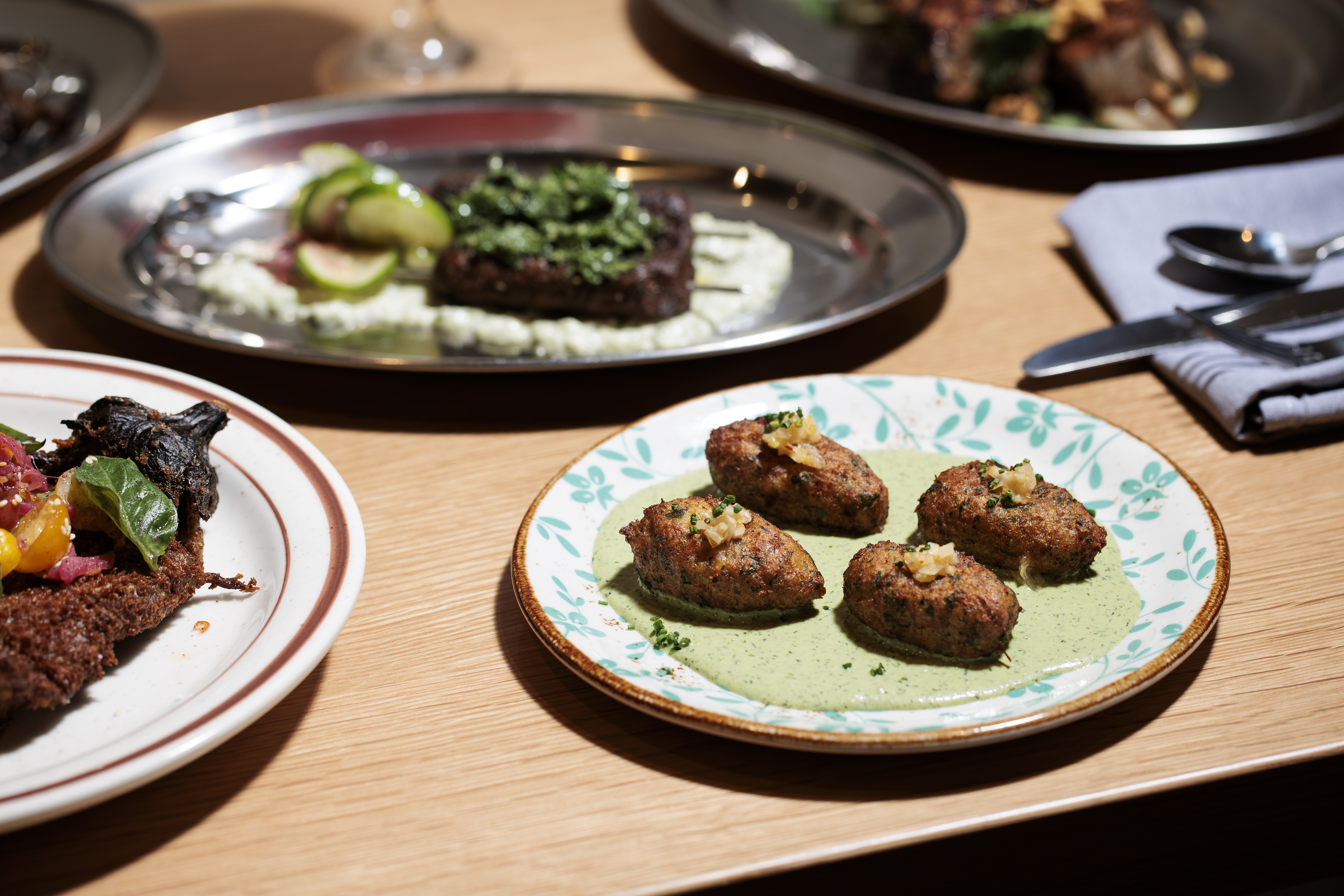
The bacalao, salt cod croquettes with green yogurt and lemon relish at the Blue Warbler.Monica Herndon / Staff Photographer
We swiped rounds of fluffy pita through silky hummus topped with cuminy Moroccan carrots and a spicy-smoky drizzle of harissa crunch. I savored the oceanic tang of warm salt cod fritters against the refreshing coolness of yogurt sauce greened with parsley, dill, and mint.
I’ll admit to the lowest expectations possible for the “meatloaf” made with Impossible meat. But this kitchen, run by chef Daniel Berret (formerly at CO-OP in the Study hotel in University City and Chestnut Hill Brewing Co.), seasoned that loaf nicely with a sweet onion and herb boost, lacquered it with a molasses-ketchup glaze, then added appealing sides of plancha-roasted king oyster mushrooms and fresh-cooked frites with a sriracha mayo dip. It was a comfort winner I’d return for.
Yes, there’s a vaguely retro sensibility to this globe-hopping collection of flavors, as well as the unabashed offering of tofu steaks and wheat meat as entrees in an era when vegetarian cooking has grown into a more vegetable-focused phase. The fact that there is no red meat or poultry on this menu, which does include fish, will be a no go for some.
But as Mogul told my colleague Michael Klein at the Warbler’s opening, he refuses to define this space by “what it lacks” or simply as “that vegetarian place” so much as a neighborhood-centered hub that is inclusive. The handsome dining room and breezy backyard patio are inviting. The service is genuine and outgoing. And the kitchen brings earnestly wrought flavors to everything it makes — including the hand-rolled bagels that anchor much of its daytime cafe menu.
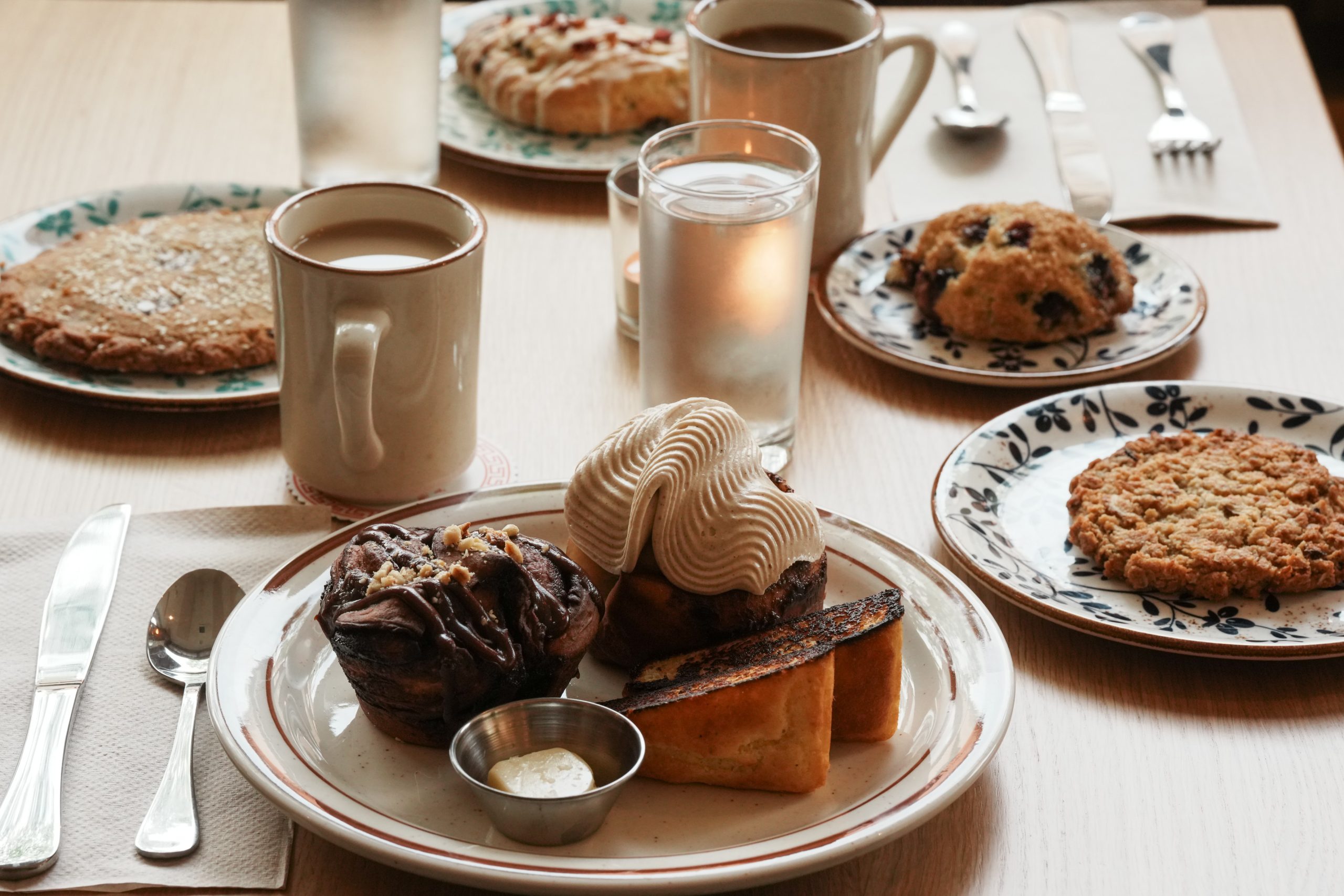
It clearly has the neighborhood’s full attention, as evidenced by the customer who noted that an early version of cinnamon rolls for breakfast was topped with a wave of chai frosting that reminded them of “a Trump combover,” says Mogul. “That image could not be unseen, so we went to DIY schmearing with the frosting in ramekins instead!”
Chocolate hazelnut babka, chai cinnamon roll, and griddled cornbread at the Blue Warbler on June 11. The presentation of the cinnamon roll has since been changed with the frosting served on the side.Jessica Griffin / Staff Photographer
As a restaurant novice, Mogul still has a lot to learn — but he has eagerly embraced input from those with expertise. Just as he turned to Ambit Architecture and In House Studio to tastefully transform the longtime Foster’s Drugstore into its first use as a restaurant (note the salvaged original terrazzo floors and a serious ongoing attempt at soundproofing), he engaged restaurant consultant Arthur Cavaliere to translate his broad vision for the food into workable menus.
It all comes down to execution by Berret and his crew, and for me, the dinner service was the most successful. Aside from the tasty meze nibbles — including salty-sweet haloumi-stuffed dates and a smoky baba ghanoush topped with crispy cornmeal-fried Japanese eggplant — there is an appealing array of grilled skewers to start.
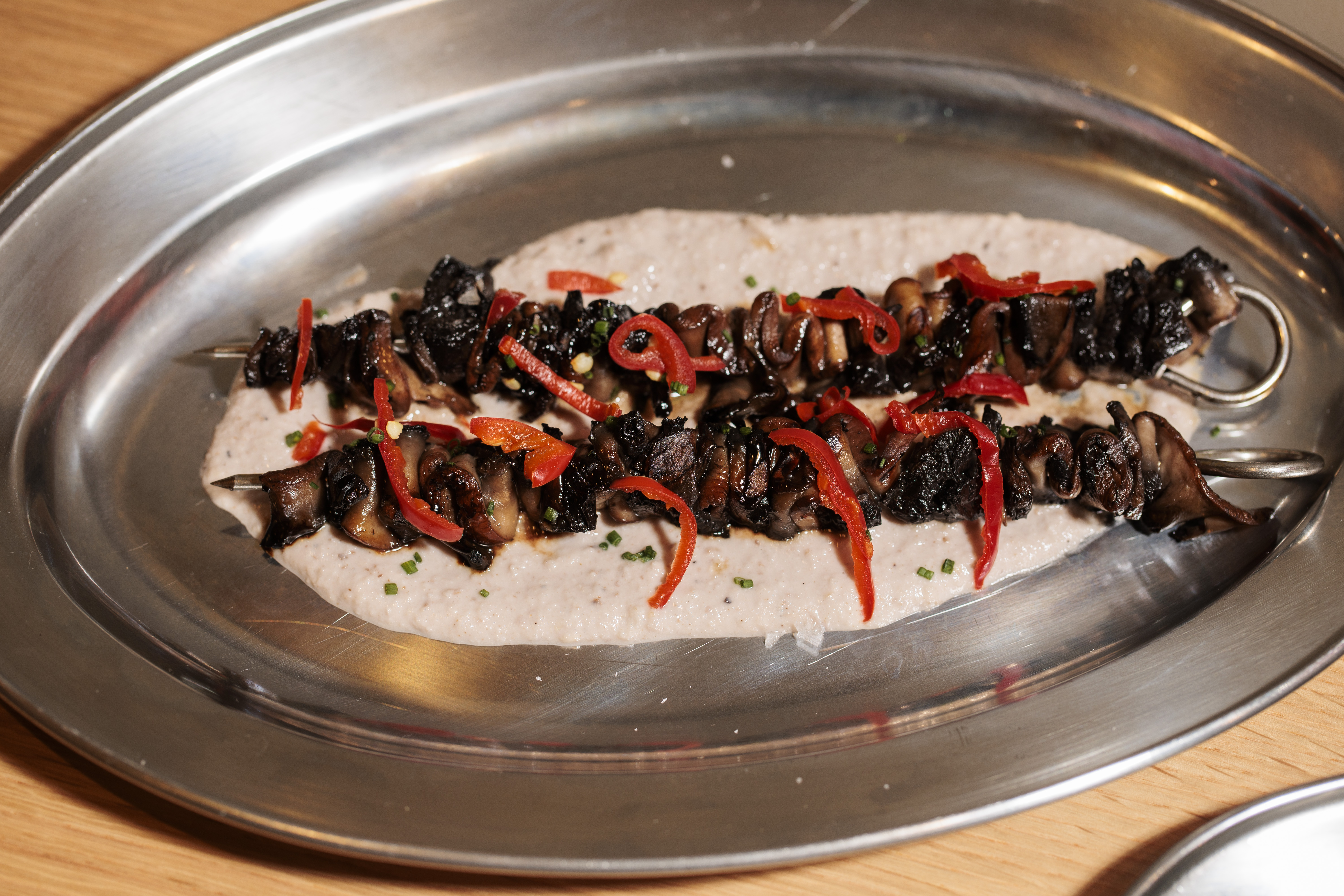
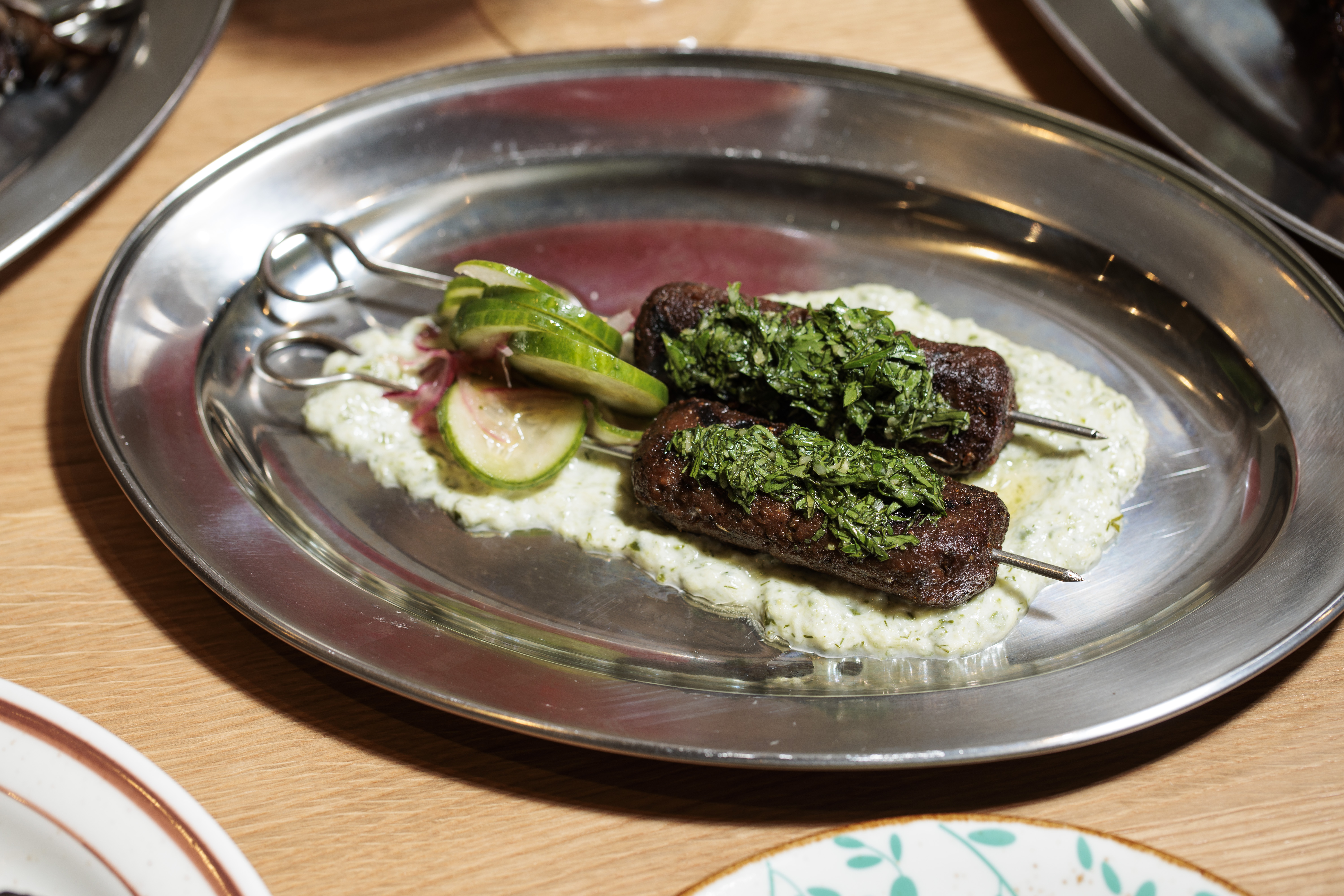
I especially enjoyed the “Chesco” portobello kebab whose long ribbon of mushroom is threaded like an accordion onto the skewer, glazed with date molasses and tamari, then served over a walnut tarator sauce. I also unexpectedly loved another Impossible meat creation: a version of kofta zestily seasoned with onions and garlic in the style of a Balkan ćevapi sausage, garnished with an herbal chimichurri over tzatziki yogurt.
The Chesco skewers at the Blue Warbler on Thursday, Sept. 3, 2026 in the Chestnut Hill section of Philadelphia.Monica Herndon / Staff PhotographerThe Balkan kebab skewers at the Blue Warbler on Thursday, Sept. 3, 2026 in the Chestnut Hill section of Philadelphia.Monica Herndon / Staff Photographer
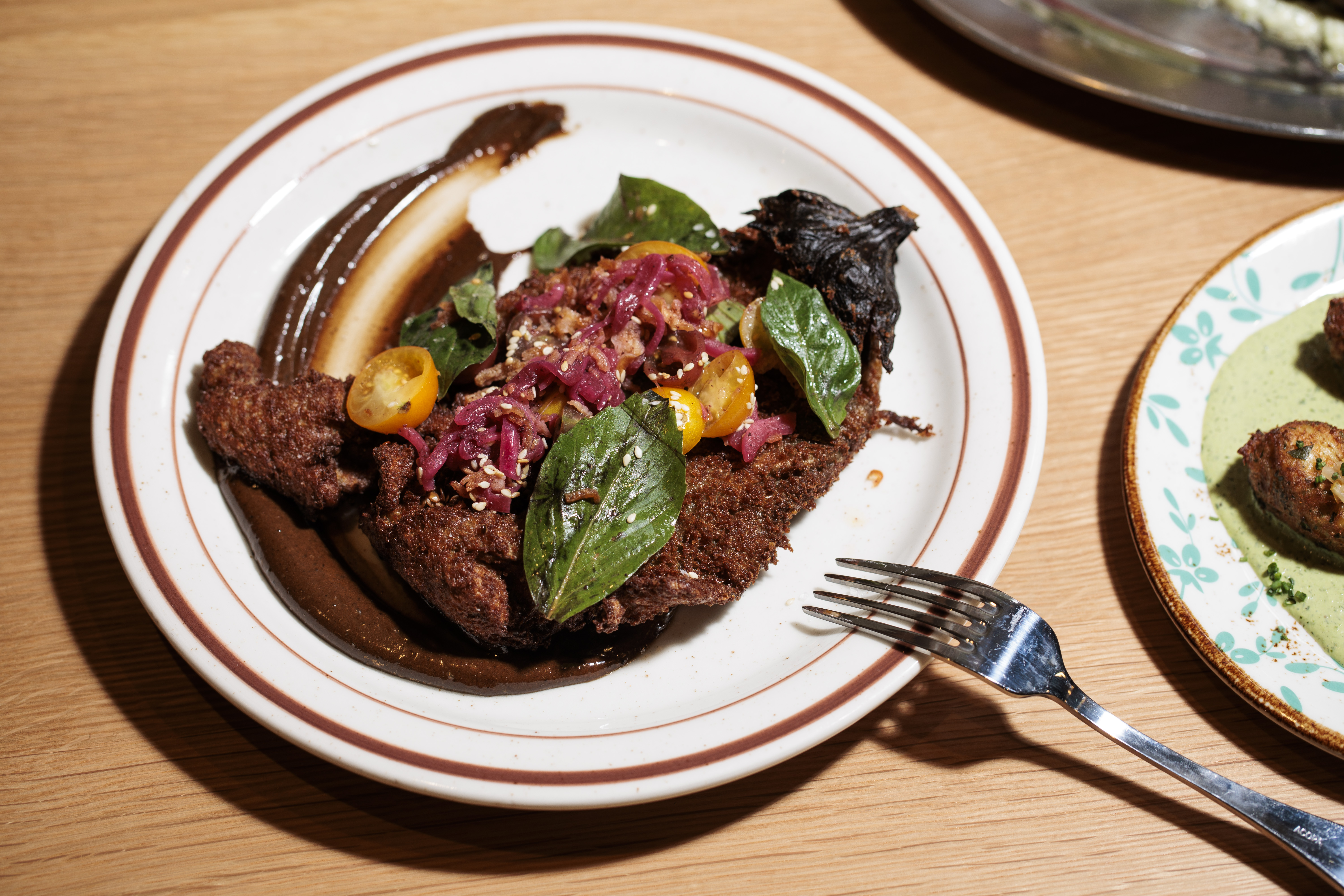
Such mock-meat successes opened my mind to the panko-crusted, lemon-infused tofu steak. It was not bad, especially over a colorful pile of sauteed asparagus and watermelon radish. But it was a bit boring compared to the most satisfying entree here, a whole smoked eggplant that’s deep-fried into a schnitzel, then placed over a black garlic aioli beneath a juicy tumble of fresh heirloom tomatoes tossed with Thai basil, sesame, and tart sumac.
The grilled whole branzino was a perfectly fine option for those craving fish, but it, too, was ultimately less engaging than that eggplant.
The smoked eggplant schnitzel at the Blue Warbler on Thursday, Sept. 3, 2026 in the Chestnut Hill section of Philadelphia.Monica Herndon / Staff Photographer
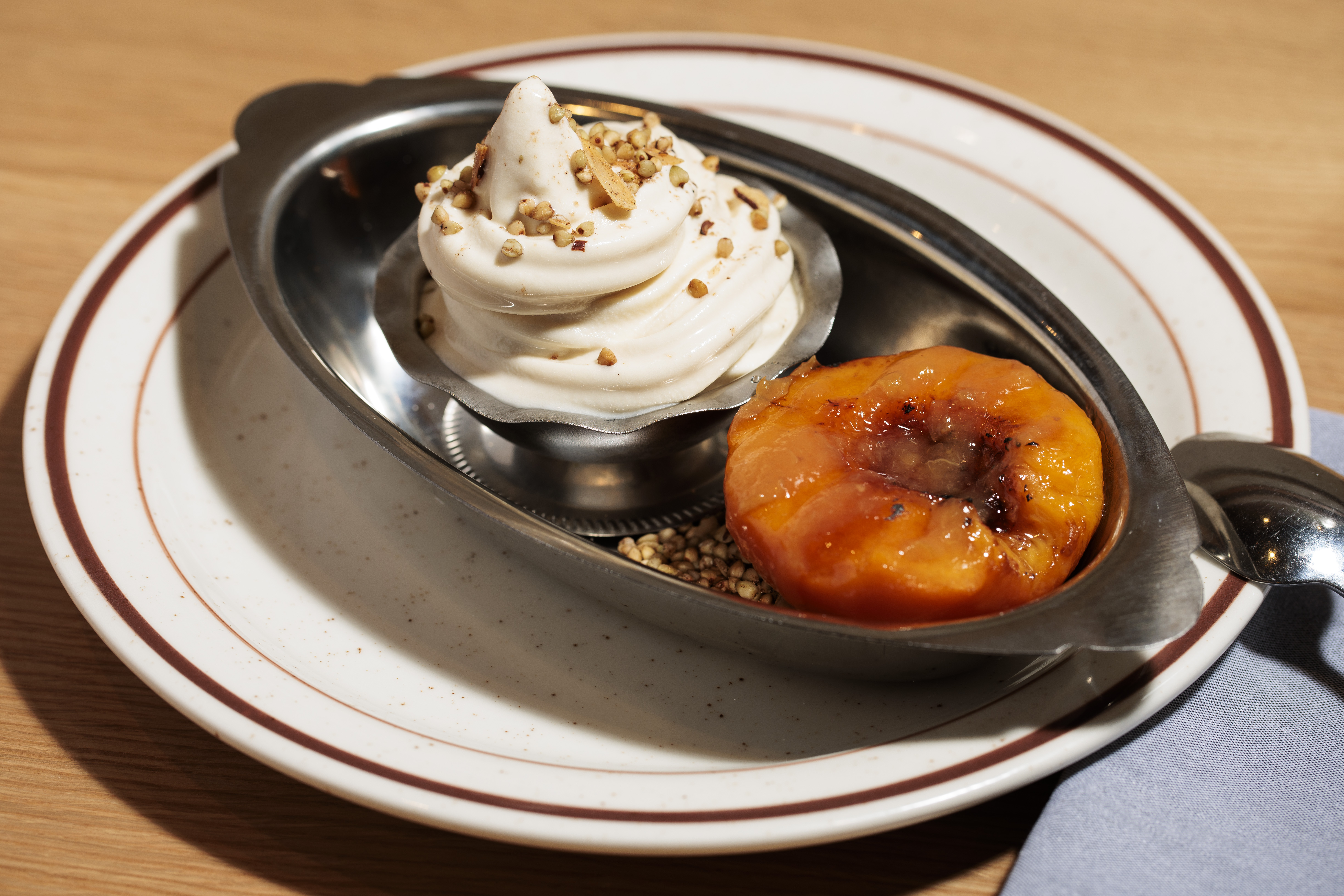
The desserts begin with two solid renditions of crème brûlée, including a classic vanilla custard, stylishly dusted with dried rose petals, and a seasonal variation that has so far ranged from strawberry to matcha and corn. I was most impressed by chef de cuisine Renee Rowlett’s creative deconstruction of a peach crisp into something lighter and more seasonal: A half peach caramelized with demerara sugar was posed over a crunchy mound of brown sugar-toasted almonds and buckwheat groats (a nod to the Ashkenazi Jewish thread woven through the Warbler’s menu) beside creamy maple soft-serve.
The peach crisp at the Blue Warbler on Thursday, Sept. 3, 2026 in the Chestnut Hill section of Philadelphia.Monica Herndon / Staff Photographer
Breakfast, lunch, and brunch are obviously key to the Blue Warbler’s success as an all-day cafe. And while this corner room soaks in the sunshine and exudes a pitch-perfect laid-back aura — I’d happily hang out here and drink that bold Cuban roast brew from Mayorga — our daytime meal was not the layup it should have been.
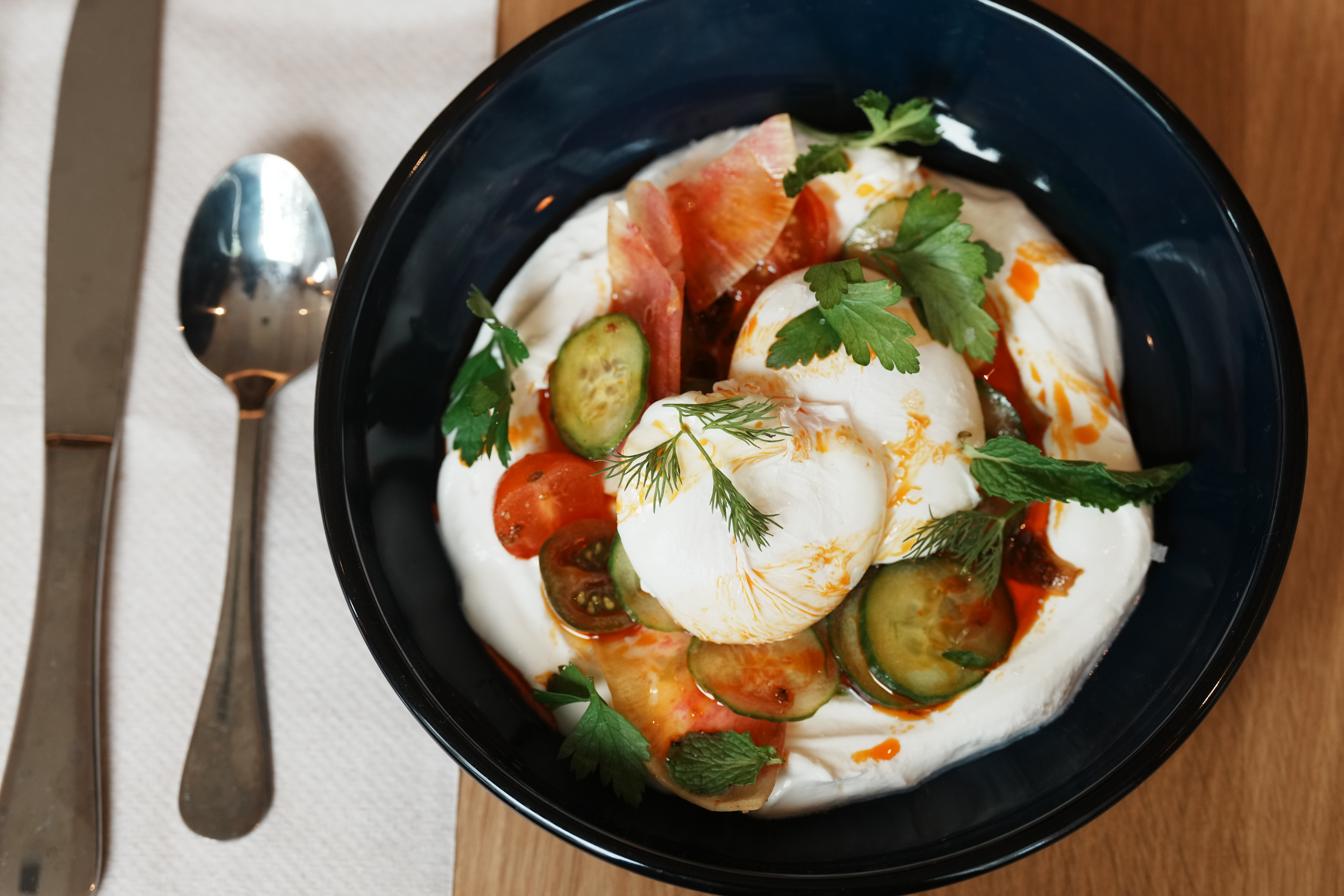
I would have loved my well-cooked omelet with zucchini, onion, peppers, and feta (and especially that side of cuminy tomato shakshuka sauce) but the kitchen forgot to add the zucchini. I’ll never pass up a socca chickpea pancake, but the Warbler’s rendition was unfortunately thick and scorched. The classic American-style pancakes with butterscotch were doughy. The cheddar biscuits were dense. Next time, I’ll definitely try the Turkish breakfast of eggs, tomatoes, and cucumbers over labneh with harissa.
Turkish breakfast at the Blue Warbler, in Philadelphia, June 11, 2026.Jessica Griffin / Staff Photographer
I’ll give the Warbler bonus points for hand-rolling their own bagels, even if the overly fluffy sourdough interior is not my ideal (not to mention the heat bubbles blistering its crust, which should be smooth). It nonetheless worked well enough as a vehicle for a breakfast sandwich stuffed with cheddar, eggs, arugula, and red pepper aioli. I especially liked that bagel hollowed out and stuffed with zesty green herbal tofu purée and tangy red peppadew peppers for the Herbivore sandwich.
All these flaws can surely be fixed with some tweaks. And considering how well the kitchen infuses seasonal creativity into the grab-and-go items that cycle onto the counter display on the bar throughout the day — from the muffin-shaped herb-and-feta “egg bites” to a fig- and fontina-topped schiacciatta bread still warm from the oven — such modifications are easily within their reach.
Mogul has already been so dialed in to all the details since embarking on making his restaurant dream a reality, I’m hopeful the Warbler will do that soon. There is already so much to appreciate at this promising — and needed — new addition to Chestnut Hill, I’ll look forward to watching it grow.
A schiacciata topped with figs and fontina at the Blue Warbler in Chestnut Hill.Craig LaBan / Staff
Breakfast and lunch 7 a.m. to 2 p.m. Monday through Friday. Dinner 5 to 9 p.m. Sunday, Wednesday, and Thursday, until 10 p.m. Friday and Saturday. Brunch 9 a.m. to 2 p.m. Saturday and Sunday. No dinner Monday or Tuesday.
Main plates, $15-$32 (including sharing platters).
Wheelchair accessible.
About a third of the menu is gluten-free or can be modified.
Menu highlights: Dinner: trio of meze dips; bacalao fritters; haloumi dates; smoked arctic char spread; Balkan and Chesco skewers; eggplant schnitzel; Impossible meatloaf; peach crisp. Breakfast-lunch: omelet; the Herbivore; egg bites; schiacciatta.
Drinks: Fresh and fruity takes on classic cocktails — Clover Club, Mai Tai with fresh orgeat, a pear martini, an amaro spritz, a spicy margarita, and fizzy Sgroppino — are worthwhile, alongside a selection of thoughtful N/A options. Local beers on draft and an international selection of well-priced wines by the glass ensure there’s something for everyone.
Owner Fred Mogul at the Blue Warbler, in Philadelphia, June 11, 2026.Jessica Griffin / Staff Photographer