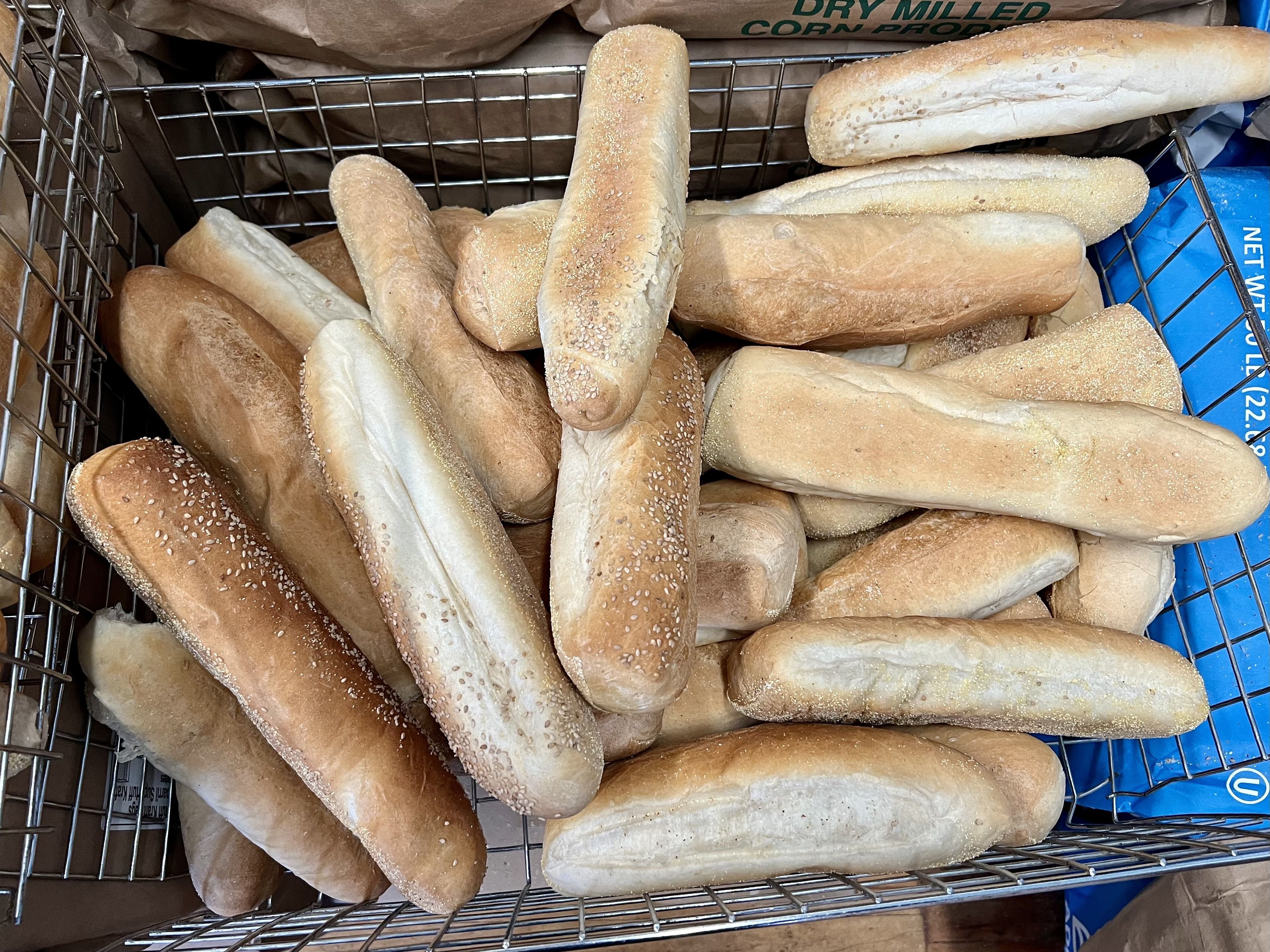
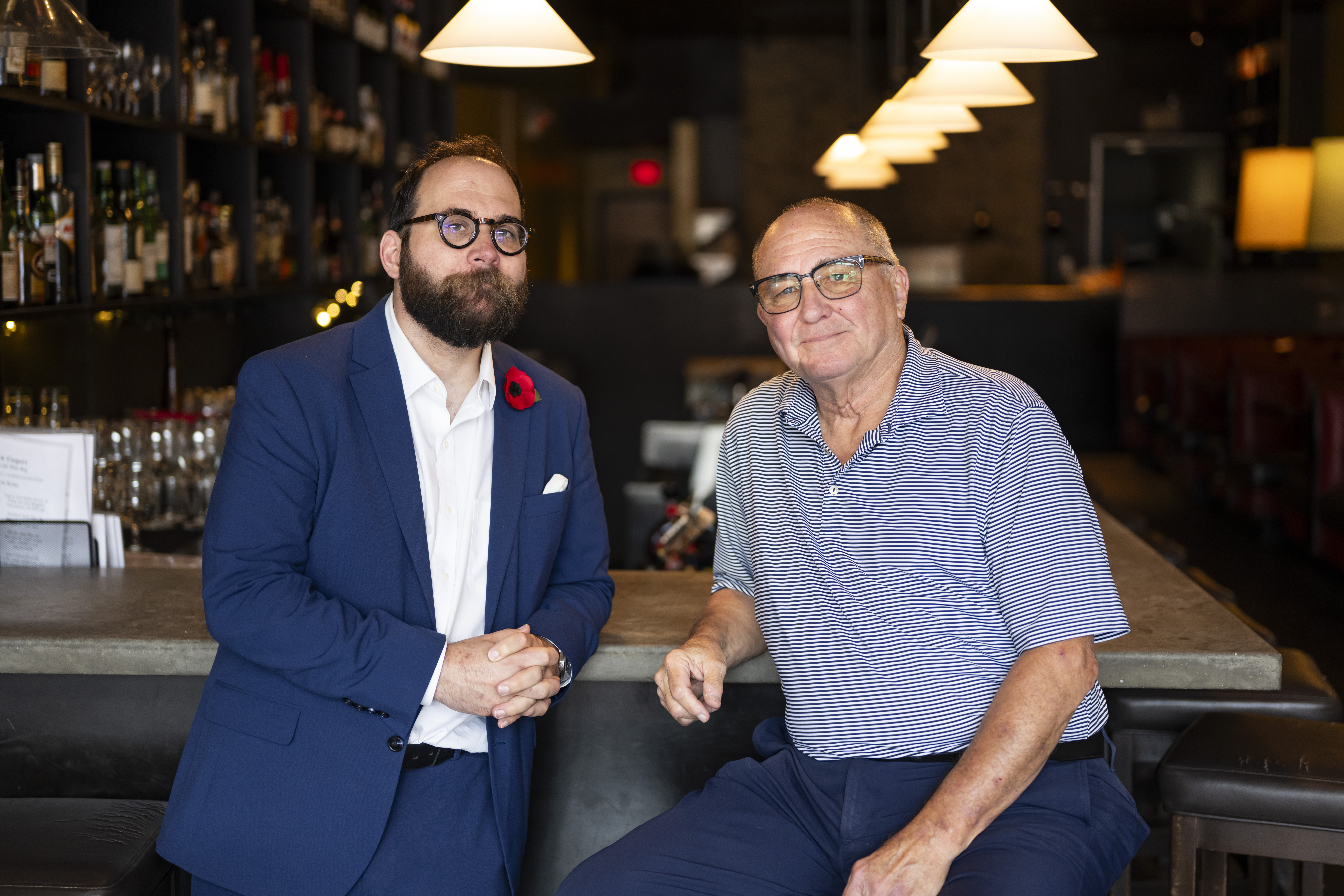
The seeded roll is a staple of Sarcone’s Bakery.Michael Klein / Staff
The seeded-roll question is part of the crowded field of never-settled cheesesteak disputes: Which cheese is correct? How finely should the beef be chopped? Should the onions be diced, sliced, or chopped?
Tourists vs. locals
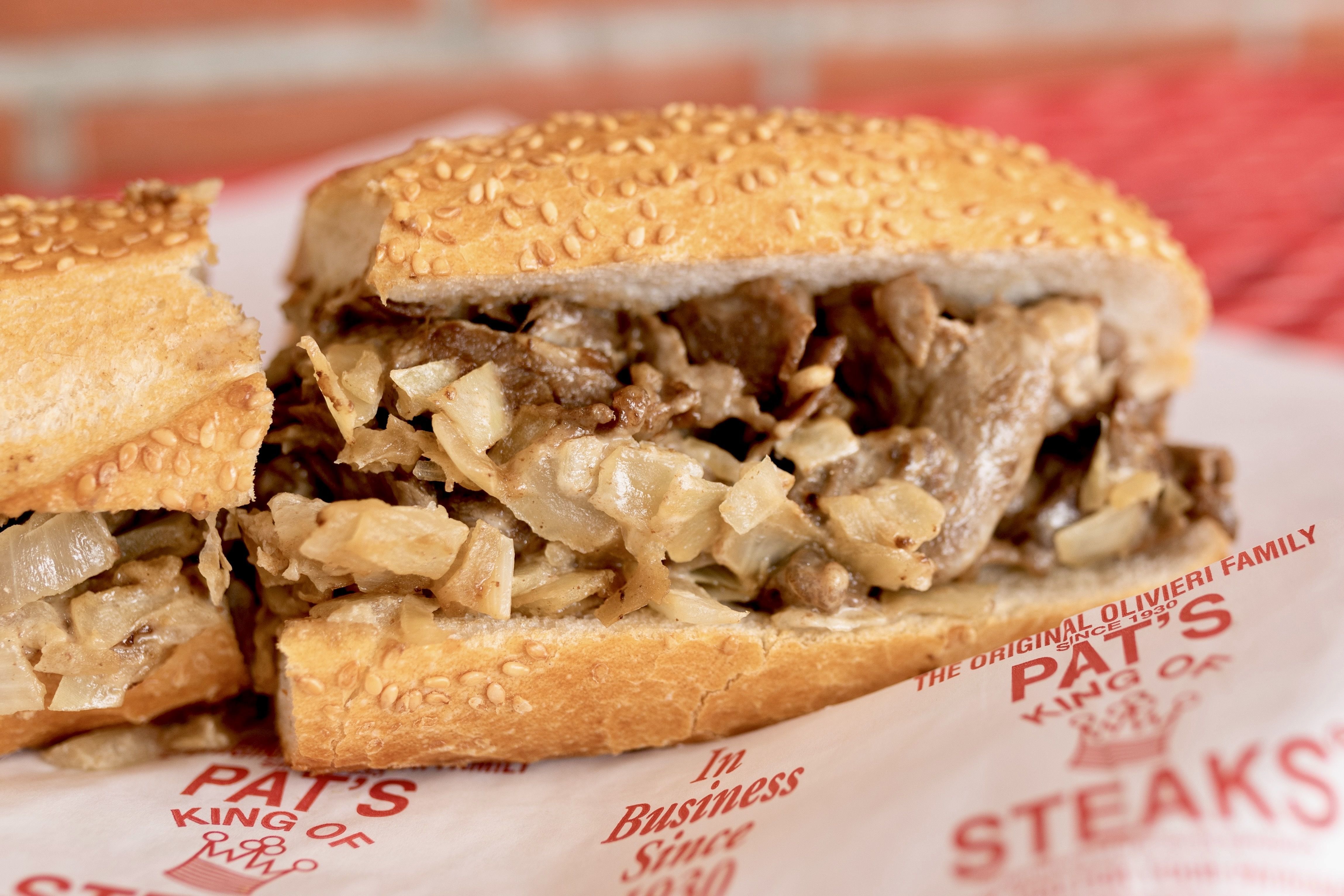
Earlier this month, Jim’s began offering seeded rolls as an option for the first time since it opened in 1976. Pat’s, which made news in February when it began offering them after 96 years of plain rolls, abandoned the experiment after only a few weeks.
Seeded rolls tend to be crustier, and the toasted sesame adds a faintly nutty flavor. Plain rolls are generally softer and milder, putting more emphasis on the beef and cheese.
At Jim’s, owner Ken Silver said he added seeded rolls to his Liscio’s bread order to give customers a choice. “For the most part, it’s a tourist thing,” Silver said. “Our local base is almost all plain.”
Silver said Jim’s made the change “for the same reason we added chicken and Cooper Sharp [cheese]. People expect it from what they see on social media.” Overall so far, he said, seeded is outselling unseeded, 6 to 1.
At Pat’s, those expectations did not translate into sales.
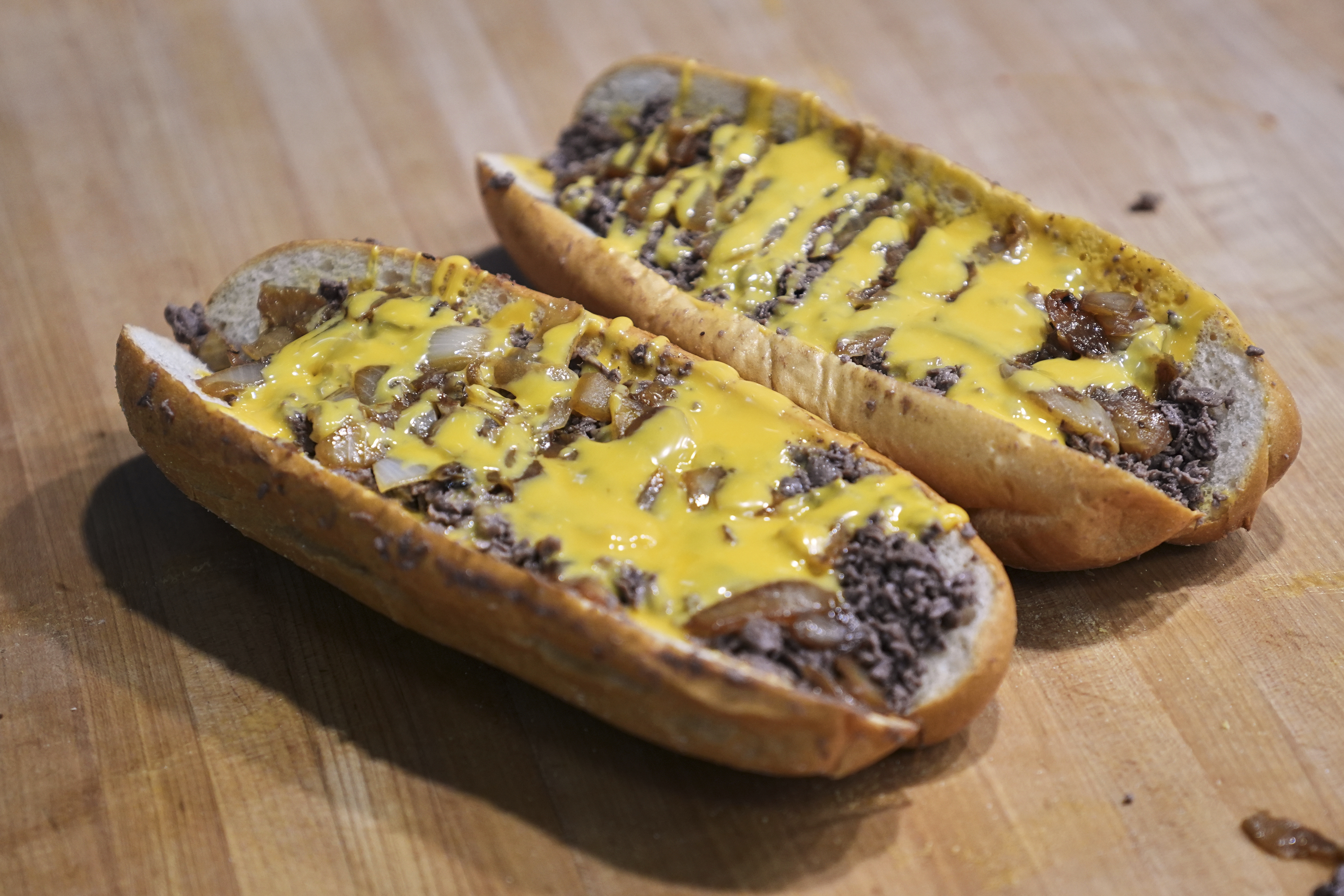
A cheesesteak on an unseeded roll at Jim’s South Street.Matt Rourke
Owner Frank Olivieri began offering seeded rolls in February, shortly after the death of his father, Frank P. Olivieri, who had resisted changes. The younger Olivieri initially said the limited-time offering would likely be permanent.
It lasted a month.
“If I got in 400 [seeded rolls] a day, by the end of the day, I was throwing out 390 of them,” Olivieri said. “Not that I’m the barometer to judge everybody else by or what influencers think you should eat, [but] not everybody who comes to Pat’s Steaks wants the [seeded] rolls.”
How the old guard rolls
Pat’s recently switched its bread supplier from Aversa to Corropolese, and offers plain rolls only now.
Geno’s Steaks, across Passyunk Avenue, also has been firmly seedless since Joey Vento opened the shop in 1966. “It’s never crossed my mind,” said Geno Vento, who took over after his father’s passing in 2011. “We have our customer base, and I don’t feel that we need to change the roll [baked by Liscio]. I feel like it’s more of a trend right now. And they might put [cheesesteaks] on rye bread next. You never know.”
Geno’s concession to the new generation is Cooper Sharp, which the shop buys in sauce form and heats up — as an option.
At the old-school Dalessandro’s in Roxborough, owner Steve Kotridis said he began offering seeded rolls a few years ago “when it became a fad,” though he estimated that only 3% of customers order them. Dalessandro’s uses a softer Amoroso roll for cheesesteaks and a sturdier, seeded Aversa for hoagies, both with and without seeds.
For newer cheesesteak shops, however, the seeded roll has become all but de rigueur — a style that predates social media but has been amplified by it. Famously, Donkey’s Place in Camden has served its distinctive cheesesteaks on poppy-seeded round rolls for more than 80 years.
Louis Sarcone Jr. at the century-old Sarcone’s Bakery credits Bobby Toner of the now-closed JR’s Deli with helping establish seeded bread as a hoagie standard in the 1980s, after Toner began buying Sarcone’s seeded loaves.
Sarcone said Primo Hoagies, founded in South Philadelphia in 1992, spread the style widely as it expanded into a 120-unit chain. Sarcone supplied Primo for years before it started using parbaked rolls supplied by another bakery.
By 2024, Sarcone said, 90% of the rolls he baked were seeded, up from 75% a decade earlier.
John Bucci Jr. said John’s Roast Pork began serving cheesesteaks on seeded rolls in 1987, after its supplier, Vilotti, went out of business. Bucci’s father, who was terminally ill, left the choice of a new bakery to his son. “JR’s had started making their hoagies on seeded bread, so, I figured, why not try [it] on a cheesesteak?” Bucci said.
John’s initially bought its seeded rolls from Carangi and later switched to Sarcone’s.
Now a cheesesteak roll
The seeded roll’s rise as a defining feature of the modern Philadelphia cheesesteak came later, accelerated by Angelo’s Pizzeria.
Owner Danny DiGiampietro, whose wife is Louis Sarcone’s niece, used Sarcone’s seeded rolls when he opened the first Angelo’s in Haddonfield in 2013. After moving Angelo’s to Ninth and Fitzwater in 2019, DiGiampietro began baking his own bread.
As Angelo’s fame grew, its crusty, sesame-seeded rolls — an image widely broadcast on social media and emulated by other shops — helped define the newer-generation cheesesteak.
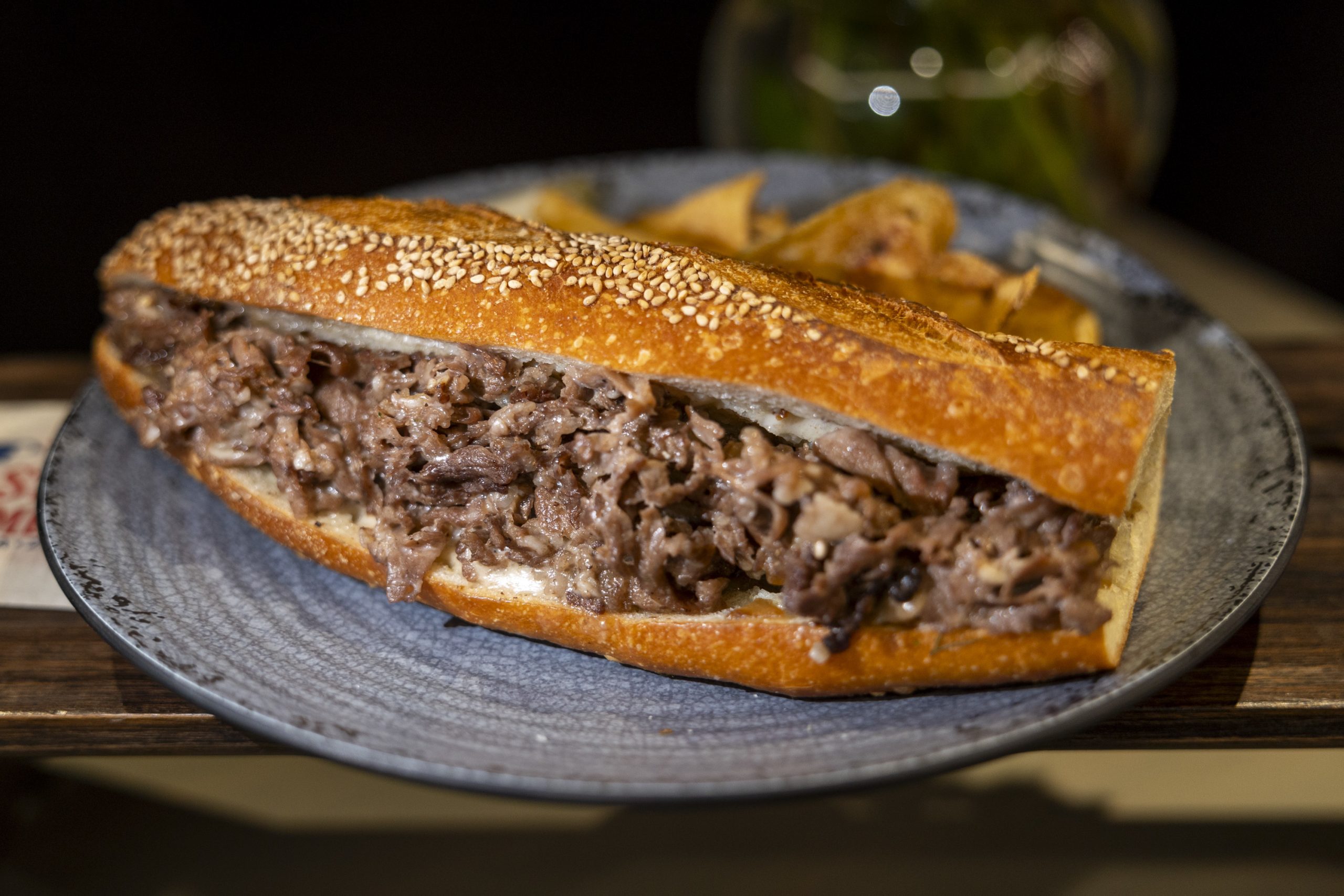
Del Rossi’s cheesesteak is served on a house-baked seeded roll.Tyger Williams / Staff Photographer
At Del Rossi’s, owner Nish Patel said cheesesteak orders were roughly split between plain and seeded rolls when he took over in 2020. Since he began baking his own rolls in 2024, virtually all have gone out on seeded bread.
“We barely get any requests for unseeded,” Patel said.
The contrast with Pat’s could hardly be sharper. There, Olivieri said, almost nobody wanted the seeded option.
Jim’s now finds itself somewhere in between — offering the roll that has come to signify a Philadelphia cheesesteak to many, while continuing to sell mostly plain rolls to its longtime clientele.
“People expect it from what they see on social media,” Silver said.
One of the year’s more closely watched Main Line restaurant projects now has a name, a chef, and a clearer identity.
Old Friend, a contemporary American grill built around live-fire cooking, is targeting a late-fall opening in downtown Wayne with former Fork executive chef Sam Henzy leading the kitchen.
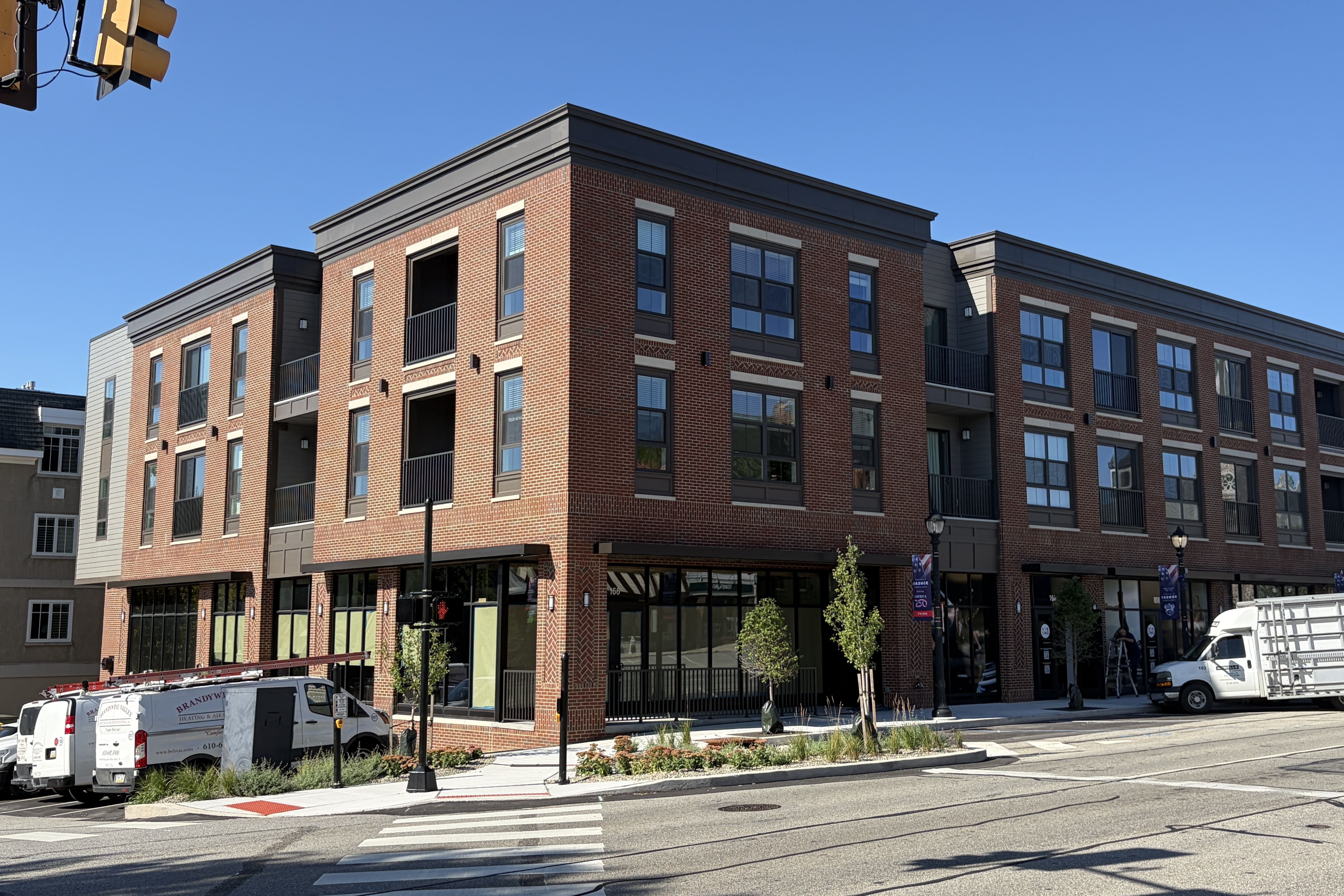
The 86-seat restaurant — 78 in the dining room and eight at the bar — will be at 166 E. Lancaster Ave., in a newly constructed ground-floor retail space at Lancaster and Louella Avenues that is part of the Apartments at Wayne Station. It is amid Wayne’s restaurant row, across from Maison Lotus and Rosalie, and just a few blocks from At the Table, White Dog Cafe, and the North Wayne Avenue dining strip.
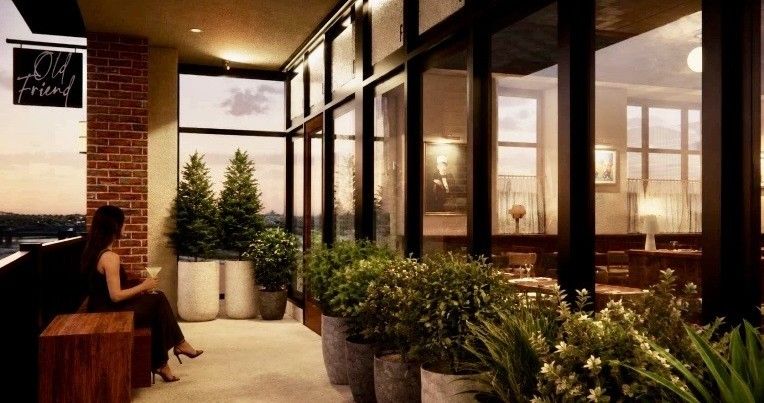
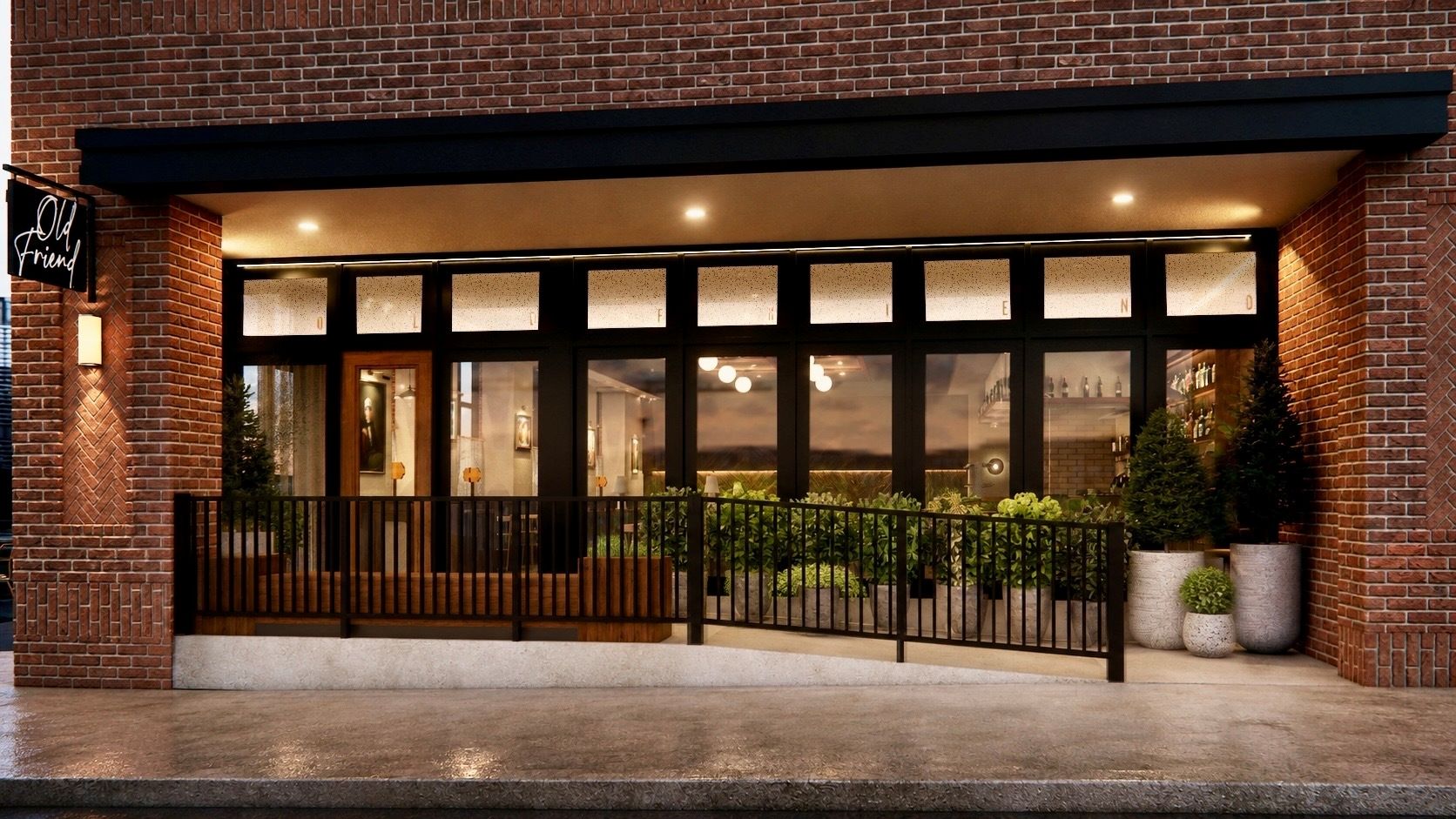
Rendering of Old Friend, 166 E. Lancaster Ave., Wayne.Stokes Architecture & DesignArchitectural rendering of the facade of Old Friend, 166 E. Lancaster Ave., Wayne.Stokes Architecture & Design
Old Friend is the creation of Larry Kagan and Chas McFeely, who met in 1984 at Welsh Valley Middle School and later attended Harriton High. McFeely, an advertising copywriter who lives in Alameda, Calif., has family ties to the Main Line and returns frequently.
Kagan, who works in financial services and is a partner in the Campus sports complex in Downingtown, offered the first public outline of the project at a March Radnor Township Board of Commissioners hearing for its liquor-license transfer, describing an unnamed grill restaurant “that’s going to have the soul of a steakhouse.”
Kagan told The Inquirer this week that the name “old friend” describes his relationship with McFeely: “It’s someone between friend and family — someone you can pick up at any time, you can be yourself.” The name, he said, also reflects the sort of relationship they hope to develop with customers.
Kagan acknowledges that neither he nor McFeely is a restaurateur. They brought in Stove & Co. chef-owner Joe Monnich as a consultant to develop the concept and assemble the operating team. Monnich will remain in a leadership role while continuing at Stove & Co., whose holdings include Stove & Tap and Joey Chops.
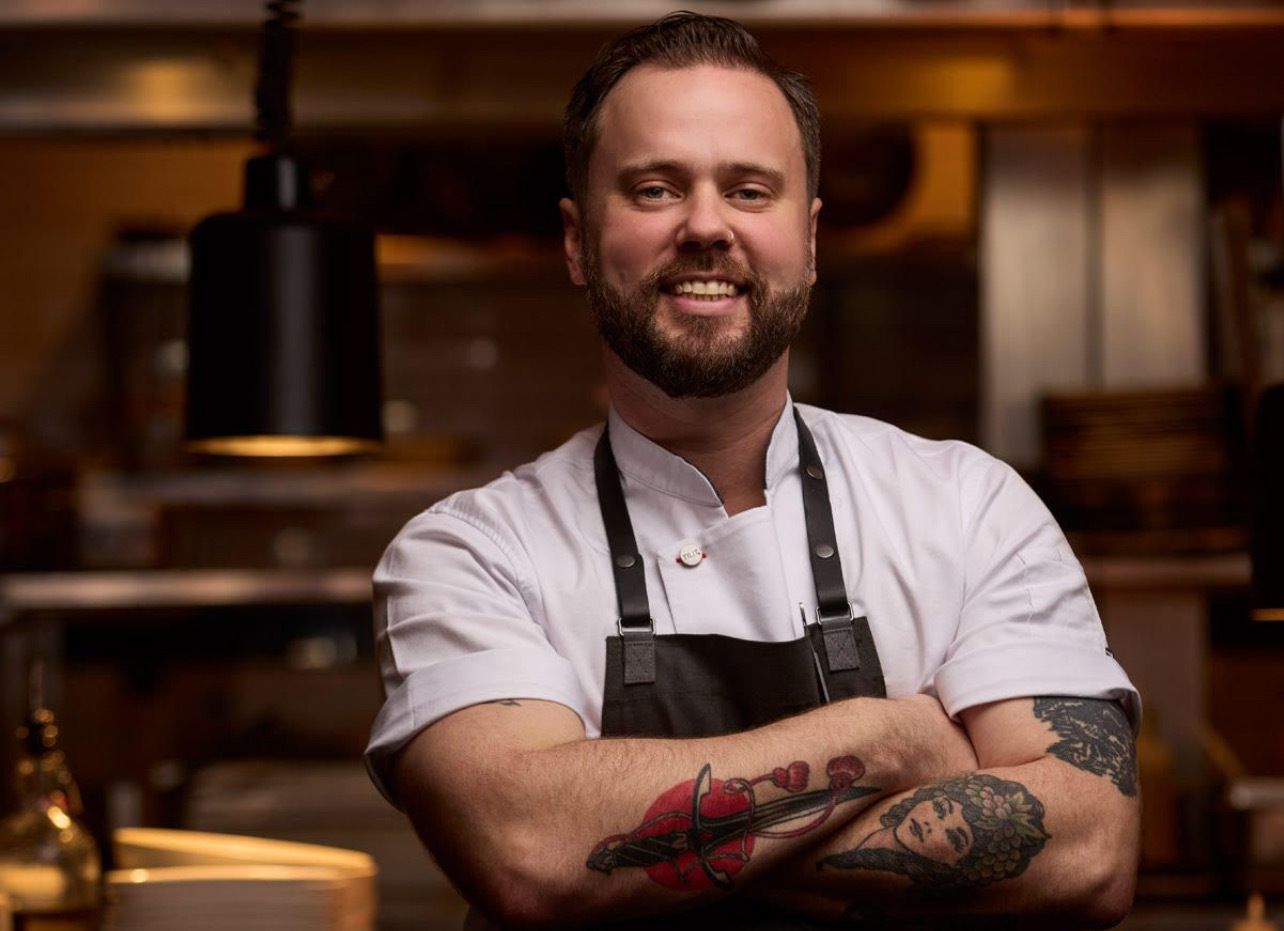
Sam Henzy in 2025, when he joined Fork as executive chef.Courtesy of Fork
The connection to Henzy came through Monnich. The two met at Morimoto when Henzy was about 20 and, as he puts it, “green as grass.”
“Joe was the first chef who pushed me really hard, but he did that great older-brother thing of pushing somebody while being there to answer questions,” Henzy said. “He really took me under his wing.”
They remained friends as Henzy built his career. He did not know the name of the Wayne restaurant until he recently visited the space with Monnich and the owners.
“When they told me it was going to be called Old Friend, it just made me smile,” Henzy said, “because that’s how I think of Joe.”
Henzy, who grew up in Delaware, is best known locally for his two years as executive chef at Fork in Old City. His resumé also includes Middle Child Clubhouse, Vernick Food & Drink, Noma in Copenhagen, and Quince and Angler in San Francisco.
Henzy’s experience with live-fire cooking began during a six-month internship at Noma. He remembers touring the cutting-edge restaurant and encountering a Josper charcoal grill set up in a makeshift shack out back.
“In that moment, I was like, ‘Oh, I’m taking that station,’” Henzy said.
He eventually did, spending the final three months of his internship on the Josper. Later, he sought out Vernick Food & Drink in part for its wood-burning oven. His most intensive live-fire experience came at Angler, where he was executive sous chef and the cooking line had no conventional stoves.
“It’s just fires,” Henzy said. “It’s fires everywhere you look.”
Old Friend will bring him back to that style of cooking. Its open kitchen will center on a charcoal-fired Josper combination grill and oven, which Kagan calls the restaurant’s “engine.”
Designed by Stokes Architecture & Design, the restaurant will feature reclaimed mushroom wood, an oak bar, and an open, firebrick-lined hearth that will put the Josper in view of the dining room.
Kagan calls Old Friend a contemporary American grill. The developing à la carte menu will move from small and medium plates to larger-format proteins intended for sharing. The wine list will be compact and closely matched to the food.
Fish — including some dry-aged fish — as well as poultry and other proteins will be cooked on the Josper. Henzy gained experience dry-aging fish at Angler and wants to explore the technique further at Old Friend.
“I think dry-aging fish is both an underused and a misunderstood technique,” he said.
Old Friend also represents a move away from what became Henzy’s signature at Fork. Pasta may appear on the menu, but it will not be a focus. At Fork, he said, its popularity “took on a life of its own,” sometimes overshadowing the rest of the menu.
“I’m really big on never resting on my laurels and taking on new challenges,” Henzy said.
After years away froma live fire-fueled kitchen, Henzy said, “I’ve really been itching to get back into the flames.”
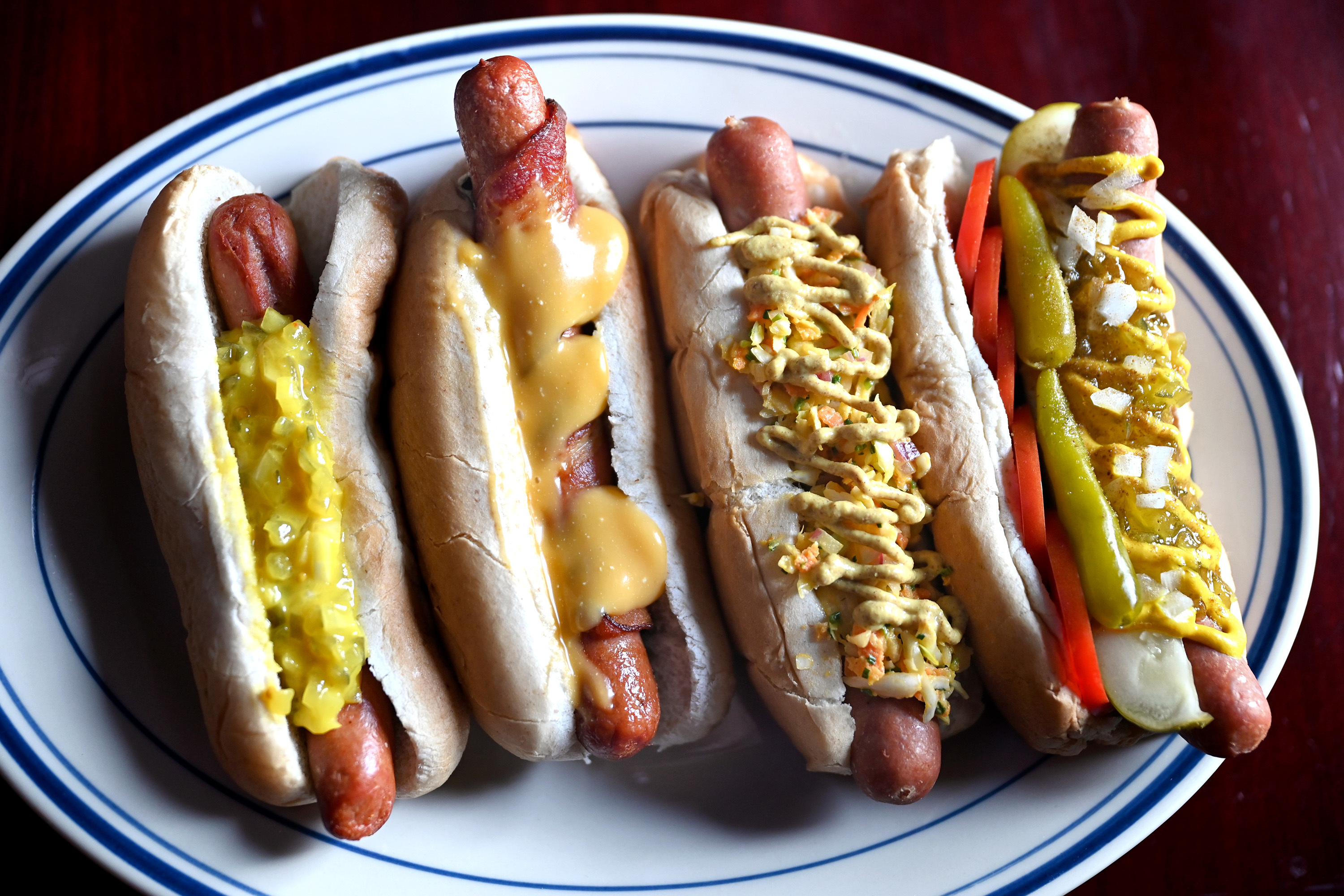
Expand your horizons beyond beef franks with mustard: We scoured the city for the best dogs, whether served on a traditional buns or topped with bonito flakes and carrot salad. Check out our map of Philly’s tastiest hot dogs.
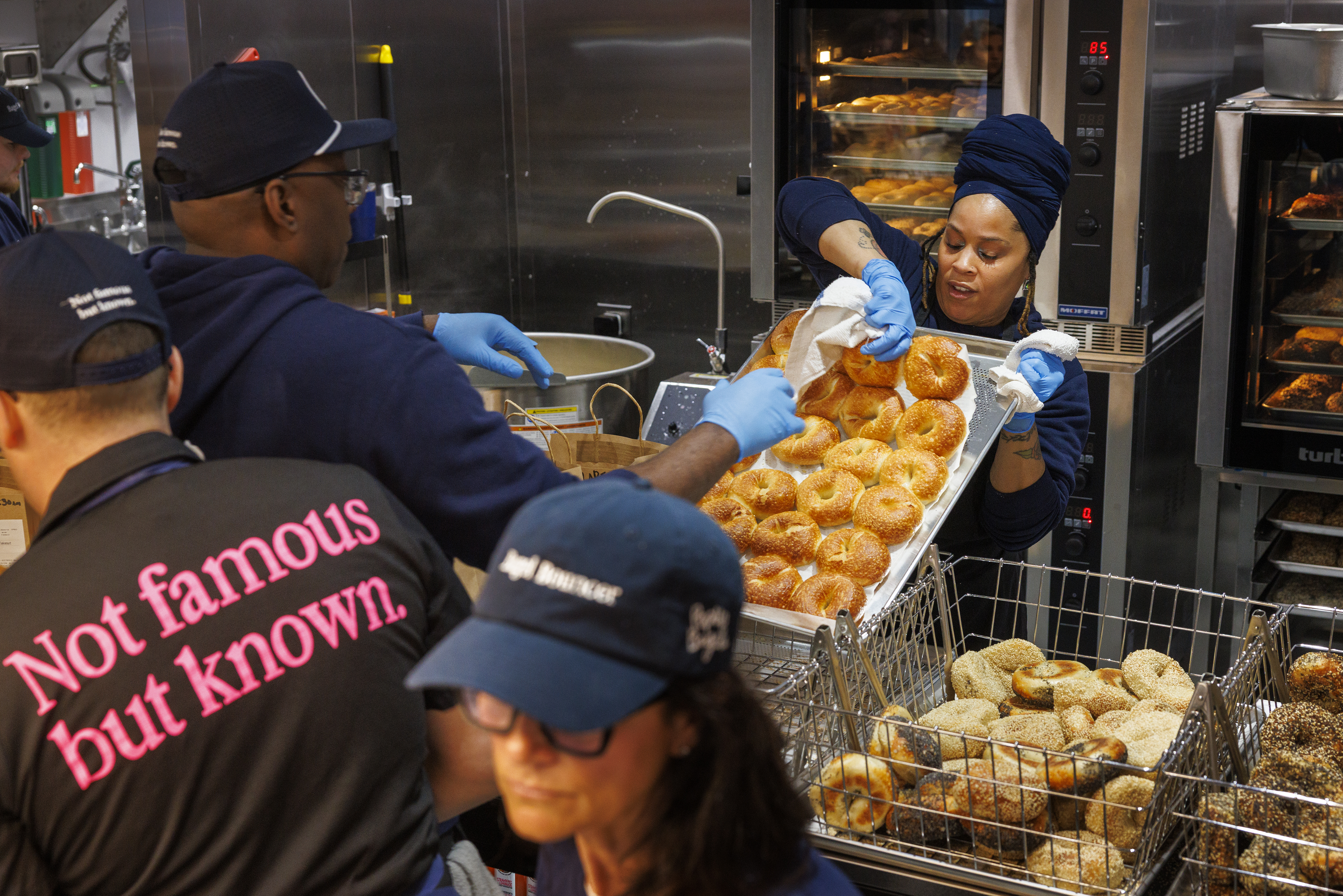
As a bevy of bagel shops — some locally launched, others private equity-backed — makes plan in the region, Mike talked to the experts about an obvious question: How many bagels can Philadelphia eat?
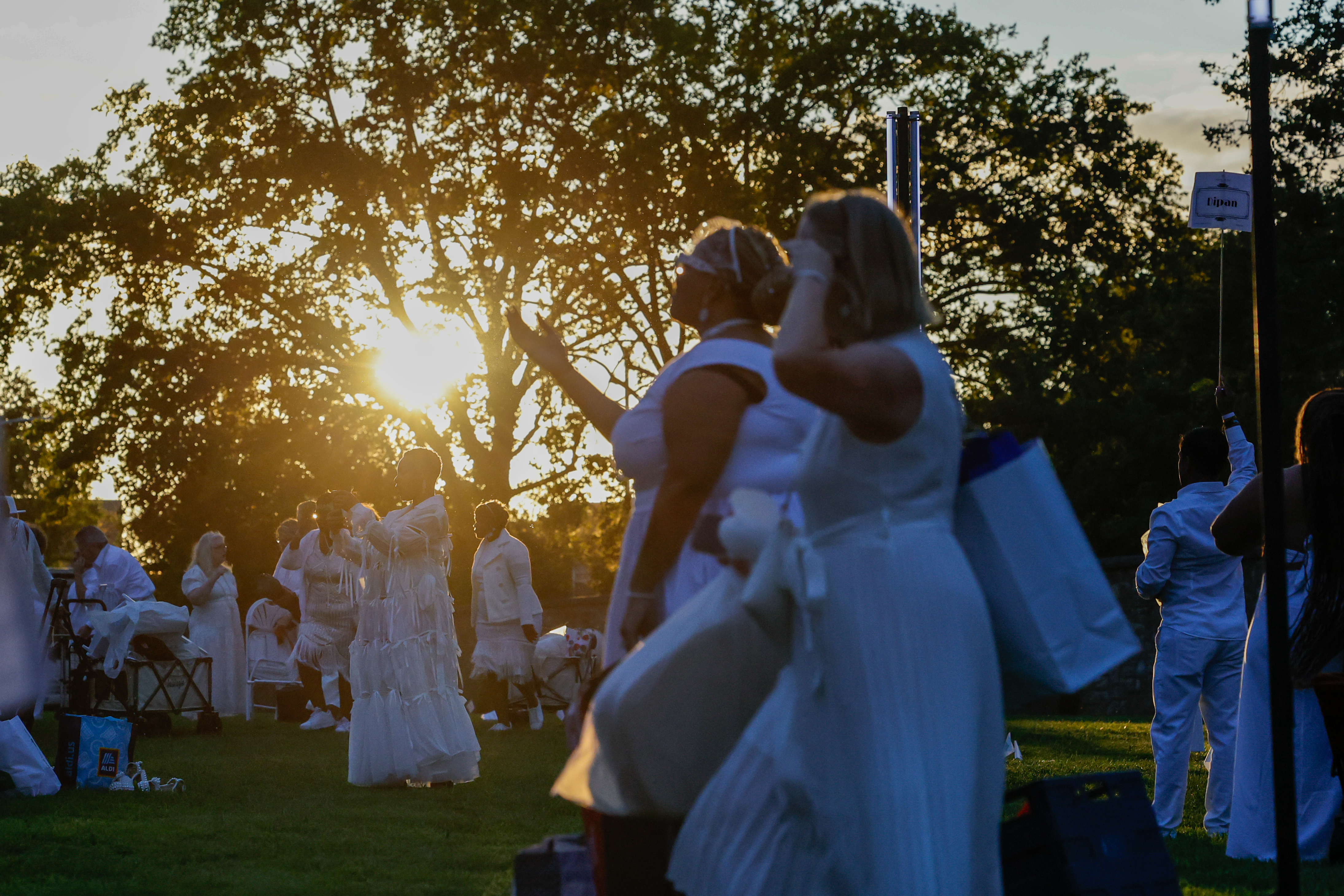
Thousands of would-be Dîner en Blanc participants did not get to haul their tables, chairs, and picnics to a secret location this year as it literally rained on their parade. They made the most of things, dining en blanc at homes, restaurants, and even a cigar bar.
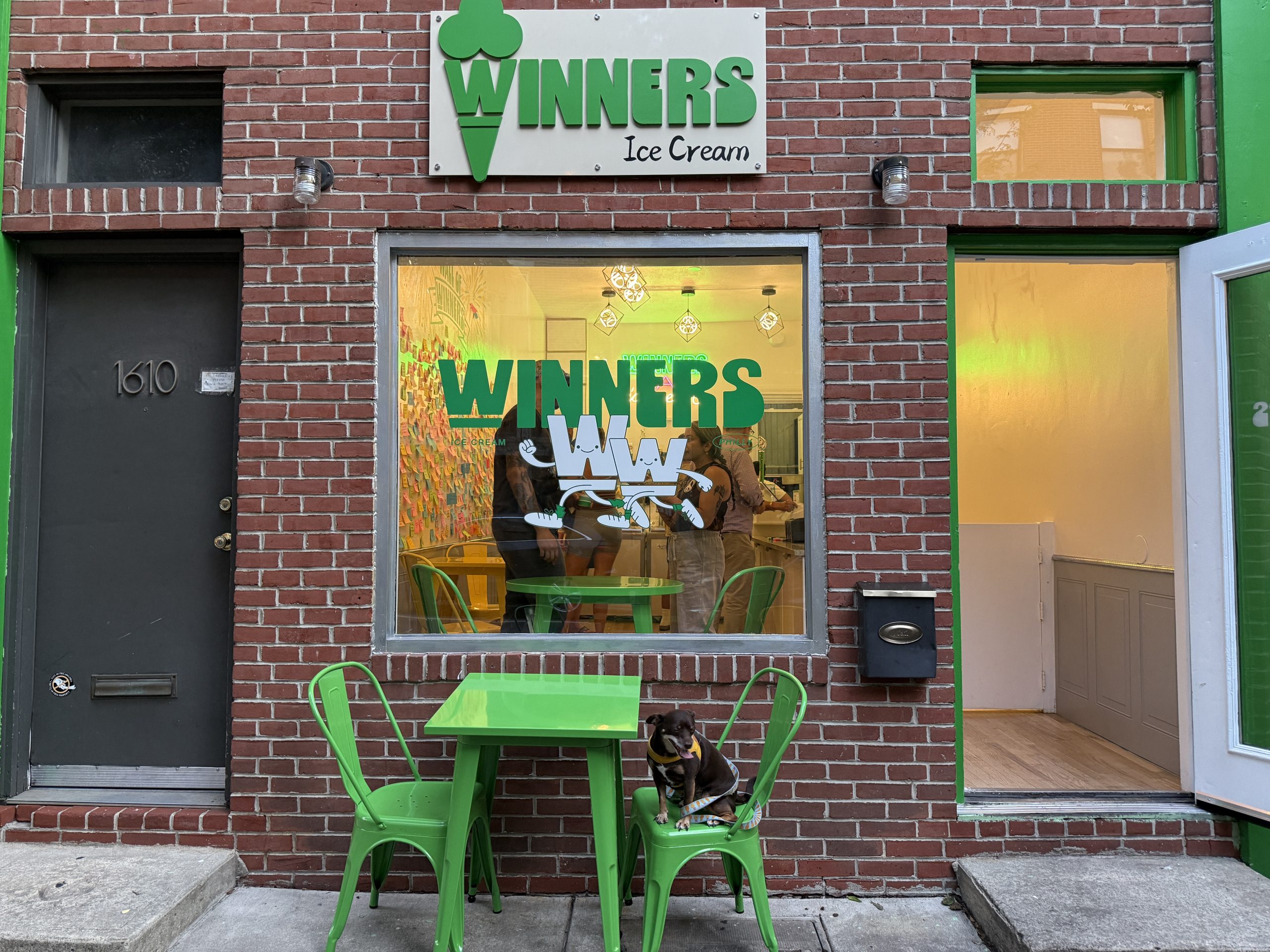
For years, Graduate Hospital residents had to dip into Rittenhouse or head south for treats, but a new wave of neighborhood businesses are selling everything from loaded baked potatoes and ice cream to matcha lattes and mousse cakes.
👩🍳 Graduate Hospital’s first restaurant week runs through Sunday, with participating restaurants offering three-course prix-fixe menus for $30 or $45 while continuing to serve regular menus. The lineup includes Banshee, L’Anima, Say She Ate, Chick’s, Château Rouge, La Sera Italiana, Old Towne & Sanna’s, Saigon Grace Cafe, and Sidecar Bar & Grille. Details/menus are here.
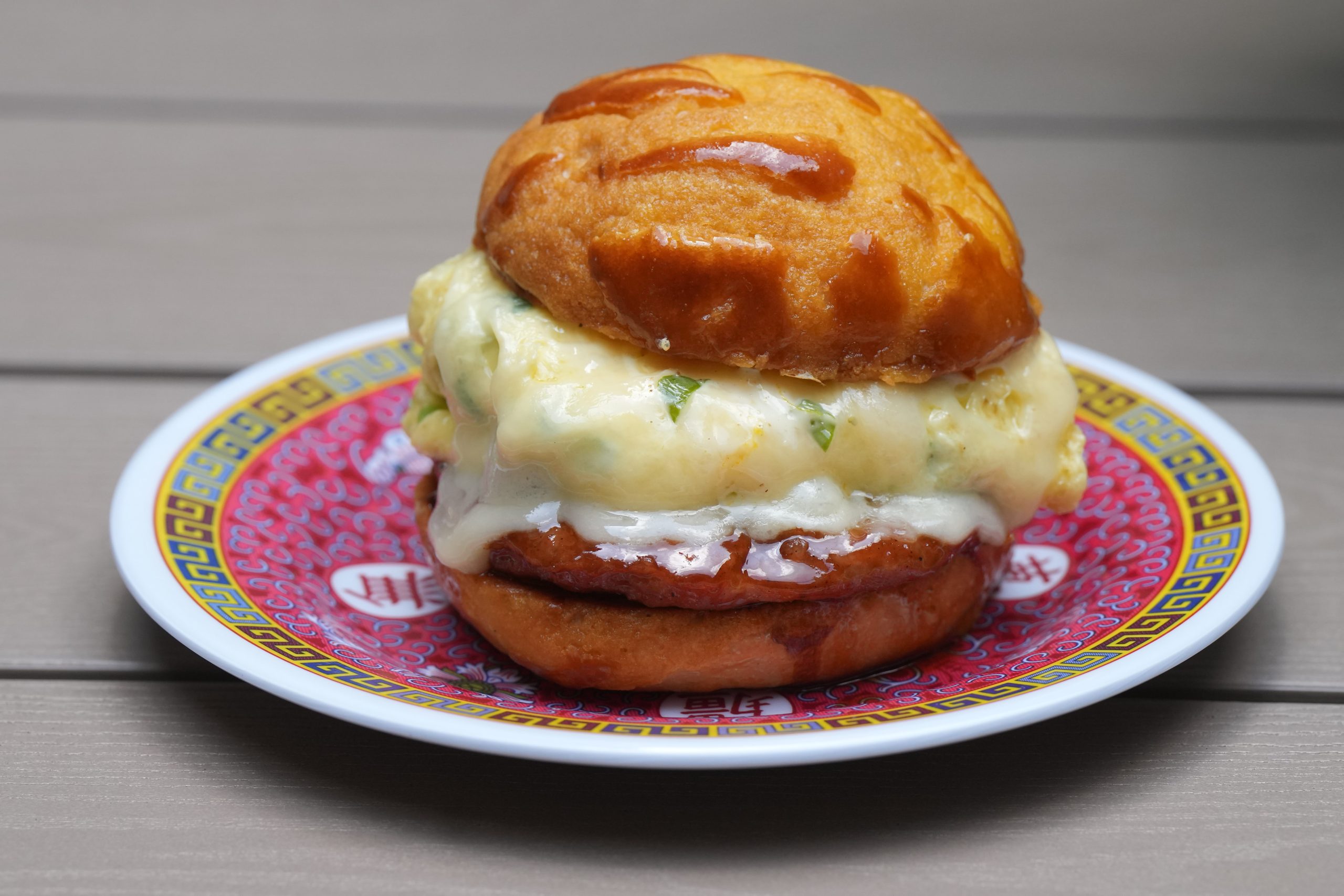
Beatrice Forman, a breakfast sandwich connoisseur, gets the warm and fuzzies from Chibanos’ Chino, which uses a Dodo Bakery bo lo bao as its bun. “It’s funny how a single sandwich can take me to so many places,” she wrote of its fluffy eggs, Swiss cheese, and char siu-style sausage patty.
Cantina La Martina is set to return to Kensington and debut in Brewerytown next month as it doubles down on its relationship with Human Robot Brewery, which is parting ways with sandwich maker N.A. Poe. The vendor shakeup, Beatrice reports, was precipitated in part by some untoward social media posts.
Scoops
Ms. Tootsie’s former building at 1312 South St., shuttered since the 2021 death of restaurateur KeVen Parker, will become the home of Nippy’s on South. Nikia Peterson, a nurse who frequented the swank soul-food destination, has bought the building and is installing what she said will be a polished spot offering an eclectic menu, with seafood towers, steaks, Asian and Caribbean dishes, and a full bar emphasizing happy hour and weekend brunch. “Nippy” was her late grandmother; a late-September opening is planned.
Mezzanine 1909 and the Slider Co. are moving toward spring openings at 2043 Frankford Ave., now that longstanding zoning issues have been settled. Will Johnson, partnered with Anesha Garrett, tells me that they envision a quick-service burger shop on the first floor, and — accessible through a “secret” door — a speakeasy-style, 40-seat cocktail bar upstairs serving nine small plates and nine cocktails with “intentional” service. It also will be a hub for their catering. Slider & Co. had two popups nearby last summer.
Briefly noted
Testa Rossa, the casual Italian-American concept from Fearless Restaurants, closed Sunday after 20 months in the Shoppes at Brinton Lake on Baltimore Pike in Glen Mills. “It never really resonated with the neighborhood,” said Fearless owner Marty Grims, adding that the company has offered Testa Rossa employees jobs at its other restaurants, including the White Dog Cafes and Rosalie. Fearless’ next project, a Southern Italian restaurant called Martini & Roz, is due to open in late fall at 523 W. Lancaster Ave. in Wayne.
❓Pop quiz
Which two restaurants made it onto Bon Appétit’s best new restaurants list?
There are ghosts rumbling through the rafters at Mr. Edison. And I’m not sure they’re happy.
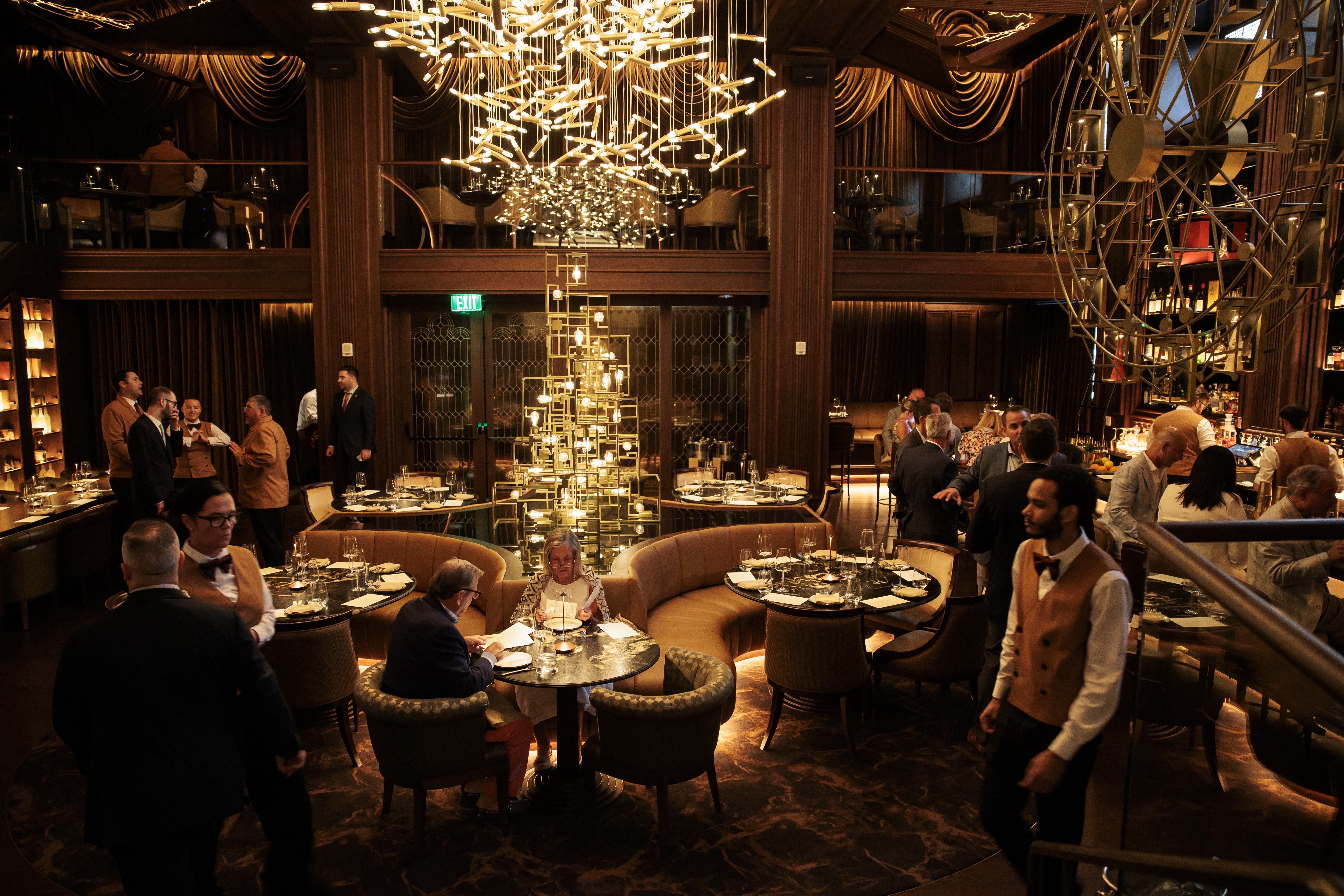
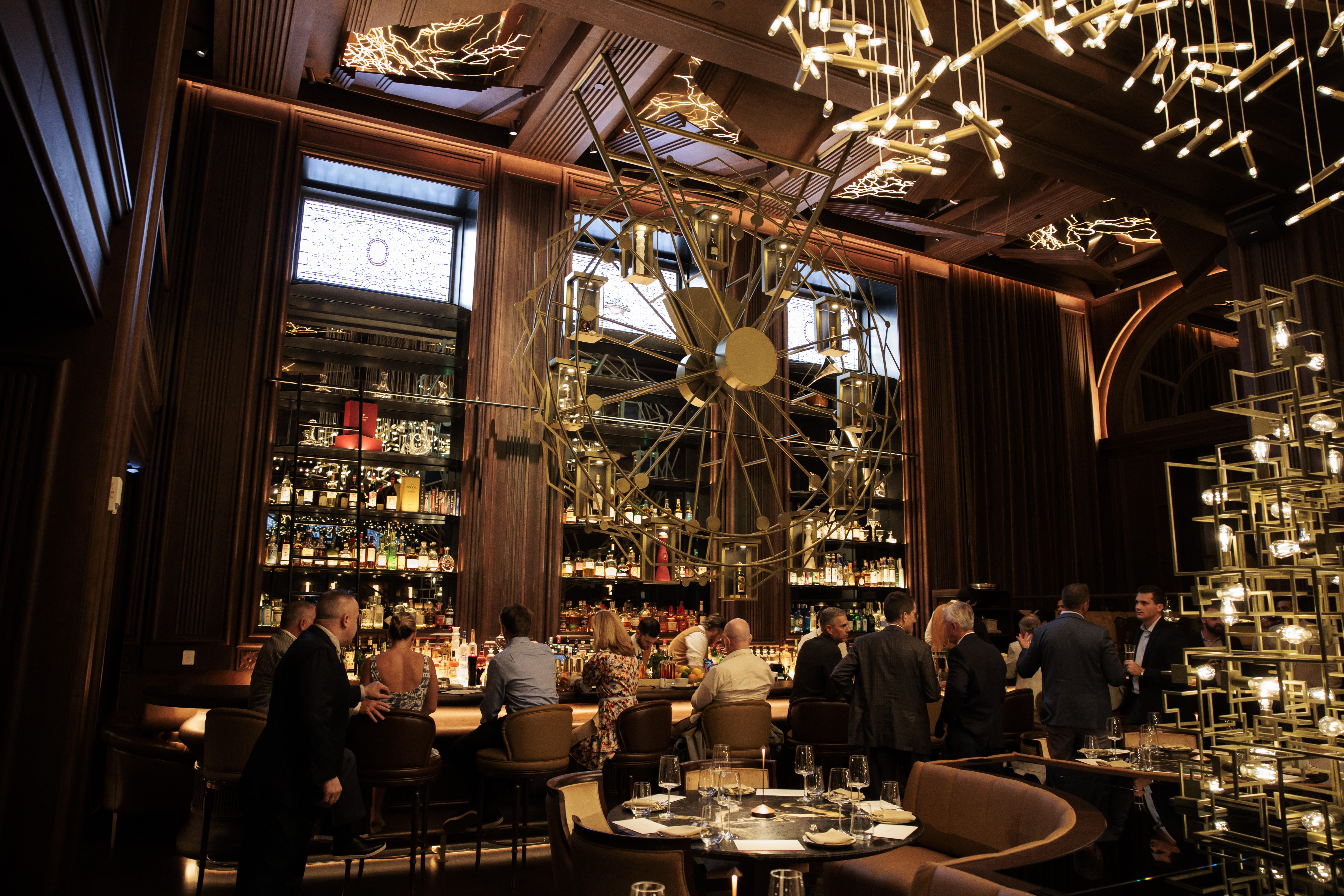
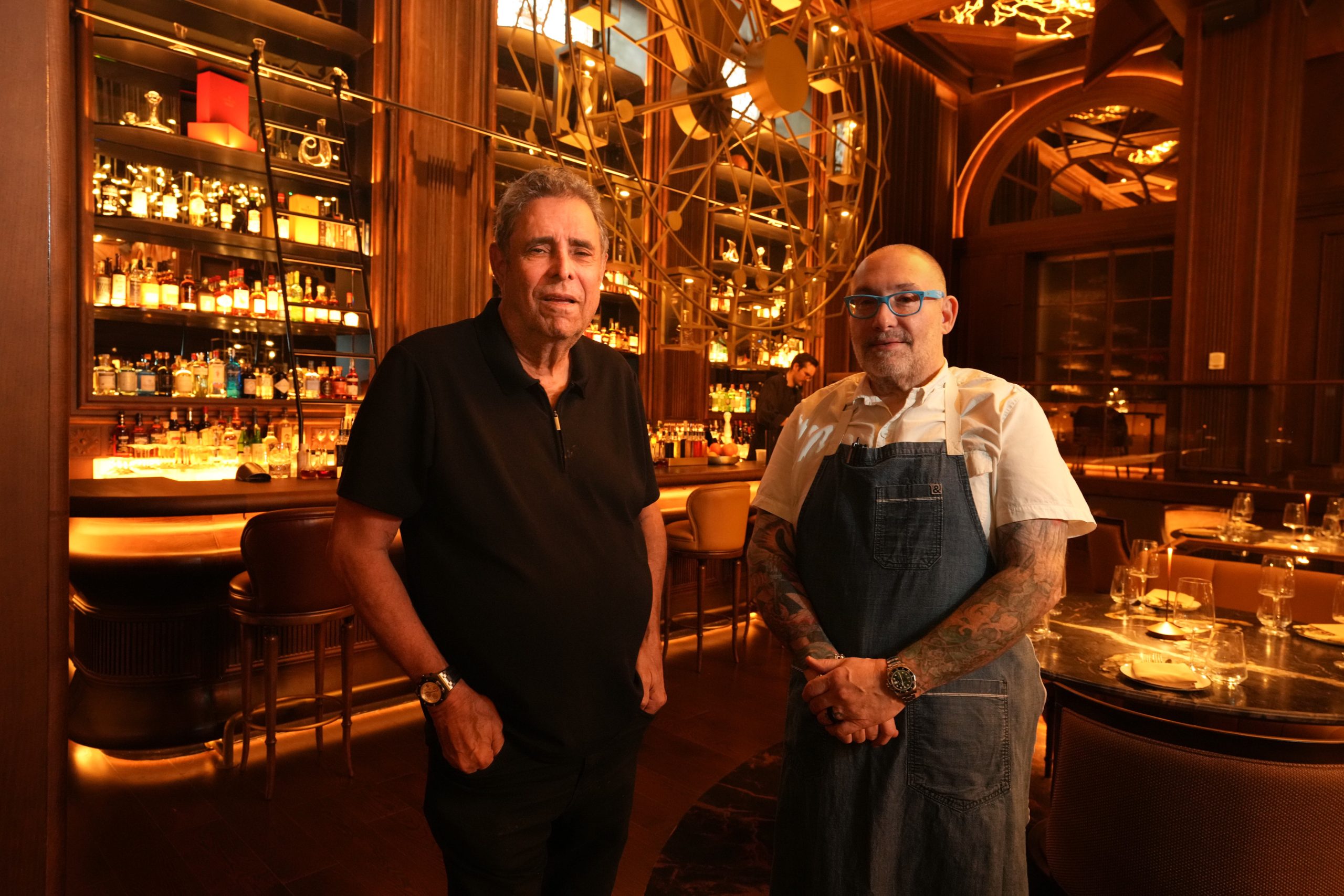
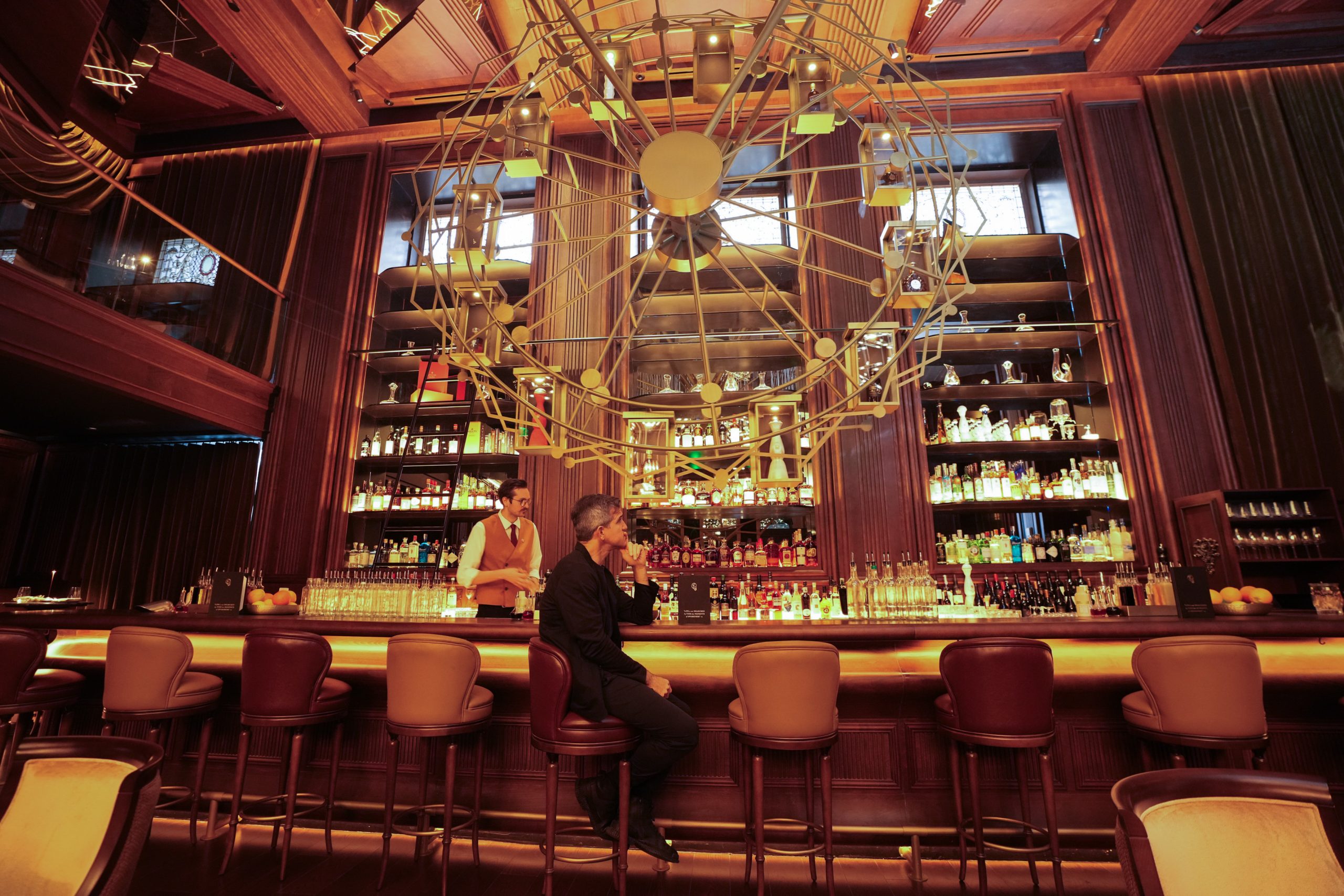
So much energy — both living and remembered —pulses through this dramatic two-story restaurant inside the landmark Bellevue hotel that, as we follow a hostess in what looks like silk pajamas up the long staircase to our table on the mezzanine, the ceiling panels appear to explode with a mirrored tableau of reflected lightning bolts. A chandelier of suspended Edison bulbs showers the plush booths below in a cascade of frozen sparks while a 12-foot brass Ferris wheel nearby cycles slowly over the bar, dangling some of the world’s most extravagant bottles of booze in its hydraulic glass cages.
Am I the target audience for a $350 pour of the Louis XIII “on rotation”? Definitely not. But Mr. Edison has obviously found them, given its guests supposedly go through a bottle a week of the famed cognac (which retails in Pennsylvania for $5,300).
The bar at Mr. Edison in the Bellevue Hotel on Tuesday, Aug. 18, 2026 in Philadelphia.Monica Herndon / Staff Photographer
This carnival of pomp and perpetual motion is overwhelming to take in all at once, along with a live jazz band playing to a crowd tightly cinched into formalwear and glittering jewels. The spirit of Thomas Edison, who in 1904 helped electrify this grand old hotel, would no doubt be moved by this namesake tribute from owner Jeffrey Chodorow, the pioneering restaurateur with a hand in more 60 restaurants, including China Grill and Asia de Cuba.
While those two stars of late 20th-century dining in New York (and Miami) were trendsetters for the eater-tainment fusion movement, Mr. Edison is a decidedly nostalgic throwback to a 1940s-style supper club. It’s built around updates to classic Philly foods, from fried oysters and chicken salad zapped with kimchi to more dutiful re-creations of cakes from Old Original Bookbinder’s and Frog.
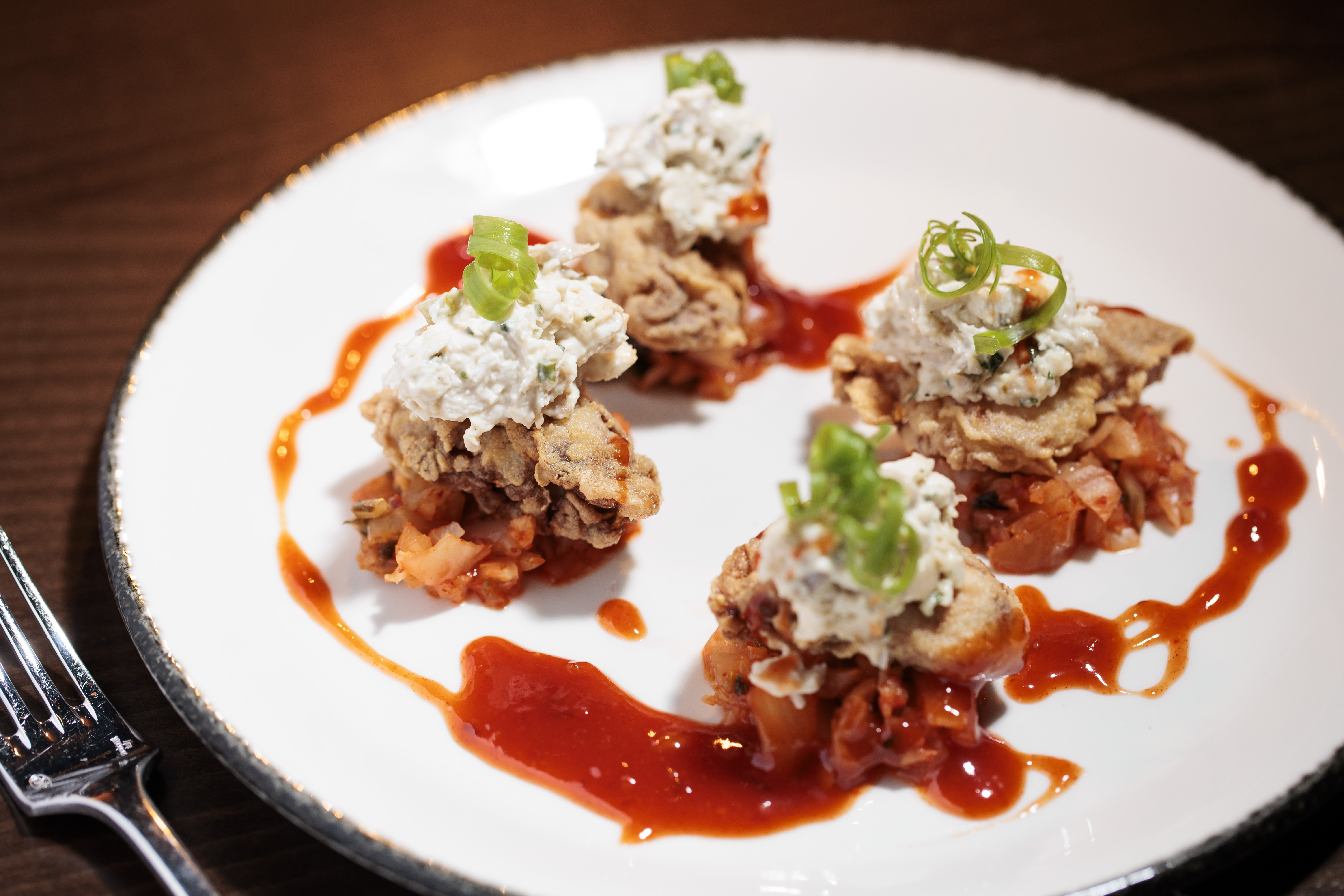
The Korean fried oysters at Mr. Edison in the Bellevue Hotel on Tuesday, Aug. 18, 2026 in Philadelphia.Monica Herndon / Staff Photographer
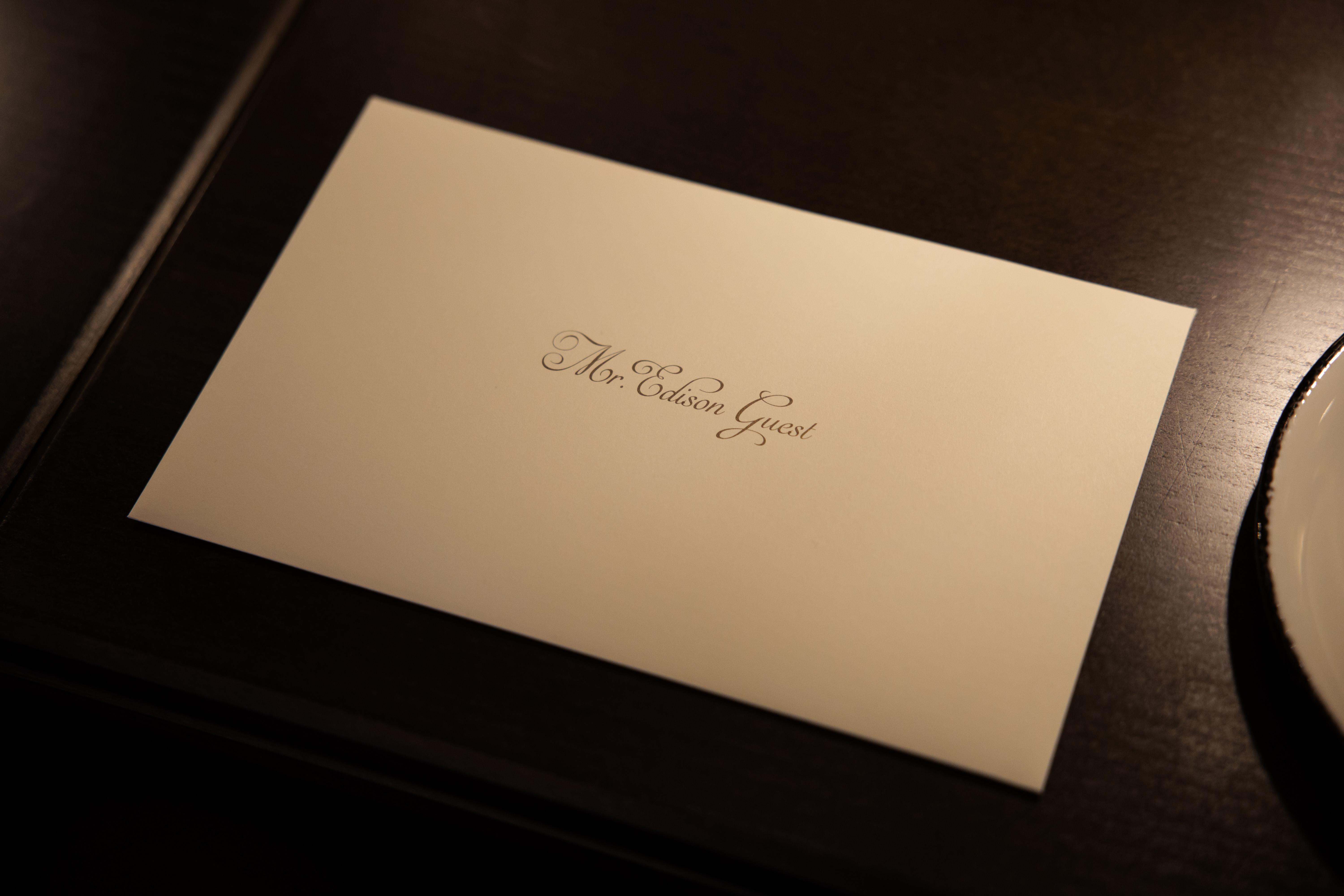
For Chodorow, 76, who studied at Wharton, Mr. Edison’s food is a love letter to legends of the 1970s restaurant renaissance, whichhe enjoyed while practicing law here in the early 1980s. Names like Le Bec-Fin, Le Panetière, and Jimmy’s Milan are invoked like wishful spells across the menus, which arrive tucked inside a souvenir envelope like wedding invitations. (Chodorow, not coincidentally, threw an elaborate engagement party for his wife at the Bellevue in 1982.)
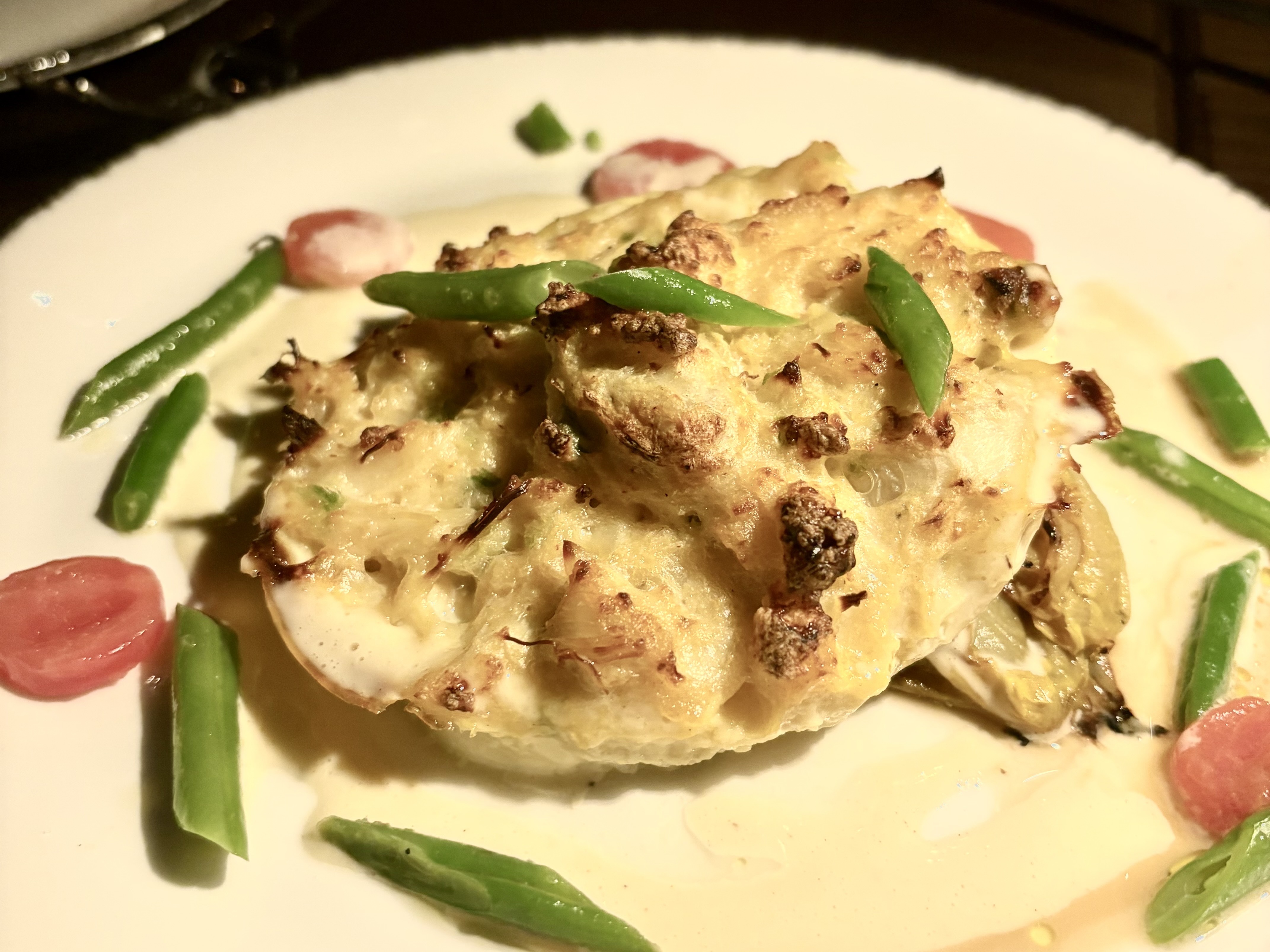
If the Ghosts of Philly Restaurants Past have indeed answered their summons, they might be frowning down on these plates with dismay. The galette de crabe “Le Bec-Fin,” known for its use of seafood mousse to produce a delicately puffy soufflé jeweled with sweet crab, arrived here so deflated and overcooked it tasted like a fishy frittata.
“Chef [Georges Perrier] would probably lock the doors and burn the place down,” replied one of Le Bec’s longtime former chefs after I texted him a picture of my gruesome galette.
Mr. Edison’s rendition of Le Bec-Fin’s crab galette is a far cry from the original.Craig LaBan / Staff
In fact, Mr. Edison’s culinary director, Matt Levin, 53, also cooked at Le Bec-Fin early in his career, which subsequently saw him burst onto the scene in the early 2000s at New Hope’s Moonlight and Lacroix at the Rittenhouse before going solo with Adsum and Square Peg, then eventually landing in the catering world. Most recently, he cooked at the Pineville Tavern in central Bucks County. While his recipe might be the same, Levin’s decision to jettison Perrier’s ring mold for a shallow panwas a fateful miscue. The galette evolved by my second meal into a soggy sponge, still not ideal for $45.
Fewer diners today recall Le Panetière, where Chodorow remembers first tasting Perrier’s food in the late 1960s. But anyone would realize upon one bite of this duck à l’orange tribute that the meaty breast, although still medium-rare, was inexplicably dry and as tough as a chew toy.
Jeffrey Chodorow (left) and chef Matt Levin, at Mr. Edison, the new restaurant at the Bellevue, in Philadelphia, on June 23, 2026.Jessica Griffin / Staff Photographer
If only I could have found the frequently absent captain overseeing our table on the mezzanine before the two-hour-plus mark of our glacially slow meal, when he finally asked us, too late and far too smugly, “Did that hit the spot?”
“Not very well,” I replied honestly with a detailed report, noting we’d hardly eaten this $90 sharing splurge as a result. He shrugged a faint reply, then handed us our bill with not even the slightest gesture of apology, though I was not surprised. He’d also forgotten so much as a candle for our dessert after we told him upon arrival (after he asked) that we were celebrating a birthday.
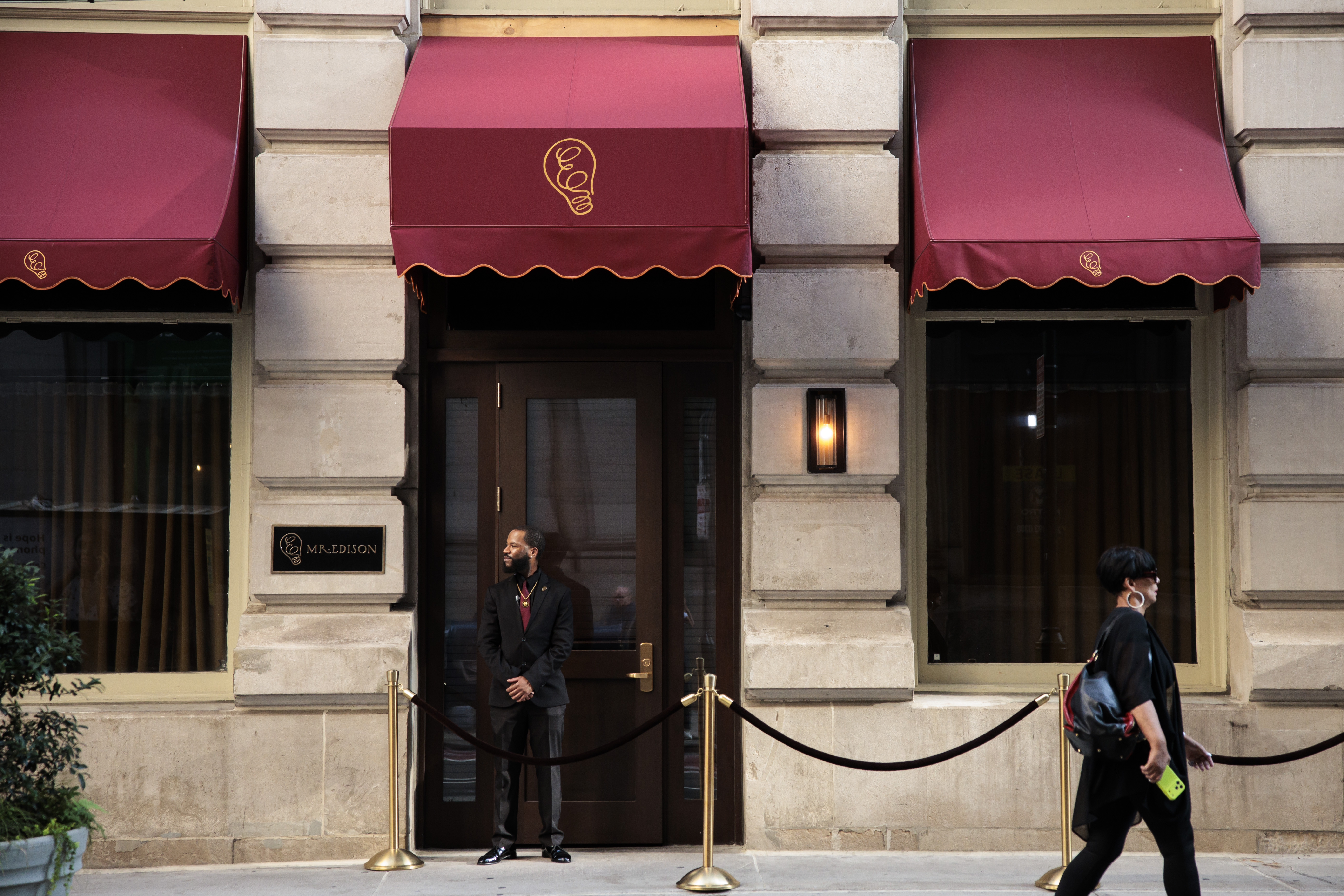
An envelope at each seat holds the menus at Mr. Edison in the Bellevue Hotel on Tuesday, Aug. 18, 2026 in Philadelphia.Monica Herndon / Staff PhotographerThe exterior of Mr. Edison in the Bellevue Hotel on Tuesday, Aug. 18, 2026 in Philadelphia.Monica Herndon / Staff Photographer
As a restaurant romantic, I value grand ambitions such as those that shaped Mr. Edison, a $10 million makeover of the former Polo store that recalls the showplace splendorof Walnut Street’s Restaurant Row in the late 1990s (Striped Bass, Susanna Foo, Brasserie Perrier) more than the DIY quirkiness of the restaurant renaissance that preceded it. It’s far preferable to the cookie-cutter chains that otherwise populate South Broad Street. But executing that ideal in a 133-seat room in 2026 — when, as chef Levin noted, people can make more working for food-delivery apps than actually cooking the food — is a challenge. With check averages of $120 (before tip and tax), no customer wants to hear excuses.
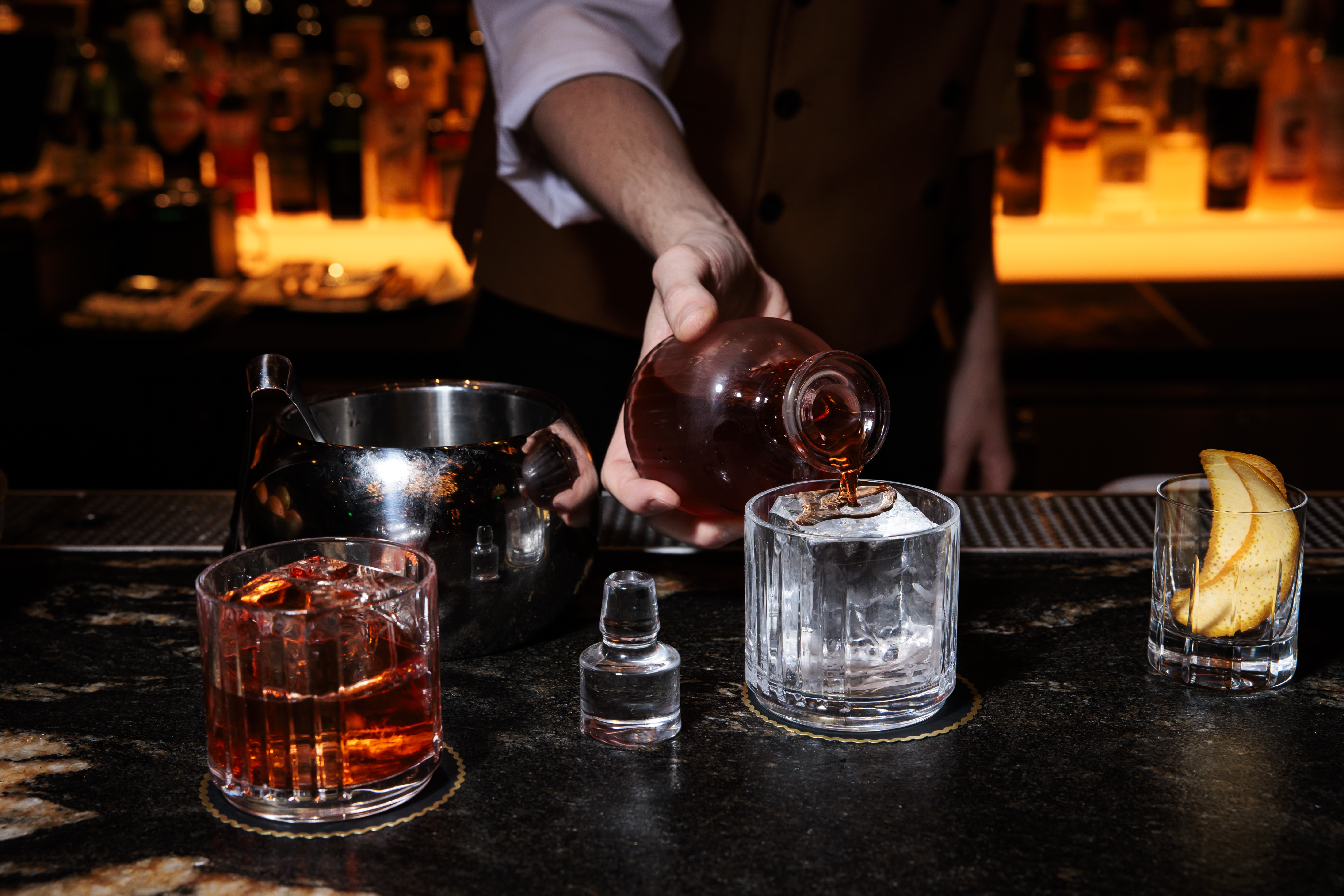
Improvement is within reach. We were seated at my following visit on the daisy wheel banquette that anchors the downstairs dining room, and the service there was much sharper. We had a perfect vantage to hear Drew Nugent & the Midnight Society swing onstage and to drink this bar’s outstanding cocktails, including the large carafe of a superb Negroni (this variation blending Cocchi di Torino and Punt e Mes) poured tableside over giant ice cubes. At $57 for the equivalent of three-plus cocktails, it’s one of Mr. Edison’s best values.
Bartender Michael Chukinas pours the tableside house Negroni at Mr. Edison in the Bellevue Hotel on Tuesday, Aug. 18, 2026 in Philadelphia.Monica Herndon / Staff Photographer
I’d definitely return for a seat at the titanium granite bar to enjoy the well-curated lineup of live music, sip other cocktail hits (the white coffee-infused Wizard or tropical 30 Minute Nap), and graze on some of the small plates.
The Korean fried oysters with kimchi and chicken salad was an intriguing riff on one of my favorite historical Philly food oddities, the spice and fermented funk of the cabbage cutting through the clubby richness. Waffle chips to scoop paddlefish caviar from fancy French onion dip was an accessible alternative to the far pricier sturgeon caviar service. The quail yolk-dotted beef tartare ringed by fried beef tendon puffs was irresistible, while a petite portion of seared filet mignon fanned over a creamy au poivre sauce with morels tapped another red-meat craving without the steakhouse clichés.
The Jimmy’s Milan salad — essentially crunchy lettuce tossed with bacon, big shrimp, hard-boiled eggs, and a zesty Russian-Italian hybrid dressing — is proof that some vintage pleasures don’t need to be reinvented to be appreciated. The restaurant’s $48 baked potato, stuffed with nearly half a pound of sweet lump crab au gratin, was the most memorable thing I ate at Mr. Edison, a super spud splurge that could hit yet another level with a $40 “blackout” addition of caviar.
A couple of the small plates fell short. A meaty flap of tuna carpaccio was not pounded thin enough. The corn-encrusted soft-shell crabs over mole verde were not soft enough, leaving me with a mouthful of shells.
Updating classics is a tricky prospect, and often Levin’s contemporary reworking drifted too far afield for its own good. The baked “Edison meets Rockefeller” oysters were so underdressed, with splashes of Mornay and fines herbes butter replacing the typically lush green puree, it lacked the indulgence to suit its name, even with a crispy nugget of guanciale. A $110 rendition of lobster Thermidor was not simply unrecognizable; without the full shell, into which it is typically stuffed and gratinéed, it was one-dimensional and boring.
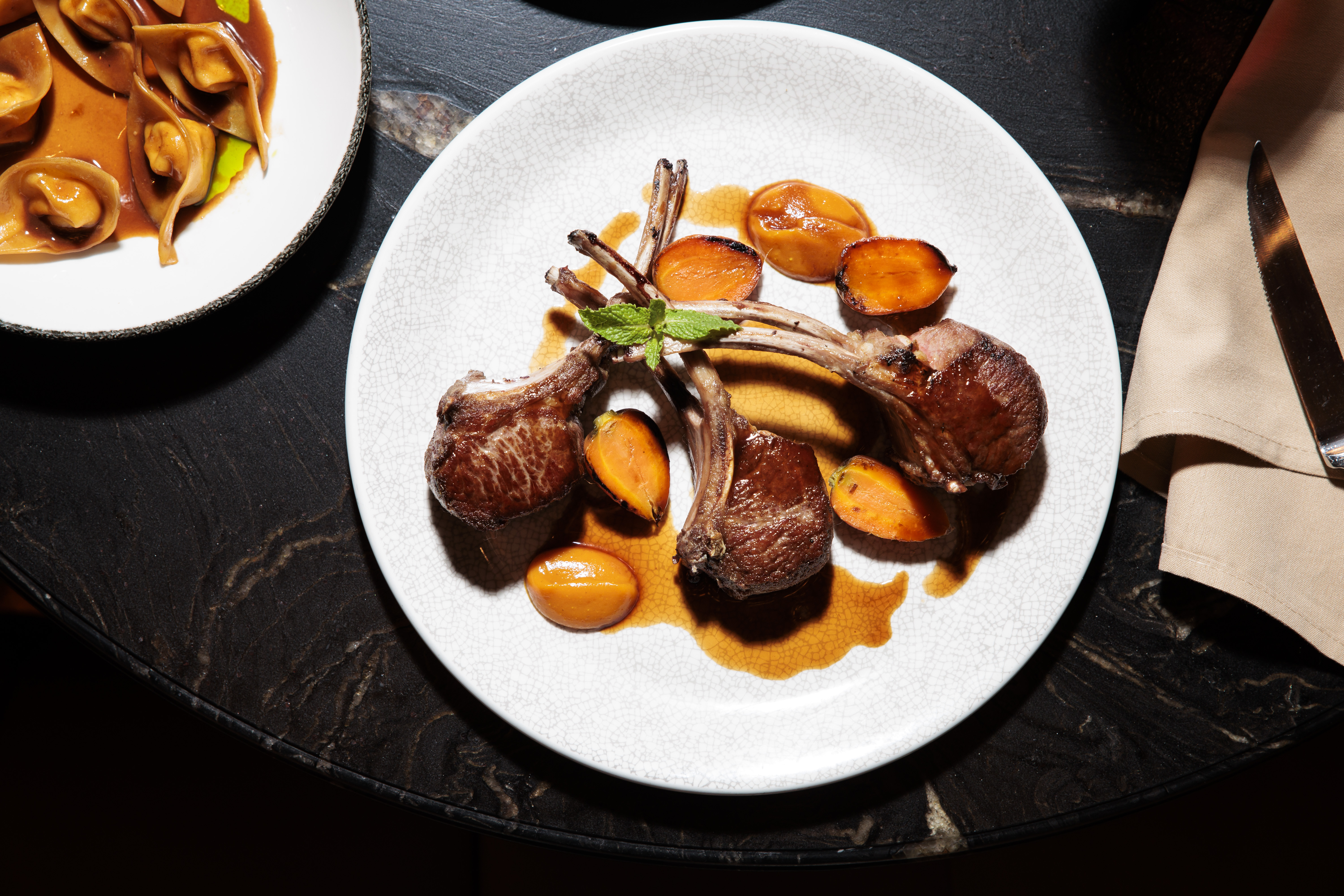
The grilled lamb chops spiced with vadouvan curry with Thumbelina carrots were the most satisfying of the “Grand Plates” for two, while the butterflied whole dorade over chimichurri and the buffalo milk ricotta ravioli were safe bets for the unadventurous.
The lamb chops at Mr. Edison in the Bellevue Hotel on Tuesday, Aug. 18, 2026 in Philadelphia.Monica Herndon / Staff Photographer
Too many other big dishes stumbled over the basics of seasoning — like a veal chop Milanese that cradled a handful of flaky salt atop its breaded crust. The brick chicken was so salty that my gums ached until the end of the meal.
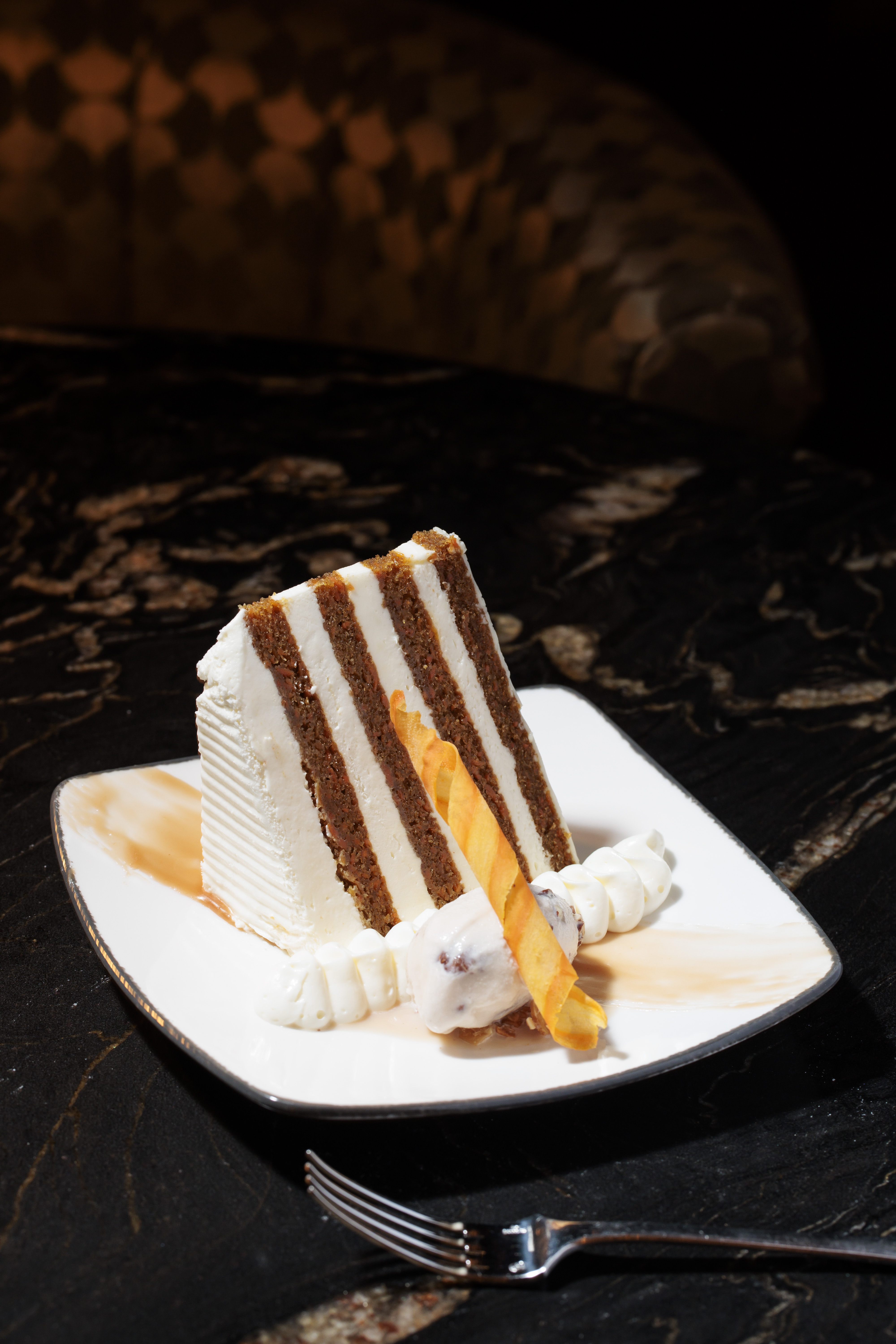
Tucked into the stuffiest far corner of the mezzanine behind the bar for this final visit, I’d hoped an old-fashioned dessert would offer enough sweetness to counter that salty bird. I considered one of the winners I’d already enjoyed at previous visits: a re-creation of the coconut cake from Old Original Bookbinder’s, a tasty nod to Frog’s legendary carrot cake with butter pecan ice cream, or the dense chocolate-and-peanut-butter tart.
I opted for the crème brûlée to keep it easy, only to find its caramel crust — ideally torched to order and still warm — was cold by the time it ascended to our second-floor perch beneath the lightning-bolt rafters. I looked down toward the bar’s Ferris wheel as it cycled up toward us and couldn’t help but imagine the Ghosts of Philly Restaurants Past riding along with those glass cages, so hopeful for their comeback moment. Rising then falling, again and again, they sent shrugs of disappointment in my direction as they rolled away.
The carrot cake at Mr. Edison at the Bellevue Hotel on Tuesday, Aug. 18, 2026 in Philadelphia.Monica Herndon / Staff Photographer
Mr. Edison
Dinner Sunday through Thursday, 5 to 11 p.m.; Friday and Saturday, until midnight.
Small plates, $19-$45; Sharing plates for two, $58-$115.
Fully wheelchair accessible to all parts of the restaurant, including two wheelchair accessible seats at the bar.
Gluten-free: At least half the menu is either gluten-free or can be modified, including items cooked in a gluten-free fryer.
Menu highlights: Caviar dip; Jimmy’s Milan salad; Korean fried oysters; filet au poivre; baked potato with crab gratin; buffalo ricotta ravioli; lamb chops; carrot cake.
Beverage program: Don’t let the ostentatious bling bottles on the Ferris wheel fool you. The bar is Mr. Edison’s strong suit, with well-crafted and thoughtful updates to classic ideas using modern techniques and quality ingredients. The tableside Negroni towers are worth it, along with other cocktail highlights. The wine list is more predictable.
Mr. Edison, the new restaurant at the Bellevue from Jeffrey Chodorow, in Philadelphia, June 23, 2026.Jessica Griffin / Staff Photographer
Since the beginning of 2025, nearly a dozen bagel shops have opened or leased space in Philadelphia and its suburbs, bringing new locations from local operators as well as fast-growing out-of-town brands that see the region as fertile ground for expansion.
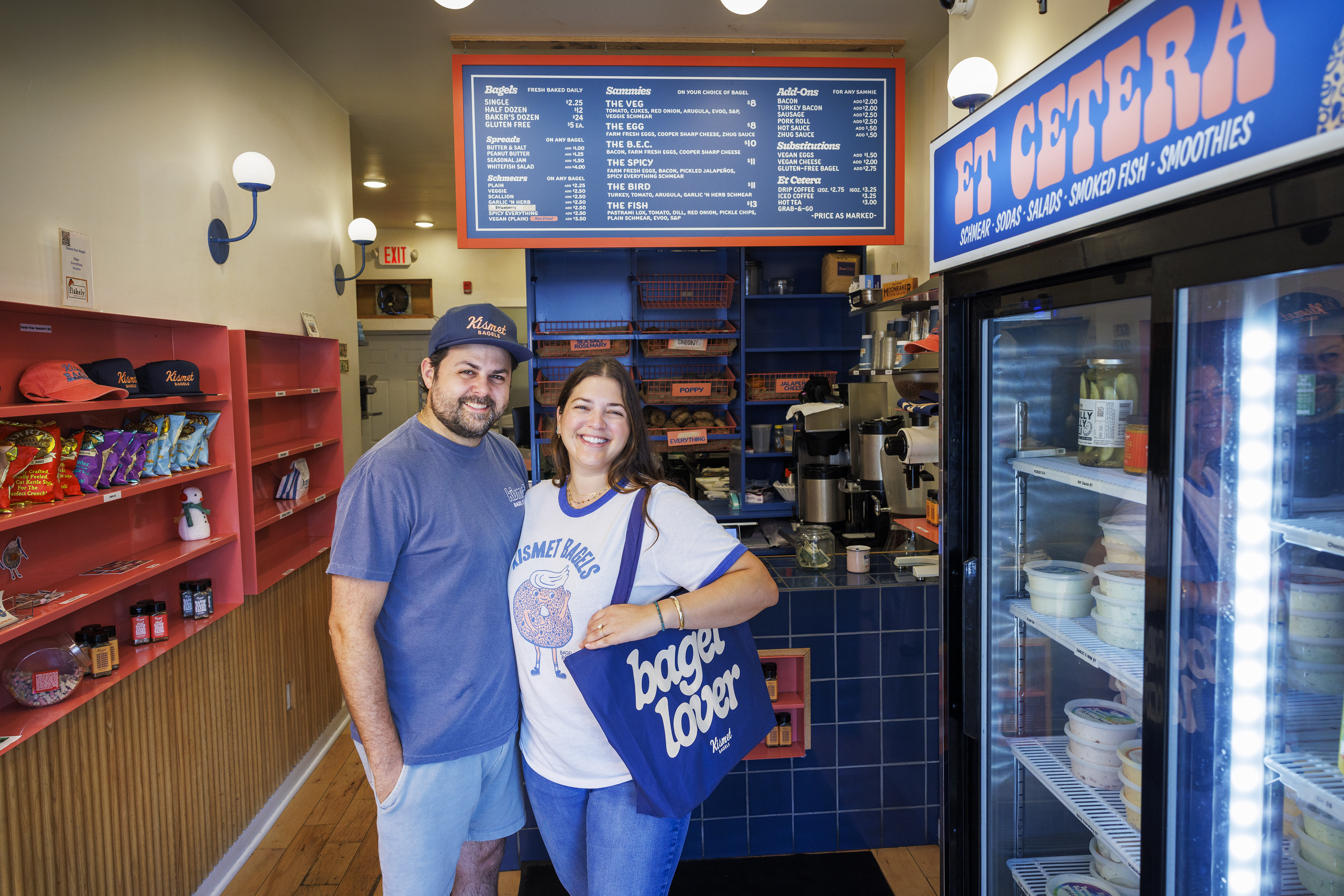
Jacob and Alexandra Cohen, owners of Kismet Bagels, at their location on Girard Avenue in Fishtown in 2024.Alejandro A. Alvarez / Staff Photographer
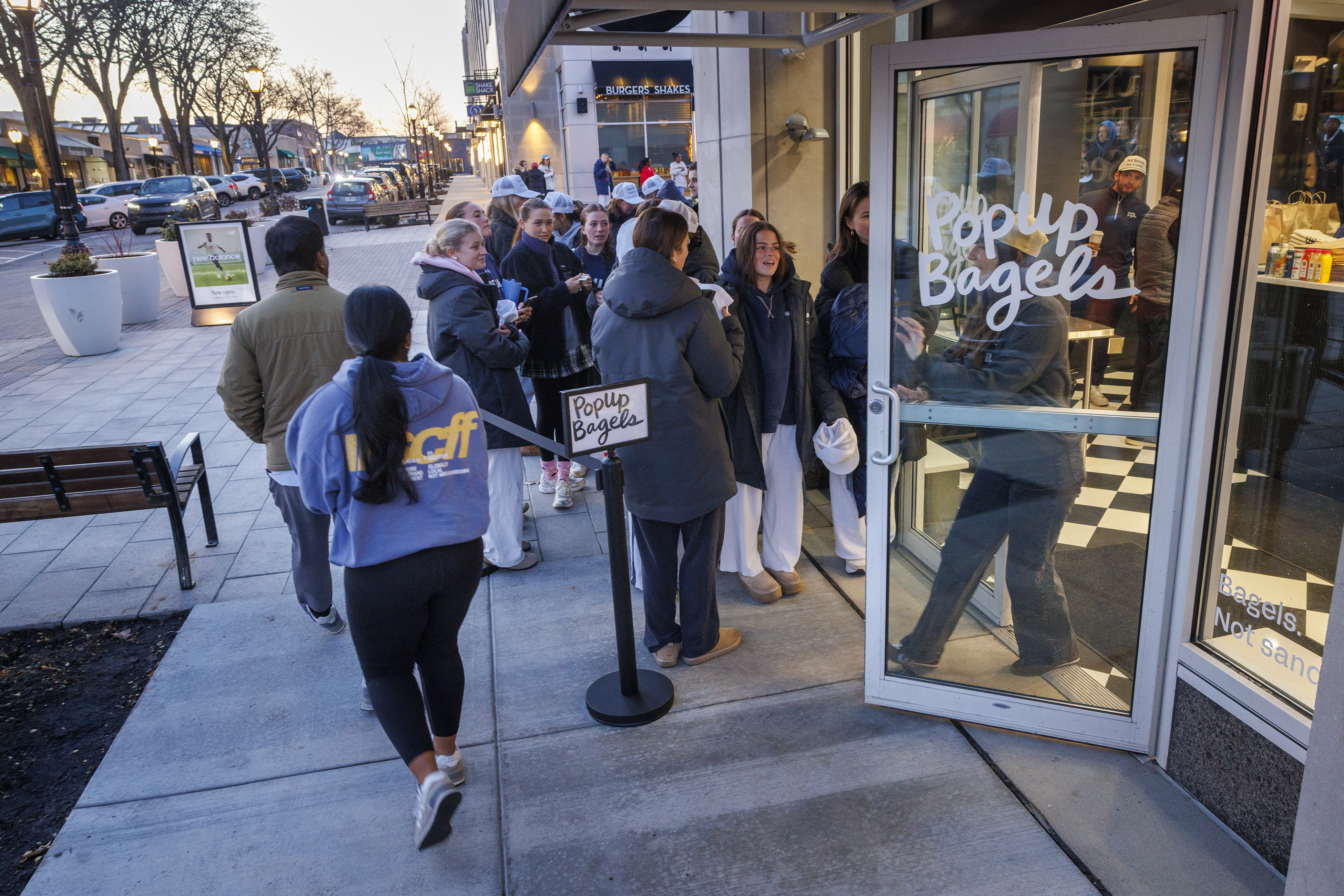
Kismet Bagels has opened its fourth and fifth shops, in Manayunk and Collingswood. Bart’s Bagels, which has shops in West Philadelphia and Bella Vista, recently expanded to the founders’ hometown of Bala Cynwyd. PopUp Bagels, the Connecticut-born chain that built a following on social media, made its local debut in Ardmore this spring and has signed a lease for a Rittenhouse shop as part of a larger regional expansion.
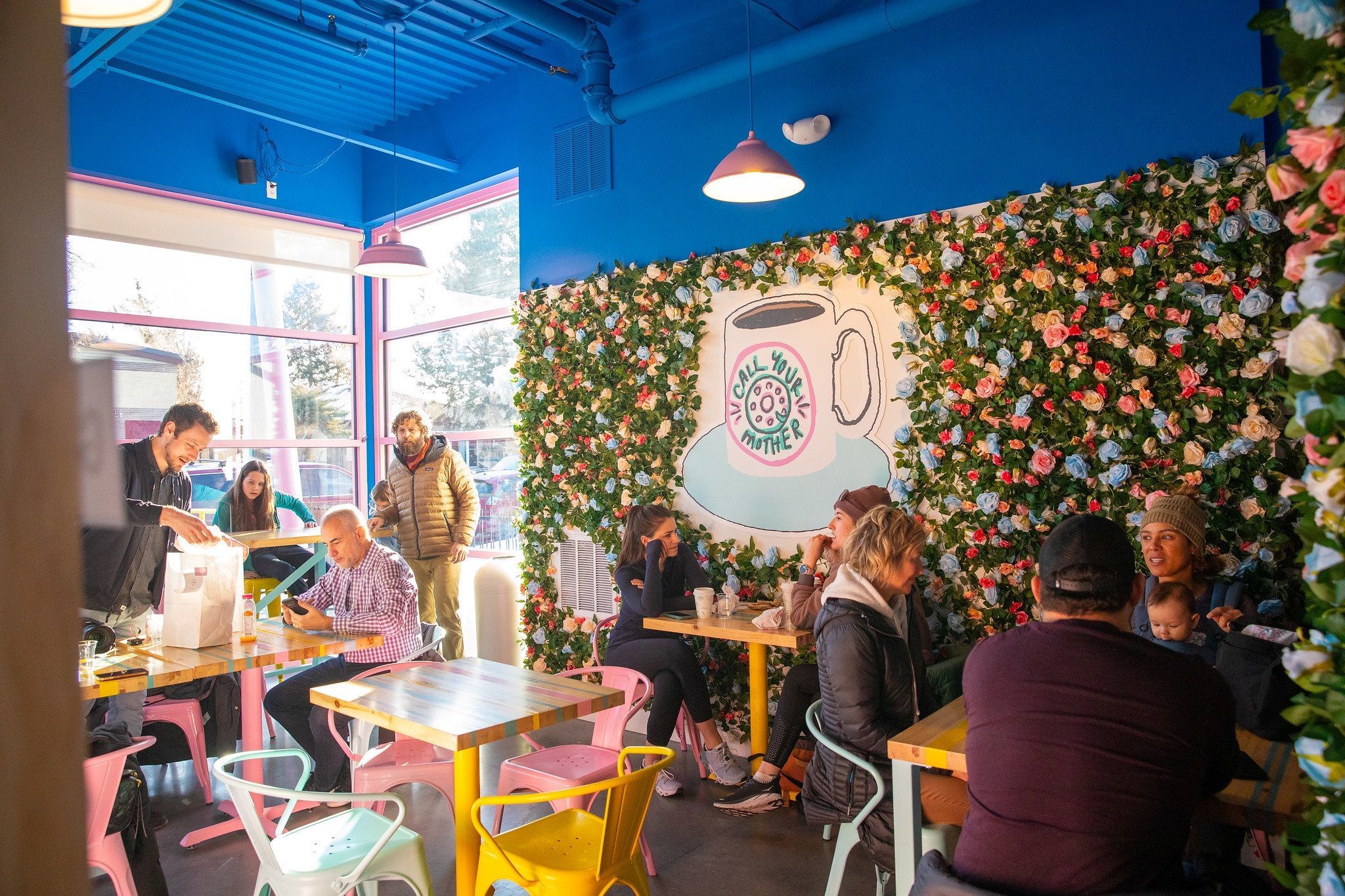
And Washington, D.C.-based Call Your Mother is preparing three soon-to-open Philadelphia locations — in Fishtown (due first), Rittenhouse, and Washington Square West — committing to all three before serving its first Philadelphia bagel.
Call Your Mother bagel sandwich shops have a subtropical feel.Courtesy of Call Your Mother
That tally doesn’t include all of the stores that could follow. Florida-based Jeff’s Bagel Run has announced a 10-unit development agreement for Eastern and South Central Pennsylvania, while PopUp franchisee Brian Harrington is scouting additional territory in the Philadelphia suburbs.
All this raises an obvious question: How many bagels can Philadelphia eat?
Plenty, apparently — at least for now.
Jacob Cohen, who started Kismet six years ago with his wife, Alexandra, said the company has seen sales increase even as new bagel shops have entered the market. “I don’t think they’re just dividing the same customer base, because we’ve already had new shops open in Philadelphia and we haven’t seen a decrease in sales,” Cohen said.
But Cohen, who rapidly expanded Kismet before putting thebrakes on growth earlier this year, also sees a limit. “More is not always better,” he said. “I obviously don’t have a crystal ball, but I have a feeling that some of these private-equity bagel companies coming are going to learn that the hard way.”
Bagels are having a moment
Philadelphia is part of a much broader bagel boom. The U.S. bagel market generated an estimated $3.17 billion in revenue in 2025 and is projected to reach $4.51 billion by 2033, according to Grand View Research, a market-research firm. That represents annual growth of about 4.6%. Worldwide, the firm values the bagel market at $5.8 billion in 2025 and projects it will reach $8.6 billion by 2033.
Customers lining up for the grand opening of PopUp Bagels in Ardmore in March.Alejandro A. Alvarez / Staff Photographer
Mike Kostyo, vice president of Menu Matters, a Vermont-based food-industry consulting firm, sees the current surge as the convergence of several trends rather than the sudden discovery of a new food. Artisan baked goods have been rising in popularity for years, he said, after the pandemic produced a generation of home bakers and pop-ups experimenting with sourdough and bagels. At the same time, café culture and the rise of the “little treat” have made consumers more willing to spend on premium versions of everyday foods.
“At its core, the bagel has always been a blank canvas for lots of flavors and toppings,” Kostyo said. “But now, instead of sesame seeds, you see them topped with Flamin’ Hot Cheetos.”
The traditional formula — bagels by the dozen, cream cheese, lox, and coffee — also has evolved into something closer to a breakfast-and-lunch fast-casual restaurant.
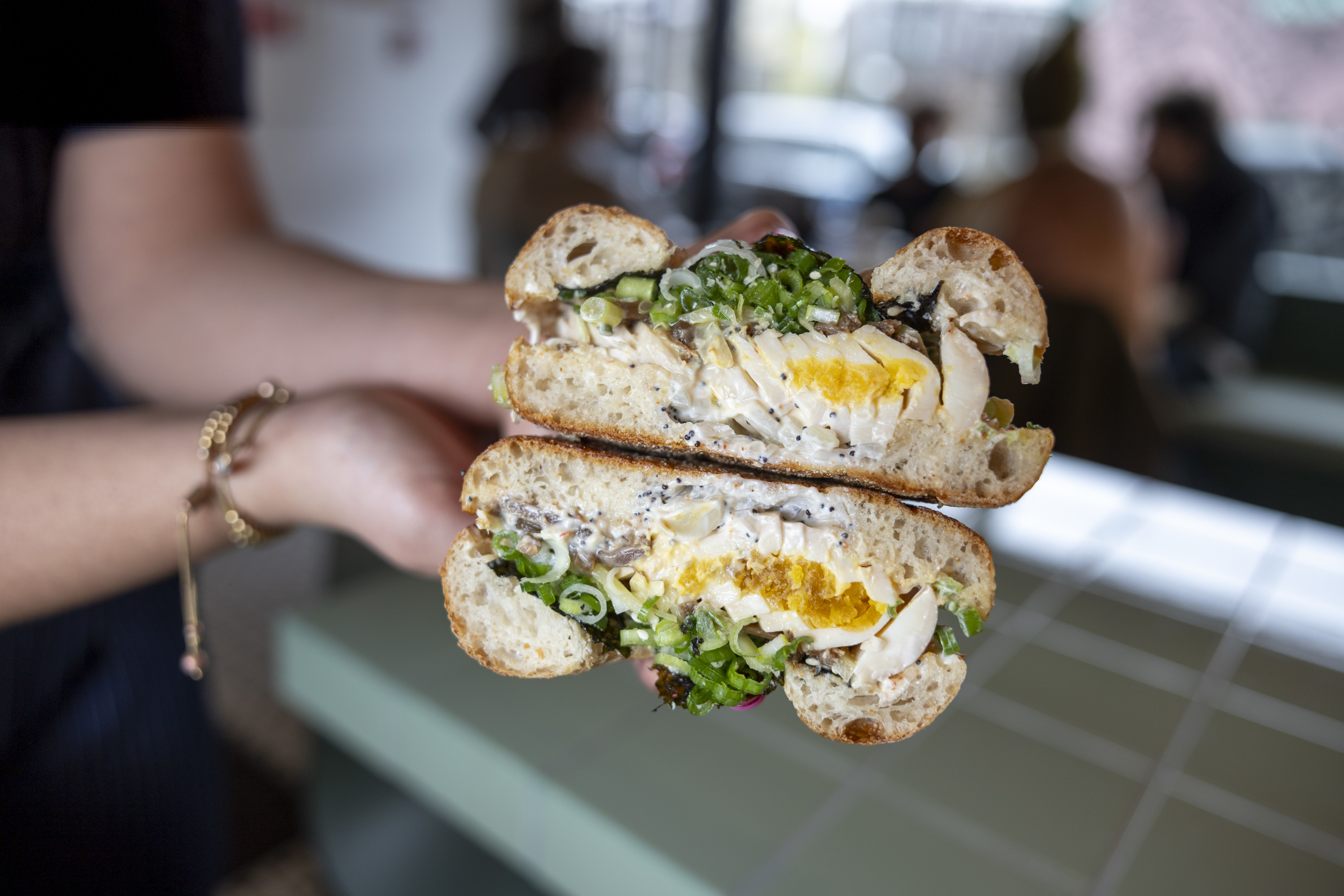
The Ramen Thing bagel sandwich from Cleo Bagels in West Philadelphia.Tyger Williams / Staff Photographer
Bagels become vehicles for egg sandwiches, smoked salmon, avocado, specialty cream cheeses, and elaborate combinations that can command substantially more than a plain bagel and schmear. And operators increasingly are looking beyond breakfast.
“The sandwich factor is so important,” Kostyo said. “You need something that you can sell across multiple occasions, not just to commuters in the morning.”
That versatility helps explain why investors have noticed.
“Investors are always looking for that next category that could blow up,” Kostyo said. “They want Call Your Mother or PopUp Bagels to be the next 7 Brew or Dutch Bros.”
From pandemic project to expansion vehicle
Some of the brands now expanding grew directly out of the pandemic.
The Cohens started Kismet as a pandemic project before turning it into a brick-and-mortar business and eventually growing to five locations — down from seven after the company shuttered a stand at Reading Terminal Market in 2025 and closed a shop in Ventnor earlier this year.
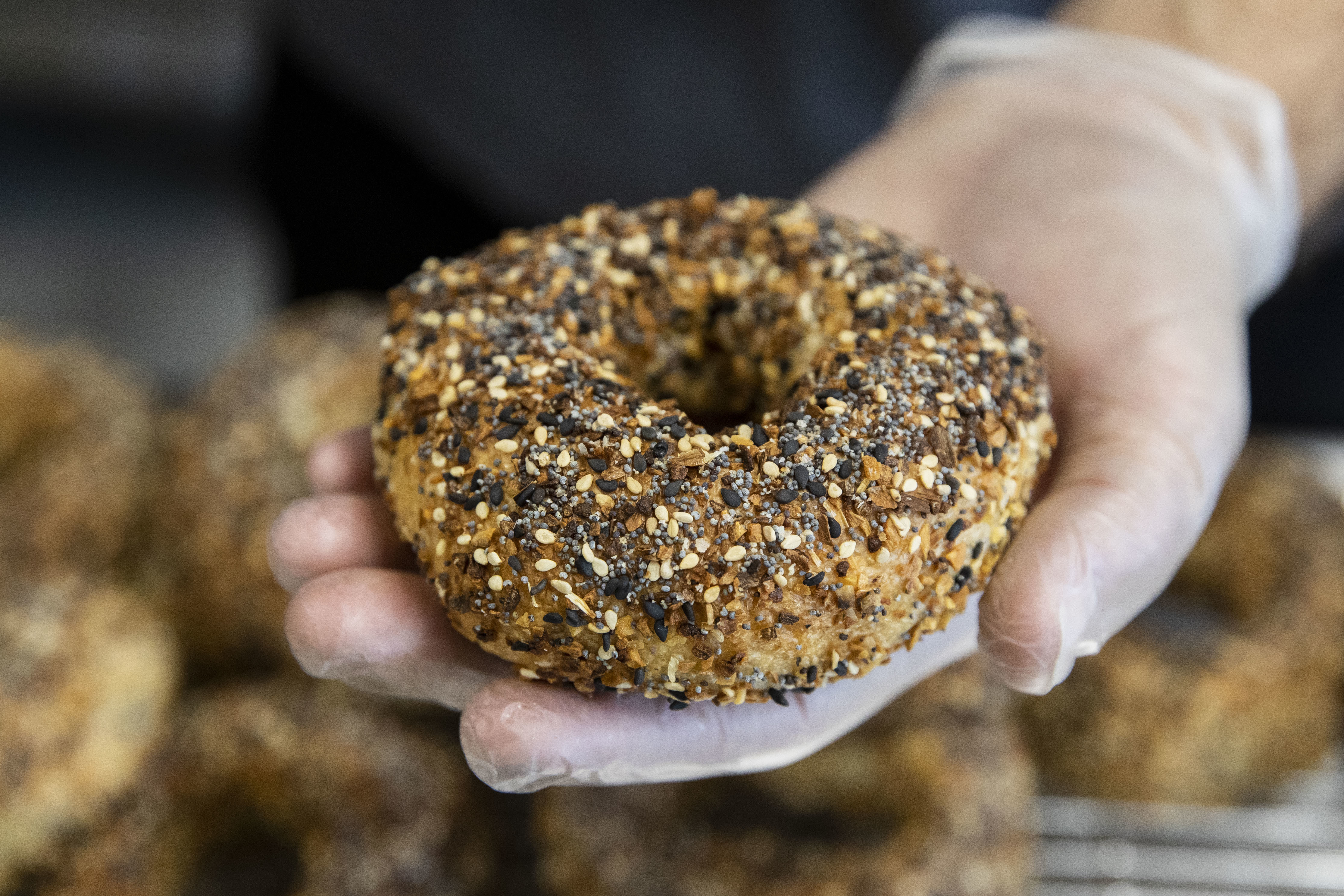
Jacob Cohen of Kismet Bagels holds an everything bagel.MONICA HERNDON / Staff Photographer
PopUp followed a similar trajectory. Founder Adam Goldberg began baking bagels at home during the pandemic and developed the idea into a business built around an unusually stripped-down concept: hot bagels and schmears, rather than the sprawling sandwich menus associated with many modern bagel shops.
Customers are encouraged to “grip, rip, and dip,” tearing apart the bagels and dipping them into containers of cream cheese.
The company’s first Philadelphia-area shop opened in the spring in Suburban Square in Ardmore. Harrington, the franchisee developing PopUp in this region, said sales have remained strong even through the summer.
“We anticipated a little bit of pullback with a lot of our core [teen] clientele getting jobs in Avalon and down the Shore, and with vacations and things like that,” Harrington said. “But it’s been very, very steady.”
In more than 25 years in the restaurant business, Harrington said, he has typically seen sales soften in late June, July, and early August. “We’ve not seen that,” he said.
PopUp has signed for the former Starbucks at 1709 Chestnut St. in Rittenhouse, as reported by the Philadelphia Business Journal. Harrington said he has a deal for a location in Lawrence Township, N.J., near Princeton, that is awaiting its permits. Another South Jersey deal is close, he said, and he sees additional potential in Montgomery County.
Despite the influx of bagel shops, Harrington said he believes PopUp occupies a somewhat different niche.
“We’re not making sandwiches,” he said. “So far, people have found us and enjoyed the way that we do it, and it doesn’t preclude them from going and getting a bacon, egg, and cheese somewhere else.”
Three stores before the first bagel
Call Your Mother is making an even larger initial bet on Philadelphia. Founded in Washington in 2018 by Andrew Dana and his wife, chef Daniela Moreira, the self-described “Jew-ish” deli has expanded beyond the Washington area as New York investment firm Invus acquired a majority stake in the company in January 2025.
Call Your Mother has signed three Philadelphia leases: 1500 Frankford Ave. in Fishtown, the former Metropolitan Bakery at 262 S. 19th St. near Rittenhouse Square, and 12th and Sansom Streets in Washington Square West. Dana said the decision to enter Philadelphia was considerably less scientific than the three-store commitment might suggest.
“My mom grew up there, my grandparents lived there, and I’ve been there so much visiting my friends,” Dana said. “I’ve been in Fishtown on a Sunday when it’s popping, and I’ve been in Rittenhouse Square when it’s super-crowded on the weekend and the market’s going. A lot of it is just gut and feel.”
Dana does not believe Philadelphia lacks good bagels. On a recent trip, he tried Bart’s and came away impressed.
“I think a lot of people are doing a great product in Philadelphia,” he said, “but there’s always room for a different bagel shop. At least I hope so.”
Dana also rejects the idea that taking investment inevitably leads to runaway growth or declining quality.
He described Invus as “patient capital” and said the investment agreement carries no requirement that Call Your Mother open a prescribed number of stores.
“We’re going to do what we can do while still keeping the quality of the food and the service top-notch,” Dana said. “And if that ever slips, we have the ability to hit the pause button.”
Local operators dig in
For some Philadelphia bagel operators, however, the arrival of heavily financed brands is cause for skepticism.
Cohen, at Kismet, is particularly wary.
“I think it’s the rare exception when private equity marries itself to a food brand and they continue to do good things,” he said. “I’d like to keep private equity out of bagels.”
He stressed that Kismet remains owned solely by him and Alexandra, financed through bank loans rather than outside investors.
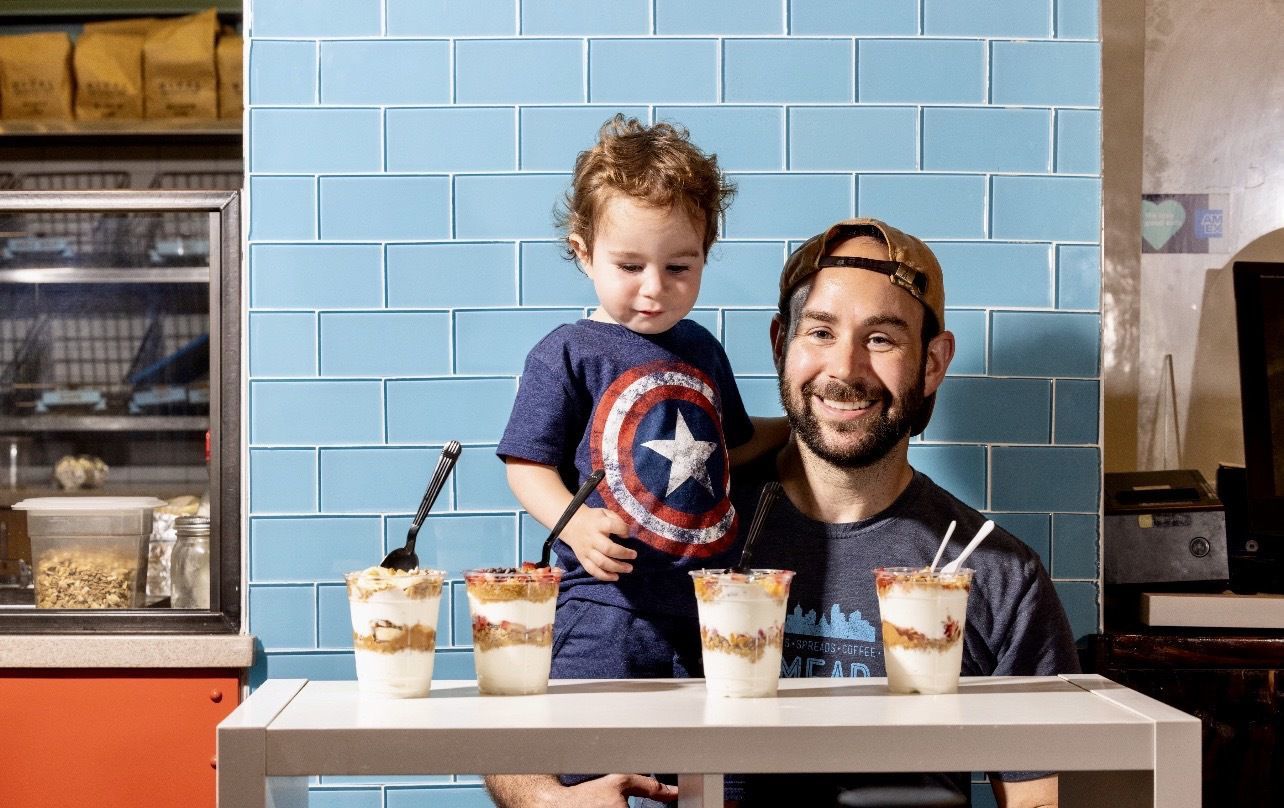
David Fine, owner of Schmear Bagel Parlor, is also watching the expansion. Fine entered the business in 2013 with his Schmear It food truck and has since acquired the shops owned by Philly Bagels, giving the company eight locations in Philadelphia.
David Fine of Schmear with his son.Courtesy of David Fine
Fine said those stores have not appeared to steal business from one another.
He thinks part of the bagel’s appeal is almost mundane: It is familiar, relatively accessible, portable, and infinitely customizable.
“They’re comfort food at their very core, and they can really appeal to such a wide variety of customers,” he said.
He is less certain about the economics behind the rapid expansion of some competitors.
“The buildouts are expensive,” Fine said. “You have to be quite profitable for quite some time just to recoup that investment.”
Schmear is expanding, too, Fine said, renovating its original brick-and-mortar location at 36th and Market Streets. But he believes that being local gives the company an advantage as more national and regional shops arrive.
“There’s a keen allegiance to local brands,” Fine said.
Built for the feed
Bagels also have another quality particularly suited to the moment: They look good on a phone.
Kostyo points to the now-familiar image of a bagel sandwich sliced in half and held toward the camera, its fillings and schmear exposed.
“The visual factor is also so important in today’s social media age,” he said. “That picture … is the type of indulgent food that people go out of their way for today.”
The lines themselves become part of the marketing. A crowd outside a shop signals that the food is worth leaving home for, he said, while arguments over the proper density, crust, schmear, toppings, and even whether a respectable bagel can be made outside New York keep the category in the conversation.
“In the end, it’s all advertising and marketing,” Kostyo said.
But social media enthusiasm is fickle — witness the rise and fall of cookies and cupcakes — and Kostyo sees the flood of investment and expansion as carrying the seeds of an eventual shakeout.
“This is a pretty classic bubble where some of these brands that are doing a great job and really resonate with people will survive, but a lot will overexpand and shut down in the next few years,” he said.
Cohen, meanwhile, has decided not to test Kismet’s limits.
After years of opening shops, Kismet entered 2026 determined to improve what it already has rather than add more locations. The company is focusing on consistency, profitability, new products, employees, and customers, he said.
He is happy to see Philadelphia’s bagel culture growing and says he does not regard every new shop as a competitor. Years ago, Cohen recalled, Inquirer restaurant critic Craig LaBan told him that Philadelphia did not have enough bagels per capita.
“We might be starting to get there now,” Cohen said.
Summer may be nearing its end, but hot dogs aren’t going anywhere. Philly is deep in the throes of a hot dog era. Our inveterate cheesesteak-and-hoagie city hasbeen throughthem before, but what sets apart the current boom is that it’s not so much about standalone hot dog joints. Instead, dogs have nosed their way onto many menus where they once might have been out of place.
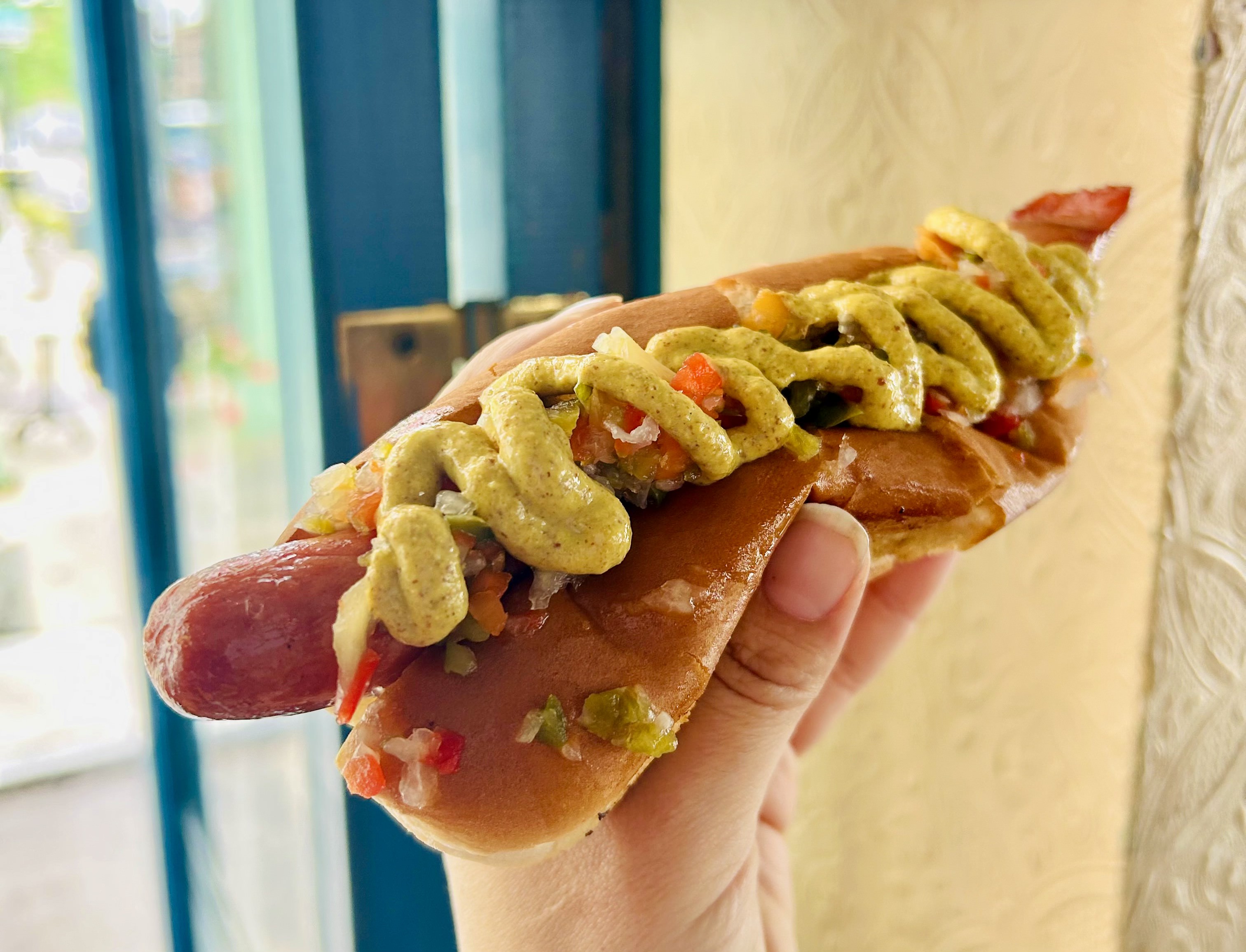
That’s a double-edged sword: Hot dog purists may want to avert their eyes. This list, which is focused on Philly proper, has some natural-casing-centric sweet spots for them, but we’ve also included spots that are bucking strict hot dog norms with croissant buns, bonito flakes, carrot salad, and pineapple salsa. Some even deploy the most divisive condiment of all: ketchup. — Jenn Ladd
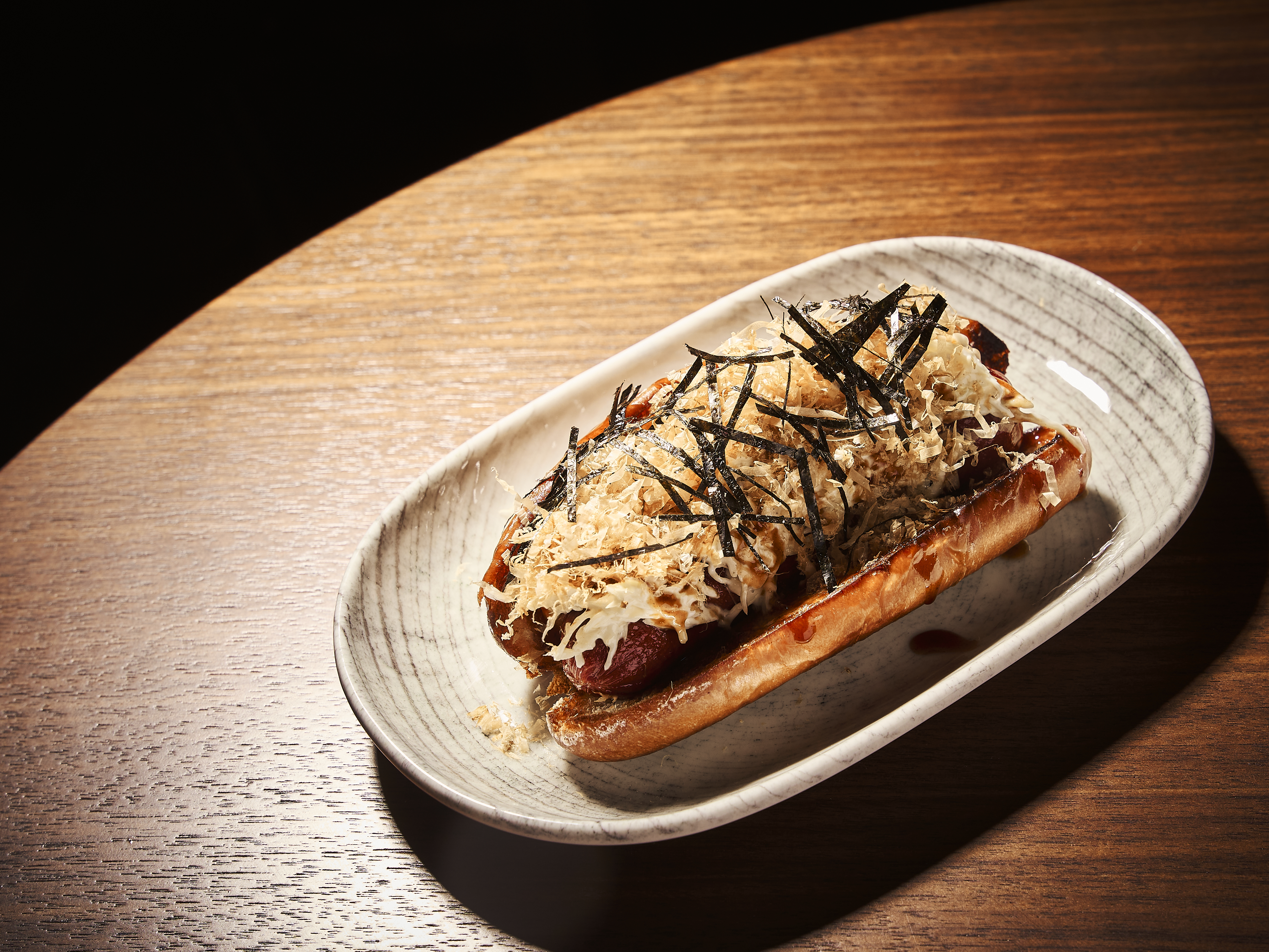
The Wagyu hot dog at Almanac in Old City, topped with tonkatsu sauce, Japanese slaw, bonito flakes, and nori.Stephen Recchia
Almanac
There’s something delightfully incongruous about pairing Almanac’s hot dog with one or two of its painstakingly crafted cocktails, often made from foraged ingredients and house-fermented elixirs. As bar snacks go, the Wagyu hot dog is a bit of an indulgence, but it hits all the notes of salty, fatty, sweet, and umami — the hallmarks of snacks you’d get at a konbini, or Japanese convenience store. The juicy sausage is tucked into a run-of-the-mill yet perfect split-top bun and topped with house-made tonkatsu sauce, a crunchy cabbage slaw, strips of nori, and bonito flakes. It’s a feat of layered textures and contrasting flavors, just as one would expect from one of Philly’s finest omakase chefs. — Kiki Aranita
Almanac, 310 Market St., Second Floor, 215-238-5757, almanacphilly.com
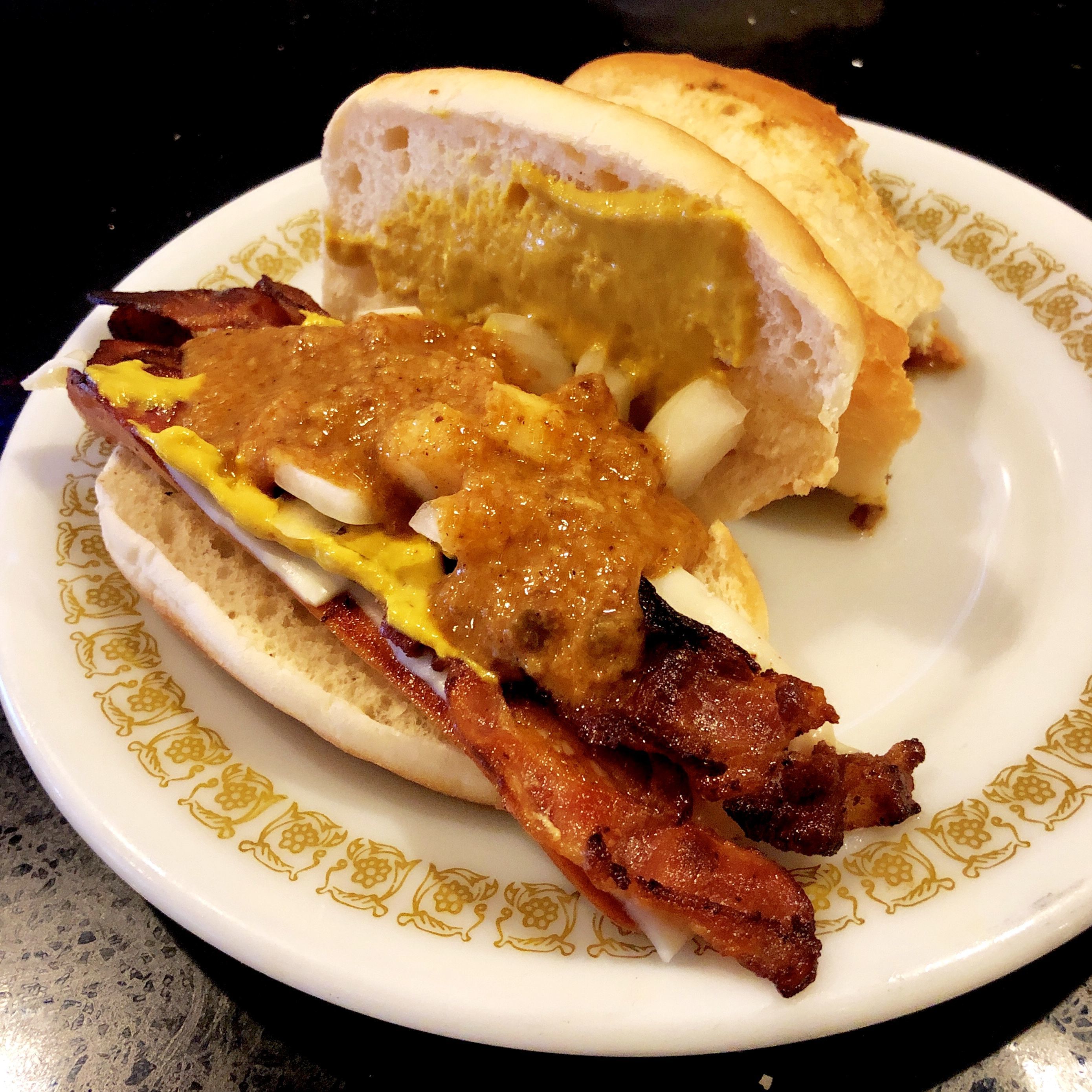
Texas Tommy from A.P.J. Texas Weiner (47 N. 13th St.)Craig LaBan
A.P.J. Texas Weiner
Time has largely forgotten A.P.J. Texas Weiner, a no-frills, old-school luncheonette squished between a bail bondsman’s office and an omakase restaurant on 13th Street just off Filbert, across from the Criminal Justice Center. Greek immigrants Andrew Kanakis, Paul Vasiliades, and John Halkedis opened the joint a century ago, joining an early-20th-century rush of so-called Texas wiener (as it’s usually spelled) joints around town. The “Texas” in a Texas wiener refers to the thin, mild chili perfumed by cinnamon and allspice that the cook spoons onto the grilled, split 5-to-a-pound beef hot dog before adding yellow mustard and chopped onions. In sum: the best $3 snack in Center City. You can dine in, though it’s primarily call-ahead (no apps!) or grab-and-go (from the sweetest counter woman, who won’t skimp on the napkins). — Michael Klein
47 N. 13th St., 215-665-8081
Café Tinto Fishtown
Café Tinto’s hot dogs are only available from 3 to 6 p.m. on weekdays at its buzzy new Fishtown location. The scarcity only adds to the mystique of chef Daniela Garcia’s Colombian-style beef hot dogs, which are all about perfecting the golden ratio of sweet, spicy, and crunchy. Served in soft, buttery house-baked rolls, Café Tinto’s happy hour dogs come topped with Garcia’stangy pineapple salsa and a layer of crushed classic Lays potato chips. There’s something deeply satisfying and oddly nostalgic about the crunch, which reminds me of when I’d stuff Doritos inside my salami sandwich on white bread in elementary school. Chips really do make everything better. — Beatrice Forman
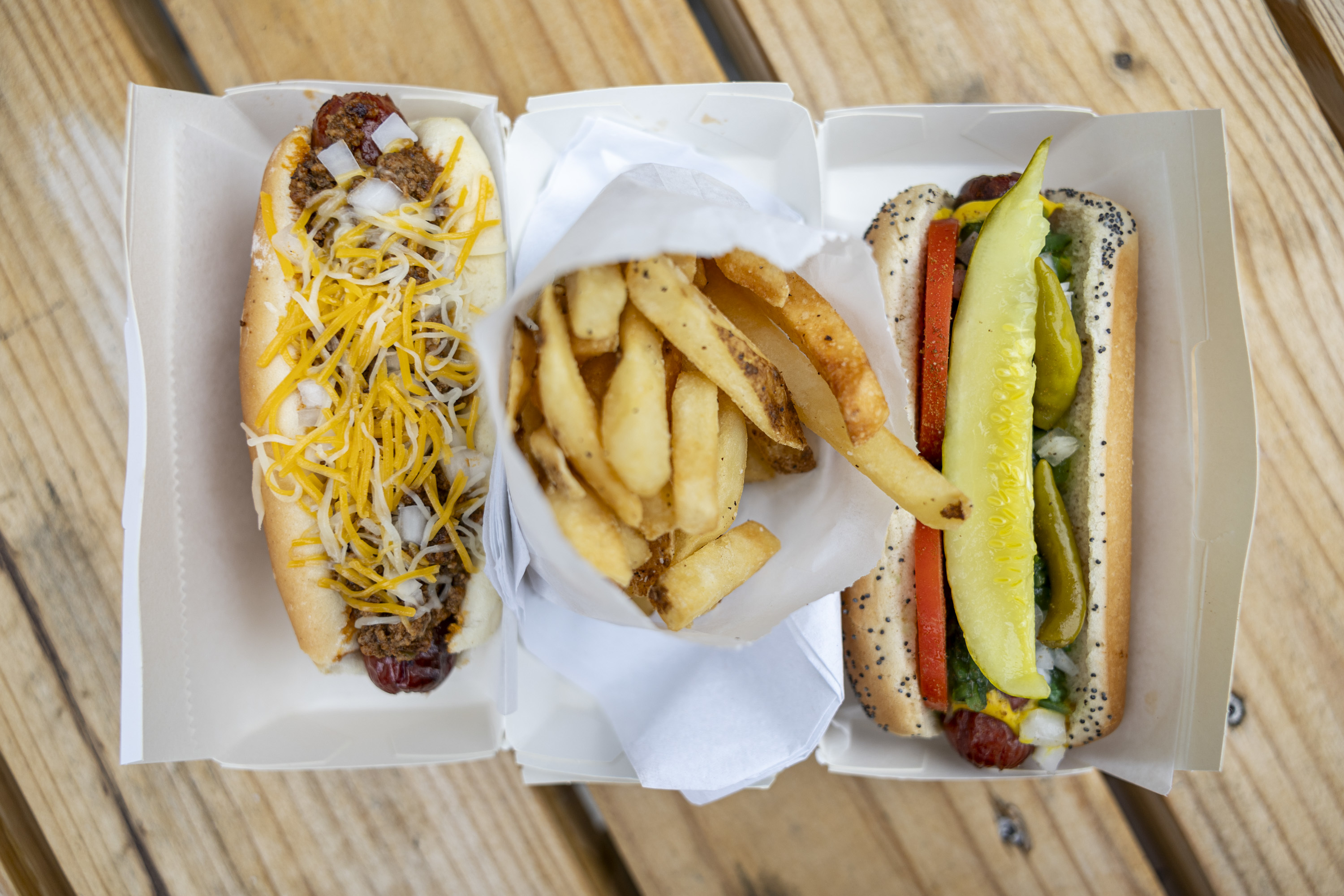
A Chili Cheese Dog and a Chicago Dog with a side of fries from Bad Nina’s grand opening outside Attic Brewing in Philadelphia on Wednesday, July 16, 2025.Tyger Williams / Staff Photographer
Bad Nina’s
In 2025, Attic Brewing owner and Chicago native Laura Lacy decided to capitalize on one of the most intuitive food pairings there is: beer and hot dogs. Lacy and her husband/co-owner, Todd, decked out a vibrant yellow-and-teal food truck that operates noon to dinnertime Friday through Sunday, serving up at least 12 dog variations, including a jalapeño popper dog, a cheeseburger dog, and a classic Chicago-style dog (mustard, relish, chopped white onion, sliced tomatoes, a dill pickle spear, celery salt, and pickled peppers). Bad Nina’s go-tos are Vienna Beef brand hot dogs and Cacia’s Bakery rolls, but there are also Impossible vegan dogs and gluten-free buns (and bratwurst if you’re dogged out). — Jenn Ladd
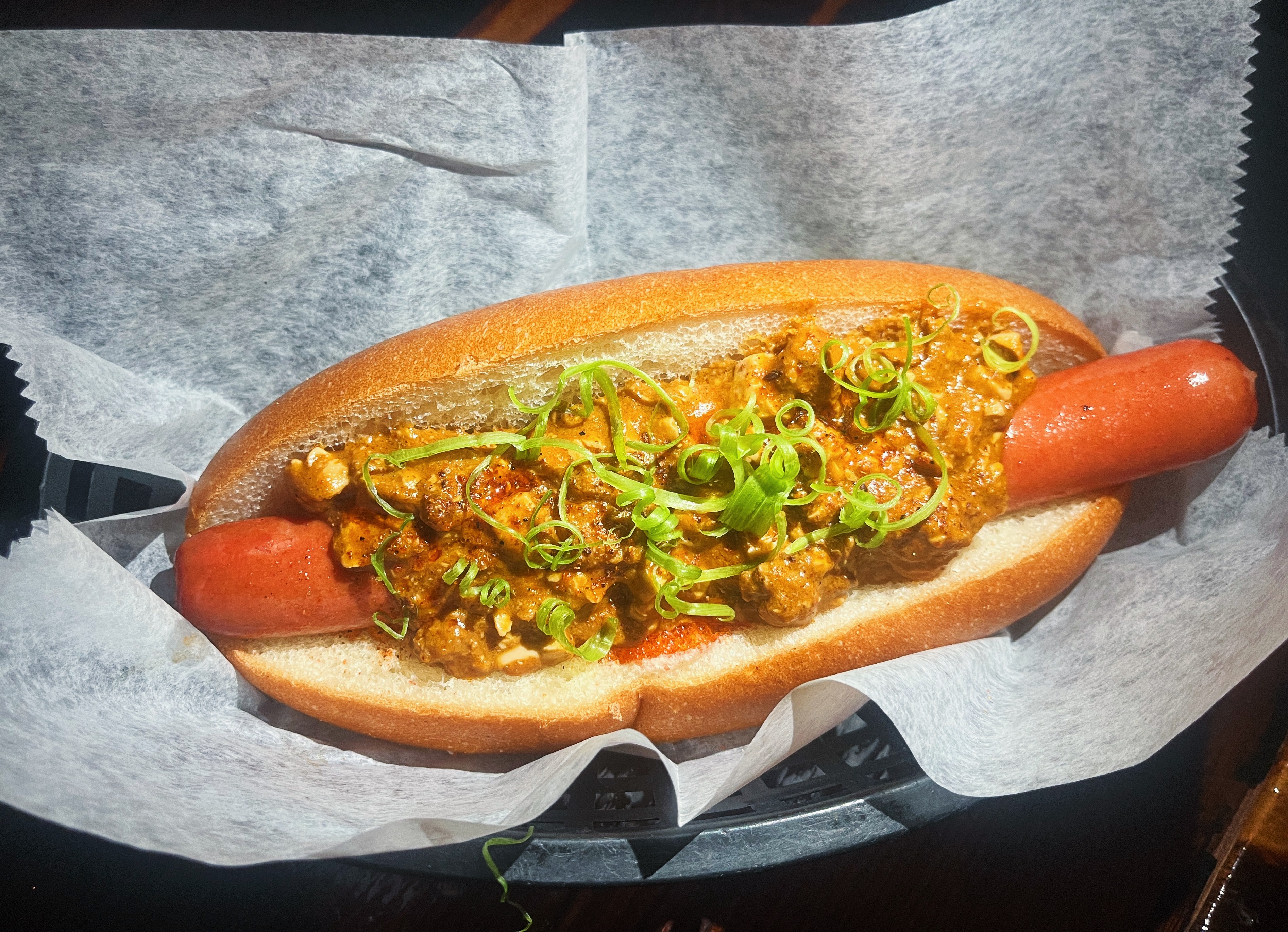
What’s more rock ’n‘ roll than a dive bar hot dog? A dive bar chili dog. Doom technically isn’t a dive, but it is a heavy metal bar with a just-messy-enough hot dog that some dare to call the best in Philly. Doom’s dog starts with a deep-fried, ripper-style beef frank in a split-top bun. Then, it gets topped with a tofu-and-pork Bolognese inspired by mapo tofu, the spicy Sichuan classic. Doom’s version is milder and smokier, transforming the sandwich into something akin to a sloppy joe with a touch of class. Not a drop of chili is to be wasted. We recommend scooping up the inevitable spillage with a side of fries. — B.F.
The mapo chili dog from Doom, a heavy metal bar at 421 N. Seventh St., is inspired by the popular Sichuan dish.Beatrice Forman / Staff
Famous 4th Street Delicatessen
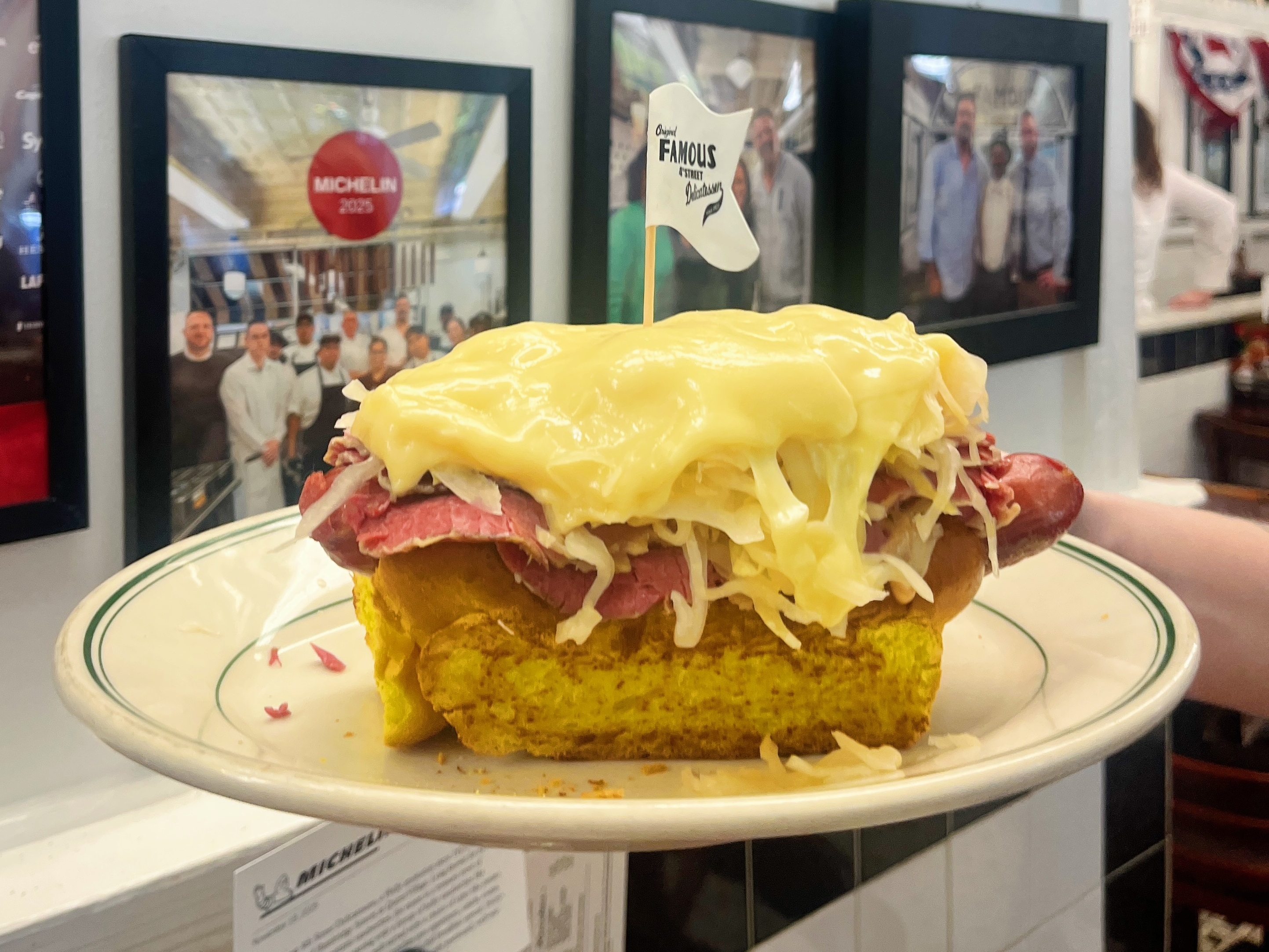
Famous 4th Street’s hot dogs are just how deli magnate Russ Cowan left them when he sold the joint in 2024 to Connecticut-based restaurateur Al Gamble: big and beefy. The Queen Villageinstitution still uses all-beef sausages for its traditional hot dogs and oversized pigs-in-a-blanket, and it still makes its challah buns in house. The only difference? The buns are now buttered and lightly toasted to mimic a Connecticut-style lobster roll, a change that Gamble said “tastes like childhood.” The deli’s classic hot dog is its bestseller, but the true showstopper is the hulking Reuben dog, which piles thin-cut pastrami, hot sauerkraut, and Russian dressing atop a 7-inch frankfurter. It’s just as filling as the sandwich it’s based on — and nearly half the price. — B.F.
The Reuben Dog at Famous 4th Street Delicatessen, 700 S. Fourth St.Beatrice Forman / Staff
Fox & Son
Reading Terminal Market has a certain “state fair” feel anyway, but a stop at this stand will make your day seem even more festive. Rebecca Foxman’s signature, crunchy hand-dipped corn dogs are made with corn batter, a boon to those who are sensitive to gluten. Choose pork-and-beef, all-beef, turkey, spicy pork, or a Beyond veggie dog, then stick with the classic or go fancy. Variations include chili-cheese-scallion, cheddar-jalapeño, and sweet-potato batter with chorizo and cilantro-lime sour cream. For a more lavish version, choose the Korean-style dog with mozzarella, sugar, ketchup, and mustard. — Michael Klein
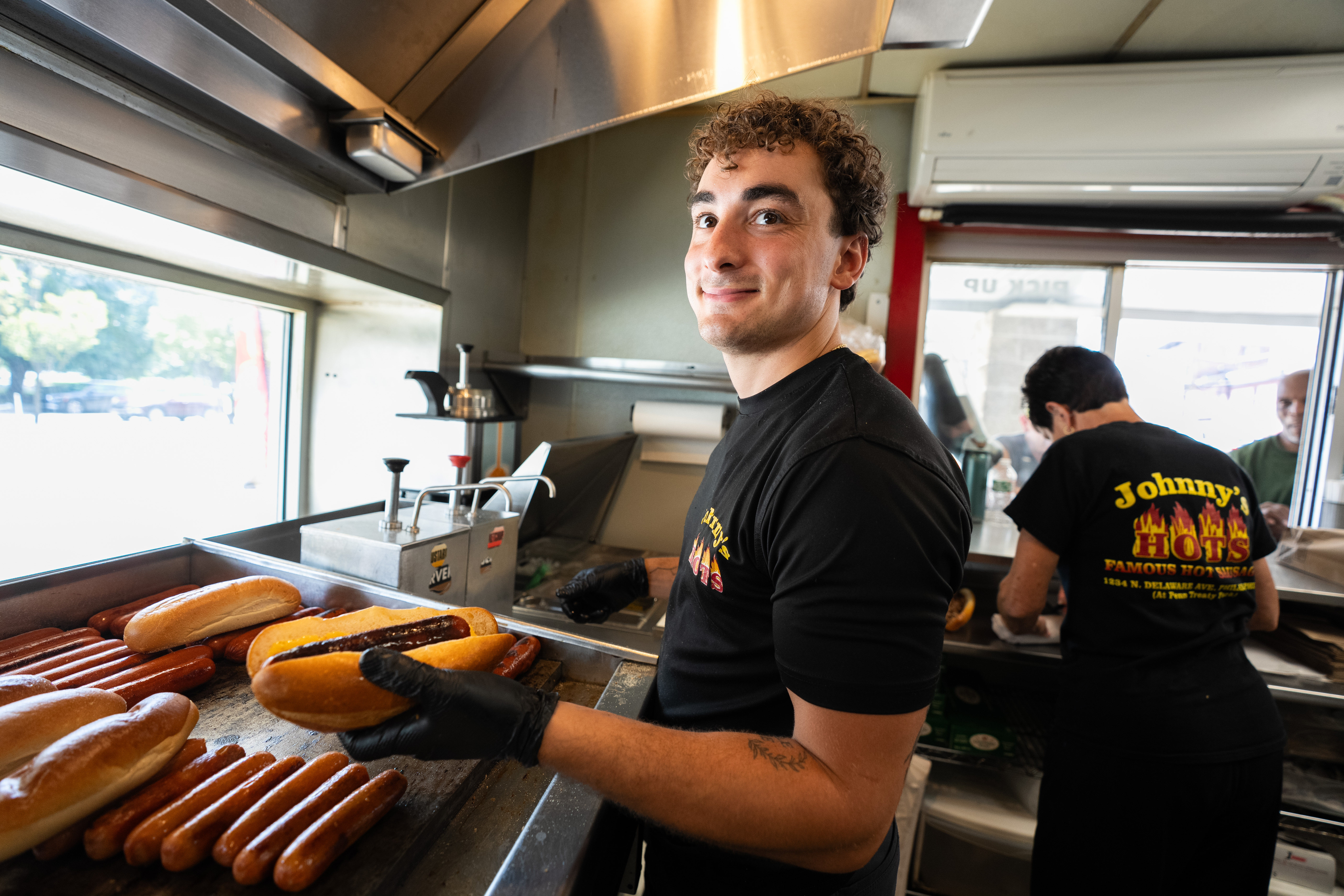
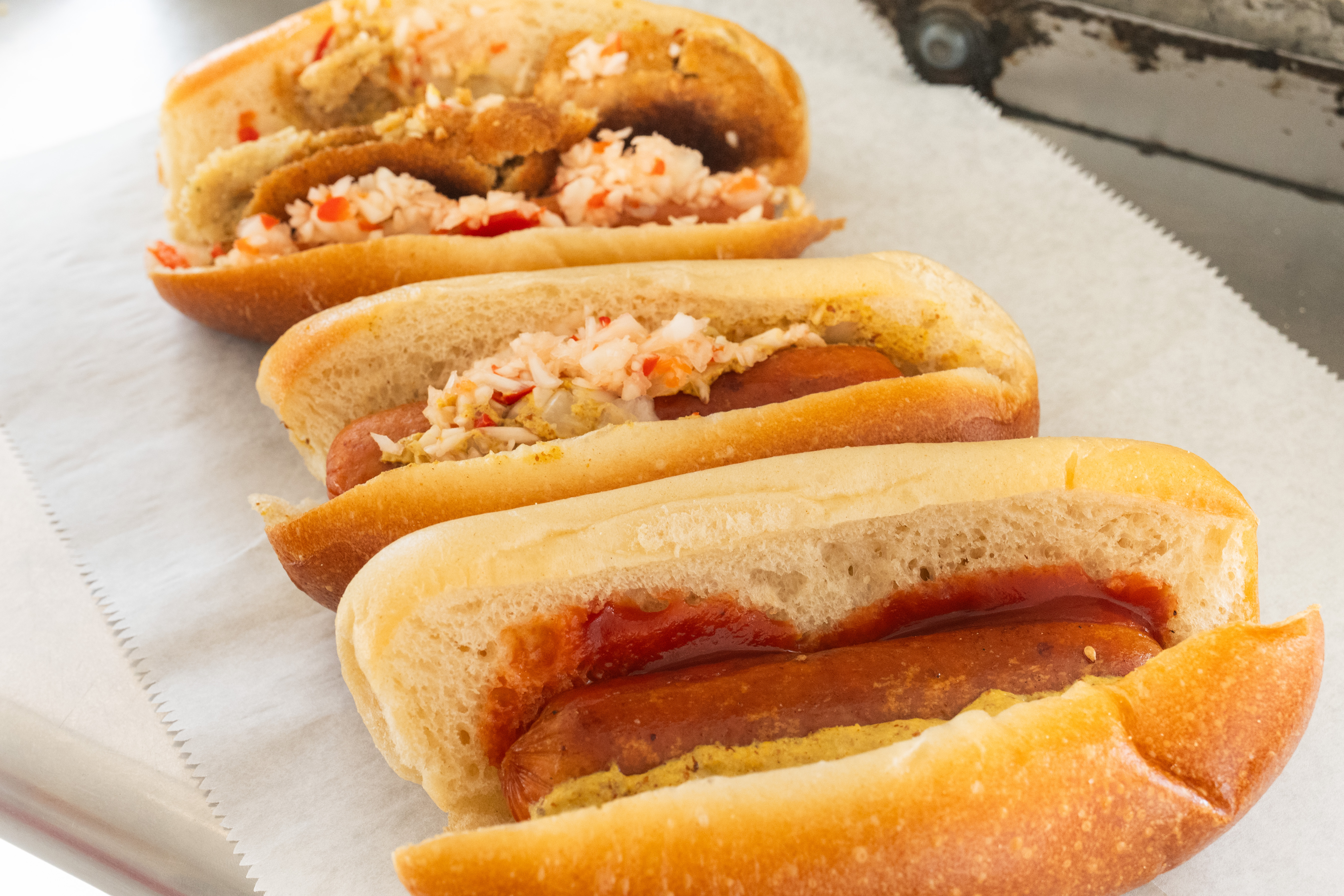
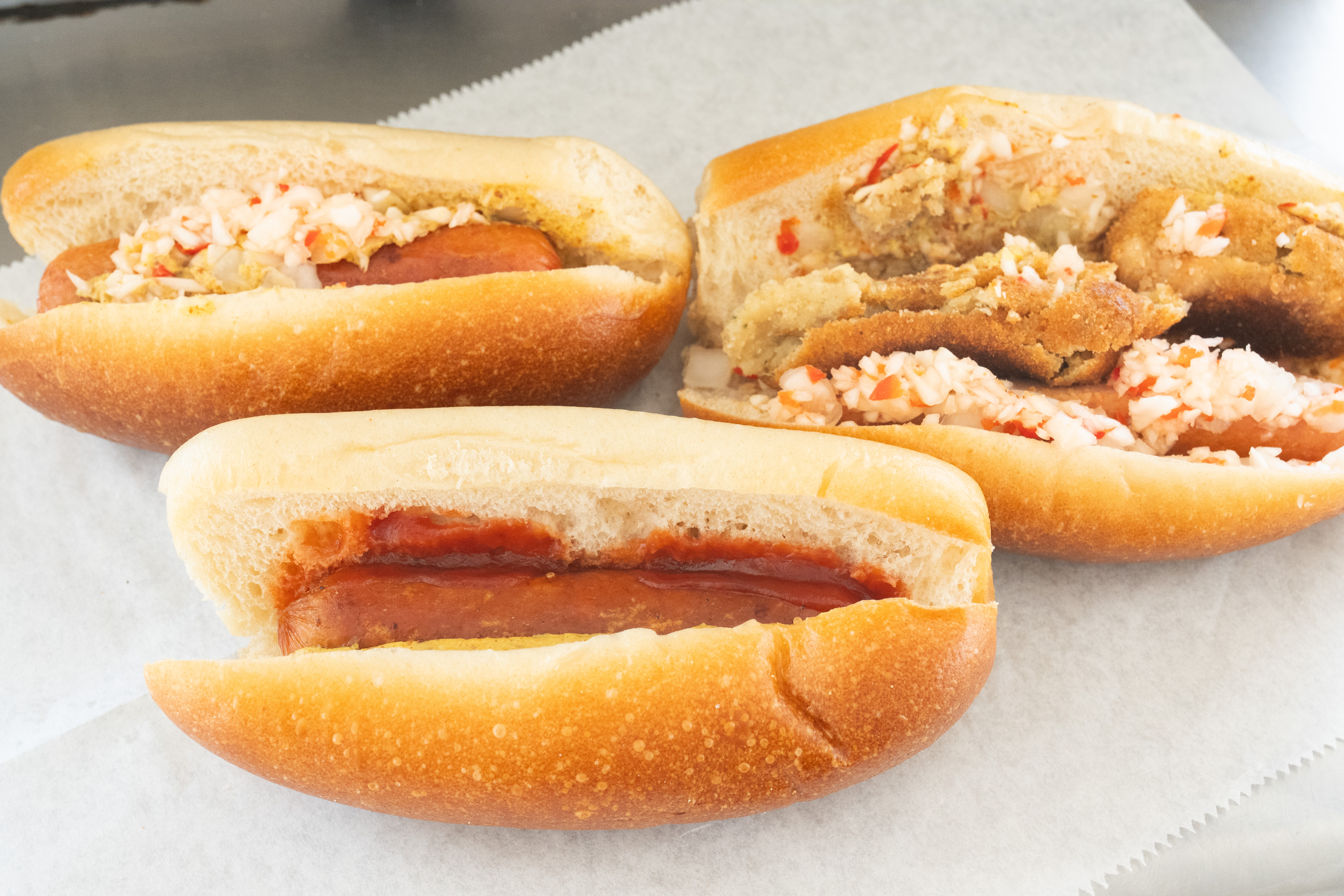
Standard hot dog with ketchup and mustard front, hot dog with pepper hash back, and hot dog with fish cake and pepper hash at Johnny’s Hots, in Philadelphia, Aug. 17, 2026.Jessica Griffin / Staff Photographer
Johnny’s Hots
At 5:45 every weekday morning (and at 7:15 on Saturday), the window rolls up at this cash-only stand across from Penn Treaty Park. Ride-share drivers, truckers, and other hungry early birds start pulling up for grilled hot dogs and especially that old-time Philly combo of hot dogs and fish cakes, on soft buns. Johnny’s traces its roots to the 1950s, when Nunzio “John” Danze started serving waterfront workers from a lunch truck. The business later operated from a pier-side shack before moving to its current location on Delaware Avenue. The power move is the namesake spicy sausage, though the menu includes breakfast sandwiches as well as roast pork and cheesesteaks. — Michael Klein
The standard hot dog with ketchup and mustard, hot dog with pepper hash, and hot dog with fish cake and pepper hash at Johnny’s Hots on Aug. 17.Jessica Griffin / Staff Photographer
Juana Tamale
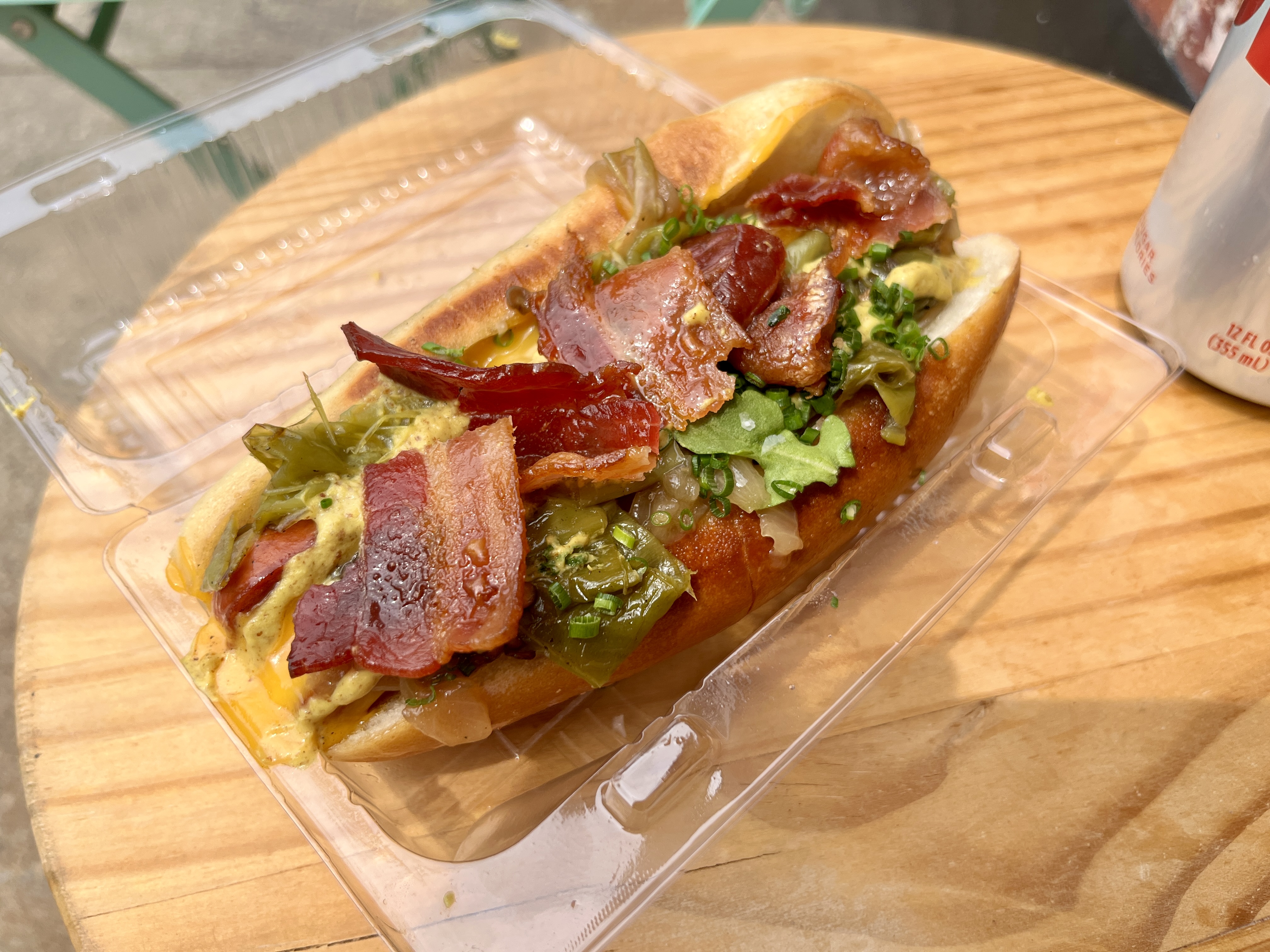
The only thing better than one hot dog is two hot dogs. Juana Tamale’s Jen Zavala serves her Sonoran-style hot dogs in pairs for $8, and prepares them just like they do in Northwest Mexico, where the street food originated before becoming Arizona’s glizzy of choice. A Sonoran dog comes wrapped in bacon and topped with refried pinto beans, Hatch chiles, red and green salsas, mustard, and mayo. Zavala’s one departure from a traditional Sonoran: She uses Amoroso’s Italian rolls instead of fluffy bolillo bread. The two have nearly the same texture, she said, and the Amoroso’s roll adds a touch of Philadelphia to a hot dog steeped in Southwestern spice. The Sonoran dog’s excess was a hard sell at first in Philly, Zavala said, but now, her East Passyunk Avenue Mexican restaurant sells between 200 and 300 a week. The more-is-more approach hits just right for those of us who view the hot dog as a prime vessel for toppings. — B.F.
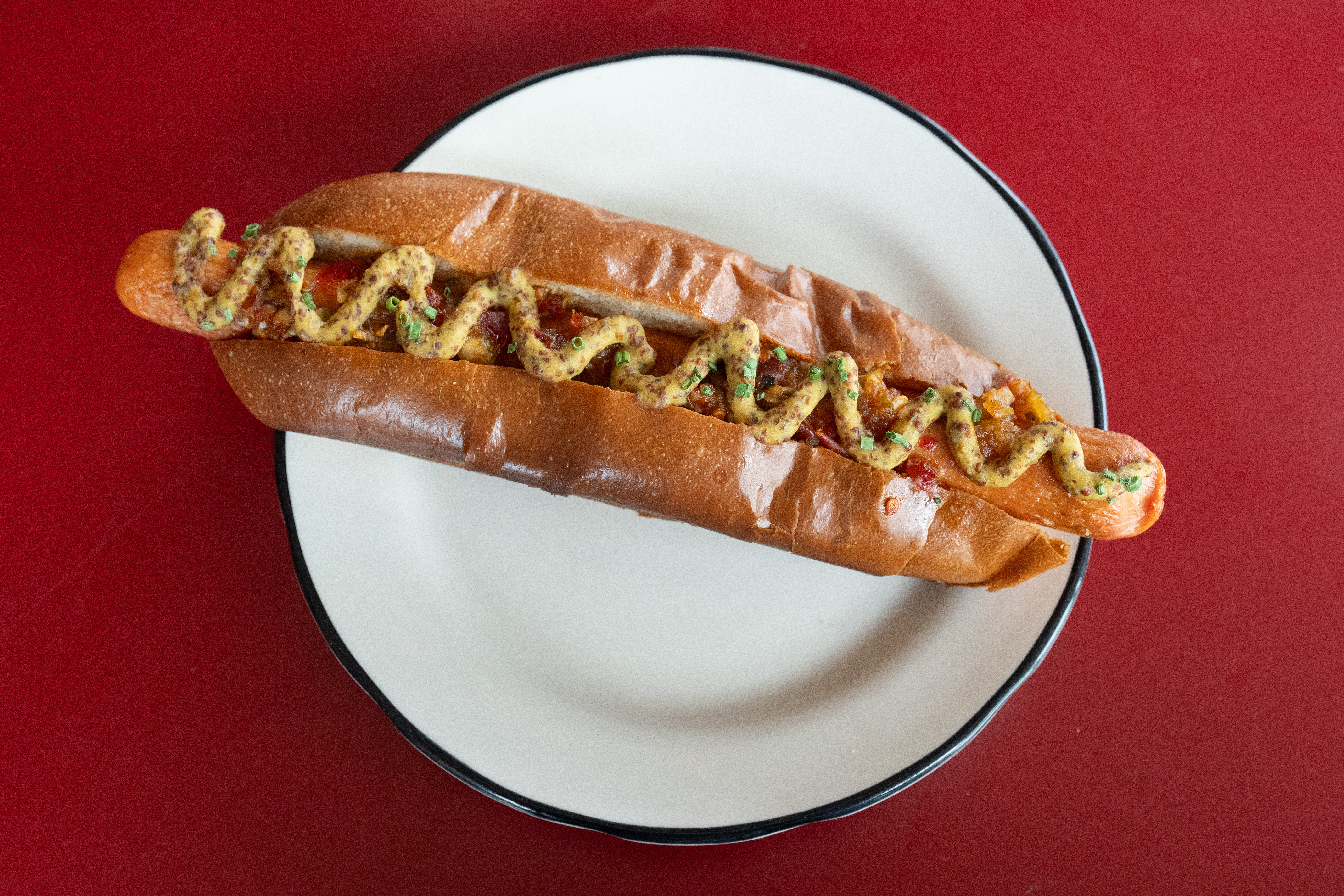
Size matters at Columbus Boulevard’s newest waterfront tavern. Lucky Duck co-chef Sanil Shah claims the bar’s 10-inch wiener is likely the largest you can find in Philly — it pokes comically out the ends of its 6-inch Baker Street Bread roll. The tavern uses a smoky beef-and-pork blend from Reading-based Berks Packing Co. that has an audible snap with every bite. The toppings are simple — just brown mustard and a house-made hot honey-pepper relish that Shahsaid is loosely inspired by the packets of duck sauce that come with Chinese takeout. Bonus: Lucky Duck’s dogs are available until 1 a.m. on Fridays and Saturdays, just in case a late-night glizzy craving hits. — B.F.
501 N. Christopher Columbus Blvd., Suite 2003, 215-964-9345, luckyduckphl.com
A hot dog at Lucky Duck, Aug. 17.Jessica Griffin / Staff Photographer
Lucky’s Last Chance
When Chris Barnes added hot dogs to the Lucky’s Last Chance burger-centric menu six months after it opened its first location in Manayunk in 2011, he hoped to sell “maybe 50 hot dogs a week.” Now, Barnes estimates the shop goes through between 5,000 and 6,000 franks weekly across its four locations, in Queen Village, Manayunk, East Falls, and Ambler. At Lucky’s, Deitz and Watson franks (or Light Life veggie dogs) are the base for 12 variations that push the limits of the “is a hot dog a sandwich” debate. Take the Voodoo, layered with shredded chicken, American cheese, and onion strings. Feels like a sandwich to me. The bacon bits and BBQ sauce-topped Deadwood? A very meaty hot dog. The 1Up, with sautéed mushrooms, provolone, and garlic aioli, is somehow a secret third thing — a hot dog crossed with a French dip. Rich and warm, it resonates even in winter. — B.F.
848 S. Second St., 267-519-2080; 4421 Main St., 215-509-6005; 5154 Ridge Ave., 216-842-5836; 15 S. Ridge Ave., Ambler, 215-367-5881; luckyslastchance.com
Lucky’s Last Chance uses Dietz & Watson dogs and New England-style split-top rolls.Marisa DiSalvatore
Miller’s Twist
Lines often wrap around the edges of this legendary Reading Terminal Market vendor, whose tawny, traditionally knotted Amish-style pretzels are irresistible in their own right. So what’s not to love about that same supple, salt-studded dough wrapped around a hot dog, then baked to juicy perfection? Costco customers will be particularly enthused: The Miller family uses Kirkland brand for their regular and jumbo dogs. (Dietz & Watson supplies their spicy beef and jalapeño dogs.) Buy one with or without cheese, and be sure to spring for a dipping sauce, especially the hot-sweet mustard made by the owner’s Lancaster-based in-laws. (Note that Miller’s does not make Philly soft pretzels; for better or worse, ours are not buttery. If you want a hot dog wrapped in Philly pretzel dough, head to one of three Bernie’s Pretzels in Delco.) — J.L.
Chef Chance Anies’ Filipino riff on Outback Steakhouse is a great place to go for happy hour, and particularly welcoming to kids. One of the draws is the Jollidog: an all-beef dog with mayonnaise mixed with bangus (umami-rich tinned milkfish), sandwiched in a soft bun, and topped with atchara, or pickled green papaya. It’s a perfect snack with a glass of wine, or a great meal for a toddler. Mine ate it up and clamored for another, which we happily ordered. The hot dog is on the regular menu, too, and comes with fries for only a few bucks more at happy hour. — Margaret Eby
When we kids were extra-good and my mom was feeling extra-rich, my mom would buy bacon and American cheese for our usual hot dog nights. She’d pull out the stovetop griddle, split the dogs, wrap them in bacon, and make us each a Texas Tommy — draping a thin slice of American cheese over everything to melt on contact. For me, the smoky, crispy Tommy at the Nifty Fifty’s chain is the perfect throwback to ’60s indulgence, even if the cheese of choice for the pork-and-beef dogs here is Whiz. Get yours topped with chili and eat it with a knife and fork, and don’t forget to use your napkin, as the old luncheonette lady would have reminded you. — M.K.
2491 Grant Ave., 215-676-1950; 2700 S. 10th St., 267-719-1950; 2431 Aramingo Ave., 267-771-1950; 1140 Old York Rd., Abington, 267-833-1950; 503 S. Oxford Valley Rd., Fairless Hills, 267-571-1950; 1900 MacDade Blvd., Folsom, 610-583-1950; 3524 West Chester Pike, Newtown Square, 484-992-1950; 684 York Road, Warminster, 267-802-1950; 1365 Marrows Rd, Newark, Del., 302-742-1950; 4670 Route 42, Turnersville, 856-875-1950; niftyfiftys.com
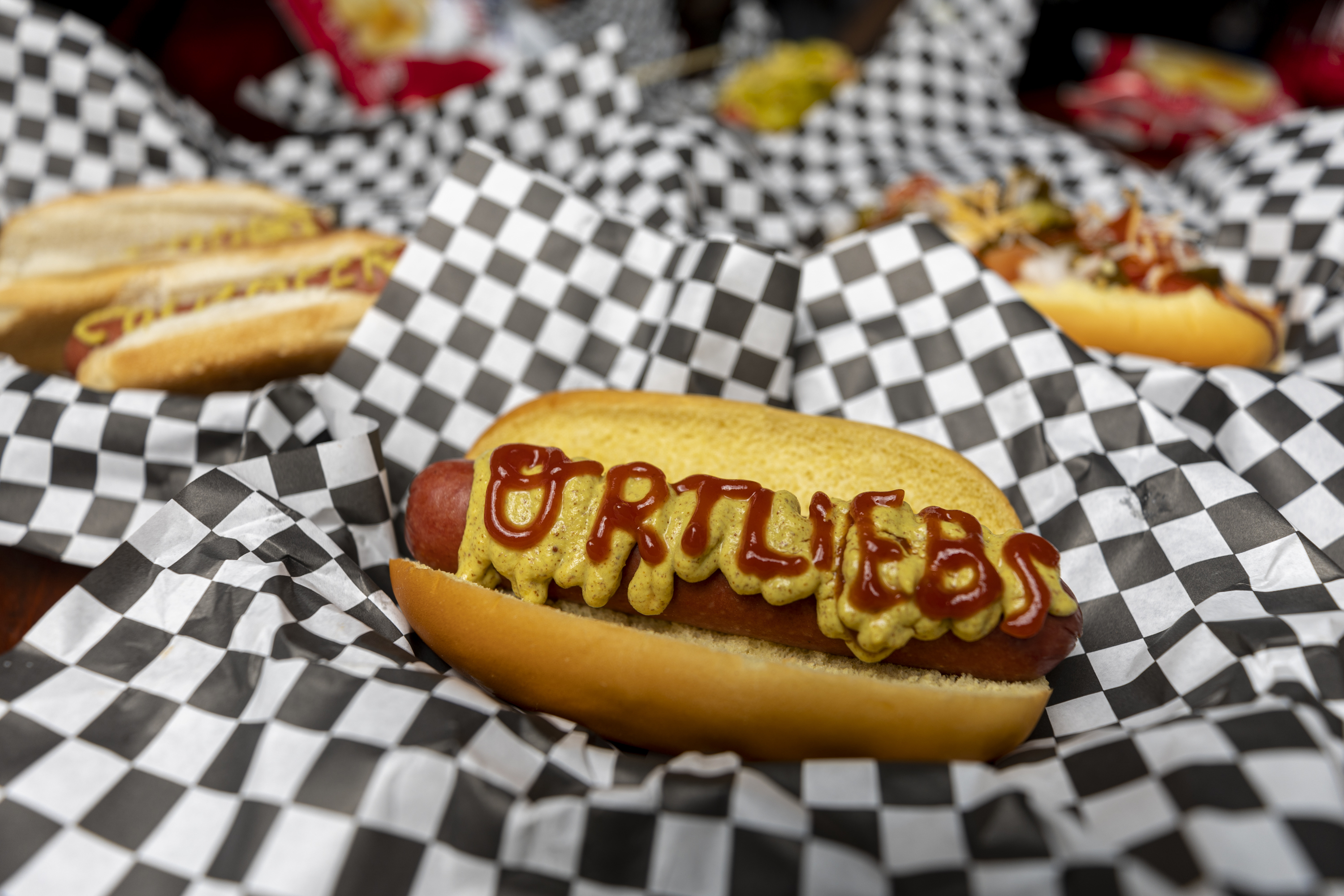
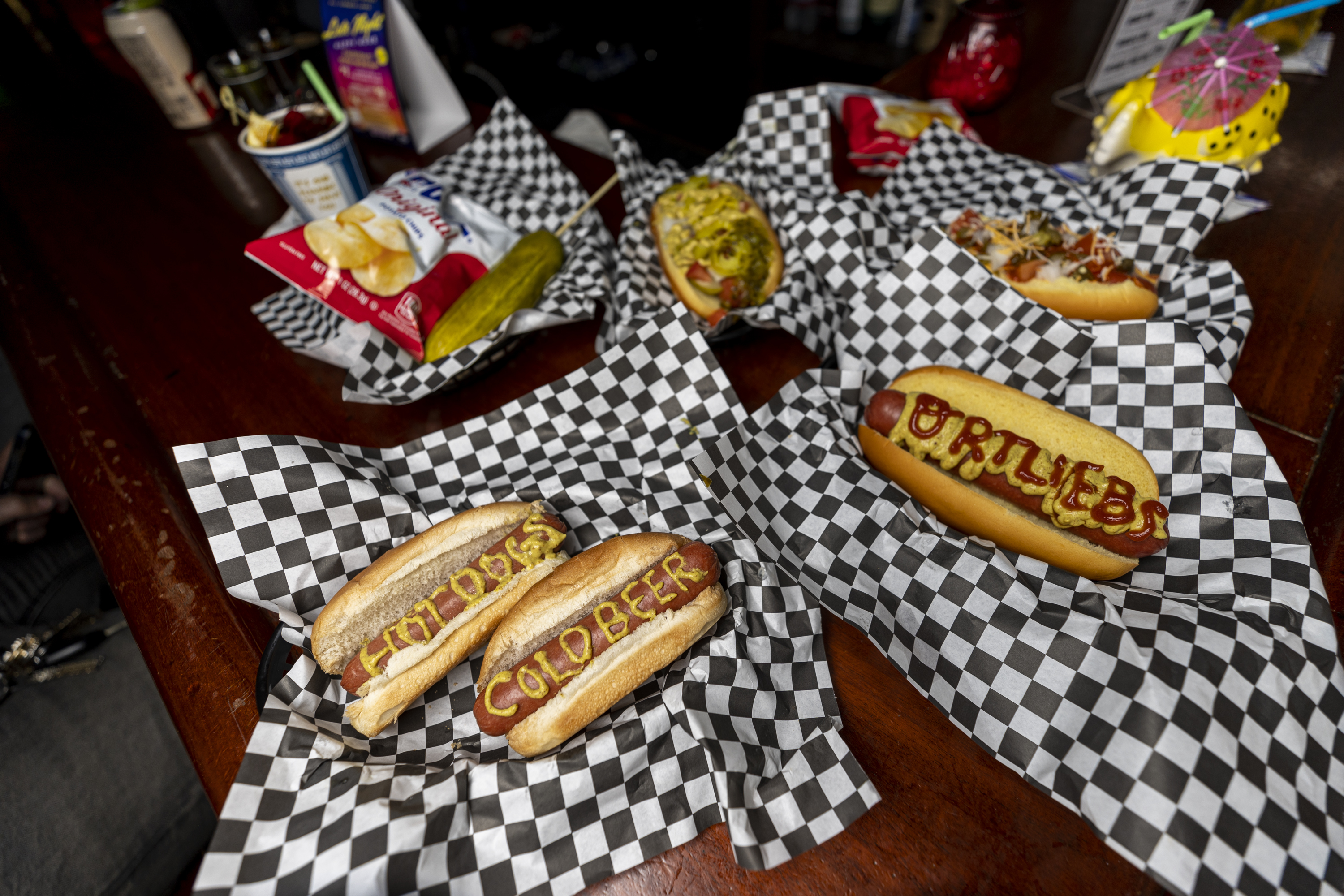
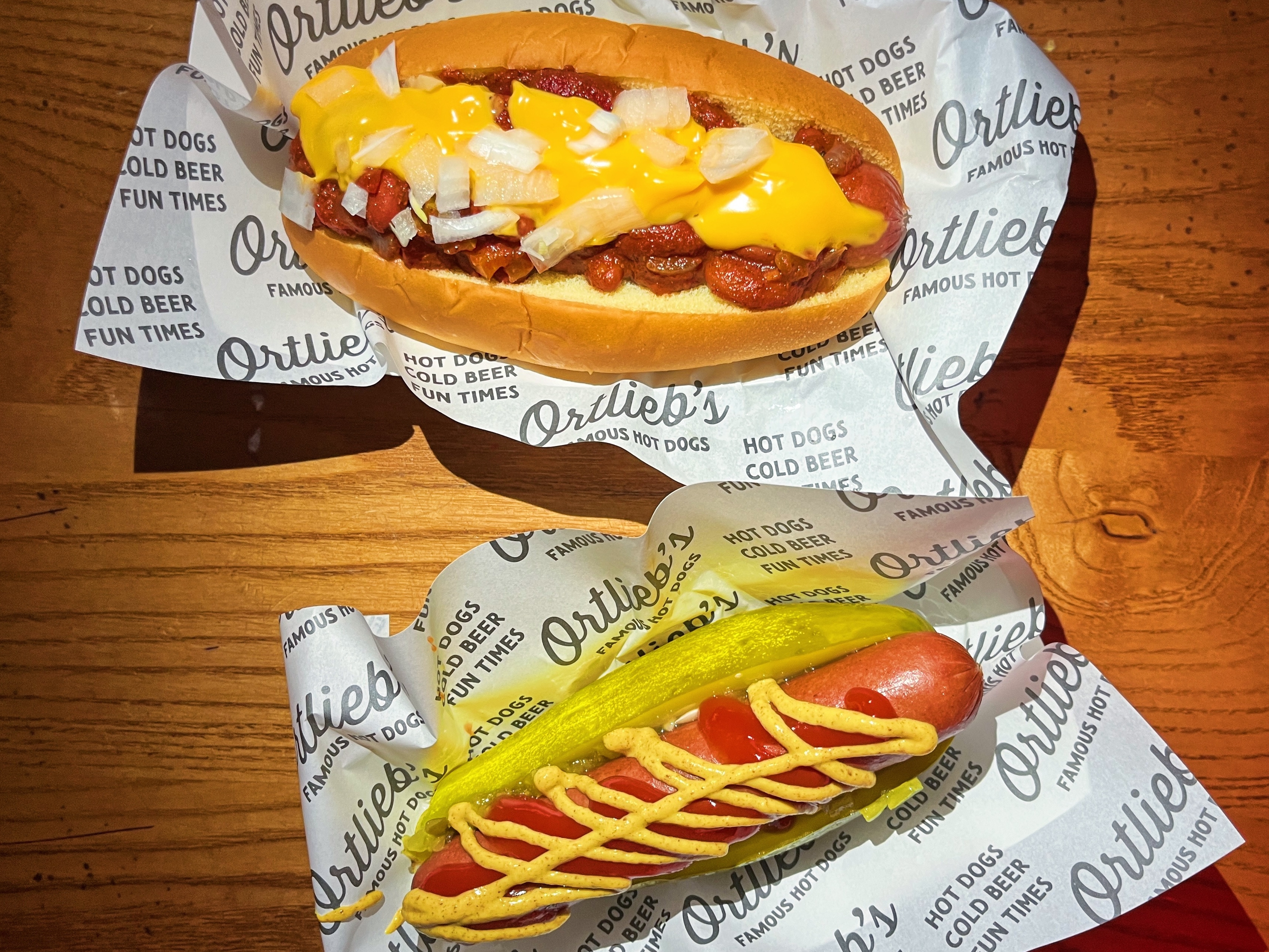
A classic hot dog with Ortlieb’s written on it with mustard and ketchup, in Philadelphia on July 20, 2024.Tyger Williams / Staff PhotographerAn assortment of classic hot dogs with mustard and ketchup writing, Ortileb’s taco dog, a Chicago dog, and a pickle on a stick, at Ortlieb’s on July 20, 2024.Tyger Williams / Staff Photographer
Ortlieb’s
When Kyle Costill dedicated his Northern Liberties bar to the humble hot dog in 2024, “people were laughing at us,” Costill said. “Now, it’s like everybody is doing them.” Since then, Ortlieb’s has built a tiny empire out of no-frills dogs. Costill estimates the bar has sold 30,000 in the past two years thanks to a partnership with music venue Union Transfer and Port Richmond’s Green Rock Tavern, which sells Ortlieb’s-branded steamers behind the bar. The secret to their success is the wiener, a maple wood-smoked beef frank from Nevada-based brand Snap-o-Razzo, whose natural casing is so taut, the dog pops with each bite. (That feeling has inspired Costill to work on a proprietary Ortlieb’s dog that he intends to launch by the end of 2027.) Ortlieb’s has something for everyone: You can swap out a Snap-o-Razzos for a veggie dog, or top either with a vegan three-bean chili, courtesy of chef Alan Lichtestein of Haddonfield’s Little Hen. And pickle lovers will find a new obsession in the bar’s pickle dog, a hot dog cradled in an oddly sturdy half-sour spear. — B.F.
The chili cheese dog (top) and pickle dog (bottom) at Ortlieb’s in Northern Liberties are offered in both meat and vegan versions.Beatrice Forman / Staff
Perfect Together Restaurant & Cafe
Dilbar Nurivinova, the chef at this Bella Vista halal restaurant, grew up eating Uzbek super hot dogs at street food stands across her native Bukhara. So after nearly two decades living abroad, she was eager to recreate this overloaded wiener tribute to home at Perfect Together, the restaurant she opened last year on South Street with a menu that features foods from Uzbekistan and the Czech Republic, her previous place of residence. Nurivinova’s super dog begins with a smoky pink halal beef hot dog, then is piled high with so many fixings — garlicky shredded carrots, tangy beet salad, rice noodles, a hard-boiled egg, Nurivinova’s special sauce (a ketchup zingy with cumin and paprika), and copious gobs of mayo — that it is essentially an entire Uzbek picnic on a bun. Perhaps even better is the kofta variation she makes with a well-spiced kabob of minced beef. There are several other intriguing variations to be found in Uzbek Northeast Philly. — Craig LaBan
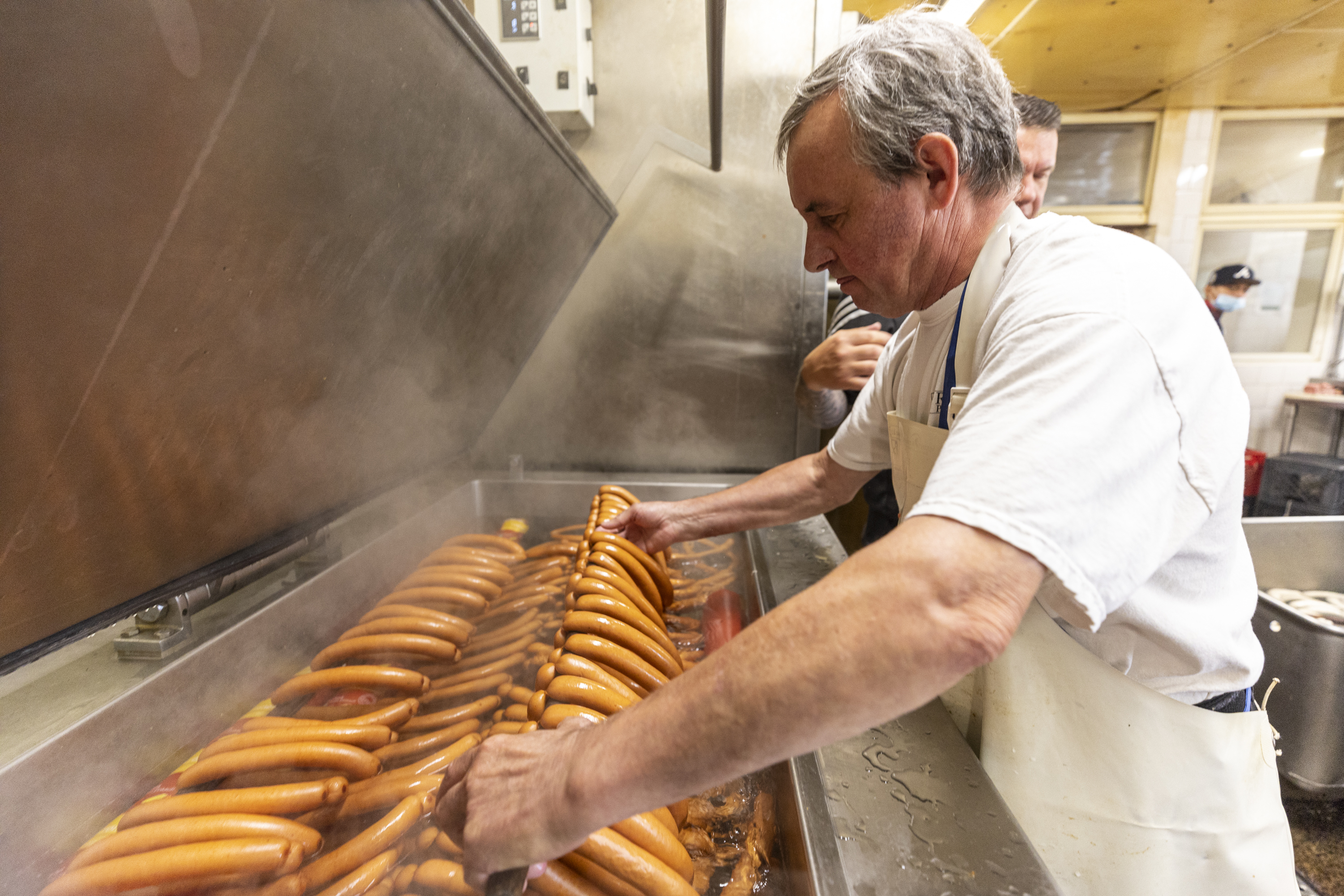
Don’t go to this 54-year-old Fox Chase institution expecting to walk out with a griddled hot dog on a bun. Rieker’s is a market — “German-food wonderland” is probably more accurate — and, particularly, a sausage specialist. The traditional wieners here are handmade in the back, where the staff grinds bull meatwith a blend of beef trimmings, pork butt, granulated onion, paprika, and garlic powder, then makes long links that go into the smokehouse for a hickory-scented steam. You can buy the skinny, snappy wieners by the pound, along with well over a dozen other sausage varieties, plus German potato salad, dried egg noodles, and much more. — J.L.
Alex Naumenko, a sausage maker, pulls wieners from a water bath at Rieker’s Meats in Philadelphia, on July 16, 2024.Tyger Williams / Staff Photographer
Second Daughter
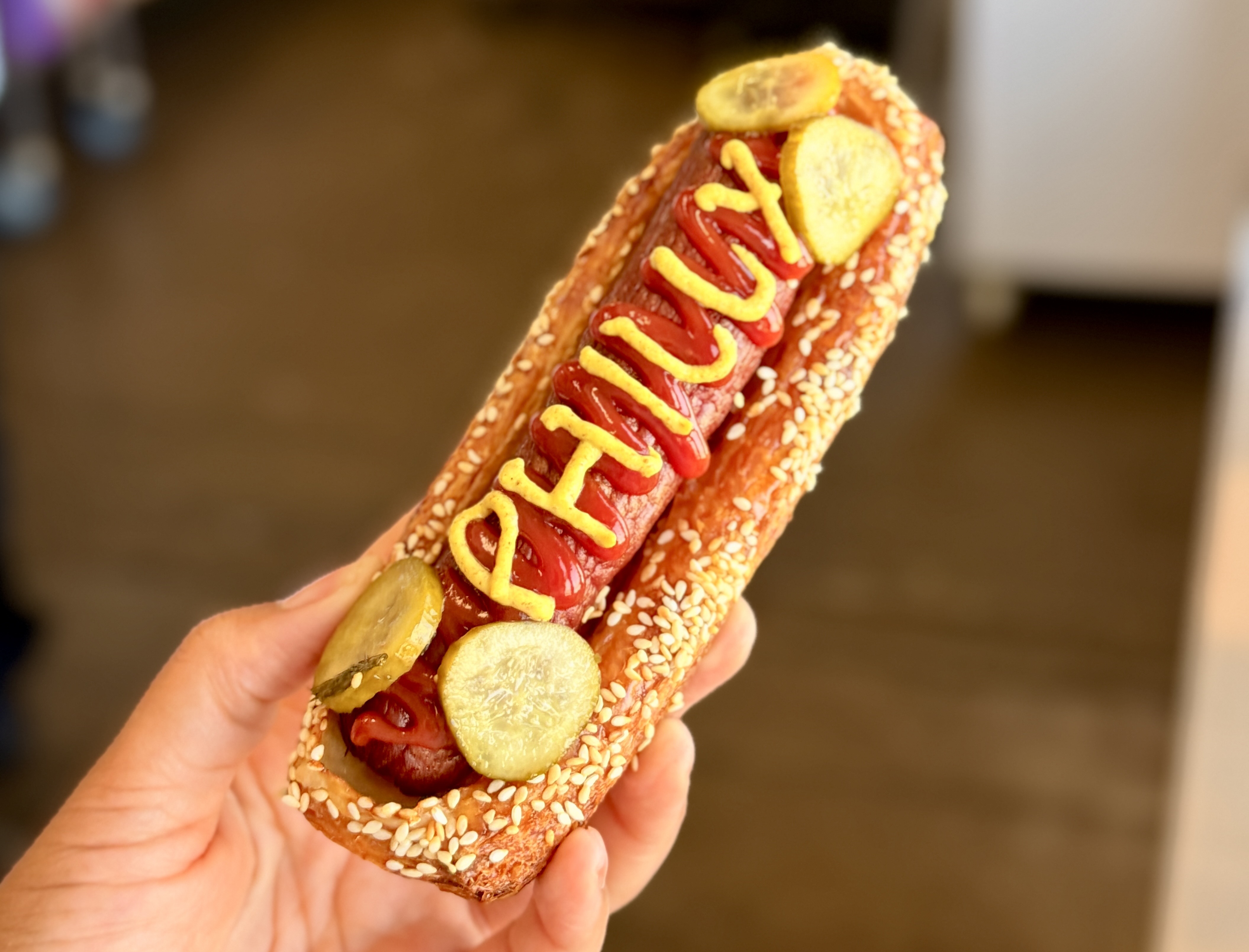
Is there an ordinary treat that Rhonda Saltzman can’t transform into a work of art? The creative genius behind Second Daughter bakes all-beef Nathan’s dogs in ultra-flaky, sesame-seeded croissant shells that give faint crunch to each savory bite. The Second Daughter crew tops the dogs with ketchup and spicy brown mustard squiggles and house-made pickle chips for tangy contrast. The only drawback: The dogs are so popular at both the fourth-floor Bok Building bakery and its Rittenhouse Farmers’ Market stand, they’ve been selling out around noon. On the bright side, Saltzman says they’re not going anywhere, even after summer ends. (Look out for specials like a sloppy joe dog and a baked bean-topped dog.) — J.L.
Essington native and Starr Restaurants alum Mark Gears runs a bustling breakfast and lunch takeout trade from this Kensington corner store, which has some bodega trappings, too. Need paper towels, dish soap, sugar, and spaghetti sauce? Gears has it. That pragmatic mindset led him to add hot dogs to his menu when he opened the shop in October. “Preopening, I went to Cacia’s [Bakery] to talk bread and saw these beautiful little fresh hot dog rolls. Said, how the hell can’t that be tasty,” Gears said. Smalls’ plump griddled all-beef hot dog, served on buns delivered fresh daily, will cost you less than a fiver, but it’s well worth springing for caramelized onions, roasted long hots, and crispy bacon toppings. — J.L.
A loaded hot dog (with roasted long hots, cheddar, bacon, spicy brown mustard, and caramelized onions) at Smalls’ Provisions in Kensington.Jenn Ladd / Staff
Sonnys Cocktail Joint
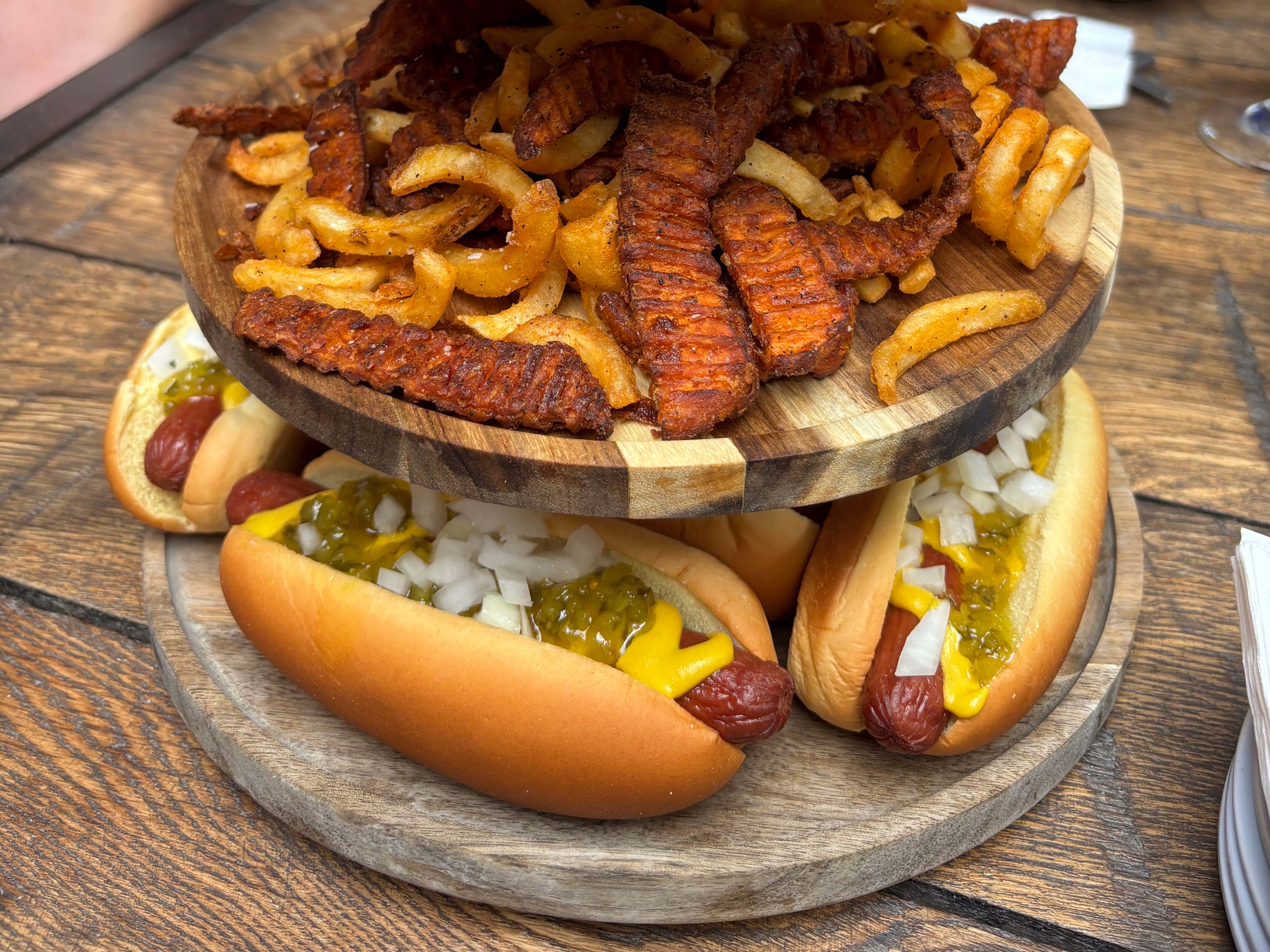
A single hot dog isn’t ideal for sharing. But at Sonnys Cocktail Joint, they’ve solved that particular issue with a hot dog tower, an inspired play on the seafood tower, that replaces oysters and shrimp with hot dogs, french fries (regular and sweet potato), and a top tier filled with little cups of ketchup, ranch, and a peperoncini aioli. A small tower comes with six hot dogs, a large fits 12. The hot dogs aren’t anything fancy — a standard-issue wiener with an array of condiments — but the format is whimsical, and it’s a perfect accompaniment for a couple of cocktails. — M.E.
Restaurateur Bruce Cooper is big on dates. He opened Jake’s in Manayunk on Oct. 19, 1987 — Black Monday, the day the stock market crashed.
He’ll close it on Oct. 19, 2026, the start of its 40th year on Main Street.
In between was another financial crisis, an expansion that reflected changing tastes, a devastating flood, a pandemic — and nearly four decades in which Jake’s evolved along with Manayunk itself.
Cooper, 72, is selling the side-by-side Main Street properties that house what is now Jake’s & Cooper’s Wine Bar. Before the final night, he plans to turn the wind-down into a reunion. Past employees will get a 50% discount on Sundays and Mondays, and the restaurant will extend its September restaurant week (Sept. 14-20) pricing through the final day. On Oct. 19, a party will empty the bar and kitchen, with proceeds going to a local charity.
“I just wanted to get to [the start of] 40 years,” said Cooper. “I wanted to get out two years ago.”
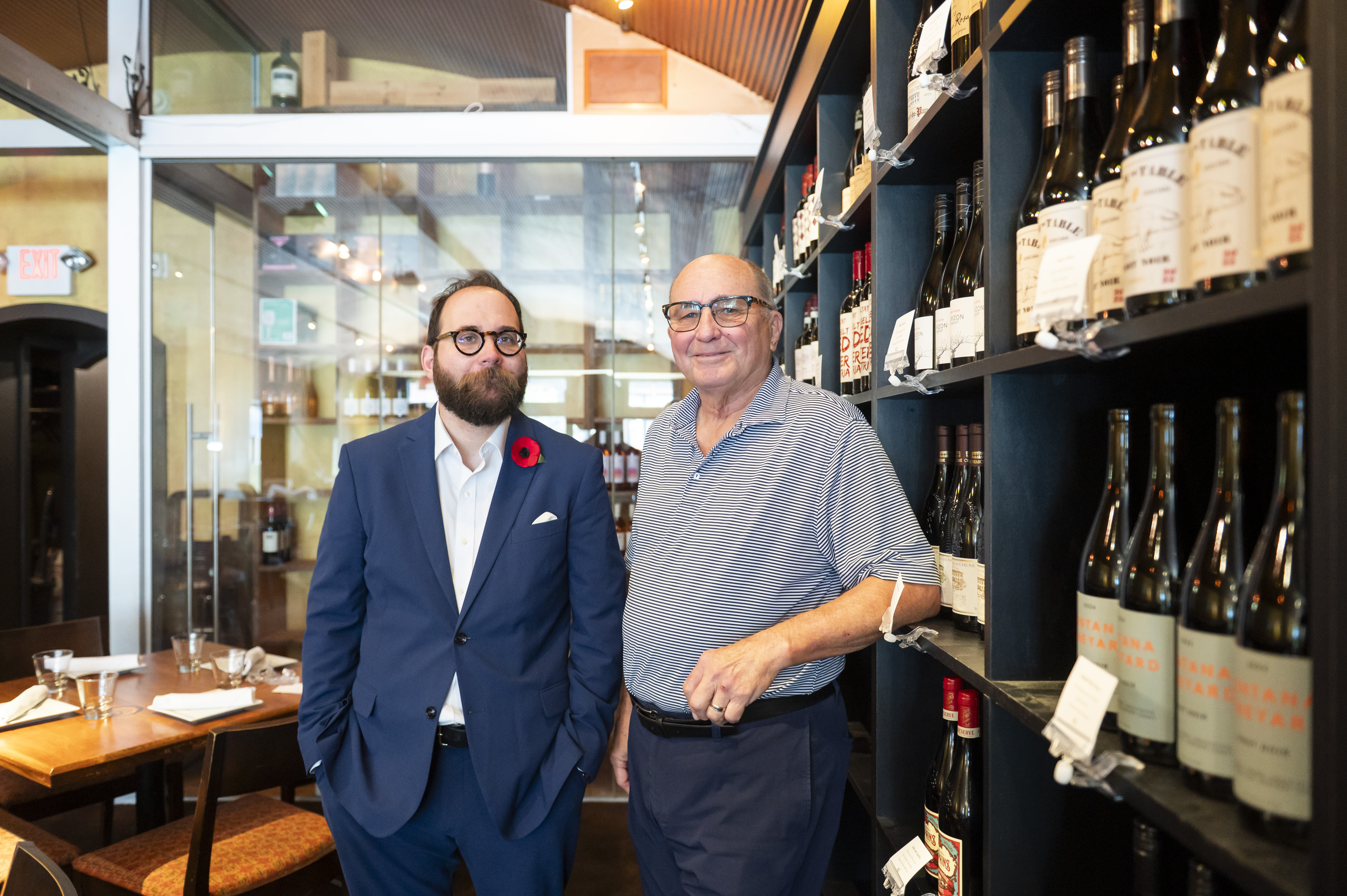
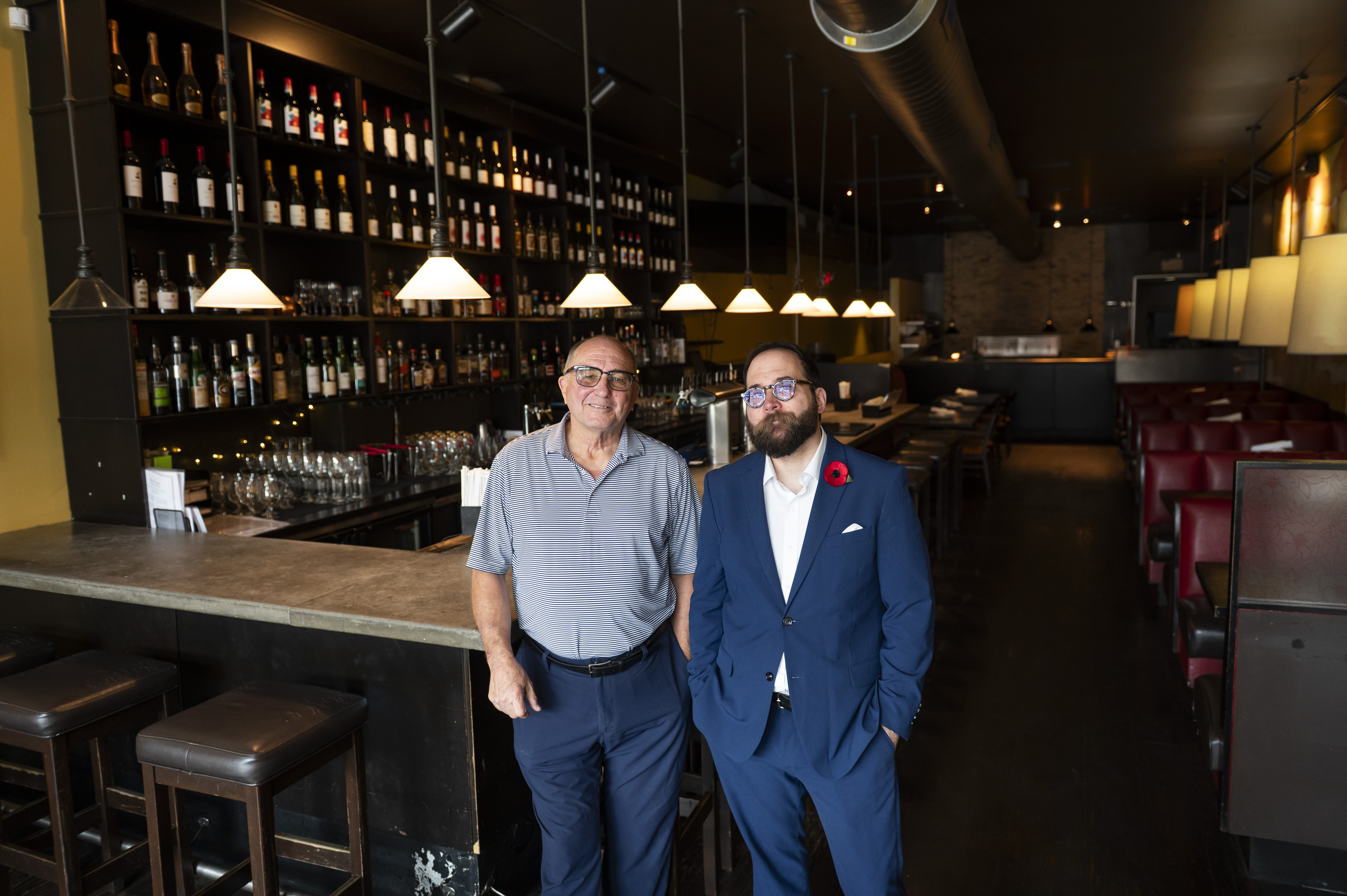
Bruce Cooper with his son, Bruce Joseph Cooper II, inside the wine bar at Jake’s & Cooper’s Wine Bar.Allie Ippolito / For The Inquirer
Cooper, a Culinary Institute of America graduate from Upstate New York, had spent a decade as executive chef at Lankenau Hospital before deciding that he wanted a restaurant of his own. He took business courses at Community College of Philadelphia and St. Joseph’s University and spent years looking at properties before a real estate agent showed him a former print shop in Manayunk in early 1987.
Cooper didn’t commission traffic studies. While walking along Main Street, he noticed Jaguars and other expensive cars rolling up to a posh restaurant called Jamey’s, which had opened a year and a half before. Otherwise, as he remembers it, “there were practically tumbleweeds floating down the street. You could find parking on a Saturday.”
That spring, Cooper bought 4365 Main St. and assembled a group of investors to open Jake’s, his then-wife Helena’s nickname.
Jake’s was conspicuously ambitious: white tablecloths, contemporary artwork, an extensive wine list, and Cooper’s refined cooking, including pastas from scratch. Dishes included crab cakes with raspberry butter, scallops with red pepper and papaya sauces, and duck breast with tangerine sauce.
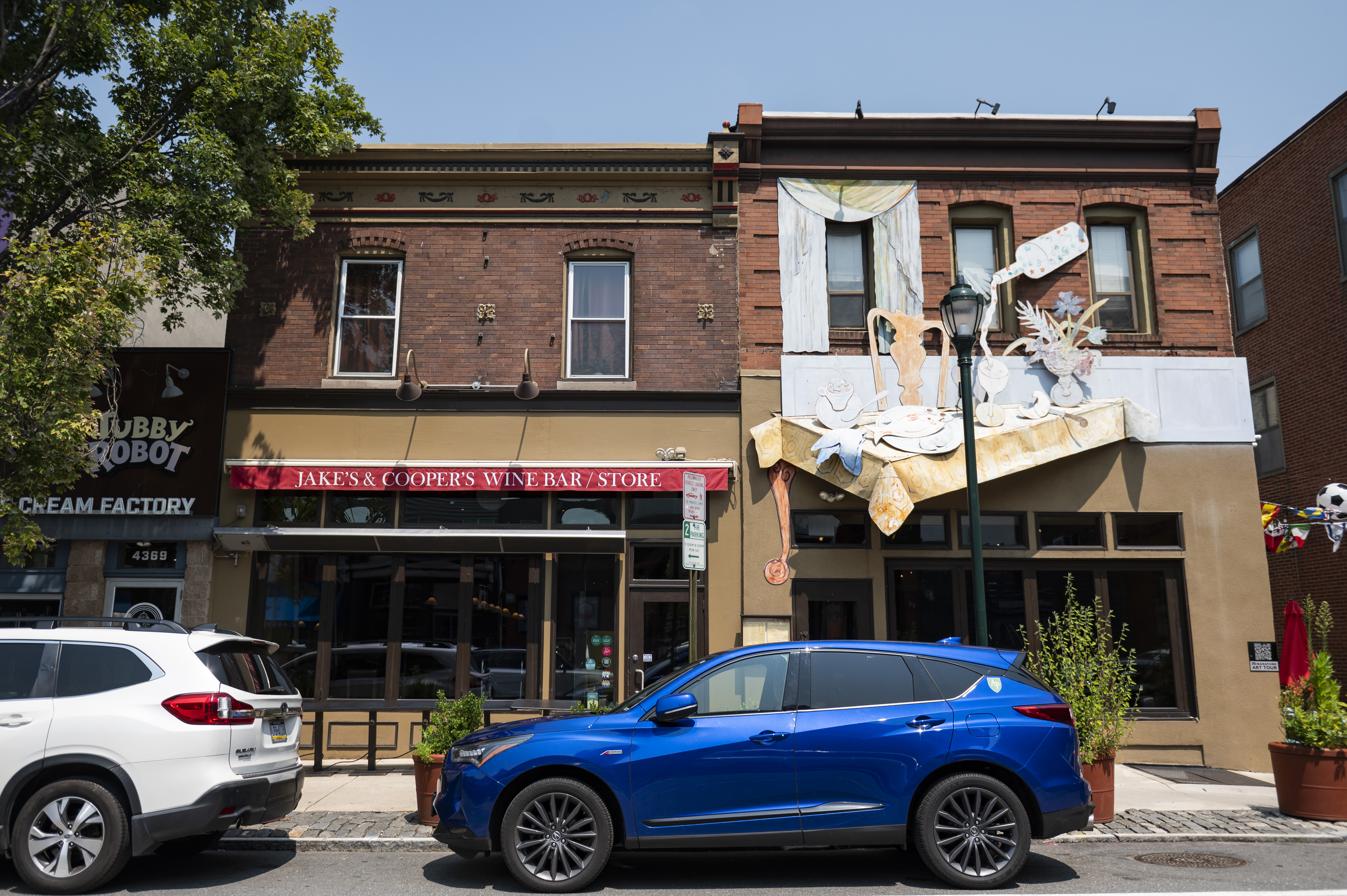
The restaurant’s whimsical facade depicted an oversize table setting, with food spilling from a plate and wine pouring into a glass, surrounded by flowers, flatware, linen, and crystal — designed to suggest both fine dining and a sense of fun.
The exterior of Jake’s & Cooper’s Wine Bar in Manayunk on Monday, Aug. 10, 2026. The bar is closing after 39 years.Allie Ippolito / For The Inquirer
Many early customers came from the Main Line, crossing the Schuylkill over the Green Lane Bridge into the former mill town.
Business grew quickly. When Cooper had put together his business plan, his accountant told him his projected sales were impossible for a 65-seat restaurant. Jake’s reached the projection in its second year, Cooper said.
By the 1990s, Main Street was crowded with boutiques and similarly high-aiming restaurants like Sonoma and Kansas City Prime.
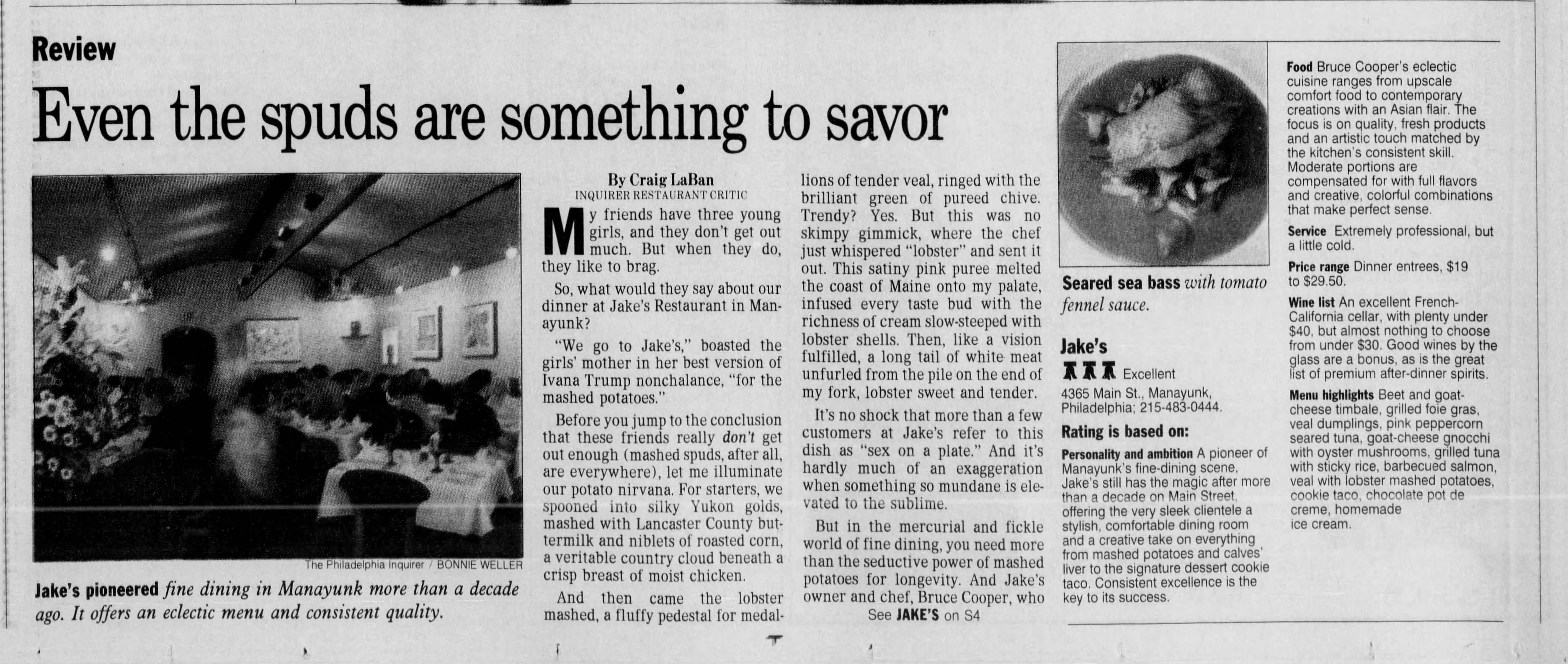
In a 1998 review, Inquirer restaurant critic Craig LaBan described a room of cushioned banquettes, contemporary design, and a stylish but unstuffy clientele. He called out the veal dumplings with caramelized ginger, seared tuna with sticky rice, foie gras with grilled mango, and the barbecued salmon — a signature.
Craig LaBan’s first review of Jake’s, from July 1998.Newspapers.com
And then there were the mashed potatoes. One version paired Yukon gold potatoes with buttermilk and roasted corn. Another, served beneath medallions of veal, was infused with lobster and cream. Patrons, LaBan reported, had taken to calling the latter “sex on a plate.”
LaBan awarded Jake’s three out of four Liberty Bells, the rating system he used at the time. “That’s when it really started to take off,” Cooper said.
Manayunk’s overall success brought its own problems. Friction between residents and the expanding restaurant and bar scene in the late 1990s led then-City Councilmember Michael Nutter to push for a five-year moratorium on new restaurants in the district.
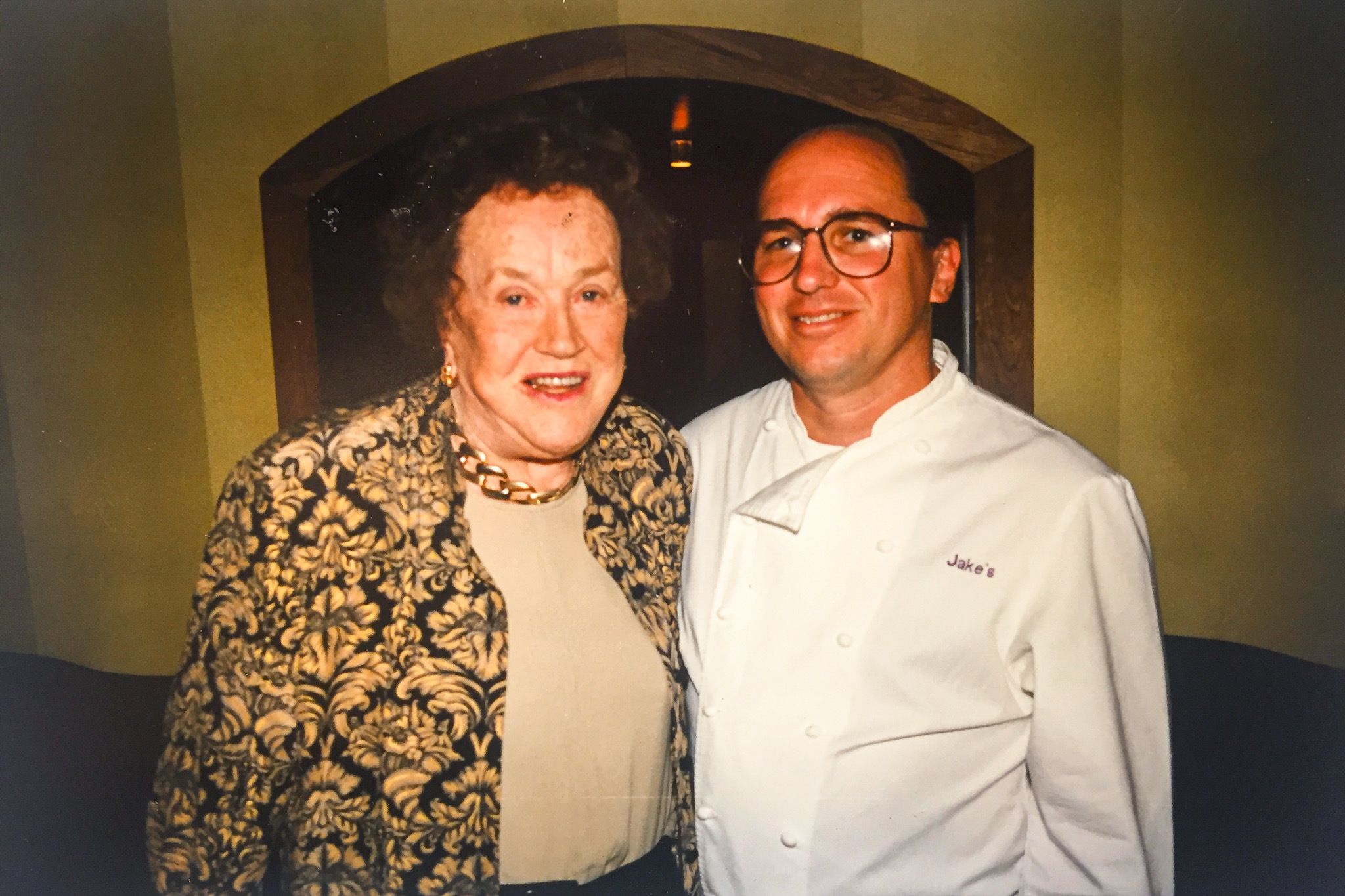
Julia Child with Bruce Cooper at an event in 1996.Courtesy of Bruce Cooper
Cooper, who later served as president of the Manayunk Development Corp., believes that the moratorium lasted too long and helped push Main Street toward nightlife. He later helped develop agreements among restaurateurs, landlords, the business association, and neighborhood groups that placed operating restrictions on new restaurants.
Meanwhile, the style of dining that had made Jake’s successful was changing. White tablecloths were giving way to small-plate menus.
Which leads to another consequential date: March 14, 2008, on the eve of another financial crisis, when Cooper bought the former clothing store next door at 4367 Main St. and opened Cooper’s Brick Oven Wine Bar. Cooper’s is a markedly different restaurant, drawing a younger crowd and serving pizza, small plates, craft beer, and less expensive wines.
The dividing line quickly blurred, Cooper said. Customers at Cooper’s wanted food from Jake’s, and Jake’s customers wanted dishes from Cooper’s. The restaurants shared a kitchen, and Cooper eventually merged their menus and identities as Jake’s & Cooper’s Wine Bar.
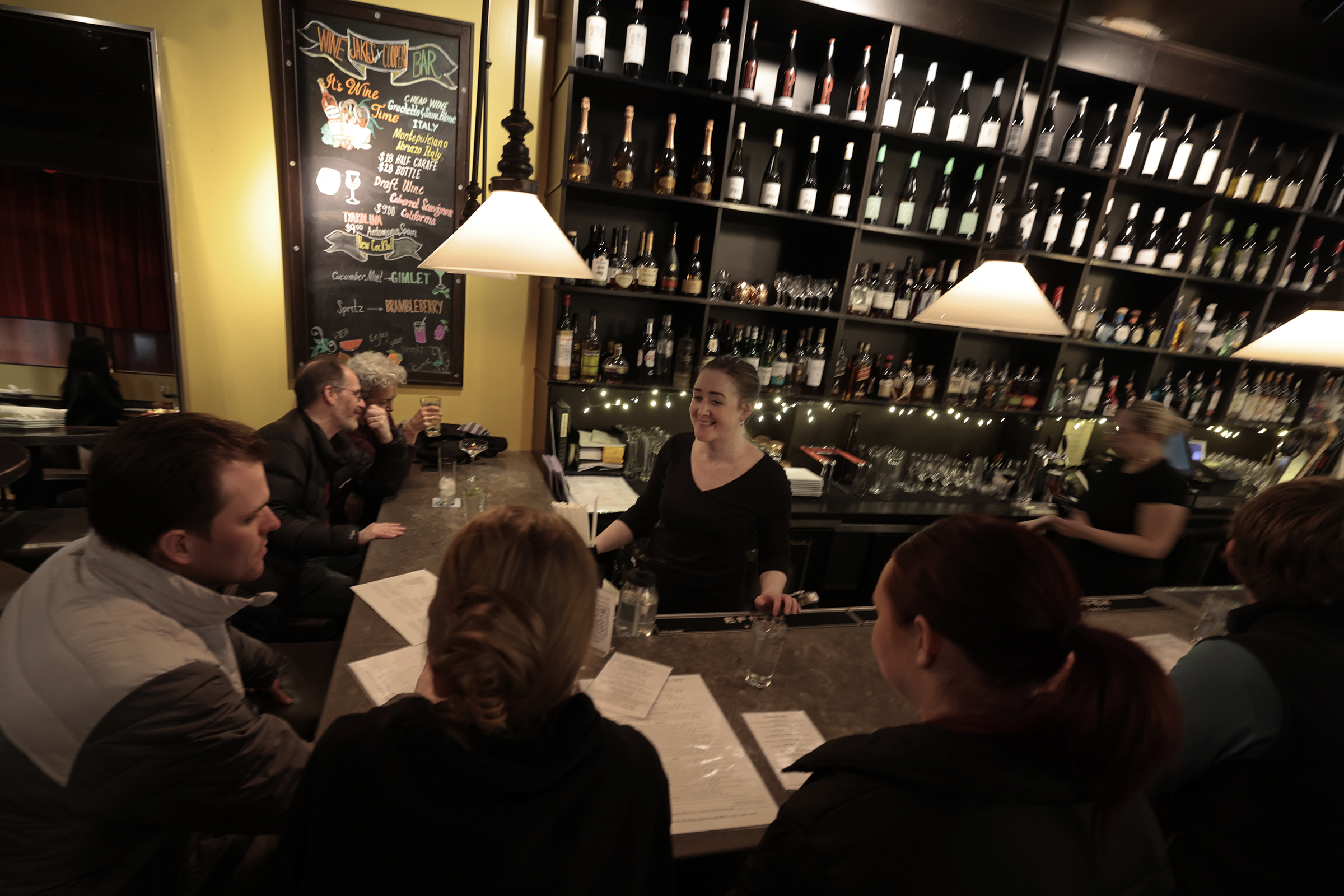
Head bartender Carrie Hice chatting with patrons at Cooper’s Wine Bar in 2023.Elizabeth Robertson / Staff Photographer
Then came July 17, 2016.
Cooper got a middle-of-the-night phone call that a city water main had ruptured outside the restaurant, sending water through the building and destroying the kitchen and the apartments above. He gutted and rebuilt, with business-interruption insurance helping carry the restaurant through a six-month closure.
The experience changed the way Cooper thought about the business.
“When you stop a business and then restart it, there are people who had been coming every week, and then they stopped,” he said. “They got into another routine. They went elsewhere.”
Even months after Jake’s reopened, Cooper said, customers would walk in surprised to discover it had reopened. “That’s when I started looking at things differently,” he said.
Cooper considered selling, but a real estate adviser urged him to wait as residential development accelerated in Manayunk and Roxborough. Three years later came the pandemic. His extended time at home spoiled him, he said.
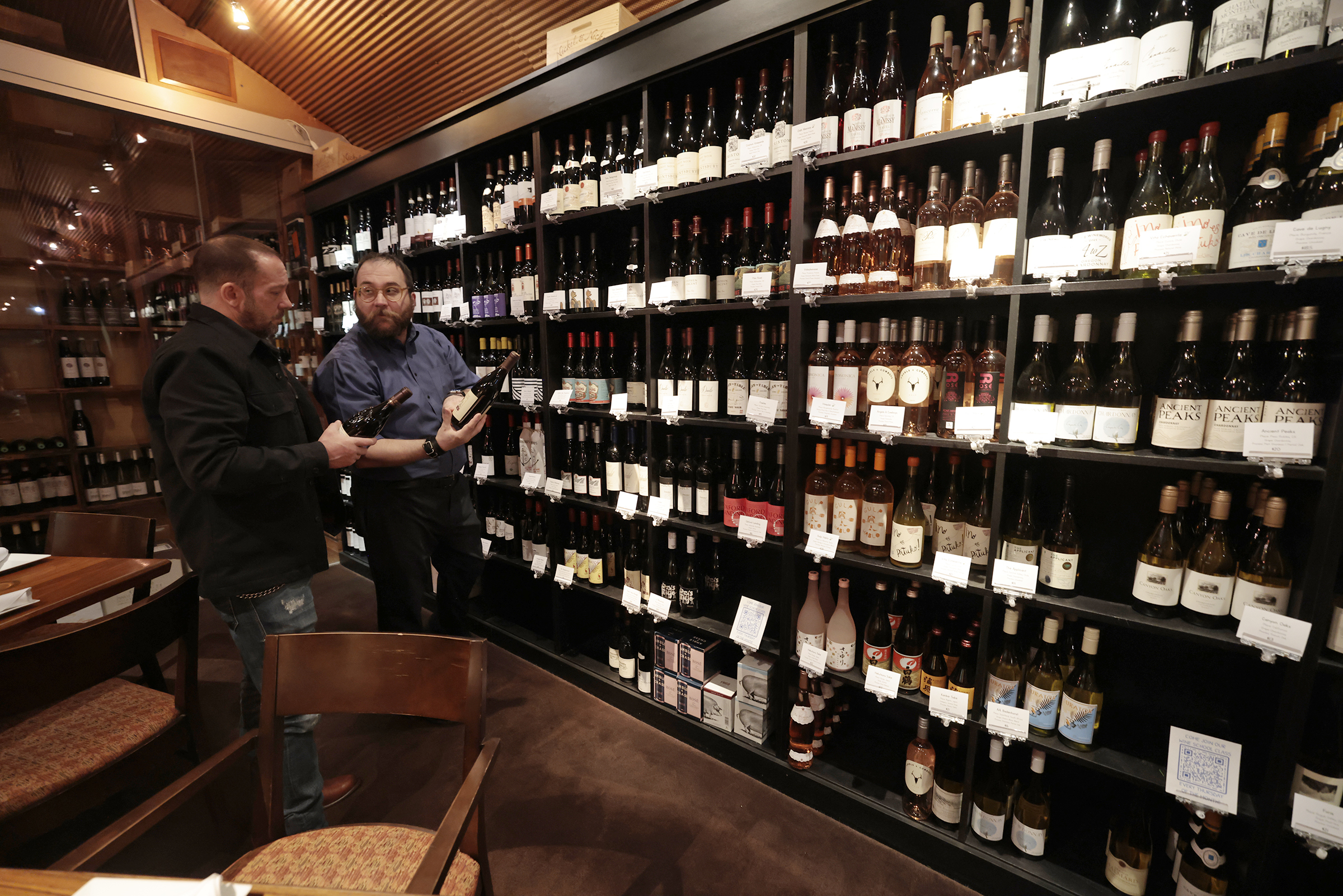
Chris Campana (left), with help from Bruce Joseph Cooper II, choosing a wine from the wall in 2023.Elizabeth Robertson / Staff Photographer
Three years ago, Cooper moved to Delaware. His son, Bruce Joseph Cooper II, 37, now manages the restaurant day to day, while the senior Cooper comes north once or twice a week to handle scheduling, wine orders, and other duties.
In June, Cooper put the properties, including four upper-level apartments, on the market for an undisclosed asking price. Cooper said he wants a clean break rather than passing the restaurant to his son, though neither rules out working together on another project someday.
The closing will end one of the longest remaining restaurant runs from the era that transformed Manayunk. Pitchers Pub (1987) and Zesty’s (1993) are still at it; U.S. Hotel Bar & Grill has been open irregularly since Bill Green, the former mayor and congressman, reopened it in 1986.
For Cooper, that history encompasses more than the people who ate there. “When you look back, you think about the generations of customers —in a lot of cases, we’re talking about three generations,” he said. “But it’s not just the customers. It’s all the people behind the scenes: the banker, the produce person, all those people who helped you get through things.”
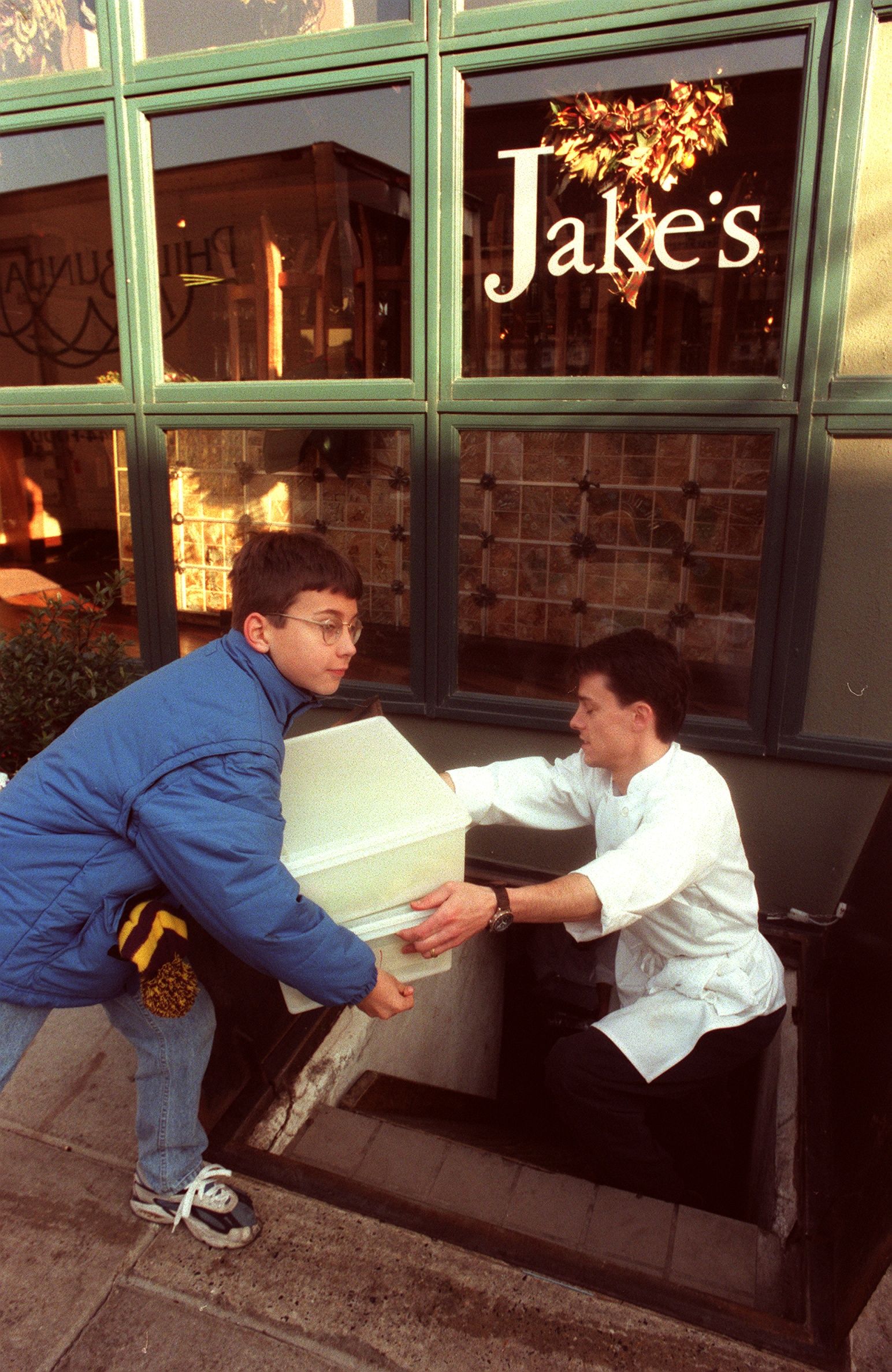
Bruce Joseph Cooper II, then 11, helps chef Bill Murphy carry food from Jake’s basement to be loaded into a truck for a 1999 holiday dinner by Philabundance. Vicki Valerio / Staff Photographer
Cooper’s son grew up at Jake’s, handing out cookies at holiday meals his father helped organize through North Light Community Center. He joined the restaurant full-time during the pandemic, starting as a food runner and eventually taking over management.
Purveyors and other restaurateurs have approached Cooper Jr. with potential job offers, he said, and he would consider working with whoever buys the properties. He once imagined taking over Jake’s himself but is no longer certain that is what he wants.
His father understands.
The restaurant business, the senior Cooper said, demands long hours and constant attention. One lesson he would give a new restaurateur is the one that helped him survive both the flood and the pandemic: Own the real estate if you can.
“If I didn’t own this real estate during COVID, I would have owed the landlord,” he said.
Cooper has begun informally advising other restaurateurs about the economics of getting into, staying in, and getting out of the business. After nearly four decades, he said, he is ready to find out what comes next.
His son thinks about Jake’s in more personal terms.
“Even in my almost five years working as a manager here, I’ve seen kids go from being in the womb to toddlers, and they know me as Uncle Bruce,” the younger Cooper said. “That’s one of the greatest feelings in the world — being able to say, ‘I knew you before you were born, little one.’”
Bruce Joseph Cooper II (left), general manager, and Bruce Cooper (right), owner, inside Jake’s & Cooper’s Wine Bar in Manayunk.Allie Ippolito / For The Inquirer
Anthony Bourdain spent much of his career telling audiences that the best way to understand a place was to resist the easy story about it.
Tony, the new movie about his formative summers in Provincetown, Mass., might have taken that advice.
Director Matt Johnson’s film is an affectionate, funny, atmospheric, and beautifully acted origin story about the future chef, writer, and television personality. Its smartest decision is to avoid trying to encompass Bourdain’s entire life, which ended with his suicide in 2018 at age 61.
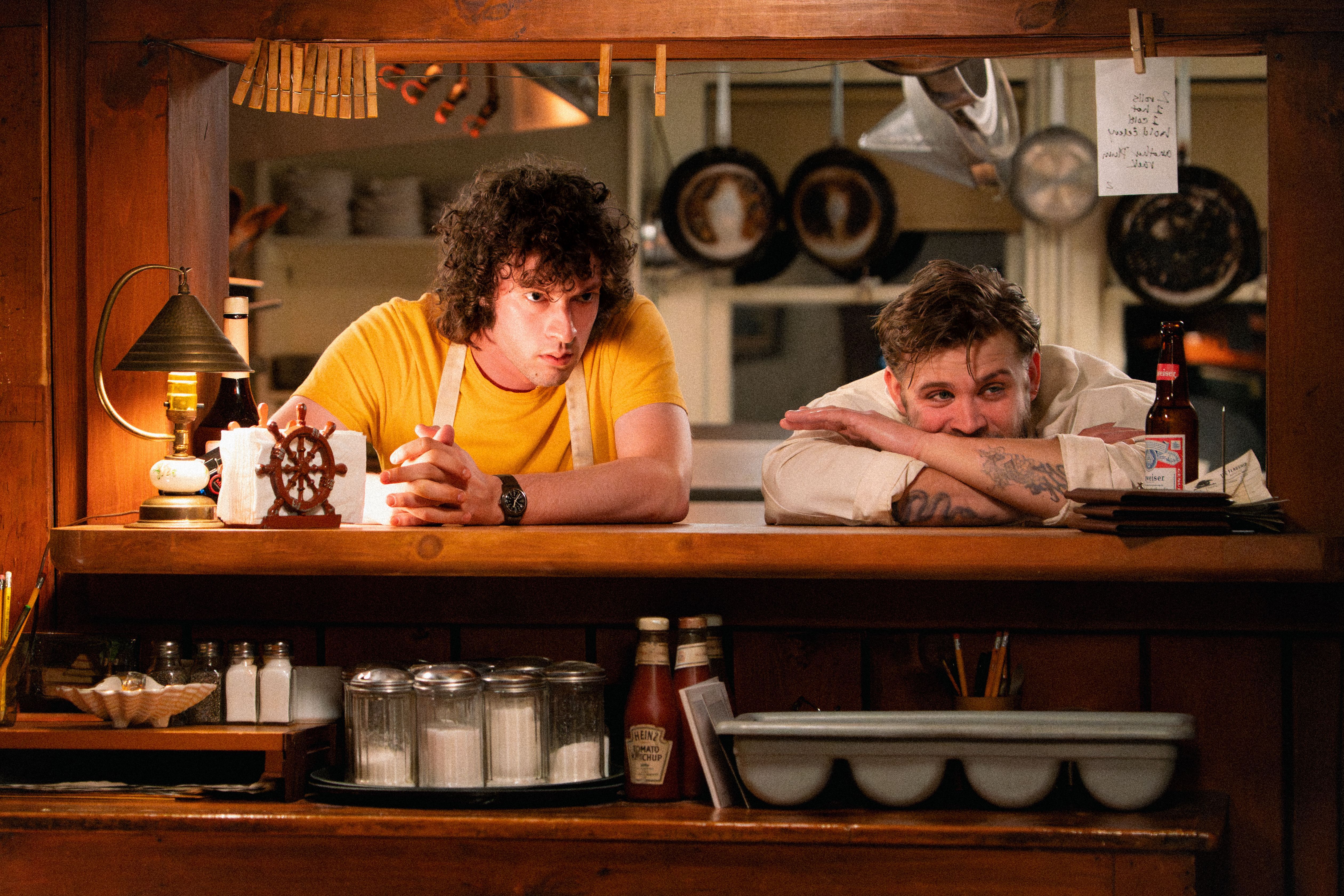
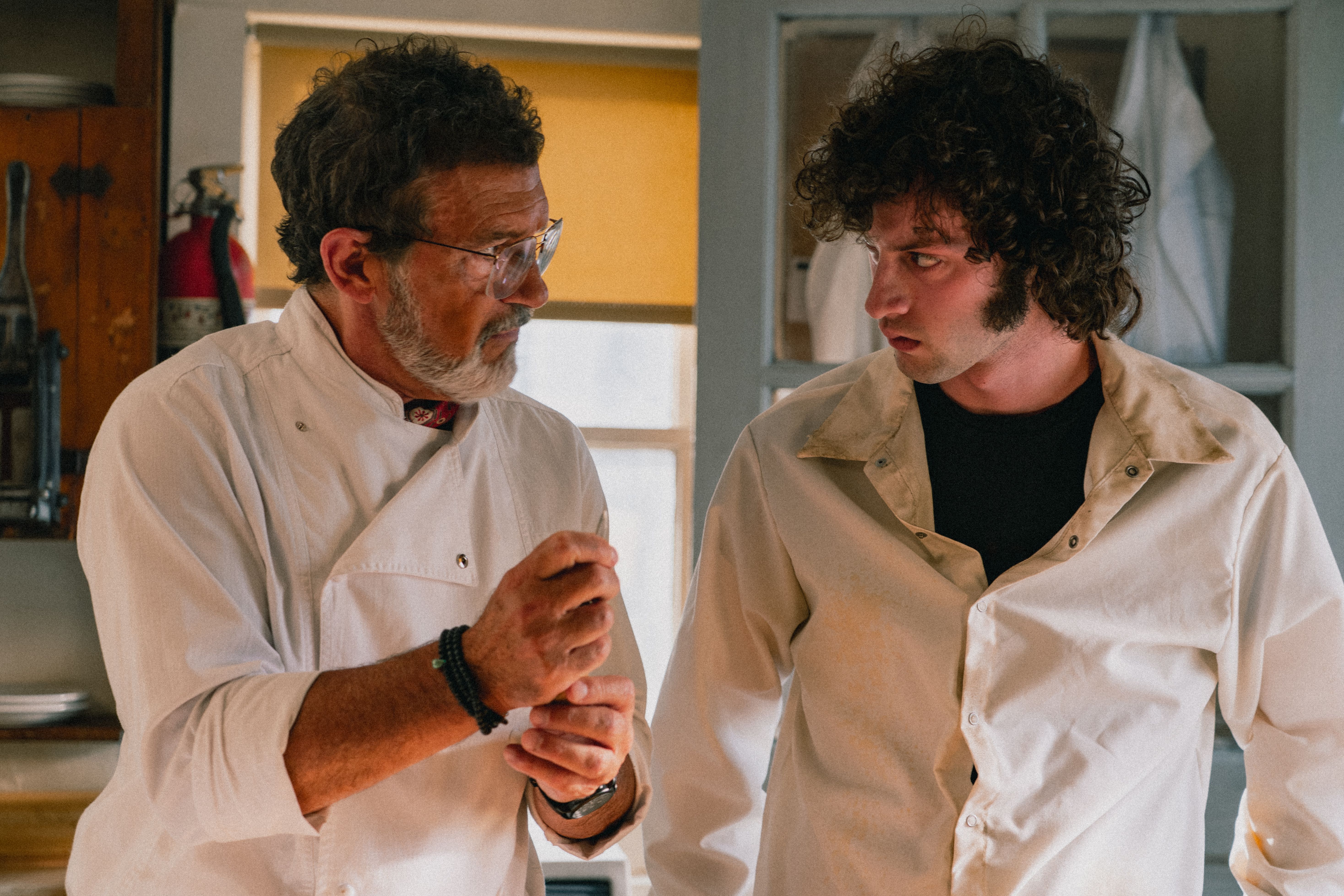
Antonio Banderas (left) as a chef-mentor with Cherry Hill native Dominic Sessa as Anthony Bourdain in “Tony.”A24
Instead, Tony concentrates on the period when a privileged, unhappy teenager from New Jersey stumbled into a restaurant kitchen and discovered a world more exciting than his own.
The historical outline is true. The story Tony builds around it is considerably less so.
Cherry Hill nativeDominic Sessa, who made an impression in The Holdovers, plays Bourdain at 19: a Vassar student, would-be writer, romantic, poseur, and world-class pain in the a—. He arrives in Provincetown chasing both an idea of himself and Nancy Putkoski (Emilia Jones), his girlfriend and eventual first wife.
Sessa wisely avoids a Bourdain impersonation. Rather than reproduce the familiar television cadence or Parts Unknown mannerisms, he gives us a young man who has not yet earned the persona he is trying on.
Bourdain later described his younger self as spoiled, narcissistic, miserable, and self-destructive. Tony takes him at his word. This Tony is clever but not nearly as clever as he thinks, hungry for experience but desperate for other people to notice him having it.
The movie becomes much more interesting once he lands a job washing dishes at the Flagship, a waterfront seafood restaurant in Provincetown that Bourdain renamed the Dreadnaught in Kitchen Confidential.
Here Johnson has something unusually valuable for a biopic: Bourdain’s own account of being seduced by the restaurant life.
He remembered the Flagship cooks as pirates and gods, former hippies, drifters, and hard-living professionals who drank, swore, stole, screwed, and seemed afraid of nothing. To a sheltered young man searching for an identity, they represented an intoxicating alternative to his comfortable world.
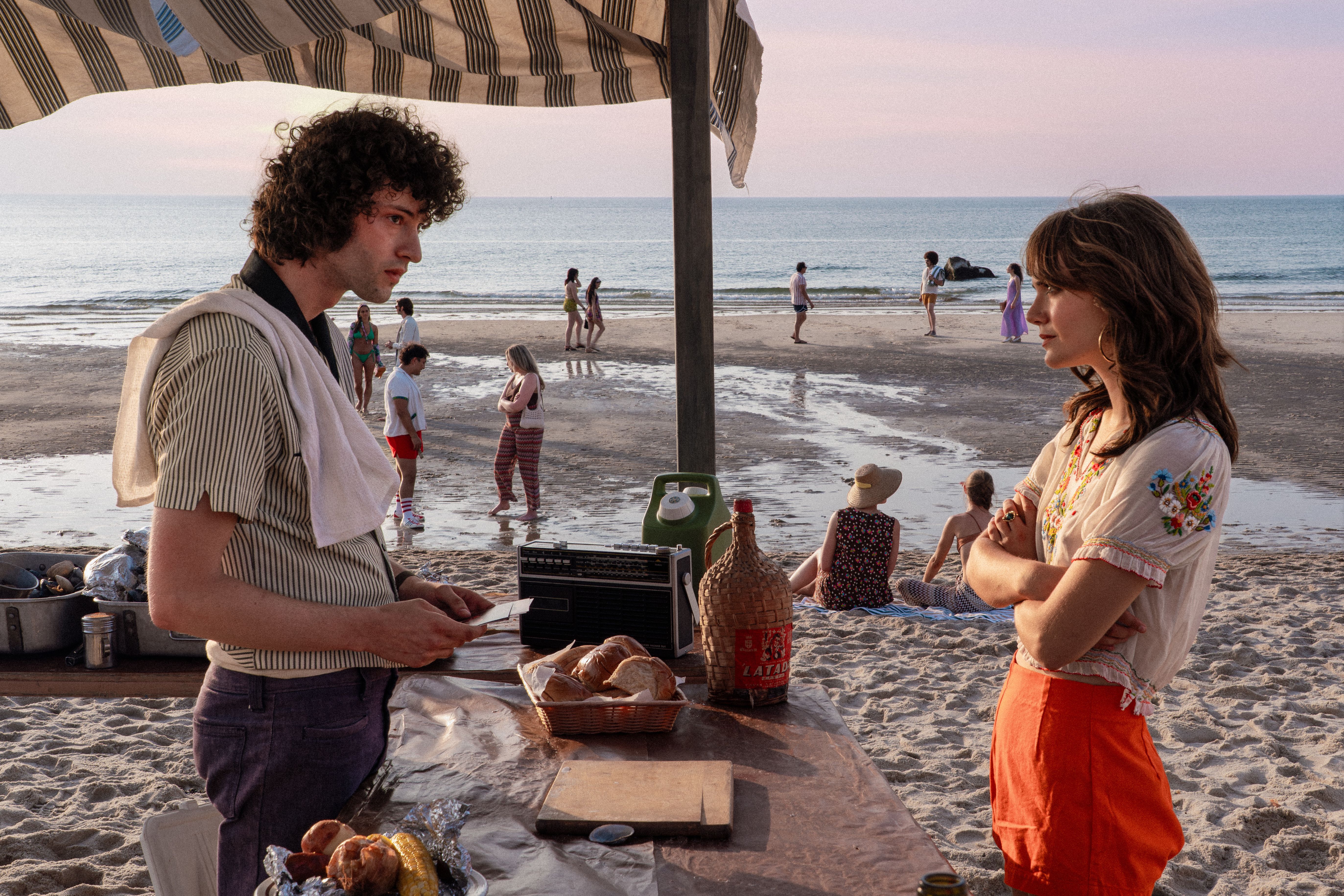
Cherry Hill native Dominic Sessa as Anthony Bourdain with Emilia Jones as Nancy, his girlfriend, in “Tony.”A24
Tony is at its best capturing that attraction.
The kitchen is hot, filthy, profane, sexually charged, and physically punishing. The cooks haze newcomer Tony, who starts in the dish pit and discovers he likes being useful, gradually working his way toward cooking.
Sessa is especially good at conveying Tony’s fascination with people who seem more authentic than he feels.
Leo Woodall plays Sal, a charismatic cook with the confidence, appetites, and recklessness Tony envies. Antonio Banderas supplies the opposite influence as Ciro, the restaurant’s chef-owner, a disciplined professional who sees something worth cultivating in the callow teenager.
Both are effective characters. But neither should be mistaken for straightforward biography.
That is the complication at the center of Tony.
The movie draws from the opening sections of Bourdain’s 2000 memoir, Kitchen Confidential, and his later recollections in a 2014 Parts Unknown episode. With thin source material, Johnson and his cowriters have filled the gaps aggressively.
Johnson has acknowledged that he compressed Bourdain’s several formative summers in Provincetown into one, set in 1975. Nancy was real and worked at Spiritus Pizza, a gathering place in Bourdain’s Provincetown years. The Flagship was real, and Bourdain began there as a dishwasher. His fascination with its swaggering cooks comes directly from his writing.
Much of the rest is interpretation. Relationships are reshaped and characters are combined. Experiences Bourdain described retrospectively become revelations occurring in real time.
That is hardly unusual for a biopic, and some of the inventions work.
Nancy is not merely the girlfriend waiting to recognize the greatness everyone in the audience knows is coming. She is often the person least impressed by Tony’s performance of himself, and Jones gives her enough intelligence and independence to puncture his pretensions.
Banderas brings a quiet dignity to a movie otherwise swimming in adolescent testosterone. But Ciro appears largely to be a composite created to give Bourdain something his own account of Provincetown did not provide so neatly: a moral mentor.
Sal serves the opposite function. He represents the seductive outlaw kitchen culture Bourdain embraced — drugs, sex, appetite, danger — and its costs.
The arrangement is dramatically efficient: two models of the man Tony might become.
It is also awfully tidy.
Bourdain’s relationship with restaurant culture was more complicated. The same world that gave him purpose also gave him permission to indulge some of his most destructive instincts. He understood that contradiction particularly well in middle age, when he returned to Provincetown for Parts Unknown and discussed his past with considerably less nostalgia.
Tony occasionally seems reluctant to live with that ambiguity.
Johnson, cinematographer Michael Bauman, and production designer Ryan Warren Smith compensate with a Provincetown rendered in a hazy mid-1970s glow. The movie moves languidly between the restaurant, Nancy, parties, beaches, and the community around him. At its best, it feels less like a conventional biopic than a memory of a summer whose significance became clear only later.
Some of Bourdain’s later literary observations are handed to his teenage self, a familiar biopic trick that makes young geniuses sound suspiciously like their accomplished older selves.
That is unfortunate because one of the interesting things about Bourdain’s story is how long it took him to become Anthony Bourdain.
He did not emerge from Provincetown as the finished article. He still had the Culinary Institute of America, decades of restaurant work, addiction, failure, writing, celebrity, television, travel, and reinvention ahead of him.
What Provincetown gave him was simpler: restaurants.
Bourdain found satisfaction in washing dishes and learning to cook. He discovered a tribe whose confidence and camaraderie fascinated him and people whose lives bore little resemblance to his cushy upbringing. Eventually he recognized that cooking might offer something writing had not yet provided — a place to belong.
Those facts are compelling enough without forcing them into a neat transformation.
That is why Tony succeeds when it stops trying to show us the instant Anthony Bourdain became Anthony Bourdain. The more it simply observes a confused young man falling in love with restaurant life, the closer it gets to the truth.
Nothing is forever, especially restaurants. This summer, a rash of restaurants are hitting the market or closing altogether, including some longtime favorites. Here’s what’s going on.
💔 Northeast Philly will lose its last Jewish deli this weekend. We visited Steve Stein’s Famous Deli for a final slice or two of corned beef.
🍝 After being closed for six years, Mamma Maria’s is on the market, with its three adjoining buildings on East Passyunk Avenue and Jessup Street listed separately.
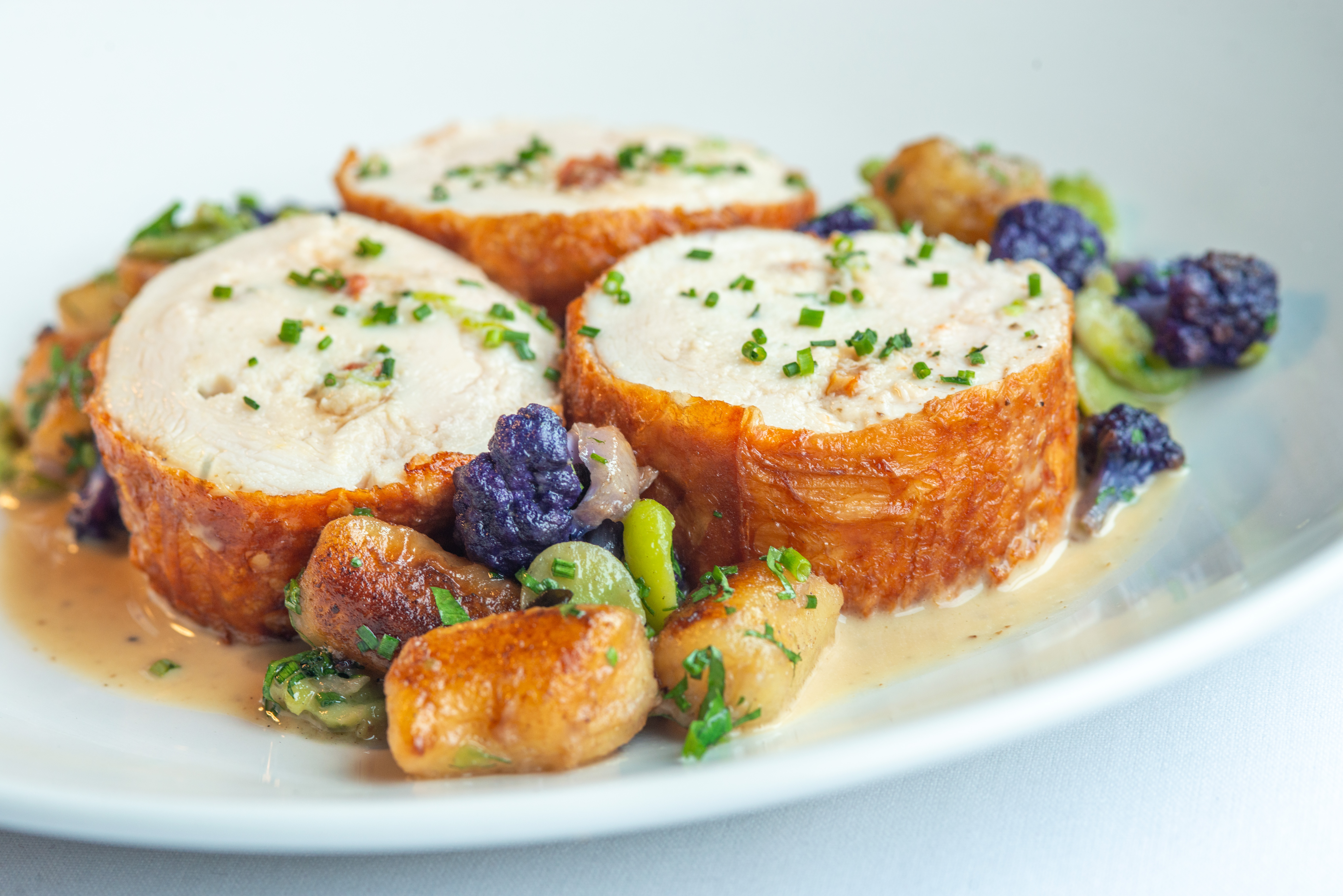
Chicken from a restaurant that turns out steaks, chops, and house-made pasta? At Academy Grill, chef Jeffrey Power turns out a roulade that’s a throwback to his Le Bec-Fin days.
Scoop
Fairmount’s London Grill, which has sat dark at 23rd Street and Fairmount Avenue since closing in May 2019, is being readied for a new tenant, building owner Jack McDavid told Mike this week. The concept, bearing a new name, has not been nailed down. McDavid, who with a partner bought the property from longtime owners Michael McNally and Terry Berch McNally in 2019, said he was overseeing a rehab. There’s no timeline. In 1991, the McNallys took over the mid-19th-century building — then known simply as London — and helped turn Fairmount into a dining destination. McDavid himself is a Fairmount pioneer, as he founded Jack’s Firehouse down the street in 1989, two years after he opened Down Home Diner at Reading Terminal Market.
Restaurant report
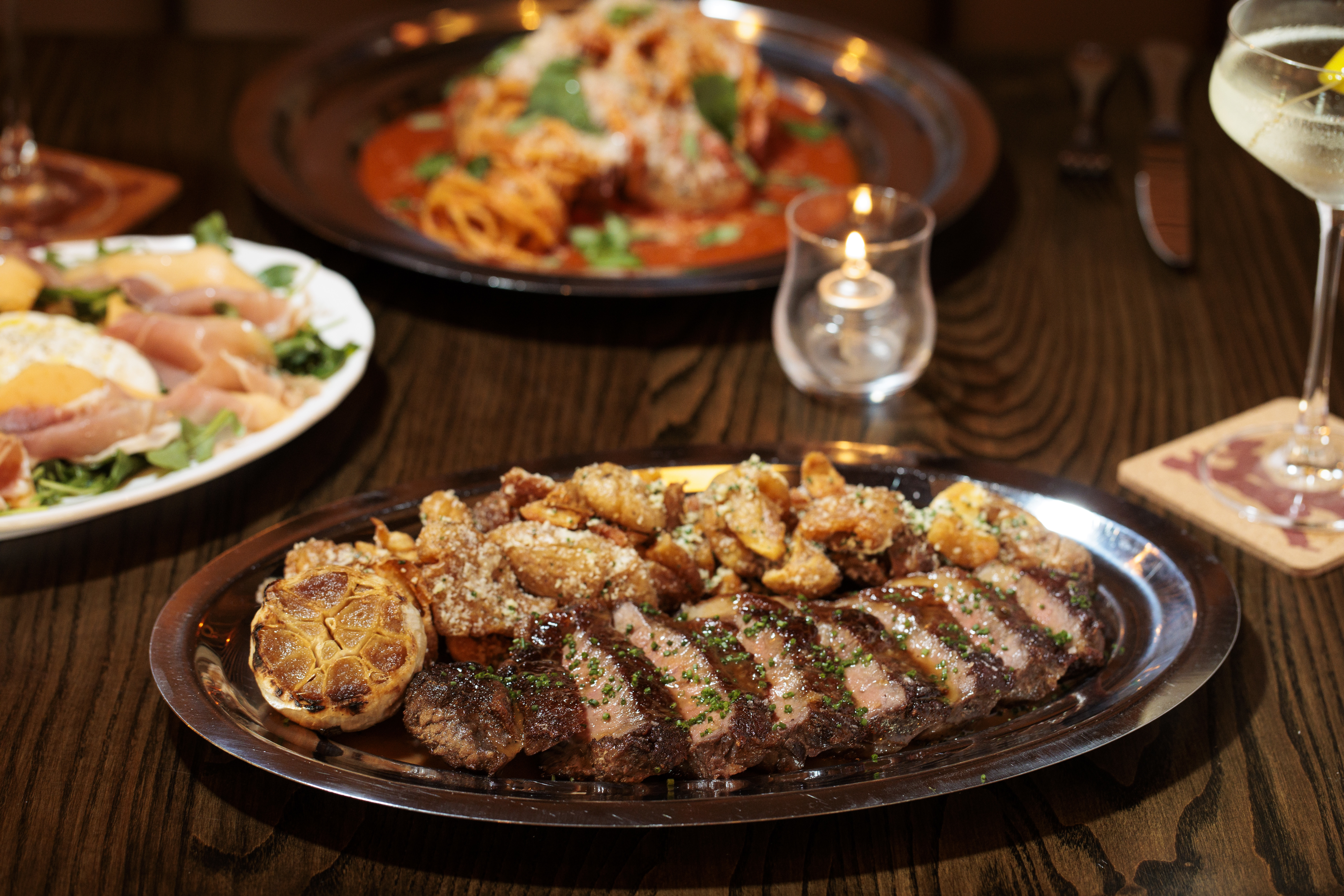
What’s new can feel old. Craig LaBan finds South Philly nostalgia at Waltz, which opened five months ago at 2351 S. Front St. The menu was designed by Eric Leveillee, formerly of Lacroix at the Rittenhouse, and hits the right notes with sourdough pizzas, bouncy pastas, and a 14-ounce strip steak.
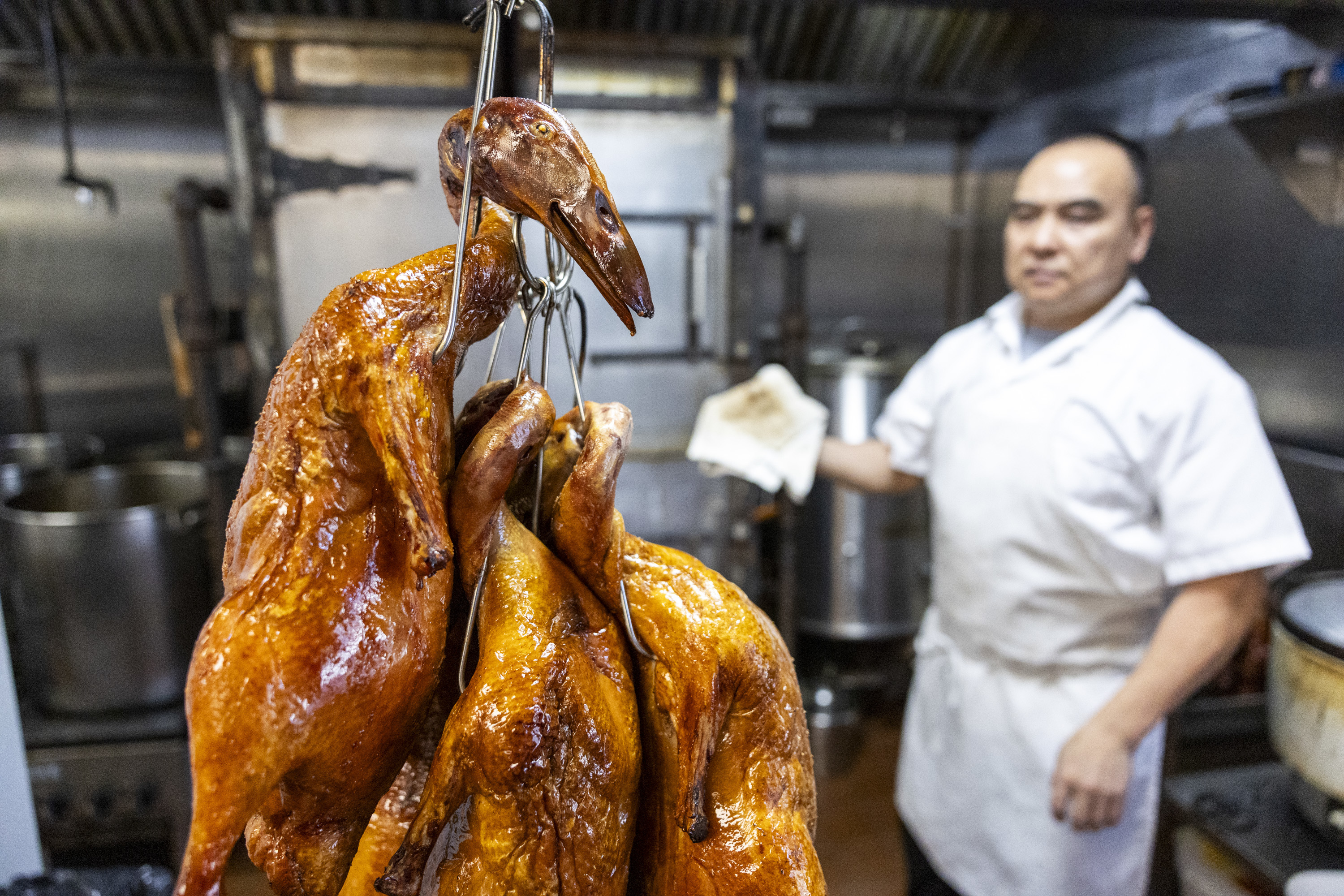
Craig also found delicious nostalgia of a different sort at Chinatown’s Lau Kee, a specialist in both Peking- and Cantonese-style roast ducks. The owners hail from Fujian, a completely different province than that of their succulent ducks.
Bridget Foy’s will turn Headhouse Plaza (Second Street north of South) into four pickleball courts Thursday for its third annual tournament, timed to National Pickleball Day. The 4-to-8 p.m. event includes a hospitality-industry tournament, free open play, a live DJ, pickled snacks, prizes for the best-dressed duo, and cocktails. Day-of registration at Bridget Foy’s, 200 South St. Rain date: Aug. 27.
Philadelphia Zoo’s Summer Ale Festival, postponed due to severe weather, returns Aug. 22 with more than 100 beers, ciders, seltzers, meads, spirits, nonalcoholic drinks, food trucks, and live music. Early admission is 6 to 10 p.m.; general admission is 7 to 10 p.m. Taps close at 9:30. Tickets, which include zoo admission, are $75-$99 for early admission, $65-$85 for general admission, $45 for nondrinkers. Tickets must be purchased in advance through the zoo; the event is rain or shine and 21-plus.
Honeysuckle, the North Philadelphia restaurant from James Beard finalist chef couple Omar Tate and Cybille St.Aude-Tate and a regular on The 76, will launch Honeysuckle Midday on Sept. 17, offering a pay-what-you-can, three-course lunch service Wednesday through Friday, from 11 a.m. to 3 p.m. Diners can choose to pay $20, $35, or $55 for a menu that includes Blackcaesar salad, epis-roasted chicken, BBQ sweet potato, escovitch mussels, and beef and broccoli, followed by bean pie or water ice. Honeysuckle favorites including the Goat Bun, Fish Hoagie, and McDonald’s Money burger will be available for an additional charge. Tables are up on OpenTable.
Cannonball Club, a sort of members-only car museum, will have food and a bar when it opens next month in Fishtown. Our auto columnist, Scott Sturgis, takes you inside.
❓Pop quiz
Kiki says she has found the best chicken sandwich in Philly. Where is it from?
An unusually visible collection of Philadelphia-area restaurant institutions is reaching a turning point at the same time — with some closing for good and others seeking buyers as a generation of longtime owners reaches retirement age.
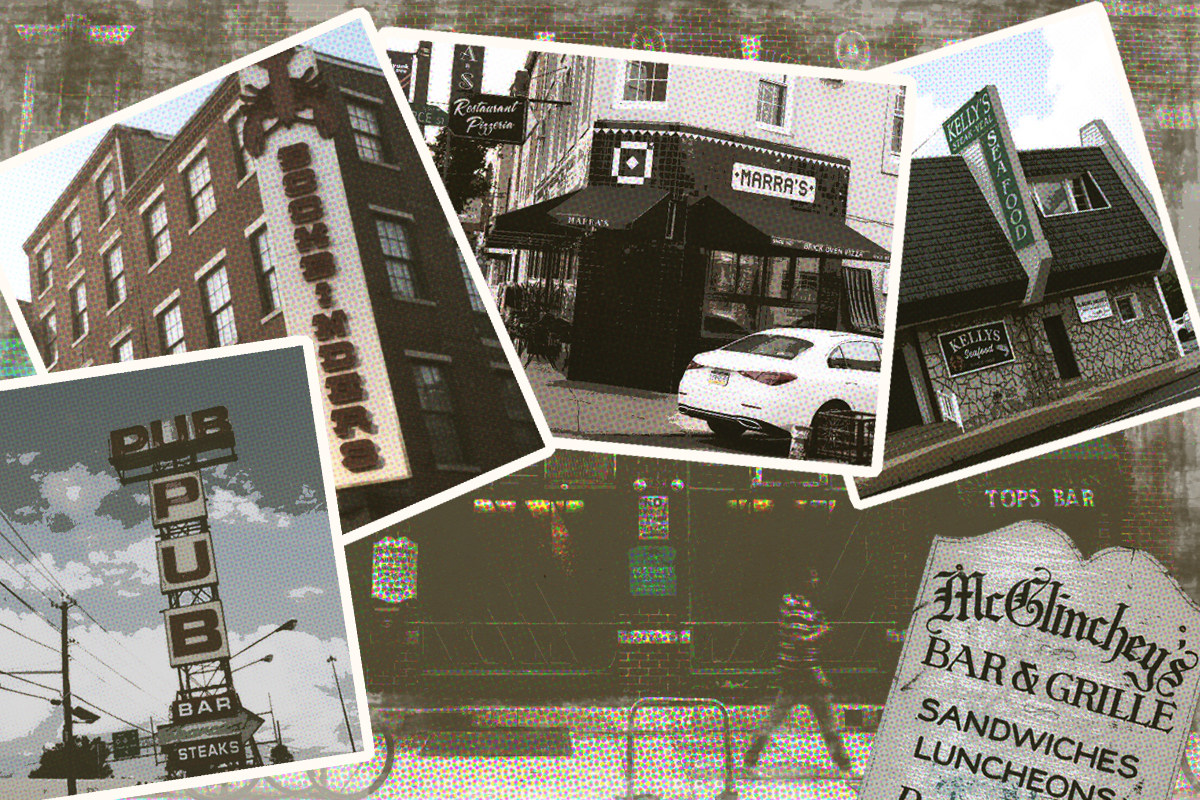
At Kelly’s Seafood, the end is definite. The Northeast Philadelphia restaurant will close this month as its owners retire, ending a run spanning three generations of the Kelly family. So will Steve Stein’s Famous Deli, whose history in the Northeast also reaches back nearly 70 years.
Elsewhere, the outcomes are less certain.
Cherry Street Tavern has been around for a century at 22nd and Arch Streets.Tyger Williams / Staff Photographer
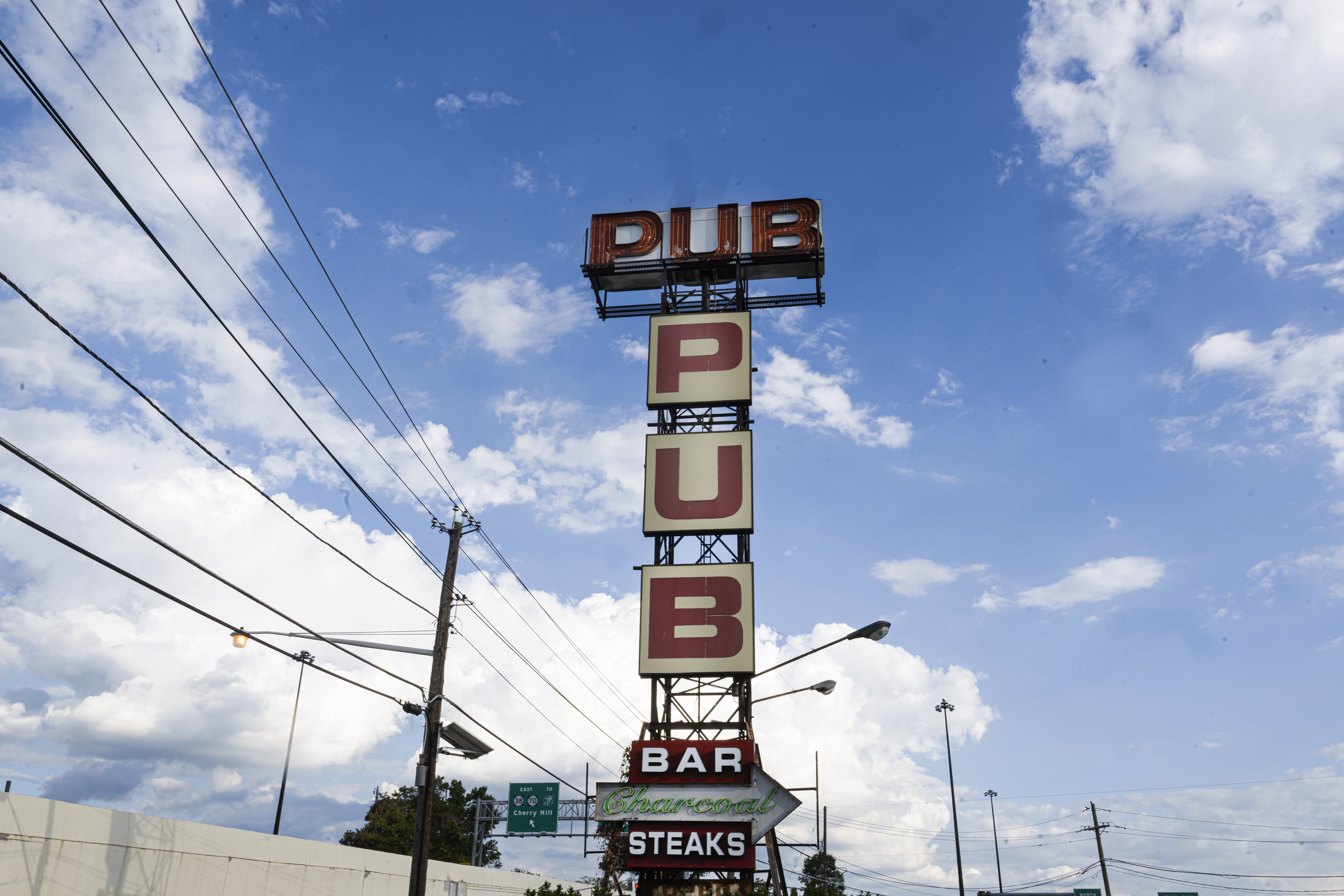
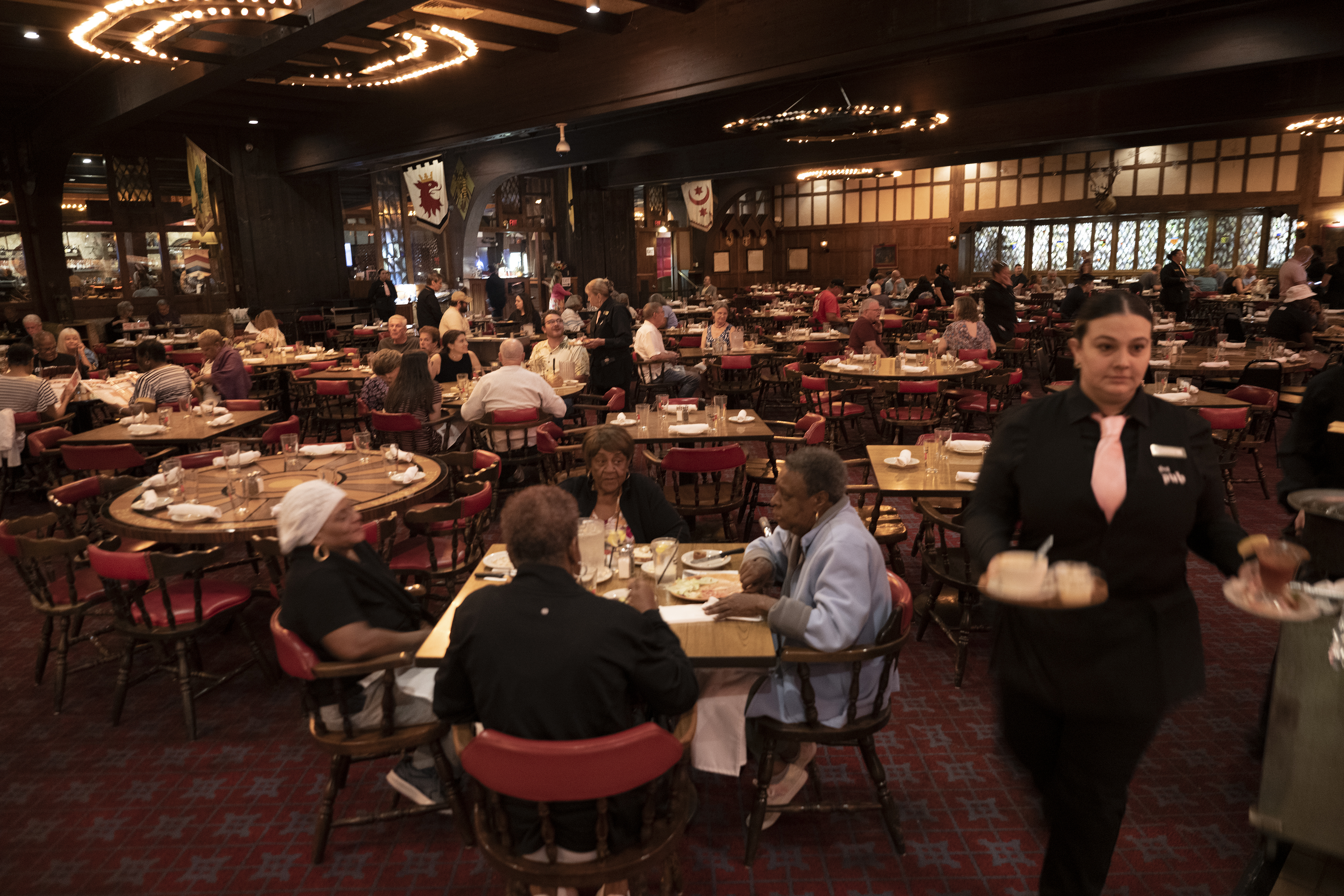
The Pub, the sprawling Pennsauken steakhouse known for its open hearth, medieval decor, and thousand-plus seats, is on the market. The restaurant, which dates to 1951, is not closing: It is on its customary summer break and is scheduled to reopen Sept. 18.
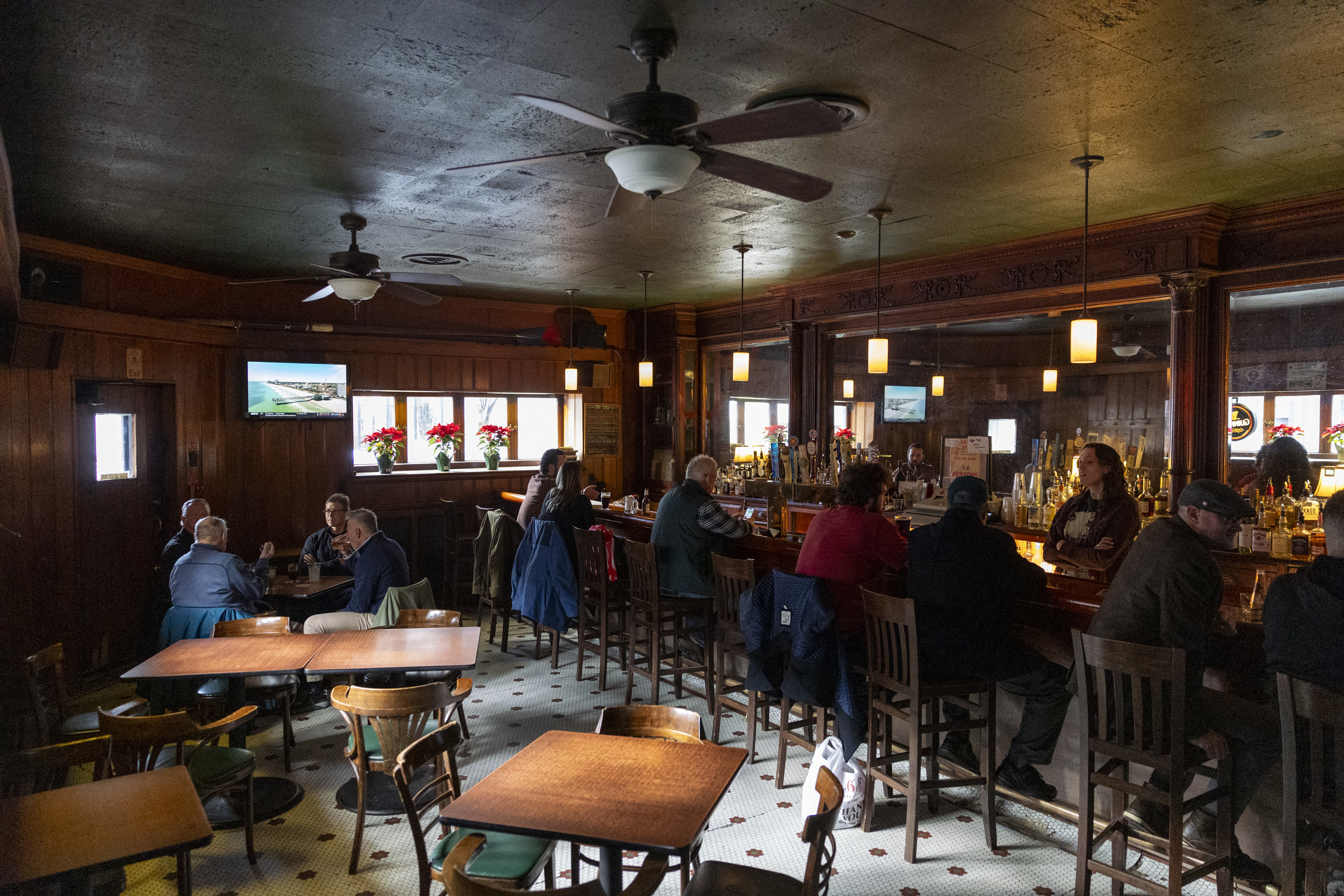
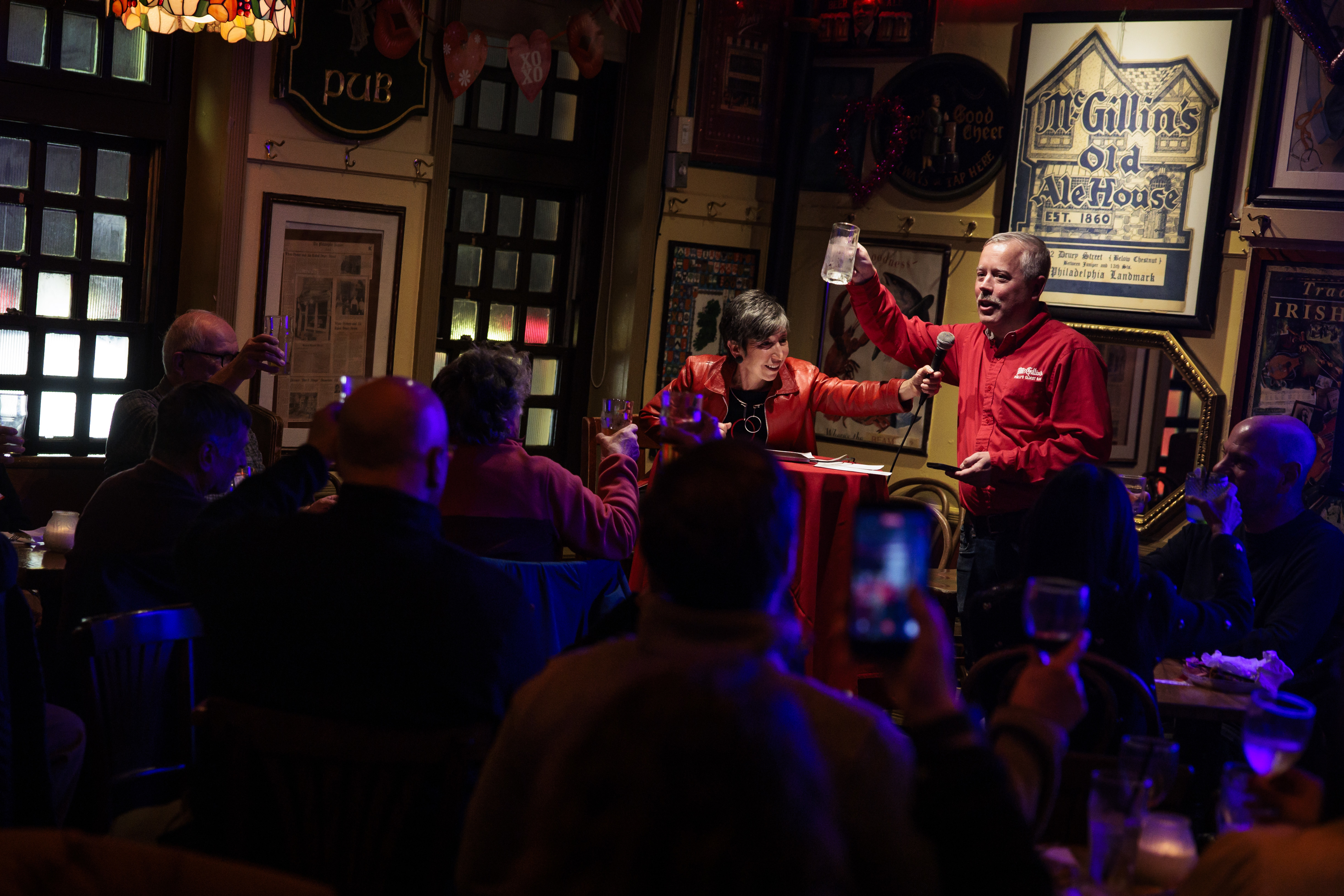
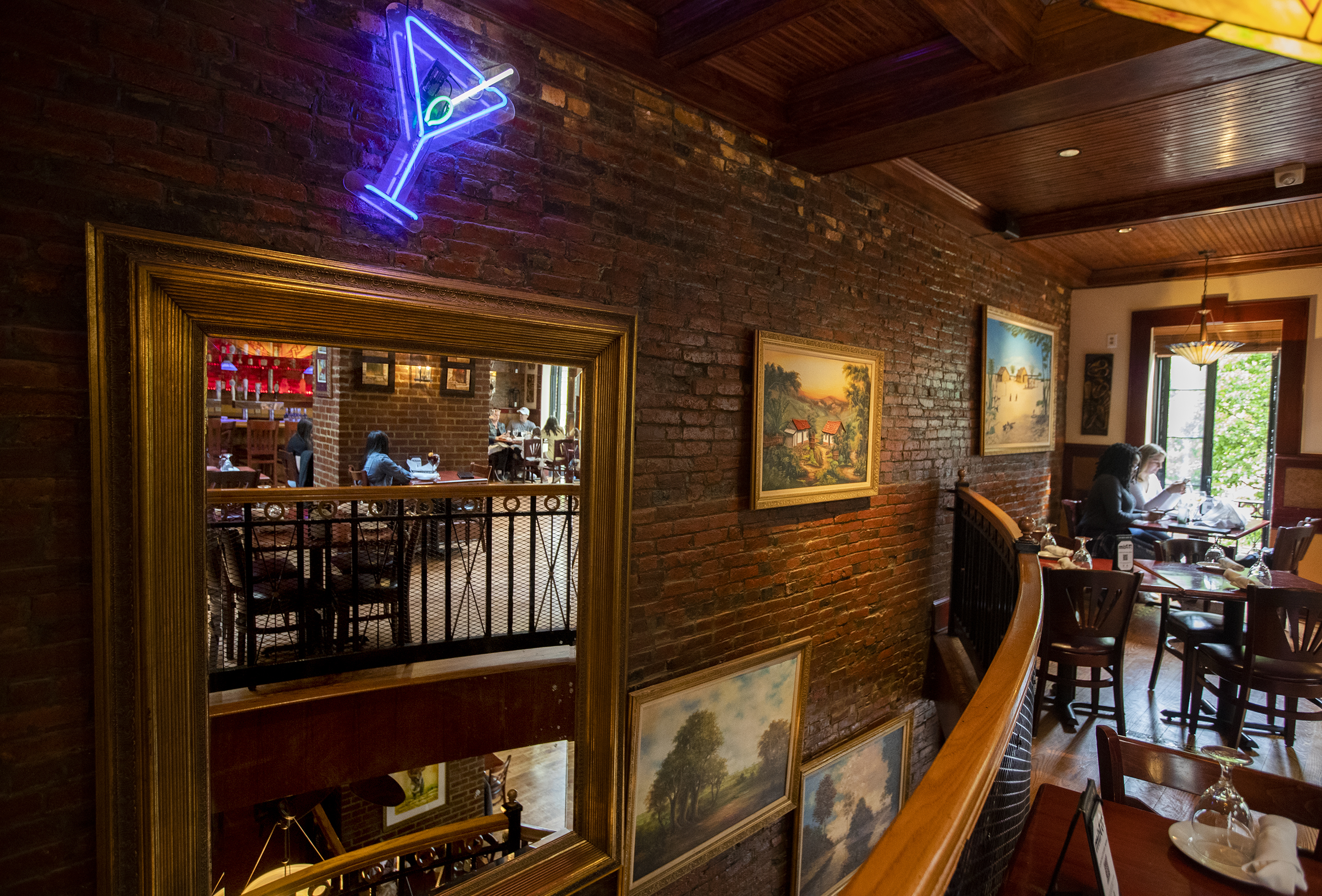
The owners of Cherry Street Tavern, the Logan Square bar that has operated for more than a century, are looking for a buyer after 50 years of stewardship by the Loughery family. The buildings that housed Mamma Maria’s, the East Passyunk Italian restaurant that opened in 1992, went up for sale this month. Aldar Bistro in Bala Cynwyd has been sold after 34 years and will give way to an Italian restaurant called Bruzi.
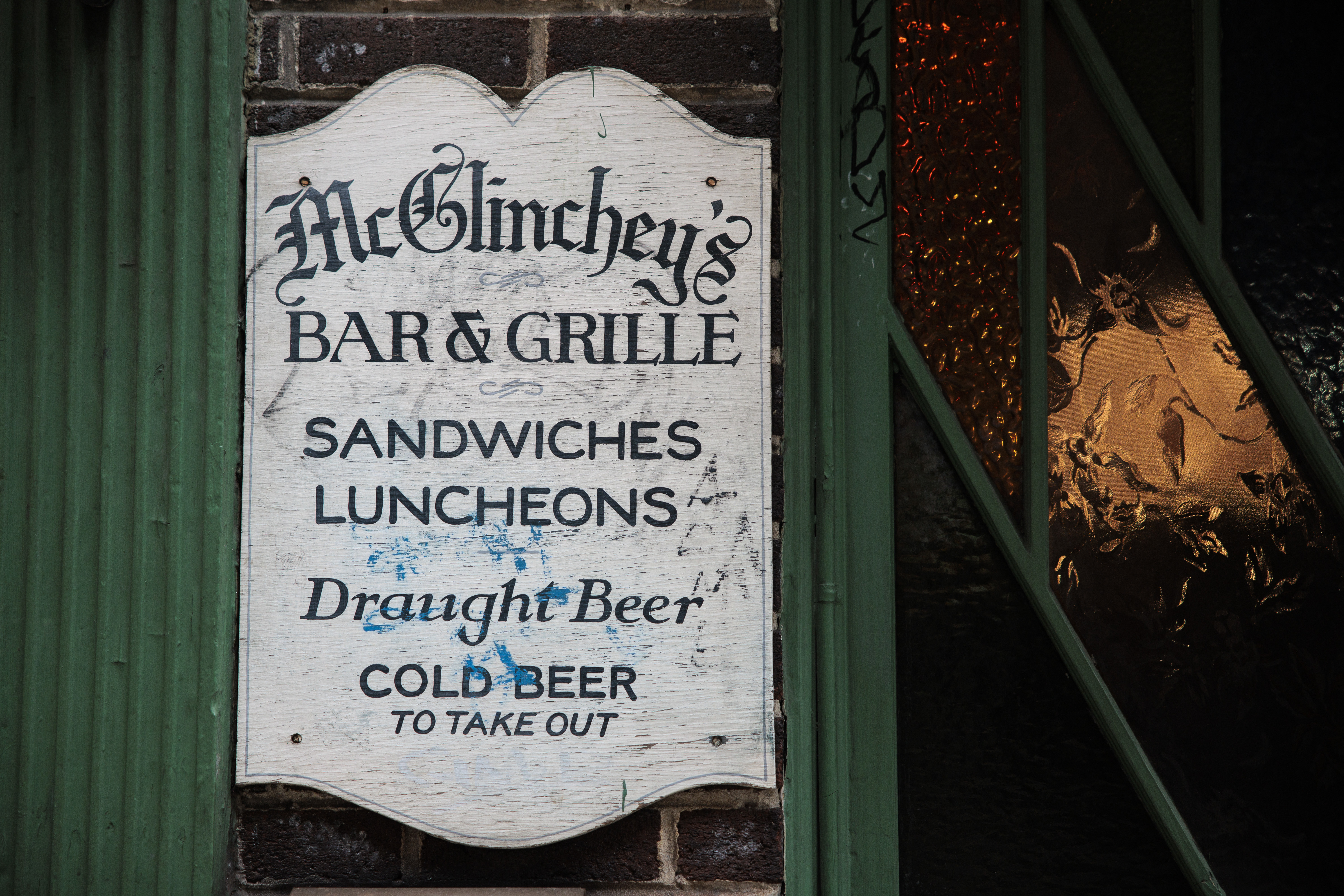
McGlinchey’s, the Center City dive that closed last year after nearly 90 years, is back on the market after a prospective buyer walked away from a deal for the building.
McGlinchey’s, at 259 S. 15th St., after its closing in August 2025.Monica Herndon / Staff Photographer
And the nearly 40-year-old Jake’s & Cooper’s Wine Bar in Manayunk is being marketed for sale as owner Bruce Cooper looks toward retirement.
Restaurants have always turned over, and the recent activity does not appear to reflect a restaurant market in retreat. The Inquirer counted 86 Philadelphia-area restaurant closings in 2025, while more than 100 new restaurants and bars were on the drawing board for 2026. What distinguishes many of the businesses now closing or being sold is their longevity: They survived for decades, weathering the pandemic and recent increases in food and labor costs, before their owners reached retirement.
‘The gray wave’
People in the restaurant, liquor, and real estate businesses say the turnover is part of a broader generational transition among small businesses as longtime owners reach retirement without children interested in taking over.
Jim Creed, handling Jake’s listing, calls it the “gray wave.”
“You’ve got operators who have been in business 40 or 50 years, and they don’t have heirs who want to take over the business,” said Creed, a senior vice president with CBRE.
His father, also Jim Creed, knows the issue from the other side. He opened Creed’s Seafood & Steaks in King of Prussia in 1982 and, at 78, has no immediate plans to sell. “I go to the restaurant every night,” he said. “It’s actually fun.” But when he does decide to close, he said, his children don’t want to take over.
For the counterexample, consider McGillin’s Olde Ale House in Center City. Open since 1860, it has survived through generations of owners; the Spaniak family has run it since 1958, with Chris Mullins Jr. now the third generation involved. There are no plans to sell. “It’s part of my DNA, part of our customers’ DNA, part of our staff’s DNA,” Mullins told The Inquirer this year.
Irene Levy Baker and Chris Mullins Jr. lead a toast at McGillin’s on Tuesday, Feb. 3, 2026 in Philadelphia. Attendees gathered for a book talk on “Cheers to McGillin’s: Philly’s Oldest Tavern” on Tuesday.Monica Herndon / Staff Photographer
Ed Taraskus has watched generations of restaurant and bar owners come and go over 50 years of practicing liquor licensing law. He could not say whether the current number of sales and closings constitutes a statistical trend, but said the succession problem is familiar.
“The parents retire and the children don’t want to get into the business — because it’s a hard business,” he said.
Taraskus said the hours can be punishing for small family operators. His clients also complain about finding employees willing to work nights and weekends. Drinking habits have changed, he said, and some businesses are still feeling the effects of the pandemic.
Taraskus knows the succession question personally. His South Philadelphia family owned a small restaurant and tavern, but his father discouraged him from entering the business. When his parents retired in the 1960s, they sold.
Real estate on the line
Retirement can present a second question for operators who own their buildings: What, exactly, are they selling?
A restaurant may have value as a going business, but decades of appreciation can make the underlying real estate a substantial part of an owner’s nest egg. Sometimes the economics favor a different restaurant — or an entirely different use.
Douglas Green, a principal at commercial real estate brokerage MSC, said the value of restaurant real estate is closely tied to the sales a location can support and, consequently, the rent an operator can afford.
“The more volume they do, the more rent they can pay,” Green said.
That means a location can be worth more to another restaurateur if the existing operator is underperforming. And in some cases, Green said, a restaurant may no longer be the property’s most valuable use at all.
“At some point, perhaps the building becomes obsolete,” Green said. “Perhaps the highest and best use of the real estate is no longer a restaurant.”
Those possibilities are playing out among the region’s longtime establishments.
The Pub restaurant near the former Airport Circle in Pennsauken in 2024.Jose F. Moreno / Staff Photographer
At the Pub, the Gelman family is seeking a buyer for the restaurant and its roughly 6.3 acres on Kaighns Avenue near the former Airport Circle. The family has operated it since Marc Gelman bought it in 2000.
“I don’t think there’s one thing in general why we’re selling, but it’s time for a new steward — if you will — of the business, or the property,” Marc’s son David Gelman said.
At Cherry Street Tavern, at 22nd and Arch Streets, the Loughery family hopes to find a buyer who understands what generations of regulars value about the place.
McGlinchey’s illustrates the other possibility. Its nearly 5,000-square-foot property at 259 S. 15th St. is listed for $2.45 million, including the liquor license, bars, and McGlinchey’s name, as either a turnkey bar and restaurant or a redevelopment opportunity.
Decisions for buyers
Creed said longevity itself can tell a prospective buyer something about a restaurant property.
“Anytime you have operating longevity, that speaks to the real estate,” he said. “When you have a concept that has been in operation for 40 years, clearly the real estate has something to do with that, too.”
The retirement of one operator does not necessarily mean the end of restaurant use.
The former Mixto space is set to become the revival of South Philadelphia bar Toll Man Joe’s.Charles Fox / Staff Photographer
Mixto closed July 12 after nearly 24 years at 1141 Pine St. Within weeks, restaurateur Lori Penrose bought the property and announced plans to revive her former South Philadelphia sports bar, Toll Man Joe’s, there.
The exterior of Marra’s Restaurant on East Passyunk Avenue is due to become a branch of Dan Tsao’s burgeoning restaurant group. Monica Herndon / Staff Photographer
“There are pros and cons to both,” Tsao said of taking over an existing restaurant rather than starting with a new space. “But with an existing restaurant space, especially a legacy restaurant, it already has a place in the neighborhood, and a place in the memories and hearts of generations of customers.”
Such properties may also have much of the expensive infrastructure required to operate a restaurant.
But for Tsao, the attraction isn’t purely economic.
“I also like the idea of preserving some of that history,” he said, “while giving the space a new chapter.”