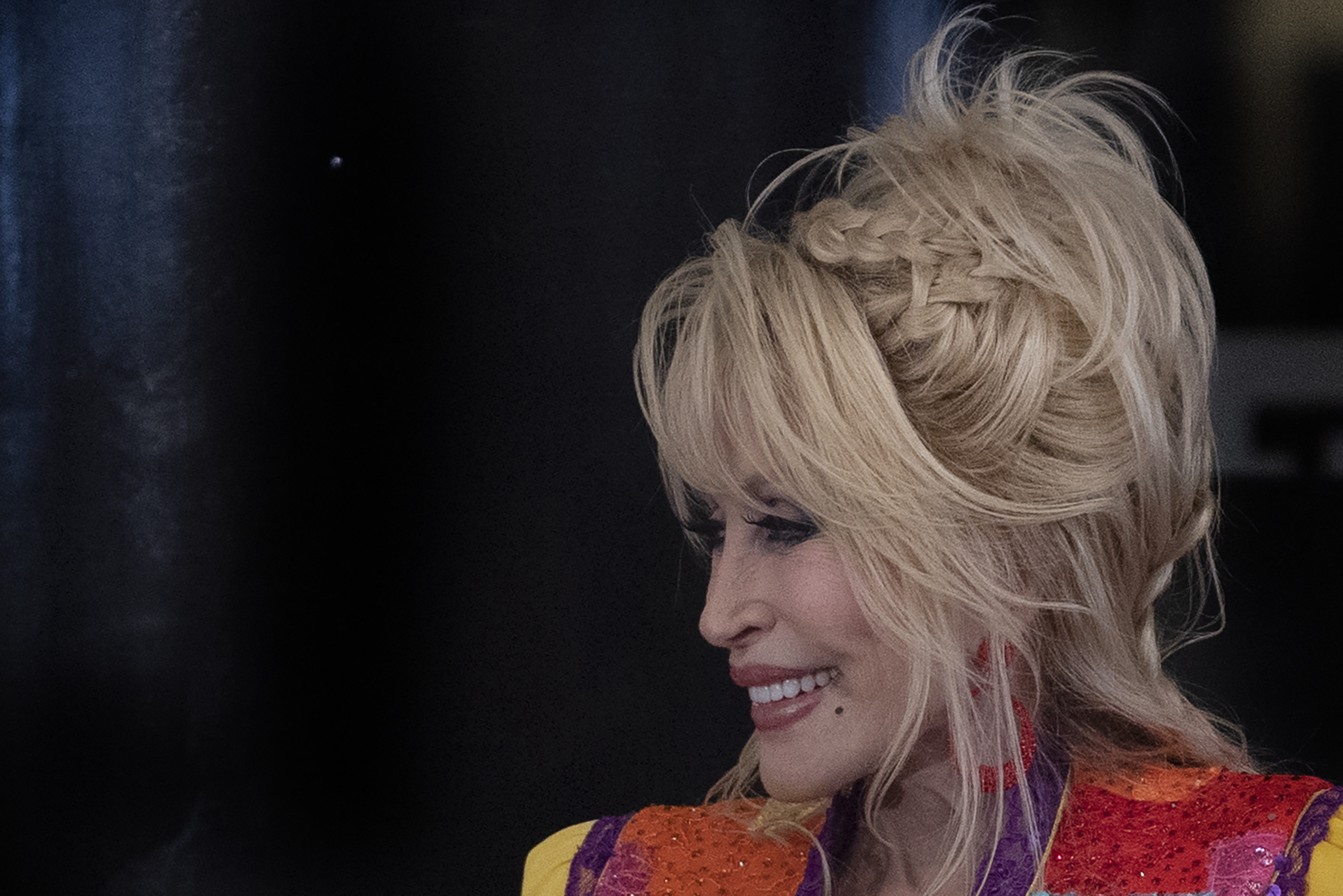
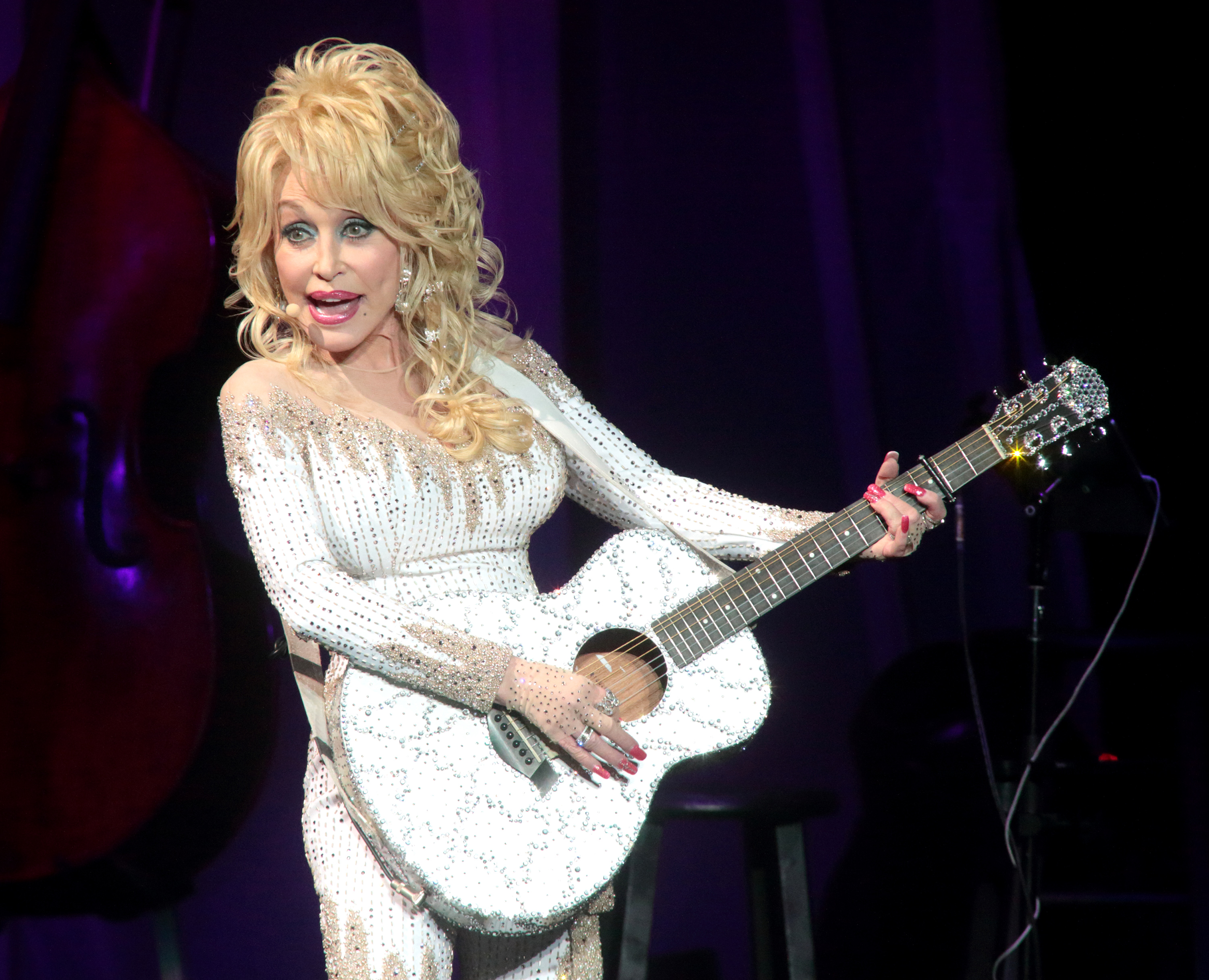
Dolly Parton was a genius-level songwriter, a rhinestone-studded glittering country music queen from Sevier County, Tennessee. Her vaulting ambition manifested itself in down-home masterpieces that transcended the genre, like “Coat of Many Colors,” “Jolene,” and “I Will Always Love You.”
She was an undeniable gracious force of nature and a multimedia star whose “aw-shucks” persona and disarming sense of humor — coupled with bountiful talent — made her that rarest of commodities in a bitterly divided time: a genuinely universally beloved public figure.
Parton, who died at age 80, her nephew Brian Seaver announced in an Instagram post on Tuesday, was always ready with a self-deprecating quip about her flamboyant appearance. “It costs a lot of money to look this cheap,” was one of her favorites, and when asked what she hoped people would think of her 100 years from now, she would say: “Dang, she looks good for her age.”
I met her once, back in 2001 for an interview at the Pierre Hotel in Manhattan. She was promoting Little Sparrow, the second of two excellent bluegrass albums she had released in a little over a year at a time when country radio had all but given up playing her music.
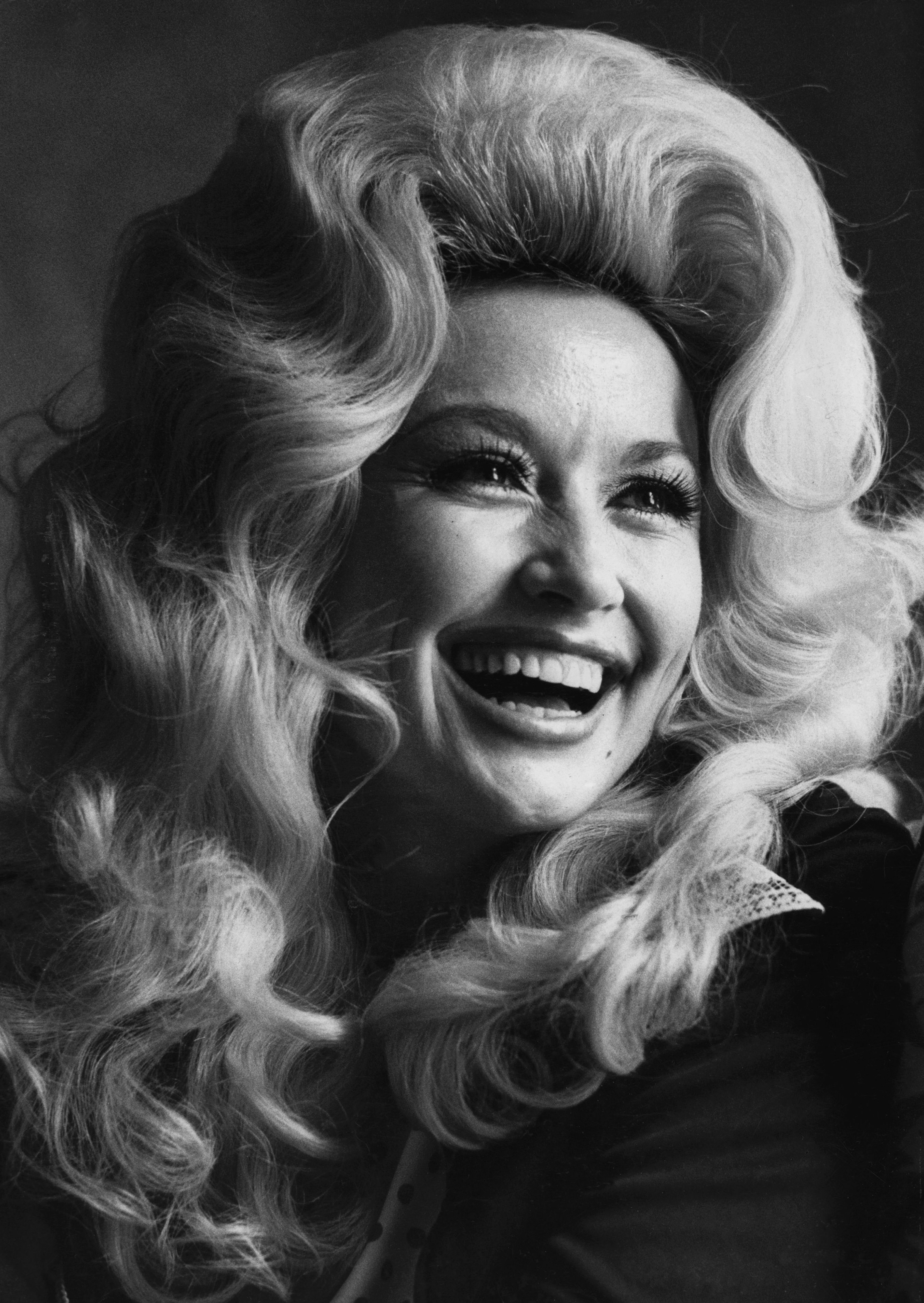
Dolly Parton in New York, in 1975. Parton, the country singer, songwriter, entertainer, and entrepreneur whose rags-to-riches story, outsize persona, and prodigious vision and talent placed her in a class by herself, died in Nashville on Tuesday, Aug. 25, 2026. She was 80. (Jack Manning/The New York Times)JACK MANNING
Like Johnny Cash and other icons of her generation, she had attained legendary status, but the industry wasn’t interested in the new music she was making, focusing on younger stars rather than golden greats.
But the last thing Dolly Parton was going to do when Music City turned its back on her was pout or complain.
“We’re older than God!” Parton, who was then 55, told me.
“It ain’t like we ain’t had our day,” she said, referring to herself as well as fellow travelers like Cash and Merle Haggard. “It wasn’t like I didn’t have a great career.”
“But we can’t last forever. And I always try to think ahead,” she said, adding that “ever since I got started in show business, I’ve always tried to pay attention to the business of the show.
“I believe in progress. Change is going to happen … You can’t just stay the same way … I can’t just not sing because I’m not getting played on the radio,” she told me. “I can’t not write just because there’s no real place for me in Nashville.”
Parton, who was the fourth of 12 children, wrote her first song when she was 7. “Little Tiny Tassel Top” was an ode to a corncob doll.
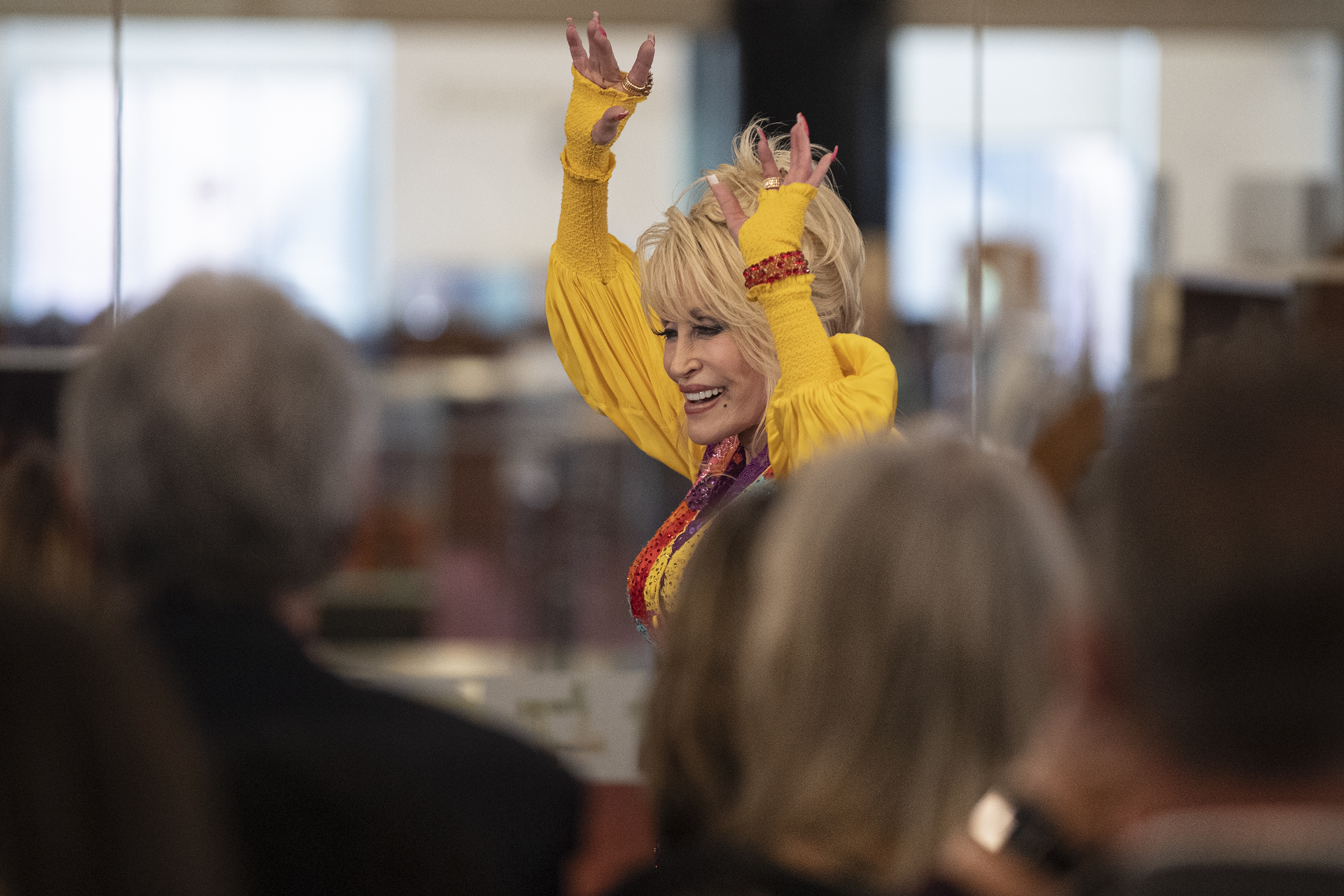
Dolly Parton waves to her fans on May 5, 2022, at the Wilmington Public Library in Wilmington. Parton joined Delaware Gov. John Carney to promote her Imagination Library, a free book gifting program for children.JOSÉ F. MORENO / Staff Photographer
When it came up in conversation, she couldn’t resist singing it.
“I love you an awful lot, my little tiny tassel top,” she sang in a little girl’s crystalline voice. “You’re the only thing I’ve got. Hope you never go away, ’cause I want you to stay.”
At the time, Parton said she planned on continuing to record music that brought her back to her hardscrabble roots because she knew it would resonate with audiences.
“I’ll never do anything that’s as real, that I enjoy singing as much, and that I can sing as well as these songs” so close to her heart, she said.
“These are the kind of statements you want to make. You know, long after you’re dead and people research your career and say ‘Damn, that was good!’ These are the things you want to leave behind.”
I saw Parton sing for larger audiences than just me four more times over the next 15 years.
In 2004, she played the Spectrum in South Philly. At that show, she played a banjo and fiddle while gender-flipping John Denver’s “Thank God I’m a Country Boy.” She accompanied herself on piano on “The Grass Is Blue” and played auto-harp on “Coat of Many Colors.”
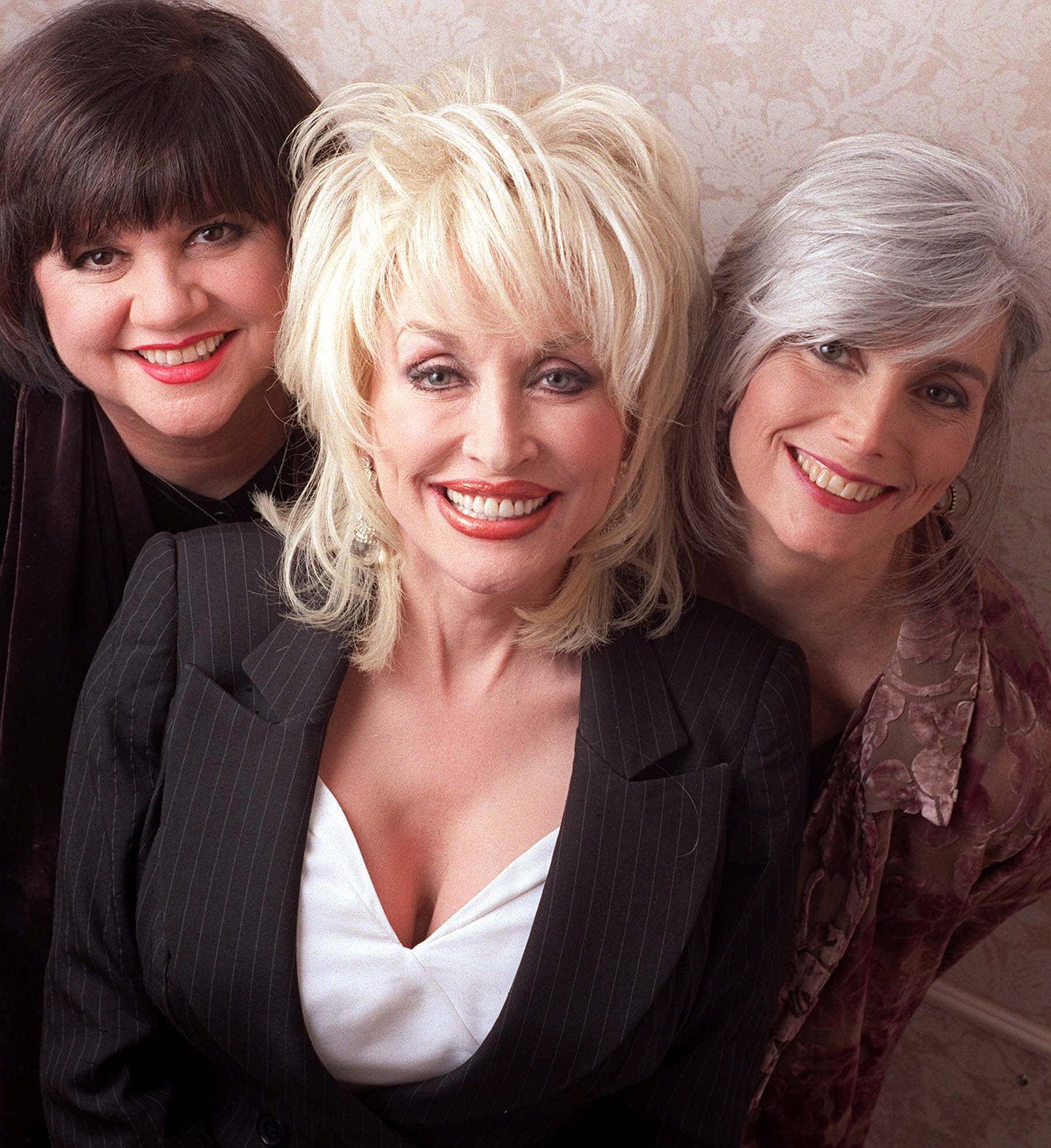
FILE – Singers Linda Ronstadt, from left, Dolly Parton, and Emmylou Harris pose in New York on Feb. 11, 1999. (AP Photo/Jim Cooper, File)Jim Cooper
And of course, she made jokes, kidding about the size of her chest while referring to a Super Bowl halftime show wardrobe malfunction: “If I was to pull a Janet Jackson tonight, I’d take out everybody in the first three rows.”
Before a show at the Mann Center in 2005, Parton spoke to The Inquirer about her album Those Were the Days, on which she covered folk and pop songs like “Imagine,” “Blowin’ in the Wind,” and “Turn, Turn Turn.”
“I’m one of those people that love all kinds of music,” she said. “I was always listening to all styles of music, and still do.” She went on: “Those songs give you a kind of hope … I am getting that sappy in my old age, to kind of wish things could be better.”
In 2008, Parton performed at the Borgata in Atlantic City in support of her album Backwoods Barbie. In addition to the aforementioned instruments, she also played penny whistle and dulcimer.
She kidded about Whitney Houston’s success with Houston’s smash hit cover of “I Will Always Love You”: “She made me lots of money,” she said. “I will always love her.”
In Atlantic City, Parton reaffirmed the theme that there was always more to her than meets the eye: “I’m just a backwoods Barbie, in push-up bra and heels,” she sang. “I might look artificial, but where it counts I’m real.”
That night, she also talked about working hard on writing new songs for the musical 9 to 5, which opened on Broadway the next year. She predicted that her work ethic was going to compel her to keep clocking in until the end of her days.
“I’ll fall dead on in the middle of a song in front of y’all,” she said cheerfully, “high heels to heaven.”
Dolly Parton performs in concert on her “Pure & Simple Tour” at the Mann Center for the Performing Arts on June 15, 2016, in Philadelphia. (Photo by Owen Sweeney/Invision/AP)Owen Sweeney/Invision/AP
On that hot summer night, she was touring behind her 45th album, Pure & Simple, and told the story about writing both “Jolene” and “Coat of Many Colors” in one creative burst early in 1973.
For an encore, she sang “Hello God,” a song of desperation and anger at the suffering that transpires on earth in heaven’s name: “We’re so selfish, cruel and blind / We fight and kill each other in your name, defending you / Do you love some more than others? / We’re so lost and confused.”
Parton also played saxophone that evening, and sang about goosebump-inducing love and spirituality in Pure & Simple’s title cut, using words that could describe how her fans felt about her music:
“It’s so pure it’s almost sacred / Simply put, it feels divine.”
A 1970s baby, I saw my mother (and all of the mother figures in my life) rocking big hair, glossy lips, sequins, and acrylic nails into the early 1990s.
As did the celebrities who have been a part of my pop-culture consciousness as long as I’ve been alive.
Women like Gladys Knight, Carol Burnett, Betty White, Patti LaBelle, and yes, Dolly Parton. These formidable women taught me my ABCs on Sesame Street, how to count on Electric Company, and random trivia on Password. These aunties in my head were just like my aunties, teaching me, guiding me, laughing with me, smiling with me, leaving powdery perfume trails of Jean Naté and White Shoulders in their wake.
That’s why a video of Parton and LaBelle circulating on social media Tuesday afternoon made me pause and shed a tear.
In the hours after Parton’s nephew Bryan Seaver announced on Instagram the beloved, buxom country music singer had died, a 46-second clip emerged from Parton’s 1987 short-lived ABC variety show,Dolly.
Itis pure, unadulterated ’80s joy.
LaBelle in her crimped “On My Own” hair — the ‘do she debuted when she released the chart-topping hit with Doobie Brother Michael McDonald — is sitting across from Parton, whose trademark curly blond hair is piled high in a massive bouffant.
The divas are dressed in elaborate black gowns drenched in sparkles. Parton’s features a sweetheart neckline and poofy shoulders ending in a lace sleeve that would give Madonna’s wardrobe a run for its money.
The two look like they could be attending a prom, or a tacky wedding. (A Parton classic: ”It costs a lot of money to look this cheap.“) Wherever they are going, we know the vibe is going to be ’80s extravagant.
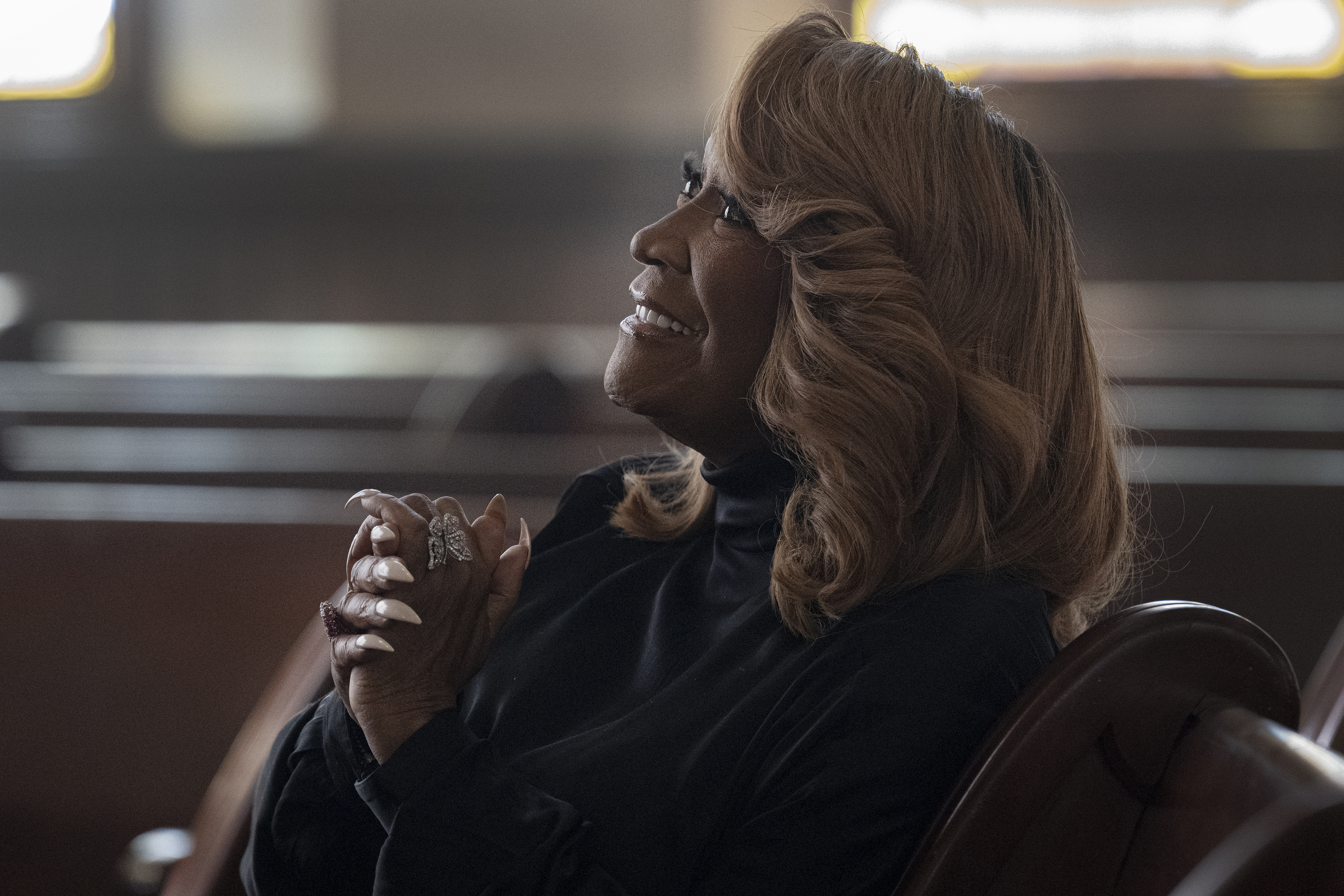
Singer Patti LaBelle is photographed at Mother Bethel AME Church in Philadelphia, Thursday, Jan. 22, 2026, during a shooting campaign for Visit Philadelphia’s Indivisible initiative, part of an effort to celebrate the city’s communities of color during the nation’s 250th anniversary. LaBelle is starring in the campaign’s Black History Month promotion.Jose F. Moreno / Staff Photographer
Parton, in her sweet melodic lilt, asks LaBelle if she would join her in using her acrylic nails as an instrument. The two women look like they are filing their nails as they strike up a rhythm.
Parton, who was born in a log cabin in Tennessee, and LaBelle, a Southwest Philadelphian whose dad was born in Macon, Ga. and moved to the city during the Great Migration, bond over acrylic nails and sing the chorus of the countriest of country songs, “Short’nin’ Bread.”
“Momma’s little baby loves short’nin’, short’nin’ / Momma’s little baby loves short’nin’ bread.”
Nails clicking. Powerful voices crooning. Parton and LaBelle sing the hook of the folk song written by James Whitcomb in 1900 in perfect harmony, their voices blending so beautifully that it’s easy to forget historians’ assertions that Whitcomb “borrowed” the song from Black sharecroppers. Allegedly, he retooled and performed it in a minstrel show.
The video speaks to Parton and LaBelle’s easy friendship and sisterhood.
“I’m deeply saddened by the loss of my dear friend who was loved by all,” LaBelle said in a statement Tuesday. “Dolly’s artistry, brilliance, and extraordinary life inspired so many people including me. Her light will forever shine!”
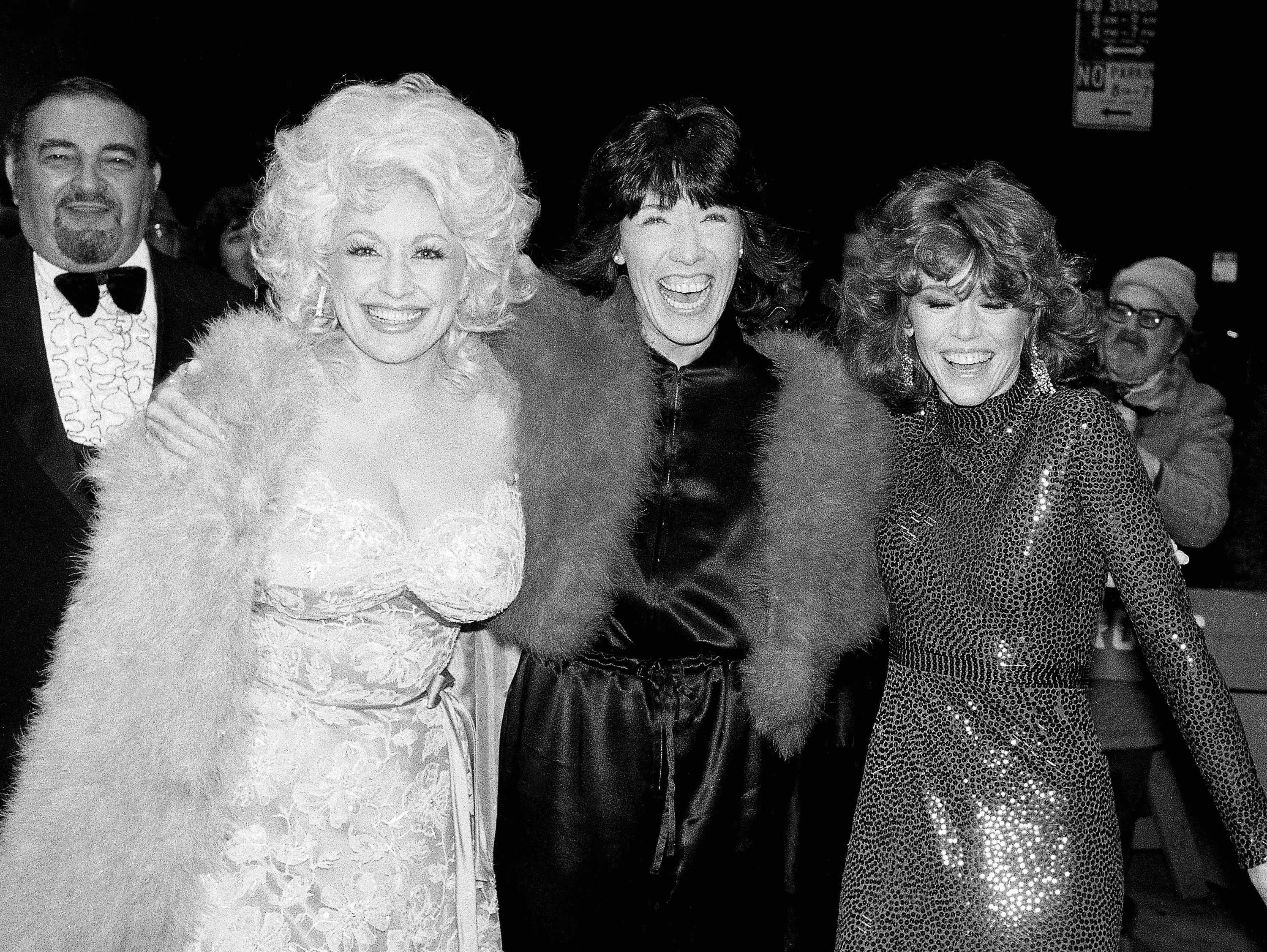
Dolly Parton (left), Lily Tomlin (center), and Jane Fonda arrive for the premiere of their film “9 To 5” in New York on Dec. 14, 1980. (AP Photo/Richard Drew, File)Richard Drew
When this performance was recorded almost 40 years ago, LaBelle and Parton had already been celebrities the better part of two decades. Both were already in their 40s. They’d reached auntie status.
My grandmother used to sing the chorus of “Short’nin’ Bread” while she dealt cards or when she rocked my sister and me in her wooden chair. Parton has been a part of my life in much the same way. Teaching me what it meant to work 9 to 5, performing on musical specials and childhood shows with other aunties and friends like Linda Ronstadt, Emmylou Harris, Loretta Lynn, and the queen of Philadelphia aunties, Patti LaBelle.
Parton was my country music auntie. She was America’s country music auntie.
Dolly Parton, the country music icon whose soaring vibrato vocals, poignant songwriting and sparkling costumes defined her rise from a log cabin in the Tennessee mountains to the height of stardom and acclaim, has died. She was 80 years old.
Known for her curvy physique, massive blonde wigs and skin-tight outfits that served her self-deprecating wit, she was among the most beloved personalities in music and beyond — the rare celebrity whose appeal transcended generations, geography and politics.
She wrote hundreds of songs, including classics like “Jolene,” “Coat of Many Colors” and “I Will Always Love You,” that totaled more than 100 million worldwide sales and more than 1 billion online streams. Parton, who plucked bejeweled banjos, guitar and dulcimers with her long fingernails during performances, was a generous philanthropist and successful businesswoman whose projects included a theme park in the Smoky Mountain foothills near her birthplace.
Her career was forever influenced by her upbringing as one of 12 children born into what she called a “dirt poor” Tennessee family. She started her education nonprofit, Imagination Library, to send free books to children in Tennessee because her father, who quit school to work on the farm, struggled to learn to read.
Parton’s first musical performances were in church, where her grandfather was a preacher. By age 10, she was learning guitar and singing on local television shows. At 13, she appeared on the Grand Ole Opry in Nashville, where Johnny Cash introduced her as “a little girl here from up in East Tennessee.”
With a suitcase of songs, she followed her uncle, Bill Owens, also a songwriter, to Nashville after graduating high school in 1964. Fred Foster, who produced Roy Orbison, Willie Nelson and more, saw her potential and got her songs cut by other artists, as well as recording and releasing Parton singing her own material. By the mid-1970s, Parton was a Nashville queen.
A key collaboration with Porter Wagoner
Parton’s partnership with Porter Wagoner, a pencil-thin pompadoured star with flashy rhinestone outfits, was key to her career. She honed her acting skills on his syndicated TV show and he advocated for her to get a record deal at RCA. Their first duet, “The Last Thing On My Mind,” was released in 1967, the same year she started her own publishing company.
While their duets were often big radio hits, Parton’s solo singles didn’t chart as high at first. With Wagoner as a co-producer, she began to adjust her country warble to a more polished, pop-leaning style.
She got her first No. 1 solo single with “Joshua,” and reached the Top 5 with the ballad “Coat of Many Colors,” about how her mother sewed together scraps of clothes to make a coat Parton wore “so proudly” even as her peers mocked her for being poor. The song, with its Biblical references and ode to maternal love, was later made into a children’s book and a TV movie.
In 1973, she had the hit that made her career — “Jolene,” a country music standard with its steady, churning rhythm and Parton’s repeated delivery of the title as she pleads for the woman not to steal her man.
The song topped the country charts, crossing over to pop and later being released internationally, opening up new audiences for Parton. “Jolene” is one of her most covered compositions, including by Miley Cyrus (Parton’s goddaughter), Olivia Newton-John and The White Stripes.
She left Wagoner’s show in 1974, amid reports of squabbling between the two, although they continued to record together and Wagoner stayed her producer for years after that. But the relationship turned litigious when Wagoner sued her in 1979 for millions in management fees and royalties.
A pop crossover star
She followed “Jolene” with a huge hit in 1974, “I Will Always Love You,” an ode and farewell to Wagoner that helped her win the Country Music Association’s female vocalist of the year back-to-back in 1975 and 1976. She famously turned down Elvis Presley, who wanted to record it, because she would not share publishing rights.
Decades later, Whitney Houston’s version of “I Will Always Love You” became a smash for the soundtrack of her 1992 film “The Bodyguard,” and broke sales records. Houston won a Grammy for her performance in 1994, presented to her by Parton.
“Here You Come Again,” a pop crossover hit and one of the few she didn’t write, further established Parton as a multi-genre entertainer and brought her first Grammy Award in 1979.
“A lot of people thought I had totally lost my mind,” she told The Associated Press in 1979 of changing her singing style. “But I had no fear of change. I expected success, but I was braced for failure. I didn’t care if people thought I was wrong. In my own heart, I knew I was doing the right thing.”
Parton’s other crossover hits included the title song from “9 to 5,” the 1980 comedy starring Parton, Jane Fonda and Lily Tomlin; and her duet with longtime friend Kenny Rogers, “Islands in the Stream,” written by brothers Barry, Maurice and Robin Gibb of the Bee Gees. In 1987, she collaborated with Linda Ronstadt and Emmylou Harris on the million-selling “Trio” album.
Down home charm
For millions of fans, she was simply “Dolly,” a mixture of Southern charm, humor and glamour. But she was also considered a feminist role model for holding the reins of her own career, writing her own songs, owning her content and looking after her finances in an entertainment world dominated by men.
Parton was open to making fun of herself; when she hosted “Saturday Night Live” in 1989 she told the writers that her only restrictions were she wouldn’t curse and she wouldn’t make fun of Jesus. She regularly joked about her breasts or her dumb blonde appearance, but with a wink that she was the one controlling the laughs. In the memoir “My Life So Far,” Fonda remembered Parton’s way with a wisecrack, “usually high raunch,” and a laugh that was “somewhere between a girl’s giggle, an explosive shriek, and a cascade of little bells.”
After her gown split down the front when she won CMA’s entertainer of the year in 1978, Parton quipped: “My Daddy said that’s what I got for putting 50 pounds of mud in a five-pound bag.”
Throughout her career, she embraced her glamorous style, often wearing custom curve-hugging rhinestone dresses and bodysuits even if they drew tsk-tsks from others in the industry. Her look was always a part of her larger musical business plan.
“I knew my songs were good even if I had been ugly as sin,” she told the AP in 2014. “So I thought, ‘Well, I would have probably chose to look this way even if I had been a waitress.’ I mean, this is my look. I mean, I like a lot of makeup. I like a lot of hair. I like flashy clothes. I like to show it off. But that’s just who I am.”
She married Carl Dean, an asphalt paving contractor, in the mid-1960s; they were together until his death in 2025 at the age of 82. Though rarely seen in public, he was an influence on her career. She told NPR that she wrote “Jolene” about a flirty bank teller who seemed to take an interest in Dean.
‘9 to 5’ to Hollywood and Broadway
In her first major film role, Parton played alongside Fonda and Tomlin as office workers who rebel against their tyrannical boss in “9 to 5.” Critic Roger Ebert called her a “natural-born movie star” and the title song earned her two Grammy Awards and a ranking of 78 on the American Film Institute’s list of top 100 movie songs. Starring roles in the “The Best Little Whorehouse In Texas” and “Steel Magnolias” followed.
“I never thought of myself as a movie star,” she told AP’s Bob Thomas in 1979. “I knew I’d be a star, but as a singer or as a writer of songs or books or poetry. I wanted to be a famous performer and wear flashy clothes, but singing in movies was not one of my ambitions. My family lived in the mountains and we didn’t see movies.”
Her love affair with TV and film continued for decades, with appearances alongside Cyrus on “Hannah Montana” and adaptions of her music for Christmas specials, films and streaming series. She also became an author, her books ranging from the memoir “Dolly” to a bestselling novel co-authored by James Patterson, “Run, Rose, Run,”
The stage adaptation “9 to 5: The Musical” debuted in 2009, and “DOLLY: A True Original Musical” had been set to open in December 2026.
United States of Dolly
Beyond her music, Parton’s most lasting legacy might be her generosity and broad appeal.
When a deadly wildfire swept through the Smokies in 2016, she held an all-star telethon and set up a foundation that sent monthly checks to residents whose homes were damaged or destroyed.
She opened up her Dollywood theme park in East Tennessee, a major economic driver in Appalachia that draws tourists from around the country, and established the Dollywood Foundation. She wrote books and memoirs, was inducted into the Country Music Hall of Fame and was given a lifetime achievement award by the Recording Academy. She was selected for the Jean Hersholt Humanitarian Award from the Academy of Motion Picture Arts and Sciences in 2025.
With 55 Grammy nominations and 10 wins, Parton is the third-most nominated woman in Grammy history, only behind Beyoncé and Taylor Swift.
Parton spanned social and political divides, through multiple generations of fans, urban and rural and in between. In tumultuous election years, it wasn’t uncommon to see “Dolly for President” shirts. But she was strict in not voicing her own political beliefs, often turning aside questions about presidents, candidates, policies and other controversies.
“I have too many fans on both sides of the fence. Of course, I have my opinion about everything, but I learned years ago to keep your mouth shut about things.”
When the Rock & Roll Hall of Fame Foundation sent out a ballot in 2022 with her name on it, though she said she felt she hadn’t earned it, the voters answered with a “Hello, Dolly.” Parton showed up to the induction ceremony, performed and then put out a rock album.
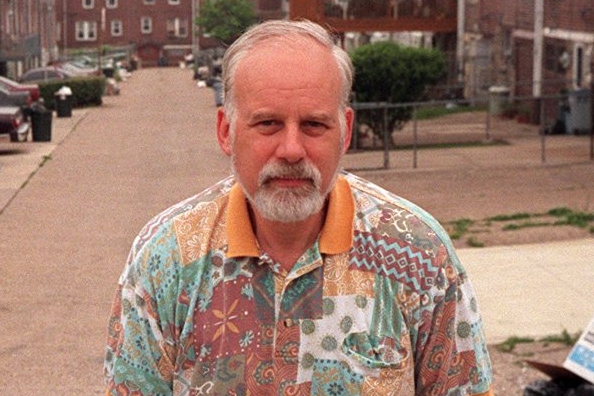
Ron Avery, 85, of Philadelphia, retired eclectic reporter and columnist for the Daily News, Philadelphia historian, volunteer city tour guide, author, high school history teacher, veteran, and canoe enthusiast, died Sunday, Aug. 2, of complications from amyotrophic lateral sclerosis at his home in East Falls.
Reared in Fairmount, Mr. Avery graduated from Thomas Edison High School and earned a bachelor’s degree in history at Pennsylvania State University. He was assigned to the ship newspaper in the Navy after college, found a creative niche in journalism, and went on to work for more than 30 years at the Associated Press, the Bucks County Courier Times, the Courier-Post in South Jersey, and the Daily News.
He wrote for the Daily News as a correspondent in 1981, joined the staff in 1982, and, until his retirement in 2000, wrote thousands of stories about crime, casinos, war orphans, historic houses, the MOVE bombing, local notables, and other subjects. His columns, “Poor Ronald’s Almanac” and “One of Us,” hammered away at local issues and featured everyday people doing exceptional things.
“He covered every nook and cranny of the city,” said his son Serge. “That burning curiosity sustained him till his last days.”
He wrote three books about Philadelphia, including A Concise History of Philadelphia in 1999. He produced a series of video guides he called the Urban Explorer for local TV in 2004 and posted blogs about the city from 2017 to 2019 on a website called Philadelphia Cracks Me Up.
“Like all cities,” he said in a 1995 Daily News column, “Philadelphia is honeycombed with hidden spaces and forgotten places.” In a 1997 review of his book, City of Brotherly Mayhem: Philadelphia Crimes and Criminals, The Inquirer’s Thomas Brady said: “The book … is decidedly a fun read.”
Alex Strang, his director on the Urban Explorer videos, called Mr. Avery an “unforgettable legend” and “a walking encyclopedia of the city’s history and eccentricities” in a Facebook tribute. Other former colleagues said he was “a clever journalist” and “a true Philadelphian.”
Longtime Daily News colleague Robin Palley said on Facebook: “He had an amazing knack of finding quirky people with fascinating skills or habits and making them come to life on our pages.”
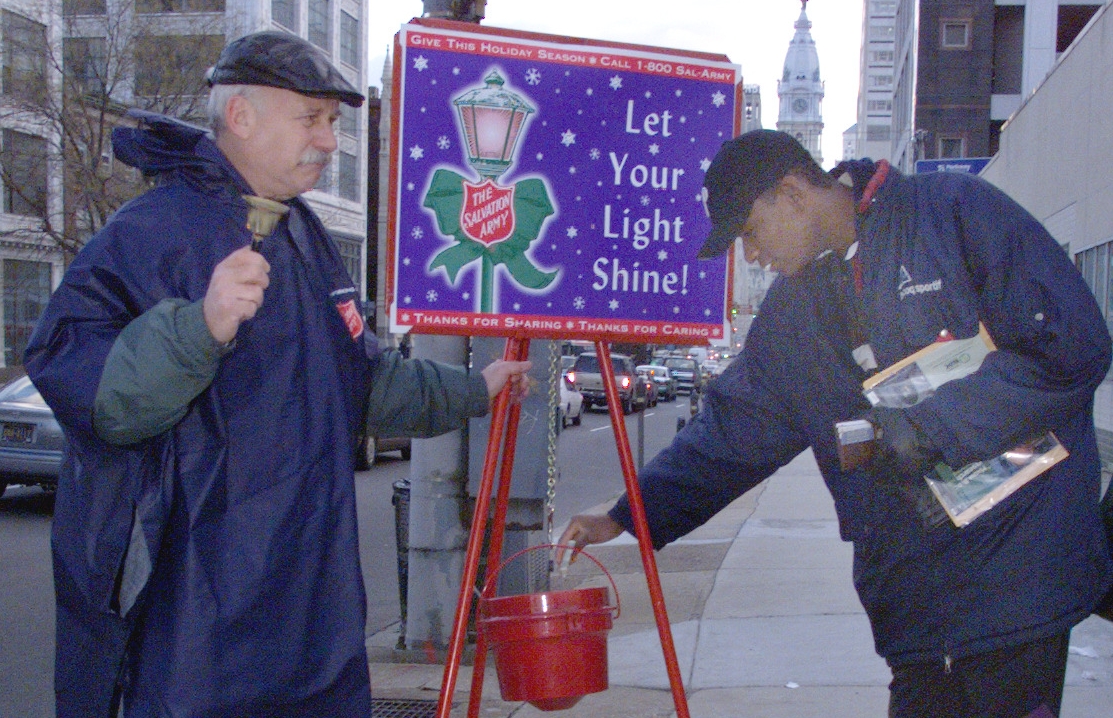
Mr. Avery (left) mans a Salvation Army donation kettle in 1999.Steven M. Falk / Staff Photographer
Before the Daily News, Mr. Avery wrote news and feature stories for the Courier-Post in the 1970s, and the Courier Times and the AP in the 1960s. He moved to Israel for six months in 1972 but returned to work for the Courier-Post in 1973.
He also wrote freelance pieces for the Hidden City Daily, PhillyHistory.org, UShistory.org, and op-eds later for The Inquirer and Daily News. He served in the Navy from 1964 to 1966, joined the Philadelphia Canoe Club later, and led water trips in the New Jersey Pine Barrens and elsewhere.
Knowledgeable, energetic, and naturally affable, he was a tireless promoter and volunteer guide in Philadelphia. He led walking tours throughout the city for students, civic groups, and other organizations, and his explanatory video tours featured cobblestone alleys, urban gardens, museums, statues, and other features of city life.
He was a stickler for details and historical accuracy, and he helped spur City Council to pass an ordinance in 2008 to educate and certify paid Center City tour guides. “They score high as Philadelphia ambassadors of good will,” he said in a 1995 column about uneducated guides, “but as historians they often flunk out.”
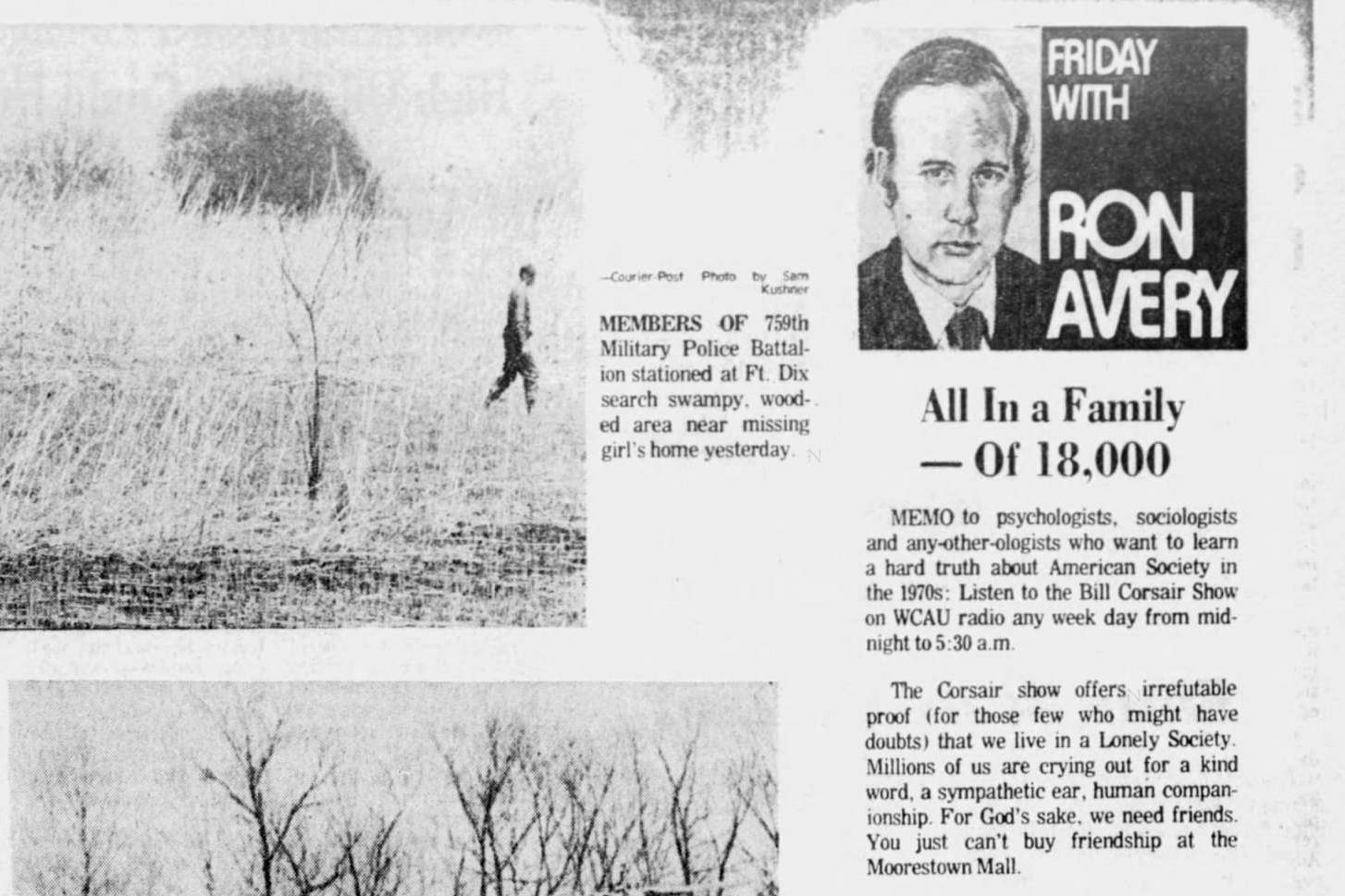
Mr. Avery wrote a column for the Courier-Post in 1974.Newspapers.com
Ronald Avery was born June 10, 1941, in Strawberry Mansion. He joined the Boy Scouts, earned his bachelor’s degree at Penn State in 1963, and taught history at Bensalem High School for a year.
He was a boxer in college and, mesmerized by the sport, later worked as a referee for amateur matches.
He met Suzet Habif in Israel in 1967, and they married in 1968. They had sons Serge and Ben, and lived for years in a rowhouse in Oxford Circle.
Mr. Avery cared for his wife during her long illness in the 1980s and ’90s. She died in 1993.
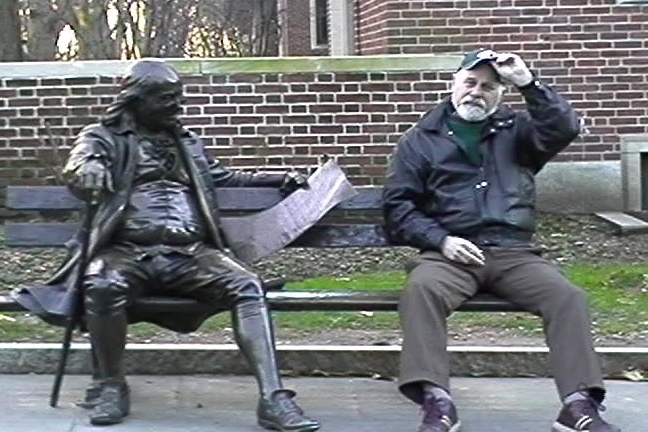
Mr. Avery liked to hang out with Benjamin Franklin and other historic figures. Alex Strang
He lived later in Pennsport and East Falls, was diagnosed with ALS in 2015, and proudly outlived its average life expectancy of 18 months by nearly a decade. “He defied that diagnosis and did not let it define him,” his son Serge said. “He always said he had a lot to live for.”
Mr. Avery was an avid reader and street photographer. He liked poetry, wrote limericks on birthday cards, and posted hundreds of his photos on flickr.com. One of his photos won a contest and was displayed at the airport.
He enjoyed jazz and jokes, led the prayers at family gatherings, and gave Yiddish quizzes to his two grandsons. He shared favorite recipes with Daily News colleagues and whipped up memorable homemade soups, especially white bean.
“I’ll greatly miss his endless anecdotes about all things Philadelphia,” said his daughter-in-law, Rebecca Houlding, “the stories about the local criminals, and his love of his family and friends.”
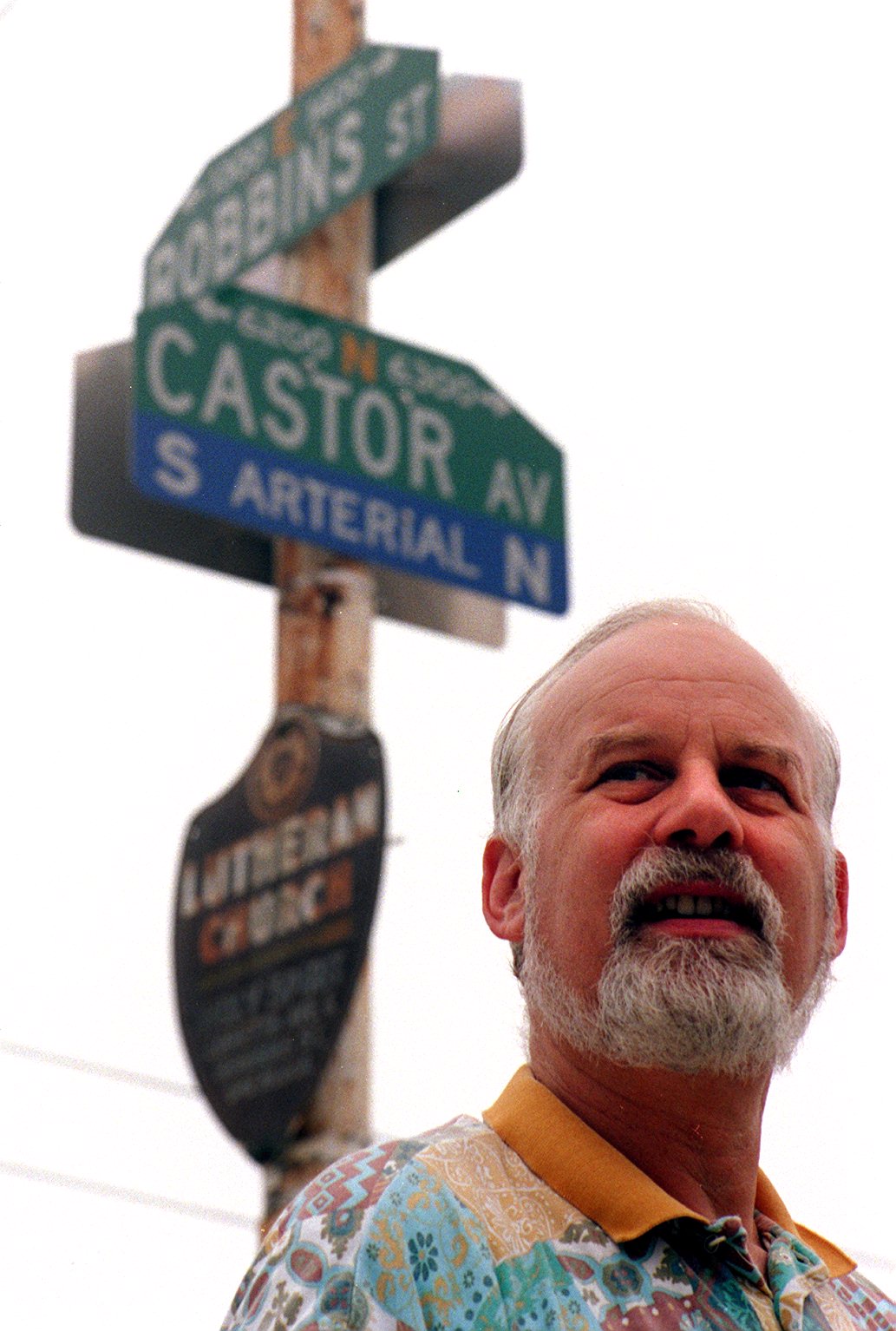
Mr. Avery wrote about his life in Northeast Philadelphia for the Daily News in 1997.Alejandro A. Alvarez / Staff Photographer
His son Serge said: “He loved chasing the stories from the back alleys and driveways, highlighting the working people of our town.”
In addition to his sons, daughter-in-law, and grandsons, Mr. Avery is survived by other relatives. A sister died earlier.
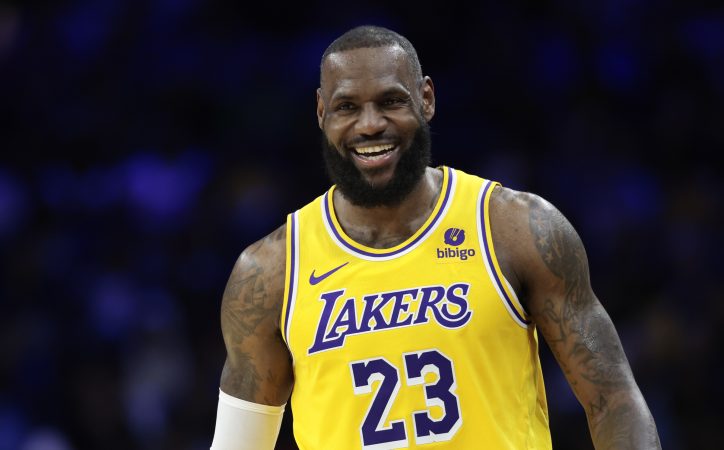
Outside of the 76ers, one of the biggest winners of the LeBron James’ sweepstakes is NBC Sports Philadelphia.
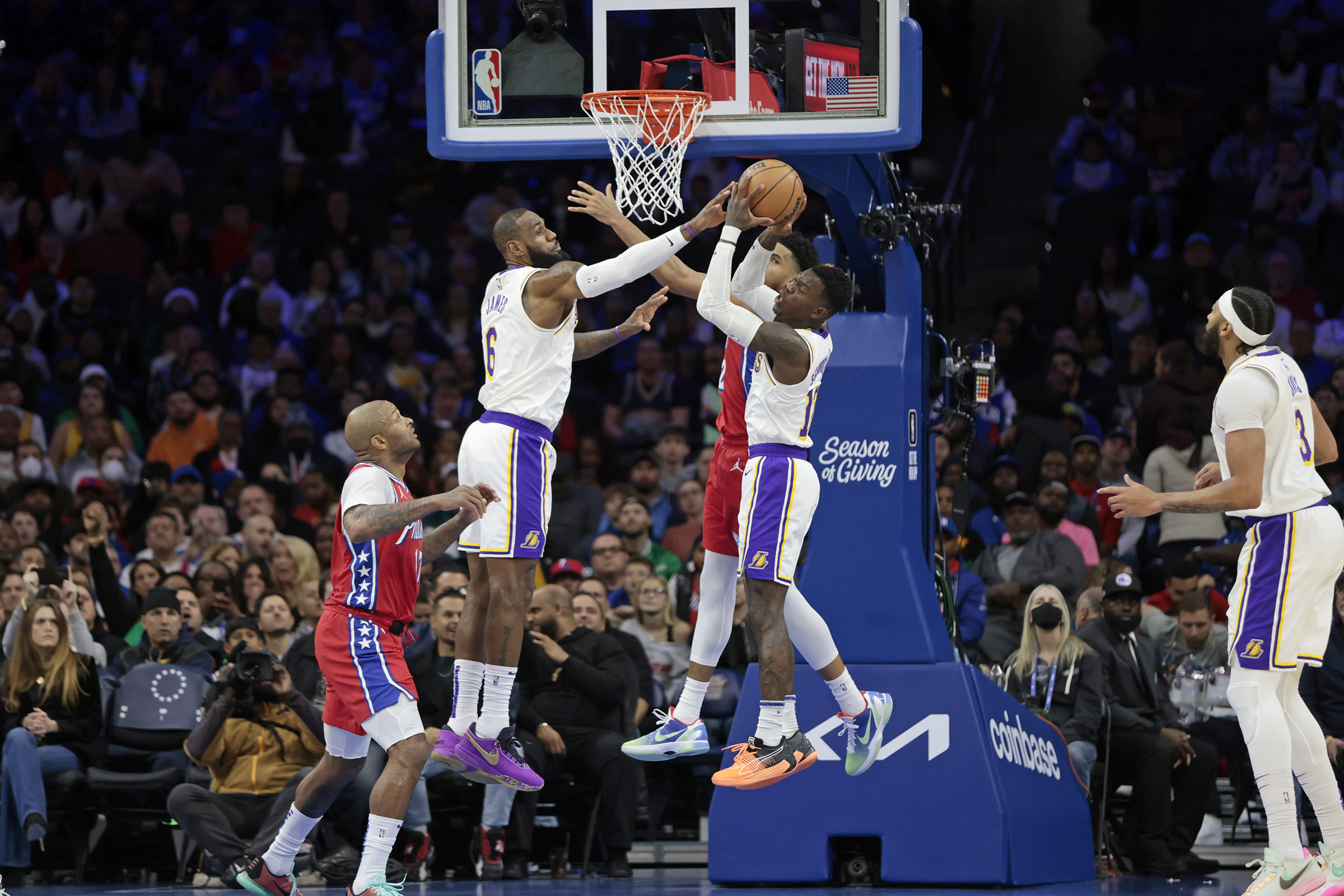
We won’t know how much of a boon James will be for the city or the network until the 41-year-old takes the court in a couple of months. A lot will depend on the future Hall of Famer’s health during his unprecedented 24th NBA season, but James has remained remarkably healthy, averaging over 62 starts a year over the past five season.
If the Sixers match expectations and James can remain on the court, NBC Sports Philadelphia can expect a big boost in viewership based on what happened at his previous stops, according to an Inquirer analysis of Nielsen data previously reported by Sports Business Journal and provided by its media reporter, Austin Karp.
Before James famously made his decision to join the Miami Heat in 2010, games on the city’s now-defunct regional sports network, FanDuel Sports Network Sun (known then as Sun Sports), averaged a 2.51 rating, roughly 40,000 households. After James joined the team, ratings nearly doubled to a 4.92. By the 2012-13 season, after James helped lead the Heat to two straight NBA championships, games were averaging a 7.14 rating on Sun Sports, nearly three times higher than before he came to town.
In 2014, James decided to leave Miami to return to the Cleveland Cavaliers. Ratings tripled on the now-defunct regional sports network, formerly known as Fox Sports Ohio, jumping from a 2.79 rating (roughly 41,000 households) before James to a 9.31 rating (roughly 139,000 households) as he led the Cavaliers to their first and only NBA championship in 2016.
In 2018, James took his talents to Los Angeles to join the Lakers, whose local TV ratings were already among the strongest in the NBA. Lakers ratings still increased 31% on Spectrum SportsNet, the highest since 2013.
NBC Sports Philadelphia averaged 86,000 viewers per Sixers game last season, according to Nielsen numbers obtained by The Inquirer. If James can provide the same spark he did in both Cleveland and Miami, you can expect upward of 250,000 fans tuning in locally to watch the Sixers on NBC Sports Philadelphia.
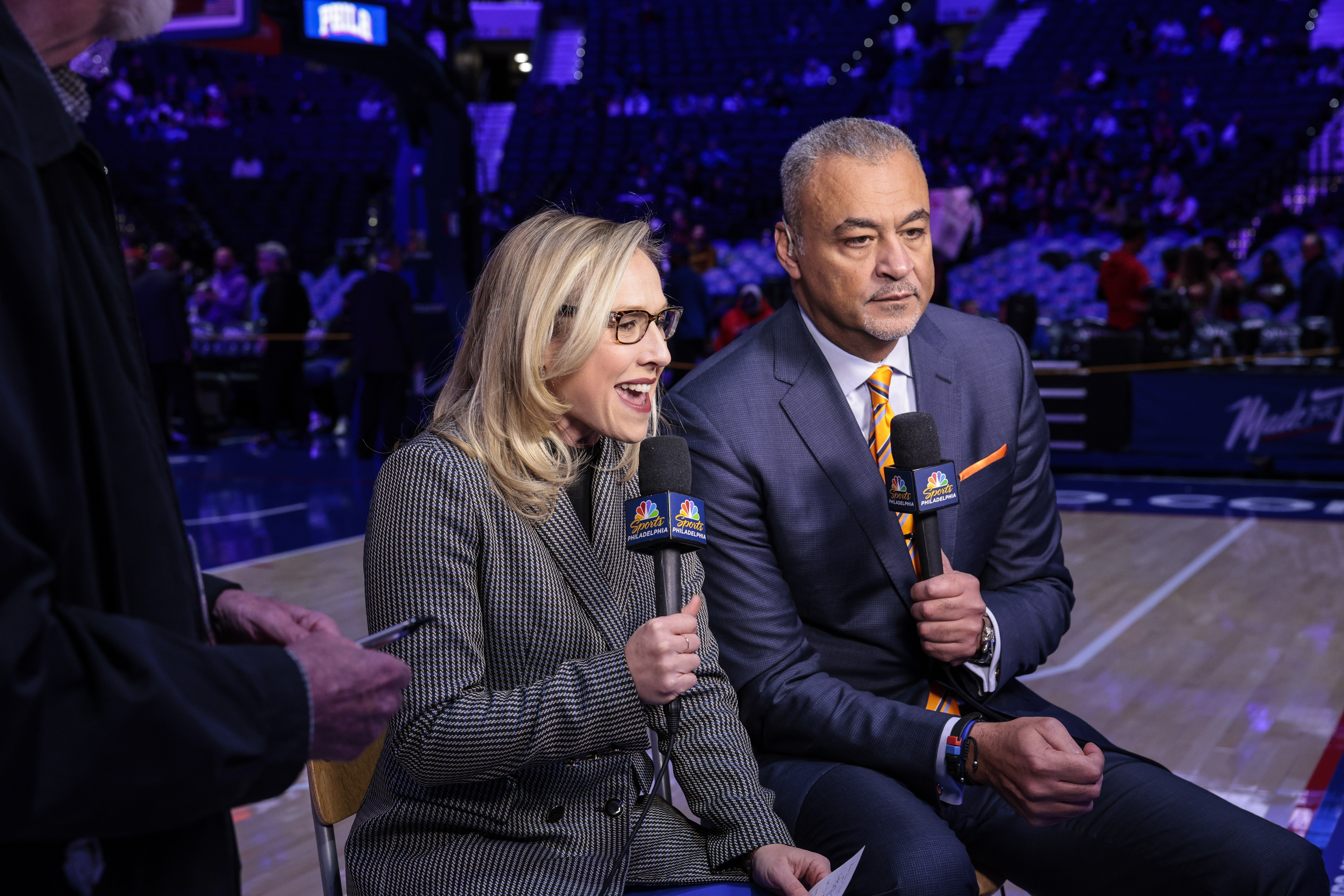
“I think you need a voice on the court where Alaa and Kate can’t be to give us insight, do pre- and postgame interviews, analysis, all of that,” Alexandra Matcham, the vice president of content for NBC Sports Philadelphia, previously told The Inquirer.
The only bad news for NBC Sports Philadelphia is that ratings tanked for the markets James left.
When he left the Cavaliers for the Heat, ratings in Cleveland dropped 54%. The same thing happened when he returned to Cleveland — ratings on Sun Sports in Miami dropped 28%.
After James joined the Lakers, Cavaliers’ ratings on Fox Sports Ohio dropped 58%. It remains to be seen whether Spectrum SportsNet will suffer a similar fate this season.
Just 15 of those games are exclusive to national broadcasters, including the Sixers first two games — Oct. 20 against the New York Knicks at Madison Square Garden (NBC), and the Sixers’ home opener against the Cleveland Cavaliers at Xfinity Mobile Arena on Oct. 22 (ESPN).
That means the first Sixers regular-season game that will air on NBC Sports Philadelphia will be Oct. 24 against the Milwaukee Bucks in South Philly.
NBC Sports Philadelphia will air at least 67 Sixers games this season, but the full schedule needs to be approved by the NBA before it’s released publicly. There’s also some juggling that needs to happen, since the network also broadcasts Flyers games.
The network will air all four Sixers preseason games, beginning Oct. 5 against the Knicks at Xfinity Mobile Arena, which could be the first time fans see James suit up for Philly.
Regardless of when he plays, the expectations are sky-high for the Sixers this season.
“Championship or bust,” Hall of Famer and TNT analyst Shaquille O’Neal said during a recent interview on ESPN’s SportsCenter. “I know LeBron wants to get one last one. … If they don’t win the championship, I think all those players will be very, very disappointed.”
The nonprofit, “Our Genre Is Philly” festival that celebrates its 10th anniversary in October, has made a habit of holding back the name of a mystery headliner whose identity can’t be announced until the artist is done playing another previously booked show in the Philadelphia market.
Surprise headliners in recent years that PMF founder Greg Seltzer has brought into the cozy confines of Ardmore Music Hall have included Mt. Joy, Waxahatchee, and, last year, Dr. Dog.
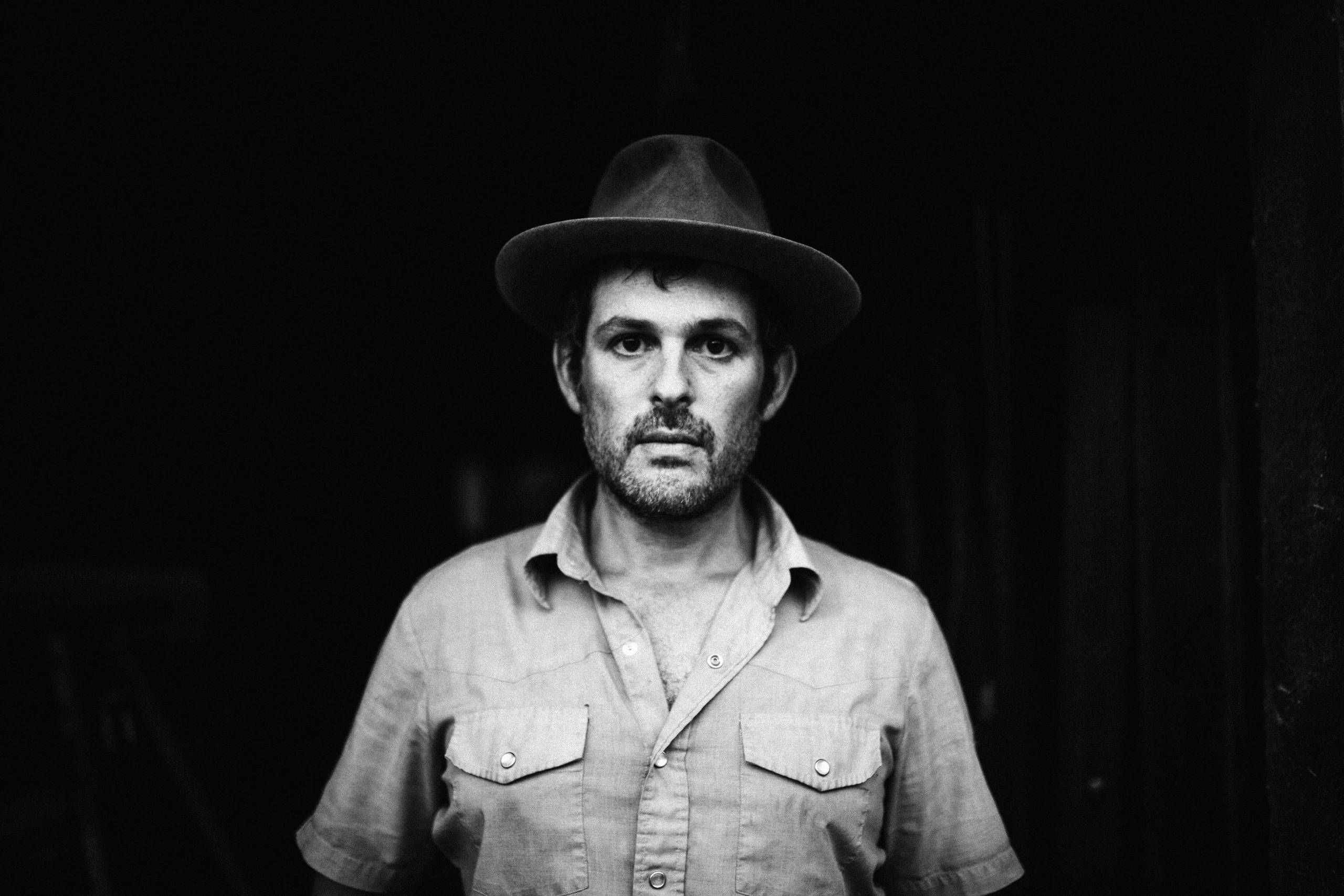
This year, it’s Gregory Alan Isakov, the singer-songwriter who was born in South Africa and raised in Philadelphia.
Isakov now lives on a farm he owns outside Boulder, Colo., where he grows organic salad greens and root vegetables — and records roots music songs, like those on his 2023 album Apaloosa Bones, in his home studio.
The announcement of Isakov’s PMF shows — which will feature openers Cailoa on Oct. 12 and Madi Diaz on Oct. 13 — couldn’t be made until he was done playing with the Philly Pops at the Highmark Mann on Friday night. He also was scheduled to perform with the Philadelphia Orchestra at the Saratoga Performing Arts Center in New York state on Saturday.
This year’s PMF performers — who will raise money for Philly music education organizations including Rock to the Future, Settlement Music School, Beyond the Bars, and Key of She — include Mo Lowda and the Humble, RJD2, Wax Jaw, Sweet Pill, Owen Stewart, Roberta Faceplant, Sug Daniels, Marietta, the Dillinger Escape Plan, and Immanuel Wilkins.
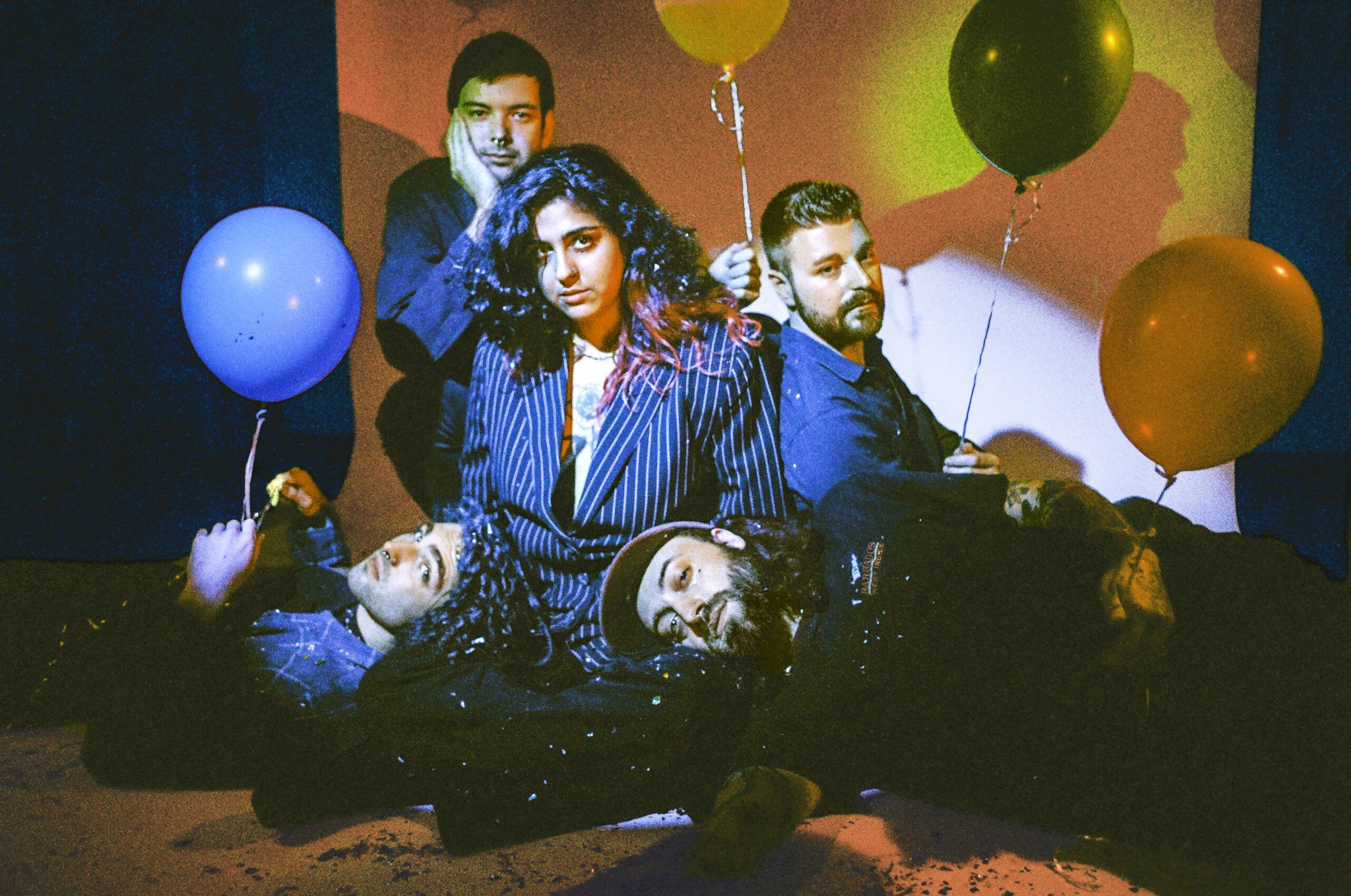
Philly band Sweet Pill plays Philly Music Fest in October. Their new album is “Still There’s a Glow.”Juliette Boulay
The fest includes nine showcases in six clubs over seven nights. Tickets to each event are sold separately, and available now for Isakov and all other shows at phillymusicfest.com.
We know who King LeBron James is. But LeBoul James? He’s one of us.
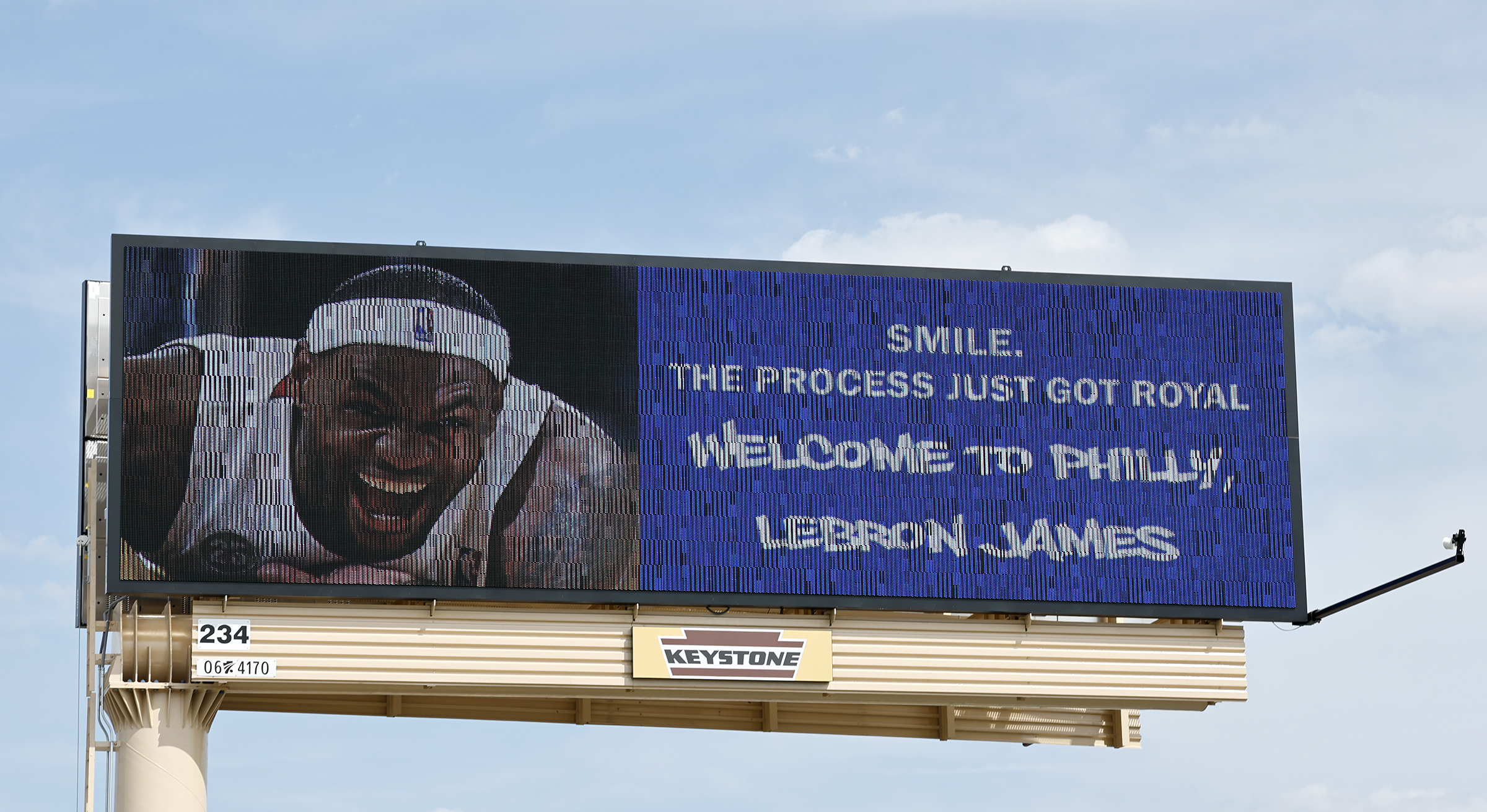
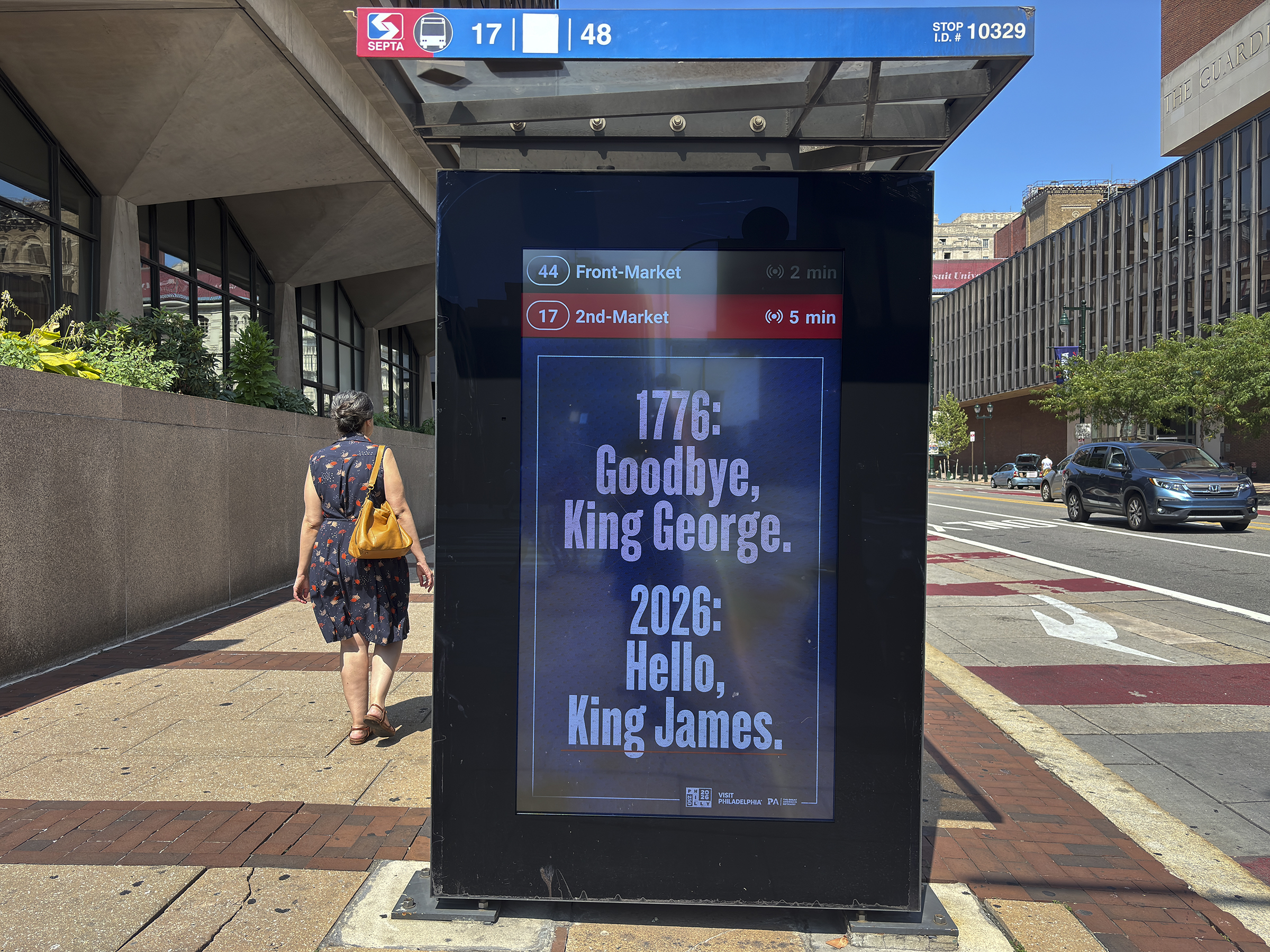
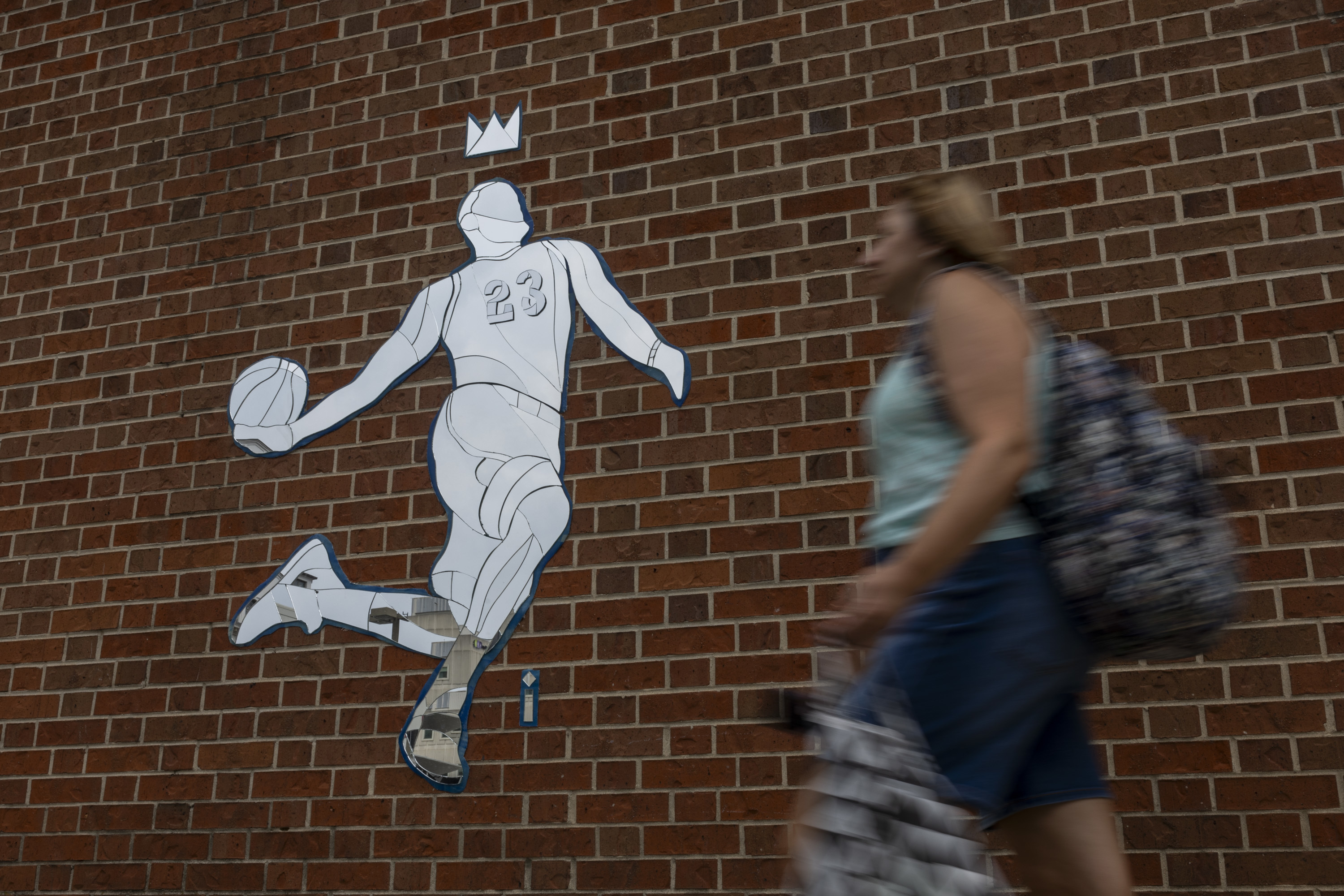
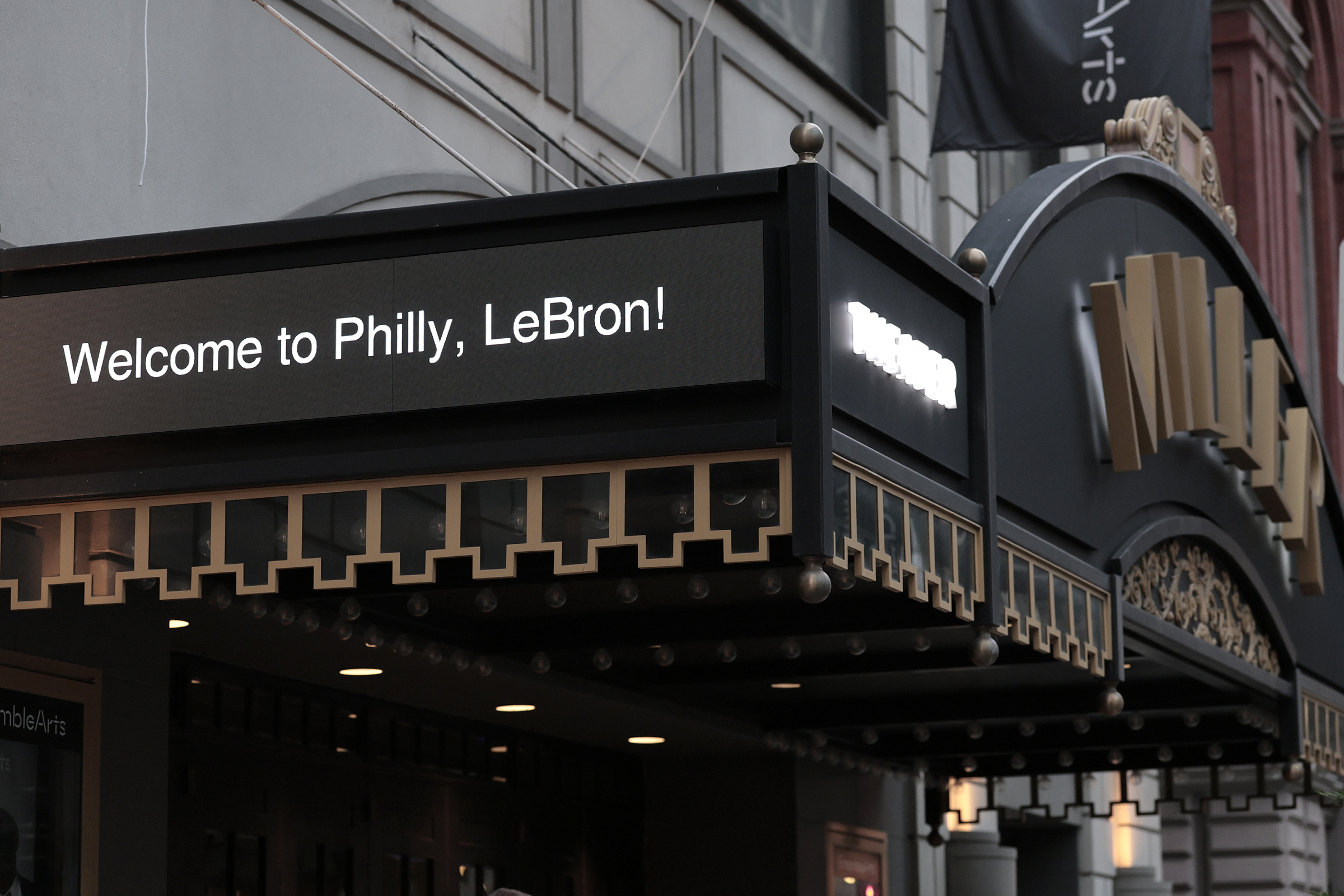
Mere hours after James announced he was signing with the Sixers, Philadelphia fans started honoring him with public artwork, billboards, merch, sunburned backs, and his own state-designated day.
But among fans’ biggest gestures of goodwill is trying to find James a Philly-coded nickname.
“I like LeJawn. It’s so Philly,” said Saleem Lewis,owner of clothing label What Happened to Love and a Frankford native.
Lewis said the rush to give James a local nickname reflects the NBA superstar’s natural kinship with Philadelphians.
“If you’re not from here, you might not get it. But the jokes are all out of love,” he said.
“I like the one I came up with, ‘Abdul Maalik James,’” said social media creator Jamaal Thomas, who created an AI image of James wearing a thobe and kufi.
A billboard welcoming LeBron James along Packer Avenue, in South Philadelphia on July 24, 2026.Yong Kim / Staff Photographer
Anothermoniker doing the rounds on social media is “LeIbrahim Muhammad.”
The root of the nicknames and ensuing AI-generated memes is a fusion of hip-hop and Muslim cultures. These two elements are deeply embedded in the fabric of the city’s Black community, as evidenced by the influence of rappers like Freeway, Beanie Sigel, and PnB Rock, who “weaved the imagery, religious symbology, and practice of Islam into their lyrics,” said James Peterson, professor of literature at Delaware State University and host of Evening WURDs.
Within this meme and nickname multiverse, Philly slang like jawn and boul — both with roots in the city’s African American Vernacular English — coexists with Black Muslim content creators throwing in names like Ibrahim and Abdul. The result is a high form of welcome extended to the King of the Hardwood from the City of Brotherly Love.
A welcome sign for new Sixers LeBron James on a SEPTA bus shelter along Market Street in Center City on Saturday, July 25, 2026.Yong Kim / Staff Photographer
“This is part of the reason the memes resonate with Philadelphians because whether you’re Muslim or not, the culture of Philadelphia is Islamic,” Peterson added. “You can’t go through places like Malcolm X Park or other areas of Philly without seeing the accouterments of the Islamic faith all around us. It’s not just the mosques; it’s the brothers and the sisters in the streets. It’s in the air in Philadelphia.”
Also,as Lewis points out, “Philly embraces people who work, compete, and don’t back down. LeBron has been doing that for over 20 years.”
A passerby is seen with a mosaic of LeBron James on Eighth and Market Streets in Philadelphia on July 28, 2026.Tyger Williams / Staff Photographer
The ‘Philly beard,’ a thobe, and LeIbrahim Muhammad
For West Philly native Max Johnson Dugan, a visiting professor of Islam at Trinity University, the memes highlighting Philly’s Black Muslim culture through James, who is a Christian, are a “brilliant” balance of humor and “self-seriousness.”
“I’ve prayed next to people, packed food boxes, and volunteered at parks, or been in dialogue with folks who are dressed like those memes,” he said. “To me, it’s a beautiful thing that people can chuckle about this and live in a way that’s serious and significant to them.”
Dugan said James’ beard may be familiar to Philly’s Black Muslims because it resembles a style many followers believe was donned and ordained by the Prophet Muhammad. It’s commonly known as a “Sunni” or “Sunnah beard” in Philly, and those outside of the city call it a “Philly beard.” Dugan said it’s possible content creators saw the similarity between James’ beard and others by practicing Muslims, and “put two and two together.”
The Miller Theater in Philadelphia welcomes LeBron James on July 29, 2026.Elizabeth Robertson / Staff Photographer
The memes may be fabricated, Peterson said, but have a “kernel of truth,” that James is coming into a “Black Islamic world.” The doctored images of James in a kufi and thobe, shared by the likes of educator, author, and media personality Marc Lamont Hill and hip-hop artist D Sturdy, acknowledge James as a Philly guy, one of us, even before he steps foot in the city.
“LeBron coming to Philadelphia means that all of Philadelphia embraces him. And that also means one of the largest Black Muslim populations [in the U.S.] and one of the most distinct Black Muslim cultures is embracing him, too,” said Peterson.
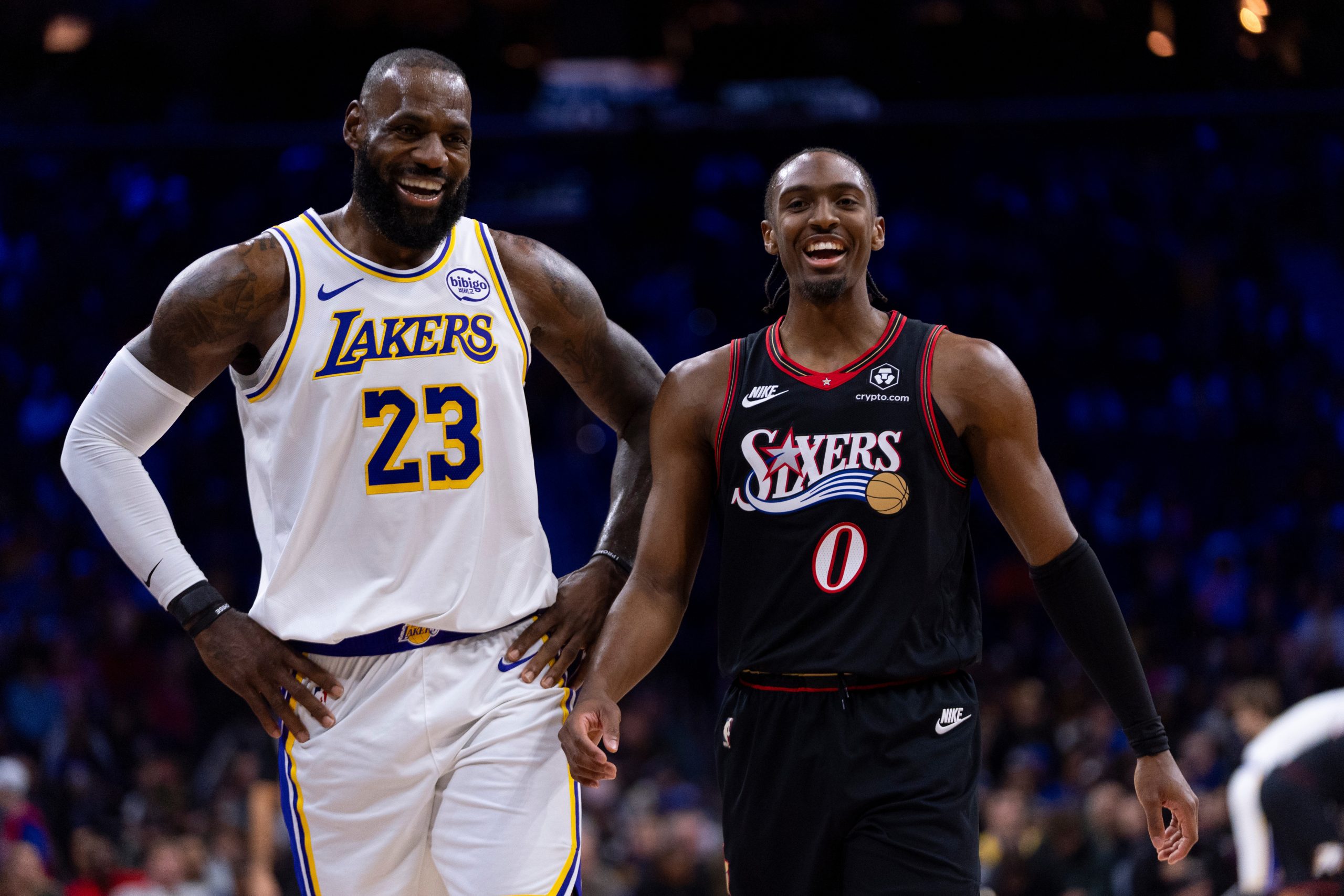
The Los Angeles Lakers’ LeBron James shares a laugh with Philadelphia 76ers’ Tyrese Maxey during a game on Dec. 7, 2025, in Philadelphia.Chris Szagola / AP
For Dugan, the memes are interesting in the way newly-traded star Jaylen Brown, who is Muslim and has traveled to Mecca to perform Umrah, hasn’t been welcomed with similar nicknames or memes in the same breath as James.
“I don’t want to speculate,” Dugan said, “I would say it points to [James’] visibility and significance. It’s funnier to share a meme of [James in Muslim traditional wear] than it is to share a meme of [Brown].”
“It has irony and tongue and cheek-ness,” he said.
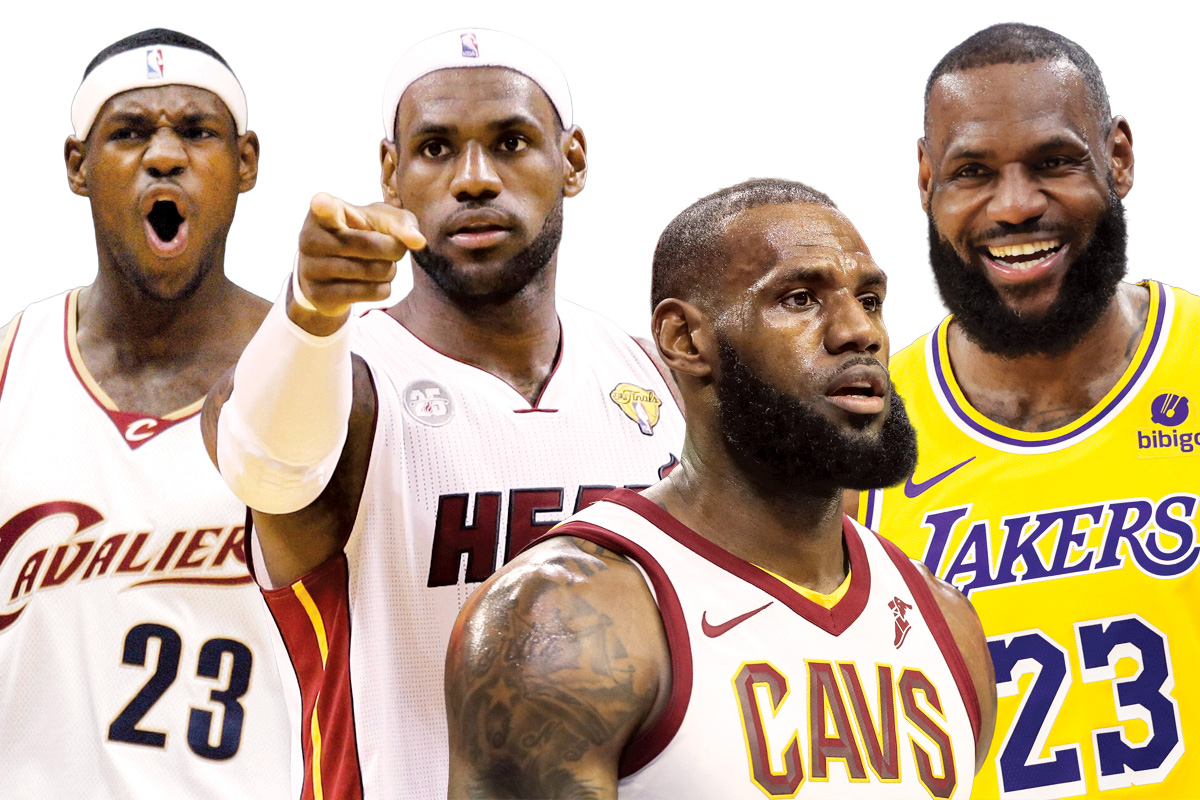
Photo collage of LeBron James throughout his NBA career.John Duchneskie
LeBoul James, the NBA champion
North Philly-native Salim Weldon, co-owner of Whimsicle fruit pops, is confident James will live up to the name of “LeBoul,” another nickname that has appeared under scores of AI-generated social media posts.
Some show James ordering at a Wawa, some have him astride dirt bikes and four-wheelers, and some show him standing outside of “papi stores” — a friendly term used by Black Philadelphians for corner stores often operated by Latin American men.
The Philly word boul meaning boy, is a word James is already familiar with, thanks to his friend and North Philly-native Kevin Hart. The Sixer even said it in a recent Instagram post with the actor, who was giving his friend a crash course in Philly-isms while the two were golfing.
“We’re going to help [James] with a Philly barber to make sure that he keeps his beard a certain way,” Weldon joked. “And as you can see, he and Kevin Hart are close, so he will help him get that Philly swag.”
Quincy Harris, a Germantown-raised media personality and former host of The Q on Fox 29, said the early reactions are because of the championship dreams James helps Philadelphians imagine.
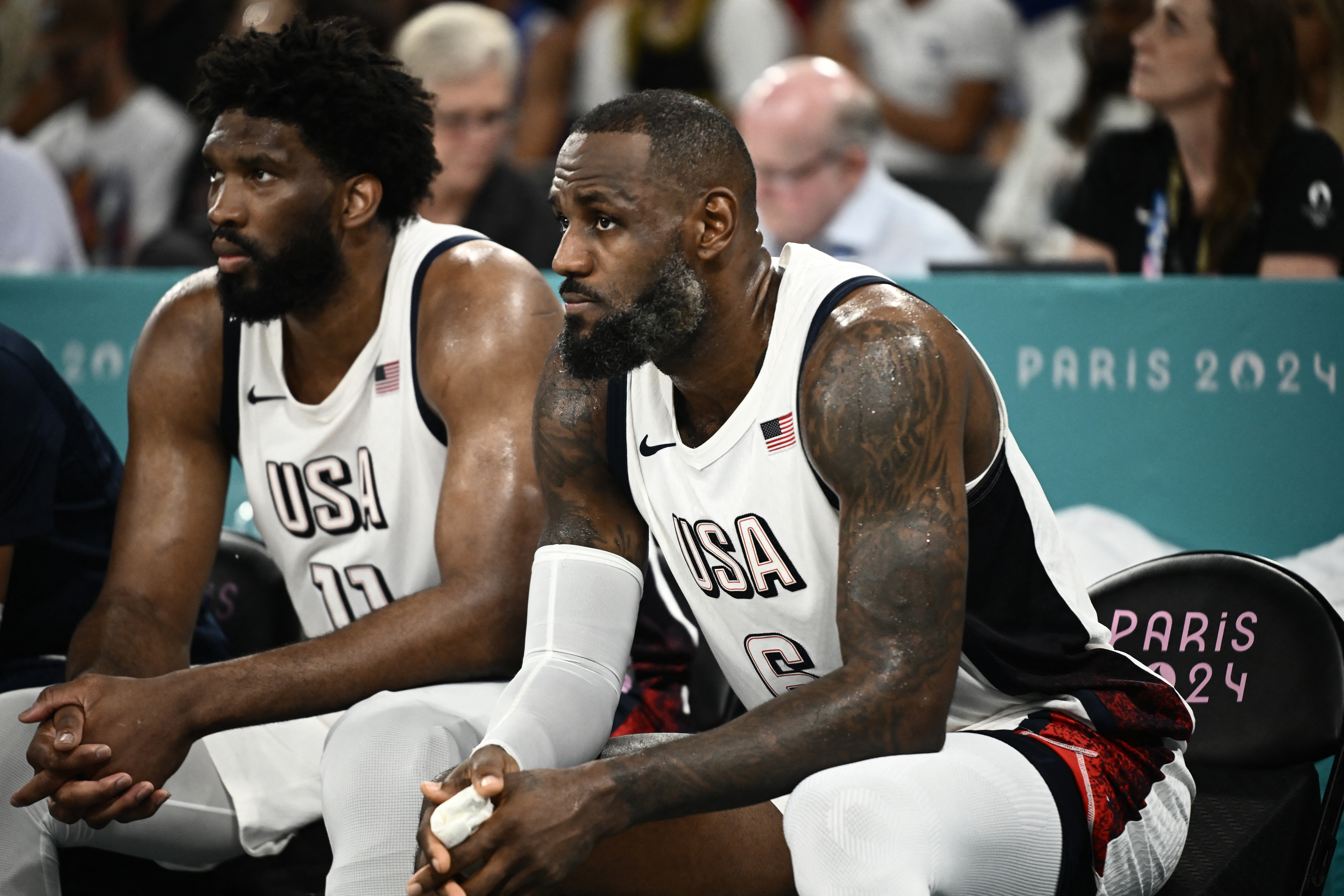
USA’s #11 Joel Embiid (left) and #06 LeBron James react from the bench in the men’s semifinal basketball match between the USA and Serbia during the Paris 2024 Olympic Games on Aug. 8, 2024. (Photo by Aris Messinis / AFP via Getty Images)AFP via Getty Images
“He’s a top five player to ever play the game of basketball,” he said. For him, the energy James sparked is reminiscent of the Allen Iverson era in the late 1990s and early 2000s.
Peterson doesn’t quite agree. For him, Iverson remains the “archetype of a Philadelphia athlete.” Plus, can LeBron James truly ever be LeBoul, if he doesn’t live in the Philadelphia region?
“Philadelphia fans want to hold you close. They want to see you walking around and moving around in the community,” he said, while acknowledging that James’ signing has brought a new level of excitement to Philadelphia.
“I think that energy is just going to be injected back into the city. It’s going to be a great time,” Harris said, adding that he won’t “cosign” the trending nicknames.
But there’s one he thinks will resonate with Philadelphians the most.
Rush didn’t waste any time before making things emotional.
Just one song into their nearly 2½-hour set on Friday night, bassist and frontman Geddy Lee stepped to the mic to take care of some business. “Before we move along, there’s something about this city that I need to pay tribute to,” he told the sold-out Xfinity Mobile Arena, proceeding to dedicate “The Spirit of Radio” to the late Pierre Robert, the beloved WMMR host who died last year.
The heartfelt encomium was in keeping with the tone of the evening, far more bittersweet than your usual triumphant comeback. The band last appeared on the same stage in 2015, when the venue was still known as the Wells Fargo Center, its lengthy absence owing to the loss of drummer Neil Peart from brain cancer in 2020.
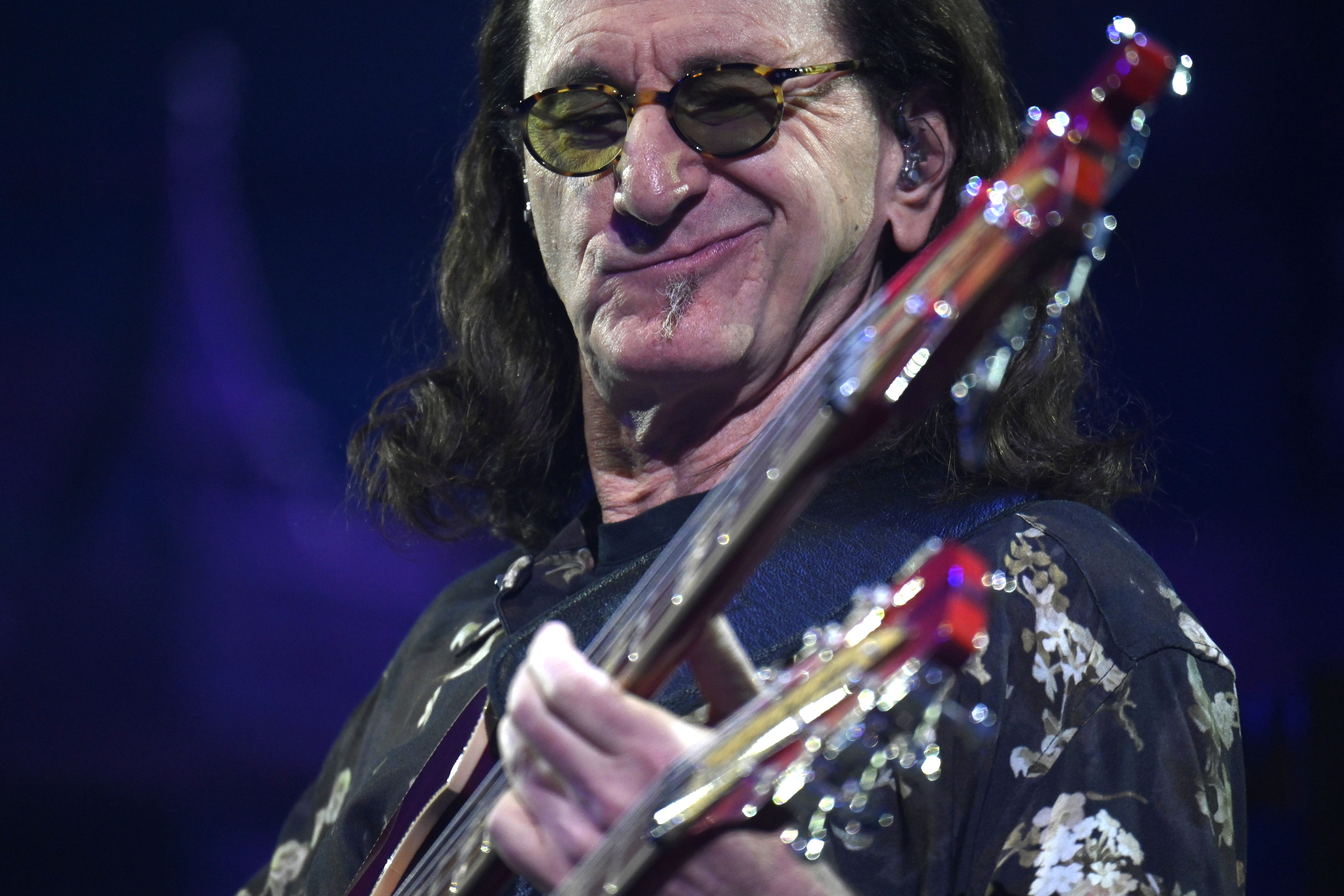
Bassist Geddy Lee of Canadian rock band Rush performs onstage during their ‘Fifty Something’ reunion tour at Xfinity Mobile Arena in Philadelphia on Aug. 21, 2026.Bastiaan Slabbers / For The Inquirer
The “Fifty Something” Tour, which makes its second stop at the arena on Sunday, was framed as a tribute to the revered drummer and lyricist as much as a celebration of the band’s history. Introducing “Freewill,” from 1980’s Permanent Waves, Lee spoke about the philosophical nature of many of Peart’s lyrics, choking up as he mentioned the topics of “loss, recovery from loss, and love.”
This Canadian wake was decidedly of the raucous Irish variety, though, as the poignant videos and heartfelt dedications proved to be brief interludes amid an overwhelming sense of joy.
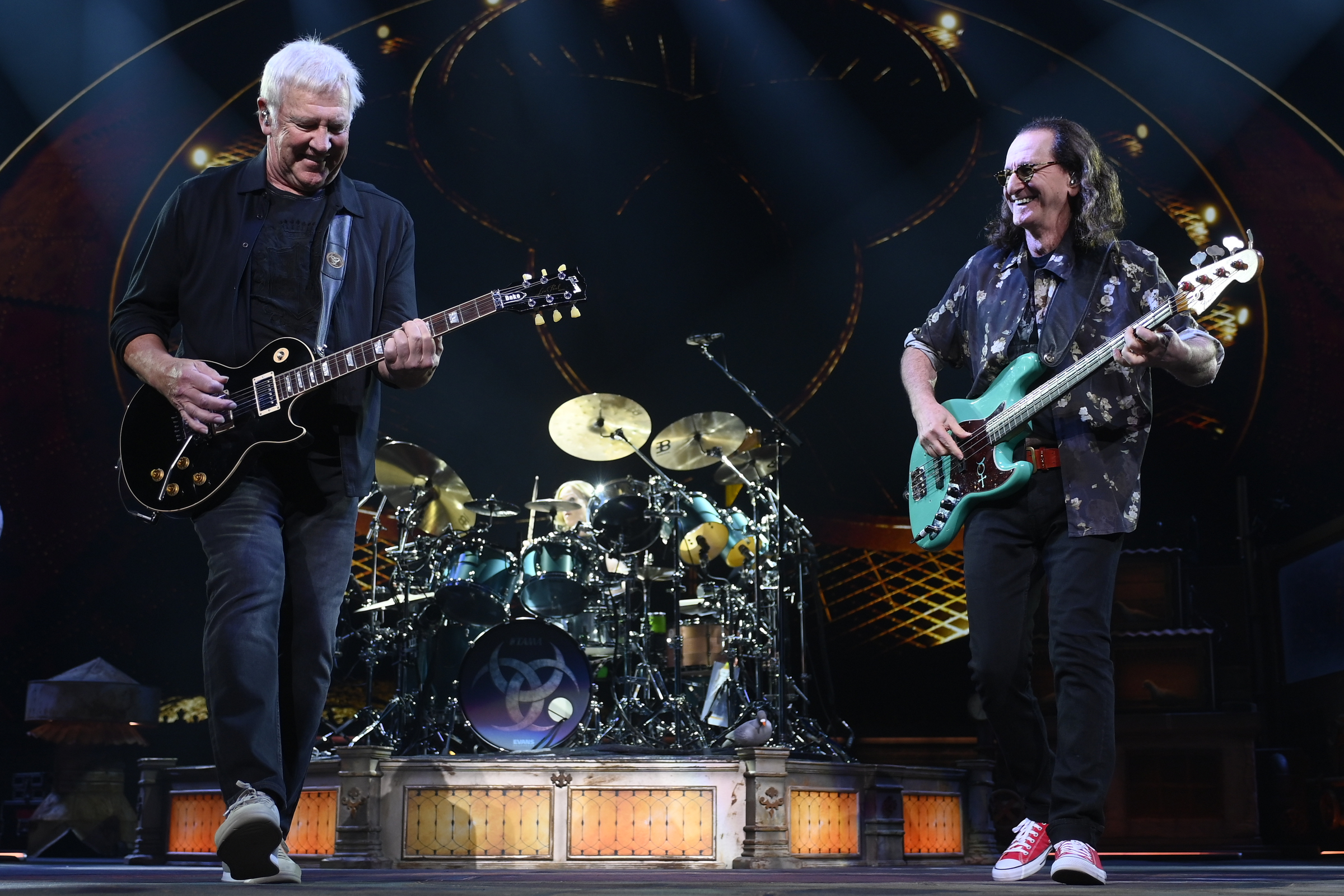
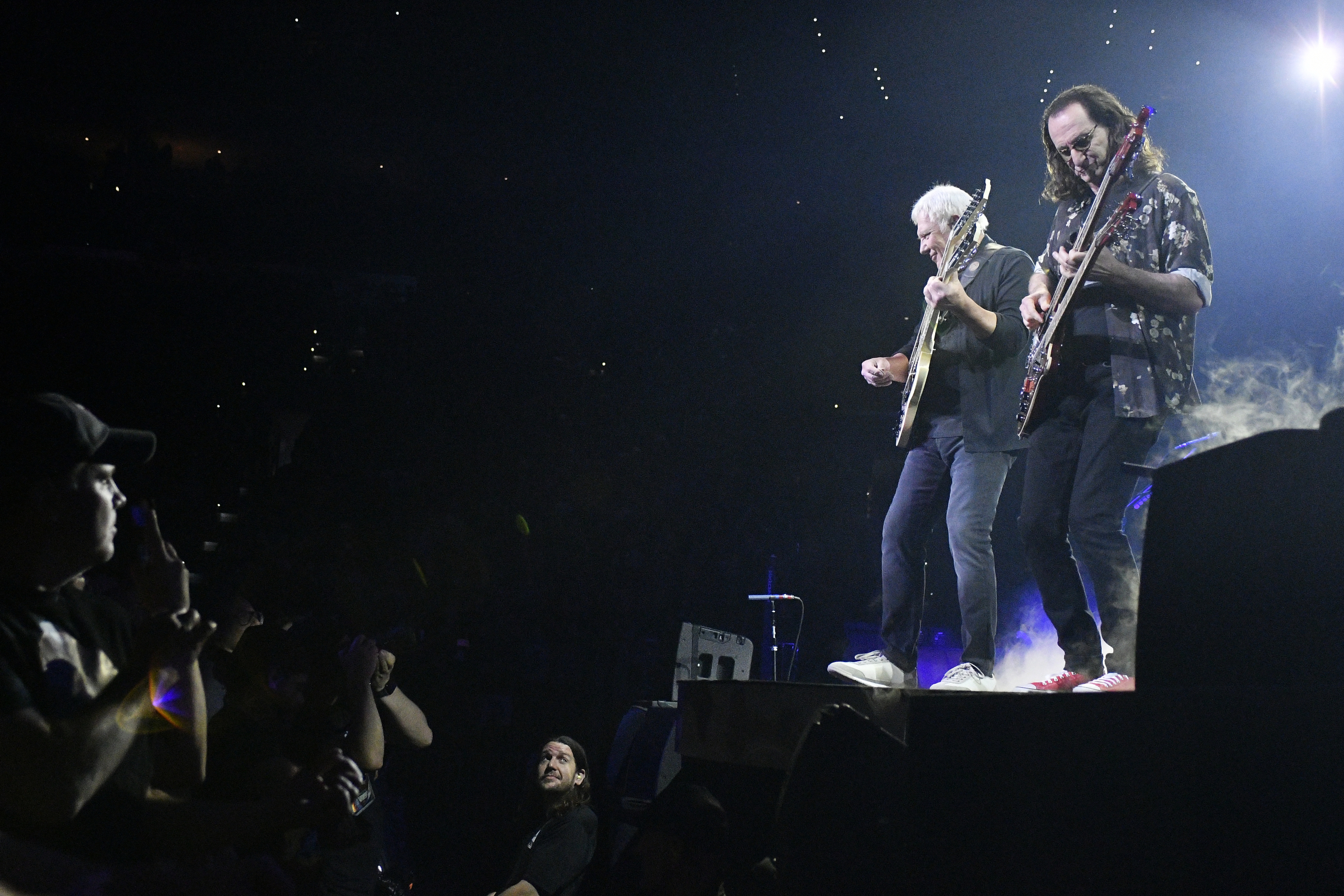
The 70-somethings Lee and guitarist Alex Lifeson are lifelong friends, and their playful interactions often feel like they are reverting to childhood, albeit at the same time pulling off the musical equivalent of higher mathematics. Lee skipped and leaped across the stage with giddy youthfulness, laughing and sneaking behind Lifeson for mid-song bouts of hide-and-seek.
The bassist was downright giddy following the band’s daunting 1978 instrumental “La Villa Strangiato.”
“Man, that’s a boatload of fun,” he gushed.
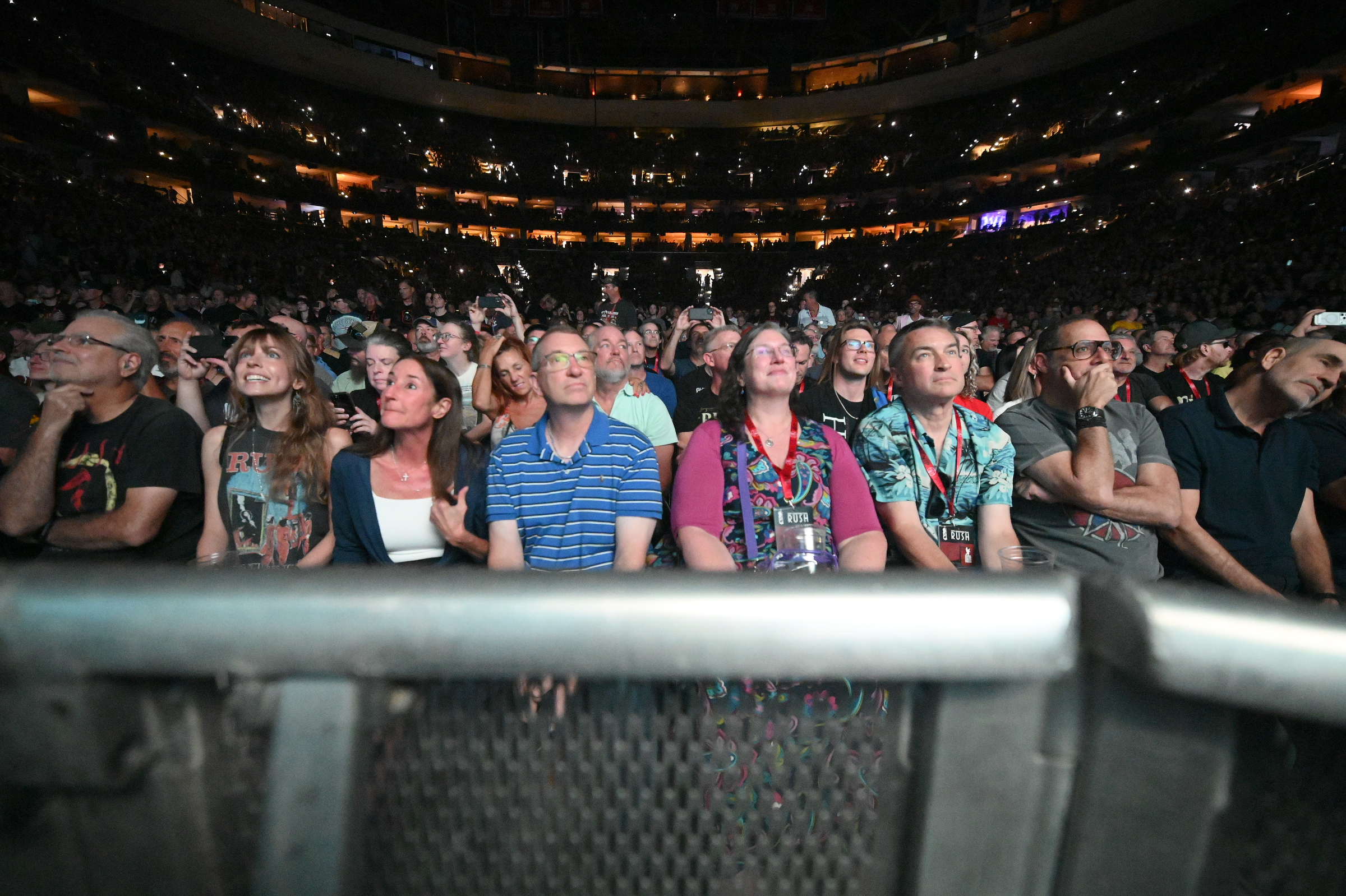
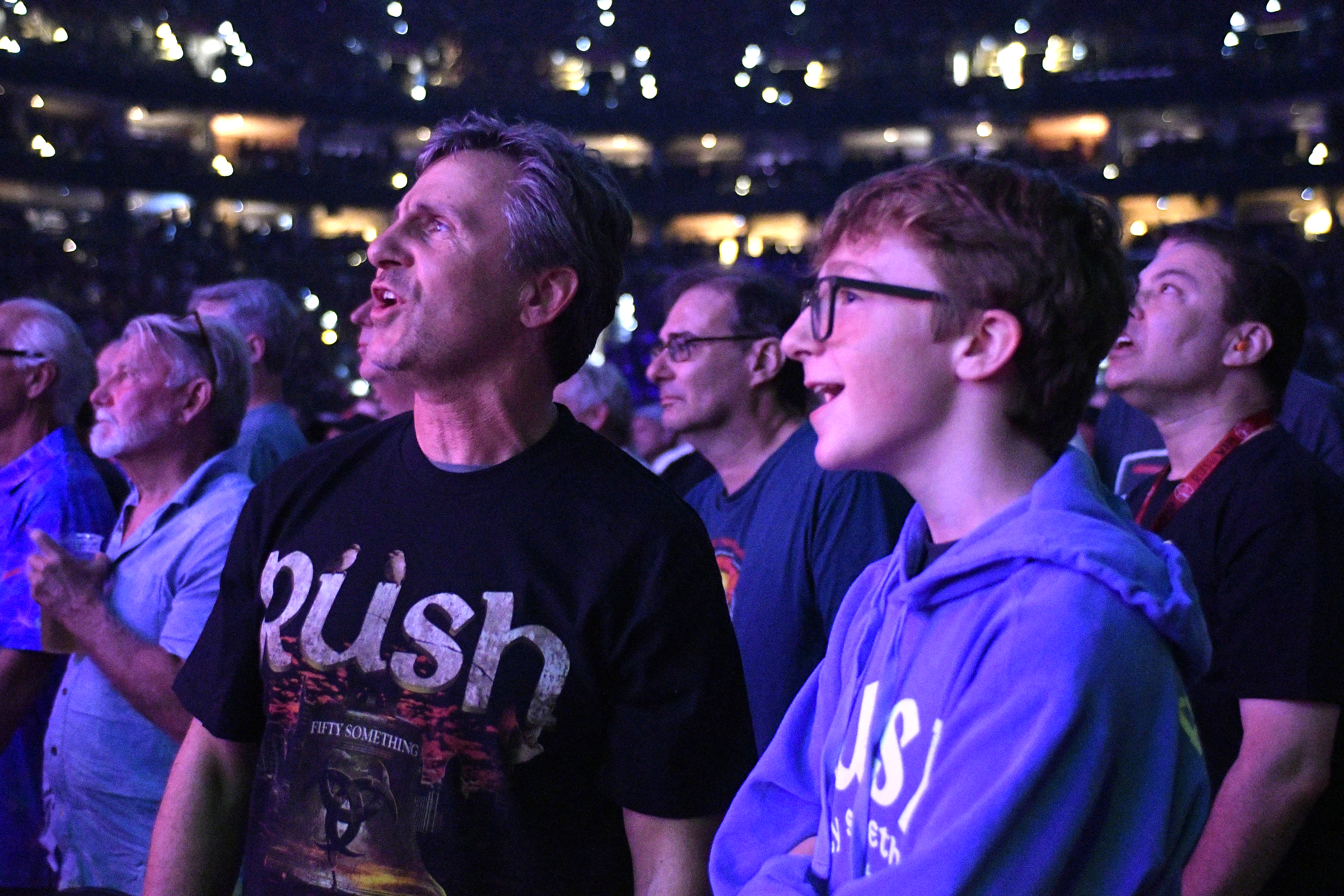
Fans of Canadian rock band Rush watch the opening film during the ‘Fifty Something’ reunion tour at Xfinity Mobile Arena in Philadelphia on Aug. 21, 2026.Bastiaan Slabbers / For The Inquirer
Rush’s return to performing after more than a decade was clearly a source of rabid anticipation for the Philly faithful, the vast majority of whom had shrugged off the usual taboo about wearing the T-shirt of the band they had come to see.
But the band, almost as well-known for its offbeat sense of humor as for its complex time signatures, decided that if one of the most dedicated fan bases in rock could wait 11 years, they could wait just a bit longer.
When the lights went down, the crowd’s ovation was answered by a six-minute video in which the septuagenarian rockers mocked their own longevity.
Fans of Canadian rock band Rush react during the ‘Fifty Something’ reunion tour at Xfinity Mobile Arena in Philadelphia on Aug. 21, 2026.Bastiaan Slabbers / For The Inquirer
Following a Citizen Kane-inspired crane into a foreboding retirement community (“The Villas of Strangiato,” naturally), the camera follows a Wonka-like trio of curiosity seekers on a quest to find Rush. Along the way they find Lee and Lifeson in outlandish costumes and silly accents as, respectively, a “slightly used sausage” vendor and a doughnut-hoarding ex-general, and transformed into a pair of animated blackbirds a la Dumbo; the South Park kids as “Lil’ Rush”; and Jason Segal and Paul Rudd reprising their roles from I Love You, Man.
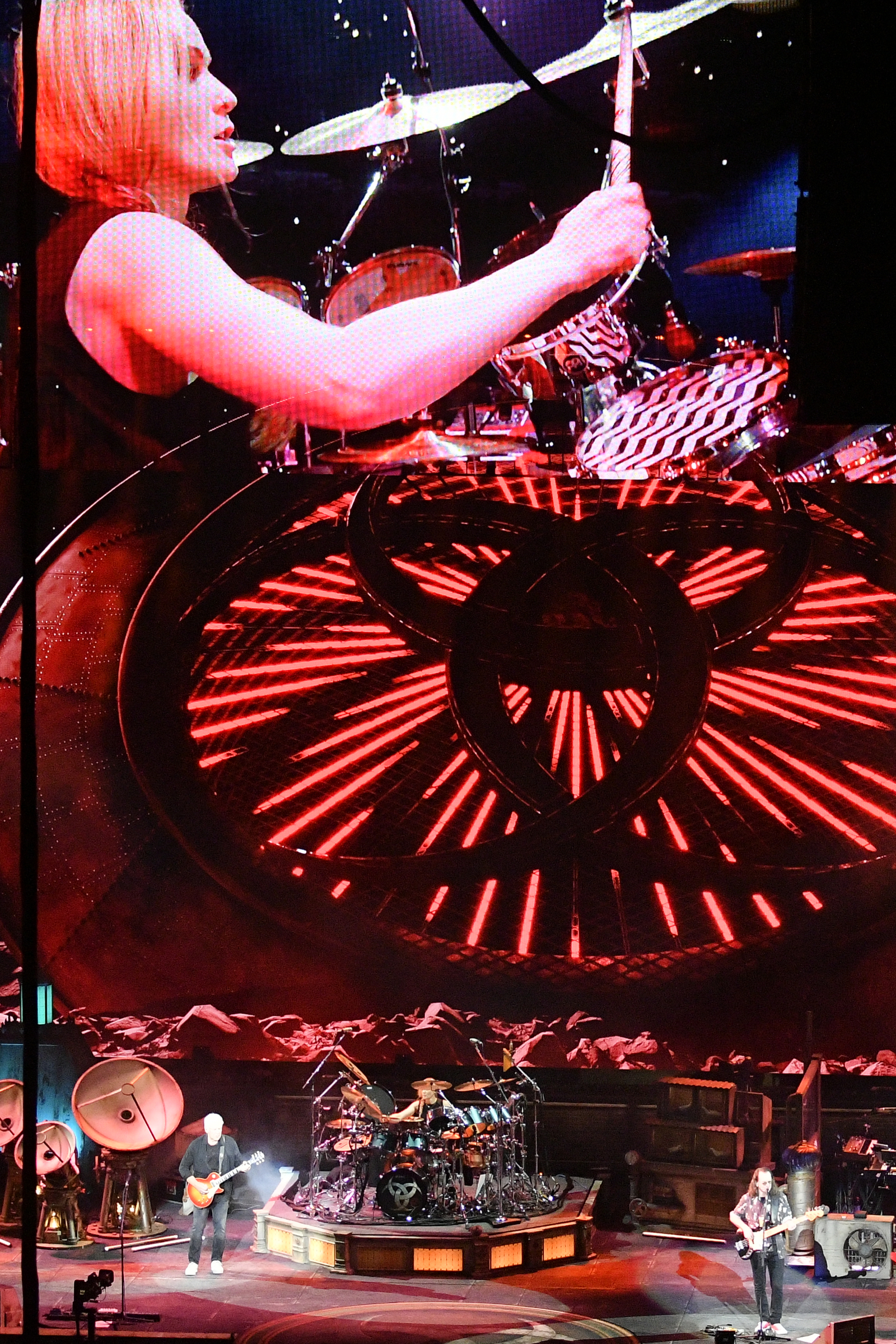
Finally the seekers discover a pair of magical robes (don’t ask), opening a portal that travels through half a century of Rush history to unveil a steampunk rooftop set and the band itself, Lee and Lifeson both spryly wielding double-necked axes and kicking off not with one of their classic rock staples but with 1977’s 11-minute epic “Xanadu.”
Guitarist Alex Lifeson, lead vocalist and bassist Geddy Lee, and drummer Anika Nilles of Canadian rock band Rush perform onstage during their ‘Fifty Something’ reunion tour at Xfinity Mobile Arena in Philadelphia on Aug. 21, 2026.Bastiaan Slabbers / For The Inquirer
Did I call the fan base “dedicated”?
True enough, but it would be at least as accurate to use words like demanding and persnickety about an audience that likes its arena rock intricate and exacting.
Lee and Lifeson arrived with decades’ worth of nostalgia-tinged goodwill behind them, meaning that the skeptics’ eyes were trained almost exclusively on the drum chair, populated for the first time by the 43-year old German YouTube phenomenon Anika Nilles.
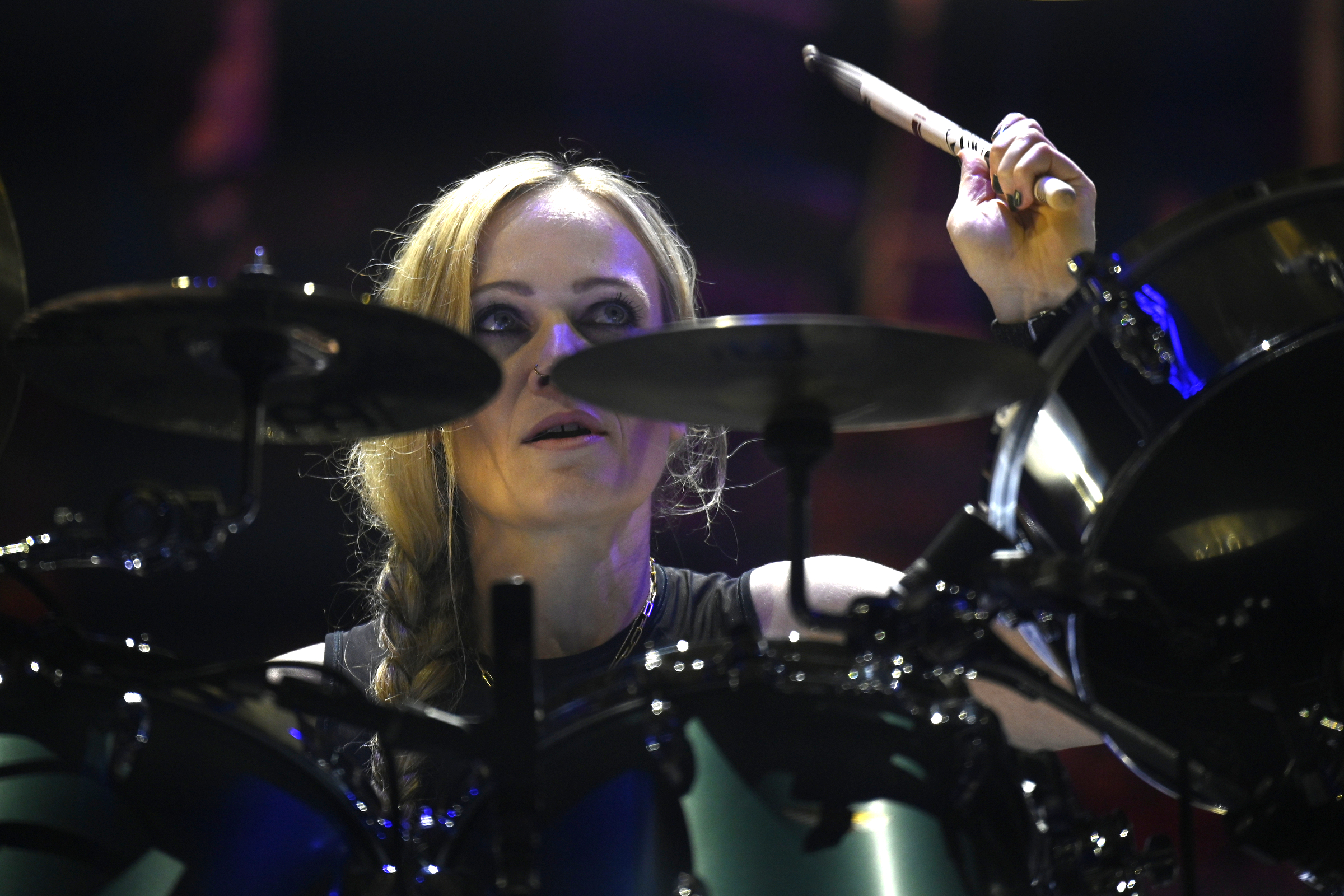
Stepping behind the drum kit of the late Neil Peart has to be one of the most thankless gigs in all of rock, but Nilles executed it thrillingly. Peart’s unique alchemy was his ability to pair his mind-boggling precision and intricacy with ebullient, almost vocal cadence.
Drummer Anika Nilles of Canadian rock band Rush performs onstage during their ‘Fifty Something’ reunion tour at Xfinity Mobile Arena in Philadelphia on Aug. 21, 2026.Bastiaan Slabbers / For The Inquirer
Nilles brought her own personality to that blend while knowing — and nailing — those iconic barrages that every fan in the place expected to hear. It was well appreciated, with the crowd roaring louder at certain drum fills in “Tom Sawyer” or “YYZ” than they did for some of their favorite singalong choruses.
For their part, the veteran members didn’t need the goodwill.
Lee was in strong voice all evening, soaring to vibrant highs on “Freewill” or “Closer to the Heart.” Instrumentally, he and Lifeson retain their exuberant virtuosity. They navigated the labyrinths of “YYZ” or the multipart, 20-minute epic “2112,” which opened the second set in its entirety, with the fervor of a teenage garage band paired with the exactitude of lab technicians.
Guitarist Alex Lifeson and lead vocalist and bassist Geddy Lee of Canadian rock band Rush perform onstage during their ‘Fifty Something’ reunion tour at Xfinity Mobile Arena in Philadelphia on Aug. 21, 2026.Bastiaan Slabbers / For The Inquirer
The musical acrobatics were obvious high points, but the concert was equally memorable for its emotional standouts — the band pouring its hearts into “The Garden,” a relatively obscure choice from its final album, 2012’s Clockwork Angels; or the highway-speed abandon and wistfulness emanating from an exhilarating “Red Barchetta.”
Rush went back to the beginning for its two-song encore, both dating back to its self-titled 1974 debut. “Finding My Way” was the show’s purest rock and roll song, while “Working Man” acknowledged original drummer John Rutsey, who died in 2008.
One last bit of mourning, one last moment of life-affirming euphoria.
Rush performs on its “Fifty Something” tour again Sunday, Aug. 23, 7:30 p.m., at Xfinity Mobile Arena.
The Eagles take the field for their second preseason game Saturday night, facing off against the New England Patriots at Gillette Stadium in Foxborough (7 p.m, NBC10).
After two days of joint practices against the Patriots, don’t expect either team to run out many starters. That means the next chance Birds’ fans will have to see Quinyon Mitchell covering A.J. Brown would be Super Bowl LXI at SoFi Stadium in California.
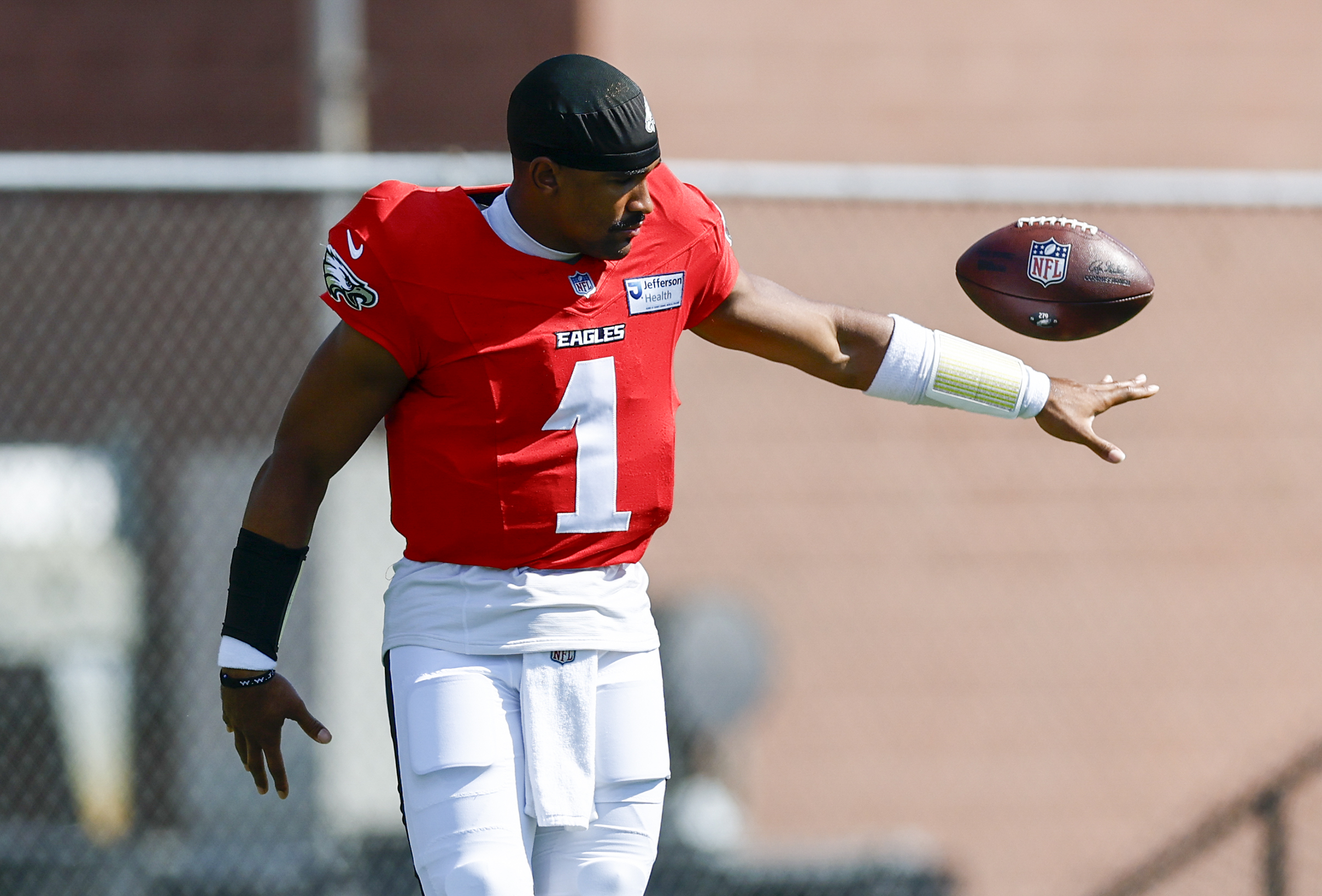
If you’re thing is in-the-weeds drama involving roster spots for fringe players, there’s a lot of keep your eyes on. That starts at quarterback, with an ongoing competition between Andy Dalton and Tanner McKee to backup Jalen Hurts.
“The Eagles don’t want to put too much of their offense on film, but they do want to make one of their backup candidates attractive for a potential trade,” my colleague Jeff Neiburg wrote after watching Dalton and McKee practice against the Patriots.
Outside of that, you’re looking at depth chart battles on the offensive line and cornerback, plus a crowded fight among wide receivers for a roster spot. Top pick Makai Lemon returned to practice this week after being sidelined with a hamstring injury, but don’t expect to see him running many routes tonight.
The Birds also re-signed wide receiver Brandon Hayes, who has been on an off the team during training camp, and placed cornerback Tariq Castro-Fields on injured reserve.
Eagles-Patriots will be final preseason game on NBC10
Jalen Hurts watches team drills during a joint practice with the Patriots. Yong Kim / Staff Photographer
Tonight’s Eagles-Patriot’s preseason game is scheduled to begin at 7 p.m. on NBC10, with Scott Graham and Ross Tucker on the call. Dave Spadaro will report from the sideline at Gillette Stadium just outside of Boston.
It’s the second and final Eagles game NBC10 will air this offseason. The Birds preseason finale next week against the Cincinnati Bengals will air on CBS, with Tucker calling the game alongside Andrew Catalon.
Regionally, Saturday’s Eagles-Patriots preseason game will air on a number of local stations, including:
The game will also air live on the NFL Network and a host of local stations across New England, including WBZ in Boston and WWLP in Springfield, Mass.
If you’re a Birds fan in Hawaii, you’re also in luck — the game will air on KHII in Honolulu as part of a 13-game preseason package.
Fans can also listen to the game on 94.1 WIP, where beloved Eagles announcer Merrill Reese is entering his 50th season calling Birds games. He’ll once again be joined by longtime partner and former Eagles wide receiver Mike Quick.
The game can also be heard nationally on SiriusXM NFL Radio.
Where can I stream the Eagles-Patriots preseason game?
Jalen Hurts and former Eagles receiver A.J. Brown spoke during joint practice Thursday. Yong Kim / Staff Photographer
Tonight’s game will be free to stream on the Eagles app and PhiladelphiaEagles.com if you live in the Philadelphia or Boston TV market.
The game will also stream in the Philadelphia market on any so-called skinny bundle that carries NBC10, including YouTube TV and Hulu + Live TV. Most offer a free trial. You can also stream it on the NBC app, but a cable login is required.
You can also watch NBC10 for free using a digital antenna if you live in and around Philadelphia. Local fans can also stream the game for free on Peacock, the NBC10 app, and on the station’s website.
Fans living outside the Philadelphia market can stream the game on NFL+, the league streaming service. It’ll set you back $6.99 a month, though there is a free seven-day trial.
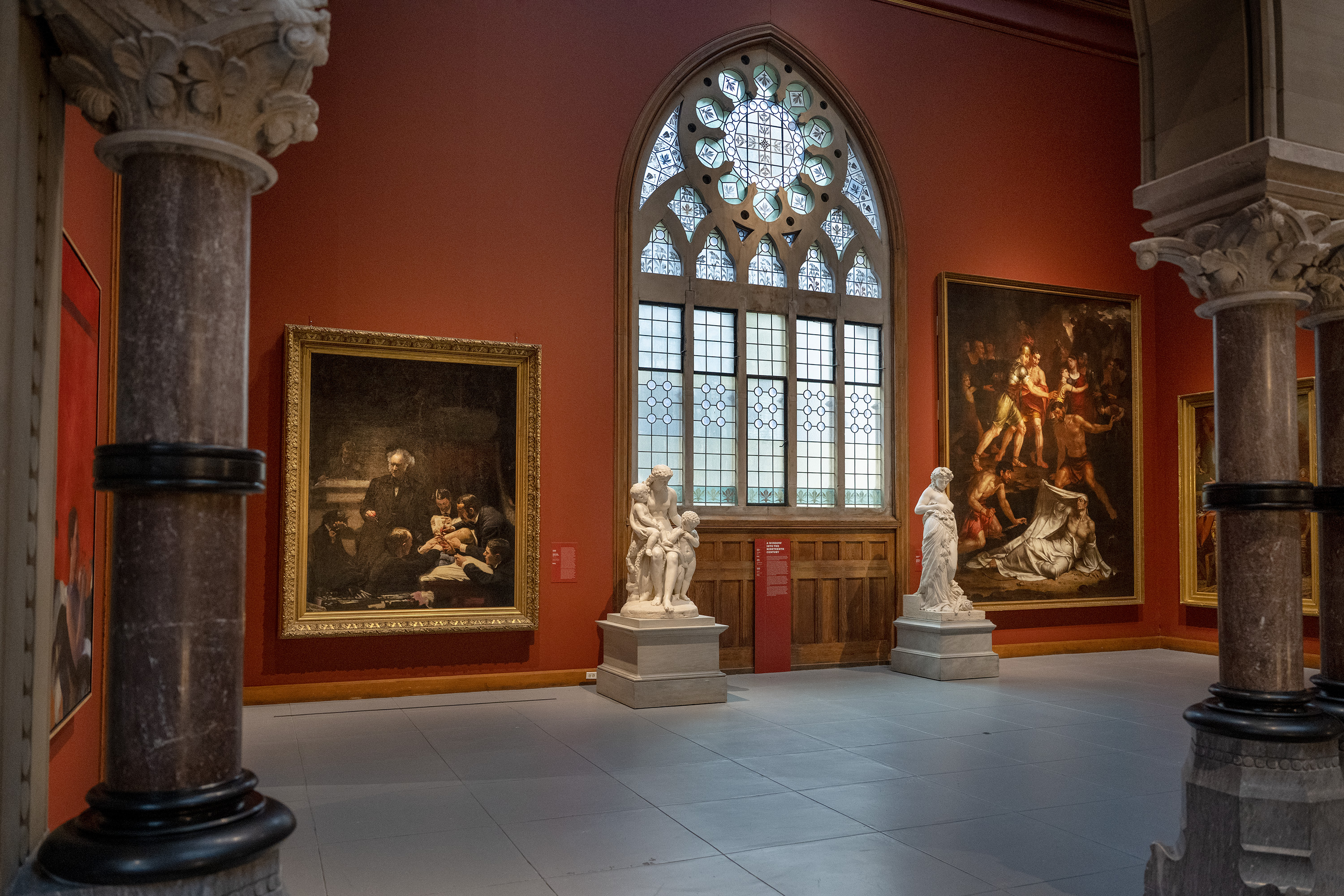
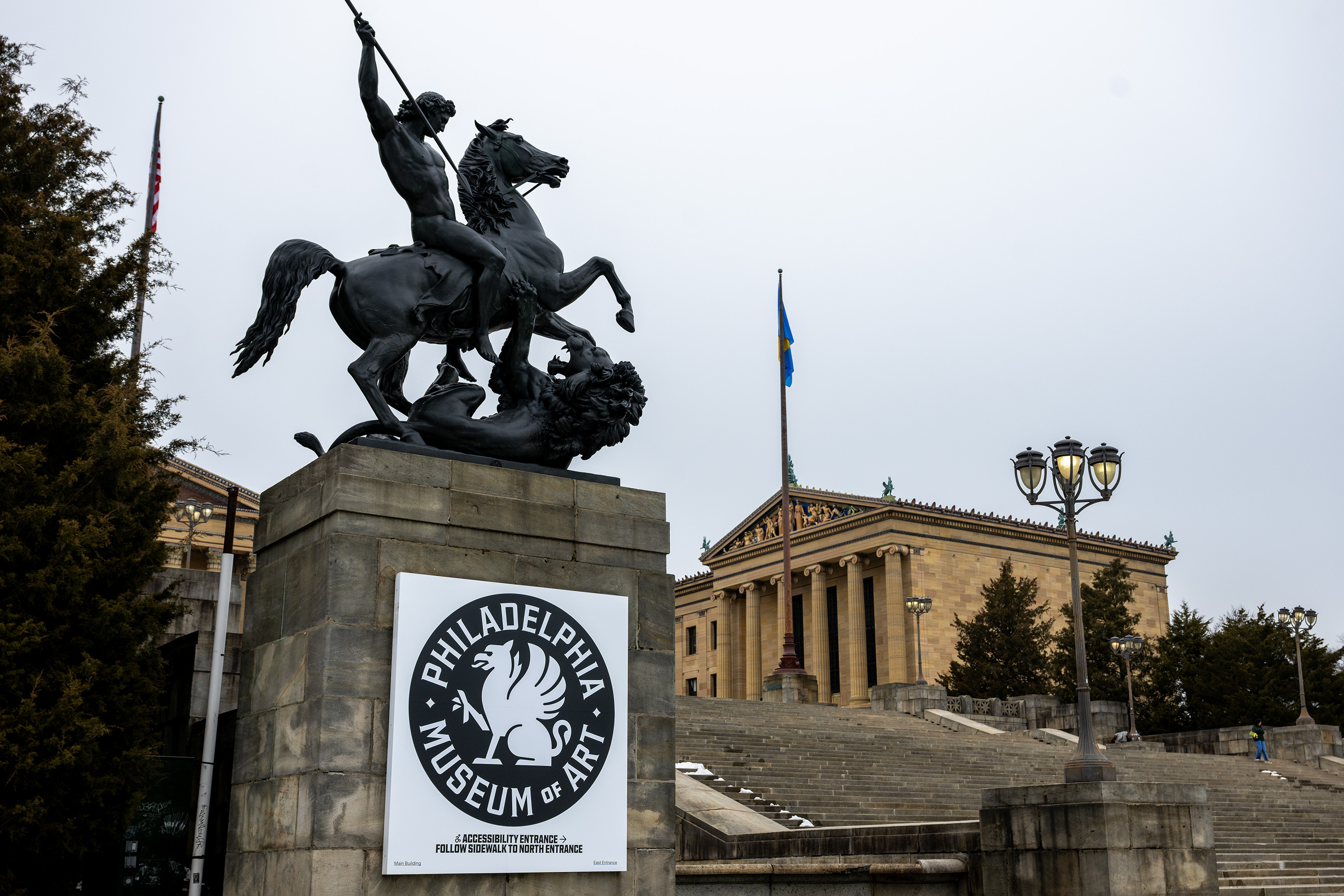
One painting stands out among the stately portraits, vast landscapes, and elaborate tableaux of figures in the Philadelphia Museum of Art’s early American art galleries.
And not just for its size.
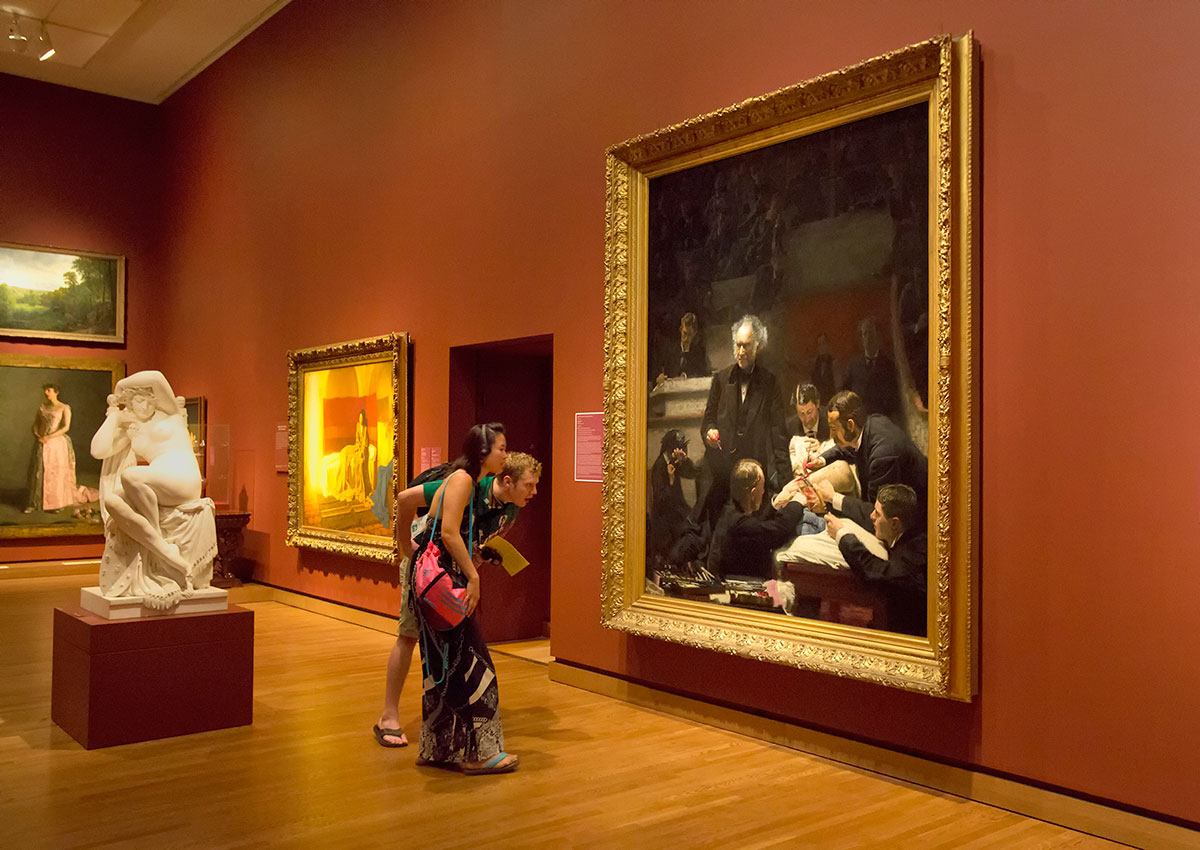
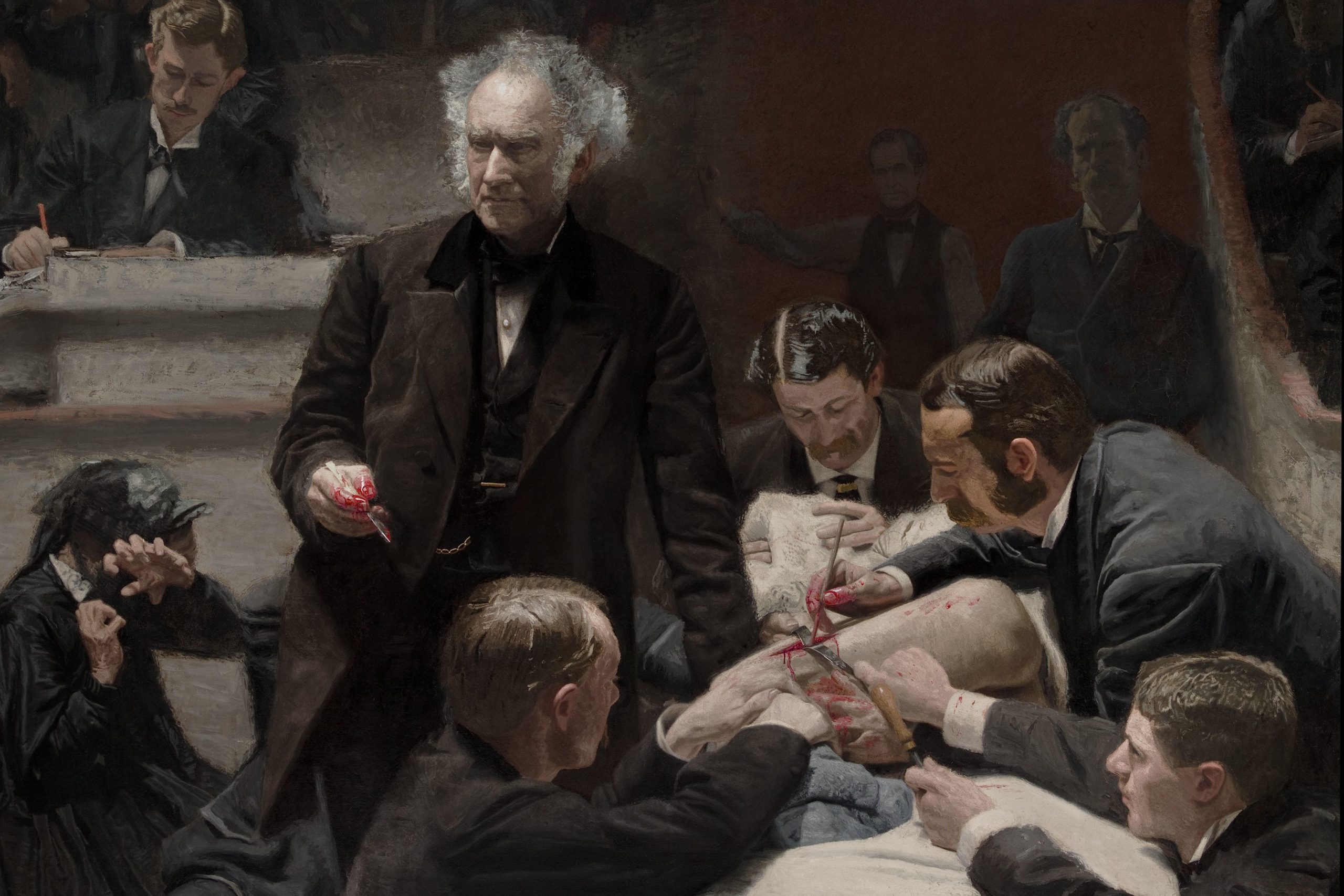
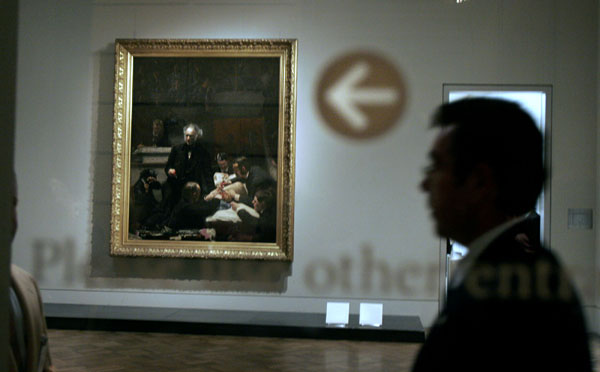
In the 8-by-6.5-foot oil painting, a stern-looking man with fluffy gray hair stands next to an operating table. A crowded amphitheater watches him and a group of doctors operate on a boy’s leg. The wound, their hands, and their scalpels are covered in bright red blood.
A detail from “The Gross Clinic.” Courtesy the Philadelphia Museum of Art and the Pennsylvania Academy of the Fine Arts
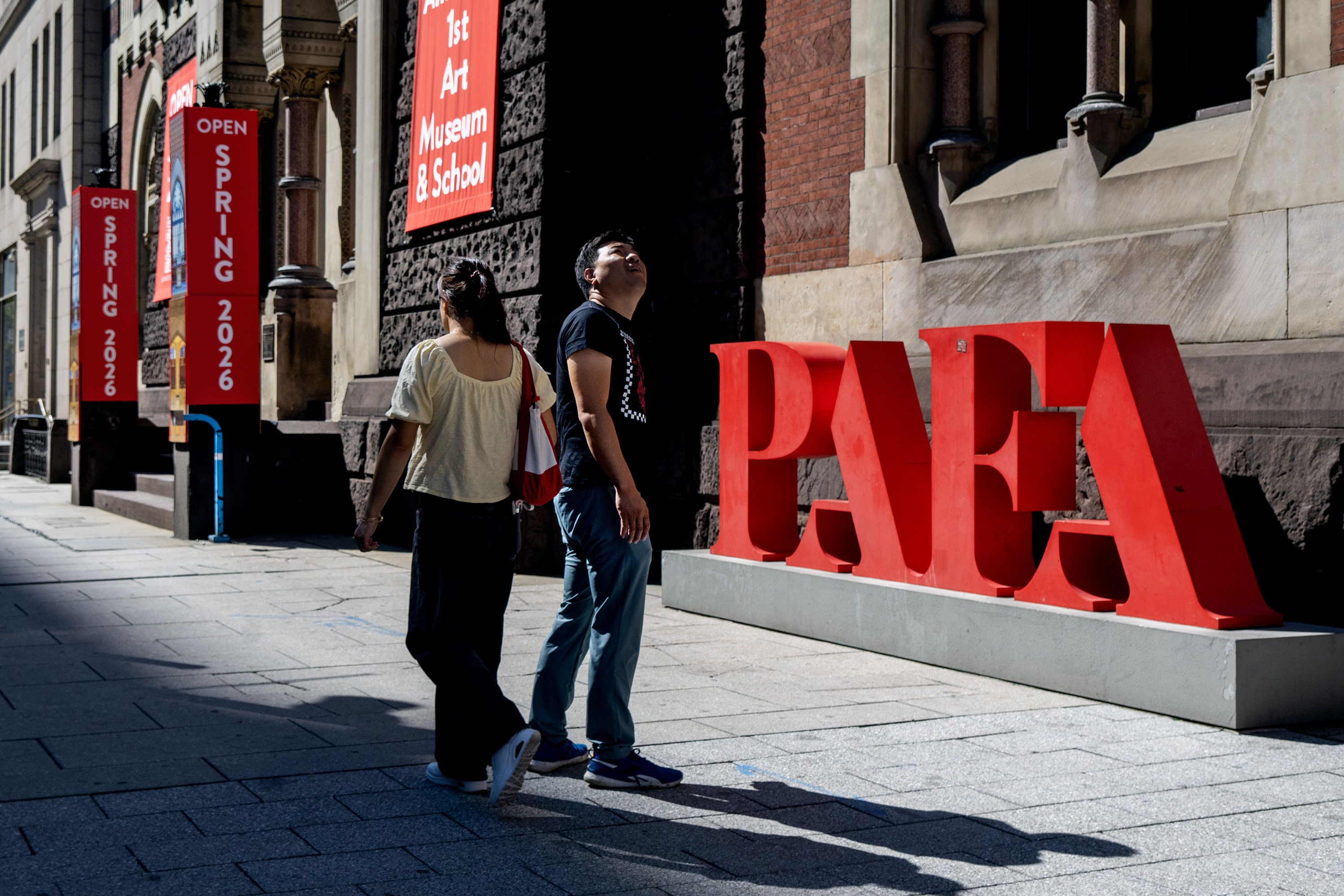
The painting is currently owned jointly by the PMA and the Pennsylvania Academy of the Fine Arts (PAFA), where Eakins studied.
But the story of the journey to that ownership is not a simple one.
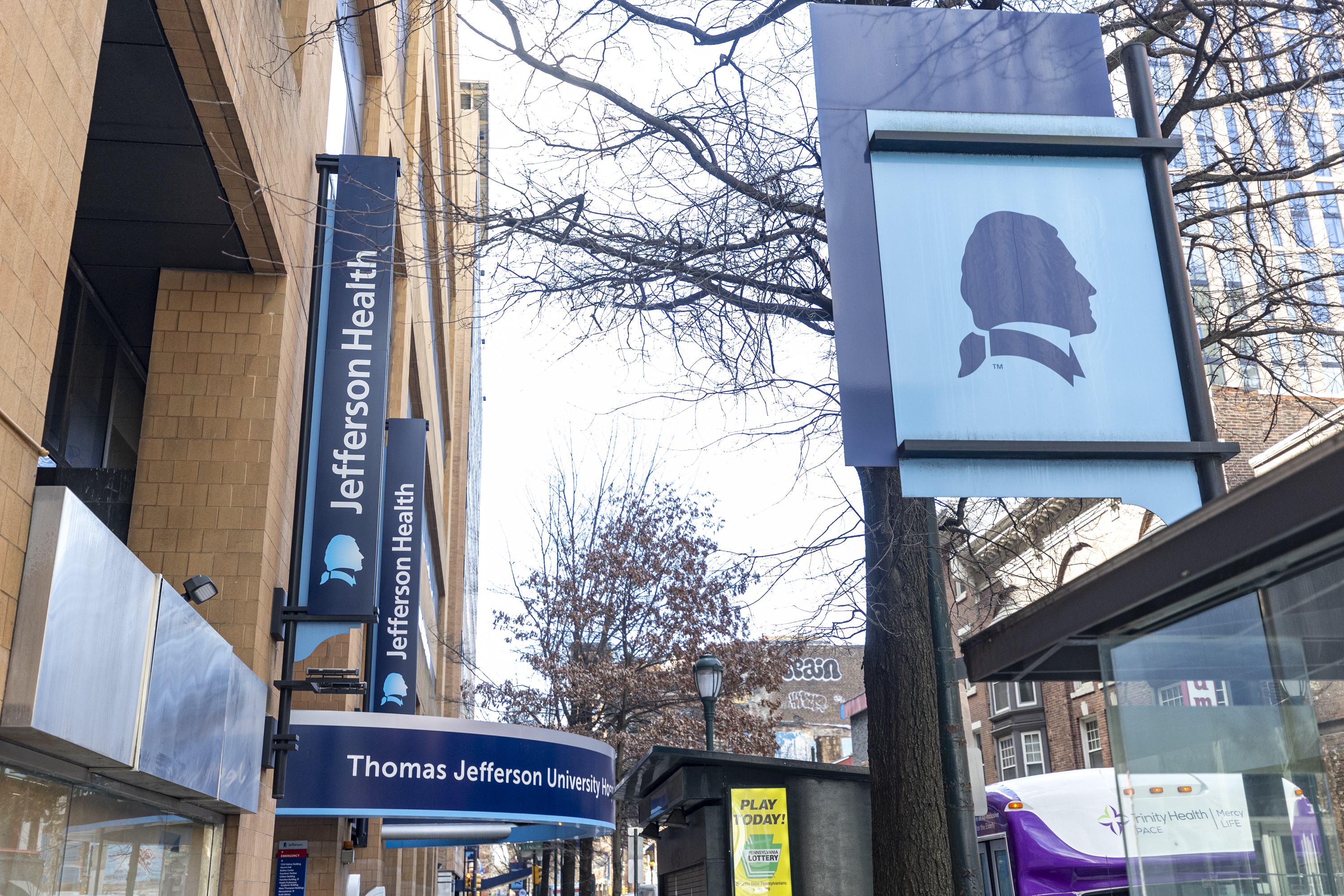
In 2006, after 128 years of displaying the painting at Jefferson, the university sold it in a surprise deal. Local institutions had 45 days to match the price: $68 million.
PMA and PAFA started a public fundraiser, and Philadelphians took swift action — no one was going to take their painting away from them.
Twenty years ago, Philadelphia almost lost The Gross Clinic forever. Almost.
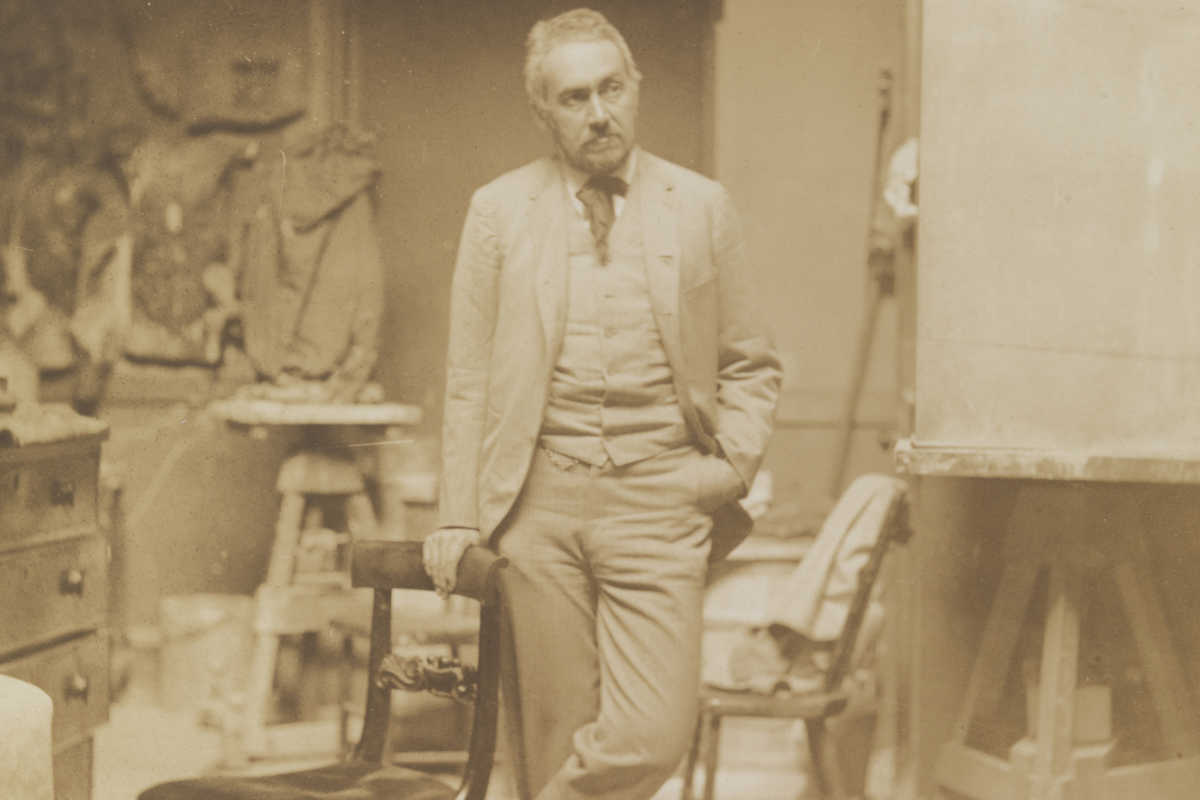
Thomas Eakins in his Chestnut Street studio.Photo taken by Samuel Murray.
The slow burn of ‘The Gross Clinic’
Eakins was incredibly passionate about the medical profession. So much so that while studying at PAFA, he also enrolled in anatomy and dissection courses at Jefferson, where Gross was teaching.
“He was very obsessed with the accuracy of the body because as a painter, knowing the human body and depicting it is the highest skill level to attain,” said Reisa Mukamal, a PMA museum guide.
In The Gross Clinic, Gross is operating on an adolescent boy with osteomyelitis, a bone infection that had previously been treated with amputation. The painting depicts the doctors performing a newer procedure for the disease involving removing the damaged bone tissue rather than cutting off the limb — a stunning medical advancement.
Works in the newly renovated Furness and Hewitt building at the Pennsylvania Academy of the Fine Arts, including “Portrait of Dr. Samuel D. Gross (The Gross Clinic)” by Thomas Eakins.Tom Gralish / Staff Photographer
“The light is shining off Dr. Gross’ head and it’s almost like your eye goes there. It’s a dark painting, and then your eye goes to his forehead, sort of symbolizing his intellect. … This is a live surgery, which was a brand new thing to paint,” said Mukamal.
Eakins was excited to show off The Gross Clinic at the 1876 World’s Fair in Fairmount Park, which doubled as a Centennial celebration and exhibition.
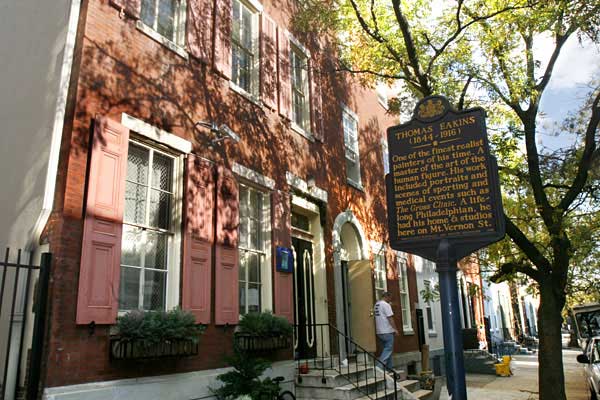
Thomas Eakins lived virtually his entire life in Philadelphia, including at 1729 Mount Vernon St. He was a student and later a teacher at the Pennsylvania Academy of the Fine Arts.Gerald S. Williams / Staff Photographer
Unfortunately for the young artist, it was perceived as too disturbing for the art jury. The painting was moved to the fair’s U.S. Army field hospital exhibition due to its medical nature. Jefferson alumni gifted it to the university two years later.
‘It belonged here’
But 128 years after receiving that gift, Jefferson made a shocking announcement. On Nov. 11, 2006, university officials said The Gross Clinic was to be sold to a museum partnership between the National Gallery in Washington and the Crystal Bridges Museum of American Art in Arkansas, for $68 million.
The money from the sale would help finance an ambitious expansion plan for the medical school.
“This is a big undertaking, a transformational undertaking, and it requires a redirection of our assets,” said Robert L. Barchi, Jefferson’s president, in a November 2006 interview with The Inquirer’s Stephan Salisbury.
Thomas Jefferson University Hospital entrance at 11th Street in Philadelphia.Tyger Williams / Staff Photographer
“We’re not a museum. We’re not in the business of art education,” he added.
Jefferson’s chairman of the board, Brian Harrison, said, “Our first obligation as trustees of the university, if we are going to release an asset like this, is to maximize value.” He acknowledged the “importance of the painting” to Philadelphia and noted that “the [Jefferson] alumni revered” it.
Once the deal brokered by the auction house Christie’s was struck, an additional clause was added to the agreement. It allowed Philadelphia to keep the painting if it could match the sale price. Jefferson gave the city 45 days to do so — a month and a half to raise the largest amount ever paid for a pre-World War II American painting up until that point.
“There’s no museum, in fact I can think of no nonprofit in the U.S., that can raise $68 million in 45 days,” said Kathleen Foster, senior curator and director of the Center for American Art at the Philadelphia Museum of Art. “There wasn’t really time to twiddle our thumbs, we had to just dive in.”
One of the newly installed signs at the Philadelphia Museum of Art.Tom Gralish / Staff Photographer
Anne d’Harnoncourt, the director and CEO of PMA at the time, “was never ever dissuaded,” Foster said. She started a fundraising campaign and immediately put the museum staff on phones calling government officials. She had them giving talks to the public, updating them on the campaign, and she suggested partnering with PAFA.
The museums met with bankers and coordinated to receive donations from Philadelphia-based philanthropists. The Annenberg Foundation, Gerry Lenfest, Pew Charitable Trusts, Nicholas and Athena Karabots, and Joe Neubauer all pledged donations in the millions, making up about a third of the funds raised.
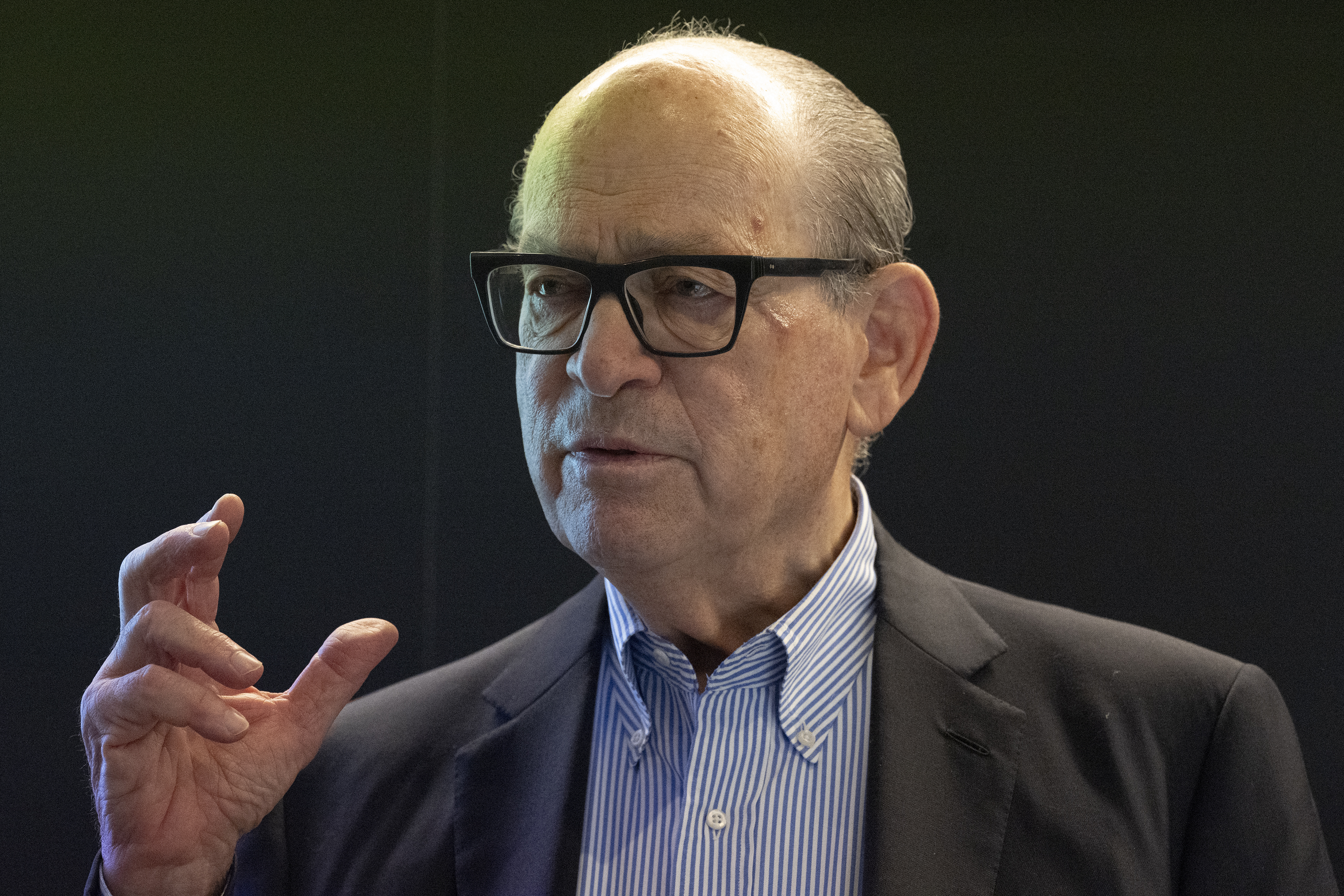
Joe Neubauer, chair of the Neubauer Family Foundation.Jose F. Moreno / Staff Photographer
Neubauer, formerly CEO of Aramark, has supported several institutions through his family foundation, including the Pew Research Center, Brandeis University, the Jewish Theological Seminary, and Calder Gardens.
“I like challenges. This seemed to me to be in the essence of Philadelphia,” said Neubauer, who donated $3 million to the cause. “An artist, who was the greatest artist in Philadelphia in his period, this was his greatest piece that he had ever done. It’s been in Philadelphia from the beginning. He lived in Philadelphia, worked in Philadelphia, went to art school in Philadelphia, went to Central High School. It belonged here and to take it out seemed to be just not fair.”
A few Eakinses for an Eakins
Both the PMA and PAFA parted ways with several of Eakins’ other paintings they owned via a process called deaccessioning — selling work from the collection and using those funds to keep The Gross Clinic.
Among Eakins’ paintings that the PMA sold was one of a cowboy playing the banjo. Several Dakota landscape paintings went to a Western art collection in Denver. PAFA had to sell a more beloved Eakins piece, called The Cello Player, to a private collector.
The Pennsylvania Academy of the Fine Arts’ Frank Furness-designed building on North Broad Street.Tom Gralish / Staff Photographer
“That was sort of a necessary tragedy. Because it’s a private collector, they could come up with money fast, and the academy could get the money quickly,” said Foster. “For the museum it was a happier ending because the paintings [it deaccessioned] went on view to the public. For the academy it was sadder because the painting has basically disappeared, gone underground.”
As PMA and PAFA acquired big-name donors and sold beloved artwork, the story of the campaign reached the public. Civic outrage ensued.
‘Hopping mad’ Philadelphians
Steven Conn, a history professor at Miami University of Ohio, was invited to discuss the matter on a local AM talk radio show, then known as The Big Talker, after he criticized the sale of the painting on NPR.
“I had expected to defend the idea that we should care at all about the sale of this painting and was caught off-guard when I realized that not only the host but several of the callers were hopping mad about it too,” Conn wrote in the 2012 essay “Local Hero: The Gross Clinic and Our Sense of Civic Identity.”
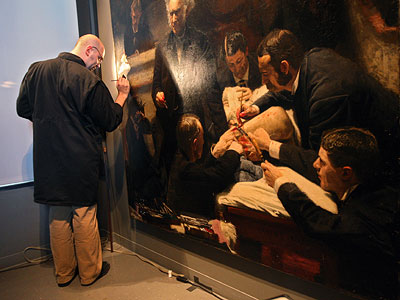
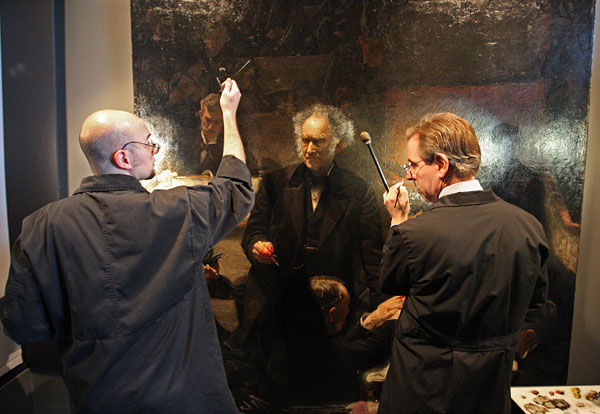
Allen Kosanovich, a Mellon Fellow in Conservation, works on restoring the part of the “Gross Clinic” painting where the gallery is watching the surgery.Michael Bryant / Staff Photographer
Kathleen Foster recalls that even Conn’s taxi driver, who picked him up at the airport, became “incensed” when Conn brought up the possible sale of The Gross Clinic. The public was angry, and so were public officials.
“I had to give this talk and in the front row, there was Ed Rendell leaning forward in his chair, drinking up every word I was saying. Who knows whether he had any idea who Thomas Eakins was before he got this pep talk,” said Foster.
Rendell was governor of Pennsylvania at the time, and had previously served as the mayor of Philadelphia.
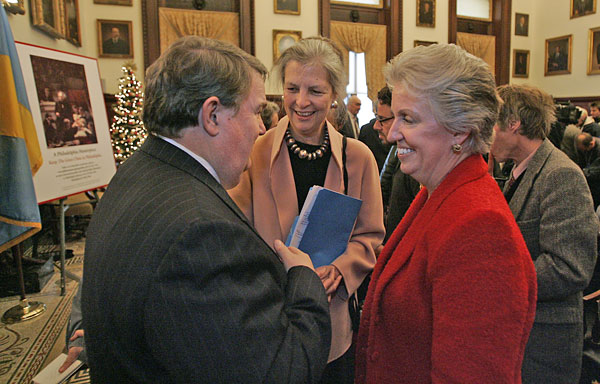
Hugh C. Long of Wachovia’s MidAtlantic Banking Group, with Art Museum director Anne d’Harnoncourt (center) and Rebecca Rimel, president and CEO of the Pew Charitable Trusts. (MICHAEL BRYANT / Inquirer Staff Photographer)
“He called up the director of the National Gallery and screamed at him,”said Foster. “Hejust said, ‘How dare you take this away from Pennsylvania? For shame!’ I heard the director had to hold the phone away because he was being yelled at by the governor of Pennsylvania. That kind of energy I think is pride that this is a gem for our city and for the state.”
But more important than how angry they were was how willing people were to donate. Before Reisa Mukamal was a PMA guide, she was living in Swarthmore, raising four children and working as a synagogue teacher and writing tutor. When she heard about the campaign, she knew she had to donate.
“I must’ve read about it in the news,” she said. “I didn’t contribute a lot, it was a modest amount of money. But there was no way I was going pass that up and it seemed like a once-in-a-lifetime story.”
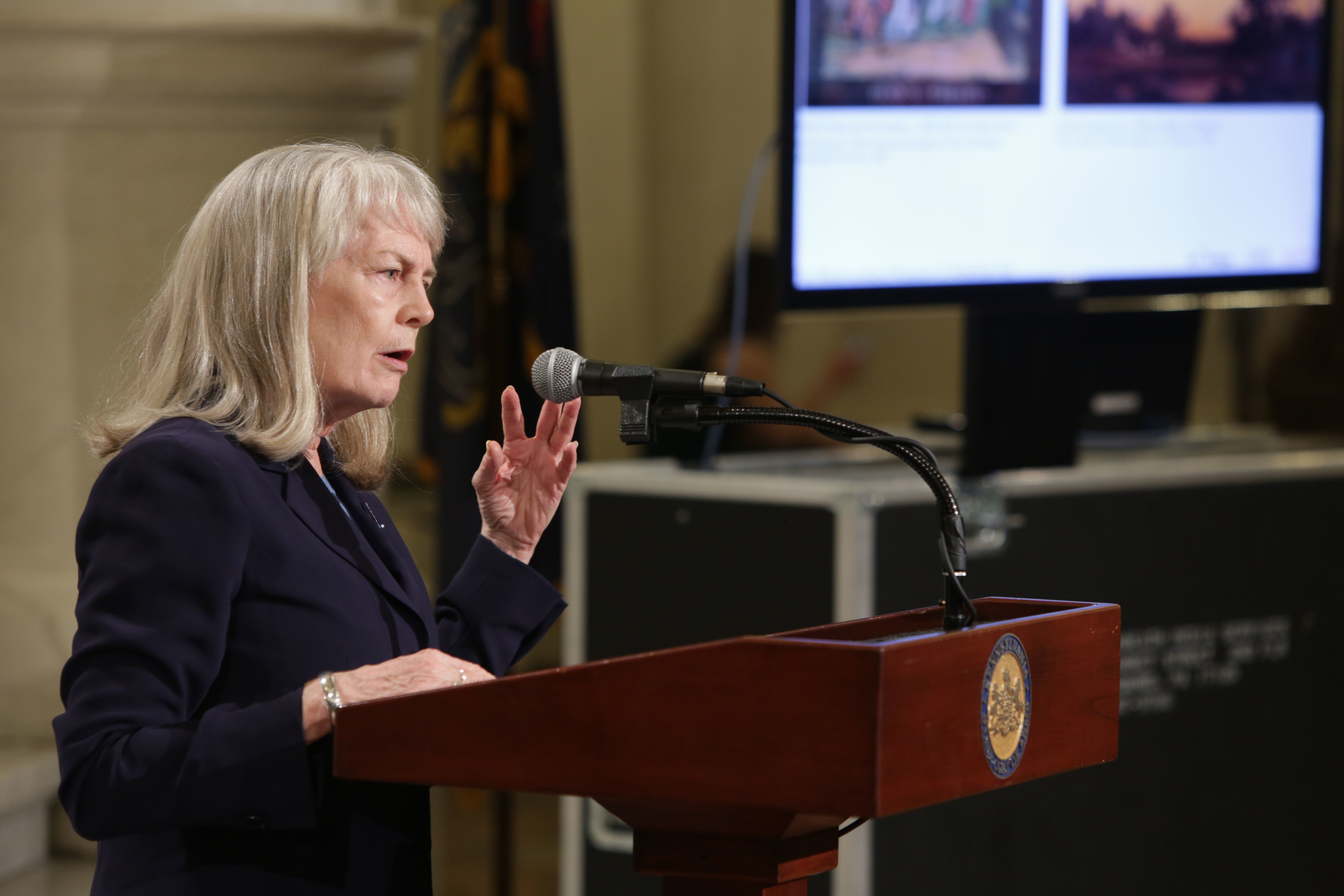
Kathleen Foster, senior curator and director of the Center for American Art at the Philadelphia Museum of Art, discusses the art-sharing initiative during a press conference at the Pennsylvania Capitol, on April 29, 2019.GK Visual
‘Why would we want to let a cherished piece of art leave the community?’
Foster’s favorite story is of a little boy who donated $2.46 (his piggy bank savings) to the cause after watching his grandfather become infuriated after hearing about the story on television.
“It’s that kind of anecdote that just was so heartwarming that we just had Philadelphians at home in their living rooms listening to the television, maybe reading stuff from Stephan Salisbury in The Inquirer, and being outraged. We had this torrent of small gifts that were so adorable. Students, people with no money, and then there were the Annenbergs of the world giving a million dollars. We had this amazing spectrum of people.”
In Salisbury’s original coverage in The Inquirer, he reported that “a woman in Wyoming sent in $25 because her daughter, who lives in Philadelphia, said she wanted a ‘donation to this fund’ as a Christmas present” and “a woman from Philadelphia sent in $100 and noted that she had taken her whole family to see The Gross Clinic over the Thanksgiving holiday.”
Faculty members at PAFA started selling buttons at the foot of the Rocky steps for a dollar; they said “Keep ‘Gross’ in Philadelphia.” From time to time, they’d bring their jar of dollars into the PMA to donate toward the fundraiser.
Former Mayor Ed Rendell during opening night of 1776: The Musical at the Philadelphia High School for Creative and Performing Arts on Wednesday, June 24, 2026.Elizabeth Robertson / Staff Photographer
“It’s amazing to me that people hear about things in the news, whether they read it or watch it somewhere, and all of a sudden, $10, $15 dollars, $5, $1,” said Neubauer. “Contributions now are much more easily made than writing a check and putting it in an envelope and putting a stamp on it. It caught the spirit of the people. Philadelphians are proud of their city, and this was a pride in the city. Why would we want to let a cherished piece of art leave the community?”
The PMA and PAFA say the campaign received money from between 3,400 and 3,600 donors from across the nation.
A last-minute fundraising drive kept “The Gross Clinic” in Philadelphia and staved off its sale to two out-of-town museums.Eric Mencher / Staff Photographer
“I hope people appreciate that it’s not contemporary art, it’s 19th-century art. When I was younger I always marveled at cave drawings. Why did people draw in the caves? Because it was important to them to show what nature was,” said Neubauer.
The PMA and PAFA raised enough money by the Dec. 26 deadline to keep The Gross Clinic at their institutions indefinitely.
“I think it’s very important for people in Philadelphia to go see it and understand that it was done in Philadelphia by Philadelphians for Philadelphia,” said Neubauer.
Supporters packed into the PMA’s Great Stair Hall to cheer on this victory for the Philadelphia art world.
Conservators Allen Kosanovich (left) and Mark S. Tucker work on Thomas Eakins’ “The Gross Clinic.”Michael Bryant / Staff Photographer
“Ed Rendell came to the microphone, put his arms up like Rocky, and just bellowed in triumph over the acquisition of this painting,” said Foster. “This cheer goes up from the room, I thought the roof was going to lift. It was like we had won the Super Bowl.”
“The Gross Clinic” is currently on display in the Historic Landmark Building at the Pennsylvania Academy of the Fine Arts, 118-128 N. Broad St., Philadelphia, Pa. 19102.
[Editor’s note: Morgan Ritter is The Inquirer’s first recipient of the Stephan Salisbury Internship for Arts Journalism. Salisbury died in 2024, after a long career as an arts and culture reporter for The Inquirer — including his reporting on the proposed sale of “The Gross Clinic.” ]