Born in South Philadelphia and reared in Germantown, he was naturally adept at math and physics. He was good at analyzing and solving problems about structure and distribution.
He also loved music and was obviously an insightful writer. His teachers at Germantown Friends School encouraged him to write more.
So, after graduating from high school, he did both.
Mr. Di Nardo earned a bachelor’s degree in electrical engineering at Tufts University in Massachusetts and spent 36 years, from 1960 to 1996, designing high-voltage outdoor wiring systems forPeco. And when storms ravaged the wires and poles, and the system went down, he worked in his office, sometimes for 24 hours straight, until the lights went back on.
“He clearly considered that work as a means of service to the community,” his son, Marc, said.
In 1974, now a music-loving, single father of two and seeking more income, Mr. Di Nardo snapped up a night job as a freelance classical music critic for the Bulletin. He wrote reviews — mostly positive, he conceded later — until the Bulletin closed in 1982. Then he switched to the Daily News and The Inquirer and filed stories until 2017.
At the Daily News and Inquirer, Mr. Di Nardo was prolific. He wrote more than 1,000 features and news stories about classical music, opera, jazz, and other topics. He enjoyed researching the musicians, conductors, and singers, and did lengthy interviews for in-depth profiles.
He was friends with conductors Riccardo Muti and JoAnn Falletta, and he interviewed, among hundreds of others, singer Luciano Pavarotti, musician Yo-Yo Ma, and composer David DiChiera.
“What I was concerned about the most,” Mr. Di Nardo said in a 2016 online interview, “was to find out the heart and soul of these people, not so much the nitty gritty. … I was so interested in the human part of this.”
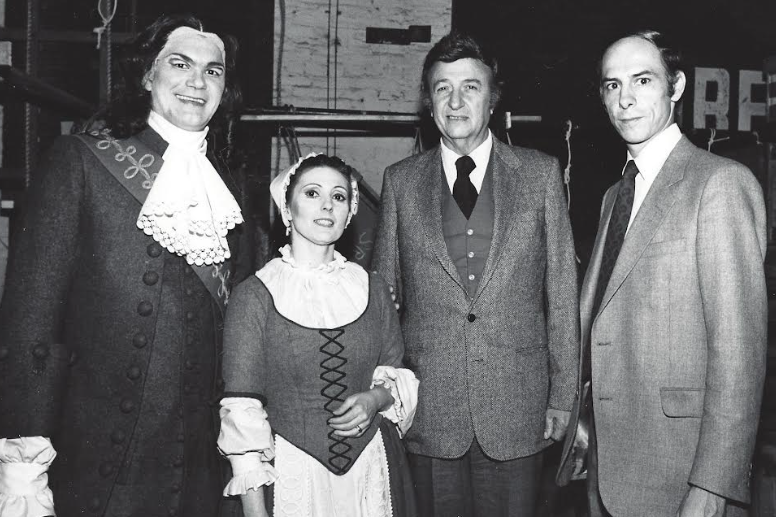
Mr. Di Nardo (right) stands with composer Romeo Cascarino (second from right), Dolores Cascarino, and singer John Cheek at the 1982 debut of Romeo Cascarino’s opera “William Penn.”Courtesy of the family
On Saturday, Sept. 19, Mr. Di Nardo died of a brain hemorrhage while traveling and visiting family in Italy. He was 89.
“He was naturally curious,” his daughter, Lisa Di Nardo Parker, said. “He always wanted to connect and talk.”
He championed local artists, especially composer Romeo Cascarino, and served as executive producer of Cascarino’s 1982 opera William Penn.He actively urged his readers to check out opera and classical music performances.
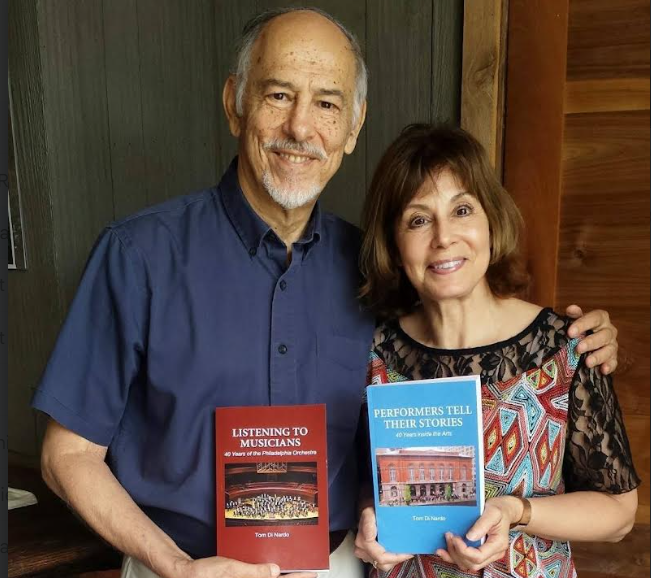
Mr. Di Nardo poses with conductor JoAnn Falletta and his books.Courtesy of the family
The Daily News headline for his story on April 29, 1994, was: “Try it, you’ll like it: Four chances to sample opera.” He said in the 2016 online interview: “Once they go once, that’s it. They’re hooked.”
In 1991, he wrote about a concert that linked music with nature. “Music has the power to inspire, amuse, and enlighten,” he said. “But it also has the ability to educate.”
In a 1991 Daily News story about doings at the old Opera Company of Philadelphia, he said: “In the precarious world of grand opera, you’ll often find more unexpected drama and sudden crises behind the scenes than on the stage.”
He also wrote about film, ballet, dance, and local music stores and venues. His children said they whiled away many weekend hours at the old Bulletin office while he wrote his stories.
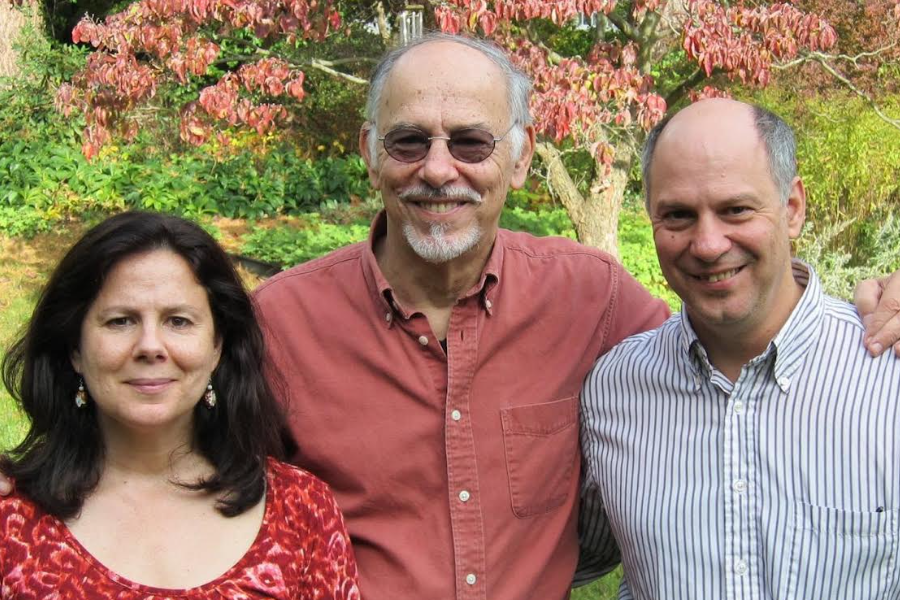
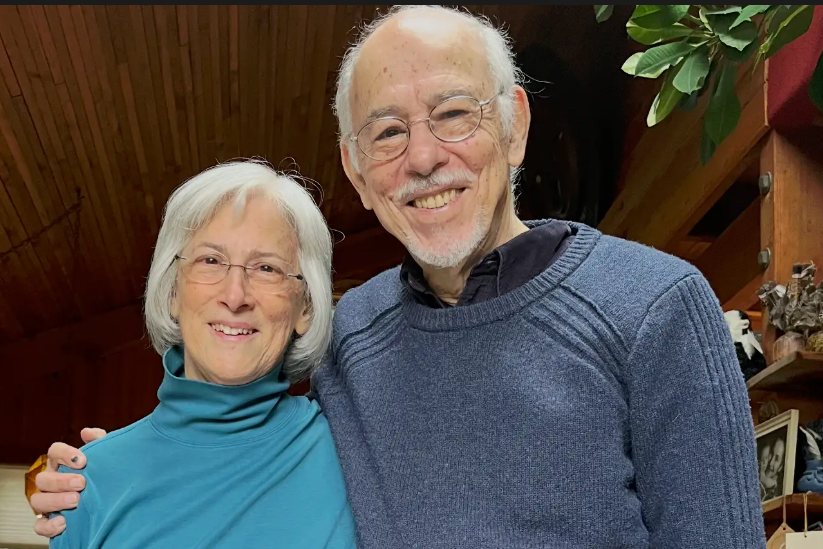
Mr. Di Nardo, center above, enjoyed time with his children, Lisa and Marc, and his sister, Martha, below.Courtesy of the family
Composer Kile Smith said on Facebook: “Tom knew everyone who came through Philadelphia who had anything to do with music: classical, jazz, pop.” Conductor Gary White said Mr. Di Nardo “worked tirelessly to bring together members of the arts and help create synergies that otherwise would never have occurred.”
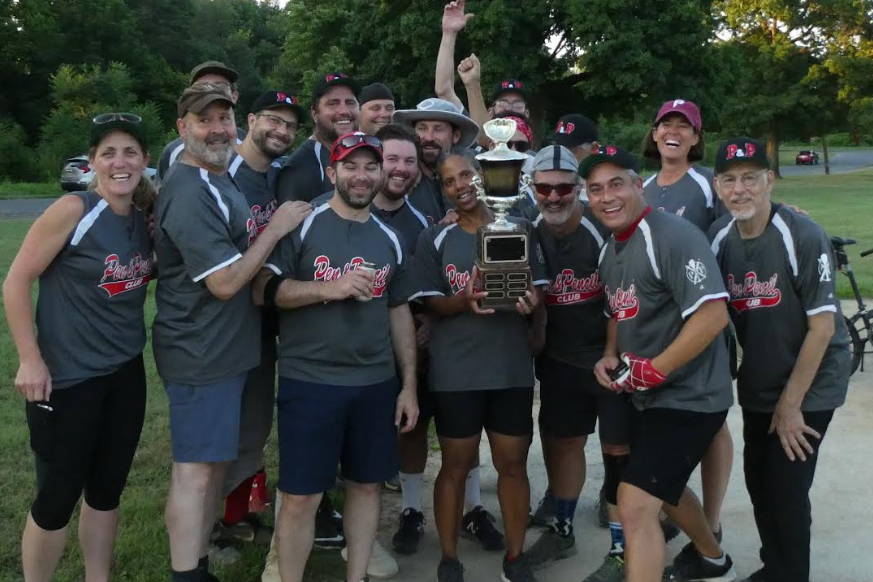
Thomas Eugene Di Nardo was born Aug. 7, 1937. He played shortstop on the Germantown Friends School baseball team and later on the softball team for his favorite after-hours haunt, the Pen and Pencil Club.
He married Diane Allen, and they had a son, Marc, and a daughter, Lisa. After a divorce, he met Margie Jones, and they traveled the world together, hosted memorable homemade pizza parties, and became longtime steadfast partners.
Mr. Di Nardo and his partner, Margie Jones, traveled the world together. Courtesy of the family
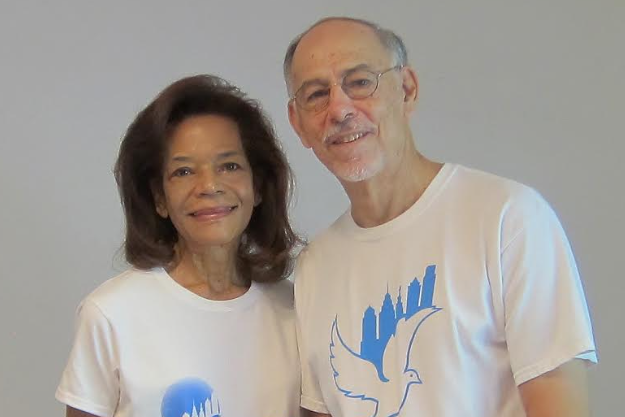
Mr. Di Nardo was interested in photography, history, and culture. He played piano, traveled to Italy often, valued education, and was a board member at Peace Day Philly.
He followed the Phillies closely and was at Veterans Stadium when they clinched the 1980 World Series. He took his children to many concerts and chatted up the ushers and ticket takers as well as the performers.
“He was affable, bright, and relational,” his daughter said. “He loved to share his passion.”
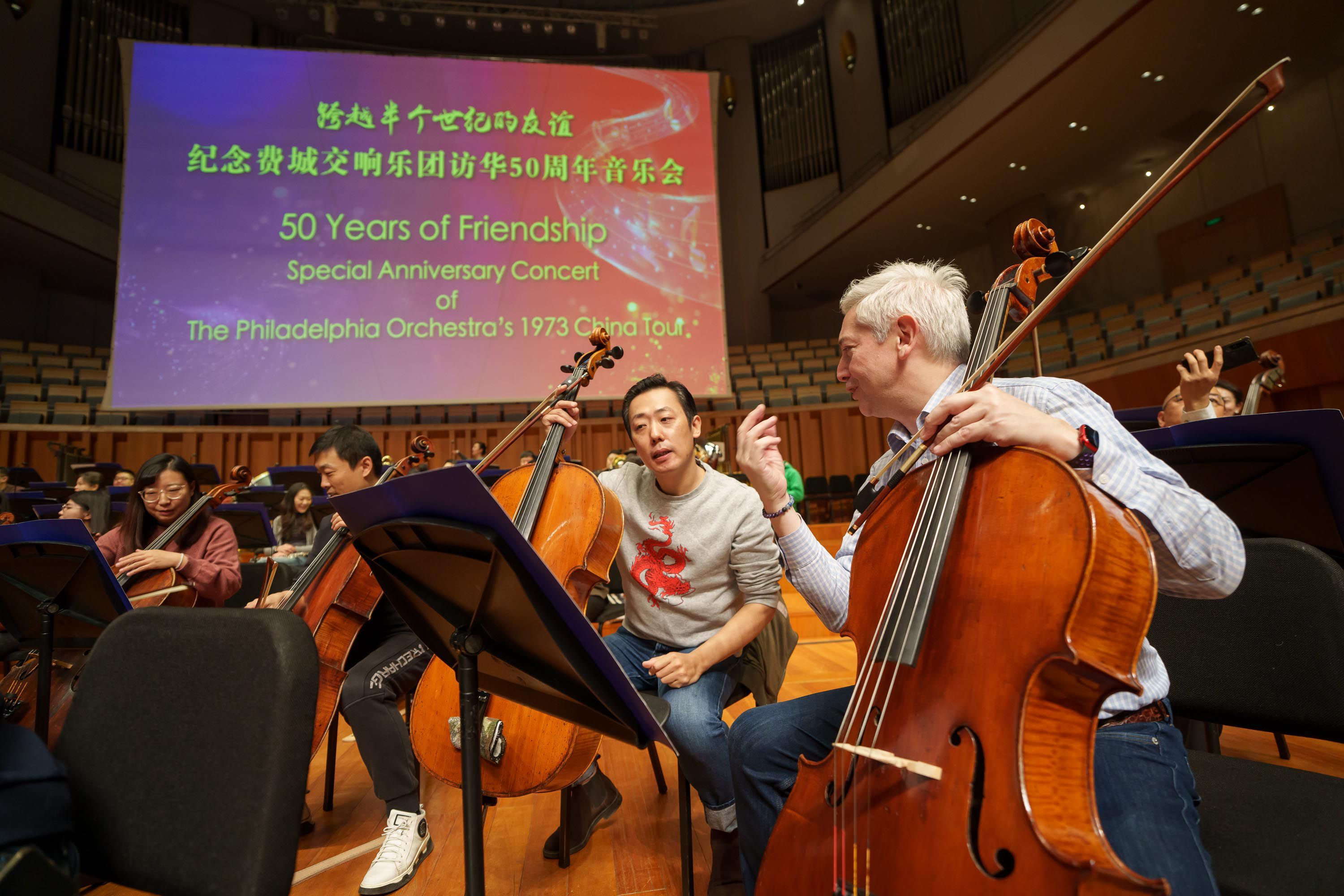
U.S.-China relations ebb and flow, but over more than a half-century, the Philadelphia Orchestra has been a steadfast connector between the two countries. Since their first visit there in 1973 during the Nixon administration, the Philadelphians have notched a special status as the most frequent visitor to China among U.S. orchestras.
Next month, the ensemble will play China once again — its 14th visit — as part of a tour to Beijing and Haikou after a South Korean leg that takes them to Incheon and Seoul.
The orchestra’s China visits have traditionally served not just a musical function, but a diplomatic one as well.
In 2023, when 14 musicians from the orchestra traveled to China, feelings of goodwill percolated up to Chinese President Xi Jinping and other government leaders, then-U. S. ambassador to China, R. Nicholas Burns, said at the time. When Xi gave a speech the evening of a meeting with President Biden, “he mentioned the Philadelphia Orchestra as one of the initiatives that had produced a better climate in the relationship,” Burns told The Inquirer.
This tour, from Nov. 5-15, includes four full-orchestra concerts in China. It will be the first visit by the full orchestra during the second Trump administration. Philadelphia Orchestra and Ensemble Arts president and CEO Ryan Fleur, who has worked on orchestra tours through several administrations since 2012, says the atmosphere is quite different from the last time the orchestra visited.
He says he has seen “firsthand when we’ve had extremely good relations with China, when we’ve had extremely bad relations with China and everything in between, and what I can tell you is that what we are experiencing right now, from a cultural diplomacy perspective, we definitely are feeling a thaw in relations in general.”
In terms of its activities on this trip, Fleur says the orchestra doesn’t yet fully know what to expect.
“One of the things about when we work in China is, a lot of things come to fruition at the last minute, so we don’t have a lot of the details of what’s happening, but I also know that we’ve been in conversations with a lot of the key partners.”
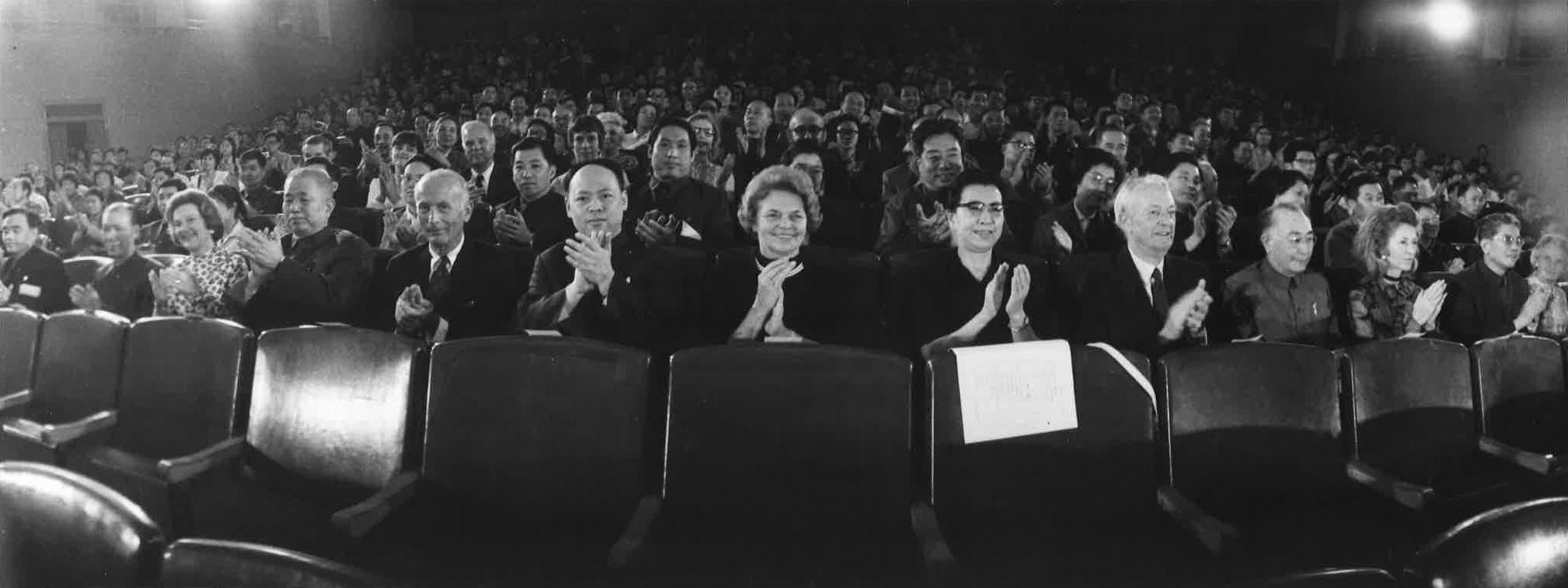
From the Philadelphia Orchestra’s 1973 trip to China, at left starting with the applauding man in a tie: C. Wanton Balis, Jr., Philadelphia Orchestra chairman at the time; Yao Weyuan, a prominent leftist literary critic and a later a member of the Gang of Four; Gretel Ormandy, wife of Eugene Ormandy; Madame Mao; ambassador David K. E. Bruce, U. S. emissary to China; Wu De, mayor of Beijing ; Evangeline Bruce, wife of ambassador Bruce; Qiao Guanhua, minister of foreign affairs.Philadelphia Orchestra Associati
What Fleur does know for sure is that the orchestra will “bring folks in conversation together in ways that wouldn’t otherwise happen.”
In addition to the full-orchestra concerts, individual orchestra members will participate in various activities in Haikou, Beijing, Shenzhen, and Shanghai.
The orchestra’s nine concerts, ending Nov. 15 with its debut at the Beijing Performing Arts Center, will be led by principal guest conductor Marin Alsop. There are two soloists: Yunchan Lim in Korea, and Haochen Zhang in China.
Each pianist brings his own artistic resonance.
“Yunchan Lim won the Van Cliburn competition with Alsop conducting, so this has a lot of attention in Korea because this is the first time the two of them have worked together since that moment, so the concerts sold out instantly,” said Fleur.
In China, he says, there are three pianists with big profiles: Yuja Wang, Lang Lang, and Haochen Zhang. All three attended Philadelphia’s Curtis Institute of Music.
“He’s very much viewed as the third pianist, and the fact that he lives in Philadelphia and lives in Shanghai has a lot of meaning in China,” said Fleur of Zhang. “So having that musical connection as well as featuring things that we do really well, and particularly in Beijing, will be meaningful.”
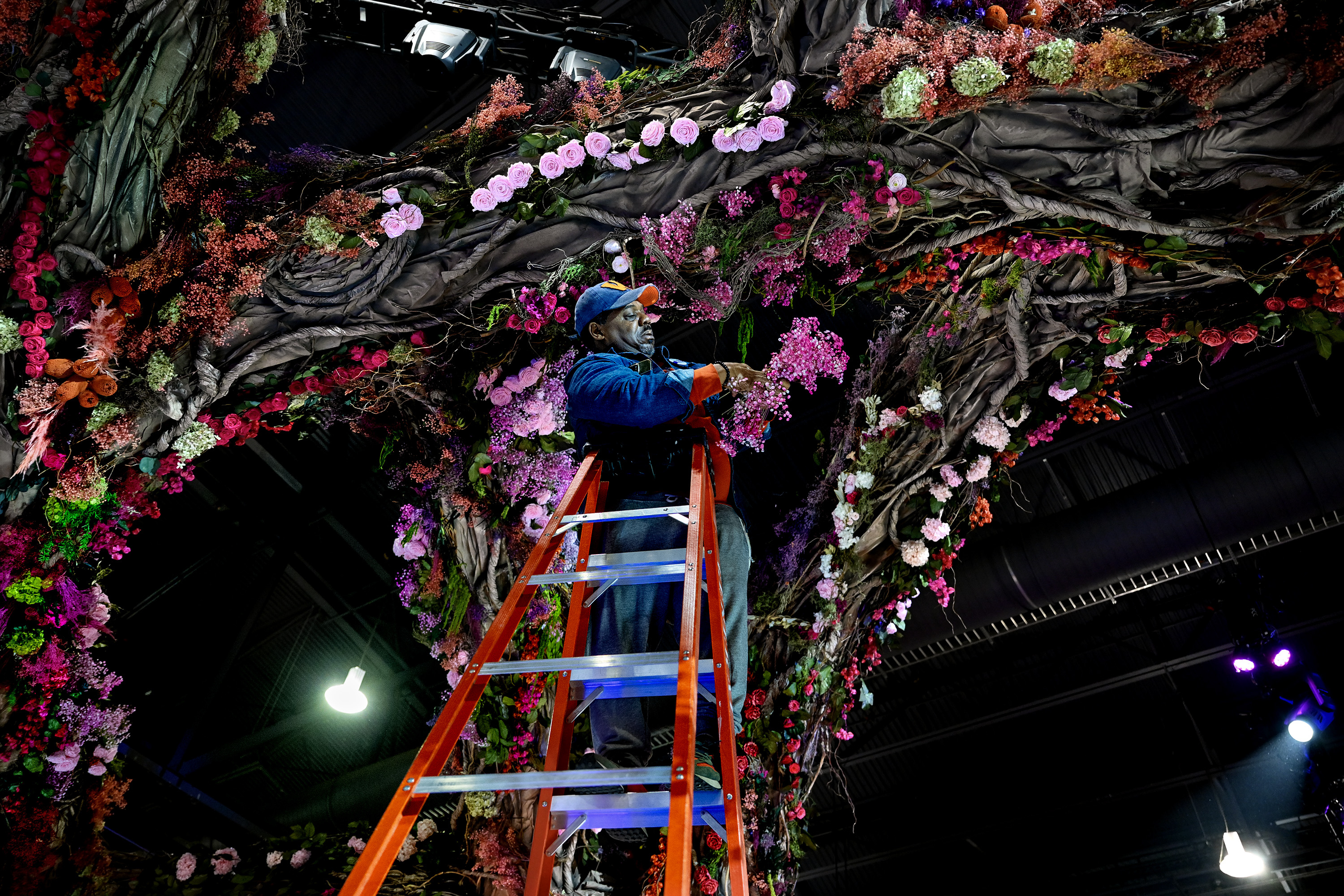
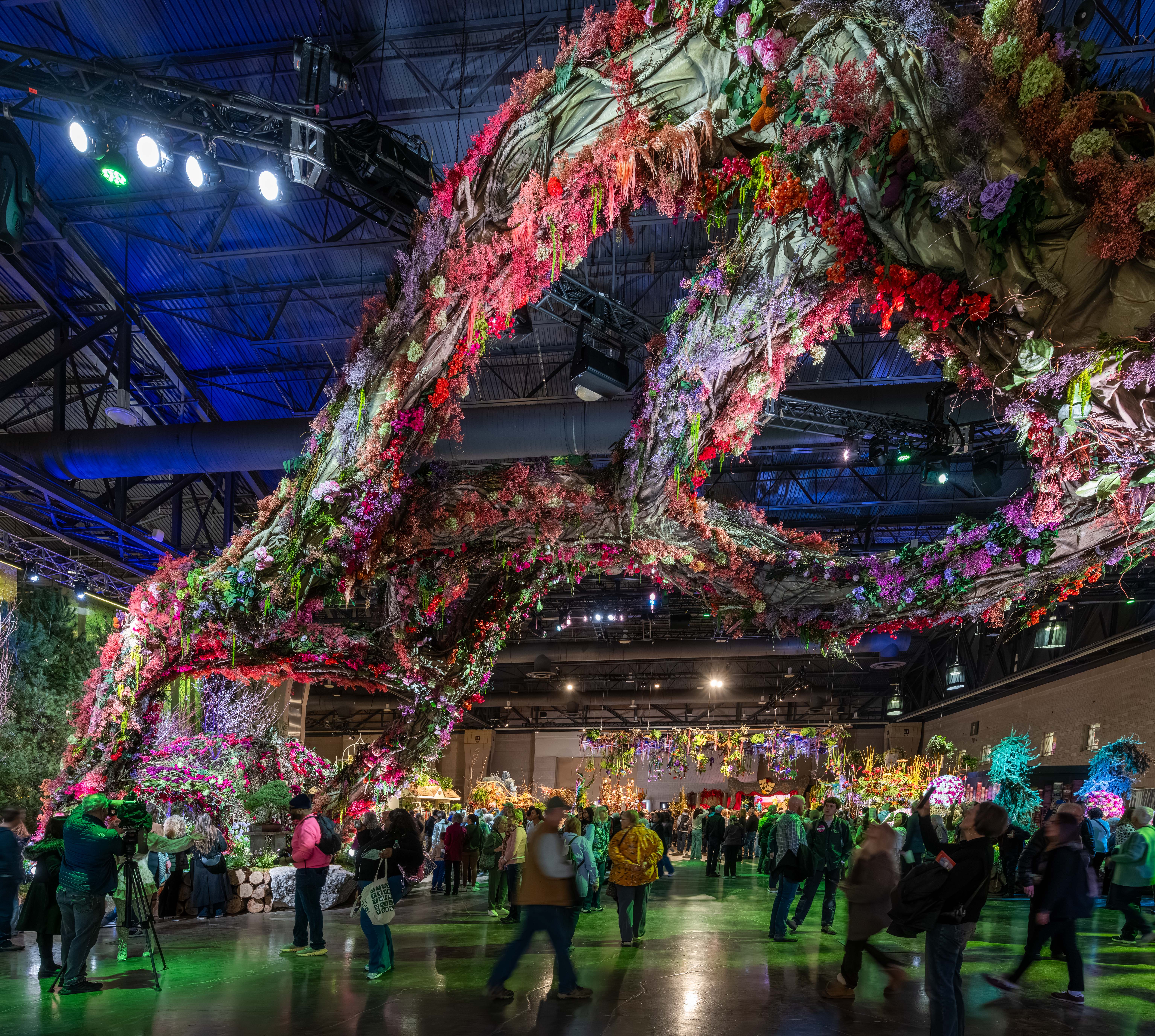
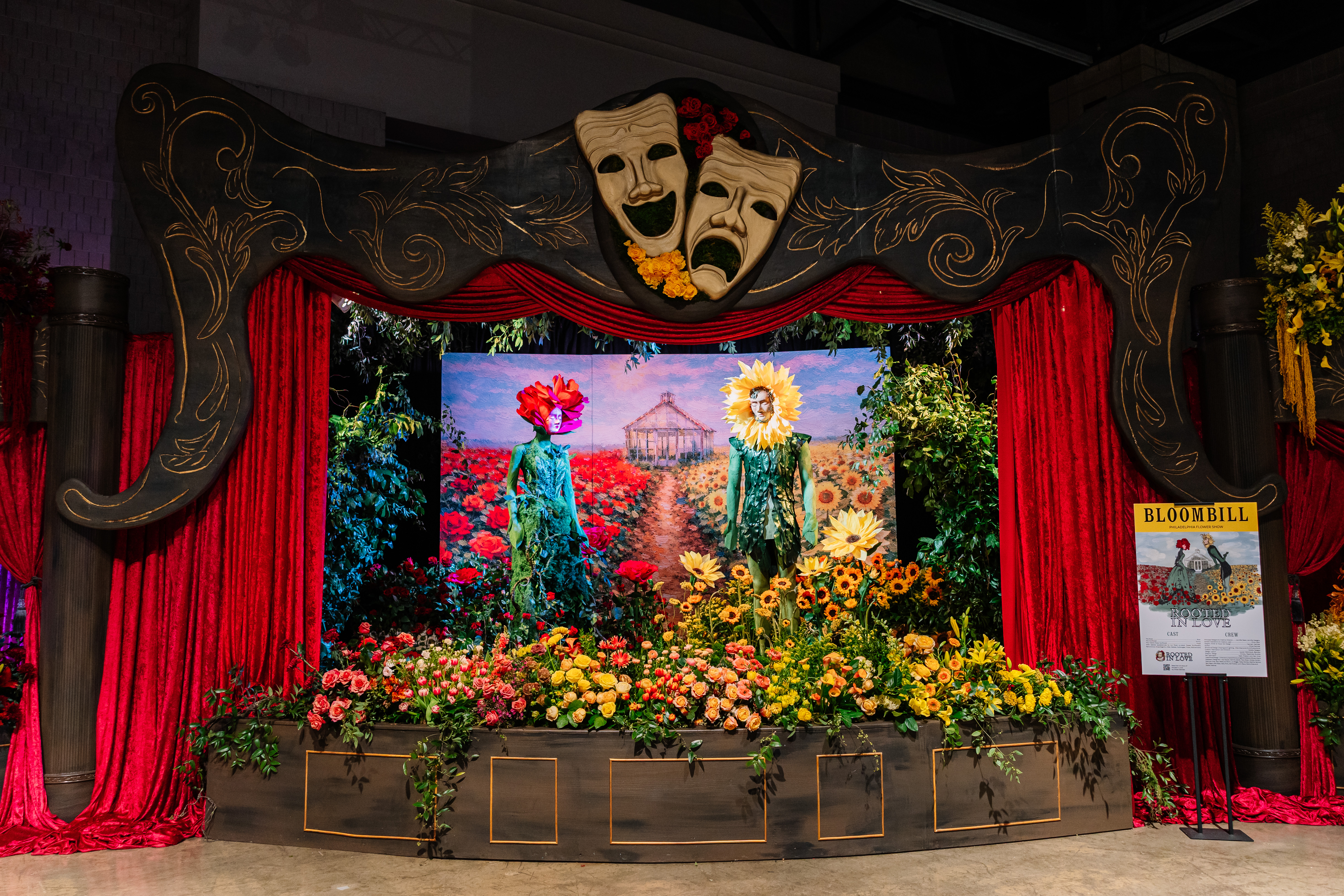
In recognition of the Pennsylvania Horticultural Society’s 200th anniversary, the theme for the 2027 Philadelphia Flower Show is Iconic.
The annual showcase, scheduled for March 13-21 at the Pennsylvania Convention Center, will feature more than 30 exhibitors whose floral artistry, sprawling gardens, and vast horticultural displays reflect the “power of gardening as a source of beauty, sustenance, and inspiration.”
“Iconicreflects our longstanding belief in the extraordinary power of gardening to shape lives and strengthen communities,” PHS president Matt Rader stated in a news release Wednesday. “The Philadelphia Flower Show has always been where we bring the possibilities of gardening to life on the grandest scale, and there is no better place to celebrate this milestone.”
PHS, the organizer of the nation’s largest and longest-running horticultural event and fundraiser, is also assembling five historic gardens from across the commonwealth.
Longwood Gardens, Chanticleer Gardens, Pittsburgh Botanic Garden, Phipps Conservatory and Botanical Gardens, and The Arboretum at Penn State will each present a distinct garden that reflects their horticultural vision.
This year’s lineup will also see a fashionable spin on the Flower Show’s signature after-hours event. On March 20, the Flowers After Hours: Stylin’ & Wildin’ party invites guests to dress in their favorite animal prints or jungle-inspired looks while enjoying live entertainment, cocktails, music, dancing, and the show’s lush gardens.
A photo from the Member’s Preview Day on Feb. 27, 2026, of “Rooted: Origins of American Gardening.”Courtesy of Rob Cardillo
Other events include competitions among botanical artists and exhibitors and a speaker series led by gardening experts and practitioners that’s designed to send guests home with new ideas and techniques.
There will also be a marketplace, filled with plants, gardening essentials, and gifts for purchase, as well as a zone for children to explore the world of botanicals through hands-on activities.
PHS also announced the tiers for single and multiday tickets, which are divided by weekday, weekend, and evening hours.
An image from the 2025 Philadelphia Flower Show.Courtesy of
From Monday to Thursday, online tickets for adults are $45, and $35 after 4 p.m..
Tickets for students ages 18-24 and children 5-17 years old are $25 and $20, respectively. Groups of more than 25 people are $38 per person.
Weekend pricing is $55 for adults, and $45 after 4 p.m. Student and child tickets are $30 and $25 from Friday to Sunday, and groups of 25-plus are $43 per person.
The Adult Flex Pass, which offers one-time admission on any day of the Flower Show, is $60. The Floral Fantastic Pass provides daily entry throughout the show, priced at $105 per guest.
A photo from the 2026 Member’s Preview Day.Courtesy of Becca Mathias
Box office tickets are $20 for children to $50 for adults on weekdays, and $25 to $60 on weekends.
PHS members at the Activist-level or higher receive free access to the show.
All prices are subject to change and each ticket will incur a $3 processing fee, according to the PHS website.
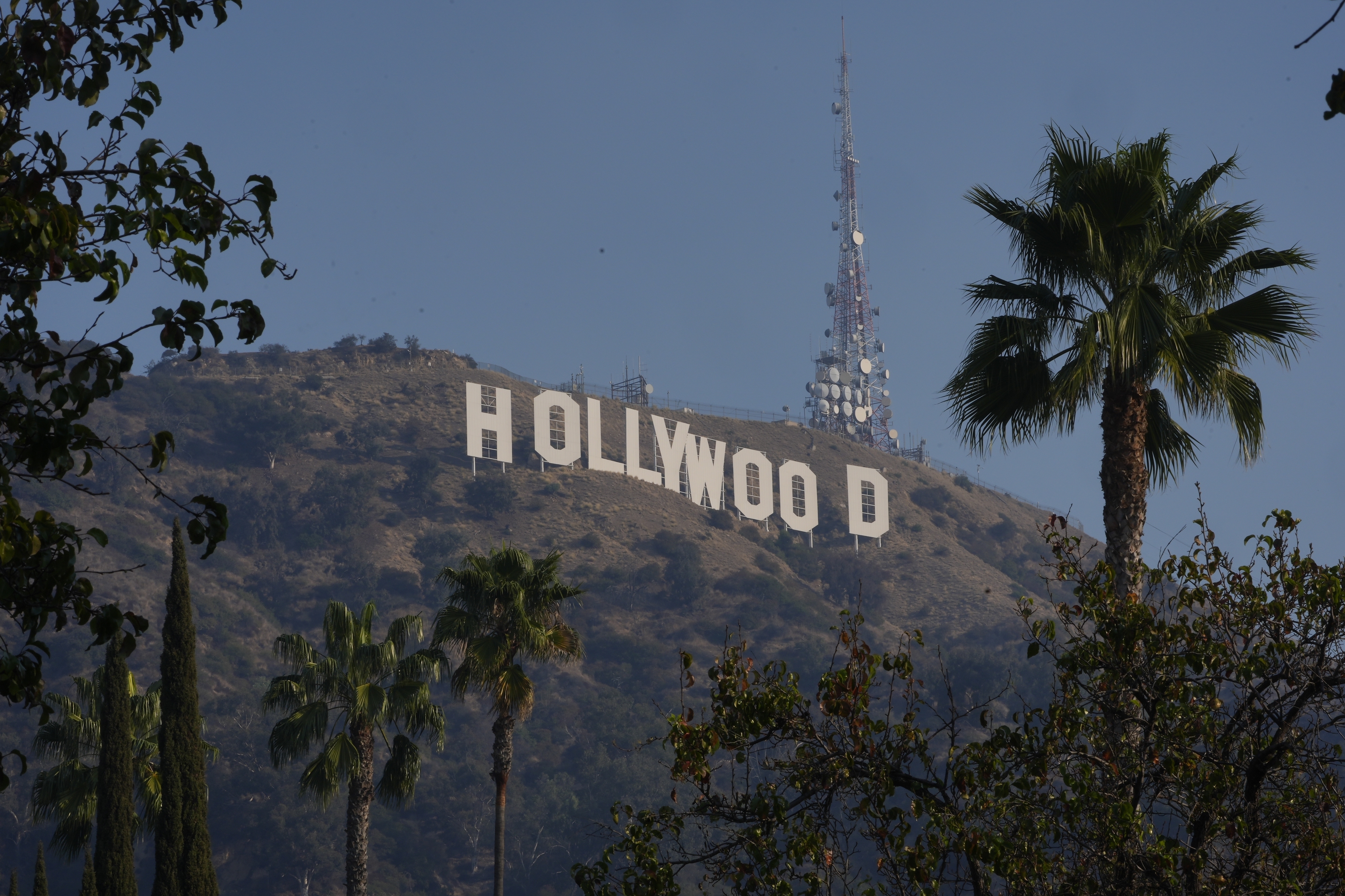
“Hollywood is a complete and total disaster!” The recent words of President Donald Trump to Congress rang loudly on many levels. The topic at hand was a 20 percent federal tax credit for compensation paid for labor performed on films in the United States, an incentive for domestic film production, which will likely pass in the coming months. While politicians courting media executives by appealing to their pocketbooks often proves successful, the tactic skirts the real political power of Hollywood: silver screen narratives. Hollywood has the power to shape reputations, as on-screen depictions can drive public perceptions.
Indeed, 85 years ago, some isolationist politicians saw Hollywood as a national security threat, guilty of warmongering by producing anti-Nazi films.
By the late 1930s, as international tensions escalated between Nazi Germany and interventionist attitudes in the United States, Jewish producers and writers in Hollywood began to voice their concerns. They conducted anti-Nazi espionage in Los Angeles through the Hollywood Anti-Nazi League, and later took their concerns to the big screen where a handful of Hollywood films sparked tremendous political controversy.
One example was Confessions of a Nazi Spy (Warner Bros., 1939), based on FBI agent Leon Turrou’s account of his work uncovering a fascist espionage network. The movie’s message was that there are Nazi supporters among us. It hit theaters just months after the infamous pro-Nazi rally at Madison Square Garden attracted more than 20,000 people. Backlash against the film began during production, as 12,000 antisemitic pamphlets circulated Los Angeles. They stated that a “Jewish monopoly” in Hollywood aimed to replace “non-Jewish men and women” in the industry by hiring “refugee Jews from Europe.” The handbill argued that these foreigners were thrown out of Europe for good reason and these anti-Nazi and anti-authoritarian films were simply “war-provoking propaganda.” As other studios began producing anti-authoritarian fare, isolationist and Nazi-sympathizing rallies held by the America First Committee targeted these films. America First Committee member and U.S. Senator Gerald Nye (R-N.D.) castigated Hollywood on rally stages, in the press, and then on Capitol Hill.
By September 1941, Senators Nye and D. Worth Clark (D-Idaho) dragged studio heads like Harry Warner and Darryl Zanuck before a subcommittee, insisting that films like The Mortal Storm, Confessions of a Nazi Spy, and The Great Dictator were dangerous interventionist propaganda.
Anti-Roosevelt political operators like the journalist John T. Flynn mixed with America First representatives like Senator Nye, with the support of pro-Nazi celebrities like Charles Lindbergh who, during the hearings, claimed that the greatest threat to the United States in 1941 was not spreading fascism or Nazis, but the “Jewish controlled media.”
Notably, Roosevelt’s recent presidential opponent, Wendell Willkie, fresh off his 1940 presidential run, spoke on behalf of the studios telling The Hollywood Reporter that “we make no pretense of friendliness to Nazi Germany and the ruthless invasions of other countries.” “We abhor everything which Hitler represents,” added Willkie. His job became easier because none of the senators on the committee had seen any of the films they had branded as dangerous. One of their own, a junior senator from Arizona, Ernest McFarland, simply asked what was so bad about these films. Nobody could answer.
Anti-immigrant fearmongering was a major driver of the debacle—unsurprising, perhaps, in an era with strong immigration restrictions in place. Proponents of these attacks regularly identified studio bosses, as well as performers like Charlie Chaplin, who were foreign-born.
The xenophobia was so pervasive that when 20th Century Fox executive Darryl Zanuck took the mic at the hearings, he reminded the senators that they need not fear him, as he was just a boy from Wahoo, Neb. Hollywood defenders spent much of their testimony explaining how Hollywood operated to the committee. Fireworks took off when Warner Bros. president Harry Warner sat down before the committee. He’d been watching every day, stoically, waiting for his turn.
“The only sin of which Warner Bros. is guilty is that of accurately recording on the screen the world as it is or as it has been,” asserted Warner, framing the studio’s stand against hate as rooted in the Warners’ love of America.
In a powerful moment, Warner even presented a letter from Gerald Nye written in 1939. In it, he had written, of Confessions of a Nazi Spy, that “[a]nyone who truly appreciates the one great democracy upon this earth will appreciate this picture and feel a new allegiance to the democratic cause.” Nye turned red as Warner read the letter aloud, betraying his recent anti-Hollywood fearmongering as opportunistic, but said nothing.
The investigation ended when Senator McFarland stormed out, disgusted by the desperate plays of a committee making accusations about movies they knew nothing about. A recess was finally granted, allowing time to watch the films in question. The committee would not reconvene. Japan’s attack on Pearl Harbor and the U.S. declaration of war led to calls for more anti-Nazi and anti-imperialist material.
Made By History sponsors. FOR USE ON MADE BY HISTORY STORIES ONLY.Inquirer Staff
But the hearings had demonstrated the growing power of film and its ability to influence perception and narrative. Playwright and screenwriter Lillian Hellman called the investigation a “disgrace.” Legendary journalist Dorothy Thompson, who had interviewed Hitler in 1931 during his rise to power, called the investigation “the greatest Nazi propaganda stunt ever pulled off in the United States.” Thompson criticized Hitler in Cosmopolitan magazine. She also wrote a short book, I Saw Hitler, where she observed that “[h]e is a little man whose countenance is a caricature…a drummer boy risen too high.” Thompson had watched the rise of fascism through the lens of cartoonish personalities, including those on Capitol Hill.
That’s why this episode continues to be a useful lens for today. The tactics feel familiar even when the target changes: pressure a company for the crime of telling an unwelcome truth, dress the pressure up as concern for “fairness,” and count on the target to fold before anyone has to defend the underlying claim on the merits. Trump’s insults of Hollywood, combined with proposed financial incentives to keep film production in the United States, may be designed to produce more MAGA-friendly movies—or fewer “woke” ones.
But wild accusations rarely survive contact with the evidence. Senator McFarland’s question probing the motives of the committee, wondering what was so dangerous about anti-Nazi films, was left unanswered. Congress adjourned to go watch the movies it had spent weeks condemning sight-unseen and never reconvened. Eighty-five years later, the same test still works. Ask the crusaders to detail the specific accusation, and the crusade usually has nowhere left to go.
Chris Yogerst is the author of The Warner Brothers and Hollywood Hates Hitler. He’s regularly published in the The Hollywood Reporter and writes news and features for MovieWeb, while teaching media courses at Marquette University.
Made by History takes readers beyond the headlines with articles written and edited by professional historians. Opinions expressed do not necessarily reflect the views of The Inquirer.
When I called Christopher Bruce at our agreed-upon time to discuss the conspiracy theory convention he’s organizing in Wilmington this weekend, his cell phone went straight to voicemail.
I tried again. Same thing. I texted. No response.
Four minutes after we were supposed to talk, Bruce emailed me: “I’m ready when you are!”
“I’ve been ready. That’s why I’m calling you!” I thought.
When we finally connected, Bruce had a theory about our technical difficulties.
“It’s gotta be a conspiracy,” he said.
I was quick to agree because I certainly preferred that explanation over the possibility that one (or both of us) doesn’t know how to use a phone correctly.
Like many, I’ve always been fascinated by conspiracy theories. Growing up, I’m pretty sure my dad taught me about the Philadelphia Experiment before he taught me about the Second Continental Congress, and I definitely raised my hand during a high school history class once and asked if aliens could’ve helped build the pyramids.
A flyer for ConCon Expo 2026.Courtesy of ConCon Expon 2026
So when I received a news release for ConCon Expo 2026, which bills itself as the “first all-inclusive conspiracy theory convention,” I was as intrigued as when my friend told me she recently dated a guy who believes newscasters are lizard people, a cold-blooded belief so popular it’s known as the reptilian conspiracy theory.
“Did you ask him how the lizard people get past HR?” I said to her, as I thanked my lucky lily pads that I’m not in the dating pool anymore.
ConCon Expo isn’t about whether conspiracy theories are true, it’s about why we’re fascinated by them, Bruce said. The convention is “all-inclusive” because it’s for all conspiracy theories, from the popular and potentially true (aliens do exist!) to the obscure and absolutely ridiculous (Finland doesn’t exist!).
But there’s a catch to the all-inclusivity of the event, which someone will probably create a conspiracy theory about.
“We’re leaning more into the fun stuff, we’re not getting deep into political things or the conspiracies that divide us,” Bruce said. “We’re focusing more on things like ‘Are birds real?’ and ‘Is Avril Lavigne alive or not?’”
‘Art meets life’
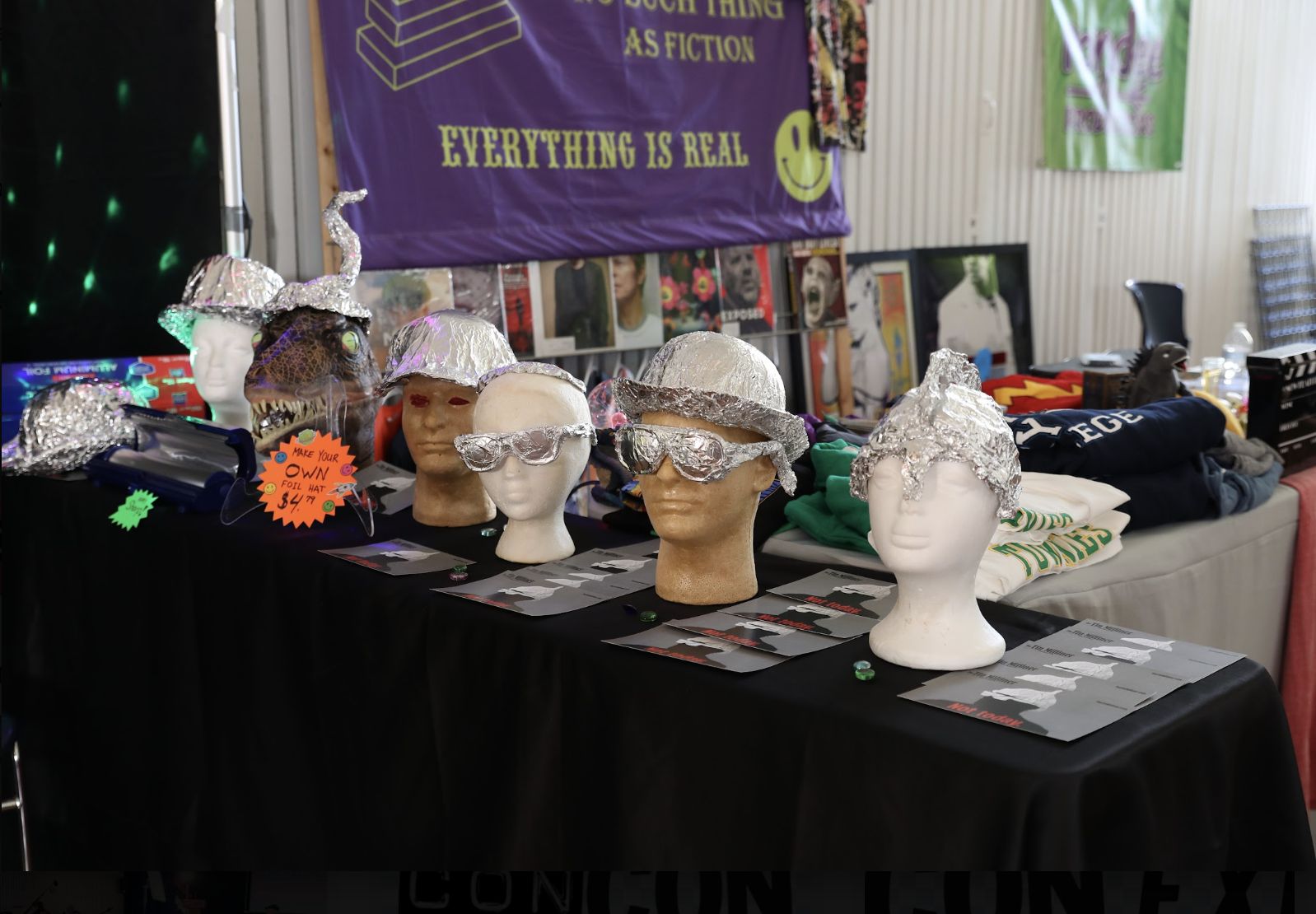
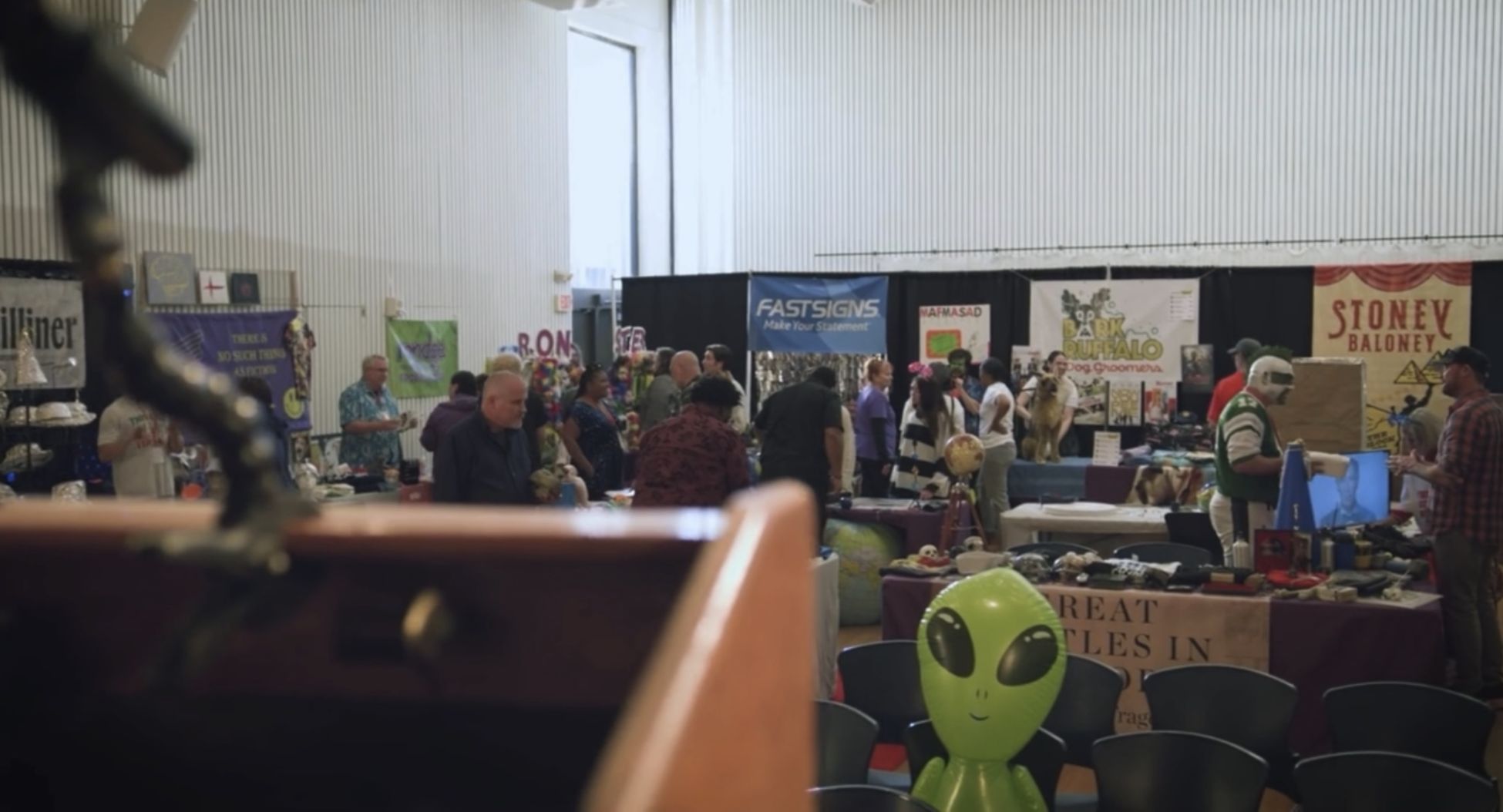
ConCon takes place from 10 a.m. to 4 p.m. Sunday at the Siegel Jewish Community Center in Wilmington. Events include a cryptid costume contest, a tinfoil hat-making station, and a Bigfoot calling championship where people will try to come up with guttural sounds they think will summon Bigfoot, like duck calls.
“What does Bigfoot sound like? I don’t know, let’s find out,” Bruce said.
AllHipHop.com will run a hip-hop conspiracy booth, Second-Hand Serpents Reptile Rescue will have live lizards, and Delaware Researchers of the Paranormal will host a panel about ghosts.
“Hopefully, you come curious but leave questioning everything in a fun way,” Bruce said.
A scene at the ConCon featured in “The Conspiracists.” Yes, that is Jamie Pagliei, aka “The Philly Sports Guy,” on the right, who makes a cameo in the film. Courtesy of ConCon Expo 2026
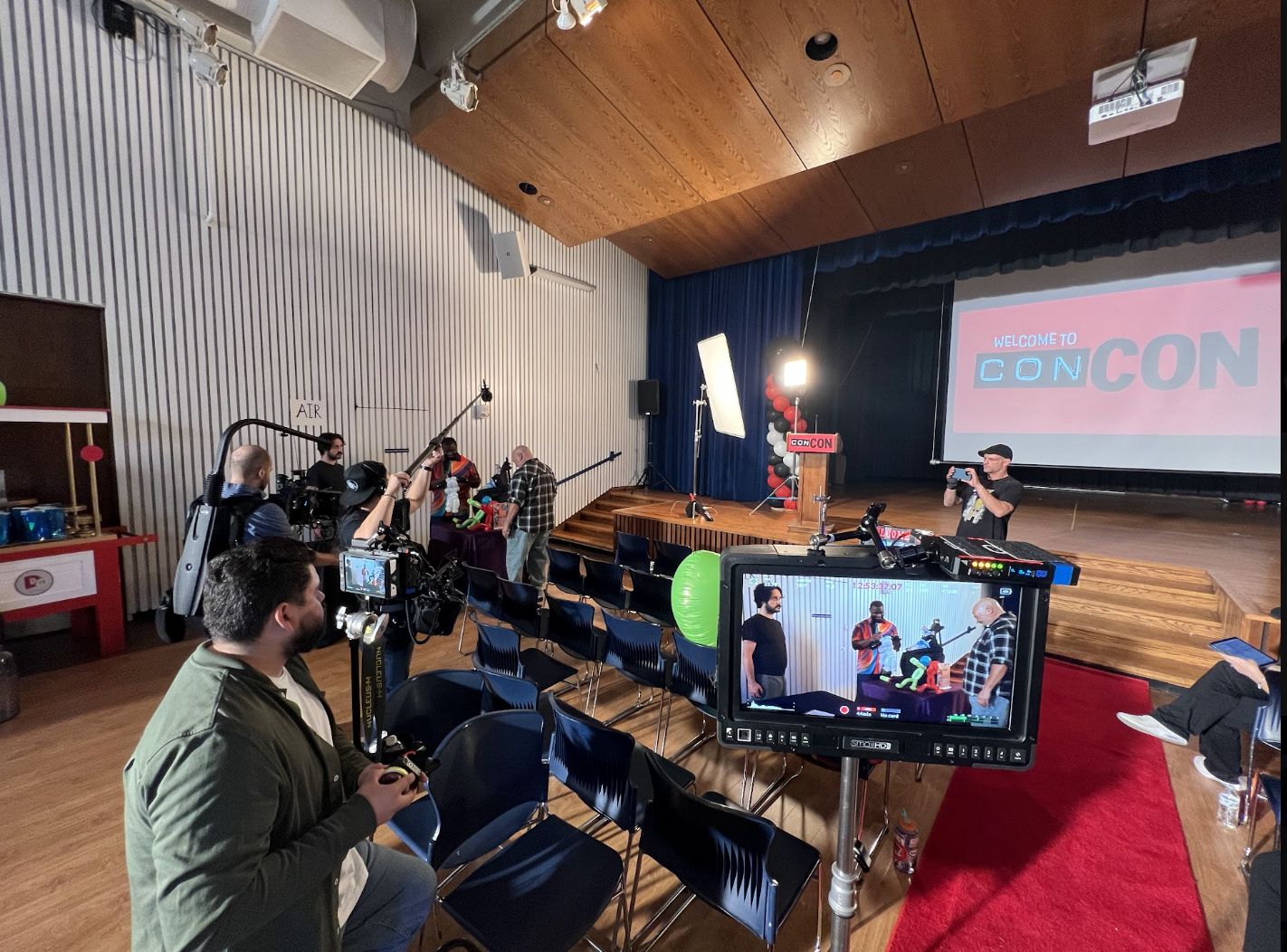
The inspiration for the event comes from an independent mockumentary film released in January called The Conspiracists, which culminates with a conspiracy theory convention called ConCon (and features a cameo from Eagles superfan Jamie Pagliei, aka “The Philly Sports Guy”).
“We have this fictional event, this made-up convention that was developed and created for a feature film, and here we are making that fictional event real,” Bruce said. “It really is art meets life.”
Bruce coproduced the movie through his Wilmington-based company, King Creative. The comedy, now streaming on Amazon Prime, has a 94% audience score on Rotten Tomatoes. It was shot primarily in Delaware over 11 days for about $250,000. The real-life ConCon will culminate with a screening of the film at 5 p.m. Sunday with members of the cast.
“As independent filmmakers, you have to find creative ways to drive interest. The big challenge isn’t so much making the film, it’s once it’s made how do you get people to know about it without tens of millions in marketing to spend?” Bruce said. “We have to create those opportunities and a lot of times you’ve got to think outside the box and this is just a really creative, fun way to promote the film. Or maybe it will take off, maybe we have something here.”
So is ConCon just a marketing con? Can we ever really know the truth about anything?
‘Just so bizarre’
To understand more about conspiracy theories and why we’re drawn to them, I reached out to Derek Arnold, a senior instructor in the communication department at Villanova University. Arnold specializes in conspiracy theories.
While conspiracies really do happen — think of Watergate or the Tuskegee experiments — a conspiracy theory is when people question the accepted version of events without solid proof, like with the JFK assassination.
“Conspiracy theories are things we just don’t know and can’t really prove yet so a lot of that stuff is on faith,” Arnold said. “When we find that there is truth or proof they’re no longer conspiracy theories, they then become conspiracies.”
In The Conspiracists film and in my conversation with Bruce, heavy emphasis was placed on how conspiracies bring people together. As one character says, “When you get a group of people who believe in the same thing, it becomes normal.”
The cast and crew film a scene at ConCon for “The Conspiracists.”Courtesy of ConCon Expo 2026
While camaraderie plays a role, it’s not the only reason we’re drawn to conspiracy theories, according to Arnold.
“Part of it is the whole storytelling. Folks are just suckers for a really good story and the bigger the story, the more alluring it can be,” he said. “People also want to buy into conspiracy theories because that gives them some kind of explanation.”
Believing you’re in-the-know about something others aren’t can make us feel better about ourselves, especially if we don’t have, or don’t think we have, control over our own lives. Agenticity, the idea that the world is controlled not by our own free will, but by invisible agents pulling the strings, can offer comfort, Arnold said.
“If you don’t have that power, you look for reasons that people may have the power … because the alternative, if there’s not something happening by people above us, is our life is just random,” he said.
Studies have shown that if you buy into one conspiracy theory, you’re more likely to believe in others as well, according to Arnold. One thing is certain, if you research conspiracy theories online — as I did for this story — you will be fed more conspiracy theories, which feels like a conspiracy all its own.
Today, technology and social media allow our conspiracy theories to travel faster and wider than ever before, but these theories also have to compete with something that’s often just as weird, if not weirder — the truth, Arnold said.
“Things are just so bizarre sometimes in today’s world that conspiracy theories have to work hard to catch up to what’s actually happening in real life,” he said.
When we live in a country planning to livestream a public execution by firing squad, when AI submits a false homicide tip to the Philadelphia Police Department, and when people are betting online on the Little League World Series, I find myself hoping for a visit from aliens to bring us a little sanity.
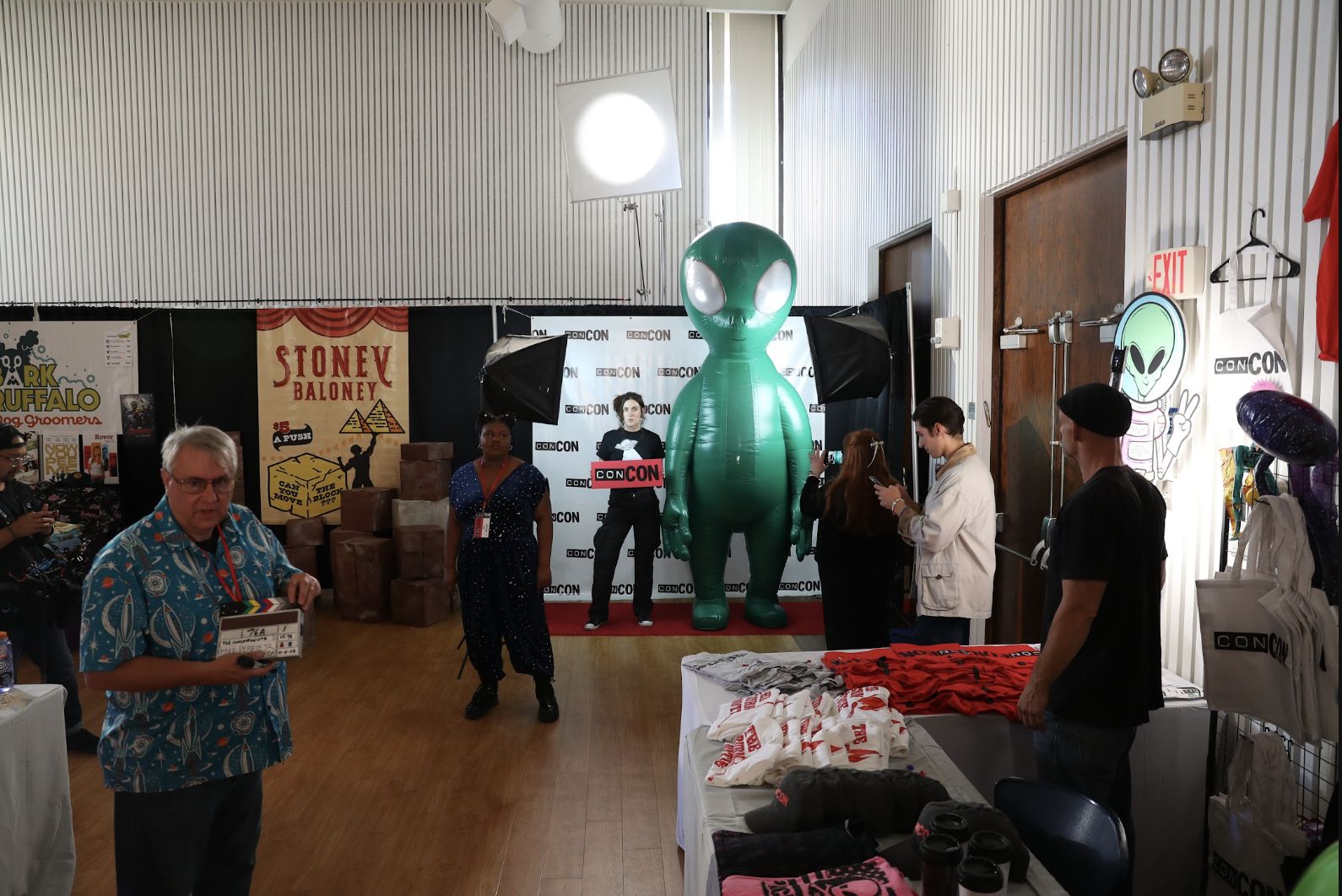
Until then, I hear there will be a 9-foot inflatable extraterrestrial available for photo ops at ConCon.
A 9-foot inflatable alien, like the one pictured in the scene above from “The Conspiracists,” will be on hand at ConCon Expo 2026.Courtesy of ConCon Expo 2026
It was the summer of 1775 and Rhode Island’s delegates were concerned.
The colonists had been at war with Britain for four months and the battles were heating up. Bounded by the Narragansett Bay, an inlet of the Atlantic Ocean, Rhode Island was particularly vulnerable to a surprise British ambush by sea.
The New World’s tiniest colony knew they needed the firepower of fellow colonies to hold off the world’s largest navy in a sea battle. So in August, Rhode Island sent delegates to the Second Continental Congress in Philadelphia’s Independence Hall to request a “fleet of sufficient force for the protection of these colonies [to] be established.”
This design honors the founding of the United States Navy and Marine Corps in 1775 with images of colonial Philadelphia Quakers Joshua Humphreys and Samuel Nichols. Both were integral to both military branches’ founding.Sean Bryant and Colibrí Workshop
On Oct. 13, Congress voted to grant Connecticut and Rhode Island merchant vessels to patrol the North in a search-and-destroy mission for British ships. The Congress also voted in favor of supplying General George Washington with an armed schooner and sloop to seize British supplies.
With the authorization of the military to protect its interests on water, the Second Continental Congress created the U.S. Navy.
The U.S. Navy’s beginning will be remembered Saturday at the Arch Street Meeting House Firstival, part of the Philadelphia Historic District’s yearlong weekly celebration honoring important American institutions that trace their beginnings to Philadelphia.
“The creation of an American naval force was a key strategy to winning the war,” said Sean Connolly, executive director of the Arch Street Meeting House Preservation Trust. “It also proved to other European nations like the French, the Dutch, and the Spanish that we were to be taken seriously, that we were just like other world powers.”
Guarding the seas was just one part of the colonists’ military strategy. When the ships arrived at their destination they needed to employ guerrilla fighters and marines to match up to the might of the British Royal Marines.
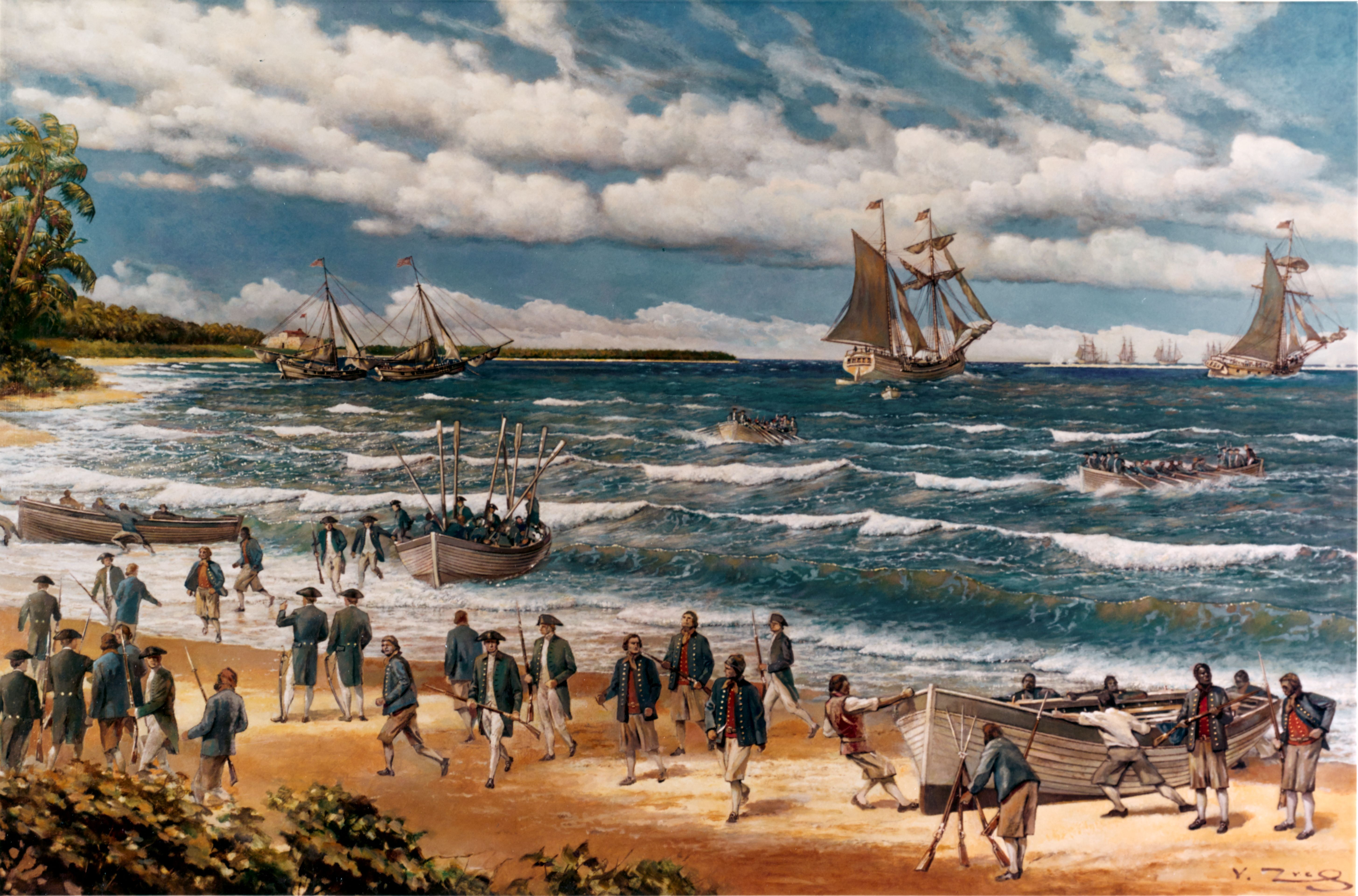
In March of 1776, Nicholas took a ship outfitted by another Philadelphia Quaker, Joshua Humphreys, to New Providence, the capital of the British-controlled Bahamas, where he commanded the United States to raid a British ship and steal its weapons and gunpowder.
Oil painting on canvas by V. Zveg, 1973, depicting Continental Sailors and Marines landing on New Providence Island, Bahamas, on March 3, 1776. Their initial objective, Fort Montagu, is in the left distance. Close off shore are the small vessels used to transport the landing force to the vicinity of the beach. They are (from left to right): two captured sloops, schooner Wasp and sloop Providence. The other ships of the American squadron are visible in the distance. The operation was commanded by Commodore Esek Hopkins.U.S. Navy Art Collection, Washington, D.C. U.S. Naval History and Heritage Command Photograph.
It was a strategic mission, Connolly said, to capture and destroy ships used to fight the colonists on American soil.
“It was a way of weakening the British forces by diverting their attention from America to their colonies in the Caribbean,” Connolly said. “We needed ammunition. So we decided to raid their forts of gunpowder and cannons and take it back to America. We were very successful, capturing 88 cannons, 15 mortars, and a huge amount of gunpowder.”
Most importantly, the Americans would no longer be underestimated. This show of military power, Connelly said, is why France joined the colonists.
After the Treaty of Versailles was signed in 1783, Congress disbanded the Colonial Navy and Marines. The Continental Army was a mere shell of itself.
“The Founding Fathers didn’t think we need a permanent military force anymore,” Connolly said. “They believed an armed militia could potentially be used against the government.”
But the need for defense proved necessary.
In August 1789, Washington (who was now president) created the U.S. Department of War, appointing Henry Knox as its first secretary. On Sept. 29, 1789, Washington reestablished the U.S. Army under the Constitution.
During his second term as president on March 27, 1794, Congress created the Navy as we know it today to protect American ships from pirates on the Mediterranean Sea. Humphreys was called on to build the first six U.S. Navy frigates.
U.S. Navy sailors listen as President Donald Trump speaks during an event at Tradepoint Atlantic on Sparrows Point in Maryland, on Tuesday, Oct. 6, 2026. (Kenny Holston/The New York Times)KENNY HOLSTON
One of the ships Humphreys designed, the USS Constitution, is still in active service as a training vessel for the Navy, Connolly said.
On July 11, 1798, President John Adams signed the act establishing and organizing the U.S. Marine Corps as a part of the Department of the Navy.
“The Quakers were pacifists, yes,” Connolly said. “But we cannot forget their military contributions to helping America become America.”
This week’s Firstival is Saturday, Oct. 17, from 11 a.m. to 1 p.m., at the Arch Street Meeting House, 320 Arch St.
Abbott Elementary is opening its fictional doors to a new cast of characters with last week’s premiere of its sixth season.
Joining the main cast this season, which includes show creator and Philly native Quinta Brunson, are guest stars such as former Nickelodeon icon Miranda Cosgrove, comedian and author Ali Wong, and comedian and actor Edi Patterson, according to Deadline.
Details on their Abbott characters and the episodes they’ll appear weren’t announced.
The Emmy-winning Abbott has grown to be one of the most beloved network sitcoms, and its latest premiere brought on Philadelphia 76ers’ juggernauts Tyrese Maxey, VJ Edgecombe, and Jaylen Brown.
Cosgrove, Wong, and Patterson will enter Abbott Elementary as the main cast goes through major changes, with Tyler James Williams’ Gregory promoted to assistant principal and Lisa Ann Walter’s Melissa is coming into her own as the teachers’ union representative.
Cosgrove is best known for her role in Nickelodeon’s Drake and Josh and as Carly in the same channel’s iCarly, about teens livestreaming in the aughts before Twitch became a global platform.
The 33-year-old also produced the iCarly reboot with Paramount+ in 2021 and starred in Netflix’s The Wrong Paris, among other roles.
Wong, a stand-up comedian known for her Netflix specials like Cobra Baby and 2024’s Single Lady, starred in and executive produced the Netflix and A24 dramedy Beef opposite Steven Yeun, for which she won an Emmy for outstanding lead actress for the show’s first season.
Patterson is coming off the heels of a six-year stint in Danny McBride’s latest HBO comedy series, The Righteous Gemstones, in which she played the ambitious, word-slurring, and outrageous Judy Gemstone, who vies for control of the family megachurch alongside McBride, Adam DeVine, Walton Goggins, and John Goodman.
Abbott airs on ABC on Wednesdays at 8:30 p.m. and streams on Hulu and Disney+ the next day.
Years after being assumed a fait accompli, the ownership transfer of the Atwater Kent Collection to Drexel University appears to be off.
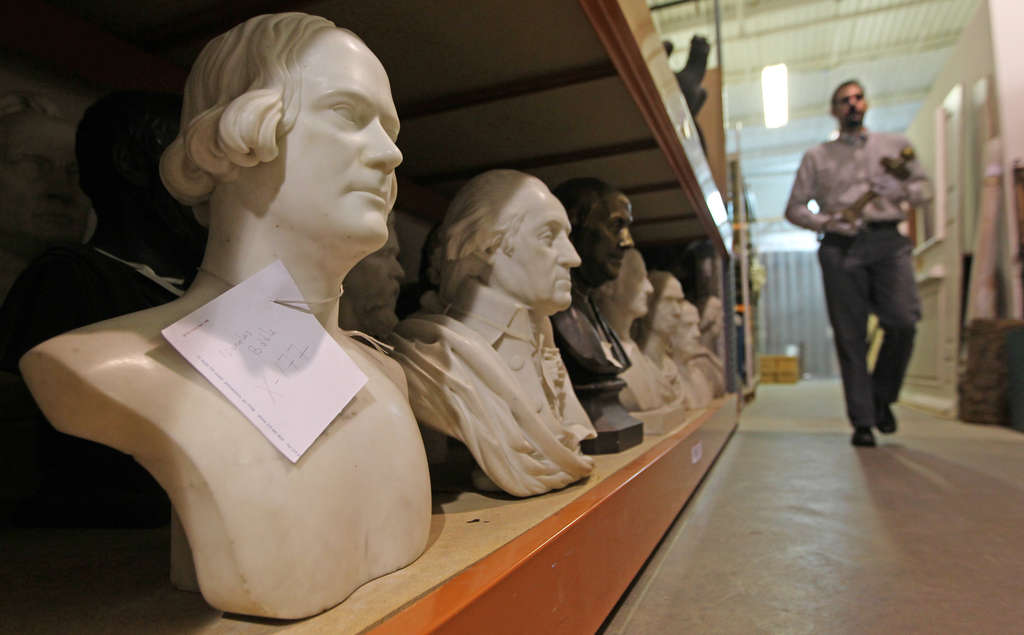
Dubbed “Philadelphia’s attic,” the collection will remain in the hands of the City of Philadelphia, under the terms of a deal being hammered out between the city and Drexel.
The 130,000 objects relating to the city’s history had been slated for a handover to Drexel after Philadelphia Orphans’ Court approved the move in 2022, but a transfer agreement was never signed.
The historic trove became unmoored from its longtime home at 15 S. Seventh St., the Philadelphia History Museum at the Atwater Kent, when the museum closed in 2018. Plans now call for the city to continue owning the collection, with Drexel maintaining its role in conserving, exhibiting, and loaning out the artifacts.
It was Mayor Cherelle L. Parker who initiated the change in plans, according to a joint statement from the city and Drexel that was produced after The Inquirer asked about the status of the collection’s ownership.
After Parker took office in 2024, “she insisted that Philadelphians would be best served by the Collection staying in the City’s ownership, with continued expert care and curation by Drexel collections professionals,” said the statement, issued earlier this month.
“The history of Philadelphia belongs to Philadelphians. I directed my team to ensure that the City’s treasures would always be owned by Philadelphians,” said Mayor Parker in the statement, which added that “today’s announcement reflects that the City and Drexel are [in the process of] reaching an agreement to do just that.”
In another change in course, Drexel will no longer become trustee of the collection. Instead, the artifacts will be overseen by a body of trustees drawn from the former Atwater Kent museum board.
“It’s going to be up to the city and the trustees to oversee Drexel’s work,” said Jeffry Benoliel, vice president of the museum trustees.
“I think it’s good for the city. It’s a great collection,” Benoliel said. “Our biggest question mark is the city commitment. I know the mayor’s office is very committed — they have a five-year budget for this. But after seeing I don’t know how many years of pulling back their support,” Benoliel said, he is looking forward to seeing “what their commitment and City Council’s commitment is.”
‘Multiyear financial commitment’
City cultural chief Val Gay said that the city has made a “multiyear financial commitment that exceeds its previous contractual support to Drexel,” but added that “we are not disclosing specific financial terms until the agreement is finalized.”
The change in ownership plans was applauded by Francis W. Hoeber, an independent historian with a concentration in Philadelphia, who has long been critical of the Atwater Kent Collection’s ownership transfer out of city hands.
“This collection belongs to the people of Philadelphia,” he said. “It is an incredibly valuable part of Philadelphia’s history, and it should be maintained and treasured by the city and not by some private entity — not by any private entity.”
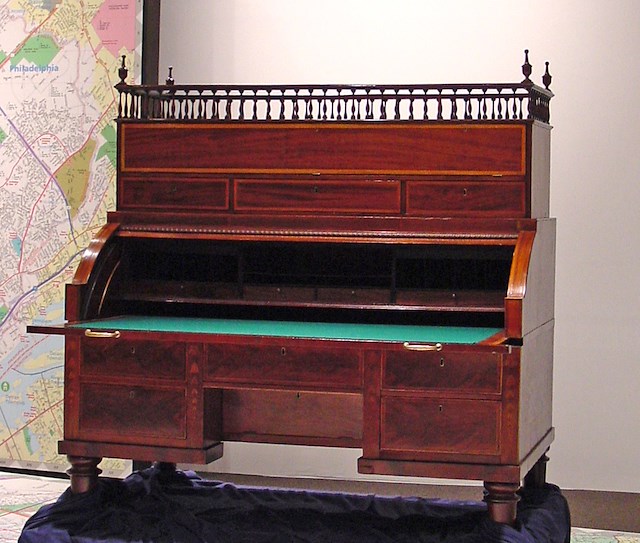
George Washington’s writing desk, 1789, Thomas Burling, New York, mahogany, maple, pine, ebony, and brass. The desk is among a number of items that went from the Historical Society of Pennsylvania to the Atwater Kent Collection. Courtesy of the City of Philadelphia Atwater Kent Collection / Gift of Charles Hare Hutchinson, Historical Society of Pennsylvania Collection.
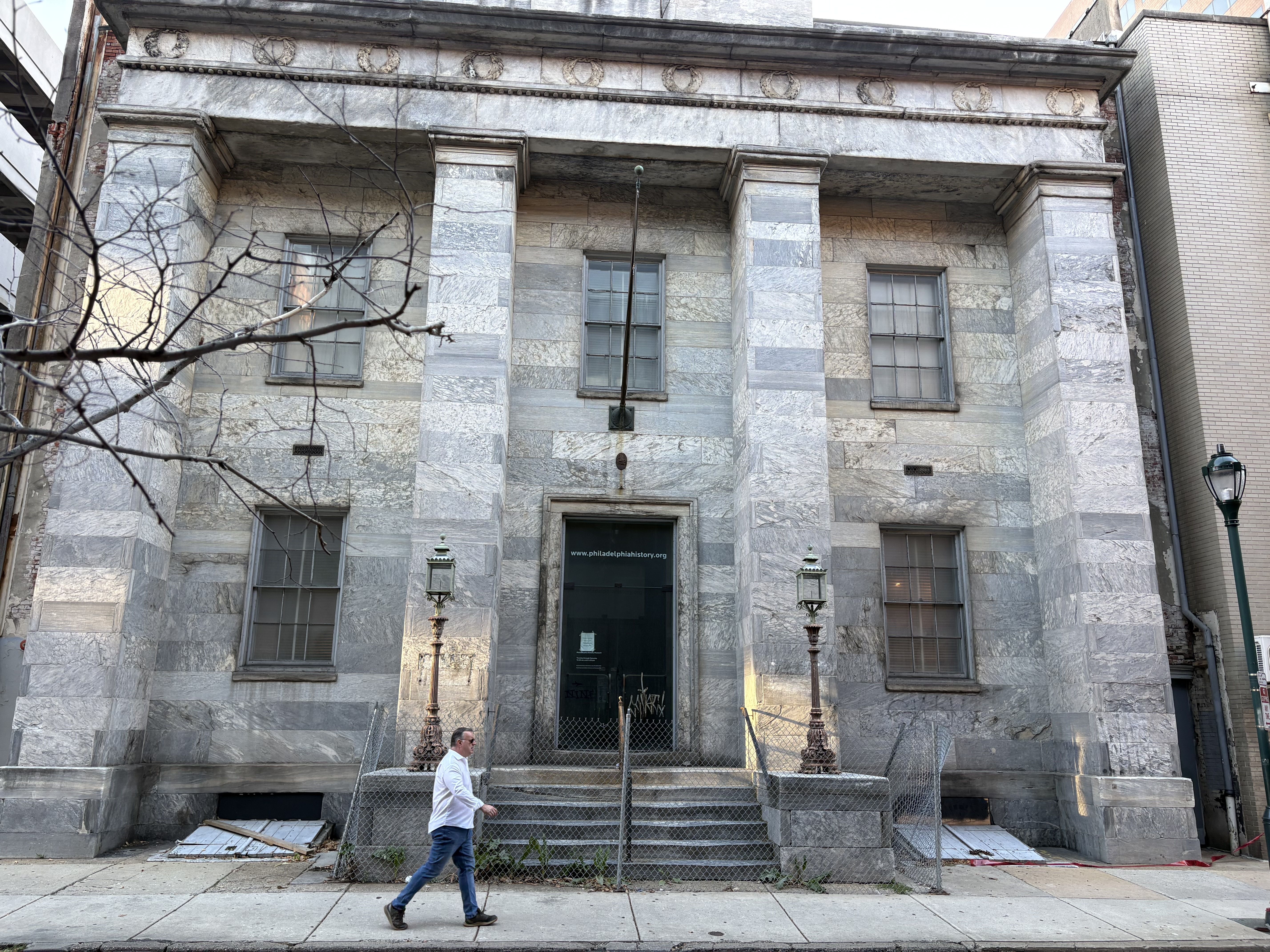
The Atwater Kent Museum (as it was originally called) was the gift of inventor, radio manufacturer, and entrepreneur A. Atwater Kent, and opened to the public in 1941. Kent purchased the former Franklin Institute building on Seventh Street just south of Market and donated it for use as a museum devoted to the city and its history.
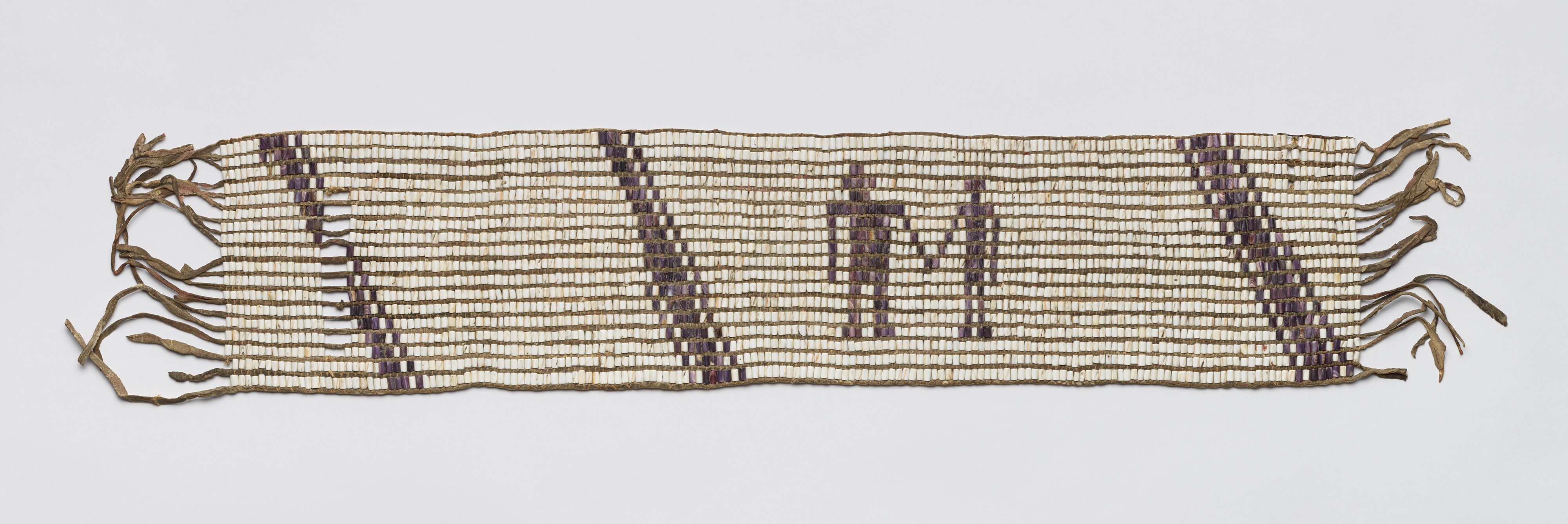
Among the collection’s treasures are the wampum belt given to William Penn by the Lenape in 1682 and George Washington’s mahogany desk; artifacts from the city’s industrial heritage and 1876 Centennial Exposition; sports memorabilia; and artistic achievements such as works by painters Charles Willson Peale, Benjamin West, and Thomas Sully.
A Kent family representative declined to comment on Monday until the details of the latest development were worked out and available.
The former Philadelphia History Museum at the Atwater Kent on 7th St. just south of Market St., Oct. 14, 2026. The Greek Revival structure, designed by the important architect John Haviland, was built from 1824-26.Peter Dobrin
‘A huge win’
The museum closed its doors in 2018 after experiencing declining support. Then-Mayor Jim Kenney tapped Drexel to take over the collection itself, and the building was shuttered. It remains closed.
Though the final transfer to Drexel never happened, the university has proceeded with its work in the last several years, digitizing the collection, conserving specific items, organizing exhibitions, and raising the money to pay for its work.
“This is a huge win,” said Rosalind Remer, Drexel’s senior vice provost for libraries, collections, and archives, who has led Drexel’s work with the Atwater Kent Collection. “I also think it opens up the possibility, maybe sooner than we had hoped for, of some more permanent option. I don’t know that there will necessarily be a new museum, but there could be a permanent presence, a public presence, which we would be very happy to curate and support.”
The deal as it was originally envisioned called for the collection’s name to be changed to the “Atwater Kent Collection at Drexel University,” but now the name change is uncertain.
“The exact terms of the new agreement between Drexel and the city have not been finalized, so it is premature to speculate on that,” said Remer, who is also a member of the board of managers of the Lenfest Institute for Journalism, which owns The Inquirer.
“We’re in the final stages. It’s really dotting I’s and crossing T’s at this point,” she said of the deal between Drexel and the city.
Wampum belt, 1682, likely made by Lenape women artisans, made of shell, beads, and leather.Courtesy of the City of Philadelphia Atwater Kent Collection / Gift of John Granville Penn, Historical Society of Pennsylvania Collection.
Patricia Wilson Aden, president and CEO of the Greater Philadelphia Cultural Alliance, said she was optimistic about this latest development, but was also eager to learn more about important details — especially regarding what level of financial support the city might offer in the future.
“This is not only a matter of good intentions, it’s a matter of funding, addressing concerns about leadership and stewardship at the board level and staffing level, and ensuring that the collection is treated as that invaluable resource that we all know it is.”
A long time in the making
Remer said that the change in ownership plans had nothing to do with Drexel’s finances. Facing deficits, the university has been in belt-tightening mode and has been in negotiations for a new affiliation agreement with the board of the Academy of Natural Sciences.
“Absolutely not,” Remer said. “In fact, when president [Antonio] Merlo came to Drexel and I met with him for the first time, he affirmed his support for it and said that he had no intention of backing out of any kind of agreement like this. He thought it was great and he’s been very supportive of our work.”
The idea of the city retaining ownership of the collection predates the arrival of Merlo and began during the term of his predecessor, acting Drexel president Denis P. O’Brien, Remer said.
Financially, Drexel’s cost of managing the Atwater Kent Collection is “pretty neutral,” Remer said. The lease for storage at the Pennsylvania Academy of the Fine Arts is paid by the city, she said.
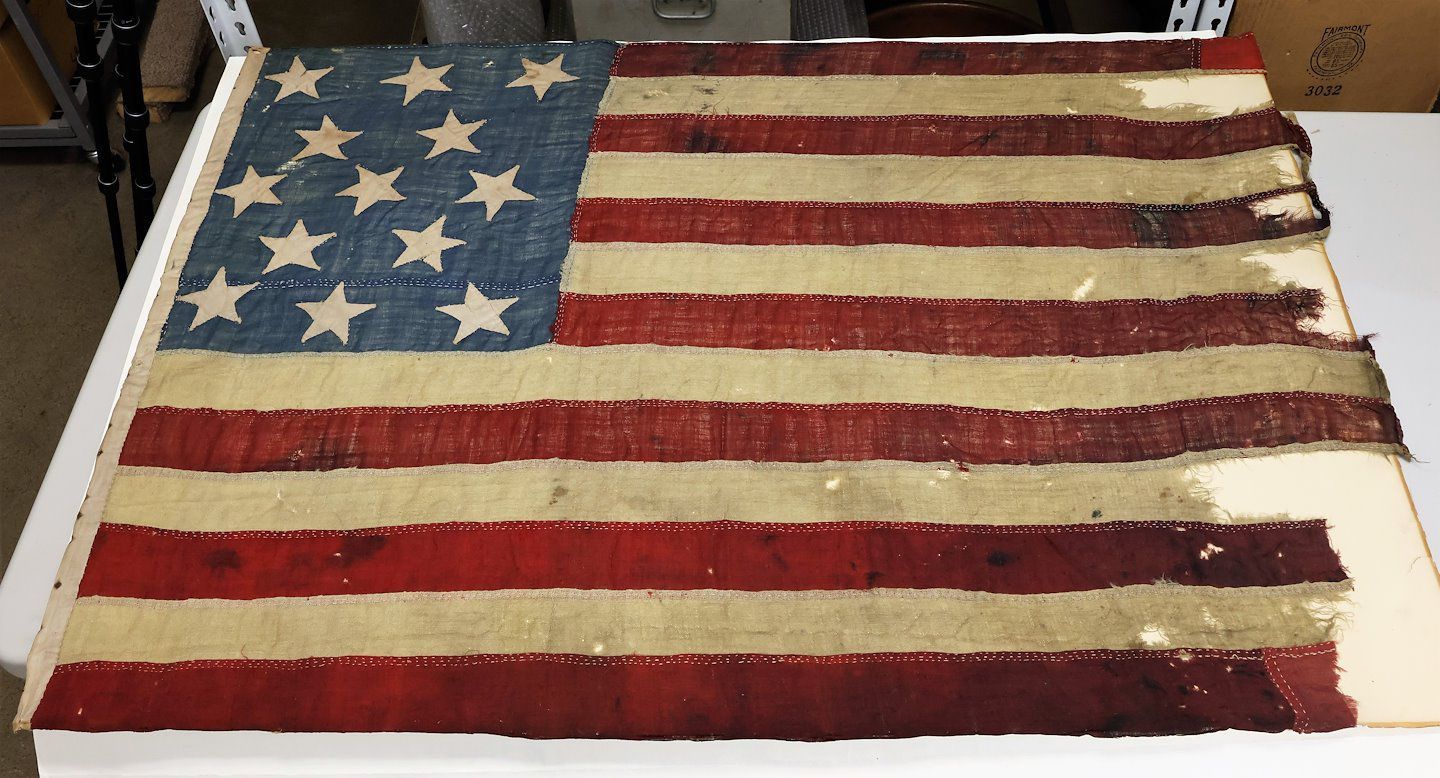
The Perry Expedition flag in the Atwater Kent Collection. The flag, made of cotton, was on display at the 1876 Centennial celebration following Matthew Calbraith Perry’s 1854 mission to Japan. It is currently being restored with funds from the Institute of Museum and Library Services.Courtesy of the City of Philadelphia Atwater Kent Collection / Purchase, Museum Fund (AKM).
Drexel contributes staff time, but as for the collection’s programs, exhibitions, and other activities, “we only do what we fund. And we’ve been really lucky and grateful to have found so many great funders, both private and foundation grants and even federal funds.” Among the sources are the William Penn Foundation and the federally funded Institute of Museum and Library Services.
Remer says that since Drexel began its work, the collection has received $2,700,297 in grants (as of September 2026) and landed donations of $739,641 (as of December 2025).
In addition, an endowment drive has brought in $637,500 toward a goal of $2 million. The endowment will remain in perpetuity, with its investment income going toward care of the collection.
The transfer of the collection from the city to Drexel had already been approved by Orphans’ Court. Asked about the legal aspect of what might need to happen now that the transfer is off, a Drexel spokesperson said:
“The details of any future court process would ultimately be a matter for the court, and we won’t speculate about what that process may entail.”
No dedicated museum yet
Though public perception has often been that the Atwater Kent items went into hiding after the museum closed, hundreds of its artifacts have been displayed and loaned in recent years.
“Philadelphia Revealed: Unpacking the Attic,” which ran at the Pennsylvania Academy of the Fine Arts in 2024 and 2025, featured more than 600 objects from the Atwater Kent Collection.
In addition, other 250th anniversary-related exhibits utilized almost 500 objects, Remer said.
When the Atwater Kent museum was open, “at any one time in the museum there were only a maximum of 200 or so [objects] that were ever on view permanently, so we’re already way beyond that in terms of the numbers of objects people have been able to actually see and the stories that they tell.”
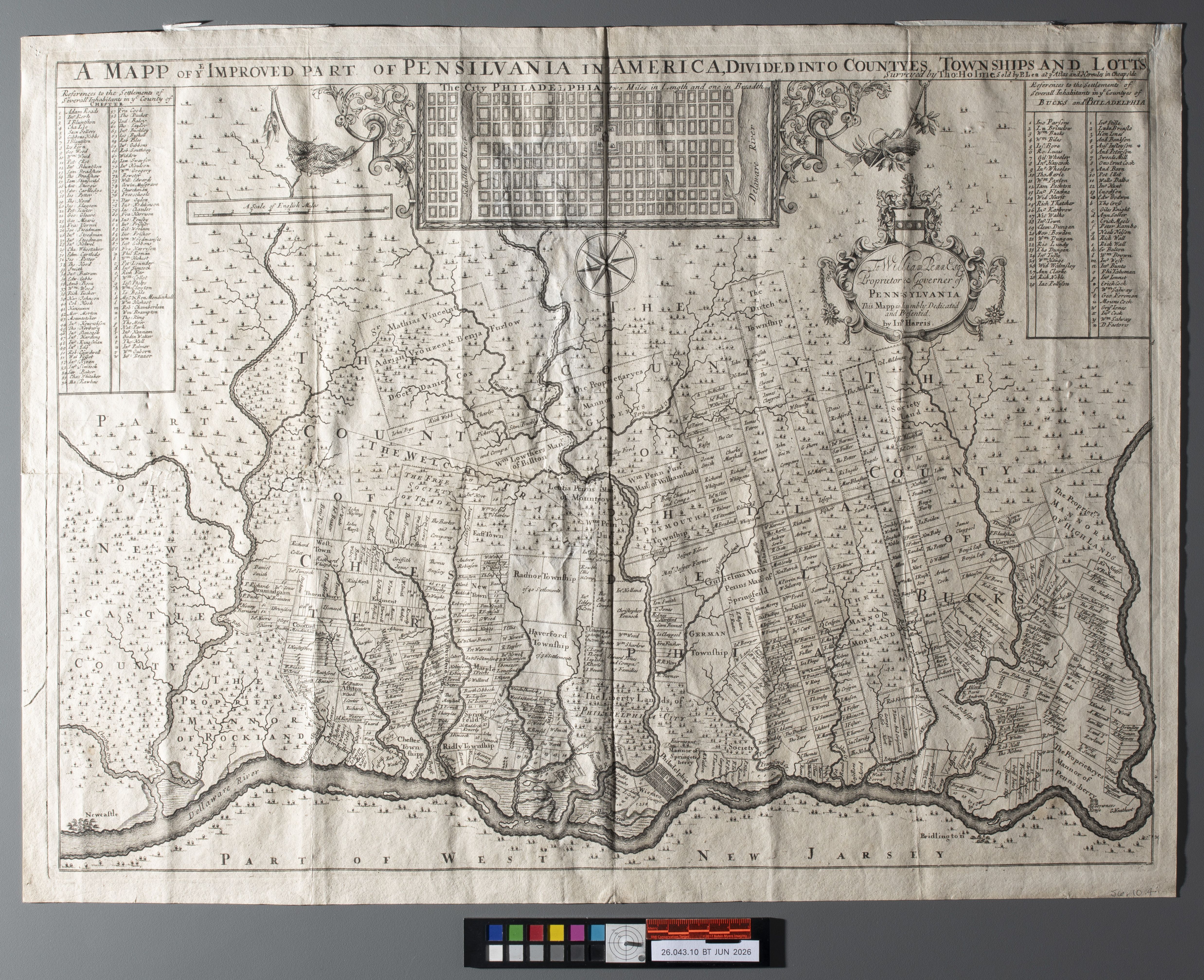
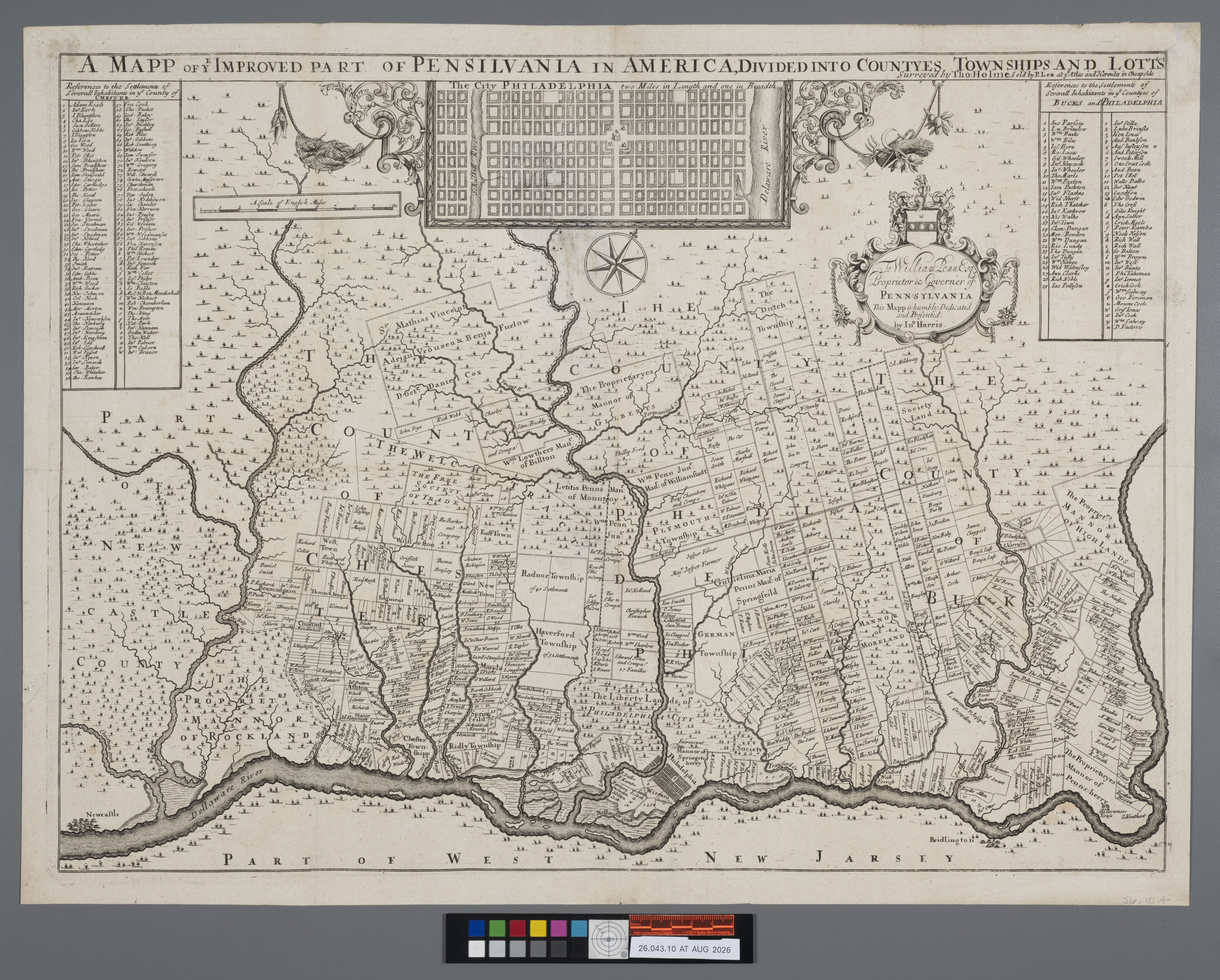
Before conservation was completed: A Mapp of Ye Improved Part of Pensilvania in America, Divided into Countyes, Townships and Lotts, c. 1687, Thomas Holme and John Harris, Philadelphia, paper and ink.Courtesy of the City of Philadelphia Atwater Kent Collection / Purchase, Museum Fund (AKM).After conservation was completed: A Mapp of Ye Improved Part of Pensilvania in America, Divided into Countyes, Townships and Lotts, c. 1687, Thomas Holme and John Harris, Philadelphia, paper and ink.Courtesy of the City of Philadelphia Atwater Kent Collection / Purchase, Museum Fund (AKM).
Drexel has digitized about 20,000 items from the collection, and in addition to photographing, it has made 10 million metadata entries and corrections, “which means every object is researched and understood.”
In the meantime, between 5,000 and 6,000 Drexel students have had some kind of interaction with the Atwater Kent materials — through class assignments, in co-ops working in the collection, by designing exhibitions on campus, and by learning about conservation and designing catalogs.
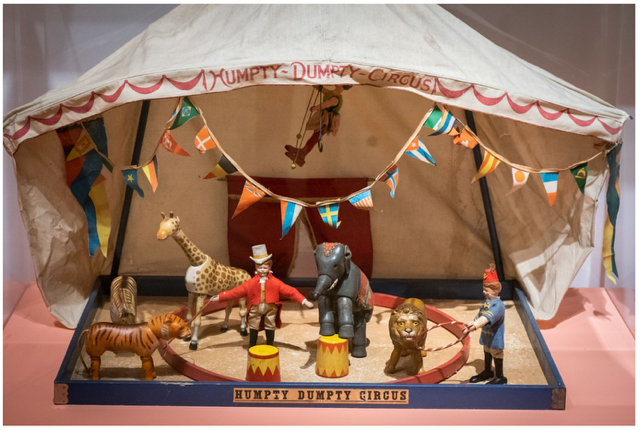
Humpty Dumpty Circus, A. Schoenhut Company, Philadelphia, c. 1930 (Atwater Kent Collection at Drexel, Museum Purchase, 10.16.1)
Schoenhut Toys: Born into a German toy-making family, Albert Frederick Schoenhut (1849–1912) was invited to Philadelphia in 1872 to repair toy pianos for Wanamaker’s. Six years later he launched his own toy piano company, later expanding it to make other instruments, dolls, figures, and other toys. By the early 1900s, the Philadelphia-based company was the largest in the country. Though the company declared bankruptcy in 1935, because it is part of the Atwater Kent Collection, Schoenhut’s charming Humpty Dumpty Circus will continue to delight toy lovers of all ages long into the future.Courtesy of the City of Philadelphia Atwater Kent Collection / Gift of Schoenhut Club
The new plan for the Atwater Kent items does not restore a dedicated museum for Philadelphia history. The loss of such a permanent, standalone museum was bemoaned by historians when the museum closed its doors in 2018 — and has continued to be cited as a major loss for the city.
Hoeber, the historian, says he still believes Philadelphia should have a museum solely devoted to it.
“We were the birthplace of American industrial might, we were the birthplace of America’s leadership in finance, not to mention leadership in constitutional politics, in abolition, in public knowledge and education,” he said. “That affected the way institutions operated in every state in the union, and people deserve to know that.”
Still, Remer said, there is nothing that prevents the return of a separate institution should the civic will find a way to make that happen in the future.
In fact, the collection is intact, and it continues to grow, Remer points out.
“I know people are sad about it, and it’s perfectly fine and reasonable for all of us to be sad that we don’t have a great [Philadelphia] history museum. At the same time, we’ve made sure that we haven’t lost all those materials that can someday make a great history museum or a permanent gallery of some sort. So I feel good about that.”
The Eagles are currently the opposite of must-see TV, which could lead to their schedule changing.
The Birds (2-3) are scheduled to face the Washington Commanders (1-3-1) on NBC’s Sunday Night Football in Week 8, a game that looks a lot worse on paper now than it did a few months ago when NFL schedule makers put it in primetime.
The Eagles, who have lost three straight, find themselves with a losing record for the first time under head coach Nick Sirianni. It also doesn’t help that the Birds have had an unwatchable second-half offense where the star has been punter Braden Mann. The Commanders are even worse, with just one win after an inexplicable collapse in overtime Sunday against the New York Giants (3-1-1).
As a result, the NFL is considering whether to flex Eagles-Commanders off NBC and replace it with a better matchup.
The league has until Oct. 20 to make a final decision, so it will depend what happens this weekend. The Eagles face the Carolina Panthers (2-2) at home in Week 6, while the Commanders face the undefeated San Francisco 49ers (5-0) Monday night on ESPN.
The NFL usually avoids flexing in and out of Sunday Night Football so early in the season unless it’s pretty clear one or both teams’ seasons are going in the wrong direction. The last time the NFL made an early-season primetime flex was in 2024, when it moved Eagles-Jaguars off Sunday Night Football in Week 9.
If the league moves Eagles-Commanders, there appear to be limited options to replace it. The most obvious would be Baltimore Ravens (4-1) vs. the Buffalo Bills (4-1), which is currently scheduled as a 1 p.m. regional game on CBS. But the game is likely protected by the network and the Ravens are scheduled to play the following Thursday night.
Under the NFL TV rules, Fox and CBS can pick one game a week to protect against being flexed into primetime, which they have to declare three weeks out.
Other options are:
Minnesota Vikings (5-0) at Detroit Lions (3-2) on Fox at 1 p.m.
Kansas City Chiefs (4-0) at Denver Broncos (3-2) on CBS at 4:25 p.m.
Cleveland Browns (3-2) at Pittsburgh Steelers (3-2) on CBS at 1 p.m.
The NFL might be blocked from moving any of these. CBS and Fox are guaranteed at least one game of each divisional rivalry during the season from the AFC and NFC, respectively. And for all three matchups, their second divisional game is scheduled or has already been played on a different network.
One other option would be Indianapolis Colts (2-3) at Jacksonville Jaguars (4-1) at 1 p.m. on CBS, since their second game is in Week 18 and doesn’t yet have a network.
The NFL could also decide to swap games in Week 8 for Fox’s national 4:25 p.m. window, the league’s most-watched time slot. It’s currently stuck with the winless Los Angeles Charges (0-5) facing off against the Los Angeles Rams (2-3).
As a reminder, here are the current NFL flex rules:
Sunday Night Football (NBC): The NFL can flex twice between Weeks 5-10 any game during Weeks 11-17. Early-season flexes through Week 13 require at least 12 days notice, which drops to six days notice for Weeks 14-17.
Monday Night Football (ESPN/ABC): Any game between Weeks 12-17 can be flexed with at least 12 days notice.
Thursday Night Football (Amazon’s Prime Video): Two games can be flexed between Weeks 13-17 with 21 days notice.
The NFL is certainly hoping the Eagles turn things around. The Birds are scheduled to appear in at least seven more standalone games this season, including four in primetime. That includes Christmas Eve against the Houston Texans and their Thanksgiving matchup against the Dallas Cowboys, which the NFL still hopes will top last year’s turkey-day audience of 57.3 million viewers.
Michael Barkann back at NBC Sports Philadelphia
Longtime NBC Sports Philadelphia host Michael Barkann.NBC Sports Philadelphia
Michael Barkann picked up right where he left off — reacting to a disappointing Eagles loss.
Barkann, the host of Eagles pre- and postgame coverage on NBC Sports Philadelphia dating back to the channel’s inception in 1997, had been off the air for a little more than a week after undergoing an emergency cardiac ablation, a procedure to stop dangerous heart rhythms not responding to normal treatment.
He returned Sunday, just in time to have his heart strength tested by another late-game collapse, this time against the Jacksonville Jaguars in London.
“I don’t know of a tougher loss I’ve ever covered since the existence of Comcast SportsNet,” Barkann said. “And we’re pushing 30 years.
“That was a stake right through the heart,” Barkann added. “And my heart about now ain’t real ready to take that.”
“You don’t make a call right then and there. You don’t let the game be decided by officiating,” Barkann said. “This is a freaking Super Bowl! And that should never happen!”
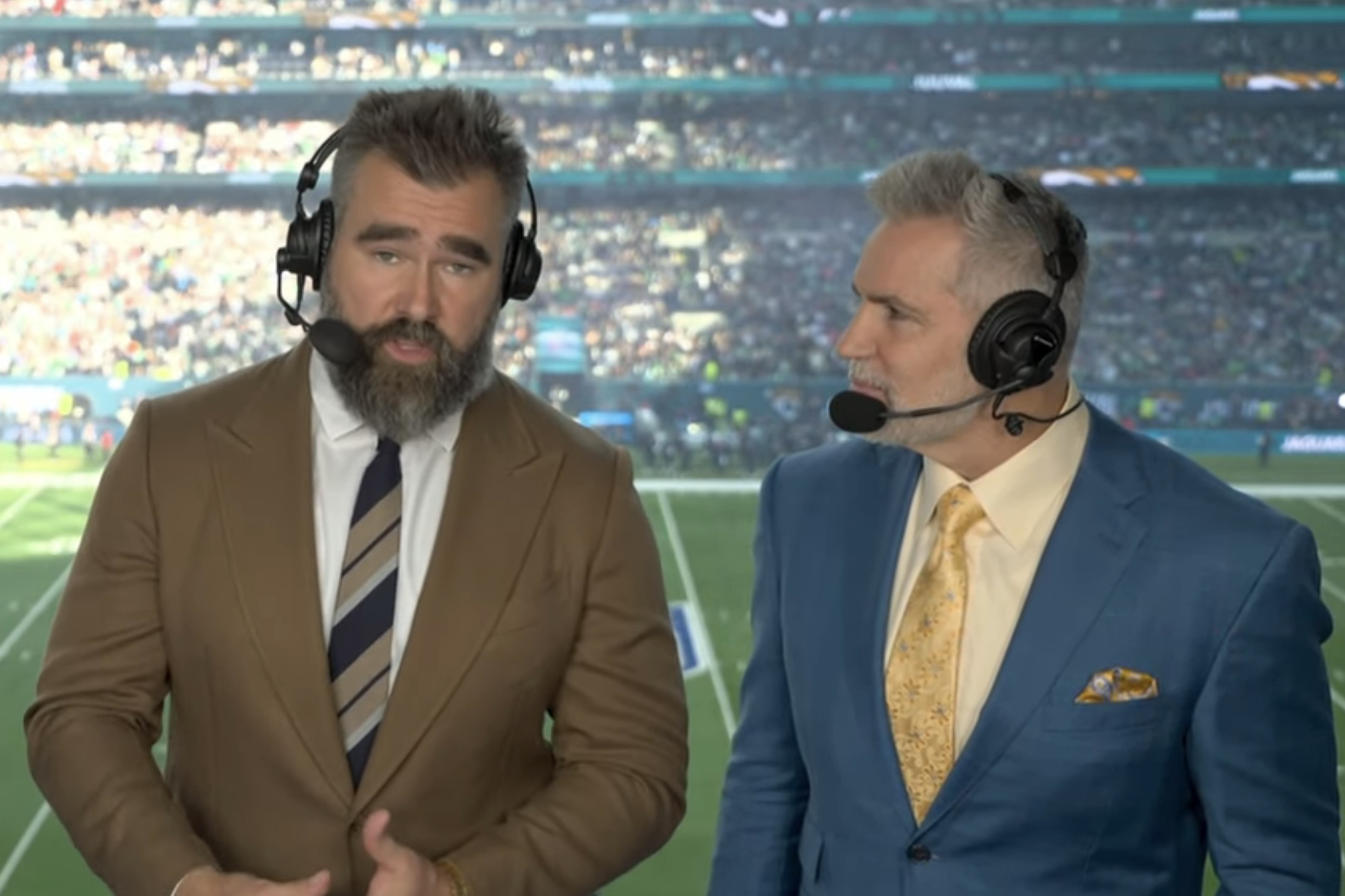
Jason Kelce (left) alongside Kurt Warner during the NFL Network’s Eagles-Jaguars broadcast.ESPN
Was Jason Kelce disappointed in Sunday’s Eagles loss? Probably. Did he punch a hole in the wall of the booth at Tottenham Hotspur Stadium in London out of frustration, as a viral post on social media claimed? Definitely not, according to an ESPN source.
On Football Night in America, NBC used music associated with the classic ESPN highlight show NFL Primetime, which is still hosted on ESPN+ by Chris Berman. Beyond the rights issue, there’s some history here — NFL Primetime was forced off the air as part of NBC’s contract with the league when it took over Sunday Night Football in 2006.
The ESPN 'NFL Primetime' music appears on… NBC's 'Football Night in America' for the Giants-Commanders highlight package. 🏈📺🎵🤔 pic.twitter.com/4aWHG7JwHm
Two months ago, ESPN did not have a single reporter on the Sixers beat. Now that LeBron James has signed, they have two — Philly native and longtime NBA reporter Dave McMenamin and former Los Angeles Chargers reporter Kris Rhim, also a Philly native and Central High School alumnus.
Calling Eagles-Panthers Sunday on CBS will be a familiar voice — Birds preseason announcer Ross Tucker, who will be in the booth alongside play-by-play announcer Ian Eagle. It’ll be the second time Tucker will call a Birds regular-season game on TV, which is two more than fellow CBS announcer and voice of the Phillies Tom McCarthy.
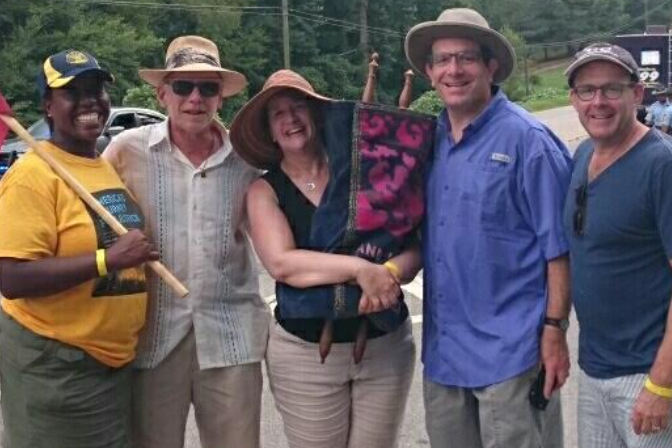
Michelle Denker Pearlman, 56, of Ardmore, longtime rabbi at Beth Chaim Reform Congregation in Malvern, former cantorial soloist and music director at Congregation Kol Ami in Chicago, spiritual guide to congregants in Pennsylvania, New Jersey, and Massachusetts, social justice activist, musical stage performer, and mentor to many, died Sunday, Sept. 20, of leiomyosarcoma at her home.
Born and reared in Michigan, Rabbi Pearlman was ordained in 2005 and arrived at Beth Chaim in 2014 after serving as rabbi at Monmouth Reform Temple in New Jersey for three years and associate rabbi at Temple Shalom in Massachusetts for four years. She was an engaging speaker and melodious mezzo-soprano, congregants everywhere said, and an activist for youth engagement, social justice, and interfaith community outreach.
She long embraced what she called a “song and story” approach to nurturing spiritual and community relations. On LinkedIn, she said: “My passion is creating sacred community while helping individuals make meaningful connections to Judaism, to God, and to one another.”
At Beth Chaim, Rabbi Pearlman gave sermons, led all kinds of services and projects, expanded adult and youth study courses, forged community and congregation partnerships, raised funds, increased membership, and organized trips, a choir, and a theatrical play. She instituted a “no shushing” tradition during services, downplayed dress codes, and, one congregant said, “focused on what’s most important: community, love, working toward peace together.”
In a 2019 video, Rabbi Pearlman called Beth Chaim “a place to embrace Judaism but also to have a lot of fun.”
Her profile on the congregation website calls her “the glue of our congregation” and notes her “magnetism, wisdom, approachability, sharp intellect, ability to deeply care, and propensity to work (and overwork).” Congregation board members praised her “intelligence, creativity, and the countless ways she touched our lives” in a tribute.
During the COVID-19 pandemic, Rabbi Pearlman held services online and offered personal and interactive sessions she called “LOL activities.” She lamented the lack of face-to-face gatherings in a 2020 video but said: “Different can be really special.”
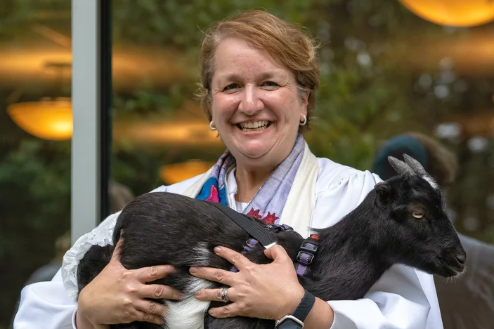
Rabbi Pearlman “was a wonderful soul and gave so much of herself,” a congregant in Malvern said in a tribute.Beth Chaim Reform Congregation
A congregant in Massachusetts called her sermons “moving and meaningful” and lauded her “vivacious delivery and humanity” in an online tribute. A Beth Chaim congregant told the Jewish Exponent in 2024: “She creates a welcoming, educational environment that is authentically attractive.”
Rabbi Pearlman also did outreach work for the Jewish Federation of Monmouth County and the Union for Reform Judaism. She was a visiting rabbi in Warsaw, Poland, in 2004 and 2005.
She earned a master of arts degree in Hebrew letters at Hebrew Union College in New York in 2004 and was active with the Central Conference of American Rabbis, Interfaith Philadelphia, the Institute for Jewish Spirituality, and other groups.
She had a soaring singing voice and was a cantorial soloist and music director at Congregation Kol Ami from 1995 to 2000. It was there, working with Rabbi Steve Denker, that she decided to join the rabbinate.
She also sang in synagogue choirs and performed in theatrical productions in high school, college, and afterward. She earned a bachelor’s degree in voice performance at the University of Michigan in 1992 and a master’s degree in music and voice performance at the University of Illinois in 1995.
A congregant in Malvern said online: “She was a wonderful soul and gave so much of herself.” Rabbi Denker said: “Michelle blessed her congregants, communities, and the Jewish people wherever she served.”
Michelle Gail Perlman was born June 18, 1970. She grew up in Southfield, Mich., about 15 miles northwest of Detroit, and earned a singing scholarship to Michigan.
She met Andrew Denker, cousin of Rabbi Steve Denker, in Chicago, and they married in 2001. They had daughters Madeline, Noa, and Natalia, and lived in Ardmore.
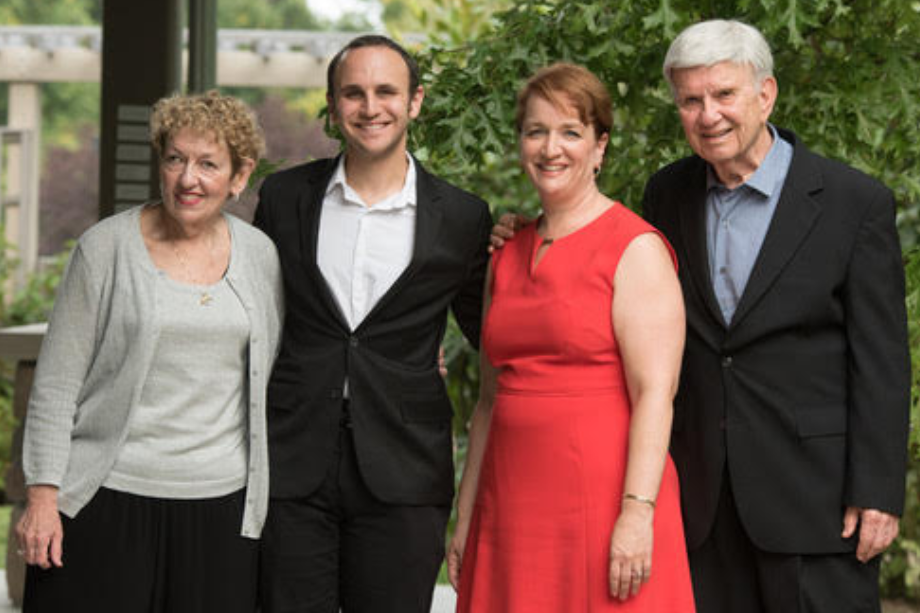
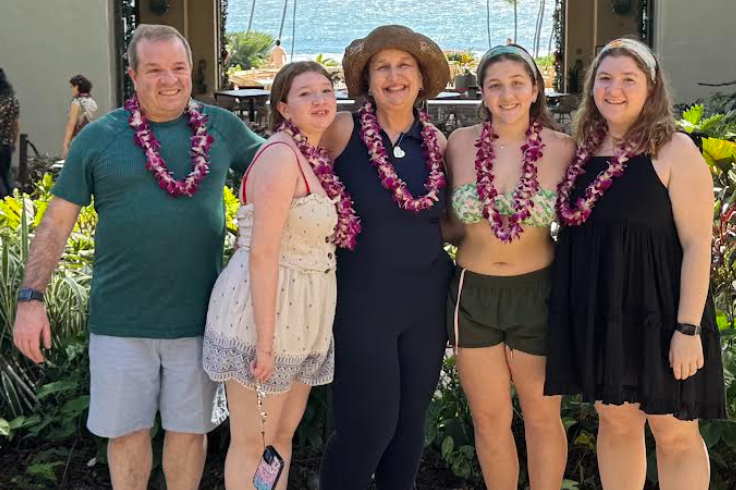
Rabbi Pearlman, second from right above and center below, enjoyed time with her family. Courtesy of the family
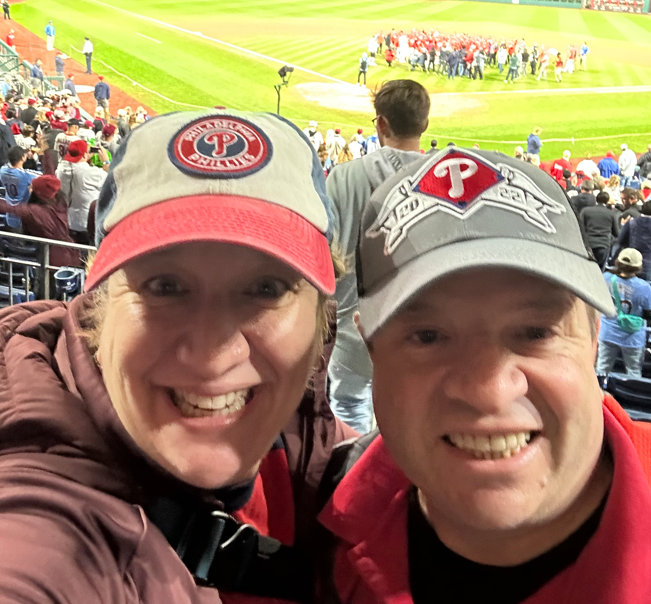
Rabbi Pearlman enjoyed hiking and biking, anything outdoors. She followed the Phillies closely and went to the Eagles’ Super Bowl parade in 2018.
She liked musicals, concerts, water ice, and the Schuylkill River Trail. She loved books and libraries, and performed with the Santa Fe Opera.
“She was curious, always wanting to talk,” her daughter Noa said. “She was immensely joyful.” Her daughter Madeline said: “She was welcoming and always had an open door.”
Her husband said: “She was caring and adventurous. She wanted to make connections, and she did it her way.”
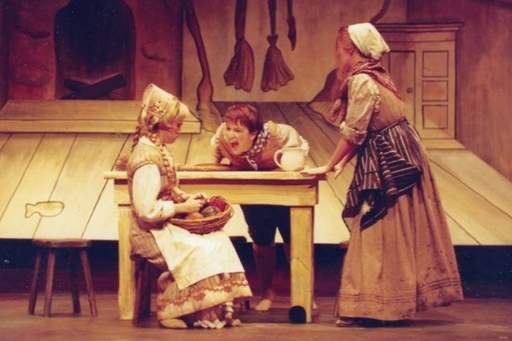
Rabbi Pearlman (center) performs in a stage production about Hansel and Gretel.Courtesy of the familyRabbi Pearlman “was caring and adventurous,” her husband said.Courtesy of the family
In addition to her husband and daughters, Rabbi Pearlman is survived by her mother, Barbara; a brother, Adam; and other relatives.