Category: Education

  • PSSA scores are still missing in Philly, but the district won’t go test optional – school board roundup

    PSSA scores are still missing in Philly, but the district won’t go test optional – school board roundup

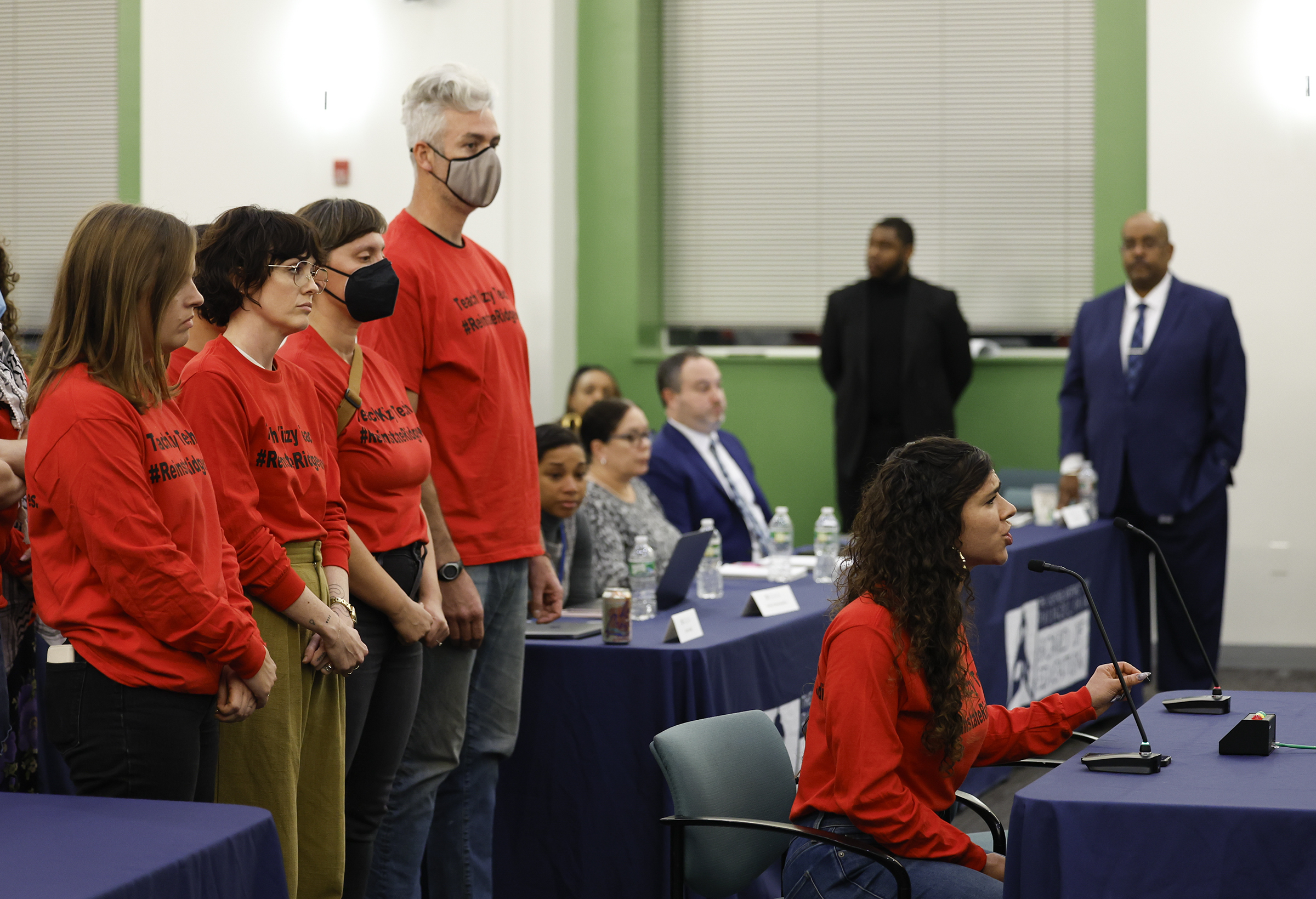
    Leo Stober, an eighth grader at Science Leadership Academy Middle School, is frustrated. He’s thinking about applying to selective Philadelphia School District high schools, but the process is now stymied by what officials said was a delay in the release of state test scores.

    So Leo sat in front of the Philadelphia school board Thursday night to air his concerns.

    Not having access to scores “is quite frankly disrespectful, not only to the students, but also to the teachers,” Leo said.

    Students are anxious to hear how their 2026 PSSA performance will shape the schools open to them, and teachers need the scores “to find which students need extra help on certain assignments,” he said.

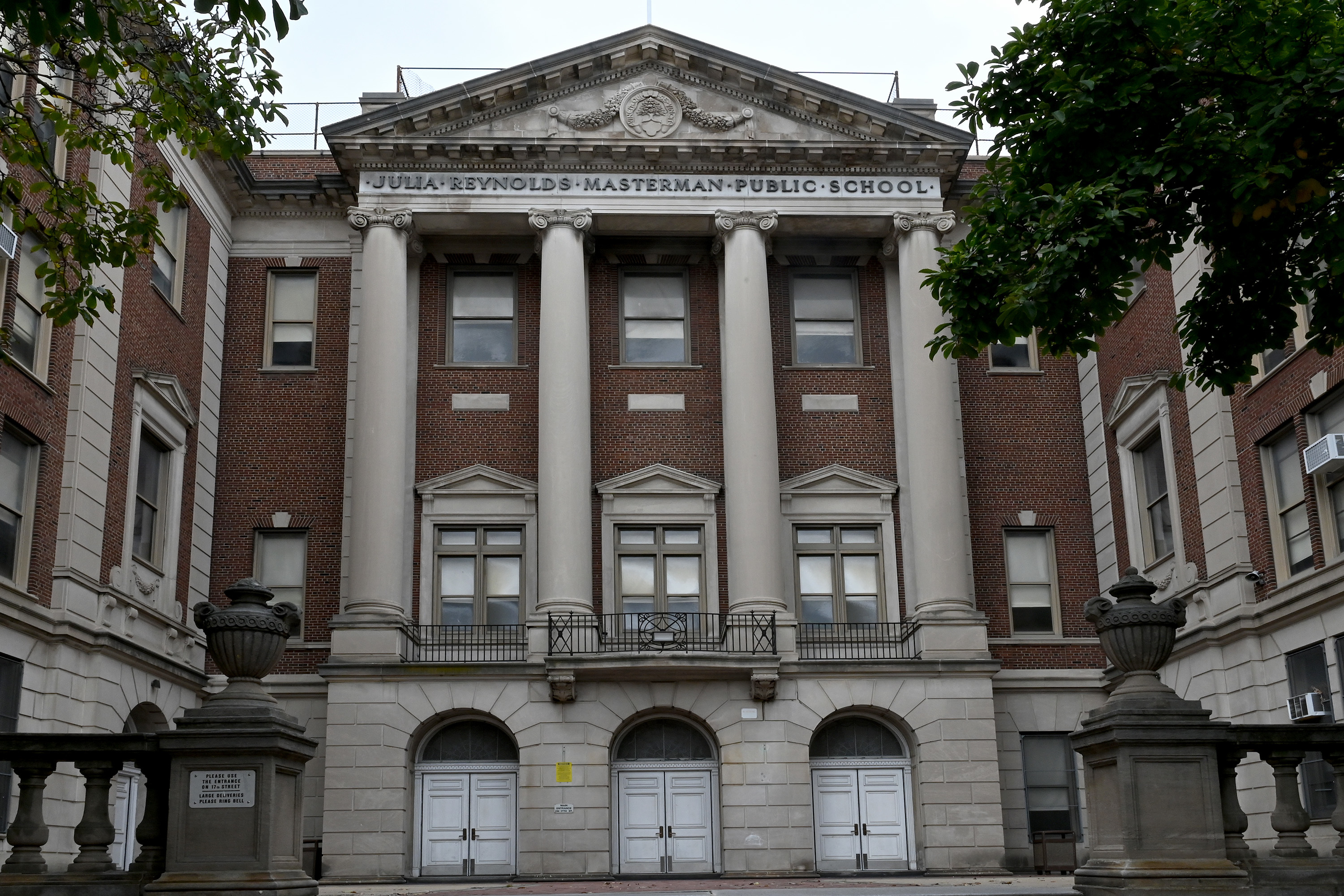
    A student’s test scores determine which schools they’re eligible to apply to: Central and Masterman require scores in the 80th percentile to apply, for instance.

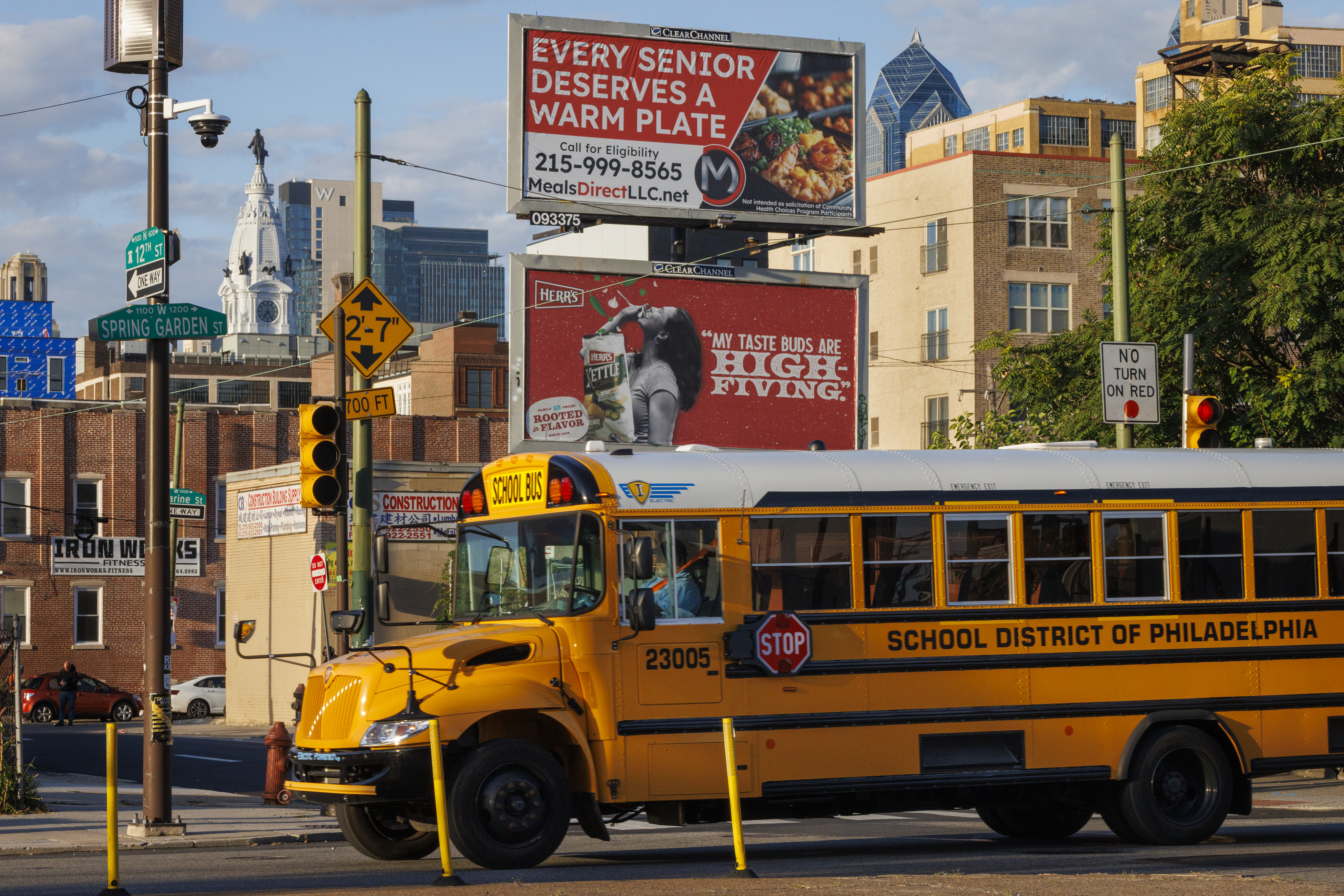
    The district’s school selection process was supposed to open Sept. 8. Superintendent Tony B. Watlington Sr. pushed it back to Oct. 5, blaming the change on the state’s public release of PSSA test results.

    The Pennsylvania Department of Education sent preliminary scores to districts and schools in the spring, as it always does — one charter school official told the school board she received her early test results on June 10.

    But Philadelphia appears to be alone in the state in withholding scores from nearly all of its employees. Watlington, who has placed a high public priority on the district being the fastest-improving large urban district in the U.S., has said the delay ties to PDE pushing back its release of final statewide data to districts.

    Watlington said Thursday night that scores won’t be available when the application window opens in a week and and a half, but said he realizes “that changing the timeline may require families to adjust their plans, and we absolutely appreciate their patience as we work through this.”

    Scores will be available by the time the application window closes, on Nov. 24, Watlington said.

    Central and Masterman are only two of the 37 schools that require scores.

    Scores in the 65th percentile qualify students for Academy at Palumbo, George Washington Carver High School of Engineering and Science, Parkway Center City Middle College, and Northeast High’s International Baccalaureate and magnet programs. Other schools require scores in the 50th percentile or better.

    A student board representative asked Watlington if the shift would cause the district to consider going “test optional” — allowing students to decide whether they want to submit standardized test scores, or withhold them.

    “We’re not going to test optional,” Watlington said. “We will likely continue with what we’re doing.”

    $600,000 for a Kensington High project fix

    In other matters, the board voted unanimously to ratify — formally approve a contract that was already awarded — a $600,000 deal with a firm now charged with monitoring construction work at Kensington High.

    Hunter Roberts Construction Group is providing independent oversight and monitoring of the work at Kensington, which has been plagued with problems.

    Errors on an HVAC project at Kensington caused asbestos damage that forced the district to close the building to students, who had to be moved to a closed middle school in the Northeast, over some neighbors’ objections.

    The contractor “is expected to comply with applicable federal, state, and local laws and regulations, including, but not limited to, legal requirements for the proper abatement and disposal of asbestos and/or any other hazardous material,” the board resolution approving the contract said. Hunter Roberts began work on the project on Aug. 27, according to the documents.

    Last year, the district was criminally charged over its past handling of asbestos at city schools. After a yearslong secret probe, the school board signed off in June 2025 on a deferred prosecution agreement that comes with strict federal scrutiny of its environmental management.

    Philadelphia was the first school district in the U.S. that faced criminal charges for environmental violations.

    Hunter Roberts’ contract on the Kensington project runs through 2028.

    9.5% raises over 3 years for 32BJ

    The board also gave final approval to a contract for 32BJ, the union representing district bus drivers, cleaners, building engineers and tradespeople.

    The pact gives 32BJ’s 2,000 members 9.5% raises over three years. They’ll also get $2,350 in bonuses and 25 paid days off after the birth of a child – the first time parental leave was granted to those workers.
  • Girls’ High students protested overcrowding, including multiple classes with 50-plus students

    Girls’ High students protested overcrowding, including multiple classes with 50-plus students

    Sa’Mya Cook is a bright, eager 10th grader at the storied Philadelphia High School for Girls, but second period is tough for everyone.

    Cook is crowded into a classroom with 50 other teenagers. It’s hot, and there are not enough desks, with spillover students grabbing seats in folding chairs lining the classroom.

    “It’s too much,” Cook said of her Girls’ High African American history class. “My mom offered to take me out, she said it’s a fire hazard.”

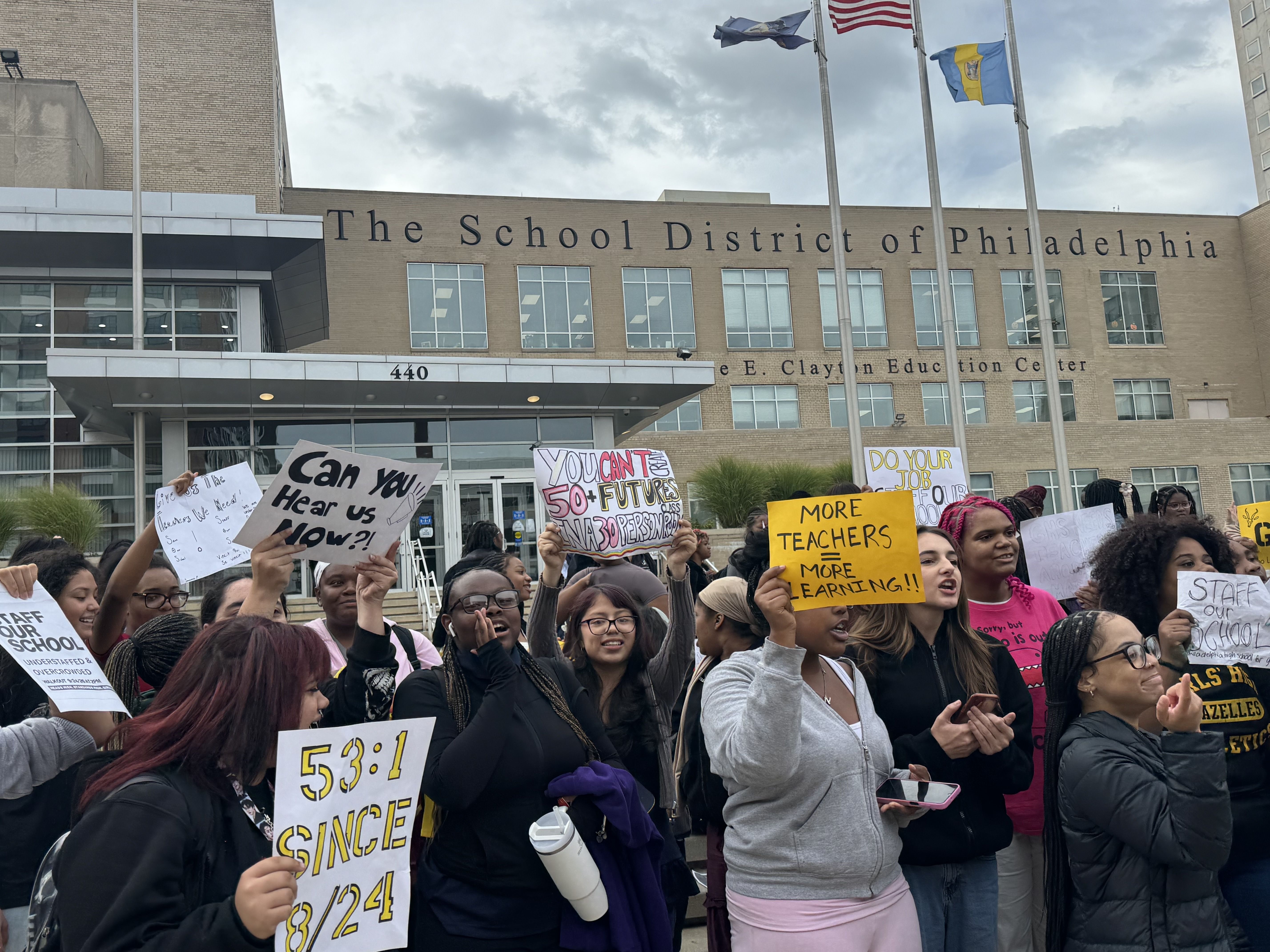
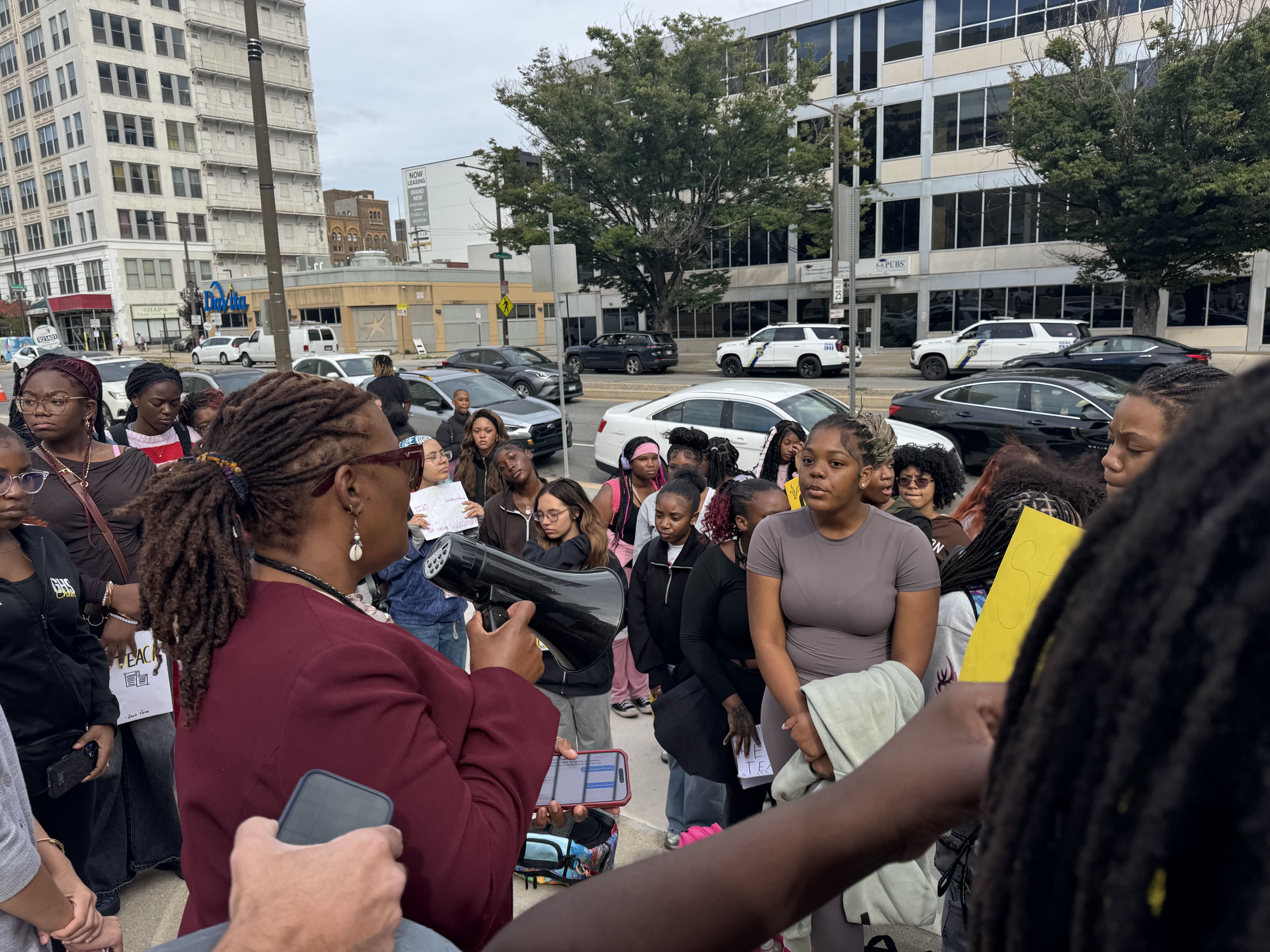
    Cook and 150 of her classmates converged on Philadelphia School District headquarters Thursday to protest conditions at their school, a magnet where rising enrollment has not been met with matching resources, students and teachers said.

    Girls’ High lost enrollment for several years. But, under Principal KaTiedra Argro, the school has reversed the trend. (The school had nearly 900 students in 2022-23, and nearly 600 last school year.)

    As early as April, Girls’ High projected a bumper 9th-grade crop for 2026-27. But the staff allocated by the central office was inadequate, those inside the school said.

    “This is not OK,” said Brooklyn Robinson, a Girls’ High 9th grader. “I am saying this because there is one teacher teaching two classrooms worth of students. We cannot hear the teacher over the amount of students that are conversating in a class. We are not fish in a barrel.”

    Superintendent Tony B. Watlington Sr., addressing the Girls’ High students at a Thursday evening school board meeting, said he would ensure fixes.

    “We want more schools to grow their enrollment, and I was not aware of the class size imbalance, but it will get immediate attention,” Watlington said.

    Students and teachers said they were not presenting new information — they had begun taking their concerns to Watlington’s team shortly after school began on Aug. 24.

    “I hope this can be a teachable moment for us when the enrollment does grow,” said school board president Reginald Streater.

    Nowhere for students to sit

    Though the Girls’ High students secured promises of relief, they were clearly frustrated that the process had taken this long, and wary of the district’s promises.

    “It’s been like this for a month,” 11th grader Jazaiah Smith said. “Nothing has changed.”

    Huge classes tax students and teachers, said Smith.

    “There’s not even enough room for everyone to sit — we have to sit on the floor,” she said.

    Philadelphia School District Deputy Superintendent Brenda Elliott (center, holding megaphone) speaks to Girls’ High students who came to district headquarters to protest overcrowded conditions at the school.Kristen A. Graham / Staff

    Prior to the board meeting, Brenda Elliott, Watlington’s deputy superintendent for academics, waded into the crowd of Girls’ High students gathered outside district headquarters to offer assurances.

    After getting precise enrollment counts, the district added two teachers to Girls’, Elliott said, but has not been able to change students’ schedules to add classes because a new roster chair was unable to complete the work. Central office support should arrive Friday, Elliott said.

    “The report I received was that all of the positions had been added,” Elliott said.

    Students holding signs that said “53:1 since 8/24″ and ”Gazelles, Not Sardines,” a nod to the Girls’ High mascot, the gazelle, shook their heads.

    “We shouldn’t have to come up here and do this to get answers,” one student shouted at Elliott. “That’s ridiculous!”

    Students and teachers said there’s been shifting, inconsistent messaging from the district on how much help is forthcoming, and when it will arrive.

    Nyjera Choice, a 10th grader, has Advanced Placement (AP) African American history, a class with 40 students. Under district policy, classes are supposed to be capped at 33 students.

    The overcrowding “affects learning,” Choice said. “It affects how you focus. There’s students not receiving the proper attention that they need. We’re the next generation of Philadelphia leaders, and we expect better.”

    Christopher Canary, a history teacher who has several oversized classes, including one with 53 students, said luckily, classroom management isn’t a problem for him, even in rooms that have nearly double the number of students they should.

    “But the students are being shortchanged,” Canary said. “They have to rely on a 50th of my attention, when they deserve more.”

    Canary said he is frustrated that when Girls’ delivered on the district’s challenge to enroll more students, the district failed it — and even, for a time, said it was cutting at least one AP class to fix the issue. (It has since reversed that decision.)

    For nearly 180 years, Girls’ High has promised young Philadelphia women an excellent education.

    “And now that our new administration has done what they thought impossible, reigniting public enthusiasm for Girls’ High and miraculously raising enrollment to levels not seen in years, the district has refused to provide us with the staff necessary to adequately serve those students,” Canary said, “effectively setting us up to fail.”

  • Penn endowment increases 27.4%, or more than $6 billion. It’s the largest dollar jump in the university’s history.

    Penn endowment increases 27.4%, or more than $6 billion. It’s the largest dollar jump in the university’s history.

    The University of Pennsylvania’s endowment jumped 27.4% or $6.3 billion in the year ending June 30, 2026, university officials said Thursday.

    The university’s endowment, which supports financial aid, research, teaching, patient care, and other projects, increased from $24.8 billion in 2025 to $31.1 billion, said Mark Dingfield, Penn’s executive vice president.

    “The major story here was our exceptional endowment performance,” Dingfield told members of the university budget and finance committee Thursday, “… which leads to significant growth in our total net assets.”

    It’s the largest one-year dollar jump in the university’s history and compares to 12.2% or $2.5 billion in 2025. The largest percentage increase in the endowment was 50% in 1983, followed by 41.1% or $5.6 billion in 2021, a university spokesperson said.

    Dingfield noted that much of the endowment is restricted for specific uses, and that some of the gains will be absorbed by an increase in the federal excise tax on Penn’s endowment earnings. The tax rate increased on July 1 from 1% to 4%.

    “So even though the endowment performance is exceptional and we’re celebrating, some of that will need to be going to paying off that tax liability under the new tax policy,” he said.

    The endowment’s performance capped an overall strong fiscal year for the university, Dingfield said. That follows an earlier period of fiscal uncertainty. The university in January made another round of budget cuts in response to President Donald Trump’s administration’s actions that threatened future federal funding and revenues, and because of rising legal and insurance expenses.

    Penn’s schools and centers were directed to cut 4% from certain expenses and keep in place financial cutbacks instituted the prior year, including a staff hiring freeze and freezes on midyear adjustments in staff salaries.

    But the financial report on Thursday was bright.

    “The bottom line here is that we ended the year with really strong, both balance sheet and operating performance, which does give us some flexibility heading into FY27,” Dingfield said at the meeting.

    Yet, he said, “we are very much still focused on managing the risks that exist in our current environment.”

  • Activists fooled by Hannah Gann want Philly schools to hold her accountable for hurting students

    Activists fooled by Hannah Gann want Philly schools to hold her accountable for hurting students

    The teacher activists who organized alongside Hannah Gann want accountability on behalf of the vulnerable students who believed the Philadelphia School District teacher was someone she was not.

    “We hope the district will take the necessary steps to hold Hannah accountable for the harm she caused, prevent any further harm to students, and provide meaningful support to the students and school community as they process what occurred,” the Racial Justice Organizing Committee and Philly Educators for Palestine said in a statement.

    Gann, who works at the Workshop School, a project-based high school in West Philadelphia, claimed for years that she was Palestinian and Black. After direct questioning, Gann admitted she is a white, Jewish woman and the relative of Israeli settlers.

    Ultimately, Gann acknowledged she is “a white woman of significant privilege and wealth.”

    Gann was a key member of both organizing groups — which are made up of district teachers but unaffiliated with the district. She led teach-ins after the Oct. 7, 2023, Hamas-led attacks on Israel, decrying “scholasticide” in Gaza and defending Keziah Ridgeway, a Philadelphia teacher who was disciplined by the district over her private, pro-Palestinian social media posts. (Ridgeway has since sued the district, alleging anti-Islamic bias.)

    Gann’s deception has earned national attention and comparisons to Rachel Dolezal, the scholar and former NAACP official who had claimed to be Black. Racial Justice Organizing Coalition and Philly Educators for Palestine members, in the statement, said they understood why the matter is receiving attention, “but for us, it is not a spectacle. The emotional harm is real and palpable for the people who knew, trusted and worked alongside, and learned from Hannah.”

    Most important, the Philadelphia activists who once claimed Gann as a friend and colleague said, the focus needs to be on her students.

    Gann remains employed by the district, teaching students at a majority-Black school who viewed her as a trusted adult, someone who helped them create community and feel protected, the Philly organizers said.

    “Finding out that someone who taught them about identity and belonging had been dishonest about her own identity could deeply damage their trust in her and other adults,” the committee said.

    The school system has said it does not comment on personnel matters, but noted that it made support available to any Workshop student or employee who needed it.

    Blackness, the groups said, “cannot be donned as a costume. Black and Palestinian identities, grief, and genocide are not identities or experiences that anyone has the right to adopt for credibility, access or belonging.”

    Gann “could’ve easily been an invaluable ally to these communities without lying about who she was,” the groups said.

    Gann has not commented beyond a 10-minute video posted to her Instagram account in which she admitted to the deception.

    “I hid my family’s background from everyone in Philly and also hid from the people in my own family what I was doing,” she said, adding that she believed in the causes she fought for despite her deception.

    Gann said she “allowed half-truths and obfuscations to grow into outright lies.”

  • Lower Merion picks a new school board member after 17 people applied for the vacant seat

    Lower Merion picks a new school board member after 17 people applied for the vacant seat

    The Lower Merion school board on Tuesday selected a Tredyffrin/Easttown teacher and former Narberth Borough Council member to fill a seat left vacant by a school board member who was arrested.

    The board picked Muna Elshakhs from a group of 17 applicants, after interviewing her and fellow applicant Andrea Gosfield during a special meeting Tuesday. The board had selected four candidates to be interviewed Tuesday, but two withdrew their names from consideration before the meeting.

    The board did not release their names, or the names of the other candidates who had applied to fill the seat. The position became vacant after Jen Rivera resigned after she was arrested last month on charges of stealing more than $50,000 from her employer.

    Some community members accused the board of a lack of transparency in appointing a new member to the term, which runs until December 2027.

    “Table this appointment, give the full list of applicants, and enter them into the public record,” Matthew Posey, who is among a group of parents challenging the district over its use of technology, said during public comment Tuesday, as he accused the board of “backroom deliberations.”

    District spokesperson Amy Buckman said before Tuesday’s meeting that the eight board members had “individually notified the board secretary of their top choices from among the applicants to be publicly interviewed.” The secretary tallied the selections, and “the applicants with the most selections” were scheduled to be interviewed, Buckman said.

    Those who were not selected included at least two people who ran for the Democratic-led board unsuccessfully in 2025: Rich Lester, who ran as a Democrat but was not endorsed by the local Democratic Party, and Deena Pack, who ran as a Republican.

    In an interview Tuesday, Lester said he was unsure how board members had made their selections for filling the vacant seat. He said he was told there was no scoring rubric used.

    “To have no sort of what we’re looking for is disappointing,” said Lester, who had proposed more accountability and financial analysis from the board.

    Pack, who addressed the school board during public comment Tuesday, said she was the only applicant who had received more than 7,000 votes, and had already been scrutinized by community members during the campaign process.

    “Should the board change its mind, I’m ready,” she said.

    When it was time for the board to nominate candidates, board president Kerry Sautner nominated Pack. But she did not vote for her.

    Sautner voted for Elshakhs, as did board vice president Todd Ridky and members Shayna Kalish and Sarah Thomas. Board members Anna Shurak, Juanita Rivera, and Jason Herman voted for Gosfield.

    Board member Abby Rubin, who has clashed with board leaders, including around the district’s technology policy, nominated and voted for Lester.

    That gave Elshakhs four votes, but five were needed for a majority. The board voted again with the same result.

    Elshakhs then withdrew her application, though some board members told her she did not have to do so, and solicitor Kenneth Roos told board members they could still vote for her.

    “There’s nothing wrong” with the board’s split, Sautner said, calling the debate “healthy tension.”

    “This is a good problem to have,” Ridky said, later adding, “I wish we had more seats to offer tonight.”

    Shurak said that Gosfield, a lawyer, had been involved in the district’s equity policy and had children in district schools that were not currently represented by other board members.

    Thomas credited Elshakhs’ perspective as a current teacher, though some board members questioned her ability to attend daytime committee meetings given her job. Sautner said the board could be flexible with scheduling.

    Shurak ultimately switched her vote to Elshakhs, saying she wanted to respect the majority of the board. Kalish accused Lerner of obstructing the process by continuing to vote for Lester; Lerner said she had a different opinion.

    After Elshakhs files a financial statement of interest, she will be sworn in and officially join the board, Roos said.

  • A Philadelphia teacher pretended to be Black and Palestinian, ‘a betrayal’ of the activists she supported

    A Philadelphia teacher pretended to be Black and Palestinian, ‘a betrayal’ of the activists she supported

    A Philadelphia teacher is being called the “Palestinian Rachel Dolezal” after being caught lying about her background — a deception that has stirred strong emotions in education and racial justice organizing circles.

    Hannah Gann, a veteran Philadelphia School District educator, has claimed at times to be Palestinian and Black, and was so outspoken a mobile billboard once parked outside her school calling her “Philadelphia’s Leading Antisemite.”

    But Gann, it turns out, is white and Jewish, and lied about her identity for years.

    “Members met with Hannah and questioned her about her background on Thursday and after an hour of discussion, Hannah finally admitted she lied,” the Racial Justice Organizing Committee and Philly Educators for Palestine said in a statement. Gann had been a visible member of both groups. “We asked her to publicly acknowledge that she is a white woman of Jewish heritage and an Israeli settler family.”

    The groups are “stunned, saddened and angered by this betrayal,” their statement said. They said they have permanently cut ties with Gann.

    Gann, in an Instagram post, admitted the yearslong fabrication. She said she was “a white woman of significant privilege and wealth.”

    “I hid the truth or outright lied about my background to everyone in my life,” Gann said in a video post. “There is not a single person on this planet, no friend, no fellow organizer, no one in my family, no professional connection, no secret op or handler who knew what I was doing. I hid my family’s background from everyone in Philly and also hid from the people in my own family what I was doing.”

    Gann said she “allowed half-truths and obfuscations to grow into outright lies,” but that she “genuinely wanted to commit to the work I was doing in spite of those lies.”

    Gaining the trust of youth and activists

    Gann, who teaches at the Workshop School, a project-based Philadelphia School District high school, was front and center in education activism work after the Oct. 7 Hamas-led attacks on Israel.

    In 2024, for instance, Gann participated in a West Philadelphia “teach-in” on “scholasticide” — the destruction of educational infrastructure — in Gaza. Her biography for that event identified her as a Palestinian American.

    And Gann was a leading voice in defending Keziah Ridgeway, a fellow Philadelphia teacher who was disciplined by the district over her private, pro-Palestinian social media posts. (Ridgeway has since sued the district, alleging anti-Islamic bias.)

    According to a document compiled by the Philly Palestine Coalition and obtained by The Inquirer, Gann has made frequent references to Palestinian family, including a Palestinian-born grandfather whom the PPC found was actually born in Baltimore, citing historical draft records and her great-grandfather’s U.S. naturalization papers. Her family abroad live in Israel, according to the group’s extensive, footnoted research.

    Gann told people she was low on money because she was sending cash to family in Palestine, according to the PPC document. Some people sent her money as a result. A University of Pennsylvania classmate of Gann’s said she was known in college “as a self-proclaimed white Jewish woman with family in the occupied West Bank. I watched her sudden transformation after she returned to Philly from the Peace Corps [in Rwanda]. She was clearly making herself look darker using makeup and fake tan, and speaking using [African American Vernacular English.]”

    The PPC research document noted that Gann “is a teacher of predominately Black youth. She has gained the trust of young people on the basis of a sense of shared oppression. She has served as a mentor to at least one young white person who was manipulated by Hannah on the basis of a fake identity. Her access to vulnerable young people, especially Black youth, is deeply concerning, given her pattern of lying and manipulation.”

    Monique Braxton, a district spokesperson, said the school district was “aware of social media posts concerning a district employee and her involvement with an outside advocacy organization. These posts reference the employee’s involvement in an external group.”

    The district is making support available to any affected Workshop School staff and students, Braxton said. As for possible consequences for Gann, Braxton said she could not comment on personnel matters.

    Gann’s “deception has compromised the safety and security of our movement, with disproportionate harm caused to Palestinians involved in this coalition. This pattern of deceit has rattled many organizers across PPC and allied groups, especially Palestinians, fellow teachers, and individuals who have been engaging with her closely under false pretenses.”

    ‘Aggravating, infuriating, and enraging’

    Sharif El-Mekki, a prominent Philadelphia educator and founder of the Center for Black Educator Development, said a person doesn’t have to be Black or Palestinian to support those groups.

    “But honesty is the price of entry,” El-Mekki said in a social media post. Gann’s lies are “aggravating, infuriating, and enraging,” El-Mekki said, in part because “she gets to apologize after being exposed and, eventually, return to the privilege she had all along. Actual Palestinians, Muslims, Arabs, Black people, and African people do not get to put down their identities when the consequences arrive. They cannot opt out of the suspicion, surveillance, hostility, or professional consequences attached to who they really are.”

    Gann’s misrepresentations will have real consequences for Black and Palestinian people, El-Mekki said — they’re likely to face more scrutiny because of her lies.

    “They will be asked to prove themselves again,” El-Mekki said. “Their grief will be questioned. Their politics will be treated as suspect. Their criticism of the Israeli government may be distorted into antisemitism. Their opportunities may be threatened because someone else chose to use their identities as a costume.”

    Gann acknowledged these realities in her video message.

    “The fact that I lied about who I was does not mean anyone else who speaks up for Palestine is lying and does not erase the urgency of listening to voices on the ground … This also extends to the genocide and humanitarian crisis in Sudan that far too many are ignoring, the genocide in Congo, the mortally urgent need to address ICE and police brutality here as well as the prison industrial complex, imminent Philly school closings, and more. It probably has little value to hear me say this, but please do not disengage from any of these vitally urgent causes or others you care about based off my dishonesty.”

    Local social media has been abuzz about Gann’s deception.

    “Is this the first Palestinian Rachel Dolezal?” a poster asked on Reddit, invoking the name of a white former NAACP president who lied about being Black.

    “I first and foremost express deep empathy for the Palestinian people and this violation of security and trust,” one observer said on Instagram. “I reject this level of wretched disrespect and trivialization.”

  • Penn receives $22.5 million gift for endowed scholarship, professorships

    Penn receives $22.5 million gift for endowed scholarship, professorships

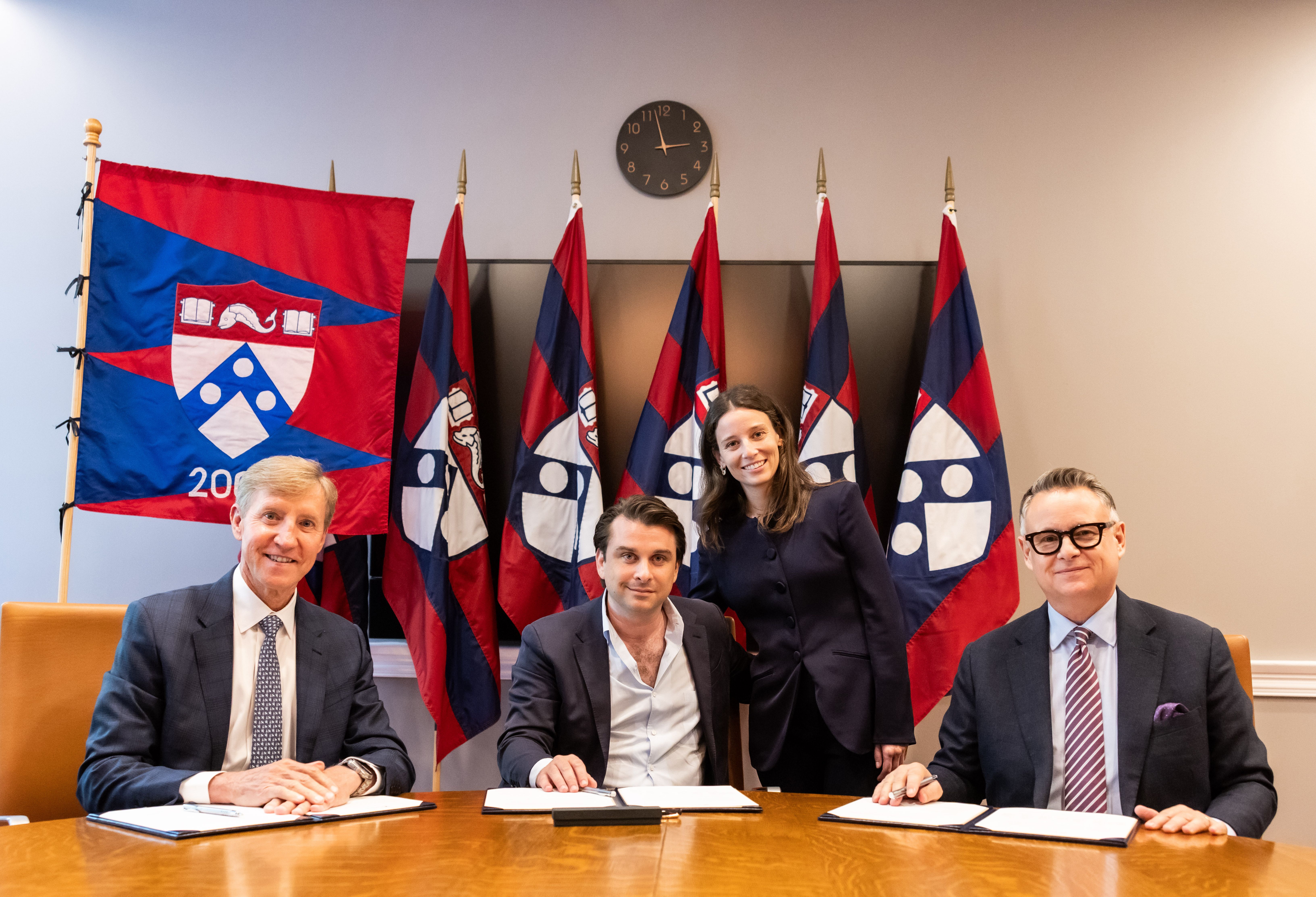
    The University of Pennsylvania’s College of Arts and Sciences received a $22.5 million gift for an endowed scholarship for undergraduates and endowed professorships across history, political science, and economics, the university announced Tuesday.

    The gift comes from Gabriel Gilinski, a 2008 graduate, and his wife, Stephanie Gilinski.

    It will help more students afford a Penn education and advance academics, university officials said.

    “Penn is at its best when we bring talented students together with outstanding faculty and give them the opportunity to learn from one another,” Penn president J. Larry Jameson said in a statement. “Gabriel and Stephanie’s generous commitment expands access to a Penn education while investing in the scholars whose outstanding teaching and research enrich our academic community.”

    The gift specifically will support undergraduate students financially, including those educated in Latin America, and it will establish two professorships and a visiting professorship, the school said.

    Gilinski, who obtained his degree in political science with a minor in economics, chairs the board of Grupo Nutresa, a Latin America food company with more than 50,000 employees and 45 factories in 17 countries. Gilinski and his wife live in Miami.

    “Across Latin America, access to education creates lasting change for families, and I’ve seen the ripple effect it can have, shaping not just one life but an entire community,” Gilinski said in a statement. “Penn gives international scholars a place to bring their own perspectives and experiences, and they leave shaped by everything they’ve learned from the classmates around them. That’s part of what makes a Penn education so special to me.”

    He also emphasized the importance of the liberal arts and critical thinking skills he acquired at Penn.

  • Philly’s school bus drivers, cleaners, and maintenance workers are getting 9.5% raises in a ‘life-changing’ contract

    Philly’s school bus drivers, cleaners, and maintenance workers are getting 9.5% raises in a ‘life-changing’ contract

    Philadelphia School District school bus drivers, cleaners, and building engineers have approved a new contract — and will get 9.5% raises over the three years of the deal.

    Workers, who met to vote in person at Benjamin Franklin High on Friday, will also get $2,350 in bonuses.

    The contract provides the first-ever parental leave for 32BJ members — 25 paid days off after the birth of a child, effective Jan. 1. That perk mirrors the Philadelphia Federation of Teachers’ contract, signed last summer.

    Other details include a pay bump for maintenance mechanics performing asbestos work, more career-advancement opportunities, and protections against subcontracting.

    32BJ SEIU District 1201 represents 2,000 employees who are among the lowest-paid in the district. The contract was approved Friday by a vote of 800-80.

    Tim Finucan, 32BJ’s state director, called the contract “life-changing” for the union’s members.

    “The wage increases, healthcare protections, and other gains recognize the essential contributions these workers make to our schools and communities,” Finucan said in a statement Monday. “We appreciate the district’s partnership in reaching an agreement that will help workers keep pace with rising costs, create opportunities for career growth, and attract and retain talented employees for years to come.”

    Members’ current pay scale ranges from bus attendants, who are paid $30,762 annually under the existing contract, to building engineers, whose pay rate starts at $51,155 and tops out at $77,832. The union’s best-paid employees are building construction workers, whose salary maxes out at $77,832.

    Tradespeople — bricklayers, HVAC mechanics, electrical mechanics, plumbers, and roofers — receive $62,899 at the top of the pay scale.

  • Swarthmore College renames hall for two prominent Black scholars with Philadelphia ties

    Swarthmore College renames hall for two prominent Black scholars with Philadelphia ties

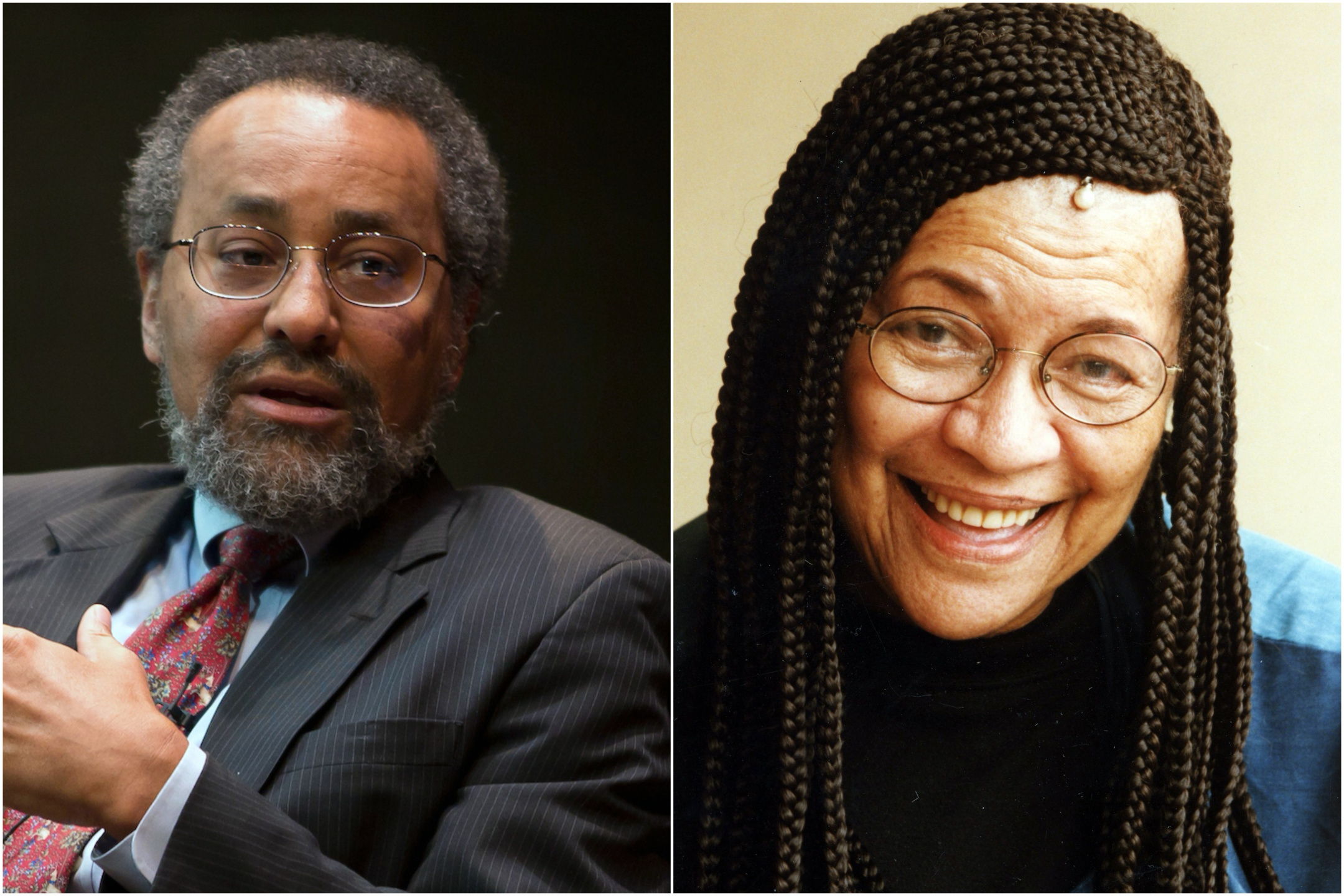
    Swarthmore College has renamed the former Trotter Hall and its adjacent lawn for two Black scholars who feature prominently in its history: the school’s first African American professor and an alumnus who served as a policy adviser to several U.S. presidents and formerly led the University of California, Berkeley School of Law.

    The move comes after the college last year stripped former professor Spencer Trotter’s name from the hall after the school learned Trotter had dug up a Native American burial ground in Chester County in 1899 and displayed human remains on campus.

    Effective immediately, the hall and its adjoining lawn will be known as Edley-Morgan Hall and Edley-Morgan Lawn, named for Kathryn L. Morgan, the late Swarthmore professor emerita of history, and Christopher F. Edley Jr., the late legal scholar and proponent of affirmative action who worked closely with three Democratic presidents and with six presidential campaigns.

    “This renaming is an important milestone, but not the end of this work,” Swarthmore president Valerie Smith said in a message to campus Monday. “Our further efforts will also ensure that this reckoning with the past is appropriately documented and acknowledged so our community can continue to learn and heal.”

    The late Christopher F. Edley Jr. is a legal scholar and Swarthmore College alumnus. Swarthmore announced it is naming the former Trotter Hall and its adjoining lawn for Edley and Kathryn L. Morgan, the late Swarthmore professor of history, who was the college’s first African American professor.Courtesy of Swarthmore College

    The college undertook an extensive process that included input from more than 500 students, faculty, and staff through a campus survey, a panel discussion with other college leaders who had gone through renaming processes after controversies, a session with a leader of the Delaware Tribe of Indians, and research on potential new namesakes.

    Through the process, the community concluded the new namesake or namesakes should be someone with a direct connection to the college and honor departments based in the building — history, political science, classics, and the writing associates program. The community also wanted the new namesake or namesakes to be “consistent with or expand the diversity of representation on campus.”

    When the process began, of Swarthmore’s 70 primary buildings, 67% were named for people, and of those, 53% were named for one or more men, 26% for one or more women, and 21% for both, the college had said. All but two of the namesakes were white and about half were Quakers.

    More than 75 names were considered for the hall, which initially opened in 1882, the college said.

    Swarthmore hired Morgan in 1970, and she joined the history department as its first folklorist, according to a 2011 Swarthmore story about her passing in 2010. She got her bachelor’s degree from Virginia State University, a master’s degree from Howard University and another master’s degree and doctorate from Penn.

    She taught classes including Folklore and Folklife Studies, History through Folklore and Literature, Black Women in Historical Perspective, and Black Culture and Consciousness, according to the college. Though she initially was denied tenure, she eventually became the first Black woman to get it at Swarthmore and talked about tensions in her department in a 2000 Swarthmore College Bulletin interview, the college said in its piece.

    Her work Children of Strangers: The Stories of a Black Family (1980), was the first work of African American family folklore by a folklorist.

    In 2000, a scholarship was established in her name and a poetry festival in her name was held in 2009.

    “One of the first things I tell my students,” Morgan said, according to the Swarthmore piece, “is to go home, look to your families, to the stories you were told as children. They’re the most important stories in the world.”

    Morgan, who was born and raised in Philadelphia, was described in the Swarthmore piece as “a wise, charismatic woman who intellectually bridged the gap between W.E.B. Du Bois and Malcolm X, a militant yet gentle soul who embraced everything of interest with intensity, and a radiant presence who drew on lessons learned from her ancestors as others draw breath.”

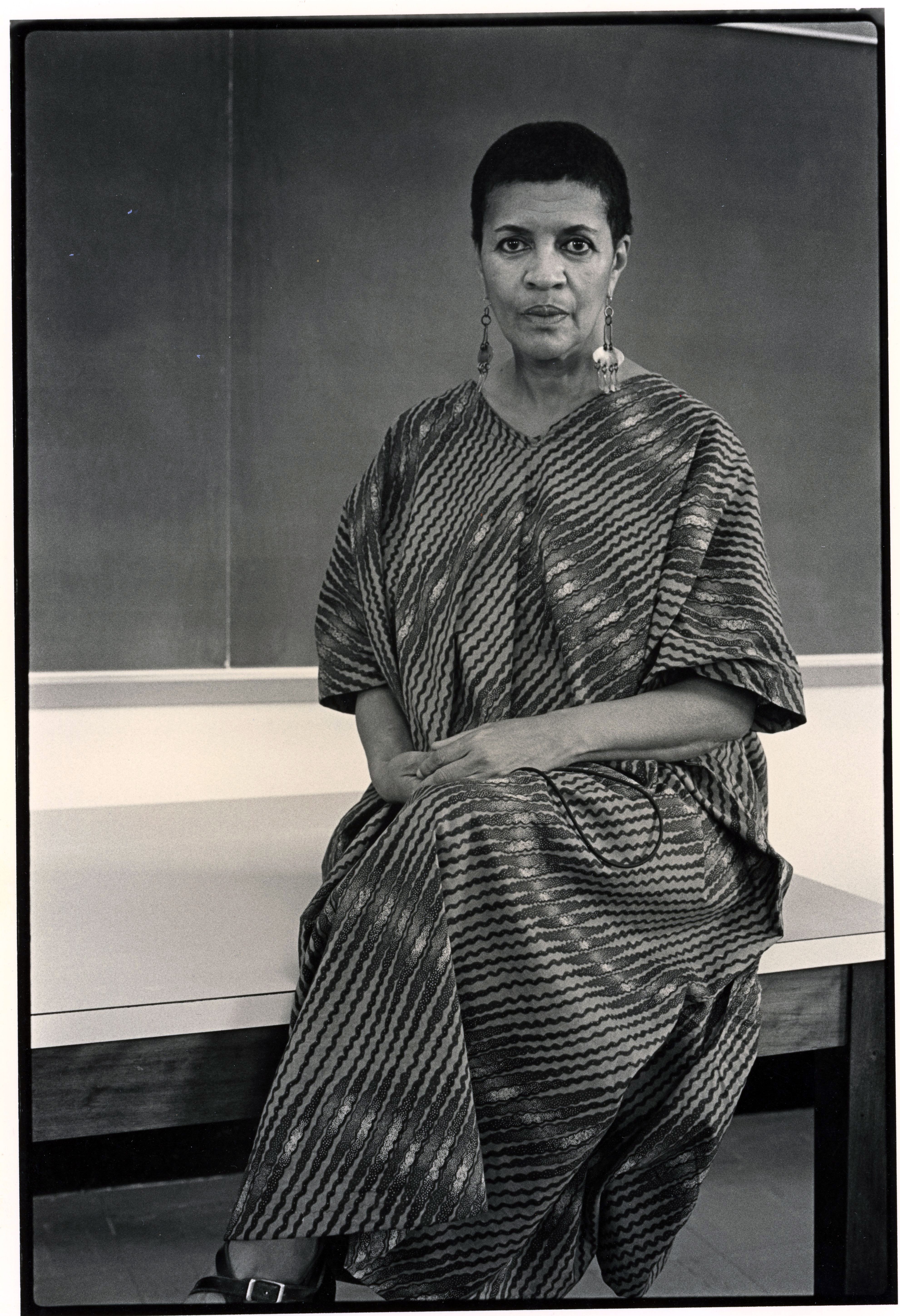
    The late Kathryn L. Morgan, professor emerita of history at Swarthmore College, was the first African American professor at the school. The college is renaming the former Trotter Hall and its adjoining lawn for Morgan and legal scholar Christopher F. Edley Jr., a Swarthmore alumnus.Courtesy of Swarthmore College

    Edley, who died in 2024 and spent part of his youth in Philadelphia, got a degree in mathematics and economics from Swarthmore in 1973 and later a master’s in public policy and a law degree from Harvard. Before serving as law school dean at Berkeley from 2004 to 2013, he was a professor at Harvard. He served on Swarthmore’s board of managers from 1982 to 1993.

    He worked for the White House domestic policy staff in the 1970s when Jimmy Carter was president, advising on issues including food stamps, child welfare and disability, according to an article on the Swarthmore website. During Bill Clinton’s administration, he worked in the Office of Management and Budget and served as special counsel to the president. And in 2008, he worked on Barack Obama’s successful presidential campaign and served on his presidential transition board. Obama had been a student of Edley’s at Harvard, according to Edley’s obituary in the Washington Post.

    When he received an honorary degree from Swarthmore in 1999, Edley talked about what he learned at the school.

    “I learned to face the limits of my intelligence, without fear,” he said, according to the Swarthmore piece. “I learned what it means to really understand something hard, only to realize that I was dead wrong, or that there was another, perhaps better way to understand it … And I learned that when there is trouble, find a grove of lilac bushes, lie down, get drunk on the fragrance, and think about important things.”

    Swarthmore’s renaming process started after a 2022 article in The Inquirer that mentioned how a former Swarthmore professor and student had dug up a burial ground and moved a skeleton and objects buried with it to the college.

    Swarthmore researched and discovered the professor was Trotter. The college first checked to make sure there were no remains from Trotter’s collection being improperly handled at the school; there were not. Officials found a collection of unidentified human bones that the college likely had obtained legally — but probably were initially acquired unethically — and moved them into storage.

    The college renamed the building Old Science Hall last December when Smith named a task force of students, faculty, and staff members to consider the next steps.

  • How Temple University failed my daughter on her first day of college

    How Temple University failed my daughter on her first day of college

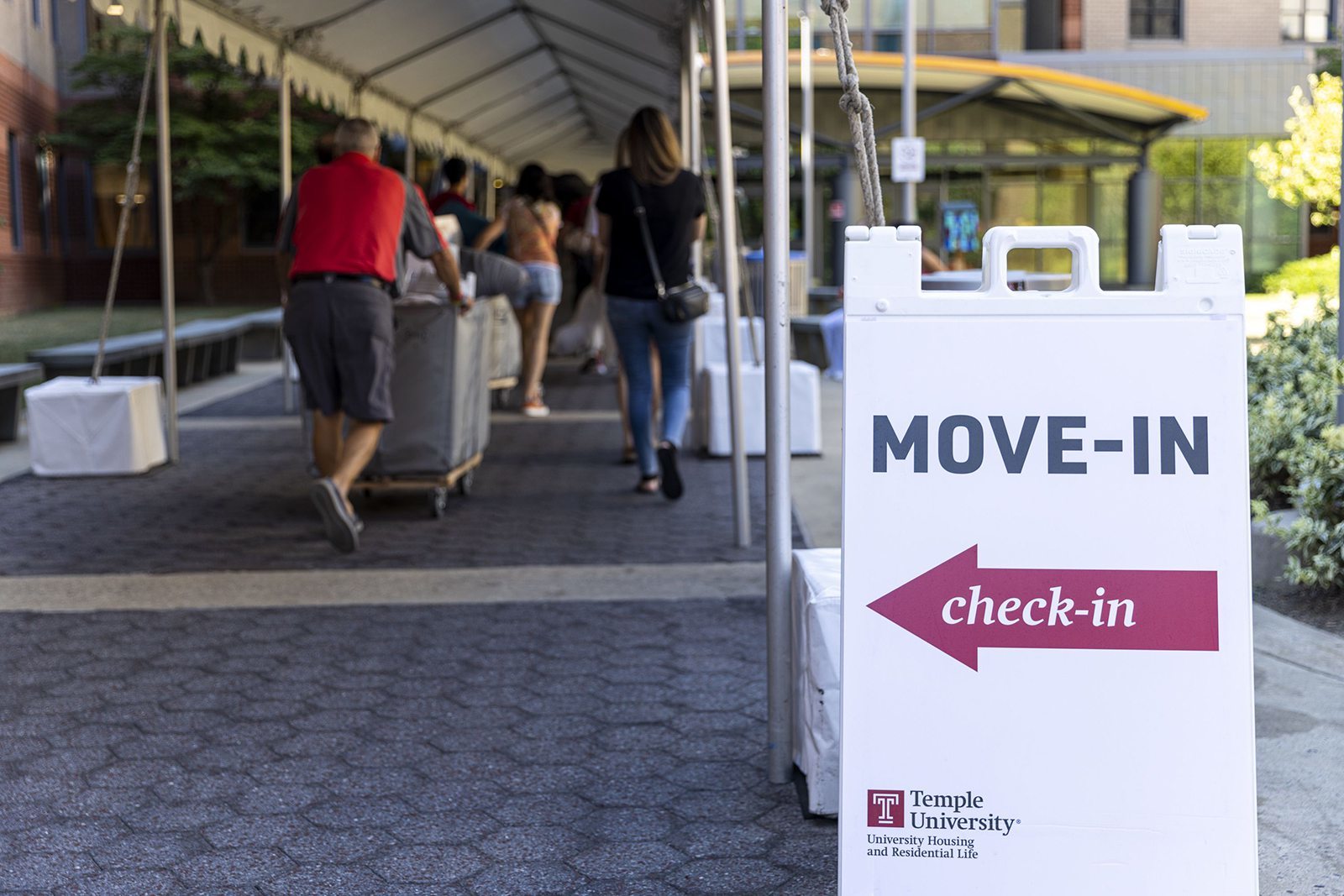
    Remember all those big feelings you had on move-in day as a college freshman? After a long summer, you probably arrived on campus ready to tackle dorm life fortified with new flip-flops, towels, and a duvet. Today held great promise — the start of a new you.

    My daughter recently enrolled at Temple University. Her move-in day was scheduled for the final week in August. I was proud, and she was excited. Yet, on our drive to campus, we discovered that something was wrong. She was somehow assigned to an all-male floor. How could this be?

    We contacted residence life and chatted with a well-meaning student who told us there was nothing she could do. Could we speak with her supervisor? Yes — another caring individual informed us that her hands were tied and that no other dorm rooms were available. How could this be possible? It was her first day of college.

    My daughter is transgender and autistic. Temple University assigned her to a male dorm section despite us working closely with intake counselors and disability resources to ensure a smooth and safe move to a gender-inclusive setting. Somehow, a form was missed that coordinates between the office that ensures students with special needs have the necessary supports and the residence halls that house our students.

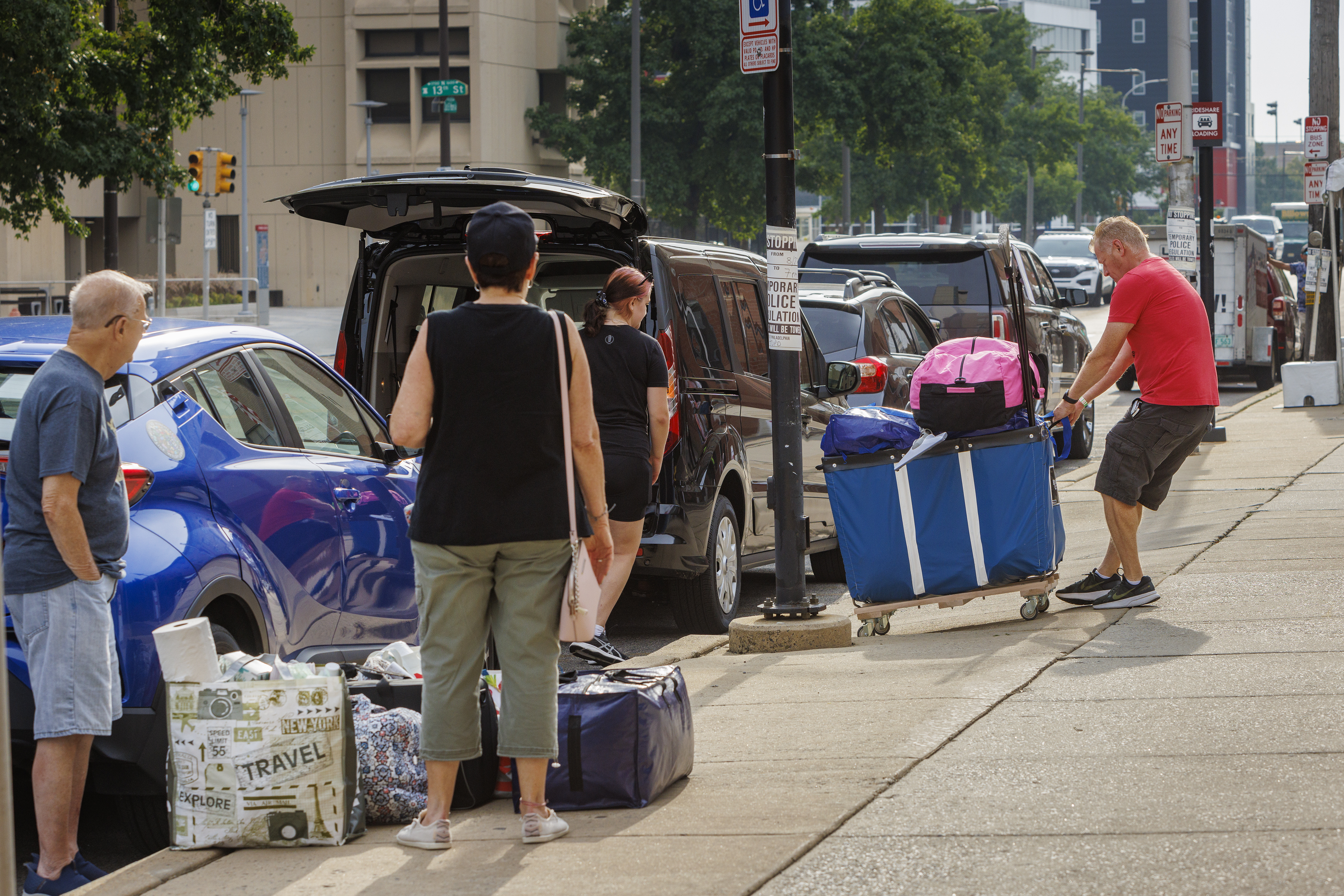
    Move-in day for Temple students living at 1300 Residence Hall at 13th Street and Cecil B. Moore Avenue in August 2023.Alejandro A. Alvarez / Staff Photographer

    We pulled up to her assigned dorm in a packed car for drop-off only to learn my daughter could not be accommodated.

    We drove home and unpacked the car. She moved back into her bedroom. It was devastating. There was a lot of crying.

    The following day, we were contacted by another staff member who informed us they had found a room for my daughter in a female suite. However, the floor was not gender-inclusive.

    My daughter would have to roll the dice and not disclose her gender identity.

    We asked what the contingency plan was if her roommates rejected her. There was no plan.

    We thanked the staff member and declined the offer. I sought assistance from many university administrators (president, provost, dean, heads of the disability resource center), none of whom responded.

    Fail.

    Full disclosure, I support the mission of Temple University as an alum, a donor, and tenured full professor in the College of Public Health. I am writing today not as a representative of the university, but as a concerned parent and member of the Philadelphia community.

    I am saddened (but not surprised) by how our move-in transpired.

    My daughter was collateral damage in an ongoing war for ever-higher enrollment numbers and was let down by an on-campus support system that has been weakened by extreme budget cuts.

    Like many American universities, student tuition dollars are integral to Temple’s survival. Student retention and enrollment are both down. The university is facing a well-publicized $25.5 million budget shortfall.

    Faculty, librarians, and support staff have been thinned to the breaking point. For example, many of my faculty colleagues in the College of Public Health recently learned that our salaries were to be cut by approximately 20%.

    This scenario is not unique to our institution. Indeed, a common cycle is at play.

    Tuition revenues fall in tandem with reduced enrollment and poor student retention. These deficits cause financial distress for the university. So administrators relax admissions and increase tuition in anticipation of a financial “sugar rush” that comes with more paying customers and a higher tuition rate.

    But many newly accepted students require complex psychosocial and educational supports, and those supports are now largely to be shouldered by a depleted faculty.

    Administrators cast instructors as friendly and approachable. Although this is a well-intentioned strategy, the teacher-student relationship is not based on casual friendship.

    As instructors, we are compelled to use a boilerplate syllabus template that addresses students using first-person language as if we are addressing them personally:

    Feel free to visit us during “drop-in” hours and discuss “anything you need to talk about.”

    That could mean anything from personal relationships, dating, intimate partner violence, parental neglect, trauma, financial insecurity, and concerns about immigration policies and enforcement (e.g., Will I be safe here?). Most of my faculty colleagues are not trained as clinical psychologists. Nor do we have sufficient expertise — or in-class support staff — to help students with complex learning disabilities in the context of large (and growing) classroom settings.

    When vulnerable students fail and/or withdraw, administration often attributes retention and enrollment dips to faculty — as justification for deeper cuts to classroom instruction and increases to a vast administrative framework.

    This cycle is continually baffling to us as teachers, because many of our institution’s most damaging reputational failures have originated in the boardroom rather than the classroom.

    I believe in Temple University and in its founder’s vision of a high-quality public education where students from all walks of life benefit from world-class scholars. The university has enriched my own life by providing the training I needed to thrive as a neuroscientist and clinical translational dementia researcher. My colleagues care deeply about the success and well-being of our students.

    Yet, many of us fear the university is losing its way.

    Unrelenting pressure for new revenue streams, expansion into costly real estate ventures, and lack of reinvestment in teaching and research are eroding the foundation of what makes us so special.

    My family experienced these failures up close on my daughter’s first day of college — when we learned there was no place for her here.

    Any educational system that fails its vulnerable students and families this badly needs oversight and reform. I hope we find it.

    Jamie Reilly is a professor in Temple University’s department of communication sciences and disorders.

    Editor’s note: An earlier version of this essay misstated the amount of Temple’s budget deficit; it is $25.5 million.