Category: College Sports

  • Temple’s ‘FPC’ mantra has fueled the defense’s big leap in Year 2 under DC Brian L. Smith

    Temple’s ‘FPC’ mantra has fueled the defense’s big leap in Year 2 under DC Brian L. Smith

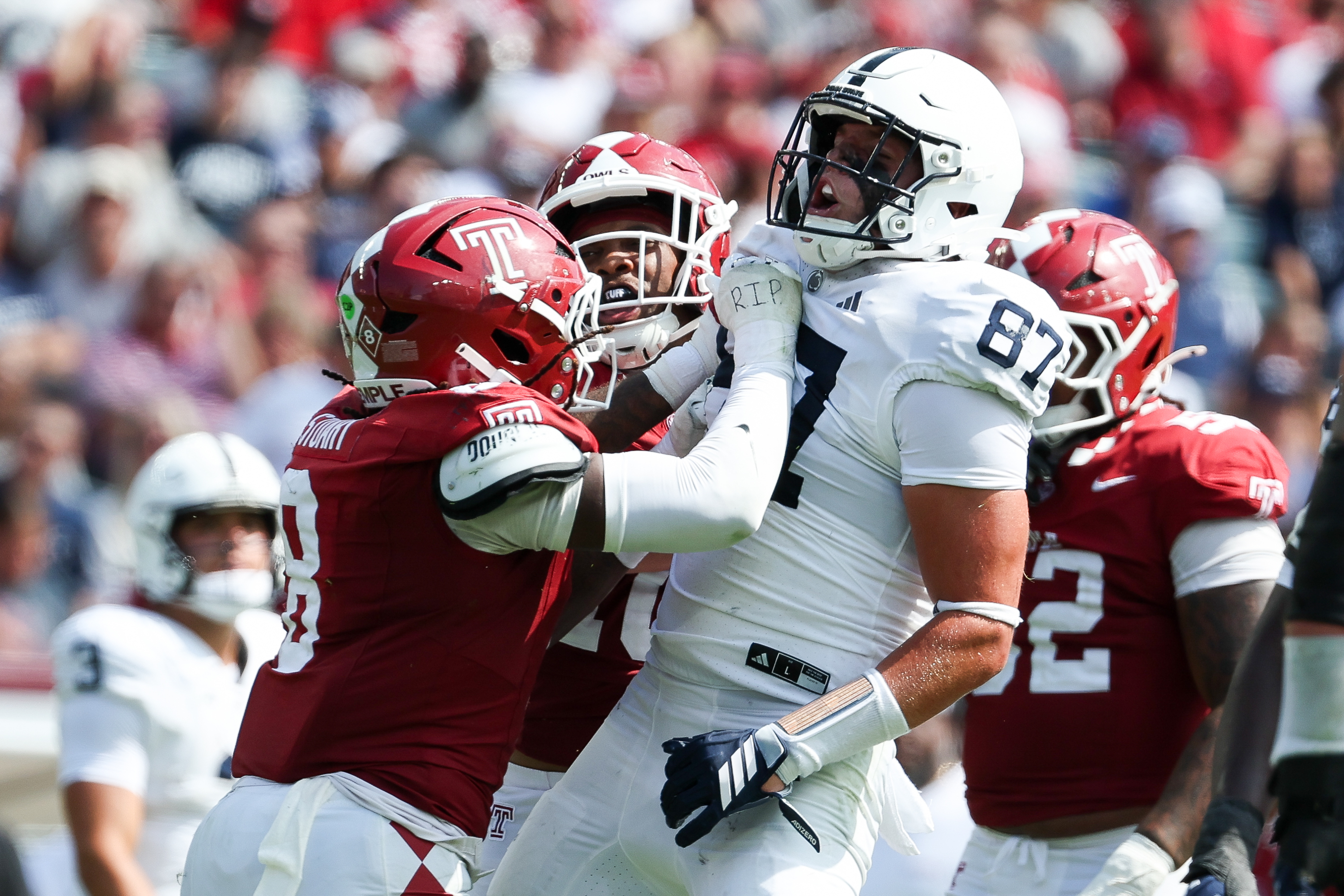
    After Penn State quarterback Rocco Becht’s pass whizzed past Andrew Rappleyea’s head and incomplete on fourth and goal from Temple’s 2-yard-line in the first quarter last Saturday, Owls safety Saboor Karriem pointed at the Nittany Lions tight end and gave him a piece of his mind on the way back to the sideline.

    Temple’s defense withstood a turnover deep in its own territory and forced a goal-line stand, adding yet another highlight to a strong start for a unit that ranked toward the bottom of Football Subdivision in points allowed, rushing yards, and total defense last season.

    Karriem, one of Temple’s single-digit players, awarded to the team’s toughest players on and off the field, is one of several new faces helping the Owls’ defense look much improved in Year 2 under coordinator Brian L. Smith. And it starts with Karriem’s energy on the field.

    “I like the mentality that we play with,” said Karriem, an Illinois transfer who grew up in North Jersey. “It’s different than what I had played [in] previously. I had played a lot more zone coverage, eyes on the quarterback when they drop back, catch and rally type of defense. But we [at Temple] are more aggressive in our mindset.

    “I really get more excited if my teammates make plays, but at the same time, energy is contagious. Guys feed off that, and when we make plays, we celebrate, but we got to focus. And I think that’s something that I tried to preach to them.”
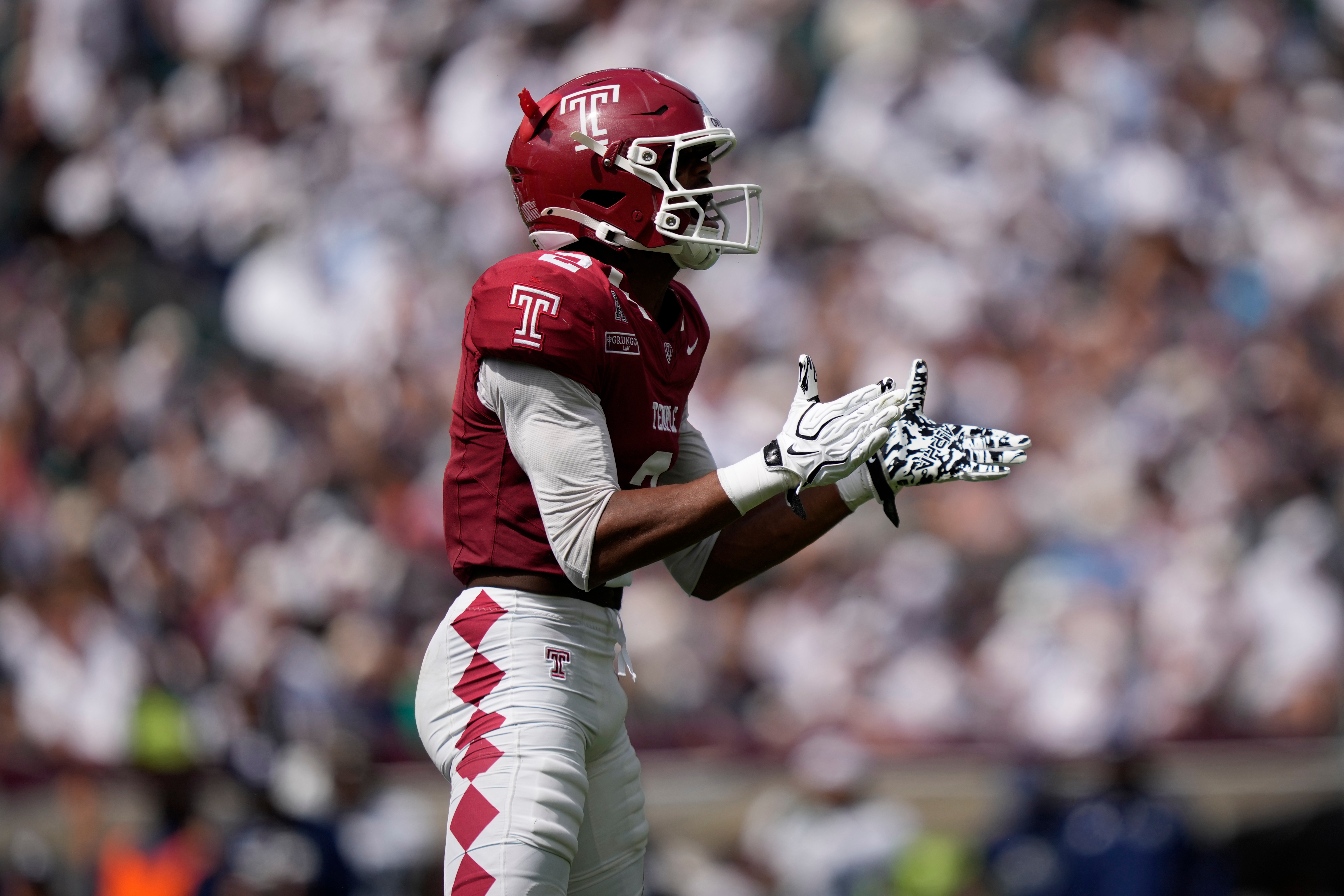
    Temple’s Saboor Karriem against Penn State on Saturday.Matt Slocum

    Though the Owls could not keep pace with Penn State in the second half last weekend, Temple has another tough test, this time a road matchup against Toledo on Saturday (3 p.m., CBS Sports Network).

    With the quarterback battle continuing for another week, the defense will be relied on for another strong showing and is tasked with slowing down a Toledo offense that is averaging 41.5 points through two games.

    And it starts with a mentality Smith has instilled in the unit since he joined K.C. Keeler’s staff 20 months ago.

    “Our mantra is FPC: We want to play fast, physical, and clean, and not beat ourselves,” Smith said this week. “We want to eliminate the mental errors and try to prevent the big plays, but also get after the quarterback, stop the run, and create turnovers. And the guys are bought in to that philosophy.

    “We’re playing a lot of guys. We’re rotating a lot of guys in, and trying to keep guys fresh in the fourth quarter. The guys have done a good job buying in to the system.”

    Simplifying the defense

    Smith, a Wilmington native whose father taught in Chester, brought his NFL roots to the college level, first at Michigan from 2015-16, then at Rice for seven years before joining the Owls. His time in the New York Jets organization from 2007 to 2014 in various roles primarily under Rex Ryan, he said, helped shape his defensive philosophy.

    He also credits Don Brown, for whom he worked at Massachusetts, his alma mater, and Michigan, for developing a defensive system that he calls “multiple.”
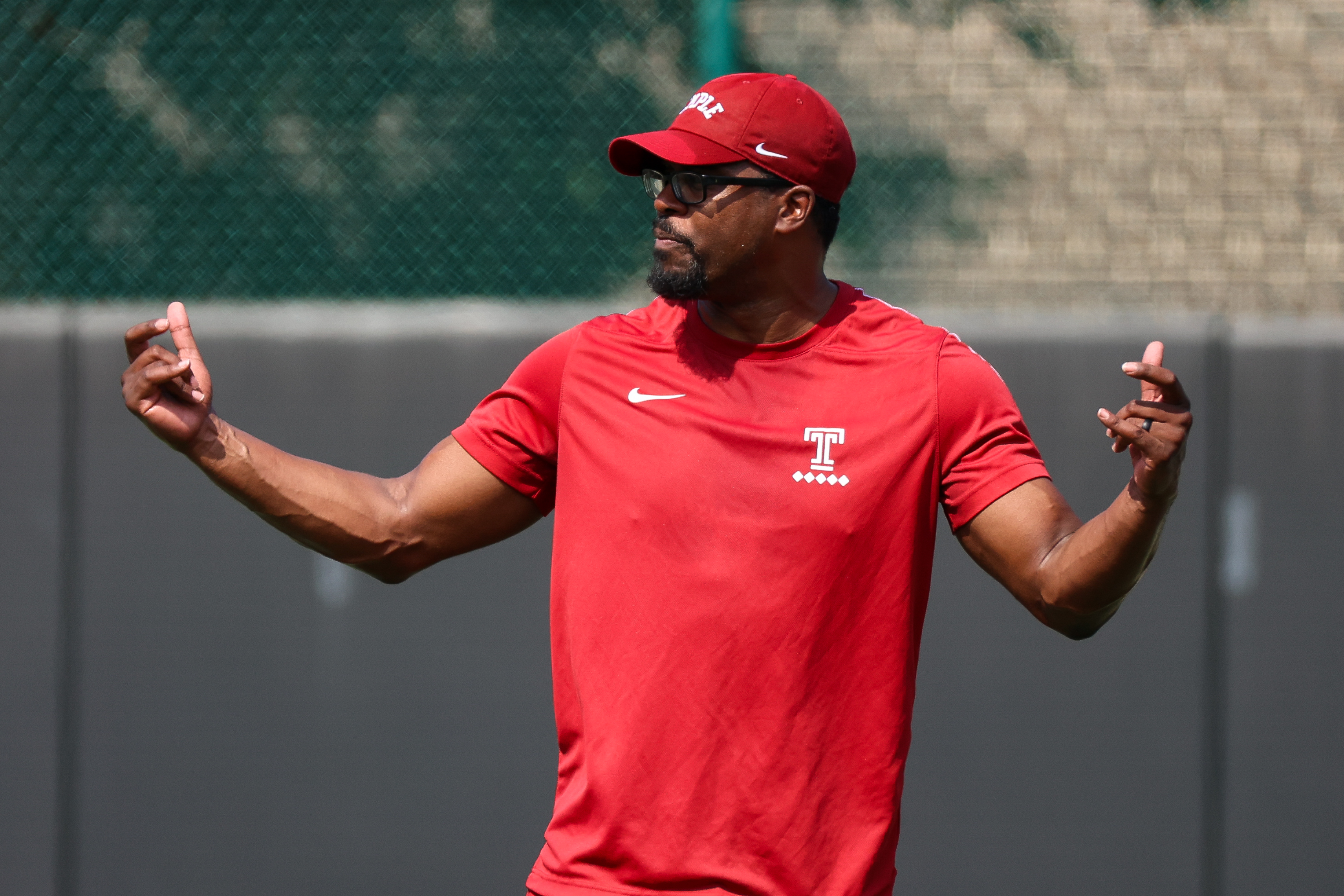
    Temple defensive coordinator Brian L. Smith at practice in 2025.Isaiah Vazquez / For The Inquirer

    “We’re going to be aggressive. We’re going to attack as much as possible,” Smith said. “We can pressure blitz up front. We can have movement stunts up front, and again changing up the looks. … [We’re] trying to attack and be aggressive. We want to stop the run, try to make a team one-dimensional, and get them in the passing situations. And then on third down, we’re going to do multiple [things] and try to get after the quarterback.

    “[During] my time at Michigan and UMass, Don Brown … played a lot more man-to-man, so we adopted a little bit of that philosophy. We don’t play probably as much man in hand as he played, but we try to mix it in.”

    Last season, in his first year at Temple, Smith’s unit ranked 91st in total defense (396.8), 100th in points allowed (29.7), and 123rd in rushing yards allowed (197.3), but that rushing total was still down from the Owls’ 226.1 yards per game allowed in 2024.

    Through two games this year, Temple has improved in each category. It ranks 65th in points allowed (20.5), 76th in rushing yards allowed (122.5), and 86th in total defense (354 yards).

    Smith points to one key change he and his staff made this offseason.
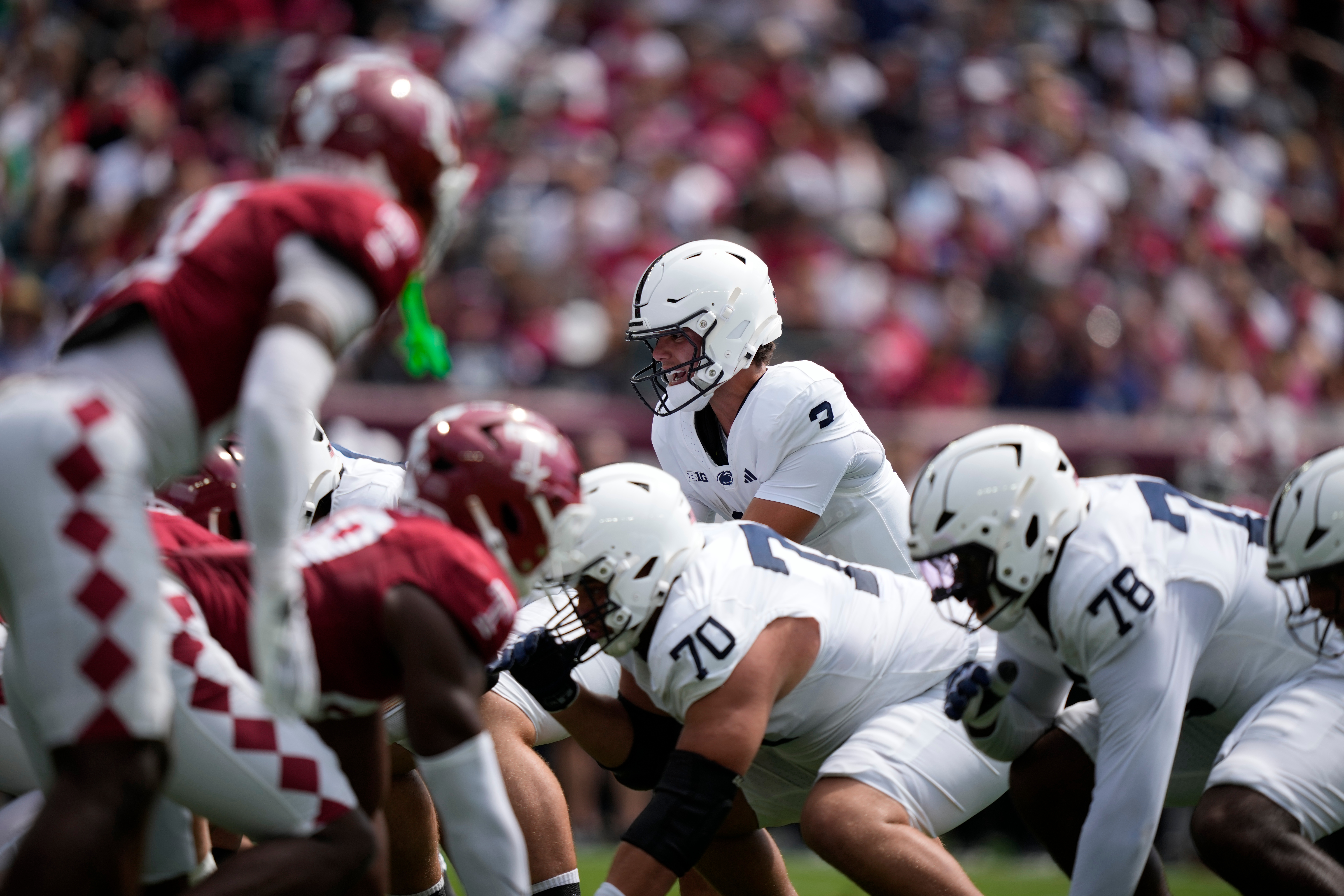
    Quarterback Rocco Becht and Penn State beat Temple, 27-9, on Saturday.Matt Slocum

    “I think we simplified things this year for the players as much as possible,” Smith said. “That’s something that we do every year. You go back and evaluate what things work, what things didn’t work, and just with the players that we have, the amount of players that we’ve gotten from the transfer portal. … You’re better off trying to simplify things rather than trying to add a lot more because we’ve got the talent to play with a lot of people, and so we don’t want to beat ourselves.”

    ‘Grittiness’

    One of the few returning contributors to the defense is Curly Ordonez, who transferred to Temple before the 2025 season from Independence Community College. The linebacker, who leads the team with 20 tackles, has noticed fewer miscommunications with the unit this season.

    The reason? Ordonez said the defense made key strides in the spring and at captain’s practices this summer that is now showing up on the field.

    “We switched up a couple things [on defense], but really new guys coming into the new system, and actually get all those mistakes out, the misunderstandings, and really understand [the system] throughout the spring,” Ordonez said. “We just came out of [the] summer, and it was like, ‘Oh, everybody playing fast.’ … then we just continued to build from there. Summer was a great [starting] point where we just knew what our defense was [at] and we just had to show it.”

    Temple’s defensive improvement starts with the front four on the defensive line, Ordonez said. His reads from his linebacker spot have been cleaned up because “those guys up front are dominating, eating up two [blockers], taking on blocks.”

    On Saturday, it’ll be a homecoming for one of those defensive tackles. Kevin Hornbeak Jr. is a Toledo native who transferred to Temple from Division II Tiffin. One of his first varsity games at Whitmer High School in Toledo, Ohio, was at the Glass Bowl, and several family members will be in attendance, Hornbeak said.
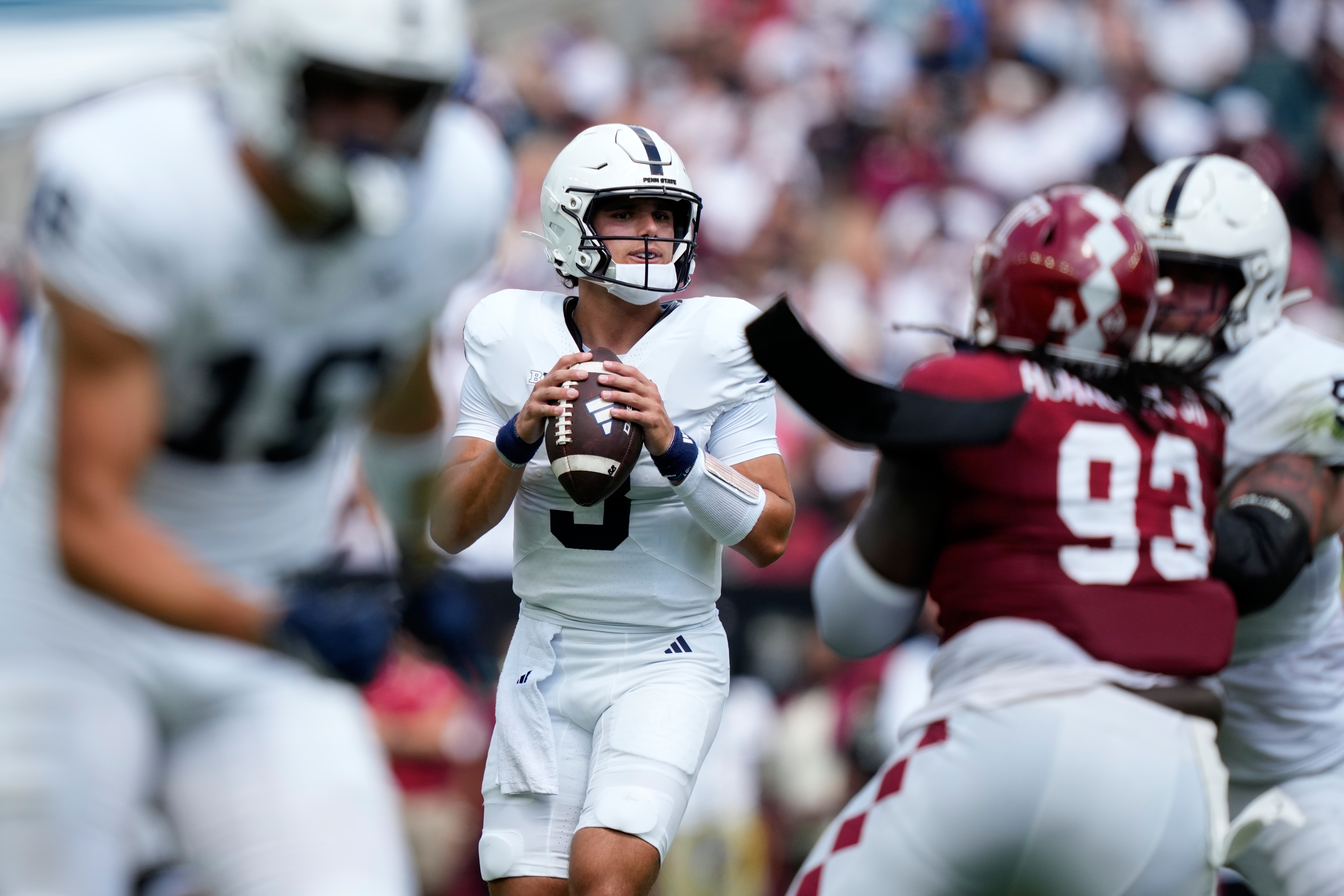
    Rocco Becht looks to pass against Temple on Saturday.Matt Slocum

    Like Ordonez, Hornbeak said he appreciates Smith’s approach to “attacking the offense.”

    “I love the four down [front alignment]. Love how much we blitz. It’s [an] amazing defense,” said Hornbeak, who had a sack in Temple’s season-opening win over Rhode Island. “When you got a coach that believes in you and wanting us to go attack the offense, you can’t ask for nothing better.”

    While Smith acknowledges there is still a long way to go the rest of the season, he’s pleased with how his defense has “handled adversity well,” and agreed with Keeler’s sentiment earlier this week of the defense having a “more talented group.”

    The defense is playing with more confidence and an edge compared to last season. The defensive coordinator credits the “tough-minded” makeup of Temple’s players, especially on defense for the improvement year over year. They’ll need it to carry over once American Conference play opens up in a few weeks in the program’s quest for bowl eligibility for the first time in seven seasons.

    “This is home for me,” Smith said. “We got a different group of kids here. It was a lot of Texas kids and West Coast kids that I had at Rice. Here, we’re a little more gritty … [with players from] Philadelphia, New Jersey, Maryland. So I love the grittiness that our team has.”

    Added Karriem: “I was in just a different mental space being away for so long, and coming home and just allowed me to enjoy the game again. … I don’t feel like I’m coming to work every day. I know I’m going to work, but I’m having fun at work.”
  • Villanova women’s basketball announces 2026-27 Big East schedule

    Villanova women’s basketball announces 2026-27 Big East schedule

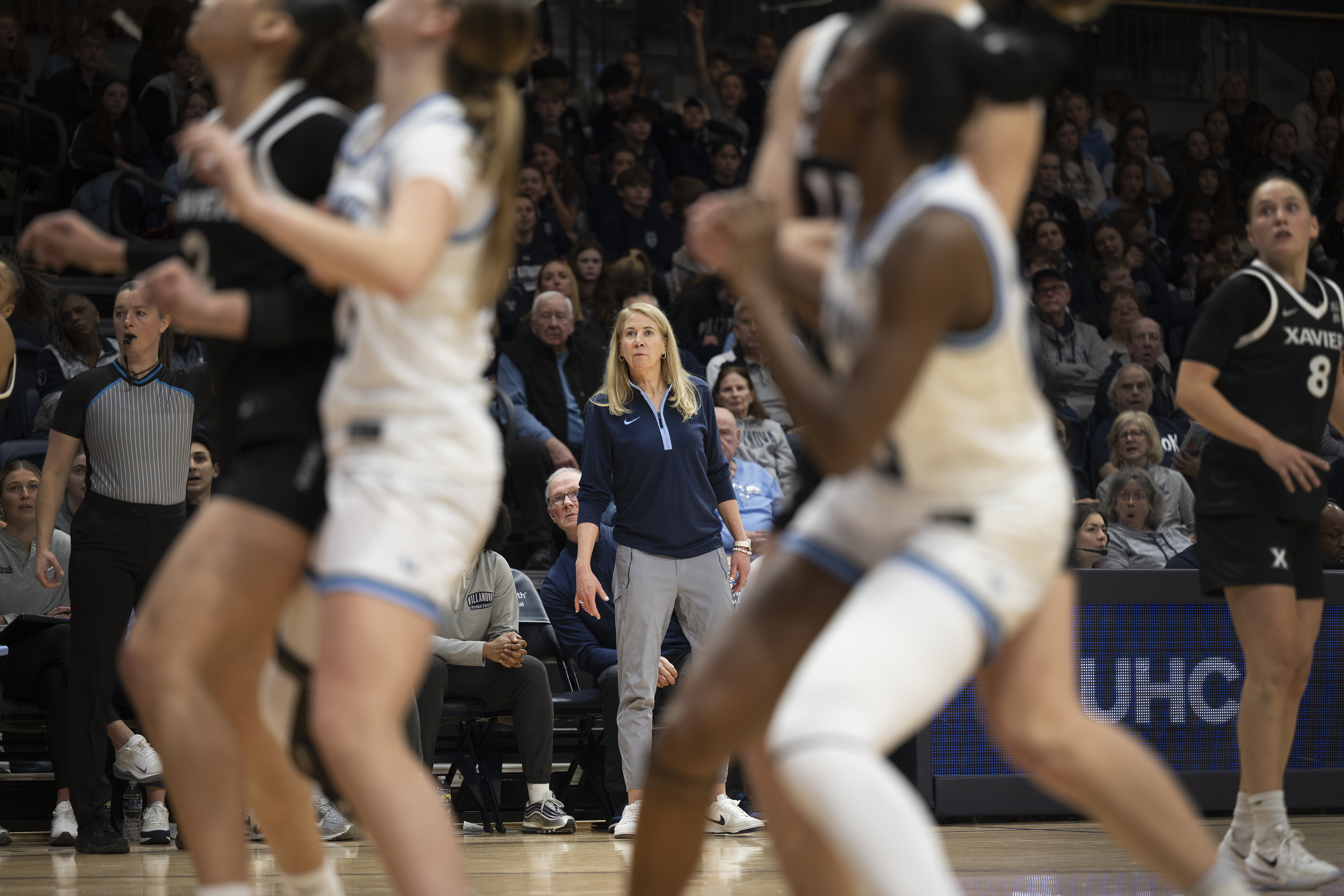
    Villanova women’s basketball is entering the 2026-27 season with high expectations, and it all begins in Rome against Notre Dame on Nov. 1.

    The Wildcats nonconference schedule, which was announced last month, includes strong opponents such as Princeton, LSU, and West Virginia. The schedule is now complete as the Big East announced the upcoming season’s conference slate on Thursday. Last season, Villanova finished 16-4 in the conference and 25-8 overall. The Wildcats will open their conference season at the Finneran Pavilion against DePaul on Dec. 3.

    Notably, Villanova’s conference schedule begins before its nonconference portion ends. Following its Big East opener against DePaul, Villanova will play in the Big 5 Classic on Dec. 6. The Wildcats will then return to conference play with a road game against Marquette on Dec. 10 before ending their nonconference schedule at home against West Virginia on Dec. 12.

    Villanova will play five conference games in December, with the most notable being a home date against UConn, who made a Final Four appearance last season, on Dec. 23. The matchup is consistently the biggest home game the Wildcats have each season, as they will look to defeat the Huskies for the first time at home since the 2003-04 season.

    Villanova will also play two road games in December against Marquette and Providence (Dec. 20). It will end 2026 hosting Georgetown on Dec. 30.

    To open the New Year, Villanova will play two consecutive road games. First, the Wildcats will travel to Queens to take on St. John’s (Jan. 2), before heading to Omaha, Nebraska for a contest against Creighton on Jan. 7.

    The Wildcats will play six more games in January, starting with Xavier (Jan. 10) and Butler (Jan. 13) at home. Then they’ll travel to Georgetown (Jan. 20), host Providence (Jan. 23) and St. John’s (Jan. 28), and finish at Xavier (Jan. 31).

    February will bring a six-game gauntlet for Villanova in the span of 18 days, including a trip to Storrs, Conn., to play UConn for the second time on Feb. 10.

    Villanova will close out its regular season on the road against Seton Hall on Feb. 27.

    The Big East Tournament will take place from March 5-8 at the Mohegan Sun Arena in Uncasville, Conn.

    Tipoff times and television information will be announced at a later date. The full 2026-27 Villanova women’s basketball schedule is below:

    • Oct. 18 vs. FDU (Exh.)
    • Nov. 1 vs. Notre Dame (Rome)
    • Nov. 10 at Princeton
    • Nov. 12 vs. Merrimack
    • Nov. 15 at Fairfield
    • Nov. 18 vs. Towson
    • Nov. 24 vs. La Salle
    • Nov. 27 vs. LSU (Fort Myers Tip-Off in Fla.)
    • Nov. 28 vs. Kansas State (Fort Myers Tip-Off in Fla.)
    • Dec. 1 at Temple
    • Dec. 3 vs. DePaul
    • Dec. 6 Big 5 Classic (Palestra)
    • Dec. 10 at Marquette
    • Dec. 12 vs. West Virginia
    • Dec. 20 at Providence
    • Dec. 23 vs. Connecticut
    • Dec. 30 vs. Georgetown
    • Jan. 2 at St. John’s
    • Jan. 7 at Creighton
    • Jan. 10 vs. Xavier
    • Jan. 13 vs. Butler
    • Jan. 20 at Georgetown
    • Jan. 23 vs. Providence
    • Jan. 28 vs. St. John’s
    • Jan. 31 at Xavier
    • Feb. 4 at DePaul
    • Feb. 7 vs. Seton Hall
    • Feb. 10 at Connecticut
    • Feb. 13 at Butler
    • Feb. 18 vs. Marquette
    • Feb. 21 vs. Creighton
    • Feb. 27 at Seton Hall
  • Temple’s matchup with Toledo offers a measuring stick for K.C. Keeler’s team

    Temple’s matchup with Toledo offers a measuring stick for K.C. Keeler’s team

    Two weeks into the college football season, Temple has learned little about itself.

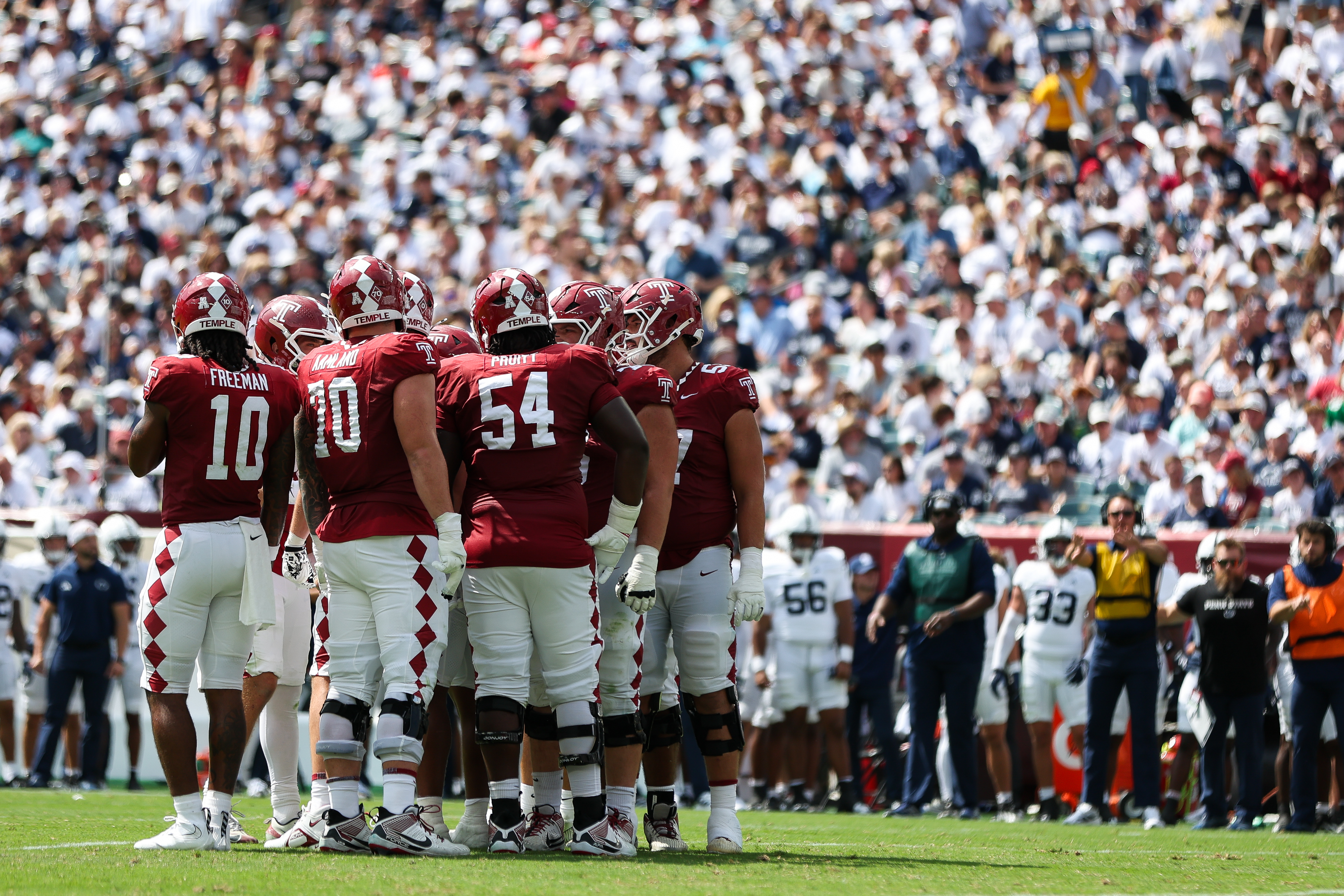
    But Saturday’s matchup (3 p.m., CBS Sports Network) at Toledo serves as an opportunity to build off what worked in Temple’s season-opening win against Rhode Island and what didn’t in its Week 2 loss to No. 14 Penn State.

    Here’s what this game could reveal for the Owls.

    Temperature check

    The Owls (1-1) split their first two games in expected fashion.

    Temple dismantled an established FCS program, 38-14, before falling to a Big Ten powerhouse, 27-9. Given the competition, neither result revealed much new information about the Owls.

    But this weekend, Temple will finally receive a temperature check.

    Toledo stands where Temple is building toward. The Rockets made a bowl game for the last five years and haven’t won less than eight games in a season during that stretch.

    The Owls will face a big challenge against a well-rounded Rockets roster, but it should be the season’s first competitive game.

    “[Toledo’s quarterback is] athletic, he has a strong arm,” said head coach K.C. Keeler after practice Monday. “Their wideouts are really talented. … Their defense is really impressive and I think their quarterback is getting more confidence as time goes on.”

    Toledo did most of its damage through the air in its first two games. In a 30-20 loss to Michigan State, Toledo gained 196 of its 273 total yards in the passing game. Wide receiver Adjatay Dabbs finished with 101 yards and was a key factor in the Rockets’ near-upset over the Spartans (Toledo led 20-19 in the fourth quarter).

    Sights and sounds from Temple vs. Penn State at the Linc
    Video: Sights and sounds from Temple vs. Penn State at the Linc

    In Toledo’s 63-10 win over Central Connecticut State, John Alan Richter tallied 252 passing yards and three touchdowns. One of several highlights included wide receiver Rico Bond’s 85-yard touchdown.

    Temple guard Eric King and tackle Kevin Terry are expected to return, as well as running back Sam Brown for his season debut.

    Quarterbacks working together

    The seemingly never-ending question regarding who is Temple’s starting quarterback is getting closer to an answer. Though, it’s still not clear.

    Jaxon Smolik was the starter against the Nittany Lions, but Ajani Sheppard scored Temple’s only touchdown.

    Keeler still expects to mix playing time between the signal callers in Week 3. CBS Sports analyst and former Rice University quarterback Taylor McHargue, who will be commentating the game on Saturday, says both Smolik and Sheppard have shown promise.

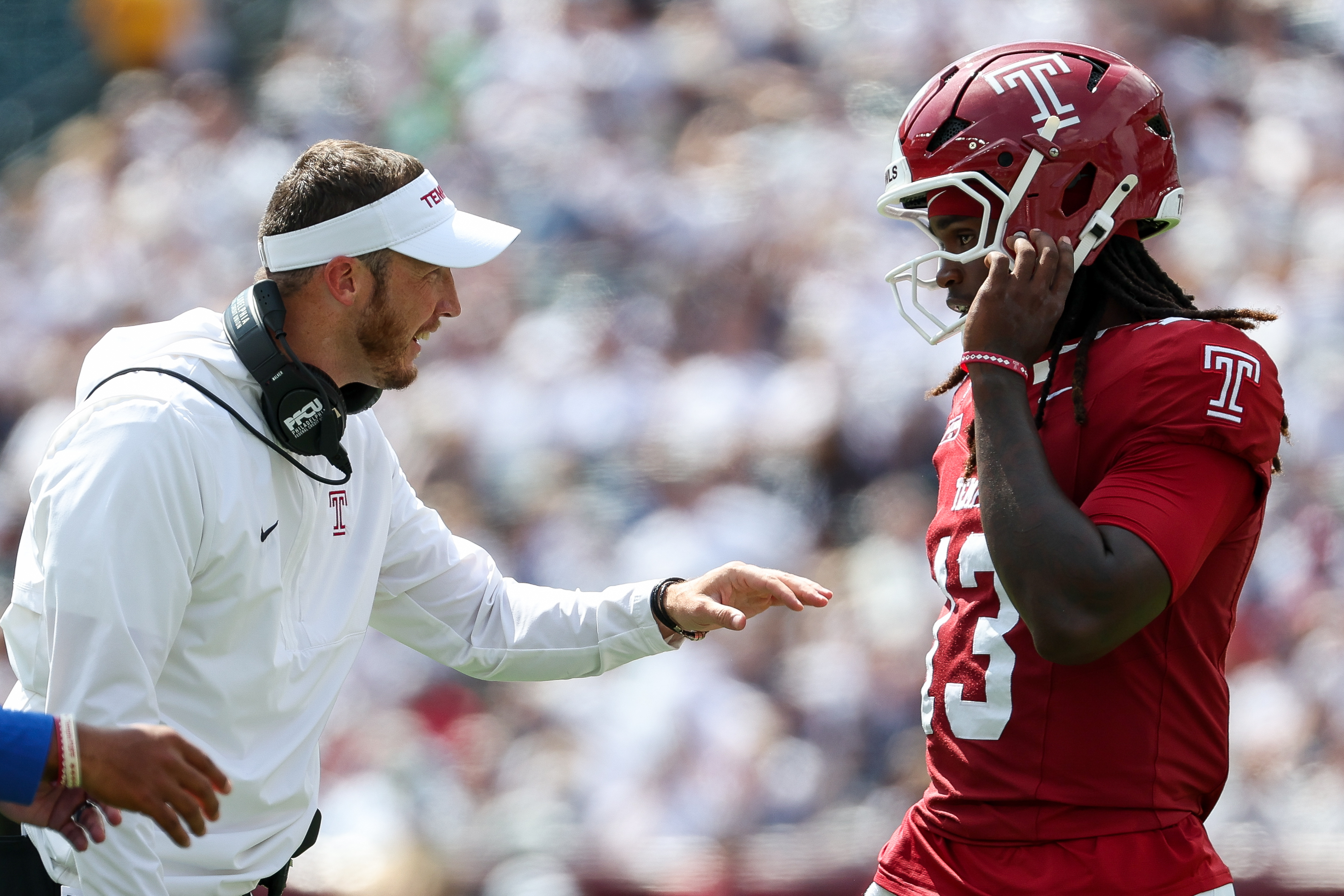
    Temple assistant coach Tyler Walker talks to quarterback Ajani Sheppard during Saturday’s game against Penn State.Isaiah Vazquez / For The Inquirer

    “You probably have a role for both of them all season,” McHargue said. “For Sheppard especially, you’re seeing his ability in the red zone where he comes in and he’s very comfortable. … Against Toledo, I’d be very surprised if we just saw one or the other.”

    Keeler made it clear that Penn State would be an outlier for Temple. When Smolik threw an interception in the first quarter, the Nittany Lions excelled in crowding his receivers and picked off a good pass.

    Smolik will still be handling the majority of the snaps, but the second-year coach envisions specific packages where Sheppard will be under center on Saturday.

    “It’ll be very similar to what you saw this week,” Keeler said. “It depends on where we are on the field. Then maybe we’ll lend it more to getting Ajani on the field more. . … It’s going to be more situational than anything else.”

  • Taylor Mouser wants more from Penn State’s run game: ‘There’s a lot of growth to be had’

    Taylor Mouser wants more from Penn State’s run game: ‘There’s a lot of growth to be had’

    Just seconds after taking the podium in Beaver Stadium on Tuesday, offensive coordinator Taylor Mouser was asked about No. 14 Penn State’s struggling run game.

    “Yeah, I knew that would be a question today,” Mouser said.

    The ground game has been the weakest aspect of the Nittany Lions’ offense so far. They’re averaging 3.9 yards per carry through two games this season, and their starting running back Carson Hansen is at 4.4 yards per attempt.

    “To say that I wasn’t thrilled with where the run game’s at would be an understatement,” Mouser said. “Feel like there’s a lot of growth to be had there.”

    Mouser and head coach Matt Campbell are comfortable playing all four of Penn State’s top running backs — Hansen, James Peoples, Quinton Martin Jr., and Cam Wallace — but Hansen has twice as many carries as the next closest running back in Peoples, who has 15.

    Hansen, an Iowa State transfer, had 952 yards and six touchdowns as the Cyclones’ bell cow last year. Mouser noted there is a sense of familiarity with Hansen, which is partly why he has handled the bulk of the carries.

    The senior was sidelined with an injury for most of fall camp, perhaps contributing to his early struggles, but Mouser said, “that’s not an excuse.”

    “Carson’s a great football player, and I don’t think I’ve done a good enough job as the offensive coordinator, showcasing him,” Mouser said. “He was an all-conference running back for us last year. Does that mean he’s an all-Big Ten running back? No, it doesn’t. But I just know the level of work that guy brings and the physicality and how important it is to him. And for whatever reason, we’ve been a hair off.”

    Mouser said they’ve struggled with the small details, including Hansen missing a lane, the offensive line missing a block or a variety of other missed assignments.

    But there isn’t an individual or position group to blame.

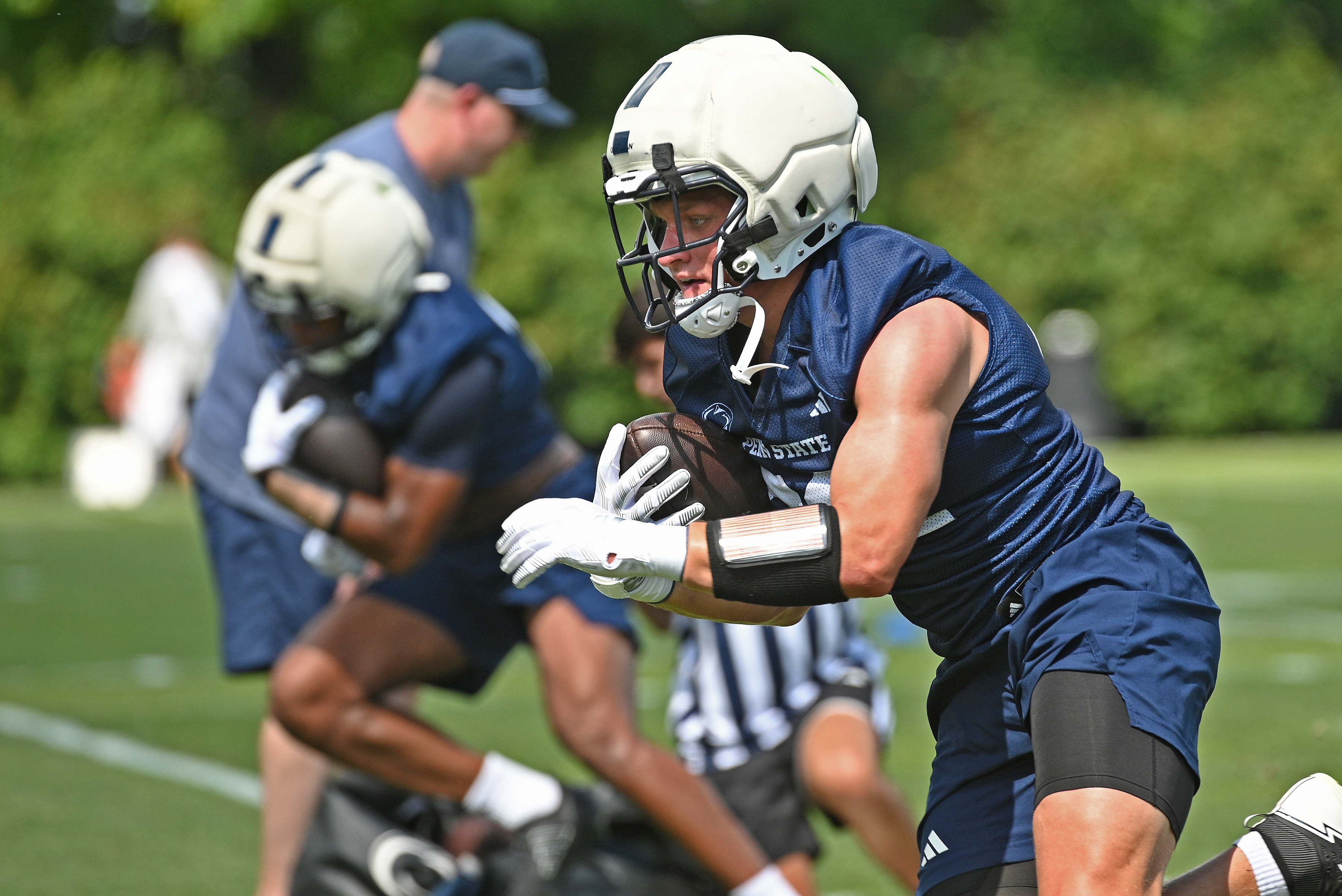
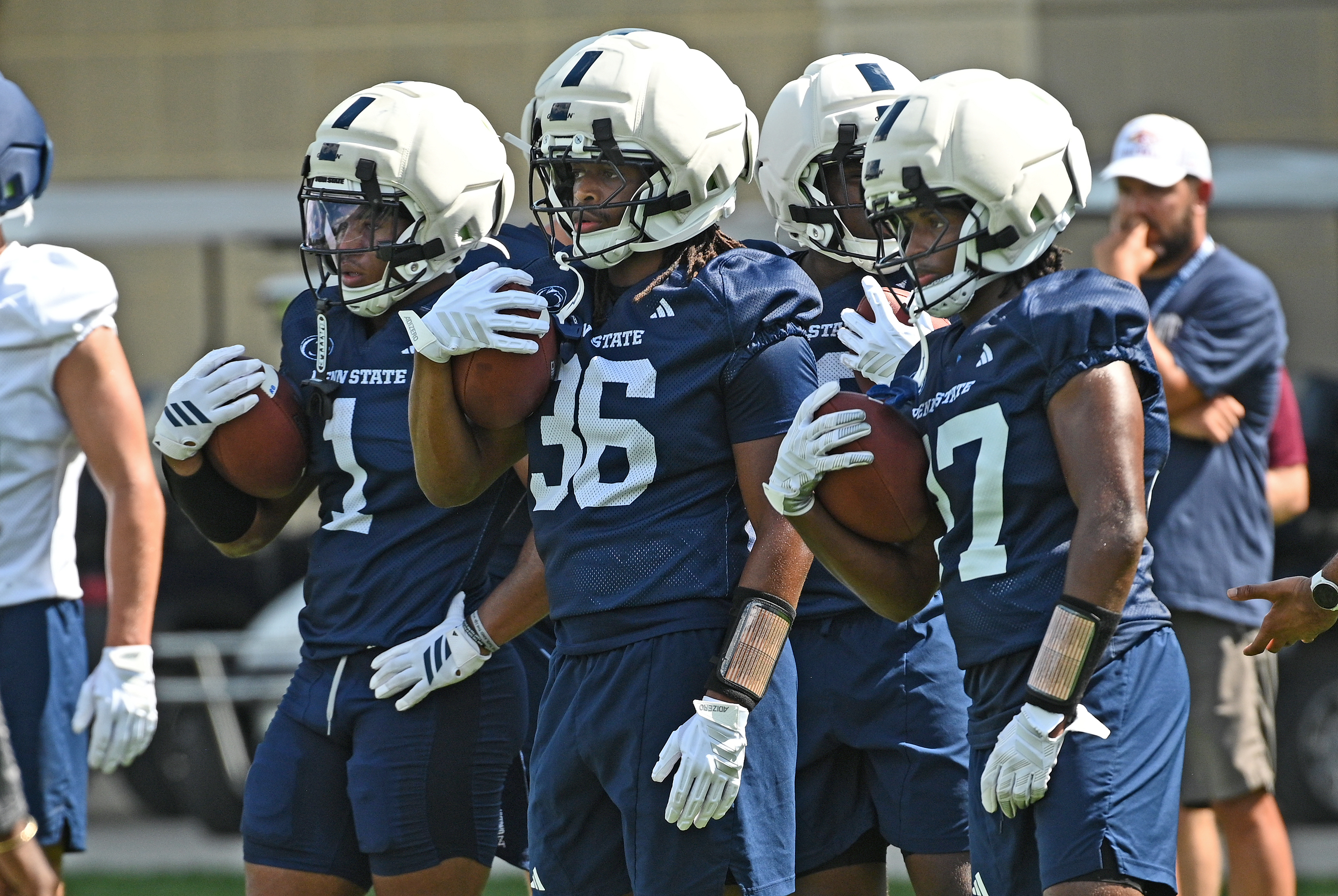
    Penn State running backs James Peoples (1), Amar’e Glover (36), and Jeremy Washington (37) during practice on Aug. 5.Craig Houtz / For The Inquirer

    “We’re all frustrated with the level of mediocrity that I would call the run game, and that starts with me,” Mouser said.

    Campbell said he’s encouraged by none of Hansen’s runs being negative. Even though he’s not picking up 10 or 20 yards, he’s at least gaining field position when he gets the ball.

    It’s the explosiveness and “finality of finishes,” where Campbell feels Hansen is lacking, but he echoed Mouser’s claim that the Nittany Lions are “inches off.”

    The offensive line especially isn’t satisfied with how the run game has looked, according to Mouser, who said Penn State’s front five “are the most hungry to be dominant” on the ground.

    “We want to be a team that prides itself on being the most physical football team and running the football,” Mouser said. “We have to figure out a way that we can be dominant on the ground.”

    One adjustment to the ground game could be Martin, who had a breakout performance in the Nittany Lions’ Pinstripe Bowl victory with 103 yards, seeing more carries. The redshirt sophomore didn’t record a snap in Penn State’s 27-9 win over Temple, despite three other running backs getting at least a carry.

    Mouser said Martin has “earned the right to get touches in our offense,” and added his absence from last weekend’s matchup wasn’t a reflection of his trust in the running back. But whether the Penn State returnee will see the field on Saturday against Buffalo (noon, Big Ten Network) remains unclear.

    “Quinton is certainly one of those guys we all have great belief in,” Campbell said. “I think the reality of that, even that running back room, I just think there’s still some gray, and that room is going to continue to work itself out as we work through the weeks and work through these games.”

  • First-year Penn coach Rick Santos makes major starting quarterback decision before season begins

    First-year Penn coach Rick Santos makes major starting quarterback decision before season begins

    Penn freshman quarterback Miles Teodecki hesitated when he extended his hand for a handshake. His palm and fingers were covered in a thick coat of white chalk, to give him a better grip on the football. Though he had just ended nearly five hours of team practice, his freshly dusted hands looked like he was about to throw for the first time that day.

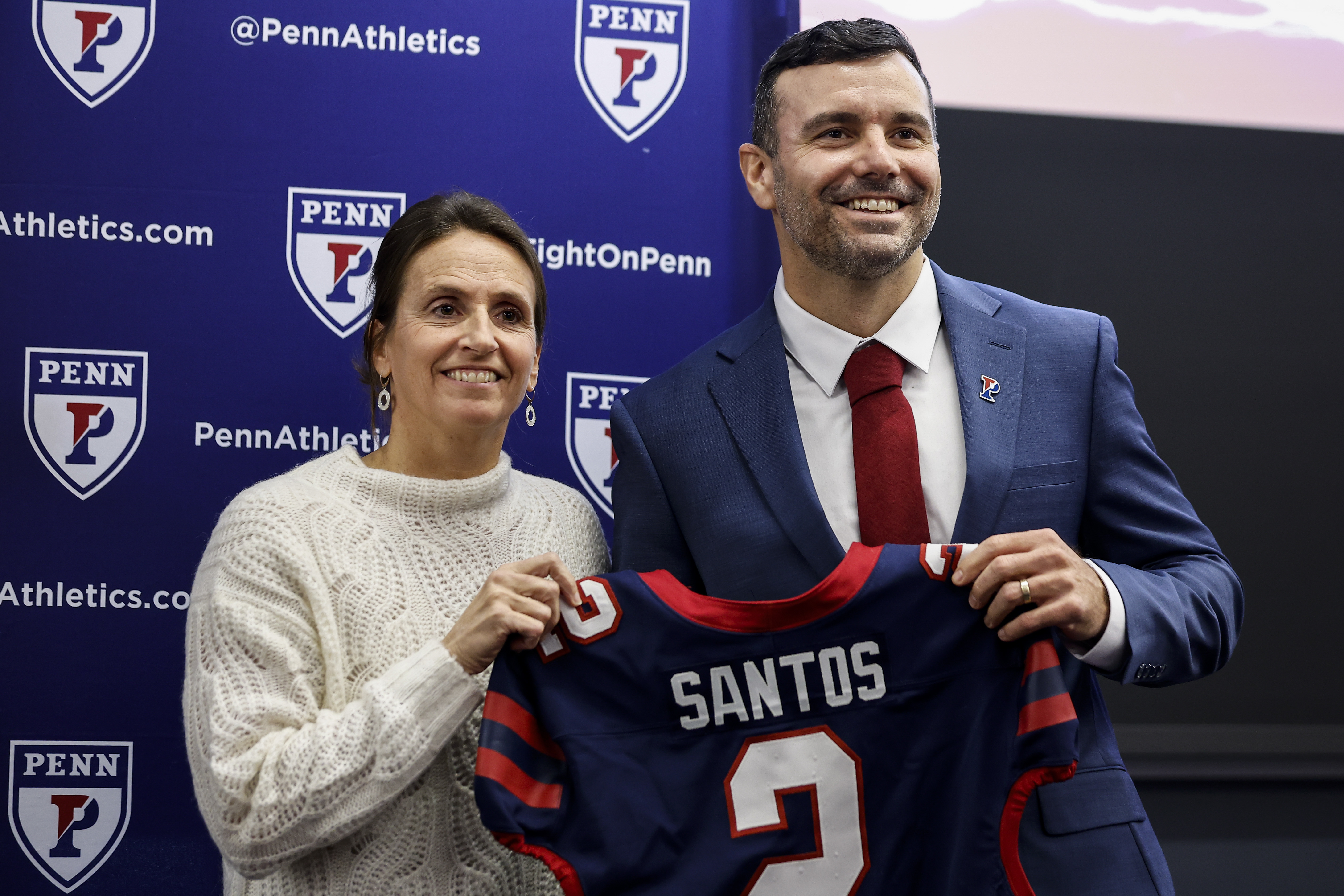
    On Monday, Penn coach Rick Santos announced that Teodecki would be the starting quarterback, reversing the August decision to start junior Karson Siqueiros-Lasky.

    “Those two have battled all camp,” Santos said ahead of Saturday’s season opener at Bucknell (3 p.m., ESPN+), “and honestly it was one of the hardest decisions I’ve had as a coach.”

    Santos is entering his first season as head coach after Ray Priore stepped down in November, capping an 11-year tenure that included Ivy League titles in 2015 and 2016. Last season’s stars — quarterback Liam O’Brien and wide receiver Jared Richardson — are at Cincinnati and Duke, respectively, following their graduation from Penn.

    Many questions loom over this new team, and the Ivy League preseason poll placed Penn fourth. Not that Santos cares.

    “In ’22 at New Hampshire, we won the [conference] championship and we were picked ninth out of 13 team[s],” said Santos, who was the head coach at his alma mater from 2022 to 2025, “So at the end of the day, that’s up for the media to talk about and decide what they think. … The rankings matter at the end of the year, so that’s what we got to focus on one week at a time.”

    Anyone’s name can stand out on the team’s blank slate, and Santos found that Teodecki, Penn’s highest-rated recruit since 2000, fit what he and his staff had been looking for.

    “He’s very competitive. He’s got a moxie about him and a confidence, and we’re excited to see him going game day,” Santos said.

    Teodecki, who’s from Austin, Texas, was thankful for the opportunity.

    “First off, just got to thank God,” he said. “I got to thank Coach Santos and the coaching staff for believing in me, giving me this chance. I got to thank my teammates for supporting me and going out there doing their jobs, putting trust in me, allowing me to trust in them. I’m fired up for the opportunity.”

    Santos said he’s been “encouraged with the senior leadership” on the team, which includes captains Siqueiros-Lasky and senior defensive back Josh Narcisse, and Narcisse noted that relationships have been built across all levels.

    “[The coaches have] been really intentional with getting to know each of us on a personal level outside of football,” he said, “And as a player, I can say that goes a long way when it’s Friday night, the lights are bright, you look to the sideline, you want to see people that have your back on and off the field.”

    For Narcisse, that’s the identity of this year’s team.

    “I think a lot of old Penn teams were more individualized, and it was about what this guy or this guy is going to do any given Saturday, but now when you watch the team, you’re going to be more focused on, ‘What is our defense going to do? What is our offense going to do? How are they going to handle themselves on special teams?’” he said.

    Even with the change in starting quarterback, Santos and Teodecki were quick to say that the plays remain the same, regardless of who is under center.

    “We have two bona fide studs at quarterback, two guys that can start at this level, two guys that are good enough to lead us to a championship,” Santos said. “So I would expect both of them to play at some point this year, but we decided to give Miles the nod for the opener.

    “There [are] no solidified jobs here. Every single day you need to earn the right to be on the field.”

    “Confidence through preparation” seems to be the motto of the Santos era. The team hits the field every day at 6:15 a.m. — “We want to get up before the enemy and get a bunch of work in while everyone’s still sleeping,” Santos said — and has been methodical in watching film, running plays, taking notes, and adopting the right mindset.

    “I feel 1,000% confident, not only in my own ability, but also our game plan and what our coaches have dialed up for us to be able to make plays and be successful on Saturday,” Narcisse said.

    The defense this year, he said, would be “fast, violent, relentless.”

    Santos said the defense is “really smart, instinctual in terms of being able to diagnose presnap reads and what the opposing team offense is doing. … And then ultimately when you get to the opener, it’s about how well we tackle.”

    Even while the team seems poised and eager to kick off a new chapter this Saturday, Teodecki admits that “there’s a little bit of nerves; if you’re not nervous, that either means you don’t care or you just — you really don’t care.”

    After practice ends at 11 a.m., he chalks his hands and throws the football with a teammate for a few extra minutes.

    “We’re blessed to play this game, and we get to play this game,” Teodecki said.

  • Former Villanova star Kris Jenkins returns in athletics operations role

    Former Villanova star Kris Jenkins returns in athletics operations role

    Ten years after Kris Jenkins hit the championship-winning buzzer beater to lift Villanova basketball to a national championship, he is back on the Main Line.

    Villanova announced Tuesday that Jenkins is returning to his alma mater in a full-time role as athletics operations coordinator.

    In his role, Jenkins will work with facilities, events, and equipment operations, livestream game broadcasts, on-camera contributions to video production distributed on social media, external relations on behalf of the department and the Villanova Athletic Fund, and student-athlete development initiatives and programs.

    “Kris is a beloved figure at Villanova, and not merely because he hit what may be the most famous game winner in the history of the NCAA Tournament,” Villanova athletic director Eric Roedl wrote in a press release. “From his days as an undergraduate, Kris has always been humble, approachable, and engaging. Now, he brings those traits to our team as he learns about the multiple ways our staff strives to create the best experience possible for our student-athletes, coaches and fans.”

    Previously, Jenkins rejoined Villanova in February 2020 in a student-athlete development role, which he maintained until Kyle Neptune was dismissed as head coach of the men’s basketball team in March 2025. Jenkins was then away from Villanova until he rejoined his alma mater at the start of the 2026-27 academic year.

    In April 2025, Jenkins filed a lawsuit in the Southern District of New York, seeking damages for the name, image, and likeness (NIL) compensation that he was unable to receive while at Villanova. The lawsuit also sought a judgment to void NCAA rules that limit payments athletes can receive for their NIL rights and services. The lawsuit named the NCAA and its major conferences: Atlantic Coast, Big 12, Big East, Big Ten, Pac-12, and Southeastern. Villanova was not specifically named in the suit. The lawsuit was eventually thrown out by a judge, The Inquirer reported in December 2025.

    As a player, Jenkins played 146 games for Villanova over four years (2013-17). He scored 1,383 points, while connecting on 37.3% of his three-pointers. During the 2015-16 national championship season, he averaged 13.6 points and 3.9 assists in 40 games.

    After graduating from Villanova in May 2017, Jenkins pursued a professional basketball career. He had NBA Summer League stints with the Washington Wizards, San Antonio Spurs, and Miami Heat. He made overseas stops in Germany, Dominican Republic, and lastly Venezuela. Eventually, a hip injury while in Venezuela ended his playing career.

    “I’m happy to be back and happy to help,” Jenkins said. “I’m learning new things every day and appreciate this opportunity to be a part of this great University again.”

  • Ivy Madness is coming to the PPL Center in Allentown starting in 2028

    Ivy Madness is coming to the PPL Center in Allentown starting in 2028

    The Ivy League is bringing its men’s and women’s conference basketball tournaments to Allentown.

    On Tuesday, the league announced that it has agreed to a three-year deal with the PPL Center to make the arena home to Ivy Madness starting in 2028. The Lehigh Valley Phantoms arena was selected due to its “centralized location within the league’s geographic footprint,” according to a release. The conference previously employed a rotation for the tournament around all eight of its teams’ arenas.

    “We are incredibly excited to bring Ivy Madness to PPL Center and the surrounding communities beginning in 2028,” Ivy League Executive Director Robin Harris said in a release. “Ivy Madness has grown into an incredible celebration of our student-athletes, institutions and the competitive excellence of Ivy League basketball.

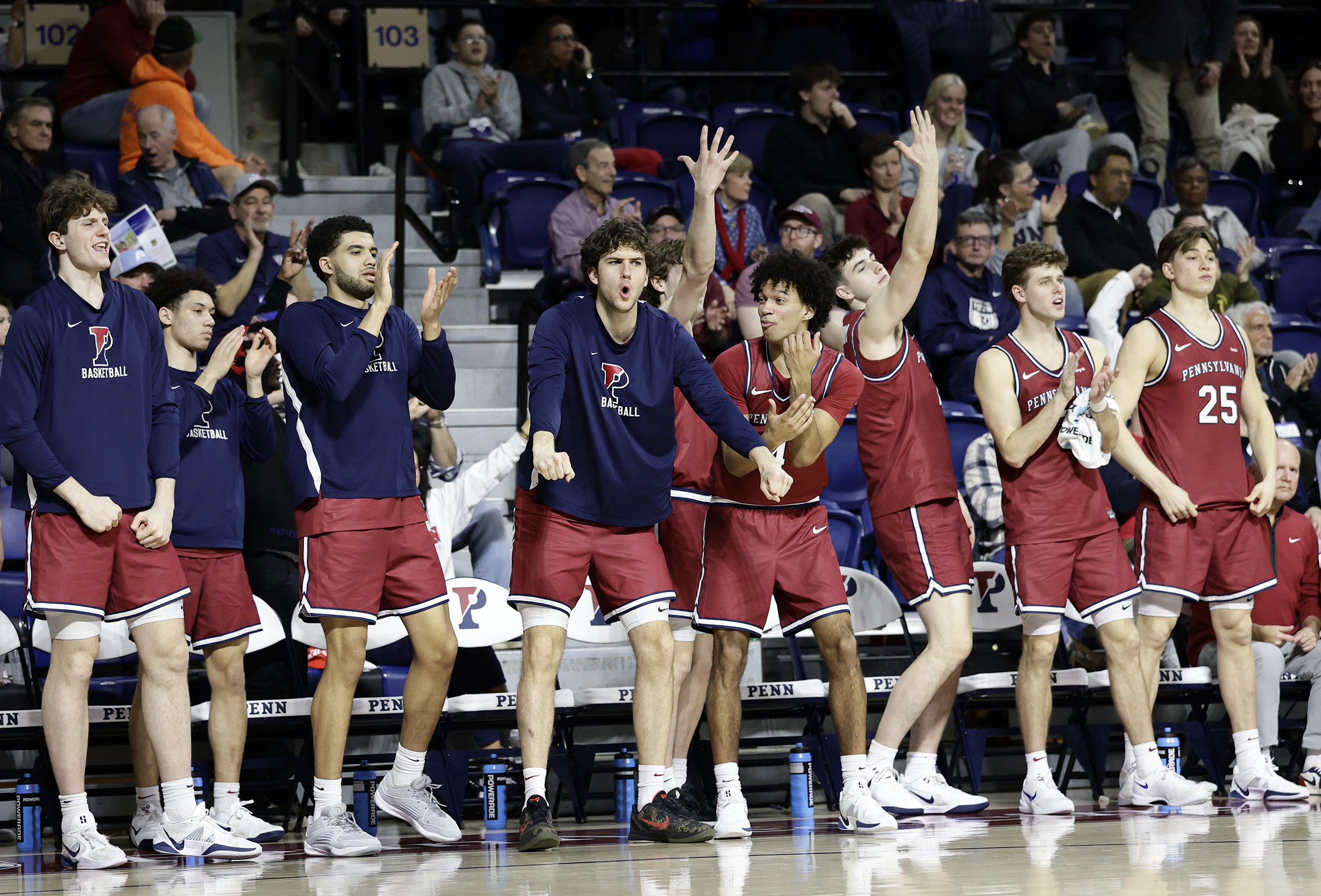
    The Penn bench reacts after a made basket by their teammates against Harvard.Yong Kim / Staff Photographer

    “The PPL Center provides a neutral site in a first-class venue, a vibrant downtown setting and a location that is accessible to so many of our alumni and fans. We believe this partnership creates an exciting opportunity to continue elevating the championship experience for our student-athletes and Ivy League basketball overall.”

    Penn will host Ivy Madness this season as a part of the Palestra’s 100th anniversary celebration. Dartmouth was originally scheduled to host the tournament but relinquished the opportunity because of the celebration. The Big Green are the only team in the Ivy League to never host the tournament after the rotating schedule began after 2018.

    In its release, the conference also noted that the PPL Center was selected due to its “premier arena setting.” The Ivy arenas, which previously held the tournaments, range dramatically in size. Harvard’s Lavietes Pavilion holds 1,636 people while the Palestra’s maximum capacity is 8,722. The PPL Center, which can hold up to 8,500 fans for Phantoms games, will provide Ivy Madness with consistent seating capacity.

    “PPL Center is thrilled to welcome Ivy Madness to the Lehigh Valley,” PPL Center co-owners Rob and Jim Brooks said. “As a hub for our community, we take pride in hosting a diverse range of events that bring people together. Ivy Madness is an exciting new addition to our calendar, offering a great experience for local fans while also welcoming visitors from across the region.”

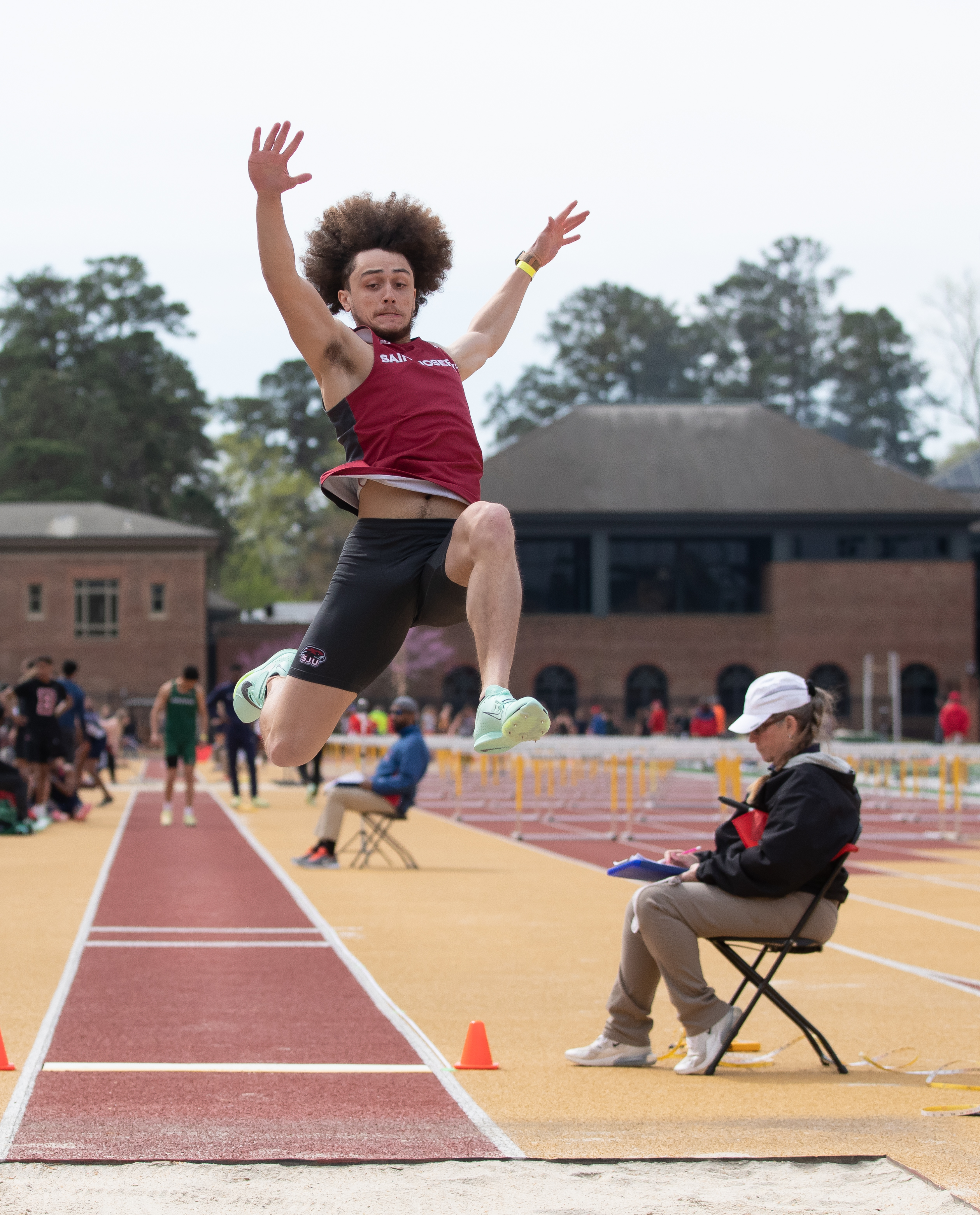
  • St. Joe’s track and field phased out its jumps program: ‘It was almost like we were more freelance’

    St. Joe’s track and field phased out its jumps program: ‘It was almost like we were more freelance’

    The Atlantic 10 track and field outdoor championships have long represented the end of the competitive season for many college athletes.

    But for St. Joseph’s, the 2026 A-10 championships in Fairfax, Va., weren’t just the end of another season, it was the end of a chapter.

    Senior Lily Ferguson’s 5.40-meter finish in the women’s long jump final on May 2 at George Mason Stadium was the final jump for St. Joe’s.

    The jumps program, which was part of the St. Joe’s track and field team, started its phase-out process in the 2023-24 season, when athletes were notified of the eventual end of the program, three former Hawks told The Inquirer. Following the 2025-26 season, after the remaining three jumpers in the program, Ferguson, Logan Henry, and Cameron Campbell-Miller graduated in May, the program was terminated, the trio said.

    “When it came to jumps, you can clearly see it was almost like we were more freelance than being a part of the team,” Campbell-Miller said.

    With two full seasons ahead of him after learning this news, Campbell-Miller said he became “a lot more school-oriented,” and focused on taking advantage of the time he had left to get involved in other programs and opportunities. By the time he finished his jumping career, Campbell-Miller said he felt more detached from the team than ever before.

    The group of jumpers remained close, though its size dwindled each year. By the end of their senior year, Campbell-Miller said the three remaining jumpers “were [their] own little family.” The rest of the team, he said, remained supportive, but ultimately still separate.

    In the 2022-23 season, Yvonne Harrison and Brian Hirshblond were coaches for sprints, jumps, and hurdles. Following that season, no coach was listed as a jumps specialist.

    “The head coach, if you talk to even the [coaches] below him, they didn’t jump when they were in high school. They didn’t really work with jumps beforehand,” Campbell-Miller said. “You could tell they would try. They’re trying their best with everything that they’re doing, and I give them kudos for that.”

    St. Joe’s head coach Mike Glavin specializes in cross country and distance events, while assistant head coach and recruiting coordinator Chris Tarello coaches the middle distance group. Assistant coach David Reick focuses on sprints and hurdles.

    Luke Noss, a fellow senior who competed in long sprints and hurdles, saw the events unfold from a different perspective but also noticed the coaching being spread thin.

    “When you have 30 to 35 sprinters and you only have three jumpers, it’s a little hard to give the jumpers what they need, just based on numbers,” Noss said. “As a coach, you’re going to give the people that’s your biggest group of people the biggest chance of scoring the most time, so it was definitely, I guess, in one word, just an afterthought for the jumpers these past few years.”

    Joel Maxcy, a sports business professor at Drexel said, in his broad understanding, there were a lot of factors that could have led to the decision.

    Track and field isn’t a revenue sport or one that garners widespread attention like basketball. The House v. NCAA settlement, which came after the decision but imposed roster limits of 45 athletes for men and 45 athletes for women implemented in the 2025—26 academic year, likely only reaffirmed it.

    “Probably, they looked at the costs and benefits of this and said, ‘The cost of either hiring a new coach or now complying with the house rules don’t make jumps worth it to us anymore. The cost of keeping jumpers is not worth the benefit of a somewhat more competitive and better track and field team,’” Maxcy said.

    Ashwin Puri, the new athletic director at St. Joe’s, shared a similar sentiment about pouring resources into more competitive areas of the program in his written statement to The Inquirer about why the school decided to cut the program.

    “Saint Joseph’s is committed to aligning its resources to best serve its mission,” Puri said. “In the current landscape of collegiate athletics, like many institutions across the country, that means focusing on areas of strength that allow our programs to flourish and set themselves apart. Saint Joseph’s track and field programs will continue to compete at the highest level and prepare student-athletes for bright futures both on and off the track.”

    Ashwin Puri is the new AD at St. Joe’s.Steven M. Falk / Staff Photographer

    Despite the program’s deterioration over the seasons, Campbell-Miller said that when he started at St. Joe’s in 2022, the jumps program was a big contributor to the team’s success at meets.

    At that time, Patrick Fehm, who finished his career as one of the program’s best jumpers, was in his junior year. Fehm medaled eight times for St. Joe’s, including gold medals in the high jump at the 2023 A-10 indoor championships, at the 2022 IC4A outdoor championships, and at the 2024 IC4A indoor championships. He also won one silver medal and four bronzes.

    Fehm was in his senior year when the future of the program was shared with the athletes. With one year of eligibility left because of COVID-19, that decision meant exploring other options for him. He completed his final year of eligibility at Tennessee.

    Even though the decision altered his plans, Fehm said he felt worse for the jumpers coming up behind him in the program but understood what went into it as a nonrevenue sport at a mid-major school.

    “To an extent, I can respect a little bit more, especially going forward, you want to recruit athletes and you want student athletes to be a part of the program or the thing they’re doing or specializing in, you want there to be consistency with the resources you’re getting,” Fehm said.

    Patrick Fehm won eight medals during his time at St. Joe’s.SJU Athletics

    However, Noss said the irony of the situation is that the only national champion at St. Joe’s came from the jumps program.

    In 1991, Donna Crumety was the NCAA triple jump champion and remains the only athlete from the school to win a national title.

    “We invest so much in our schools, in basketball, and field hockey, and etc., lacrosse,” Noss said. “Those are the big sports, but our only national champion is a triple jumper, and that program’s gone.”

    Going forward, it’s unclear to the former athletes how this will affect the program’s ability to stay competitive. Without ever having throws and now cutting jumps, Noss said it’s not feasible to compete with bigger schools such as Rhode Island, Virginia Commonwealth, or George Mason that have an entire team.

    Campbell-Miller said it could help with recruiting for sprints and distance runners with the focus on these athletes, but he ultimately thinks the lack of jumps and a full team can be harmful to the program.

    “We have a more competitive track team than we’ve had in a very long time, both distance and sprints and hurdles,” Campbell-Miller said. “I feel like scoring may go up on the track, but without the jump scoring or that possibility points, I feel like where we’re going to be as a team will feel pretty stagnant, and we’re not going to be going, at least on the A-10 level, to where we want to be, so I think that hurts. Obviously, it was terrible for everyone who was here.”

  • Jaxon Smolik pulls ahead in Temple’s QB battle; K.C. Keeler proud of defense’s ‘dramatic’ improvement

    Jaxon Smolik pulls ahead in Temple’s QB battle; K.C. Keeler proud of defense’s ‘dramatic’ improvement

    Two games into the season, Temple’s identity is beginning to take shape.

    The Owls’ defense kept No. 14 Penn State within reach, but Temple managed just nine points in an 18-point loss while continuing to split quarterback duties between Jaxon Smolik and Ajani Sheppard.

    With several offensive players nearing returns and the defense’s emergence, here are three takeaways from Monday’s practice as the team prepares for a nonconference road matchup against Toledo on Saturday (3 p.m., CBS Sports Network).

    Quarterback roles taking shape

    K.C. Keeler has not formally declared a winner of Temple’s quarterback competition, but the division of responsibilities between Smolik and Sheppard is becoming clearer.

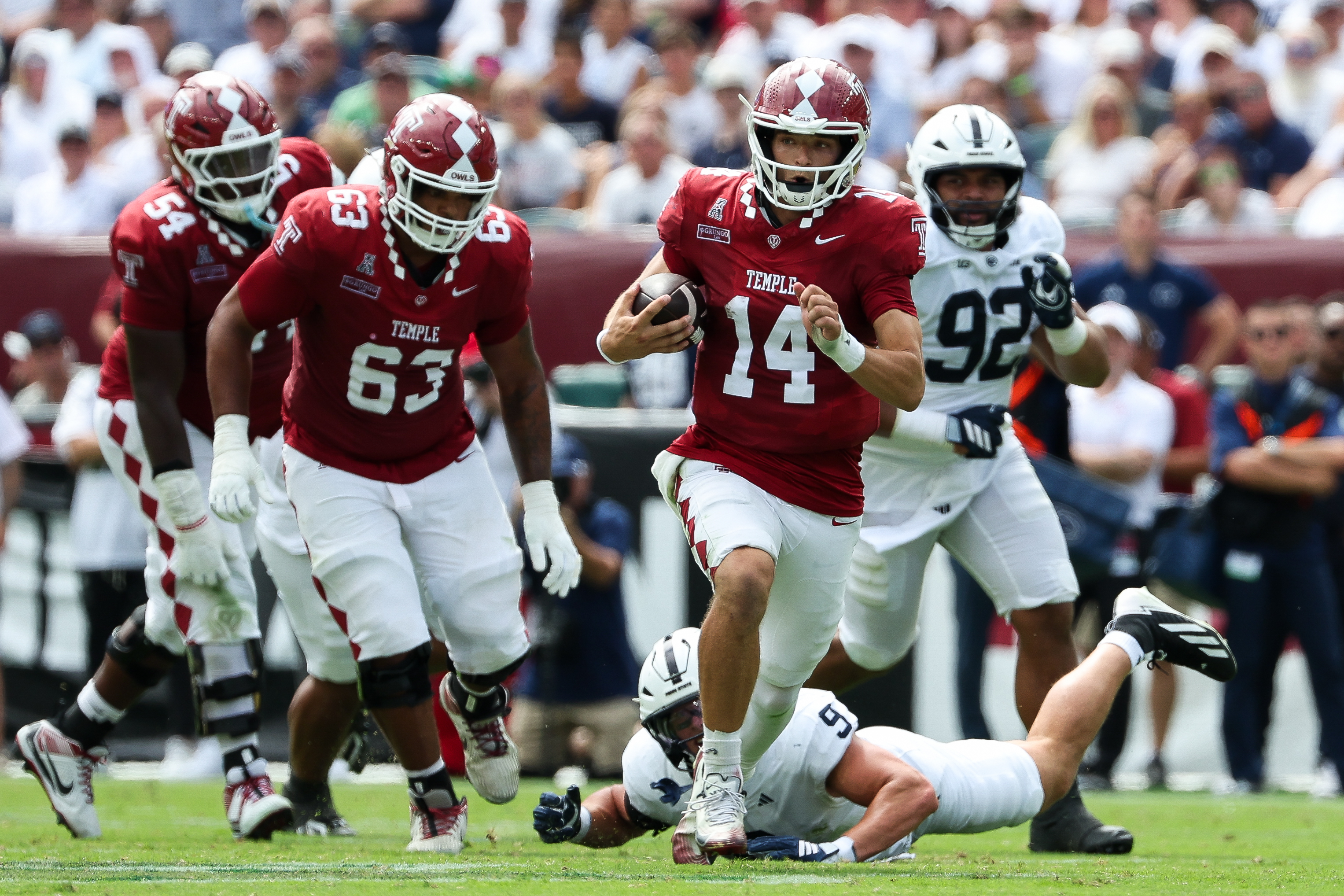
    Smolik started against Penn State and completed 10 of 16 passes for 59 yards with an interception, while adding 71 rushing yards. Sheppard completed 3 of 6 passes for 48 yards and scored Temple’s only touchdown on a 3-yard run in the fourth quarter.

    Keeler expects the arrangement to remain the same against Toledo, with Smolik directing most of the offense and Sheppard entering when his mobility fits a situation.

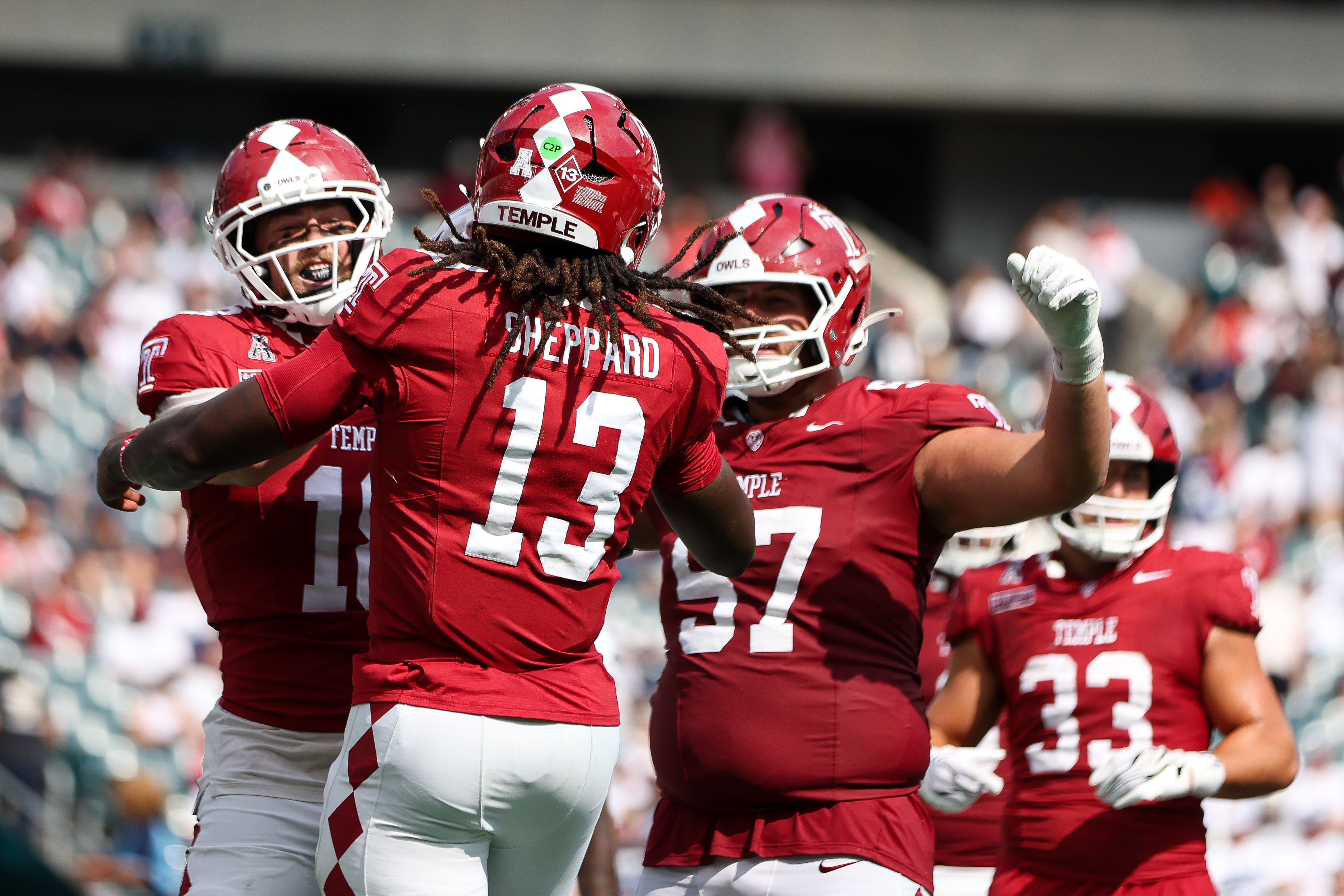
    Ajani Sheppard (13) celebrates with his teammates after scoring a Temple’s only touchdown on Saturday.Isaiah Vazquez / For The Inquirer

    “I still think we feel we have two quarterbacks who can win in this league,” Keeler said, referring to the American Conference. “It just depends on how we’re going to deploy them.”

    Sheppard could receive more snaps this weekend, particularly when his running ability could force Toledo’s defense to crowd the line of scrimmage. Keeler also wants the Owls to counter that expectation by allowing Sheppard to attack favorable matchups through the air.

    Smolik remained first in Temple’s quarterback order during Monday’s practice. Keeler defended his performance against Penn State, noting that the Nittany Lions’ tight coverage and pressure against a depleted offensive line limited passing opportunities.

    “It’s tough to play quarterback when your receivers aren’t open,” Keeler said. “I thought he did a good job managing the offense, pulling the ball down and making plays when he had to.”

    Offense awaits reinforcements

    Temple rushed for 176 yards against Penn State, but an inability to turn that production into points underscored how much the offense missed its injured starters.

    Sights and sounds from Temple vs. Penn State at the Linc
    Video: Sights and sounds from Temple vs. Penn State at the Linc

    Running back Sam Brown practiced in full pads Monday after missing the Owls’ first two games. Keeler said Brown could have played against Penn State if it were Temple’s final game of the season, but he did not clear the training staff’s return-to-play protocols.

    Keveun Mason will continue receiving most of the work while Brown, who is expected to return vs. Toledo, eases into the rotation. Mason rushed for 76 yards on 14 carries against Penn State.

    “We’re hoping a healthy Sam Brown, along with what Keveun can do, gives you a great one-two punch with your run game,” Keeler said. “We definitely want to get him involved, but we’re going to be smart enough not to give him 30 carries.”

    Mason said he is prepared for any distribution of the carries and believes the running backs bring different elements to the offense.

    The offensive line may also receive reinforcements. Keeler expects guard Eric King and tackle Kevin Terry to be available, although their workloads will depend on their progress this week.

    Defense setting the standard

    Temple’s defense demonstrated its resilience in its Week 2 loss. After Smolik’s first-quarter interception set up Penn State at Temple’s 5-yard line, the Owls made a goal-line stop four plays later.

    Temple also held Penn State scoreless in the first quarter and allowed just 10 first-half points before the Nittany Lions pulled away. In the season opener, the Owls forced three turnovers and returned two interceptions for touchdowns against Rhode Island.

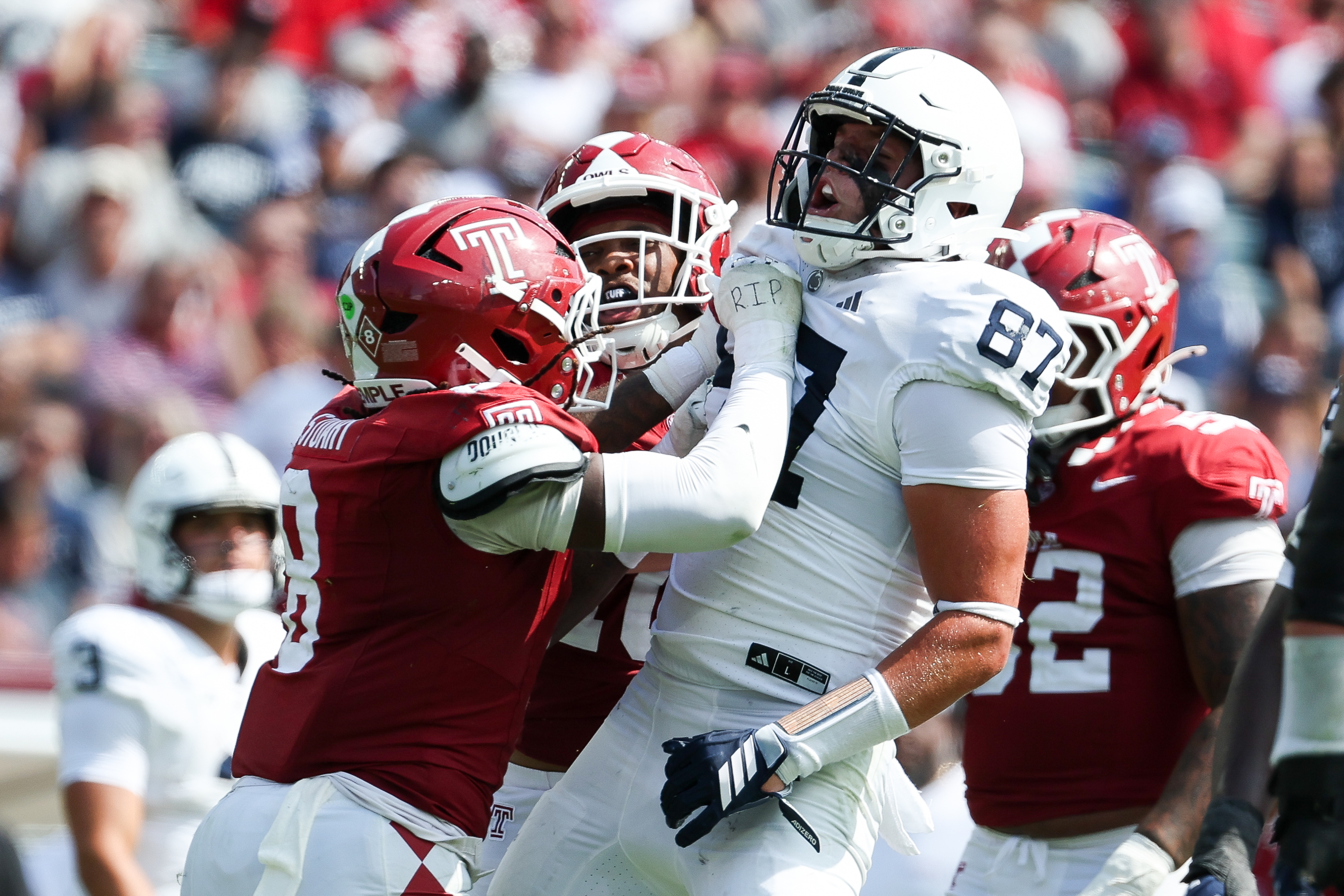
    Temple linebacker Eric Stuart (left) pushes back Penn State tight end Andrew Rappleyea during Saturday’s game.Isaiah Vazquez / For The Inquirer

    “They’ve improved so much from a year ago,” Keeler said. “It’s dramatic. Part of it is that I think we’re putting our kids in a little bit better position to be successful. The other thing is we’re more talented.”

    Defensive tackle Kevin Hornbeak Jr. credited the unit’s progress to a deep rotation that has kept the defensive line fresh through two games.

    “All of our group is one,” Hornbeak said. “Anybody can get thrown out there. I’ve got all the faith in our room.”

  • Ivy League football to add bye week and start season earlier in 2027

    Ivy League football to add bye week and start season earlier in 2027

    The Ivy League will be starting its football season earlier next season.

    On Monday, the conference announced that it would be kicking off its 2027 season on Sept. 11 and instituting a leaguewide bye week during the weekend of Oct. 23. Each team’s first game will be against an Ivy opponent.

    The Ivy League, which plays a 10-game season, is consistently the last conference in college football to kick off its season due to its shortened schedule. All other FCS teams play a total of 12 regular-season games.

    Penn and the rest of the Ivy League will kick off the 2026 season Saturday. The Quakers are slated to take on Bucknell (1-2), a team already three games into its season.

    The announcement comes after the conference’s first season participating in the FCS playoffs. The Ivies, in an effort to maintain a sense of tradition, had barred its schools from participating in the postseason since the 1945 signing of the Ivy Group Agreement. This changed after a proposal from the conference’s Student-Athlete Advisory Committee was approved by the Ivy League Council of Presidents in December 2024. The league’s winner now receives an automatic bid to the playoffs.

    When it was first announced that the Ivy League would be participating in the FCS playoffs, there was speculation that the conference would also adapt to a 12-game schedule. With Monday’s announcement, that now seems unlikely in the coming years.

    Last season, competing for an FCS championship for the first time, the Ancient Eight sent two teams to the playoffs. Yale received an automatic bid after winning the Ivy title and Harvard received an at-large selection. While the Crimson were trounced by Villanova in the first round, the Bulldogs won their first playoff matchup against Youngstown State before falling in the second round to Montana State.

    Including the playoffs, Yale played 12 straight games last season.

    Next year’s change will allow the Ivy’s schedule to align better with the rest of the teams competing in the FCS. It will also ensure that the conference’s playoff teams do not have a competitive disadvantage due to a lack of rest. The Ivy League had traditionally played 10 straight games without a bye week.