When Temple and Penn State kick off at Lincoln Financial Field on Saturday, the programs will renew a 95-year-old rivalry for the first time in a decade.
Penn State holds a 40-4-1 all-time record and has won 32 of the last 33 meetings. However, the history of this series extends beyond wins and losses.
Before the Nittany Lions return to Philadelphia for the first time since 2015, here are some of the top moments from their rivalry.
Temple strikes first
Temple and Penn State matched up for the first time on Oct. 10, 1931, when the Owls shut out the Nittany Lions, 12-0, in front of a capacity crowd of 20,000 at Temple Stadium.
Head coach Heine Miller led Temple an 8-1-1 season, which stood as a program record for 42 years until Wayne Hardin’s 1973 team eclipsed it with nine.
The Owls went on to claim three of the first four matchups in the all-time series.
The victory that lasted 74 years
Temple’s third win in four meetings with Penn State, on Oct. 18, 1941,became a frequently cited date.
On a wet, muddy, and slippery day, Temple claimed what would be its final victory against the Nittany Lions for the next 74 years in a 14-0 win at Temple Stadium.
Temple picked off star Penn State quarterback Johnny “Pepper” Petrella four times. Also, four players, two from each team, were taken off the field on stretchers in a game former Inquirer reporter Stan Baumgartner characterized as “bruising and bitterly contested” and both teams “appeared to have their boxing and wrestling squads competing.”
It took another 39 games for the Owls to beat the Nittany Lions.
Within inches
Following Temple’s 1941 victory, an era of struggle ensued.
In 1950 at New Beaver Field, Temple came close to beating Penn State when the two teams tied 7 apiece. Fun fact: Temple running back Gene Caterina scored the Owls’ first touchdown in University Park.
The series entered a 22-year hiatus after 1952, and it wasn’t until 1975 when Temple made things interesting again. In front of a crowd of 57,112 at Franklin Field, Penn State snuck past the Owls, 26-25.
Just a year later, in 1976, it was an even more painful finish, this time at Veterans Stadium. Temple trailed by two touchdowns before mounting a late comeback. The Owls drove downfield during the final two minutes but appeared in danger of running out of time near Penn State’s goal line.
Then an unusual interruption occurred: a spectator ran onto the field and officials stopped the clock. Temple scored a touchdown on the next play, making it 31-30. The NCAA did not introduce overtime until 1996, so Hardin faced a straightforward decision: Kick the extra point and accept a tie or attempt a two-point conversion to win. Hardin went for two. The pass went just beyond the intended receiver, preserving Penn State’s one-point victory.
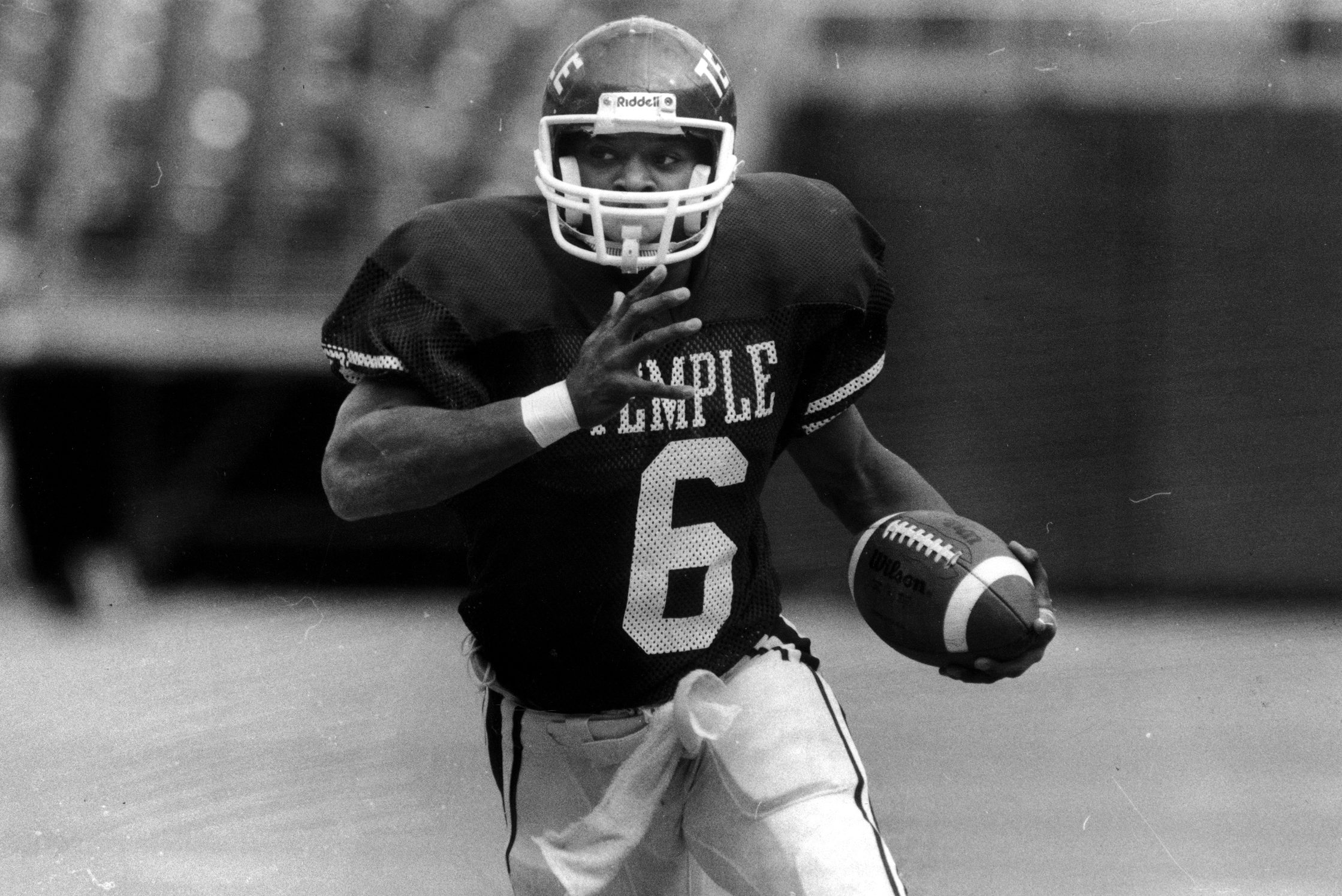
Other notable games were in 1978 when No. 3-ranked Penn State survived Temple on a last-second Matt Bahr field goal to claim a 10-7 win. Then in 1985, a 206-yard, two-touchdown day from Temple running back Paul Palmer wasn’t enough in a 27-25 loss. Palmer was inducted into the College Football Hall of Fame in 2018.
Paul Palmer finished with 206 yards and two touchdowns against Penn State in 1985.Inquirer Archives
Penn State’s 31-game winning streak
Between 1952 to 2014, the Nittany Lions won 31 consecutive matchups against the Owls, with former Penn State coach Joe Paterno leading them to 28 of those wins between 1975 to 2011.
During that time, Penn State outscored Temple 1,068-331 and held an average game score of 34.5-10.7, a 23.8-point average margin.
The Nittany Lions shut out the Owls four times. The most lopsided matchup came in 1995 in Penn State’s 66-14 victory. Its streak survived nine Temple head coaches, and was played at five different venues.
From Penn State to Temple
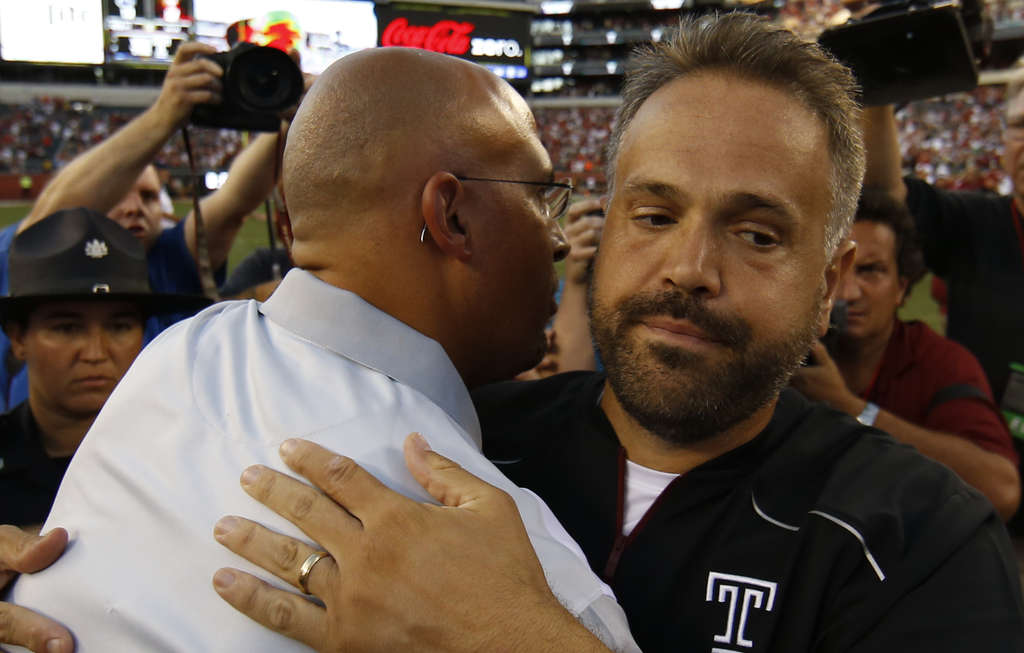
Despite the quarrels between the programs, two Penn State products became the most important figures in the revival and progression of Temple football.
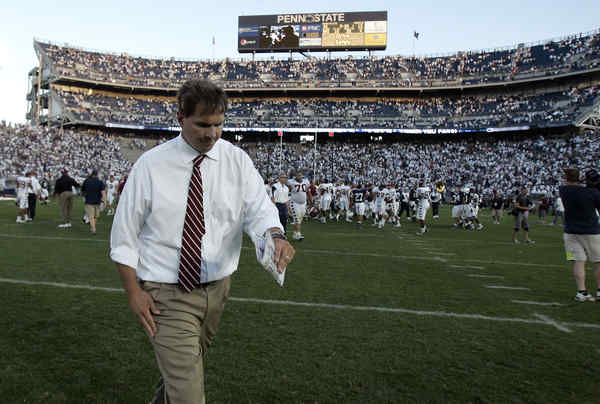
Former Temple head coach Al Golden lettered with the Nittany Lions from 1989-1991 and started at tight end for two seasons. He guided Temple to a 20-12 conference record between 2006 and 2010, a tenure that started a golden era of Owls football.
Before becoming Temple’s head coach, Al Golden started at tight end for two seasons at Penn State.DAVID SWANSON / Staff Photographer
Matt Rhule was also a walk-on linebacker at Penn State from 1994-1997 and got his start as a graduate assistant under Paterno. He eventually found his way onto Golden’s staff at Temple and was named defensive line coach in 2006, before moving to offensive coordinator.
Rhule remained at Temple following Golden’s departure and worked under Steve Addazio before being hired as head coach in 2012. Rhule coached the Owls for four years, taking them to two consecutive bowl games and an American Conference championship in 2016.
The Owls broke through
In 2015, Temple took down Penn State, 27-10, in its season opener at Lincoln Financial Field in front of a then record-breaking crowd of 69,176.
Coming off a 6-6 season under Rhule, Temple entered as a seven-point underdog.
Penn State jumped out to a 10-0 lead before a 12-play, 93-yard drive ended with a Temple touchdown. The Owls tied the game with a 40-yard field goal before PJ Walker ran in a touchdown to give the Owls a 17-10.
They added another score, but the real exclamation came from Temple’s defense, which sacked Penn State quarterback Christian Hackenberg 10 times, three coming from All-American linebacker Tyler Matakevich.
In 2016, Temple visited Beaver Stadium and suffered a 34-27 loss. It was the last matchup between these two programs.
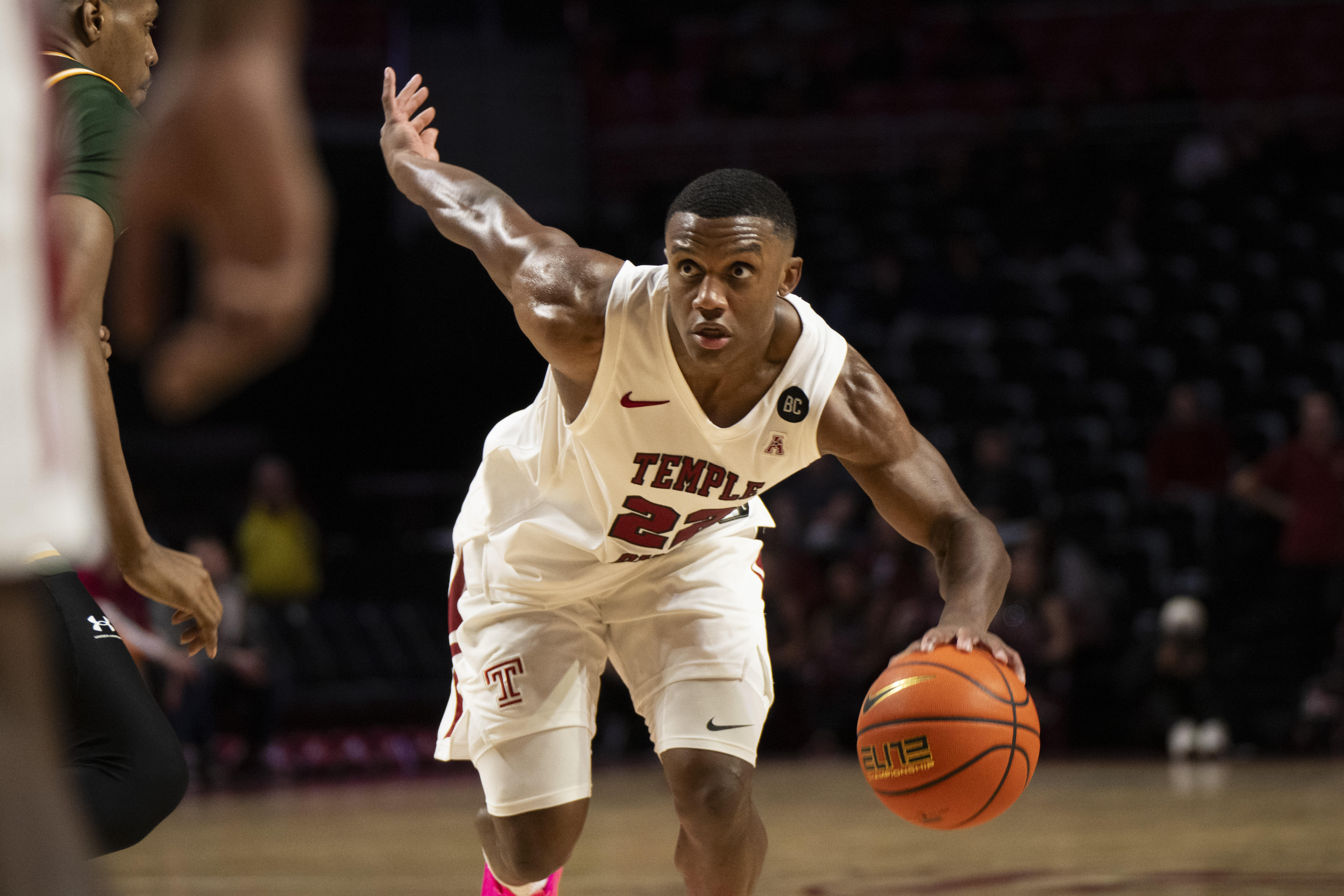
Temple’s leading scorer from last season, Derrian Ford, has been practicing with the team and is on track to play for the Owls in the 2026-27 men’s basketball season after a recent court ruling in Louisiana paved the way for a fifth season of eligibility, sources told The Inquirer.
Ford, a guard who transferred to Temple from Arkansas State prior to the 2025-26 season, averaged 18.1 points and 4.3 rebounds in 35.6 minutes last season with the Owls.
The Arkansas native was among a group of athletes who challenged in a Louisiana court the NCAA’s newly adopted rule that will grant five full years of eligibility to college athletes moving forward but did not include the high school class of 2022 who had already completed four seasons. The court ruled in their favor, granting them a temporary restraining order against the NCAA.
Derrian Ford is a key returner for the Owls in the 2026-27 season.Elizabeth Robertson / Staff Photographer
Ford did not sign a professional contract, unlike football players Zxavian Harris and Dae’Quan Wright, a tight end who spent part of training camp with the Eagles. Harris and Wright’s attempts to join the roster at LSU have been at the center of the latest legal and ethical issues in college athletics. A Louisiana judge issued a preliminary injunction last week that appeared to make the players eligible to join the LSU football team, but the school is proceeding without adding them, a move that came after LSU’s conference, the SEC, threatened to hold a vote to expel the school from the conference.
Ford is unlikely to face the same type of legal hurdles in order to play in 2026-27. Other members of the Louisiana case have already made their first appearances after the ruling. Jazmin Ferguson and Jocelyn Ollivierre, two LSU soccer players, have made three appearances with their team so far this season. Ferguson, according to the Business Journal, testified in court recently that she was paid $4,500 by a USL team but returned the money when playing again at LSU became a possibility.
Ford had interest from professional teams, according to sources, but did not sign a contract.
He is not the only Big 5 men’s basketball player who successfully challenged in court for an additional season. Villanova center Duke Brennan was part of a lawsuit in California that ended with him and others receiving additional eligibility. Brennan will play his final college season at Oklahoma.
As of Thursday afternoon, Ford was not one of the 14 players listed on Temple’s official roster on the school’s athletics website. The Owls return a few players from the 2025-26 season, most notably Gavin Griffiths, who averaged 10.1 points. Coach Adam Fisher retooled the roster in the transfer portal, and while the Owls made some key additions, none of them may have the impact that Ford’s return will.
Temple has not yet announced its 2026-27 schedule, but the college basketball season begins in early November.
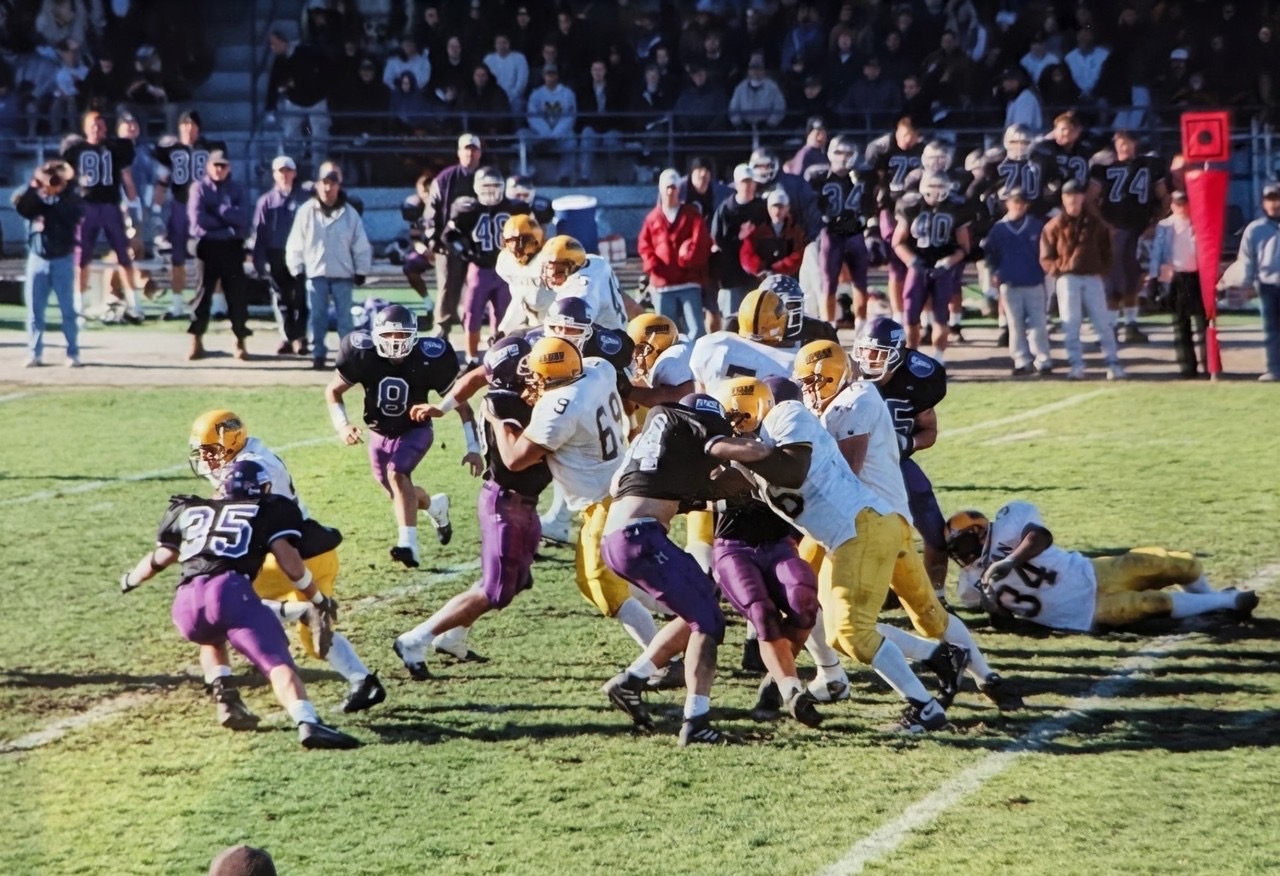
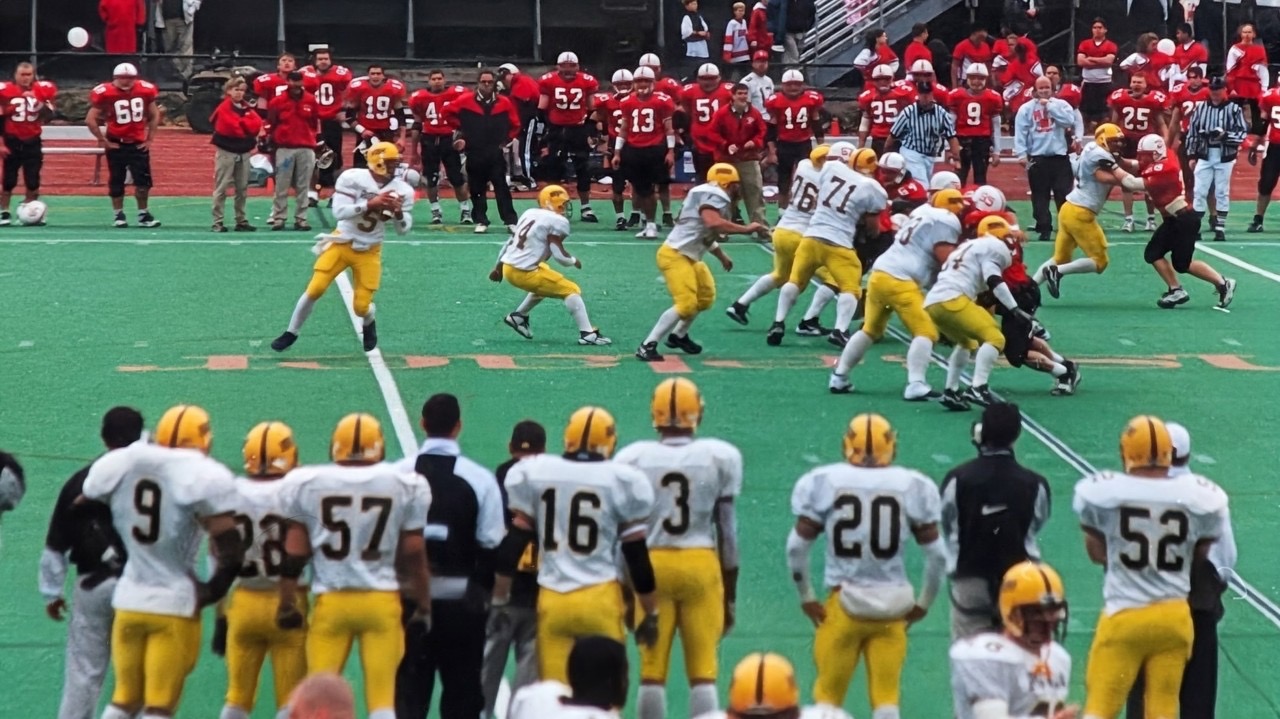
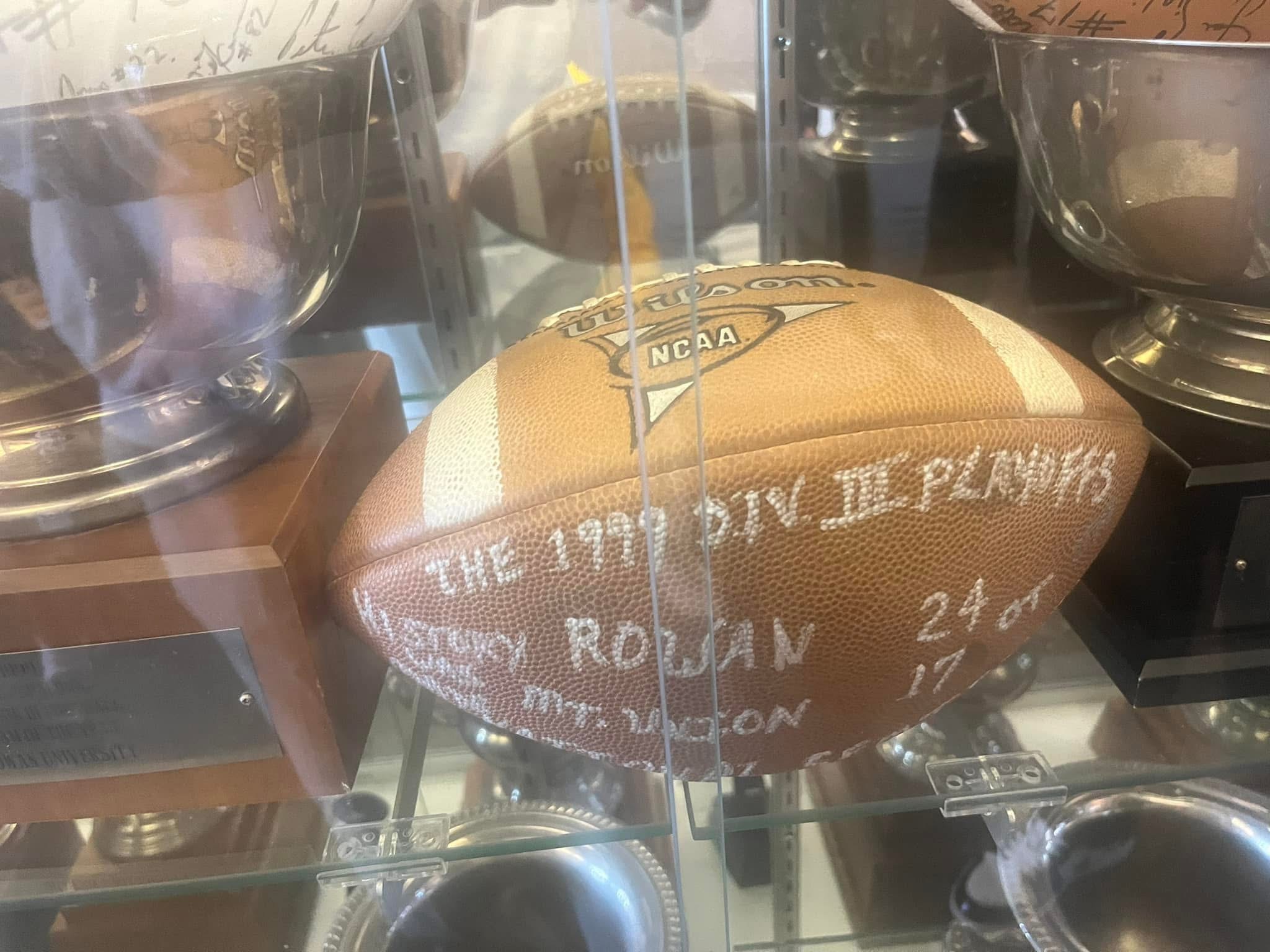
Mount Union was facing a fourth-and-5 in overtime, trailing 24-17 in a Division III playoff semifinal on Dec. 11, 1999. The Purple Raiders, down to their last play, held a 54-game winning streak, then the longest in any division of football, and sought a fourth straight trip to the D-III title game, named the Stagg Bowl.
Twenty-seven years later, K.C. Keeler still can see the play crystal-clear. Back then, he was Rowan’s head football coach, seeking his fourth title game appearance since becoming a 32-year-old head coach in 1993. And on this day, after losing to Mount Union in the championship game twice in the previous three years, something special was about to unfold for the Profs.
“I remember the last play of the game, [Mount Union was] going to try to tie it up on fourth down, and they had a tight end, I believe it was, over the middle of the field, in the end zone, and the ball’s thrown,” Keeler, now Temple’s coach, recalled to The Inquirer. “I see the tight end go up in the air, and it looks like he’s going to come down with it. And Mark Hendricks, my middle linebacker, who was a two-time captain for me, he turns and runs and actually hits the tight end so hard he broke his ribs. And the ball comes squirting out, and he’s laying there, and we’re celebrating over top of him.
“My 398th game [is] coming up here. … That was definitely one of those where you remember for a lifetime.”
On the surface, Penn State head coach Matt Campbell, from Massillon, Ohio, and Keeler, from Emmaus, Pa., don’t share many commonalities beyond coaching in the same state ahead of their matchup on Saturday (noon, ESPN2). As it turns out, though, the 46-year-old Campbell, a former standout college defensive end turned coach, was not only on that Mount Union team in 1999, but on the field toward the end of the game.
At a coaching clinic this winter, not long after Campbell became Penn State’s 17th football coach, Keeler says his counterpart had one thing on his mind to bring up after formally meeting.
“First thing that comes out of [Campbell’s mouth], he goes, ‘I’m 1-1 against you.’ I’m like, ‘What do you mean you’re 1-1? You’re 0-1,’” Keeler says. “He goes, ‘No, I was a [graduate assistant] on the team that beat you then a couple years later.’
“It’s like, ‘OK, we’ll give you that one.’ So he and Nick Sirianni were both on that team [in 1999], and I’ve had some fun with them on having that one up on them, for sure.”
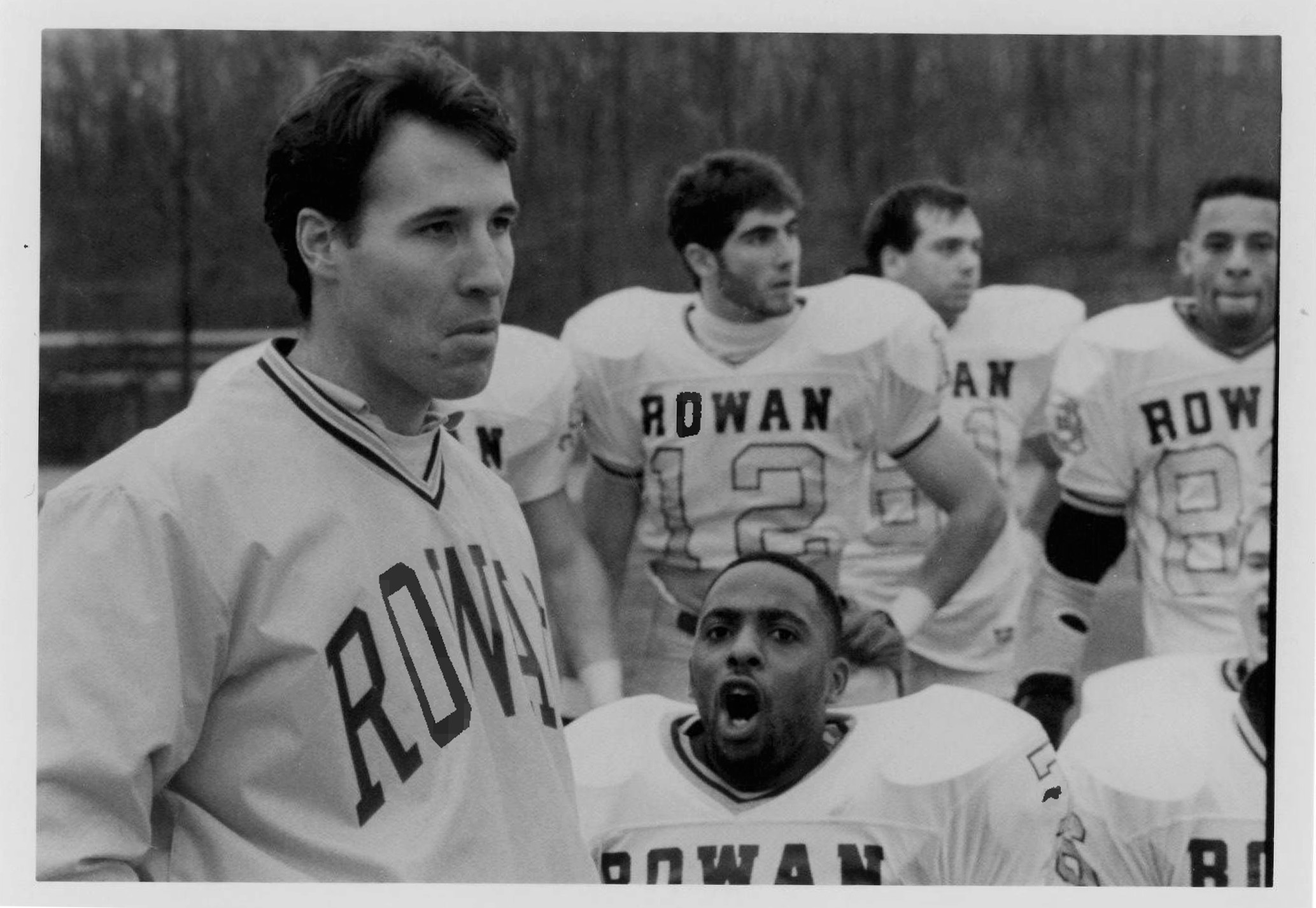
K.C. Keeler was Rowan’s football coach from 1993 to 2001.Rowan University Athletics
Campbell, who quipped, “You’re kind of coming at me, huh?” when The Inquirer asked about that 1999 game against Rowan earlier this week, still harbors feelings over the only loss in his college career at Mount Union.
“In that game, as a football player [who] won three national championships, and at that time, that was almost the spark for our program, to be quite honest with you,” Campbell said from his podium on Tuesday. “I was in on the last play, as the game ended, and that was tough.
“I think for me, that was a great opportunity for me to learn what the standard of excellence was in the program at Mount Union losing that football game, and what it meant to never have that feeling again.”
That 1999 game comes into focus as Keeler, now in his 33rd season as a head coach, will host in-state rival Penn State this weekend. It will mark the 46th meeting all-time between the programs.
And the significance of Rowan’s win still reverberates with some of Keeler’s former players almost three decades later.
Bobby Acosta, who played for Keeler at Rowan as a safety, lost his father as a freshman and left school without telling his coach. He later changed his mind, but the only way back on the football team, Keeler told him, was if Acosta “got a 4.0 [GPA] and passed 18 credit hours in the summer.”
“I said to myself, ‘There’s no way I can do that,’ and I did it. And that’s where my life changed,” said Acosta, who now coaches high school football in Texas. “I was a young man. K.C. was like my dad. Ever since that point, I played for him. Then I worked for him at Rowan. Then I worked for him at Delaware with Joe Flacco.
“He’s been a mentor to me for a lot of years. It was to the point I was babysitting his kids when I was in college. K.C. Keeler to me was someone that I looked up to.”
Rowan faces Rensselaer Polytechnic Institute during a playoff game in 1999.Courtesy of Greg Gudis
Greg Gudis, who was the starting left guard for Rowan during the 1999 season, took a different route to the program. He initially chose Gettysburg College out of Pennsauken High School, started as a freshman, but noticed the program “didn’t really prioritize” football.
So Gudis transferred to Rowan, formerly named Glassboro State, in 1998, located “right in my backyard,” he said. The former offensive lineman appreciated that Keeler was honest and did not guarantee him a starting spot.
“When I got to Rowan, the level of talent was so much higher than where I just come from,” said Gudis, who now resides in Arizona. “Some of the guys I played against that maybe should have been [playing at the Division I level]. It was a much different level of play, and Coach Keeler was a much different level of coach than where I had just come from.”
Two things remained elusive for Keeler heading into Rowan’s 1999 season: Beating Mount Union and winning a Stagg Bowl, both of which he went winless three times prior.
The 67-year-old coach, leading up to Rowan’s playoff matchup with Mount Union, made sure to keep newspaper clippings out of the locker room, Gudis said. Acosta added that the more than six-hour trip to Alliance, Ohio, where Mount Union was located, had the team “already down 20 points mentally,” but their mindset was “we have everything to gain and nothing to lose at their home place.”
A football in Rowan’s trophy case from their win over Mount Union in 1999.Courtesy of Bobby Acosta
And it worked. Though Rowan lost to Pacific Lutheran the following week in the Stagg Bowl, that win over Mount Union was “our national championship that day,” Acosta said.
“You almost wanted to win for Coach Keeler because number one, you respect him as a great coach, but number two, it’s like this guy knows nothing but losing [to] Mount Union,” Gudis said. ”And it was like, ‘Wow, I’m sure we probably finally brought some closure to that book for him to say I got over the hump.’”
Added Keeler: “My wife always says that life’s about the moments, and one of my messages is always be in the moment, and that very much was the message when we played Mount Union. … Just keep on playing to the very end, and when you have really good teams, that’s what they do.”
‘A special place’
When Penn State and Temple play at the Linc for the first time since 2015, which ended in a historic win for the Owls that springboarded an unbelievable two-year run, Keeler will be thinking of the teams that came before him. There’s a reminder every day of that 2015 game in the program’s facilities. The four team captains from the 2016 American Conference champion team will be recognized on Saturday.
He also recognizes the challenge that lies ahead. Penn State, Keeler believes, has a chance to be a top 10 team, similar to Oklahoma last year, another Power Four team who came to the Linc to play Temple. Keeler added that Campbell will “do amazing things” during his time at Penn State.
The respect is reciprocal.
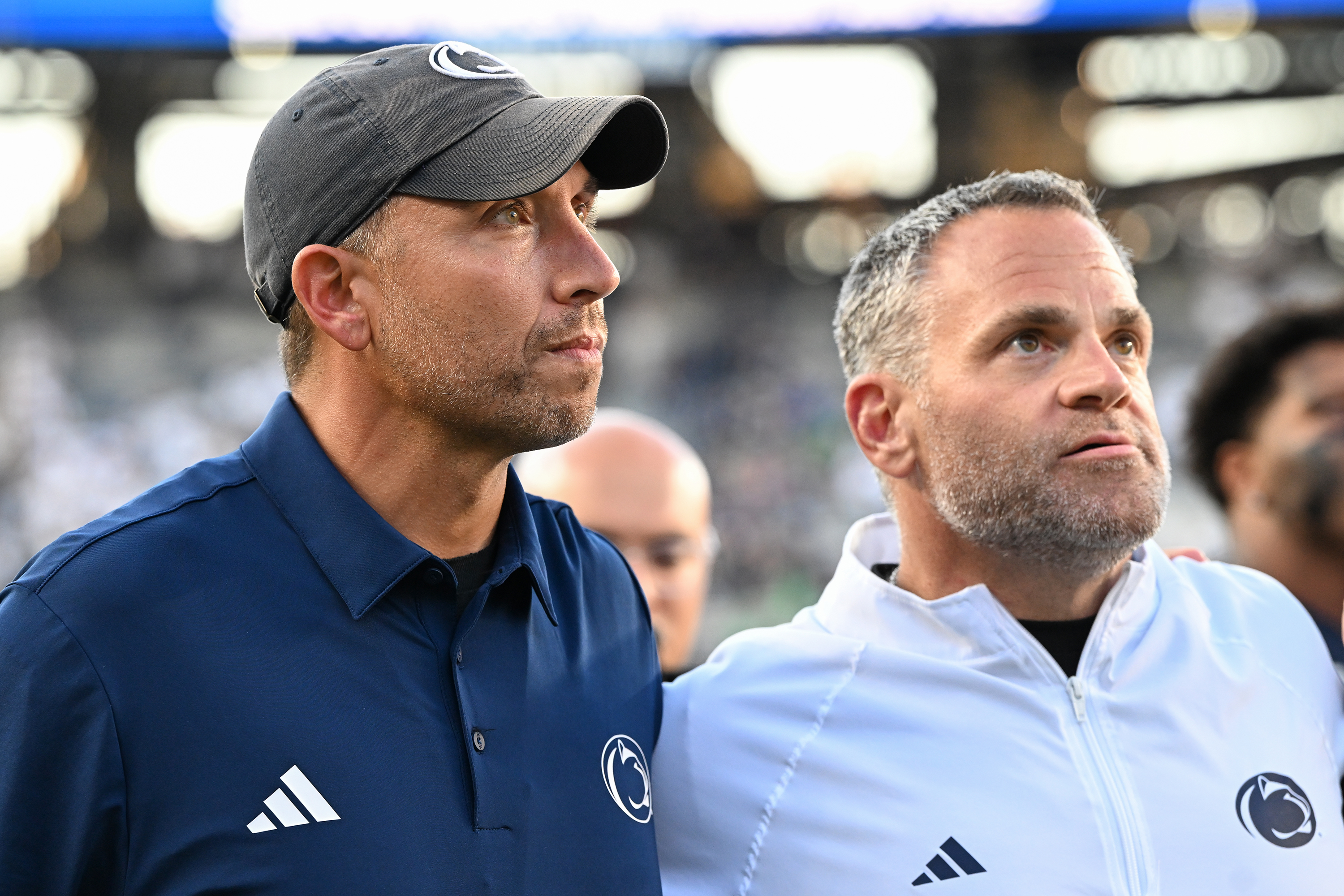
Matt Campbell (left) has a long history with K.C. Keeler, and Penn State athletic director Pat Kraft was previously Temple’s AD.Barry Reeger
“[I have] a lot of respect for Coach Keeler, what he did [at Rowan], what that team was about,” Campbell said. “It was a physical football game [in 1999], and similar to what you expect to see on Saturday, a physical, well-coached football team that has done a great job putting any program he’s been at in a position to play great football.”
While Campbell tips his cap to Keeler’s career success, including winning FCS national championships at Delaware and Sam Houston State, the Temple coach credits his first head coaching gig being at the core of it all.
“Those years formed who I am now as a coach,” Keeler said. “[We] had a team meeting to go to before I left [for Delaware in 2002] and I walked into that team meeting, I get a standing ovation and at that point I realized because I had talked about my Delaware experiences so much that those guys knew that they got me that job and they were proud that they got me that job and then I realized for the first time, ‘Oh my God!’ I’m leaving a group of kids that were OK with me leaving because it was my dream job.
“Rowan was a special place. They gave me an opportunity, they took a chance on me … obviously things worked out pretty well there.”
Tom Schafer was a hulking man when he played one preseason game with the Eagles in the summer of 1984. The undrafted free agent center stood at 6-foot-2 and 270 pounds, with a booming voice and an unabashed confidence to match.
By the fall of 2009, his broad frame had hollowed out. His voice had been reduced to a rasp. Schafer could walk, but only gingerly, and for short distances.
Yet here he was, sitting in a West Chester University parking lot, handing out fundraising pamphlets and preaching to tailgaters about his long-lost teammate.
It was not the way most people battling cancer would have chosen to spend their time. But Schafer was not most people.
When Schafer was told the disease he’d battled two decades prior had returned in 2008, he had already made a commitment and was determined to see it through, no matter how many rounds of treatment he would have to endure.
“He still had that fire about the statue,” said former West Chester center Joe Walsh. “He was talking then about everything we see now.”
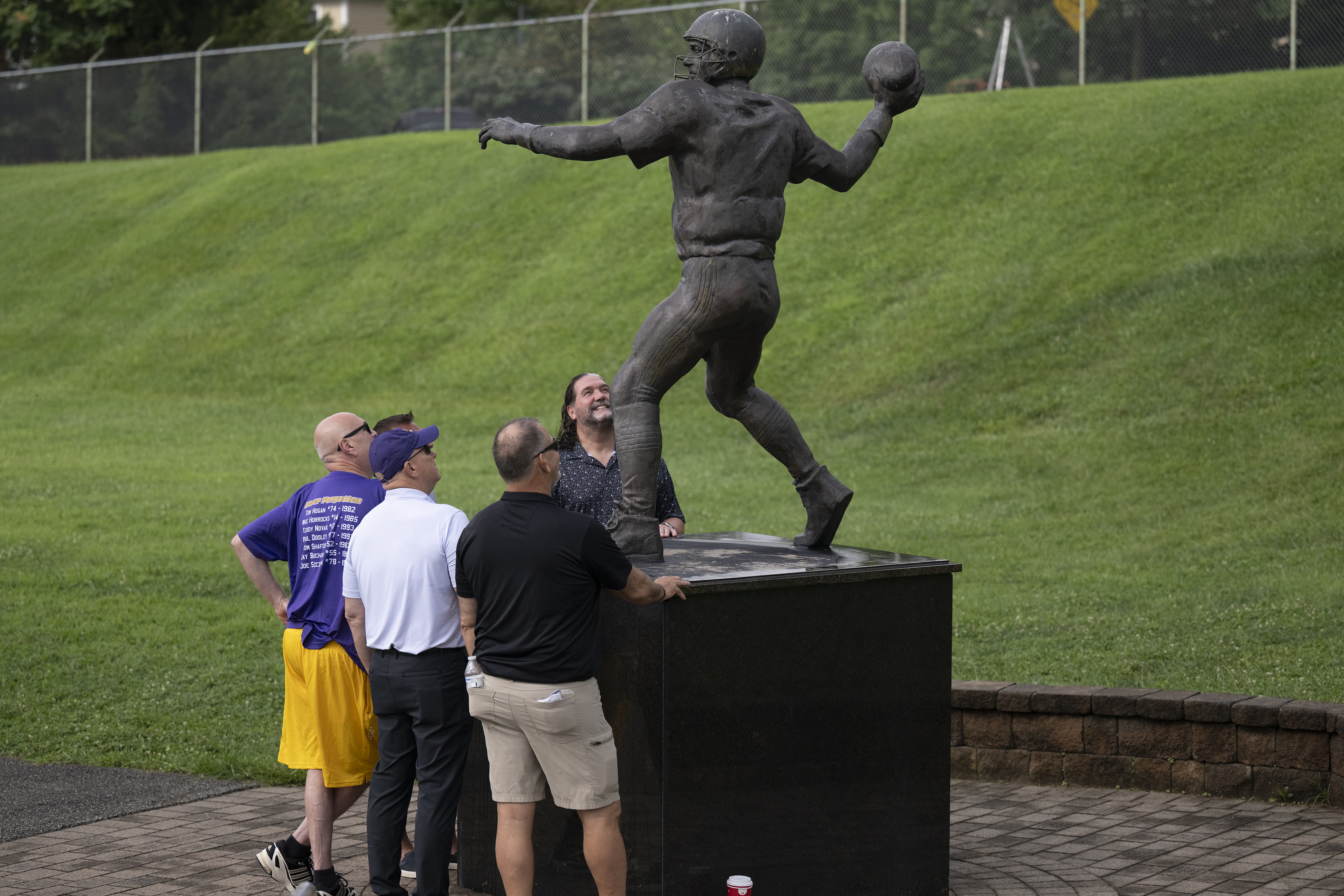
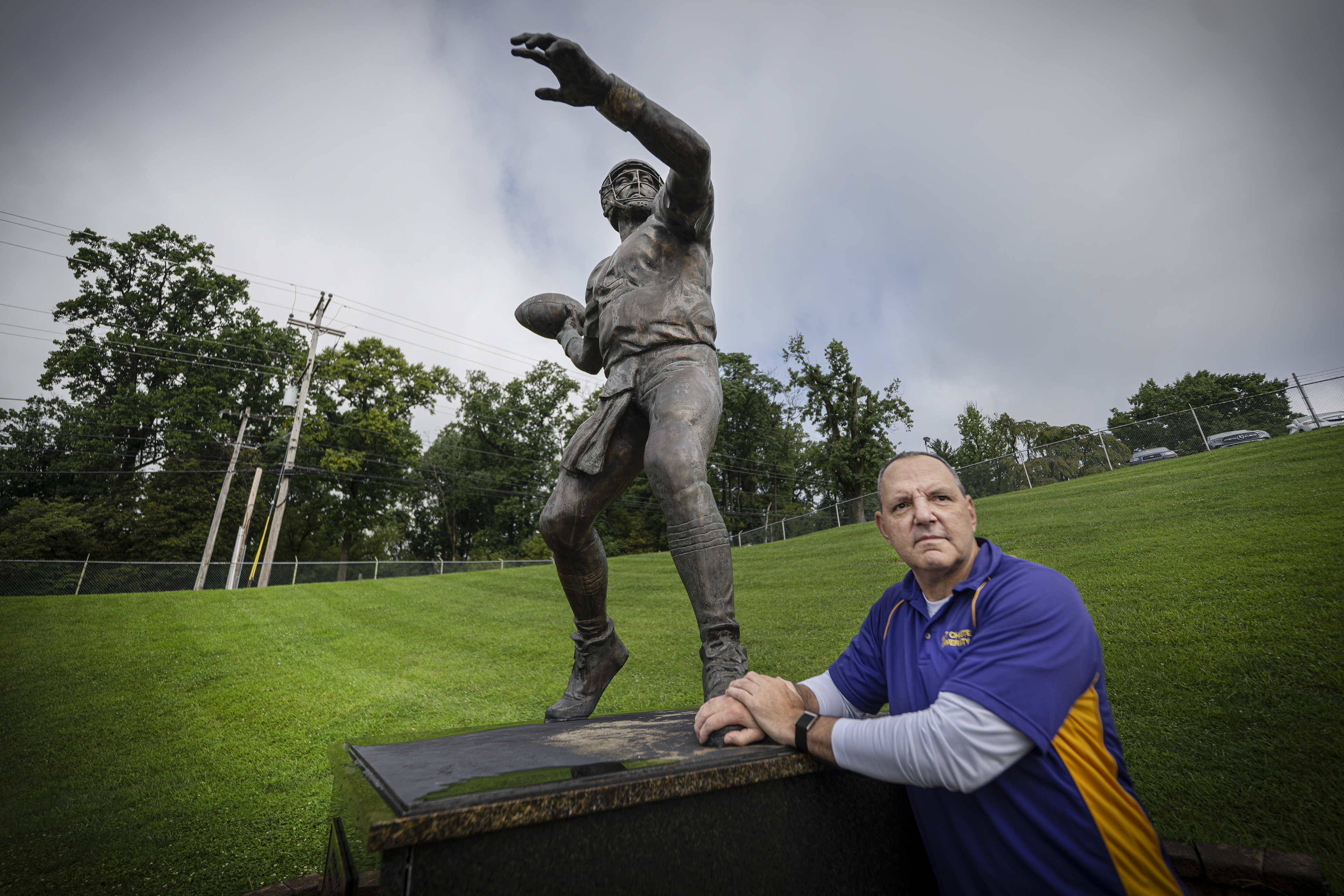
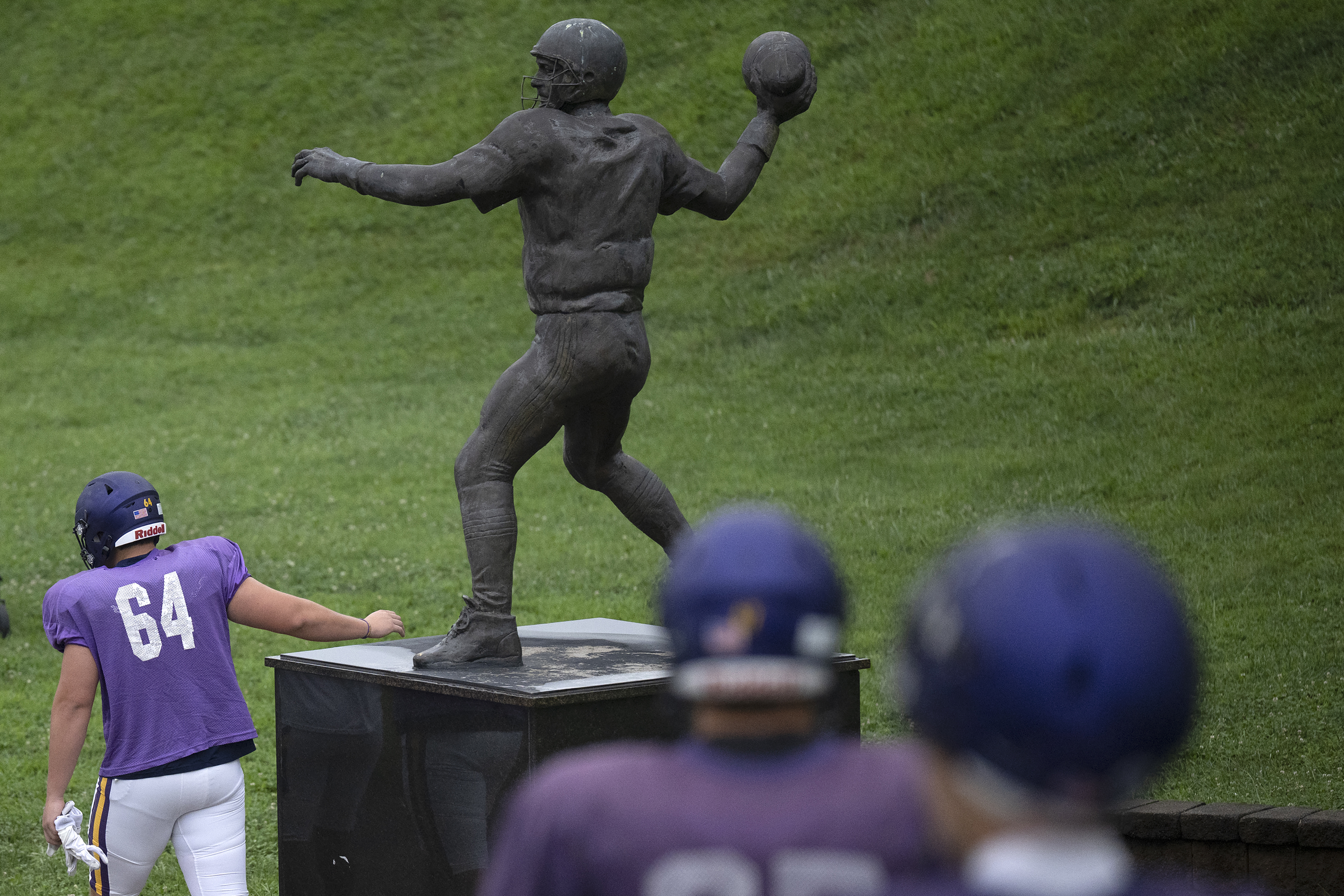
Walsh motioned to the northwest corner of Farrell Stadium. There, at the base of a hill, stood a bronze likeness of a quarterback, his left foot firmly planted, his right arm cocked, ready to uncork a spiral.
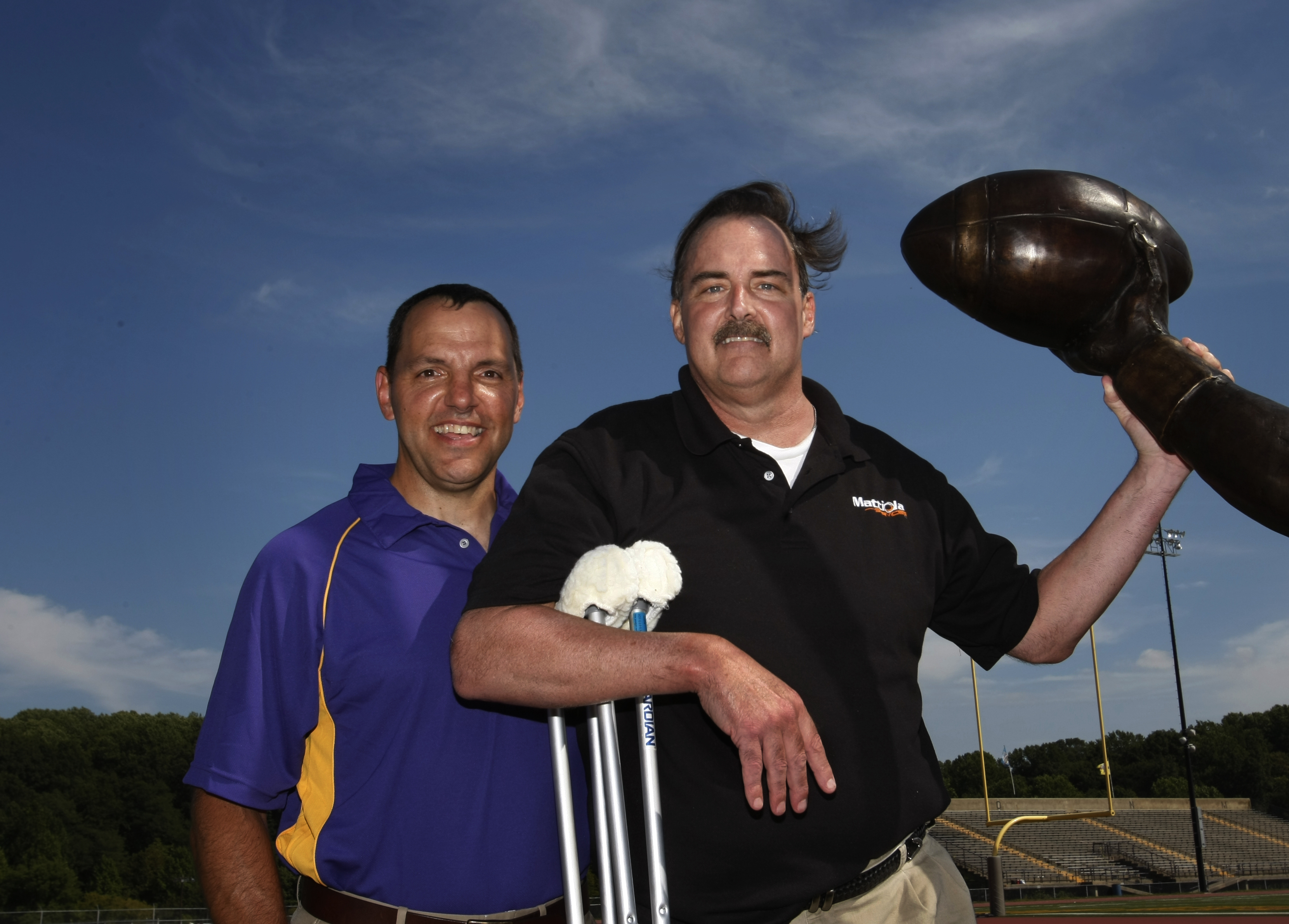
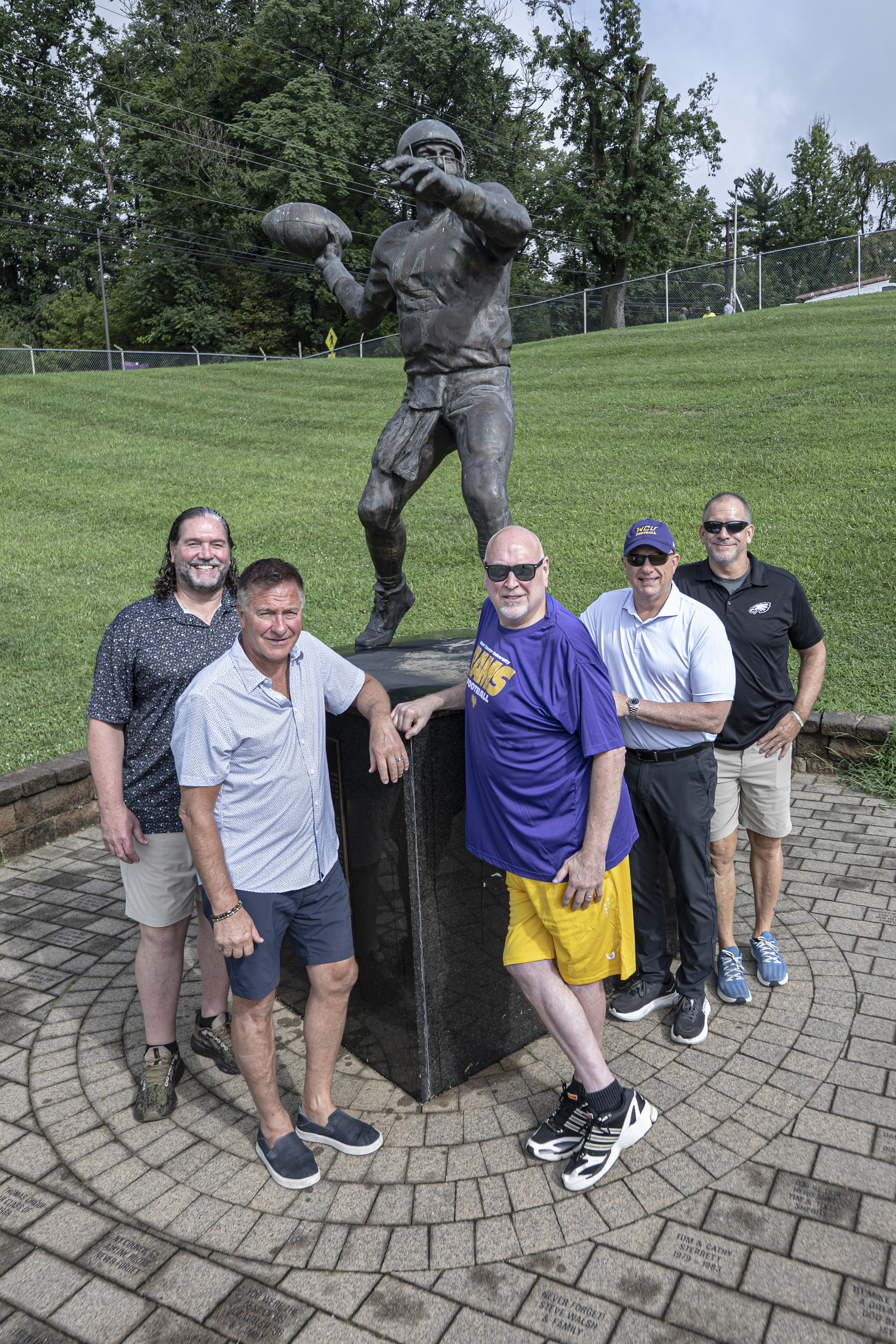
Former teammates John Mininno (left) and Tom Schafer (right) visit the statue of Michael Horrocks which was unveiled Sept. 11, 2010. Michael S. Wirtz / Staff Photographer
The man was Michael Horrocks, Class of 1985. He and Schafer overlapped on the football team for twoseasons, but Schafer took a liking to the sophomore’s goofy personality.
And when he found out that that same sophomore had been a copilot of Flight 175, the plane that hit the South Tower on Sept. 11, 2001, he was distraught.
Years passed, and Schafer began to coach high school football throughout the region. Some of his players joined West Chester’s program. None knew of Michael Horrocks. Not of his tragic place in history, or of his greatest moment on the field, when he led the Golden Rams to a 35-27 upset win over Delaware in 1983.
They didn’t know of his service in the Marines, or his devotion to his kids, and his wife, and his friends. They didn’t know his name at all. And Schafer desperately wanted them to.
So he and his teammates came up with a plan to ensure Horrocks’ presence would be felt for years to come. From 2008 to 2010, the West Chester alums raised $150,000 for a scholarship endowment and a statue to commemorate the late quarterback.
They faced all sorts of challenges, some of them logistical. West Chester had never built a statue on campus before, and had no clear guidelines on the process to have one erected.
Former West Chester University football player John Mininno is photographed near a statue honoring his former teammate, quarterback Michael Horrocks.Jose F. Moreno / Staff Photographer
In an initial conference call with Horrocks’ teammates, school officials tried to persuade them to build something smaller, like a plaque or a bench. They warned the former players of the money they would need, and the bureaucratic hurdles they would face.
But Schafer was undeterred.
“Tom went in there and said, ‘F— you, we’re not doing a plaque. We’re doing a statue,’” said Class of 1988 linebacker John Mininno. “And he was not to be denied.”
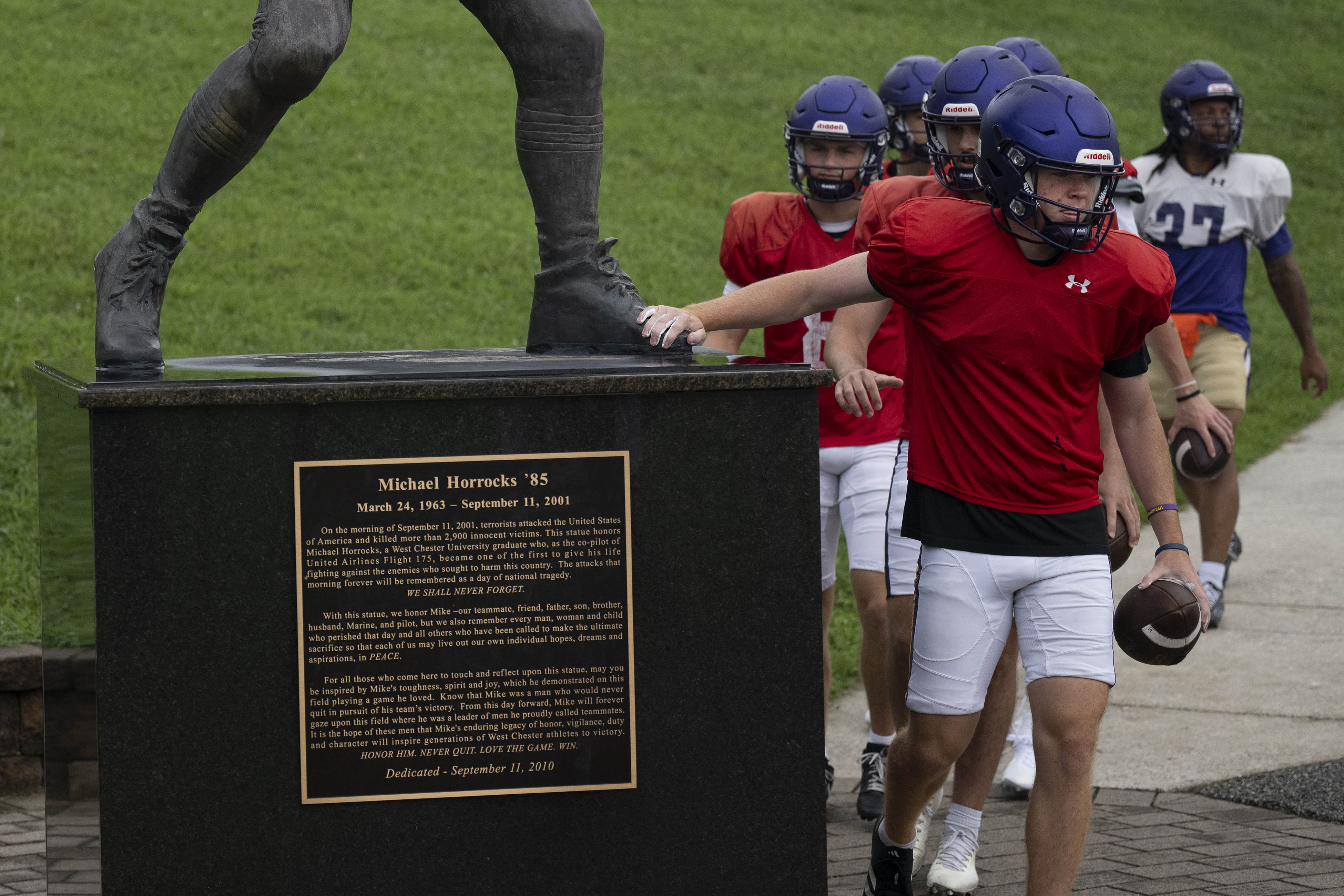
The result was not just a statue, but a tradition. Since it was unveiled in 2010, West Chester’s players have tapped Horrocks’ left foot before every practice and game.
They have done this so often that you can see scuffs of gold peeking out from beneath the bronze. Horrocks is not here in the physical sense, but this version of him — fearlessly driving down the field, leading his men — is now preserved.
And his teammates intend for it to stay that way.
“We want this to be a legacy,” Mininno said. “We want this to be here for much longer than we’re going to be around.”
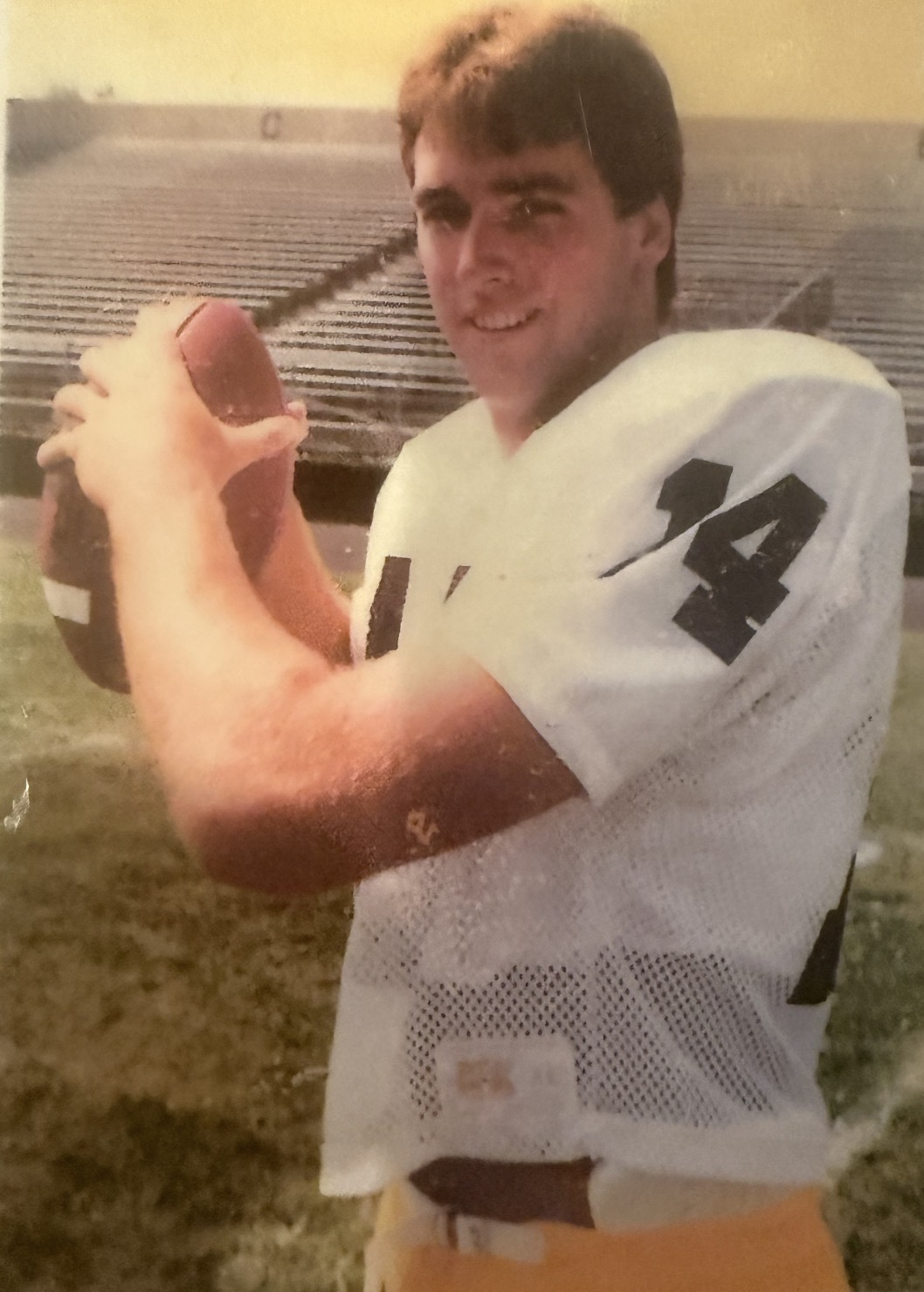
Michael Horrocks emerged as a starting quarterback and a trusted leader at West Chester.provided by Mark Gosik
‘A pilot the entire time’
Horrocks was born and raised about 70 miles west of West Chester, in Hershey, Pa. He attended Hershey High School, where he played varsity football under head coach Robert “Gump” May.
May was tougher than most coaches. His team did three-a-days throughout the summer: an unusually heavy workload, which had the intended effect of whittling unreceptive players from the roster.
The coach would start camp with 75 kids. Two weeks later, he would be left with 30.
One kid, in particular, was always in that lattergroup.
“Mike stayed,” May said.
Horrocks was fighting for playing time with Scott Campbell, a quarterback who would go on to have a six-year career in the NFL. Locals were skeptical that the backup would perform in the opportunities he did get, but he quickly proved them wrong.
Over his one season as a starter at Hershey, and in limited appearances before that, Horrocks led his team to a litany of come-from-behind wins, including one against rival Palmyra High School, which took a 21-point lead in the first quarter.
“After Scott Campbell graduated, everybody thought, ‘Well, they lost their big gun,’” May recalled. “Well, Mike jumped in and he was just as big a gun.”
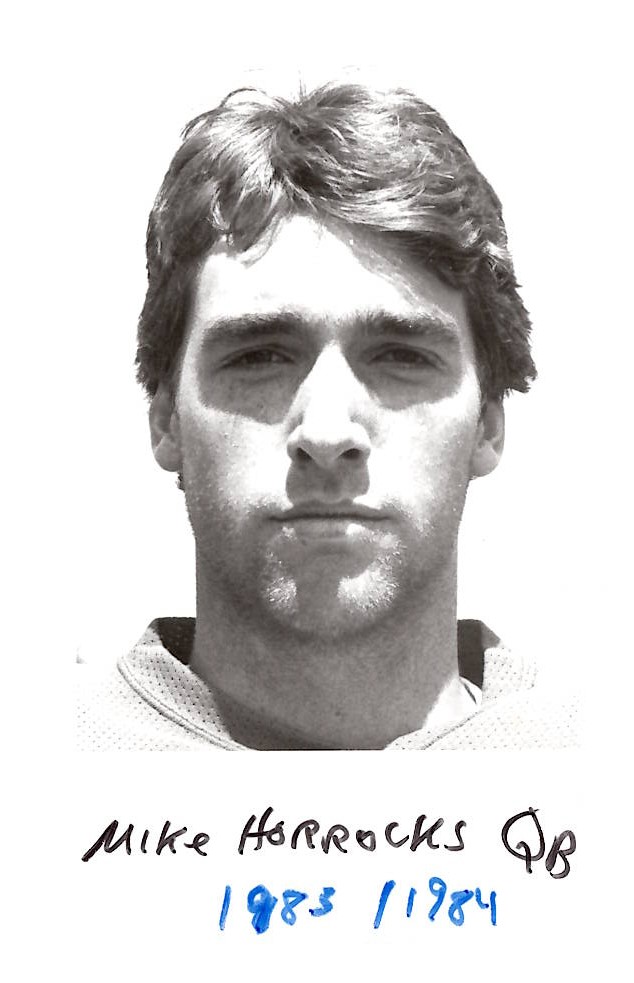
Michael HorrocksSpecial Collections, West Chester University
Gump reached out to a friend, Rick Daniels, a part-time assistant who later became West Chester’s head coach, and sent him some film of Horrocks. In the spring of 1981, the quarterback drove to campus for a visit.
Daniels was already impressed by what he saw on film. Horrocks didn’t just have a strong arm; he was also quick on his feet, and he had an air of unflappability about him. He joined West Chester’s team that fall as a backup quarterback.
Once again, Horrocks found himself in the unenviable position of filling in for an NFL-caliber player in Ron Gaynor, who later bounced around training camps with the Seahawks, Eagles, and Bills.
Nevertheless, the aspiring starter worked with the intensity of a seasoned veteran. Horrocks and tight end Al DePippo would regularly put in extra hours, throwing after practice and then heading to the weight room. If it was locked, they would use the neck machine beneath the stands.
Horrocks coupled his drive with a lighthearted composure that allowed him to thrive in intense situations. The first time he interacted with Schafer was in 1982,when Horrocks was a sophomore.
Gaynor had gotten hurt; Horrocks was asked to fill in.
“He crouched down in the middle of the huddle, looked up at us, and said, ‘Ah, the big boys,’” Schafer recalled to The Inquirer in 2010. “I said, ‘Shut up and call the play.’”
It was a precursor of huddles to come. Some players got stiff when they first entered regular season games. Horrocks was the opposite. He would walk onto the field with a toothy grin and a laugh, confident in the hours of prep behind him.
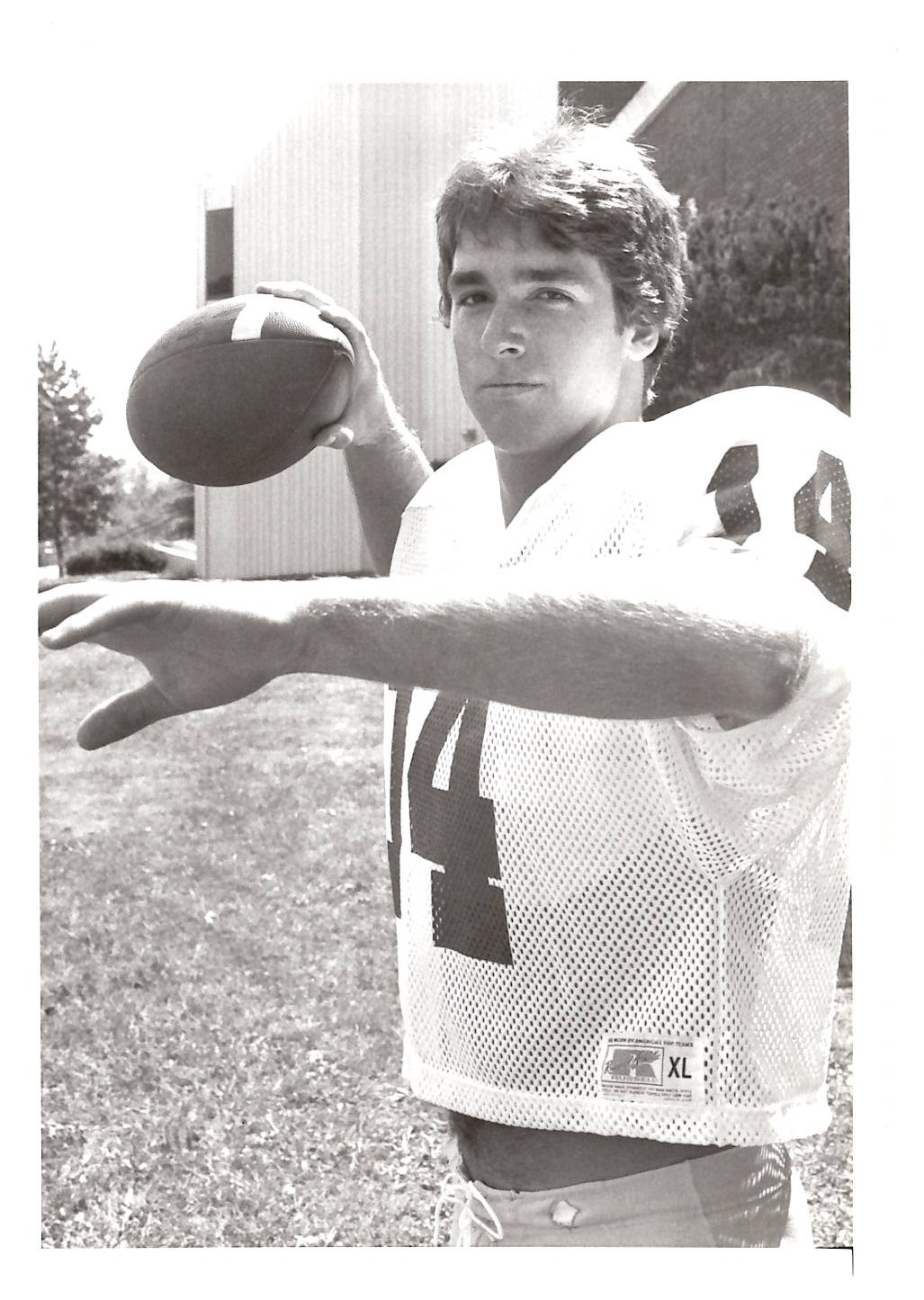
Michael Horrocks led West Chester to a rare win over rival Delaware in 1983. Special Collections, West Chester University
This continued even after he was named the starting quarterback in 1983. Horrocks was known to play pranks, like tying teammates’ shoelaces together, or putting slices of cheese in a friend’s textbook.
West Chester had some of its greatest moments under Horrocks and his playful persona. In his first game as a starter, Sept. 10, 1983, the Golden Rams faced the University of Delaware on the road.
It was a harrowing matchup. West Chester played in Division II, while Delaware played at what was then known as the Division I-AA level. The Blue Hens had won their last 15 games against the Golden Rams, a streak that dated back to 1957.
But West Chester was unafraid. After a scoreless first quarter, the Golden Rams jumped to a 21-3 lead in the second. They upped it to 35-3 in the third and held on for the win.
Horrocks finished the day 10-of-18 for 129 passing yards and two touchdowns.
West Chester’s campus erupted into a giant party, as if the team had won the national championship. But the quarterback at the center of it all was already focused on his next game.
When he returned home that night, he recapped different plays and passes to his housemates on Magnolia Street.
“He would talk about even some of the plays that he missed,” said his friend Chris Conner. “He never got too big. Even though he had just beaten Delaware, he was still the same guy.”
From left, West Chester University football alumni Tom Weaver, Mike Esposito, Bob Campbell, Mike Hudson and Dean DiPasquale pose for a photo with a statue honoring their former teammate Michael Horrocks last month. Jose F. Moreno / Staff Photographer
In 1984, West Chester hired a new head coach, Danny Hale, who brought in a new I-formation attack that incorporated elements of the West Coast offense. This system was different from what the team was accustomed to running (a split-back veer offense), and Hale, who was hired late, had limited time to teach it.
He and quarterbacks coach Bill Hart met with Horrocks every day in the football office on campus. They would draw up plays on the chalkboard and quiz their pupil about different coverages and fronts he would face.
Hale’s system allowed Horrocks the ability to audible if the situation called for it, and the head coach wanted him to be well-prepared. But Hale and Hart soon learned that that wouldn’t be a concern.
The Golden Rams went 7-3 in 1984, and 5-1 in their conference, falling just shy of winning the Pennsylvania State Athletic Conference’s Eastern Division title.
When DePippo looks back, he realizes that the same qualities that served Horrocks in the air were those that made him a good quarterback: a natural leader, a hard worker, a man who could balance an easygoing nature with intense focus.
“It comes back to what kind of pilot do you want?” DePippo said. “Do you want somebody that’s going to panic when the s— hits the fan, or do you want a guy that’s going to be confident?
“And Mike was that confident guy; a pilot the entire time. We just didn’t know it.”
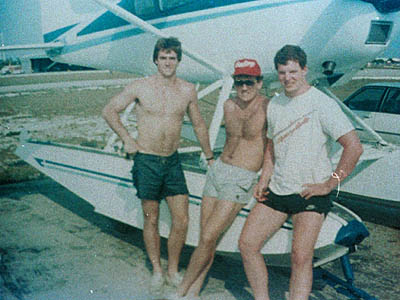
Pilot Michael Horrocks (left) was introduced to flying in the 1980s. (Photo provided by Mark Gosik)INQ WILLIAMS
From football to flight
The first time Horrocks flew a plane was in 1983. He was in Fort Lauderdale, Fla., for spring break with two friends, Mark Gosik, a former guard for West Chester, and Rob Jeffries, a tight end at Lehigh.
They were visiting a family friend of Horrocks’, Bill Blauer, who worked for a commercial airline. One afternoon, Blauer invited them aboard his four-seat aircraft.
Gosik and Jeffries sat in the back, with headgear on, as Horrocks rode up front. About halfway through the two-hour ride, Blauer turned to Horrocks and told him to grab the controls.
Horrocks obliged and cruised the plane down, close enough to see the beachgoers below. As he flew over the ocean, with waves rippling beneath him, he realized he had found his calling.
The former quarterback felt that his best route to commercial flight would be through the Marines. Horrocks knew he would get the best training there, and he liked the idea of a new challenge. So, after graduating West Chester in 1985, he enrolledin Officer Candidates School.
He got his wings at a naval air station in Corpus Christi, Texas, and was stationed in the early 1990s at Marine Corps Air Station Cherry Point in North Carolina, where he joined a marine aerial refueler transport squadron.
Horrocks flew KC-130 turboprop aircraft, which were used to refuel helicopters and jets, but also to transfer cargo, passengers, ammunition — anything that needed to be moved. It was a daunting transition, one that many young pilots struggled with.
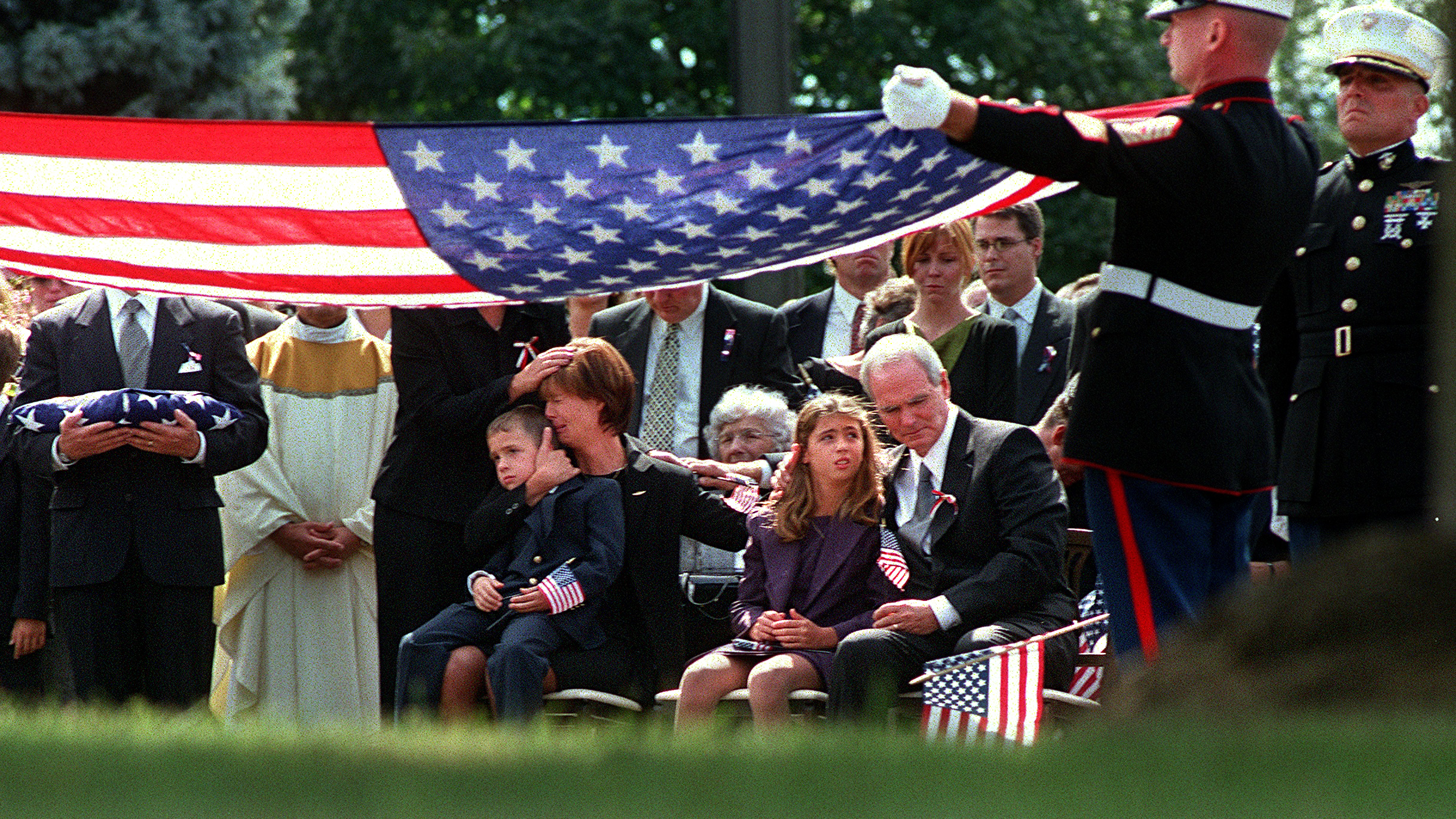
Miriam Horrocks (center, left) cradles her son Mick, 6, as her father-in-law William Horrocks (center, right) sits with her daughter Christa Horrocks, 9, as a US Marine Corps Honor Guard folds up the American flag following a memorial mass and service for her husband Michael Horrocks on Sept. 17, 2001.Tom Gralish / Staff Photographer
In training, they would be flying a single-engine plane, which stretched maybe 18 to 20 feet long. Now, as lieutenants, they were manning a plane five times as big, with three more engines, moving whatever needed to be moved at 30,000 feet in the air.
It was anything but a routine job. Horrocks’ operations officer, now-retired Lt. Col. Bill Franchi, said that when his squadron deployed to Bahrain during the Gulf War, they did so knowing that there was a good chance they would be targeted heavily.
But Horrocks was a natural, and quickly proved he could be relied upon. He went on a number of deployments, to the Middle East throughout the Gulf War, to Europe, to Central America, and became Franchi’s “go-to guy.”
Once, during a three-week detachment to Norway, a panel in the squadron’s KC-130 caught fire. As Franchi tried to put the fire out, he asked Horrocks to redirect the plane back to the local airport.
This was not a scenario that the young pilot had practiced in a simulator. Horrocks would be landing downwind, without flaps on his wings, which helped the plane maintain lift while slowing it down.
With a full-face oxygen mask on, and vapor from a fire extinguisher filling the cockpit, Horrocks guided the aircraft onto the runway, preventing what surely would have been a disaster.
“I told him, ‘I credit you with having saved about six people,’” Franchi said. “Because I didn’t have to do a thing. He had it. And that was sort of typical of Mike. You know?”
Horrocks spent his last few years in the military instructing Marine, Navy, and Coast Guard pilots in Florida. In 1997, his active duty came to an end. He enrolled in new-hire pilot training at United Airlines that summer.
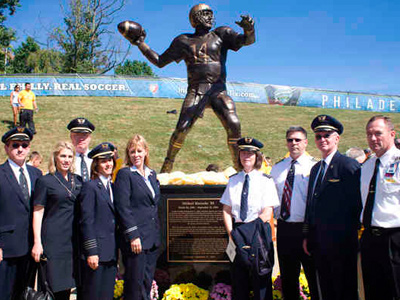
United and Continental Airlines pilots and crew, all friends of Michael Horrocks, stand by his statue at Farrell Stadium in 2010. (Ed Hille / Staff Photographer)
He soon was flying commercial airplanes full-time and living in Glen Mills with his wife, Miriam, and their two young children, Christa and Mick.
Now that Horrocks was local again, he was able to reconnect with old teammates like Bob Rafferty, a former West Chester halfback and quarterback.
They would often see each other in Media, running errands at the Granite Run Mall. In December 2000, while shopping for Christmas gifts, they crossed paths one last time.
Horrocks was walking out of the mall, and Rafferty was walking in. They chatted about family. Horrocks mentioned that he had recently started working transatlantic flights for United.
The two men said goodbye and went their respective ways. Nine months later, Horrocks boarded a Boeing 767 at Logan International Airport in Boston.
Rafferty watched as it hit the South Tower of the World Trade Center. Few, if any, of his teammates knew that Horrocks was piloting commercial aircraft. The idea of him being on that plane didn’t even occur to them.
But Rafferty had a feeling.
“He was the first person I thought of,” he said.
West Chester University quarterback Colin O’Sullivan taps a statue honoring former quarterback Michael Horrocks before practice last month. Jose F. Moreno / Staff Photographer
‘Think of Mike’
Without social media, news of Horrocks’ death at age 38 spread slowly.Some West Chester football alumni found out when they saw Miriam Horrocks on the front page of The Inquirer, at her husband’s funeral in Upper Providence Township.
Others heard through teammates. DePippo was working on Wall Street and lost about 40 or 50 colleagues in the attack. He couldn’t process that Horrocks was gone, too.
In late September, Gosik and two friends, Tim and Patrick Dever, took a train to New York. They spent the day at ground zero, walking through rubble, picking up pieces of people’s lives off the ground: photos, notebooks, newspapers.
Gosik still remembers how dust and soot filled the air. So did the sound of car alarms, blaring for their owners. A few days earlier, a neighbor had made Gosik a lapel pin to commemorate Horrocks, with his No. 14 written on a felt football.
Gosik wore it on his jacket as he traversed the site where his teammate perished.
“We just felt like we needed to be there,” Gosik said. “We just wanted to go.”
Years went by, and the West Chester alums began to wonder why no tribute to their quarterback existed on campus. They were worried that Horrocks would be forgotten, and realized that their fears were well-founded.
West Chester University football players tap a statue honoring former quarterback Michael Horrocks before practice last month. Jose F. Moreno / Staff Photographer
“I don’t recall any of us even being aware of it beforehand,” said Tim Keyser, a wide receiver who graduated in 2013. “That wasn’t something I knew when I was a true freshman on campus or anything.”
The former players began to meet with the school about the prospect of a statue in 2008. Bill Zwaan Sr., who was head coach of the football program at the time, sat and listened as an official from the foundation tried to convey how complicated, and costly, it would be to build such a structure.
Horrocks’ teammates ended the meeting emphatically: by standing up and reiterating, for the umpteenth time, that they were going to move forward with the statue. After they left, the foundation official turned to Zwaan.
“And he said, ‘Do you think they really understood what we were talking about?’” Zwaan recalled. “And I said, ‘They do. And they’re going to do a statue. And you guys have got to be prepared for that.’”
It was a slow, arduous process. The former players not only would have to raise $50,000 for the statue itself, but also would donate $100,000toward a scholarship endowment, which DePippo and another teammate, Bruce Blake, started in 2004.
At this point, most of them had full-time jobs and families of their own, and carving out time was not easy. But they made it happen.
DePippo oversaw the money. Mininno began a letter-writing campaign to raise funds. Walsh served as a liaison between the alumni and the current coaching staff.
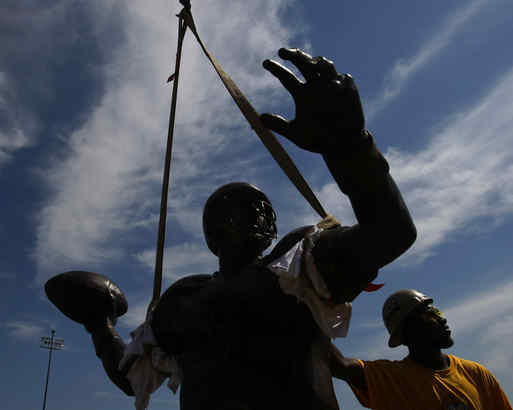
Schafer worked as a partner of a local concrete cutting company. He and another West Chester alumnus, Paul Vanscovich, donated their construction crews and equipment for free.
Other teammates chipped in through a team banquet and a Super Bowl pool. A few local businesses, and the pilots union, contributed as well.
The statue of Mike Horrocks at West Chester.MICHAEL S. WIRTZ / Staff Photographer
“I’d kick in $1,000, John would kick in $1,000, Jim O’Donnell would kick in $1,000,” DePippo said. “And then we would get on a text chain, and berate each other in team fashion. Like, ‘You’ve got to do this.’
“We raised money basically only through grassroots. I was specific about that. I didn’t want any corporate sponsorship.You know, ‘CBS Sports presents the Mike Horrocks statue.’ I didn’t want that.”
In the months before construction of the statue was finished, former players would visit West Chester to share stories of their late teammate with the current roster.
Walsh, DePippo, and Blake visited them the day before the dedication. Wearing purple and yellow practice jerseys, the team took a knee as Walsh began to speak.
He explained that one day, Horrocks’ teammates wouldn’t be able to share his story, and that it would be up to the next generation of players to do so.
Then he asked them to close their eyes, and think of a loved one: a sibling, a friend, a parent.
“And when you go down that hill tomorrow, and you touch [the statue of] Mike, think of Mike,” Walsh said. “Say his name. And think of someone else who is special in your life. And thank God that you have them with you today.”
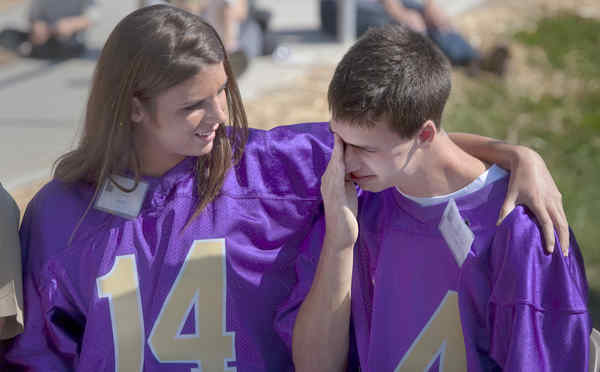
Nine years after their father’s death, Christa Horrocks comforts her brother, Mick, at the unveiling of the statue of Michael Horrocks at West Chester University in 2010.
The statue was unveiled at 10:30 a.m. on Sept. 11, 2010, a perfect autumn day in Chester County. The school arranged a ceremony beforehand, with bagpipes, a marching band, and a flyover.
Miriam Horrocks and the children, now teenagers, were in attendance; Christa gave a speech about her father.
Sitting next to the podium, with crutches by his side, was Schafer. He was unable to speak to a large crowd, but sat throughout the entire ceremony with a smile on his face, shaking hands with football men young and old.
He died of cancer just over a month later, at his home in Phoenixville.
Last August, during a team reunion in West Chester, a thought occurred to Walsh. He pointed to the bricks surrounding Horrocks’ memorial, which contained inscriptions honoring the late quarterback.
He suggested adding a small stone, maybe toward the back, with the number 52 on it; a nod to a teammate who put another above himself, even when his body was failing.
“Tom just believed in his heart that it needed to be a statue,” Walsh said. “And he was right. He was right.”
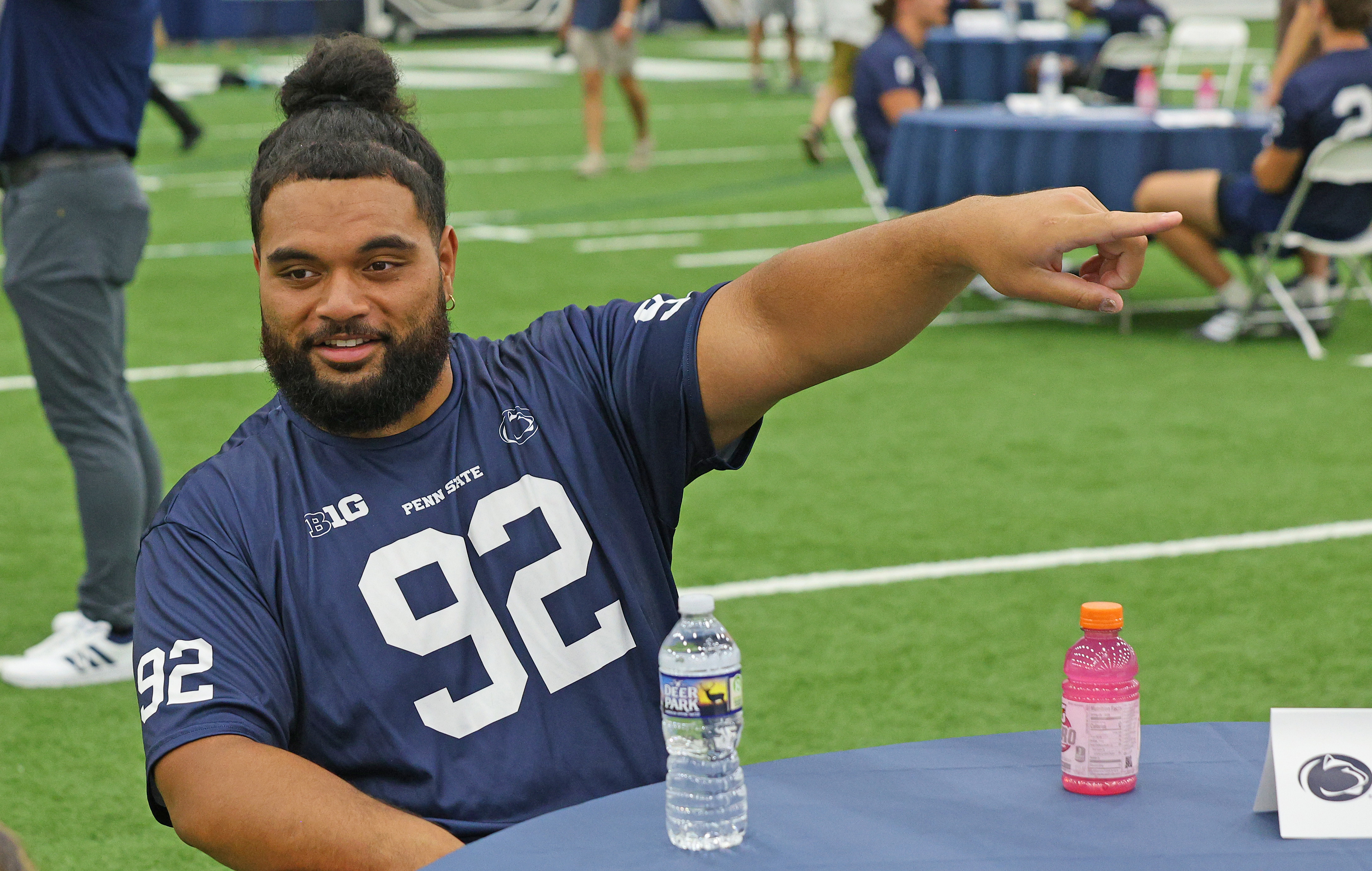
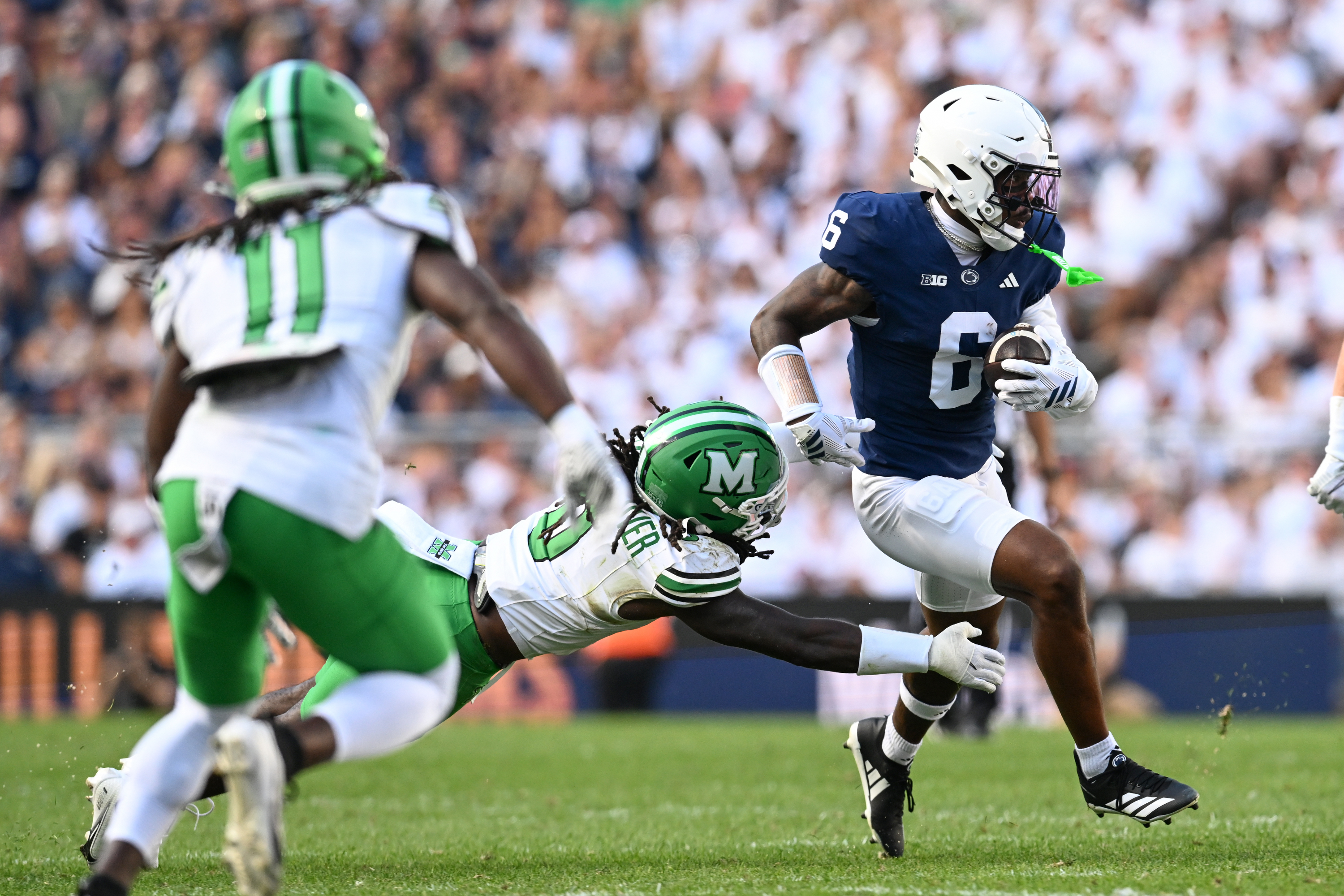
As eighth-year defensive tackle Siale Taupaki took the field for the first time at Penn State on Saturday, his parents, Kolo and Seilose, sat in their California home, ready to watch their son start in Beaver Stadium.
But they wouldn’t be able to watch him if it weren’t for the internet service that Taupaki pays for.
“We don’t watch a lot of TV back at home,” Taupaki said Tuesday. “We just work and rest, and that’s about it. But aside from that, I was glad that they [were] able to see it for themselves.”
Taupaki left his home state this offseason, opting to transfer to Penn State after seven seasons at UCLA. He also moved across the country from his family.
Siale Taupaki bought his parents internet so they could watch Saturday's game vs. Marshall.
The DT is playing his 8th season of college football, but says he now has something to play for at Penn State under Matt Campbell.
That leap of faith came after Taupaki spoke with Matt Campbell on the phone while he was in the transfer portal. The first thing Campbell asked about was Taupaki’s family, which instantly sold the defensive tackle on playing for the Nittany Lions.
“Not a lot of people asked for my family or everyone else that came with me,” said Taupaki, who has compiled 39 tackles and two sacks in his career. “He asked specifically, how was my mom, how was my dad. With that, I knew he was a family man, then he was a football coach. So from there, I knew I could come to him about anything because he’s a father before he was a coach.”
However, playing for Campbell at Penn State means Taupaki’s parents couldn’t watch him in person. Taupaki said they’re too old to fly, leaving limited options to see their son play this season.
So Taupaki is trying to keep them involved as much as he can.
He called his family after Penn State’s win over Marshall and told them about the game-day atmosphere in Happy Valley, which included seeing cows and horses. “You don’t see that a lot in the West Coast,” Taupaki said.
“I told them [Beaver Stadium] is bigger and better,” he said. “That’s it. My pops told me that he had the chills just hearing about it, because he can visualize in the game.”
With his name, image, and likeness income, Taupaki is helping his family.
“My parents are still struggling,” he said. “I’m broke. I’m really just trying to fill in all the holes that I have back at home, understanding the platform that I’m having, and just seeing all of that stuff and understanding how far I came.”
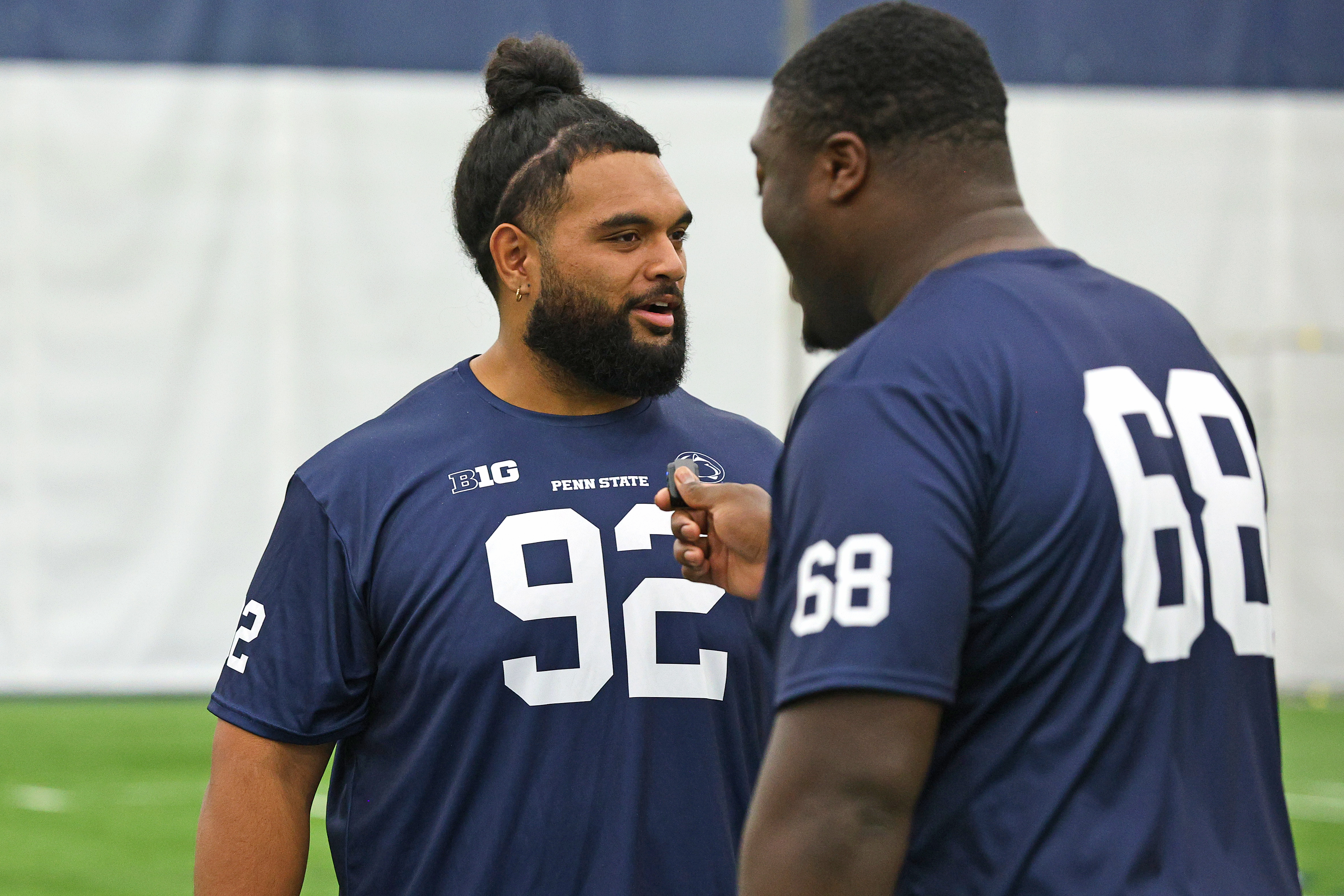
Siale Taupaki (92) with offensive lineman Anthony Donkoh (68) on Aug. 7.Craig Houtz / For The Inquirer
Taupaki said he came from “nothing.” At one point growing up, he and 22 family members lived in a two-bedroom house, so some had to sleep outside.
Those tough times made Taupaki who he is today — someone who wants to learn about everybody on his team, where they come from, and what their story is. He also shakes every media member’s hand before leaving his press conference.
Siale Taupaki is a real one.
After an emotionally open and honest interview– "Im broke, come from nothing" — Taupaki didn't leave until he shook every reports hand.
When he returns home, Taupaki isn’t a Penn State starting defensive tackle. Rather, he’s a son continuing to help give his parents a better life.
“Everything that I got to do beforehand and afterhand, I got to do it based off my parents,” he said. “That football stuff is out the door. So the opportunity I got with the NIL era and the great coaching staff and all that, I’m thankful for that. But at the end of the day, I still got stuff to do as a son. So to play my role as that, I’m forever grateful.”
LSU jumped back into the top 10 in the first Associated Press Top 25 college football poll of the regular season on Tuesday, Oregon slipped out of the top five and Michigan fell out of the rankings altogether after it needed a second-chance Hail Mary try at home to beat Western Michigan.
Ohio State remained No. 1 by a wide margin entering its showdown with No. 4 Texas on Saturday. The Buckeyes received 46 first-place votes from the voting panel of 69 writers and broadcasters. The other 23 first-place votes were divided among six teams.
Georgia, Notre Dame, Texas, and Indiana each moved up one spot with Oregon going from No. 2 to No. 6 following a 34-27 win over Boise State as a 25.5-point favorite. Miami, LSU, Mississippi and Texas A&M rounded out the top 10.
Defending national champion Indiana received the second-most No. 1 votes, with eight. LSU got five, Notre Dame four, Oregon three, Texas two, and Miami one.
LSU’s promotion bumped Oklahoma out of the top 10. The Sooners shut out UTEP 51-0 and will take a No. 11 ranking into their visit to Michigan. That matchup lost some luster in light of Michigan’s slogging offensive performance against Western Michigan, a game the Wolverines won 13-12.
In and out
Virginia rode an impressive Week 0 win over North Carolina State to a No. 25 ranking. It’s the first time since 2005 the Cavaliers have been ranked in a first regular-season poll. They finished No. 16 in the final Top 25 last season but received just one vote in the preseason poll.
Michigan went from No. 16 — where Penn State moved up to from No. 18 — out of the Top 25. It’s first time since at least 2008 that a team ranked so high was bounced after a win. Kansas State went from No. 17 to unranked after holding off North Dakota of the Football Championship Subdivision last year.
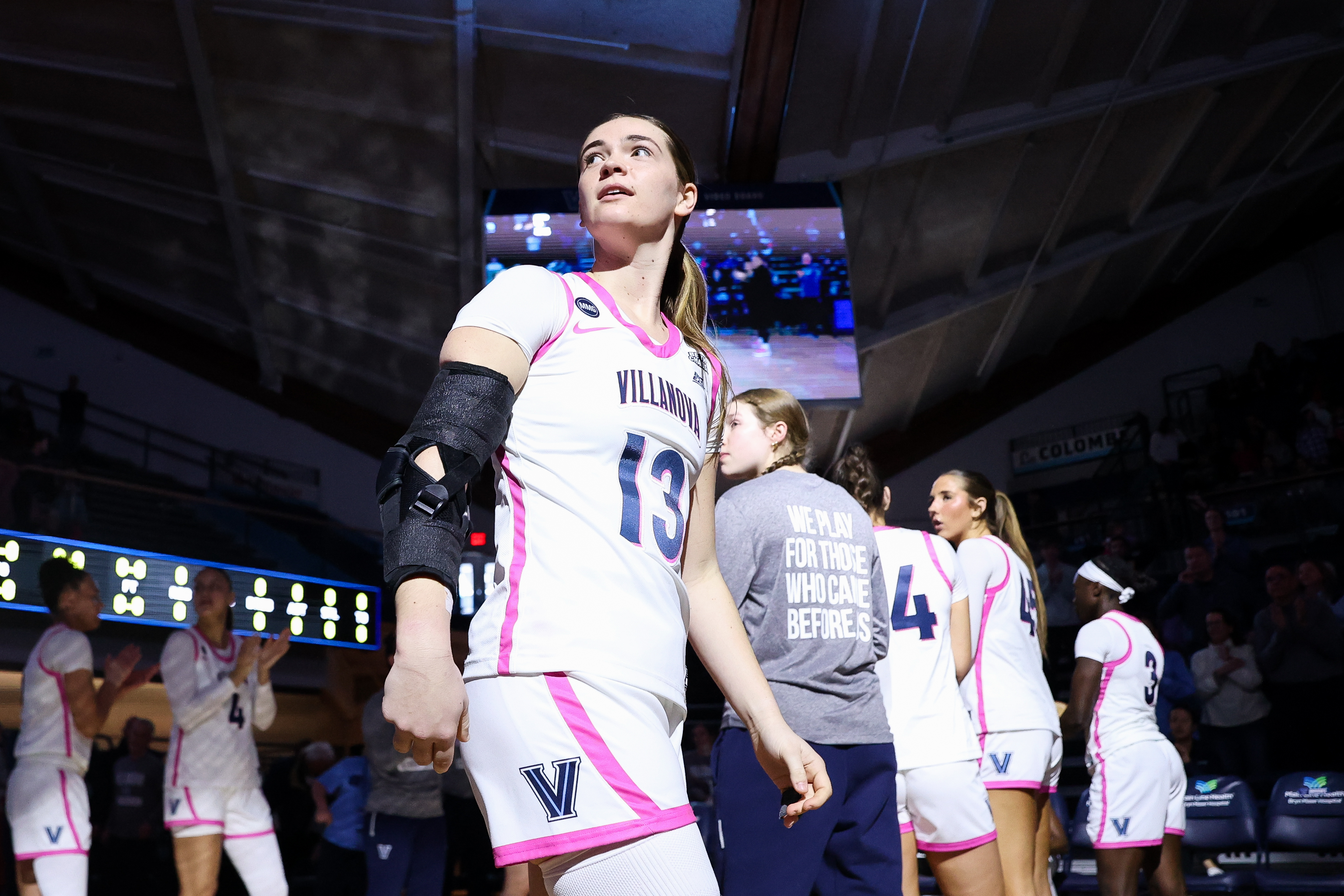
Villanova senior forward Brynn McCurry announced Tuesday on social media that she underwent surgery to repair a torn right ACL and meniscus on Sept. 1. She will miss the 2026-27 season.
“I’m walking into this next season of healing with a heart full of peace because this game has given me so much more than it took,” McCurry wrote in an Instagram post. “Basketball has always been such a meaningful part of my story, but it was never the entirety of it.”
Losing McCurry is a major blow to Villanova. While the injury occurred in April and allowed coach Denise Dillon time to fill McCurry’s spot, it will be difficult to fill her workload.
McCurry, a 6-foot-1 forward, was coming off a career-best campaign in which she started 29 of 33 games and was the team’s second-leading scorer with 10.7 points per game. She also won the Big East’s Most Improved Player award.
Projected as one of four returning starters for Villanova, McCurry’s season-long absence will test Villanova’s depth at forward. The Wildcats have solid pieces in their frontcourt, headlined by 6-3 Quinnipiac transfer Anna Foley, and returning starters Jasmine Bascoe, Kelsey Joens, and Kennedy Henry.
Dillon also will have to find a combination to fill McCurry’s minutes. She averaged 26.5 minutes last season, third most on the team behind Henry and Bascoe.
McCurry suffered two prior knee injuries — she tore her left ACL and meniscus during her senior year of high school and tore her right ACL and meniscus before her sophomore season at Villanova. She then tore the UCL in her right arm before the start of her junior year and underwent Tommy John surgery this past April, two days after her third knee injury.
The Wildcats open their season on Nov. 1 in Rome as a part of the Eternal City Tip-Off. They’ll face Notre Dame in their first meeting in eight years.
Temple finally showcased the fruits of its weeks of fall training camp and did it with a two-quarterback system and a whole lot of running the football.
Sharing the reins, Ajani Sheppard completed 5 of 10 passes for 85 yards, while Jaxon Smolik completed 4 of 6 for 57 yards. Smolik was sacked twice and fumbled two times, but also threw Temple’s only passing touchdown in a season-opening 38-14 win over Rhode Island. Sheppard looked far more comfortable carrying the ball.
But the real story of the ground game was running back Keveun Mason, who stepped in for banged-up Sam Brown. He exploded for 158 yards — just 9 fewer than his total from all of 2025 — and two touchdowns.
Now coach K.C. Keeler’s Owls are preparing for a major step up in competition against No. 18 Penn State (1-0) on Saturday (noon, ESPN2).
“Monday’s a cleanup day for us,” Keeler said. “You can just feel the low energy. I think they were just disappointed they didn’t play better [against Rhode Island]. … But at the same time, I am very appreciative of the fact they have very high expectations of where this team should go and what we can do.”
Quarterback battle
The Owls answered questions regarding who will be the starting quarterback by unorthodoxly starting with both candidates on the field. Smolik took the opening snap from center Grayson Mains before handing it off to Sheppard, who found wide receiver Colin Chase for 21 yards.
Tyler Walker ran almost the same exact play in #Temple's season opener w/Gevani McCoy and Evan Simon, and Simon took the handoff and threw (and won the starting job too).
Then Temple began to stagger snaps between them. They each took 31 snaps, according to Keeler. After the win, Keeler said he didn’t see either move the needle in terms of securing the position, and he’s still unsure what it will look like this Saturday.
The upcoming days of practice could reveal who the starter will be against Penn State. Keeler and offensive coordinator Tyler Walker will review the tape in hopes of getting closer to a decision. Walker hails from a Montana State offense that featured a two-headed snake at quarterback in 2022 and 2023.
Jaxon Smolik threw Temple’s only touchdown pass on Saturday against Rhode Island.Tyger Williams / Staff Photographer
But the Owls are looking to stray away from that game plan long term. As for the QB plan against PSU, Temple’s still undecided on who, but Keeler said there are kinks to be ironed out for both.
“There might be some collaborativeness in the effort, but eventually someone’s got to play more snaps than the other guy,” Keeler said. “But like I said, if you look at it, there’s some good things you could take, but we need more consistency.
“And that’s for both of them.”
Injury update
Temple has already dealt with injuries to key players, as left tackle Giakoby Hills and linebacker Eric Stuart exited early against Rhode Island. Left guard Eric King, safety Avery Powell, and Brown did not play against the Rams, though it’s possible Powell plays this weekend. None of their specific injuries have been announced.
Hills has been confirmed to miss at least six weeks, stretching past the Owls’ first bye week in late October. King, Powell, and Brown participated in Monday’s practice.
Adding to the injured offensive line is Kevin Terry, who didn’t participate in practice. The redshirt junior has been hampered by injuries the past two years, missing the season debut against Howard in 2025 and sitting out two games in 2024. Keeler has labeled him as a game-time decision. Terry’s presence on Saturday would be a huge help in wrestling with Penn State’s big defensive ends.
But perhaps the largest looming factor is Brown’s situation. The Rutgers transfer has emerged as one of Temple’s key players and was awarded a single-digit jersey number in August. Keeler doesn’t want to push his health, but Brown has been progressing quicker than expected, with the coach labeling him another game-time decision.
“It’s a long season, and I don’t want to put him out there if he’s 85%, not against Penn State,” Keeler said. “To be honest, I think there was a chance you said, ‘OK, we’re shooting for Toledo.’ Now, we’re shooting for Penn State, because he’s felt really good out there.”
Matt Suhey, a fullback who helped Walter Payton and the Chicago Bears win the 1985 NFL championship, has died. He was 68.
The Bears confirmed Suhey died on Sunday morning. No other details were provided.
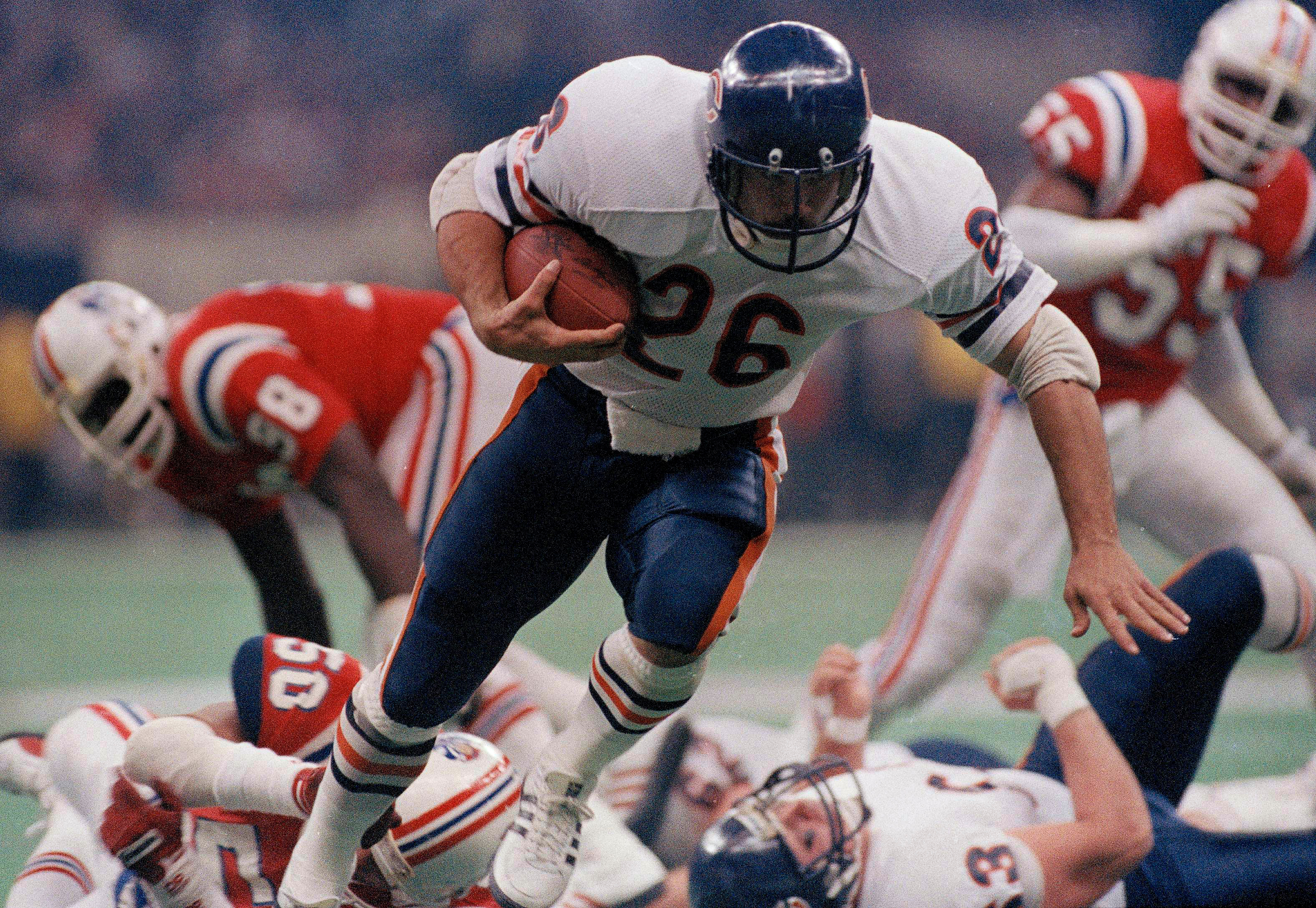
Suhey played for Chicago for 10 seasons after he was selected by the Bears in the second round of the 1980 draft. He helped clear the way for Payton to become the NFL’s career leading rusher, a record Payton held until Emmitt Smith surpassed his total on Oct. 27, 2002.
Suhey and Payton were close friends. Payton served as the godfather for Suhey’s youngest son, Scott.
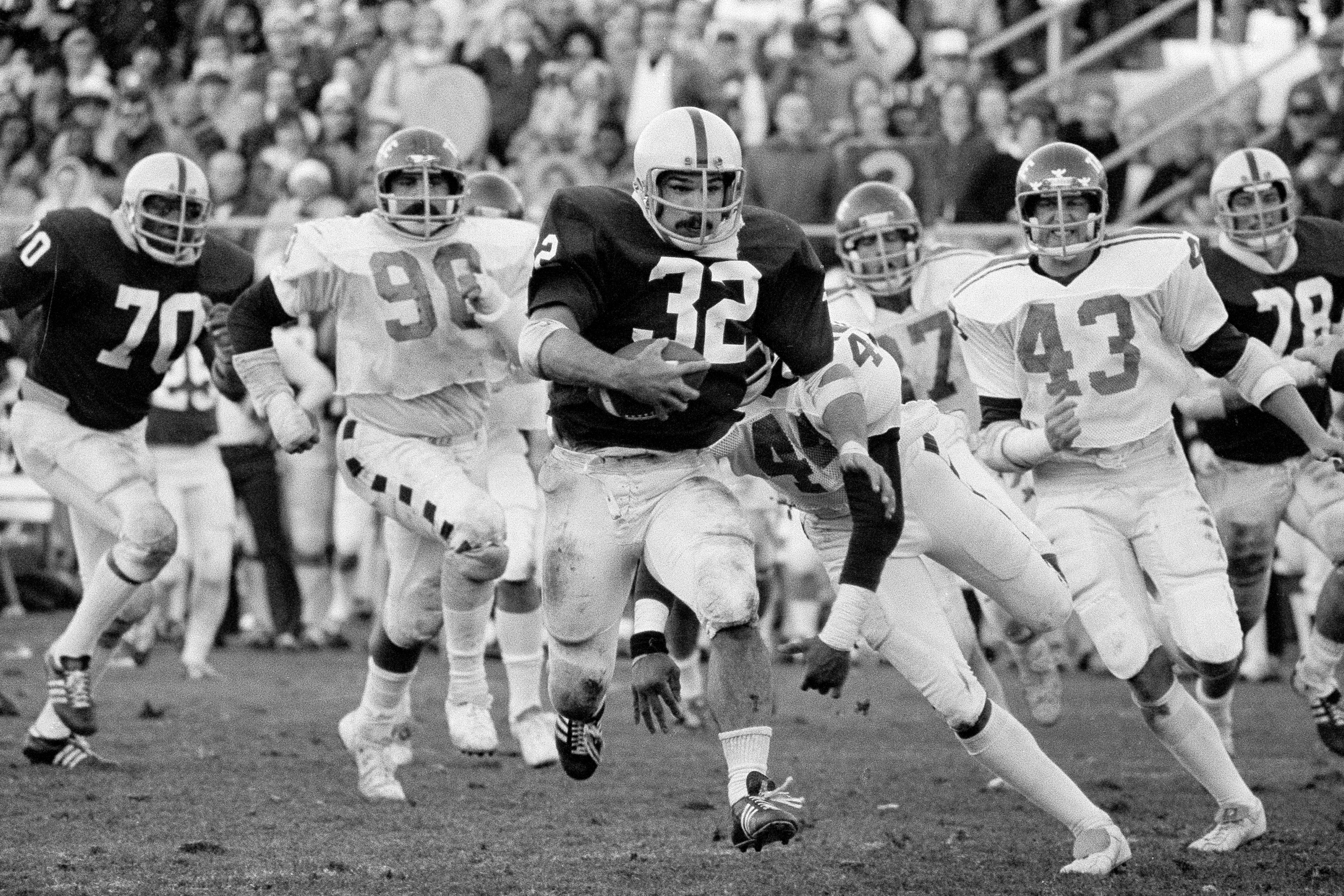
Penn State’s Matt Suhey runs against Temple in 1979 at University Park.Fred Prouser
“Matt watched my dad’s back, kind of like being a bodyguard or protector,” Walter’s son, Jarrett, said in “A Football Life,” an NFL Network show. “He blocked for him. He took a lot of hits, making sure that my dad would get the glory, and Matt kind of just sat back in the background, very unselfish.”
Suhey, a Pennsylvania native, played his college ball for Penn State, following in the footsteps of his father, Steve, a guard who was inducted into the College Football Hall of Fame in 1985.
Matt Suhey rushed for 2,818 yards and 26 touchdowns on 633 carries for the Nittany Lions. He also caught 39 passes for 328 yards and two TDs.
Suhey was Chicago’s second-leading rusher when the Bears went 15-1 during the 1985 regular season, finishing with 471 yards on the ground. Payton rushed for 1,551 yards and nine touchdowns that year.
The 1985 Bears shut out the New York Giants and Los Angeles Rams in the playoffs before routing New England 46-10 in the Super Bowl. Suhey scored the first TD against the Patriots on an 11-yard run in the first quarter. He finished with 52 yards on 11 carries, and he also had a 24-yard reception.
The durable Suhey played in 148 regular-season games during his 10 years with the Bears, starting 100. He had 828 carries for 2,946 yards and 20 touchdowns. He also had 260 receptions for 2,113 yards and five TDs.
When Brett Callahan was called up by the Detroit Tigers on Aug. 16 to make his major league debut, he became the fifth player in St. Joseph’s baseball history to reach his sport’s peak.
Callahan, who was drafted in the 13th round in 2023, then hit a two-run triple to left on the first major league pitch he saw in a 7-5 Tigers loss to the Chicago White Sox.
“Whenever a guy that you coached gets to the pinnacle of the game, it’s a thrill,” Hawks coach Fritz Hamburg said. “It’s a thrill for us as coaches. It’s a thrill for his teammates. It’s a thrill for, obviously, his family. And I mean, it’s just so cool to see. There’s no other way to say it.”
Callahan follows in the footsteps of Fritz Henrich, Jamie Moyer, Jimmy Yacabonis, and Brian O’Keefe, representing a long line of St. Joe’s baseball players who have chased, or are chasing, that dream. (A sixth MLB player, Allan Travers, was a student at St. Joe’s but not on the team when he played one game for the Tigers in 1912 under strange circumstances.)
Thirty-seven St. Joe’s players have been MLB draft picks, and another 25 have signed with MLB or independent clubs in free agency. Seventeen of those draft picks have come under Hamburg, who’s entering his 19th season with the Hawks.
Sunday: MLB debut, 2 RBI Monday: 2 more RBI Tuesday: the first Major League home run ever hit by a Hawk
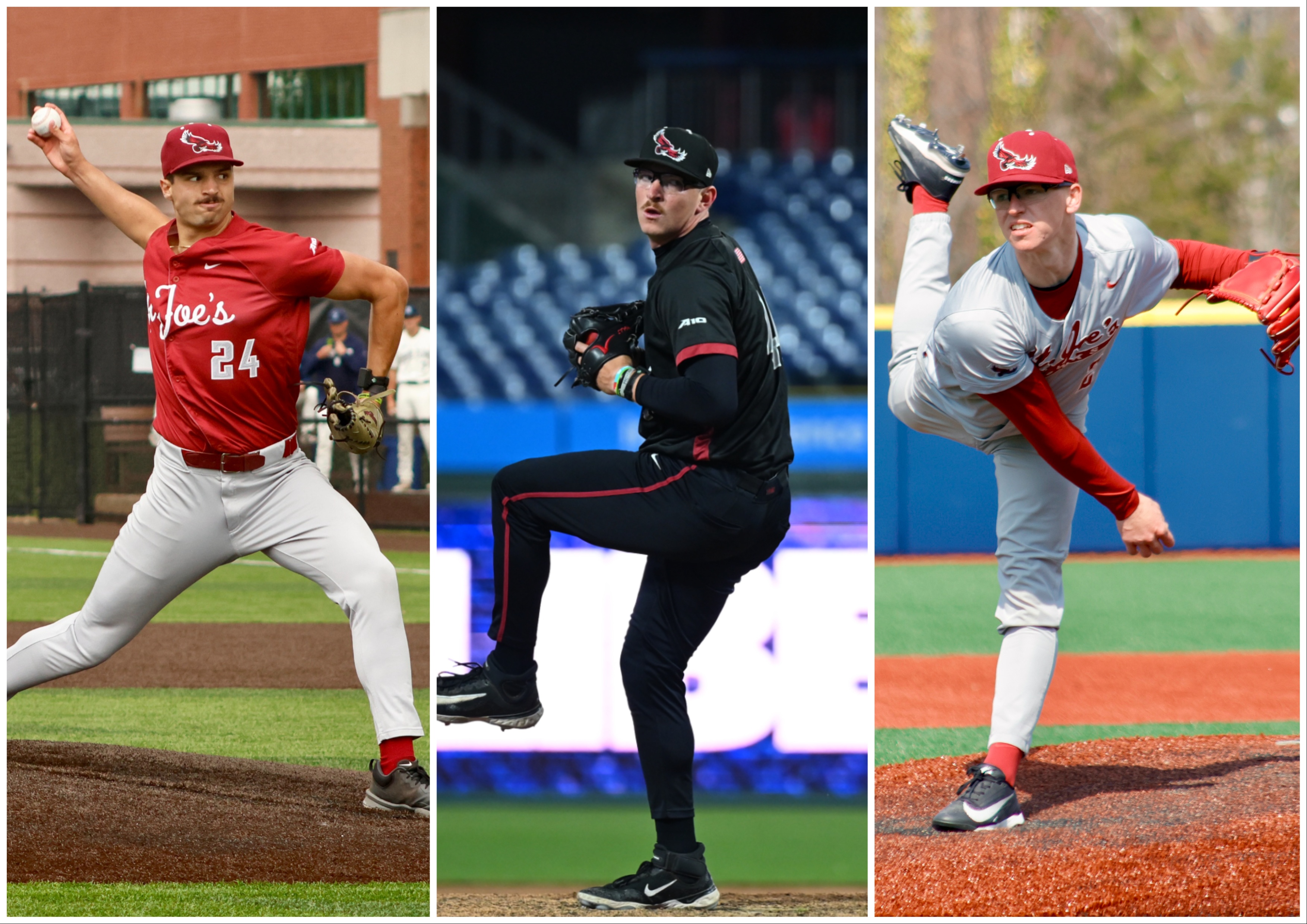
Earlier this summer, three Hawks pitchers were picked on the second day of the MLB draft — Andrew Gaines, in the 10th round by the Brewers, Christian Coppola two rounds later by the Phillies, and Duke McCarron in the 17th round by the Marlins. A few weeks later, left-handed pitcher Cole Fehrman signed a minor league contract with the Rangers on July 24.
While there is an excitement to hearing his players’ names called each summer, Hamburg also said it’s “a viable and an important part to any program.”
“First and foremost, it’s most important for the players, them having the confidence in our program, our coaching staff, and the development process,” Hamburg said. “That we’ve been able to have the number of players that have worked to have the opportunity to be drafted and to play professionally is, for me personally, really important. That’s always been a big driving force for what we do, and it speaks to, I think, the overall experience that the guys have in our program.”
Gaines, Coppola, McCarron, and Fehrman transferred into St. Joe’s ahead of the 2026 season, in which the program won a school-record 36 games, won its second Atlantic 10 regular-season title, and won the most conference games in A-10 history before falling in the consolation bracket of the conference championship.
Despite their short time with the program, Hamburg said their four pitchers’ careers “took off this year.” He credited that to both the pitching coach, Scott Boches, and to the players themselves, who put in the work with the Hawks.
When the group first committed to St. Joe’s, there was no pitching coach on staff. Boches’ hiring wasn’t announced until Aug. 18, 2025. But the group trusted Hamburg and the program. When Boches was hired, Coppola said it was clear Hamburg was blending metrics with “old-school baseball,” and the recipe worked for the Hawks.
“I think [Hamburg] has an understanding of what gets players drafted and what kind of pitching coach he needs to bring in to accomplish that,” Coppola said. “The fact that he’s still able to manage to recruit three draft picks and one free-agent signing in one portal transfer class, that’s amazing.”
In their final season with their previous programs, the quartet had ERAs in double figures. During the 2026 season with the Hawks, all four pitchers saw their ERAs drop and their appearances increase. Gaines also tied the school’s single-season saves record (10).
Gaines said the respect and trust from Boches helped. Boches offered open and honest feedback on how to improve the pitchers’ existing routines but didn’t try to change much. In return, this allowed them to pitch more free and loose.
“Obviously, you’re going to mess up, and they expect you not to be your best every single time. They expect you to go out there and do your job, but it’s baseball,” Gaines said. “At Pitt, I was super stressed about doing well because I wasn’t throwing well and worrying about what was going to be said, but [at St. Joe’s], it was so easy to go out there and do my job.”
For McCarron, the teammates surrounding him also made a difference.
“We were all pushing for each other,” he said. “Everyone around you is pushing for the same thing. It breeds a good environment. … Everyone really wanted the best for each other, and it was just a great team culture.”
Developing a reputation
The trio of pitchers were the second-most picks to come out of St. Joe’s in one draft. Four Hawks were selected in the 2024: pitchers Matt McShane and Luke Gabrysh, and outfielders Ryan Picollo and Ryan Cesarini.
Gabrysh and Cesarini are playing for the double-A affiliates of the Mets and Guardians, respectively. McShane is with the Red Sox’ high-A affiliate, the Greenville Drive. Picollo was released from the Mariners single-A affiliate in early August.
St. Joe’s has two other players playing in double A, one in triple A, and one in the rookie league. Yacabonis plays for the Diablos Rojos del México in the Mexican League. Of the dozen Hawks still playing, 10 are pitchers.
The most notable player to come from St. Joe’s, Jamie Moyer, who pitched in the majors for 25 seasons, said this is partially because all teams need good pitching, no matter the level.
“It’s always, ‘We need more pitching,’” said Moyer, a three-sport athlete at Souderton Area High School before his Hawks and major league career that included 2006-10 with the Phillies. “The game doesn’t happen without pitchers.”
Despite being months away, Coppola expects St. Joe’s to continue to get players drafted. Coppola projected that catcher Blake Primrose would be part of the 2027 MLB draft class. He set the single-season program records in home runs (24), runs scored (75), and RBIs (72), and was named the Atlantic 10 Player of the Year and a Buster Posey Award semifinalist as a sophomore in 2026.
With his 20th home run of the season on Sunday, Blake Primrose has set a new single-season program record! #THWNDpic.twitter.com/SS7c4l9BSC
— Saint Joseph's Baseball (@SJUHawks_Base) May 3, 2026
No matter what happens in 2027, St. Joe’s has a track record as a local school with draft success over the years, which Hamburg said is a “fun part” of the program that he’s proud of.
But what he remains most proud of is the players he watches every night on MiLB Network, talks to regularly, and learns from every time they come around.
“To have that and those guys remain part of our program, and to know that this is how people see our program, that we’re winning on the field and beyond, has always been a goal for me as a coach in my career, and something I’m very proud of,” Hamburg said. “Happy that those guys are getting to live out their dreams.”