DENVER — A federal court dealt a perhaps chaos-inducing blow to the NCAA’s new eligibility rule Friday when it ruled that all high school class of 2022 athletes who exhausted their fourth season of college eligibility this spring are eligible for a fifth season this school year.
The ruling from U.S. District Judge Charlotte Sweeney in Denver, expected to be appealed, undercuts the NCAA’s plan to have the so-called “five for five” rule go into play starting with athletes who enroll in college in fall 2027.
It also has potential to wreak havoc on rosters across the country — for instance, opening the possibility that an undrafted player in an NFL training camp could decide to try to head back to college for a fifth year this upcoming season.
In granting the preliminary injunction, Sweeney said the players “will suffer irreparable harm without” it. She did not sign onto the governing body’s argument that applying the new rule retroactively would create “roster chaos.”
But NCAA President Charlie Baker said it would in responding to the rulings while referencing a bill in Congress designed to provide the NCAA antitrust protection on the eligibility issues.
“Today’s rulings and the chaos they bring to college sports are exactly why it’s time to pass this bill,” Baker said.
The Colorado ruling came hours after a Tennessee court granted Jalen Washington, who most recently played at Vanderbilt, and 18 other basketball players a fifth season of eligibility.
In June, the NCAA approved its new eligibility model for Division I athletes that will allow five seasons of competition over a five-year period that begins with their full-time enrollment or the academic year following their 19th birthday, whichever occurs first.
While the ruling in Tennessee applied to those 19 basketball players, the one in Colorado cast a wider net, granting the class certification the plaintiffs sought. It means the ruling applies to all Division I players who started their college careers in the 2022-23 season, not just a select list.
The Big Ten and Southeastern Conference agreed Friday night to support the Protect College Sports Act, a Senate bill that seeks to regulate college sports, ending a breakneck week of negotiations and pulling the bipartisan measure out of what looked like a certain death spiral.
School presidents from both conferences voted to back the bill after receiving last-minute concessions over language regarding third-party name, image, and likeness deals and the so-called “associated entities” that often make those arrangements.
More details need to be worked out, but the bill still has a chance to earn the 60 votes it needs to halt debate and head to an up-or-down vote before the Senate heads for summer break next Friday.
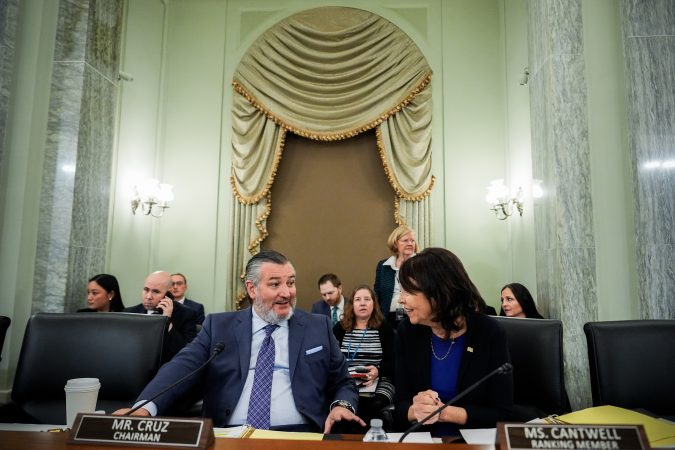
The summer recess was increasingly looking like a hard deadline for the Protect College Sports Act, a bipartisan effort headed by Sens. Ted Cruz, R-Texas, and Maria Cantwell, D-Wash.
After the conferences, which had balked at large sections of the bill, put out a short release announcing they supported the act “as currently drafted,” Cantwell went on social media and said: “Good. Now progress can be made in protecting women and Olympic athletes and moving the legislation closer to the President’s desk.”
Good. Now progress can be made in protecting women and Olympic athletes and moving this legislation closer to the President’s desk. https://t.co/RWytYnzVya
President Donald Trump, who also has been seeking fixes for an industry that now pays its players millions, got involved late Thursday, which helped push the parties back to the negotiating table.
Cody Campbell, the Texas Tech regent who has played a big role in shaping this policy, called the SEC and Big Ten support “a major breakthrough that moves us closer to a Senate vote — and a better future” for college sports.
Increased salary cap, new language entice holdouts
It could represent a major reworking of the House v. NCAA settlement, which governs paying players. The idea is that the extra money will take the place of payments from “associated entities” that were allowed beyond the $21.3 million cap. It was those payments that, many schools complained, obliterated any idea of a cap or controlled cost.
The SEC and Big Ten sought stronger language in the bill to guarantee that any third-party deals are truly outside deals and not coming from the schools’ multimedia-rights partners, which currently broker the majority of those deals.
Among the questions still unanswered are whether the new cap will comport with the House settlement, which had specific instructions about the hard cap (22% of a certain part of revenues, which equals $21.3 million this season), and what would happen to the College Sports Commission, the main NIL enforcement arm that spends the bulk of its time analyzing third-party NIL deals.
Long road remains
Even with Friday night’s victory, the bill has a long road ahead. Sen. Tommy Tuberville, R-Ala., has been a staunch opponent of the bill since the beginning. Before the latest compromise, Sen. Bill Cassidy, R-La., said that “as written today,” the act “creates chaos and eliminates opportunity for student-athletes.”
Whether the SEC’s approval is enough to get those senators and others from SEC states on board is one issue. If the bill clears the Senate, it would still then need to pass the narrowly divided House, which flailed on another college bill called the SCORE Act, for more than a year.
There’s also the matter of whether smaller conferences, long in favor of the bill, will remain so now that their bigger competition is being allowed to directly pay players up to $48.8 million.
Almost everyone in college sports agrees that the status quo isn’t working.
The news about the bill broke only hours after the NCAA lost a pair of key court cases involving its new rule that would give most Division I athletes five years to complete five seasons of eligibility.
Using those losses as another chance to urge for passage of the bill, NCAA President Charlie Baker said “It is long past time leaders across college sports call for the immediate passage of the bipartisan Protect College Sports Act.”
Two-time national champion hoops coach Dan Hurley of Connecticut used social media to outline the stakes in more colorful terms: “Somebody please come and fix College Sports. It’s a complete [expletive] show,” he said, using an emoji where the expletive would go.
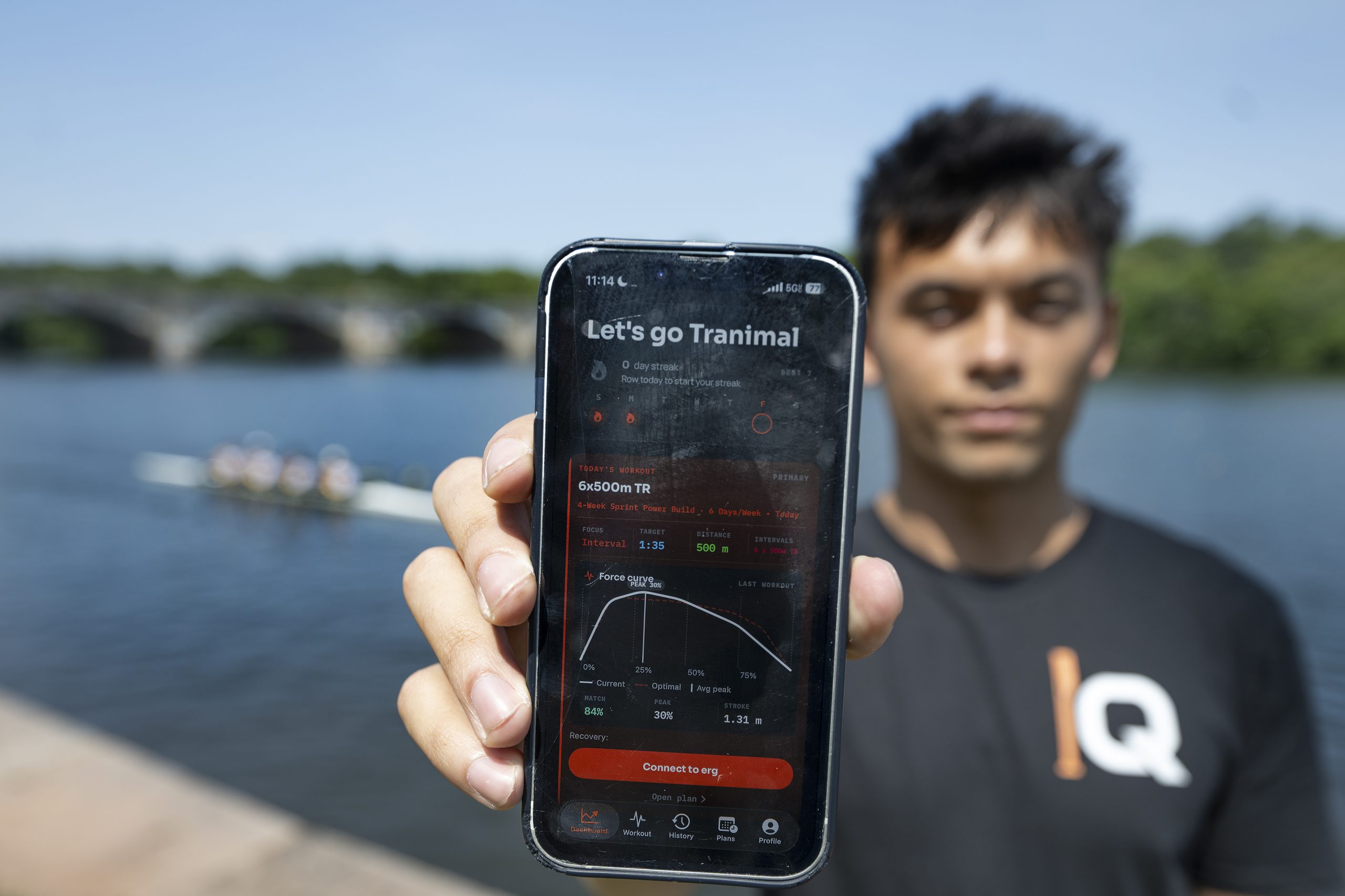
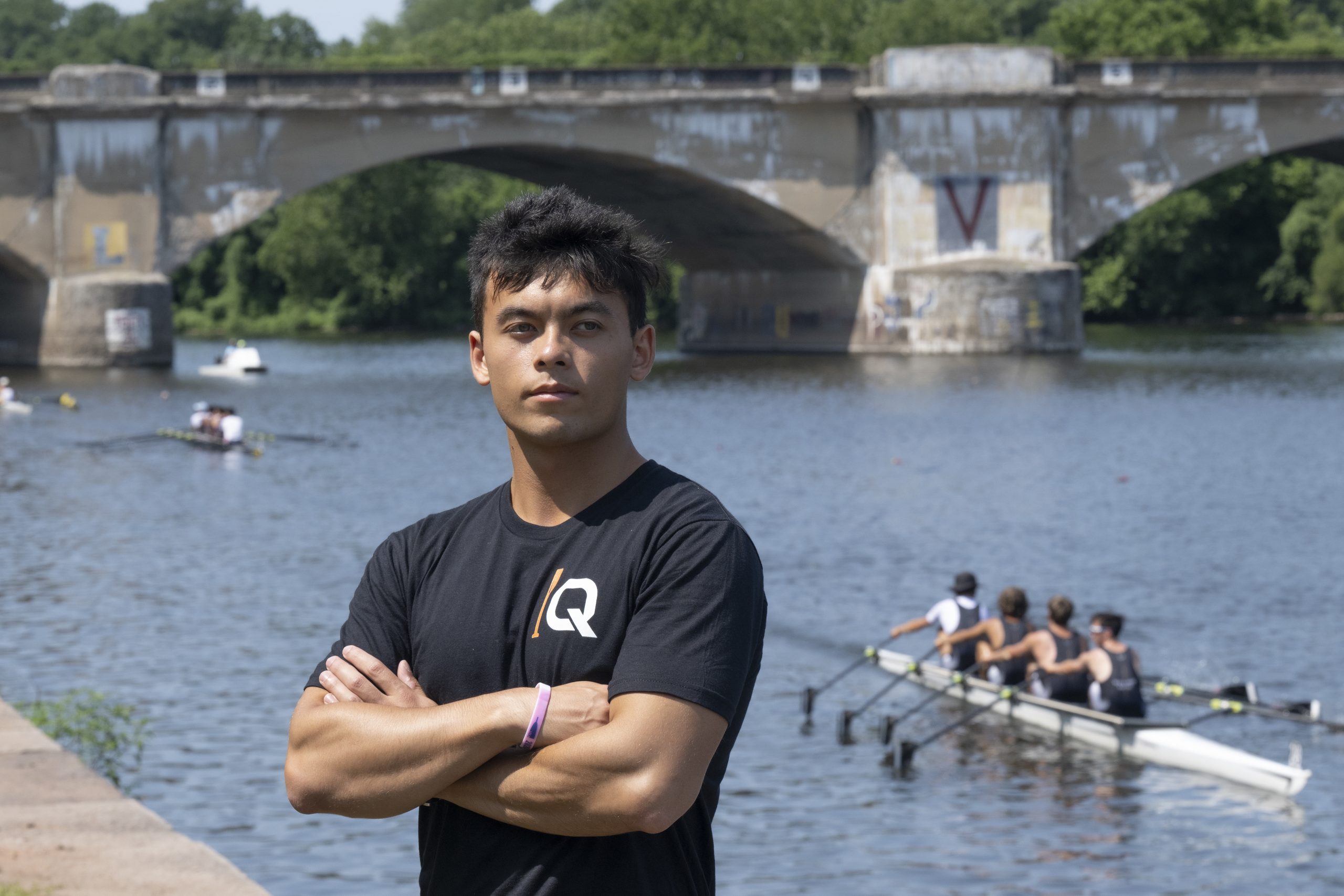
The app he was using to track his rowers’ stroke length and the amount of force they were using from the team’s ergometer rowing machines stored the information in different locations. Krakic wanted it on one screen.
Eventually, Krakic contacted and paid the app’s developer to make the fix — which caught the attention of one of his rowers.
“I was like, ‘Dang! My coach is paying $500 for something I could have done in 20 minutes,’” said Will Tran, a senior who primarily rows in the second varsity eight boat. “There’s a real gap in the market here. I used the app as well. I know I could improve this in so many different ways.”
Tran, a computer science major, decided to build his own app.
The final product became known as RowIQ. The app is an all-encompassing data ecosystem that uses artificial intelligence to pinpoint where and how rowers can improve. The app processes data from Concept2 ergometer rowing machines, smartwatches, and RowIQFuel — Tran’s nutrition app. In the future, RowIQ will also be able to collect data from on-water rowing monitors.
“We have hundreds of thousands of data points that no one ever looks at,” Tran said. “In rowing, these races are sometimes won by a hundredth of a second, so you need that 1% sometimes. Actually, a lot of the time you need that 1%. What we’re aiming to do is give rowers a complete picture of their training with data that’s never been seen before.”
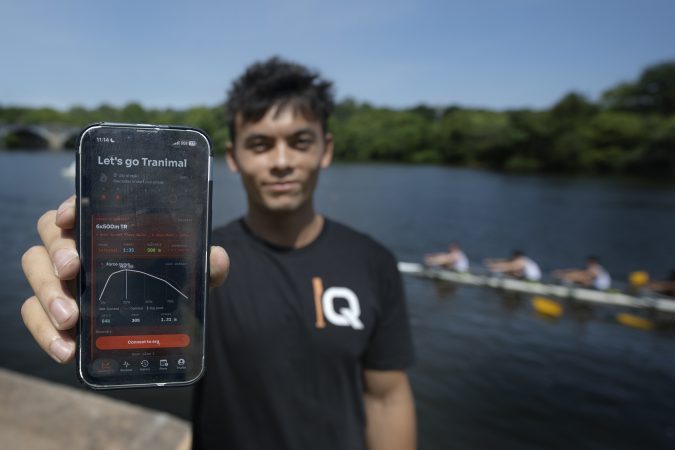
Will Tran displays the training app he created. In the last two months, the RowIQ has received over 1,000 downloads.Jose F. Moreno / Staff Photographer
The app also allows rowers to create groups, so coaches have access to their entire team’s data in one location. Tran noted that this feature lets coaches “see trends in less than a second,” allowing them to understand areas of improvement and create lineup decisions with ease.
“It gives you really good data feedback on your [rowing] curve, how you’re rowing, and essentially what you’re doing and how you’re transferring your power,” Krakic said. “We’re able to match the guys indoors and then transfer that onto the water. We’re lucky to have it. It puts us ahead a little bit.”
In the last two months, the app has received over 1,000 downloads. More importantly though, the app boasts impressive user retention. Tran noted that top users are logging over 200,000 meters per week on the app.
Yin and yang
For the first few months of RowIQ, Tran worked alone. But while he tinkered with the app’s coding, Tran found that he had little time to dedicate to RowIQ’s marketing, so he put together a small team. Fittingly, they all have a background in rowing.
A few members from Penn’s lightweight crew team are developing a telemetry system to fully integrate RowIQ’s data into one central location. Meanwhile, former Harvard lightweight rower Zarret Mills is working as a consultant for the app.
One of the most important members of the team has been Sergej Čipak, a former La Salle rower who moved back to his home country of Serbia to pursue electrical engineering. Tran and Čipak spent one year as teammates at 20th and Olney.
“You spend a lot of time together, even when you’re not like racing or training,” Čipak said. “You’re eating together. You go to parties together. So I really grew close with Will over some time. Will has a very interesting personality. He can be kind of cold sometimes and give not-detailed-enough instructions. But I think we have some kind of dynamic that makes us really productive.”
After starting part-time, Čipak’s role with RowIQ has grown exponentially. While Tran focuses on more big-picture endeavors, Čipak leads the app’s development. With the app’s success, Tran has been able to compensate Čipak — something Tran did not think he “would ever be doing at 22.”
“It’s a yin, yang,” Tran said. “On one side, it’s awesome that someone pays for their apartment and their food via your idea and creation. It’s such a wonderful feeling to be able to provide that for someone and do it through something that you are so passionate about.
“And then the other side of it is, I never want to go to sleep and I never want to get outworked because this person is relying on me, and I feel an obligation to always be on, always be working, always progressing. I never feel off. Sometimes I’m with my girlfriend and I say I’m present, but I’m not. I’m thinking like, ‘Shoot, we got to pay Sergej his monthly paycheck so he can pay his rent and buy his groceries.’”
While Tran is adjusting to the added pressure of managing employees, Čipak is working full-time for a company that is not aligned with the career path he expected to pursue in Serbia. Still, he is on board with RowIQ for the foreseeable future.
“We just crossed 1,000 users a few days ago, so I mean it’s really exciting,” Čipak said. “I never really worked on something like this in my life, and I do plan on keeping on working on this.”
Can’t tell this kid no
In the tech world, “college dropout” is somewhat of a lauded title.
Mark Zuckerberg dropped out of Harvard to run Facebook full-time; Bill Gates did it before him, leaving Cambridge to co-found Microsoft; and Jack Dorsey left NYU a semester before his graduation to move to California, eventually starting Twitter.
The list goes on and on.
Today, chasing the AI boom, tech venture capital firms like Y Combinator and Antler are known to provide college students with hundreds of thousands of dollars to fund their startups. Meanwhile, industry giants like Palantir and Elon Musk’s xAI encourage students to ditch their formal education to work for them instead. Tran is no exception to this pressure.
Will Tran, a rising senior at La Salle, has spent this summer growing RowIQ in the area.Jose F. Moreno / Staff Photographer
“I’ve seriously debated taking this fall semester off,” Tran said. “Like genuinely — we’re continuing to close deals with high school clubs, college clubs, recreational clubs. We’re onboarding probably 70 new athletes a day from clubs. It’s huge, and I don’t know if I will have the time in college to do schoolwork, be a Division I athlete, be a boyfriend, and run RowIQ at the same time.
“I have seriously debated taking the fall off and joining some sort of Y Combinator, coming back to school later. Do I think I’m going to do this? Probably not.”
Tran has already sacrificed opportunities to focus on RowIQ. This summer, he turned down an internship offer from a data analytics company. For now, even if the balancing act can seem impossible at times, Tran will try to have it all at La Salle.
“You can’t really tell this kid ‘no’ or ‘you can’t do it,’” Krakic said. “The more you say ‘don’t do this’ or ‘it’s not possible,’ the more he tries to prove you wrong.”
Big Ten commissioner Tony Petitti addressed the media Tuesday in Chicago, and emphasized that the conference has never been in a better position.
Big Ten schools have won the past three national championships in football — Indiana (2025), Ohio State (2024), and Michigan (2023) — and it continues to try to influence the future of college athletics.
Petitti discussed the proposed Protect College Sports Act and said the Big Ten continues to withhold support until it can review amendments made to the bill’s language.
“Over the past 10 days, there have been hundreds of phone calls discussing key aspects of the bill,” Petitti said. “It is important to understand that this bill sets forth very specific language on how college sports will operate going forward. After a lot of productive work, it is absolutely imperative that we see the amended language of the bill. We cannot change our position until we see the amended bill and have an opportunity to share it with our leadership. And I will say … we expect to see the amended bill shortly.”
Petitti said the Big Ten has been in communication with lawmakers about the proposed changes and believes progress has been made.
“There seems to be alignment in the direction with the senators,” Petitti said. “They understand our issues. I think we’ve been aligned with the SEC in pointing those out, which is really the case on most of the stuff around the bill and even really working together.”
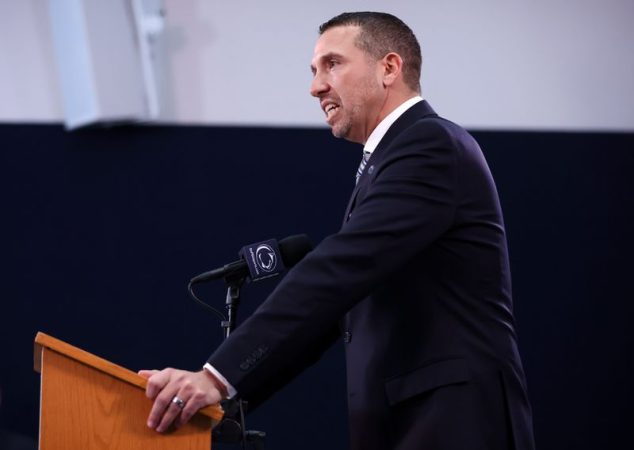
Later, new Penn State coach Matt Campbell, along with offensive tackle Anthony Donkoh, quarterback Rocco Becht, and linebacker Tony Rojas, took the floor to answer questions. Here were the most notable takeaways:
Decision to leave Iowa State
Campbell was hired on Dec. 5, 2025, after James Franklin was fired midway through his 12th season. Campbell was the winningest coach in Iowa State history, recorded more than half of the school’s Big 12 wins, and reached the conference championship in 2024.
A common question throughout Campbell’s tenure with the Cyclones was whether he would leave for another coaching opportunity. Campbell reportedly was offered an eight-year, $68.5 million contract to be the Detroit Lions’ head coach in 2021 and initially accepted the offer before deciding to remain at Iowa State.
Campbell was the Cyclones’ head coach from 2016 to 2025 and amassed a 72-55 record while winning Big 12 Coach of the Year three times. So the decision to leave Iowa State was a big one for him.
“If we were ever going to leave, it had to be for a place that aligned with my beliefs about culture, leadership, and building a football program,” Campbell said. “Over the past six months, we’ve been reminded every day why Penn State was the right fit. The history is special. The tradition is special. But what really resonated with me is how Penn State has always valued integrity, character, and class at its best.”
Campbell said he is focused on building a program centered on young men who value doing the right thing on and off the field, have a genuine passion for football, and are committed to receiving a meaningful education.
“While many things surrounding college football continue to change, winning football games has not,” Campbell said. “Neither has my belief in how you build a football program. I still believe it’s my responsibility to help turn young men into great husbands, great fathers, and great leaders. That responsibility hasn’t changed, and it’s one I embrace every day. At Penn State, we’ve chosen a culture that embraces doing what’s hard rather than what’s easy. We want people who are chasing something greater than simply winning football games.”
Bringing Iowa State with him
Campbell brought 24 players from Iowa State with him, including Becht, who is the winningest returning quarterback in college football.
Becht spent much of the spring recovering from surgery on his left, nonthrowing shoulder and was unable to participate in spring practices.
“I wasn’t able to do a lot in spring football,” Becht said. “So I think that ultimately helped me become a better leader off the field. To lead off the field, I had to make those meetings with the guys, with the running backs, with the receivers, with the tight ends, because all that offense was so new to them that I was probably, when the coaches are gone, the next resource to help them gain that knowledge of the offense. And so that was my mentality of going into the spring ball was how much time can I get with those guys off the field so then ultimately when I got back onto the field, that relationship just clicked.”
"That's a guy that we want to play for, somebody that knows where we came from."
Taylor Mouser, Ryan Clanton, and Deon Broomfield joined Campbell’s coaching staff from Iowa State. Becht said one of the factors that went into following Campbell to Penn State was the type of person he is off the field.
“[The coaches] are down to earth and people of relationships,” Becht said. “They don’t just care about you as a football player, they care about you as a person as well. And that’s something that I wanted to experience for my last year in college football.”
Defensive changes
Campbell also discussed new defensive coordinator D’Anton Lynn. Lynn had spent the past three seasons as a defensive coordinator at Big Ten foes UCLA and Southern Cal.
“He understands this conference, the style of play, and what it takes to build great defenses,” Campbell said.
Lynn is a Penn State graduate who was a cornerback from 2008 to 2011. He recorded 162 tackles, including seven tackles for loss, four interceptions, and one fumble recovery in 47 games, while starting 37 of his last 38 games.
“He understands what it means to play here and what it means to lead here. He and his family have a deep passion for Penn State and the community,” Campbell said. “Beyond that, he’s an outstanding teacher. He’s assembled an excellent staff around him and has already made a tremendous impact on our players. Those qualities made him the right fit.”
Along with the new defensive coordinator, Campbell is moving away from the 3-3-5 defense he used at Iowa State. During his time at Toledo and throughout his first two seasons at Iowa State, he primarily used a four-down front with multiple variations before evolving into the defense for which they became known.
“As the Big 12 evolved with more multiple tight-end sets and more pro-style offenses, we found ourselves naturally moving back toward four-down fronts in certain situations, anyway,” Campbell said. “When we got to Penn State, we evaluated who we are, what our personnel looks like, and what gives us the best opportunity to succeed.”
Variety in their defense is important, Campbell said, but the foundation will begin with a four-down front.
Keeping Terry Smith
One of the most important aspects of taking the Penn State job was keeping Terry Smith on the coaching staff, Campbell said.
“Watching him lead Penn State through a difficult stretch at the end of last season only reinforced my respect for him,” Campbell said. “It wasn’t an easy situation, but Terry steadied the program and gave us a strong foundation moving forward.”
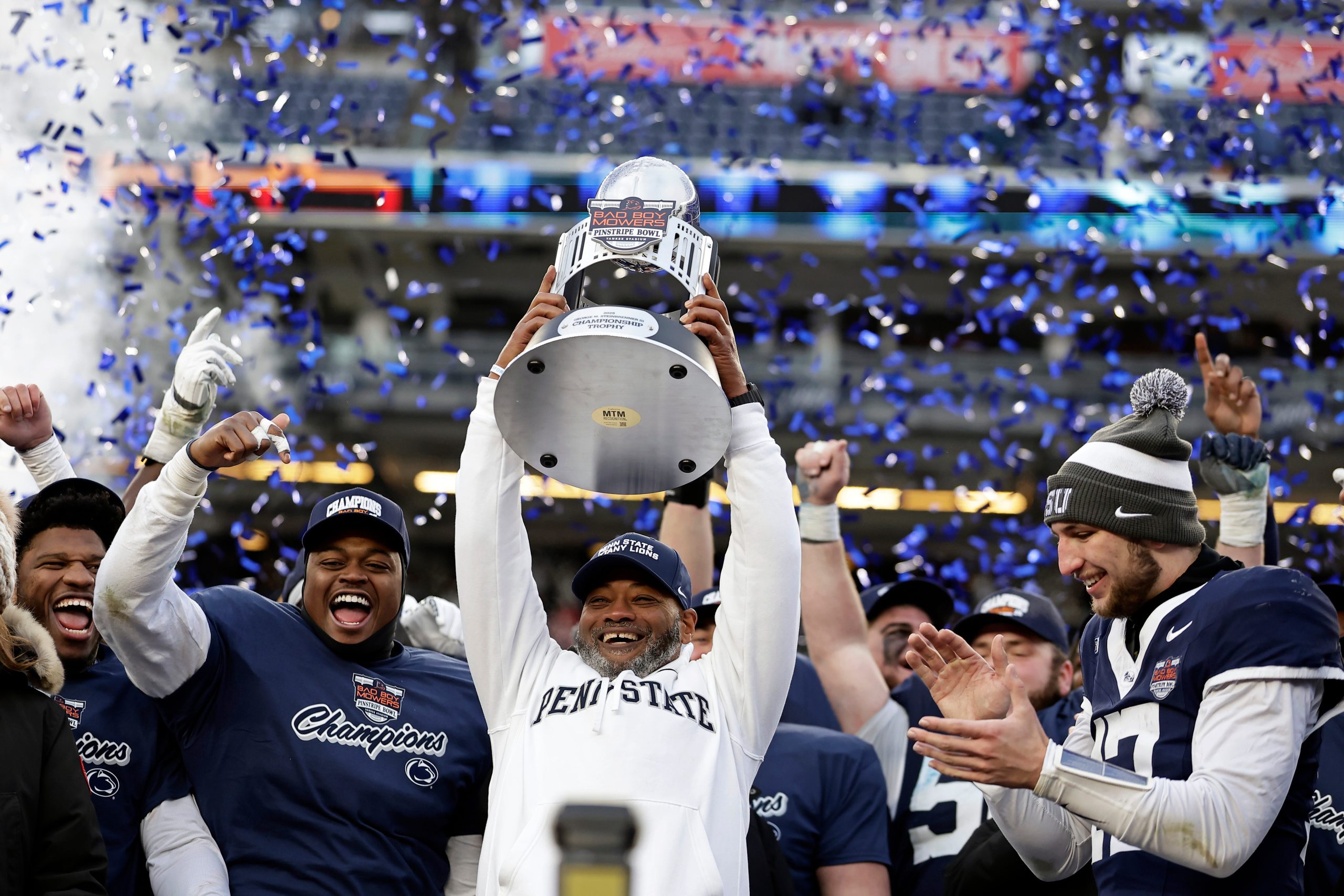
Last season, Terry Smith led Penn State to a win over Clemson in the Pinstripe Bowl.Adam Hunger
Smith served as the associate head coach and cornerbacks coach before being named the interim head coach after Franklin was fired. Rojas said Smith taking on the interim role brought life to the locker room.
“Everyone wanted to play for each other and wanted to play for him,” Rojas said. “Especially the last bowl game, we’re all super excited to get that last one for him. So I think just keeping him on our staff has been a big blessing.”
Smith was a wide receiver at Penn State from 1987 to 1991.
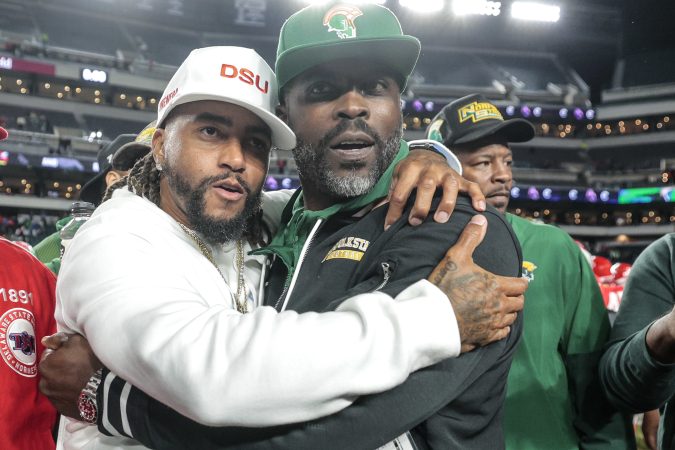
After drawing a crowd of 47,266 in the HBCU Battle of the Legends game last fall, DeSean Jackson’s Delaware State and Michael Vick’s Norfolk State will meet again in South Philly.
The rematch between the former Eagles teammates is set for Oct. 31 at Lincoln Financial Field. Last year, Delaware State squad held off a late rally from Norfolk State for a 27-20 victory.
The Norfolk State-Delaware State matchup is one of two historically Black college and university football games set for the weekend at the Linc. As previously reported by The Inquirer, Division II Lincoln University will host Virginia Union, but the game will take place a day earlier, on Friday, Oct. 30.
“I know firsthand what it means for a young person to walk into a room and see excellence that looks like them. That’s why this event is so important,” Mayor Cherelle L. Parker wrote in a news release, noting she’s a Lincoln University graduate. “Last year’s Delaware State-Norfolk State game brought 47,266 fans together and celebrated the excellence, pride, and tradition of HBCU athletics.
“With Philadelphia legends Michael Vick and DeSean Jackson joining us, it became more than a football game. It became a powerful source of inspiration. We were honored to partner with Delaware State University, Norfolk State University, and the Philadelphia Eagles to make that day such a tremendous success, and we are excited to build on that momentum through One Philly HBCU Week 2026.”
Last season, Delaware State finished with an 8-4 record in Jackson’s first season at the helm, and he was named the Boxtorow HBCU Coach of the Year. He was rewarded with a contract extension in December, tying him to the program through 2028.
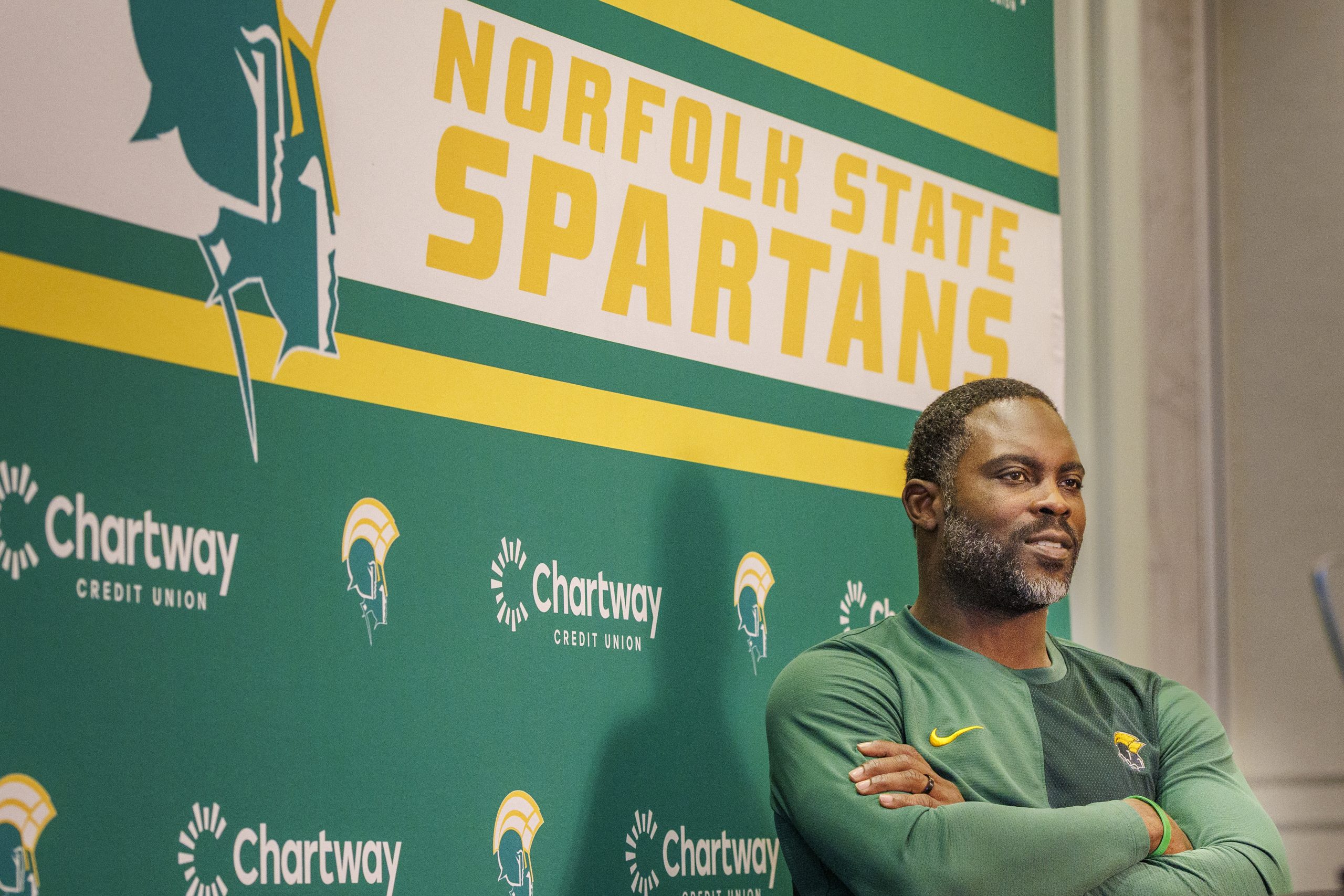
Vick is coming off a tough season in which the Spartans finished 1-11.
Michael Vick’s Spartans finished with a 1-11 record during his first year as head coach.Alejandro A. Alvarez / Staff Photographer
“Coming back to Lincoln Financial Field never gets old for me — this is a place that holds a lot of special memories,” Vick, an Eagle from 2009-13, said in a Norfolk State release. “Last year’s game was a special moment for our program, and to lead our players back onto a field I once called home is something I’ll always cherish. Doing it against Delaware State, led by my former teammate and longtime friend DeSean Jackson, adds another exciting chapter to the matchup. It’s also an opportunity to celebrate the bands, traditions, and pageantry that make HBCU football special.”
Added Jackson: “We are not putting any limits on our potential. And we are not resting on that potential either. There is no replacement for hard work. That’s the standard. The game at the Linc just gives our scholar-athletes a bigger stage to do what they do every day.”
For Lincoln, the Oct. 30 game will be its first game in Philadelphia in 16 years, when it played Cheyney University at Northeast High School in 2009 and 2010. The two programs played yearly from 2009 until Cheyney’s football program was shut down in 2017.
Lincoln was winless in 10 games last season, including a 66-21 loss at Virginia Union. Overall, Lincoln is 1-16 all-time against Virginia Union, with its only win coming in 2011, a 19-10 victory.
Kickoff times and ticket information for both games will be announced at a later date.
“Lincoln Financial Field is thrilled to serve as the host site for two highly anticipated HBCU matchups this season,” said Frank Gumienny, the Eagles’ senior vice president and chief operating officer. “In partnership with the City of Philadelphia, we look forward to hosting the programs, families, alumni, and fans for what will be a memorable One Philly HBCU Week at Lincoln Financial Field.”
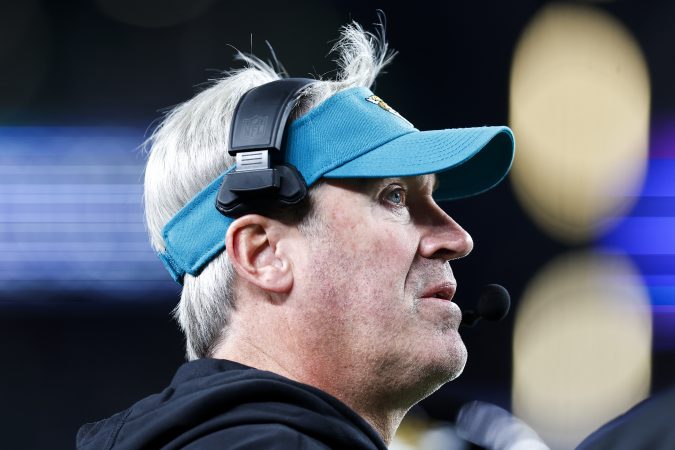
Doug Pederson is following the well-worn path from coaching to broadcasting, but his first-ever TV gig might be a bit of a head scratcher.
The former Eagles head coach and Super Bowl LII champ is joining CBS this season to call 10 college football games on CBS Sports Network, beginning with Maryland vs. UConn on Sept. 12.
Outside of playing quarterback at Northeast Louisiana University, Pederson has no direct connection to the college football world. But as he made clear to CBS, his ultimate goal isn’t to have a second career as a college football analyst.
“My goal, my passion, is to get back to the NFL,” Pederson said. “But when it’s all said and done, this is a great opportunity to get my feet wet with the broadcasting side, get some really good coaching and insight [on] how it all kind of works.”
CBS certainly has plenty of NFL games, so Pederson could end up as an NFL analyst or land a role on a studio show like The NFL Today. But he could also see himself returning to the sidelines following head coaching stints with the Eagles and Jacksonville Jaguars, where he spent three years before being fired following the 2024 season.
“I’m not closing the door to coaching,” Pederson said, “But this keeps me involved and sharp and connected to the game.”
Ex-Eagles quarterback Michael Vick turned a Fox gig into a head coaching job with Norfolk State.Alejandro A. Alvarez / Staff Photographer
He wouldn’t be the first to use broadcasting to land a coaching job. In 2022, former New Orleans Saints head coach Sean Payton spent a season as a Fox analyst before landing a job with the Denver Broncos. Closer to home, Joe Girardi turned a role with the MLB Network into a short-lived job as the manager of the Phillies. And former Eagles quarterback Michael Vick used broadcasting as a path to becoming the head football coach at Norfolk State.
For now, Pederson’s focus is on broadcasting. A month before the start of the college football season, Pederson doesn’t know who his play-by-play partner will be or if it’ll be the same person each week. He does know his schedule, which includes North Dakota State, Kennesaw State, and three UConn games. About the closest he’ll get to Philly is calling a University of Delaware game in Newark, Del.
While this will be Pederson’s first time broadcasting games, he did travel to Los Angeles to audition with Fox, where he called a mock game alongside veteran play-by-play announcer Chris Myers. He’s also sought advice from a host of broadcasters ranging from Kirk Herbstreit to Greg McElroy — and even longtime ESPN veteran Chris Berman.
“I understand football and how it works, and being able to describe it is a different thing,” Pederson said. “So it’s going to be a learning experience.”
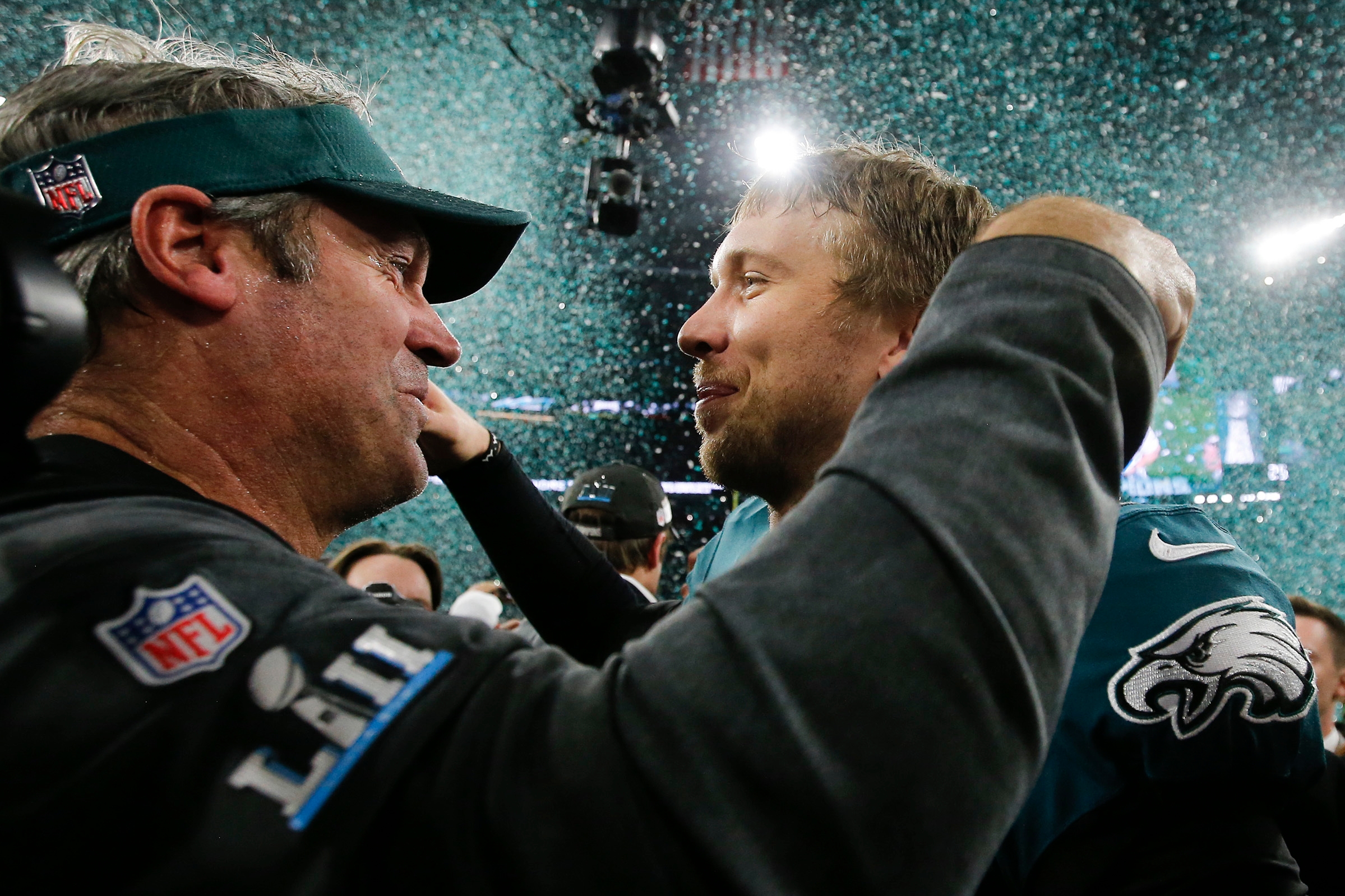
Former Eagles head coach Doug Pederson won Super Bowl LII behind the heroics of backup quarterback Nick Foles.Yong Kim / Staff Photographer
After coaching high school football for four years, Pederson was hired as the Eagles offensive quality control coach in 2009 by then-head coach Andy Reid. He followed Reid to the Kansas City Chiefs in 2013, where he served as the team’s offensive coordinator for three seasons before being hired as the Eagles head coach in 2016.
In Philly, Pederson amassed a 42-37-1 record in five seasons, but his tenure includes the Birds’ improbable championship run during the 2017 season behind backup quarterback Nick Foles. A statue celebrating Pederson and Foles for the “Philly Special” play stands outside the Linc, though it was temporarily removed during the World Cup last season.
“They could’ve just put a soccer ball over the top if it,” Pederson joked.
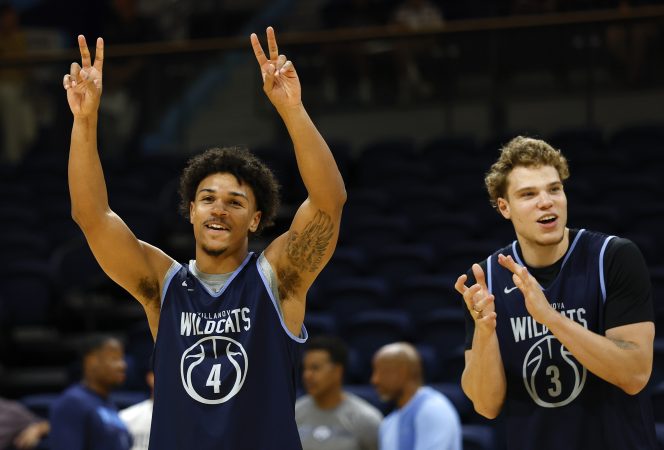
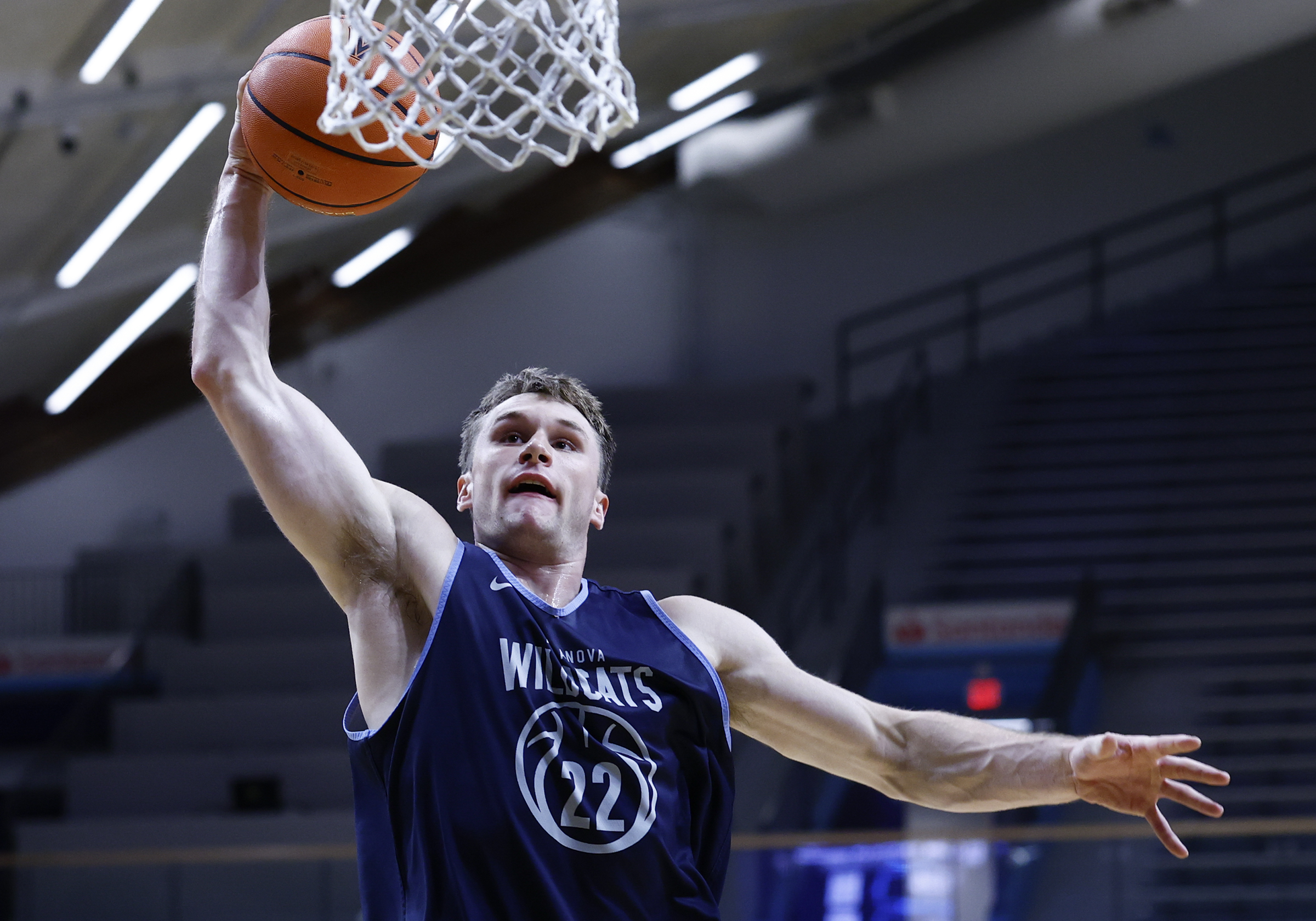
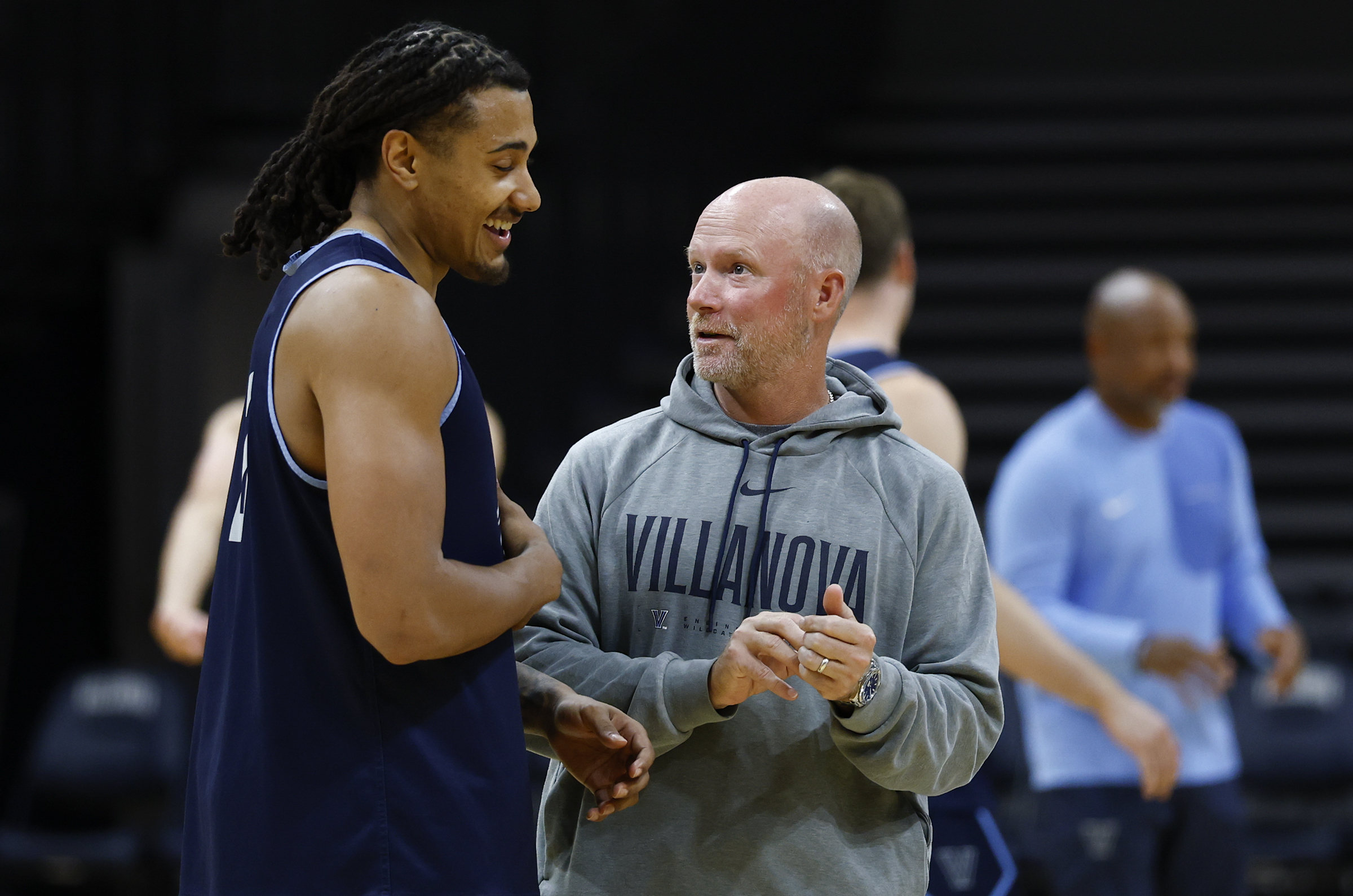
Villanova’s annual open Summer Jam practice was Monday afternoon at the Finneran Pavilion, where a few hundred fans had their first (partial) glance at the new-look men’s basketball team.
Injuries to a few key players and Italian big man Luigi Suigo still not on campus made any analysis of the 2026-27 team incomplete, but there were still some things worth highlighting.
Here are five thoughts from the session:
Injuries to key players aren’t long-term worries
Matt Hodge is continuing his recovery from surgery to repair a torn ACL, and Tyler Perkins — the other returning starter and last season’s leading scorer — is recovering from shoulder surgery.
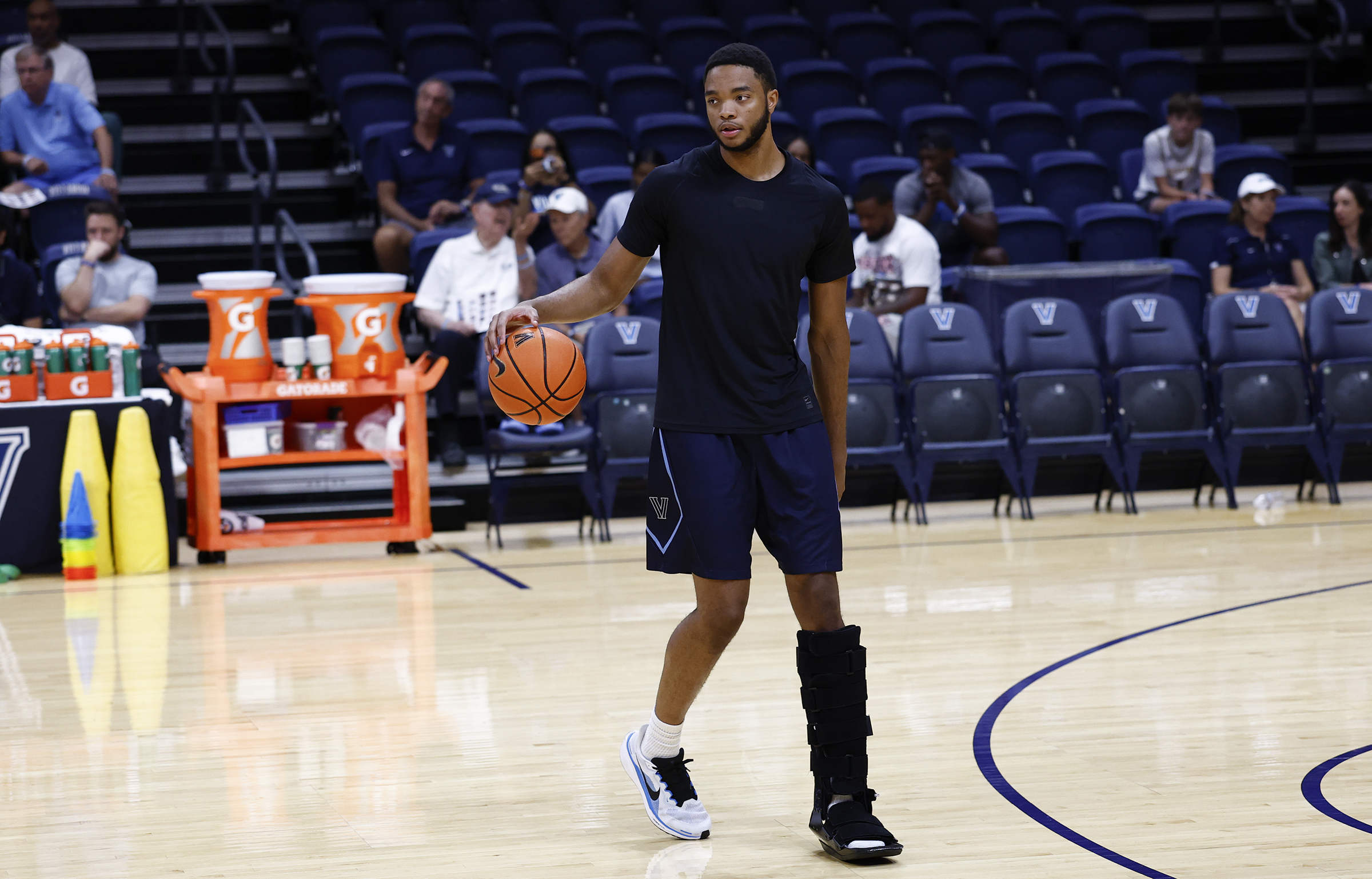
Those injuries were known, but Oregon transfer Kwame Evans Jr., a 6-foot-10 forward, entered the court with a walking boot on his left leg. Evans is dealing with a minor injury, a source said, and should be back to basketball activities in the coming weeks.
Villanova forward Kwame Evans Jr. is dealing with a minor injury, but should return to activities in the coming weeks.Yong Kim / Staff Photographer
Perkins, meanwhile, continues to progress. Villanova has mostly gone through individual workouts during the summer program, and Perkins took part in all of those drills Monday but sat out of the scrimmage session. If Villanova played a real game Monday, Perkins would have been on the court.
Hodge is progressing well, but while Kevin Willard seemed pretty confident when talking to The Inquirer last month that Hodge would be ready to start the season, he was less effusive Monday. Regardless, Hodge should be ready to play in the early stage of the 2026-27 season. He took some jumpers Monday and did skill work.
Luigi Suigo should arrive this week
Suigo, the prized addition of the offseason, is expected to be in the United States this week, possibly as soon as Tuesday, Willard said. The team hoped to have him on campus for Summer Jam, but putting the final touches on the paperwork took some extra time.
It’s hard to overstate how much the 7-3 center will transform Villanova’s lineup. It was easy to see Monday with Evans also sitting out. A skilled big man who can shoot and pass — and is slated to be a potential lottery pick in next year’s NBA draft — is a boon for any college team.
Willard has surrounded Suigo with plenty of talent, but that skill set at that size has the potential to take the Wildcats to the next level.
“I’m the only one that’s really seen him live,” Willard said. “I think they’re excited to get him here because there’s been so much talk. He’s also a terrific young man, so I think they’ve also heard that.”
With Suigo still overseas and Evans out, backup big man Nico Onyekwere got a lot of run during the scrimmage session. Willard has said he expects the 7-1 redshirt-freshman to play some, but Onyekwere will need to continue to learn to play at a faster pace and get in better shape if he’s going to log meaningful minutes in the Big East.
Jake Fiegen’s jump shot is as advertised
With three starters and the projected sixth man sitting out, Jake Fiegen was the star of the scrimmage, which also included a few recent alumni (Enoch Boakye, Hakim Hart, Mark Armstrong, and Joe Cremo).
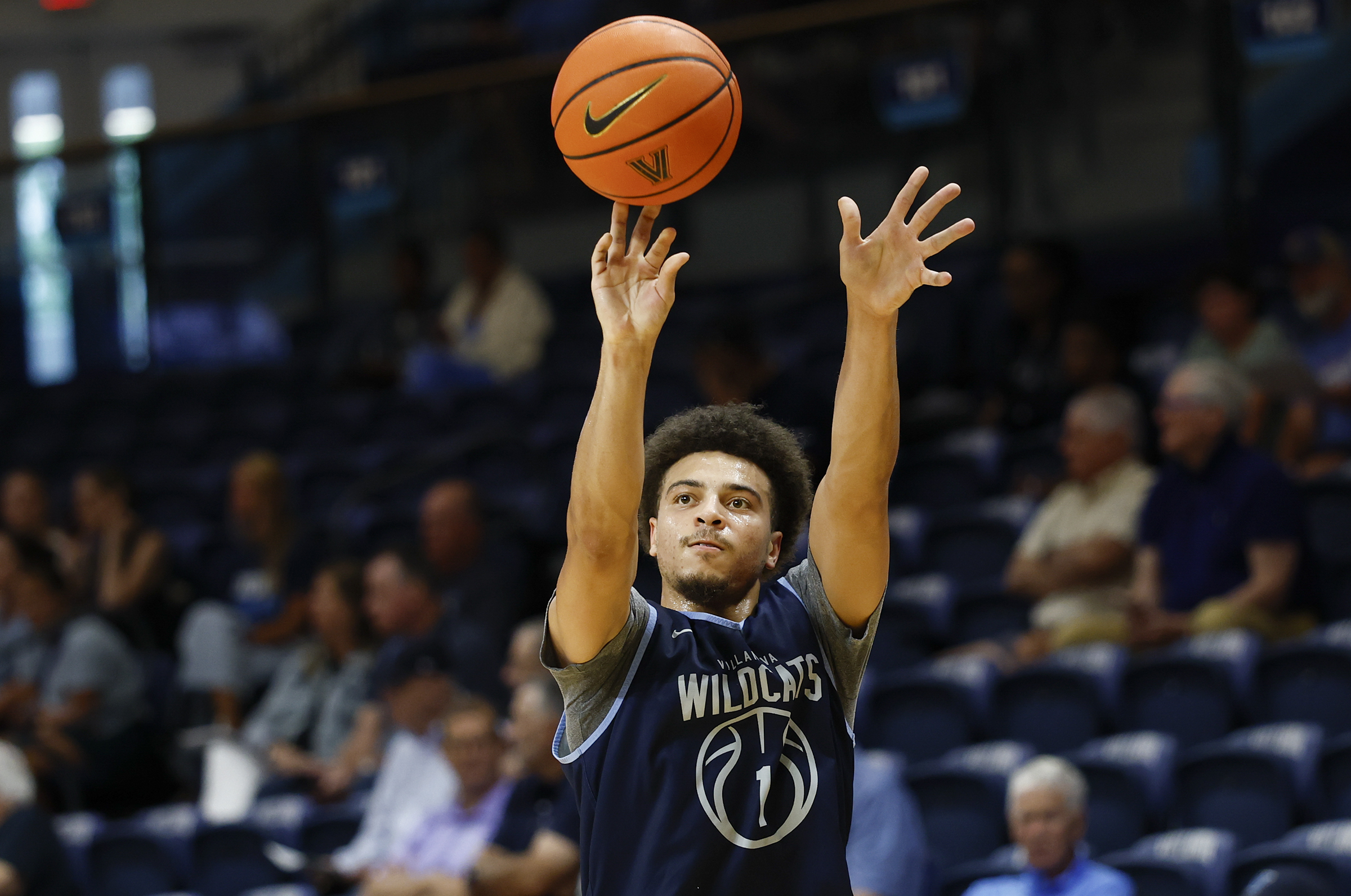
Villanova guard Jake Fiegen shot 41.4% from deep last season with Cornell.Yong Kim / Staff Photographer
Fiegen, a 6-4 senior, was one of the best shooters in the Ivy League last season at Cornell and showed why Monday. He connected on at least seven three-pointers during the scrimmage, including three during a four-possession span.
Fiegen, who shot 41.4% from deep last season, will come off the bench and should have plenty of catch-and-shoot opportunities given the playmaking around him.
Projected starting point guard Elijah Crawford was pretty efficient in the pick-and-roll game. That’s where the Wildcats will need him to shine and be a difference maker.
There was a two-possession span where Crawford connected with Onyekwere for an easy alley-oop and then, after a quick turnover, found Fiegen for an open three in transition.
Elijah Crawford is projected to be the Wildcats’ starting point guard.Yong Kim / Staff Photographer
Later, Crawford broke his defender down off the dribble, drove to the rim, jumped for a layup before kicking out to Darryl “Buddy” Simmons II, who made a wide-open triple.
Simmons, a 5-11 guard from St. Bonaventure, made a few three-pointers during the scrimmage and also found his way to the basket for a nice layup. On the other end, he defended Armstrong, now a G League player, pretty well during a few one-on-one possessions.
Fiegen even got in on the playmaking. On one possession, Fiegen dribbled into the lane, jump stopped, then kicked to Simmons for a three on the wing.
It looked like old-school Villanova basketball … but it’s only July.
The rest of the 11-game nonconference schedule will come from the Big 5 (three games) and likely three “buy games” at home.
Villanova coach Kevin Willard believes “it’s really important to test yourself on the road.”Yong Kim / Staff Photographer
It’s a pretty tough schedule, and Willard explained why on Monday.
“I went back and looked at the last 10 national champions and looked at how they schedule and where their rank of schedule was,” Willard said. “I think it’s really important to test yourself on the road, most importantly. … Especially with the tournament going to 76 teams, I think teams should get rewarded by scheduling hard.”
He also mentioned the all-important revenue-generating component in the new world of revenue sharing. The Wildcats will host Michigan at Xfinity Mobile Arena. They play Wisconsin there, too, though that game is technically a neutral-site game. They will play more games there than they did last season, Willard said, in part because they can sell more tickets there than at the 6,500-seat Finneran Pavilion.
You can’t afford Suigo and the rest of the roster if you’re not increasing revenues.