Category: Business

  • Walmart plans to bring delivery drones to Philly. What that means for Amazon and the same-day delivery wars.

    Walmart is raising the stakes in the high-speed delivery war with Amazon, with part of this latest battle playing out in Philadelphia.

    Wing, the first company to offer commercial drone delivery to homes in the United States, announced this week that it will expand its partnership with Walmart to bring drone service to seven new cities, including the City of Brotherly Love, sometime in 2027.

    A Walmart spokesperson said there was no timeline for when the drones would come online in Philadelphia, nor did the company say which of the city’s five stores would get the service. Even so, Philadelphia’s inclusion in Walmart’s drone program would be the first for the Northeast, part of a plan to bring drone delivery to 270 stores.

    “Expanding into new markets with Wing allows us to provide an innovative delivery option for customers, utilizing our vast store network to make everyday shopping and fulfilling last-minute needs just a little bit easier,” said Greg Cathey, Walmart’s senior vice president of eCommerce fulfillment transformation in the U.S, in a statement.

    The move, according to industry observers, would intensify the competition with Amazon, which has been feverishly working to offer increasingly faster deliveries to consumers through a mix of human couriers and drones. While Amazon has been testing out drone delivery since 2016, the competition lies not in who has the better machines, but in who can deliver goods faster.

    Walmart, which launched its pilot that began in 2021, has used Atlanta and Dallas-Fort Worth as a testing grounds for its drones.

    Just last month, the e-commerce giant launched “Amazon Now,” a 30-minute-or-less (human) delivery service in Philadelphia, also available in Atlanta, Dallas-Fort Worth, and Seattle.

    Early Walmart reports tout an average delivery time of 23 minutes with their drones.

    “I think [the drone expansion] is signaling that Walmart feels that they are ready to reduce the delivery time,” said Subodha Kumar, founding director of the Center for Business Analytics and Disruptive Technologies at Temple University’s Fox School of Business.

    “They are going to put a lot of pressure on Amazon.”

    While Amazon is seen as the gold standard for e-commerce logistics and had a head start experimenting with drones, its under-60-minute delivery through “Prime Air” has been primarily deployed in suburban areas. Part of the challenge for Amazon is that its fulfillment centers are far from customers.

    Walmart has the advantage of being much closer to its customers, said Kumar, calling plans to introduce drones a significant development in the wars for faster deliveries.

    “For Walmart, the drone makes even more sense because drones are limited in their distance and what they can carry,” said Kumar, adding the retailer has the advantage of having its stores much closer to their customers.

    For its part, Walmart has billed the machines as a fast way to get last-minute items. The Wing drones will deliver up to eight miles from a location that offers the service and carry up to 2.1 pounds, according to the company’s website.

    The company has said some of the most popular items for this kind of delivery include medicine, fruit, eggs, ice cream, baby formula, and pet food.

    People can place orders on the Walmart app and their delivery will be lowered on a tether in front of their home, driveway, or backyard. Deliveries will be free for a limited time to Walmart+ members, according to the company website, or $19.99 for nonmembers.

    “Our work with Walmart has shown that drone delivery isn’t just a novelty, it’s a service many customers count on multiple times per week,” said Heather Rivera, Wing’s chief business officer, in a statement.

    The pilot, which Walmart says works with “drone providers” that are experts in their field, made its millionth delivery last month with an average delivery time of 23 minutes going at speeds up to 60 miles an hour.

    Drones are currently carrying out deliveries in select cities in Texas, North Carolina, and Georgia. In addition to Philadelphia, Memphis, New Orleans, Phoenix, Salt Lake City, San Diego, and the San Francisco Bay Area are part of the expansion.

    Kumar said the new technology demonstrates there’s an appetite for faster deliveries on the consumer side and a service with no human interaction.

    In that way, the drones are similar to Uber Eats’ autonomous delivery bots, which were introduced in March to a mixed response. While many appreciate the convenience, others have lamented the sight of cuboids blocking the sidewalks. Lawmakers have already expressed concerns over the technology moving too fast and suggested restrictions. Waymo, the autonomous vehicles, have spurred similar conversations in Philadelphia.

    In its expansion announcement, Wing said both companies plan to work closely with local leaders and community members, sharing information about the machines.

    Kumar said the drones will likely bring a whole new set of public concerns over airspace traffic and safety.

    “It will bring new issues that we don’t know the answers to yet,” he said.
  • Philly hotel workers push back potential strike as FIFA World Cup is set to begin

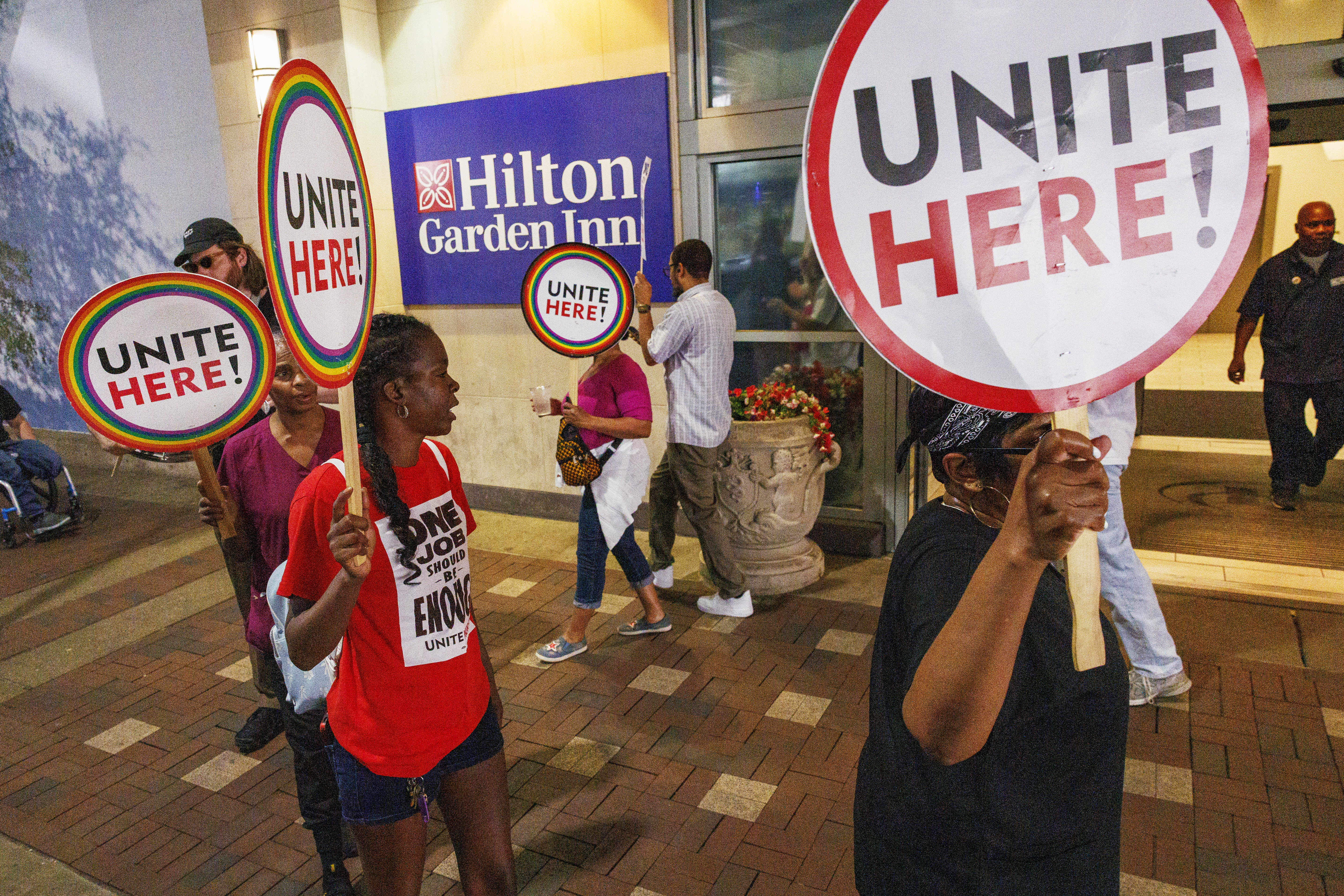
    Philly hotel workers push back potential strike as FIFA World Cup is set to begin

    Unionized hotel workers in Philadelphia had planned to strike if they hadn’t agreed on a new contract by Friday, but they’ve decided to continue working for now, citing progress made in negotiations.

    Their union, Unite Here Local 274 had announced a strike deadline of June 12 last month. Hours away from the deadline on Thursday evening, the union announced in a statement that the deadline had been extended but did not provide a new date. The statement noted, “a strike may now be called at any time.”

    “Substantial progress is being made in some hotels,” union president Rosslyn Wuchinich said in a statement Thursday. “We have set a citywide standard, and we expect our hotel employers to meet it or face disruption during the World Cup.”

    The union said last month that some 600 workers across five hotels where contracts had still not been reached could walk off the job.

    They are: Sheraton Philadelphia Downtown, Wyndham Philadelphia Historic District, Hilton Philadelphia at Penn’s Landing, the Warwick Hotel Rittenhouse Square Philadelphia, and Hilton Garden Inn Philadelphia Center City.

    Workers at two of the five hotels had voted to authorize a strike, Wuchinich said in May. Strike authorization votes still have not been held at all five hotels, union spokesperson Dermot Delude-Dix confirmed Thursday.

    The union last spring began negotiating new contracts at several Philadelphia hotels.

    New contracts have since been adopted at: Hampton Inn Philadelphia Center City — Convention Center, Sonesta Philadelphia Rittenhouse Square, and the Sheraton Philadelphia University City Hotel.

    At these hotels, contracts include raises to $30 an hour by 2028 for non-tipped employees, and an increase in employers’ contributions to their pensions. The contract also includes a provision capping the number of rooms a worker can be tasked with cleaning at 15 per day, down from 16 previously.

  • Oil executives warn White House that gas prices will get worse

    Oil executives warn White House that gas prices will get worse

    Oil and gas executives have warned the White House that gasoline prices could surge in coming months as fuel inventories fall to critical lows, complicating the Trump administration’s efforts to contain inflation that has already rattled American consumers.

    Industry officials say they are doing everything they can to sound an alarm that prices are about to soar as the commercial and government inventories that have mitigated price rises so far are rapidly depleting, according to multiple people familiar with the conversations, who spoke on the condition of anonymity for fear of retaliation from the administration. Some inventories could be wiped out within weeks, the executives have warned, coinciding with the peak summer travel season.

    “I have absolutely no doubt the White House — from the president on down — is fully aware of the nearly universal alarm among oil companies and analysts about the direction of travel for oil prices this summer,” said Bob McNally, who was an energy adviser in the George W. Bush administration and founded the research firm Rapidan Energy Group.

    The warnings underscore the rising political and economic risks confronting President Donald Trump as the conflict with Iran drags into its fourth month, with little indication that a diplomatic breakthrough is imminent, despite periodic White House predictions of progress.

    Already Trump’s administration is confronting the highest rate of inflation in three years, which has led to a significant drop in his standing among voters and deepened concern among Republicans about widespread losses in the midterm elections, which could cause them to lose control of one or both houses of Congress.

    The Labor Department’s Consumer Price Index rose at a 4.2% annual pace in the year ending in May, driven by surging gas prices.

    Trump has publicly brushed off concerns about the rising prices. “I love it. I love the inflation,” Trump told reporters Wednesday when asked about the new figures. Oil prices will drop “like a rock” once the war concludes, he said.

    Industry executives suggest otherwise.

    The war with Iran has snarled the Strait of Hormuz, the waterway that transported about one-fifth of the world’s oil and natural gas supplies before the war. Trump has repeatedly sought to assure the public that he is close to a deal to reopen the strait, but that has not happened.

    Senior oil executives who typically avoid making alarming projections in public have been doing exactly that.

    “We’re sounding the alarm on these inventories going to record lows,” said American Petroleum Institute CEO Mike Sommers on Mornings With Maria, a Fox Business program that Trump frequently watches. “We should be concerned about what prices we’re going to see over the next few weeks. We have to solve this problem in the Strait of Hormuz.”

    Industry officials, who spoke on the condition of anonymity to avoid antagonizing the White House, said the administration’s reception to their worries has been mixed. Some officials, they say, are taking the posture that the warnings are hollow. Prices have not shot up toward $200 a barrel, despite warnings since the war against Iran started in late February that they would quickly head there.

    The U.S. Strategic Petroleum Reserve has dropped to 349.2 million barrels, approaching a multi-decade low last seen in 1983. The exact date reserves start to run dry can be difficult to calculate, because they cannot be run all the way down.

    Millions of barrels of oil need to remain in pipelines and refineries to keep the systems from breaking down. Analysts and industry executives warn the critical moment could come anywhere from the end of this month to closer to the end of summer. But they are universally anxious about how quickly the supply is declining.

    Industry models show the collapse of crude inventories within a matter of weeks could push the cost of oil up by 50% or more — sending the price of gas at the pump soaring past $5 per gallon. Oil executives worry that will send the administration scrambling to impose emergency measures like restricting the export of U.S. fuel.

    A senior White House official said more information from the industry “is good,” and the administration will continue to take information from oil and gas executives into account.

    “But that is one piece of a larger picture that only the president has,” said the official, who spoke on the condition of anonymity to describe the private deliberations.

    The price of gas has “consistently gone down for the past couple of weeks,” the official said. The official attributed that to steps the administration has taken to ease prices, including waiving the Jones Act, which governs the ships that can serve U.S. ports, and coordinating the release of 172 million barrels from U.S. reserves.

    The national average for a gallon of gas on Wednesday was $4.15, down from $4.52 a month ago, according to data from AAA. The prices fell in part because of reports of peace negotiations in the conflict with Iran, but the latest exchange of attacks has jeopardized a fragile ceasefire.

    “The president is focused on finishing the job,” the official said. “We have heard projections again and again throughout this entire conflict that the price would jump higher and higher, that the price of crude barrel would be $150 or $200, or the average price of oil would be upwards of $5. None of that has played out.”

    Other administration officials are frustrated that the industry has not moved faster to drill more and expand domestic production to create a buffer, some of the people said.

    But companies have been reluctant to invest too heavily in multibillion-dollar drilling operations, which would not yield substantially more barrels for months when the administration is expressing confidence that the strait will reopen within days.

    “Both camps know exactly what is at stake,” said one industry official who frequently interacts with the administration. “The industry folks are intent on making sure that if the worm turns, the White House does not point fingers that the industry did not do enough.”

    “Everyone everywhere fully appreciates that the standoff cannot go on for another 30-45 days without the political calculations changing,” the official said.

    “The White House knows and understands the severity of the potential situation. … They are politically constricted from saying that publicly.”

    The potential for a dramatic price hike that would ripple around the world does not align with Trump’s narrative that the United States holds all the cards in negotiations and that oil disruption is but a minor, short-lived inconvenience.

    A further hike could carry political consequences for Trump, whose allies now acknowledge the risk that a prolonged conflict poses to the Republican Party’s prospects in the midterms.

    “High oil price is like a tax on the economy, and it’s a tax on the incumbent party,” said economist Steve Moore. “This is why Trump is so eager to get this done.”

    Trump said that he had conducted a secret military operation to remove 100 million barrels of oil that were stuck in the strait. Military officials said his remark referred to a previously announced plan to share information with shipping companies about safe routes through the waterway.

    Experts tracking movement of oil on through the strait say that some shipments have gotten through, but the volumes are extremely limited and do not do very much to solve the inventory problem.

    Before the war, some 130 tankers traversed the strait daily. Even if White House alleges that dozens of tankers are slipping through each week are accurate, that would amount to only a fraction of the crude moving through the strait before. Ship-monitoring data suggests the White House claims are exaggerated.

    “The president is making a remarkably dubious claim,” said Brett Erickson, managing principal at Obsidian Risk Advisors, which specializes in financial crime and sanctions, and is closely monitoring oil shipments in the Persian Gulf. “And even if some ships are getting through, this is not a long-term solution. Are we going to perpetually be the chauffeur for the Gulf?”

    Even if some stranded oil can be smuggled out, ships cannot get back into the strait to reload.

    “They don’t even need to hear from us directly to know there is a problem,” said an executive with a major oil company. “There is no shortage of people out there saying this publicly. The inventories are at historic lows.”

  • Iran war is the worst hit to the global economy since COVID, World Bank says

    Iran war is the worst hit to the global economy since COVID, World Bank says

    The global economy — tested by years of war, pandemic, and trade tension — is beginning to fray, as fallout from the U.S.-led war on Iran dents prospects for growth, the World Bank said in a new forecast.

    World output this year is expected to grow at an annual rate of just 2.5%, down from 2.9% in each of the past two years, and the slowest pace since the onset of the COVID pandemic in 2020, the bank’s top economists said.

    Soaring costs for oil, gas, fertilizers, and industrial chemicals caused by the prolonged near closure of the Strait of Hormuz, which the bank calls “the biggest supply shock in 50 years,” is straining developing and advanced economies alike.

    “The global economy is not falling off of a cliff, but it has downshifted sharply, and many developing economies are entering this shock with thinner buffers and fewer shock absorbers,” said Ayhan Kose, the World Bank’s deputy chief economist.

    The new forecast is gloomier than the bank’s January outlook, which saw the global economy largely weathering an era of trade uncertainty arising from President Donald Trump’s tariffs.

    Bank specialists cut their January forecasts for two-thirds of the world’s nations, with Turkey, Bangladesh, and South Africa suffering notable downward revisions.

    Nations adjoining the Persian Gulf war zone are expected to be hit hardest: Kuwait, Iraq, and Qatar will see “near zero” growth in 2026, Kose said. The United Arab Emirates is projected to grow at a 2.4% rate this year, less than half the pace the bank expected before the war.

    The 2020s appear almost certain to become a “lost decade” for dozens of developing nations that have made no progress closing the income gap with the advanced economies, the bank’s Global Economic Prospects report said.

    The United States — fueled by mammoth investments in artificial intelligence — remains a relative bright spot, expected to grow at a 2.2% annual rate, up slightly from last year’s pace, and much faster than Europe and Japan. U.S. investments in AI-related infrastructure exceed such spending by all other nations combined, the bank said.

    China is set to grow at a 4.2% rate, down from 5% last year and 0.2 percentage points below the bank’s January outlook.

    The war-related shock is occurring against a downbeat long-run backdrop. Global growth has softened steadily since the early 21st century, sapped by the impact of aging populations, declining private investment, trade tensions, and rising public debt, said Indermit Gill, the bank’s chief economist.

    “The world economy is a lot less resilient today,” Gill said.

    The bank’s new forecast assumes that Middle East energy and commodities trade will return to normal by the end of July and that Brent crude, the global benchmark, will average $94 per barrel this year.

    But with the U.S. and Iran continuing to trade blows, despite a nominal ceasefire, bank officials noted the risk of further economic erosion.

    If the war continues beyond July, oil prices will average $115 a barrel for the year, driving global growth to an anemic 2.1% rate, the bank said.

    An energy shock that drives down stock and bond prices would take an even larger toll on the global economy. Growth in that case would struggle to reach a 1.3% rate.

    Public debt burdens are another worry. With annual budgets already deep in the red, the U.S. and other major nations would have limited ability to increase public spending in response to an economic crisis, as they did during the pandemic and the 2008 financial crisis, the bank warned.

    For now, the global lending body is making available at least $50 billion in financing to buttress social programs in developing nations hurt by the slowdown. If the crisis persists, the bank said, it is prepared to roughly double that figure over a 15-month period.

    “Our job is to help countries steady the ship, keep reforms moving, and emerge stronger on the other side,” said Ajay Banga, the bank’s president.

  • Forget coders. The real AI threat is in the back office.

    Forget coders. The real AI threat is in the back office.

    If artificial intelligence disrupts the job market, which workers will be most vulnerable?

    The obvious answer, and the one that has dominated public debate over AI job loss in recent months, is that the workers most at risk are programmers, software engineers and other tech industry employees. They have borne the brunt of the mass layoffs by Meta, Block and other Silicon Valley companies. Their skills are the ones that AI systems have mastered first.

    But many economists are more concerned about a different, larger group of white-collar workers: customer service representatives, bookkeepers, payroll clerks and human resources specialists who fly under the radar but collectively account for tens of millions of jobs.

    Some of these workers have college degrees. Many do not. They are spread across the country and throughout the economy, working in every industry, in big cities and small towns, at major corporations and mom-and-pop businesses. They are disproportionately — overwhelmingly, in some occupations — women.

    These jobs typically offer a middle-class salary or a pathway to achieving one — much as manufacturing jobs did for men before decades of globalization and automation wiped many of them away.

    “I worry that AI will be to high-school-educated women what deindustrialization was to high-school-educated men,” said Molly Kinder, a former researcher at the Brookings Institution who is starting an organization focused on AI’s impact on workers and the economy.

    For now, such an outcome is a fear, not a forecast. Despite high-profile layoffs in tech and finance, there is little firm evidence that AI has hurt the labor market as a whole.

    Economists have become increasingly convinced that disruptions are likely, but they say it is too early to know where or how widespread they will be. They remain broadly skeptical of claims that the technology will lead to mass unemployment in the near future. Some AI industry leaders have walked back such predictions in recent weeks.

    But given the extraordinary pace at which companies are adopting AI — and at which the technology is improving — economists say policymakers need to consider the potential effects on the labor market. And they say they are concerned that the public debate has focused too much on software engineers and a relative handful of other high-status careers — lawyers, consultants, economists — rather than the workers who could be most vulnerable.

    Back-office jobs deserve more attention in the AI discussion, said Mark Muro, an economist at Brookings who has studied the impact of the technology.

    “These are the kind of anchor jobs for families and households,” he said. “We really need to keep our eye on what is occurring across the entire labor market and in all of these occupations.”

    Good jobs at risk

    Software engineers have dominated the public discussion of AI partly because they have been the first to adopt it in their work. Measures of AI exposure that are based on how people are using the technology, therefore, inevitably show programming jobs as among the most at risk.

    But as the technology spreads through the economy, a broader set of roles could be affected. For companies, the promise of AI is that it will save them money, and back-office jobs are an obvious place to look to cut costs.

    “If you think about the back office, that’s not the main function of the company, so they might think of it as a cost center,” said Jung Ho Choi, an accounting professor at Stanford University.

    Economists at Northwestern University recently recalculated measures of AI exposure based on the makeup of the total workforce, not just the people using the technology. Administrative and front-line roles, such as customer service representatives, rose to the top of the list.

    “The most affected jobs are secretaries, are routine clerks,” said Michelle Yin, one of the working paper’s authors. “They’re not computer scientists or data scientists at all.”

    Widely cited measures of AI exposure, she added, “give the wrong impression” about who will be most affected — and, in particular, tend to understate the impact on people without college degrees, older workers and people of color.

    Kinder gave the example of medical records specialists, a job that pays about $50,000 a year and typically doesn’t require a college degree. More than 90% of the jobs are held by women, many of whom work from home, making it an ideal role for many mothers with young children.

    Other examples include billing and payroll clerks, and customer service representatives — jobs that pay at or near middle-class salaries without requiring a college degree. All of them are dominated by women. And all of them are, by various measures, vulnerable to substitution with AI.

    “My worry is that the lesson from deindustrialization is that many of these women will be able to get another job, but it might be a much worse job,” Kinder said. “It might be more precarious.”

    Vanishing options

    Such workers are also more vulnerable in another way: They will have a harder time recovering if they do lose their jobs.

    In a recent paper, researchers at GovAI, a nonprofit focused on AI policy, sorted occupations into categories based on not only how exposed they were to AI displacement but also their ability to adapt to a job loss, using factors like age, education and income.

    The good news: Many of the workers most exposed to AI right now are relatively well positioned to adjust. They tend to be younger, giving them more time to shift directions in their career. They generally have more education and live in cities with more job opportunities. And they are more likely to have higher incomes, giving them the resources to sustain them through a job search.

    The workers to be most concerned about, the authors argue, are the ones who are both at high risk of displacement and have little capacity to adapt: customer service agents, secretaries and other back-office workers.

    “If AI does lead to displacement, then these are the folks that you might want to consider paying special attention to,” said Sam Manning, one of the authors. Policymakers, he said, should “think about what sort of additional support they might need to manage a job transition, compared to the managing partner at a consulting firm or a lawyer or software engineer who’s similarly exposed, but if they lose their job, they have lots of things that might make them better positioned to find a new one.”

    Fewer rungs on the ladder

    Back-office workers are hardly strangers to technological disruptions. Word processors displaced typists; spreadsheet programs and accounting software displaced bookkeepers; online booking sites displaced travel agents.

    Those changes came gradually, however, giving workers a chance to adapt. Women, in particular, responded to the disappearance of many secretarial jobs in the 1980s and 1990s by attending college in record numbers, opening pathways to better-paying careers.

    U.S. businesses employ far fewer secretaries than they did 50 years ago, but the jobs that remain are more complex and better paid than they used to be.

    Women who didn’t attend college, however, have been pushed into retail, hospitality and healthcare — sectors in which jobs tend to be physically demanding and poorly paid, with few opportunities for advancement.

    “College-educated women are the ones who came out on top from this,” said Eliza Forsythe, an economist at the University of Illinois who has studied earlier waves of white-collar automation. “They’re the ones who experienced the employment gains without the wage declines. Everyone else are the ones who didn’t do as well from this technology.”

    The risk with AI is that it will move too quickly for workers to adapt — and that, this time, a college degree won’t protect against displacement. Indeed, many of the jobs that women transitioned to during the computer revolution of the 1980s and 1990s, like accounting and human resources, are now vulnerable to AI displacement.

    Forsythe said AI was also likely to create new jobs, as did earlier technological revolutions. And it is too soon to know to what degree AI will displace workers rather than make them more productive, potentially allowing them to earn more.

    “I would be cautious about just focusing on what are we losing as opposed to what are we going to gain on the other side,” Forsythe said.

    Even if AI doesn’t destroy jobs, there could be lasting consequences for workers caught in the transition. Muro, the Brookings economist, has studied how AI threatens jobs that have traditionally served as “gateways” between low-paying, entry-level work and more sustainable careers.

    Someone who starts as a receptionist, for example, might move into a customer service job that pays only modestly better but offers a chance to move into a much better job in human resources or even management. If AI eliminates that middle step, it could be harder for workers to move up the career ladder, said Justin Heck, a co-author on a recent article with Muro.

    “What happens if we’re no longer building those skills on the job? Where is there available to move up?” Heck asked. “What are the ramifications three years from now, when workers remain stranded in low-wage work, and employers are struggling to fill high-wage roles because we’ve carved out the middle?”

    This article originally appeared in The New York Times.

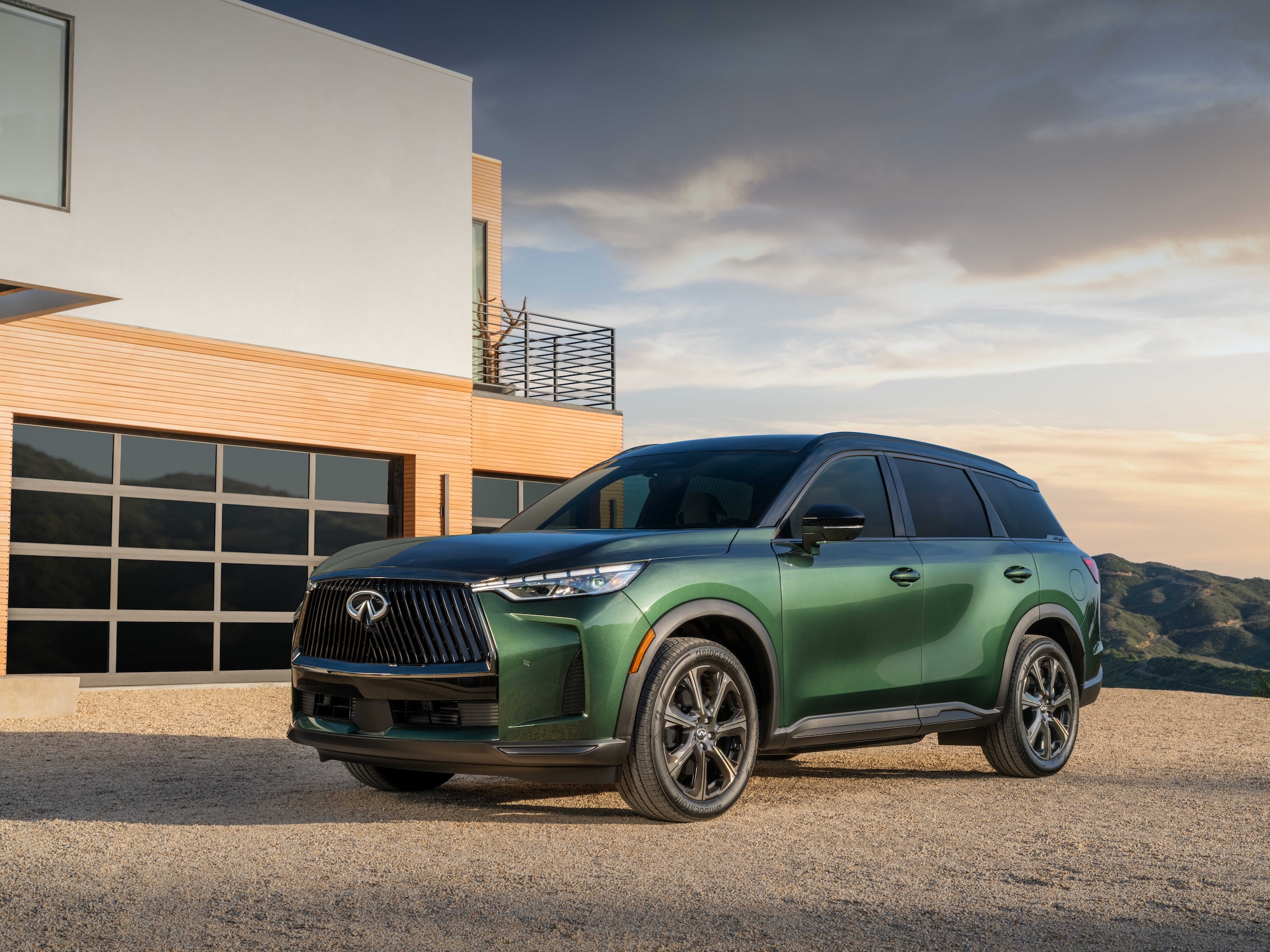
  • 2026 Infiniti QX60: New look, new engine, new experience?

    2026 Infiniti QX60: New look, new engine, new experience?

    2026 Infiniti QX60 Sport AWD: New stuff is better, right?

    Price: $65,750 as tested.

    What others are saying: “Pros: Classy, high-feature interior, well utilized screens, best-in-class third-row accessibility. Cons: Not a Sporting bone in this body; VC-Turbo drivability still disappoints; poor lane keep, auto stop/start systems,” says Motor Trend.

    What Infiniti is saying: “Designed with distinction — inside and out.”

    Reality: Sometimes new stuff is just new.

    What’s new: The QX60 is redesigned for 2026, adding mass and presence in its new look, as Infiniti touts. (Never do cars redesigned for the American market get more svelte or subtle.) The vehicle also adds more smart tech.

    The Sport grade tested is also new for 2026, and it jazzes up inside and out.

    The VC-Turbo four-cylinder replaced the old V-6 in 2025, and there’s a lot to say about that power plant below.

    Competition: Acura MDX, Audi Q7, BMW X7, Cadillac Escalade, Cadillac XT6, Land Rover Range Rover, Lexus GX, Lexus TX, and Volvo XC90.

    Up to speed: I can be as focused as the next car guy on 0-60 times, but years of testing have proven time and again that there’s so much more. The 0-60 time of 6.9 seconds, according Motor Trend, is respectable among premium three-row SUVs.

    But if I stopped here, you’d being missing a lot.

    This is the QX60’s second year featuring 268-horsepower VC-Turbo 2-liter four-cylinder engine name, which sounds pretty cool in a Marvin Martian kind of way. Much like the Illudium Q-36 Explosive Space Modulator!, though, this VC-Turbo is still in beta testing.

    Each standing start revealed the QX60 had more hesitation than Mr. Driver’s Seat trying to explain a dent on a test vehicle. I’d press the accelerator and for easily a second, the QX60 would hem and haw. Frightening.

    The denouement came while turning left from a parking lot onto a 50-mph stretch of U.S. 322. Even in Sport mode, I was sweating getting to 50 mph quickly enough, let alone 60.

    I had much better success with a 3.5-liter V-6 in a 2022 QX60, although I’m trusting that “some hesitation” back then was far better than this time around.

    Good to go: Not everything about the drive was terrible. On the first day behind the wheel, I found the QX60 to feel somewhat sporty and fun. It seemed to have a bit of a kick to it, almost Jeep Wranglerlike in its roughness. But that got old really fast, especially in light of the unpredictable accelerator.

    Shifty: The 9-speed automatic transmission operated seamlessly while driving, but it also revealed one weird habit while getting in gear: It rolled back quite a bit. In fact, its rolling could almost match clutch driving. This seemed more prominent in Sport mode. Presumably there’s an auto hold button I could have engaged, but I haven’t needed to in 40 years of driving.

    The shifter is modeled on Lexus’ long-ago handle, a square top that pulls back or pushes forward depending on where you want to go.

    If you want to shift your own gears, though, it’s paddle city for you.

    On the road: The handling of the QX60 never got me excited. Curves and turns came and went, and I sought out enjoyment, but was left disappointed. At least the vehicle felt small and athletic for a three-row SUV.

    Sport mode, though, was a rough one on the highways; any road seams of note set the QX60 to shaking.

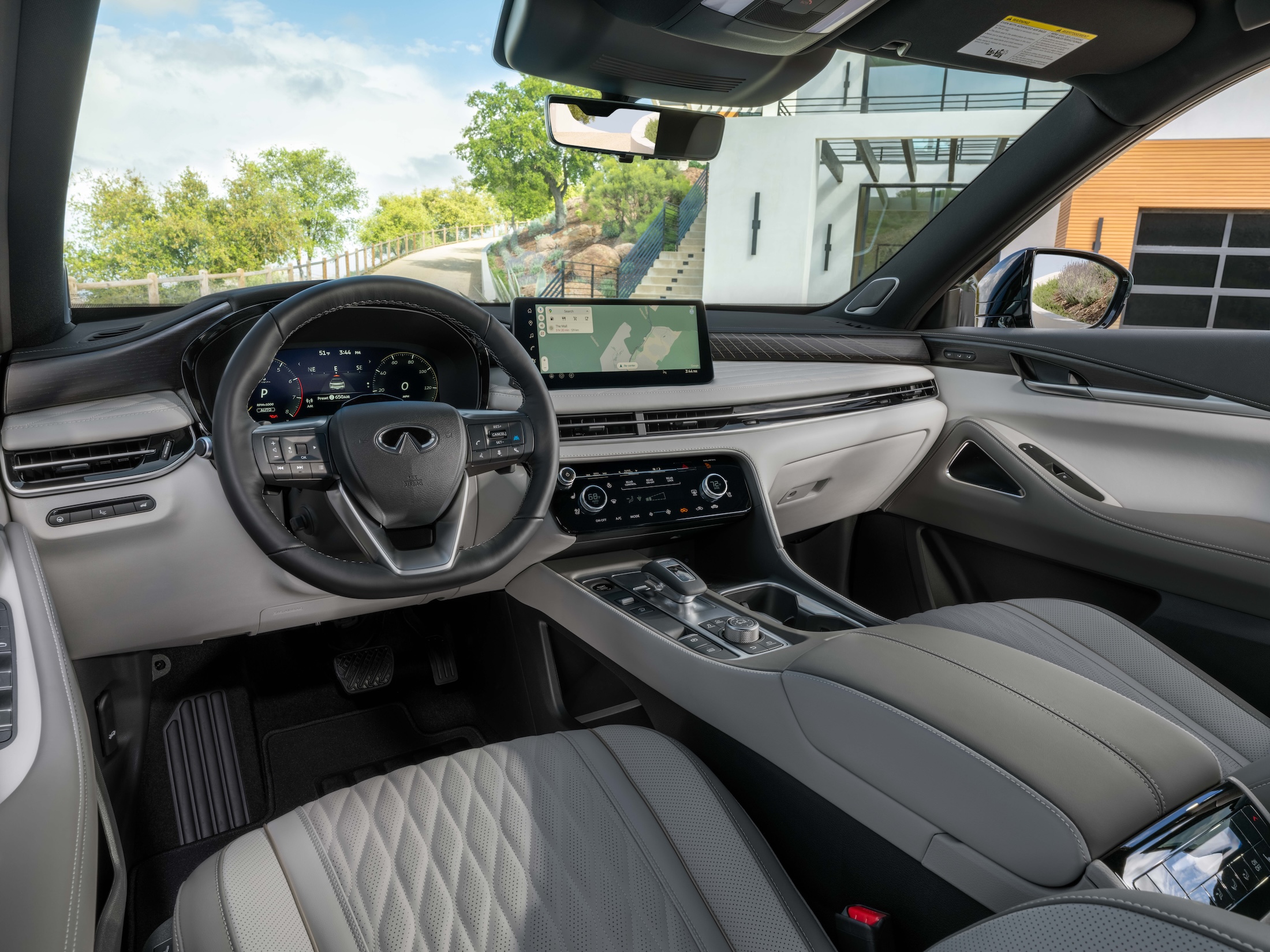
    The interior of the 2026 Infiniti QX60 looks inviting, but rear-seat passengers may feel like they’re visiting the grandmother’s house where kids aren’t allowed in the living room.TIM SUTTON

    Friends and stuff: The second row provides comfortable enough captains’ chairs, with decent space overall.

    But the third row is only for youngsters. Getting back there is hard, clambering past the second-row seats. Foot room in the rear is pitiful, even with the middle row scooched up a bit. I had to twist my size 12s with my hand to turn them into place. Finally, the door is narrow, and hopping out feels as death-defying as Lindsey Vonn’s last ride.

    Cargo space is 14.5/41.6/75.4 cubic feet, depending on the ups and downs.

    Driver’s Seat: The cockpit felt very Nissan-esque, with the usual controls and gauges found on the lesser make’s models. Granted, Nissans do generally feel more luxurious than they have a right to, but we’re paying for Infiniti luxury here.

    The seat was comfortable enough but no oohs and aah were emitted during test week.

    Play some tunes: Sound from the system was disappointing for the model level, about a B.

    A dial for volume and another for tuning make the system a little easier to control than many nowadays. The 12.3-inch touchscreen is par for the vehicle class.

    Keeping warm and cool: An ebony touchpad has Audi-style haptics, where you have to press hard enough to register your feelings. So it’s good for not accidentally setting off unwanted features as you slide around the pad, but in the Infiniti there’s no feel, so you still have to look.

    Fuel economy: The QX60 averaged just under 21 mpg.

    Where it’s built: Smyrna, Tenn.

    How it’s built: Consumer Reports had no guess for the new model’s reliability, but 2025’s was a 4 out of 5.

    In the end: Most of the vehicles in the competition list lack space in the rear, but the QX60 is exceptionally difficult.

    But if the engine hesitation was not just a test-model problem, I’d write it off. I’m surprised reading how much I liked the Lexus GX, so I’d probably start there.

  • Want to invest in SpaceX? Here’s what to know before its IPO

    Want to invest in SpaceX? Here’s what to know before its IPO

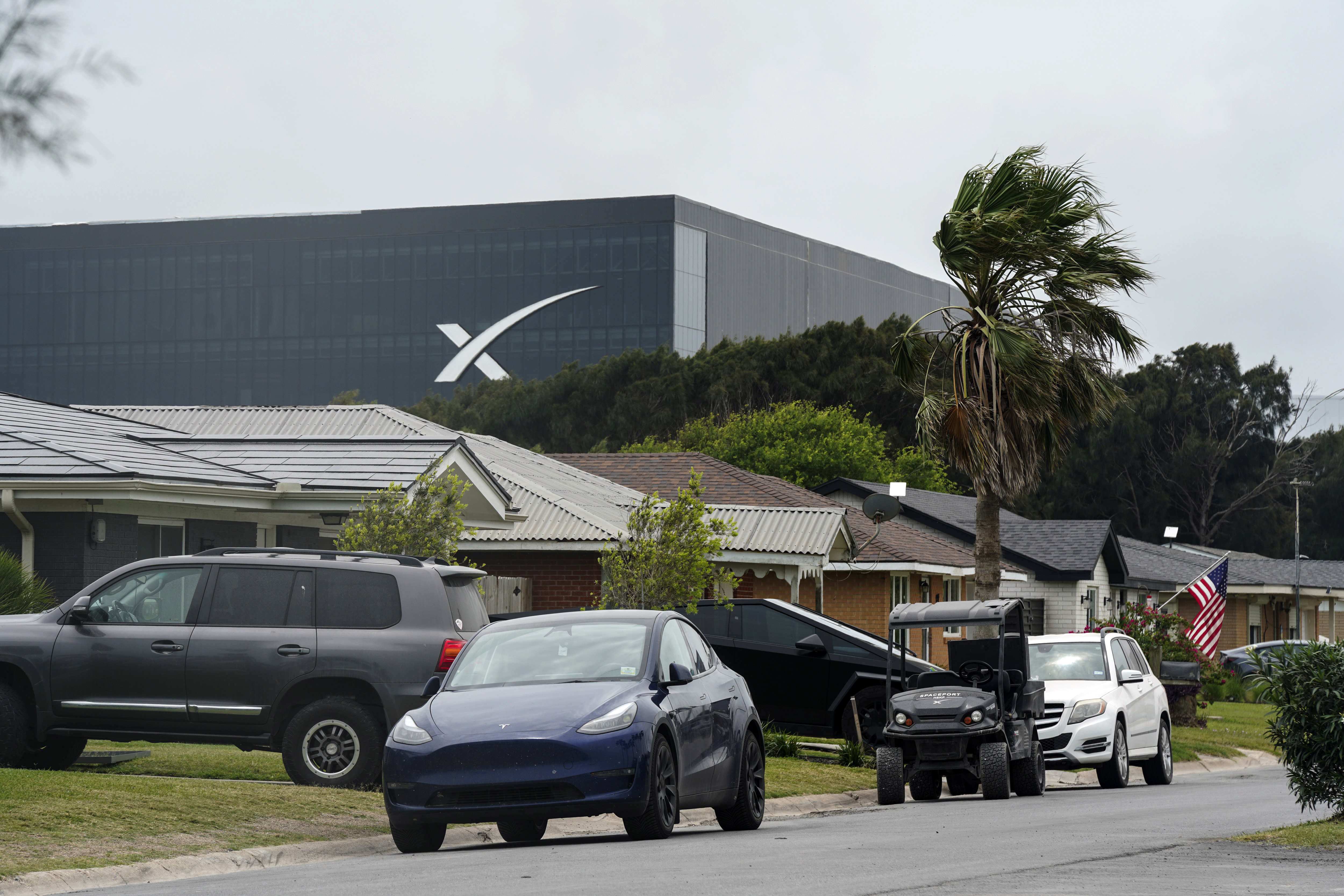
    SpaceX, Elon Musk’s rocket ship company, plans to sell shares publicly for the first time ever this week. It’s an unusual event in several ways.

    The company’s initial public offering would earn it the title of the world’s largest IPO. SpaceX is also giving everyday investors a much larger slice of its shares than is typical for a public offering. And the IPO could create the world’s first trillionaire by increasing the net worth of the company’s CEO, Musk.

    Here’s what you need to know before SpaceX’s first day of trading Friday.

    What is an IPO?

    An initial public offering, or IPO, is a company’s debut in the stock market. It’s the first time the general public can buy a piece of the company. Firms do this to tap into a bigger pool of capital to help them expand their business.

    When a company decides to go public, it works with an investment bank to figure out how much the company is worth and the price at which it should sell its shares.

    SpaceX has set its price at $135 a share, which would value the company at $1.77 trillion. Since last week, SpaceX’s bankers have been discussing with prospective investors how many shares they are willing to buy at that price. On Thursday night, all orders for shares will become final, and the offering process will close.

    On Friday, the shares will start trading publicly on Nasdaq. After trading starts, the stock price is likely to fluctuate as the shares change hands on the open market. Bankers generally try to price an IPO so that it has room to rise once its shares are public. Some analysts question how much more the value of SpaceX may rise, given its already lofty valuation.

    Why does the SpaceX IPO matter?

    Hundreds of companies introduce their stock on the market every year. But what makes SpaceX stand out is its size.

    At a $1.77 trillion valuation, it would dethrone Saudi Aramco — Saudi Arabia’s state-owned oil company, which debuted in 2019 with a valuation of $1.7 trillion — as the largest IPO ever.

    “It’s a big deal because it’s literally a big deal,” said Matt Kennedy, senior strategist at Renaissance Capital.

    If SpaceX’s IPO flops, it could send a shudder through a market that has been riding a wave of optimism related to artificial intelligence and other technology. The outcomes could include a chilled IPO market or a broader market sell-off.

    “If SpaceX does poorly and the rest of the market goes down with it, we’ll all be pointing to that as the sign that the market peaked,” Kennedy said.

    Still, it’s possible investors will stick with the company for reasons beyond the “Elon Musk factor” or AI-related exposure, he added.

    Who makes money from the IPO?

    The immediate beneficiaries of the IPO are those who already own private shares of SpaceX. They include Musk, who owns a majority of the company’s shares and could see his net worth rise to over $1 trillion.

    Others include SpaceX employees who have been compensated in company stock, and investors, including venture capital funds. The banks helping SpaceX go public will make money, too, earning a fee of more than $500 million, the largest payout ever.

    The banks are also using the IPO as an opportunity to woo clients in their wealth management businesses, giving them access to SpaceX’s initial offering shares.

    If shares of the company pop, investors who buy Thursday evening can sell those shares and make a profit.

    Over the long term, SpaceX’s stock performance may depend on whether Musk can deliver on his promises to install tens of thousands of new satellites in orbit and develop a viable AI model.

    How can I buy SpaceX stock?

    It’s possible for everyday investors to buy shares of the company at its $135 price, though not guaranteed.

    When firms go public, they usually reserve a small sliver of their stock for individuals, with the bulk going to giant investors like asset managers and hedge funds.

    SpaceX, however, is seeking commitments from individuals for up to 30% of its shares, much larger than a typical offering.

    Some of those shares set aside for individual investors will be available under the SPCX ticker on online brokerage platforms like Robinhood, Fidelity, Charles Schwab, and SoFi.

    For anyone looking to buy SpaceX shares, the brokerages have said investors may not get the total number that they request, given a limited supply of stock at the initial offering price.

    “Here, you ask for 1,000 shares — maybe you’ll get 300; maybe you’ll get 50,” said Jay Ritter, an IPO expert at the University of Florida.

    Individuals may find themselves owning SpaceX shares even if they didn’t actively choose to invest.

    The Nasdaq-100, a popular index that tracks the top 100 nonfinancial companies listed on that exchange, recently relaxed its rules to make it easier and faster for SpaceX to be included. That will force funds that track the index to invest in SpaceX practically overnight.

    How much could investors make from the IPO?

    Nearly 16 years ago, investors piled onto the IPO of Musk’s electric vehicle company, Tesla, which proved lucrative for those who held on. Someone who bought $1,000 of Tesla shares in 2010 would have seen their value soar to around $400,000 today.

    SpaceX is the biggest company in the space industry by a wide margin, which makes it a defining stock to own for those interested in that sector. It has also been around for over two decades and has hosted several funding rounds since then.

    “The time for being an early investor in SpaceX has sort of passed,” Kennedy said.

    This article originally appeared in the New York Times.

  • Delco-based medical logistics company American Expediting is closing and laying off 86 workers

    Delco-based medical logistics company American Expediting is closing and laying off 86 workers

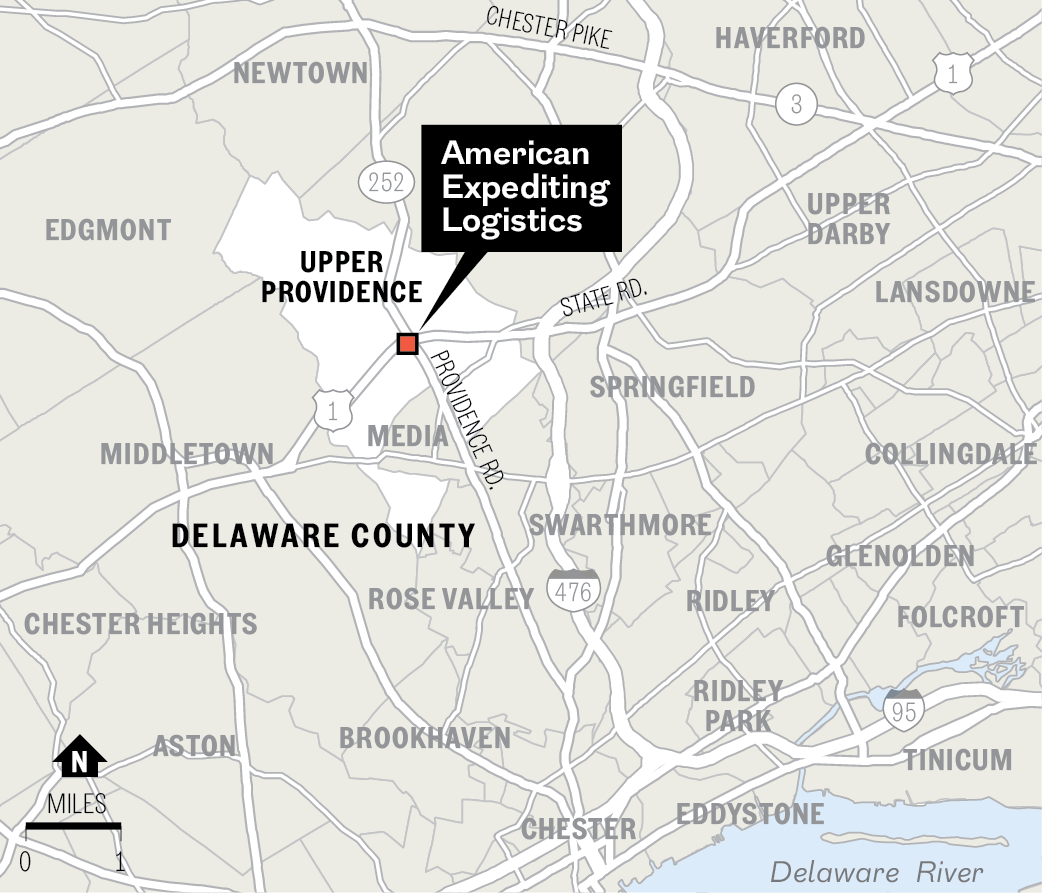
    An Upper Providence-based medical logistics company that arranged transport for specialized items including organs, blood, and drugs ceased operations last week, eliminating dozens of jobs in Delaware County.

    American Expediting Logistics is permanently closing its facility at 1400 N. Providence Rd., north of Media. It is also laying off all employees, including 86 who work in or report to its Media location, according to a layoff notice filed last week to the Pennsylvania Department of Labor and Industry, as is required by the federal WARN Act. The company expects all layoffs to occur between June 4 and June 30. All employees were notified of the layoff on June 3.

    American Expediting was founded in 1983 by Wharton graduate Victor Finnegan as a one-man courier operation, growing to more than 300 employees across over 40 locations.

    American Expediting partnered with independent contract drivers, many of whom carried specialized certifications to transport medical and life science materials, including pharmaceuticals, animals, and organ, blood, and tissue shipments. The company also provided air services, distribution and warehousing, facilities and fleet management, and logistics services.

    American Expediting was purchased by private equity firm AEA Investors in 2019.

    Under the WARN Act, companies are required to give 60 days’ notice before closing or laying off staff. Companies can, however, sidestep the 60-day notification requirement in specific cases, including unforeseeable business circumstances, a caveat cited by American Expediting.

    The company has been “operating in a challenging environment” with “reduced healthcare spending and ongoing pressures across the transportation sector,” Katie Petrie, American Expediting’s vice president of human resources, wrote in the notice to the state.

    The company in recent months attempted unsuccessfully to secure funding from an outside investor or lender. American Expediting believed there was a “realistic opportunity” to secure financing and that providing WARN notices while it was seeking funding would have hurt the effort to secure financing, according to the WARN notice.

    Representatives from American Expediting did not respond to a phone and email message left on Wednesday.

    A notice on American Expediting’s website says the company will complete shipments in its possession as of June 3 and will no longer accept new shipments. Customers were expected to transfer shipments to a different logistics provider, and warehouse customers were asked to contact American Expediting and arrange to pick up inventory immediately, according to the company’s website.

    “Our thoughts are with the employees, drivers, agents, customers, and partners who have been part of this company and this community. For many, this announcement brings uncertainty, disappointment, and difficult conversations about what comes next,” a post from American Expediting on LinkedIn read.

    This suburban content is produced with support from the Leslie Miller and Richard Worley Foundation and The Lenfest Institute for Journalism. Editorial content is created independently of the project donors. Gifts to support The Inquirer’s high-impact journalism can be made at inquirer.com/donate. A list of Lenfest Institute donors can be found at lenfestinstitute.org/supporters.

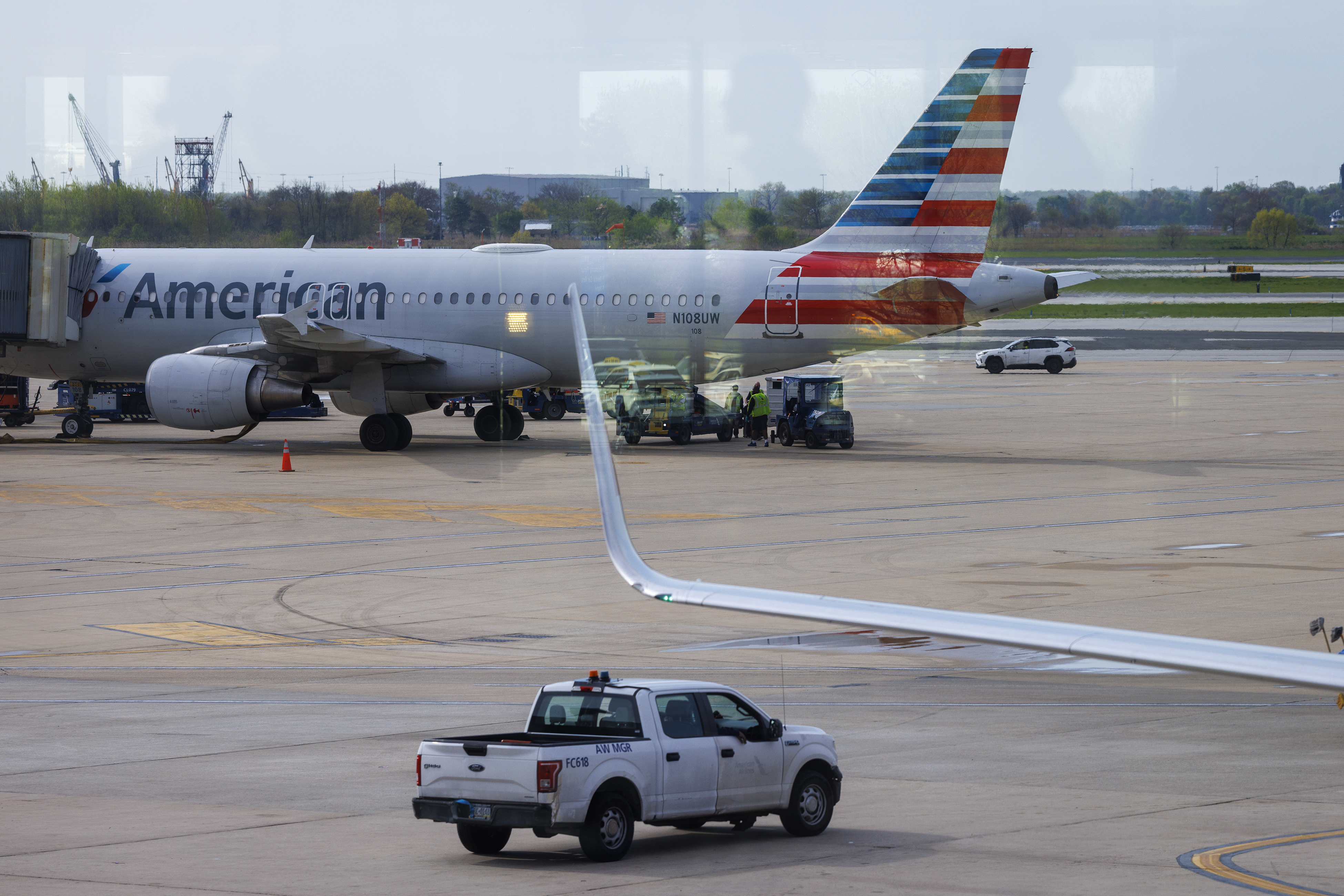
  • American Airlines cuts longest-ever flight from Philly

    American Airlines cuts longest-ever flight from Philly

    American Airlines permanently removed all future flights from Philadelphia to Doha, the capital of Qatar, from its schedule this week. The update follows a late February decision that suspended all Philadelphia-Doha flights until 2027, due to the flare in regional hostilities.

    The airline’s flight to Doha held the title of the longest-ever flight departing from Philadelphia International Airport (PHL), 14½ hours that covered approximately 6,798 miles.

    “As part of an optimization of our network and fleet, American has made the difficult decision to discontinue service to Doha, Qatar (DOH). We will proactively reach out to impacted customers to offer them alternate travel arrangements and apologize for any inconvenience,” American spokesperson Bri Harper said in a statement emailed to The Inquirer.

    The Philadelphia-Doha route originated in 2023 as part of an expanded code-share agreement — a policy that allows airlines to sell seats on flights operated by other airlines — between American and Qatar Airways, the leading carrier in the Middle East.

    The companies first partnered in 2013 when Qatar Airways joined the now 16-member Oneworld airline alliance, featuring participants such as British Airways and Iberia. In 2017, public disputes emerged between American Airlines and Qatar Airways. Since some Middle East airlines receive government subsidies, they can operate certain routes at a loss and encroach on U.S.-operated flight routes. Yet, in 2020 the companies reconciled by renewing their code share, and an expanded agreement two years later gave American’s customers the ability to book travel on Qatar flights via Doha to and from 16 new countries.

    To fill the vacancy left by American’s exit, Qatar Airways is returning to PHL and will start daily service to Doha beginning Aug. 1.

    PHL chief commercial officer Kate Sullivan said flights from Philadelphia to Doha have been “an important economic generator” for the region.

    “The PHL-DOH route also supports significant outbound and inbound business and tourism traffic — including visitors seeking advanced medical care — by bringing passengers from Doha and throughout Qatar Airway’s vast global network to our region.”

    American anticipates flying 750,000 flights this summer. To meet Philadelphia’s demand, American recently launched nonstop service to additional cities in Europe, including Budapest, Hungary, and Prague, Czech Republic. For international flights, American’s PHL hub will offer nonstop service to 19 destinations across the Atlantic.

    American is PHL’s largest air carrier, which conducts an average of 400 flights per day. It also ranks 10th in the city’s top employers, according to the Pennsylvania Department of Labor.

    Editor’s note: This story has been edited to update news that Qatar Airlines is returning to Philadelphia.

  • U.S. households, businesses stung by higher energy prices that have pushed inflation above 4%

    WASHINGTON — Rising gas prices pushed inflation to its highest level in three years last month, a headache for the Federal Reserve and a potential political challenge for the Trump administration as midterm elections near.

    Consumer prices rose 4.2% in May from a year earlier, the Labor Department said Wednesday, up from 3.8% in April and the third straight monthly increase. On a monthly basis, prices rose 0.5% last month, after big gains of 0.6% in April and 0.9% in March.

    Prices have now risen faster than wages for several months, pressuring many Americans’ finances and causing consumers to take a decidedly dim view of the economy. Families are dipping into savings to maintain their spending, and more people are falling behind on their credit card bills. Large retailers say they have also noticed changes in customer behavior, like buying smaller amounts of gas during visits to the pump.

    Inflation is now well above the Federal Reserve’s 2% target, which it has surpassed for more than five years. New Fed chair Kevin Warsh will preside over his first policy meeting next week, when the central bank is expected to keep its key interest rate unchanged. But the Fed is also likely to change the statement it issues after each meeting to remove a suggestion that its next move could be to lower rates. With inflation proving stubborn, financial markets expect the Fed could instead raise rates by the end of the year.

    When the Fed lifts rates, over time it can make mortgages, auto loans, and business borrowing more expensive.

    Outside energy costs, price increases last month were not as dramatic, a sign that sharply higher inflation hasn’t yet spread throughout the economy. Should the Iran war end and oil and gas prices decline, headline inflation could begin to cool. Gas prices have fallen this month, though they remain elevated.

    Excluding the volatile food and energy categories, core prices rose at a more modest pace. On a monthly basis, they climbed just 0.2%, down from a 0.4% gain in April. Compared with a year ago, they have rise 2.9%, up from 2.8% in April.

    Still, many goods and services rose in price last month: Clothing costs increased 0.3% and are 4.8% more expensive than a year ago. Airline fares, pushed higher by pricier jet fuel, jumped 2.7% just in May and are nearly 27% higher than a year ago. Electricity prices rose 0.6% in May and are up 5.9% in the past year.

    Grocery prices were tamer in May compared with previous months, rising just 0.1% from April. Still, they are up 2.7% from a year ago and have risen sharply since the pandemic.

    “I don’t think we’re anywhere near out of the woods yet,” Omair Sharif, chief economist at Inflation Insights, said. Price increases “were stronger under the hood.”

    Sharif and other economists point out that the cost of services, including childcare, home healthcare, and dental services are still rising much more quickly than is consistent with the Fed’s 2% inflation target.

    Bill Adams, chief U.S. economist at Fifth Third Commercial Bank, attributed some of the gain to a crackdown on immigration, which has likely forced many employers in those industries to raise wages.

    Inflation had been cooling before President Donald Trump imposed sweeping tariffs in April 2025, which lifted the costs of many goods. Prices have since surged after the Iran war made oil and gas more expensive, making affordability a key political issue.

    Small businesses are struggling with higher costs, some of which they are passing on in the form of higher prices. Others have slowed hiring or even cut jobs.

    Beth Benike, the founder of Oronoco, Minn.-based Busy Baby, said her small company was hit hard by tariffs last year and is now struggling with higher shipping costs stemming from more expensive fuel. The company sells silicon place mats and toys that attach to high chairs and strollers.

    Sales have declined as inflation has worsened, and Benike recently reduced one full-time employee to part-time hours. She said that more of her customers are now grandparents of newborns, rather than the parents.

    “Grandparents have a little more disposable income than the generation that’s having babies,” she said.

    Gas prices rose in May because of Iran’s closure of the Strait of Hormuz, which has choked off about a fifth of the world’s oil supply. Prices at the pump rose, on average, from about $4.04 in mid-April to $4.49 in mid-May, according to the Energy Information Administration.

    They have since fallen back to $4.16 on average nationwide, according to AAA, which could lead to a cooler inflation reading in June. That doesn’t mean gas prices are not prominent in the minds of most Americans. A gallon of gas has hovered above $4 a gallon since March.

    Major retail chains have discounted prices to accommodate customers who are watching their spending more closely.

    Dollar General is expanding the number of items that cost $1 or less, including frozen food. The shift has come with shoppers swapping out favored retailers for dollar stores.

    “When that [gas] price hits that $4 mark and then crosses it and then sustains for a while, you start to see that trade-in come in and you start to see that our core customer needs us most,” Dollar General CEO Todd Vasos said this month.

    Amber Greenwell, executive director of the America First Credit Union’s charitable foundation, based in Ogden, Utah, says the cost of gas, housing, and groceries have risen sharply in her state and much of the west in the past year. Her organization organizes food and diaper drives in the six states where the credit union operates.

    “There is substantial growth in families who need more food resources as well as diaper resources,” she said.

    Stubbornly high inflation has shifted the debate among Fed policymakers, who had signaled at the start of the year that they were inclined to cut their key rate twice more this year. Now, more officials are saying they expect the Fed’s next move will likely be a hike rather than a cut.

    Despite higher inflation, the job market appears to be improving, with hiring increasing to a healthy level in May, and the economy is still growing. These positive signs suggest the Fed doesn’t need to cut rates to stimulate growth and hiring. They also signal that the Fed’s rate isn’t so high that it is weighing on the economy. Yet some officials want rates to cool growth a bit, because that can bring down inflation.

    Anne D’Innocenzio contributed to this article.