Urban Outfitters Inc., the Philly-founded fashion company, is adding employees and business facilities in the region as it continues to grow.
The parent company of Urban Outfitters, Anthropologie, Free People, and Nuuly plans to hire more than 1,000 employees in the Philadelphia region over the next seven years. Company cofounder Dick Hayne and Gov. Josh Shapiro gathered at the company’s Navy Yard headquarters Monday to announce the plans.
At least 450 new positions will be at the Navy Yard headquarters. And at least 600 hires are planned at a new distribution site in Bucks County for clothing rental brand Nuuly, over the five years after that building is completed in 2028.
“Urban Outfitters was built from the ground up in Philadelphia more than five decades ago — and we are proud that this company is continuing to grow and create jobs all across our Commonwealth,” said Shapiro in a statement on Monday.
The positions include creative and operational roles across the brands and the parent company, according to Meaghan Condon, Urban’s director of communications and impact.
The company has just over 2,500 employees based out of the Navy Yard headquarters. That number has grown significantly from 500 in 2004, when Urban announced it was moving its offices there from Center City. The company employs 6,300 across Pennsylvania, including those at its stores and its distribution sites.
At the time of the move, Urban had five buildings there. Today it has 15.
The most recent addition is a 117,000-square-foot site at the Navy Yard that houses the photo studios. Redeveloping the space, which Urban started using in the last couple of months, cost about $40 million. Previously, the company’s photos were taken at various headquarters buildings in the Navy Yard or off-site at rented studios in New York.
Gov. Josh Shapiro (left) with Urban Outfitters cofounder and CEO Dick Hayne during an event Monday to announce planned hires in the region.Alejandro A. Alvarez / Staff Photographer
On Monday, Shapiro and Hayne spoke in the outdoor portion of the new building, which has been partially converted into pickleball courts, to announce the company’s continued growth. An American flag hung above them swaying in the breeze, and airplanes flew overhead periodically to and from the Philadelphia International Airport.
“When we started, we had a tiny, tiny store,” said Hayne on Monday, recalling the company’s first location near the University of Pennsylvania. “Today, we have over 800 stores across the world, including many in Europe, and our sales have grown extremely rapidly.”
Hayne said he attributes that growth in part to “the relationship that we’ve had with our governmental agencies, the City of Philadelphia, the Commonwealth of Pennsylvania, and even a little bit with the federal government.”
Hayne said Urban has invested millions in the state, calling Pennsylvania the company’s home and adding, “we intend to stay here. We have no thought of leaving.”
The announcement on Monday echoed a similar moment in 2011 when then Mayor Michael A. Nutter, alongside Hayne, announced that Urban would be adding 1,000 jobs at the Navy Yard over the course of three years, and moving into two additional buildings there. The company employed some 1,500 people at the time.
The new Bucks County facility, which is expected to be completed by early 2028,is for the company’s growing clothing rental subscription business, Nuuly. Launched in 2019, Nuuly had over 450,000 active subscribers as of this spring — over double the amount the brand had in 2023.
Nuuly has a distribution center in Levittown which opened in 2019, and another in Missouri which opened in 2024.
Over the past year, Zillow, the country’s largest real estate portal, and Compass, the biggest real estate brokerage in the world, have traded lawsuits and allegations of antitrust violations, all while waving the banner of consumer protection. Both companies have gobbled up competitors and become so dominant that when they shift their rules and practices, they have the power to change how homes in the United States are bought, rented, and sold.
Zillow owns listing websites including StreetEasy and Trulia and receives about 220 million unique visitors every month. Its scale means it can dictate practices that agents say are bad for their businesses and confusing for consumers.
Compass was already the largest real estate brokerage in the country when, this year, it bought Anywhere Real Estate for $1.6 billion, making it by far the biggest real estate brokerage in the world with about 340,000 real estate professionals. It controls brands that include Christie’s International Real Estate, Century 21, Coldwell Banker, and Corcoran. It has come under fire for pushing the practice of private listings, which go to a select group of people before they reach the public.
The National Association of Realtors was the longtime gatekeeper of real estate listings, but the organization was found guilty of antitrust violations in 2023, and its grip on the market has loosened. Now, Zillow and Compass are rushing in to fill the vacuum, battling over who gets control of the listings.
“We have two behemoths in the industry,” said Jonathan J. Miller, a real estate appraiser and consultant. If the leaders of these companies were to quickly change, shifting their strategy or focus, he continued, the ramifications could be enormous. “The entire market — the biggest asset class in the world — is subject to potentially significant change overnight.”
What is the controversy around Compass’ private listings?
Private listings have existed for decades, but they were fairly rare. Perhaps a judge or a celebrity wanted to keep their home and address private, so instead of posting the house online, their broker would call other agents and quietly invite them to the property.
Compass, however, has taken the practice wide. It offers its buyers the ability to share online listings only on the Compass website so its own agents and their clients can see them, before bringing the homes to the larger market. Those are what it calls Private Exclusive listings.
Websites like Zillow list how many days a home has been for sale, and a property that’s been on the market for an unusually long time might give a potential buyer pause. Compass’ Private Exclusive listings allow sellers to test their price without starting the days-on-market clock.
Compass’ critics say the practice disadvantages both buyers and sellers. Buyers won’t know if an overpriced home has been sitting at the same price for a year, and sellers won’t have the largest pool of potential buyers. Compass, on the other hand, does benefit, its critics say. Brokerages take a cut of their agents’ commissions, so by keeping both sides of the deal in-house, the company earns more money.
Critics liken the practice of private listings to putting tape over the odometer before selling a car. Compass disputes this, and says it isn’t obscuring any information about the home itself.
“Sellers should have the right to decide how their homes are marketed and where they are marketed,” Compass CEO Robert Reffkin said in a statement.
Some states, including Connecticut and Wisconsin, have passed laws restricting private listings. New York’s version is on its way to the governor’s desk.
Why do real estate agents complain about Zillow?
When potential buyers look at a home on Zillow, they’re presented with the price, photographs, and a menu of information, including the number of bedrooms and a list of local schools. There are also big, bright buttons to click that will connect them with an agent.
Most buyers assume that when they click those buttons, they are contacting the agent selling the home. But instead they are connected with a buyer’s agent, a person who might have nothing to do with the property, but pays Zillow a fee to be connected with potential clients. Some of those agents share their commissions with Zillow.
Many buyers find this practice confusing. A study by Jerry Wind, a professor of marketing at the Wharton School at the University of Pennsylvania, surveyed more than 850 consumers about Zillow’s website and found that less than 1% of them correctly identified who would be contacting them when they expressed interest in a property on Zillow.
Zillow says it’s important to connect buyers with their own broker.
“When you go into a negotiation, you want to make sure that each party to the negotiation has somebody on their side who is advocating for them,” said Mischa Fisher, chief economist at Zillow. The listing agent’s information is available on Zillow for every property.
Does it matter that these companies are so large?
There has been an enormous amount of consolidation in the real estate industry. Last year, Rocket Cos., which provides mortgages, acquired Redfin, an online real estate brokerage in a deal valued at $1.75 billion. The Real Brokerage announced this spring that it plans to acquire RE/MAX in an $880 million deal.
Many in the industry expected the Compass acquisition of Anywhere Real Estate to face antitrust scrutiny from federal regulators, but it sailed through the regulatory process. The office of New York Attorney General Letitia James, however, is investigating Compass over antitrust concerns, according to a person with knowledge of the investigation who was not authorized to speak publicly.
James has concerns about Zillow, too. Last year, her office joined a group of states and the Federal Trade Commission in suing Zillow and Redfin, one of the largest players in the rental market, saying they had entered into an agreement to stop competing with each other.
Zillow is also facing a class-action lawsuit alleging it incentivizes brokers who use its Flex Agent and Premier Agent programs to steer buyers toward its home loan products.
Both Compass and Zillow have also sued each other on antitrust grounds, accusing one another of using market power to stifle competition. In the latest suit, Zillow accused Compass and Midwest Real Estate Data, a listing service, of hiding listings from buyers to shut out competition.
The companies have all denied the allegations against them.
“There is a huge multibillion dollar strategic power play playing out with these very large publicly traded companies, around the country and in court,” said Michael DelPrete, a real estate technology strategist who teaches at the University of Colorado Boulder. “At the end of the day, they’re fighting over content — but it’s not just content. It’s not a Star Wars movie. It’s somebody’s house.”
On a hot Thursday morning, two Peco workers arrived in Conshohocken, tools in hand, to spray-paint brightly colored letters and numbers onto the sidewalk.
The symbols might look like gibberish; but they are the language of utility companies that let anyone doing work in the area know what utilities are underground.
The process starts whena business owner, contractor, or homeowner calls 811,the free Pennsylvania line that must by law be called before any digging work to prevent damage in utility lines.
The call center takes in the who, when, where, and whys of the job, and the corresponding utility companies make sure their lines are labeled in the area.
“If somebody is digging and they don’t know where our gas and electric lines are, there is a potential for property damage, loss of life, or injury — anything from cuts and scrapes to a fatality,” said damage prevention inspector Bryan Lloyd.
This marking is usually a one-person job, but if the digging spans miles, a team will be sent out.
In Conshohocken, the project near a plaza on a commercial stripis large enough for gas supervisor Michael Onimus to accompany Lloyd on this request.
The men got out of their truck and put on protective gear, white Peco helmets, and reflective orange vests.
Lloyd leaned into his truck, moving a 2½-foot-longblue bag with equipment out of the way, to reach a red metal marking wand that will later be loaded with spray paint to help him make the marks.
Inside the bag, Lloyd keeps radiodetection equipment capable of locating cables, pipes, and lines of multiple materials.
The machine has a box called atransmitter with two cables, anda current locator that works similar to the metal detectors folks use to scope the sand down the shore.
Lloyd creates a circuit connecting a red clip to the gas meter. A black grounding tool — which looks like a long metallic turkey baster— is inserted into a dirt patch to complete the circuit.
Lloyd pushes it into the soil, sending a current to detect precisely where the line was located.
The type of soil, amount of rock, and pipe materials can change how easily the locator can pick up the signal.
In this case, the locator picked up a signal about 20 steps from the meter.
Locator in the right hand and marking wand with yellow spray paint in the left, Lloyd walked around the perimeter of an empty restaurant, following the frequency and spraying yellow spots along the way.
The yellow color was not his choice. It’s part of a color-code system that lets contractors know which lines are in the areas they are digging. According to Onimus, each service has its own pigment:
Yellow: gas pipes
Red: electric lines
Blue: water pipes
Green: sewer lines
Luckily, paint isn’t the only way to mark things. In areas where painting would be difficult, like grass, they can place small flags with the same color-coding system.
Bryan Lloyd, Peco damage prevention inspector, marks the ground following the frequency of a gas line.Jose F. Moreno / Staff Photographer
Once Lloyd has circled the area, he walked along the path of dots making long Z-shaped lines to connect them, before writing “½ P. GS. Peco” in yellow spray paint. This is called labeling the utility line.
“You have the size of the facility, which is half an inch in this case. The material type, which here is plastic, so P. Then you have the service, in this case GS for gas. And then Peco to let everyone know this is our facility,” Onimus said.
The order in which those elements are written down always follows the same pattern, but the information changes depending on how big the pipes are, type of line, utility company, or material they are made of.
For example, “S” means the line is made out of steel, while “CI” stands for cast iron, Onimus said.
With the gas all mapped out, it was time for the electric. The process is not much different, but the current-detection system does vary, since gas pipes are usually made of plastic, but electric lines have steel or metal inside the cables.
Like with the gas line, he follows the signal, this time leaving bright red dots on the ground.
The electrical current led them to a pole inches away from where digging is already taking place — markings of a light red spray from a different utility company already branded the concrete.
Picking up the frequency from the electric line, Lloyd drew what looks like a red H on the ground. The mark signaled multiple electrical lines were connected to the nearby street light post, three in this case.
PECO Damage prevention inspector Bryan Lloyd, writes “primary” on the ground signaling where the electric lines are.Jose F. Moreno / Staff Photographer
Tracing back his steps, Lloyd drew more H’s in between the previously marked red dots. Before arriving back at the meter, he wrote: “Peco. Ele. Primary,” meaning a primary electrical line that belongs to Peco.
Twenty minutes later, their work in Conshohocken is wrapped up. But not before Onimus stressed the importance of calling 811 before any digging job, even gardening, no matter how small it may seem.
“People say ‘I was doing a couple inches,’ but before you know [it], you are 12 inches deep in the ground, and hitting a gas or electric line,” Onimus said. “If you hit a gas line, it may not necessarily injure you, but it could implicate a kind of injury to somebody else in the community, so calling makes sure everyone in the community is safe because we are all in this together.”
Chris Feaster sees Main Line Health clinicians for mammograms, breast MRIs, and other preventive screenings required due to her high risk of breast cancer.
The 61-year-old Montgomery County resident has been panicked in recent weeks after Main Line sent patients a letter warning that the nonprofit health system’s contract with her insurer, UnitedHealthcare, may end later this month.
Main Line is a leading provider of care across Philadelphia’s western suburbs, where it has four hospitals. Feaster has relied on its facilities for care for 40 years.
“They know me,” she said of her Main Line providers in an interview. “I have been getting monitored there since the time I was in my early 30s.”
Feaster, who lives in Trooper, has already experienced a healthcare disruption caused by another insurance dispute. Two years ago, Axia Women’s Health and United failed to reach adeal. That forced Feaster to find a new gynecologist after 40 years.
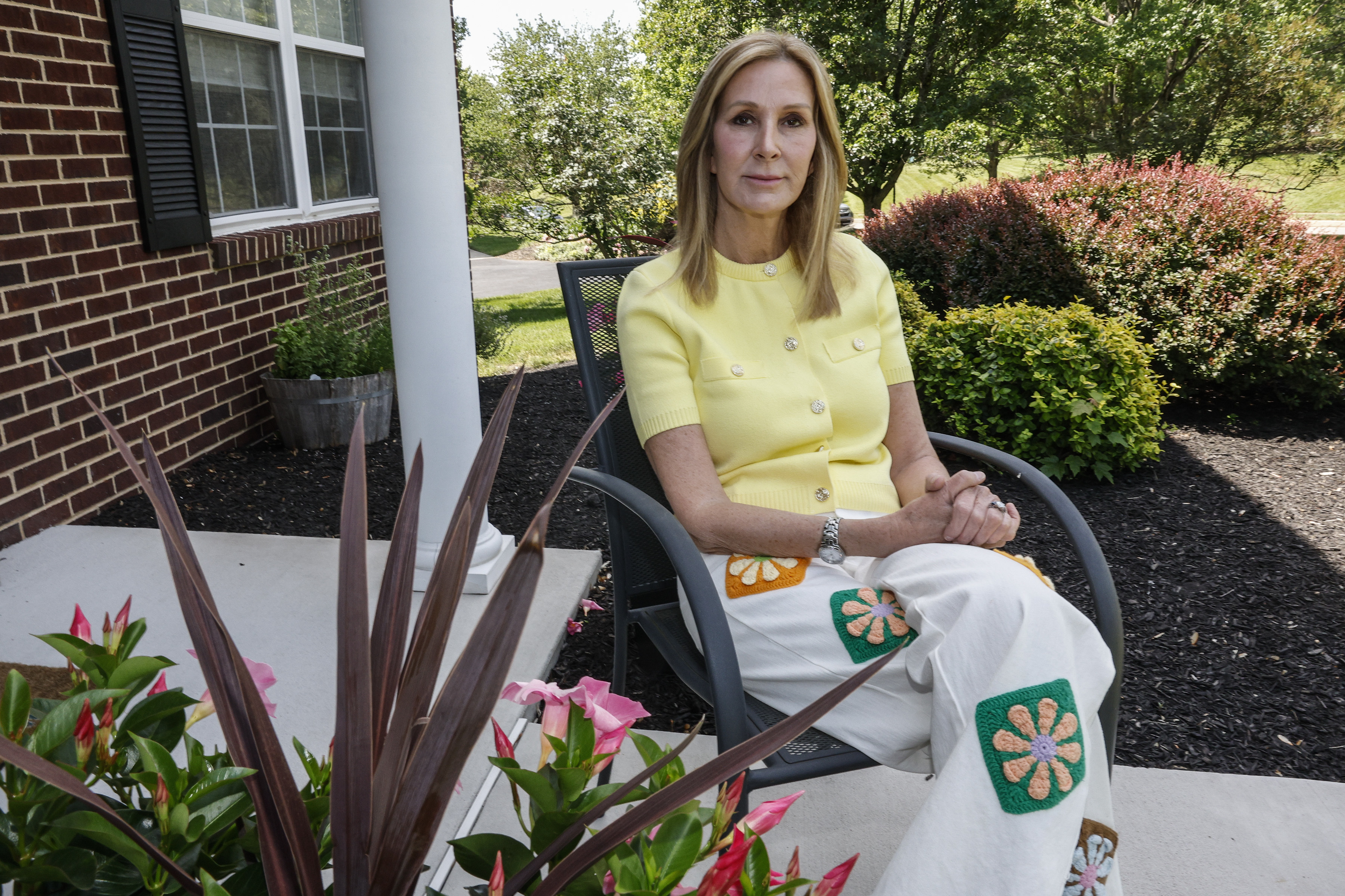
Chris Feaster is among thousands of Main Line Health patients worried about the prospect of Main Line Health going out of network with UnitedHealthcare at the end of this month.Steven M. Falk / For The Inquirer
If no deal is reached by June 30, Feaster could be facing a repeat.She is among 32,000 affected Main Line patientswho have United insurancethrough Medicare Advantage plans and commercial insurance from employers.
Main Line Health said that United had been engaging more meaningfully in negotiations in recent weeks. “We are hopeful that momentum continues. We remain committed to reaching a resolution before June 30,” itsstatement said.
For Main Line, which is far less profitable than it was before the pandemic, the dispute is not just about rate increases. The nonprofit health system also wants toreduce claim denials, prior authorization delays, and excessive audits.
“Main Line Health is seeking price hikes that would significantly increase costs for families and employers,” UnitedHealthcare said.
United added that self-insured companies would absorb the biggest hit ”impacting the money they have to grow their business and compensate their employees.”
Worries about maternity care
Jessica Geida, a Newtown Square resident and an ob/gyn who is not currently practicing, is particularly worried about access to maternity care in Delaware County, given that Axia is already out of network with United.
Main Line operates the only practice that delivers babies at Riddle Hospital for people with UnitedHealthcare (UHC), said Gaida, who has worked at Axia and Main Line. “If they drop UHC, there would be no access to care in the Delaware County,” she said.
Maternity care has been underpressure in Delaware County since the maternity unitclosed at Delaware County Memorial Hospital in early 2022, followed by the shutdown of Crozer-Chester Medical Center a year ago as part of the Prospect Medical Holdings bankruptcy.
Mercy Fitzgerald Hospital in Darby closed its labor and delivery unit more than 20 years ago.
If Main Line and United fail to reach a deal, UnitedHealthcare patients might have to go to Penn Medicine’s Chester County Hospital in West Chester, which is already busy.
Patients who get into Penn’s ob/gyn practice at Penn Medicine Radnor deliver babies at the Hospital of the University of Pennsylvania in Philadelphia, according to that group’s web site.
Feaster saida call from UnitedHealthcare Friday left her feeling very uncertain about her care.
Feaster grew up in Wayne and kept seeing Main Line doctors when she moved to Trooper, which is north of King of Prussia.
Feaster would have to specially request a continuation of care to keep seeing each of her Main Line doctors at in-network prices, the UnitedHealthcare representative told her.
The temporary stopgap is designed to help people who have significant needs — including cancer patients in the middle of treatment — avoid gaps in care while they switch to doctors who accept their insurance.
Feaster would have to fill out part of the form, and her doctors would have to complete another part. She’d also have to take the same steps for Main Line providers of her regular mammograms, breast MRIs, and DEXA bone density scans.
UnitedHealthcare would then review each request to determine whether to approve.
Americans are still spending money so strongly it’s steering the economy through surging inflation, but rising prices are starting to take a toll on savings accounts and summer vacation plans.
While gas prices have surged since the Iran war began, raising costs for groceries and transportation, tax refunds and stock market gains have been helping buffer the pain for some Americans who are still spending. Although, many Americans are reducing how much money they are saving, data shows.
Overall, consumer spending, which fuels two-thirds of the economy, rose half a percent in April, down slightly from March but a resilient showing, experts say. The strong spending helped the labor market pick up 70,000 jobs in May in leisure and hospitality, much higher than at any point over the past year.
Other signs of strong spending appeared this past week with Macy’s and discount stores Dollar General and Five Below all reporting stronger than expected sales for their most recent quarters. That accelerated a trend of decent sales already reported weeks ago by retail behemoths like Walmart and Home Depot.
However, the spending data obscures a growing list of concerns, and economists expect things could get rockier for spending in the coming months, especially if energy prices remain elevated. On Friday, gas cost $4.22 a gallon on average, much higher than $3 a gallon in December.
Generally, people feel pretty terrible about the economy — consumer sentiment dropped 10% in May, according to a gauge measured by the University of Michigan, falling to a record low.
One significant warning sign is flashing: Consumers are dipping into their savings and setting less aside to keep up with their spending. The personal savings rate fell to 2.6% in April, the lowest level in nearly four years, and the second poorest showing since the height of the Great Recession.
Inflation, which has remained persistently high and hit 3.8% in April, is the likely culprit of the lower savings rate.
“The economy has been somewhat insulated, and everyone has been willing to draw down savings to keep spending going,” said Mark Zandi, chief economist at Moody’s Analytics. “But if things keep going up, increasingly consumers are going to have to pull back.”
Greg Tresley, 54, said he generally aims to save $700 to $800 each month. But with rising prices on gas and groceries, plus a couple unexpected larger expenses, he’s only been able to break even the past few months.
“Basically the air has been coming out of my checking account little by little over the past year,” said Tresley, an IT manager in Langhorne, Bucks County.
The toll of rising prices and global uncertainty is weighing on his family. His wife decided against a trip to Arizona to see family, and they’ve stopped driving their 2011 Mustang to avoid any unexpected repairs.
“It’s all home cooking these days,” he said. “We have changed our grocery habits; we look at sale items first.”
Consumer wariness is also starting to show up in other parts of the economy. When Dollar General reported earnings, officials said that they’re seeing more shoppers making more than $100,000 a year, as higher-income families seek out discounts.
“Many of our core customers reported cutting back on other household expenses, including food purchases, due to rising gas prices,” Dollar General CEO Todd Vasos said on the company’s quarterly call, adding that the company was stocking more $1 items to appeal to customers. Dollar General increased net sales by more than 3% from the same period last year.
Inflation also continues to hit lower-income families especially hard. A May report from the Federal Reserve’s Board of Governors reported that lower-income households showed greater financial strain, while higher-income households remained more resilient. Middle-income families are “squeezing more life out of every dollar before deciding to spend it.”
Higher-income earners are being bolstered by a strong stock market — the S&P 500 is up more than 10% for the year — and might not feel the need to save as much each month.
The increase in spending early this year was helped by higher-than-normal tax refunds doled out to taxpayers in the wake of President Donald Trump’s massive spending bill passed last year. Data from banking giant Chase shows that people are spending significantly more at gas stations this month, compared with last year, but that they haven’t really cut back on discretionary spending. Savings levels are also remaining largely stable, Chase said.
But those tax refunds have peaked and are now slowing, said Bank of America economist Aditya Bhave. He has learned not to bet against the U.S. consumer, he said, noting that people find a way to keep spending. But, he said, the risks are now massive.
“I think the true test of consumer resilience is still ahead of us,” he said.
Karen Jenkins, a 54-year-old project manager in Houston, said she deliberately moved close to her office when she recently relocated to the city to avoid putting excess wear and tear on her car. She and her husband generally take a trip to Europe each December, but this year they are on the fence if they’ll make it. They’re watching flights and overall prices and will make a game-time decision this year, she said.
Americans are also increasingly relying on credit cards to buy essentials. Since the pandemic, the National Foundation for Credit Counseling has seen an increasing reliance on credit cards as a “gap filler” for budgets.
“This isn’t a story of people taking exotic vacations or buying nice vehicles,” said Bruce McClary, senior vice president for media relations and membership for the organization.
The payments are piling up for many. Credit card delinquencies for those who are more than 90 days late making a payment hit a 15-year high in the first quarter of the year, according to the Federal Reserve Bank of New York. However, newer delinquencies, for those who are more than 30 days late, held about steady.
As prices rise, Americans are increasingly hunting out deals and sales to save money. In Bay Shore, N.Y., Sofia Delta, 50, often visits multiple stores to search for deals as she grocery shops for herself and her four children. Delta, who works in banking, said she is cooking at home more and putting groceries on her credit card before paying it off and repeating the cycle.
Mia Garcia showed off her clothing haul: a multicolored tank top, a backless white tee, a lacy maroon cardigan, and white tights for an upcoming trip to the New Jersey Renaissance Faire.
The 19-year-old was as excited about the bill as she was about the fashion.
Her grand total: $15.
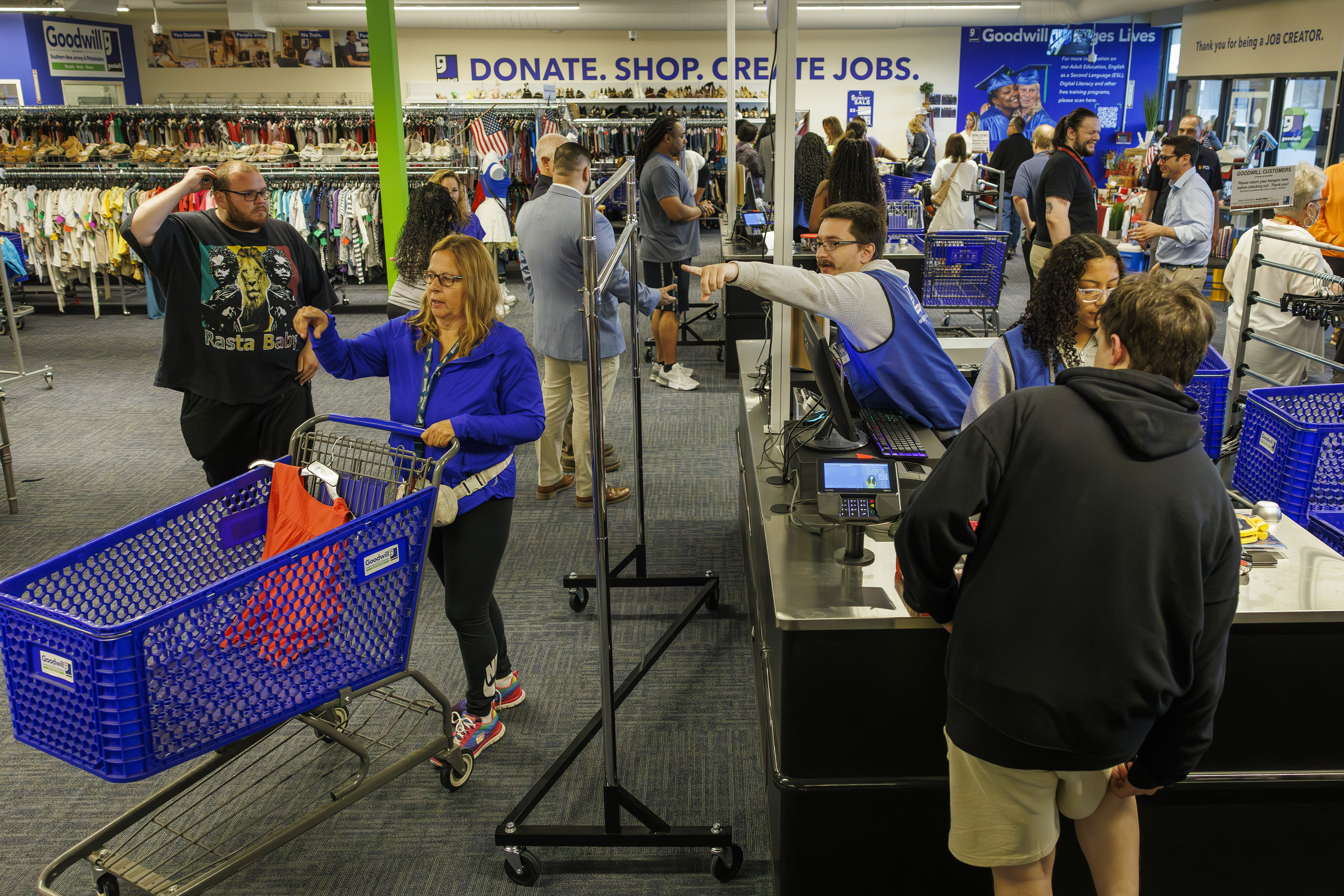
She and her friend, Salsbee Jahan, scored the deals at a massive new Goodwill store in Deptford, where local executives say a growing number of Gen Z shoppers are flocking for clothes, shoes, decor, and more. Young customers are increasingly fueling the world’s largest thrift store chain, which posted record revenue last year.
At Goodwill, “it’s definitely cheaper and easier to find older-style clothes,” like popular Y2K-inspired fits that are sold at a premium elsewhere, Garcia said. At some name-brand stores, “$20 won’t even get you get a shirt.”
The women, both Deptford natives attending Rowan College of South Jersey, say they frequent malls, too. But Jahan, 18, said they’re trying to thrift more because “everything is going up” in price.
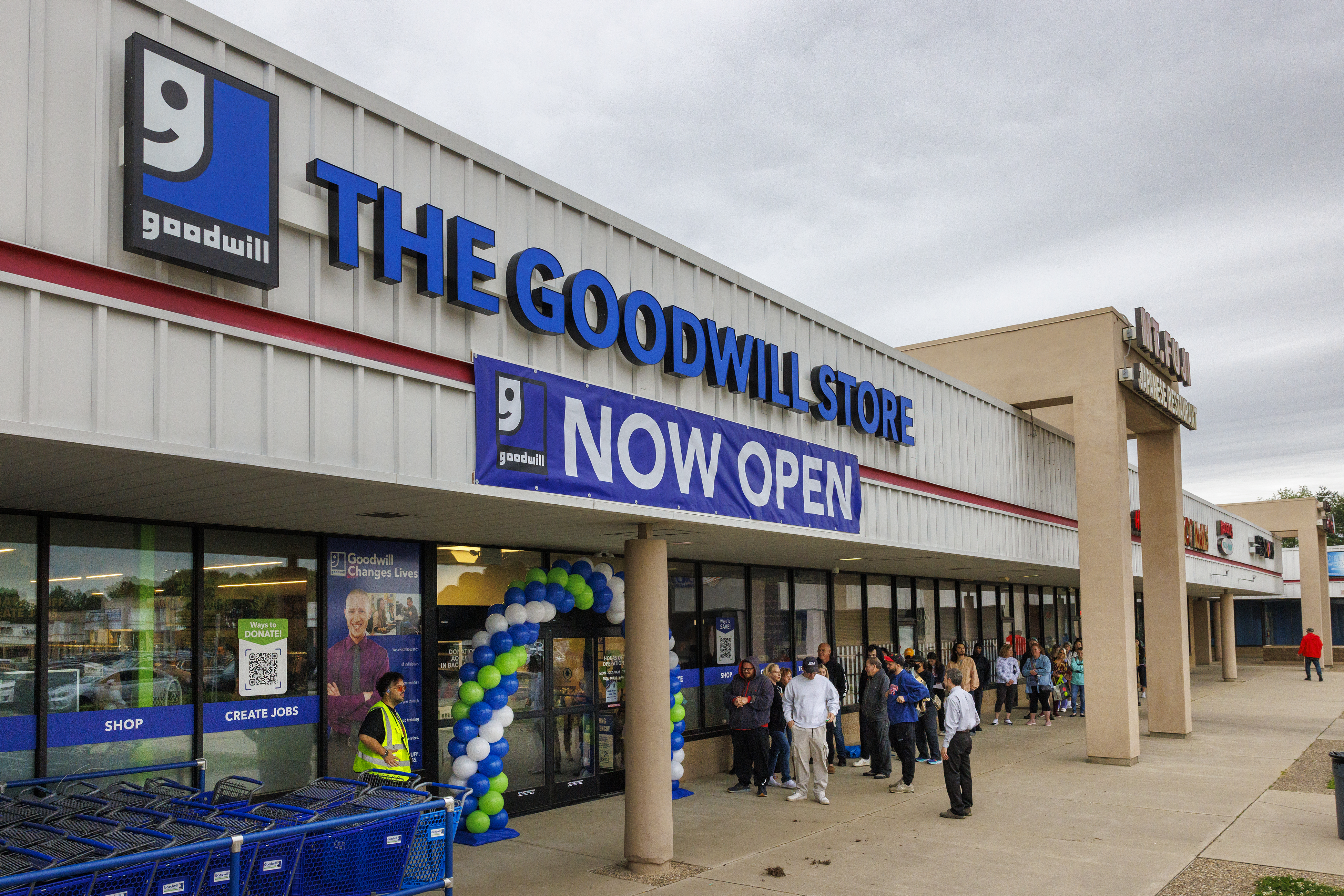
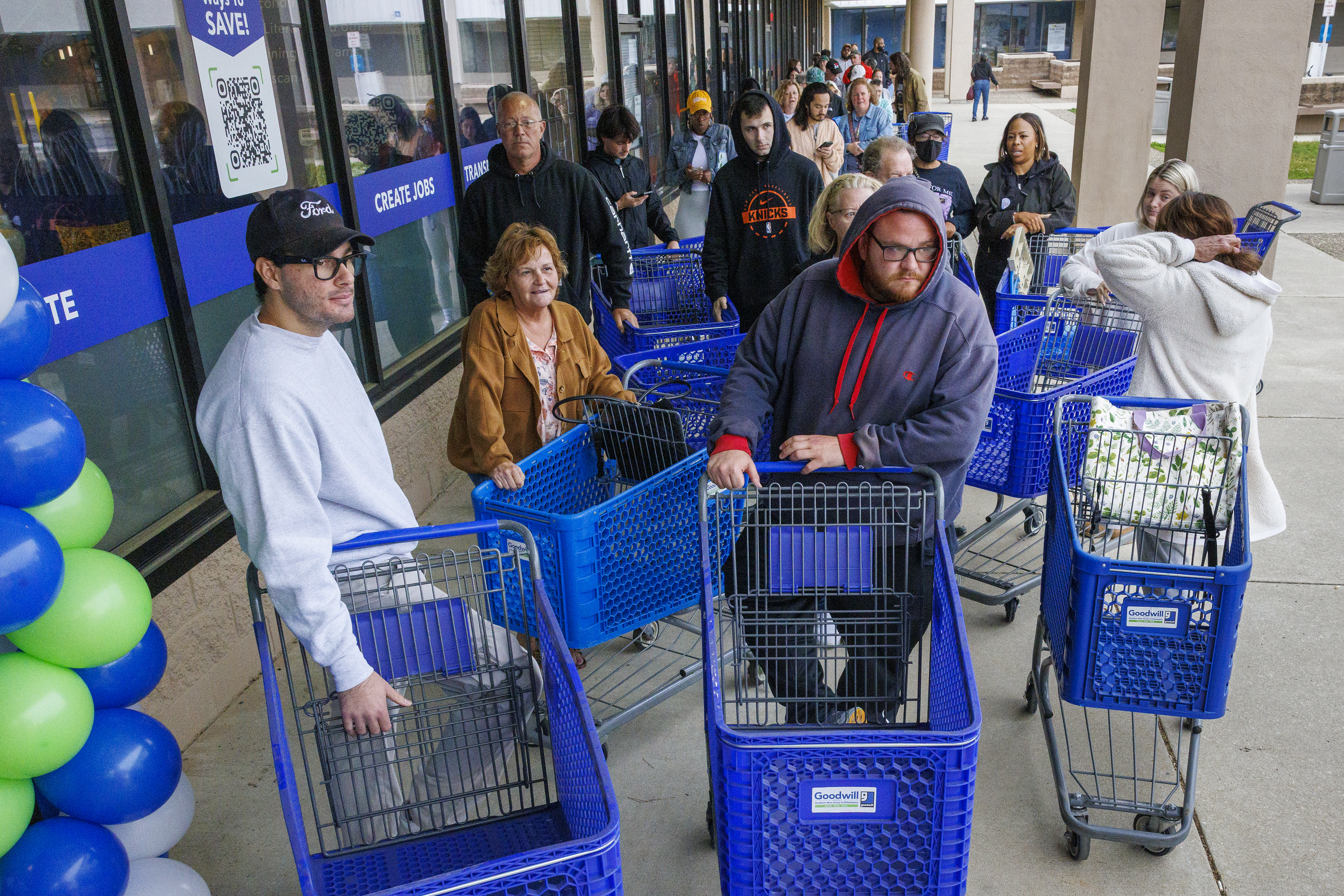
Shoppers lined up to get inside the new Goodwill store in Deptford on opening day.Alejandro A. Alvarez / Staff Photographer
The sentiment was echoed by several other customers at the 19,000-square-foot store, which was buzzing with dozens of shoppers around lunchtime Tuesday.
“Gas prices have gone up. Groceries have gone up,” said Kaitlin Deegan, a 38-year-old nurse from Salem County. She was wearing a graphic tee and denim shorts that she had bought for under $10 at another Goodwill. “Now it’s all about thrifting.”
Nearby, one woman put a $6.49 denim skirt in her cart, next to a pair of $7.99 sparkly shoes she’d grabbed earlier. Across the room, children perused shelves of toys, games, and stuffed animals — most under $10 — and teens eyed rows of $1.99 DVDs and 99-cent CDs.
In its first 12 days, the new location on Clements Bridge Road averaged about 600 customers a day, more than double the foot traffic recorded at a smallerGoodwill retail store that recently closed in nearby Woodbury Heights, said regional manager Josef Fortun.
Each Deptford customer has spent about $31 on average, he said, exceeding managers’ goals.
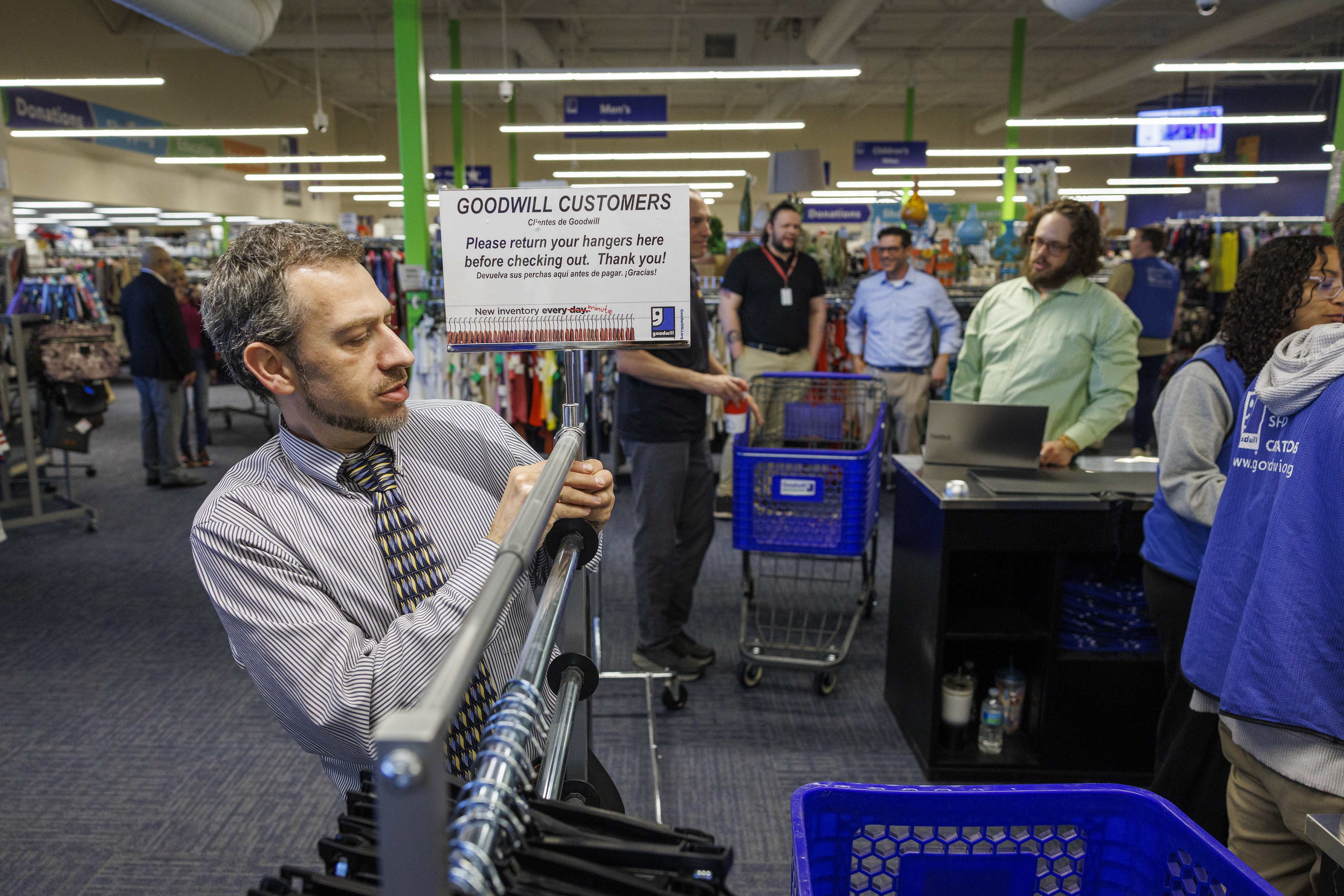
Josef Fortun, regional manager with Goodwill Industries of Southern New Jersey, prepares the new Deptford store to open on May 21.Alejandro A. Alvarez / Staff Photographer
This early success in South Jersey comes amid a larger thrifting resurgence. Last year, the U.S. resale market grew nearly four times faster than the broader apparel market, according to an annual report from the online consignment platform ThredUp.
Goodwill recorded more than $7 billion in revenue last year, the New York Times reported, and annual sales across its 3,400 stores have risen 50% since 2019. Smaller secondhand shops, such as Savers Value Village and ThredUp, have also reported revenue increases, according to the Times.
In the same Deptford shopping center as the new Goodwill, there are three other thrift stores: Once Upon A Child, Plato’s Closet, and Play It Again Sports. All are owned by Winmark Corporation, which has been adding more thrift stores and reporting year-over-year revenue increases.
In nearby Cherry Hill, a Red White & Blue Thrift opened this spring, a half-mile from a 2nd Ave thrift outpost — owned by Savers Value Village — that opened in 2024.
Goodwill also opened a store a year ago in a former Rite Aid in Voorhees. And its Woodbury Heights location, which is still accepting donations, is set to reopen June 15 as a Goodwill Home Medical Equipment Store.
Boyd said the nonprofit chain is looking to expand into Cape May County in the near future.
Why are more people thrifting?
More people are buying secondhand right now for many reasons, said Mark Boyd, president and CEO of Goodwill Industries of Southern New Jersey and Philadelphia.
“Challenging economic times definitely bring people into the Goodwill store, maybe for the first time,” Boyd said. At the same time, “there’s a lot of people out there who care a lot about reuse, and that’s driving particularly younger shoppers into Goodwill.”
Friends Reed Habiak (foreground left) and Anthony Nunez (foreground right), both influencers and resellers, were first in line at the new Goodwill store in Deptford on May 21.Alejandro A. Alvarez / Staff Photographer
And while thrifting is one of the most “tactile” experiences, Boyd said social media is playing a role in its rebirth. Many Goodwill customers are resellers, he said. They find steals in store aisles and then mark up the products to sell online or at flea markets.
On Deptford Goodwill’s opening day last month, professional reseller Anthony Nunez was first in line. He had arrived with a friend around 4:30 a.m., ready to hunt for sports jerseys, Pokemon memorabilia, video games, and vintage clothing to resell on eBay.
Since losing a job in compliance during the pandemic, the 34-year-old Sayreville resident has been reselling full-time, making more than $100,000 a year, he said.
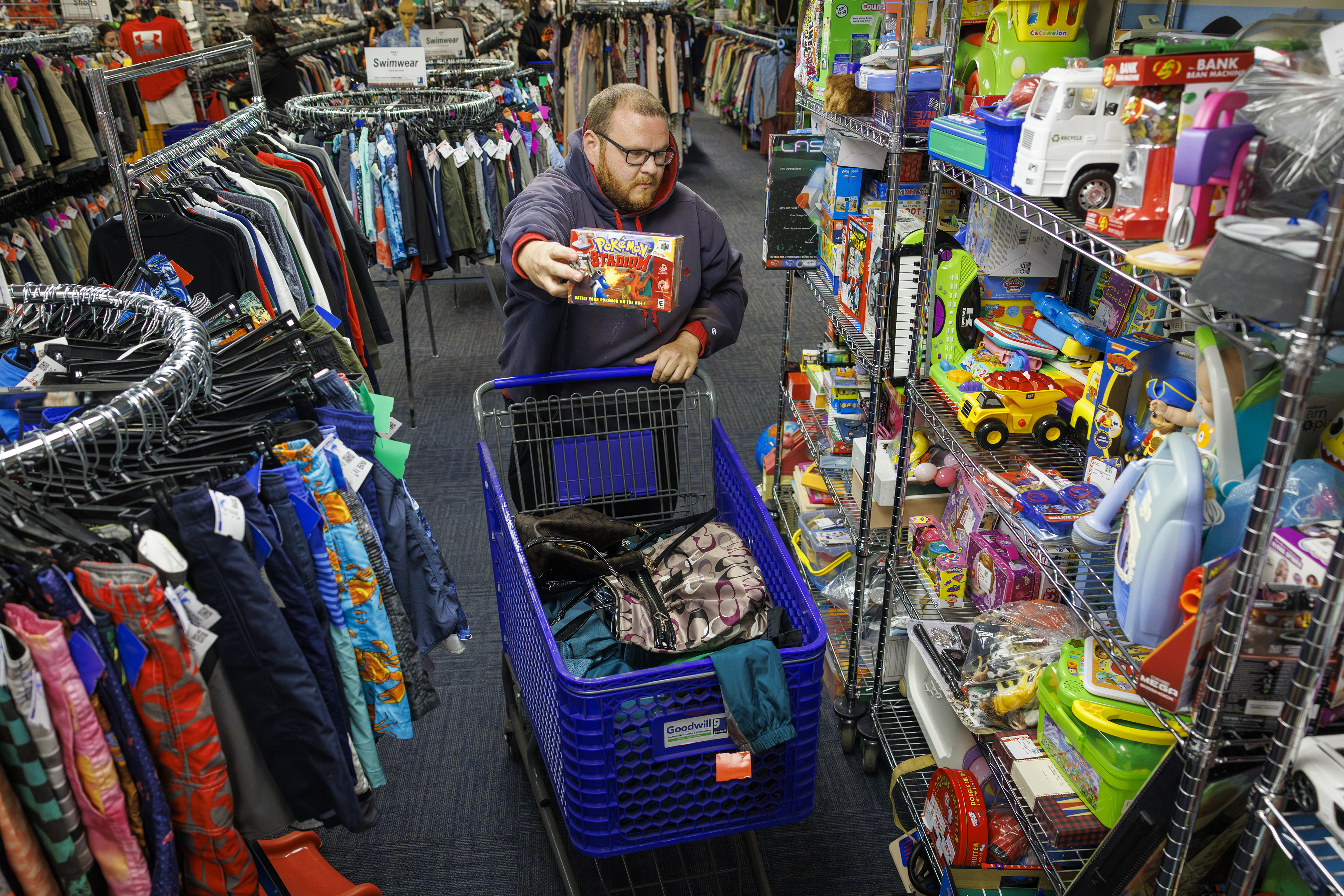
Anthony Nunez flashes a Pokemon Stadium game he picked up in the toy section at the opening of the new Goodwill in Deptford.Alejandro A. Alvarez / Staff Photographer
At the Deptford Goodwill, Nunez made a beeline for items with a high resale value, including a still-in-the-box Pokemon Stadium video game for Nintendo 64. He bought it for $18, Nunez said, and later resold it for $150, recouping the cost of his entire Goodwill trip.
It helped that Goodwill executives had invited several resellers to a store preview, he noted.
“They understand we help them too,” Nunez said. “I don’t know if they would be able to exist without us.”
Some longtime thrifters have started using social media to make extra cash.
Melody Appel got into thrifting decades ago, when she was a student at Drexel University.
Now 47 and living in Monmouth County, N.J., Appel recently got a TikTok account at the urging of her teenage daughters. At first, she just used the account to show off her thrifting hauls. But over the past month, she said she has started reselling items, too, making around $1,500.
Many of her TikTok followers seem to be between the ages of 30 and 60, she said, but she has noticed many younger customers in stores.
“People are seeing what they can find,” said Appel, who works as an educator and interior decorator. “And maybe their perception of what thrifting was is different from what thrifting is.”
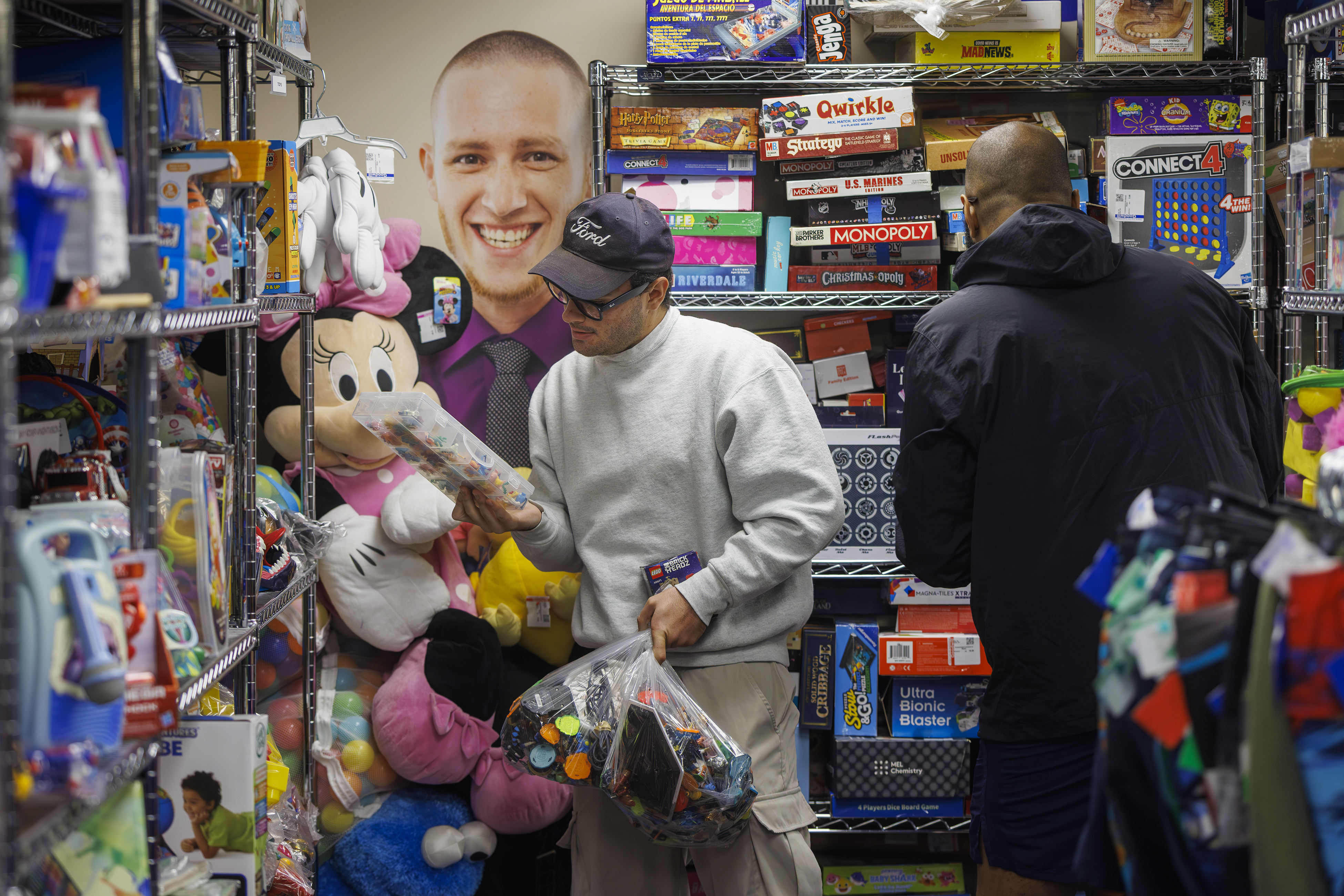
Reed Habiak, a social media influencer and reseller, looks for items in the Deptford Goodwill’s toy section on opening day last month. Alejandro A. Alvarez / Staff Photographer
While some found their way to thrifting through social media, others get hooked when they stumble into a store, said Fortun, the Goodwill regional manager. He has noticed more young people at the Deptford store than at the old location in Woodbury Heights, he said, and he attributes some of that to the Edge Fitness Club right next door.
Customers often come in on a whim, he said, and are in awe of the wide selection and the price tags.
“People always look for deals,” Fortun said. “You go to discount stores like Ross and Burlington, you still don’t find items as cheap.”
Goodwill is trying to keep these customers hooked with a new online loyalty program, which will offer special deals and send push alerts to shoppers when their favorite brands are stocked at a local store, said Boyd, CEO of the South Jersey and Philadelphia locations.
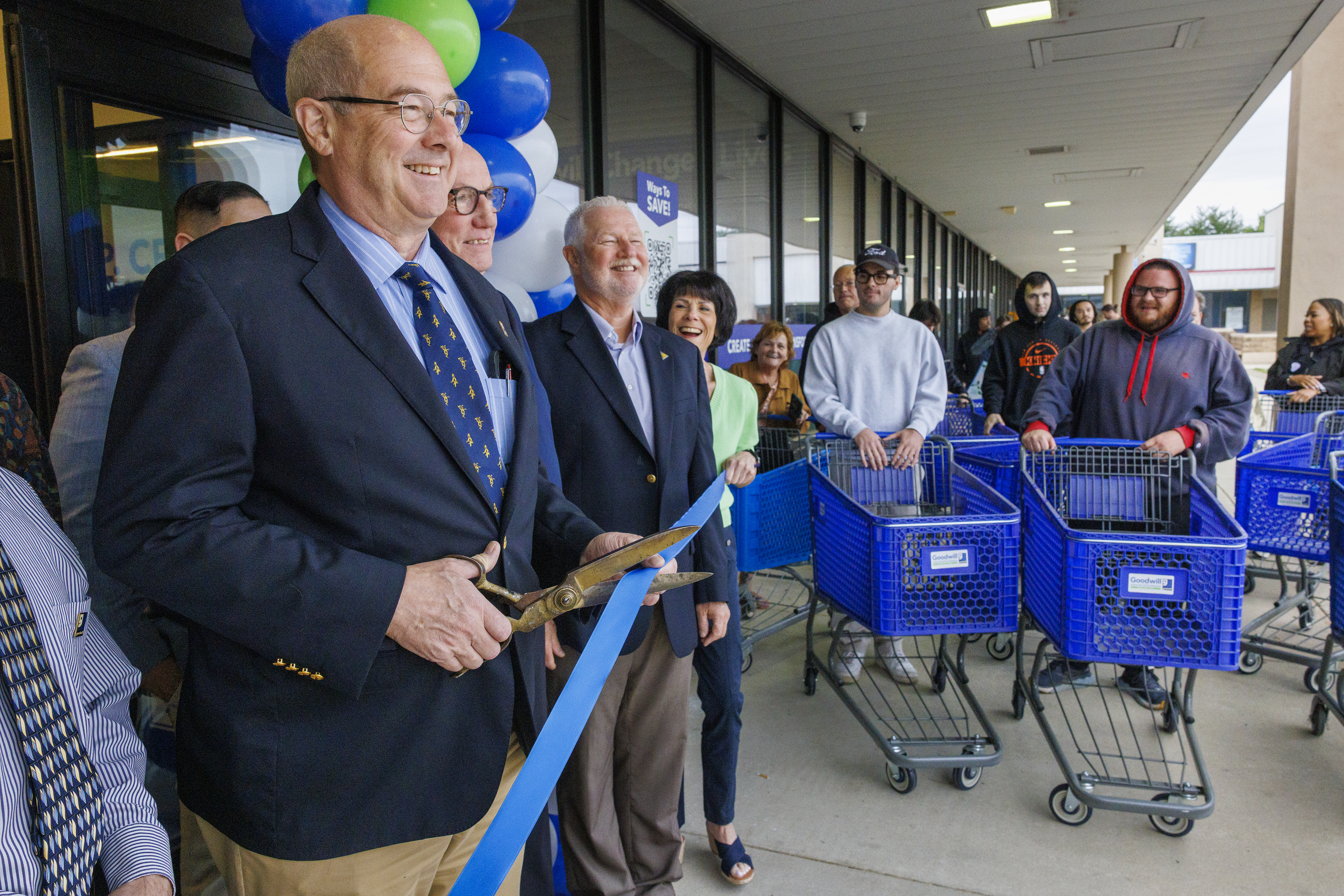
Mark Boyd, CEO at Goodwill Industries of Southern New Jersey and Philadelphia, cuts the ribbon to open the new store in Deptford last month.Alejandro A. Alvarez / Staff Photographer
Executives are also looking into using artificial intelligence to optimize parts of their operations, such as pricing, he said. But he doesn’t think technology could enhance the customer experience much, he added, and over-digitization could detract from it.
“I really think thrifting is like one of the most human experiences you’re going to have, and it’s a great shopping experience,” Boyd said, “and that’s why it’s so popular.”
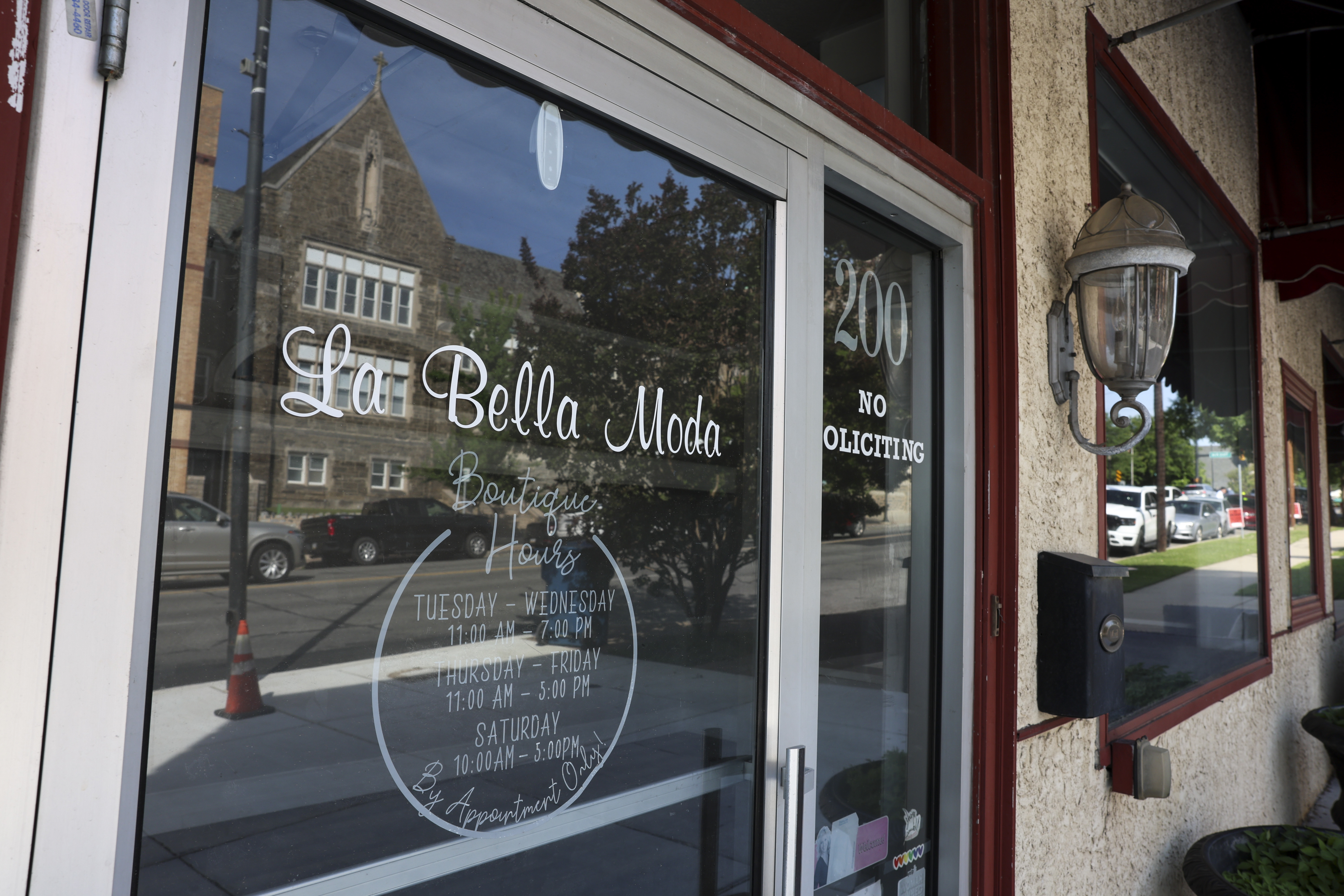
For more than four decades, hundreds of Philadelphia-area women first laid eyes on their wedding gowns at La Bella Moda.
Even in recent years, as their bridesmaids and mothers increasingly bought dresses online, brides kept the Conshohocken boutique in business.
But last month, the Fayette Street mainstay shut its doors for good.
“It eventually wears on you,” said owner Gabriella Pagano Rush, who decided to close the shop in response to industry pressures and personal timing. The 30-year-old, who took over the store from her grandmother Lena Pagano in 2020, is due to have her first child this summer.
“The business was fine,” Pagano Rush said. “Sometimes you just have to do something that is better for you in the long run.”
La Bella Moda, shown here in 2023, sold wedding gowns and other formal wear for 45 years before closing its doors in Conshohocken last month.Courtesy Morgan Taylor Artistry
She calls the transition “a happy ending,” one she said marks a new chapter in her life but also comes after years spent struggling to keep up with an evolving wedding industry.
Weddings have become increasingly extravagant, with some Philly-area celebrations costing $40,000 or more.
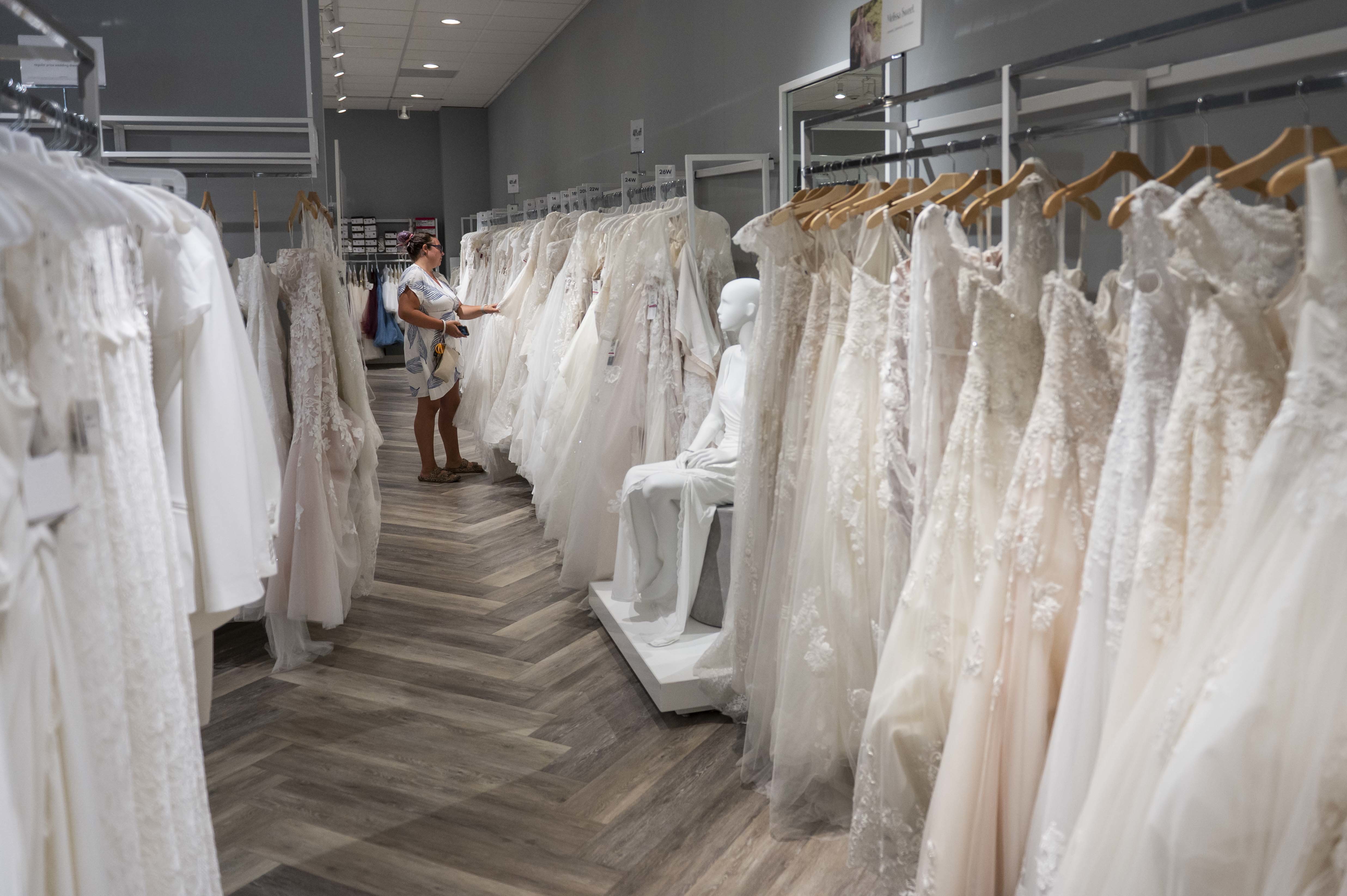
They have more vendor choices than ever, and small businesses like La Bella Moda, where gowns cost $2,500 on average, must compete with wedding emporiums, which can offer a wider selection for less.
The other options include larger brands, such as King of Prussia-based David’s Bridal, which is expanding its offerings while still selling dresses for under $500.
There are also online retailers, such as Revelry and Azazie, which offer home try-ons and mail custom dresses directly to customers. Even broader ecommerce sites and fast-fashion brands sell wedding accessories.
In recent years, as brides browsed veils and shoes at La Bella Moda, “I would start hearing, ‘Oh, I can get this on Amazon’ or ‘Oh, I can get this on Shein,’” which started out selling wedding dresses online before becoming a retail behemoth, Pagano Rush said.
Someone shops for a wedding dress at David’s Bridal in Feasterville-Trevose in 2023. Allie Ippolito / Staff Photographer
In 2023, Pagano Rush stopped selling bridesmaid dresses and other formal wear, which had accounted for about 30% of the shop’s business, she said. Instead, she doubled down on wedding gowns.
She began offering $200 private appointments, during which a bride and up to eight guests got the store to themselves, with champagne, cookies, and a personalized shopping playlist, Pagano Rush said.
“I really wanted brides to feel relaxed when they came into our store,” Pagano Rush said. “Not intimidated, not feeling pressured to find their dress.”
How an Italian immigrant cultivated bridal joy in Conshy
La Bella Moda founder Lena Pagano (center) poses with her granddaughters in the Conshohocken shop. Gabriella Pagano Rush (right) took over as owner in 2020. Pagano Rush’s sister Michaela Bosico (left) encouraged the new owner to renovate the store during the pandemic.Courtesy Gabriella Pagano Rush
Ever since she was a kid watching her “mom mom” Lena run La Bella Moda, Pagano Rush was enthralled by the wedding dress shopping experience.
“I just remember growing up, going and visiting her at the store, helping her for fun, and just in the back of my head being like, ‘Oh, this would be really fun to do,’” said Pagano Rush, who grew up near Lansdale.
At the time, the shop’s second floor was devoted to bridal try-ons, she said. “It was always so exciting when you would walk upstairs and you’d see all the brides up there trying on dresses.”
The joy in the shop was cultivated by Lena Pagano, who emigrated from Italy, married, had three children, taught herself English, and then fulfilled a longtime dream of opening a boutique in 1981, Pagano Rush said.
Lena Pagano, now in her 70s, stepped aside just before the pandemic in 2020, Pagano Rush said, and has been enjoying retirement in Plymouth Meeting.
Meanwhile at La Bella Moda, Pagano Rush’s first few months as a business owner coincided with the early months of the pandemic, when businesses were forced to close. But she took it in stride and used the time to renovate the shop, making for a better customer experience when it reopened that June.
Owner Gabriella Pagano Rush inside a renovated La Bella Moda in Conshohocken in 2023.Courtesy Morgan Taylor Artistry
Montgomery County Commissioners Chair Jamila Winder said the Pagano family’s story exemplifies the immigrant experience.
“In these times where it’s really hard for small business owners and entrepreneurs to start a business and sustain a business, Lena and Gabriella are really the epitome of that grit and that discipline and that vibrancy,” Winder said.
“They’ve brought so much joy to women across Montgomery County, women who were planning for some of the best days of their lives.”
Winder is one of them. A few years ago, she said, she bought her bridesmaids’ dresses at La Bella Moda.
Customers remember their wedding dress fittings
For women across the region, word of La Bella Moda’s May 31 closure brought back similar memories.
Dozens commented on Facebook posts about the news.
“I’ll never forget how gorgeous I felt in my lace gown on my wedding day,” wrote one woman. “Thank you for helping to make it so special, almost 20 years ago.”
“Such amazing memories of the fitting and how beautiful you made me feel!” added another.
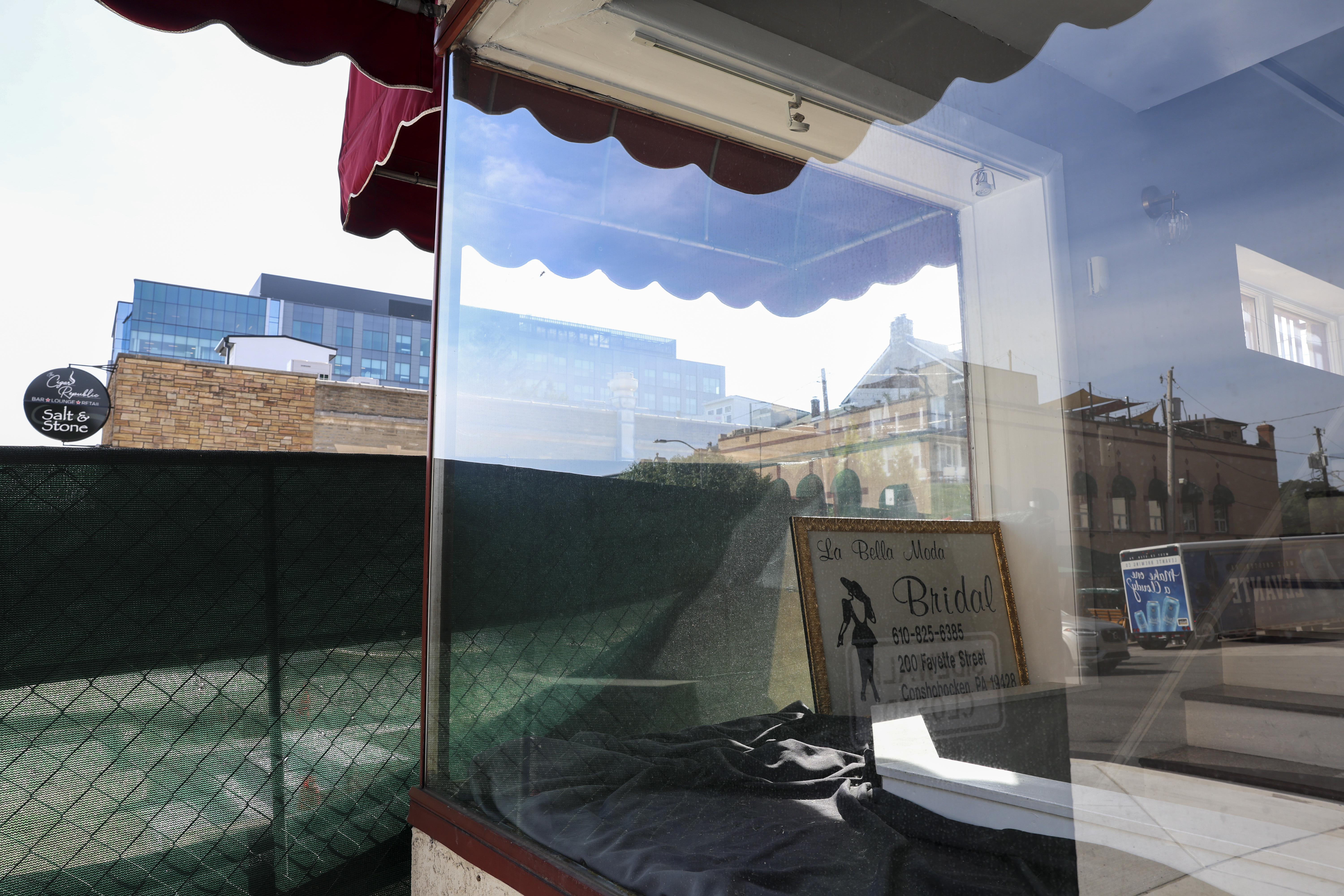
The mostly empty window of La Bella Moda is pictured on June 4 in Conshohocken.Monica Herndon / Staff Photographer
Tina Brennan West said she, too, recalls her wedding-gown fitting there 34 years ago.
“I remember the experience walking through the doors, the smiles, the feeling that they already knew you,” said Brennan West, 55, of Plymouth Meeting, who works at an auto repair shop.
She showed the stylists an inspiration picture from a magazine, she said, and an employee pulled a similar white-satin dress, with a long train, pink rose buds in the appliqué, and puffy sleeves that were popular at the time.
She can still picture trying on the gown, she said, and see her mother and grandmother crying at the sight of her.
Erin McElroy Kraft, now 60, wore her mother’s wedding gown for her 1992 nuptials. But the Plymouth Meeting native bought her bridesmaids outfits — deep-purple velvet skirt sets — at La Bella Moda.
“It was absolutely beautiful,” McElroy Kraft said. “They were just so great at what they did.”
McElroy Kraft, a retired foreign-service worker who now lives in Arlington, Va., said Fayette Street won’t feel the same on her next visit home.
“It’s going to be hard not to see La Bella Moda in Conshohocken,” she said.
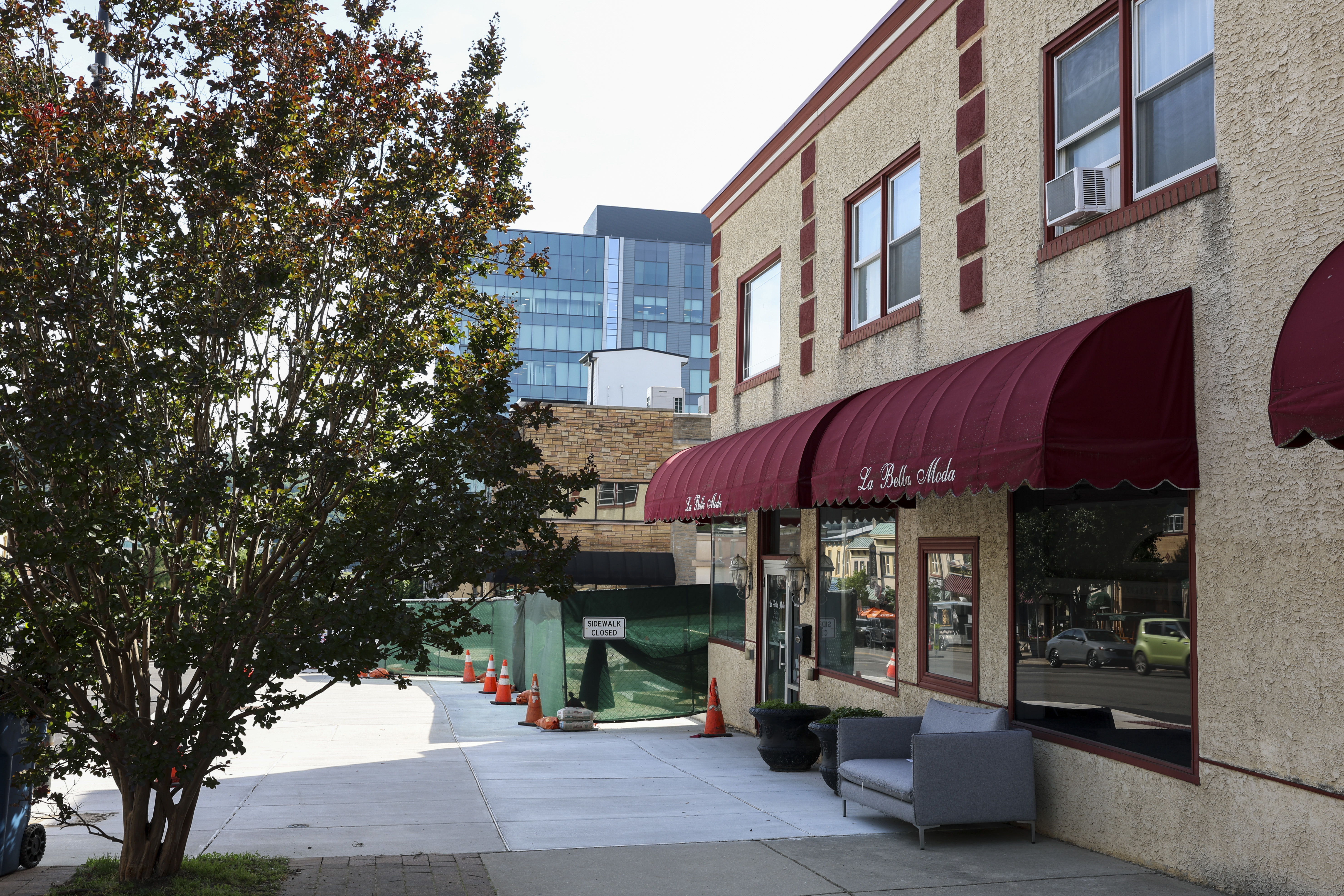
The closed La Bella Moda on Fayette Street in Conshohocken is pictured on June 4.Monica Herndon / Staff Photographer
La Bella Moda sits empty now. Its last dresses were either sold to customers during a recent farewell event, Pagano Rush said, or donated to bridal consignment shops owned by her friends.
As for brides who had recently bought gowns at La Bella Moda, “no one was left without their dress and without a plan,” said Pagano Rush, who referred some customers to a local seamstress for alterations.
The building, owned by Lena Pagano, will be leased to another tenant, Pagano Rush said.
“The borough of Conshohocken has really done an amazing job of attracting businesses to that main corridor,” said Winder, the county commissioners’ chair. “I don’t anticipate that storefront will be vacant for long.”
Pagano Rush said she believes there is still a place for independent shops in the modern wedding industry.
“I can’t tell you how much attention we have gotten since April when we posted that we were even closing,” she said. “I wish small businesses just got this kind of attention and support” all time.
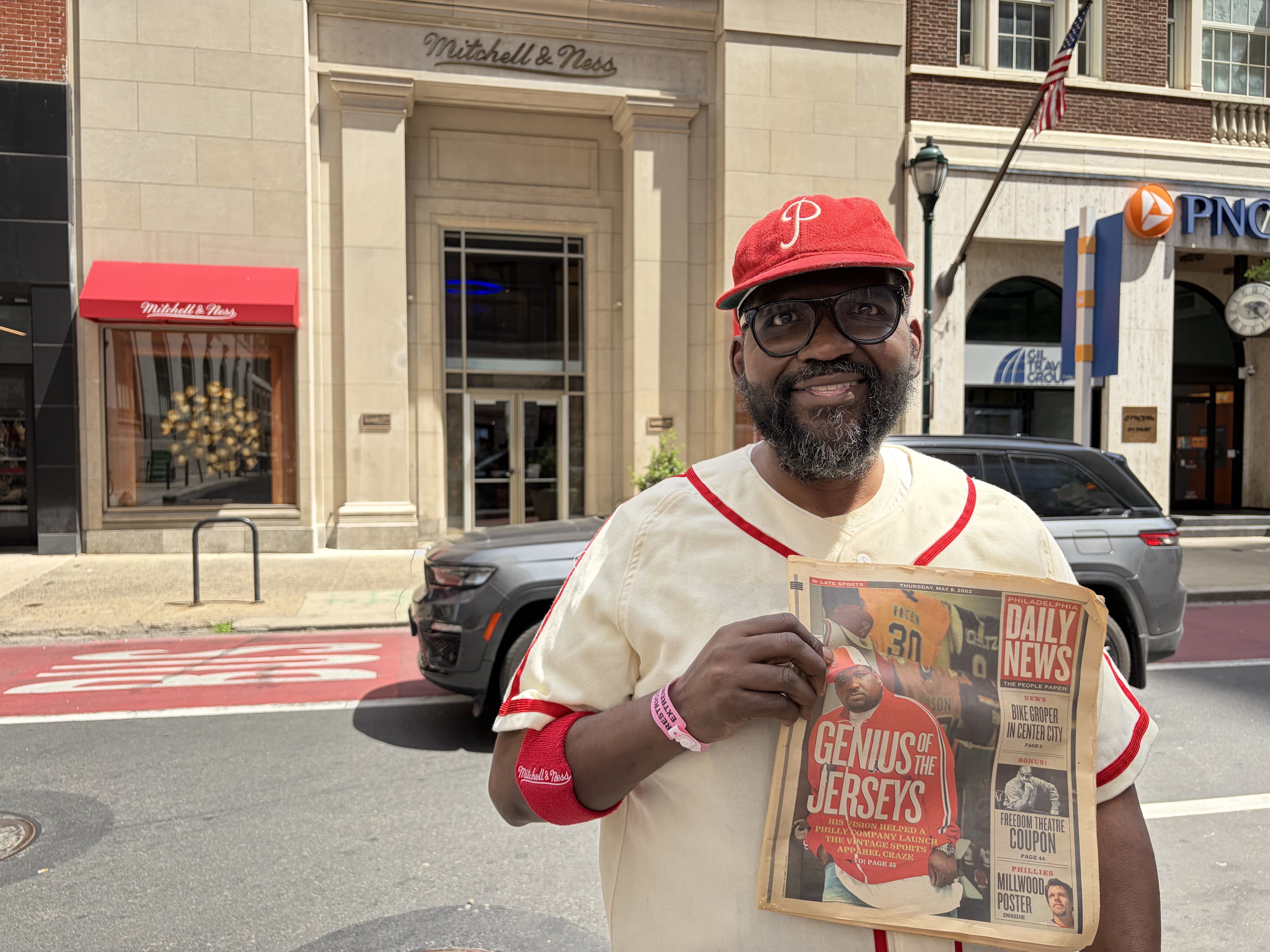
Big Rube was an influencer before influencer was a job description. And in the early 2000s, he influenced athletes and hip-hop artists to wear Mitchell & Ness’ vintage jerseys, which can cost more than $300 a pop. Celebrities started wearing throwbacks and business was booming.
But Mitchell & Ness didn’t fulfill their side of the deal, according to the lawsuit, which was filed Thursday in the Philadelphia Court of Common Pleas.
The brand, which Fanatics bought in 2022, is obligated to pay Harley an unspecified commission for sales attributed to his marketing efforts, the lawsuit says. But it has refused to even calculate how much that commission might be, the suit says.
“They’re not in this location for nothing,” Harley said Friday across from the new Mitchell & Ness store. “I created that and I want what’s mine.”
A spokesperson for Fanatics said the company hadn’t been served the lawsuit and was unable to comment.
Reuben “Big Rube” Harley standing outside the new Mitchell & Ness flagship store on Walnut Street. June 5, 2026.Abraham Gutman
Harley became a Mitchell & Ness customer in the early 1990s, purchasing throwback Negro League baseball jerseys and caps, the complaint says. A decade later, in 2001, he approached then-Mitchell & Ness owner, Peter Capolino, with a vision of marketing the throwbacks to hip-hop artists and athletes.
Harley and Capolino entered into a “partly written and partly oral” agreement, the suit says, in which Mitchell & Ness would pay Harley commission based on sales attributable to his promotional efforts. The suit does not include a copy of the written part, say whether the commission was in perpetuity, or specify the percent of sales Harley claims he is owed.
Mitchell & Ness also made Harley the company’s marketing director with a salary.
“I got paid, but the agreement was a piece of the pie,” he said.
As the new marketing director, Harley contacted athletes, celebrities, and artists in his network, the suit says. The throwbacks trend caught fire. Just a few months later, now-disgraced musician Sean “Diddy” Combs co-hosted the 2002 American Music Awards wearing a rotation of vintage jerseys.
Mitchell & Ness’ annual sales rose from $2.2 million in 1999 to roughly $25 million in 2002, the suit says.
The new owners must respect the agreement with Harley, the suits says, and pay him his share of the sales that he is owed. The complaint does not specify a percent or amount.
“Big Rube did his part,” said attorney Emeka Igwe. “Mitchell & Ness’ part was to give him a percentage of the sales from all the revenues that they were getting. And that was never done.”
After parting ways with Mitchell & Ness in the mid-2000s, Harley continued to reinvent himself. He launched an apparel line, wrote a Philadelphia Daily News column, and became a chef.
He decided to bring the lawsuit now because he is battling stage-four prostate cancer. Harley said he has been assessing his life and wants to leave a legacy for his 22-year-old daughter.
Standing across the street from the new flagship store in Center City, about a dozen friends expressed their support.
“We ain’t gonna stop until they build you a statue out here,” Simon Carr said. “You deserve it.”
Chester City agreed to a five-year, $2.8 million contract with VMSC Emergency Medical Services, a nonprofit that started providing ambulance services in the community after the closure of bankrupt Crozer Heath a year ago, the city and VMSC announced Monday.
During VMSC’s first year in Chester, the Lansdale organization had a $470,000 shortfall, chief executive Shane Wheeler said. The $2.8 million is expected to support operation of the services — including the cost of serving uninsured patients — and pay for equipment needs.
The ambulance company has responded to 8,324 calls since May 2, but 35% did not require transport to a hospital, Wheeler said. In many cases, the ambulance crew fulfills the function of primary care for residents.
“We’re assessing blood pressure or helping someone with their medication, helping people get up” from a fall, Wheeler said.
VMSC’s accomplishments in the first year reducing ambulance response time to about 5½ minutes from more than 12 minutes, according to Wheeler.
The contract requires VMSC to assign at least three basic ambulances to serve Chester and its direct neighbors, with two staffed 24 hours a day. The organization also must provide at least one commander with training in more advanced treatment.
The new owner of the shuttered Crozer-Chester Medical Center in Delaware County shared what he called an “aspirational” plan to restore healthcare services to the Upland facility at a town hall meeting Tuesday in Chester.
The vision includesreopening of the emergency department, creating a small hospital above the ED, and developing outpatient services — all operated by one or more local nonprofit health systems, Yoel Polack told a standing-room-only crowd of more than 200 at Widener University.
Polack isCEO of Chariot Allaire, the for-profitpartnership that paid $10 million for Crozer in January. His group has been talking to all the regional health systems for months and expects soon to begin “a study process with two and hopefully three of the major academic medical centers in the region,” he said.
That is expected to last up to 90 days, he said, “and hopefully at the end of that period, we’re going to be having some outline of partnership with the system.” Polack described his anticipated partner as an institution “you know and trust.”
The entire process could take two or three years after a partnership is formed, he said Polack, whose company is registered in Lakewood, N.J.
He provided no details on how much Chariot Allaire would be willing to invest to attract a health system to the site, where state-led efforts previously failed to savea major safety-net provider for Delaware County that closed last May amid the bankruptcy of its California-based owner, Prospect Medical Holdings Inc.
Chariot Allaire paid relatively little for the 64-acre campus, which gives the company a low cost basis for owning the site. But that doesn’t mean it will be easy to attract a partner at a time of thin to nonexistent profit margins for the region’s health systems.
“It does not seem like there’s an easy and obvious candidate,” said Dan Grauman, managing director at VMG Health, a national healthcare consulting firm.
“There’s no question there’s need for care and for services, said Grauman, who has decades of familiarity with the Philadelphia region’s healthcare market.
A welcome public meeting
During an hourlong question and answer session, residents expressed gratitude for the meeting with Polack and his senior medical adviser, Arthur Klein, a pediatric cardiologist who spent decades as an executive at nonprofit health systems in New York.
A town hall meeting Tuesday in Chester about plans for the former Crozer-Chester Medical Center drew a large crowd.Monica Herndon / Staff Photographer
“Many times things happen in our community, and we are the last to know, so you started off very, very well,” said Zulene Mayfield, chairperson of Chester Residents Concerned for Quality Living, a community group known for the fight to close alarge trash incinerator in the city.
Some residents pushed back againstPolack and Klein’s plans for a much smaller hospital than the more than 400 beds Crozer-Chester Medical Center had at its peak. During a March interview with The Inquirer, Klein suggested the new hospital could have 80 beds.
“You don’t want a hospital of the 1990s,” Klein said Tuesday.
The current hospital structure encompasses 750,000 square feet — now completely empty. Crozer’s shuttered ED took up 30,000 of the square feet. Chariot Allaire contemplates opening a hospital a tenth of the size of the old hospital.
Operating that hospitalcost way too much, Polack said. ”It also doesn’t meet the way medical care is done today, which is mainly on the outpatient side,” said Polack,who has worked in healthcare real estate development in New York.
Simone Development Cos., where Polack worked before striking out on his own, often collaborated on real estate deals with Montefiore, a health system in the Bronx that serves many patients with Medicaid insurance, Grauman said.
That experience is relevant to the effort here, he said, given that Crozer also served large numbers of people with Medicaid, which pays significantly lower rates than private insurers.
The role of local health systems
Before Prospect’s bankruptcy filing in January 2025, a few local health systems explored establishing a new nonprofit to take over Crozer-Chester Medical Center. Those talks continued during the bankruptcy, but failed to produce a solution.
The University of Pennsylvania Health System saidit remains at the table.
“We continue to work with committed partners to restore crucial healthcare services for Delaware County residents,” Penn said in a statement. “It’s important that any new models for the former Crozer-Chester site are built to be sustainable amid a rapidly changing healthcare landscape and persistent financial challenges.”
ChristianaCare, which plans to open a micro-hospital in Aston in June, is not in discussions with Chariot Allaire, it said, but supports “their efforts to expand access to quality heath care in Delaware County.”
Arthur Klein, senior medical adviser (left), and Yoel Polack, CEO of Chariot Allaire, greet attendees during a town hall in Chester on Tuesday.Monica Herndon / Staff Photographer
While Chariot Allaire is wooing health systems, the new owners of two other closed Crozer Health hospitals,Taylor and Springfield, are doing the same thing. Local investors paid $1 million each for those hospitals. Those low prices could allow the owners to offer below market rate leases to attract tenants.
Polack noted that if no local systems want to bring services to the Crozer site, he would look farther afield.
“We don’t control hospital systems and operators, but we are doing everything that we can to put the pieces together to illustrate the opportunity that we see here to those hospital systems,” he said.