Category: Business

  • Social Security fund could run dry in six years | Expert Opinion

    Congress and the president are having a grand time spending taxpayers’ money.

    Whether it’s the One Big Beautiful spending and tax cuts bill, funding for wars in the Middle East, deporting immigrants, or bailing out farmers, there seems to be unlimited resources.

    Remember when tax-and-spending proposals were met with the question: How will that be paid for? Well, not anymore.

    Unfortunately, for some programs, such as Social Security, the well is going to be dry soon, and neither Congress nor the president seem to be interested in dealing with the looming financial crisis

    Social Security is facing insolvency

    Social Security, which in some form or another provides funds for over 75 million people, has always been a program that pays for itself. That no longer may be the case.

    Since 2010, the Social Security System has been running deficits, paying out more in benefits than it received in revenues. The so-called Trust Fund that built up for the first 75 years is starting to run dry.

    It is estimated that the previous surpluses will be depleted some time in 2032. And that forecast was created before the financial impacts of high inflation on expenditures are known.

    Social Security payments are inflation-adjusted every year. Given the elevated inflation rates created by the Iran war, the adjustment for 2027 could be 4% or higher. In comparison, this year’s increase was 2.8%.

    That could mean the day of reckoning gets pushed even closer.

    A government bailout is doubtful

    Though it would be nice to think the federal government can fund anything and everything, high and rising government debt and deficits make that unlikely.

    The latest estimate for the current fiscal year’s deficit is roughly $2 trillion. That is up from the nearly $1.8 trillion level posted in fiscal year 2025.

    It would also be the third largest deficit in history, exceeded only by the COVID-driven fiscal years in 2020 and 2021.

    And the current deficit estimates will probably be adjusted upward. Costs of the Iran war are uncertain, and refunds for tariff payments are also unclear.

    Heavier burden

    Meanwhile, the national debt keeps ballooning and now exceeds an astounding $39 trillion.

    To put it in perspective, the ratio of debt-to-GDP will likely hit 125% this year. It first broke the 100% mark in 2013. That is a 25% increase in just 14 years.

    While the ever-growing national debt is a clear problem in and of itself, the true burden is the interest on the debt.

    We will never pay off the national debt, but paying the interest on the debt is mandatory. A U.S. default would be catastrophic.

    In the current fiscal year, interest payments will likely break the $1 trillion level for the first time and will continue to rise.

    Consequently, the share of government revenues earmarked for interest payments, interest as a percent of total expenditures, and interest costs as a percent of GDP are all at or nearing historically high levels.

    The huge interest payment burdens, coupled with massive tax cuts and spending increases, make it clear that the federal government has limited capacity to pay for interest costs and budgeted programs while also funding Social Security shortfalls.

    Everyone hurt by a drop in Social Security payments

    According to the nonpartisan (and they really are nonpartisan) Committee for a Responsible Federal Budget, a failure to resolve the looming Social Security Trust Fund crisis will require a 24% — or about a $345 billion — reduction in benefits.

    Though most benefit reductions will be felt by the nearly 60 million retired Social Security recipients, the resulting economic impacts will hit the economies of all states, as well as well as households at all income levels.

    A high-income couple could experience as much as a $24,000 per year reduction in payments, a middle-income household could see their benefits fall by up to $18,000, and some low-income recipients might suffer $8,000 cuts.

    Since a significant proportion of Social Security recipients spend most if not all of their benefits, there is likely to be a substantial reduction in the demand for goods and services.

    Nationally, the reduction in benefits amounts to 1.1% of GDP. The resulting cutbacks in spending will multiply through the economy and yield an even greater decline in economic activity.

    For businesses in lower income areas, where recipients tend to spend most of their checks, the impact on consumption could be significant.

    Time is running out

    The insolvency threat has been known for decades, but Washington has done nothing but help accelerate the process.

    As a consequence, Social Security insolvency could be about six years away.

    It will not be easy to find a solution that pushes insolvency back significantly. It will require taxing some people more, maybe even a lot more, altering the revenue base to include nonwage and salary compensation, and modifying and/or reducing benefits.

    But there is a way out. The American public has not been heard from on this subject.

    Budgets are political documents with economic consequences. The spending structure is supposed to mirror the wants and desires of the public.

    The way those preferences are made clear is through the ballot box.

    At this point, Social Security is not on the ballot.

    For Social Security to be saved from insolvency, politicians must put it on the ballot. They will have to make it a campaign issue, and the voters will have to show that it is something they truly care about by electing those candidates.


  • Plenty of Philly hotel rooms and Airbnbs still available days before FIFA World Cup kickoff

    Plenty of Philly hotel rooms and Airbnbs still available days before FIFA World Cup kickoff

    To Ed Grose, the FIFA World Cup is not looking like a bust for Philly-area hotels.

    Yet the president of the Greater Philadelphia Hotel Association said the matches, which start Sunday and end July 4, have not brought booming business.

    “It hasn’t delivered what we thought it would in terms of hotel rooms,” Grose said Monday.

    Some of Center City’s 14,500 hotel rooms remain available on game days and game-day eves, he said, though he declined to provide an estimated occupancy rate.

    Grose’s assessment — based on conversations with local hoteliers, he said — exemplifies the tourism uncertainty that remains just days before kickoff.

    Philadelphia has raised about $140 million in public and private funding to host the World Cup, according to Front Office Sports, and officials are heavily marketing the six South Philly games and other fan events across the city.

    A FIFA World Cup banner hangs from an entrance of Philadelphia City Hall, as seen on June 3.Jose F. Moreno / Staff Photographer

    Yet some soccer fans have said they’re avoiding World Cup matches due to a bevy of factors, including high ticket prices, expensive airfare, frustrations over FIFA’s business practices, and concerns among international fans about entering the U.S. due to the Trump administration’s immigration policies. On average, international tourists stay longer and spend more money than domestic travelers.

    There are other signs that lofty World Cup projections — which included FIFA’s broad promise of tens of billions of dollars in total economic impact — may not come to fruition.

    The Wall Street Journal reported Monday that every U.S. host city except San Francisco was seeing hotel occupancy of 40% or less, citing a recent CoStar report. Host cities in Mexico and Canada saw slightly better hotel occupancy, though still under 50%, according to the Journal.

    In Philadelphia, Google Travel searches show abundant hotel vacancies at prices under $300 or even $200 a night on some match days.

    The region’s short-term rental market has seen some last-minute demand, with about 60% of local Airbnbs and Vrbos set to be occupied on game days and game-day eves, according to AirDNA, which analyzes the platforms’ booking data. In early May, fewer than half available rentals were booked on those days.

    The inside of a South Philadelphia Airbnb was shown in early May, as its owner waited for last-minute World Cup bookings.Joe Lamberti / For The Inquirer

    As of Monday, World Cup demand has helped drive a 15% year-over-year increase in the number of Philly-area bookings and an 8% increase in occupancy on game days and game-day eves, said Bram Gallagher, AirDNA’s director of economics and forecasting.

    Those figures place Philly “right in the middle” of the World Cup markets, he said.

    “Some places are doing very, very well and some places are seeing marginal benefits,” Gallagher said, noting that Mexican markets are doubling demand. “In Philly, Boston, Atlanta, we’re seeing respectable gains.”

    Airbnb, which has partnered with FIFA, is still predicting that the World Cup will be “the biggest hosting event in Airbnb’s history — surpassing the 2024 Olympic and Paralympic Games in Paris,” according to a company statement, which noted “meaningful excitement for the tournament,” including among first-time guests.

    Some Philly Airbnb hosts still wait for World Cup guests

    Jenica Jones outside her South Philly Airbnb in early May. As of Tuesday, she said she has only gotten two World Cup bookings for a total of three nights.Joe Lamberti / For The Inquirer

    Jenica Jones received her first World Cup booking last month, after being included in an Inquirer article about low short-term rental demand during the tournament.

    A guest from the Dominican Republican reserved Jones’ South Philly rowhouse for two nights in June, Jones said, and the host was hopeful that World Cup demand would finally pick up.

    It hasn’t.

    The 42-year-old said she got just one other booking for a single night.

    Her Airbnb has a perfect 5-star rating, sleeps seven people, and is less than three miles from Lincoln Financial Field, the site of Philly’s six World Cup matches.

    The app’s dynamic-pricing tool had initially suggested she list the property for about $900 a night during the World Cup. Since then, she has dropped prices and offered discounts on some nights to entice soccer fans, she said.

    “I was predicting being full the entire month of June,” Jones said Tuesday. “They’re just not coming in as I expected.”

    “My schedule was booked more last year,” she said. As of Tuesday, she even had availability July 4, when the city is hosting a World Cup match and an Independence Day concert for America’s 250th birthday.

    Can World Cup fans get last-minute deals in Philly?

    The Live! Casino Hotel Philadelphia (at left) is located in the stadium complex. As of Tuesday, it still had rooms available at high prices for some World Cup matches.Elizabeth Robertson / Staff Photographer

    Despite the sluggish demand, last-minute planners shouldn’t count on scoring World Cup deals in the Philly region, according to hotel and short-term-rental experts.

    Gallagher, of AirDNA, said the most affordable Airbnb and Vrbo properties were the first ones to book up during the tournament. But individual hosts like Jones may choose to lower prices if their homes remain unbooked.

    Grose, of the Greater Philadelphia Hotel Association, said guests will pay higher rates on average during the World Cup than they would on a normal summer day.

    Yet on Sunday and three of the other five match days, many Center City hotels appeared to have rooms available for about $300 or less per night, as of Tuesday, according to Google Travel. Prices skewed higher and availability seemed more limited on the holiday nights of Friday, June 19, and Saturday, July 4, though rooms were still available across the city, including at the few hotels near the stadiums in South Philly.

    Grose said he remains optimistic about the coming weeks, which includes not only the World Cup and America’s 250th birthday celebration, but also the MLB All-Star Game in July.

    “Overall, the summer is still going to be a good summer for us,” he said.

  • After 18 months and traffic snarls, Market Street improvements in Old City are complete

    After 18 months and traffic snarls, Market Street improvements in Old City are complete

    Brothers Allen Joseph and Anser Bhatti own Liberty Scoops ice cream and Coffee Tea & Co., both in Old City.

    They concede that the past 18 months of construction for improvements to Market Street were often tough on business, especially the coffee shop, because of fencing that had to be erected.

    Now, with the $16 million renovation of Market Street complete, and the fencing gone, Joseph said it was worth it.

    “It looks much better now,” Joseph said.

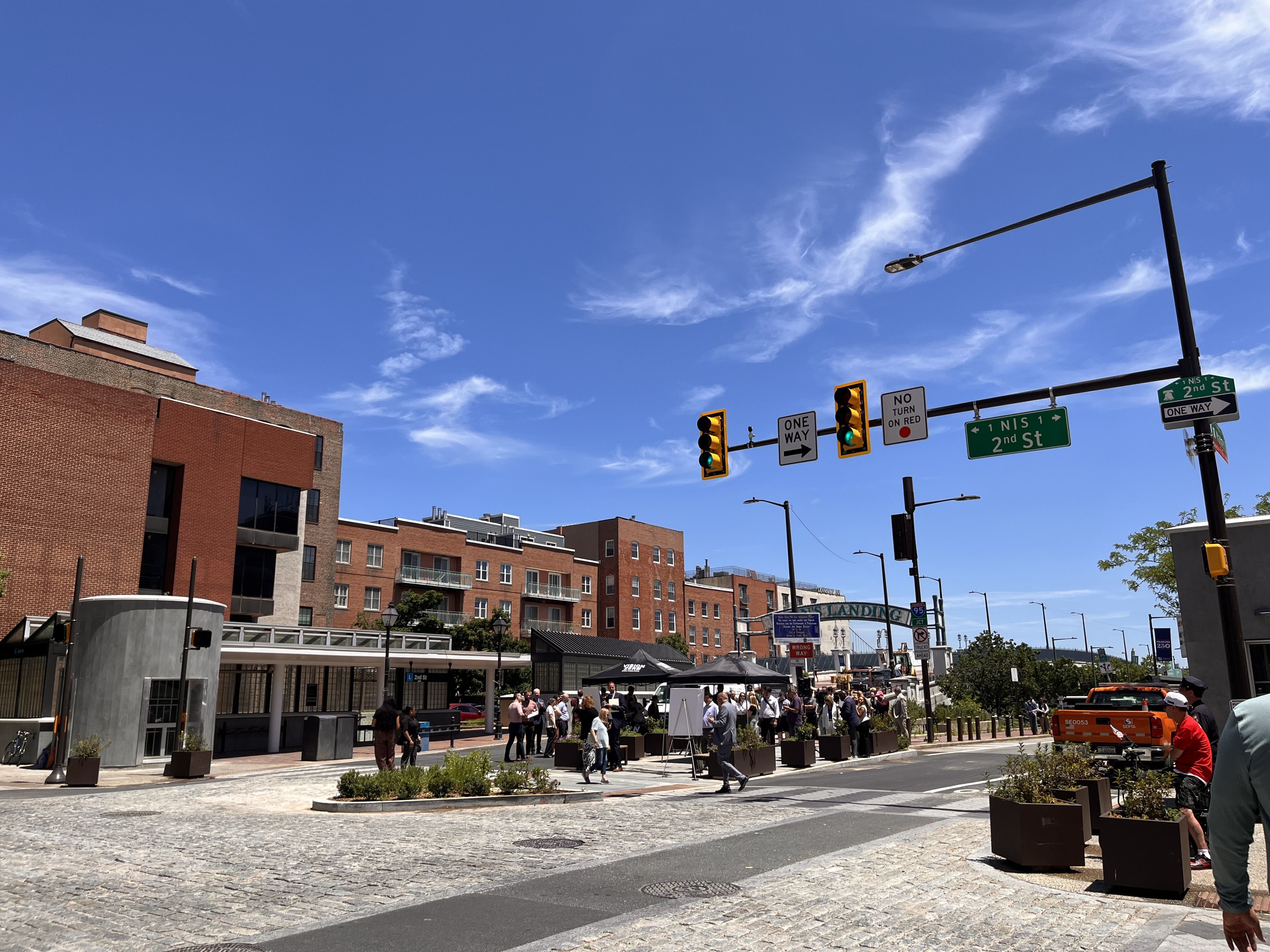
    Philadelphia officials unveiled the new look Tuesday in time for the nation’s 250th anniversary. The transformation permanently narrowed vehicular traffic, added bike lanes, and built a new public plaza.

    “As you can see, walking around the neighborhood is greatly improved,” said Job Itzkowitz, executive director of the Old City District, a business improvement organization.

    Itzkowitz noted more open space for pedestrians, shorter distances to cross the street, and new street trees and planters, among other improvements.

    “Residents, visitors, and business owners alike have already felt the impact as the fences started to come down over the last few months,” he said.

    Officials launched the overhaul in December 2024 to rebuild the corridor from Second to Sixth Streets and transform the historic stretch into a more inviting place to walk, bike, and dine.

    The work was to timed for the Semiquincentennial, which marks the 250th anniversary of the signing of the Declaration of Independence. Several other nearby landmarks have also been spruced up, such as Elfreth’s Alley, which recently unveiled a new pocket park, and the long-shuttered First Bank of the United States, set to reopen to the public on July 1 after a $27 million renovation.

    Philadelphia city officials celebrated the completion of a $16 million renovation of Market Street, from Sixth to Second Streets. Improvements include wider sidewalks, protected bike lanes, Belgian block streetscape, and new plantings.Frank Kummer

    What’s new?

    As part of Market Street’s “road diet,” vehicles have been reduced to one lane in each direction, clearing way for protected bike lanes and adding dedicated left turn lanes at key intersections.

    Among other improvements:

    • A new curbless plaza at Second and Market Streets at the base of the ramp to Penn’s Landing, allowing easier access for pedestrians.
    • Concrete bump outs at bus stops were lengthened to make boarding easier. The raised bike lanes were installed between parking lanes and sidewalks.
    • Wider sidewalks.
    • Belgian block streetscaping.
    • 44 new street trees and 68 shrubs.
    • 55 bike racks.
    • SEPTA also improved the look of the headhouses for the Market-Frankford Line subway at Second Street.

    Officials say the transformation will reduce traffic-related injuries and deaths and better serve tourists, walkers, cyclists, transit users, and motorists.

    ‘New plaza rocks’

    The project was initiated a decade ago by Itzkowitz and the Old City District. It was managed by the city’s Department of Streets and Office of Transportation and Infrastructure Systems. The work was done by Deptford-based C. Abbonizio Contractors.

    Also taking a lead was the nonprofit Independence Historical Trust, as part of a larger plan to create better ways for tourists to navigate on foot through Independence National Historical Park, Old City, and other historic or local neighborhoods.

    “The new plaza rocks,” said Mayor Cherelle L. Parker.

    Parker said the just-completed project fits in with broader efforts to extend improvements on Market Street from City Hall to the Delaware River.

    Bill Marrazzo, chair of the nonprofit Independence Historical Trust, called completion of the Market Street project key, given its location in Old City and near Independence National Historical Park.

    “No other American city has as many cultural assets per capita as we do here in the city of Philadelphia,” Marrazzo said, “and a very high percentage of those are organized here within this one square mile of history.”

    “These improvements are truly transformational,” noted Mike Carroll, the city’s deputy managing director for transportation and infrastructure.

  • U.S. home sales surge to the fastest pace this year despite rising mortgage rates and prices

    Sales of previously occupied U.S. homes accelerated last month to their fastest pace since December, a sharp turnaround in demand after a lackluster start to the spring homebuying season.

    Existing home sales rose 3.2% in May from the previous month to a seasonally adjusted annual rate of 4.17 million units, the National Association of Realtors said Tuesday. Sales also rose 3.2% compared with May last year.

    Home sales increased from a year earlier in the Midwest, South, and West, but fell in the Northeast, NAR said.

    The latest sales figure topped the roughly 4.07 million pace economists were expecting, according to FactSet.

    Home sales have been mostly hovering close to a 4-million annual pace going back to 2023, far short of the historic norm that is closer to 5.2-million.

    Sales rose last month even as mortgage rates have continued to mostly trend higher this spring, although they remain below where they were a year ago.

    Home prices continued to rise nationally last month. The U.S. median sales price increased 1.3% in May from a year earlier to $429,300, an all-time high for any May on data going back to 1999, NAR said. Home prices have risen on an annual basis for 35 months in a row.

    Even so, home price growth is now lagging income growth in many areas. That, plus mortgage rates holding below where they were this time last year, is helping to improve affordability, giving the housing market momentum, said Lawrence Yun, NAR’s chief economist.

    “I cannot definitively say if home sales are truly coming out of the slump, because we know that there’s still uncertainty related to the oil prices or how the mortgage rates will move,” Yun said, adding that he expects home sales will emerge from their multiyear slump if the average rate on a 30-year mortgage drops back closer to 6%.

    The U.S. housing market has been in a slump since 2022, when mortgage rates began to climb from pandemic-era lows. Sales of previously occupied U.S. homes were essentially flat last year, stuck at a 30-year low. They have remained sluggish so far this year. They were flat in April after declining from a year earlier through the first three months of this year.

    Years of soaring home prices, especially in the early part of this decade when rock-bottom mortgage rates fueled a buying frenzy, have left many would-be homebuyers frozen out of the market. And a chronic shortage of homes for sale nationally, due partly to years of below-average new home construction, has helped prop up home prices even in a multiyear sales slump.

    Homes purchased last month likely went under contract in March and April, when the average rate on a 30-year mortgage ranged from 6% — close to its lowest level in three and a half years — to 6.46%, according to mortgage buyer Freddie Mac. The average rate was at 6.48% last week, down from 6.85% a year earlier.

    While the average rate has remained below where it was a year ago, it has been mostly trending higher since the war with Iran began, disrupting the passage of tankers ferrying crude oil from the Persian Gulf to customers worldwide and driving oil prices sharply higher. Expectations of high oil prices as the war continues have pushed up the long-term bond yields that lenders use as a guide to pricing home loans, causing mortgage rates to climb.

    “If not for the war-related spike in inflation, the average 30-year fixed mortgage rate could well be in the mid-to-upper 5’s,” said Ted Rossman, principal analyst at Bankrate.

    Despite the uncertainty over mortgage rates, first-time buyers accounted for 35% of home purchases last month, the highest share going back to June 2020, Yun said. Historically, they made up 40% of home sales.

    Those who can afford to buy at current rates are likely benefiting from buyer-friendly trends in many markets. In May, median list prices were down 2.4% from a year earlier, the steepest drop on data going back to 2017, according to Realtor.com.

    They also have more homes on the market to choose from, although home inventory levels remain well below historical norms.

    There were 1.55 million unsold homes at the end of May, up 3.3% from April and up 0.6% from May last year, NAR said. That’s still short of the roughly 2 million homes for sale that was typical before the COVID-19 pandemic.

    May’s month-end inventory translates to a 4.5-month supply at the current sales pace. Traditionally, a 5- to 6-month supply is considered a balanced market between buyers and sellers.

  • Pentagon labels tech giant Alibaba and electric car maker BYD as aiding Chinese military

    WASHINGTON — The Pentagon has added several prominent Chinese businesses, including the tech giant Alibaba, electric car maker BYD and search engine Baidu, to its list of Chinese military companies, preventing them from getting U.S. defense contracts.

    The list, updated and published Monday by the Pentagon, now sanctions well-known, non-state-owned Chinese companies that are not traditionally considered to be in the defense or security sector. It reflects growing wariness of Beijing’s strategy of tapping the strength of non-state businesses for military purposes.

    Created in 2021 by a congressional mandate, the list seeks to identify Chinese companies that the Pentagon considers to have links to the Chinese military — not only those directly controlled by the Chinese military and security forces but also those contributing to the country’s defense industrial base.

    When updating the list last year, the Pentagon said the Chinese military sought to acquire advanced technologies and expertise developed by Chinese companies, universities and research programs that “appear to be civilian entities.”

    The Chinese Embassy on Monday accused the U.S. of “overstretching the concept of national security and making discriminatory lists to go after Chinese companies.” It said Chinese companies observe the laws and regulations of the countries where they do business. “The U.S. should stop its wrong practice and create a fair, just and non-discriminatory environment for Chinese companies,” the embassy said in a statement.

    Alibaba, BYD and Baidu said there is no basis for including them on the list. “Alibaba is not a Chinese military company nor part of any military-civil fusion strategy,” a statement from the leading e-commerce company said. Baidu, which has expanded into artificial intelligence and self-driving taxis, said the suggestion that it is a military company is “entirely baseless.”

    BYD said in a statement it is “not a military enterprise” and that the determination “seriously contradicts the facts.” It also said it “will actively safeguard its legitimate rights and interests through all feasible administrative and legal means.”

    This year’s list has grown to 188 Chinese entities, up from last year’s roughly 130 named by the Pentagon. It already had covered companies such as DJI, a major maker of consumer drones. While a company on the list can still do business in the U.S., it faces reputational damage and could be subject to more restrictions.

    After the Pentagon released the updated list, the House Select Committee on the Chinese Communist Party called it “a warning to American businesses, all levels of government, and the American people.” It said the companies on the list that are traded publicly on U.S. exchanges should be delisted and no American company should do business with those on the list, “otherwise they are enabling China’s military ascendance.”

    In naming Alibaba, the Pentagon said the tech giant helps boost China’s defense industrial base because it is affiliated with the country’s Ministry of Industry and Information Technology. Alibaba is traded on the New York Stock Exchange.

    The Pentagon said BYD and Baidu are affiliated with the same ministry, which oversees China’s technology and industrial policies. BYD is dominant in the global electric vehicle market, and President Donald Trump said in January that he would welcome Chinese carmakers such as BYD if they built plants in the U.S. and hired American workers.

    However, a number of U.S. lawmakers have said they will seek a ban on Chinese electric vehicles.

    Another addition is the Chinese robotics company Unitree, whose dancing robots impressed Simon Cowell on NBC’s “America’s Got Talent.” The Pentagon said the company “knowingly received assistance” from the Chinese government through its designation as a small or medium-sized company that is highly innovative, highly competitive globally and critical to the country’s supply chain. Unitree did not immediately respond to a request for comment.

  • Past Present Future, beloved Main Line gift and craft store, is closing its doors

    Past Present Future, beloved Main Line gift and craft store, is closing its doors

    The interior of Past Present Future, downtown Ardmore’s beloved gift and craft store, is unmistakable. Each wall is adorned with art and collectors’ items, from hand-beaded necklaces to fruit-shaped bowls and ceramic tropical fish. Cases of jewelry sit under hanging lanterns and mobiles, and trinket boxes share shelves with colorful purses and glass figurines.

    Past Present Future, located at 15 Lancaster Ave., is the 50-year work of owner Sherry Tillman, who first opened the store in Center City in 1976 as a young graduate of the Philadelphia College of Art, before moving to Ardmore in the mid-1990s. Tillman calls the shop “part gift store, part mini-museum,” and prides herself on grouping items, from lamps to clocks to mirrors, in “ways that maximize their funky diversity.”

    Now, five decades, four storefronts, and thousands of customers later, Past Present Future is officially closing, marking the end of a chapter that Tillman says has been defined by eclectic art, changing times, and deep community ties. While Tillman is “gutted” to close up shop, in her words: “It’s time.”

    Sherry Tillman, owner of Past Present Future, chats with Ellen Balze, of West Philadelphia, a regular for many years, during Tillman’s party for friends and long-time customers in Ardmore, Pa., on Friday, June 5, 2026.Tyger Williams / Staff Photographer

    Tillman first opened Past Present Future as a toy store on the corner of 13th and Pine Streets in Center City, next to a friend’s science-fiction bookstore. The Philadelphia Daily News in 1979 called Tillman’s store “one of the wonders of the city,” a “throwback to the age of handcrafted wooden playthings, one-of-a-kind soft toys and sculptures, old-fashioned balance toys and Rube Goldberg-ish do-nothing machines.” Tillman, then a 20-something artist, took orders from customers and handcrafted toys from her workshop.

    After three years, Tillman left the Gayborhood and moved to 17th and Locust Streets, where the scope of Past Present Future began to shift, bringing in more crafts and jewelry. Four years later, Tillman moved to 18th Street between Market and Chestnut Streets. She had 2½ floors of a four-story building and, according to a 1990 Inquirer story, stocked “zingy jewelry, kaleidoscopes, cards, clocks, handmade ceramic diners that light up” and had a “top-floor gallery devoted to fun-and-funky craft items for adults.”

    By the mid-1990s, much of Tillman’s customer base had moved out to the suburbs, and the confounding pressures of crime, high taxes, and a lack of parking, plus raising her own growing family in Ardmore, spurred her to pack up her Center City store and move to the Main Line. She opened on Lancaster Avenue in 1996.

    “The fact that my business could be where my home is was so important to me,” Tillman said, reflecting on her move to Ardmore. “To be embraced and connected to this community is also important to me.”

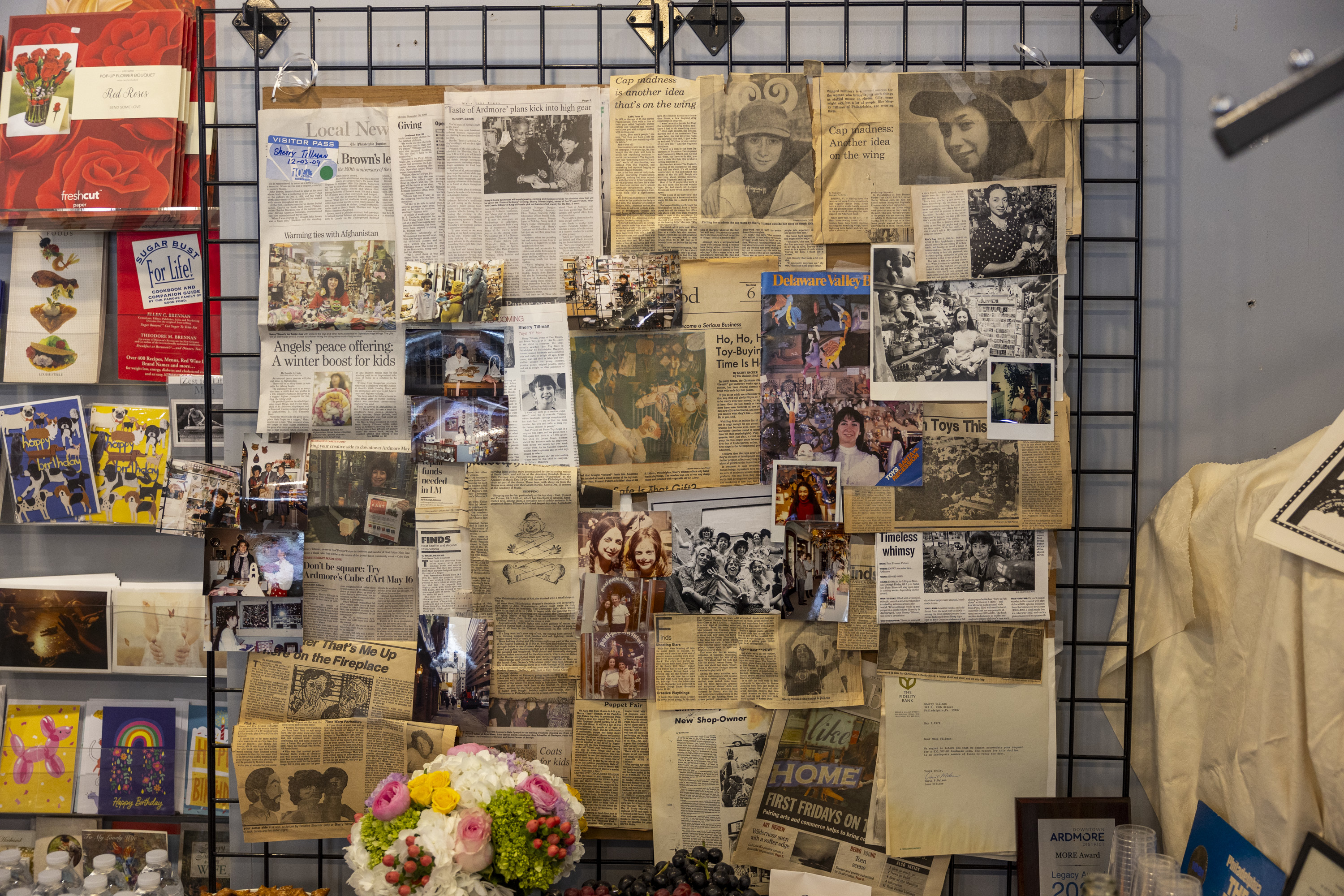
    Sherry Tillman, owner of Past Present Future, made a board of all her articles and photos of her for her small party for friends and regular customers in Ardmore, Pa., on Friday, June 5, 2026.Tyger Williams / Staff Photographer

    Tillman’s store quickly became a magnet for artsy types, window shoppers, gift givers, touring musicians, and spiritually minded Main Line residents.

    “It’s incredible,” she said. “People come in and we talk, other people come in and they join the conversation. It’s a place where people just feel so comfortable.”

    Lorig Buckley, otherwise known as Mystic Lor at Mystic of the Main Line, said she thinks of Past Present Future as “a staple” in Ardmore.

    When people strolled into Past Present Future looking for a palm reading, Tillman would send them down the block to Mystic of the Main Line. When clients of Buckley’s needed to shop for a gift, she’d pass them along to Past Present Future.

    “My heart sank when I saw that she was closing, because it really brought a different spirit to the area,” Buckley said.

    Shannon Gallagher, a business coach who lives in Ardmore, always bought her clients gifts from Tillman’s shop, from crystals to wooden boxes with tarot cards. When she first moved to Ardmore four years ago, Tillman gave her the lowdown on all of the locals’ favorite spots.

    “She just made it feel so comfortable for us,” Gallagher said.

    Sherry Tillman, featured in the Philadelphia Daily News in 1982, holding a teddy bear at Past Present Future, back when it was located at 243 S. 17th St. in Center City. Tillman has operated the toy and art store for 50 years, first in Philadelphia and, for the last three decades, in Ardmore.Sam Psoras / Staff Photographer

    In addition to running Past Present Future, Tillman organized First Friday Main Line, a monthly arts crawl that brought music and art to the streets of Ardmore. Alongside Broomall surgeon Lt. Col. Kenneth Marx, Tillman helped create Operation Angel Wings, a donation drive that sent clothes and toys to children in Afghanistan. Most recently, she spearheaded a contest to paint a mural on the side of her storefront. The first of five winning murals will be up by July 1.

    Tillman said Ardmore has “blossomed a lot” in the years since she moved to town. Street art, interesting shops, and live music sprawl across downtown, from the newly painted Schauffele Plaza to Ardmore Music Hall (many of the traveling performers stop into Past Present Future before their shows, Tillman said).

    “There’s expressions of art around us,” Tillman said.

    Tillman doesn’t have an exact closing date yet. Past Present Future has marked down its merchandise by 20%, and Tillman said she’ll be open until there’s nothing left (“hopefully”). Tillman plans to sell the 15 Lancaster Ave. building, which she has owned for years.

    “It’s really hard,” she said, “when you think that your entire life has been this one thing, to say goodbye.”

    This suburban content is produced with support from the Leslie Miller and Richard Worley Foundation and The Lenfest Institute for Journalism. Editorial content is created independently of the project donors. Gifts to support The Inquirer’s high-impact journalism can be made at inquirer.com/donate. A list of Lenfest Institute donors can be found at lenfestinstitute.org/supporters.

  • Check fraud is rising. Here’s how businesses can protect themselves. | Expert Opinion

    Check fraud is rising. Here’s how businesses can protect themselves. | Expert Opinion

    A client of mine had a check they mailed stolen before it reached their supplier. The check was altered for a different payee and amount and then cashed. Another client said someone got a copy of one of his company’s checks and created counterfeit versions using AI.

    Countless clients have reported unauthorized electronic check requests made to their bank accounts, with more than a few finding out after their money had disappeared.

    Check fraud is real, and it’s bad.

    “Check fraud remains a major threat, and businesses are becoming much more aware of it,” said Janet Miller, senior vice president at Fulton Bank in Philadelphia. “Fraud has become so prevalent. Five years ago I’d have conversations about fraud protection with my clients, and there was a resistance to it. But now it’s like, yes, we need to protect ourselves!”

    A 2025 study from the Association for Financial Professionals found that 79% of organizations experienced attempted or actual payments fraud in the past year, with 63% representing attempted or actual check fraud.

    Checks, which the study says are still used by 91% of businesses, remain the single most-targeted payment method, but, according to the study, wire transfer fraud was reported by 63% of respondents, up from 39% in the previous survey, and ACH (Automated Clearing House) credits fraud was reported by 50%.

    “Fraud is something that only expands,” said Tom Gregory, head of Treasury Management, Merchant and Government Banking at TD Bank. “New technologies like AI and spoofing, key logging, and social engineering are always creating new ways of perpetrating crime.”

    Ask any accountant, and we’ll say that there are certainly internal controls that should be implemented at your company to help reduce the risk of check fraud. These would include multilevel approvals, better security over physical checks, segregation of duties among financial people, mandated vacations, and cross training.

    But one of the best defenses growing in popularity is called Positive Pay, a banking service that helps prevent check and payment fraud. I’ve been urging all of my clients to subscribe to this service, which is offered by most banks.

    Melissa Jetland, a senior vice president at Fulton Bank, says Positive Pay is a powerful risk management tool for your company’s cash.

    “Think of it as the simplest way to put a gate in front of your money,” she said.

    Positive Pay works in two ways. For regular paper check payments, your company electronically sends your bank a list of the checks (which includes payee, purpose, amount, date), and the bank then matches that list against the actual check payment request made by the payee. If the payment request doesn’t exactly match all the data on the list, it gets rejected.

    Positive Pay also works with ACH payments. In this manner you tell the bank which vendors are allowed to make debits to your account. Any request that doesn’t have an authorized vendor will be rejected.

    “If you don’t do that, the bank is obligated to post every debit that comes because in an ACH system, the originating bank warrants their validity — even if the payment hasn’t been authorized by you,” Gregory said.

    Why wouldn’t most small businesses sign up for Positive Pay? According to recent market research of U.S. financial institutions, only 29% of banks and credit unions are satisfied with their current Positive Pay adoption rates. Other industry reports estimate that only about 35% of eligible business customers currently use the service, despite the recent surge in check fraud.

    Yes, there is an additional cost (generally $25 to $100 per month for basic Check Positive Pay), but Fulton’s Jetland believes one of the biggest barriers isn’t cost. It’s the belief that Positive Pay is cumbersome.

    “It really is lack of education,” she said. “Some owners worry that uploading check files and reviewing exceptions will be difficult and time consuming, but that’s usually not the case.”

    According to research by a financial technology provider, more than 75% of banks expect Check Positive Pay adoption to increase over the next two years.

    It’s effective. One study from last year by a fraud prevention services company found that 77% of users with Positive Pay reported fewer check fraud attempts or losses.

    Subscribing to Positive Pay doesn’t completely protect you from fraud. Gregory says that things like daily account monitoring, setting up check and ACH blocking on your bank accounts that are never used for disbursing money is also important.

    “Understand that fraud prevention requires multiple layers of defense,” he said. “There’s really no 100% ironclad fail-safe system. But layers of control and being mindful will reduce your risk.”

    As an accountant, I’ve learned that fraud prevention isn’t about finding one perfect solution. It’s about building layers of protection. Positive Pay may not stop every criminal, but it has become one of the easiest and least expensive layers a small business can add.

    Miller says that Positive Pay is a good insurance policy for every company’s cash.

    “It’s a very manageable cost and the protection it provides is worth it,” she said.

  • One of Philly’s last independent accounting firms was just acquired amid ‘unprecedented’ spree of deals

    One of Philly’s last independent accounting firms was just acquired amid ‘unprecedented’ spree of deals

    Every week for the last five or six years, Scott Isdaner got another call: Are you ready to sell?

    As managing partner of one of the last remaining larger independent public accounting firms in the Philadelphia region, Isdaner, 67, had watched many of his competitors — “our brethren” — get acquired by national companies, in many cases because they needed to do so to survive.

    Last week, Isdaner finally joined their ranks — but from a position of strength, he says. Bala Cynwyd-based Isdaner & Co., one of the 20 biggest accounting firms in the region, announced it had been acquired by Atlanta’s Aprio, one of the 25 biggest accounting firms in the country with $485 million in net revenue last year.

    “We felt that we were in a position as a firm that if we chose to remain independent and continue down that path, that we would be able to succeed and do so,” said Isdaner, whose firm counts 70 employees, including 10 partners. “However, we’re also very mindful and realistic of what was going on in the marketplace in connection with our industry.”

    The acquisition adds to a wave of deals in an industry that in recent years has seen a boom in investment from private equity and other sources of outside capital.

    The companies did not disclose the financial terms of the deal, effective June 1. It came two years after Aprio received what it called a “strategic investment” from private equity firm Charles Bank Capital Partners.

    And in January, South Jersey’s Bowman & Co. was acquired by a larger firm, PKF O’Connor Davies, which was backed by a Bahrain-based private equity group and a Canadian pension investment manager.

    Mergers and acquisitions activity in accounting has been “unprecedented” the last few years, said Jen Cryder, CEO of the Pennsylvania Institute of Certified Public Accountants.

    Private equity has invested at least $2 billion in public accounting since 2022, Bloomberg reported last year. Sovereign wealth funds and wealth management firms are also pouring in money.

    Jen Cryder is chief executive officer of the Pennsylvania Institute of CPAs.Courtesy PICPA

    Firms backed by outside capital accounted for two-thirds of the 129 CPA firm transactions last year, up from a 7% share just five years ago, according to Chicago-based Koltin Consulting Group, which specializes in mergers and acquisitions.

    Not a lot of regional firms are left in the Philadelphia market, Cryder said. As talent shifts to national firms, that raises the question of how the middle market of closely held businesses, family firms, nonprofits, biotech, and others will continue to be served.

    Clients have asked Isdaner whether they’ll still be able to call him and his team. “We’re staying put,” he said. “We’re still going to be here. … And we intend to continue to service our clients as we have, and maybe even better in the future.”

    He added that employees will continue to have “career development opportunities.”

    Aprio CEO Richard Kopelman said his company is “building something different in Philadelphia, a firm where every client has trusted advisers who anticipate the challenges ahead.”

    Family business

    Isdaner’s firm was founded in 1967 by his father and grandfather, who wanted to start a boutique firm serving small businesses. They called it Isdaner & Isdaner.

    They worked with clients from the creation of businesses through sales or passage to future generations. Scott Isdaner was working as a tax attorney at a Philadelphia law firm in the 1980s when he got a call from his dad, Larry, who along with his partners had realized “they lacked a level of tax sophistication that they needed to help to continue to build and grow the practice.”

    Scott agreed to join the firm. “My dad and I were best friends,” he said. “The opportunity to work with him was what motivated me ultimately to say I’ll make the leap.”

    Scott became managing member in 2002. “The core mission of the firm is to serve closely held businesses and their owners, and along with that, we’ve built a significant tax practice in working with high net-worth families and individuals and family offices,” he said.

    Industry challenges

    In recent years technology has transformed the profession, as firms increasingly automate certain tax preparation and auditing services.

    Isdaner and his partners lacked the resources to meet those technological demands, he said, especially amid the rise of artificial intelligence. Client needs also have expanded beyond the services Isdaner’s firm could provide, he said, and the firm faced challenges attracting young talent to build a future leadership pipeline.

    “When you add up those three pegs on the stool,” Isdaner said, the firm “decided that we should be entertaining the path of becoming a part of a large organization.”

    Why is private equity attracted to accounting?

    As independent CPA firms see more and more reason to sell, outside investors have seized on the opportunity.

    “Private equity investment in the accounting profession has evolved from an emerging trend to a rapidly scaling force reshaping the business of professional services,” trade publication Inside Public Accounting wrote in a 2025 report.

    Cryder, of the Pennsylvania Institute of Certified Public Accountants, pointed to accounting firms’ strong recurring revenue.

    “What I’ve heard [investors] say is, ‘They’re well run, they’ve got great teams, strong client relationships,’” she said.

    Critics have questioned whether private equity investment will increase accountants’ focus on profits and diminish the quality of audits.

    Cryder said accounting firms have “always had a profit motive,” adding that in her experience, new investors understand that a firm’s value is tied to its trust in the community.

    Isdaner said Aprio wants “us to serve the same clients in this marketplace as we always have.”

    “In terms of outside funds, Aprio is run by Aprio,” he said. “It was really not an issue that we’re personally concerned or worried about.”

  • Trump’s $100,000 fee on H-1B visas for highly skilled workers is struck down

    Trump’s $100,000 fee on H-1B visas for highly skilled workers is struck down

    A federal judge threw out the Trump administration’s $100,000 fee on H-1B visas for highly skilled workers Monday, which had been challenged by California Attorney General Rob Bonta with 19 other states.

    In the ruling, U.S. District Judge Leo T. Sorokin of Massachusetts declared President Donald Trump’s fee unlawful and said it basically amounted to an illegal tax, essentially agreeing with the states that the $100,000 fee usurps Congress’ constitutional authority to set immigration policy and raise revenue, according to the decision.

    The fee narrowed a major pathway for legal immigration that is used by Silicon Valley tech companies, as well as hospitals and universities. The U.S. Chamber of Commerce also had challenged the fees in a separate lawsuit, but the court sided with the Trump administration late last year.

    Before Trump’s decree, H-1B visa applications fees rarely exceeded $5,000 a worker in total, excluding lawyers’ expenses. Universities and nonprofits paid a lower fee than private employers.

    The Trump administration is expected to appeal the ruling.

    “President Trump has clear legal authority to restrict entry of any class of aliens he determines is not in America’s best interests, and that is exactly what he did,” said Taylor Rogers, a White House spokesperson. “The H-1B program has been abused for decades, and President Trump finally took action to fix it.”

  • Five Below has officially eliminated its above-$5 section

    Five Below has officially eliminated its above-$5 section

    Five Below, the Philadelphia-based discount retailer, has officially done away with its above-$5 section.

    But all its products aren’t below $5.

    Those higher-priced items — which had been set apart in stores’ “Five Beyond” sections and account for less than 20% of inventory — are now interspersed with the rest of the merchandise, according to chief executive officer Winnie Park.

    “We’ve actually seen that product perform better” when placed throughout the store, Park said last week on the company’s earnings call. “If you have a $35 gilt floor mirror, it’s in the room section and not tucked away in the back of the store.”

    The move came during a strong quarter for Five Below, which sells toys, games, decor, tech accessories, candy, party supplies, sporting goods, and more to kids, teens, and their parents.

    The company’s net sales rose nearly 33% and its net income increased to $123 million, triple the $41 million it recorded in the first quarter last year, according to the latest earning report.

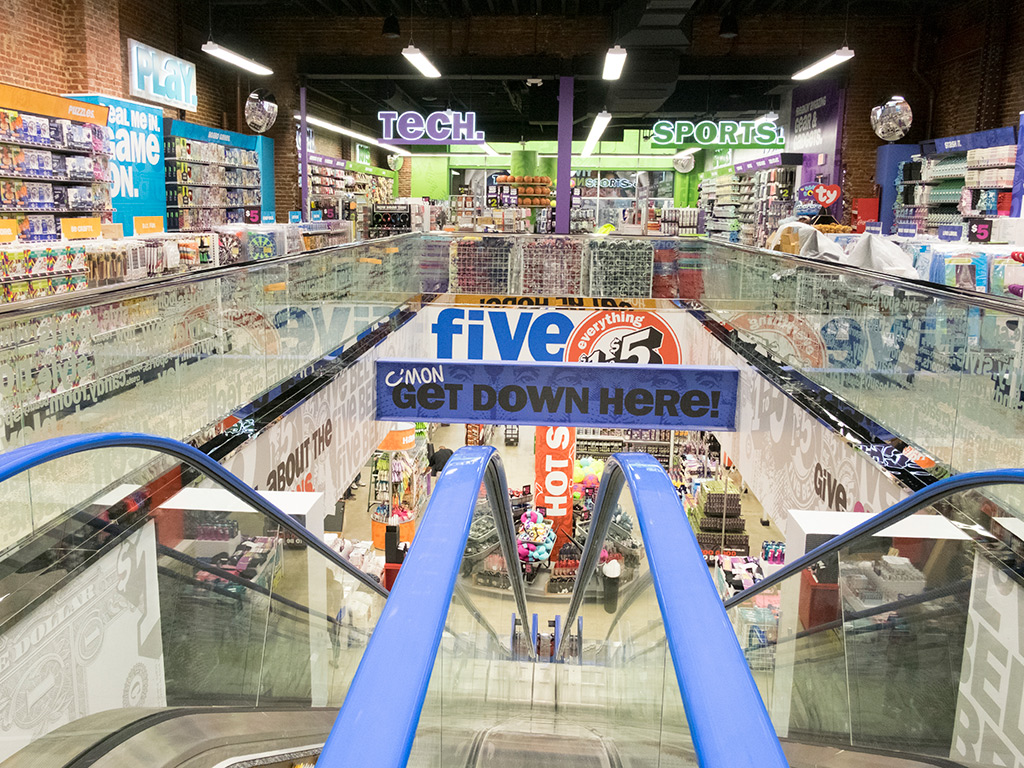
    The wide selection of products at Five Below’s Chestnut Street location, one of its flagship stores, is shown in 2019. ED HILLE / Staff Photographer

    Executives attributed some of this growth to the popularity of games and toys, “underpinned by strong support of squishy trends and collectibles,” said Dan Sullivan, chief financial officer.

    “Everyone has been talking about the squishy dumplings,” the viral fidget toys that Five Below capitalized on, Park said. Pokemon and other trading cards also flew off the shelves.

    “We’re constantly looking at what next trend we can amplify,” the CEO said.

    Other factors contributed to higher sales, too, said the executives, citing higher tax refunds and broader economic pressures that are attracting more consumers to discount retailers.

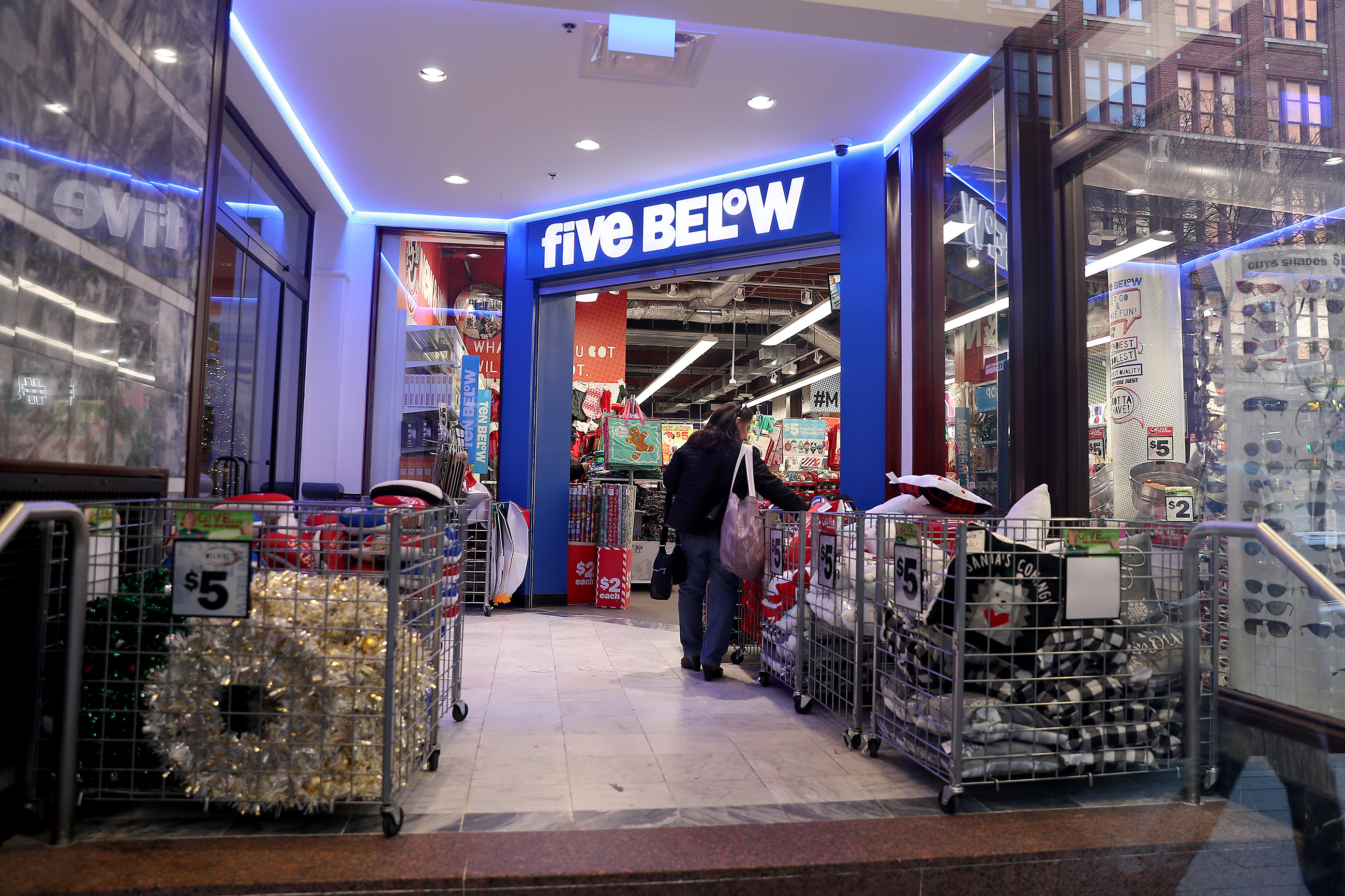
    A display of holiday accessories, priced between $2 and $5, were shown inside the Five Below on Market Street in this file photo.TOM GRALISH

    Off-price stores, such as Dollar General and South Jersey-based Burlington, have thrived in recent years amid rising costs of gas, groceries, utilities, and other essentials.

    Secondhand shops like Goodwill, which recently opened a giant new store in South Jersey, are also seeing stronger sales.

    At Five Below, executives said they have seen growth across all customer demographics, including millennial moms. Park said exercise gear, including yoga and Pilates equipment, has been a big seller.

    Sullivan said he’s curious to see what happens the rest of the year.

    “We’re being cautious,” the CFO said. “We’re looking at the world that our customers are living in with rising fuel costs, with very sticky inflation, with a somewhat soft labor market.”

    “And we think a piece of that pain that they are feeling wasn’t felt in the first quarter purely because of tax proceeds year-over-year that were significantly up,” he added.

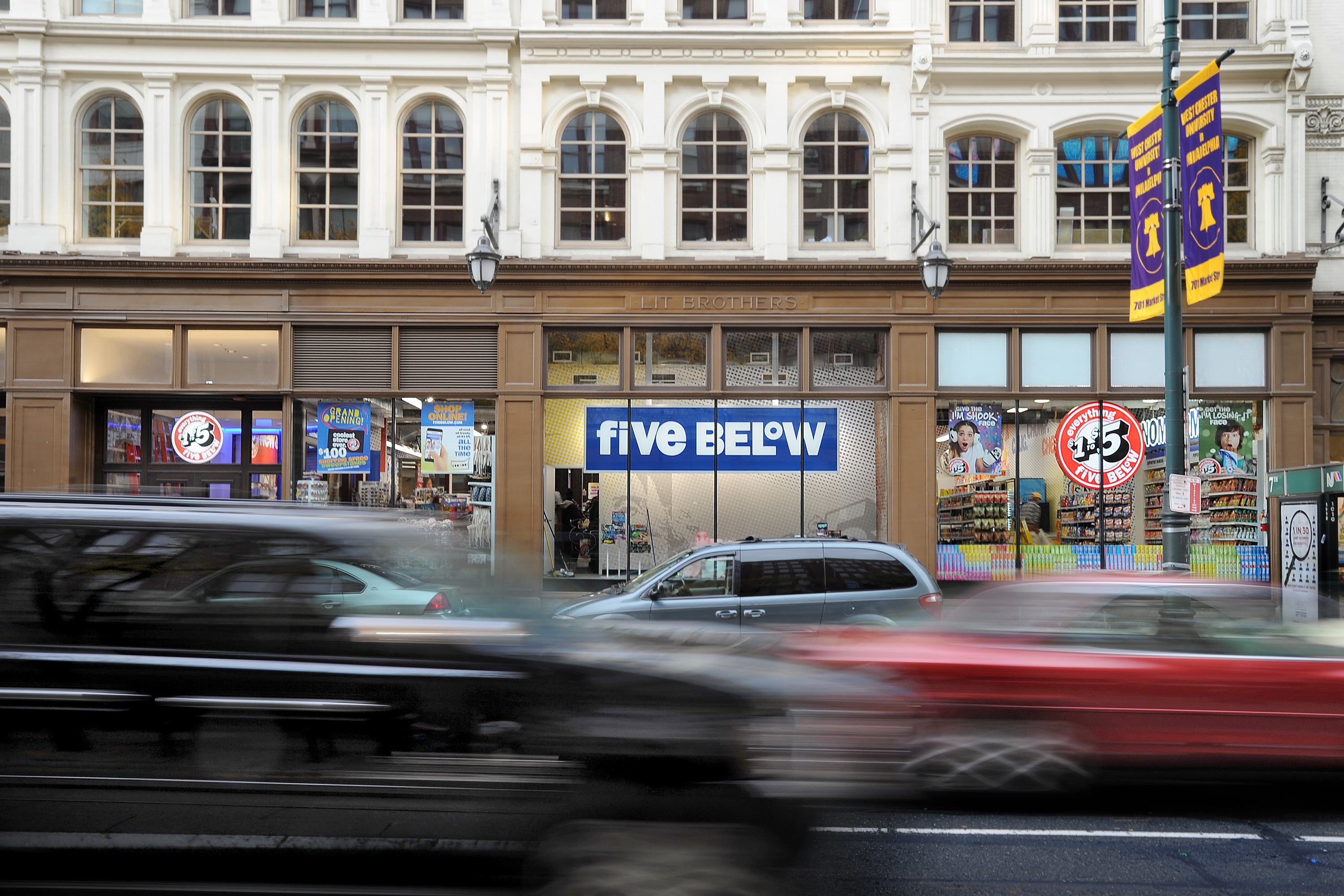
    Five Below was founded in Wayne in 2002 and has since grown to include 1,970 stores in 46 states. In 2018, the company opened a massive three-story headquarters in the former Lit Bros. building at 701 Market St. in Center City.

    Five Below’s Market Street location is shown before opening in this 2018 file photo.TOM GRALISH / Staff Photographer

    After a period of rapid expansion, Five Below has experienced some upheaval in recent years. Former CEO Joel D. Anderson stepped down in 2024 after two quarters of disappointing profits. Anderson, now CEO of Petco, had pushed to expand Five Below’s selection of above-$5 products.

    Park, the former top boss at Forever 21, took the helm in December 2024, with a mission to reaffirm Five Below’s reputation as an “extreme-value retailer,” as the company called itself in her hiring announcement.

    By last summer, the company was rebounding, thanks in part to viral toys like plush Squishmallows and artificial-intelligence tools that now help with inventory.

    Analysts told industry publication RetailDive that Five Below’s latest earning report showed the business in a strong position. They noted that stock prices fell initially, however, over concerns about the company’s ability to sustain this growth.

    “Looking ahead, the outlook remains very positive but is tempered by a dose of caution,” GlobalData managing director Neil Saunders told the outlet.