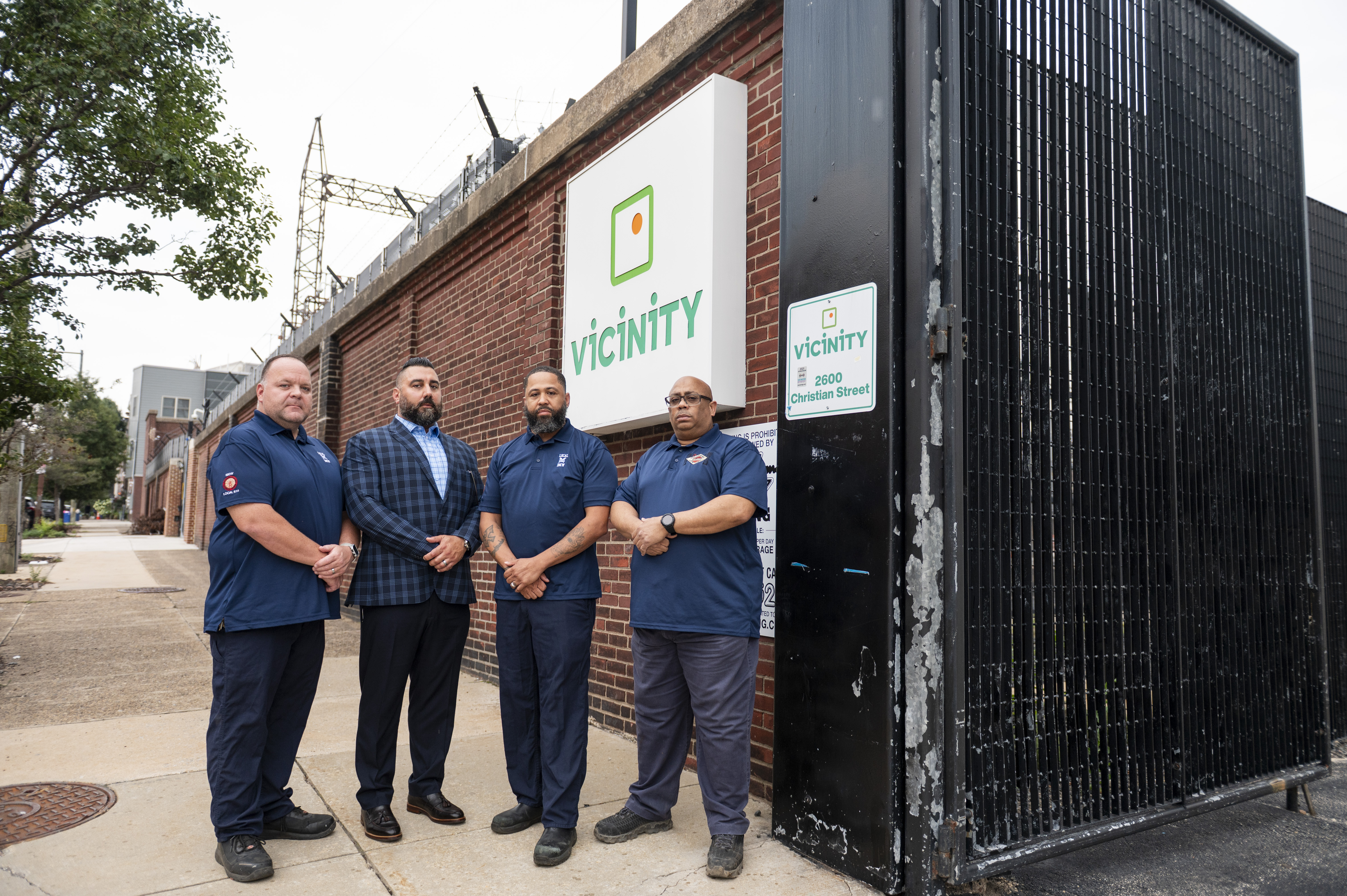
Thomas White is a control room operator at a Philadelphia plant working with chillers and steam boilers to provide heat and air-conditioning for Jefferson Health and Thomas Jefferson University. When he started his job some 18 years ago, he and many of his coworkers had served in the U.S. Navy.
That shared experience was an advantage, he says, because they all came with the same training. The Navy used steam-driven ships.
“You just had to learn where things were because you already knew what they did, you knew how to do it, spoke the language,” he said.
White and his colleagues work around-the-clock shifts for Vicinity Energy, operating a system that generates steam and electricity to provide customers with heat, air-conditioning, and chilled water. In Philadelphia, Vicinity serves hundreds of buildings, includingTwo Liberty Place, Thomas Jefferson University Hospital, and the Philadelphia Museum of Art, as well as the University of Pennsylvania, which buys over half the steam Vicinity sells in Philadelphia.
Since he’s been on the job, White says the Navy-veteran hiring pool has shrunk, as the Navy moved away from steam and toward diesel and gas turbines. Now hires come from refineries shutting down or trash plants, and they need training.
“There’s just a few of us older guys that are left over to try to pass this institutional knowledge down,” said White, who is a member of IBEW Local 614, along with 56 other Philadelphia employees of Vicinity. They do this training on their own time, White said, so they don’t get paid for it.
Their union is negotiating a new contract and could go on strike if they can’t reach a deal. They want raises, better short-term disability pay, a safer workplace, and compensation for the time they spend training new hires. Their current agreement expired in March.
“Vicinity Energy is committed to bargaining in good faith and believe those discussions belong at the bargaining table, not in the media,” a spokesperson for the company said in a statement. “Throughout this process, the safety of our employees, customers, and the communities we serve remains our top priority, and we remain committed to safe, reliable operations.”
The steam plant workers voted to authorize a strike on Saturday if their union calls for it, with 77% participating in the vote, and 97% voting yes.
If they do walk off the job, they’d be closely following in the footsteps of IBEW Local 614’s Peco employees, who recently went on strike before reaching a contract deal last month. A strike authorization vote doesn’t guarantee a strike will happen but can be used as leverage in bargaining.
The union has alleged that a Vicinity supervisor threatened to “discharge” workers who strike, according to an unfair labor practice charge filed with the National Labor Relations Board earlier this month. Vicinity did not comment on the charge.
The union is still bargaining in good faith, president Larry Anastasi said.
Steam plants require human operators, so a strike could be very disruptive for steam-powered buildings across the city. Given that, Anastasi said, it’s important “that we do everything in our power” to keep a strike from happening.
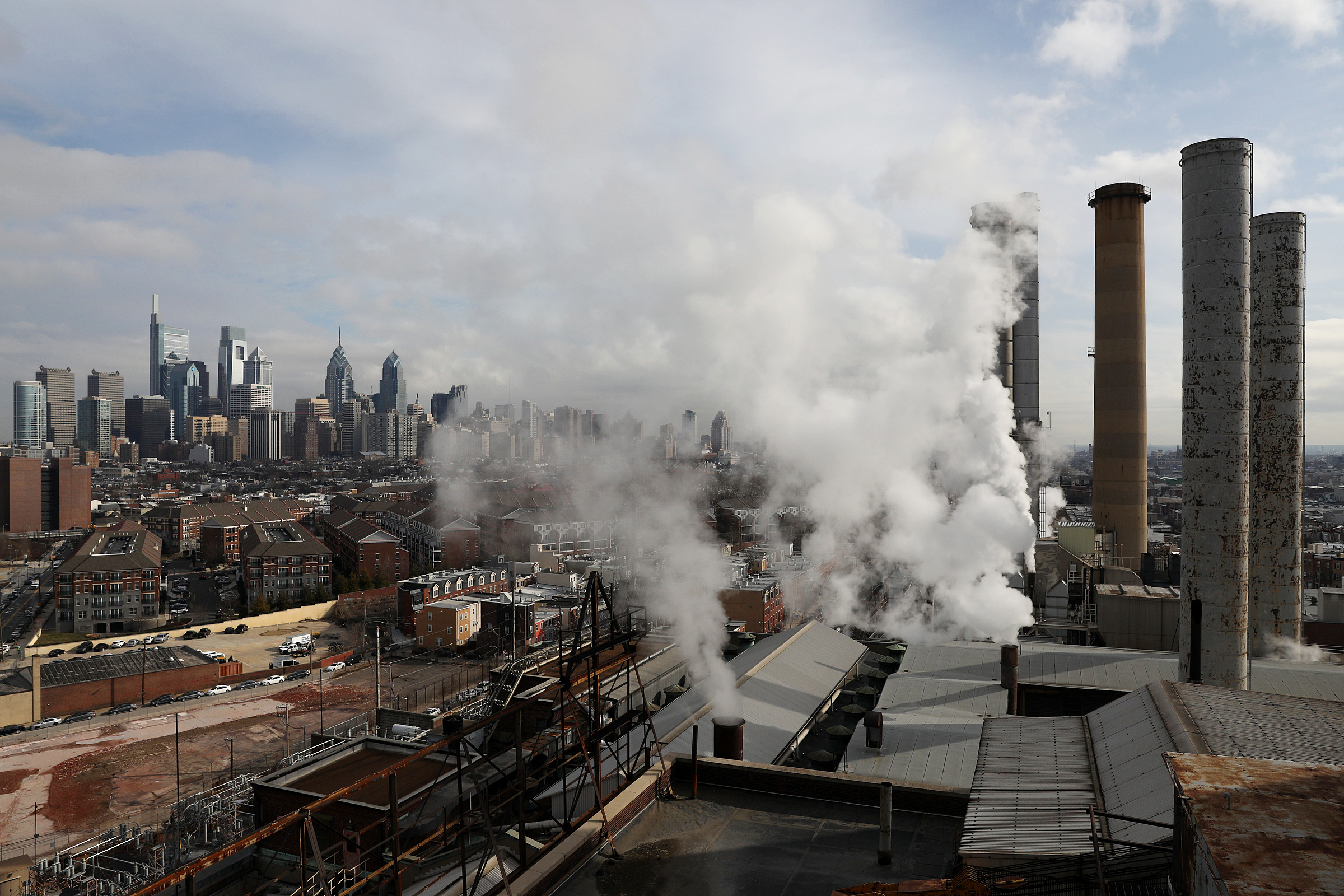
The Vicinity Energy cogeneration plant is pictured in Philadelphia’s Grays Ferry section in 2020. The plant, originally opened by Philadelphia Electric, produces electricity and steam for heating Center City buildings.Tim Tai / Staff Photographer
“Because it’s so old, I think people forgot its value,” Anastasi said.
Veolia Energy bought the system in 2007. Vicinity’s parent company, private-equity firm Antin Infrastructure Partners, bought it from Veolia in 2019 as part of a larger deal valued at $1.25 billion. At the time, the company committed to $50 million in capital spending over five years in Philadelphia.
Larry Anastasi, president of IBEW Local 614. The union leader also represents Peco employees who reached a new contract with the company in July. Allie Ippolito / For The Inquirer
Boston-based Vicinity manages some 41 miles of underground pipe infrastructure in Philadelphia, according to the company’s website. The business services 400 buildings in Philadelphia, and its main plant is in Grays Ferry, at 2600 Christian St.
Vicinity’s Philadelphia business brought in over $99 million in revenue last year but reported a net loss of $11 million in 2025 after paying for fuel, operating expenses, and other costs.
The turbine hall is pictured inside the Vicinity Energy plant in Philadelphia’s Grays Ferry section in 2020. Tim Tai / Staff Photographer
What do workers want?
After months of negotiations, it’s hard to keep morale up among workers, said Kenneth Gordy, a union shop steward and control room operator. Gordy said he feels workers are underpaid for the highly skilled and dangerous work they do.
Operators typically clock in for 12-hour shifts beginning at 6 a.m. or 6 p.m. They get two weekends off per month.
Operators earn roughly around $50 an hour, said Anastasi. He said “substandard” wages and benefits have led to turnover.
“We want our wages to reflect the knowledge, the level, the skills, the things that we do. We’re not asking for extraordinary things,” White said.
Union members also want fully funded short-term disability. They used to be able to get 100% pay during short-term disability years ago, but they now get around 60% during such leave, Anastasi said.
“Guys are using their bodies in this plant. We’re beating ourselves up,” said Sean Finnegan, an auxiliary operator who maintains equipment.
The workers also want their employer to make repairs to the plants where they work, citing unsafe conditions such as asbestos, as well as standing water in work areas, Anastasi said. Part of the ceiling was falling down in one area recently, White recalled.
“A new private equity firm takes over, and none of the repairs get made,” Anastasi said.
Control room operators work at the Vicinity Energy cogeneration plant in Philadelphia’s Grays Ferry section in 2020. Tim Tai / Staff Photographer
Anastasi also wants to improve retirement benefits for the Vicinity workers. He wants their employer to contribute to the union’s annuity program, so workers can get monthly payments upon retirement.
Anastasi is coming off a retirement win for his union’s Peco members, who clawed back pensions in their recent contract with the energy company. The union heralded the deal as a “historic contract victory.”
The steam plant workers’ most recent bargaining session was Aug. 3. The next session has yet to be scheduled, the union said Thursday.
As the war in Iran barrels toward the six-month mark, many Americans are growing weary of persistent inflation and high prices at the pump. While many still hope for relief, they are starting to think about tightening their belts.
Consumers still haven’t slashed spending dramatically. Overall, spending remains resilient in the face of elevated inflation, which cooled slightly to 3.4% in the year ending in July, according to data released Wednesday.
Still, in interviews, families across the country say they are looking for ways to keep their budgets in check, including by curbing gas usage, eating cheaper meals, and taking on DIY projects they once would have outsourced.
“It absolutely still makes sense to pay for some things, but you just have to be a lot more deliberate,” said Lydia Royce, a 38-year-old mother of two in Norman, Okla., who works in financial tech.
Royce said she’s privileged — her family isn’t worried about paying their mortgage or filling up their cars. But she also wants to be able to retire one day, so she’s cutting back where she can. For now, that means choosing less expensive extracurriculars for the kids, stretching out her salon appointments and learning to install a French drain herself instead of hiring an expensive landscaping team.
In Chattanooga, Tenn., 43-year-old Sarah Bailey said her family has switched from seafood to cheaper proteins for dinner — lately, often pork. She’s drinking filtered water instead of spring water, and she’s being mindful about driving — planning purposeful, fuel-conscious routes on days full of work, errands, and kid-related activities.
“I’m just moving through life a bit differently,” said Bailey, a drug and alcohol counselor and author.
The same is true for Donny Plumley, 55, a nurse in Huntington, West Va. He and his wife rarely eat at restaurants anymore, he said. They grow vegetables in raised beds and occasionally buy whole steer in bulk to save on groceries. Plumley also equipped his house with solar panels and conducts a penny-saving meal prep each week.
“We’re making a lot of little changes,” he said. “We have to seriously consider each thing because there’s just less money.”
This quiet economizing has yet to show up in national data. Consumer spending ticked up slightly in June, as people’s purchases continue to defy high prices. Some of the increase is simply because gas, groceries, and other necessities cost more. But spending data from at least two major banks also show discretionary spending is solid, with consumers finding ways to afford extras despite rising prices.
Mark Zandi, chief economist at Moody’s Analytics, said wealthy Americans benefiting from a strong stock market are contributing heavily to the overall economic picture even as the less well-off are feeling the strain.
“The well-to-do are still driving the train,” Zandi said.
And even middle-class Americans are still reluctant to make big adjustments, said Diane Swonk, chief economist at KPMG.
“It’s not just that consumers will resist with everything in their power reductions in their standard of living, but they resist a reduction at the pace at which they accumulate stuff,” Swonk said. She added: “Even if they’re able to keep spending going, it’s not as easy and you’re not getting as many things as you once did.”
Those cracks are starting to show. In the Federal Reserve’s most recent “beige book,” a report released in July that includes anecdotal evidence of economic conditions around the country, several Fed districts reported people seeking out more affordable alternatives and cutting discretionary spending.
Meanwhile, the larger-than-usual tax refunds that helped prop up spending this spring are now gone for most families. In June, the personal savings rate — which measures how much of their disposable income people dedicate to savings — dipped to 2.7%, the lowest level in four years.
That’s where Chase Johnson, a 38-year-old insurance sales operations manager in Maxwell, Iowa, is feeling the pinch. He said he and his wife haven’t cut back on everyday purchases or vacations, but they expect to save about 10% less this year.
“We’re not going to quit living because prices are going up,” Johnson said. “The economy is the economy. We’re going to make it work either way.”
By many metrics, the U.S. economy is stable, if not inspiring. Overall growth was somewhat sluggish in the second quarter, slowing to a 1.5% pace, but the unemployment rate remains low. And wages are still growing, though a Washington Post analysis found paychecks are stagnant compared to a year ago when inflation is taken into account.
New data from the Bank of America Institute shows consumers remain solid financially and the gap between higher income and middle- and lower-income groups’ spending and wage growth is narrowing.
Still, many Americans feel the economy isn’t working for them. Multiple polls showing a decline in consumer confidence. And the cost of living has dominated campaign rhetoric in the run-up to this fall’s midterm elections, with even some Republicans joining the chorus of online complaints about a viral $20 burrito.
As the war drags on, Zandi said, people might finally have to spend down savings or rack up more debt, which could eventually lead to sagging consumer spending. But as long as the labor market remains steady, he said, it’s unlikely people will pull back too far.
And for now, consumers at all income levels are navigating higher prices well — still spending on extras, said Michelle Meyer, chief economist at Mastercard. Higher-income families have been able to spend faster, but across the board, the stable labor market has propped people up.
“There’s a lot of uncertainty,” she said. “But uncertainty is also our new normal.”
The Upper Merion Township Board of Supervisors unanimously rejected a proposed 5-million-square-foot AI data-center campus that had sparked pushback from residents, a lawsuit from the developer, and accusations of mistreatment and intimidation.
After the decision was made at a Thursday night meeting, some in the crowd applauded, danced, and high-fived one another. The rejection came after three hours of fiery exchanges between the developer, Brian O’Neill, and township officials.
O’Neill and his team said they were prepared to go over each of the township’s comments about his five proposed sites in the King of Prussia area. But officials said it was too little, too late, and asked if O’Neill’s team was “filibustering.”
“Are you asking us to not present those facts in defense of those plans when it’s clear all you want to do is deny our plan and go home tonight?” said O’Neill. He later said township officials were violating state and local planning codes, an allegation they denied.
“Your attempt here to lecture us is considered an intimidation. And I don’t want to see our professional staff bullied or coerced,” said William Jenaway, vice chair of the Upper Merion Township Board of Supervisors. “Intimidation, coercion and bullying are not good qualities in a professional leader.”
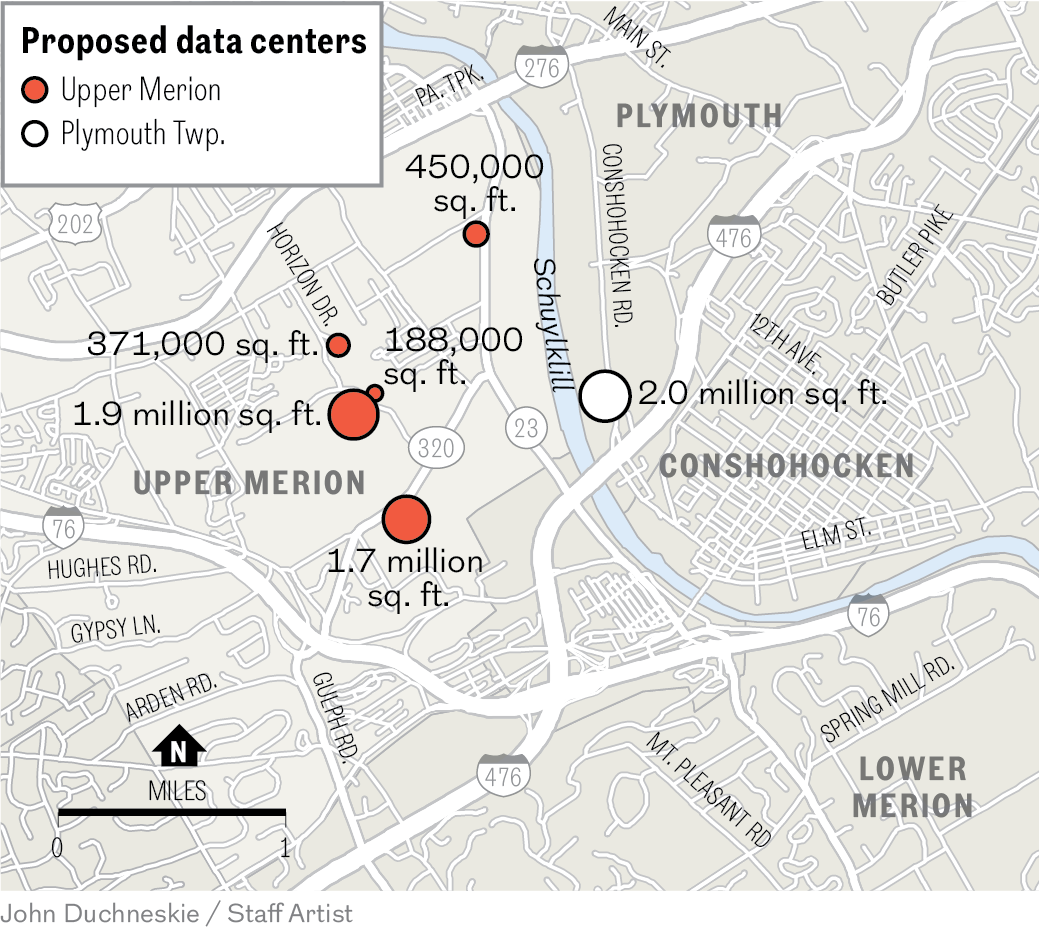
A map of the proposed data centers in Upper Merion and Plymouth TownshipsJohn Duchneskie
Those projects aren’t dead: O’Neill can appeal the board’s denial, as chair Tina Garzillo told him Thursday.
“Don’t you worry about that,” said O’Neill, before walking out of the Upper Merion Area Middle School auditorium to a chorus of boos.
The board’s decision came after months of contention and a whirlwind two days of legal back-and-forth.
O’Neill on Wednesday sued the township, its planning commission, and its board of supervisors, saying they violated his legal right to an extension and treated him unfairly during the development review process. Soon after, Montgomery County Court Judge Garrett D. Page ordered the township to halt proceedings and decisions related to the data centers until a hearing next week.
Citing the ruling, Edmund J. Campbell, an attorney for O’Neill, declined to make a presentation on two of the five proposed data-center sites at an Upper Merion Township Planning Commission meeting on Wednesday night.
Late Thursday afternoon, however, Page vacated his previous order, allowing the township board of supervisors to proceed with its meeting as planned. On the agenda: A vote on O’Neill’s request for an extension until Sept. 30, and votes on the five proposed data centers.
After an hour of public comment, all but one of which was from residents opposing the data centers, the township’s board of supervisors voted to deny O’Neill’s extension requests. The board then moved on to vote on the land development plans for each of the five sites.
One by one, the plans were denied unanimously by the five-person board.
Each vote was met with loud cheers from attendees.
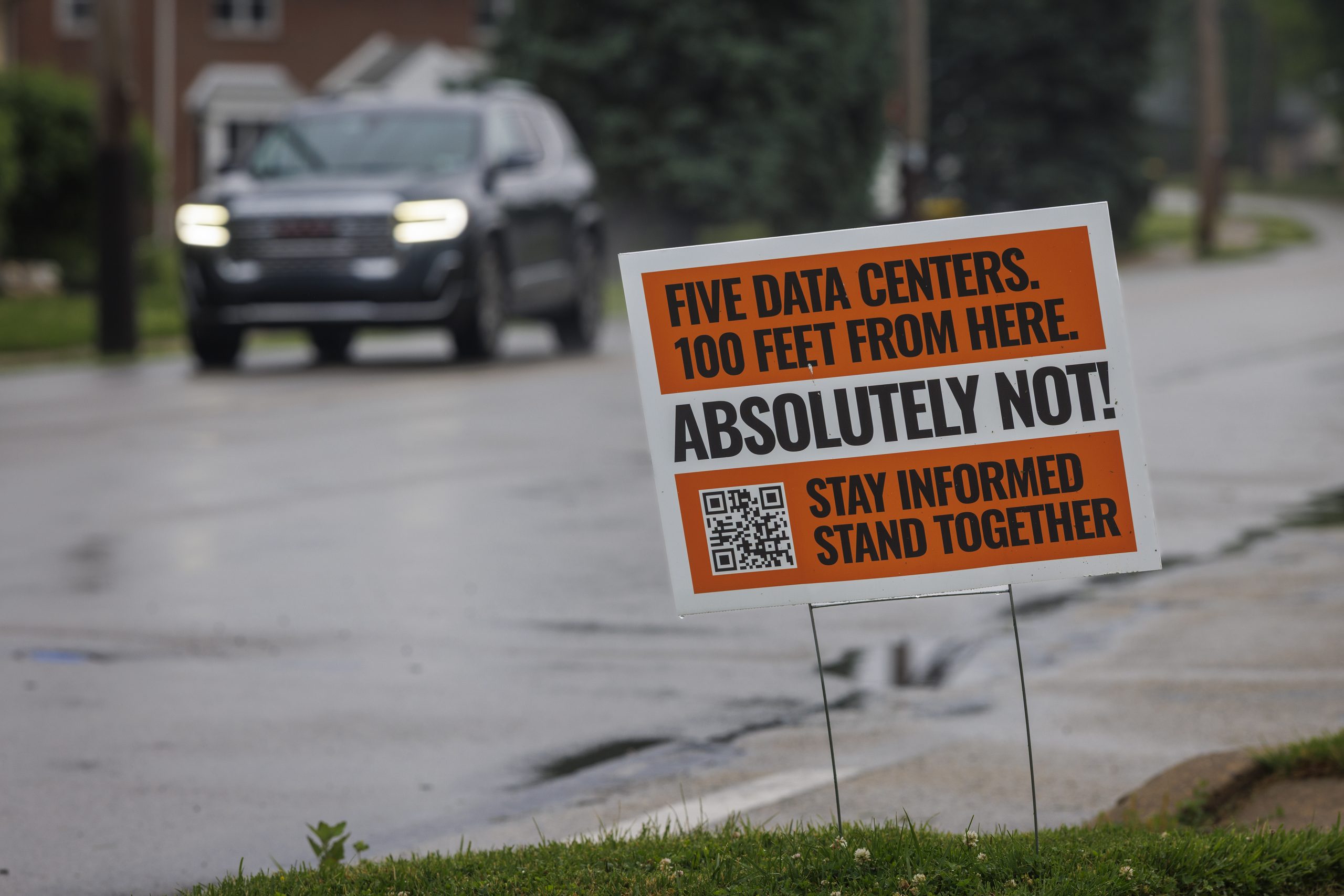
For months, residents have rallied against O’Neill’s plans, packing township meetings and putting up bright orange lawn signs opposing the projects. About 18,000 people had signed a Change.org petition against the Upper Merion data centers as of Thursday. Some neighbors have expressed concerns about pollution, light, noise, electricity prices, property values, and quality of life.
Upper Merion residents opposed to the data centers have put up these lawn signs.
“I’m really proud to stand here tonight with each and every other concerned resident,” Courtney Smith said Thursday. “We all have something important here to fight for.”
“The people here are here because they care deeply about the long-term interest of our communities,” Montgomery County Commissioner Neil K. Makhija said during his comments in opposition of the plan. The commissioner said the supervisors’ decision would have ramifications beyond the county, as communities across the region and the country weigh data-center development.
O’Neil has said his data centers would benefit Upper Merion and “change the world for the better.” While the developer has declined to specify who exactly would operate the centers, he has indicated the facilities would use AI-powered biotech in conjunction with his existing life-sciences complex, Discovery Labs.
One of the sites where Brian O’Neill wanted to build a data center in Upper Merion.Alejandro A. Alvarez / Staff Photographer
O’Neill has said his data centers would comply with the highest environmental standards, emitting little light and noise. They would operate on a closed-loop system, requiring no outside water, he said, and provide their own power.
The developer has also said they’d be an economic boon to the area. Last week, he released an economic impact study that said the Upper Merion centers would result in more than 10,000 jobs during its construction and then generate more than $55 million a year in local tax revenue.
At Thursday’s board of supervisors meeting, however, Upper Merion Township Tax Collector Evelyn Ankers disputed those figures, and said O’Neill has failed to pay taxes on his properties in the past.
Across the Schuylkill, a data-center fight rages on between O’Neill and some residents of Plymouth Township, where the developer wants to build a 2-million-square-foot facility on a shuttered steel mill outside Conshohocken.
A Main Line developer looking to build multiple data centers in Montgomery County possibly could have more time to make his case for a five-property campus near King of Prussia.
And residents who oppose the projects — who had been preparing for a potential vote on the plans this week — now may wait to learn whether the complex will be built in their neighborhood.
A Montgomery County Court of Common Pleas Judge on Wednesday temporarily prohibited Upper Merion Township from making decisions about any data centers proposed by Brian O’Neill. The township board of supervisors had been set to vote Thursday on the five proposed data centers totaling 4.6 million square feet.
The developer had asked for an extension from Upper Merion until Sept. 30, saying his team needed more time to respond to dozens of township review letters related to the projects. In emails, O’Neill said township officials made clear they would not allow more time.
“It is clear … that the township’s board of supervisors intends to decline the offer of extension and instead proceed to deny the applications,” O’Neill wrote in the lawsuit.
On Wednesday, the developer had sued Upper Merion Township, its board of supervisors, and its planning commission, saying they violated his legal right to an extension and treated him unfairly during the review process.
The judge’s ruling ordered that township officials halt certain proceedings and not make any decisions about the data center plans until after a court hearing scheduled for next week.
Before the lawsuit, the Upper Merion Township Planning Commission had been scheduled to discuss and make recommendations to the Upper Merion Township Board of Supervisors on two of O’Neill’s five data center plans on Wednesday. The planning commission had previously voted not to recommend approval of O’Neill’s three other proposals.
In a separate meeting on Thursday, the township supervisors had been set to vote on whether to approve the five data center plans.
The proposed data centers in Upper Merion are across the river from another data center O’Neill has proposed near Conshohocken.John Duchneskie
But late Thursday afternoon, Judge Garrett D. Page vacated his Aug. 12 order, paving the way for a potential vote Thursday night on O’Neill’s extension request and his data center plans.
O’Neill’s team had declined to discuss the projects with the planning commission on Wednesday, citing the lawsuit.
“We are not making a presentation tonight consistent with the court’s order,” said Edmund J. Campbell, an attorney for the developer. “I will ask to be excused as I don’t believe my presence is needed, pursuant to the court’s order.”
With Campbell’s exit, the township planning commission had opened the floor to dozens of local residents, all but one of whom was opposed to the projects.
They expressed concerns about light, noise, and sound pollution; water use; the impact on the power grid and electricity prices; mental and physical health impacts; and overall quality of life in the suburb. Some said they were angry with O’Neill and his team, with a few citing a recent 6ABC interview in which O’Neill said opponents wanted to “fight for the sake of the fight” and were against development that was “right for the community.”
Some residents disagreed with those statements.
“Judging by the past five months or so [of] our community standing together in solidarity against these horrific proposals, this is clearly not right for our community,” Upper Merion resident Zachary Davis said Wednesday.
Some King of Prussia residents have put up lawn signs opposing the data centers.
The developer has said the data centers would operate on a closed-loop system, requiring no outside water, and provide their own power. They’d emit little light and noise, according to O’Neill, and include billions of dollars worth of emissions controls.
O’Neill’s team last week released an economic impact study that says the Upper Merion centers would result in more than 10,000 jobs during its construction and then generate more than $55 million a year in local tax revenue.
O’Neill’s efforts come as data-center opponents’ ire toward him has intensified.
The animosity was on display last week at a zoning hearing board meeting in nearby Plymouth Township, where O’Neill is trying to build a 2-million-square-foot data center on the outskirts of Conshohocken.
A date has not been set for the next Plymouth Township meeting, though officials indicated it would occur sometime in September.
In Upper Merion, officials said late Wednesday that the monthly board of supervisors business meeting scheduled for 6:30 p.m. Thursday was still on. Other issues, not related to data centers, were on the agenda.
Editor’s Note: This story has been updated after Montgomery County Common Pleas Judge Garrett D. Page late Thursday afternoon vacated his Aug. 12 order.
2026 Volkswagen Jetta GLI Autobahn vs. Hyundai Elantra N vs. Mazda 3 2.5T Premium Plus AWD Hatchback: Let’s have some fun without breaking the bank.
This week: 2026 Hyundai Elantra N
Price: $38,345 as tested; just $500 extra for paint.
What others are saying: “Highs: Sports sedan handling, rip-roaring turbo four, fuel efficient in real-world testing. Lows: The crease-heavy design isn’t for everyone, some dual-clutch clunkiness at low speed, adaptive cruise control isn’t on the menu,” says Car and Driver.
What Hyundai is saying: “Our high-performance sport sedan.”
Reality: Pretty high performance.
What’s new: The front-wheel-drive Elantra continues without much change since its 2024 refreshing.
The Elantra has really grown up in the last few years and is probably bigger if you haven’t checked one out in a few years.
Be aware there’s a high-performance Elantra N like this one and a lesser-tuned N Line.
Competition: In addition to the comparison vehicles, there are the Honda Civic Si, Honda Civic Type R, Toyota GR Corolla, Volkswagen Golf GTI, and Volkswagen Golf R.
Up to speed: Yeehaw! The Elantra N sedan really takes its work seriously, employing its 276-horsepower turbocharged 2.0-liter four-cylinder engine to full effect. There’s a mild turbo lag when pulling out, but the engine will make up for lost time quickly.
The Elantra N gets to 60 mph in a zoomy 4.8 seconds, according to Car and Driver. That dusts the Jetta GLI by almost a second, and the Elantra N didn’t rock and roll under hard acceleration like the Volkswagen did.
Shifty: The Elantra N came in 8-speed automatic form. It features an old-style PRND shifter with upshift and downshift accessed via a snap to the left.
I thought only Mazda and BMW gave us pull-to-upshift anymore, The Way It Should Be, but lo, Hyundai does as well. Sadly, the Elantra N shifter had all the feel of your arm after you sleep on it for about five hours and really wasn’t worth the trouble. Paddles on the steering wheel are also available.
I found shifting overall not worth the bother; the dual-clutch transmission handled the work smoothly, with just enough feel to add some fun when it shifted up or down, especially in Sport mode (which comes with nice sound effects). It holds lower gears a little too long, but I’ve felt worse. Advantage, Elantra N.
On the road: The Elantra N was niiiiiiice on the right roads. I’ve been loath to share my favorite spots in 15 years, but two creekside highways — one in Chester County and one in Berks — featuring plenty of 15 mph curves showed the best parts of the Elantra N. This part of the experience challenges Mazda, Mini, and Volkswagen just fine. It gives the Jetta GLI a run for its money, maybe even besting it.
On highways, though, it hit seams and bumps pretty hard, but overall the Pennsylvania Turnpike was just fine. Here, though, the Jetta shone.
The interior of the 2026 Hyundai Elantra N features a larger screen than the Volkswagen Jetta GLI, but the fabric could be a dealbreaker for pet owners.DREW PHILLIPS
Driver’s Seat: This is a firm one, with tight contours that don’t move for you. In fact, the seat was manually adjusted and lacked ventilation, a nod to the vehicle’s price point. Advantage, Jetta.
The passenger seat gets a cool console grab bar for The Lovely Mrs. to hang on to.
Friends and stuff: The rear seat is perhaps a little firmer than the front, and it features almost as much contour, so woe befalls the loser stuck in the middle.
Legroom and foot room are good, but headroom can be a bit challenging.
The rear seat folds, but only as a single unit. You have to pull both left and right levers from the trunk and then go back to the seat and pull it down. The velour coverings mean pet owners might look for fabric upgrades or a different vehicle altogether.
Cargo space is 14.2 cubic feet, a tenth of a cube bigger than the Jetta GLI.
In and out: We rode off to visit Best Friend 1.0’s 91-year-old mom this week, so the first thing I did was test out entry-exit when the vehicle arrived. She has a 35-year head start on me, but I felt like the seat would be easy enough to access, with a wide door. I’m pleased to report no nonagenarians were harmed in the making of this review, but note that she still drives herself and does her own shopping, so your nonagenarian’s mileage may vary.
Cool looking speakers that resemble giant on-off toggles on your phone are placed in the door, where they make you think they’re door handles at a glance. But no, those are awkwardly down by the armrest. It’s all worth it if the sound system rocks, right?
Play some tunes: Alas, there will be only the standard level of rocking out in the Elantra N. Sound from the system reflects the price point — it’s a B at best. I couldn’t make the songs show off their hidden gems, but everything sounded as it should. The Jetta wins here.
The 10.25-inch touchscreen has more than 2 inches on the Jetta’s, but both are easy enough to navigate. A volume dial is all you get outside of the screen.
Keeping warm and cool: Dials control the temperature and buttons control everything else. Real buttons, too, not touch pad or ebony faux buttons. Advantage Elantra N.
Fuel economy: The vehicle averaged almost 24 mpg over its lifetime, sucking down almost 20% more fuel than the Jetta.
Where it’s built: Ulsan, South Korea. Parts are 85% Korean and 0% U.S. or Canadian.
How it’s built: The Elantra gets a 3 out of 5 reliability rating from Consumer Reports for the 2026 model year.
In the end: The Hyundai Elantra N provides a whole lot of fun for the price, but the Jetta GLI stuffs in so many more creature comforts — leather, ventilated seats, adaptive cruise, and a more everyday-worthy ride — for an even lower price, that’s tough to turn down.
Prescription drug prices recorded the biggest year-over-year drop in more than 60 years in July, a startling reduction experts chalked up to an array of factors, including more generics and discount GLP-1 weight-loss drugs.
While overall costs for medical services continued to rise, prices for medicinal drugs fell 2.7% over the 12 months ending in July, the largest annual drop on record, according to Bureau of Labor Statistics data released Wednesday. Prescription drugs, part of the medicinal drug category, fell by 3.1%, the steepest annual decline since March 1963.
The White House took credit for the good news, saying President Donald Trump’s efforts to slash drug prices were working. Some experts said a Biden-era policy that requires Medicare to negotiate prices for some popular prescription drugs is more likely to be driving down costs.
The drop in prescription drug prices is one of the few bright spots in the U.S. Consumer Price Index, which provides a snapshot of inflation. “Just what the doctor ordered!” Renaissance Macro, an investment research company, posted to X on Wednesday.
Inflation has been running high for more than five years, sparked by the economic disruptions of the coronavirus pandemic and Washington’s response to it. More recently, prices have been rising because of energy pressures fueled by the war with Iran.
Prescription drug prices, on the other hand, have slid sharply over the past six months, Renaissance Macro said, at a seasonally adjusted annual rate of 6.6% — “the sharpest six month drop on record.”
While the results are stark, teasing out the cause is complicated, independent experts said.
President Donald Trump has long pledged to bring down prescription drug prices, and the White House made the case Wednesday that the president’s pricing agreements with drug companies and a new initiative, the direct-to-consumer site TrumpRx, are responsible for the lower prices.
“No president in modern history has been able to drastically reduce prescription drug prices across the board except for President Trump,” White House spokesperson Kush Desai said in an email. “This is a direct result of the President’s willingness to push the envelope with bold policies that actually put Americans and America First.”
White House officials pointed particularly to the costs of GLP-1 weight-loss drugs, which Trump calls the “fat drug.” TrumpRx, which launched earlier this year, offers GLP-1 drugs for as low as $150 for a starting dose. And under a Medicare pilot program that the administration launched in July, drugmakers Novo Nordisk and Eli Lilly agreed to charge the government just $245 a month for their products, Wegovy, Zepbound, and Foundayo.
Monthly prices charged to insurance companies previously had topped $1,000. Trump and the drug companies began negotiating last year and announced the rough outlines of the deals in November.
“In a matter of months, we got up and running these discounts in a way that they were meaningful for American patients,” said a White House official, speaking on the condition of anonymity because administration staff are not authorized to speak publicly.
But bigger trends in the GLP-1 marketplace were already driving down prices independent of Trump’s negotiations, according to experts on drug pricing. Spotty insurance coverage for Wegovy and Zepbound for weight loss has produced enormous demand for lower consumer prices. And cheaper compounded drugs have posed genuine competition for the brand-name companies, adding even greater downward pressure.
Richard Frank, a senior fellow at the Brookings Institution and a professor emeritus of health economics at Harvard University, said he doubts Trump’s initiatives are behind the drop in drug prices.
“If I was a betting guy on what mattered most, it would be probably stuff around the Inflation Reduction Act,” Frank said, adding that Trump’s efforts “wouldn’t be where I’d place my money.”
The Inflation Reduction Act was a signature accomplishment of former President Joe Biden, a sprawling measure enacted in 2022 that aimed to lower prescription drug prices by requiring Medicare, the federal health program for the elderly, to begin negotiating the prices it pays drugmakers for an array of popular and costly prescription drugs.
The first price reductions took effect at the beginning of this year. Using 2023 prices as a benchmark, the Centers for Medicare and Medicaid Services has estimated taxpayer savings of $6 billion from that first round.
The Trump White House argues that the Inflation Reduction Act gets too much credit for lowering prices, in part because it took four years to take effect.
Stacie Dusetzina, a health policy professor at Vanderbilt University, said the Inflation Reduction Act is a more plausible contributor to the decline in prices than Trump’s initiatives.
While only 10 drugs have had their prices negotiated so far, they are commonly used ones “and their prices would likely be reflected in the prescription drug index,” she said via email. TrumpRx, on the other hand, covers “a limited number of branded drugs,” Dusetzina said, and “aside from GLP1s, they may not be high enough volume to be included.”
Dusetzina said another Trump policy — most-favored-nation pricing, which ties U.S. prices to lower ones paid abroad — could not explain the drop in prices either, “as the models that are supposed to use this form of pricing haven’t even launched.”
The Bureau of Labor Statistics category for prescription drugs does not track what drug companies charge. It tracks how much a pharmacy actually receives when it fills a prescription. That means it includes a customer’s payment at the counter plus whatever is paid by their private insurance or by Medicare Part D, the program that pays for drugs picked up from a pharmacy.
A drop in this index does not necessarily mean drugmakers have cut their prices. It can also reflect insurers and Medicare striking better deals or people switching to cheaper drugs.
Which brings up another, less glamorous source of lower prices: generics. When a brand-name drug loses patent protection, BLS waits about six months, swaps the brand in its sample for the cheaper generic and records the difference as a reduction in price.
A wave of blockbuster drugs lost exclusivity over the past year, and Dusetzina said that could be pushing the index down — “especially if the drugs were commonly filled.”
If you give a computer a task, it’s going to need electricity to perform it. The more difficult the problem, the more resources it requires. This is at the heart of the fight against the data centers behind AI – often an incredibly complex and power-hungry process.
You might think that tech giants that build and use data centers would cover 100% of the costs. However, the knock-on repercussions of this heavy power drain could impact the amount you owe on your Peco bill. Let us explain.
1946
The first “data center”
If you needed help with a calculation 80 years ago, you could use the ENIAC, the first general-purpose computer, built at the University of Pennsylvania.
It was 1,440 times faster than a hand calculator but at a cost: high energy demands. The ENIAC had its own dedicated power lines and consumed 150 kWh of electricity.
2000
Powering search engines
By the mid-2000s, we could solve the same problem at a fraction of the ENIAC’s speed thanks to search engines like Google.
Data centers don’t just power search engines; they also sustain streaming services, social media, and much more. However, workflows are increasingly shifting to use artificial intelligence.
story continues after advertisement
2022
AI in everything, everywhere, all at once
Today, unless you actively opt out, your Google search will likely be augmented by AI. “Historically, you would just get hyperlinks, and then you would have to click through and read the webpages yourself,” said Benjamin Lee, professor of computer science at the University of Pennsylvania and visiting scientist at Google. “In some sense, generative AI is doing the reading for you and trying to anticipate the actual answer you were looking for.”
The average Google Gemini prompt uses about 10 times the energy of a pre-AI Google search. This is partly because AI technology involves complex algorithms that require more computing power, but it’s also because between the 1960s and 2010s the basic building blocks of computer chips were increasingly getting smaller and more power-efficient. Within that timeframe, our computational ability multiplied by sixfold with only a 6% increase in power usage, according to Lee.
But those efficiency gains eventually stalled.
“When AI came along in late 2022, we realized we needed hundreds – or thousands – times more [computational power], and the transistors weren’t keeping up,” Lee said. “The hardware side slowed down, even as the computational demands went up by a lot.”
To put it in perspective, in a single hour, a hyperscale 1,000,000-kW data center running at peak capacity can consume more electricity than every household in Philadelphia combined.
Hyperscale data centers can consume a city’s worth of electricity in an hour
ENIAC
150 Philly households' energy usage
Conventional
Hyperscale
The typical Peco customer uses about 0.94 kW per hour in July.
If all 679,428 households in Philadelphia consumed that amount of electricity …
… it would still be less than a hyperscale 1 million kW facility’s electricity use – the equivalent of over 1 million Philly households.
A report by Wood Mackenzie, an energy research firm, found that utility customers might already be shouldering some of the cost of servicing heavy users of electricity, including data centers. These hyperscale facilities and their projected demand for power could impact all three categories on your bill: generation, transmission, and distribution.
Let’s walk through each one.
Generation
Generation refers to how power stations produce electricity from primary energy sources like fossil fuels, solar, or wind. Pennsylvania generates about 60% of the state’s electricity with natural gas, according to the American Gas Association.
“There's only so much gas in the market and, with data centers coming online, there's increased competition for it,” said Elizabeth Marx, executive director of the Pennsylvania Utility Law Project, a statewide legal aid program representing low-income consumers and protecting their access to affordable energy and water.
story continues after advertisement
Pennsylvania Gov. Josh Shapiro recently proposed that hyperscale data centers supply their own power to reduce the burden on residential customers to pay for infrastructure costs. However, not everyone agrees that it will work.
“Unless they are building clean generation that doesn't rely on and constrain our gas supply, [data centers are] having an impact on the price of gas,” Marx said, “and [that cost] flows into your electricity bills.”
PJM has a capacity market, where utilities – like Peco – pay power plants to guarantee enough power to meet future energy needs. This ensures that enough electricity will be available at high usage and to avoid blackouts.
“The biggest impact that we're seeing already from data centers is on capacity market prices,” Marx said. In 2024, AI companies started shopping around for power purchasing agreements directly with power suppliers.
The increased demand for capacity without greater supply increased the cost of electricity. The capacity price during the 2024/2025 auction was about $46 per MW/day, according to Monitoring Analytics, an independent market monitor for PJM. The following year, it surged to $297 per MW/day.
In a recent quarterly report, Monitoring Analytics said that “large data center loads have already had a significant and irreversible impact on PJM customers.” Between 2016 and 2025, Peco customers saw a $20.46 increase in the supply portion of their bill, which includes generation and transmission.
Peco’s Price to Compare has increased steadily since 2022
6
8
10
12
14 cents
Jun 2022
Jun 2026
JuneJune
Source: Peco’s Price to Compare is what customers pay if they do not shop around for an alternative electricity supplier
Pa. law requires that Peco is not allowed to profit off generation and transmission; you are just paying the rate set at PJM wholesale auctions. “Supply costs are set by the competitive market, are not controlled by Peco, and do not generate a profit for the company,” said Candice Womer, communications manager at Peco.
Distribution
Distribution is the final phase, where electricity moves from a transmission station to your home. It makes up 50% of your electric bill and, unlike the supply side of the electricity equation, can generate a profit for utility companies.
Almost two-thirds of Americans believe that a major reason behind their rising home energy costs is utility companies’ bottom line, according to a recent Pew Research Center survey.
In its second quarterly report of 2025, Peco reported $136 million in adjusted earnings, compared with $93 million in the same period in 2024. The company said in its earnings report that it used the profits to improve distribution infrastructure.
When utility companies invest in the electric grid to ensure it is ready for peak demand or storms, those investments are often baked into distribution costs. “Peco must balance its obligation to serve new customers with the risk of overbuilding infrastructure,” Womer said. “When distribution upgrades are needed, those costs are paid up front by the data center customer through a Contribution in Aid of Construction, ensuring there is no impact to other customers.”
One of the fees baked into distribution charges on your monthly bill is the Universal Service Fund. This helps fund programs like Peco’s Customer Assistance Program that help low-income households afford their utilities. In her testimony before the Pennsylvania House Energy and Consumer Protection, Technology, and Utilities Commission earlier this year, Marx said that in Pennsylvania, “universal service costs are only allocated to residential customers.”
Despite their direct impact on rising costs, data centers pay nothing to support these programs, she said.
“It’s very hard to reduce the electricity you use in a significant way,” said Vik Patel, managing attorney of the energy and utilities unit of Community Legal Services. “If it's cold outside, you need to have the heater on. Otherwise it can be unsafe. [It’s the] same thing in the summer; you have to have access to cooling.”
story continues after advertisement
Even if electricity feels unaffordable, it can be difficult for customers to lower their use and, therefore, their bill. But if customers can’t pay their bill, they risk losing power completely.
Last year, about 25,000 households in Philadelphia had their electricity terminated and could not afford to have it restored, according to Patel. “There are a lot of collateral effects when someone's electricity is terminated,” he said. “They can get evicted. [They can] lose custody of their kids.”
What happens next
Data centers and their projected demands on the grid are not the only reason electric bills are increasing, but that has not lessened some residents’ concern about their expansion.
There are already dozens of conventional data centers in Philadelphia, according to Data Center Map, a private company that tracks such facilities nationwide. Two hyperscale campuses are being built in nearby Bucks County and Cumberland County, N.J.
At least four more data centers have been proposed in Chester and Montgomery Counties. These local proposals face a groundswell of opposition from residents who worry about the environmental and financial ramifications of having these hyperscale facilities in their backyard.
Note: Amazon’s 600,000-kW data center is currently under construction in Falls Township, as is the 300,000-kW hyperscale data center in Vineland.
“I don't deny we need to upgrade our grid,” Marx said. “And, quite frankly, more frequent storms are absolutely going to cause more infrastructure costs. But I think there's a lack of transparency in what's necessary and what is nice to have. Who’s it for? Who pays for it and at what expense?”
Staff Contributors
Reporting: Charmaine Runes
Design and development: Charmaine Runes, Sam Morris
Graphics: John Duchneskie
Illustration: Glenn Harvey
Editing: Sam Morris, Cynthia Henry
Copy Editing: Addam Schwartz
Subscribe to The Philadelphia Inquirer
Our reporting is directly supported by reader subscriptions. If you want more journalism like this story, please subscribe today
Albert James Mamary, 59, of Wynnewood, attending physician and professor of thoracic medicine and surgery at Temple University, researcher, writer, mentor, artist, outdoorsman, craftsman, and amateur bicycling champion, died Thursday, July 9, of cholangiocarcinoma at Temple University Hospital.
A 1999 graduate of Temple’s Lewis Katz School of Medicine, Dr. Mamary spent his career at Temple and affiliated hospitals. He was an expert in pulmonary disease, transplants, and sleep disorders at the Temple Lung Center, and became program director of the Pulmonary and Critical Care Fellowship at Temple Hospital in 2006.
He earned a master’s degree in anthropology at the College of William and Mary in Virginia and his premedical school credits at the University of Pennsylvania. In a tribute, his family said: “His education in both medicine and anthropology reflected a lifelong belief that caring for a patient required understanding not only the disease but the whole person.”
Over more than three decades at Temple — as a student, resident, fellow, professor, and physician — Dr. Mamary treated thousands of patients, mentored hundreds of students and doctors, lectured in classrooms and at seminars, and wrote more than 60 scientific papers and textbook chapters. He was named a top doctor by Philadelphia Magazine several times and was featured in The Inquirer and on 6abc TV for his lead role in a successful double-lung transplant in 2015.
“It’s been 120 to 145 patients, individual patients that we’ve been able to help every year,” Dr. Mamary told CBS News in 2024. “That’s really the aim here, is to add years of life to patients who otherwise wouldn’t have that opportunity.”
Colleagues called Dr. Mamary a “physician’s physician” and noted his “amazing intelligence and clinical acumen” in tributes. Gerard J. Criner, chair of Temple’s Department of Thoracic Medicine and Surgery, said: “His patients loved him not only for his clinical skills but also for the warmth, compassion, and humanity he brought to every encounter.”
A former patient said online: “He was a calm in the storm of my end stage disease. … The world has lost a hero.”
A former student said: “His kindness, thorough and balanced approach to medicine, and quiet, thoughtful approach to even the most stressful emergencies reminded me of a Jedi master.”
Dr. Mamary and his wife, CeilaSue, married in 1996.Courtesy of the family
Away from the hospital, Dr. Mamary liked to bike, hike, and camp. He built his own 18-foot mahogany canoe, walked the entire 272-mile Long Trail in Vermont, and won masters bicycling championship races.
He also painted and sculpted, and earned a bachelor’s degree in art and psychology at Haverford College. He and his wife, CeliaSue, initiated the Shortridge Memorial Park Arboretum in Wynnewood and earned a 2024 community service award from Narberth and Lower Merion officials.
“James brought wisdom, kindness, curiosity, and genuine joy to every moment,” his wife said.
Albert James Mamary was born June 12, 1967, in Hempstead, N.Y. He grew up in Binghamton, N.Y., became an Eagle Scout, and was a wilderness river guide for the Boy Scouts in Maine during his college years.
Dr. Mamary was an avid bicyclist and won masters championship races. Courtesy of the family
He met CeliaSue Jaffe in class at Haverford, and they married in 1996 and had daughters HannahRose and LilyRuth. They lived in East Falls and Wynnewood, and he rode his bike from home to Penn and then Temple as often as he could.
Dr. Mamary enjoyed traveling, baking, cooking, and gardening. “His specialty is fruits and vegetables, and I grow the flowers,” his wife said.
He followed the Phillies, rescued cats and dogs, and doted on his daughters. Everybody said he was funny and silly.
“He was curious and always learning or doing something new,” his daughter LilyRuth said. “He took joy in simple things.” His daughter HannahRose said: “Even if he wasn’t my dad I would want him as a friend because he was so interesting and so easy to talk to.”
Dr. Mamary was a wilderness river guide for the Boy Scouts in Maine during his college years.Courtesy of the family
Dr. Mamary was diagnosed with cholangiocarcinoma, bile duct cancer, in 2020 and treated by longtime colleagues and friends at Temple, some of whom he had mentored. “It was a profound reflection of the life he lived,” his family said, “that so many of those he had taught ultimately became his caregivers.”
His wife said: “He was a very vibrant and adventurous person but so thoughtful, steady, and reliable. James was incredible.”
Gen Z has established a foothold in the workplace, and as these workers become a bigger part of Philadelphia’s workforce, they’re increasingly shaping the economy.
So what do Philadelphia’s Gen Zers think is a good job?
The perhaps unsurprising answer: one that allows advancement opportunities, high pay, and employer-funded healthcare benefits, as well as work-life balance and boundaries. That’s the finding of a new report from the Pew Charitable Trusts.
And for some Gen Zers Pew heard from, pursuing a job in their field means looking beyond Philadelphia. Outside of healthcare, and some opportunities in law and engineering, they say, other desirable industries don’t seem to be hiring much here.
“Understanding their attitudes, their perspectives about work, about what a workplace should be, what their feelings are about work-life balance” is important, said Thomas Ginsberg, author of the report on Gen Z workplace attitudes.
Released Wednesday, the report is based on focus group discussions that took place last year with 54 Philadelphians aged 18 to 29.
They’re skeptical about what’s learned in college and want to build up more hard skills. And they see work as a key to living well, not as the reason to live.
“They’re not at all reticent about working hard,” Ginsberg said. “What they’re doing is questioning what’s the ultimate goal of ‘work hard.’ It’s to have an affordable personal life, in their view.”
But participants in the survey expressed that “jobs today often don’t deliver that,” he said.
“You work hard and you still can’t buy a house,” Ginsberg said. “Those two things are coming together pretty starkly for this group.”
Gen Zers looking outside Philly for good, flexible jobs
Gen Z Philadelphians want flexible work hours and perhaps the freedom to go to the dentist without requesting time off from work.
They want boundaries when they’re off the clock, so they can maintain hobbies and relationships. But they also want some in-office time to learn from colleagues.
“I don’t live to work. I work to live. So there needs to be that distinction between the two,” one participant said.
Much of Philadelphia’s Gen Z population works in healthcare, social assistance, and education services, reflecting the city’s eds and meds focused economy.
Survey participants interested in healthcare jobs said there were plenty to go around. Others looking outside that field said there aren’t enough good job opportunities.
In particular, they said, jobs in tech, finance, and the arts seem more scarce. They said New York and Washington, D.C., seem to have more opportunities in those fields.
And while cost of living and housing seems lower in Philadelphia than in other East Coast cities, jobs here generally pay less, they say.
Still, they like much of what the city offers for nonwork hours, from the social life to the sports, arts, and transportation. SEPTA, PATCO, and NJ Transit attracted some Gen Zers to the area in the first place, the report said.
College builds contacts, not skills, Gen Z says
A little over half of Philadelphia residents between the ages of 25 and 29 had a bachelor’s degree between 2020 and 2024 — a higher share than residents older than them. But Pew found this age group has reservations about whether college provides what they need for career advancement.
“This age group is the highest-educated age group that we can measure … and even so, they’re only marginally positive about the value of college education,” Ginsberg said.
Temple University students on graduation day on May 6.Alejandro A. Alvarez / Staff Photographer
College-educated Philadelphians surveyed said their higher education was valuable for building a professional network, Ginsberg said, but not as much for hard skills. They said they want more training in skills like coding, data analytics, AI, and industry-specific software. Some said they know they will need a graduate degree to advance.
Those without a degree felt they could get those hard skills without college, said Ginsberg, pointing to the availability of specialized programs and microcredentials.
Still, those without an undergraduate degree said that they felt like employers favored potential hires who had gone to college and that they could have benefited from learning soft skills such as public speaking, networking, and interviewing in a college setting.
Gen Z doubts the value of retirement benefits
Ginsberg noted that the Gen Z respondents expressed skepticism about financial institutions and retirement, which he wasn’t expecting. Some said they had purposely forgone their employer’s 401(k) plan or couldn’t afford to set money aside to retire. Some said they felt more confident investing money on their own.
“Gen Z has lived through two economic shocks in this country,” Ginsberg said. They’re also facing record levels of college debt, and high inflation.
“They’re translating that, to some degree, into questioning whether the institutions of our economy actually are doing right by them.”
The U.S. Treasury Department permanently repealed a rule Tuesday that required businesses formed in the United States to report who owns them to federal financial-crimes investigators.
Foreign companies and pooled investment vehicles (such as mutual funds or hedge funds) must still report information about foreign owners. But they will no longer have to identify Americans who help them register to do business in the United States, according to a Treasury Department advisory. And Treasury will delete any information it has already collected about U.S. business owners, the advisory said.
In a statement, Treasury Secretary Scott Bessent said the new rule eliminates “a burdensome reporting requirement for millions of law-abiding business owners without compromising our national security.”
Senate Banking Committee Republicans quickly thanked Treasury for “standing up for job creators.” But Democrats and some national security experts criticized the move, which they said would make it easier for drug cartels, human traffickers and money launderers to use anonymous shell companies to avoid detection.
Richard Nephew, who led anti-corruption efforts at the State Department during the Biden administration, called the move “a terrible decision that opens up the U.S. to financial crime, money laundering and corruption.”
The reporting requirements were implemented in January 2024 during the Biden administration as part of an effort to curb illicit finance. It stemmed from the Corporate Transparency Act, which was included in the National Defense Authorization Act and enacted into law in 2021 after Congress overrode President Donald Trump’s veto. It required U.S. and foreign companies doing business in the country to report information about “beneficial owners” — people who have “substantial control” over the company or own at least 25% of it — to Treasury’s Financial Crimes Enforcement Network (FinCEN).
The CTA was supported by law enforcement officials, the American Bankers Association, and human rights advocates, who said it would combat the corrupt use of anonymous companies, known as shell companies. But it immediately drew fire from the National Small Business Association, which pushed Congress to repeal the act and sued the Treasury Department, arguing that the reporting requirements disproportionately affected small-business owners.
In March 2025, the Trump administration announced that it would temporarily suspend reporting requirements for U.S. businesses and American owners of foreign companies. On Tuesday, Treasury made that decision permanent. In a FAQ on the new rule, Treasury said FinCEN and federal law enforcement agencies have multiple alternative sources of information to prevent domestic companies from engaging in money laundering or financing terrorism that it does not have for foreign companies.
Small Business Administration Administrator Kelly Loeffler praised the decision, writing on social media that it will save American businesses $6.7 billion in compliance costs over the next decade.
Sen. Elizabeth Warren (Massachusetts), the top Democrat on the Senate Banking Committee, called the decision “a gift to cartels, criminals, and U.S. adversaries that exploit shell companies to move millions through our financial system.”
Editor’s note: This article has been updated to correct the background of the implementation of the Corporate Transparency Act.