Category: Business

  • Roundup cases led to eye-popping Philly verdicts. Will that change because of the Supreme Court?

    Roundup cases led to eye-popping Philly verdicts. Will that change because of the Supreme Court?

    The largest verdict issued by a Philadelphia jury in recent years came out of a trial in which a Pennsylvania man accused agricultural giant Monsanto’s weedkiller, Roundup, of causing his blood cancer.

    The jury awarded John McKivison $2.25 billion in 2024.

    The Lycoming County man was not the only one who has sued the German company. Thousands of cases are pending against Monsanto nationwide, including 462 active lawsuits in Common Pleas Court in Philadelphia alone.

    But on Thursday, the U.S. Supreme Court limited the types of claims that people who believe they developed cancer because of Roundup can argue in state courts.

    Here is what you need to know about the Monsanto Co. v. Durnell ruling and how it will affect Monsanto litigation in Philadelphia.

    What did the Supreme Court decide in ‘Monsanto v. Durnell’?

    In a 7-2 ruling, the Supreme Court held that lawsuits against Monsanto in state courts cannot include a failure-to-warn claim.

    The case arose out of Missouri, where a state court jury found that Roundup use caused John Durnell’s cancer, and that Monsanto should have included a cancer warning on the product’s label. Durnell was awarded $1.25 million for the company’s failure to warn him.

    Monsanto appealed, arguing that the Environmental Protection Agency had concluded that glyphosate — the main chemical in Roundup — is not cancer-causing, so the label did not need a warning.

    The case went all the way to the highest court in the land, which decided that states cannot force Monsanto to add anything to the EPA-approved label. So failure-to-warn claims cannot proceed in state courts, the Supreme Court said.

    “In sum, federal law requires Monsanto to sell Roundup with the label that EPA approved at the initial registration and that EPA has subsequently reapproved on multiple occasions — that is, the label without a cancer warning,” Justice Brett M. Kavanaugh wrote for the majority.

    When it comes to pesticide labeling, Kavanaugh said, federal law preempts any state labeling requirement because it would force companies to deviate from the EPA-approved label.

    Not all justices agreed. Justice Ketanji Brown Jackson wrote in a dissent, which Justice Neil M. Gorsuch joined, that adding a cancer warning would be in line with the federal law’s prohibition on misbranding.

    What does the ruling mean for lawsuits in Philadelphia?

    The ruling does not erase the 462 lawsuits in Philadelphia overnight.

    Lawyers usually included multiple claims in each lawsuit in an attempt to advance different theories that could convince a jury a company is liable.

    In the $2.25 billion case, the jury found that Monsanto did not adequately warn McKivison of Roundup’s cancer risk. But jurors also found that the company was negligent and that it sold a defective product.

    While the ruling prohibits failure-to-warn claims from moving forward, Monsanto can still face lawsuits under other claims.

    The Supreme Court ruling “narrowed the playing field,” said Tom Kline, the Kline & Specter attorney who represented McKivison. But “it’s not the end. It’s not lights out. It’s not game over,” he said.

    Juries will have to answer fewer questions moving forward, Kline said.

    Whether the ruling affects trial outcomes remains to be seen. So far Monsanto has lost four of the seven Roundup trials held in Philadelphia.

    The ruling could also affect other product liability lawsuits against pesticide manufacturers, such as those against manufacturers of weedkillers that contain paraquat, a toxic chemical that has been linked to Parkinson’s disease.

    “I think it’s part of a larger part of an industrywide strategy to piece-by-piece dismantle the tort liability for defective products,” Kline said.

    What is Monsanto saying about the ruling?

    The company said that the ruling would result in a dismissal of failure-to-warn claims, which according to Monsanto make up the “vast majority” of the litigation.

    Bill Anderson, the CEO of Monsanto’s parent company, Bayer, said in a statement that the decision provides “regulatory clarity” and brings “overdue justice on an issue that should have been clarified much earlier.”

    “This litigation has enormous costs for the company and has impacted public trust,” Anderson said.

    The executive affirmed the company’s commitment to a proposed nationwide class-action settlement of up to $7.25 billion as part of the company’s “multi-pronged containment strategy” on Roundup lawsuits.

    How does ‘Monsanto v. Durnell’ relate to the MAHA movement?

    The case has put President Donald Trump’s administration in an uncomfortable position with the Make America Healthy Again movement.

    Trump courted the movement during his campaign by recruiting Robert F. Kennedy Jr., whom he later appointed as his Department of Health and Human Services secretary. Before his turn to politics, Kennedy was an environmental lawyer who, in 2018, helped secure a $289 million verdict in the first Roundup cancer trial.

    And while the Trump administration has adopted some of the MAHA movement’s rhetoric on ultraprocessed foods, it took a different approach to pesticides.

    Trump’s solicitor general, John Sauer, filed briefs to the Supreme Court in support of Monsanto’s position on behalf of the White House, which drew the ire of MAHA supporters.

    After the ruling, MAHA influencers expressed anger at the administration.

    Kelly Ryerson, who is known online as Glyphosate Girl, posted Thursday on X that “never in history has an administration so blatantly and willingly sold out our fertility, vitality, and health to corporate interests.”

    Vani Hari, another MAHA influencer who posts to millions of followers as the Food Babe, said on Instagram she was “devastated” by the ruling.

    “We will remember who fought with us and who didn’t.”

  • Apple raises prices on Macs and iPads amid the AI boom

    Apple raises prices on Macs and iPads amid the AI boom

    Apple on Thursday raised the prices of its Macs and iPads, citing the soaring costs of memory and storage chips as the artificial intelligence boom has created a frenzy for the components.

    Apple increased prices on some laptop and tablet models $200 or more. A base model of the MacBook Pro, for example, now costs $1,999, up from $1,699. Apple’s entry-level laptop, the MacBook Neo, now costs $699, $100 higher than when it was unveiled in March.

    The price of an iPad Air increased $150 to $749, while the price of an iPad Pro jumped $200 to $1,199.

    The increases show that even Apple, with its sprawling supply chain, is not immune to a global shortage in memory and storage chips. AI chipmakers like Nvidia and Advanced Micro Devices have demanded more of the components for their own chips, which are then used in data centers for developing and running AI systems.

    The surge in demand has led memory chip manufacturers like Micron to focus on producing for data centers, which tend to use more expensive chips than consumer electronics. As a result, those companies are making more money but shipping fewer consumer-grade chips, which have become more expensive.

    Memory and storage chip prices have quadrupled over the past year, according to analyst estimates, and the cost of those components are expected to continue to rise.

    Those costs are now being passed on to consumers. Microsoft also raised prices for its Surface laptops in April.

    “We have never seen a component price increase this much, this quickly,” a spokesperson for Apple said in a statement. “We have now reached a point where we need to begin raising prices.”

    Apple CEO Tim Cook said during an investor call in April that the company expected “significantly higher memory costs” for the quarter, which runs through June.

    “Beyond the June quarter, we believe memory costs will drive an increasing impact on our business,” Cook said on the call.

    The company also said it expected its profit margins to decline slightly for the quarter.

    Apple on Thursday also raised the prices of its HomePod speaker and its Vision Pro mixed-reality headset.

    The timing for the price increases was unusual. Apple typically raises prices when it releases new or refreshed products. In September, Apple released new iPhones and raised the prices for some models $100.

    This article originally appeared in the New York Times.

  • Warwick Rittenhouse Square hotel reaches a deal with its worker union, averting a strike

    Warwick Rittenhouse Square hotel reaches a deal with its worker union, averting a strike

    Unionized staff at Warwick Hotel Rittenhouse Square Philadelphia have reached a deal with hotel management for a new labor contract, avoiding a strike that would have begun Friday.

    The hotel workers unanimously ratified an agreement that will deliver a $30 minimum wage by 2028, easier access to healthcare for their children, pension increases, and new regulations protecting immigrant workers, union officials said Thursday. It covers 50 union workers, including housekeepers.

    It’s the latest win for union hotel workers in Center City pushing for a pay and benefits package their union, Unite Here Local 274, calls “the citywide standard.”

    “Last year, people thought it was crazy that hotel housekeepers could make $30 an hour,” said union president Rosslyn Wuchinich at an event Thursday supporting union Peco employees, who are planning a work stoppage for July 4.

    The hotel union has shown it will go on strike to achieve its goals, Wuchinich said.

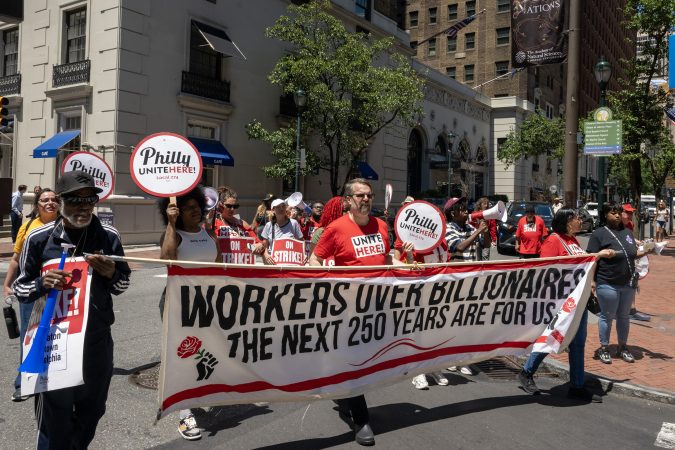
    The nearby Sheraton Philadelphia Downtown has been on strike since June 21. On Wednesday, some of its striking workers paraded around the Warwick, playing drums and singing union songs — giving Warwick management a sense of what could be in store.

    “We have been fighting these greedy hotel companies, private equity companies, real estate investment trusts, since last year for justice for hotel workers,” Wuchinich told a crowd of union members Thursday.

    New York-based Bluesky Hospitality Solutions, which manages the hotel, did not respond to requests for comment Thursday. Property owner Navika Capital could not be reached.

    The contract expires in January 2028, according to Mat Wranovics, an organizer with Unite Here Local 274. In addition to the changes to wages and benefits, the contract lowers the maximum number of hotel rooms that housekeeping workers can clean per shift from 16 rooms to 15 rooms, he said.

    The contract also includes protections for immigrant workers, Wranovics said. The new rules set limits to how much information the employer may share information with law enforcement.

    Six unionized Center City hotels have now bargained similar contracts:

    • The Warwick Hotel Rittenhouse Square Philadelphia
    • Hilton Philadelphia at Penn’s Landing
    • Wyndham Philadelphia Historic District
    • Sonesta Philadelphia Rittenhouse Square
    • Sheraton Philadelphia University City Hotel
    • Hampton Inn Philadelphia Center City-Convention Center

    That leaves the striking Sheraton Downtown workers, as well as those at Hilton Garden Inn Center City, who are not on strike and continue to work under an expired contract. Both are pushing for a similar wage raise to $30 an hour, Wranovics said.

    “We are in negotiations, but there is a real possibility of strike there,” he said of the Hilton Garden Inn Center City.

  • Peco workers plan strike for July 4th

    Peco workers plan strike for July 4th

    Peco workers plan to walk off the job on the Fourth of July if they don’t have a contract by then, their union announced Thursday.

    IBEW Local 614, which represents roughly 1,500 Peco employees including gas and electric field workers and call center staff, has been negotiating for a new contract for months. They include employees who work to restore electricity during power outages.

    The workers voted at the end of May to authorize a strike if their union called for it, with over 1,000 participating in the vote. It would be the first worker strike in the company’s history.

    “We’ve exhausted every avenue to reach a deal,” IBEW Local 614 president Larry Anastasi said in a statement Tuesday. “If Peco won’t invest in the workers who keep the lights on, we’ve got no choice but to stand together and demand the respect we’ve earned.”

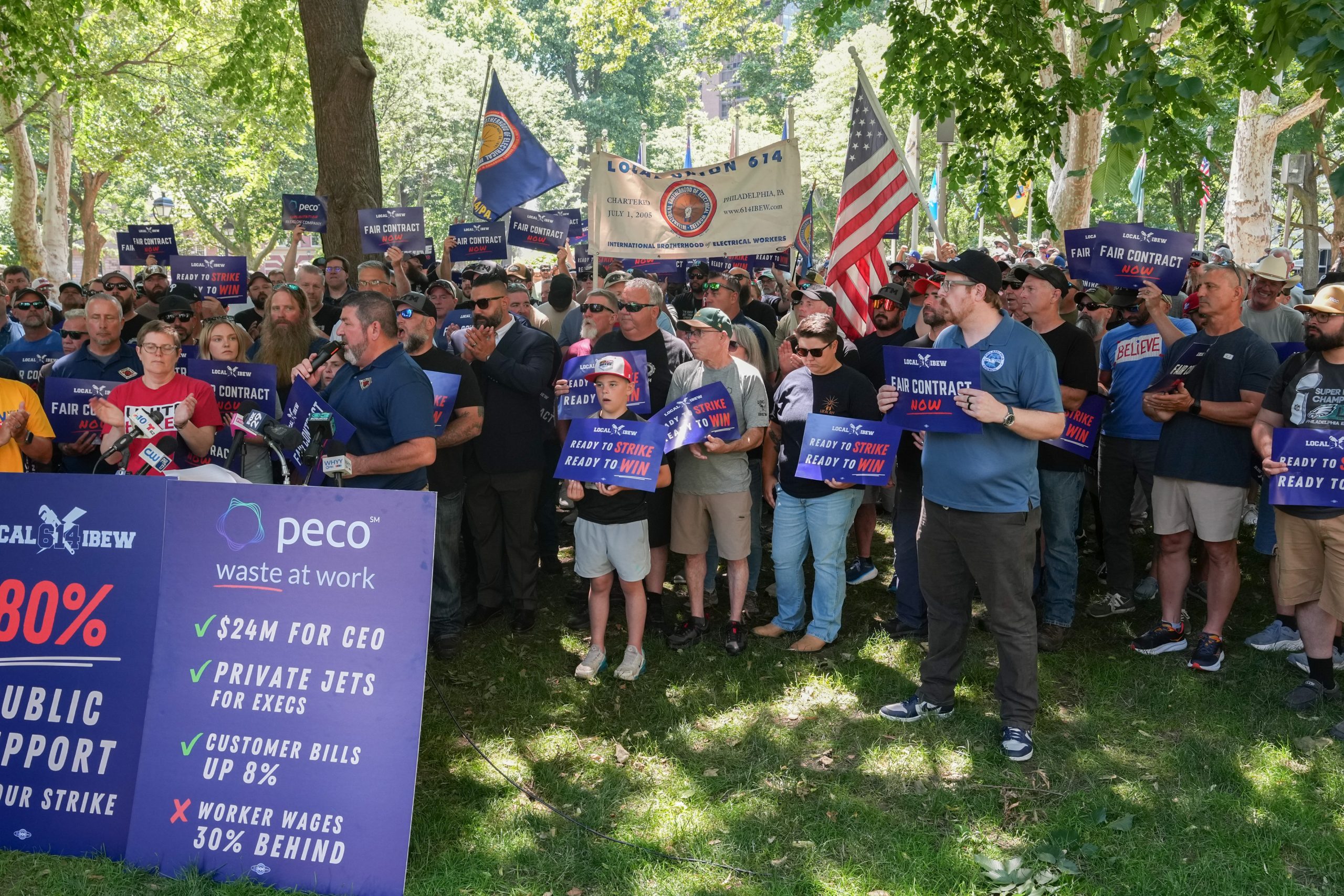
    Under its most recent contract, the union is required to provide Peco with at least seven days’ notice before going out on strike. A large crowd, including leaders of other area unions, gathered at Washington Square Park on Thursday morning for the union’s strike date announcement.

    Peco spokesperson Candice Womer said in a statement Thursday morning ahead of the strike date announcement that the company is committed to negotiating in good faith for an agreement that “is fair to our employees, while supporting the long-term needs of our customers and the communities we serve.”

    “We have presented a strong, market-competitive compensation and benefits package,” Womer said.

    Customers should not expect delays or interruptions in service, said Nicole LeVine, Peco’s chief operating officer.

    “We’re an emergency response company,” LeVine said. “We’ve been working on contingency planning in the event of a strike, and we were well prepared to execute our plan if needed.”

    LeVine said some workers who would be called on during a strike are “familiar with our specific system,” and others “are coming in from outside of the region.” She declined to say how many workers are part of the contingency plan.

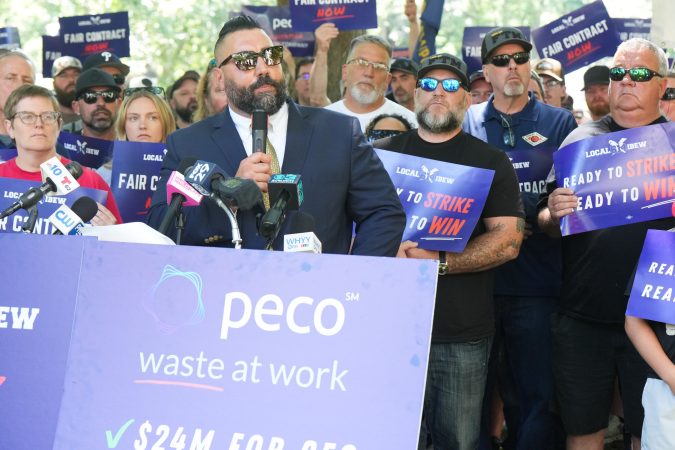
    Jim McGill, a union representative with local 614 (holding microphone), speaks to workers and union representatives who gathered in Washington Square Park on Thursday.Jessica Griffin / Staff Photographer

    The union workers’ most recent five-year contract expired March 31, and negotiations, which started in January, have led to some tentative agreements, Peco has said. But sticking points have emerged around wages and benefits, the union says.

    The most recent bargaining session was June 19, and the next one is scheduled for July 2, LeVine said. She noted that the company would like to conduct that session sooner.

    Peco has suggested using a federal mediator to reach an agreement, LeVine said. “If we get a mediator in here, he can help making sure both parties are participating in negotiations, and we can reach a good deal,” she said.

    Hundreds of Peco workers and supporters met in Washington Square Park on Thursday, a little after 11 a.m., some holding signs that read “Ready to strike. Ready to win.”

    When Anastasi, the local president, announced that workers would go out on strike at 12:01 a.m. on the Fourth of July, the crowd behind him erupted in cheers. Anastasi said the union had not made the decision lightly.

    “We didn’t want to do this,” Stephen Giorgio, a Peco employee for nearly three years, said after the news conference. But, he added, the union has been negotiating for months, and “enough’s enough.”

    Giorgio, who works in the western suburbs, is part of a Peco team that gets called upon when a customer’s power is out.

    “We’re out there day and night, weekends, holidays,” he said. “My wife forgets what I look like sometimes.”

    His line of work is dangerous, he says, and can include climbing a 60-foot pole in the rain — but he wouldn’t trade it for another job.

    “I love this job,” Giorgio said. “I can never see myself doing anything else. Took me 10 years to get here, and now I’m here, and I don’t ever plan on looking back.”

  • Big companies aim to ease AI transition for American workers

    Big companies aim to ease AI transition for American workers

    Congress has failed to address the workforce disruption that artificial intelligence could generate. The White House, excited about the upside for stocks and investment, has downplayed the potential for widespread job losses.

    Now, amid growing public anger over AI and a debate over how to regulate it, a group of employers, state governors, and foundations has raised $500 million to try to answer some of those questions themselves.

    The funders include AI labs preparing to go public, like OpenAI and Anthropic, as well as established corporate giants such as Bank of America and Amazon. Their new nonprofit, called Raise Us, is led by Gina Raimondo, a former commerce secretary and Rhode Island governor who since leaving office has called for companies and the government to do more to orient American workers in a new AI era.

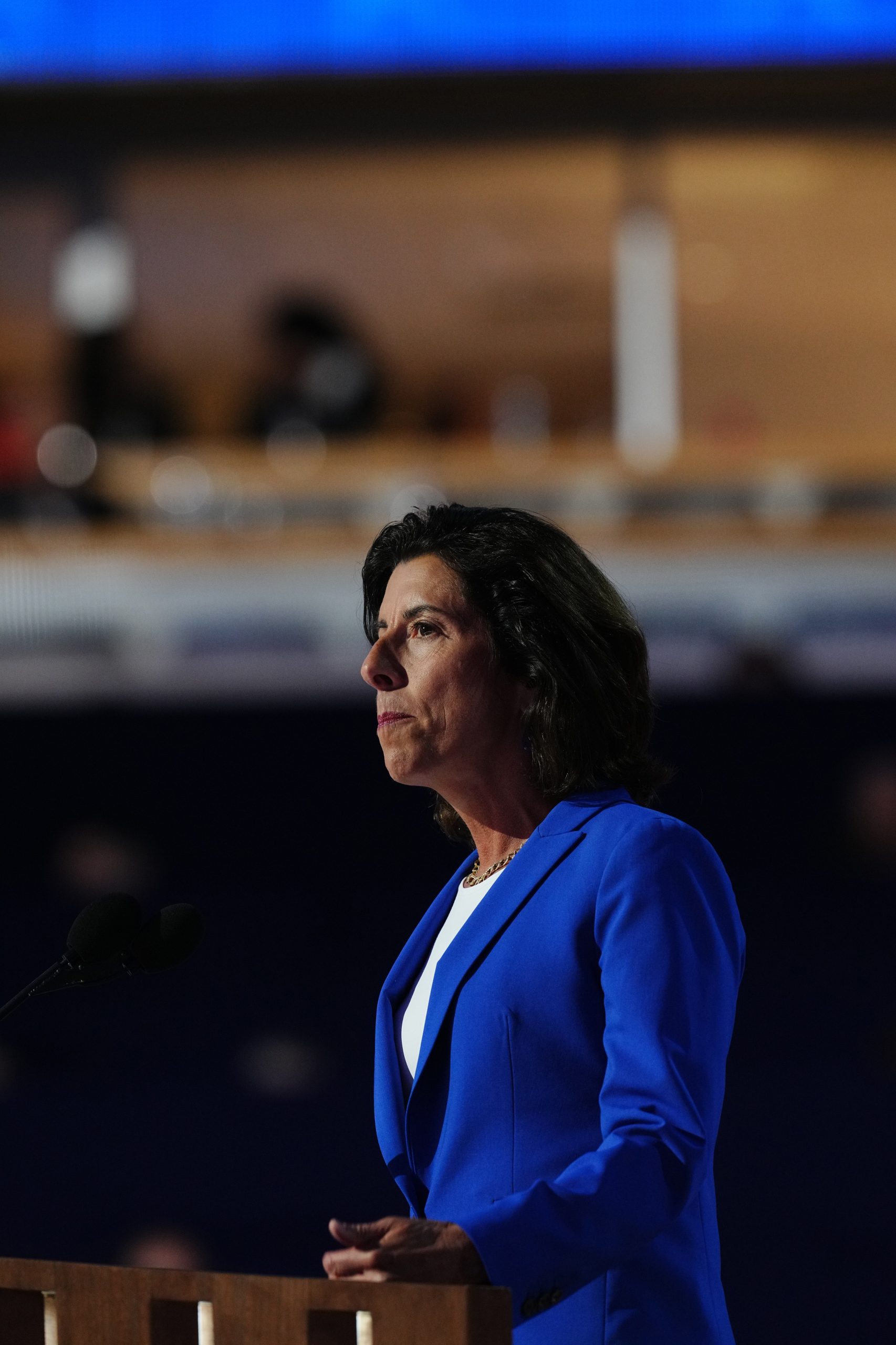
    Tech companies and other corporate giants have signed on to an effort called Raise Us led by Gina Raimondo, former commerce secretary and Rhode Island governor.JAMIE KELTER DAVIS

    “This is an independent effort,” Raimondo said. “It’s the first one I know of where competitors in the tech industry have put aside their competition to say, ‘We’re going to write big checks and, in the service of our country, do what we can to figure out this transition.’”

    Estimates of the magnitude of job dislocation in store for the American workforce vary widely, from half of all entry-level white-collar jobs to a few thousand jobs here and there. Although layoffs are currently very low across the economy, the employee ratings site Glassdoor has found that worker sentiment toward AI has been worsening. Companies have made headlines by citing AI as a reason for deep job cuts. They include Workday and IBM, which are part of the new nonprofit, as well as Meta and Oracle, which are not.

    The organization will work primarily with governors, starting with those in Utah, Arkansas, Maryland, and Connecticut. The theory: States generally control their community college systems, which can translate workforce policy through course offerings and industry partnerships. The bulk of the budget will fund pilot programs overseen by about 15 staff members and consultants.

    For example, Maryland will establish a “service year” for recent high school graduates to provide experience in fields where there are shortages, such as healthcare. In other states, Raise Us hopes to offer “wage insurance” for workers who take lower-paying jobs rather than dropping out of the workforce entirely.

    The group plans to furnish technical assistance for companies that want to retain workers as AI changes their roles, rather than eliminating them. Microsoft, one of the companies backing the organization, said it had already found a promising model: cross-training its entry-level lawyers in different parts of the organization and equipping them with AI skills in order for them to be repositioned as technology evolves.

    “You can think of doing that with almost any job we have,” said Brad Smith, vice chair and president at Microsoft. “It creates an opportunity to transfer people from jobs that are being eliminated to jobs that are being created.”

    Retraining displaced workers has always been a difficult task, and historically not a very successful one. Raimondo called past efforts “ineffective.”

    Sam Manning, a senior research fellow with GovAI, a think tank, said the new group’s work offered a new opportunity to learn about what could work best.

    “This model — of let’s work within states and try to do pilots and demonstration programs, build more evidence, learn what works for different types of workers with different constraints — does seem to me like a pretty good thing to do,” Manning said.

    Congress has slashed funding for its flagship workforce development law since passing it in 1973. Planned overhauls of the statute have sputtered out. Research has found that while federal workforce programs do help place workers in new jobs, their long-term success is limited by the lack of high-paying positions for workers without college degrees.

    Jane Oates ran the Labor Department’s Employment and Training Administration under President Barack Obama. Despite funding cuts, she said, states as disparate as Texas and Massachusetts have found ways to raise private capital and work with employers to meet their talent needs.

    “I don’t know that she’s been anywhere else to look at the amazing, innovative things that are done in small and large places around the country,” Oates said of Raimondo.

    Part of the Raise Us mission is to adapt existing budgets to the particular challenges of AI-driven disruption. The nonprofit includes a policy lab, funded by philanthropies rather than corporations, that will incubate new ideas that governments may carry out down the line.

    Raimondo also serves as a chair on a commission, organized by the right-leaning American Enterprise Institute and the left-leaning Urban Institute, that will come up with policy recommendations to address the effect of AI on the workforce and the demands it may create. That effort is funded by Google.

    On the policy front, the groups join a crowded landscape. The air has been thick in recent months with proposals for minimizing the potential downsides of AI while harnessing its benefits.

    Sen. Bernie Sanders (I., Vt.) has suggested confiscating half of the stock value of top AI companies and depositing it in a publicly owned fund. Others have floated the idea of shifting the tax burden from payroll taxes to the computing power that is necessary to run sophisticated AI models. The Raise Us board includes Liz Shuler, president of the AFL-CIO, the labor federation, which has a technology institute that has emphasized protections for workers as AI develops.

    Raimondo’s initiatives, underwritten by corporations that have much at stake, may seem ill-positioned to make recommendations that would burden the engines of America’s AI dominance. But Harry Holzer, a professor of public policy who is part of the joint American Enterprise Institute-Urban Institute commission, said its members would not shy away from doing so.

    “I don’t think we’re going to hesitate to talk about resources,” Holzer said. “If the AI companies and tech companies start making money hand over fist, there might be an excess-profits way of dealing with that.”

    Raimondo and her colleagues are not fans of a universal basic income, an idea that has gained popularity in Silicon Valley as an answer to job disruption. They emphasize that work provides more than just wages, and plan to focus on helping people find pathways to new jobs.

    But it’s unclear whether AI will create jobs at the rate that it will destroy them. Jack Malde studied workforce policy for the Bipartisan Policy Center and is now going to work for the Windfall Trust, another AI-focused think tank. He said long-term income support might be necessary, even if better models for transitioning workers were found.

    “The truth is, there’s still a lot of uncertainty,” Malde said. “What we think is resilient now might not be resilient later. We’re not going to get everything right, so we’re going to need those strong safety-net programs.”

    Eventually, the backers of Raise Us think, federal action will be necessary to replicate successful policies across states and employers who aren’t early adopters. Raimondo said she had been in touch with the acting labor secretary, Keith Sonderling, whose department is establishing its own data hub for AI effects.

    But at the moment, she thinks that there’s no time to wait for alignment from Washington. As a historical parallel, she cited the Committee for Economic Development, an organization formed by big businesses in 1942 with the goal of absorbing American soldiers back into the economy after World War II ended and defense production was scaled back. It encouraged ways to fight inflation and foster full employment, helping to head off postwar stagnation.

    “I think this technology will lead to more productive people, new jobs and new industries, and I want to get there,” Raimondo said. “But I also worry about the transition, and a window where people could get hurt. The politics could get uglier. So I just want to get started now to build the infrastructure to be prepared to manage the transition.”

    This article originally appeared in the New York Times.

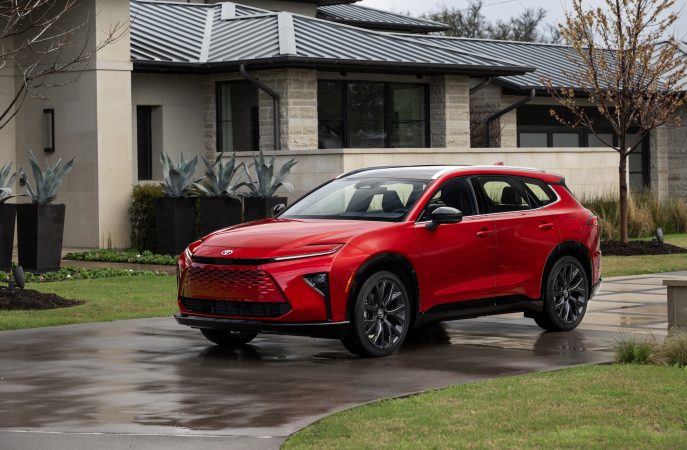
  • 2026 Toyota Crown Signia: Smooth, comfortable contender

    2026 Toyota Crown Signia: Smooth, comfortable contender

    2026 Subaru Outback Touring XT vs. Toyota Crown Signia Limited: New ways to get around.

    This week: Toyota Crown Signia

    Price: $48,990 for the Limited model.

    What others are saying: “Highs: Lexus-like interior, plush ride quality, thrifty hybrid powertrain. Lows: Noisy engine under acceleration, bland handling, underperformed its EPA highway fuel economy rating in real-world testing,” says Car and Driver.

    What Toyota is saying: “First-class comfort.”

    Reality: So suave and charismatic, maybe there should be a Thomas Crown Signia edition for 2027.

    What’s new: While I billed this competition as new ways to get around, the Crown Signia is only new to Driver’s Seat testing. This hybrid-only SUV debuted for the 2025 model year, replacing the Venza.

    The Venza was a model I really enjoyed, but it got very little respect from car lovers. Both models have a reputation for boring drivers, but I loved the comfy seats and easy controls of the Venza — and the 36 mpg — enough to recommend it heartily. Would the Crown Signia bring the same kind of experience?

    As for the Outback vs. Crown Signia comparison, two cars with more opposite market aims could hardly fit into the same category, and they could hardly have come to testing in more opposing conditions. The Outback endured 20-degree days while the Crown Signia was here for the 90s. Both offered some hesitation before they were warmed up, so we’ll just have to say that’s a feature, not a bug.

    Competition: In addition to the Outback, there are the Chevrolet Blazer, Honda Passport, Jeep Grand Cherokee, Nissan Murano, Mazda CX-70, and Volkswagen Atlas. That’s a wide range of crossovers.

    Up to speed: A new 240-horsepower 2.5-liter four-cylinder is mated to an electric motor, and it adds 21 horses over the Venza. It gets to 60 mph in 7 seconds, according to Car and Driver; with 20 fewer horses than the Outback turbo tested, it’s almost a second slower. You go, Subaru.

    Shifty: The Crown Signia uses the Prius shifter, electronically shifting up and left for Reverse and down and left for Drive.

    On the road: On-demand all-wheel drive makes the handling acceptable, and Sport mode is a little nicer. The Crown Signia lends itself to driving sedately and looking at the scenery.

    The pretty interior of the 2026 Toyota Crown Signia turns the comfort level to 11.Toyota

    Driver’s Seat: Comfort is definitely the name of the game behind the wheel of the Crown Signia. Convenience as well. This is where I realize the Crown Signia is a nice replacement for the Venza; that too offered luxury and comfort closer to Lexus’ standard than Toyota’s.

    No ground is really broken here, as the controls match most of Toyota crossovers and cars. The Outback wins this category.

    Friends and stuff: The rear seat provides comfort in both cushion quality and spaciousness. Legroom, headroom, and foot room are all generous. The middle seat is not too bad as the floor hump sits low and wide, and the console doesn’t intrude too much.

    Cargo space is 24.8 or 66.1 cubic feet, a growth spurt over the Venza that may help improve sales. But it’s still no match for the Outback’s 80 cubes.

    In and out: The Crown Signia is at a perfect height for people of almost any age. No real climb or limbo required.

    Play some tunes: A lone volume button is the only nod to the Before Times from the stereo control people. The screen is big and easy to follow.

    Sound from the system is clear and aimed correctly, an A- to an A. Advantage, Crown Signia.

    Keeping warm and cool: Toggles control all the features, and this functions nicely. Except for the seat heaters and coolers, which sit above a different toggle, so that confuses until you get used to it. It keeps us out of the touchscreen, at least. A small screen tells you what’s blowing where and how hard.

    An annoying feature of the Crown Signia HVAC (something I noticed in the 4Runner hybrid as well) is the AC turns itself off with each restart. So I’d be blasting the fan on myself after crossing a 90-degree parking lot and wondering why I never got cool. I’m sure it’s easy to get used to but also, why? At least it’s not a touchscreen control, which would certainly malfunction when the interior exceeds 120 degrees.

    Fuel economy: I averaged close to 36 mpg during my week of testing, much nicer than the Outback turbo (as can be expected). Strong win for the Crown Signia.

    Where it’s built: Aichi, Japan

    How it’s built: Consumer Reports gives the Crown Signia a four out of five for reliability.

    In the end: The Crown Signia carries the torch of the Venza: Fun may not be part of the vocabulary, but it sure is a nice, efficient ride. The Subaru is also a nice ride, but I’m not sure 0.8 seconds off the 60-mph run-up is worth another 10 cents a mile forever.

    And at 50 grand each, a Thomas Crown-worthy heist may be needed to help pay either of these vehicles off.

  • Bill to raise minimum wage to $25 an hour will be introduced in Senate

    Bill to raise minimum wage to $25 an hour will be introduced in Senate

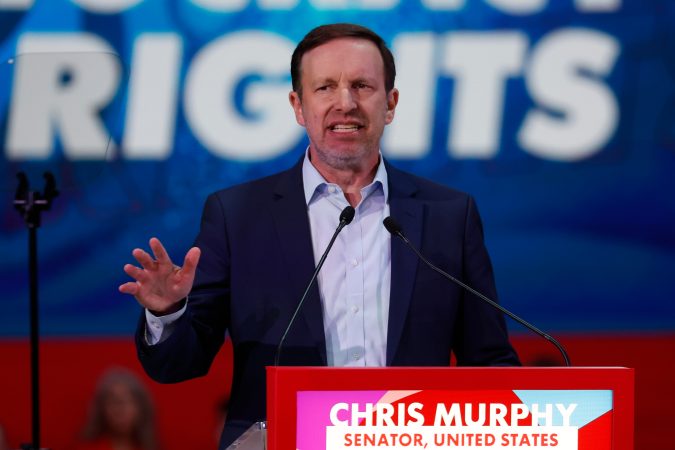
    The minimum wage would be raised to $25 an hour under a new bill to be introduced by Sen. Chris Murphy (D., Conn.) on Thursday, in a bid to enthuse the working-class voters who have abandoned the Democratic Party.

    The legislation, dubbed the Living Wage for All Act, has a companion bill already introduced in the House.

    Murphy, whose name is frequently floated as a potential 2028 presidential candidate, said he is pushing his party to take more aggressive stances on affordability, following its punishing defeats in the 2024 elections.

    “Democrats need to offer solutions that are as big as the problems people are facing,” Murphy said in an interview. “The way you solve people’s basic economic problem — not having enough money to pay the bills — is by making a minimum wage be a living wage.”

    The bill would incrementally increase the minimum wage from its current rate of $7.25, with the first jump to $12 an hour in the first year of enactment. Major corporations would have six years to work up to a $25 minimum wage, while smaller employers would have a 13-year runway. The legislation would also do away with subminimum wages for tipped workers, such as restaurant servers, youth workers and workers with disabilities. Nearly half of the American workforce makes less than $25 an hour.

    The legislation is unlikely to get very far in this Congress, with Republicans in control of both chambers, but the $25-an-hour push is one of the more significant proposals aimed at boosting Americans’ wages, which have been rising but not as quickly as inflation, especially in recent months.

    Some 34 states, territories or districts, including Washington, D.C., have increased the minimum wage above the federal minimum, according to the National Conference of State Legislatures.

    Saru Jayaraman, president of One Fair Wage, a left-leaning advocacy group that worked with Murphy on the bill, credited support for a $25 minimum wage for primary wins in competitive races in Illinois, New Jersey, Pennsylvania, and California. She said she has heard support for the proposal from liberal and MAGA voters alike.

    The $25 figure was drawn from calculations by MIT that analyzed a living wage, which takes into account costs such as food, childcare, healthcare, housing and transportation.

    Democrats have long advocated raising the federal minimum wage from its current $7.25, but Murphy’s bill would set the highest floor of any proposal in the Senate. Rep. Delia C. Ramirez (D., Ill.) is leading a House version of the bill, which she introduced earlier this year with wide support across the Democratic caucus. A similar bill by Sen. Bernie Sanders (Ind., Vt.) would set a $17 minimum wage and has 33 Democratic senators as cosponsors, including Murphy.

    Murphy’s bill also has the backing of Democratic Sens. Richard Blumenthal (Connecticut), Andy Kim (New Jersey), and Ron Wyden (Oregon).

    Congress has not raised the federal minimum wage since 2009, though only about 1% of workers make $7.25 an hour or less.

    Business groups have often campaigned against raising the minimum wage, suggesting that the economy works best when employers are responsive to market forces.

    A higher federal minimum wage could create “really damaging consequences,” including businesses closing or cutting jobs, especially in rural areas where the cost of living is low, said Ryan Bourne, an economist at the libertarian Cato Institute.

    He said the rising average wage shows that state and local governments are already responding to market changes.

    “I think it makes much more sense for it to be set at a local level where policymakers have a better sense of the local industries,” Bourne said.

    Murphy called those kinds of arguments a “red herring,” saying cities that have already established a $15 minimum wage have not seen major adverse effects. He said the staggered adoption would help assuage employers’ concerns.

    “The business community cried murder, and the job losses they predicted did not materialize,” Murphy said.

    Alex Jacquez, the chief of policy and advocacy at the left-leaning Groundwork Collaborative and a former Sanders aide, helped craft a $15 minimum wage proposal that Democrats attempted to include in their climate and economic policy bill in 2021. He said the surge in wage growth as the economy recovered from the coronavirus pandemic has led more liberal policymakers to believe that a $15 minimum wage would now be too low.

    “It’s also an organizing tool,” he said. “It’s something big and bold that people can hang on to and run on and be able to see the Democrats are fighting for them.”

    So far, most congressional action has tried to address affordability through tax cuts, including the child tax credit, covid-era Affordable Care Act credits or the numerous tax cuts in Republicans’ One Big Beautiful Bill.

    While Murphy supports programs such as the child tax credits and student loan forgiveness, he said tax cuts have proved insufficient in motivating voters.

    “People don’t want to be written a check. People want to work for pay,” Murphy said. “[Tax breaks] are designed to compensate for a rigged system. Why don’t we just unrig the system?”

  • These Philadelphians planned the perfect World Cup weekends for their families. Then their tickets never came.

    These Philadelphians planned the perfect World Cup weekends for their families. Then their tickets never came.

    Georgette Luna planned her Father’s Day weekend down to a T, splurging $3,000 on three tickets to the Friday World Cup match in Philadelphia. The Fishtown resident, her husband, and her father — who traveled from New York — would go to Reading Terminal Market, she thought, barhop to mingle with fans before the game, and then head to the stadium early to tailgate before seeing Brazil take on Haiti.

    She had purchased the tickets on the third-party ticket resale platform StubHub last fall, but the seller she bought the tickets from never transferred them. She called StubHub frequently in the months, weeks, and finally days leading up to the match, wondering when the transfer would go through.

    Every time, a StubHub representative said her “tickets would transfer to her on the day of the game,” Luna said. But by Friday, the group — who could not wait to see Brazil play, since their favored Chileans did not qualify for the World Cup — never made it into the stadium.

    “We’re standing outside the stadium and obviously everybody is in full celebration, and here we are, supposed to be living this World Cup moment together for the first time, and there’s just this feeling of disappointment,” Luna said.

    As the World Cup takes over the country, people across U.S. host cities have shared the same story: Fans in Atlanta, Boston, Dallas, Houston, New Jersey, Seattle, and, of course, Philadelphia arrived at stadiums hoping their tickets would be transferred to no avail, with most facing issues with StubHub. Other reports indicate fans are having similar issues on SeatGeek.

    StubHub, for one, blames FIFA’s tech infrastructure and the rollout of a new mobile phone app weeks before the tournament for why tickets have not been transferring on time. FIFA has urged fans not to buy tickets on third-party platforms, saying it “may result in issues, including the inability to cancel or accept transfers,” as well as a higher risk of fake or invalid tickets.

    This confusion is in addition to the long wait times, glitches, and extra hurdles placed on ticket buyers for original, face-value tickets from FIFA. FIFA’s ticketing practices are under investigation by the New York and New Jersey attorneys general.

    But fans who lost out on a generational moment are more interested in how platforms like StubHub plan to resolve these issues.

    Stephanie Fred of Bristol and her 9-year-old son, Levi, are heartbroken after their tickets to the Monday France vs. Iraq game never materialized, even as they stood outside the stadium. To make matters worse, Levi, a soccer player himself, had been trying to see his favorite player, French superstar Kylian Mbappé.

    Mbappé scored two goals, tying for the second-most goals scored by a player in men’s World Cup history. Fred’s son could hear the cheers from outside the stadium. He broke down into tears that did not stop even later that night, she said.

    During Philadelphia’s first World Cup game, between Ecuador and Ivory Coast, Jayden Quezada, 17, and his parents came to Philadelphia from Bensalem, hoping for an Ecuadorian victory. But they were turned away. The night before the game, the trio had spent $4,350 to get three tickets through the TickPick app after seeing a social media advertisement. By the time they arrived at the stadium, the tickets still had not been transferred to their FIFA app.

    “They have been the biggest fans since before I was born, and they don’t get to go to Ecuador often because of work,” Quezada said. He said they would try to get a refund, but missing the game was “really sad because we were looking forward to feeling the Ecuadorian pride.”

    For that game, a line of more than 50 fans waited for help with their failed tickets. Monica Rojas, 22, and her friend Jose Avil, both Spanish speakers, were confused about what to do after the ticket office explained the problem with their ticket in English. The pair had driven two hours from New York, after having bought tickets on StubHub for $2,000, including parking. After a FIFA volunteer interpreter intervened, the pair found out their tickets had been refunded.

    Brazilian fans cheers before a FIFA World Cup Group C soccer match between Brazil and Haiti at Lincoln Financial Field on Friday, June 19, 2026, in Philadelphia.Jose F. Moreno / Staff Photographer

    StubHub blames FIFA

    StubHub is aware that fans are not receiving the tickets that they bought, and a company representative blamed FIFA.

    “The issues fans have experienced at this World Cup are largely driven by performance problems with the event organizer’s own ticketing infrastructure, which has created transfer failures across all resale platforms,” a StubHub spokesperson said.

    StubHub said the launch of a new FIFA app right before the World Cup began has led to delays, failed transfers, and access issues that have affected all resale platforms, not just StubHub.

    The ticket reseller also said sellers are required to fulfill their ticket orders or they face financial penalties and bans from the platform.

    Bad actors on resale platforms can engage in a practice called “speculative ticketing,” where buyers will list a ticket that they do not yet own on StubHub and other platforms, in the hope that they will find a cheaper ticket later and recover profit, said Scott Friedman, owner of the Ticket Talk Network podcast and an industry veteran who is helping to sue StubHub on behalf of 160 buyers and sellers who said company practices harmed them.

    StubHub does offer a “FanProtect Guarantee‚” a promise the company will find replacement tickets or refund the order when a ticket does not transfer. But the policy repeatedly states that resolving these issues falls under StubHub’s “sole discretion.”

    StubHub ticket protection measures can look like replacement tickets, a full refund, or a voucher worth 120% of the value of the tickets. During the World Cup, the company said, it is prioritizing replacement tickets so fans can get to a match.

    France forward Kylian Mbappé sprints for a pass against Iraq during the first half of a FIFA World Cup Group I soccer match Monday, June 22, 2026, at Lincoln Financial Field in Philadelphia.Jose F. Moreno / Staff Photographer

    Refunds can’t replace a once-in-a-lifetime moment

    All of this leads to confusion, and eventually disappointment, when the tickets never show, Luna said. As she and her family, hanging their heads low, took a depressing train ride home from the stadium last week, Luna continued to try to get answers.

    Finally, on Monday, she said, she received word StubHub would refund her June 19 match tickets and gift her similar tickets to the July 4 match in Philadelphia, which she said she would accept. But, later, Luna was told she would only receive replacement tickets.

    “Is this a wonderful outcome? For sure, but my father and I would have been happy with the perfect weekend that we had planned for ourselves as it was,” Luna said. “While they’re doing right by us, there are so many people who aren’t getting this result.”

    Fred’s family got word Tuesday that StubHub would provide them with tickets to France vs. Norway in Boston on Friday. Fred does not mind the drive as long as Levi can achieve his dream of seeing Mbappé play.

    “We don’t get this type of opportunity from where we come from,” Fred said. “Being able to provide a World Cup experience for our kids just means the world to us, and having that be ripped away from us, it was just so hard to process.”

  • World Cup fans are spending money in Philly. How much will actually stay in the city?

    World Cup fans are spending money in Philly. How much will actually stay in the city?

    The World Cup has arrived in Philadelphia and out of town visitors are flocking to the games, and learning about Rocky’s curse.

    But how much of the money they’re spending will actually stay in Philadelphia?

    The World Cup games were originally expected to generate a $770 million economic impact in the Philadelphia region, Axios reported in 2024. But just $30 million to $90 million is likely to stay in the region and benefit the local economy, according to estimates in a new report by the Economy League of Greater Philadelphia.

    Thousands have visited the Lemon Hill FIFA Fan Festival since it kicked off on June 11, and used SEPTA after the first Philly-hosted match earlier this month. Philadelphia International Airport also estimated a bump in travel through the airport around the June 19 game between Brazil and Haiti.

    But not all spending is equal.

    U.S. cities are spending hundreds of millions of dollars to host World Cup matches, but are limited in how much revenue they can amass from the events, according to a ProPublica analysis of host city contracts, including Philadelphia’s.

    Some of the money coming into the city during the World Cup would have been spent in Philadelphia anyway, but perhaps differently, the Economy League report indicates.

    While the city is gaining World Cup visitors, it may be losing out on regular business travelers and others that would have come to Philadelphia if not for the World Cup, the report said. Meanwhile, some who are spending money to enjoy the tournament in Philadelphia are residents, who would be spending money in the city anyway. And some fan spending is flowing directly to FIFA and other platforms, rather than to the city’s economy.

    The report highlights three areas seeing most of that spending: The stadium district, Center City hotels and restaurants, and the Fan Festival at Lemon Hill.

    “The commercial corridors beyond this core, which make up most of the city, are unlikely to see much benefit without deliberate effort, because visitor spending follows the path of least friction — toward where people sleep, arrive, or already intend to go,” the report says.

    A man looks to the skies during the rain delay of the France vs. Iraq 2026 FIFA World Cup Group 1 soccer match at Philadelphia Stadium on Monday.Elizabeth Robertson / Staff Photographer

    In the stadium district, where customers have bought tickets to attend games, they’re spending on merchandise and concessions — but few of those dollars trickle down to local independent businesses.

    In Center City, hotels and restaurants are benefiting most, but it’s not as though they wouldn’t be getting business without the games, the report notes.

    Some local food trucks and independent vendors can make money at the FIFA Fan Festival at Lemon Hill. But because the venue is gated, surrounding businesses only profit if visitors leave the festival site.

    And locals are paying the price of hosting the World Cup in other ways.

    Residents who live around the Fan Festival at Lemon Hill are unable to catch a Lyft or Uber from home because of festival restrictions, and parking in the area requires applying for a special permit. The Philadelphia Parking Authority dolled out thousands of tickets in the first few days of the festival.

    Still, the report outlines, much can be gained locally through the World Cup. Lemon Hill is set to receive $4 million in improvements, and some other benefits are harder to quantify.

    “Philadelphia has shown it can move large crowds and stage a global event capably, and the reputational and civic returns, while hard to value, are real,” the report outlines.

  • Merakey USA, a large Montco-based human services provider, is expanding with Ohio acquisition

    Merakey USA, a large Montco-based human services provider, is expanding with Ohio acquisition

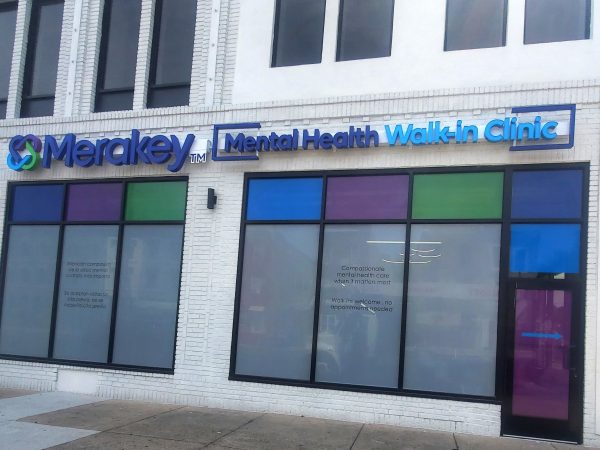
    Merakey USA, based in Lafayette Hill, is acquiring Boundless, an Ohio nonprofit that provides services for people with intellectual and developmental disabilities and behavioral health needs, in a deal that leaders of both organizations described this week as a model for their industry.

    “It’s the marriage of two financially stable organizations” that are preparing for turbulence in the human services sector, said Merakey CEO Joseph S. Martz. More typically human services deals happen because one nonprofit needs a financial rescue, as happened with Philadelphia’s Resources for Human Development in 2024.

    Merakey and Boundless planned to announce the news Thursday.

    Martz and the CEO of Boundless, Patrick Maynard, both said the size of the combined organization — more than $1 billion in revenue — would enable it to invest in the systems, technology, training, and workforce development needed to be financially sustainable.

    The deal, expected to close in July, will create an organization that supports 50,000 individuals and families annually in 12 states and employs 11,000 people.

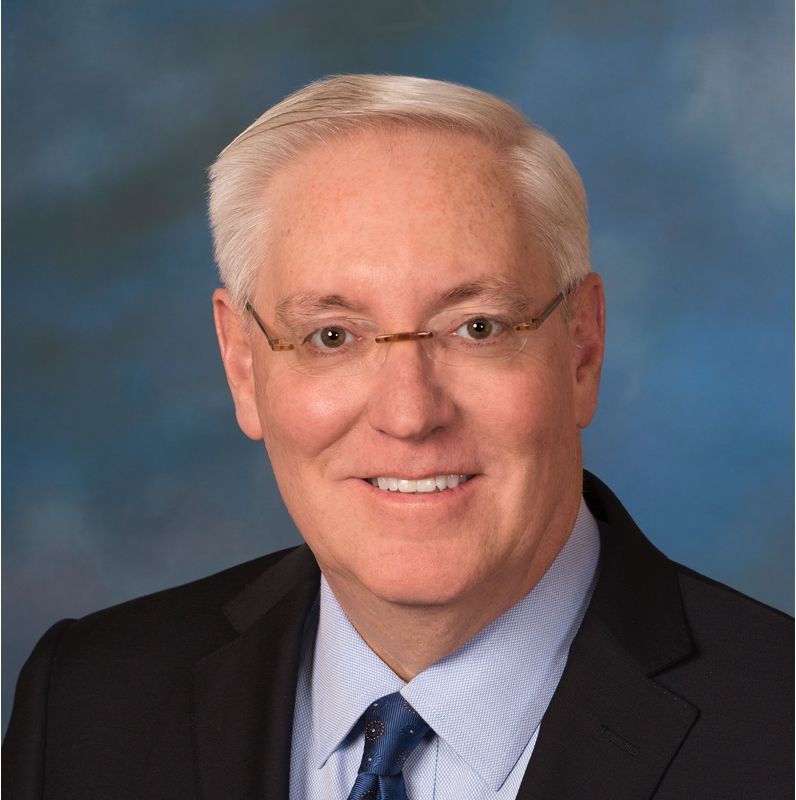
    Joseph S. Martz is CEO of Merakey USA, which is acquiring Boundless, a human services provider based in Columbus, Ohio.Merakey USA

    The executives cited pressures from an expected change in how their organizations get paid. A shift is underway to payment for results rather than for straight volumes of services. Looming cuts to Medicaid over the next decade are also forcing human services providers to rethink how they operate.

    “We’re entering a time when resources are going to be a lot tighter, and I think organizations need to be thinking differently about how they approach that. We’re seeing some other pretty large consolidations,” said Chuck Ingoglia, CEO of the National Council for Mental Wellbeing, a Washington nonprofit advocacy group.

    Origins of the Merakey-Boundless deal

    Stacy DiStefano, CEO of Consulting for Human Services, a Philadelphia-based adviser firm, introduced Martz and Maynard to each other in July 2024.

    That led to a series of conversations about issues the two organizations were spending money to solve and the realization: “Why don’t we just come together and use the combined resources of our organizations to solve that problem,” Martz said.

    Merakey and Boundless had already been growing through acquisitions, though Boundless has grown more dramatically. In the last seven years, the nonprofit made five acquisitions that helped increase its annual revenue to an expected $200 million this year from $20 million, Maynard said.

    “My goal was to create sustainability in a broken system where most of us are living off of Medicaid, which comes nowhere close to providing the resources that cover the costs,” Maynard said.

    Patrick Maynard is CEO of Boundless, a Ohio human services provider that is merging into Merakey USA, of Lafayette Hill.Boundless

    The added scale enabled Boundless to add healthcare and dentistry for its clients, but the Medicaid shortfall for those dental services is $75,000 a month, Maynard said. That kept Maynard looking for even bigger partners, like Merakey.

    Maynard cited Merakey’s expenditure of $18 million for Workday software, a system for human resources and financial management as an example of something Boundless could never afford. At $200 million in annual revenue, Boundless struggled to spend $2 million on a system for electronic health records, he said.

    A new structure

    Merakey, which started as the Northwest Center in the Mount Airy section of Philadelphia in 1969, remains firmly rooted in Pennsylvania. The state is expected to account for more than half its $850 million in revenue for the fiscal year that ends this month, Martz said.

    In 2023, Merakey and Elwyn, a similar nonprofit based in Delaware County, announced a preliminary merger agreement, but a final deal did not happen.

    States where Merakey operates include Indiana, Kentucky, Ohio, Michigan, and Wisconsin. A new division called Boundless Midwest, led by Maynard, will assume responsibility for Merakey’s operations in that region when the deal is done.

    Both boards have approved the transaction, which remains under review by the Ohio Attorney General.

    Martz said he expect Boundless to continue growing though acquisitions and the development of new programs with the support of Merakey.

    “We are going to be a big organization, but it’s really about being a better organization, about the quality of care that we provide,” Martz said. “If you’re not culturally aligned, bigger for bigger sake, just doesn’t make any sense to me.”