Category: Business

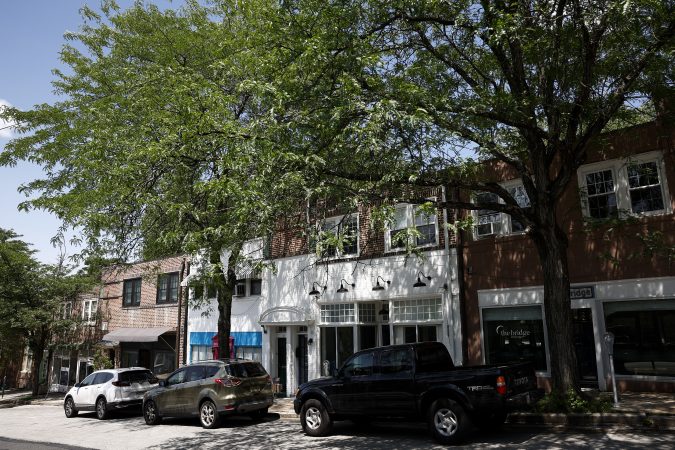
  • In Narberth, a zoning fight raises questions over whether a small borough can help solve the housing crisis

    In Narberth, a zoning fight raises questions over whether a small borough can help solve the housing crisis

    Brenna Carswell has lived on the same street in Narberth for a decade.

    Carswell moved to Narberth, a small Montgomery County borough encircled by Lower Merion, in 2011 from Upper Darby with her younger daughter after a divorce. She knew early on that her daughter would need more support than the Upper Darby schools could provide, so she scraped together the cash for a rental in the Lower Merion School District.

    “It’s been a great place for my girls to grow up,” Carswell said of her Main Line community. “It’s given them a town that I didn’t have.”

    After four years and three rentals, Carswell, 44, a small-business owner, bought a home in the borough. In early 2020, she sold her house with the intention of buying another place in Narberth, but the pandemic hit and Carswell was furloughed. She ended up in a rental across the street, where she still lives. By the time Carswell was ready to buy again, houses around her had exploded in price.

    She and her family have outgrown their space, but in the current market, “there’s literally nowhere to go.”

    Narberth’s borough council last August directed its planning commission to study how it could use zoning to increase affordable housing and support the local economy. Officials say living in the borough has become increasingly expensive, as experiences like Carswell’s become more and more common.

    In February, the commission came back with a handful of recommendations in two zoning districts: the higher-density residential area that surrounds the Haverford Avenue downtown, and the commercial mixed-use corridor along Montgomery Avenue.

    Recommendations included allowing apartments, cottages, and rowhouses by-right, in the ring around the downtown core, and permitting extra floors for apartment buildings that include affordable units in both zoning districts. The commission suggested reducing minimum parking requirements, allowing ground-floor apartments on Montgomery Avenue, and letting developers build off-site parking lots for apartment complexes.

    Adam Krom, the planning commission’s chair, has said the changes would “provide flexibility” and incentivize developers to build both market-rate and affordable housing units in areas where similar developments already exist.

    But what began as a municipal land-use discussion has morphed into a monthslong debate in the borough over what, if anything, Narberth should do to fight America’s housing crisis. Proponents say changes would bring in much-needed tax revenue, create foot traffic for downtown businesses, and help preserve socioeconomic diversity. Others, however, feel that a small contingent on the borough council has charged ahead with proposals to increase density while ignoring growing concerns over traffic, neighborhood character, and the reality of supporting transit-oriented development with a transit system marred by uncertainty.

    Shops line North Narberth Avenue.Monica Herndon / Staff Photographer

    Rising costs, shrinking options

    In Narberth, and across the Philadelphia suburbs, the cost of housing is outpacing the ability of large segments of the population to afford it, said Scott France, executive director of the Montgomery County Planning Commission, which consults the borough on land-use issues.

    Narberth had the highest median housing sales price of any municipality in Montgomery County in 2024, at $751,000, a 70% increase from 2014.

    The average rent for a one-bedroom apartment in Narberth is $2,050 per month, according to Zillow rental data. As housing prices have risen, incomes have stayed largely stagnant. In 2024, 46% of renters and 19% of homeowners in Montgomery County were spending more than 30% of their income on housing, according to a Housing Blueprint recently published by the county.

    In Montgomery County, boroughs like Narberth were often the first point of entry for people looking to settle in the suburbs, France said, given their more urban-suburban feel and smaller lot sizes.

    Yet the factors that once made places like Narberth starter-home magnets have now made them increasingly inaccessible. As millennials have sought out premiums like walkability and transit access, the cost of both renting and homeownership in places like Narberth, Conshohocken, and Ambler has risen, France said.

    Montgomery County’s and Narberth’s housing woes are part of a well-documented housing shortage that has swept the United States, as a widening gulf between supply and demand has put homeownership further out of reach for many, especially for younger people.

    Some communities facing housing shortages have loosened zoning restrictions in order to court developers who are willing to build housing and, in certain cases, set aside affordable units in exchange for height and other bonuses. On the Main Line, luxury apartments have cropped up in large numbers, especially in areas where officials have used zoning to increase density.

    Fred Bush, president of Narberth’s borough council, said the county’s Housing Blueprint crystallizes why Narberth needs to ease its zoning regulations and incentivize development.

    “It’s very difficult for people who come in here — who are renting or who are looking to move in, young families — to find a place to stay,” Bush said.

    Narberth Borough Council President Fred Bush. Bush is part of a contingent of borough council members who see zoning changes as a key to increasing the availability of affordable housing in the borough.
    Monica Herndon / Staff Photographer

    ‘Is that what’s best for this area?’

    Narberth residents like Margot and Jason Deitz describe the push to rezone as confusing and misguided. The couple, both 40, have lived together in Narberth since 2020. Their house is near the Montgomery Avenue corridor, where changes are being considered.

    The Deitzes are among a large contingent who feel the proposals would complicate an already hairy parking situation, allow for buildings outside of Narberth’s quaint character, and tip the balance of the borough in favor of renter-occupied units. They feel the borough is putting the cart before the horse, trying to address national problems rather than the sidewalk repairs and parking shortages on their front steps.

    For Margot Deitz, the idea of building fewer parking spaces and asking residents to rely on SEPTA, a sometimes unreliable transit system, was confounding. Her questions to the borough council about parking went unanswered, she said. Both Margot and Jason Deitz wondered how, in a town with shuttered storefronts and parking problems, building new apartments became the council’s priority.

    Homeowner Michelle Karten, 52, went to a public meeting to ask questions about the proposals but felt the changes were a “foregone conclusion.”

    Karten said she hopes the borough can find a more “holistic” approach, rather than just allowing for the proliferation of luxury apartments. She believes the borough has already made a number of concessions to developers and does not need to offer density bonuses to get affordable housing.

    “Do we really need to go up that extra level? Is that what’s best for this area? And what other solutions could there be?” Karten said.

    Matt Patrick, 37, a homeowner in the borough since 2018, is “not against affordable units” but thinks the council is using the affordability crisis to push through incongruous density in spite of resident opposition.

    “It seems like more of a developer bonus than something aimed at conquering affordability,” Patrick said.

    Narberth’s SEPTA train station on the Paoli/Thorndale Line.Monica Herndon / Staff Photographer

    Luxury apartments’ “two truths problem”

    For others, the debates over parking requirements and maximum heights are a distraction from a looming reality: The national housing crisis has hit Narberth, and prices will only continue to rise without new inventory.

    Blessing Osazuwa, 28, thinks the changes are a “great idea.” Osazuwa grew up in Lower Merion and moved to Narberth three years ago. Her roommate’s family owns the house they live in, giving her a break on the rent that allows her to afford Narberth.

    “I love Narberth,” Osazuwa said. “I would love to stay, but there’s no way that I’ll be able to afford that on my own, and it’s a shame, because I feel like I contribute to the community.”

    Numerous residents said the conversation around zoning in Narberth has devolved into misconceptions and ad hominem attacks hurled from all sides, across public meeting forums and Facebook groups.

    Carswell said there is a misconception that Narberth and surrounding communities already have plenty of affordable apartments.

    Little exists in Carswell’s price range in or around Narberth. She has chased multiple “ghost” listings, reaching out to property managers only to find out listed units are occupied. She wants to stay in Narberth to provide consistency for her kids. When she explains her reality, she said, she is often told to just move somewhere else.

    Osazuwa said the refrain that those who cannot afford Narberth should simply move ignores a souring economic reality.

    “I tend to encounter that ‘pulling yourself up from the bootstraps’ mentality without regard to the times that we’re living in, without regard to inflation, without regard to the fact that jobs don’t pay as much,” she said.

    Advocates acknowledge that future development will likely rely on luxury rentals, many of which have popped up in neighboring communities like Ardmore and Bala Cynwyd and would be unaffordable to all but a wealthy set of renters. They believe, however, that any new housing units can help moderate the market, and even a few affordable units attached to the developments could provide housing for lower-income residents.

    “I agree that struggling families are not going to be moving into luxury apartments, but it just puts an overall downward pressure on rental prices for the rest of the market,” Bush said.

    Vincent Reina, a University of Pennsylvania professor and founder of the Housing Initiative at Penn, said there is “a two truths problem” when it comes to luxury apartments. High-end buildings do not fill the need for affordable housing. But, without new construction, existing prices can be pushed up even further as demand continues to outpace supply.

    “What you aren’t going to see is the natural market production of [low-cost] units because the price is too high,” he said. Without government incentives for affordable units, “the numbers just don’t pencil out.”

    Narberth Reel Cinemas. The borough is considering zoning changes that would increase density around its downtown core. JESSICA GRIFFIN / Staff Photographer

    Balancing ‘what should be complementary interests’

    The borough council has drafted comments to send back to the planning commission for consideration. The draft splits the difference on some issues, dropping the parking reduction and some height bonuses, but keeping other changes. It could be months before any changes are actually adopted.

    Council member Mike Salmanson said Narberth is trying to balance “complementary interests” in keeping the borough’s character while ensuring fiscal stability. Salmanson said the borough has maxed out how much it can charge in earned income tax. Because Pennsylvania does not require regular property reassessments, it is difficult for municipalities to collect the revenue they need without just raising tax rates.

    “Increased housing creates a broader tax base,” Salmanson said. “I see the advantages of that.”

    But he also called zoning changes that cater to current market conditions, and not the long-term success of the borough, “short-sighted.”

    Council member Cyndi Rickards believes the council has yet to meaningfully engage with incentivizing housing options beyond luxury apartments, such as reasonably priced ownership opportunities that would allow residents to build equity.

    “I really struggle to understand how those of us who own homes …
[see] luxury apartments as a tool for justice,” Rickards said.

    Carswell said she understands the concerns about zoning changes and was once opposed herself.

    “There is a deep fear, that I understand, that the good old days are slipping away,” Carswell said. “The good old days are gone. … The changes that happened to our economy on a national scale absolutely impacted Narberth.”

    This suburban content is produced with support from the Leslie Miller and Richard Worley Foundation and The Lenfest Institute for Journalism. Editorial content is created independently of the project donors. Gifts to support The Inquirer’s high-impact journalism can be made at inquirer.com/donate. A list of Lenfest Institute donors can be found at lenfestinstitute.org/supporters.


  • Federal Reserve keeps rate unchanged, but nearly half of policymakers would support hike this year

    WASHINGTON — The Federal Reserve kept its key rate unchanged Wednesday, yet almost half the central bank’s policymakers said they could support a rate hike later this year.

    The unexpectedly aggressive tilt toward higher rates would disappoint President Trump and suggests heightened concerns about persistent inflation among Fed officials.

    In an unusually short statement after their two-day meeting, the officials dropped language that had suggested their next move would be to cut the key rate. The brief statement reflects the influence of new chair Kevin Warsh, appointed by Trump, who has previously criticized the Fed for commenting too broadly on the economy.

    Still, Warsh’s 18 colleagues on the Fed’s rate-setting committee sent a clear message in a set of quarterly projections released Wednesday: Nine signaled they supported higher rates this year, with six of those supporting two quarter-point increases. It’s a sharp change from March, when no policymakers penciled in a hike and the committee as a whole forecast one cut in 2026. The change is an acknowledgment that inflation is at its highest level in three years, and many officials have said in recent speeches that if inflation doesn’t decline, higher rates may be necessary in the coming months.

    All told, another eight officials signaled they would support keeping the rate unchanged, and one penciled in a cut. Warsh did not submit a forecast for how the Fed might change its key rate. He said he encouraged his colleagues to do so, but he has previously criticized the projections for potentially locking the Fed into a specific policy outlook. The Fed also struck forward guidance from its policy statement.

    Warsh also told reporters at a news conference that he is forming five task forces to examine such areas as how the Fed communicates, the sources of data it uses in making policy decisions, and the frameworks it uses to evaluate inflation, all with the goal of making sure the Fed is “clear-eyed and focused on the future.”

    Wednesday’s policy meeting was the first for Warsh, who was appointed by Trump after the president sharply criticized Warsh’s predecessor, Jerome Powell, for not reducing rates deeply enough. The attacks largely backfired because they prompted Powell to stay on the Fed’s governing board, where he voted Wednesday in favor of keeping rates at about 3.6%.

    Warsh now faces a difficult choice: The Fed typically seeks to combat inflation by lifting interest rates to slow borrowing and spending and cool the economy. Yet taking such a step would likely attract the ire of the White House, and could lift the cost of mortgages, auto loans, and other borrowing, just before the midterm elections.

    If the Iran war is resolved, gas prices will likely continue to decline and inflation may cool in the coming months. But prices of many goods and services — such as clothes, dental care, and childcare — were rising before the Iran war, and inflation has been above the Fed’s 2% target for five years, suggesting that there may still be inflationary pressures in the economy.

    Warsh repeatedly stressed that Fed officials are committed to delivering price stability.

    “We’ve missed [on inflation] for five years and we’re gonna fix that,” he said.

    Warsh also faces a sharply different economic environment than when he appeared to campaign for the job of Fed chair last year. Back then, he was outspoken in favor of lower interest rates, as Trump has demanded. He pointed to the development of AI as a technology that could vastly expand the economy’s ability to produce goods and services cheaply, which would over time bring down inflation.

    Even then, many economists were skeptical of his claim. At least in the short run, analysts note that soaring investment in semiconductors and computing equipment is contributing to higher inflation.

    Indeed, since the Iran war began Feb. 28, inflation has accelerated to a three-year high of 4.2%, lifted mostly by costlier gas stemming from the Iran war. The Fed typically fights higher inflation by raising its key interest rate to cool spending and growth.

    Trump has announced an initial peace agreement that could bring the three-month conflict to an end, but it’s not clear if peace will hold. And even if oil flows freely out of the Middle East again, it could take months for prices of gas, groceries, and items such as airline fares, to cool.

    At the same time, hiring has picked up in recent months, removing a key rationale for cutting rates. In January, the Fed forecast that it would reduce rates twice this year, as part of its quarterly economic projections. A big reason for those potential cuts is that employers were shedding jobs and policymakers worried that the unemployment rate would rise. The central bank typically cuts its key rate to spur economic growth and hiring.

    But earlier this month a government report showed that hiring jumped in May, when employers added 172,000 jobs, the third straight month of solid job gains.

    On Wall Street, the S&P 500 fell 1.4% after the release of the Fed officials’ rate expectations. When asked whether changes, such as revising what’s included in the economic projections, could spook markets, Warsh said, “I think financial markets perform best when they react to incoming data. They work less effectively when they ask, ‘How will the Federal Reserve react to that information?’”

  • U.S. tells states to deal with unemployment fraud — or face penalties

    The U.S. Department of Labor told states Wednesday to take immediate action to combat fraud, waste, and abuse in their unemployment insurance programs — and that they could have administrative funds withheld if they don’t comply.

    The letters, which went to the governors of every state, are the latest in a series of actions from President Donald Trump’s administration focused on fraud, waste, and abuse in state-run programs that include federal funding. Like with most of the other similar announcements, the administration focused on issues in states where Democrats control the government.

    “We are officially putting governors on notice,” acting Labor Secretary Keith Sonderling said in a statement Wednesday. “The American people will no longer tolerate the blatant waste, fraud, and abuse of their hard-earned tax dollars — no state should allow it either. If states allow it, they will suffer the consequences.”

    Labor Department offers few details

    The Labor Department said Wednesday that poor oversight, outdated technology, weak identity verification, and lax controls have “allowed unprecedented fraud to flourish.”

    In its announcement, it cited problems in California, Illinois, and New York — three states where Democrats control the governments.

    California Gov. Gavin Newsom’s office blasted the move and criticized “lax regulations and rushed distribution” of unemployment benefits by the first Trump administration during the COVID-19 pandemic.

    “Meanwhile California outperforms other states in addressing fraud,” Newsom spokesperson Marissa Saldivar said in a statement.

    The federal Labor Department did not immediately respond to questions from the Associated Press about the details of the alleged fraud.

    The unemployment insurance program has come into question before

    The nonpartisan Government Accountability Office estimated that fraud accounted for between 11% and 15% of the amount paid out through unemployment insurance programs from April 2020 through May 2023, when the nation was under a public health emergency for the pandemic.

    During that time — which included the last months of Trump’s first term and over half of former President Joe Biden’s time in office — access to the funds was eased, and the government noticed the issues as the money was going out.

    In the new letter to the states, the department said that consequences from pandemic-era fraud “are still playing out.”

    The Labor Department said states would receive further directives in coming weeks.

    The administration has focused on fraud in state-federal programs

    Vice President JD Vance is overseeing an anti-fraud task force focused on potential misuse of social programs.

    The Department of Health and Human Services tried to withhold money for childcare subsidies and other social service programs from five states — all governed by Democrats — but has been rebuffed by a court. The department has also announced it’s using artificial intelligence to police how states and other recipients of federal dollars are auditing their program.

    The Department of Agriculture has threatened to withhold administrative funds from states that don’t provide data on participants in the Supplemental Nutrition Assistance Program, including their immigration status.

    Sophie Austin in Sacramento, Calif., contributed to this article.

  • FMC boss says the company could be sold by July

    FMC boss says the company could be sold by July

    Workers, shareholders, and farm customers of pesticide giant FMC, whose red-lettered logo glows atop its University City headquarters, should know in a month if they’re likely to get a new owner.

    The process for talking to potential buyers of FMC, the world’s fifth-largest pesticide maker, “is still going on. The number of parties we are discussing with is getting smaller,” CEO Pierre Brondeau told investors Wednesday at Wolfe Research’s yearly chemical-industry conference in New York.

    “It’s always very distracting for an organization” when a sale is under consideration, Brondeau said, adding he expects that “by the time we get to the end of July, to the earnings call for the second quarter, that we can close this process.” Shares briefly rose 10% after his remarks.

    It has been Brondeau’s goal to keep FMC independent since he returned as CEO in 2024 after a four-year retirement from daily management. The company’s share value plunged from above $120 in early 2023 to under $10 last winter, as farm sale growth remained in a post-COVID slump.

    But in February, with FMC’s credit rating fallen to junk-bond status, the company cut its dividend and said it planned to raise $1 billion from asset sales and licensing deals to pay down debt. Executives also hired bankers to talk to potential buyers in case the company could draw an offer shareholders might find more attractive than years of rebuilding.

    Brondeau said Wednesday that FMC was more than halfway to its billion-dollar target, following the sales of operations in India and a smaller business line in Europe, and a licensing deal with Wilmington-based Corteva, the largest U.S.-based pesticide company. Other deals are in the works, he added.

    Brondeau has chaired FMC’s board since 2010. He is the architect of the company’s reorganization into a multinational pesticide business, from a diverse industrial holding company.

    FMC employs around 5,500 workers, including around 300 at its headquarters, and 330 at its Stine research center near Newark, Del., which the company acquired from DuPont in 2021.

    At the conference Wednesday, Brondeau affirmed FMC has products “in the pipeline” that should boost sales and profits in the coming years, balancing its pesticide focus with new herbicides and insecticides to move year-round sales to farmers of many different crops.

    Mergers in the 2010s produced a handful of pesticide multinationals — such as BASF, Bayer, Corteva, Syngenta — as well as FMC. But Brondeau noted the global farm chemical industry remains competitive and fragmented.

    Brondeau said the expense of getting some of its pesticides distributed to more farmers had spurred a deal announced Tuesday to license its rimisoxafen herbicides for Corteva to sell to corn and soybean farmers in the U.S., Brazil, and other Western Hemisphere countries plagued by certain pesticide-resistant weeds.

    Under terms of the deal, Corteva agreed to pay FMC $200 million up front, as well as a cut of the sales.

    FMC was the only one of the five largest global pesticides companies that did not design its chemicals to work with particular genetically modified seeds.

    Corteva, based in Wilmington, was spun off from DuPont and last year announced it was turning its seed business into another separate company.

    Last month Corteva said it would name the new seed company Vylor and move the headquarters of both its pesticide and seed company successors to Indiana. The company will keep an office in Delaware.

  • Hiring foreign workers has become more difficult. These options still exist. | Expert Opinion

    Employing foreign workers is more difficult than ever. But it’s not impossible.

    A Philadelphia employer can potentially secure a Canadian engineer in a matter of years. But hiring a similarly qualified worker from India could take decades.

    “It’s not easy for business owners to recruit or target these individuals that they deem essential to their operations because of current immigration policy,” said Alex Isbell, an immigration attorney at Palladino, Isbell & Casazza LLC in Philadelphia. “If a company wants to hire someone from overseas, they’re going to have to overcome some pretty big challenges.”

    The Trump administration wants American companies to hire more home-grown workers. And the rules have changed to encourage this.

    H-1B

    Until recently, the best way to bring in workers from overseas has been the H-1B visa, a temporary U.S. work visa program that allows American employers to sponsor and hire foreign professionals in specialty occupations and jobs that typically require at least a bachelor’s degree in a specific field. The federal government has historically issued tens of thousands of these three-year visas annually through a lottery for companies that could prove technical need.

    But last year the Trump administration began clamping down on these visas by instituting a $100,000 fee on companies applying. And recently the administration announced a higher wage barrier for companies looking to hire foreign workers.

    As a result, applications for these visas have dropped 27% in the past year.

    Last week a federal judge stayed the fee as unconstitutional, but the administration plans to appeal this decision. Natalia Gouz, an attorney with Philadelphia-based Klasko Immigration Law Partners LLP, is hoping to see the fee reduced or eliminated.

    “Most of our clients are not really able to invest that kind of money, because that could be more than a salary,” she said. “The fee makes things much more challenging to hire someone from overseas.”

    TN and E-3

    There are other options for employers who want to avoid the H-1B process. That’s because current U.S. immigration policies favor the hiring of employees from some countries over others.

    Hiring a Canadian worker vs. hiring someone from India can be a dramatically different process, said Jonathan Grode, U.S. managing partner at Green & Spiegel in Philadelphia.

    Citizens of Canada, Mexico, and Australia may qualify for special TN and E-3 visa programs tied to existing trade agreements that are generally faster and less expensive than traditional employment visas, he said. Chile and Singapore are also good places to look for workers because of favorable trade agreements.

    “The process is much easier for these countries,” Grode said. “For a Canadian with a bachelor’s degree, if I was to apply for a green card today, the full start-to-finish wait time would take about three years. But unfortunately, if you’re an Indian national, the same process is estimated right now to be 40 years.”

    No, that’s not a typo. According to Grode, because India lacks the trade and investment treaties that benefit some other countries, employers often face fewer visa options and extremely long green-card backlogs.

    O-1 and EB-1

    But there are still more options.

    The O-1 visa is reserved for individuals with “extraordinary abilities’” and is not subject to annual lotteries. The EB-1 is a permanent residency (green card) category for those workers, which also includes “outstanding” professors and researchers or multinational executives and managers.

    “Those are not subject to quotas, availability, or the $100,000 fee,” Isbell said. “But they’re difficult to receive.”

    To get one of these visas, Isbell said, “A person has to be, as the regulation says, one of the very few in their field who’s risen to the top. You have to be a very high achiever, and you have to have been a very high achiever for a long period of time.”

    OPT

    One overlooked source of talent is international students already studying in the United States.

    According to Gouz, these students may be eligible for an Optional Practical Training (OPT) work authorization and can begin working immediately once they have it. Employers can hire an OPT worker without the H-1B lottery process. Most graduates receive 12 months of OPT, and many STEM graduates can receive an additional 24-month extension, providing up to 36 months of work authorization.

    “Employers still have obligations, including signing off on the worker’s responsibilities, as well as reporting responsibilities,” she said.

    Compliance

    It sounds daunting, and yes, the process has become much more difficult for employers. But immigration attorneys like Gouz say not to assume that hiring a foreign worker will be impossible. And — just as importantly — once a foreign worker is hired, it’s critical to stay up to date on compliance in order to keep that worker.

    Gouz recommends investing in an experienced immigration attorney and maintaining complete employment documentation including the I-9 Employment Eligibility Verification form, maintaining proper records, and training staff responsible for verifying employment. Using the federal E-Verify platform — a free, internet-based system operated by the U.S. government that allows businesses to electronically confirm the legal employment eligibility of their worker — is helpful, but not a substitute.

    “If somebody is presenting documents that don’t belong to them, E-Verify is not necessarily going to catch that,” Gouz said.

    It’s important to keep up-to-date I-9 forms for all employees, Gouz noted. And employers must make sure that each worker’s occupation lines up with the approved jobs for their type of visa and continues to qualify for that program.

    “The system is really hard to navigate right now,” Grode said. “You can really step in it if you’re not careful.”

  • Philly’s school bus drivers and maintenance workers want higher pay

    Philly’s school bus drivers and maintenance workers want higher pay

    Philadelphia School District bus drivers, maintenance workers, cleaners, and tradespeople are entering contract season.

    Leaders of 32BJ SEIU District 1201, which represents 2,000 workers, are scheduled to begin talks with Philadelphia School District officials Thursday. Their current contract expires Aug. 31.

    The bottom line for members of 32BJ SEIU District 1201 is higher pay, officials said.

    Members’ current pay scale varies, from bus attendants, who are paid $30,762 annually, to building engineers, whose pay rate starts out at $51,155 and tops out at $77,832. The union’s highest-paid workers are its building construction workers, whose salary maxes out at $77,832.

    Tradespeople — bricklayers, HVAC mechanics, electrical mechanics, plumbers, and roofers — are paid $62,899 at the top of the pay scale.

    “We are the foundation of this district, and we’re not asking for the world here. We’re asking to not live in poverty, and we’re asking to help maintain our health insurance,” said Tim Finucan, 32BJ’s Pennsylvania state director.

    Wages are not the only issue. Union leaders are also fighting for “a more clear ladder of opportunity for our membership to advance within the school district,” Finucan said. 32BJ also wants to codify ways it can work with the district to fill vacant jobs in a system that struggles to find qualified engineers and trades workers, including partnering with community organizations, clergy, and others to spread the word about open jobs.

    “We want people to know if you can get into the school district, you know you’re going to have a good check, you know you’re going to have access to good health insurance, we know you’re going to have access to a pension,” Finucan said.

    Naima DeBrest, a district spokesperson, said in a statement that officials “deeply value” 32BJ members and “will diligently engage in good faith negotiations with the hope of securing a new contract as soon as possible.”

    ‘We got there’

    If you want to know what 32BJ workers mean to the district, think back to February, when a major winter storm dumped more than a foot of snow on Philadelphia, said Ronald Smith, a longtime district building engineer and member of the union’s bargaining committee.

    “The whole city was encased in snow and ice, and the engineers still had to be there, and we got there,” Smith said.

    Building engineers — who are in charge of the operations of district facilities, with responsibilities from keeping up with schools’ heating and cooling systems to making sure schoolyards are maintained — are still waiting for the extra pay they are contractually owed for working in those conditions, Smith said.

    “It was a slap in the face when we had to fight to get paid for that,” Smith said. “A lot of engineers are leaving the district — they feel disrespected. Some of the fights that we have to fight, we shouldn’t have to.”

    A too-small workforce affects the district and its workers in myriad ways, Smith said.

    “We’re bringing in new guys without the trainees having enough time to really learn the basics of the trade,” Smith said. “It’s not really fair to the trainee, it’s not fair to the schools. A lot of these buildings don’t have adequate staffing.”

    Despite friction in some areas, union officials are approaching talks with the district as partners, Smith and Finucan said. Officials are well aware of the district’s looming $300 million deficit, they said; 32BJ members have advocated for more funding for Philadelphia schools in City Hall and Harrisburg, and will continue to do so.

    But union member Sherrie Gordan said it is tougher and tougher to feed and house her three kids on what she earns as a cleaner in the district.

    “Even when I work overtime, so much gets taken out for taxes that it’s still not enough,“ Gordan said in a statement. ”Grocery prices keep going up, and my kids eat more every week. I spend $500 on groceries, but it’s gone in just a week. It’s not like it used to be when you could actually afford it.”

  • Surfside has taken over the U.S. alcohol industry. But its founders say the brand is staying put in Philly.

    Surfside has taken over the U.S. alcohol industry. But its founders say the brand is staying put in Philly.

    At a grand-reopening celebration at Stateside Live!, Stateside Vodka president Matt Quigley’s wife, Megan, grabbed his arm and beckoned to the crowd around them in disbelief.

    Nearly half the revelers were drinking a Surfside, Stateside’s wildly popular take on hard iced tea, or a Super Lyte, the company’s latest canned cocktail.

    “She goes, ‘What the hell did you guys do?’” Quigley recalled with a laugh.

    The couple noticed an abundance of the colorful cans while walking around the Philly stadiums’ renovated bar complex, for which Stateside had recently bought the naming rights.

    “It was just such a prideful moment of like … we’re here to stay,” Quigley said.

    Just a couple years earlier, fellow cofounder and CEO Clement “Clem” Pappas looked around Citizens Bank Park to see as many Surfsides as Miller Lites in the hands of Phillies fans: “Holy s —, this is happening,” Pappas recalled thinking at the time.

    At their massive new Center City headquarters last week, Pappas and Quigley said Surfside’s astronomical rise still feels surreal.

    In 2015, the area natives founded Stateside Vodka in a distillery near Kensington with their brothers, Zach Pappas and Bryan Quigley. The company started selling canned vodka sodas in 2021. But they launched into a different stratosphere when they debuted their spiked teas and lemonades in 2022.

    Stateside Vodka’s taproom near Kensington is pictured in 2017, when it was called Federal Distilling. TOM GRALISH / Staff Photographer

    Branded as lower-calorie, better-for-you booze, the Surfside cans took off. The cofounders said they sold 200,000 cases in the first year, then 1.3 million in 2023, nearly 5 million in 2024, and a whopping 11.1 million cases last year.

    The “slammable” 4.5% ABV cans, as Matt Quigley describes them, are particularly popular in the summertime, a three-month period that accounts for about half the beverage company’s retail sales.

    So far this year, Stateside is on track for 70% growth in overall sales, and a 65% growth in Surfside sales, according to the company. That comes after a record year in which the company recorded 111% overall sales growth.

    (function(){function e(){window.addEventListener(`message`,function(e){if(e.data[`datawrapper-height`]!==void 0){var t=document.querySelectorAll(`iframe`);for(var n in e.data[`datawrapper-height`])for(var r=0,i;i=t[r];r++)if(i.contentWindow===e.source){var a=e.data[`datawrapper-height`][n]+`px`;i.style.height=a}}})}e()})();

    As a private company, Stateside does not have to publicly disclose earnings, and executives declined to share specific sales figures.

    While Surfside has accounted for about 90% of sales in the past year, the top executives are bullish on their latest invention, a sports-drink-inspired canned cocktail called Super Lyte. They said the new beverage had sold nearly 400,000 cases in three months, meaning it could outpace Surfside’s early growth.

    “The initial response is way beyond our expectation,” Clem Pappas said. “It feels like another hit.”

    Stateside is ascending despite a historic decline in drinking, with just over half U.S. adults saying they imbibed last year. Beer, wine, and spirits are decreasing in popularity. Ready-to-drink cocktails are the only major segment seeing consistent growth, and Surfside has been leading the pack.

    The company has achieved this success without the backing of an alcohol giant like Anheuser-Busch InBev or Molson Coors, which together manufactures hundreds of brands.

    Quigley, 42, and Pappas, 52, said they’ve been approached by nearly every big beverage company, but they have no interest in selling anytime soon.

    “As long as you’re still having fun, I see no reason to hang up the metaphorical cleats,” Quigley said.

    “I don’t want to sit on the bench. I want to be in the game,” Pappas said. “We still think it’s early days.”

    Stateside keeps Philly at its heart amid national growth

    A wall at Stateside Vodka’s new Center City headquarters shows a handful of Surfside’s 170 partnerships.Alejandro A. Alvarez / Staff Photographer

    In Stateside’s earliest days, Quigley recalled confiding in Pappas about a pipe dream: “If we ever get super successful, I want a sick office in a high-rise in Center City.”

    More than a decade later, they have moved from a temporary office in Feasterville-Trevose, Bucks County, to a chic new headquarters at 11th and Ludlow Streets in Market East.

    The company plans to stay put for at least 10 years, the cofounders said. For now, about 80 employees work there four days a week with room to grow.

    On a recent day, the office was humming during a new-hire orientation. While everyday operations include the same mundane tasks required of any business, the top bosses pride themselves on keeping the vibes light. “We’re not selling, like, car insurance,” Quigley said.

    The bright industrial-style space occupies 34,200 square feet across two floors. It is centered around a long bar with a backlit Stateside marquee, a replica of the one at the tasting room. Nearby, there’s an open lounge with couches, underneath a miniature Jumbotron. Ads for Surfside, Super Lyte, and Stateside rotate on the screens.

    Office happy hours are a given.

    “That’s part of the special sauce,” Pappas said. “We’re in the drinks business.”

    Philadelphia has always been at the heart of the company. It’s where they landed their first partnership with the Phillies, which fueled Surfside’s rise. At Citizens Bank Park, the cans have been the top-selling spirit since 2023, according to Stateside executives, citing figures from concessions provider Aramark.

    Across the city, the cofounders still run the 7,500-square-foot Kensington-area tasting room and distillery, the latter of which they hope to turn into an event venue.

    The distillery has been outgrowing its space for a while. But the need intensified in the past year as the vodka’s retail sales increased 120%.

    They attribute the boost in part to greater name recognition thanks to Stateside Live! They said they hope to move vodka production to a larger facility somewhere in the Northeast.

    Sales of the original Stateside Vodka, displayed at the company’s office bar, have grown 120% year over year.Alejandro A. Alvarez / Staff Photographer

    The cofounders have also stayed local: Quigley, a Fort Washington native, lives in Kensington, and Pappas, originally of Vineland, is in Haddonfield.

    Stateside’s reach, meanwhile, has expanded far beyond the region. The company employs about 340 nationwide, up from around 30 in 2022, executives said, and they sell in all 50 states through a network of more than 200 distributors.

    Across the country, Surfside has racked up 170 partnerships, including with MLB teams, music festivals, and colleges. Super Lyte has already acquired more than a dozen partnerships, too, including at Penn State, where they said it will be sold at Beaver Stadium this fall.

    A hawker carries drinks, including Surfsides, around the concourse at Citizens Bank Park in 2024. The brand now has 170 partnerships at venues nationwide.Elizabeth Robertson / Staff Photographer

    In many ways, the cofounders said, they’re trying to replicate the strategy that proved successful with Surfside at Citizens Bank Park: Connect with consumers somewhere where it feels only natural to grab a refreshing, familiar-tasting beverage.

    “You’re at a hot baseball game,” Pappas said. “You got a hot dog. You got a soft pretzel. You got an iced tea” — or, rather, a Surfside.

    Compared to seeing a new canned cocktail at a beer distributor, he added, “It’s more of an authentic, emotional connection.”

    A beverage hawker sells Surfside cans during a Phillies game at Citizens Bank Park in 2024. Surfside has been the stadium’s top-selling spirit since 2023.Elizabeth Robertson / Staff Photographer

    Surfside succeeds with familiar tastes

    When customers first sip a Surfside or Super Lyte, the taste is likely familiar, perhaps even comforting. It’s similar to iced tea, lemonade, tea cooler, or Gatorade, drinks that for many have been staples since childhood.

    That’s intentional, Pappas and Quigley said, and is one of the reasons they think their products have become so popular.

    “If you remember your first beer, it was like, ‘Oh God, who wants that?’ It’s bitter. It’s foreign,” Pappas said. “It’s an acquired taste.”

    But when it comes to these canned cocktails, “these are not acquired tastes,” he added. “They’re light. They’re easy.”

    Quigley said he got the idea for Super Lyte after years of mixing vodka into Gatorade and throwing the bottles into beach bags on summer vacations. He recalled thinking: “I can’t be the only person in America that’s been doing that for a long time.”

    The initial uptake of Super Lyte confirmed that, he said.

    Super Lyte launched in March with four flavors: fruit punch, orange, lemon-lime, and blue chill.

    Surfside now has 16 variations of iced tea, lemonade, iced tea-lemonade, and green tea. A 12-ounce Surfside contains 100 calories, 2 grams of sugar, and no carbonation, while a 12-oz Super Lyte contains 90 calories, no sugar, and no carbonation.

    Stateside Vodka’s new product line, Super Lyte, is displayed at the company’s new Center City headquarters.Alejandro A. Alvarez / Staff Photographer

    While the health risks of drinking and smoking differ, Pappas said he sees a parallel to the historic decline in the U.S. smoking rate amid the skyrocketing popularity of oral nicotine patches like Zyns.

    In the alcohol industry, “we’re meeting what was previously an unmet demand,” he said. It’s “all the convenience and the alcohol level of [a light] beer, where you can drink a few of them and you’re not getting sloshed.”

    Even younger consumers — who are least likely to drink alcohol, according to recent surveys — are gravitating toward Stateside products, with high sales in some college towns.

    Pappas and Quigley said they don’t see drinking rates declining much farther. Instead, they predict an evolution in the market, with an even greater focus on ready-to-drink cocktails.

    Matt Quigley (left), Stateside’s president and cofounder, talks about the company’s products with fellow cofounder and CEO Clement Pappas.Alejandro A. Alvarez / Staff Photographer

    So Stateside’s leaders plan to keep crafting new products, they said, which is one of the reasons they have turned down acquisition offers.

    “Big, publicly traded multinational companies just aren’t great at innovating,” Pappas said.

    Stateside has now established “enough of the back-end capabilities to really compete pretty effectively,” he said, without losing “that entrepreneurial spirit” and the drive “to innovate and disrupt.”

    At the moment, he said, they are working on several beverage ideas, none of which are ready for publication.

    But it seems unlikely they’ll dabble in nonalcoholic drinks. As Quigley noted, “then it would just be iced tea.”

  • Pizza Hut, overtaken by the arrival of delivery culture, will be sold for $2.7 billion

    Pizza Hut, the 68-year-old chain that has long struggled with growing competition and outdated restaurants, will be sold for $2.7 billion by parent company Yum Brands.

    Yum said Tuesday that the private equity firm LongRange Capital will buy Pizza Hut, excluding the mainland China business, for about $1.5 billion.

    The mainland China Pizza Hut will be purchased by Yum China Holdings Inc. for approximately $1.2 billion, the company said. China is Pizza Hut’s second-largest market outside the U.S., accounting for 19% of sales.

    Yum Brands, which also owns KFC and Taco Bell, began to explore its options for Pizza Hut in November. Last year, Yum Brands’ global sales rose 5% but Pizza Hut’s sales fell 2%.

    In February, Yum Brands announced plans to close 250 U.S. Pizza Hut locations. Pizza Hut had 19,974 restaurants worldwide at the end of last year.

    “Pizza Hut has long been the weak link in Yum’s portfolio,” Neil Saunders, managing director of GlobalData, wrote Tuesday. “Despite efforts to revitalize the brand and shut underperforming locations, it has become increasingly clear that pushing the division back into growth will require a level of investment and patience that Yum is just not prepared to commit to.”

    Pizza Hut was founded in 1958 in Wichita, Kan., by two brothers who borrowed $600 from their mother to open the store. They chose the name because their sign only had room for eight letters.

    Pizza Hut’s familiar red roof debuted in 1969 and by 1971 it was the top pizza chain in the world by sales. PepsiCo acquired Pizza Hut in 1977 but spun off its restaurant division — which became Yum Brands — in 1997.

    By the 1980s, Domino’s was the fastest-growing U.S. pizza company, buoyed by its promise of 30-minute delivery. As carryout and delivery grew in popularity, Pizza Hut was saddled with large, dine-in restaurants.

    The chain has been further pinched in recent years by the growth of DoorDash, Uber Eats, and other restaurant delivery companies which marketed access to a slew of cuisines besides pizza.

    By selling Pizza Hut, Yum Brands can focus more on its brands with stronger sales, Yum CEO Chris Turner said.

    “Under LongRange and Yum China, Pizza Hut will be well positioned for future growth with ownership that brings deep expertise in the restaurant industry,” Turner said in a statement.

    Yum Brands, based in Louisville, Ky., expects the sale in U.S. and China to close in the third quarter. The company’s stock closed up 1.9% Tuesday.

  • 1,200 union nurses at Jefferson Einstein Philadelphia Hospital vote in favor of strike as bargaining continues

    1,200 union nurses at Jefferson Einstein Philadelphia Hospital vote in favor of strike as bargaining continues

    Nurses at Jefferson Einstein Philadelphia Hospital on Monday voted to authorize a strike if their bargaining committee calls for it as they negotiate a new union contract.

    The nurses want the contract to include solutions to staffing issues, as well as assurances that the hospital will not close departments. Earlier this year, Jefferson Health announced plans to close several pediatric clinics, including the Pediatric & Adolescent Ambulatory Center at Einstein Philadelphia at the end of this month.

    “Our patients deserve better than Jefferson is willing to deliver on its own. So do the nurses who care for them,” said Stephanie Stucka, a neuroscience nurse and co-president of Einstein Nurses United, in a statement.

    The Logan hospital has about 1,200 unionized nurses, whose contract expired over six weeks ago. They are members of Einstein Nurses United, a local of Pennsylvania Association of Staff Nurses and Allied Professionals (PASNAP).

    A little more than half the local’s members participated in the in-person vote, and 96% voted in favor of a strike, according to the union.

    The union also voted to authorize a strike during their last contract negotiations in 2023, and ultimately reached an agreement on a new contract without walking off the job.

    The union and hospital management continue to negotiate. Bargaining sessions are scheduled Tuesday, Wednesday and Monday, PASNAP spokesperson Megan Othersen Gorman said. If the committee does call for a strike, it must submit a 10-day notice under the National Labor Relations Act, she said.

    “This action risks putting disruption ahead of patients and community members,” a Jefferson spokesperson said in an e-mailed statement Tuesday. “While a strike is not imminent, this vote sends the wrong message at a time when our community needs stability, partnership, and a shared commitment to care — especially as Philadelphia prepares to host major national and global events that will place increased demand on our healthcare system.”

    The nurses’ union has proposed changes to improve staffing levels in most units, as well as contract language to protect staffing standards. It says Jefferson management has rejected these proposals.

    The nurses also want management to commit to keeping hospital safety measures put in place in recent years, including increased security and weapons screenings. The union also noted nurses’ concerns that benefits like paid time off and pension may be cut, and that the cost of their healthcare plans could rise.

    The hospital, formerly known as Einstein Medical Center Philadelphia, became part of Jefferson Health when it acquired the Einstein Healthcare Network in 2021.

  • QVC’s on-air hosts aim to unionize as bankruptcy case continues

    QVC’s on-air hosts aim to unionize as bankruptcy case continues

    QVC hosts are moving to unionize as the West Chester-based home shopping network reorganizes in Chapter 11 bankruptcy.

    A supermajority of the network’s 32 on-air hosts presented a petition to company management last week, announcing their desire to unionize and asking for voluntary recognition of the union, according to a statement from SAG-AFTRA, which the hosts intend to join.

    QVC management is reviewing the petition, spokesperson Matthew Goldstein said in a statement: “We respect the legal rights of all team members and are committed to following the appropriate process thoughtfully and responsibly.”

    On Tuesday, SAG-AFTRA — which represents 160,000 media professionals nationwide — filed an election petition with the National Labor Relations Board (NLRB) on the QVC hosts’ behalf, according to the federal agency’s website. If the employer does not voluntarily recognize the union, the petition can trigger an NLRB election and lead to a union’s formal certification.

    The hosts are taking steps to unionize as company higher-ups try to expedite the bankruptcy process, with the hope of emerging this summer.

    QVC pioneered home shopping 40 years ago and developed a loyal following of fans, mostly women, who bought clothes, home goods, kitchen appliances, tech products, and other wares at all hours.

    From its West Chester studios, the network and its smaller counterpart, HSN, still broadcast live, and customers can still call in to order merchandise. But the company has also expanded into online, social-media, and livestream shopping — with mixed results. They are up against stiff competition from the likes of Amazon and other ecommerce giants.

    After years of declining revenue and months of speculation, QVC Group filed for Chapter 11 protection in April, and submitted a reorganization plan that would slash its debt from about $6.6 billion to $1.3 billion within 90 days.

    In recent weeks, a group of shareholders has challenged the plan, putting the company’s expedited emergence in jeopardy, according to court documents.

    The QVC hosts, meanwhile, have other issues on their mind: They are concerned about artificial intelligence, and don’t want QVC using AI to imitate their image, voice, and likeness without consent or compensation, according to SAG-AFTRA, citing the hosts’ petition.

    The national union said the hosts are also calling for stronger job security in the face of AI, clearer paths for career advancement, greater say in company decisions, more equitable pay, and transparency around compensation.

    “We believe we should have meaningful input into our role in the network’s future, and that this is best accomplished through a formal collective-bargaining process,” the hosts wrote in the petition, according to SAG-AFTRA.

    SAG-AFTRA officials said they encouraged QVC management to voluntarily recognize the union and “avoid a costly NLRB process.”

    SAG-AFTRA national executive director and chief negotiator Duncan Crabtree-Ireland said in a statement that he applauded the QVC hosts’ “decision to stand together and seek a collective voice.”

    “These workers are at the heart of QVC’s success, connecting with audiences through creativity, authenticity, and innovation every day,” Crabtree-Ireland said.

    Goldstein, the company spokesperson, said the network’s hosts are “deeply valued team members and an important part of what makes QVC special.”