Category: Business

  • Philly Youth Basketball hopes a $50M workforce hub can help young adults ‘on a really big scale’

    Philly Youth Basketball hopes a $50M workforce hub can help young adults ‘on a really big scale’

    Philly Youth Basketball, a nonprofit that hosts a range of programming within the sport and outside it from its massive Nicetown facility, is expanding its footprint.

    On Friday, it announced a $50 million workforce development project called the Generator. The 40,000-square-foot building will be constructed next door to Philly Youth Basketball’s home, the Alan Horwitz “Sixth Man” Center, located at 4250 Wissahickon Ave.

    The Generator is designed to help adults from ages 18 to 29 build pathways to careers in skilled trades like carpentry and welding, healthcare, tech, and entrepreneurship. Its offerings will include hands-on training and certification, a small-business accelerator, and clinical health and mental health resources.

    The Generator will also focus on developing its young adults’ soft skills, through services like career coaching and job placement, financial literacy education, and supplementary essentials like driver’s education and academic support. Philly Youth Basketball estimates 600 young people each year will be involved in its certificate programs.

    The organization plans to break ground next fall, with an estimated opening in early 2029.

    “In our city, it is entirely too hard for young adults, especially those who’ve not gone to a well-resourced K-12 schooling experience, who’ve not had a college diploma, who don’t come from an affluent, high social capital family … to build a career and to transcend one’s circumstances,” said Kenny Holdsman, president and CEO of Philly Youth Basketball.

    “And we think we can do something about that on a really big scale,” he said.
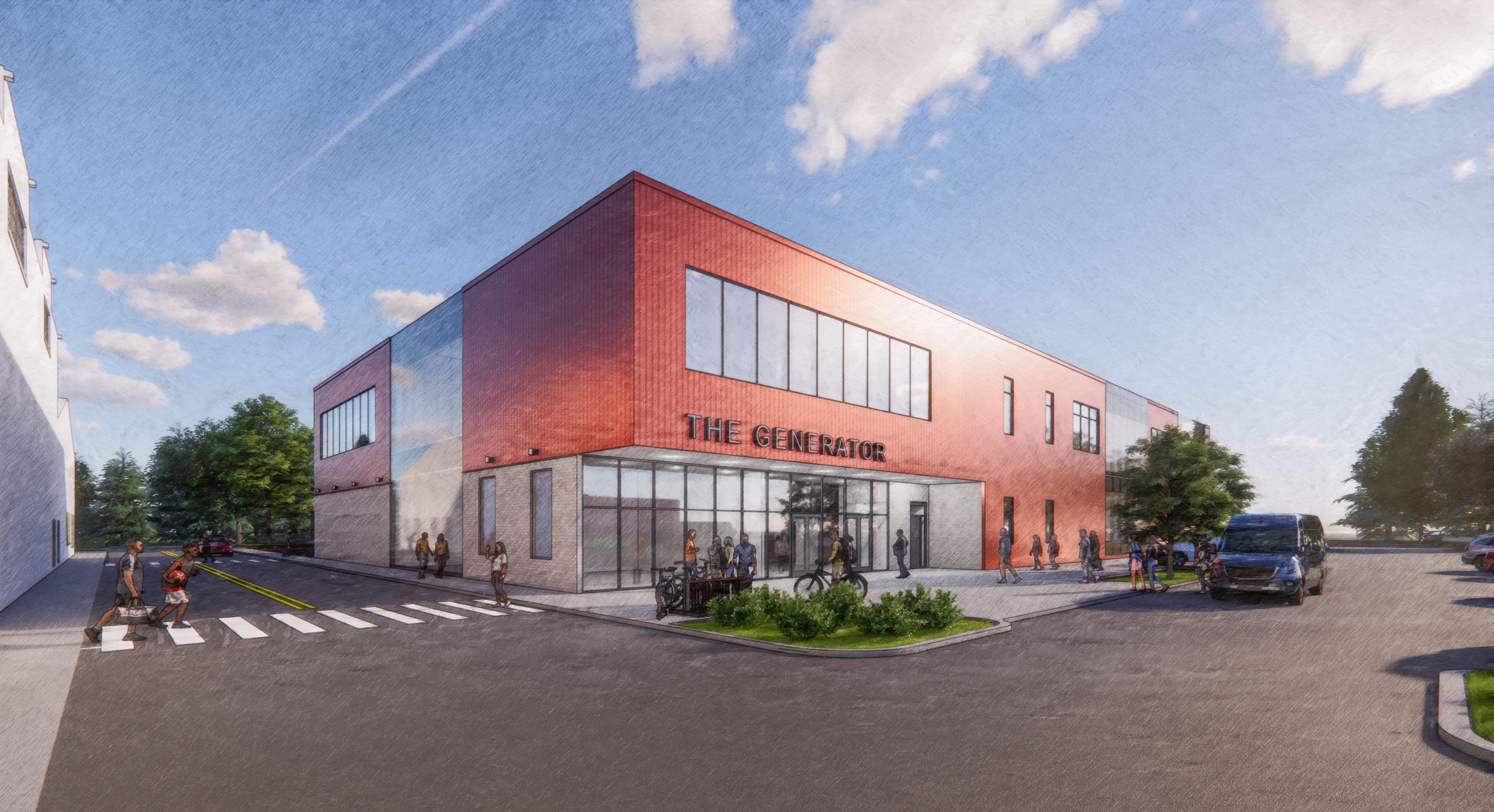
    A rendering created by Voith & Mactavish Architects of The Generator, Philly Youth Basketball’s planned $50 million workforce development hub, slated to open in early 2029. The Generator will help young adults build careers in the skilled trades, healthcare, tech and entrepreneurship.Voith & Mactavish Architects

    Philly Youth Basketball has raised $10 million for the project so far, largely through philanthropic donations. As part of the overall funding, $1.5 million has come through the state’s Redevelopment Capital Assistance Program, including a newly announced additional $500,000 from Gov. Josh Shapiro’s administration. Other money has come from the Small Business Administration. It is unclear where the rest of the funding will come from.

    “What happens here is different than what happens anywhere else. I believe this is a special place,” Shapiro said Friday at an event announcing plans for the workforce hub.

    “Here in Pennsylvania, we recognize all pathways to success and opportunity, and we invest in them. Whether you go to college, you go to the military, you go to a union training hall, all of those pathways deserve our respect and all of them deserve our investment,” he said.

    Mayor Cherelle L. Parker said expanding career pathways in the trades was especially valuable, given that artificial intelligence would not easily replace those jobs. She said the Generator would help young people who might otherwise face barriers to economic mobility.

    “We’re teaching young people how to fish. Our city will be safer when folks are going to bed at night and waking up in the morning to do a job that will allow them to take care of their families, go on a vacation, live with a sense of dignity and pride,” she said.

    Skills for life

    Philly Youth Basketball has been running programs throughout the city for over a decade, but it did not have a permanent space until it opened the Sixth Man Center in 2024. The facility was designed to use basketball as a means of positively impacting Philly youth and exposing them and their families to opportunities outside the sport.

    The Sixth Man Center features not just six full-size courts and basketball programs for all ages, but also a healthy foods cafe, and spaces and programs focused on education, mental health, and entrepreneurship. Holdsman said the 100,000-square-foot facility welcomes about 1,400 visitors a day, and even more when it has hosted other community events, like a recent Eid celebration that drew 8,000.
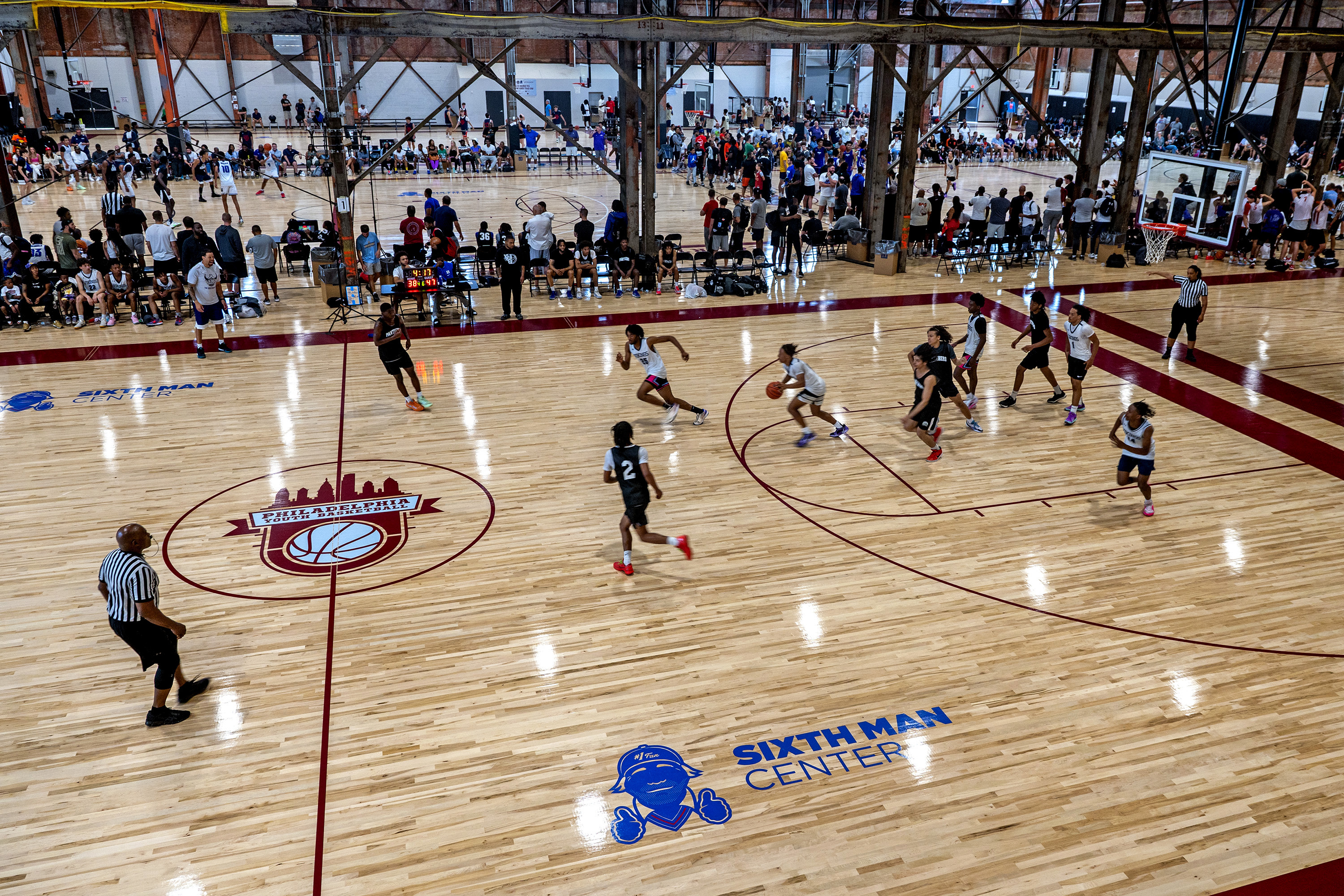
    There is action on six courts during a Philly Live event on Sunday, June 30, 2024, at the Alan Horwitz “Sixth Man” Center.Tom Gralish / Staff Photographer

    The Generator represents the culmination of Philly Youth Basketball’s mission to go beyond athletics. Holdsman said the nonprofit identified a need to help young people not only growing up, but after high school, too. Organizers chose to focus their work on careers in the trades, healthcare, and tech, Holdsman said, because the fields demonstrated growth, reliable credentialing, trainers and educators who could be relatable to young adults (and especially young Black men), and pathways for economic mobility.

    Amin Ray, 17, has embodied the organization’s “kinder to career” model. The Germantown high school senior has been involved with nearly every program Philly Youth Basketball has to offer, beginning with basketball when he was 11 and then branching out to off-court offerings.

    Now, he is part of the first cohort of the organization’s Varsity Trades Academy, which will serve as an on-ramp to the Generator before it opens. Ray and the 49 other academy participants have received instruction in various trades, and he has become most fascinated with carpentry.
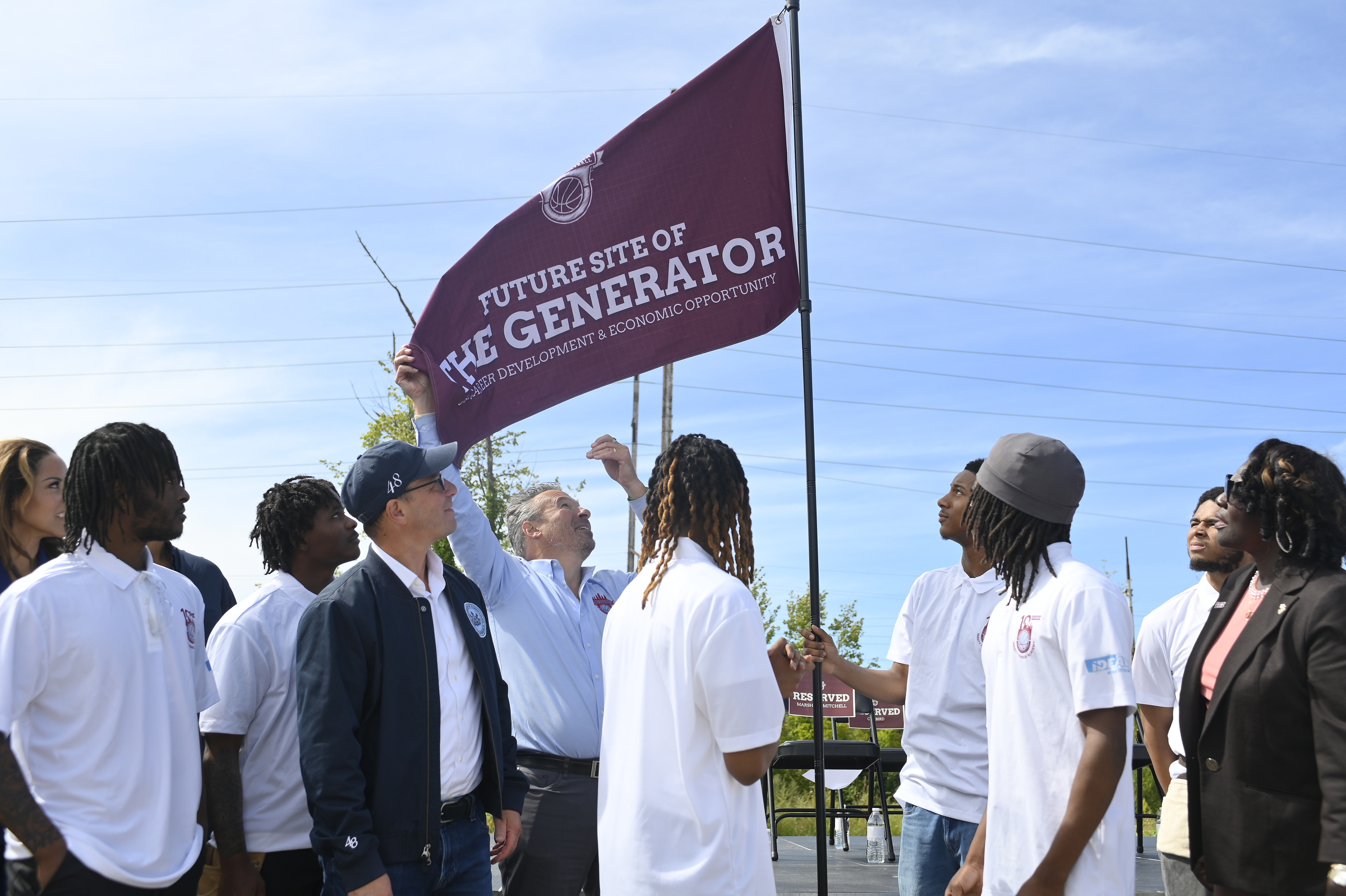
    Gov. Josh Shapiro and Philly Youth Basketball Varsity Trades Academy students watch as Kenny Holdsman and Amin Ray hold up a flag at the future site of the Generator on Friday.Bastiaan Slabbers/ For the Inquirer

    “It’s something about — after you finish a job … and you ride past, that satisfaction. You’re telling yourself, ‘Yeah, I built that,’” he said, pointing out a set of wooden benches he and the cohort built that people attending the event were sitting on.

    He will finish with the academy in December, and start working in a manufacturing program in partnership with Community College of Philadelphia in February while he finishes his virtual school program. Twelve others from the academy have already been placed in jobs through the program.

    “As human beings, we’re never done learning. We’re always still growing. So as much knowledge as you can possibly obtain, the more valuable you can be as a human being,” Ray said.

  • Pep Boys will eliminate 169 jobs at Bala Cynwyd corporate offices amid merger

    Pep Boys will eliminate 169 jobs at Bala Cynwyd corporate offices amid merger

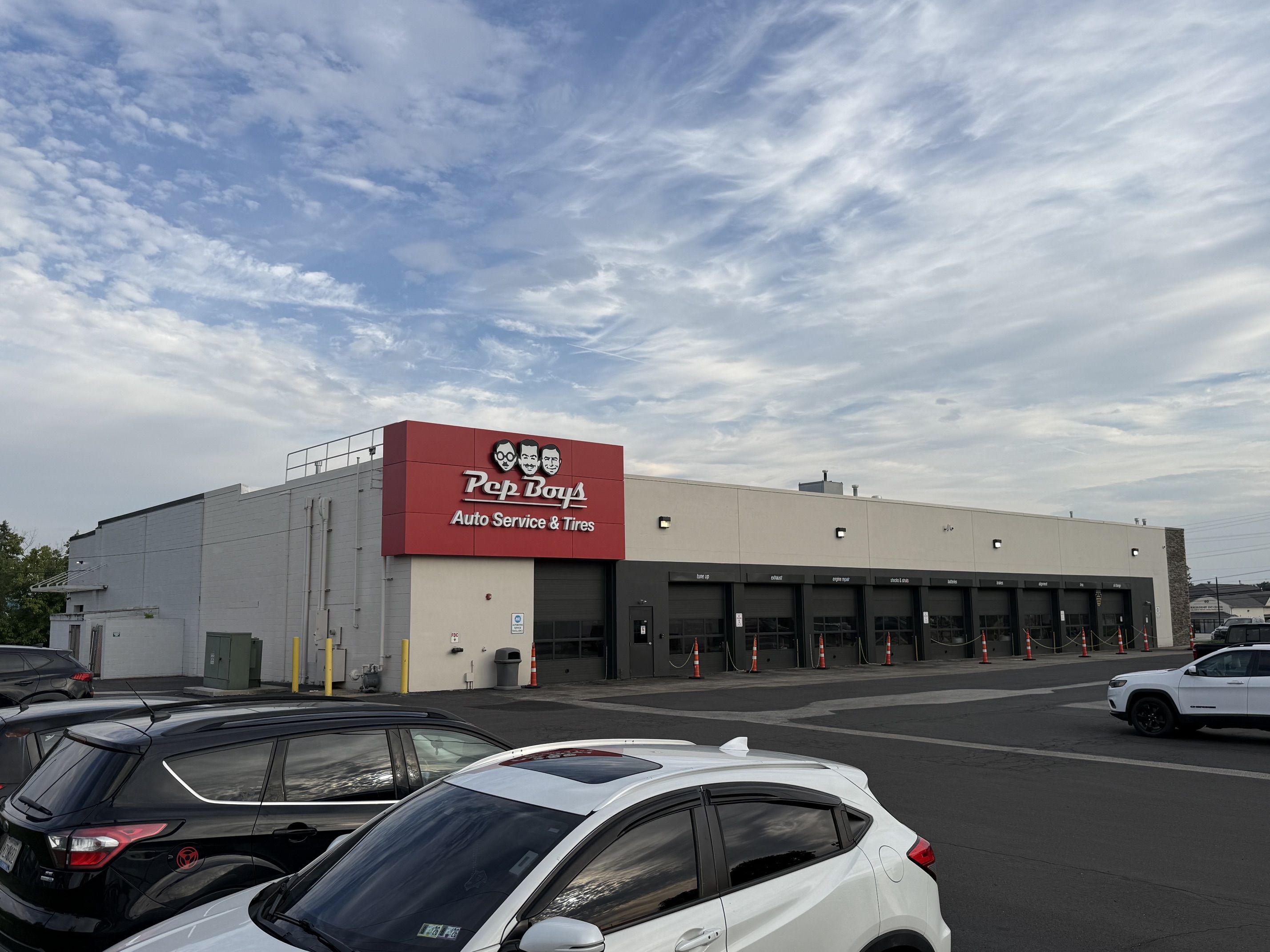
    On the heels of announcing a planned merger with private equity-backed Mavis Tire Express Services, Philadelphia-born Pep Boys will lay off dozens of employees at its local corporate offices.

    Pep Boys, which got its start over 100 years ago, had over 750 auto service locations across the country that carry out maintenance and repair services as of July.

    As part of the recent acquisition, Mavis is leading a “reorganization of the Pep Boys corporate support services” and conducting “a mass layoff,” Susanne Cairo of Mavis’ legal department said in a layoff notice filed with the Pennsylvania Department of Labor and Industry.

    The company plans to eliminate roughly 169 jobs in Bala Cynwyd by the end of February of next year, according to a layoff notice. Layoffs are set to begin Dec. 31.

    A company spokesperson could not immediately be reached for comment.

    Icahn Automotive Group said in July that it planned to sell the company to White Plains, N.Y.-based Mavis for $700 million in cash. Its parent company, publicly traded Icahn Enterprises LP, bought the company just over a decade ago.

    As part of Mavis, Pep Boys CEO Joe Auriemma said in July, “Pep Boys will have the scale, footprint, and operational and technological strength to continue building on its legacy as it enters a new chapter of growth.”

    A Mavis spokesperson said in July that Pep Boys “will continue operating under its iconic brand name” but declined to address the fate of the Bala Cynwyd corporate office at the time.

    Icahn sold Pep Boys’ longtime headquarters on Allegheny Avenue in North Philly several years ago but leased back some space there. There had been 500 employees based there at the time. Pep Boys no longer occupies that building, a spokesperson told The Inquirer in July.

    Inquirer staff writer Andrew Seidman contributed to this article.

  • Former Kibitz Room owner files for bankruptcy as he tries to repay debts from shuttered King of Prussia restaurant

    Former Kibitz Room owner files for bankruptcy as he tries to repay debts from shuttered King of Prussia restaurant

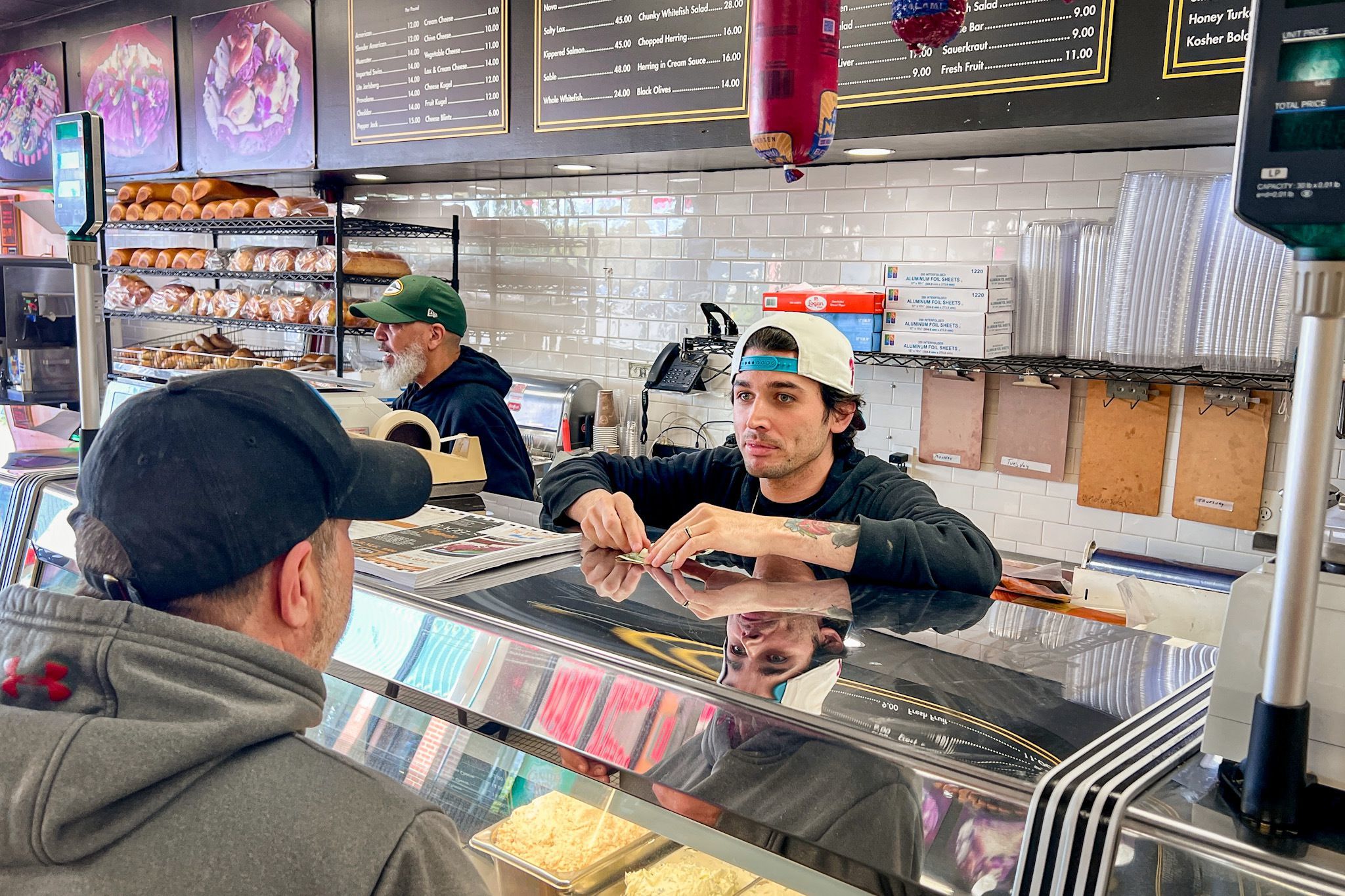
    Brandon Parish, former owner of the Kibitz Room in King of Prussia and deli manager at the original Cherry Hill location, has filed for personal bankruptcy, months after his Montgomery County restaurant closed amid mounting debts.

    Parish owes creditors nearly $1.8 million, including $1.2 million to Hanover Community Bank for a small-business loan, and has about $15,500 in assets, according to documents filed in U.S. Bankruptcy Court for the Eastern District of Pennsylvania.

    The 33-year-old King of Prussia resident filed for bankruptcy in early September, five months after he and his father, Neil, were evicted from their storefront in the Valley Forge Center on U.S. Route 202. Their landlord won a judgment for more than $194,000 in rent and fees.

    The restaurant was in business for a year.

    Brandon Parish sits at a table at the now-closed Kibitz Room in King of Prussia in April 2025.Kriston Jae Bethel / For The Inquirer

    The restaurant also owed more than $135,000 to distributor Foods Galore, a debt listed in Parish’s personal bankruptcy filing alongside more than $140,000 owed to other business vendors and related services.

    The King of Prussia location’s debts are “going to take some work to clean up,” Brandon Parish said in April, noting the expansive full-service restaurant strayed too far from its over-the-counter roots. “Obviously, it’s been a disaster since day one. Nothing went as planned. But we’ll have to figure all that out.”

    Meanwhile, the Cherry Hill Kibitz Room — a separate business that had been owned by Brandon Parish’s mother, Sandy — abruptly closed and filed for bankruptcy earlier this year. Neil and Brandon Parish, backed by outside investors, negotiated a deal in bankruptcy court to buy the Cherry Hill equipment and sign a new lease there, though neither Parish would be an owner. The Springdale Road deli reopened in May, with the Parish men behind the counter.

    Brandon Parish (right) waits on a customer at the Kibitz Room in Cherry Hill on May 1. Michael Klein / Staff

    Brandon Parish’s personal bankruptcy case will not impact operations at the Cherry Hill deli since he is only an employee, according to a spokesperson.

    The Kibitz Room has been part of the Parish family for more than two decades.

    In 2003, Neil Parish purchased the Cherry Hill spot from Russ Cowan, who had given the deli its name, a loose translation of the Yiddish chitchat. Cowan, a local legend, owned Philly’s Famous 4th Street Deli for 18 years and now owns Radin’s Deli in Cherry Hill.

    Brandon grew up at Kibitz, standing on milk crates to wash dishes for his father. Ever since he was a kid, delis were his “comfort zone,” Brandon said in 2025.

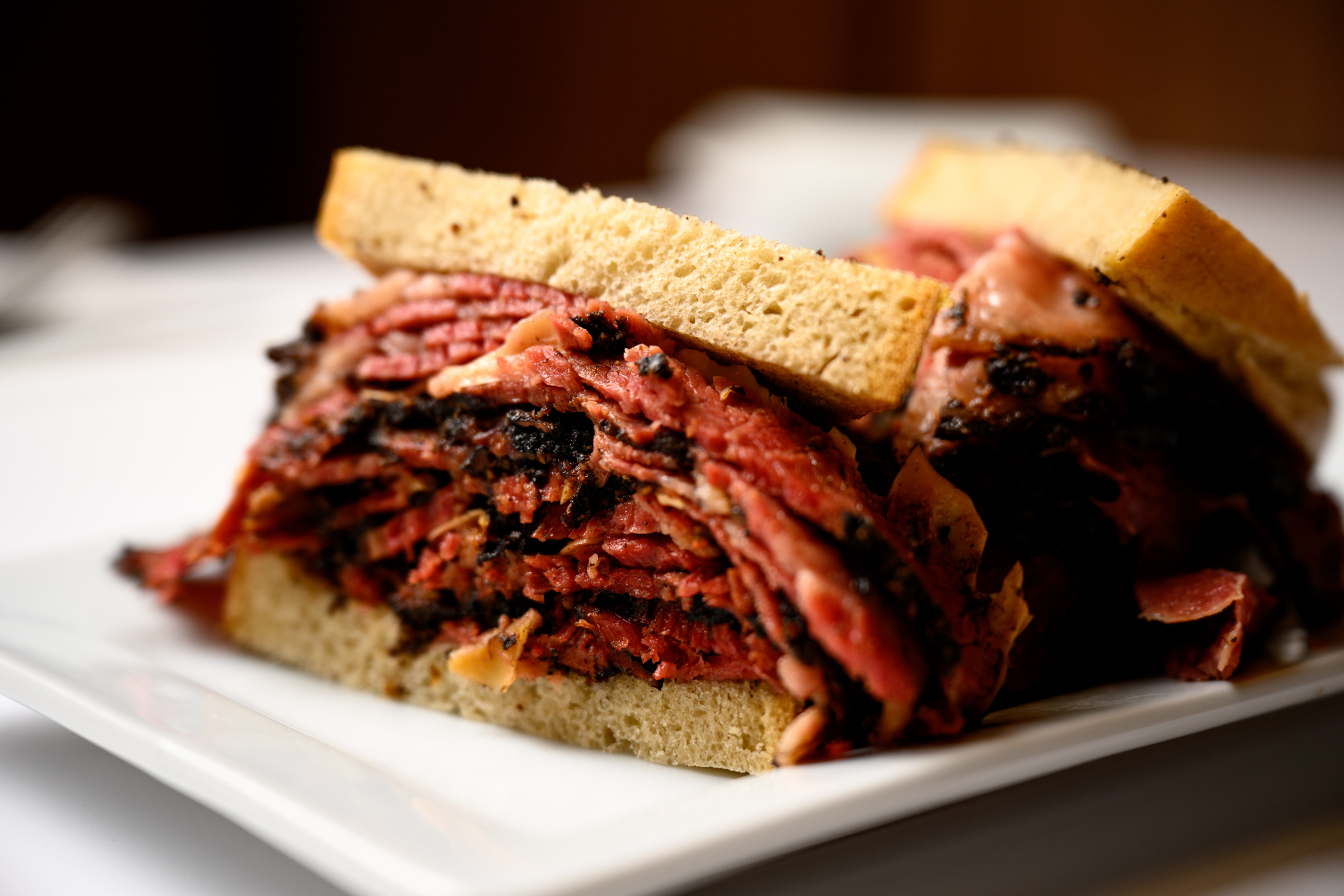
    A pastrami sandwich at the now-closed Kibitz Room in King of Prussia. Kriston Jae Bethel / For The Inquirer

    After Brandon’s mother and father split about a decade ago, his dad moved back to the Baltimore area, and Brandon continued to run the Cherry Hill restaurant with his mom. But he was itching to open his own place, he said.

    In 2025, Brandon left his post in Cherry Hill to open a Kibitz Room in the former Michael’s Deli in King of Prussia. The business was an independent venture with his father, who had returned to the Philly area from Baltimore. The senior Parish was in charge of the menu, but his son was the boss: “This is Brandon’s store,” Neil said at the time.

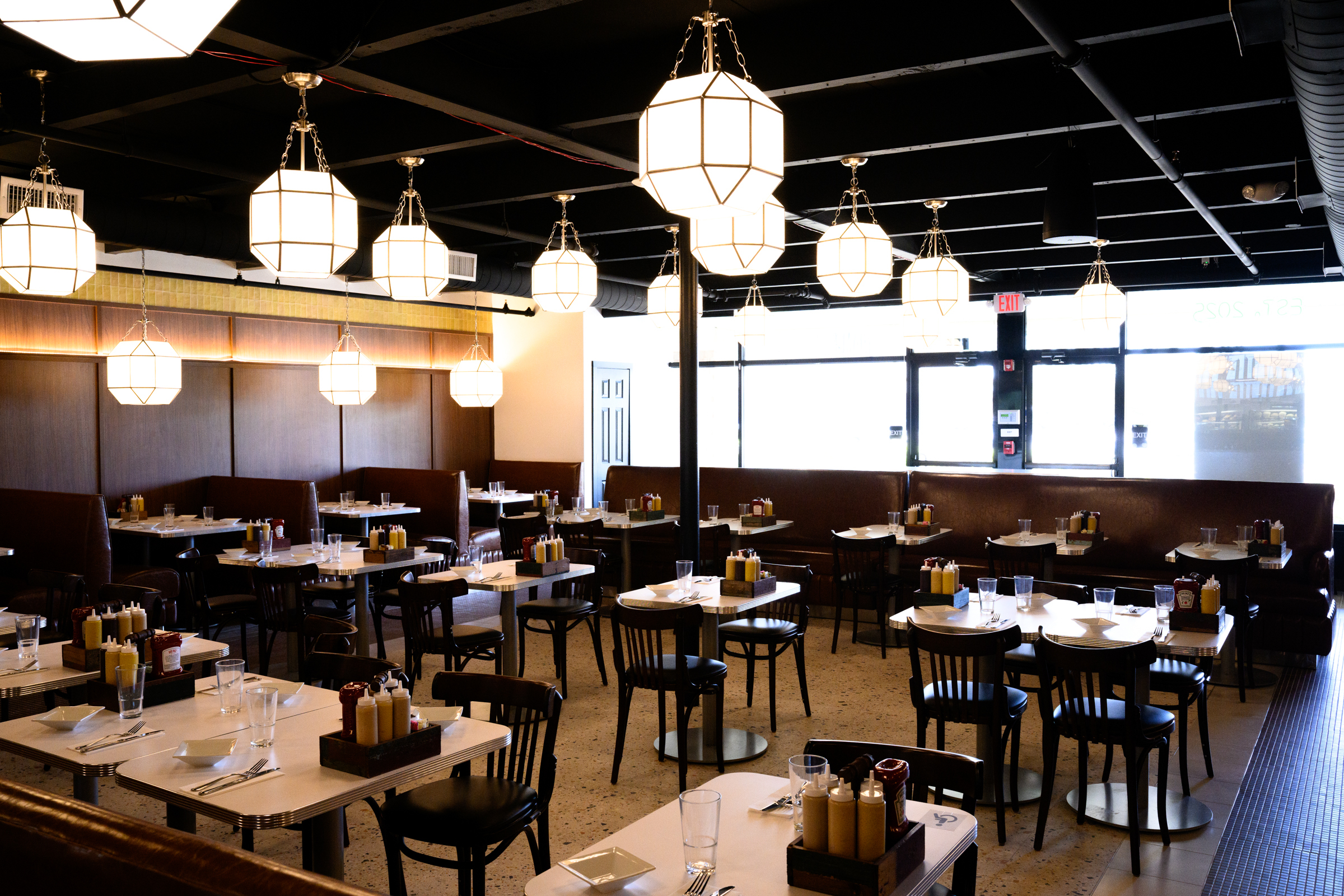
    The pair said they were excited to open a full-service restaurant that was about four times the size of the Cherry Hill deli and could seat 200 people.

    The Kibitz Room in King of Prussia was about four times the size of the original deli in Cherry Hill, a separate business not owned by Brandon Parish. Kriston Jae Bethel / For The Inquirer

    They created a giant menu full of staples like corned beef and pastrami sandwiches, matzo ball soup, knishes, and chicken pot pies, as well as elevated items like garlicky flank steak. They planned tableside chopped liver service.

    “I feel like this really encapsulates the Jewish deli as a whole experience,” Brandon Parish said at the time. “The old, the new, the vibe, the aesthetic, the personality, the quality, the menu mix.”

    And he scoffed at occasional reports that Jewish delis were going out of style: “I think if you do it well, then you never have to worry about failure.”

  • Starbucks is closing three stores in Philly and South Jersey

    Starbucks is closing three stores in Philly and South Jersey

    Starbucks is closing two Philadelphia stores and one in South Jersey among roughly 250 locations the company announced it is shuttering this week.

    The company “identified locations where we do not believe we can consistently deliver the experience we want for customers and partners or where we don’t see a path to acceptable financial performance,” chief operating officer Mike Grams said in a statement this week.

    Starbucks spokesperson Andrew Trull said the stores at 2201 South St. in Center City and 1018 N. Second St. in Northern Liberties, as well as the Willingboro store in New Jersey at 4380 Route 130, are expected to shutter “later this week.” The stores appear to be closing as of Sunday, according to the Starbucks website store locator. The company did not share whether other locations in the Philadelphia area are expected to close.

    The company closed six Philadelphia locations last year.

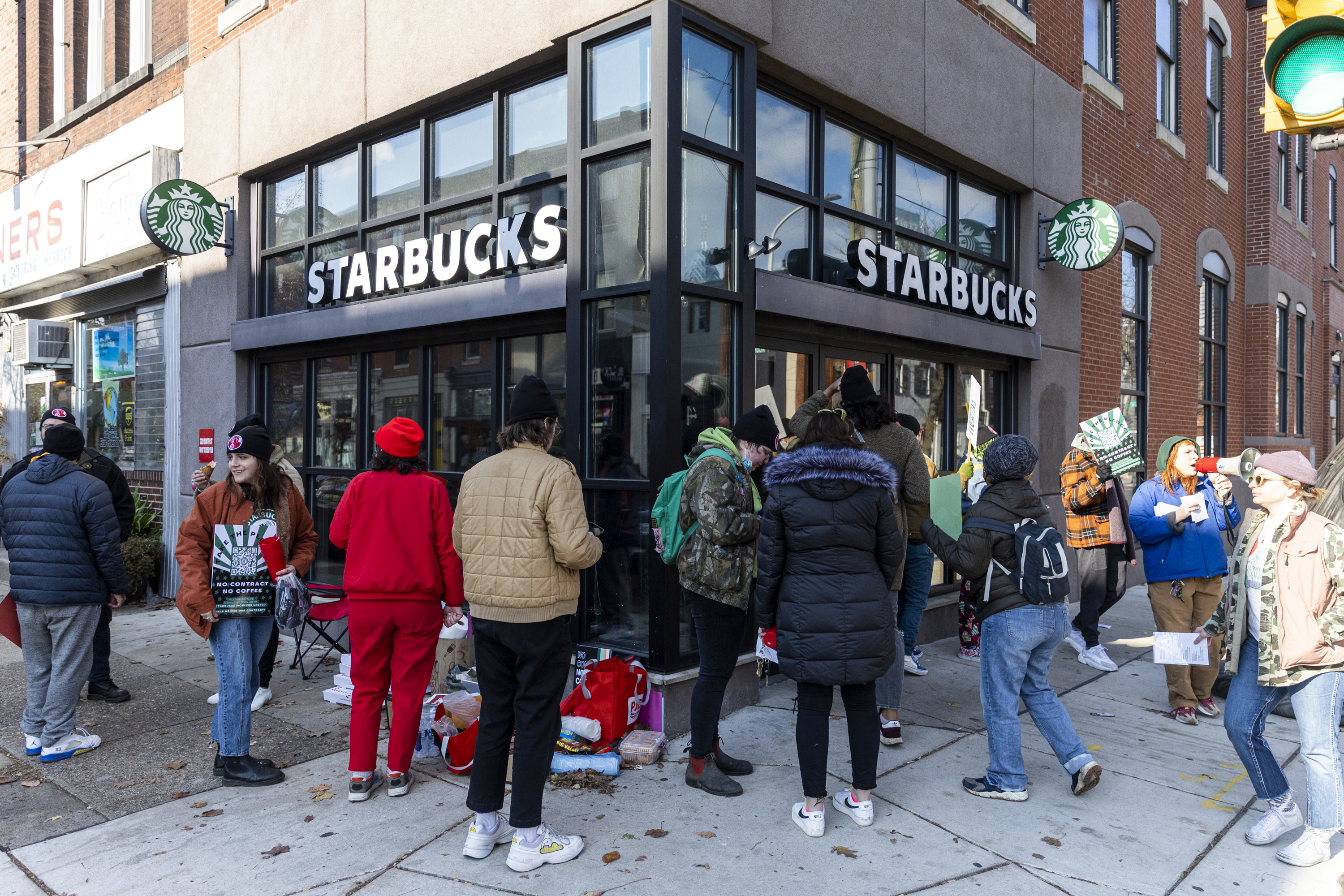
    The 250 stores closing represent about 1% of the over 18,000 Starbucks in North America, according to Grams. Of the 250 closing stores, 20 are unionized, according to the baristas’ union, Starbucks Workers United.

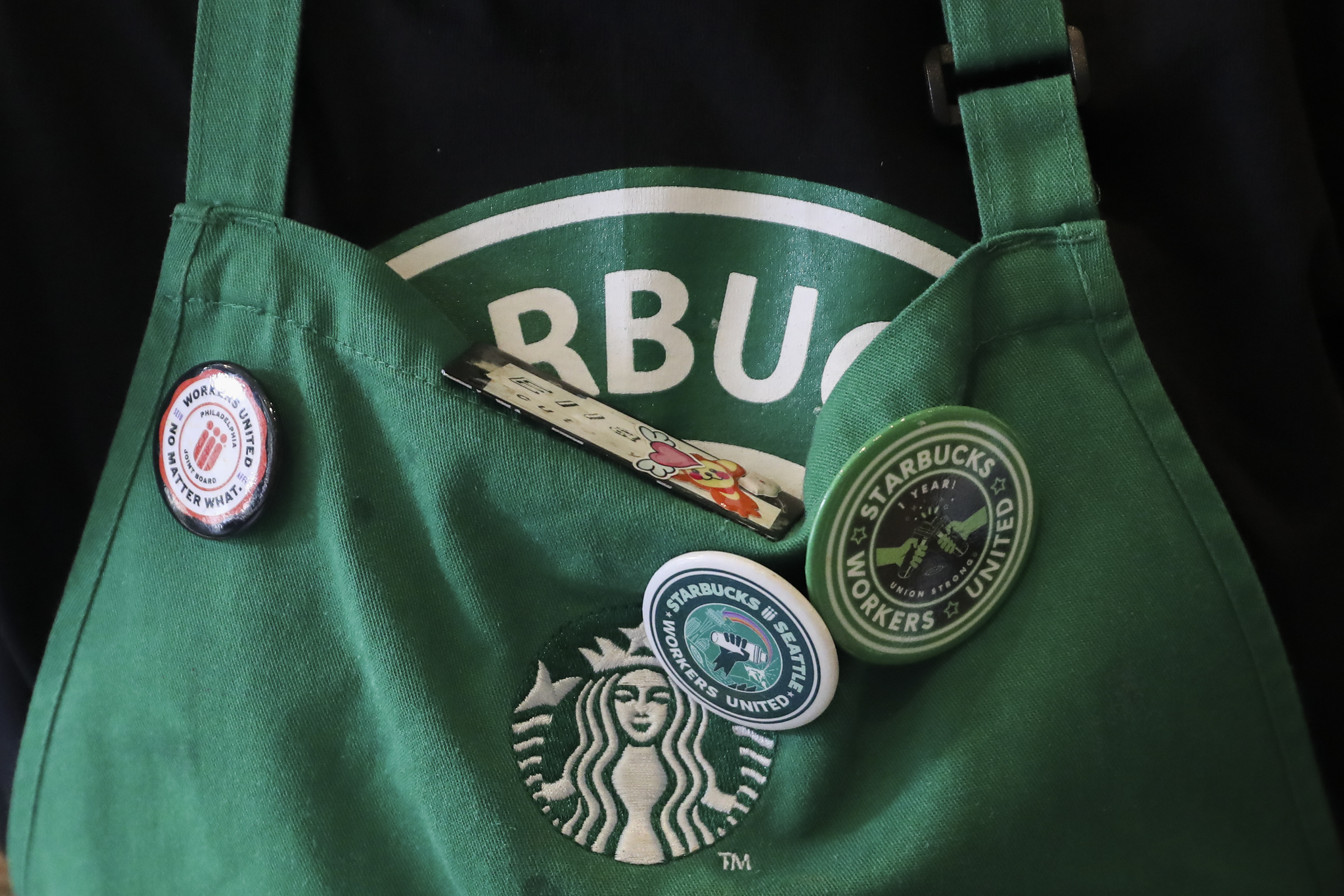
    A member of the Starbucks Workers United union wears pins during their shift at a Philadelphia store.Heather Khalifa / Staff Photographer

    Starbucks has several dozen stores in Philadelphia and more in the surrounding counties.

    “Starbucks leadership is failing the company, and trouble is brewing for Starbucks,” Starbucks Workers United said in a statement. The company, in response, pointed to its recent financial turnaround under company CEO Brian Niccol, who stepped into the role in 2024.

    Starbucks baristas have been organizing for years, electing Starbucks Workers United to represent them at nearly 700 stores, according to the union, but they have not yet reached a first union contract with the company.

    Starbucks closes some locations and opens new ones every year, Grams said, adding that is part of “managing our portfolio.”

    “We remain excited about the significant long-term growth opportunity ahead in North America,” Grams said. “We are actively developing a strong pipeline of new coffeehouses and remain committed to growth in North America.”

    The announcement this week is the latest round of store closures since Niccol took over as CEO. Upon last year’s closures, including six in Philly, Niccol cited nearly identical reasoning as Grams did this week for the latest changes.

    Niccol has been focused on improving customer experience with a plan dubbed “Back to Starbucks.” It is paying off, he said in a statement this month, adding “we have returned to growth, delivered positive global comps and improved margins.”

    The new closures support Niccol’s “Back to Starbucks” plan, Grams said.

    The union this week, in light of the closure announcement, said Niccol’s plan is “nothing more than a betrayal of what workers and customers loved about the company.”

    Starbucks spokesperson Trull, in response, pointed to a recent earnings call, in which Niccol said “we delivered our fourth consecutive quarter of positive global comps and our second consecutive quarter of consolidated margin growth. It’s clear proof that our Back to Starbucks plan is working.”

  • Atlantic City’s top cannabis official was charged in a scheme to solicit bribes from a weed business

    Atlantic City’s top cannabis official was charged in a scheme to solicit bribes from a weed business

    Atlantic City’s top cannabis official is facing federal charges for a scheme to solicit cash bribes from a dispensary owner in exchange for fast-tracking their license and avoiding city fees.

    Kashawn “Kash” McKinley, 42, commonly referred to as “A.C.’s Weed Czar” for his role overseeing the city’s legal marijuana industry, was charged with honest services fraud and two counts of soliciting bribes, U.S. Attorney in New Jersey Robert Frazer announced Thursday.

    In a statement, Atlantic City officials said that Mayor Marty Small Sr. had been apprised of the case and that McKinley had been suspended without pay pending the outcome of the case. Small “believes in the justice system, and Kashawn McKinley is innocent until proven guilty, like any other American,” according to the statement, which said the mayor promised transparency around the proceedings.

    A public defender assigned to McKinley declined to comment.

    As the director of Atlantic City’s constituent services, McKinley solicited more than $20,000 in cash and marijuana from the cannabis business owner, according to federal prosecutors. In exchange, McKinley assisted the owner, who was not identified by the U.S. Attorney’s Office, in opening a dispensary and resolving certain fees owed to Atlantic City.

    The would-be dispensary owner contacted McKinley in late 2022 for guidance on opening a cannabis business in Atlantic City, prosecutors said. At McKinley’s direction, the duo first met in a parking lot of a defunct Atlantic City restaurant where McKinley told the owner that in exchange for $20,000, he could “help” resolve any issues with opening the dispensary in town, according to prosecutors.

    “We all need to eat,” McKinley allegedly told the dispensary owner at the time.

    The dispensary owner would go on to pay McKinley the $20,000 over the next few months in two installments. Soon after, the owner’s license was approved by the local oversight board, where McKinley is a member.

    Two years after opening, the dispensary owner contacted McKinley in 2025 about the more than $25,000 in fees and taxes the owner owed to Atlantic City for operating the dispensary.

    Prosecutors say that McKinley’s solution to the fees was to reclassify the dispensary from a standard mercantile license down to a “micro” license, which would result in the business needing to pay only $2,500 in annual fees and taxes.

    As part of the reclassification scheme, prosecutors say, McKinley allegedly directed the dispensary owner to orchestrate the assault of a person who McKinley said was “disrespecting” another public official. When McKinley was later shown what prosecutors say appeared to be a photograph of the injured victim, McKinley allegedly “expressed pleasure” and assured the dispensary owner that they “don’t have to worry about nothing” in relation to the disputed city fees.

    Throughout McKinley and the dispensary owner’s exchanges, the weed official would ask for “care packages,” which prosecutors believe to mean bribe payments and samples of weed.

    Since McKinley and the owner were able to reclassify the dispensary down to a micro business license in January, the owner was owed a $25,000 refund from Atlantic City for previously paying the standard license fees. McKinley requested half of that refund from the dispensary owner, according to prosecutors. In March, the dispensary owner gave McKinley a $6,000 kickback from the refund, prosecutors said.

    McKinley’s fraud charge carries a maximum sentence of 20 years in prison and a fine of up to $250,000. Each bribery charge carries a 10-year maximum prison sentence and a fine of up to $250,000.

  • Iced coffee, tattoos, thank-you notes: The shifting do’s and don’ts of job interviews

    Iced coffee, tattoos, thank-you notes: The shifting do’s and don’ts of job interviews

    When I was a fresh college graduate, interviewing for my first full-time job, I thought about my mother’s interview do’s and don’ts. Don’t wear anything that could reveal tattoos. Don’t start with asking questions about salary. And always — she stressed this above all else — mail a physical thank-you note the next day.

    In the years since I entered the job market, interview etiquette norms have changed dramatically. While each sector, field, and company may have its own rules, former no-nos like tattoos and dyed hair often aren’t deal-breakers. And many interviews take place over Zoom, which introduces a whole new slate of do’s and don’ts.

    But not everyone agrees on which rules to keep and which to toss out.

    In a video posted on TikTok last week, recruiter Caitlin Wehniainen introduced a new one: Don’t carry an iced coffee into an interview. Walking in to shake hands while juggling a drink can make a big moment seem like just “another stop on your list of errands for the day,” she said.

    The comments section under her original video exploded. One recruiter agreed that bringing an iced coffee into a meeting can be distracting; one poster asked, “Are you expecting my whole day to revolve around a 30 min meeting?” Satires and skits have spoofed both Gen Z jobseekers and corporate overlords.

    Wehniainen has since posted a follow-up video, saying she wasn’t trying to stoke the flames for the sake of likes and reposts.

    “When you really want a job offer, you need to know certain ways of going about the process and that helps you build confidence, when you know what to expect going in the door,” she said.

    The video and the ensuing debate have exposed a greater challenge: How do you navigate ever-changing interview etiquette when the job hunt can already be so confusing, discouraging, and exhausting?

    “Norms are constantly changing to the ways we do business and technology,” said Keva Dine, a recruiter and founder of the Keva Dine Agency. “There’s a desperation, and everyone is applying to everything. They’re throwing darts in the dark.”

    In Dine’s view, anything you can do to stick out in a good way is a plus. Wearing business attire to an interview or sending a thank-you note the next day may not be the standard in every workplace, but often they can help. When people rely on AI-generated cover letters or apply to jobs without researching the company, they’re much more likely to get lost in the shuffle.

    If you’re interviewing on a video call, keeping the camera on during a video and tidying up the Zoom background are non-negotiables, said Juliet Murphy, an executive career coach based in Irvine, Calif.

    “Put in a bit of extra effort,” she said. “You need to let the other person know how seriously you’re taking the role.”

    In her 15 years working in corporate human resources and recruitment, Vicki Salemi never clocked the beverage in a candidate’s hand. But Salemi, now a career expert at the job site Monster, said she did notice seemingly small things, like how they greeted the reception desk and how they behaved in the lobby waiting area. Those things matter when you’re bringing someone into a workplace, she said.

    “Your behavior and your etiquette are part of the package,” she said.

    And if a candidate doesn’t like a company’s stance on these norms — the iced coffee included — the in-person interview is an opportunity to evaluate that up close.

    “The interview has always been a place to assess fit, both for the applicant and for the company,” said Sara McCord, a former career columnist and founder and CEO of Sara McCord Communications. “If there’s an immediate, visceral reaction on either end — a company doesn’t want a candidate who brings an iced latte, a candidate doesn’t want somewhere where the company cares — that’s actually specifically, exactly how the interview is supposed to work.”

  • Delta is ending a route out of Philadelphia that it launched months ago

    Delta is ending a route out of Philadelphia that it launched months ago

    Delta Air Lines is cutting a route out of Philadelphia International Airport just months after launching it.

    The daily flight between Philadelphia and Seattle, which began operating in May, will stop flying at the end of November and will not be offered again in 2027.

    The airline made the decision “based on customer demand,” a Delta spokesperson said via email this week.

    American Airlines and Alaska Airlines also offer nonstop flights between PHL and Seattle-Tacoma International Airport.

    Delta last year carried nearly 1.9 million passengers through PHL, the airport’s third-largest airline by passenger volume.

    American Airlines, the largest, carried over 20 million passengers through the airport that year — roughly 70% of total passengers.

    While Delta is terminating service between PHL and Seattle, the airline plans to launch a new daily route between Philadelphia and Los Angeles in June. The airline already offers flights connecting Philadelphia to Atlanta, Boston, Detroit, Minneapolis, and Salt Lake City.

    The airline recently modernized its PHL lounge with new furniture, carpets, and updated restrooms, as well as a larger buffet area. It’s one of many traveler lounges at the airport.

    Delta has over 700 employees based in Pennsylvania, many of which are based out of Philadelphia.

  • Penn Medicine and IBX form new company to open Philly-area ambulatory surgery centers

    Penn Medicine and IBX form new company to open Philly-area ambulatory surgery centers

    The University of Pennsylvania Health System and Independence Blue Cross, the Philadelphia area’s largest insurer, have formed a new company with plans to open at least 18 regional surgery centers.

    The for-profit company announced Thursday is part of an effort by Penn and IBX to bring lower-cost procedures closer to patients, while maintaining quality and safety, officials said.

    For Penn, the venture represents a financial leap, because it means the nonprofit health system will intentionally accept significantly lower payments for part of its business.

    “We need to work on affordability in healthcare. It’s too expensive. It’s bankrupting families,” Penn health system CEO Kevin Mahoney said.

    Medicare and private insurers like IBX who pay the healthcare bills “want to move to less costly settings,” he said, and Penn needs to be ready to capture that business.

    IBX’s CEO Kelly Munson emphasized the importance of partnerships to tackle rising healthcare costs. She noted that shifting care to ambulatory surgery centers from hospital departments can generate as much as a 50% discount.

    “The healthcare affordability crisis won’t be solved alone,” Munson said.

    A third investor in the company is Regent Surgical, a Tennessee firm with private equity investors that will manage the local centers. Its tasks include forcing efficiency. Regent already manages 40 sites in 15 states. Penn clinicians will provide services.

    Regent’s CEO, Travis Messina, called the new company the first of its kind nationally. “I’ve yet to see one that has involved both a payer, a provider, as well as a management company,” he said.

    Key details — such as the for-profit company’s name, the ownership percentages, and the time frame for opening the anticipated facilities — were not disclosed.

    The first local facility is expected to open next year, but officials did not say where.

    The Penn-IBX initiative doesn’t fit into the typical playbook for ASCs, said Dan Grauman, a healthcare consultant based in the Philadelphia area.

    Usually, physicians are also involved as owners. “They’re part owners of these surgery centers, and they drive the volume,” said Grauman, a managing director at VMG Health, a national healthcare consulting firm.

    Asked if non-Penn doctors could be involved in or be investors in the new centers, Penn and IBX said they are evaluating all options for future growth.

    The case for more ASCs in the Philadelphia region

    Southeastern Pennsylvania already has more than 100 ambulatory surgery centers, many of them specialized in gastroenterology and mainly focused on colonoscopies, state heath department data show.

    Yet the region lags the nation in the shift to lower-cost surgery centers.

    Data provided by Regent show that in 2023 and 2024 only 33% of ASC-eligible procedures in the Philadelphia region had migrated to the ASCs, compared to 56% nationally. Regent uses data from Kythera Labs, a company that analyzes health insurance claims.

    Messina attributed the slower adoption of surgery centers to the concentration of physicians employed by local health systems. “That tends to limit the amount of ASC availability in markets across the country,” he said.

    Historically, Philadelphia-area health systems tended to concentrate services in their hospitals, which have expensive fixed overhead, and in facilities that charge hospital rates. Executives focused on protecting revenue, so they could maintain broad hospital offerings, rather than on offering lower-cost options.

    Healthcare trends now increasingly are pushing care into the community. Mahoney noted that half of Penn’s chemotherapy and infusion services are provided in patients’ homes. Close to two thirds of Penn’s $13.6 billion in revenue is from outpatient care, he said.

    “We’ve been trying to deconstruct away from hospitals for a long time, and this is a natural step on that continuum,” he said.

    Penn previously invested an undisclosed amount of money in the Ambulatory Cardiovascular Center of Pennsylvania near King of Prussia. That facility is a partnership that also includes Cardiology Consultants of Philadelphia, Cardiovascular Logistics, and SCA Health.

    To incentivize more surgery centers and reduce costs for employers, IBX introduced a policy this year that it will only pay for certain procedures if they are done in a low-cost ASC. At the same time, IBX does not force patients to change doctors if their provider does not have privileges at an appropriate ASC.

    How Penn could go about opening centers

    Mahoney called the initial target of 18 locations the start.

    “Eighteen is half of what I want to do. These are not mega hospital buildings,” he said. “They’re going to be convenient. They’re going to be spread throughout the five counties, easy for people to get to, close to their homes.”

    The new centers won’t always require new construction, as is typically the case for Penn’s large outpatient centers, such as the one going up in Montgomeryville.

    The new ASC company could also acquire existing ASCs or change the billing practice at a Penn surgery center that currently charges higher hospital rates, Messina said.

    A surgery center on the campus of Penn’s Doylestown Hospital closed last year. Penn could relaunch it under the new company.

    New Jersey could also see new surgery centers from the Penn expansion.

  • Starbucks to shutter 250 stores in North America this week in 2nd wave of closings

    Starbucks to shutter 250 stores in North America this week in 2nd wave of closings

    Starbucks plans to close 250 North American stores later this week.

    It is the second big round of store closures under Starbucks chairman and CEO Brian Niccol, who joined the company in 2024. Last September, Starbucks closed 627 stores in North America and Europe.

    In a letter to employees, Starbucks chief operating officer Mike Grams said the locations targeted either aren’t delivering acceptable financial results or can’t provide the kind of experience that Starbucks wants for customers and employees.

    The company didn’t say Thursday which coffeehouses will close or how many are located in the U.S. It also didn’t say how many of the affected coffeehouses are unionized. More than 700 U.S. Starbucks stores have voted to unionize since late 2021, but the union and the company have yet to reach a labor agreement.

    Grams said Starbucks is continuing to retrofit its North American coffeehouses to make them cozier and more inviting. The company expects 1,500 stores will be retrofitted by Sept. 30, which is the end of Starbucks’ fiscal year.

    “This progress has given us a clearer view of the performance of every coffeehouse,” Grams said in his letter. “While most are benefiting from this overall momentum, some coffeehouses continue to underperform despite the hard work and commitment of all of you.”

    Grams said Starbucks is still committed to growing its store count in North America. At the end of June, the company had 18,371 stores in the region.

    Starbucks said it will transfer employees to other stores if possible or provide severance support if it’s not able to place an employee in another location.

    Starbucks has also been cutting its corporate ranks. The company laid off 900 nonretail employees when it closed stores last September. In May, Starbucks laid off an additional 300 corporate employees and closed some underused U.S. offices.

    The company said it will incur $300 million in restructuring charges with this round of closures, including $200 million in cash charges as it exits leases and pays employee separation benefits and $100 million in non-cash charges due to the disposal and impairment of coffeehouse assets.

    Starbucks shares fell less than 1% Thursday in morning trading.

  • Penn picked first three faculty spinouts for early stage StartUP investments

    The University of Pennsylvania picked the first three faculty-founded companies for early stage investments from its newly established $10 million StartUP fund, the university said Wednesday.

    The three companies are working in maternal health, advanced radio-frequency filtering technology, and AI-powered drug discovery.

    Each is receiving the maximum investment of $250,000 from the fund launched in December to make seed investments in companies founded by university researchers.

    “Penn researchers are developing technologies with the potential to address some of the most important challenges facing society today, and many of these solutions have the potential to create entirely new markets,” John Swartley, Penn’s chief innovation officer, said in an announcement.

    Here are some details on the three companies:

    • Vasowatch is developing a non-invasive monitoring system to predict the risk of maternal postpartum hemorrhage, a leading cause of maternal death. Its cofounders are Penn Nursing adjunct professor Stefanie Modri and former Penn Engineering faculty James Weimer. The company will use the money to fine-tune the product and to pay for a clinical trial anticipated to start next year.
    • OneFiltr, cofounded by Troy Olsson, a professor in the School of Engineering and Applied Science, has a compact device designed to allow a cell phone to isolate and process specific frequencies. The company will use its investment to further development of its device for evaluation by aerospace and defense companies.
    • Peptaris Inc. has an AI platform for evaluating and developing drugs based on peptides, which are building blocks for proteins. Cofounders are César de la Fuente and Marcelo Der Torossian Torres. The StartUP investment is part of a larger seed round that Peptaris is using refine its model and evaluate its first candidates. Peptaris said in an SEC filing June that it raised $4 million from investors.