Category: Business

  • Sen. Bernie Sanders unveils bill to ban artificial superintelligence and create Department of AI

    Sen. Bernie Sanders unveils bill to ban artificial superintelligence and create Department of AI

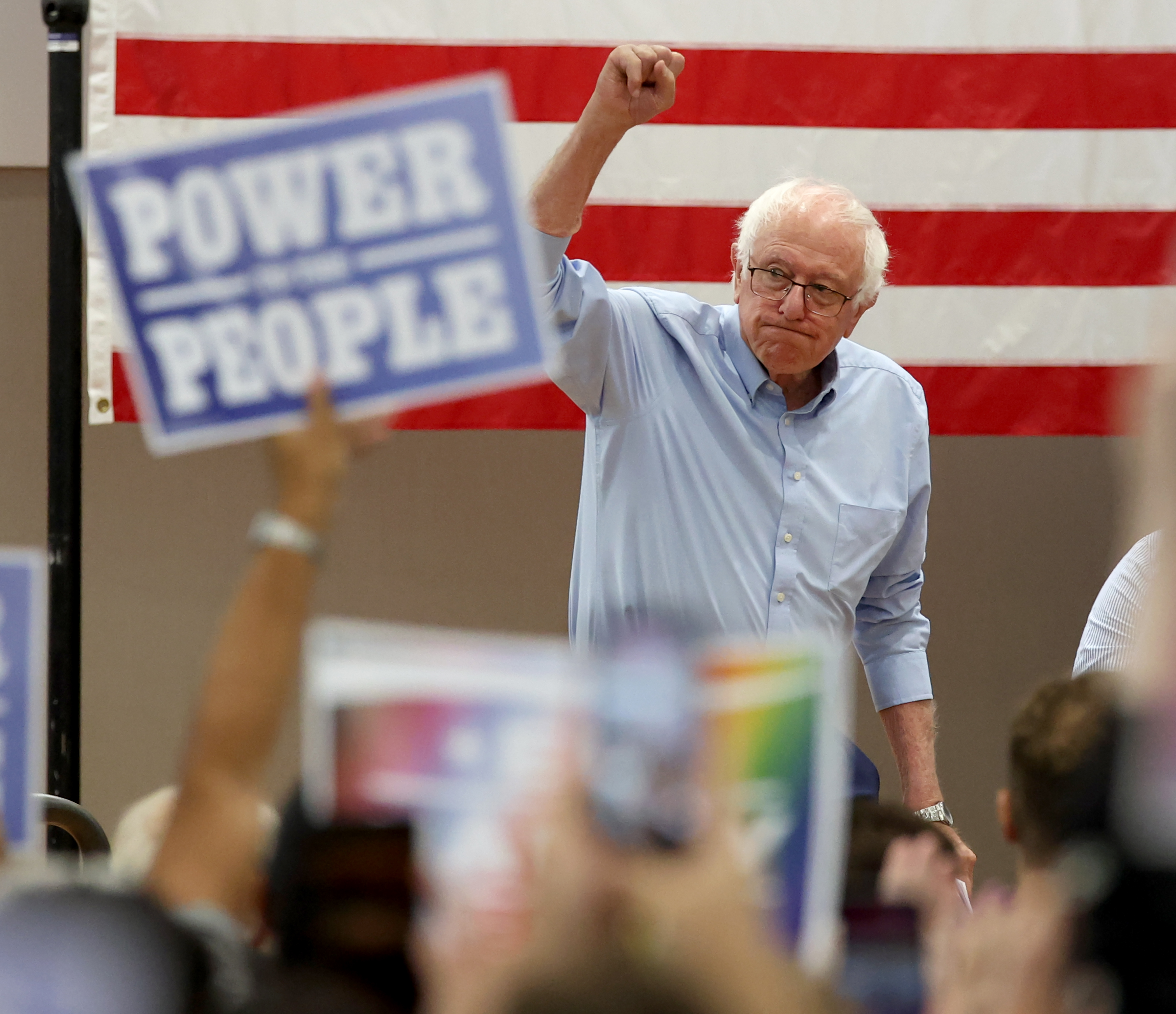
    Washington — Two leading progressive lawmakers, Sen. Bernie Sanders and Rep. Greg Casar, are unveiling legislation Wednesday that would ban artificial superintelligence and create a federal agency to oversee advanced AI as some of the industry’s own leaders urge Congress to impose guardrails on the advancing technology.

    The bill, provided first to The Associated Press, would also pause advanced AI development until guidelines are implemented while creating the Department of Artificial Intelligence. Multiple employees at leading AI companies are endorsing the bill.

    “It doesn’t take a genius to say, ‘slow it down,’” Sanders, I-Vt., said in an interview with AP. “Do we really want to develop a super intelligence that when it becomes smarter than human beings could act independently of human control? I don’t think we do.”

    Congress has so far done little to rein in the AI industry even as some of its most prominent leaders warn about potentially catastrophic risks. President Donald Trump has resisted recent calls for greater government oversight, putting him at odds with tech leaders including Anthropic’s Dario Amodei, OpenAI’s Sam Altman and xAI’s Elon Musk.

    The bill aims to dramatically slow down AI development

    The legislation would permanently prohibit artificial superintelligence, which it defines as a system that exceeds human cognitive ability or has sufficient capabilities to plan and execute the destruction or disempowerment of humanity.

    It would temporarily pause development of the most advanced AI systems until new federal safety rules are established by a new Department of Artificial Intelligence. Advanced AI systems would then need federal approval before they could be deployed. Violations could carry significant penalties, including up to 20 years in prison in some cases.

    A number of current employees at AI companies and experts signed on in support of the bill, according to a statement shared with AP.

    Juan Felipe Cerón Uribe, a researcher in OpenAI’s Safety Systems, said in a statement supporting the bill that “superintelligence could either go extremely right or extremely wrong” and that “we shouldn’t be playing such games.”

    Swante Scholz, a software engineer at Google DeepMind who said he was not speaking on behalf of his employer, said on the current path of development, the “most likely outcome is an existential catastrophe for humanity.”

    “A ban on superintelligence development would be a positive change for the foreseeable future,” Scholz said in a statement.

    The bill faces long odds but draws a line in a growing fight

    The bill from Sanders and Casar faces long odds in the Republican-controlled Congress, where lawmakers have struggled to coalesce around even less sweeping AI regulations.

    But it offers a window into how the progressive wing of the Democratic Party is approaching AI regulation ahead of November’s midterms and a 2028 presidential campaign in which the technology is expected to be an increasingly prominent issue. Casar, a Democrat from Texas, is the chair of the Congressional Progressive Caucus.

    Potential 2028 presidential candidates have rushed in recent weeks to release proposals showing they’re taking the issue seriously. Maryland Democratic Gov. Wes Moore announced a plan to regulate AI on Tuesday, while California Democratic Gov. Gavin Newsom signed an executive order to accelerate implementation of a California law that calls for independent oversight of AI companies last week.

    Sanders, a two-time presidential candidate who is now 85, has especially focused on the issue in recent months. In June, he introduced legislation to create a sovereign wealth fund financed through a one-time tax on the stock of the largest AI companies. Last week, he hosted colleagues for a briefing with experts and also attended a conference focused on the issue alongside Republicans, including former White House adviser Steve Bannon.

    The debate over AI regulations has scrambled political alliances both in Washington and for voters across the country.

    Americans have grown more concerned about the environmental impacts of artificial intelligence over the last year, according to a recent poll from The Associated Press-NORC Center for Public Affairs Research and the Energy Policy Institute at the University of Chicago.

    The survey data say about half, 53%, of Americans are “extremely” or “very” concerned about artificial intelligence’s environmental impacts. That is up from 41% last year. Democrats are driving much of the increase in environmental concern, but the poll also reveals broader worries about the local impact of data centers, which power AI and cloud computing.

    Trump has shown little interest in curbing AI risks

    While some industry leaders have called for new safeguards, Trump has pushed in the opposite direction. On Tuesday, Trump told the United Nations General Assembly that artificial intelligence will be renamed “super intelligence.”

    “I think Trump has very little understanding of what this issue is about,” Sanders said. “I think he’s mainly concerned about the economic implications of a slowdown.”

    AI safety is expected to be a central part of talks between Trump and China’s Xi Jinping at the White House this week as the countries compete for dominance in the sector. The prospect of slowing development in the United States while China continues on has also been one of the central arguments against sweeping restrictions.

    Sanders argued that avoiding the most dangerous forms of AI would ultimately require cooperation between the two countries, comparing the challenge to nuclear arms control during the Cold War.

    “Ronald Reagan, arch-conservative, was smart enough to understand that he had to sit down with Gorbachev, a communist, and work out a nuclear treaty that protected humanity,” Sanders said. “I think we can do that again now.”

  • What endlessly searching for a job can do to your mind

    What endlessly searching for a job can do to your mind

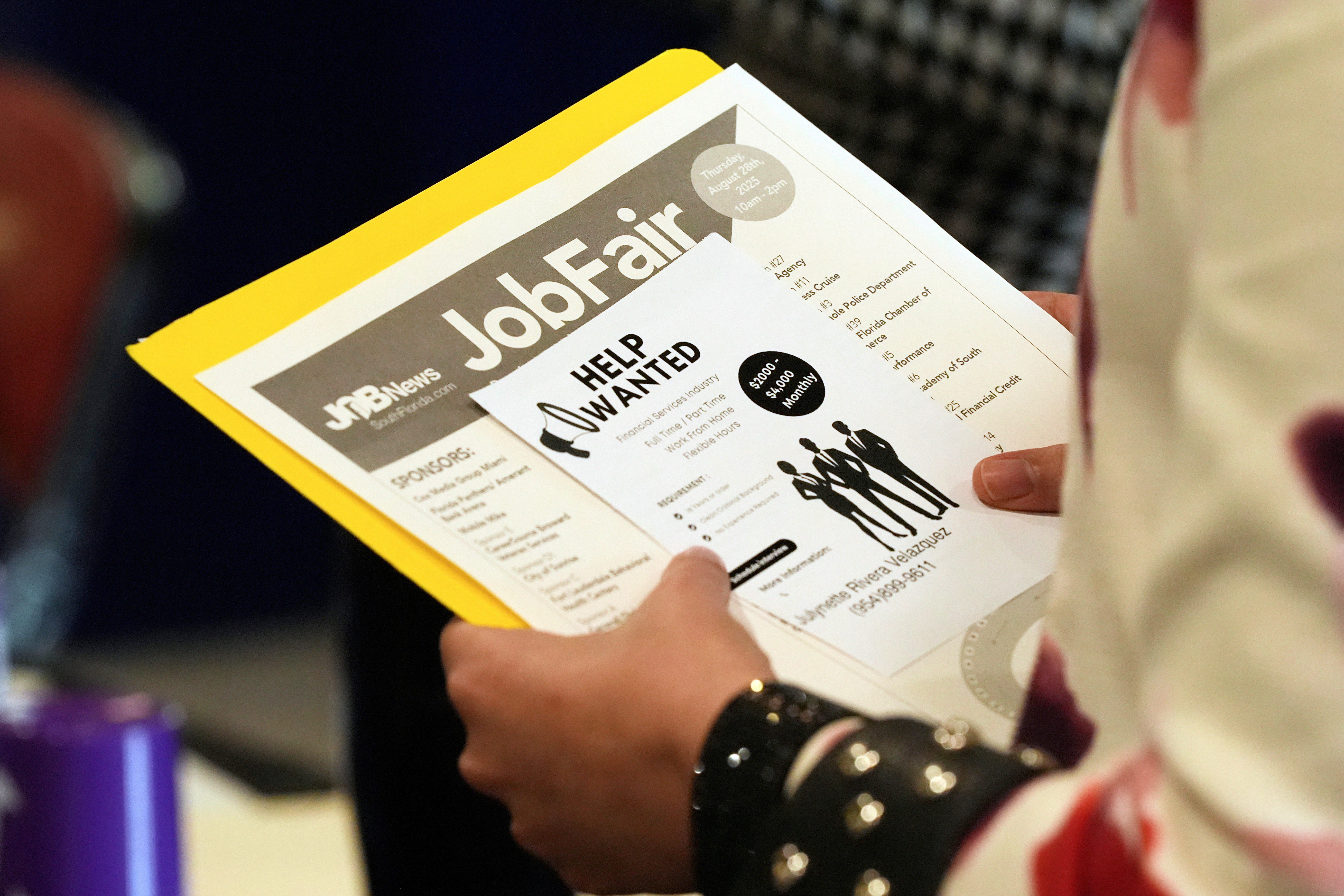
    A prolonged job search doesn’t just sap job seekers of time, money and energy — for many, the hunt takes a devastating toll on their mental health.

    Although unemployment rates in the United States have been historically low, the Bureau of Labor Statistics reports that more than a quarter of jobless people qualify as “long-term unemployed,” meaning they have been hunting for 27 weeks or more.

    And unfortunately for many out-of-work Americans, that probably isn’t changing any time soon. For every open role in 2026 there are twice as many applicants as there would be for similar roles in 2022, according to a recent study from LinkedIn Research. All of this is contributing to an overwhelming sense of discouragement among job seekers — and many of them are struggling to hold on to hope.

    Contemplating the ‘black hole’

    Mythili Sampathkumar, a 44-year-old writing and communications professional, has spent months polishing her résumé, filling out forms, and preparing cover letters. But she said she hasn’t been landing the sort of interviews that might lead to a full-time job.

    “You’re just talking to a black hole,” she said. “You feel like you’re floating in space, untethered from the spacecraft.”

    In the current job market, the problem often doesn’t have anything to do with the merits of a particular applicant, said Washington-based career counselor Amanda Langer. But still, every rejection or nonanswer can be taken as a personal referendum on your skills and worth, she said.

    “A prolonged job search isn’t simply a logistical challenge,” she said. “It erodes a person’s confidence over time and their sense of agency, along with their financial security, obviously.”

    Studies show unemployment is linked to the development of mental disorders, including anxiety and depression. Long-term job seekers describe heightened stress and exhaustion, which can make the everyday work of a job hunt feel even more burdensome, said Mindy Shoss, professor of industrial and organizational psychology at the University of Central Florida.

    “Ghost job” postings, AI interviewers, and a lack of in-person connection do little to help. So much of a person’s sense of self comes from their profession, their work, and how they spend their days, Shoss said. Watching résumés and cover letters disappear into a hiring portal does little to replenish that same well.

    Getting off the screen

    Because long-term joblessness can exacerbate underlying mental health conditions and even lead to some people developing serious problems, support from mental health professionals is key, and sometimes required.

    A peer group of other jobseekers can also help normalize the difficulty of a long-term job hunt and restore some optimism, Langer said. “Sometimes having that feedback from others helps people realize and have those ‘aha!’ moments of ‘OK, I look at this person and this person is super great, really skilled and really qualified, but they’re having a hard time too.’”

    Sampathkumar started working with a career coach, which she said has been hugely helpful. She also launched a personal newsletter and has been limiting the time she spends on LinkedIn and other social media.

    “There is no one to actually be angry at, right?” she said. “It’s a weird frustration. Whatever is happening is happening.”

  • Vineland AI data center hit with a $1 million fine

    Vineland AI data center hit with a $1 million fine

    New Jersey has fined the developers of a data center in Vineland more than $1 million for violating clean-air laws.

    State officials say DataOne, a French company that is building the Cumberland County facility, installed and operated 62 large natural-gas power generators without the required DEP permits.

    “This enforcement action — by far the largest ever taken against a data center in New Jersey and possibly one of the largest such actions in the nation — sends a clear message that these facilities will not be constructed or operated with impunity in this state,” New Jersey DEP Commissioner Ed Potosnak said in a statement.

    During a site inspection July 29, state DEP officials saw the generators, which had not been there during a December visit, according to the enforcement document. Operating such machines — which emit carbon dioxide, nitrogen oxides, carbon monoxide, and other pollutants — without the required permits violates the New Jersey Air Pollution Control Act.

    The state’s announcement comes weeks after an investigation by Floodlight and the Guardian, in which the news outlets used thermal drone footage to show the Vineland data center was operating at least 45 of its generators without permits.

    DataOne spokesperson Naomi Race said company executives “disagree with the temporary generator determination” but will apply for the needed permits. Race did not respond when asked whether the company planned to pay the fine.

    DataOne may request a hearing on the matter within 20 calendar days, according to the state’s enforcement document.

    The Vineland data center is shown during an earlier stage of construction. It sits on a former industrial park.Courtesy of DataOne

    As for the facility’s permanent power source, the company is “transitioning to low-emission, quiet fuel cells,” for which they “have the necessary approvals in place,” according to Race. Fuel cells generate energy through an electrochemical reaction rather than combustion, pistons, or rotating machinery.

    The 2.4 million-square-foot complex is set to be South Jersey’s first hyperscale AI data center. While DataOne is the owner, operator, and builder, the Amsterdam-based Nebius Group will operate the center’s internal equipment, which will fuel Microsoft’s AI tools.

    Data centers handle the cloud-storage and computing needs of the companies behind increasingly sophisticated AI tools.

    The Vineland facility is on South Lincoln Avenue, off State Route 55, on the site of a former industrial park. The property was sold to DataOne in a private transaction, the details of which Charles-Antoine Beyney, DataOne’s founder and chief executive officer, previously declined to disclose.

    He also has not disclosed a price, saying only that the project would be privately funded. Beyney said he turned down a nearly $6.2 million loan from the city due to community pushback.

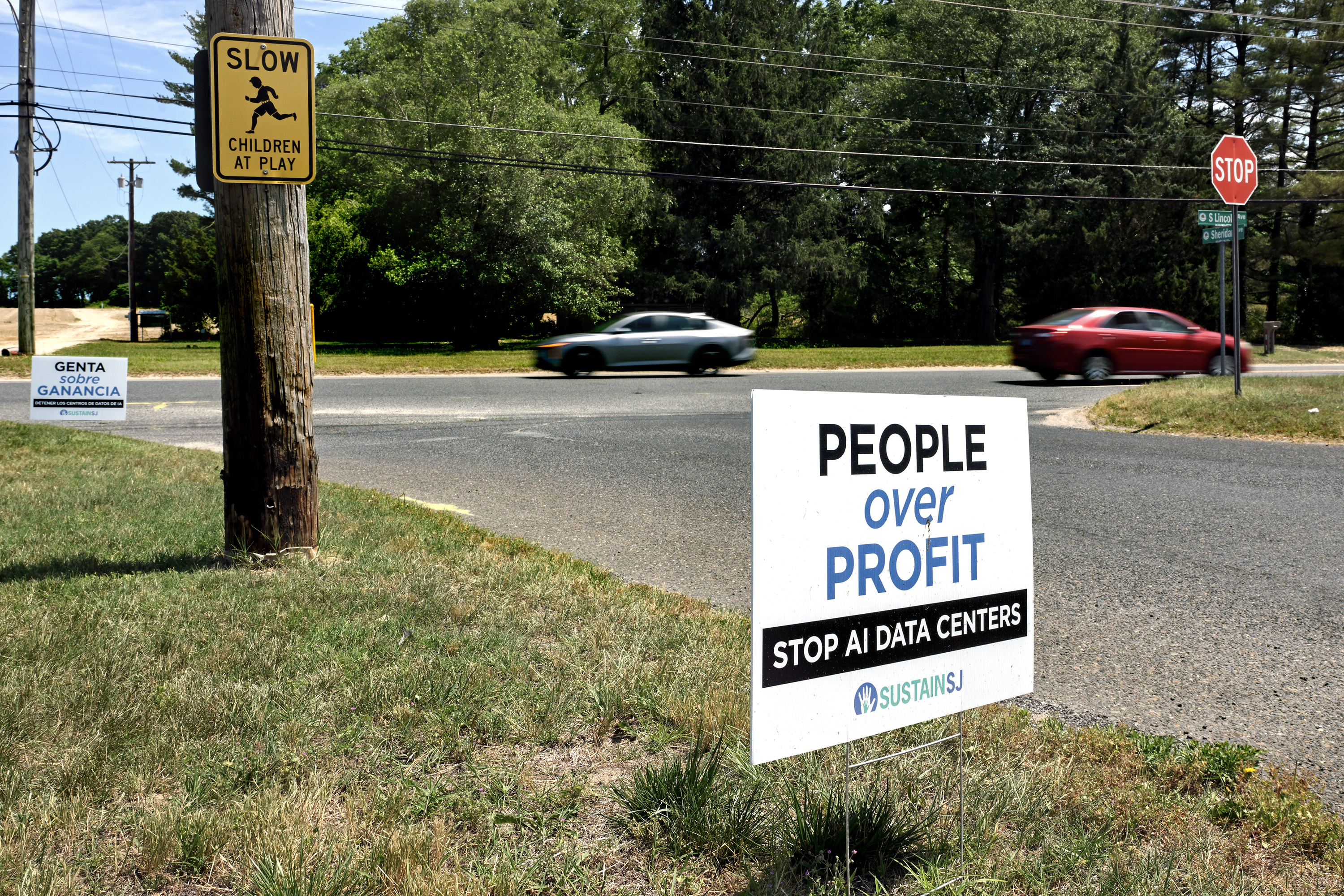
    Some Vineland residents have voiced concerns about the environmental, financial, and quality-of-life impacts of having a data center in their neighborhood. Opponents also took issue with the fact that DataOne did not seek their input until the facility was already under construction.

    Some Vineland residents have put up signs like this one opposing the AI data center under construction nearby. Tom Gralish / Staff Photographer

    At a contentious town hall in January, Beyney tried to assuage these concerns, telling residents they had nothing to worry about because his center would use “breakthrough” technology.

    “Most of the data centers that are being built today suck, big time,” Beyney said at the meeting. “No freaking way am I am going to do what the entire industry is doing … just killing our communities and killing our lungs to make money.”

    The Vineland facility has been under construction for more than a year. In January, DataOne executives said they expected the project to be complete by November.

    Amid the global boom in data center demand, several hyperscale facilities have been proposed in the Philadelphia region, from King of Prussia to Limerick. But few have been approved and begun construction.

    The Vineland site is one of them. Once fully operational, it could be the region’s first hyperscale AI data center.

    The only other local facility nearing completion is Amazon’s 2 million-square-foot data center campus in Falls Township, Bucks County. As of last month, Amazon was awaiting a decision from the Pennsylvania DEP on permit applications for hundreds of proposed backup natural gas generators.

    Pennsylvania Gov. Josh Shapiro shifted his stance on data centers last month and instituted new restrictions, which included the removal of Amazon from the state’s fast-track permitting process.

    Shapiro joined New Jersey Gov. Mikie Sherrill, who in May unveiled a four-prong plan to “hold data centers accountable.” She also has signed legislation requiring data centers to provide their own clean energy and report their energy and water use to the state twice a year.

    Neither governor has issued a statewide moratorium, a move for which some data-center opponents are advocating.

    In recent weeks, the debate over AI has reached a fever pitch, with executives at some of the country’s largest AI companies urging a slowdown amid fears that the technology may eventually destroy humanity.

  • Jefferson CEO will chair Philadelphia region’s chamber of commerce

    Jefferson CEO will chair Philadelphia region’s chamber of commerce

    The CEO of Jefferson Health and Thomas Jefferson University will be the local chamber of commerce’s next chair, and he’s focused on a feeling of safety in the city.

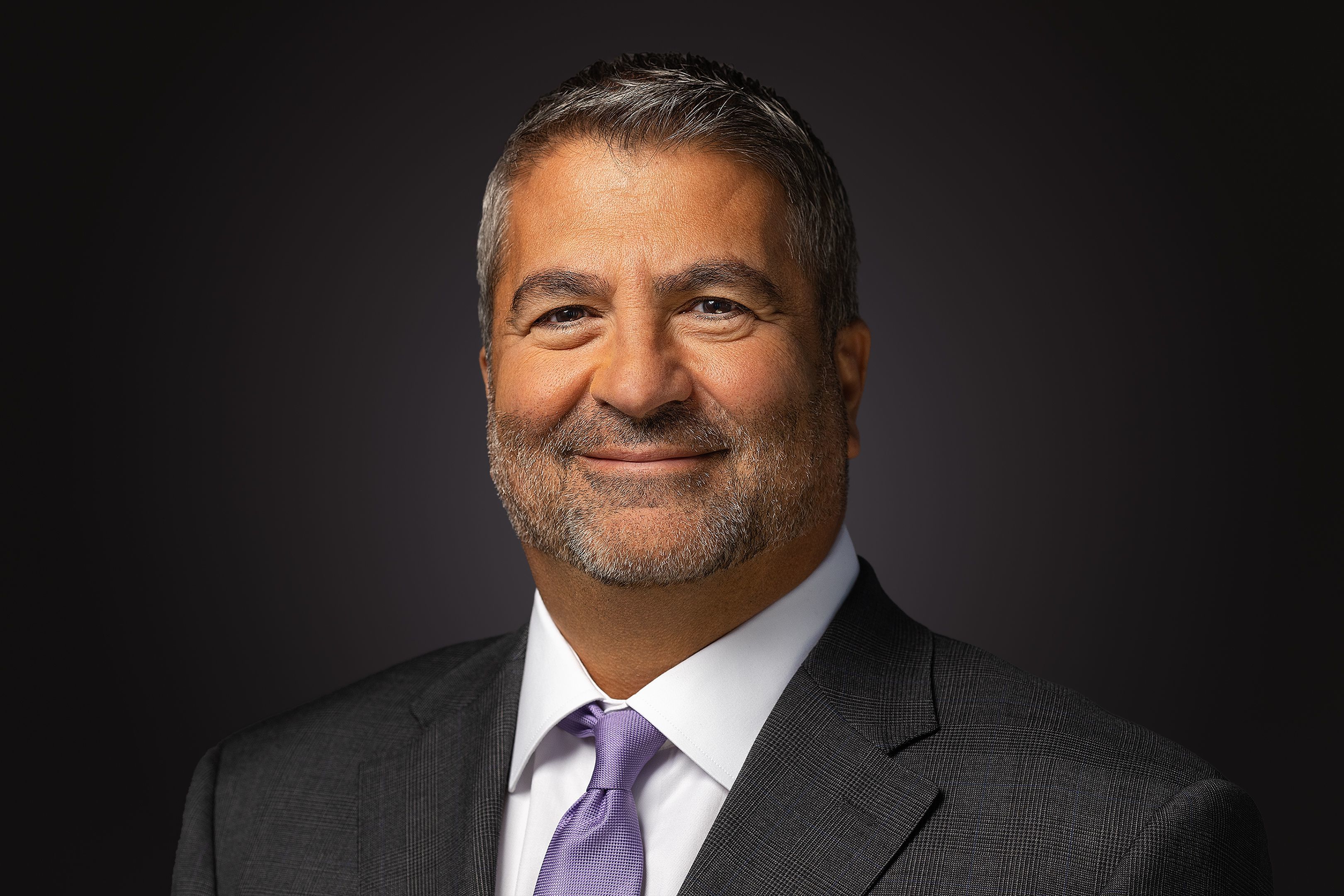
    Joseph G. Cacchione, Jefferson’s CEO since 2022, will chair the Chamber of Commerce for Greater Philadelphia’s board of directors beginning Oct. 15, the chamber announced Tuesday.

    The new role comes just a year after Cacchione said Jefferson could move its headquarters out of the city. But now he says that’s no longer on the table, crediting Mayor Cherelle L. Parker and the city’s police chief for making “great strides in improving safety.”

    “We’re here. We’re Jefferson. We’ve been in Center City for 200 years. We’re not moving,” he said in an interview Tuesday.

    Joseph G. Cacchione will begin his role as board chair at the chamber on Oct. 15.Thomas Jefferson University

    Cacchione says some of the region’s remaining challenges can be tackled through partnerships between business and government.

    “For me it’s about never standing back and watching but to actually roll your sleeves up and get in there and mix it up,” he said.

    Jefferson teamed up with the city police department and SEPTA transit police in one such partnership in June, launching a public safety hub in partnership in Market East.

    “East Market Street particularly has had challenges over the years,” he said Tuesday. “We saw an opportunity to have more visible police presence.”

    But recently, he said, the area has felt safer and more vibrant. He pointed to the pop-up businesses that opened along that corridor this year, as well as the pop-up plaza outside Reading Terminal Market.

    “We continue to need to work on that quality of life,” he said. “It’s not just East Market Street. It’s the entire city that we want to be safer.”

    More good jobs for the region

    Cacchione’s priorities also include supporting small and medium-sized businesses, continuing regional job growth, and improving access to healthcare.

    The chamber’s board of directors includes CEOs, presidents, and other leaders of area institutions such as CHOP, Aramark, Temple University, Comcast, Girl Scouts of Eastern Pennsylvania, and the Philadelphia Eagles.

    Its recent efforts include a new regional partnership to create good jobs in business software, biomedical engineering, and production, and specialized manufacturing, where business leaders see potential to grow. Jefferson Health and Thomas Jefferson University are early partners in the group.

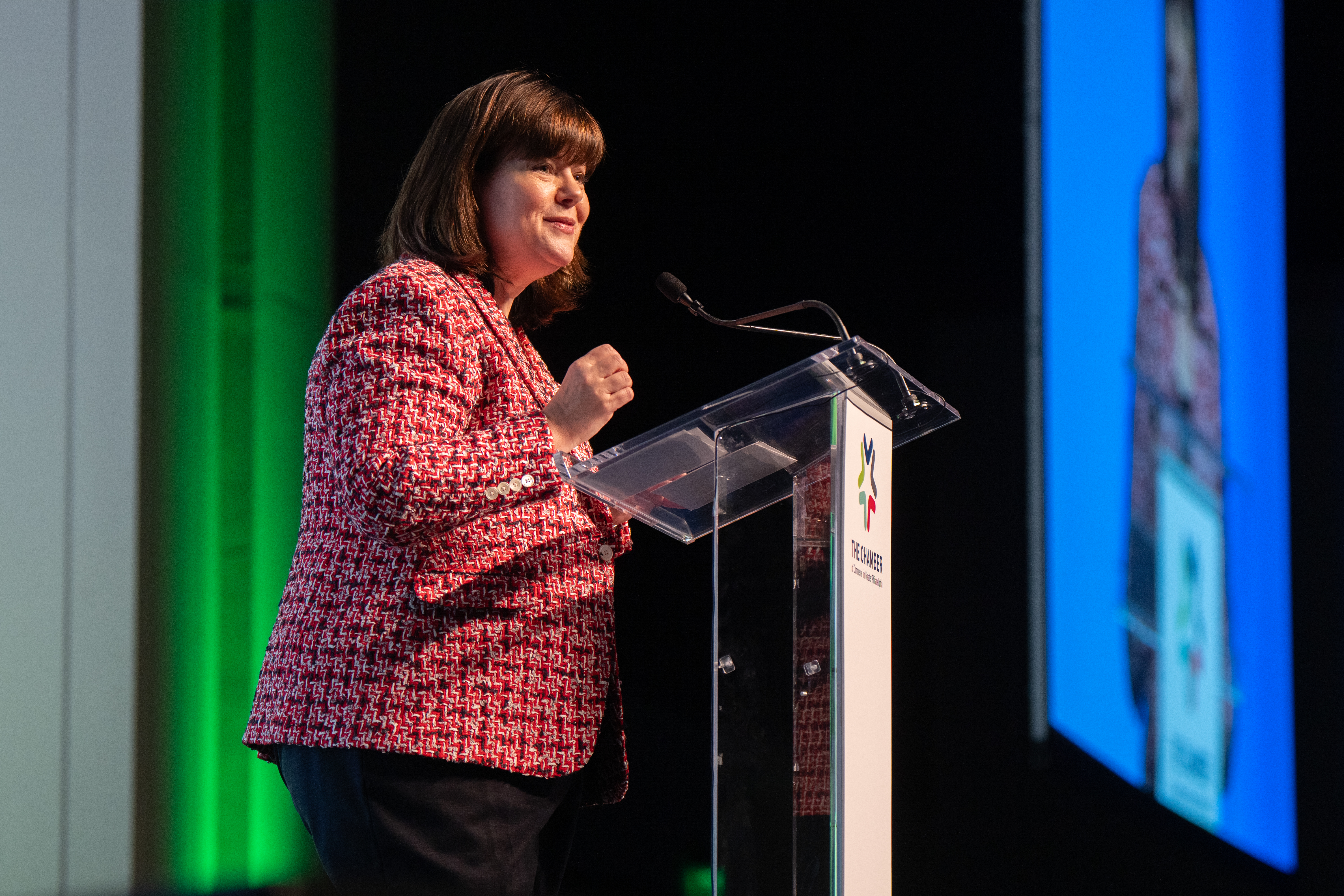
    “We are at an inflection point for our region, and we have to make decisions to lean in so that we can continue to grow,” Chamber CEO Chellie Cameron said Tuesday. “I’m talking about attracting new businesses and growing existing businesses, creating jobs — not just any job, but opportunity jobs and pathways to those jobs.”

    Cacchione, as the leader of a very large employer in Center City, “gets it,” Cameron said, adding that he’s not just invested in the city, but the region as a whole.

    Chellie Cameron, CEO of the Chamber of Commerce for Greater Philadelphia, at a chamber event in 2025.Jessica Griffin / Staff Photographer

    Cacchione added that AI will “change how we do business,” calling it an “enabler of business.” The chamber could help train workforces that don’t have experience with AI, he said.

    Jefferson employees have been adopting AI tools to improve efficiency. Nurses use it for note-taking, he said. By 2028, Jefferson aims to save over 10 million hours of clinician’s time by using AI — creating more time for “face-to-face” interaction with patients, Cacchione said.

    The hoped-for result, he said: “Our doctors are spending more time with patients and less time in front of a computer.”

  • Look up 100 top-paid employees at nonprofit health systems in the Philadelphia region in 2024

    Look up 100 top-paid employees at nonprofit health systems in the Philadelphia region in 2024

    Pay and benefits typically account for more than half the total costs in hospital systems at a time when healthcare costs are rising sharply in the Philadelphia region and nationally.

    Local nonprofit health systems reported compensation ranging from $1.2 million to $3.7 million in 2024 for the 100 highest-paid employees listed in their most recent federal nonprofit tax returns. The ranking excludes system CEOs.

    Meanwhile, employers are expecting insurance increases approaching 10% for the coming year, according to several national surveys by benefits consultants. Experts cite increased use of healthcare services, widespread use of expensive specialty drugs, and rising hospital prices as key factors leading to overall rising benefit costs.

    Clinicians accounted for 60 spots in The Inquirer’s top 100 ranking, which is based on compensation reported in dozens of 990 tax forms from Philadelphia-area hospitals, affiliated physician groups, and other related entities.

    Highly specialized neurosurgeons accounted for the highest number of top-paid clinicians, followed by cardiac and cardiothoracic surgeons and orthopedic surgeons.

    Chief financial officers and chief operating officers were well represented in the management ranks.

    The region’s largest health system also claimed its highest-paid non-CEO, Jefferson Health president and physician Baligh R. Yehia. His $3.7 million in compensation also topped that of all but two CEOs, as disclosed in a previous Inquirer analysis.

    Thomas Jefferson University, which is Jefferson Health’s parent entity, had 30 executives and physicians in The Inquirer’s top 100. The Jefferson group includes four executives who left during or before 2024, but not salaries reported through the Lehigh Valley Health Network, which Jefferson acquired in August of that year.

    Children’s Hospital of Philadelphia had the second-largest number of employees in the top 100, with 18, including surgeons and numerous top executives, such as CFO, general counsel, and head of human resources.

    Virtua was third, with nine employees, mainly surgeons.

    Across the region, 176 nonprofit health system employees received at least $1 million in total compensation in 2024. That amounts to one in five employees in The Inquirer’s database of more than 800 people.

    IRS rules require nonprofits to report compensation for officers, highest-paid employees, and employees with a certain level of responsibility.

    (function(){function e(){window.addEventListener(`message`,function(e){if(e.data[`datawrapper-height`]!==void 0){var t=document.querySelectorAll(`iframe`);for(var n in e.data[`datawrapper-height`])for(var r=0,i;i=t[r];r++)if(i.contentWindow===e.source){var a=e.data[`datawrapper-height`][n]+`px`;i.style.height=a}}})}e()})();

  • States settle lawsuit over Paramount-Warner merger, clearing key hurdle for $81 billion deal

    States settle lawsuit over Paramount-Warner merger, clearing key hurdle for $81 billion deal

    CHICAGO — California Attorney General Rob Bonta announced a settlement with Paramount in a lawsuit his state led challenging the company’s acquisition of Warner Bros. Discovery on Monday, effectively paving the way for the mega merger to move forward, with some new commitments.

    The $81 billion blockbuster deal will bring together two of Hollywood’s oldest studios, key TV networks like CBS and CNN, and streaming platforms HBO Max and Paramount+, as well as decades of libraries with titles ranging from Harry Potter to Top Gun.

    But terms of Monday’s agreement include what Bonta called “court enforceable” requirements for Skydance-owned Paramount to increase domestic production and establish monitoring of editorial independence of the company’s news operations.

    The settlement still needs final court approval. Bonta maintained that Monday’s agreement “is not a vote of support for this merger” — but that he was always willing to come to the table and “find a strong solution that protects competition and consumers.”

    The coalition of states — including entertainment heavyweights like California and New York — sued to block the merger back in July, alleging a Paramount-Warner combo would “extinguish competition” and lead to fewer choices for consumers, particularly movie theatergoers and cable customers across the U.S.

    Accompanied by a complaint also filed by the Writers Guild of America, the challenge was headed toward a full antitrust trial set to kick off in March.

    Paramount said the allegations were meritless, but previously agreed to delay its transaction well into next year so the case could make its way through court. It then quickly called for a settlement — arguing that it had satisfied all regulatory clearances worldwide (including from the Trump administration’s Justice Department ) and the states’ challenge was its “final obstacle.”

    As reports of the states reaching a settlement with Paramount emerged Monday, critics decried the deal — while warning of what further consolidation could mean in an industry already controlled by just a few major players.

    “Today, billionaires have yet again bribed, censored, and bullied their way to the top,” Alvaro Bedoya, senior adviser at the American Economic Liberties Project and former FTC commissioner, said in a statement earlier Monday. “Layoffs will follow. People from L.A. to Atlanta will lose their jobs, small businesses will lose their contracts, your cable bill and movie ticket will be even more expensive.”

  • A 1920s Glenside bowling alley gets a new lease on life as a bustling micro-mall

    A 1920s Glenside bowling alley gets a new lease on life as a bustling micro-mall

    A sprawling brick Glenside building that last held an optometrist’s office is returning to its roots as developer Kevin Burke looks to build community hubs around his native Glenside.

    The building at 2256 Mt. Carmel Ave. was once home to a bowling alley and billiards hall. The alley closed in 1971, and a family of eye specialists ran a glasses store there for decades.

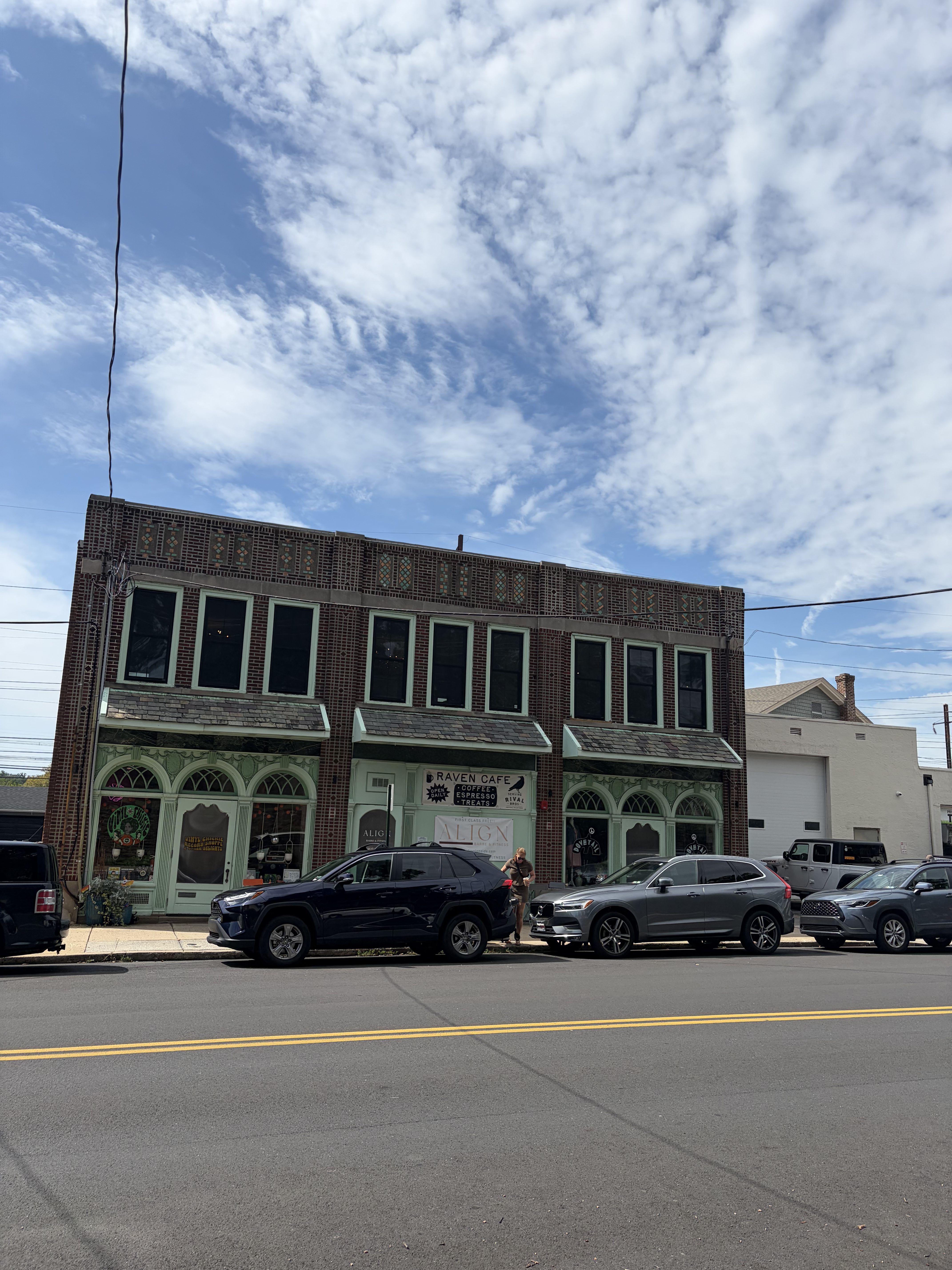
    Burke bought the 1920s structure, dubbed Glenside Lanes, in 2024. The micro-mall, which officially opened in May 2025, is now home to a barre and yoga studio, a coffee shop, a record store, and a gift shop, with plans for a music venue in the back.

    Like the newly bustling Yorkway Place in Jenkintown, Glenside Lanes balances traditional retail with experiential businesses. The Montgomery County venues are part of a national trend, as investors look to fill commercial space hollowed out by online shopping and post-pandemic consumer shifts.

    “I think it’s the way to keep a brick-and-mortar going,” said Rhiannon Punzo, a Glenside Lanes tenant. “It’s like your community mall where you’re coming to one building that you can walk to, that isn’t corporate.”

    Burke is preserving most of the bowling lane flooring — including lane guides and the alternating wooden plank style demarcating the gutters — in the back of the building, which will serve as a concert and event space as early as November. He plans to develop a similar multiuse site in Wyndmoor.

    The lanes from a former bowling alley are still visible in a section of Glenside Lanes under construction on Sept. 3, 2026.Jess Rohan

    But to make Glenside Lanes a success, Burke needed the right business partners.

    First, he found Punzo, who runs the Dovetail shop of local artist-made gifts, and cofounded the art events company CO Lab.

    Punzo connected with longtime music photographer Lisa Schaffer, who had planned to open a record store in about five years. Within months, Schaffer was opening Vinyl Chickie at Glenside Lanes.

    “I want you to speed up your retirement plan,” Punzo recalls telling Schaffer.

    Former professional ballet dancer Alyson Pray Ward used to park outside the building and walk down the street to her barre and yoga business, Align Studio.

    “I would always look up to the second floor and think, ‘That would make a gorgeous ballet studio,’” Pray Ward said. She moved Align into Glenside Lanes last year.

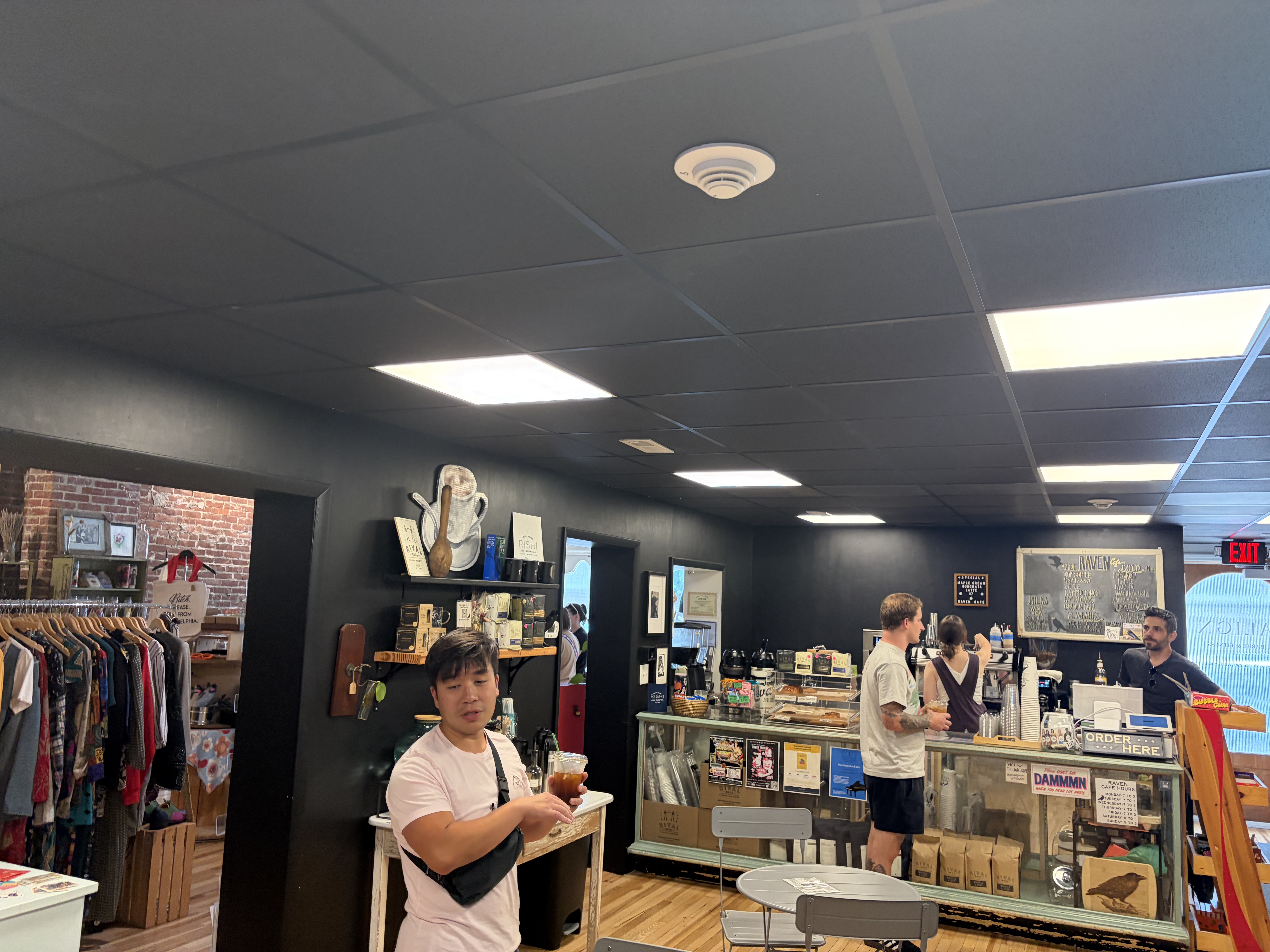
    This summer, Raven Cafe began serving Rival Bros. Coffee on the ground floor between Punzo and Schaffer’s stores. The stores flow into one another, making it easier to linger, owners and workers said: Yogis might pick up a teacher gift downstairs at the Dovetail after class, and music lovers grab coffee at Raven before browsing vinyl.

    Raven Cafe opens into the Dovetail gift shop at Glenside Lanes. The stores flow into one another, making it easier for customers to linger, owners and workers said.Jess Rohan

    “People can honestly show up and see familiar faces,” said Christine Collins, who teaches at Align. “I’m meeting adult friends there.”

    The clutch of complementary businesses is exactly what Burke had hoped for.

    The goal “was definitely to bring in different businesses that would help the community,” Burke said. “I always thought the bowling alley would be a perfect spot for that, and now we’re almost there.”

    The final business partner Glenside Lanes needed, Punzo said, was Glenside itself.

    “The community said, ‘We want this, if you build more we’ll come,’” Punzo said. “They could’ve been just talking, but everyone who said it showed up.”

    Correction: This story has been updated to reflect where developer Kevin Burke may plan a future micro-mall.

    This suburban content is produced with support from the Leslie Miller and Richard Worley Foundation and The Lenfest Institute for Journalism. Editorial content is created independently of the project donors. Gifts to support The Inquirer’s high-impact journalism can be made at inquirer.com/donate. A list of Lenfest Institute donors can be found at lenfestinstitute.org/supporters.

  • After decades of fund growth, Vanguard pivots

    After decades of fund growth, Vanguard pivots

    “Trees don’t grow to the sky,” the late Vanguard Group founder John C. Bogle Jr. was fond of warning — meaning that it’s a mistake to think happy days and profitable trends will go on forever.

    Malvern-based Vanguard itself seemed to defy Bogle’s warning. Led by Vanguard’s index funds simulating the S&P 500 and other broad market benchmarks, founded 50 years ago on Aug. 31, Vanguard grew relentlessly, even accelerating after the dot-com bust and in the Great Recession, when rival Fidelity and other investment firms shrank and cut staff.

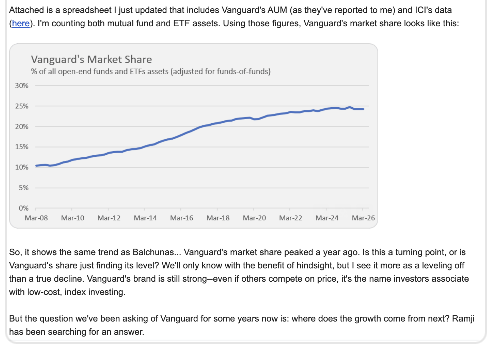
    But data posted by Morningstar Inc. and confirmed by other investment trackers show Vanguard’s share of the U.S. mutual fund and exchange-traded industry, a business that now totals $40 trillion, has plateaued in recent years and actually shrank to 27% from 28% over the past year.

    Vanguard Group’s market share of U.S. mutual funds and exchange-traded funds (EPS), as measured by Jeff DeMaso, publisher of the Independent Vanguard Adviser, using data collected from the Investment Company Institute and other industry sources. The text also references similar findings by Eric Balchunas, a Bloomberg investments analyst and author of a book on Vanguard’s founder, “The Bogle Effect.”Jeff DeMaso

    “SHOCK: Vanguard’s market share of US fund assets has begun to DECLINE after rising for 50 years,” Eric Balchunas, a Bloomberg LP fund analyst and author of The Bogle Effect, posted earlier this month on social media.

    It’s not that Vanguard took its eye off the ball, Balchunas said in an interview. Like other fund groups, Vanguard has shifted some retirement-plan assets — it won’t say how much — into other accounts that don’t show up in the publicly traded fund listings.

    But the shift marks the end of an era, he said, not so much a loss for Vanguard but “a dream realized” as the legacy of founder Bogle, who died in 2019. Fidelity, BlackRock, Schwab, and other Vanguard rivals “lowered fees and increased value” to shareholders because Vanguard’s strategy forced them to compete with low prices and simple products.

    “Vanguard’s market share peaked a year ago,” said Jeff Del Maso, publisher of the Independent Adviser for Vanguard Funds, after reviewing industry data. “I see it more of a leveling off than a true decline. But where does the growth come from next?”

    More Vanguard effects?

    Salim Ramji, a former BlackRock fund executive tapped by Vanguard’s board in 2024 as the company’s first “outside” CEO, has outlined in public interviews some other areas where Vanguard hopes to transfer its energy. He declined to be interviewed for this article.

    Under Ramji, Vanguard has:

    • Added dozens of new bond funds and other debt investments, which tend to attract investors when interest rates go higher, economic expansion slows, and stock prices slow.
    • Emphasized a new generation of cash savings accounts, years after Vanguard did away with its old bank-style checking accounts. Under Ramji, Vanguard has expanded promotion of its FDIC-insured Vanguard Cash Plus Account, with yields comparable to bank certificates of deposit in an effort to keep Vanguard customers from moving short-term money to banks and outside firms and to lure in new investors.
    • Added investor advice. Ramji’s predecessors built advisory services since the 1990s with phone-based, digital, and hybrid systems. Seeing a big still-untapped market, Ramji in August agreed to pay $4.6 billion for Altruist, whose founder, self-described Bogle disciple Jason Wenk, developed Hazel, an “AI-forward” financial tech and custody platform popular with independent investment advisers who sell Vanguard funds. Wenk will run the business, separate from Vanguard’s Digital Advisor and Personal Advisor units, when the deal closes.
    • Partnered with Wellington Management and Blackstone to launch private investment funds, starting in July. The WVB funds expect to report their holdings after Sept. 30. WVB All Markets and a smaller WVB Blackstone All Privates fund are being sold for now through Bank of America and its Merrill Lynch affiliates.

    But Ramji has stopped short of following other investment houses into predictions markets and cryptocurrency investments.

    “We believe investments deliver cash flows or have prospects of cash flows,” which these speculative investments don’t, Ramji said last month in an interview with Peter Mallouk of $800 billion asset, Kansas-based financial adviser Creative Planning LLC. Ramji compared such products to “a slot machine where the house always wins. That does harm to the individual investor.”

    Avoiding activism

    Under Ramji, Vanguard has promised not to use its extra clout — its funds own around 8% of most U.S. stocks — to pressure companies to change policies.

    Vanguard has backed off “environmental, social and governance” commitments. In March‚ Vanguard agreed to pay $30 million to Texas and other Republican-run states to settle litigation alleging that Vanguard violated antitrust laws when it joined environmentally minded groups that sought to reduce U.S. reliance on coal and other carbon energy sources.

    The settlement with the states helped lower Vanguard’s profile in the fraught world of political investing. Ramji went further than other firms. BlackRock and others sued by the states have so far declined to settle similar lawsuits.

    Analyst Balchunas is bullish that Ramji has cleared the way to reach more customers, extending “the Vanguard effect,“ even if its fund business has plateaued for a time.

    “The Vanguard effect is bigger than Vanguard now,” Balchunas said.

    This story has been updated to delete an incorrect figure for the WVB All Markets Fund.

  • More U.S. households are struggling financially, analysis finds

    More U.S. households are struggling financially, analysis finds

    A growing number of American households became financially strapped over the past year and had a harder time keeping their heads above water, a long-running analysis finds.

    The share of households considered vulnerable — those that have trouble saving, paying bills, repaying debts, and planning for future needs — rose to 17% from 15% last year, according to findings from the Financial Health Network, a nonprofit focused on financial stability.

    And more households are reporting high levels of financial stress — 16%, up from 13% last year.

    The findings come as families continue to face rising costs for basics like groceries and gas and for bigger-ticket purchases like homes and cars as well as a pullback in federal assistance for healthcare and food purchases.

    The increase this year reversed a small improvement measured in 2025 and matched the highest level recorded since the network began publishing its annual report, Financial Health Pulse, eight years ago, researchers said.

    “Households are struggling,” said Taylor Nelms, the network’s vice president of research and insights. The 2026 report, which will be publicly available Tuesday, is based on a survey of more than 7,600 households conducted this spring. The survey uses a nationally representative sample drawn from the Understanding America Study, a probability-based panel administered by the University of Southern California, to estimate findings about all U.S. households. The survey has a margin of error of plus or minus 1.1%.

    The share of households considered financially healthy held steady, at just under a third, the report said. That level has remained flat for five years. The network defines healthy households as those able to meet current financial needs, stay on track to meet future needs, and recover from unexpected expenses or a drop in income.

    Households may shift over time among the study’s different tiers — vulnerable, coping, and healthy. Those considered to be coping are successfully managing at least some aspects of their finances.

    About 7.8 million households that were seen as coping in the spring of 2025 found themselves vulnerable this year, the report found. At the same time, about 6 million ascended from vulnerable to coping. The result was that the vulnerable segment grew by about 1.8 million households.

    Low-income households were hit hard, researchers found. The share of those families paying all their bills on time, for instance, fell to 49% from 54%.

    What’s pressuring Americans’ finances?

    A number of challenges, including high costs for food, housing, and utilities, and less generous student loan and healthcare policies, are buffeting Americans, the report found. Financial vulnerability among student loan borrowers, for instance, rose to 27% from 21%, as the government began charging interest on loans that had been in a multiyear pause during the COVID-19 pandemic.

    The share of households reporting unmanageable debt rose to 31% — the highest level in eight years — from 29% last year, while the share saying they paid all their bills on time fell by 3 percentage points, to 68%.

    Changes in government programs have also pressured family finances, including the end of subsidies that had lowered the cost of Affordable Care Act health plans and new restrictions on SNAP food benefits, the report noted.

    Were there any bright spots in household finances?

    Household emergency savings held roughly steady this year, the analysis found, possibly because of larger tax refunds around the time the survey was conducted. (The bigger refunds followed a basket of tax breaks enacted as part of the budget law.)

    But with less than half of households reporting that they are spending less than their income, it is unclear how long that cushion can last, Nelms said.

    Mingli Zhong, a senior research associate in the family and financial well-being division at the think tank Urban Institute, said it was not easy to save when costs were high, but even $50 a month could add up over time. Saving the equivalent of one month of income is often an adequate buffer for many families, she said. “Emergency savings is about preventing people from falling into poverty in the first place.”

    Where can I get help building an emergency fund?

    More employers are offering options to help workers build emergency savings, either as part of traditional retirement offerings or through separate programs managed by outside providers like Sunny Day Fund.

    Sid Pailla, CEO of Sunny Day Fund, said the program encouraged saving for unexpected bills but also for longer-term goals like starting a family, buying a car, or taking a vacation. “Otherwise,” he said, “it comes off as a chore.”

    The program’s suggested target of $2,000 may be a “stretch goal,” Pailla said, yet it is “one they feel they can get to.” Employers typically offer incentives, like a $25 or $50 sign-up bonus. Funds are deducted from workers’ paychecks and held at a federally insured bank currently paying just over 3% interest, he said. Withdrawals average $376.

    Abner Rivera, 61, a production manager in Lakeland, Fla., for TRG Packaging & Display Solutions, said he had no emergency savings account, whether because money was tight or from “procrastination,” until his employer partnered with Sunny Day. He began saving $25 a week a year ago. “Before I knew it, I had $500,” he said, adding that he was able to use the funds for a $400 car repair. That encouraged him to increase his savings to $70 a week, and he is now nearing his $2,000 goal. Next, he aims to save even more, for a trip to Spain. He said he liked that Sunny Day sends him a weekly email updating his progress. “There’s a structure to it,” he said, which makes it easier to save.

    What if I haven’t built up any reserves?

    Some employers offer grants for workers facing a crisis, often through third-party coordinators. Rachel Schneider, CEO of Canary, a company that manages workplace hardship grants for employers, said workers could request relief for a variety of setbacks, like a natural disaster, an eviction notice or a utility shut-off order, a sudden medical event, or a car accident leaving the employee without transportation. “People don’t have to put money in,” she said, “and they don’t have to pay it back.”

    Companies set the rules for their programs, which Canary administers. Employers can fund grants themselves or raise donations from their workforce. Canary reviews applications submitted via an online portal so workers do not have to be embarrassed by approaching their manager.

    “If you just got an eviction notice,” she said, “you don’t want to tell your boss that.”

    Ari Medoff, CEO of home care services provider Arosa and a Canary board member and investor, said his company’s employees could request a total of $1,500 in grants over three years. Most of the money comes from Arosa’s workers who contribute a few dollars from each paycheck or at fundraising events. “I think, at its core, a healthy fund gets workers to participate,” he said. “It says, ‘Your peers are here for you.’”

    This article originally appeared in the New York Times.

  • Delta Air Lines is adding a new daily flight from Philadelphia to Los Angeles

    Delta Air Lines is adding a new daily flight from Philadelphia to Los Angeles

    Delta Air Lines will begin operating a new daily flight between Philadelphia and Los Angeles next summer.

    The airline will debut the nonstop route between Philadelphia International Airport (PHL) and Los Angeles International Airport (LAX) on June 7, officials said in an announcement last week. Tickets are already available for purchase.

    The addition comes as Delta said it was also adding or increasing flights to LAX from several other destinations. Delta is PHL’s third-largest carrier by passenger volume, having carried nearly 2 million passengers through the airport in 2025. It currently offers nonstop service from PHL to five U.S. cities.

    PHL’s largest carrier, American Airlines, also offers several daily nonstop flights to Los Angeles.

    The airport is in the midst of a nearly $2 billion renovation, having spent significant amounts in recent years on upgrades to bathrooms, landscaping, painting, and more.

    The airport has nonetheless continued to rank poorly in a prominent traveler satisfaction survey: Last week, JD Power said that for the sixth year in a row, PHL received the lowest score among large U.S. airports in its annual passenger satisfaction rating.