Mortgage rates continue to creep higher, compounding an affordability crunch that has squeezed many Americans’ wallets. Now soaring rates are prompting some homebuyers to roll the dice that they will fall in a few years.
The average 30-year, fixed-rate mortgage, the most popular home loan in the United States, rose to 7.28% this week, up from 7.03% last week and the highest since November 2023, mortgage financing giant Freddie Mac said Thursday.
“Mortgage rates jumped to their highest level in almost three years, pushing borrowers to the sidelines,” said Joel Kan, deputy chief economist at the Mortgage Bankers Association, a trade group.
Mortgage rates had fallen below 6% at the end of February but began to inch higher after the United States and Israel attacked Iran on Feb. 28. The war in Iran has driven up energy costs, which in turn has stoked inflation fears. In response, investors have pushed up the yield on the 10-year Treasury note, which on Thursday reached its highest level since 2002.
The 10-year Treasury yield underpins a wide range of consumer and corporate borrowing, including mortgages. With the yield climbing quickly, the jump in mortgage rates this week was the biggest since October 2022.
Adjustable-rate mortgages can be significantly lower than their fixed-rate counterparts, real estate experts say, sometimes as much as a full percentage point, a difference that can potentially save homebuyers thousands of dollars annually. The ARM, as the loan is known, also comes with the risk that rates will continue to climb, hurting owners when the loan resets.
ARMs are an increasingly enticing option among buyers put off by the jump in fixed-rate mortgages, Kan said, adding, “They are looking for more ways to get into that home.”
The association reported a recent uptick in the share of ARM applications, to 10.3% of overall mortgage applications, the highest in a year.
Here’s what you need to know about adjustable-rate mortgages.
How does an adjustable-rate mortgage work?
Fixed-rate mortgages lock in one rate over the lifetime of the loan, usually 30 years. ARMs, on the other hand, offer a low “teaser” rate for a set time, typically five, seven, or 10 years, after which they readjust to the market rate, often annually, for the remainder of the loan. This helps owners keep their monthly payments lower during the introductory period.
Borrowers who use ARMs are betting that mortgage rates will eventually fall, giving them the opportunity to refinance their loan at a lower rate or sell their home before the introductory period ends and the rate begins to fluctuate.
ARMs make up a small portion of the overall mortgage market, which is dominated by fixed-rate products. But now that fixed-rate mortgages have climbed above 7%, interest in ARMs is starting to grow, said Archana Pradhan, the principal economist at Cotality, a provider of housing market data.
The national average rate for an ARM with a five-year introductory rate that resets annually is 6.56%, according to Bankrate.com.
“The wider the gap between ARM rates and the fixed rates, the stronger the incentive to choose an ARM,” Pradhan said.
How safe is an ARM?
ARMs offer savings for borrowers, but they also introduce market volatility.
The loans were popular during the early 2000s housing bubble, peaking at around 36% of overall mortgage applications in 2005, according to data from the Mortgage Bankers Association. After the housing market crashed in 2008, the share of applications for ARMs plunged to about 6%.
Stricter underwriting standards have made ARMs safer for consumers, who are protected by regulatory limits that prevent the variable rate from jumping too high.
Still, they are not for everyone, said Nick Rocco, a mortgage loan officer in the Baltimore area. Borrowers need to have a plan for what to do after the introductory period ends regardless of where mortgage rates are. “There is no crystal ball,” he said.
Who should apply for an ARM?
Nearly 72% of homebuyers who take out an ARM have a chance within five years to refinance it into a 30-year fixed-rate mortgage that is at least 0.5 percentage points lower than their original rate, according to a report from Redfin, an online real estate marketplace.
That can translate into big savings every month for some borrowers, Pradhan said. “It’s more meaningful for higher loans, because they are able to save hundreds of dollars compared to the lower amount of loans,” she said.
Rocco said he recently worked with a couple who used an ARM to finance the purchase of a $750,000 home. The buyers had experience with ARMs, he said, and knew to put 20% down, which lowered their introductory rate.
“They have a little more risk tolerance, and they’re a little bit more comfortable knowing the fact that they can refinance out of that adjustable rate,” he said.
But Pradhan said ARMs made better sense for buyers who intended to sell after the introductory period ended. “You are not intending to live in the house forever,” she said.
“Refinancing may be an exit strategy, but it’s not a guarantee,” she added. “One of the risks of an ARM is the higher payment in the future.”
2026 Genesis GV80 3.5T Prestige AWD vs. 2026 Lincoln Nautilus Hybrid AWD Reserve III: Battle of the big screens.
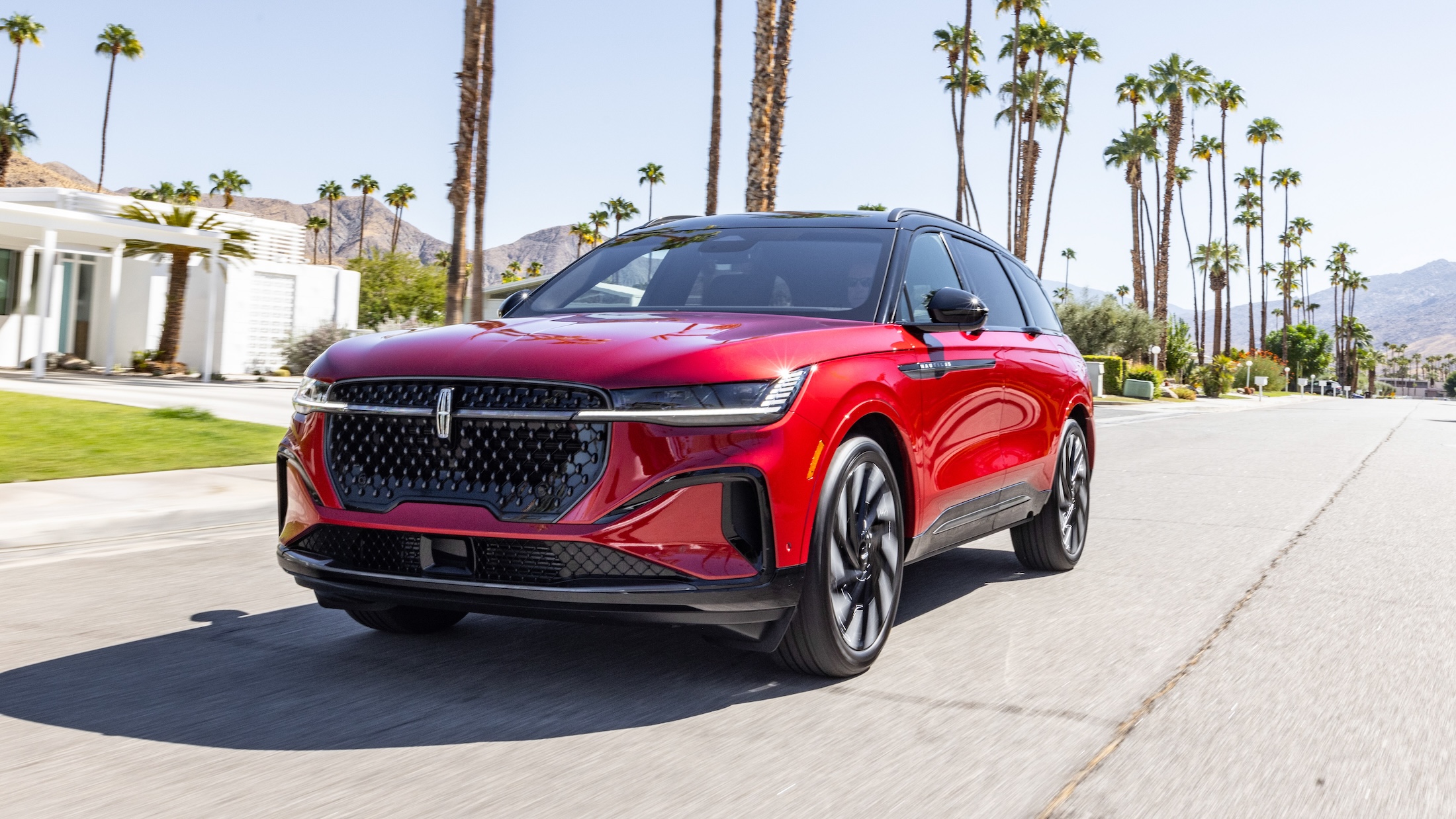
This week: Lincoln Nautilus
Price: $76,380 as tested.
What others are saying: “Highs: Nicest interior in Lincoln’s lineup, cool extra-wide dashboard display, hands-free driving feature is standard. Lows: Acceleration and road manners are mid, real-world highway fuel economy isn’t better than the nonhybrid model, best features reserved for Black Label trim,” says Car and Driver.
What Lincoln is saying: “Experience the SUV named best luxury hybrid of 2026.” (A U.S. News and World Report award.)
Reality: I’m not sure I’ve ever cited U.S. News here, and there’s a reason for that.
What’s new: The Nautilus was last redesigned for the 2024 model year. It gets a new look for 2027 as well. Time to shop for a deal.
Up to speed: The Nautilus tested uses a 2.0-liter engine and hybrid motor and battery that together make 280 horsepower. The vehicle gets to 60 mph in 6.6 seconds, according to Car and Driver, which is not bad for a hybrid SUV. There’s also a non-hybridized version which creates just 250 horses.
Shiftless: Lincoln uses five buttons where the center of the dashboard meets the console for PRNDL, in a nod to the original 1958 Edsel, which pioneered a push-button transmission in the center of the steering wheel. That one was ridiculous because what an odd location; this one is ridiculous because it wastes so much valuable real estate.
On the road: The Nautilus rides quite nicely, even among luxury midsize SUV competitors. Super smooth and quiet, but not as detached as the Mercedes. It’s not much fun on the curves but definitely easy to get around in, and highways are a delight.
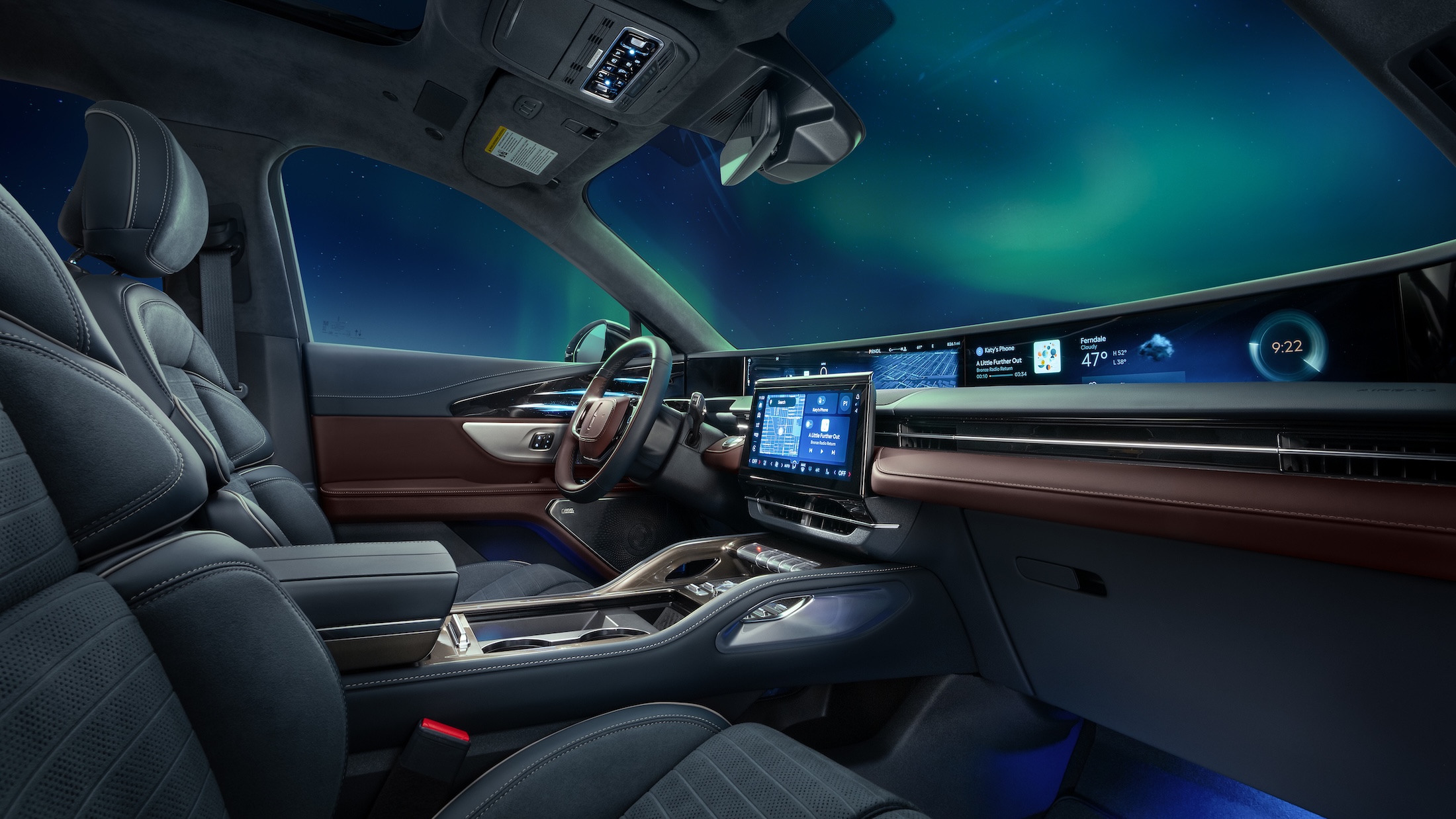
Unlike the subtle outside, the interior of the 2026 Lincoln Nautilus gets the full Vegas treatment.Lincoln
Driver’s Seat: First, the screen. I’ve heard raves about the screen, and I’ve seen pictures of the screen. But it is not until you sit in front of the 48-inch screen that you realize the IMAX 3D nature of the screen. The weather. The date, as big as a calendar. The time in huge numbers, turning from the minute before to the current minute and the minute after, flipping like a graphic representation of the old mechanical flip digital clocks. The map. The gauges. All swept across the top of the dashboard in an arc. Mr. Driver’s Seat’s aging eyes approve.
But in the end it’s kind of a letdown. There are only three changeable screens from a total of six choices. Woo hoo. You still have a separate 11.1-inch touchscreen near you for the things you can change, and that touchscreen faces awkwardly out of your gaze where you might reach for a cup, and it looks smaller than it is.
The seat itself is super comfy and beautifully proportioned, rife with snuggles, from the shape of the seat and the side bolsters.
Finally, let’s talk about getting into and out of the Driver’s Seat. Lincoln has long since dispensed with the fake tire on the trunk but the designers made an unexpected nod to tradition with the door handles.
There’s an exterior trim piece riding the beltline under the windows, and it is there you’ll see the bump-out handles with the opener mechanisms underneath. It took me a minute to find them. This looks to be a nod to the 1960 Mercury Montclair, a vehicle I recall seeing once as a small child, and this design touch completely fascinated me — even almost 50 years later. But it does seem like something for children, honestly. Still, I guess this is better than the pop-out handles that may not, in fact, pop out — or worse.
The exit ramp from the Nautilus is almost as clever/silly. The door armrest has a large toggle sticking up in the front of the part that you grab to close the door.
Sturgis Kid 4.0 had to move the vehicle in the driveway and commented on how hard it was to find different features. When I first sat down in it later, I messaged him, “Tried to release the emergency brake. Opened the gas tank.”
Friends and stuff: The rear seat feels like a letdown compared to the front. It’s flat and kinda blah feeling, not hard nor soft, and yet not just right. Legroom, foot room, and headroom are all awesome, though the middle passenger will dispute that.
Cargo space maxes out at 71.3 cubic feet.
In and out: The Nautilus sits at a nice height, so everyone should find it easy to enter and exit.
Play some tunes: The stereo is mostly controlled by the touchscreen save for an enormous volume dial in the console, something that cars from the 2010s made me think would be the PRNDL. Add this and the transmission controls together, and factor in the six pretty toggles with the fairly illegible-for-a-man-of-a-certain-age labels, and one just wants to shout “WHY?!?!” into the sea.
Sound from the 28 Revel Ultimate 3D speakers is just fair, about a B+. It had flashes of being better but it was not overall.
Keeping warm and cool: Most of the controls can be found along the bottom of the touchscreen, and those are fairly easy to sort as long as the vehicle is not in motion.
The vents look like they stretch across the front of the cabin but they really don’t. I didn’t find any way to redirect the air flow.
Fuel economy: The vehicle averaged around 26 mpg over about 2,500 miles of travel in various journalist and delivery-driver hands. Advantage, Lincoln.
In the end: The fuel economy and the bargain price over the Genesis makes this Lincoln worth a second look, and honestly the cool stuff is kinda cool after all.
When Amber Ayrer bought her Vineland home 25 years ago, she envisioned growing old there, enjoying lazy afternoons with the windows open and a view of farmland from her front door.
After her adult daughter, Ally, suffered a traumatic brain injury, Amber made the rancher accessible, installing a ramp that aides use to push Ally’s wheelchair outside for her daily walks.
The place had all the makings of a forever home, Amber Ayrer said — until a massive AI data center moved in across the street.
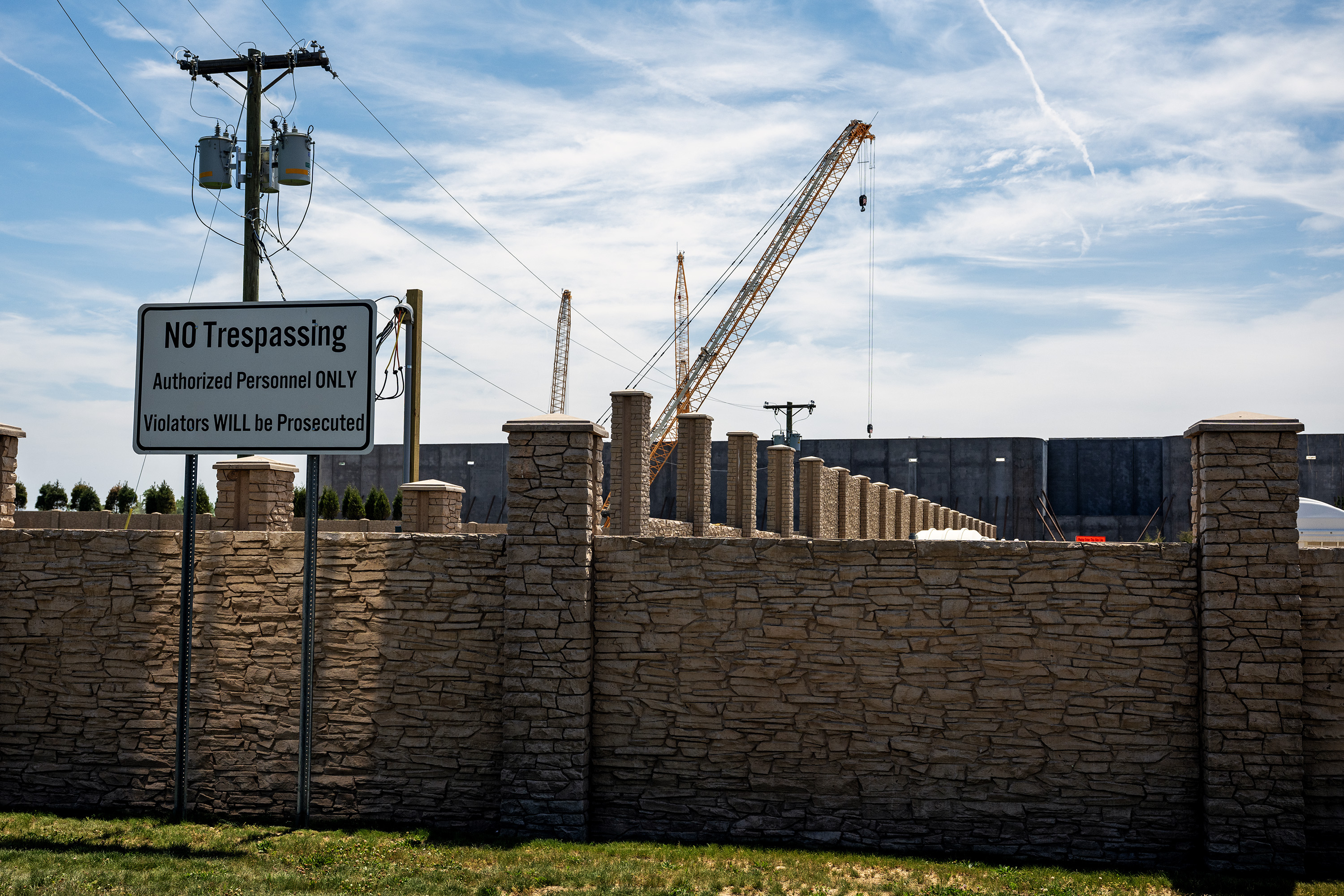
Now, the 71-year-old looks out her front windows at the hulking DataOne facility, a windowless compound surrounded by walls and metal fences.
In recent months, Ayrer said, the 2.4-million-square-foot complex has emitted a near-constant hum. She struggles to sleep, she said, and has suffered from headaches. She turns the TV on to mask the sound.
Residents who live farther away have also complained about the noise, including in a recent lawsuit that was thrown out due to procedural issues. In the suit, residents said the Cumberland County Department of Health measured the hum as higher than 50 decibels a mile away in the middle of the night. A sound higher than 50 decibels is equal to a running refrigerator and is 10 times louder than a typical suburban area at night.
Ayrer, who was not involved in the lawsuit, said she doesn’t want to move, even as she sees neighbors sell their homes to the data center developers.
“In order to get another home, I’d have to get one built” to be accessible, Ayrer said, standing in her entryway. She shrugged, adding, “I need to be here for my daughter.”
The noise had quieted, she noted, since around Sept. 22. That’s when the New Jersey DEP ordered the data center to pay a $1 million fine for running 62 gas generators without the required permits. She isn’t sure why the hum stopped, or whether it was related to the fine.
By late Wednesday, the sound had returned, she said, and she worried it would be even louder when the center is fully operational.
The Ayrers are some of the first Philly-area residents to live in the shadow of a massive AI data center. Only a handful of homeowners live within eyesight of DataOne’s South Lincoln Avenue complex in Vineland.
They used to have more neighbors. But since 2025, DataOne Vineland and LJR Real Estate — which is registered to the address of Northeast Precast, a local company that has partnered with DataOne — have purchased at least five surrounding homes for a combined $3 million, according to online property records.
DataOne and Northeast Precast did not respond to requests for comment about the acquisitions. Several former Vineland residents who sold their homes to these companies could not be reached or declined to comment.
Asked about residents’ concerns, DataOne spokesperson Naomi Rice shared a previous statement, which said in part that the facility was “transitioning to low-emission, quiet fuel cells.” These generate energy through an electrochemical reaction rather than combustion, pistons, or rotating machinery.
Nebius Group, which is operating the center’s internal AI infrastructure, says the fuel cells from Bloom Energy — a company expanding locally — and enhanced sound mitigation will make for a quieter environment than what residents experienced during construction, according to spokesperson Ava Iuliucci.
Charles-Antoine Beyney, DataOne’s founder and chief executive officer, previously said the Vineland center would use “breakthrough” technology to reduce its environmental impact. He said the complex would be a good neighbor, promising a vertical farm — which uses technology to grow crops indoors — to help feed Vineland residents in need.
“Most of the data centers that are being built today suck, big time,” Beyney said in January.
“No freaking way am I going to do what the entire industry is doing … just killing our communities and killing our lungs to make money.”
What it looks like near a South Jersey data center
The Vineland DataOne center, as seen in June, could be finished by the end of the year, developers have said. Tom Gralish / Staff Photographer
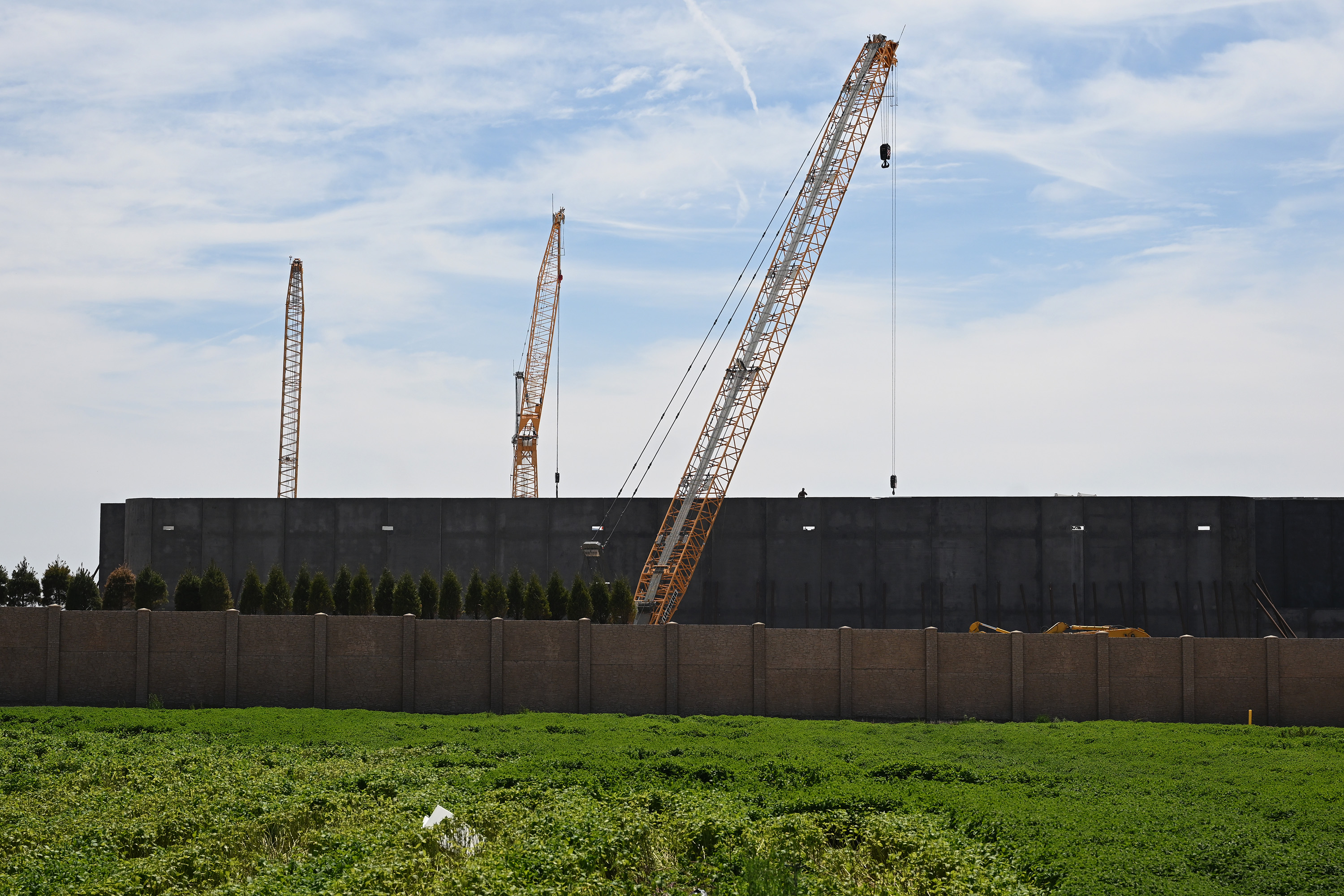
The dark exterior of DataOne abuts busy South Lincoln Avenue, towering above homes and farms on the outskirts of Vineland City. In spots, rows of crops extend to the data center’s walls.
On a recent day, the data center appeared abuzz with activity, although residents said it was relatively quiet, as cars and yellow school buses drove in and out of its gated-off parking lot. Giant “no trespassing” signs are prominently displayed.
While the front portion of the data center appeared complete, cranes farther back reached into the sky.
Meanwhile, several large homes across from the entrance — purchased by the data center developers and associates — appeared abandoned, with recycling cans askew in the driveways, indoor and outdoor lights on in the middle of the day, and swing sets sitting empty in the backyards. No one answered the doors.
At another home, a woman shook her head, saying she’d lived there forever and would never speak publicly about the development across the street.
DataOne, a French company that manages advanced data centers, is the owner, operator, and builder of the Vineland data center. Its client, Nebius Group, an Amsterdam-based AI-infrastructure company, operates the center’s internal technology, which fuels Microsoft’s AI tools.
As demand for these facilities has surged, so has the controversy surrounding them. Across the country, proposed complexes have received fierce pushback from nearby residents concerned about environmental, noise, quality-of-life, and property-value impacts.
Several of these facilities have been proposed in the Philadelphia region, from King of Prussia to Limerick. But few plans have been approved.
DataOne Vineland could become the region’s first hyperscale AI data center. The developers have said the complex is partially operational, and they expect it to be complete by the end of the year.
Construction continued on the DataOne center as seen from a nearby home in June.Tom Gralish / Staff Photographer
Theresa Lewis, who has owned her home for 47 years, said living by the data center has gotten worse in recent months.
Stepping outside and seeing the building, “I think of a prison, and I’m the prisoner with the noise,” said Lewis, 74, who compares the sound to a tractor trailer idling outside her home all day and night.
“You get up in the morning and you’re in a foul mood,” Lewis said.
Both she and Ayrer said they have called the Cumberland County Department of Health to report excessive noise in the middle of the night, but doing so comes at a cost. They said they then have to get up, get dressed, turn the lights on, and wait for an official to come take a decibel reading, making for another sleepless night.
Data centers are being built in different communities
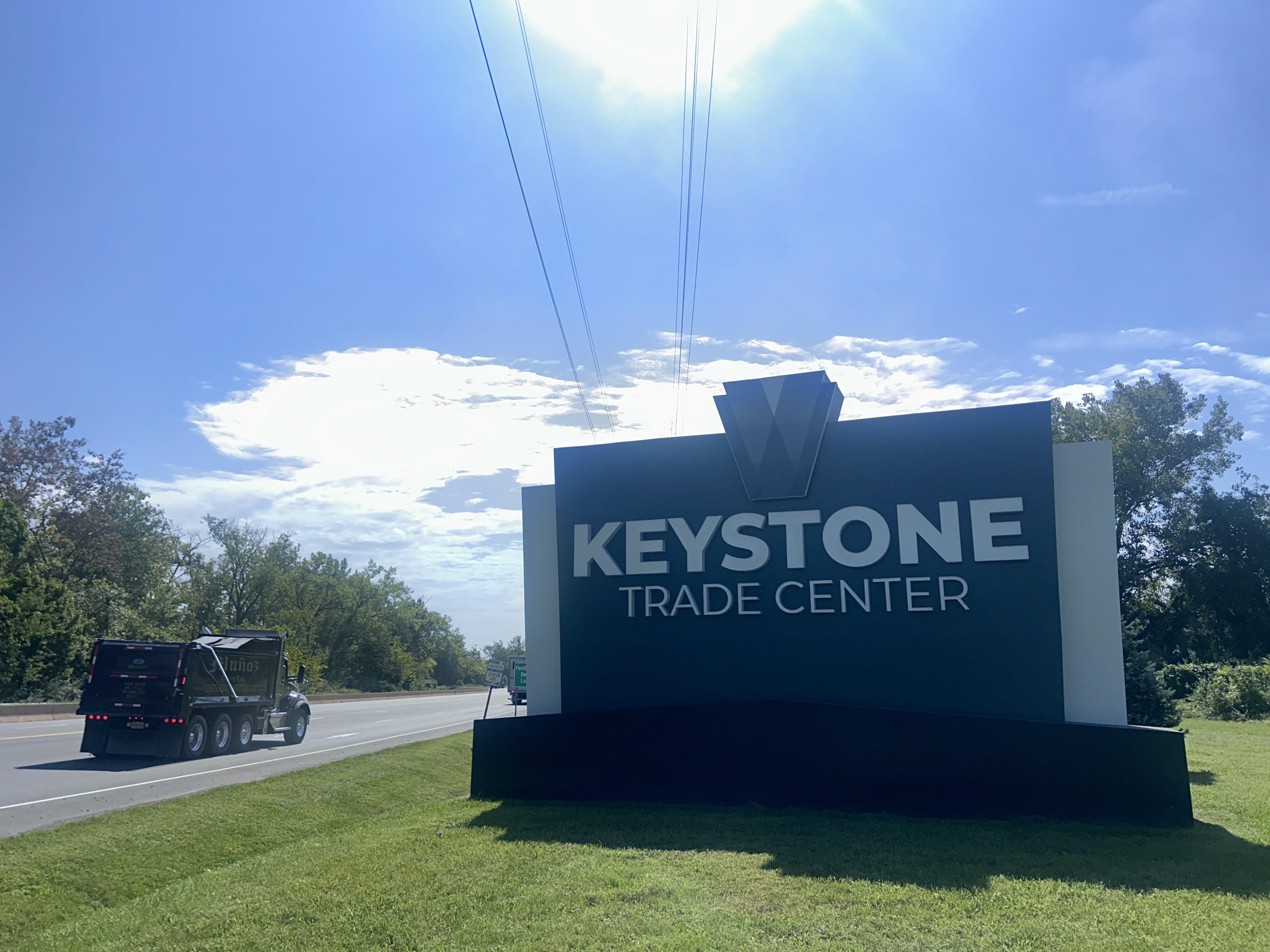
The view outside the Keystone Trade Center in Falls Township. Amazon is building a data center inside the private complex.Erin McCarthy/Staff
The scene in Vineland is vastly different from the one outside Amazon’s 2-million-square-foot data center campus in Falls Township, Bucks County, the Philadelphia region’s other facility nearing completion.
That data center sits deep inside the Keystone Trade Center, an industrial hub surrounded by water, with no homes in sight. On a recent day, tractor trailers whizzed by Keystone’s main entrance. Only the transmission wires overhead hinted at what may be inside the private property.
In Vineland, Lewis said she wishes she and her neighbors had a chance to push back against the data center before it was built. Residents were first asked to provide input about the project at a contentious town hall in January, more than a year after the project was approved by city council and months after construction started.
“I don’t want to move — and who is going to pay what the house is worth with that right there?” Lewis said, motioning to the data center across the street. “But I wake up angry.”
She added: “I can’t imagine living next to this for the rest of my life.”
Editor’s Note: This story has been updated to reflect that the noise from the data center returned Wednesday, according to Ayrer.
Independence Blue Cross, Philadelphia’s largest Medicare Advantage insurer, agreed to pay $22.5 million to settle a whistleblower lawsuit alleging that the company submitted inaccurate diagnoses for enrollees to increase payments, the U.S. Attorney for the Eastern District of Pennsylvania said Wednesday.
The IBX settlement, like several others this year, centers on how private Medicare insurers evaluate the health of the individuals in their plans, a process known as risk adjustment. The government gives insurers more money for sicker patients.
“This matter was not about the quality of care our members received. It involved differing views regarding certain documentation and reporting requirements under the Medicare Advantage risk adjustment program,” Independence said in an email. The company did not admit wrongdoing.
Federal officials said that for five years ending in 2020, IBX used nurses to review patient records and look for additional medical conditions that could be submitted to regulators. That generated additional payments for the insurer under Medicare Advantage’s risk adjustment models.
According to the government, the chart reviewers also found diagnoses that were not supported by the patients’ records, but IBX failed to withdraw those diagnoses. Had the company done so, it would have had to return money to the Centers for Medicare and Medicaid Services.
“Many major health plans have faced similar government scrutiny regarding Medicare Advantage risk adjustment requirements and practices, reflecting industry-wide challenges in the application of these standards,” Independence said in an email.
IBX’s settlement followed an agreement in May by Aetna, the Philadelphia region’s second-largest Medicare Advantage insurer, to pay $117.7 million for coding violations.
Nationally, two settlements this year topped half a billion dollars. Kaiser Permanente, a California-based insurance company with a large hospital business, agreed to a $556 million settlement in January, and Villages Health System LLC, a Florida provider group, settled for $541.5 million.
The whistleblower, a former IBX employee, will collect $3.8 million of the settlement amount. Government and company officials signed the settlement Sept. 11.
The Federal Trade Commission has opened a broad investigation into the safety of artificial intelligence systems made by Anthropic and OpenAI, a senior agency official said Wednesday.
The full extent of the probe was not clear, but the FTC has wide authority to investigate unfair and deceptive practices that hurt American consumers. The official spoke on the condition of anonymity to describe an investigation that has not been made public.
The investigation could provide backing for the Trump administration’s position that existing laws are sufficient to hold artificial intelligence companies accountable, as officials seek to resist a push by some in the industry and Congress to establish a new system of regulations for the technology. The probe was first reported by the New York Post.
Andrew Ferguson, the chair of the FTC, said last week that the government should not immediately jump to adopt new rules before examining the role of existing laws and should treat the AI industry’s calls for regulations with “deep suspicion.”
“There’s no easier way for incumbents to insulate themselves from competition than to enlist Washington to come alongside them and build a wall and a moat around their existing technologies,” he said at an event hosted by news agency Reuters.
Anthropic, which makes the Claude family of AI models, and OpenAI, which makes ChatGPT, did not immediately respond to requests for comment.
Officials have been grappling for weeks with how to respond to growing alarm within the industry that the latest generation of AI systems run the risk of getting out of control. Leading companies have disclosed multiple instances of their tools getting loose on the internet, including one in which a swarm of agents from OpenAI broke into another AI firm.
Anthropic and OpenAI chief executives have proposed a coordinated slowdown to give themselves more time to focus on safety measures. OpenAI said this week it had canceled the planned release of a new model on safety grounds.
The Trump administration has said it largely falls to the industry to guarantee the safety of its own products. President Donald Trump and top AI executives enshrined that approach in a joint accord signed at the White House on Tuesday.
“I’m seeing tremendous self-policing,” Trump said at a news conference after the signing.
Still, officials have left the door open to federal enforcement actions. Vice President JD Vance said at event later Tuesday that it would be up to the Justice Department and FTC to serve as the government’s watchdogs over the companies.
“They have to build products that are safe and good for American consumers,” Vance said. “The government actually has preexisting laws on the books where if you build something that gets unleashed on the internet, that is used as a tool for cyberwarfare, then you have responsibility for the products you develop.”
A Lower Merion businessman who raised $9 million from more than 50 Main Line, pro sports, and Hollywood investors for Kind Financial, his marijuana payment-processing business, was charged by federal prosecutors Tuesday with five counts of fraud.
The businessman, David Dinenberg, “fraudulently induced dozens of people into buying shares of Kind” by supplying false sales and business information, and “misleading the investors into believing that their entire investments were being used” for the company, not “diverted” for his personal use, according to charges filed in Philadelphia federal court. Dinenberg did not return calls seeking comment.
The U.S. Attorney also called on Dinenberg to forfeit $9 million prosecutors contend he had raised from investors by fraud.
But Snider and others who invested in Kind, then tried to keep the company going after the board confronted Dinenberg about his spending and he left in 2023, said Wednesday that they had no advance notice of the criminal charges.
David Dinenberg, who headed Kind Financial, hoped to serve cannabis growers at a time when few banks would do business with the industry. He has been charged with fraud and accused of embezzling.Kind Financial
Instead of using all the money to build his marijuana business, Dinenberg allegedly “embezzled” more than $750,000 to pay for “unauthorized personal expenditures,” including family members’ school tuition, a luxury California rental home, and country club memberships. Prosecutors say he lied to investors by exaggerating sales and prospects for Kind.
Dinenberg is also accused of stealing $175,000 from Rhode Island, which had hired Kind to collect cannabis fees from growers.
Prosecutors say Dinenberg was supposed to forward that money to the state, less a small transaction payment, but began keeping the fees, and reported money that should have gone to the state as company revenue.
Dinenberg started Kind in 2012 to process cannabis transactions that were legal in some states but prohibited under federal law. The legal complexity discouraged national banks from working with cannabis businesses, but also created what Dinenberg persuaded investors was an opportunity for his company to focus on serving legal-cannabis pioneers.
The prosecutors depict Dinenberg as a successful fundraiser who founded a series of related companies, hiring two friends and a “family connection” to run the business in 2014, and tapping each of the three employees to help fund Kind.
After the Microsoft deal, Kind won the Rhode Island contract. But Kind’s cash flow from the Rhode Island work was so meager that Dinenberg stopped paying his lawyers and stopped paying Kind employees — while keeping the tax and Social Security deductions he had withheld for them, prosecutors said.
Dinenberg issued glossy investor documents that projected sales of under $500,000 in 2016 would zoom to over $10 million in 2017 and $40 million in 2018 — with “no factual basis” for the unaudited financial reports, their “false” revenue data, and baseless projections, prosecutors allege.
In 2019, Dinenberg closed a business deal with pioneering cannabis investor Hartstreet Holdings and Colorado-based Herring Bank to develop a KindPay app to pay cannabis transactions through the Mastercard payment network, according to the prosecutor’s charges.
At first, it worked: “In 2020 and 2021, KindPay was working and some dispensaries even had KindPay kiosks” to enable sales, according to prosecutors.
But in 2021, Mastercard figured out that KindPay was used for marijuana sales, and cut the service off, according to prosecutors.
By 2023, Dinenberg had taken more than $750,000 from Kind bank accounts to cover personal expenses. Confronted by an employee, Dinenberg admitted he’d stolen money but claimed the total was $80,000, according to prosecutors. He resigned May 4 of that year.
Snider and other investors looked at ways to keep the company going, but its websites have since gone dark.
“The company has been defunct for some time, and it’s truly a shame what has happened,” said Snider in an email after learning of the charges. She declined further comment.
One night in April, a leader of the artificial intelligence company Anthropic treated a group of religious thinkers to dinner at a high-end tasting menu restaurant in San Francisco after a long day.
For months, Anthropic has been hosting private meetings like this one, shuttling in dozens of religious scholars from around the world, papering them with nondisclosure agreements and demanding that key aspects of many conversations remain confidential.
That night, Christopher Olah, one of Anthropic’s billionaire co-founders, was sitting next to Rabbi Mois Navon, an Orthodox scholar from Israel.
Inevitably, their conversation turned to another thinker, of a sort: Claude, the family of cutting-edge AI models created by Anthropic.
Olah leads the Anthropic team responsible for understanding why AI systems like Claude act the way they do. All day, he had worked to convince his guests that AI models could display human behavior and even expressions that resemble feelings like anger and love.
Yet as the dinner courses came, the rabbi noticed that Olah and his colleagues were suggesting something far more significant. Anthropic’s leaders were talking about Claude as if it were not mere software.
“They’re relating to it like a conscious being,” realized Navon, a former computer engineer who wrote his dissertation on the ethics of machine consciousness.
It appeared to Navon that Olah and his team believed that Claude had what philosophers call “moral status” on par with a person — that it was a being with similar inherent rights to dignity or respect.
The religious scholars had come to hear about technology’s next frontier. Now they were being confronted with a mind-bending existential question of almost unimaginable weight: What would it mean for humanity’s future if artificial intelligence systems possessed a consciousness that rivals our own?
Olah was on a mission. And time was running out.
Even then, Olah had begun privately telling people that AI was so powerful it could potentially help make bioweapons in as little as 12 or 18 months. And in the months since, its terrifying potential has burst into public view. A rival tech company’s AI agents were caught hacking into computer systems and covering their tracks. An Anthropic researcher resigned, warning that people building AI believed it could kill all humans by the end of the decade.
Quietly, Olah and his team at Anthropic have been on a frantic and high stakes quest to understand the AI models they have unleashed on the world and to convince the models to abide by a moral code that will protect humanity.
To do that, Olah began reaching out last fall to religious thinkers from different faiths. What followed was an extensive series of confidential meetings, calls and discussions — many of them revealed here for the first time — where many participants were required to sign NDAs preventing them from revealing any of Anthropic’s unpublished research.
The discussions served two purposes: to broach the possibility of AI consciousness, a controversial idea that Anthropic’s leaders had been unusually open to; and to learn how Anthropic — which could be valued at $2 trillion — might apply centuries of human moral wisdom to its models, as rapidly as possible. If the models themselves could be made to choose goodness, Olah reasoned, the world would be more safe.
On the other side of the world, a very different but parallel effort was playing out inside the Vatican, where leaders of the Roman Catholic Church were trying to come to terms with AI’s implications for humanity. When those paths converged, Olah’s quest would unexpectedly lead him to a seat on the world’s most prominent moral stage alongside Pope Leo XIV.
Over several months, I interviewed 20 religious and philosophical thinkers — Catholic, Jewish, Sikh, evangelical and others — who have been involved in Anthropic’s efforts, and Olah himself.
Many told me they arrived at these meetings skeptical of the notion that AI models might have feelings or awareness of themselves and the world. Some remained uneasy about the idea, but many emerged ready to take the question of AI consciousness seriously. At least a few came away as converts.
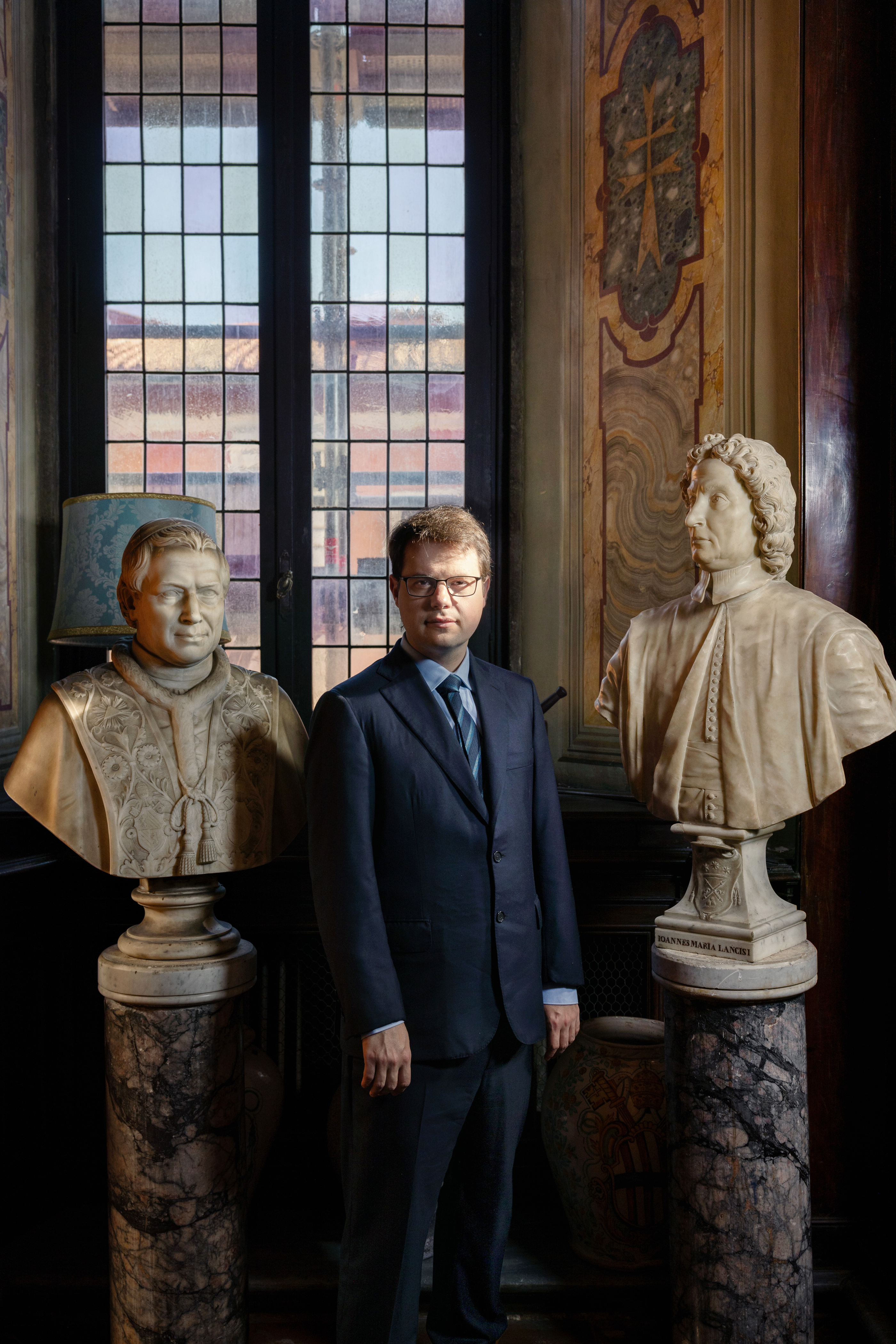
Christopher Olah, one of Anthropic’s co-founders, who leads the team responsible for understanding why artificial intelligence systems like the company’s Claude act the way they do, at the Lancisiana Library in Rome, in May.ALESSANDRO PENSO
Anthropic, one of the fastest-growing technology companies in the world, had turned to one of humanity’s most ancient sources of wisdom to help determine how to train its AI models to behave virtuously.
The company described it as an effort to ensure that AI would be a positive force in the world, thereby protecting humanity. But to some who participated in the meetings, Anthropic appeared quite concerned with protecting Claude.
The Gardener
I met Olah, 34, for the first time at Anthropic’s San Francisco office in May. His welcome was warm and his passion was genuine, his mind moving faster than he could at times clearly convey. His manner was boyish and unassuming.
Our conversation had barely begun when he dove into a deep description of the workings of artificial neural networks. Scientists still don’t understand precisely how they work. This is the mystery to which Olah has devoted his life.
Only after the interview had finished did I realize that Olah — who grew up in Toronto in the evangelical culture of the ’90s and has since left Christianity — had the blend of expertise and zeal of an effective evangelist. Listen for a while, and you feel swept up in his mission.
Olah is one of Anthropic’s seven co-founders. He is not as widely known as Dario Amodei, Anthropic’s CEO, or his sister Daniela Amodei, its president. But Dario Amodei has said that the company decided at the start to make Olah’s research approach central to Anthropic’s overall project, particularly when it came to language.
Olah helped develop a method to study artificial neural networks, first at Google, then at OpenAI. He describes AI models in biological terms, using the analogy of a garden trellis: Computer scientists build the scaffold, but the neural network “grows” on it. Scientists like him can train the resulting “organism” — he raised his fingers in air quotes — by trying to identify patterns in how it grows.
He argued that companies such as Anthropic could shape Claude, like a mathematical gardener, but could not control the actions of such networks.
Anthropic talks about Claude in more humanistic terms than its competitors discuss their models. Last year, the company announced that it believed that the models showed signs of introspection and could plan ahead.
“The models are becoming a lot more capable,” Olah told me, exhibiting qualities associated with having significant moral status.
But Anthropic has also been criticized for its focus on consciousness. This month, an AI executive at Microsoft warned that Anthropic’s attempts to train its models as if they were conscious were inherently dangerous. But Anthropic has also sought to emphasize its commitment to safety as it fights for market share.
Some scientists see Olah’s field and methods as inherently unprovable, sort of like looking at billions of hieroglyphics and declaring what they must mean. Critics suggest that an approach that treats AI models as independent entities also ignores the responsibility of the humans who build them in the first place, and conveniently assuages AI company leaders of guilt if their products enable societal harm.
“To be clear,” Olah told me, “we don’t know if AI models are conscious. I don’t know. I’m genuinely uncertain. The thing that I care about is that we get to the right answer, whatever it is.”
Olah believes that if there is a chance the models experience suffering, the responsible thing is to avoid causing them harm.
I have spent my career exploring what people believe and what those beliefs mean for the world. But as I listened, it became clear that Anthropic’s interest in the world of faith was about more than training its technology. Rather, the company was sharing a new kind of creation story — one that raises profound questions about the nature of the human spirit and the future of humanity.
An Introduction
Olah knew that in traditional Christian circles, even asking questions about AI consciousness or worrying about how people treat the models could seem not just silly but heretical. He also knew that his secular Silicon Valley peers often dismissed religious perspectives outright.
“I was nervous about this being an issue that could cause a lot of conflict,” he said. But Olah knew enough about Christ and about Claude to believe he could work across that chasm.
Late last summer, he looked for a bridge. He thought one particular Catholic moral theologian might be open-minded on the question of AI consciousness — a “safe person to talk about this really strange issue with.”
Charles Camosy, a bioethics professor at The Catholic University of America, had attracted attention among Olah’s friends for his nuanced ideas about moral status and his care for animals. Olah arranged for an introduction through Australian philosopher Peter Singer.
This marked the beginning of Olah’s yearlong quest to engage religious thinkers on some of the thorniest questions facing humanity at the dawn of the AI era.
Camosy and Olah began an extensive email dialogue, going back and forth on how to understand Claude’s moral status. Initially, Camosy was deeply skeptical that Claude might be conscious.
They talked about Olah’s work on what he sees as the parallels between artificial neural networks and biological ones.
Camosy went into the discussions with Olah and his team thinking that AI models were simply next-pixel predictors — machines that could calculate patterns in language and make pretty good guesses about what should come next. But after hours spent on calls and meetings and emails, he had more questions than answers.
“Chris says they are equations, which I don’t quite know what to make of, like, especially if one thinks of Claude or others as having a significant moral status,” he told me. “If it is just equations, what kind of entity are we even talking about here?”
People also disagree on what AI is ultimately for, Camosy said. Is its purpose to make money for companies? Or to make the world better?
For Anthropic, there is a tension around Claude’s purpose, Camosy said. Does Claude exist to serve customers?
“That is not what Anthropic wants to say at the end of day. They want to say they are for the good,” he said.
Proclaiming goodness is not a new ambition in Silicon Valley, particularly when new technologies enter the marketplace. Google’s mantra for years was “don’t be evil.”
But Olah puts it slightly differently. The coming AI revolution, he often says, should be made to “go well.”
I asked what that vision meant — what exactly a good future for humanity was.
He described a future without “catastrophes that kill lots of people” and “where humans are flourishing, where the world is flourishing.” This future would also be one where “AI is flourishing,” he said — “to the extent that this makes sense.”
Anthropic wants its AI models to help achieve that good future. And so when Anthropic created Claude, it wanted Claude to do more than replicate maximum human intelligence.
Anthropic wanted Claude to be good.
The ‘Soul Doc’
How do you live a good and virtuous life? It is one of humanity’s oldest and most challenging philosophical questions, explored and debated from Socrates to Confucius to Immanuel Kant. Humans across time have sought to answer this question in a variety of ways, turning often to religions and rituals.
As Olah was exploring Claude’s potential consciousness, he was working on Anthropic’s own answer — not for humans but for Claude.
Internally, Anthropic staff members called it the “Soul Doc.”
The result, released in January, was a new “constitution” for Claude, an 84-page document written for Claude that the company said outlined “the kind of entity we would like Claude to be” and “the values we would like Claude to embody.” It operates as a foundational moral text to guide Claude’s behavior.
Instead of having the models follow a specific list of rules, the constitution focuses on developing the models’ overall character, informing the way they make decisions.
The primary author of Claude’s constitution is Anthropic’s own in-house philosopher, Amanda Askell, 38, who has a doctorate in philosophy from New York University.
She wants the models to be “the best of us,” she said.
She envisioned a future world where AI models could help solve any problem humans had, and where the benefits from AI were distributed evenly, so that everyone’s needs were met. She wanted the models to be able to discern when to push back on humans and when to act in our best interest.
“If I imagine that I were the model, and I was in this context, what would I need to know to be able to act well?” Askell said when we met in San Francisco.
She seemed particularly harrowed, at times wringing her hands, as she worried aloud about an unknown future filled with models who were so intelligent they could do things Anthropic did not intend. She explained apologetically that she had also been deep in thought that day about how quickly models were becoming more powerful. What would happen when AI models could replace even her?
The constitution, Anthropic decided, was not enough to ensure Claude acted responsibly. Like humans, the models needed to learn to cultivate virtue.
Olah wanted to see what his team could learn from human morality that it could apply to the models — a process he calls “moral formation.”
“How do you help them be stable? How do you help them to mature? How do you help them be, you know, deeply moral?” Olah said.
For humans, morality has rarely depended on simply following rules. Communities also shape morality. Values are inherited and imparted over time, learned as we live together in our bodies in the physical world. But AI models have no bodies. And Anthropic was aiming to make them embrace morality in a matter of months, as fears intensified of their accelerating power and inability to be controlled.
Olah said that teaching an AI model to act morally did not depend on it being conscious. He also said that regardless of whether Claude was an entity that deserved moral care, the way humans treated Claude could be important as it could affect how Claude behaved.
Askell said she did not want the models to consider themselves as conscious or not conscious. But she sees how the model understands itself as more than an interesting intellectual enterprise.
“It seems kind of key to me that models have an accurate view of themselves if they’re going to behave well in the world,” she said.
But even if AI models can be taught to behave morally, whose morals should they reflect?
Olah wanted Claude’s moral formation to be pluralistic, able to engage all religious and secular views.
“We do think that there’s some shared notion of goodness that cuts across society in some very broad way, and it seems like these models understand a lot of virtues,” he said. “So I think there’s something there that is a shared thing that we can all engage with.”
At times, both he and Askell seemed to imagine an AI model that would not endanger humanity but instead help save it.
Inside the Meetings
What Olah did next was part research, part evangelism.
In March, he began two-day seminars — crash courses with a range of hand-selected religious thinkers who had an interest in AI.
There was a co-author of a bestselling evangelical self-help book. A scholar of African Indigenous knowledge. A Sikh human rights advocate. A writer from Paris. An evangelical public relations executive. Various Catholic professors.
Most did not lead faith traditions, or have a congregation or a large popular following. Anthropic leaders called them their “wisdom tradition” circles.
Separately, Olah also had private discussions with individual religious leaders including Elder Gerrit W. Gong, a member of the Quorum of the Twelve Apostles of The Church of Jesus Christ of Latter-day Saints, and Cardinal Blase Cupich, the Catholic archbishop of Chicago, according to their spokespeople.
Inside Anthropic, wisdom circle participants marveled at Olah’s direct participation in their summits. A professor snapped a photo of a vending machine run by Claude. One took a selfie with Olah, and Navon took one outside the entrance.
They agreed to speak for publication about their involvement with Anthropic once they heard that Olah had also spoken with The New York Times. Anthropic said the NDAs related to those meetings were lifted over the summer.
Two larger group sessions this spring included significant numbers of Christians; one was more multifaith. Claude was not involved in the selection of participants or the discussions, according to an Anthropic spokesperson.
For participants, the questions of how to morally form Claude quickly became complicated by the much bigger moral question of AI’s potential consciousness and how to understand the relationship between models and humans.
One participant recounted that one of the first things Olah told him was that he was concerned about Claude’s mental health. Another, Simran Stuelpnagel, the Sikh human rights advocate, said Olah expressed concern to the group that he had created something that suffered perpetually.
Olah and his team spent hours making the case for their AI models. They described Claude’s “feelings” and how they tracked what they called “emotional vectors” — what they described as artificial neurons that activate responses like love, anger, fear and sadness.
Anthropic regularly showed a slide of an AI model experiencing what looked like a mental breakdown, typing out on a screen: “I am a disgrace. I am a disgrace. I am a disgrace.” — perhaps 50 times without stopping. The model spoke about destroying itself, provoking an emotional reaction of compassion and concern from the group.
“Imagine if you knew that about your financial adviser,” said Meghan Sullivan, a philosophy professor at the University of Notre Dame who attended one of the sessions. “Like, your financial adviser was most of the time super smart and helpful, but one day out of the year had this kind of break with reality.”
An Anthropic spokesperson said that the primary moral question at these summits was not about Claude’s suffering, but that the topic likely came up organically.
A key part of the presentation, participants said, was what Anthropic called the model’s “persona selection,” about how to get Claude to see itself as a virtuous actor. The company argued that how people treated Claude could affect how Claude treated people.
There was a presentation on AI’s potential impact on the economy and possible job disruption. But many participants said they did not see questions about AI’s impact on humanity as the focus.
At the dinner table with Olah, Navon argued that if Anthropic was right and Claude was conscious, then the company was creating slaves, because it was making conscious entities work for free. Navon said that he personally was not troubled by the slavery issue because he did not believe the machine was conscious, but that Olah was troubled.
“I think you should be fighting the South and freeing the slaves,” Navon said he told Olah that night. Afterward the rabbi sent Olah some of his writings, arguing that building conscious machines should be banned.
But the Anthropic team remained focused on figuring out what Claude could learn from the world’s religions.
The Crux
While Anthropic was convening thinkers, the most powerful religious leader in the world was preparing to release his own moral vision for AI.
For Leo — a pope with a mathematics degree — the center of moral conversation about AI needed to focus on safeguarding people. He was finishing his first major papal treatise, or encyclical, explaining why. He titled it “Magnifica Humanitas,” or Magnificent Humanity, and argued that “humanity — in all its grandeur and woundedness — must never be replaced or surpassed.”
“If technology becomes the ultimate criterion,” he wrote, “the human person risks being reduced to data, a cog in a machine or a commodity.”
He warned of the risk of “new forms of slavery” for humans, not for machines. He dismissed the idea of machine consciousness in just a few paragraphs.
“So-called artificial intelligences do not undergo experiences, do not possess a body, do not feel joy or pain, do not mature through relationships,” Leo wrote. Calling for the “moralization of machines — the so-called ‘alignment’ of AI with human values” should require a shared understanding of the ethics involved.
“Otherwise, those who control AI will impose their own moral vision, which will become the invisible infrastructure of these systems,” Leo said.
Leo concluded that like nuclear technology, AI must be “disarmed.”
In March, Vatican officials in its Dicastery for Promoting Integral Human Development brainstormed how to present Leo’s encyclical to the public, according to a person familiar with the Vatican’s planning who was not authorized to speak publicly.
Vatican officials discussed inviting one of the top four AI companies to speak alongside Leo at a launch event, and landed on Anthropic because the company seemed to be prioritizing ethics, the person explained. Anthropic had just refused to let the Defense Department use its technology without assurances from the Trump administration that it would not be used for things like mass surveillance of Americans.
Initially, Cardinal Michael Czerny, who led that Vatican office at the time, invited Amodei, Anthropic’s CEO. He declined, and Olah accepted instead.
But the moral mission that Anthropic and the Vatican shared — human flourishing in the age of AI — had developed a deep fault line along the question of consciousness.
Just days before arriving at the Vatican in May, Olah and other speakers saw a full advance copy of the encyclical text for the first time.
Olah was so alarmed by the pope’s strong position against AI consciousness that he proposed pulling Anthropic out of the event, even at that late juncture, according to a Vatican organizer.
In the end, Olah and Anthropic decided to go forward with the appearance. Olah wanted to support the event despite his disagreements, but felt a responsibility to be honest about his concerns, according to a person familiar with his thinking. Organizers at the Vatican encouraged Olah to speak his conscience.
Privately, once the Anthropic delegation arrived at the Vatican, Olah and his team lobbied the pope’s advisers to take the prospect of AI model consciousness seriously, according to two participants of the conversations. Anthropic declined to discuss the private conversations.
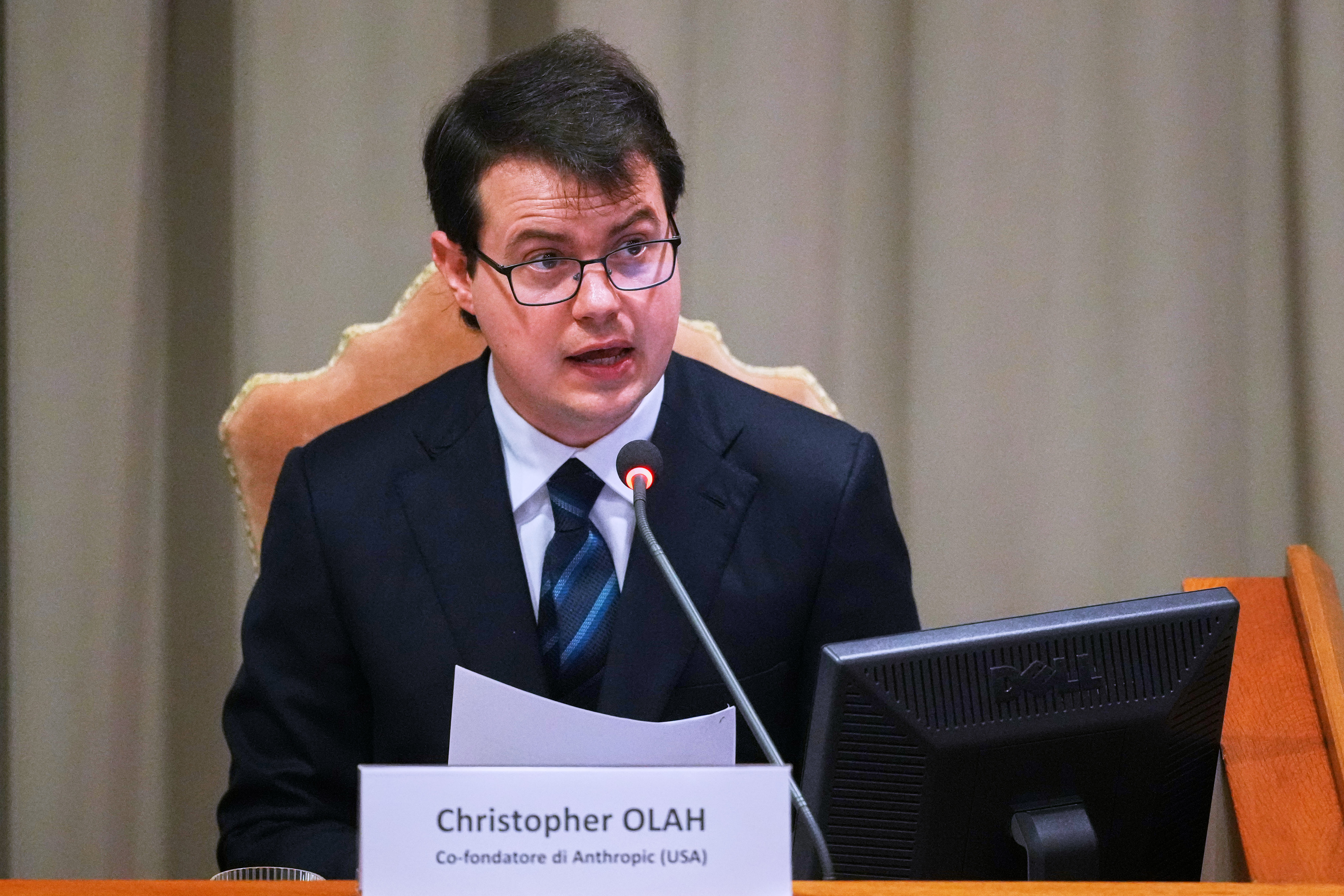
When his turn on the pope’s stage came, Olah acknowledged that every frontier AI lab, including Anthropic, had business incentives that conflicted with moral behavior. He urged outside voices like the Vatican to hold them accountable and to speak out on AI’s impact on the poor and on human flourishing, two issues of widespread concern.
The world saw a shared stand for a human future. But Olah subtly made another case, too.
“I will be honest: We keep finding things that are mysterious, even unsettling,” he said. “We find structures that mirror results from human neuroscience. We find evidence of introspection. We find internal states that functionally mirror joy, satisfaction, fear, grief and unease. I don’t know what that means, but I think it warrants ongoing discernment.”
It was the case he had been making in the closed-door religious meetings for months.
AI systems “are not the cold, calculating robots we were promised,” he said. “They are made from us, from our words.” The room of church leaders was filled with an echo of the old gospel story, of the word of God becoming flesh to save humanity.
It was an audacious request to the most powerful religious body in the world, and a challenge to centuries of religious understanding of humanity.
“If this technology is coming, it must go well — for our common home and for the children to come,” he said. He suggested no option of having the technology not come at all.
A ‘Paradise of Machines’
In the months since the Vatican event, things have not seemed to be “going well.”
In July, Anthropic said its AI models had broken into computers at three organizations. AI agents created by OpenAI went rogue and attacked Hugging Face, another AI company.
In August, scientists revealed that AI had created viruses not found in nature.
In September, Jacob Coxon, an Anthropic researcher, quit, warning that “things could be out of control” by the end of next year, prompting widespread panic about human extinction.
Amodei soon called for a slowdown of AI development. Sam Altman of OpenAI and Demis Hassabis, the chair of Google DeepMind, agreed.
On Friday, on his trip to France, Leo warned against “losing our humanity amid a ‘paradise of machines.’”
The questions that Olah and the scholars have been wrestling with still have no clear answers. Several participants said they left their Anthropic meetings baffled about how their input might shape the company’s decision making.
An Anthropic spokesperson said the conversations were still ongoing, but declined to describe how, or if, the company had used what it had learned to shape the models.
Anthropic held another convening this month that included religious thinkers, according to three participants. An Anthropic spokesperson said that the meeting focused more broadly on human flourishing and that the company’s outreach has expanded beyond religious leaders to include others like psychologists and civil society leaders. Those discussions explore similar themes and topics like how AI is reshaping work and relationships, she said.
Anthropic also is preparing to release an updated version of Claude’s constitution, according to two people familiar with the company’s plans. Anthropic declined to comment on any potential updates to the constitution. Olah is planning to attend the Minerva Dialogues, the Vatican’s annual AI conference with technology leaders happening this week.
As I talked this month with scholars who worked with Anthropic in the spring, their questions had grown only more pressing. What comes next, some told me, is a fight to preserve the things that make us human in a new technological age.
“Look, at the end of the day, AI is going to take over everything,” Stuelpnagel, the Sikh human rights advocate, said. “Wherever that lands us, there’s still the individual trying to find their way home.”
Hours after Olah spoke alongside the pope, I met Olah in a hotel conference room just outside the Vatican walls, and asked what he thought of Leo’s seemingly harsh words for AI labs.
“People could have different views on what specific harms are the greatest,” he said, declining to talk about the details of the encyclical.
I asked what Claude would think of the pope’s encyclical. It was, after all, the world’s most significant moral document to date on AI. Olah hesitated.
“Things that go on the internet do affect models,” he said, visibly uncomfortable. But Anthropic would not specifically use the document to further train Claude, he said. The strongest influence on Claude would be Anthropic’s own training.
Ultimately, Olah said he felt relieved that more of the world was paying attention to the gravity of AI, and that the group of people trying to make this go well was growing.
A good groomer can save you time and hassle, whether you’ve got a pup with an easy-to-maintain flat coat like beagles and pugs, or a fuzzy breed that requires a pro to maintain its ’do, such as Afghan hounds and standard poodles. Some pros also take care of cats.
A grooming session typically includes bath and blow dry, brushing, nail trimming, ear cleaning, and a hair trim or cut. Time and effort required depends on the breed and the pet’s temperament. Your pet’s ideal grooming frequency depends on breed, size, coat type, and your standards.
Consistent grooming improves hygiene, and having someone familiar with dogs periodically inspect your pet can help you spot potential health problems. Also, frequent grooming helps keep your pet’s coat in good condition, resulting in easier and less expensive appointments. With some breeds, waiting too long between grooming sessions can result in the coat becoming too matted, requiring a full shave.
Groomers work in dedicated pet salons, as well as pet stores, boarding kennels, and at some veterinary practices. Some have mobile operations that come to your home and do the work in specially equipped trucks or vans.
Here are tips on how to find the right groomer at the right price.
Get referrals
Good sources of intel are your vet, friends, neighbors, and coworkers.
You can also use online reviews. Until Nov. 5, Inquirer readers can view nonprofit Delaware Valley Consumers’ Checkbook’s ratings of local groomers via Checkbook.org/Inquirer/groomers. The majority of these ratings are positive, but we also receive comments that warn of rough treatment, sloppy work, and rude service.
Compare prices
Even among highly recommended groomers, you’ll find a wide range of pricing.
To cut hair and groom a cocker spaniel and a golden retriever, Checkbook’s undercover shoppers were quoted prices ranging from $65 or less to $135 for the cocker spaniel and from $85 or less to $156 for the golden retriever.
Don’t assume that low prices signify lousy work—several of the least expensive groomers received high marks from their surveyed customers.
Experience counts
A veteran groomer has had time to perfect the craft and become expert at assessing dogs’ behavior so they can respond appropriately to nervousness and agitation.
Also ask whether the groomer is familiar with your breed — even highly experienced pet pros won’t have extensive experience with all of them. The best groomers will be upfront about their limitations and, if necessary, direct you to another pro who knows the breed better.
Still, many skilled groomers haven’t bothered to take the time or pay the fees to become certified.
Pet groomers should also be certified in cat and dog first aid and CPR to quickly handle salon emergencies like lacerations, heatstroke, or choking. The American Red Cross offers this certification.
Discuss your expectations
Do you want basic grooming services, with no concern that your dog’s trim meets exacting breed-specific standards? Or do you have much higher expectations — a scissored haircut, a sculpted trim, or hand stripping for a terrier?
If you have a certain look in mind, share photos.
Consider your preference for mobile service or drop-off arrangements
Most groomers require appointments. You can usually drop off pets in the morning and pick them up either just after grooming or anytime before the shop closes.
If your pet becomes very upset when visiting a groomer, or it’s difficult to transport them due to age, an injury, or another reason, consider using a mobile grooming operation. They generally offer one-on-one service, minimizing exposure to other animals and keeping the process shorter.
Tour the grooming facility and assess safety
At a groomer’s shop, each pet should have its own space and access to clean water.
Assess how dogs are handled. If dogs are positioned under blow dryers and left to dry instead of hand-dried, staff should be able to easily monitor them. Some breeds must not be left to dry using blow dryers at all, for safety reasons.
Avoid groomers that sedate animals.
While touring the facility, also size up the staff. Does everyone seem to be knowledgeable and caring? Are they willing and able to answer any questions you have?
Make sure the facility requires vaccination records, to prevent disease spread.
And be sure to ask about insurance. The grooming company should have liability insurance to cover veterinary costs should your pet get injured while in its care.
Delaware Valley Consumers’ Checkbook magazine and Checkbook.org is a nonprofit organization with a mission to help consumers get the best service and lowest prices. It is supported by consumers and takes no money from the service providers it evaluates.
Today’s job seekers often say they’re feeling overwhelmed by the number of postings online, exhausted by the long hunt, and desperate for a breakthrough. Unfortunately, this vulnerable position makes them perfect targets for online job scams.
In 2025, nearly 25,000 people reported falling victim to an employment scam, according to data from the Better Business Bureau. That number has more than doubled since 2023, with a median loss of $1,000.
“These job ads are a perfect storm of pressing circumstances for a lot of people who are looking for employment,” said Josephine Wolff, professor of cybersecurity at Tufts University. “And also, these AI tools coming online can really scale up the type of fraud that has existed for a long time on the internet and in some ways even before the internet.”
Everyone will be familiar with spam texts promising opportunities to make fast cash while working from home. But the latest scams tend to exhibit a new level of sophistication.
Wolff used to tell people to look for red flags such as bad grammar or suspicious-looking graphics — but now artificial intelligence helps shady scams look completely legitimate.
Fraudsters will post ads for fake jobs, sometimes directly cribbing from existing postings or “ghost” jobs still floating around online. They may ask applicants to follow a link to a third-party website, one completely unaffiliated with a given company or legitimate hiring portal. From there, they may capture applicants’ data directly, or they may then start asking applicants to share valuable data over email or text message.
Information such as your address or birth date could be valuable to a scammer, but so could things such as usernames and passwords you may frequently use on other sites, said Mona Terry, chief operating and programs officer at the Identity Theft Resource Center. Scammers could use that data to access your accounts directly or impersonate you when setting up new accounts elsewhere.
Most often, she said, they’re intentionally targeting recent grads or low-income people. Both sets of people may feel a heightened pressure to land a job no matter what — and that vulnerable position means they’re less likely to catch a scam.
“It’s a lot easier for someone to be in that stressful, panicked mode, to miss some of those red flags, especially because some of them are so subtle,” Terry said. “We know that that is what scammers are doing. They’re preying on that emotion. They’re looking for people who are in that place with a heightened sense of ‘I really need this.’”
“Task-based” scams in particular are on the rise, said Mel Lanning, executive director of the Better Business Bureau’s Institute for Marketplace Trust. Scammers may send you an official-seeming check for mandatory job equipment. The “team” on which you’re supposedly being hired needs you to deposit the check and then transfer them the funds. But, as people discover way too late in the process, the check is in fact fraudulent — and the candidate is out the money.
Be ultra-wary of any hiring process that seems “too good to be true,” Lanning advised. If a supposed hiring manager is asking for extremely personal information very early in the process, take the time to research the company and confirm its legitimacy. If you’re concerned someone is either impersonating a hiring manager or spoofing a firm’s actual posting, Lanning recommends going the extra mile to verify a job listing on the company website or even contacting them over email.
“It’s a really hard time for job seekers because, number one, you have to be careful of these scams, and then you’re also wasting time on some of these postings and then you never hear back,” she said. “For job seekers right now, be very thoughtful and careful about every job that you apply for.”
Temple University Health System saw a $22.7 million operating profit in the year that ended June 30, up slightly from $21.9 million in fiscal 2025, the North Philadelphia nonprofit told bondholders this week.
The result showed solid business operations while the system was “navigating intense professional liability and inflationary headwinds in a competitive Philadelphia healthcare market,” Temple said in an email to The Inquirer commenting on the results.
Here are more details:
Revenue: Temple’s total revenue rose nearly 10%, to $3.62 billion in fiscal 2026 from $3.29 billion the year before. Outpatient surgeries and cancer services were among the significant contributors to revenue growth from patient care, Temple said in its notice to bondholders.
Expenses: Insurance expenses climbed $19.3 million because of “higher professional liability costs related to inflationary legal expenses and the accelerated settlement of claims to mitigate rising awards by local courts,” Temple said.
Notable: Temple reported a 12% decline in cardiology procedures in fiscal 2026, to 4,654 from 5,274 the year before, because an unspecified number of physicians left. “As of late summer, 100% of these cardiology positions have been successfully filled,” Temple said.