Category: Business

  • $2.5 billion Navy submarine contract expected to keep 700 working in Philly

    $2.5 billion Navy submarine contract expected to keep 700 working in Philly

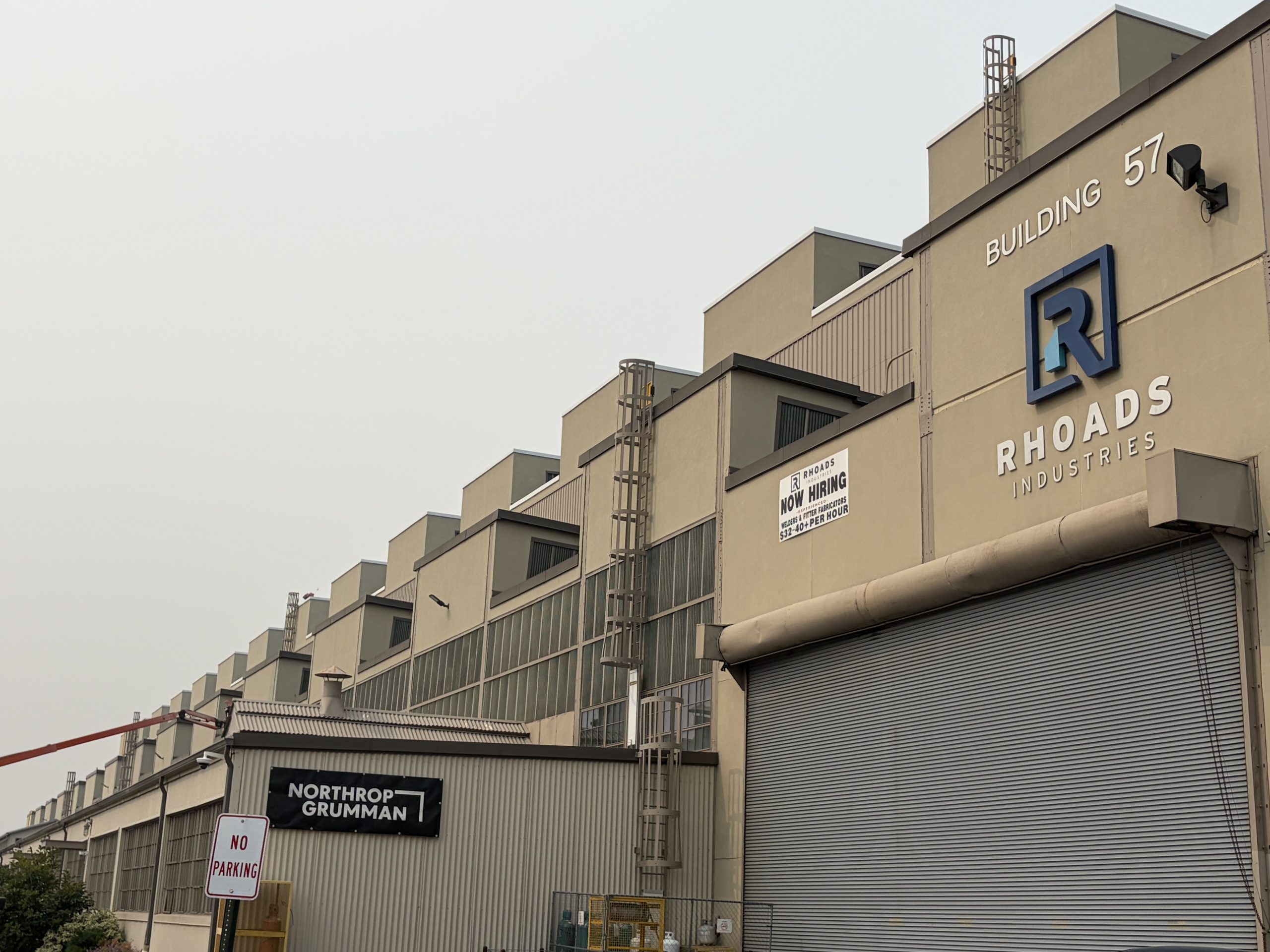
    Rhoads Industries Inc. has confirmed some details of a long-term deal to extend the work the family-owned ship repair company is doing for General Dynamics Electric Boat, which builds and upgrades Virginia- and Columbia-class nuclear submarines for the U.S. Navy.

    “Rhoads will continue providing steel fabrication, structural assembly, outfitting, and other shipbuilding support services” from its Navy Yard operations, the family-owned business said in a statement Wednesday. The contract, which Rhoads estimates is worth $2.5 billion over 10 years, is expected to keep around 700 people working 40 hours a week for a year.

    Rhoads has done work for General Dynamics since 2021, according to a spokesperson for the Reston, Va., company, whose annual sales top $50 billion.

    With the contract and other work Rhoads does at its ship-repair and testing facilities, Rhoads says it will eventually employ nearly 1,500 workers, roughly double its current headcount and five times what Rhoads employed three years ago.

    Like the larger workforce at neighboring Hanwha Philly Shipyard, Rhoads shipyard workers and contractors are represented by the Philadelphia Metal Trades Council, a coalition of unions including locals of the Operating Engineers, Boilermakers, Ironworkers, Sheet Metal Workers, and other trades.

    In a statement, company president Mike Rhoads said the expanded General Dynamics work would pay for “high-quality careers in skilled trades, engineering, project management, and manufacturing, further strengthening the Greater Philadelphia region as a center for advanced maritime manufacturing.”

    Rhoads Industries is a family-owned ship repair company in Philadelphia’s Navy Yard, which also builds submarine components. Joseph N. DiStefano

    Rhoads last year said it was building a $100 million manufacturing shed specifically for the Navy submarine work, designated Building 57A. On Tuesday, JPMorgan CEO Jamie Dimon visited the Navy Yard business district and announced a $13 million loan funded by federal tax incentives to aid completion of the facility, which Rhoads said should be finished next year. JPMorgan also is funding $11 million in loans and grants to Chamber of Commerce-affiliated worker training and subcontractor assistance nonprofits.

    Rhoads added that his company has met Navy performance targets.

    The Navy’s attempts to speed production and updating of the submarines have met delays, which industry observers tie to a national shortage of ship construction workers and to the Navy’s time-consuming design, approval, and change-order processes.

    The Trump administration has vowed to speed production of submarines, which are considered less vulnerable than surface ships to the proliferation of drones that have extensively damaged shipping in Ukraine and Iran conflicts.

    The Rhoads deal was briefly disclosed Wednesday by Sen. Dave McCormick (R., Pa.) when President Donald Trump spoke at the Pennsylvania Defense and Innovation Summit in Carlisle.

    General Dynamics Electric Boat builds Columbia- and Virginia-class nuclear Navy submarines at its yards in Groton, Conn., and Quonset, R.I., in partnership with Huntington Ingalls Newport News Shipbuilding in Virginia.

  • A Penn Medicine employee shuttle was struck by a car and knocked on its side early Friday in South Philly

    A Penn Medicine employee shuttle was struck by a car and knocked on its side early Friday morning in South Philadelphia, police said.

    One passenger was initially in critical condition, but has since been upgraded to stable, Philadelphia police said.

    The van was transporting 11 employees, plus the driver, the University of Pennsylvania Health System said. All were taken to hospitals for evaluation and treatment, Penn said, but other details on the passengers’ conditions was not provided.

    The white Ford van was traveling east on Reed Street when a red Honda Civic Sport traveling south on South Christopher Columbus Boulevard struck the front driver’s side.

    The impact caused the van to spin and tip onto the driver’s side, before stopping near train tracks in the road’s median.

    The incident remains under investigation, police said.

  • How do you spur tourism in Delco? An ‘ice cream passport’ offers one sweet answer.

    How do you spur tourism in Delco? An ‘ice cream passport’ offers one sweet answer.

    Delaware County’s tourism agency wants to reward you for eating ice cream this summer. Really.

    Visit Delco, Delaware County’s tourism promotion agency, launched the Delco Ice Cream Trail Pass in May, a 16-stop mobile “passport” that encourages participants to try out local ice cream and water ice shops, collecting points along the way that can be redeemed for prizes. The Ice Cream Trail takes participants across Delaware County, from Just Homemade Ice Cream in Aston up to the Vanilla Bean in Wayne, and back around to CJ’s Waterice & Ice Cream in Collingdale. It was borne out of a desire to get Delco residents into their communities, and local economies, through a treat that cuts across all age groups, neighborhoods, and walks of life.

    “We just wanted to create a fun and accessible experience for the summer that encourages people to explore Delco,” said Amy Bohr, Visit Delco’s marketing director.

    Participants on the trail, which runs from Memorial Day through Labor Day, can sign up online and save the “passport” on their phones before visiting the ice cream shops, earning points at each location. Points can be applied toward rewards, including a baseball hat-shaped bowl, an ice cream scoop, or a bucket hat. Prizes can be collected at the Visit Delco office in Rose Tree Park.

    So far, 1,500 people have signed up for the pass, and 450 have “checked in” at one or more ice cream shops, according to Visit Delco.

    Visit Delco’s goal is largely to encourage nonresidents to visit, and spend money, in the suburban county. The agency helps connect visitors with places to stay, restaurants to patronize, and attractions to see, like the Delaware County Symphony or the Media Theatre. The agency also provides grants to local municipalities and organizations to help boost tourism and spur economic activity.

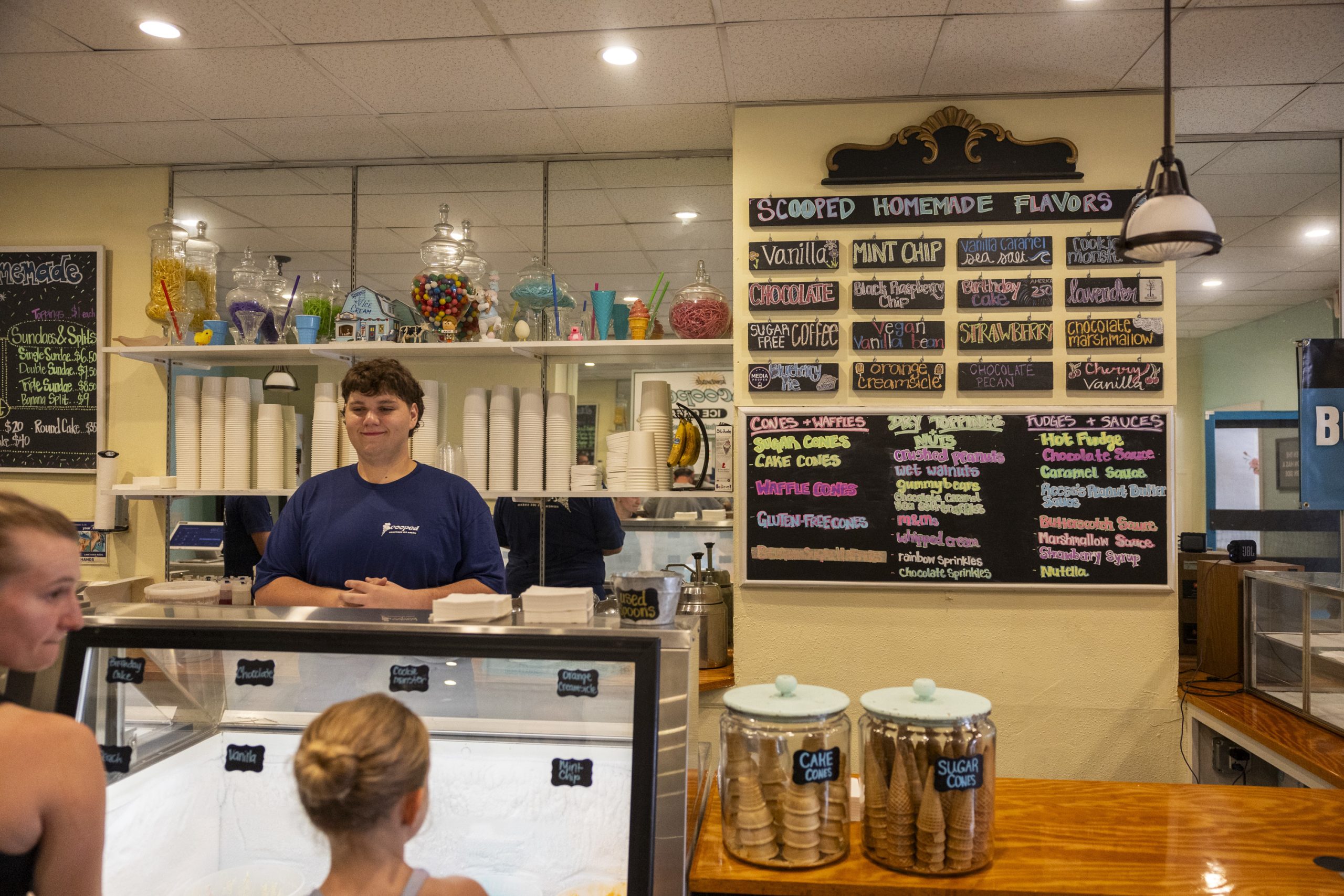
    Michael Mooney, 19, of Ridley Park, helps customers at Scooped Ice Cream in Media. Tyger Williams / Staff Photographer

    However getting locals out into Delaware County is also key for the agency, and for the economic health of the county’s many municipalities, Bohr said. The Ice Cream Trail, along with Trails and Tails, another “passport” program for dog-friendly trails and parks, are formulas to help encourage locals to visit a part of the county they might otherwise skip.

    “When residents visit a new ice cream shop, or explore a town or a Main Street where that shop’s located, they spend a day in the community, perhaps they haven’t done it in a long time, and everyone benefits,” Bohr said.

    Locals are Delco’s “best ambassadors,” she said, often recommending favorite spots to family and friends and coming back again to shop or dine.

    Kyle Lefkof, owner of Scooped Ice Cream in Media and Chester Springs, said regulars and newcomers alike have stopped by to check a box on the Ice Cream Trail and enjoy a sweet treat.

    “I think this is bringing in new business and giving the existing customers something fun to do,” he said.

    Scooped opened in Chester Springs in 2009 and Media in 2017. Lefkof took over the business from his aunt and uncle in 2023, and has been running it since. Scooped serves “super premium, gourmet ice cream” with 14% butterfat and “top-shelf ingredients,” Lefkof said.

    Ice cream is often “the highlight of people’s days,” he said. “It’s really nice to be a part of that.”

    Delaware County’s Ice Cream Trail runs through Labor Day. Participants can download the pass and see all 16 stops here.

    This suburban content is produced with support from the Leslie Miller and Richard Worley Foundation and The Lenfest Institute for Journalism. Editorial content is created independently of the project donors. Gifts to support The Inquirer’s high-impact journalism can be made at inquirer.com/donate. A list of Lenfest Institute donors can be found at lenfestinstitute.org/supporters.

  • Why recruiters can’t find workers and new grads can’t find jobs (it’s not AI)

    Why recruiters can’t find workers and new grads can’t find jobs (it’s not AI)

    Recent college graduates complain they can’t find entry-level jobs because artificial intelligence is taking over.

    Yet, tech recruiter Matt Walsh and other experts say the growth of AI and the struggle to find entry-level work mask a bigger problem: The United States is facing what’s projected to become the largest labor shortage in its history.

    In sectors such as semiconductor production, the problem isn’t AI or too few jobs, said Walsh, CEO of the Phoenix-based search firm Blue Signal.

    “It’s ridiculous,” he said. “There just aren’t enough people.”

    Economists warn that the worsening labor problem, due in part to a skills shortage and population shifts, will be vast and reach beyond tech.

    It “could hobble the American economy for years to come,” predicts the Georgetown University Center on Education and the Workforce. Lightcast, a labor market data company, calls it “the largest labor shortage the country has ever seen.” JPMorgan Chase warns of a national security risk from “a pervasive talent deficit that constrains the nation’s capacity to build, compete, and protect its interests.”

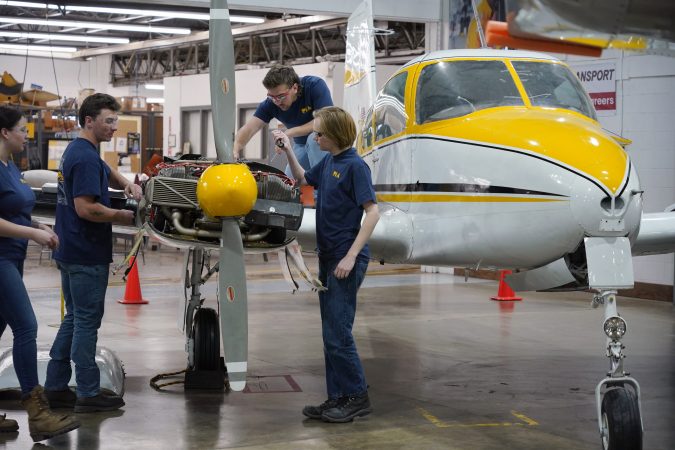
    There will be shortages in the tens or even hundreds of thousands of nurses, physicians, teachers, engineers, pharmacists, mental health counselors, construction workers, and airplane mechanics — jobs AI generally can’t do.

    “All of these people who keep a society functioning are the very people we’re not going to have enough of,” said Ron Hetrick, Lightcast’s principal economist.

    Among the trends that have been leading to this moment: a mismatch between the careers college graduates are pursuing and the jobs employers are struggling to fill. Far fewer students are majoring in healthcare fields than are needed to meet demand, for instance.

    “We have pumped so many young people into business and finance” when what’s really in demand are graduates in other fields, Hetrick said. “It’s like a factory producing these workers like widgets, even though society is saying, ‘We really don’t need them.’ And the factory just keeps pumping them out.”

    But the principal reason for the looming workforce shortages is much more basic. A protracted decline in birth rates is coinciding with a record wave of retirements, data shows.

    From 2024 to 2032, when the last baby boomers sign up for Social Security payments, more than 18 million college-educated workers will leave the labor force while fewer than 14 million enter it, according to the Georgetown center. Meanwhile, even as the number of people with associate and bachelor’s degrees falls, the number of jobs requiring them will grow, the center forecasts.

    That will leave a gap of 4.6 million workers. Lightcast puts the deficit at an even higher 6 million.

    The shortages are already showing up, the U.S. Chamber of Commerce reported. It said that in many industries, even if every worker now unemployed were plugged into an open job, positions would still be left unfilled.

    “We have a crisis in front of us in not preparing people for the world that’s coming,” said Bill Haslam, the Republican former governor of Tennessee and co-chair of the Bipartisan Policy Center’s Commission on the American Workforce.

    The effect of population shifts on the supply of talent, with or without degrees, has been compounded by a drop in the proportion of high school graduates choosing to go to college, a sharply reduced rate of immigration, and a growing number of Americans leaving the workforce altogether because of such issues as lack of childcare, early retirement, incarceration, and substance addiction, according to the Chamber of Commerce.

    College and university enrollment in 2023 was down by nearly 2 million students since its peak in 2010, according to the most recent data available from the U.S. Education Department. The low birth rate since 2010 means the number of college-age Americans is forecast to decline by another 13% through 2041.

    Fewer than half as many people immigrated to the United States last year as the year before, the Census Bureau says, yet 41% of the home health aides increasingly needed to care for the nation’s aging population have historically come from somewhere else, along with a fifth of nursing assistants, dentists, pharmacists, and registered nurses.

    “We’re doing a fantastic job of rolling up the welcome mat and saying, ‘We don’t want you,’” said Brad Hershbein, senior economist and deputy director of research at the W.E. Upjohn Institute for Employment Research.

    The semiconductor industry is among those raising warning flags about the problem of finding workers. It’s projected to grow by nearly 115,000 jobs by 2030, which is 67,000 more than the number of current and projected technicians and engineers, the Semiconductor Industry Association estimates.

    “The semiconductor industry is not alone here,” however, said Erik Hadland, the association’s director of technology policy. “We’re a small part of a much larger issue.”

    State governments have been scrambling to get ahead of the problem. To get college graduates to come or stay and work, some will help them pay off their student loans. A bill under consideration in Minnesota would offer in-state tuition to most public colleges and universities for children of parents who take jobs in that state, waiving the previous requirement that students have graduated from a Minnesota high school after attending for at least three years.

    Several states have combined their higher education and workforce development agencies, including Missouri and Colorado. Connecticut has established both an Office of Workforce Strategy and a Career Pathways Commission. Illinois Gov. JB Pritzker has formed a working group to review that state’s workforce development infrastructure and increase the number of college graduates.

    Some states face shortages that appear more severe than others. South Dakota has just 41 workers for every 100 open jobs, for instance, while California and nine other states have more workers than jobs, the Chamber of Commerce found.

    In Pennsylvania, a study commissioned by the state’s Department of Education has projected that the state needs to increase the number of people with credentials beyond high school by more than 4% to fill a shortage of 218,000 such workers a year by 2032. That will be a significant challenge, considering that college enrollment there has generally been falling.

    Industries in which workers don’t require college degrees are also seeing shortages. Fewer than half as many people are entering the construction trades as are needed, for example, according to Branka Minic, CEO of the Building Talent Foundation, which represents 3,600 employers who are trying to fill that gap.

    “There’s plenty of jobs” in the skilled trades, she said, some starting at $50 an hour. “Show me what college graduates earn that kind of rate.” As for the prospect that AI can fill those largely physical roles, she recalled seeing a poster plastered on an unfinished building. “Finish this, ChatGPT,” it said, mockingly.

    Some savvy workers are figuring it out for themselves.

    Seth Russell’s high school counselor nudged him toward college. Instead he learned welding and now works full-time as a fabricator.

    “I got hired straight out of high school. I have no debt. I’m just making money, paying bills,” said Russell, now 22, who lives in Torrance, Calif. “There’s so many jobs out there.”

    This story about shortages of workers was produced by The Hechinger Report, a nonprofit, independent news organization focused on inequality and innovation in education.

  • Your paycheck is just keeping up with inflation

    Your paycheck is just keeping up with inflation

    American workers’ paychecks are about where they were a year ago, and up 27 cents per hour in today’s dollars since President Donald Trump took office in 2025, because of inflation that has undercut pay increases.

    June’s average hourly wage gain of 3.5% from a year earlier just kept up with inflation of 3.5% over that same yearlong period, according to data released by the Bureau of Labor Statistics on Tuesday.

    Affordability has been playing a big role in how people feel about the economy. When pay doesn’t beat inflation, the political consequences rise.

    “President Trump was elected because people were unhappy with the southern border being open and people were unhappy with the inflation that they had to deal with under President Biden,” said Michael Strain, director of economic policy studies at the right-leaning American Enterprise Institute. He said Americans’ experience in the economy “really does affect their opinion of how presidents are doing, kind of fairly or unfairly.”

    White House spokesperson Kush Desai said in a statement that “President Trump has always been clear about the fact that oil and gas prices — and thus overall inflation — will rapidly drop as soon as the Iran situation is resolved.“ Desai added the administration’s “commonsense agenda of deregulation, tax cuts, and energy abundance” will push wages up.

    Americans’ buying power did grow a little in June over May, as falling gas prices pushed the cost of living down slightly, according to Labor Department statistics released this week. Real average hourly earnings for employees increased 0.8%, the biggest monthly gain in more than a year.

    But that gain comes as cold comfort to the millions of workers whose wages have failed to match it, with prices for many basics like milk and beef climbing steeply this year. Gas prices are also rising again as the U.S.-Iran conflict resumes after the collapse of the short-lived ceasefire.

    “No matter what we see in the averages, there’s going to be a lot of people whose wages are simply not keeping up with inflation,” said Betsey Stevenson, who was the Labor Department’s chief economist from 2010 to 2011 and is now at the University of Michigan. “So they just can’t buy the same bundle of goods that they could have bought a year ago.”

    Many workers holding the same job year after year see raises of around 3%. Some get less. Those people fall behind in an economy running at 3.5% inflation.

    Others who are switching jobs or in a position to demand more from their current bosses are beating inflation. But few workers are moving into new jobs in the current sluggish labor market — with the share of the workforce quitting at the lowest level since 2020, according to recent Labor Department data.

    “What you do get out of that is a lot of people feeling like it’s unfair,” Stevenson said. “And I think that’s coming into an economy where people have been questioning the fairness of the economy for a while.”

    Jessica Newell, 45, earns $80,000 a year as a counselor at a Philadelphia public school, but despite annual salary increases, she is barely surviving, she said. After rent on an apartment she shares with a roommate, groceries, and a $440 monthly student loan payment, she has nothing left and sometimes puts bills on her credit card. Newell currently has less than $1,000 in savings, she said.

    “A lot of the middle class is getting so crushed, and I don’t think anyone cares,” said Newell, who works a second job in the summers to pay the bills. “We don’t have money to live comfortably between paychecks. And there’s no saving for a rainy day emergency. God forbid anything happens to my car.”

    Prices ran low for much of the 2000s and 2010s — increasing about 2% a year or less — so a modest raise kept workers even or a little ahead. That changed after 2021, when inflation spiked to a four-decade high during Biden’s presidency. Inflation cooled by the end of his term, but climbed back up through 2025, reaching 4.2% this May under Trump.

    Those who own appreciating assets, like homes or stocks, tend to be better positioned against inflation, because the value of those assets can rise with prices.

    “Different people are just having very different experiences,” Stevenson said. “That’s ultimately the real problem with inflation. It redistributes in a way that’s kind of random. Who ends up being able to buy more stuff today and who ends up being able to buy less stuff isn’t really based on who worked harder over the last year.”

    Average earnings, measured by what that money can actually buy, are known as “real wages.” They rose slightly during the initial year of Trump’s presidency. Then they dropped this spring as the conflict with Iran drove oil prices higher, nearly erasing the earlier gains. June’s easing of inflation, which stemmed from the ceasefire, allowed real wages to start increasing again. But that upward trajectory could once again reverse depending on how things go with Iran.

    Different states are also experiencing different wage environments. Workers’ earnings in some states are slightly beating inflation, while those in others appear to be losing ground on average.

    Several of the states where workers are falling behind include congressional districts considered toss-ups in the upcoming midterm elections as Republicans try to defend their majority in the House of Representatives.

    In Arizona, for example, Republicans are battling to hold two toss-up seats in a state where many voters feel squeezed by rising costs.

    Barrett Marson, a GOP strategist in Arizona, said it would be a mistake for Republican candidates to overlook Arizonans’ pocketbook pain as November nears. High inflation will be top of mind for voters, he said.

    “If gas spikes again, Republicans are in trouble. It’s just that simple,” Marson said. “People are going to think about their economic situation and vote accordingly, probably up and down the ballot.”

    He added that many would-be GOP voters could be offended by the president’s dismissive comments about inflation caused by the Iran war.

    “The problem with Biden — and now Trump is singing from that same hymn book — is the idea inflation doesn’t matter, [that] ‘you don’t know your finances as well as I know your finances,’” Marson said. “It didn’t work for Biden, and I don’t think it’ll work for Trump or anyone who follows that playbook.”

    Dana Angelos, 51, of South Carolina, was making $20 an hour as a medical biller a few years ago, but then the contractor she worked for shut down. This year she’s been earning about $18 an hour for the same work, even as her living expenses have soared. To manage, Angelos moved to her mother’s property in a rural area, where she can live rent free. She also began supplementing her grocery shopping with donations from food pantries.

    Angelos said Aldi and Walmart used to be affordable for her.

    “But not anymore,” she said. “Everything’s going up but our paychecks.”

  • Gerry O’Reilly, Villanova track Hall of Famer, Irish Olympian, and Vanguard executive, has died at 61

    Gerry O’Reilly, Villanova track Hall of Famer, Irish Olympian, and Vanguard executive, has died at 61

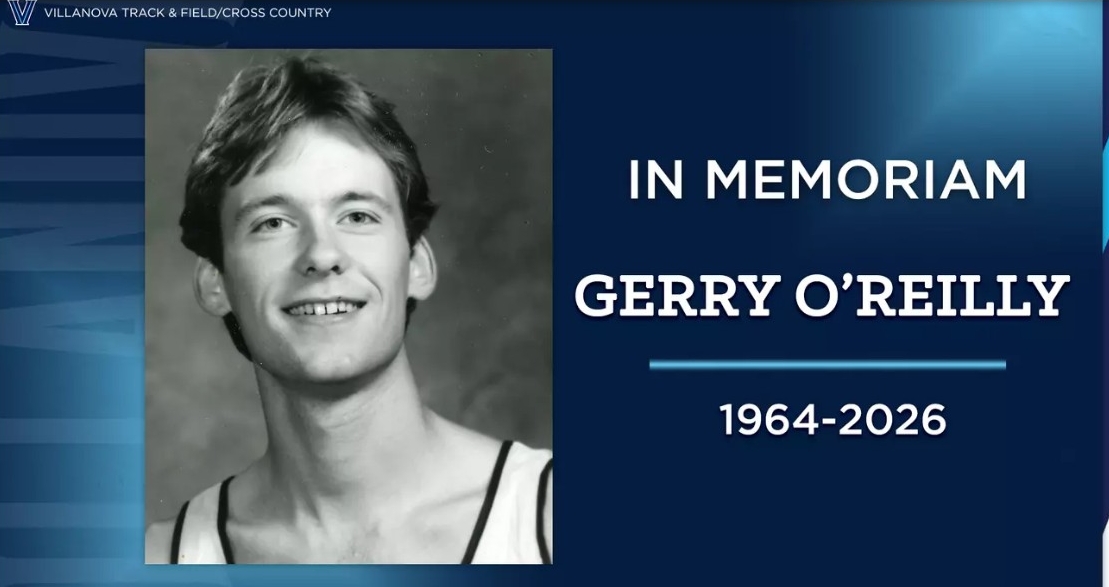
    Gerry O’Reilly, 61, of Chester Springs, Hall of Fame middle distance track star at Villanova University, 1988 Irish Olympian in the 1,500-meter run, longtime executive at the Vanguard Group Inc., mentor, and role model, died Thursday, June 11, at Phoenixville Hospital after an earlier sudden cardiac event.

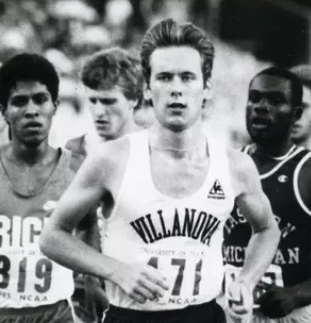
    Born and reared in Dunboyne, County Meath, Ireland, Mr. O’Reilly earned a track scholarship to Villanova in 1983 and joined a dozen other Irish athletes in what became known as the school’s Irish Pipeline to the Main Line. He went on to run cross-country and indoor and outdoor track, win seven Big East Conference championships, and hold the Big East outdoor record in the 1,500 for 37 years.

    He ran the 1,500- and 3,000-meter runs, the mile, and the distance medley relay at Villanova, and was named All-America four times. He won six national collegiate championships, was named outstanding performer at the 1986 Big East Indoor Championships, and was inducted into the Penn Relays Wall of Fame in 2007 and the Villanova Varsity Club Hall of Fame in 2009.

    “Without exaggeration, those were four of the best years of my life,” Mr. O’Reilly told Dave Thomas on the Belmont Plateau Hall of Fame podcast. Villanova “kind of set me up both athletically and academically for the rest of my life.”

    Marcus O’Sullivan, former Villanova teammate and countryman, now director of track and field and cross-country at Villanova, said Mr. O’Reilly “had a steadfast moral compass that guided him in his life, and in doing so it had an intoxicating influence on others. … We all need a person like Gerry O’Reilly in our lives.”

    After college, Mr. O’Reilly competed in the international Millrose Games in New York, the 1987 World Championships, the 1989 World Indoor Championships, and for Ireland in what is now the World Athletics Championships. At the 1988 Summer Olympics in Seoul, South Korea, he made it to the semifinals of the 1,500.

    Irish Olympic team officials called him “an exceptional athlete” and praised his “genuine commitment to helping the next generation.” They said: “Once an Olympian, always an Olympian.”

    Irish marathon Olympian John Treacy told the Irish Times: “Gerry was a smashing runner and just the nicest guy, great for staying in contact and communicating with other Irish runners over the years.”

    Mr. O’Reilly ran miles at night after school in the rural Irish fields and lanes, and joined the Dunboyne Athletic Club when he was 9.
    Villanova University

    Mr. O’Reilly was also inducted into the Belmont Plateau Hall of Fame in 2025 and recently honored by his hometown Dunboyne Athletic Club.

    He earned a bachelor’s degree in economics in 1987, joined Vanguard in 1992 and the trading desk in 1994, and worked as an investment leader and portfolio manager. He was a mentor, colleagues said in a tribute, “who made immeasurable contributions to several of Vanguard’s flagship index funds.”

    He served on corporate panels and lectured at leadership development events. Colleagues called him “riveting and influential” and “a giant in every sense except ego.” One said: “You could tell he truly cared about the markets and about doing things right.”

    A friend said: “Great athlete, great person.”

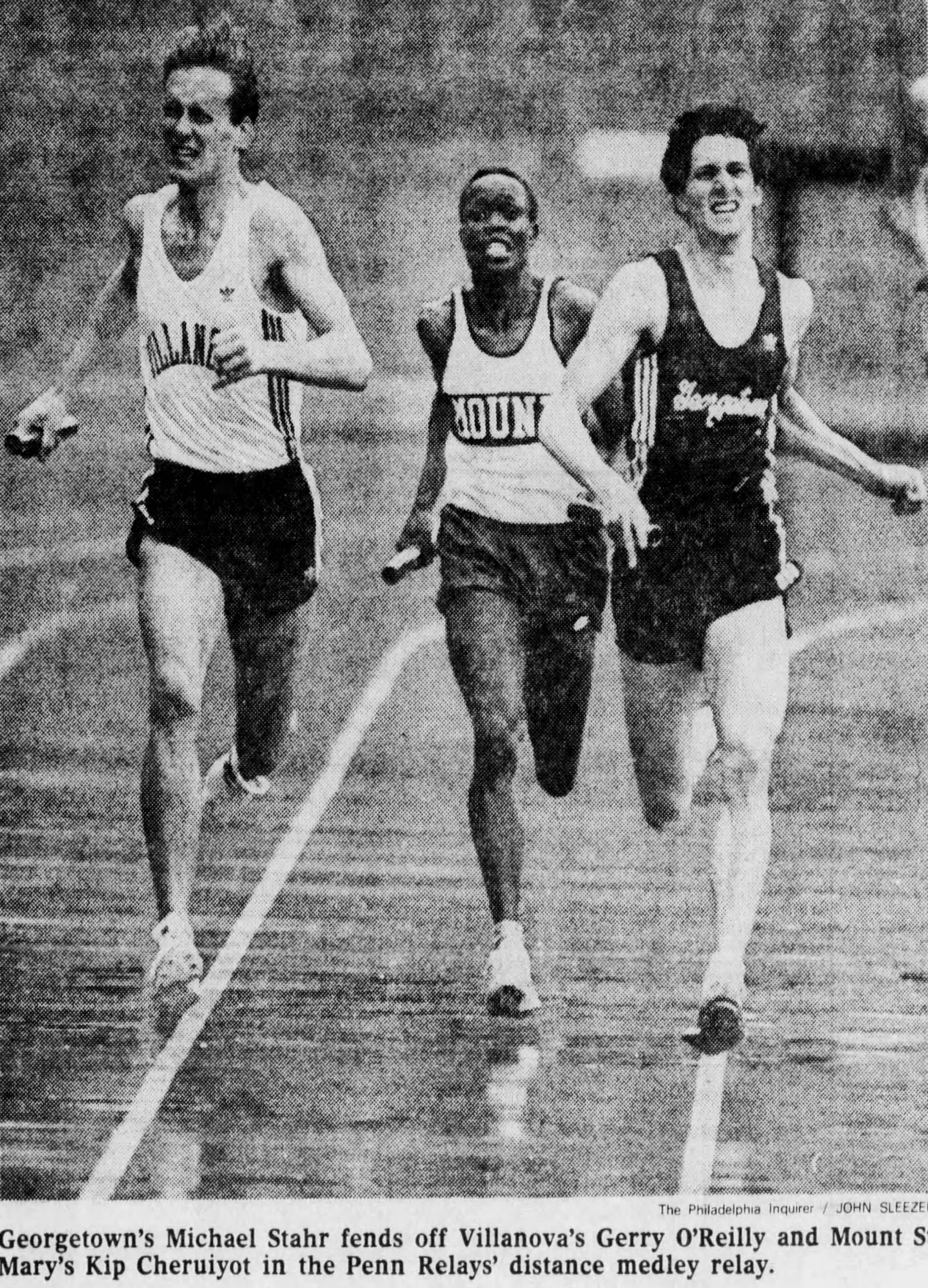
    This photo and a story about Mr. O’Reilly (left) appeared in The Inquirer in 1987.Newspapers.com

    Gerard Christopher O’Reilly was born July 1, 1964. He was the oldest of six children and excelled at cross-country, track, soccer, and other sports.

    He ran miles at night after school in the rural Irish fields and lanes, joined the Dunboyne Athletic Club when he was 9, and was inspired, he said later, by Irishman Eamonn Coghlan’s fourth-place finish in the 1,500 at the 1976 Summer Olympics. Mr. O’Reilly went on to win the 1983 Irish Junior 1,500 championship.

    He met fellow track star Melody Sye, and they married in 1992 and had a daughter, Meghan, and sons Keelan, Jack, and Conor. They divorced later.

    “Despite all his trophies and merits,” Mr. O’Reilly’s family said in a tribute, “he always remained humble and would say being a dad to his four kids was his proudest accomplishment.”

    Villanova honored Mr. O’Reilly online.Villanova University

    Mr. O’Reilly was an avid bicyclist, and he spent many weekends on long rides and at Eagles games on Sundays. He liked poker, hikes with his dog, Bear, and watching sports with his family.

    “Most of all,” his family said, “he simply enjoyed cracking jokes, sharing stories, and spending time with his friends and family.”

    In addition to his children and former wife, Mr. O’Reilly is survived by three sisters, two brothers, and other relatives. “His final gift,” his family said, “was saving multiple lives through organ donation.”

    Services were held earlier.

    Donations in his name may be made to the American Heart Association, 7272 Greenville Ave., Dallas, Texas 75231; Special Olympics, 2600 Virginia Ave. N.W., 11th Floor, Washington, D.C. 20037; and the American Cancer Society, Box 6704, Hagerstown, Md. 21741.

  • Philly is minting the new Trump gold coins

    Philly is minting the new Trump gold coins

    The U.S. Mint will soon begin producing $1 gold-hued coins, featuring the face of President Donald Trump, Treasury Secretary Scott Bessent announced this week.

    The coins will be created at the Mint’s Philadelphia production facility on Independence Mall, the nation’s first and oldest mint. A Treasury Department spokesperson said the coins will be available in the fall, and there’s “no gold in this coin but [it] has a gold-like finish.”

    The designs boast a direct-gaze portrait of President Trump, with the phrase “In God We Trust” written next to his face. This side of the coin also includes the dual date, “1776 ~ 2026,” which is the same motif featured on the dimes, nickels, quarters, and half-dollars in the U.S. Mint’s Semiquincentennial program released at the start of the year.

    On the reverse side, the $1 coin shows a variation of the Great Seal, an insignia of an eagle that is only used by the U.S. Department of State to impress upon official documents and treaties. The version on the coin includes the same eagle holding an olive branch and arrows in its talons. Its shield, however, includes the number “250,” commemorating the 250th anniversary of the signing of the Declaration of Independence.

    In his announcement on X, Bessent said the coin “celebrates the strength of American values, and the promise of a nation dedicated to preserving freedom for all.”

    The coin’s production has faced obstacles, as U.S. code states that “only the portrait of a deceased individual may appear on United States currency.” Critics say the move violates federal law.

    In response, Bessent has cited a 2020 law that allows the Treasury to mint $1 coins with “designs emblematic of the U.S. semiquincentennial.” However, the same law reaffirms that no head-and-shoulders portrait of any person, “living or dead,” may be included on the coins.

    Bessent pointed to historical precedent. “During the 150th, there was a Calvin Coolidge coin, so we can put living presidents’ images on a coin,” he told Fox News in an interview.

  • 2026 Toyota bZ: A new name, more power, and lots going for it

    2026 Toyota bZ: A new name, more power, and lots going for it

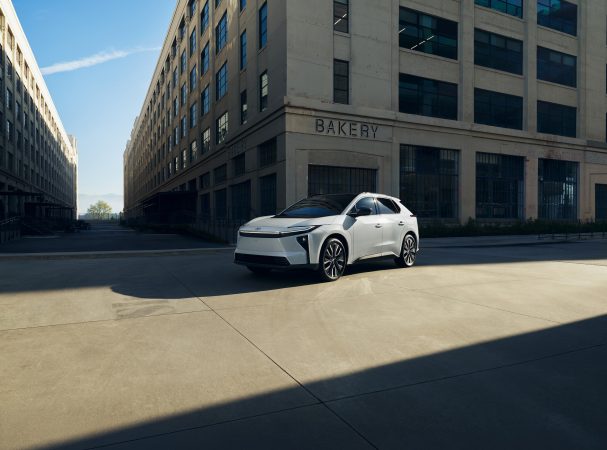
    2026 Toyota bZ XLE FWD Plus vs. 2026 Volvo EX30 Twin Motor Performance Electric Ultra: A little EV battle.

    This week: Toyota bZ

    Price: $40,468 as tested. Options were few, floor mats and such. Lots standard for this trim level.

    What others are saying: “Highs: Smooth and nearly silent powertrain, excellent efficiency, comfortable front seats. “Lows: Long wet stopping distance, no one-pedal driving ability, lacks some expected EV-specific features, compromised driving position, meager small-item storage,” says Consumer Reports.

    What Toyota is saying: “Miles and miles of innovation.”

    Reality: Whoa, dropping that letter and number from the name really helped this EV.

    What’s new: Toyota has given a bit of a rethink to the bZ4X, rebranding it now as simply the bZ. (Even I could not remember the old name, and I get paid to remember the name. Then again, I never had the pleasure of testing one, just the Subaru Solterra clone.) They’ve also stretched the range to 314 miles, at least on the version tested. Comforting. It has a new sleeker look too.

    It’s part of Toyota plotting its own path on EV, with the improved bZ and larger bZ Woodland, a path that was cut years ago and now they’re stuck with it. But could it mean a resurgence of EVs, when they’ll finally come in to their own? When a consistently trustworthy brand like Toyota jumps in head first, it could open up new possibilities. Especially if oil prices stay high.

    Competition: Some are calling EVs a thing of the past but there are a lot of them available. This is not a comprehensive list: Chevrolet Bolt (a Driver’s Seat review is planned for September), Chevrolet Blazer EV, Chevrolet Equinox EV, Ford Mustang Mach E, Honda Prologue, Hyundai Ioniq 5, Jeep Wagoneer S, Kia EV6, Mini Countryman EV, Nissan Ariya, Subaru Solterra, and Tesla Model Y.

    Up to speed: Like most EVs, the bZ climbs to 60 mph with seemingly no effort. There may be a Sport mode; I didn’t feel the need to look for it. There is an Eco mode, and I didn’t bother turning it on.

    The front-wheel-drive versions of the bZ create 221 horses, and hit 60 mph in 6.2 seconds, according to Car and Driver, which puts it into respectable fast-car territory. The all-wheel drives have a second motor, 338 horsepower, and get to 60 mph in 4.4 seconds, according to Motor Trend, more like an EV.

    Shiftless: The bZ has a nice dial shifter on the console; push down and twist counterclockwise for Reverse, or clockwise for Drive. Press a button for park. The tiny parking brake lever is conveniently nearby.

    On the road: The aerodynamics and heavy batteries make driving a rewarding experience. There’s a little bit of fun but there’s mostly just a smooth glide as you zip along.

    The front-wheel-drive version does a great job of not feeling like one. Oversteer or lurching to the side on corners is limited, although the torquey motor meant the bZ left rubber behind on occasion when the light turned green.

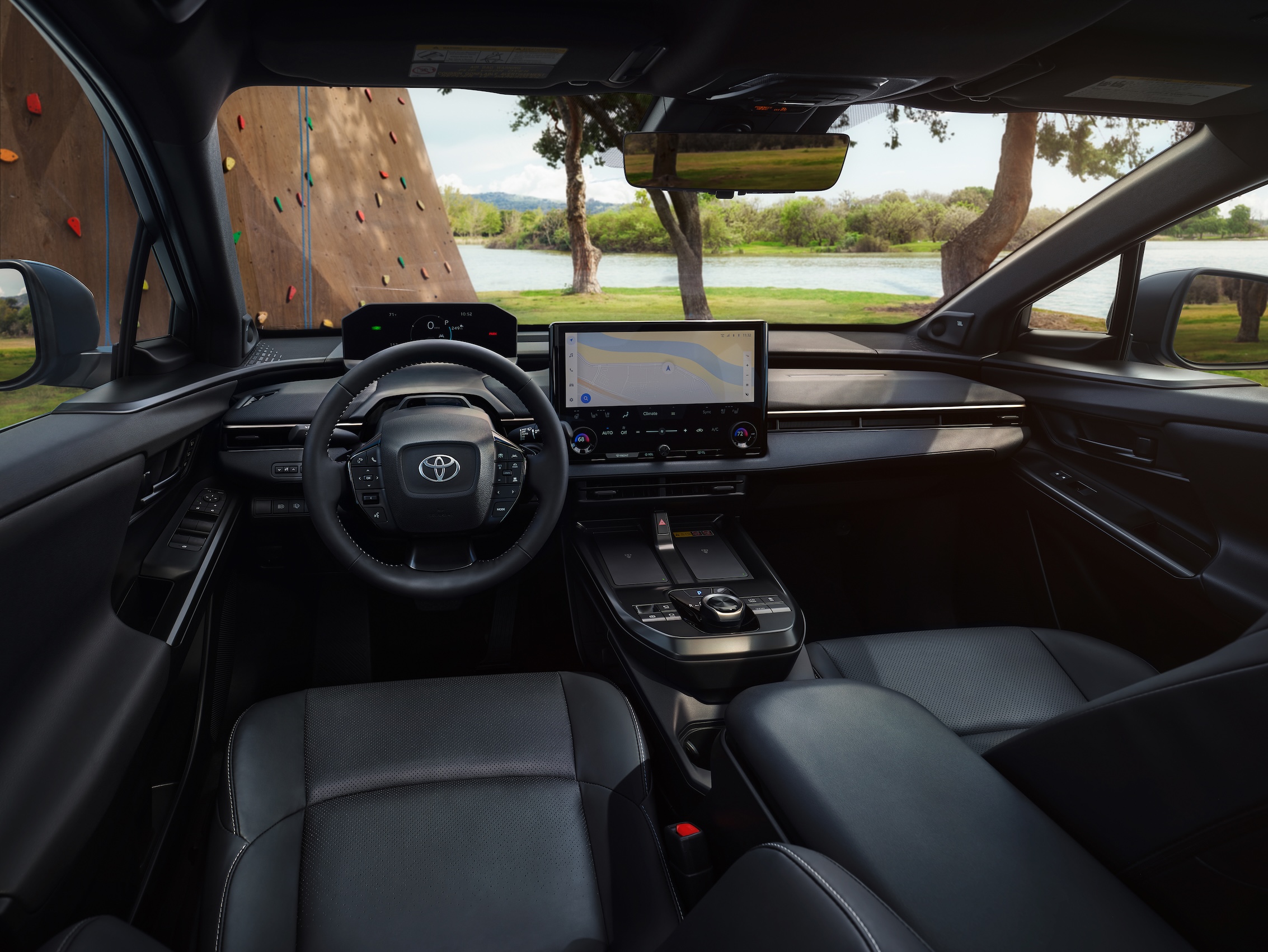
    The interior of the 2026 Toyota bZ provides comfort up front, sadness in the back, at least with the cloth seats in the test model.Toyota

    Driver’s Seat: The cloth seats provided great comfort and support. Toyota makes a superb basic seat; it was the main selling point in Sturgis Kid 1.0’s first car, a 2016 Scion iM, and every family member who drove it agreed those were refreshing. The bZ carries this spa-day mantel.

    The faraway gauge pod pretends to be mounted on the steering column. I’d found it cumbersome and somewhat hard to read in my Solterra test, but this time I was charmed. The Lovely Mrs. Passenger Seat commented on how neat it looked.

    The sloped front windshield makes for a welcome cockpit for anyone who ever spent time in a 1990s GM dustbuster minivan.

    Friends and stuff: Here, the bZ starts to lose its charm. Rear-seat passengers will find plenty of legroom, and decent headroom. Foot room is a little snug but there’s so much legroom.

    But the real downfall is the rear seat. The seat cushion is so crushable it’s almost like sitting on an air mattress, and so short from front to back it’s like sitting on a log. So I guess it’s an air log?

    Cargo space is 38.1 or 56.1 cubic feet.

    Play some tunes: The 14-inch Toyota audio multimedia screen is perched liked an iPad on the dashboard, complimenting the gauge screen nicely and giving the bZ a very Prius-like feel. Getting around the system is almost entirely through the touchscreen, but it’s big enough that it’s not too impossible.

    Sound from the system is very good, an A. Extremely clear audio.

    Keeping warm and cool: The Lovely Mrs. Passenger Seat commented on the round temperature control dials’ attractiveness. I explained how they meant swiping something else on the screen by accident, but then couldn’t replicate my errors when asked. Sigh.

    The rest of the controls are on the ebony portion of the touchscreen, and do require some eyes-off-the-road time. The fan is especially difficult to operate. Notably, the bZ alerted me to keep my eyes on the road, and I told it, “You know, this is all your fault. But it won’t be YOUR insurance rates going up.” No response. No apology. Jerk.

    Range: The vehicle reported a 314-mile range. The best mileage comes in the low-priced offering, which is a nice touch. The next level Limited range drops to 299 miles, and the Limited all-wheel drive will only travel 278.

    It was fairly quick to charge on my home 110-volt outlet, adding 20% range overnight, and it advertises that it takes eight hours to fully charge on a 240-volt standard home charger.

    It’ll charge from 10-80% in 30 minutes on a fast charger, slightly slower than the 20 minutes on other carmakers’ EVs.

    Where it’s built: Aichi, Japan

    How it’s built: Consumer Reports predicts the bZ reliability to be a 3 out of 5.

    Next week: Volvo EX30

  • U.S. pledges to buy more Philly-made ships and nuclear sub parts

    U.S. pledges to buy more Philly-made ships and nuclear sub parts

    As President Donald Trump prepared Wednesday to address CEOs from Boeing, General Dynamics, and other big military contractors in Carlisle, Pa., Sen. Dave McCormick confirmed details of large government projects that will keep workers busy at Philadelphia’s two principal shipyards as they plan to grow.

    Hanwha Philly Shipyard, which employs around 2,000, will get approvals for new ship orders to continue building National Security Multi-Mission Vessels for the U.S. Maritime Administration (MARAD). McCormick valued the new orders at $1.5 billion, which is about the same as it cost to build the previous five MARAD ships at the yard.

    The new orders will enable the yard to keep workers busy as it plans new facilities for civilian and military orders that could double employment and add work for thousands of subcontractors.

    General Dynamics, which builds Columbia-class nuclear submarines for the Navy at its New England shipyards, and Rhoads Industries, which builds modules for parts of those submarines, will share $2.5 billion over 10 years in additional orders for submarine construction work in Philadelphia.

    JPMorgan Chase & Co. chief executive Jamie Dimon visited the Navy Yard district to pledge $13 million in financing for the ongoing construction of Rhoads’ 95,000-square-foot submarine manufacturing facility near its existing ship repair pier, which Rhoads announced a year ago.

    Company president Michael Rhoads said his family is paying most of the $100 million cost of that facility, with help from the Navy, state government, and now the loan from JPMorgan.

    Dimon also pledged $11 million for subcontractor assistance and labor training programs, which are affiliated with the Chamber of Commerce for Greater Philadelphia.

    Dimon noted that JPMorgan is a banker to Hanwha operations in Korea, where the company has its main shipyard, and may finance larger future Hanwha projects.

    JPMorgan is seeking more government, military, data center, and energy work as mass-market consumer companies, office construction, and other sectors are lagging, Dimon said.

    The bank also wants to raise its profile in the Philadelphia area, where it is targeting small businesses and investors as it builds a 100-branch network as part of a larger national system, even as other banks are closing offices.

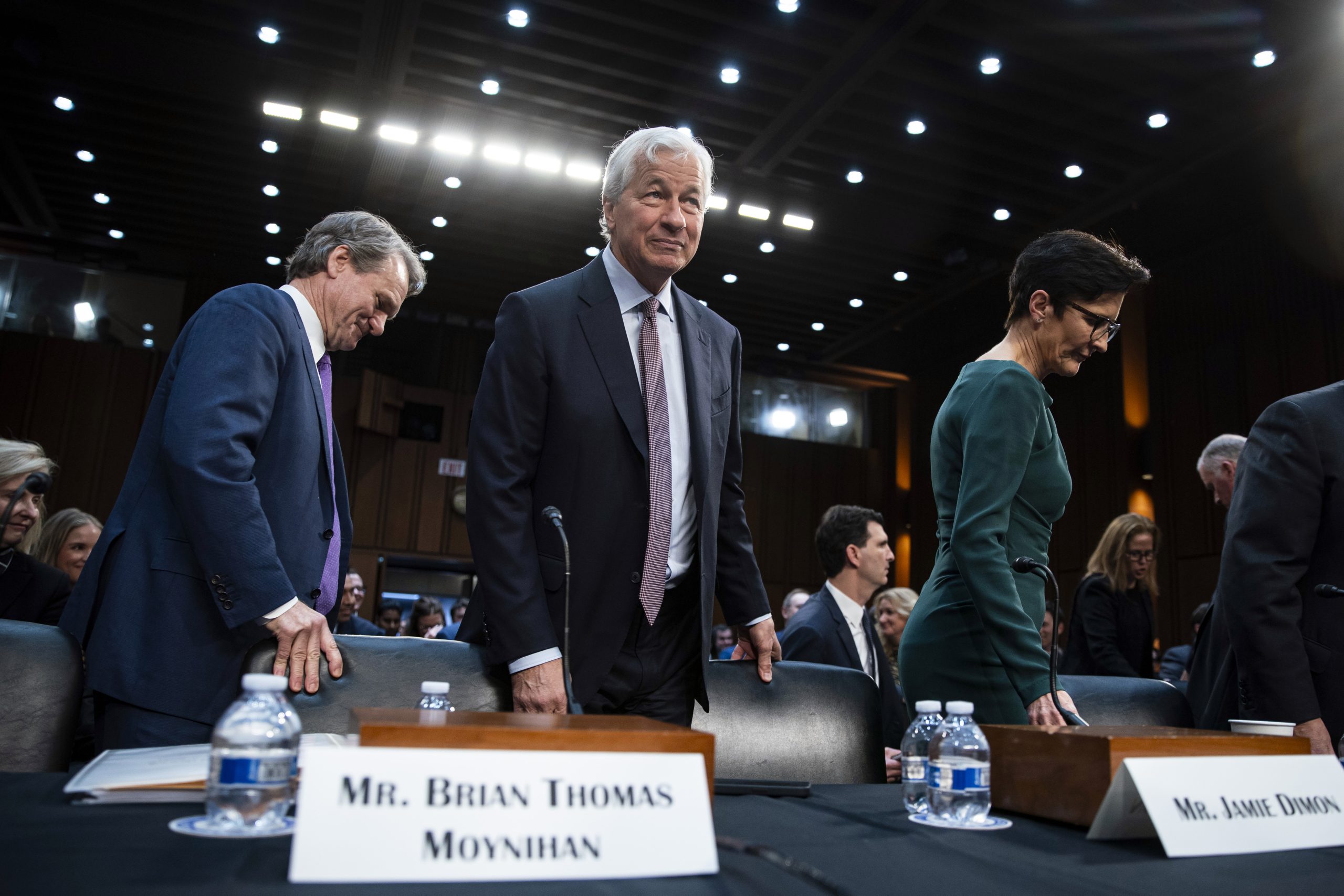
    Jamie Dimon (center), CEO of JPMorgan Chase, with rival Brian Moynihan of Bank of America, at a Washington hearing in 2023. AL DRAGO

    The $13 million loan to Rhoads will be raised through the federal New Market Tax Credits program, Dimon said.

    Rhoads’ current ship repair facilities employ around 700. The company says it will add 450 to handle new work at the complex. President Michael Rhoads said it should open next year.

    Employees and contracted labor at Hanwha and Rhoads are represented by the Philadelphia Metal Trades Council. Union tradespeople also work on construction projects and hope for more hiring as Hanwha expands operations, said Ryan Boyer, business manager of the Philadelphia Building & Construction Trades Council, who attended Dimon’s announcement.

    Hanwha has promised to invest up to $5 billion in the yard. The company bought the complex in 2024 for $100 million and says it has spent another $100 million upgrading facilities. Larger investments such as new drydocks, giant cranes, or more land may follow as Hanwha vies for U.S. and foreign contracts.

    Shares of the company’s shipbuilding affiliate Hanwha Ocean fell 23% on July 6 after the company was passed over for a Canada submarine-building contract.

    U.S. shipbuilding costs are far higher than in industry-leading China, Japan, and Korea.

    Hanwha says it can make the Philadelphia yard profitable and bring down costs for building Navy ships if it can increase volume — from the recent one ship every eight months to one or two a month. Hanwha officials have said they will build ships for the company’s own nascent shipping arm to keep workers busy, especially when orders are slow.

    Rhoads noted that his father, chief executive officer Dan Rhoads, was with McCormick at the Pennsylvania Defense and Innovation Summit at the Army War College in Carlisle, a gathering of military contractors and Washington officials, where Dimon was also on the guest list.

    Other funding that JPMorgan promised include:

    After Dimon’s announcement, Mayor Cherelle L. Parker reiterated her support for shipbuilding, heavy industry, and job creation along the Delaware River waterfront in what she calls Lower South Philly. She has pledged to speed up permitting for large projects.

    Parker promised “to make sure government bureaucracy, which is usually the most significant barrier to entry the private sector has,” is kept out of the way of the bank and its clients’ projects.

    The former Navy Yard, which includes the Hanwha and Rhoads ship facilities, is co-owned by the city and the Chamber of Commerce. It is home to businesses and government agencies that employ around 16,000.

    “We are eds and meds — and maritime and shipbuilding and defense,” Parker said.

    Dimon responded: “God bless you 100%.”

  • Jefferson, Nemours, Temple, and St. Chris are exploring alliance to support the North Philadelphia children’s hospital

    Jefferson, Nemours, Temple, and St. Chris are exploring alliance to support the North Philadelphia children’s hospital

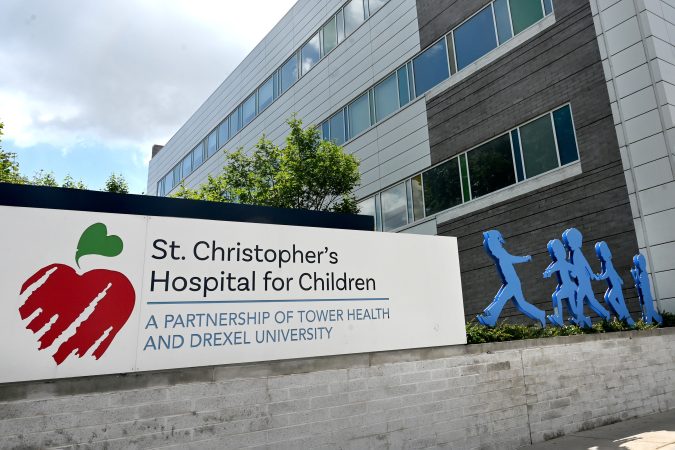
    Three major Philadelphia-area health systems are exploring an alliance to support financially struggling St. Christopher’s Hospital for Children in North Philadelphia, its leaders announced Wednesday.

    The proposed alliance would involve Nemours Children’s Health, Jefferson Health, and Temple Health, a St. Chris statement said.

    St. Chris’ ownership would not change from the current 50-50 partnership between Drexel University and Tower Health.

    Under the alliance, Wilmington-based Nemours would provide highly advanced, or tertiary, care. Nemours is Jefferson’s primary pediatric partner in the Philadelphia area.

    The preliminary agreement announcement provided no timeline to form the alliance. It also did not mention specific financial support for the North Philadelphia institution, which has received millions from local health players following a 2019 bankruptcy and steep losses during the pandemic.

    St. Chris’ board chair, P. Sue Perrotty, said the 150-year-old hospital will remain a “gateway” to care for families.

    “Our goal is to preserve what makes St. Christopher’s so special while strengthening our operations, so our community-focused mission will endure,” she said.

    “Whether care is delivered at St. Christopher’s or through our partners when clinically appropriate, our team will continue to coordinate every step of a patient’s journey, providing families with a seamless experience and a trusted guide throughout their child’s care.”

    Beyond the critical health services St. Chris provides, the institution also plays a vital part in medical education for area medical schools, including those at Drexel, Thomas Jefferson University, Philadelphia College of Osteopathic Medicine, and Temple University.

    It serves as a safety net for healthcare in some of Philadelphia’s lowest-income communities. About 85% of its patients in recent years have been insured by Medicaid, the highest percentage of any children’s hospital in the nation, according to St. Chris.

    Twice in the past four years, a coalition of Philadelphia nonprofits provided financial lifelines for St. Chris.

    Children’s Hospital of Philadelphia, Jefferson, Temple, Philadelphia College of Osteopathic Medicine, Independence Health Group, and private donors provided $50 million over two years starting in 2022. Two years later, the same group, minus Independence, contributed another $30 million.

    Jefferson and Temple were also part of a consortium that considered bidding for St. Chris in 2019 during its parent company’s bankruptcy. They backed out before the auction, which Drexel and Tower won with a $50 million bid.

    Nemours spokesperson Shelley Meadowcroft said there was no financial support included in the agreement.

    Nemours in recent years has lost affiliations with Main Line Health and ChristianaCare to CHOP. The alliance will strengthen “access to high-quality pediatric care in our region,” she wrote in an email.

    “This collaboration also strengthens Delaware’s role in pediatric care by positioning Nemours Children’s Delaware-based clinical operations as a central hub for advanced specialty care, education, and innovation,” she added, “while supporting the long-term strength and mission of St. Christopher’s Children’s Hospital and the communities it serves.

    In a statement, Temple University officials characterized the agreement as “non-binding letter of intent” to form an alliance “in support of St. Chris and its future.”

    “The proposed alliance reflects a shared commitment to securing a future for St. Christopher’s while preserving the mission, clinical excellence and community role that have made the hospital a resource for children and families in Philadelphia and across the region,” officials said.