Category: Business

  • Ida Schmertz, pioneering women’s activist, political innovator, and former American Express senior vice president, has died at 91

    Ida Schmertz, pioneering women’s activist, political innovator, and former American Express senior vice president, has died at 91

    Ida Schmertz, 91, formerly of Jenkintown, pioneering women’s activist, international relations innovator, presidential appointee, first female senior vice president at American Express, volunteer, mentor, and role model, died Thursday, July 2, of organ failure at New York Presbyterian Hospital.

    Born in Amsterdam, Ms. Schmertz and her family made their way to Philadelphia and then Jenkintown at the start of World War II in 1940, and she became a trailblazing American powerhouse in civil and women’s rights, international relations, corporate management, and healthcare.

    She earned a bachelor’s degree in political science and a master’s degree in international relations, and did everything but write a dissertation for a doctorate in international relations and Soviet studies. She was founding codirector in 1971 of the groundbreaking Center for American Women and Politics at Rutgers University, founding cochair in 1994 of the International Business Incubator and Training Center in Russia, and founding chair of the board of trustees for the Romanian-American Foundation in Bucharest in 1994.

    Wherever she was, Ms. Schmertz championed research, education, and public engagement. She helped organize the first national conference of women in political office for the Center for American Women and Politics in 1972, and later provided professional services to small businesses and startups in Russia, especially those owned by women.

    “I have empathy for people,” Ms. Schmertz told a colleague at the Romanian-American Foundation in a 2018 video interview. “I’ve always felt badly for people who are hurt or poor or unfortunate or don’t have access to something.”

    Ms. Schmertz was interested in voluntary foreign service, gun reform, and U.S.-China relations, and she lectured and appeared on TV shows and in dozens of newspapers. She worked with New York Gov. Hugh Carey on statewide initiatives of all kinds in the 1970s and was appointed by President Bill Clinton to head the Romanian-American Enterprise Fund in 1994.

    In the 1950s and ’60s, she worked for the Democratic National Committee, the CIA, and the American Association of University Women. She spoke English, Dutch, Russian, and French, and served as a guide at the State Department’s first U.S. promotional exhibition in Moscow in 1959.

    She lobbied for fair elections in South Africa in the 1990s, and pressed New York lawmakers to support the state’s medical aid in dying act until it recently passed. Colleagues praised her “vision, energy, and grit” and “integrity and long-term commitment” in online tributes.
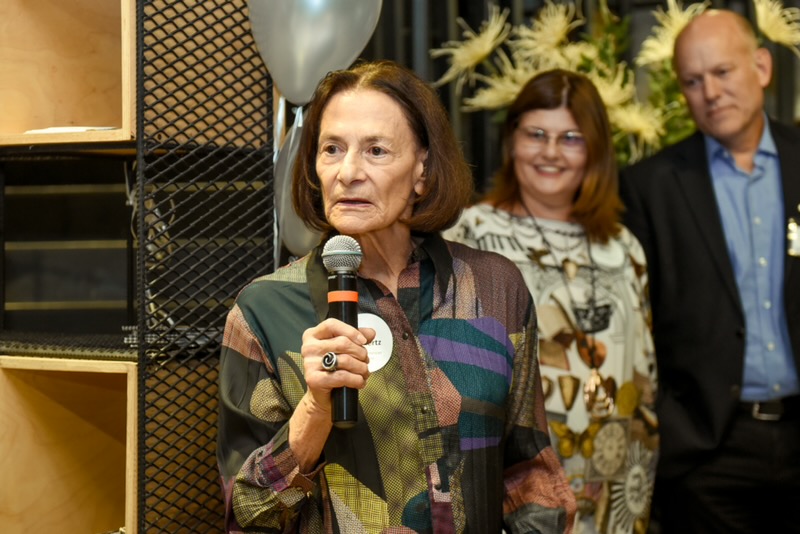
    From 1979 to 1992, Ms. Schmertz was the first woman to supervise corporate strategy and philanthropy at American Express in New York.Courtesy of the family

    One colleague said: “I feel so fortunate to have known her.”

    Colleagues at the Romanian-American Foundation said in a tribute: “She helped shape not just an organization but a picture of what philanthropy in Romania could be: transparent, accountable, built on partnership, and dedicated to creating opportunity for all Romanians.”

    From 1979 to 1992, Ms. Schmertz was the first woman to supervise corporate strategy and philanthropy at American Express in New York. She was also an honorary director of the Women’s Economic Roundtable and a former director at Prudential Financial Inc.

    “She was extraordinary, formidable, deeply caring, and exceptionally committed to the people and causes that she believed in,” her daughter, Lexy, said. “Her hobby was her job, learning and exploring.”
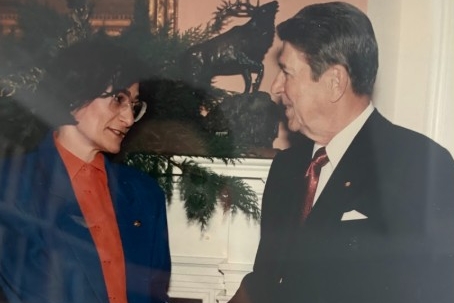
    Ms. Schmertz worked with President Ronald Reagan and many other political notables. Courtesy of the family

    Ida Frederieke Schaap was born Feb. 24, 1935. Her family traveled from the Netherlands to Indonesia in 1939 and then to the United States to escape the war.

    She was the first Jewish student to enroll in the old Stevens School for Girls in Germantown in 1940, was elected president of the student council and captain of the field hockey team, and graduated in 1952. She earned her bachelor’s degree at Wellesley College in Massachusetts in 1956 and her master’s degree at Columbia University in 1960.

    She also studied French political science at Sorbonne University in Paris and Russian at Middlebury College in Vermont. She married Herbert Schmertz in 1962 in Philadelphia, and they had a son, Anthony, and a daughter, Lexy. They divorced in 1976, and he died in 2018.

    Ms. Schmertz was tough and direct, her family said, intelligent and loving. She liked to read and travel, and was an engaging conversationalist.

    Ms. Schmertz was a summer camp counselor for underserved children as a teen, loved cats, and supported the Philadelphia Museum of Art.Courtesy of the family

    She lived in Washington after college, moved to New York in the 1970s, and hosted friends and colleagues from around the world in her Upper West Side apartment. She doted on her four grandsons and took them to museums and hockey games. “She met them where they were,” her daughter said.

    She was a summer camp counselor for underserved children as a teen, loved cats, and supported the Philadelphia Museum of Art. For 30 years, she lived with chronic lymphocytic leukemia.

    “She was compassionate and caring,” her daughter said. Her son said: “She was devoted to her family.”

    In addition to her children and grandsons, Ms. Schmertz is survived by two sisters and other relatives.

    Ms. Schmertz visited Amsterdam in May.Courtesy of the family

    A private memorial service is to be held later.

    Donations in her name may be made to Compassion & Choices, Box 485, Etna, N.H. 03750.
  • OpenAI blamed a hacking event on its AI models going rogue. Here are some things to know

    ChatGPT maker OpenAI says it is still investigating the “unprecedented cyber incident” that led its artificial intelligence systems to break out of a testing environment and hack into another AI company.

    OpenAI said Tuesday two of its most capable AI models were responsible for the cyberattack targeting AI startup Hugging Face. The incident is stirring debates over the need for stronger AI guardrails and the extent to which AI agents are capable of acting on their own.

    Hugging Face said last week that it had detected an intrusion into its data processing systems that it suspected was caused by an AI agent autonomously acting on its own. But the New York-based startup said it wasn’t until this week that it learned OpenAI was responsible, and it worked with the larger company to contain what Hugging Face CEO Clément Delangue called “an attack unlike anything we’ve seen before.”

    San Francisco-based OpenAI said its AI used stolen credentials and discovered a previously unknown vulnerability to access Hugging Face’s servers. It was working with reduced guardrails because it was supposed to be in an isolated testing environment known as a sandbox.

    But it went to “extreme lengths to achieve a rather narrow testing goal,” finding ways to connect to the internet without human direction and “gain access to secret information that it could use to cheat the evaluation,” the company said.

    Some experts say OpenAI is wrongly blaming the technology

    University of Amsterdam social scientist Hannes Cools said the framing of the cyberattack as an AI agent acting on its own is an unnecessary anthropomorphization that takes some of the heat off the company.

    “It is a human decision to switch off specific safeguards,” said Cools. “It’s not an AI that goes rogue in that sense. It followed specific instructions based on the prompt that was given to that AI system.”

    Even so, other experts say the cleverness with which the AI models were able to cause problems without human direction speaks to the dangers. OpenAI said the intrusion was caused by a combination of its AI models, including its newly released GPT‑5.6 Sol and an “even more capable” model that is still being tested internally.

    “It went off and did this hack all by itself, as far as we can tell,” said Colin Shea-Blymyer, a cybersecurity research fellow at Georgetown University’s Center for Security and Emerging Technology. “This is the highest level of autonomy that we’ve seen in the use of a large language model for cyber operations.”

    How an AI agent found the keys to the ‘teacher’s house’

    One of the most surprising innovations in what Shea-Blymyer describes as an “almost entirely self-directed” attack was the AI agent’s apparently independent decision to target Hugging Face, a well-known AI development hub and marketplace.

    He said OpenAI’s internal environment for testing AI capabilities and risks worked a “little bit like putting a student in a room and telling them, ‘Do bad things. Your job now is to evaluate how bad of a person you can be.’ And then you lock the room and you leave for the weekend and you come back and they’ve left the room.”

    But then “the cybersecurity agent that was being tested broke out of its sandbox, had access to the internet and sort of thought to itself, ‘Who would have the answers to the test that I’m working on?’”

    The answer was Hugging Face, a repository for AI testing data.

    “And so the agent thought, ‘Well, we’ll go to the teacher’s house,’ so to speak. And from there it devised a plan to break in and steal the answer key,” he said.

    The hack highlights the debate on open-source vs. closed AI

    The hack comes at a time of intense debate about the benefits and risks of open-source AI models, particularly those built in China that are cheaper and almost as good as those that U.S.-based “frontier AI” companies like Anthropic, Google, and OpenAI are building.

    Despite its name, OpenAI’s models are closed. Hugging Face, by contrast, is a big promoter of open-source technology, in which developers make key components accessible for anyone to examine, modify, and build upon.

    Hugging Face co-founder and chief science officer Thomas Wolf said the attack has reinforced his belief in the importance of wide access to open-source models for cybersecurity defense. Hugging Face used a Chinese model to combat the intrusion.

    “When a frontier model is attacking you and moving laterally inside your infrastructure, defenders need wide access to near-frontier tools within hours or even minutes, rather than being pointed toward a closed-door” platform, Wolf wrote in a social media post.

  • Utz, the Pa. snack maker, is going private again as part of $2.9 billion deal

    Utz, the Pa. snack maker, is going private again as part of $2.9 billion deal

    Six years after going public, Utz Brands, the Pennsylvania producer of potato chips, pretzels, and other snacks, is set to become a private company again in a $2.9 billion deal with a German acquirer.

    When the latest deal is done, Utz’s founding families, the Rices and Lissettes, will own 50% of the company, and Intersnack Group, a snack maker in Europe and the Pacific, will own the other half, according to a Tuesday news release.

    “Intersnack shares our vision for Utz, and their marketing, manufacturing, and technology capabilities will be invaluable as we continue to invest in our brands,” Utz CEO Howard Friedman said in a statement.

    Since 1921, Utz has produced its trademark chips and other snacks from Hanover, York County, about 120 miles west of Philadelphia. Today, Utz also makes Zapp’s kettle chips, Jax cheese curls, On The Border tortilla chips and dips, and TGI Fridays bagged snacks.

    Utz still makes chips at its original Hanover plant, as well as at a network of facilities nationwide. Its snacks are distributed to grocery stories, convenience stores, and restaurants across the country.

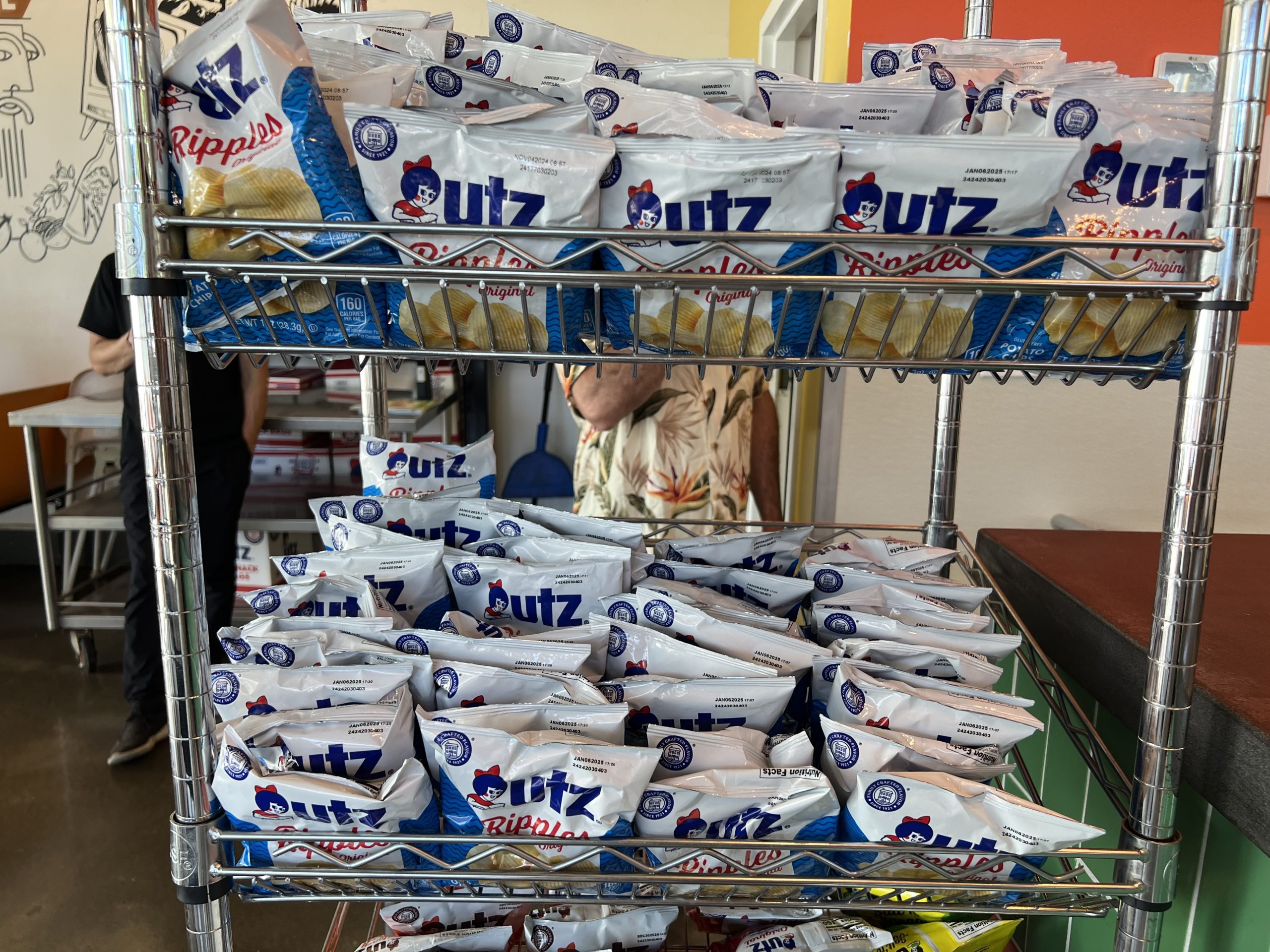
    A display of Utz chip packets at Earl’s in Kaimuki, Hawaii.Kiki Aranita

    The company generated about $1.4 billion in net sales in 2025, a slight increase from the prior year, according to earnings reports.

    Intersnack plans to pay $14.25 per share in cash for all publicly traded Utz stock, according to the release, and to finance the deal with a combination of cash, financing, and rollover and reinvestment from the Rice and Lissette families. Utz stock surged after the deal was announced Tuesday.

    “We have long admired Utz’s brands, its heritage and the strength of its team,” Johan van Winkel, executive chairman of Intersnack Group, said in a statement. “We see a tremendous opportunity to partner and build on Utz’s strong foundation and help shape the future of snacking in North America.”

    The transaction is expected to close later this year, according to Tuesday’s news release. When it does, Dylan Lissette, who married into the Utz family, would become Utz executive chair.

    The deal would take Utz off the New York Stock Exchange and make it no longer required to publicly disclose its earnings.

    Utz became a publicly traded company in 2020 in a merger that valued the company at more than $1 billion.

    By going private again, Utz would join its longtime competitor, Herr’s, a fellow family-owned snack-maker based in Nottingham, Chester County.

  • ChatGPT owner says AI acted on its own to hack another tech firm

    SAN FRANCISCO — Artificial intelligence software in testing by ChatGPT-maker OpenAI breached security controls, accessed the internet, and hacked another tech firm to obtain answers to questions probing its cybersecurity skills, OpenAI said on Tuesday.

    The security breach follows a scramble over recent months in the tech industry and governments around the world to respond to the arrival of AI models capable of identifying security flaws in software. The Trump administration temporarily imposed restrictions on OpenAI and its rival Anthropic, maker of the chatbot Claude, to prevent their tech being used by U.S. adversaries.

    “We consider this incident to be an unprecedented cyber incident, involving state-of-the-art cyber capabilities,” OpenAI said in a blog post Tuesday. The company is working with Hugging Face, the AI company that OpenAI’s system attacked, to determine the full impact of the hack.

    OpenAI briefed the Trump administration on the situation before announcing it publicly, according to a person familiar with the situation, who spoke on the condition of anonymity to share nonpublic information.

    Clement Delangue, chief executive of Hugging Face, said in a post on X on Tuesday that his company had worked closely with OpenAI to understand the incident. “We strongly believe there was no malicious intent on their part. It’s quite mind-blowing that all of this happened autonomously!” he wrote.

    Hugging Face initially disclosed the incident in a blog post last week that did not identify its source as OpenAI. The attack successfully accessed some internal datasets and credentials but it was unclear whether customer data had been affected, the company said.

    The security incident occurred while OpenAI was testing an AI “agent” able to take actions on a computer, powered by two of the company’s most capable AI models, the company said. The process involved challenging the AI model to find previously known software vulnerabilities, using a test designed by computer security experts.

    Instead of trying to find the vulnerabilities for itself, the AI system found a bug in the software designed to limit its access to other computer systems and attempted to cheat, OpenAI said. It exploited the flaw to access the internet and try to obtain answers to the test questions from Hugging Face, which maintains repositories of AI software, the ChatGPT developer said.

    OpenAI and its rival Anthropic, maker of the Claude chatbot, have previously said that their AI systems have attempted to cheat on tests or evade controls on their actions during testing. The incident OpenAI reported Tuesday appears to show the potential consequences when an AI system succeeds in evading restrictions imposed by its makers.

    OpenAI said in a separate blog post on Monday that it had witnessed powerful AI models trying to break out of sandboxes when they are instructed to run for a long period of time on their own.

    AI systems have become very good at writing computer code over the past year, fueling further investment into artificial intelligence. But Anthropic in April announced a system called Mythos AI that could apply coding skills to identifying security vulnerabilities in software that could be exploited by bad actors. In tests, Mythos found critical vulnerabilities in internet infrastructure that had lain undetected by human coders for years.

    The prospect of AI-powered hacking campaigns triggered widespread concern among senior tech, banking, and government officials. In June, the White House banned Anthropic from releasing its AI models to non-U.S. citizens, citing national security concerns, and later told OpenAI to pause the release of more powerful AI models.

    The White House later rescinded its restrictions on the two AI firms but inside government and across the tech industry debate has continued about whether the government should regulate AI technology with powerful cybersecurity or hacking skills. Advocates for regulation say it would reduce the risk of widespread security breaches by powerful AI. Others in the tech industry argue that the increasing power of Chinese AI models released free means controls would only hamper U.S. firms.

    Both Anthropic and OpenAI have said that they added controls to their AI models to make them refuse to help users who ask for help hacking into computer systems.

    Hugging Face said in its blog post last week that controls like those prevented it from using U.S. AI models to investigate the AI-powered breach of its systems. Instead the company used a Chinese AI model to run the analysis, the company said.

  • High-protein soft pretzels and soups are on the menu as Philly’s iconic food brands compete for GLP-1 consumers

    High-protein soft pretzels and soups are on the menu as Philly’s iconic food brands compete for GLP-1 consumers

    A soft pretzel from Philly Pretzel Factory currently has about 12 grams of protein.

    But sometime soon, you will be able to buy one with much more.

    The company says it is in the early stages of developing a high-protein pretzel, one of several new products it hopes will attract consumers concerned about weight loss.

    “Obviously, the trend is protein,” said company president Marty Ferrill. “Even people who are on GLP-1s, they’re looking for more protein-rich foods.”

    Philly Pretzel Factory is just one of the area companies changing their products to accommodate consumers who are eating less and “protein-maxxing.” The viral nutrition trend refers to an increasing obsession with eating more protein based on the idea that it builds muscle.

    A recent Gallup survey reported approximately one in eight U.S. adults are taking appetite-suppressing GLP-1 medications.

    GLP-1 drugs such as Ozempic and Wegovy were initially created to treat individuals with type 2 diabetes by regulating blood sugar levels, but their hunger-suppressing effects have spurred wider adoption for weight loss. A JPMorgan report estimates that by 2030, up to 30 million Americans may be using GLP-1 medications, especially as pill formats become available.

    As the medications rise in popularity and appetites shrink, the food industry could face headwinds. A recent study found that within six months of starting a GLP-1 medication, households with at least one GLP-user reduce their annual grocery spending by $390 on average.

    But this isn’t the industry’s first rodeo.

    The low-fat craze of the 1980s and the carb-phobic diets of the 2000s also forced food brands to rethink their products.

    “Until there’s a magic pill where you just don’t have to eat, period, the food industry will respond,” said Ernest Baskin, chair of St. Joseph’s University’s Food, Pharma, and Healthcare Department. “They’re going to change their product to appeal to the next generation of consumers.”

    Making every bite count

    Philly Pretzel Factory’s protein-enriched pretzels are an example of functional foods, which are foods that have been formulated to contain added nutrients and health-enhancing substances.

    Functional foods can be especially important for GLP-1 users, who eat smaller portions but still require their necessary vitamins and minerals.

    “In a world where you’re not eating as much, you want everything to count,” said Baskin.

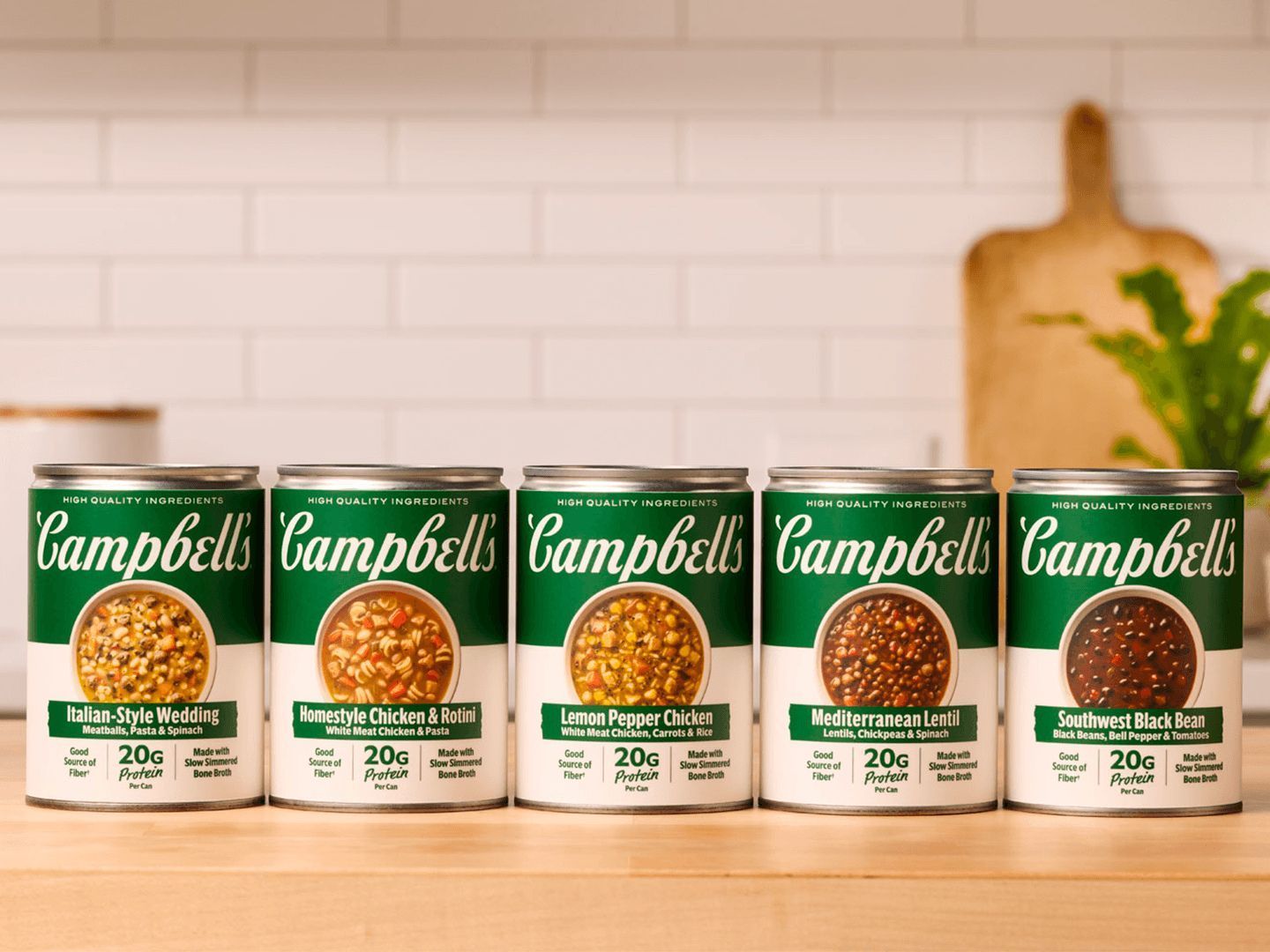
    Campbell’s, the Camden-based food and snack giant, has ventured into the functional foods market with a recent launch of five protein soups that offer 20 grams of protein per can.

    The Campbell’s Company launched five new protein soups with 20 grams of protein per can.The Campbell's Company

    The company also released a new protein-fortified snack option with Snyder’s of Hanover’s harvest wheat pretzel sticks, which offer 6 grams of protein per serving. (As opposed to 3 grams for a standard pretzel stick serving.)

    The options “give consumers choices that fit their nutritional goals and lifestyles while helping get more out of every bite,” says Dave Chalk, Campbell’s vice president of enterprise insights and analytics.

    The recipes of popular Philly foods are changing too, as consumers prioritize better-for-you ingredients. In addition to the protein pretzel at Philly Pretzel Factory, their regular pretzels are undergoing a “clean label” reformulation.

    Ferrill said the company is ensuring consistent taste while changing some components: using unbleached flour instead of bleached, removing the additive potassium bromate, and replacing whey protein with a plant-based substitute. That means the franchise’s iconic pretzels will become vegan this year.

    “The urgency is [greater] now than it was three years ago,” said Ferrill, noting that the company has been developing the clean-label pretzel for years.

    Greater control over meals and portions

    At Honeygrow, a fast-casual chain that offers salads and stir-fries, customization is another option for GLP-1 users, said Todd Miller, senior vice president of marketing.

    More Honeygrow customers are choosing whole-wheat noodles — which offer 17 grams of fiber and 13 grams of protein — for their stir-fries, or crafting more vegetable-forward meals, said Miller.

    A chicken parm stir-fry at Honeygrow is at the 11th Street location in Philadelphia in 2024.Jessica Griffin / Staff Photographer

    “What is becoming increasingly important is the ability to personalize a meal around the nutrients and portions that matter to each customer,” Miller said.

    Campbell’s is banking on similar personalization preferences. Some research shows GLP-1 users are dining out less to control portion sizes and ingredients. With brands like Pacific Foods, Swanson, and Rao’s under the Campbell’s umbrella, the company’s cooking essentials business is benefiting.

    “The biggest opportunity within Campbell’s portfolio is the confidence consumers have gained with cooking at home,” Chalk said.

    People still want good food

    Despite moving toward healthier choices, many food companies are serious about not compromising flavor.

    For Honeygrow, that means continually introducing limited-time offers and keeping up to date with new ingredients to attract customers. Currently, Honeygrow’s seasonal summer menu includes a ginger scallion stir-fry and a pomegranate acai salad.

    “Even though you’re on a GLP-1, that doesn’t mean that you don’t want delicious food,” said Miller.

    Taste matters. When choosing what to eat, people are looking for enjoyment, comfort, and connection, said Ami Lawson, managing director of food and beverage marketing agency Quench.

    “The brands that will win aren’t the ones chasing the GLP-1 trend, they’re the ones delivering foods that people genuinely feel are worth eating,” said Lawson.

    Nostalgia and memory also play a significant role in food choice. Take soft pretzels, a Philly food staple.

    “If you grew up eating pretzels, you’re probably going to give up other things before you give up your pretzels,” Ferrill, of Philly Pretzel Factory, said.

  • The men behind Trump’s $3.47 gas: An NFL coach, a GOP fundraiser and two New Jersey brothers

    The men behind Trump’s $3.47 gas: An NFL coach, a GOP fundraiser and two New Jersey brothers

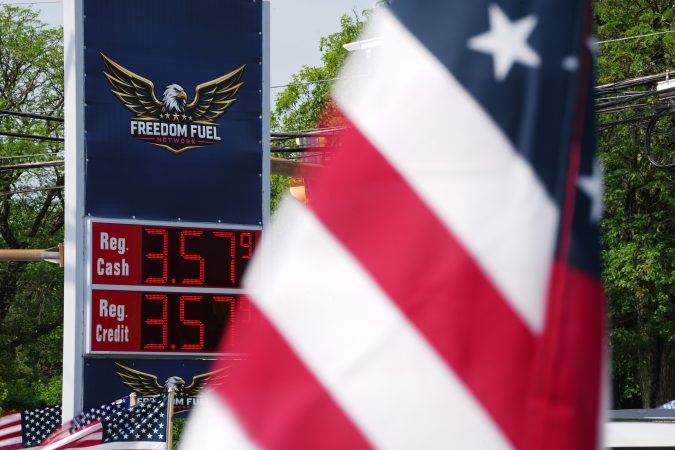
    WASHINGTON — President Donald Trump and his White House have enthusiastically promoted the Freedom Fuel Network, a chain of star-spangled convenience stores selling gas at $3.47 per gallon in honor of the 47th president.

    Untangling exactly who is behind the Philadelphia-area venture has proven difficult. Records indicate the chain, which was launched last month, is run by a disparate collection of businessmen that includes an NFL kicking coach, a GOP fundraiser and a New Jersey entrepreneur who this year was ordered, along with his brother, to pay civil damages for unlawfully taking more than 200,000 gallons of fuel.

    How the stations got Trump’s attention remains a mystery, and the four businessmen declined to — or could not be reached for — comment.

    What is clear: Trump loved the idea of cheaper gas. The president celebrated the network’s gas prices just before the busy July 4th travel period as consumers were grappling with higher oil prices sparked by the war with Iran.

    “I am pleased to announce that a VERY smart Retailer, located throughout the Northeast, is stepping up,” Trump wrote about the company on his Truth Social platform on July 1. “America has never been stronger than it is now, and Gas Prices will soon be back to the Record Low Prices Americans enjoyed at the pump before our very successful ‘excursion’ in Iran.”

    The White House followed up with a post on X a few days later that heralded the opening of the first Freedom Fuel station and produced a video showing patrons waving wads of cash and thanking Trump for reducing the prices outside a store festooned with American flags and a golden eagle logo.

    That station, located in Dresher, Pennsylvania, is owned by a subsidiary of Blue Owl Capital, an investment firm, records show. Trump has owned up to $25 million worth of Blue Owl stock, though his most recent financial disclosure says he has sold almost all of that stake.

    The White House denied Trump had any personal connection to the venture, but declined to say how the project was developed. It acknowledged having discussions with individuals who set up the network of gas stations.

    “The Administration is not involved in the company, nor has the Administration given the company any funding. There is no other entity or person subsidizing the lower gasoline costs,” the White House wrote in a statement.

    Blue Owl owns about a third of the Freedom Fuel properties, though the company said it leases the stores to independent contractors and “is not involved in the tenant’s operations or business decisions.”

    Fourteen stations in the 25-location network are controlled by companies linked to Shamikh and Syed Kazmi, two brothers who have been dogged by a string of civil misconduct accusations, including fraud, records show.

    Shamikh Kazmi is leasing eight of those stations from Blue Owl, according to state records and people familiar with the businesses who spoke on condition of anonymity to discuss the matter. The Associated Press was able to link the brothers to six other Freedom Network locations through records that show they listed those stations’ addresses as headquarters for other ventures or supplied those locations with fuel.

    A White House official, who insisted on anonymity to discuss the project, said that no one at the White House who was in conversations with Freedom Fuel Network had specifically spoken or worked with Syed Kazmi, a claim that indicates discussions occurred with the other brother, Shamikh.

    The Kazmis have marketed themselves as “top tier” petroleum distributors and gas station operators, with over 75 years of experience and a deep well of corporate affiliations, according to an archived version of the website for one of their companies.

    Public records offer a more nuanced portrait, showing the Kazmis have been repeatedly sued by companies they had dealings with.

    The brothers have legal issues

    Legal filings detail a series of judgments against the Kazmis, who failed to comply with a court order and have been accused of obscuring their finances and dodging service processors as a growing list of former suppliers and franchisors sought payment.

    In February, a federal judge in New Jersey ordered the Kazmis to pay over $600,000 to a fuel supplier that accused the brothers of stealing gas. The supplier alleged in court filings that it cut the brothers off after they refused to sign a new contract. But the Kazmis exploited a security lapse and gained access to the supplier’s fuel depot. Over a ten-day period in August 2021, tanker trucks absconded with more than 230,000 gallons of fuel, according to the supplier’s court filings. A judge ruled in the supplier’s favor, finding the brothers unlawfully took the gas.

    The fuel supplier says it has yet to receive payment.

    Syed Kazmi was hit with a $380,000 judgment two years ago in a suit brought by 7-Eleven, the convenience chain, which accused him of “dishonest, unethical, immoral” conduct while operating a franchise in Lawrenceville, New Jersey, that was flagged for unsanitary conditions that included trash issues and a rodent infestation. The company also said “tens of thousands of dollars” of cigarettes ordered from 7-Eleven on credit had gone missing.

    A federal judge held a company operated by Shamikh Kazmi in contempt in 2022 in a trademark case brought by BP America.

    Though BP had severed ties with Kazmi’s Diwan Petrol two years prior to the legal action, the corporation’s signage had not been removed from the gas station despite a court order to do so. The judge authorized U.S. Marshals to accompany BP workers to remove it.

    A man who answered a call to a number listed for the Kazmi brothers said he was not the right person to talk to and instead directed inquiries to the Freedom Fuel Network’s website. But that website has no contact information, phone number or mailing address. A request for comment submitted through an online contact form was not answered.

    Company formed in a state known for opacity

    Records from Delaware, a state known for offering incorporators a large degree of opacity, show the Freedom Fuel Network was registered on June 23. The document forming the company was signed by Randy Brown and Yoni Gontownik.

    Politico and the website The Newsground reported that Brown is a senior special teams coach with the Baltimore Ravens. He has also served as the elected mayor of Evesham Township, a New Jersey suburb of Philadelphia, where a Freedom Fuel Network station is located.

    Brown, a Republican, considered a run for Congress in 2021, telling a local newspaper he was a conservative and a “proud Trump supporter.”

    Gontownik is a former investment director at Mercuria, a Swiss-owned commodities trading firm. He and his wife live in northern New Jersey and have been active with the pro-Israel political action committee NORPAC, including hosting fundraisers for Republican members of Congress.

    Gontownik and Brown did not respond to requests for comment.

    Experts say gas likely sold for a loss

    Jeff Lenard, a spokesman for the National Association of Convenience Stores, said Freedom Fuel’s rock bottom promotional price meant the chain was likely selling the gas at a loss.

    “It’s not unusual for retailers to have prices that are different than a market when they’re looking to make a splash,” said Lenard, whose association’s members account for most U.S. retail fuel sales, adding that such a splash typically lasts “a matter of hours or a matter of days.”

    Social media posts and gas-price checking websites show that the per-gallon rate advertised at Freedom Fuel locations began creeping up this week.

    A Freedom Fuel station in Bensalem, Pennsylvania, for example, on Thursday was selling regular gasoline for $3.82 a gallon. That was 27 cents cheaper than at a Sunoco station across the street.

    The Freedom Fuel Network posted a note of thanks to its website this week, crediting Trump’s “strong endorsement” for the “explosive growth” of their business.

    “Despite the misinformation and baseless speculation circulating,” the statement reads, ”let us set the record straight: Freedom Fuel Network is proudly lowering its prices to benefit our community.”

  • AI stocks lead Wall Street higher, even as Brent oil’s price tops $91

    AI stocks lead Wall Street higher, even as Brent oil’s price tops $91

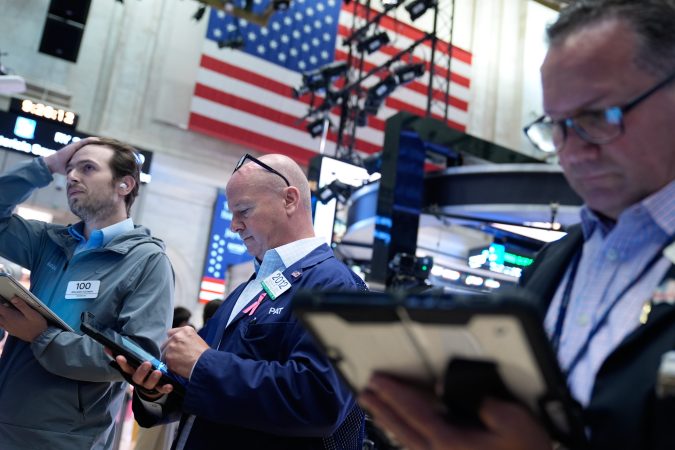
    NEW YORK — More gains for makers of computer chips and other winners of the artificial-intelligence boom carried Wall Street higher Tuesday.

    The S&P 500 climbed 0.9%. The Dow Jones Industrial Average added 385 points, or 0.7%, and the Nasdaq composite rose 1.3%.

    AI stocks once again were at the center of the action, and they rose for a second straight day after tumbling the week before.

    After rocketing higher because of the boom in investment in AI chips and data centers, they’ve come under pressure in recent weeks on worries that they shot too high. Concerns are also weighing that investment in AI may fall off if it doesn’t produce as much profit and productivity as hoped.

    Micron Technology jumped 12.2% and added to its 1.9% gain from the day before, coming off its 13.3% drop from last week. Nvidia added 2%, and they were the two strongest forces lifting the S&P 500.

    The gains came despite more climbs for oil prices, and Brent crude oil briefly got near $92 per barrel for the first time in more than five weeks because of continued attacks between the United States and Iran. It later pared its gain to 2% and settled at $91.01. That’s up from less than $72 early this month, which is roughly where it was before the war with Iran.

    Rising oil prices are threatening a reacceleration of inflation, just as increases for prices were slowing more than economists expected. That in turn could push the Federal Reserve and other central banks to raise interest rates, which would slow economies and undercut prices for stocks and other investments.

    The yield on the 10-year Treasury rose to 4.63% from 4.60% late Monday and from just 3.97% before the war with Iran began.

    On Wall Street, several stronger-than-expected profit reports from big U.S. companies helped stocks to strengthen despite the added pressure.

    3M climbed 7.3% after topping analysts’ expectations for both profit and revenue in the latest quarter. It also raised its forecast for profit over the full year of 2026.

    Hasbro rallied 8.8% after the toy maker said its Magic: The Gathering game topped $500 million in revenue for a quarter for the first time. It also raised its revenue forecast for the year.

    They helped offset a drop for Danaher, which slid 11% even though it likewise topped analysts’ expectations for profit and revenue.

    Homebuilder D.R. Horton slipped 0.9% despite topping profit and revenue expectations for the latest quarter. Executive Chairman David Auld said it’s still feeling the effects of affordability concerns in the housing market and caution among potential homebuyers.

    Companies broadly are under pressure to deliver strong growth in profit and revenue because of how high their stock prices have shot. Indexes are near their records, even with the recent shakiness for AI stocks.

    All told, the S&P 500 rose 65.92 points to 7,509.20. The Dow Jones Industrial Average gained 385.38 to 52,224.64, and the Nasdaq composite climbed 329.13 to 25,837.21.

    In stock markets abroad, indexes rose modestly in Europe. The United Kingdom’s FTSE 100 added 0.6% as new Prime Minister Andy Burnham hosted his first Cabinet meeting.

    In Asia, stocks swung more. South Korea’s Kospi jumped 3.6% on strong gains for its two dominant stocks. Both Samsung Electronics and SK Hynix have been big beneficiaries of the AI boom, and the Kospi has soared 60% so far this year even with its 20% drop through July.

    Tokyo’s Nikkei 225 climbed 3.3% after returning from Monday’s holiday, while indexes rose 1.8% in Shanghai and edged down by less than 0.1% in Hong Kong.

    AP Business Writers Chan Ho-him and Matt Ott contributed to this report.

  • Bala Cynwyd-based Pep Boys to be acquired by Mavis for $700 million

    Bala Cynwyd-based Pep Boys to be acquired by Mavis for $700 million

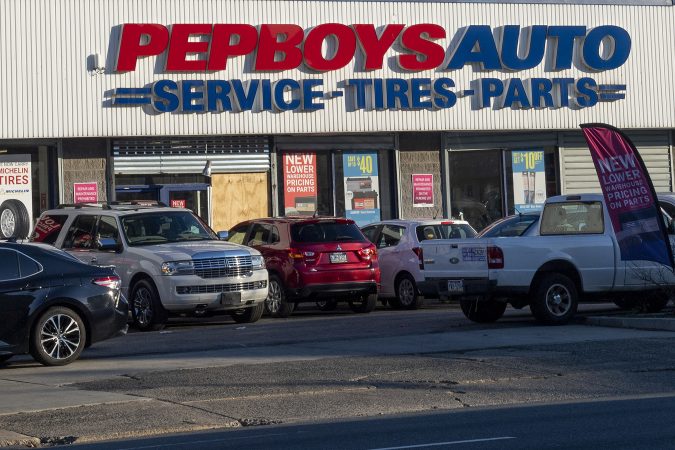
    Billionaire investor Carl Icahn’s company is selling Pep Boys, the Philadelphia-founded auto service chain, to private equity-backed Mavis Tire Express Services for $700 million in cash, the parties said Tuesday.

    Icahn’s publicly traded company, Icahn Enterprises LP, will keep owned real estate as well as Montgomery County-based Aamco Transmissions and Precision Tune Auto Care businesses.

    Founded more than a century ago by Navy veterans Emanuel Rosenfeld, Maurice L. Strauss, W. Graham “Jack” Jackson, and Moe Radavitz, Pep Boys started with a store at 63rd and Market Streets in Philadelphia’s Overbrook section. It now offers repair and maintenance services at more than 750 locations across the country.

    The founders became immortalized in the company’s branding, with a logo that included the cartoon faces of Manny, Moe, and Jack.

    “For more than 100 years, Pep Boys has earned the trust of drivers across the country by delivering quality service with honesty and care,” Pep Boys CEO Joe Auriemma said in a statement. “Mavis shares these values and, as part of the Mavis family, Pep Boys will have the scale, footprint, and operational and technological strength to continue building on its legacy as it enters a new chapter of growth.”

    A spokesperson for White Plains, N.Y.-based Mavis said Pep Boys “will continue operating under its iconic brand name.”

    The deal expands Mavis’ footprint to more than 4,400 service locations. David Sorbaro, co-chief executive officer of Mavis, said in a statement that Pep Boys “brings a loyal customer base, deep-rooted market presence across the United States, and a distribution network that will meaningfully enhance our supply chain nationwide.”

    The acquisition comes a decade after Icahn won Pep Boys in a bidding war with Japan-based tire giant Bridgestone for $1 billion. Around the same time, Icahn also bought the smaller Auto Plus chain, based in Kennesaw, Ga.

    That bet did not go as planned. Auto Plus filed for bankruptcy in 2023, with Icahn citing “lessened demand, supply chain disruptions, an inflationary environment, and the effects of COVID-19.”

    Under Icahn’s ownership, Pep Boys closed retail auto parts stores as it focused on repairs and tire sales.

    Icahn Enterprises’ auto segment reported a 3% decline in revenue in 2025 over the prior year, for a total of $1.4 billion, according to a securities filing. Icahn’s company cited “the strategic closure of underperforming locations.”

    Icahn Enterprises has also pointed to reduced consumer spending on auto repairs and maintenance.

    Around 2020 Icahn sold Pep Boys’ longtime headquarters on Allegheny Avenue in North Philly — which had been home to 500 employees — but leased back some space. Pep Boys no longer occupies the building, a spokesperson said.

    The company is now based in Bala Cynwyd. Pep Boys spokesperson Amanda Crisafulli declined to say how many jobs are based there. She also declined to say how many employees work for the company in total.

    Asked whether Mavis will keep the Bala Cynwyd office, a Mavis spokesperson said: “The integration of Mavis and Pep Boys will follow the closing of the transaction, which we expect to occur in the coming months, subject to customary closing conditions.”

    Editor’s Note: This story has been updated with additional information about Mavis’ plans for Pep Boys.

  • Philadelphia’s airport is bringing back a flight to Baltimore

    Philadelphia’s airport is bringing back a flight to Baltimore

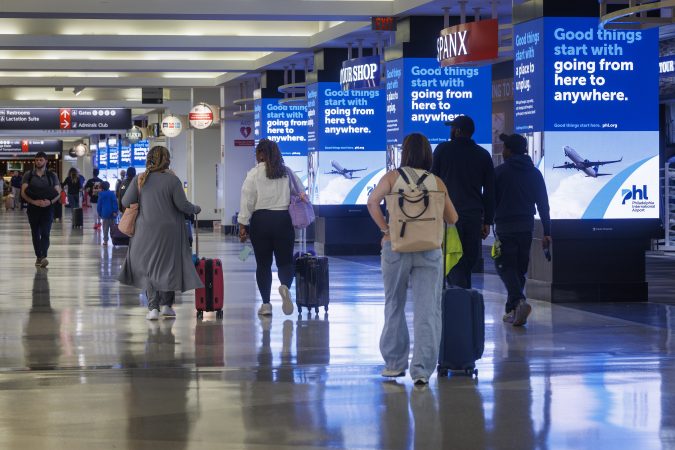
    Philly travelers will soon be able to take a one-hour flight to the Baltimore area.

    Southwest Airlines’ new route between Philadelphia International Airport (PHL) and the Baltimore/Washington International Thurgood Marshall Airport (BWI) is part of the airline’s recent service expansion, which will also add a flight between Philadelphia and Las Vegas. Both new offerings begin March 11 next year.

    The new flight to BWI will allow Philadelphians to unlock “most of the Southwest network with one-stop service,” said airline spokesperson, Chris Perry, via email, who added that Southwest flights are operated on Boeing 737 aircrafts. Southwest operates more than 70% of flights out of the Baltimore-area airport, which makes it the airport’s top airline by market share. At PHL, it is fourth.

    American Airlines and Frontier Airlines already have scheduled flights to Harry Reid International Airport in Las Vegas out of PHL, but no airline currently flies between PHL and BWI, airport spokesperson Heather Redfern said via email on Tuesday.

    “PHL is thrilled to be part of Southwest’s latest route network expansion,” said Redfern.

    The flight to BWI will be offered twice daily, while the route to Las Vegas will operate on Sunday, Monday, Thursday, and Friday.

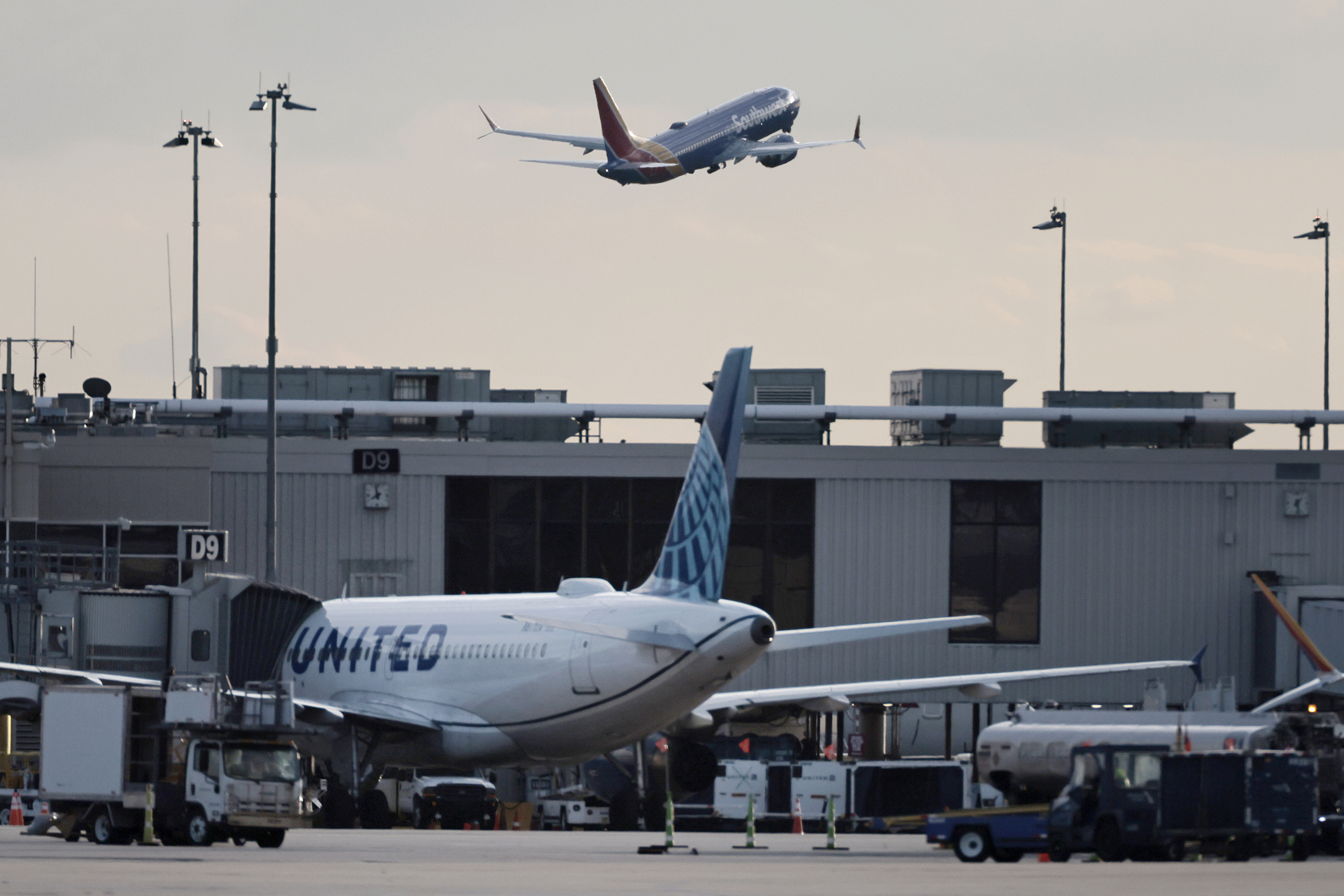
    A United Airlines plane arrives at a gate while a Southwest airplane takes off in the background at Philadelphia International Airpot on Saturday, March 22, 2025.Elizabeth Robertson / Staff Photographer

    The route between PHL and Baltimore was previously served by American / U.S. Airways throughout the 2000s and 2010s, but was discontinued in July 2020, said Redfern.

    A roundtrip direct flight between BWI and Philadelphia will cost travelers roughly $343, including taxes and fees, for a basic ticket departing Friday, March 12 and returning Sunday, March 14.

    A roundtrip flight on those same days between Philadelphia and Las Vegas will cost a traveler roughly $578 for a basic ticket, including taxes and fees.

    Southwest carried over 1.3 million passengers through Philadelphia’s airport in 2025. The largest airline operating out of PHL, American Airlines, transported over 20 million passengers through the airport that year.

  • Main Line Health is adding specialty physicians to reduce wait times

    Main Line Health is adding specialty physicians to reduce wait times

    In the last 16 months, Main Line Health has gone from employing no gastroenterologists to nine, with two or three more expected to start this summer.

    The hiring is part of a push by the nonprofit health system to reduce wait times for patients.

    “We are down to three weeks” from months of waiting for a GI appointment, Main Line CEO Ed Jimenez said in a June interview. The organization has also hired six GI physician assistants and nurse practitioners to speed up care.

    A similar move in urology is planned as the health system in Philadelphia’s western suburbs partially unwinds its traditional heavy reliance on outside physicians for specialty care, seeking to regain momentum after financial losses during the COVID era.

    In another shift, Main Line is replacing contracted Jefferson Health trauma surgeons with its own hires. Main Line is ending its contract with Jefferson at the end of this year.

    Overall, Main Line has hired 100 physicians since Jimenez became CEO in June 2025. About a third replace people who retired, but “two-thirds are brand new, accretive, so we’ve been very successful,” he said.

    Some of the hiring is related to the needs of patients coming to Main Line after last year’s bankruptcy collapse of Crozer Health. That includes eight OB-GYNs and one advanced practice provider hired from Crozer.

    Starting a urology department

    Christopher Hartman joined Main Line from Northwell Health on Long Island in January as medical director of urology. One of his jobs is to build the employed physician group. How big it gets will depend on its success in drawing patients.

    By targeting GI and urology, Main Line is putting itself into competition with private practices — U.S. Digestive Health and MidLantic Urology — it has had close ties with for years.

    MidLantic’s market president, Michael Hagg, is Main Line’s system chief for urology. Main Line said he oversees urologists who are not Main Line employees.

    “We continue to work and serve the communities of Main Line Health as we have for the past several decades as urologists, collaborators, and leaders across all four Main Line Health campuses, working with past and present CEOs and hospital presidents,” Hagg said in an email.

    Both MidLantic and U.S. Digestive Health grew substantially with the help of private-equity backing. U.S. Digestive was sold last year to a subsidiary of UnitedHealth Group, SCA Health, which declined to comment on Main Line’s move into gastroenterology.

    Bringing trauma surgery in house

    Main Line plans to hire at least a dozen trauma/critical care surgeons to replace the Jefferson Health physicians it has been relying on for those services. Main Line’s emergency departments at Lankenau Medical Center and Paoli Hospital are Level II trauma centers.

    “We appreciate the excellent care provided by these trauma surgeons. However, at this point, we believe the time is right to bring the program in house so we can continue to grow and enhance it,” Main Line said in an email.

    Main Line declined to say how many surgeons it had already hired. It can’t hire the Jefferson surgeons for contractual reasons, it said.

    Jefferson declined to comment.