Category: Business

  • Bankrupt weed company lays off 86 people at Vineland grow sites

    Bankrupt weed company lays off 86 people at Vineland grow sites

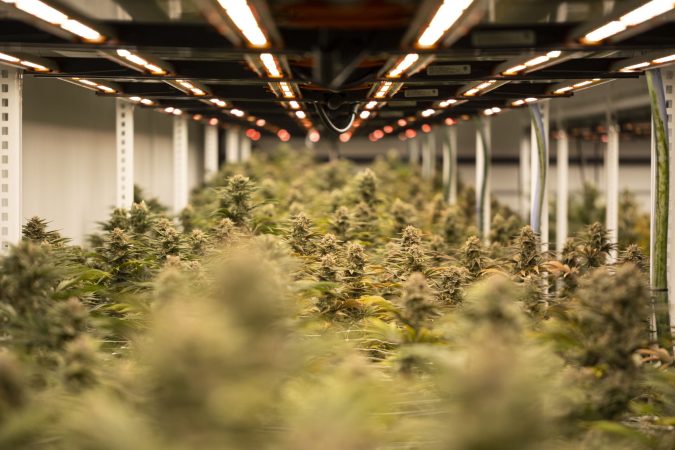
    Two cannabis grow sites in South Jersey will close their doors in October, laying off 86 staff members as multistate operator the Cannabist Company files for Chapter 15 bankruptcy.

    The cultivation facilities — located at 17 W. Park Ave. and 1560 N. West Blvd. in Vineland — will close on Oct. 11, laying off nearly all of the Cannabist’s cultivation and manufacturing employees in New Jersey according to a Worker Adjustment and Retraining Notification, or WARN, filing with the state.

    In its bankruptcy filings, the company stated that due to “regulatory, industry, and financial challenges,” it was facing a severe liquidity crisis and “unable to meet its financial obligations as they become due.” The Cannabist Company did not respond to a request for comment.

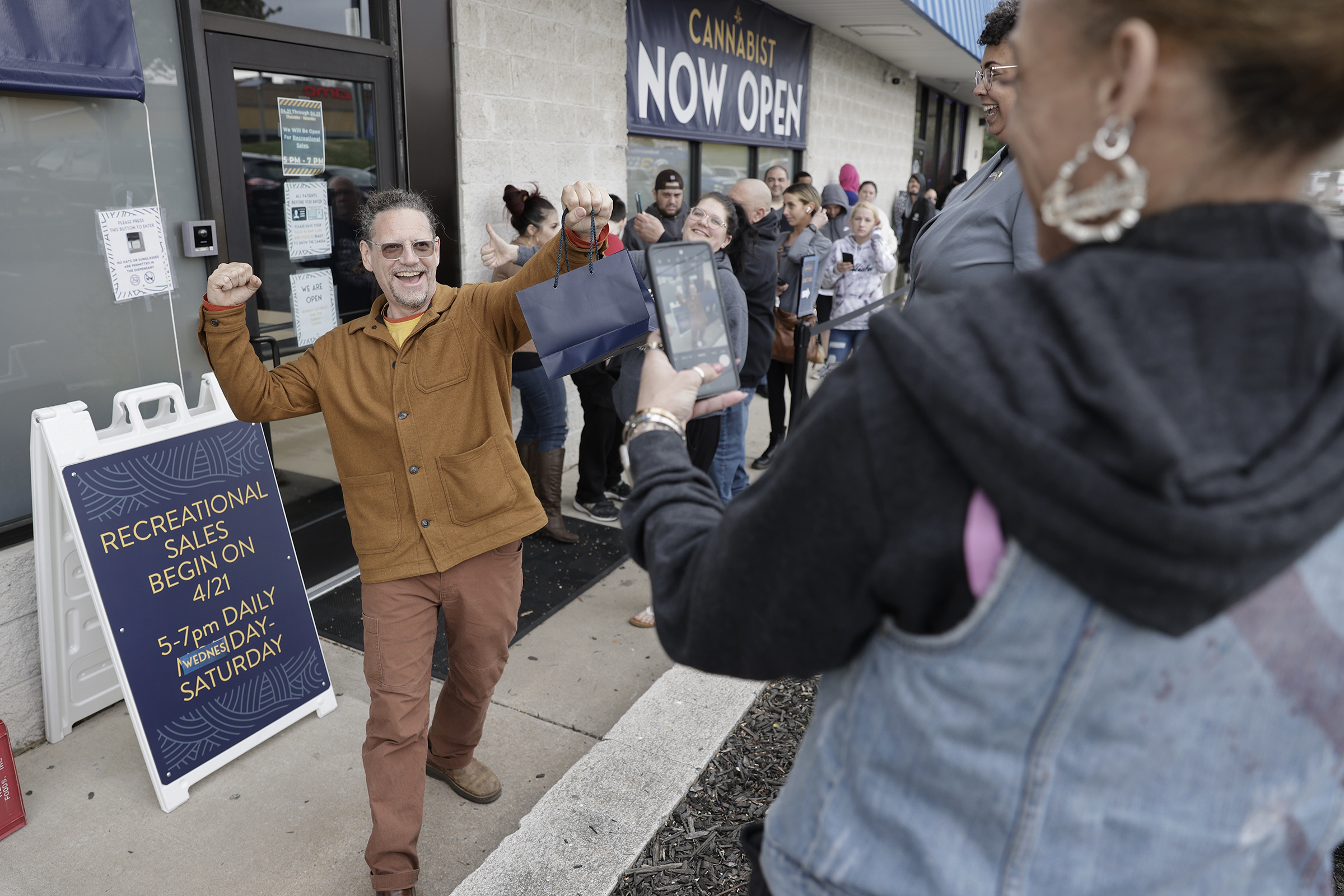
    Frank Burkhauser of Woodbury handed his phone to Cannabist employee Jennifer DeWalt so he could have a photo to remember this day that he made a legal marijuana purchase at Cannabist in Deptford on April 21, 2022. Burkhauser said he has been working for the legalization of marijuana since the early ’90s.ELIZABETH ROBERTSON / Staff Photographer

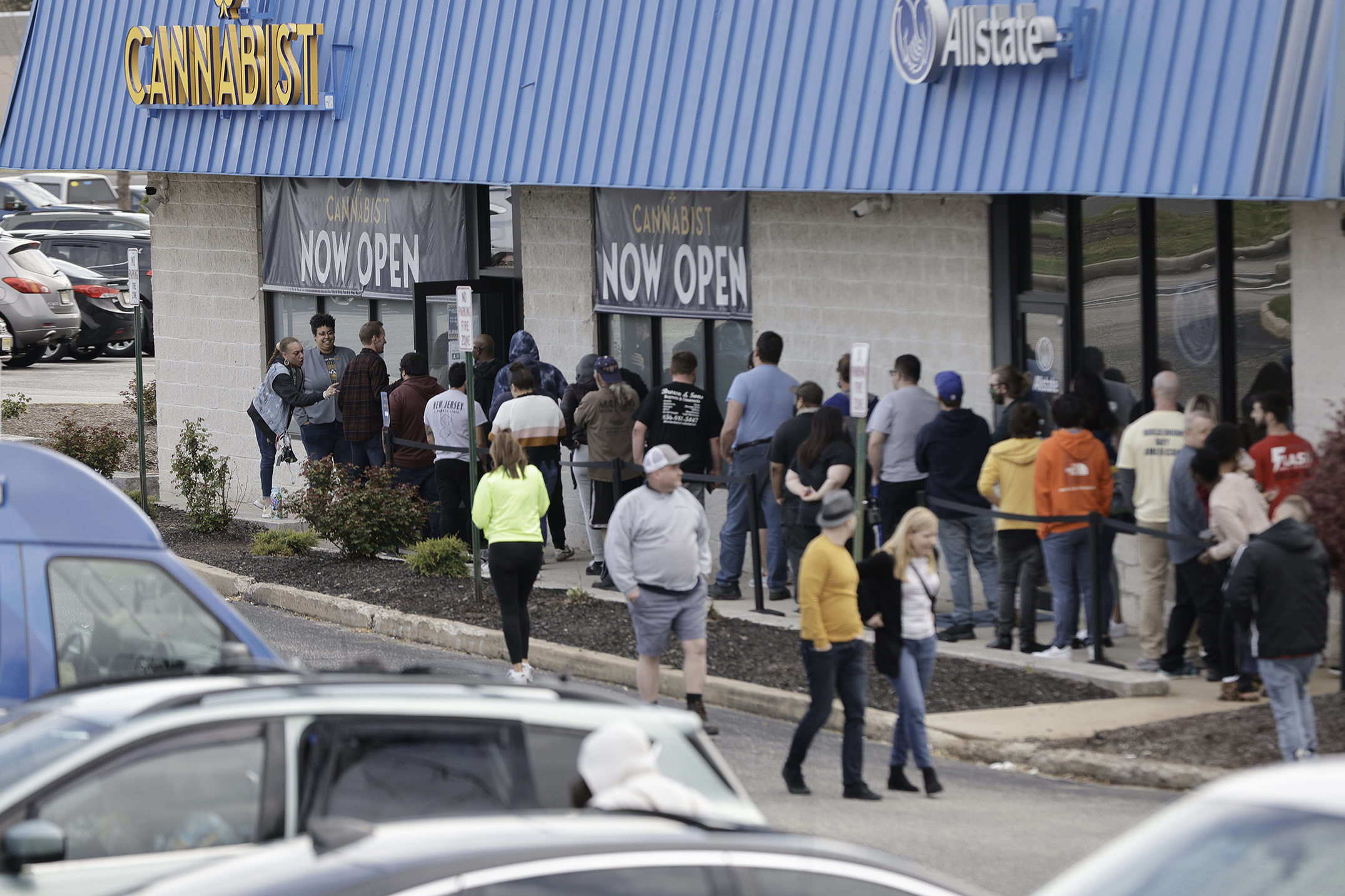
    The Cannabist’s New Jersey dispensaries were among some of the first adult-use locations to open in 2022. It operated one of the closest recreational weed dispensaries to the Philadelphia border. On the first day of Jersey’s recreational weed sales, it attracted consumers from all over, with a line wrapping around the building to the front door.

    The New York-based weed company operates 40 dispensaries and 14 cultivation and manufacturing facilities across 10 markets, including in New Jersey and Delaware. Those sites are being closed or sold off to new buyers. Last week, The Cannabist announced layoffs at one of its Denver grow sites, laying off 50 people in September, according to Colorado WARN notices.

    Customers line up just after 5:30 pm to make legal marijuana purchases at Cannabist in Deptford on April 21, 2022.ELIZABETH ROBERTSON / Staff Photographer

    Following the news of the two Vineland grow site closures, The Cannabist announced it would be selling the rest of its New Jersey operation, including the three retail stores in Deptford, Vineland, and Mays Landing, to Vireo Growth Inc for $35 million. The sale will also include some of the Cannabist’s operations in Colorado, Illinois, Massachusetts, and West Virginia markets.

    The Cannabist Co., which got its start as Colombia Care, began in Massachusetts in 2012 and soon expanded to 10 states. As of February, the company employed more than 1,200 people, including 101 manufacturing and 43 retail workers in New Jersey.

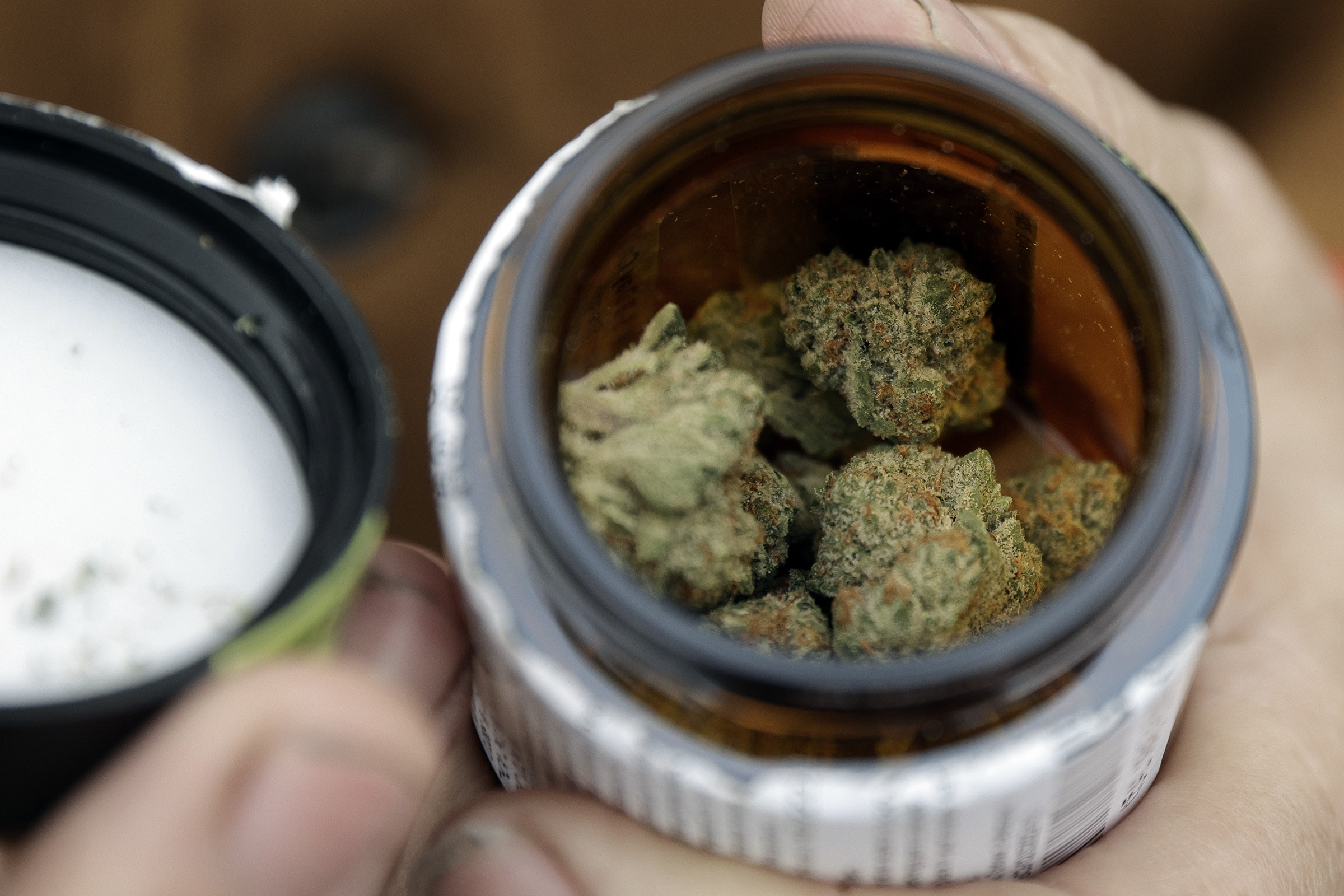
    Frank Burkhauser of Woodbury displays the legal marijuana purchase that he just made at Cannabist in Deptford on its opening day in 2022. ELIZABETH ROBERTSON / Staff Photographer

    In March, Cannabist filed for Chapter 15 bankruptcy due to owing lenders and the IRS more than $270 million. In addition to closing many operations across the country, Cannabist sold its Virginia business to Parma for $130 million, Delaware to Arboretum DE PermitCo for $16.5 million, and its Ohio dealings to Holistic for $47 million.

    Since the Cannabist Company is also filing for bankruptcy in Canada, this case is poised to be the first time a U.S. Bankruptcy Court recognizes a foreign insolvency proceeding related to a marijuana business, despite cannabis remaining federally illegal.

  • Brent oil tops $100 per barrel, as tumbles for Tesla and Alphabet yank Wall Street lower

    NEW YORK — Brent oil shot to its highest price since May after increased fighting in the Middle East on Thursday threatened to slow the global flow of crude. At the same time, sharp drops for two of Wall Street’s most influential companies, Alphabet and Tesla, yanked the U.S. stock market to its worst loss in a month.

    The S&P 500 fell 1.2% and is on track for its first back-to-back weekly loss since March. The Dow Jones Industrial Average dropped 506 points, or 1%, and the Nasdaq composite sank 2.2%.

    Stocks fell under the pressure of rising oil prices, which raise costs for businesses and erode their customers’ ability to spend. The price for a barrel of Brent crude oil, the international standard, jumped 7% to settle at $100.69.

    It touched $102 during the day, the highest price since May for the most actively traded Brent contract in the market. The cause: attacks on two Saudi oil tankers in the Red Sea. That threatens another avenue that oil companies use to move their crude from the Middle East to customers worldwide, along with the Strait of Hormuz.

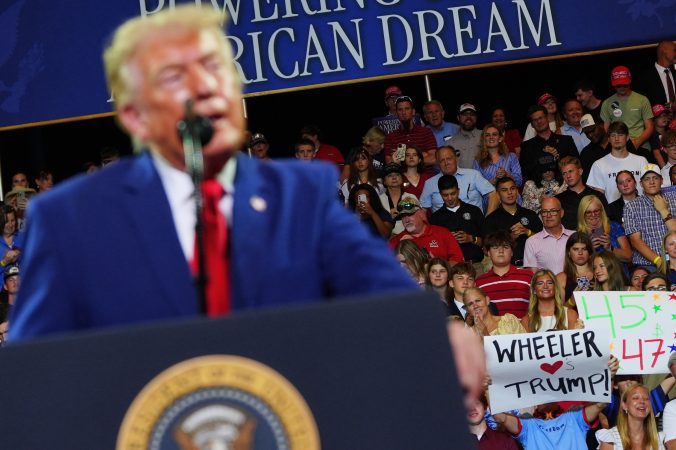
    Underscoring the importance of the sea route for the economy, President Donald Trump threatened “major military punishment” against the Houthi rebels in Yemen, who are backed by Iran, if they keep attacking ships.

    It was just a few weeks ago that Brent had dropped below $72 per barrel, roughly back to where it was before the United States and Israel attacked Iran to begin their war, on hopes that a wind-down in the war would fully reopen the Strait of Hormuz.

    The jumps in oil prices will worsen inflation, just when it had begun to decelerate by more than economists expected. That in turn could push the Federal Reserve and other central banks to raise interest rates, which would slow economies and undercut prices for stocks and other investments.

    The European Central Bank held its main interest rates steady at its meeting Thursday. But traders are betting on a 36% chance the Fed will hike the federal funds rate at its meeting next week. That’s up from the nearly 12% probability seen a week ago, according to data from CME Group.

    An increase by the Fed would be the first since 2023.

    Higher oil prices pushed the yield of the 10-year Treasury up to 4.69% from 4.67% late Wednesday and from just 3.97% before the war with Iran began. That’s a significant increase, and it’s already brought long-term U.S. mortgage rates to their highest levels in nearly a year.

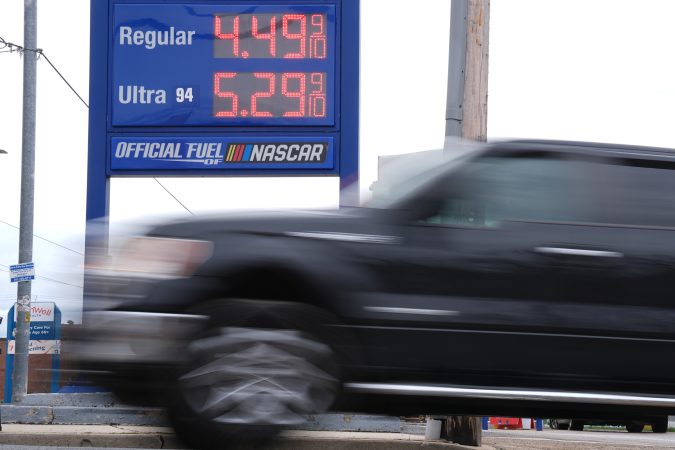
    Gasoline prices tend to follow oil prices higher, and a gallon of regular costs an average of $4.09 across the United States, according to AAA. That’s still below highs of roughly $4.56 in May, but it was at just $3.93 a month ago.

    On Wall Street, stocks of companies with big fuel bills fell to sharp losses on worries about higher expenses.

    American Airlines fell 8.4% even though it reported a much bigger profit for the spring than analysts expected, something that usually sends a stock’s price higher. It raised airfares, which helped it offset its higher fuel prices, during the latest quarter.

    Southwest Airlines lost 6.2%, even though it also reported better profit and revenue than analysts expected.

    One of the heaviest weights on the U.S. stock market was Tesla, which tumbled 14.5% after Elon Musk’s electric-vehicle company reported a weaker profit for the latest quarter than analysts expected. Because it’s one of the largest stocks in the S&P 500 by market value, its stock has more influence on the index than nearly every other.

    One of the few that’s larger is Alphabet, and its stock fell 7.1% even though the parent company of Google delivered stronger profit and revenue than analysts expected.

    Investors focused instead on how much Alphabet is planning to spend on artificial-intelligence investments. Alphabet raised its forecast for capital spending over the full year after its investments last quarter doubled to nearly $45 billion from a year earlier.

    CEO Sundar Pichai said AI helped its cloud revenue growth accelerate to 82% last quarter, but unease nevertheless remains about whether all the money going into AI will pay off in terms of productivity and profits.

    Such worries have been shaking the AI industry broadly in recent weeks, leading to big swings for the overall stock market.

    All told, the S&P 500 fell 90.66 points to 7,408.30. The Dow Jones Industrial Average dropped 506.93 to 51,711.65, and the Nasdaq composite sank 553.21 to 25,137.69.

    In stock markets abroad, indexes fell sharply in Europe after oil prices jumped. France’s CAC 40 dropped 1.6% for one of the larger losses.

    Indexes in Asia were stronger earlier in the day, and South Korea’s Kospi jumped 4.4%.

    AP Business Writers Matt Ott and Elaine Kurtenbach contributed to this report.

  • Jefferson Health sued IBX, claiming payment changes cost it nearly $100 million this year

    Jefferson Health sued IBX, claiming payment changes cost it nearly $100 million this year

    Jefferson Health says it has incurred nearly $100 million in financial losses this year because of policy changes by Independence Blue Cross in a lawsuit filed this week.

    The lawsuit, submitted Wednesday in Philadelphia Court of Common Pleas, detailed five policy shifts — including two impacting when IBX pays higher inpatient rates for hospital stays — that Jefferson says amount to breaches of the current contract between the region’s largest health system and its largest insurer.

    “IBX has attempted to use policy changes to — over time — effectively rewrite the contract” and pay less than agreed to in the contract, Jefferson’s lawsuit said.

    The suit comes less than six months before its IBX contract expires Dec. 31, adding pressure to negotiations over a new deal. Jefferson said it cared for more than 300,000 people with IBX insurance last year.

    In the last year, the nonprofit health system has shown its willingness to challenge major insurers at a time of increasing financial strain on both insurers and healthcare providers nationally.

    IBX introduced a series of payment changes impacting both commercial and private Medicare plans this year as it faces intense pressure from employers to slow the growth of healthcare expenses and from the federal government, which is trying to trim spending in Medicare Advantage plans.

    Independence declined in an email to comment on the claims in the lawsuit: “We value our provider partners, honor our contractual commitments with them, and regularly discuss any issues. It’s unfortunate that Jefferson chooses to do this in the public arena but if you’ve kept up with the news you can see this is typical of their playbook.”

    A series of reimbursement shifts

    The biggest financial impact came from IBX’s requirement, effective June 1, that certain procedures be performed in lower-cost freestanding ambulatory surgery centers, rather than in hospital outpatient departments, which often get paid twice as much for the same work.

    Jefferson estimated damages from the ambulatory surgery center rule at $35.4 million.

    Two policies affecting when IBX pays inpatient rates cost Jefferson a combined $35.5 million, according to the complaint.

    Jefferson sued Aetna in April over a similar policy that reduces payments for Medicare Advantage plans if Aetna considers patients not sick enough to qualify for full payment.

    The complaint says a policy that eliminated payment for hospital readmissions up to 30 days after discharge cost Jefferson $18.3 million. Since 2017, Penn Medicine has had a contract with IBX that does not pay Penn when patients return to the hospital within a month of being discharged.

    Finally, Jefferson said IBX has failed to pay more than $7.2 million owed under a controversial federal drug discount program known as 340B.

    “After trying to work directly with Independence Blue Cross to resolve these breaches of contract, we have been forced to take this action on behalf of our patients,” Jefferson’s vice president for payer relations, Allison Yudt, said in an email. “This action is the result of a pattern that has repeated itself time and again.”

    IBX said in its statement that it “acts in the best interest of our customers and members and protects their access to high quality affordable care.”

    Jefferson’s harder line with insurers

    Jefferson has expanded through acquisitions from three hospitals to 33 since 2015. The most recent acquisition was Lehigh Valley Health Network two years ago, creating a network that stretches from South Jersey to near Scranton.

    Amid significant losses in recent years, Jefferson has been taking an aggressive approach with insurers when it believes they are paying it less than contractually required.

    This year, Jefferson’s Lehigh Valley Health went out-of-network with UnitedHealthcare for commercial and Medicare Advantage plans. Last year, Jefferson went out-of-network with Cigna for a few weeks before reaching a deal.

  • 2026 Volvo EX30: The little EV that could go fast, but beyond that …

    2026 Volvo EX30: The little EV that could go fast, but beyond that …

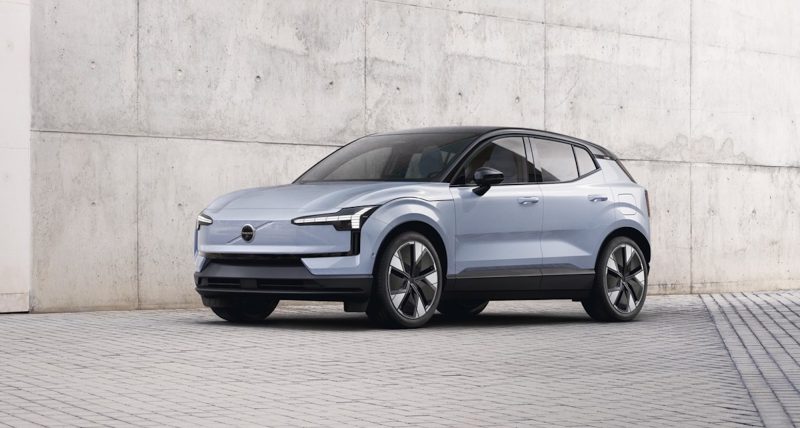
    2026 Toyota bZ XLE FWD Plus vs. 2026 Volvo EX30 Twin Motor Performance Electric Ultra: A little EV battle.

    This week: 2026 Volvo EX30

    Price: $48,445 as tested

    What others are saying: “Highs: Blistering acceleration, short stopping distances. Lows: Unintuitive controls, overly light steering, cramped rear seat, some driving position quirks,” notes Consumer Reports.

    What Volvo is saying: “The range and quick charging you want in a small SUV that’s big on style, storage and safety.”

    Reality: You’re really leading with range and recharge rate, Volvo?

    What’s new: The EX30 is Volvo’s answer to the small car, but in EV form.

    Competition: I kinda cheated pitting the Toyota and the Volvo against each other, at least following Consumer Reports’ competition report, but they do run about the same price when outfitted comparably. And it’ll make even more sense later. Others are Audi Q4 E-Tron and Q6 E-Tron; BMW iX; Cadillac Lyriq, Optiq, and Vistiq; Genesis Electrified GV70 and GV60; Lexus RZ; Lucid Gravity; Mercedes-Benz EQE and EQS; Rivian R1S; and Tesla Model X.

    The interior of the 2026 Volvo EX30 pays for the tall, straight stance of the vehicle.Daniel Ahlgren

    Driver’s Seat: The EX30 requires a great deal of get-acquainted time. Like a Tesla, the Volvo puts all the information you need into the spacious touchscreen in the center of the dashboard — there are no standalone gauges.

    The key card waved in front of a spot marked with a Wi-Fi symbol in the driver’s door gives you access; place that card in the exact spot in the console to fire the motors up. Waving the card in front of the door at shutdown locks everything up and shuts it off.

    An app can do all that as well.

    Driving position is almost like a city bus in its verticality, completely opposite the bZ’s stance, but the seat is comfortable. An array of seating controls happen in just one button; watch the screen to see which one you’re on and then adjust accordingly.

    Play some tunes (perhaps better renamed “Controlling the vehicle”): Like the seat adjustment options, everything happens in the touchscreen. Lights? Also in the touchscreen.

    As for the music, I never found much in the way of tone adjustments, but the standard setting seemed to play just fine, about an A-.

    Keeping warm and cool: This also pretty much happens in the touchscreen. A small temperature icon lets you change that in a larger window, and a little fan icon lets you make more detailed adjustments, which is a real pain. Either should offer the whole array.

    Manual adjustments were quite fussy, but automatic settings left me uncomfortable most of the time. Most vehicles figured this out a long time ago.

    Up to speed: Like almost every electric-powered vehicle, the EX30 zips from a start so freely, it’s almost like you barely have to look before pulling into traffic. I said almost, people. I heard those tires squealing.

    For small-car lovers like Mr. Driver’s Seat, the EX30 really brings the best of peppy little rides. The two motors produce 422 horses, and that rushes the little car to 60 mph in 3.4 seconds, according to Volvo. That’s half a second slower than a Corvette (2.8 seconds).

    A front-drive version gets 268 horses and reaches 60 mph in 5.1 seconds. Advantage Volvo, on both models.

    Shiftless: Tap the right steering column lever downward for Drive or up for Reverse. A button on the end parks the vehicle.

    On the road: Unlike the bZ, the all-wheel drive and battery weight don’t do much for the handling, though. The EX30 handles like a golf cart at its best. But it’s small and maneuverable, and the punchy performance makes up for the sedate slithering.

    Friends and stuff: Legroom is quite snug. Head and foot room are nice, though. The seat is seriously short; the accommodations are just not that nice back here.

    Volvo claims the cargo space is 12.5 or 27.8 cubic feet, which is a super low number. Some manufacturers measure the dimensions differently; this seems on par with similar-size vehicles, although probably not as generous behind the rear row as the bZ. Still, I can confidently say advantage Toyota.

    In and out: Entering the rear doors is the tightest I’ve felt this side of a two-door. Advantage Toyota.

    Sunny days: I still haven’t figured out how to close the shade for the sunroof.

    In the rain: When it’s raining, a driver wants easy access to the wipers, defroster, and rear defroster. As in, why aren’t these grouped together?

    The wipers are on the steering wheel stalk, and the defrosters require two-plus clicks into the touchscreen. Sure, there’s a standalone defroster button for making the thing blow so hard it feels like the windshield has been removed. (Business idea: This setting could be sponsored by Refresh Tears or some similar eye drop manufacturer.) Advantage Toyota.

    Range and recharge: The EX30 has a maximum range of 253 miles, a little on the short side.

    Volvo says the charging from 10-80% capacity is 28 minutes. The EX30’s recharge rate on a simple 110-volt charger is one of the quickest I’ve seen in the last several years, gaining 4 miles per hour of charge. Advantage Toyota.

    Where it’s built: Ghent, Belgium. Parts are 80% Chinese and 10% Belgian.

    How it’s built: The EX30 rates a 2 out of 5 for reliability from Consumer Reports. I’d have guessed lower. I’ve had Volvo EVs that repeatedly failed to show up for test weeks because of rainy weather. I’m hoping they’ve worked out those kinds of issues.

    In the end: The EX30 would be great competition for the CX-30 Turbo, a $35,000 ride, because this is also an awesome $35,000 ride. Unfortunately, it costs $48,000.

    So the bZ really wins the day here. But even its $40,000 price tag is also not going to help move vehicles.

    And the EX30 is no competition for most of the Consumer Reports offerings; some of those are running over $100,000 and have far different space configurations.

    Coming in September I expect to review the new Chevrolet Bolt. Here’s hoping.

  • Mideast oil producers step up plans to bypass the Strait of Hormuz

    Mideast oil producers step up plans to bypass the Strait of Hormuz

    Before the war in Iran, roughly 15 million barrels of Persian Gulf oil were shipped each day through the Strait of Hormuz. Within a few years, much of that oil could bypass the strait.

    As Iran’s chokehold over the strait drags on and oil prices surge, countries across the Gulf are planning to spend billions of dollars to build pipelines enabling them to redirect more supplies to ports along the Red Sea and the Gulf of Oman.

    At least seven major pipeline projects are under construction, in the planning stage or being discussed as possibilities, according to government officials, oil companies and analysts. The war has been a wake-up call for Gulf oil producers, who are determined to become less dependent on a transit point that hugs Iran’s coast.

    But alternatives to Hormuz are also vulnerable to disruption. Yemen’s Iran-backed Houthi rebels said early Thursday they had attacked two Saudi oil tankers in the Red Sea, a key alternative route to the strait for Saudi oil exports.

    Some alternative routes will take the oil on longer and more expensive paths to market. Regardless, producers have realized that relying so heavily on the Strait of Hormuz “is no longer a prudent long-term strategy,” said Victoria Grabenwöger, senior research analyst at data firm Kpler.

    The Red Sea and Gulf of Oman have become vital alternatives to Hormuz

    The effective shutdown of the Strait of Hormuz would have been an even greater shock to the world economy were it not for a pipeline Saudi Arabia built in the 1980s amid fears that Tehran would disrupt shipping through the strait during the Iran-Iraq war.

    The Saudis’ East-West pipeline carries oil across the desert nation from a processing facility in Abqaiq to the city of Yanbu on the Red Sea coast. Once there, it is loaded onto tankers that head either south to the Arabian Sea or north to the Suez Canal.

    The United Arab Emirates has been sending more oil to the port of Fujairah, which abuts the Gulf of Oman, about 145 kilometers (90 miles) south of Hormuz.

    Combined, the two pipelines had spare capacity of about 3.5 million to 5.5 million barrels per day before the war began, according to the U.S. Energy Information Administration. The two pipelines are now running near full capacity.

    More oil could begin flowing through a UAE port by next year

    The state-owned oil company of Abu Dhabi, one of the UAE’s seven emirates, is accelerating construction of a $3 billion, 300-kilometer (200-mile) pipeline to Fujairah. That pipeline, which will run parallel to an existing one, aims to increase oil supplied to Fujairah by more than 1.2 million barrels a day.

    The project, which started before the war, is now reportedly about halfway completed, according to Kpler. The pipeline is intended to be completed by early 2027, but Kpler says mid-2027 is more likely given the need to expand the port at Fujairah.

    The ambitious timeline “has only become feasible against the backdrop of the Strait of Hormuz blockade,” Kpler’s Grabenwöger said.

    Plans to pipe more oil to Turkey and Syria will take longer

    In Iraq, officials are ramping up plans to develop alternative export routes for southern oil fields around Basra. Iraq is so dependent on the Strait of Hormuz that it has had to scale back production.

    The Iraqi government, which gets some 90% of its revenues from oil sales, has been pursuing pipeline projects with U.S. companies. One would take supplies from an oil terminal in Basra — through which more than 3 million barrels were exported daily before the war — to the port of Ceyhan in Turkey, along the Mediterranean Sea.

    That pipeline would also have a branch extending to the Mediterranean port of Baniyas in Syria. Some 2 million barrels a day of oil could ultimately flow through the pipeline to Baniyas, which the U.S. State Department has called “a critical energy corridor.”

    Iraqi officials have also held discussions with Jordan on advancing long-discussed plans for a pipeline that would carry oil from Basra to Aqaba. From there it would be exported via the Red Sea or the Suez Canal to Asia and beyond.

    The new pipelines will add time and costs — and are also vulnerable to attacks

    Taken together, the new projects to bypass Hormuz could carry an added 3.8 million barrels of oil a day by the end of next year, and 7.3 million barrels per day by the end of 2028, according to analysts at the investment bank Goldman Sachs. The projects would mean some 60% of the Gulf’s total prewar exports of 23 million barrels a day could bypass Hormuz if needed, the analysts said.

    Pipelines from the Persian Gulf to the Mediterranean Sea send oil in the wrong direction to help Asian countries that relied on exports through Hormuz, requiring a much longer trip around the southern tip of Africa.

    Any additional supplies piped from Saudi Arabia to the Red Sea will also be vulnerable to attacks by Houthi rebels in Yemen, as Thursday’s attacks show; the rebels have successfully disrupted shipping before at the Bab el-Mandeb Strait, which connects the Red Sea to the Gulf of Aden.

    That oil could also be sent to the Suez Canal instead to reach the Mediterranean. But the canal cannot accommodate the industry’s largest tankers, which hold up to 2 million barrels per vessel and are often the most cost-efficient way to transport oil long distances.

    And pipelines themselves are not immune to attack. The Saudi East-West pipeline was shut down by a Houthi drone strike in May 2019.

    Meanwhile oil pipelines don’t help with the disruption to supplies of liquefied natural gas, or LNG, carried by ship. About one-fifth of the world’s LNG — much of it from Qatar and headed for Asian customers — transited the strait before the war.

  • Trump poised to restart tariff campaign, using provision on forced labor

    Trump poised to restart tariff campaign, using provision on forced labor

    The Trump administration is expected as soon as this week to introduce permanent new tariffs to replace the temporary import penalties it imposed after the Supreme Court earlier this year abruptly upended President Donald Trump’s trade strategy.

    The first batch of new tariffs is expected to affect 60 nations that the administration said in June were importing goods produced using forced labor, putting higher-paid American workers at a disadvantage.

    Nations that do not prohibit such goods would face tariffs of 12.5%, while those that have such laws but fail to enforce them would be hit with 10% levies, under a proposal that Jamieson Greer, the president’s chief trade negotiator, made public last month. The president could adjust those numbers before taking final action on what are called “Section 301” tariffs.

    Those tariffs would fill the gap left by the scheduled expiration at 12:01 a.m. Friday of a stopgap measure that Trump introduced in February after the nation’s high court invalidated levies he imposed last year under the 1977 International Emergency Economic Powers Act.

    In response, Trump used a different legal authority to levy a 10% tariff, limited to just 150 days. Now those tariffs are lapsing.

    Forced to start his tariff campaign anew, Trump appears eager to pull every lever of trade power he can identify, using laws considered less vulnerable to challenge than the rushed approach he employed last year. Some are well-established weapons in major laws dating to 1962 and 1974. Others, like his use this week of an untested 1930 law to challenge Canada, reflect his unquenchable desire to test legal limits.

    “The specific authorities this administration is using have changed but the trade strategy has not,” Greer told the Senate Finance Committee on Wednesday.

    Indeed, the president’s goal of greater domestic manufacturing has remained constant since he entered the political arena more than a decade ago. Through tariffs, he aims to encourage manufacturers to invest in new American factories rather than import foreign products.

    In his Senate testimony, Greer said the administration is making progress. The trade deficit through the first five months of the year is down by almost 4%, according to Commerce Department data. The United States is exporting more merchandise and — rather than buying foreign consumer goods — is importing machinery needed to equip new factories that will employ American workers, he said.

    The administration has used tariff pressure to secure 10 so-called reciprocal trade arrangements, which pried open some foreign markets while cementing in place higher U.S. tariffs. Broader trade and investment accords have been reached with the United Kingdom, Japan, and the European Union.

    “They’ve gotten a number of trade agreements that they otherwise would not have,” said Blake Harden, managing director of Washington Council EY, a consultancy. “The way that they used [the International Emergency Economic Powers Act] really resulted in commitments by trading partners that the U.S. has been seeking for quite some time, both on tariffs and nontariff barriers.”

    Yet U.S. factories employ 75,000 fewer workers than when Trump returned to the White House. And despite administration denials, tariffs are aggravating inflation, according to a recent study by the Federal Reserve Bank of Dallas. Without tariffs, the Fed’s preferred inflation measure would have risen at an annual rate of 2.3% in March, instead of its actual 3.2% figure, the Dallas bank said.

    Meanwhile, Trump’s insistence on using the International Economic Emergency Powers Act (IEEPA) to impose his initial round of tariffs in April 2025 — which permitted him to take immediate action — has had far-reaching consequences. After the Supreme Court disallowed his use of the law in February, the administration was required to refund tariffs it had illegally charged importers, an amount the Cato Institute estimated at more than $170 billion. Through the end of June, the government had paid out more than $71 billion, U.S. Customs and Border Protection told a federal judge this month.

    As Trump has sought to rebuild his tariff wall, he has turned instead to Section 301 of the Trade Act of 1974. In addition to pursuing the forced-labor tariffs, the administration is probing 16 nations it says deliberately maintain excess production capacity, leading to a global glut of low-cost products. Some of the largest U.S. trading partners — including China, the European Union, Japan, Mexico, South Korea, and India — subsidize manufacturing at the expense of U.S. producers, the administration says. New levies could result from that probe within weeks.

    The latest flurry of tariff activity began with the imposition earlier this month of 25% tariffs on Brazilian goods, which the administration said was a response to Brazil’s “unfair” trade practices.

    On Tuesday, the president took to social media to announce a 100% tariff on imported generic drugs, effective Aug. 1, 2028, and rising to 200% one year later.

    And on Monday, he cited an untested 1930 trade law to threaten 50% tariffs on Canadian products, which would take effect in 30 days.

    In addition, the Commerce Department has a number of open investigations under Section 232 of the Trade Expansion Act of 1962, which authorizes the president to impose 25% tariffs on national security grounds.

    And Trump could get new tariff powers under a Russian sanctions bill in the Senate that would empower him to levy 100% tariffs on major importers of Russian oil. Business groups such as the National Foreign Trade Council oppose the provision, fearing that Trump would stretch those powers in unforeseeable ways. China, India, and the EU could be at risk of punishing trade taxes if the legislation is approved.

    The administration’s renewed legal maneuvering will arm the president for future trade negotiations, including ongoing talks over revisions to the U.S.-Mexico-Canada Agreement, and equip him to respond when domestic industries seek protection, said John Veroneau, a U.S. trade negotiator under President George W. Bush.

    “The steps they’re taking to get their legal house in order does not necessarily mean that they’re gearing up for massive levels of new tariffs. I think it does suggest they need to get their legal house in order and want to have flexibility to act in targeted ways as they see fit,” Veroneau said.

    Still, this month’s spate of tariff news has left importers and foreign governments scrambling to keep pace.

    “There’s a little bit of whiplash in terms of keeping track of the various duties on Brazil, France, Russia, Canada, you know, the hits just keep on coming,” said Jake Colvin, president of the NFTC, which represents companies such as Coca-Cola, Google and IBM. “It feels like the administration is trying out every tool in its toolbox to come up with new tariffs.”
  • Inflation is a policy choice | Expert opinion

    Inflation is a policy choice | Expert opinion

    Ask most Americans to name their number-one financial problem, and you’ll get the same answer: the high and rising cost of living.

    Consumers have rarely been as glum, with the collective psyche weighed down by higher prices for gasoline, groceries, and other goods and services. Voters also appear to be in a bad mood in the lead-up to the midterm election, as most polls show they aren’t happy about having to pay so much more for nearly everything.

    The frustration is well-founded. Inflation has now exceeded the Federal Reserve’s 2% target for five years running. It is currently roughly double that, depending on the measure. And even if inflation fell back to target tomorrow, prices aren’t rolling back. There’s no easy fix to the damage done to family budgets.

    So, which way is inflation going from here? To answer that, it helps to be clear-eyed about what is driving it. And the uncomfortable truth is that it is mostly about economic and foreign policy.

    Start with tariffs. The effective tariff rate on goods coming into the country has more than tripled since the trade war began just over a year ago. And they may go higher, given the recently announced tariff hikes on goods imported from Brazil and Canada. By my calculation, the higher tariffs added nearly half a percentage point to inflation last year and will add at least a couple of tenths more this year, as businesses pass the costs along to you. That is a policy choice.

    Then there is immigration. Net foreign immigration into the U.S. has collapsed to less than half its historical norm, and the foreign-born workforce is shrinking outright. Fewer workers in construction, agriculture, food processing, and elder care mean higher costs in exactly the industries where affordability problems bite hardest. That, too, is a policy choice.

    And then there is the Iran war. Iran’s closure of the Strait of Hormuz produced the largest disruption to global oil production in history, and the price of a gallon of regular at my local Wawa jumped from less than $3 before the war to as much as $4.50. All told, the war has cost the U.S. economy over $150 billion — upward of $1,100 per household. That is foreign policy showing up at the gas pump and grocery store.

    What makes this so frustrating is that without the higher tariffs, the severe immigration restrictions, and the war, inflation would be a little over 2% — essentially at the Fed’s target. We are suffering uncomfortably high inflation due to the policy choices we are making.

    The good news is that, beneath the policy shocks, disinflation (slowing inflation) is already at work. The job market is soft — painful if you’re looking for work, but it means wage growth has moderated and there is no 1970s-style wage-price spiral brewing. Landlords are cutting deals on new leases as vacancies rise, signaling slower rent increases. Vehicle prices are also going nowhere, as the run-up in prices during the pandemic has made buying a car unaffordable for many.

    Even here in the Philadelphia region, where eds and meds keep the job market steadier than elsewhere in the country, paychecks are barely keeping up with prices. Not the stuff of an inflationary spiral.

    Bond investors, who put their money where their mouths are on the inflation outlook, agree. Their inflation expectations, after spiking when the war broke out, have settled back to levels consistent with the Fed’s target. If investors, businesspeople, and consumers believe that inflation will not be a problem down the road, they will behave accordingly, and it is less likely to be.

    And as I wrote in my Inquirer column in May, the Kevin Warsh-led Fed appears committed to doing whatever it takes should that change. Worries that the Fed would lose its independence from the President and lower interest rates for political and not economic reasons have eased.

    So, which way inflation? It has likely peaked. If the Iran war continues to wind down, tariffs do not rise materially further, and no other geopolitical hot spot boils over, inflation should moderate back toward the Fed’s target over the next year or two, without the Fed having to raise interest rates.

    But notice how much work “if” is doing in that sentence. In a world where the U.S. is pulling away from its trading partners and allies — and they are pulling away from us — disputes that drive higher inflation will become more commonplace. Adding to the concern is that the global institutions used to resolve those differences, ranging from the World Trade Organization to NATO, have been marginalized.

    And that is the point. The high inflation began because of the unavoidable. Think the pandemic. But increasingly, it is something we are doing to ourselves. High inflation is a policy choice. So, as it turns out, is low inflation.

  • Is buying a home still the way to wealth? Some young Americans aren’t sure.

    Is buying a home still the way to wealth? Some young Americans aren’t sure.

    The fast-rising costs of owning a home have some young Americans questioning whether buying a house is still a good investment.

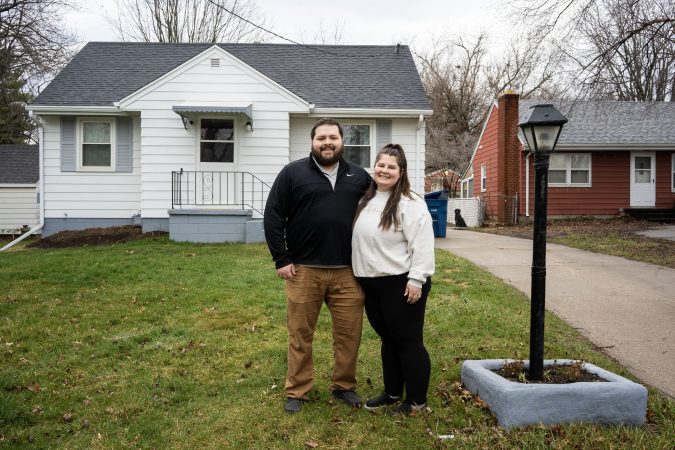
    Take Tony Zhang, 34, who bought a $950,000 townhouse in Irvine, Calif., in 2021 and says he now regrets it. The supply-chain manager says investing his down payment of roughly 30% in the stock market instead would have left him with a portfolio worth as much as $1 million today.

    “Had I just taken my down payment and bought Meta, Nvidia, or any growth stock, I probably wouldn’t even be working my 9-to-5,” he said. Even with a more conservative investment that mirrored the S&P 500, he estimates he’d have an extra couple of hundred thousand dollars. In the meantime, renting a comparable two-bedroom apartment in his area would be about $800 cheaper than his $4,300 monthly housing costs, which don’t include maintenance.

    Zhang is among many people under 40 who feel that homeownership isn’t the wealth-building tool it used to be. Less than a quarter of Americans aged 18 to 39 say buying a home is a very good investment, compared with 38% of those over 60 years old, a recent survey by the Pew Research Center found. A further 38% of under-40s see property as a “somewhat good” place to park their money.

    A separate survey by the Federal Reserve Bank of New York found the proportion of under-50s who consider housing to be a “very good” investment had fallen to about 16% in February, from about 25% five years earlier.

    Broadly speaking, homes are a worse investment for first-time buyers today because wages haven’t kept up with surging prices and ownership costs, said Susan Wachter, a professor of real estate and finance at the University of Pennsylvania’s Wharton School.

    The median sale price of a U.S. home jumped 53% to $379,000 in the six years to May 2026, Zillow data show, while borrowing costs more than doubled. Those who can afford to buy face outlays including property taxes, insurance, and maintenance bills, which cost the average U.S. homeowner $15,979 in 2025 — a 4.7% increase from the previous year, while household incomes rose just 3.8% over the period.

    More than half of U.S. homes also lost value last year — the highest share since 2012, according to Zillow, when the effects of the global financial crisis were still playing out.

    “Younger Americans’ more negative view on homeownership reflects the economics of their lived experience, ” said Wachter. “They face an affordability problem and they don’t get the returns.”

    Almost nine in 10 Americans agree that buying a home is harder for young adults today than it was for their parents’ generation, the Pew research found.

    That said, only 16% of survey respondents aged under 40 went as far as saying a house is a bad investment. Owning a home can provide families with stability and, for those who can afford to hang onto it, a source of intergenerational wealth. Returns vary widely based where a homeowner buys their property and how long they own it, noted Pew senior researcher Richard Fry.

    “It’s a complicated calculation and probably one of the most expensive things young adults will ever buy,” he said. “It’s not a one-size-fits-all answer.”

    Even those who snag a deal on a property can find the math gets complicated.

    Atalyia Ferrara, a 28-year-old teacher, bought a $230,000 four-bedroom Philadelphia townhouse in July 2021 with a $1,485 down payment, thanks to the city’s Keystone Home Loan Program. Her monthly mortgage and taxes have gone up just $335 a month since then, but the maintenance costs have forced her to dip into her savings instead of building a nest egg. She’s already poured more than $28,000 into home improvements, with another $25,000 for electrical repairs looming.

    Ferrara now works in neighboring New Jersey and says the house has become a money pit in an inconvenient location. She and her husband are considering selling so they can rent in an area with better access to work and childcare.

    “I bought the house at 23, just trying to get my foot in the door of building equity,” said Ferrara. “Instead, I’m stuck with a house that’s kept me where I’m at and paying thousands for repairs.”

    Zhang, in California, is planning to stay put until his 8-year-old daughter goes to college, hoping to cash in on his home’s appreciation down the line. After that, he plans to sell up and “rent for sure.”

    Still, he can’t help but think of what he could have made in the short term on a different investment.

    “Just looking at how the stock market has performed, the opportunity cost of putting that money into a home has absolutely screwed me over,” Zhang said.

  • EU hits Google with $1 billion fine over its Play app store and search

    EU hits Google with $1 billion fine over its Play app store and search

    BRUSSELS — The European Union on Thursday hit Google with a fine of 890 million euros ($1 billion) after it said the technology behemoth broke digital antitrust regulations by setting up Google Play and its ubiquitous search engine to corral consumers towards its own services and apps to the detriment of competitors.

    It was the latest major crackdown on Big Tech by Brussels, which has led the world in reining in some of the world’s largest companies from Silicon Valley to Beijing.

    Google had recently lost its appeal of a $4.5 billion antitrust fine imposed by the EU for throttling competition and reducing consumer choice through the dominance of its mobile Android operating system.

    The European Commission, the bloc’s executive branch and highest antitrust enforcer, said it was acting in the interest of consumers after running an antitrust investigation of Google.

    “The best products should succeed because they’re better, not because they’re owned by the company running the search engine. And European consumers have a right to be told by app developers where to sign up to the best offers, even when the app store owner does not get a cut,” said Teresa Ribera, the commission’s Executive Vice President for Clean, Just and Competitive Transition.

    Google’s President of Global Affairs Kent Walker blasted the fine as “product degradation driven by a small group of self-serving complainants” that will have a negative impact on European businesses and consumers.

    He said that the EU’s Digital Markets Act forces Google “to strip away real-time search features Europeans love — like instant pricing and direct availability for hotels, flights, and restaurants — and dismantle safety protections on Google Play.”

    Brussels has ratcheted up the pressure on U.S. and Chinese tech giants despite the risk of incurring the wrath of President Donald Trump, who has lashed out at the 27-nation bloc’s digital regulations and vowed to retaliate if American tech companies are penalized.

    The EU describes the world’s seven tech giants — Amazon, Apple, Google parent Alphabet, Meta, Microsoft and TikTok owner ByteDance — as “gatekeepers” that control access for consumers.

    “In the EU, businesses have the right to compete fairly. Gatekeepers have the obligation to ensure a level playing field and consumers the right to choose for cheaper alternative offers,” European Commission spokesperson Thomas Regnier said.

  • Philadelphia shoe retailer Sherman Brothers is moving to the Main Line after 73 years in Center City

    Philadelphia shoe retailer Sherman Brothers is moving to the Main Line after 73 years in Center City

    A wood placard mounted behind the register at Sherman Brothers Shoes in Center City is inscribed with the following message: “The BITTERNESS of Poor Quality Remains Long After the Sweetness of Low Price is FORGOTTEN.”

    The saying is commonly attributed to Benjamin Franklin, making it a fitting aphorism for a shoe store that has served Philadelphia’s men for 73 years, outfitting them with pristine suede loafers and stitched leather boots, ranging in hues from auburn and chestnut to sienna and camel.

    After seven decades in Center City, Sherman Brothers is moving from 1520 Sansom St. to the Main Line this summer. The men’s footwear retailer will take over 42 Greenfield Ave. in Ardmore, formerly home to consignment store Clothes Mentor, and will aim to open by Labor Day. The move will reestablish Sherman Brothers in the Philly suburbs, where it once had multiple storefronts, and will mark a new chapter for the storied family business.

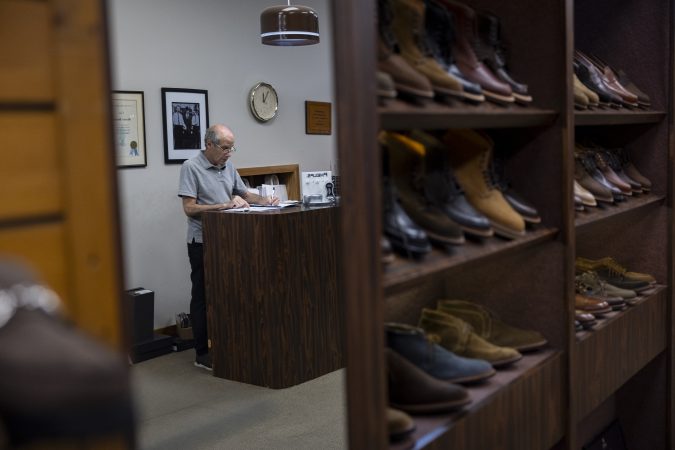
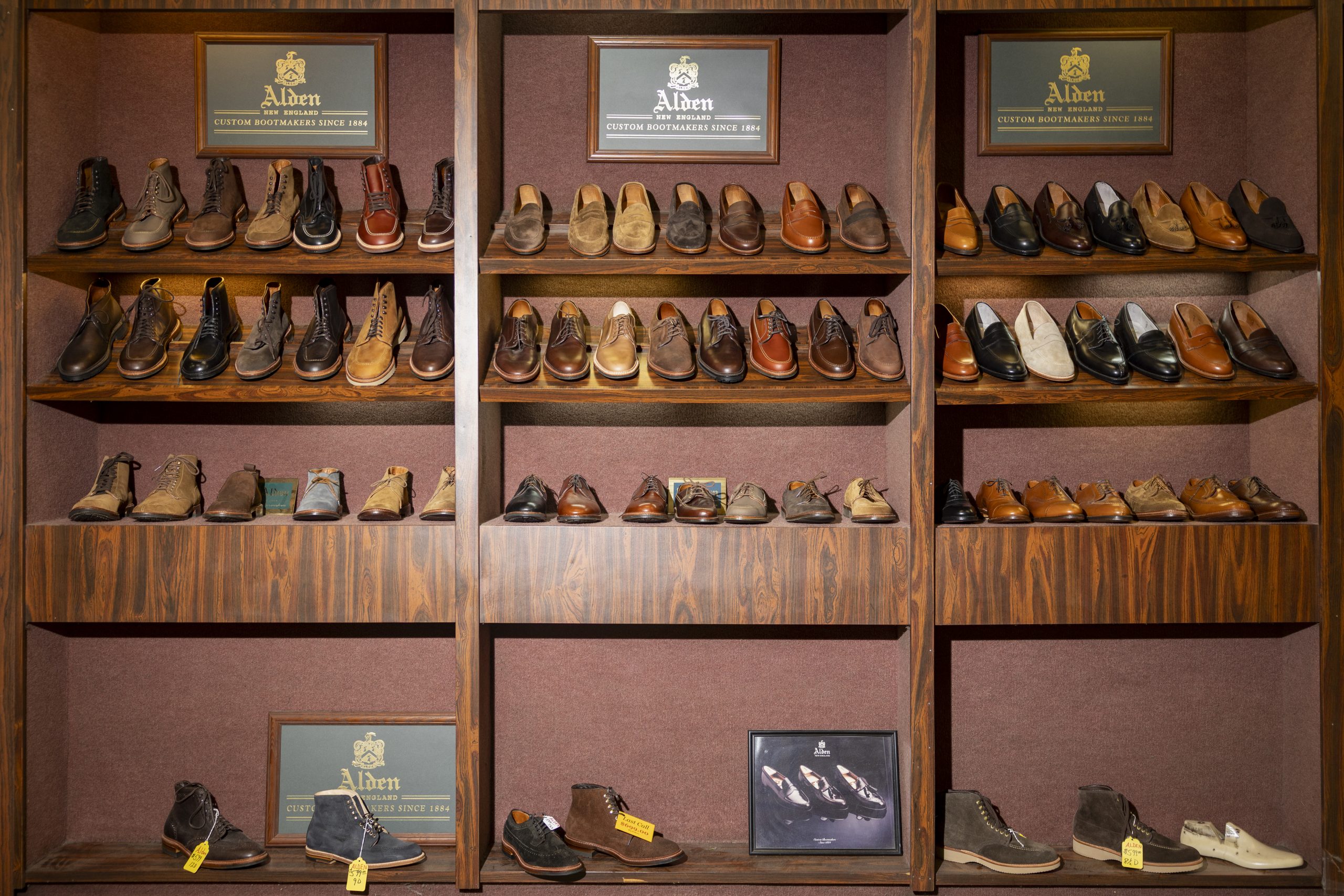
    Alden boots and loafers line the walls of Sherman Brothers in Center City.Aidan T. Gallo / Staff Photographer

    Sherman Brothers was founded in 1953 by brothers Herbert and Edwin Sherman. The two purchased a small shoe store on Mole Street in Center City from their Uncle Lou, using a $5,000 loan from their father. Herbert and Edwin would take long road trips up to New England to visit shoe factories, stocking up with closeout and clearance shoes from brands like E.T. Wright, Bates, and Alden. Because they were buying clearance shoes, they often returned to Philadelphia with extra small and large sizes, making Sherman Brothers a favorite store for men with hard-to-fit feet.

    In 1967, the brothers moved to the Sansom Street location. By then, the store had become a destination for mayors and council members, athletes and entertainers, turning to standing room only during its busiest hours. At one point, Sherman Brothers had three suburban outposts in addition to the Sansom Street store, all of which eventually closed. Now, the shoe store does more than half of its business online, shipping to buyers everywhere from Mississippi to Nebraska.

    Ken Sherman, 66, Herbert’s son, has “been doing this all my life.”

    Ken, along with his cousin Jeffrey, make up the second generation of Sherman Brothers ownership. Ken worked in the shoe store in high school, then after class as a student at Temple University. He’s always loved key components of the business: schmoozing with customers, visiting factories, learning the art of bending leather into footwear. He says he can size up a person’s foot just by looking at a picture.

    “This business is a passion of mine,” Ken said, sitting in the store on a Tuesday morning.

    As he moved through the store, Ken helped a patron pick out a pair of wedding shoes and pointed out a favorite shoe brand of Gov. Josh Shapiro, who’s known for pairing suits with upscale sneakers.

    “I love the customers,” he said. “I love what we do. I love just engaging in conversation.”

    Ken Sherman stands at the register of Sherman Brothers. Ken marks the second generation of ownership for the family business. Aidan T. Gallo / Staff Photographer

    The reasons for moving Sherman Brothers to Ardmore are manifold, said Ken.

    The block of Sansom Street where the store is located has become a restaurant hub — Sherman Brothers is flanked by 1518 Bar & Grill, Mission Taqueria, Oscar’s Tavern, and Bagels & Co., among other bars and eateries. The shoe store is one of the last retailers on the block. For years, Ken said, stakeholders made offers to bring something new into the Sherman Brothers space. Ultimately, a restaurant made an offer that the Shermans decided to take (the Shermans own the buildings at 1518 and 1520 Sansom Street and lease space to multiple tenants). Ken declined to share any details about the new restaurant, which will be called Silver Shaker.

    Another reason to leave Center City: Parking. For years, Sherman Brothers employees and patrons have complained of parking tickets and the high prices of lots. The Ardmore store will have ample free parking.

    Ken said he’ll miss the city — the Sansom Street storefront holds memories of celebrity patrons, family milestones, and now-funny mishaps. He hopes his Philadelphia customers will make the trek out to Ardmore to visit with him. But he’s ready to bring Sherman Brothers back to the Main Line.

    “We’re still Sherman Brothers. Our legacy is what it is, and I’m proud of that, proud of what we’ve done for the city,” Ken said.

    “We’re gonna do exactly what we do, just in a different location.”

    This suburban content is produced with support from the Leslie Miller and Richard Worley Foundation and The Lenfest Institute for Journalism. Editorial content is created independently of the project donors. Gifts to support The Inquirer’s high-impact journalism can be made at inquirer.com/donate. A list of Lenfest Institute donors can be found at lenfestinstitute.org/supporters.