Category: Business

  • Who lives in the new apartments at the Navy Yard? Turns out, not very many people.

    Who lives in the new apartments at the Navy Yard? Turns out, not very many people.

    A year ago, Priya Brown spent many weekday afternoons sitting in traffic, inching home to Northern Liberties from her job in the Navy Yard.

    Since moving into the new apartments at South Philly’s converted military base in January, the 27-year-old said her daily routine has gotten much more relaxing — with far fewer brake lights. An assistant buyer at Anthropologie, Brown walks 10 minutes to her office at Urban Outfitters’ Navy Yard headquarters.

    “My life is so much easier,” Brown said last week as she walked her tiny basset hound, Momo, around her building, AVE Constitution. The air was quiet, save for an occasional bird chirping and the steady hum of planes making their descent into Philadelphia International Airport.

    “I’m not a city person,” added Brown, an Annapolis native who moved to Philly for work. In Northern Liberties, “I missed grass a lot.”

    The Navy Yard has open space and paths for walking and running, as seen in this 2022 file photo.Yong Kim / Staff Photographer

    Brown pays about $2,400 a month for her one-bedroom, she said, and takes advantage of the free and abundant street parking, a rarity elsewhere in the city.

    AVE, the national apartment brand run by Korman Communities, is calling its neighboring Navy Yard complexes, Constitution and Normandy, “Philadelphia’s newest neighborhood.”

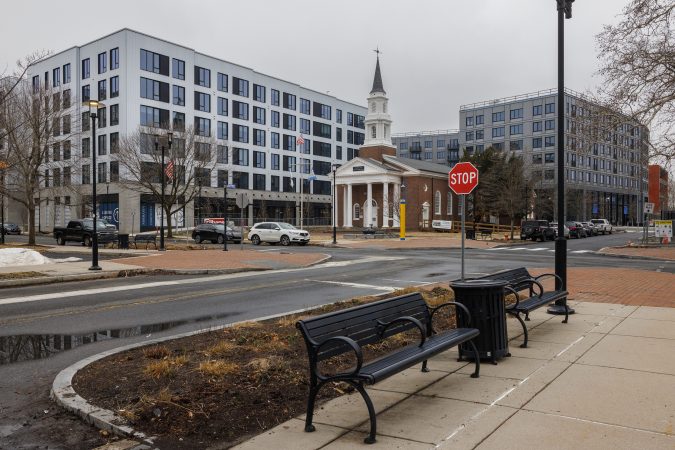
    Constitution opened late last year as the first new private-sector housing complex on the 1,200-acre property at the city’s southernmost edge. The naval base was decommissioned in the 1990s and has since become an office and laboratory hub, with more than 150 companies that employ 16,000 people.

    It also includes more than 20 acres of parks and miles of walking paths, some along the Delaware River, as well as a restaurant and hotel.

    Now, it is also home to a small but growing number of residents.

    More than a third of the 347 units in Constitution are leased, according to Sam Korman, AVE’s director of operations. Next door at Normandy, which opened this spring, more than 20% of the 267 units are leased, according to Korman. Normandy includes unfurnished apartments for tenants, as well as furnished ones that are marketed to business travelers. Lease-ups for buildings of this size typically take about 18 months, a spokesperson for the company said.

    “We are extremely pleased with the reception to AVE Navy Yard through our first few months of operations,” Korman said last month in a statement. “This past month has been our most successful for both furnished and unfurnished leasing, a positive trend that we expect to continue throughout the summer,” a busy season for rentals.

    Navy Yard stakeholders eventually want the property to have 4,000 apartments, along with more retail space and a second hotel, according to its 2022 redevelopment plan.

    A one-bedroom apartment at AVE Normandy as seen in March.Alejandro A. Alvarez / Staff Photographer

    Some Navy Yard residents love their ‘secluded spot’

    As cars drove by from the Navy Yard office complexes, headed toward I-76 and I-95 on a recent afternoon, only a handful of people were out and about near the apartment buildings.

    Several food couriers dropped off orders in the Normandy lobby. Nearby, in front of floor-to-ceiling windows, someone walked on the treadmill in an otherwise-empty gym. On an outdoor deck above, people could be heard splashing in the pool.

    Otherwise, passersby were few.

    Brown said she enjoys the suburban-esque solitude, though she’s glad more tenants are moving in. This winter, it felt like only a handful of other people lived in the building, she said, but now her floor seems like it’s almost full, making it “less spooky.”

    A communal space at AVE Normandy in March.Alejandro A. Alvarez / Staff Photographer

    Across the street at Normandy, resident Integra Feliciano has picked up a similar vibe.

    “I have the sense that I’m definitely one of the earlier tenants,” said the 29-year-old, who moved in April and was drawn to the area’s tranquility after living near Passyunk.

    Feliciano commutes to her job at a life sciences company in West Philly. She looked at apartments in Center City but couldn’t find anything as quiet and luxurious — without “ridiculously expensive” parking.

    At her last apartment, she said, she paid more than $300 a month for parking, a rate that was set to hit $500 around the time she moved. Like Brown, she now parks on the street for free.

    The Navy Yard is “a secluded spot, a little gem,” said Feliciano, who pays $2,510 for her one-bedroom. “I like being in proximity to the city, but I don’t like being right in it.”

    The Navy Yard itself is “still up-and-coming in terms of having more restaurants and stuff,” Feliciano said, but there’s plenty to do.
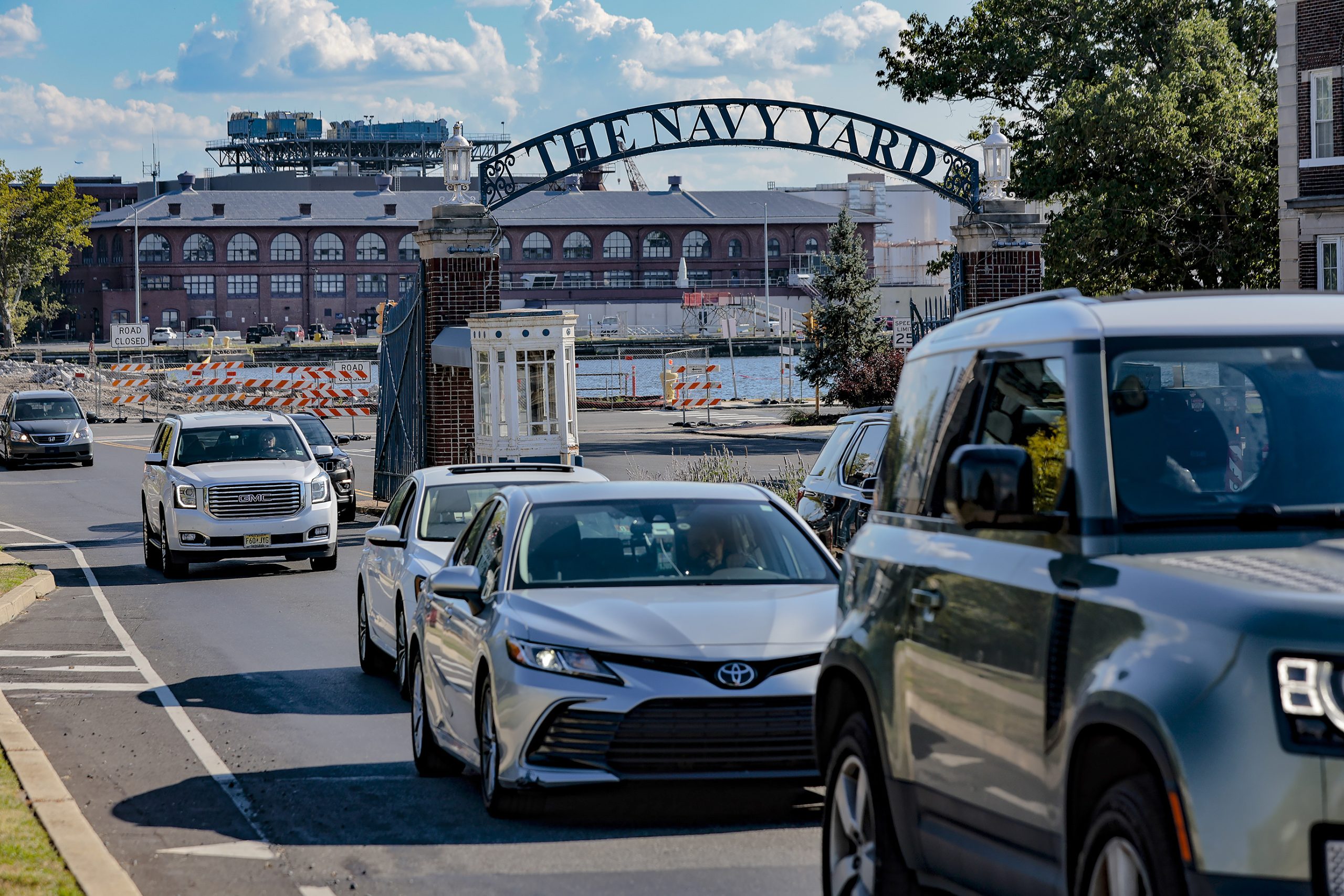
    People leave the Navy Yard at rush hour in August 2022.Steven M. Falk / Staff Photographer

    In the spring, she said, she and her boyfriend bought last-minute tickets to a Sixers playoff game and walked over to Xfinity Mobile Arena. While out for a run one day, she discovered the Southeast Asian Market in FDR Park.

    She swims in her building’s pool whenever she can, she said, and often invites family and friends over. And she said her guests love that they don’t have to “circle the block for an hour” to find a parking spot.

    “I had a friend come over, and she just parked right in front,” Feliciano said. “She said, ‘Oh, that’s it?’”

    Why the first resident was drawn to AVE Navy Yard

    Gokul Krishnan is glad more people are discovering the Navy Yard apartments. The 51-year-old, who works as the chief sourcing and global trade compliance officer for URBN brands, was the first person to sign a lease and move into Constitution last November.

    “It feels like home,” said Krishnan, who moved to Philly from the San Francisco area. “It’s so calm.”
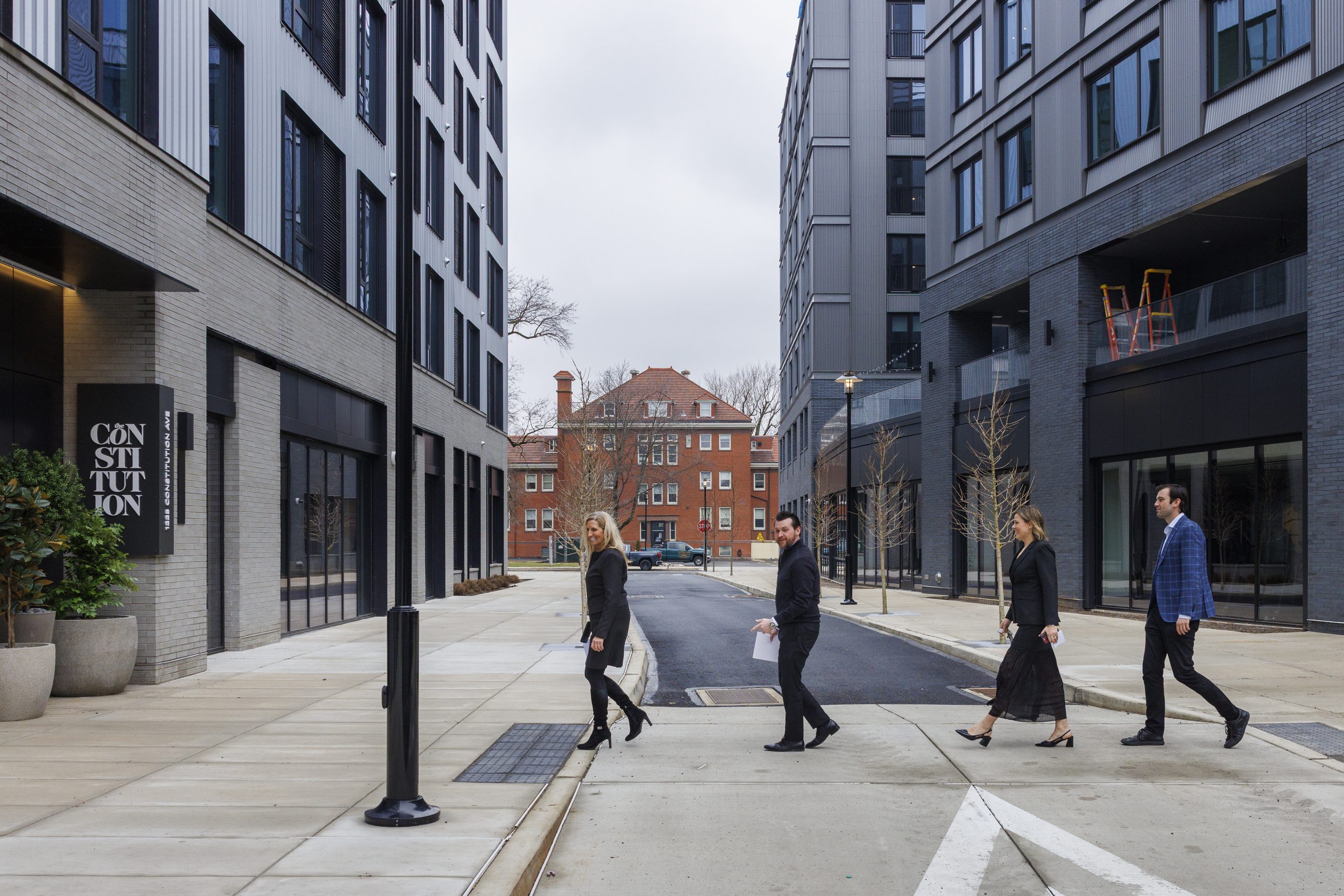
    AVE Navy Yard executives walk between the Constitution and Normandy apartment buildings in March.Alejandro A. Alvarez / Staff Photographer

    He enjoys taking walks around the Navy Yard, using the gym, and spending time in the building’s lounge and outdoor courtyard. The AVE staff is kind and communicative, he said, and he, too, enjoys a 10-minute walking commute to his office at the Urban Outfitters headquarters.

    While he does drive or use a delivery service for groceries, he said he has walked to the Navy Yard’s Gatehouse restaurant or to the Courtyard by Marriott hotel lounge for a bite to eat.

    Krishnan signed an 18-month lease, he said, and pays about $3,000 a month for his one-bedroom, plus parking in the complex’s covered garage. He may upgrade to a larger unit next year, he said. His wife plans to move from California once their son graduates high school, and she’s bringing the couple’s 6-year-old goldendoodle, Simba.

    Editor’s note: This story has been updated with additional information about leasing plans.

  • Meet the Philly tech founder who was a monk, worked for Meta, and is building tech for local government

    Meet the Philly tech founder who was a monk, worked for Meta, and is building tech for local government

    Lilly Chen, 30, wants people to stop thinking local government software “sucks.”

    The cofounder and CEO of Philadelphia-based FSH Technologies once worked at Facebook writing software that trains AI models, lived in a monastery as a teen, and is now on a mission to make local government technology more efficient.

    In the last two years, her company has raised $5.5 million from venture capital, and secured a contract with the city’s Department of Commerce.

    “We’re so gung ho about local government, which is like a weird thing to say, but it’s true,” said Chen.

    The business just moved into a new office at 2400 Market St., where Aramark is headquartered, and opened a smaller outpost in New York City this month. Chen hopes to hire 40 workers by early 2027, adding to the current 12-person staff, to work on contracts the company has already secured. She’s looking for software engineers and client strategists — positions that can come with a starting salary of $150,000 at FSH Technologies, as well as a signing bonus and equity, she said.

    The company is “winning government contracts at a clip,” said Chen, who was born in New Jersey and went to college in Colorado. She was working in San Francisco when the pandemic started, and decided to move closer to her parents in Media.

    She declined to share how much the company brought in last year in revenue but says “it’s in the millions.”

    The Inquirer interviewed Chen on a hot July day over the phone while she enjoyed an ice cream from 1-900-ICE-CREAM. The following conversation has been edited for clarity and brevity.

    FSH Technologies cofounder Lilly Chen chats with COO Jason Chen in their Philadelphia office.Tyger Williams / Staff Photographer
    Why did you start this company, FSH Technologies?

    I used to work at Meta … when I worked there it was called Facebook. I was just very disenchanted with the apathetic nature of tech bros and the real-world impact that technology has on regular people.

    FSH technologies is focused on creating software for local government. Why this niche?

    I was [thinking about] what is a net positive on society that I can feel very good about, that I think technology is a good solution for. I landed on local government because it’s the one thing that universally everybody in America has to interface with, and the technology is so outdated. If you’ve tried to pay a parking ticket, get a permit, just try to navigate your local municipality, it’s so hard, it’s so complicated. Usually the software doesn’t even exist. It could be a manual paper thing.

    In the last year there was a lot of talk in the Donald Trump administration of making the federal government more efficient. You’re talking about efficiency at the local government level. Did any of that narrative impact you?

    There was actually no technology involved in the DOGE effort. When you drive real efficiency in government, it’s not rip and burn things. It’s actually getting into the weeds to understand the current process, who’s doing it, how they’re doing it, why they’re doing it, and then iteratively improving and wherever possible digitizing the relative components of that.

    It’s not at all just being like, “Let’s just fire these people and see what happens.”

    What about the name FSH Technologies? Where does that come from?

    I used to be a Buddhist monk. I dropped out of high school when I was 16, and I moved to China and I lived in a monastery….We had a pond where we kept fish, and [my sensei] … would describe to me: “You are the pond, not the fish.”

    If you can kind of separate yourself from the immediate feelings and see things as a bigger picture, as a system, you actually have a much more cohesive understanding and view of the problem.

    You were a monk?

    I was a real troublemaker in high school. I actually ended up getting very sick — I had an autoimmune disease … I was missing a lot of class, I was kind of misbehaving. My mom at one point threw her hands up in the air and was like, “We’re now Buddhists, we are moving to China, we’re going to live in a monastery, we’re shaving our heads.”

    Can you tell me more about your work for the Philadelphia Department of Commerce?

    We build software for the entire Department of Commerce, actually.

    We standardized and unified all their forms into one platform, and then we created business profiles so that businesses would have to input, for example, their EIN number…once, and it’s there. If you put in your revenue, it will show you what you qualify for.

    Prior, if you think about a Google form and you fill it out, you don’t actually know if you qualify, because anybody can open the form, anybody can submit it. It creates a lot of bureaucracy on both ends. You, as the business, don’t know if it was worth your time to fill it out, so you just fill it out – or you don’t fill it out. You, as the city, don’t know if this business is eligible, so you just spend time reviewing stuff for people who don’t qualify. Everything becomes slower and like sludge because the interface is really bad for actually streamlining the process.

    The city spends so much less time reviewing applications now because they only get access to the ones that are actually qualified.

    How are you managing the company’s work with your current staff of 12?

    We have actually won a ton of contracts that are coming down the pipeline, but we haven’t started them yet. We have time to staff up, which is what we’re trying to do. If I can hire 50 people, I would.

    Why can’t you?

    What we do requires two things. One, is a deep passion and empathy for communities, civil servants, public good. You really need to care about the details because if you don’t care about them, you’re going to let people fall through the cracks.

    That’s actually kind of hard to find because … people hear government software and they think it’s boring. They don’t necessarily realize how much impact you can have if you care deeply about this boring thing.

    The second thing is software skill — the craft of building software that just works is hard.

    The Venn diagram of skill and care is hard because a lot of people who are highly, highly skilled in technology end up at these AI frontier labs, which are paying a million dollars in salary.

    What do you want the company to look like in five years? What’s the goal?

    The goal is being able to have people no longer think local government software sucks.

  • Stocks waver on Wall Street while crude oil prices fall for the first time in a week

    Stocks waver on Wall Street while crude oil prices fall for the first time in a week

    NEW YORK — Stocks drifted to a mixed finish on Wall Street Friday as oil prices slipped for the first time in a week.

    Every major index lost ground overall for the week amid increasing pressure from a sharp escalation in the U.S. war with Iran. Investors are also contending with more tariffs and worries about the economy suffering under the weight of stubborn inflation.

    The S&P 500 barely budged in a day of uneventful trading. It rose 3.68 points, or less than 0.1%, to 7,411.98. The index notched its second consecutive losing week, which hasn’t happened since March.

    The Dow Jones Industrial Average rose 235.60 points, or 0.5%, to 51,947.25.

    The Nasdaq fell 161.87 points, or 0.6%, to 24,975.82. It was weighed down by sharp losses from several Big Tech stocks.

    Micron Technology fell 7% and Broadcom fell 2.7%. Both companies have large market values that tend to weigh more heavily on the market. They were big reasons for the technology-heavy Nasdaq lagging the market, and also why the market’s gains were kept in check despite more stocks rising than falling within the S&P 500.

    Heavy fighting in the Middle East throughout the week again threatened to slow the global flow of oil and gas. It has been an ongoing concern for Wall Street, and now many of the buffers in the energy market from earlier in the year, including strategic reserves in the U.S., have been weakened.

    “If escalation continues and the Strait of Hormuz remains closed, the impact will land on an energy market with far less resilience than in the spring,” wrote Theodore Bunzel, head of geopolitical advisory at Lazard Asset Management, in a report.

    Brent crude, the international standard, fell 3.9% to $96.78. It has generally been rising all week and moved back above $100 on Thursday before easing a bit. Before the Iran war began in late February it was trading around $72 per barrel.

    Bond yields also eased and relieved some of the pressure on stocks. The yield on the 10-year Treasury fell to 4.68% from 4.71% late Thursday.

    Markets in Europe gained ground, while Asian markets closed lower.

    The U.S. is also ramping up its global trade war with a fresh round of tariffs on dozens of nations. The new round of tariffs impacts nearly all U.S. imports and they are paid by companies importing those goods, who then typically pass the added costs along to consumers. That move came just as the clock was running out Friday on stopgap levies the president imposed after a stinging defeat for other tariffs at the Supreme Court.

    Rising energy prices and fresh tariffs could result in hotter inflation, which has been squeezing consumers and looming over the Federal Reserve’s interest rate policy.

    The Fed meets later this month and has been closely monitoring prices and their impact. Rising inflation dashed hopes earlier this year for an interest-rate cut. Wall Street has since leaned more toward a potential rate increase, which the central bank can use to help cool inflation.

    Wall Street is anticipating at least one rate hike by the end of the year, with a nearly 38% chance that could happen at the upcoming meeting next week, according to CME FedWatch.

    Higher energy costs threaten to take a bigger chunk out of household budgets, which means a shift in spending toward more basic needs, like gasoline. Nationally, a gallon of gasoline costs $4.10, according to AAA. That’s still lower than this spring as the conflict in Iran expanded, but it’s almost a dollar higher than last year at this time.

    Investors are worried about the impact to companies profits. Those profits and expectations for more growth are what typically justifies a stock’s value. The latest round of corporate earnings showed that companies are still notching growth, but concerns are growing.

    American Express fell 4.3% despite reporting a jump in profit during its most recent quarter. Amex maintained its profit forecast for the year and has been spending more heavily to keep wealthy individuals amid more competition.

    Worries about the sustainability of broader profits are on top of lingering concerns about AI-focused tech companies. Companies like Alphabet and Nvidia have been spending heavily on AI technology. Investors are increasingly questioning whether those investments will produce profits to justify the large stock values that have been steering the broader market higher throughout the year.

    AP Business Writers Elaine Kurtenbach and Matt Ott contributed to this report.

  • Ford recalls more than half a million Broncos due to engine fire risk

    Ford recalls more than half a million Broncos due to engine fire risk

    WASHINGTON — Ford Motor Co. is recalling more than half a million Broncos because a wiring harness in the engine compartment can short circuit and increase the risk of fire.

    Ford said Thursday that 565,691 Ford Broncos and Bronco Raptors, model years 2021-2026, are included in the recall. The automaker estimates that around 1% of those vehicles have the wiring harness defect. Ford said it is not aware of any reports of accidents or injuries related to the issue.

    The problem is caused by insufficient protection on the wiring harness which can lead to exposed wires and short circuiting. In the event of a short, drivers may notice smoke in the air vents or a warning message on their dashboard followed by flames coming from the passenger’s side of the engine compartment.

    To fix the problem, dealerships will install new covers over the wiring free of charge.

    Ford’s number for this recall is 26S55. Vehicle identification numbers involved in this recall are now searchable on NHTSA.gov. NHTSA’s number for this recall campaign is 26V468.

    Owners may contact Ford customer service at 1-866-436-7332 or the National Highway Traffic Safety Administration Vehicle Safety hotline at 1-888-327-4236 (TTY 1-888-275-9171).

  • Trump says U.S. will investigate EU trade practices, claiming the bloc unfairly fined tech giants

    Trump says U.S. will investigate EU trade practices, claiming the bloc unfairly fined tech giants

    WASHINGTON — The United States will open a formal investigation into the European Union’s trade practices, President Donald Trump said on Friday, claiming the bloc has unfairly levied billions of dollars of fines against Google, Apple, and other U.S. tech giants.

    The Republican president made the announcement a day after the EU hit Google with a fine of 890 million euros, or $1 billion, after it said the technology behemoth broke digital antitrust regulations by setting up Google Play and its ubiquitous search engine to corral consumers toward its own services and apps to the detriment of competitors.

    In a lengthy post on social media, Trump said he has warned the EU about its practice of fining U.S. tech companies. He named Google, Apple, Meta, Amazon, and others.

    “The United States of America is not a ‘PIGGYBANK’ for Europe, nor will we allow it to be!” Trump said, adding that his post should serve as notice of an immediate trade investigation “into the practice of ‘ROBBING’ American Companies and, in turn, the American Taxpayer.”

    Trump’s move comes a day after the White House announced double-digit tariffs on imports from more than 60 countries, accusing them of inadequately enforcing bans on goods produced by forced labor. The new tariffs replace temporary 10% worldwide import taxes that Trump imposed after the Supreme Court struck down his biggest tariffs.

    The new tariffs are being implemented using Section 301 of the Trade Act of 1974, which permits the president to impose import taxes and other sanctions against countries found to engage in “unjustifiable,” “unreasonable,” or “discriminatory” trade practices.

    The EU’s billion-dollar fine against Google was the latest major crackdown on Big Tech by Brussels, which has led the world in reining in some of the world’s largest companies from Silicon Valley to Beijing.

    It has done so despite the risk of incurring the wrath of Trump, who has lashed out at the 27-nation bloc’s digital regulations amid a broader campaign against Europe: imposing high tariffs, making threats to seize Greenland from Denmark by force, and rattling trust within the NATO military alliance.

    Trump had threatened retaliation if American tech companies are penalized.

    Google had recently lost its appeal of a $4.5 billion antitrust fine imposed by the EU for throttling competition and reducing consumer choice through the dominance of its mobile Android operating system.

    The European Commission, the bloc’s executive branch and highest antitrust enforcer, said it was acting in the interest of consumers after an investigation of Google.

    “The best products should succeed because they’re better, not because they’re owned by the company running the search engine. And European consumers have a right to be told by app developers where to sign up to the best offers, even when the app store owner does not get a cut,” said Teresa Ribera, the commission’s executive vice president for clean, just, and competitive transition.

    Google’s president of global affairs, Kent Walker, blasted the fine as “product degradation driven by a small group of self-serving complainants” that will have a negative impact on European businesses and consumers.

    He said the EU’s Digital Markets Act forces Google “to strip away real-time search features Europeans love — like instant pricing and direct availability for hotels, flights, and restaurants — and dismantle safety protections on Google Play.”

    The EU describes some of the world’s leading tech giants — Amazon, Apple, Google parent Alphabet, Meta, Microsoft, and TikTok owner ByteDance — as “gatekeepers” that control access for consumers.

    “In the EU, businesses have the right to compete fairly. Gatekeepers have the obligation to ensure a level playing field and consumers the right to choose for cheaper alternative offers,” European Commission spokesperson Thomas Regnier said. Alphabet reported $403 billion in revenue last year.

  • QVC hosts vote to unionize

    QVC hosts vote to unionize

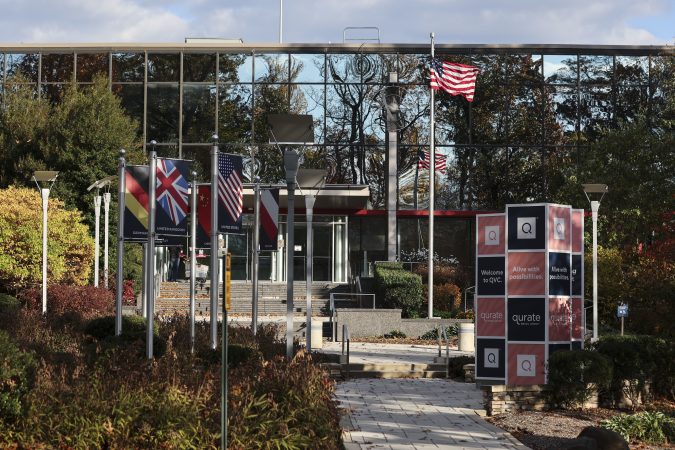
    Most QVC hosts have voted in favor of unionizing, according to SAG-AFTRA, as the West Chester-based shopping network prepares to emerge from bankruptcy.

    About 80% of the hosts voted in favor of joining SAG-AFTRA, according to a news release from the union, which represents 160,000 media professionals nationwide.

    The group includes 53 on-air hosts who sell clothes, home goods, and other products from QVC Group’s West Chester studios. The programs are broadcast on QVC, HSN, and various digital platforms, a segment of the business the company refers to Omni Channel.

    “The strong show of support for unionizing reflects QVC, HSN, and Omni Channel hosts’ professionalism and resolve to improve their workplace and build a better future for themselves and their colleagues,” SAG-AFTRA national executive director and chief negotiator Duncan Crabtree-Ireland said in a statement.

    A QVC Group spokesperson reiterated that the hosts are “deeply valued team members.”

    “While we have long believed that a direct relationship with team members is the best approach, we respect the outcome of the election and our hosts’ right to make this choice,” spokesperson Matthew Goldstein said Friday in a statement, adding that management “will work with SAG-AFTRA on the next steps.”

    The vote comes a month after a supermajority of QVC’s TV and digital hosts presented a petition to company management, asking for voluntary recognition of the union.

    In the petition, the hosts expressed concerns about QVC using artificial intelligence to imitate their image, voice, and likeness without consent or compensation, as well as about pay equity and transparency.

    “As QVC Inc. adapts, we hope to foster a culture in which workers feel valued, trusted, and appreciated, where ideas are recognized and concerns respected,” the hosts wrote in the petition. “This is especially true given the current landscape of artificial intelligence, discussions surrounding the regulation of image and likeness, and concerns of job security.”

    Despite developing a loyal following of fans over 40 years, QVC has struggled recently to expand its customer base and compete with online retailers. After years of declining revenue, QVC Group filed for Chapter 11 protection in April.

    A federal judge last week approved the company’s reorganization plan, which would slash its debt from about $6.6 billion to $1.3 billion. QVC executives have said they hope to emerge from bankruptcy sometime this summer.

  • More than 575,000 people attended Philly’s World Cup fan festival

    More than 575,000 people attended Philly’s World Cup fan festival

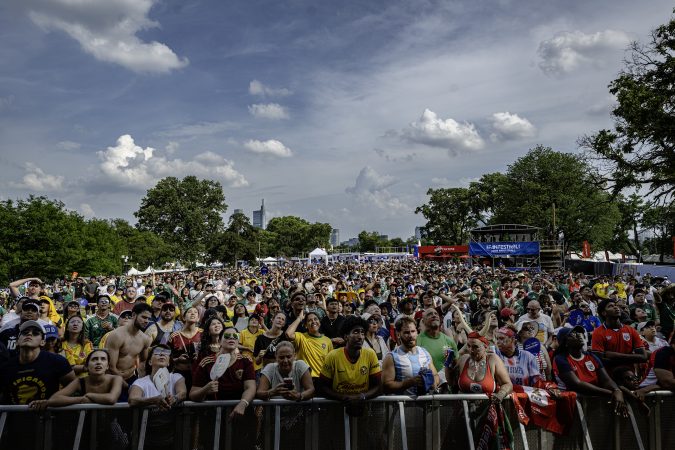
    Philadelphia transformed Lemon Hill into the longest and one of the largest World Cup watch parties in the country throughout the FIFA Fan Festival’s 39-day stay.

    With the World Cup wrapped up, host committees throughout the country are taking stock of how many fans flocked to these festivals. Philly’s fan fest saw the second-highest number of attendees, with 575,304 between June 11 and July 19, according to the festival’s organizer, Philadelphia Soccer 2026.

    Miami’s host committee was less precise in its count, but said its festival drew more than 600,000 guests.

    Each one of the 11 host cities reported fan totals in the hundreds of thousands, but none quite reached the attendance levels of Philly and Miami.

    However, despite South Florida’s high total numbers, Philadelphia set the record for most attendees throughout a single day at a U.S. fan festival with 55,000 attendees during the Brazil vs. Haiti group stage match on June 19. While Philadelphia’s fan festival operated for almost twice as long as Miami’s, opening every day of the tournament, Philadelphia worked with half the capacity limit that Miami did, capping crowds at 15,000 people at a time.

    Anu Akinlotan, 19, of Darby, Pa., (right), Sandra Olaniyi, 25, of Drexel Hill, Pa., (left), and her sister Victoria, 22, (center), watch the USA vs. Australia game at FIFA Fan Festival at Lemon Hill Park in Philadelphia, Pa., on Friday, June 19, 2026.Tyger Williams / Staff Photographer

    New York and New Jersey, home to the largest population among host cities and host of the World Cup final, netted more than one million fans across their decentralized network of official fan zones. The San Francisco Bay Area host committee also chose not to do a single festival but rather a network of watch parties and events. Across those areas, 900,000 people reportedly visited during World Cup games, according to CBS.

    Philly’s million-square-foot watch party, akin to a Fairmount summer barbecue of epic proportions, featured large swaths of open space for fans to lay down blankets and picnic while they watched the game, with the Center City skyline as backdrop; mini soccer pitches to challenge friends to pickup games; and a line of sponsor exhibits, including one outrageously viral Bank of America bracelet-making workshop. Some later resold the bracelets online for upward of $150.

    But the main course was the 60-foot-wide screen playing almost every 2026 World Cup game to a crowd of thousands. This is where Philadelphians and international tourists could experience the energy of the World Cup outside the pricey stadium seats.

    Soccer fans gather to watch Mexico play South Africa on a giant screen during the opening day of the FIFA Fan Festival at Lemon Hill on Thursday, June 11, 2026, in Philadelphia.Jose F. Moreno / Staff Photographer

    Philly and Miami may win out for the highest attendances, likely due to their singular locations and being open much longer than celebrations in other cities, which opted for shorter-lived festival days or decentralized events. Still, most of the U.S. host cities boasted impressive numbers at fan events.

    Atlanta, Houston, and Seattle all reported having hosted at least 500,000 fans at their festivals. Kansas City was close behind, reaching 400,000 fans across its 18-day run. Los Angeles brought in 250,000 people to its festival. Boston hosted 155,000. Dallas’s host committee has not released official counts yet.

  • LeBron James Sixers jerseys are already selling out on Fanatics — but more merch is on the way

    LeBron James Sixers jerseys are already selling out on Fanatics — but more merch is on the way

    Fanatics is already sold out of some LeBron James Sixers jerseys.

    About two hours after news broke that the superstar was coming to Philly, all first editions of the no. 23 jersey were sold out on the Fanatics website.

    The adult royal blue, white, and red Nike Swingman jerseys had been selling for $124.99, in line with the price of similar jerseys for other Sixers stars.

    Red and blue youth and adult Nike Jordan Brand Fast Break jerseys, which are made of different material, were still available to preorder for $69.99 and $79.99 as of Friday afternoon, though some colors and sizes were in low supply. Those jerseys were set to ship next month.

    Once James’ decision was announced, his new jersey was available “instantly,” according to Brandon Williams, Fanatics vice president for global communications.

    An image of the jersey was displayed on the top of the Fanatics homepage with the words: “LeBron James. The king just found his kingdom.”

    Along with the official jerseys, Fanatics is also selling James’ 2026-2027 Topps trading card, the same one that he signed and posted on Instagram after announcing his decision to come to Philly.

    The cards are selling for between $11.99 for a single card and $169.99 for a 20-pack. Fanatics acquired Topps in 2022.

    The company will be adding other James merchandise shortly, Williams said.

    Fanatics, the sports merchandise giant that makes and distributes officially licensed apparel for all major pro leagues and the NCAA, is owned by billionaire Michael Rubin, a Lafayette Hill native who previously had a minority ownership stake in the Sixers.

    On Friday afternoon, Mitchell & Ness customers could preorder several James graphic tees and sweatshirts, set to ship in four to six weeks. The new swag was advertised on the retailer’s homepage, which read “Philly welcomes the king.”

    Rally House, the national sports apparel chain with more than two dozen Philly-area locations, also advertised James Sixers jerseys and T-shirts, set to ship next month.

    But Sixers fans who stop by their local Rally House this weekend won’t find James gear just yet.

    “With the demand of jerseys, LeBron James jerseys will have a slightly longer timeline to land in-store,” Novick said in a statement. “Rally House is doing everything in their power to beat these estimated arrivals and get LeBron James 76ers gear into Philly stores for fans ASAP.”

  • Tower Health and Jefferson Health have formed a clinical affiliation

    Tower Health and Jefferson Health have formed a clinical affiliation

    Tower Health and Jefferson Health announced Friday that they have formed a clinical affiliation that would expand access to advanced treatments in Tower’s markets northwest of Philadelphia.

    The two nonprofit organizations said Jefferson is not acquiring Tower, which is the biggest healthcare provider in Berks County and also owns two hospitals in Chester and Montgomery Counties.

    “Healthcare organizations today face unprecedented challenges, including inadequate reimbursement, rising costs, workforce shortages, and increasing competition,” Tower’s CEO Michael Stern said in an announcement to employees.

    “History teaches us that when an organization is confronted by challenges on multiple fronts, success depends on finding the right ally — one that shares our values, respects our strengths, and is committed to the same mission,” Stern’s note said.

    Jefferson said it routinely works with other health systems to provide high-level specialty care throughout the region it serves.

    “As part of that commitment, we are working with Tower Health to enhance access to advanced tertiary and quaternary services, bringing more specialized expertise, innovative treatment options, and coordinated care closer to the communities we serve,” Jefferson said.

    Details of the arrangement with Tower will worked out in the next few months.

    Jefferson is also among the Philadelphia-area health systems exploring a clinical alliance to support financially struggling St. Christopher’s Hospital for Children, which Tower manages and owns in a 50-50 joint venture with Drexel University.

    Turnabout for Tower

    For Tower Health, the potential collaboration with Jefferson represents a turnabout from a decade ago when the system based in West Reading plotted a move into the Philadelphia market. Tower spent $423 million for the acquisition of five community hospitals in Southeastern Pennsylvania from Community Health Systems Inc. in 2017.

    The idea then was that the health system’s anchor, Reading Hospital, would draw patients for the most advanced care to Berks County from the Philadelphia region. That deal led to massive losses as the anticipated patients didn’t materialize in Reading and then COVID-19 crushed health system finances nationwide.

    Tower sold or closed three of the five acquired hospitals, but remains saddled with a huge debt load. The interest payments leave the system with little money left over to invest in the new facilities and services. Last year, Tower instituted significant service cuts and layoffs at Pottstown Hospital.

    Jefferson has expanded through acquisitions from three hospitals to 33 since 2015. The most recent acquisition was Lehigh Valley Health Network two years ago, creating a network that stretches from South Jersey to near Scranton. The system has been losing money for years as management attempts to make the hospitals it acquired work as a financially sustainable system.

    This week, Jefferson sued Independence Blue Cross, claiming a series of five payment policy changes cost it nearly $100 million this year.

  • EU finds TikTok violates its digital rule book by failing to protect privacy of minors

    EU finds TikTok violates its digital rule book by failing to protect privacy of minors

    BRUSSELS — The European Commission on Friday said it found TikTok had not adequately protected children’s privacy rights on its platform by allowing adults to view the accounts of minors.

    The action exposed children to cyberbullying, unwanted contact and predatory behavior, commission spokesperson Thomas Regnier said.

    “Children’s content must never be visible to strangers,” he said. If TikTok does not take steps called for by the European Union’s landmark Digital Services Act, “minors are exposed to predators, to grooming and to cyberbullying,” Regnier said, adding that children aged 13 to 15 can “easily” change their accounts from private to public and the private accounts of minors aged 16 to 17 can be seen by anyone on the internet. “We do not accept this,” Regnier said. “Putting default settings for minors is not a beauty contest under the DSA. It must be effective.”

    The investigation comes on the heels of back-to-back crackdowns on Big Tech by Brussels, which has led the world in regulating tech behemoths including Meta and Apple.

    TikTok can now defend itself and reply to the findings. If unsatisfied with the Chinese firm’s response, the European Commission could issue a so-called non-compliance decision and possible fine worth up to 6% of the company’s total annual revenue.

    The Chinese social media firm, whose parent company ByteDance is based in Beijing, said in a statement it would review Brussels’ findings and “continue to engage constructively with the Commission.”

    “Protecting minors online is a goal we share, and we are committed to building on our strong track record of continuous improvement,” TikTok said in a statement.

    If unsatisfied with the firm’s response, the commission could issue a so-called non-compliance decision and possible fine worth up to 6% of the company’s total annual revenue.

    The commission estimates most of TikTok’s 170 million users in the EU are children, with 7% of children aged 12 to 15 spending four to five hours daily on the app.

    The 27-nation European Union found in February that TikTok had breached another aspect of its digital rule book with an “addictive design” of features such as autoplay and infinite scrolling that could harm the physical and mental health of users and minors especially.