Category: Business

  • Hanwha vs. Holt: How New Jersey lost a shipyard

    Hanwha vs. Holt: How New Jersey lost a shipyard

    Hanwha Philly Shipyard says it needs a lot more space outside its 110-acre South Philadelphia complex to win lucrative U.S. Navy contracts, turn the money-losing facility profitable, and hire up to 1,000 union welders and metalworkers.

    The Korean-owned yard’s leaders thought they had found just the place, four miles by barge down the Delaware River at the New Jersey-funded Paulsboro facility, vacated by the offshore wind industry when President Donald Trump killed that program. In December, Hanwha agreed to take over the lease.

    But port operator Holt Logistics refused approval and sued to block the deal. After months of lobbying, Hanwha has given up and is now collecting offers from southern states that hope Hanwha will invest a big chunk of the $5 billion it has pledged for U.S. shipbuilding into their yards and future workers.

    Philadelphia Shipyard as seen from southbound I-95 in 2024.Alejandro A. Alvarez / Staff Photographer

    This despite the fact Hanwha’s proposal enjoyed support from federal, state, and local officials and even made it into the U.S. military budget for fiscal year 2026, which called for $110 million “to support shipbuilding industrial capacity” and steel fabrication in a manufacturing facility “formerly used for offshore wind manufacturing.”

    Paulsboro Mayor John Giovannitti estimates that on a given day, there are fewer than 50 workers at the port.

    Leo Holt, whose century-old company runs ports in Gloucester City and South Philadelphia, said he’s not completely averse to manufacturing around the Paulsboro terminal after his family’s plans to beef up container and bulk shipping there accelerate.

    Hanwha declined to comment, confirming only that the shipyard is still looking for space “in the U.S.”

    A rendering of a 600-acre shipyard that the Port of Tampa Bay has offered to build for Hanwha. Port Tampa Bay

    What went wrong?

    Since the early 2010s, New Jersey borrowed and spent more than $500 million building a Paulsboro wharf, highway ramps, and other facilities to attract big employers to the port. It replaced lost oil industry jobs and also compensated for nearby Camden’s loss of piers due to Holtec Inc.’s redevelopment in that city’s aging port district.

    In borrowing documents and news releases, the public spending was justified by predictions that the port would draw hundreds, even thousands, of port and industrial jobs, which in more than a decade have yet to arrive.

    Paulsboro sublets the facility to Holt as the port operator. Holt paid $1.6 million to use the property last year.

    At the urging of then-Gov. Phil Murphy, then-State Senate President and iron workers union leader Steve Sweeney, then-Paulsboro Mayor John Burzichelli, and other officials, Holt in 2020 agreed to let EEW, a global pipemaker based in Germany, build supports up to 400 feet long and 40 feet across for the federally subsidized offshore wind-electric generation facilities that its Danish partner Orsted planned to locate off the New Jersey coast.

    Orsted canceled in 2023, citing rising costs. Trying to cut his company’s losses, EEW executive vice president Esben Strandgaard began looking for new tenants, attracting more than 200 inquiries and initiating talks with Hanwha.

    Hanwha needed the landlord’s permission to take over the lease. Hanwha Defense USA president Tom Anderson, a retired Navy rear admiral, and the Holts met last fall to discuss the proposal.

    Instead of approving, the Holts sued, challenging EEW’s authority to pick a replacement and demanding control of the facility.

    Hanwha, aided by its political supporters, tried to make a deal, but Holt stood firm. In March, Hanwha canceled the agreement.

    What the Holts want

    “The north star for redevelopment at Paulsboro has been marine terminal operations,” said Leo Holt, president of the Gloucester City-based company. “We stretched to assist the state in any way we could,” but “Hanwha was never a part of the plan, nor was shipbuilding.”

    Holt spoke of the failed industrial proposals — wind, shipbuilding, and others to build power plant equipment on site — as an obstacle, not a goal.

    “The detour imposed on New Jersey is over, and the road is clear to the Paulsboro Marine Terminal,” he said. “We were glad to see that the page was turned on the detour.”

    Holt Logistics, which has been expanding containerized cargo facilities on both sides of the river, has shipped containers to Paulsboro and hopes to augment Paulsboro’s current port tenants, Holt said.

    Those include Novolipetsk Steel (NLMK), owned by Russian billionaire Vladimir Lisin, which due to Ukraine war sanctions stopped importing Russian steel through the port for its plant in Farrell, Pa., and has switched to steel from Latin America, East Asia, and other countries, according to Holt.

    The port also ships containers to the U.S. Navy base in Rota, Spain, and to ports in Cyprus, Israel, and other Mediterranean countries.

    More than a container port

    New Jersey has spent more than half a billion dollars improving the Paulsboro site with a wharf, highway connections to I-295, and other public works, the mayor said.

    “I’m not aware of Paulsboro people, Gloucester County people, working there right now,” said Burzichelli, now a state senator and a supporter of both the wind and the Hanwha projects.

    New Jersey invested in the BP site to make it more than a container port, Burzichelli says.

    “That [state-built] wharf was designed to handle any industry, and the public investment was designed to create the maximum amount of high-paying jobs that can be created,” he said.

    The port section “was always intended to be a bulk port,” requiring plenty of longshoremen’s labor, and “certainly not a container port,” which “take up a lot of space but don’t generate big jobs,” Burzichelli said.

    “They don’t pay taxes the way an [industrial] building will pay,” he added.

    The Holts’ “choices and the interest of the state of New Jersey, the interests of Gloucester County, and the interests of the borough of Paulsboro, are not aligned, at this point,” Burzichelli said. “I hope we can get them aligned.”

    Mayor Giovannitti said, “We thought we had a deal last year with Hanwha” but are left with “a $750,000 hole in our budget” — the annual payment, in lieu of taxes, that EEW and its partners paid the borough while it was operating. The town’s annual budget is $13 million.
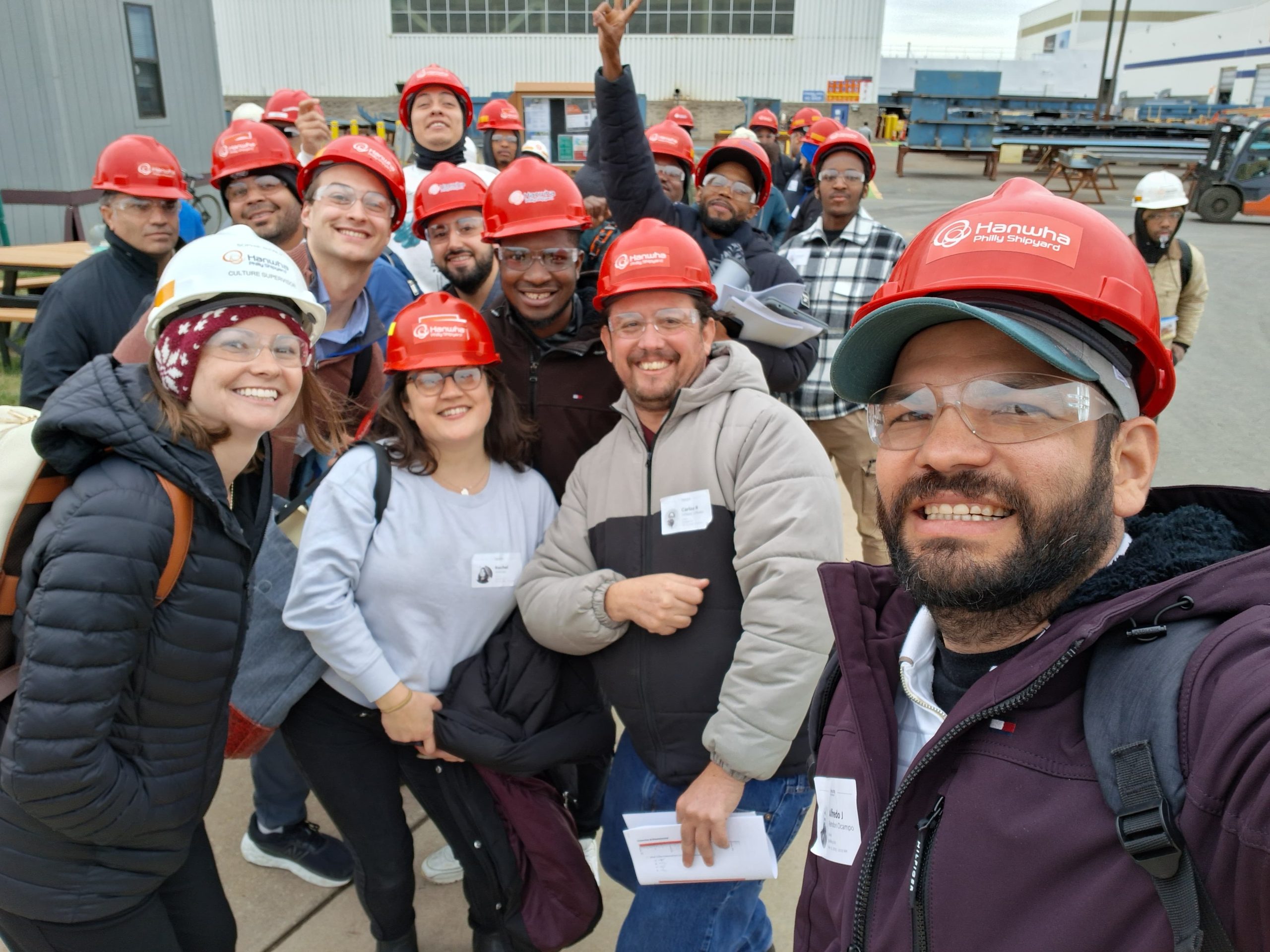
    Instructors and graduates of the union-backed preapprenticeship program Global Skills Union Pathways Project at Philly Hanwha Shipyard in February.GSUPP

    What Paulsboro could offer

    Strandgaard says he’s not surprised Hanwha decided not to “waste any more of their time” on Paulsboro: “They could not see themselves working with a hostile landlord.”

    It’s an ideal site for shipbuilding or any other industry that needs a deep water port, he said. But “Holt Logistics really controls what comes in and out. This was very upsetting, for us and Hanwha, that Hanwha with the support of the Navy did not have enough leverage.”

    Other East Coast sites would take a year or more to prepare. “The beauty of Paulsboro is they could start the day after” concluding a deal, Strandgaard said.

    He said he was surprised the new administration of New Jersey Gov. Mikie Sherrill didn’t make landing Hanwha a priority.

    Sherrill was “disappointed that EEW could not reach an agreement with Hanwha or other parties despite the state’s efforts to facilitate discussions and bring stakeholders together,” spokesperson Maggie Garbarino said in a statement.

    Holt’s goal: A modern marine terminal

    On any given day, between 500 and 900 Holt employees are moving cargo at the company’s South Jersey operations, Holt said. He declined to estimate how many of those were in Paulsboro.

    According to tax records, the port handled about 250,000 tons of cargo last year. That’s less than one-tenth of all South Jersey Port Corp. cargoes.

    Holt called the state “vital partners in the renovation of the facility. We are working to have both marine operations and manufacturing operations. But we cannot be deterred from taking it where we promised: to be an active modern marine terminal.”

    He said he expects the Sherrill administration will prove to be more congenial to the Holts’ vision for the property — “manufacturing, distribution, or anything” that makes sense to his family.

    South Jersey officials say they haven’t given up. “The people of Paulsboro were told this was about jobs, jobs, jobs, and those would be manufacturing jobs. Not stacking containers four high with automated forklifts,” Giovannitti said.

    Burzichelli still hopes Hanwha and Holt can be brought to the same page. “Many of us still don’t think we are done with manufacturing,” he said.

  • A sports complex in King of Prussia? Here’s why Upper Merion says it makes sense

    A sports complex in King of Prussia? Here’s why Upper Merion says it makes sense

    Upper Merion Township wants to build a sports and entertainment venue in King of Prussia, and has been looking to get state funding for the project.

    The facility, which as proposed could host over 7,500 people, could be used by professional soccer and baseball teams as well as for concerts, festivals, graduations, and other community gatherings, according to a grant application seeking funding from the state.

    “There is still extensive preliminary work that needs to be discussed and developed,” Tina Garzillo, chair of the township’s board of supervisors, said via email on Monday, noting that “there is nothing definitive,” at this time about the project.

    The venue has been envisioned for Moore Park area, near hotels, housing, the Valley Forge Casino Resort, and a Topgolf. The proposed address on a state grant application is 650 Park Ave., but Garzillo said that is only “only one of several identified possible sites.”

    Garzillo did not say what teams could be expected to lease out the stadium, but the venue’s capacity is in the ballpark of other minor league baseball venues. The Lehigh Valley IronPigs play at Coca-Cola Park, which can host roughly 8,000 seated spectators, and the Brooklyn Cyclones play at Maimonides Park, which can seat roughly 7,000, with additional standing room.

    “The facility will serve as a catalyst for converting a traditional office park into a vibrant mixed-use district,” the grant application notes. “This transformation is especially important in a post-COVID world, as communities adapt to new work patterns and the decline of single-use office environments.”

    The DeVonta Smith & Friends celebrity softball game at Coca-Cola Park in Allentown on June 10, 2023.Yong Kim / Staff Photographer

    What would it cost?

    The proposed project would cost an estimated $197 million, which the township wants to fund through state, township, and county dollars as well as private contributions.

    The township applied for a $20 million grant through Pennsylvania’s Redevelopment Assistance Capital Program, but the project was not selected in the latest round of funding.

    The township is currently evaluating other funding options, Garzillo said, and does not currently have a new application in the works for the Redevelopment Assistance Capital Program.

    The program receives hundreds of applications in each funding cycle, and the majority do not get awarded, said Rosie Lapowsky, a spokesperson for Gov. Josh Shapiro’s office. Not receiving funding “is not a commentary on their value as projects or any potential future engagement from the state,” Lapowsky added.

    The funding application to the state program noted that the project includes “walkable connections, shared parking, and high visibility along major regional highways, positioning it as an anchor for ongoing redevelopment of the area into a dynamic ‘live, work, play,’ destination.”

    The development of the venue would create 3,196 jobs, according to the application. It does not specify what positions would be needed, and if some of those jobs would be temporary, for the construction of the site.

    The venue is also expected to create revenue through taxes, naming rights, corporate sponsorships, and other branding deals, the application notes.

    Those leading the project say they have been in touch with county and state elected officials as well as members of Gov. Josh Shapiro’s administration, noting that “these discussions highlighted the project’s alignment with state priorities and its anticipated benefits to the Commonwealth, including economic growth and community impact.”

    Upper Merion Township is interested in adding entertainment options to the area, said Garzillo, citing the success of nearby attractions such as Topgolf; the casino; Netflix House, which opened in November at King of Prussia Mall; and Dave & Buster’s.

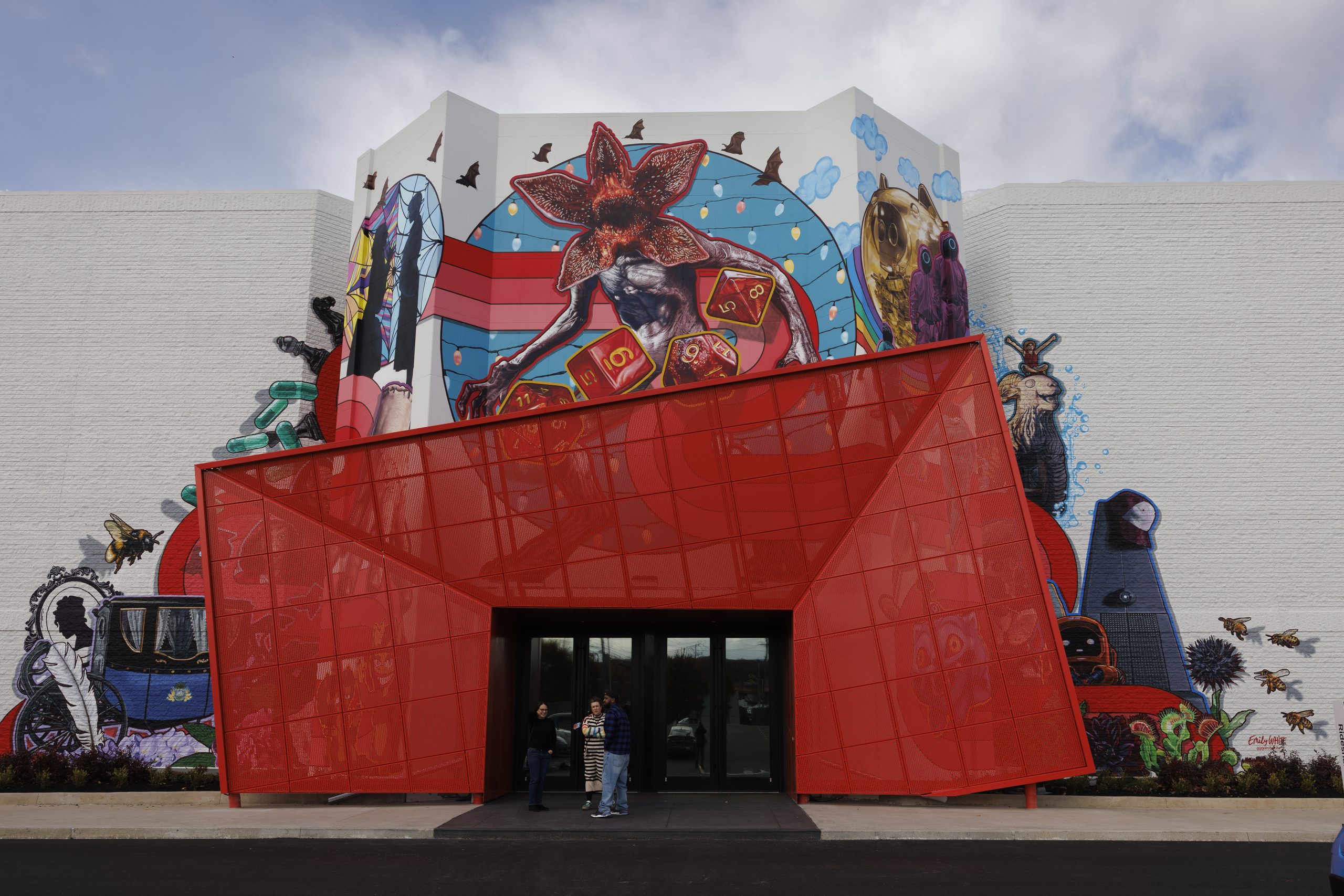
    Exterior entrance to Netflix House at the King of Prussia Mall.Alejandro A. Alvarez / Staff Photographer

    As part of its effort to bring more entertainment options to the area, the township has changed the zoning language for the King of Prussia Mall to allow entertainment venues to occupy retail spaces, Garzillo noted.

    The King of Prussia District, a nonprofit focused on economic development in the area, declined to comment on the project.

  • FAA certifies Boeing’s new 737 Max 7 jetliner for flight after years of delays

    FAA certifies Boeing’s new 737 Max 7 jetliner for flight after years of delays

    The Federal Aviation Administration on Monday approved the smallest model of Boeing’s Max jetliners for commercial service nearly a decade after the aircraft manufacturer first unveiled the plane.

    Certification of the Boeing 737 Max 7 represents a milestone in the company’s work to overcome years of safety, quality, and production challenges. The long-delayed Max 7 is part of Boeing’s 737 family of commercial jets, which is the company’s bestseller and has been at the center of its troubles.

    The FAA said it cleared the new plane after years of additional testing, design changes, and an extensive review of its design and safety systems. The certification was delayed as Boeing addressed technical issues and heightened regulatory scrutiny following two crashes involving the larger Max 8 that killed 346 people in 2018 and 2019.

    Since the crashes off the coast of Indonesia and in Ethiopia, the FAA overhauled how it certifies Boeing aircraft. It said its oversight of the company would continue beyond the Max 7’s approval.

    Before signing off on the aircraft, the FAA said, it required Boeing to make several safety changes, including updating flight-control software, improving cockpit alerts for pilots and redesigning the engine anti-ice system to prevent overheating.

    “Our team of dedicated engineers and test experts worked through challenges, an extended pandemic, and the transition to new certification processes,” said Stephanie Pope, president and CEO of Boeing Commercial Airplanes.

    Safety inspectors will remain at Boeing production facilities to monitor manufacturing, including observing the company’s Safety Management System and overall safety culture, the agency said.

    The Max 7 is expected to be used primarily on short- and medium-haul routes. Several carriers, including Southwest Airlines, have outstanding orders for the plane.

  • U.S. stocks rally near a record as falling oil prices ease Wall Street’s worries about inflation

    U.S. stocks rally near a record as falling oil prices ease Wall Street’s worries about inflation

    NEW YORK — The U.S. stock market rallied to the edge of its all-time high on Monday after easing oil prices helped calm Wall Street’s worries that inflation could get even worse.

    The S&P 500 jumped 1.5% and is just 0.1% below its record set earlier this summer. It was coming off a frenetic July, where it swung up and down as oil prices shot higher because of the war with Iran, before ultimately ending the month just about where it started.

    The Dow Jones Industrial Average, which measures a narrower slice of the U.S. stock market, climbed 693 points, or 1.3%, to an all-time high, while the Nasdaq composite leaped 2.1%.

    Stocks got a lift as the price for a barrel of Brent crude sank 4.7% to $83.77. It dropped after President Donald Trump said over the weekend that he decided to hold off on new strikes against Iran at the urging of allies in the region.

    Brent’s price careened between $72 and $102 last month as worries rose and fell about when the war with Iran would allow oil tankers to freely exit the Persian Gulf again to deliver crude to customers worldwide. The latest acquiescence by Trump helped to ease worries about the global flow of crude, and Treasury yields correspondingly fell in the bond market.

    The yield on the 10-year Treasury sank to 4.68% from 4.75% late Friday. It, though, remains well above its 3.97% level from before the war with Iran.

    Higher yields threaten to undercut prices for stocks and other investments, while slowing the economy by making borrowing more expensive for U.S. households and businesses. The average long-term U.S. mortgage rate has already leaped to its highest level in a year.

    Monday’s ease in oil prices helped airlines and other companies with big fuel bills lead the market. United Airlines flew 5.8% higher, while American Airlines climbed 5%. Norwegian Cruise Line Holdings steamed 6.6% higher.

    Boeing jumped 8% after U.S. regulators certified its 737 MAX-7 planes, clearing them for commercial service.

    Tyson Foods rose 2.8% after the meat company reported a slightly stronger profit for the spring than analysts expected. CEO Donnie King said strength is continuing in the company’s chicken business and its prepared foods, which include brands like Jimmy Dean and Hillshire Farm.

    It joined a lengthening list of big U.S. companies to deliver a bigger profit for the spring than analysts expected. That’s imperative for Wall Street because stock prices tend to follow the path of corporate earnings over the long term, and worries were rising that U.S. stock prices may have broadly already shot too high.

    Companies in the S&P 500 are on track to deliver earnings per share for the spring that are 47% higher than a year before, according to FactSet, with more than half of the companies in the index having already reported. If that ends up being the case, it would be the strongest growth since the spring of 2021, when the economy was roaring out of the COVID pandemic.

    Also offering encouragement for profits was a report on Monday showing that growth for U.S. manufacturing accelerated to its strongest level since 2022.

    Keeping Wall Street unsettled, though, were swings for stocks of companies that make computer chips. They’ve been veering up and down for weeks on worries about whether their surging revenues because of the artificial-intelligence boom are sustainable.

    If AI ends up producing less profit and productivity than hoped, Big Tech companies could curtail their spending sprees on data centers that have helped chip stocks soar to tremendous heights.

    Micron Technology went from a drop of 6.4% to a gain of 1.7% through the day before ending with a gain of 0.8%, for example. It’s up roughly 190% for the year so far.

    All told, the S&P 500 rose 110.78 points to 7,600.50 and finished just shy of its all-time closing high of 7,609.78. The Dow Jones Industrial Average climbed 693.38 to 53,178.41, and the Nasdaq composite rallied 540.04 to 25,913.90.

    The manic swings for AI stocks have been most dramatic in South Korea, where the Kospi index is dominated by just two tech titans, Samsung Electronics and SK Hynix.

    Seoul’s Kospi fell 5.1% Monday, coming off Friday’s 17.9% surge that was its best day in history.

    In neighboring Japan, Tokyo’s Nikkei 225 fell 0.9% after the United States and Japan confirmed they had moved together to prop up the value of the Japanese yen against the dollar. A stronger yen would help to limit inflation in Japan, but it could also potentially hurt Japan’s exporters.

  • Philly schools could get A/C and heat from geothermal energy, study says

    Philly schools could get A/C and heat from geothermal energy, study says

    A new study shows it is possible to tap the earth for more efficient heating and cooling for two Philadelphia School District buildings at once, providing a potential path to cleaner energy.

    If such a system is ever installed, it could serve as a template for other clean energy efforts.

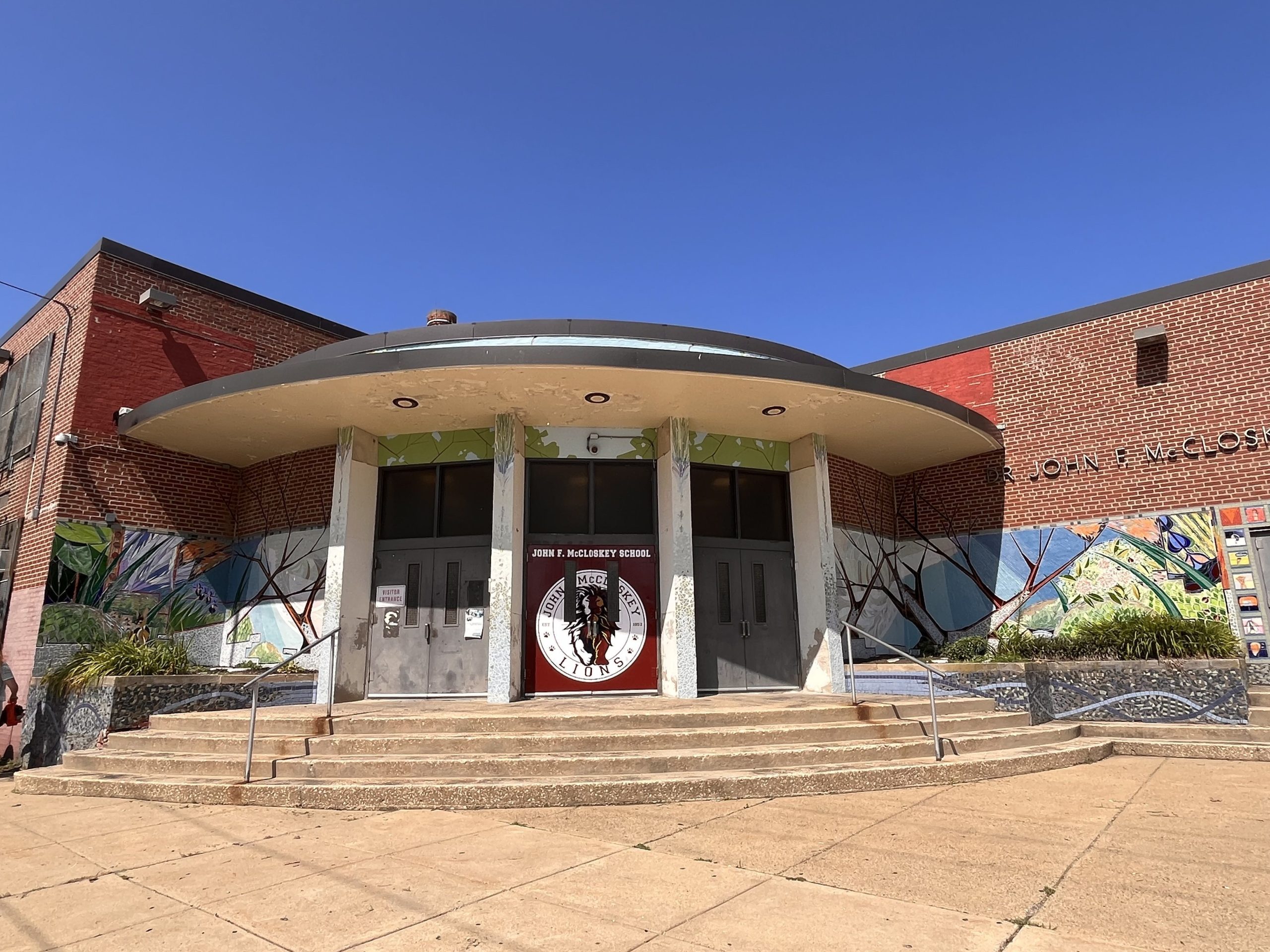
    Philadelphia Gas Works set out last year out to examine whether it was technically possible to build a geothermal HVAC system that would serve both the John F. McCloskey Elementary School and the Dorothy Emanuel Recreation Center in East Mount Airy.

    Findings were released on Wednesday.

    The study estimated that a closed-loop geothermal system for these facilities would cost about $19 million. But that could drop to $11 million with federal tax credits.

    With the tax credits, a geothermal system would be less expensive to install than a traditional HVAC system for the two properties.

    Kensington High School for the Creative and Performing Arts, built in 2010, has geothermal heating and cooling. Although PGW supplies gas to the school, it was not involved with the geothermal system.

    At McCloskey, PGW paid for the study and worked in collaboration with the school district and Philadelphia Parks and Recreation. PGW, which is owned by the city, is the largest municipally owned gas utility in the country.

    “PGW is committed to helping the City of Philadelphia lead to a clean energy future,” said Elliot Gold, vice president of corporate planning at PGW.

    The McCloskey school, which was built in the early 1950s, and Emanuel rec center are next to each other on the same roughly six-acre property with a combined 77,000 square feet of interior space. Though Philadelphia Parks and Recreation operates the rec center, it is on district property.

    A closed-loop geothermal system is essentially a big heat pump that uses the constant underground temperature through buried pipes. A mixture of water and environmentally safe antifreeze is pumped through the loop, creating a large heat exchanger that can be used to heat and cool a building. The heat exchanger is set to either absorb or eject heat.

    A new study shows that it is feasible to install a new geothermal HVAC system to serve the John F. McCloskey Elementary School and the Dorothy Emanuel Recreation Center in East Mount Airy. Frank Kummer

    An ‘ideal partnership’

    Victoria Flemming, executive director of the school district’s office of environmental management and services, said the study is a positive step that aligns with the district’s GreenFutures Plan.

    The McCloskey school currently has an aging oil-based heating system and no central air-conditioning, she said.

    “It is using heating oil, which has low energy efficiency and has a high impact to air quality,” Flemming said. “So I think those were the two things that made this kind of an ideal partnership.”

    During periods of extreme heat, the school is forced to pivot to virtual learning and cancel student activities, she said.

    The shared property between the school and rec center would give a geothermal project an even higher impact, she noted.

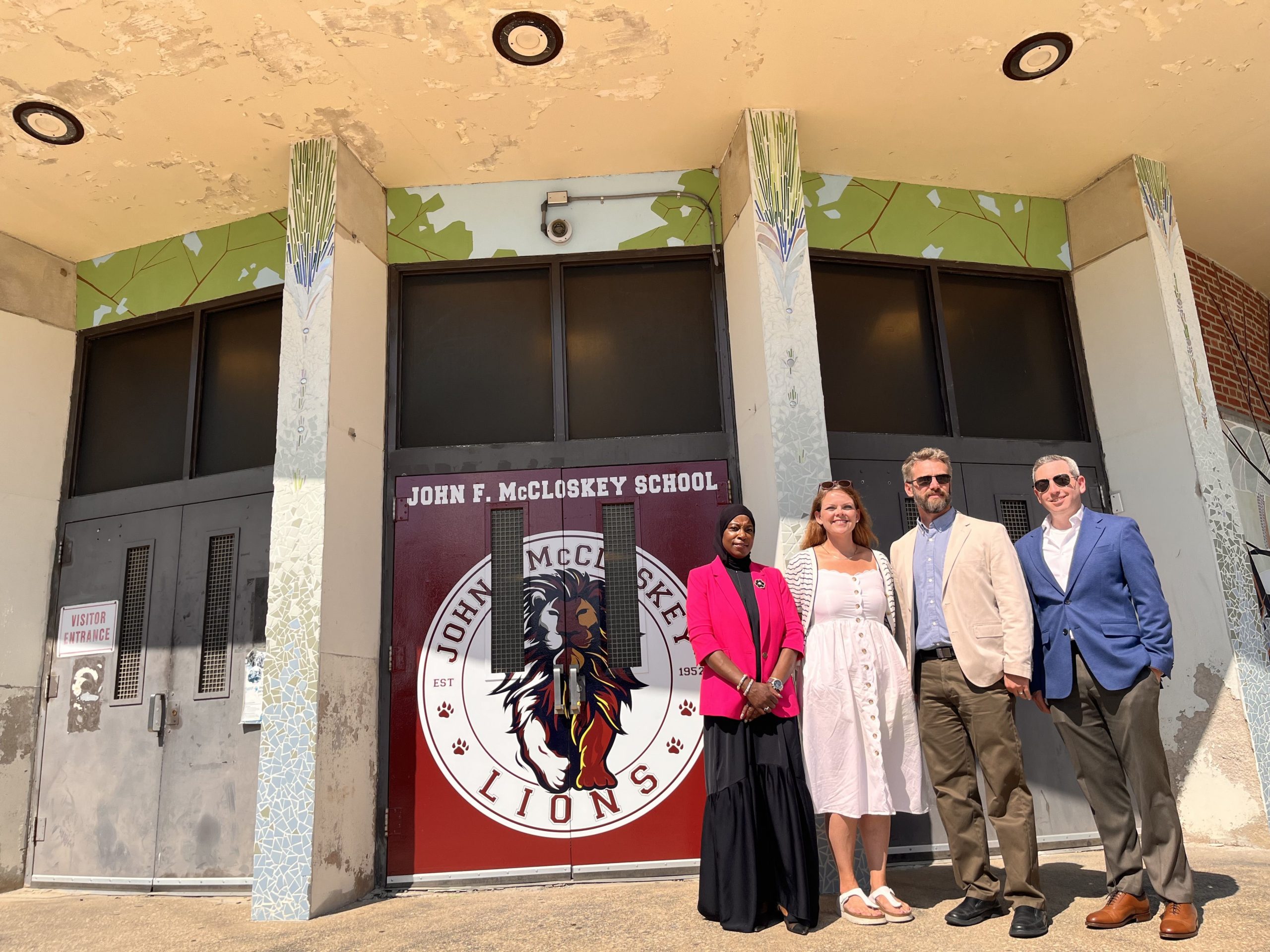
    Seen at the John F. McCloskey Elementary school are (from left) Teresa Fleming, COO of the School District of Philadelphia; Victoria Flemming, executive director of the office of environmental management and services for the district; Neal Babcock of Alderson Engineering; and, Elliott Gold vice president of corporate planning for PGW.Frank Kummer

    Less expensive than a traditional system

    Bucks County-based Alderson Engineering conducted the study.

    To install a geothermal system, conditions underground need the right combination of thermal conductivity and geology. Neal Babcock, a principal with Alderson Engineering, said the site meets those conditions.

    Geothermal systems might be more expensive up front, he said, but in the long run are less expensive to operate and maintain.

    Currently, geothermal systems are eligible for the federal Investment Tax Credit. The One Big Beautiful Bill Act of 2025 terminated credits for solar and wind projects but preserved credits for geothermal systems.

    “Geothermal systems reduce the total energy consumption to heat and cool the building,” Babcock said. “Instead of burning fossil fuels like natural gas, they use the cool temperature of the ground to be less extreme than the air temperatures or needing to burn fossil fuels.”

    Compressors for the geothermal system studied would be powered by electricity, not natural gas.

    Environmental and advocacy groups have been critical of PGW’s reliance on natural gas, saying the utility needs to diversify its energy portfolio and reduce greenhouse gases that help heat the earth.

    PGW said the study is part of its efforts to do that.

    Neal Babcock of Alderson Engineering discusses the feasibility of installing a new geothermal HVAC system to serve the John F. McCloskey Elementary School and the Dorothy Emanuel Recreation Center in East Mount Airy.Frank Kummer

    Will it ever get built?

    The study was just a first step. There is no time frame to install such a system, nor is funding in place.

    And it is unclear who would own the system. That is important because the tax credits would apply only to a single-owner system.

    Gold, the PGW vice president, said that although some of the challenges might seem steep, the utility is serious about clean energy projects.

    “We’ve completed the feasibility study, which is good news,” Gold said. “It tells us that this is favorable and that there are no definite technical showstoppers.”

    He said the next steps include addressing who would own the system, the cost, and a timeline.

    That timeline would likely include the tax credits for geothermal units, which are set to phase out in 2034 and 2035.

    (function(){function e(){window.addEventListener(`message`,function(e){if(e.data[`datawrapper-height`]!==void 0){var t=document.querySelectorAll(`iframe`);for(var n in e.data[`datawrapper-height`])for(var r=0,i;i=t[r];r++)if(i.contentWindow===e.source){var a=e.data[`datawrapper-height`][n]+`px`;i.style.height=a}}})}e()})();

    Who would pay for it?

    The school district typically finances such projects through its capital spending plan for its 300 buildings.

    If it owned the geothermal system and had to pay for it, that could mean balancing it against the needs of making fixes at other schools.

    The district has said it wants to spend $3 billion on upgrading facilities but can pay for only $1 billion now.

    For instance, conditions at Southwark Elementary in South Philly are so dire that kids are begging City Council and the district for fixes, such as working bathrooms and pest control. They are supposed to get them in 2032.

    Teresa Fleming, the district’s chief operating officer, said the district is still evaluating the study and must consider the long term.

    She said a program like geothermal has the potential to “yield energy savings and greater efficiencies throughout the district.”

    Editor’s note: This story has been updated to change the date the findings were released.

  • LeBron James could live in NYC as a Sixer. Philly’s wage tax has no exemption for a King.

    LeBron James could live in NYC as a Sixer. Philly’s wage tax has no exemption for a King.

    LeBron James is going to take his talent to South Philly, and a portion of his salary to City Hall.

    The newly signed Sixer — that feels so good to write — is being rumored to live in New York City and commute to games and practices by helicopter, according to ESPN.

    Commuters who live elsewhere but work in Philly are required to pay the city’s wage tax on a portion of their salary. And there is no exemption in the tax code for a King.

    Main Liners, rejoice. Next time you look at the withholdings on your pay stub, you are allowed to proclaim: LeBron, he’s just like us, amirite?

    In fact, James has likely paid the Philadelphia wage tax throughout his career for games he played here against the Sixers.

    But how much of James’ $8 million salary over two years counts toward the wage tax will depend on how, and where, No. 23 spends his time from training camp to the final day of the season.

    Let’s break it down.

    What is Philly’s wage tax, and does it apply to athletes?

    Philadelphia levies a 3.735% tax on the entire income of its residents, and 3.425% on the income nonresidents earned working in the city.

    The wage tax is one of the city’s three major revenue sources, alongside property and business taxes, and has brought in more than $2 billion annually in recent years. A third of the taxes collected comes from commuters.

    Philly’s tax on earnings is among the highest in the country, and the city led the charge in the 1990s to ensure professional athletes paid their share. It is now common practice for cities to impose a so-called jock tax on players — home and visiting — but athletes are taxed in the City of Brotherly Love under the same wage tax as everyone else.

    What counts as a Philly workday for LeBron James?

    Calculating the wage tax for commuters can get tricky, especially since remote work has become common.

    Every day of work that requires a nonresident to be in Philadelphia counts toward the tax.

    The question for James, and other athletes, is what counts as a working day — and how many of those days he spends in Philly vs. the Sixers’ training facility in Camden.

    Los Angeles Lakers’ LeBron James, left, shares a laugh with Philadelphia 76ers’ Tyrese Maxey, right, during an NBA basketball game, Sunday, Dec. 7, 2025, in Philadelphia.Chris Szagola / AP

    Practice, film review, rehab, and games could all count as workdays, said Stephen Kidder, a tax attorney who specializes in professional sports.

    “Every single one of those days is a duty day for a professional athlete,” Kidder said.

    A spokesperson for the city said, “Philadelphia welcomes LeBron James with open arms,” but did not respond to a request for comment about any special guidance for athletes.

    How much will LeBron James pay in wage taxes?

    If James ends up living in Philly, the calculation is simple. He would have to pay 3.735% of his annual salary of $4 million — roughly $150,000 — regardless of where he spends his time.

    But if he lives outside the city, it comes down to counting days.

    Without knowing James’ overall number of workdays in the year, and how much of that time is spent in Philadelphia, it is impossible to estimate his tax bill.

    The number of duty days for an NBA player can vary widely, depending on practice schedule, depth of playoff run, and other activities, such as promotions.

    An often-cited number to get a sense of the size of the tax bill for NBA players is 200 workdays.

    If his only Philadelphia workdays were the Sixers’ 41 home games, and if, as seemingly the youngest 41-year-old in history, he played in all of them, roughly 20% of King James’ income would be earned in Philly.

    In this scenario, the city would tax 20% of James’ annual income at the 3.425% rate for nonresidents, for a hypothetical tax bill of around $28,000. That number would decrease if he missed some home games, or increase if he attended other team activities in Philadelphia.

    (This writer refuses to make any calculation related to the playoffs that could constitute a jinx but suffice to say: See you on Broad Street next summer.)

    Do taxes affect players’ decisions?

    Professional athletes and the associations representing them care a lot about state and local taxes, and are fighting against them.

    The MLB, NHL, and NFL players associations, alongside three former professional athletes, sued Pittsburgh over its 3% jock tax for visiting players. And last year the Pennsylvania Supreme Court struck the tax down because it was higher for nonresidents than for residents.

    City and state taxes are part of the package when athletes choose where to play, according to Kidder, who represented the associations in the state Supreme Court case. A professional athlete in Florida owes the state no tax, for example, while California has a jock tax of up to 13.3%.

    “Some athletes may be in a point in their career where it doesn’t matter that much,” Kidder said. “But for other athletes it may be a big difference playing for a team based in Florida compared to a team based in New York.”

    Ed Wasielewski, a Philadelphia-based NFL agent and founder of EMG Sports, says tax considerations come up often in free agency deals. The difference between no tax, Philly’s 3.735% tax on residents, and California’s 13.3% jock tax amounts to millions of dollars in take-home pay.

    “A player is well advised to have a good accountant, a good attorney, and a good agent team to correctly analyze the tax consequences,” Wasielewski said. “It definitely comes into play in contract negotiations, especially in free agency.”

    If James chooses to live in NYC and commute to practices in Camden and games in Philly by helicopter, taxes might not be high on his list of concerns.

    New Jersey and New York have state jock taxes, and New York City has a new pied-à-terre tax on luxury second homes.

    At least one person in the Sixers organization, it seems, is not working overtime to duck a tax.

  • Quality Community Health Care’s financial troubles have deepened this summer

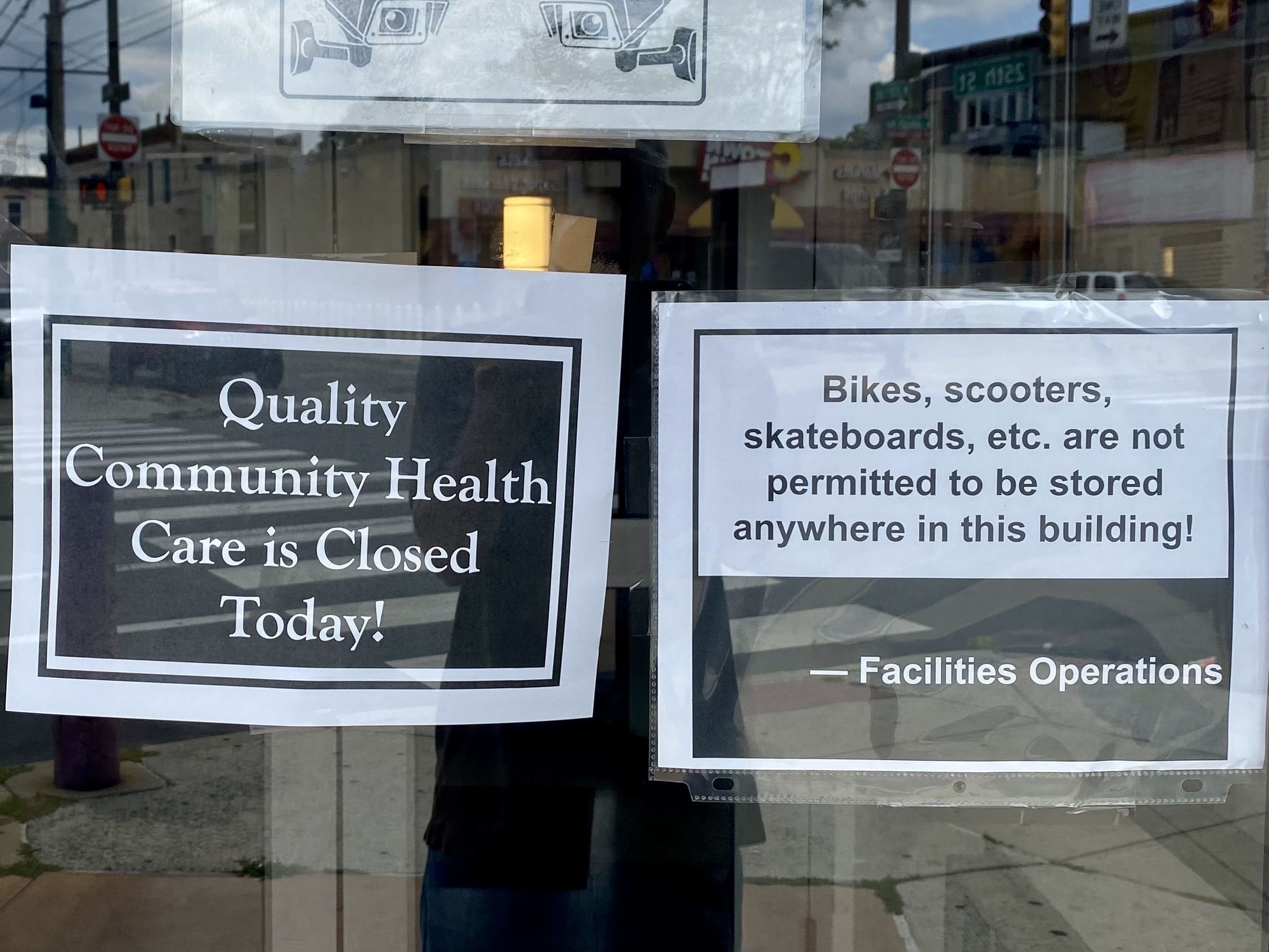
    When Pele Lewis arrived at Quality Community Health Care’s clinic in North Philadelphia Wednesday for his 1:30 p.m. appointment, he found the doors locked and a sign saying the clinic was “closed today.”

    Lewis was puzzled. “They called me this morning” with a reminder to come in, he said, as he stared at the door.

    The clinic, known as QCHC, was closed Thursday and Friday, as well, according to its phone message.

    “For many of our patients, QCHC is far more than a medical office,” its CEO, Helen Wilkinson, said in an email. “Members of our community are treated with dignity and respect regardless of their ability to pay.”

    She did not answer specific questions.

    The clinic at 2501 W. Lehigh Ave. began operating in 1981 under a federal program designed to provide medical and dental care in neighborhoods with few other options.

    Its troubles became public in the spring.

    After years of warnings from federal regulators that the clinic was delinquent on its audits, officials took the rare step in March of suspending it from the federally qualified health center program. At that time, audits for the years 2021 to 2024 were overdue. Now, the same is true for 2025. Typically such audits are due nine months after the fiscal year ends.

    Quality Community Health Care Inc., at 2501 W. Lehigh Ave. in North Philadelphia, was closed Wednesday. Management did not respond to emailed questions about the clinic’s status.Harold Brubaker / Staff

    A new audit

    In a small sign of progress, Quality Community Health Care last week posted an audit for the fiscal year that ended July 31, 2021, on a federal audit clearinghouse. Federal regulators had given a May 2 deadline to complete that audit or risk termination.

    The fiscal 2021 audit pointed to significant problems.

    “None of the data in it can be verified by the auditor,” said Steven Balsam, a professor of accounting at Temple University’s Fox School of Business.

    The auditor put it this way in the filing: “Because of inadequacies in QCHC’s accounting records, we were not able to obtain sufficient appropriate audit evidence for the amounts” stated in numerous categories of the financial statements.

    “I don’t know if just filing reports, if they look like this, is going to get them their funding back,” said Balsam, who reviewed the audit at The Inquirer’s request.

    The federal Health Resources and Services Administration, which regulates federally qualified health centers, has not responded to questions about QCHC since the suspension.

    Missed paychecks

    Some employees were not paid on July 10 and July 24, according to an email from the organization’s chief financial officer to staff Monday. This followed the organization not receiving the main federal funding for health centers, known as Section 330 grants, CFO Denise Ingram wrote.

    “QCHC is experiencing significant cash flow constraints following the suspension of 330 grant funding associated with the unresolved FY2021 audit submissions requirements,” Ingram wrote in the email obtained by The Inquirer.

    “QCHC remains committed to paying employees for all wages earned. Leadership continues to pursue funding, financing, and other lawful alternatives to address outstanding payroll obligations and restore normal operation,” the email said.

    Ingram did not respond to an emailed request for comment.

  • America’s biggest companies are burning cash on AI. It’s risky for everyone.

    America’s biggest companies are burning cash on AI. It’s risky for everyone.

    Over the past decade, the giants of Silicon Valley became reliable engines of the American economy and the nation’s retirement accounts.

    Must-have digital products like Google and Facebook hooked people and businesses, spewing geysers of cash that made tech giants the new blue chip stocks and fattened investment portfolios as markets soared.

    The finances of America’s technology stalwarts now look very different. To develop and deliver what the companies say is revolutionary artificial intelligence, they’re feeding every available dollar into the cash-incinerating maw of AI machines. Tech superstars that once had oodles of cash left over at the end of each year are now flipping into the red, with enormous stakes for every American and the wider economy.

    To optimists in Silicon Valley, the White House, and beyond, the big AI bet promises an even bigger payoff: huge corporate profits and a societywide boost to wealth and well-being when AI delivers the promised transformation of life, work, and the economy.

    But questions about that AI vision are now growing more urgent: When, if ever, will this payoff arrive? And what will the fallout be for Americans if the titanic investment doesn’t quickly deliver?

    “This AI thing better work out because if it doesn’t … we’re going to have a problem,” said Torsten Slok, chief economist at investment firm Apollo Global Management.

    AI costs and doubts are spreading. The U.S. stock market has swooned this summer over fear of the AI bubble going bust. The AI boom is pushing up inflation, adding to President Donald Trump’s challenges in tackling Americans’ affordability concerns. And there are signs that AI may be widening the economic divide between the country’s haves and have-nots by directing more wealth toward places and people that are already economically ahead.

    The AI gamble sweeping up American fortunes is led by tech companies splurging on hulking data centers packed with computer chips and equipment needed to develop sophisticated AI models and deliver them to customers.

    In investor calls in the past week, Google, Microsoft, Meta, and Amazon pointed to soaring AI-related sales and business deals. Advertisers are using the technology to tailor marketing pitches and corporations and startups are buying access to chatbots and other AI software to boost productivity. The wider U.S. economy, including construction workers and electricians, are getting a lift from the build-out of AI computer hubs.

    But this spending can only continue if AI generates an even larger avalanche of new revenue to pay for it all. Financial results released over the past week show that the AI titans’ mammoth costs are largely swamping the sales boost from the technology.

    At Google, for every dollar of cash its business generated in the past three months, $1.15 went out the door to pay for AI computer chips and equipment, land for AI data centers, and other big-ticket purchases. The company is covering the difference partly by borrowing money and selling more of its stock.

    Next year, five leading AI companies — Google, Amazon, Microsoft, Meta and Oracle — are projected to have negative free cash flow, which measures the cash left over after paying expenses and AI infrastructure costs. The figures, based on investment analyst projections compiled by S&P Global Market Intelligence, show a stunning reversal for what have been some of the world’s most cash-generating corporations.

    On Thursday, Amazon CEO Andy Jassy gave an impassioned defense of the company’s huge spending to capitalize on what he said was sustained zeal from businesses to buy AI. “We have clear line of sight to strong financial returns,” he told investors. (Amazon Executive Chairman Jeff Bezos owns The Washington Post.)

    The companies remain profitable by standard financial accounting measures that spread out the costs of their AI infrastructure spending over many years.

    Silicon Valley’s AI spending spree has become a high-stakes Rorschach test. AI boosters see the mammoth costs of building out computing facilities for AI as a rational, once-in-a-lifetime opportunity to cash in on insatiable demand for history’s most transformative technology. Pessimists see a bet so gargantuan that it cannot possibly pay off.

    The pessimists are growing louder. The Bank for International Settlements, a typically measured institution in Switzerland that advises government bankers around the world, recently warned there was risk of “economywide recessions” if the AI boom falters. That could mean pain for workers and communities across the United States.

    “I’m not saying AI is going to go away, it’s just not clear to me these guys are going to make money on it,” said Christopher Wood, global head of equity strategy at investment bank Jefferies who has correctly predicted past financial bubbles.

    As recently as June 2, exuberance about AI helped lift the S&P 500 stock index to an all-time high. But fear is now winning in what’s become an AI freak-out summer. People who own stock in the biggest losers of recent months, including Elon Musk’s Tesla and SpaceX, business software firm Oracle and computer chip titans Nvidia and SK Hynix, have collectively lost trillions of dollars.

    Matt Orton, chief market strategist of investment firm Raymond James, says the panic is out of control because AI has huge potential. “A lot of investors have lost their minds,” he said.

    At the same time AI is eviscerating Americans’ stock wealth, it’s further straining their cost of living.

    Many executives are lamenting that the companies developing AI are buying so many computer chips for AI calculations that it’s gobbling all the available supplies and driving up their costs. As a result, companies including Apple and Microsoft have raised prices for smartphones, laptops, video game consoles, and other consumer and business products.

    In some parts of the country including the mid-Atlantic, energy demand from data centers is pushing up household electric bills. Some economists and government officials have pointed to those AI-related price increases as one culprit for persistently stubborn inflation.

    NCTA, a trade association representing large internet service providers and cable TV companies, is among the American business groups pleading with the Trump administration to do something about AI-related computer chip price increases.

    Without action, executives say that AI will hold back new products and features or spark even higher prices for home internet equipment, cars, and medical devices. “Consumers are really going to suffer both from costs and from lack of innovation,” said Cory Gardner, CEO of NCTA.

    White House spokesman Kush Desai said that the Trump administration is supporting U.S. computer chip manufacturing to “ensure Americans have access to a ready supply of critical inputs for everyday electronics.”

    Evidence is also emerging that undermines the idea that AI can become a great equalizer that empowers people and businesses of all backgrounds to better their financial circumstances.

    Research by Barbara Denham, lead economist at research and consulting firm Oxford Economics, found that large U.S. metropolitan areas that are already economic winners are benefiting the most from the AI boom.

    Denham said that’s because many of the tech companies developing AI, and the white-collar industries that have been the most avid users of AI, are concentrated in wealthy regions including the Bay Area, New York, Seattle, and Washington, D.C.

    The economic gains of the AI boom are “self-reinforcing,” she said.

    Dan Gallagher contributed to this report.

  • U.S. stocks rise to finish a wild July as Amazon soars, Apple sinks, and inflation worries worsen

    U.S. stocks rise to finish a wild July as Amazon soars, Apple sinks, and inflation worries worsen

    NEW YORK — U.S. stocks rose Friday to finish a wild July for Wall Street as Amazon leaped, Apple sank, and rising oil prices worsened worries about inflation staying high.

    The S&P 500 climbed 0.7% after veering between gains and losses through the day. The Dow Jones Industrial Average added 276 points, or 0.5%, and the Nasdaq composite rallied 1% after briefly losing all of an early 1.3% jump.

    It’s a fitting finish to July for the U.S. stock market, which lurched up and down as oil prices shot higher because of the war with Iran and worries grew about whether Big Tech’s massive investments in artificial-intelligence technology will translate into profits and whether chipmaker stocks soared too high in the euphoria around AI.

    Friday’s gains sent the S&P 500 to its first winning week in three, but the main measure of the U.S. stock market nevertheless finished the month with a tiny loss.

    Amazon led the market with a leap of 15.3% after reporting much stronger profit for the latest quarter than analysts expected. Its profit more than tripled from a year earlier, thanks in part to an acceleration of growth in its cloud computing business.

    Analysts said that could be a signal Amazon’s huge AI investments are paying off, and Amazon increased its forecast for how much it will spend on investments this year.

    The reaction was similar to what Microsoft got a day before, when its stock soared to its best day in nearly 18 years on signals that its AI investments may also be yielding higher profits.

    Chip companies selling the processors and computer memory that such “hyperscalers” are scrambling to buy swung sharply again on Friday. Micron Technology, for example, went from an early jump of 6.4% to a loss of 6.5% before finishing with a fall of 5.9%.

    More firmly on the losing end of Wall Street was Apple, which dropped 7.4% despite reporting stronger profit for the latest quarter than expected. Its forecast for revenue growth in the current quarter fell short of expectations, which executives pinned on a supply crunch in components getting vacuumed up in the AI boom.

    All told, the S&P 500 rose 52.09 points to 7,489.72. The Dow Jones Industrial Average added 276.97 to 52,485.03, and the Nasdaq composite climbed 251.68 to 25,373.85.

    The gains came despite another rise in oil prices as uncertainty continues about when the war with Iran will allow crude to flow freely again from the Middle East.

    The price for a barrel of Brent crude rose 1.2% to settle at $87.93 after careening between $72 and $102 earlier in July.

    Higher oil prices have pushed the cost for a gallon of regular gasoline to an average of nearly $4.11 across the United States, up from $3.85 a month ago, according to AAA. More expensive oil also puts upward pressure on prices for virtually every product that rides on a ship, plane, or truck before getting to a customer.

    The worries about inflation sent yields in the bond market even higher.

    The yield on the 10-year Treasury rose to 4.71% from 4.68% late Thursday and from just 3.97% before the war with Iran sent oil prices shooting higher. That’s a notable move for the yield, which moves higher when investors’ expectations for inflation, economic growth, and other factors in upcoming years are rising.

    The leap for the 10-year yield has already sent the average long-term U.S. mortgage rate to its highest level in a year.

    Longer-term yields jumped on Wednesday after the Federal Reserve’s chairman, Kevin Warsh, promised again to get inflation back down to 2% but refused to say how he plans to get it there. The Fed voted again to keep its main interest rate steady on Wednesday, even though inflation remains well above 2%.

    Hikes to rates by the Fed could restrain inflation, but they could also slow the economy and undercut prices for stocks and other investments. President Donald Trump, who nominated Warsh to lead the Fed, has lobbied for lower interest rates instead of higher.

    Warsh has told financial markets that he does not want to give hints about what the Fed will do with interest rates, saying he wants to get direct, “unfiltered” messages from them rather than echoes back of what the Fed has suggested.

    “The Fed is facing a growing credibility problem,” economists at Bank of America wrote in a report. Unless data comes in showing less pressure on inflation in the interim, “it is imperative for the Fed to pass the September test by hiking rates and delivering an internally consistent narrative.”

    AP Business Writers Chan Ho-him and Elaine Kurtenbach contributed to this report.

  • Regulators propose overhaul to law governing how banks lend to low-and-middle income communities

    Regulators propose overhaul to law governing how banks lend to low-and-middle income communities

    NEW YORK — The Trump Administration has announced an overhaul to the rules governing a critical piece of Civil Rights-era legislation, most notably a reduction in the number of banks that will need to fully comply with the law.

    The Office of the Comptroller of the Currency and the Federal Deposit Insurance Corporation on Friday jointly announced the proposed changes to the Community Reinvestment Act, a law that requires regulators to document how well banks do in lending to low-to-middle income neighborhoods. It would be the first major revision of the law’s rules and regulations in nearly three decades.

    Under the proposed revisions, bank examiners would put more weight on the lending banks do in certain communities and geographies, and less on how many branches they open or how much in deposits they take in from a local community.

    The number of banks that would need to comply with the law would be reduced as well. The definition of a small bank will increase from banks with under $412 million in assets to banks with $1 billion in assets. Banks between $1 billion and $10 billion in assets will now be classified as an intermediate bank.

    This would reduce the number of banks who need to comply with parts of the CRA by 800 banks. Only 86 banks, or roughly 3% of all institutions, would be subject to the full extent of CRA under the new regulations.

    Another change that is likely to be fought over relates to how banks give money to community development groups. Under the CRA, banks can donate money to local organizations that do poverty or low-income housing work in their communities to show they are providing resources to a local community. The new regulations could narrow the groups and programs that banks could donate to in order to meet those obligations.

    In a summary of the changes, the bank regulators said these changes would ensure community development grants “are not diverted to activist causes or consumed by excessive operating costs.” Banks would also need to collect more detailed information on who gets their community grants, including addresses, which would give more transparency to who is receiving grants from banks.

    That change could negatively impact groups like the National Community Reinvestment Coalition, an umbrella group for community development groups that often receive money from banks under the CRA. The new rules discourage banks making grants to national organizations and instead focus their grants on local groups.

    Jesse Van Tol, the CEO of NCRC, said that it was “unfortunate” that the bank regulators were politicizing grant making under the CRA.

    “CRA was created to work for low-to-middle income people. A lot of these changes are going to discourage banks from making grants, particularly in rural areas, where I expect there will be significant drops in activity,” Van Tol said.

    The proposal announced Friday by the OCC and FDIC did not include the other major bank regulator, the Federal Reserve. Banking groups had been pushing for a joint proposal from all three regulators, to make sure all three were aligned on the same requirements under the CRA.

    The CRA was passed in 1977 to combat redlining, a practice whereby banks would discriminate against the poor and minorities by choosing not to lend or open branches in minority-majority neighborhoods or in poor neighborhoods.

    The law is complex, requiring banks to document how they do business in the cities and areas they operate in. Banks must sit for regular examinations to see whether they are complying with the law. A bad CRA examination could restrict a bank’s ability to open new branches or merge with another bank or have other consequences. The data collected through CRA is also used by the Department of Justice in redlining cases.

    The last major revision of the CRA’s regulations happened in 1995, and there have been repeated attempts by administrations of both parties to update the rules to reflect how banking and financial services have changed in the past 30 years. But those revisions have repeatedly failed, either due to opposition from other regulators, the banks, or community groups, or have been blocked by courts. The Biden administration tried its own revisions of the CRA rules but those changes were blocked by courts in Texas.

    The proposed rules will now go out for a 60-day comment period where they will be finalized after banks, community groups, and other parties have a chance to weigh in on the changes.