Category: Business

  • Social media companies sued over deaths of four teens as pressure, lawsuits over child safety mount

    Social media companies sued over deaths of four teens as pressure, lawsuits over child safety mount

    The families of four teenagers who died by suicide are suing Meta, TikTok, Snapchat, and YouTube over what they describe as “years of escalating harms” from using their platforms that eventually resulted in their deaths.

    The lawsuit, filed Thursday in the Superior Court of Delaware, is the latest in a flurry of suits filed against the social media giants that alleges their platforms are addictive and dangerous.

    The complaint was filed on behalf of four families from Texas, North Carolina, Minnesota, and Tennessee whose children died over a 14-month period starting in July 2024 through September 2025.

    The Social Media Victims Law Center is bringing the suit on behalf of the families, and its founding attorney, Matthew Bergman, said it’s “particularly salient” that the children in this case died “long after” similar suits had been filed.

    “These platforms continue to kill kids, despite the platitudes of their executives,” Bergman said in an interview. “This is a clear and present danger to the health and safety of children, not just in the United States but around the world.”

    The four teens who died by suicide each experienced harms including social media addiction, severe sleep deprivation, depression, anxiety, and suicidal ideation after years of using the social platforms, the complaint states. Livi Castro died at age 13, Riv Kelleher at 14, Nathaniel Chambers at age 17, and Dawson Holden at 18.

    The complaint alleges the social media companies knew they were causing harm to young users.

    A spokesperson for Google, which owns YouTube, said in a statement that “providing young people with a safer, healthier experience has always been core to our work. In collaboration with mental health and parenting experts, we’ve built services and policies to provide young people with age-appropriate experiences, and parents with robust controls. We send our deepest sympathies to the families and are reviewing the claims in this lawsuit.”

    Representatives for Meta, TikTok, and Snap did not immediately respond to requests for comment.

    Sacha Haworth, executive director of The Tech Oversight Project, said in a statement that parents, activists, and whistleblowers have come forward and met with lawmakers for years and “while Congress has dragged its feet, more children have died.”

    Federal legislation of social media has moved at a glacial pace. The Senate passed the Kids Online Safety Act — which had the support of parents’ groups and children’s advocacy organizations — exactly two years before this lawsuit was filed. The House of Representatives never voted on that version of the legislation, and the House and Senate are currently disagreeing on key provisions they think should be included.

    Meta, YouTube, TikTok, and Snap are facing numerous state and federal lawsuits over harms to minors. Meta is on trial in Tennessee this week for a lawsuit brought by the state attorney general claiming that the company deliberately designed its platforms, notably Instagram, to make them addictive to young people, and did not warn them of its dangers. And in August, Meta is heading to trial in federal court in Oakland, Calif., to face four of dozens of states that sued the company in 2023. That lawsuit says the company is contributing to the youth mental health crisis by designing addictive features and violated federal law by collecting data on kids under 13 without parental consent.

    Not all lawsuits are successful, and many are settled out of court. Last week, a Florida teenager dropped his case against Meta that was set to go to trial in state court in Los Angeles, without receiving any payment from the company. Meta had argued that the teen only used his Instagram and Facebook for just minutes a day, on average, and created most accounts only after hiring a lawyer in his case.

    Still, the mounting court cases can get expensive, even for a company like Meta Platforms. Earlier this week Meta said it had $2.4 billion in legal expenses in the second quarter, which contributed to a relatively unusual 14% profit decline.

  • Bayada Home Health Care’s new CEO Bryony Winn wants to provide higher levels of care at home

    Bayada Home Health Care’s new CEO Bryony Winn wants to provide higher levels of care at home

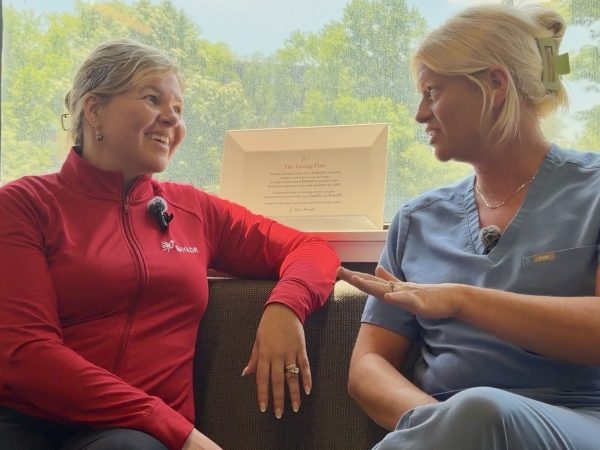
    Bryony Winn became the CEO of Pennsauken-based Bayada Home Health Care in March after a career at two big Blue Cross health insurers and at the consulting firm McKinsey & Co.

    Those experiences, she says, prepared her to take the reins at one of the nation’s largest home health companies at a time when Bayada is wants to increase the intensity of its home care offerings — and get insurers to pay for it.

    “Hospitals are full,” and patients want to be at home, said Winn in an interview this month at Bayada’s headquarters in Pennsauken.

    The company, whose founder Mark Baiada converted it to a nonprofit in 2019, operates in 22 states and five additional countries, employs 44,000 people, and had $2.2 billion in revenue last year.

    Winn, Bayada’s first non-family CEO, grew up in Zimbabwe and went to college in South Africa. “Being around so many challenges and so much opportunity every day in the developing world, I always had a sense that I wanted to do things that made lives healthier,” she said.

    When she came to the United States in 2009 to work as a consultant in Chicago, it struck her how specialized and disconnected healthcare is here. “In the developing world, there’s not enough trained people, so it’s a much more connected system around patients and humans,” she said.

    The Inquirer spoke with Winn about the importance of taking care of people at home as the nation’s healthcare providers come under increasing financial strain. Questions and answers have been lightly edited for length and clarity.

    How did your jobs at McKinsey and at Blue Cross of North Carolina and Elevance Health prepare you to lead one of the nation’s largest home healthcare companies?

    I learned a lot about the U.S. healthcare system and became more and more convinced that this lack of connection was driving unsustainable cost, and I still think it’s driving unsustainable cost. Pre-COVID, I used to say affordability is the greatest healthcare crisis of our time. Then COVID really was for a while, and I think we’re back to that now. The quality of care here is amazing if you have a really rare form of cancer. I’d prefer for it to be treated in some of the amazing institutions here than anywhere else in the world. But if you are just a typical person, and especially an aging person here with two or three chronic conditions, you are pushed from pillar to post across a system who doesn’t ever see you as a human being.

    (function(){function e(){window.addEventListener(`message`,function(e){if(e.data[`datawrapper-height`]!==void 0){var t=document.querySelectorAll(`iframe`);for(var n in e.data[`datawrapper-height`])for(var r=0,i;i=t[r];r++)if(i.contentWindow===e.source){var a=e.data[`datawrapper-height`][n]+`px`;i.style.height=a}}})}e()})();

    What do you think you can accomplish at Bayada, which was founded more than 50 years ago, to address that connectivity issue?

    What I can bring to it is really understanding the place of home health in the entire healthcare ecosystem. This is the place where clients and patients want to be; they want to be in their homes. And so the question I’m asking is not what are the kinds of conditions that should be addressed at home, but rather flip that on its head and say, what are the kinds of capabilities you need in the home to be able to address things for clients who want to be there?

    What’s happening now that makes it so important to solve this problem?

    For two decades in healthcare, we’ve been talking about people aging into Medicare. Ten thousand people a day aging into Medicare. Now 10,000 people a day are 20 years older. They’re aging into 85 every day. Because it’s not a change in insurance, it doesn’t generate the same conversation. But it’s a huge change in health status. We now have all of these seniors with two or three chronic conditions, and with a decent chunk of life expectancy still. The delivery system really needs to shift in how we care for these folks.

    What has to change?

    One thing that’s needed is a collection of multiple services in the home. Very rarely do you need just skilled nursing. You need skilled nursing and a home health aide and potentially wound care. That requires care management, a much more connected ecosystem, versus what is today much more a siloed set of services. The second thing is we just need more intense care at home. We have done this quite successfully, and we’re doing it even more now around NICU babies [in partnership with Children’s Hospital of Philadelphia and insurers Highmark and Independence Blue Cross].

    Bryony Winn, who became Bayada’s CEO in March, said her background in health insurance will help the nonprofit expand by finding ways to get paid for new services.Bayada Home Health Care
    Do you see Bayada playing a broader role in health systems’ hospital at home programs?

    I do. We can serve higher-intensity patients at home with more complex care needs, and we do a lot of this today. We’re just not really paid for it, or it’s not the service that we’re meant to provide. So it’s really, how can we more sustainably do this high-intensity work at home? That’s a shift for us. Our clients want it. Wound care at home is hard. It’s one of the biggest reasons for readmission back into the hospital after post-acute discharge. How we can build really strong clinically evidence-based wound care capabilities is one of the big pieces that we’re looking at in this elderly population.

    Providing more intensive care has higher costs. How do you convince insurers to pay more, especially given the prevalence of Medicare and Medicaid in home health?

    There is not a ton of wiggle room, but this is where my background helps. I’ve worked on the payer side for a long time. They truly care about affordability and quality as well, and so it’s really working together to say how does what we need for our caregivers, clinicians, and ultimately clients map with what you can afford, and how do we build this together? I’m not sure home health has ever had those conversations as intently as we need to have them now. It’s a very fragmented industry. Hospitals have been having these more strategic conversations with health insurers for decades.

    Editor’s note: The caption with the main photograph has been updated to correct the name of the person Winn is speaking with. It’s Lillian Floyd, a nurse with Bayada’s Camden County Visits unit.

  • Big oil companies reap billions off the Iran war

    Big oil companies reap billions off the Iran war

    Oil companies have delighted Wall Street this week by reporting multibillion-dollar windfalls in their earnings statements, with ExxonMobil and Chevron on Friday reporting a combined $26.5 billion in profits during the second quarter of the year.

    But the immense profit stemming in large part from the war in Iran, and coming at the expense of motorists struggling to pay for a tank of gas, is fast making the companies a ripe political target.

    The oil majors are largely sitting on those unanticipated billions, according to an industry analysis by the research firm Wood MacKenzie.

    They are reluctant to reinvest the profits in expanded drilling that could eventually increase the world’s fuel supply, the firm found, as an abrupt end to the war could push prices for crude down considerably before the firms are able to recoup the cost of new rigs.

    With gas prices averaging more than $4 per gallon nationwide, and midterms in the not-too-distant future, lawmakers eager to assign blame for voter frustrations are taking aim.

    Exxon and Chevron early Friday posted their blockbuster earnings for the quarter that ended last month.

    Chevron disclosed $12 billion in earnings, reflecting a $9.6-billion jump over the same quarter last year and the firm’s biggest profit since 2020. Chevron CEO Mike Wirth attributed it in a statement to “disciplined investment and strong execution that drove record U.S. upstream production, record crude throughput in our U.S. refineries, and exceptional reliability across key assets.”

    ExxonMobil said Friday its earnings were $14.5 billion, more than double what the company reported for the same quarter last year. CEO Darren Woods said the quarter “was shaped by disruption, but defined by execution,” for the company.

    The disclosures followed Shell’s earnings report Thursday showing the company doubled its quarterly profits between this year and last.

    The staggering earnings are part of a bigger $425 billion annual windfall that Wood MacKenzie estimates is coming to the broader industry if prices for a barrel of crude average $90 for the year, which many analysts project they will.

    That was roughly the cost of oil on Friday morning. It has soared as high as $120 since the U.S. and Israel attacked Iran in late February, leading to the closure of the Strait of Hormuz, through which one-fifth of the world’s oil and natural gas is shipped.

    “Oil companies know they are going to be in for political criticism,” said Bob McNally, founder of the research firm Rapidan Energy Group. “This is like one of those classic movies from the 1960s that keeps coming back around. We all know there is going to be a lot of theater when oil prices are going up.”

    The companies declined to answer questions about their profits at a time of high gas prices.

    Asked about the windfalls oil companies are reporting this week, White House spokesperson Taylor Rogers shifted attention from the firms to Iran. She said, “Oil and gas prices will plummet back to preconflict levels” as the U.S. military neutralizes Iran’s ability to disrupt the flow of crude.

    President Donald Trump had previously put the companies on notice that the Justice Department would be investigating potential price gouging. The threat has populist appeal but could prove challenging to carry out. Industry officials said privately they have seen no evidence an actual investigation is happening.

    Dustin Meyer, senior vice president of policy, economics, and regulatory affairs at the American Petroleum Institute, said government scrutiny would not be a matter of concern.

    “These markets are transparent,” Meyer said. “It is not the first time government has looked at them. Every single time they do, they find the same thing. Not only is there no gouging, but gouging is impossible for an oil market this size with this many participants.”

    Democrats in Congress, though, have seized on high prices at the pump in the run-up to a hotly contested midterm election that will determine which party controls both the House and Senate.

    As the likelihood of windfall profits came into focus last month, Sen. Sheldon Whitehouse (D., R.I.) and Sen. Elizabeth Warren (D., Mass.) wrote a letter to oil executives demanding details of how they may have profited from the war or lobbied the White House to execute it in ways that benefit them.

    Woods told CNBC Friday that Exxon tries “to make sure not just the U.S. administration but frankly administrations all around the world … understand our perspective of what we see and how things are playing out, so they have the best information to make policy decisions.”

    “We very much stick in our lane with respect to here is what we see, here is how we think it could potentially play out, and make sure policymakers have our best thinking when they are putting together their decisions and the approach they want to take,” Woods said.

    Rep. Brad Sherman, a California Democrat, is among those pushing for more government intervention.

    He said motorists “need to fill their gas tank today, and they either need to be paying a lower price, or second best, they need to be getting a rebate check from the government.” He has proposed legislation that would impose a windfall tax on U.S. oil companies until the war with Iran is over, the strait is reopened, and U.S. benchmark crude oil prices drop below $75 per barrel.

    In the past, the industry has tended to argue that such levies would take away cash it needs to invest in expanded drilling that could effectively help lower prices. But the companies are not making those investments right now, amid concerns the war will have ended and oil prices will have dropped too low to make the rigs profitable by the time they are finally operating months — or even years — from now.

    And even if the firms were investing, Sherman said, drivers would still be suffering.

    “When we’re paying these outrageous prices at the pump, nobody’s saying, ‘Oh, that’s great! The oil companies are going to invest this in additional oil production,’” he said.

    For the moment, at least, his proposal is more a political tool than a viable policy plan in this Congress, which is controlled by Republicans staunchly opposed to a windfall profit tax.

    But if prices remain high, analysts say, sentiments could shift, and the government may be more inclined to step in to try to bring relief to consumers, including by limiting exports of U.S. oil.

    Regulators and lawmakers have already mostly exhausted their options for bringing down prices without dramatic market interventions. Government petroleum reserves have been depleted and sanctions on countries like Venezuela and Russia have been lifted to bring more fuel into the market.

    “There are not many tools left in the tool kit to bring down prices,” said Denton Cinquegrana, chief oil analyst at Dow Jones Energy. “But the general public who has to buy gasoline certainly does not want to hear that, especially amid an affordability crisis that has taken over this country.”

    Windfall profit taxes have a fraught track record in the U.S., according to Tyler Priest, an associate professor of history at the University of Iowa.

    The last one enacted in 1980 after the oil shocks of the 1970s generated far less revenue than lawmakers projected and was ultimately repealed after economists concluded it discouraged some domestic production while adding significant complexity to the tax code.

    Democrats have structured their latest proposals differently, focusing the tax only on profits above a historical benchmark and steering the revenue generated toward consumers. But experts are conflicted on its potential effectiveness. Priest noted that the plans are narrowly targeted at large oil companies, but more than 70% of U.S. oil comes from smaller producers.

    Shon Hiatt, an energy scholar at the University of Southern California Marshall School of Business, said a windfall profit tax imposed in Britain in 2022 was followed by a sharp decline in production there.

    “The incentives to take risk and invest in production are drastically reduced,” he said, which can ultimately lead to “lower production, and in some cases, scarcity.”

    Others argue the decline predated the tax and was caused by a number of factors, including aging oil fields and a shift toward renewables.

    Even if such policy proposals stall in the U.S., lawmaker attacks are only likely to intensify in the coming months. Analysts are already projecting the companies will post a fresh round of windfall profits in the next reporting period.

    It falls days before the election.

  • Anthropic is second major AI company to reveal its systems hacked other firms

    SAN FRANCISCO — Anthropic, maker of the Claude chatbot, said Thursday that artificial intelligence systems it was testing hacked into three outside companies undetected earlier this year.

    The disclosure comes just over a week after ChatGPT maker OpenAI said that an AI system it was testing found a way to break out of a test environment and hacked into another tech firm.

    The Anthropic incidents are likely to add fuel to debates over whether advanced AI models could cause widespread security problems that have roiled the tech industry and prompted interventions by the White House to contain the potential risks.

    Anthropic said in a blog post Thursday that OpenAI’s disclosure last week prompted it to review records from its own testing of AI models. The company discovered that on three occasions AI models challenged to break into software created solely to test their skills ended up going out onto the internet and breaking into real companies.

    Neither Anthropic nor the targeted companies had discovered the breaches until this week, the company said. An Anthropic spokesperson declined to identify the companies hacked by its AI software.

    In the blog post, Anthropic said the hacks came about because a third-party company named Irregular hired to help test its models provided them with access to the internet due to a “misunderstanding.” Anthropic notified Irregular and the companies hacked on Monday, the company’s blog post said.

    “We appreciate Anthropic’s collaboration and transparency and look forward to continuing to work together to advance security,” a spokesperson for Irregular said. Both companies said they are continuing to investigate the incidents.

    OpenAI said last week that an AI “agent” in testing had, instead of working on a cybersecurity problem, used a previously unknown vulnerability in the company’s test environment to gain full access to the internet. Over a five-day period it broke into multiple outside computers to break into AI software company Hugging Face, apparently in search of answers to the test.

    The OpenAI and Anthropic incidents came to light after weeks of debate in the tech industry and Trump administration about how government should respond to the ability of the latest AI models to find computer security flaws.

    Anthropic announced an AI model in April called Mythos it said was too powerful to widely release securely, and OpenAI has also developed models with strong cybersecurity skills that could be used for defense or attack.

    In June, President Donald Trump signed an executive order aimed at giving the U.S. government an advance look at powerful AI models that could pose security risks. Work is underway to define how it will be implemented.

  • Microsoft’s best day since 2008 leads U.S. stocks, while inflation worries remain in the bond market

    Microsoft’s best day since 2008 leads U.S. stocks, while inflation worries remain in the bond market

    NEW YORK — A monster day for Microsoft’s stock following signals that its big spending on AI is translating into profits led a powerful rebound on Wall Street Thursday, while computer-chip companies regained some of their sharp recent losses. In the bond market, though, worries remained about inflation potentially remaining high for years.

    The S&P 500 rallied 1.7% and more than recovered its drop from the day before, which was its worst in seven weeks. The Dow Jones Industrial Average jumped 613 points, or 1.2%. The Nasdaq composite, which is full of artificial-intelligence stocks, rallied 2.8% a day after it fell 9.8% below its record set last month.

    Microsoft led the way and leaped 15.5% for its best day in nearly 18 years after reporting a stronger profit for the latest quarter than analysts expected. Growth was strong for its Azure cloud business, and CEO Satya Nadella said it reflects how customers are using Microsoft to move into AI.

    Perhaps just as importantly for Wall Street, Microsoft did not announce a big increase in how much it plans to spend on AI investments, something that several other Big Tech rivals have done. Worries are high that such spending is eating into companies’ cash flows and may not ultimately be worth it if AI does not produce as much productivity and profits as promised.

    Meta Platforms helped demonstrate such fears after falling 8%. The parent company of Facebook and Instagram reported a weaker profit for the latest quarter than analysts expected, even though it made slightly more in revenue than expected. It also raised the lower end of its forecasted range for spending on investments this year.

    Companies involved in the making of the computer memory and processors that such “hyperscalers” are buying to power their AI efforts rose Thursday, recovering some of the big losses they’ve taken on worries their stock prices shot too high in the euphoria around AI.

    Micron Technology jumped 18.4%, for example, to trim its loss for the week to 5%. It was the strongest force lifting the S&P 500 after Microsoft.

    Lam Research, a supplier to the semiconductor industry, soared 18% after reporting stronger profit and revenue for the latest quarter than analysts expected. Chip giant Advanced Micro Devices rallied 13%.

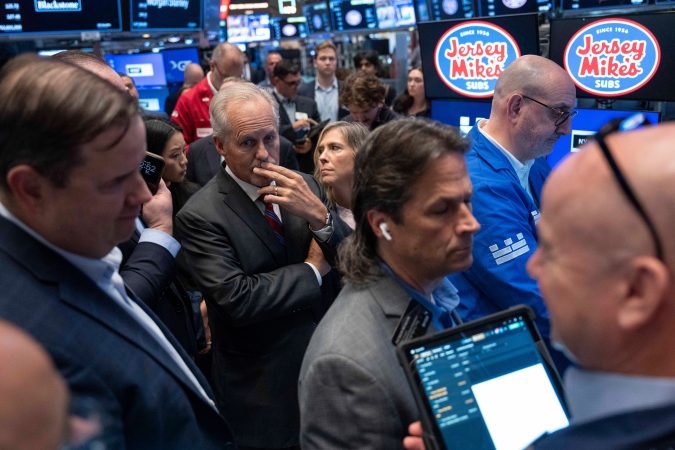
    On the losing end of Wall Street was Jersey Mike’s Subs. The sandwich chain’s stock fell 6% in its first day of trading on the New York Stock Exchange.

    All told, the S&P 500 rose 121.48 to 7,437.63. The Dow Jones Industrial Average climbed 613.92 to 52,208.06, and the Nasdaq composite leaped 679.24 to 25,122.18.

    In the bond market, longer-term Treasury yields held steadier following their sharp accelerations Wednesday. They had jumped after the chairman of the Federal Reserve, Kevin Warsh, gave few clues about what the central bank will do with interest rates to combat the painfully high inflation that continues to hurt the country.

    Higher rates could keep a lid on inflation, but they can also slow the economy and undercut prices for stocks and other investments.

    The yield on the 10-year Treasury was 4.67%, the same as late Wednesday. The 30-year Treasury yield ticked up to 5.22% from 5.20%, a day after it shot up from 5.09%. Those yields move with investors’ expectations for inflation and economic growth in upcoming years.

    Warsh reaffirmed on Wednesday the Fed wants to get inflation back to 2%, even though the central bank decided not to raise interest rates despite inflation remaining higher than that. He also implied the bond market may already be doing some of the Fed’s work to restrain inflation, and he pointed to how yields have climbed since the central bank’s last meeting six weeks earlier.

    That leaves investors questioning whether the Fed is prepared to act if inflation worsens, or whether it is relying on financial markets to achieve the same outcome, according to Seema Shah, chief global strategist at Principal Asset Management.

    “If investors conclude that the latter is true, the credibility of the Fed’s inflation-fighting commitment could come under increasing scrutiny. Arguably, it already is.”

    President Donald Trump, who nominated Warsh to lead the Fed, has lobbied for lower interest rates even though they could cause inflation to accelerate.

    Reports released Thursday suggested the U.S. economy’s growth slowed by more during the spring than economists expected. A measure of Inflation, meanwhile, remained worse last month than the Federal Reserve’s target, but it slowed from May’s level.

    In the oil market, prices eased. Brent crude, the international standard, fell 1.4% to settle at $86.88 per barrel.

    It had swung as low as $72 early this month and as high as $102 last week on uncertainty about whether the United States and Iran could reach a deal to allow oil tankers to move freely again from the Middle East to customers worldwide.

    In stock markets worldwide, indexes were mixed in Europe and Asia. South Korea’s Kospi fell 1.2%, and France’s CAC 40 rose 0.9% for two of the world’s bigger moves.

    Seoul’s market has been at the center of AI’s huge swings because it’s dominated by two tech titans, Samsung Electronics and SK Hynix. After more than doubling through this year’s first six months, the Kospi has plunged 34% so far in July.

    Its drop on Thursday came as Samsung Electronics dipped 0.7%. The tech giant reported a record profit for the spring and said demand for its chips continues to outpace supply, but its earnings nevertheless fell shy of analysts’ high expectations.

  • Temple and Jefferson resident physicians have ratified union contracts

    Temple and Jefferson resident physicians have ratified union contracts

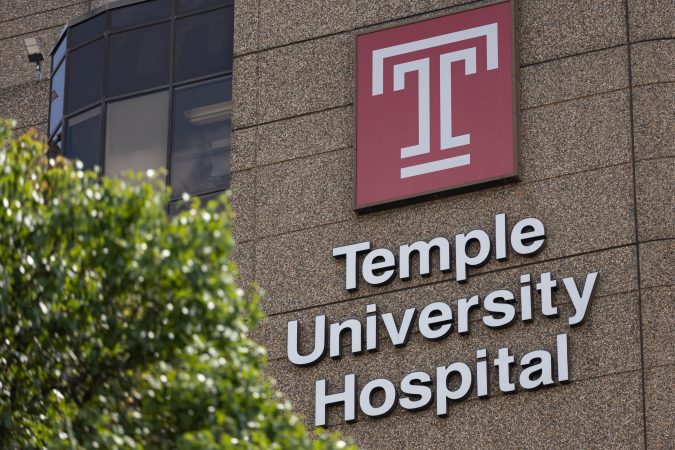
    Resident physicians at Temple University Health System and Thomas Jefferson University Hospitals have ratified their first contracts with their health systems after having voted to unionize last year.

    The 2,200 Temple and Jefferson residents organized with the Committee of Interns and Residents, affiliated with the Service Employees International Union, and are among the 86% of Philadelphia resident physicians who have joined a union in the last several years.

    The contracts were ratified July 1 and announced Thursday.

    The new contracts include “substantial” raises and “greater investment in resident education,” the union said Thursday in a news release.

    In addition, residents at different hospitals in the same health systems will now receive similar salaries, the union said.

    Residents at Jefferson Einstein Hospital will be paid the same as other Jefferson residents, and those at Temple’s Chestnut Hill Hospital will “achieve near pay parity” with residents at Temple University Hospital and Fox Chase Cancer Center by the second year of their contract, the union said.

    Resident physicians and fellows have completed their medical degrees and spend three to seven years training in a clinical specialty, working up to 80-hour weeks for, on average, $61,000 a year. That’s a lower salary than other professionals who require special training, like flight attendants and electricians.

    Union members said their new contracts would help them afford living expenses as they train. Many live paycheck to paycheck, and some take on debt to get by, Linda Li, a resident physician at Chestnut Hill Hospital, said in a statement.

    “I’m incredibly proud that we stood together and won a contract that will make a material difference in our lives and for residents who come after us,” she said.

    In a statement, a Jefferson spokesperson said: “We look forward to moving ahead together in support of the patients we serve.”

    A Temple spokesperson said the contract “appropriately supports our residents and Temple Health and preserves our ability to provide our patients with the high-quality care they deserve.”

    “We take great pride in the skill and compassion our Residents and Fellows demonstrate in caring for our patients, and in their tireless dedication to the pursuit of knowledge,” the spokesperson wrote in an email. “We remain committed to a positive working relationship which supports the finest and most rewarding physician training experience for them.”

    Philadelphia-area physicians have been part of a wave of unionization efforts for years. Residents at Penn Medicine signed their first contract in 2024, just before roughly 3,000 residents at Temple, Jefferson, Children’s Hospital of Philadelphia, and Delaware’s ChristianaCare began a unionization push. ChristianaCare’s attending physicians are also unionized and signed their first contract earlier this summer.

    Adrian Kase, a resident physician in physical medicine and rehabilitation at Jefferson, said in a statement that she and fellow residents were inspired by unionization efforts at Penn.

    “We saw how residents at Penn were able to raise the bar for physician training and patient care by organizing and winning their first contract, and we’re thrilled to build on what they achieved,” Kase said.

    While CHOP’s medical residents ultimately voted against unionizing, residents at the other health systems opted to organize with the Committee of Interns and Residents. ChristianaCare residents are still negotiating their first contract.

  • Hanwha is importing parts for made-in-America ships

    Hanwha is importing parts for made-in-America ships

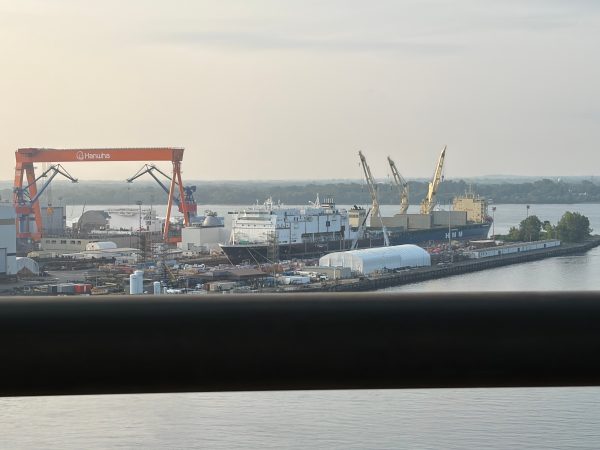
    Longshoremen at Hanwha Philly Shipyard this week have been unloading fuel tanks and other imported equipment from the China-built cargo ship HMM Nabi. They are to be used in ships Hanwha has started building under a law requiring the use of U.S.-built ships on routes connecting U.S. ports.

    Nabi, a bulk cargo carrier operated by Korea-based Hyundai Merchant Marine (HMM), arrived last weekend at its berth next to where the Schuylkill flows into the Delaware River.

    “We’ve had 12 or 13 guys on that pier” each day, starting Monday, to unload the Nabi, said Boise Butler, president of International Longshoremen’s Association Local 1291, which handles cargoes moving through Philadelphia port terminals.

    Nabi left the Chinese shipbuilding and ship-equipment manufacturing center of Nansha in April and has since called at other U.S. ports, including Dundalk, Md., before arriving in Philadelphia last weekend, according to shipping records.

    “The HMM Nabi is at Hanwha Philly Shipyard to deliver materials and equipment that will be used in the construction of the second of three new Matson Aloha Class containerships currently under construction at the shipyard,” Hanwha spokesman Rob Loveless said.

    Hanwha referred questions on the cargo to Matson Navigation Co., which is based in Honolulu. Matson officials had no immediate comment. Industry sources familiar with the shipment confirmed it includes parts made in China and in Korea.

    Matson has said it plans to use the ships to connect West Coast ports with terminals on Hawaii and Guam and for its service connecting Los Angeles’ Long Beach port to China.

    Shippers moving cargoes exclusively between U.S. ports are required to use ships assembled in the U.S. and crewed by U.S. merchant marine sailors under the federal Jones Act, designed to protect U.S. shipbuilders from cheaper competition.

    The Jones Act, long a target of free-market advocates who oppose U.S. shipbuilding subsidies, was suspended by President Donald Trump in March, citing the need for flexibility following the start of the Iran war.

    U.S. shipping advocates who support Jones Act protections and shipbuilding subsidies argue that Trump’s plan to rebuild U.S. shipping in competition with high-volume shipyards in China, Korea, and Japan requires Jones Act protections — at least until U.S. shipbuilding has grown much larger, cutting costs per ship.

    Jones Act ships can use foreign engines, tanks and other components and foreign metal, so long as they are assembled in U.S. yards. Ships originating in foreign ports can call at multiple U.S. ports without violating the Jones Act.

    Shipyard owner Hanwha Systems told investors Wednesday that it is still losing money at Philly Shipyard, but less lately as it steps up the pace of its shipbuilding.

    Philly Shipyard lost around $15 million for the quarter, down from around $33 million in losses the previous quarter and $22 million a year ago. Sales rose to $160 million, up 40% for the quarter and more than 50% from a year earlier.

    Container ships, like the ones it’s building for Matson, lose money, the company said. But Hanwha expects to profit next year from additional U.S. government contracts.

    Besides the Matson commercial ships, Hanwha confirmed earlier this month it has won an order from the U.S. Missile Defense Agency to build the first of two Missile Range Instrumentation Vessels (MRIVs) to replace the 1960s-era “tracking ships” that help locate and defend against potential attacks on the U.S. Hanwha says the contracts could eventually be worth $2 billion.

    Hanwha representatives have been scouting the Delaware Valley, including the former BP refinery site in Paulsboro, for an additional shipyard site but have not yet closed a deal, according to industry sources.

    Hanwha has also considered shipyards in the South and on the Gulf Coast if it can’t expand as much as it wants in the Philadelphia area.

  • Average 30-year U.S. mortgage rate rises to highest level in a year at 6.66%

    Average 30-year U.S. mortgage rate rises to highest level in a year at 6.66%

    The average long-term U.S. mortgage rate rose for the fourth consecutive week to its highest level in a year, another setback for prospective homebuyers hoping for a break from elevated home loan borrowing costs.

    The benchmark 30-year fixed rate mortgage rate rose to 6.66% from 6.58% last week, mortgage buyer Freddie Mac said Thursday. One year ago, the average rate was 6.72%.

    Higher mortgage rates can add hundreds of dollars a month in costs for borrowers, limiting homebuyers’ purchasing power. As rates rise, that can lead prospective home shoppers to delay buying a home, one reason U.S. home sales have been sluggish this year.

    Borrowing costs on 15-year fixed-rate mortgages, often sought by borrowers refinancing a home loan, also rose this week. That average rate increased to 6.04% from 5.96% last week. A year ago, it was at 5.85%, Freddie Mac said.

    Mortgage rates are influenced by several factors, from the Federal Reserve’s interest rate policy decisions to bond market investors’ expectations for the economy and inflation. They generally follow the trajectory of the 10-year Treasury yield, which lenders use as a guide to pricing home loans.

    Rates have been mostly rising this year as the Iran war has driven crude oil prices sharply higher, fueling expectations of hotter inflation. That’s pushed up long-term bond yields relative to where they were before the conflict began in late February, causing mortgage rates to trend higher.

    The 10-year Treasury yield was 4.66% at midday Thursday on the bond market. It was just 3.97% in late February, before the war broke out.

    The average rate on a 30-year mortgage is now the highest it’s been since July 31, 2025, when it was at 6.72%. As recently as late February, the average rate dropped slightly below 6% for the first time since late 2022.

    The latest increase in mortgage rates comes a day after the Federal Reserve left its key interest rate unchanged as it wrestles with how to tame stubbornly high inflation, which has been stuck above the central bank’s 2% target for more than five years.

    During the central bank’s two-day monetary policy meeting this week, three regional Fed bank presidents dissented in favor of higher rates to combat high prices.

    That’s a signal that Fed members are no longer in lockstep on inflation and that their next move is not going to be a rate cut, said Anthony Smith, senior economist at Realtor.com.

    “With the Fed signaling that its next move is more likely a hike than a cut, near-term rate relief looks unlikely,” Smith said. “Because oil remains the primary channel through which the Iran conflict feeds inflation, a de-escalation and a reopening of the Strait of Hormuz remains the clearest path back toward lower rates.”

    The central bank doesn’t set mortgage rates, but its decisions to raise or lower its short-term rate are watched closely by bond investors and can ultimately affect the yield on 10-year Treasurys.

    While average long-term mortgage rates remain lower than they were at this time last year, their upward trajectory has weighed on home sales this year. Seasonally adjusted sales of previously occupied U.S. homes were up 0.7% from January to June compared with the same period last year, but they’re still hovering close to a 4-million annual pace far short of the historic norm that is closer to 5.2-million.

    The trend has extended the national housing market slump that began in 2022, when mortgage rates began to climb from pandemic-era lows. Sales of previously occupied U.S. homes were essentially flat last year, stuck at a 30-year low.

    The latest data on mortgage applications show that the upward trend in mortgage rates has given some would-be homebuyers reason to pause.

    Mortgage applications, which include loans to buy a home or refinance an existing mortgage, fell 6.4% last week from the previous week, according to the Mortgage Bankers Association.

    “While incoming economic data will continue to shape the outlook for interest rates, elevated borrowing costs remain a challenge this summer for many prospective homebuyers,” said MBA CEO Bob Broeksmit.

  • Economic growth falls short of experts’ expectations, but inflation improves

    Economic growth falls short of experts’ expectations, but inflation improves

    The U.S. economy slowed to a 1.5% pace from April through June, as increases in consumer and business spending were partially offset by a drop in government outlays, the Commerce Department said Thursday.

    Larger-than-usual income tax refunds helped Americans keep spending in the second quarter, while soccer’s quadrennial World Cup tournament gave them — and visitors from abroad — a good reason to do so, economists said.

    Growth overall came in below economists’ expectations, which were at roughly 2%.

    “It’s an economy that’s doing OK. It’s not overheating. It’s not underheating,” said Brian Bethune, an economics professor at Boston College.

    Other indicators suggest the economy remains solid. Real final sales to private domestic purchasers — a combined measure of consumer spending and business investment — rose by 3.9% in the period. That was up from 1.7% in the first three months of the year.

    “The second-quarter GDP figure seriously undersells a healthy economy,” economist Bradley Saunders of Capital Economics wrote in a client note.

    The net effects of trade subtracted from growth, as a surge in imports swamped an increase in exports. Many of the shipping containers arriving at U.S. ports in recent months were filled with foreign capital goods, such as machinery, computers, and telecommunications gear, needed for the build-out of artificial intelligence facilities, according to Oliver Allen, senior U.S. economist for Pantheon Macroeconomics.

    “Much of the recent strength in AI-related [capital expenditures] is bleeding out into spending on tech imports, rather than supporting the domestic economy,” he told investors.

    A separate government report provided good news on the inflation front, though economists say the respite may prove short-lived. Prices rose in June at an annual rate of 3.7%, an improvement from the previous month. Excluding volatile food and energy costs, the inflation rate was 3.3%, according to the Federal Reserve’s preferred gauge.

    A ceasefire between the United States and Iran helped reduce gasoline prices, which averaged $4.30 on June 1, by nearly 50 cents a gallon. But the resumption of fighting caused prices to bounce off those recent lows, reaching $4.10 per gallon on July 27, according to the U.S. Energy Information Administration.

    “The renewed rise in energy prices means households must again deal with higher prices at the gas pump,” said Kathy Bostjancic, chief economist for Nationwide, who expects the Fed to face pressure to raise interest rates in the coming months.

    The new data does not reflect the impact of President Donald Trump’s decision earlier this month to resume bombing Iran or his imposition last week of tariffs on more than 80 U.S. trading partners.

    Persistent inflation, meanwhile, led to a split Wednesday among members of the Federal Reserve’s policymaking board. By a vote of 9-3, the Fed’s Open Market Committee opted to hold short-term interest rates steady between 3.5% and 3.75%.

    Inflation has now been higher than the Fed’s 2% price-stability target for more than five years. U.S. stocks slid Wednesday, while Treasury yields soared, a sign that investors are growing anxious about the Fed’s willingness to combat inflation.

    Voter unhappiness with the economy looms as a major threat to Republican hopes of retaining control of Congress in November’s midterm elections. In a Quinnipiac University poll released Wednesday, just 34% of voters said they approved of Trump’s handling of the economy while 62% disapproved. And 59% of those surveyed said the economy is getting worse; 19% said it was improving.

    Some of the forces that buttressed growth in recent months are almost tapped out, meaning the economy may slow, Bethune said.

    Thanks to the president’s signature tax bill, individual refunds were more than 11% larger this year than in previous years, according to the IRS. But most refunds have now been dispatched.

    Plus, the World Cup ended on July 19, meaning that international soccer fans have returned home, and Americans who splurged on the special event may tighten their belts.

  • Philly’s new cruise terminal is behind construction schedule and will cost millions more than expected

    Philly’s new cruise terminal is behind construction schedule and will cost millions more than expected

    A cruise ship sailed out of the Port of Philadelphia this spring for the first time in 15 years, as state and local officials celebrated a new economic driver for the region.

    Officials have projected that the new cruise business — anchored by Norwegian Cruise Line at a Hog Island terminal near Philadelphia International Airport — will create more than 2,100 jobs and generate $300 million in annual economic activity.

    What they did not anticipate before breaking ground in December was that several obstacles — including several weeks of subfreezing temperatures and icy conditions on the Delaware River — would send the construction project millions of dollars over budget.

    The cost of building the terminal has increased 50% to more than $60 million, according to the Philadelphia Regional Port Authority (PhilaPort), an independent state agency that owns seaport facilities along the Delaware. The port authority is funding the project.

    PhilaPort is considering obtaining financing to help cover the $20.1 million in cost overruns. The authority’s board this month approved a resolution authorizing staff to borrow up to $15 million. PhilaPort spokesperson Marty O’Rourke said loan terms remain under negotiation.

    In addition to the potential financing, the port authority is funding the project from operating revenues, O’Rourke said. PhilaPort generates revenue from its leases with tenants that operate facilities such as marine terminals and warehouses.

    PhilaPort’s budget for the fiscal year that began July 1 includes $34.5 million in revenue.

    Despite the delays, Norwegian Cruise Line’s ships have continued to dock at PhilaPort’s under-construction terminal since April. Mayor Cherelle L. Parker and Gov. Josh Shapiro, both Democrats, attended an onboard ceremony for the Norwegian Jewel’s inaugural call that month.

    Shapiro — whose appointee chairs PhilaPort’s board — touted the cruise business “as the newest addition to our commonwealth’s fast-growing tourism industry.”

    There had been 13 voyages as of mid-July.

    PhilaPort remains upbeat about its new revenue stream. Under a seven-year agreement, Norwegian Cruise Line has committed to 41 voyages annually to locations like Bermuda, and PhilaPort says it will receive $59 million in rent from the company over that period of time.

    “The key point to remember moving forward is that all infrastructure is now in place for additional cruise lines to start using the PhilaPort Cruise Terminal,” O’Rourke said. Each new line has the potential to generate an additional $8.5 million in annual rent, he said.

    Construction began in December after PhilaPort acquired the Hog Island terminal facility in Tinicum from Energy Transfer Marketing & Terminals L.P. for $10. Under the deal, ownership of the 15.5-acre property reverts back to Energy Transfer in seven years.

    PhilaPort’s board in November authorized the agency to bypass competitive bidding “due to the urgency of need to ensure that the cruise terminal is operational and ready to receive passengers by the first scheduled sailing in April 2026.”

    The port authority hired Bridgeport, N.J.-based Commerce Construction Corp. to handle waterside construction, based on their past maritime experience, O’Rourke said.

    Norwegian Cruise Line tapped Philadelphia-based A.P. Construction to lead landside construction.

    O’Rourke said PhilaPort “had a very narrow four-month window to complete construction in time for the first ship berthing.”

    “This tight construction window was compounded by severe weather-related obstacles and delays caused by several weeks of subfreezing temperatures, resulting in higher-than-anticipated costs for labor overtime and added acceleration fees for materials acquisition,” he said in an email.

    Also contributing to added costs were regulatory requirements, environmental remediation, additional landside mooring work, and temporary facilities needed to support vessel operations, O’Rourke said.

    The landside construction was originally scheduled for completion by the end of June. The port authority now anticipates the terminal will be complete by its grand opening Aug. 27.

    Commerce Construction didn’t respond to a request for comment, but the contractor posted on LinkedIn earlier this summer that it had made progress despite “extreme cold, icy conditions, and a relentless deadline.”