Category: Business

  • 2026 Toyota Sienna: A Superior ride — and dressing room — through the North Country

    2026 Toyota Sienna: A Superior ride — and dressing room — through the North Country

    2026 Toyota Sienna XSE AWD: Practical people mover?

    Price: $53,159 as tested.

    What others are saying: “Highs: Fuel economy, ride, interior room, versatility and flexibility, cruising range; lows: Long stopping distances, engine noise,” reports Consumer Reports.

    What Toyota is saying: “Built for life’s everyday adventures.”

    Reality: Built for life’s everyday adventures.

    What’s new: Toyota last thoroughly updated the people-moving Sienna for the 2021 model year, when it received a hybrid powertrain. There have been some changes since then, but mostly it was a strong start, or restart.

    Competition: The minivan category is shrinking, but there are still some competitors. The Chrysler Pacifica, Honda Odyssey, Kia Carnival and Carnival Hybrid, and Volkswagen ID.Buzz are about it. The Pacifica PHEV is gone, and the ID.Buzz has been revamped for 2027 with more range and features.

    The latest Sturgis Sienna adventure was a long one. We had airline points so our choices were limited; a summer vacation to Minneapolis and the North Shore of Lake Superior would offer a summer-worthy set of adventures.

    As a Bob Dylan fan, it seemed the perfect time for me to drag the Lovely Mrs. Passenger Seat around the stomping grounds of one of Minnesota’s most famous sons.

    We hadn’t planned for the highest temperatures in the Upper Midwest in ages, followed by smoky skies after lightning strikes set up a million-acre wildfire in Canada.

    Up to speed: The 2.5-liter four-cylinder engine coupled with the battery pack and motor makes 245 horsepower, perfect for threading into I-35 traffic in Minneapolis or making a left onto the famed “Highway 61” from Black Beach or Split Rock Lighthouse.

    The power is also there when you’re stalking the Dylan-Zimmerman farm near Minneapolis, and you need to exit the long driveway quickly. (Special thanks to Favorite Waitress 1.0 who offered enough information to put the final pieces of the puzzle together. No, I’m not telling; we found it with internet clues, so you can, too.)

    Shiftless: A traditional T-bar lever gets things into gear, a thankful nod to tradition.

    On the road: Handling seemed loose at first, and Sport mode tightened things up, but over time Normal mode was fine for all of our purposes, riding half forever across upper Wisconsin to the tourist haven called Bayfield. Unfortunately smoky skies canceled the boat tours to Apostle Islands. After an hourlong visit to Madeline Island, we learned the awful truth that it is definitely to be missed; it’s seen better days and has little to offer.

    The road seams are rough on many of Minnesota’s highways, and the Sienna XSE with sport-tuned suspension is not doing much to smooth them over. I-35 had some rough spots up North. Lots of construction deluged us in Duluth. Maybe choose the more rarified Limited if you live in areas of rough roads, like, say, Pennsylvania, New Jersey, or anywhere I’ve been in the United States, to be honest.

    “The hills of old Duluth” Dylan mentions in the 1970s deep track “Something There is About You” could challenge Manayunk or Pittsburgh for steepness, but the Sienna slows itself nicely for the descent. We ventured past Bob’s boyhood home and through neighborhoods of truly beautiful architecture closer to the water. Everything is big downtown, just like the ships and the bridge. And the woods.

    Northern Wisconsin is the sad stepchild of the family up here. The Minnesota side captures all the tourists and their money, I imagine. The east sides of metro areas also tend to catch the prevailing winds and suffer for it.

    Driver’s Seat: The high 90s outside reinforced that the Sienna is best ordered with ventilated seats. Our model did not have the option, and the Softex seats held the heat like many of the places we stayed, which do not have AC units designed for such temperatures.
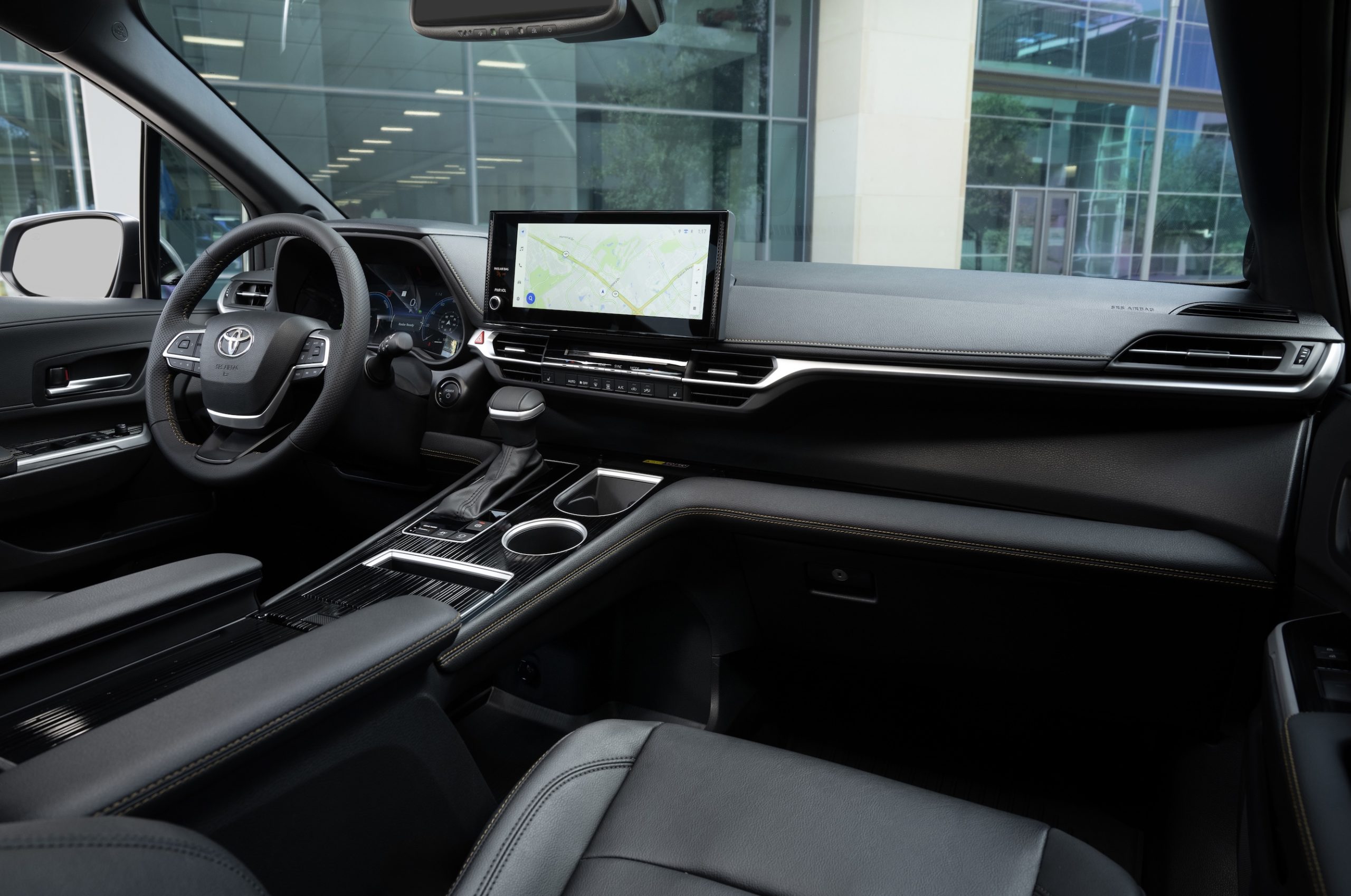
    The front of the 2026 Toyota Sienna has plenty of storage bins in addition to comfort; the rear makes a nice mobile changing room.NATHAN LEACH-PROFFER

    Friends and stuff: The second and third rows are among the most spacious out there and provided plenty of changing room for Mr. Driver’s Seat and The Lovely Mrs. Passenger Seat for swimming adventures in Lake Superior (43 degree water there, and brave Mr. Driver’s Seat was the only one with wet hair).

    The seats seem less cumbersome than Sturgis Kid 1.0’s Sienna but still only smash up against the front seats, no fold-down or fold-away option.

    Cargo space is 33.5/75.2/101. The old Sturgis Family Sienna from 2011 remains the cargo carrier, with 150 cubes when the third row is squished down, and the second row is left in the garage. Still, there’s plenty of room to shop it up at the Mall of America or Duluth and the North Country’s many gift shops.

    Play some tunes: Mr. Dylan would be as sad as Mr. Driver’s Seat to know how the JBL 12-speaker stereo was not quite up to the task. It didn’t play loudly enough to even hear some songs as we thumped along I-35 or U.S. 2 to our destinations. The system is set for full media experiences like Highway 61 Revisited or 2001’s Love and Theft, not the more spare sounds of Blonde on Blonde, and certainly not Freewheelin’. Songs from those acclaimed albums were half lost in the echoing cabin. I’d call it a B+, though sound could be good, it just disappeared into the corners of the van.

    It has a volume knob; other controls are in the 12.3-inch touchscreen, and with icons down the left, Toyota has made this a functional system across its lineup. Sound controls are sliders in the screen, though, and very difficult to follow.

    Keeping warm and cool: Dials for temperature and buttons for all the rest. The Sienna handled 100-degree heat pretty nicely for a giant box. But note the sweaty seats.

    The recirculation button kept the cabin smoke free even as we drove with our lights on for miles and miles and miles.

    Fuel economy: Averaged right around 33 mpg, which is where it started.

    Where it’s built: Princeton, Ind.

    How it’s built: Consumer Reports predicts the reliability of the Sienna to be a 3 out of 5, but I’m going to violate my oath to them here and say it received one point less than a 4 out of 5 on their more specific scale. I love CR, but I find that a really jerky thing to do.

    In the end: Toyota still has THE minivan, and I defend the reliability because my 15-year-old model is still going strong here at home. (Which I’m sure I just jinxed.) The competitors are good, too, and if the Odyssey went all-wheel drive and hybrid, I’d probably change allegiances. The ID.Buzz also is a joy to live with, although Volkswagen reliability is sketchy.

  • Oil prices jump, while the Dow drops more than 1,100 as sinking AI stocks drag Wall Street lower

    Oil prices jump, while the Dow drops more than 1,100 as sinking AI stocks drag Wall Street lower

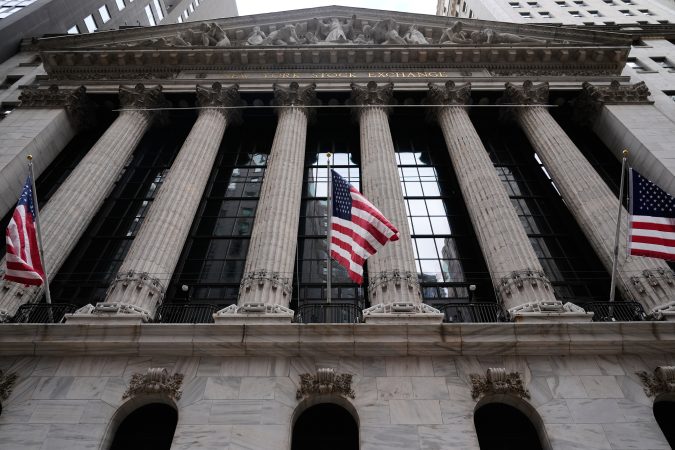
    NEW YORK — Oil prices got back to jumping on Wednesday, while sinking technology stocks dragged Wall Street lower amid uncertainty about what the Federal Reserve will do to get high inflation under control.

    The S&P 500 fell 1.5% after swinging sharply between gains and losses in the last hour of trading. The Dow Jones Industrial Average dropped 1,153 points, or 2.2%, and the Nasdaq composite slumped 1.7% to fall 9.8% below its record set last month.

    The action was more decisive in the oil market, where the price of Brent crude leaped 7.3% to settle at $88.09 per barrel after fighting resumed in the war with Iran and raised worries about the global flow of oil.

    Brent oil’s price had swung as low as $72 early this month and as high as $102 last week on uncertainty about whether the United States and Iran could reach a deal to allow oil tankers to move freely again from the Middle East to customers worldwide.

    The swings have raised worries that inflation will reaccelerate, and traders came into the day betting on a roughly 34% probability that the Fed would raise its main interest rate in the afternoon, according to data from CME Group.

    Higher rates can keep a lid on inflation, but they can also slow the economy and undercut prices for stocks and other investments.

    Fed officials instead voted to keep the federal funds rate steady, though three members of the policymaking committee did want to raise rates. The Fed’s chairman, Kevin Warsh, implied the bond market may already be doing some of the work to restrain inflation, and he pointed to how yields have climbed since the central bank’s last meeting six weeks ago.

    He reiterated his commitment to get inflation back to 2% following years of faster-than-hoped increases in prices, but he also stuck to his plan of giving financial markets fewer clues about what the Fed may do with interest rates in the near future.

    With less guidance from the Fed, financial markets may be set for more volatile trading amid the uncertainty.

    “Did the Fed take an explicit change in its policy rate today?” Warsh asked rhetorically in a news conference following the Fed’s decision. “No, but I think that’s the beginning of the story.”

    Treasury yields swiveled up and down following the Fed’s decision and Warsh’s insistence on not guiding the market.

    The yield on the two-year Treasury, which closely tracks expectations for Fed action, fell to 4.24% from 4.26% late Tuesday.

    But the 10-year Treasury yield, which moves more with expectations for inflation and economic growth in upcoming years, went in the opposite direction. It jumped to 4.68% from 4.61% late Tuesday.

    That’s up from 3.97% before the war with Iran sent oil prices much higher, and the increase has already sent long-term U.S. mortgage rates to their highest level in nearly a year.

    Higher rates particularly hurt stocks seen as the most expensive, and scrutiny has already been rising on makers of computer chips and other winners of the frenzy around artificial-intelligence technology.

    The recent surges for sellers of computer processors and memory are backed by real revenue and profits, but the exceptional growth won’t be sustainable if AI does not produce as much profit and productivity as hoped.

    The skepticism has hit South Korea’s stock market in particular because it’s dominated by two tech giants, Samsung Electronics and SK Hynix. Seoul’s Kospi index tumbled 6% Wednesday, a day after it plunged 10.8%, and trimmed its gain for the year so far to 34.4%.

    SK Hynix’s stock in Seoul dropped 9.6%. It reported record amounts of revenue and profit for a quarter thanks to strong demand because of AI. But its 257% growth in revenue still wasn’t enough to meet analysts’ expectations.

    On Wall Street, Nvidia was the heaviest weight on the S&P 500 after the chip company fell 3.6%.

    KLA Corp., whose products and services help make semiconductors, lost 10.8% even though it reported stronger-than-forecast profit and revenue for the latest quarter. Expectations were high after its stock surged nearly 150% in this year’s first six months.

    On Tuesday, gains for stocks outside of AI helped offset weakness for tech companies. Analysts have been saying such a rotation in the market from AI to less-loved areas could be healthy, but the majority of U.S. stocks fell with tech on Wednesday.

    Hims & Hers Health tumbled 14.7%, for example, after the Federal Trade Commission, Utah and California alleged it shared consumers’ sensitive health information about medical conditions with third-party advertising platforms despite claiming its services maintain consumers’ privacy. Hims & Hers said their lawsuit is contorting “the law to try to manufacture claims,” which it called baseless.

    All told, the S&P 500 fell 112.63 points to 7,316.15. The Dow Jones Industrial Average dropped 1,153.18 to 51,594.14, and the Nasdaq composite sank 433.97 to 24,442.94.

    In stock markets elsewhere around the world, indexes were mixed. Hong Kong’s Hang Seng rose 2%, and Japan’s Nikkei 225 fell 1.5% for two of the bigger moves.

  • Ex-Comcast employee was hit in the face with a pie and tied to a chair for low sales, lawsuit says

    Ex-Comcast employee was hit in the face with a pie and tied to a chair for low sales, lawsuit says

    Sales low? You might get a pie to the face.

    That’s what a former Comcast retail employee says would happen, according to a new lawsuit filed against the Philadelphia-headquartered company.

    David Figueroa, a former employee at a retail location in Connecticut, alleges a store manager subjected workers to hazing and assault, forcing him to quit within a month of employment. That treatment included a monthly ritual where an employee was tied to a chair and smashed in the face with a cream pie. The antics were also videotaped.

    Comcast, the $125 billion-a-year media and communications giant, operates hundreds of retail stores nationwide. The stores act as point-of-sales locations for Xfinity products, including internet and TV products. They also offer equipment swaps and general customer support.

    “The Company has zero tolerance for harassment, humiliation, or any behavior that compromises a respectful and safe workplace,” Comcast spokesperson John Demming said in a statement. “This matter is in litigation so we will not comment on the specific allegations, other than to say that we disagree with the claims in the complaint and its characterization of the alleged events, and intend to fully respond through the legal process.”

    According to a lawsuit filed on behalf of Figueroa against Comcast, he was hired as a retail sales consultant in February at a retail location in Plainville, Conn., about 15 minutes outside of Hartford.

    But Figueroa said he was quickly rattled by his direct supervisor, the store’s manager, for her treatment of the staff. That store manager is not named as a defendant in the lawsuit. Demming declined to comment on the manager’s current employment status, citing personnel matters.

    The lawsuit says the store’s manager tracked employee sales metrics on a whiteboard in the back office that all employees could see. In the corner of that whiteboard, employees’ names were correlated to an emoji. The employee with the lowest monthly sales was listed next to an upset-looking emoji with a pie on its face, according to photos included in court documents.

    “[The chart] identified the employees who either had been recently assaulted or were scheduled to be assaulted in this way,” the lawsuit says.

    On Feb. 25, Figueroa witnessed a coworker being tied to the chair and assaulted in the face with a pie. The store manager “ordered, was present for, and videotaped this assault, as did the Plaintiff and other coworkers,” the lawsuit says. The coworker who struck the tied-up employee “had better sales results” and was ordered “to assault his poorer performing co-worker, in front of his peers,” the suit says.

    Figueroa’s coworkers showed him a video of another pieing incident where the assistant sales manager was hit in the face with a pie because of a poor survey score from a customer, according to the lawsuit.

    He attempted to report the incident to the store’s regional manager, who instructed Figueroa to send a text message documenting his concerns. According to the lawsuit, the regional manager “never responded” to Figueroa’s complaints about the store’s “hostile and violent work environment,” leading to his resignation.

    The Plainville retail location could not be reached for comment.

    Figueroa “suffered a pervasive and ongoing fear of being subjected to management-condoned assaults and public humiliation in the workplace,” the lawsuit says. Now, he’s suing Comcast for damages, including past and future financial, emotional, and reputational harm caused by the incident, along with court fees.

    It’s not the first time Comcast has found itself in a lawsuit involving a former employee. As reported on by The Inquirer, several past lawsuits waged by former employees have touched on hostile work environments at different Comcast stores, facilities, and call centers.

    The company reported lower profits last week, citing drops in domestic residential broadband customers in the second quarter.

  • Fed leaves interest rate unchanged but with 3 dissents as Warsh praises ‘good family fight’

    Fed leaves interest rate unchanged but with 3 dissents as Warsh praises ‘good family fight’

    WASHINGTON — The Federal Reserve left its key interest rate unchanged Wednesday, although three officials dissented in favor of higher rates as the central bank wrestles with how to deal with persistently high inflation.

    The Fed’s rate-setting committee reached its decision after two days of deliberations, marking the fifth straight meeting at which the benchmark rate was kept at around 3.6%.

    Some economists and Wall Street analysts had predicted the Fed would hike its rate by a quarter point. But while the decision to stand pat could be seen as good news for consumers, they might not feel much relief with the average credit card rate still near 20% and mortgage rates the highest since last August.

    Inflation has been stuck above the central bank’s 2% target for more than five years. The Iran war has generated uncertainty over the economic outlook and has driven energy prices higher, intensifying inflationary pressure and creating a quandary for Fed policymakers. In addition, the vast amounts of money being spent by technology companies on artificial intelligence are both driving manufacturing and have resulted in increased prices for items such as computer chips and electricity. President Donald Trump’s tariffs on foreign goods are also adding to inflation pressures.

    The three officials who dissented — Beth Hammack, president of the Federal Reserve Bank of Cleveland; Neel Kashkari, president of the Minneapolis Fed; and Lorie Logan, president of the Dallas Fed — had previously called for or signaled that they would be open to raising rates to combat high prices.

    “The dissents send a clear message: The Fed is not yet convinced the inflation battle has been won,’’ said Seema Shah, chief global strategist at Principal Asset Management.

    At a news conference following the rate decision, Fed Chair Kevin Warsh reiterated the Fed’s commitment to combating inflation. At the same time, Warsh said, “We have no magic wand. This isn’t something we’re going to be able to carry out in days or weeks.”

    Warsh said he welcomed vigorous debate at the committee meeting. “I asked for a good family fight and I got one,’’ he told reporters at a news conference.

    Warsh, who was appointed by President Donald Trump, has sought to bring a number of changes to the Fed including giving financial markets fewer signals about the Fed’s thinking on interest rates. He said he believed that reticence was a factor in the bond market pushing up yields in the past few weeks as it weighed new economic data. The yield on the 10-year Treasury has risen from around 4.50% in mid-June to 4.64% just ahead of the Fed’s rate decision.

    The market is “learning to play the ball and not the referee,” Warsh said.

    Coming into Wednesday, traders on Wall Street saw a 33% chance the Fed would issue a rate hike, although most expected policymakers to hold off, reluctant to risk disrupting financial markets. But they give a 55% chance of a rate hike in September, according to data from CME.

    Trump, who had persistently pressured the Fed to cut rates, voiced support for Warsh. “He’s fantastic. He’s a brilliant guy. Smart. I know he’d love to see lower interest rates, but he’s got a board and it’s a political board and they want to keep rates up,” Trump told reporters.

    Fed officials likely want to see more economic data before changing the benchmark rate. On Thursday, the Commerce Department delivers the first look at April-June economic growth and it will also publish the Fed’s preferred inflation measure — the personal consumption expenditures (PCE) price index — for June.

    Adding uncertainty to the Fed’s decision-making process is the rising violence in Iran. The price of oil briefly blasted past $100 a barrel last week on intensifying fighting. It’s since settled down on hopes the United States and Iran can find some way to reduce tensions.

    Yet early Wednesday, Jordan intercepted missiles launched from Iran early just hours after the U.S. military said it knocked down another Iranian barrage launched against American forces in the Middle East, ending a brief pause in fighting.

    After the U.S. and Israel attacks on Feb. 28, Iran shut down the Strait of Hormuz — through which a fifth of the world’s oil and natural gas pass. That caused the greatest disruption in oil supplies in history and sent energy prices surging. They’ve since bobbed up and down depending on the ever-changing state of the conflict and negotiations to de-escalate it, but the average cost for a barrel is $10 to $15 more today than it was at this point last year.

    Inflation has exceeded the Fed’s 2% target since early 2021 when the U.S. economy overheated as it roared back from COVID-19 lockdowns. Inflation peaked at just over 9% in mid-2022 and began to drop in the face of 11 rate hikes by the Fed in 2022 and 2023. But progress has more or less stalled.

    So-called core inflation — which excludes volatile food and energy prices — cooled in June, partly because apartment rents aren’t rising as fast as they had been. And a temporary drop in gasoline prices last month also helped contain overall inflation.

    But several Fed policymakers have been arguing that the Fed will have to raise rates to return inflation to the 2% target.

    “Sternly staring at inflation until it melts before our withering gaze is not an option,’’ Christopher Waller, an influential member of the Fed’s governing board, said in a speech this month.

  • U.S. bans foreign-made humanoid robots, targeting China over national security

    U.S. bans foreign-made humanoid robots, targeting China over national security

    HONG KONG — The U.S. Federal Communications Commission is banning imports of new foreign-made humanoid robots and power inverters, citing national security risks, in a move that targets China. Beijing quickly accused the U.S. of protectionism.

    The measures are likely to test relations with Beijing ahead of a planned U.S. visit by Chinese leader Xi Jinping to meet with President Donald Trump in September. China dominates the global market for humanoid robots with an estimated market share of roughly 85%.

    The FCC’s ban also includes new imports of quadruped robots, often referred to as four-legged robot dogs. The agency said imports of advanced robots pose cybersecurity and other national security risks. Offshore production of such equipment also leaves U.S. supply chains vulnerable to disruptions.

    The ban on power inverters, which are used to convert direct current (DC) electricity into alternating current (AC) electricity and are used in renewable energy systems, data centers, and household appliances, could have sweeping ramifications.

    This is the latest in U.S. restrictions on Chinese imports

    FCC chairperson Brendan Carr said Tuesday that the move was to “secure America’s critical supply chains.” He said the bans apply to “new versions” of such imports.

    The FCC’s bans follow a slew of U.S. restrictions on imports of Chinese products, including drones, and on exports of U.S. advanced technology to China.

    The U.S. is also weighing controls on use of Chinese open-source artificial intelligence models at a time when Chinese AI is rapidly gaining ground.

    “It’s a steady drumbeat of potential flashpoints heading into [the] Trump-Xi summit planned for September,” said Samm Sacks, a senior fellow at the New America think tank focused on Chinese technology policies.

    China has been rapidly expanding the use of robots, with policies supporting its technology sector. Morgan Stanley analysts forecast its market for humanoids could reach $15 billion by 2030.

    “Chinese manufacturers have been scaling production and reducing costs faster than most overseas competitors,” said analyst Kangyuxiao Li at Morningstar.

    “Restricting their access to the U.S. removes an important future market and protects U.S. developers from potential price competition,” he said. “However, it will not materially slow China’s overall humanoid development, given the size of its domestic manufacturing base and opportunities in other export markets.”

    Of the around 15,000 humanoid robots shipped globally in 2025, Unitree and AGIBOT, two of China’s largest advanced robotics companies, each shipped more than 5,000. Their U.S. counterparts, like Tesla and Figure AI, each shipped a few hundred or less, according to the technology research and advisory group Omdia.

    On the restrictions on power inverters, Cheng Wang, another Morningstar analyst, said the pressure on U.S. markets should be limited. The ban appears to not impact the continued use of existing devices nor the selling by Chinese companies of models that were previously approved by the United States.

    China says protectionism will only hurt the U.S.

    China’s Foreign Ministry hit back at the U.S. move, accusing Washington of overstretching the concept of national security to suppress Chinese companies.

    China will take “all measures necessary” to defend the legitimate rights and interests of Chinese businesses, it said.

    “Protectionism does not make the U.S. more competitive, and it will only hurt the interests of U.S. companies and consumers,” Mao Ning, a ministry spokesperson, told reporters at a regular news conference Wednesday in Beijing.

    The new bans could also potentially interfere with collaborations between U.S. and Chinese technology companies, said Lian Jye Su, a chief analyst at Omdia.

    Nvidia, for example, in June revealed a humanoid robot reference design which uses the humanoid chassis of China’s Unitree.

    The Pentagon recently included Unitree and several other major Chinese technology companies on its list of firms that it said have ties to or aid the Chinese military. Beijing has rejected that claim.

  • How LeBron James could impact Philadelphia’s economy, according to local experts

    How LeBron James could impact Philadelphia’s economy, according to local experts

    LeBron James is set to make $8 million over two years with his move to the Philadelphia 76ers. But how much money will the city’s economy get out of the deal?

    “It’s hard to precisely quantify, sitting here today, what that exact number is going to be,” said Ethan Conner-Ross of Econsult Solutions Inc., a Philadelphia-based economics policy consulting firm.

    Of course there’s James’ own money as a high-earning professional coming into the region — including any local taxes he’d pay, and the money he would spend to rent or buy a place in the Philly region, though rumors suggest he might commute from New York.

    The greater economic impact depends on how many consumer dollars come into the city that wouldn’t have without James joining the Sixers.

    “The level of interest in the team, and then ultimately the success of the team, could definitely play out in more economic activity in a few different ways,” including short- and long-term outcomes, Conner-Ross said.

    History provides some idea of how this athlete could financially benefit the city.

    A 2017 Harvard study found that James’ presence in Cleveland and Miami was tied to an increase in the number of food and beverage businesses within a mile of the arenas in those cities and a boost in employment at those establishments.

    Moody’s Analytics economist Matt Colyar says James’ presence won’t increase housing prices in the area or lower the unemployment rate, but if the team performs well and ends up playing more playoff games, that could fill up restaurants, bars, and hotels with Sixers fans on additional days.

    “All that is serious dollars,” Colyar said, “but not the kind of thing that makes us revisit our forecast for Philadelphia’s long-term trajectory.”

    Where will money be spent?

    In the short-term, James’ move could mean more ticket sales and jerseys bought, Conner-Ross said. It likely means more media and more fans coming to town for games.

    Early signs suggest this is already happening. Fanatics, the sports apparel company, sold out of some LeBron James Sixers jerseys within hours of the announcement Friday that he would join the team. Preseason ticket prices have risen as well, 6abc Action News reported.

    How much money stays in Philadelphia will be a “tourism story,” Conner-Ross said. Hotels, restaurants, and bars near the arena or downtown could benefit.

    Some of the money spent by locals on James-related experiences and merch may have been spent locally anyway, Conner-Ross said. That could still be positive for the city, he said.

    A billboard welcome sign for new Sixers LeBron James along Packer Avenue in South Philadelphia on July 24.Yong Kim / Staff Photographer

    “Philadelphia entertainment activities are not the only things competing for those dollars,” he said. “These folks have the ability to spend their entertainment dollars at the Shore or going to New York, or what have you.”

    If “they’re excited about the Sixers and spend more in town, it’s probably a net positive,” Conner-Ross said.

    Boosting Philly’s reputation

    Some of the James effect — like more media exposure and nationally televised games for the Sixers — will make money for non-Philly beneficiaries.

    “Those aren’t dollars that are going to support public parks in Philadelphia,” Colyar said.

    But there could be a reputational gain, Conner-Ross said. Hosting the World Cup, the All-Star Game, and other events have helped Philadelphia be seen in a positive light, he noted, and James could similarly contribute to the city’s image.

    “Philadelphia is … competing with other East Coast cities, other places in the country, in the world for residents, for visitors, for businesses, and that reputation really does matter,” Conner-Ross said.

    That kind of influence can have financial consequences, even if it’s hard to measure in exact dollars.

    International soccer star Lionel Messi, for example, helped raise Miami’s profile in the soccer world as well as attract tourism, and the Wall Street Journal says some have estimated that his presence on Inter Miami has generated billions of dollars for the city.

    To be sure, Messi’s and James’ situations are like apples and oranges — or soccer balls and basketballs — in part because they’re playing out in different cities.

    In any case, the influence of a star like James could have a trickle-down effect.

    People aren’t “going to necessarily point to LeBron James and say, ‘Now I have to live there,’” Conner-Ross said. But “it affects their perception of Philadelphia as a place that people choose.”

  • Like rival Wawa, Delco’s Swiss Farms plans to add gas pumps under its latest owner

    Like rival Wawa, Delco’s Swiss Farms plans to add gas pumps under its latest owner

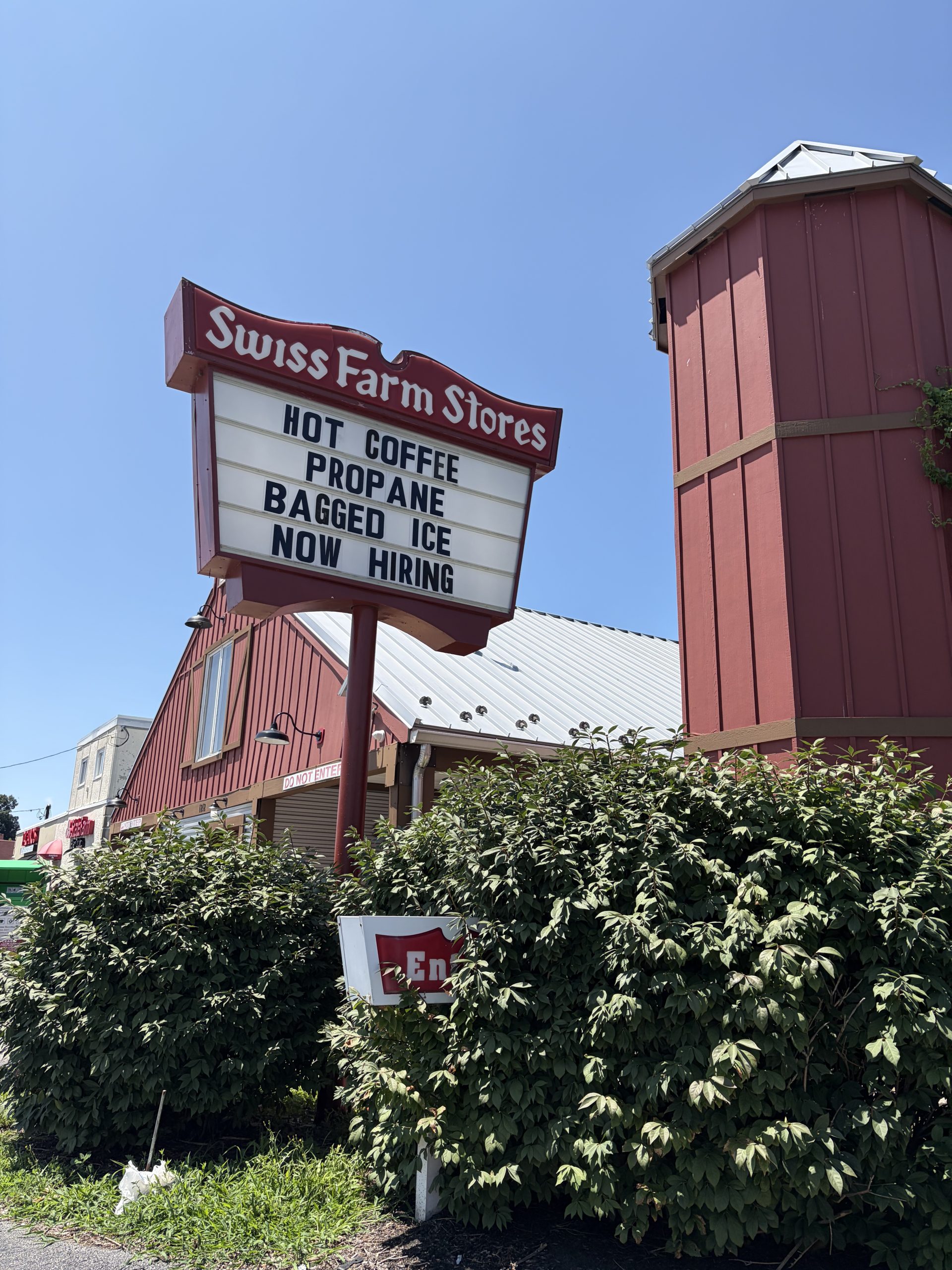
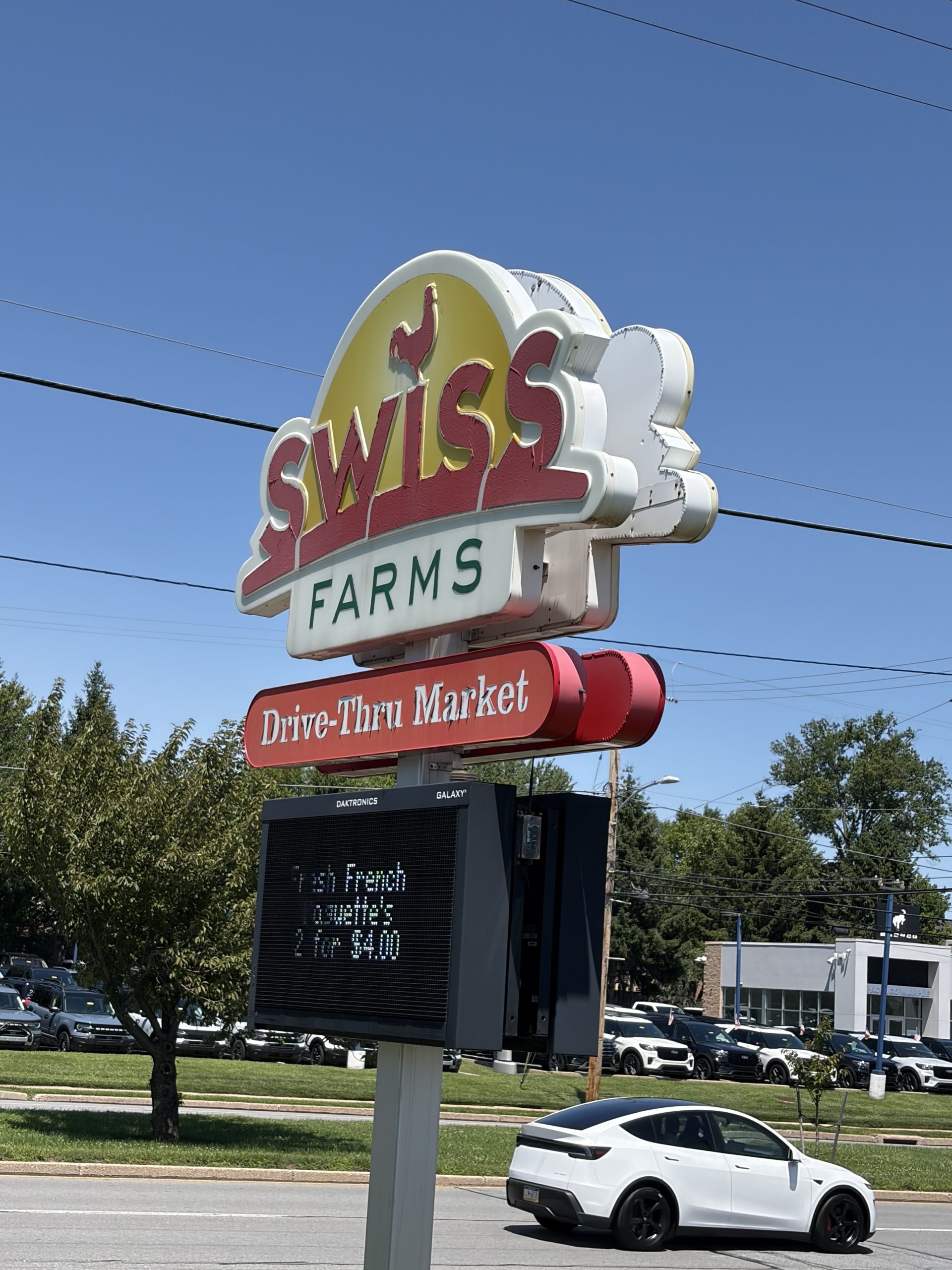
    The new owner of Swiss Farm Stores, a Delco fixture selling dairy, groceries, and convenience goods almost as long as cross-county rival Wawa, is planning new stores with gas pumps in Delaware, Philadelphia, Montgomery, and Bucks Counties.

    “We were neck and neck with Wawa, then they went into gas in 1996, and it revolutionized their business,” said Arsh Pola, a Drexel University graduate and gas station and convenience store operator, who bought the chain in stages after starting talks in 2022.

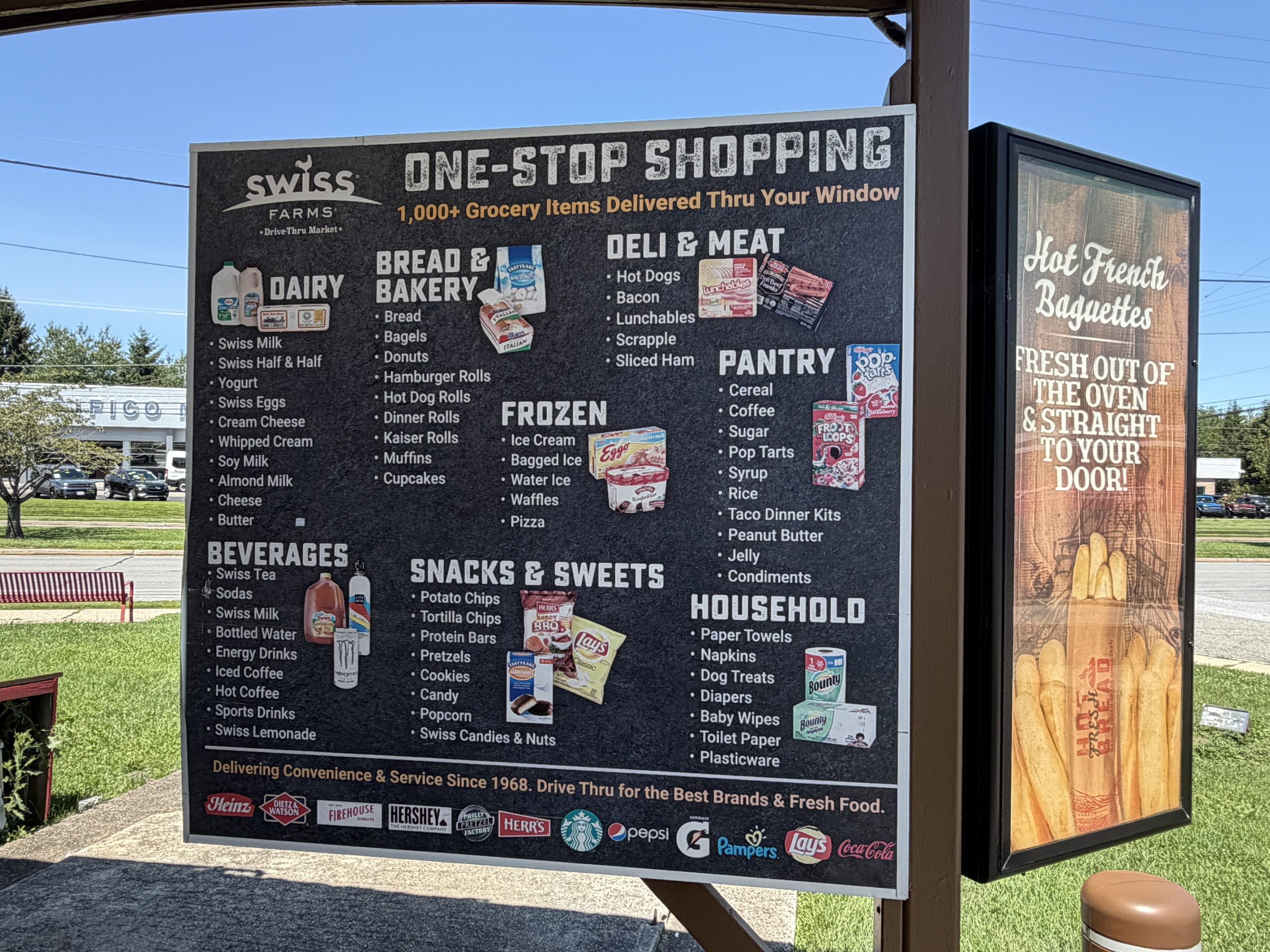
    “It’s a beautiful business,” Pola said. Serving through drive-up windows from posted menus of hot and cold foods and pantry items, “we have a different customer from other stores: mom. We are serving local families milk and the things that built a cult following. We will add more of the right things.”

    Side entrance at Swiss Farm Stores’ Drexel Hill, location.Joseph DiStefano

    Pola’s vision to update Swiss Farm, which started in 1968, is fuel and an expanded menu.

    Adding gas to a drive-up chain might not be a long jump for Pola, who owns gas stations, stores, and apartments in Philadelphia and Montgomery County.

    The North Penn High School alumnus jokes that his retail focus in a family of professionals — engineer, pharmacist, dentist — makes him “a black sheep” but also tracks with his Gujarati immigrant grandfather, a teacher who saved his pay to buy a New England convenience store.

    Pola began negotiating to buy Swiss Farm franchises in 2022, two years after Florida-based Farm Stores bought the company from Radnor-based MVP Capital and other investors.

    Earlier owners tried and failed to grow Swiss Farms beyond Delaware County. When Pola realized the Delco-area franchises were the only stores still open, he bought one after another, starting in 2024, and then the parent company. He was financed by regional banks that also backed his gas station deals. The purchase closed June 30.

    His plans rely on execution by Swiss Farm veterans, topped by Chris Gray, who worked 25 years at the company and rose to CEO before MVP let him go. Pola, now CEO, brought Gray back as chief operating officer.

    Pola agreed to detail his plans for Swiss Farms to The Inquirer in interviews at the Broomall and Drexel Hill stores.

    How did you get into retail?

    When I was studying finance at Drexel [graduated 2019], I had the dream of working at Goldman Sachs. I became the youngest co-op at Goldman Sachs. And they quickly told me, ‘You get along really well with the clients.’

    I started buying gas stations while I was still a student. I took Warren Buffett’s advice: ‘Buy something with a moat around it.’ Gas stations have a very strong customer cash flow that’s recession-proof.

    I started with a former Liberty, up at Ridge and Manatawna. I wanted my own brand on the store. I called it Posh [with a crown over the P]. I ended up doing Marathons and Lukoils. I still have a few stations in Philadelphia and Montgomery County.

    How could you afford to buy Swiss Farms?

    Each gas station required a million-dollar investment. So I wanted to do a portfolio deal [buy several at once]. Everything was financed from the banks that knew me. They do 20-year mortgages.

    Farm Stores’ goal was: ‘Let’s franchise!’ Wawa doesn’t franchise. Raising Cane’s CEO Todd Graves talks about this: You can’t control the quality of a franchise when you don’t own it.

    I told Farm Stores, ‘You guys are 1,500 miles away. Let me buy it all.’

    Sign at Swiss Farms’ Broomall, Delaware County store.Joseph DiStefano
    What are the first few things you will add or take away?

    The stores need a facelift. We won’t take away the silos, but [we’ll give them] a fresh look.

    And the stores need more employees. In-N-Out doubled their payroll, and sales went up three or four times over.

    We always had employees in these black shirts. Now we’ve added six new colors, make it fun for the staff.

    We just did an event with [former Eagle] Brian Dawkins. Everyone on his staff knew Swiss Farms and loves us.

    How can you compete with large chains like Wawa and 7-Eleven that can purchase gas and food in bulk at lower costs?

    I’m already in the gasoline business. I buy on the open market every day. I buy from the same [fuel suppliers] that sell to BJ’s and Sunoco. We are going to price gas the most aggressively we can.

    Some costs you can cut. Swiss Farms had a consultant negotiating what were supposed to be the best trash rates. We cut that.

    Swiss Farm Stores drive-up menu, July 2027Joseph N. DiStefa
    Kathy Strimmel, who runs the Drexel Hill store, says she’s a longtime customer, who’s now been working there for a year. Is it hard to find people to work your stores?

    It’s difficult to find quality talent. People don’t all have the same drive, or loyalty. We start at $10 to $12 an hour.

    Your milk costs maybe a dollar more a gallon than the store down the street, why?

    It’s good milk! People don’t say, ‘Can I get a gallon of whole milk?’ They say, ‘Can I get Swiss Vitamin D?’ And we share the cost for getting it into your car.

    We do have the best prices on our iced teas. I don’t know why, but Delaware County has a reputation as the best iced-tea market in the country.

    How many new stores are you planning?

    Twenty-five in the next five years. We will find locations here in Delaware County, and we will enter Philadelphia, Montgomery County, and Bucks County. After that, we will grow organically, state by state, where it makes sense.

    I respect Wawa. [Wawa CEO] Chris Gheysens said, ‘It took 60 years for us to get into six states; it’ll take six years to get into the rest.’”

    Wawa has closed several of its Philadelphia stores. How can Swiss Farms make the city work if Wawa can’t?

    You have to choose locations very wisely. I have gas stations in Philadelphia. I know how to do that.

  • Pa. mushroom growers are divided over cheap, grocery-store fungi

    Pa. mushroom growers are divided over cheap, grocery-store fungi

    Pennsylvania mushroom growers welcomed this month’s U.S. Department of Commerce preliminary finding that Canadian farms are selling mushrooms to U.S. grocery stores at unfairly low prices.

    The ruling against “dumping” threatens to make mushrooms more expensive to import, easing competitive pressure on family-owned U.S. growers in an industry also under pressure from a shortage of harvesters amid the U.S. immigration crackdown.

    “This ruling supports the long-term health of our industry” in Pennsylvania, said CJ Ciarrochi, CEO and fourth-generation owner of Modern Mushroom Farms in Toughkenamon, Chester County, part of the Fresh Mushrooms Fair Trade Coalition supporting the case against the Canadians.

    But one of the largest area growers called the decision a protectionist move that would enable aging U.S. farms to avoid upgrades and leave consumers with fewer choices.

    “We sell our Canadian-grown mushrooms in the U.S. at a higher price than our U.S.-produced mushrooms — the polar opposite” of dumping, said Lewis Macleod, Kennett Square-based CEO of South Mill Champs mushrooms, which also has operations in Canada and Mexico.

    (function(){function e(){window.addEventListener(`message`,function(e){if(e.data[`datawrapper-height`]!==void 0){var t=document.querySelectorAll(`iframe`);for(var n in e.data[`datawrapper-height`])for(var r=0,i;i=t[r];r++)if(i.contentWindow===e.source){var a=e.data[`datawrapper-height`][n]+`px`;i.style.height=a}}})}e()})();

    Final decisions in September could impose penalties that boost U.S. grocery stores’ cost to buy Canadian mushrooms. The Commerce Department’s calculations suggest anti-dumping and countervailing-duties penalties, if adopted, could add 10 to 15 cents per $1 to the price of Canadian mushrooms exported by Champs, owned by Eos Partners of New York; Highline Mushrooms, owned by Japan-based Sumitomo Corp.; and Windmill Mushrooms, owned by Toronto-based Instar Asset Management.

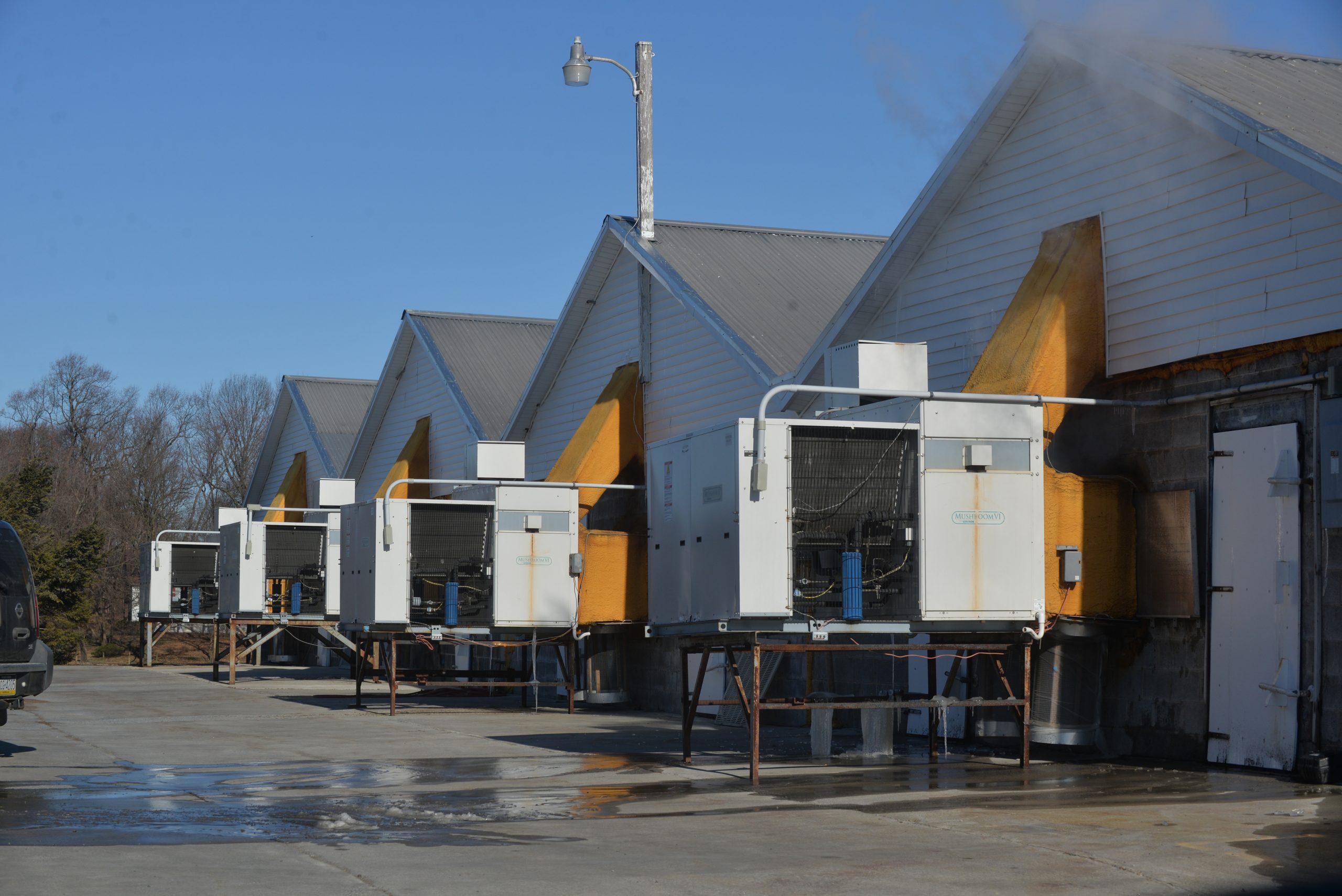
    That would ease import competition for Pennsylvania growers, who produce more than two-thirds of the U.S. mushroom crop, mostly in clusters of climate-controlled sheds in northern Berks County and southern Chester County.

    At Modern Mushroom Farms, on Newark Road, Toughkenamon, Chester County, in 2020.Bob Williams For The inquirer

    The Department of Commerce’s finding “is a win for fairness, competition and the future of American mushroom farming” and for “everyone to play by the same rules,” said Mark Currie, CEO of 99-year-old Giorgio Cos.’ food division, the largest of the coalition members.

    Giorgio employs over 2,300 in Berks and Chester Counties and also buys from other growers such as Modern. Its corporate parent, Giorgi Global Holdings, is an international bottle and can maker with $5 billion in yearly sales.

    While Champs’ Macleod predicted the Commerce Department’s final probes would find no dumping, Currie said he expects the review of sales records would find more evidence.

    “We know the private-equity playbook: ‘Let’s drive the mom-and-pops out, jack prices, and then flip our companies” to outside investors and global companies, Currie said. “We called them on it. Enough’s enough.”

    Both sides agree that Canadian growers have been winning a larger share of the U.S. market.

    Sales to U.S. buyers peaked at around 1 billion pounds in 2019 but have since declined, according to the Mushroom Council, a national organization that promotes the crop. Canadian farms are gaining larger sales in a smaller U.S. market.

    U.S. production peaked in 2015 at 811 million pounds and has fallen each year since, to 631 million pounds in 2025.

    Fresh mushroom imports, mostly from Canada, have grown steadily since 2012, more than doubling to 208 million pounds in 2025.

    The trade coalition says at least 10 U.S. mushroom farms have closed since 2022, including five in Chester County and one in Berks County.

    In its investigation, the Commerce Department compared the prices of premium-grade U.S. mushrooms to lesser-grade Canadian mushrooms and discounted low-priced U.S. mushrooms, Macleod said.

    Canadian exports are winning U.S. customers not because Canadians are selling unfairly cheap but because Canadian farms tend to be new and efficient and grow an attractive product, he said.

    Commerce began the investigation of alleged dumping and subsidies in January. The department’s latest finding follows its May “preliminary affirmative determination” that some Canadian mushroom farms were operating with an effective Canadian government subsidy of up to 5%.

    South Mill Champs was set up in 2017 by Eos Private Equity, which bought a controlling stake of South Mill’s Kennett Square mushroom-growing complex from the founding Pia family and combined it with the Champs mushroom farms in British Columbia. It is based in Kennett Square.

    South Mill Champs built an additional plant in 2023 in Chester County’s Elk Township, near the Maryland border, and now directly employs around 400 in the county, according to Macleod.

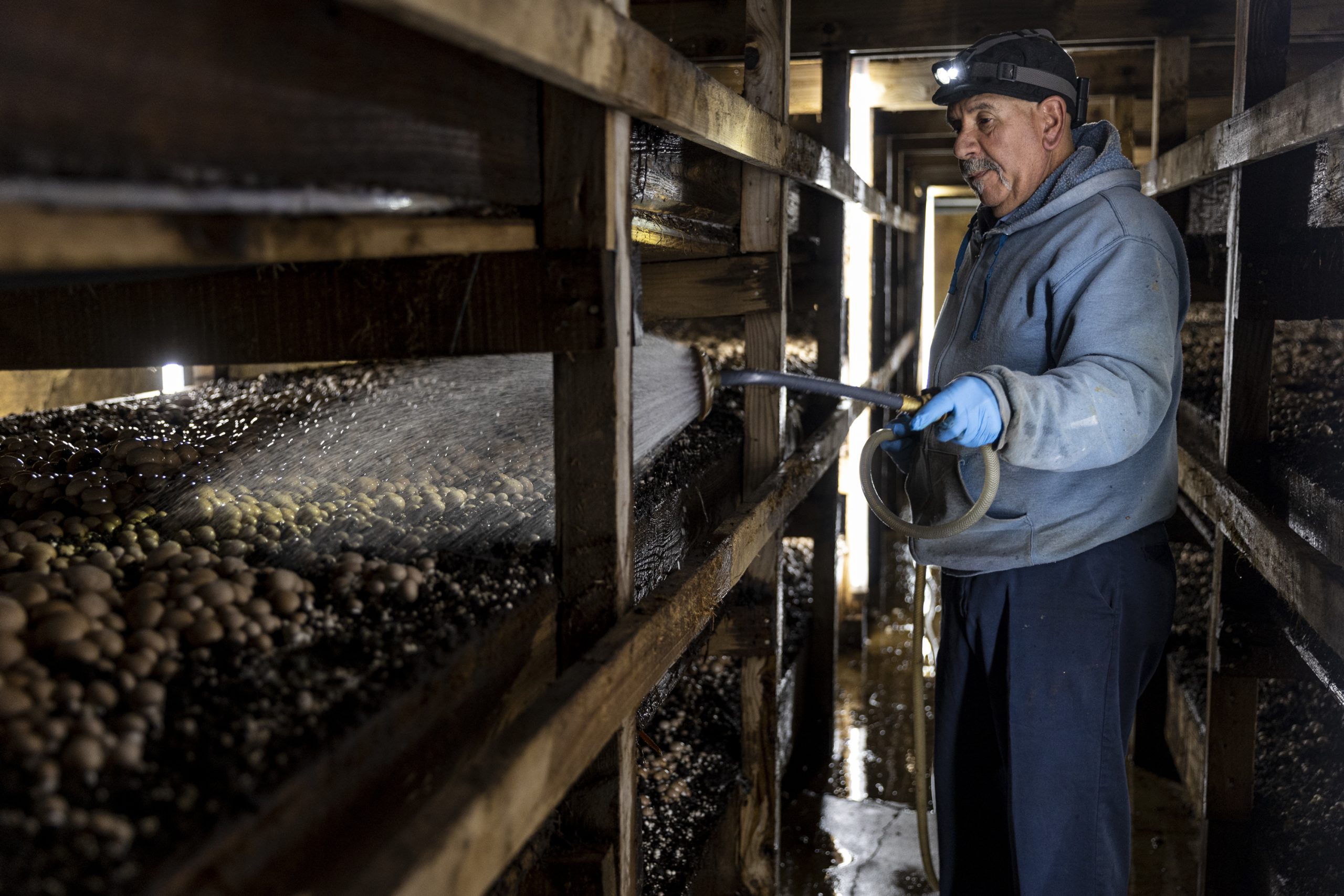
    A worker is watering Crimini Mushrooms being grown at The Woodlands at Phillips Mushroom Farm in Kennett Square in 2022.Tyger Williams / Staff Photographer

    The company also has added mushroom production near Winnipeg, Manitoba, and is building in Mexico’s Guanajuato state. It has a processing plant in Cambridge, Md., and has diversified into mushroom-based snacks and fruit storage and distribution.

    Rival Giorgio has a joint-venture plant in Saltillo, northern Mexico, which has been selling to Mexican and U.S. buyers since the 1990s.

    Many of Chester County’s Mexican mushroom workers are from Guanajuato. Thousands gained legal resident status and a path to citizenship in President Ronald Reagan’s 1980s amnesty program. Many have raised families and started businesses in the county. Nearly half Kennett Square’s population is Latino, according to the U.S. Census’ 2025 estimates.

    Mario Gomez, of West Grove, cooks white mushrooms in butter, garlic, and salt to give out as free samples during the annual Mushroom Festival in Kennett Square in 2023.Tyger Williams / Staff Photographer

    In recent years, growers have had more difficulty obtaining U.S. work permits for workers from other countries.

    Miguel Morales, a Guatemalan labor contractor who served as employer of record for nearby Chester County mushroom growers from his base at an Oxford convenience store, was convicted in federal court in Philadelphia last year of hiring unauthorized workers and failing to collect and pay taxes for some of them. He was sentenced to a year in prison, plus $8 million in restitution to the IRS. The growers were not charged.

    South Mill Champs’ Macleod said he and his neighbors, though they differ on trade and sanctions, all support efforts by the American Mushroom Institute to expand legal status for immigrant farm laborers.

    But with government restrictions on labor growing instead of easing, he said, “we have had to limit our expansion in the U.S., owing to challenges with labor availability.”

    Macleod says the key to the U.S. mushroom industry’s survival and growth is automation.

    The “distraction” of the trade dispute has delayed South Mill Champs’ proposed investment in a new, fully automated mushroom farm at its Oxford facility, where there’s room to triple the size of the current facility, he said.

  • Peco’s new contract gives all workers pensions — but not the kind you might think 

    Peco’s new contract gives all workers pensions — but not the kind you might think 

    When IBEW Local 614 and Peco started negotiating a new contract earlier this year for call center employees, linemen, and other field workers, one thing was clear to local union president Larry Anastasi: He needed to get pensions back for all of his members.

    Roughly 600 of his 1,500 members, hired since 2021, weren’t offered a pension. The rest had differing plans.

    Clawing back pensions for the whole union wouldn’t just be a reversal of Peco’s trajectory. It would buck a cross-industry trend.

    “The trend my entire career, which is now more than 40 years in this business, has been employers want to get away from defined benefit plans, and unions want to maintain them and get them in more places,” said Wendell Young IV, president of United Food and Commercial Workers Local 1776, which represents workers in Pennsylvania and neighboring states.

    In early July, after a three-day strike, Peco and its worker union reached a deal that includes a pension plan for all workers. But it’s not your grandparent’s pension.

    The traditional defined-benefit retirement plan peaked in popularity in the 1970s, when up to 62% of private-sector workers relied on a pension as their sole retirement plan, according to the New York Times. That number shrank to 1% of private-sector workers in 2022.

    Employers in the gas and electric utility industry started moving away from traditional pensions in the 1990s, according to William Dwyer, a professor at the Rutgers University School of Management and Labor Relations, who once worked at PSE&G in New Jersey.

    Under the new Peco union contract, workers will get a cash-balance plan — where employees are promised a specific amount of money in retirement without having to contribute to it themselves. The benefit accrues throughout a worker’s career, unlike the old-school pension that is typically based on total years of employment and how much a worker is earning in the final few years of their career.

    It’s an increasingly popular compromise, said professor Olivia Mitchell of the Wharton School. With workers living and working longer than they used to, traditional pensions become unpredictably costly for employers. The cash-balance option is a chance for both company and worker to better see the future.

    “They accumulate benefits more evenly over a worker’s career,” she said, “making them easier to understand and often less costly and less risky for employers.”

    By getting a pension of any sort, said Young, of UFCW, Peco’s unionized workers “rode against the current” and “achieved a really amazing benefit.”

    Wendell Young, president of UFCW Local 1776, gathers with supermarket workers outside the Whole Foods at 2101 Pennsylvania Ave on Nov. 24.Ariana Perez-Castells / Staff

    What is a cash-balance pension plan?

    Cash-balance plans are often seen as a hybrid of the traditional pension and the “defined-contribution” plan, such as a 401(k).

    Like a traditional pension, they are employer-funded and typically don’t require the employee to make their own contributions. But like a 401(k), the amount available to the employee upon retirement is based on a stated account balance rather than expressed as a promised monthly payment for life.

    These plans debuted in the 1980s and gained popularity in recent decades. Some 23,000 employers offered them in 2020, up from 1,477 in 2001, the Wall Street Journal reported.

    Traditional pensions “typically have benefit formulas that rise sharply late in a career, making them expensive for employers with long-tenured workforces and less valuable for employees who change jobs before retiring,” said Mitchell of Wharton.

    Bank of America was the first large company to introduce one, in the 1980s. It offered young employees some flexibility to take their cash balance plan elsewhere if they switched jobs.

    By 1996, some 200 “large companies” had cash balance plans, the New York Times reported. The Campbell’s Co., the food giant based in Camden, was one of them. Some companies faced backlash.

    Despite adoption at several well-known companies, cash-balance plans still aren’t the norm in the private sector. A recent study by the International Foundation of Employee Benefit Plans found that 21% of corporations surveyed had a defined benefit plan, with 5% being the hybrid kind.

    Then CEO of Campbell’s, Mark Clouse, at the company’s investor day on Sept. 10, 2024, in New York City.Ariana Perez-Castells

    How Peco retirement evolved

    Peco employees were given the option to transition to a cash-balance plan in 2001, and roughly 80% of them did so, the union has said, while others kept their traditional pension. This was before Peco workers unionized with IBEW. The company has also offered 401(k)-based retirement programs.

    Peco’s retirement options “have evolved over time in a manner consistent with broader employer and utility industry practices,” the company said in a statement earlier this month.

    Larry Anastasi, president and business manager of IBEW Local 614, joined other Local 614 bargaining committee members as they speak to the media about contract negotiations with Peco outside the Hilton Penn’s Landing Hotel on July 6. Jose F. Moreno / Staff Photographer

    As IBEW laid out its goals for the new contract, including pensions for all, Peco laid out its own position. The company said it wanted a contract that maintained affordable service for customers.

    Unlike other private sector businesses that can raise prices at their sole discretion to cover labor costs, Peco leaders must get approval from the state’s regulating entity, the Pennsylvania Public Utility Commission (PUC) for rate hikes, which is a lengthy process.

    Peco did raise rates in 2025 and tried to do so again this year. While the company’s 2025 profits were up 48% from the previous year, leaders said the business still needed to increase rates to meet customer demand for energy.

    At Peco, “90% of what we receive [from ratepayers] goes right back into our infrastructure, and that includes paying for the wages and benefits for employees so they can go out and restore power and improve our grid,” Peco’s chief operating officer, Nicole LeVine, said earlier this year during bargaining.

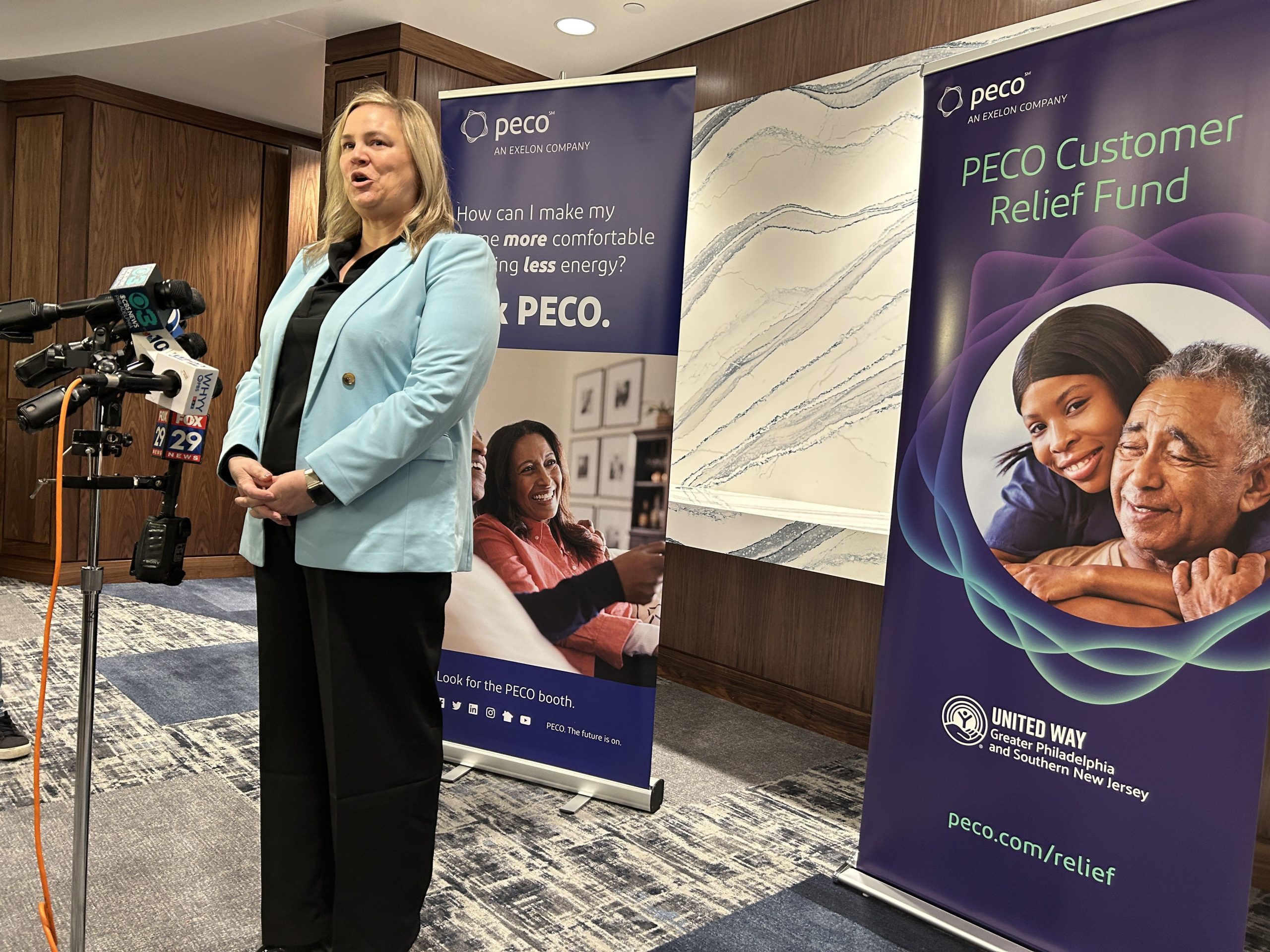
    Nicole LeVine, Peco’s chief operating officer, took questions from reporters on March 31 about the contract negotiations and a proposed rate hike.Ariana Perez-Castells

    After backlash, the utility company rescinded its rake hike request.

    When pensions came up at the bargaining table this year, the cash-balance option prevailed.

    The plan’s similarities with a defined contribution plan, such as a 401(k), make it easier for employees to understand, said Joseph Hicks, consultant and co-owner of Keystone 74 Benefits and Administration, which worked with IBEW local 614 during the recent bargaining process. If employers are spending money on a benefit, they want their workers to be able to understand and appreciate that benefit, Hicks said.

    Peco, upon reaching the tentative agreement July 6, said the deal “recognizes the contributions of our employees while supporting our responsibility to deliver reliable, affordable service across Southeastern Pennsylvania.”

  • Wall Street’s flip from AI to less-loved stocks accelerates, while oil prices keep easing

    Wall Street’s flip from AI to less-loved stocks accelerates, while oil prices keep easing

    NEW YORK — Most of Wall Street rose Tuesday, even as stocks of computer chipmakers continued to tumble worldwide. Oil prices, meanwhile, eased further from the two-month high they hit last week.

    The S&P 500 added 0.2%, but the modest move masked big swings underneath the surface. The Dow Jones Industrial Average jumped 537 points, or 1%, while the Nasdaq composite slipped 0.2% after briefly dropping 9.3% below its record set last month.

    The majority of the U.S. market rose after more companies delivered stronger profits for the spring than analysts expected. Coca-Cola climbed 5% after its revenue rose 7% despite what CEO Henrique Braun called “a dynamic consumer landscape.”

    Sherwin-Williams rallied 8.3%, and Illinois Tool Works rose 3.6% after both likewise reported stronger earnings for the latest quarter than analysts expected. Stock prices generally follow the trend of corporate profits over the long term, and expectations are high for this most recent round of reports with the U.S. stock market still near its all-time high.

    Such expectations are weighing particularly heavily on stocks of chipmakers and other companies that have been huge winners from the boom in artificial-intelligence technology.

    Micron Technology’s stock came into the day having more than tripled for the year following gangbuster growth, for example. During the three months through May 28, its revenue more than quadrupled from a year earlier.

    But worries are rising about whether such growth is sustainable. Big spenders on computer memory could pull back on investments if AI does not produce as much profit or productivity as promised. Lower-cost AI models from China could also mean less demand for memory and computing power than earlier expected.

    Micron dropped 8.9% and was the heaviest weight on the S&P 500. Others also helping to keep the market in check were Advanced Micro Devices, down 8.1%, and Applied Materials, down 7.8%.

    All told, the S&P 500 rose 15.60 points to 7,428.78. The Dow Jones Industrial Average jumped 537.24 to 52,747.32, and the Nasdaq composite fell 55.17 to 24,876.91.

    The losses for chip stocks were even worse earlier in the day in other markets worldwide.

    Sharp drops for SK Hynix and Samsung Electronics dragged South Korea’s Kospi index down 10.8%. The market’s losses were so big that trading was temporarily halted at times in Seoul.

    “We believe the market was likely spooked by the progress of China’s chipmaking equipment capabilities, and was worried that this progress would threaten the competitive position of global chipmaking and chip equipment leaders,” said equity analyst Jing Jie Yu of Morningstar.

    “That said, we believe the sell-off today is largely a knee-jerk reaction and overdone,” he said. The dominant position of global chipmaking leaders is unlikely to be threatened meaningfully, he said.

    Several huge spenders on AI chips and data centers are scheduled to report their latest quarterly results this week, which could offer updates on how much they’re planning to invest. Meta Platforms and Microsoft are reporting on Wednesday, while Amazon is due on Thursday.

    Because AI superstar stocks have grown so big, their movements carry more weight on the S&P 500 and other indexes than many other companies. But the broad U.S. market could hold up despite their swings if other, less-loved areas are able to keep rising. It’s a rotation that some strategists have suggested could be healthy for the overall stock market.

    In the oil market, the price for a barrel of Brent crude to be delivered in October fell 4.4% to settle at $82.08.

    It’s been falling since late last week, when the price for a barrel to be delivered in September briefly shot as high as $102.

    Pushing up on prices have been worries that worsening fighting in the Middle East could slow the global flow of oil. On the other side, though, are hopes that the United States and Iran could still negotiate something to allow oil tankers to use the Strait of Hormuz to move crude.

    Lower oil prices helped to ease Treasury yields in the bond market. The yield on the 10-year Treasury fell to 4.60% from 4.65% late Monday.

    A weaker-than-expected reading on confidence among U.S. consumers also weighed on yields. Fewer consumers are saying they feel good about current business conditions, according to the latest survey released by the Conference Board Tuesday.

    The drop in oil prices helped push traders to trim their bets that the Federal Reserve could announce a hike to interest rates following its latest meeting on Wednesday. They’re forecasting a 31.5% probability, down from more than 36% a day before, according to data from CME Group.

    Higher rates could keep a lid on inflation, but they would also slow the economy by making it more expensive for U.S. households and businesses to borrow. Long-term mortgage rates have already hit their highest level in nearly a year, chilling the housing industry.