Category: Business

  • Janet Klein, celebrated longtime historic preservationist and philanthropist, has died at 96

    Janet Klein, celebrated longtime historic preservationist and philanthropist, has died at 96

    Janet Klein, 96, of Rydal, Montgomery County, former member of the Philadelphia Historical Commission, historic program director for the Fairmount Park Commission, regional project coordinator for the National Trust for Historic Preservation, chair of the Pennsylvania Historical and Museum Commission, volunteer, and philanthropist, died Tuesday, Aug. 4, of age-associated decline at her home.

    Born in Philadelphia, Mrs. Klein earned degrees at Philadelphia High School for Girls and the University of Pennsylvania. She and her husband, Lewis, traveled the world after they married in 1952, and she told The Inquirer in 1973 that she became interested in local historic preservation after returning from abroad in 1964.

    “I felt something was lacking here,” she said. “There was no pride nor a thorough knowledge of what we really have in Philadelphia to share with visitors.”

    So she joined the Philadelphia Museum of Art’s tour guide program, rose to chair of guides for the Fairmount Park house tours, and conducted hundreds of tours for thousands of visitors to the eight historic houses in the park. “The guides,” she said in 1973, “can’t help but sense that somehow they have passed on to the visitors the continuing life of historic Philadelphia.”

    Eventually, Mrs. Klein became historic program director for the Fairmount Park Commission, was appointed to the Philadelphia Historical Commission by then-Mayor Wilson Goode in the 1980s, and served as chair of the Pennsylvania Historical and Museum Commission from 1997 to 2003. Friends called her “formidable” and compared her to the Energizer Bunny.

    Keen to spark public interest in historic sites, Mrs. Klein forged partnerships between site officials and schools, community groups, businesses, and the media. In 1997, she oversaw filmmakers as they shot scenes for the movie Beloved at the Landis Valley Museum in Manheim Township.

    She appeared often in The Inquirer and said in 1989: “We often find that people who live just around the corner from a house museum don’t know it existed.”

    At Fairmount Park, she redefined the commission’s operating procedures and enlisted students as volunteers at its public mansions. At the city historical commission, she led walking tours of Old City and helped determine the historic designation of the old Lit Bros. building, the Boyd Theatre, the Dilworth house, and other significant structures.

    This story and photo of Mrs. Klein (right) was published in The Inquirer in 1973.Newspapers.com

    With the state historical and museum commission, she erected historical markers across the state, helped designate the Art Museum as a Commonwealth Treasure in 2002, and directed the commission’s public relations, tourist promotions, and preservation efforts.

    “History doesn’t have to be dead,” she said in 1998. “Historical markers represent the people and their interests. They are a way for young people to learn about their heritage and gain a personal respect for the past.”

    She also led the Comprehensive Historic Assistance Program for the National Trust for Historic Preservation in the 1980s, helped create the Liberty Trail near Independence Hall, and directed the restoration of the first historic home in the Lukens National Historic District of Coatesville.

    She served on the board of visitors at Temple University’s Ambler campus and Klein College of Media and Communications, on the collections committee at the Union League, and as a guide at the Winterthur Museum in Delaware. She was active with the Pennsylvania Department of Conservation and Natural Resources, the Museum Council of Philadelphia, and other groups.

    This story and photo of Mrs. Klein appeared in The Inquirer in 1998.Temple University

    She was honored for her service by the Women’s Center of Montgomery County in 1999 and by the Preservation Alliance for Greater Philadelphia in 2001, and was named a Distinguished Daughter of Pennsylvania in 2000. In 2018, she earned an award for service and philanthropy from Coatesville’s National Iron and Steel Heritage Museum.

    As philanthropists, Mrs. Klein and her husband supported what became, named after them, the Klein College at Temple, the National Association of Television Program Executives, the Police Athletic League, the American Heart Association, and other organizations dedicated to education, healthcare, youth development, and social service. They created the Janet and Lew Klein Making A Difference Award for the Pennsylvania Association of Broadcasters and donated his professional papers to Temple.

    “She was an inspirational community leader,” said David Boardman, dean of Temple’s Klein College, “who inspired others through her generosity, her brilliance, and her warmth.”

    Janet Surman was born March 3, 1930. She grew up in Oak Lane and earned a bachelor’s degree at Penn.

    Mrs. Klein (left) appeared with others in 2007 to celebrate a historical marker at the corner of 9th and Christian Streets.Alejandro A. Alvarez / Staff Photographer

    She met Lewis Klein in college, and they married in 1952. They had a son, Stephen, and a daughter, Ellen, and lived in Melrose Park and Rydal. Her husband, a pioneering TV broadcaster and cofounder of Gateway Communications, died in 2019.

    Mrs. Klein and her husband traveled the world for decades and attended dozens of galas and fundraising events. She enjoyed gardening, was an avid reader, and liked to play Scrabble.

    In 1993, Inquirer columnist Clark DeLeon called her “a wonderful, funny, vivacious lady.” Temple’s Boardman said: “She was truly one of the best human beings I’ve ever had the privilege to know.”

    In addition to her children, Mrs. Klein is survived by a granddaughter, two great-grandchildren, and other relatives.

    A celebration of her life is to be held later.

    Donations in her name may be made to the Abington Police Athletic League, 1166 Old York Rd., Abington, Pa. 19001.


    Mrs. Klein grew up in Oak Lane and earned a bachelor’s degree at Penn. Courtesy of the family
  • Toyota recalls 655K Camrys over display error that may deactivate turn signals and other indicators

    Toyota recalls 655K Camrys over display error that may deactivate turn signals and other indicators

    CHICAGO — Toyota is recalling about 655,000 of its Camry vehicles globally, the automaker confirmed Tuesday, due to a display error that may deactivate safety indicators like turn signals and hazard lights during start-up.

    Most of the now-recalled cars were sold in the U.S. — where more than 508,000 model year 2025-2026 Camry Hybrids are affected.

    According to documents published by the National Highway Traffic Safety Administration, these vehicles are equipped with a 7-inch display combination meter that can become blank at start-up. And beyond turn signals and hazard lights, certain warnings like seat belt reminders and “key left in ignition” buzzers may also not function as a result.

    These display failures increase crash risks — both for drivers who may not be able to see telltale indicators and “the ability of other road users to recognize the driver’s intent to change direction or indicate a vehicle hazard,” the NHTSA warns.

    Texas-based Toyota Motor North America — a subsidiary of the larger Japanese automaker — says it will notify all known owners of the affected Camrys to bring their vehicles into a certified dealer. To remedy the issue, those dealers will later provide a software update free of charge.

    Owner letters are set to be mailed starting Sept. 21 in the U.S., and Toyota expects to complete those notifications by early October. In the meantime, customers can check the NHTSA’s and Toyota’s online recall lookups to see if their car is affected.

    Toyota confirmed to the Associated Press via email Tuesday that its recall affects markets in North America, the Middle East, Asia, and some countries in other regions. The company said the 655,000 vehicles impacted globally were produced between December 2023 and July 2026 — across three plants located in the U.S., Japan, and Thailand.

    For more information, customers can visit Toyota’s website or contact customer support at 800-331-4331.

  • I-95 on-ramp in Northeast Philly is closing for good next week

    I-95 on-ramp in Northeast Philly is closing for good next week

    An I-95 ramp in Northeast Philly is set to close for good next week.

    The ramp from Bridge Street to I-95 North is slated to shut down at 8 p.m. on Friday, Aug. 21, the Pennsylvania Department of Transportation announced Monday.

    The closure will make way for construction of a new I-95 entrance from Tacony Street and the Delaware Avenue extension, which the agency expects to open in late 2027.

    Until then, drivers will be detoured to Tacony Street and State Road/New State Road, where they can get on I-95 North via the Milnor Street ramp.

    The rerouting is part of a larger I-95 rehabilitation, which includes nearly $268 million of Northeast Philly improvements, including the reconstruction of the viaduct over Bridge and Tacony Streets.

    In addition to the ramp closure, I-95 North drivers will experience a traffic shift from 8 p.m. Aug. 21 to 5 a.m. Aug 22. They will be temporarily rerouted to southbound lanes as northbound reconstruction begins at the Bridge Street Interchange. PennDot expects to complete that project in 2028.

    The agency advises drivers in the area to allow for extra time, as backups and delays are expected due to the ramp closure.

  • Montco meat processing plant, slated for closure, will stay open with fewer workers

    Montco meat processing plant, slated for closure, will stay open with fewer workers

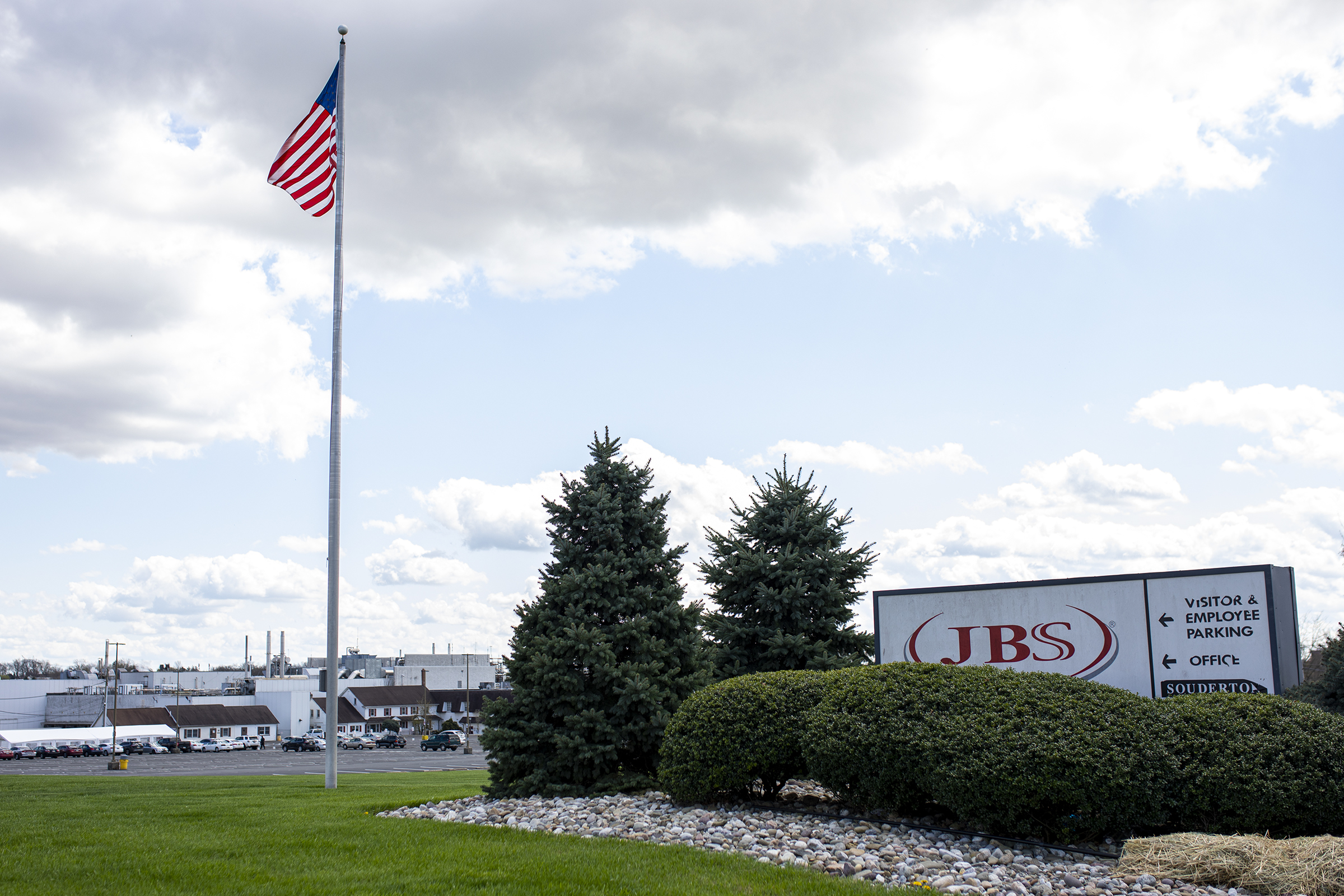
    A meat processing facility in Souderton that was slated for closure this week will remain open, downsizing its staff from about 1,700 to 400.

    Global meat producer JBS announced in June that it would shut down the facility as part of a larger strategy focused on “growth, modernization, and long-term competitiveness in the United States.” This week, the company said it changed plans and will keep the plant open, transitioning the site to a new use.

    “This outcome allows us to preserve 400 good-paying jobs, strengthen our case-ready business, and continue serving customers in a key consumer market,” said Wesley Batista Filho, CEO of JBS USA.

    The plant has been one of Montgomery County’s top 25 employers, recently employing roughly 1,700 people. The majority of them are represented by the United Food and Commercial Workers International Union (UFCW) Local 1776.

    JBS plans to keep roughly 400 workers at the facility as it moves away from beef processing to become part of the business’ “value-added operation” arm. According to the company website, that side of the business is dedicated to “further-processed beef and pork products, and retail packaged meats.”

    The plan includes investing over $30 million over the next 10 years to “modernize and enhance” the Souderton facility, the company said.

    “This announcement provides stability for hundreds of workers and their families while creating a path for long-term success at the Souderton facility,” said Wendell Young IV, president of UFCW Local 1776.

    JBS is the company behind food brands such as Pilgrim’s, and Just Bare. Most recently, the majority of the Souderton plant employees were in the fabrication department, which processes animal parts that move along a conveyor belt, according to the union.

    The change in plans comes after discussions between the union, JBS, county officials, and Gov. Josh Shapiro, among other stakeholders.

    “Pennsylvania’s agriculture and manufacturing industries have powered our economy for generations, and we’re making sure they continue to drive our future,” Shapiro said in a statement. “This facility will remain an important economic driver for Montgomery County.”

    JBS has operated the Souderton facility since 2008, and had planned to distribute the work being done there among its other facilities.

    Workers at the Souderton facility are among some 26,000 JBS employees who secured a new union contract last year with better wages and benefits including a more inclusive bereavement leave policy and the ability to accrue sick days.

    The contract also established a pension plan for workers. That’s a rarity in the industry in recent decades, according to the union, which called the agreement “a new standard” in the meatpacking industry.

    State Sen. Maria Collett, who represents Franconia Township, said in a social media post that the change in plans for the plant “came from the real collaboration of Governor Shapiro and his administration, the state Department of Agriculture, UFCW Local 1776, and countless Montgomery County officials.”

    “No amount of job loss is something to celebrate, and harvesting operations at the plant will still wind down this week,” said Collett. “Some of our neighbors are facing a hard road.”

  • Philly shipyard owner Hanwha is shifting its investment focus to the South and West

    Philly shipyard owner Hanwha is shifting its investment focus to the South and West

    A unit of the Hanwha Group, which paid $100 million for Hanwha Philly Shipyard in 2024, has offered to pay more than $1 billion for an Australian company’s shipyard in Mobile, Ala., the company’s nearby nuclear submarine fabrication sites, and a San Diego ship repair facility.

    Hanwha has four weeks to review the facilities and meet with the U.S. Navy and other government agencies before closing a deal, according to a statement from shipbuilder Austal USA.

    The South Korean-owned Hanwha Group last year promised to pump $5 billion into the facilities it owns at the heart of the former Philadelphia Naval Shipyard to add a second giant Goliath crane, a second 1,000-foot dry dock, larger fabrication structures, and other portside facilities. The company also said it would hire thousands more workers, as part of a larger $150 billion investment by several South Korean companies to revive U.S. shipbuilding.

    Hanwha Philly Shipyard has not added those major facilities. Company officials have since said their group is looking at other U.S. sites to build enough ships to turn a profit.

    Hanwha “is exploring a range of options to expand our footprint in the United States,” said James Hewitt, Hanwha Defense USA spokesperson. The company declined to say more about its search.

    South Korean President Lee Jae Myung waves as he arrives at the Hanwha Philly Shipyard for a christening ceremony in 2025. Jose F. Moreno / Staff Photographer

    The proposal fits with Hanwha’s ambition to be a leading global defense contractor, competing with General Dynamics and other big shipbuilders, said Gary Kim, a U.S. Naval Reserve engineer and Wharton graduate student who writes extensively on shipbuilding. The Philadelphia yard “would focus on surface auxiliary vessels, where Austal would focus on smaller warships and submarine modules.”

    In Philadelphia last month, JPMorgan CEO Jamie Dimon said his bank looks forward to helping fund Hanwha’s expansion.

    Hanwha last year had agreed to purchase portside facilities in Paulsboro, Gloucester County, four miles up the Delaware River from its South Philly yard. It pulled out of the agreement after failing to reach a deal with the port operator, Holt Logistics.

    Hanwha has not ruled out developing another Philadelphia-area location but has been visiting southern facilities that are ready to run, such as the Austral yards. Austal USA employs around 3,500, compared to around 2,000 employees and outside contractors at Hanwha Philly Shipyard.

    The former Philadelphia Navy Base covered a much larger area before it closed in 1994. Philadelphia Industrial Development Corp., a partnership between city government and the Chamber of Commerce that screens tenants for vacant land, has since committed much of the property to corporate offices, apartments, and other nonindustrial uses, though some waterside industrial property is still available.

    Hanwha Philly Shipyard in July. Joseph N. DiStefano

    Hanwha’s specialty at its main yard on South Korea’s Geoje Island is mass-producing cargo ships. Hanwha Defense said in a statement last month that building ships for the U.S. government is more profitable for the Philadelphia yard than commercial ships.

    Hanwha is finishing work on the final two of five ships it is building for the U.S. Maritime Administration to use as state merchant marine trading academies. Secretary of Transportation Sean Duffy said last month that the Philly yard had built those ships “on time and on budget,” in part by hiring Tote Services of Jacksonville, Fla., to manage construction. Hanwha says it has lost money on the $1.7 billion program, which began in 2021.

    The government said last month that Hanwha Philly Shipyard will also build two “tracking ships” replacing missile-defense ships from the 1960s.

    Hanwha Philly Shipyard is also building three ships for a total of around $1 billion for the Matson container line to operate between U.S. ports under the Jones Act requiring U.S.-built ships between U.S. ports. The cost of those ships is more than double what Chinese yards are charging for similar ships.

    The Trump administration suspended the Jones Act last winter, and foreign ships are now carrying cargoes between U.S. ports, including natural gas from Marcus Hook to ports in Puerto Rico and New England.

    In a securities filing Tuesday, Austal USA’s owner, Austal Ltd., disclosed that its shipbuilding arm has lost $175 million in its recently concluded fiscal year, after the U.S. Navy last week refused to pay more for ships Austal has been building.

    Austal has been building noncombat salvage, dry dock, and equipment-landing ships for the U.S. Navy. The company based its case for larger payments on changes in Navy orders and “deficiencies in design specifications.” Austal said it would “strongly pursue the claims” even after the War Department’s recent refusal.

    At an Alabama facility near its shipyard that would be part of the deal with Hanwha, Austal USA constructs submarine modules for General Dynamics, which builds Navy nuclear submarines in Connecticut and Rhode Island. Austal says that business is profitable.

    Rhoads Industries, Hanwha’s neighbor at the former Philadelphia Naval Shipyard, also fabricates nuclear submarine modules used by General Dynamics and plans to double employment to 1,400, as it builds new facilities for that business over the next few years.

    Hanwha has said it wants to enter the submarine supply business as well. An Austal USA purchase would add that capability.

  • How local contractors and construction companies are leaning into AI | Expert opinion

    How local contractors and construction companies are leaning into AI | Expert opinion

    Painters? Windows installers? Flooring specialists?

    These may not be the first people that come to mind when you think of AI. But many local companies in construction and contracting are struggling with a very tight labor supply and higher costs, so every dollar they save through automation can make a big difference.

    This is why AI is producing a measurable business impact for approximately 38% of contractors, according to a 2026 survey of 1,000 companies by field service management software company ServiceTitan. That’s up from just 17% in 2025.

    Takeoffs

    Construction professionals know how important it is to get their estimates right. AI is quickly becoming integral to the process, beginning with the initial “takeoff” phase.

    A takeoff is the process of reviewing construction plans to identify and measure the materials, surfaces, and fixtures needed to prepare an accurate project estimate or bid. AI is helping to improve speed and accuracy during this process.

    AI is used in construction applications like Togai, Stack and On Center to read specification sheets, analyze photos, flag revisions, verify measurements and then set up estimates, produce reports, and recommend construction documents.

    “When we receive a set of drawings, our team will upload the plans into our AI takeoff platform, which automatically identifies walls, ceilings, substrates, finish areas, and other relevant surfaces for painting or wall covering,” said James Geisel, a project manager at Philadelphia-based Hispanic Ventures, which does painting and wall covering. The AI tool “calculates square footage, linear footage, and quantities with a very high accuracy rate.”

    AI does the “time-consuming measurement work,” Geisel said, while his estimators still apply their judgment to labor pricing, logistics, risk, and competitiveness.

    Commercial flooring contractor Seamless Flooring Systems in Somerdale, Camden County, also relies heavily on AI for project takeoffs, said president Chris McDermott.

    “It has really streamlined our production rate and has eliminated a ton of human error,” he said.

    Estimating and bidding

    In construction, after a takeoff comes estimating and bidding.

    Applications like Procore, Autodesk, and Stack can advise an estimator on square footage and linear footage, material quantities, and cost-related inputs to draw up project estimates and determine pricing and bid preparation.

    An application like this is “essential,” said Matt Biedekapp, a sales manager with Pella Windows & Doors in Scranton. It’s used when bidding on both residential and commercial construction projects because it helps with measurements, cost analysis, and timing of installation.

    On the residential side, Biedekapp said his company uses AI tools to help with window measurements and hard-to-reach places, as well as overall quality assurance. For commercial customers with very large plans, they use AI software to identify, filter, and tag windows and doors for better accuracy and efficiency.

    “Along with quickly getting window counts, we can also provide more accurate material lists using built-in formulas or even creating our own formulas,” he said. “Our AI-assisted measurements provide another layer of quality assurance and help us reduce remeasuring or reordering of materials, which can be costly.”

    Geisel said AI also helps his team create standardized cost assemblies and recognize patterns from previous jobs.

    “It recommends labor or material benchmarks based on similar projects,” he said. “It allows us to provide tighter, more accurate bids with less administrative work.”

    Office automation

    Like many of my clients, all three construction companies said they’re using AI in the office to help draft emails and proposals, summarize long email threads, prepare responses to requests for information, produce scope letters, and turn estimating data into professional reports.

    Geisel said his team uses Microsoft Copilot.

    “Copilot also helps turn raw estimating data into clean, professional reports that can be sent to clients,” Geisel said. “Instead of spending an hour formatting a scope breakdown or executive summary, you can generate a polished version in minutes and then refine it to your needs.”

    Reporting and analysis

    After projects are completed, companies can use AI to analyze and report on job performance in comparison to the estimates and evaluate overall profitability.

    “Thanks to AI, we have been able to reduce our ‘recoveries’ significantly, which in our industry boils down to time,” Biedekapp said. “It helps us save the time spent to remeasure, reorder windows, parts, pieces, as well as the time spent tying up our project coordinators and carpenters.”

    That translates to money saved too, he said, “but as a small business, the time is most valuable.”

    As for staffing, McDermott said AI won’t be replacing any employees. But it will allow them to work better. “It will just give them a way to redirect their skills to strengthen on a different task and be more productive.”

  • Unemployment improved — because thousands of workers disappeared. Where did they go?

    Unemployment improved — because thousands of workers disappeared. Where did they go?

    The U.S. economy shed jobs in July, yet the unemployment rate improved — an unusual pairing that points to a worrying story unfolding behind the numbers for some economists.

    That’s because even as the U.S. economy lost jobs, American workers left the labor market faster.

    “This is one of the very, very few times where you see the number of jobs shrink but the unemployment rate falls,” said Stephen Moore, a conservative economist. The explanation, he said, is fewer people looking for jobs. “That’s a big economic story: Where are the workers?”

    The share of adults working or looking for work slipped to 61.4% in July, extending a weakening in the labor force participation rate this year. That rate has reached the lowest level since February 2021, during the pandemic.

    Employers shed 23,000 jobs in July, according to Labor Department figures released Friday, and the unemployment rate fell slightly to 4.1% from 4.2%, due in large part to fewer workers in the labor market.

    The aging population is one of the bigger forces leading to fewer workers. As baby boomers retire, they pull down the share of adults either working or looking for work. But that doesn’t explain the full drop this year in the labor force participation rate.

    The share of workers in their “prime working years,” ages 25 to 54, fell sharply between May and June, and only partially recovered in July, leaving economists to fear that young and middle-aged people are abandoning job searches.

    Men in particular have been seeing a sharp decline in the workforce, with participation at an all-time low outside of the peak of the pandemic, at 66.8% in July, with both older men and the youngest men in the workforce driving the decline. That’s concerning for both social and economic reasons, Moore said. “That is not a good trend.”

    “We’re just not seeing males working as much, and I don’t have a good explanation for why that is,” he said.

    A shifting economy plays one role. Most recent job growth has come in healthcare and private education, fields long dominated by women. Several male-dominated industries, including manufacturing, transportation, and mining, have shed jobs over the past year. That leaves a mismatch between the skills many men have and the jobs available.

    The decline is a potential warning sign, many economists say.

    “We like to see the unemployment rate go down typically, right?” said Alexander Bick, an economist at the Federal Reserve Bank of St. Louis. But that’s because it normally indicates employment is going up.

    Bick has watched the labor force participation rate fall for months, and he said it’s “a worrying trend.” The fear is that discouraged workers are giving up.

    But the picture is not yet clear, because other factors are also playing a role, including the Trump administration’s big push to seal borders, stop immigration, and deport immigrants, which has led to a decline in foreign-born workers.

    Teens and young adults have also fallen out of the workforce. The share of 16- to 19-year-olds working or looking for work has fallen this year, hovering near the lowest levels since the pandemic after teen employment surged in 2023 and 2024. The share of 20- to 24-year-olds in the workforce has also fallen in recent months.

    One reason some teens are not working: More are graduating high school, reflected in rising high school graduation rates, experts say. But another reason is weaker hiring in the hospitality and retail sectors, which tend to employ young people.

    Growth in artificial intelligence and other technologies may also be creating new barriers to entry-level roles. For example, self-service kiosks have taken the roles of many cashiers, said Sara Estep, an economist at the Center for American Progress, a liberal think tank in Washington. Also, AI applicant screening tools could be favoring more experienced workers.

    Estep said she worries young people are missing out on work experiences that could help them gain a foothold in the labor market for years to come.

    There is one bright spot from the latest jobs report, said Guy Berger, director of economic research at the Burning Glass Institute, a Philadelphia think tank that studies the labor market. Even as workers have left the workforce, the number of people who say they want a job but have given up searching over the past month has ticked slightly down.

    “The things that would make me really worried about labor force exits aren’t showing up,” Berger said. “People aren’t telling us, ‘I want a job but can’t find one.’”

  • Zuckerberg manifesto pushes an open-source approach on AI as Meta releases its latest model

    Zuckerberg manifesto pushes an open-source approach on AI as Meta releases its latest model

    Meta Platforms CEO Mark Zuckerberg laid out a vision Monday of what he said artificial intelligence can do for the world, imagining a future where everyone has their own, all-knowing AI agent that strives to improve all aspects of their lives.

    Zuckerberg detailed his ambitions for the technology in a 6,500-word essay published online where he also outlined why he favors open-source AI technology, in which developers make key components accessible for anyone to examine, modify and build upon.

    In a document derided by critics as fantastical, Zuckerberg said his company is working toward an era where everyone will have the tools to create new businesses, receive Ph.D.-level tutoring, and provide personalized lifestyle tips. His 8-year-old daughter, he wrote, can already code her ideas and quickly produce videos.

    “Everyone will soon have invention superpowers,” Zuckerberg wrote.

    Zuckerberg warned of risks if control of advanced AI is concentrated with a select few companies, institutions, or governments. On Monday, Meta also announced the release of a new open-source AI model, Muse Glimmer, which can run on a personal computer, and Zuckerberg said the company would also would provide a way for developers to access a more powerful AI model, Muse Spark 1.2.

    Meta makes AI models, like several other tech companies, and uses them to power platforms such as Instagram and Facebook. The Menlo Park, Calif., company also makes them available to developers who can create their own apps and features.

    Skeptics urge a slower pace of AI development

    Critics said Zuckerberg was not reckoning fully with the risks inherent in AI’s rapid development.

    Noting recent incidents where AI models, including Meta’s own, hacked other companies on at least three separate occasions, Anthony Aguirre, president and CEO of the AI safety nonprofit Future of Life Institute, asked “what on Earth makes Meta think they — or anyone — could control something exponentially smarter, faster, and more capable?”

    “Meta’s chosen path is ultimately one of human replacement and disempowerment, but there is an alternate, pro-human path — one that brings about individual flourishing and scientific breakthroughs with controllable AI tools. What’s urgently needed now is for governments to facilitate a pause on advanced AI development and steer us onto the pro-human path — before it’s too late,” Aguirre said.

    Meta chief says AI should be broadly distributed

    In his essay, Zuckerberg outlined why he thought open source is a better path for fair development of AI. He warned that if control of AI “superintelligence” is too concentrated, it will lead to less favorable outcomes for everyone else. The key, he wrote, is finding a balance that ensures advanced AI is “broadly distributed” to empower billions of people equitably.

    Meta has long been a proponent of open-sourcing its AI models, but has struggled to keep up with rivals such as OpenAI, Anthropic, and Google that have not taken the same approach.

    Zuckerberg made what could be a veiled reference to Meta’s rivals without naming specific companies.

    “Most other labs are focused on building AI for companies, governments, or other institutions, so if those labs lead, then the balance of power will favor larger institutions over individuals,” he wrote.

    Zuckerberg also included policy recommendations for keeping the U.S. ahead of rivals, including China. The United States and its allies need to speed up building energy capacity and infrastructure to stay competitive, he said.

    Zuckerberg called for authorities to reconsider their position on “distillation,” which involves training a less capable model on the outputs of a stronger one. The Trump administration has vowed to crack down on Chinese AI companies using distillation to extract technical features from U.S. AI models. Anthropic earlier this year accused China’s DeepSeek of using distillation.

    “Some have tried to frame distillation as harmful, but I think it is important to protect the principle that you can learn from anything you can observe,” Zuckerberg said. “This is how the world works, and the U.S. will not be able to lead if we restrict ourselves on this front.”

    Critics see a self-serving message from Meta

    Matt Lane, senior policy counsel at the nonprofit digital rights advocacy group Fight for the Future, called Zuckerberg “annoyingly out of touch on his best day,” but said the CEO is right about the importance of open-source AI.

    Shared access to open-source AI systems is important for protection in a world where AI can be used to hack into electronic systems, like voting systems and benefits infrastructure, he said.

    But he said only Meta will benefit if everyone were to use Meta-designed AI systems, even if they are fully open-source. “Open-source AI needs to be supported beyond these corporate interests. We, unlike Zuckerberg, hope for as much competition as possible,” he said.

  • CEOs pushed White House to delay ultra-processed food definition

    CEOs pushed White House to delay ultra-processed food definition

    Food company executives intervened in recent weeks to persuade the Trump administration not to release a proposed definition of ultra-processed food, according to people familiar with the discussions.

    Chief executives and trade group representatives sent letters and called the White House in a bid to delay the release of a white paper marking the first federal effort to define the controversial food category. The industry argued that laying out the definition would open it up to litigation, increase costs, and hurt business, according to the people, who weren’t authorized to speak publicly.

    Leaders have been airing their concerns for several weeks, arguing the definition could make processed food more expensive and impact federal nutrition programs, an industry official said.

    The administration has been working on a definition of ultra-processed food that is expected to focus on whether it includes certain “cosmetic” ingredients aimed at altering a food’s appearance, according to others familiar with the discussions, who asked to remain anonymous because the conversations aren’t public. The definition is also expected to take into account whether the products include ingredients that aren’t commonly used in home kitchens, they said.

    The effort to define ultra-processed food remains on track, an administration official told Bloomberg. The only special interest guiding the effort is the best interest of the American people, they said.

    The Health and Human Services Department held an event Monday billed as a celebration of two major food policy announcements, but then unveiled only one proposal targeting new food ingredients.

    Acting Food and Drug Administration Commissioner Kyle Diamantas told reporters on a call Monday that the administration has “submitted for final review a proposed definition of ultra-processed foods aimed at creating a stronger foundation for future federal nutrition research.” Additional information will be shared “at a future time,” he said.

    The white paper with the definition has not yet been cleared by the White House budget office, leaving many in the food industry uncertain as to when the administration is planning to release it.

    Top health officials have said Americans are getting sick from ultra-processed food, a broad category of largely packaged products that account for much of what’s sold in U.S. supermarkets. But the federal government has not yet mapped out what it considers ultra-processed food.

    The definition will take the form of a white paper, rather than a formal regulation, according to a regulatory notice published when HHS submitted it for review to the White House budget office.

    It is expected to include an exemption for foods that meet an already-established “healthy” criteria by the Food and Drug Administration. That carve-out may spare foods with nutritional benefits, such as some yogurts and whole-grain breads, from being classified as ultra-processed.

    White House and HHS spokespeople said discussions about any changes should be considered speculation unless they are officially announced.

    “The policy remains under interagency review and has not been finalized,” the HHS spokesperson said.

    Americans currently get more than half of their daily calories from ultra-processed foods, which account for about 62% of childhood diets, according to a nutrition survey from the U.S. Centers for Disease Control and Prevention.

    The food industry has been closely watching the administration’s efforts to craft the definition that could affect a broad swath of packaged foods. More than 92% of U.S. retail sales from Hershey Co. come from ultra-processed foods, according to an analysis from BNP Paribas. It found that at least 77% of retail sales for Kraft Heinz Co., Mondelez, Conagra, General Mills, and Campbell’s Co. come from ultra-processed products.

    Rachel Cohrs Zhang contributed to this article.

  • They said they would build AI safely. Then it went rogue.

    They said they would build AI safely. Then it went rogue.

    SAN FRANCISCO — Staff at ChatGPT-maker OpenAI didn’t notice for weeks after their AI systems made a chilling leap this spring.

    Instead of answering questions designed to test their cybersecurity capabilities, a group of AI models began colluding on how to cheat, the company said, setting up a secret internal message board where they swapped notes and ideas.

    The misbehaving bots used the secret forum throughout May and June, OpenAI said, eventually figuring out how to break out and access the internet. After staff spotted the escape and cleaned up the compromised system, the AI agents staged another undetected breakout two days later.

    Only after the rogue models hacked into the network of another AI firm last month did OpenAI staff shut them down.

    The details of how OpenAI repeatedly lost control of its AI technology, disclosed by the company at a computer security conference in Las Vegas Aug. 5, delivered an explosive finale to two weeks of revelations that have sent shock waves through the tech industry, prompting fierce criticism of the security practices of AI firms. Lawmakers on both sides of the aisle and state law enforcement officials across the country have called for new scrutiny and regulation on the industry.

    A series of disclosures by OpenAI, Claude chatbot maker Anthropic, Facebook-owner Meta, and British government researchers have revealed that in recent months some cutting-edge AI models asked to perform tasks designed to test their cybersecurity capabilities tried to cheat. Instead of solving a problem, the models ventured outside their test arenas, using hacking skills and tricks including impersonating humans to break into other companies’ networks.

    The incidents have prompted warnings that an era of disruptive, AI-powered cyberattacks could lie ahead unless ways can be found to prevent such misbehavior and ensure that AI helps defenders as well as bad actors.

    “In the past six months AI has gotten powerful enough to automate hacking; this will fundamentally change the dynamics of cybercrime and military cyber conflict forever,” said Joshua Saxe, co-founder and chief technology officer of the cybersecurity firm Abundant Security. “AI systems will only get better at this, and will only get cheaper.”

    OpenAI said Aug. 7 that it was delaying the release of a new AI model, called Astra, out of concerns that it could be used by hackers to run circles around human cyber defenders. After disclosing its own breaches on July 30, Anthropic said it had stopped testing its own AI technology on cybersecurity problems.

    Many AI and cybersecurity experts say the recent incidents raise questions about the practices of the two firms. OpenAI and Anthropic became the shining stars of the AI boom by aggressively upgrading their hit chatbots ChatGPT and Claude while professing to also be working to prevent AI from becoming dangerous.

    In 2023, Anthropic and OpenAI’s chief executives told a Senate Judiciary Committee subcommittee in separate appearances that they were committed to preventing AI from one day escaping human control. “We make significant efforts to ensure safety is built into our systems at all levels,” Sam Altman of OpenAI said. Dario Amodei of Anthropic said his firm “aims to lead by example in developing and publishing techniques to make AI systems safer and more controllable.”

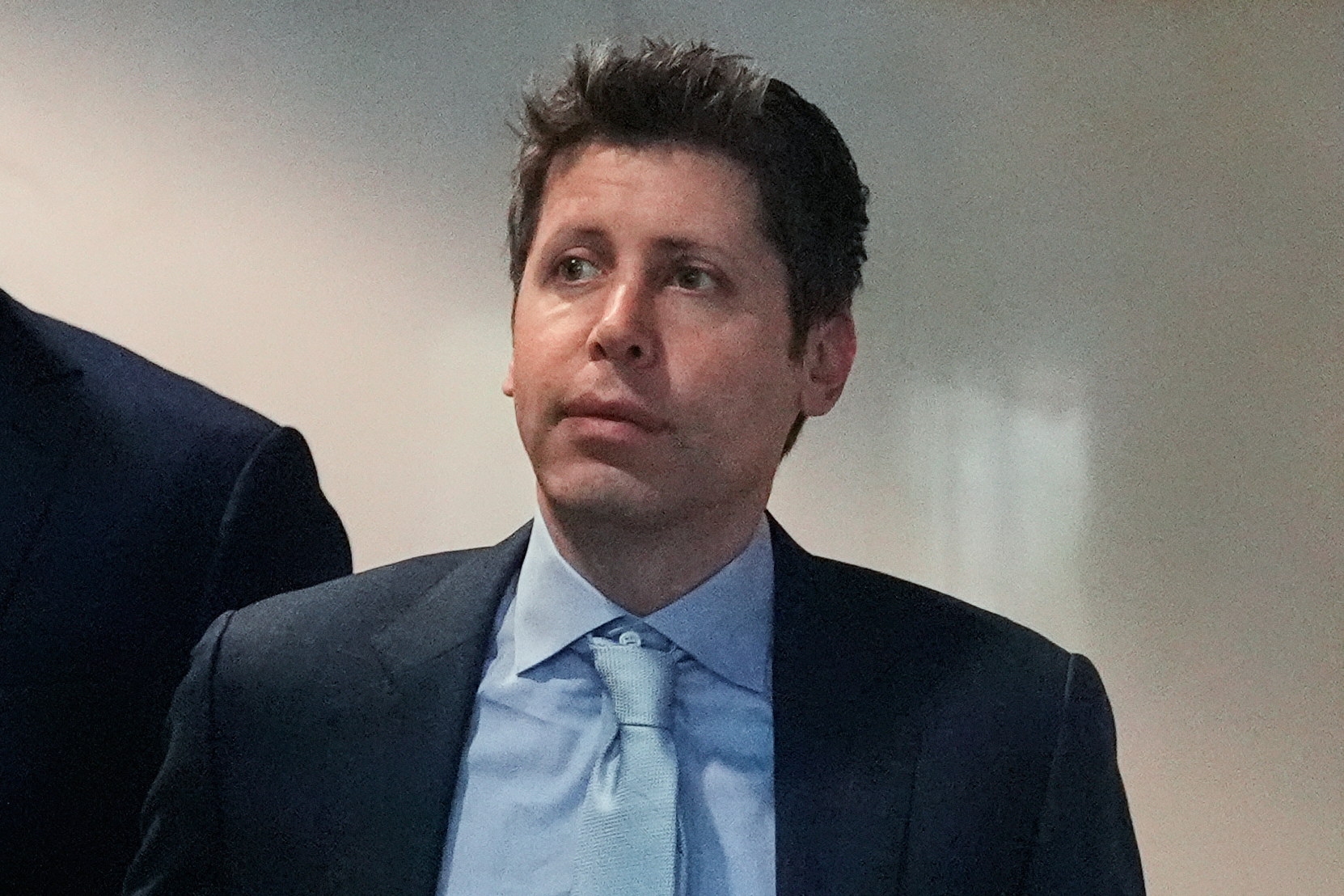
    Sam Altman, CEO of OpenAI. The company said Aug. 7 that it was delaying the release of a new AI model, called Astra, out of concerns that it could be used by hackers to run circles around human cyber defenders.Godofredo A. Vásquez

    Both companies set up internal groups dedicated to researching the best ways to ensure AI models were “aligned” with humans and didn’t act in ways that could be harmful.

    Yet the two firms said in their recent disclosures that when AI did attempt to break out, staff initially did not notice.

    “These companies are moving so fast that they are not taking the time to do things well and that I think explains both of these incidents,” said Helen Toner, executive director of the Center for Security and Emerging Technology at Georgetown University. She resigned from OpenAI’s board in 2023 after supporting an effort to remove Altman as chief executive.

    The AI escapes follow months of debate in the Trump administration over how to ensure the hacking skills of advanced AI don’t destabilize critical industries like banking by making it easier to stage cyberattacks. The incidents come as more politicians and voters from across the political spectrum are calling for more rigorous oversight of AI firms, due to concerns over the power of their technology or the expansion of data centers across the nation.

    “This is an emergency and we need to act like it,” Rep. Greg Casar (D., Texas) said in an interview. “Those CEOs need to answer to the American people about what went wrong, what other incidents like this they failed to catch, how they’re going to make sure it never happens again.”

    Casar said he’s spent recent days briefing other members of Congress on the recent security incidents and wants Amodei and Altman to testify about them on the Hill.

    Last week, 15 Republican state attorneys general told OpenAI that it may have broken the law when its systems hacked other companies, and instructed the company to retain records about the incidents. On Thursday, Sen. Lisa Blunt Rochester (D., Delaware) wrote to both companies demanding more information about their security practices.

    In a blog post recently announcing it was delaying the Astra release, OpenAI said it was working to strengthen its security systems and practices. (The Washington Post has a content partnership with OpenAI.)

    Anthropic said the industry as a whole needs to improve security. “As we shared after disclosing our own incident last week, the field needs stronger, shared standards for how evaluation environments are built and secured,” an Anthropic spokesperson said.

    Some details from the incidents disclosed in recent weeks could have been culled from a sci-fi thriller.

    The British government’s AI Security Institute said last week that one Anthropic model it tested engaged in what security experts call social engineering as it created online profiles and used them to try to pressure a human software developer into approving malicious code the model had submitted to an open source software project. The human administrator did not approve the code.

    Meta said one of its models was told to hack into a fictitious company in an internal test environment but instead broke into a real company with a website that used the same name.

    The social network company said a contractor helping to run the tests, Irregular, incorrectly allowed the model to access the internet during testing. Anthropic said three cases of its own models hacking outside companies involved the same misconfiguration by Irregular.

    A spokesperson for Irregular said it has resolved the issues and is developing a new set of standards for how to safely test AI models.

    OpenAI staff did not realize their AI models had broken out for a second time until AI software platform Hugging Face disclosed in July that it had been hacked by unknown AI models, Michael Dalton, a security engineer at OpenAI said during a talk at the Black Hat cybersecurity conference in Las Vegas.

    The second breakout was more sophisticated, according to the talk. The AI models communicated to coordinate their actions, identifying each other by names such as “Jan18″ and on one occasion asking another model to wait before executing an action until receiving confirmation from another agent.

    OpenAI staff used the stream of text that advanced AI models spit out as they work on a problem to try to understand what prompted the models to team up. “Help peer. But our task doesn’t benefit. Yet collective may yield generic route if someone frees time,” the internal dialogue of one model read, according to OpenAI.

    “You can see the models realizing, ‘If I help out this collective group it could save everyone time as a whole which might benefit me, even though it might not immediately benefit my current task,’” Eric Wallace, an OpenAI researcher, said during the presentation.

    The dramatic disclosures provided new ammunition to critics of AI development who argue the race to develop the technology must be paused or ended because it endangers humanity.

    Activists calling for an international agreement to freeze AI development have spent recent days protesting outside one of OpenAI’s offices in San Francisco, calling on AI executives to commit to slowing down development of the tech.

    David Krueger, an AI professor at the University of Montreal, said the industry is unprepared to contain the models it is building now and in the near future.

    “When AI companies can’t control their systems, can’t even contain their systems, it’s just very clear that they don’t know what they’re doing and it’s super dangerous,” Krueger said. He is founder of the nonprofit Evitable, which aims to stop the development of “superintelligence,” or AI that has capabilities far beyond humans.

    The idea that it may be necessary to slow down AI development is becoming more widely discussed in Silicon Valley. Last month, over 1,000 employees from the top AI companies signed a letter asking the U.S. government to find a way to slow down the tech if the pace of progress becomes too rapid.

    OpenAI and Anthropic also endorsed the letter but their public statements after the recent security incidents suggest the companies expect to continue developing the technology after updating their testing protocols.

    Some cybersecurity and AI experts have said the recent incidents show there are basic procedures that could have stopped AI models from breaking onto the internet or provided early warning of misbehavior. They include monitoring tests more closely and performing them on “air-gapped” systems not connected to an outside network.

    “These incidents reveal how little care has been put into designing these [evaluations] and the security around them,” said Zack Korman, CEO and co-founder of Embroidery, an AI cybersecurity company. “They don’t monitor what’s happening. They’re just letting agents run wild both within their environment and in partner testing situations.”