Category: Business

  • These nonprofits called the shuttered Exton mall home. Now, some are struggling to relocate.

    These nonprofits called the shuttered Exton mall home. Now, some are struggling to relocate.

    Cristina Hartley watched her teenage son go from refusing to say more than two lines on stage to taking on the lead role in two performances, thanks to the confidence he built through theater production nonprofit Arts and Athletics Club.

    Now, Hartley, who serves on the organization’s board, is worried about what the future holds for the all-ages theater group. The nonprofit, formally founded in 2019 after starting as a high school senior project, was based for roughly four years in the Exton Square Mall, and lost its space when the mall closed its doors in June. The group has struggled to find a new home and will be forced to take a hiatus until a new location is secured.

    “The arts are always the first program to be cut out of schools, and there’s always a lack of budget to have that in schools or to expand these programs in schools, and we want everybody to have access to anything art-related, whether that’s drawing or trying to sing or trying to perform,” said Hartley, who has been involved with the nonprofit for six years.

    “We know that there’s a space out there. There’s a landlord out there willing to work with a small nonprofit. We just haven’t found it yet,” she said.
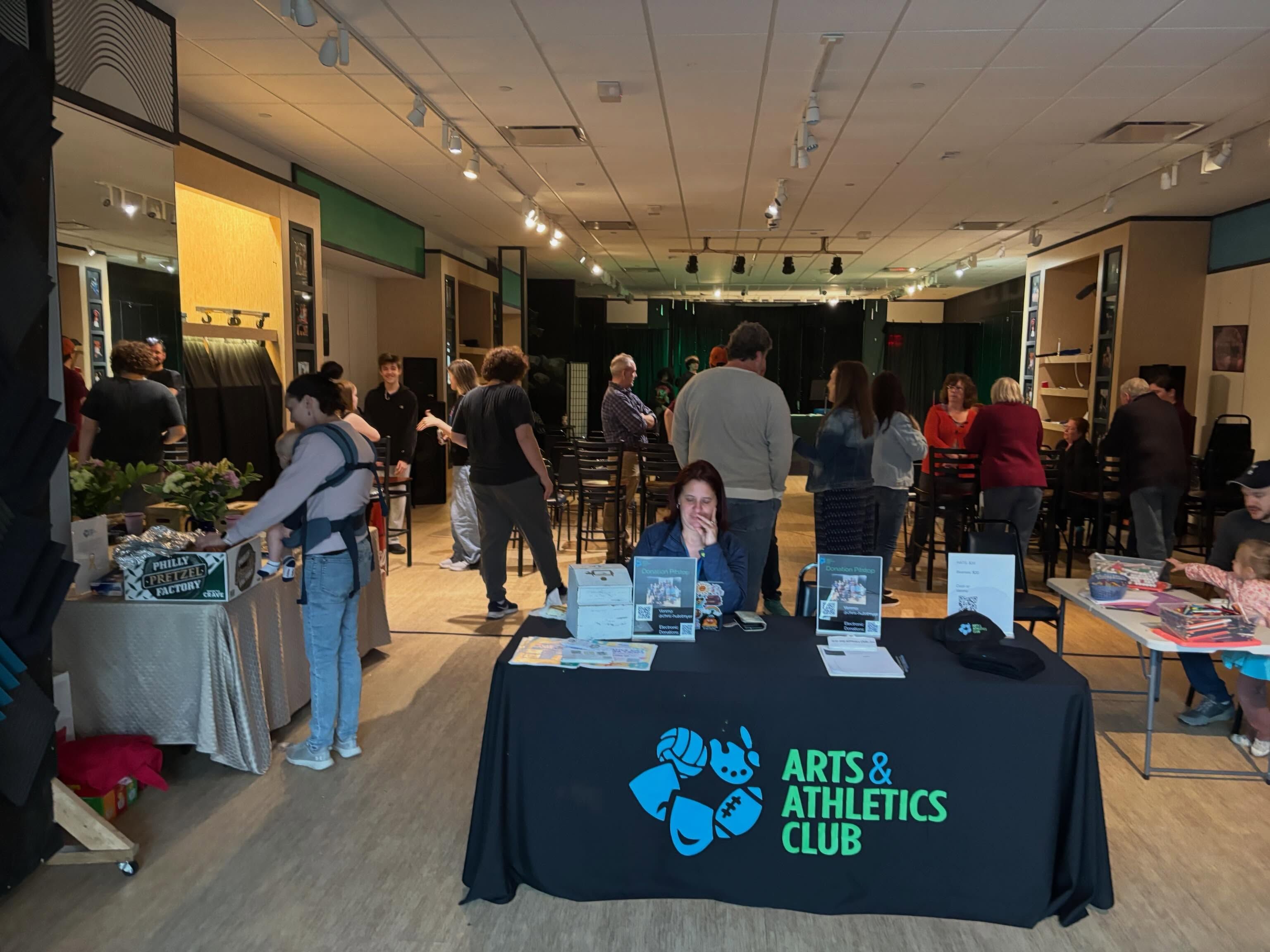
    The Arts and Athletics Club’s interior at the Exton mall. Finding a space for it to hold its productions and activities has been a challenge, leaders say.Photo courtesy of Arts and Athletics Club

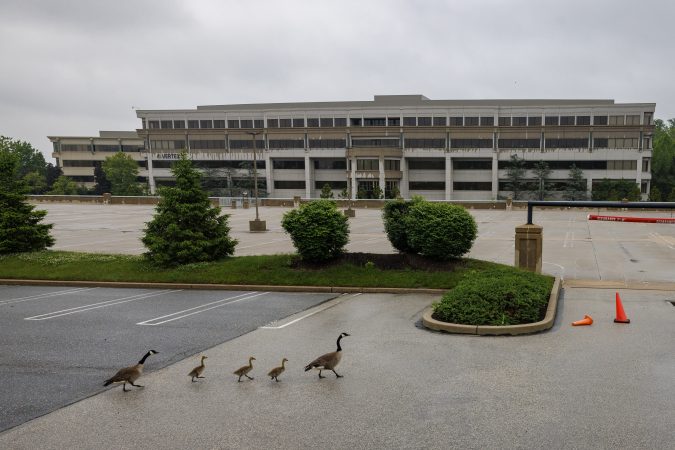
    The roughly 1 million-square-foot Exton Square Mall closed June 30 amid a legal dispute between the property’s owners and local officials over plans for redevelopment. That squabble is still in court.

    For years, the mall declined from traditional retail, with only a handful of stores left when it shuttered after five decades. It was Chester County’s only enclosed mall.

    But even as the mall’s staples dwindled, other organizations — nonprofits, a robotics club, a fencing center, and more — occupied the space, drawing what business leaders said was significant foot traffic.

    In June, those still left at the mall received notice that they would have to be out by the end of the month. For nonprofits like the Arts and Athletics Club without robust budgets to quickly relocate, the abrupt end put them in a bind.

    The Arts and Athletics Club was in the midst of two productions when its leaders learned they would have to vacate, said Chris Hutelmyer, executive director. They took June to move their things out, depositing belongings in people’s garages, and started the real estate hunt in July.

    The two performances, Oh Happy Day and Twisted Tales, went on, albeit under changed circumstances, with one held in a park. After holding a summer bash Saturday, the organization will be on hiatus until it finds a space, Hutelmyer said.

    The mall had been perfect for the group. An old Aéropostale served as its mini black box theater for four years. The former clothing store had no windows, which worked well for staging 10 productions each year, and it was accessible with ample parking. There were bathrooms, dressing rooms, and storage space. And it was a central location for its all-ages community, accessible from Malvern to Downingtown to Coatesville.
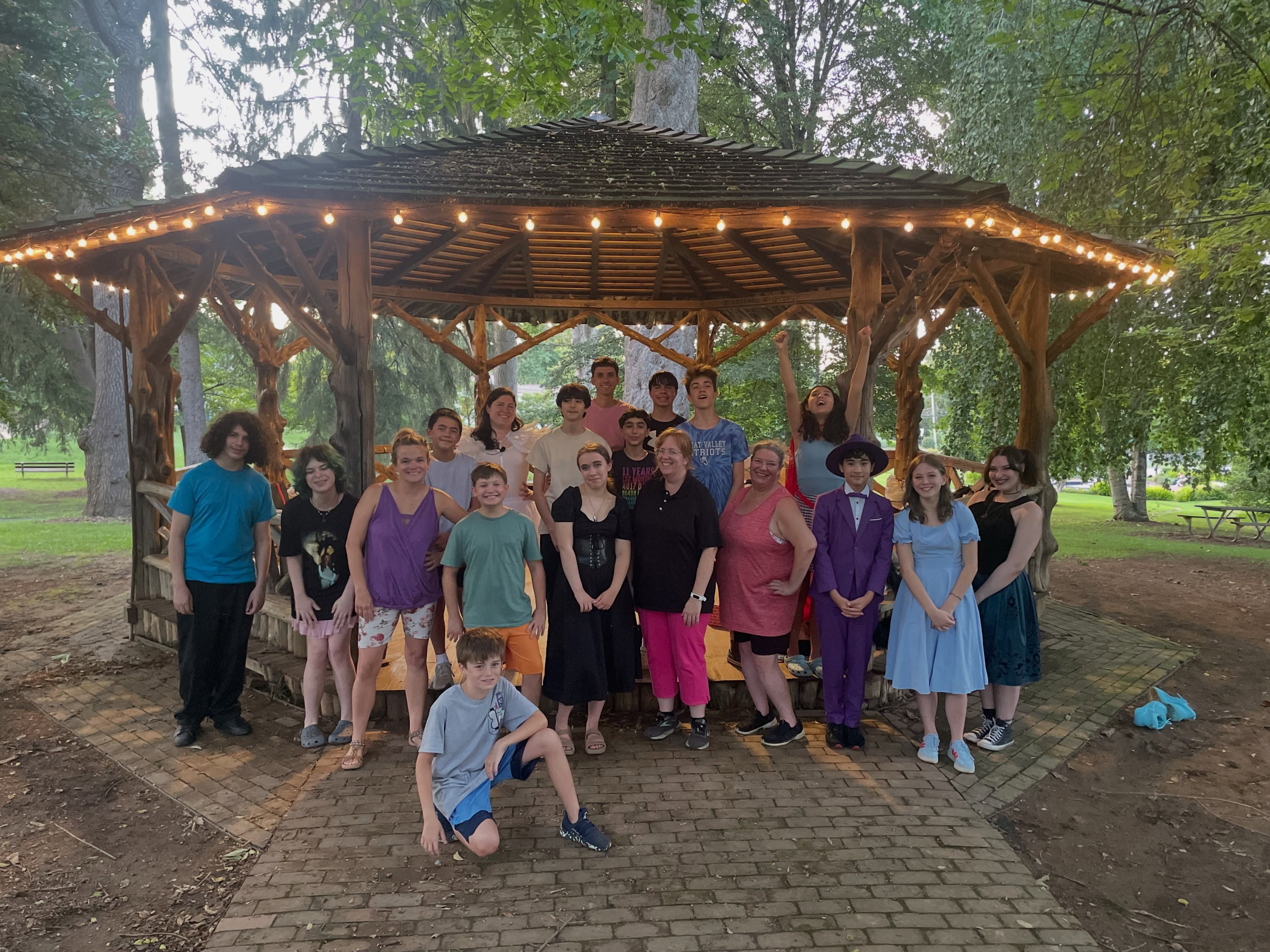
    The cast of “Twisted Tales” poses for a photo. Arts and Athletics Club, primarily a theater production nonprofit, has struggled to find a new facility since the Exton mall’s closure in June. Its last production was held in a park, and it hasn’t been able to run a show since.Photo courtesy of Arts and Athletics Club

    Trying to find a comparable space for the Arts and Athletics Club within East and West Whiteland Townships has proved difficult. But its leaders said they want to stay in the area, continuing to provide programming for participants from ages 7 to 70. The mall was the organization’s first permanent location, after performing in parks, libraries, and other community spaces.

    The theater group, which offers its programming for free or little cost, has a limited budget for renting or altering a space to fit its needs. Another challenge has been finding an available location that is the right size: about 1,800 to 3,000 square feet of open space.

    Group leaders have looked at retail locations, warehouses, and churches, and investigated partnering with community centers.

    “We’ve been striking out pretty much everywhere that we’ve been looking,” Hutelmyer said. “It’s just been hard to find a direct match for what we need.”

    It was a similar scramble for the Wardrobe, a nonprofit thrift store that accepts and sells secondhand clothing and also provides free clothes to those in need, after having to abruptly move out of the Exton mall.

    Racing to find a new space to avoid laying off any employees, executive director Sherri Cole enlisted a real estate agent, she said, but struggled to find something affordable that also hit the right marks.

    “Everything had to go out of the mall; it’s not like we could be like, ‘OK, we’ll go dark and we’ll move things when we find a new location,’” Cole said.
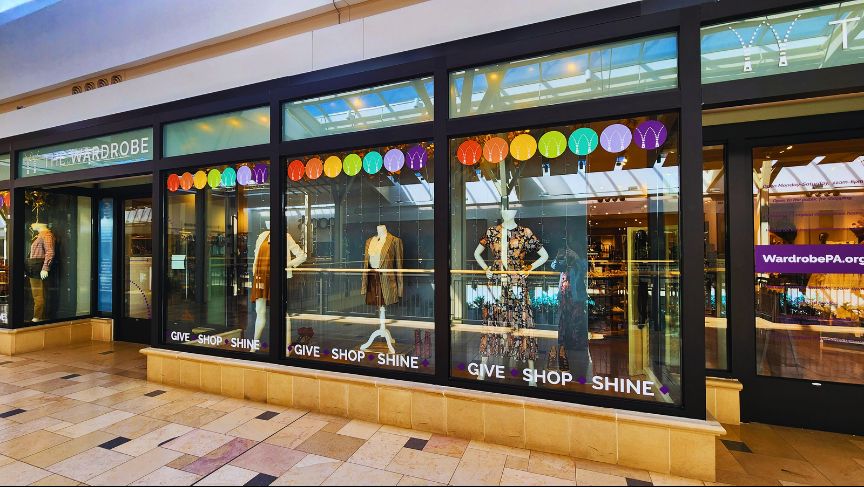
    The old exterior of the Wardrobe, a clothing store that accepts donations and gives clothes to those in need for free, in Exton mall. The business will open its new location in Malvern in the fall.Photo Courtesy of The Wardrobe

    By early July, the Wardrobe secured a pop-up location in the Plymouth Meeting Mall.

    And this month, the nonprofit found a new, permanent home in the Lincoln Court Shopping Center in Malvern, about a 10-minute drive from the old Exton location. Cole anticipates the store will open by October.

    The interior of The Wardrobe’s former Exton mall location. The nonprofit, which has called the mall home for the last few years, struggled to find a new location in Chester County after the mall shuttered in June.Photo Courtesy of The Wardrobe

    Still, for both the Wardrobe and the Arts and Activities Club, it was hard to lose the Exton mall.

    Out of the Wardrobe’s five locations in the Philadelphia region, the Exton mall location was its second-largest site for foot traffic and retail sales last year, Cole said.

    It proved that people would still show up to a “dead” or “dying” mall if there was something they needed, Cole said. And it was meeting a need.

    “There need to be spaces in the suburbs where everyone feels welcome, and often, the class divide in the suburbs is really stark,” she said. “It’s great that we’re able to find something that is still within the Exton, Malvern neighborhood where we can be providing these services, because even within the suburbs, poverty is really often overlooked.”

    For Hutelmyer, still searching for somewhere for the Arts and Athletics Club to land, it was sad to see a community space like the mall go.

    Housing a constellation of community organizations, the mall “wasn’t what people really expected it to be,” Hutelmyer said.

    “But as it transformed into the community space, at least while we were there, it was still serving a lot of good, and I think that not being there is a big loss for the community,” he said.

    This suburban content is produced with support from the Leslie Miller and Richard Worley Foundation and The Lenfest Institute for Journalism. Editorial content is created independently of the project donors. Gifts to support The Inquirer’s high-impact journalism can be made at inquirer.com/donate. A list of Lenfest Institute donors can be found at lenfestinstitute.org/supporters.


  • A surprise credit after an overseas purchase: The tariff refunds now flowing through shippers

    A surprise credit after an overseas purchase: The tariff refunds now flowing through shippers

    NEW YORK — If you bought something from an overseas vendor last year, it might be time to check your bank account.

    Shippers including FedEx and UPS that acted as customs brokers for imported packages and received tariff refunds from the U.S. government have started to pass on those refunds to the customers that originally paid the tariffs.

    The refunds to consumers are the last step in a monthslong process that kicked off in February when the Supreme Court struck down sweeping tariffs implemented by President Donald Trump in March 2025 under the 1977 International Emergency Economic Powers Act on goods from almost every country. The court ordered the government to return the tariffs it collected.

    So far, about $100 billion in tariffs have been refunded to companies who paid them under a system set up by U.S. Customs and Border Protection.

    That doesn’t mean Americans will get anywhere close to what they paid in tariffs, since most were paid indirectly. In 2025, the Trump tariffs amounted to an average tax increase of $1,000 per U.S. household, according to the Tax Foundation, a Washington, D.C., group that studies taxes.

    But some consumers are getting some of what they paid directly back from shippers including UPS, DHL and FedEx. The refunds are being rolled out in phases based on what date they were paid. Shippers have said they’ll return the refunds on a rolling basis as they receive them.

    Tariff refunds from shippers will be directly refunded to credit cards or bank accounts

    Most big overseas retailers paid the tariffs themselves and passed them along to retailers with a line item in their invoice that was part of the total bill, or indirectly by raising prices. But some smaller sellers left the tariff to be paid when it reached the U.S. In those cases, shippers paid the bill and charged the recipient of the package.

    FedEx said it has begun the process of issuing $800 million in tariff refunds it received from the government back to the customers that paid them. Customers don’t need to apply to receive their refund, but they can enter tracking numbers for purchased items into a portal on the FedEx website to see whether or not they are due a refund.

    UPS said in April it had paid $5 billion in tariffs on behalf of clients and would begin the process of applying to the government for refunds. In the first phase, it applied for $500 million in refunds and said customers should get refunds one to three months after it receives reimbursement from the Treasury.

    DHL similarly said that it has filed claims for almost all eligible shipments where it served as the importer of record and is returning the refunds it has received.

    “The volume and pace of refunds continue to depend on CBP’s processing of claims,” DHL said in a statement.

    Major retailers say they could give back some refunds but mostly will use them to lower prices

    Unlike shippers who collected tariffs directly from customers, most big retailers passed on tariffs in indirect ways, changing their product lineups or partly absorbing higher costs, making a consumer refund unlikely.

    Amazon executives said last week the company received $600 million in tariff refunds in the second quarter.

    In a call with investors, Amazon CFO Brian Olsavsky said the company isn’t the importer of record on most of the goods it sells and that it has absorbed some tariff costs. But he said the company has “identified a limited set of circumstances where we can trace that we pass specific import charges on to customers.” In those circumstances, he added, “we will proactively contact affected customers and automatically issue refunds to them.”

    Otherwise, he said, Amazon will use tariff refunds to lower prices for customers.

    That echoes what other large retailers have said. In May, Cori Barrie, outgoing CEO of Best Buy, the nation’s largest consumer electronics chain, said the retailer is an importer of record of only about 2% to 3% of what it sells and that the company would use any refund it gets to “deliver value back to our customers.”

    And Costco CEO Ron Vachris said the company planned to return “in some form” the tariffs that were passed on to consumers.

    “How much we return and when depends on a variety of factors, including how much refund money we receive and when it arrives as well as developments in the lawsuit filed against the company regarding the return process,” he said in a quarterly earnings call in May.

    Dozens of class-action lawsuits have been filed

    Some shoppers are suing to get the tariffs they paid in the form of higher prices back from companies. More than 80 class-action lawsuits have been filed by customers across the country against retailers including Costco, Nike, Amazon, Walmart and others.

    The lawsuits will face difficulty because plaintiffs will have to prove they paid for price increases that were specifically tied to the tariffs, according to Lori Leskin, partner and co-chair of law firm Arnold & Porter’s Consumer Products Practice Group. None of the lawsuits have yet been certified as class action, which would mean they apply to all customers.

    “It’s going to be very hard for anyone to establish that the price increase they paid was due to tariffs and not some other market force,” she said. “Most of them are just talking about price increases, and to be able to trace a price increase due to a single factor is going to be really difficult given the multifactorial approach that most companies take.”

  • Gen X and millennials are set to inherit trillions. If they’re already rich.

    Gen X and millennials are set to inherit trillions. If they’re already rich.

    Baby boomers are set to pass trillions of dollars on to their heirs in the next two decades, but the huge transfer of riches will mostly benefit Gen X and millennial heirs who are already wealthy.

    An analysis from Visa Business & Economic Insights finds that boomers, born between 1946 to 1964, will pass on $36 trillion in wealth to their younger heirs over the next 20 years.

    Nearly three-quarters of households receiving an inheritance will be in the top echelon of wealth in the country when they receive the money, Visa estimates. Gen X and millennials were born between 1965 and 1996.

    Often called the Great Wealth Transfer, the inheritances are expected to be the largest passage of generational wealth in history, given the massive size of the baby boomer population and their wealth.

    Baby boomers are sitting on about $93 trillion worth of assets, according to Visa’s analysis. Only about 8.6% of that, or roughly $8 trillion, is expected to be spent into the economy, after it is inherited.

    “Eight trillion dollars is nothing to sneeze at,” Visa chief economist Wayne Best said. But that spending number has been whittled down quite a bit from the starting wealth.

    Visa calculated that about $36 trillion would be passed from boomers to their heirs, after subtracting liabilities such as mortgages, as well as retirement spending and taxes. That works out to about $515,000 per inheriting household, but the inheritances will be uneven.

    The richest boomers have the most to give away. Visa found that those in the 90th to the 99th percentile of boomers held some $44 trillion in wealth. Meanwhile, the bottom 90% of boomer households hold just $16 trillion in wealth.

    Since most inheritances are coming from wealthy boomers, their heirs are more likely to be wealthy as well. Lower-wealth boomers will need to use more of their savings to pay for housing, healthcare, and other needs, while wealthier households can save more to pass on.

    The bulk of that money will flow to people who are worth far more than the average. And that means much of it will be saved or invested, rather than spent.

    “Wealthier Americans are going to be putting that money into the stock market or real estate,” said Jeremy Ney, a professor at Columbia University’s business school and writer of the “American Inequality” newsletter. “It doesn’t buy groceries or cars, it just changes your accountant’s week.”

    It could also widen gaps between lower-wealth and higher-wealth Americans, Ney said, which have already been accelerating.

    The $8 trillion in spending is still expected to boost the economy — Visa estimates it will bump annual consumer spending growth over the next 20 years from 2% to 2.1%. Much of that money will be spent on housing, or buying new cars, as well as on travel and retail.

    One reason that the transferred wealth will flow to the already wealthy might be because people are living longer, and therefore passing their money down to heirs who are already in their 50s or 60s, noted Jonathan Parker, a professor of financial economics and co-director of the MIT Sloan Consumer Finance Initiative. Those heirs have had more time to accumulate wealth than they would have if they had inherited in their 20s or 30s.

    “There are tax incentive reasons to wait until you pass away to pass along those bequests,” he said.

    Still, some people in older generations have already started passing along their wealth, wanting to see its effects while they’re alive. Visa found that more boomers are soaking up the benefits of their wealth, including by taking their grandchildren on vacation without their parents and by helping heirs with down payments on homes.

    Visa’s analysis to get to the $36 trillion removed the wealth held by the top 1% richest of boomers, because their money is likely to go to charitable foundations and other private pursuits and doesn’t represent typical spending.

    “They don’t really spend like the rest of us,” Best said.

  • Aramark forged a partnership with Penn Medicine for more affordable employee health benefits

    Aramark and the University of Pennsylvania Health System launched a partnership this year to offer the food service giant’s Philadelphia-area employees healthcare in a test of a new model for reducing costs.

    Aramark employees who choose the benefit option, called the Penn Medicine Premier Plan, face no deductibles and lower copays when they and their dependents use Penn doctors and facilities.

    The move by Aramark into what is called direct contracting comes as employers are contending with years of surging healthcare costs. It’s an example of experimentation designed to slow spending growth in spending and perhaps improve quality, experts said.

    “We certainly would like to save money on the model, but its primary focus is to make benefits more affordable” by getting lower prices than it would get by going through an insurer, said James Startare, Aramark’s vice president for benefits.

    The model is called direct contracting because Aramark negotiated prices and other terms of the contract directly with Penn, instead of relying on an insurer to negotiate prices.

    It’s Penn’s first such contract and the first large-scale direct contract in the Philadelphia region. Aramark talked with other systems in the area, but Penn emerged as the partner willing to enter into the experimental contract. Penn described the deal as a multiyear contract ultimately expected to roll over from year to year.

    Aramark didn’t provide details on savings, but its goal was to negotiate prices that are lower than those it would pay though a benefits administrator, such as Aetna.

    By eliminating deductibles that function as a barrier to care, the plan is expected to encourage primary care visits. This could reduce long-term costs by catching patients’ health problems early.

    For health systems like Penn, such contracts offer a chance to increase market share, streamline payments, and hone their ability to manage the health of a population.

    The Penn Medicine Premier Plan features no deductibles and lower copays when Aramark employees and their dependents use Penn doctors and facilities. Harold Brubaker / Staff

    Aramark’s move into direct contracting

    Penn is Aramark’s third major direct contracting partner.

    Employers, even those like Aramark that are self-insured, typically rely on an insurer’s negotiated prices.

    With the new direct contract, an Aetna administrative unit still processes the claims for Aramark, and patients who go outside Penn for care use the Aetna network.

    Aramark launched its first such contract in 2024 in Dallas and expanded to Chicago last year, each time getting a strong employee enrollment, though it took two years in Chicago, Startare said.

    In the Philadelphia region, 35% of eligible employees (those who work 30-plus hours a week on average) have chosen the Penn plan, which took effect Jan. 1, Startare said. That amounts to 800 employees.

    Coincidentally, the health contract started at the same time as Aramark’s contract to manage food and other services at Penn Medicine facilities, but the two deals were not linked.

    Employees who were moving to Aramark with the food services contract were worried about losing their Penn benefits, said Megan Lieberman, a patient services manager at Chester County Hospital who was among those who became an Aramark employee.

    But the Penn Premier Plan was very similar to what they were used to. “It was definitely a huge relief to know that we got to hang on to those benefits,” Lieberman said.

    A separate contract covers pediatric services at Children’s Hospital of Philadelphia for Aramark employees and their families.

    Next year, Aramark plans to take direct contracting into central New Jersey, but did not name the system it’s using there.

    What’s in it for Penn

    The Aramark contract is an opportunity to focus on “chronic disease management, preventive care, cancer screenings, things like that” for a specific group of 1,400 patients who are motivated to stay within the Penn system, said Mark Angelo, Penn’s chief medical officer for population health.

    A key goal is to reduce the deductibles, copays, and prior authorizations that can slow access to preventive care. The model is designed to take care of people before they end up in high-cost places like the emergency department or hospital, Angelo said.

    Keeping more patients within Penn is expected to result in savings because of better care coordination and fewer repeated tests, Angelo said. Penn Premier plan members can seek care outside of Penn, but it will cost them more out-of-pocket.

    As it is, the typical Penn patient also uses other health systems for some services, said Roy Schwartz, Penn’s vice president for payer strategy.

    “Sometimes it’s the right choice, sometimes it can fragment their care,” Schwartz said. “There should be savings just simply coming from having integrated, coordinated care at a place like Penn.”

    Penn does not yet have much of its own data on Aramark employees, but indications from Aramark are that the plan’s members were using more Penn services in the first six months, Schwartz said. “It was not just patients who were using Penn anyway for pretty much everything.”

    Penn and Aramark officials plan to meet regularly to review results and consider modifications. “We’re hoping this works out well for everybody because we’d love to do some more of these,” Schwartz said.

    Momentum behind direct contracting

    Employers nationally have long contracted directly with doctors and health systems for specific procedures, like joint replacements, cancer care, and heart surgery. For years, they’ve also paid directly for primary care through on-site clinics.

    Aramark’s move to an all-encompassing healthcare plan with a single provider fits into a newer trend gaining momentum nationally. Investors have created platforms like Cost Plus Wellness, Mishe Health, Nomi, and Transcarent to help health systems implement direct contracts.

    Northwell Health, a major health system in New York and Connecticut, started a for-profit subsidiary called Northwell Direct and now has more than 70 contracts that cover more than 300,000 people.

    Northwell Direct’s biggest contract covers 100,000 building service workers in the New York area and their dependents. It took effect this year and is expected to save 20% in the first year.

    Big savings to start are not guaranteed.

    “They may not go into it with a lower cost, but they’re going to go into it with better access, better quality for their employees, and what they’re finding is eventually those lower costs will come,” said Jenny Goins, chief of staff at the National Alliance of Healthcare Purchaser Coalitions.

    The Washington nonprofit is putting together a direct contracting advisory council to help more employers to do what Aramark is doing, Goins said.

    The model is not expected to replace traditional coverage anytime soon in the Philadelphia region.

    “It is not for everyone, and it does take effort and coordination on the part of the employer,” said Tom Belmont, CEO of the Greater Philadelphia Business Coalition on Health. “Also, some health systems are ready for the discussion, while others are not.”

  • Jefferson Health reported a $181.5 million operating loss in fiscal 2026

    Jefferson Health reported a $181.5 million operating loss in fiscal 2026

    Thomas Jefferson University and Jefferson Health posted an operating loss of $181.5 million in the year that ended June 30, an improvement over last year’s $208 million loss. In both years, the loss was concentrated in Jefferson’s insurance business.

    The fiscal 2026 results, reported to bondholders Friday, included $112 million in costs for layoffs and other moves designed to put the Philadelphia region’s largest health system on firmer financial ground.

    Jefferson highlighted in its preliminary report to investors that results improved each quarter of fiscal 2026 — from an operating loss of $103.8 million in the first quarter to a $71.1 million operating profit in the fourth quarter.

    “We’ve made significant progress strengthening Jefferson’s financial performance, yet those gains are increasingly threatened by the actions of commercial insurers in Pennsylvania,” Jefferson’s chief financial officer, Michael Harrington, said in an email.

    Jefferson sued Independence Blue Cross last month over policy changes that the health system says amount to back-door price cuts.

    “Despite already paying some of the lowest reimbursement rates in the nation, certain payers are now attempting to unilaterally rewrite or reinterpret existing contract terms to further reduce payments and improve their own margins at the expense of providers and the patients they serve,” he said.

    Separately, Jefferson sued Aetna in April over a policy that reduces payments for hospital stays for Medicare Advantage patients that Aetna decides aren’t sick enough to qualify for full payment.

    Insurers are under pressure from employers to slow healthcare expense growth. Independence said in response to the lawsuit that it acts in the best interest of its customers. Aetna said its policies comply with federal laws and regulations.

    Here are more details on Jefferson’s results:

    Revenue: Jefferson’s revenue reached $17.7 billion, up from $15.8 billion the year before. Fiscal 2025 included just 11 months of Lehigh Valley Health Network results. Jefferson completed that acquisition on Aug. 1, 2024, expanding its reach into Northeastern Pennsylvania and giving the nonprofit more than 30 hospitals.

    Jefferson Health Plans: Jefferson’s insurance arm had a $130.3 million loss in fiscal 2026, an improvement over a $169.9 million loss the year before. The insurance arm had 415,172 members on June 30, up from 366,780 the year before. The plan is diversifying away from Medicaid as it increases enrollment in Medicare Advantage and the Affordable Care Act markets. The percentage of membership in Medicaid fell to 75% this year from 87% last year.

    Notable: The fourth quarter of fiscal 2026 was Jefferson’s first profitable quarter in at least four years, according to Inquirer calculations that exclude investment income. Unlike other local health systems, Jefferson follows accounting rules for higher education, allowing it to include a portion of investment income in revenue.

  • Thora Jacobson, award-winning former chief executive officer at the Fleisher Art Memorial, has died at 77

    Thora Jacobson, award-winning former chief executive officer at the Fleisher Art Memorial, has died at 77

    Thora Jacobson, 77, of Philadelphia, award-winning former chief executive officer at the Fleisher Art Memorial, former executive director at the Philadelphia Art Alliance, former director of design review for Mural Arts Philadelphia, former chief operating officer for Philagrafika, former chair of the Philadelphia Art Commission, onetime adjunct instructor at Drexel University, independent curator, artist, mentor, Mummers Parade judge, and much more, died suddenly Sunday, Aug. 2, at her home. The exact cause of her death has not been determined.

    Born and reared in Ridley Park, Delaware County, Ms. Jacobson became interested in art education, administration, and conservation at Trinity Washington College in Washington in the 1960s. She settled in South Philadelphia after college in the 1970s and spent the next 50 years organizing, promoting, and inspiring local artists and art organizations.

    “Philadelphia richly deserves to be known as a place that honors its own,” she told The Inquirer in 2006.

    She joined Fleisher in 1972, rose to CEO in 1983, and left in 2006 to work over the next two decades at Philagrafika, Mural Arts Philadelphia, the Philadelphia Art Alliance, and elsewhere. During her 34 years at Fleisher, she developed its Center for Works on Paper, the Community Partnerships in the Arts program, and the Challenge series juried competition.

    She also oversaw three capital campaigns and told The Inquirer that her priority was “seeing connections and possibilities between and among artists, institutions, and their constituencies.” A colleague said on Facebook: “To many of us she was Fleisher.”

    She prepared Philagrafika to host the city’s first international festival of printmaking in 2010, consulted with artists on major projects at Mural Arts, and organized popular national juried exhibitions at the Art Alliance. “Her love and commitment to the arts knew no bounds,” Jane Golden, executive director of Mural Arts Philadelphia, said in a tribute. “Thora’s imprint was profound.”

    John Ittmann, former curator at the Philadelphia Museum of Art, told The Inquirer in 2006: “Thora is a real firecracker. She has a wonderful type of energy that is really infectious.”

    Ms. Jacobson was also chair of the Philadelphia Art Commission for a decade, interim director of operations for the Asian Arts Initiative, vice president of the Philadelphia Volunteer Lawyers for the Arts, trustee of the National Guild of Community Arts Education, member of the American Swedish Historical Museum, and, most recently, a visual arts management consultant.

    Ms. Jacobson and fellow curator Warren Angle admire an exhibition at the Fleisher Art Memorial in 2002. April Saul / Staff Photographer

    “Thora was kind and clear,” colleagues at Social Impact Studios said on Facebook, “but firm as she pushed us to keep tweaking things until they were as strong as they could be.”

    She was an adjunct instructor at Drexel University from 2010 to 2014 and led research projects at Drexel and the University of Pennsylvania on social impacts of art in Philadelphia neighborhoods. Her first job out of college was coordinator of the student center at the Art Museum.

    She curated and juried shows, and wrote forwards and essays for art books and catalogs. She drew in her spare time and judged the Mummers Parade for years.

    She was featured in The Inquirer and Daily News, and appeared in the 1992 TV art documentary Monuments in Love. In 2006, she earned the Visionary Woman Award from Moore College of Art and Design, and was honored for lifetime achievement by Tri-State Artists Equity.

    Ms. Jacobson, standing between Jim Straw, to the left, and Ralph Wellington to her right, earned the Visionary Woman Award from Moore College of Art & Design in 2006.Gary Horn Photography

    “She’s really respected throughout the arts community in Philadelphia,” Happy Fernandez, then president of Moore, said in 2006. Anne d’Harnoncourt, then director of the Art Museum, said Ms. Jacobson’s “impact has been enormous.”

    William Valerio, director and CEO of the Woodmere museum, said: “Thora was a towering figure in the arts of Philadelphia, a builder of institutions whose accomplishments are lasting.”

    Thora Elizabeth Jacobson was born Feb. 19, 1949, in Ridley Park. She was the youngest of three children; her father died when she was 3. She played field hockey in high school, was fascinated by words and language, and graduated from the old Holy Child Academy in Sharon Hill.

    She met her husband, Antonio Sorgini, when he was taking classes at Fleisher, and they married in 1980 and had a son, Antongiulio. Her husband died in May.

    Ms. Jacobson, her husband, Antonio Sorgini, and their son, Antongiulio, lived in South Philadelphia.Courtesy of the family

    Ms. Jacobson was a talented seamstress and baker. She did humorous impersonations, collected art, and enjoyed working with young people.

    Friends noted her “many kindnesses” and “decades-long advocacy for artists and the cultural community” in online tributes. Woodmere’s Valerio said: “She was both a strong voice and a warm friend to many.”

    Her son said: “She had a sharp wit and relished cheerful banter among friends and colleagues. Above all, she took the work of mentorship very seriously.”

    In addition to her son, Ms. Jacobson is survived by a sister and other relatives. A brother died earlier.

    Friends noted Ms. Jacobson’s “many kindnesses” and “decades-long advocacy for artists and the cultural community.”Courtesy of the family

    A celebration of her life is to be held later.

    Donations in her name may be made to the Fleisher Art Memorial, 719 Catharine St., Philadelphia, Pa. 19147; and Mural Arts Philadelphia, 1727-29 Mount Vernon St., Philadelphia, Pa. 19130.

    Ms. Jacobson was a talented seamstress and baker.
    Mark Garvin, / Philadelphia Museum of Art
  • Some U.S. adults are using AI for financial guidance, but few trust it, Gallup poll finds

    Some U.S. adults are using AI for financial guidance, but few trust it, Gallup poll finds

    NEW YORK — Some U.S. adults are using artificial intelligence for financial guidance, but it’s far from the most trusted source of advice, according to a new Gallup survey conducted in partnership with Edward Jones, a financial services firm.

    About 1 in 5 Americans who have sought financial advice in the past year turned to AI, the survey found. But among U.S. adults overall, only about 3 in 10 have “a great deal” or “some” confidence in its expertise for managing money, according to the survey, including just 3% who trust AI “a great deal.”

    The poll, which was conducted in the spring and looked at the views of adults who are at least 21, found a disconnect between the resources Americans trust for financial advice and the ones they actually rely on. About 8 in 10 U.S. adults have at least “some” confidence in financial advisers. But only about one-third of U.S. adults who sought financial advice turned to a professional financial adviser, with far more, 73%, saying they relied on their own internet research.

    As the use of AI increases, financial experts say consumers should be cautious about fully trusting these tools. Using AI as a tool at the start of a learning journey and then combining this knowledge with other trusted sources can be the best way to engage with new and traditional financial guidance tools, said Taha Choukhmane, associate professor at MIT’s Sloan School of Management.

    “I would encourage people to use AI to explain and define,” Choukhmane said. “If you’re interested in knowing what the stock market is, what the difference between a mutual fund and an index fund is. Using AI to explain these concepts can be very useful because it can empower people to get the most out of these methods.”

    Most Americans have sought financial guidance from at least one source in the past year, the survey found. In addition to those who said they used internet research, financial advisers, or AI, 35% went to a parent, sibling, or relative, while 26% got information from news, media, or social media. About 2 in 10 said they turned to a friend or an author, speaker, or influencer, and fewer relied on an employer or retirement plan provider, a robo-adviser or a teacher or professor.

    Younger generations are more likely to say they’ve used AI for financial advice, while older adults are more likely to have turned to a professional financial adviser.

    Affordability can often deter younger adults from hiring a financial adviser. While doing research online, asking family and friends and using AI can have minimal costs, hiring a professional can require a bigger financial commitment. About a quarter of Gen Z and millennial adults who looked for financial advice in the past year went to AI, compared to 16% of Gen Xers and just 7% of baby boomers. But while only 14% of Gen Z adults and 21% of millennials who sought guidance turned to a professional financial adviser, that rose to 34% of Gen X adults and about half, 55%, of baby boomers.

    Since AI interacts with specific user prompts, the advice can vary depending on how questions are asked. But asking general questions about personal finance can help people understand complex financial terms. Choukhmane also recommends asking AI to provide references to trusted sources to verify the information provided.

    While AI can be utilized for research, some financial experts are skeptical about the legal responsibilities of the technology. Certified financial planners have a legal responsibility to give the most fitting advice while AI tools don’t. Ultimately, the decisions a person makes based on AI advice are their responsibility.

    “Fiduciary responsibility is very real,” said Bobbi Rebell, certified financial planner and founder of Financial Wellness Strategies. “There’s no AI that is a fiduciary. It doesn’t really know your life; it’s not asking you all the questions.”

    The poll of 5,075 U.S. adults ages 21 and older was conducted March 20-April 6, 2026, using a sample drawn from Gallup’s probability-based panel, which is designed to be representative of the U.S. population. The margin of sampling error for U.S. adults overall is plus or minus 1.8 percentage points.

    Amelia Thomson-Deveau contributed to this article.

  • Hundreds of Philly buildings rely on Vicinity’s steam plants. Their workers want better pay and safer facilities.

    Hundreds of Philly buildings rely on Vicinity’s steam plants. Their workers want better pay and safer facilities.

    Thomas White is a control room operator at a Philadelphia plant working with chillers and steam boilers to provide heat and air-conditioning for Jefferson Health and Thomas Jefferson University. When he started his job some 18 years ago, he and many of his coworkers had served in the U.S. Navy.

    That shared experience was an advantage, he says, because they all came with the same training. The Navy used steam-driven ships.

    “You just had to learn where things were because you already knew what they did, you knew how to do it, spoke the language,” he said.

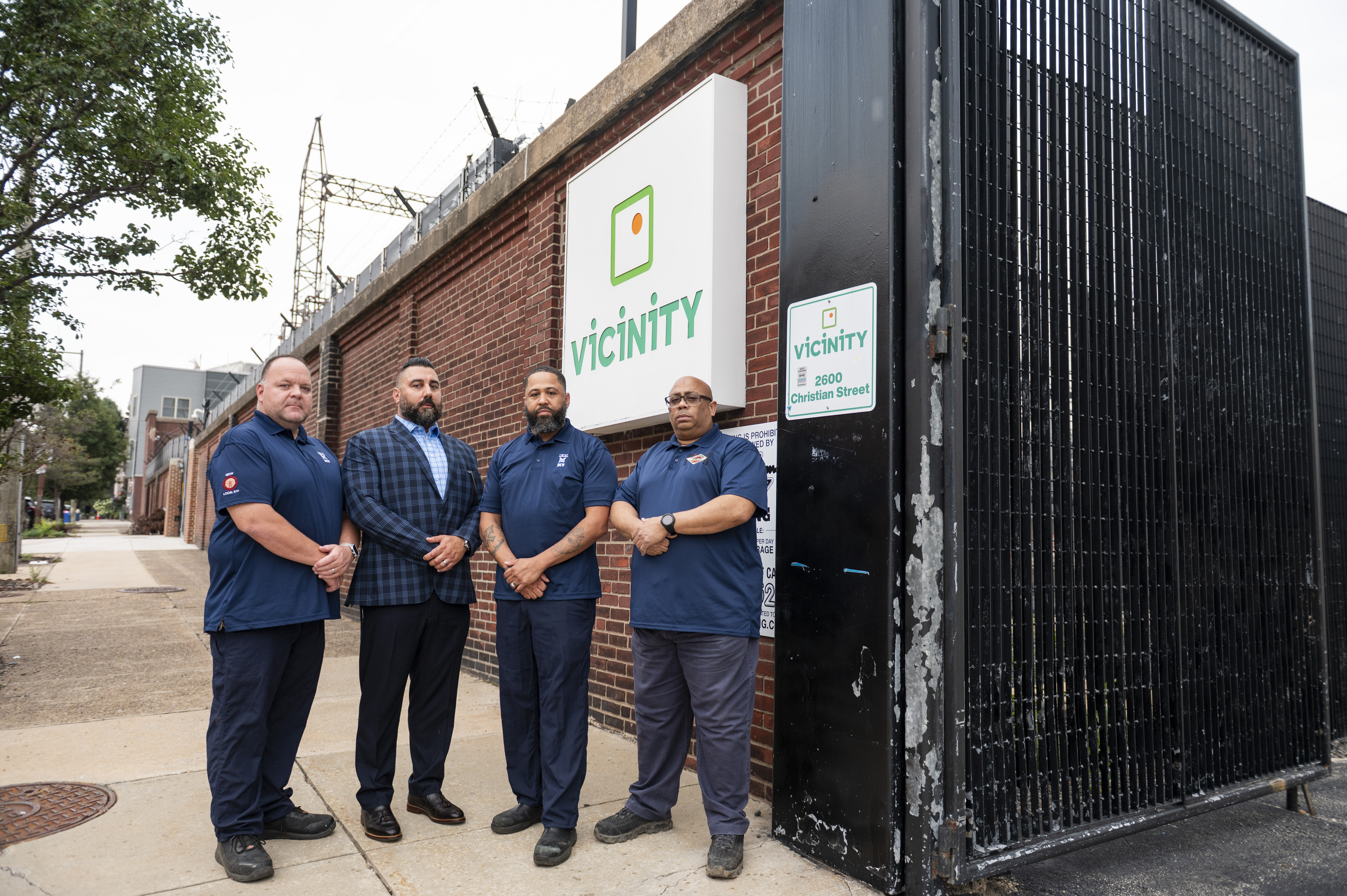
    White and his colleagues work around-the-clock shifts for Vicinity Energy, operating a system that generates steam and electricity to provide customers with heat, air-conditioning, and chilled water. In Philadelphia, Vicinity serves hundreds of buildings, including Two Liberty Place, Thomas Jefferson University Hospital, and the Philadelphia Museum of Art, as well as the University of Pennsylvania, which buys over half the steam Vicinity sells in Philadelphia.

    Since he’s been on the job, White says the Navy-veteran hiring pool has shrunk, as the Navy moved away from steam and toward diesel and gas turbines. Now hires come from refineries shutting down or trash plants, and they need training.

    “There’s just a few of us older guys that are left over to try to pass this institutional knowledge down,” said White, who is a member of IBEW Local 614, along with 56 other Philadelphia employees of Vicinity. They do this training on their own time, White said, so they don’t get paid for it.

    Their union is negotiating a new contract and could go on strike if they can’t reach a deal. They want raises, better short-term disability pay, a safer workplace, and compensation for the time they spend training new hires. Their current agreement expired in March.

    “Vicinity Energy is committed to bargaining in good faith and believe those discussions belong at the bargaining table, not in the media,” a spokesperson for the company said in a statement. “Throughout this process, the safety of our employees, customers, and the communities we serve remains our top priority, and we remain committed to safe, reliable operations.”

    The steam plant workers voted to authorize a strike on Saturday if their union calls for it, with 77% participating in the vote, and 97% voting yes.

    If they do walk off the job, they’d be closely following in the footsteps of IBEW Local 614’s Peco employees, who recently went on strike before reaching a contract deal last month. A strike authorization vote doesn’t guarantee a strike will happen but can be used as leverage in bargaining.

    The union has alleged that a Vicinity supervisor threatened to “discharge” workers who strike, according to an unfair labor practice charge filed with the National Labor Relations Board earlier this month. Vicinity did not comment on the charge.

    The union is still bargaining in good faith, president Larry Anastasi said.

    Steam plants require human operators, so a strike could be very disruptive for steam-powered buildings across the city. Given that, Anastasi said, it’s important “that we do everything in our power” to keep a strike from happening.

    The Vicinity Energy cogeneration plant is pictured in Philadelphia’s Grays Ferry section in 2020. The plant, originally opened by Philadelphia Electric, produces electricity and steam for heating Center City buildings.Tim Tai / Staff Photographer

    An old system changing hands

    Philadelphia’s steam system was originally built by Peco at the start of the 20th century.

    “Because it’s so old, I think people forgot its value,” Anastasi said.

    Veolia Energy bought the system in 2007. Vicinity’s parent company, private-equity firm Antin Infrastructure Partners, bought it from Veolia in 2019 as part of a larger deal valued at $1.25 billion. At the time, the company committed to $50 million in capital spending over five years in Philadelphia.

    Larry Anastasi, president of IBEW Local 614. The union leader also represents Peco employees who reached a new contract with the company in July. Allie Ippolito / For The Inquirer

    Boston-based Vicinity manages some 41 miles of underground pipe infrastructure in Philadelphia, according to the company’s website. The business services 400 buildings in Philadelphia, and its main plant is in Grays Ferry, at 2600 Christian St.

    Vicinity’s Philadelphia business brought in over $99 million in revenue last year but reported a net loss of $11 million in 2025 after paying for fuel, operating expenses, and other costs.

    The turbine hall is pictured inside the Vicinity Energy plant in Philadelphia’s Grays Ferry section in 2020. Tim Tai / Staff Photographer

    What do workers want?

    After months of negotiations, it’s hard to keep morale up among workers, said Kenneth Gordy, a union shop steward and control room operator. Gordy said he feels workers are underpaid for the highly skilled and dangerous work they do.

    Operators typically clock in for 12-hour shifts beginning at 6 a.m. or 6 p.m. They get two weekends off per month.

    Operators earn roughly around $50 an hour, said Anastasi. He said “substandard” wages and benefits have led to turnover.

    “We want our wages to reflect the knowledge, the level, the skills, the things that we do. We’re not asking for extraordinary things,” White said.

    Union members also want fully funded short-term disability. They used to be able to get 100% pay during short-term disability years ago, but they now get around 60% during such leave, Anastasi said.

    “Guys are using their bodies in this plant. We’re beating ourselves up,” said Sean Finnegan, an auxiliary operator who maintains equipment.

    The workers also want their employer to make repairs to the plants where they work, citing unsafe conditions such as asbestos, as well as standing water in work areas, Anastasi said. Part of the ceiling was falling down in one area recently, White recalled.

    “A new private equity firm takes over, and none of the repairs get made,” Anastasi said.

    Control room operators work at the Vicinity Energy cogeneration plant in Philadelphia’s Grays Ferry section in 2020. Tim Tai / Staff Photographer

    Anastasi also wants to improve retirement benefits for the Vicinity workers. He wants their employer to contribute to the union’s annuity program, so workers can get monthly payments upon retirement.

    Anastasi is coming off a retirement win for his union’s Peco members, who clawed back pensions in their recent contract with the energy company. The union heralded the deal as a “historic contract victory.”

    The steam plant workers’ most recent bargaining session was Aug. 3. The next session has yet to be scheduled, the union said Thursday.

  • Some Americans say they’re starting to cut corners as inflation persists

    Some Americans say they’re starting to cut corners as inflation persists

    As the war in Iran barrels toward the six-month mark, many Americans are growing weary of persistent inflation and high prices at the pump. While many still hope for relief, they are starting to think about tightening their belts.

    Consumers still haven’t slashed spending dramatically. Overall, spending remains resilient in the face of elevated inflation, which cooled slightly to 3.4% in the year ending in July, according to data released Wednesday.

    Still, in interviews, families across the country say they are looking for ways to keep their budgets in check, including by curbing gas usage, eating cheaper meals, and taking on DIY projects they once would have outsourced.

    “It absolutely still makes sense to pay for some things, but you just have to be a lot more deliberate,” said Lydia Royce, a 38-year-old mother of two in Norman, Okla., who works in financial tech.

    Royce said she’s privileged — her family isn’t worried about paying their mortgage or filling up their cars. But she also wants to be able to retire one day, so she’s cutting back where she can. For now, that means choosing less expensive extracurriculars for the kids, stretching out her salon appointments and learning to install a French drain herself instead of hiring an expensive landscaping team.

    In Chattanooga, Tenn., 43-year-old Sarah Bailey said her family has switched from seafood to cheaper proteins for dinner — lately, often pork. She’s drinking filtered water instead of spring water, and she’s being mindful about driving — planning purposeful, fuel-conscious routes on days full of work, errands, and kid-related activities.

    “I’m just moving through life a bit differently,” said Bailey, a drug and alcohol counselor and author.

    The same is true for Donny Plumley, 55, a nurse in Huntington, West Va. He and his wife rarely eat at restaurants anymore, he said. They grow vegetables in raised beds and occasionally buy whole steer in bulk to save on groceries. Plumley also equipped his house with solar panels and conducts a penny-saving meal prep each week.

    “We’re making a lot of little changes,” he said. “We have to seriously consider each thing because there’s just less money.”

    This quiet economizing has yet to show up in national data. Consumer spending ticked up slightly in June, as people’s purchases continue to defy high prices. Some of the increase is simply because gas, groceries, and other necessities cost more. But spending data from at least two major banks also show discretionary spending is solid, with consumers finding ways to afford extras despite rising prices.

    Mark Zandi, chief economist at Moody’s Analytics, said wealthy Americans benefiting from a strong stock market are contributing heavily to the overall economic picture even as the less well-off are feeling the strain.

    “The well-to-do are still driving the train,” Zandi said.

    And even middle-class Americans are still reluctant to make big adjustments, said Diane Swonk, chief economist at KPMG.

    “It’s not just that consumers will resist with everything in their power reductions in their standard of living, but they resist a reduction at the pace at which they accumulate stuff,” Swonk said. She added: “Even if they’re able to keep spending going, it’s not as easy and you’re not getting as many things as you once did.”

    Those cracks are starting to show. In the Federal Reserve’s most recent “beige book,” a report released in July that includes anecdotal evidence of economic conditions around the country, several Fed districts reported people seeking out more affordable alternatives and cutting discretionary spending.

    Meanwhile, the larger-than-usual tax refunds that helped prop up spending this spring are now gone for most families. In June, the personal savings rate — which measures how much of their disposable income people dedicate to savings — dipped to 2.7%, the lowest level in four years.

    That’s where Chase Johnson, a 38-year-old insurance sales operations manager in Maxwell, Iowa, is feeling the pinch. He said he and his wife haven’t cut back on everyday purchases or vacations, but they expect to save about 10% less this year.

    “We’re not going to quit living because prices are going up,” Johnson said. “The economy is the economy. We’re going to make it work either way.”

    By many metrics, the U.S. economy is stable, if not inspiring. Overall growth was somewhat sluggish in the second quarter, slowing to a 1.5% pace, but the unemployment rate remains low. And wages are still growing, though a Washington Post analysis found paychecks are stagnant compared to a year ago when inflation is taken into account.

    New data from the Bank of America Institute shows consumers remain solid financially and the gap between higher income and middle- and lower-income groups’ spending and wage growth is narrowing.

    Still, many Americans feel the economy isn’t working for them. Multiple polls showing a decline in consumer confidence. And the cost of living has dominated campaign rhetoric in the run-up to this fall’s midterm elections, with even some Republicans joining the chorus of online complaints about a viral $20 burrito.

    As the war drags on, Zandi said, people might finally have to spend down savings or rack up more debt, which could eventually lead to sagging consumer spending. But as long as the labor market remains steady, he said, it’s unlikely people will pull back too far.

    And for now, consumers at all income levels are navigating higher prices well — still spending on extras, said Michelle Meyer, chief economist at Mastercard. Higher-income families have been able to spend faster, but across the board, the stable labor market has propped people up.

    “There’s a lot of uncertainty,” she said. “But uncertainty is also our new normal.”

  • King of Prussia data center complex is rejected by Upper Merion Township officials

    King of Prussia data center complex is rejected by Upper Merion Township officials

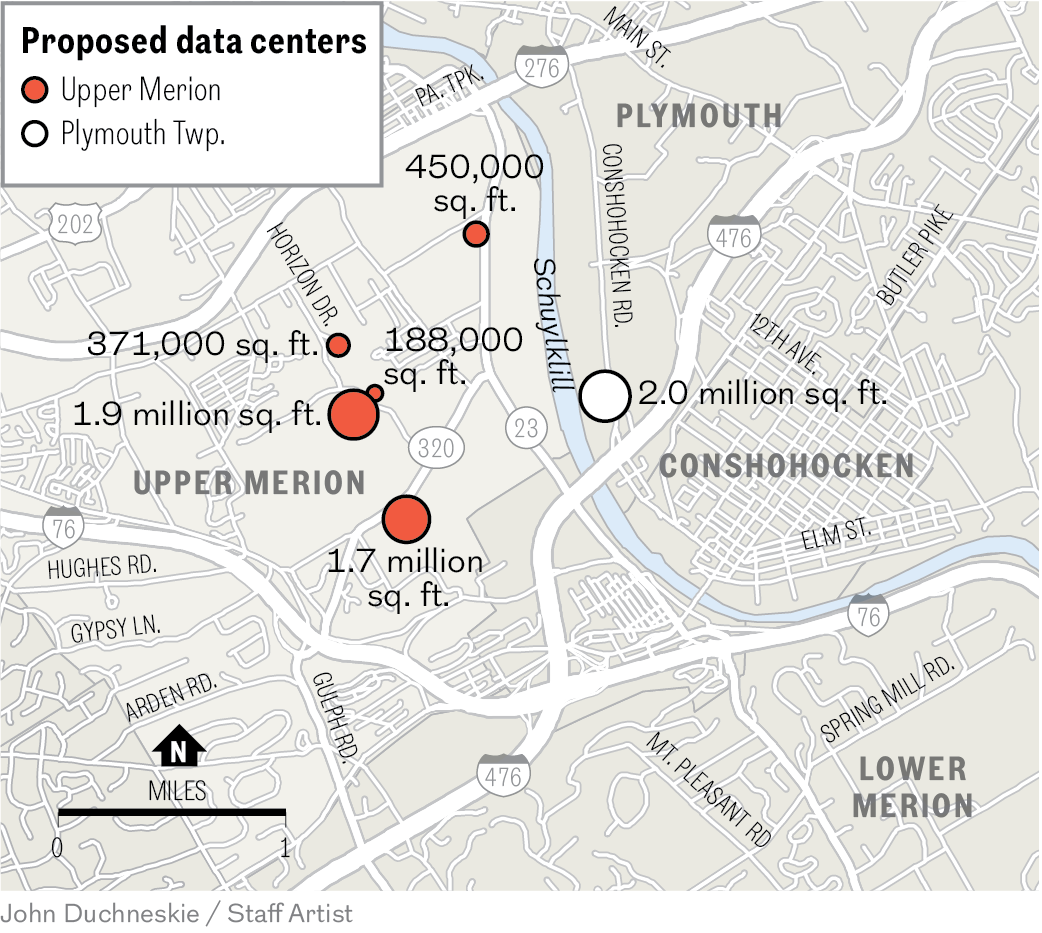
    The Upper Merion Township Board of Supervisors unanimously rejected a proposed 5-million-square-foot AI data-center campus that had sparked pushback from residents, a lawsuit from the developer, and accusations of mistreatment and intimidation.

    After the decision was made at a Thursday night meeting, some in the crowd applauded, danced, and high-fived one another. The rejection came after three hours of fiery exchanges between the developer, Brian O’Neill, and township officials.

    O’Neill and his team said they were prepared to go over each of the township’s comments about his five proposed sites in the King of Prussia area. But officials said it was too little, too late, and asked if O’Neill’s team was “filibustering.”

    “Are you asking us to not present those facts in defense of those plans when it’s clear all you want to do is deny our plan and go home tonight?” said O’Neill. He later said township officials were violating state and local planning codes, an allegation they denied.

    “Your attempt here to lecture us is considered an intimidation. And I don’t want to see our professional staff bullied or coerced,” said William Jenaway, vice chair of the Upper Merion Township Board of Supervisors. “Intimidation, coercion and bullying are not good qualities in a professional leader.”

    O’Neill, a longtime real-estate developer, has recently turned his sights to data centers. He first proposed building one of the controversial cloud-storage facilities in nearby Plymouth Township. In Upper Merion, he wants to build a data center complex on five properties in the township’s Swedeland section, a small residential and industrial area between West Conshohocken and Bridgeport.

    A map of the proposed data centers in Upper Merion and Plymouth TownshipsJohn Duchneskie

    Those projects aren’t dead: O’Neill can appeal the board’s denial, as chair Tina Garzillo told him Thursday.

    “Don’t you worry about that,” said O’Neill, before walking out of the Upper Merion Area Middle School auditorium to a chorus of boos.

    The board’s decision came after months of contention and a whirlwind two days of legal back-and-forth.

    O’Neill on Wednesday sued the township, its planning commission, and its board of supervisors, saying they violated his legal right to an extension and treated him unfairly during the development review process. Soon after, Montgomery County Court Judge Garrett D. Page ordered the township to halt proceedings and decisions related to the data centers until a hearing next week.

    Citing the ruling, Edmund J. Campbell, an attorney for O’Neill, declined to make a presentation on two of the five proposed data-center sites at an Upper Merion Township Planning Commission meeting on Wednesday night.

    Late Thursday afternoon, however, Page vacated his previous order, allowing the township board of supervisors to proceed with its meeting as planned. On the agenda: A vote on O’Neill’s request for an extension until Sept. 30, and votes on the five proposed data centers.

    After an hour of public comment, all but one of which was from residents opposing the data centers, the township’s board of supervisors voted to deny O’Neill’s extension requests. The board then moved on to vote on the land development plans for each of the five sites.

    One by one, the plans were denied unanimously by the five-person board.

    Each vote was met with loud cheers from attendees.

    For months, residents have rallied against O’Neill’s plans, packing township meetings and putting up bright orange lawn signs opposing the projects. About 18,000 people had signed a Change.org petition against the Upper Merion data centers as of Thursday. Some neighbors have expressed concerns about pollution, light, noise, electricity prices, property values, and quality of life.

    Upper Merion residents opposed to the data centers have put up these lawn signs.Alejandro A. Alvarez / Staff Photographer

    “I’m really proud to stand here tonight with each and every other concerned resident,” Courtney Smith said Thursday. “We all have something important here to fight for.”

    “The people here are here because they care deeply about the long-term interest of our communities,” Montgomery County Commissioner Neil K. Makhija said during his comments in opposition of the plan. The commissioner said the supervisors’ decision would have ramifications beyond the county, as communities across the region and the country weigh data-center development.

    O’Neil has said his data centers would benefit Upper Merion and “change the world for the better.” While the developer has declined to specify who exactly would operate the centers, he has indicated the facilities would use AI-powered biotech in conjunction with his existing life-sciences complex, Discovery Labs.

    One of the sites where Brian O’Neill wanted to build a data center in Upper Merion.Alejandro A. Alvarez / Staff Photographer

    O’Neill has said his data centers would comply with the highest environmental standards, emitting little light and noise. They would operate on a closed-loop system, requiring no outside water, he said, and provide their own power.

    The developer has also said they’d be an economic boon to the area. Last week, he released an economic impact study that said the Upper Merion centers would result in more than 10,000 jobs during its construction and then generate more than $55 million a year in local tax revenue.

    At Thursday’s board of supervisors meeting, however, Upper Merion Township Tax Collector Evelyn Ankers disputed those figures, and said O’Neill has failed to pay taxes on his properties in the past.

    Across the Schuylkill, a data-center fight rages on between O’Neill and some residents of Plymouth Township, where the developer wants to build a 2-million-square-foot facility on a shuttered steel mill outside Conshohocken.

    The developer recently filed a legal challenge to the Plymouth Township zoning ordinance, and has exchanged accusations of mistreatment with township leaders. News of O’Neill’s actions in Plymouth Township prompted a rebuke from Gov. Josh Shapiro, who had previously encouraged data center development in the commonwealth.

    A date has not been set for the next Plymouth Township meeting, though officials indicated it would be sometime in September.