Category: Business

  • From COVID to cancer: How Moderna’s stock jumped 177% in a day

    From COVID to cancer: How Moderna’s stock jumped 177% in a day

    COVID-19 vaccines made Moderna a household name, but the company’s fortunes cratered as demand for the shots plummeted. Hostility from the Trump administration also spooked investors. As of Tuesday, the company’s stock had fallen nearly 90% from its peak, a loss of $170 billion in market value.

    All the while, the company was quietly mounting a comeback in cancer.

    On Wednesday, those efforts began to pay off in a big way. Moderna and Merck, a big drugmaker, reported that their experimental cancer vaccine extended the time before melanoma recurred in a clinical trial — the first late-stage study of its kind to succeed. The two drugmakers announced their success in news releases, without providing numbers that would indicate how much patients had benefited. Moderna’s stock closed up 177% Wednesday.

    Moderna’s stock then gave up some of those gains, dropping 24% to close at $133.32 Thursday on the Nasdaq Stock Market.

    The investors were betting that Moderna could help jump-start a new approach to treating certain cancers. The experimental vaccine uses the same messenger RNA, or mRNA, technology that powered Moderna’s COVID-19 shot, but it works differently to treat cancer. Tailored to each patient’s tumor genetics, the vaccine delivers instructions to produce a fragment of a tumor to teach the body’s immune system to attack the cancer.

    Cancer vaccines using mRNA could become a hugely lucrative business, if the approach works across cancer types. Cutting-edge cancer drugs typically cost several hundred thousand dollars a year.

    For Moderna, cancer “is by far the most significant pipeline opportunity,” said Tyler Van Buren, an analyst at the Wall Street bank TD Cowen.

    Moderna’s CEO, Stéphane Bancel, said Wednesday on CNBC that the company’s work on the cancer vaccine was its latest effort to “take very big, scientific clinical bets.”

    The prospect of using mRNA vaccines to treat cancer has tantalized researchers for decades. But momentum in the field has accelerated only recently, as manufacturing and other technology has improved, thanks in part to investments during the pandemic.

    As of last year, more than 60 cancer vaccines using mRNA or similar technology were in development, being tested in more than 120 clinical trials, according to one count. Many of those studies are funded by philanthropies, the government, and smaller biotechnology companies.

    Four major drugmakers are leading the development efforts. Two are Moderna and Merck, whose collaboration on the approach dates back a decade; they are also testing the same vaccine as a therapy for cancers of the lung, kidney, and bladder. (In the study whose results were announced Wednesday, the cancer vaccine was given in combination with Keytruda, Merck’s blockbuster cancer immunotherapy.)

    BioNTech, another developer of an mRNA vaccine for COVID, is working with Roche’s Genentech unit to develop a vaccine to treat cancers of the pancreas and colon. Results from a small safety study of that therapy in pancreatic cancer generated excitement this spring.

    The approach has historically been seen as risky. The manufacturing is complex, the politics are fraught, and there had been little evidence it would work. Other large major cancer drugmakers, such as Pfizer and Bristol Myers Squibb, are not working on mRNA vaccines for cancer.

    Under Health Secretary Robert F. Kennedy Jr., the Trump administration has made a series of funding and policy changes hostile to mRNA technology. A year ago, the federal government canceled nearly half a billion dollars’ worth of contracts and other funding for mRNA technology.

    “Those political headwinds were serious, and it caused a lot of companies to take great pause,” said Jeff Coller, a scientist who works on mRNA at Johns Hopkins University. Coller advises several small mRNA companies and is on the executive committee of the Alliance for mRNA Medicines, a trade group.

    But the administration has signaled it may be more open when it comes to mRNA for treating cancer. This year, it quietly started a public-private partnership expected to fund clinical trials of different cancer vaccines, including those using mRNA. The Department of Health and Human Services did not return a request for comment Wednesday about the status of that initiative and how much funding the department has granted.

    Moderna was founded in 2010 in Cambridge, Mass., to develop medicines using mRNA. Its COVID vaccine, its first product, brought in tens of billions of dollars of revenue during the pandemic.

    But as the public and the government soured on its COVID shot, Moderna had hardly anything to replace it with. Over the past few years, Moderna looked for different ways to reinvent itself. It won approvals for mRNA vaccines for respiratory syncytial virus and, most recently, flu. It also explored experimental therapies for rare diseases.

    Last year, the company laid off more than 800 workers, a tenth of its workforce. It also lost more than $700 million in contracts to develop a shot to protect humans against bird flu after the Trump administration canceled the agreements. The company shelved vaccines to protect against herpes, chickenpox, and shingles.

    Even though it had started years before the pandemic, Moderna’s work on mRNA cancer vaccines flew relatively under the radar. In addition to the experimental cancer vaccine it is developing with Merck, Moderna solely owns several others that it is testing in different cancers.

    “People started to pay attention” as Moderna and Merck began presenting promising results from midstage clinical research, said Andrew Tsai, an analyst at the Wall Street bank Jefferies.

    Now, Moderna is back in the spotlight. Crucial questions remain: Will the promising results in melanoma, which has repeatedly proved to be more responsive to treatment, hold up in cancers that are tougher to treat? And will the detailed results look as good as the companies made them sound Wednesday? (The drugmakers said they would present the full data soon at a medical meeting.)

    But now that an mRNA cancer vaccine appears to have succeeded, Van Buren of TD Cowen said he anticipated that drugmakers would flock to the technology.

    “Now that this trial was successful,” he said, “I definitely think we can expect more investment by other pharma companies.”

    This article originally appeared in the New York Times.

  • Welcome America Inc.’s new interim CEO is local PR executive Nicole Cashman

    Welcome America Inc.’s new interim CEO is local PR executive Nicole Cashman

    Welcome America Inc., the nonprofit behind Philly’s Wawa Welcome America festival, has named Philly public relations executive Nicole Cashman as its interim CEO.

    The founder and CEO of communications firm Cashman & Associates, Cashman will follow Michael DelBene, who served as CEO since 2019 and grew the July Fourth festival and other large-scale events to new heights and a wider audience. DelBene left the organization earlier this year.

    Cashman & Associates has worked with Welcome America Inc. for 25 years as its marketing and communications arm. This long-standing relationship and intimate knowledge of the organization led to the decision to name Cashman as the new CEO, officials said.

    “Nicole has spent her career helping tell Philadelphia’s story and bringing people together around the experiences that make our city extraordinary,” said Mayor Cherelle L. Parker, who chairs the Welcome America board of directors. “Nicole understands the important role Welcome America plays in our city, creating moments that bring together our communities, welcome visitors, and showcase Philadelphia on a national and international stage.”

    Fireworks over the Philadelphia Museum of Art and the statue of George Washington at Eakins Oval during the Wawa Welcome America Festival on July 4, 2023 following a free concert featuring Demi Lovato and Ludacris on the Benjamin Franklin Parkway.Charles Fox / Staff Photographer

    Cashman founded her agency in 2001 and has accumulated a portfolio of some of the city’s high-profile agencies and events, including Comcast, Adventure Aquarium, and Philabundance. She has also served in leadership roles at Atlantic City Alliance and Visit Philadelphia.

    The PR exec will join Welcome America as it transitions between CEOs and prepares for the coming year’s slate of celebrated civic events and cultural experiences. Welcome America is a public-private partnership that receives city and state funding as well as corporate sponsorships. Parker and City Councilmember Mark Squilla are board members.

    “I have had the privilege of working alongside Welcome America for 25 years and have seen firsthand the extraordinary impact this organization has on Philadelphia and the region,” Cashman said. “… Welcome America means a great deal to me, and I’m excited to help guide it through this next chapter as we reimagine the organization for 2027 and beyond.”

    Welcome America will look for a permanent CEO, Cashman said, as she will not fill the position long term, just during the period between DelBene and the nonprofit’s next executive leader.

    “Michael set the bar high. He was great to work with and I have enormous respect for what he accomplished — I want to build on that success,” Cashman said.

    She will enter the role on the heels of the city’s decision this year to take over Philly’s Fourth of July concert and fireworks from Welcome America for the first time since 1993. The Parker administration ended up paying around $12 million more for its July Fourth concert than Welcome America’s $3 million budget of years past. Parker’s “One Philly: Unity Concert for America,” a reference to her “One Philly: A United City” slogan, was slated to go much later into the night than previous years — a move some residents criticized as “not a family-friendly decision.”

    Despite storm delays pushing the celebration into the early hours of July 5, ending around 2:50 a.m., the crowds that stayed experienced Will Smith, the Roots, Meek Mill, and an extravagant fireworks display.

    Cashman could not say who would run 2027’s Fourth of July concert but did say Welcome America would surely be a part of the 16-day festival thrown each year.

    Besides the Fourth of July festival, Welcome America also oversees the city’s official holiday tree in Dilworth Plaza. The 55-foot concolor firs, planted decades ago and brought into Philly each December, serve as a meeting place for holiday shopping and traditions, amid the Christmas Village and other attractions scattered around City Hall.

    This holiday celebration is what Cashman and Welcome America are moving full steam ahead on, with planning already underway, she said.

    “We know how important this level of programming around the holidays is to the city, our partners, the public, and visitors,” Cashman said. “So I’m really focusing on finalizing those plans, and that is our primary focus for the remainder of 2026.”

  • CEO of robot tech company Exyn is out after unauthorized credit card spending

    CEO of robot tech company Exyn is out after unauthorized credit card spending

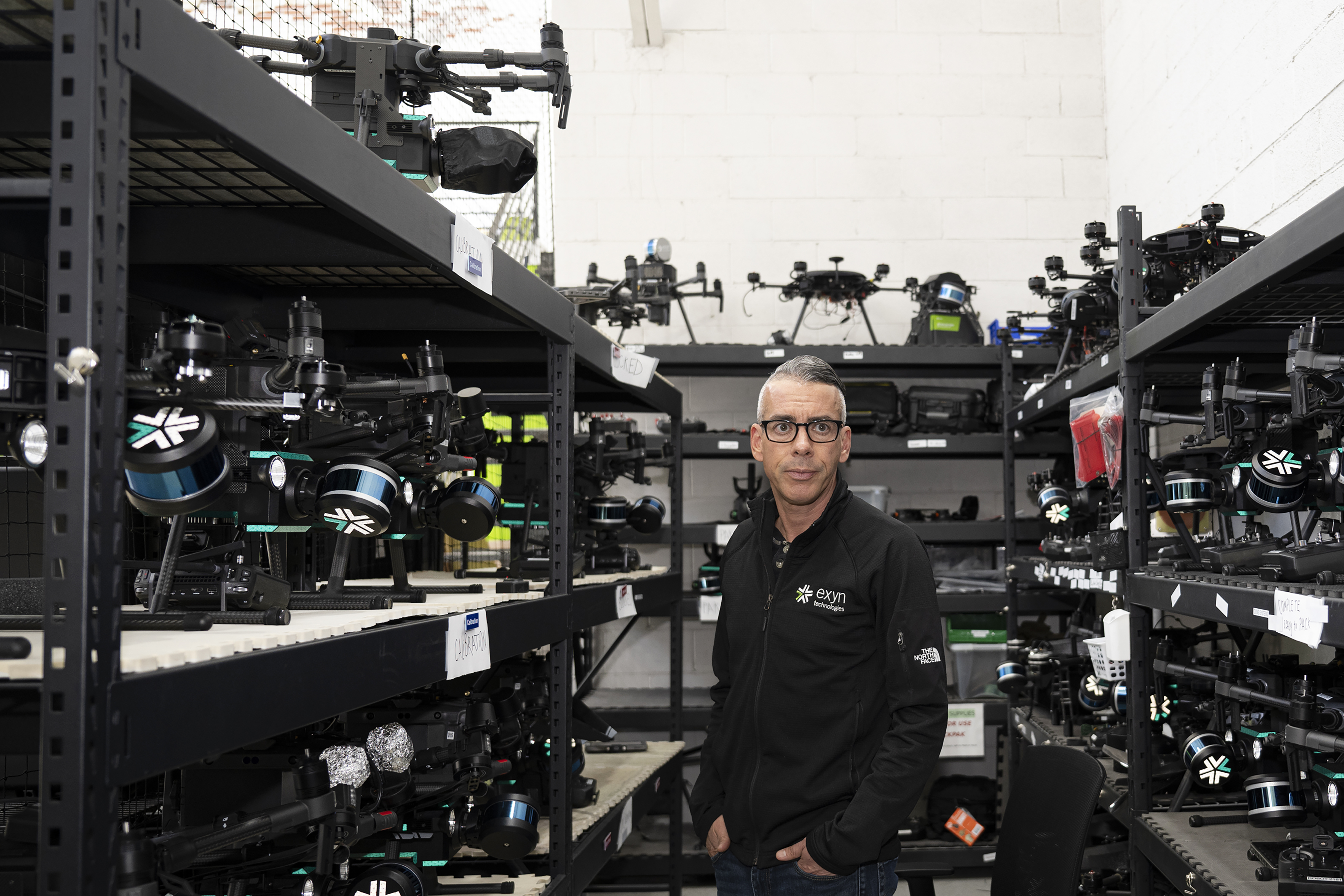
    The CEO of South Philly drone software and hardware maker Exyn Technologies resigned Wednesday after an internal investigation showed he used a company credit card to rack up $287,000 in unauthorized personal expenses, according to a statement Exyn filed Thursday in a revised quarterly financial report with the SEC.

    Brandon Torres Declet, the CEO, had pledged to boost sales and profits after taking the money-losing company public in an IPO in May.

    Exyn named chief operating officer Benjamin Williams as acting CEO, a role Williams also filled for five months in 2023 after founder Nader Elm left the company and before Torres Declet’s hiring. The company named director Gregory McNeal as board chair to replace Torres Declet in that position.

    In a Wednesday filing, Exyn had said the CEO was “terminated.” In a brief interview Wednesday night, Torres Declet said he expected the company would amend that statement, as it did. He declined further comment.

    Torres Declet’s departure followed an internal investigation opened Aug. 11 by the board’s audit committee into allegations that Torres Declet “used a company-issued credit card to pay for personal travel and other personal expenses that were recorded as business expenses in the company’s books and records.”

    Torres Declet was denied severance, according to the filing. Exyn added that it has asked him to return the unauthorized payments.

    Torres Declet joined Exyn in late 2023. He was paid a salary of $366,667 plus a bonus of $200,000 for 2025, plus stock options. The stock went public at $7.70 but has traded lower ever since, closing Wednesday at $2.

    On Aug. 3, eight days before the investigation opened, the board boosted his salary to $482,000, plus a bonus of up to $362,000.

    Exyn raised $19 million in the IPO. Sales of Exyn’s drone hardware and software, used by mining companies and offered to military and commercial users, totaled $5.8 million last year, up modestly from $5.6 million in 2024. But expenses in each year, including salaries for the company’s staff of 45, totaled around three times that much.

    Before joining Exyn in 2023, Torres Declet, a lawyer, had worked for years in the drone business and earlier as a counsel to Congress and for the New York Police Department, according to his posted resume.

    Interim CEO Williams, who holds engineering and business degrees from the University of Pennsylvania, worked previously at AT&T, Lockheed Martin, and for the U.S. Navy. He also ran a string of small start-ups, including Reelio Inc., purchased by an AT&T affiliate in 2018.

    After Torres Declet’s departure, Exyn said in its SEC filing that the company acknowledged poor credit card controls. The company listed other “material weaknesses” in its accounting procedures including a lack of oversight in tracking inventory, failure to properly report its loan agreement with Arizona-based Western Alliance Bank, and failure to properly recognize expenses.

    Exyn attributed the accounting issues to having too few staff with technical accounting knowledge.

    The company is based in a former brewery barn on Washington Avenue in Philadelphia. Torres Declet said last spring that he was looking for larger quarters to accommodate growth after Exyn’s lease agreement expires next year.

    Exyn’s investors represent the breadth of interest in industrial and military drone projects. The largest shareholder before and after the IPO was Reliance Strategic Business Ventures Ltd., owned by India’s multibillionaire Ambani family. Others include Wilmington-based Longview Innovation; Israel-based Neolync Holding; and Penn Engineering dean Vijay Kumar, an Exyn cofounder. Early investors included Chicago-based Alyeska Investment Group; military-focused Anzu Partners, a firm linked to the Japan-based Softbank Vision Fund; In-Q-Tel, which invests in tech companies that sell to the CIA; Pennsylvania-funded Ben Franklin Technology Partners of Southeast Pennsylvania; and Penn alumni-funded Red & Blue Ventures.

    Early funding also came from the Defense Advanced Research Projects Agency, the research and development arm of the U.S. Department of Defense.

    Exyn was founded in 2014 by Kumar and Elm, a Penn robotics scholar who worked for Kumar’s General Robotics, Automation, Sensing & Perception (GRASP) lab, which helped develop drone quadcopters. The company’s initial clients included mining companies hoping to reopen closed deep mines in the U.S., Canada, and other countries.

    The IPO prospectus said the company’s Exyn Defense Inc. subsidiary focuses on such military uses as “autonomous systems for reconnaissance, contested logistics, and force protection,” for use in underground tunnels and on city buildings.

    Exyn’s Range-brand products offer “uncrewed” navigation and mapping to military and national security users on battlefields and in other places where GPS doesn’t reach.

  • 2026 Mazda3 Turbo Hatch: More features, more space, more dollars

    2026 Mazda3 Turbo Hatch: More features, more space, more dollars

    2026 Volkswagen Jetta GLI Autobahn vs. Hyundai Elantra N vs. Mazda3 2.5T Premium Plus AWD Hatchback: Let’s have some fun without breaking the bank.

    This week: Mazda3 Hatchback

    Price: $41,560 as tested. Ouch. Some bank-breaking this week after all.

    What others are saying: “Highs: Posh interior, engaging to drive, manual transmission and AWD options; Lows: The stick is limited to a single setup, abysmal rear visibility with the hatchback,” reports Car and Driver.

    What Mazda is saying: “For the fun of the drive.”

    Reality: Fun comes at a cost.

    What’s new: The aging little hatchback (or sedan) gets some added standard features and packaging updates. Its last major redesign came pre-pandemic in 2019.

    Competition: In addition to the comparison vehicles, there are the Honda Civic Si, Honda Civic Type R, Toyota GR Corolla, Volkswagen Golf GTI, and Volkswagen Golf R.

    The real competition, though, may be built by Mazda itself, in CX-30 form.

    Up to speed: The Mazda3 is fast enough to get you out of jams. Hit the sport mode switch, and the power really comes through.

    The 2.5-liter turbocharged four-cylinder engine definitely adds oomph to the experience, boosting the 186 horsepower in lesser models to 250. That means you’ll get to 60 mph in 5.6 seconds, according to Car and Driver, compared to 7 for the base front-wheel-drive model or 7.5 seconds for the all-wheel drive. The turbo tested matches the Jetta but falls behind the Elantra N.

    Shifty: Knock the PRND gear selector to the left, and you can slice through the six gears on your own. Pull for upshift, as with the Hyundai; the Jetta is the odd sedan out here, with the upshift push.

    Somehow Mazda’s small SUV, the CX-30, felt a lot more fun. Maybe it was the shifter, maybe it was the whole feel, seating position, drivability. Among our test group, though, the Mazda3 is the winner for shifting fun.

    A stick is also available, but not if you want the turbo or all-wheel drive. But clutching could add enough fun to the slower ride and put the vehicle around a more reasonable $30,000 (the manual hatchback starts at $25,650).

    On the road: The Mazda3 provided some joy but not Elantra N-level highs. It also didn’t have the Elantra N-level lows — hitting road seams and bumps with thunderous force. Similarly, the Mazda kept its composure throughout the drive, not frightening me like the Jetta GLI with frantic dances when the gas pedal was stomped. Here, the Mazda3 wins out.

    The interior of the 2026 Mazda3 Hatchback keeps the same look it has for years. The dial controller for the media system and simple gauges remain.Mazda

    Driver’s Seat: The leather-trimmed Driver’s Seat provided plenty of support and comfort and didn’t feel at all too firm on my travels. The gauges remain what Mazda owners are familiar with, and that’s fine — they’re really all you need. Mazda doesn’t have a Toyota or BMW budget for updating willy-nilly, and that suits my ilk. In this category, the Elantra N lags the other two.

    Friends and stuff: Here’s the really nice part about this Mazda3: It was a hatchback. So of course its spaciousness wipes the board compared to the Jetta and the Elantra.

    Cargo space is 20.1 cubic feet behind the rear seat. There’s also a bunch more space when the seat is folded, but Mazda doesn’t share those measurements.

    The rear seat has plenty of foot room, and the hatchback boosts the headroom a bit, but legroom remains a bit challenging. This category is a draw.

    In and out: The Mazda3 skirts sports car territory with its height, so if you’re of a certain age, you’re going to feel it here. (I’ve learned how to stand up leaning on the doorway so it looks nothing at all like I’m approaching age 60, he said delusionally.)

    Play some tunes: Speaking of old, the Mazda3 keeps the dial and buttons for stereo control, in addition to the touchscreen that’s so ubiquitous it must be required by law. The touchscreen does have its uses, but the dial and buttons allow for moving around the choices without looking with some practice. Perfect for, you know, driving, which is kinda why we’re here, no? (That guy driving in front of us obviously disagrees.)

    The sound, unfortunately, is not up to the latest from the competition, a B+ at best. The bass either thudded or was lacking and song clarity was hit or miss. (Shockingly, the CX-30’s got an A rating.)

    Keeping warm and cool: This system also matches all the other Mazdas, dials for temperature and horizontal buttons operating the rest of it, with a small readout.

    Fuel economy: The vehicle averaged 24 mpg over its lifetime, kinda par for the course, tied for the loser spot in this category.

    Where it’s built: Hofu, Japan, and 85% of its components hail from the Land of the Rising Sun, with none from the U.S.

    How it’s built: Consumer Reports rates the Mazda3 a 4 out of 5 for reliability, as it has for the previous two years.

    In the end: Mr. Driver’s Seat is faced with one of his biggest dilemmas ever with this comparison. The Jetta brings so much to the game for a bargain price, which we should reward, but a Volkswagen with a 2 out of 5 reliability rating will not stay a bargain.

    I still daydream about the Elantra N slicing through the curves north of Reading (and Mrs. Passenger Seat probably still cringes when thinking about that ride), but everything else is so less-than. Still, take a spin in the Elantra N.

    The Mazda3 has fun, space, all-wheel drive, and the best reliability rating. But, oh, that price. It’s the same as a similarly equipped CX-30 Turbo, so I’d probably send you to the Mazda dealer and let you choose. Maybe learn to drive a stick if you have to save some dough.

  • Amazon’s new order confirmation emails seen boosting phishing risk

    Amazon’s new order confirmation emails seen boosting phishing risk

    When Dan Landau ordered a portable photo printer from Amazon, he expected the confirmation email to tell him what was on its way. Instead, he was notified that his “luggage” was coming. In another instance, the 38-year-old head of marketing for a venture capital firm ordered items to maintain his pool and was confused when the company labeled them three different ways: Decor, Outdoors, and Garden.

    “The categories are very vague, and they seem to have little to do with what is actually being ordered,” he said.

    Landau isn’t the only one expressing bafflement. In recent weeks, Amazon customers on TikTok and Reddit have also wondered why product names and images were replaced with labels such as Household item or Essentials item in order confirmation emails.

    An Amazon spokesperson said the company simplified the information to direct customers back to its app and website in an effort “to further improve” their privacy by reducing “customer information shared outside” of Amazon.

    But critics say the emails can be so vague, and sometimes so far removed from the actual product, that they become less useful for telling customers what’s being shipped, and more useful to scammers looking for a template to launch phishing attacks.

    Arun Vishwanath, founder of the Cyber Hygiene Academy, says the change is essentially asking shoppers to trade privacy for security and could spur impersonation attempts.

    “It’s definitely not in the best interest of customers,” said Vishwanath, who also advises the National Security Agency’s research-focused Science of Security & Privacy directorate. “If anything, it increases risk.”

    Phishing attacks often mirror official emails and trick people into clicking on a bogus link that might contain malware or request login credentials. Vishwanath says Amazon’s new confirmation emails could encourage users to click on links without verifying who sent them.

    Last year, Americans reported $3.5 billion in losses from so-called imposter scams, according to the Federal Trade Commission. The agency said that in 2023 it received about 34,000 reports of scammers pretending to be Amazon, the second-most impersonated company after Best Buy/Geek Squad.

    Without directly addressing cybersecurity concerns, the Amazon spokesperson said the new email format was designed to make authentic messages from the company easily identifiable.

    But Erich Kron, an adviser to Knowbe4, a firm that trains people to avoid phishing and other attacks, said the change itself could attract scammers.

    “Anytime some change like this happens, bad actors are going to jump on it and they’re going to use that change and things that people aren’t used to, to help us make mistakes,” he said.

    In cases where consumers don’t receive Amazon app notifications to corroborate their purchases, an email may be the only immediate indication that an order has shipped. But when the message no longer details what they ordered, they may be more inclined to follow email links — including ones sent by scammers, Kron said.

    “It’s never been safe to just click on random links in emails, even if it does look kind of like it comes from Amazon,” he said. Kron said it’s typical for phishers to practice “credential stuffing,” a method often used by Amazon scammers who feed purloined usernames and passwords in a tool that automatically searches banks, credit card companies, and other large retailers for a match.

    Standard security practices can help spot phishing attempts, such as hovering over a link with a computer mouse if browsing from a desktop. But that safeguard is harder to use on a cell phone, where Amazon notifications are most likely to appear. On a phone, it is less likely that when clicking a link, a preview will pop up allowing users to confirm the link leads directly to Amazon’s platform.

    Abnormal AI, a security company that uses artificial intelligence to help companies prevent phishing attacks, said it has not yet seen conclusive data showing a spike in scams since Amazon stopped providing specific product information in its order confirmation emails. But, echoing other cybersecurity experts, the firm said the new format could make it easier to carry out such attacks.

  • Pa. state workers’ pension outsources $2 billion to a firm it just fired

    Pa. state workers’ pension outsources $2 billion to a firm it just fired

    The $42 billion Pennsylvania State Employees’ Retirement System (SERS) last month unanimously agreed to end a $300 million foreign-stocks investment for failing to meet targets — then gave the same firm a fresh $2 billion to invest in U.S. stocks.

    The plan to eliminate Center City-based Xponance Inc.’s Non-U.S. Small Cap Equity fund passed unanimously at SERS’s meeting July 28.

    That came 20 months after SERS put the investment on its “Evaluation List,” a special status that SERS’s adviser, Callan Inc., told trustees in a memo was “due to underperformance.”

    According to SERS investment data, Xponance, which manages around $25 billion, was the only one of five firms it hired to pick foreign company stocks that has failed to beat its benchmark index of those stocks “since inception.” SERS uses Morgan Stanley’s MSCI ACWI ex USA Small Cap Index of foreign stocks, as Xponance’s benchmark.

    Xponance actually met or slightly beat that index in three of the seven years since SERS invested. But that wasn’t enough to cover larger shortfalls from other years, including 2025, when Xponance trailed the index by 6%, yielding $15 million less than its target.

    SERS has paid Xponance more than $10 million in fees since hiring the firm’s predecessor, FIS, in 2018, with the support of longtime SERS trustee State Sen. Vincent Hughes (D., Phila.).

    Hughes and Xponance officials didn’t return calls seeking comment.

    In all, SERS paid more than $230 million in fees, profit sharing, and expenses to hundreds of investment fund managers in 2024, the last year for which it has published data.

    SERS has profited from rising investment valuations in recent years, which helped persuade state lawmakers in July to boost pensions for staff retired more than 25 years.

    The system also beat its self-imposed annual investment benchmark, currently 6.875% a year, by more than one percentage point from 2015 to 2025. That enabled SERS to reduce the “employee contributions” collected from 67,000 state employees, which vary from 5% to 9%, by half a percentage point for three years. SERS collected about five times as much from taxpayers last year, and collects varying amounts from its investments.

    While SERS voted to “liquidate” Xponance’s account with one hand, it awarded Xponance a new account with the other. In the same July 28 vote, trustees headed by chairman Gregory Thall, a Harrisburg lobbyist, unanimously agreed to give Xponance $2 billion to invest in a “passive” index fund based on the Russell 3000 index of large and small U.S. stocks.

    Though the $2 billion SERS granted is more than six times the $300 million SERS took away, Xponance is still likely to lose significant income in the switch. Xponance charged SERS around 80 basis points a year (that’s 0.8% of the investment’s value) plus expenses — a total of around $2 million a year — for the former stock-picking account.

    According to a formula in Xponance’s marketing materials, for a $2 billion investment in its “passive” Russell 3000 index fund, the firm would typically charge around $400,000 in client fees a year. That’s less than one-quarter what Xponance charged SERS to “actively” pick and manage foreign stocks.

    The highest fees are typically paid to private-equity and real estate investors. Stock-pickers like the former Xponance foreign-stock fund are paid less. Index funds such as the new Xponance fund tend to collect some of the lowest fees. Xponance’s new fees will be “very competitive,” according to SERS spokesperson Pamela Hile.

    SERS said it’s still negotiating the terms of its new Xponance mandate.

    “SERS has been laser-focused on negotiating and lowering investment manager fees,” which totaled 0.41% for all managers last year, according to Hile.

    Xponance, headed by past Philadelphia city chief investment officer Tina Byles Williams, is the only fund managing stocks for SERS that is “owned and/or controlled by a majority of persons who are women and/or minorities.”

    SERS investment policy “encourages the use of diverse investment managers” in all asset classes “within the bounds of financial and fiduciary prudence,” adding that a diverse range of professionals contribute different points of view that improve the system and its economic performance.

    Among SERS’s more than 200 outside money managers are five other firms controlled by women or diverse owners. Those five firms all manage private assets, rather than publicly traded stocks and bonds like Xponance, according to SERS.

    The pension system helps defray the annual cost to taxpayers of funding guaranteed pensions for around 250,000 working and retired state troopers, prison guards, social workers, state college staff, judges, legislators, and other state employees. The majority of its board is appointed by Gov. Josh Shapiro.

    SERS already pays Mellon Investment Management, a Pittsburgh unit of New York-based BNY Mellon, to manage $14 billion, SERS’s largest single investment, in Mellon’s Russell 1000 big-stock index fund, and for smaller investments in two Russell 2000 small-stocks funds.

    The new Xponance investment will be SERS’s only Russell 3000 fund, combining the big- and small-stock indexes. The Russell indexes are licensed to Xponance and other fund managers by the London Stock Exchange Group.

    Money for the new Xponance investment will include funds taken from SERS’s Mellon account.

    Elsewhere, BNY Mellon has been winning significant new public business. In June, the larger Pennsylvania school pension plan, PSERS, agreed to outsource $20 billion in investments to BNY Mellon.

    Last month, BNY Mellon was also named financial agent for Trump Accounts, the federal government’s new lifetime savings program.

  • ICE workplace enforcement is increasing. Here’s what Philadelphia employers should do | Expert Opinion

    ICE workplace enforcement is increasing. Here’s what Philadelphia employers should do | Expert Opinion

    Border czar Tom Homan is putting employers on notice: Expect significantly more scrutiny of who you’re employing and whether your paperwork is in order.

    Homan, in a recent conversation with the Center for Immigration Studies, talked about his intention to expand employment verification inspections that would “dramatically increase” worksite enforcement.

    “We want to hold employers who circumvent the law responsible,” he said.

    This statement is in addition to a number of changes recently made to the Form I-9, Employment Eligibility Verification, which is required by the U.S. Citizenship and Immigration Services (USCIS) within the Department of Homeland Security and which employers generally must complete and retain for employees to verify their identity and authorization to work in the United States.

    The bottom line is that immigration enforcement activity is, and will be, of increased concern for employers, and if your company is not in compliance, you could not only face fines but potential civil and criminal charges.

    Here is what employers should do.

    Audit your employees’ I-9s

    “For businesses, the biggest mistake is having no plan at all,” said immigration attorney Kristofer C. Kaufmann of Philadelphia-based Kaufmann & Associates.

    Kaufmann encourages his clients to conduct a privileged internal I-9 audit under the guidance of immigration counsel and then create a one-page response protocol that every manager knows.

    “The audit tells you what is actually in the files and what needs fixing before the government ever asks, and the protocol tells your people exactly who to call, what to say, and what not to do if agents appear,” he said. “Most small businesses that get into serious trouble do so because they had neither.”

    When auditing I-9s, businesses should not try to hide problems, said attorney Zachary Gold, from New Jersey law firm Cruz Gold & Associates, which serves clients in the Philadelphia area.

    “Correct mistakes in the open: line through the error, enter the correction, then initial and date it,” Gold said. “Never backdate, which turns a compliance problem into fraud. Good compliance is a folder you can hand an auditor in five minutes.”

    He says to keep I-9 records organized and separate enough that they can be produced quickly. Employers should include former employees as they can also be subject to a review, Gold said.

    “Run the audit the same way for everyone, and do not start demanding new or different documents based on how a worker looks or sounds, because that trades an I-9 problem for a discrimination claim,” Gold said.

    Ricky A. Palladino, an immigration attorney in Philadelphia, recommends going one step further by using E-Verify, an online system that compares an employee’s Form I-9 with records from the Department of Homeland Security and the Social Security Administration.

    This step “gives an immediate answer on whether a person is authorized to work and provides electronic updates on when forms need to be updated,” he said.

    Create an ICE response plan

    So what happens if Immigration and Customs Enforcement shows up at your company’s door? The most important thing is to stay calm, professional, and cooperative but have some guardrails. And the first thing to know is that there’s a difference between an I-9 audit and a raid.

    “An I-9 audit, sometimes called a ‘silent raid,’ begins with a Notice of Inspection,” Kaufmann said. “By regulation, ICE must give the employer at least three business days to produce the Forms I-9 and related documents.”

    A raid, or unannounced worksite enforcement action, Kaufmann said, “usually involves a judicial search warrant. There is no advance notice.”

    Kaufmann advises his clients to designate one or two people in advance to handle any ICE interaction, preferably the company owner or a senior manager. Requesting and verifying each agent’s identification card is also important.

    When ICE agents arrive, employers should ask the purpose of their visit and then document all interactions either in writing or video in case questions later arise about what the agents requested, where they went, or what was produced, said Nadine C. Atkinson-Flowers, a Philadelphia-based attorney with experience in U.S. and Jamaican immigration law.

    “If things get testy, try to de-escalate tensions so that you and your employees are safe,” she said. “Don’t become hostile. Don’t refuse lawful orders like a request to see compliance documents. Don’t allow ICE to go through private spaces.”

    Palladino also warned against giving ICE access to nonpublic areas. “Employers should always ask to see a warrant and review it to determine which part of their premises ICE can examine,” he said.

    Gold also recommends understanding the different types of warrants.

    “A judicial warrant is signed by a judge and lets agents into the areas it lists,” he said. ”An administrative warrant is signed by an ICE officer, and it does not reach your nonpublic areas without your consent.”

    If ICE presses in their search, Gold recommends telling them that you are not consenting and documenting that, too.

    “Then, call your attorney,” he said.

    Palladino is urging his clients to prepare.

    “It’s clear that DHS intends to dramatically increase the number of audits moving forward,” Palladino said. “We’re telling our clients to get ready now. Businesses can be fined for both technical and substantive violations.”

  • Trump says U.S. and Canada have reached last-minute deal to delay 50% U.S. tariffs on Canadian imports

    Trump says U.S. and Canada have reached last-minute deal to delay 50% U.S. tariffs on Canadian imports

    WASHINGTON — President Donald Trump said Tuesday he was delaying 50% U.S. tariffs on $20 billion worth of Canadian imports after the two countries reached a last-minute deal hours before the sanctions were to go into effect.

    The announcement, which Trump made on his social media platform, buys time for more negotiations and avoids, for now, another strain in already tense relations between the historic allies.

    “I have paused the 50% Tariffs against Canada, that were scheduled to kick in tomorrow morning for a three day period, based on the fact that Canada and the U.S.A., subject to the finalization of documents, have a DEAL!” Trump posted on Truth Social less than two hours before the 12:01 a.m. Wednesday deadline.

    If they had gone into effect as scheduled at 12:01 a.m. Wednesday, Trump’s import taxes would have hit Canadian products ranging from hockey sticks to tongue depressors.

    But the political impact would likely have been bigger than the economic one. Canada had threatened to retaliate against any new tariffs with levies of its own, aggravating a trade fight between countries that sold each other $880 billion worth of goods and services last year.

    Canadian officials did not immediately respond to requests for comment Tuesday night.

    Canadian Prime Minister Mark Carney and Trump had spoken twice by phone in the past two days about the ongoing negotiations, including a call Tuesday afternoon, Carney’s office said, underscoring the last-minute push for a deal.

    Both countries had reason to step back from the brink. Nearly 72% of Canada’s goods exports last year went to the United States. And the Trump administration would be taking a risk by imposing a hefty new tariff — paid by U.S. importers who try to pass along the cost to consumers via higher prices — ahead of November’s midterm elections. U.S. voters are already frustrated with the high cost of living.

    “I don’t think either side really wants these tariffs to come into effect,’’ Ryan Majerus, a partner at King & Spalding and a former U.S. trade official, said before the delay was announced. “There’s a pretty strong push on both sides to find an off-ramp here.’’

    Trump’s approach to dealing with Canada marks an extraordinary departure from the traditionally cooperative relationship between the two countries. Trump has hit Canadian goods with tariffs — in a push to bring manufacturing back to the U.S. — and has repeatedly made inflammatory comments about turning Canada into America’s 51st state.

    Trump has made tariffs the centerpiece of his second-term economic agenda. Last year, he imposed double-digit import taxes on almost every country, justifying them by declaring the longstanding U.S. trade deficit a national emergency. The Supreme Court in February ruled that he’d overstepped his authority, striking down those tariffs and setting the stage for the federal government to pay refunds to importers.

    So Trump has looked for other legal authority to impose tariffs.

    To hit Canada, he reached back to the Great Depression, invoking Section 338 of the Tariff Act of 1930 to threaten 50% tariffs on products that account for about 5% of Canadian exports to the United States.

    Nearly a century ago, with the U.S. and world economies in collapse, Congress passed the 1930 tariff law, imposing taxes on imports from around the world. Known as the Smoot-Hawley tariffs, named for their congressional sponsors, they are notorious among economists and historians for limiting world commerce and making the Great Depression worse.

    Section 338 tariffs have never been used before.

    Section 338 authorizes the president to impose tariffs of up to 50% on imports from countries that have discriminated against U.S. businesses. No investigation is required to justify the levies. Nor is there any limit on how long the tariffs can stay in place.

    The U.S. is renegotiating a North American trade pact — the US-Mexico-Canada Agreement — that Trump strong-armed America’s neighbors into accepting in his first term. The threat of Section 338 tariffs gives the United States leverage to seek fresh concessions from Ottawa.

  • In a major shift, Gov. Josh Shapiro restricts data center development in Pennsylvania

    In a major shift, Gov. Josh Shapiro restricts data center development in Pennsylvania

    HARRISBURG — Gov. Josh Shapiro signed a sweeping executive order on Tuesday dramatically restricting data center development in Pennsylvania, marking a major shift from his initial embrace of the increasingly unpopular projects.

    Shapiro, a first-term Democrat running for reelection and a rumored 2028 presidential contender, had been an early champion of data center development in the state, including a $20 billion commitment from Amazon to build at least two data centers in Bucks and Luzerne Counties.

    Now he is taking a hard-line stance against the burgeoning data center industry he once courted, as proposed projects draw increasing bipartisan backlash across Pennsylvania.

    The far-reaching executive order does not include a moratorium on data center development. However, the order requires local approval for projects to receive state permits, which in effect may block many developments from moving forward.

    Shapiro used his executive powers Tuesday to push through his previously proposed Governor’s Responsible Infrastructure Development standards, which were initially pitched as voluntary incentives for data center developers to receive tax breaks, but failed to receive support from the GOP-controlled state Senate. All projects will be required to follow GRID’s environmental, economic, and transparency requirements in order to move forward.

    “I have no other choice than but to take this executive action to protect the good people of Pennsylvania from these predatory developers and from these projects that would negatively impact our communities,” Shapiro said after signing the order.

    Shapiro’s order also:

    • Removes all data center developments, including those by Amazon, from the fast-track permitting program, and no data centers will be considered for the program moving forward.
    • Requires data center projects to sign legally binding agreements to certain transparency and environmental requirements in GRID, such as water conservation standards and early and transparent public notification of proposed projects ahead of key local approvals. Companies must follow GRID guidelines to access the state’s existing sales tax break for data centers.
    • Prohibits any state agency from signing a nondisclosure agreement related to a data center project.
    • Instructs the Pennsylvania Department of Environmental Protection to publish a publicly accessible map of current permitting information for all proposed data center projects.
    • Mandates that the projects bring their own electricity generation and pay all costs associated with increased energy usage.
    • Requires a community-benefit agreement that includes promises to hire and train local employees, as well as developer investments in schools or infrastructure.
    • Underscores Pennsylvania’s unique state constitutional rights to clean air, pure water, and environmental preservation — a focus of many residents who oppose data center projects.

    ‘On notice’

    Pennsylvania has become a top target for data center projects, due to its key placement near some of the nation’s largest metropolitan areas, its energy production potential, and its vast rural areas.

    But data centers have become increasingly unpopular in the year since Shapiro championed the Amazon deal as one promising that the future of artificial intelligence “is going to run right here through the Commonwealth of Pennsylvania.”

    In a June poll conducted by Quinnipiac University, 76% of registered Pennsylvania voters said they would oppose a data center in their communities. Only 24% of voters said they approve how Shapiro is handling data centers in Pennsylvania, including 40% of Democrats — a drop from his 51% overall favorability in the same poll.

    His past support for data centers emerged as a potential liability to his reelection campaign and his 2028 prospects.

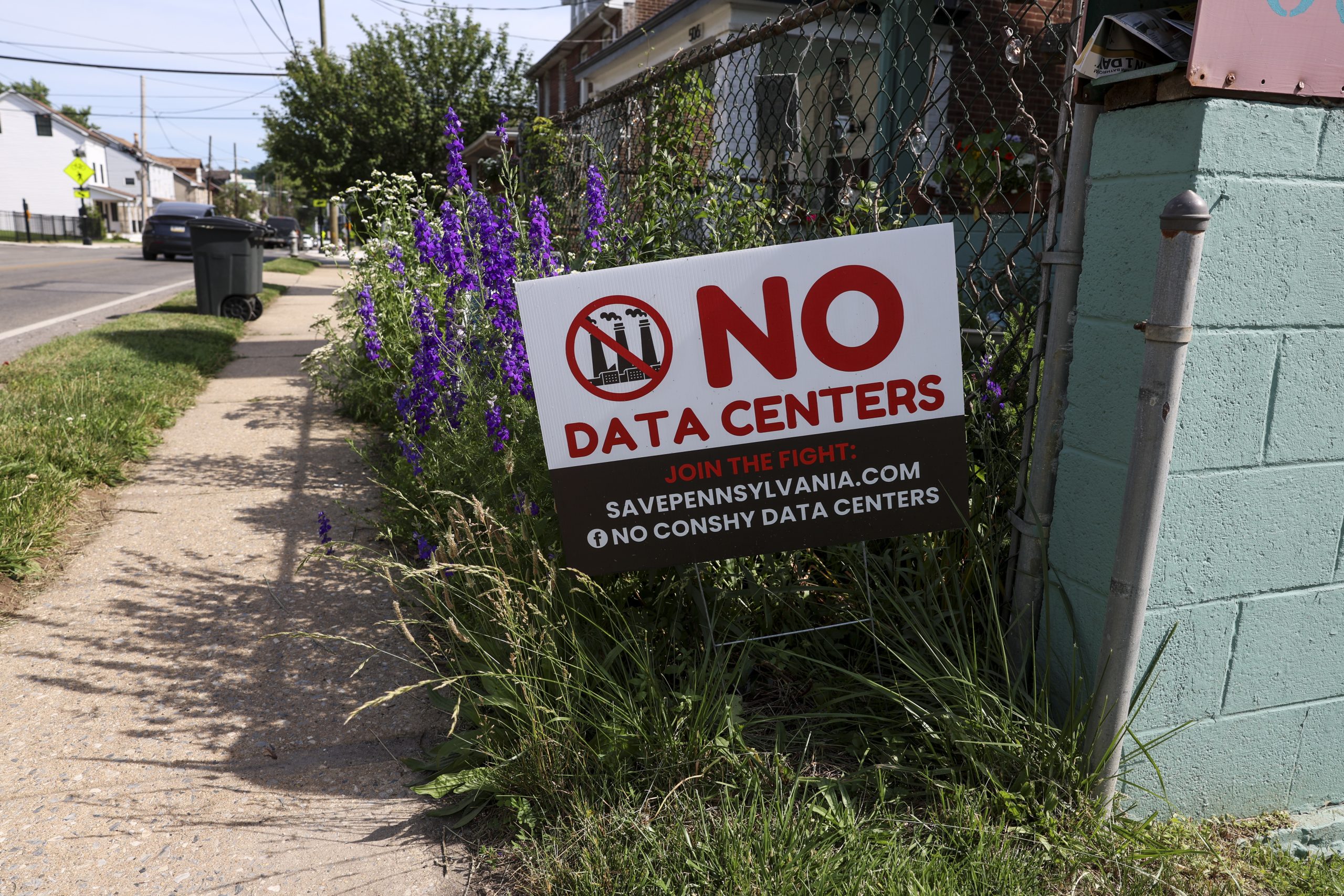
    A yard sign protests the proposed data center on New Elm Street near the Closed Cleveland-Cliffs steel mill photographed on Thursday, June 4, 2026 in Conshohocken, Pa.Monica Herndon / Staff Photographer

    Shapiro delivered remarks in Harrisburg before signing the order, touching on his visit to Archbald, a rural town in Northeastern Pennsylvania set for widespread data center development. The governor also outlined his opposition to controversial projects in Shapiro’s home county, Montgomery County, that he had recently denounced.

    “Archbald and Montco are just two examples of dozens of communities being overrun and overwhelmed by developers who don’t give a damn about us and think they can have their way,” Shapiro said. “Today, I’m formally putting them on notice.”

    Shapiro took specific issue with the more than 100 speculative projects across the state, which include some from real estate developers who are seeking building approvals without determining or disclosing the company for which they would be storing the data.

    The Data Center Coalition — the leading data center group representing Amazon, Microsoft, and other top developers — said in a statement that distinguishing between real, company-led projects and proposals is important and that rules should not be “changed midstream” for “verified and responsible data center projects.”

    “Companies have made plans, communities have prepared for economic opportunities, and workers are ready to build the next generation of digital infrastructure right here in Pennsylvania,” said Dan Diorio, the executive vice president for state policy and government affairs at the Data Center Coalition.

    Diorio previously told The Inquirer that Shapiro’s GRID standards were “extensive” compared with the 37 other states that offer sales tax exemptions.

    Shapiro’s administration appeared prepared to face legal challenges from the deep pockets of the data center industry or property developers. The order includes a severability clause, something not traditionally used in executive orders, that says if any parts of the order are “held to be invalid,” the rest of the order still stands.

    Shapiro has previously said his position on data centers has evolved. But his order Tuesday is perhaps his most dramatic shift: He has gone from consulting Amazon and the data center industry on his GRID principles earlier this year to pulling the tech giant and others from the state’s fast-track permitting program and requiring community-benefits agreements for the projects to move forward.

    Gov. Josh Shapiro signs an executive order restricting data centers in Pennsylvania during a ceremony in the Capitol in Harrisburg, Pa., Tuesday August 18, 2026.Kalim A. Bhatti / For The Inquirer

    The Amazon projects currently underway in Pennsylvania have already passed through the first phase of permitting, and will be required like all other projects to follow the requirements moving forward, a spokesperson for Shapiro said.

    An Amazon spokesperson did not respond to a request for comment Tuesday.

    There are six data center projects under construction in Pennsylvania, and 10 have received at least one state-level permit approval, Shapiro’s office previously told The Inquirer.

    Shapiro and the General Assembly have been under pressure by anti-data center activists to enact guardrails on the massive projects, with many arguing that Pennsylvania moved too quickly and sacrificed the state’s safety in favor of Big Tech. Pennsylvania lawmakers nearly unanimously supported ending the sales tax exemption for the projects, but failed to implement a measure during the spring legislative session.

    At the news conference Tuesday, Shapiro invited representatives from the Pennsylvania Association of Township Supervisors — the main group representing the local governments at the forefront of pushing for data center restrictions — in addition to advocacy groups including the Pennsylvania Utility Law Project and the National Resources Defense Council. The groups praised Shapiro’s plan.

    Though Shapiro’s order was widely lauded by Democratic state lawmakers and environmental groups, it was met with criticism from some of his detractors, including his Republican challenger for governor in November, Treasurer Stacy Garrity.

    Garrity’s first TV ad featured Shapiro’s support for data centers, and on Tuesday she said in a statement that Shapiro is “trying to gaslight the people of Pennsylvania into not believing what they’ve seen with their own eyes for the past 13 months.” (Garrity’s position on data centers has also changed since the June 2025 announcement, which she lauded at the time; she has since said Pennsylvania needs to put a “pause” on all data center development.)

    Megan McDonough, the state director for advocacy organization Food and Water Watch, said in a statement that “Shapiro knows that he’s been acting out of accordance with what Pennsylvanians actually need,” but that the order falls short.

    “Shapiro is feeling our heat because Pennsylvanians have made it impossible for him to ignore us,” she said. “The only solution to addressing AI data centers’ many woes is by placing a mandatory moratorium on all new data center development.”

  • With 6abc potentially facing a Trump-forced blackout, ABC sues the FCC

    With 6abc potentially facing a Trump-forced blackout, ABC sues the FCC

    ABC is moving to block President Donald Trump’s administration from the unprecedented step of taking eight local stations off the air, including 6abc in Philadelphia.

    On Tuesday, the network filed a lawsuit against the Federal Communications Commission, which is threatening to take away the stations’ broadcast licenses in a move ABC described as an “existential threat” to its business.

    “Acting through the Federal Communications Commission, the administration has waged a retaliatory campaign against ABC for a single reason: it disapproves of what ABC broadcasts,” said the lawsuit, filed in the U.S. District Court for the District of Columbia.

    The FCC has the power to regulate 6abc and the other stations because they broadcast over public airwaves.

    The lawsuit comes as the FCC considers its next move following an unusual early review of the stations’ broadcast licenses in April. That review came shortly after Trump called for late-night host Jimmy Kimmel to be fired over a joke he made involving first lady Melania Trump.

    ABC also filed a motion for a temporary restraining order against the FCC’s attempt to force an early renewal.

    “Again and again, the administration has attacked ABC’s speech,” the lawsuit states. “Over time, those attacks have escalated into express demands that ABC be stripped of its broadcast licenses because of its speech.”

    6abc’s broadcast license, renewed without controversy in 2023, runs through 2030.

    The FCC, led by chairman Brendan Carr, contends the review stems from an earlier investigation into diversity, equity, and inclusion initiatives at ABC’s parent company, Disney, citing “the agency’s prohibition on unlawful discrimination.” Carr also said the agency would consider ABC’s decisions not to air Trump’s primetime address on election security last month, in which he repeated his baseless claims about the results of the 2020 election, which he lost to former President Joe Biden.

    “All broadcasters have a legal obligation to operate in the public interest — even Disney,” an FCC spokesperson said in a statement. “Disney is obviously very concerned about the FCC’s proceeding, as evidenced by their ongoing campaign of disinformation as well as their decision to ask a court to stop the FCC from further pursuing matters.”

    So far, the FCC has not presented evidence 6abc or the other seven ABC stations have violated public interest requirements.

    “We’re very principled on this. We’re going to stand up to what we believe is journalistic integrity,” Disney CEO Josh D’Amaro said during a CNBC interview last week. “And we’re not going to be told how to run that side of our business.”

    FCC could move against 6abc and others soon

    FCC Chairman Brendan Carr with then President-elect Donald Trump in November 2024. Brandon Bell

    The next step would be for the FCC to issue a hearing designation order, which would officially begin a legal process that could end with the stations losing their broadcast licenses.

    ABC said in its lawsuit if the FCC issued such an order, an “adverse outcome is all-but-guaranteed.”

    A hearing would normally be decided by an administrative law judge, but the Trump-controlled commission could designate itself to to preside over the case. The commission has two Trump appointees and one Biden appointee, Anna Gomez, who praised ABC’s “courage” and willingness to fight back.

    “For months, the FCC has waged a campaign of censorship and control against Disney’s ABC stations, using the threat of broadcast license revocations to punish a company for speech this administration doesn’t like,” Gomez said in a statement. “This should be a welcome sign for every broadcaster who has felt the weight of this overreaching government pressure in silence.”

    If the FCC moves to revoke 6abc and the other stations’ broadcast licenses, Disney could appeal the case to federal court. The legal process could take years.

    “Regardless of the outcome, the adjudication itself would be immensely harmful to ABC and the stations,” the lawsuit states. “The proceedings are likely to be expensive and protracted.”

    It’s been nearly 40 years since the FCC revoked a TV station’s broadcast license. The last time it happened was in 1987, when RKO General Inc. lost its licenses in Boston, New York, and Los Angeles because of business misconduct.

    There is no official timeline, but the FCC’s final deadline for public comments was Aug. 5, and respondents were overwhelmingly supportive of 6abc and the network’s other local stations.

    “The loss of 6ABC broadcasting would deeply impact the Philadelphia region,” wrote the Philadelphia Police Foundation, ”removing a trusted journalistic voice and a critical pillar of support that local nonprofits and public safety organizations rely upon.”