Category: Business

  • Zillow and Redfin resolve litigation over deal FTC alleges suppresses rental listings competition

    Zillow and Redfin resolve litigation over deal FTC alleges suppresses rental listings competition

    The U.S. Federal Trade Commission has reached a settlement with Zillow and Redfin to resolve the regulator’s claim that the companies made an illegal deal to suppress competition in online rental advertising.

    The FTC said Monday that it filed a proposed order with the U.S. District Court for the Eastern District of Virginia. It essentially requires Redfin to restart its standalone rental housing listings business, which the commission says will restore competition in the market for rental property listings. The settlement also resolves litigation brought by state attorneys general in Arizona, Connecticut, New York, Virginia, and Washington.

    “This settlement delivers better, quicker, more certain results for both renters and property management companies than we would have been able to achieve after prevailing at trial, including firm and enforceable commitments by Redfin to relaunch its rentals advertising business,” Daniel Guarnera, director of the FTC’s Bureau of Competition, said in a statement.

    In its complaint filed almost a year ago, the FTC alleged that in exchange for $100 million and other compensation from Zillow, Redfin had agreed to shut down its internet listings and exclusively repost Zillow’s apartment listings, transition its customers to Zillow, and stay out of the apartment listings market for up to nine years.

    The commission argued that the companies’ February 2025 pact violated federal antitrust laws and could reduce incentives for competition, leading to higher prices and fewer choices for multifamily rental advertising customers.

    Zillow and Redfin said their agreement was not anticompetitive and benefited renters and property managers alike.

    The FTC’s proposed order requires Redfin to restart its rental listings business and hire enough staff to maintain it within six months of the order being finalized, or face financial penalties. The FTC said Redfin fired hundreds of employees shortly after announcing its deal with Zillow.

    And while Redfin will continue to syndicate Zillow’s listings, it will be free to seek out and advertise non-Zillow listings, according to the FTC.

    In a statement Monday, Seattle-based Zillow said it “has consistently maintained the partnership with Redfin is pro-consumer and procompetitive, and we’re pleased to have found a resolution that enables its continuation.”

    A spokesperson for Redfin, which was acquired by Detroit-based mortgage giant Rocket Cos. last year, said Monday that the agreement “allows us to maintain our rental partnership with Zillow through at least 2030 while building and investing in a standalone rentals business of our own.”

  • Ron Avery, retired Daily News reporter and Philadelphia historian, has died at 85

    Ron Avery, retired Daily News reporter and Philadelphia historian, has died at 85

    Ron Avery, 85, of Philadelphia, retired eclectic reporter and columnist for the Daily News, Philadelphia historian, volunteer city tour guide, author, high school history teacher, veteran, and canoe enthusiast, died Sunday, Aug. 2, of complications from amyotrophic lateral sclerosis at his home in East Falls.

    Reared in Fairmount, Mr. Avery graduated from Thomas Edison High School and earned a bachelor’s degree in history at Pennsylvania State University. He was assigned to the ship newspaper in the Navy after college, found a creative niche in journalism, and went on to work for more than 30 years at the Associated Press, the Bucks County Courier Times, the Courier-Post in South Jersey, and the Daily News.

    He wrote for the Daily News as a correspondent in 1981, joined the staff in 1982, and, until his retirement in 2000, wrote thousands of stories about crime, casinos, war orphans, historic houses, the MOVE bombing, local notables, and other subjects. His columns, “Poor Ronald’s Almanac” and “One of Us,” hammered away at local issues and featured everyday people doing exceptional things.

    “He covered every nook and cranny of the city,” said his son Serge. “That burning curiosity sustained him till his last days.”

    He wrote three books about Philadelphia, including A Concise History of Philadelphia in 1999. He produced a series of video guides he called the Urban Explorer for local TV in 2004 and posted blogs about the city from 2017 to 2019 on a website called Philadelphia Cracks Me Up.

    “Like all cities,” he said in a 1995 Daily News column, “Philadelphia is honeycombed with hidden spaces and forgotten places.” In a 1997 review of his book, City of Brotherly Mayhem: Philadelphia Crimes and Criminals, The Inquirer’s Thomas Brady said: “The book … is decidedly a fun read.”

    Alex Strang, his director on the Urban Explorer videos, called Mr. Avery an “unforgettable legend” and “a walking encyclopedia of the city’s history and eccentricities” in a Facebook tribute. Other former colleagues said he was “a clever journalist” and “a true Philadelphian.”

    Longtime Daily News colleague Robin Palley said on Facebook: “He had an amazing knack of finding quirky people with fascinating skills or habits and making them come to life on our pages.”

    Mr. Avery (left) mans a Salvation Army donation kettle in 1999.Steven M. Falk / Staff Photographer

    Before the Daily News, Mr. Avery wrote news and feature stories for the Courier-Post in the 1970s, and the Courier Times and the AP in the 1960s. He moved to Israel for six months in 1972 but returned to work for the Courier-Post in 1973.

    He also wrote freelance pieces for the Hidden City Daily, PhillyHistory.org, UShistory.org, and op-eds later for The Inquirer and Daily News. He served in the Navy from 1964 to 1966, joined the Philadelphia Canoe Club later, and led water trips in the New Jersey Pine Barrens and elsewhere.

    Knowledgeable, energetic, and naturally affable, he was a tireless promoter and volunteer guide in Philadelphia. He led walking tours throughout the city for students, civic groups, and other organizations, and his explanatory video tours featured cobblestone alleys, urban gardens, museums, statues, and other features of city life.

    He was a stickler for details and historical accuracy, and he helped spur City Council to pass an ordinance in 2008 to educate and certify paid Center City tour guides. “They score high as Philadelphia ambassadors of good will,” he said in a 1995 column about uneducated guides, “but as historians they often flunk out.”

    Mr. Avery wrote a column for the Courier-Post in 1974.Newspapers.com

    Ronald Avery was born June 10, 1941, in Strawberry Mansion. He joined the Boy Scouts, earned his bachelor’s degree at Penn State in 1963, and taught history at Bensalem High School for a year.

    He was a boxer in college and, mesmerized by the sport, later worked as a referee for amateur matches.

    He met Suzet Habif in Israel in 1967, and they married in 1968. They had sons Serge and Ben, and lived for years in a rowhouse in Oxford Circle.

    Mr. Avery cared for his wife during her long illness in the 1980s and ’90s. She died in 1993.

    Mr. Avery liked to hang out with Benjamin Franklin and other historic figures. Alex Strang

    He lived later in Pennsport and East Falls, was diagnosed with ALS in 2015, and proudly outlived its average life expectancy of 18 months by nearly a decade. “He defied that diagnosis and did not let it define him,” his son Serge said. “He always said he had a lot to live for.”

    Mr. Avery was an avid reader and street photographer. He liked poetry, wrote limericks on birthday cards, and posted hundreds of his photos on flickr.com. One of his photos won a contest and was displayed at the airport.

    He enjoyed jazz and jokes, led the prayers at family gatherings, and gave Yiddish quizzes to his two grandsons. He shared favorite recipes with Daily News colleagues and whipped up memorable homemade soups, especially white bean.

    “I’ll greatly miss his endless anecdotes about all things Philadelphia,” said his daughter-in-law, Rebecca Houlding, “the stories about the local criminals, and his love of his family and friends.”

    Mr. Avery wrote about his life in Northeast Philadelphia for the Daily News in 1997.Alejandro A. Alvarez / Staff Photographer

    His son Serge said: “He loved chasing the stories from the back alleys and driveways, highlighting the working people of our town.”

    In addition to his sons, daughter-in-law, and grandsons, Mr. Avery is survived by other relatives. A sister died earlier.

    Services were held earlier.

    Donations in his name may be made to Paralyzed Veterans of America, Box 758589, Topeka, Kan. 66675; and the Hebrew Immigrant Aid Society, Box 8688, Philadelphia, Pa. 19101.

    Mr. Avery “loved chasing the stories from the back alleys and driveways, highlighting the working people of our town,” his son Serge said.Alex Strang
  • Universal Health Services wants to create something new with Talkspace acquisition

    Universal Health Services wants to create something new with Talkspace acquisition

    Universal Health Services Inc. has long dominated as the nation’s largest provider of behavioral health services through its network of 182 hospitals and 110 outpatient facilities.

    Last week, the King of Prussia company added a new dimension, completing the acquisition of Talkspace Inc., a virtual behavioral health company, for $835 million. It was UHS’s biggest deal in 15 years.

    “We look at this as a real significant moment for healthcare,” UHS CEO Marc D. Miller said in an interview Tuesday. “It’s not simply a transaction for the company, but creating something in behavioral health that hasn’t existed.”

    UHS’s goal is to create what Miller described as a new mental health continuum of care — including an AI agent introduced in June with human oversight and immediate intervention by licensed clinicians for safety if needed.

    Talkspace’s network of 6,000 therapists conducted 933,000 treatment sessions with patients covered by insurance or employee assistance plans in the first half of this year. It had an additional 5,000 active patients who paid directly for the service during that period, according to Talkspace’s quarterly report.

    The New York-based company reported $123.4 million in revenue and a $7.8 million net loss for the first six months of 2026.

    UHS’s behavioral health arm had $3.9 billion in revenue and $773 million in profit before taxes in the six months that ended June 30. Philadelphia-area facilities include Friends Hospital in Philadelphia, Horsham Clinic in Ambler, and KeyStone Center in Chester.

    UHS also owns the largest behavioral health company in the United Kingdom. Including its 30 acute-care hospitals, UHS’s six-month revenue totaled $9.1 billion.

    The Inquirer spoke with Miller about how Talkspace is expected to complement UHS’s current business. This interview has been lightly edited for length and clarity.

    What made Talkspace attractive to UHS?

    By acquiring Talkspace for UHS, we’re creating the industry’s first nationally scaled end-to-end connected continuum in all of behavioral healthcare. Nobody has what we now have. For example, you can go to Talkspace to get treatment on your phone through the app, access therapists wherever you are, whatever’s comfortable for you. The vast majority are patients that UHS never would have touched.

    Now, they’re going to know about UHS, so it would be natural that if they need excess care after they’ve had some care with Talkspace, they’re going to immediately be referred to all of the different options that UHS offers. On the flip side, we’re now going to have this Talkspace option after somebody’s either in one of our more intensive outpatient programs or an inpatient, so we can quickly say, as part of your aftercare, you might want to go to Talkspace, which is a subsidiary of UHS.

    The concept makes sense. How do you make it work?

    It’ll be totally integrated. Most of the insurers that they’re contracted with we’re contracted with, so there won’t have to be huge changes. There are some different contracts, and there will certainly be some things to work out, and there are some small pockets where they’re with somebody that we’re not. But for the most part, that’s not a big concern.

    As far as the referral networks, we’re just doubling what we have. So there’s the current referral networks that go into UHS. There’s the current referral networks to Talkspace that are vastly different.

    We’re now going to put this together, and we’re going to kind of double up the opportunities to both companies. It’s incredibly positive.

    Talkspace’s AI agent Tee has gotten attention. Why is it different from using ChatGPT or Claude like a therapist?

    Tee was purpose-built for mental health. Rather than just adapting a general purpose chatbot to a clinical context, this was built for this. That’s a huge difference. This was built by mental health experts who had safety and privacy in mind, and it was designed to complement human care.

    People right now are going to ChatGPT and Claude and all these things and asking them questions that are totally disconnected, totally disjointed from any care they could be getting. If they’re not getting care, they’re really relying on something that is not expert to help them in a most serious endeavor.

    Editor’s note: This article has been updated to correct UHS’s revenue and profit for the six months that ended June 30.

  • This secluded, charming Jenkintown alleyway is having a moment

    This secluded, charming Jenkintown alleyway is having a moment

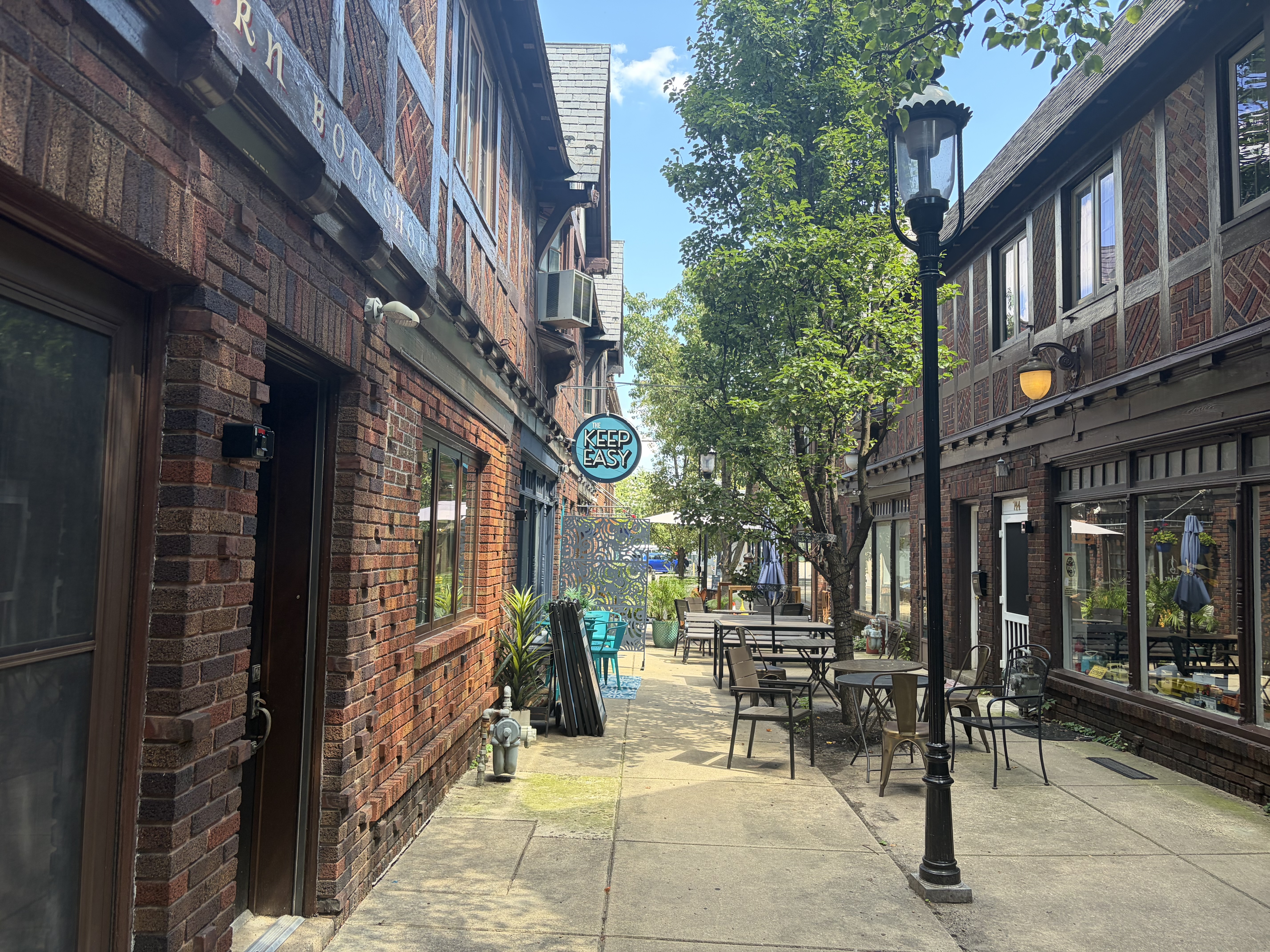
    It looks like a street that belongs in its namesake English city, but the secluded, bricked Yorkway Place instead sits near the heart of Jenkintown, Pa.

    For years, locals say, the pedestrian walkway drew few pedestrians: Offices and empty storefronts offered little reason to stroll along the 1930s Tudor-lined path, which runs into Route 611.

    “I still meet people today who don’t even realize it’s there,” said Ross Abel, a Jenkintown resident who bought a Yorkway Place building this year that now hosts a cafe.

    Unusual bar concept sparks alley renaissance

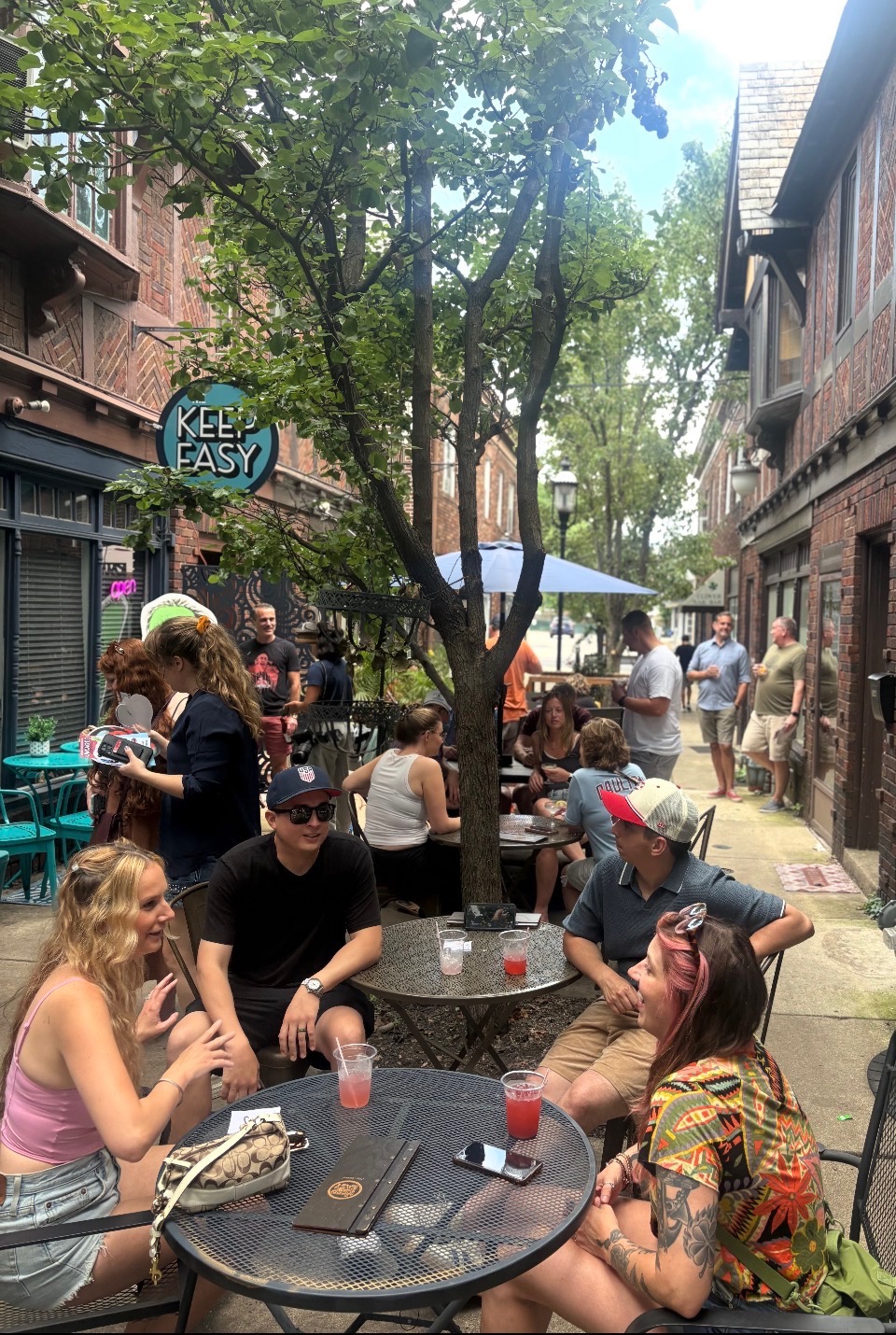
    The tide began turning in 2023 when Melissa Hager turned her herb and tea store into a meadery, the Keep Easy, with her partner, Mike O’Donnell. While the Herb Shop had struggled, the bar took off.

    Yorkway Place in Jenkintown, June 2026.Mel Hager

    “That might’ve been the catalyst,” said Borough Manager George Locke. “The secret was getting that foot traffic in there.”

    After the Keep Easy came Carminati Creamery, a gelato shop from Glenside, bringing a kid-friendly option to the alley.

    The ice cream store “is the first thing that drew us in,” said Jenkintown Mayor Gabe Lerman, who has school-aged children. “Whatever we do for dinner, we can just walk up to Carminati’s.”

    The Lore Café, an upscale, all-day coffee shop, added morning visitors to the scene. That’s what gave Jackie Botto the confidence to move Capricorn Books into Yorkway Place.

    “We took a gamble,” Botto said. “I did not plan for it to be so busy.”

    A custom jeweler and haberdashery and a nail salon round out the alley’s shops.

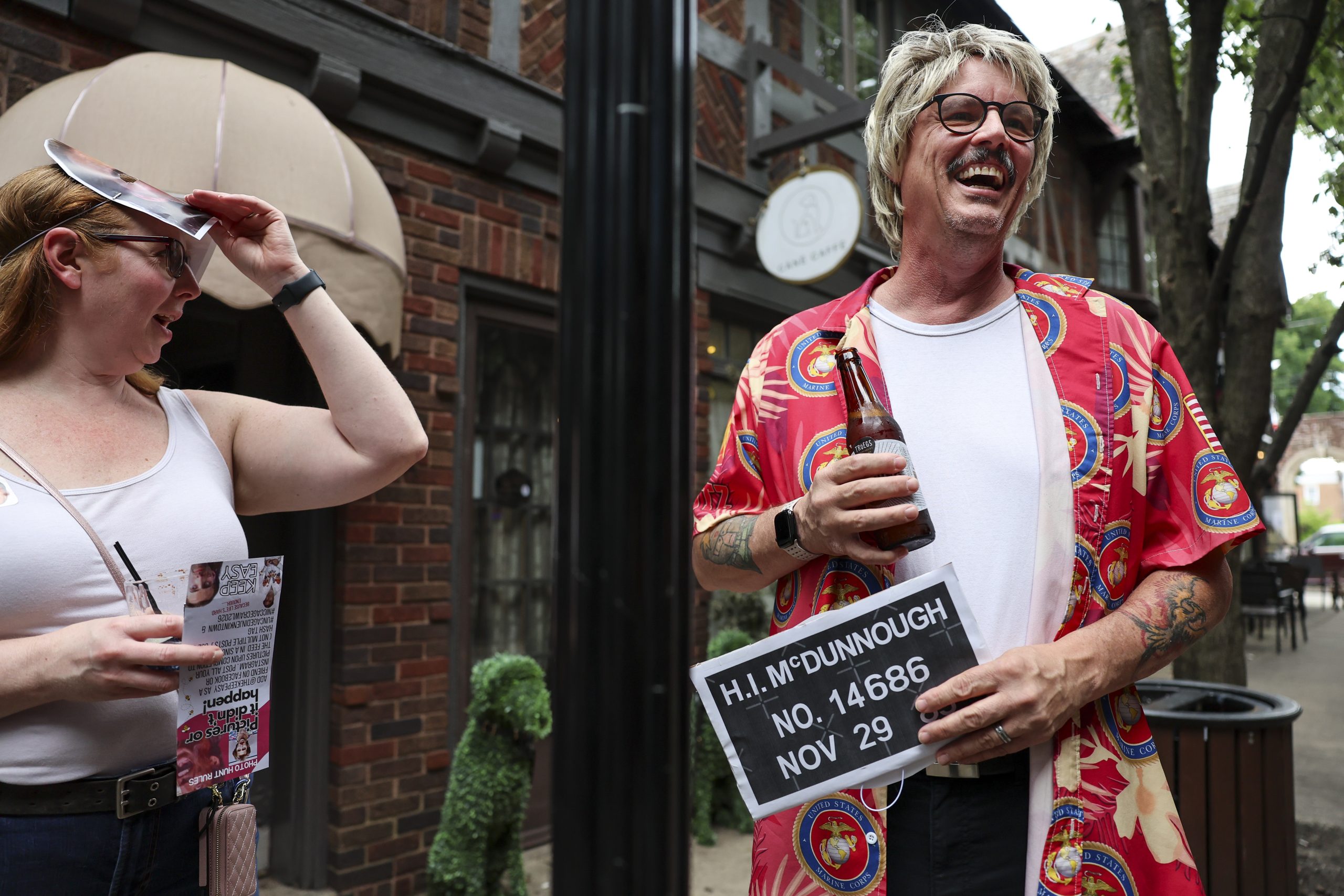
    Themed events have attracted more newcomers, from a Nic Cage bar crawl to Jenkintown Festivus. Capricorn participated in the annual Philadelphia Bookstore Crawl, typically the store’s biggest day of the year, at their new Yorkway Place location for the first time this past weekend.

    Vicky Hutz and Mike Hutz, of Huntington Valley, speak with a reporter at the Keep Easy during the Nic Cage cocktail crawl on Sunday, June 28, 2026, in Jenkintown, Pa. Participants gathered to celebrate actor Nicolas Cage with Cage-themed cocktails, movie screenings, and “Cage matches.”Monica Herndon / Staff Photographer

    Personalized support helped local businesses

    Personalized, direct support has helped bring more small businesses to Jenkintown, locals say.

    The borough started helping owners secure sewer permits from the state several years ago, Locke said. Each permit is “20 to 40 hours of my time.”

    “It’s a tough process,” he said.

    As for filling Yorkway Place, “It’s been Mel,” Botto said, who’s been reaching out to potential owners about vacancies.

    “I was texting everyone I know,” Hager, the meaderist, said.

    Lerman said Jenkintown also recently added free 20-minute parking spots, which helped stores throughout the town.

    And many of Yorkway Place’s business owners live in the borough, the mayor said: “They’re all invested in being good stewards and in having a place you can feel good about sending your kids with a few bucks to get a gelato, or a book.”

    Jenkintown alley to see new stores in 2026

    Several more businesses are set to arrive in Yorkway Place in the coming months.

    In September, insect taxidermist Kat Smith is opening an art supply, stationery, and craft cafe.

    A game room and bottle bar is slated to open above Keep Easy in October.

    And a record store, Smelly’s Vinyl Vibes, is also coming this fall.

    “This is such a cool little street,” Abel said. “All these new shops are helping people to discover it.”

    This suburban content is produced with support from the Leslie Miller and Richard Worley Foundation and The Lenfest Institute for Journalism. Editorial content is created independently of the project donors. Gifts to support The Inquirer’s high-impact journalism can be made at inquirer.com/donate. A list of Lenfest Institute donors can be found at lenfestinstitute.org/supporters.

  • Amazon plans to start drone delivery in South Jersey

    Amazon plans to start drone delivery in South Jersey

    Autonomous drones may soon be delivering Amazon packages across South Jersey.

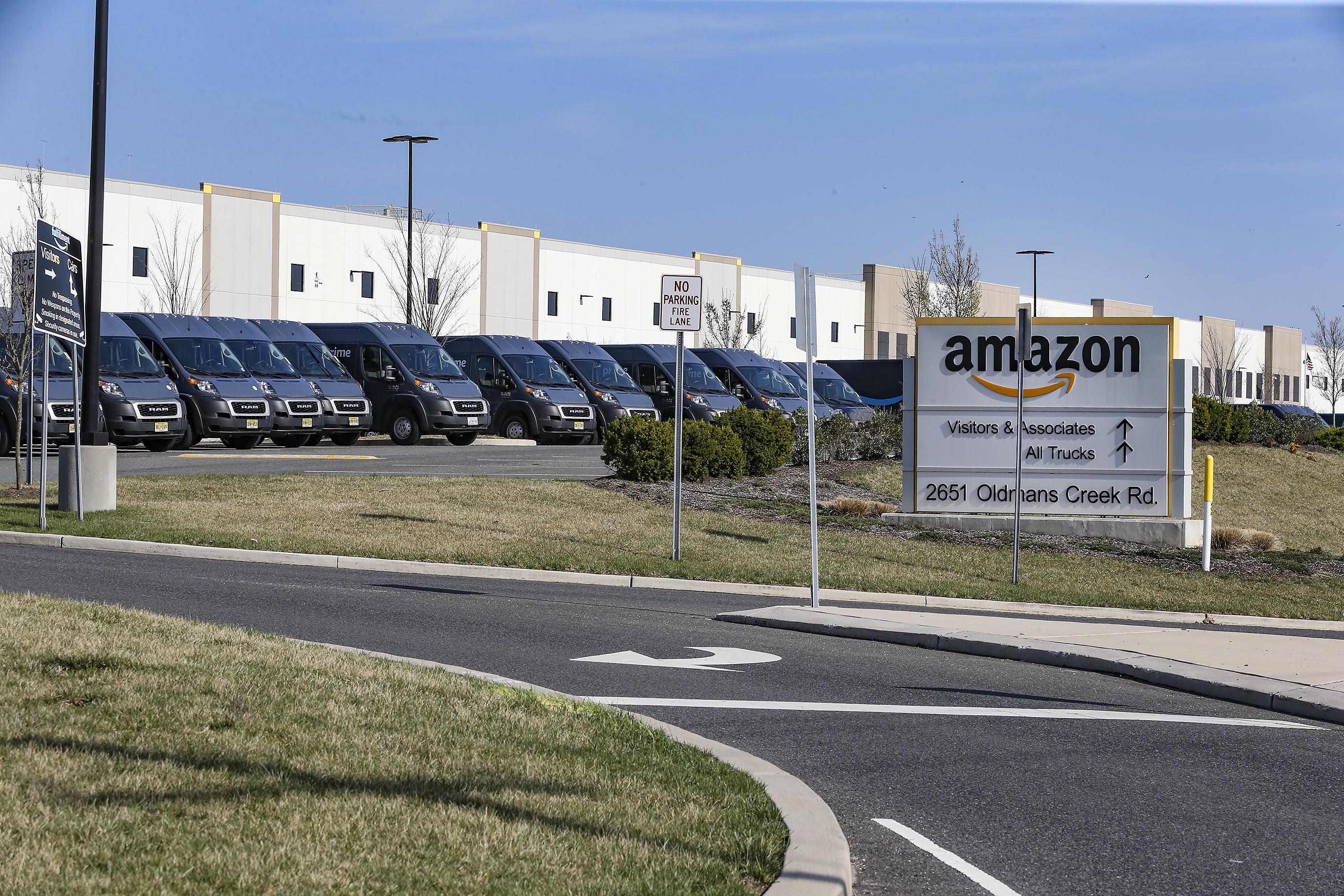
    Amazon representatives have told local officials and emergency responders that the e-commerce giant plans to start drone-delivery service out of its West Deptford facility this fall, according to West Deptford Mayor James Mehaffey and Mantua Township Police Chief William Murphy.

    The news comes days after Amazon announced a massive expansion of its Prime Air program, which already delivers packages via drone from launch sites in 11 U.S. cities, none of which are in the Northeast.

    By the end of the year, Amazon wants to expand its drone coverage area to nearly 500 cities and towns nationwide, the company said, allowing tens of millions of customers to get products flown to their doorsteps in 30 minutes to an hour.

    The announcement is the latest effort by Amazon to decrease delivery times and hold its edge as the world’s most popular online retailer — and the most lucrative company in terms of sales. In May, Amazon rolled out 30-minute ground delivery across Philadelphia.

    Amazon’s top rival, Walmart, recently announced its plans to offer drone delivery in Philadelphia.

    “We are always exploring new ways to get customers a wider selection at faster speeds,” Amazon spokesperson Smitha Rao said in a statement, in response to The Inquirer’s questions about the South Jersey meeting, which occurred last week.

    “We are currently working with local officials and exploring opportunities to expand our fast, reliable drone delivery service to reach customers in areas across the country.”

    Amazon is hiring for several West Deptford-based Prime Air positions, including flight monitor, ground manager, and a safety and compliance officer. The job listings were posted on the company’s online portal last month.

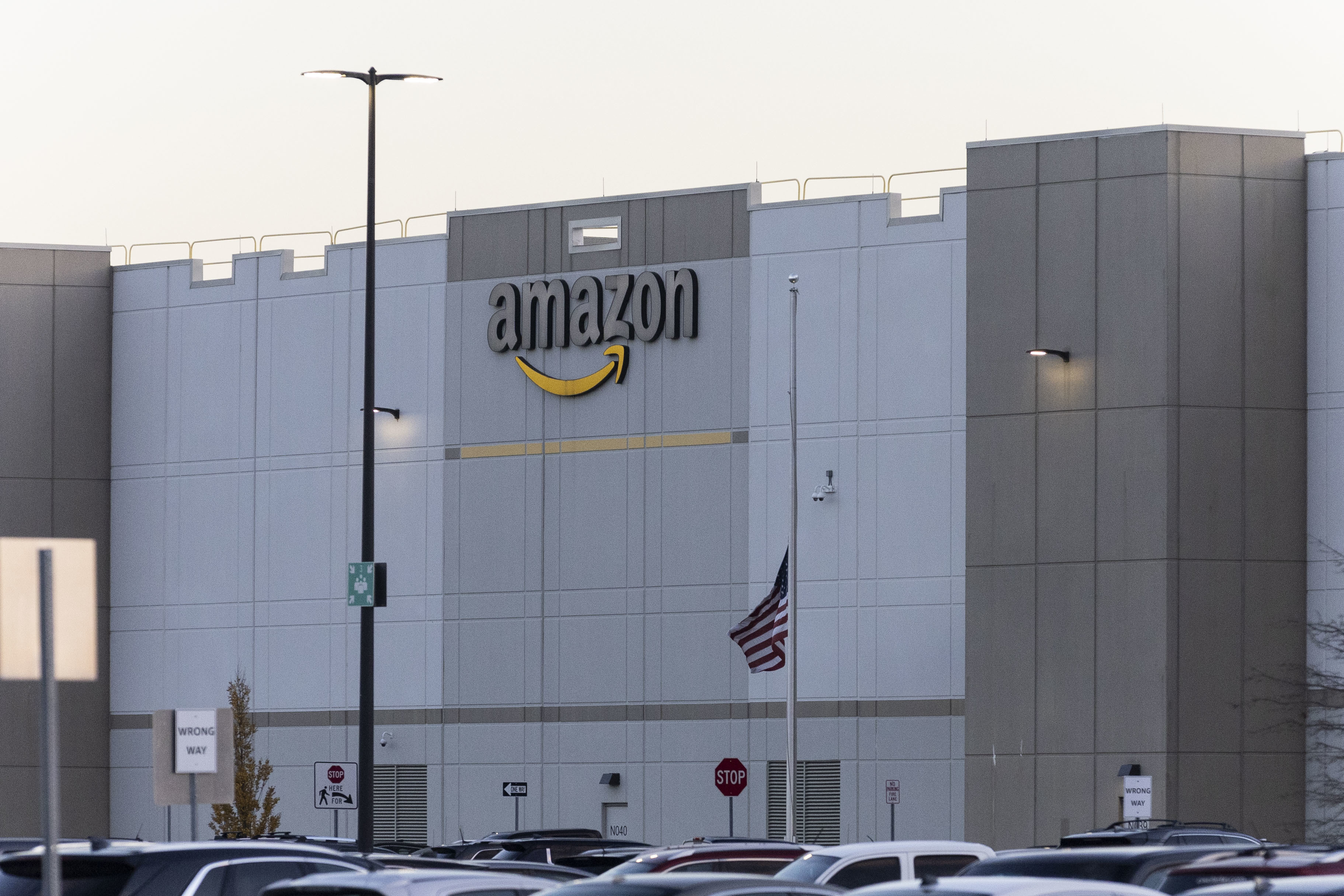
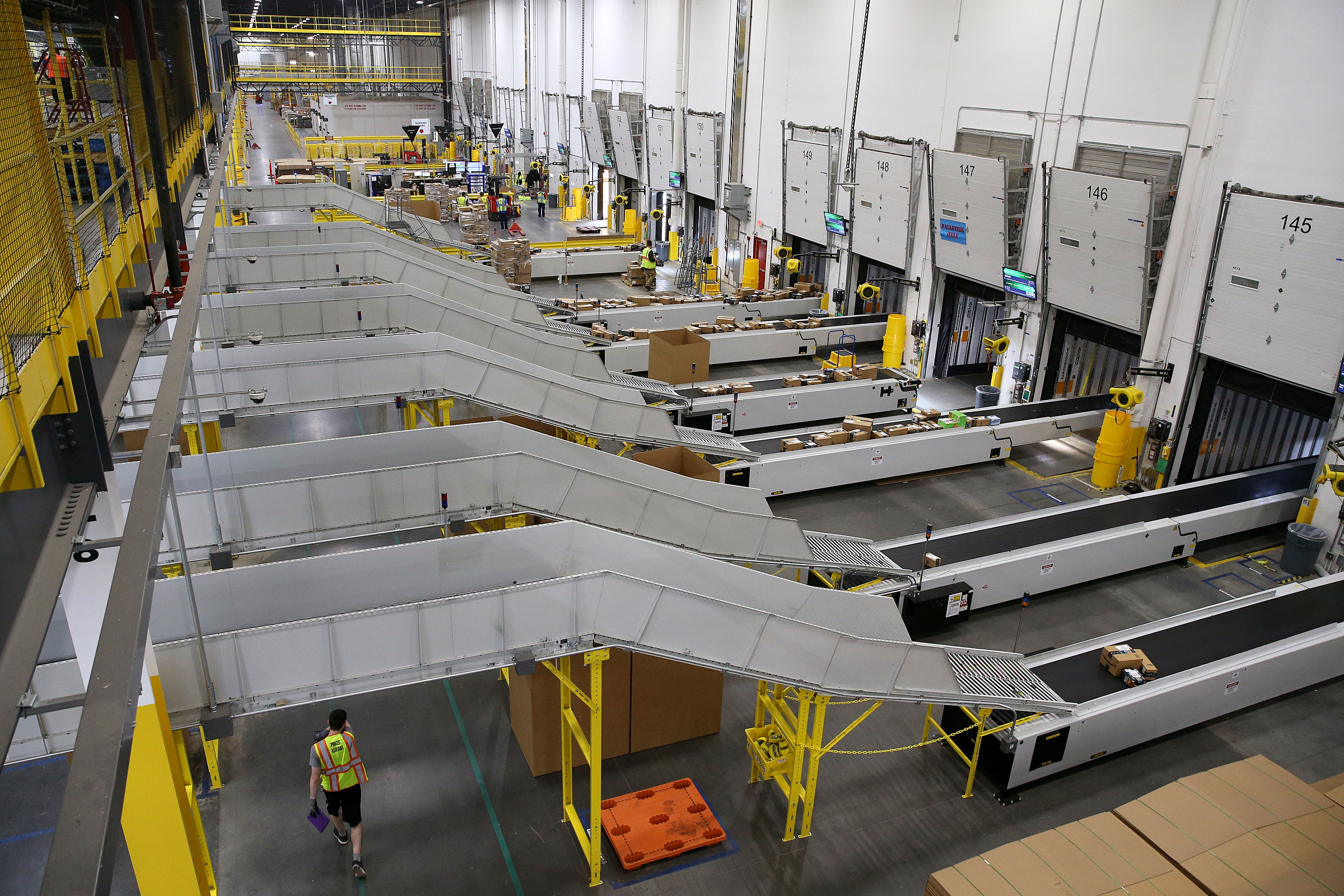
    The West Deptford warehouse opened in 2018 as the company’s fourth robotic fulfillment center, where robots and humans work together. It has also been the site of a walkout by employees who say they deserve better pay and working conditions.

    According to local officials briefed on the Amazon plans, the company’s drones would fly out of the warehouse at 240 Mantua Grove Rd., a 650,000-square-foot facility that sits next to I-295 and is among the company’s largest in the region.

    The Amazon Fulfillment Center in West Deptford, seen in 2019, is among the region’s largest.TIM TAI / Staff Photographer

    The company’s drones can typically deliver to addresses within 175 square miles of each launch site.

    In a Facebook post from the Mantua Township Police Department account, Murphy shared a screenshot of the local drone-delivery radius that he said Amazon shared during the Zoom meeting. The photo indicated that drones from the West Deptford site would be able to reach places within about a 15-mile radius — from Bellmawr to Mullica Hill in New Jersey, as well as parts of Ridley Park, Darby, Glenolden, and South Philadelphia across the Delaware River.

    Amazon told local officials that the drones would operate from 15 minutes before sunrise to 15 minutes after sunset, according to Murphy, and be authorized to fly at altitudes below 400 feet, in accordance with Federal Aviation Administration regulations.

    The company plans to start drone delivery from West Deptford as early as October, according to Murphy and Mehaffey.

    Amazon’s drones can deliver groceries, cosmetics, medications, even iPhones — anything that weighs 5 pounds or less and fits in a large shoebox. Amazon says those characteristics apply to more than 60% of its most popular products.

    Boxed orders are sorted at the Amazon Fulfillment Center in West Deptford in 2019.TIM TAI / Staff Photographer

    Customers can browse drone-deliverable items the same way they search for any other Amazon products, according to the company, and select the best spot for a drone to leave the package.

    Amazon Prime members can get complimentary drone delivery on orders of $50 or more, or pay an extra $2.99 on orders under $50. Nonmembers can pay $4.99 for drone delivery.

    The drones are not monitored by humans in real time, according to Amazon. Instead, the devices use an autonomous system of cameras and sensors to navigate, avoid obstacles, and deliver the package safely.

    Some South Jersey residents said they have questions about those cameras, as well as the impact Amazon drones may have on their quality of life, safety, and environment. As of Sunday, more than 100 people had signed a petition asking for public hearings and written disclosures about Prime Air and its data practices before the drones start flying in the area.

    Amazon said in its expansion announcement that the drones’ cameras do not “track individuals or record movement.” The drones are electric, emit no exhaust, and make little noise, according to the company. The drones are quieter during drop-off than “an idling delivery truck,” Amazon said, and sound similar to a “window fan on low” while in flight. The company said people indoors cannot typically hear the drones outside.

    In areas where the drones are already flying, company spokesperson Rao said, “the response from customers using Prime Air has been overwhelmingly positive.”

    Mantua Township Mayor Bob Zimmerman told residents in a Facebook post that the Amazon drones were “forthcoming.”

    “Please understand that whether you are for, or against deliveries of this kind by drones, we have no say over the matter,” wrote Zimmerman, who did not return a request for additional comment.

    Amazon has not said whether it plans to fly drones from other warehouses in the Philadelphia area, and has not posted Prime Air job openings at other local sites.

    The company has dozens of facilities across the region, with larger warehouses in Carneys Point and Logan Townships in South Jersey, and near Wilmington. Officials in those areas did not return requests for comment.

    Amazon’s Logan Township warehouse is pictured in 2021.STEVEN M. FALK / Staff Photographer

    Jason Bobst, township manager of West Norriton Township in Montgomery County, said the company has not been in touch about flying drones from its facility there.

    “We have not been approached by Amazon regarding drone delivery operations from its West Norriton facility, nor have we received any indication that Amazon is currently considering that location for drone delivery service,” Bobst said in an email.

    Bobst said township officials did have a preliminary conversation about Walmart looking to expand its drone delivery service in the area, but nothing formal has been presented.

    In recent weeks, food-delivery apps Uber Eats, Grubhub, and DoorDash also have unveiled similar plans, but have not started flying to Philly-area customers.

  • These Philadelphians used job benefits to go back to school while working full time

    These Philadelphians used job benefits to go back to school while working full time

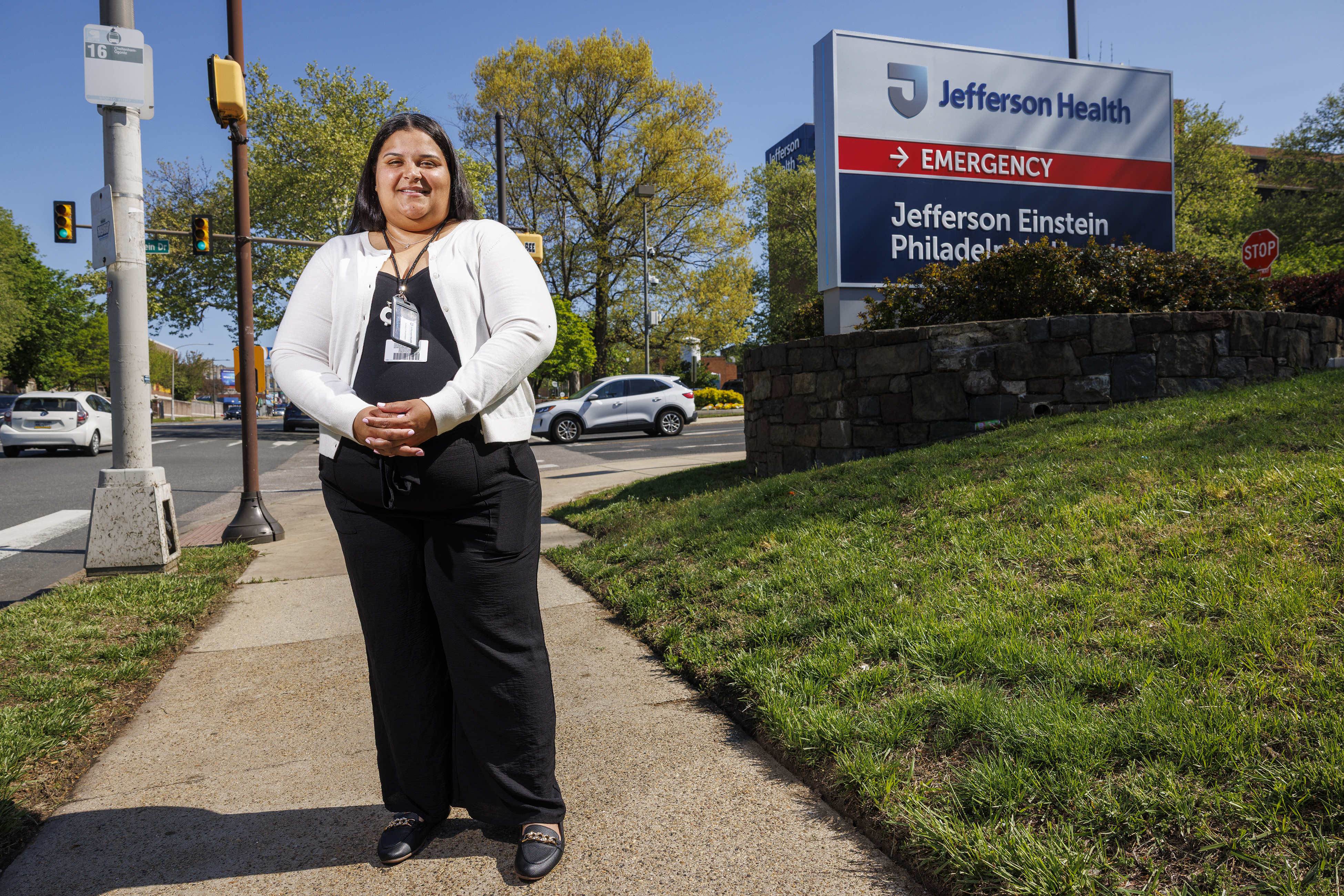
    Ashley Boudreaux, an operations manager at Jefferson Health, would like to run a hospital someday.

    “I would really like to make it to the C-suite — be a CEO,” said Boudreaux, 37, who works at the medical group’s Philadelphia and Montgomery County sites.

    So, without quitting her job, Boudreaux pursued her undergraduate degree in health administration with the University of Phoenix. She graduated in 2023, and now she’s on track to get her master’s in business in November. She’s done all her coursework while working full-time.

    It wasn’t easy, Boudreaux said.

    “You’re just moving constantly,” she said. “When I look back, I’m like, I don’t know how I did it.”

    It helped that Jefferson provided some financial support for Boudreaux’s education.

    More than 40% of employers offer this benefit, according to Alex Alonso, chief knowledge officer at SHRM, a human resources association. That number has waned a bit in recent years, but some large local employers still do so.

    They include Comcast, which offers tuition reimbursement as an employee benefit and works with Drexel University to shape several master’s programs for tech workers. Another is Aramark, which covers up to the full cost of tuition for eligible hourly employees, and tuition assistance for salaried employees. And Philadelphia’s city workers get tuition discounts at more than a dozen local colleges.

    The majority of Philadelphia’s workforce haven’t graduated from college, though tens of thousands of residents have taken college classes without earning a degree.

    For many, completing a four-year degree would still prove beneficial, said Sean Vereen, president and CEO of nonprofit Heights Philadelphia, which connects young people with education and career opportunities.

    “The college degree is not the only way to get to economic success, … [but] there is a connection between your ability to have stronger credentials and your ability to move economically,” Vereen said.

    Sean Vereen of Heights Philadelphia. Paola Nogueras

    Why workplaces offer tuition assistance

    Federal tax incentives have encouraged employers to assist with education costs, said Alonso of SHRM. The benefit also helps companies compete for good hires, he noted.

    Most commonly, Alonso said, employers offer up to $5,250 per employee per year. That’s the maximum they can give toward education costs without the employee paying taxes on it. Workers are often required to show that the education is related to their job or career, so they “can actually bring back what they learn to their workplace,” he said.

    Sometimes getting additional education, including short-term microcredentials, are prerequisite to a promotion, said Phil Brooks, a vice president at nonprofit Graduate Philadelphia, which supports adult students.

    Thomas Jefferson University Hospital in Center City Philadelphia is shown in this 2020 file photo. Heather Khalifa / Staff Photographer

    Hurdles for worker-students

    Getting a degree while working full-time can mean early mornings, later nights, giving up weekend time, or even using lunch breaks to squeeze in school work.

    Other challenges can include transportation for in-person programs or access to a computer and reliable internet connection, says Brooks. Students who owe money to a school where they were previously enrolled might also be held back from transferring or finishing their degree.

    Graduate Philadelphia sometimes helps students negotiate with schools to decrease that amount owed, “literally removing this barrier as much as we can,” Brooks said.

    Aspiring hospital executive Boudreaux’s advice? Don’t quit.

    “Slow progress is still progress,” she said. “A lot of times, when we start off on a journey, we see the entire staircase, but not realizing that it takes one step at a time to get to the top.”

    Getting the promotion

    When Nicole Henderson, 38, graduated high school, going to college right away wasn’t an option.

    “It just didn’t make sense for our family,” she said. “We just couldn’t afford it.”

    Years later, while working at a trading firm, she started pursuing a bachelor’s in accounting. But she put it on hold after a semester when she learned her employer, who encouraged her to go back to school, wouldn’t cover her tuition.

    Five years ago, while searching for work as an executive assistant, she saw a role open up at the Children’s Hospital of Philadelphia that didn’t require a bachelor’s degree. She got the job and soon felt the urge to continue advancing her career.

    “I’m now at this huge organization with all these opportunities,” Henderson said. “I was like, oh, man, eventually I’m going to have to have this bachelor’s degree.”

    Nicole Henderson in her home office in Darby. She went back to school while working full-time and recently earned her bachelor’s from Temple.Alejandro A. Alvarez / Staff Photographer

    In 2023, she started working toward that undergraduate degree again. Her colleagues at CHOP were supportive, and she was given flexibility to tune into classes from work sometimes, or work remotely on the days she had a lot of studying to do. CHOP also reimburses a portion of her tuition and has a student loan repayment program. Without that financial support, Henderson says she wouldn’t have pursued the degree.

    She also got a scholarship from the Chamber of Commerce for Greater Philadelphia, which annually gives $5,000 to undergraduate women working at member organizations. Boudreaux, of Jefferson, was also a recipient.

    Juggling work and school can be exhausting, Henderson said. She slept through the day some Saturdays because her “brain was just so overloaded with information.”

    But she got her bachelor’s in business from Temple University in December and walked across the stage at graduation in May.

    Her classes gave her a new awareness of what’s important to bosses and leaders at her organization, she said, and “how to speak their language.”

    She also negotiated a promotion from executive associate to project manager, with a raise.

    Now she doesn’t have to wonder “how am I going to convince people that I’m qualified to do this?” she said. “I kind of already have this degree that says that for me.”

  • I deleted Instagram for two weeks. Now I see why people pay for Brick and other app-blockers

    I deleted Instagram for two weeks. Now I see why people pay for Brick and other app-blockers

    Within minutes of waking up, I can’t help but reach for it. The iPhone on my nightstand has a gravitational pull.

    I swipe through my Instagram feed before my eyes have even adjusted to daylight. Of course, there is nothing urgent in this sea of vacation pictures, pregnancy announcements, adorable dog videos, and ads for products I Googled the day before.

    Yet I can’t stop scrolling.

    Last month, I became hyperaware of my dependence on this unhealthy habit when I deleted Instagram — my millennial social media of choice — for two weeks. It was for “work purposes,” I told myself, and would inform this story about how much time and money some consumers have spent trying to pull themselves from their screens.

    I ended up deleting Facebook, too, after a day spent filling Instagram’s absence with rambling posts from neighborhood groups.

    After my experiment, I see why people are willing to pay to unplug from social media.

    Chen Wang, an associate professor of marketing at Drexel University’s LeBow College of Business, said she gets it, too. Not only because she observes the habits of her Gen-Z students, but also because she researches consumer technology and self-regulation.

    The human-smartphone relationship, Wang said, has become “a paradox.”

    “It makes our life so convenient. We can do almost everything on our phone,” Wang said. “At the same time, we’re also wishing we could use it less.”

    Why some pay to unplug

    Someone scrolls on their phone in this 2019 file photo.Heather Khalifa / Staff Photographer

    As consumers have become increasingly aware of how social media and screen time affects their mental health, a cottage industry of social-media-detox businesses has emerged.

    There’s the Brick, a $59 device that blocks distracting apps with the tap of your phone — and requires another tap to unblock. There are $50 “phone beds,” popularized by media mogul Arianna Huffington, that you can tuck your device into at night, ideally somewhere outside your bedroom, to discourage horizontal scrolling.

    And an array of phone applications — ironically — block other apps. Some of those app-blockers are free. Others offer paid tiers from $40 to $100 a year.

    Others struggling with social media overuse have spent hundreds of dollars on wellness retreats, where screen time is limited. In May, Cristen DeDomenico, a Philly-based bartender and therapist-in-training, spent about $1,300 to attend a weeklong retreat at the Kripalu center in Massachusetts.

    “It definitely involved turning off and stepping away” from the digital world, said DeDomenico, 35, who felt less tempted to scroll social media in the retreat environment. “No one else was on their phone, so you didn’t feel the urge to be on yours.”

    Closer to home, for a nominal fee, community leaders and small-business owners around the Philly area have been organizing social gatherings and workshops where attendees have to put their phones away.

    Glenside educator Charlie Price started her digital-detox and wellness business, Time and Space, during the pandemic, when she noticed her own bad phone habits while stuck at home. Price, 36, said she’d often scroll Instagram for more than 30 minutes at a time.

    Now, Price hosts regular events, including hikes and art workshops, for which people pay between $5 and $25 per person. Attendees abide by an honor system: Keep phones out of sight.

    The focus, Price said, is “getting together in person and in nature … getting out IRL,” — in real life, in internet parlance.

    What works best for reducing screen time

    A man looks at his phone while walking his dogs.David Zalubowski

    At its core, the solution to our scrolling problem is free: We all could just turn off, hide, or simply walk away from our devices.

    But, given the addictive designs of the social-media platforms on our smartphones, it’s not that simple.

    When it comes to cutting back on screen time, Wang, the Drexel professor, said research has found that outside motivation can be more effective than relying on self-control. This motivation can come from app-blockers or other strategies, such as changing your phone’s colors to gray-scale, which makes the scroll less appealing.

    “At the end of the day, we need some external outsourcing of self-control to help us do better, to curb our temptation,” Wang said.

    DeDomenico said she learned that when she returned from her retreat. For the first few weeks, she was more present in her daily life, she said, but then old habits crept back in — and her post-work scroll got longer.

    I’ve found this, too, since redownloading Instagram. Grabbing my phone to check the weather or pull up a photo can quickly turn into a waste of 15 minutes or more on mindless swiping.

    I don’t think going cold turkey is the answer. I do enjoy those adorable dog videos and the funny reels, and the photo dumps from people I haven’t seen since grade school.

    After Wang’s reassurance about the effectiveness of external motivators, I’ve been reading more articles about the best app-blockers — and even toying with the idea of investing in one of them.

    Peace of mind is probably worth at least $50, right?

  • What’s behind the bond market roller coaster?

    What’s behind the bond market roller coaster?

    On Thursday, the bond market shrugged off Treasury Secretary Scott Bessent’s unusual effort to head off rising government borrowing costs. In early trading, the 30-year bond yield rose to 5.27% before settling back down to 5.24%, erasing more than half the drop in costs that had greeted Bessent’s market intervention.

    Bessent on Wednesday said that Treasury would at least double a planned buyback of long-term Treasury securities from $2 billion to $4 billion or more, a move that quickly lowered yields and eased pressure on borrowing costs for governments, businesses. and consumers. By repurchasing government debt from private investors, Treasury aims to reduce the supply of such securities and bring yields down.

    But yields rose again on Thursday, even as Bessent appeared on CNBC in a bid to further reassure bondholders, and on Friday.

    Why is the bond market so skittish? Part of the problem is the size of the national debt, which last week hit a new high of $40 trillion. The Trump administration not only has not put forward a plan for reducing borrowing, it has pushed through major economic policies that have helped make the situation worse.

    Here’s how the bond market got so trigger-happy.

    Why is the bond market important?

    Of the $40 trillion national debt, about $32 trillion is held by investors and the public in the form of Treasury securities. When yields go up, it means investors are demanding a greater return on their money and that borrowing will cost Washington more. In the worst-case scenario, it could also signal that investors are losing confidence in the United States and its ability to make good on its promises to pay off its debt, though recent demand for Treasurys suggests we are nowhere near that crisis point.

    Meanwhile, higher Treasury yields ripple into mortgage rates, corporate debt, and other borrowing, worsening affordability problems throughout the economy.

    What happened last week?

    Tuesday, the returns that investors demanded on 30-year U.S. Treasury bonds spiked to their highest level in nearly two decades — about 5.3%. In response, Bessent doubled the size of a planned buyback of public debt, hoping to head off a potentially destabilizing rise in government borrowing costs. His intervention sent bond yields down to 5.18% and boosted stock prices, but analysts warned those effects were likely to be short-lived.

    Lawrence Gillum, chief fixed income strategist for LPL Financial, called Bessent’s announcement “more about a strategic symboling than an actual fix.” The size of the buyback wasn’t meaningful in the $32 trillion Treasurys market, Gillum said in emailed commentary. “But it is a reminder that the Treasury Department is paying attention and will do whatever it can to keep yields from getting too high too quickly.”

    Has the Trump administration reduced borrowing?

    No. As a candidate, Donald Trump promised to eliminate the federal budget deficit — the annual gap between revenue and spending that necessitates borrowing — and even pay off the nation’s accumulated debt. In fact, the debt has doubled since he first took office. And his most recent policies have produced a deficit that is expected to exceed $2 trillion this year — more than 6% of the nation’s gross domestic product — according to the nonpartisan Congressional Budget Office.

    In the past, Washington has run such enormous deficits only during wartime or a financial crisis. Today, the economy is at or near full employment and growing.

    Recently, Bessent blamed the Biden administration for the government’s budget woes, but he acknowledged in an interview with Newsmax that Trump’s tariff policy — and his signature tax cut — had contributed to the problem. In fact, Trump’s tax-cut measure, the One Big Beautiful Bill, will add an estimated $4.7 trillion to the debt over the next decade, according to the CBO.

    Bessent told Newsmax that a provision of the law allowing companies to immediately deduct the expense of new factories is contributing to this year’s swollen deficit. “That is a hit now to the deficit, but we are creating productive assets for future growth, which will be paying taxes all the way down the line. So I think of that more as like pulling back a slingshot and creating a lot of potential energy that becomes kinetic,” he told the conservative cable channel.

    The CBO projects that the bill will add hundreds of billions of dollars to deficits every year over the next decade, though the negative impact does get somewhat smaller over time.

    Why is the bond market so nervous?

    The sell-off last week in U.S. Treasury securities — at $32 trillion the world’s largest financial market — came amid surging public debt in the United States, Europe, Japan, and Canada; renewed conflict in the Middle East; and uncertainty about the Federal Reserve’s intentions on interest rates.

    Much of the bond market’s unsettling tumult results from basic supply and demand. As governments and corporations jostle for the pool of available investment capital, they are driving the cost of borrowed money higher. Political leaders in the U.S., Europe, and Japan must fund ambitious public spending plans, while hyperscalers such as Alphabet and Microsoft need money to build their artificial intelligence networks.

    At the same time, the collapse of the fragile U.S.-Iran ceasefire has reignited fears that an interruption in Persian Gulf oil supplies will keep energy costs and inflation high. On Friday, Brent crude, the global oil benchmark, topped $92 per barrel, up from around $72 during the recent pause in hostilities.

    In this atmosphere of economic uncertainty, economists say it would be wise for the Trump administration to come up with a plan to restrain borrowing. Trump has never offered such a plan, however, and is pressing Congress to increase borrowing to pump hundreds of billions of additional dollars into the Pentagon and his war with Iran.

  • How much should retirees worry about inflation?

    How much should retirees worry about inflation?

    Inflation can be scary for retirees. True, Social Security provides inflation increases in line with the Consumer Price Index, or CPI. But any portfolio income, save allocations to inflation-protected bonds, isn’t inherently inflation-protected. And if inflation occurs early in your retirement, those higher prices will do more damage throughout retirement, potentially jeopardizing your portfolio’s ability to last.

    To gauge your inflation risk and how strenuously you need to defend against it, ask yourself three questions.

    Where are you spending?

    You may not have stopped to consider it before, but CPI is meant to capture the spending experiences of all consumers. Categories like housing receive the biggest weighting in the CPI calculation, while recreation and apparel get smaller weightings.

    But a retired older adult who no longer has a mortgage will likely have smaller housing-related outlays, as a percentage of household spending, than the general population, but healthcare expenditures may well be a bigger share of the budget.

    Given those variations, it can be helpful to use the CPI’s weightings as a starting point for understanding inflation’s impact on your household. But you can get closer to a personal inflation rate by looking at your actual spending in each of the major categories alongside the inflation we’re seeing in those areas.

    How much of your income is inflation-adjusted?

    Next look at how much of your cash flow needs are coming from income sources that have some inflation insulation.

    Social Security is an ideal income source because individuals receive income adjustments that track CPI. Some public-sector pensions also track CPI or offer inflation adjustments that are even more generous. If you have a fixed annuity with an inflation rider, you’ll also see your income adjusted by a fixed percentage per year, though it won’t perfectly track CPI. (You can’t buy an annuity whose payouts are linked to CPI today, unfortunately.)

    On the portfolio side, I bonds and Treasury Inflation-Protected Securities are the only investments that are specifically structured to protect against inflation. That’s why building a laddered portfolio of TIPS bonds, with one to mature in each year of retirement, can be a straightforward way to address inflation risk with your portfolio withdrawals. You could invest enough in the TIPS ladder to deliver inflation-adjusted income to cover any fixed living expenses, above and beyond what you can address with Social Security and/or a pension.

    Other portfolio constituents don’t offer as precise a structural defense against inflation, but some asset types do have a good track record of gaining during inflationary periods. Commodities-tracking investments, quite intuitively, top the list: As noted by Amy Arnott, portfolio strategist for Morningstar, they gained ground in all six of the inflationary periods she examined. Stock returns, meanwhile, have been inconsistent or poor in inflationary periods. However, they’ve done a phenomenal job of beating inflation over time. Inflation has run at about a 3% rate since the late 1920s, while equities have gained about 10% on a nominal basis. Thus, a way to think about stocks is that they’re a long-run defense against inflation but won’t necessarily protect your purchasing power year in and year out.

    At the other extreme, fixed-income sources that deliver income in nominal/noninflation-adjusted terms, whether cash or bonds, will tend to be vulnerable in inflationary periods; rising prices have the potential to gobble up all of your income. There are still good reasons to hold cash and bonds in your portfolio — ballast in recessionary environments, for one thing — but their vulnerability in inflationary environments is a major reason not to overdo them.

    Where are you in your retirement?

    Finally, consider where you are in your retirement. As Jamie Hopkins, CEO of Bryn Mawr Trust Advisors and chief wealth officer of Bryn Mawr Trust, and others have pointed out, high inflation early in retirement is just another form of sequence risk, like bad market returns early in retirement. The reason is that if inflation flares up early in someone’s retirement period, those higher costs will elevate costs through the whole retirement period; deflation is very rare.

    In our retirement spending research, we found that those who started retirement at the beginning of a period with unusually high inflation would have a more difficult time sustaining spending for a full 30-year period. To be clear, not every person who retires into a high-inflation environment will run out of money: There have been historical periods where market returns have been strong enough to offset the drag of higher costs. However, because you can’t know how the market will behave as retirement unfolds, it’s wise to curtail spending (to the extent that you can) if inflation happens to flare up early in your retirement.

    This article was provided to the Associated Press by Morningstar. For more retirement content, go to morningstar.com/retirement.

    Christine Benz is director of personal finance and retirement planning for Morningstar and co-host of “The Long View” podcast. Subscribe to her free newsletter, Improving Your Finances.

  • Canada will impose retaliatory tariffs on U.S. goods beginning Sept. 8 as trade negotiations collapse

    Canada will impose retaliatory tariffs on U.S. goods beginning Sept. 8 as trade negotiations collapse

    WASHINGTON — The United States imposed 50% tariffs on $20 billion worth of Canadian products early Saturday, and Canada said it would retaliate beginning Sept. 8 after last-ditch negotiations failed to resolve the latest strain in relations between the historic allies.

    President Donald Trump’s import taxes will hit about 5% of what Canada ships to the United States every year, including products ranging from hockey sticks to tongue depressors.

    Carney said, “in the coming days, we will release the details of these new tariff measures, which will come into force the Tuesday after Labor Day.” The dollar-for-dollar retaliation would target steel, dairy, appliances, agricultural equipment, pulp and paper, and electronics, he said from Ottawa.

    He disclosed that Canada had been willing to drop remaining retaliatory tariffs on steel, aluminum, and autos if the United States substantially lowered its own, and to encourage provinces to restore U.S. alcohol sales. But he said Washington’s final demands went too far, saying, “They asked too much and offered too little,” Carney said.

    Trump’s top trade negotiator, Jamieson Greer, said the Republican administration was offering to cut tariffs on steel, autos, and lumber, “things that are sensitive for them. And they’ve always had the best deal, and they still would have an even better deal, but they didn’t want that,” he told Fox & Friends Weekend.

    He added: “We’re moving forward with measures that respond to Canadian retaliation.”

    The moves also call into question the future of a North American trade agreement covering the United States, Canada, and Mexico that is crucial to industry in all three countries.

    Carney said the U.S. added last-minute terms that would have reduced tariff relief for Canadian-made vehicles, restricted Canada’s ability to strike trade deals with other countries, and weakened protections for language, culture, and sovereignty. He said such demands were “unacceptable.”

    But Greer, the U.S. trade representative, said that after a year of retaliation by its longtime ally, “We’ve said enough, and so we’ve taken countermeasures. Our interest is in protecting American workers and protecting American supply chains.”

    No further talks are planned.

    The breakdown in negotiations marked a sharp reversal from two days earlier, when officials from the two countries sounded as if they were headed toward a compromise.

    Carney said Ottawa would “hit back” with targeted tariff protection for industries exposed to the new U.S. duties, including some steel products.

    Ontario Premier Doug Ford, who leads Canada’s most populous province, backed Carney’s response, saying the prime minister had his “full support” for retaliation “tariff for tariff, dollar for dollar” and that “everything needs to be on the table.”

    A typically cooperative alliance goes sour

    The political impact will likely be even bigger than the economic fallout. The countries sold each other $880 billion worth of goods and services last year.

    The tariffs were initially supposed to kick in at 12:01 a.m. Wednesday. Trump extended the deadline for three days to allow talks to continue, but the countries could not reach an agreement in time.

    The U.S. and Canada have wrangled for decades over trade, poking each other over sore spots such as Canadian softwood lumber imports and U.S. access to Canada’s protected dairy market.

    Somehow, they still managed to remain friends, allies, and trading partners. Canadian soldiers fought alongside Americans in Afghanistan after 9/11. The 5,525-mile U.S.-Canada border is undefended, and nearly 330,000 people and $2 billion worth of goods cross it every day; 800,000 Canadians live in the United States.

    Trump’s approach to dealing with Canada marks an extraordinary departure from the traditionally cooperative relationship between the two countries. Trump has imposed tariffs on Canadian goods in a push to bring manufacturing back to the United States and made inflammatory comments about turning Canada into America’s 51st state.

    Carney said Canada had recognized that “America has changed” and that the two countries would “not return to our old relationship.”

    Canadians and Americans are frustrated

    The Canadian public is fed up. A petition to expel U.S. Ambassador Pete Hoekstra, a Trump ally, has collected nearly 248,000 signatures since July 21. It accuses the former Republican congressman from Michigan of having “normalized’’ Trump’s talk of annexing Canada, among other things.

    The two countries had good reasons to find a compromise.

    Nearly 72% of Canada’s goods exports last year went to the United States. The Trump administration might be wary of imposing new tariffs — paid by U.S. importers who try to pass along the cost to consumers via higher prices — before the November midterm elections. American voters are already frustrated with the high cost of living.

    “Canada likely wanted further sector-specific relief than the U.S. was willing to offer, or Canada’s concessions did not go far enough,’’ said Ryan Majerus, a partner at King & Spalding and a former U.S. trade official. ”Either way, I think both sides will be under immense pressure in the coming days to still find an off-ramp. But if Canada has agreed to also impose tariffs, the off-ramp may be even harder to find.”

    Candace Laing, president and CEO of the Canadian Chamber of Commerce, called the tariffs “a body blow to North American competitiveness” and warned they would raise costs for Americans while threatening Canadian customers, investment, and small businesses.

    Trump has turned to Depression-era trade penalties

    Trump has made tariffs the centerpiece of his second-term economic agenda. Last year, he imposed double-digit import taxes on almost every country, justifying them by declaring the long-standing U.S. trade deficit a national emergency. The Supreme Court in February ruled that he had overstepped his authority. The justices struck down the trade penalties and set the stage for the federal government to pay refunds to importers.

    So Trump has looked for other legal authority to justify tariffs.

    To punish Canada, he reached back to the Great Depression, invoking Section 338 of the Tariff Act of 1930 to threaten 50% tariffs on products that account for about 5% of Canadian exports to the United States.

    Nearly a century ago, with the U.S. and world economies in collapse, Congress passed the 1930 tariff law, imposing taxes on imports from around the world. Known as the Smoot-Hawley tariffs after their congressional sponsors, they are notorious among economists and historians for limiting world commerce and making the Great Depression worse.

    Section 338, which has never been used before to impose tariffs, authorizes the president to slap import taxes of up to 50% on imports from countries that have discriminated against U.S. businesses. No investigation is required to justify the levies. Nor is there any limit on how long they can stay in place.

    The rift comes as the United States, Mexico, and Canada are trying to renew a trade agreement that Trump negotiated in his first term and once praised as a triumph. The United States has begun formal talks with Mexico over revamping the US-Mexico-Canada Agreement, known as USMCA. But talks with Canada have not begun and escalating trade conflict casts doubt on whether they will.

    “Canada told the Americans in advance that if these tariffs landed, it would stop negotiating and retaliate,’’ said Barry Appleton, senior fellow at the Center for International Law at New York Law School. ”The American trade representative said publicly he would not tolerate retaliation. Both sides have now committed themselves in public, which is how escalation stops being a choice.’’